Here is a companion post for last Sunday’s photographs of Beebee Lake. This was taken where the lake outflow continues as Fall Creek. Enjoy!!
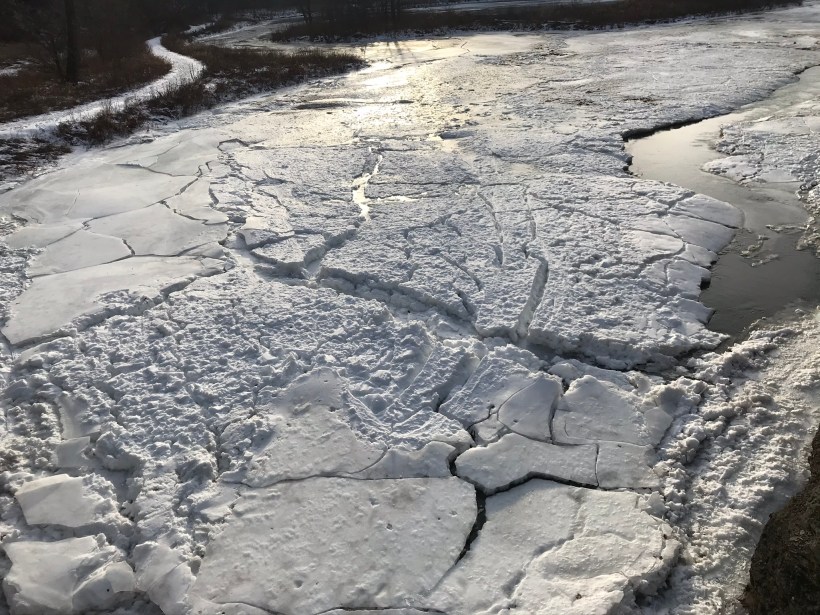
Frozen Dam
Views from the bridge on Christmas Eve 2019
Views from the bridge on Christmas Eve 2019
Here is a companion post for last Sunday’s photographs of Beebee Lake. This was taken where the lake outflow continues as Fall Creek. Enjoy!!
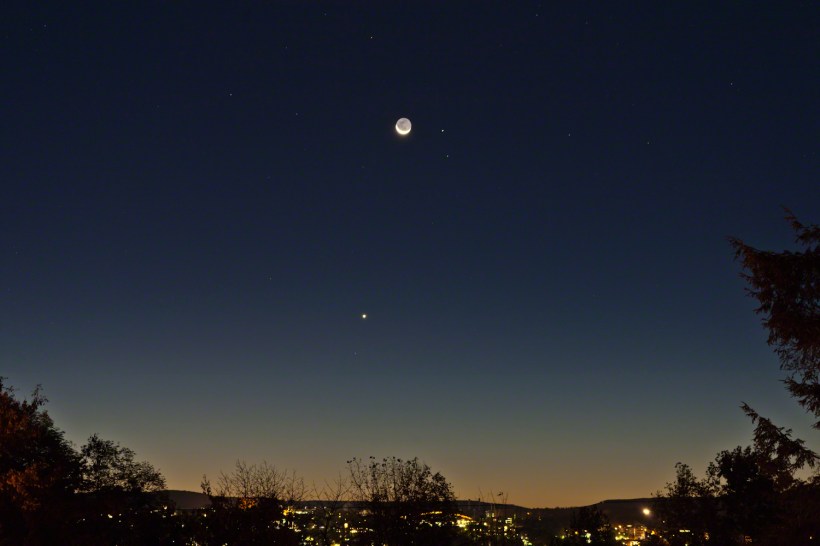
pre-dawn sky event
December 23rd, sky clear at 6:30 am, the International Space Station (ISS) passed through the zenith with a waning crescent, a bowl filled with earthglow, in the southeast. On December 22nd I received the following email from NASA advising me of the event.
HQ-spotthestation@mail.nasa.gov
Sun 12/22/2019 7:00 PM
Time: Mon Dec 23 6:30 AM, Visible: 6 min, Max Height: 87°, Appears: 10° above SW, Disappears: 11° above ENE
Visit the NASA site to research if ISS viewing is possible from your location.
Here is another photograph of the crescent moon filled with earthglow.

pre-dawn sky event
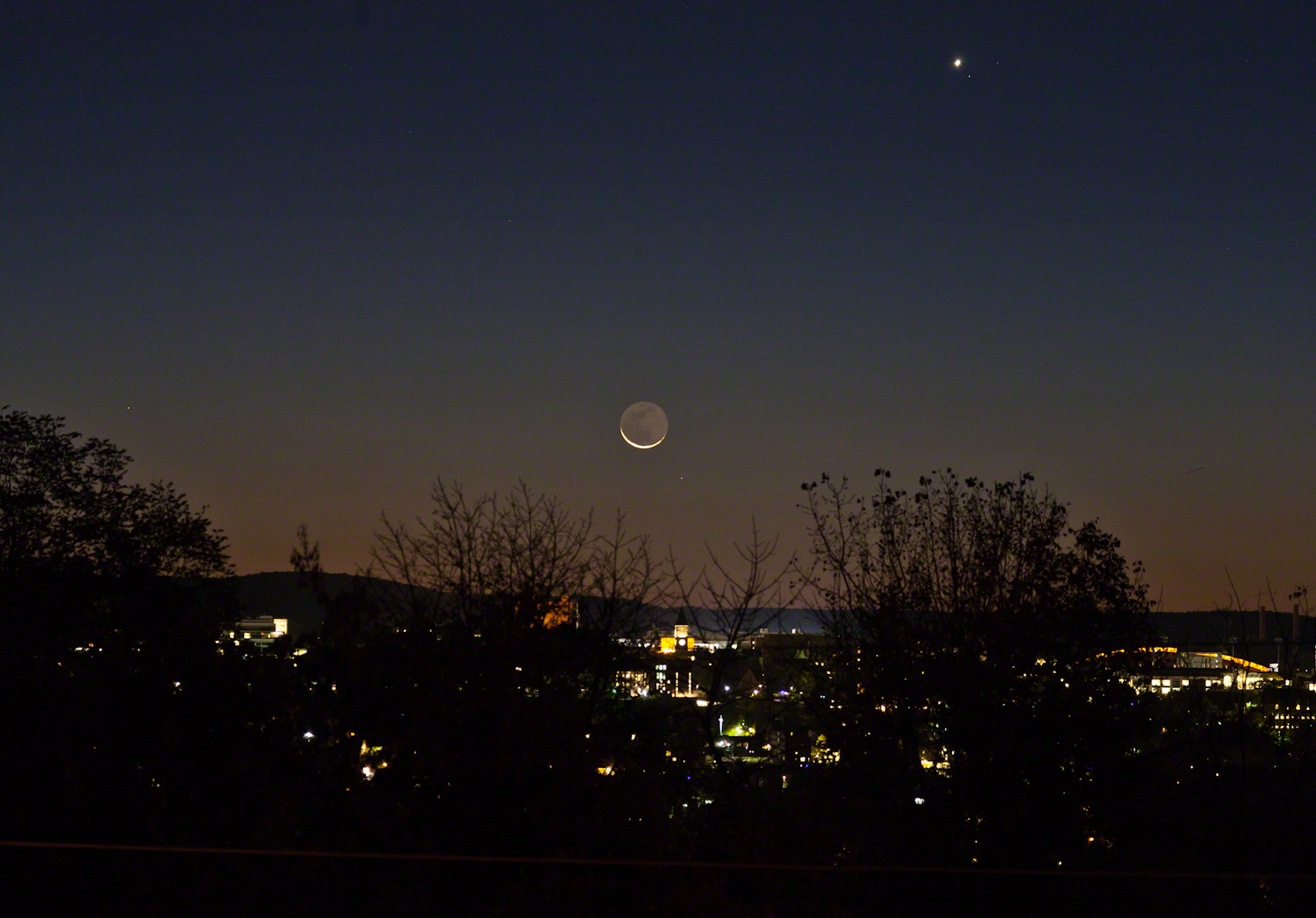
December 23rd, sky clear at 6:30 am, the International Space Station passed through the zenith with a waning crescent, a bowl filled with earthglow, in the southeast. Here is a photograph of a waning moon above Cornell University from October 2017.
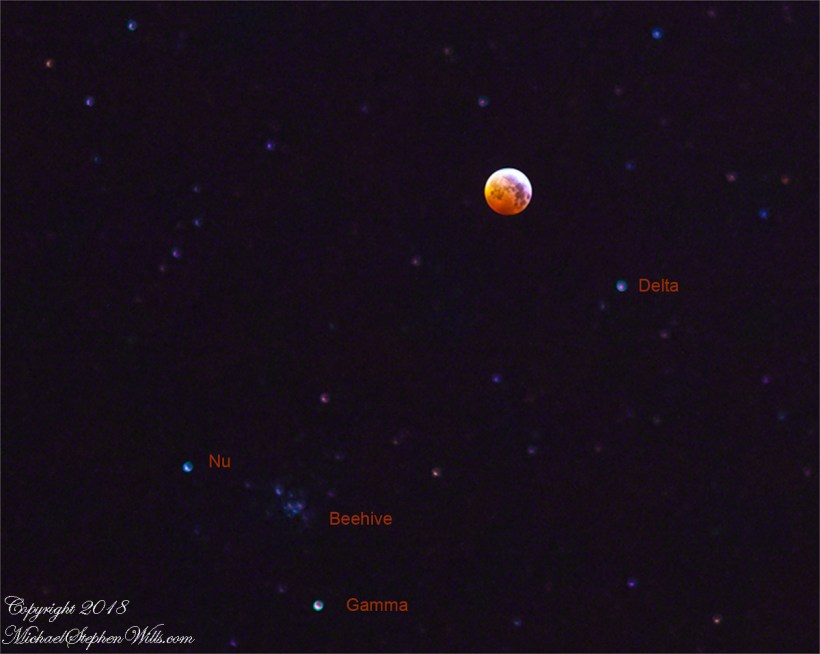
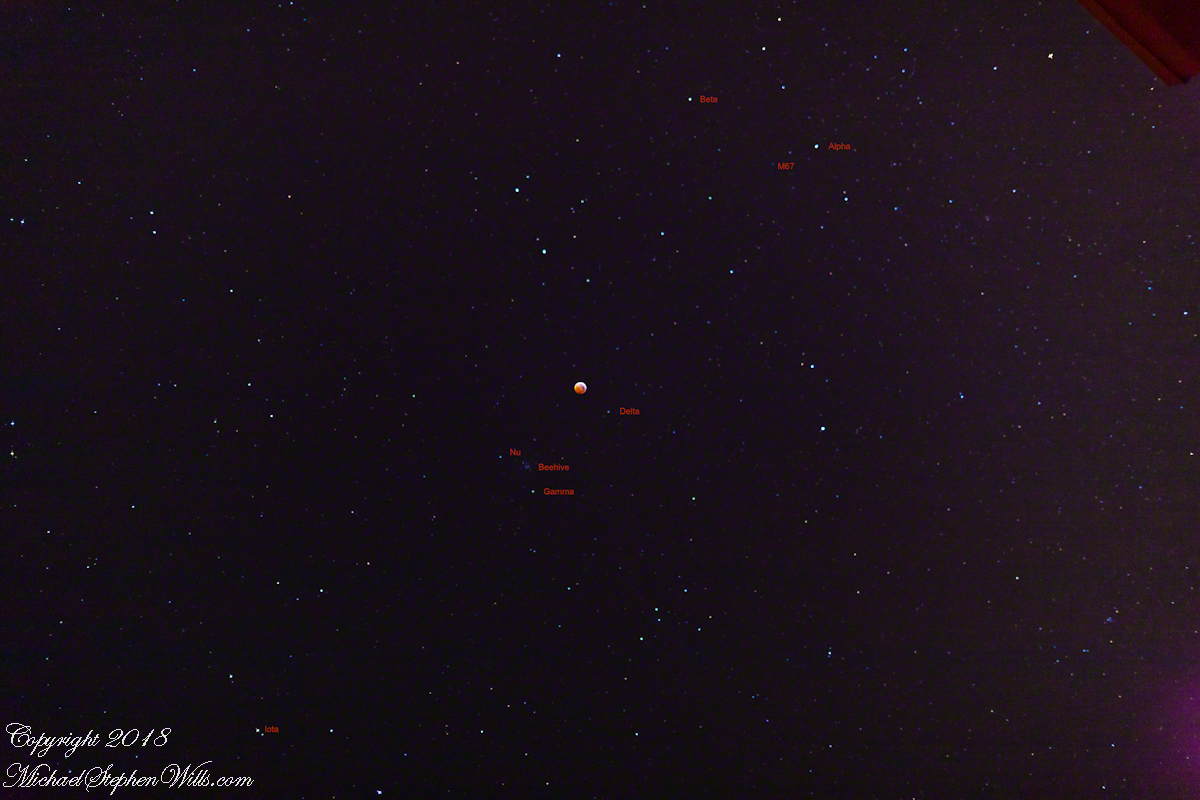
Here are labeled photographs, detailing its major elements, and including visual guides for enhanced viewing.
Pam proofed my post, “When the Moon Dined from a Stellar Mangar”and found some improvements, including adding text labels to aid in finding Cancer constellation elements.
You will find I replaced photographs in the original post and well, all the major elements of Cancer are labeled. Here is an explanation of the new elements.
You can now trace the “Y” constellation pattern, with Alpha and Beta Chancri (Latin for “of Cancer”) the two claws and Iota the tail. Both elemetns of Iota, a visual binary star system, are there. They are wonderful viewed with a telescope. Near Alpha is M67 (Messier Object 67), another galactic cluster of gravitationally bound stars. It is quite faint in this photograph.

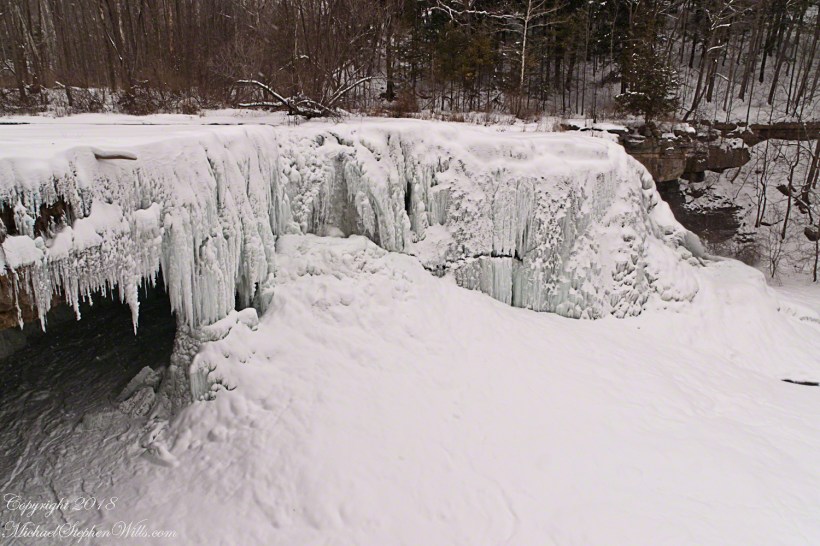
The elements come into focus, revealing Ludlowville Falls, near Lansing, New York. On the eastern side of Cayuga Lake, Salmon Creek plunges 35 feet over this limestone shelf. Pioneers constructed a grist mill at this site.
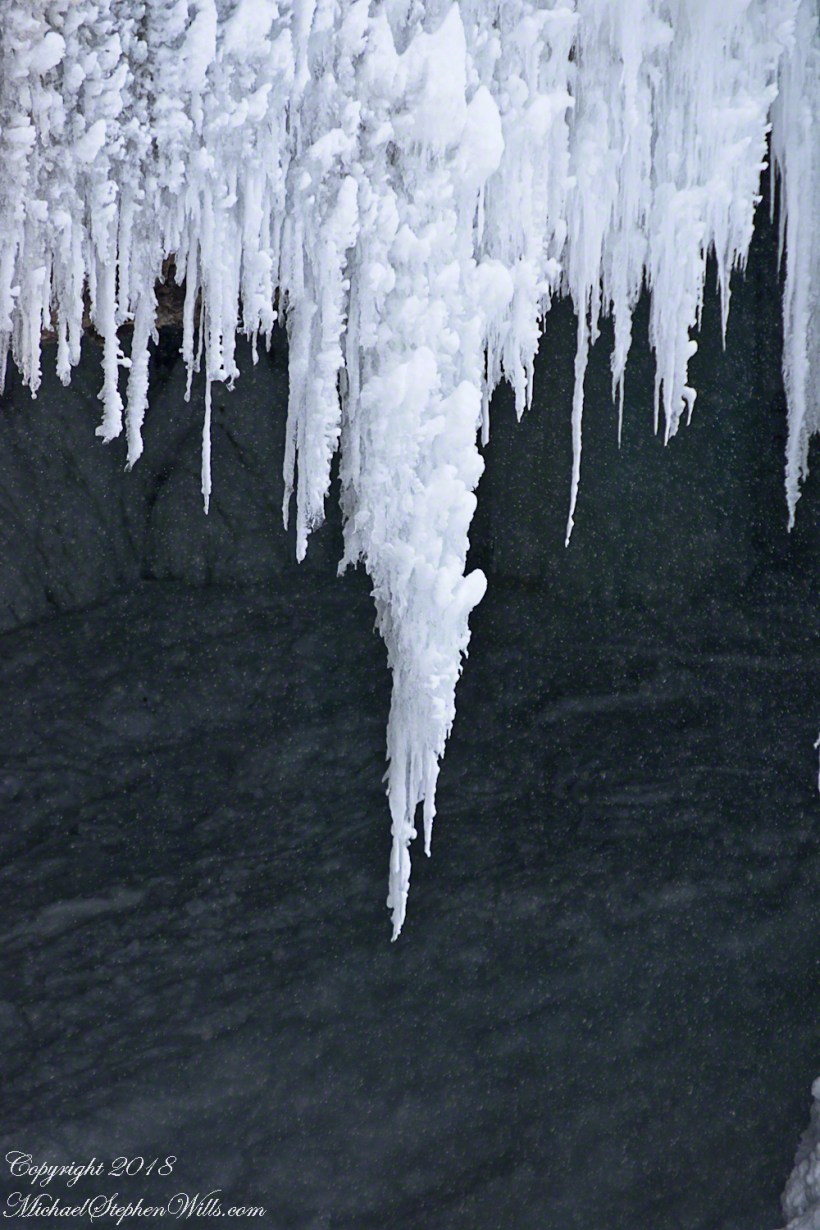
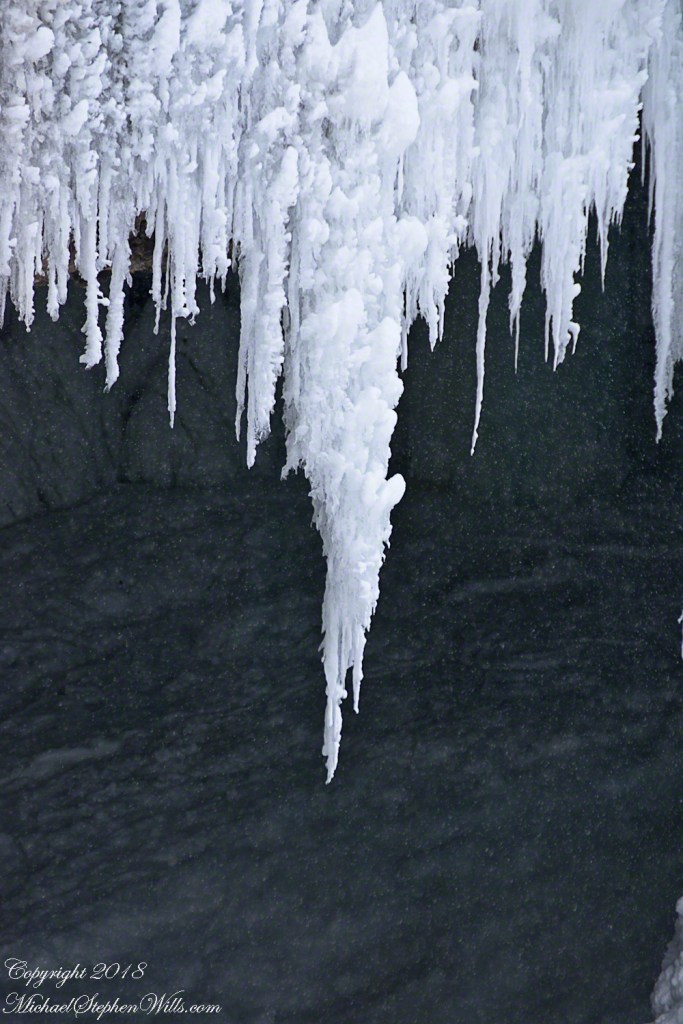
Here we see The Fang hanging over the entrance to The Cave. There is falling water overall, but especially the center section (can you see it?). The weight of accumulated ice fractured a portion of the frozen cascade.
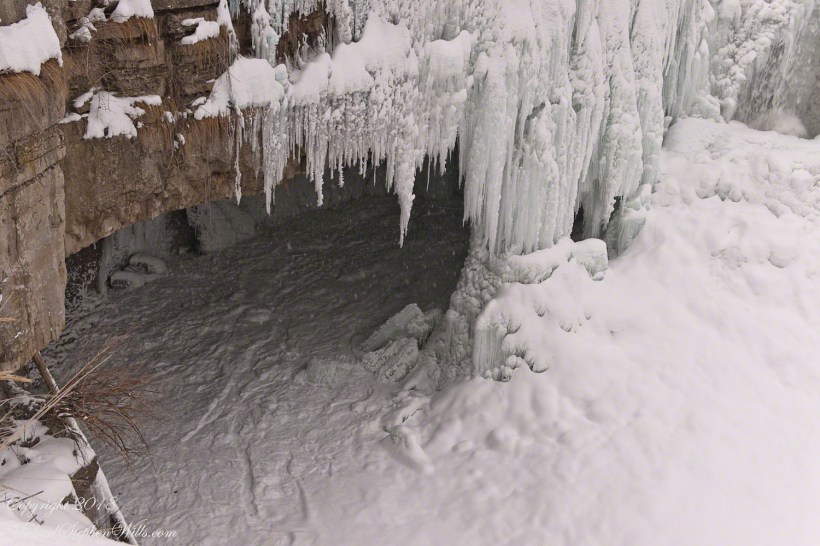
Flowing water eroded away until this durable limestone strata. The majority of sedimentary rock is shale, only 6% is limestone. Throughout the Finger Lakes and elsewhere, this is why when flowing water exposed the edge of a limestone strata, the underlying, soft shales are worn away to reveal a waterfall, ever deepening. Eventually, the support of the limestone washes away to form this ledge. Here it is an ephemeral cave behind a curtain of ice.
See “The Fang?” for the first post of this series.
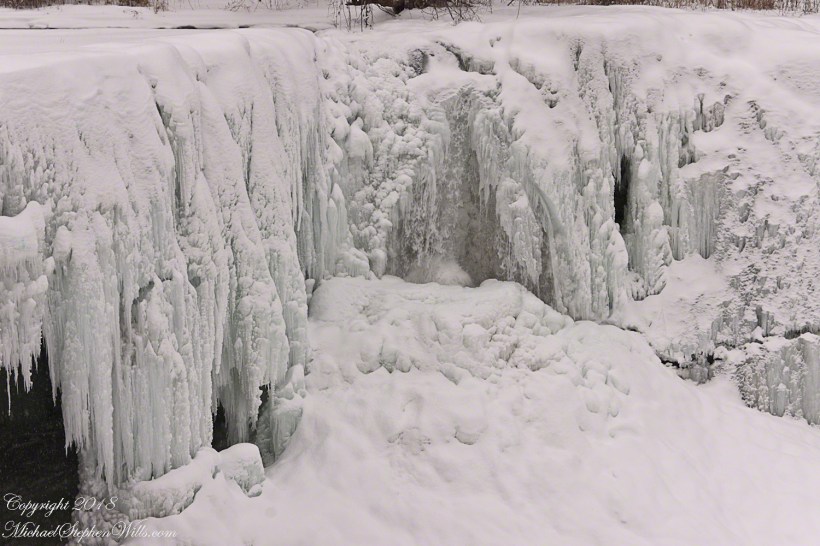
Amid the crystallized water, super-cooled, flowing water seeps through the structure to fall free.
See “The Fang” for the first post of this series.










 Michael Stephen Wills Photography