Growing along the Gorge Trail
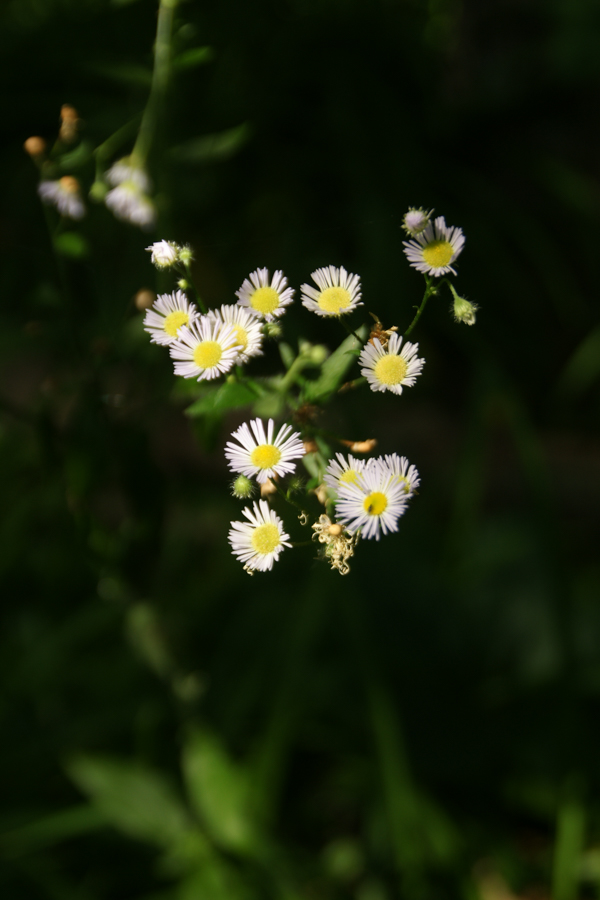
It is 9:30 am on a July morning Robert H. Treman Park, Ithaca, Tompkins County, Ithaca, New York,
Growing along the Gorge Trail
It is 9:30 am on a July morning Robert H. Treman Park, Ithaca, Tompkins County, Ithaca, New York,
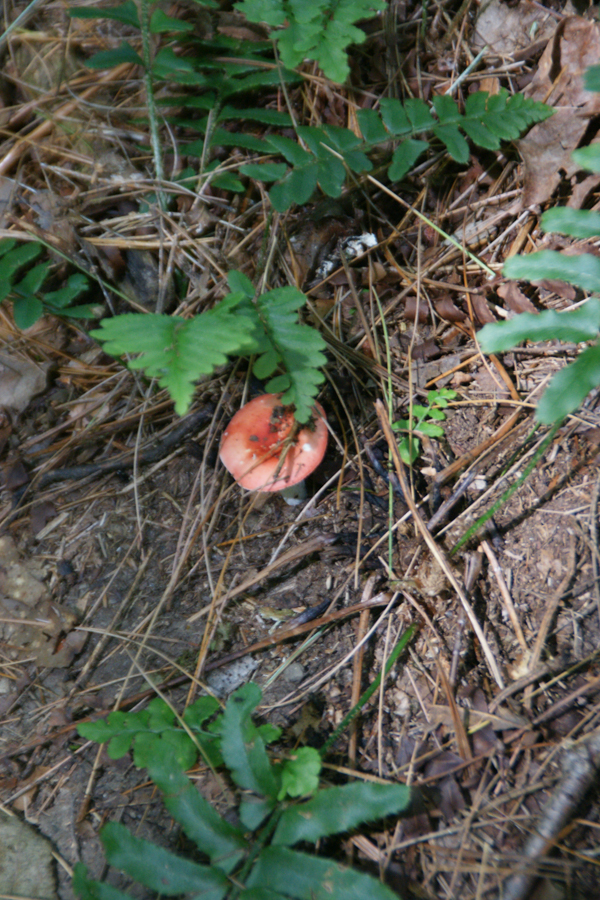
A red beauty growing along the Gorge Trail
It is 9:30 am on a July morning Robert H. Treman Park, Ithaca, Tompkins County, Ithaca, New York,
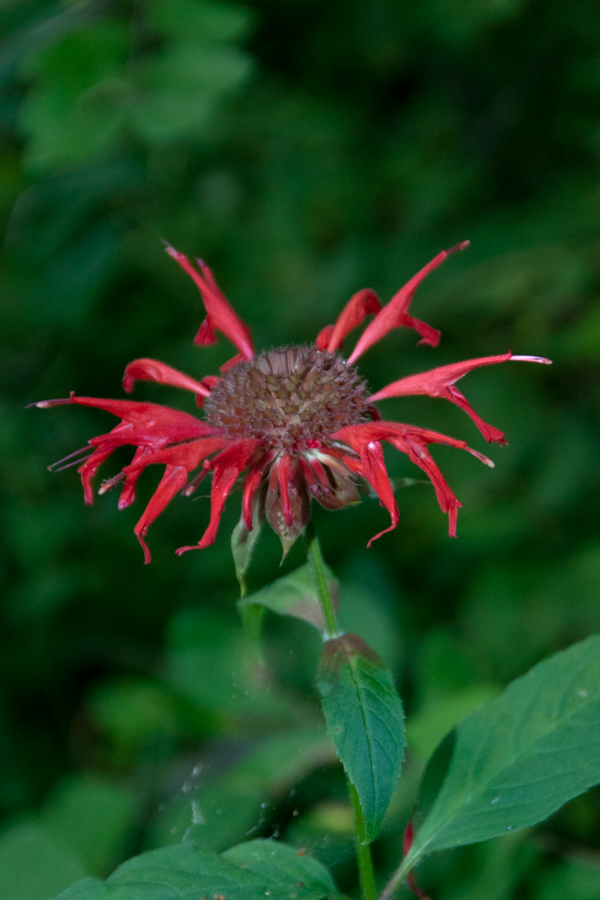
Use it to make a refreshing summertime tea.
Monarda didyma is also known as crimson beebalm, scarlet beebalm, scarlet monarda, Eau-de-Cologne plant, Oswego tea, or bergamot. A wildflower native to the Finger Lakes, Crimson beebalm is extensively grown as an ornamental plant, both within and outside its native range; it is naturalized further west in the United States and also in parts of Europe and Asia.
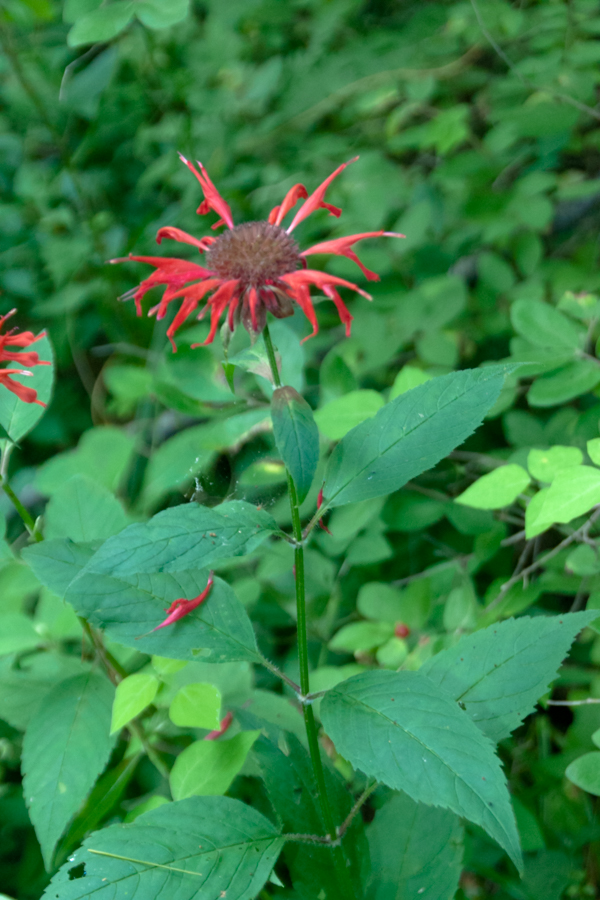
It grows best in full sun, but tolerates light shade and thrives in any moist, but well-drained soil. As suggested by membership in the Lamiaceae (mint) family, Beebalm, as an aromatic herb, has a long history of use as a medicinal plant by many Native Americans, including the Blackfoot. The Blackfoot people recognized this plant’s strong antiseptic action and used poultices of the plant for skin infections and minor wounds.
An herbal tea made from the plant was also used to treat mouth and throat infections caused by dental caries and gingivitis. Beebalm is a natural source of the antiseptic thymol, the primary active ingredient in modern commercial mouthwash formulas. The Winnebago used an herbal tea made from beebalm as a general stimulant. It was also used as a carminative herb by Native Americans to treat excessive flatulence. As a matter of local interest, Iroquois of Oswego, New York, made the leaves into a tea, giving the plant one of its common names.
It is 9:30 am on a July morning Robert H. Treman Park, Ithaca, Tompkins County, Ithaca, New York,
Wikipedia, “Monarda didyma”
“The Botanical Garden, Vol II” Roger Phillips and Martyn Rix, Firefly Books, 2002. Page 284
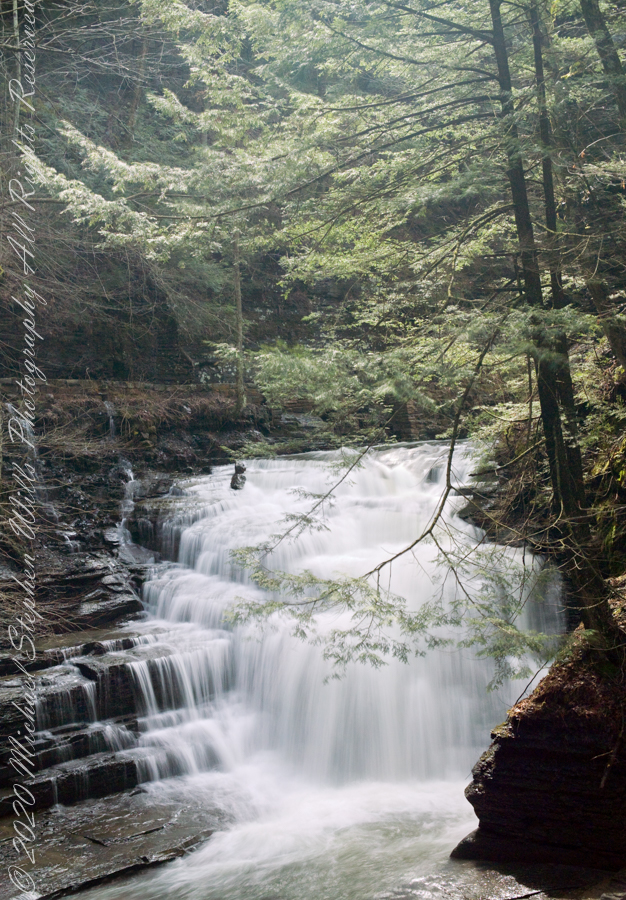
High Water
Here is the third waterfall in the Fillmore Glen Gallery of Waterfalls, shaded by hemlocks, below bridge eight (8) on an early spring morning of high-water volume.
A high dynamic range rendering from several exposures from a Kodak DSC Pro SLR/c with a Canon EF 50 mm f/1.4 USM all mounted on a very stable Manfrotto 468MG tripod with Hydrostatic Ball Head.
Fillmore Glen State Park Moravia, Cayuga County, New York.
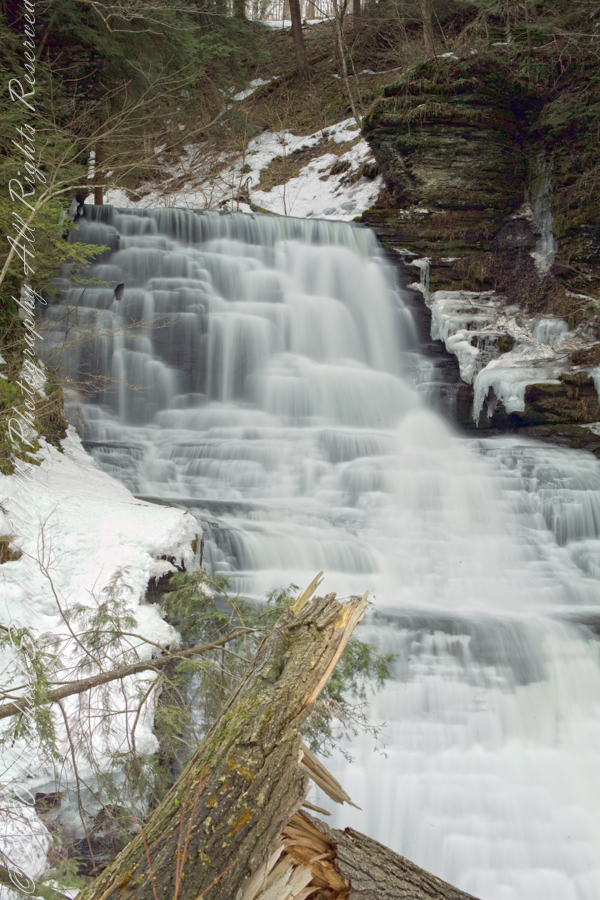
Portrait orientation expands the view
Portrait orientation of the waterfall beneath the dam reveals the length the water takes across a cliff face. A shattered Hemlock destroyed over previous winter is in foreground.
A high dynamic range rendering from several exposures from a Kodak DSC Pro SLR/c with a Canon EF 50 mm f/1.4 USM all mounted on a very stable Manfrotto 468MG tripod with Hydrostatic Ball Head.
Fillmore Glen State Park Moravia, Cayuga County, New York.
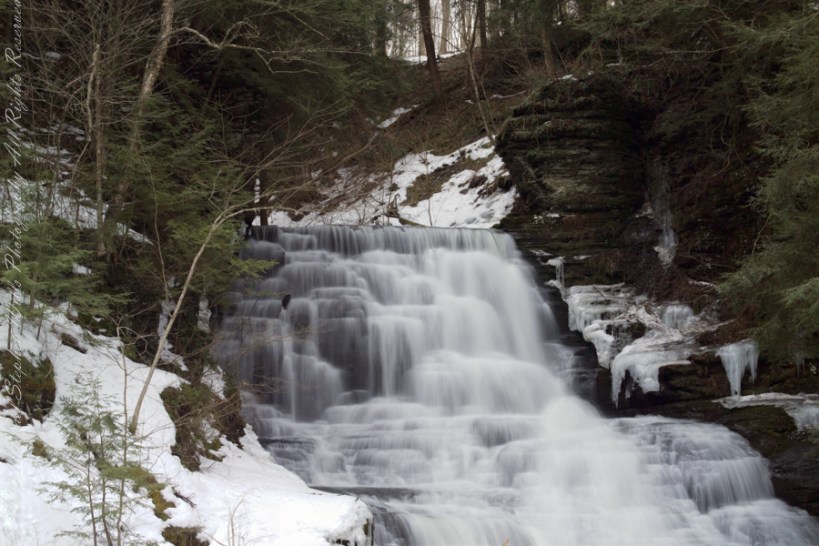
A very wet “Dry Creek”
The upper portion of a high waterfall flowing from the outlet from the dam of Dry Creek on a spring morning just after the solstice.
A high dynamic range rendering from several exposures from a Kodak DSC Pro SLR/c with a Canon EF 50 mm f/1.4 USM all mounted on a very stable Manfrotto 468MG tripod with Hydrostatic Ball Head.
Fillmore Glen State Park Moravia, Cayuga County, New York.
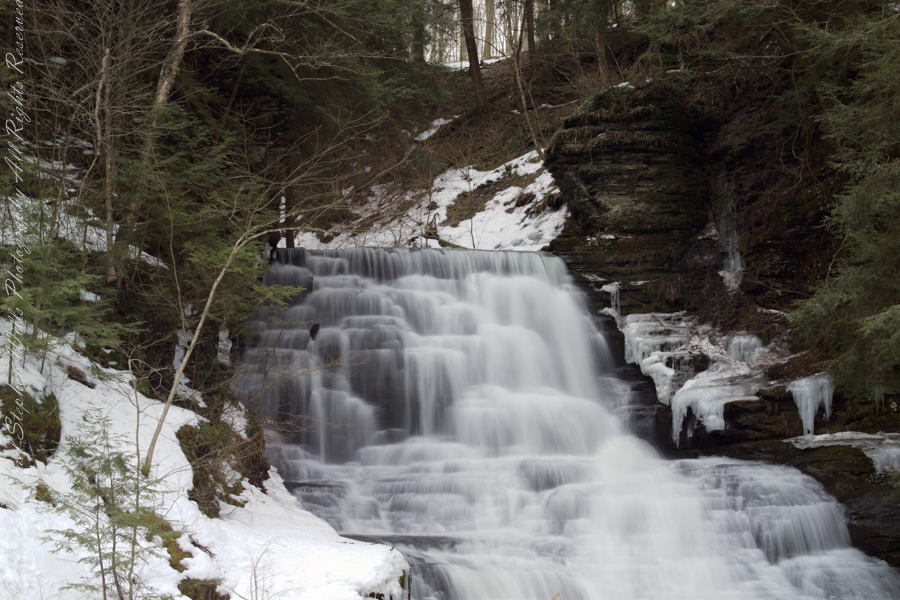
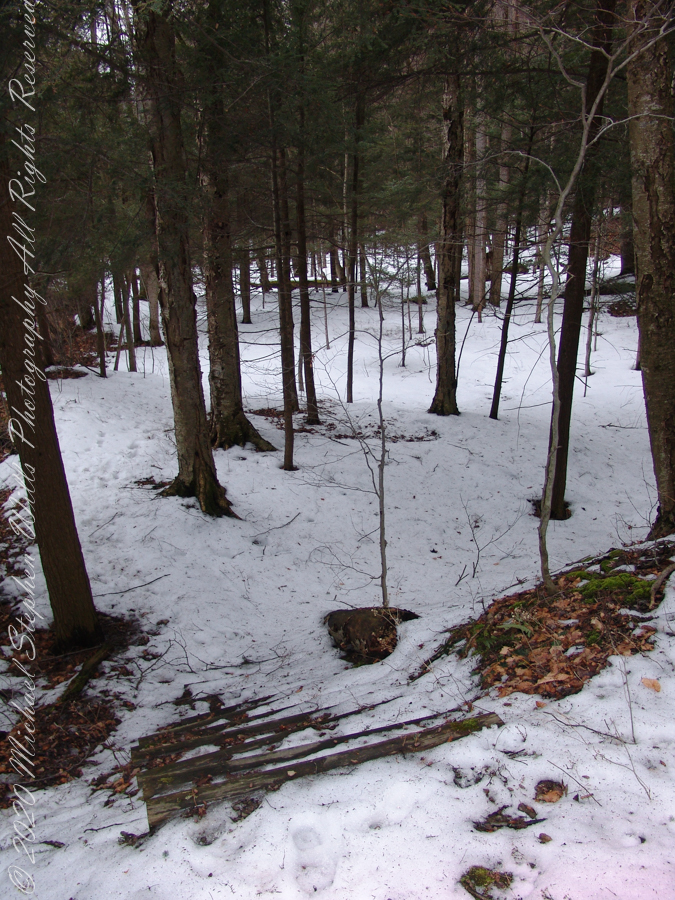
Watch Your Step
Foot trail leading to the waterfall below the dam on a spring morning just after solstice.
Fillmore Glen State Park Moravia, Cayuga County, New York.
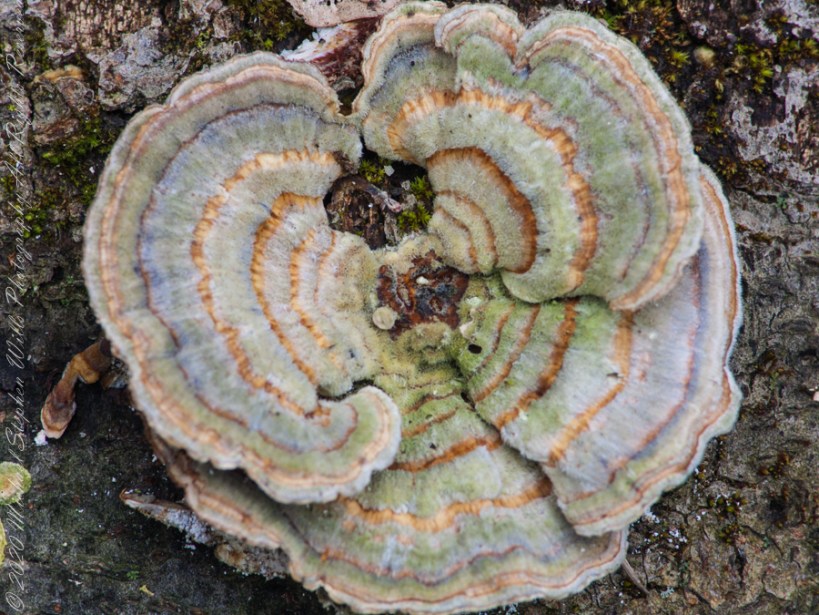
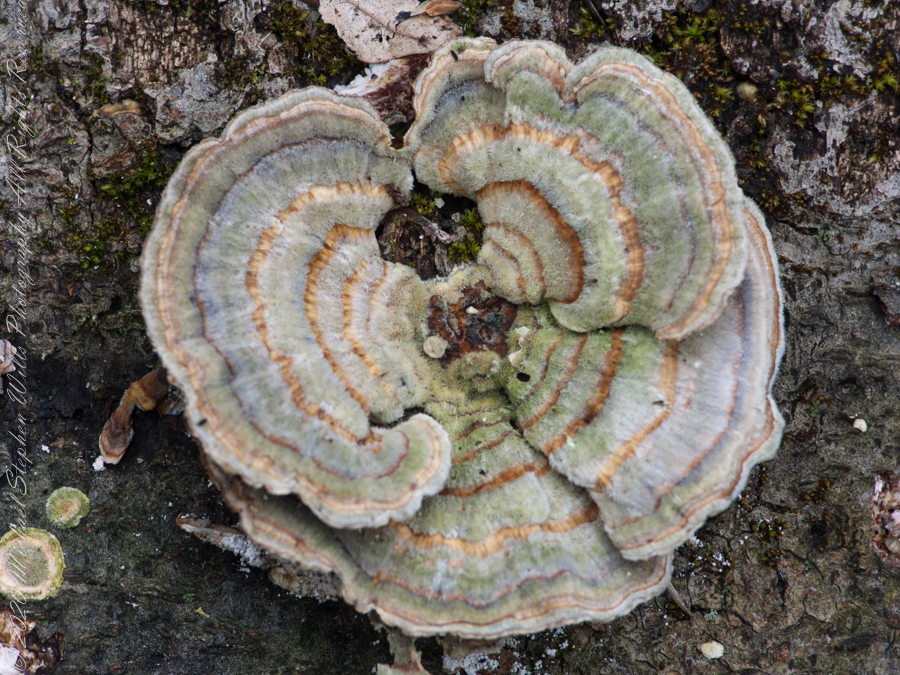
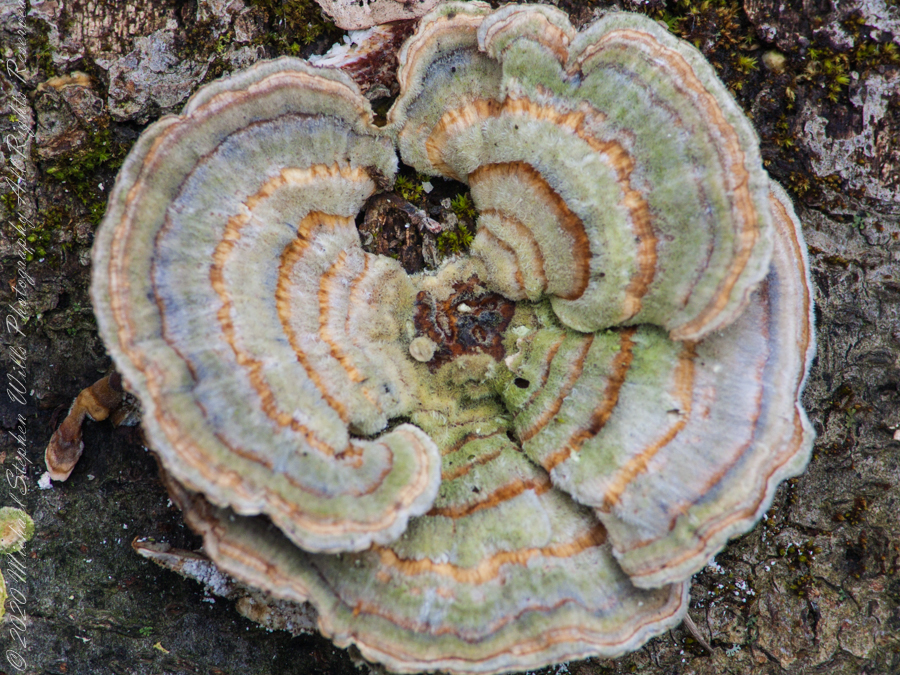
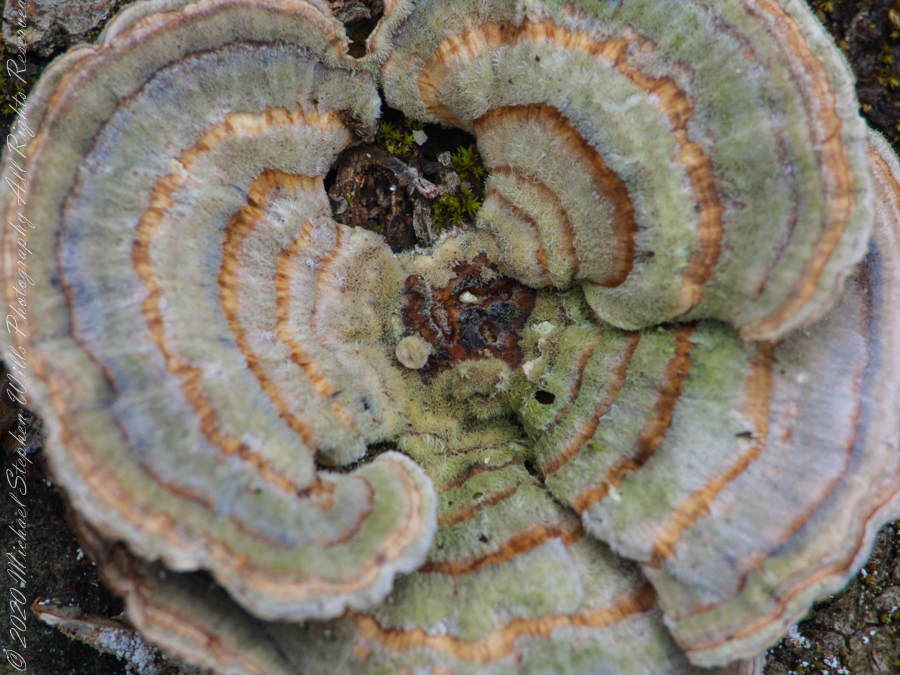
Bracket Fungus
Trametes versicolor – also known as Coriolus versicolor and Polyporus versicolor – is a common polypore mushroom found throughout the world.
Meaning ‘of several colors’, versicolor reliably describes this fungus that displays a variety of colors. For example, because its shape and multiple colors are similar to those of a wild turkey, T. versicolor is commonly called turkey tail.
Found on a rotting Hemlock stump, Fillmore Glen State Park Moravia, Cayuga County, New York.

Polypores are a group of fungi that form large fruiting bodies with pores or tubes on the underside (see Delimitation for exceptions). They are a morphological group of basidiomycetes-like gilled mushrooms and hydnoid fungi, and not all polypores are closely related to each other.
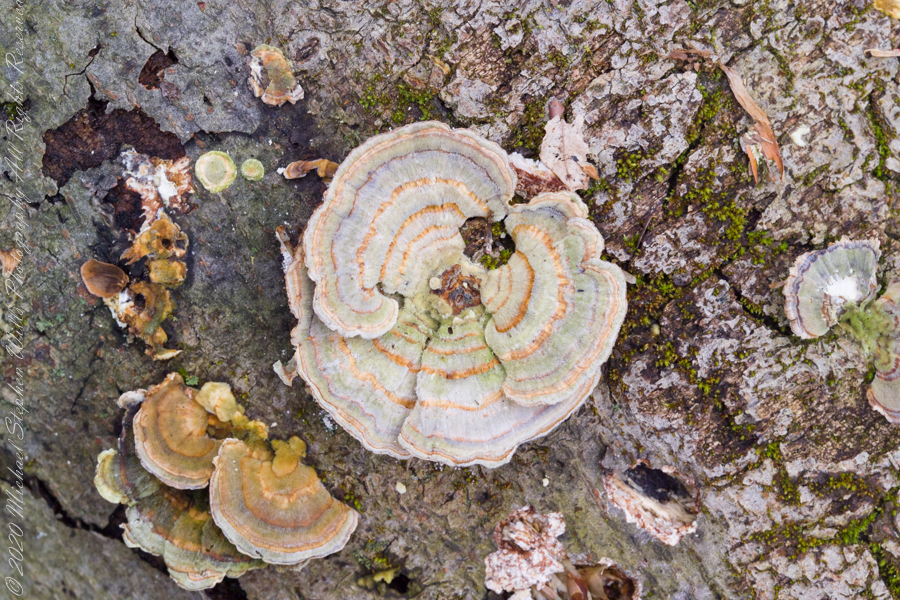
Polypores are also called bracket fungi or shelf fungi, and they characteristically produce woody, shelf- or bracket-shaped or occasionally circular fruiting bodies that are called conks.
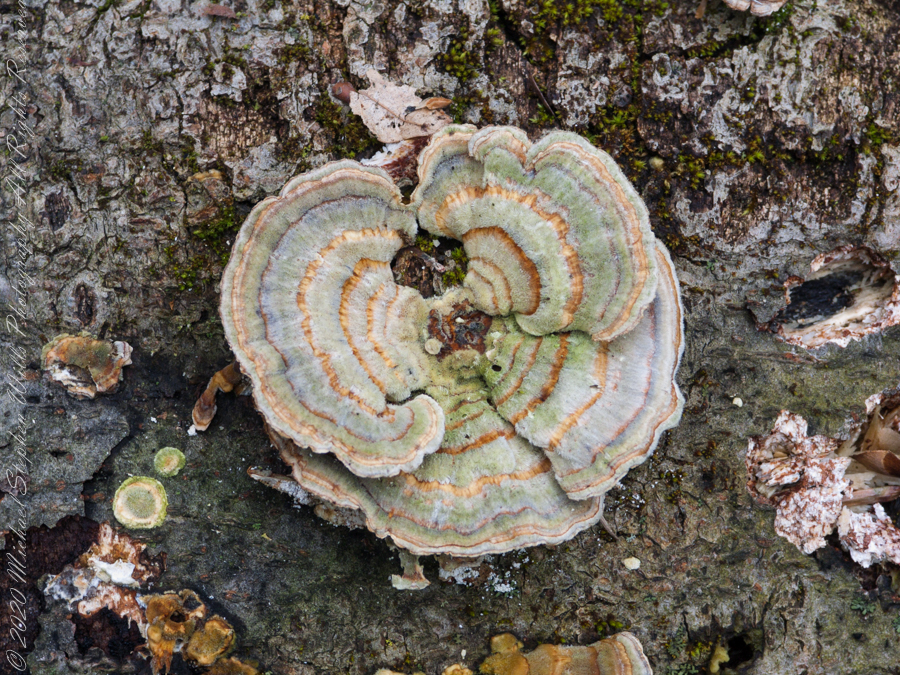
Most polypores inhabit tree trunks or branches consuming the wood, but some soil-inhabiting species form mycorrhiza with trees. Polypores and the related corticioid fungi are the most important agents of wood decay, playing a very significant role in nutrient cycling and aiding carbon dioxide absorption by forest ecosystems.
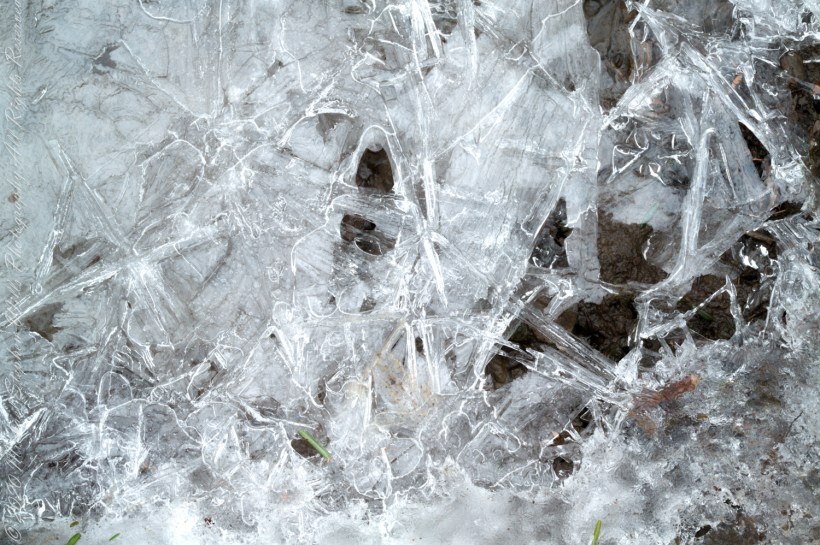
Light Plays
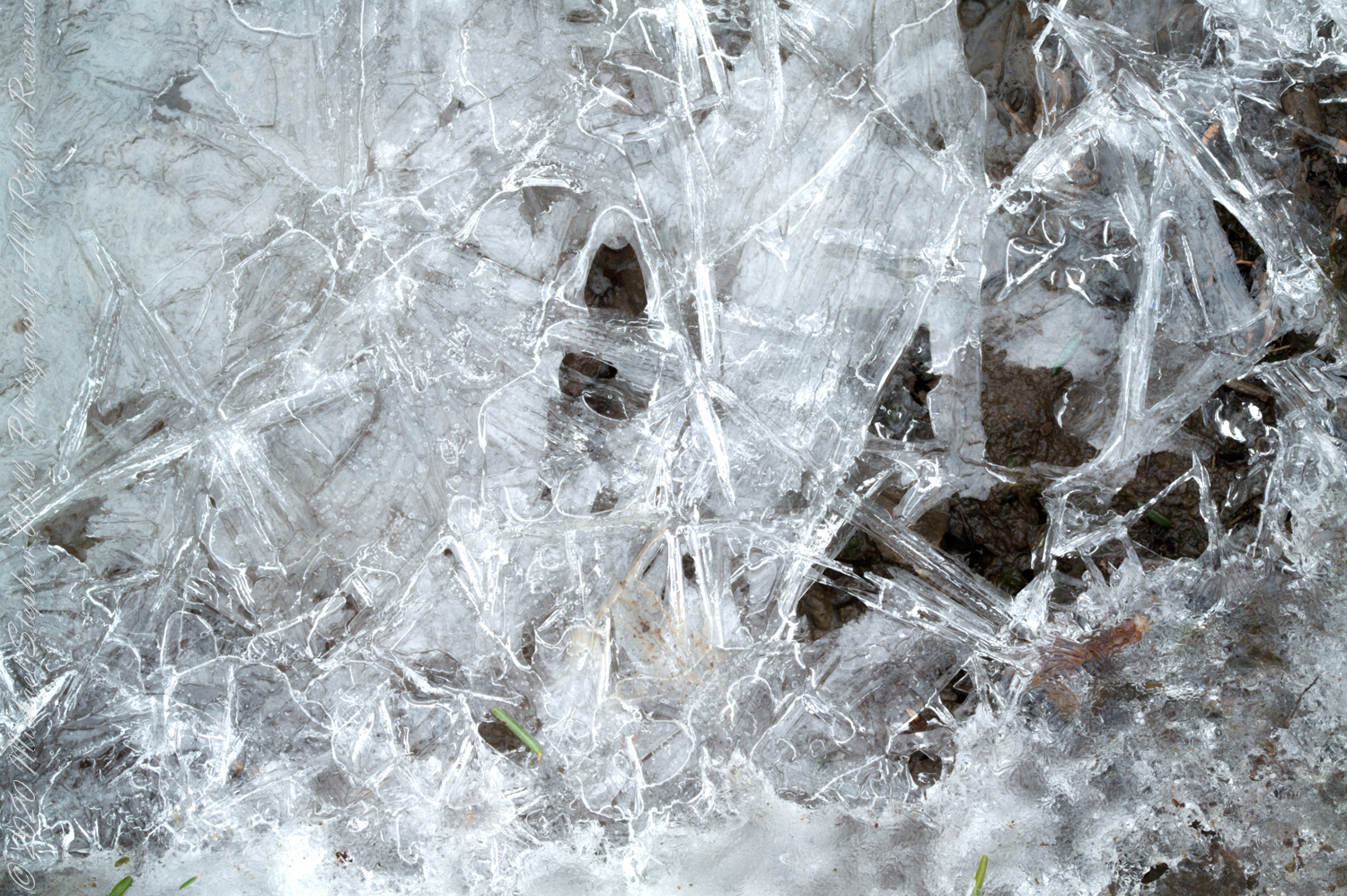
Surface of ice formed over a flowing creek. One is a HDR of three exposures, the other is a single exposure. Yes, that is dirt you see under the ice. How did that happen?
Readers: Can you tell which is the HDR? Please answer with a comment. Thank You
All are macros from a Kodak DSC Pro SLR/c with a Canon EF 100 mm f/2.8 Macro USM lens stabilized on a Manfrotto 468MG tripod with Hydrostatic Ball Head
Fillmore Glen State Park, Moravia, Cayuga County, New York.


Cozy Snowmen dance round the candle
My dear wife Pam is the heart of Christmas in our home. Over the years we have collected a treasure of ornaments and knick-knacks she crafts into displays around our home. Pam completed the project well in advance of our grandchild holiday visits, before card writing and gift wrapping.
My contribution is a photographic time capsule. Here is some of my artistic output from this work.
This grouping of five cozy snowmen (three males, two females) are warmly dressed in knit sweaters and stocking caps; the women with long skirts. The five hold hands in a ring, rising from a common platform. We place a cup and devotional candle in the center.
The tiny group evokes community, harmony, amity. I captured them with a Canon EOS 1Ds Mark III dslr, a fixed Canon EF 100mm f/2.8L macro lens mounted on a Manfrotto studio tripod and hydrostatic ball head. Fixed lenses provide the sharpest macros. The mounting allowed precise framing and use of the widest aperture and a low ISO. The light sources were sunlight from a large north facing bay window, a Canon Speedlite 600Ex-Rt and the candle. When used, the flash was angled in various ways toward the ceiling.
I start with a tight shot, maximum aperture. A single figure is in clear focus, the remaining gradually lost in the bokeh. The flash was used. I can almost see then circling around the candle in a winter wind.

Here the candle is lighted, aperture narrow to f8 using only the candle and ambient light (no flash). The group is visible within surrounding figures. I backed away and the viewpoint is higher.
The candle light enhances the perception of community.

Viewpoint is closer, still only the candle and ambient light. Aperture widened to 3.5. I must remove the hair in lightroom.

I backed off, aperture at the max with only the candle and ambient light. The figures are placed in a tableau with other snowmen and a structure, a birdhouse.

For this overview I swapped in a Canon 24mm f/1.4L II USM with a flash, aperture f2.2.

 Michael Stephen Wills Photography