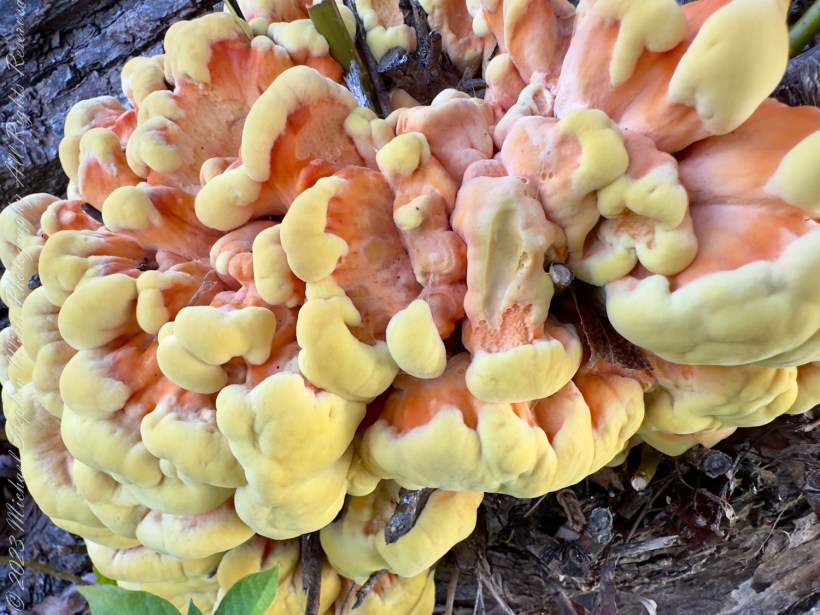
Echoes of Autumn: Finding Beauty and Wonder in a Willow’s Fungal Bloom

On a sunny September morning along the shores of Cayuga Lake, I encountered the vibrant Chicken of the Woods fungus. Its striking colors and intriguing history make it a fascinating discovery in nature’s ongoing cycle of life and decay.

A Serendipitous Discovery on a September Morning


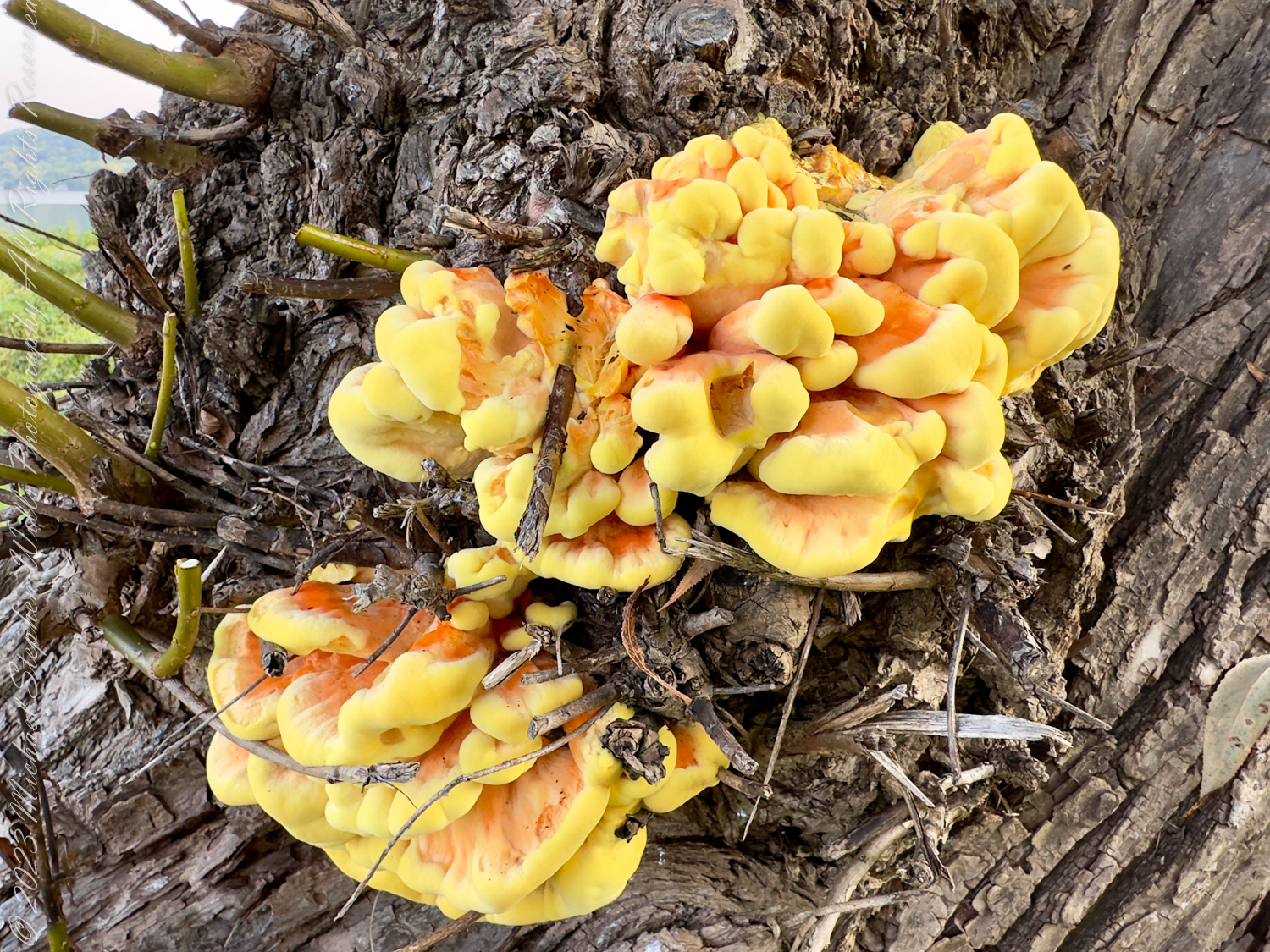
It was a crisp, sunny September morning when Pam and I set out for a leisurely walk along the shore of Cayuga Lake in Ithaca, New York. The lake shimmered in the morning light, framed by the early hints of fall colors on the surrounding hills. We had been walking for some time, enjoying the peaceful rhythm of nature, when something unusual caught my eye—a cluster of bright yellow-orange growths on the trunk of an apparently hale White Willow tree.
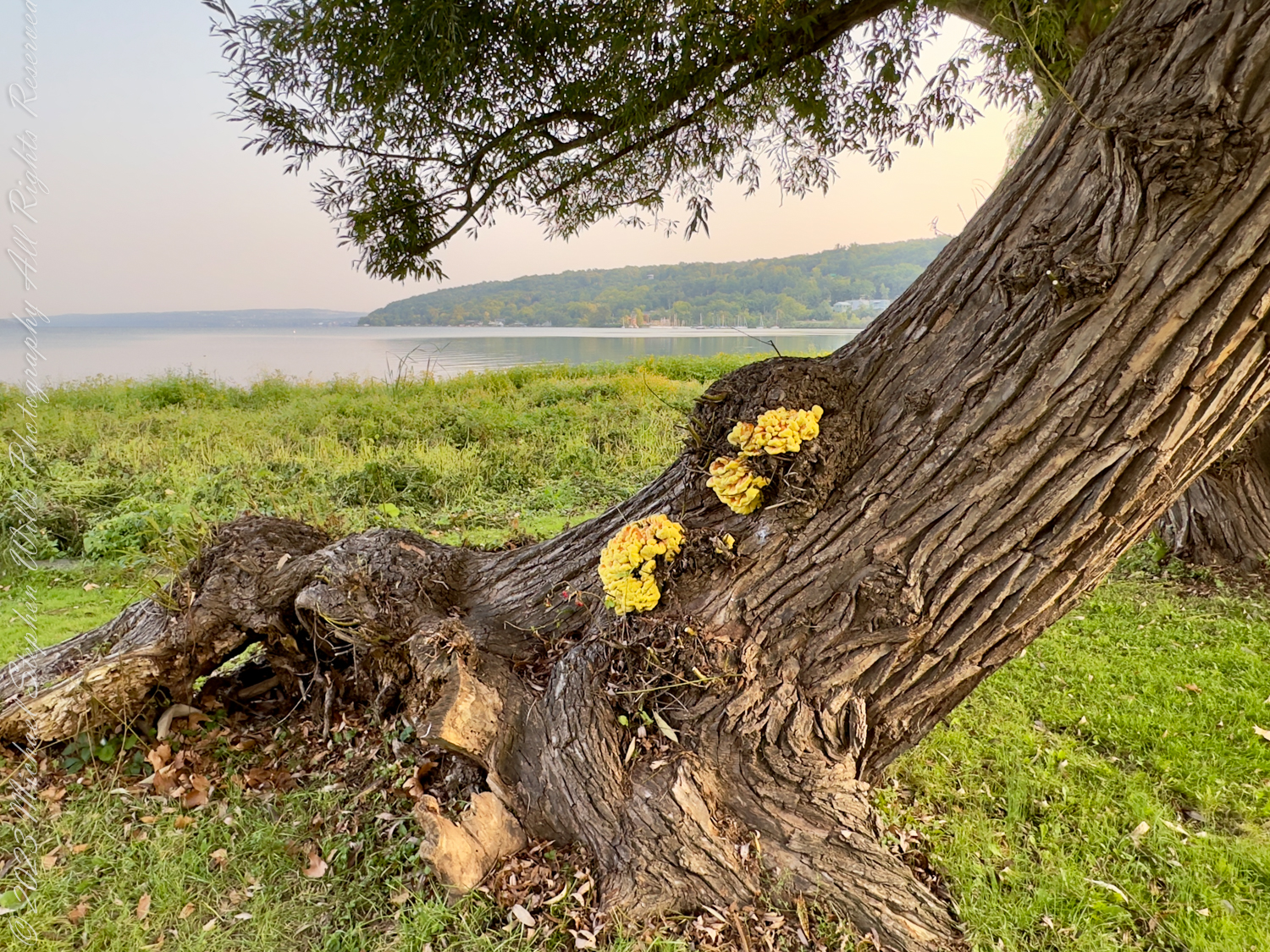
Curious, I approached the tree, and upon closer inspection, I realized these growths were something special, took these photographs of the vibrant clusters and later researched them to be Laetiporus sulphureus, commonly known as Chicken of the Woods. The striking colors of the fungus, a combination of deep orange and golden yellow, stood out in stark contrast to the gnarled, dark bark of the willow. It was a discovery that sparked a deeper interest in learning about the fascinating history and characteristics of this unique fungus.
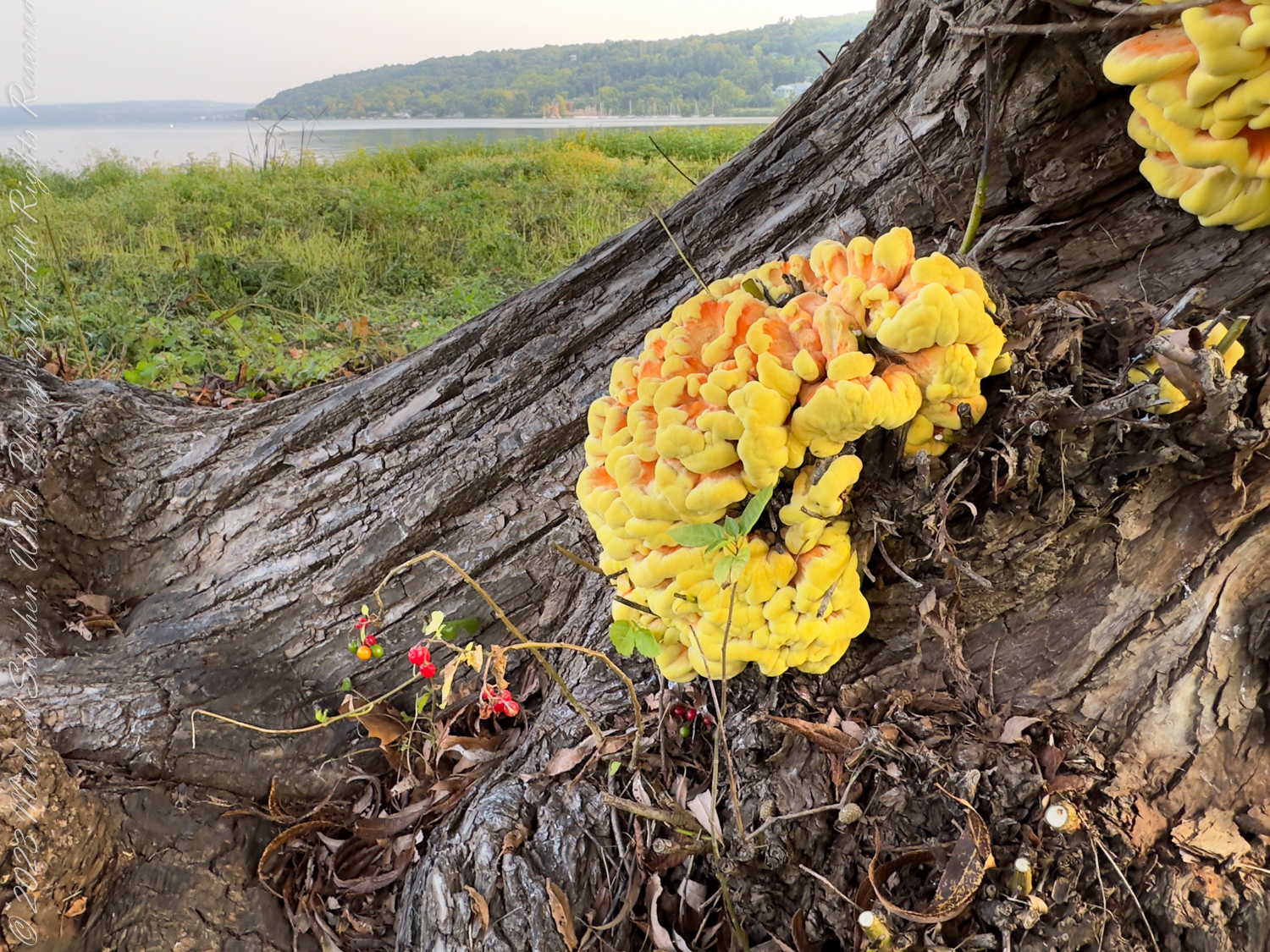
The Vibrant History of Chicken of the Woods


Laetiporus sulphureus has been known to mycologists and naturalists for centuries, and its distinctive appearance has earned it a place among the most recognizable fungi in the world. Its common name, Chicken of the Woods, stems from the texture and flavor of its flesh, which, when cooked, is said to resemble that of chicken. This has made it a popular edible mushroom among foragers, particularly in Europe and North America, where it often grows on hardwood trees such as oak, cherry, and, as I found, occasionally on willows.
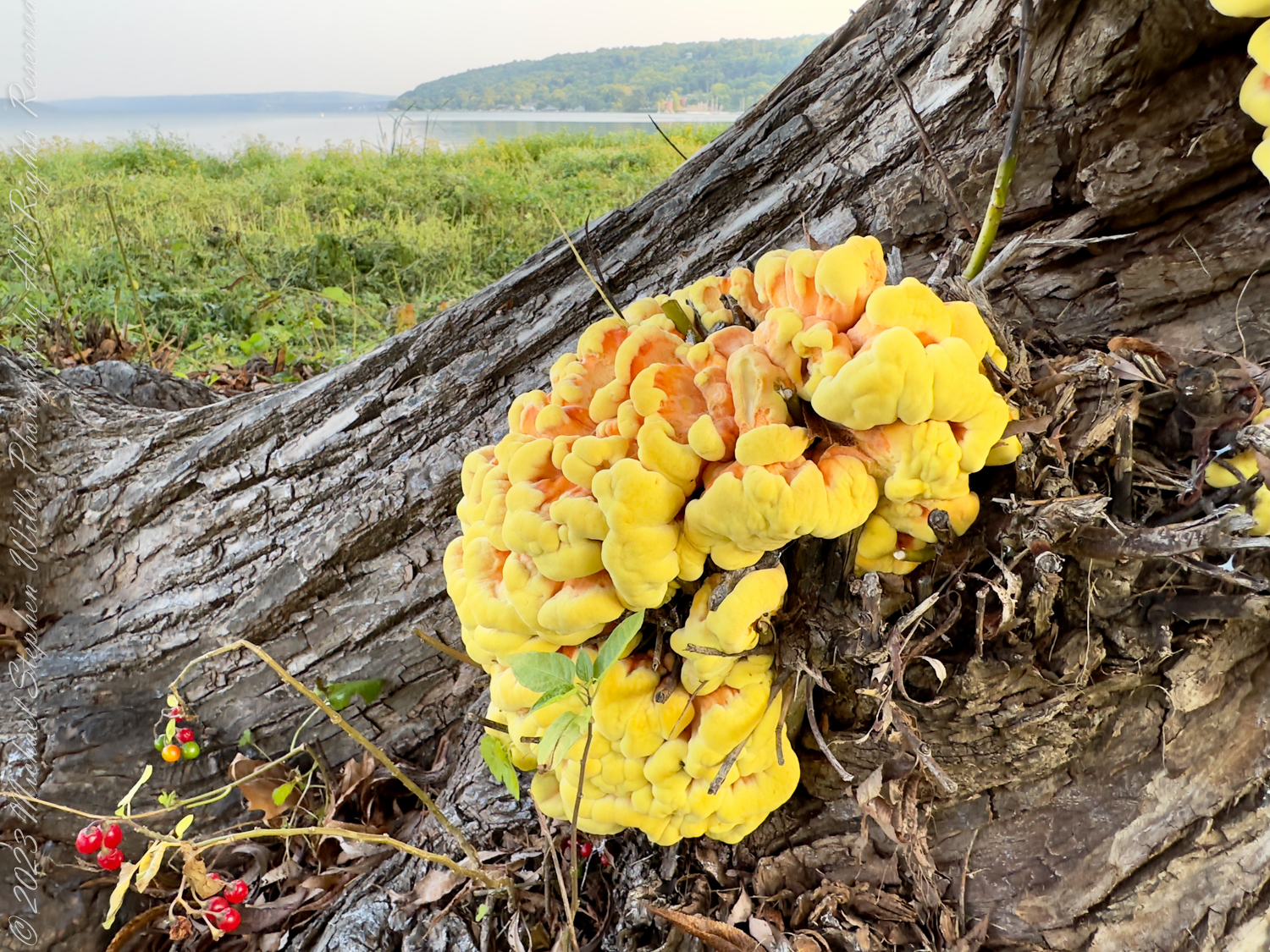
The fungus was first scientifically described by German mycologist August Batsch in 1789. Since then, it has been the subject of numerous studies, particularly due to its unique ability to grow on living trees, decaying wood, and sometimes even on dead trunks. This dual nature makes it both a decomposer and a potential pathogen, depending on the health of its host tree.
Historically, Chicken of the Woods has had various uses, ranging from culinary to medicinal. In traditional folk medicine, it was used for its antibacterial properties, and some cultures believed it could help heal wounds or infections when applied as a poultice. Today, research continues into its potential medicinal applications, including its possible role in supporting immune function and its antioxidant properties.

A Friend to Some, a Foe to Trees


While Laetiporus sulphureus may delight foragers and mushroom enthusiasts, it is not always welcomed by the trees it inhabits. The fungus is classified as a saprotroph, meaning it feeds on dead or decaying organic matter. However, it is also capable of acting as a parasite, attacking the heartwood of living trees. Over time, the fungus can cause brown rot, a form of decay that weakens the tree from the inside out. For trees already compromised by age or environmental stress, an infestation of Chicken of the Woods can be the final blow, leading to their eventual death and collapse.
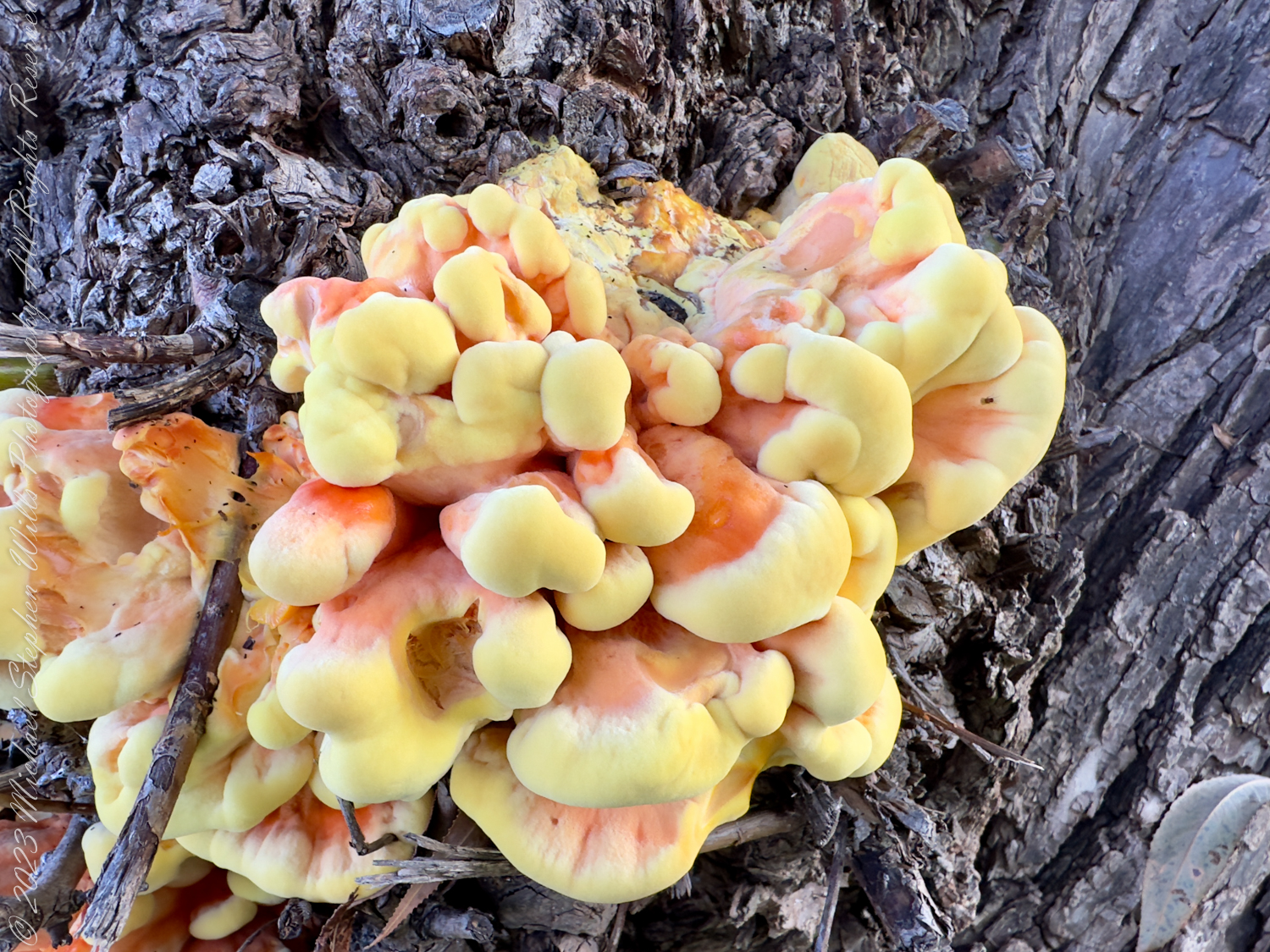
The willow tree I encountered by Cayuga Lake had clearly seen many seasons, its twisted trunk and sprawling limbs a testament to decades of life along the shoreline. The presence of the fungus, while beautiful and intriguing, could also be an indicator that this tree was in decline. Still, the symbiotic relationship between the tree and the fungus was a reminder of nature’s cycles—of life, decay, and renewal.

Culinary and Medicinal Uses of Chicken of the Woods


One of the most interesting aspects of Chicken of the Woods is its edibility. Foragers and chefs alike prize the young, tender fruiting bodies for their chicken-like texture and mild flavor. When prepared properly, the fungus can be sautéed, fried, or even used in stews, providing a nutritious and flavorful addition to a variety of dishes. However, caution is required, as some individuals may experience allergic reactions or gastrointestinal upset after consuming it. Additionally, older specimens of the fungus can become woody and less palatable.

Beyond the kitchen, Chicken of the Woods has a history of medicinal use. In some cultures, it has been used to treat ailments ranging from respiratory infections to digestive issues. Modern research is beginning to explore the bioactive compounds present in the fungus, with preliminary studies suggesting that it may have antibacterial and antioxidant properties. These potential health benefits add yet another layer of intrigue to this already fascinating species.

An Essential Role in the Ecosystem


As well as serving human needs, Chicken of the Woods also plays a vital role in the ecosystems it inhabits. As a decomposer, the fungus breaks down dead and decaying wood, returning valuable nutrients to the soil and promoting the growth of new plant life. In this way, it contributes to the cycle of life and death that sustains forest ecosystems. Various insects and animals, including beetles and birds, may also use the fungus as a food source or shelter, further highlighting its ecological importance.

A Lasting Impression
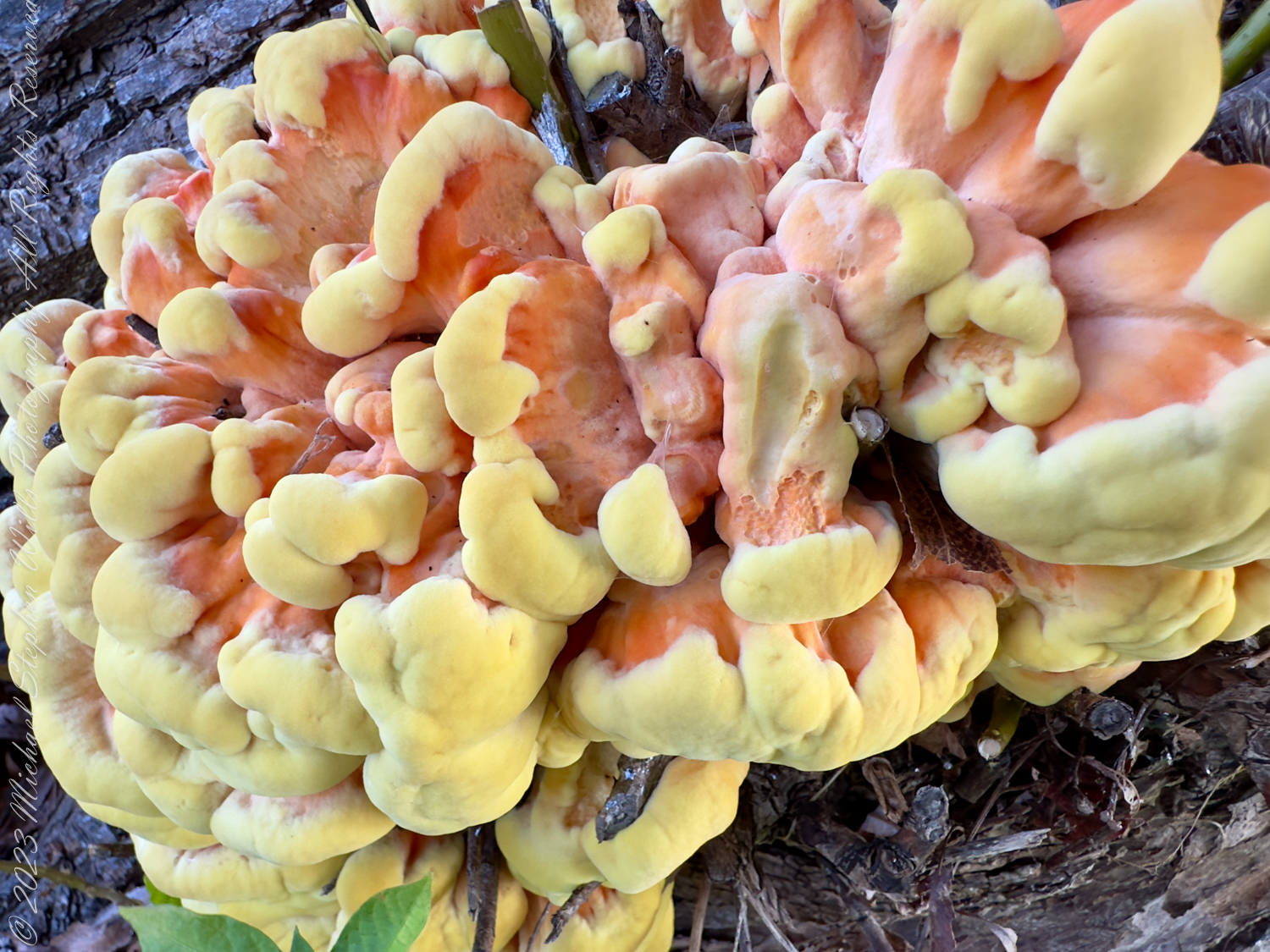

As Pam and I continued our walk along Cayuga Lake, I couldn’t help but feel a sense of gratitude for the serendipitous discovery I had made that morning. The sight of the Chicken of the Woods clinging to the willow tree was a vivid reminder of nature’s endless capacity for surprise and wonder. Though this fungus may be humble in its origin, its history, uses, and ecological significance elevate it to a position of great interest and value in the natural world.

In that quiet September morning light, standing beside the lake with the colors of early autumn beginning to emerge, I realized that moments like these—moments of connection with nature—are what keep me returning to the trails and shores of Ithaca, always eager for the next discovery.

Copyright 2024 Michael Stephen Wills All Rights Reserved

Reflections on Hawkweed: A Meditative Journey Along Buttermilk Creek

Discover the enchanting hawkweed along Buttermilk Creek’s path. Explore its vibrant yellow blooms, unique reproduction, and rich folklore in our latest nature essay. Dive into the captivating world of this resilient wildflower!


Walking along the path that climbs from the lower park into the gorge of Buttermilk Creek, I am drawn to the vibrant splash of yellow that punctuates the verdant green and shale, limestone of the path. Here I encounter the humble yet striking hawkweed (Hieracium spp.). These yellow flowers, seemingly modest in their simplicity, invite me into a deeper contemplation of nature’s intricacies.

A Closer Look

The hawkweed’s leaves form a basal rosette, their slightly toothed edges and hairy surface distinguishing them from other woodland plants. The leaves are a deep green, the tiny hairs catching the sunlight, giving them a silvery sheen. From this rosette emerges an erect stem, slender and bristling with fine hairs, reaching upwards to support the flower heads. The stems stand tall, bearing clusters of small, dandelion-like flowers that open into a cheerful yellow bloom.

These Hawkweed grow profusely along the climb along Buttermilk Creek and into the gorge. Buttermilk Falls Park, Ithaca, Tompkins County, New York State. Finger Lakes Region

Each flower head consists of numerous tiny florets, collectively forming a radiant disc. The petals are intricately fringed, almost feathery, a delicate contrast to the sturdy stem that holds them aloft. This contrast is a reminder of the balance in nature—strength and fragility coexisting in harmony.

Relationship and Reproduction

Hawkweeds belong to the Asteraceae family, sharing familial ties with daisies and dandelions. Despite their visual similarity to dandelions, hawkweeds possess unique reproductive strategies. They are known for their ability to reproduce asexually through a process called apomixis. This means that the seeds produced by hawkweed are genetically identical to the parent plant. In a grouping of hawkweeds, what appears to be a diverse collection of individuals may, in fact, be clones of a single genetic ancestor.

This method of reproduction ensures the rapid spread and establishment of hawkweed populations, a survival strategy that has both fascinated and frustrated botanists and gardeners alike. While this cloning capability allows hawkweeds to thrive in various environments, it also poses a challenge for those trying to control their spread.

Etymology and Origins

The genus name “Hieracium” is derived from the Greek word “hierax,” meaning hawk. According to ancient lore, hawks were believed to consume the sap of this plant to sharpen their vision. This mythological connection to hawks underscores the plant’s perceived potency and its storied place in folklore.

Hawkweed is not native to the Finger Lakes region but was introduced from Europe. Despite its non-native status, it has adapted well to the local environment, often found in meadows, along roadsides, and within open woodlands. Its ability to colonize disturbed areas has enabled it to become a common sight across the landscape.

Historical Uses and Lore

Throughout history, hawkweed has been used for various medicinal purposes. Traditional herbalists valued it for its purported benefits in treating respiratory ailments, digestive issues, and skin conditions. The plant was often brewed into teas or concoctions believed to have diuretic and astringent properties. Some cultures also used hawkweed as a charm against evil spirits, further embedding it in the tapestry of folklore and superstition.

In medieval times, hawkweed was sometimes used in love potions and to enhance psychic abilities. Its association with hawks and keen vision lent itself to these mystical uses, as people sought to harness the plant’s reputed powers for their own needs.

A Contemplative Pause

As I stand on the path, surrounded by the quiet beauty of Buttermilk Creek, I reflect on the hawkweed before me. This unassuming plant, with its bright flowers and tenacious growth, embodies resilience and adaptability. It thrives in the cracks and crevices of the rocky soil, a testament to nature’s relentless drive to flourish even in the most challenging conditions.

The hawkweed’s ability to clone itself, creating vast networks of genetically identical plants, speaks to the interconnectedness of life. Each plant is a reflection of its predecessors, a living link in the chain of existence. This genetic continuity is a reminder of the ways in which life persists and propagates, ensuring survival through the ages.

I found this growing along the South Rim Trail of Taughannock Falls Park during a Fathers Day Walk, June 16, 2024.Picris hieracioides, or hawkweed oxtongue, is a species of flowering plant in the family Asteraceae. Invasive Species Hawkweed Oxtongue is considered an invasive species in North America because it has the ability to outcompete native plants, reduce biodiversity, and alter ecosystems. The plant spreads rapidly and can form dense monocultures, making it difficult for other plants to grow. Additionally, Hawkweed Oxtongue produces a chemical that inhibits the growth of other plants, further contributing to its invasive nature. Control and Management The control and management of Hawkweed Oxtongue can be challenging. The plant has a deep taproot that makes it difficult to remove by hand, and it can regrow from small root fragments left in the soil. Herbicides can be effective in controlling the plant, but they can also harm other plants in the area. The best approach to managing Hawkweed Oxtongue is to prevent its spread by avoiding the movement of soil or plant material that may contain seeds or root fragments. Uses Despite its invasive nature, Hawkweed Oxtongue has some traditional medicinal uses. The plant contains compounds that have been used to treat digestive problems, skin conditions, and respiratory issues. However, the use of this plant for medicinal purposes is not recommended due to the potential for toxicity. In conclusion, Hawkweed Oxtongue is an invasive species that has the potential to cause significant ecological damage. It is important to prevent the spread of this plant and to take measures to control its growth where it has already become established. While it has some traditional medicinal uses, the potential for toxicity means that it should not be used for this purpose. Text taken from http://www.wildflowerweb.co.uk/plant/2453/hawkweed-oxtongue

In the stillness of the gorge, I find a sense of peace and connection. The hawkweed, with its storied past and practical resilience, offers a lesson in simplicity and strength. It reminds me that beauty often lies in the small, overlooked details of the natural world, and that every plant, every flower, has a story worth discovering.

As I continue my journey along Buttermilk Creek, the hawkweed’s bright blooms remain a vivid memory, a symbol of the enduring spirit of nature.

Copyright 2024 Michael Stephen Wills All Rights Reserved

The Delight of Woodruff: An Exploration of Galium odoratum

Discover the enchanting woodruff growing around our home! Explore its natural history, delightful fragrance, and fascinating role in folklore and history. Uncover the wonders of this perennial plant in our latest blog post.

As spring breathes new life into our surroundings, the delight of identifying the plants that grow around our home is a joy like no other. This year, I was thrilled to discover that the delicate and fragrant woodruff (Galium odoratum) has been gracing our garden. Known for its charming clusters of white flowers and vibrant green leaves, woodruff brings both aesthetic beauty and a rich historical tapestry to our home.

Natural History of Woodruff

Woodruff, scientifically known as Galium odoratum, is a perennial plant native to Europe, North Africa, and parts of Asia. It thrives in shady, woodland environments, often forming dense mats that carpet the forest floor. The plant typically blooms in late spring to early summer, producing tiny white flowers that contrast beautifully with its whorls of bright green leaves.

Galium odoratum is a member of the Rubiaceae family, which also includes coffee and gardenias. Its ability to spread quickly through its creeping rhizomes makes it an excellent ground cover. In addition to its visual appeal, woodruff is known for its sweet scent, which intensifies when the plant is dried. This fragrance is due to the presence of coumarin, a natural compound that also contributes to its medicinal properties.

This woodruff (Galium odoratum) grows around our home.

Etymology of the Scientific and Common Names

The scientific name Galium odoratum provides insights into the plant’s characteristics. “Galium” is derived from the Greek word “gala,” meaning milk. This refers to the plant’s historical use in curdling milk. “Odoratum,” on the other hand, highlights the plant’s pleasant aroma.

The common name “woodruff” has an interesting origin as well. The word “wood” refers to the plant’s typical habitat in wooded areas, while “ruff” is thought to be derived from the Old English “rūwe,” meaning rough or hairy, describing the texture of the plant’s leaves and stems.

Woodruff in Folklore and History

Woodruff has a storied past, steeped in folklore and history. In medieval Europe, it was used for its aromatic properties to freshen up linens and as a strewing herb to mask odors in homes and churches. Its sweet scent was believed to ward off evil spirits and bring good fortune, making it a popular choice for wreaths and garlands during festivals and celebrations.

The plant also played a role in traditional medicine. Woodruff was used to treat various ailments, including liver and gallbladder issues, and as a mild sedative. Its medicinal use is attributed to the coumarin content, which has anticoagulant and anti-inflammatory properties. However, it’s worth noting that high doses of coumarin can be toxic, so its medicinal use has largely fallen out of favor in modern times.

In Germany, woodruff is famously associated with May Wine, a traditional beverage enjoyed during spring festivals. The plant is infused into white wine, imparting its unique flavor and aroma. This custom dates back centuries and is still practiced today, symbolizing the arrival of spring and the renewal of life.

This woodruff (Galium odoratum) grows around our home.

The Surprise and Wonder of Woodruff

Discovering woodruff around our home has been a source of wonder and delight. Its presence connects us to the rich tapestry of nature and history, reminding us of the timeless beauty and utility of the plants that surround us. As I watch the delicate flowers sway gently in the breeze, I am filled with a sense of gratitude for the surprises that nature continually offers.

Woodruff’s modest appearance belies its profound impact on the landscape and our lives. It serves as a reminder that even the smallest plants can hold significant historical, cultural, and medicinal value. As we continue to explore and appreciate the natural world around us, the humble woodruff stands as a testament to the enduring connection between humanity and nature.

Copyright 2024 Michael Stephen Wills All Rights Reserved

From Myths to Medicine Unraveling the Tales of False Solomon’s Seal

Step into Treman Gorge and discover the enchanting world of False Solomon’s Seal. Unveil the myths, medicinal uses, and ecological wonders of Smilacina racemosa as it flourishes beneath the forest canopy.

In the shaded woodland of Treman Gorge, near the tumbling waters of Lucifer Falls, the understory blooms with the intriguing presence of Smilacina racemosa, commonly known as false Solomon’s seal. This perennial wildflower’s identity is as layered as the forest floor it adorns, its names—both scientific and common—woven with historical and cultural threads.

Smilacina racemosa—the plant’s scientific name—offers a botanical breadcrumb trail to its identity. “Smilacina” derives from a diminutive form of the Latin word for smile, “smilax”, a reference not to the plant’s demeanor but to its resemblance to the related sarsaparilla plants, which belong to the genus Smilax. The species name “racemosa” speaks directly to its form, describing the characteristic raceme or cluster of flowers that gracefully arch at the end of its stalk, each blossom a delicate dot along the green wand.

The common name, false Solomon’s seal, tells a tale of mistaken identity and botanical homage. The name playfully suggests a sibling rivalry of sorts with its look-alike, the true Solomon’s seal (Polygonatum), which bears its flowers and fruits along the stem, rather than at the tip as in Smilacina. The term “Solomon’s seal” itself is steeped in lore, supposedly referring to the circular seals from King Solomon’s ring—a mark of wisdom and an echo in the circular scars on the rhizome of the true Solomon’s seal. Here, in this false version, the legacy is mimicked in form but remains uniquely distinct in its flowering finale.

As for its cultural tapestry, false Solomon’s seal holds its own chapter in Native American ethnobotany. The plant was not merely a forest decoration but a source of sustenance and medicine. Its young shoots and leaves were often harvested in spring, a woodland asparagus of sorts, eaten raw or cooked. The roots served a more medicinal role, employed in treatments from stomachaches to rheumatic pains, revealing a deep-rooted reverence for this plant’s healing potential.

Beyond its uses, false Solomon’s seal paints a broader stroke in the ecological canvas of Treman Gorge. Flowering in May, its creamy white blossoms are a ballet of light in the dappled shade, attracting a suite of spring pollinators. By autumn, the flowers give way to speckled red berries, a feast for the eyes and a banquet for birds and mammals, knitting itself into the life threads of its woodland home.

Thus, the journey of understanding Smilacina racemosa is as much about unearthing its etymological roots as it is about appreciating its ecological and cultural resonance. A plant of beauty and utility, it stands as a silent sentinel in the history-laden woods of Treman Gorge, its presence a whispered tale in the symphony of spring. As it stretches beneath the towering trees, it invites those who wander to delve deeper into its story, a tale woven through the very fabric of the forest floor.

Copyright 2024 Michael Stephen Wills All Rights Reserved