Kinsale Walking Tour 5

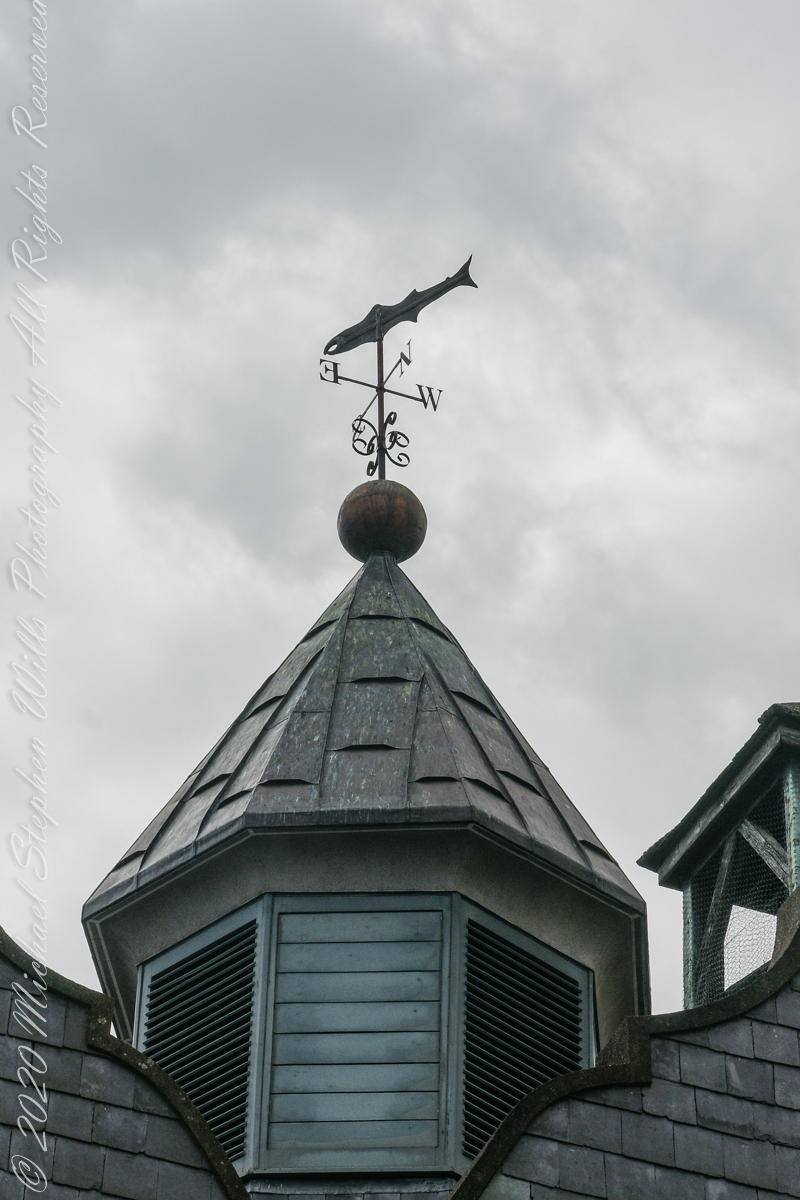
Kinsale Giant with pickled herring

The fifth of a series of idiosyncratic posts from a walking tour of Kinsale by Dermot Ryan. My Sony Alpha 700 captured the events back in May 2014.

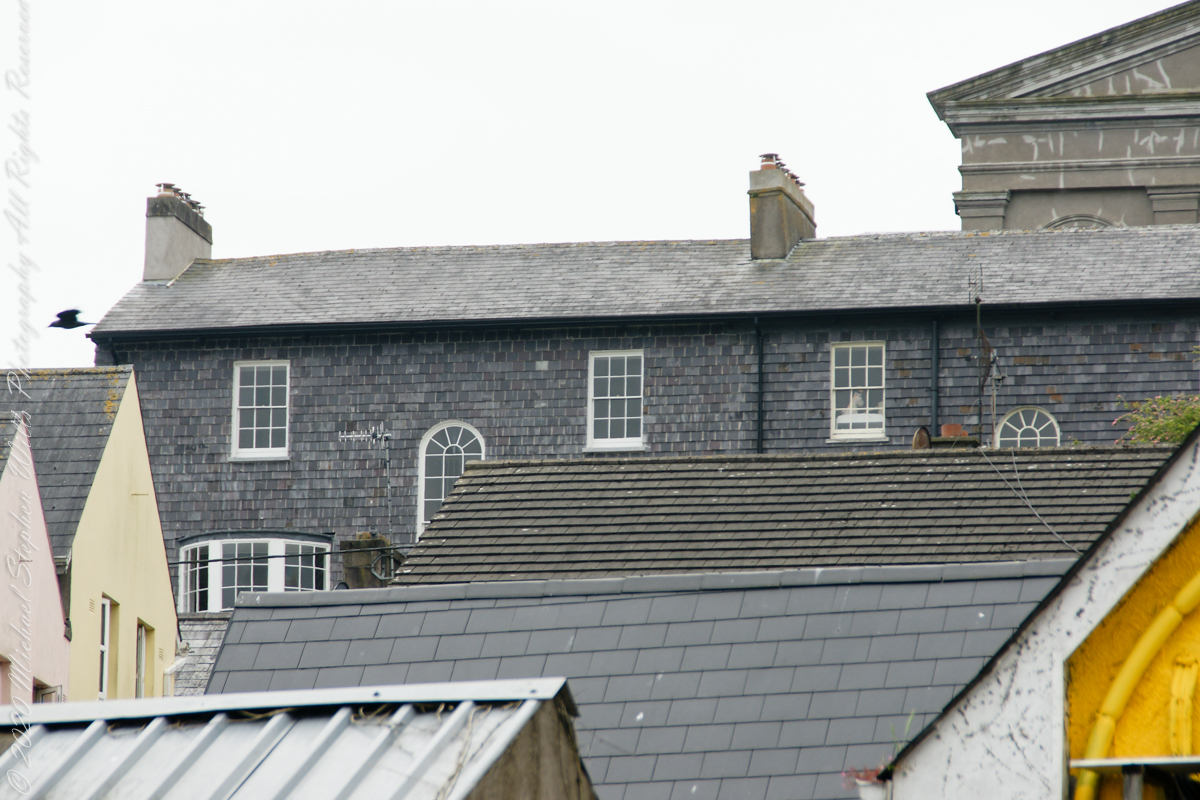
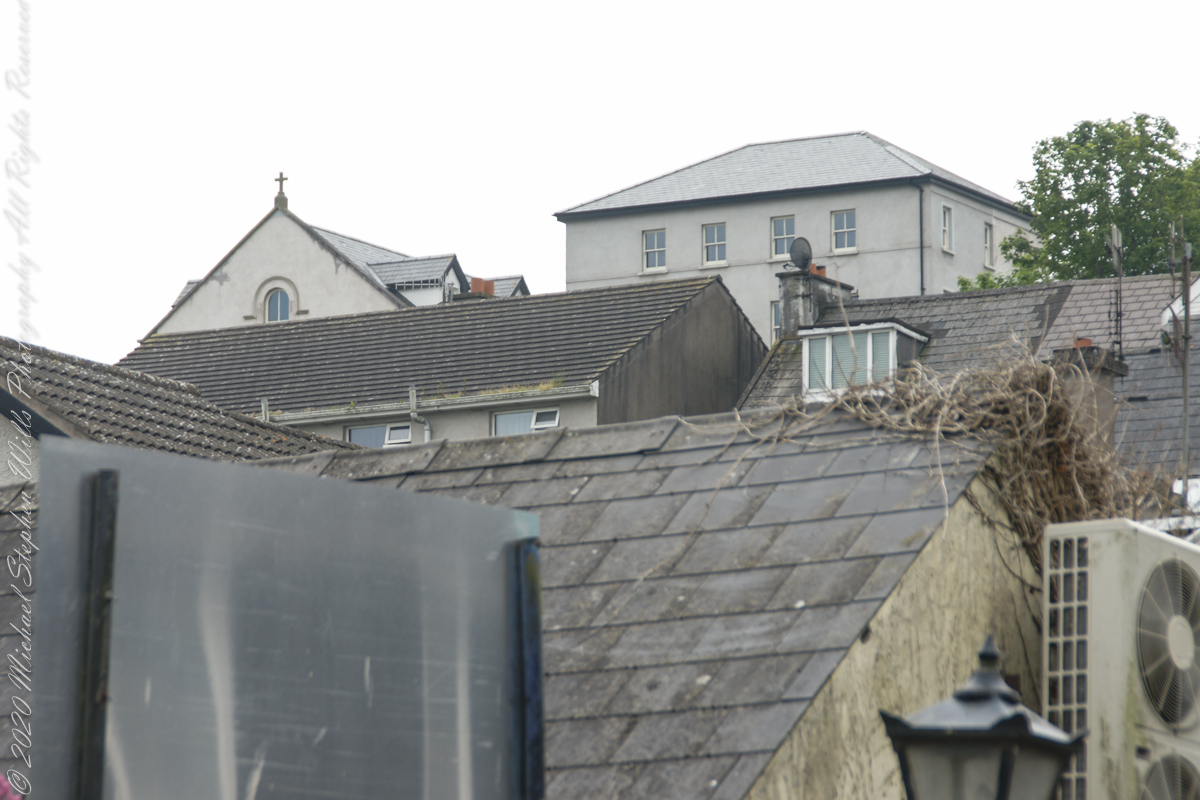
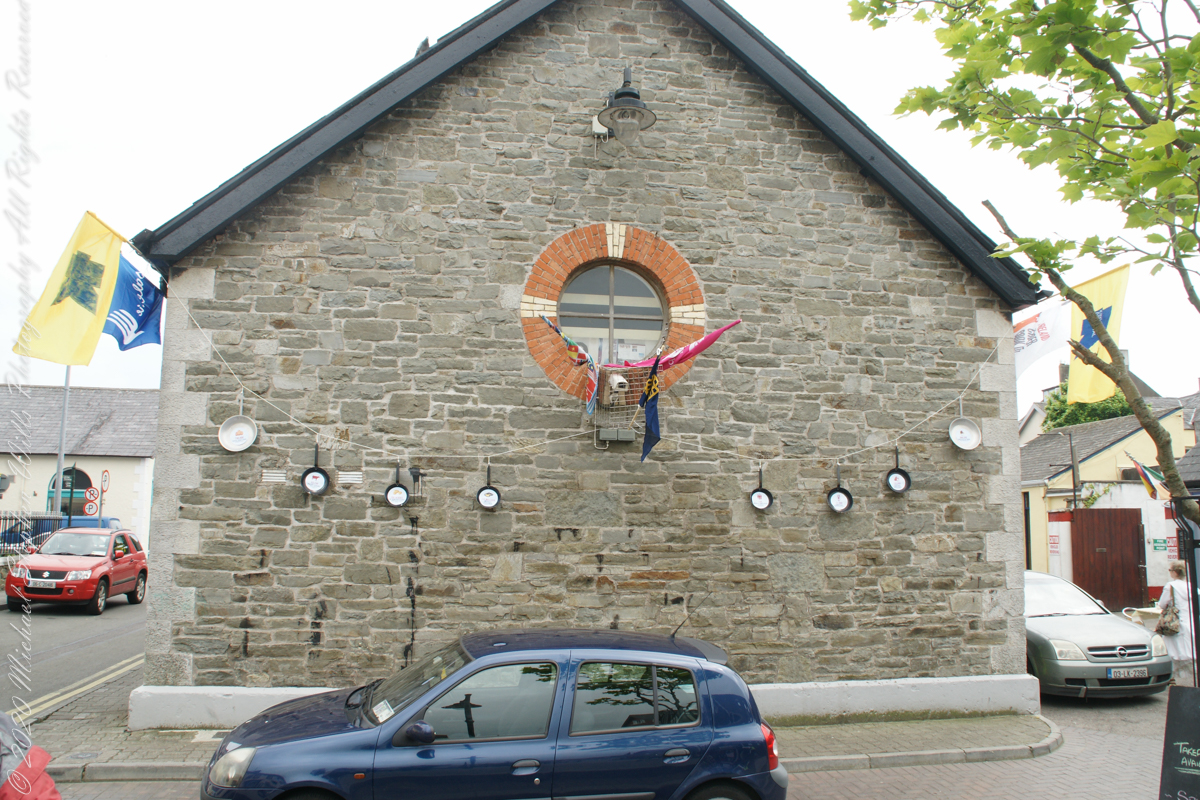
A stone’s throw from the antique mooring of post 4 is this former Courthouse building, Market Square. Built around about 1600, with additions in 1706 which included the frontage with the loggia on the ground floor. Offices and a jury room were provided on the first floor, and part of the original building was converted into a paneled courtroom.
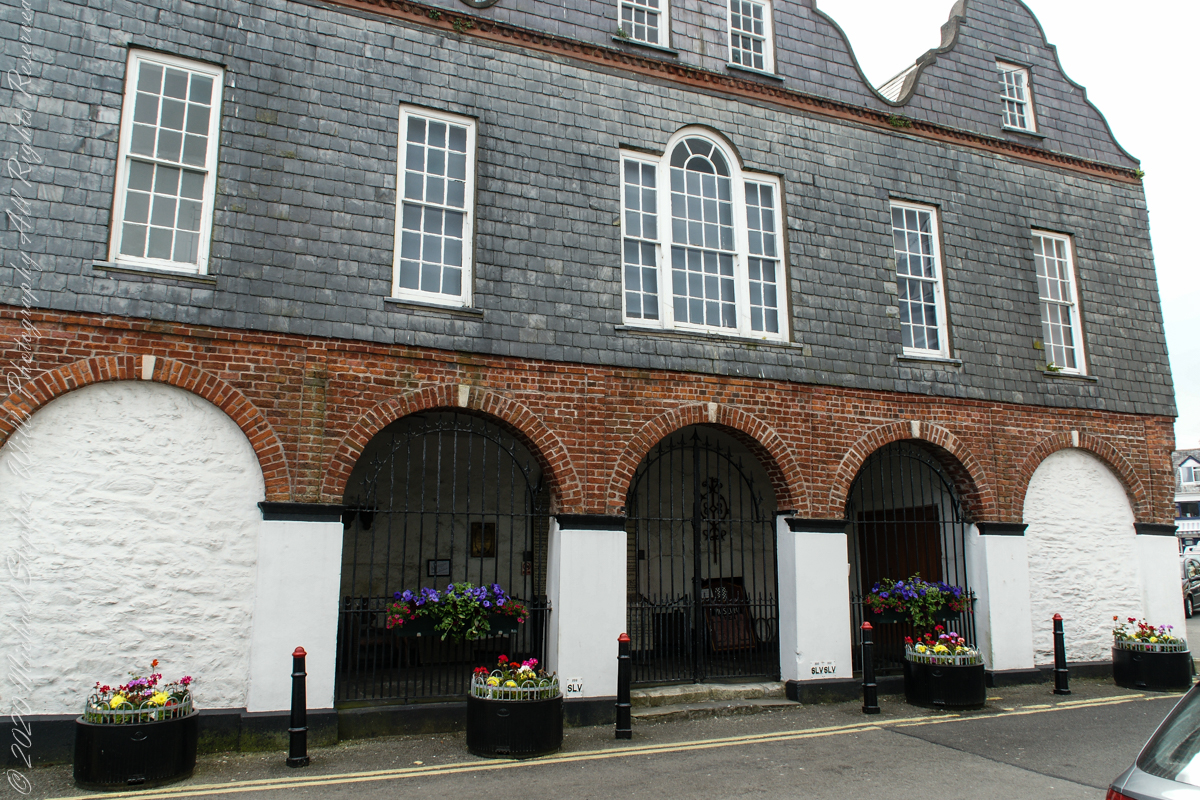
It was in this building that the Kinsale Town Corporation and its sovereign conducted their affairs and the Courthouse was also used for ceremonial occasions in the 18th century. This courthouse was the location for the inquest on the victims of the Lusitania, sunk off the Old Head of Kinsale in 1915 and is now home to the Regional Museum.
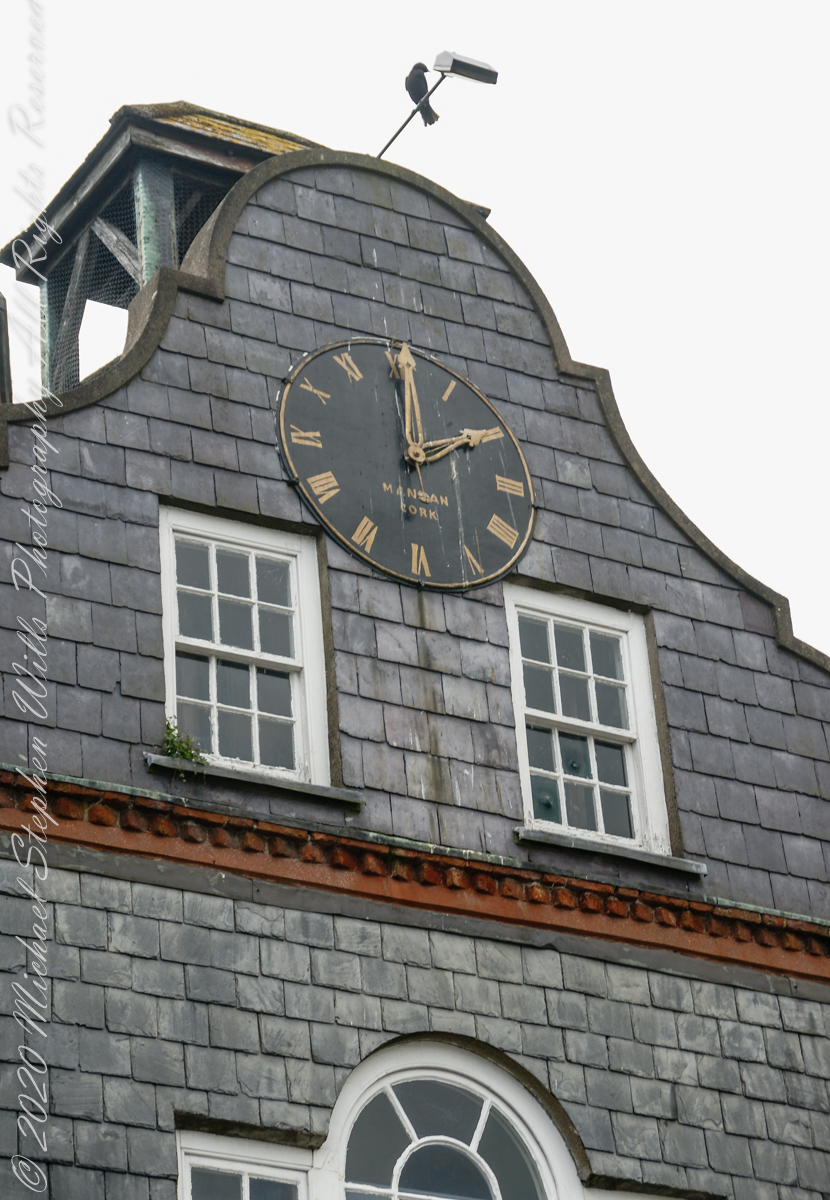
The Museum in the Courthouse includes a display on the famous Kinsale Giant. He was Patrick Cotter O’Brien. He died in 1806 and is believed to have been over 8 foot tall.
The Museum houses the largest collection of maritime artefacts in Ireland.
Click Me for the next post in this series.

Copyright 2022 All Rights Reserved Michael Stephen Wills

Kinsale Walking Tour 4

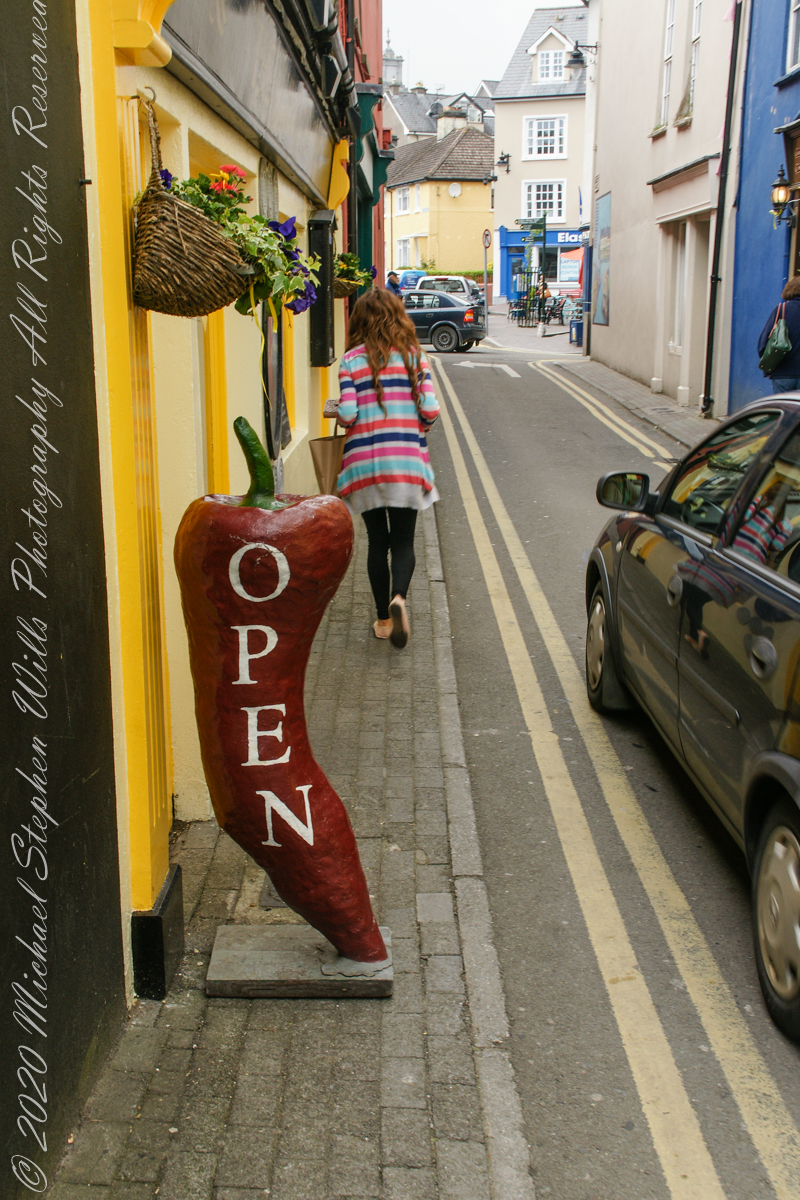
A mysterious chili pepper and hidden watchers

The fourth of a series of idiosyncratic posts from a walking tour of Kinsale by Dermot Ryan. My Sony Alpha 700 captured the events back in May 2014.

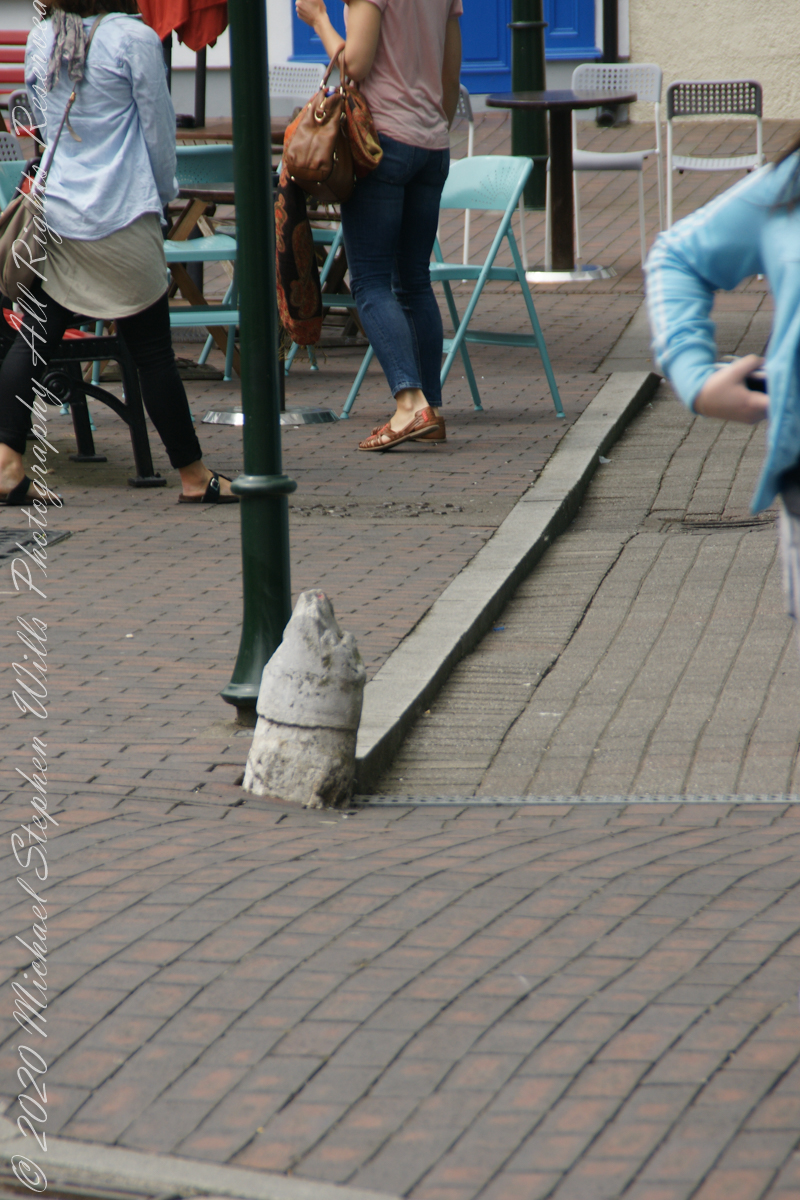
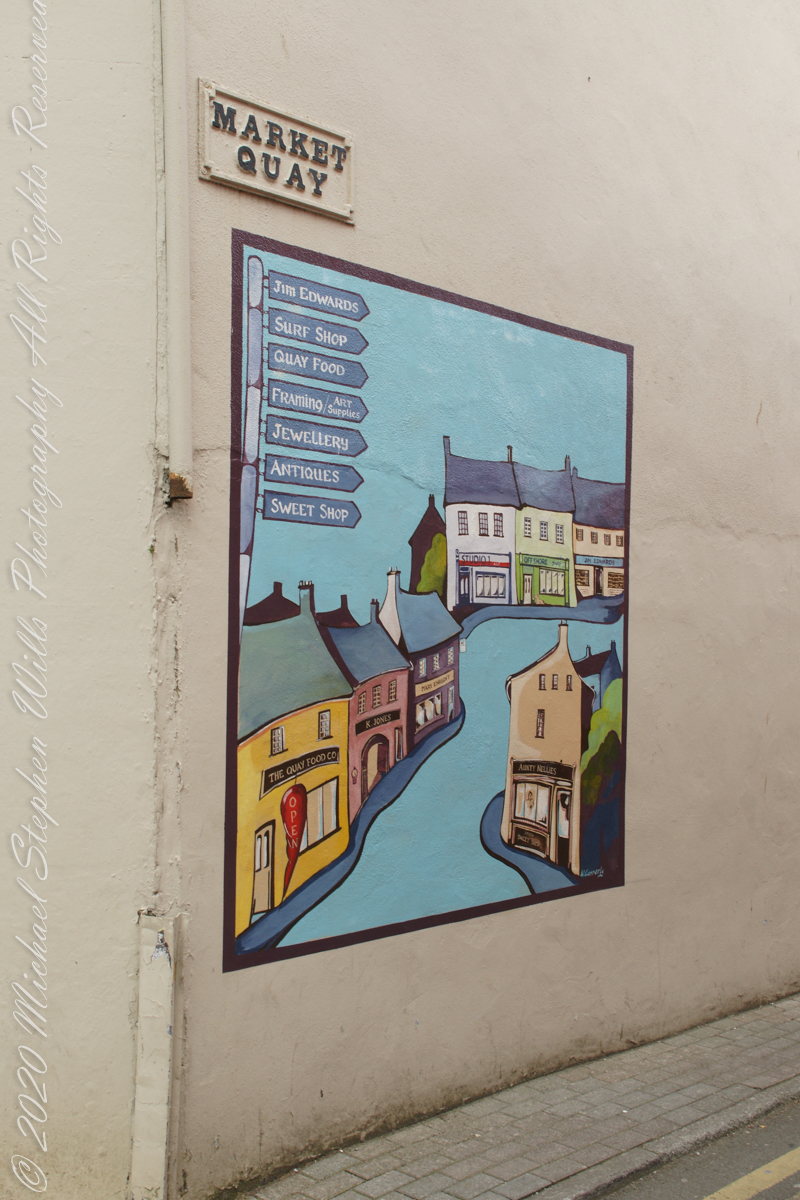
This mural on the corner wall where Market Quay meets the Market Square. I puzzled over the following photograph until I recognized the Chili Pepper from the mural.

Without Dermot Ryan’s storytelling I’d never have guessed this stub of a post was a bollard to which ships’ mooring lines were fastened. It follows the memorial bollard is close to the lane named “Market Quay.”

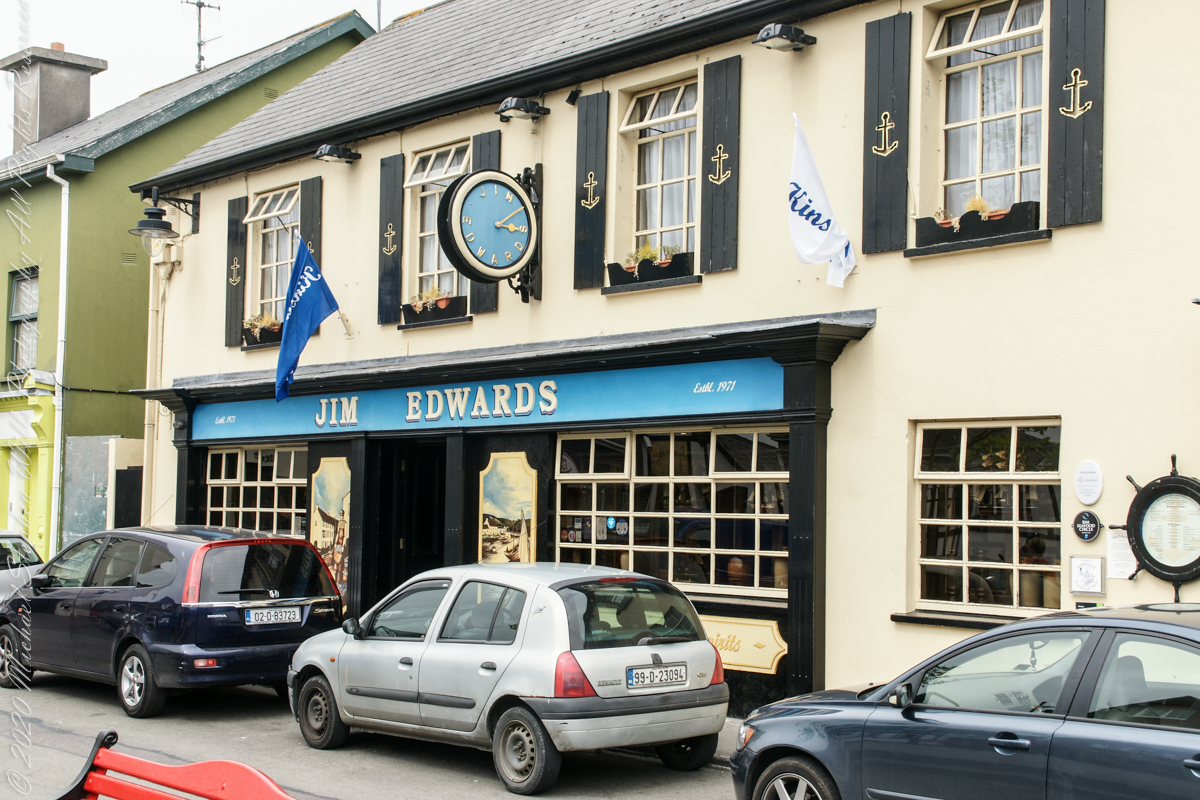
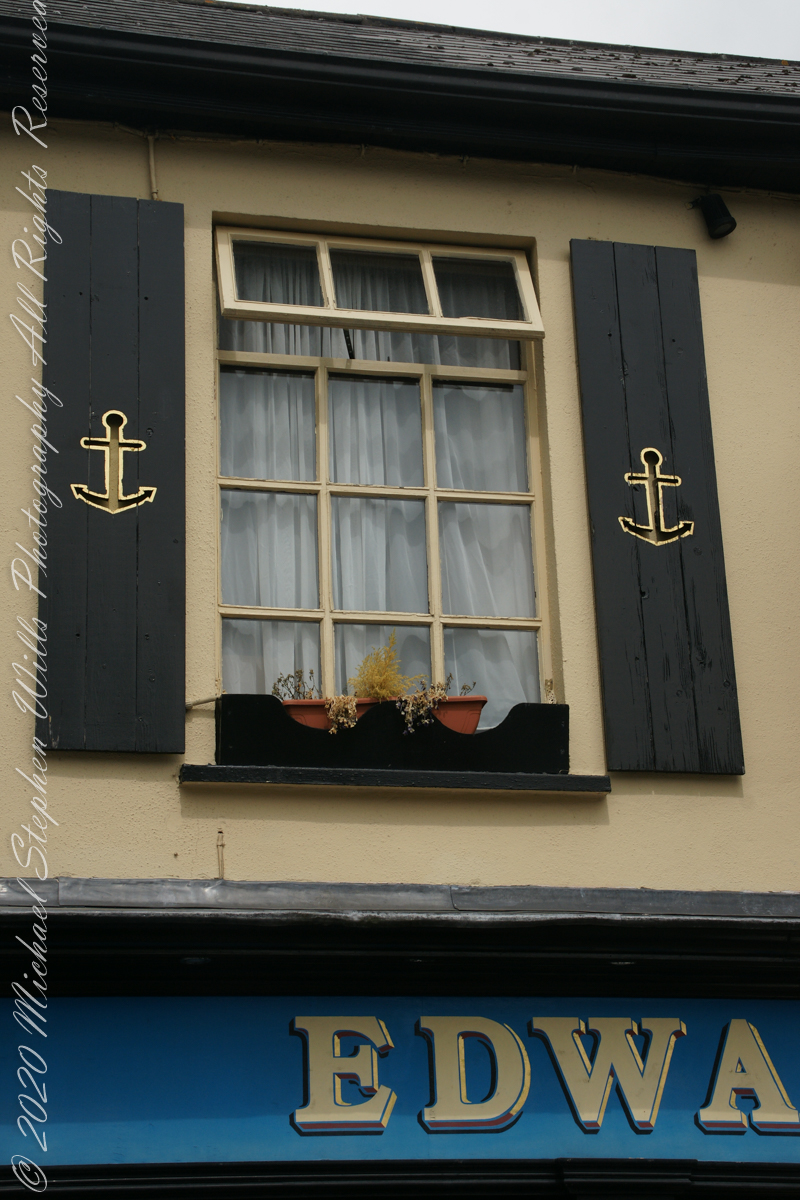
The Jim Edwards hotel and restaurant façade is a colorful and elegant element of Market Quay.

Dermot told a tale about spies, looking from windows above the square, reporting on shortcomings of citizens.

Click Me for the next post in this series.


Copyright 2022 All Rights Reserved Michael Stephen Wills

Kinsale Walking Tour 3

A story lurks….

The third of a series of idiosyncratic posts from a walking tour of Kinsale by Dermot Ryan. My Sony Alpha 700 captured the events back in May 2014.

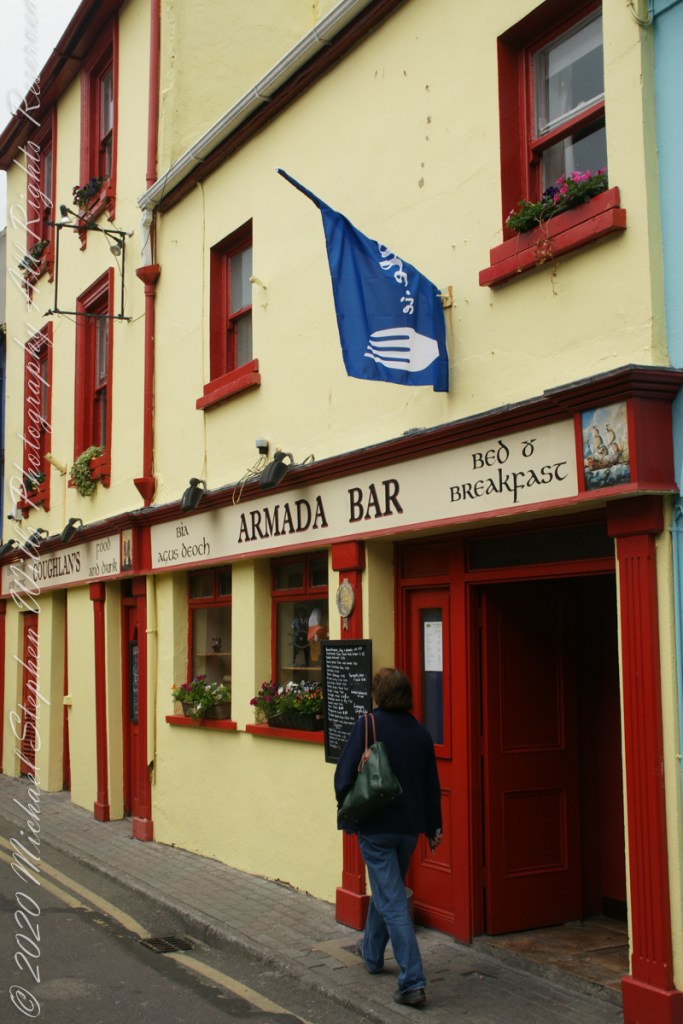
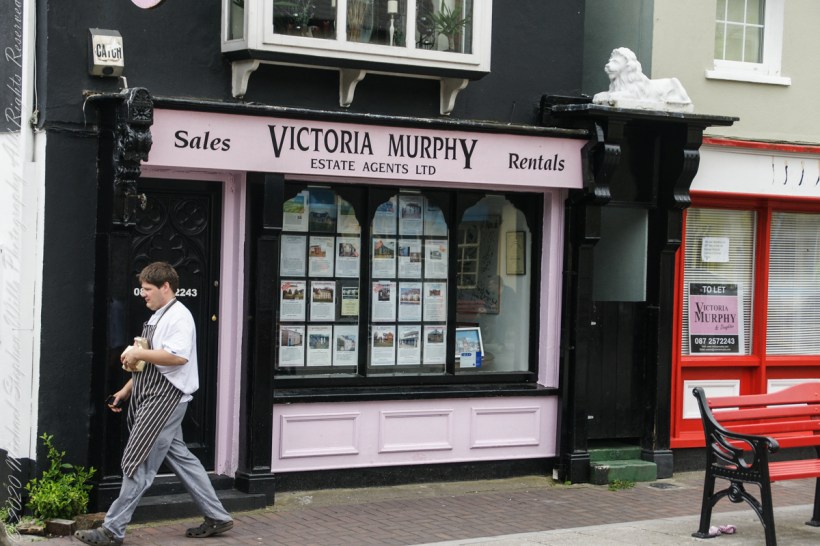
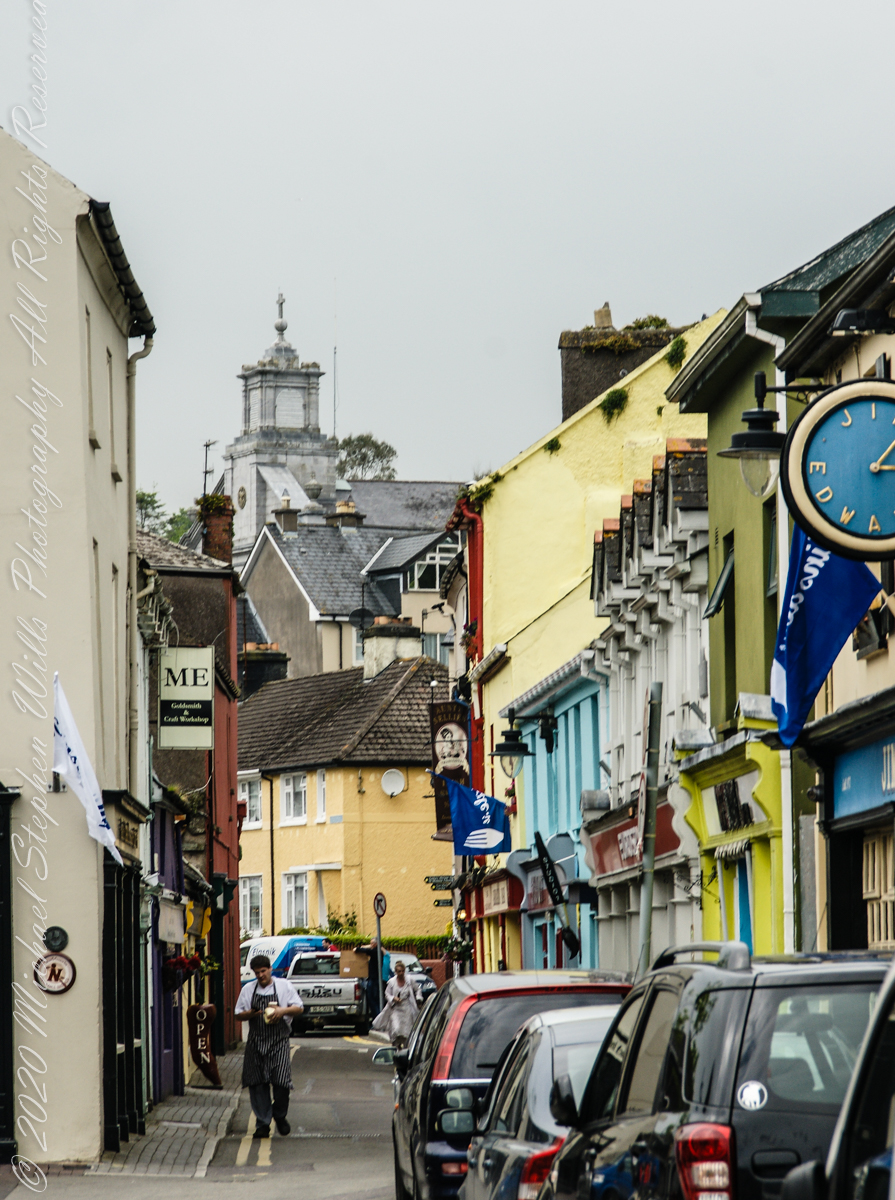
Looking northwest along Market Quay toward Saint John the Baptist Roman Catholic Church seen rising above the rest. The Jim Edwards hotel on the right. This, and the next, photographs are an interesting, or not, slice of life on Market Quay this May day: a man in a striped apron carries packaged food, ostensibly a delivery, and it probably is.

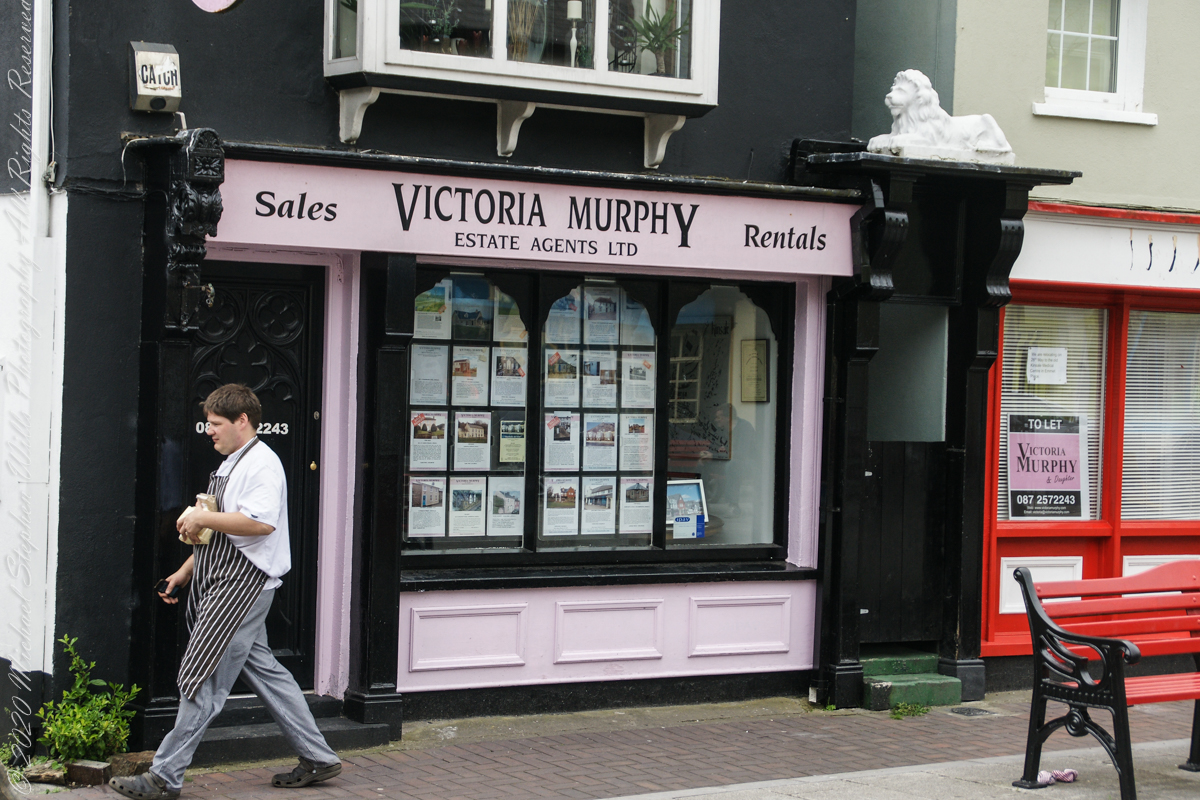
A man in striped apron carrying a delivery (…or a story plot line….) walks in front of Victoria Murphy and Daughter, Real Estate Agent, storefront on Market Quay, Kinsale, County Cork, Republic of Ireland. Notice the store to left is vacant and handled by Victoria Murphy. That store front has high turnover: was occupied 2017, vacant again 2019 (as per Google Maps).

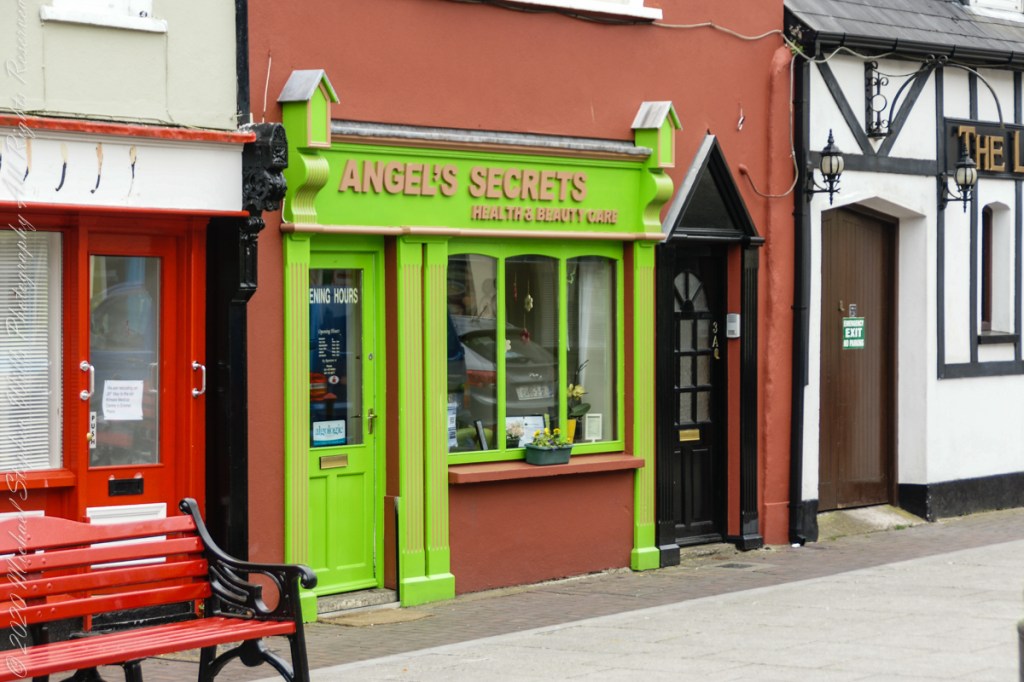
“Angle’s Secrets” storefront on Market Quay, Kins ale, County Cork, Republic of Ireland. I believe this building is owned by Victoria Murphy and Daughter Realty, the storefront second to the right. Don’t ask me how I know this as, no, I do not know it in the usual sense.
Click Me for the next post in this series.


Copyright 2022 All Rights Reserved Michael Stephen Wills

Kinsale Walking Tour 2

Sensory Disconnect

The second of a series of idiosyncratic posts from a walking tour of Kinsale. My Sony Alpha 700 captured the events back in May 2014.

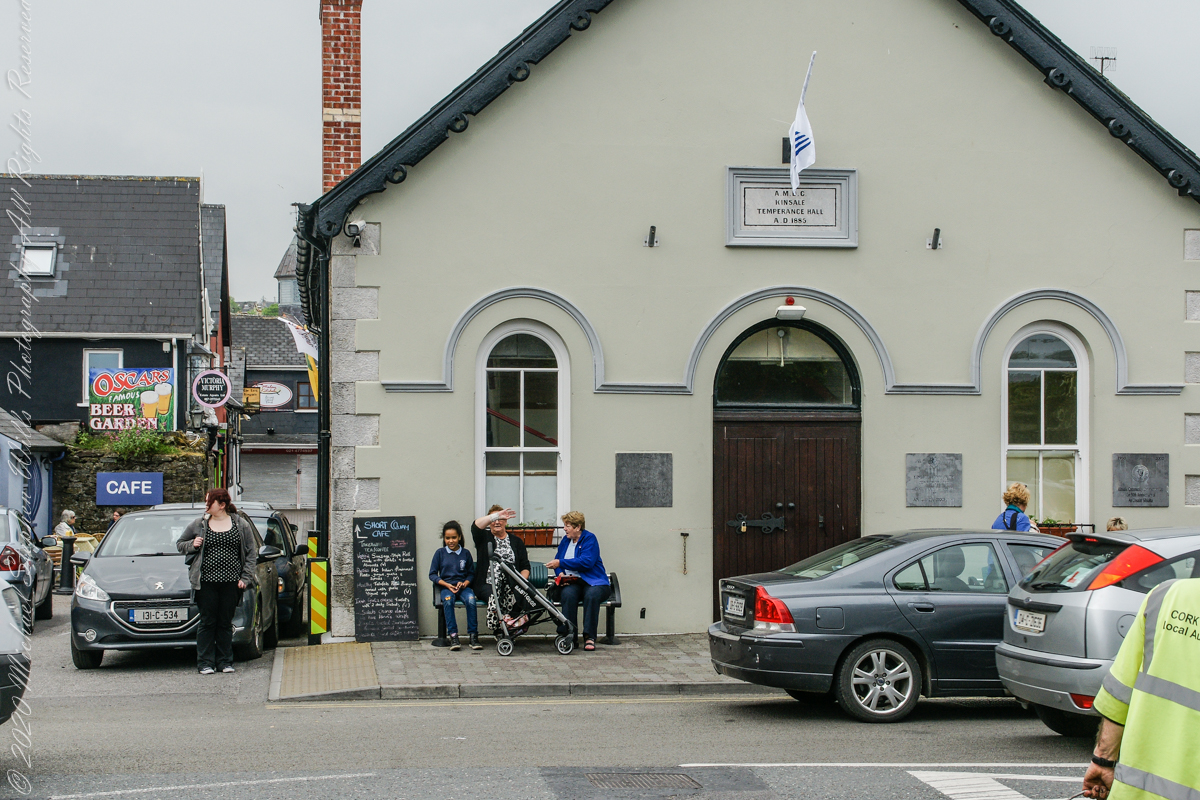
Text from the current Facebook page: The Temperance Hall is Kinsale’s example of Victorian architecture, constructed in 1885. It provides a space to facilitate those within the community and is used on a regular basis by all walks of life. Temperance Hall is space that can be rented by the community through Finishing Services which is located in the heart of Kinsale or can be contacted on 021 477 3571. The hall is run by a voluntary community committee who oversee the day to day running and maintenance of the hall. This Space is used by many groups in the town some of which are: Youth Café, Set Dancing, Bowling, Drumming Circle, Kuk Sool One, Active Retirement Tae Kwan Do, Craft Fairs, Self Defence Class, Dance, Art Exhibitions, Kinsale District Court Service, and Many Fundraising Events. This space can be used for many events on a non-commercial basis for €10 per hour and all enquirers can by made to Finishing Services on 021 4773571.

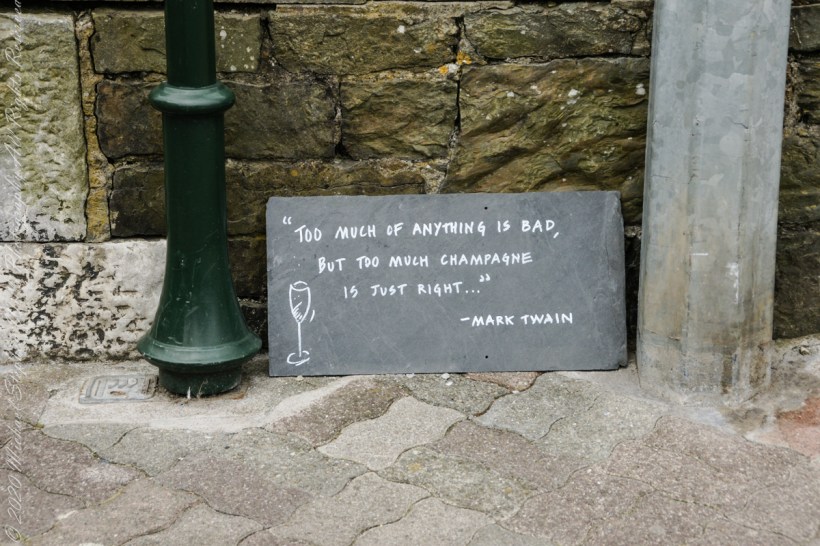
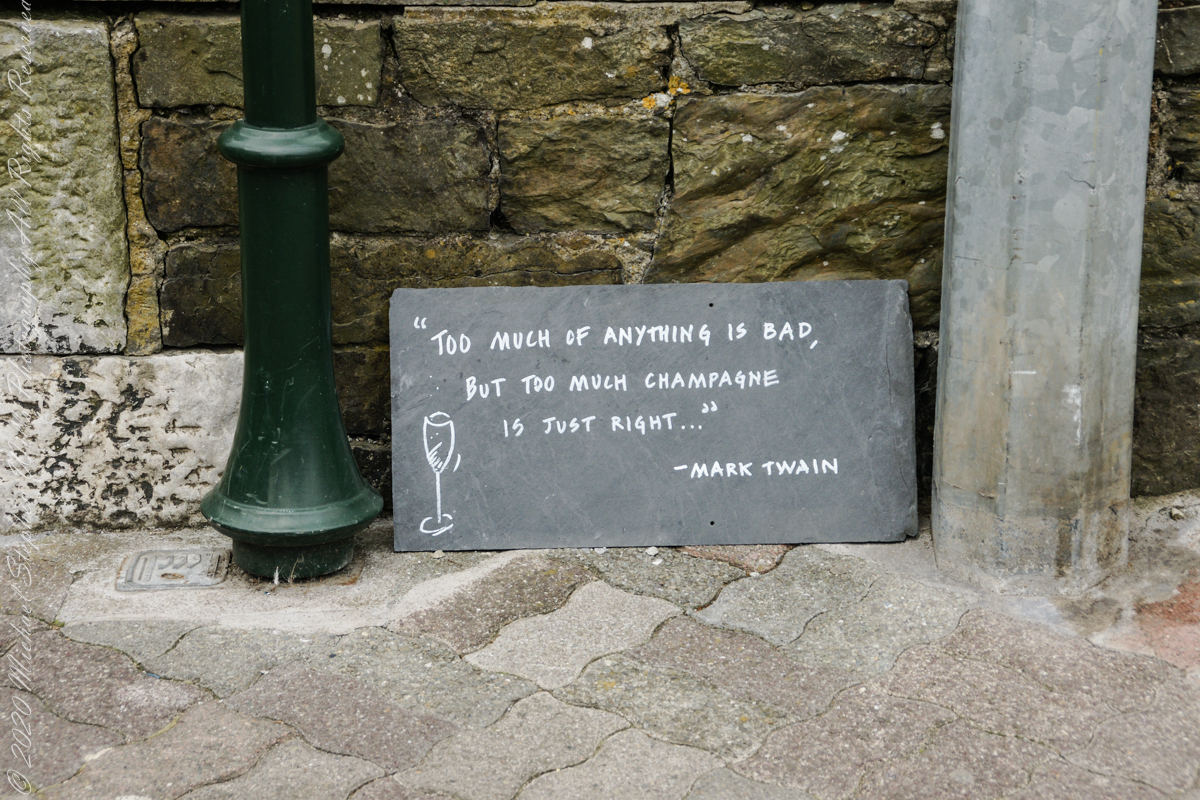
In “Dubliners,” Joyce uses sensory disconnect in evoke Gabriel’s epiphany, and effect the writing of this sign, quoting another writer, an American no less, near (next to…on?? Don’t recall) the Kinsale Temperance Hall.

All this is happening on Market Quay. A quay is a dock, historically ships were offloaded here.


Click Me for the next post in this series.


Copyright 2022 All Rights Reserved Michael Stephen Wills

Very Old, Very New

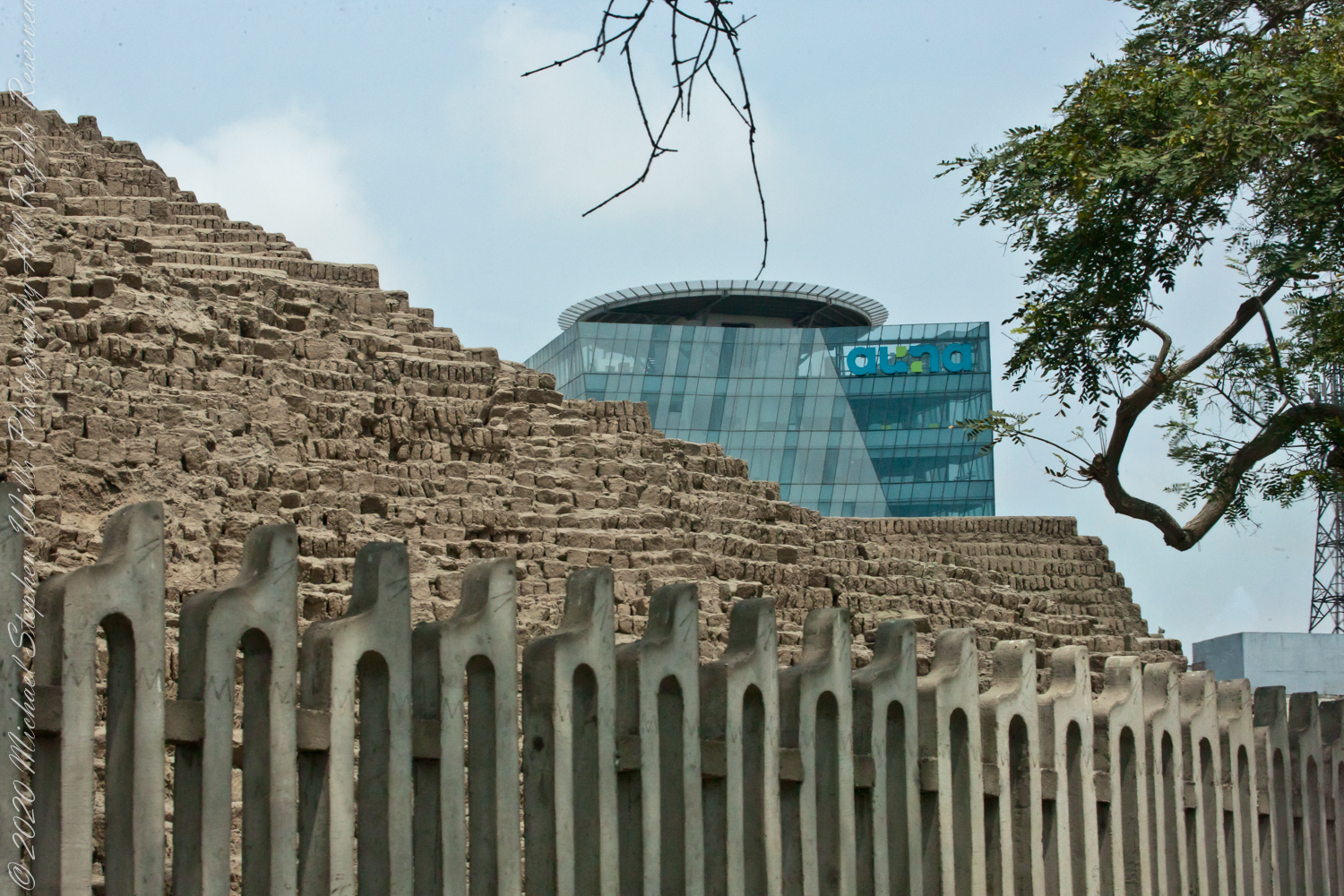
Lima is home to 10 million Peruvians and over 1000 historical sites.

View of Clinica Delgado (hospital) from Lima Peru’s Elias Aguirre (street), Huaca Pucllana filling the foreground. Huacas are commonly located in nearly all regions of Peru outside the deepest parts of the Amazon basin in correlation with the regions populated by the pre-Inca and Inca early civilizations. They can be found in downtown Lima today in almost every district, the city having been built around them. Huaca Pucllana, located in Miraflores district, is an adobe and clay pyramid built from seven staggered platforms. It served as an important ceremonial and administrative center for the advancement of the Lima Culture, a society which developed in the Peruvian Central Coast between the years of 200 AD and 700 AD. 

This is the New York Times article that inspired me to remember visiting Huaca Pucllana during our February 2016 tour of Lima, Peru. “3,000 Years of History Are Literally Just Beneath Our Feet.”

Copyright 2022 Michael Stephen Wills All Rights Reserved

World at our Feet

On Peter’s Mesa

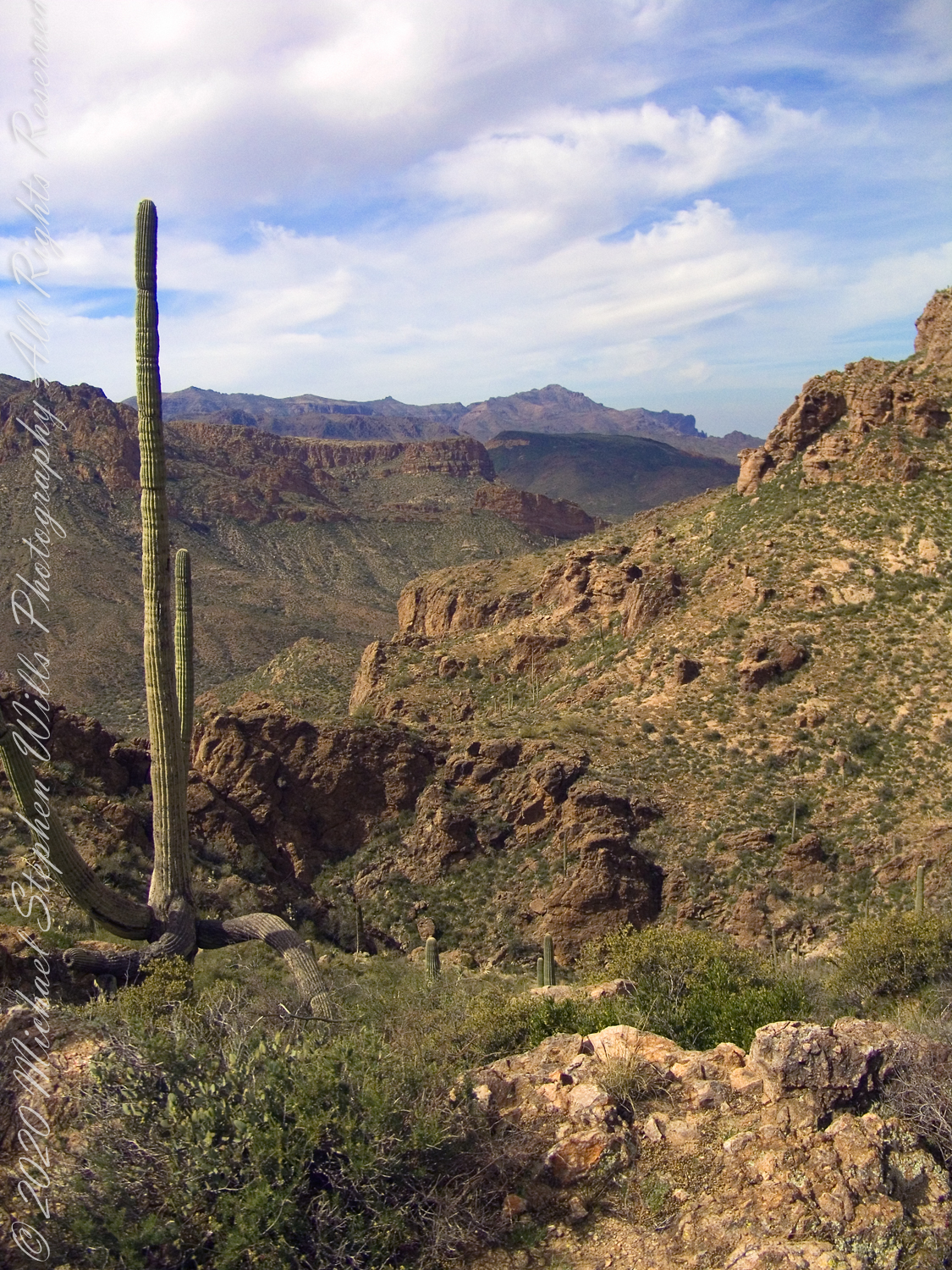
View North / Northwest from Peter’s Mesa. At our feet is a mature Saguaro Cactus towering over Charlebois Canyon, to the right Black Mountain. Bluff Spring Mountain, middle distance, then Black Top Mesa. Flatiron Peak, of the famed Superstition Mountain, is in distance. Photographed from Peter’s Trail on a March afternoon 2008. Superstition Wilderness, Tonto National Forest, Arizona

Bluff Spring Mountain, middle distance, then Black Top Mesa. Flatiron Peak, of the famed Superstition Mountain, is in distance. Photographed from Peter’s Trail on a March afternoon 2008. Superstition Wilderness, Tonto National Forest, Arizona

Click Me for the first post of this series, “Bluff Spring Mountain.

Copyright 2022 Michael Stephen Wills All Rights Reserved

Morning / Evening

Can you see the Needle’s Eye?

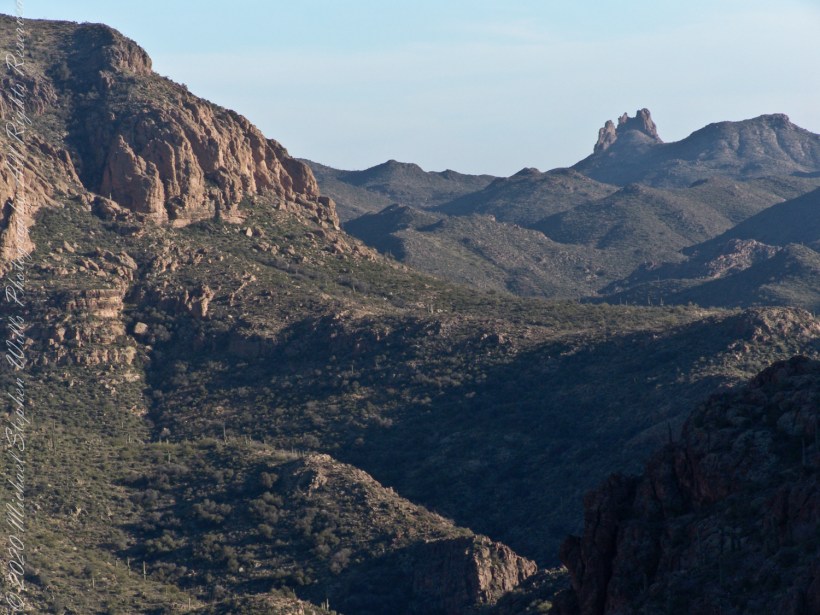
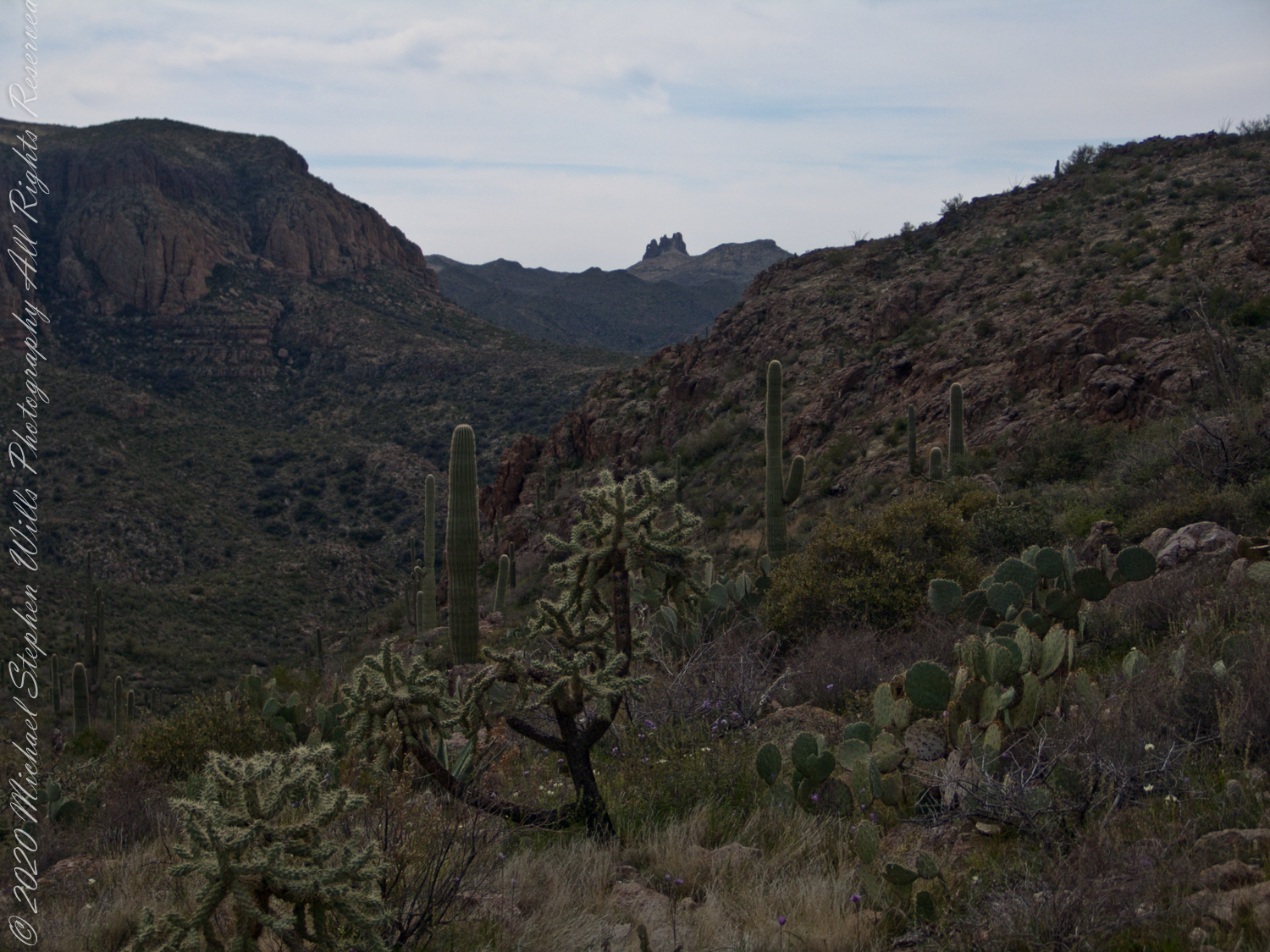
The eye of Miner’s Needle is clear in both these South / Southeast views from Peter’s Mesa looking across the Music Canyon.

Many wildflowers, sprinkled like stars through the foreground of the morning photograph with Prickly Pear, Cholla and Saguaro cactus. Beware of “Jumping Cholla”, named for its seeming ability to attack passers-by. Another name, “Hanging Chain Cholla”, is more appropriate. Each chain with many hooked barbs is lightly attached to the branch, ready to snag a ride from unwary hikers.

Light rakes across the landscape in the evening photograph, taken from another vantage point on Peter’s Mesa. Miner’s Needle is four (4) miles away “as the crow flies,” i.e., line of sight distance.

Click Me for the first post of this series, “Black Mountain.

Copyright 2022 Michael Stephen Wills All Rights Reserved

Panoramic

Superstition Glory

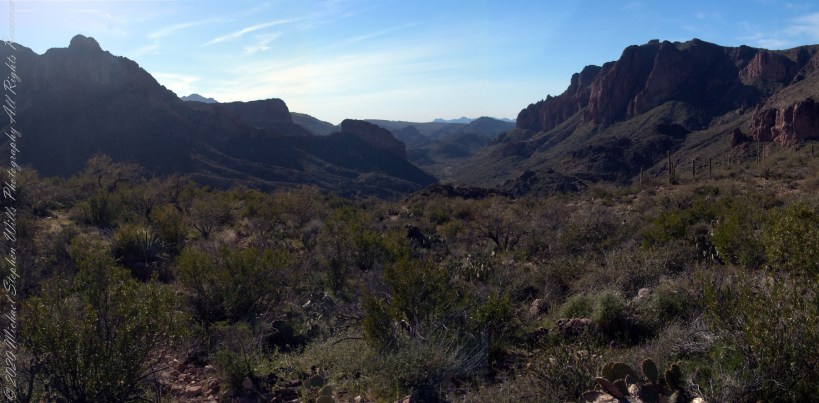
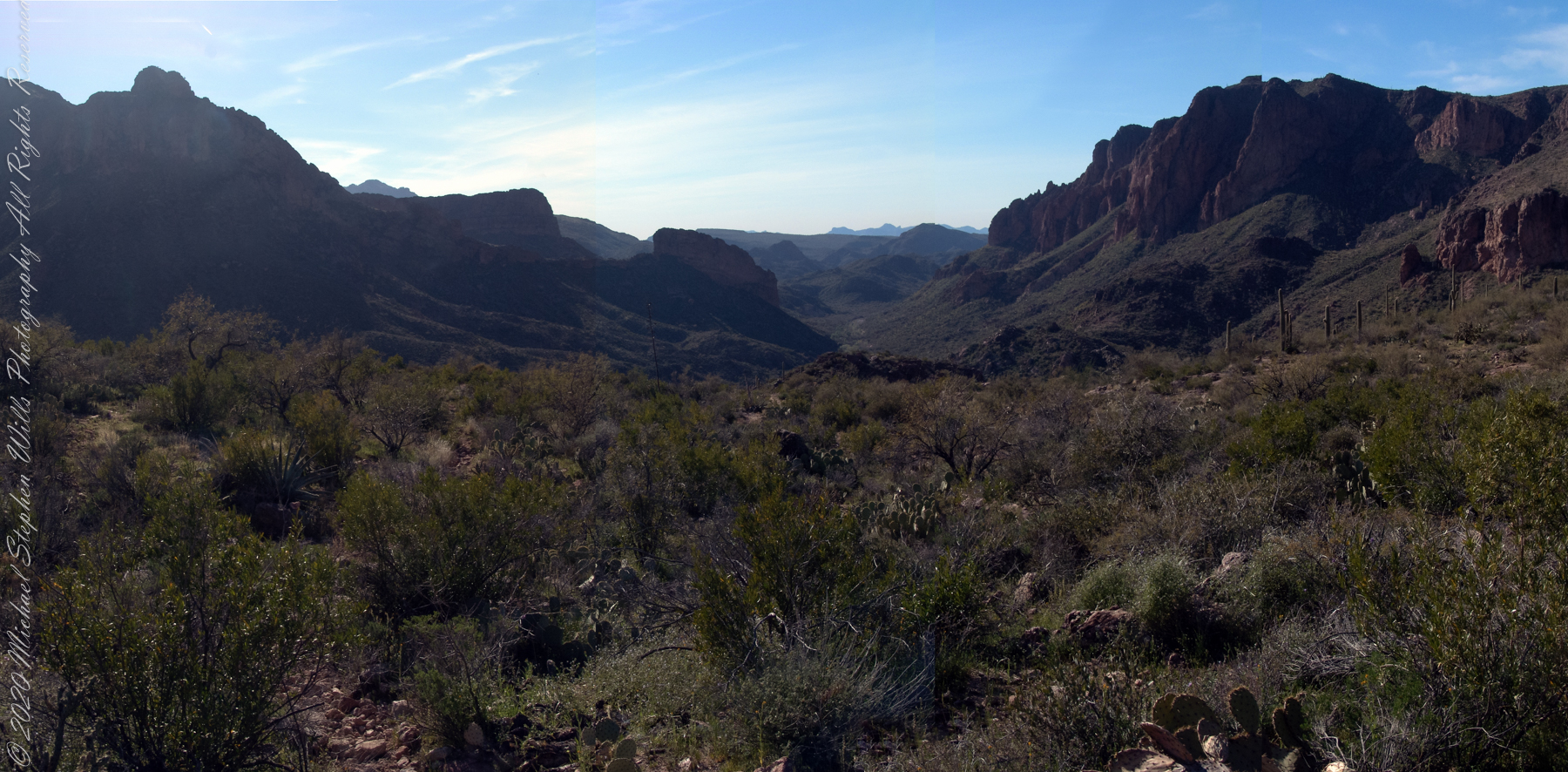
View North / Northwest from Peter’s Trail looking back the way we came. Black Mountain on right, Bluff Spring Mountain left with LaBarge Canyon running to the Red Hills center. On a March afternoon 2008.

Click Me for the first post of this series, “Black Mountain.

Copyright 2022 Michael Stephen Wills All Rights Reserved

Hear the Music

Roasted Yucca

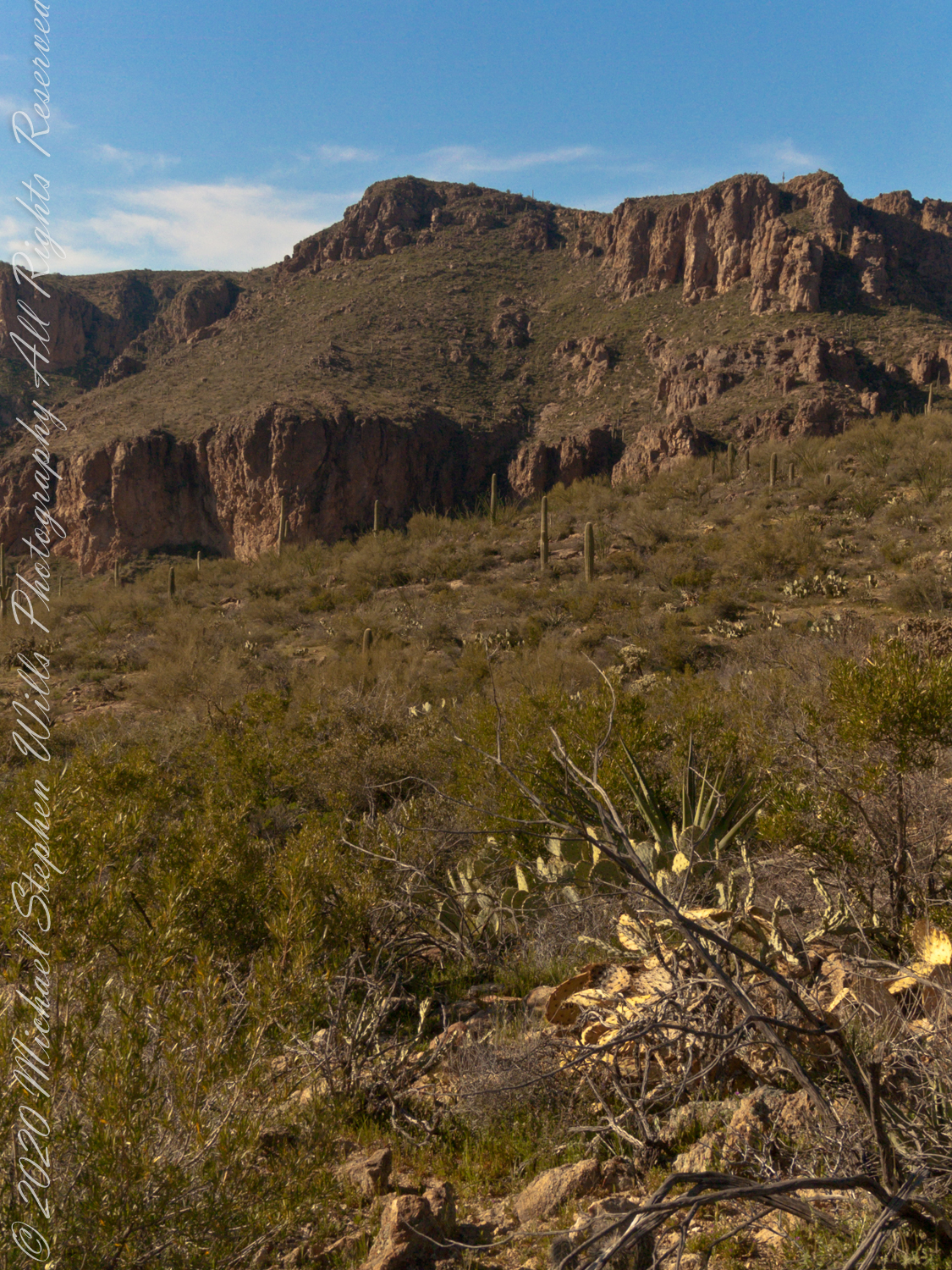
Here we are climbing Peters Trail to the eponymous mesa and facing East to Music Mountain. Scattered in the brush are desiccated and live Prickly Pear cactus. Poles of young saguaro cactus like randomly placed telephone poles poke up around the lower slopes.

The first published record of Music Mountain is by Ray C. Howland of Mesa Arizona who sent a letter to “Everybody’s Magazine” that appeared in a feature called “Everybody’s Meeting Place: Where writers, readers and the editor gather for informal discussion,” May 1928, Volume 58, Issue 5, page 173. I reproduce Howland’s letter here with minor editing:

“I am in the deserts and mountains of Arizona most of the time. I go into town once each month for mail and provisions. I meet many things as I ramble around, many strange things, things that are beyond my ability to comprehend. One particular was in my mind as I read your printed thought in the back of Everybody’s. Far in the Superstition Mountains of Arizona, in the deepest, most rugged canyon, there are three caves halfway up a great yellow bluff. In these caves are mud dwellings. There are not the cliff-dwelling as found in other parts of Arizona.

The mud walls of these dwellings were made by people with very small hands. The handprints of these ancient masons remain as though they were made yesterday. Just below these caves a beautiful pool of crystal-clear water lies between grassy banks. Tall ghostlike sycamores grow there in great numbers.
I have camped many times beneath those sycamores. It is a beautiful spot. Such a difference between there and the hot desert that lies fifteen miles to the south.! As one lies there, just at twilight, begins the most wonderful music one could imagine. I have never heard music that could compare to it, vague, elusive at times, then again of greater volume. It is my opinion that no living being could record it.

The music is, I believe, beyond description. It seems to take you out of your moral self and transport you back ages and ages, almost to the beginning of things. For the time being one feels as though he were in another world.
I have often tried to solve this little private mystery. I can’t explain it. I can’t even describe it intelligently.

You will probably say as you read this that is is the wind among the pinnacles, caves, trees, etc. that make this wonder phenomenon. It cannot be, for usually there is no breeze in the mountains at twilight. It is still as a tomb except for that music. Besides when the breeze is blowing at any other hours of the day there is no sound.”

Here is a copy of that issue for you to see for yourselves.

In my photographs the bluffs described by Howland are seen clearly in the distance. During our expedition we were never able to visit the caves, though Dave described the location, caves, and dwellings. On Peter’s Mesa are remains of pits where Apaches and Yavapais gathered hearts of agave to roast. We visited a small cave in the side of Peter’s Mesa showing signs of high heat and possibly used for roasting agave.

Click Me for the first post of this series, “Black Mountain.

Copyright 2022 Michael Stephen Wills All Rights Reserved

From Music Canyon

Down South

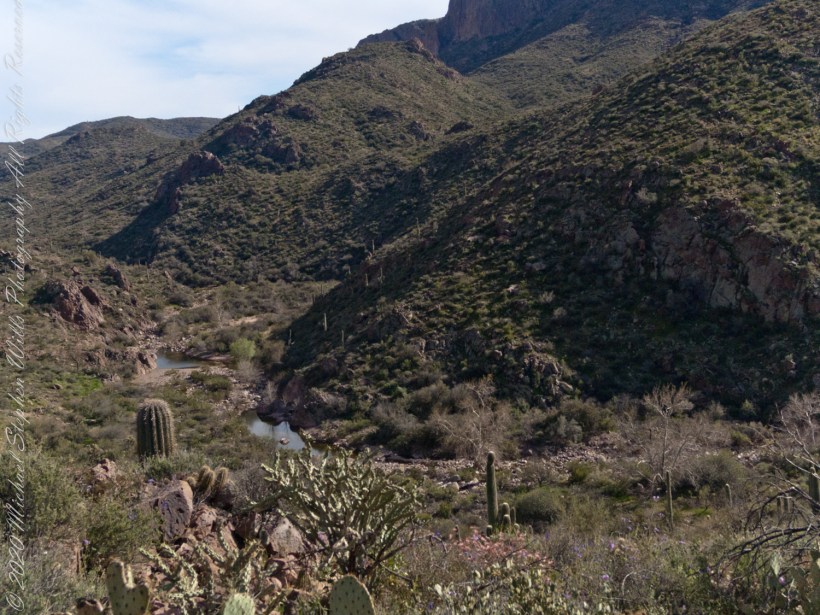
Dutchman Trail follows the outflow of two springs along the canyon floor: Music Canyon and LaBarge springs. Here we are climbing Peters Trail to the eponymous mesa and facing south / Southeast, looking down on Dutchman Trail.

This is rough country below Bluff Spring Mountain. Stag Horn Cholla cactus is lower right with Prickly Pear cactus scattered in the brush. Poles of young saguaro cactus are scattered around the lower slopes.

Click Me for the first post of this series, “Bluff Spring Mountain.

Copyright 2022 Michael Stephen Wills All Rights Reserved