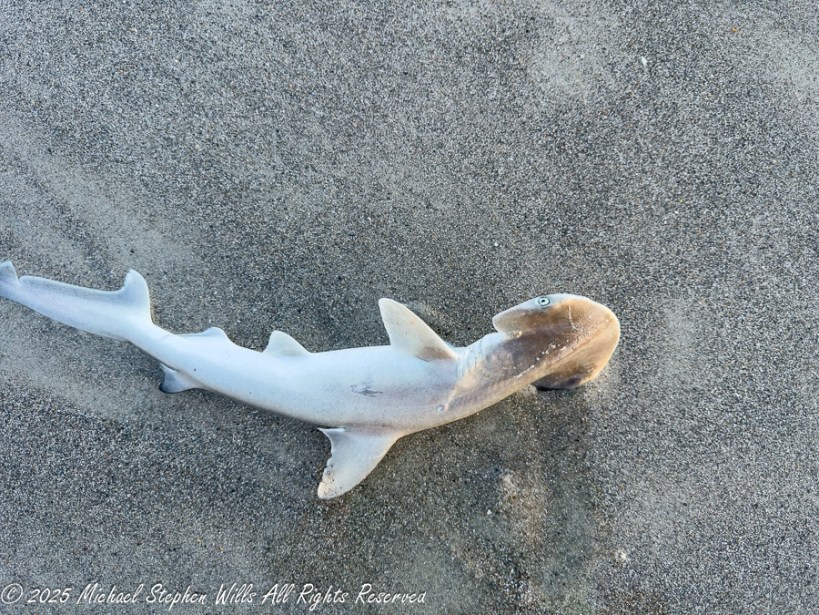
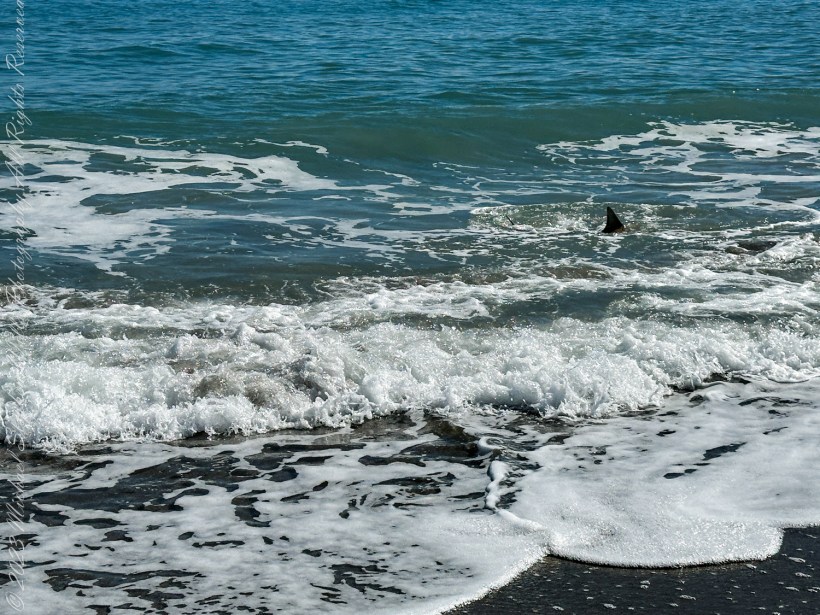
The evening ebb tide had left behind more than just a fresh line of seaweed and broken shells. As I walked along Cocoa Beach, the cool sand beneath my feet, a small shape caught my eye near the water’s edge. At first, it looked like detritus tossed ashore by the restless ocean. But as I stepped closer, I saw the unmistakable outline of a shark—its pale, twitching body lay on the damp sand.
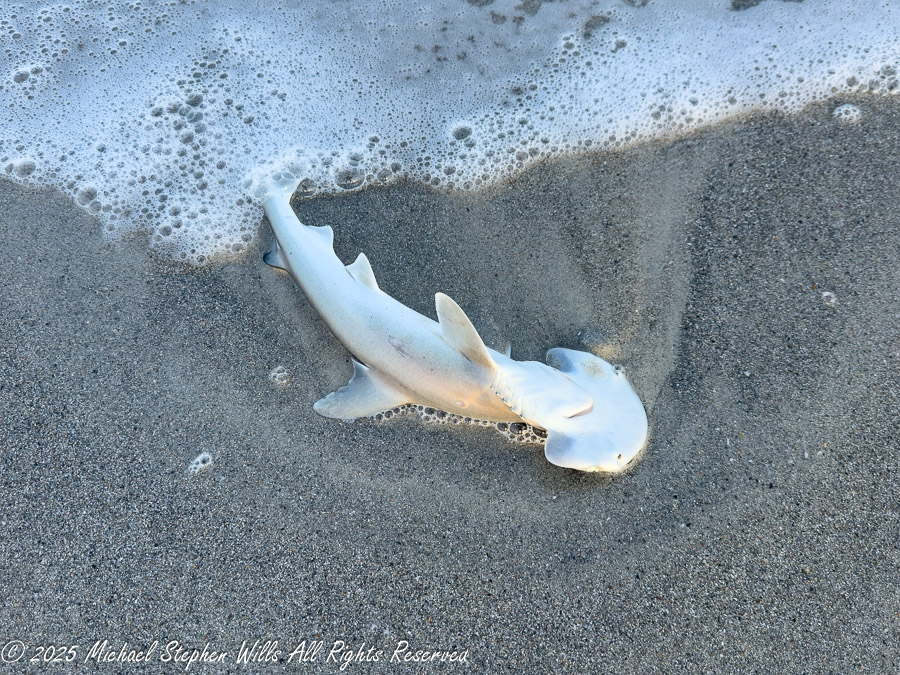
Stopping to bend and examine it, my breath caught as I recognized its flattened, shovel-shaped head. This was a bonnethead shark (Sphyrna tiburo), one of the smallest members of the hammerhead family. Its eyes, positioned far apart on either side of its head, stared blankly at the sky. A thin film of seawater still clung to its sleek, streamlined body, reflecting the golden light of the rising sun.
Its scientific name, Sphyrna tiburo, reveals much about its nature and form. Sphyrna comes from the Greek σφῦρα (sphyra), meaning “hammer,” a fitting reference to the distinct shape shared by all hammerhead sharks. The species name, tiburo, is thought to have originated from an indigenous or Spanish term for small sharks found in the Caribbean and Gulf of Mexico. Together, these words encapsulate the bonnethead’s identity—a hammer-shaped predator of the shallow seas, yet one that stands apart from its larger, more formidable relatives.
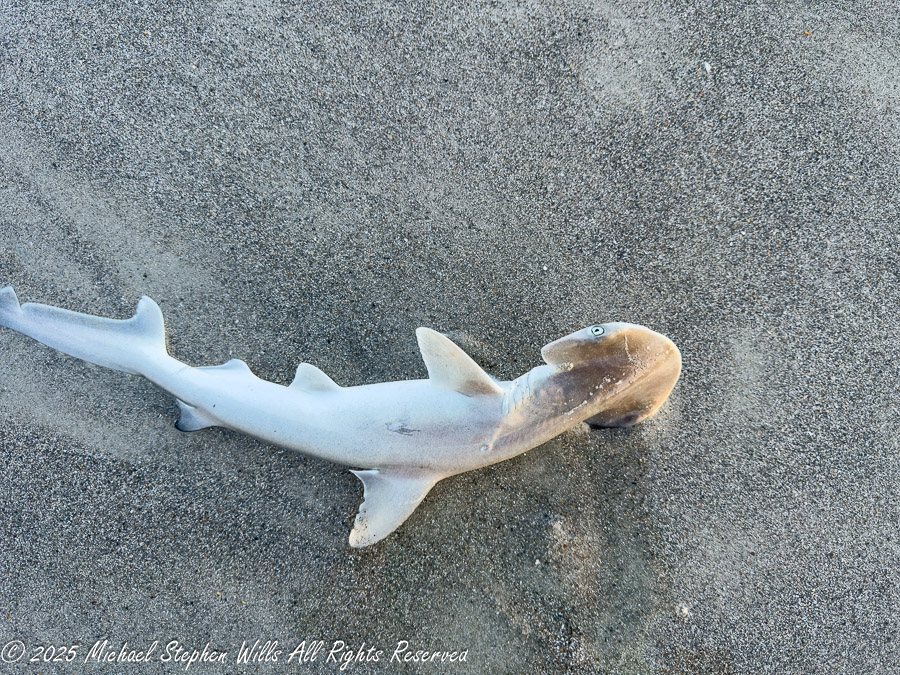
Named for its distinctive cephalofoil—the flattened, bonnet-like shape of its head—Sphyrna tiburo plays an essential role in maintaining the balance of marine ecosystems. As a mid-level predator, it helps regulate populations of crabs, shrimp, and small fish, preventing any one species from overpopulating and disrupting the delicate food web. Unlike most sharks, the bonnethead is also partially omnivorous, consuming seagrass along with its usual diet of crustaceans and mollusks. This unique feeding behavior contributes to the health of seagrass beds, which serve as crucial habitats for many marine creatures.
Bonnetheads are harmless to humans, known for their non-aggressive nature and their surprising diet—unlike most sharks, they eat not just crustaceans and fish, but seagrass as well. Gentle foragers of the shallows, they are common in Florida’s coastal waters, where they glide just beneath the surface, their unique head shape helping them detect prey buried beneath the sand.
But this one would swim no more. It was too late. Whether it had fallen victim to a fisherman’s discarded catch, an injury, or something unseen—disease, pollution, or fluctuating ocean temperatures—it was impossible to tell. All I knew was that this creature, so perfectly adapted to the rhythms of the sea, had been cast ashore by forces beyond its control.
A wave surged forward, washing over the shark’s still body, as if the ocean itself fruitlessly nudged it to life. The rising tide swirled, lifting the bonnethead and carrying it back into its world.
As I stood watching the tide pull it away, I felt a strange mix of sorrow and reverence. The sea is full of life, but it also takes life in its endless cycle. The bonnethead had played its part in that vast, unknowable story.
And now, it was gone.




 Michael Stephen Wills Photography