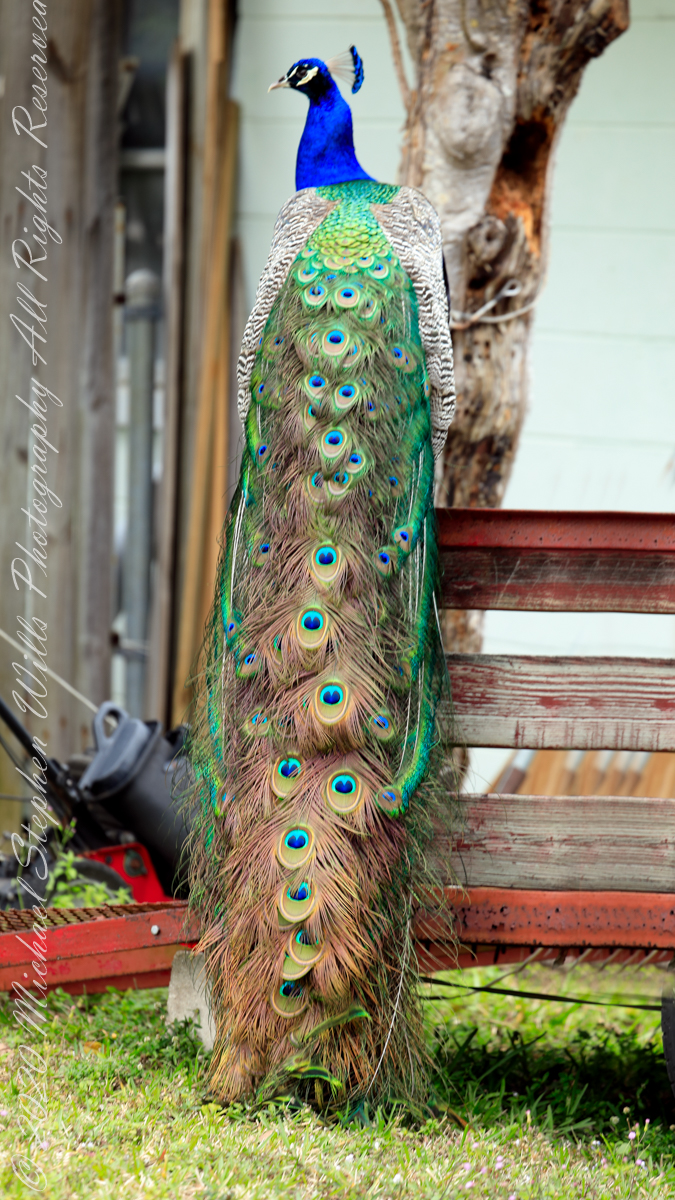
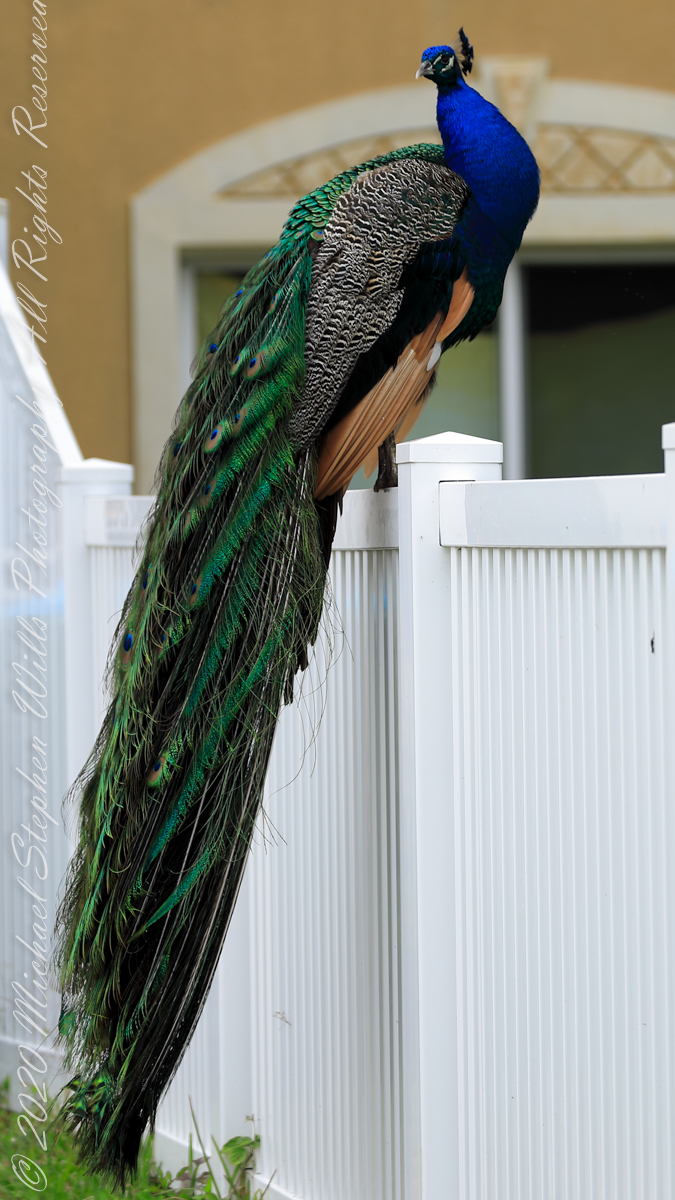
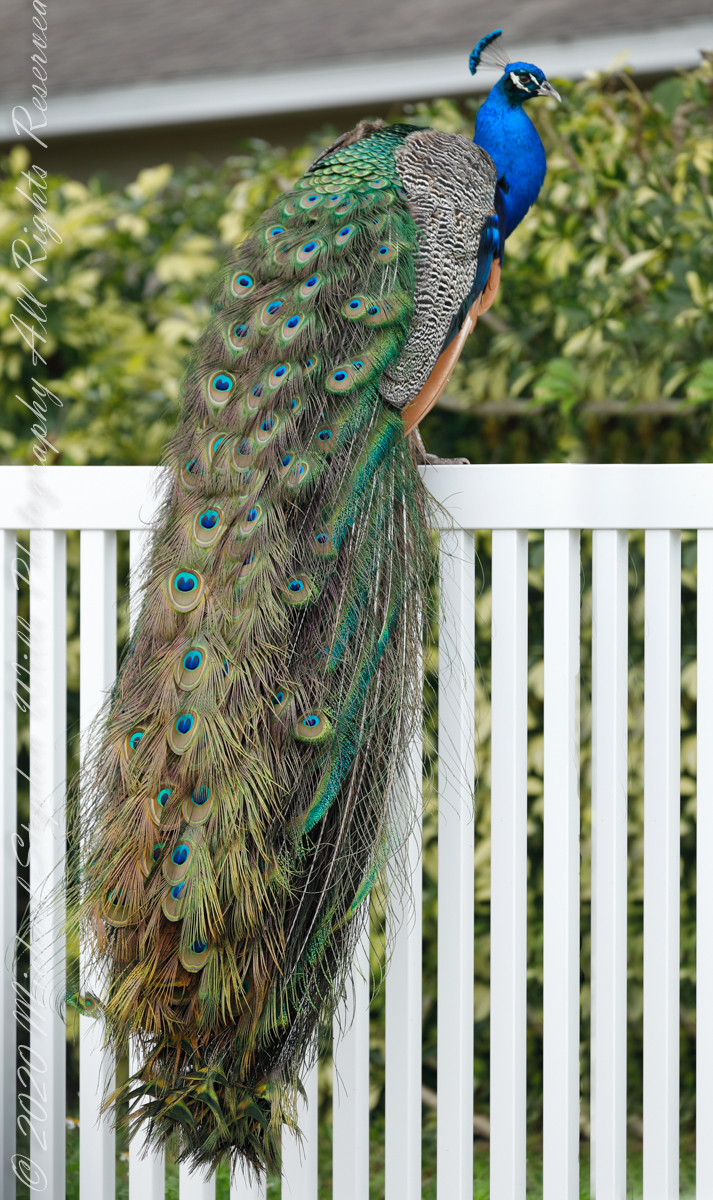
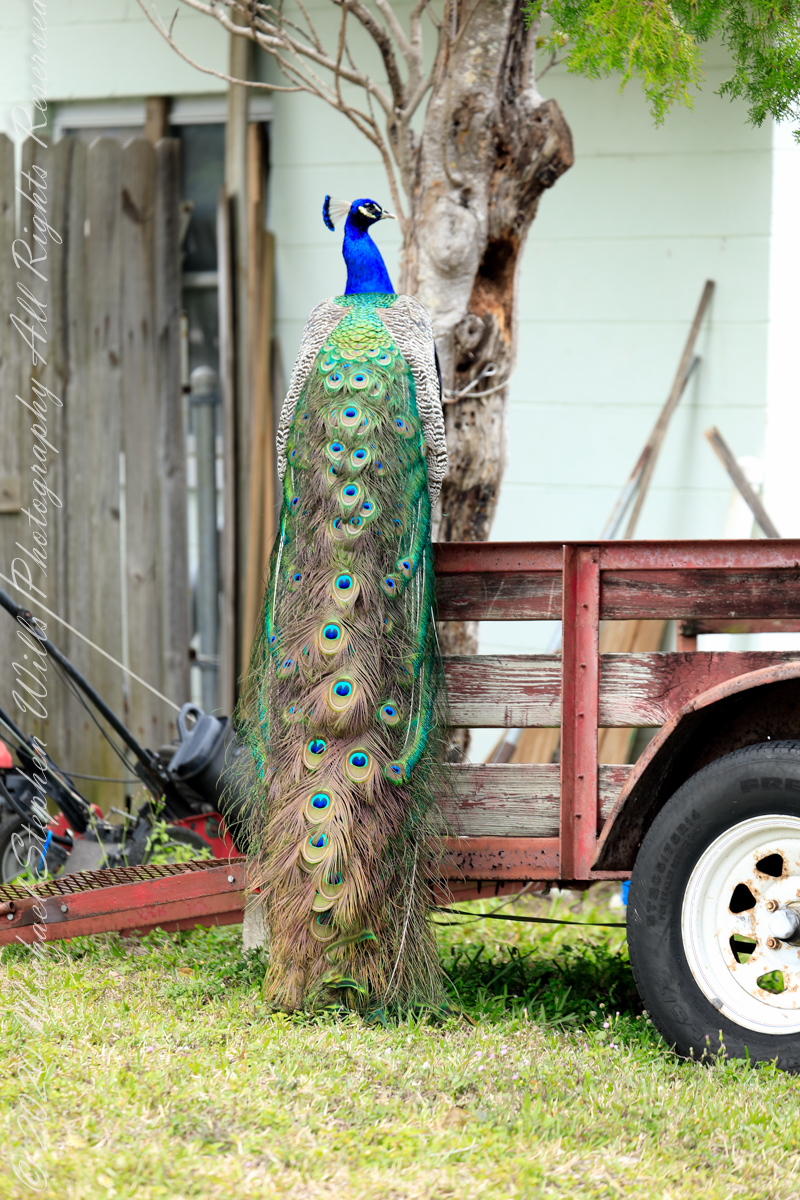
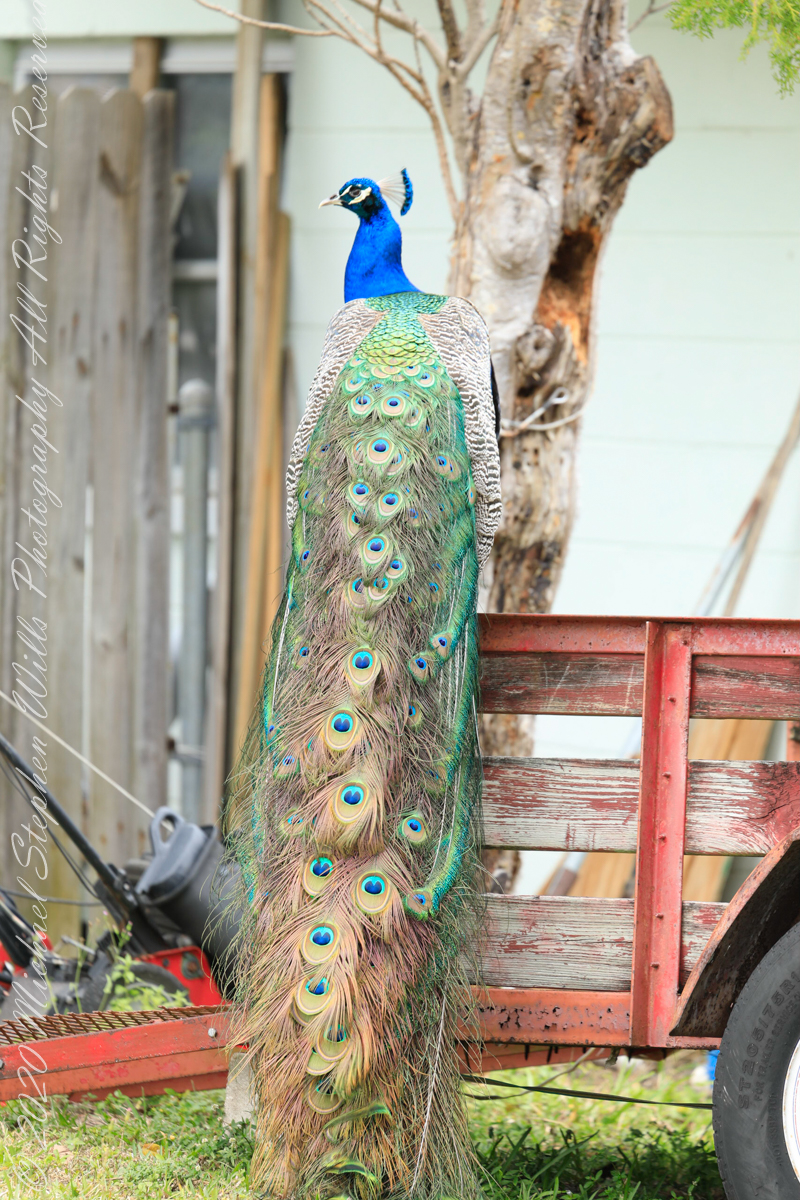
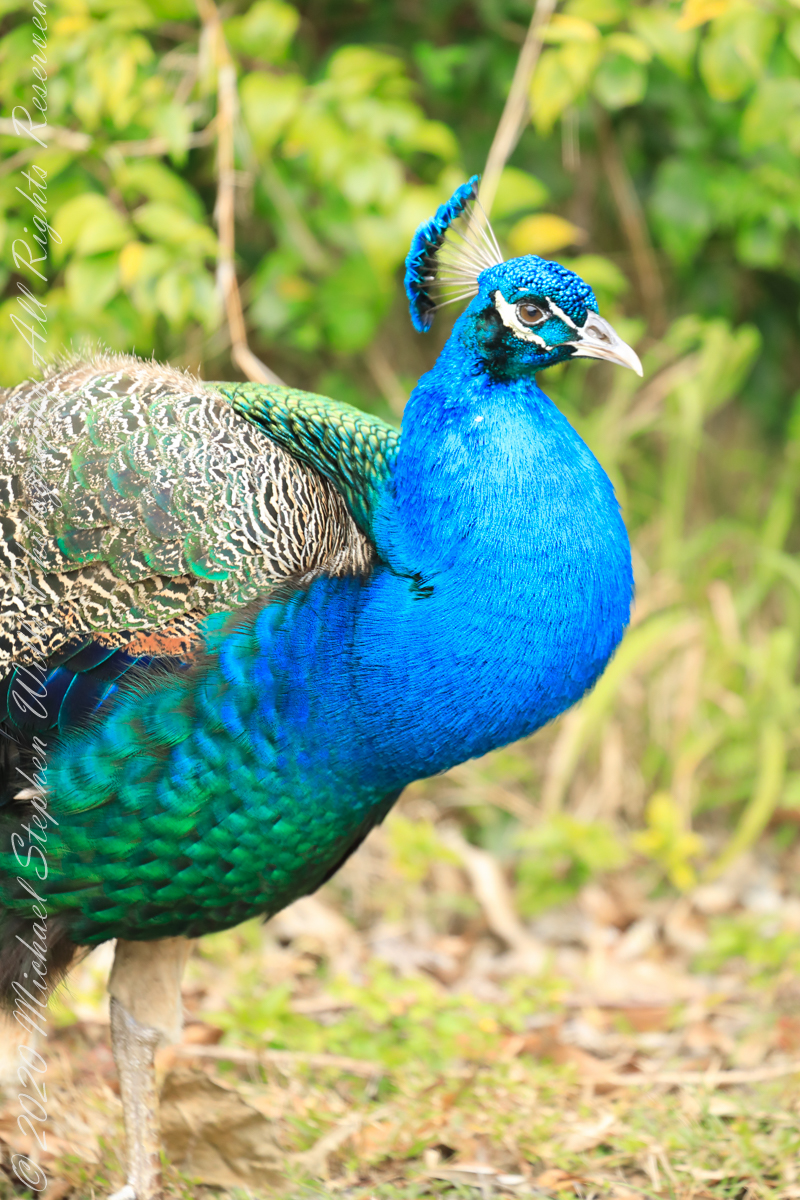
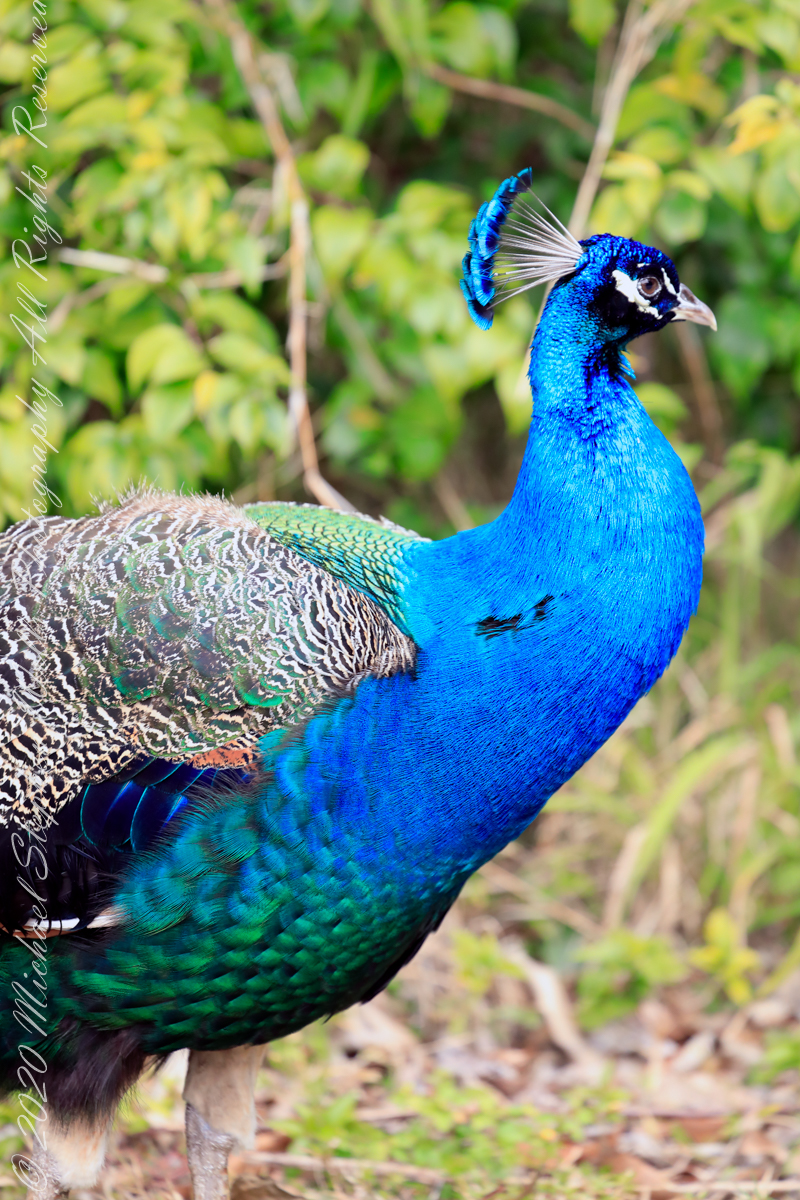
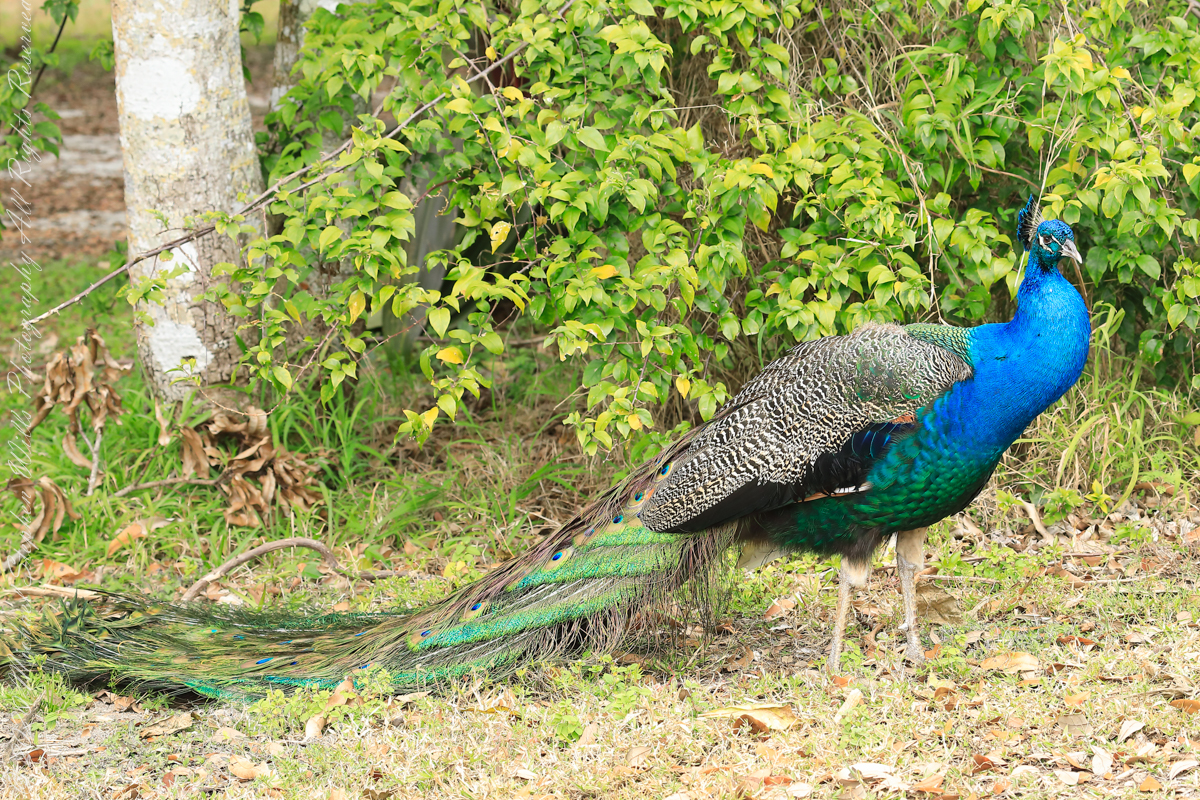
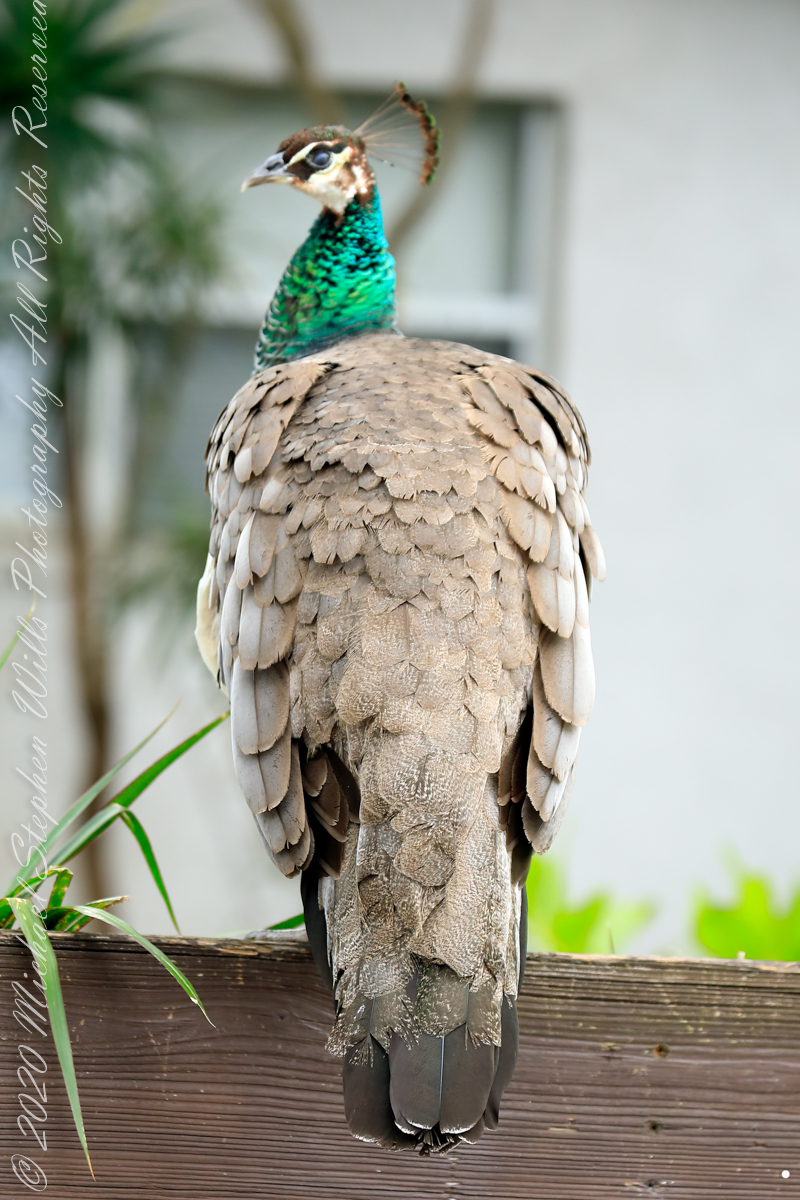
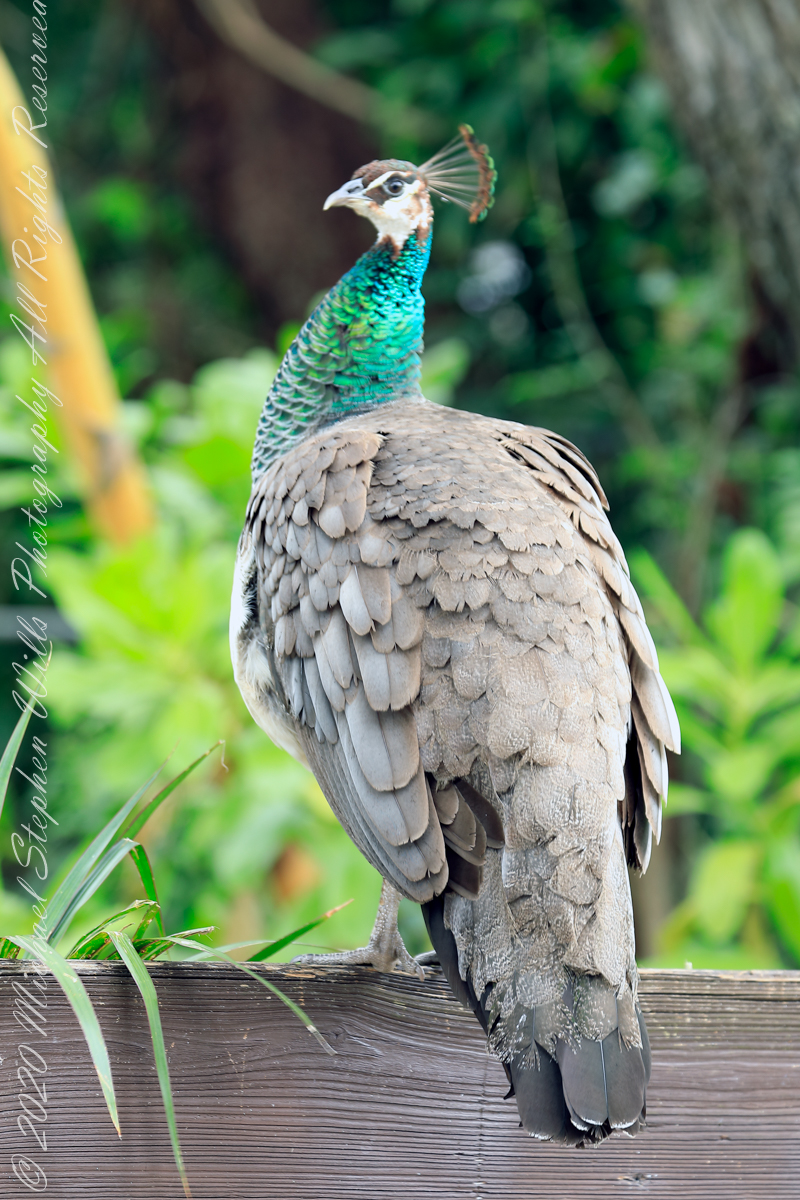
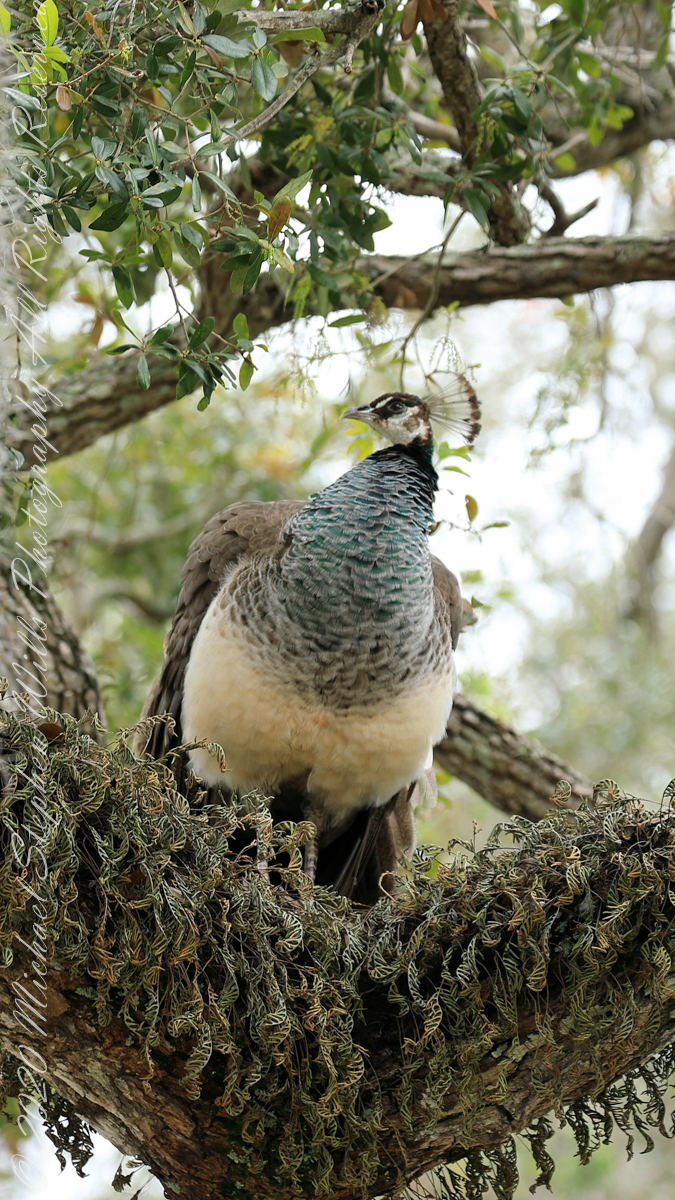
February is Peafowl mating season and for Cape Canaveral the displays were especially fine. These were captured on a photography expedition via automobile, being especially fortunate in observing peacocks (male peafowl) on high perches oriented perfectly to display the magnificent train (trail).
Here is some information on Reddit from “Mr_mayhem77 “According to locals, the Eberwein family lived between Port Canaveral and what is now the Villages of Seaport. In fact a street is actually named after them (Eberwein Drive) at the northern edge of Cape Canaveral. They had the peafowl among many farm animals. The family moved in 1986 and abandoned the peafowls. Over the years the peafowl have slowly populated our community with the greatest concentration being north of Central Ave.”
“Slumming” among lawn equipment
Copyright 2022 Michael Stephen Wills All Rights Reserved
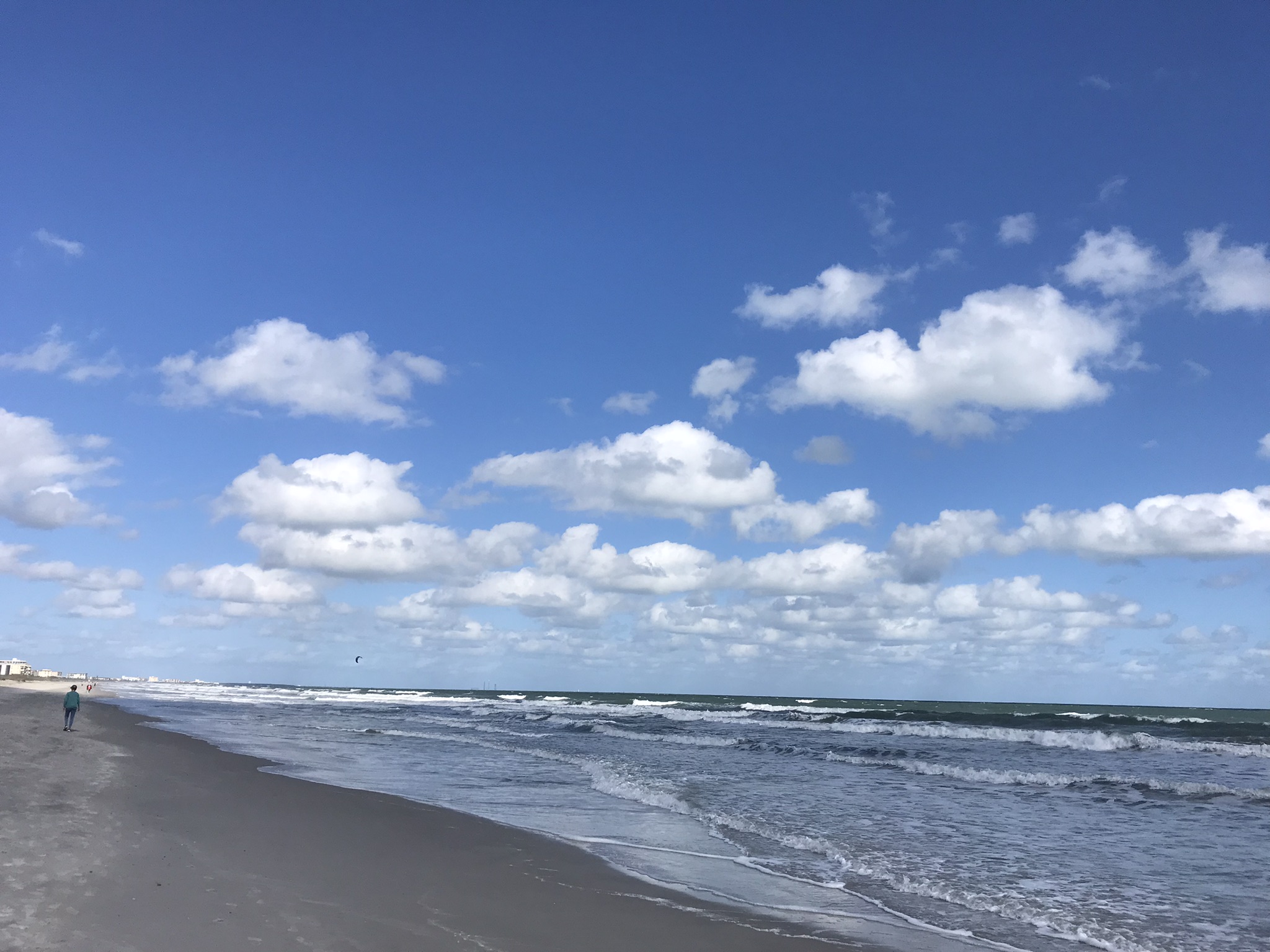
On a day February 2022 Pam and I decided to walk the beach starting from Cheri Down Park, Ridgewood Avenue, Cape Canaveral headed north toward Jetty Park hoping to catch a postponed rocket launch rescheduled for that afternoon. We were encouraged to find video news crew positioned near the park entrance as these professionals were in the know for the best spots to watch the spectacle.
We walked a mile or so, more than halfway to Jetty Park, when the word circulated the rocket launch was cancelled. Rather than turn around, we decided to explore the walkway that opens on “Peacock Beach” as Google Map listed a public parking space there, quite a bit closer to Jetty Park. This park charges a hefty entrance fee to non-residents, so we were parking at Cheri Down, we saved $10 for each mile walked.
GorgeousIiridescent blue and green Dimorphism on display
Having leisure, we decided to walk back to Cheri Down the long way. In what turned out to be a 1.7 mile stroll we encountered these residents for which the beach is named. Then and there Pam and I decided to return for a dedicated photography expedition, the results of which I will share over several posts.
Females share the head crestIridescent green neckA bed of moss
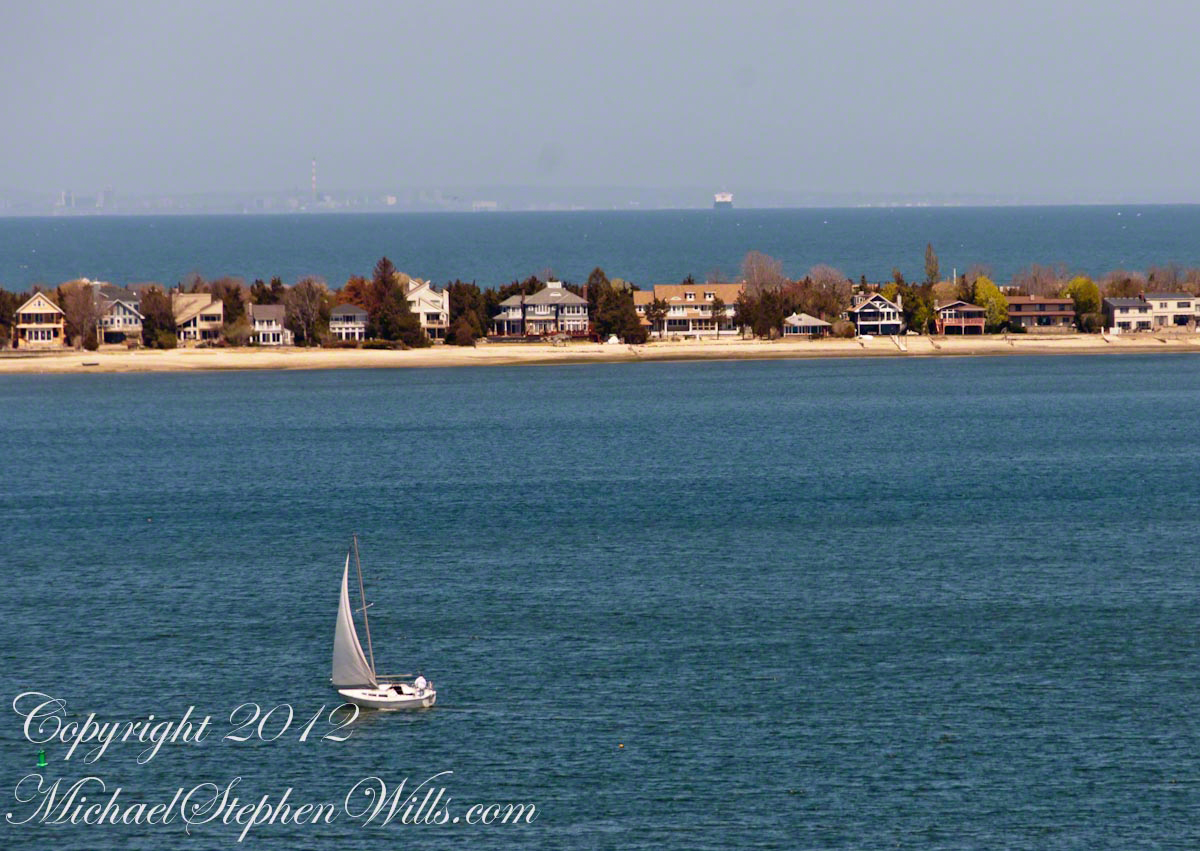
It brings to mind, a few years ago Pam and I took lessons at Cornell’s Merrill Family Sailing Center followed by several seasons of memberships. We’d take out sailboats the size on the one enjoyed by the fellow above in Northport Harbor.
We’d spend entire days on the water, looking up at the people driving the hill up and down route 13. “How lucky we are here and not there”, I’d say.
The Stories
Willy Vanderbilt named his Centerport estate “Eagle’s Nest” after his first yacht, “Eagle” that was anchored in Northport harbor along the estate shoreline. In 1932 the German Krupp Germaniawerft company build a new yacht named Alva, after his mother.
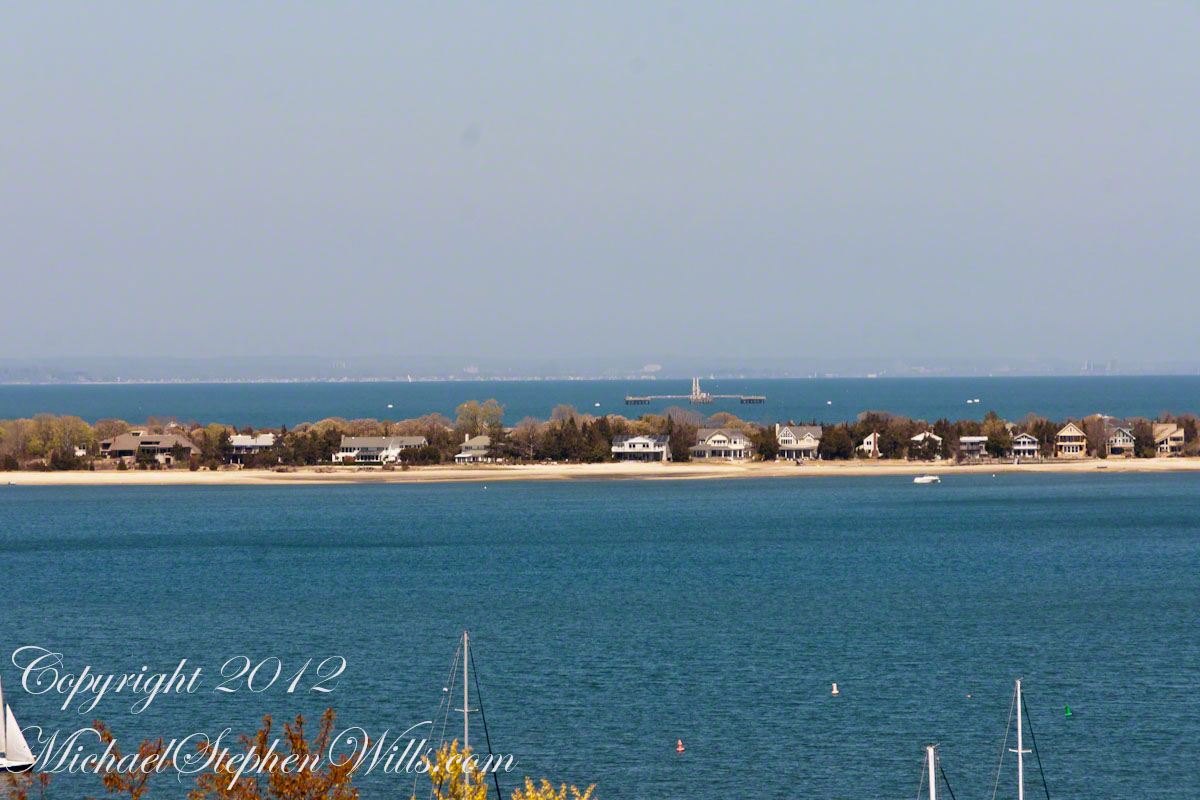
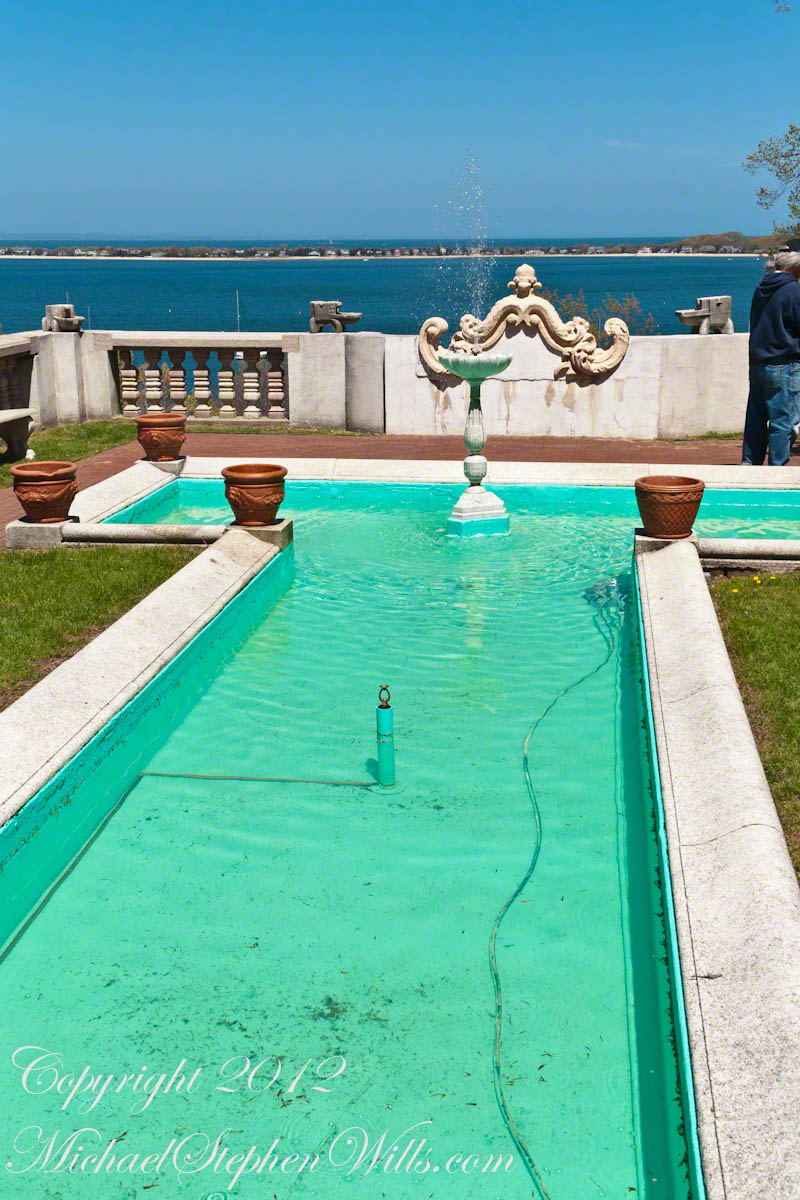
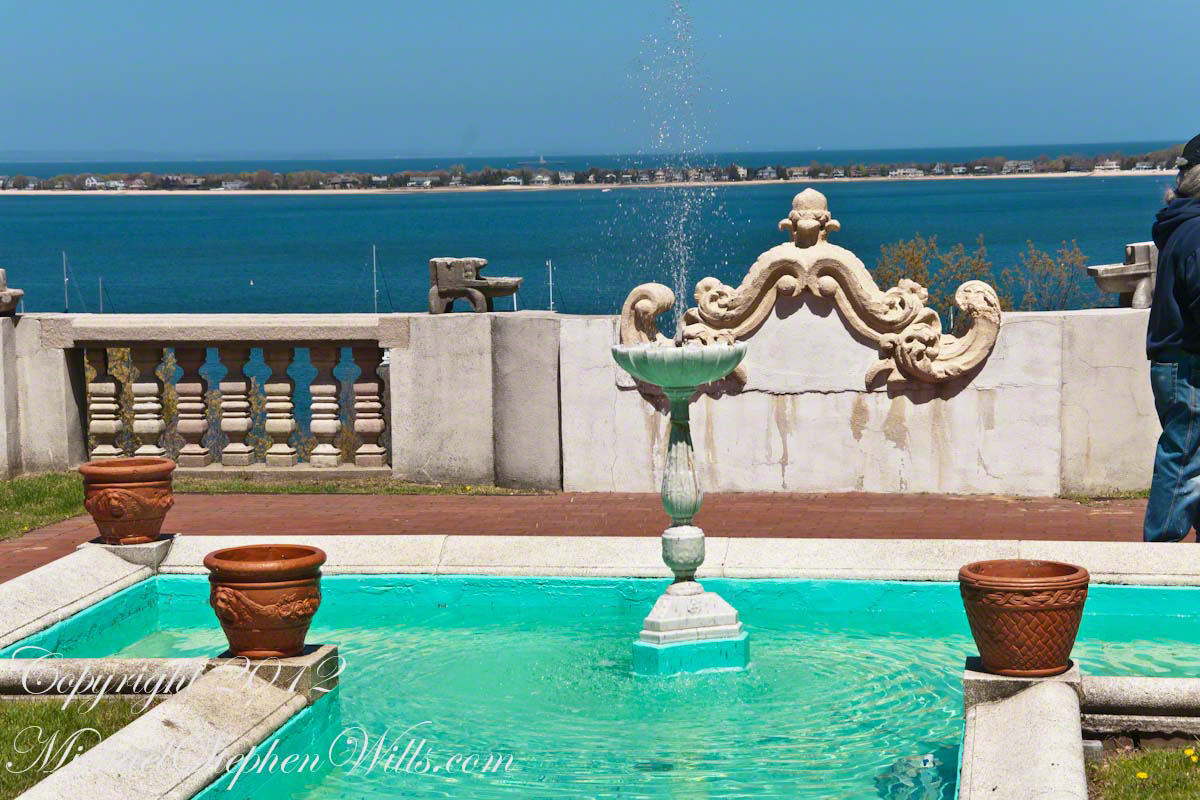
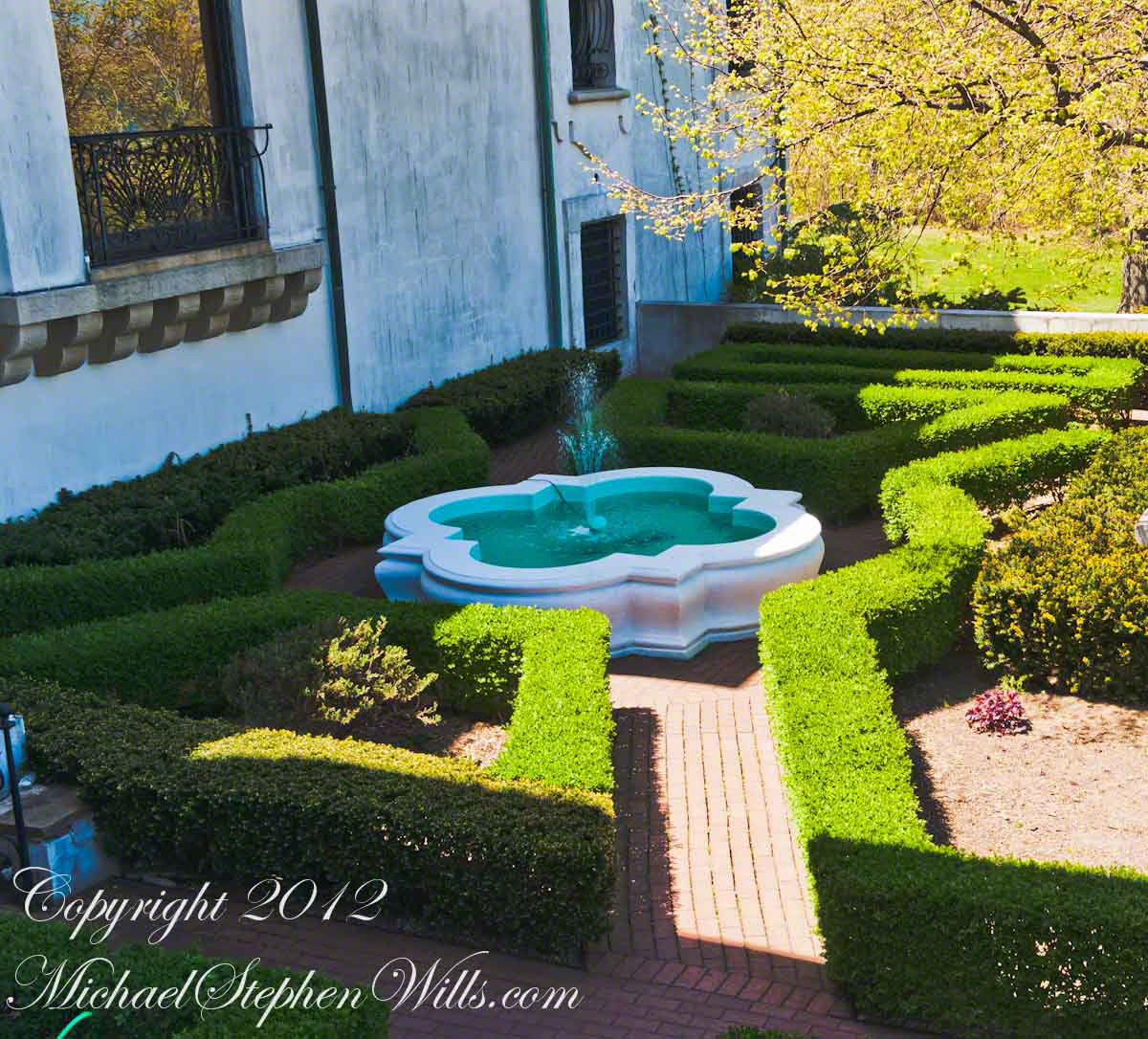
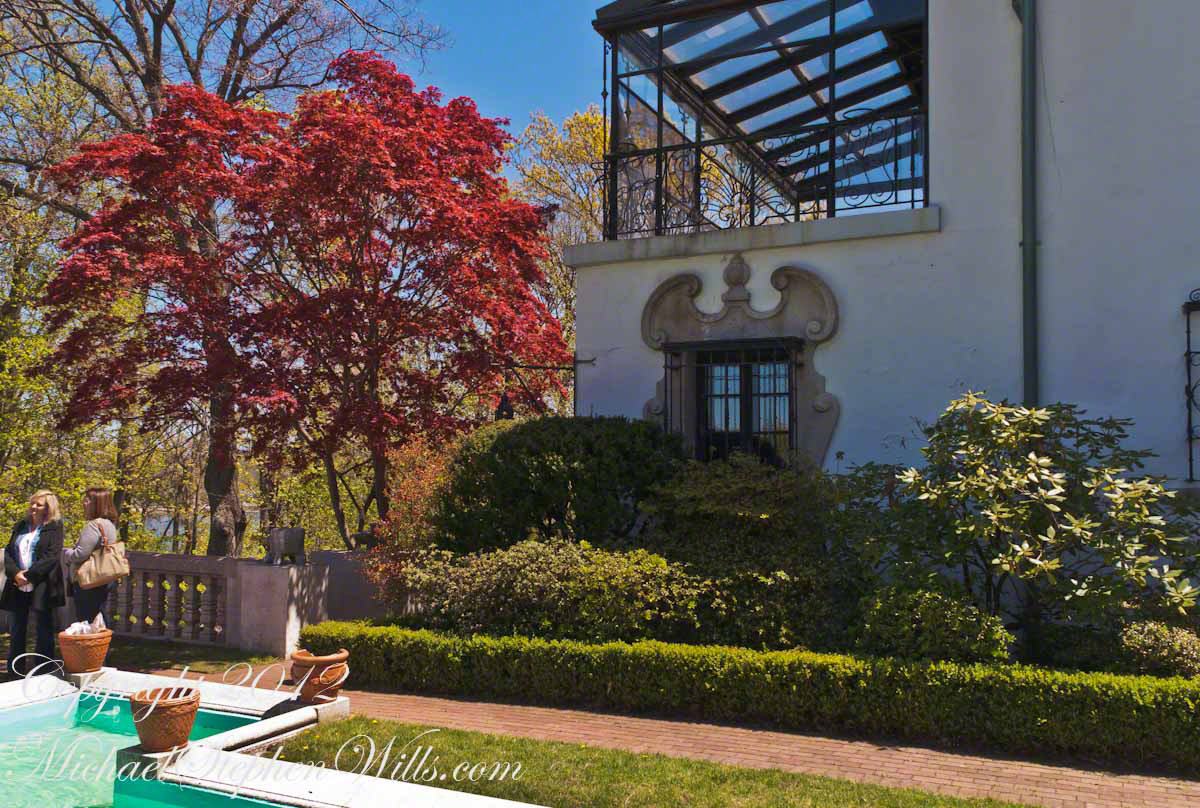
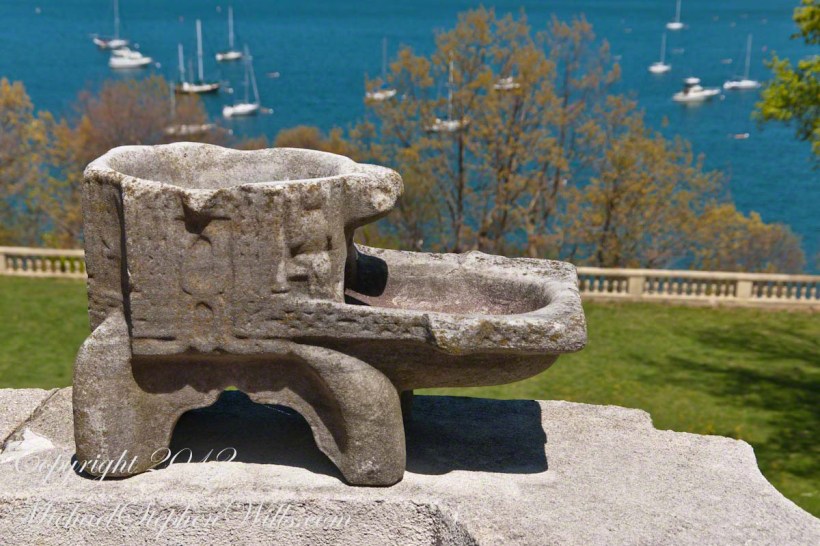
The mansion garden features several fountains and pools. Northport harbor and Long Island Sound are the view.
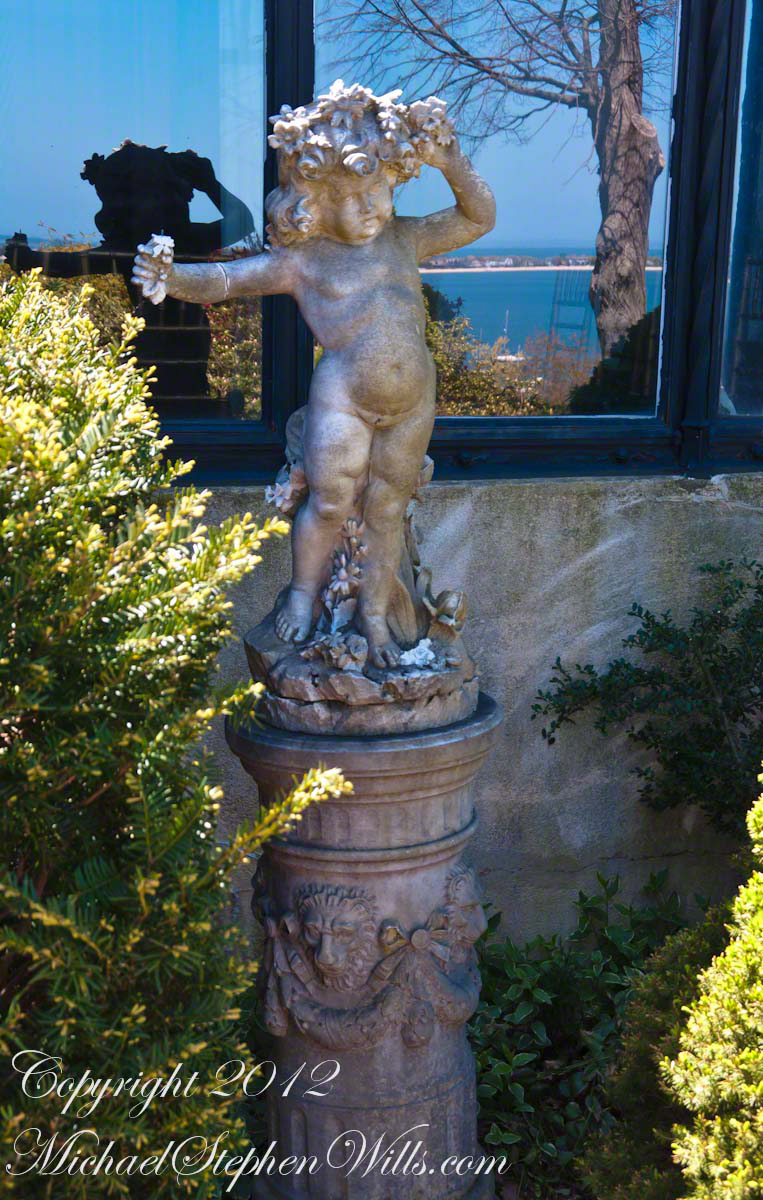
Willy had a “thing” about the infant Baccus. My first Vanderbilt Museum posting “A Taste of Gatsby: details from the Vanderbilt Museum”included the following depictions of the infant Baccus. the name preferred by the Romans.
Statue of a young Bacchus in the Mansion Garden with Northport Harbor and the Long Island Sound reflection
To the Greeks he was Dionysus. Also known as the “twice born” from the myth of his being carried in his father Zeus’ thigh after Hera, the jealous wife, plotted the death of his mother, the mortal Semele.
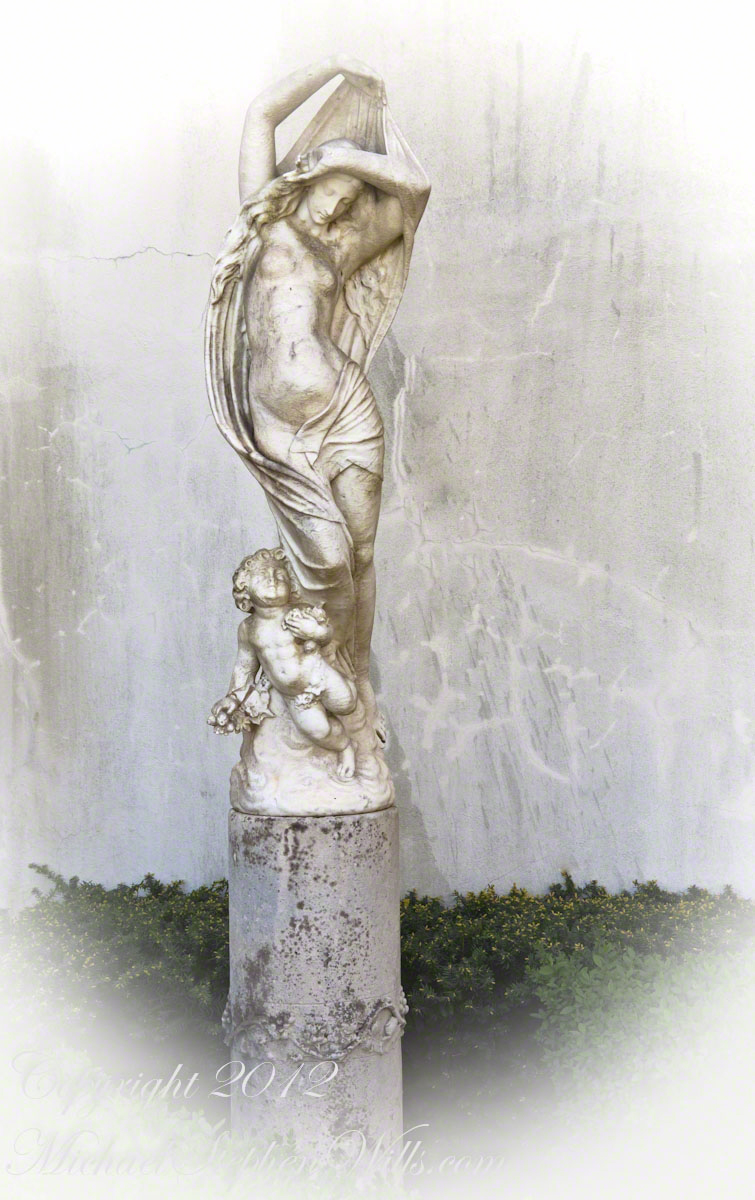
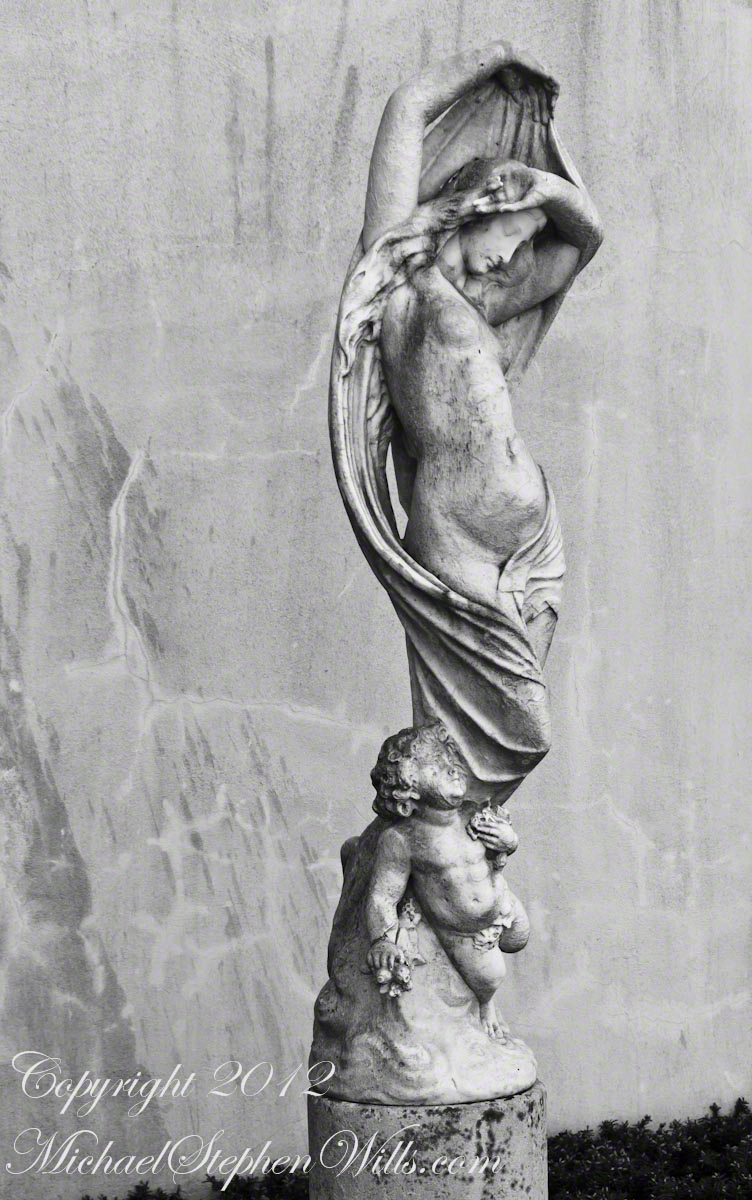
The infancy of Dionysus was perilous, with Hera plotting revenge Zeus found safe haven for the child at a place of earth called Mount Nysa, with beings named Rain Nymphs. The fascination of Vanderbilt with the story continued with the acquisition and display of a statue of the infant Dionysus with a protective nymph.
Dionysus and protector, a Rain-nymph of Nysa
The Things
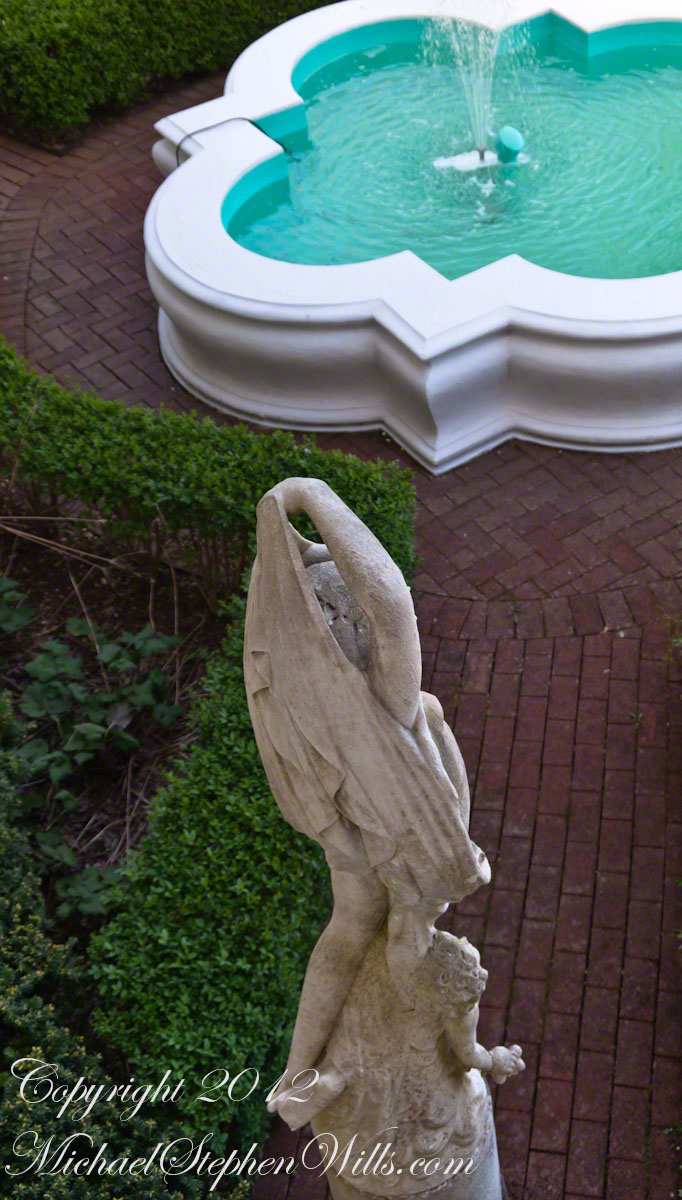
The statue and plinth are at the stairs into the garden.
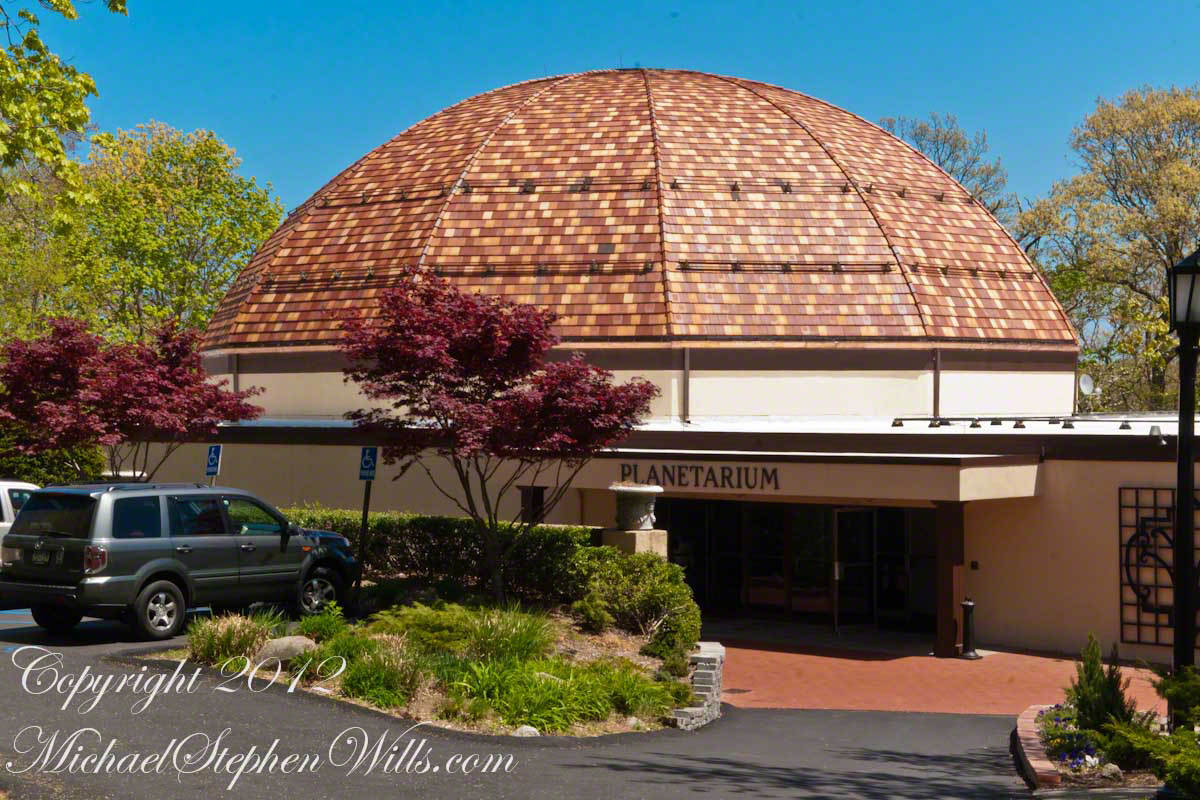
Thirty five years after completing his Eagles Nest estate and twenty seven after his death, this planetarium became an addition to the museums left by William K. Vanderbilt II (“Willie K”). Located next to the Rose Garden, where my last blog “A Taste of Gatsby – details from the Vanderbilt Museum” left off, this planetarium is on the site for the estate tennis courts. The Planetarium reopened March 2013 with a complete equipment upgrade.
The star of the planetarium is a Konica Minolta GeminiStar III projector; a machine that will put this museum on the map for having one of the finer planetarium projectors in the United States.
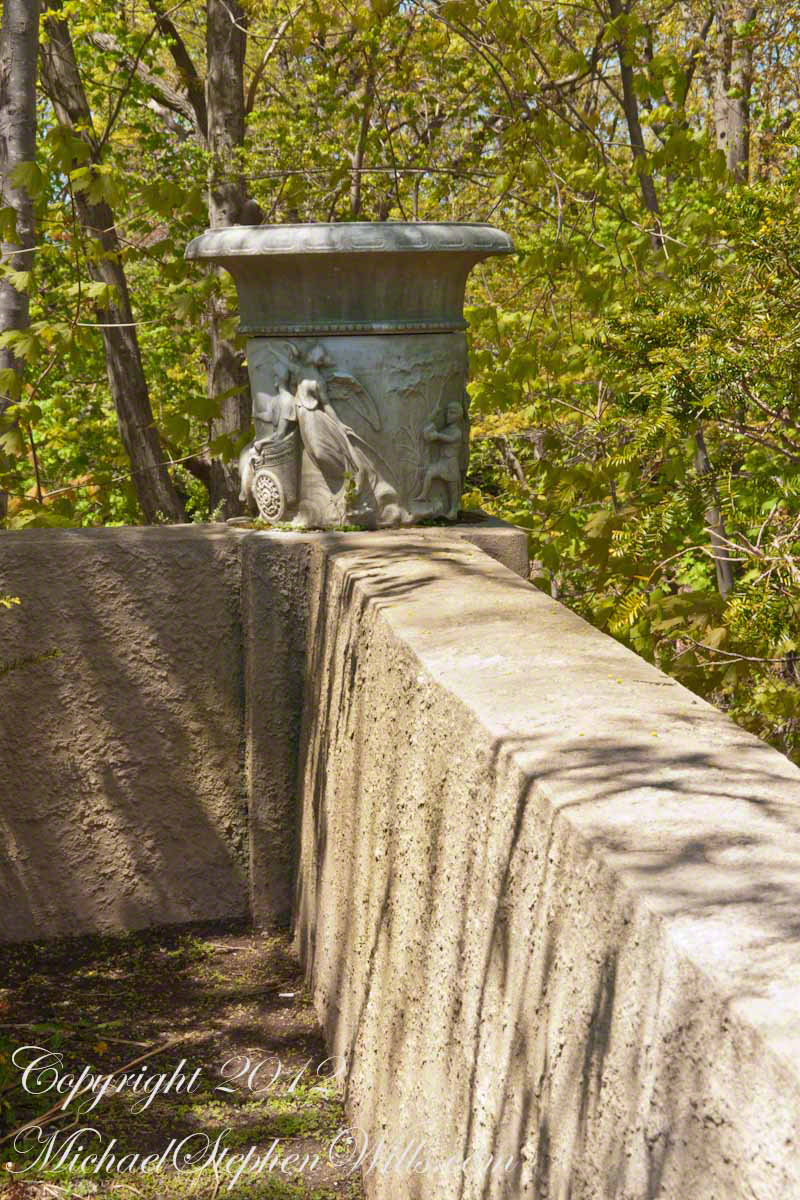
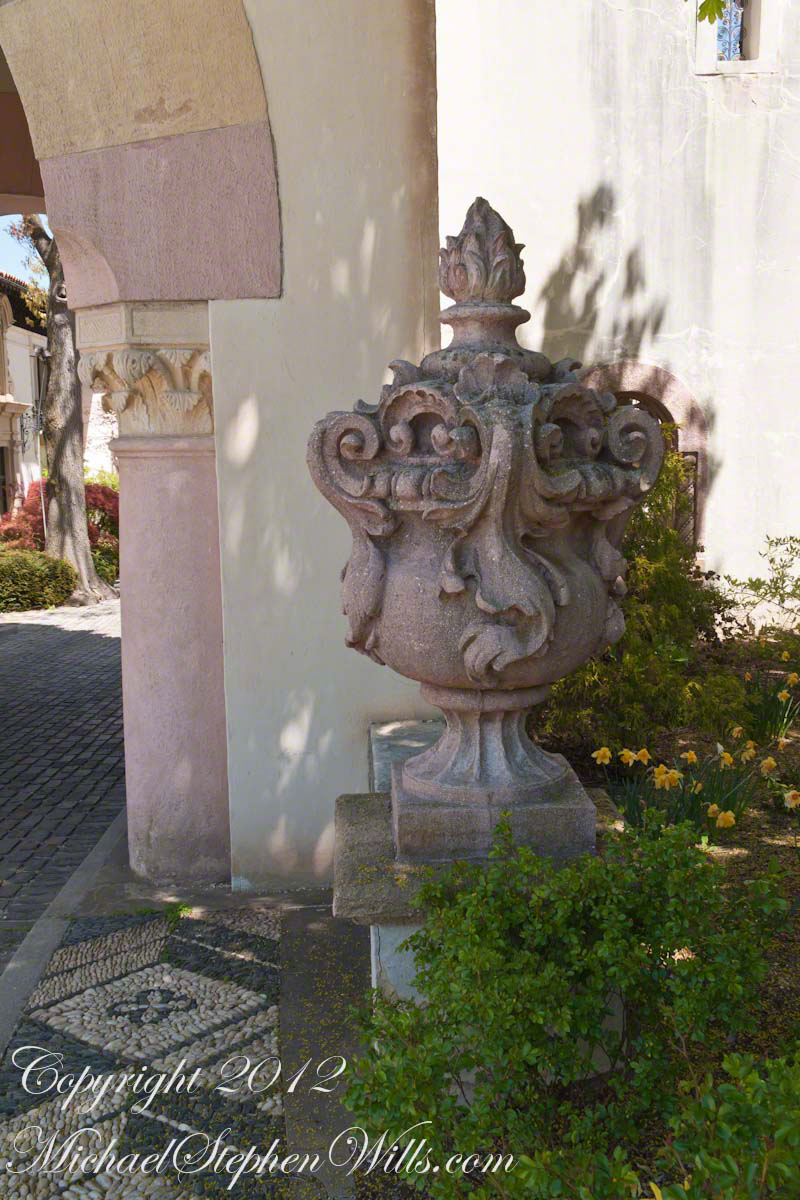
There are several museums on the grounds, joined by graciously appointed walkways. This is a corner urn along the walk to the mansion.
This planter graces a wall corner along the path from the Planetarium to the Corinthian Colonnade
Courtyard Entrance
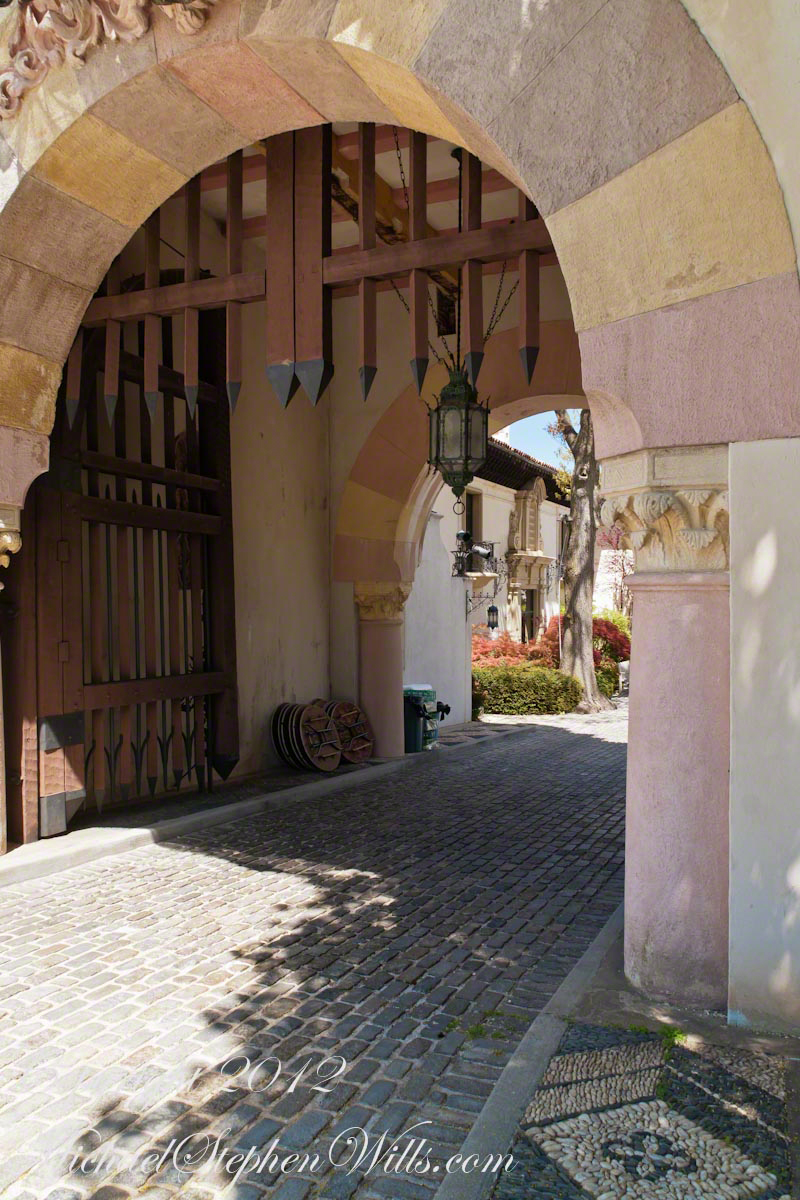
The Spanish Revival style mansion gathers around a central, cobblestone courtyard entered through this elaborate sandstone gate flanked by two carved sandstone urns, each at least six feet tall with pedestal.
A gated arch serves as the mansion courtyard entrance.
The gated entrance is the base of a bell tower. Willie brought from Russia a church bell that is older than the Liberty bell. He used to have great fun ringing the bell on Sunday mornings to disturb the sleep of his partying son and friends. That stopped when the neighbors arrived as an angry, spontaneous group to complain.
The mansion courtyard is entered through a gated archway. This cast urn graces the right side.
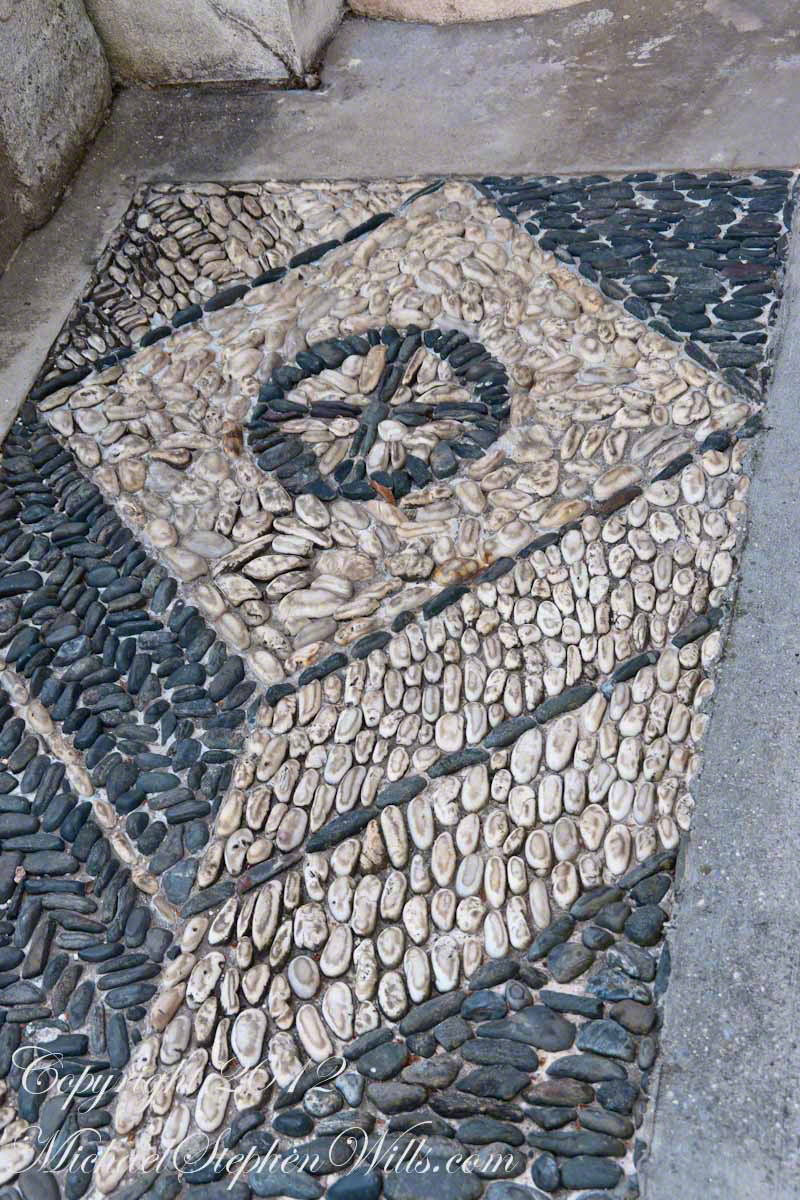
The cobblestone road leads up to the mansion, over a bridge and into the courtyard. Here is a detail of the walk way, formed from glacially rounded pebbles very common on beaches of Long Island’s North Shore.
A walkway decorated with black and white pebbles leads into the mansion courtyard. This is a portion just inside the arch.
A Ghost in the Garden
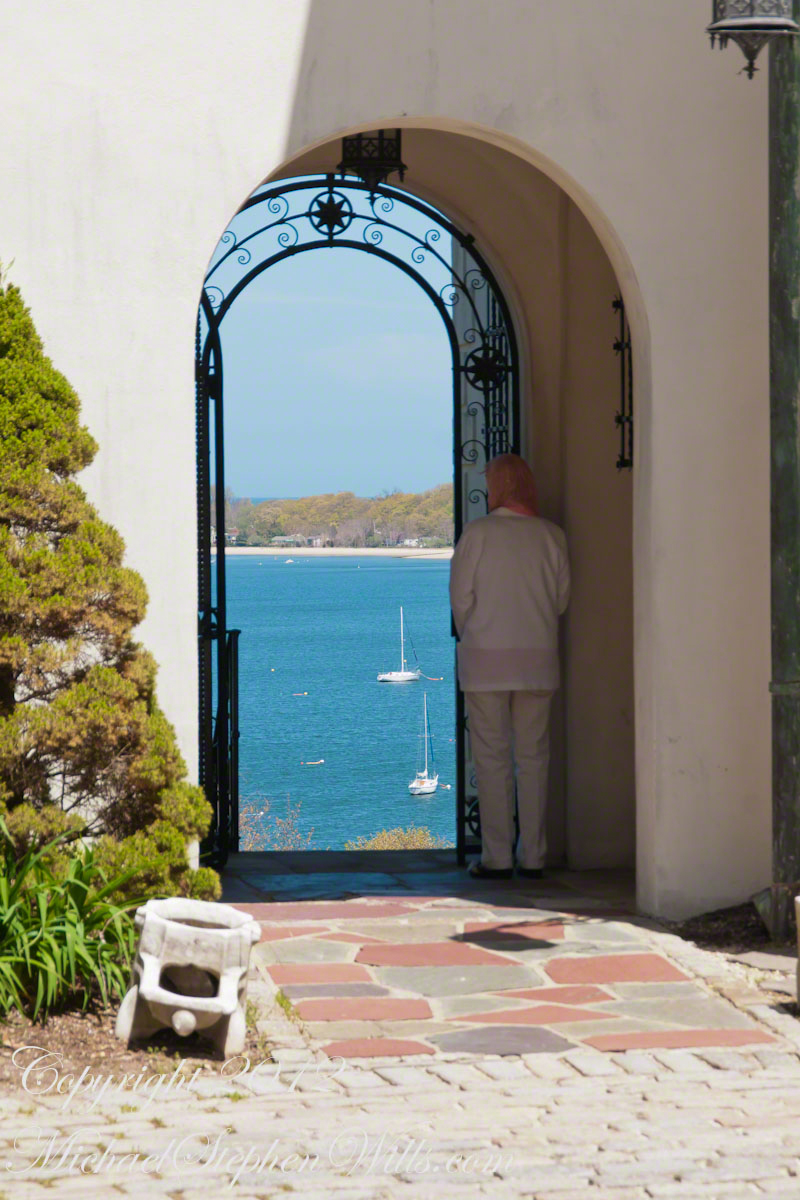
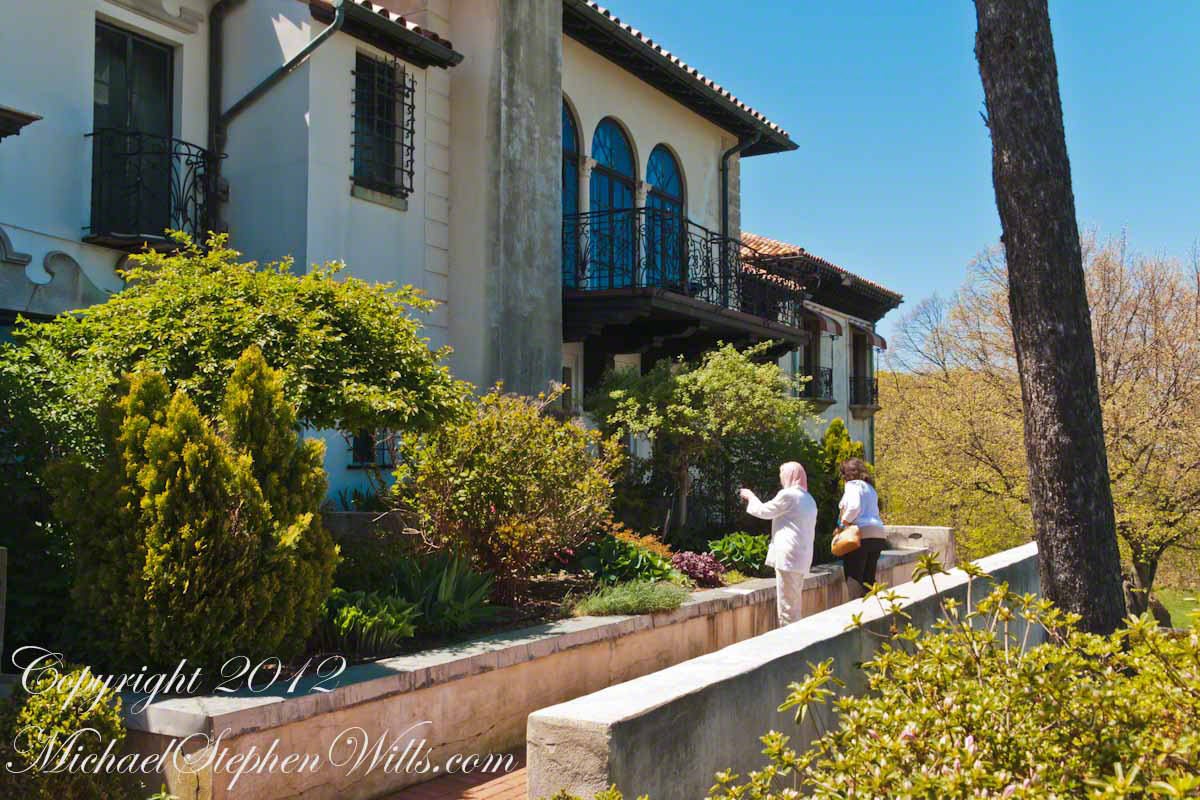
Across the courtyard from the bell tower is this arched entrance to the gardens along the east mansion walls. As we approached the figure to the right seemed to be a ghost, she was so still, enthralled by the view of Northport Harbor.
Archway with view toward Northport Bay and Asharoken
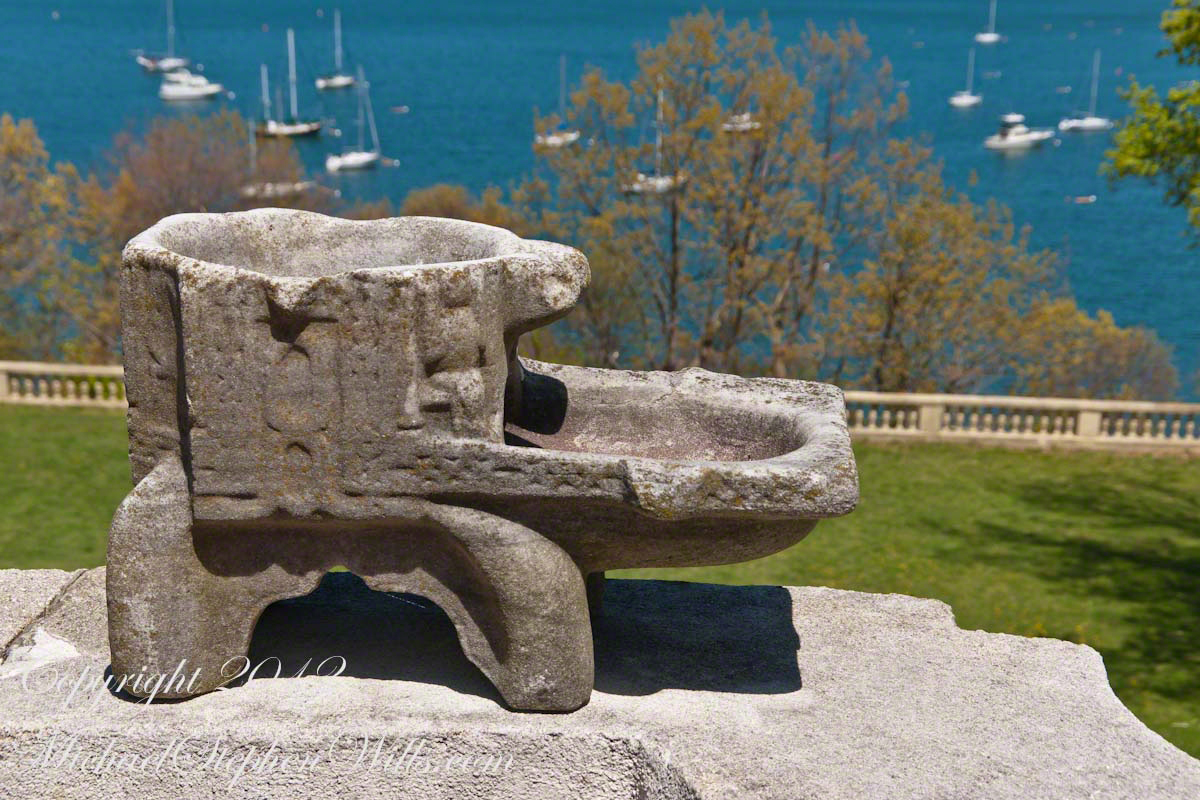
There were many cast stone planters in an Aztec motif such as that to the left of the archway and, in a detail shot, below.
A cast wall urn from the Mansion Garden of the Vanderbilt Museum.
We continued through the archway into the gardens. With plenty of time before the Mansion tour (highly recommended) we wandered at length and had an interesting conversation with the figure of the archway, a retired lady from Smithtown (and not a ghost).
Pam struck up a conversation with another visitor who was very knowledgeable about the museum history and grounds.
Copyright 2022 Michael Stephen Wills All Rights Reserved
The first weekend of May 2013 my wife, Pam, and I attended a New York City Ballet performance on Saturday. Sunday we visited the Vanderbilt Museum of Centerport, Long Island.
This is the former “Eagles Nest” estate of William (“Willie”) Kissam Vanderbilt II.
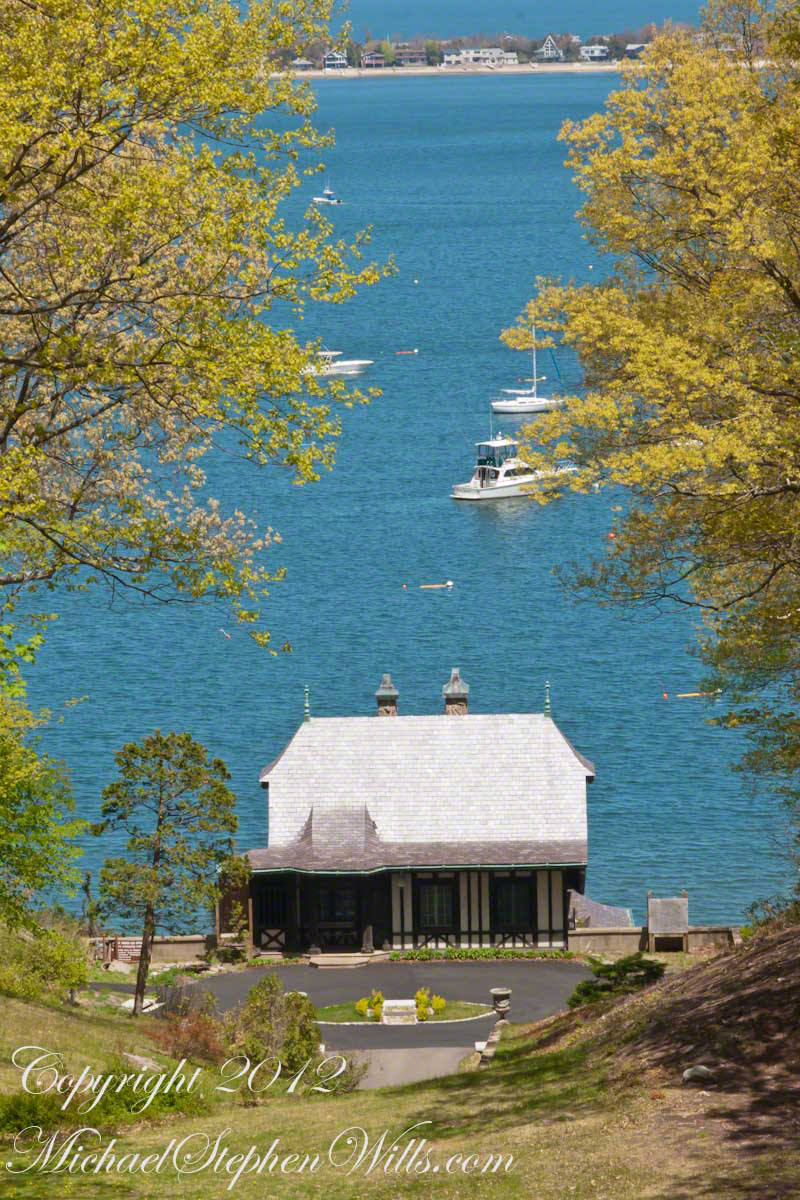
Museum visitors are first drawn to a grand Corinthian colonnade and view of this boathouse on Northport Harbor.
Willie K chose Centerport in 1910 for an anchorage on the well protected Northport Harbor, deep enough to his yacht the size of a destroyer class ship named for his mother, Alva. The estate grounds are high above the harbor, the mansion and gardens designed to enhance the view.
There are superficial parallels between Willie K’s life and “The Great Gatsby.” The first suburban commuter, Willie K was an auto enthusiast. A theme of F. Scott Fitzgerald’s novel “The Great Gatsby” is travel back and forth from New York City to the great estates on Long Island’s North Shore. In Gatsby, while the vehicles are grand, the travel is pointless or worse. In comparison, Willie K as a pioneering automobile racer, achieved a land speed record and founded a major race, “The Vanderbilt Cup.” Gatsby, above and beyond his fictional status, is a tenuous, transient figure. Vanderbilt established this estate, grounds and museums we still enjoy today.
Rose Garden
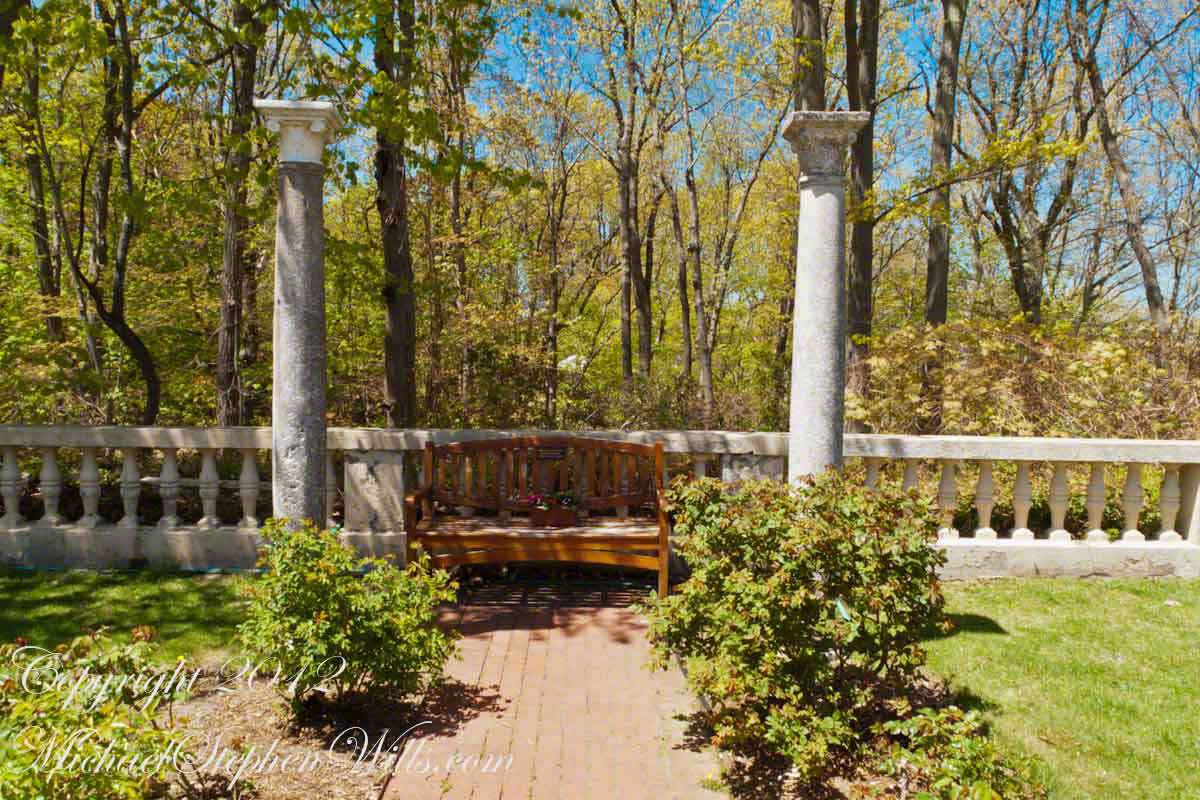
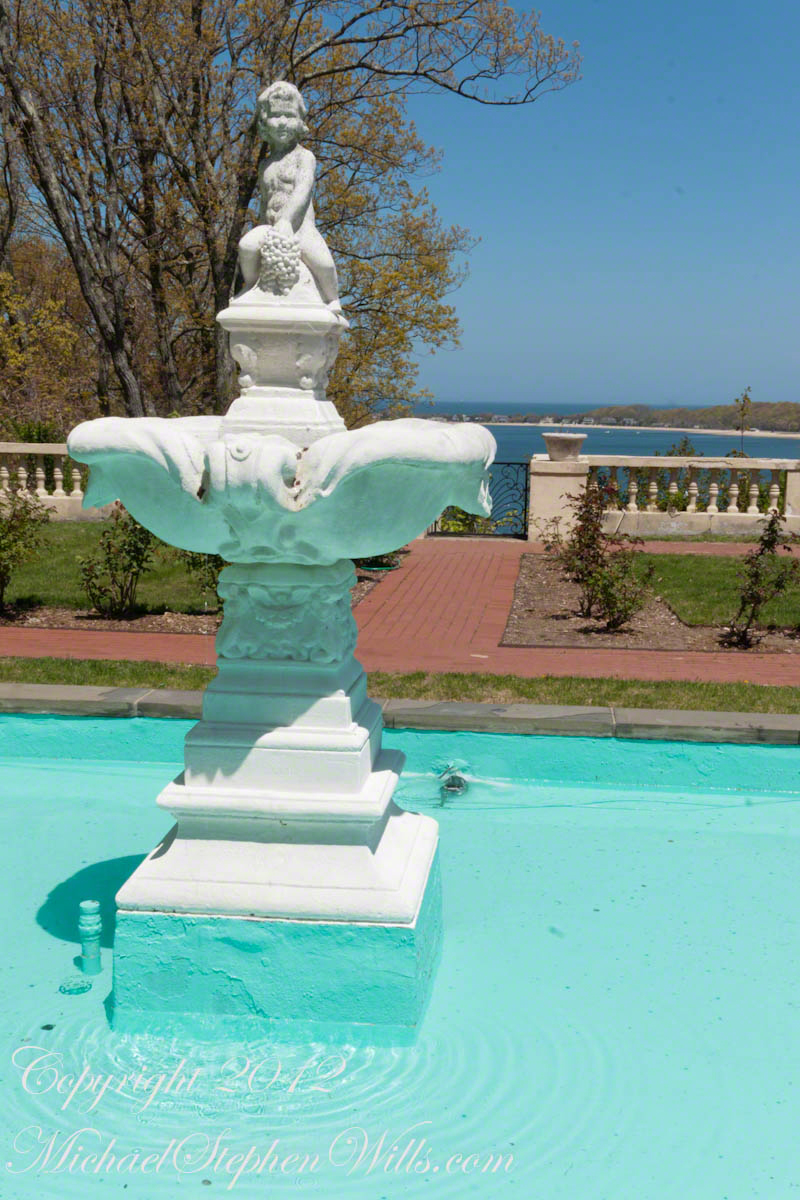
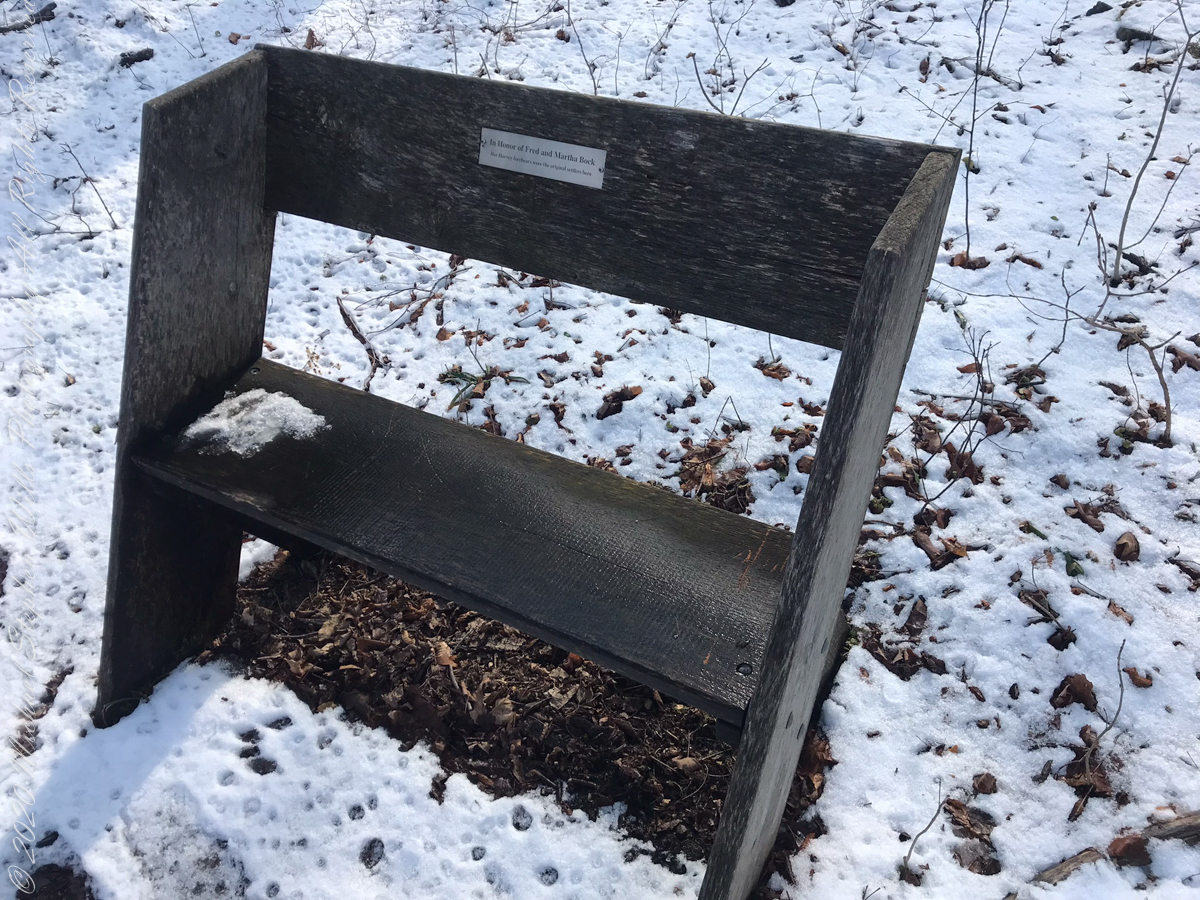
A short walk from the colonnade is a rose garden surrounding a pool and fountain. These Corinthian columns sized to a human scale flank a dedication bench on the northern side overlooking the boathouse through a hillside forest.
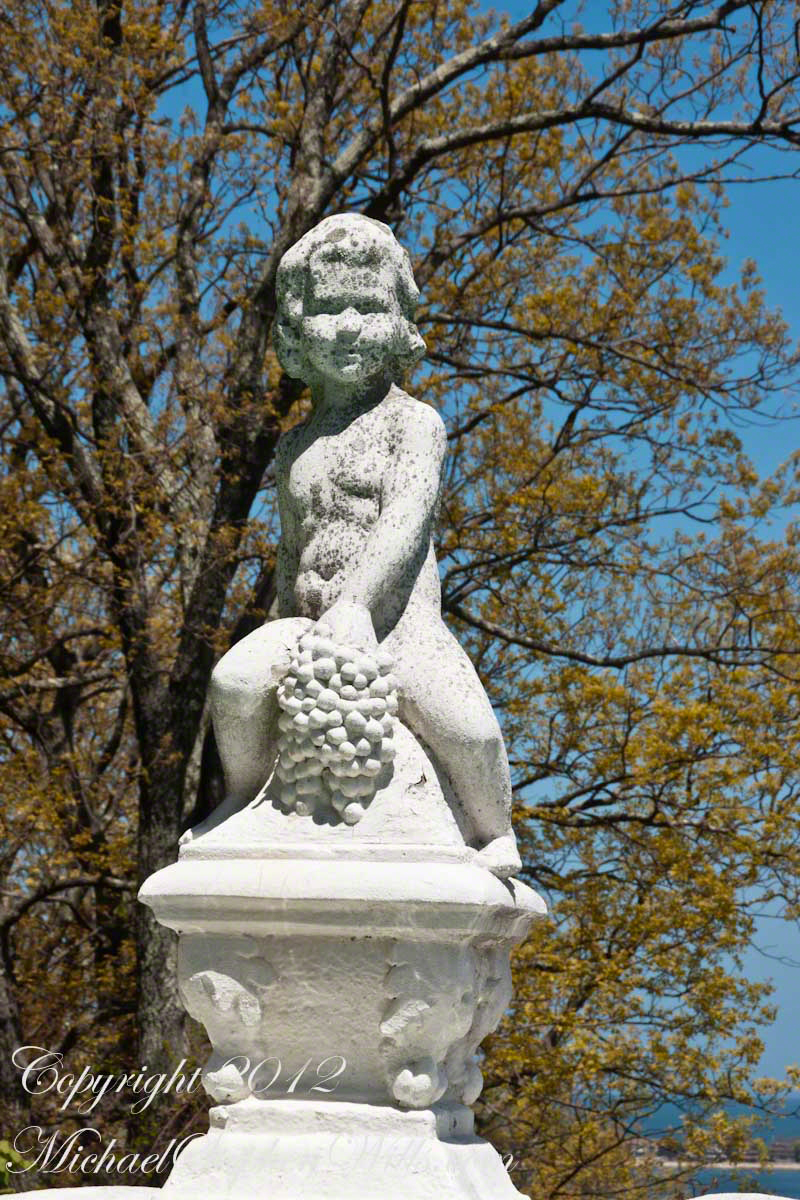
This figure of a flourishing infant is atop the rose garden fountain. Pam and I first noticed this character of the Eagles Nest estate here, with his abundant grape cluster, and came to know him as an expression of Willie’s outlook.
To the northeast / east is a dramatic view of Northport harbor and the Long Island Sound.
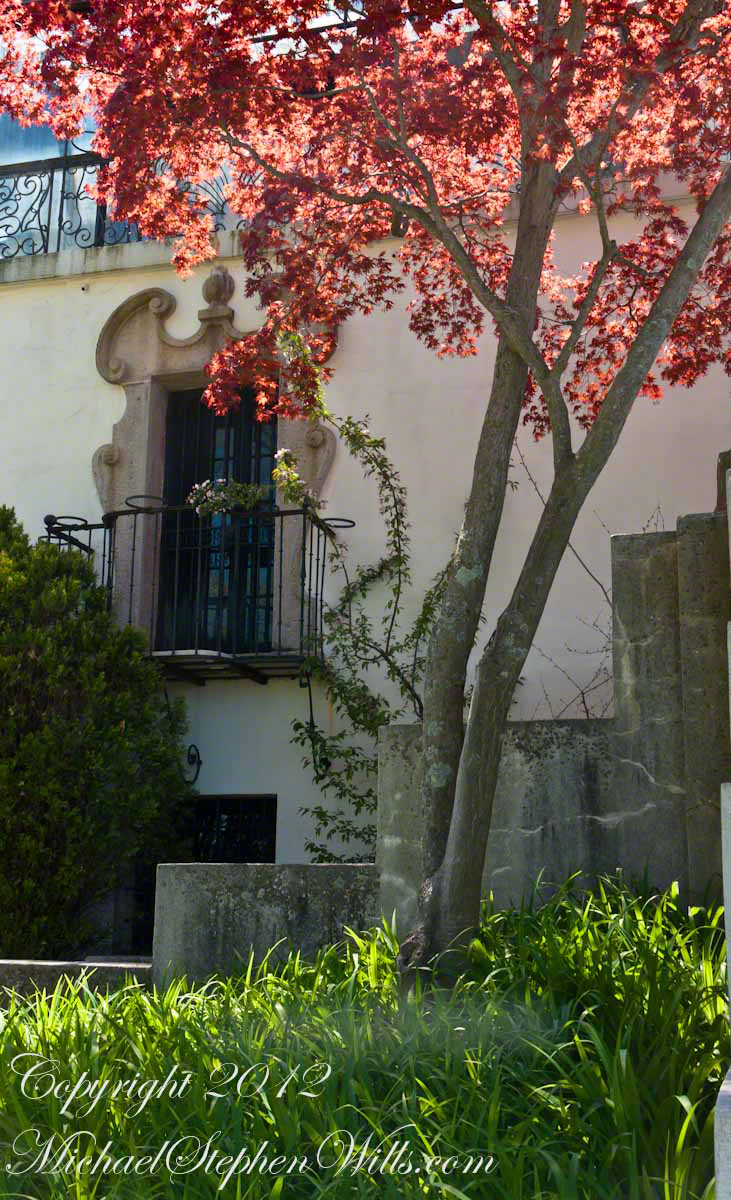
The mansion and surrounding grounds were imagined by Willie and implemented by the architects Warren, Wetmore and Pearce, over a twenty five year building campaign, from his feeling for the Mediterranean.
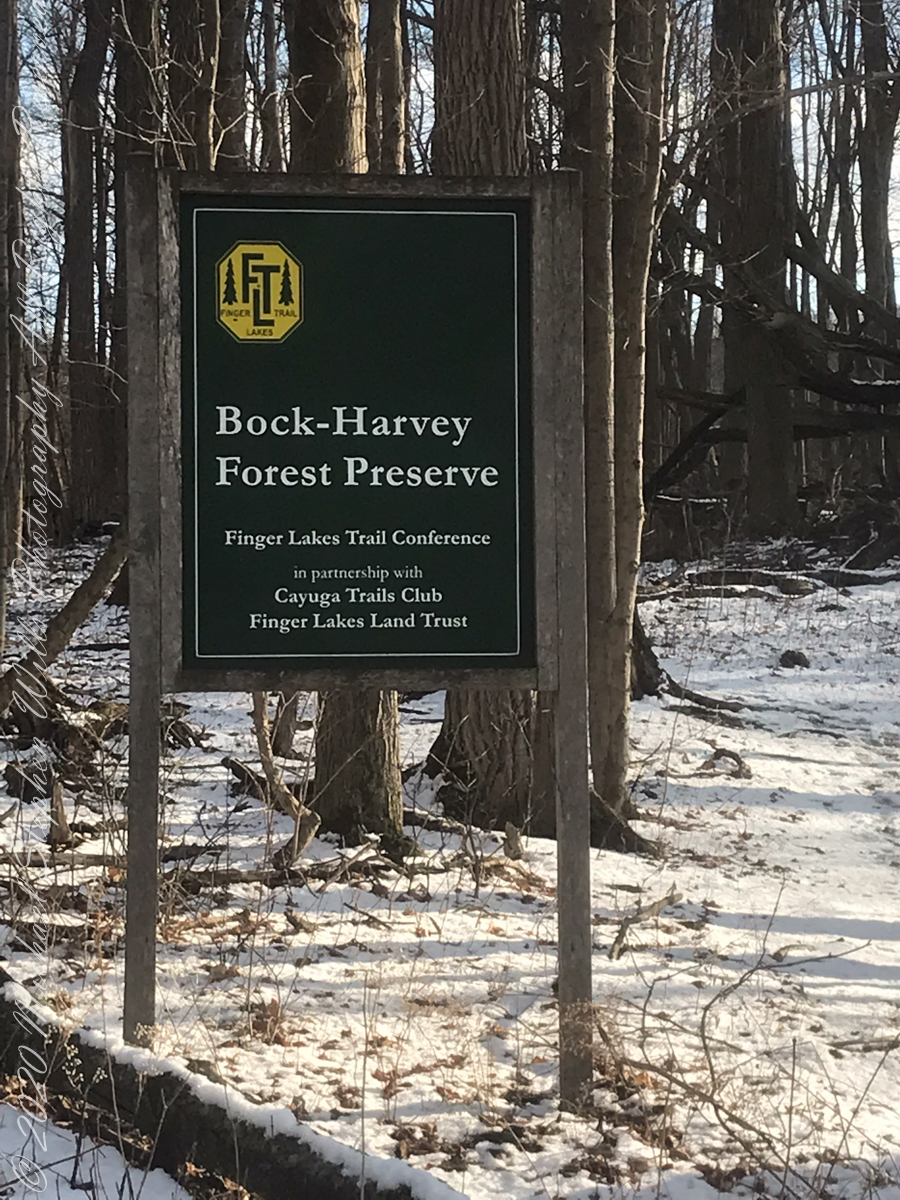
On September 14, 2013, the Bock-Harvey Forest Preserve was dedicated protecting 48 acrea of open meadow, transitional meadow, mixed hardwood forest, a special environmental protection zone and the Finger Lakes Trail. Brock-Harvey Forest Preserve, and all land as far as the eye can see from there, was part of the Military Tract of Central New York, 28 townships given classical Greek and Roman names, each township 100 lots of 600 acres each, approved by the U.S. Congress 1799. Here, the township was Ulysses, encompassing the southern end of Cayuga Lake and surrounding lands. Thus, the city of Ithaca and Hector Street winding up from the valley passing below our home.
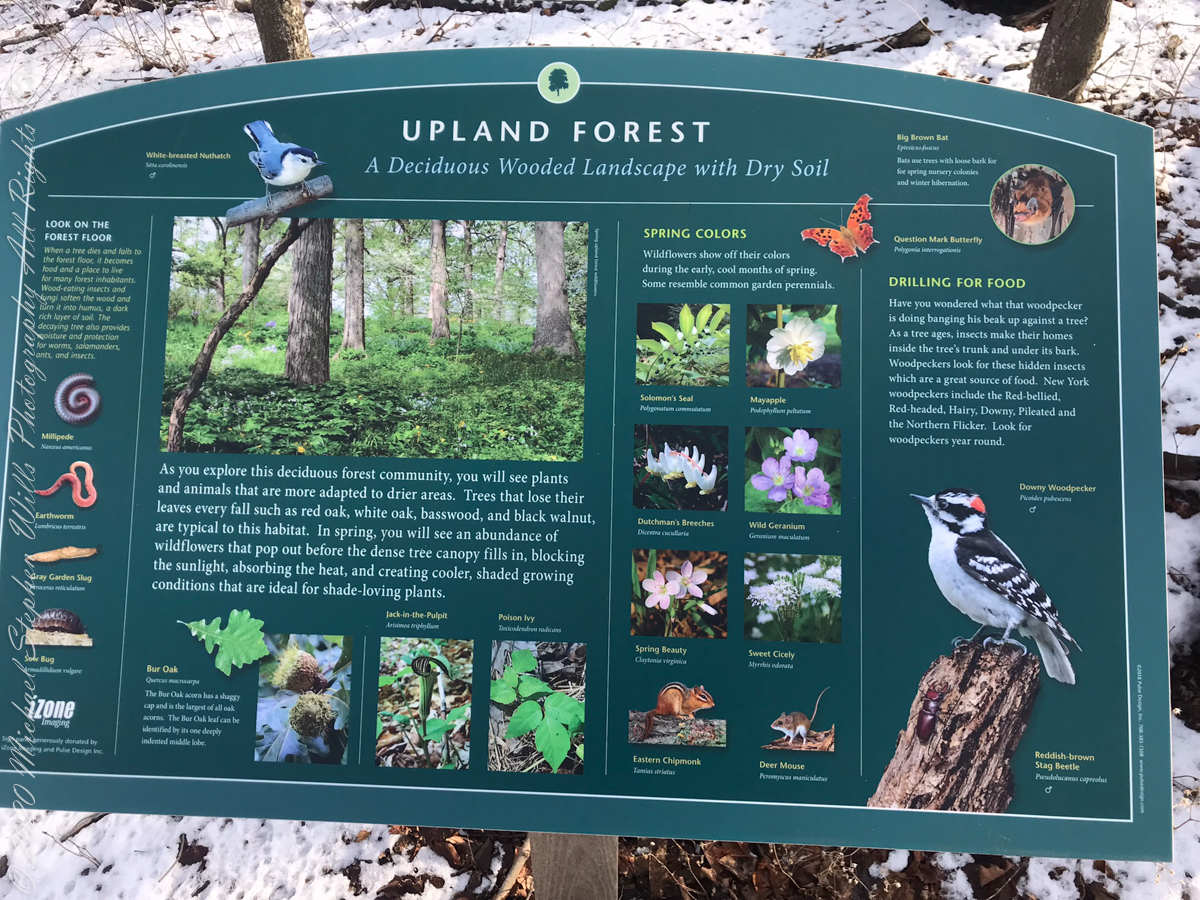
Sign on Rockwell RoadResting Place in forestGreat Information
This land and several other military tracts were purchased by Samuel Harvey. He then gave he lands to his sons including this farm to Silas Harvey, the great-great-great-great grandfather of Megan Barber who led the dedication ceremony of the forest preserve. Megan’s great-grandmother Martha Harvey married Fred Bock and lived on this land used for dairy farming for over 150 years.
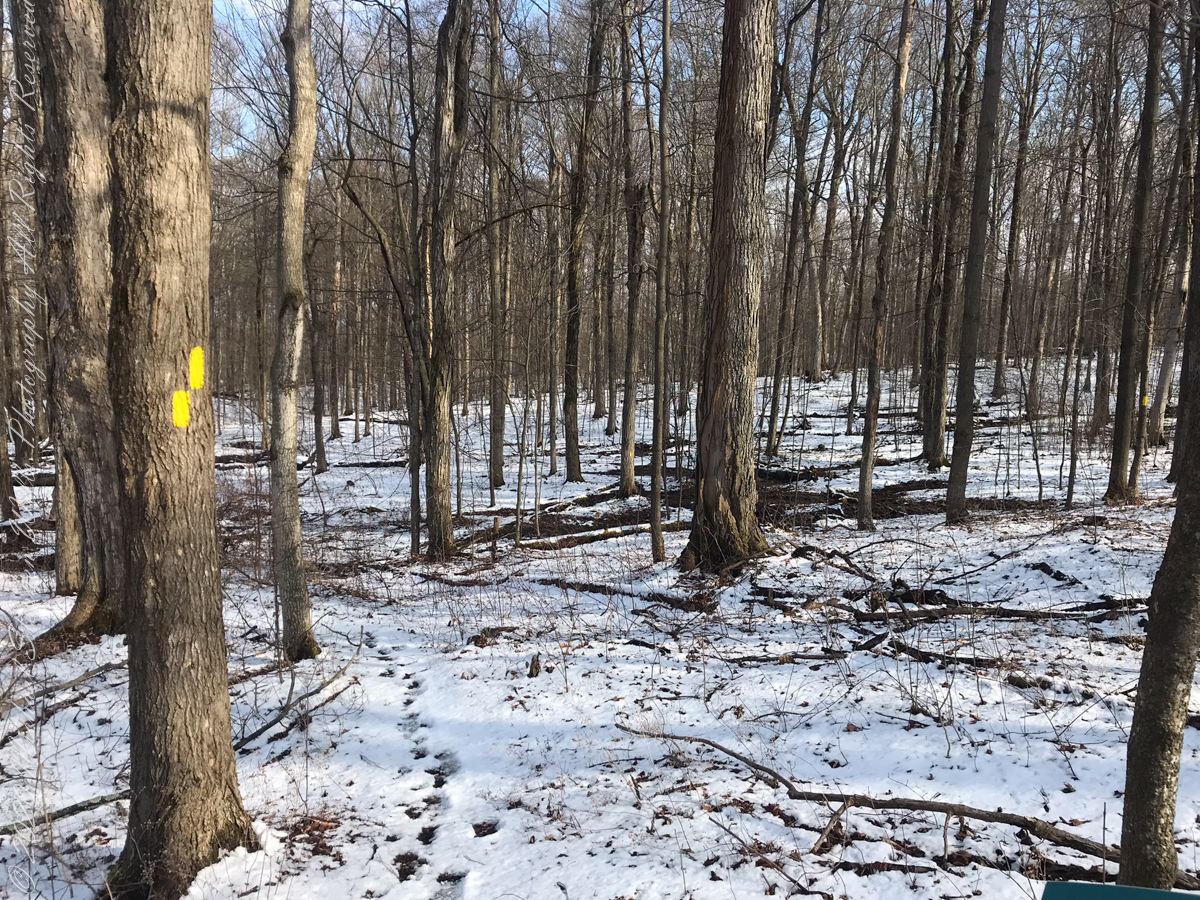
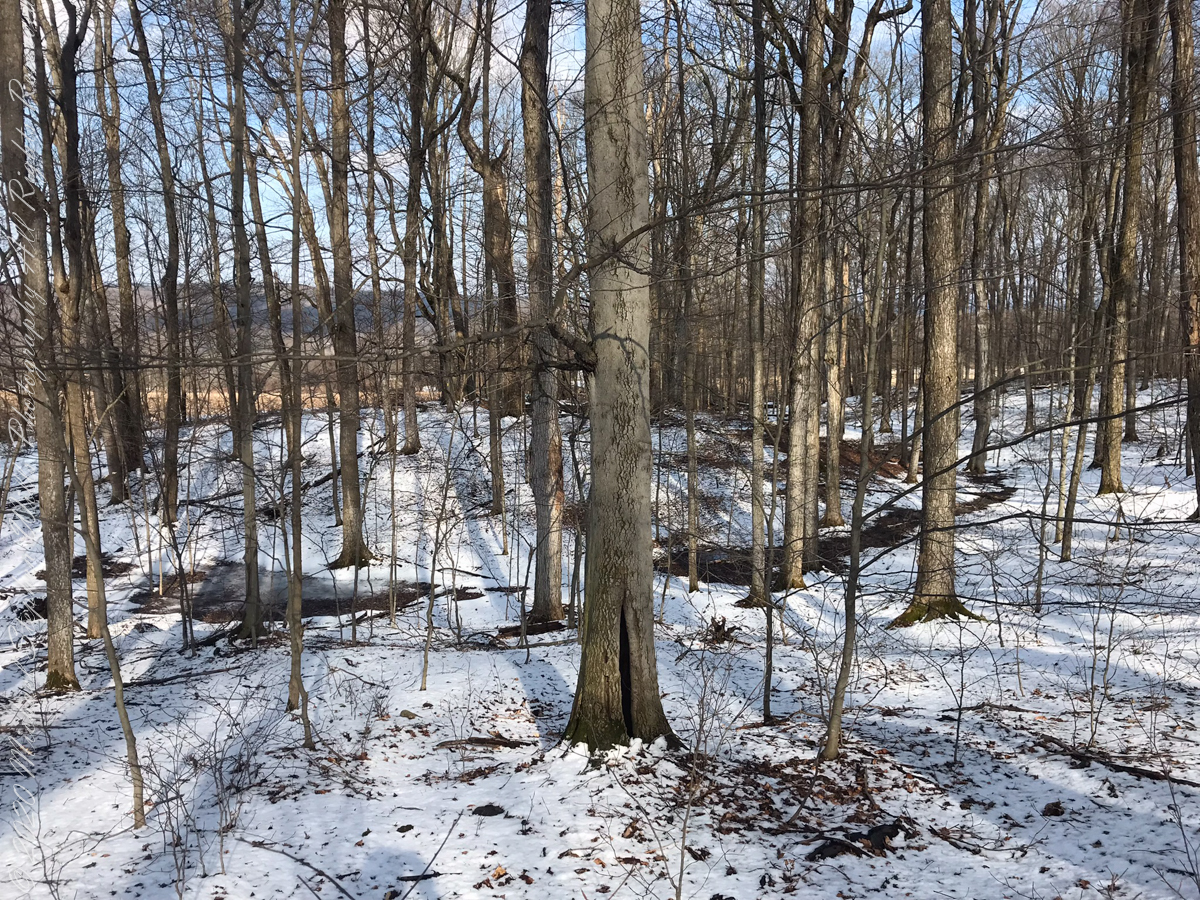
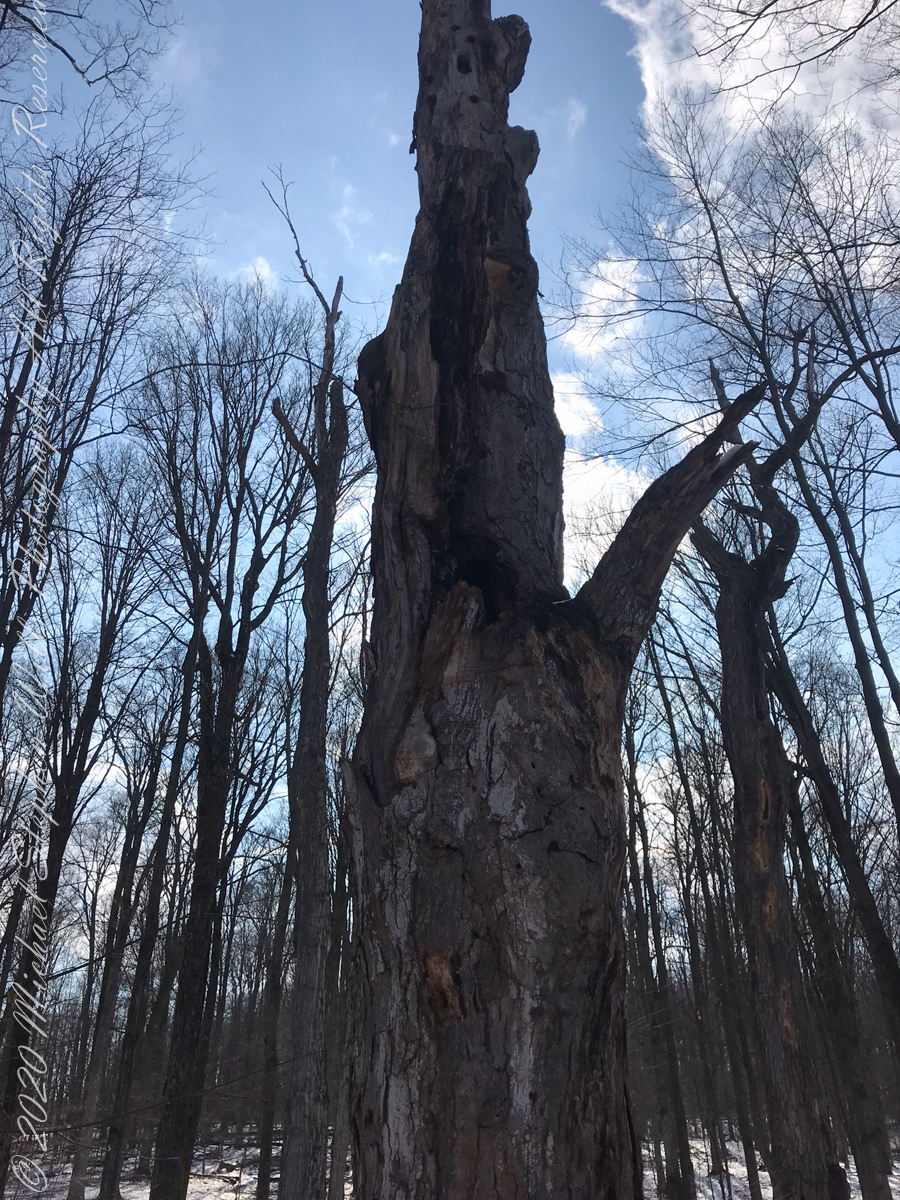
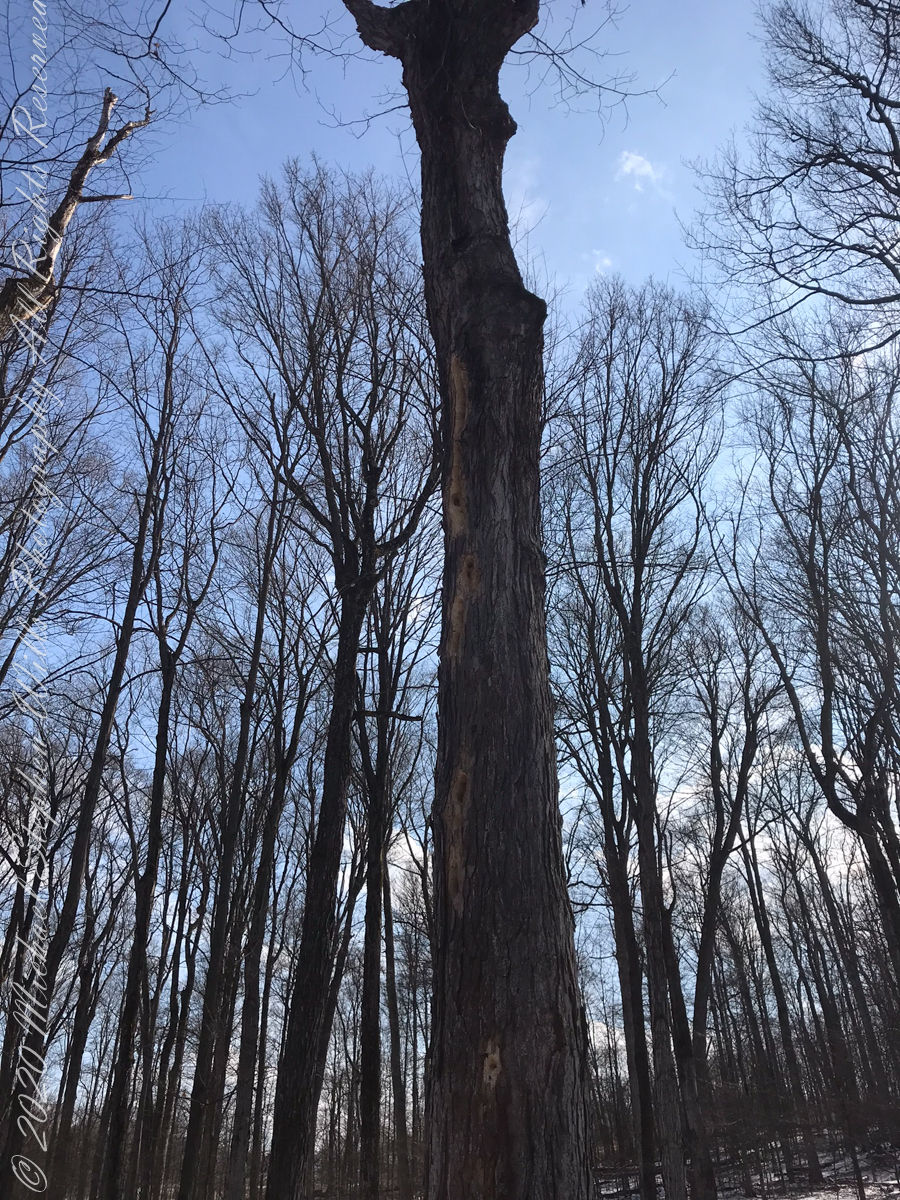
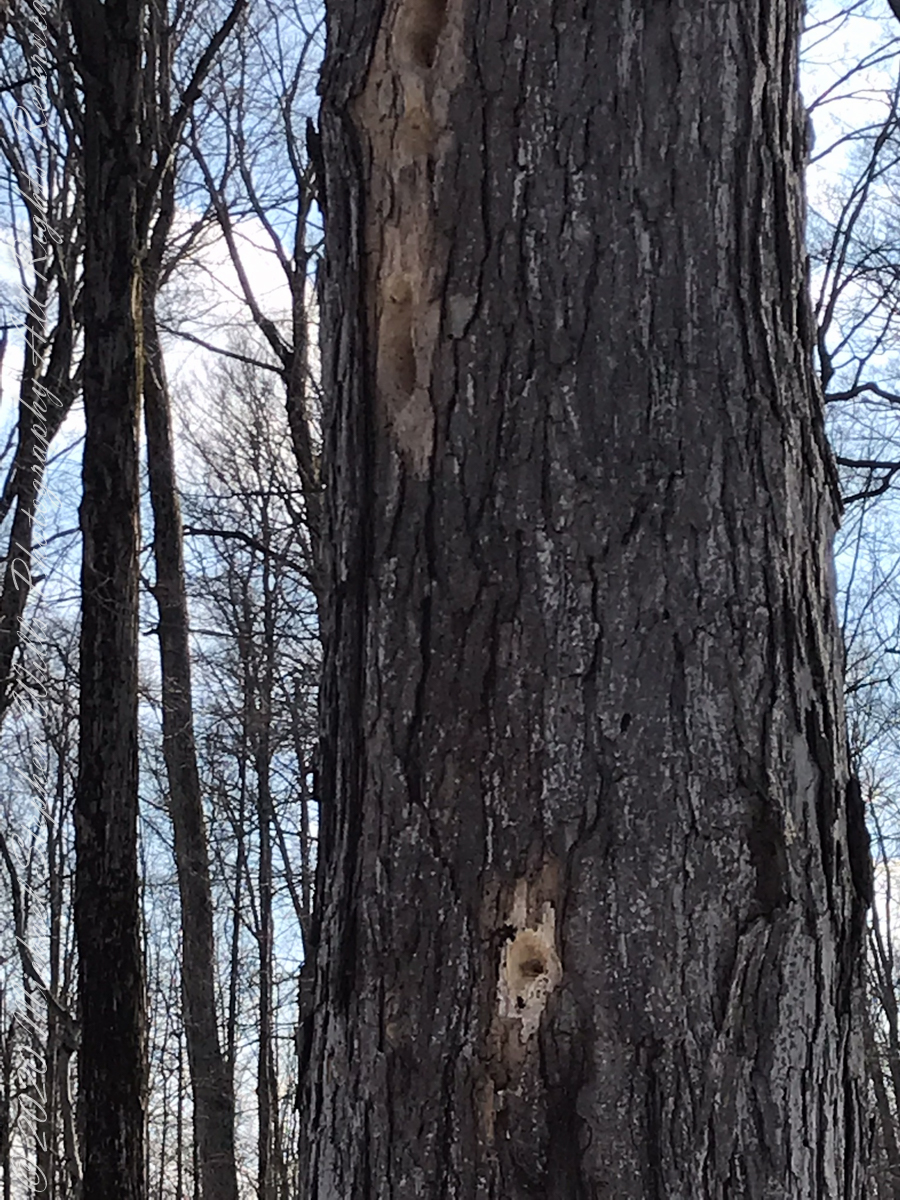
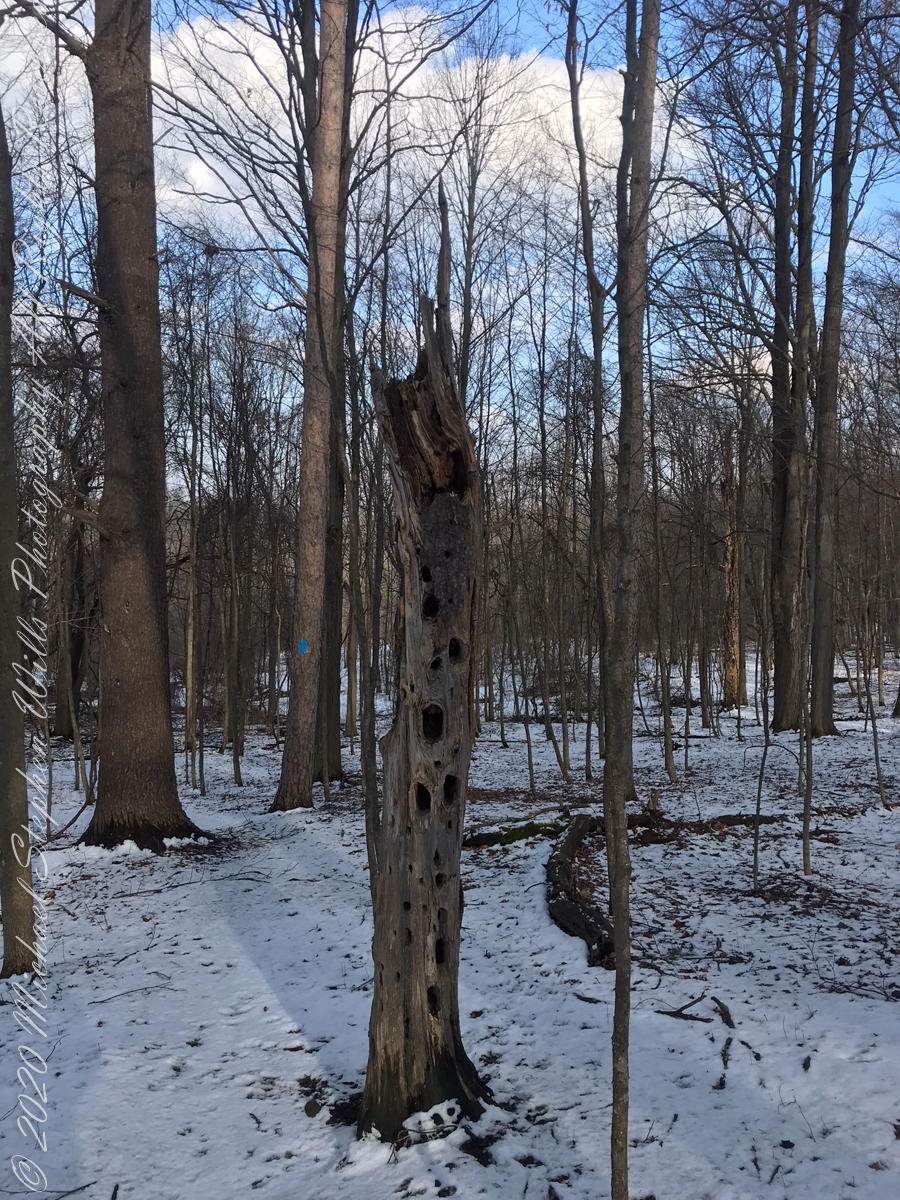
forested uplandvernal poolsnagfull of bird holes
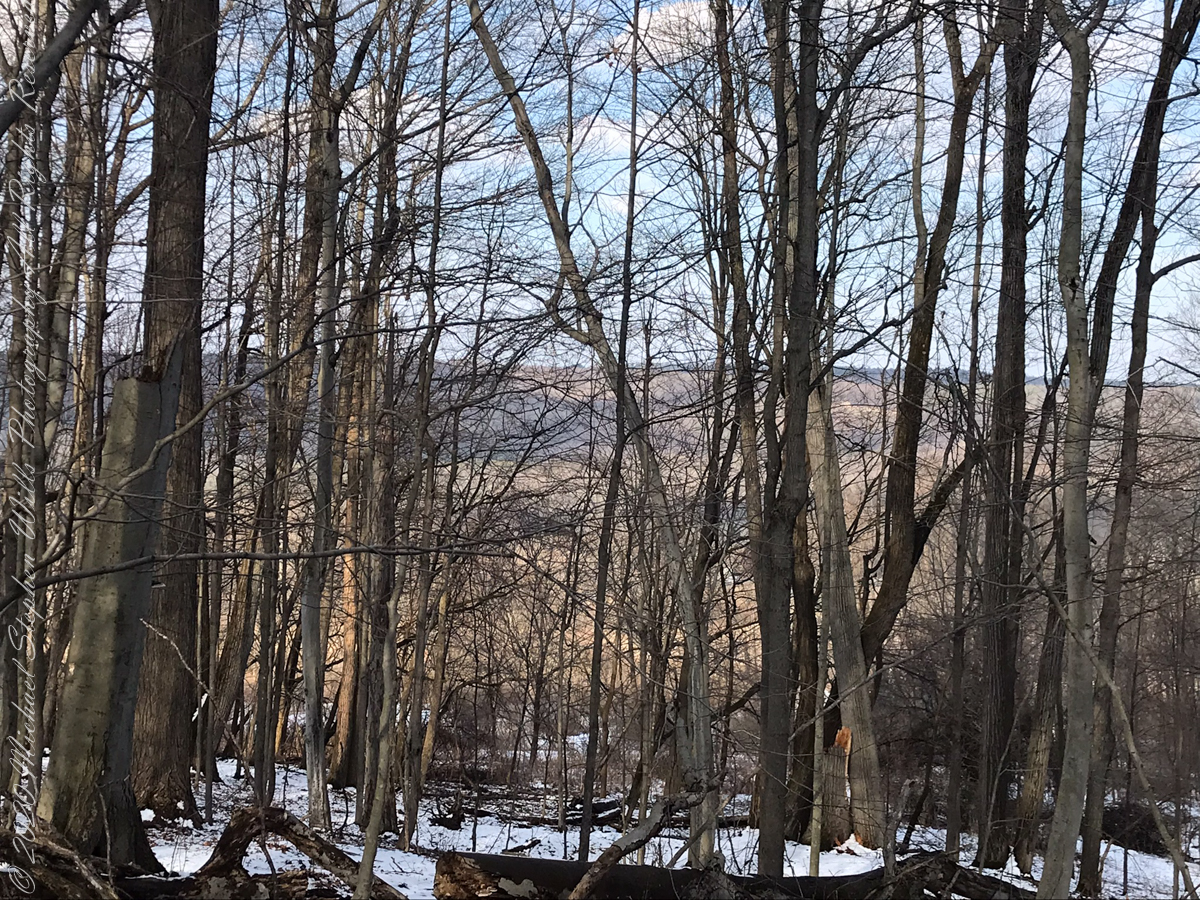
The preserve exceeded my expectations for great upland views.
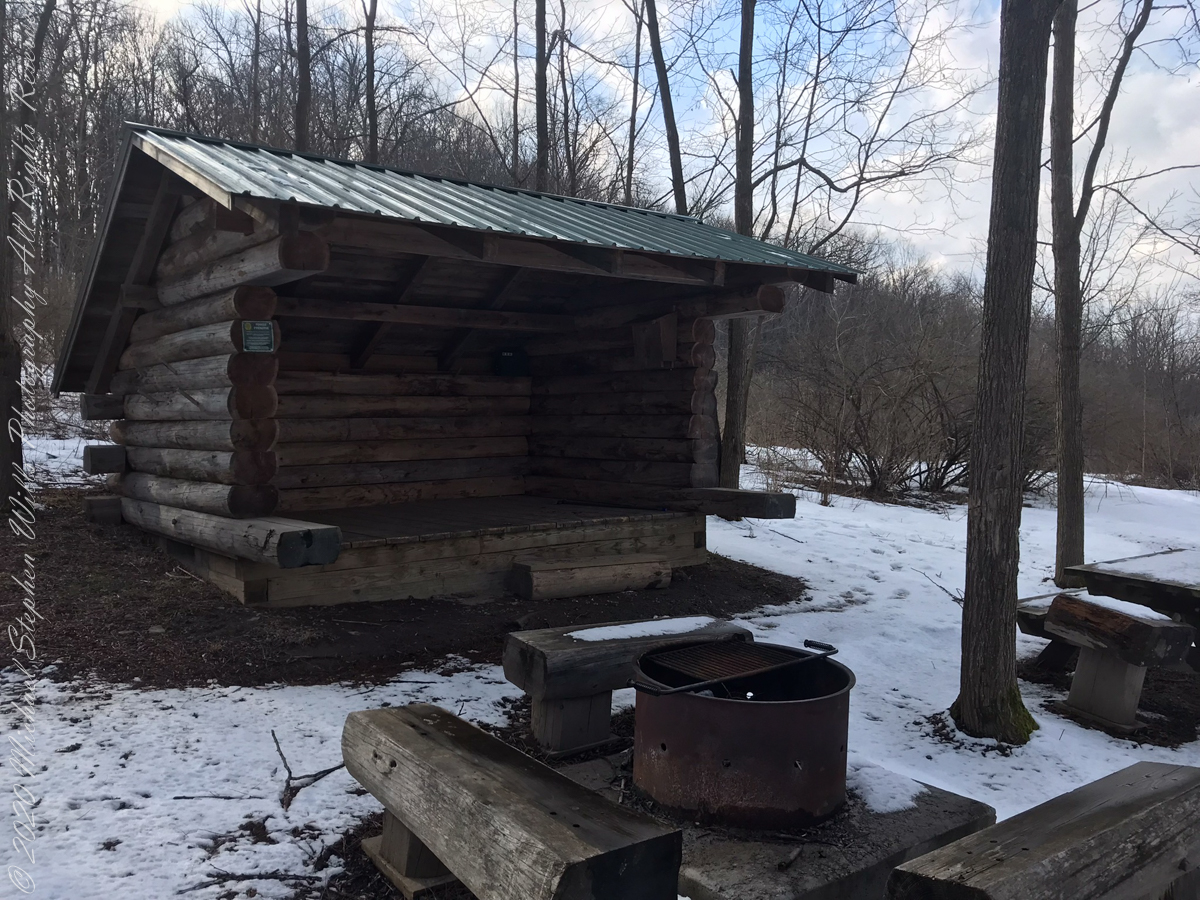
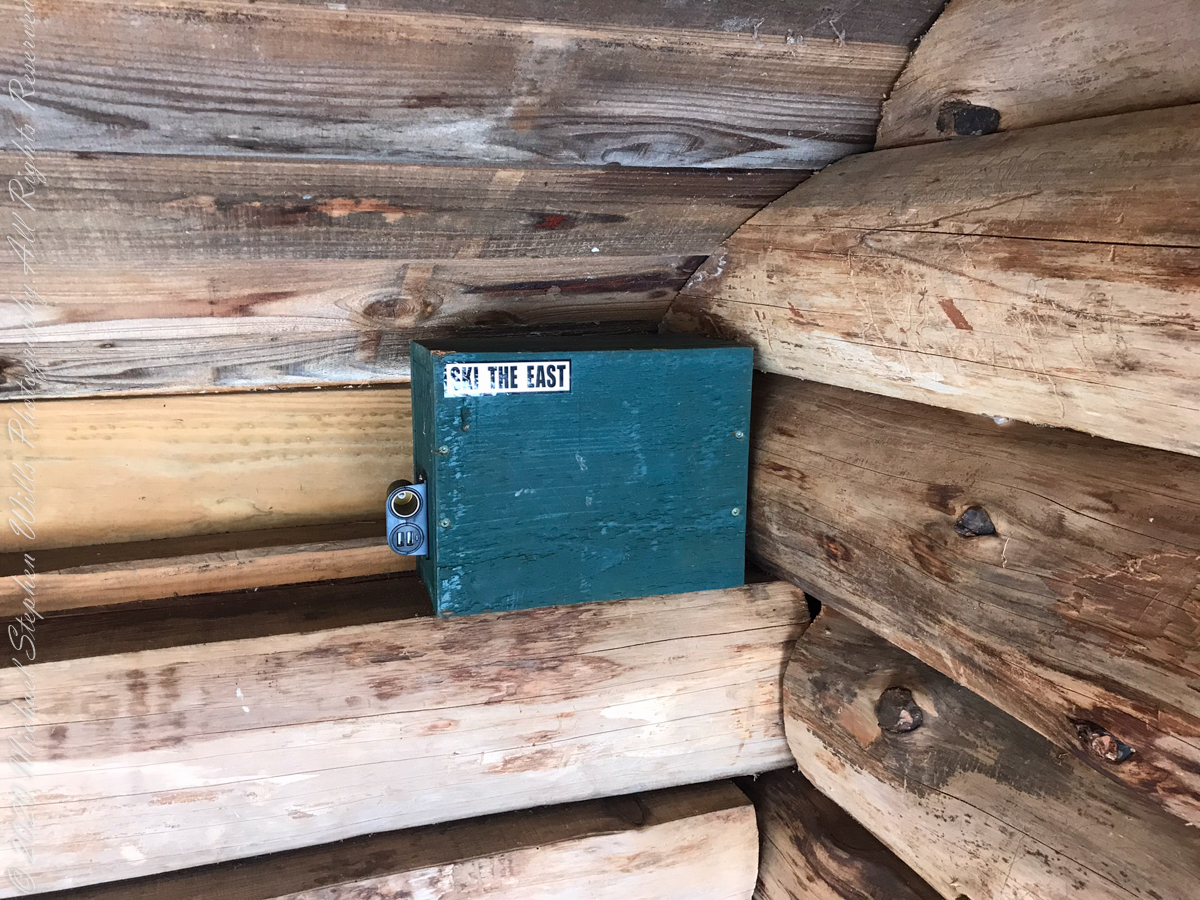
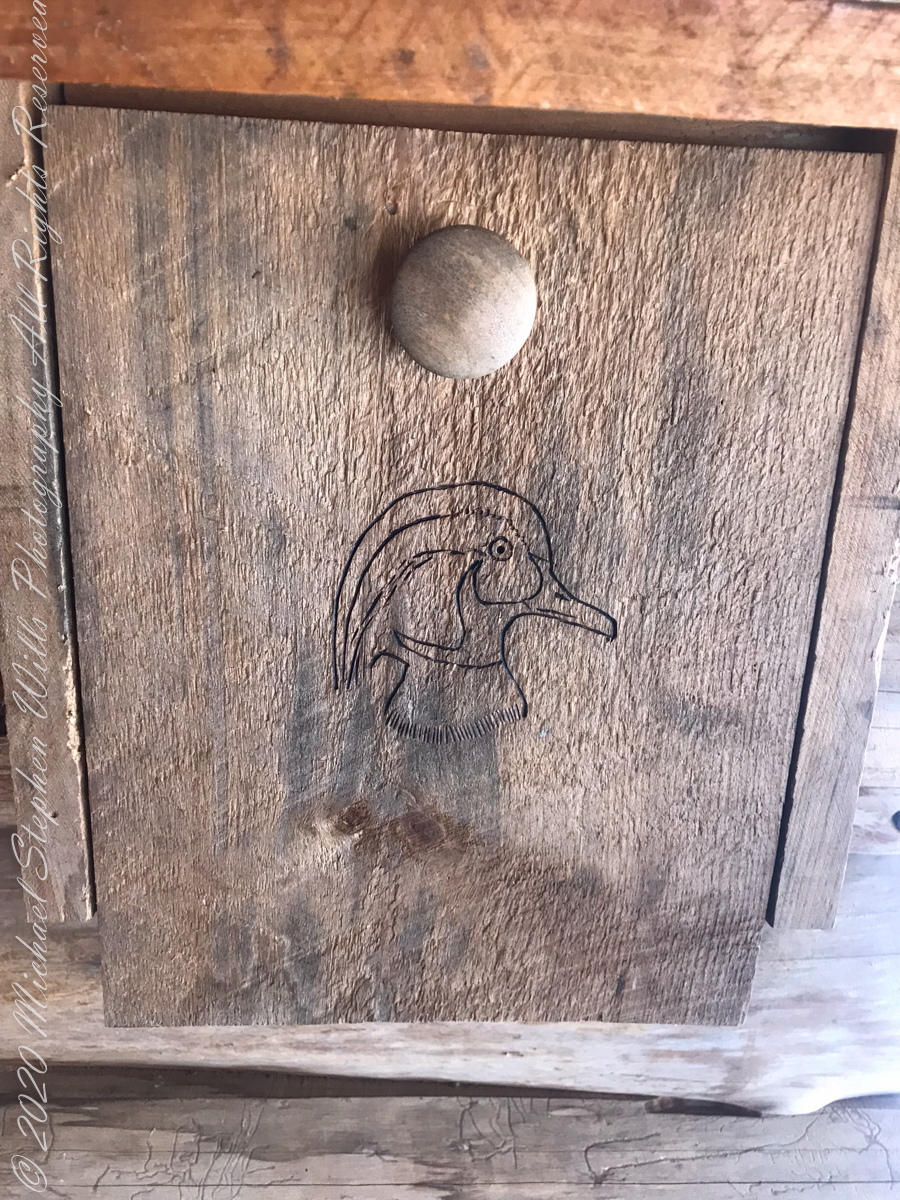
above the lean-topapartment houselean to made from tamarack logs with excellent fire pitsolar powered charging stationdocument box / mouse houseselfie
View from Shelter across the valley of Enfield Creek, the same that flows over Lucifer Falls of Treman State Park
In follow-up to my last post my IStock photograph of Saint Patrick on the Hill of Tara was accepted and is available for viewing (click the link to go there).
Since July 2008 a sea generation tidal turban, “SeaGen”, produces electricity (1.2 MW) for between 18 and 20 hours a day while the tide is forced in and out of Strangeford Lough through the Narrows where the generator is installed. The first large scale commercial production of electricity from the tide, “SeaGen” is located between the Northern Ireland towns of Strangeford and Portaferry, the strength of the tides there were used by the earliest tidal mill known, the Nendrum Monastery mill dating 787 based on archeological excavation.
History records Patrick converted the island of Erin (Ireland) to Christianity in the Fifth Century AD as a return to his place of captivity and slavery.
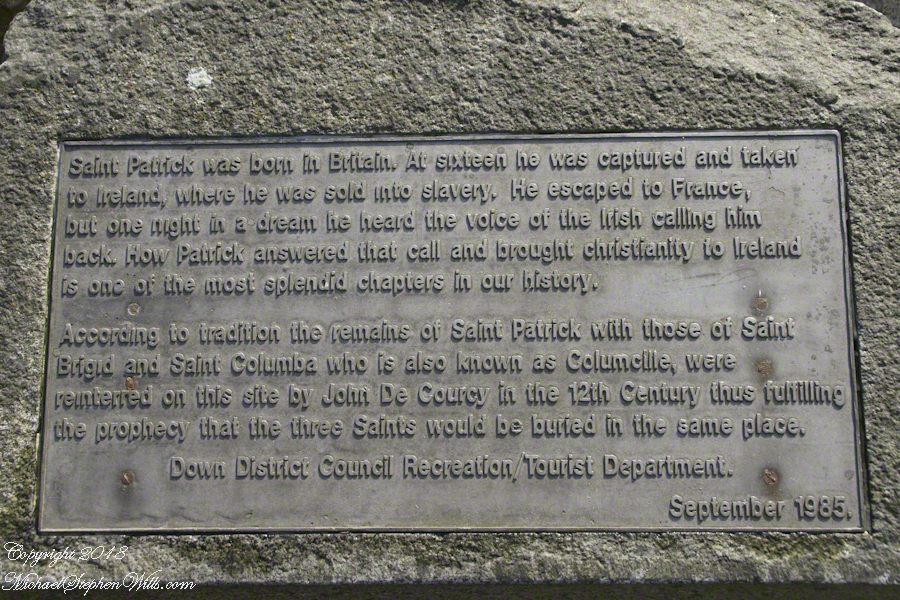
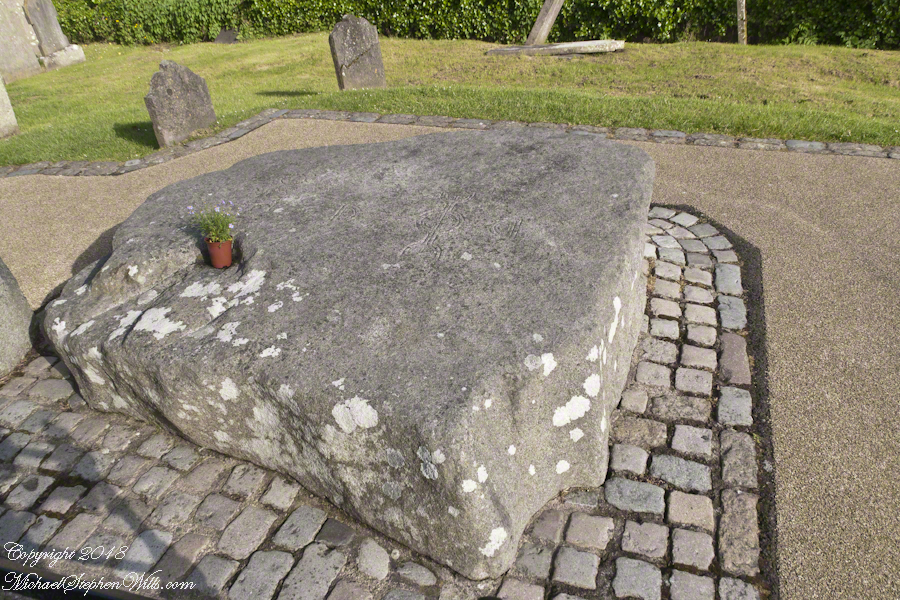
An informational plaque mounted on granite next to the grave of Saint Patrick.
There is a connection between “SeaGen” and the return of Patrick to Ireland. The first sanctuary dedicated by Patrick was at Saul, County Down not far from River Quoile that drains into Strangeford Lough. Historians identify Patrick’s first landing site, upon return, as Wicklow where he was forced to leave by the locals. Heading north in the boats of the time, the strong tide of Strangeford Narrows pulled them into the Lough and, from there, headed up the River Quoile to encounter the local chieftain, Díchu mac Trichim. Patrick’s first Irish convert to Christianity, the feast of Saint Dichu is April 29.
On June 7, 2014 Pam and I visited this area. Here are some photographs of the traditional burial place of Saint Patrick.
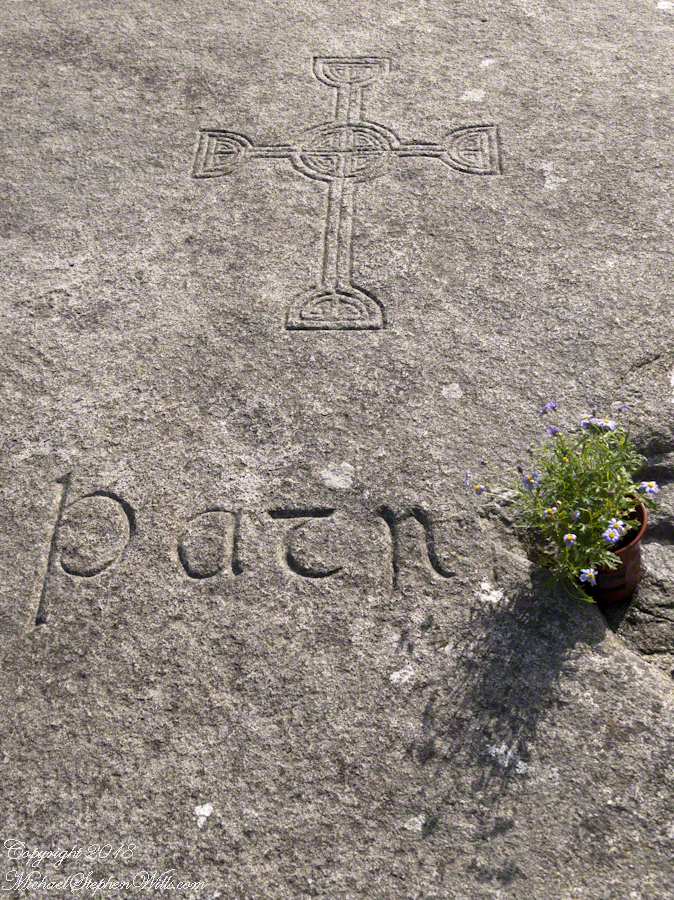
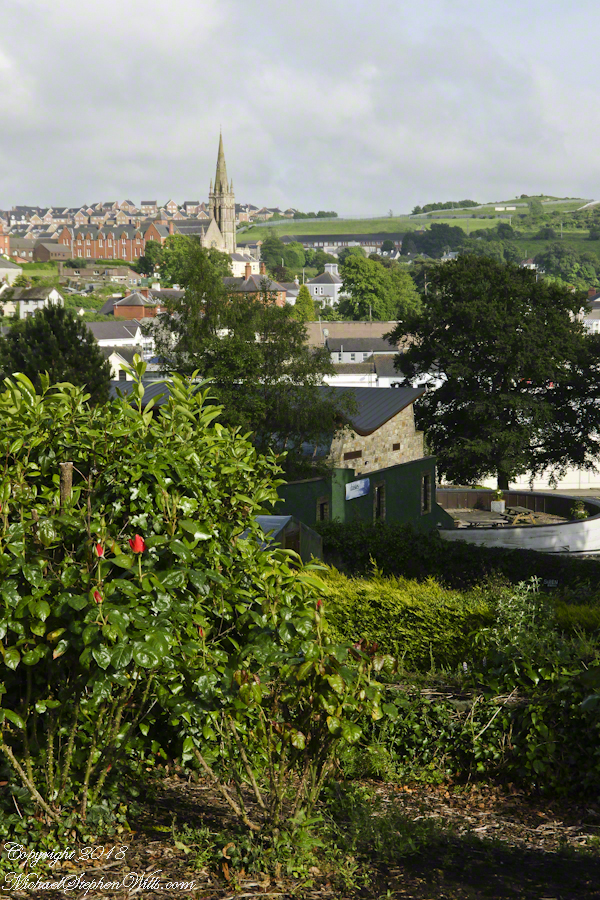
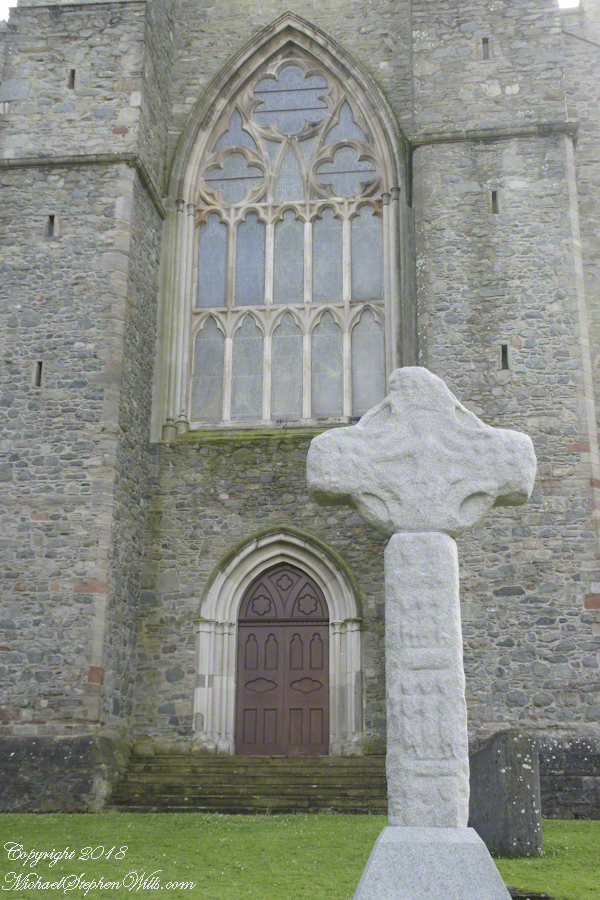
View of Downpatrick from the hill of the Cathedral Church of Holy Trinity (Down Cathedral)The High Cross of Downpatrick fronts Down Cathedral on a hill overlooking the town. The informational placard reads “The granite head and shaft date to about 900 AD and were once re-used as part of a Market Cross at the bottom of English Street. The pieces were found in various places in town, reassembled and presented to the Dean and Chapter of the Cathedral in 1897.”The placard text reads: “A large memorial stone of Mourne granite was place here in 1900 to mark the traditional burial-place of St. Patrick. The stone was quarried at Slieve-na-largie near Castlewellan, and it took 12 men 14 days to cut from the quarry.”Inscription on the upper surface of stone marking grave of Saint Patrick.
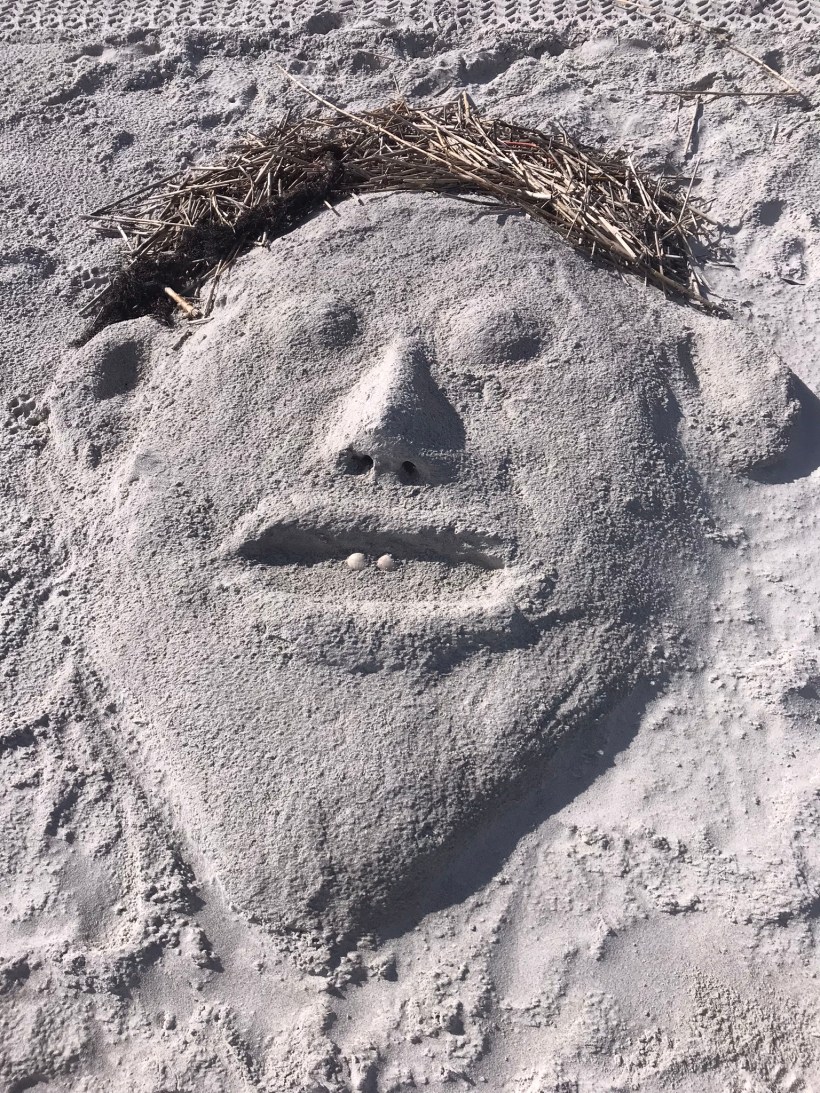
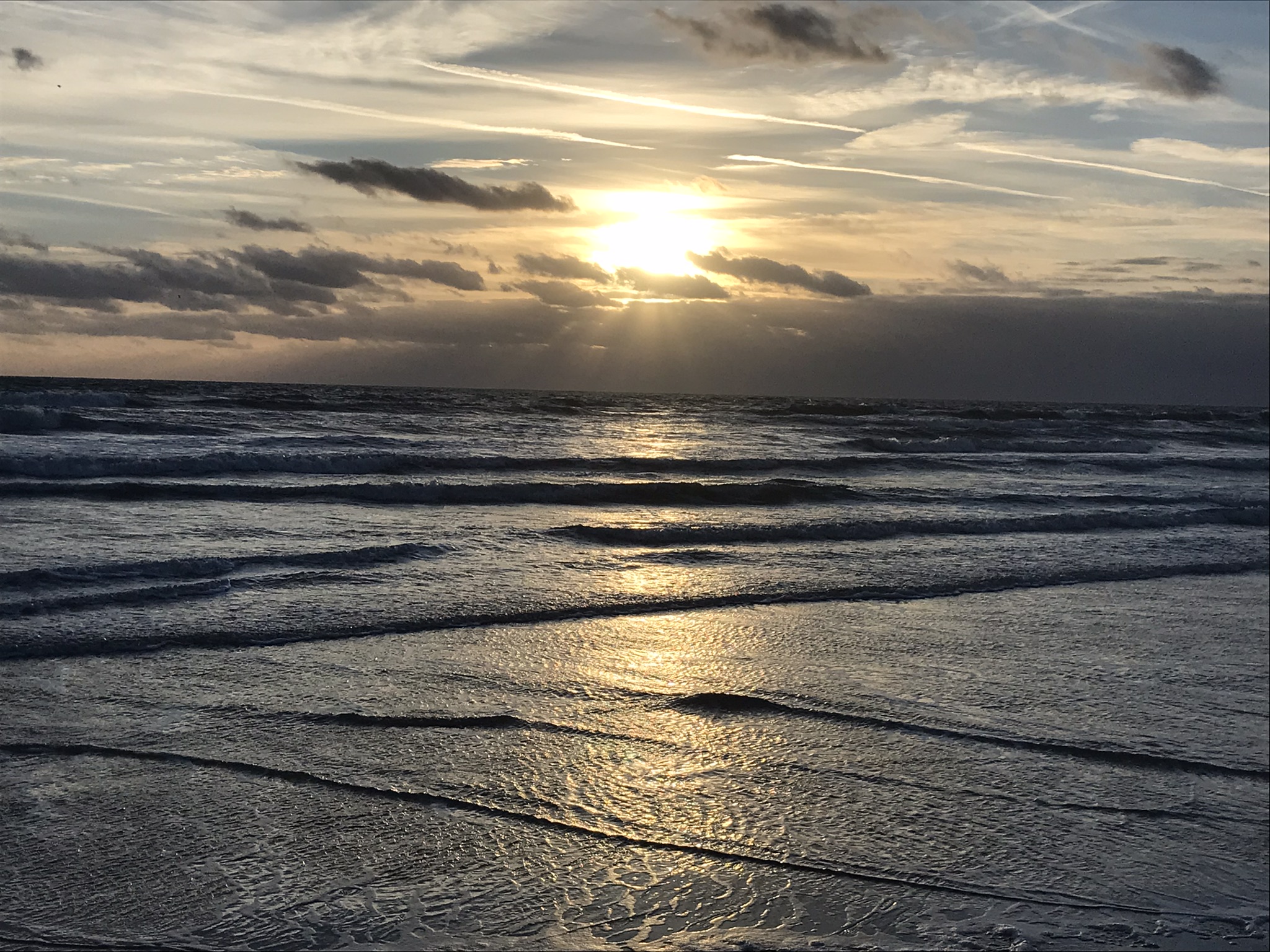
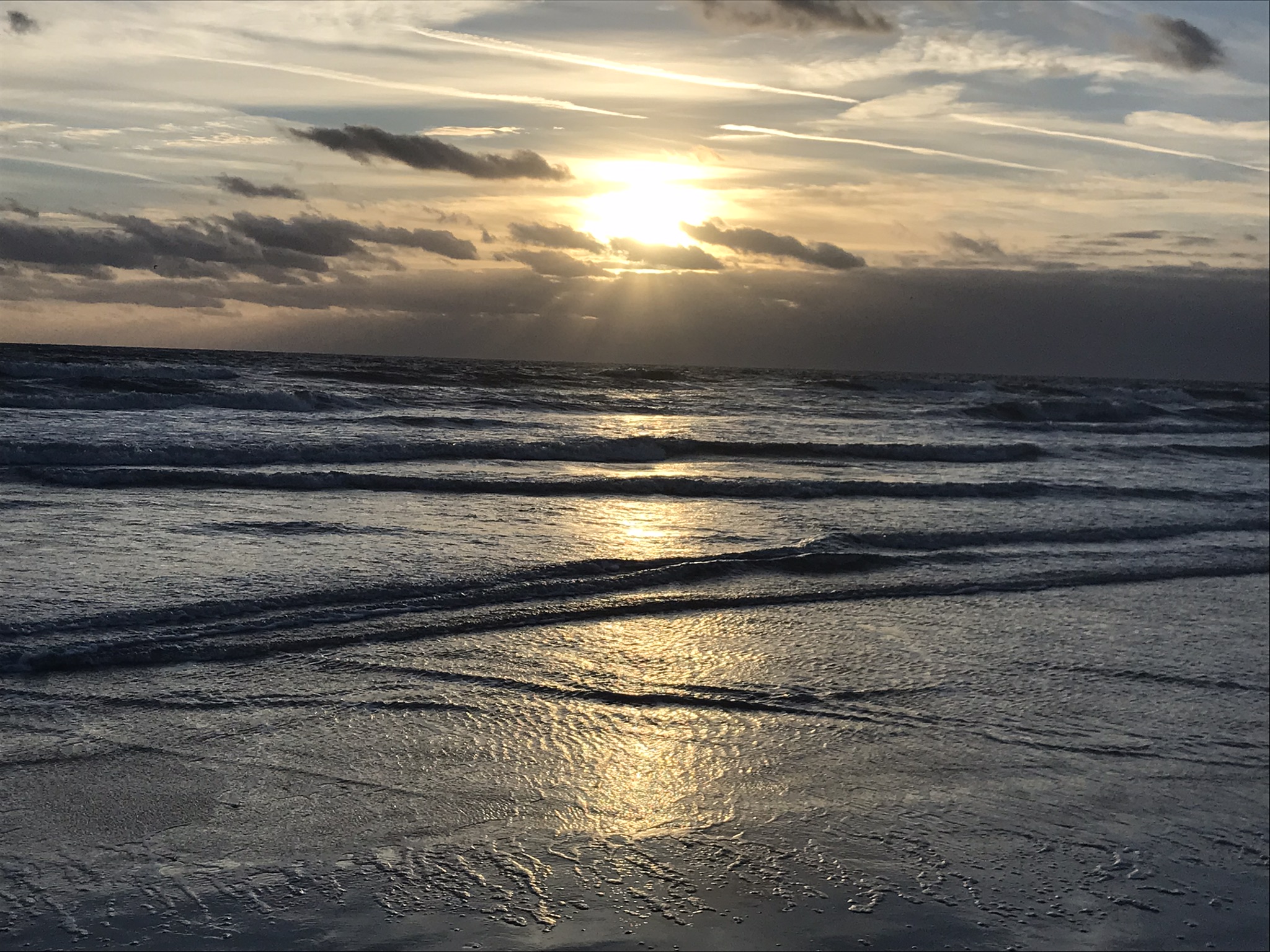
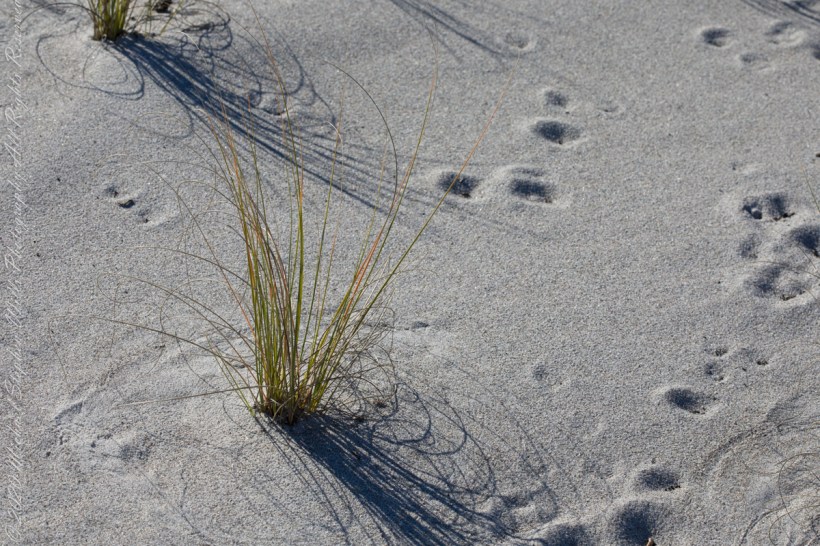
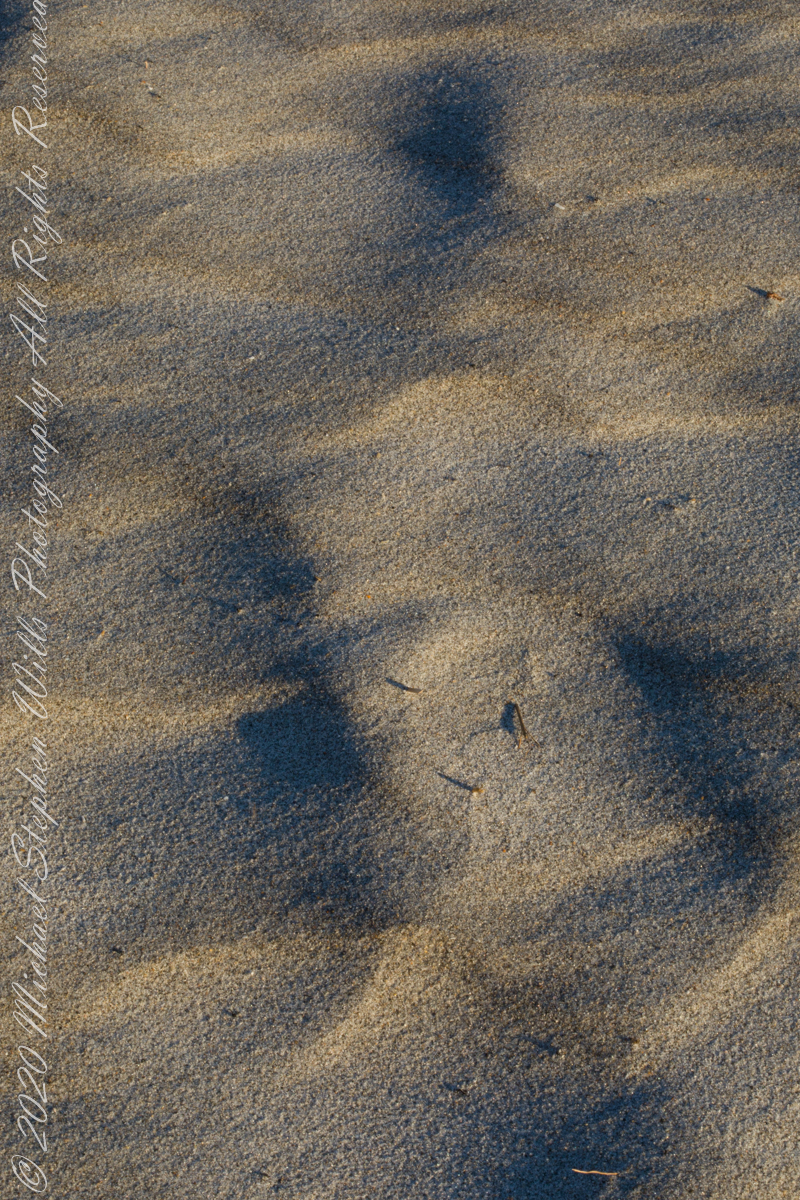
At first glance, Northerners may mistake this for fine snow blown on a bitter wind; but no, this is indeed a north wind, the temperature is above freezing, the material is beach sand. Keeping the sand in place is a concern for Brevard County.
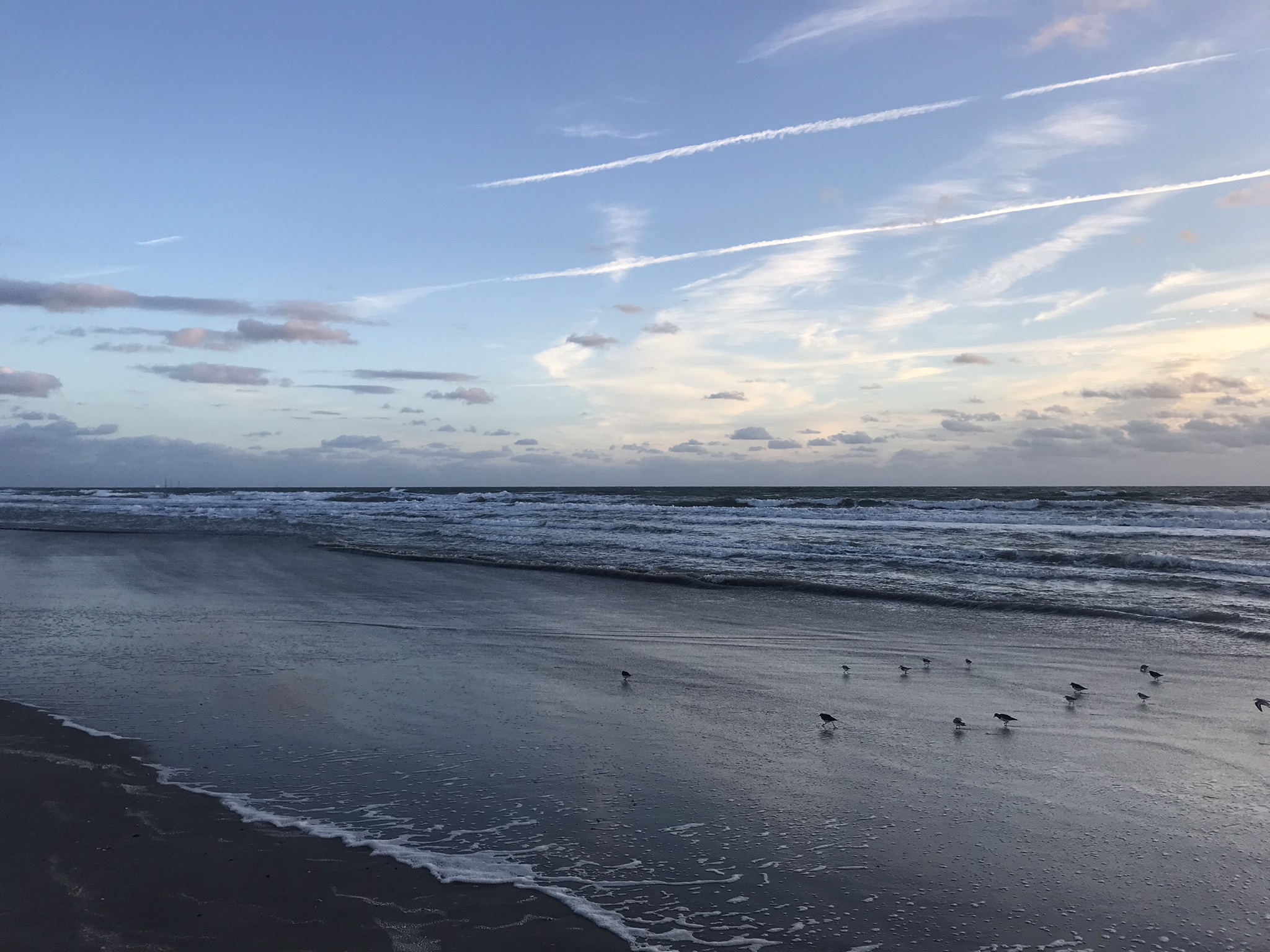
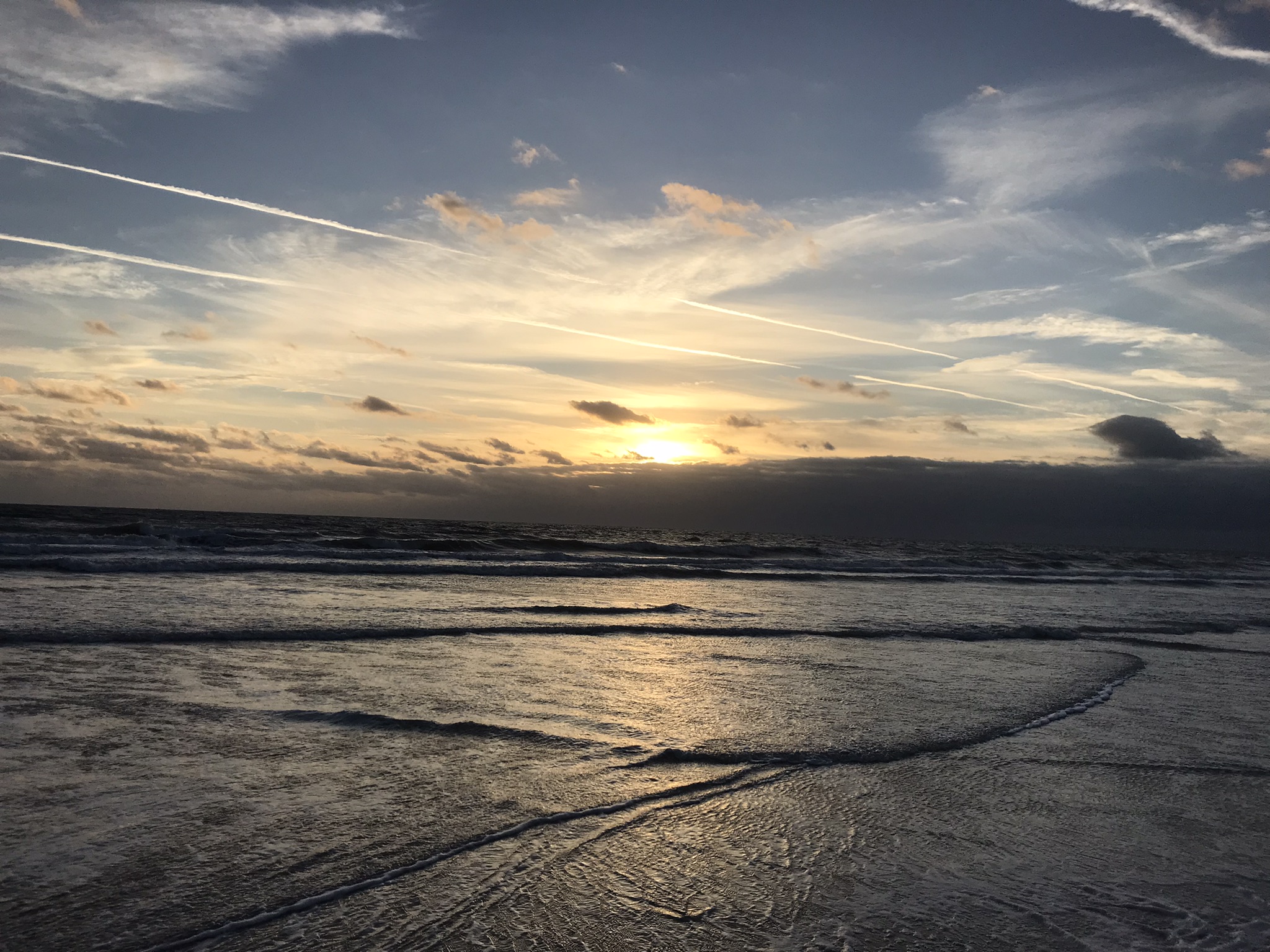
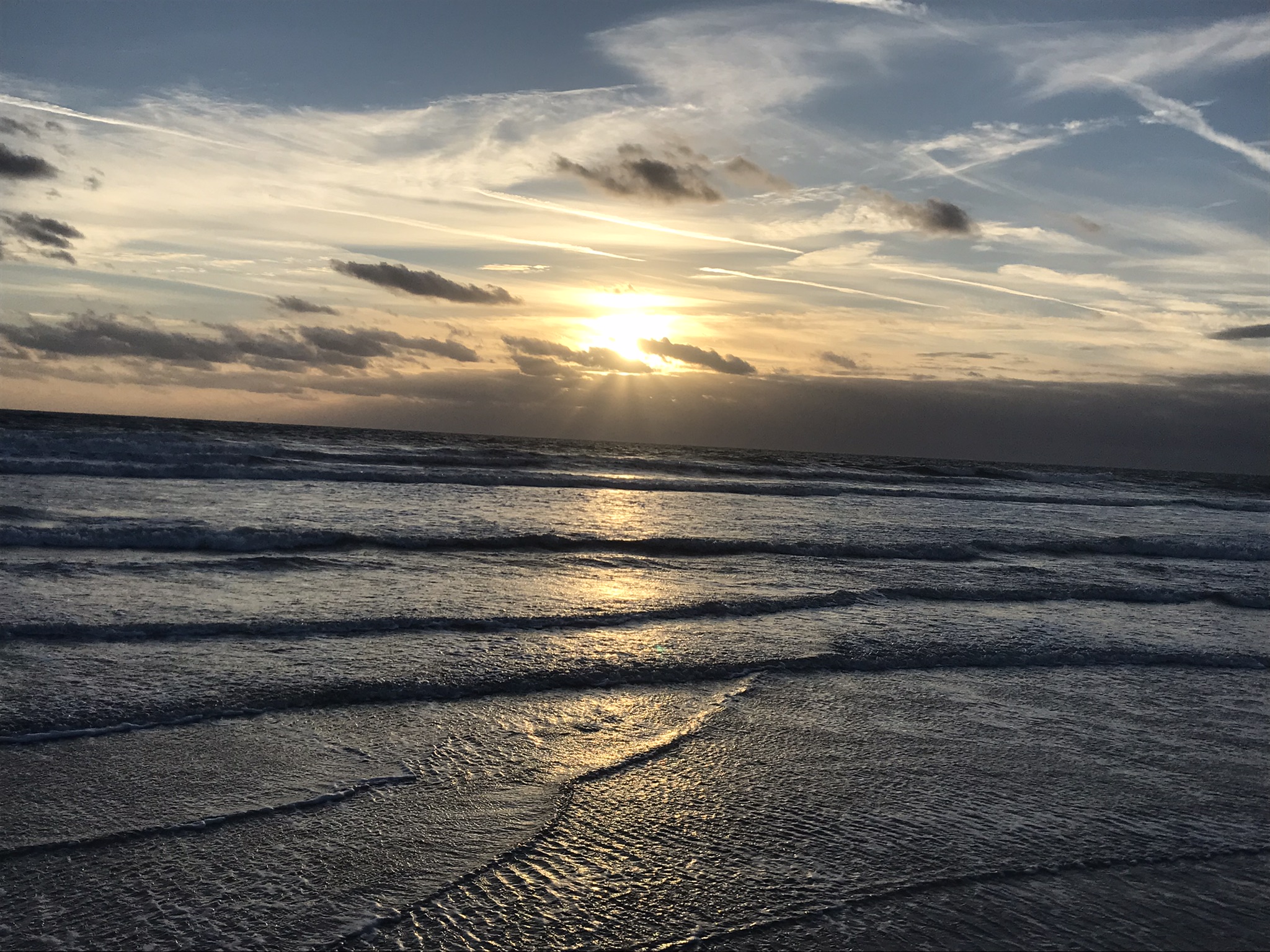
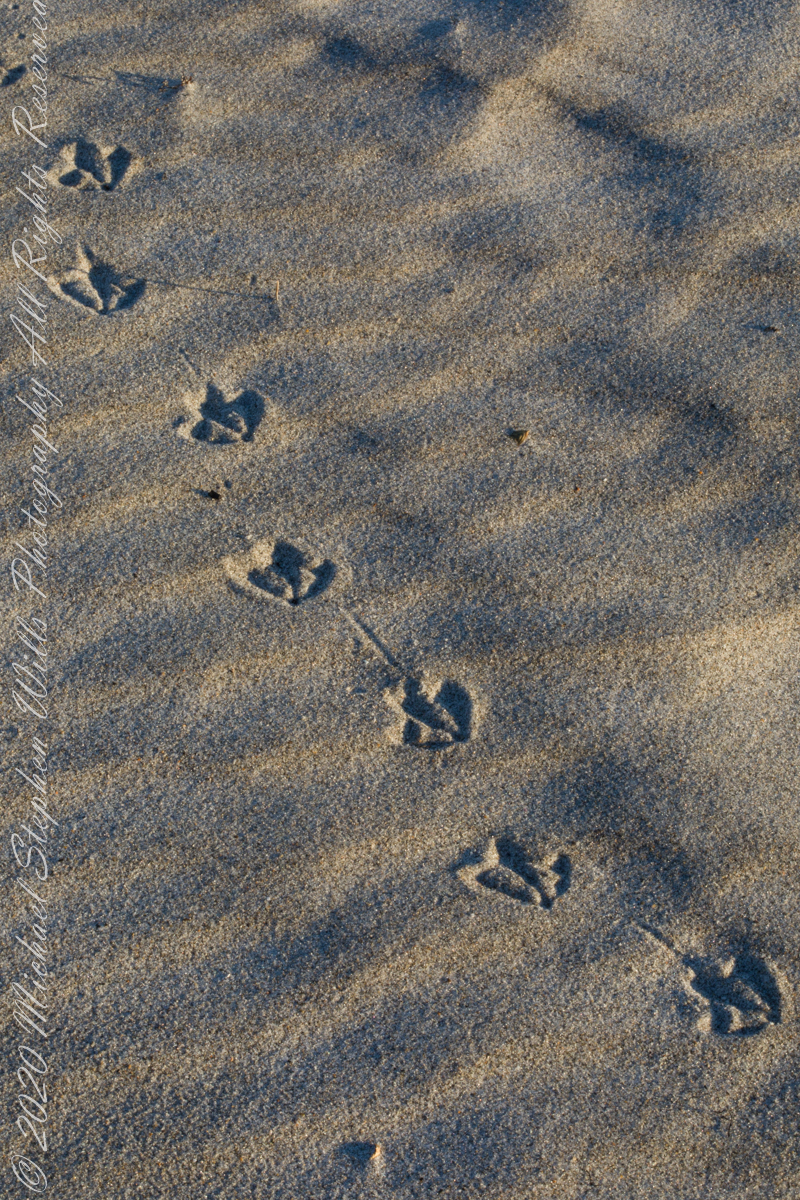
A gull walked through wind textured beach sand, see here in early morning light. Dawn light on beach sand textured by wind, see here in early morning light.
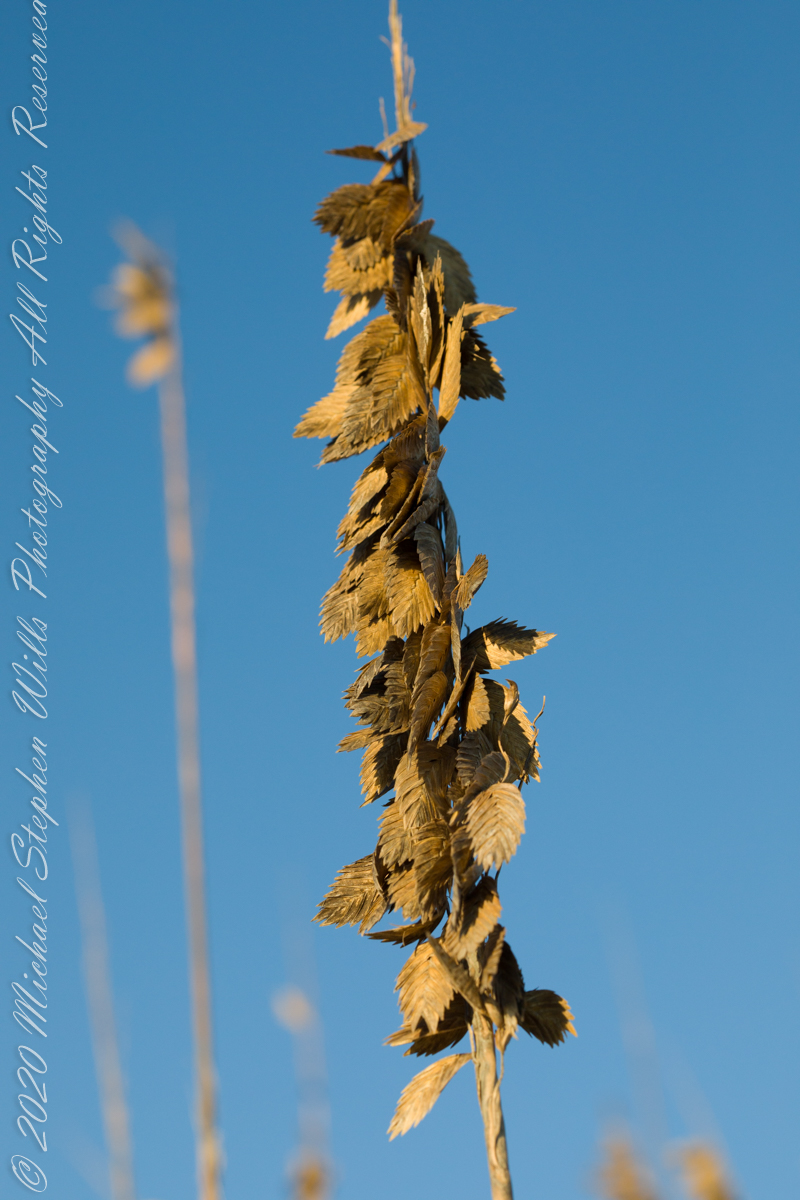
Golden brown infructescences (seed heads) of Sea Oats grass on stalks growing from dunes, seen here in early morning light, are one element of this plant beneficial to the goal of keeping beach sands in place. Tall stalks and broad leaves catch blowing sand. Deep roots hold the plants in place, shallow root systems hold sand in place to form dunes.
Returning after staying away for COVID-19, we found new plantings of Sea Oats by the county.
Planting of Sea Oats.
Copyright 2022 Michael Stephen Wills All Rights Reserved
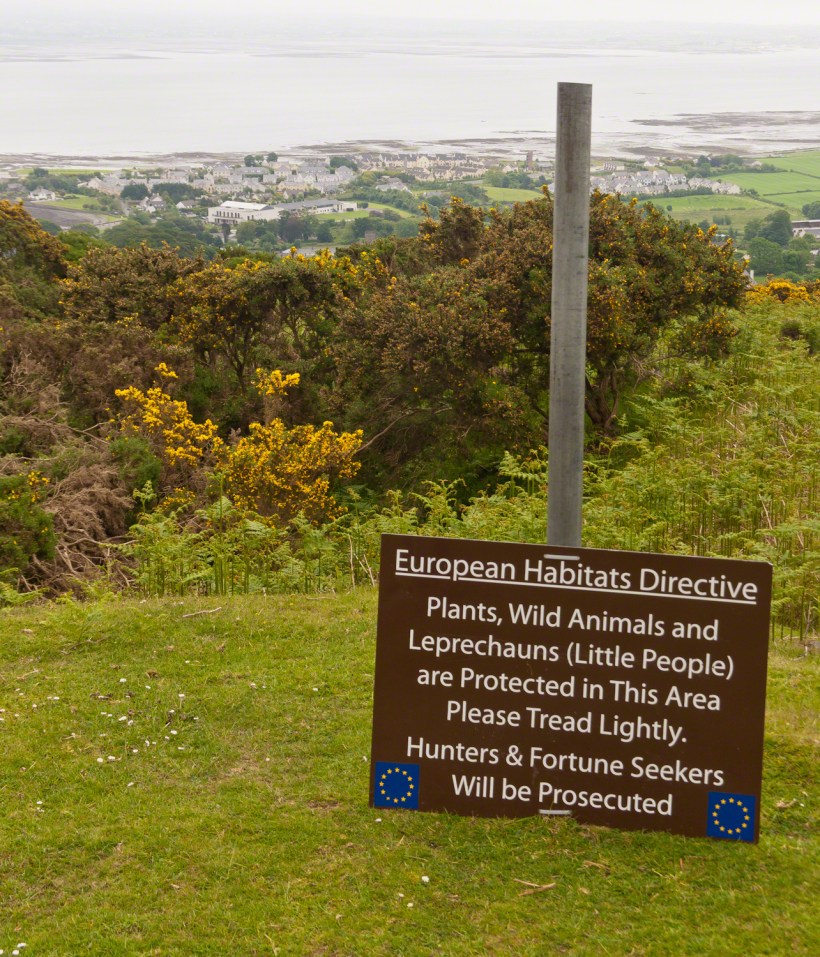
In a previous posting we hiked through the only European Union Leprechaun Preserve on Slieve Foy above Carlingford, County Louth, Ireland.
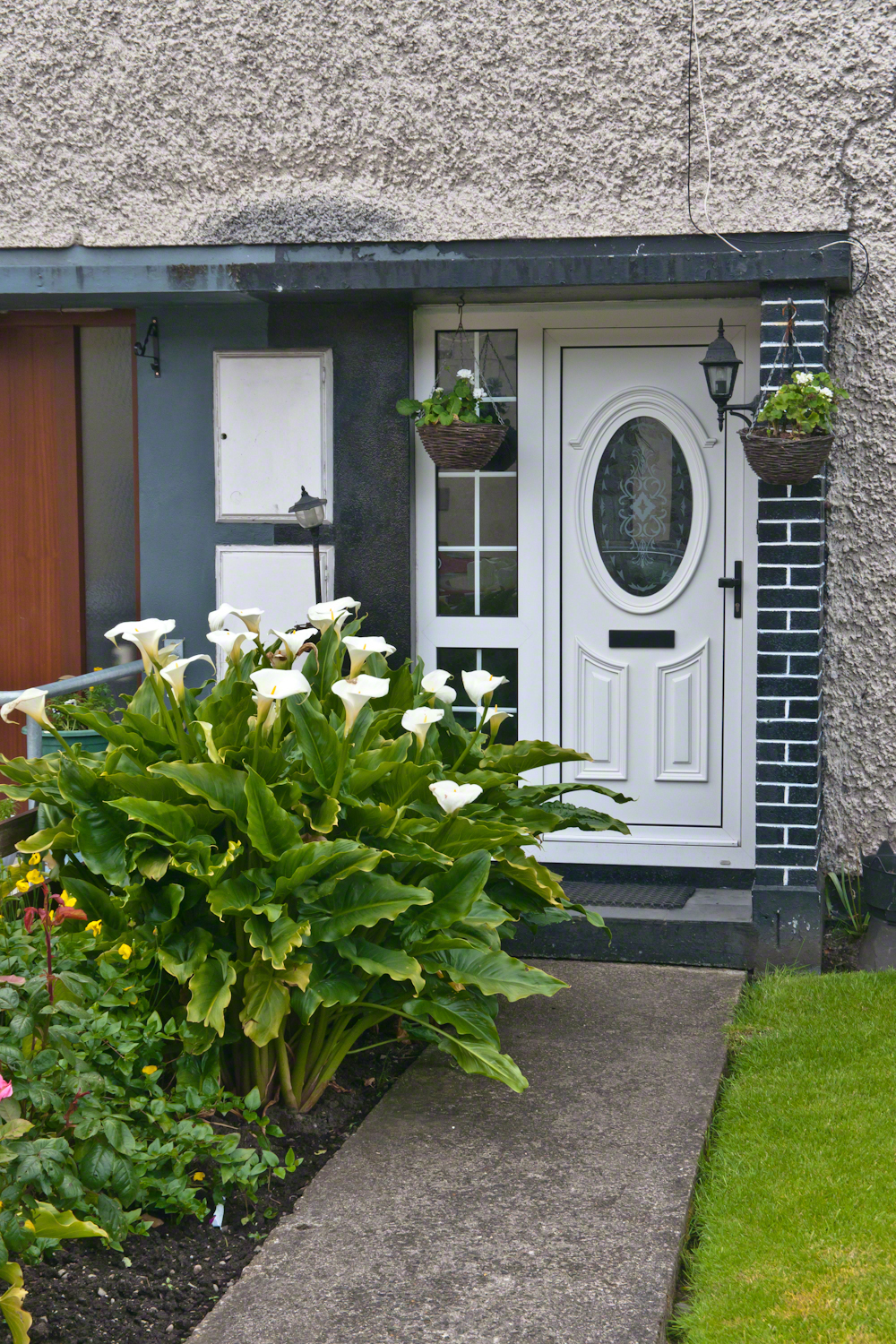
This home was lower on the mountain, on the way to town.
Caring touches to a well tended home entrance along the Tain Way, Carlingford, County Louth, Ireland.
You will not find Calla Lilies thriving in front yards here in Ithaca, New York (43 degrees north latitude) as they do in the Temperate Oceanic Climate of Ireland, pictured in Carlingford on a June day. At 54 degrees these Calla Lilies are growing at a latitude 800 miles north of Ithaca, in the middle of Quebec Province, Canada.
In spite of this, here in Ithaca we keep March 17th, Saint Patrick’s Day, warm. In the home of our three grandchildren (3, 4 and 6 years old) who live in Ithaca they celebrate by playing tricks on Leprechauns.
This year, we visited Saint Patrick’s Day eve and reviewed their bag of tricks with the Leprechaun in Chief, their Mom. In response, the Leprechauns leave them letters to make it clear the tricks did not work. On top of this, the children have big laughs on the tricks played in return. A favorite is finding their socks taped all over the mirror.
Mom pulled out a few of the Leprechaun letters and we read them for the children to great laughter as they remembered tricks of previous years. Afterwards, when alone with Mom, Pam and I recalled the tradition in Chicago, to color the river green (a well as green milkshakes, etc), and suggested to the Leprechaun in Chief to put green food color in the toilet. It was a winning idea.
The next morning Mom, on hearing the toilet flushed repeatedly, found her 4 year old daughter totally appalled. “The Leprechauns used our toilet (and did not flush). YUUUUKKKK.” She then ran upstairs hoping for a “clean” bathroom up there. Well, green milkshakes are off the menu.
Copyright 2022 Michael Stephen Wills All Rights Reserved.