Newgrange VIII

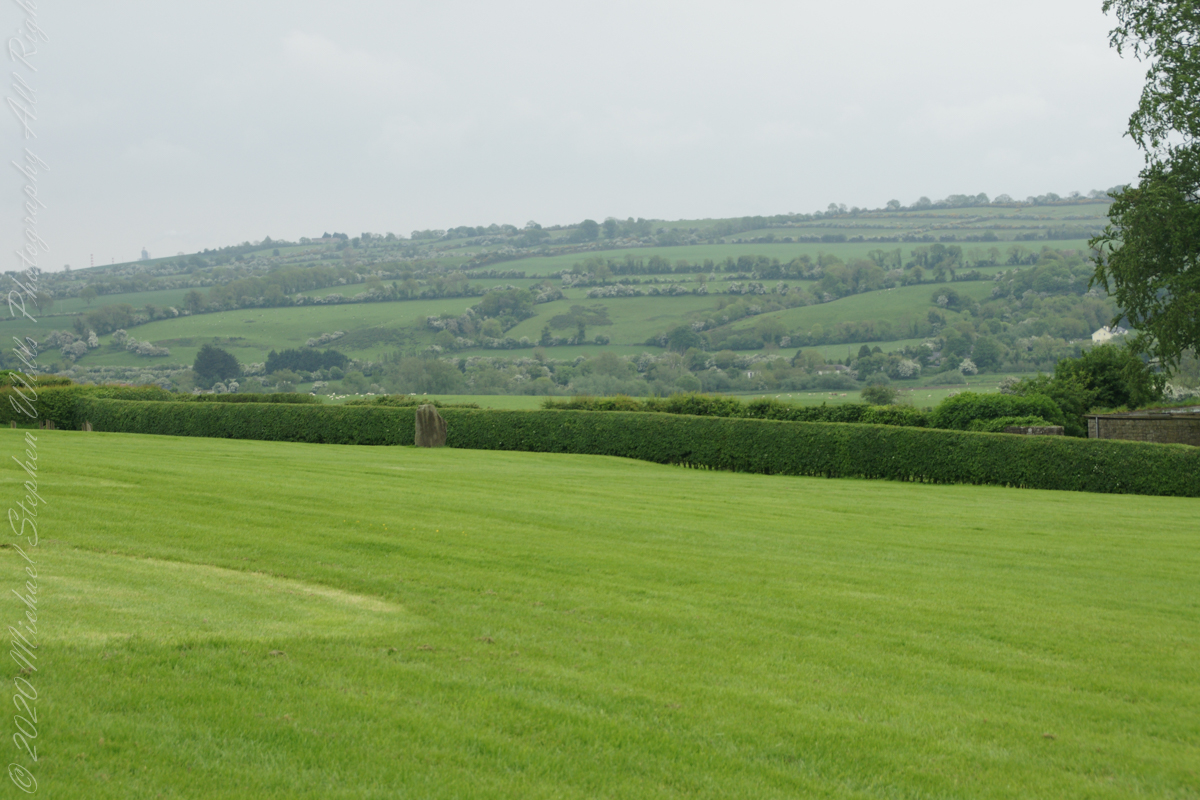
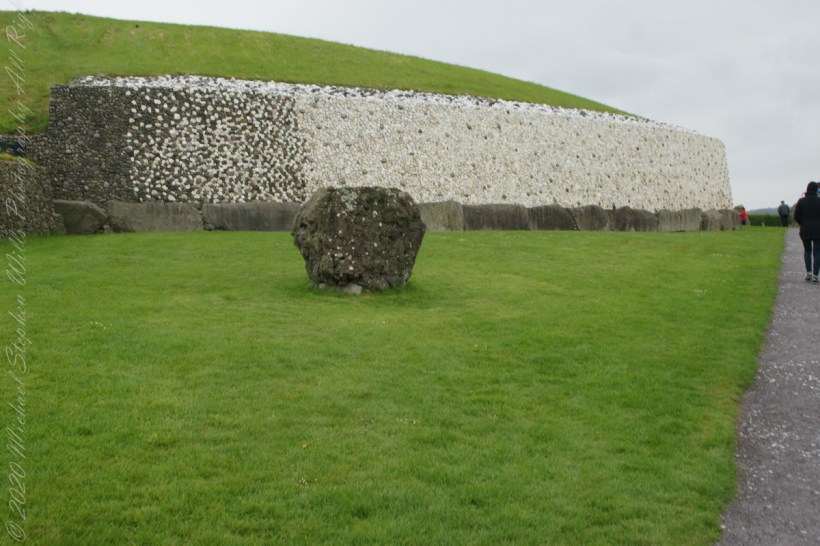
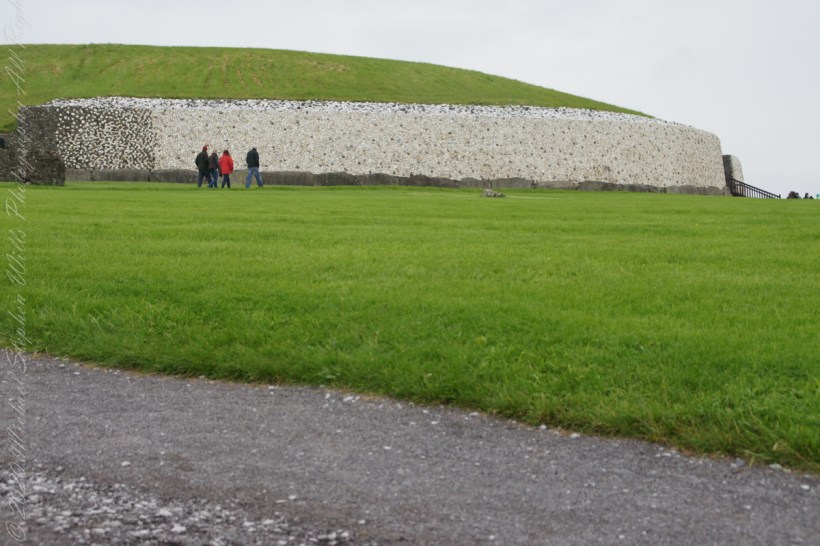
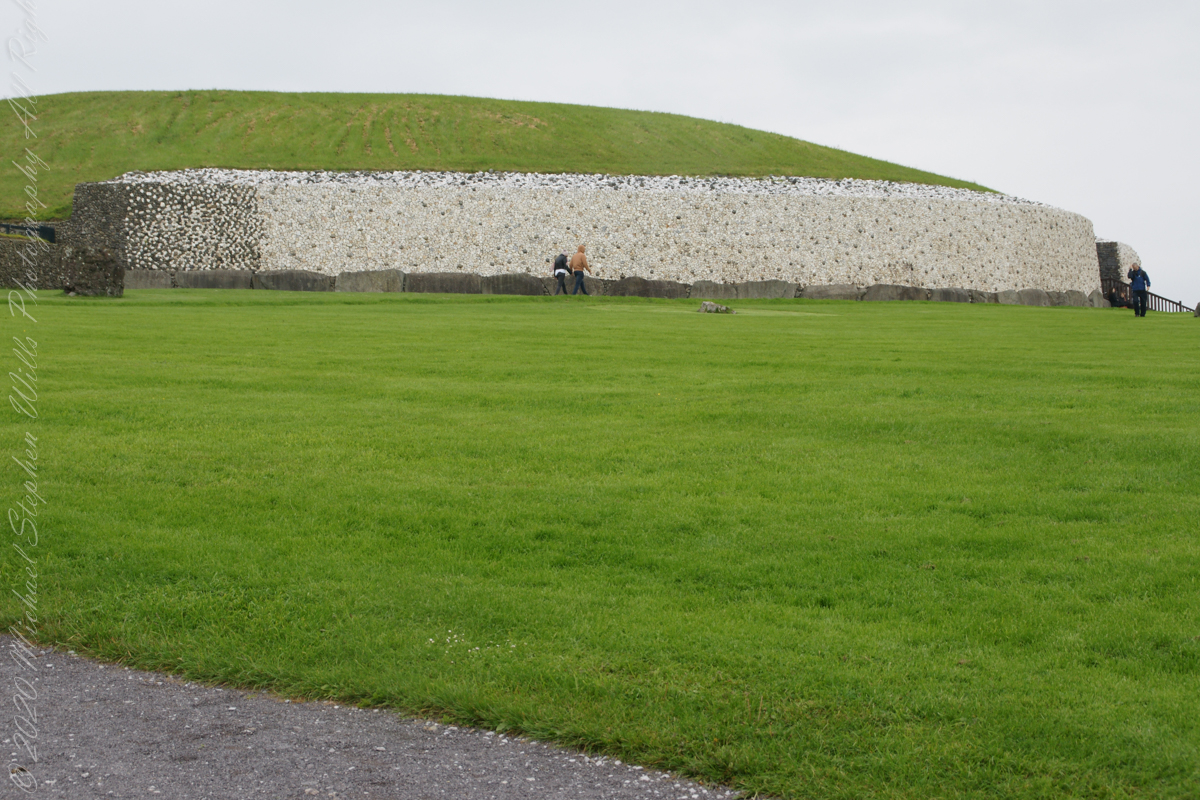
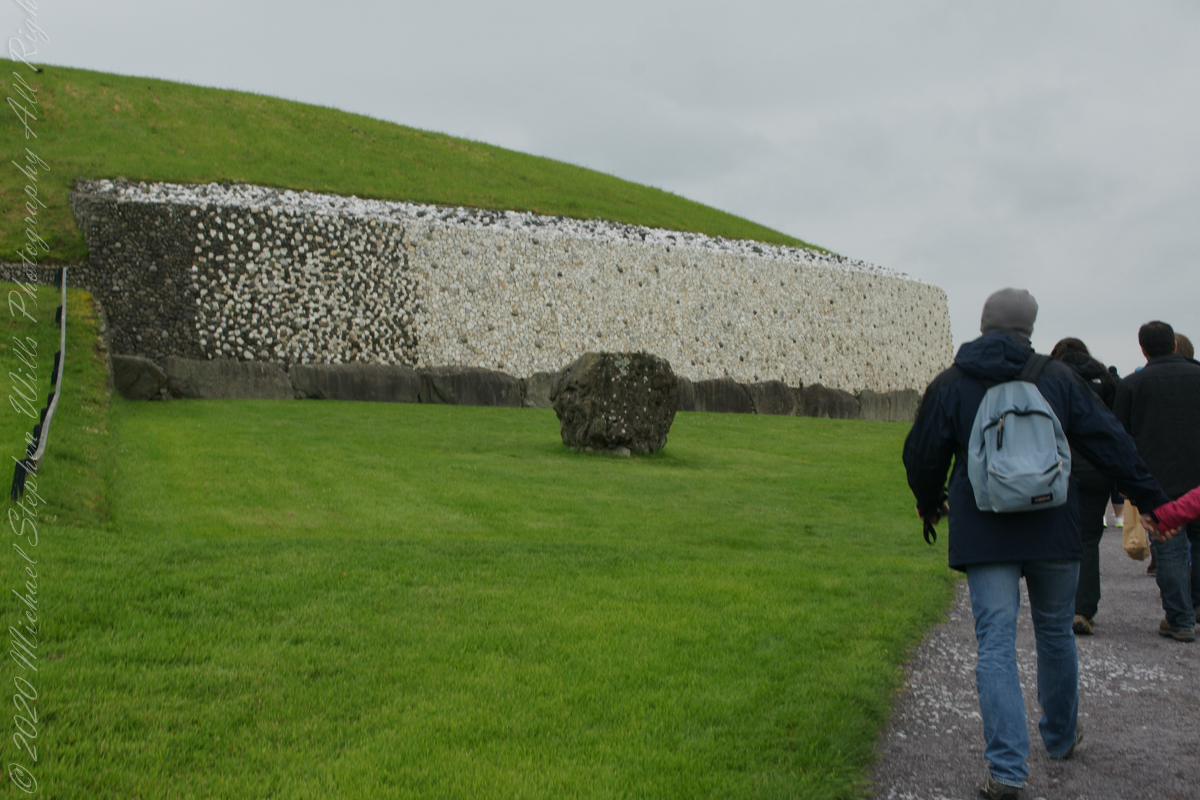
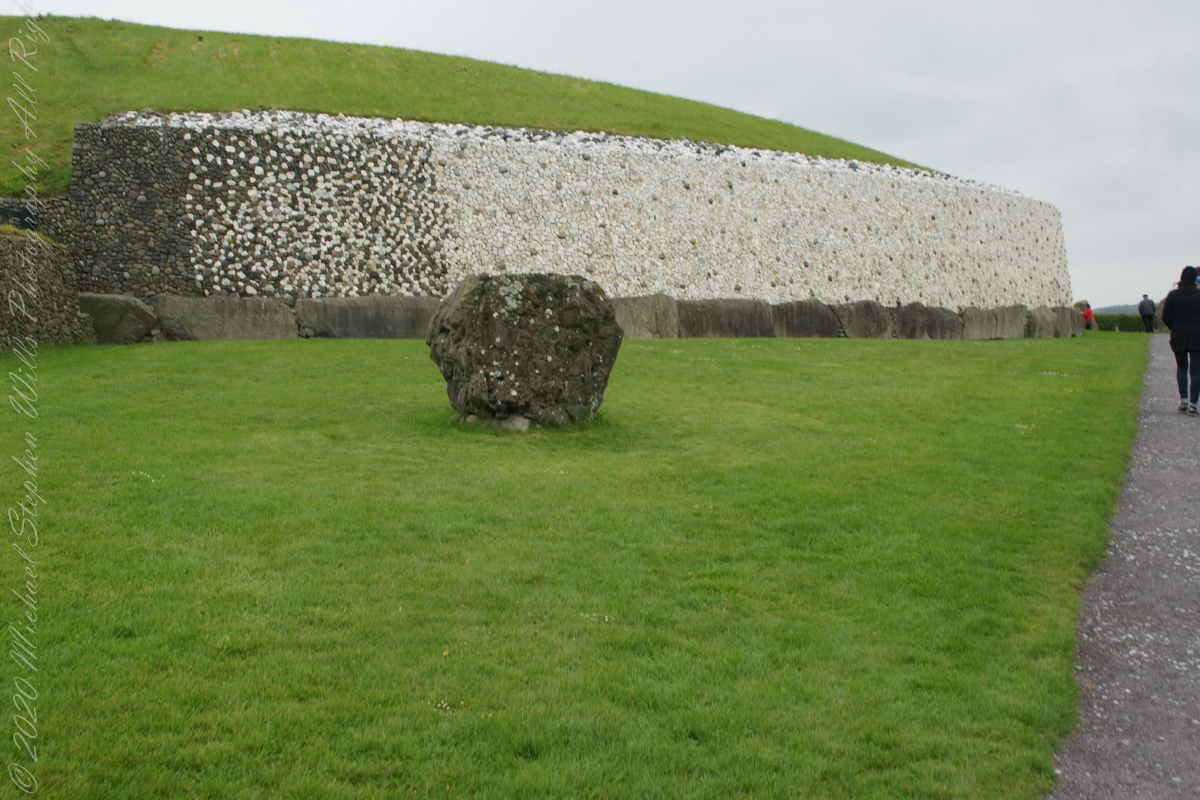
The Newgrange facade and kerbstones consists of stones from various locations, believed to be transported by sea and river.

The Newgrange façade and entrance of today is a creation from the large quantity of small stones unearthed and conserved during excavation given form by a steel-reinforced concrete retention wall. 

The brilliant white quartz cobblestones were collected from the Wicklow Mountains, 31 miles to the south.  Our guide called them “sunstones” for the way they reflect sunlight. In the following photograph is white quartz, the same excavated 1967-1975 from the Newgrange site and incorporated into the facade, I collected from “Miners Way” along R756 (above Glendalough).

You can also see in these photographs dark rounded granodiorite cobbles from the Mourne Mountains, 31 miles to the north.  Dark gabbro cobbles from the Cooley Mountains and banded siltstone from the shore at Carlingford Lough both locations on the Cooley Peninsula where my mother’s family still has farms.
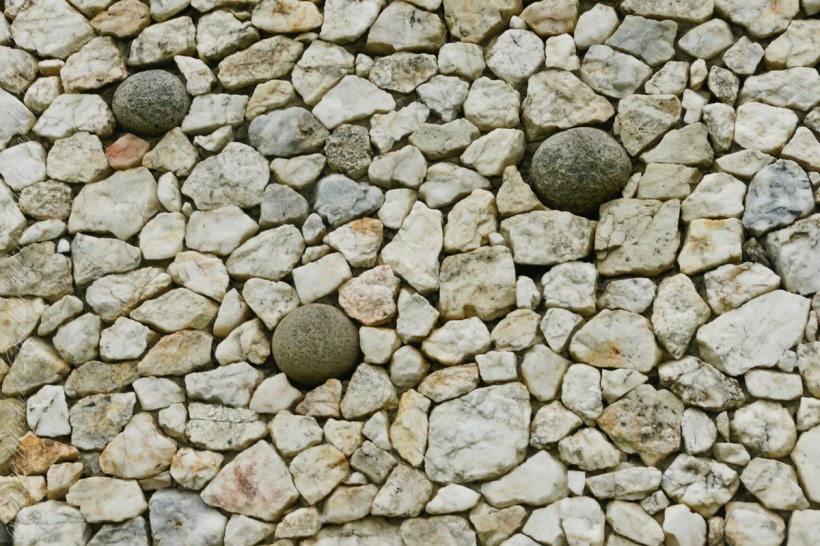
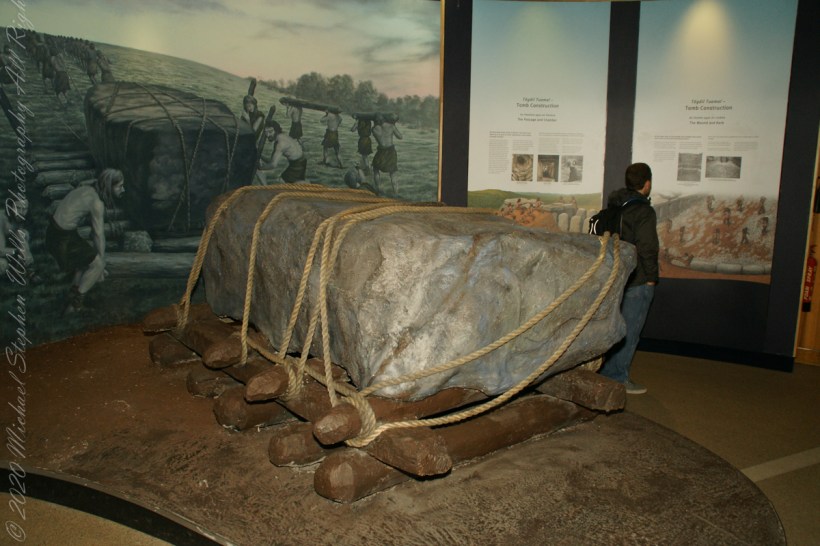
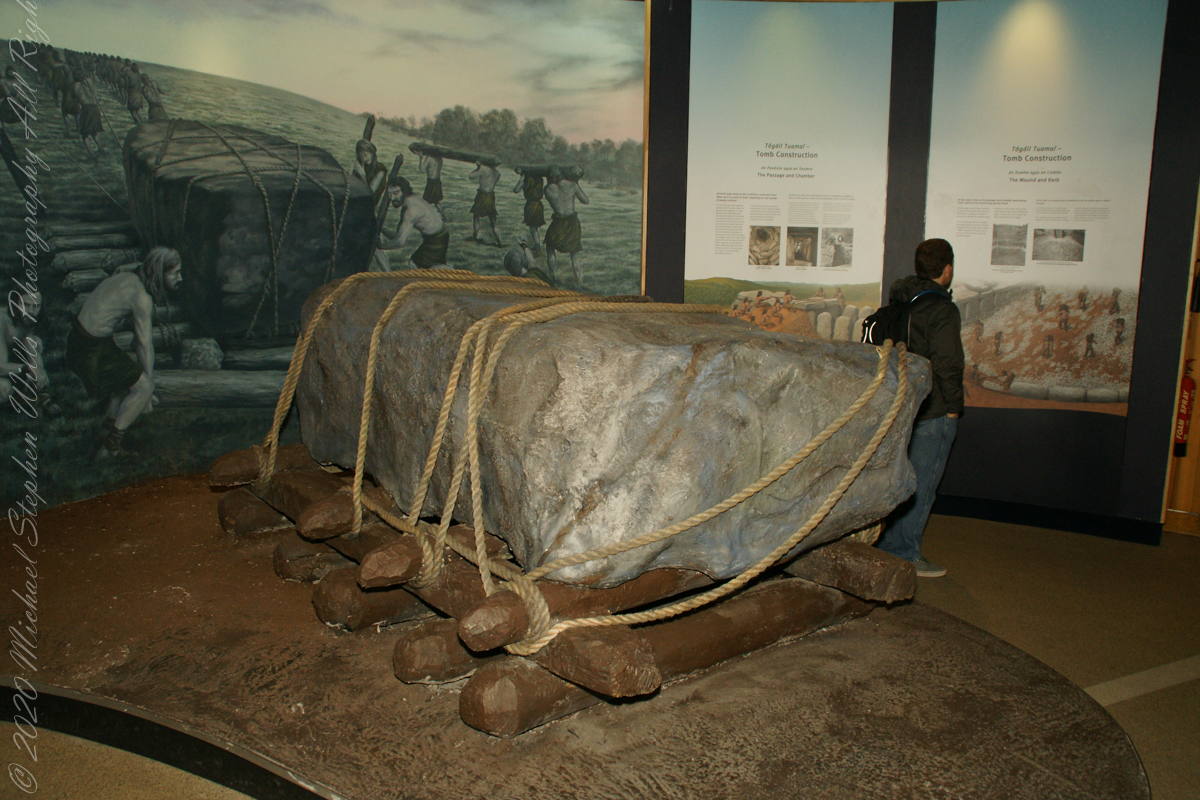
The stones may have been transported to Newgrange by sea and up the River Boyne by fastening them to the underside of boats at low tide. None of the structural slabs were quarried, for they show signs of having been weathered naturally, so they must have been collected and then transported, largely uphill, to the Newgrange site. The granite basins found inside the chambers also came from the Mournes.

Geological analysis indicates that the thousands of pebbles that make up the cairn, which together would have weighed about 200,000 tons, came from the nearby river terraces of the Boyne. There is a large pond in this area that is believed to be the site quarried for the pebbles by the builders of Newgrange.
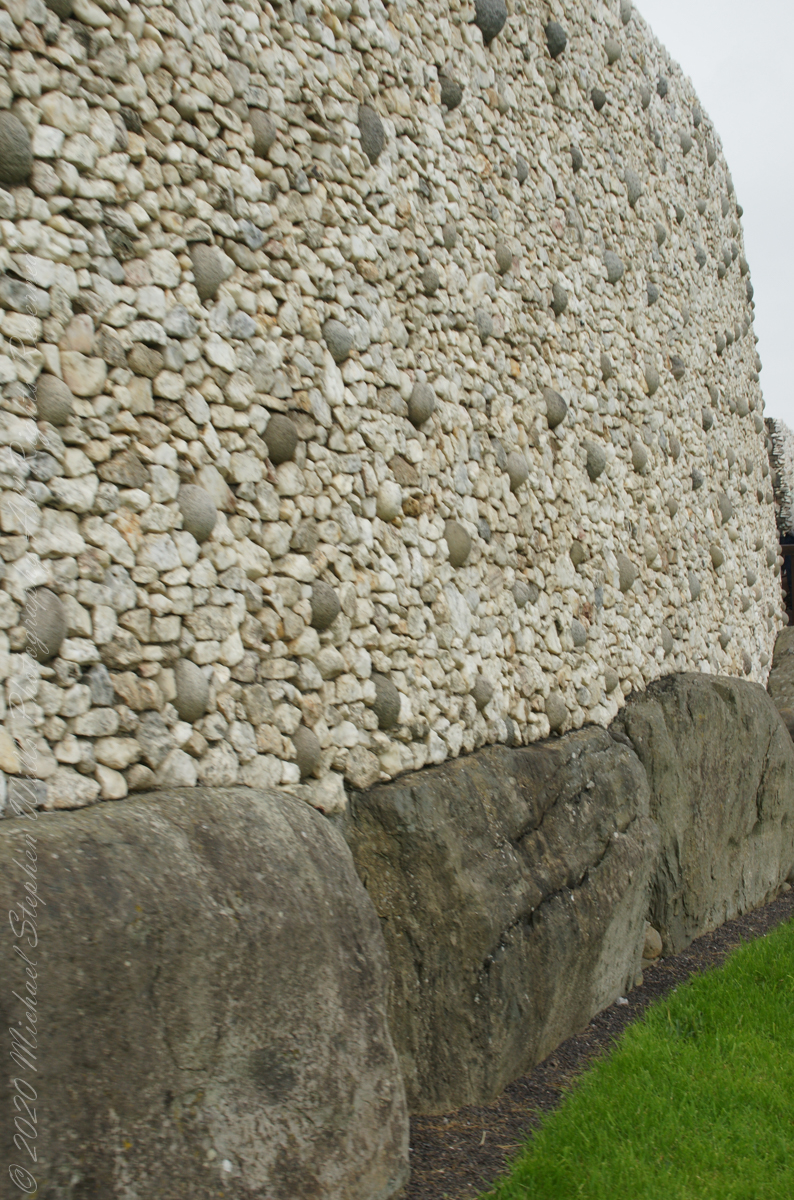
Most of the 547 slabs that make up the inner passage, chambers, and the outer kerbstones are greywacke. Some or all of them may have been brought from sites either 3 miles away or from the rocky beach at Clogherhead, County Louth, about 12 miles to the northeast.

Click Me for the first post of this series.
Copyright 2023 Michael Stephen Wills All Rights Reserved

Newgrange VII

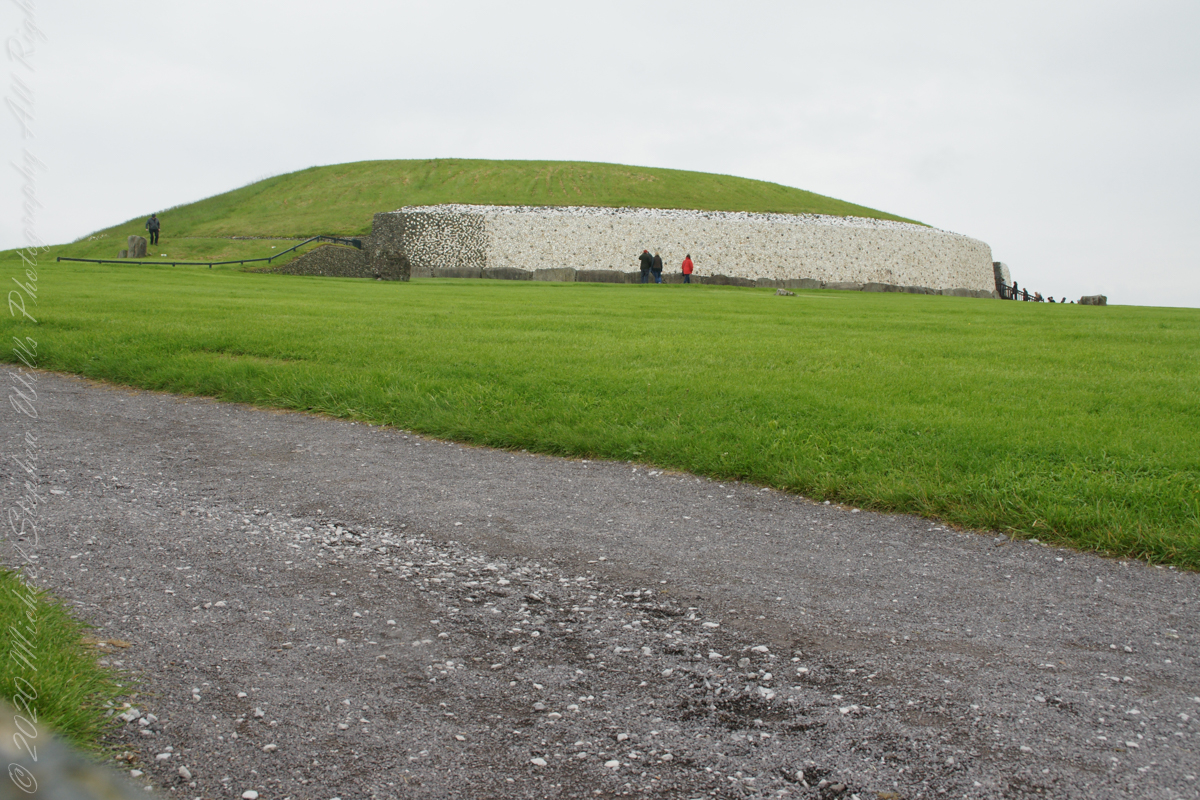
Approaching Newgrange for the first time

Michael Joseph “Brian” O’Kelly was selected to undertake the direction of the excavation of Newgrange during a 1961 meeting of “those who had a professional interest in the monument” organized by PJ Hartnett, the archaeological officer with Bord Fáilte Eireann (Irish Tourist Board) and a former pupil of Professor O’Kelly’s. Excavation commenced in 1962 and continued every summer for a four-month season up to and including 1975.

The aim of the excavation was to discover as much as possible about the archaeological and historical context of Newgrange and the people who built it and to discover what its original finished appearance was so as to direct a reconstruction, conservation and restoration of the structure to its former condition and appearance.

The last year of excavation was 1975, Michael J. wrote “We determined in 1975 that that should be our last season of excavation at Newgrange. We had investigated approximately one third of the structure and we had discovered much about it that was new, both in its structure and in its ornament, while radiocarbon had pushed its date back by 1,000 years……”

“…We felt that the other two thirds should be left for a future excavator, who, working with new knowledge and perhaps with better methods and new scientific approaches, should have large areas untouched by us in which to test, check and re-evaluate our findings.” From The Restoration of Newgrange by Michael J.O’Kelly. Antiquity LIII, 1979.

“Between the bright sky and the long glittering silver ribbon of the Boyne the land looks black and featureless. Great flocks of starlings are flying across the sky from their nighttime roosts to their daytime feeding places. The effect is very dramatic as the direct light of the sun brightens and casts a glow of light all over the chamber. I can even see parts of the roof and a reflected light shines right back into the back of the end chamber.” The recorded words of Prof O’Kelly spoken in the tomb of Newgrange on the 21st December 1969.

Click Me for the first post of this series.
Copyright 2023 Michael Stephen Wills All Rights Reserved

Newgrange VI

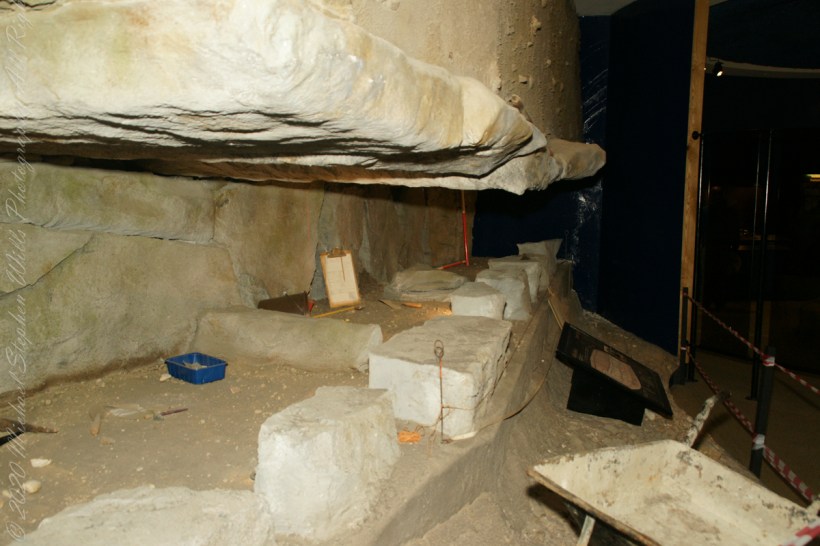
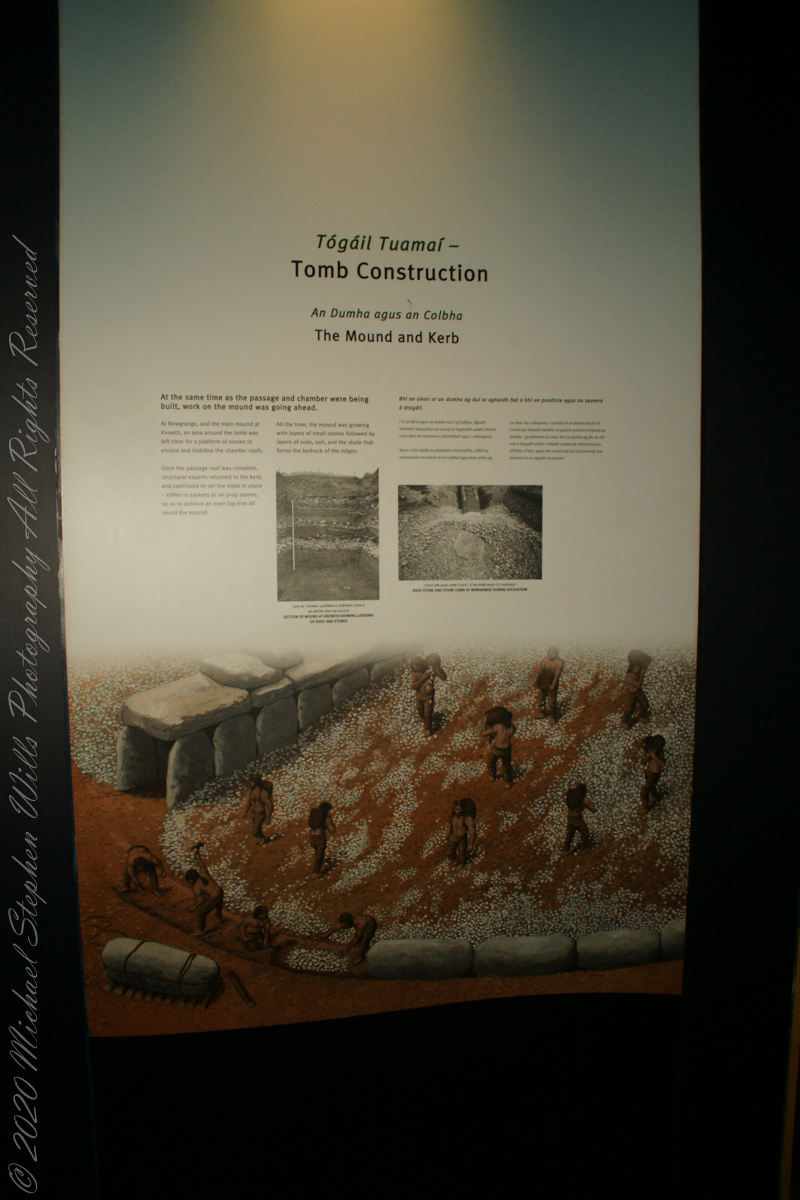
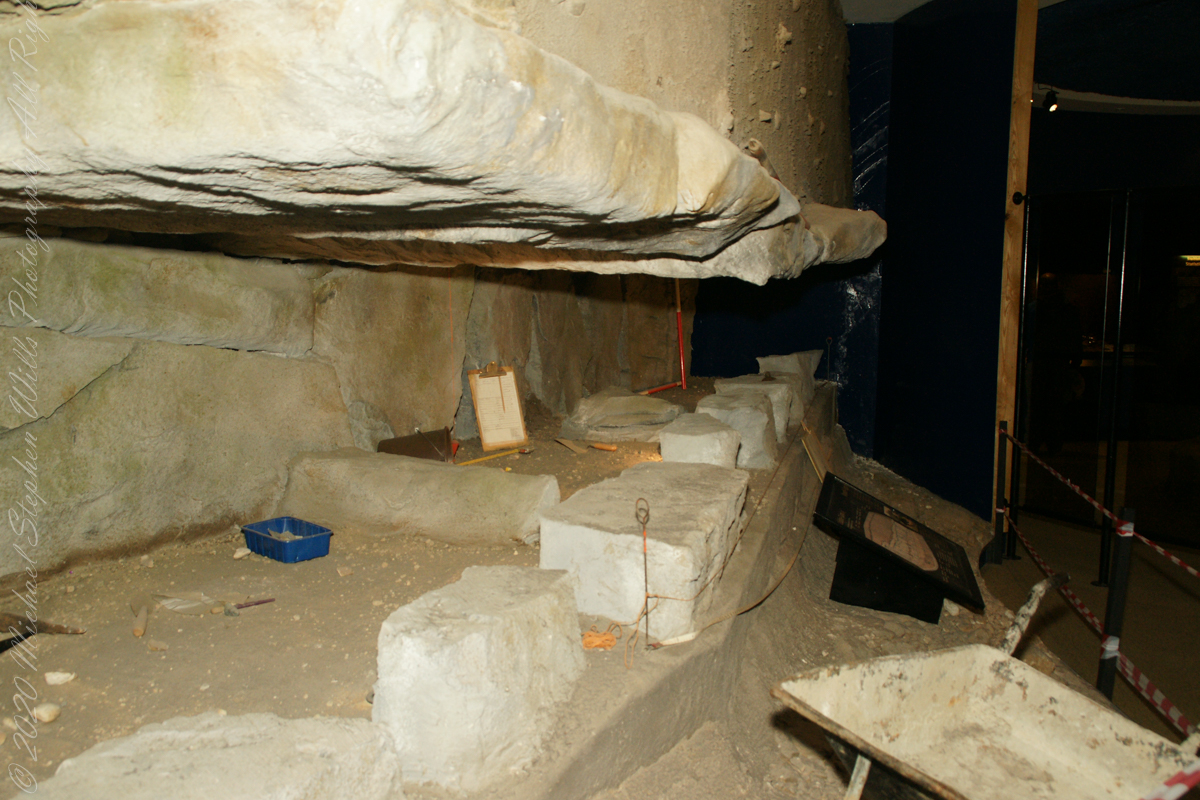
Newgrange and Knowth mounds were built and stabilized by structural experts.

At the same time as the passage and chamber were being built, work on the mound was going ahead.

At Newgrange, and the main mound at Knowth, an area around the tomb was left clear for a platform of stones to encase and stabilize the chamber roofs.

Once the passage roof was complete, structural experts returned to the kerb and continued to set the slabs in place — either in sockets or on prop stones, so as to achieve an even top-line all-round the mound.

Click Me for the first post of this series.
Copyright 2023 Michael Stephen Wills All Rights Reserved

Newgrange V

Newgrange construction involved meticulous planning, stone architecture, artistry, and astronomical understanding.

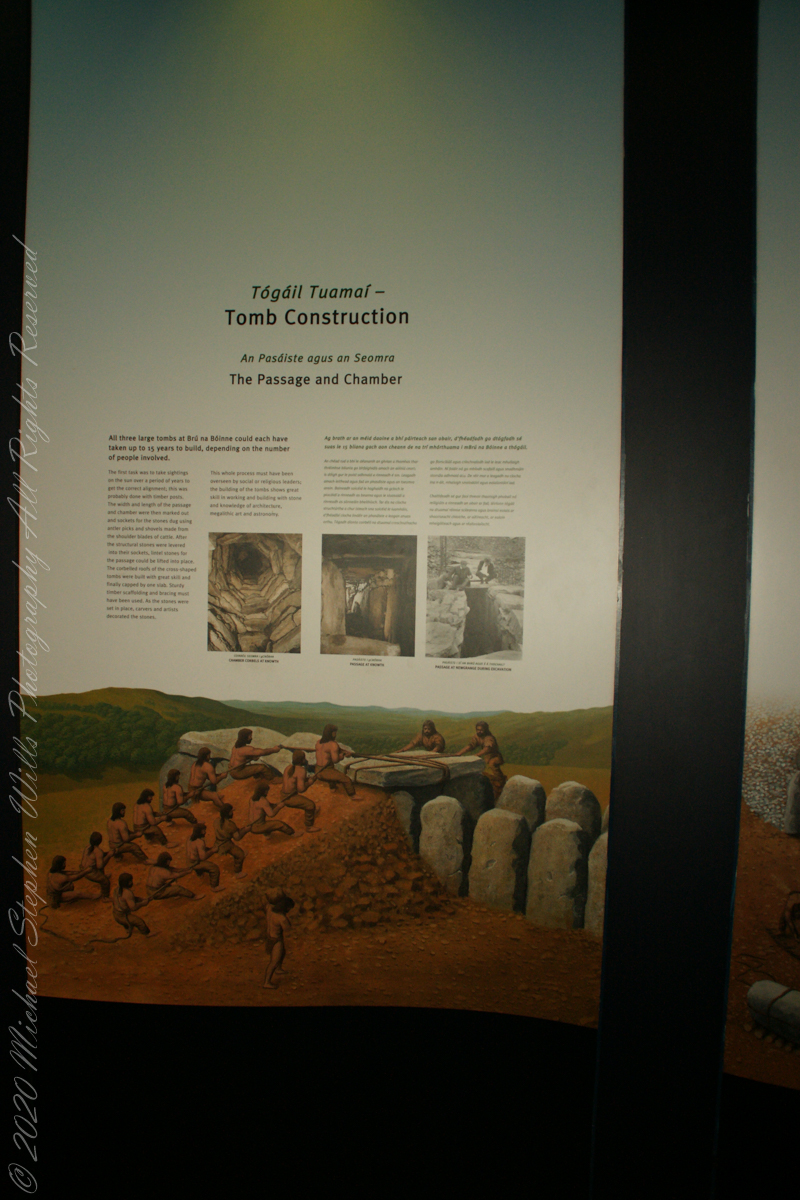
The initial task for the builders of Newgrange involved recording the annual alignment of the rising sun over several years, which was likely achieved using timber posts as markers. Subsequently, the dimensions of the passage and chamber were determined, and the groundwork was prepared by digging sockets for the structural stones. This excavation process was carried out using antler picks and shovels crafted from cattle shoulder blades.

After the structural stones were carefully positioned and levered into their sockets, lintel stones for the passage could be lifted into place. The corbelled roofs of the cross-shaped tombs were built with great skill and finally capped by one slab. Sturdy timber scaffolding and bracing must have been used. As the stones were set in place, carvers and artists decorated the stones.

The whole process must have been overseen by social or religious leaders; the building of the tombs shows great skill in working and building with stone and knowledge of architecture, megalithic art and astronomy.

Click Me for the first post of this series.
Copyright 2023 Michael Stephen Wills All Rights Reserved

Newgrange IV

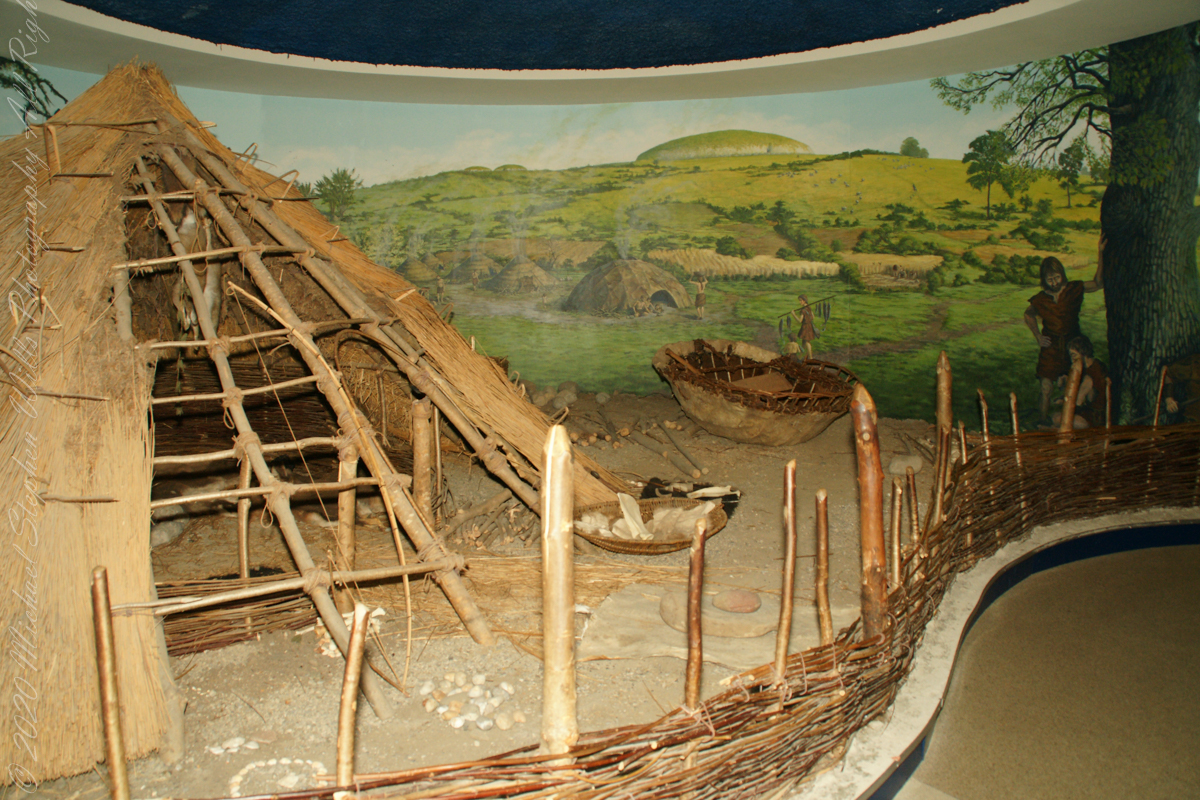
How we sheltered at the time of Newgrange construction

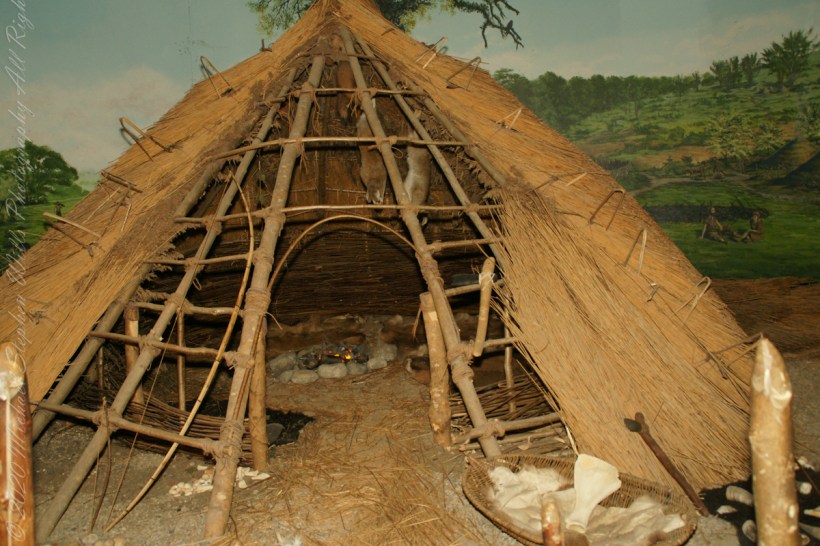
The Brú na Bóinne Visitor Center includes this tableau of the shelter of the ancient farmers who constructed Newgrange: the monument is in the background.

Notice the wicker fence in tableau foreground.

Click Me for the first post of this series.
Copyright 2023 Michael Stephen Wills All Rights Reserved

Newgrange III

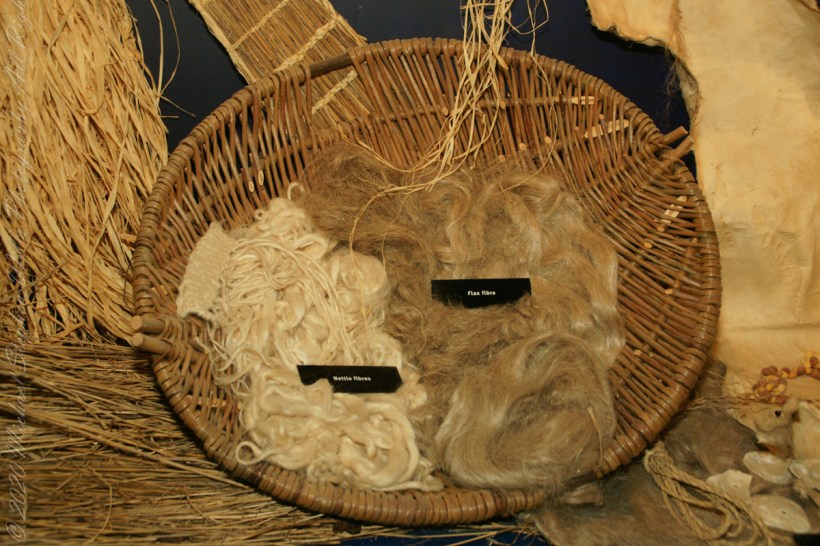
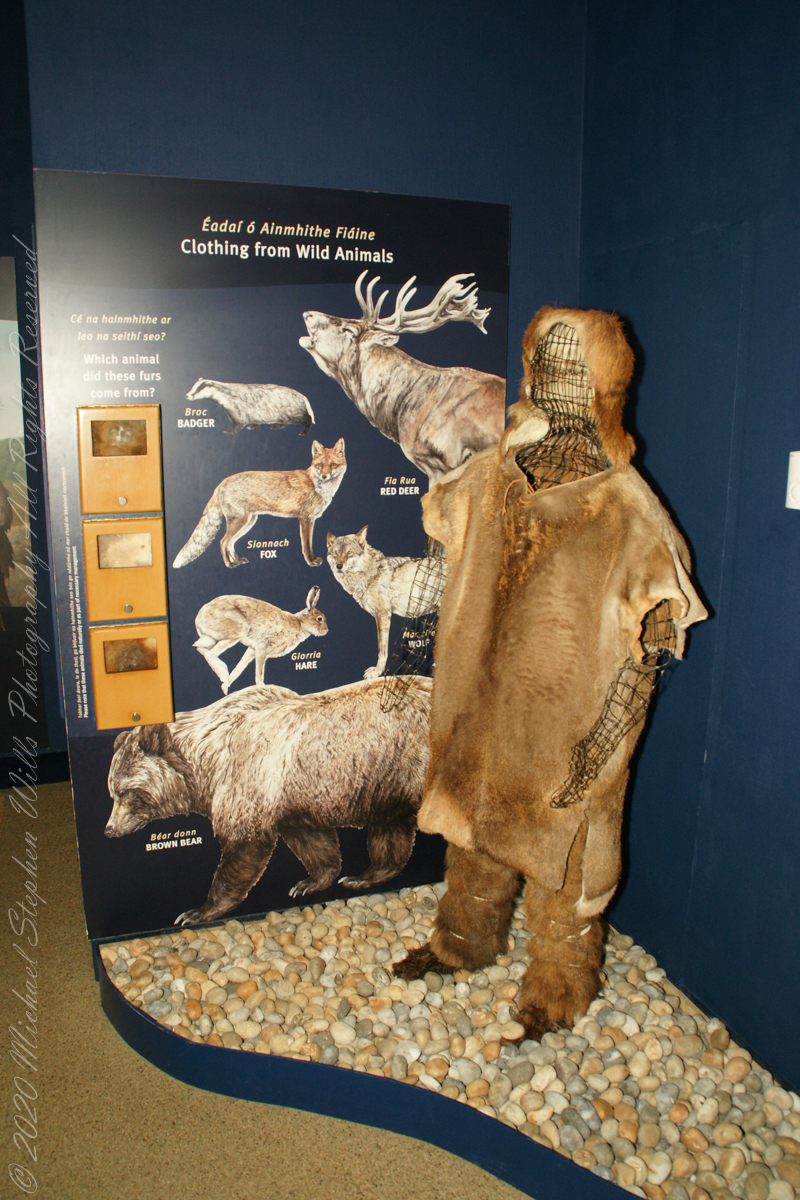
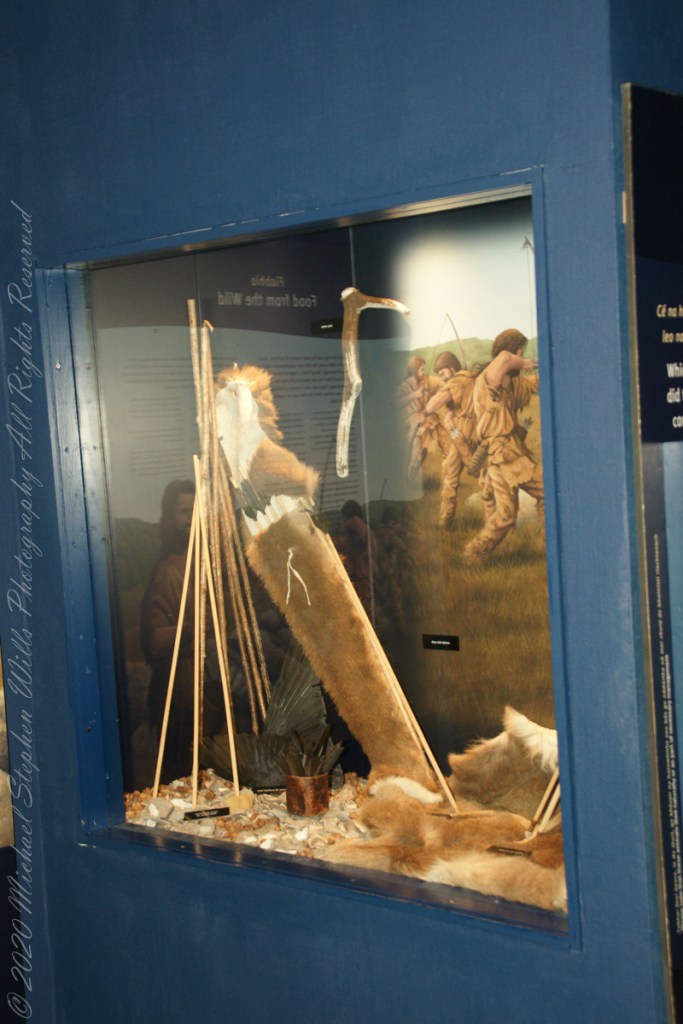
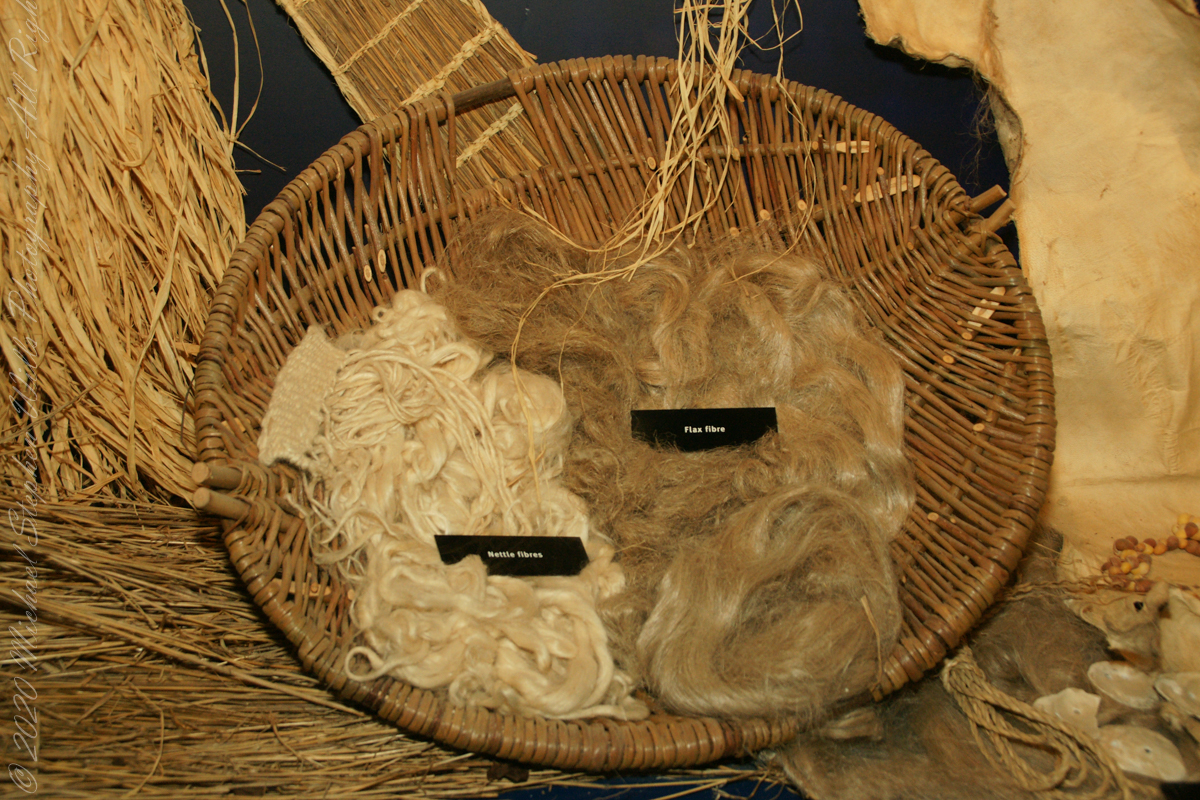
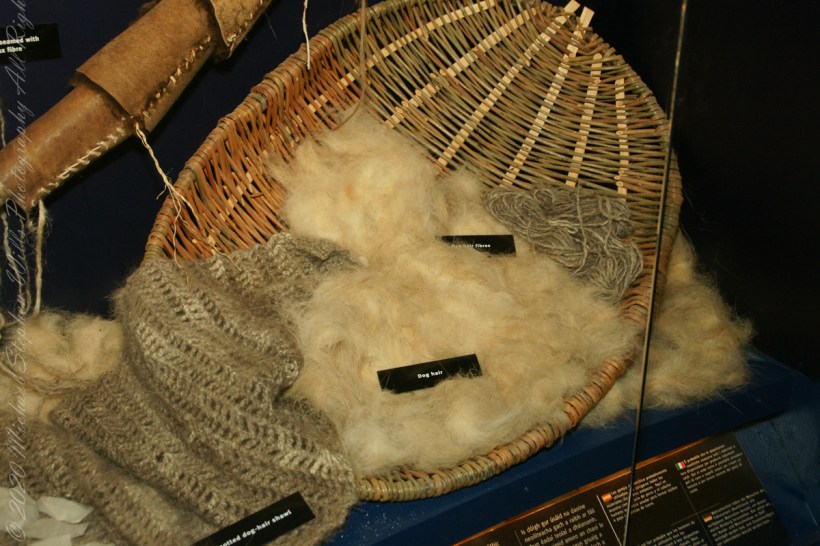
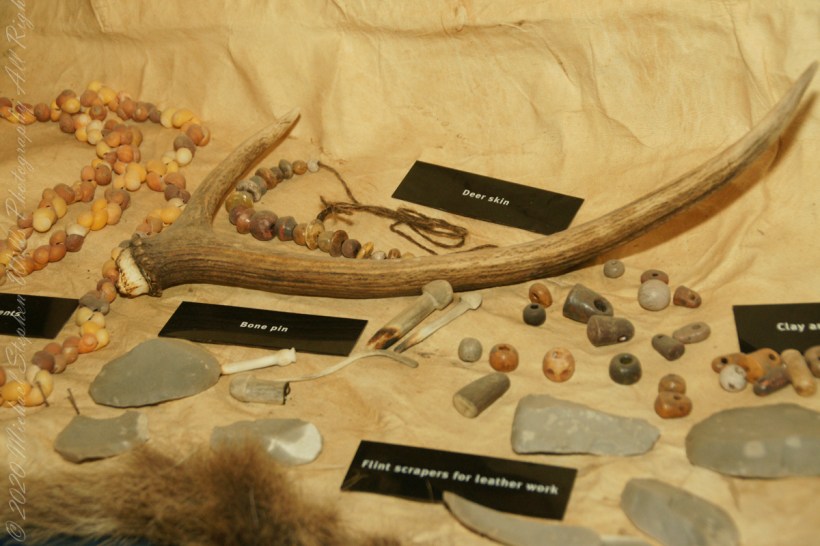
How the builders of Brú na Bóinne clothed themselves

quiver, arrows

Flax and Nettle Fiber

Woven Dog Hair

Click Me for the first post of this series.
Copyright 2023 Michael Stephen Wills All Rights Reserved

Newgrange II

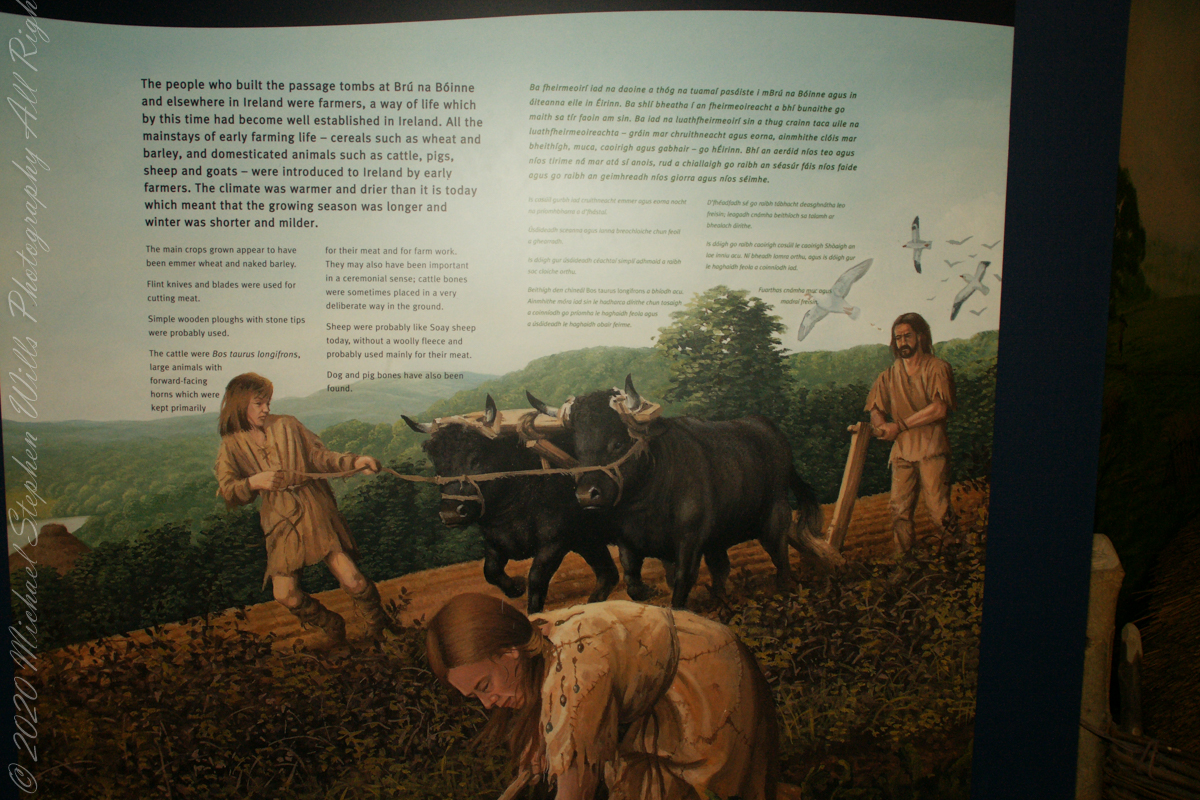
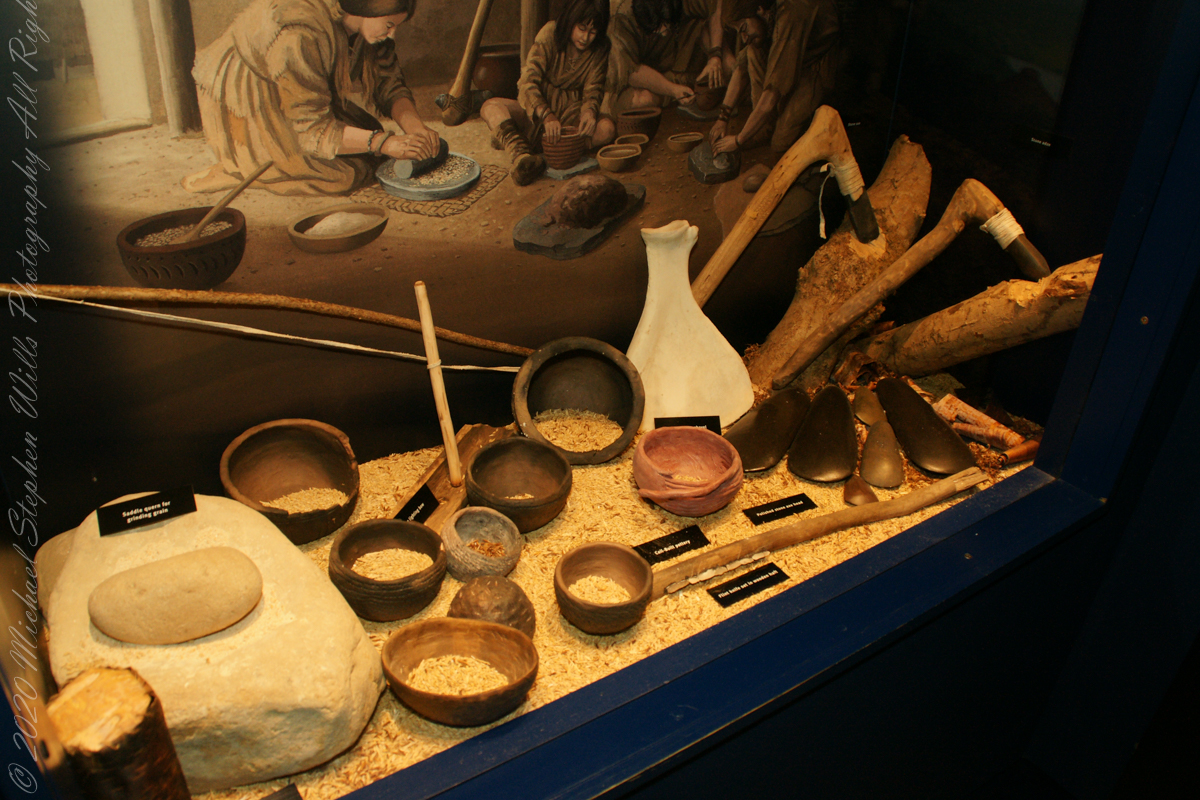
Early Irish farmers introduced crops and domesticated animals, aided by milder climate.

The people who built the passage tombs at Brú na Bóinne and elsewhere in Ireland were farmers, a way of life which by this time had become well established in Ireland.  All the mainstays of early farming life — cereals such as wheat and barley, and domesticated animals such as cattle, pigs, sheep and goats — were introduced to Ireland by early farmers.  T

he climate was warmer and drier than it is today which meant that the growing season was longer and winter was shorter and milder.  The main crops grown appear to have been emmer wheat and naked barley.  Flint knives and blades were used for cutting meat.  Simple wooden ploughs with stone tips were probably used. 

The cattle were Bos taurus longifrans, large animals with forward facing horns which were kept primarily for farm work and meat.  Cattle may also have been important in a ceremonial sense; cattle bones were sometimes placed in a very deliberate way in the ground.  Sheep were probably like Soay sheep today, without a woolly fleece and probably used mainly for their meat.  Dog and pig bones have also been found.

Copyright 2023 Michael Stephen Wills All Rights Reserved

Newgrange I

For my 365th consecutive post: approaching an ancient passage tomb older than the Egyptian pyramids.

Thirty minutes headed up the M1 from Dublin Airport Pam and I arrived at Brú na Bóinne Visitor Center, gateway to Newgrange. Archaeologists classified Newgrange as a passage tomb, however Newgrange is now recognized to be much more than a passage tomb. Ancient Temple is a more fitting classification, a place of astrological, spiritual, religious and ceremonial importance, much as present day cathedrals are places of prestige and worship where dignitaries may be laid to rest.

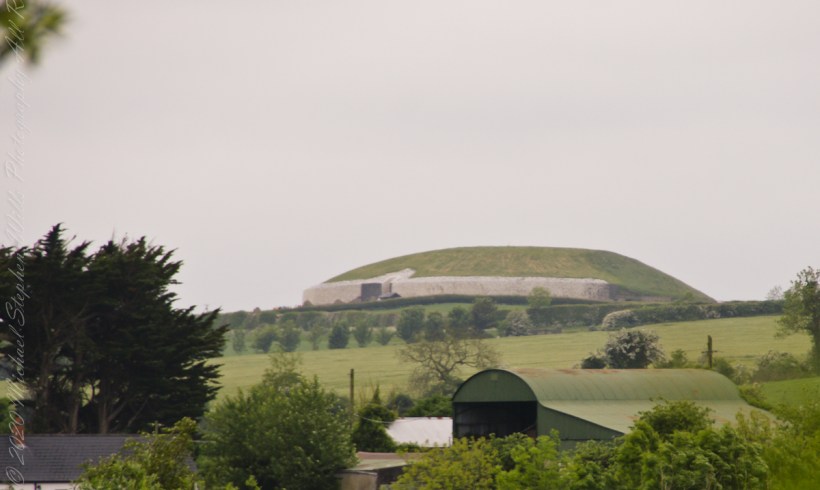
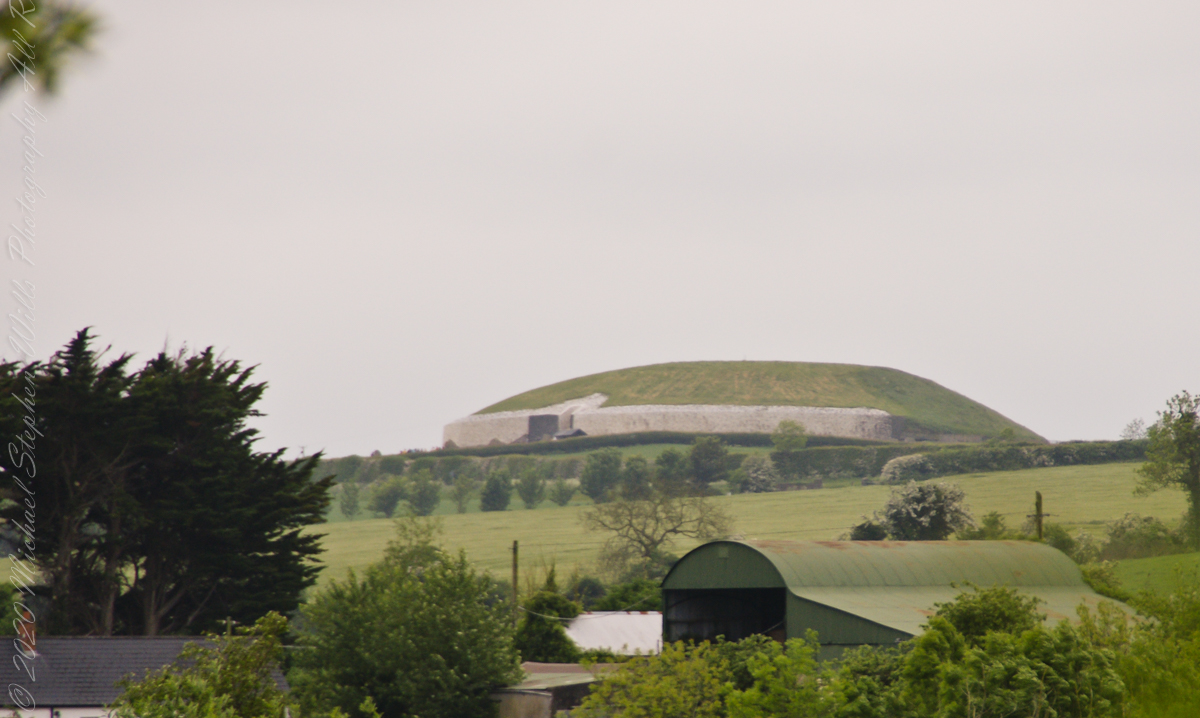
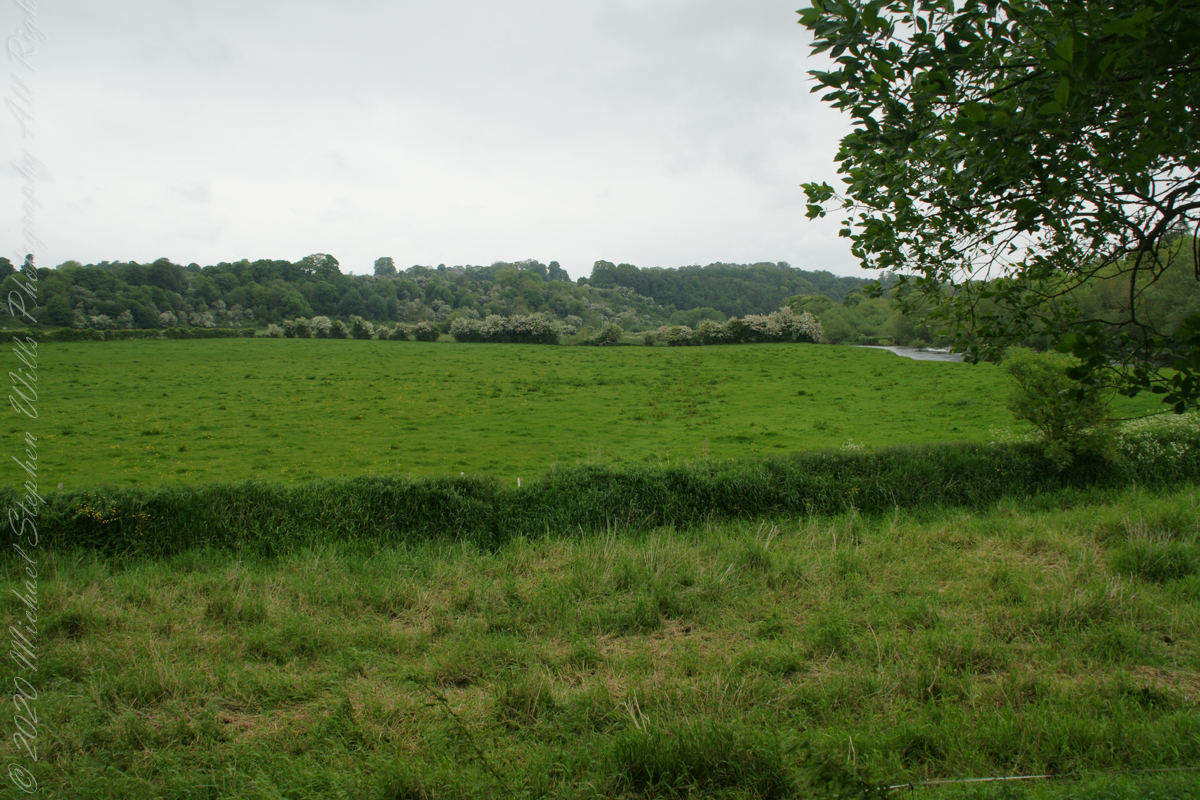
Walking on the south bank of River Boyne we first glimpsed Newgrange on the hill above.

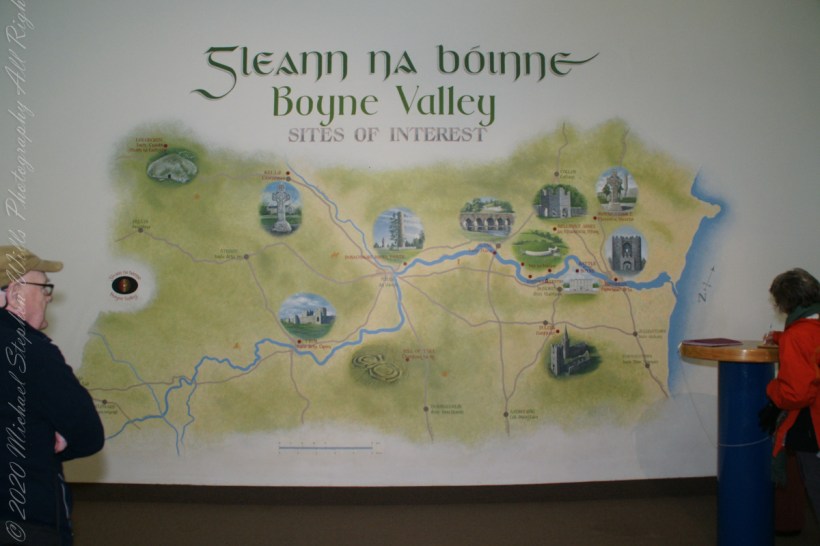
Bounded on the south by a bend in the River Boyne, the prehistoric site of Brú na Bóinne is dominated by the three great burial mounds of Knowth, Newgrange and Dowth. Surrounded by about forty satellite passage graves, they constitute a funerary landscape recognized as having great ritual significance, subsequently attracting later monuments of the Iron Age, early Christian and medieval periods.

Newgrange was built by Stone Age farmers, the mound is 85m (279ft) in diameter and 13m (43ft) high, an area of about 1 acre. Newgrange was constructed about 5,200 years ago (3,200 B.C.) which makes it older than Stonehenge and the Great Pyramids of Giza.

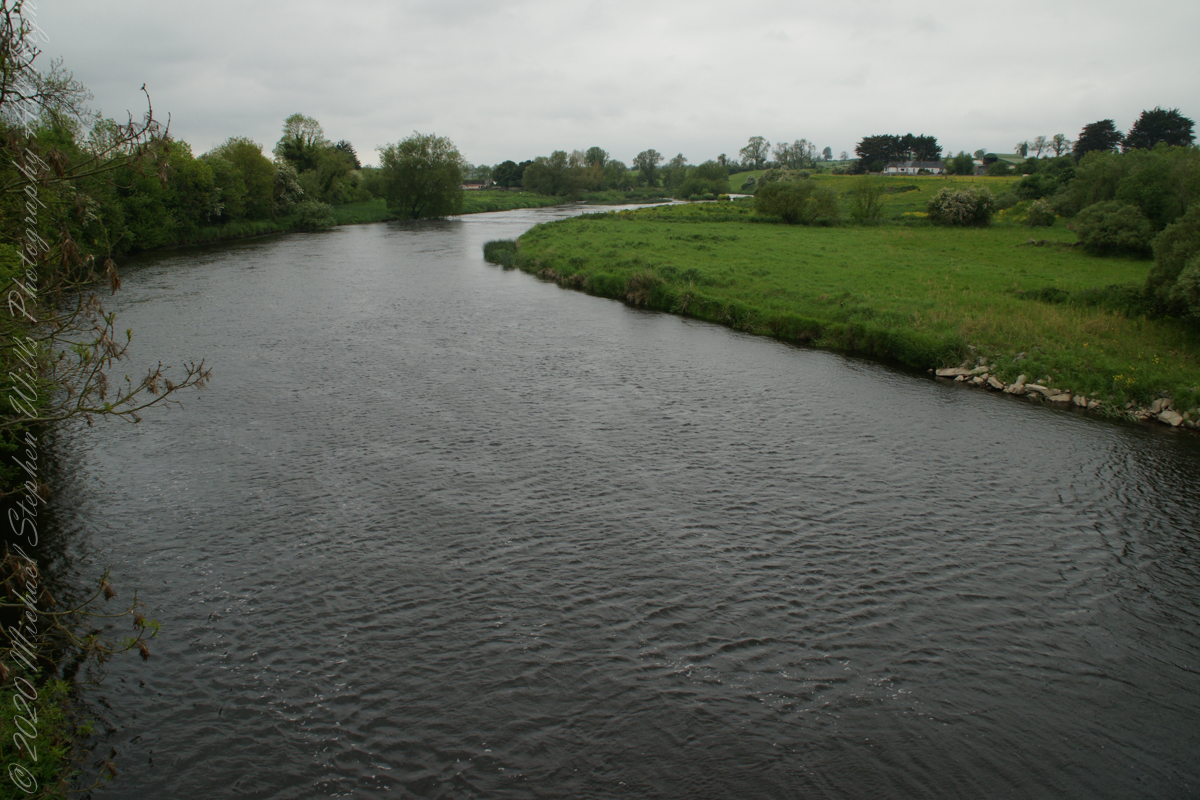
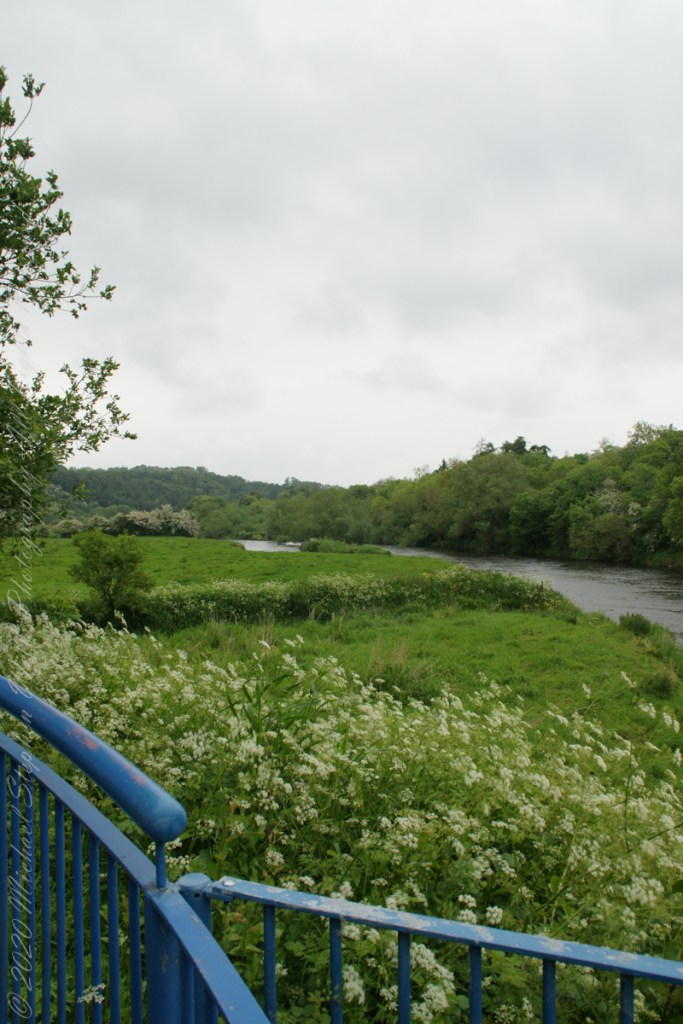
A overlook in Brú na Bóinne Visitor Center provides a view of River Boyne from the south bank. Here we are looking west.

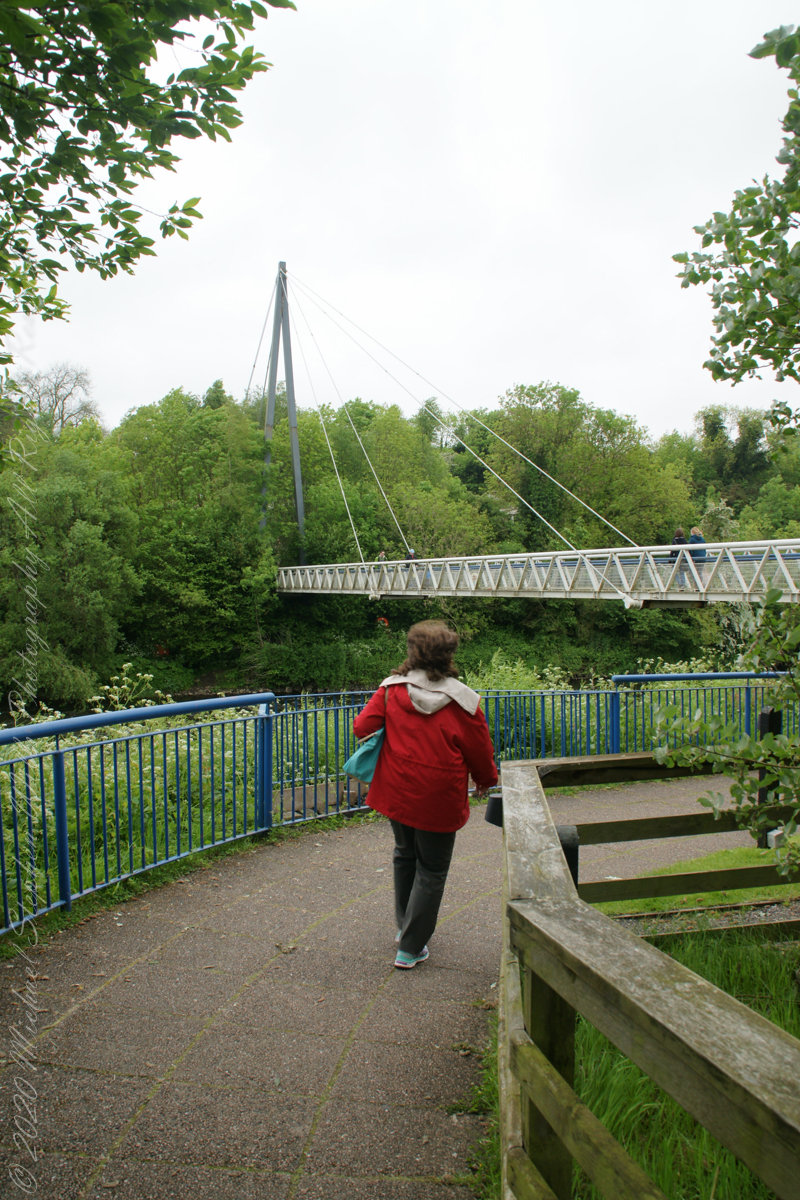
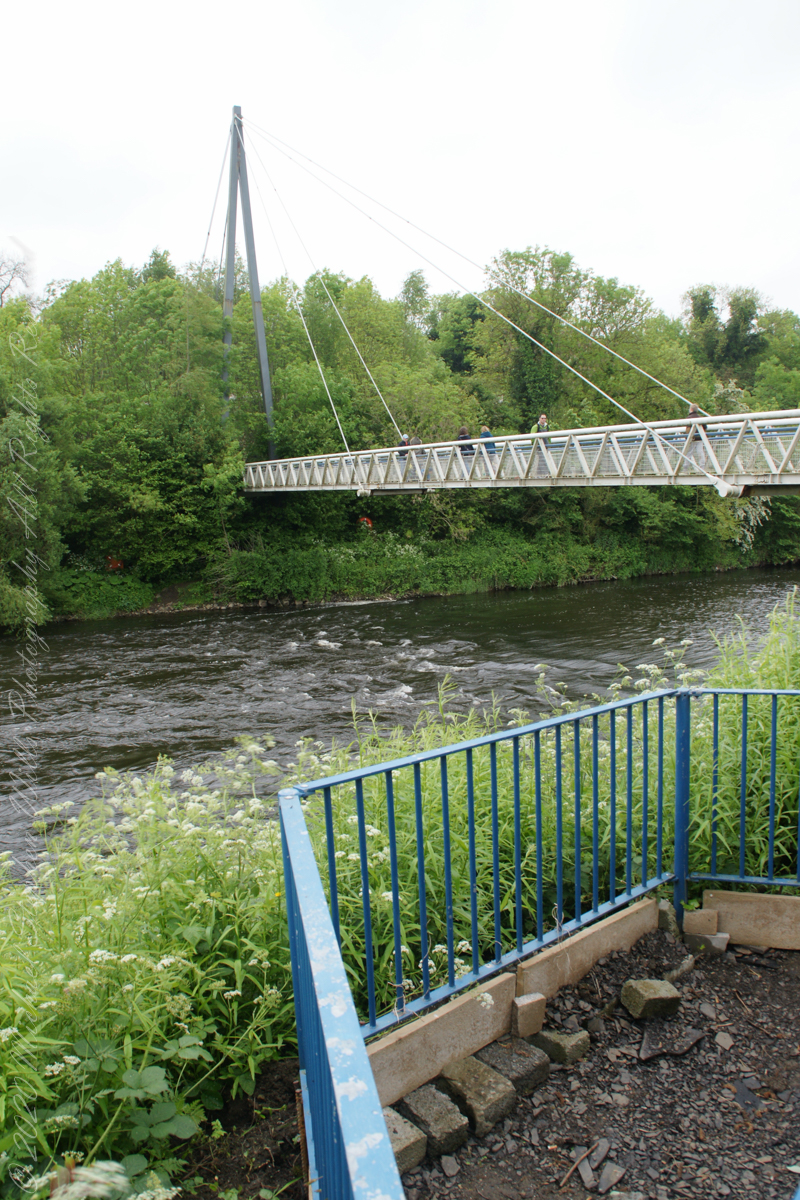
Footbridge over River Boyne

We are on the south bank.

Queen Ann’s Lace on the south bank of River Boyne

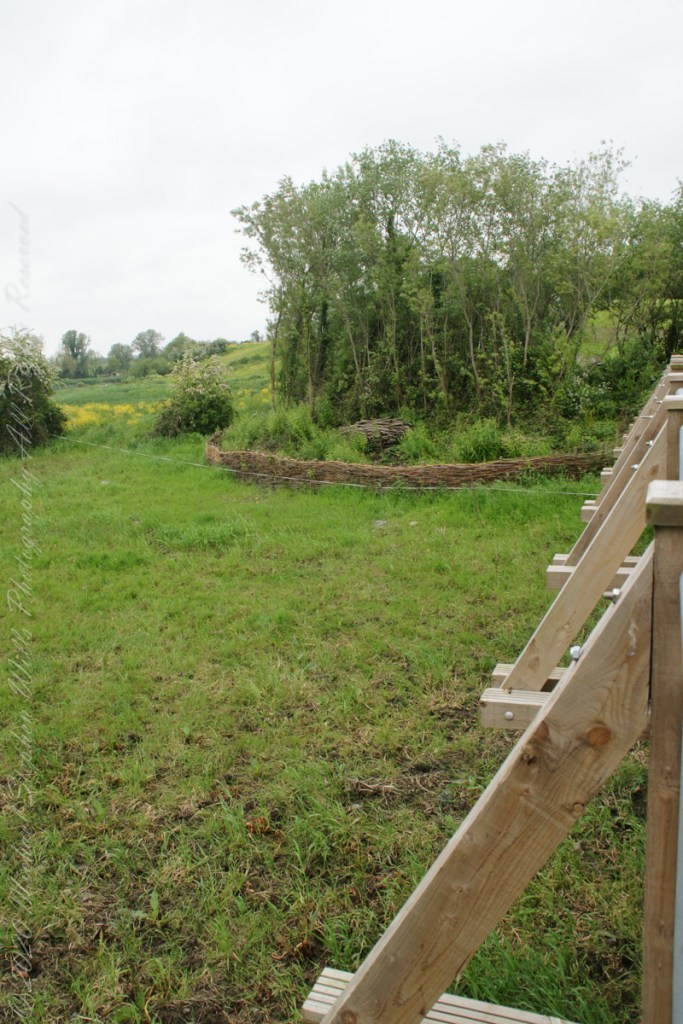
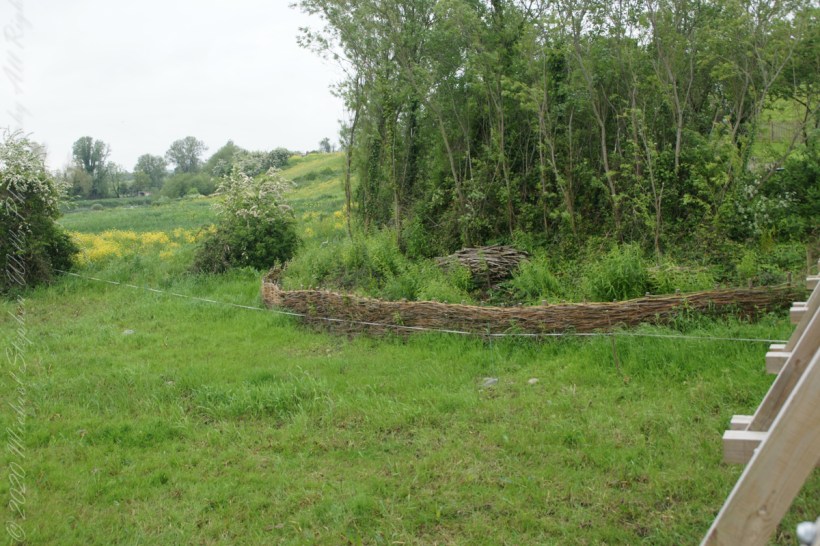
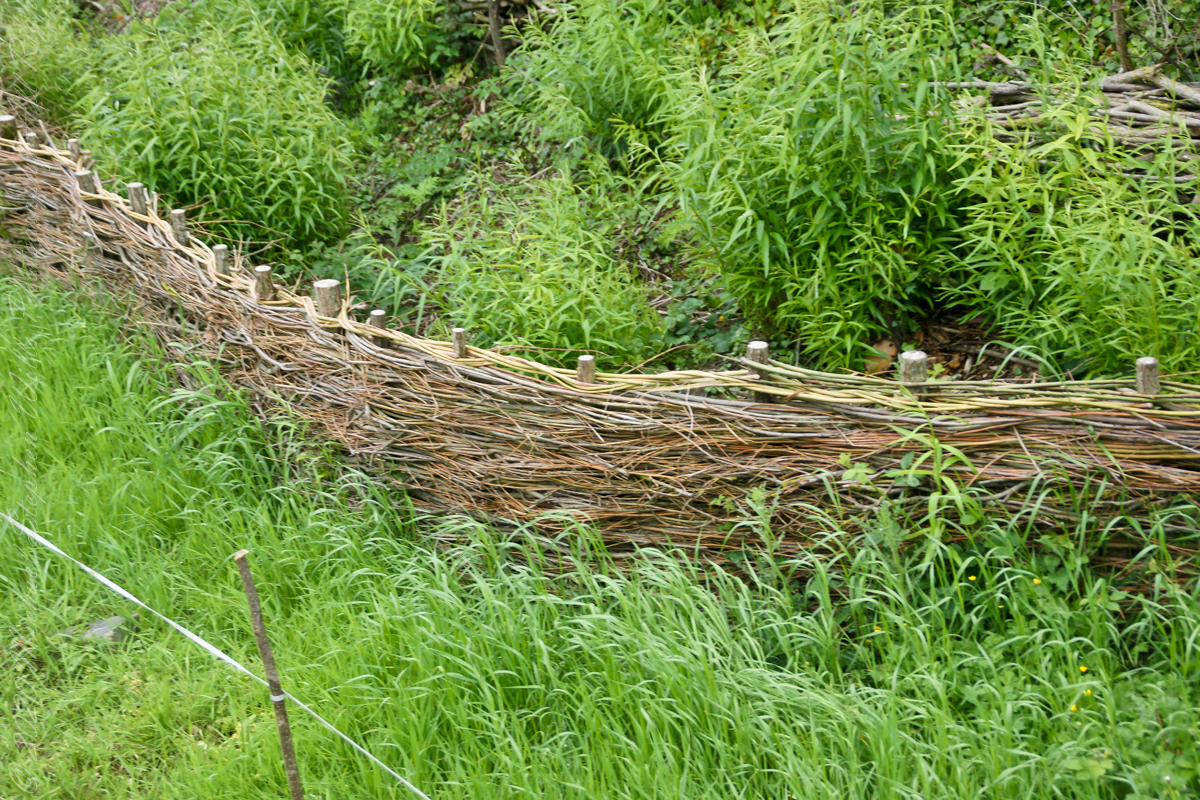
Oh my gosh!! A wattle fence, an ancient technique.

Wattle is made by weaving flexible branches around upright stakes to form a woven lattice. The wattle may be made into an individual panel, commonly called a hurdle, or it may be formed into a continuous fence. Wattles also form the basic structure for wattle and daub wall construction, where wattling is daubed with a plaster-like substance to make a weather-resistant wall.

Copyright 2023 Michael Stephen Wills All Rights Reserved

Treman Early Autumn Walk XI

Thomas Edison and Henry Ford innovatively used goldenrod to produce rubber, potentially counteracting rubber shortages.
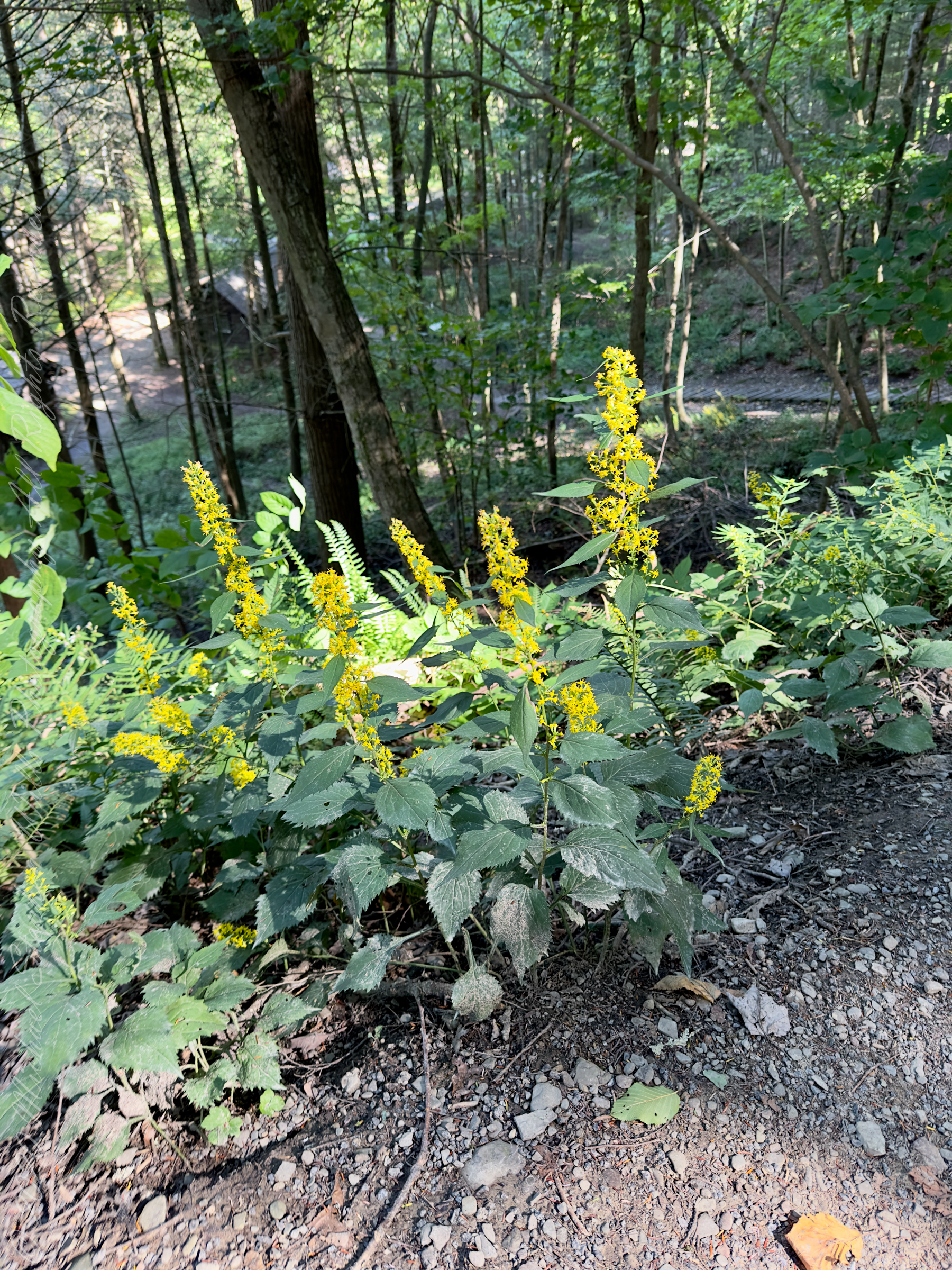
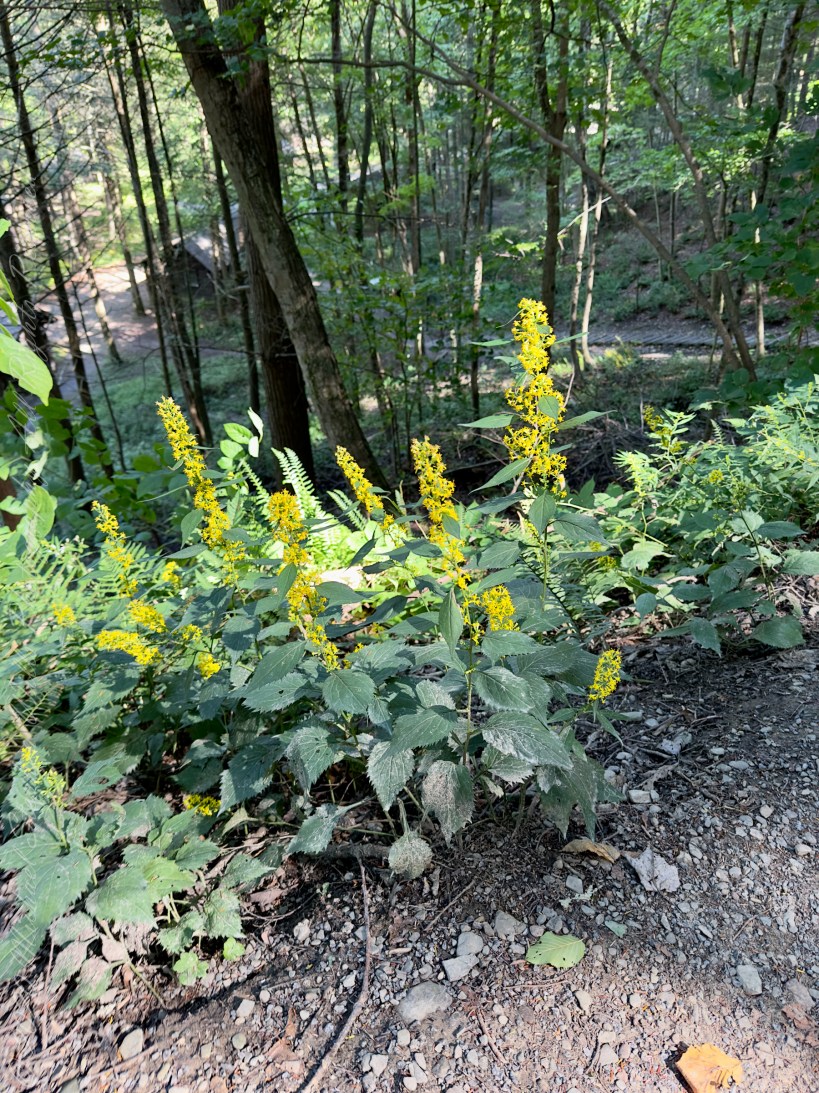
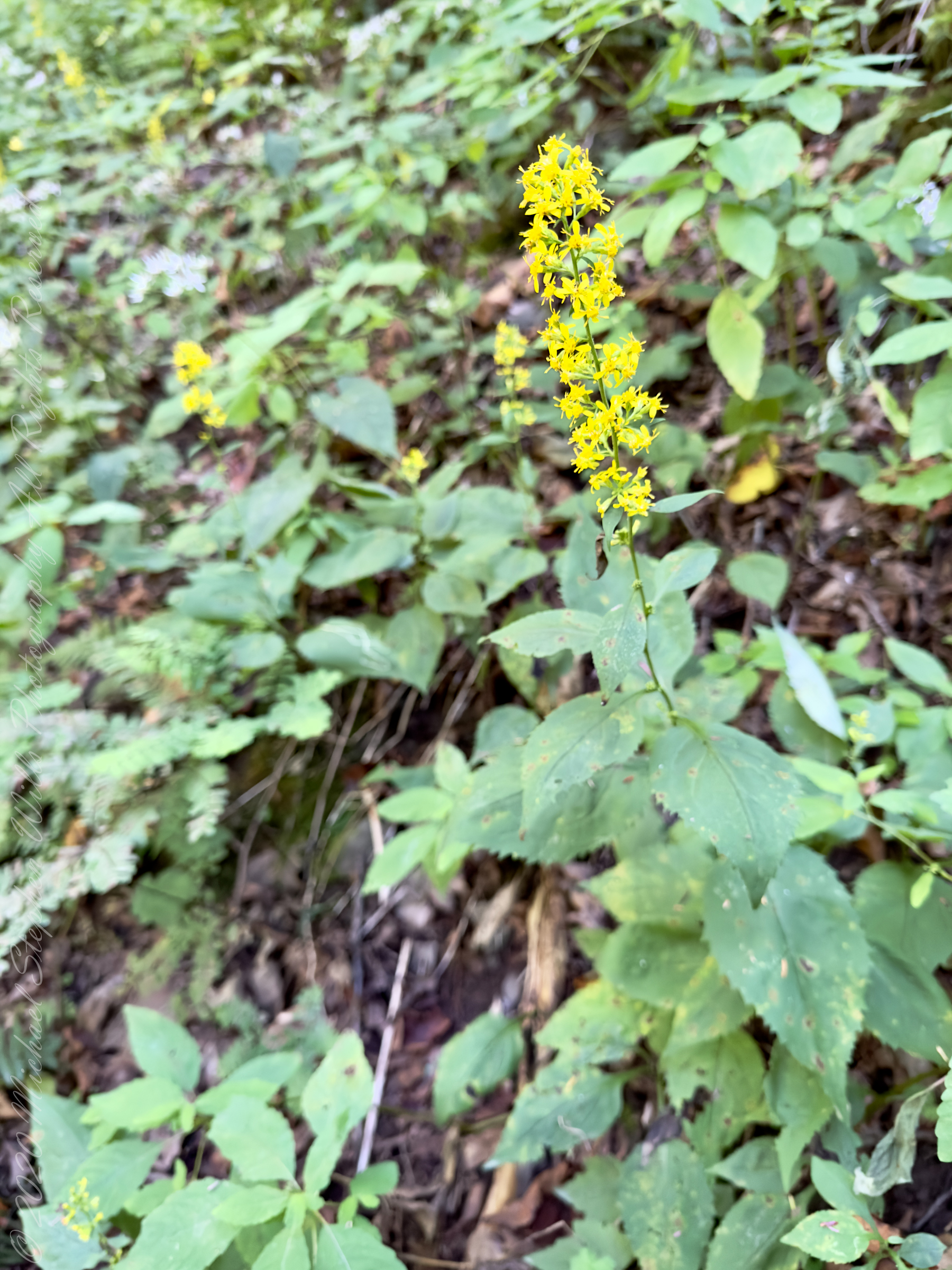
Where the Rim Trail descends to an ending on the Enfield Gorge floor a perennial patch of sunlight promotes an extravagant woodland growth of Zigzag goldenrod.

Solidago flexicaulis, AKA Broadleaf Goldenrod and Ziazag Goldenrod

“Inventor Thomas Edison experimented with goldenrod to produce rubber, which it contains naturally. Edison created a fertilization and cultivation process to maximize the rubber content in each plant. His experiments produced a 12 ft-tall (3.7 m) plant that yielded as much as 12% rubber. The tires on the Model T given to him by his friend Henry Ford were made from goldenrod. Like George Washington Carver, Henry Ford was deeply interested in the regenerative properties of soil and the potential of alternative crops such as peanuts and soybeans to produce plastics, paint, fuel and other products.  Ford had long believed that the world would eventually need a substitute for gasoline and supported the production of ethanol (or grain alcohol) as an alternative fuel. In 1942, he would showcase a car with a lightweight plastic body made from soybeans. Ford and Carver began corresponding via letter in 1934, and their mutual admiration deepened after George Washington Carver made a visit to Michigan in 1937.”
“By the time World War II began, Ford had made repeated journeys to Tuskegee to convince George Washington Carver to come to Dearborn and help him develop a synthetic rubber to help compensate for wartime rubber shortages. Carver arrived on July 19, 1942, and set up a laboratory in an old water works building in Dearborn. He and Ford experimented with different crops, including sweet potatoes and dandelions, eventually devising a way to make the rubber substitute from goldenrod, a plant weed commercially viable. Carver died in January 1943, Ford in April 1947, but the relationship between their two institutions continued to flourish: As recently as the late 1990s, Ford awarded grants of $4 million over two years to the George Washington Carver School at Tuskegee.”

“Extensive process development was conducted during World War II to commercialize goldenrod as a source of rubber. The rubber is only contained in the leaves, not the stems or blooms. Typical rubber content of the leaves is 7%. The resulting rubber is of low molecular weight, resulting in an excessively tacky compound with poor tensile properties.”

References: text in italics and quotes is from the Wikipedia, “Solidago.”

Copyright 2023 All Rights Reserved Michael Stephen Wills

A Stunning Find

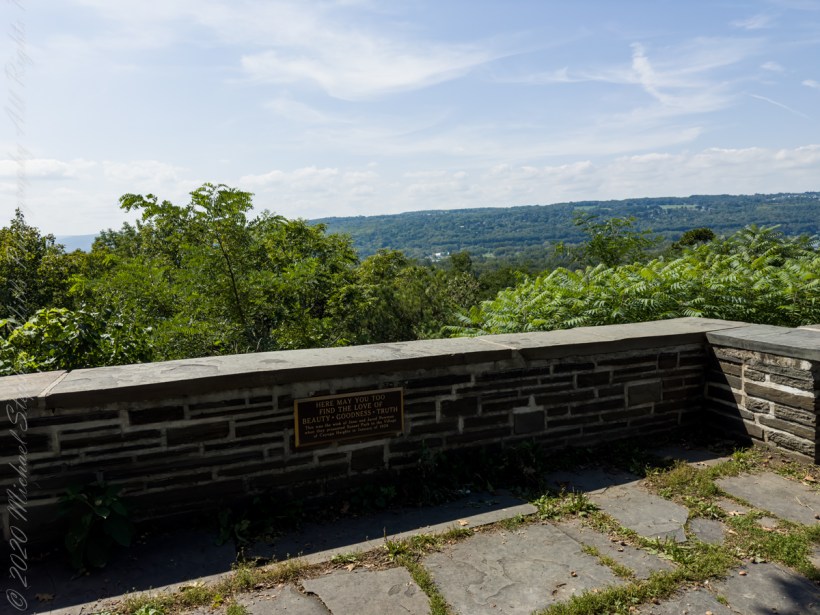
After living here since 1986 I discovered this Cayuga Heights park on a warm early September day, 2023.

Looking across Cayuga Lake, not visible in the valley, to West Hill.

Plaque inscription: “Here may you too find the love of beauty, goodness, truth. This was the wish of Jane and Jared Newman when they presented Sunset Park to the village of Cayuga Heights in January of 1938.”

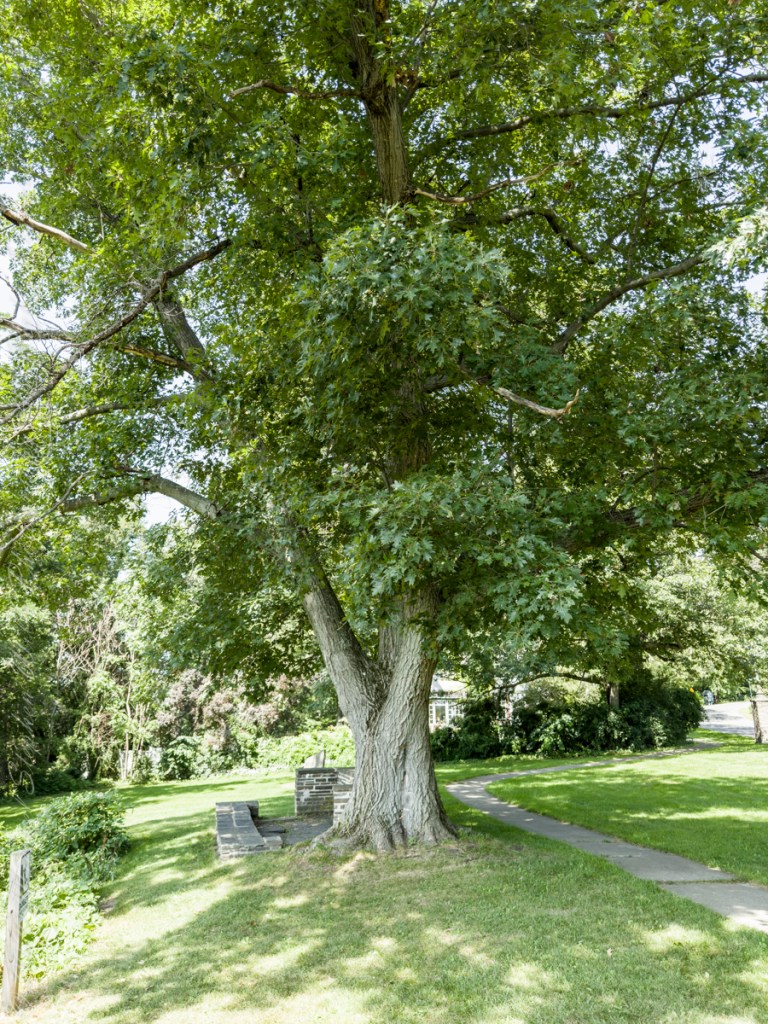
Rest on a limestone bench beneath a mature oak tree.

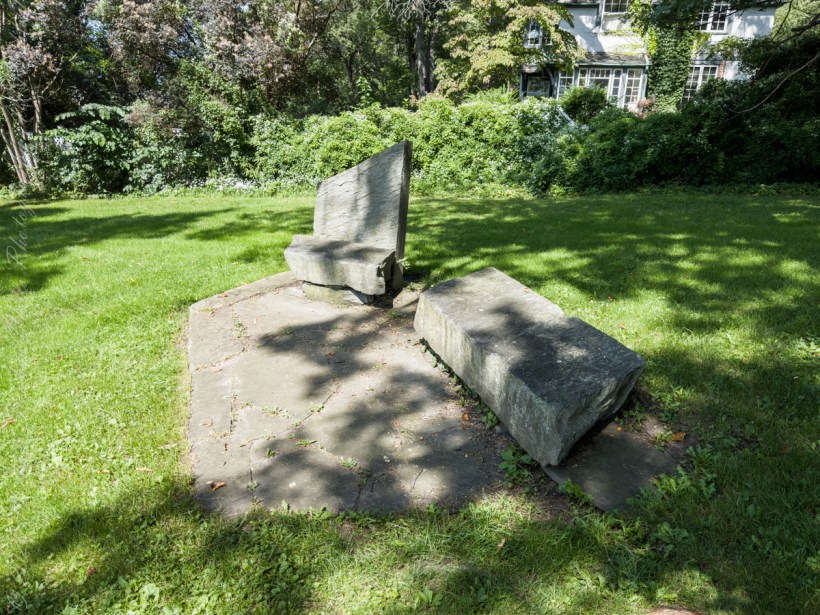
Limestone benches

View across Ithaca towards West Hill and, in the far distance, Connecticut Hill.

Copyright 2023 Michael Stephen Wills All Rights Reserved