The Last Bloom and the Bee’s Blessing

In the final bloom of the season, a honeybee’s delicate dance with the Queen of the Night captures the fleeting beauty of nature’s cycles. Discover the profound connection between flower, bee, and life’s rhythms.

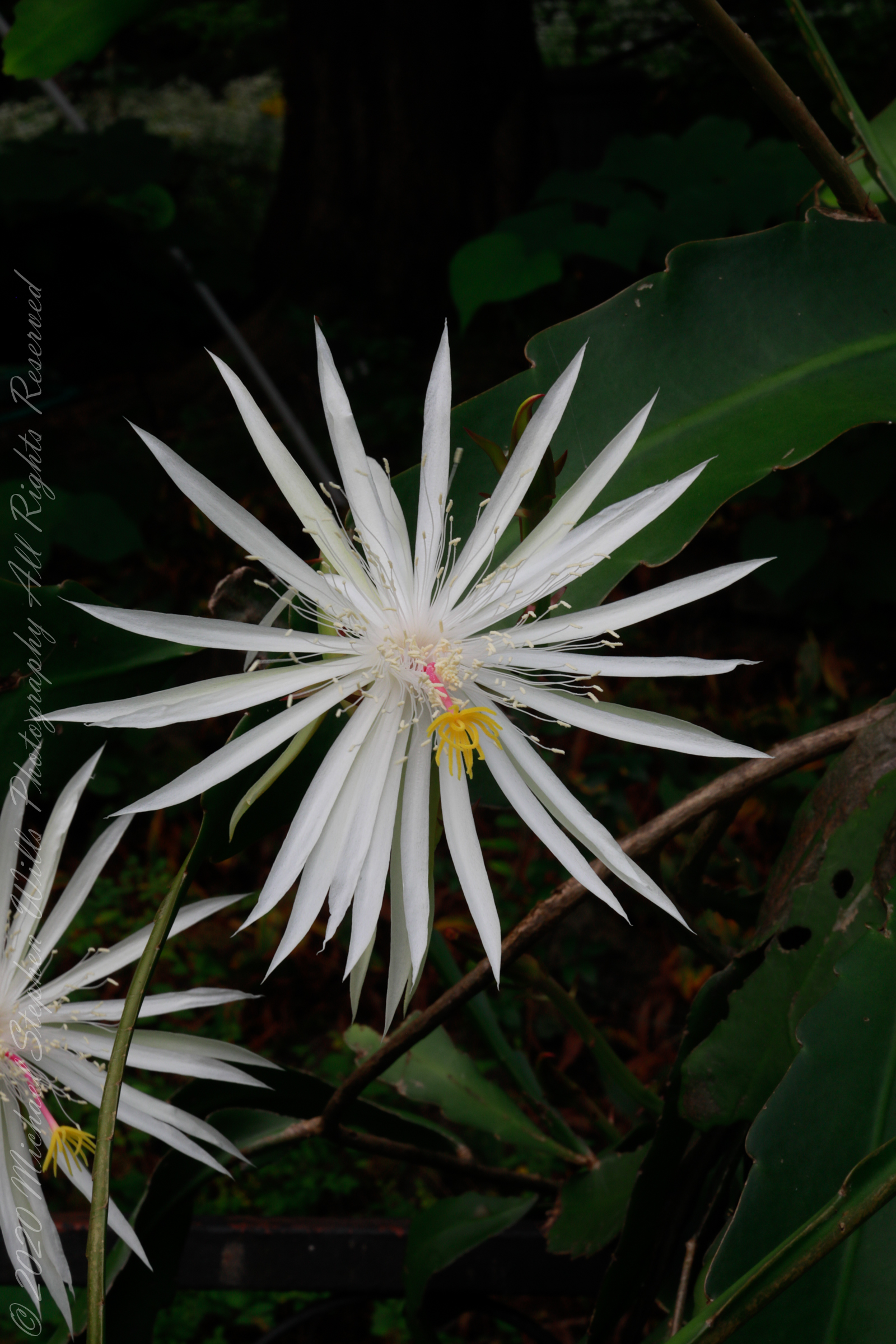
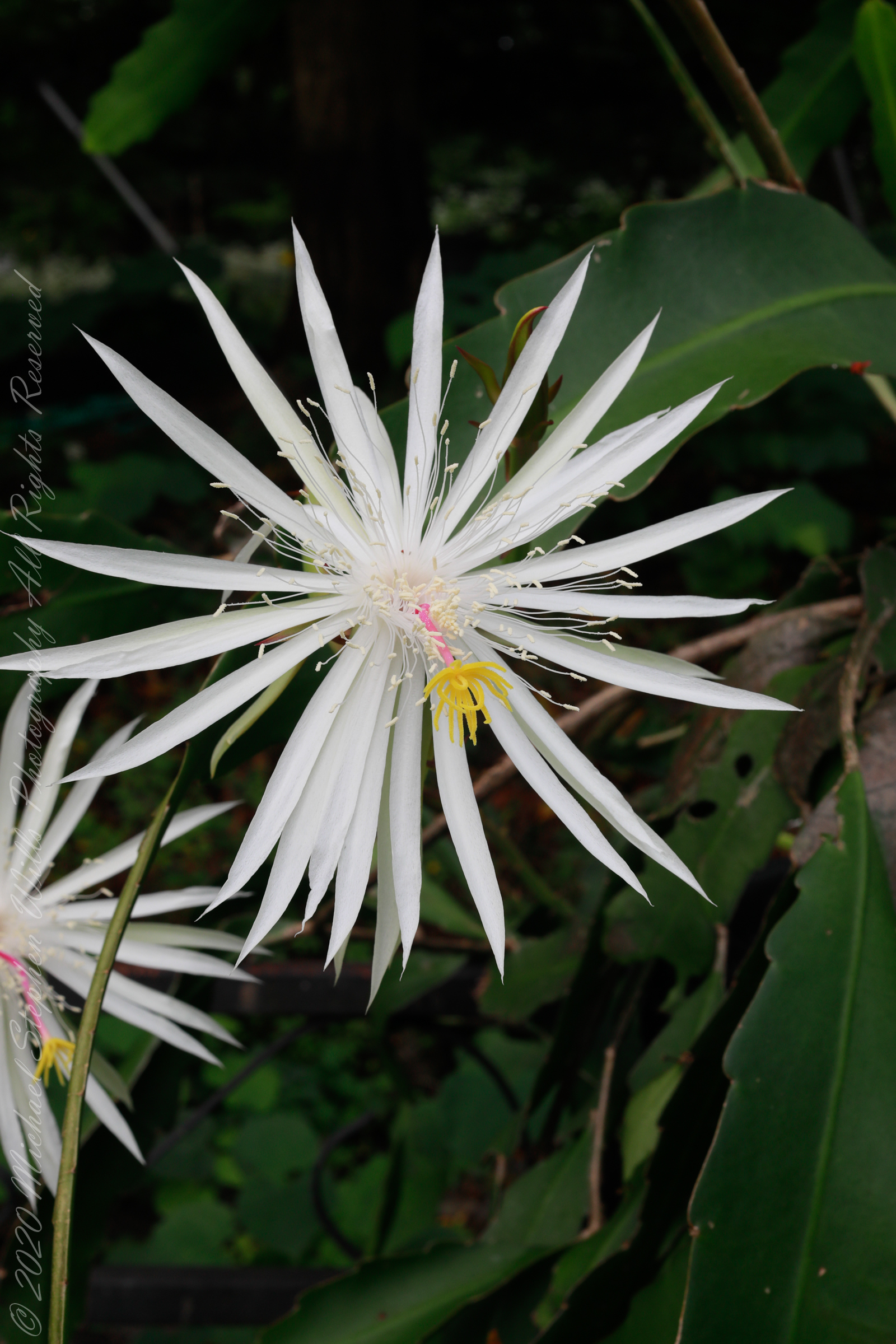
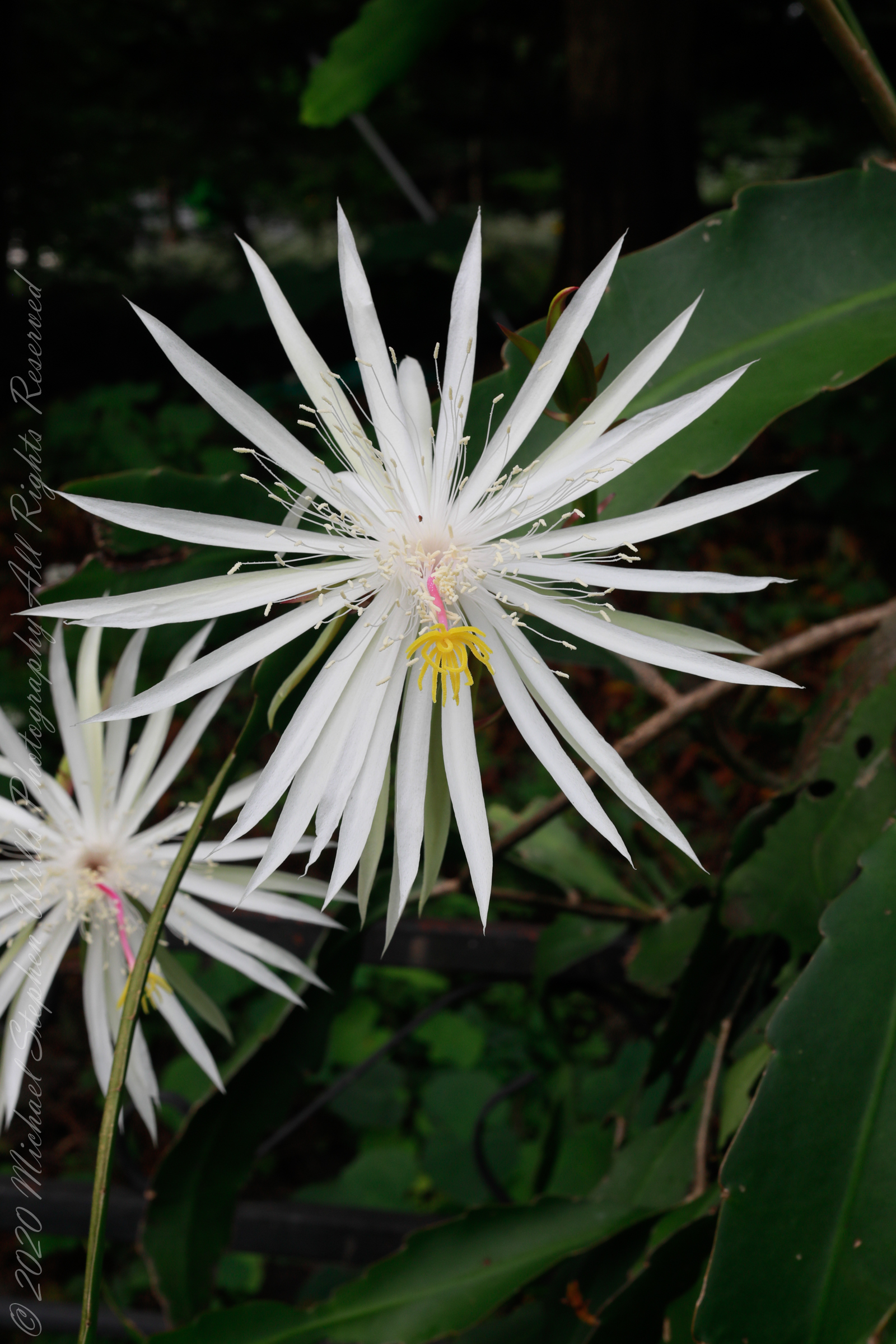
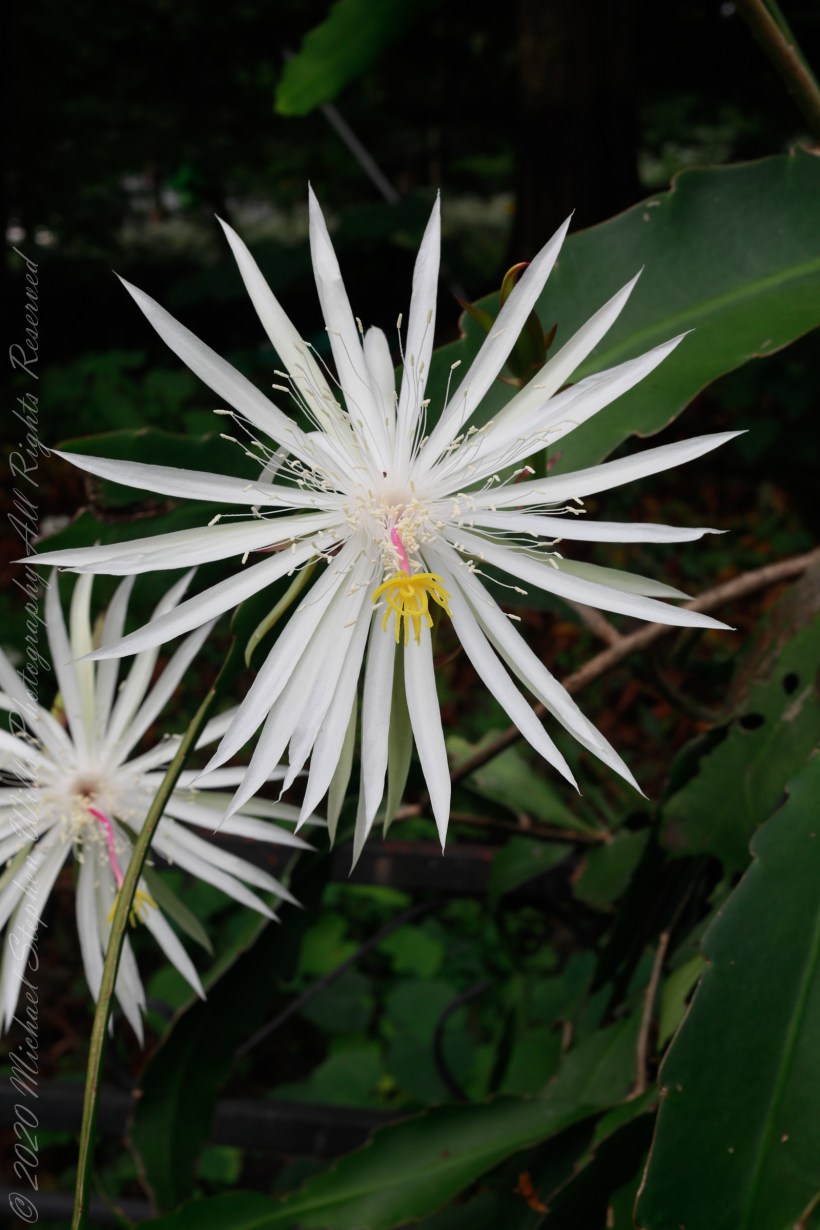
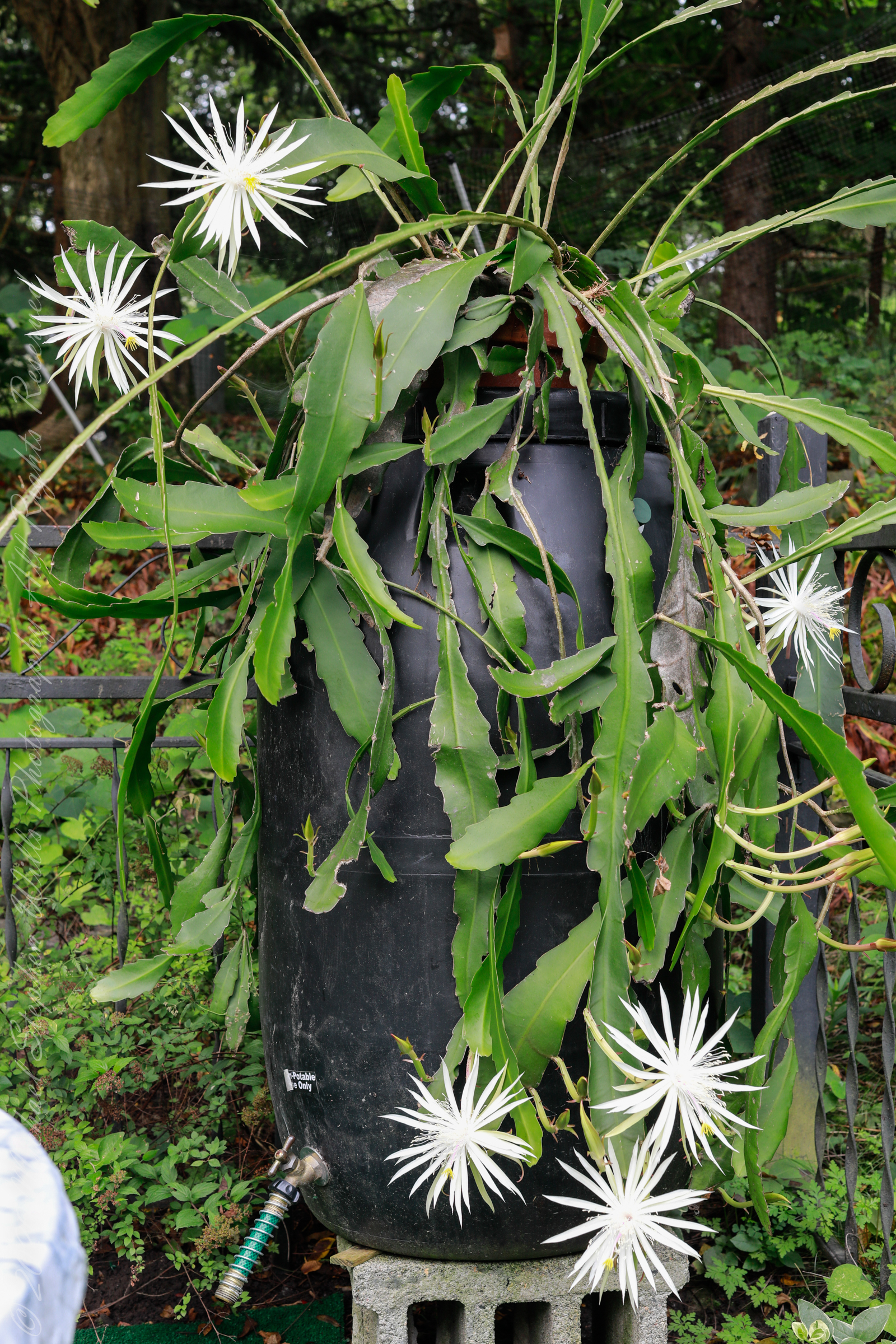
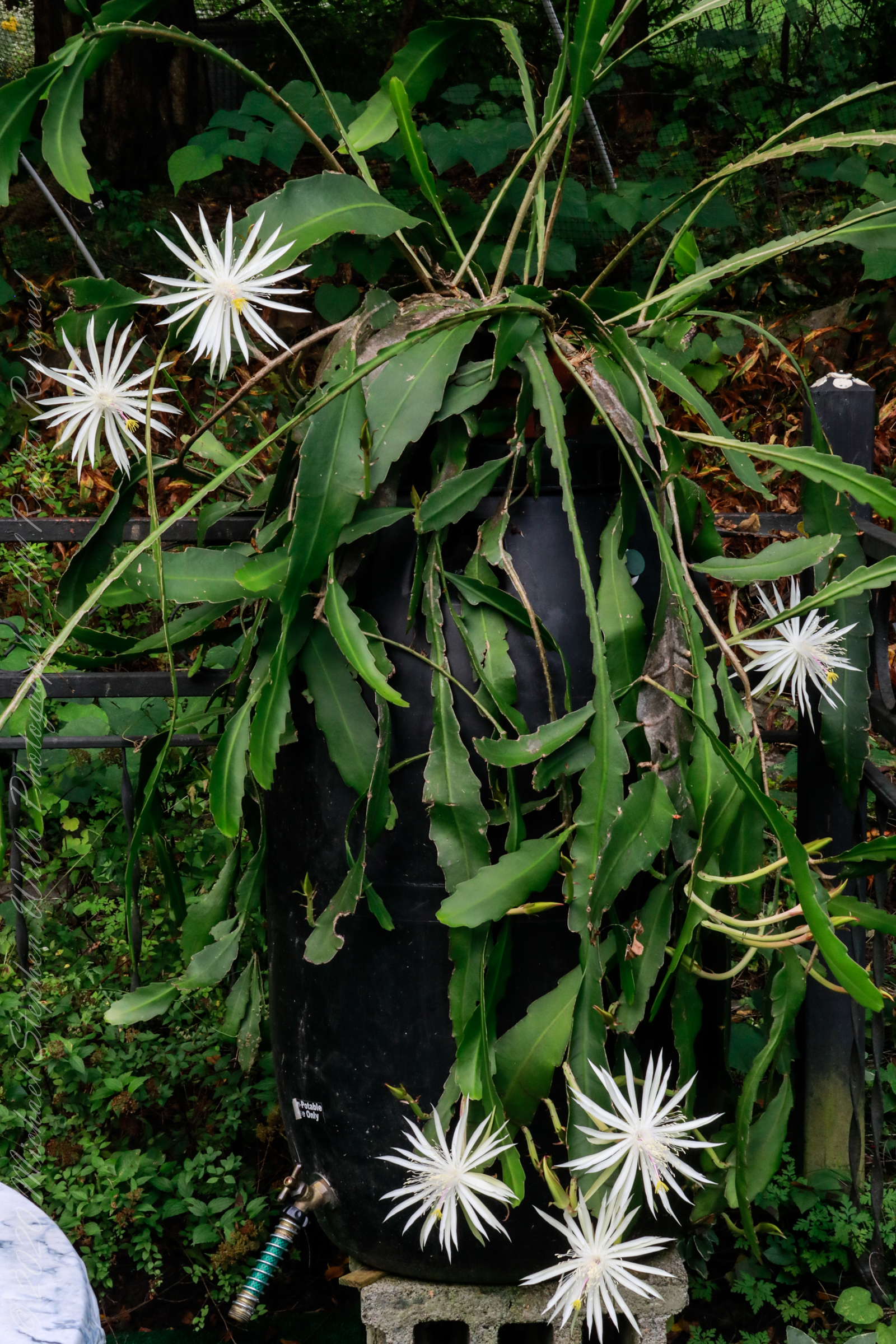
The Epiphyllum oxypetalum, commonly known as the Queen of the Night, is a remarkable plant. Native to Central America, this epiphyte is known for its large, fragrant flowers that bloom only once a year and last just for a single night. The fleeting nature of its bloom makes it a symbol of transience and beauty in many cultures. For me, this flower is a quiet, intimate connection to the rhythms of nature that play out around our home in Ithaca, New York.

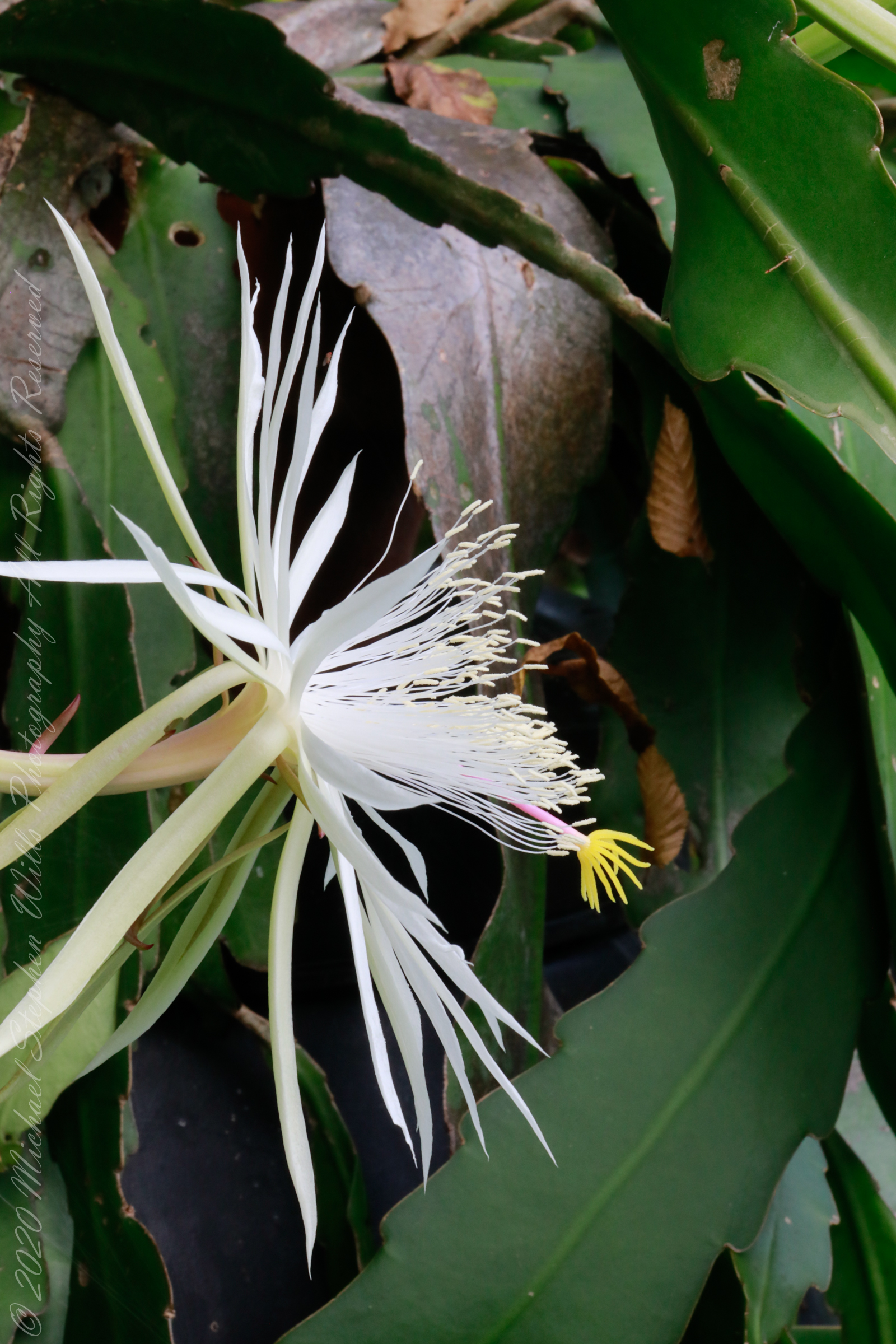
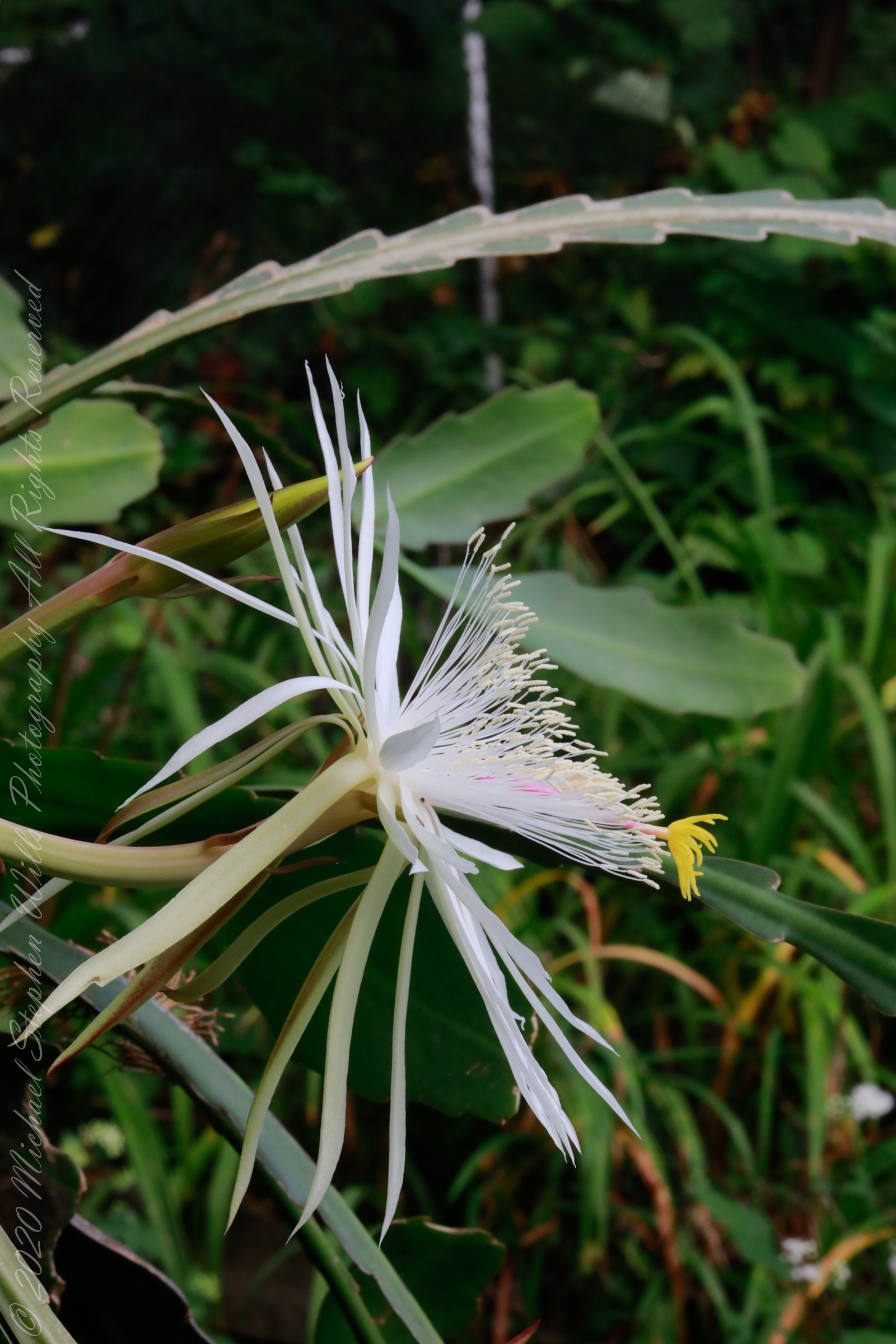
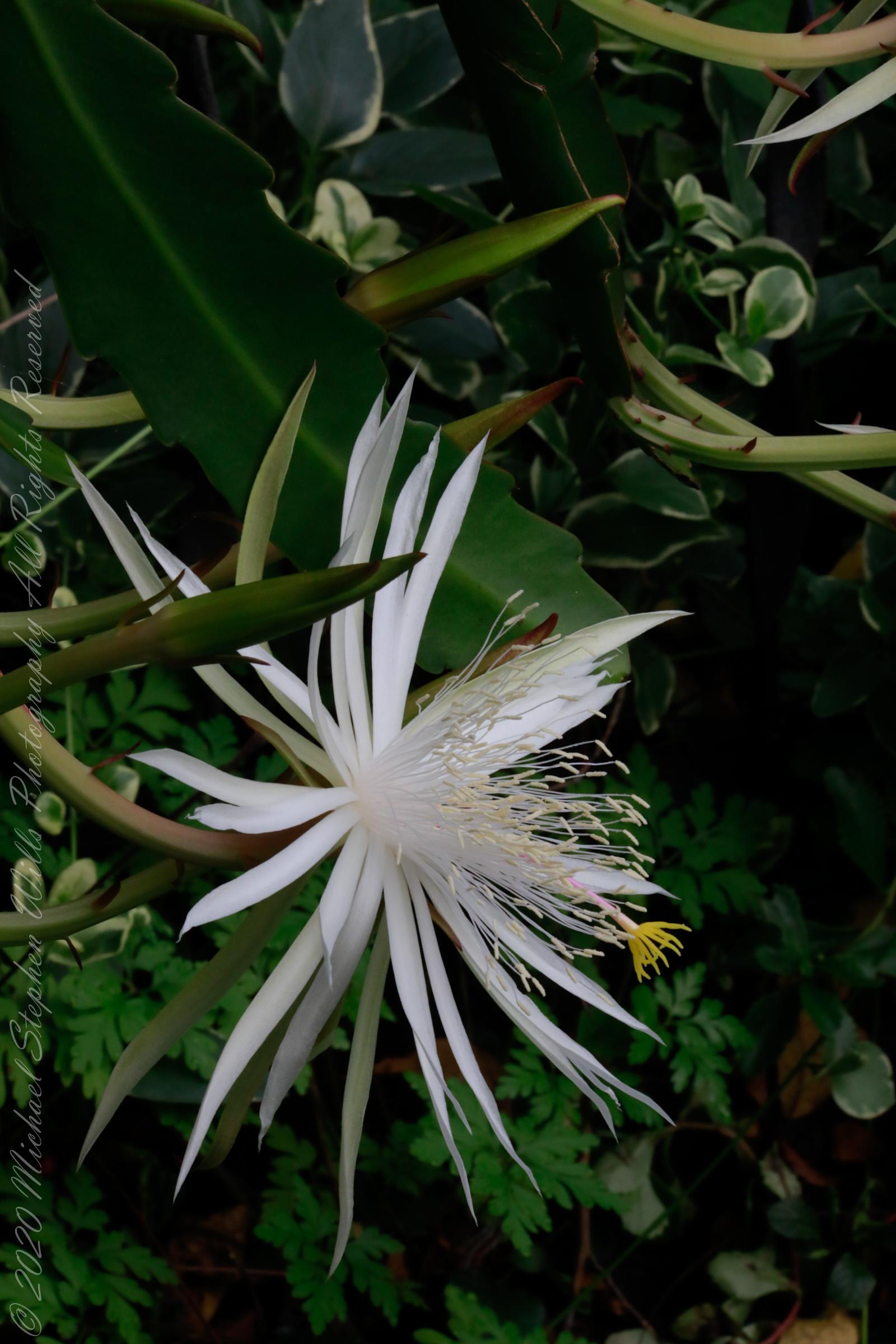
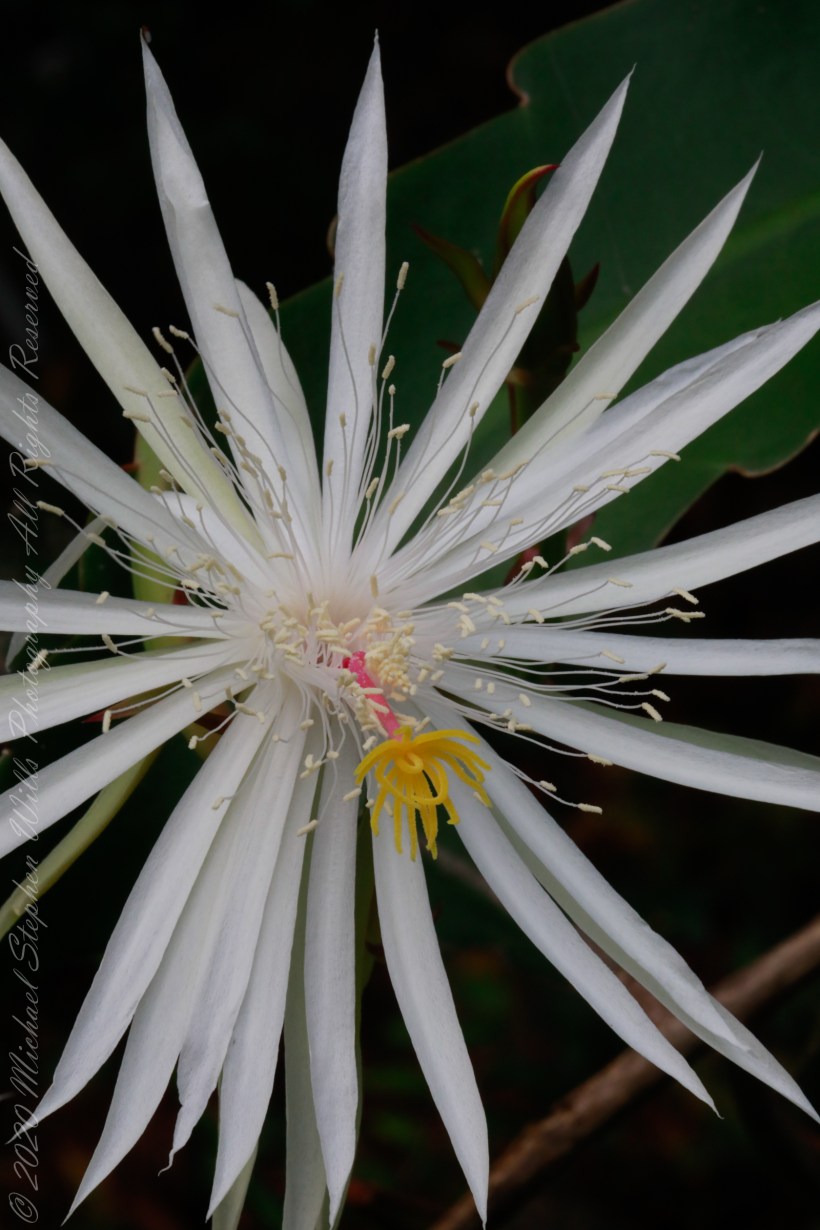
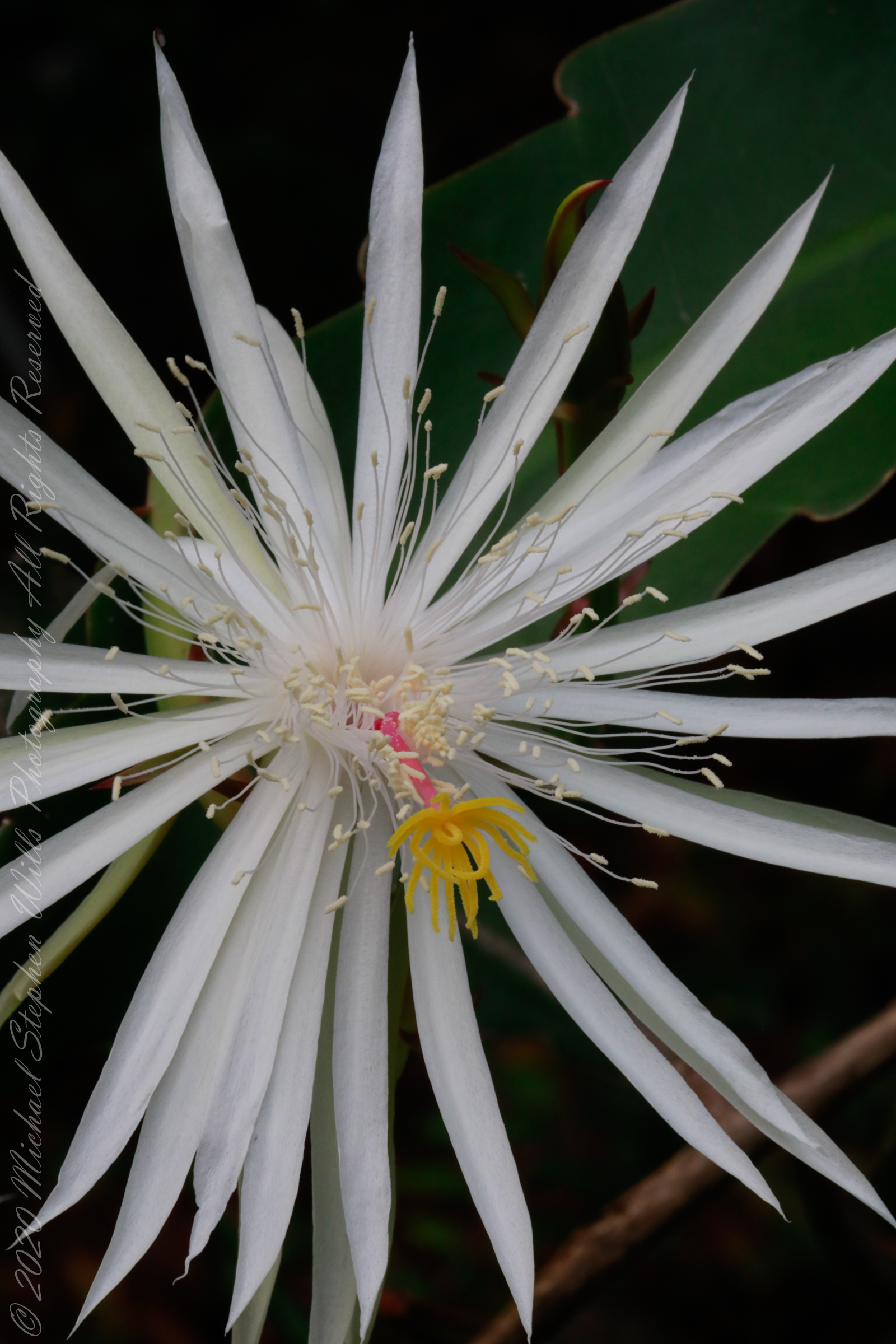
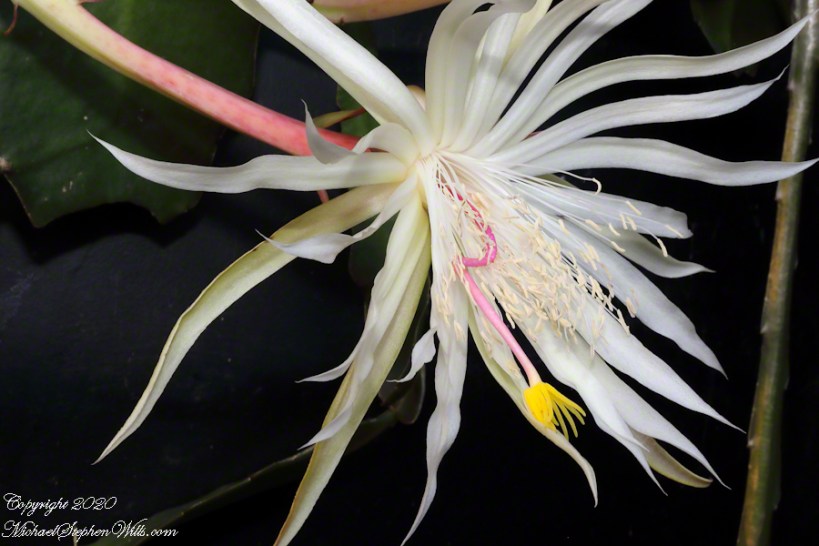
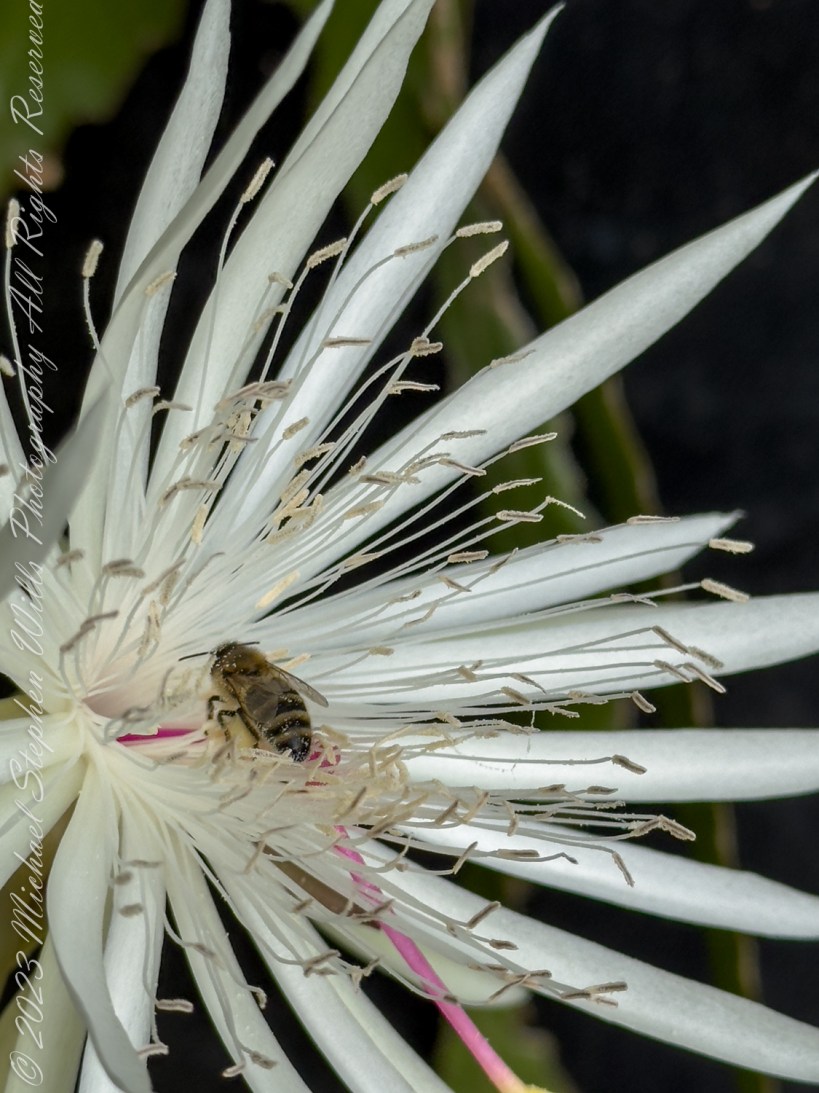
The images you see include the last flower of the season, a white starburst of delicate petals encasing a universe of intricate details. As the day progresses, the flower remains open, revealing the next chapter in its life cycle—the possibility of forming fruit. This potential is entirely dependent on pollination, a process that is both beautifully simple and astonishingly complex.
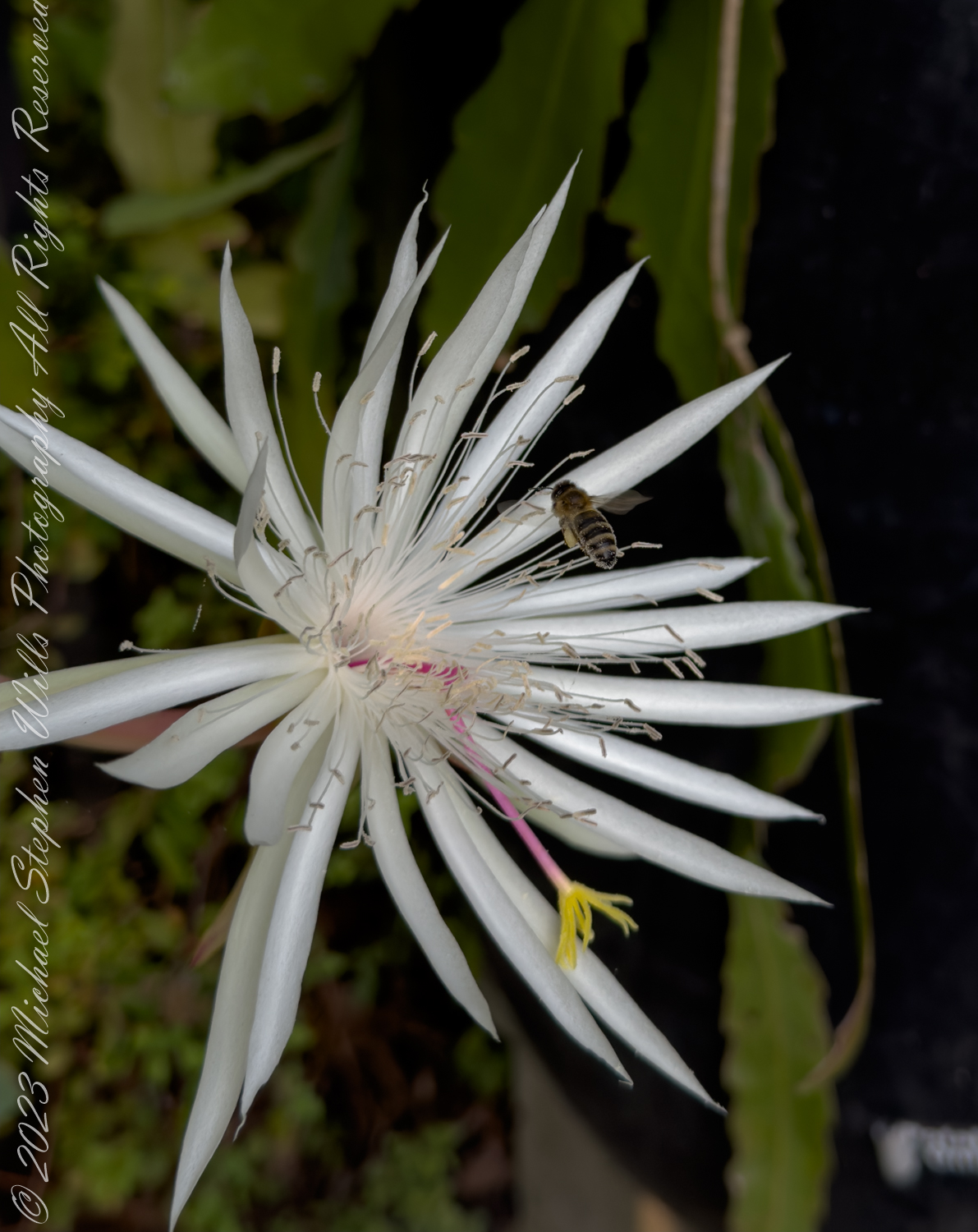
A honeybee, a tiny yet essential participant in the grand scheme of things, hovers and lands delicately on the flower. In the first image, the bee appears tentative, exploring the outer fringes of the flower’s central structures. Its wings are still, as if it has just touched down after a careful, deliberate approach. The stamens, like a thousand arms extended in welcome, offer their pollen. Each grain of pollen is a promise, a potential seed, carried with the hope of propagation. The bee is the flower’s messenger, moving from one bloom to another, ensuring the continuity of life.

As I observe the bee’s actions through these photographs, I can’t help but reflect on the importance of these small creatures. Their work often goes unnoticed, yet without them, our ecosystems would collapse. The honeybee, in particular, has been a focus of concern in recent years due to declining populations, largely attributed to human activities. But here, in my garden, this bee is simply going about its day, unaware of the broader implications of its existence. It is focused on the task at hand, a model of mindfulness in action.
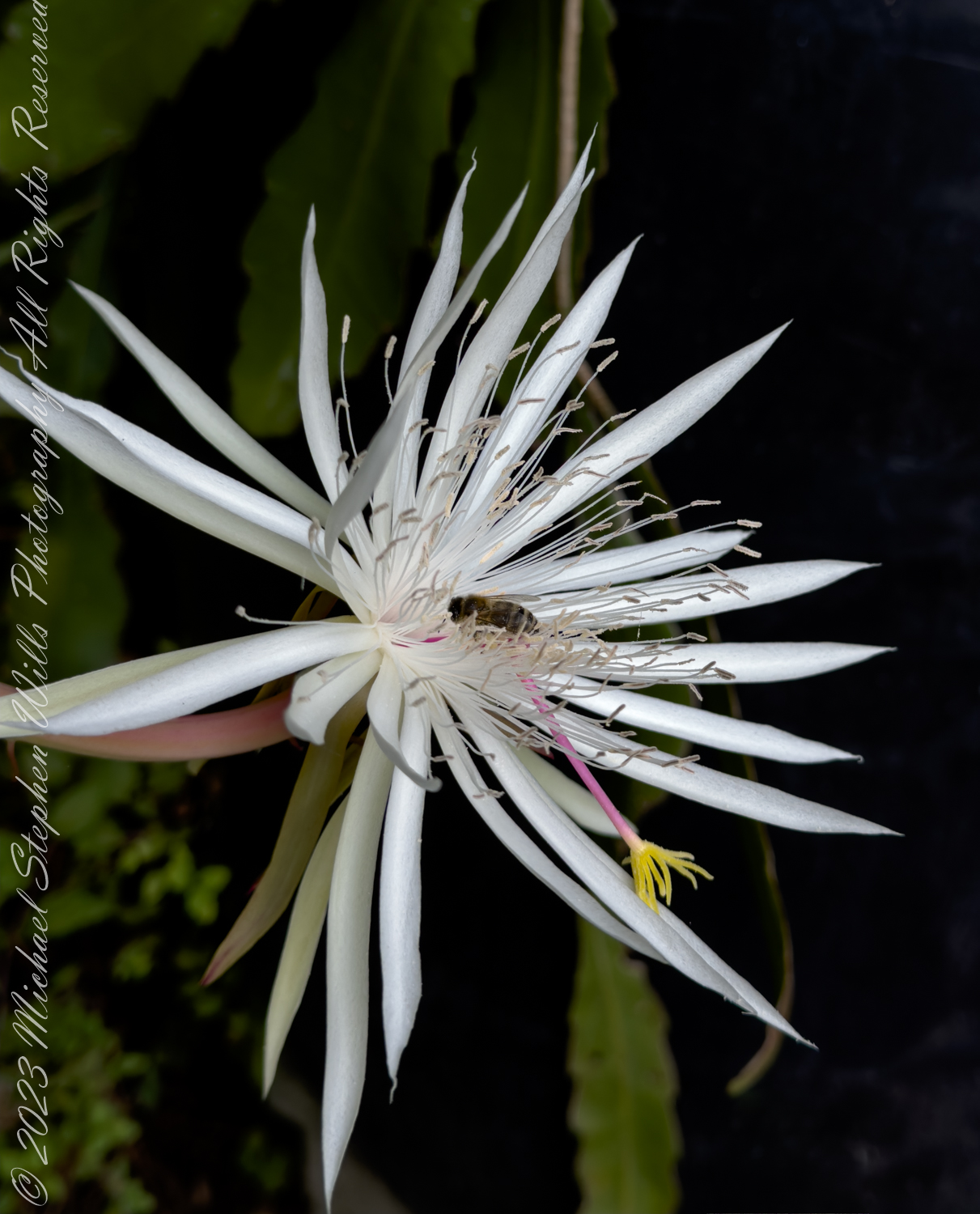
In the second and third images, the bee has moved deeper into the flower, its body now dusted with pollen. It is fully engaged in its work, undeterred by the enormity of its task. The pink style of the flower contrasts sharply with the white petals and the yellow stamens, creating a vibrant tableau of life. The bee’s body is now part of this scene, its presence both functional and aesthetic. It is not just a visitor; it is an integral part of the flower’s story.
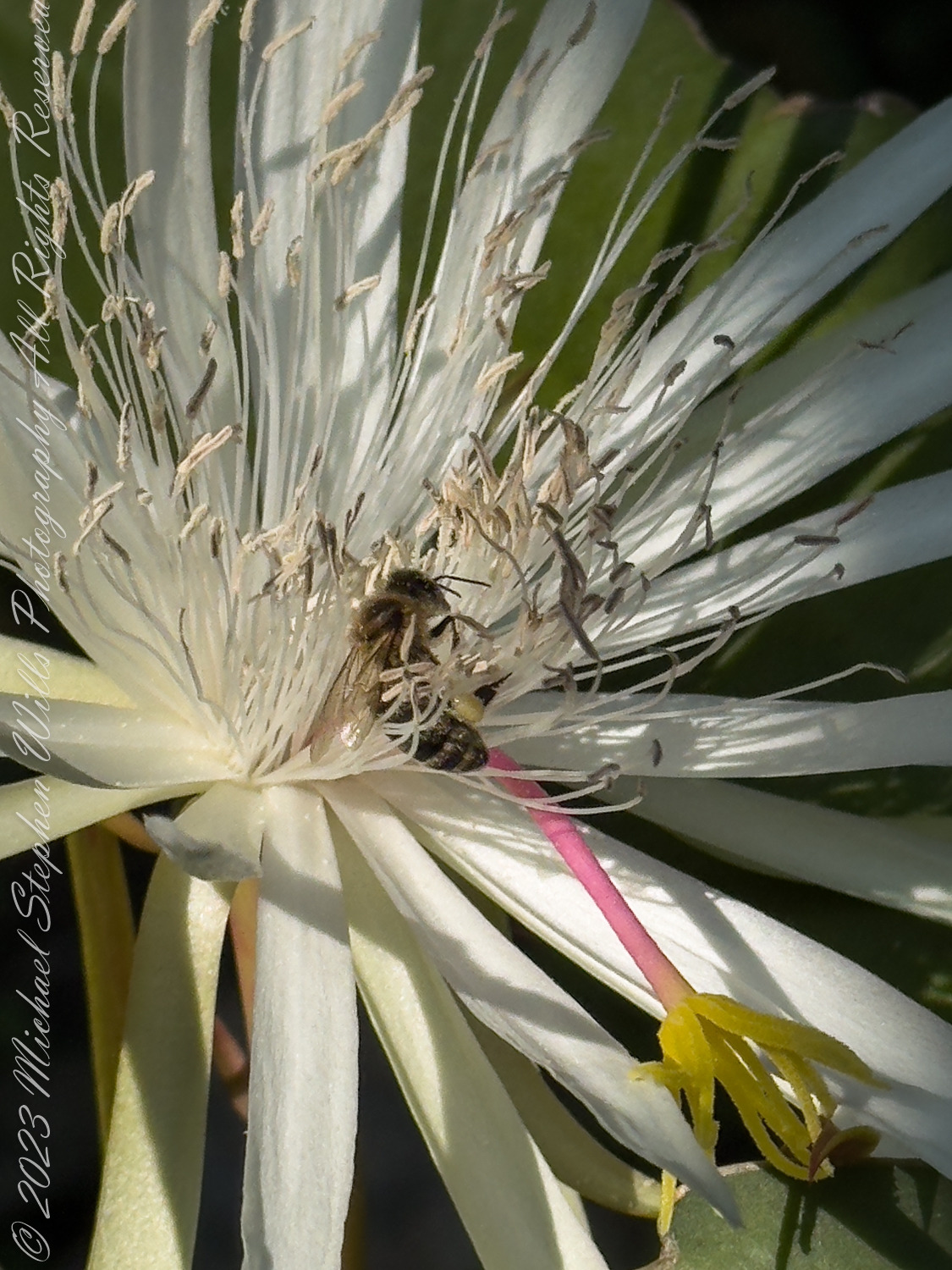
The fourth and fifth images capture the culmination of the bee’s efforts. Having gathered what it came for, the bee is ready to move on, its job done here. The flower, too, has fulfilled its role for the season. The energy it expended to produce this magnificent bloom will now be directed towards forming fruit, provided that the pollination process is successful. If it is, this single flower will give rise to a new generation of plants, continuing the cycle of life.
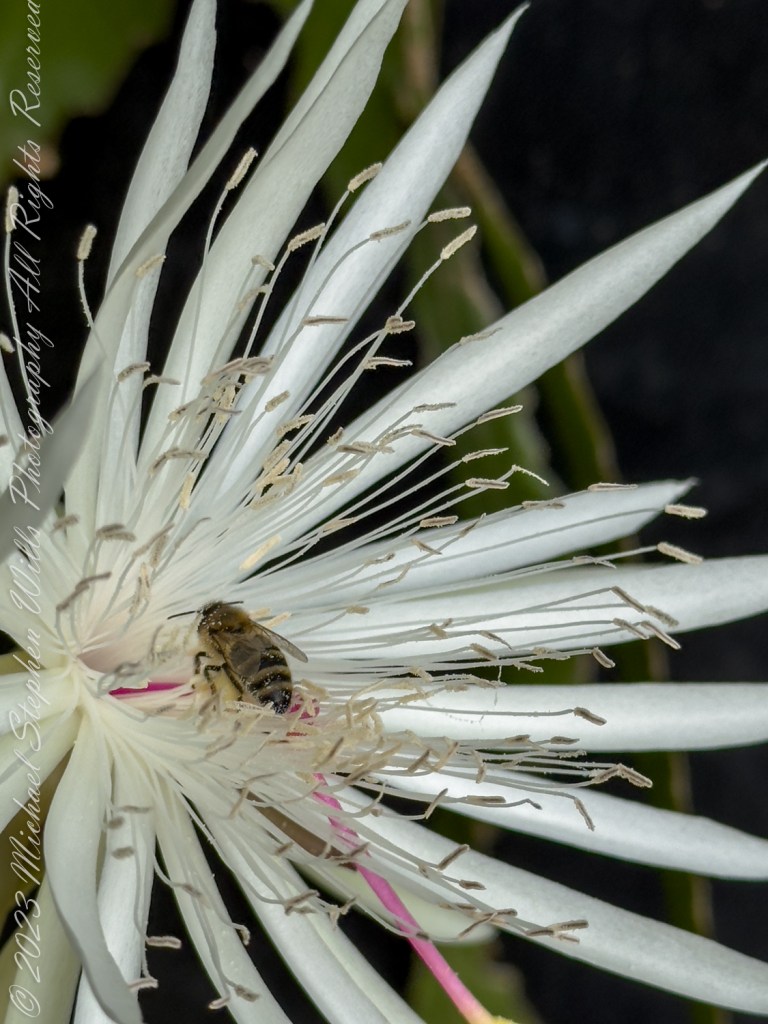
But there is another, more personal layer to this story. This is the last flower of the season. It carries with it the weight of finality, the knowledge that soon the plant will rest, conserving its energy for the next year’s bloom. As I contemplate this, I am reminded of the cycles that govern not just plant life, but all life. There is a time for blooming, a time for fruiting, and a time for rest. Each phase is essential, each one a preparation for the next.

A bonus view of the honeybee in action

In allowing this flower to form fruit, I am participating, in a small way, in this cycle. We are stewards of the natural world, responsible for nurturing and preserving the life forms that share our planet. The honeybee, the flower, and I are all connected in this intricate web of life, each playing our part in the unfolding drama of existence.

These photographs are a meditation on life, a reminder of the beauty and fragility of the world around us. They capture a moment in time, brief encounters between a flower and a bee, but they also speak to something larger, something timeless. The Epiphyllum oxypetalum may bloom for just one night, but its impact, like that of the honeybee, reverberates far beyond that brief window. And in that, there is a profound lesson for all of us.

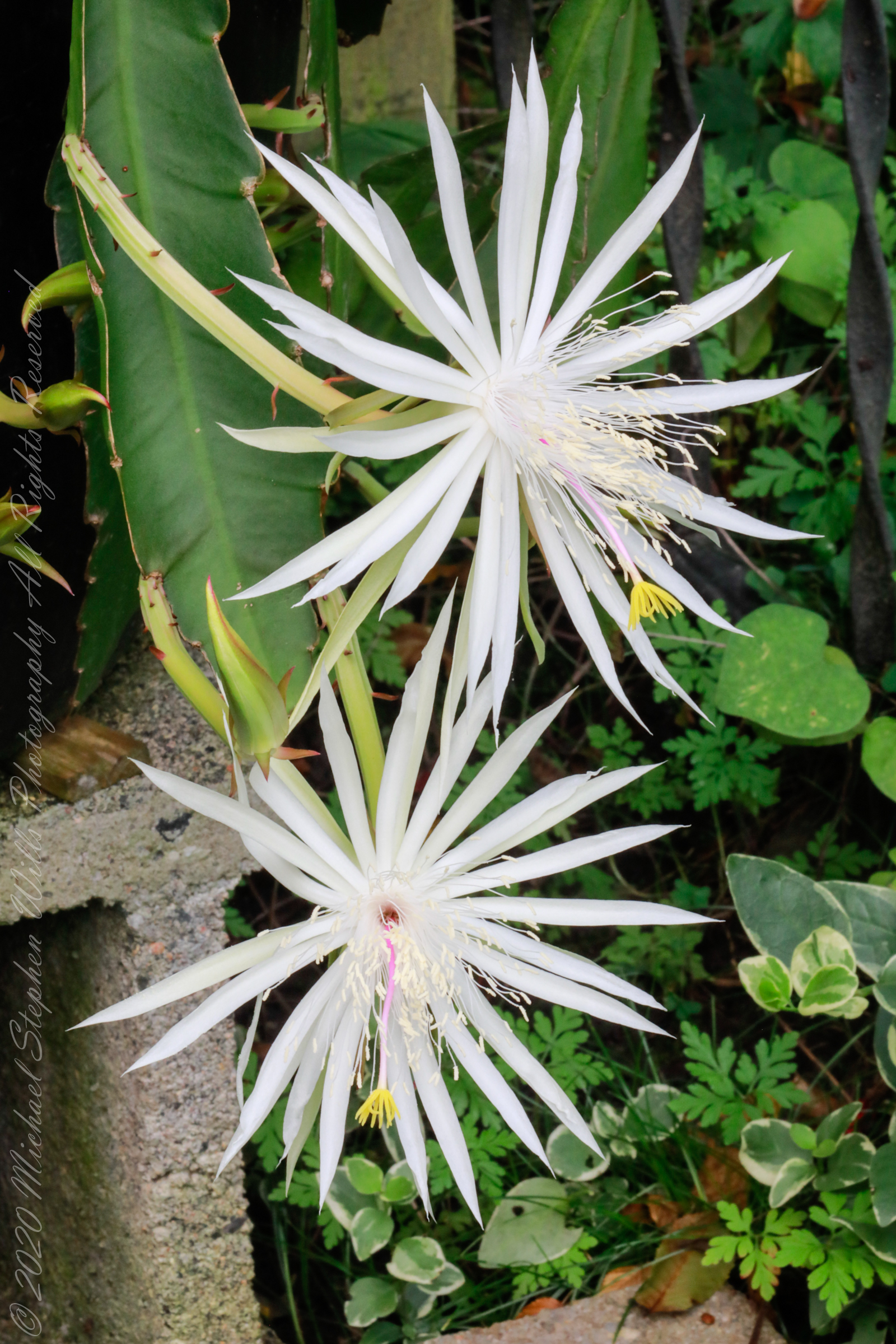
Copyright 2024 Michael Stephen Wills All Rights Reserved

Epiphyte

Discover the enchanting world of Epiphyllum, where the “Night Blooming Cereus” thrives without soil, capturing moisture and nutrients from the air. Explore its unique beauty and ecological significance. Read more to delve into this fascinating plant’s story.

The Epiphyllum genus, which includes my “Night Blooming Cereus,” consists of epiphytic plants. The term “epiphytic” comes from the Greek epi- (meaning “upon”) and phyton (meaning “plant”). Epiphytic plants, sometimes called “air plants,” do not root in soil. However, this term can be misleading, as many aquatic algae species are also epiphytes on other aquatic plants (seaweeds or aquatic angiosperms). Therefore, it’s essential not to confuse the genus root word “phyllum” (leaf) with the generic term “phytic” (plant), even though they share the common prefix “epi.” A plant can be epiphytic without being part of the Epiphyllum genus.

These were captured with the Canon EOS 5D Mark IV dslr on a Manfrotto tripod.

An epiphyte is a plant or plant-like organism that grows on the surface of another plant, deriving its moisture and nutrients from the air, rain, or debris accumulating around it. The host plants on which epiphytes grow are called phorophytes. Unlike parasites, epiphytes use other plants merely for physical support and do not negatively impact the host. Epiphytes can also be called epibionts when growing on non-plant organisms. Common in both temperate zones (mosses, liverworts, lichens, algae) and the tropics (ferns, cacti, orchids, bromeliads), epiphytes enhance biodiversity and biomass in their ecosystems. They make excellent houseplants due to their minimal water and soil needs and create rich habitats for various organisms, including animals, fungi, bacteria, and myxomycetes.

Epiphytes are not connected to the soil and must source nutrients from fog, dew, rain, mist, and decomposing organic material. They have an advantage in the canopy, where they access more light and are less vulnerable to herbivores. Epiphytes also benefit animals that live in their water reservoirs, like some frogs and arthropods.

Epiphytes significantly affect their host’s microenvironment and the broader ecosystem. They hold water in the canopy, reducing soil water input, and create cooler, moister conditions, which can decrease the host plant’s water loss through transpiration. Non-vascular epiphytes, like lichens and mosses, are particularly efficient at rapid water uptake.

Click me for another “Cereus” Post.

Reference: my post draws heavily on this source: Wikipedia, “Epiphyte.”

Copyright 2024 Michael Stephen Wills All Rights Reserved

ScienceCenter with Grandchildren

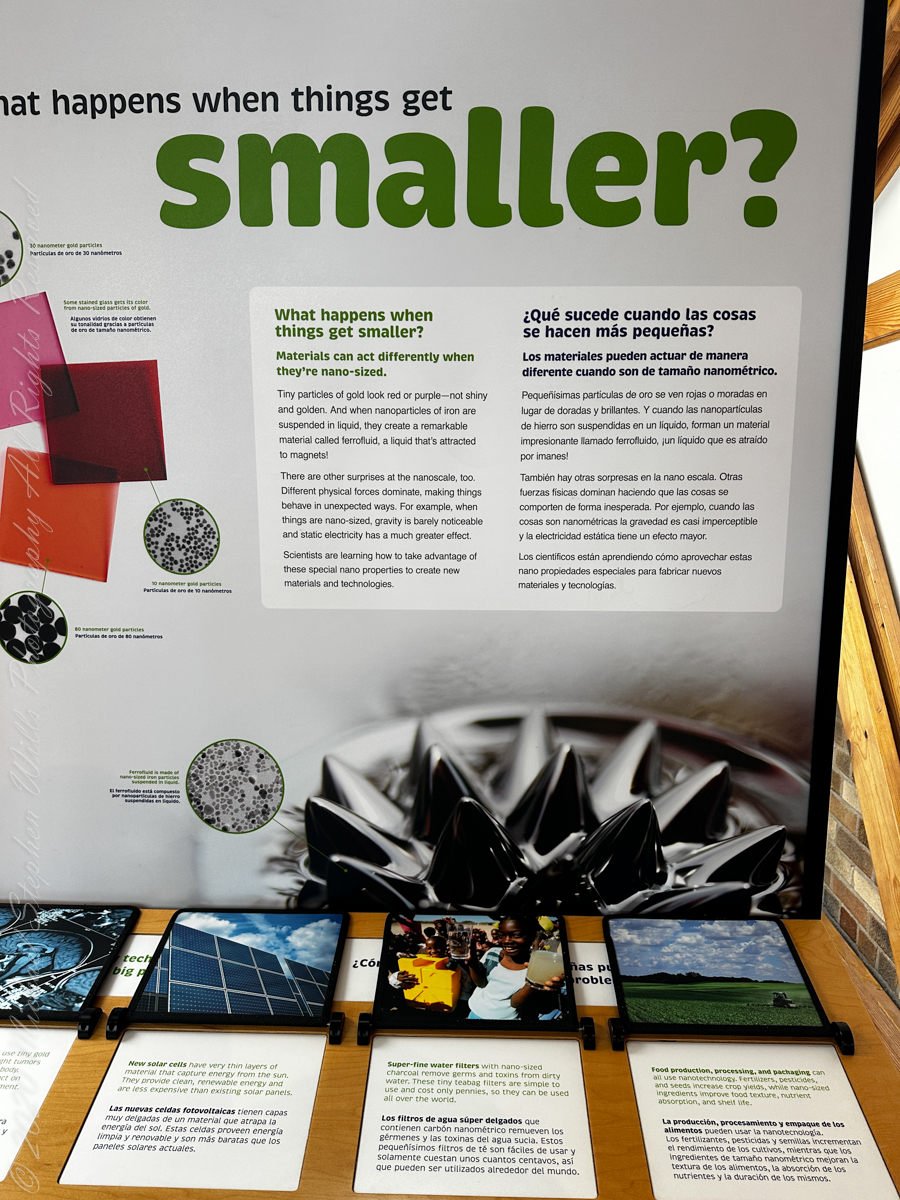
The ScienceCenter museum encourages learning about nanotechnology’s prevalence and unpredictable, unique behaviors.

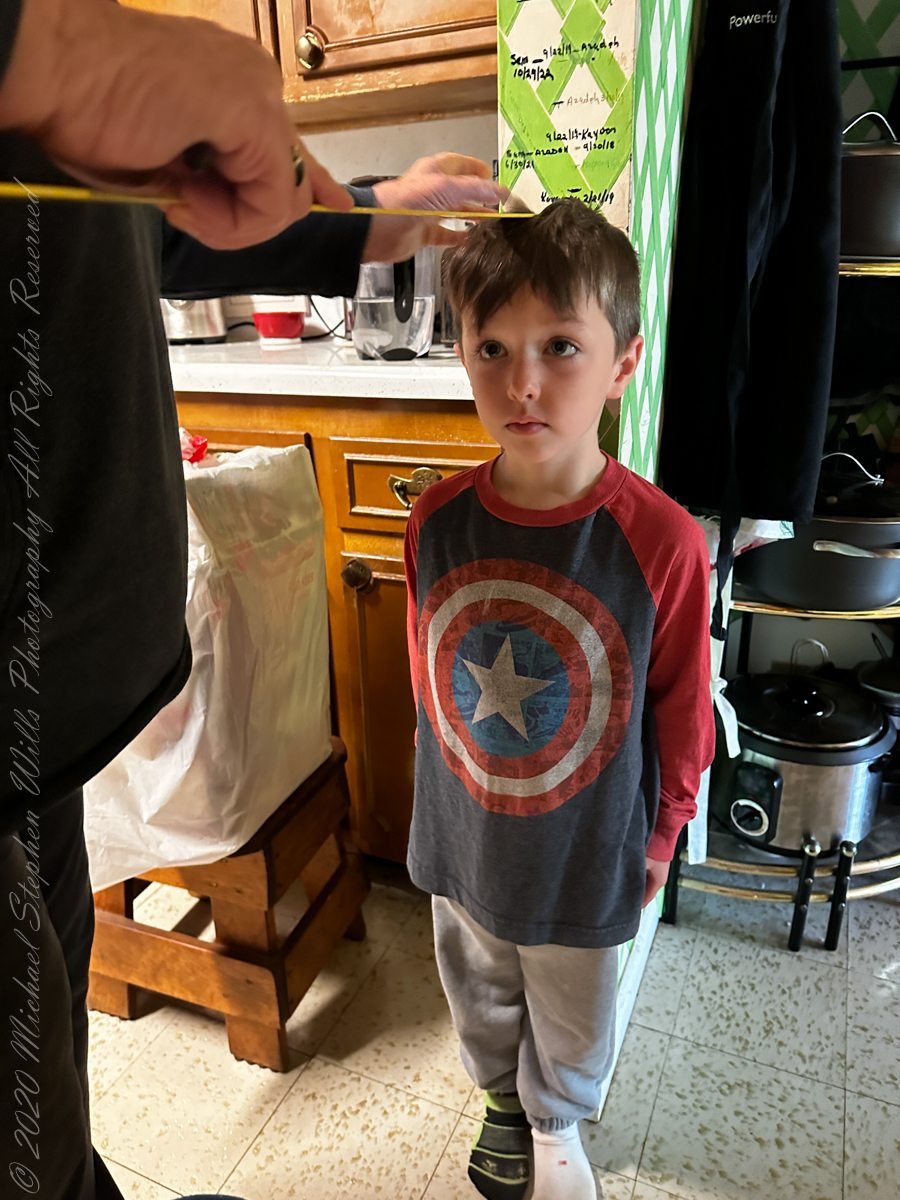
Our day of science began with measurement: each grandchild’s growth is represented on this corner. Even as young adults they visit and are re-measured. Here Rory is making his mark.

Our science inspired museum, ScienceCenter, is full of fun activities.

Nothing like touching a space object: an iron-nickel meteorite.

So much to learn and discover. Here is Sam perusing a “nano” display.

Nanotechnology is pervasive, existing both in nature and within our technological innovations. Nature offers numerous instances of nanoscale phenomena. For instance, the iridescent hues seen in certain butterflies and the adhesive properties of geckos’ feet are both outcomes of nanostructures.

In our everyday products, nanotechnology plays a significant role. You’ll find it in items you use regularly, such as computer chips featuring minuscule nano-sized components and sunscreen containing nanoparticles. Looking ahead, nanotechnology will play an even more prominent role in our lives.

The question is: Where can you spot the influence of nanotechnology in your own life?

Materials exhibit distinct behaviors at the nanoscale. Tiny particles of gold appear red or purple, as opposed to their conventional shiny, golden appearance. When nanoparticles of iron are dispersed in a liquid, they give rise to a remarkable substance known as ferrofluid, which is a liquid that exhibits a magnetic attraction.

The nanoscale realm also harbors other surprising phenomena. Here, different physical forces dominate, leading to unexpected behaviors. For instance, at nanoscale the force of gravity becomes nearly imperceptible, while static electricity exerts a much greater influence.

Scientists are actively exploring ways to harness these unique nanoscale properties in the development of novel materials and cutting-edge technologies.

Nanotechnology enables us to construct structures much like nature does: atom by atom. Everything in the world is composed of “building blocks” known as atoms. In nature, varied combinations of atoms create diverse materials. For instance, diamond, graphite, and carbon nanotubes are all composed entirely of carbon atoms, but their unique properties emerge from the distinct arrangements of these carbon atoms.

In the field of nanotechnology, we are gaining the knowledge and capability to craft small, functional objects from individual atoms. Remarkably, some new nanomaterials have the capacity to self-assemble, opening up new possibilities for nanotechnology.

Copyright 2023 Michael Stephen Wills All Rights Reserved

Still Blooming

Though it is sometimes referred to as a night-blooming cereus, it is not closely related to any of the species in the tribe Cereeae

It was a quiet day, upping shutter speed via an increased ISO and both exposures are equally sharp.

These were captured with the Canon EOS 5D Mark IV dslr on a Manfrotto tripod.

“The flowers are nocturnal. They grow on flattened stems and are up to 30 cm (12 in) long and 17 cm (7 in) wide, and very fragrant. The principal odor components in the aroma are benzyl salicylate and methyl linoleate.[5] Pericarpels are nude, slightly angled, and green. Bracteoles are short and narrow up through ca. 10 millimetres (0.39 in) long. Receptacles are up through 20 cm long, 1 cm thick, brownish, and arching. The outer tepals are linear, acute, 8–10 cm long, and reddish through amber. The inner tepals are whitish, oblanceolate or oblong, acuminate, up through 8–10 cm long and 2.5 centimetres (0.98 in) wide. The stamens are greenish white or white, slender and weak. The styles are greenish white, pale yellow, or white, 4 mm thick, as long as inner tepals, and with many lobes.”

“The fruits are oblong, up through 12 x 8 cm, purplish red, and angled.”

“It is known to have medicinal properties in many Asian cultures, including India, Vietnam, and Malaysia. The plant is widely used in traditional medicine to treat respiratory ailments, bleeding conditions, and is also believed to have the property of reducing pain and inflammation.”

Click me for another “Cereus” Post.

Copyright 2023 Michael Stephen Wills All Rights Reserved

Night bloomer

Though it is sometimes referred to as a night-blooming cereus, it is not closely related to any of the species in the tribe Cereeae

This set compares a deep focus exposure to a shallow focus with bokeh.

These were captured with the Canon EOS 5D Mark IV dslr on a Manfrotto tripod.

“Epiphyllum oxypetalum is an easily cultivated, fast growing Epiphyllum. Epiphyllum from Greek epi- “upon” + phullon “leaf.” Oxypetalum = with acute petals. It flowers in late spring through late summer; large specimens can produce several crops of flowers in one season. This is a widely cultivated Epiphyllum species.”

“It is known to have medicinal properties in many Asian cultures, including India, Vietnam, and Malaysia. The plant is widely used in traditional medicine to treat respiratory ailments, bleeding conditions, and is also believed to have the property of reducing pain and inflammation.”

Click me for another “Cereus” Post.

Copyright 2023 Michael Stephen Wills All Rights Reserved

Cereus not

Though it is sometimes referred to as a night-blooming cereus, it is not closely related to any of the species in the tribe Cereeae

“Epiphyllum oxypetalum, the Dutchman’s pipe cactus, princess of the night or queen of the night, is a species of cactus. It blooms nocturnally, and its flowers wilt before dawn. Though it is sometimes referred to as a night-blooming cereus, it is not closely related to any of the species in the tribe Cereeae, such as Selenicereus, that are more commonly known as night-blooming cereus. All Cereus species bloom at night and are terrestrial plants; Epiphyllum species are usually epiphytic.”

These were captured with the Canon EOS 5D Mark IV dslr on a Manfrotto tripod.

“Epiphyllum (“upon the leaf” in Greek) is a genus of epiphytic plants in the cactus family (Cactaceae), native to Central America and South America. Common names for these species include climbing cacti, orchid cacti and leaf cacti.”

Click me for another “Cereus” Post.

Copyright 2023 Michael Stephen Wills All Rights Reserved

Mass Bloom 2023

Our “cereus” summers on a water barrel poolside, this year, 2023, over 40 blossoms opened over the course of a week in September.

These were captured with the Canon EOS 5D Mark IV dslr on a Manfrotto tripod.

“Epiphyllum (“upon the leaf” in Greek) is a genus of epiphytic plants in the cactus family (Cactaceae), native to Central America and South America. Common names for these species include climbing cacti, orchid cacti and leaf cacti.”

Click me for another “Cereus” Post.

Copyright 2023 Michael Stephen Wills All Rights Reserved

Farewell to the Monarchs for 2023

Monarch from caterpillar to chrysalis to butterfly

Here are two of the ten monarchs we release this year. In under three minutes this video shows a monarch caterpillar transforming into a chrysalis, emerging two weeks later as a butterfly. Music “Emotional Underscores Vol. 3” by Yuri Sazonoff (SOCAN) “Can You Guess” and “Blessing”

Migrating monarchs soar at heights of up to 1,200 feet. As sunlight hits those wings, it heats them up, but unevenly. Black areas get hotter, while white areas stay cooler. The scientists believe that when these forces are alternated, as they are with a monarch’s white spots set against black bands on the wings’ edges, it seems to create micro-vortices of air that reduce drag—making flight more efficient.

Monarchs begin leaving the northern US and Canada in mid-August. They usually fly for 4-6 hours during the day, coming down from the skies to feed in the afternoon and then find roosting sites for the night.  Monarchs cannot fly unless their flight muscles reach 55ºF. On a sunny day, these muscles in their thorax can warm to above air temperature when they bask (the black scales on their bodies help absorb heat), so they can actually fly if it is 50ºF and sunny. But on a cloudy day, they generally don’t fly if it is below 60ºF.

“Migrating monarchs use a combination of powered flight and gliding flight, maximizing gliding flight to conserve energy and reduce wear and tear on flight muscles.  Monarchs can glide forward 3-4 feet for every foot they drop in altitude.  If they have favorable tail or quartering winds, monarchs can flap their wings once every 20-30 feet and maintain altitude. Monarchs are so light that they can easily be lifted by the rising air. But they are not weightless. In order to stay in the air, they must move forward while also staying within the thermal. They do this by moving in a circle. The rising air in the thermal carries them upward, and their overall movement ends up being an upward spiral. Monarchs spiral upwards in the thermal until they reach the limit/top of the thermal (where the rising air has cooled to the same temperature as the air around it). At that point, the monarch glides forward in a S/SW direction with the aid of the wind. It glides until it finds another thermal and rides that column of rising air upwards again.”

Reference: text in italics and quotes is from one of two online articles. “The monarch butterfly’s spots may be its superpower” National Geographic, June 2023 and “Fall Migration – How do they do it?” by Candy Sarikonda, September 2014.

Copyright 2023 Michael Stephen Wills All Rights Reserved

First Release of 2023

Advice for releasing your monarch butterfly

We let our first monarch butterfly rest overnight, until noon of the following day.

Pam did better with tracking the monarch’s flight, so I used video. Thanks Pam!

I delay butterfly release when:

  • the forecasted high temp is below 65° F (18° C) or 60° F (16° C) if sunny and calm.  When no other option exists, 50-59° F and sunny is borderline acceptable.
  • the forecast calls for rain.  A light rain is not a problem for butterflies with day-old dry wings, but it’s not a good release option for first-day newborns.
  • the butterfly emerges too late in the day.  I keep it overnight if the butterfly cannot get 3 hours warming of flight muscles in the sun.
  • there are storms in the forecast.  I wait when there are less than four (4) hours of good weather projected.  When extreme weather (like a hurricane) is forecast within twenty four (24) hours, I keep the butterfly safe until the storm passes.  Twenty four (24) or more hours should provide ample time to find shelter from the storm.
  • I am not sure about a release.  Keeping a butterfly overnight is acceptable. In fact, a butterfly’s wings are stronger on day two (2), providing better capability to escape predators.  A butterfly can easily hang from the mesh cage roof overnight. I do not worry about feeding a butterfly unless a second night of shelter is necessary.

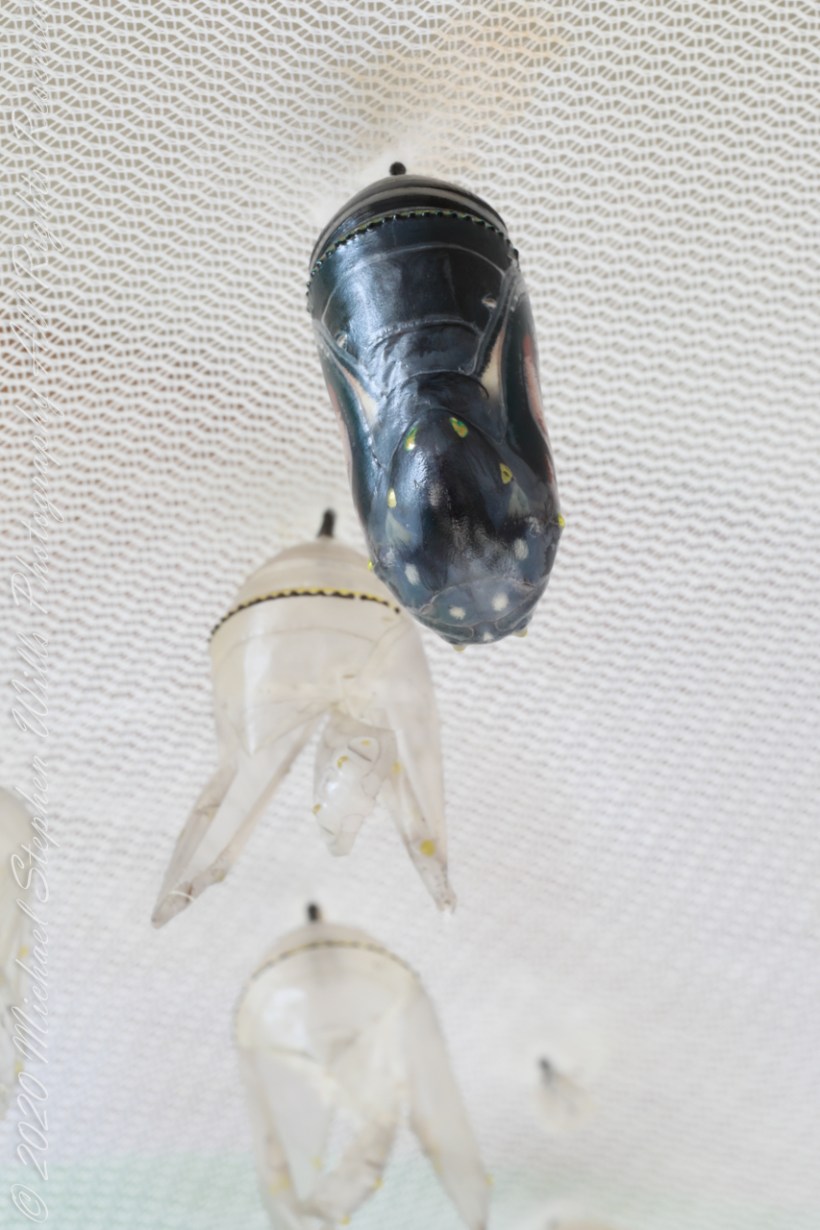
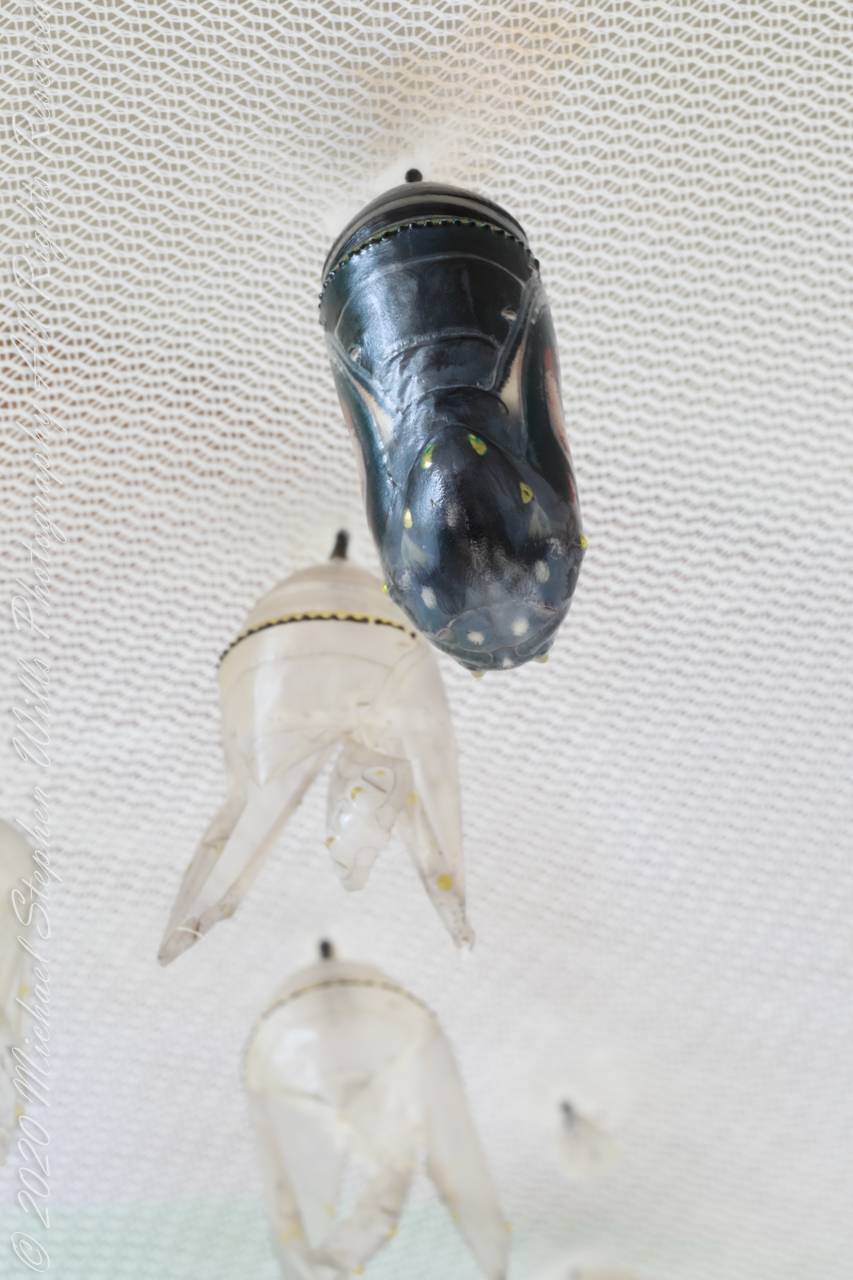
As the moment of emergence approaches, the skin of a Monarch chrysalis becomes translucent to reveal the butterfly compressed into that small space.
Copyright 2023 Michael Stephen Wills All Rights Reserved

First Emergence of 2023

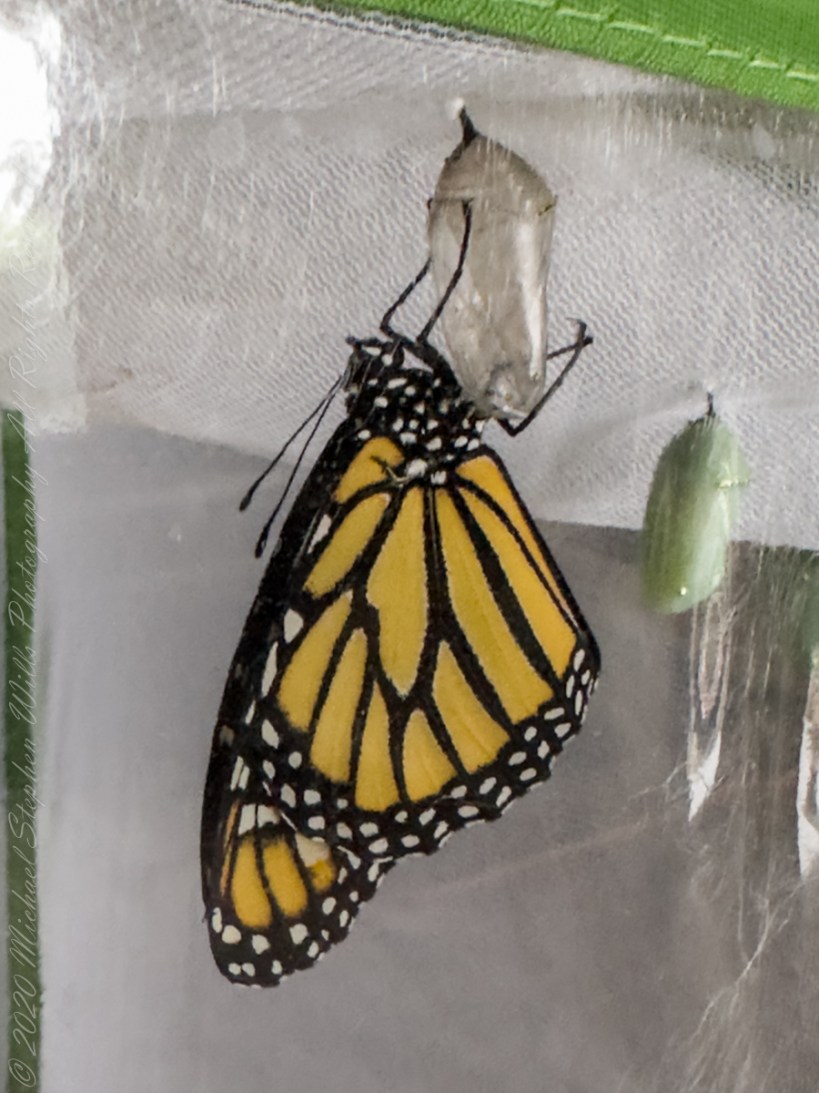
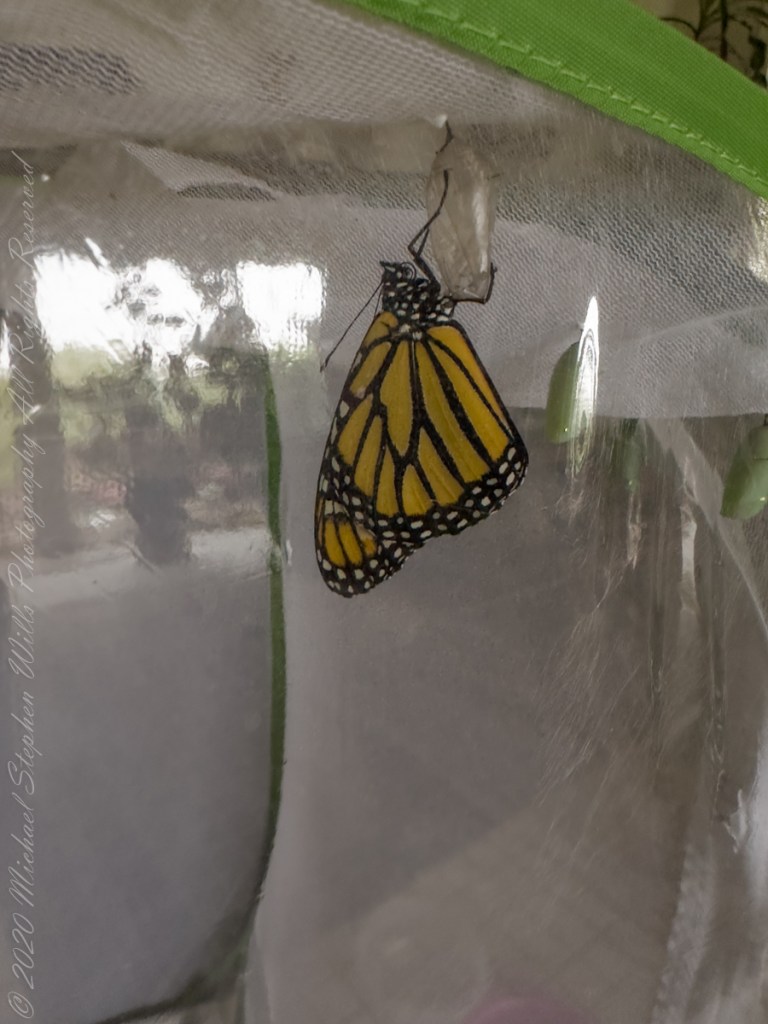
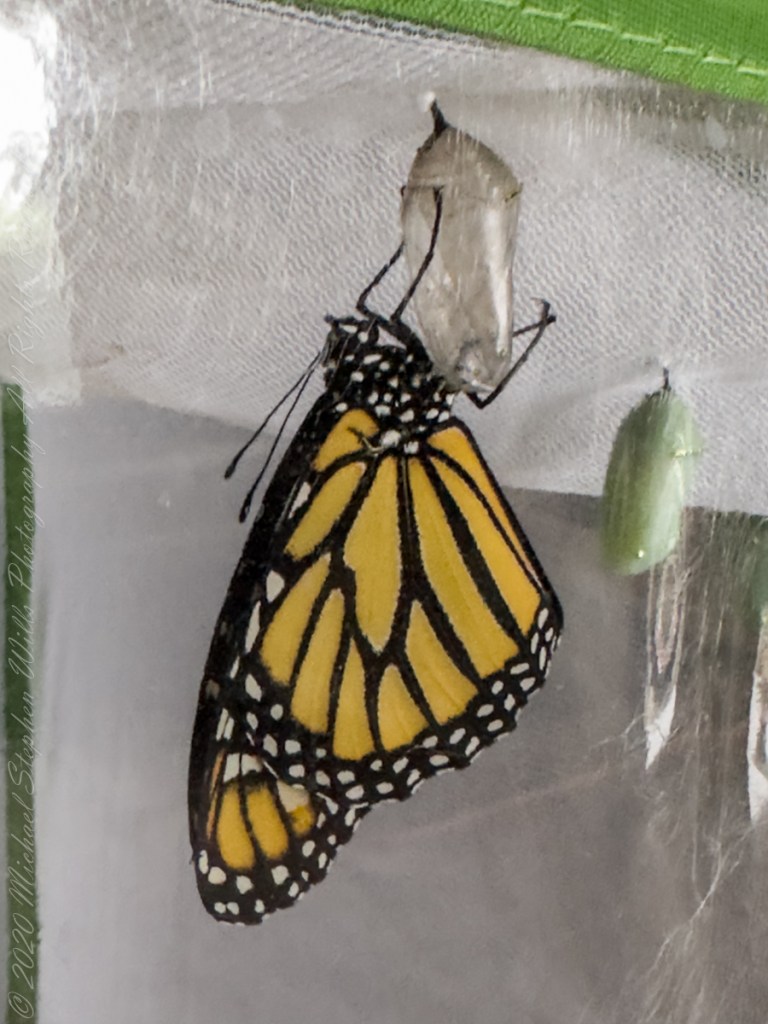
Monarch butterfly and chrysalis

Our grandchildren spent the day with us, the last week of their summer before school begins. This July I had improved on my Monarch collection from 2022, when 9 butterflies were released, by two (2) caterpillars for a total of eleven (11) raised over several weeks to the chrysalis stage. When leaving to pick up the children for an outing one chrysalis skin had turned clear, a sign the enclosed butterfly is close to emerging. We returned from an outing for lunch to find this chrysalis unopened, so we checked now and then for progress. Four hours later, just as their Mom arrived for them, the grandchildren and everyone witnessed this event. What luck!!

Migrating monarchs soar at heights of up to 1,200 feet. As sunlight hits those wings, it heats them up, but unevenly. Black areas get hotter, while white areas stay cooler. The scientists believe that when these forces are alternated, as they are with a monarch’s white spots set against black bands on the wings’ edges, it seems to create micro-vortices of air that reduce drag—making flight more efficient.

Monarchs begin leaving the northern US and Canada in mid-August. They usually fly for 4-6 hours during the day, coming down from the skies to feed in the afternoon and then find roosting sites for the night.  Monarchs cannot fly unless their flight muscles reach 55ºF. On a sunny day, these muscles in their thorax can warm to above air temperature when they bask (the black scales on their bodies help absorb heat), so they can actually fly if it is 50ºF and sunny. But on a cloudy day, they generally don’t fly if it is below 60ºF.

“Migrating monarchs use a combination of powered flight and gliding flight, maximizing gliding flight to conserve energy and reduce wear and tear on flight muscles.  Monarchs can glide forward 3-4 feet for every foot they drop in altitude.  If they have favorable tail or quartering winds, monarchs can flap their wings once every 20-30 feet and maintain altitude. Monarchs are so light that they can easily be lifted by the rising air. But they are not weightless. In order to stay in the air, they must move forward while also staying within the thermal. They do this by moving in a circle. The rising air in the thermal carries them upward, and their overall movement ends up being an upward spiral. Monarchs spiral upwards in the thermal until they reach the limit/top of the thermal (where the rising air has cooled to the same temperature as the air around it). At that point, the monarch glides forward in a S/SW direction with the aid of the wind. It glides until it finds another thermal and rides that column of rising air upwards again.”

This video includes an interview with Michael Wills about raising Monarch butterflies and this stage of the lifecycle. Video by Pam Wills using an IPhone 8

Reference: text in italics and quotes is from one of two online articles. “The monarch butterfly’s spots may be its superpower” National Geographic, June 2023 and “Fall Migration – How do they do it?” by Candy Sarikonda, September 2014.

Copyright 2023 Michael Stephen Wills All Rights Reserved