Flowering Saguaros in Finger Rock Canyon

Some Fallen, Some Blessed

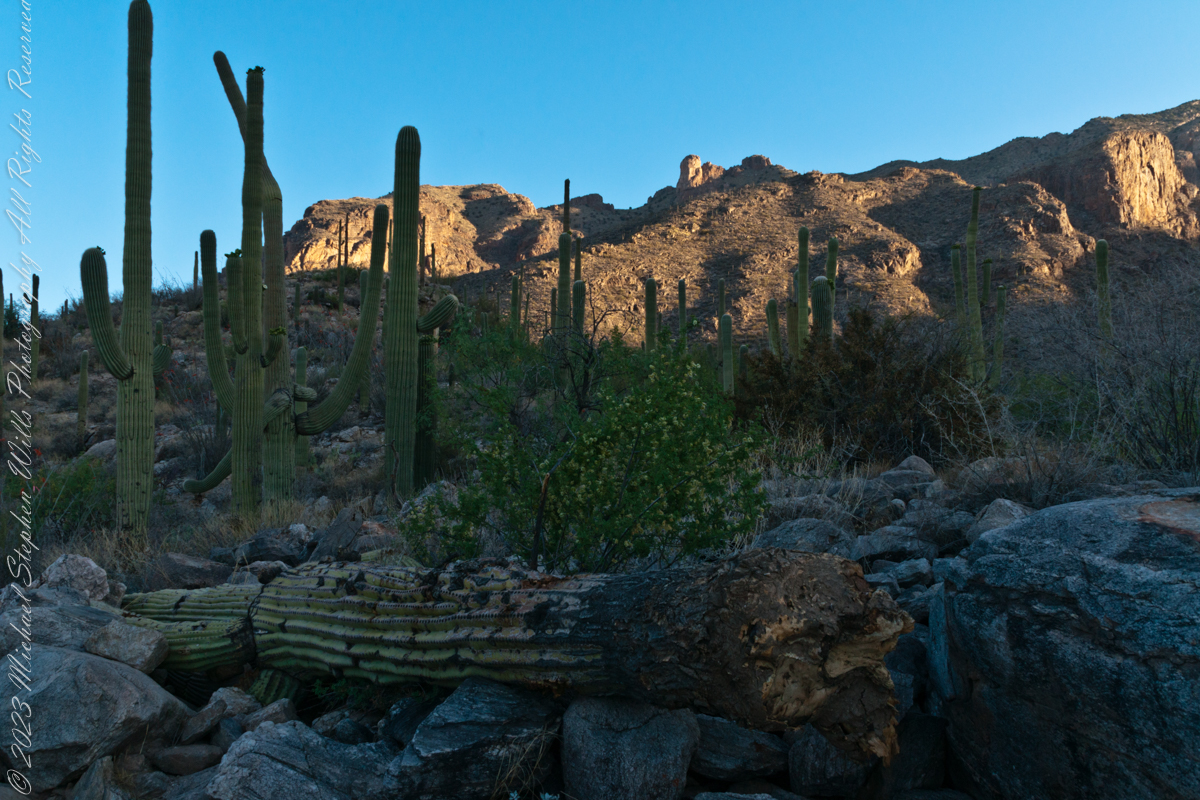
My visit to Finger Rock Canyon of the Santa Catalina Mountains filled two mornings.  On the first morning, the subject was the lower canyon as morning light filtered over the eastern ridge.

Early morning to the north / northwest looking over a 20-foot fallen Saguaro Cactus (Carnegiea gigantean), toward lower ridges of the Santa Catalina Mountains.  The saguaro is among a stand of healthy fellows, some with new growth and flowers on the tips of arms and main columns. This giant must have grown over rock through 60 years.  It was brought down when the roots weakened.  Specimens that are more reliably rooted can live to 200 years.

A clump of brittlebush shrub (Encelia farinosa) grows from the same rock.

Pima Canyon is the next over, behind that near ridge which provides similar shade.  Unlike Finger Rock Canyon, the Pima Canyon trail follows the western cliff and loses the shade much sooner.  During our three-week trip, my wife, Pam, and I visited Pima in our first week.

These photos were taken between 6:20 and 7:00 am.
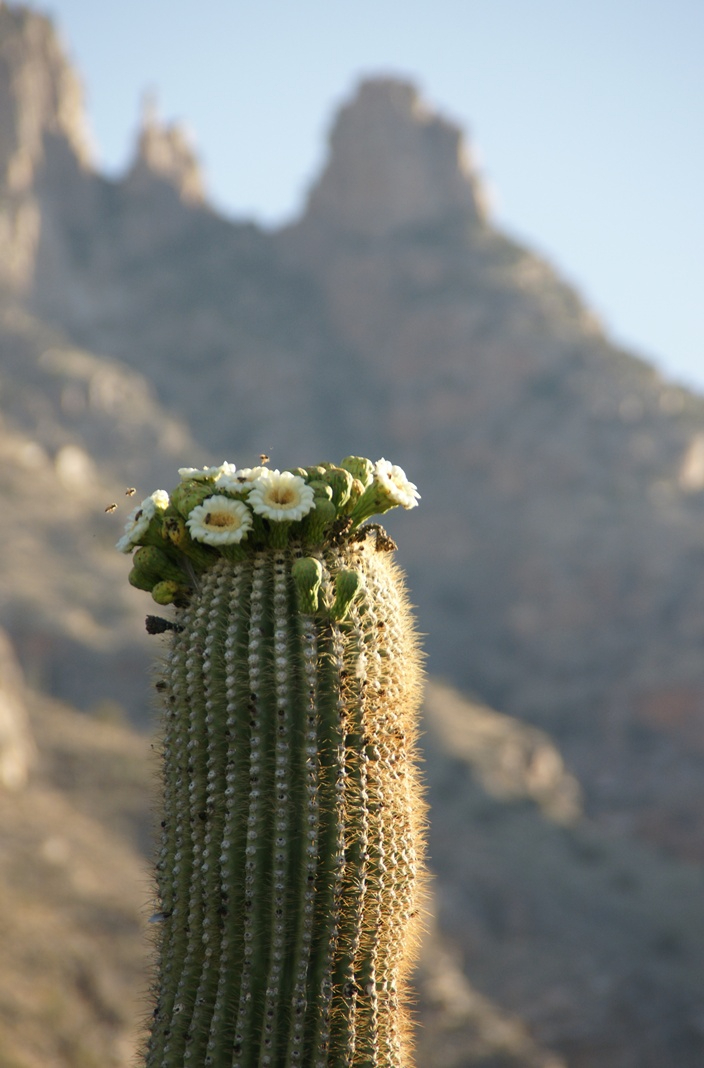
Along the trail I noticed a multitude of buds on the tip of selected saguaro arms.  In a previous blog, there’s a photo of this same saguaro in the shade.  The following series captures the one blossoming top just as the sun passes over the eastern, shadowing, ridge.

The same saguaro, two minutes later…….
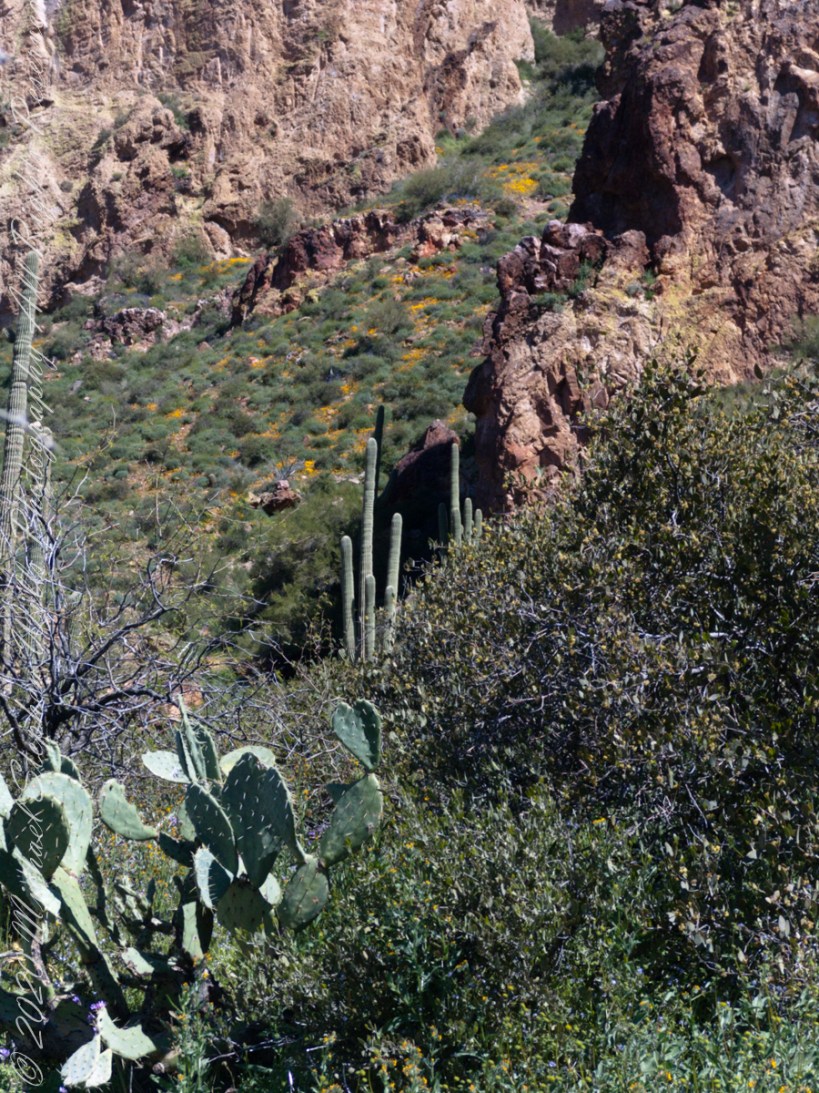
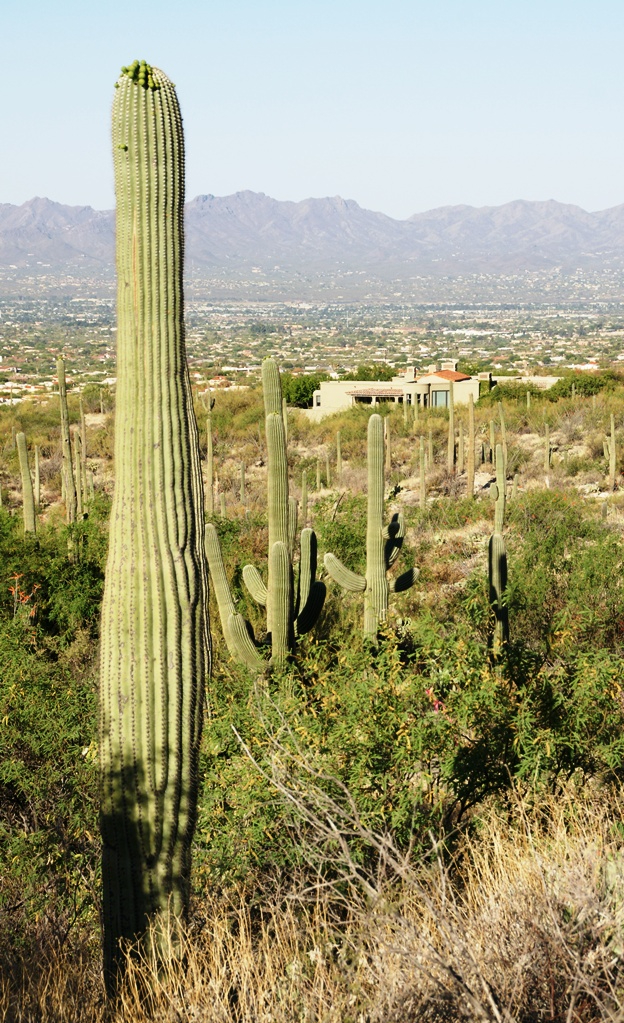
Here is a portion of the saguaro forest, around 7 am with the lower canyon filled with light.  There are a few foothill homes with west and southwest Tucson.  The Tucson Mountains are in the distance.
Copyright 2023 Michael Stephen Wills

Zig-Zagging Up The Pass

Climbing out of East Boulder Canyon

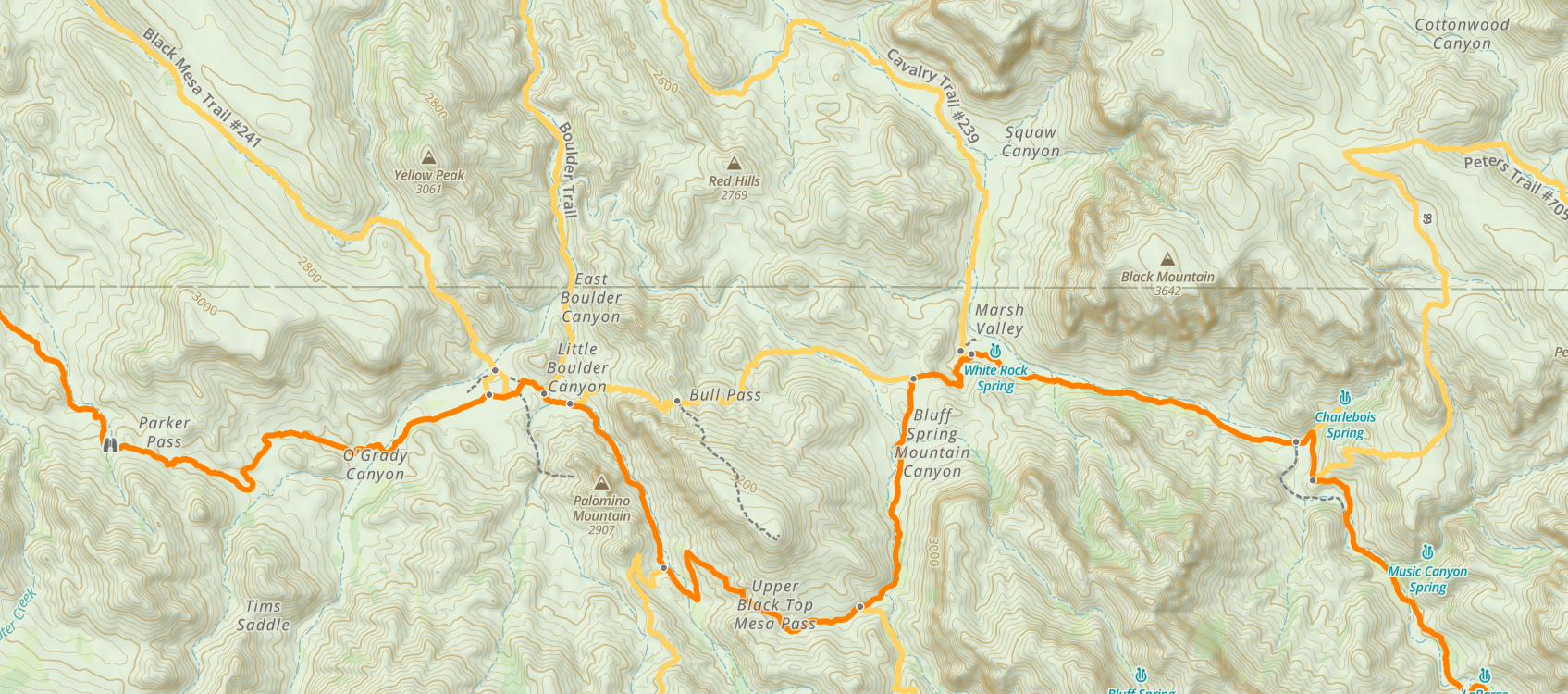
Our second day began in East Boulder Canyon, in the following map it is at the foot of the “Z” of the orange line, the Dutchman Trail, lower left center. The shape is the signature of a switchback needed to negotiate a steep slope up to Upper Black Top Mesa pass. This day will see us traverse Dutchman Trail to the intersection with Peter’s Trail (yellow), another steep climb up Peter’s Mesa.

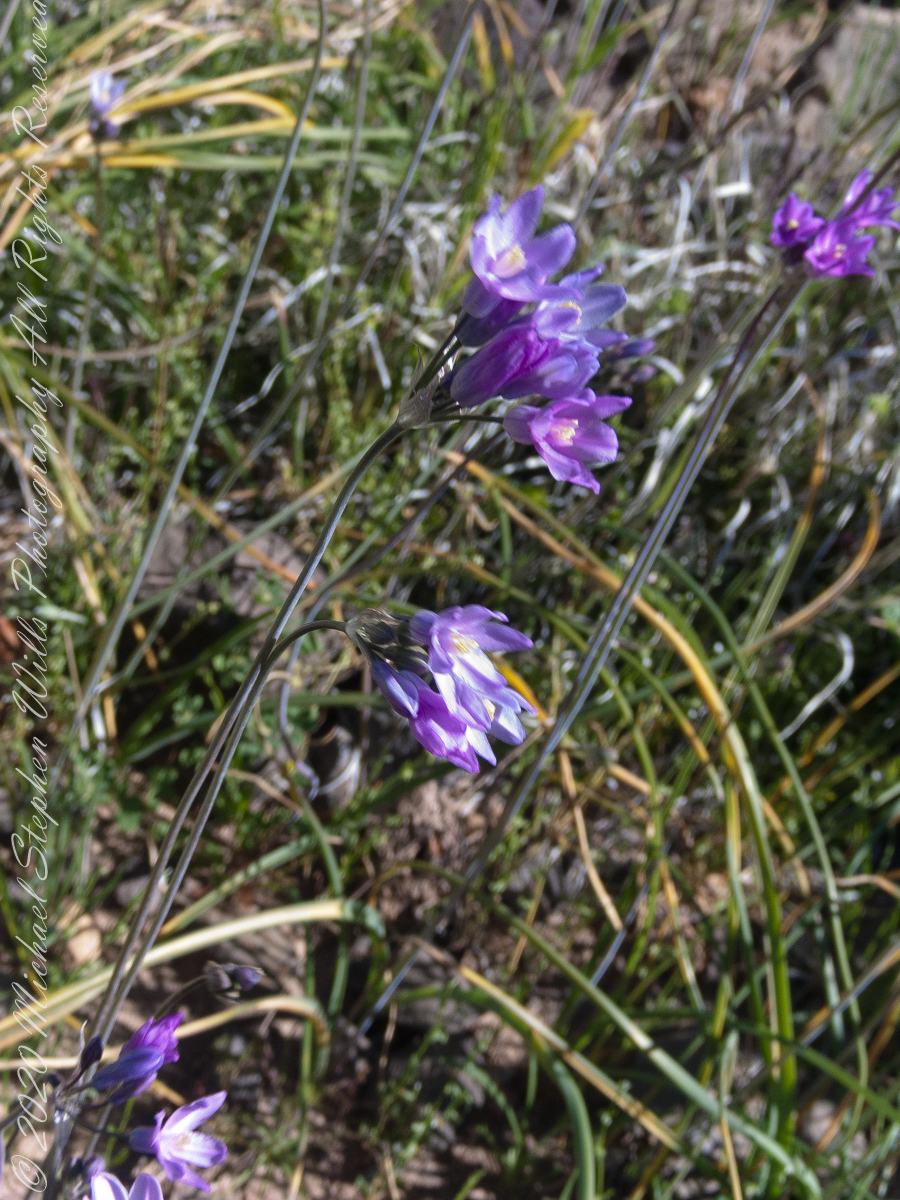
Today’s post features photographs of flourishing Sonoran Desert plants and landscape on the slopes of Black Top Mesa. Dipterostemon capitatus known by the common names blue dicks, purplehead and brodiaea is native to the Western United States (particularly Arizona, California, Oregon, Utah, New Mexico and northwest Mexico.

Click Me for my Online Gallery

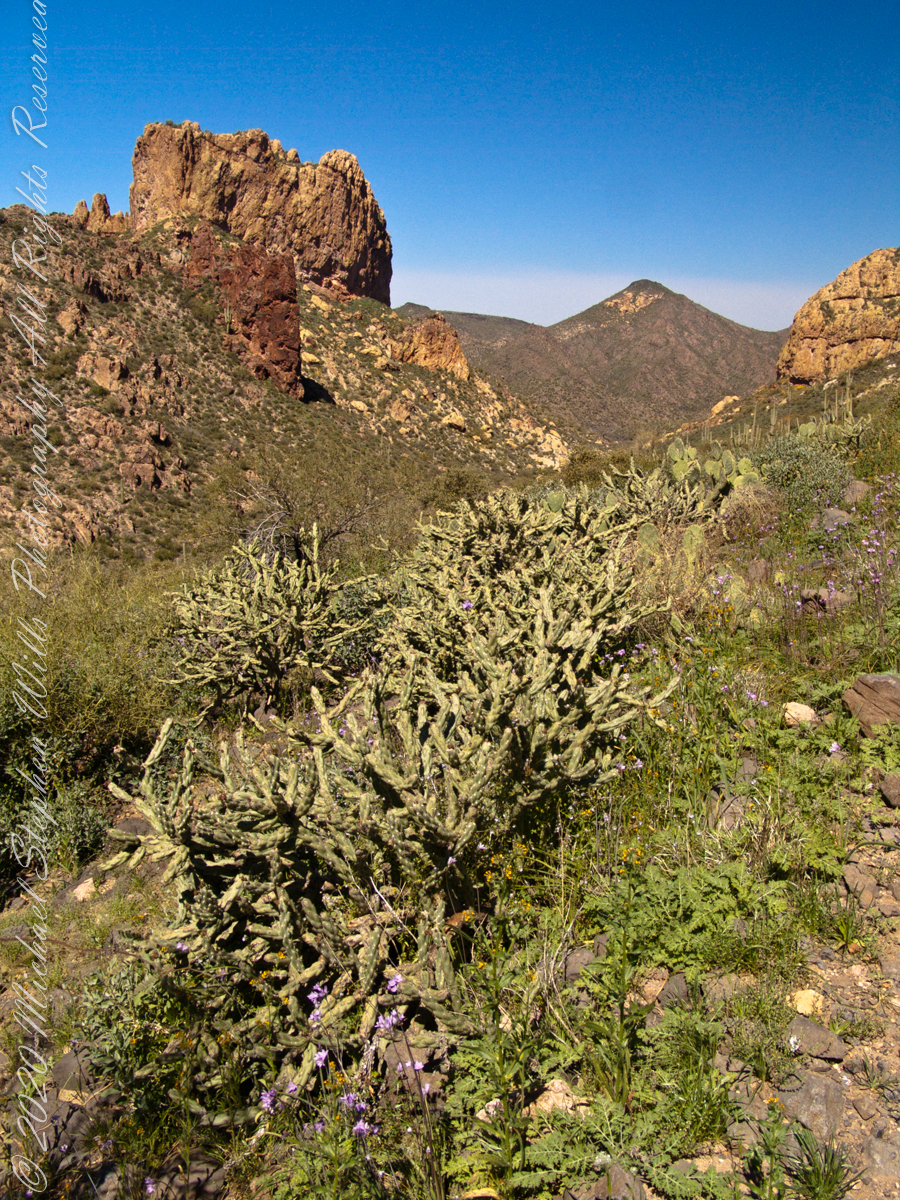
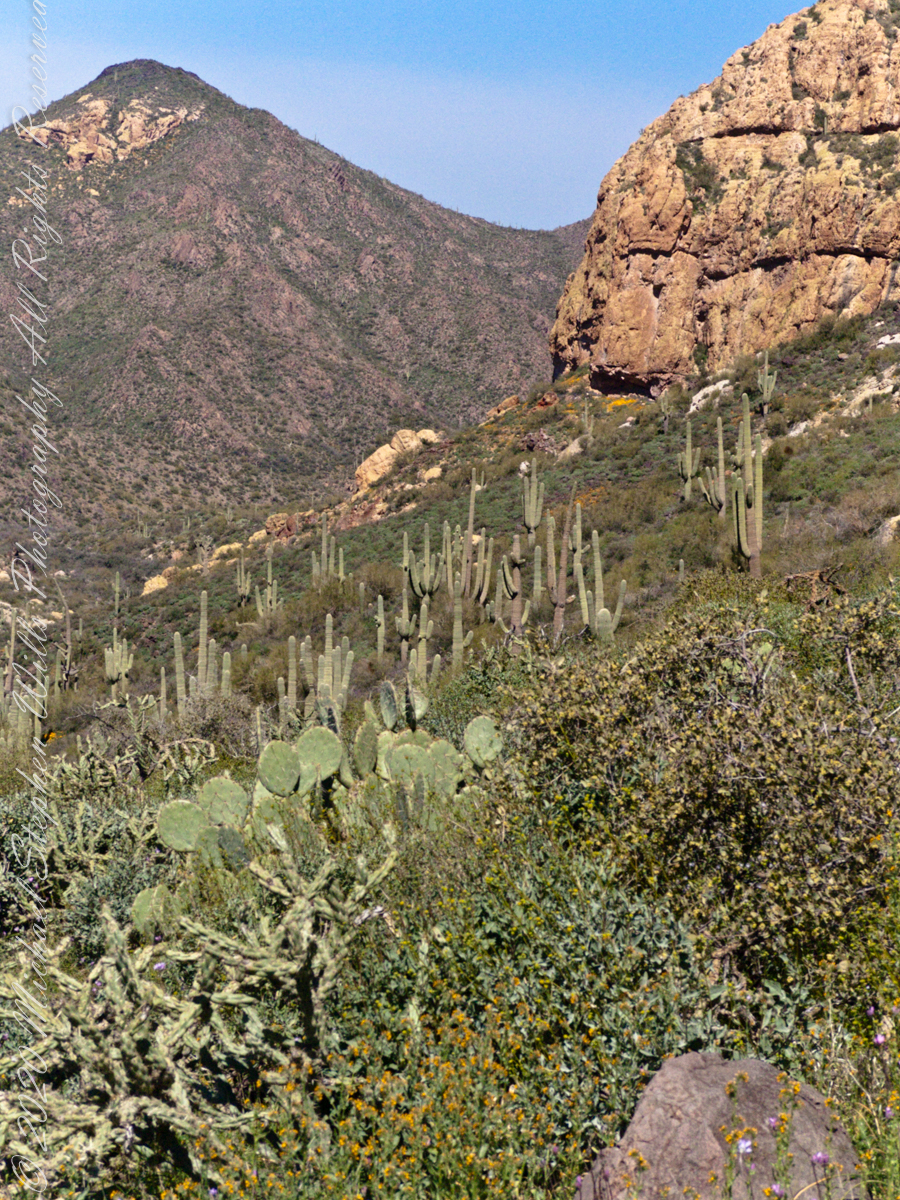
Stag Horn Cholla (Opuntia versicolor) or, maybe, Pencil Cholla (Cylindropuntia ramosissima) growing along the Upper Black Top Mesa Pass trail. Also, in foreground Blue Disk. In the distance Prickly Pear (Optuna) and, far distance, Saguaro Cactus (Carnegiea gigantean). Palamino Mountain and the Peralta Trail on left, Black Top Mesa on right. East Boulder Canyon runs between. The other side of distant Yellow Peak was where, July 2010, four foolhardy Utah treasure hunters lost their lives to summer temperatures exceeding 180 F.

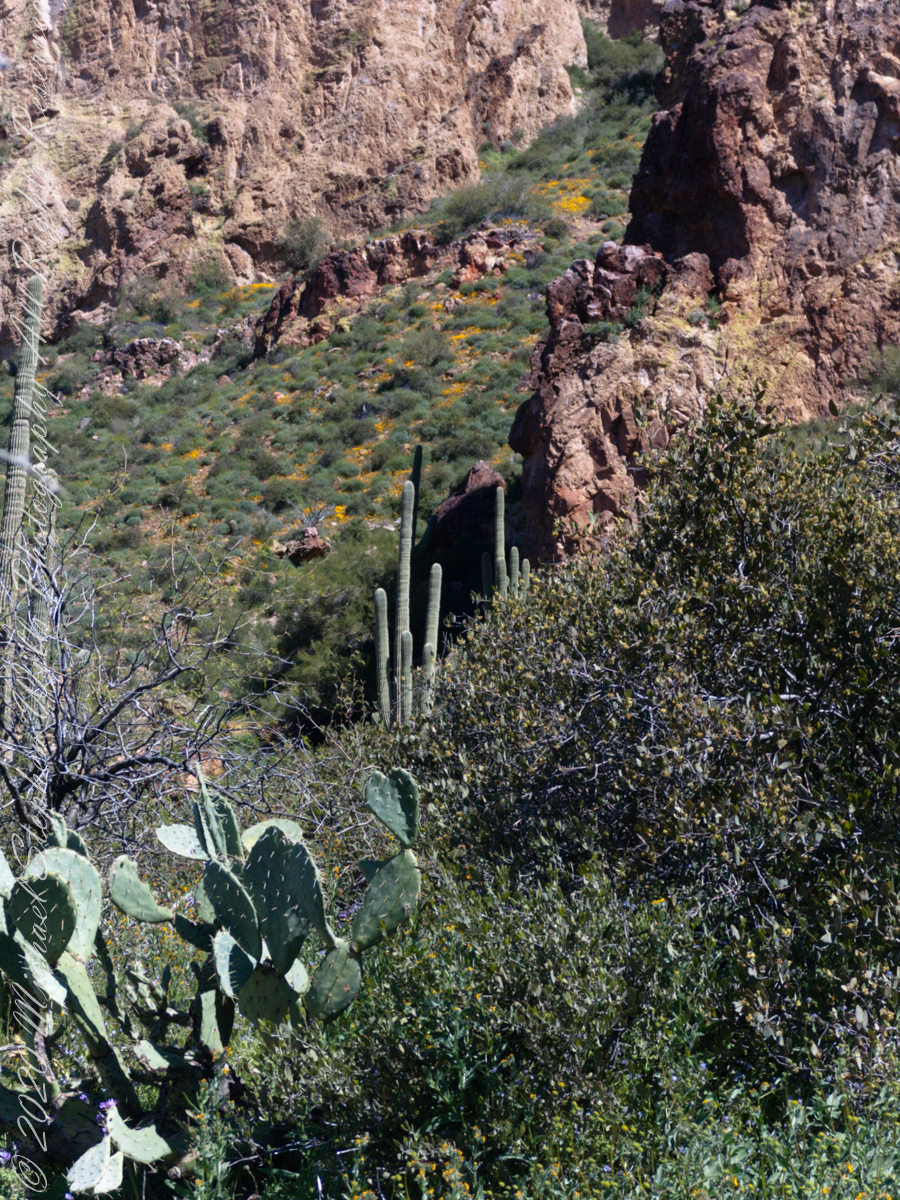
Here I used the “zoom” for a better view of distant Yellow Peak. In foreground is Brittlebush (Encelia farinosa) and Blue Dick. In the distance Saguaro Cactus. Below the cliff of Black Top Mesa, above East Boulder Canyon, is a patch of yellow, Mexican Poppy (Eschscholtzia californica).

Here is camera, set to zoom, is swung toward the mesa cliffs. Prickly Pear and Brittlebush growing along the Upper Black Top Mesa Pass trail. I have not identified the shaggy shrub above the Brittlebush. In the distance Saguaro Cactus (Carnegiea gigantean) flourishes. Below the cliff are patches of “gold dust”, the Mexican Poppy.

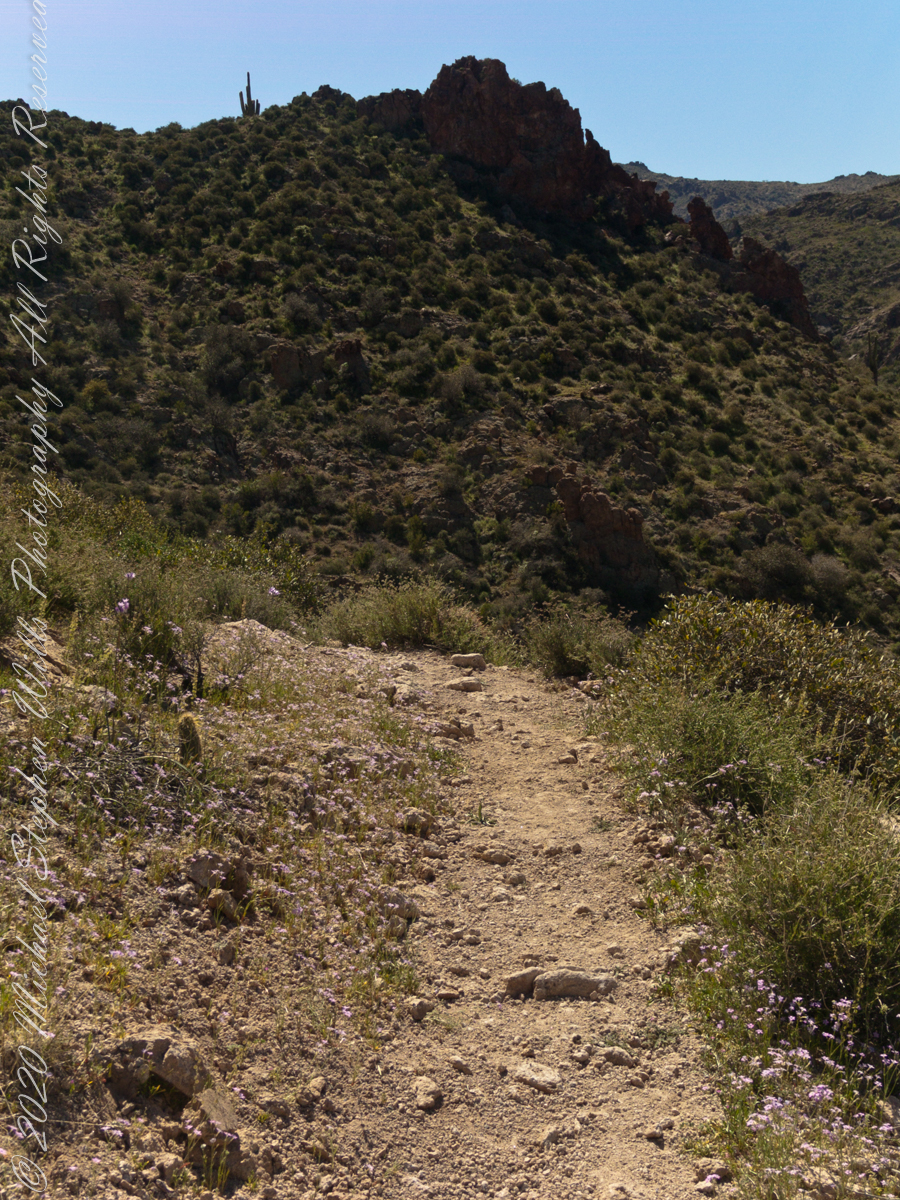
Heading southeast climbing out of East Boulder Canyon with a very young Saguaro Cactus (Carnegiea gigantean) just off trail on left, a large specimen silhouetted on ridge ahead. Windmill Pink (AKA Common Catchfly) (Silene gallica) foreground, lower left. Brittlebush (Encelia farinosa) on both sides.

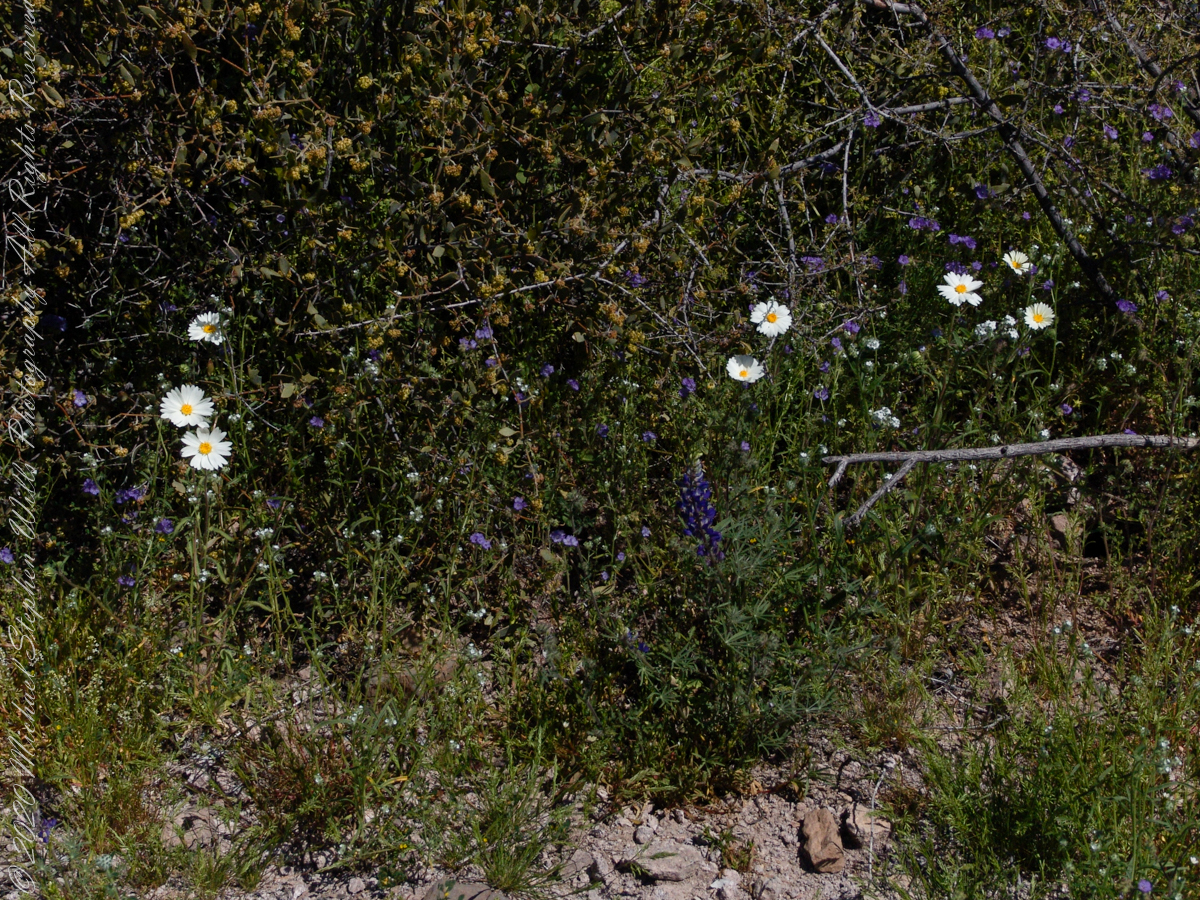
This post ends as it began, with wildflowers growing next to the trailon a March morning. Blue Dicks (AKA Purplehead) (Dipterostemon capitatus), Tidy Tips (Layia) — daisy like flower, Brittlebush flowers are yellow when not dried. The larger small white flowers are Desert Phlox (Phlox austromontana) — I have not identified the tiny white flowers sprinkled around.

Click me for another Superstition Wilderness Posting.

Copyright 2022 Michael Stephen Wills All Rights Reserved