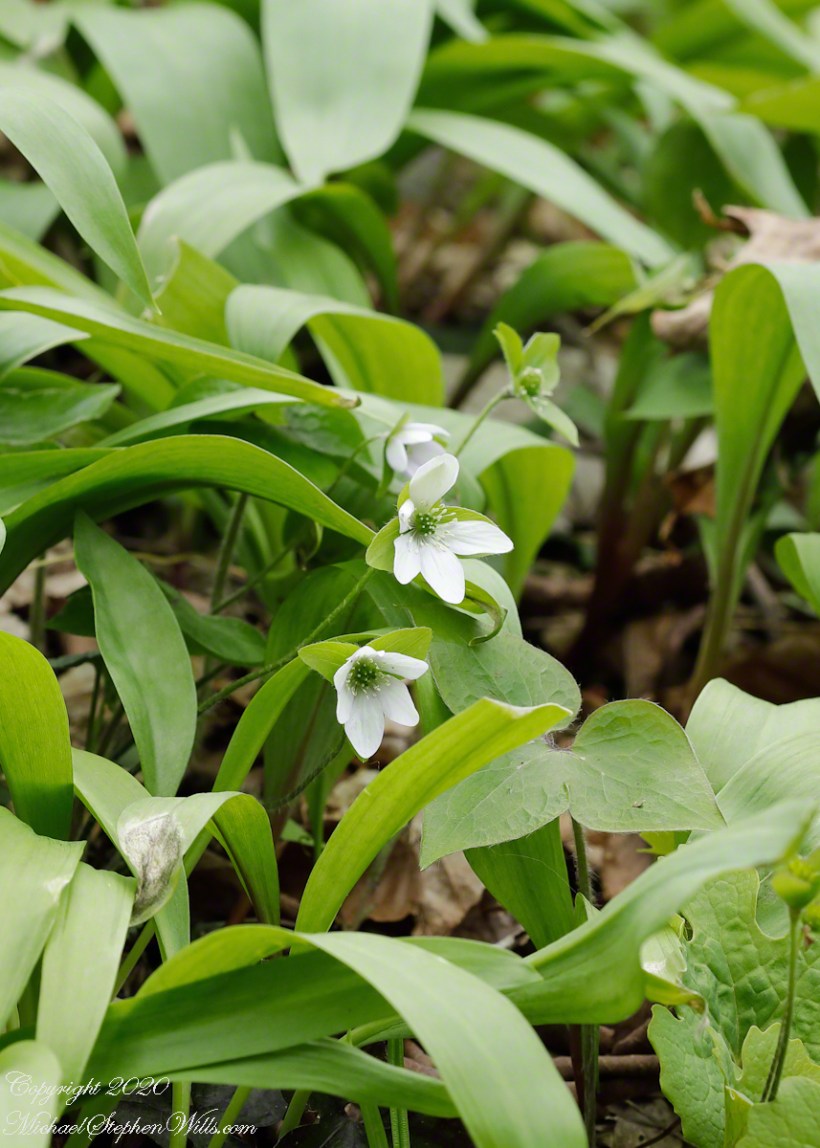
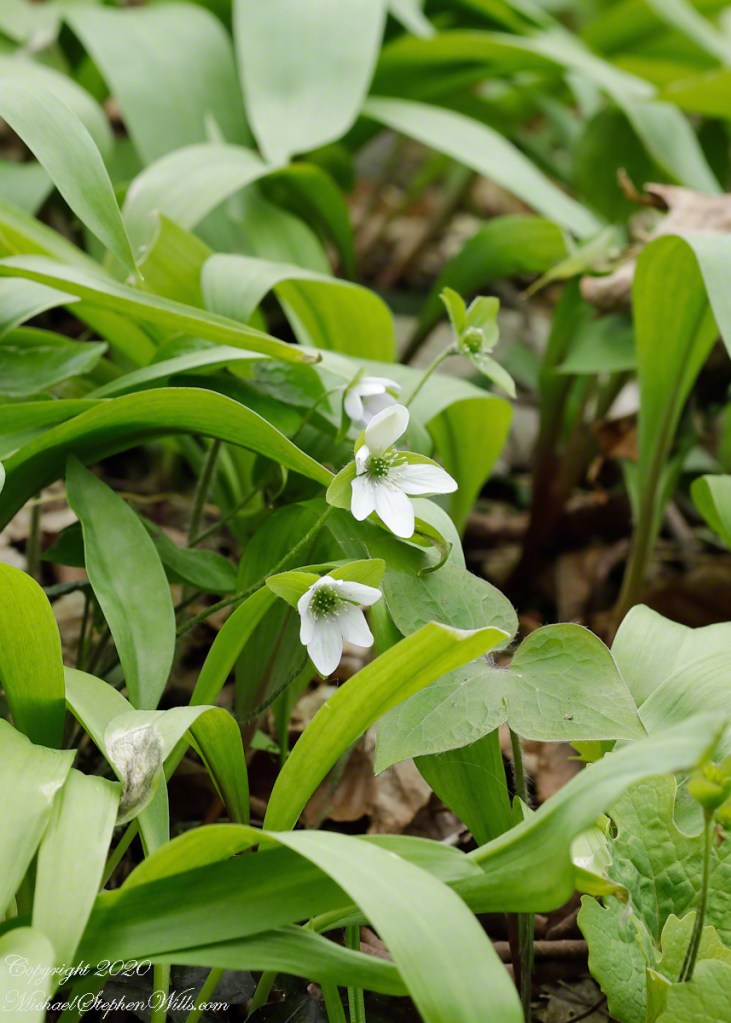
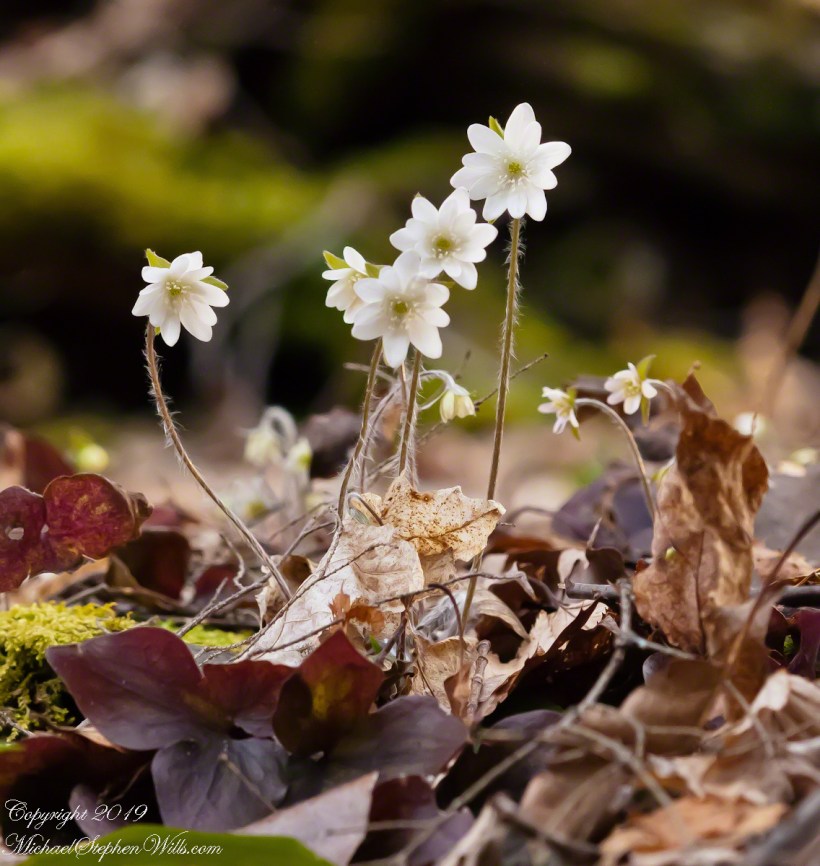
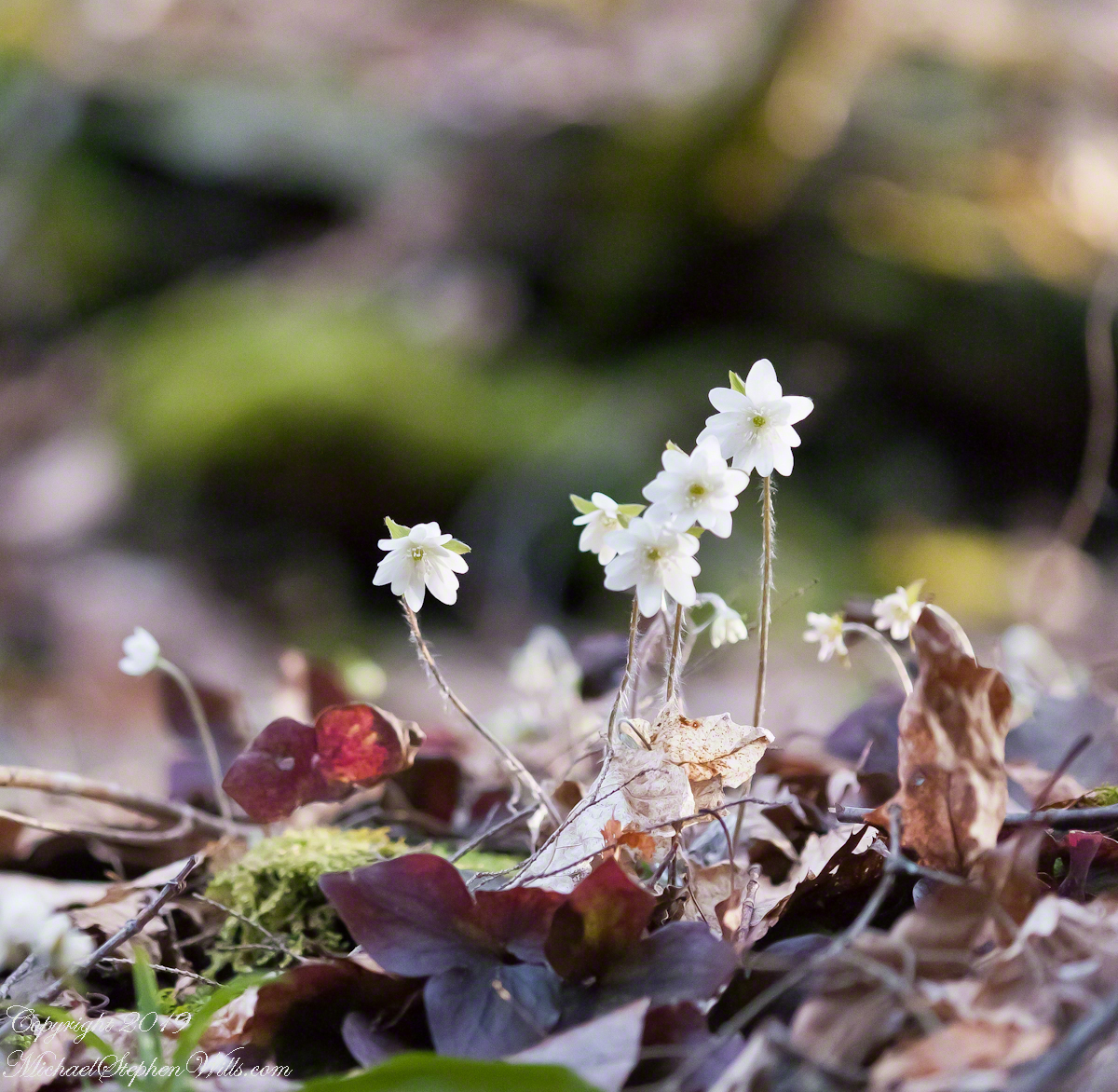
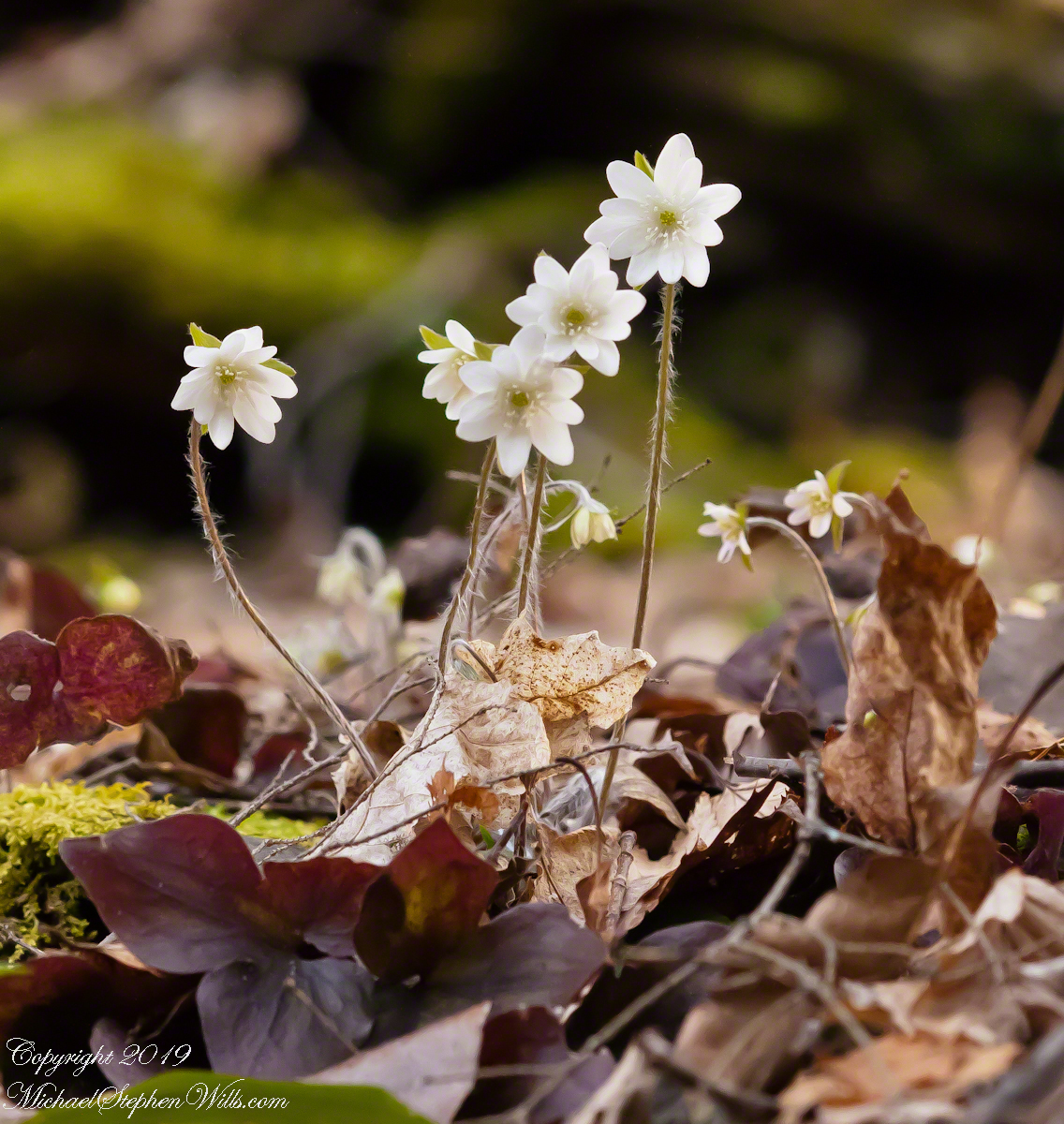
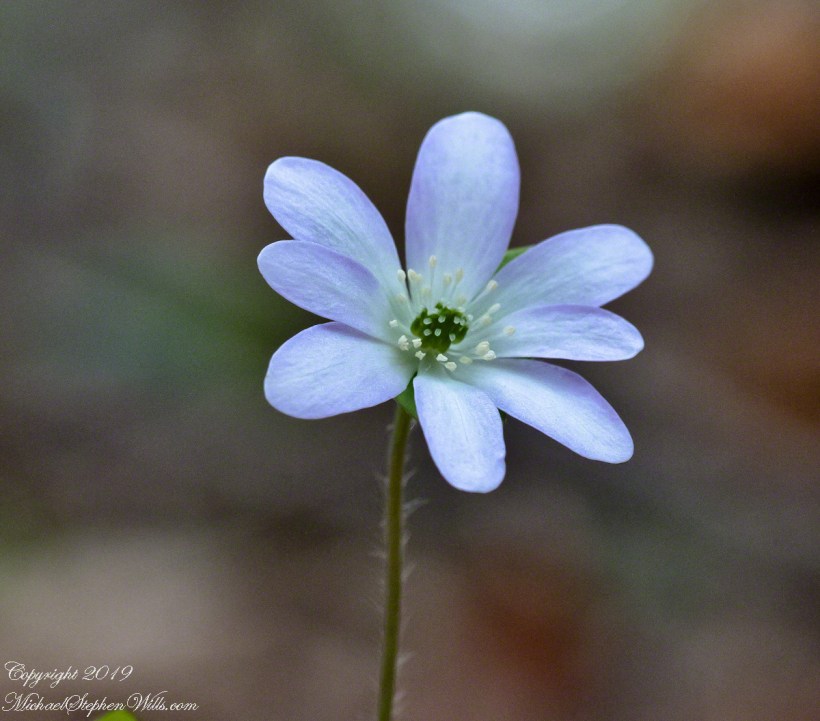
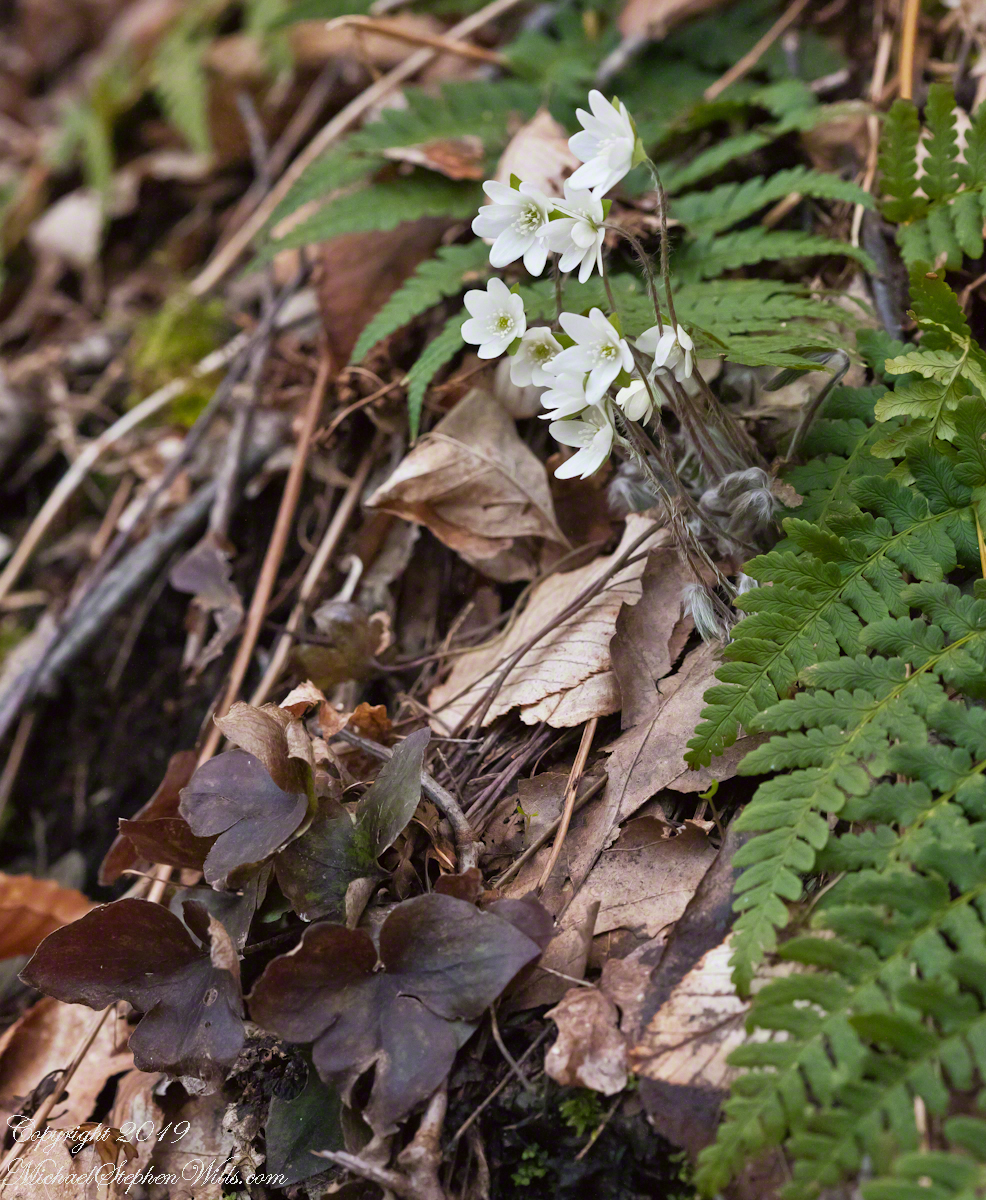
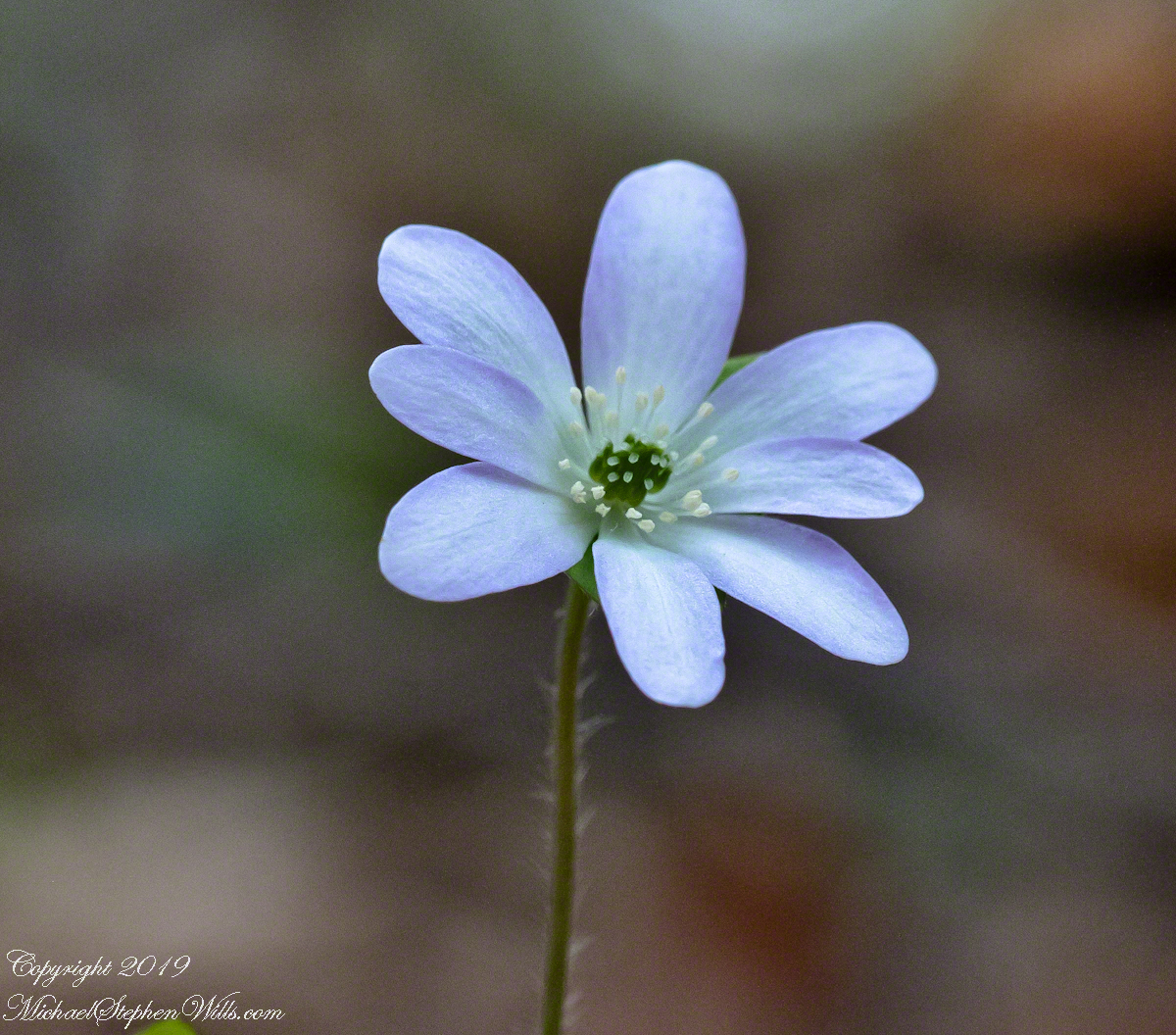
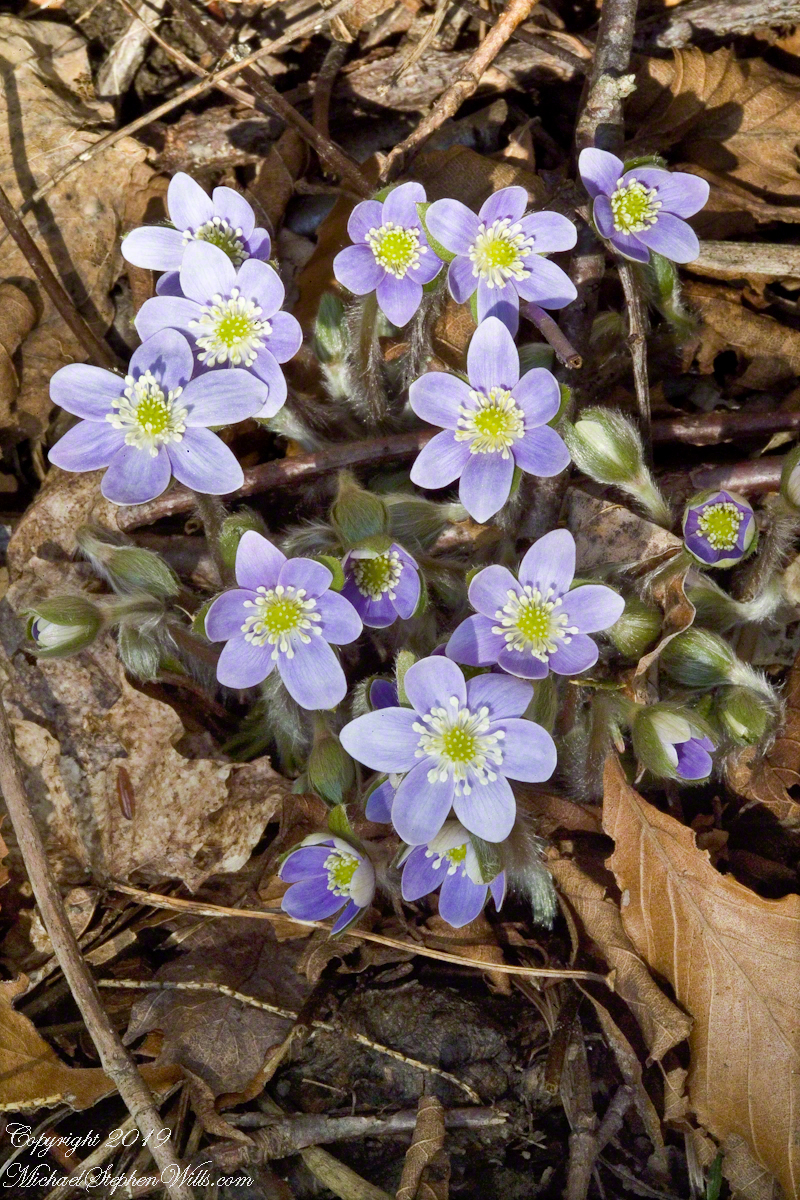
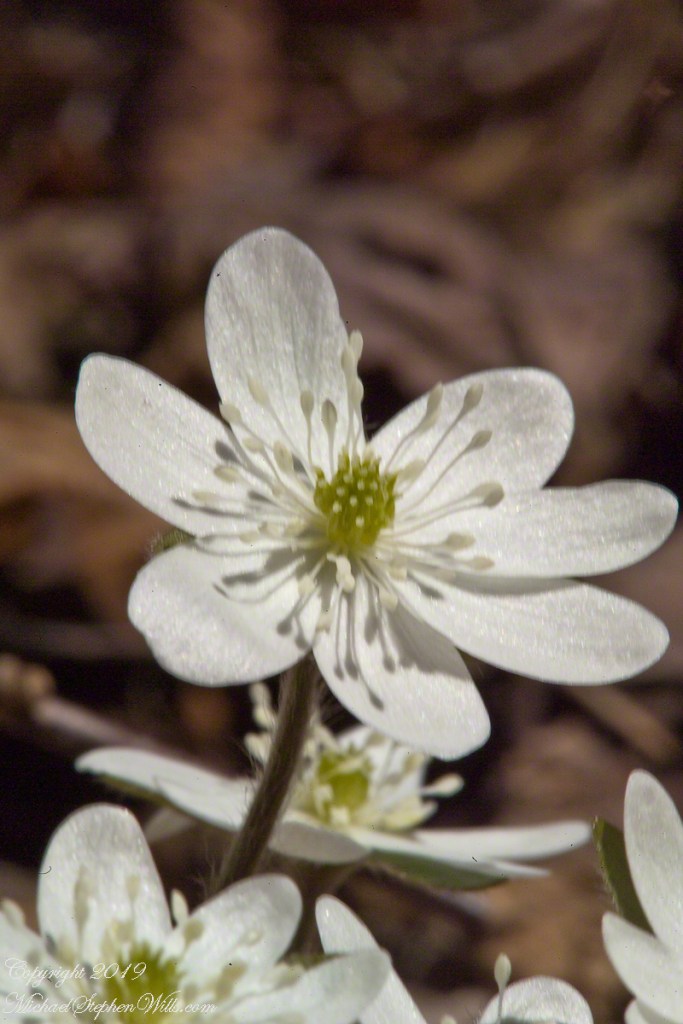
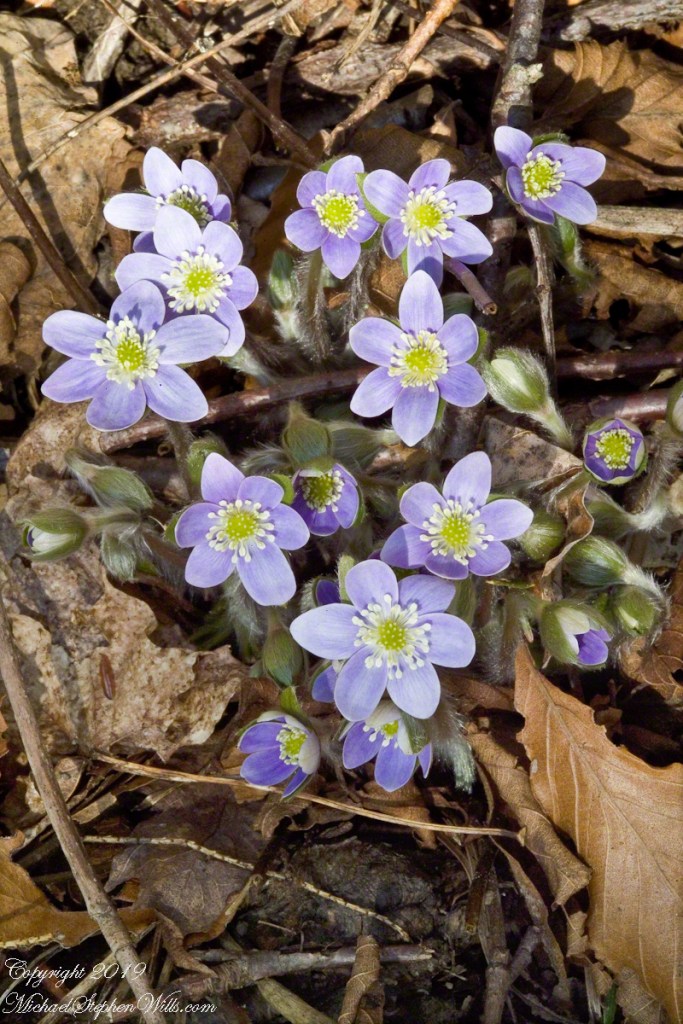
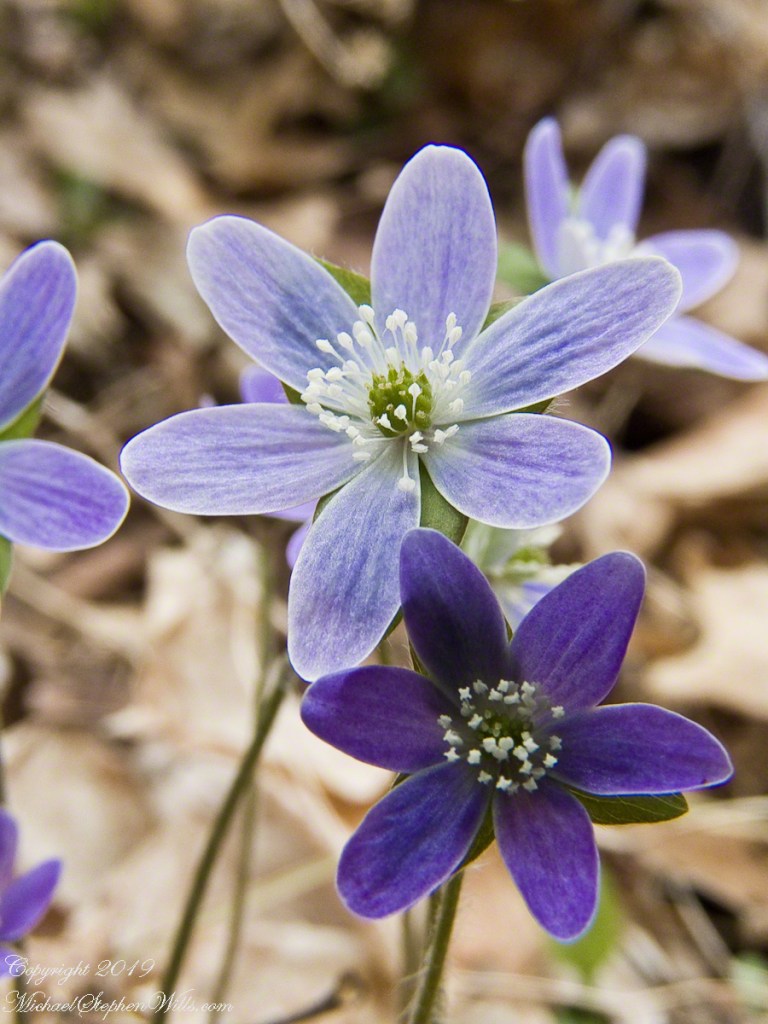
Afternoon, May 5th last week was spent in Fillmore Glen New York State Park, Moravia New York. Back in 2002, this was my first wildflower photography experience and repeated many times over the years (Click me for another Hepatica posting). Here is a follow-up showing the next step in the development of Hepatica blossoms, forming seed heads.
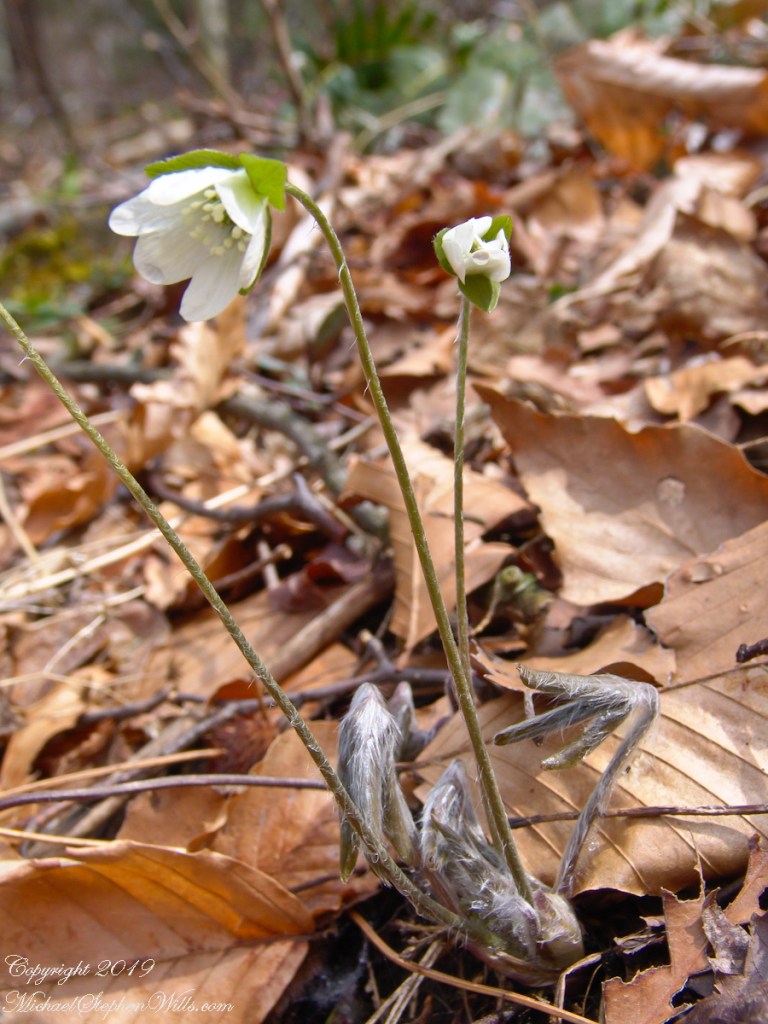
Here you see both flowers and a single seed head set in three bracts.
Click photograph for larger image. To do this from WordPress Reader, you need to first click the title of this post to open a new page.
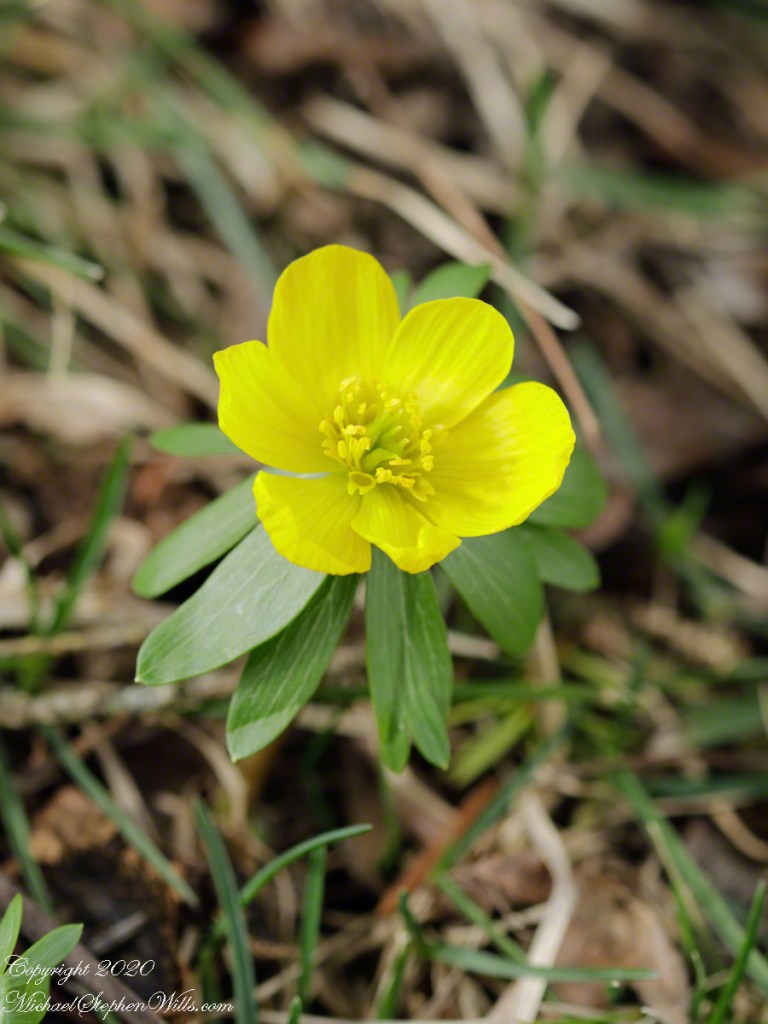
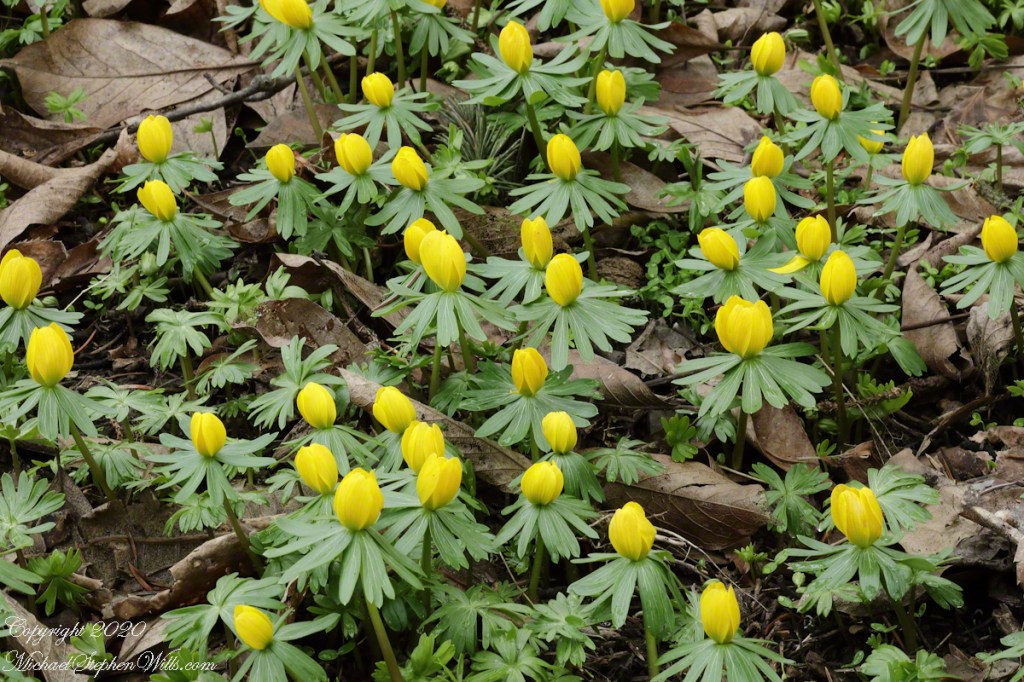
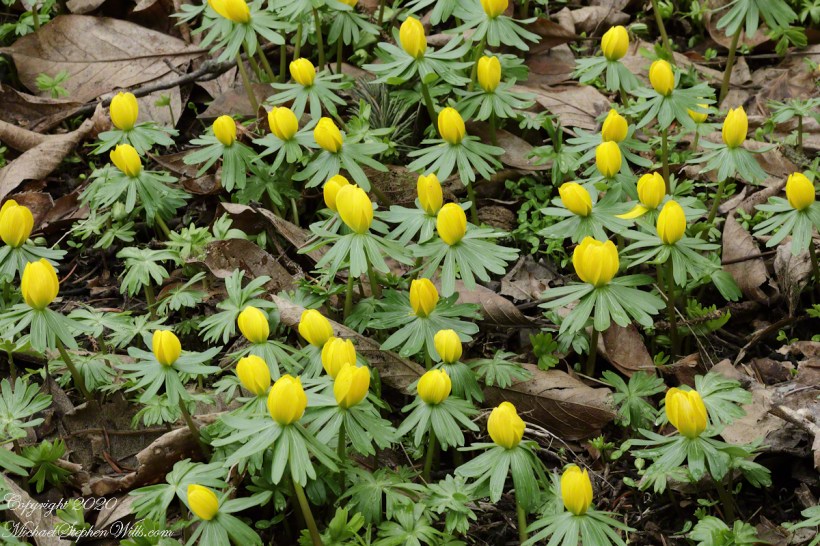
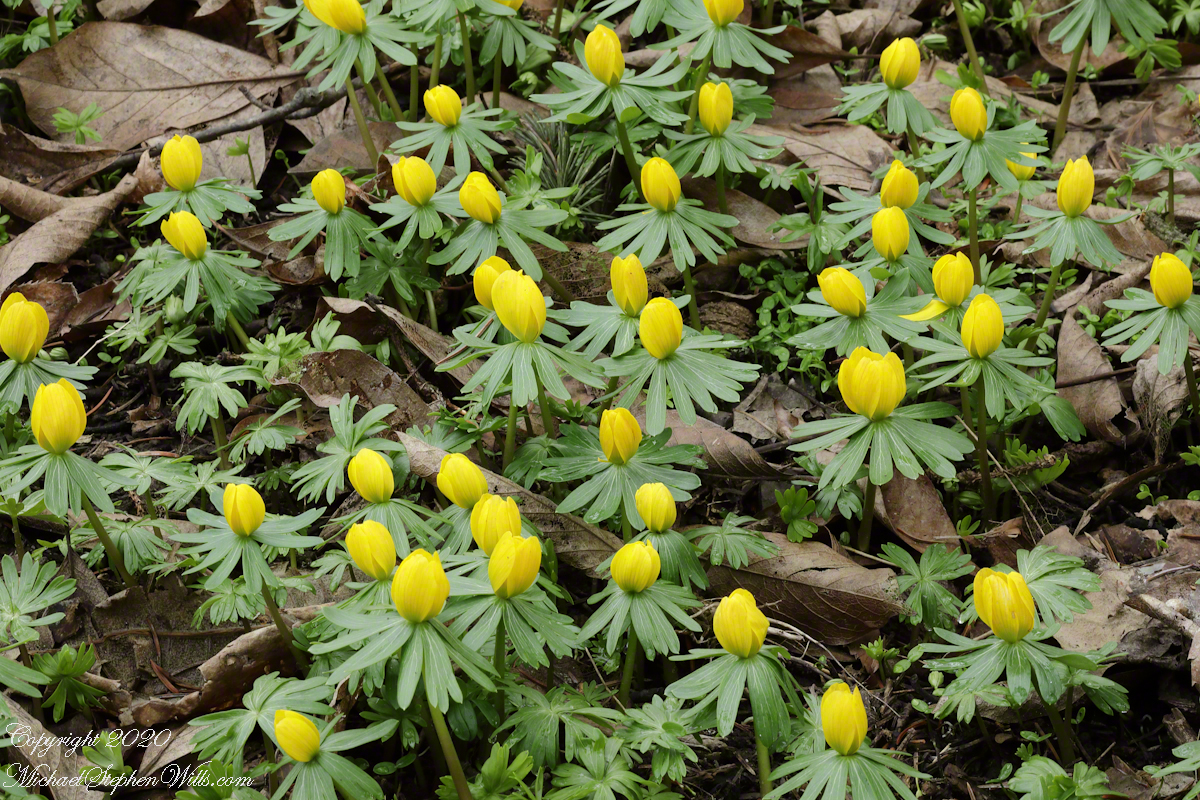
With the thermometer in the 60’s on March 10, 2020 the “buttercups” of yesterday are open. When we first moved here, the plants were much thinner. I used fertilizer spikes on the Magnolia tree around which they grow. Each early the flowers pollinate, forming seeds and spreading.
A tripod held the composition steady, and the timer was set to 2 seconds for extra stability at the f25 setting.
Here is a slideshow of yesterday and today’s shots.
Copyright 2021 All Rights Reserved Michael Stephen Wills
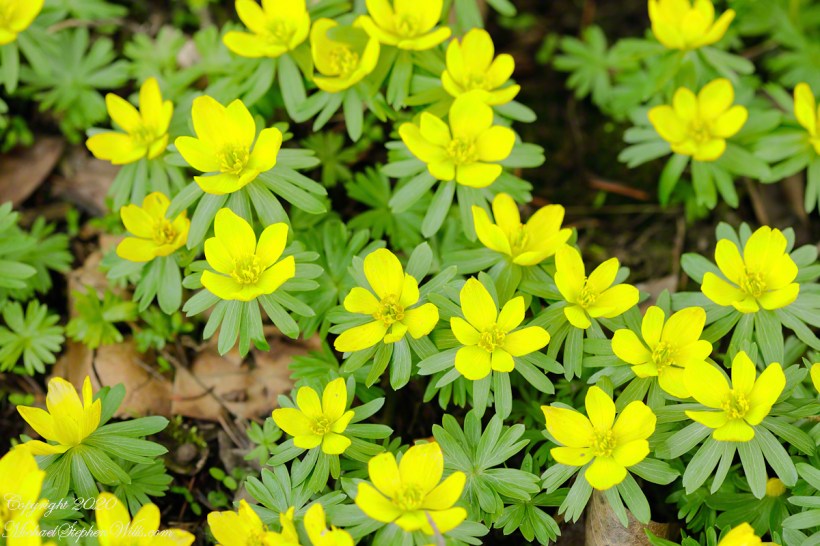
In February 2020, I captured images of the first flowers to bloom on their property with a Canon 5D Mark IV DSLR and a macro lens. The flowers belong to the Eranthis genus, known for early flowering.
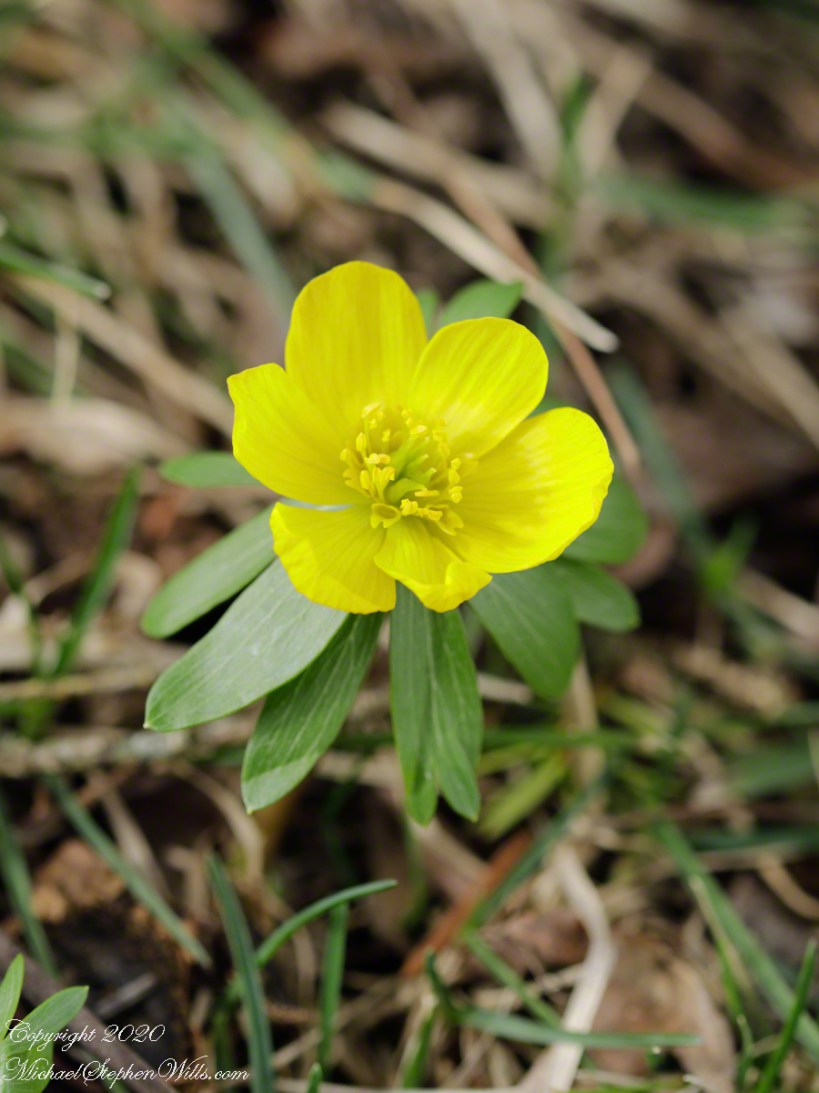
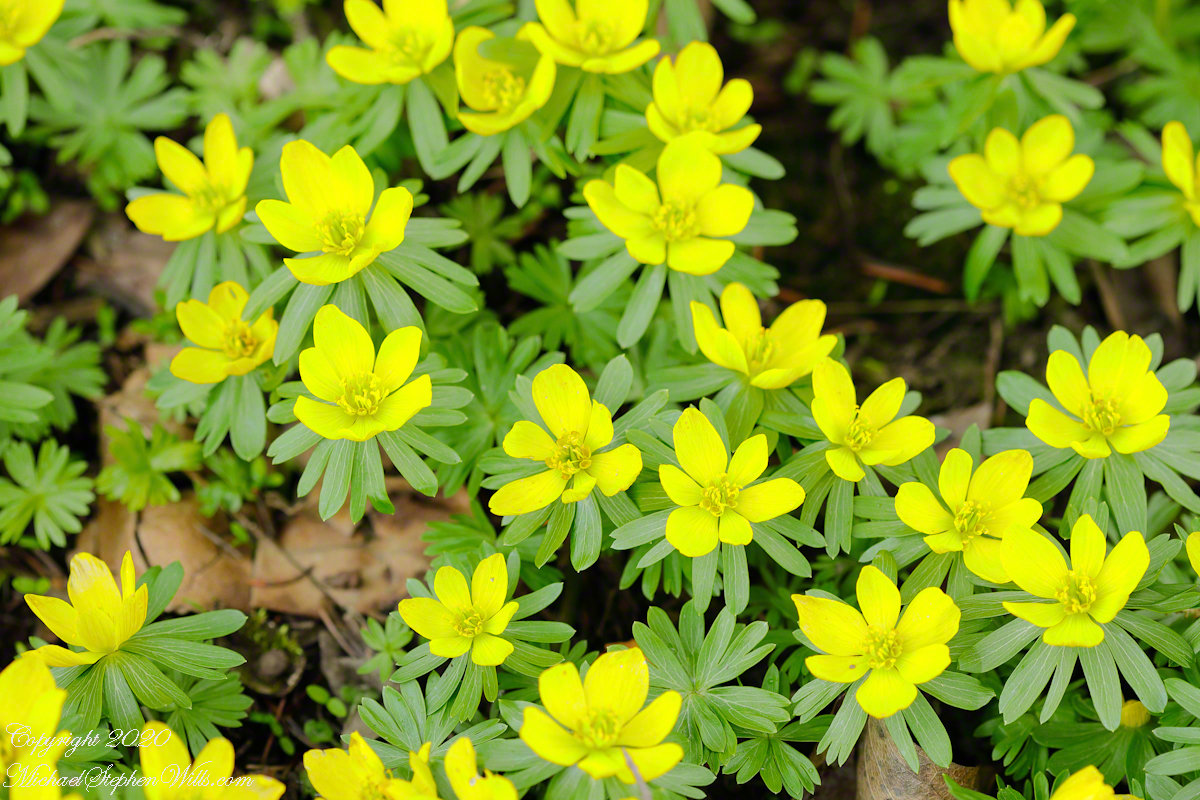
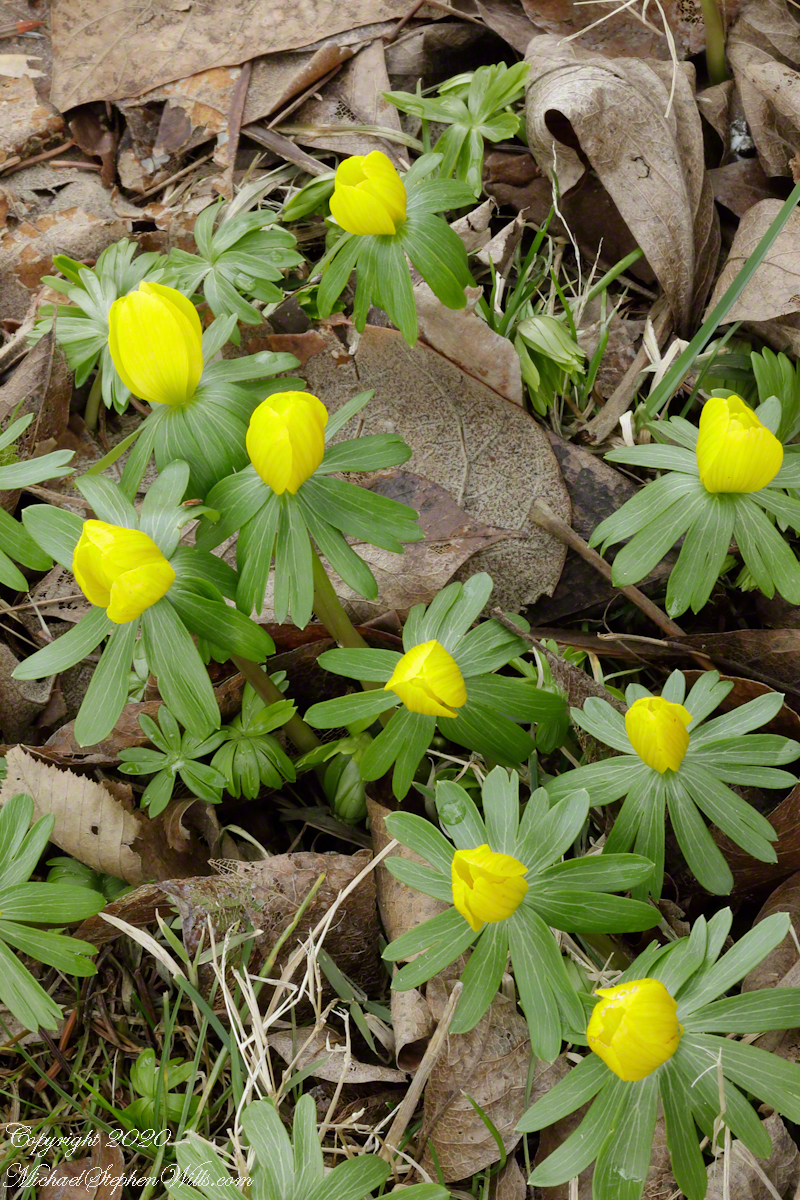
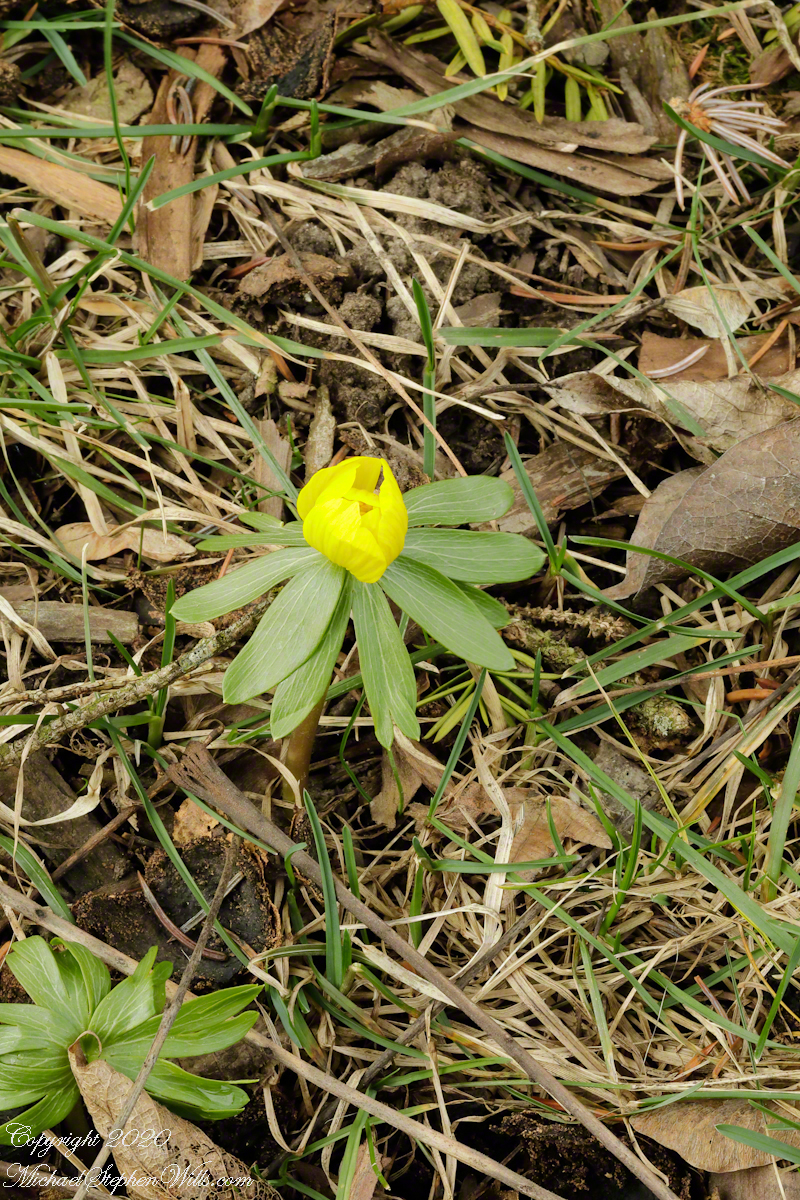
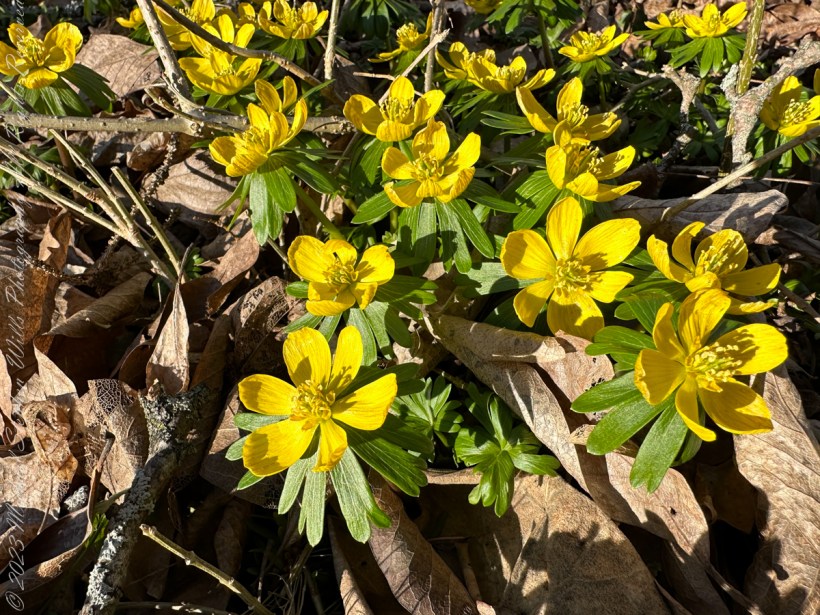
These flowers are the first to bloom on our property, around the magnolia tree, and are also the first wildflowers photographed with my then new Canon 5D Mark IV dslr . Each year these “buttercups” grow thicker and spread. The latin scientific name Eranthis hyemalis proclaims the early nature of its flowering both in the genus, “Eranthis” – composed of two Greek language roots meaning “spring flower”, and species, “hyemalis” – a term from the Latin language meaning, “winter flowering.” The genus encompasses eight species, all early flowering plants with the common name winter aconite. These can also rightly be called Buttercups as the plant belongs to family Ranunculaceae, buttercups.
To capture the intricate details possible with the Canon EF 100 mm f/2.8 Macro lens I used here, it’s often necessary to adjust the camera settings to allow for a longer exposure time. This adjustment ensures that enough light reaches the sensor, particularly in macro photography or low-light situations, which helps in producing sharper and more detailed images. All these photographs are from f25. Setting a longer exposure compensates for the reduced light that might be a consequence of using a smaller aperture (higher f-number) for greater depth of field, a common technique in macro photography.”
It’s important to note that while setting a longer exposure can improve image quality by allowing more light to hit the camera’s sensor, it can also introduce the risk of motion blur if the camera or subject moves during the exposure. To minimize camera shake and achieve the best results, I used a Manfrotto “BeFree” tripod and the camera’s built-in timer set to a 2 second delay after a manual shutter release.
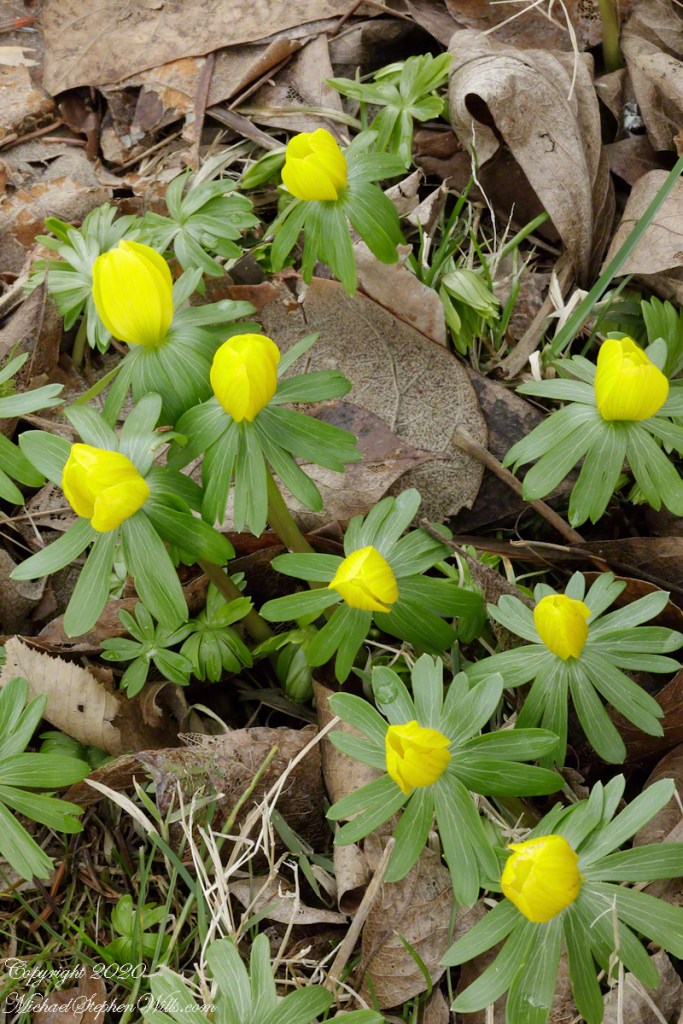
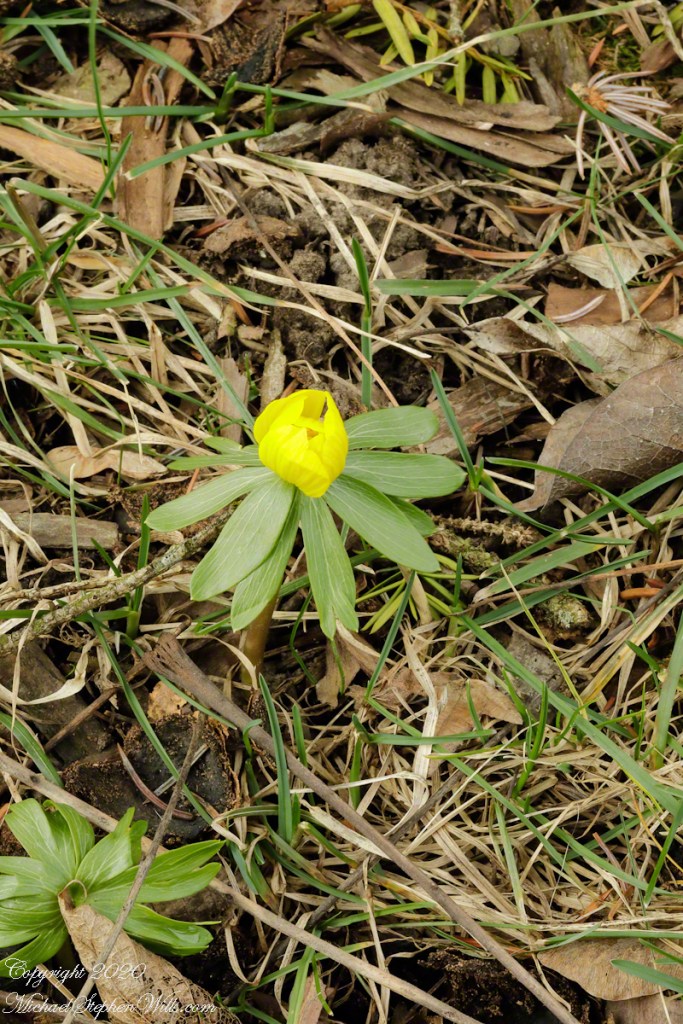
With the thermometer hovering above freezing, these blooms did not open today. The calendar says “late winter”, these Aconite are singing “early spring.”
Reference: Wikipedia “Eranthis hyemalis” and “Eranthis.”
Copyright 2024 All Rights Reserved Michael Stephen Wills
The post discusses the Hepatica acutiloba plant, highlighting its characteristics, growth, historical medicinal use, and its natural habitat in central eastern North America. It also includes an observation made in Robert H. Treman Park.
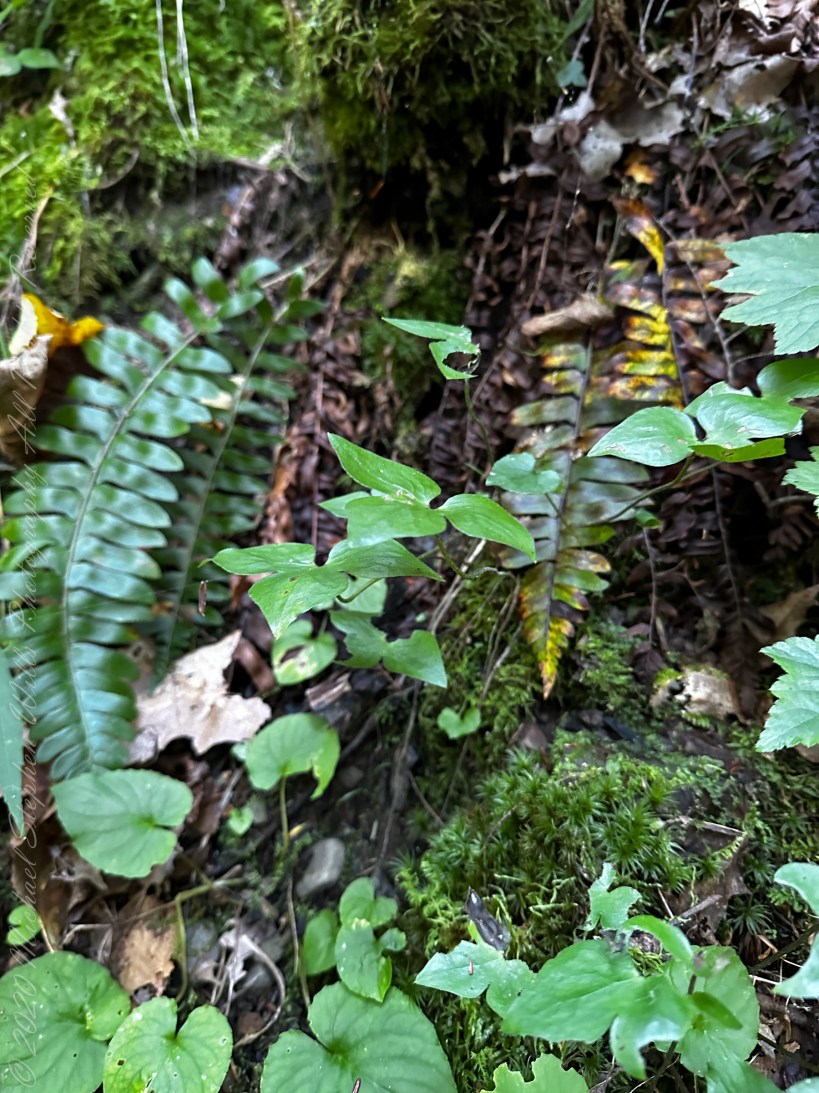
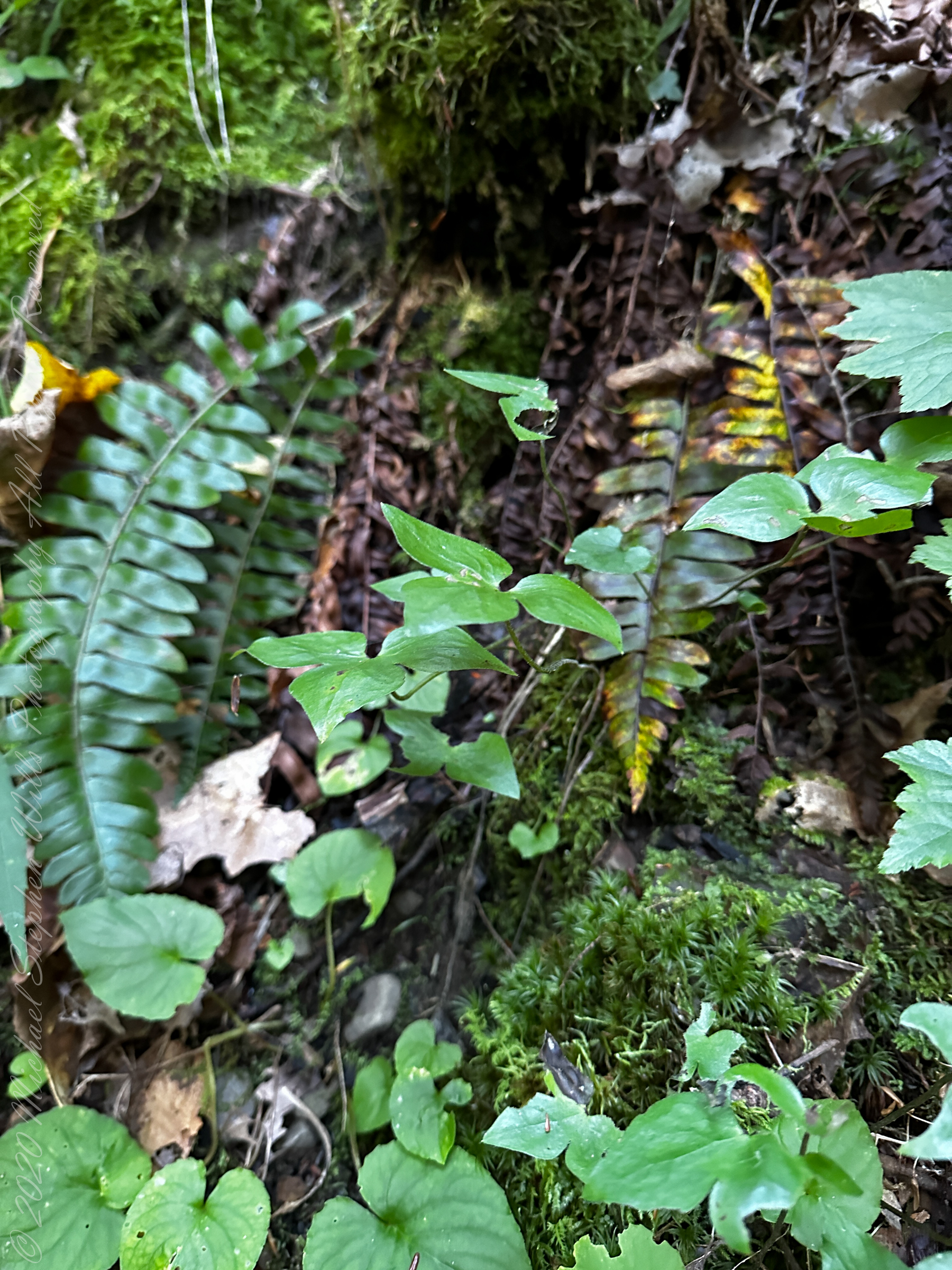
These characteristic leaves are Hepatica plants growing on the sun dappled southern rim of Robert H. Treman Park captured on a bright late September morning.
“Hepatica acutiloba, the sharp-lobed hepatica, is a herbaceous flowering plant in the buttercup family Ranunculaceae. It is sometimes considered part of the genus Anemone, as Anemone acutiloba, A. hepatica, or A. nobilis. Also generally known as Liverleaf and Liverwort.”
“The word hepatica derives from the Greek ἡπατικός hēpatikós, from ἧπαρ hêpar ‘liver’, because its three-lobed leaf was thought to resemble the human liver.”
“Each clump-forming plant grows 5 to 19 cm (2.0 to 7.5 in) tall, flowering in the early to mid spring. The flowers are greenish-white, white, purple or pinkish in color, with a rounded shape. After flowering the fruits are produced in small, rounded columned heads, on pedicels 1 to 4 mm long. When the fruits, called achenes, are ripe they are ovoid in shape, 3.5–4.7 mm long and 1.3–1.9 mm wide, slightly winged and tend to lack a beak.”
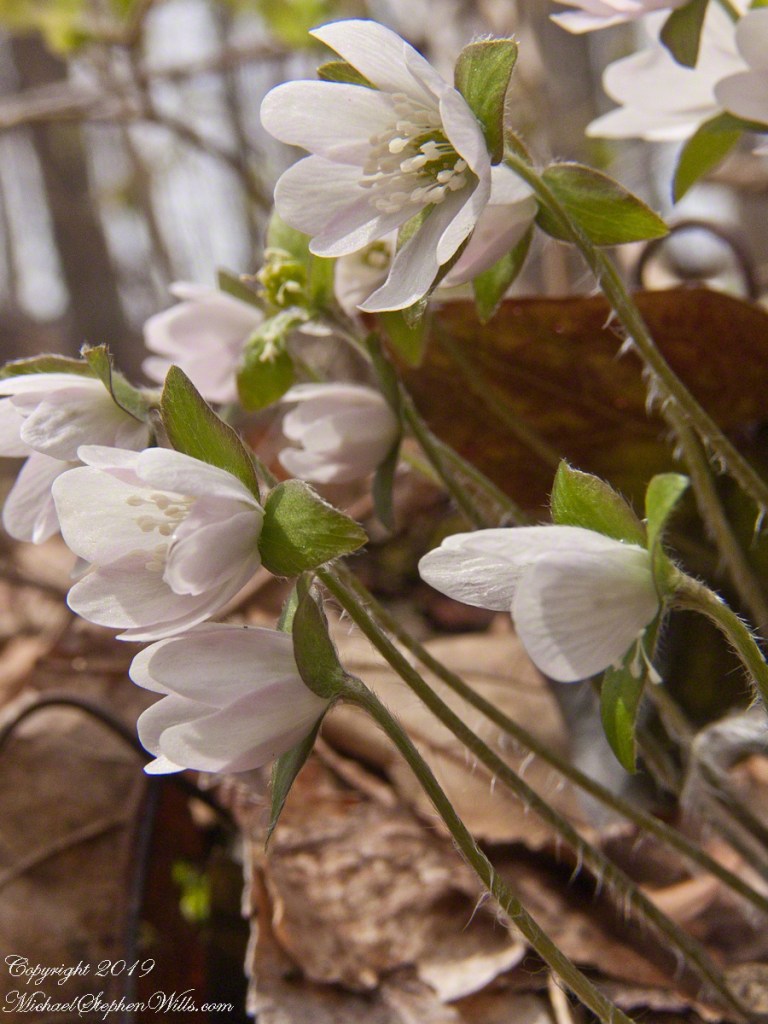
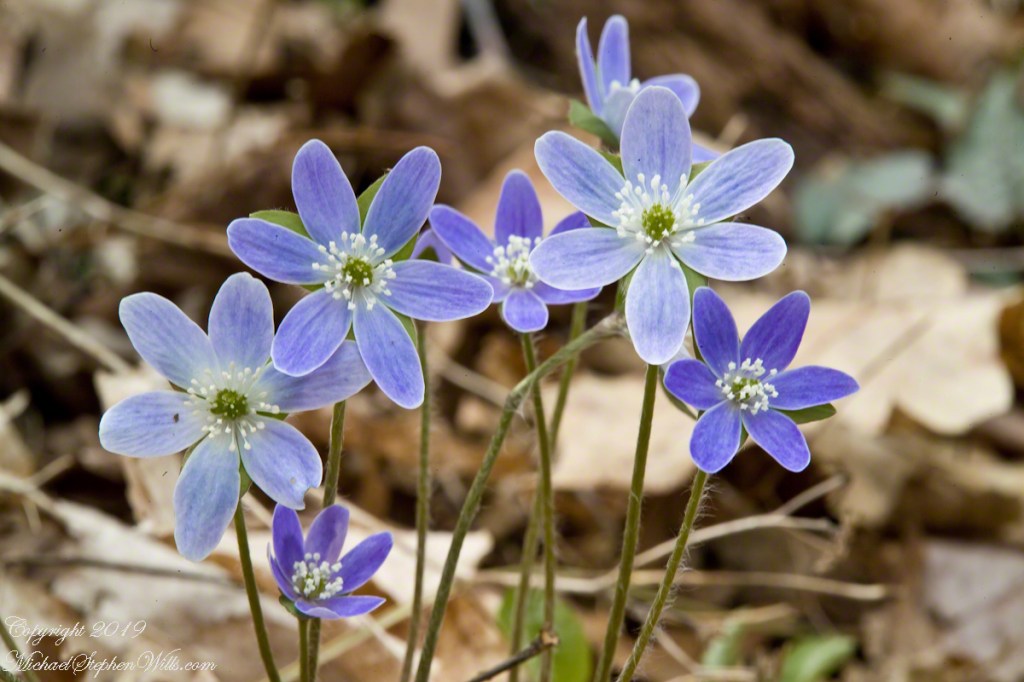
Hepatica Flowers in early spring on the Rim Trail
“Hepatica acutiloba is native to central eastern North America where it can be found growing in deciduous open woods, most often in calcareous soils. Butterflies, moths, bees, flies and beetles are known pollinators. The leaves are basal, leathery, and usually three-lobed, remaining over winter.”
“Hepatica was once used as a medicinal herb. Owing to the doctrine of signatures, the plant was once thought to be an effective treatment for liver disorders. Although poisonous in large doses, the leaves and flowers may be used as an astringent, as a demulcent for slow-healing injuries, and as a diuretic.”
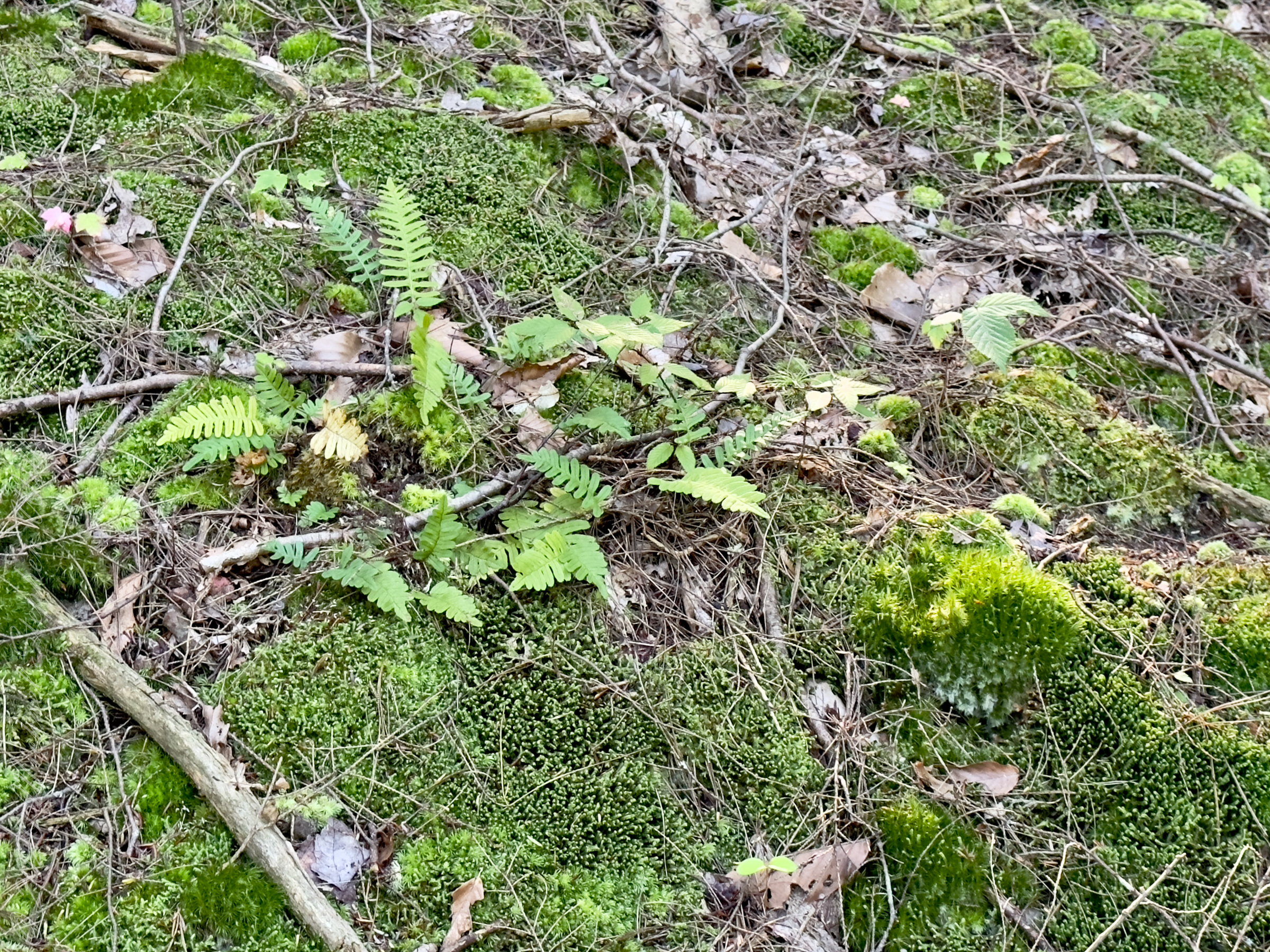
Ferns and Mosses growing beneath Red Pines
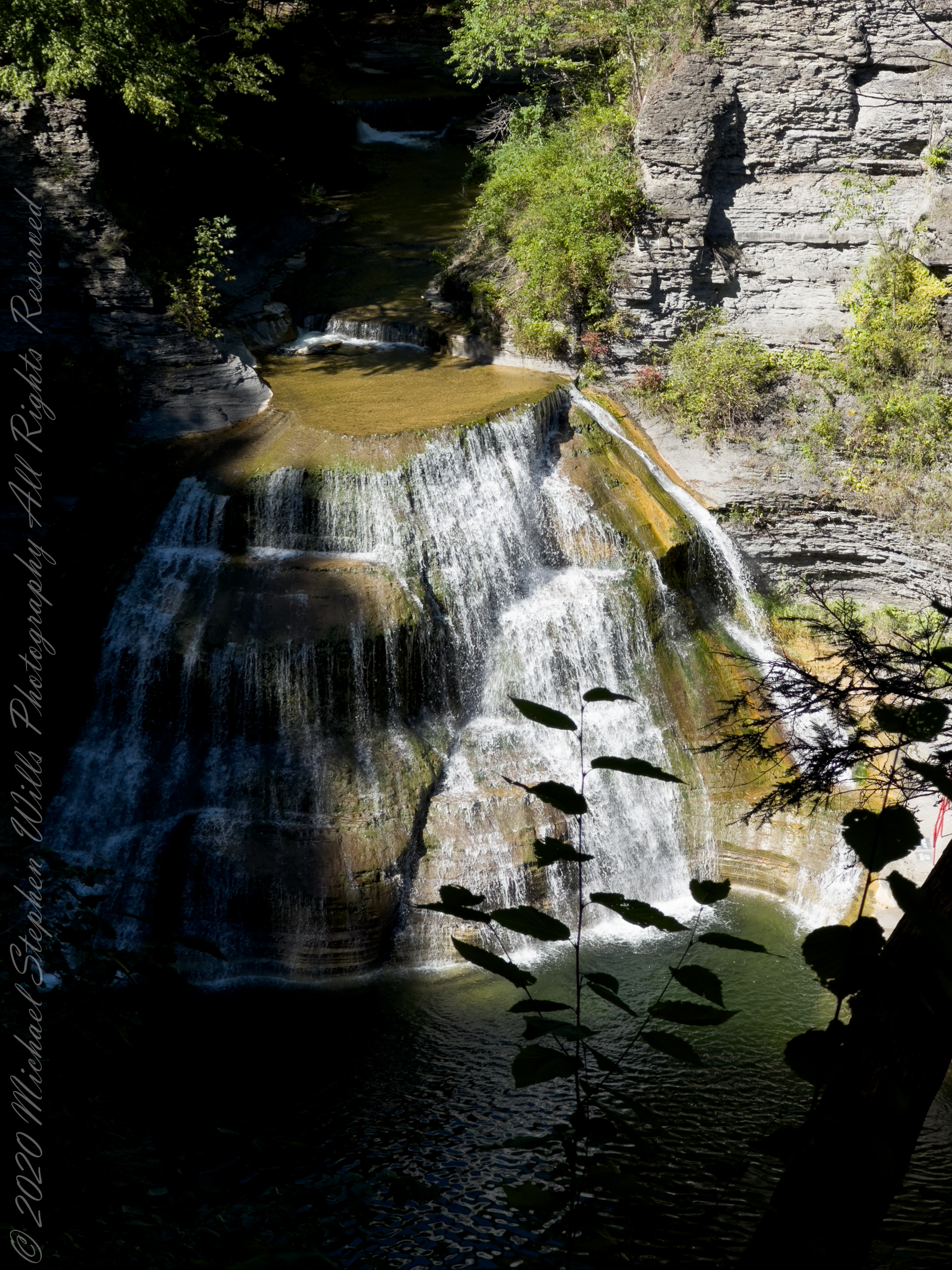
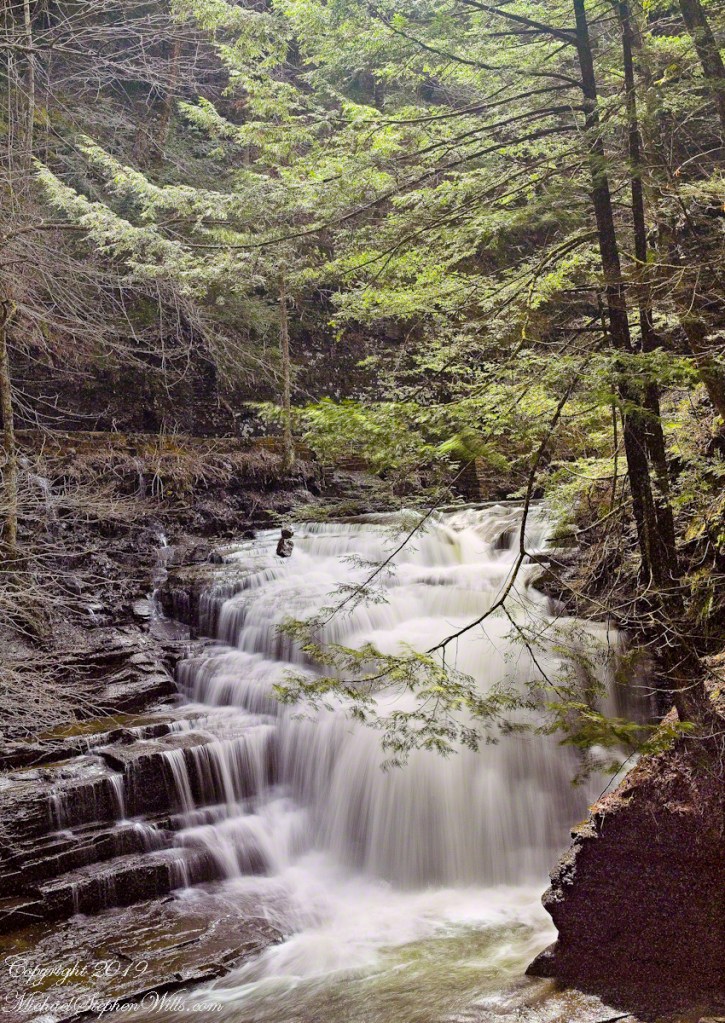
View of the lower falls and swimming hole from the Rim Trail
Our Winter Aconite started blooming around Valentines Day, February 14, 2023.
The following photograph is from the Apple IPhone 14 ProMax, raw format and perfected on the phone. The rest are from the Canon 5D Mark IV with the lens EF 100mm f/2.8 Macro USB.
As a spring ehemeral plant, its life cycle exploits the deciduous woodland canopy, flowering at the time of maximum sunlight reaching the forest floor, then completely dying back to its underground tuber after flowering.
All parts of the plant are poisonous when consumed by humans and other mammals because it contains cardiac glycosides.
The species name Eranthis hyemalis proclaims the early nature of its flowering both in the genus, “Eranthis” – “spring flower”, and species, “hyemalis” – winter flowering. The genus encompasses eight species, all early flowering winter aconite.
Reference: Wikipedia “Eranthis hyemalis” and “Eranthis.”
Copyright 2023 All Rights Reserved Michael Stephen Wills
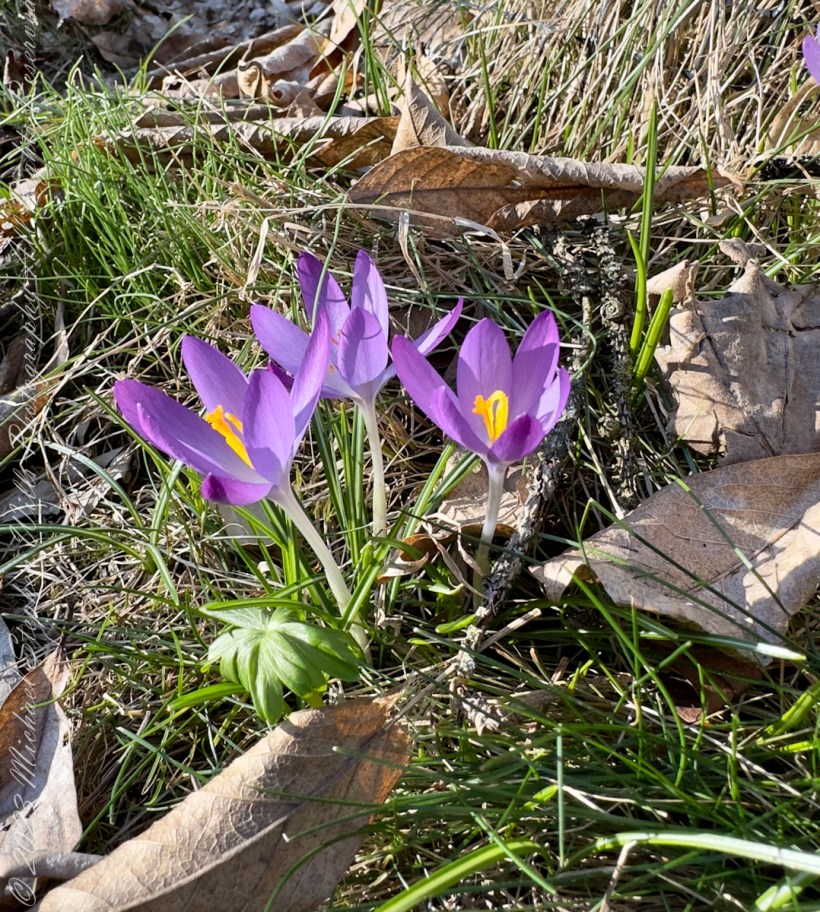
I found crocuses blooming beneath our magnolia tree on our 14th anniversary, Monday, March 20, 2023.
The following photograph is from the Apple IPhone 14 ProMax, raw format and perfected on the phone. The rest are from the Canon 5D Mark IV with the lens EF 100mm f/2.8 Macro USB.
“Crocus is a genus of seasonal flowering plants in the family Iridaceae (iris family) comprising about 100 species of perennials growing from corms. They are low growing plants, whose flower stems remain underground, that bear relatively large white, yellow, orange or purple flowers and then become dormant after flowering. Many are cultivated for their flowers, appearing in autumn, winter, or spring. The flowers close at night and in overcast weather conditions.”
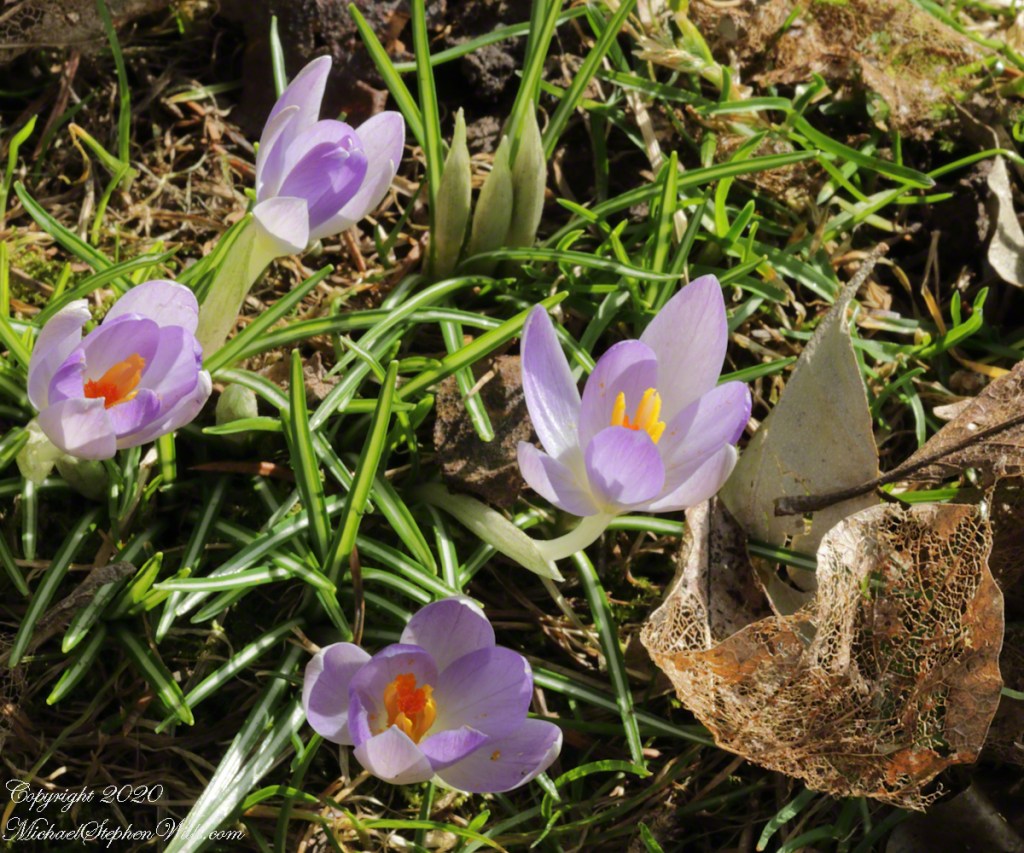
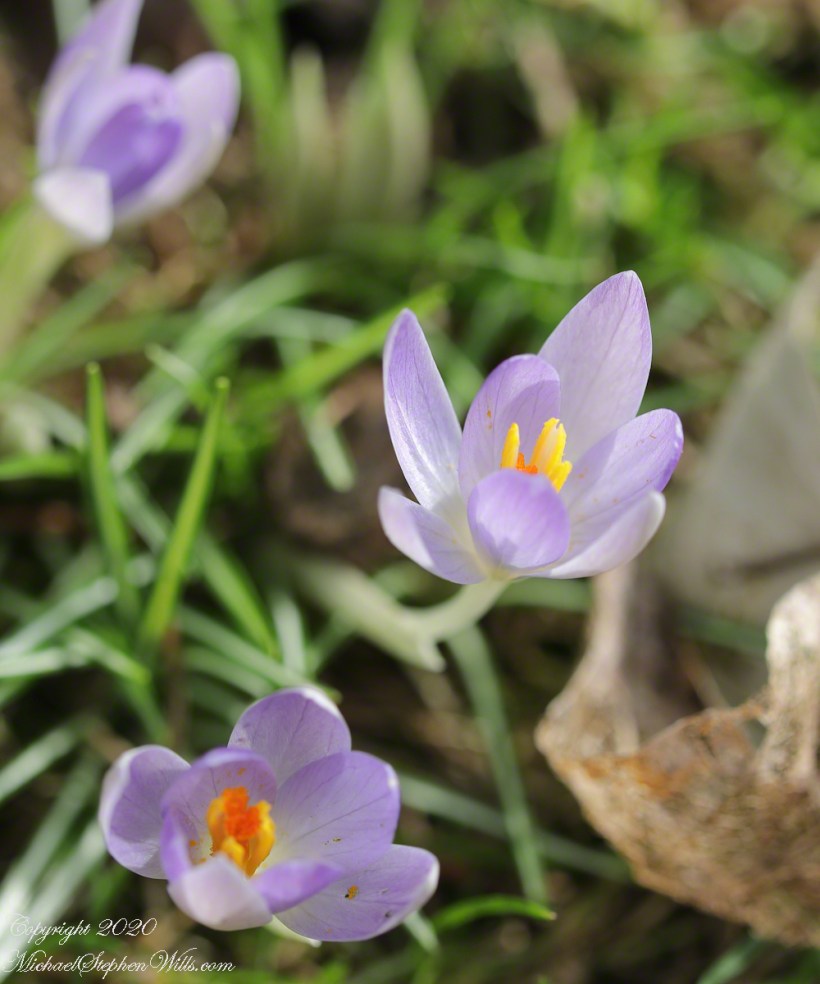
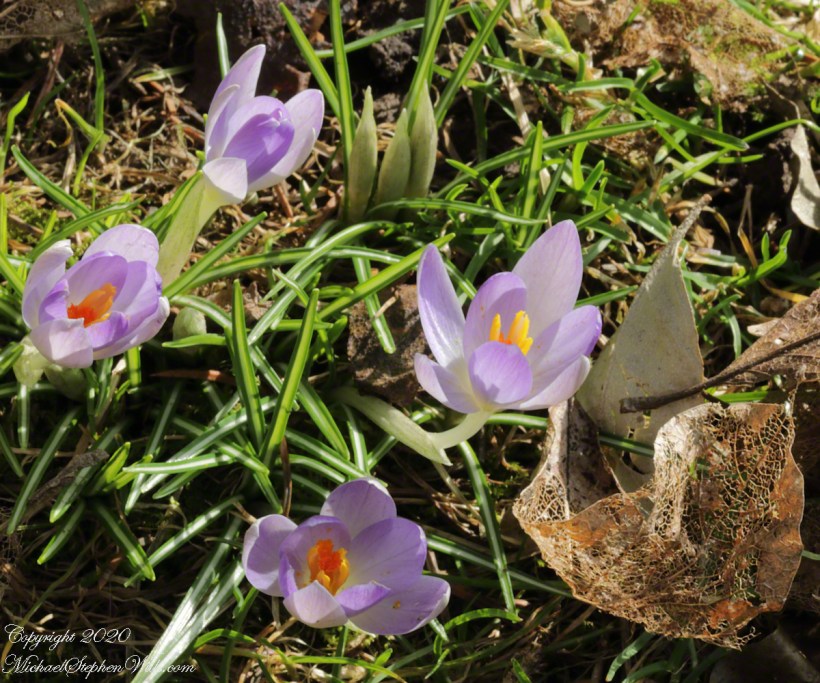
Here are partially closed blooms under the same magnolia tree on a very cold March 2020 afternoon.
“The crocus has been known throughout recorded history, mainly as the source of saffron. Saffron is obtained from the dried stigma of Crocus sativus, an autumn-blooming species. It is valued as a spice and dyestuff and is one of the most expensive spices in the world. Iran is the center of saffron production. Crocuses are native to woodland, scrub, and meadows from sea level to alpine tundra from the Mediterranean, through North Africa, central and southern Europe, the islands of the Aegean, the Middle East and across Central Asia to Xinjiang in western China. Crocuses may be propagated from seed or from daughter cormels formed on the corm, that eventually produce mature plants. They arrived in Europe from Turkey in the 16th century and became valued as an ornamental flowering plant.” Source: wikipedia “crocus”
Copyright 2023 All Rights Reserved Michael Stephen Wills
Back in 2007 I used a 100 mm Canon Macro lens on a Kodak slr along with a Sony DSC-F828 variable lens for this mix of macro and habitat captures presented as a gallery so you can flip back and forth among the larger images. Click any image to bring up a larger version.
Click photograph for a larger view. To do this from WordPress Reader, you need to first click the title of this post to open a new page.
A tripod held the composition steady and the timer was set to 2 seconds for extra stability. With the leaf body worn away by time, the remaining veining turns the form lacy.
Here is a slideshow today’s and previous wildflowers.
Copyright 2021 All Rights Reserved Michael Stephen Wills

 Michael Stephen Wills Photography