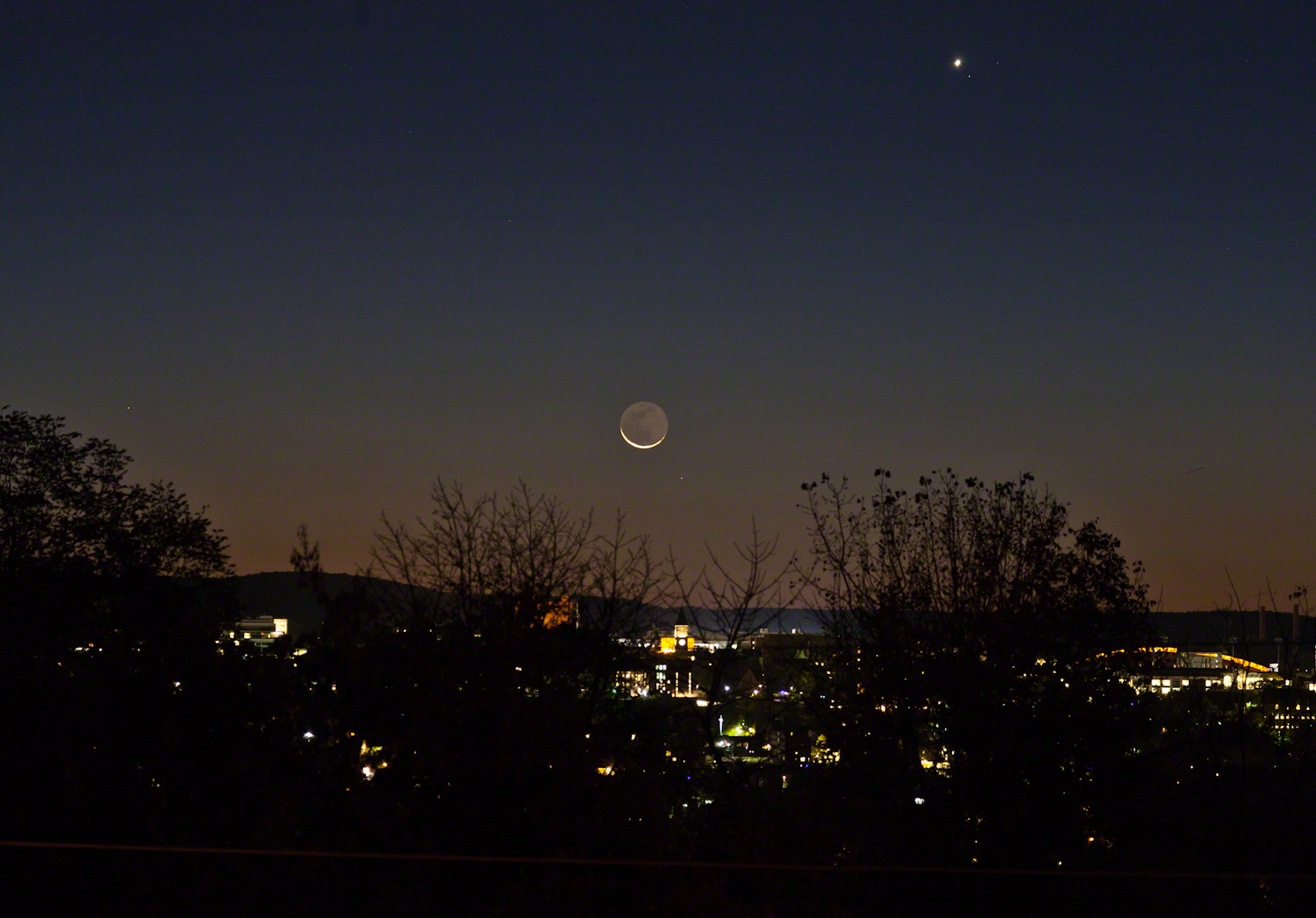
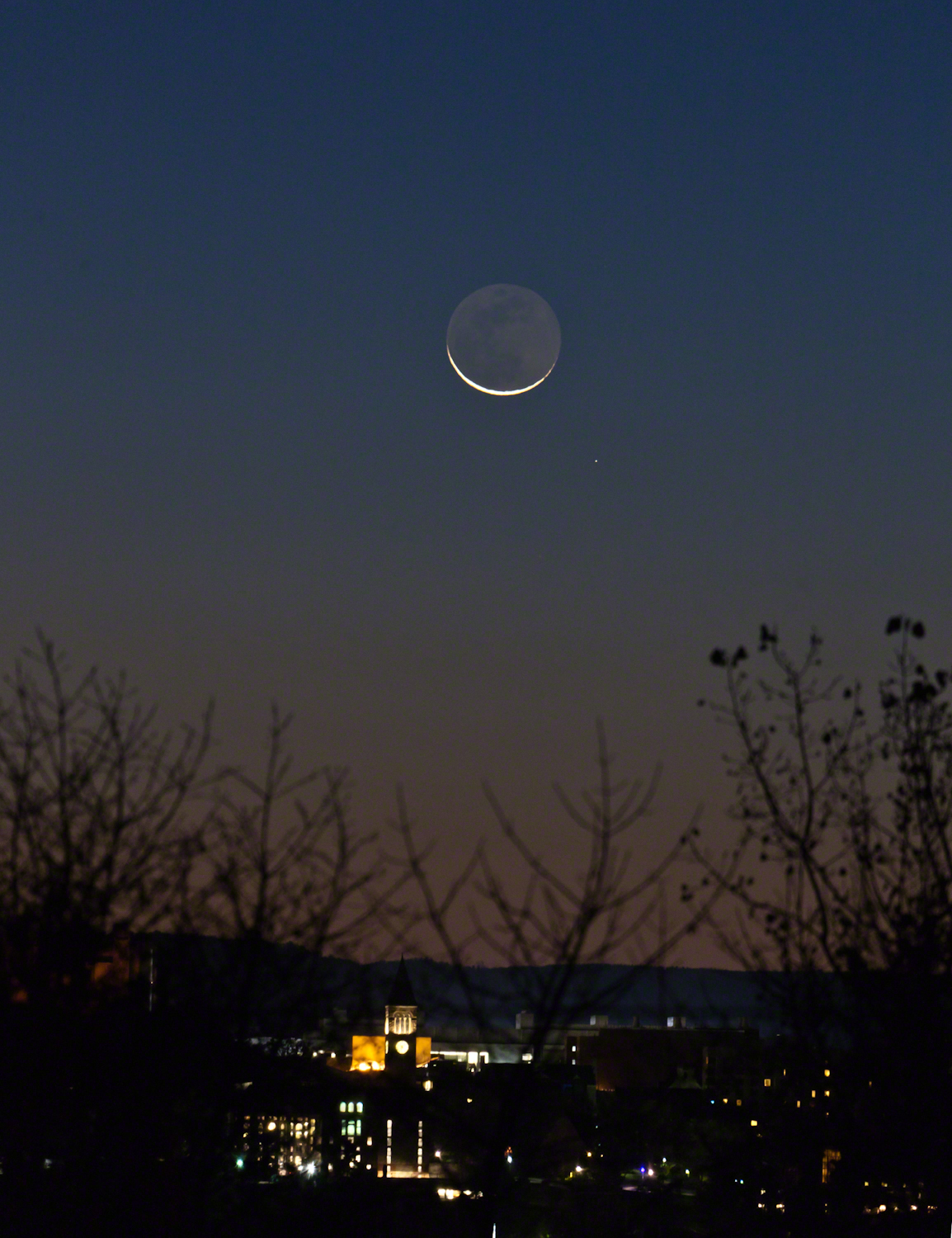
Here are two photographs taken about the same time, 6:30 am, October 18, 2017, companions to the photograph shared earlier this week.
The moon rises later each day, so these shots include a larger disk closer to Cornell University. Both components, the crescent and earth-glow, were dimmer this morning. In each photograph Jenny McGraw Tower is visible.
The star is Regulus, the brightest in the constellation Leo, close below the moon. I don’t know the star close to Venus.
Here the tower is slightly to the right of the crescent, the arch of Schoellkopf stadium further right. Among the trees on left, is the baleful red glow of Bradford Hall.
The tower is outlined by the lights of Uris library, presumably filled with early rising students.
The light of Regulus (“small king”), below and to the right, is a composite of four stars moving together through space. The position of Regulus on the path in the sky of the moon, planets and asteroids (called the ecliptic) leads to the occultation of the star by the disks of the moon and, less regularly, the planets and asteroids.
Copyright 2021 Michael Stephen Wills All Rights Reserved
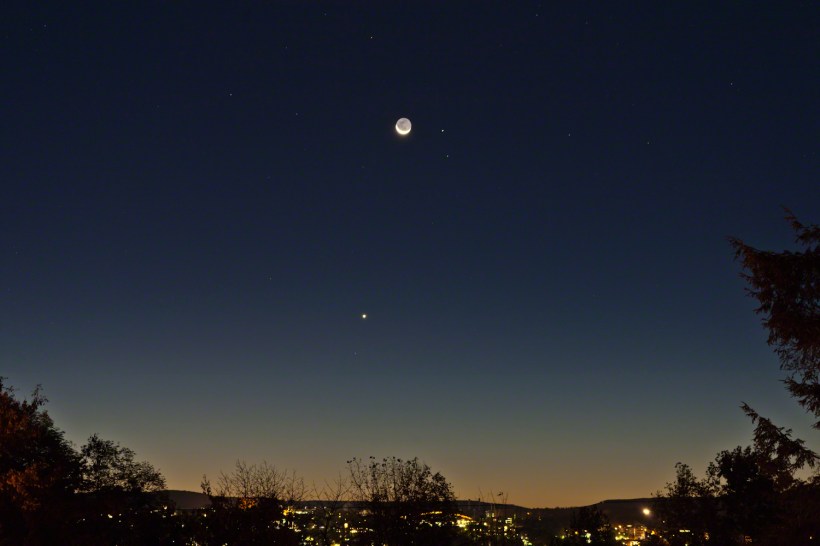
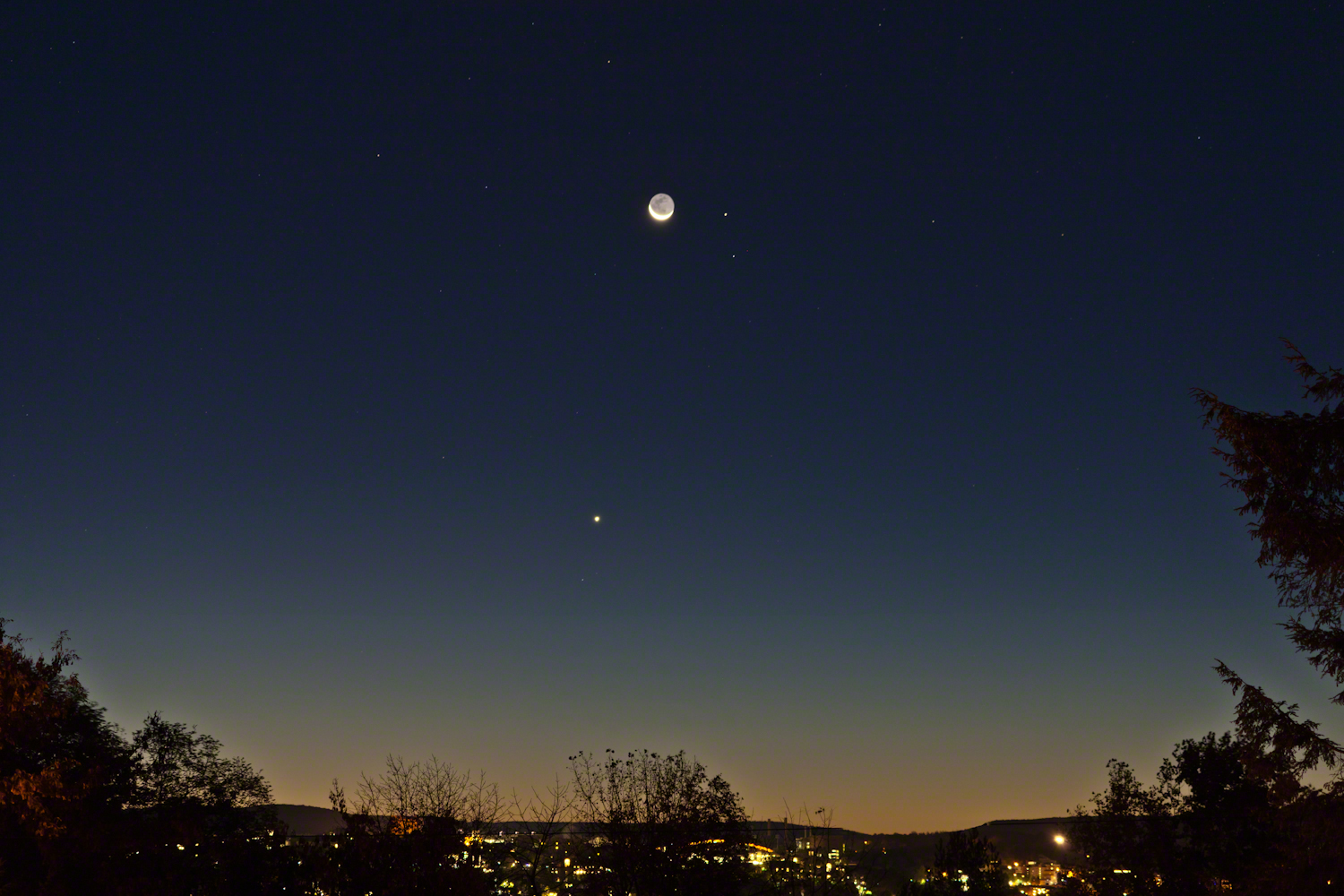
A thin crescent bowl filled with earthglow floating above the dawn attended by Venus, Mars, Virgo.
This was the view from Ithaca, New York at the start of dawn this morning of Tuesday, October 17, 2017. Mars is next to the moon, the stars of the constellation Virgo scattered around, Venus is the bright object below. We had a bright, clear sky not unusual for September and October.
In the city, an arch of Schoellkopf Stadium on the Cornell University campus. Cornell is on east hill. We live on west hill, across the valley. It is quiet on west hill, away from the students.
Earlier this week the crescent was in the constellation Leo where the bright limb occulted the bright star Regulus, to reappeared from behind the dark limb, a brilliant spectacle that happened after dawn for New York. It was cloudy, as usual, on October 14.
When I woke, the moon was shining through the trees, still full of just turning leaves. The crescent turned, cup like, above the horizon, to cradle the dark orb glowing from the reflected light of our earth. I did not recognize Mars, the disk was less red than usual. Research revealed the moon had two planets in seeming attendance. I also learned that, when the horns point right the moon is waning, moving toward a new, or un-illuminated, moon. When the phase moved from new it is also a crescent with horns pointing left.
This morning was a fortunate gift, I had never contemplated the moon in quite this form before.
Copyright 2021 Michael Stephen Wills All Rights Reserved
An 84-degree October walk up Cascadilla Gorge—quiet paths, bluestone porches, fresh paint on the bridge—waiting for the footbridge to catch the last, warm evening sunlight.
Every fall I make a point of walking Cascadilla Gorge at least once. On an 84-degree October 9 afternoon, Pam was tied up with chores, so I parked downtown and stopped to see the grandchildren. They were with their mom. Two were “too tired” after school to do anything. The youngest, at the age of four, was not yet in school and he floated the idea of the skateboard park; for me, that wasn’t in the cards. So I set off on foot up Court Street, past the residence of Buddhist monks at the gorge entrance.
Cascadilla Gorge is part of Cornell Botanic Gardens (formerly the Plantations), the university unit that stewards natural areas and gardens across campus. Foot traffic was light. A sign explained why: the lower trail was closed at Stewart Avenue, where the bridge spans the ravine. I crossed to the north side by the Christian Science church and wound up Cascadilla Park Road to the rim trail that climbs East Hill toward campus.
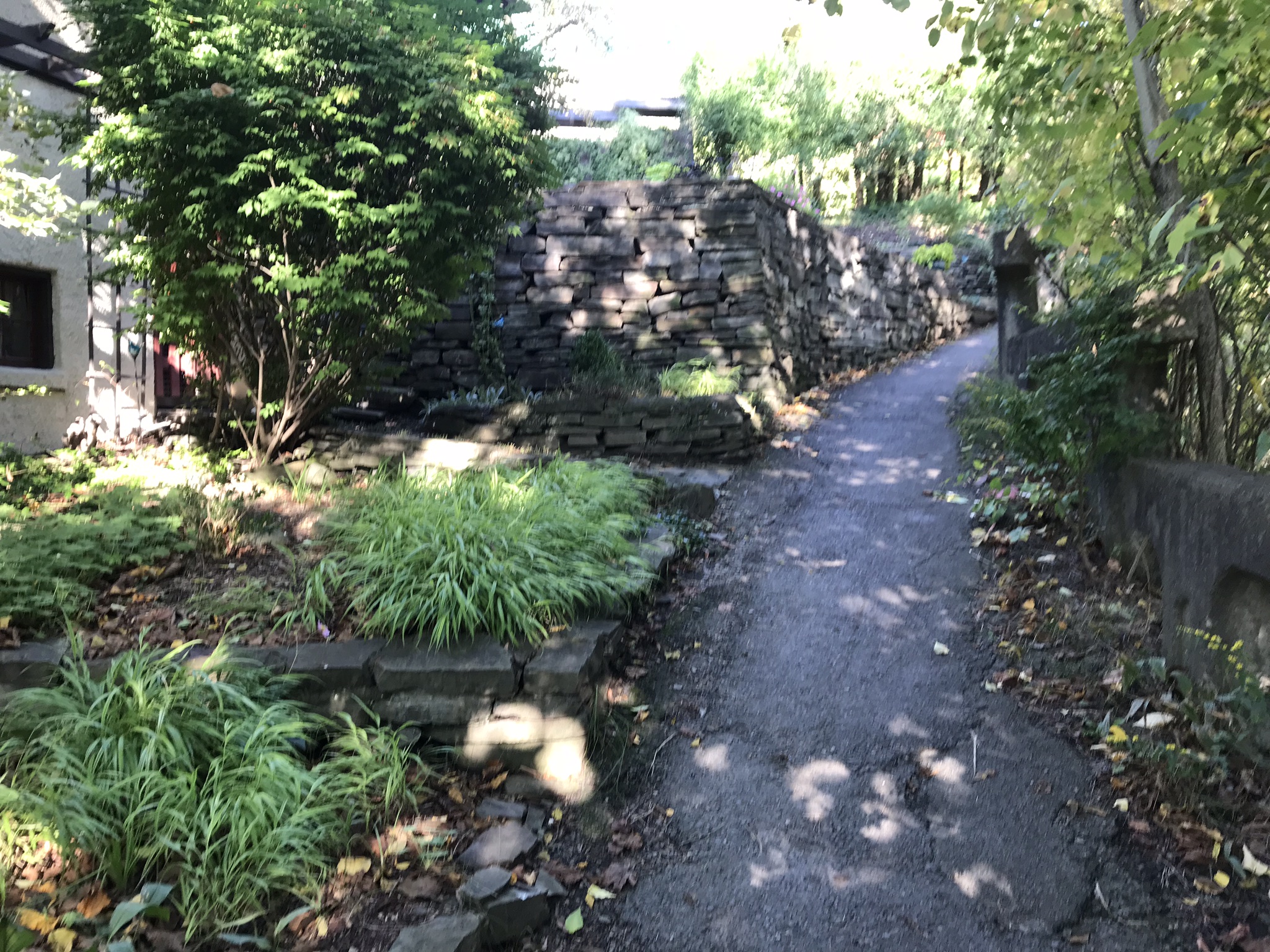
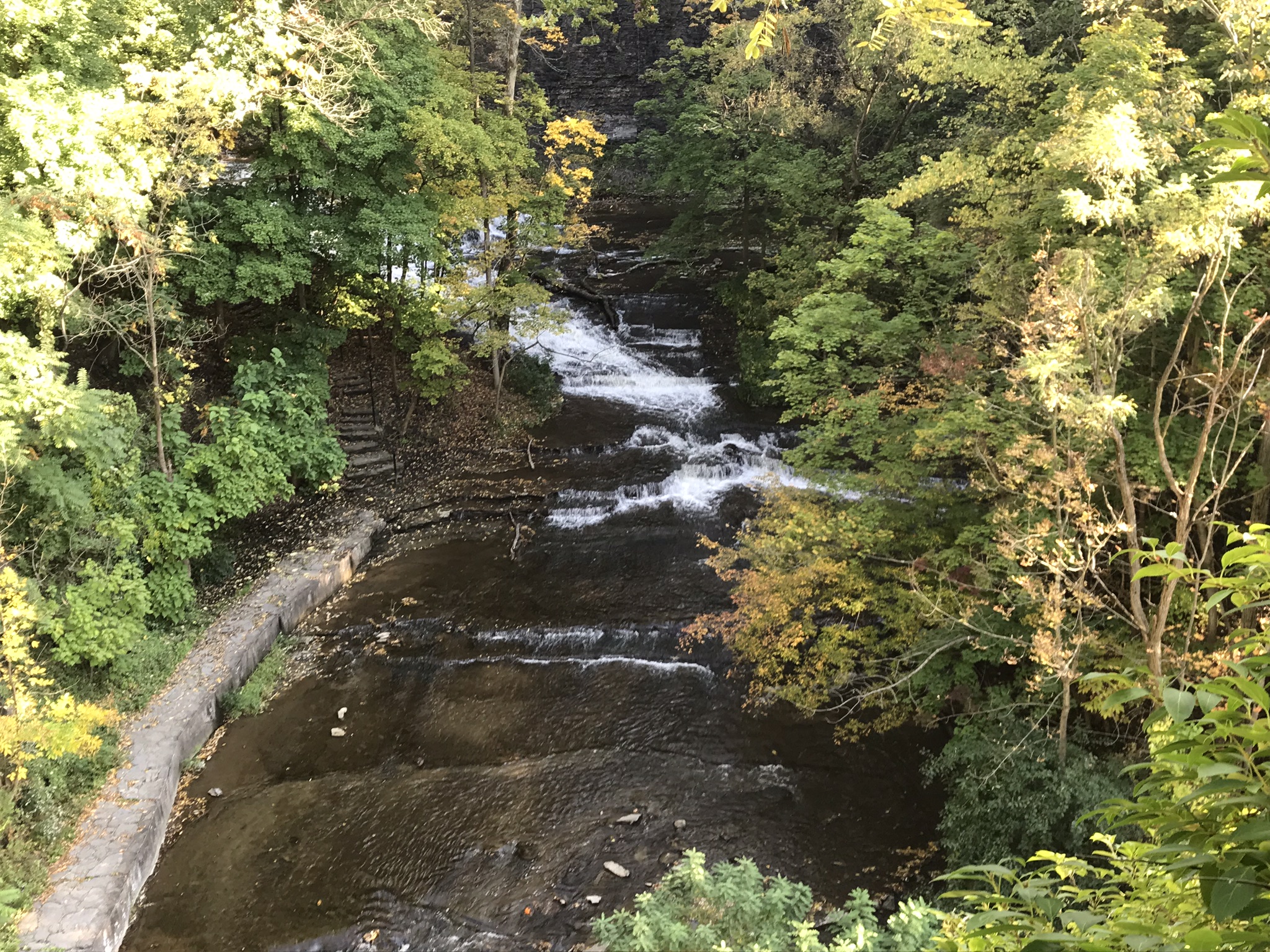
Homes line this stretch, porches facing the gorge where the constant music of creek and falls carries up. Not feeling ambitious, I made a few phone snapshots. Here the path squeezes past a porch built of local “bluestone,” a feldspathic sandstone native to the region—around town it’s sometimes called “Llenroc,” Cornell in reverse.
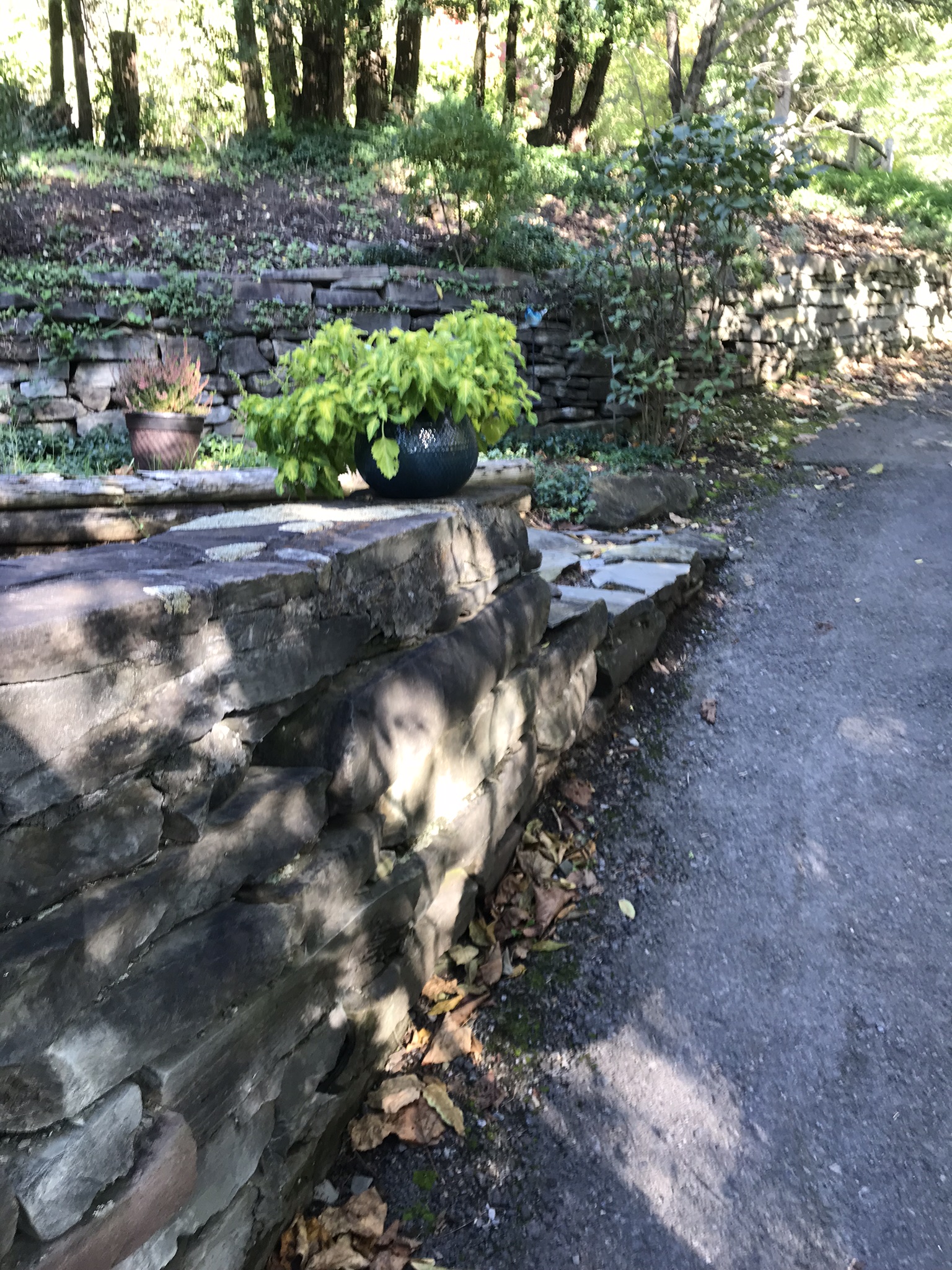
That pot you see in the previous photo gets a closer look here, with more of the same weathered bluestone.
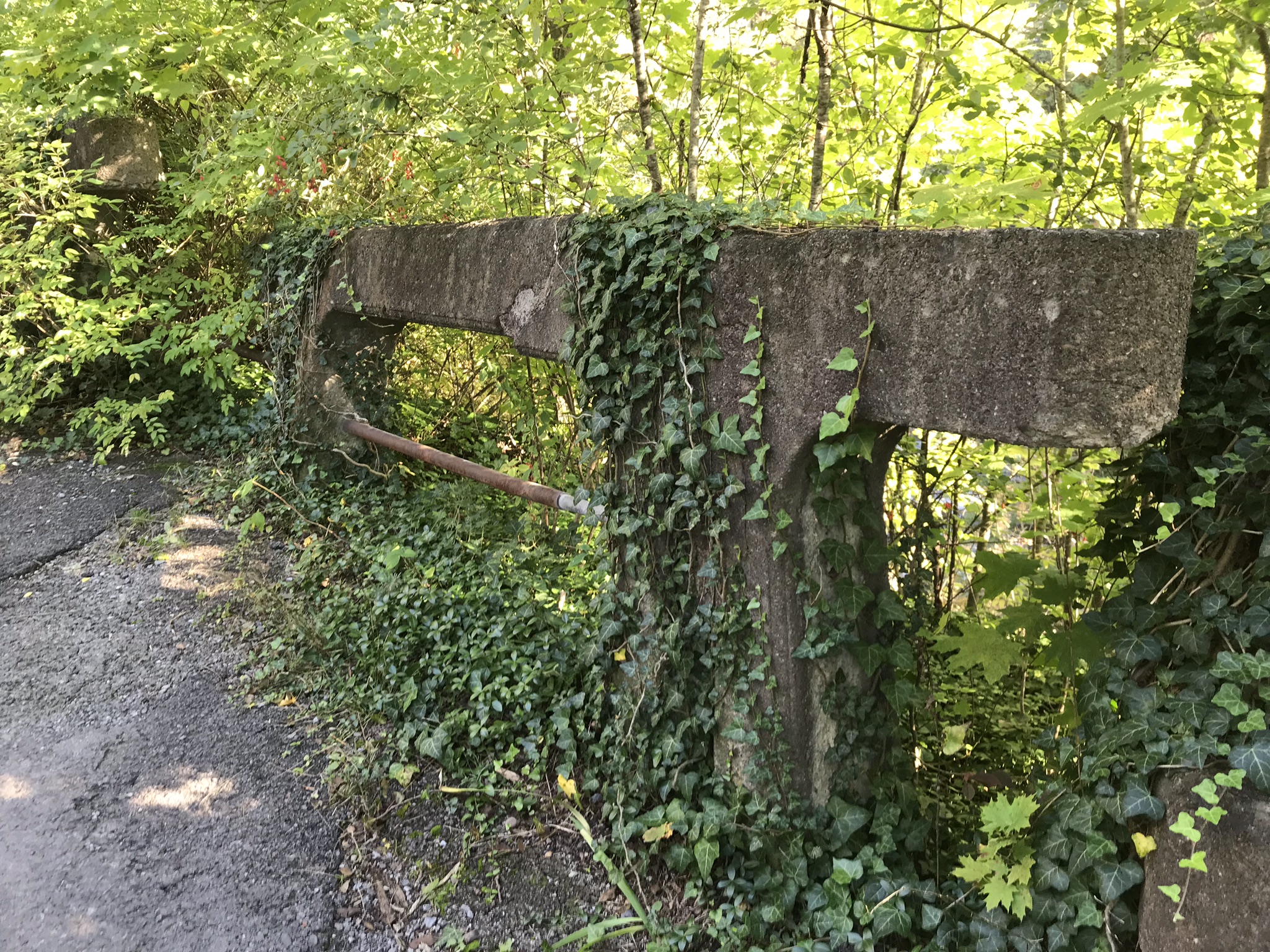
The drop to the gorge floor is steep, sheer in places. The barrier fence looks stout in some sections and thins to almost nothing in others. A few years ago, a recent Cornell graduate walking home late along this path fell to his death. I continued to the fork for the Ithaca City Cemetery, climbed to Stewart Avenue, turned right to cross the Cascadilla bridge, then right again onto the Gorge Rim Trail back toward town. At the bridge I noticed part of the closure work: fresh paint on the bridge and on the suicide-prevention netting beneath. On September 24—just fifteen days earlier—a Cornell senior had jumped; the net caught him, and the fire department brought him to safety.
From the concrete barrier in that photo you can peer into the gorge: a beautiful view, the steady voice of water rising from below. I try to leave the darker stories where they belong—at least until the sight of fresh paint pulls them back to mind.
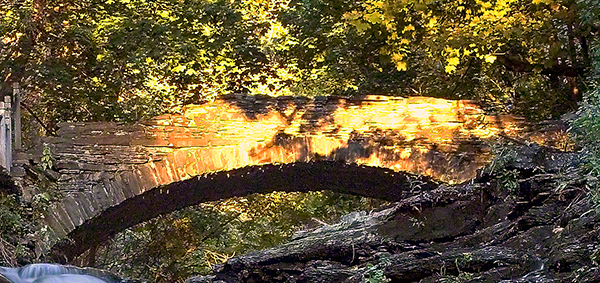
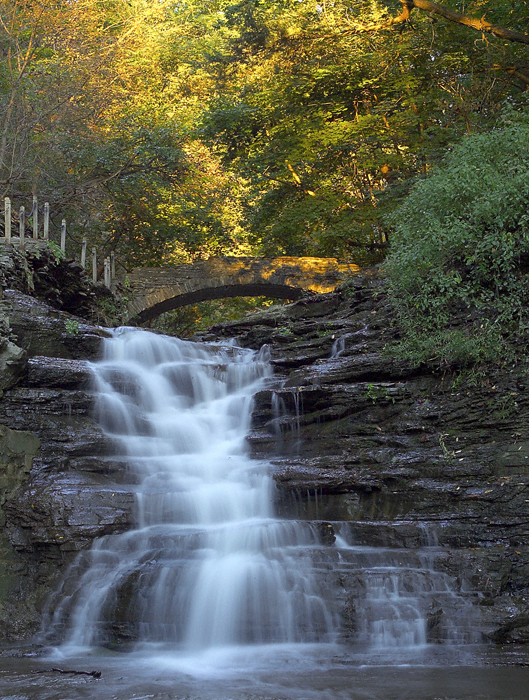
I took the following photograph in 2005, the September before my previous post, “Autumn Stroll in Sapsucker Woods” with the Kodak DSC pro slr-c, an ND filter, 50 mm lens and a tripod. It was a planned session, I work waterproof boots and was able to stand in the creek after a series of rain-free days. At this time of the year the gorge opens to the setting sun. I waited, taking a series of photographs for the perfect amount of light on the footbridge. The feature photograph (the header to this posting) is a detail from a shot with the bridge more fully lit.
The header image for this post comes from a planned session in September 2005, just before the photograph of my “Autumn Stroll in Sapsucker Woods” post. I used a Kodak DCS Pro SLR/c with an ND filter, a 50 mm lens, and a tripod. After several rain-free days I wore waterproof boots and stood mid-creek. In autumn the gorge opens to the setting sun; I waited and shot a sequence until the light laid perfectly across the footbridge. The banner image is a detail from a frame where the bridge is more fully lit.
We have a framed print of that photograph at home. I mounted it as a gift to Pam on our first Valentine’s Day.
“September Sunset in Cascadilla Gorge”
If you’ve walked Cascadilla Gorge in autumn, I’d love to hear your favorite vantage points—porches along the rim, the lower stone steps, or the footbridge at golden hour. Do you know any stories about Llenroc bluestone on these houses, or remember the Stewart Avenue Bridge before its safety upgrades? Photographers: what helps you balance deep shade and bright water from the designated trails? Share a tip or a memory in the comments.
Enter your email to receive notification of future postings. I will not sell or share your email address.
Copyright 2025 All Rights Reserved Michael Stephen Wills
Libe Slope is between the West Campus and Quadrangle / Libraries.
Click to view my Finger Lakes Memory gallery
Cornell University is on a west-facing hill above Cayuga lake.
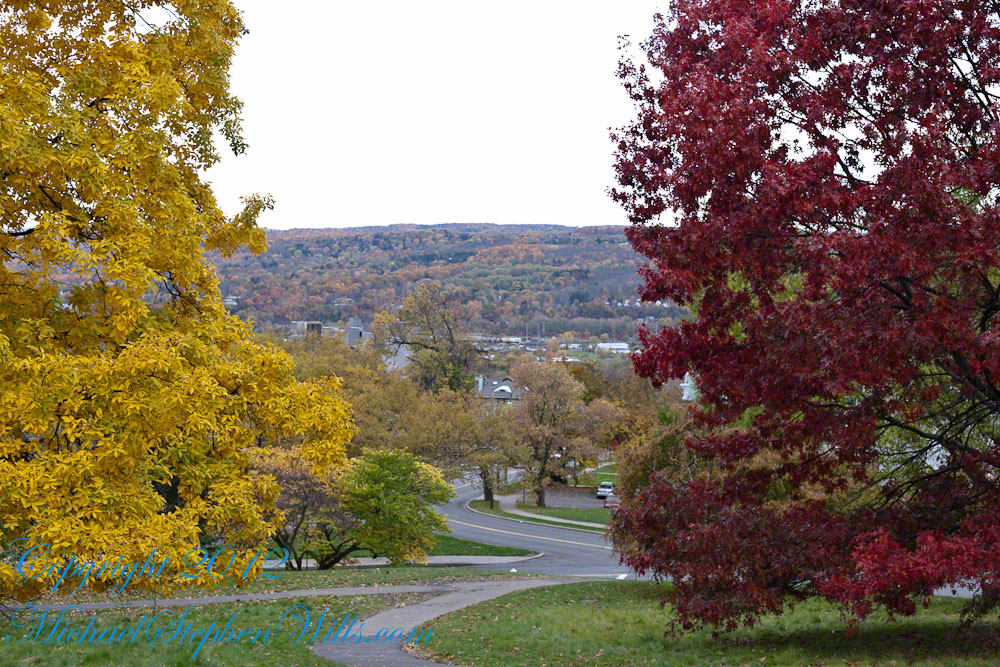
Besides the exercise of walking the 18 degree incline several times each day, Cornell students and alumni remember The Slope for autumn color.
Wonderful Flow of Limbs among Gold
Click to view my Finger Lakes Memory gallery
Hickory
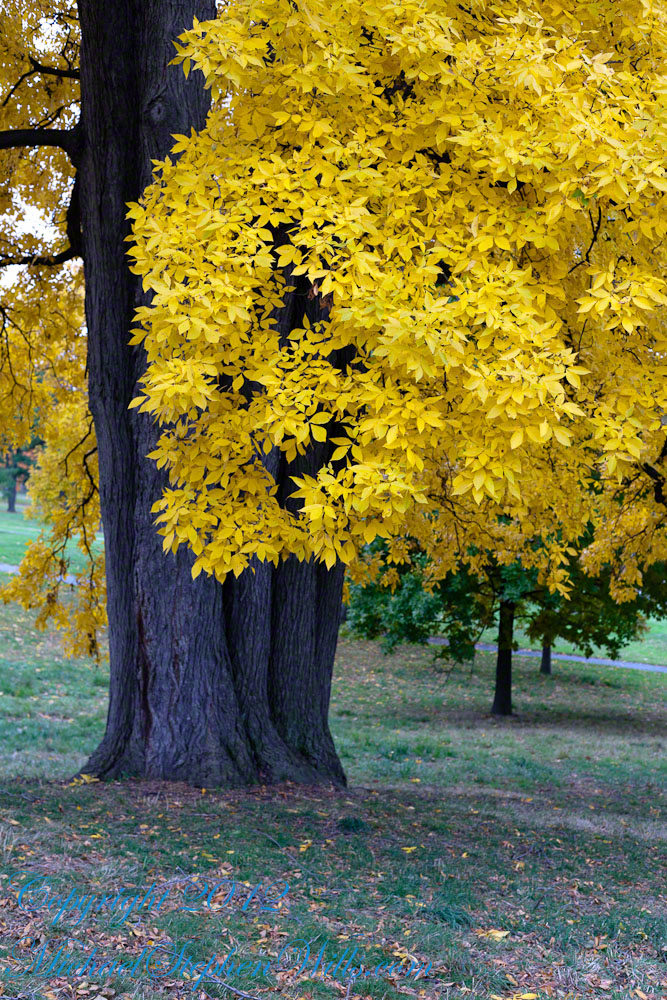
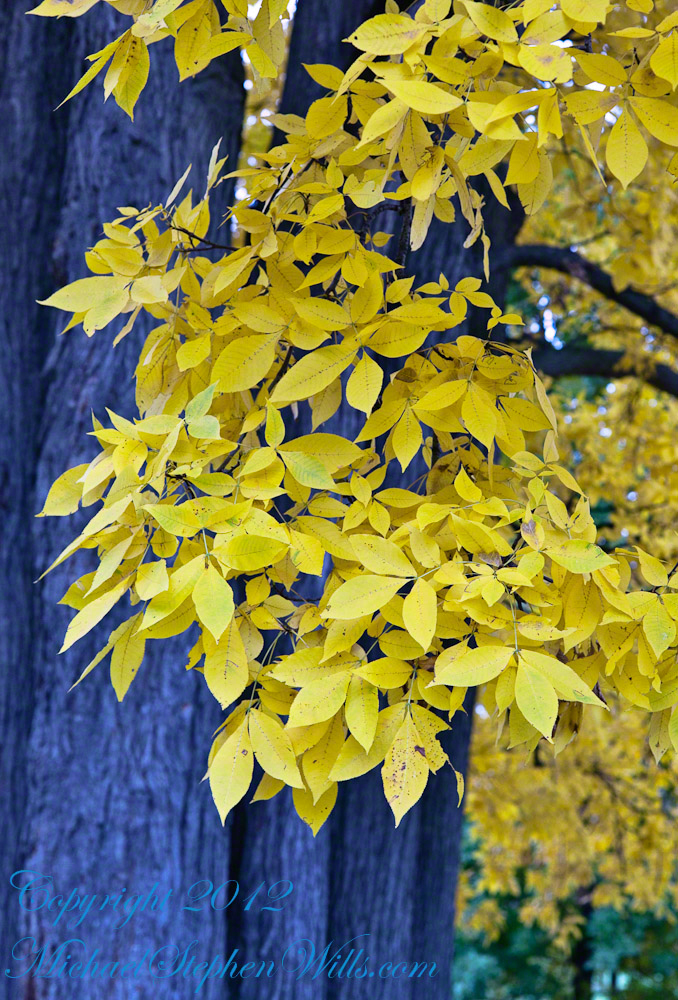
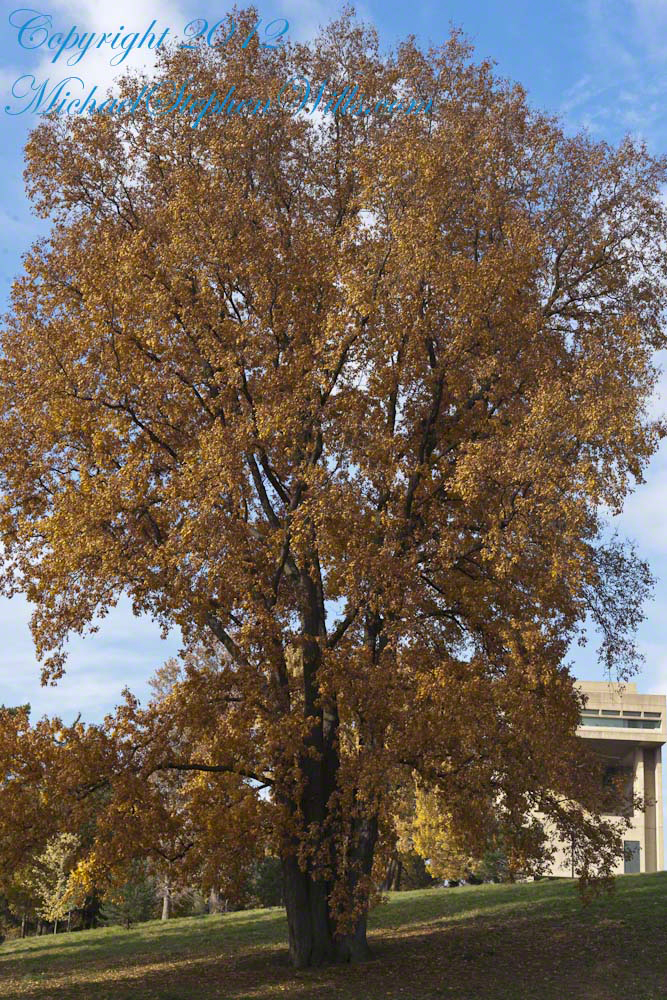
Seen from the north on a cloudy October day, this Pignut Hickory (Carya glabra) is the largest tree on the Cornell Campus, at 79 inches in diameter.
Click to view my Finger Lakes Memory gallery
Cornell University is on a west-facing hill above Cayuga lake.
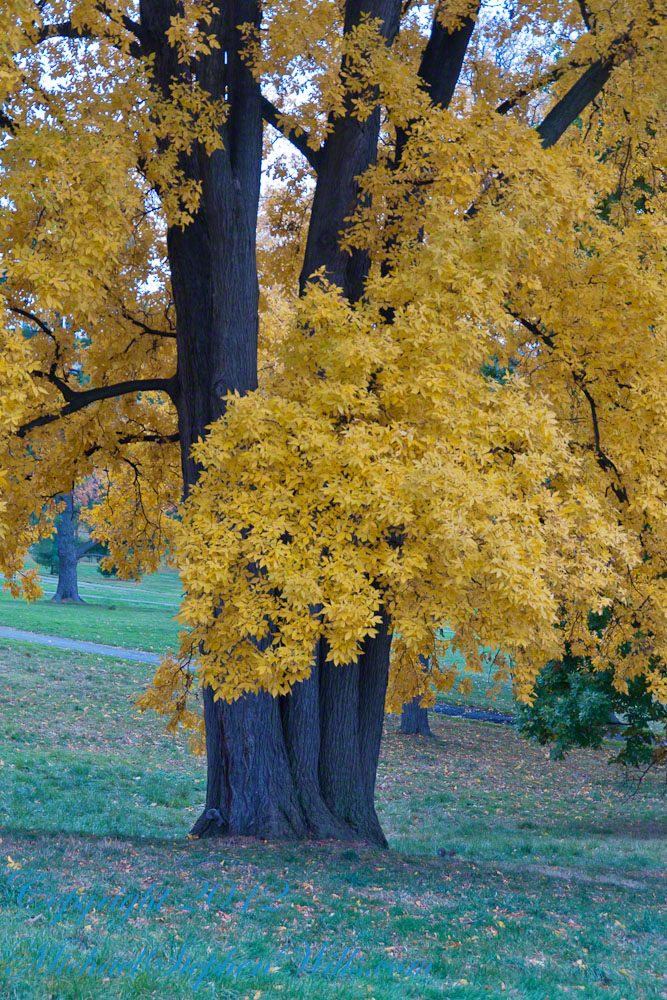
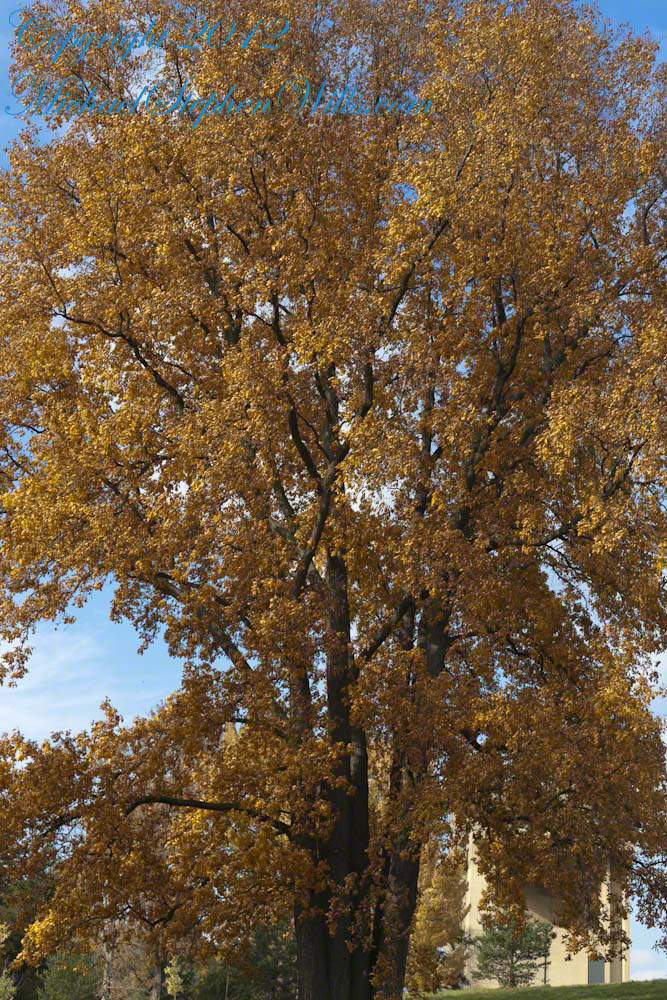
Take another look at the previous image. Can you find the grey squirrel? This hickory grows south of the Johnson Museum and among the autumn glories, it is the largest and brightest yellow canopy on Libe Slope.
Contrast
An overcast day is the best to capture this spectacle. October 20, 2012 provided both bright sun and dark, rolling autumn clouds. I waited on the north side, sheltered from the glare of the sky, for these perfect moments.
Click to view my Finger Lakes Memory gallery
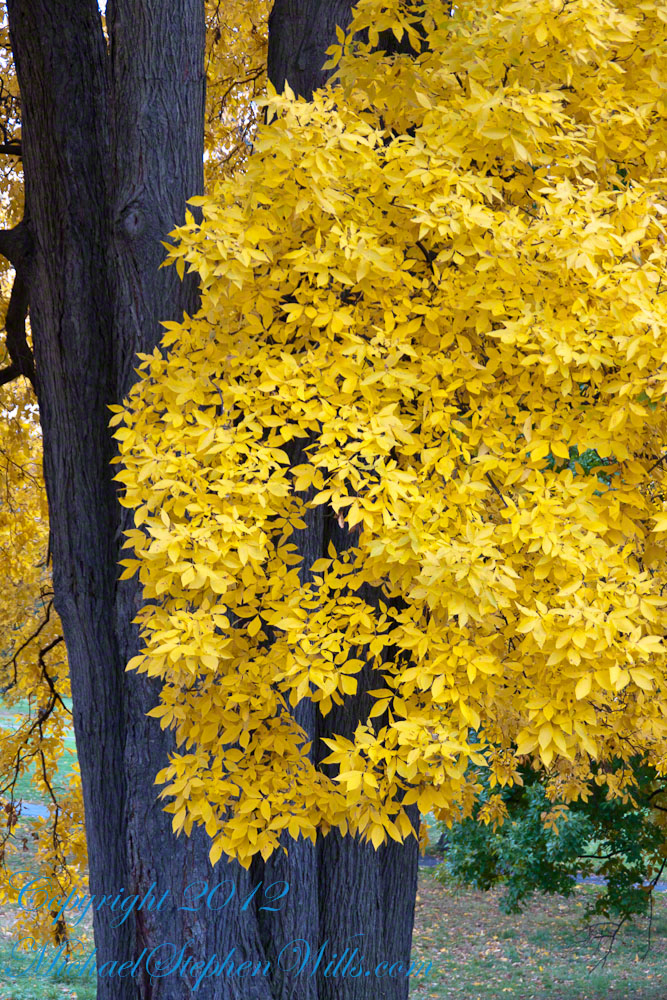
I remember this hickory for the contrast between the canopy and trunk, the way the clumps of yellow hang from dark boughs.
The pignut hickory is native to these Eastern United States. It is known to favor moist slopes and this specimen has thrived on The Slope. The ground beneath it is thick with nuts.
Click to view my Finger Lakes Memory gallery
One week later
Just one week later, late afternoon on a sunny Friday as hurricane Sandy approached the east coast the hickory has fewer, tawny golden leaves.
Copyright 2021 Michael Stephen Wills All Rights Reserved
After work on a 2008 Friday afternoon in October we sped over to Beebee Lake on the Cornell University Campus to catch the late afternoon glow.
Beebe Lake is formed by a dam on Fall Creek. It seems to be the flooded meadow it is, surrounded by hills formed by glaciers 10,000 years ago. Cornell maintains footpaths around the lake.
People say that if a couple walk the a mile around the lake and over a bridge at either end, they are destined to be married. This day we passed only joggers and families. Pam and I will celebrated our tenth anniversary March 2019, so the legend worked for us.
Here are four snapshots from that time, presented in chronological order. Each is a handheld shot taken on the fly using my Sony Alpha 700 I use for exploratory photography.
Click any photograph to view my Finger Lakes Memory gallery
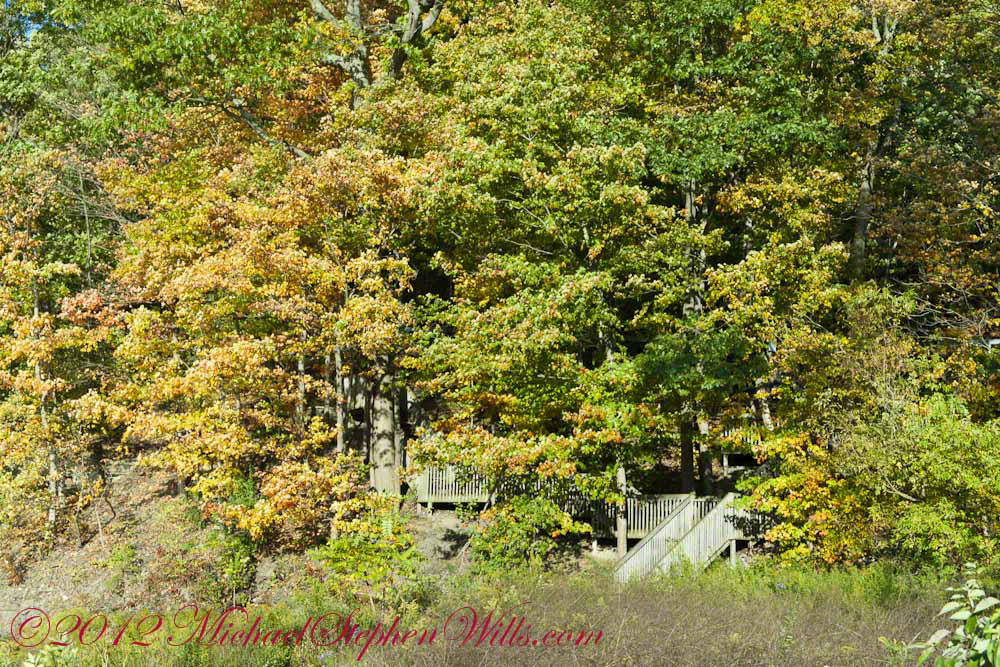
A terraced stair descends to the east side meadow to south lake shore path
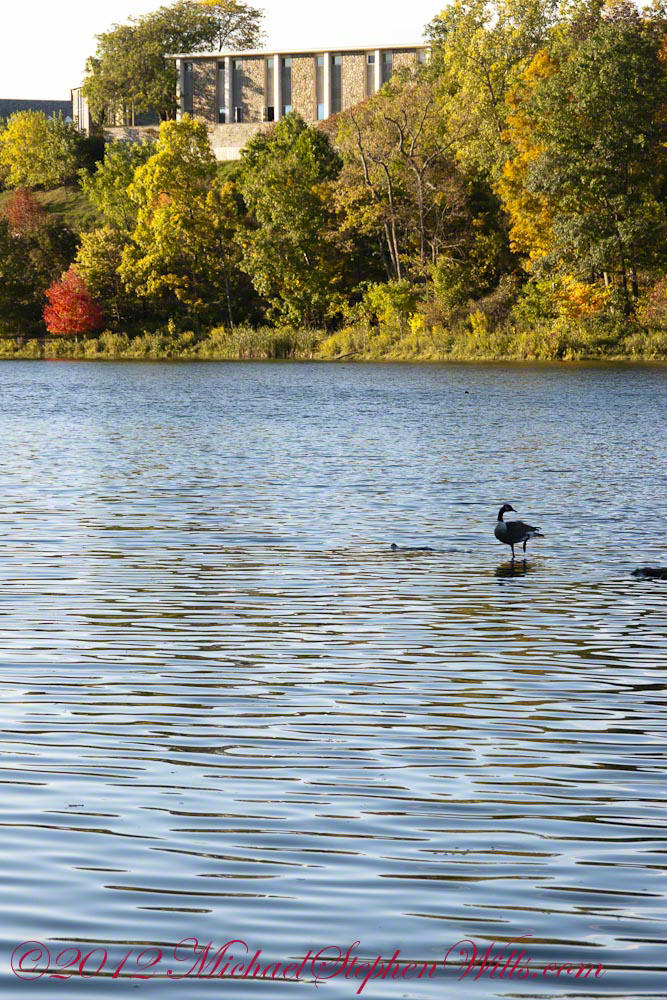
I walked down a path trod by Canadian geese to reach a clear view of the water.
View of Helen Newman Hall
Lily pads and iris fronds grow along the bank.
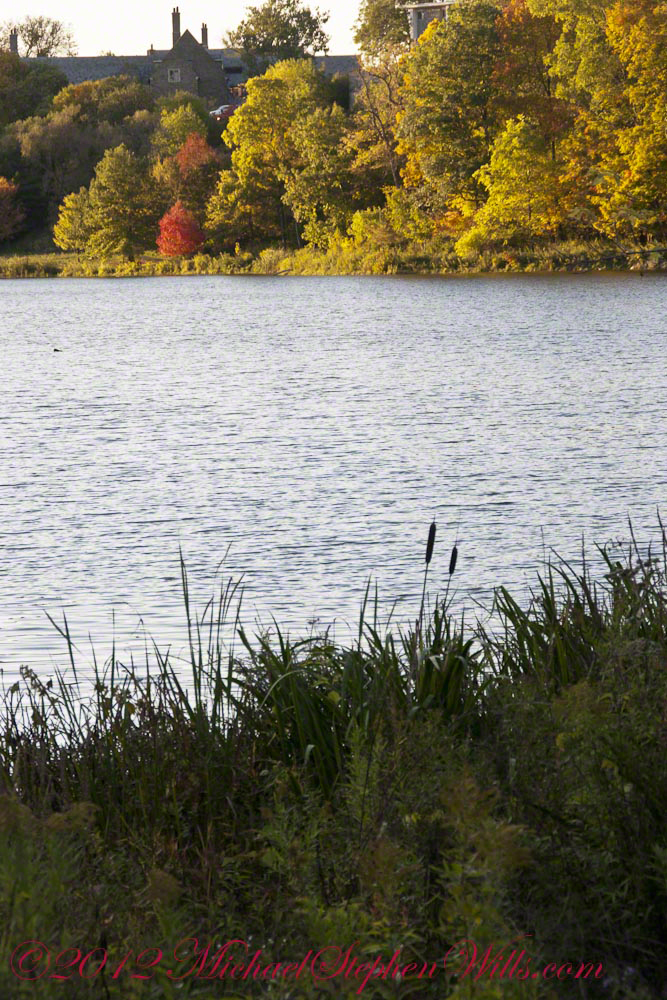
Evening sunlight reflected from smooth water crests driven by a steady light wind
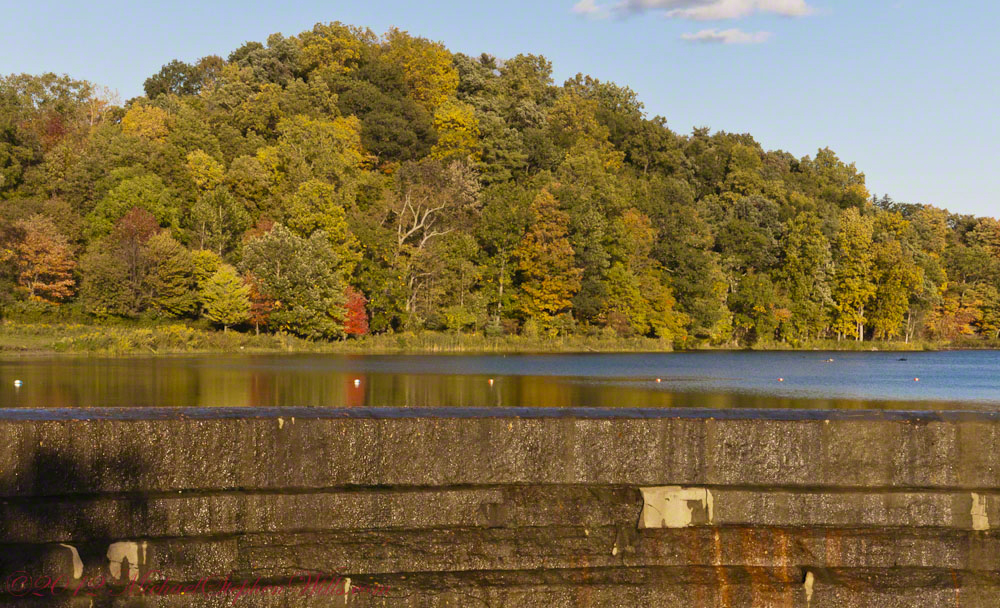
Being on the west side of the lake, the dam is bathed in golden autumn light.
The Dam That Forms Beebee Lake
On top the hill, not visible behind the trees, above the opposite bank is Fuertes Observatory. We visited it this night, opened to the public as it is on all clear Friday nights while classes are running.
Copyright 2021 Michael Stephen Wills All Rights Reserved
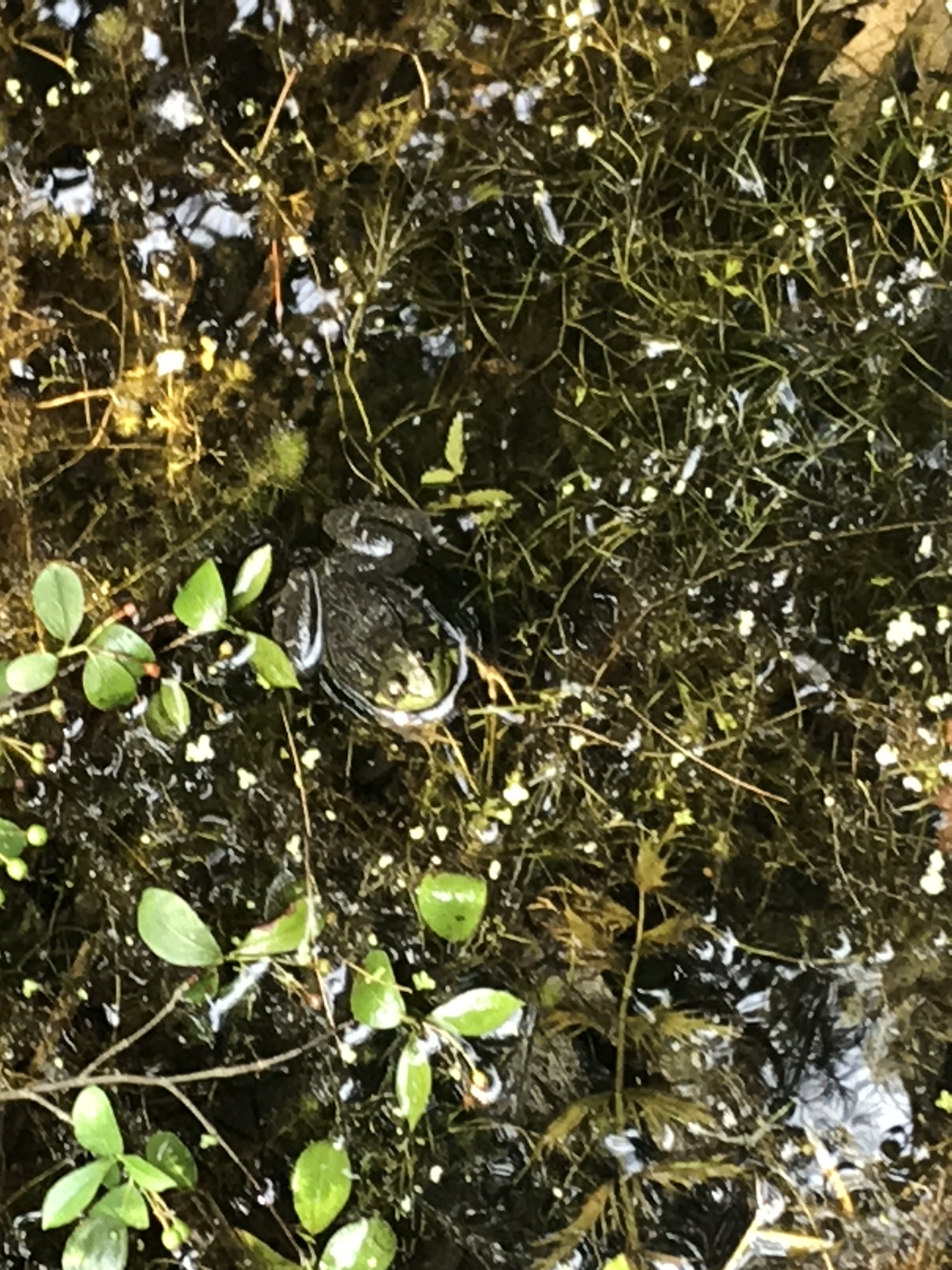
Wednesday last, grandson Sam, three years old at the time, and I wandered the landscape, catching the sights of summer. Eventually, we visited Sapsucker Woods, a Cornell University nature preserve. There, a boardwalk over the swamp is a proven venue for frog spotting and, this day, we had some success.
We found this cooperative golden-eyed beauty calmly squatting and croaking.
In this 30 second clip, reflected light off the water surface captures proto-croaks that did not quite escape from the source. There is a successful and full croak finale.
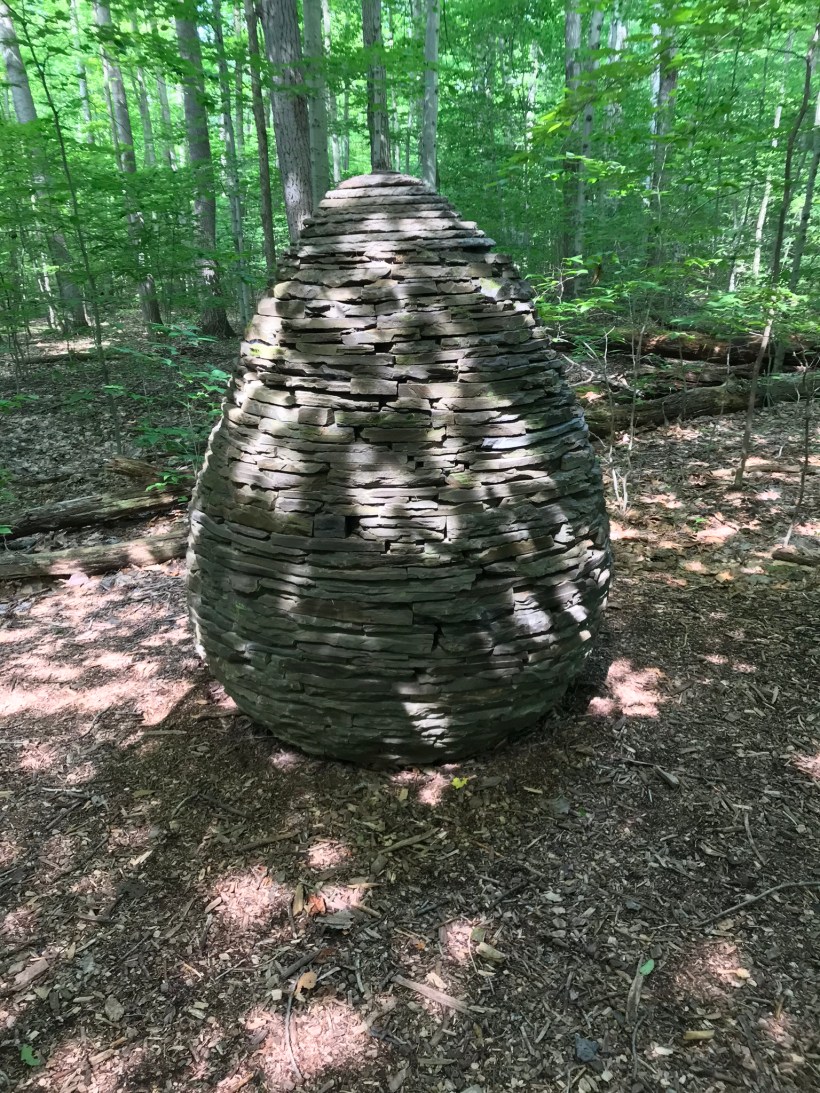
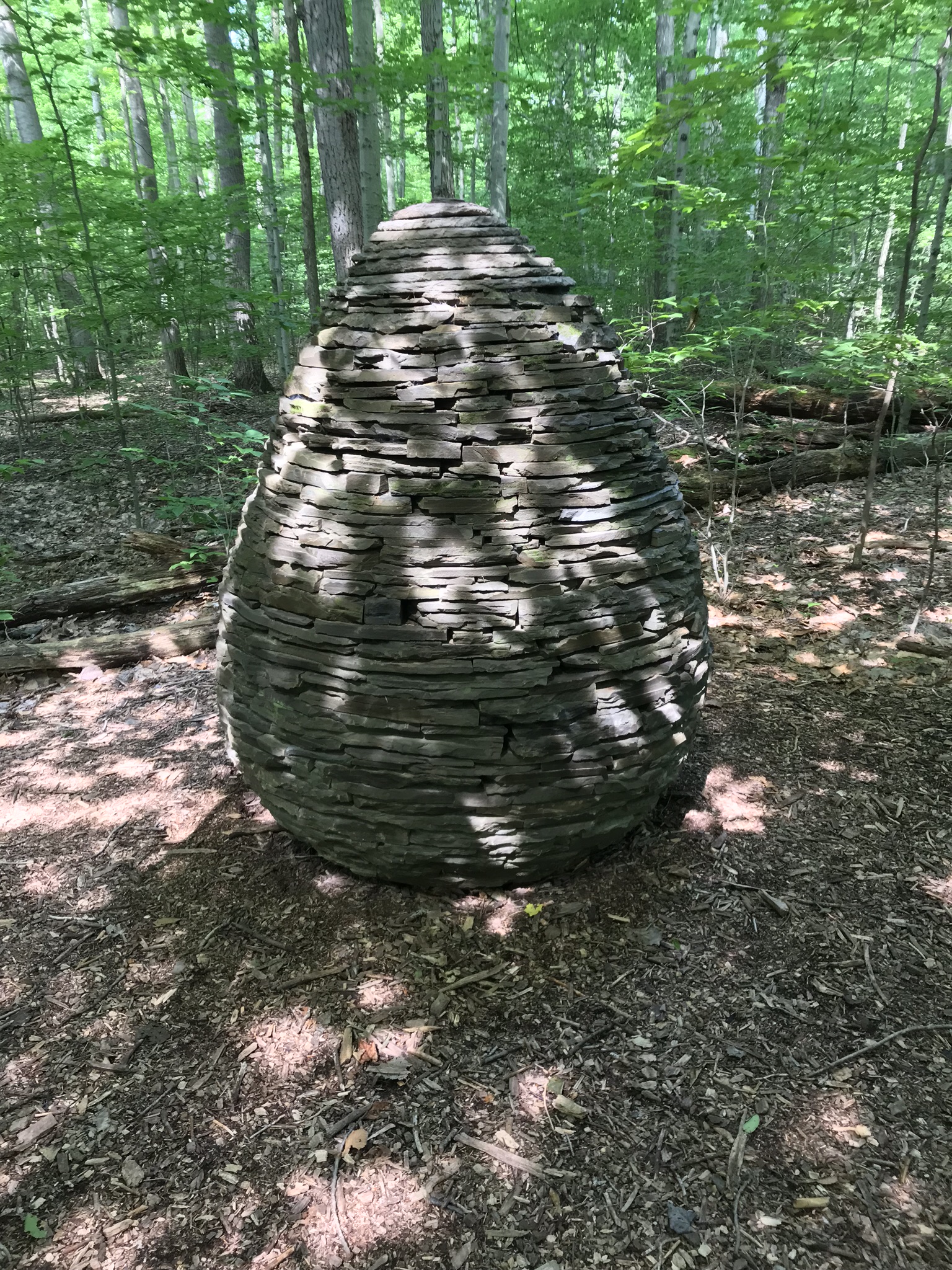
Off the boardwalk, we took a short detour to view an elaborate cairn built of local rock by a famous artist. The dappled sunlight across the surface is especially enjoyable.
The Sapsucker Cairn, Andrew Goldsworthy
At the furthest extent of the preserve is this pond where the residents were notably raucous in this 30 second clip.
About this time the mosquitoes descended for a determined attack on Sam’s legs. “Itchy,” he said. Myself, protected by deet, they left alone. Sam’s Mom prepared him for the trip with natural mosquito repellent that was not up to the task. Next time we visit, Sam will wear long pants and sleeves fortified with deet.
Just before picking Sam up for a quick retreat, I caught this turtle encrusted in duckweed sunning on a narrow branch. The head is retracted for the moment, can you imagine someone wading through that muck to place a rock? It is possible, but I witnessed the head, so am absolutely sure.
Special thanks to blogger shoreacres for the identification of duckweed. In my original posting I called it algae.
Walking up University Avenue toward Lib Slope, listening to the noon concert from the McGraw Tower carillion (a tuned set of bells), below the Johnson Museum turn left onto a footpath, follow to the steep trail down to the Gorge Overlook along Fall Creek. Look up at the suspension bridge and water powered electric plant. Climb back, turn right and down to Stewart Avenue for the view of Fall Creek Gorge, Cayuga Lake, the former studio of Carl Sagan, built into the gorge wall. In researching this topic I learned Google Maps shows the trail and you can “walk” the trail, Google brought the camera down into the gorge.
An IPhone 7 and video editing software were used for this post.
Copyright 2021 Michael Stephen Wills All Rights Reserved
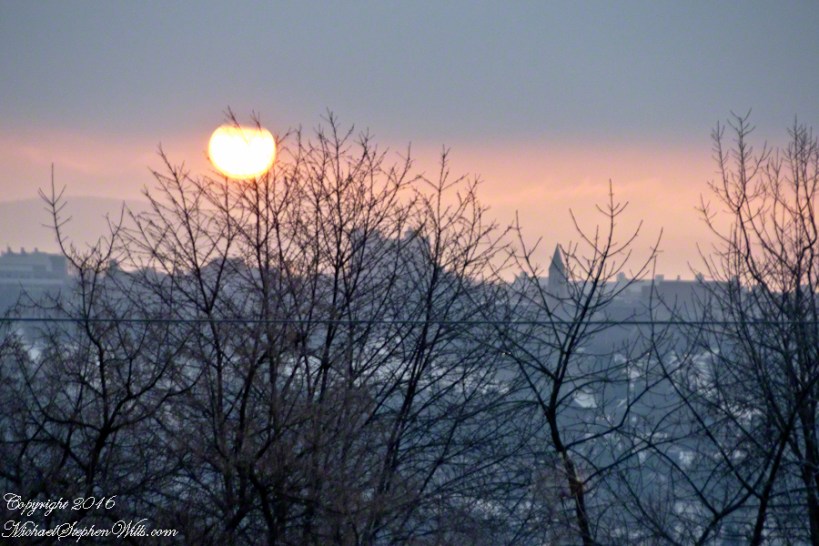
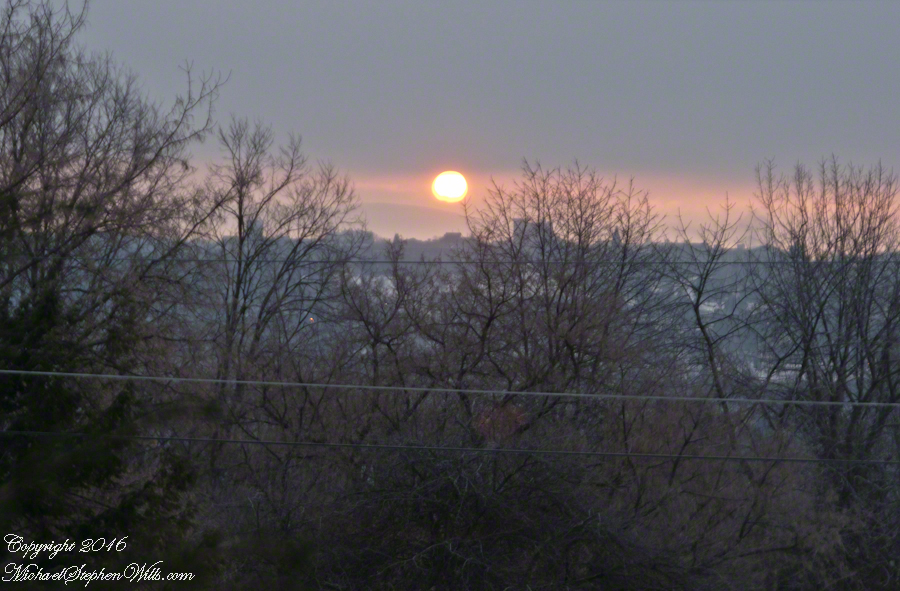
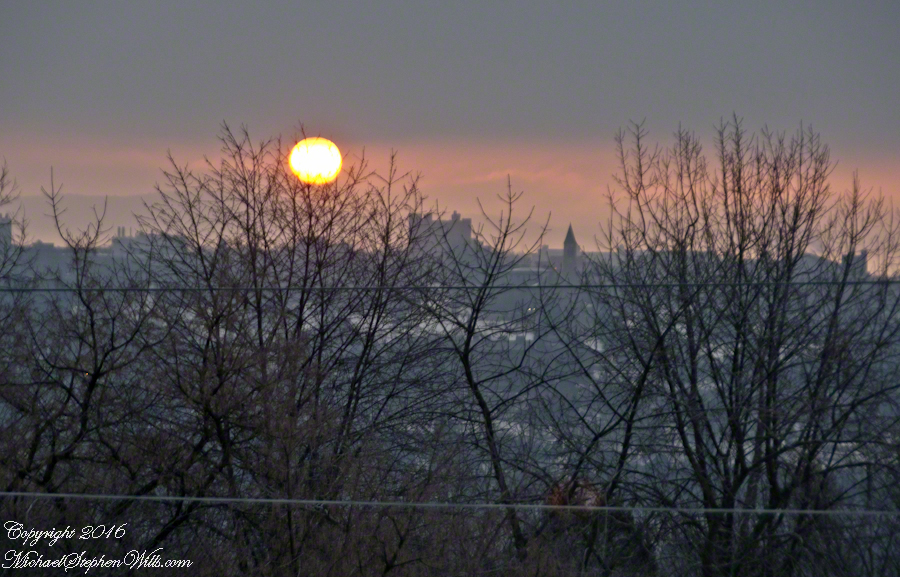
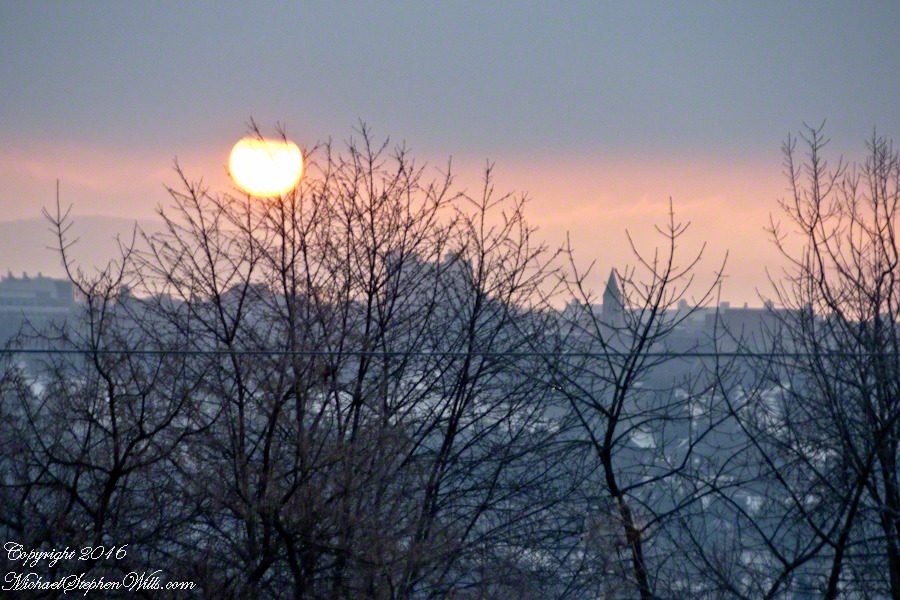
On this spring equinox morning a huge sun, filtered by morning clouds, hangs over East Hill and Cornell University. Taken from our home on West Hill, looking across the valley and Ithaca, New York.
The temperature is a balmy 18 degrees F.
Click the pic to visit my online gallery
Can you pick out these Cornell landmarks? — Jenny McGraw Tower — Lib Slope still covered in snow from last week’s storm. — the looming fortress shape of Bradford Hall.
Copyright 2021 All Rights Reserved Michael Stephen Wills
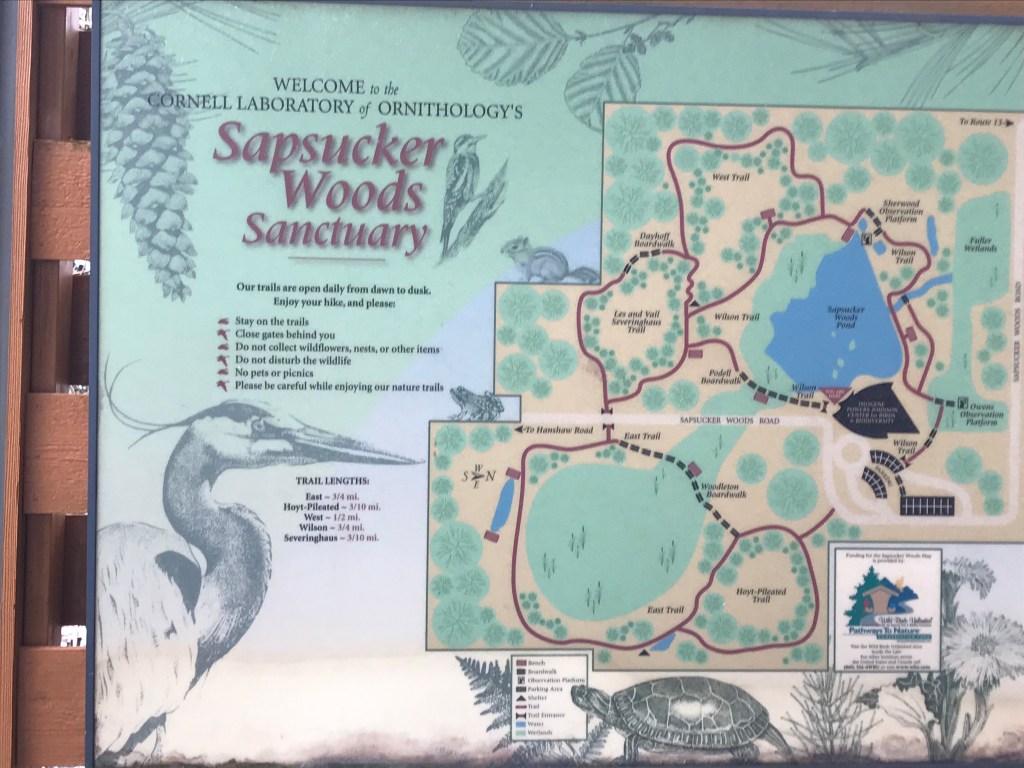
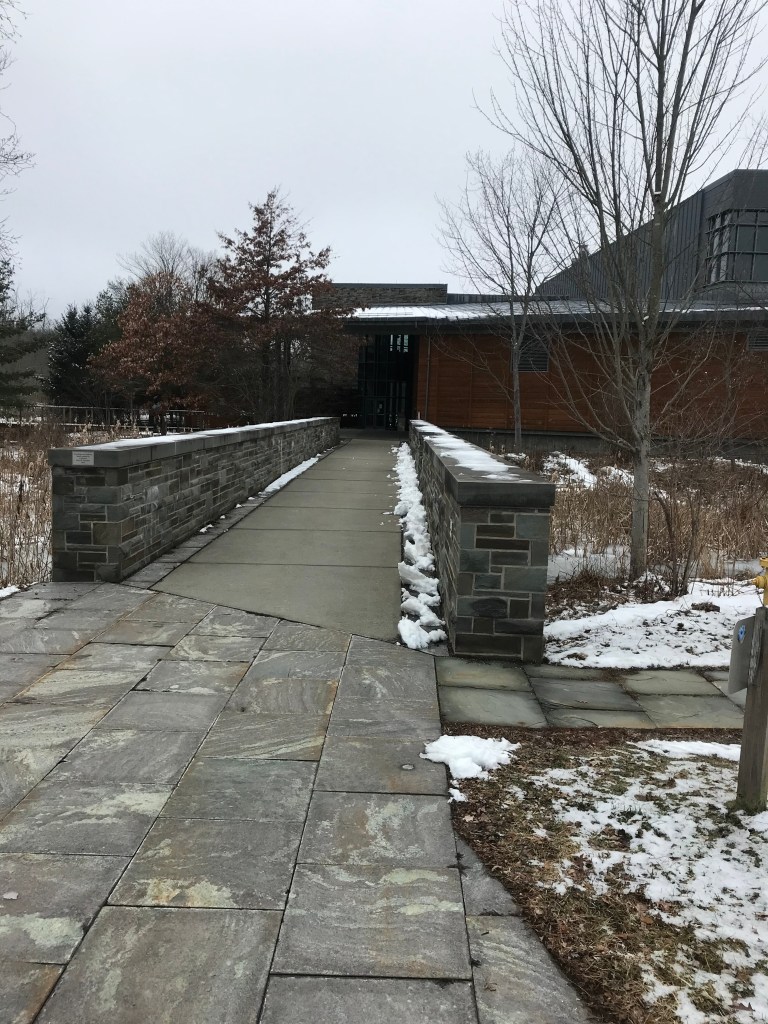
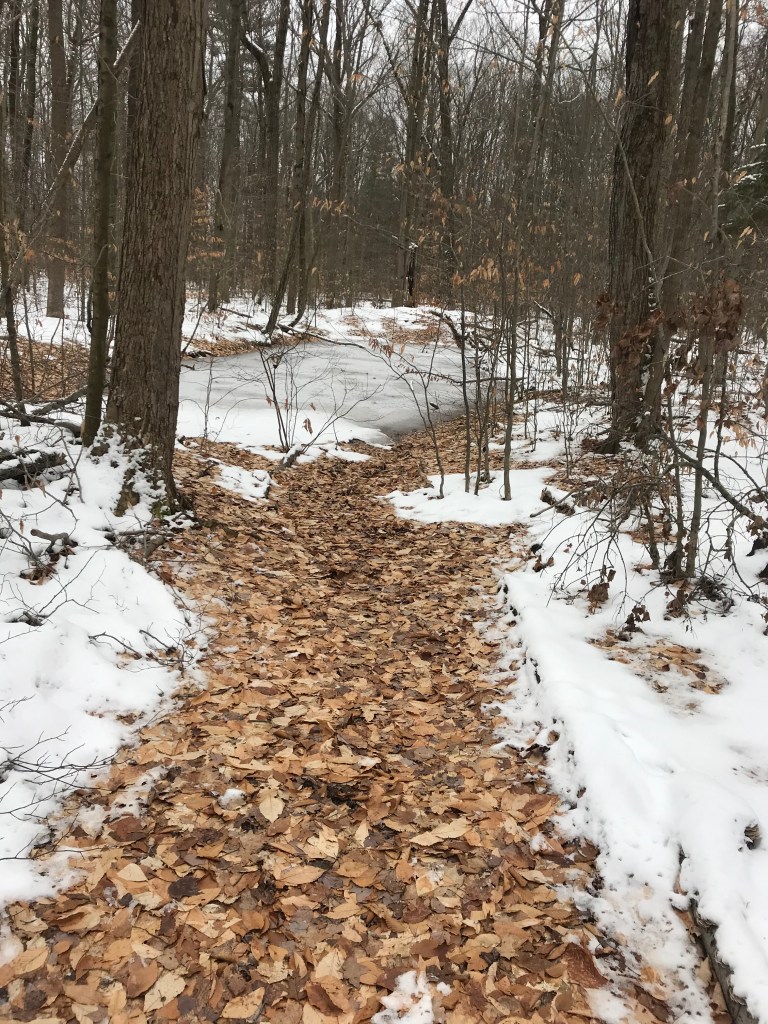
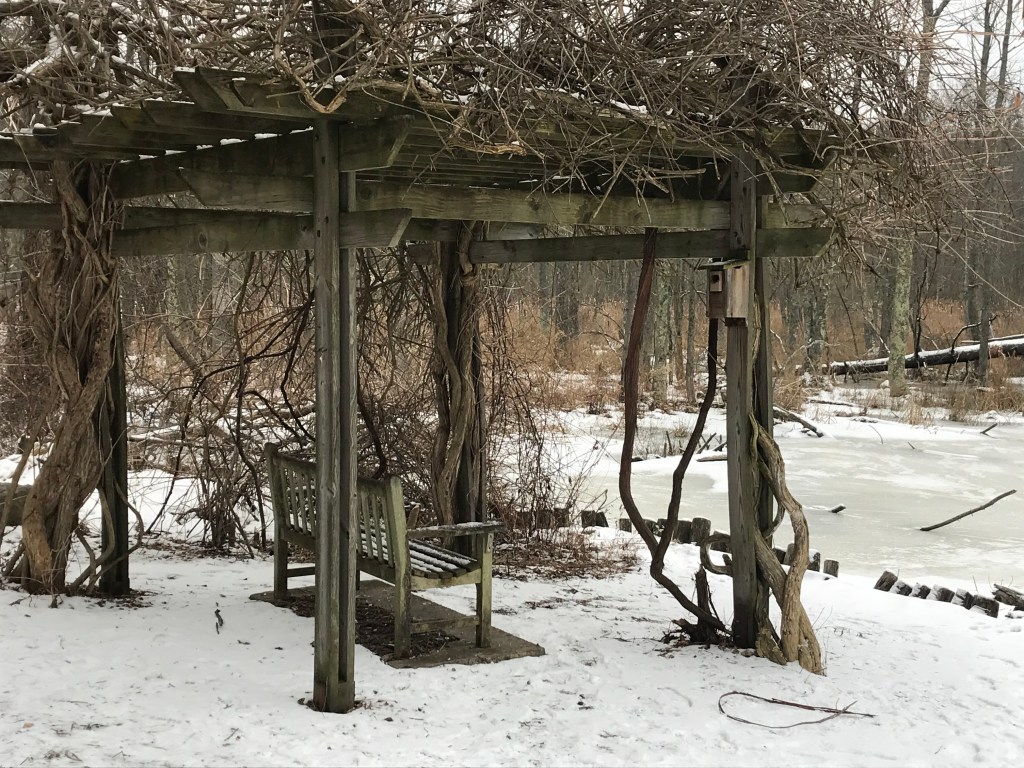
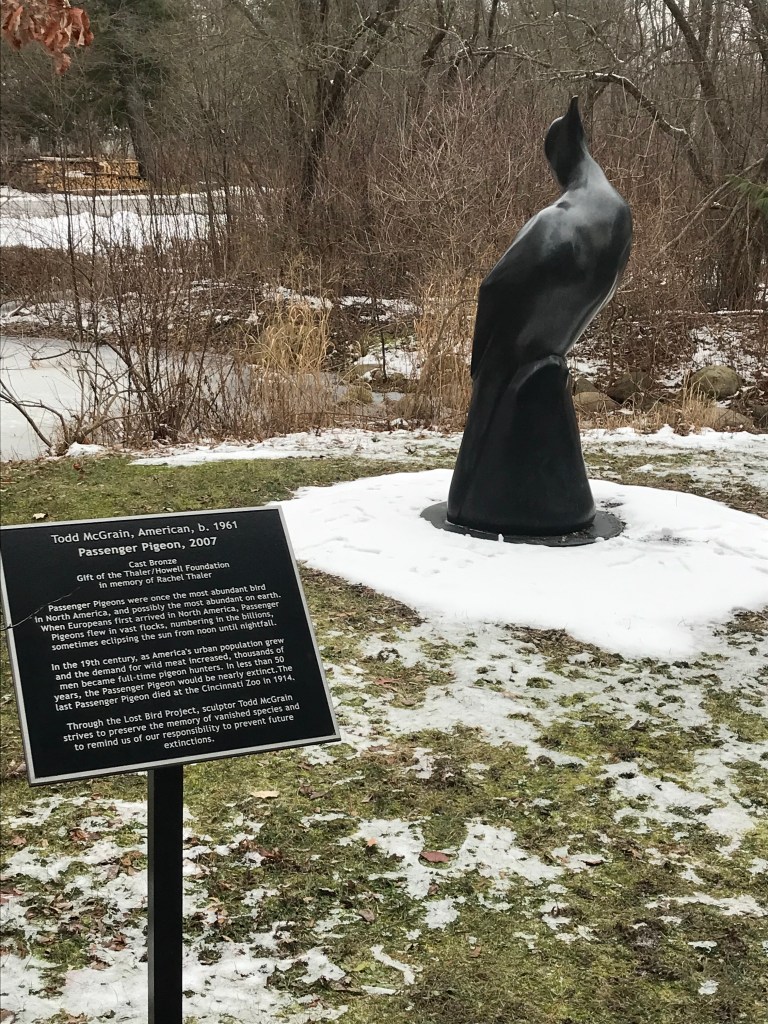
A far-seeing, nature loving group of individuals set aside this prime swamp-land in 1954. January 8, 2021, it is surrounded by homes, a major road (the unluckily-named Route 13), an airport. Though the trails are narrow, I am happy to report everyone encountered (six individuals, though two were encountered twice on the circular trails) wore mask and demonstrated consideration.
Swamps are navigated on wooden walkways. Here are a few IPhone 7 snaps from the entrance.
from the parking lot toward visitor center, featuring locally quarried blue limestone.
Frozen woodland pool
grapevine bower
sadly, no more
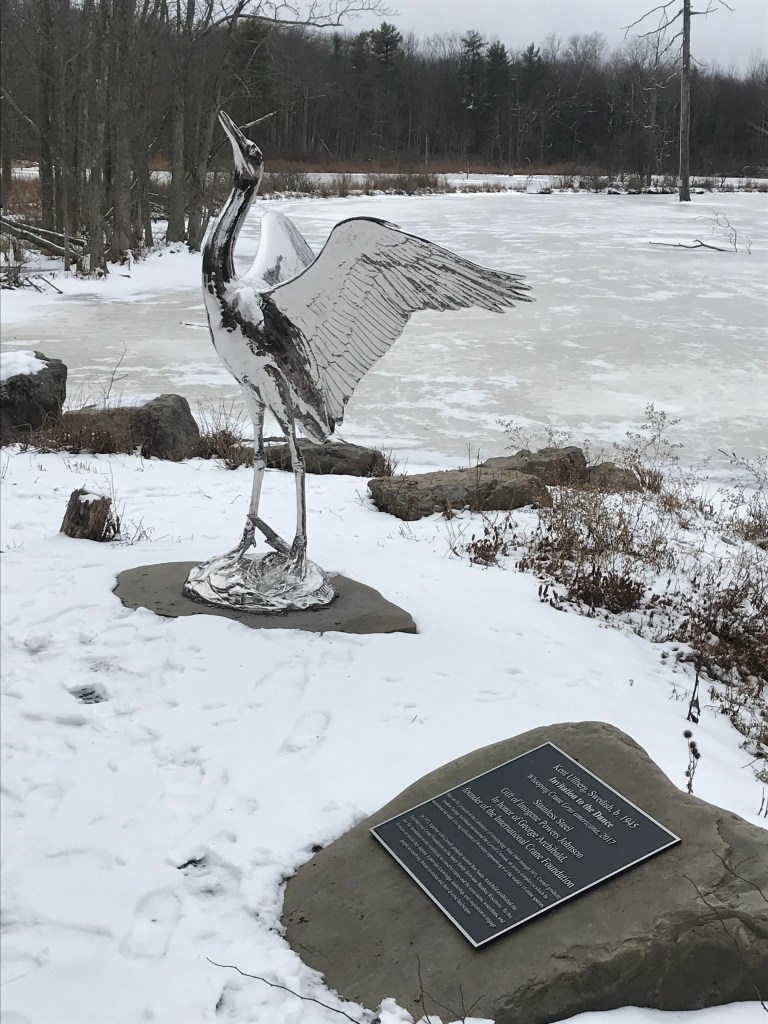
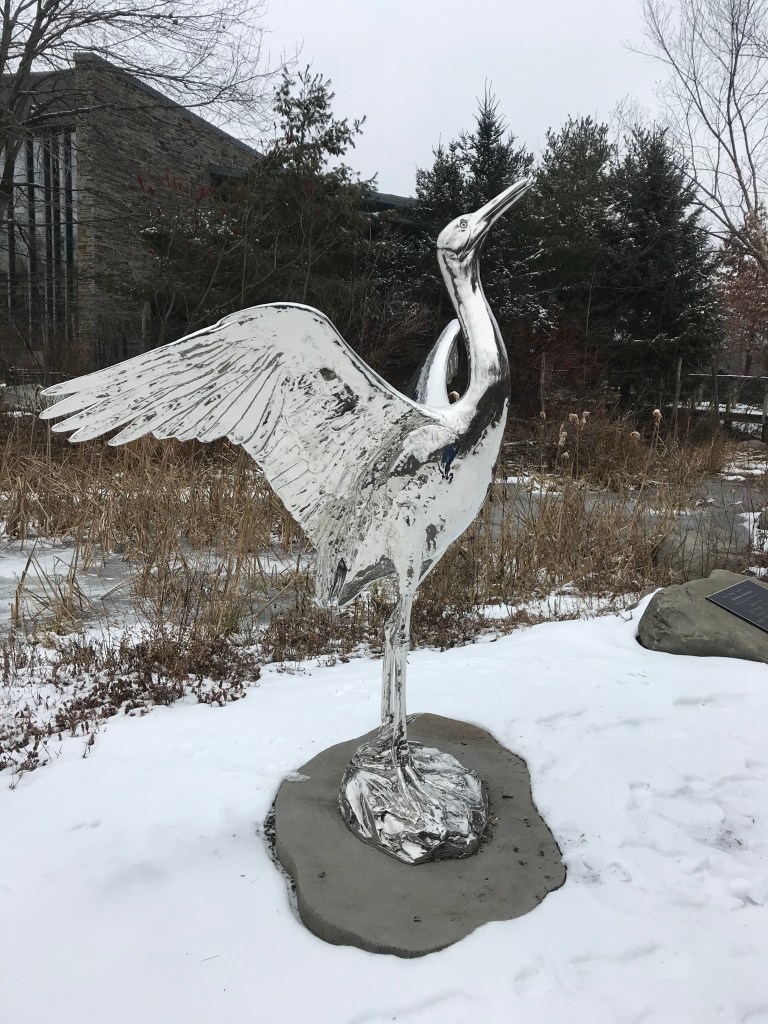
Today I noticed for the first time this glistening sculpture with a plaque reading, in part, “Kent Ullberg, Swedish, b 1945, ‘Invitation of the Dance’, 2017. Stainless steel.” It was donated by the billionaire Imogene Johnson shortly before her death in 2018 at the age of 87. Mrs. Johnson was a Cornell University alumna. She and her husband were huge donors to the university, having met there as undergraduates.
Copyright 2021 Michael Stephen Wills All Rights Reserved





 Michael Stephen Wills Photography