A faint organic whiff of Paleozoic Era generations follows hikers enjoying the Gorge Trail, an odor luring contemporary treasure seekers thankfully spurned by the December 2014 New York State fracking ban. Thanks to Governor Andrew Cuomo’s leadership, the ban protects public health, drinking water, the environment, local economies based on agriculture, tourism and small businesses. The ban on fracking sets the New York State apart for its climate leadership by leaving fossil fuels in the ground while the state simultaneously leads the nation in expanding renewable energy.
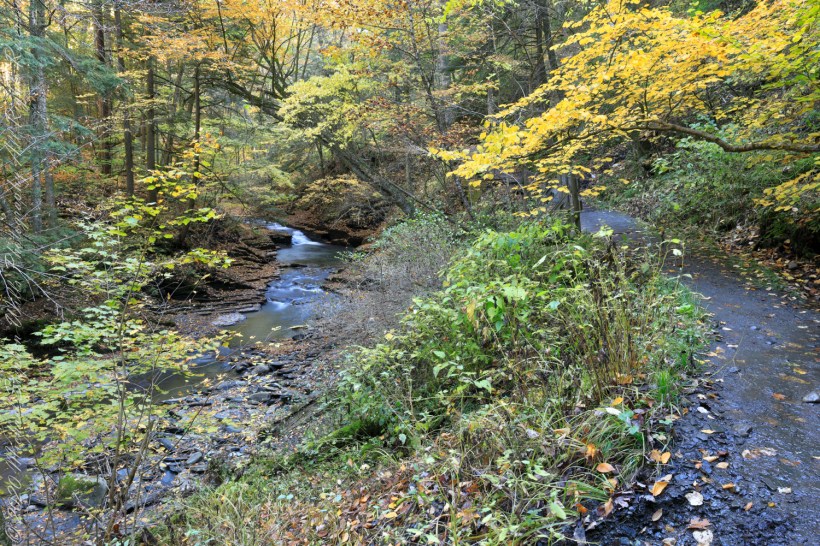
A plentitude of waterfalls…..
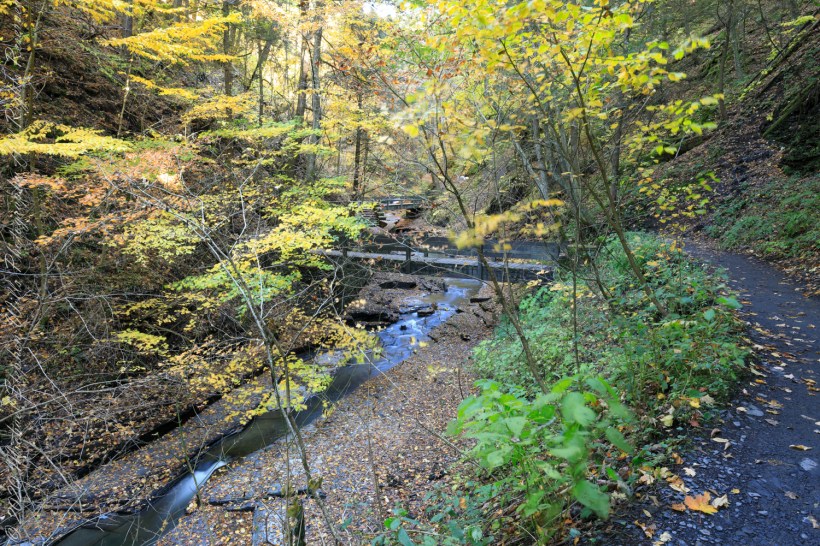
…bridge number 5…..
Fillmore Glen, Cayuga County, Moravia. In the Finger Lakes Region of New York State
Copyright 2022 All Right Reserved Michael Stephen Wills
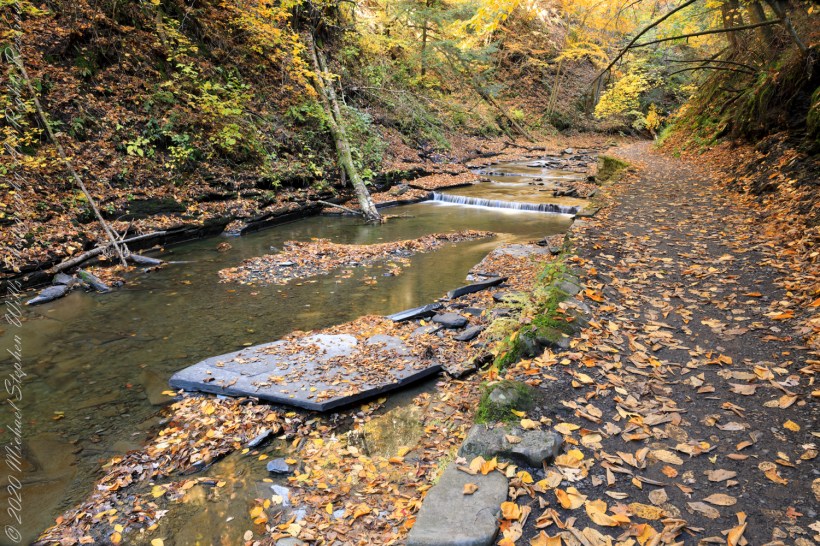
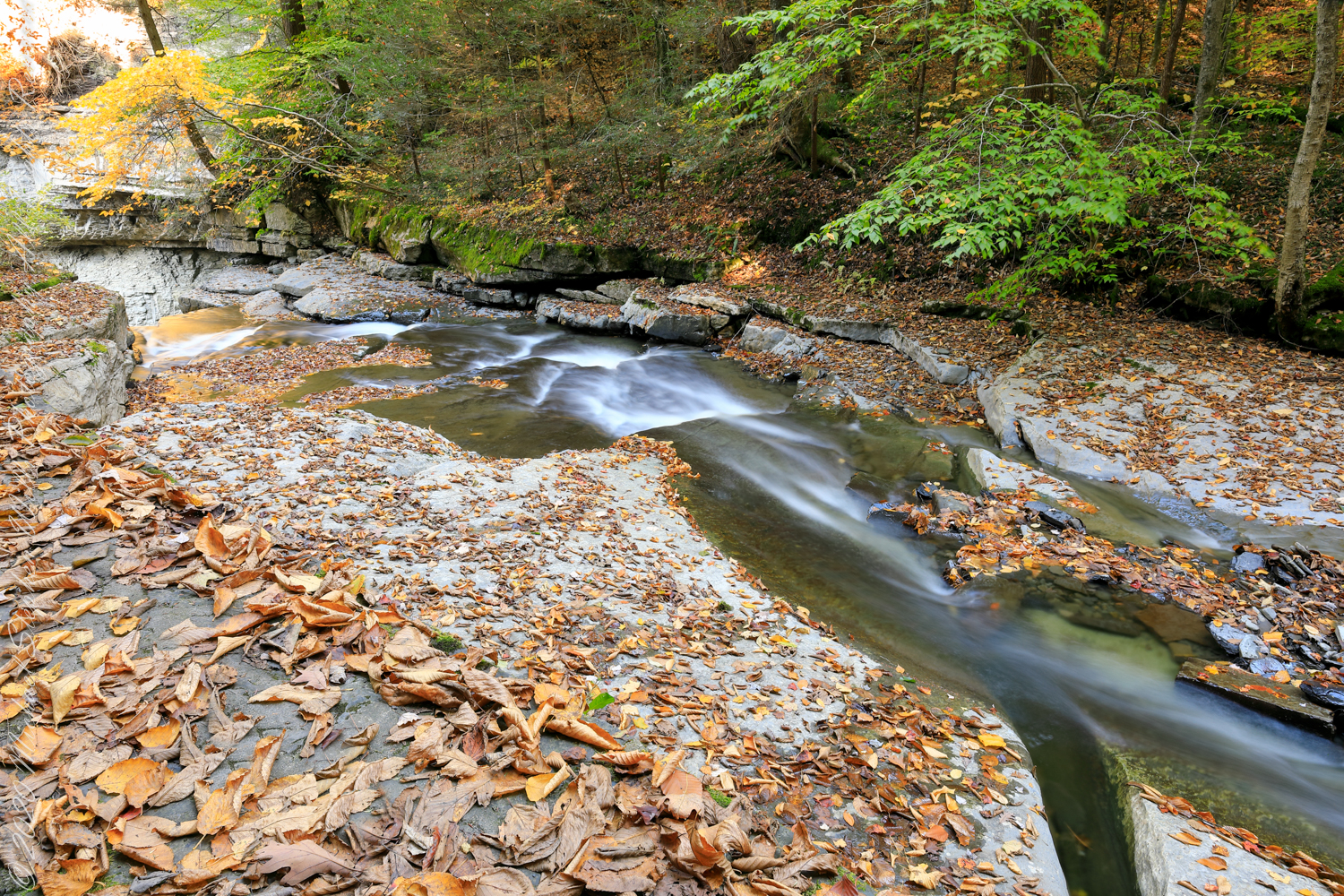
We walk the Gorge Trail surrounded by the remains of two mountain ranges (the Taconic and Acadian) as high or higher than the Himalayas. Humbled by the fullness of time the mountains persist, now as this layered, fractured, water and frost battered rock. When the first grains flowed here the Earth’s day was 22 hours, a year 400 days, the Moon’s relative closeness moved tides higher. Four billion years ago, the first formed Moon was only 3.8 Earth radii, 15,000 miles, away. Today, a half billion years after the Cambrian, the distance averages 30 Earth radii (250,000 miles) and increasing at the almighty’s pace through the daily round of tides.
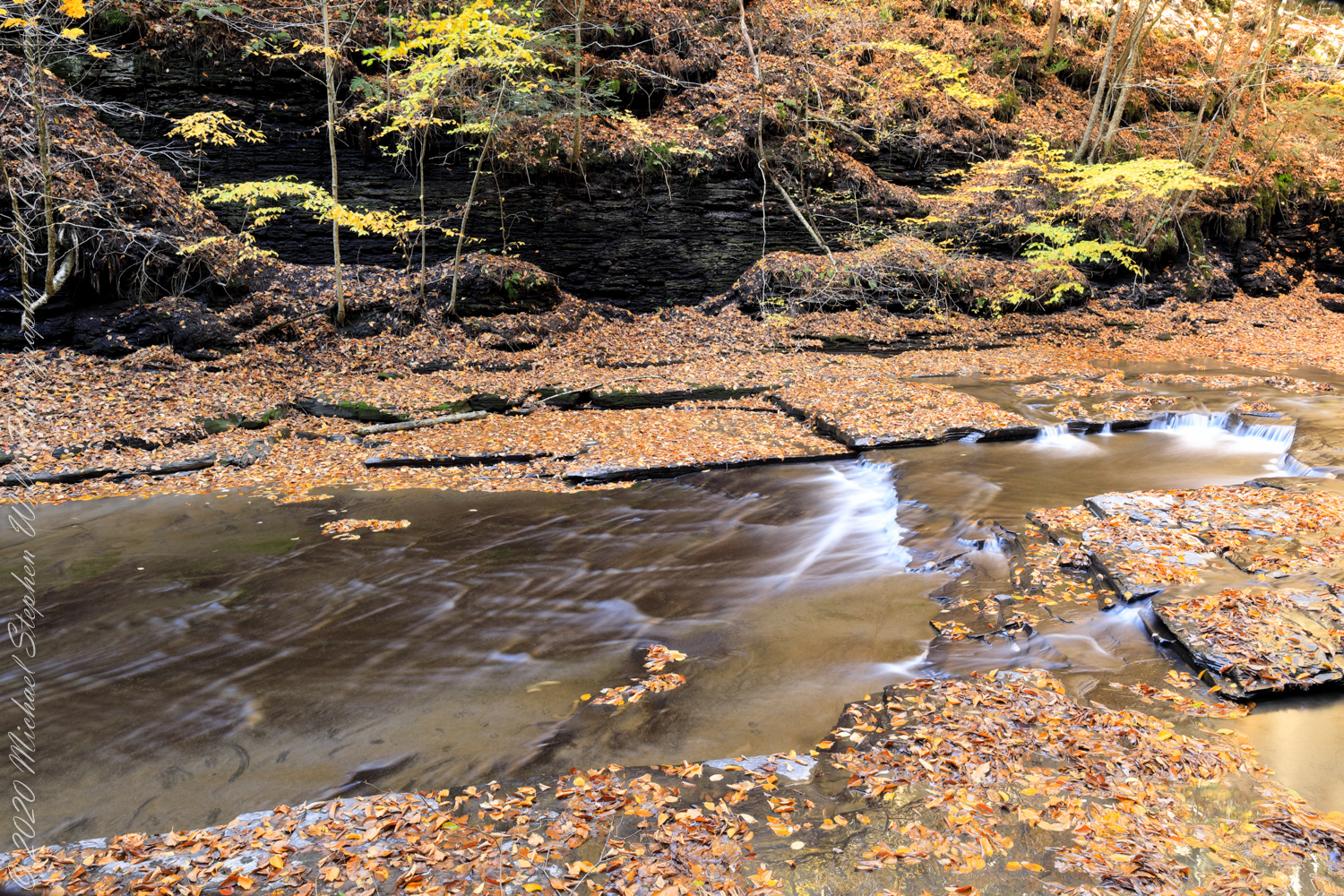
notice the right angles of fracture…..
…the angles record the changing directions of pressure of the continent against Africa as tectonic plates shifted.
Fillmore Glen, Cayuga County, Moravia. In the Finger Lakes Region of New York State
Copyright 2022 All Right Reserved Michael Stephen Wills
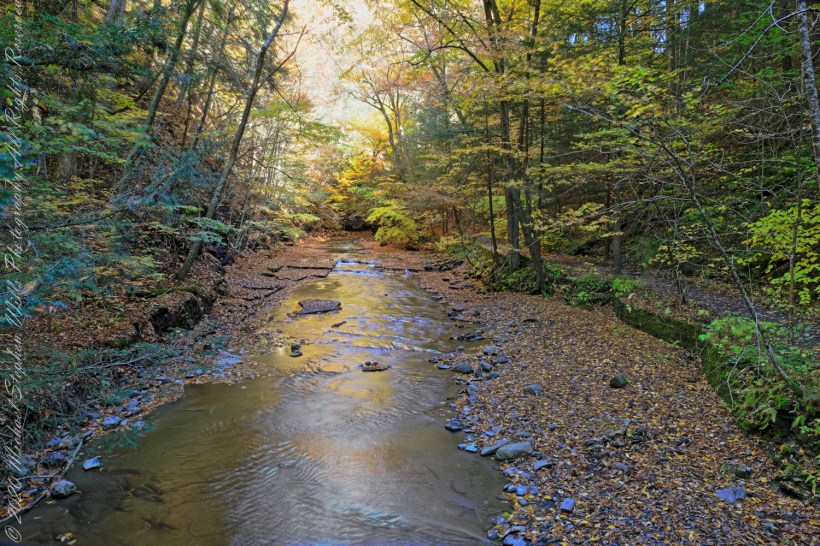
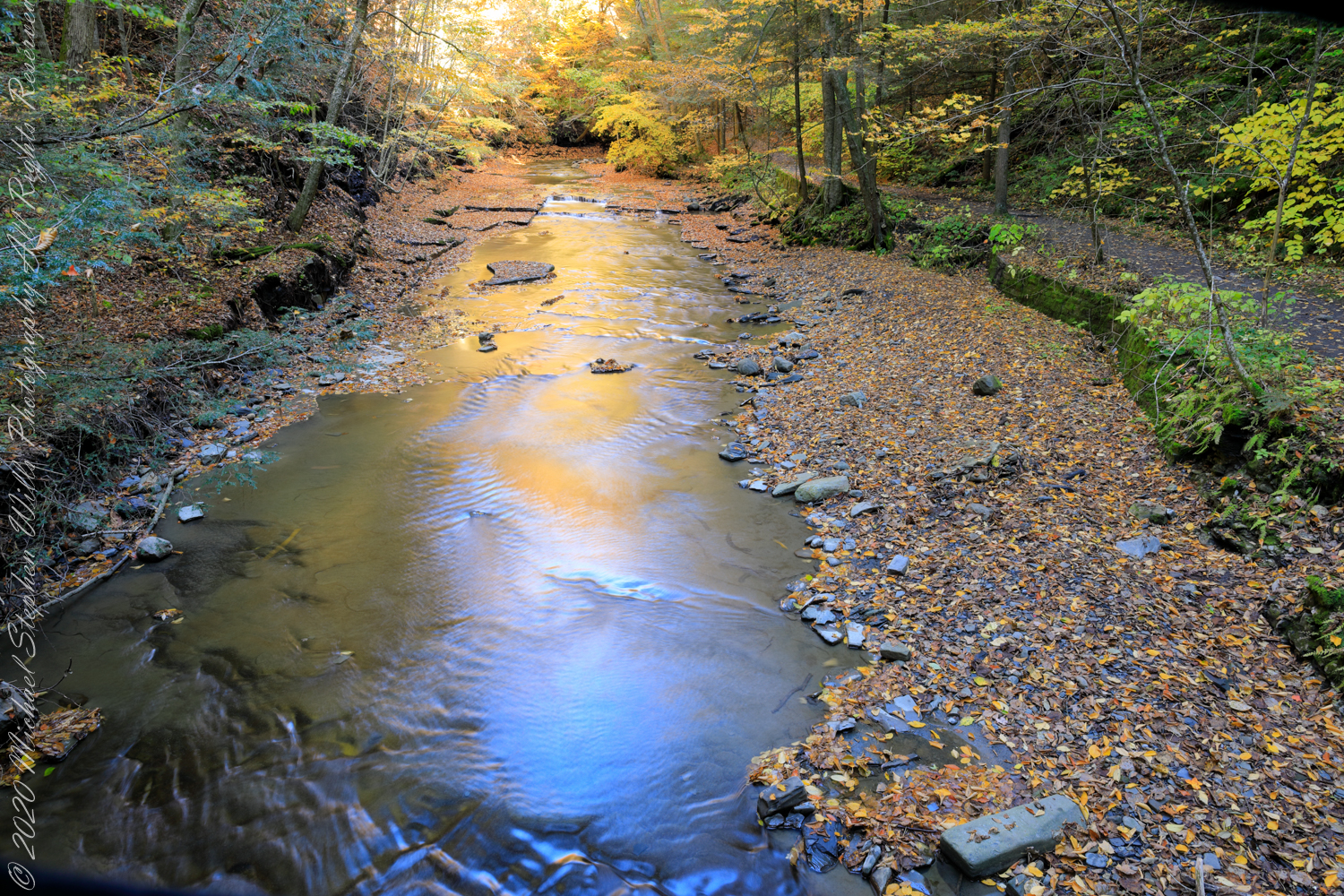
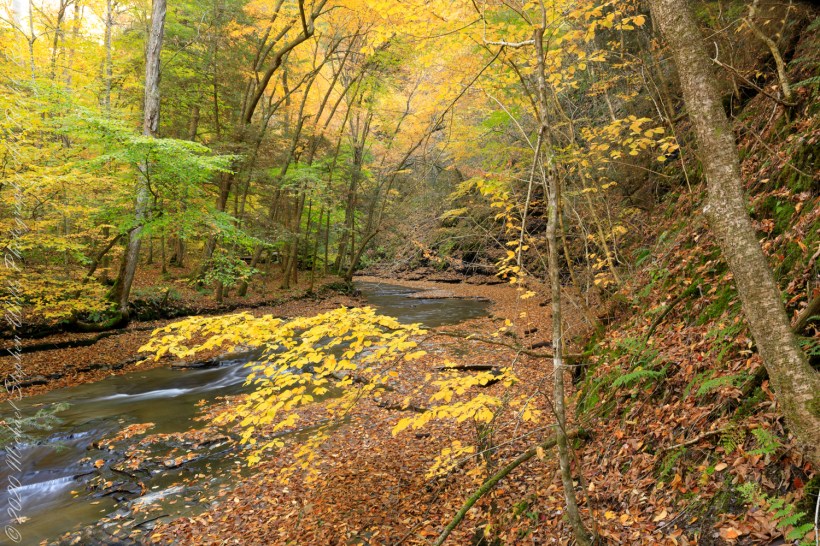
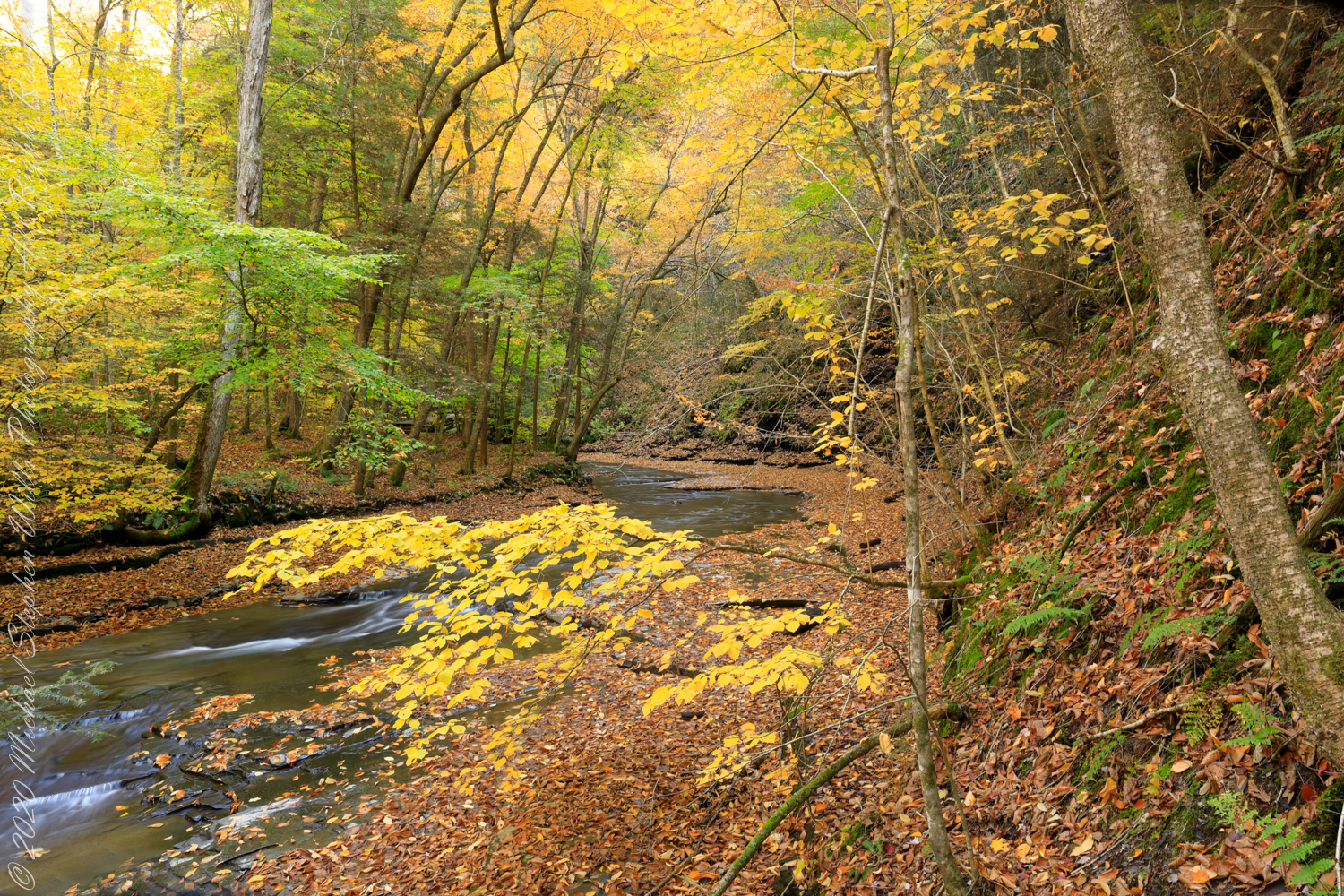
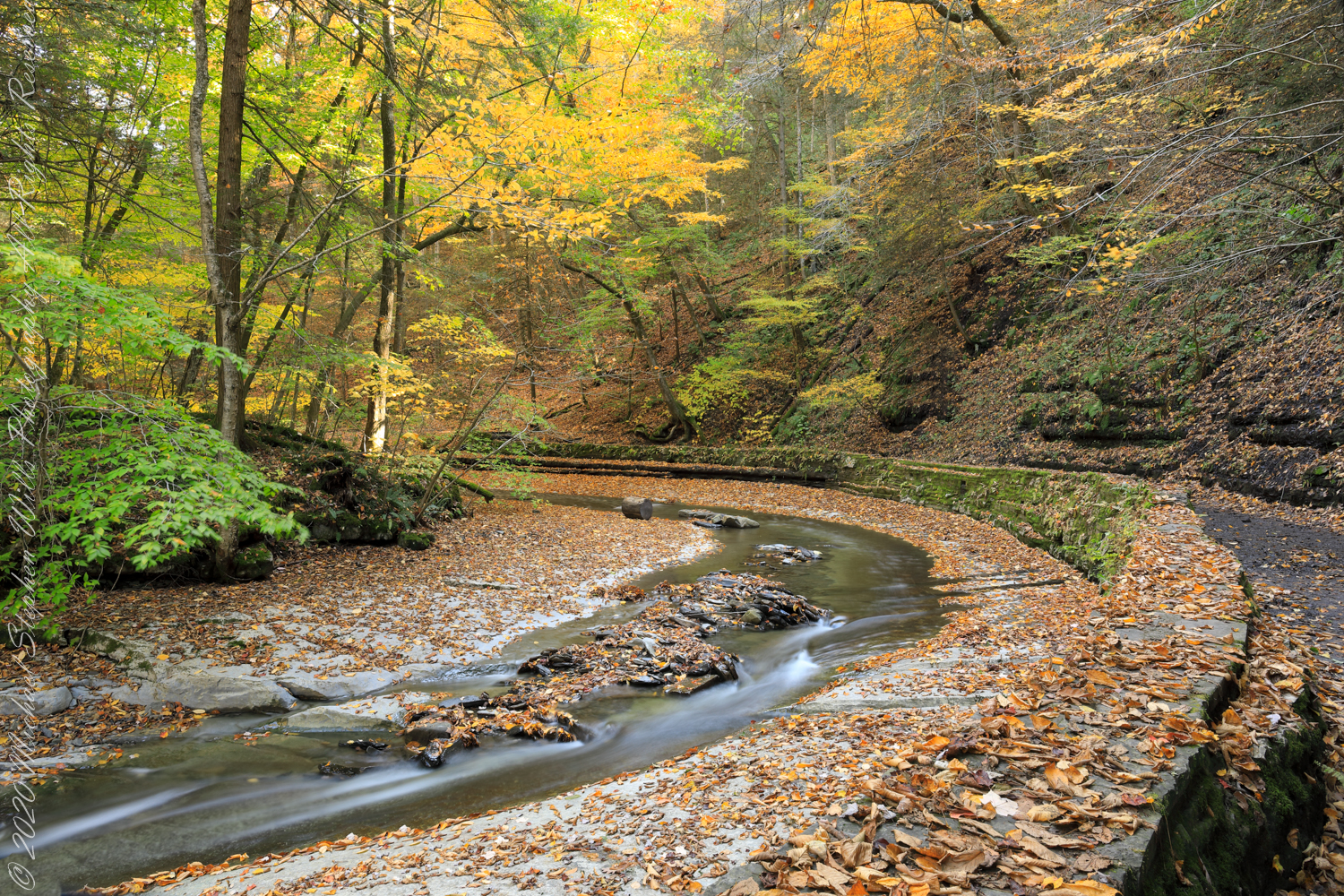
A challenge in photographing Finger Lakes Gorges and the potential for an interspersement of bright light against shadow. A strategy I used in this series from Fillmore Glen is to choose the time of day carefully. The gorge is anything but straight forcing me at time to forego a shot or to carefully compose. Here I was drawn in by the golden reflection of Slippery Elm leaves on the flowing water of Dry Creek.
without…..
Moth-like I was drawn to the bright light. Using the tripod, I took two shots. One exposed to the gorge depths, a second more to the bright light beyond — while still not fully adjusted to it. Using a High Dynamic Range (HDR) tool, the two exposures were combined into the following.
…and with HDR.
Copyright 2022 All Right Reserved Michael Stephen Wills
The Slippery Elm (scientific name Ulmus rubra) gives Fillmore Glen this characteristic golden glow. The species has various traditional medicinal uses. The inner bark has long been used as a demulcent and is still produced commercially for this purpose in the United States with approval for sale as an over-the-counter demulcent by the US Food and Drug Administration.Sometimes the leaves are dried and ground into a powder, then made into a tea.
Fillmore Glen, Cayuga County, Moravia, New York
Reference: Wikipedia “Slippery Elm”
Copyright 2022 All Right Reserved Michael Stephen Wills
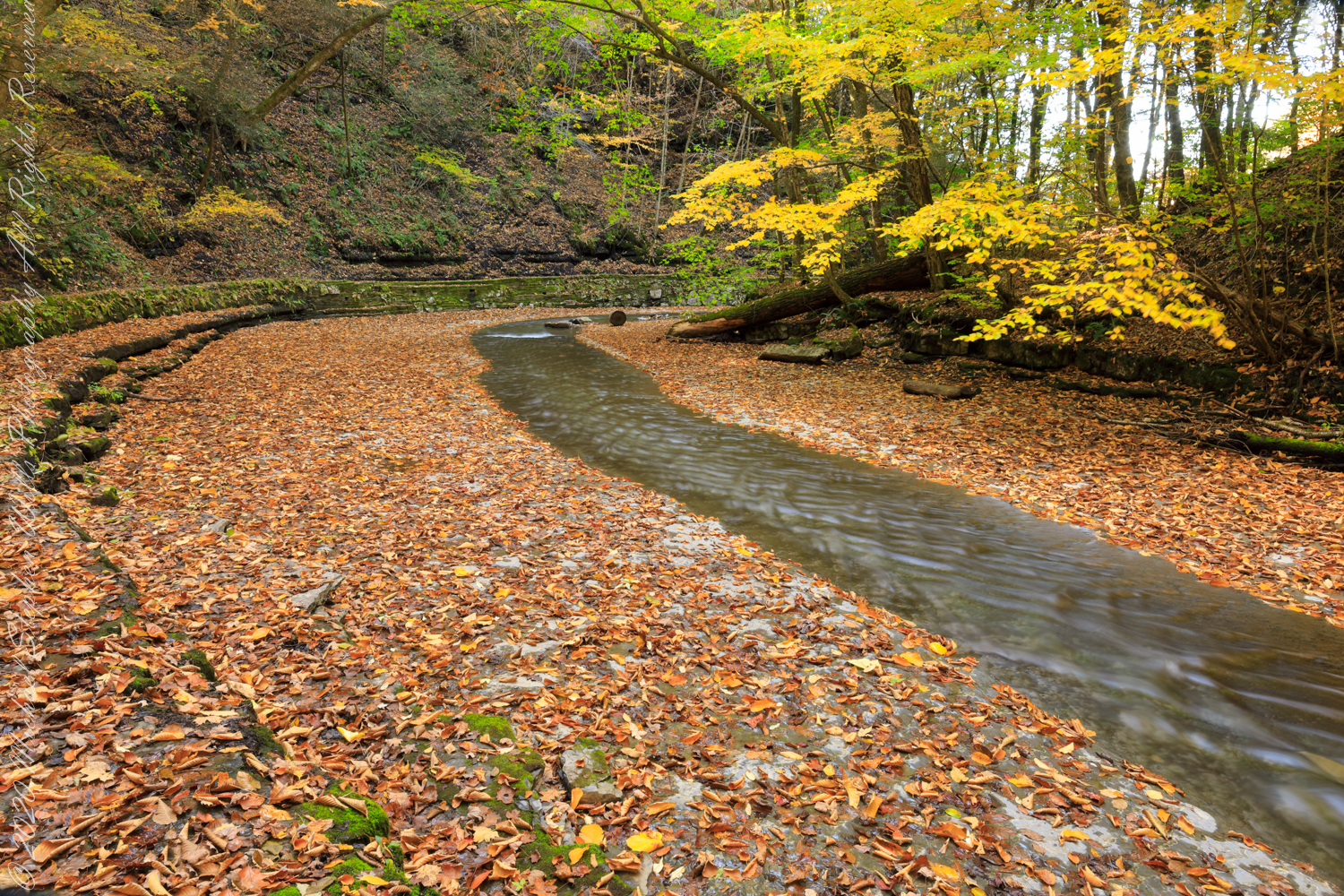
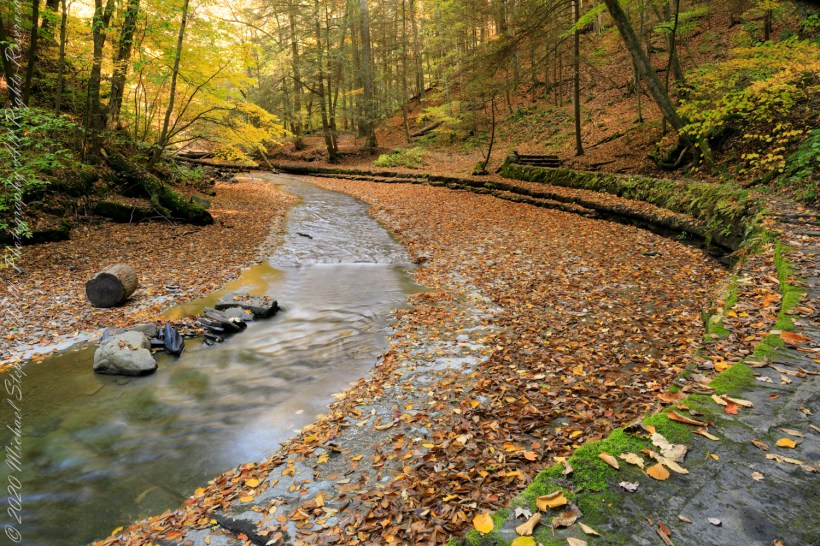
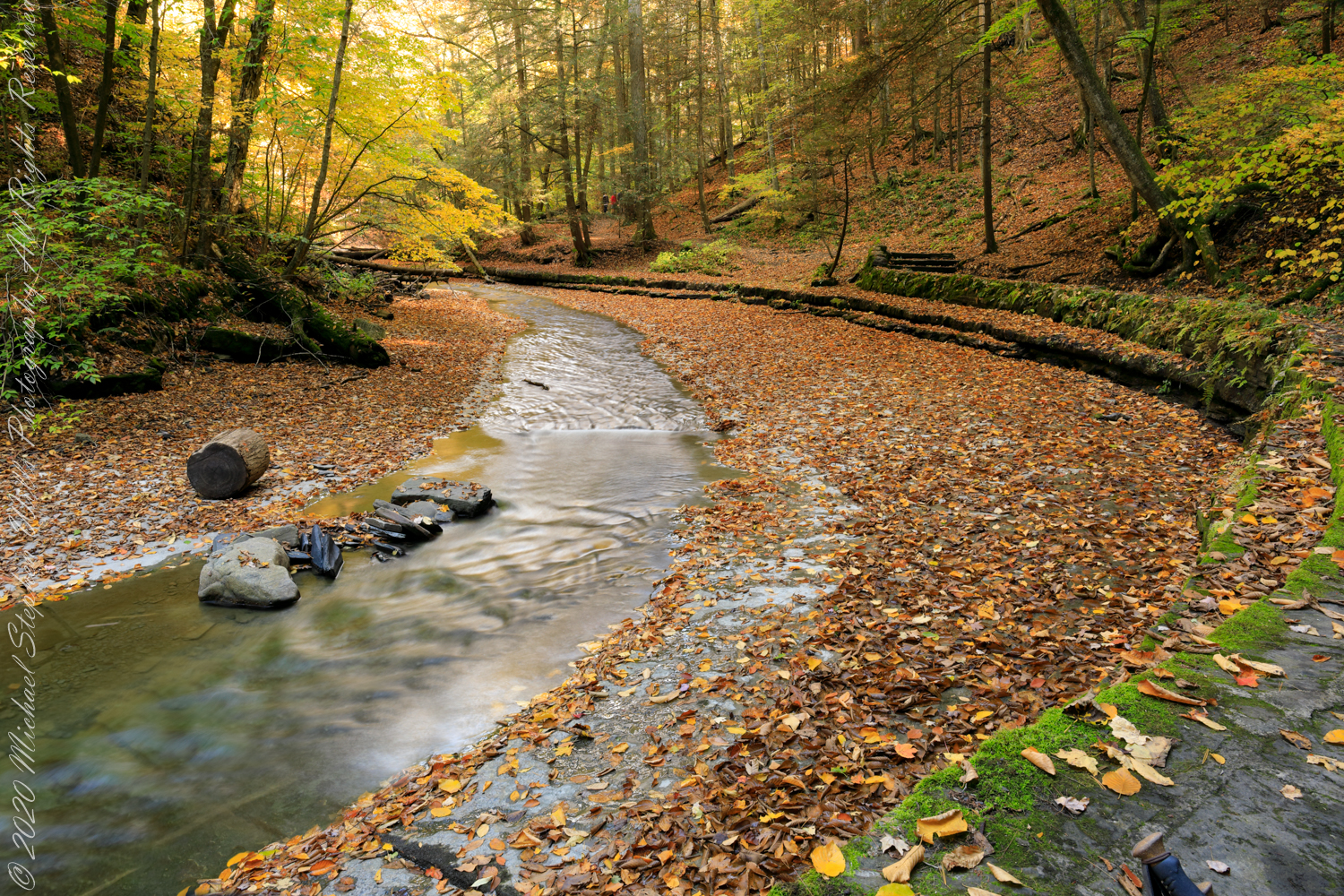
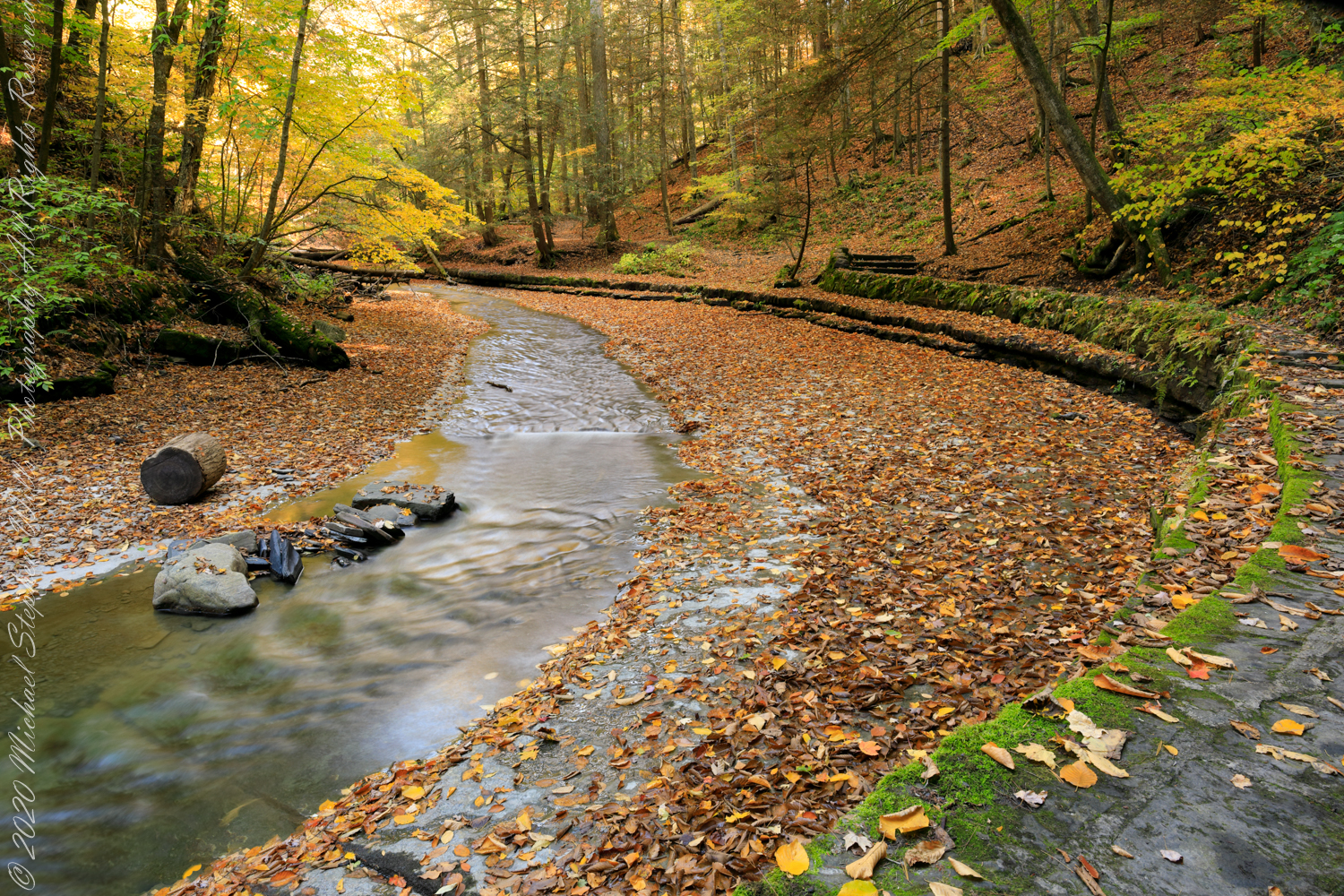
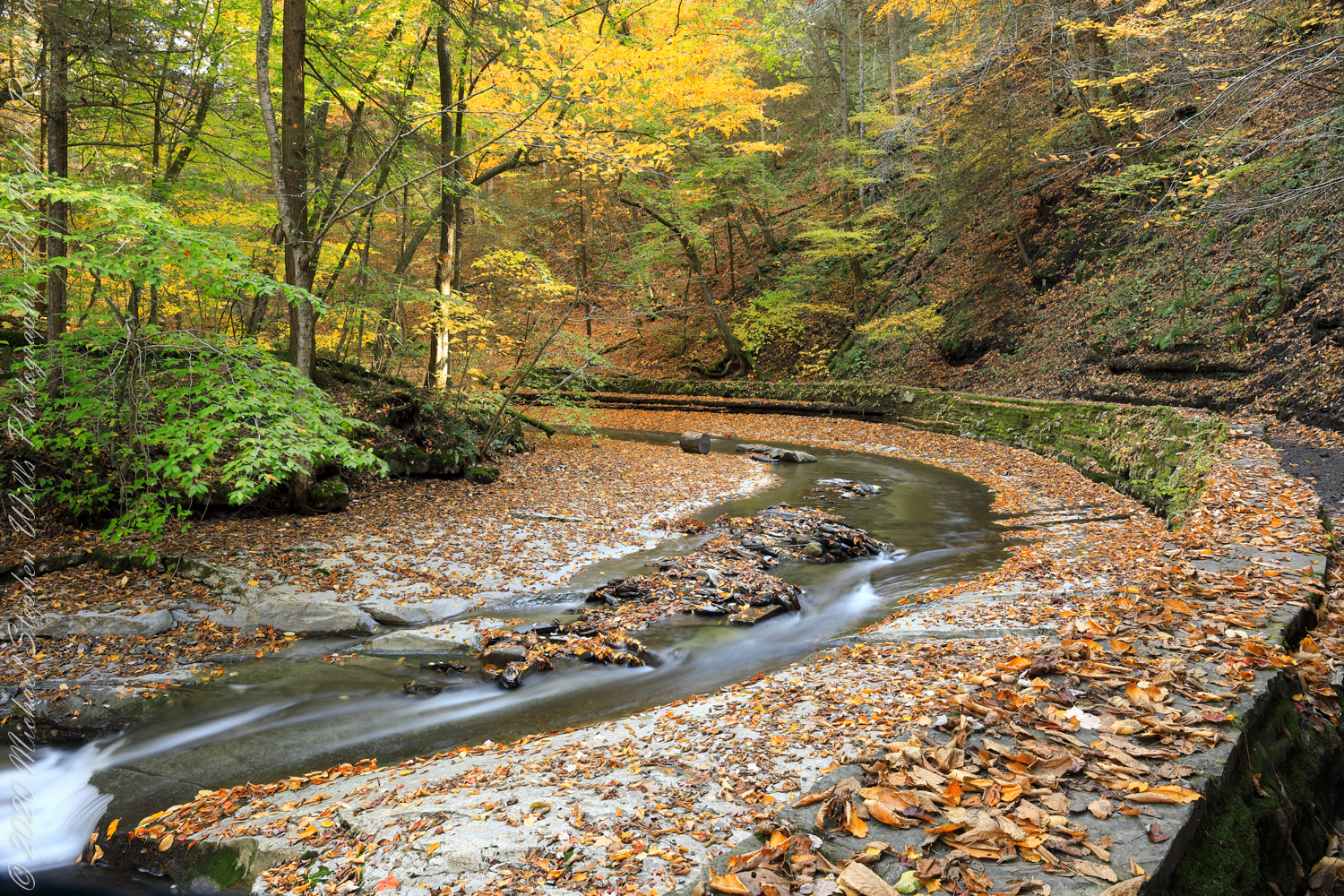
Patience was a virtue as I set up along Dry Creek where it bends before approaching Cowsheds waterfall drop-off. Fillmore Glen, New York State Park, Moravia, Cayuga County, New York
with…..
…and without hikers.
I say “without” with reservations. A moving hiker was blurred out in this 3.2 second exposure at f/22. I hid the blurred figure with a cut and pasted pristine pixels from the second exposure. The “without” take is earlier than “with.”
A minute and 50 seconds transpired between exposures. In that time, Pam rested her hiking pole against the wall.
Copyright 2022 All Right Reserved Michael Stephen Wills
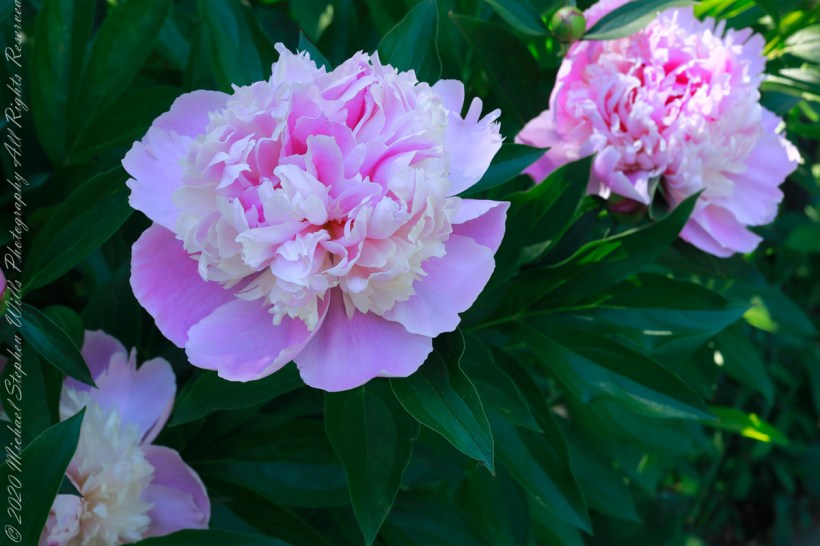
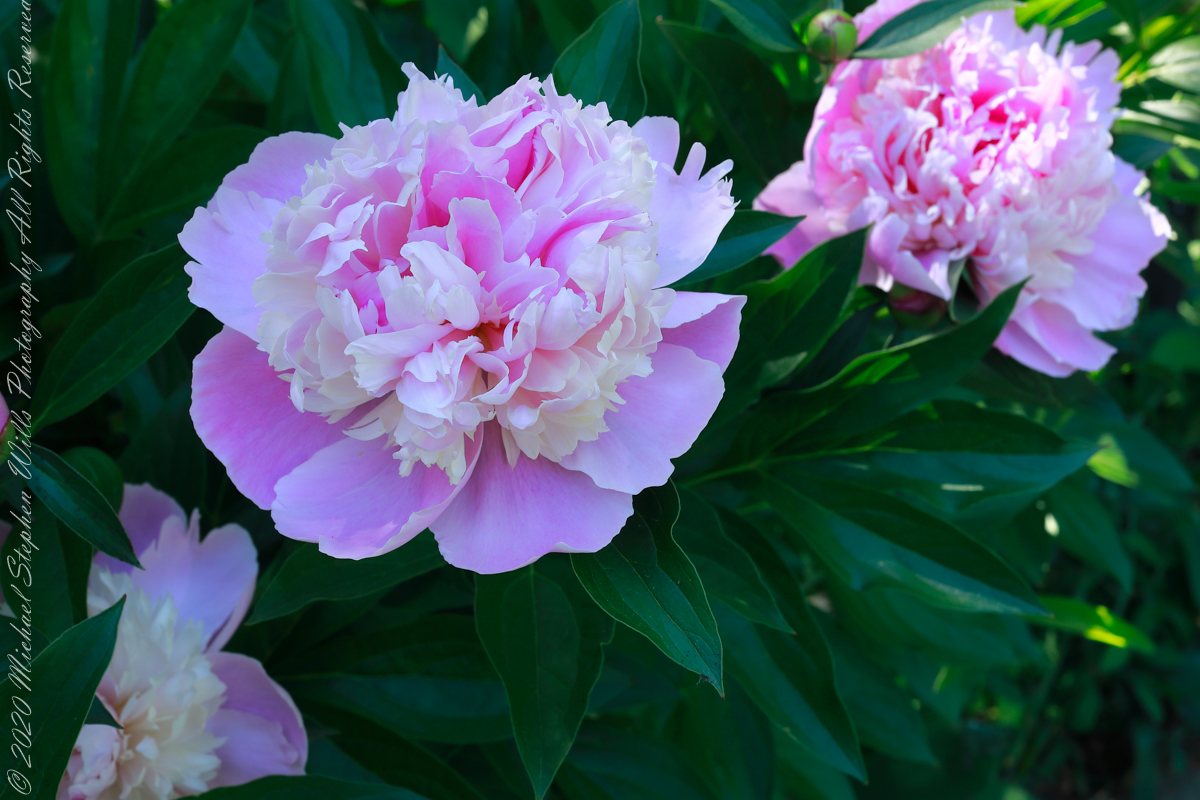
Peony species (scientific name Paeonia lactiflora) with plants that die back in cold weather to regrow each spring from a tuberous root are called “herbaceous,” from the latin word for grassy. The stems and branches remain soft and pliable, some stiff enough to hold the large, showy flowers. The first varieties introduced to Europe and named 1753 were white, “lactiflora” mean milk-white flower.
Reviewing my photography in preparation for this post I discovered not a single one for herbaceous peony, such was my interest in the woody varieties my in-laws planted around the property. Fortunately, they did not neglect the herbaceous varieties featured here.
These photographs were taken with a Canon EOS 5D Mark IV dslr and the Canon EF 50mm f/1.2L USM lens with a “BeFree” Manfrotto tripod with ball head. f-stop was tamped down to the maximum, f16 for this lens. Exposures were taken when the intermittent morning breeze abated.
Click any photograph for a larger view to open in new browser tab.
Paeonia lactiflora, in the family Paeoniaceae, contains around 30 species in Europe, across Asia and in western North America growing wild in scrub and woods, often in rocky places or on cliffs. Most species in Eastern Europe, others in the Caucasus, central Asia, the Himalayas, and Japan, mainly on limestone, and a species in dry parts of California.
Peonies have long been cultivated for their spectactular flowers as well as for their medicinal preoperties, particularily in China
Reference: “The Botanical Garden” by Phillips and Rix, Volume I (2002, Firefly Books, Buffalo, New York and Willowdale, Ontario
Copyright 2022 All Rights Reserved Michael Stephen Wills
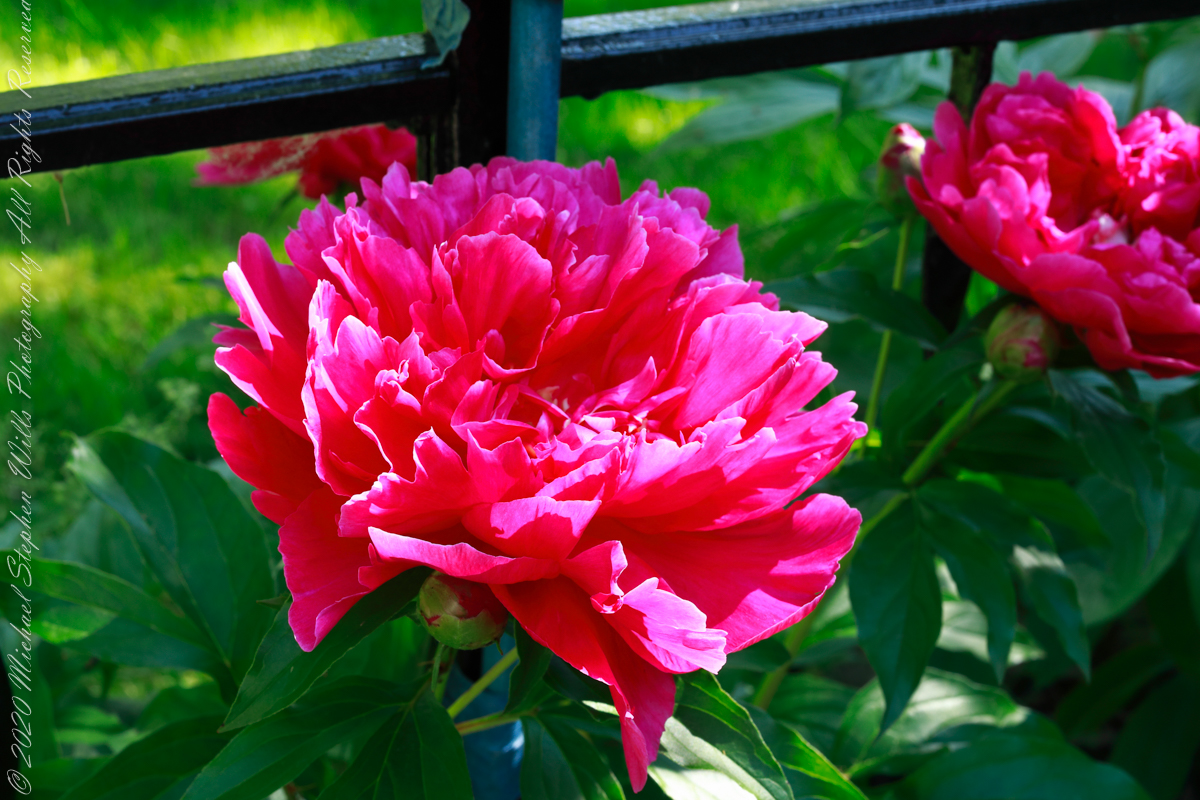
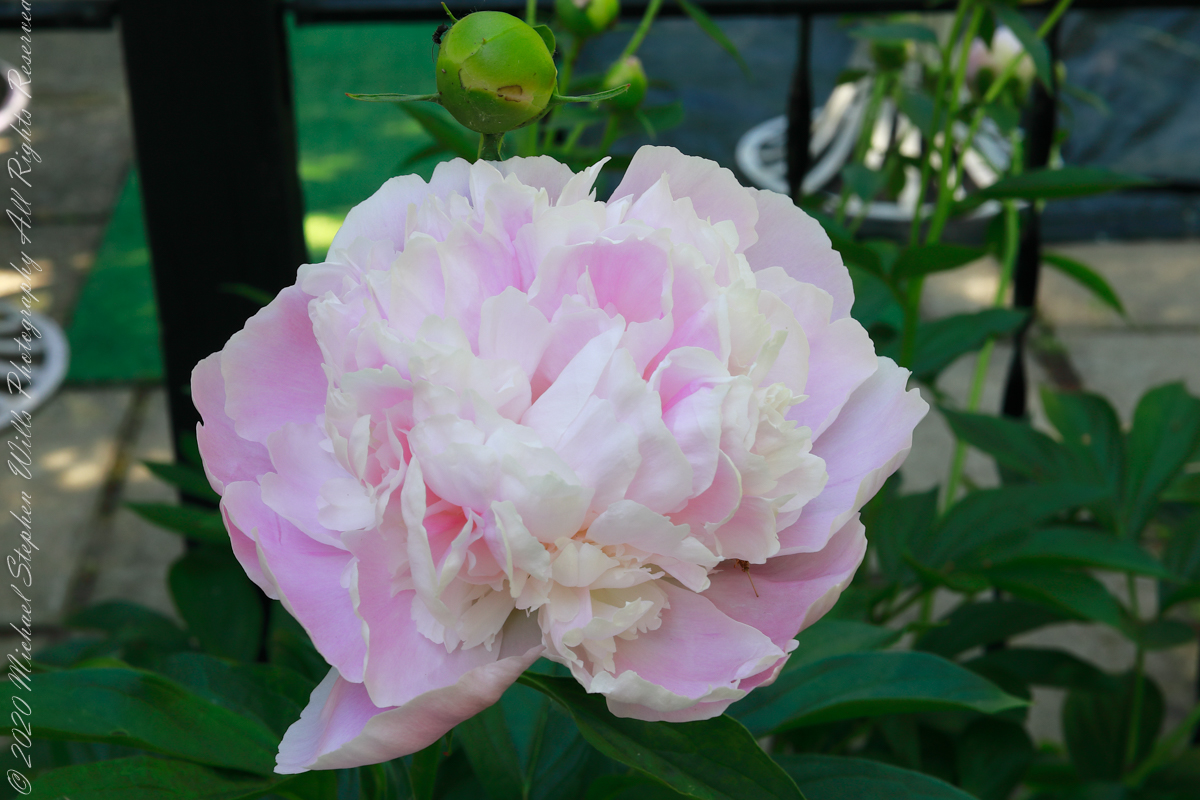
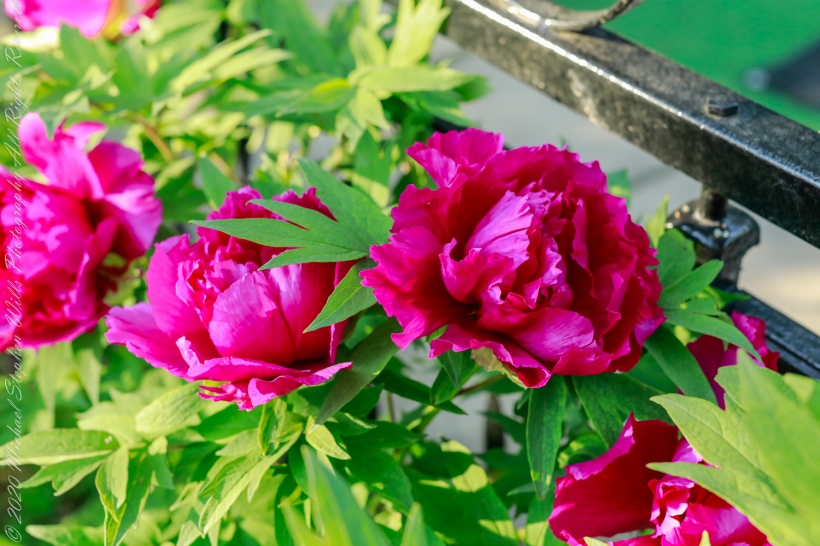
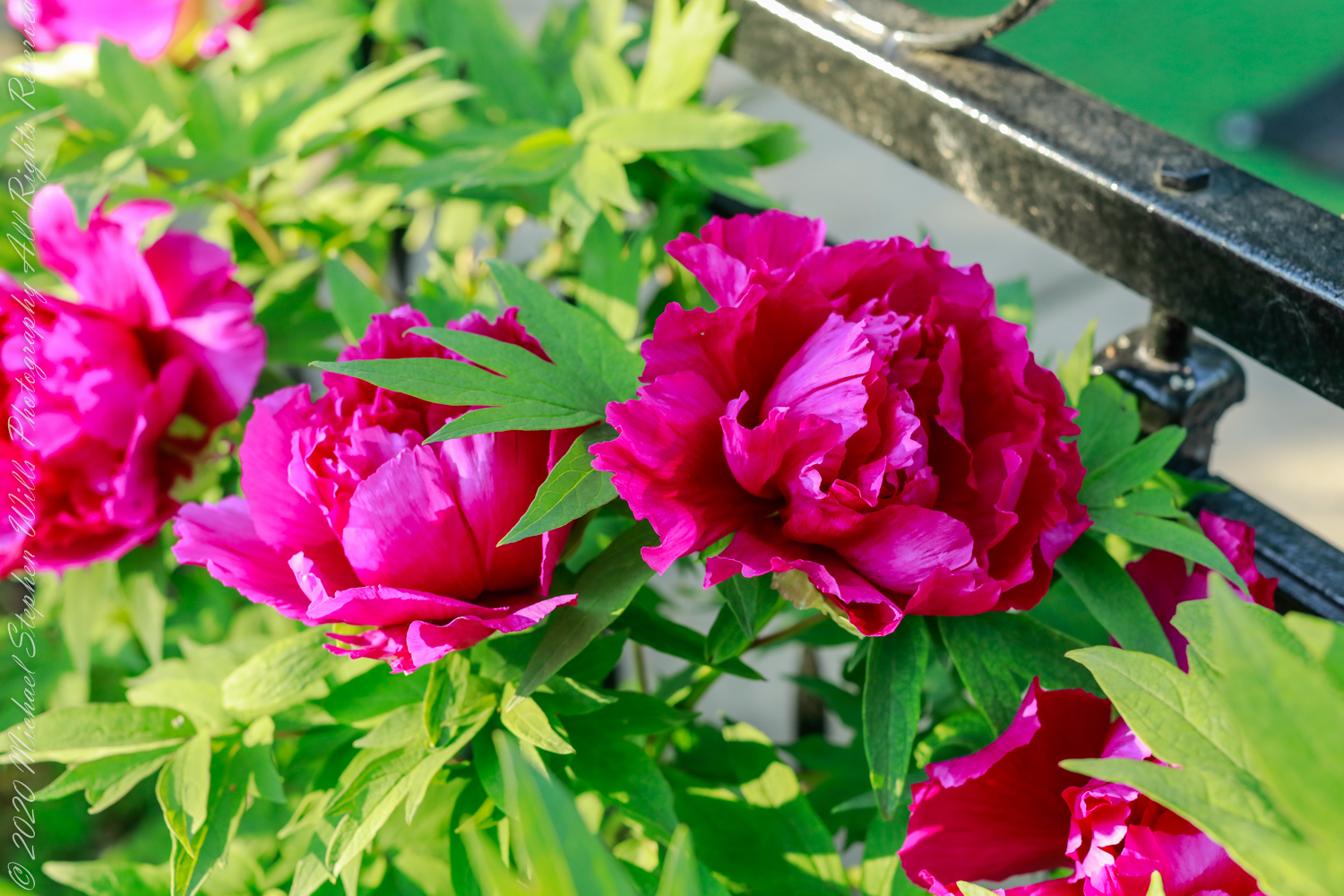
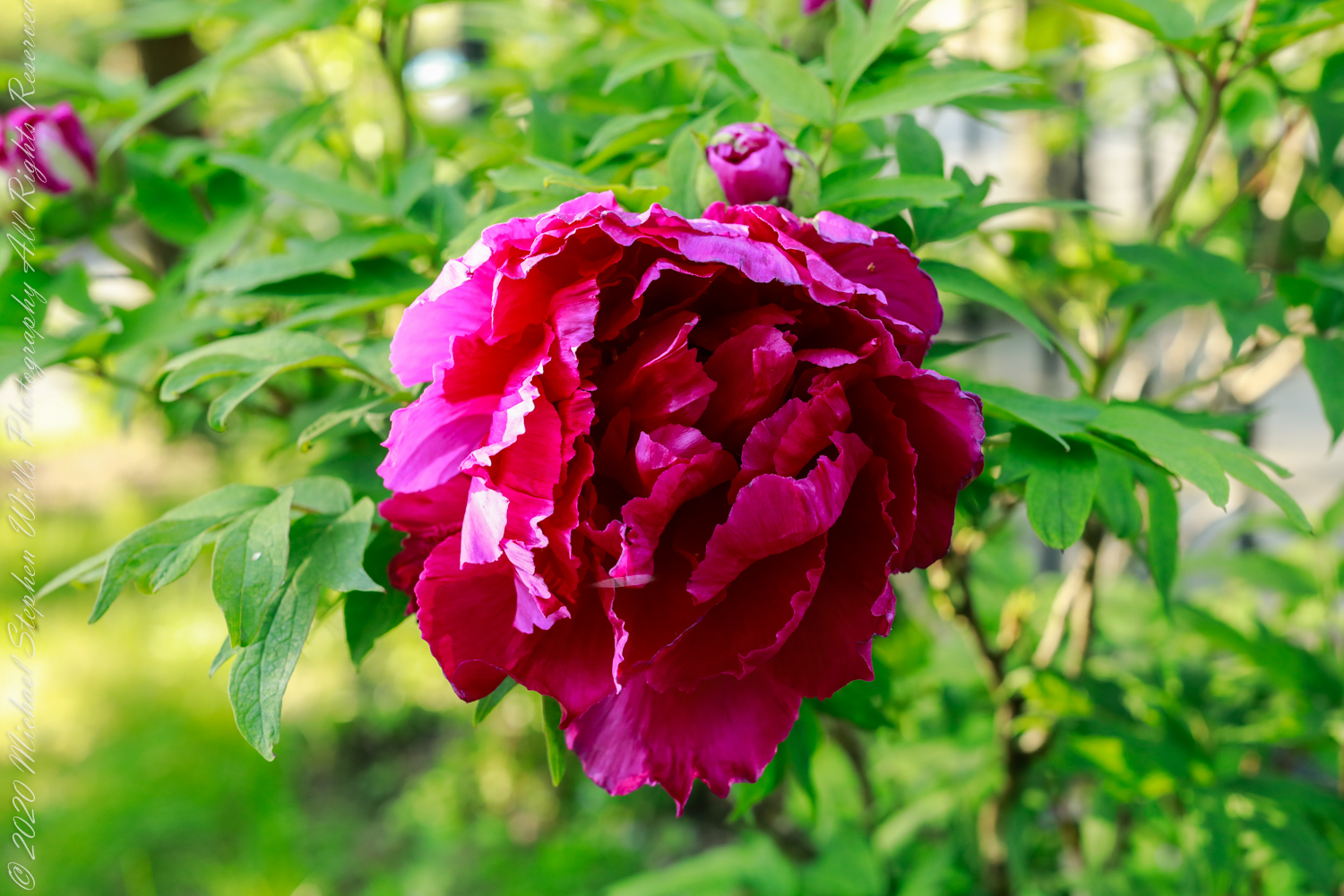
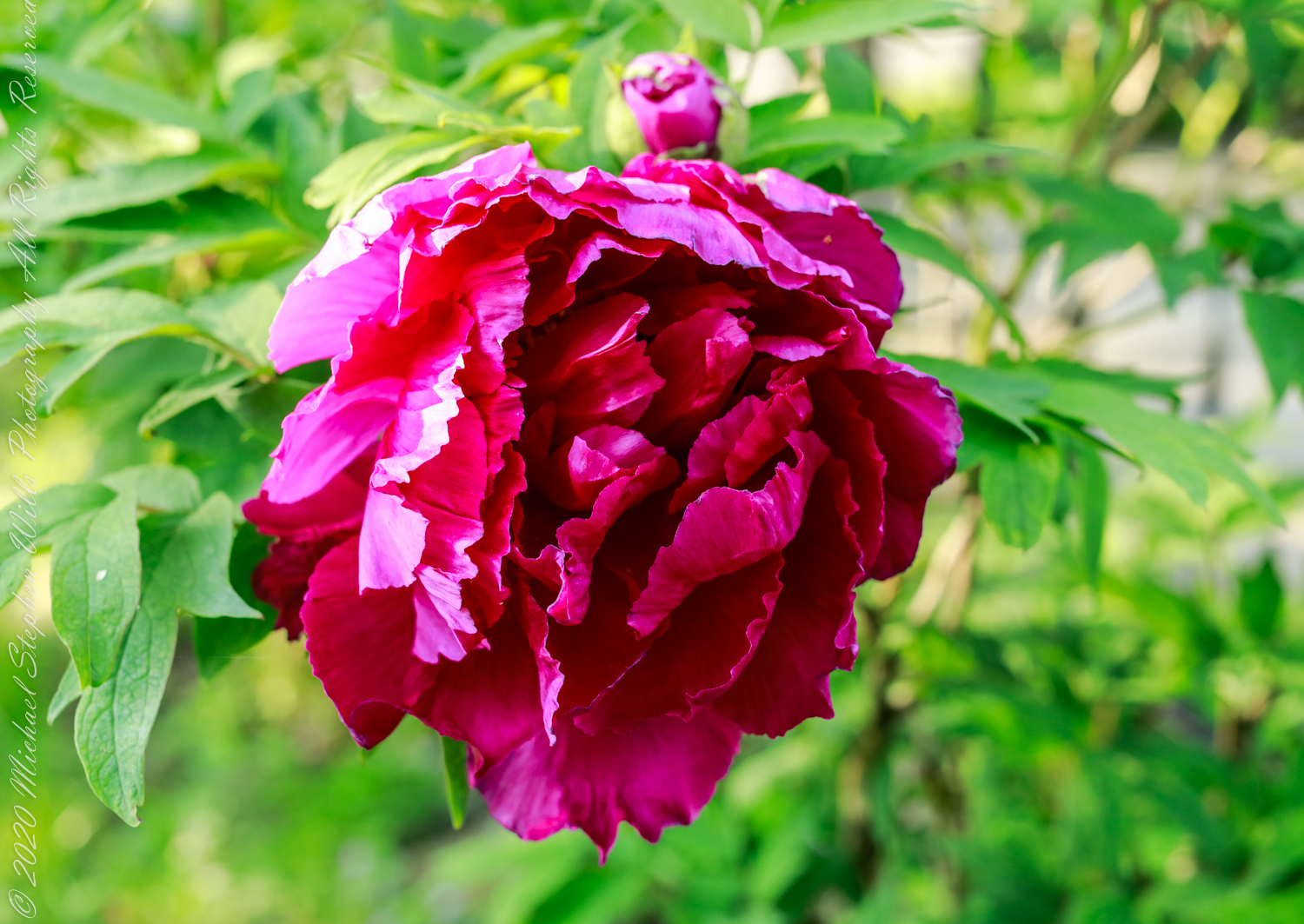
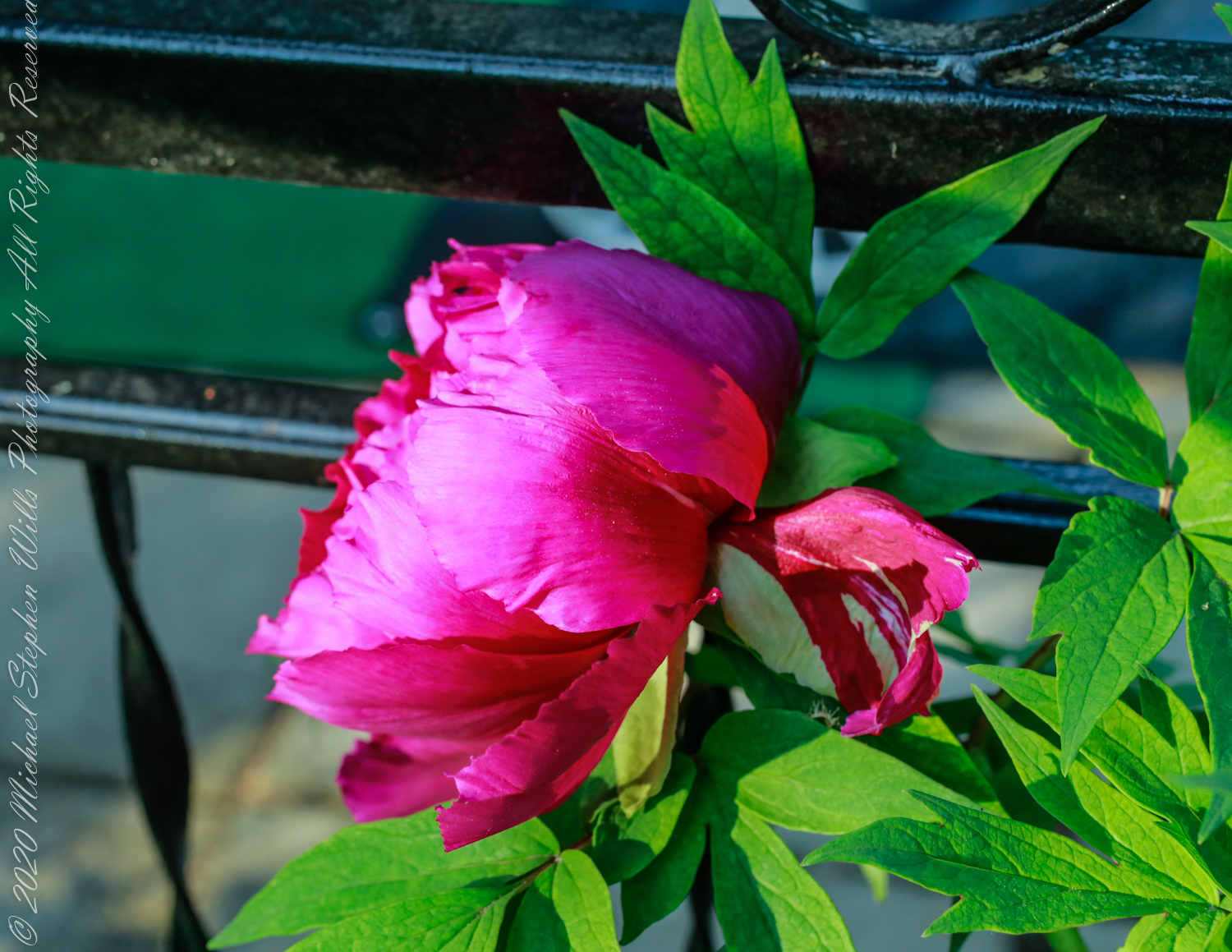
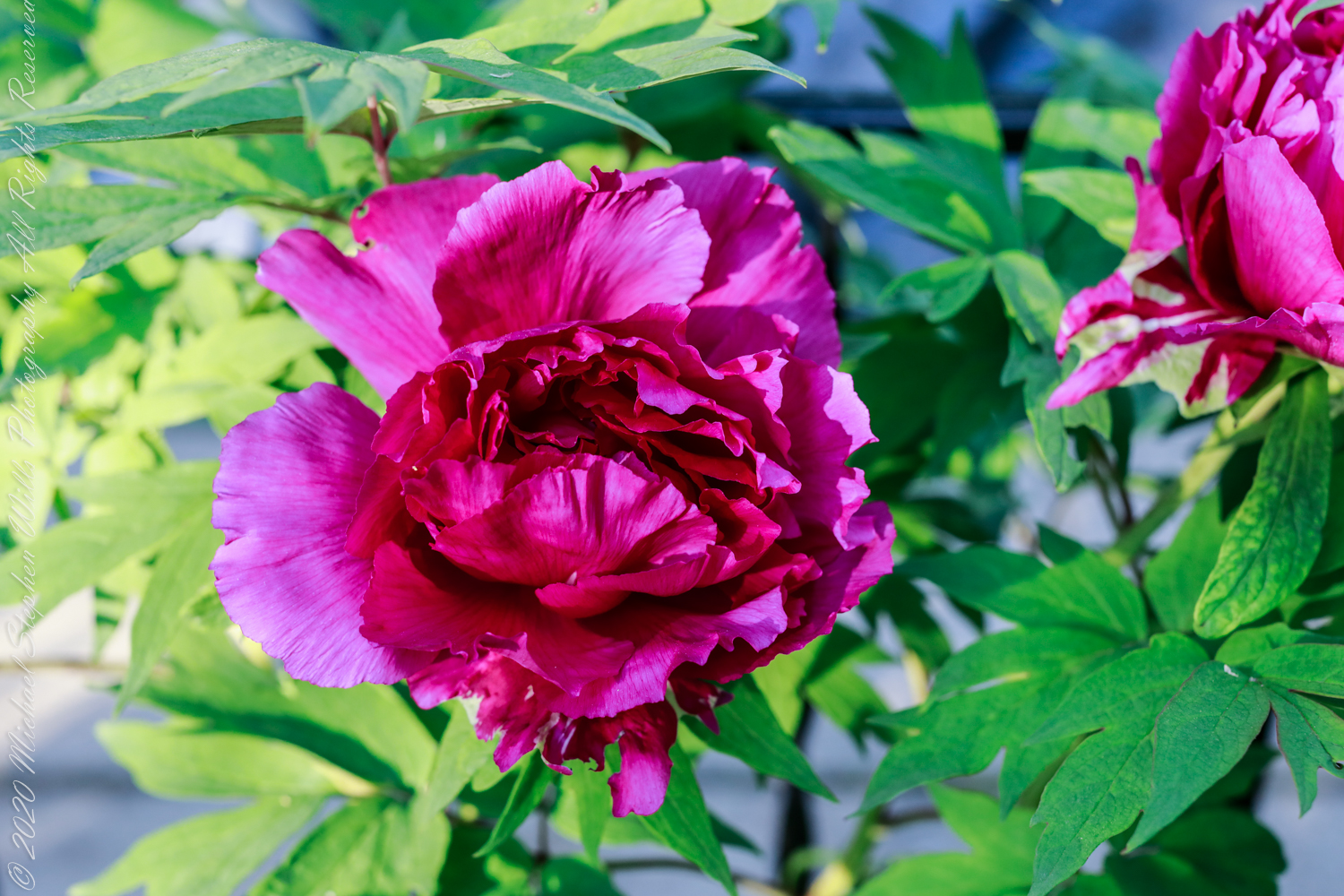
See my previous May Woody Peony postings for background on this peony variety.
These photographs were taken with a Canon EOS 5D Mark IV dslr and the Canon EF 50mm f/1,2L USM lens. I opted for handheld exposures; the morning was absolutely still.
Copyright 2022 All Rights Reserved Michael Stephen Wills



 Michael Stephen Wills Photography