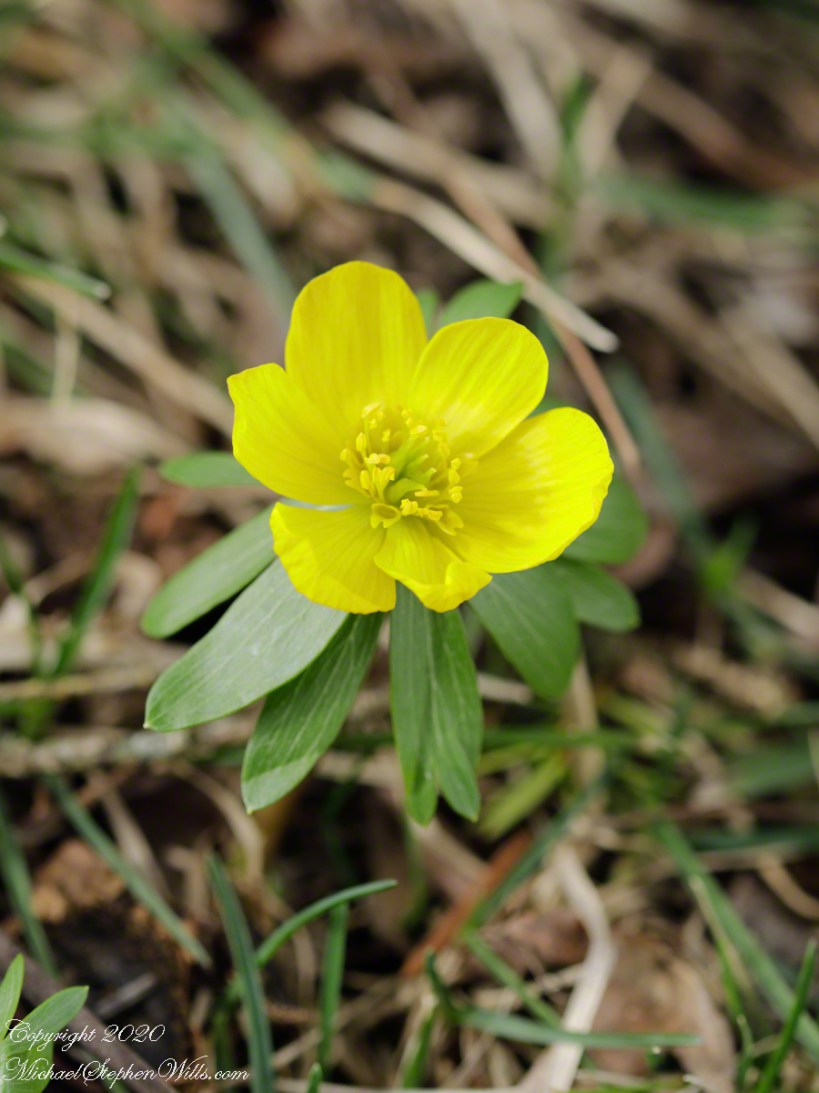
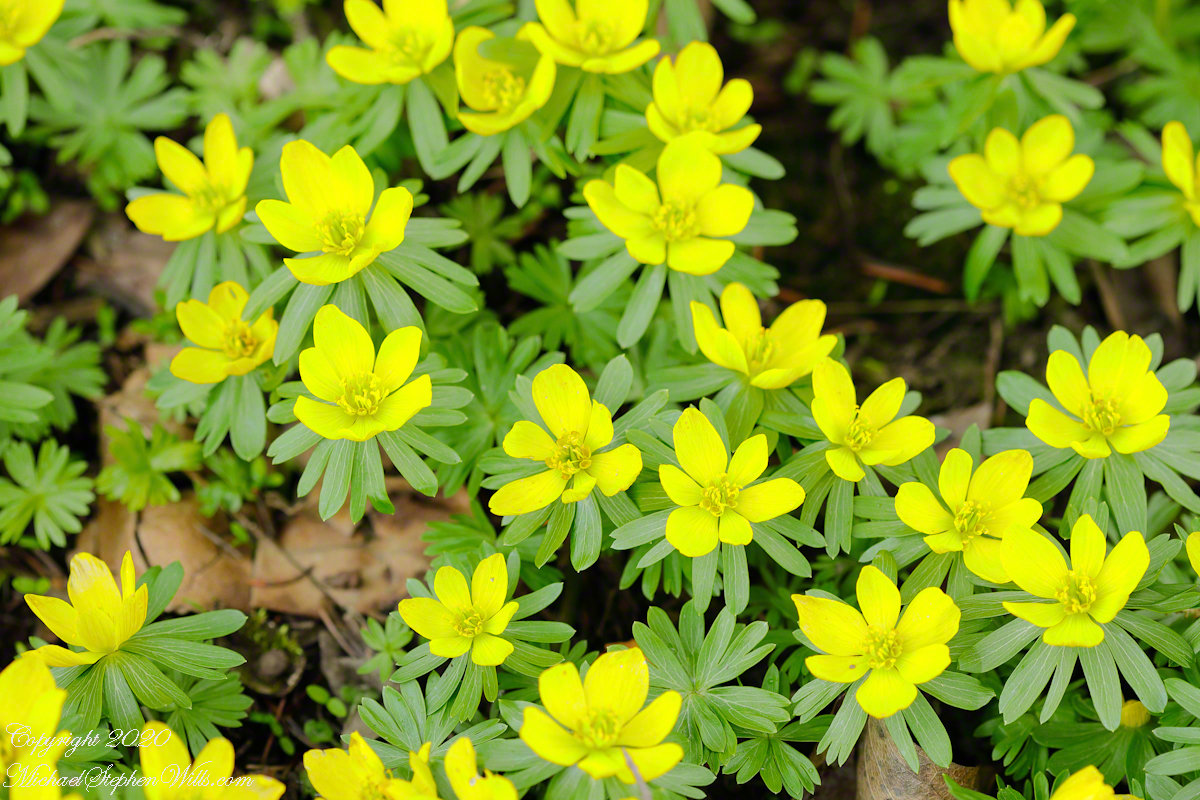
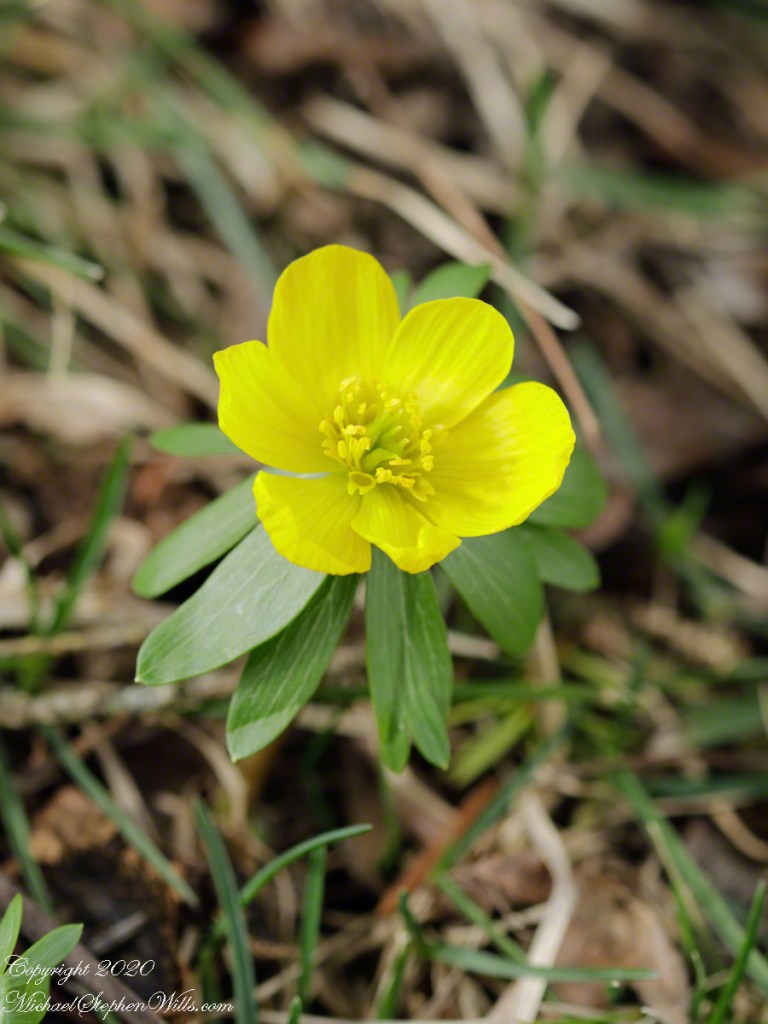
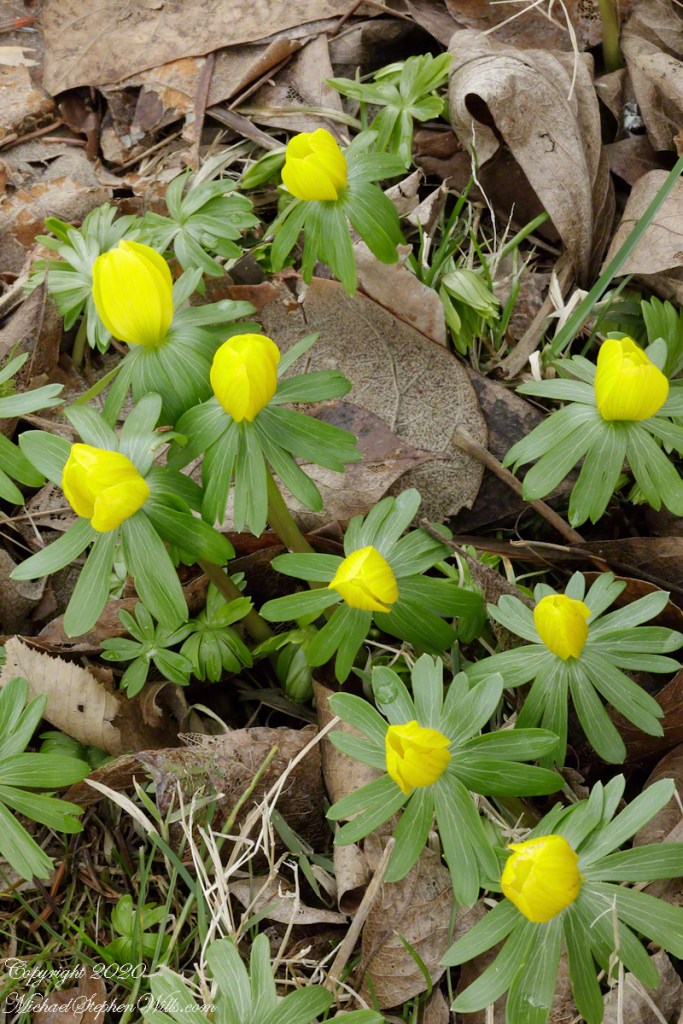
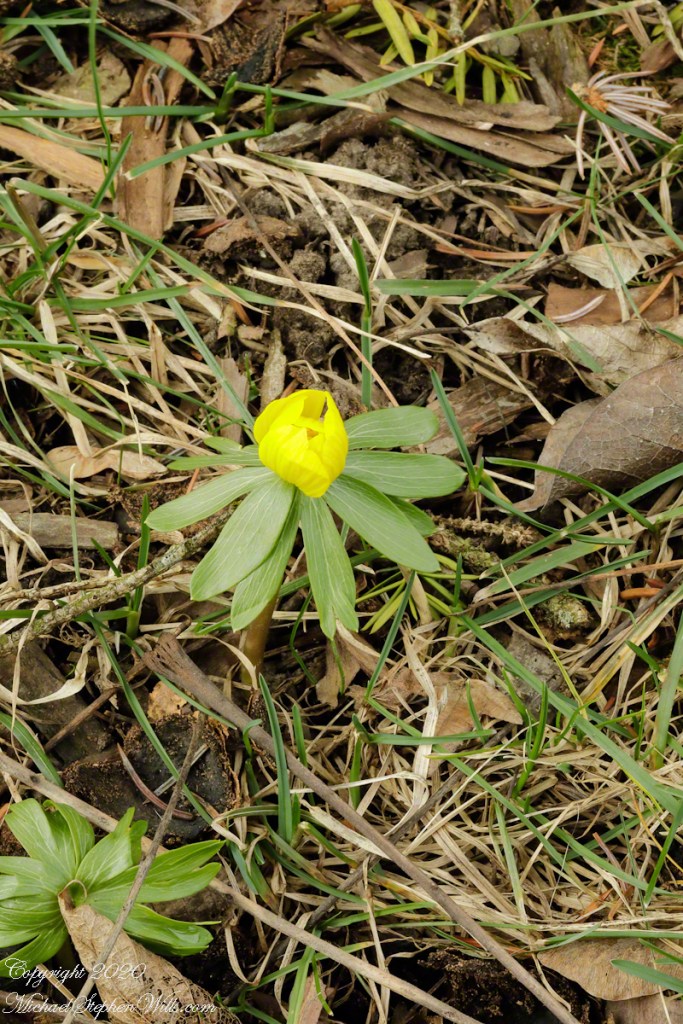
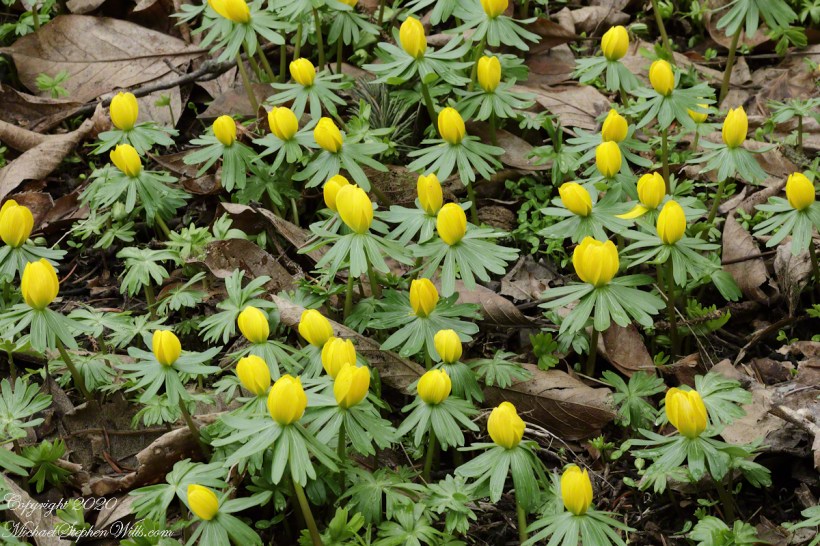
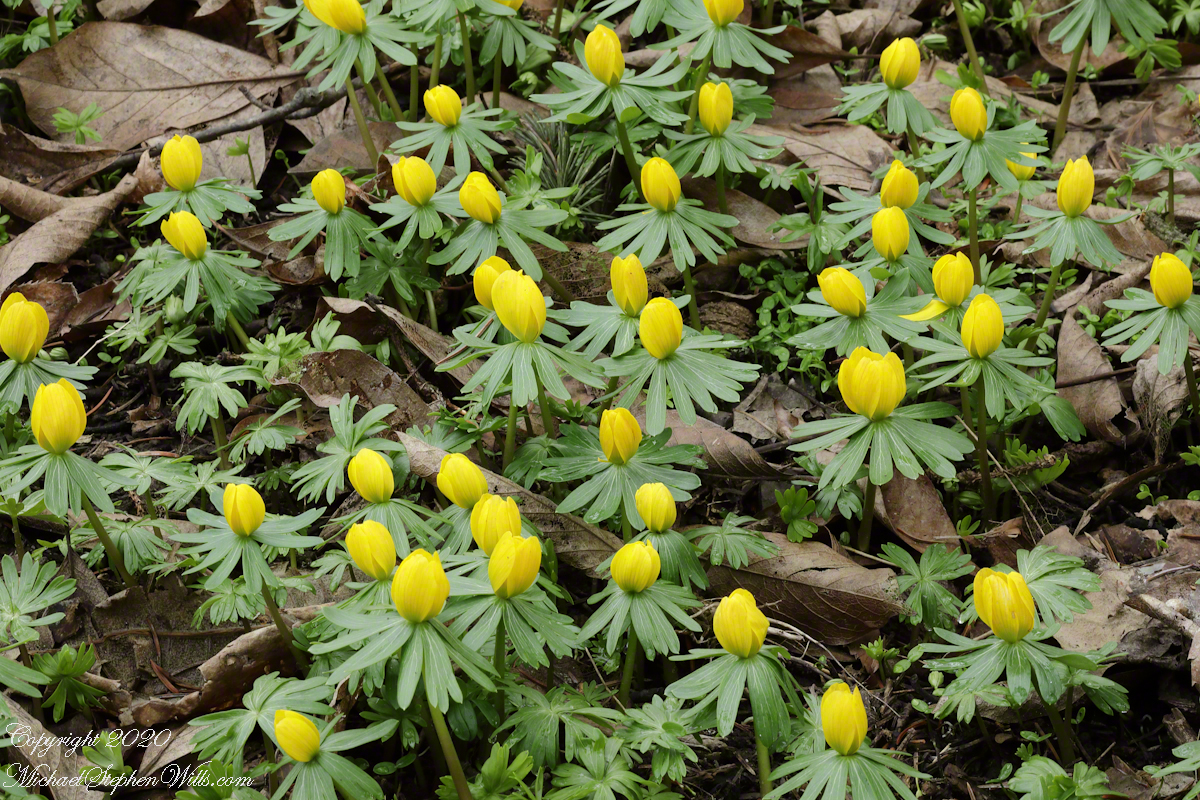
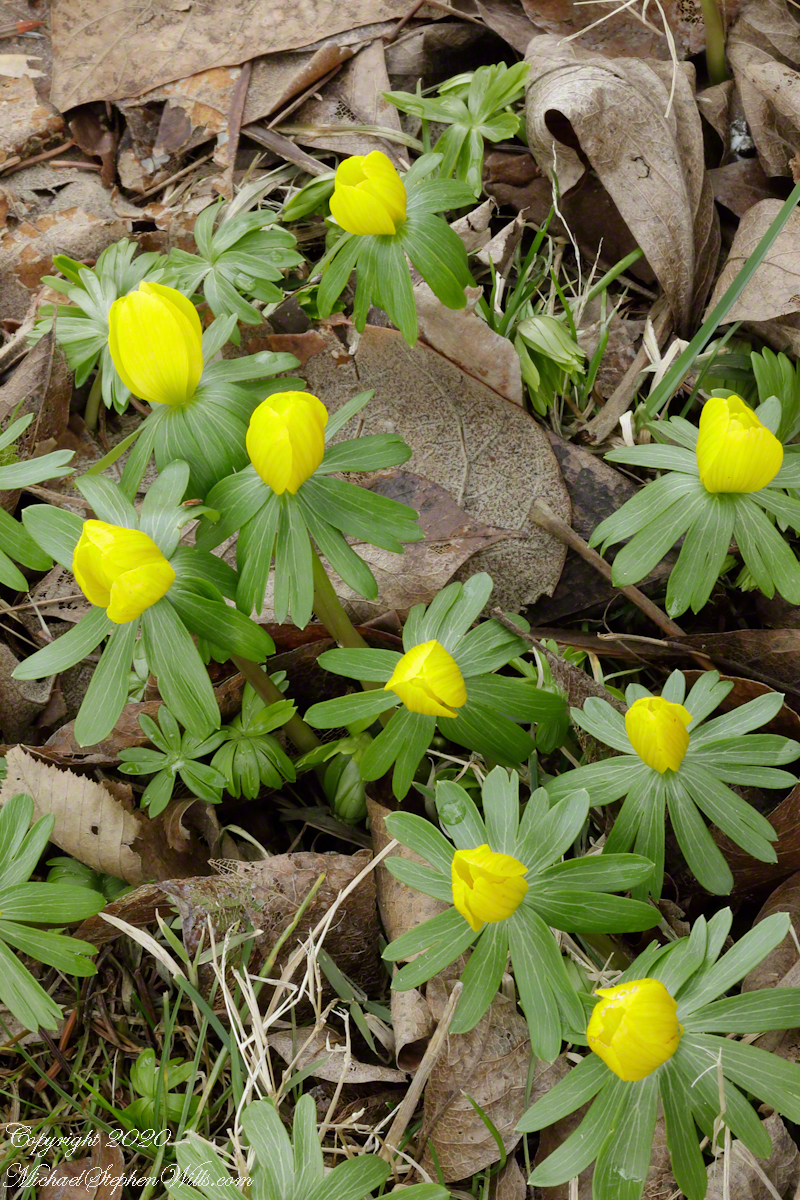
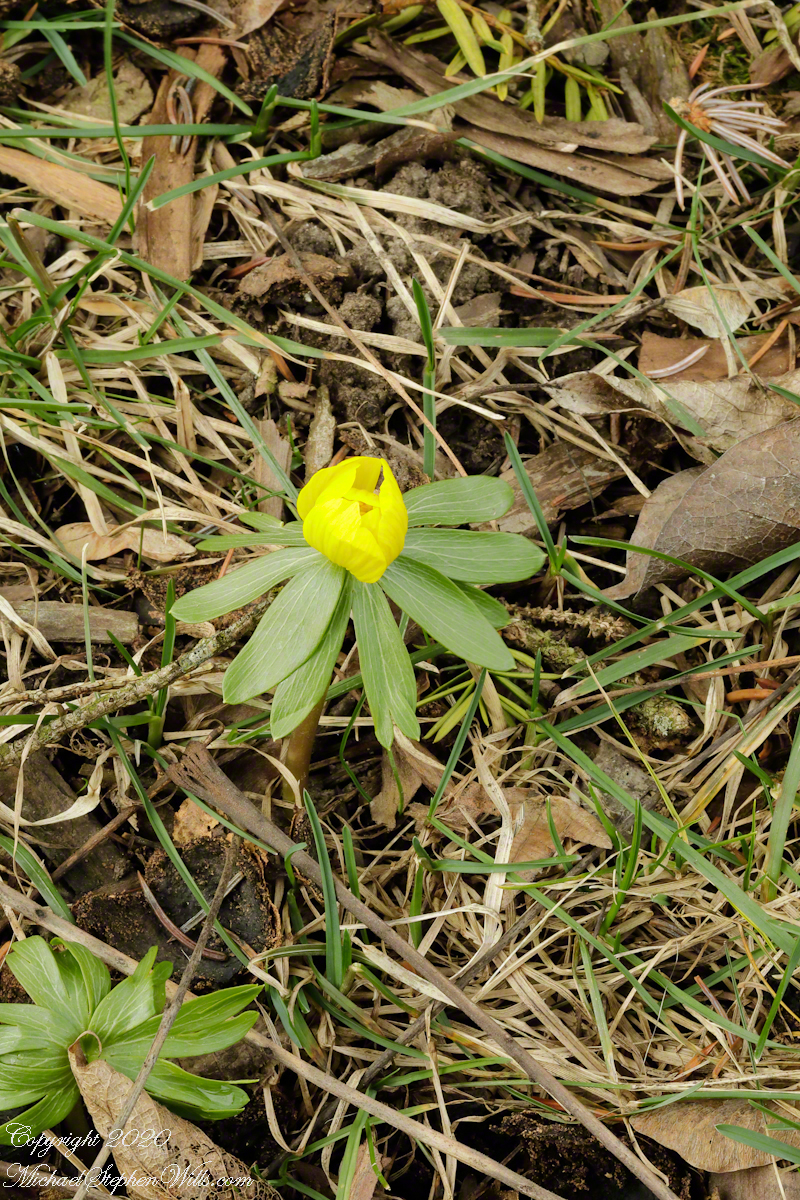
With the thermometer in the 60’s on March 10, 2020 the “buttercups” of yesterday are open. When we first moved here, the plants were much thinner. I used fertilizer spikes on the Magnolia tree around which they grow. Each early the flowers pollinate, forming seeds and spreading.
A tripod held the composition steady, and the timer was set to 2 seconds for extra stability at the f25 setting.
Here is a slideshow of yesterday and today’s shots.
Copyright 2021 All Rights Reserved Michael Stephen Wills
In February 2020, I captured images of the first flowers to bloom on their property with a Canon 5D Mark IV DSLR and a macro lens. The flowers belong to the Eranthis genus, known for early flowering.
These flowers are the first to bloom on our property, around the magnolia tree, and are also the first wildflowers photographed with my then new Canon 5D Mark IV dslr . Each year these “buttercups” grow thicker and spread. The latin scientific name Eranthis hyemalis proclaims the early nature of its flowering both in the genus, “Eranthis” – composed of two Greek language roots meaning “spring flower”, and species, “hyemalis” – a term from the Latin language meaning, “winter flowering.” The genus encompasses eight species, all early flowering plants with the common name winter aconite. These can also rightly be called Buttercups as the plant belongs to family Ranunculaceae, buttercups.
To capture the intricate details possible with the Canon EF 100 mm f/2.8 Macro lens I used here, it’s often necessary to adjust the camera settings to allow for a longer exposure time. This adjustment ensures that enough light reaches the sensor, particularly in macro photography or low-light situations, which helps in producing sharper and more detailed images. All these photographs are from f25. Setting a longer exposure compensates for the reduced light that might be a consequence of using a smaller aperture (higher f-number) for greater depth of field, a common technique in macro photography.”
It’s important to note that while setting a longer exposure can improve image quality by allowing more light to hit the camera’s sensor, it can also introduce the risk of motion blur if the camera or subject moves during the exposure. To minimize camera shake and achieve the best results, I used a Manfrotto “BeFree” tripod and the camera’s built-in timer set to a 2 second delay after a manual shutter release.
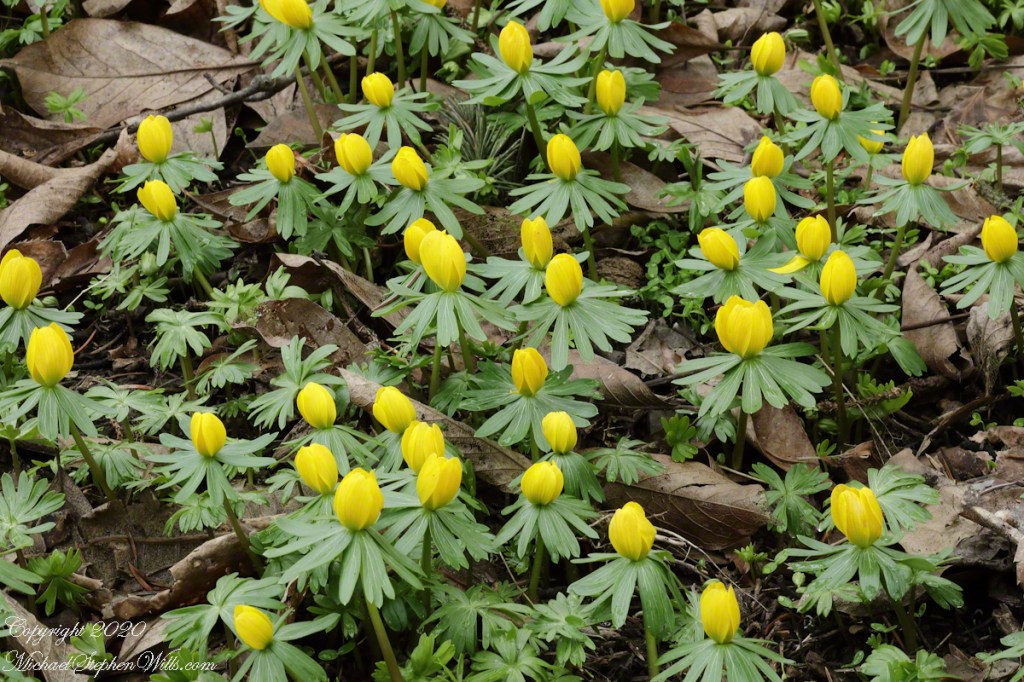
With the thermometer hovering above freezing, these blooms did not open today. The calendar says “late winter”, these Aconite are singing “early spring.”
Reference: Wikipedia “Eranthis hyemalis” and “Eranthis.”
Copyright 2024 All Rights Reserved Michael Stephen Wills
Joint me to gaze out upon a mesmerizing view of winter’s embrace over the Finger Lakes, where the setting sun paints an ephemeral masterpiece of ice, water, and twiligh
As I soared into the heavens, bound for Syracuse on the 9th of February in the year 2024, I found myself cradled in the gentle embrace of the port side of our metal chariot. The world unfolded beneath me; a tapestry of natural splendor painted in the golden hues of the setting sun. The view to the west, a grand panorama, beckoned my gaze, luring my senses into the wild embrace of Upstate New York’s finest landscapes.
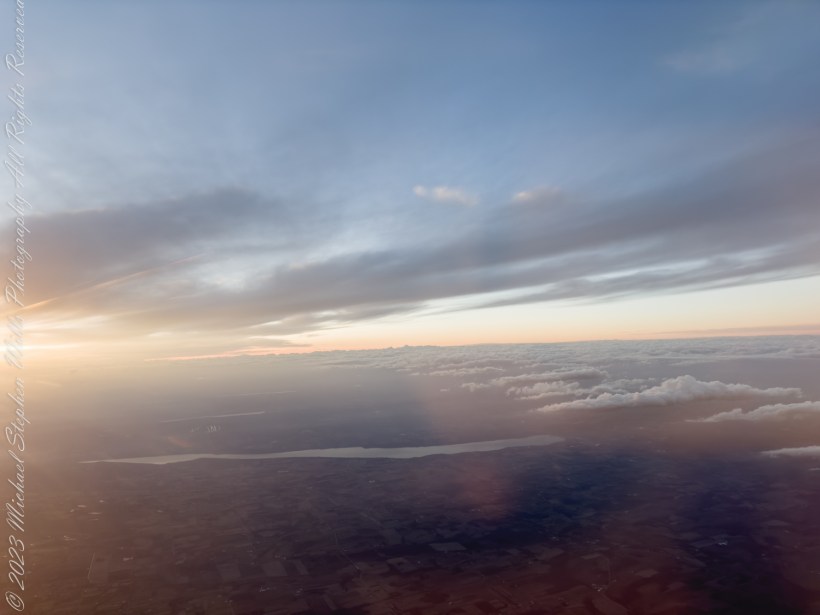
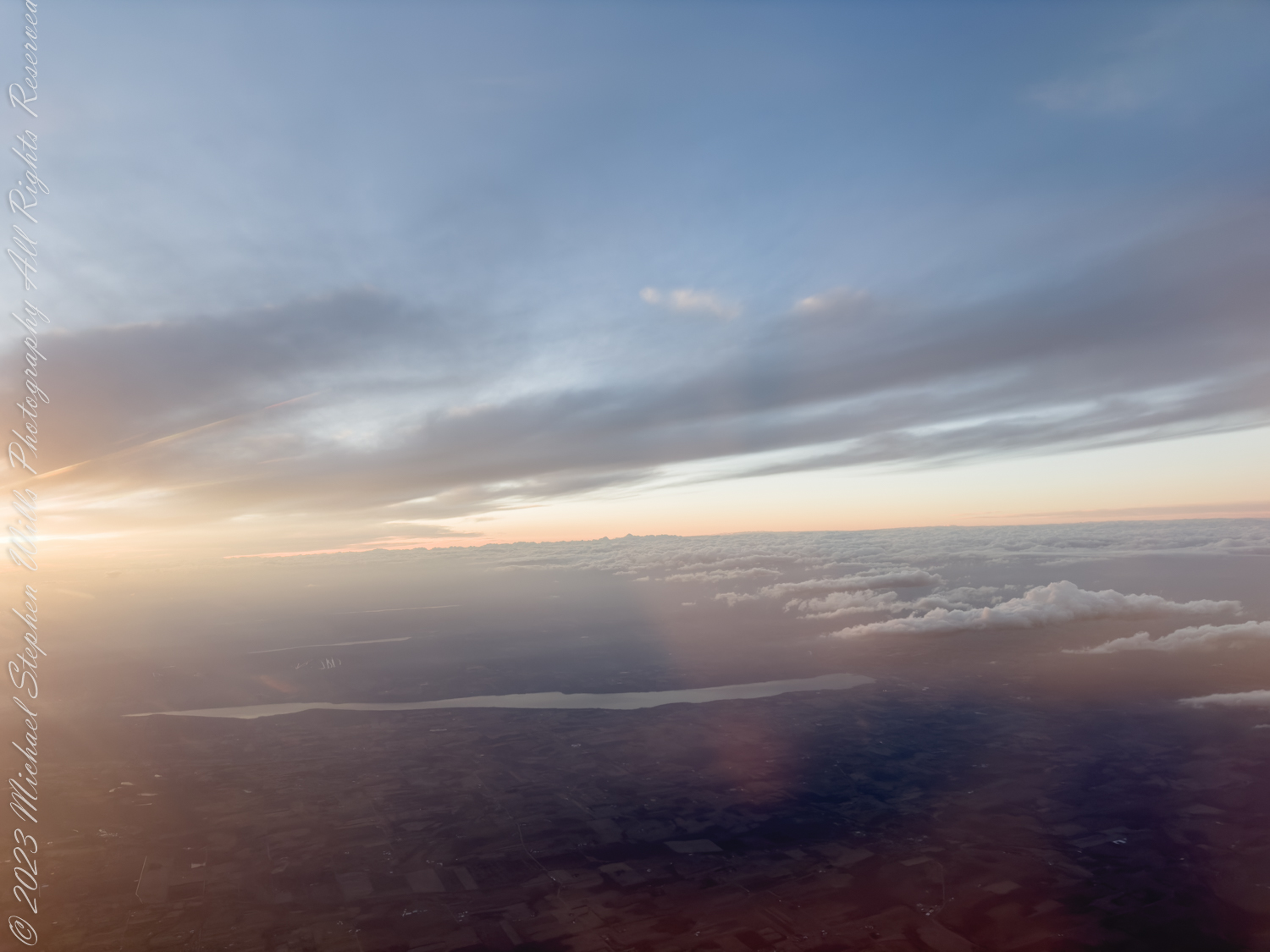
Flying into Syracuse, February 9, 2024 we sat on the left (port) side of plane, this view to the west took in Canandaigua Lake, Bristol Mountain Ski Area, Honeoye Lake, Hemlock Lake (Canadice Lake is not visible).
Below, Canandaigua Lake lay stretched out like a slumbering giant, its waters glistening with the last kisses of daylight, a mirror to the sky’s fiery canvas. How wondrous it was to perceive the world from such heights, to witness the lake’s serenity from the abode of the gods. It seemed as if Canandaigua herself was remembering whispered tales of ice fishermen and quiet boathouses locked in the winter’s frosty grasp.
Off to the south, the proud shoulders of Bristol Mountain Ski Area rose in defiance against the winter’s chill. The mountain’s snow-laden slopes, carved with the meticulous precision of skiers and snowboarders, reflected the sun’s dying light, a beacon of winter’s joy amidst the sprawling lands. I could almost hear the muffled laughter of families and the swish of skis carving their ephemeral signature upon the mountain’s white canvas.
Nestled in the mountain’s shadow, Honeoye Lake revealed itself, a slender and unassuming sliver of tranquility. Its presence was like that of a quiet companion amidst the grandeur, a reminder of the simpler pleasures—frozen waters awaiting the spring thaw, the promise of lush greenery peering from beneath the white shroud of winter.
Beyond, where the earth kissed the sky, Hemlock Lake offered its secluded beauty, a hidden gem amongst its more renowned siblings. Though Canadice Lake remained shyly concealed from view, I knew it too slumbered there, a silent sentinel guarding the land’s secrets. Together, these lakes stood as custodians of a silent world, the guardians of a tranquility that seemed untouched by the passage of time.
As the plane banked gently, the clouds above me caught fire, ablaze with the colors of the dying day. Wisps of vapor painted streaks of orange, purple, and pink across the expansive canvas, a celestial masterpiece unfolding before my very eyes. The clouds seemed to dance with the joy of existence, a choreographed performance to the symphony of the setting sun.
I found myself lost in the moment, a solitary figure suspended between heaven and earth, caught in the embrace of an ephemeral beauty. The world below whispered of untold stories, of winters past and springs to come, of the endless cycle of life that pulsed beneath the frost. It was a moment of profound connection, a fleeting communion with the heartbeat of the planet.
Here we discover and learn to admire the winterberry shrub, or Ilex verticillata, during a frosty February morning. Its crimson berries, which symbolize hope, sustenance, and life’s enduring cycle, are a stark contrast to the pall of winter.
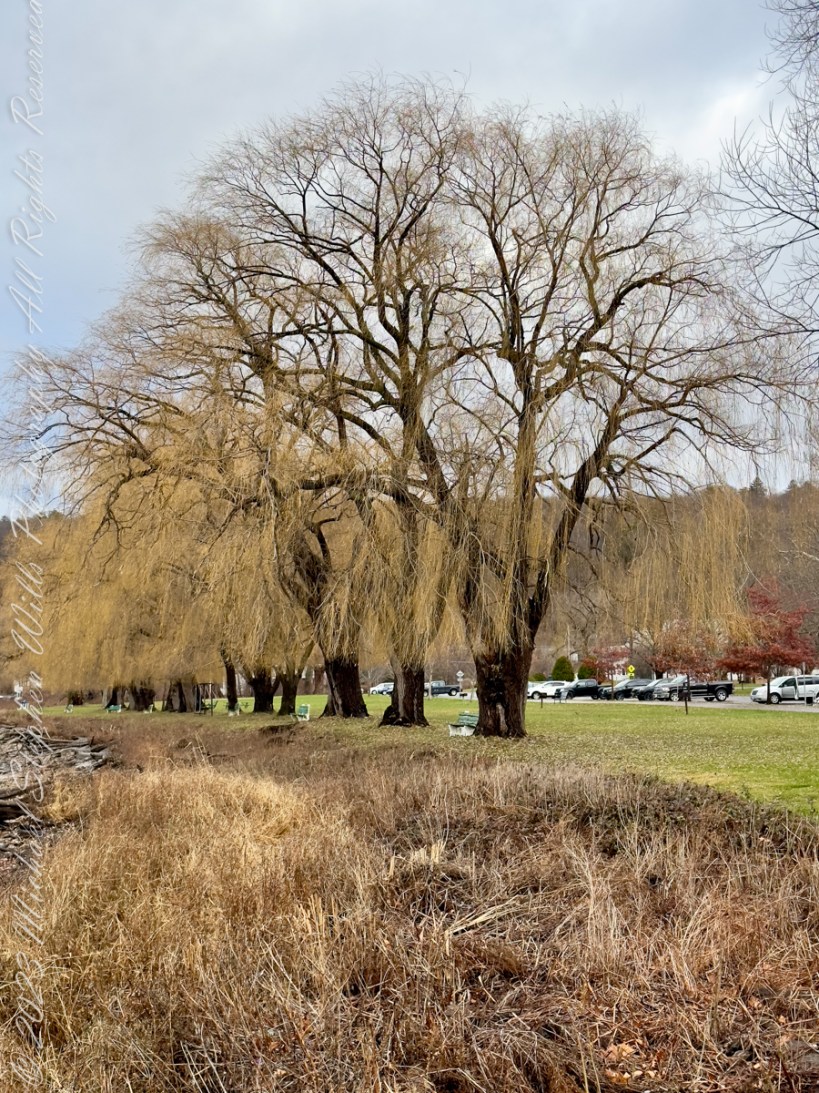
On a brisk day at Stewart Park, I stroll alongside Cayuga Lake, observing Canadian Geese and white willows. The tranquil, interconnected scene proves an enduring memory despite everyday worries.
In twilight’s hush, embraced by oaks,
A well of stone, with stories etched in lace,
Now table made, where others’ whispers weave,
And time’s soft hands a tapestry conceive.
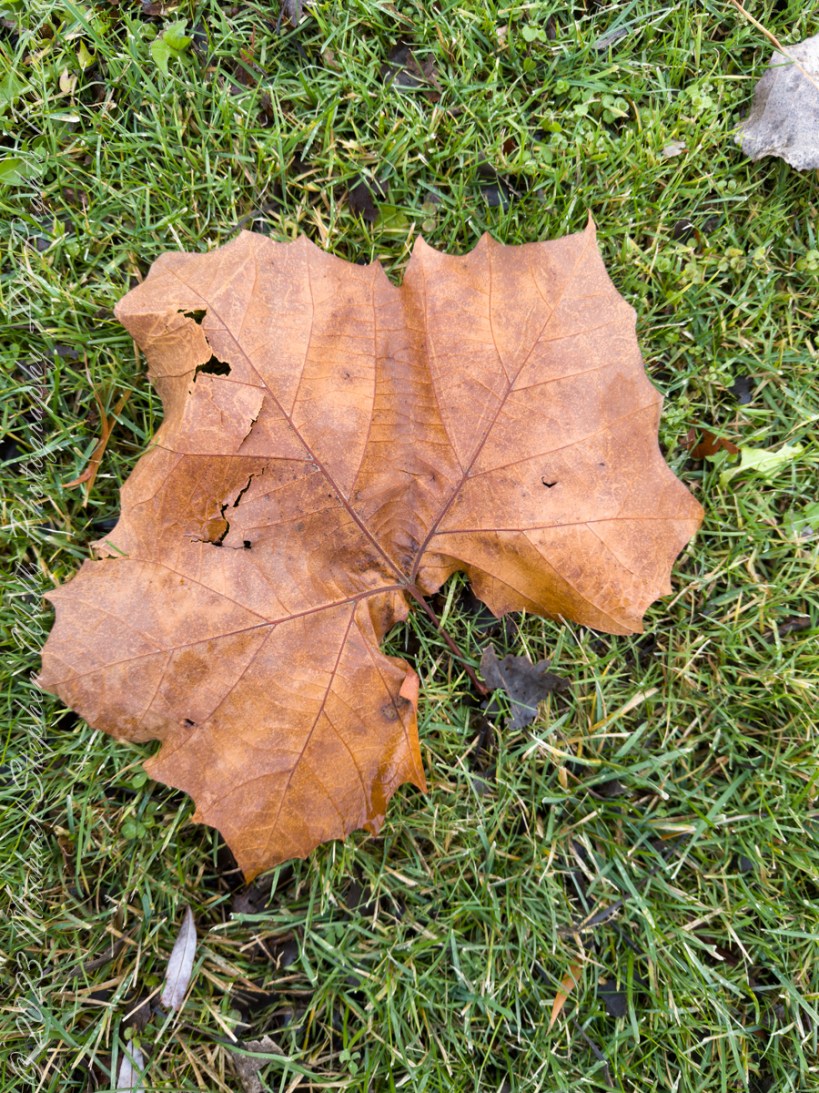
Read this blog for an understanding of how the sycamore leaf symbolizes themes such as shelter, the cycles of life and death, decay, freedom, and individuality, reflecting the intimate connection between nature and the evolving American identity.




 Michael Stephen Wills Photography