Experience New York’s Shortest St. Patrick’s Day Parade

The Auburn St. Patrick’s Day Parade showcased vibrant traditions through bagpipers, dancers, and community spirit, celebrating Irish heritage and unity in a poignant, lively procession.

The streets of Auburn, New York, were alive with the spirit of St. Patrick’s Day. A crisp breeze carried the sound of bagpipes through the neighborhood, stirring both nostalgia and excitement. I stood on the curb, camera in hand, ready to capture the essence of what is proudly proclaimed as “New York’s Shortest St. Patrick’s Day Parade.”

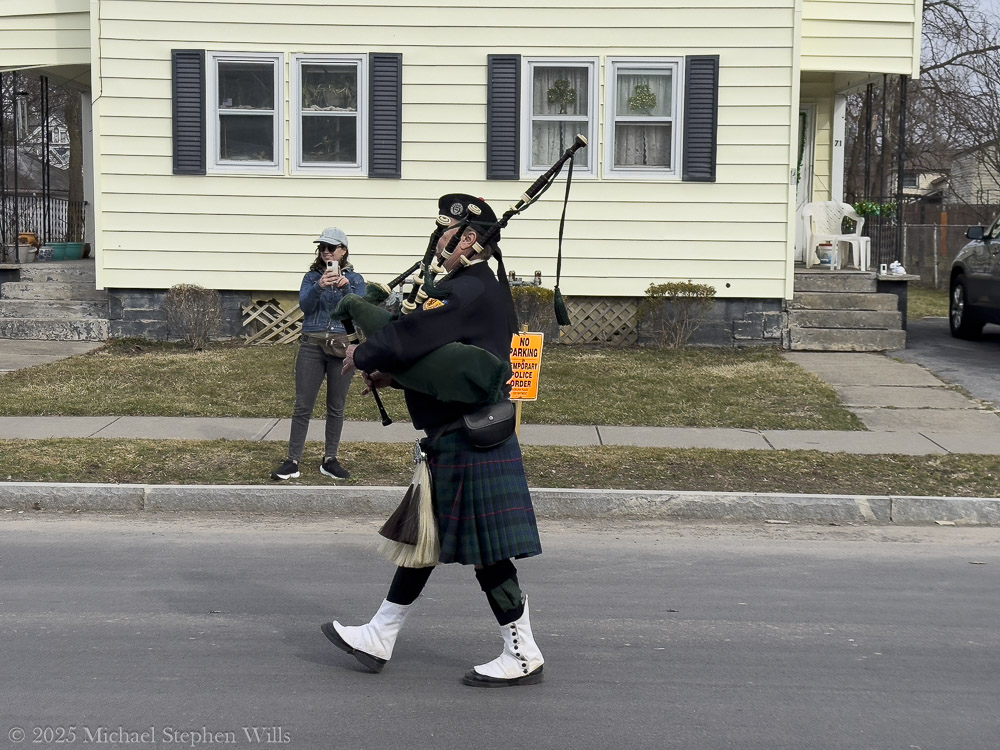
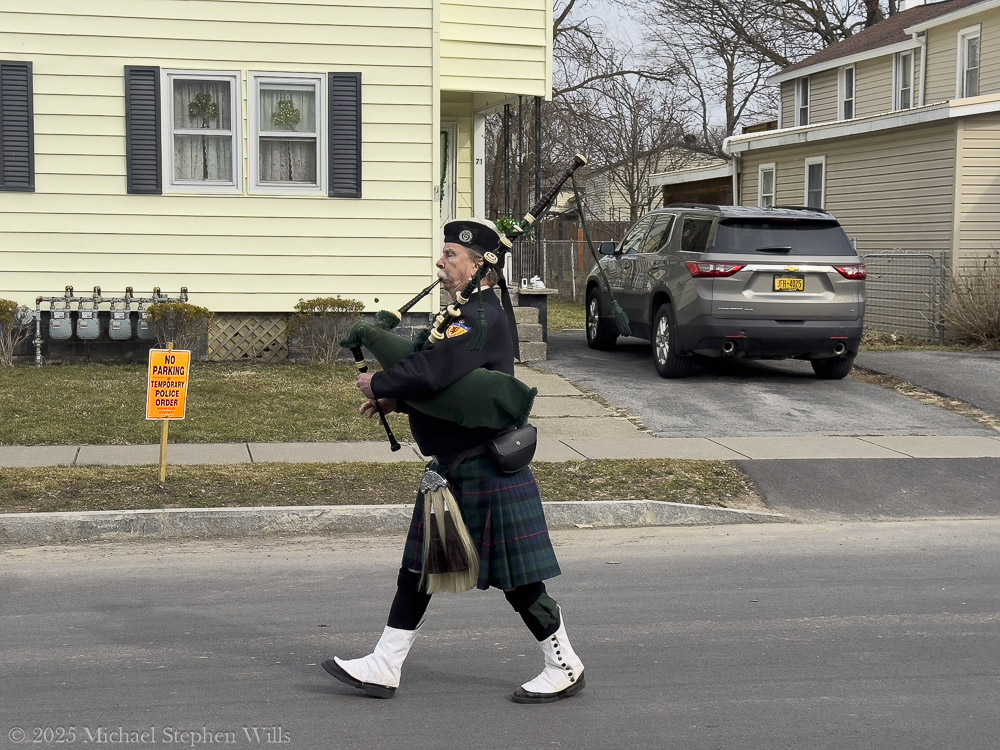
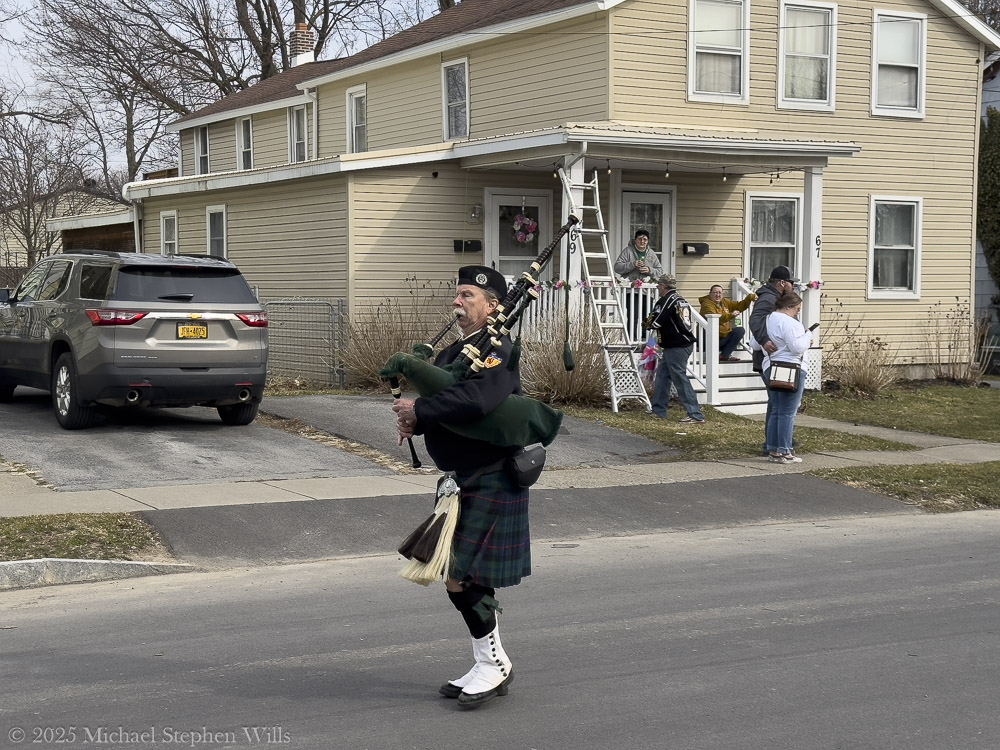
Leading the procession was a lone bagpiper, his presence commanding attention. Clad in a traditional kilt, he marched with precision, his fingers skillfully pressing the chanter, producing the unmistakable droning melody. The contrast of his black uniform against the white socks and flashes of green was striking. His gaze was fixed forward, unwavering, as he walked past modest houses adorned with shamrocks and green decorations. A woman standing nearby lifted her phone to capture the moment, mirroring my own effort to preserve the memory.

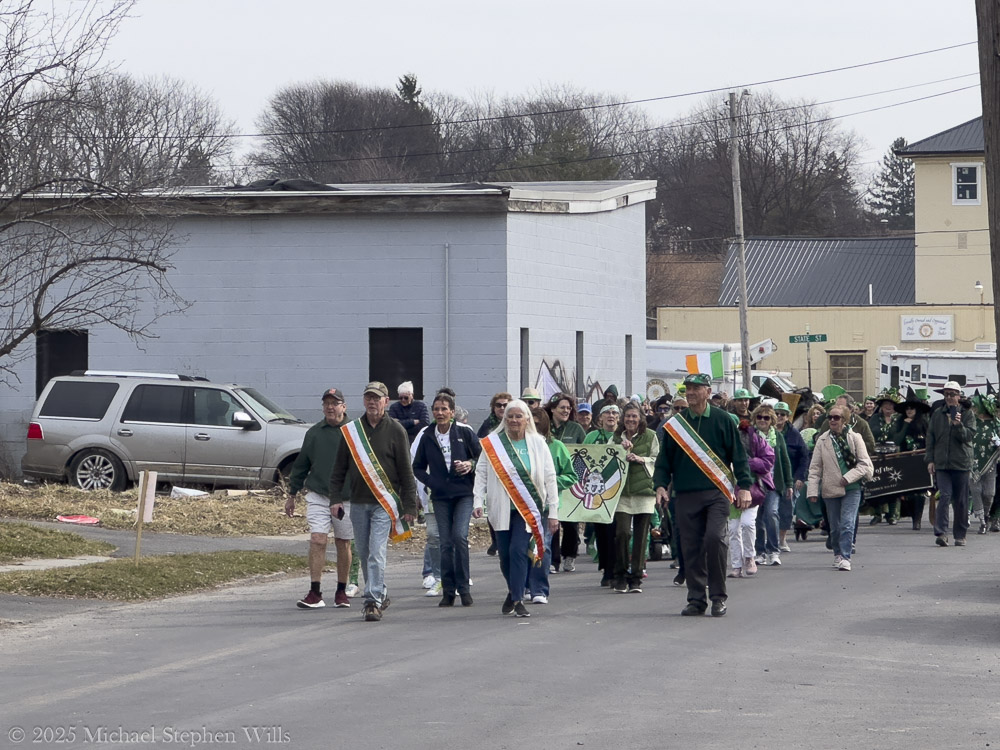
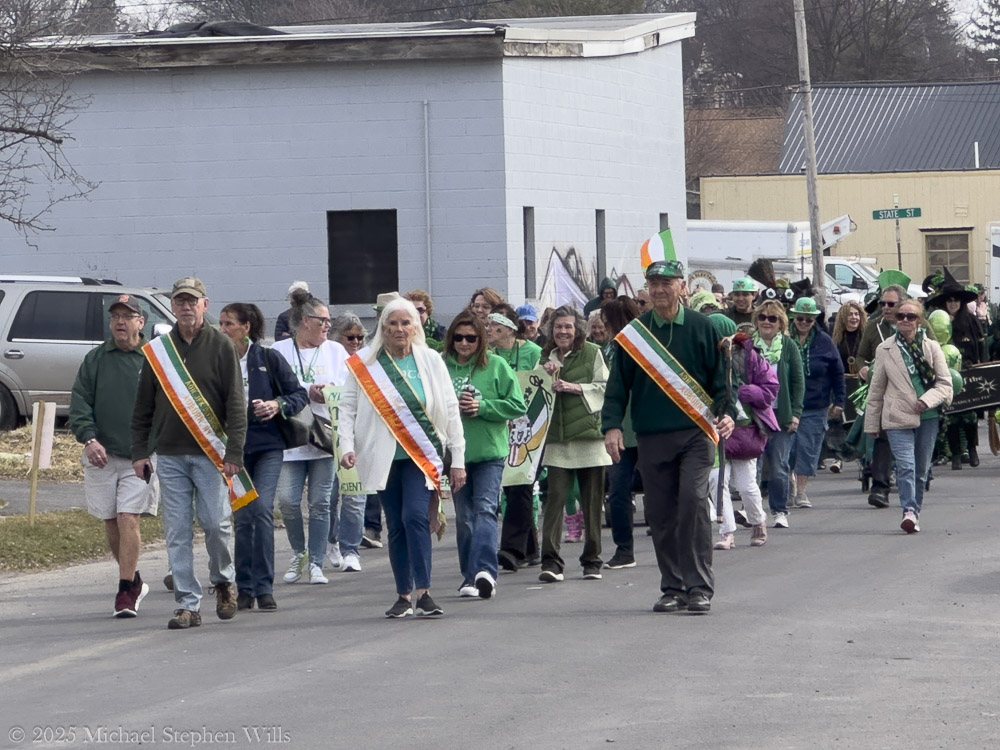
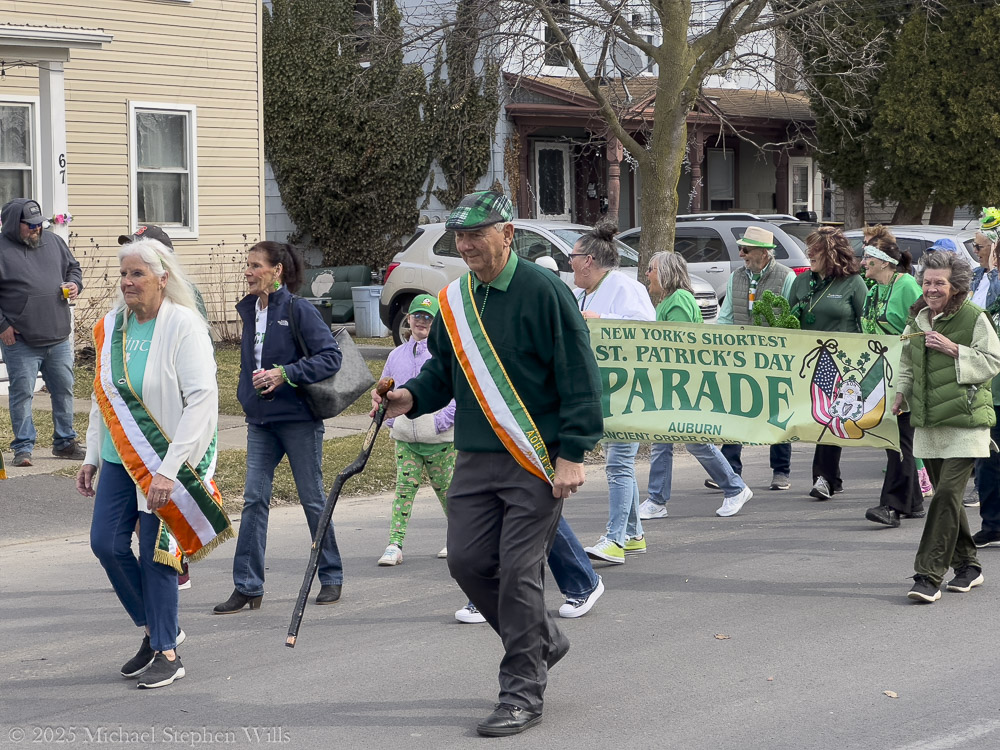
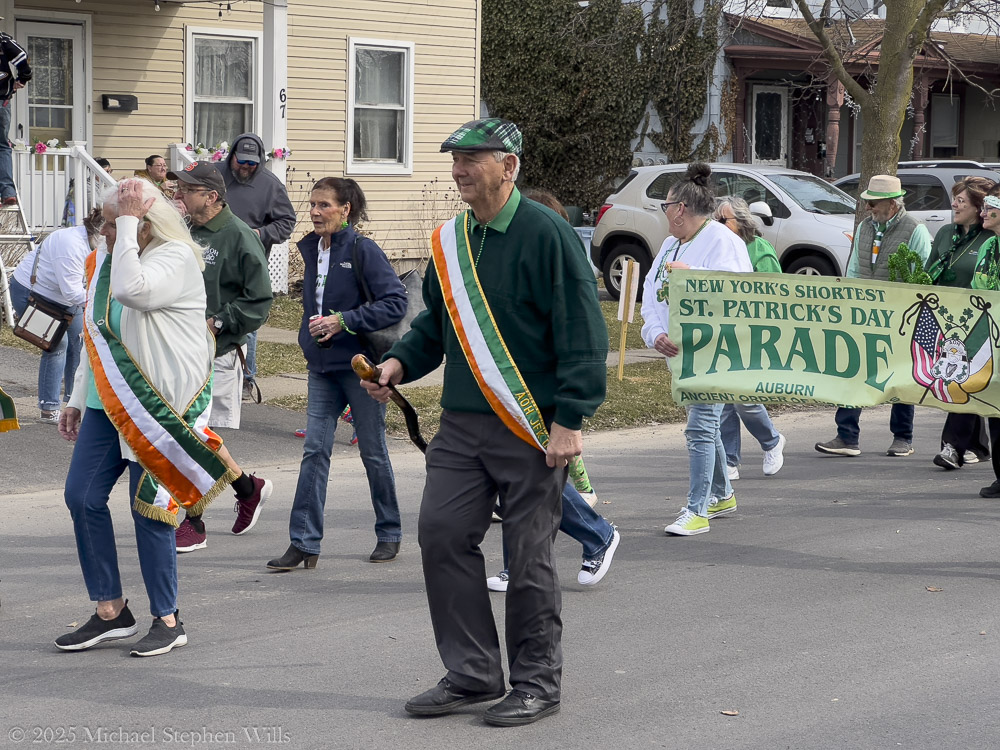
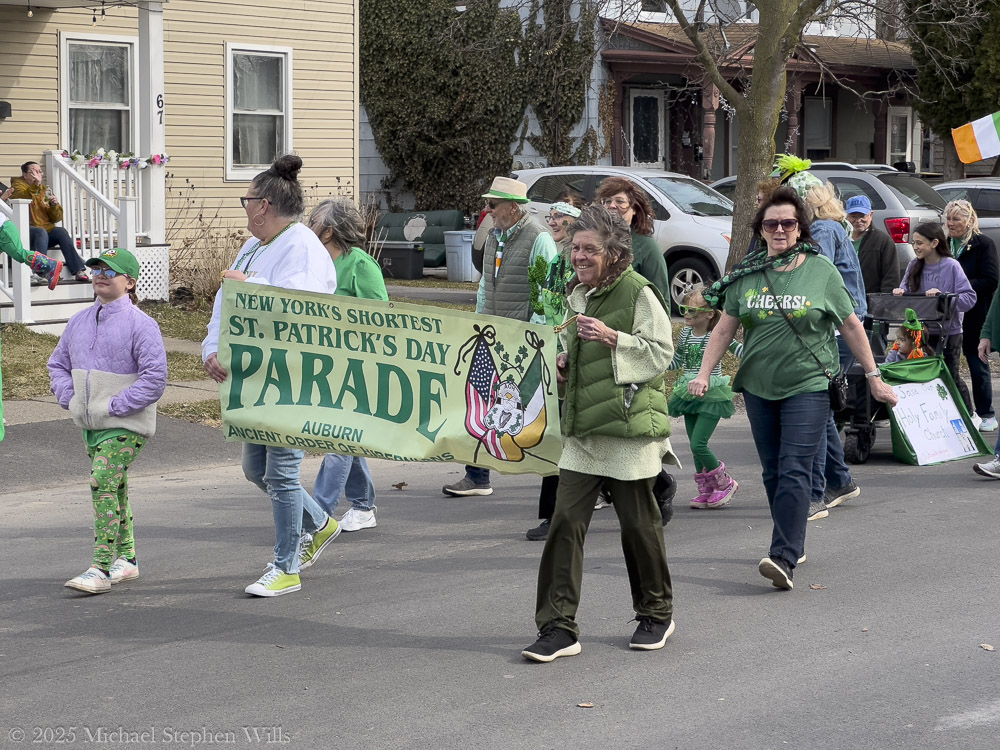
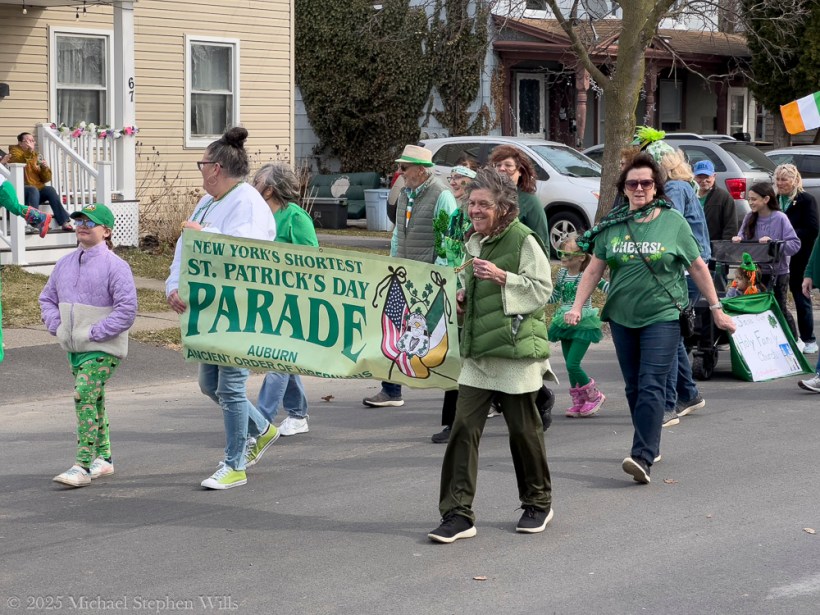
Just behind him, a group of proud marchers advanced, their sashes boldly displaying the colors of the Irish flag. Some leaned on walking sticks, a testament to age and tradition converging on this special day. They carried a banner that read: “New York’s Shortest St. Patrick’s Day Parade – Auburn – Ancient Order of Hibernians.” The crowd lining the sidewalks clapped and cheered as the parade, though brief, filled the street with a warmth that defied the cool March air.

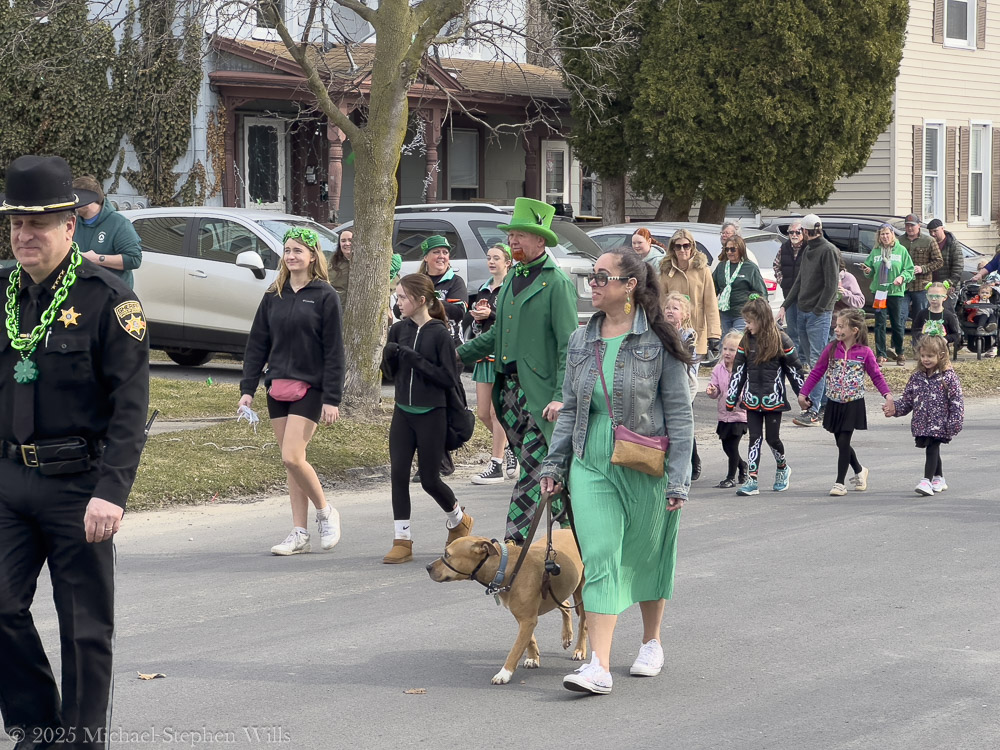
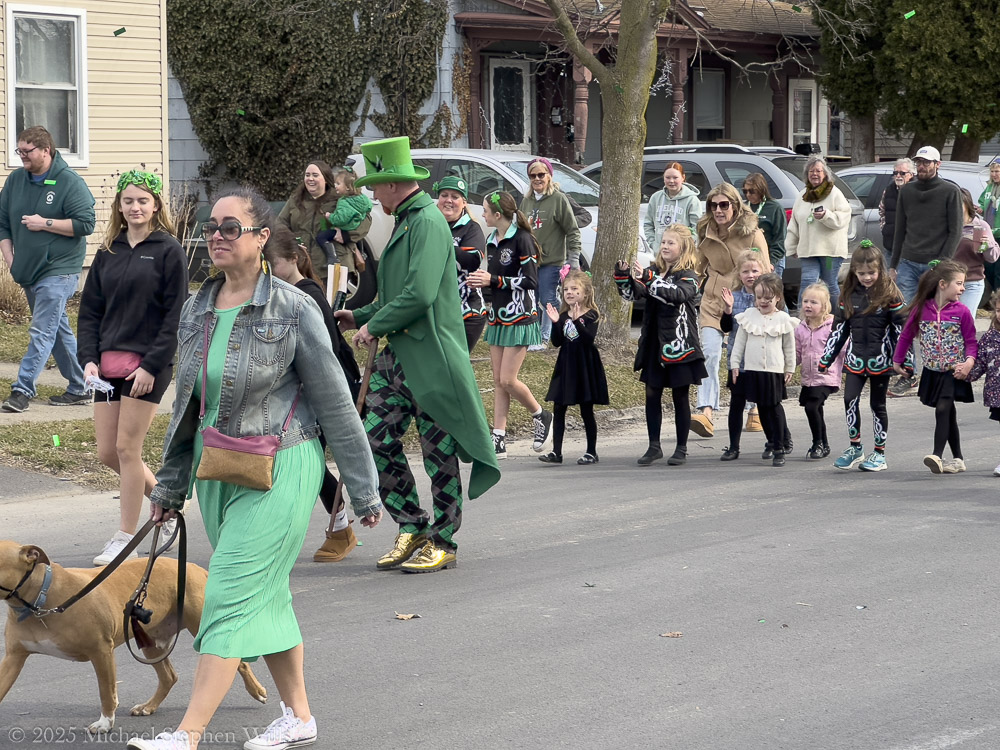
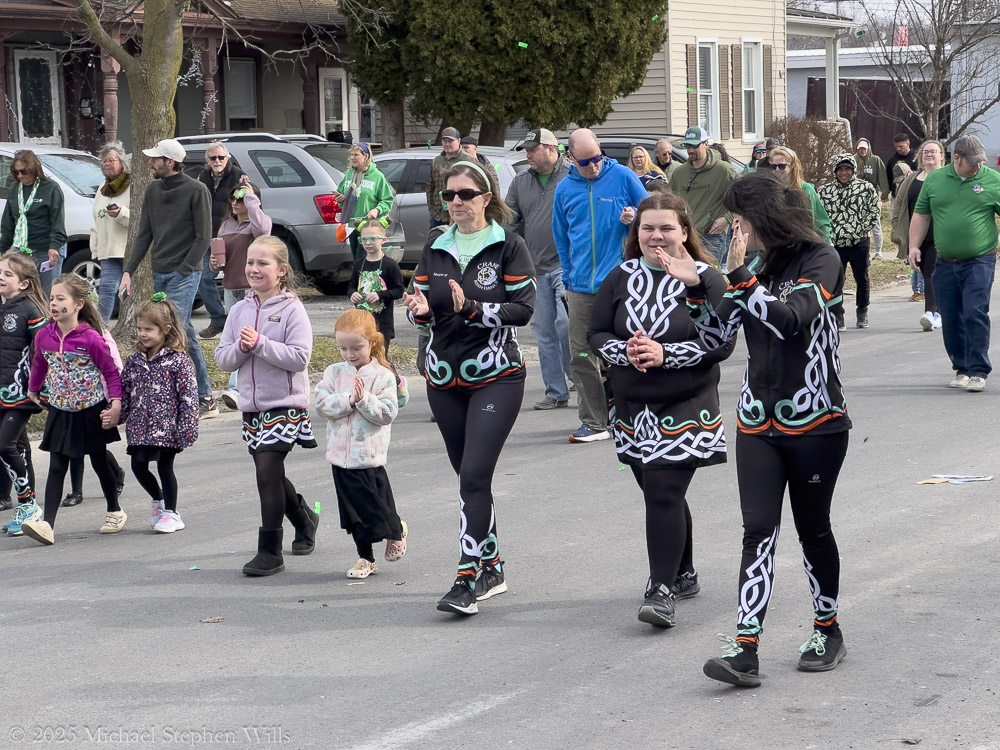
The energy of the parade was contagious. A group of Irish dancers followed, their synchronized steps punctuated by the rhythmic clap of their hard shoes on pavement. The young girls, dressed in intricately designed Celtic-inspired outfits, smiled through the motions, their faces reflecting both discipline and joy. Alongside them, women in matching athletic gear clapped along, encouraging the younger dancers while swaying to the lively music.

Green was everywhere—on scarves, hats, jackets, and even the leggings of a young girl who skipped along with excitement. Onlookers wore festive attire, their laughter and conversations blending into the celebratory atmosphere. Irish pride radiated from the participants and the community that gathered to watch, reinforcing the deep cultural roots that have anchored this parade in tradition.

For all its brevity, the Auburn St. Patrick’s Day Parade carried a weight of significance. It was not about grand floats or large crowds; it was about honoring heritage, embracing camaraderie, and keeping alive a tradition that linked the past with the present. As the final marchers passed and the echoes of the bagpipes faded, I took a final look through my camera lens. I had captured moments of pride, joy, and unity—a testament to the enduring legacy of the Irish spirit in this small but vibrant celebration.
For best experience view video in YouTube

Enter your email to receive notification of future postings. I will not sell or share your email address.

On the Road to Killen

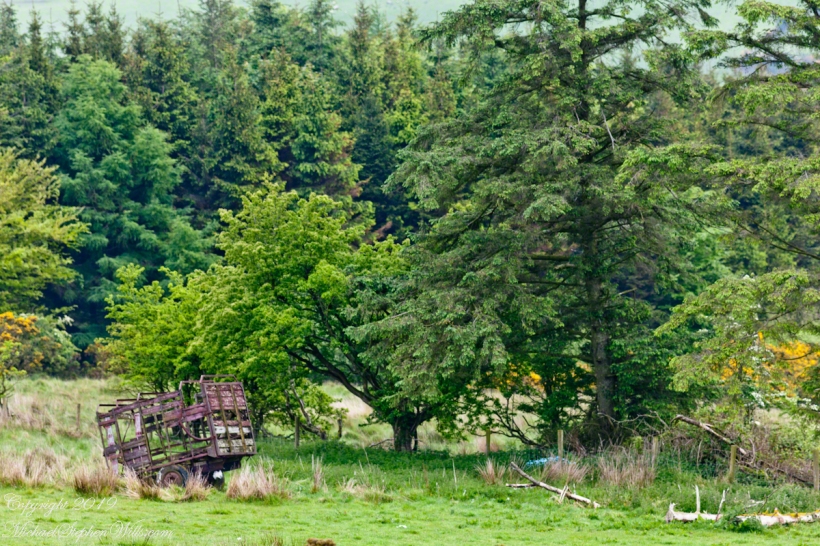
In the early dawn, I walked the path to Killen, drawn by the legacy of my mother’s Irish youth. An abandoned hay wagon stood, a relic amidst the whispers of history and myth. Join me in uncovering the roots that intertwine family and the enduring Irish land.

Continue reading “On the Road to Killen”

Sean Thornton and Mary Kate Danaher

Discover the charm of Cong, Ireland, through a stunning sculpture celebrating The Quiet Man. Join me as I explore the town’s cinematic legacy and reflect on the enduring magic of film.

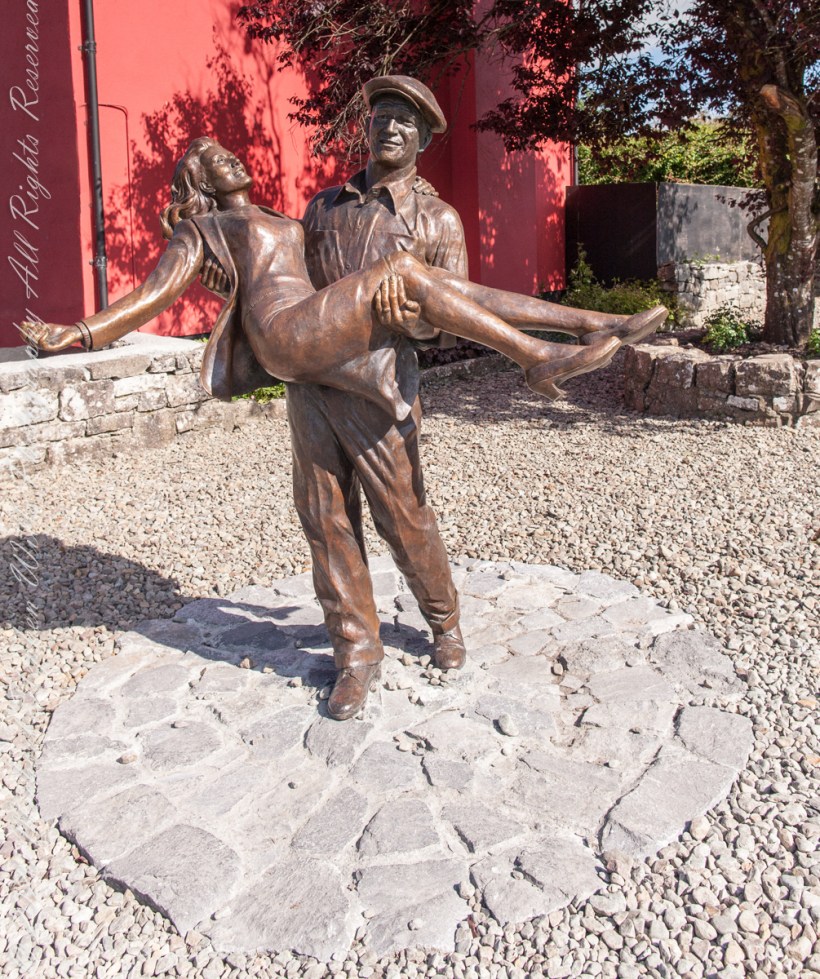
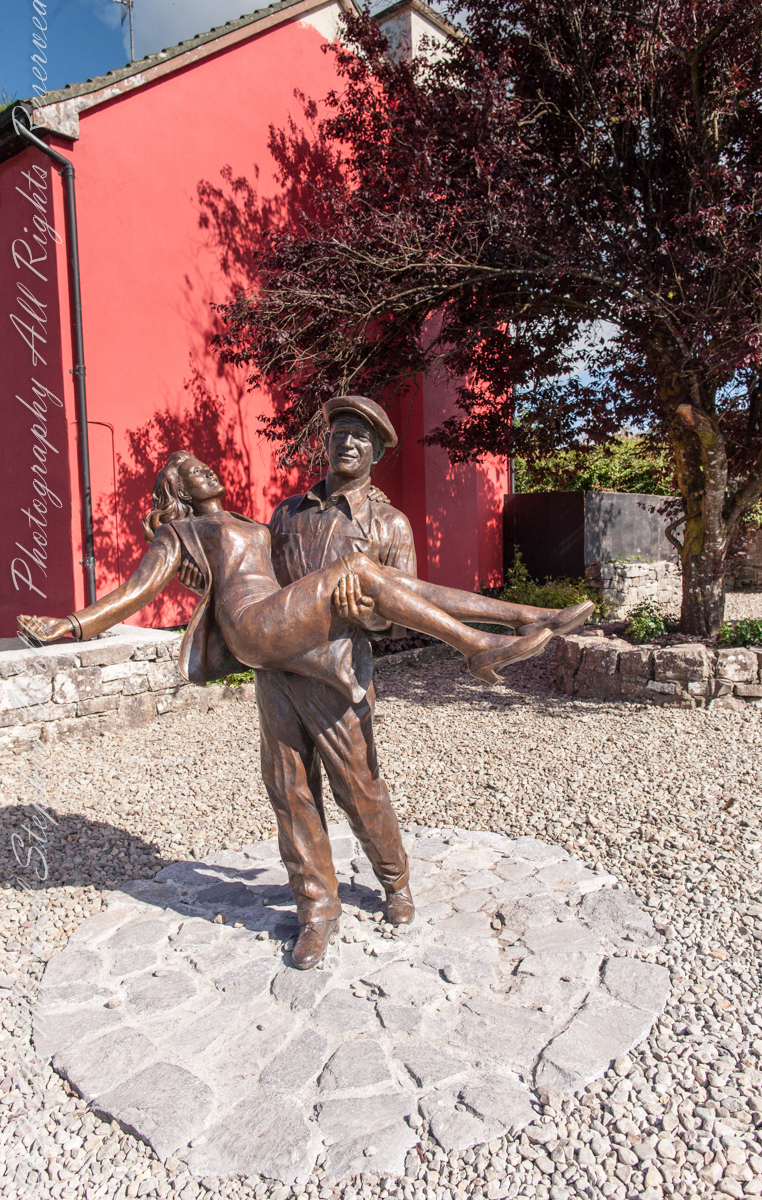
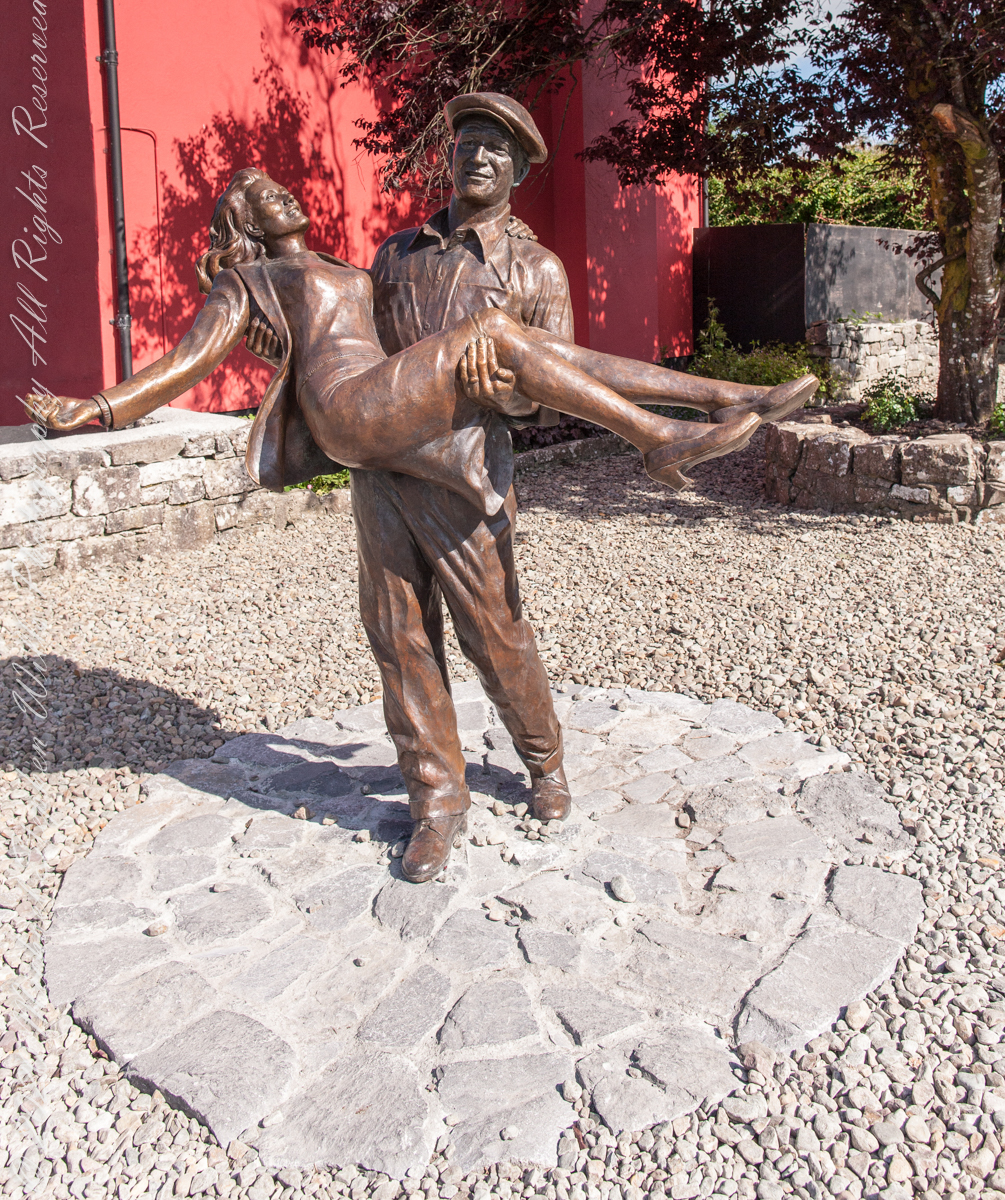
During a May 2014 exploration of the village Cong in County Mayo, Ireland, we encountered this remarkable sculpture that transported me back to one of my favorite classic films, “The Quiet Man.” The bronze statue, depicting John Wayne’s character, Sean Thornton, carrying Maureen O’Hara’s Mary Kate Danaher, stands against the backdrop of the town, a visual homage to the cinematic legacy that has become intertwined with Cong’s identity.

As I stood before the sculpture, memories of watching The Quiet Man flooded back. The Quiet Man, with its vibrant depiction of Irish culture and scenery, had always held a special place in my heart. It’s a story of love, cultural clashes, and the journey of a man returning to his roots, themes that resonate deeply within the lush landscapes of County Mayo. Cong served as the primary filming location, and the town has embraced this legacy wholeheartedly, turning the film into a cornerstone of its identity.

The sculpture, created by Mark Rode, who has a foundry an hour away in Swinford, was installed the year before, 2013, yet it felt as though it had always been there, seamlessly blending with the surroundings. Rode’s work captures the essence of the characters with remarkable detail. In The Quiet Man, the scene where Sean carries Mary Kate in his arms takes place after he retrieves her from the train station. This moment symbolizes their reconciliation and is a pivotal scene in the film, capturing their renewed bond and Sean’s determination to stand up for their relationship. The piece celebrates not just the film, but also the spirit of the town and its connection to cinematic history.
Mark Rode, known for his ability to bring characters to life through sculpture, has a unique talent for capturing the essence of his subjects. His works often reflect a deep understanding of human emotion and storytelling, qualities that shine through in this particular piece. The installation of the sculpture was met with excitement from both locals and visitors, further cementing Cong’s status as a beloved tourist destination.
Reflecting on our visit, I realized how much this small town had embraced its role in cinematic history. The streets of Cong are dotted with nods to The Quiet Man—from themed shops to plaques marking filming locations. Each element serves as a reminder of the film’s impact on the town and its people. The statue stands as a centerpiece, inviting fans of the film to relive its magic while introducing new generations to its charm.

I couldn’t help but meditate on the lasting impact of art and film on a community. The installation of this sculpture not only celebrates a beloved movie but also invigorates the town’s economy through tourism, drawing visitors eager to walk in the footsteps of their favorite characters. It’s a testament to the power of storytelling and its ability to transcend time, connecting people across generations and cultures.

The statue of Sean and Mary Kate in Cong is a symbol of the town’s vibrant history and its enduring connection to the film. Mark Rode’s creation captures this essence beautifully, inviting all who visit to pause, reminisce, and celebrate the intertwining of art and life in this picturesque Irish village.

Here presented are two versions of the same image. One cropped. Please leave a comment stating which you prefer and why. Thank You

Use this slide show, flip back and forth to compare the images, reach a conclusion on which you prefer.

Click me for Ireland story “The Cloigtheach of Glendalough.”

Copyright 2024 All Rights Reserved Michael Stephen Wills

Drombeg Fulacht Fiadh: Insights into Bronze Age Cooking

Drombeg’s Fulacht Fiadh, a Bronze Age cooking site, used heated stones to boil water for cooking, dyeing, and brewing.

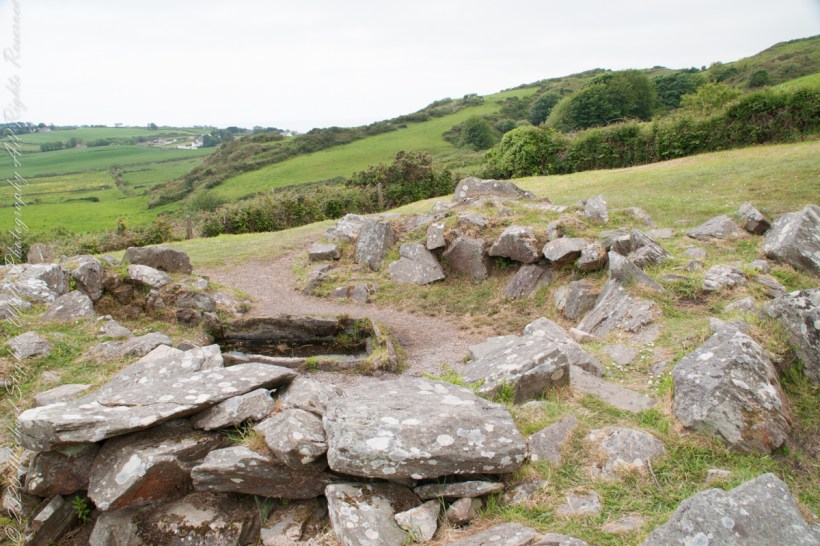
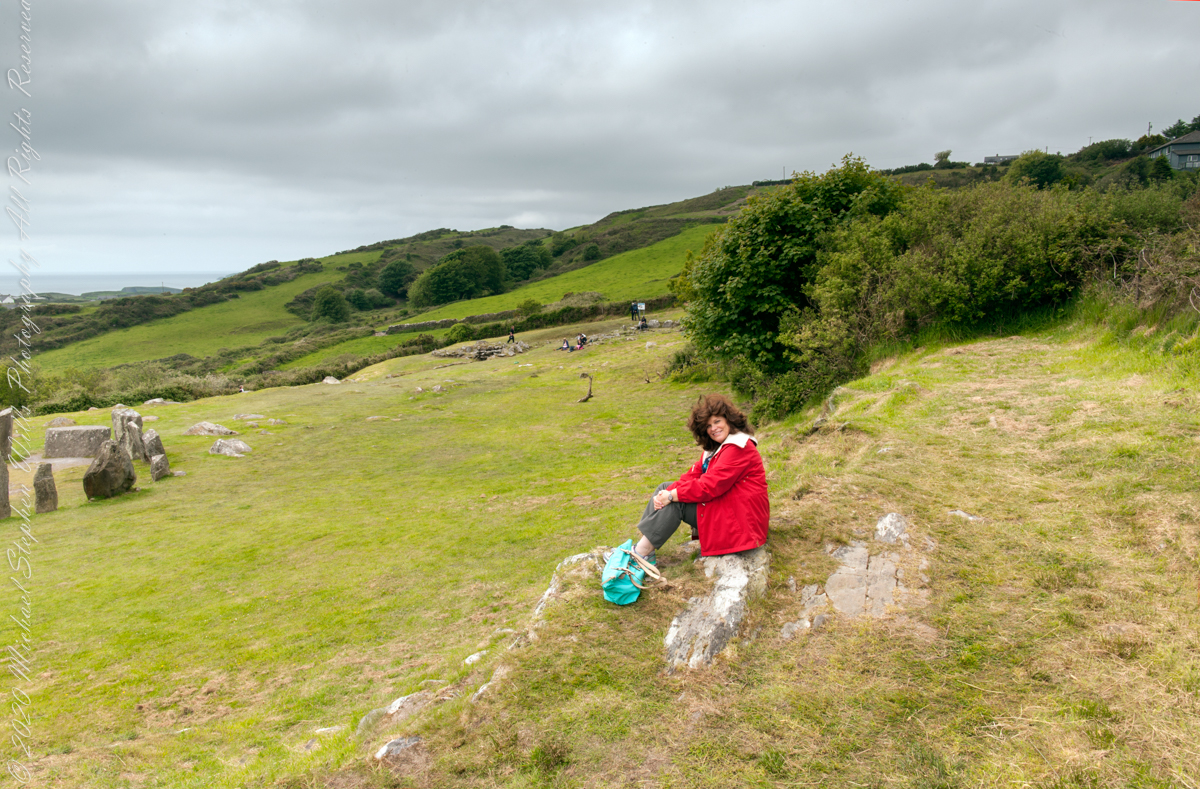
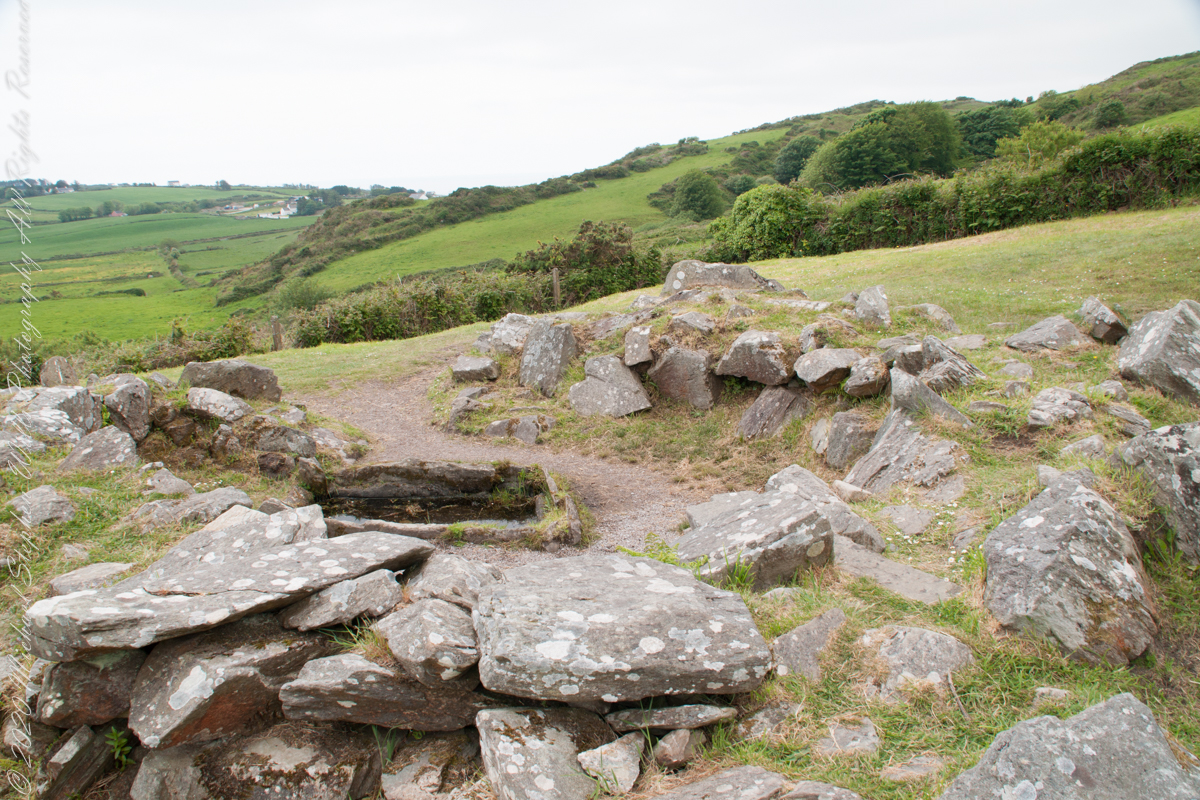
Notice the groupings of visitors in the middle distance of Pam’s photograph, gathered around remains of late Bronze age elements.

Click pic for a larger view, in a new tab. When using WordPress Reader, you need to open the post first.

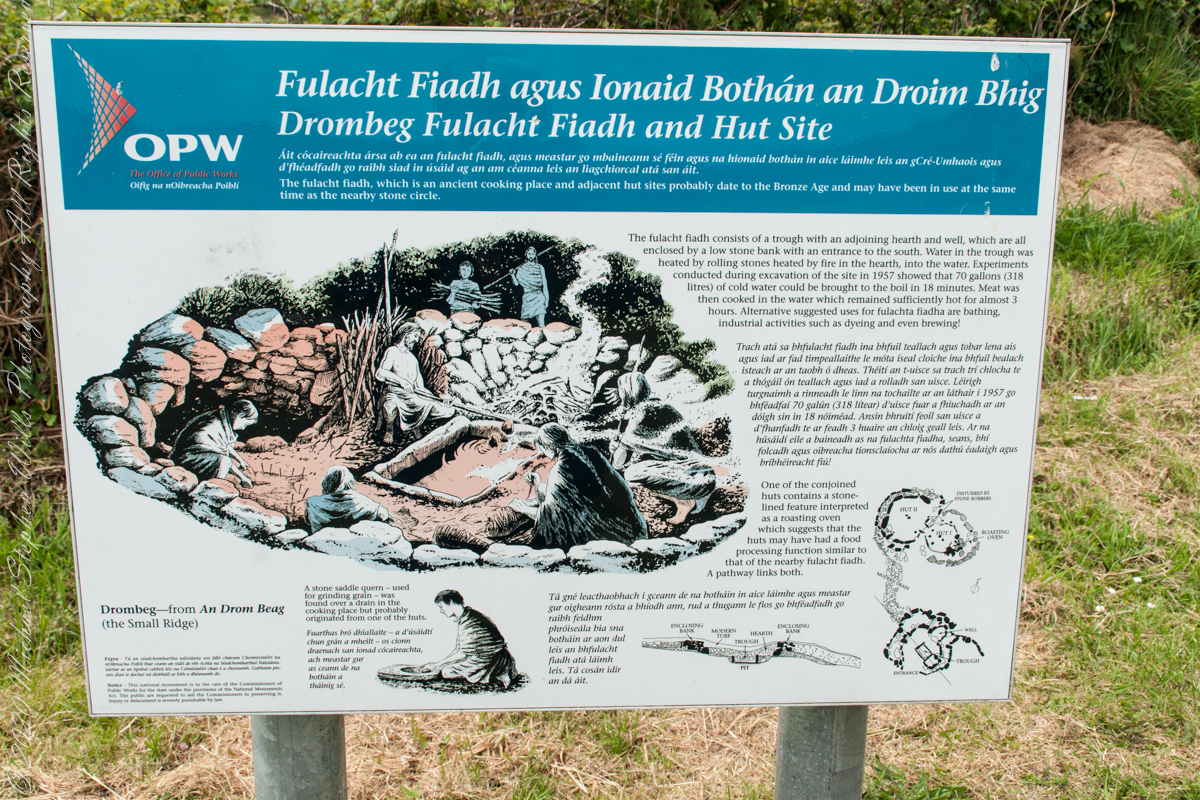
There is a sign to explain…

In modern Ireland the word fulacht means barbeque and the archeological sites with characteristics in common, such as a water source, health and pit, are named “Fulacht fiadh,” derived from Old Irish sources. In all cases the link is to some kind of preparation activity involving heat and moisture. Found throughout Ireland, Great Britan and the Isle of Man where the sites are called burnt mounds. The Drombeg Fulacht fiadh exemplifies all characterists. There is a horseshoe shaped rock walled/banked, now a remnant, enclosure, entrance to the south. In the middle is a pit, at Drombeg lined with rock, a spring on one side, a hearth on the other. A stone saddle quern, used for grinding grain, was nearby Adjacent huts, rock walls with post holes, do not suggest a settlement, but rather a temporary use.

Click Me for the next post in this series

Enter your email to receive notification of future postings. I will not sell or share your email address.

Grosse Isle Quarantine Station, Quebec

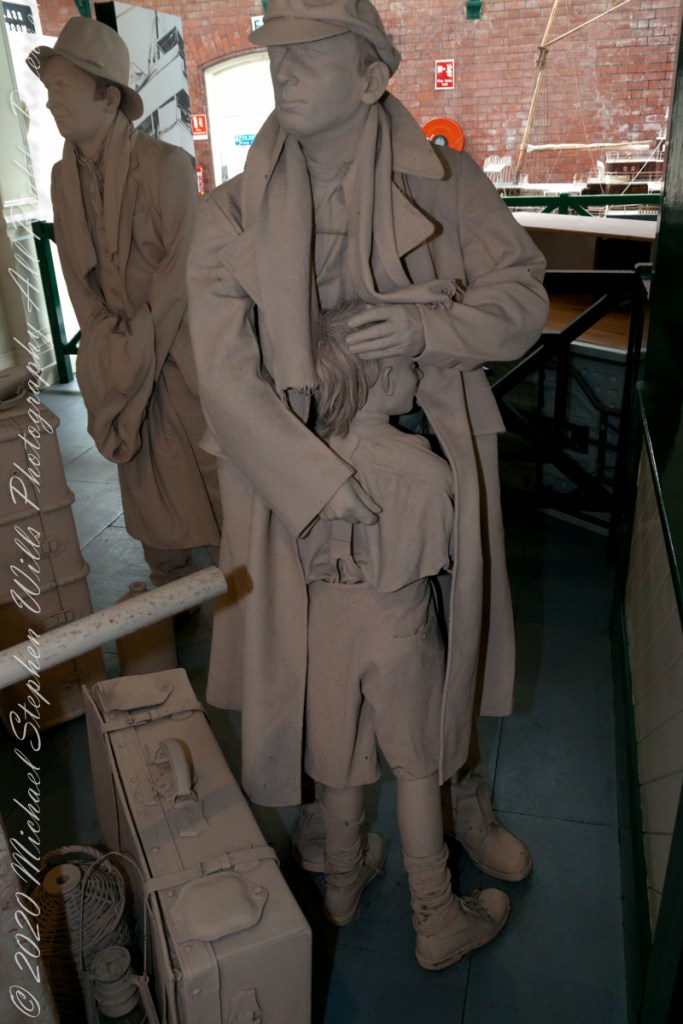
during the Great HUNGER, from the Cobh Heritage Center

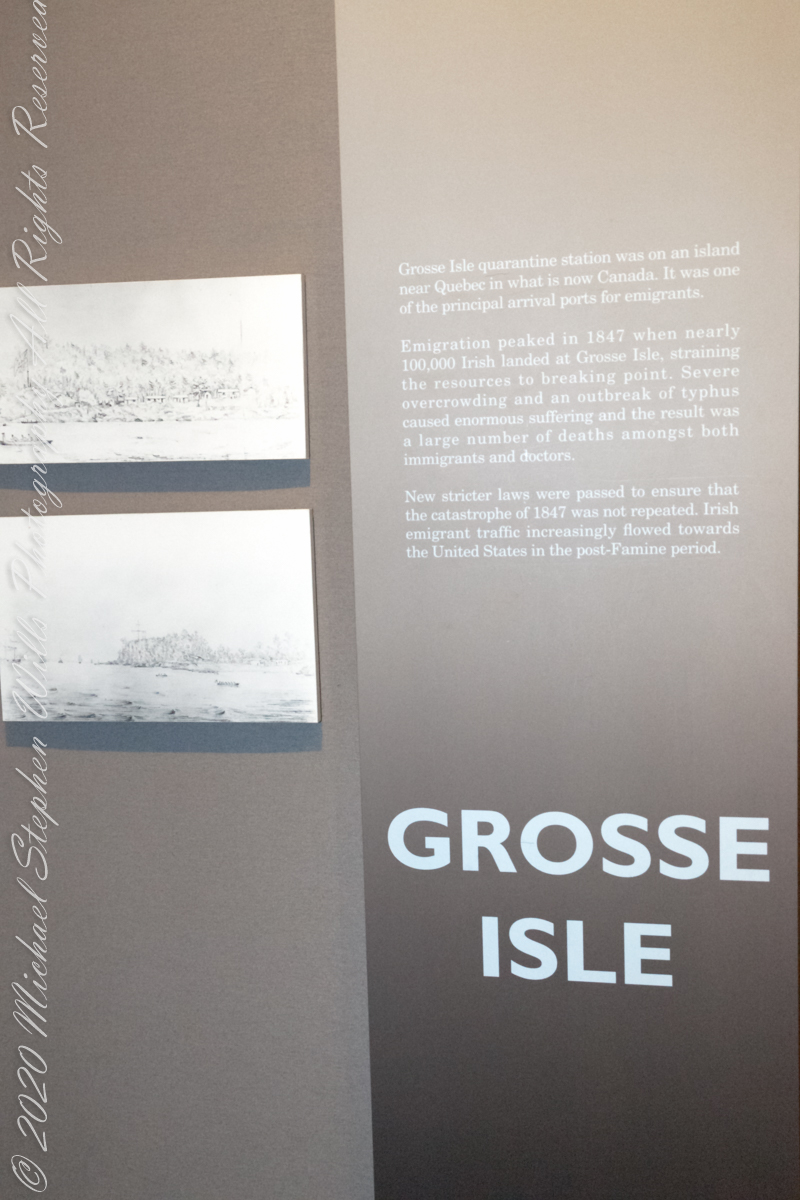
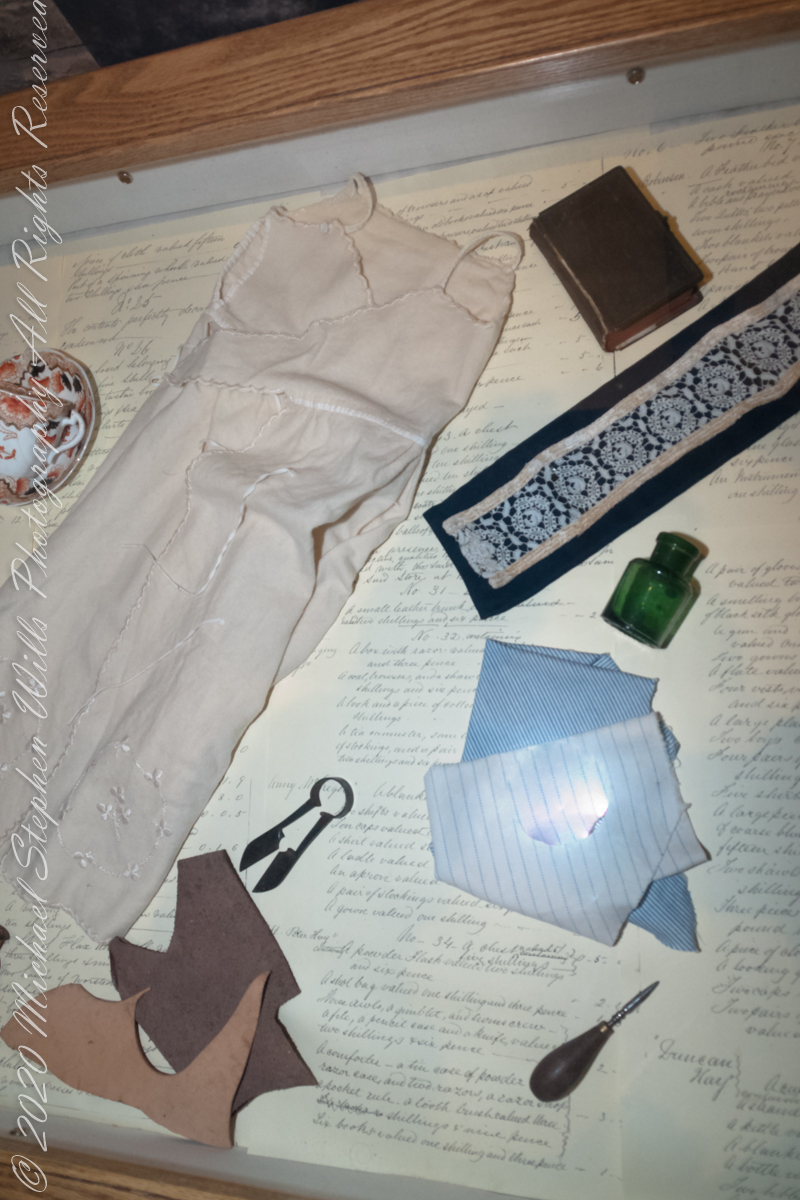
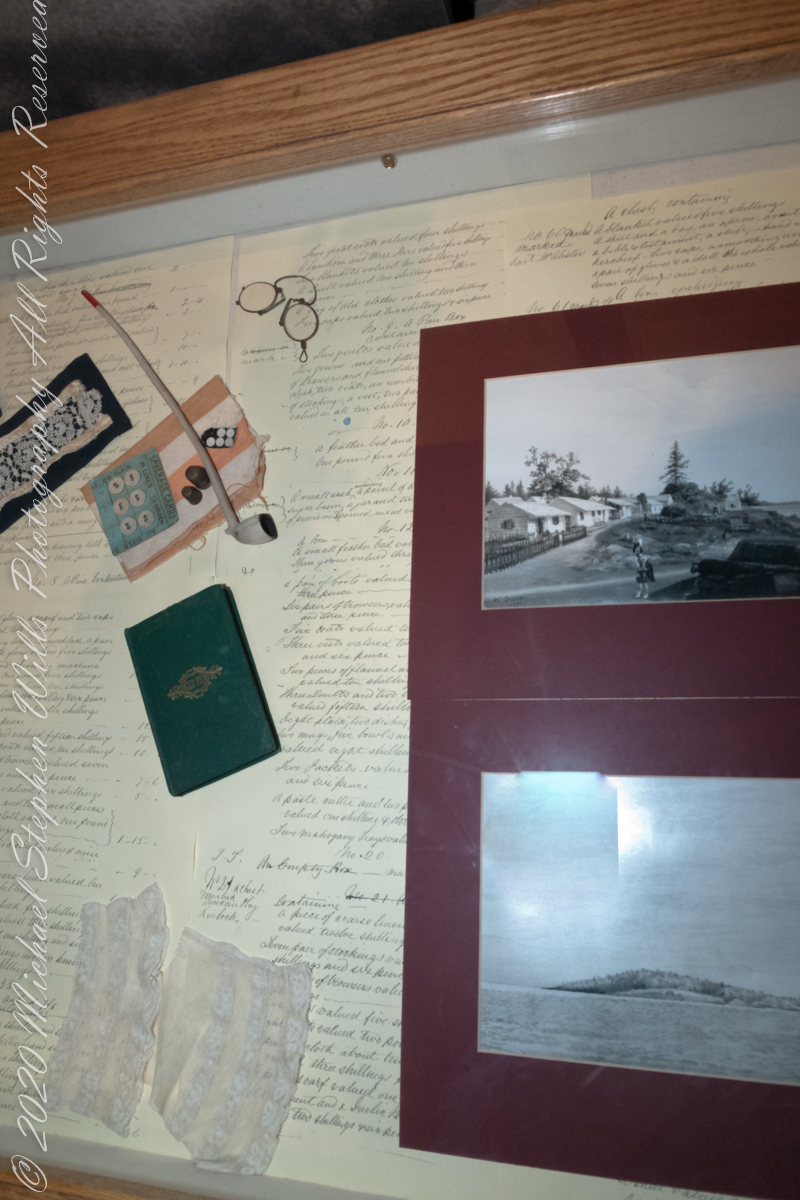
“Grosse Isle quarantine station was on an island near Quebec in what is now Canada. It was one of the principal arrival ports for emigrants.

Emigration peaked in 1847 when nearly 100,000 Irish landed at Grosse Isle, straining the resources to breaking poinit. Severe overcrowding and an outbreak of typhus caused enormous suffering the the result was a large number of deaths amongst both immigrants and doctors.

New stricter laws were passed to encure that the catastrophe of 1847 was not repeated. Irish emigrant traffic increasingly flowed towards the United State inthe post-Famine period”. From the exhibit (below), Cobh Heritage Center.

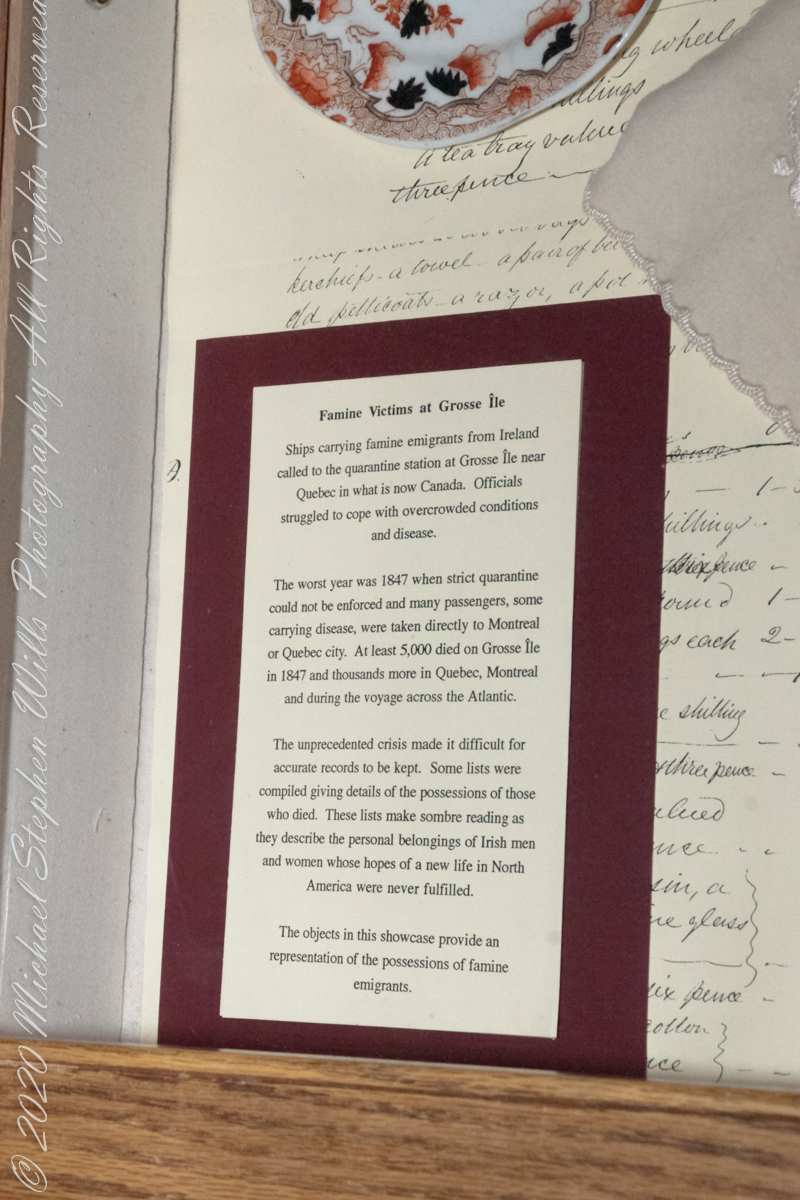
In that horrible year of 1847, strict quarantine could not be enforced and many passengers, some carrying disease, were taken directly to Montreal or Quebec city. At least 5,000 died on Grosse Isle in 1847 and thousands more in Quebec, Montreal and during the voyage across the Atlantic.

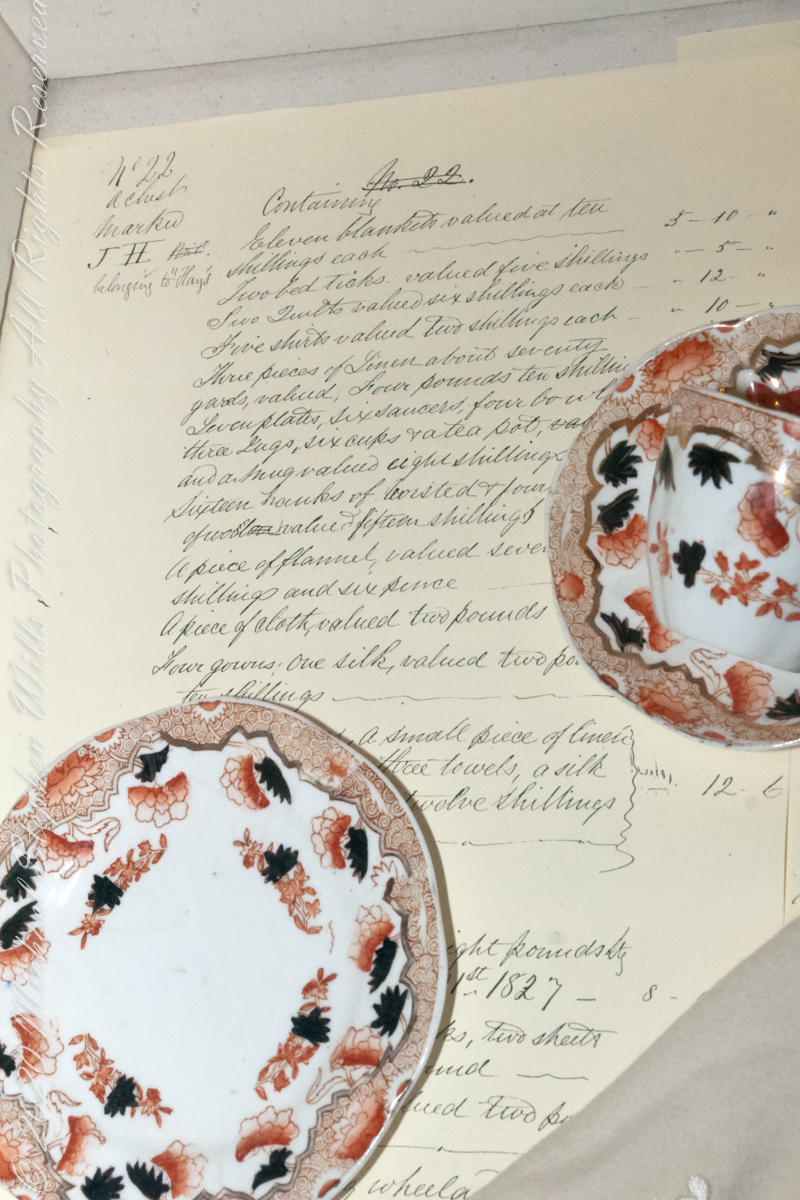
The unprecedented crisis made it difficult for accurate records to be kept. Some lists were compiled giving details of the possessions of those who died. These lists make sombre reading as they describe the personal belongings of Irish men and women whose hopes of a new life in North America were never fulfilled.

The objects in this showcase provide an representation of the possessions of famine emigrants. From the exhibit (below), Cobh Heritage Center.

Copyright 2021 Michael Stephen Wills All Rights Reserved

Assistance from America

during the Great HUNGER, from the Cobh Heritage Center

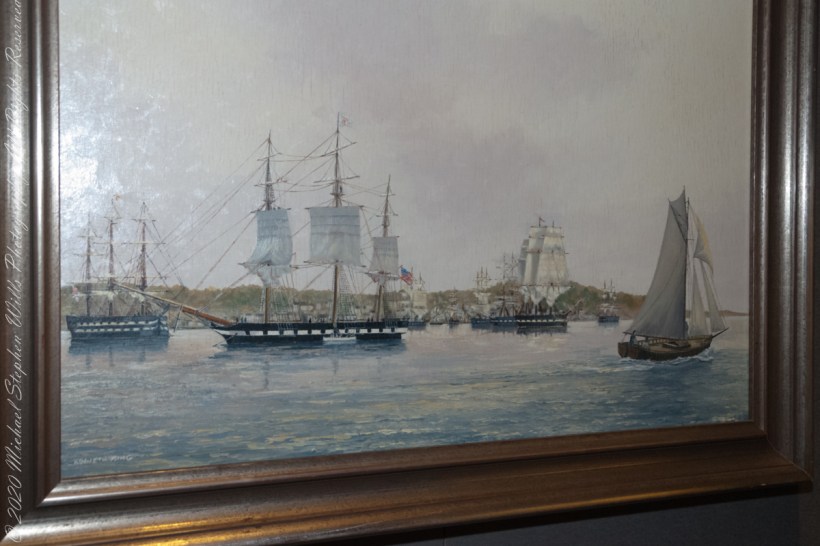
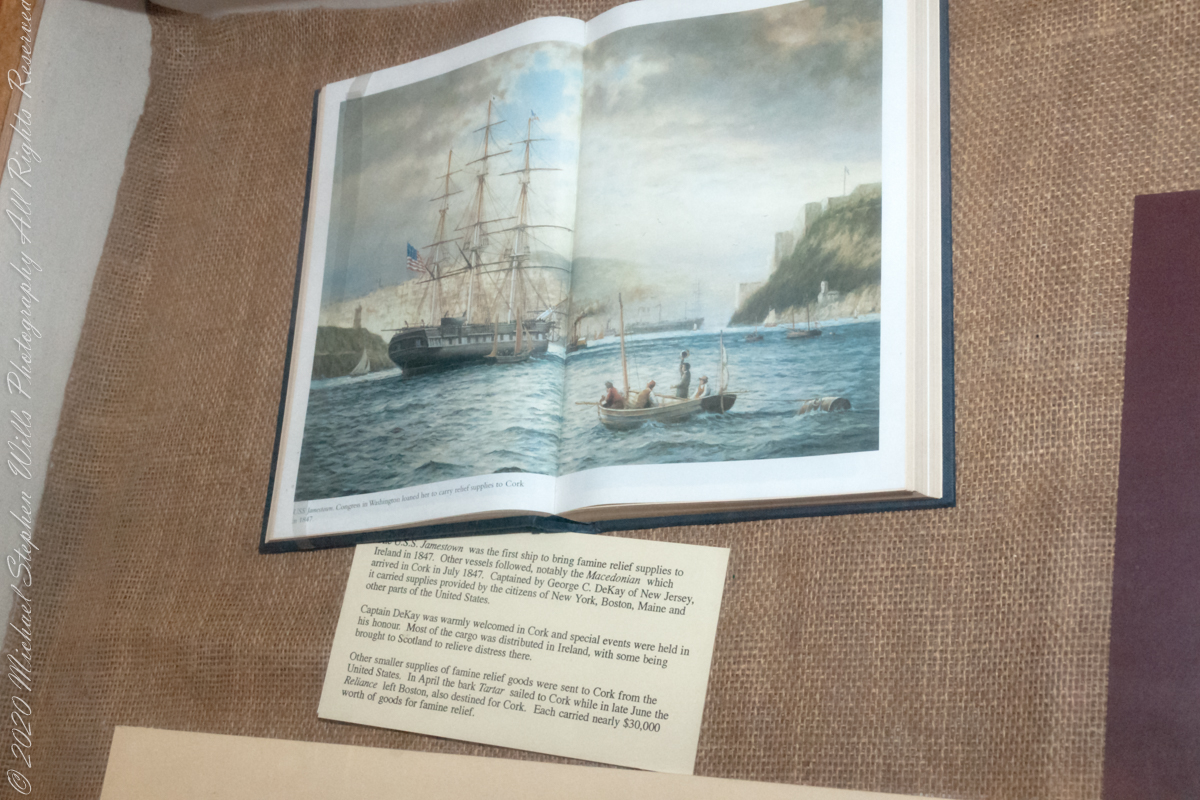
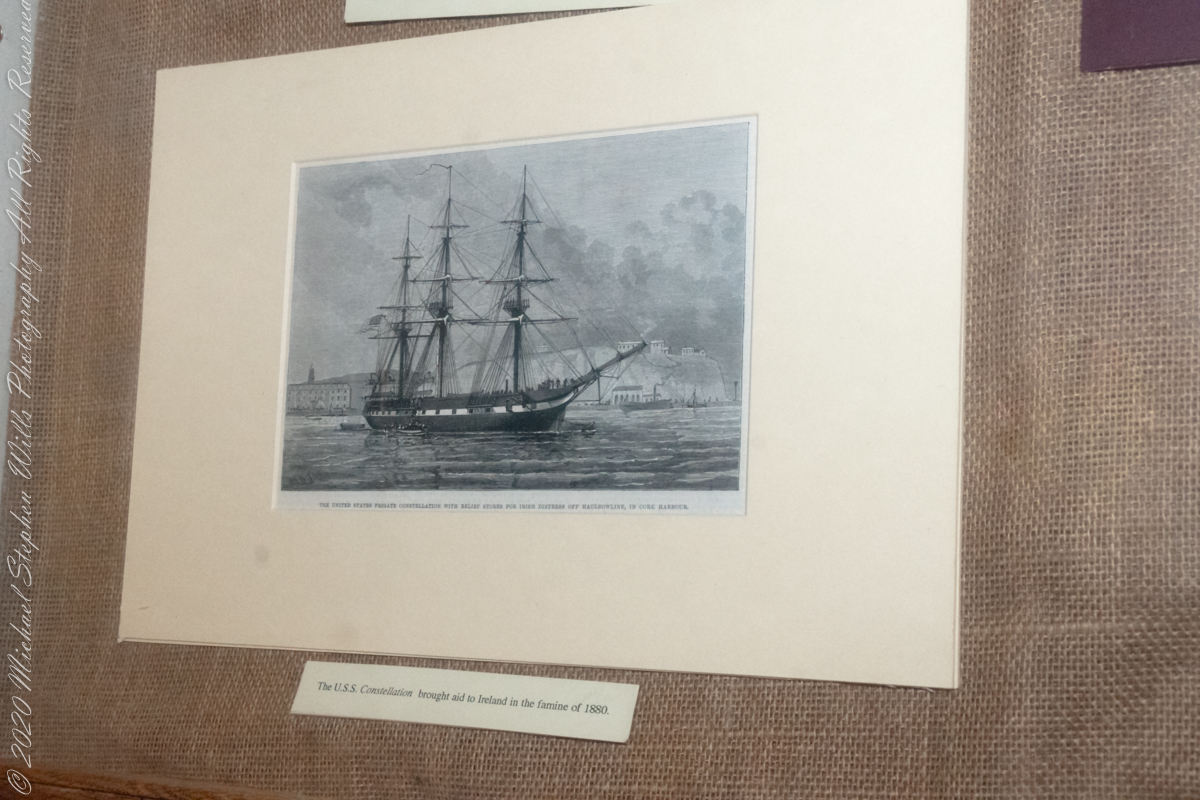
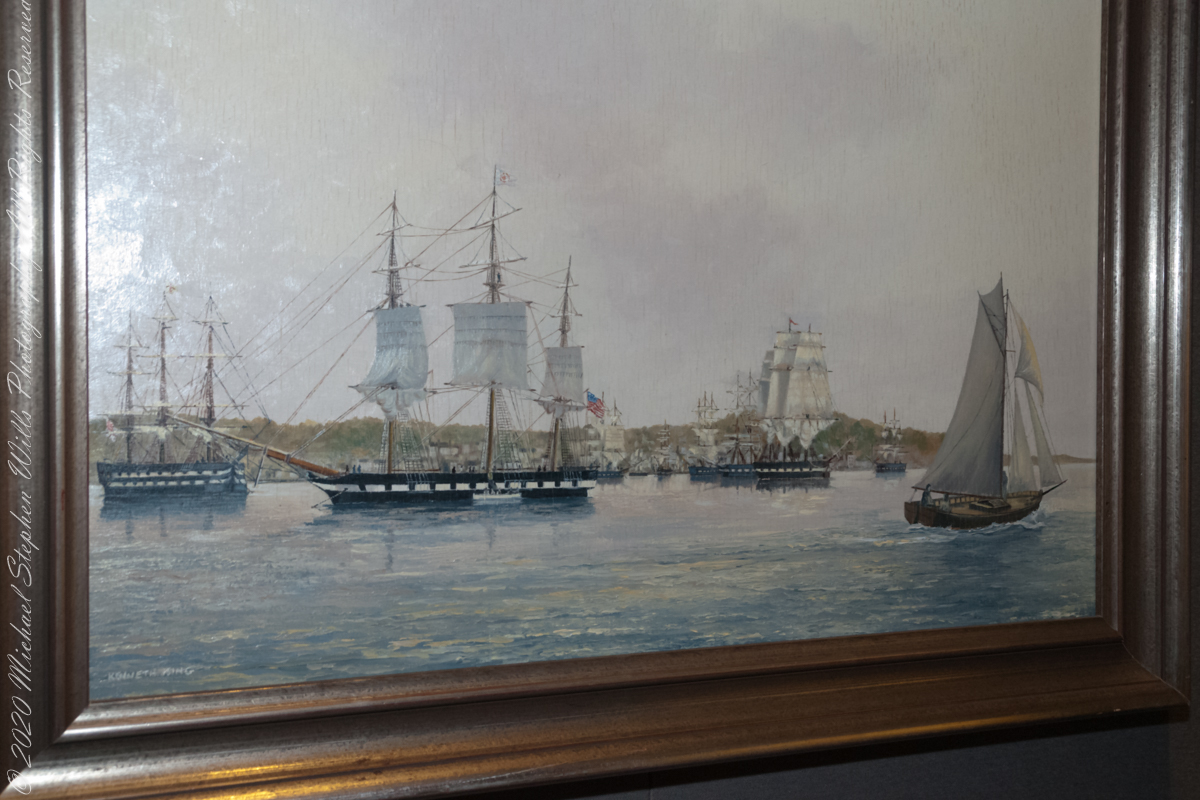
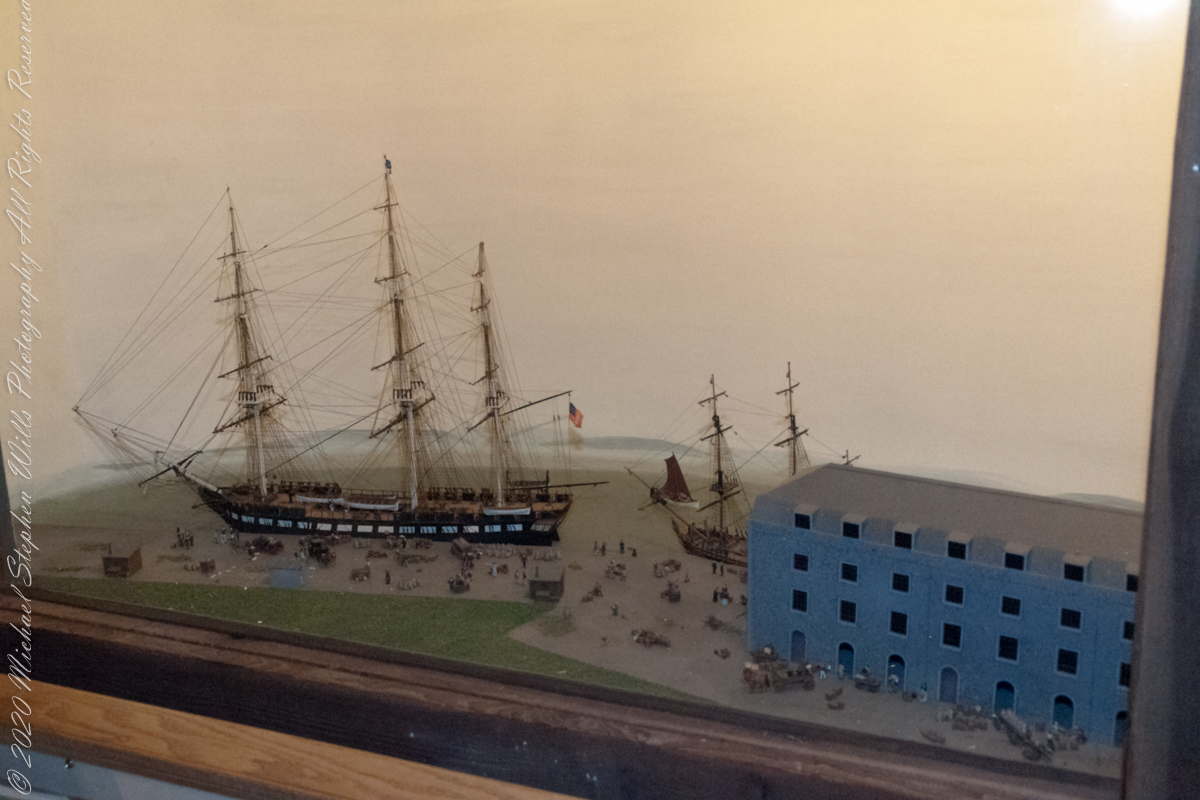
“The U.S.S Jamestown was the first ship to bring famine relief supplies to Ireland in 1847. Other vessels followed, notably the Macedonian which arrived in Cork July 1847. Captained by George C. DeKay of New Jersey, it carried supplies provided by the citizens of New York, Boston, Main and other parts of the United States. Captain DeKay was warmly welcomed in Cord and special events were held in his honor. Most of the cargo was distributed in Ireland, with some being brought to Scotland to relieve distress there. Other smaller supplies of famine relief goods were sent to Cork from the United States. In April the bark Tartar sailed to Cork with in late June the Reliance left Boston, also destined for Cork. Each carried nearly $30,000 worth of goods for famine relief. From the exhibit (below), Cobh Heritage Center.

United States frigate Constellation with relief stores for Irish distress off Haulbownline in Cork Harbor.

Copyright 2021 Michael Stephen Wills All Rights Reserved

Peel’s Brimstone

during the Great HUNGER, from the Cobh Heritage Center

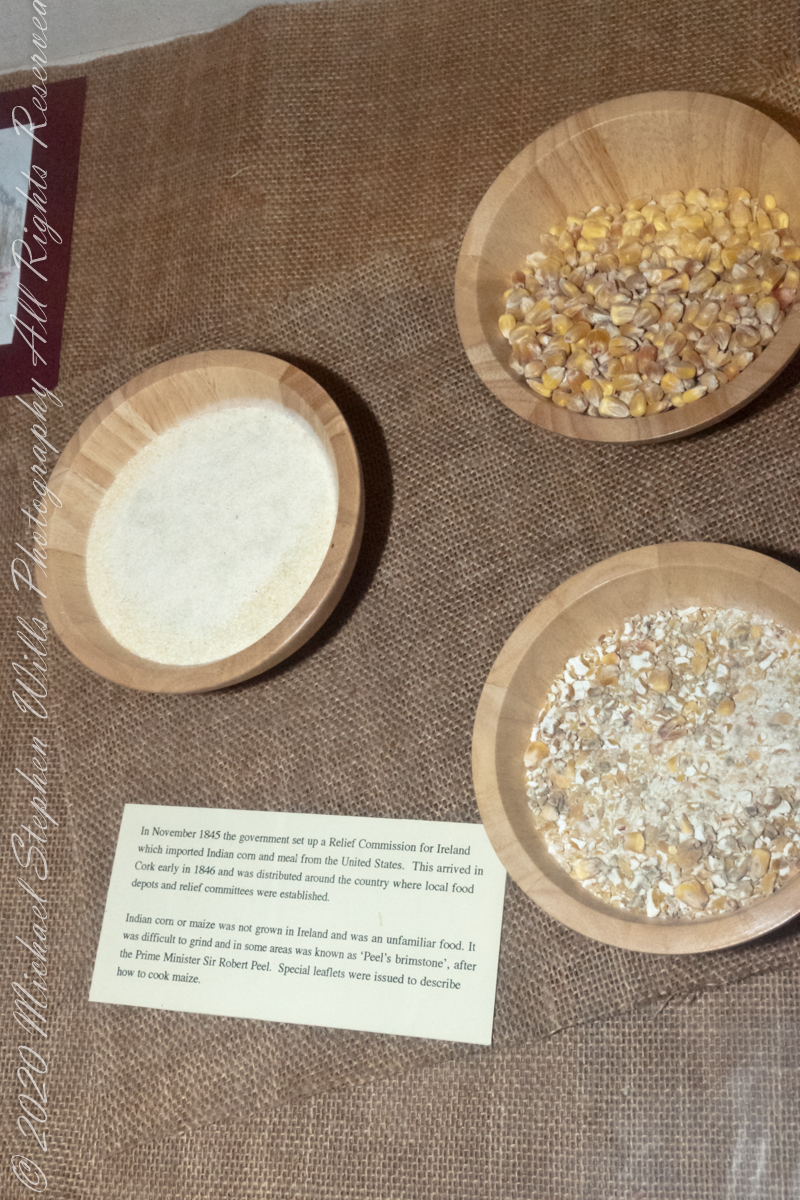
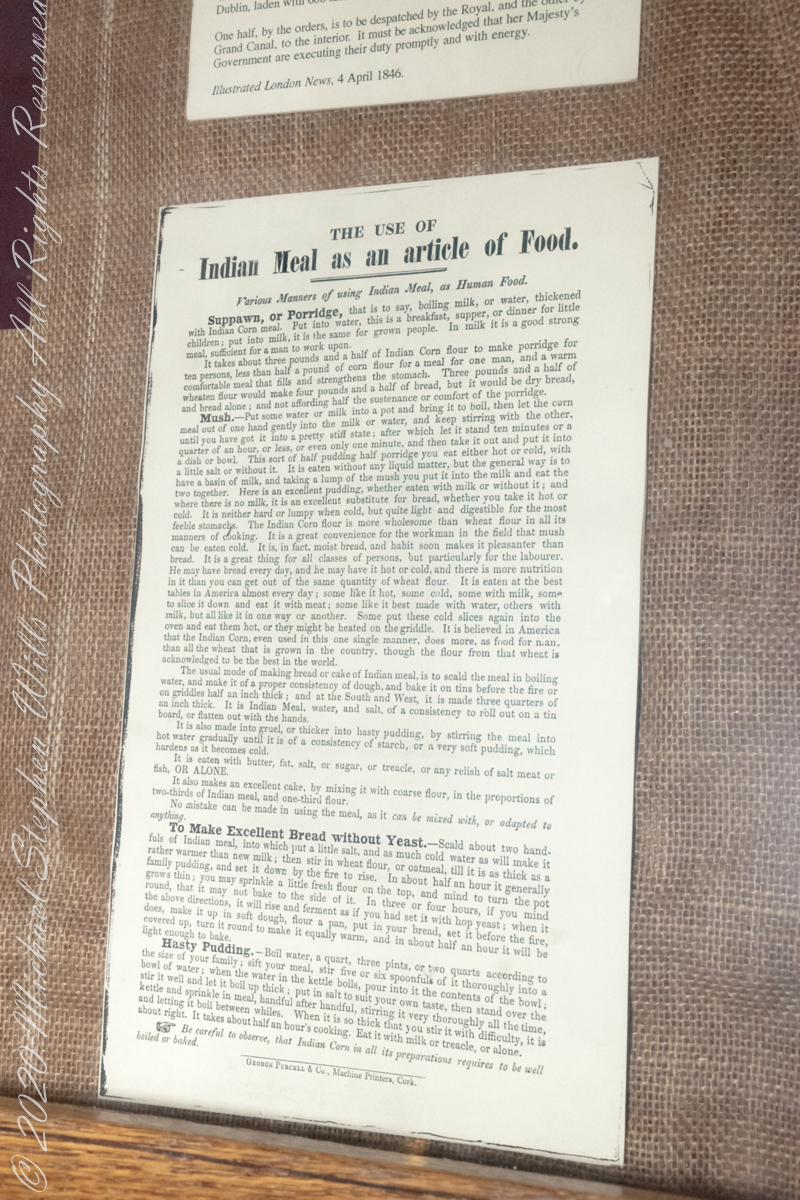
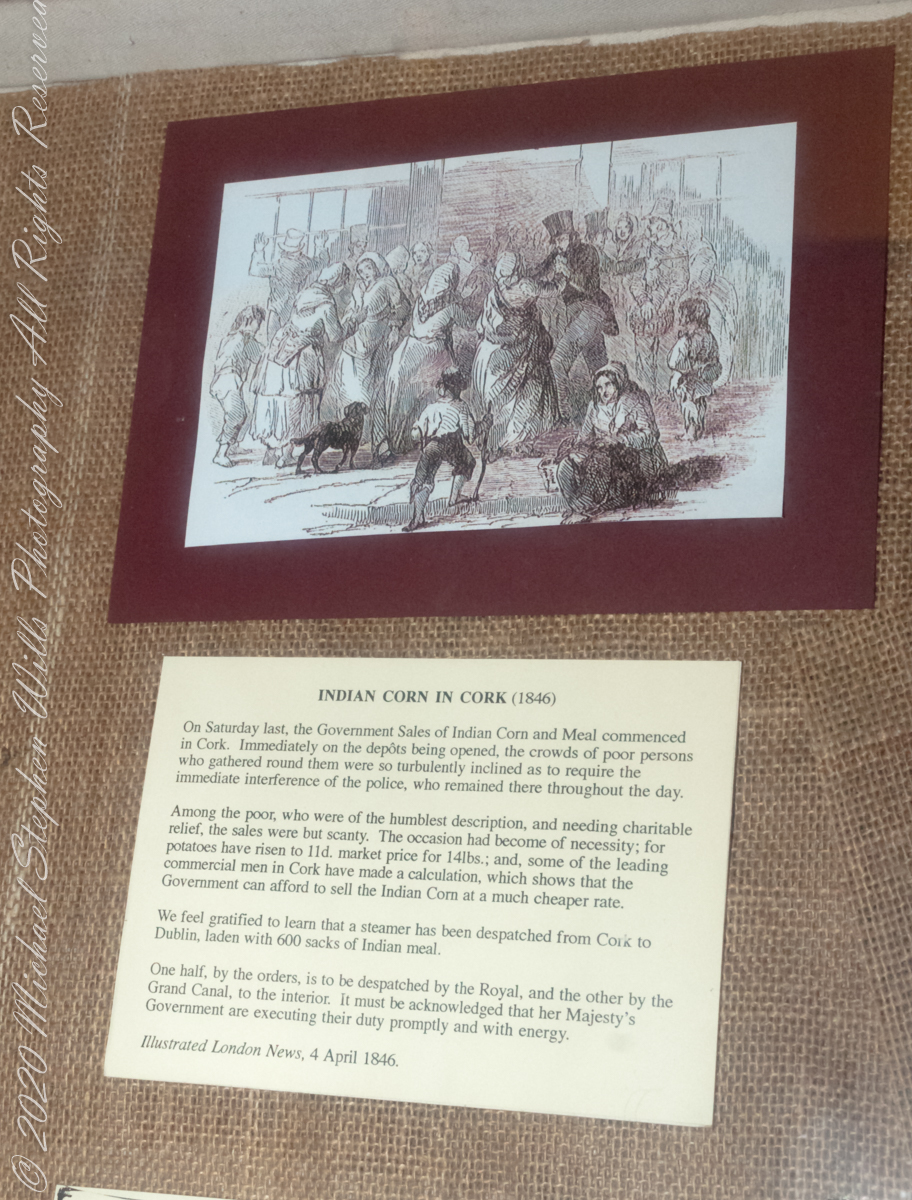
“In November 1845 the British government set up a Relief Commission for Ireland which imported Indian corn and meal from the United States. This arrived in Cork early in 1846 and was distributed around the country where local food depots and relief committees were established. Indian corn (maize) was not grown in Ireland and was an unfamiliar food. It was difficult to grind and in some areas was known as “Peel’s brimstone,” after the Prime Minister Sir Robert Peel. Special leaflets were issued to describe how to cook maize.” From the exhibit (below), Cobh Heritage Center.

Instructions for how to cook maize. In the west of Ireland many people spoke Irish.

“On Saturday last, the Government Sales of Indian Corn commenced in Cork. Immediately on the depoys being opened, the crowds of poor persons who gathered round them were so turbulently inclined as to require the immediate interference of the police, who remained throughout the day.

Among the poor, who were of the humblest description, and needing charitable relief, the sales were but scanty. The occasion had become of necessity; for potatoes had risen to 11d. the market price for 14 pounds; and, some of the leading commercial men in Cork have made a calculation, which show that the Government can afford to sell the Indian Corn at a much cheaper rate.

We feel gratified to learn that a steamer has been dispatched from Cork to Dublin, laden with 600 sacks of Indian meal.

One half, by the orders, is to be dispatched by the Royal, and the other by the Grand Canal, to the interior. It must be acknowledged that her Majesty’s Government are executing their dury promptly and with energy. from the Illustrated London News, April 4, 1846″. ~ from the exhibit, Cobh Heritage Center.

Copyright 2021 Michael Stephen Wills All Rights Reserved

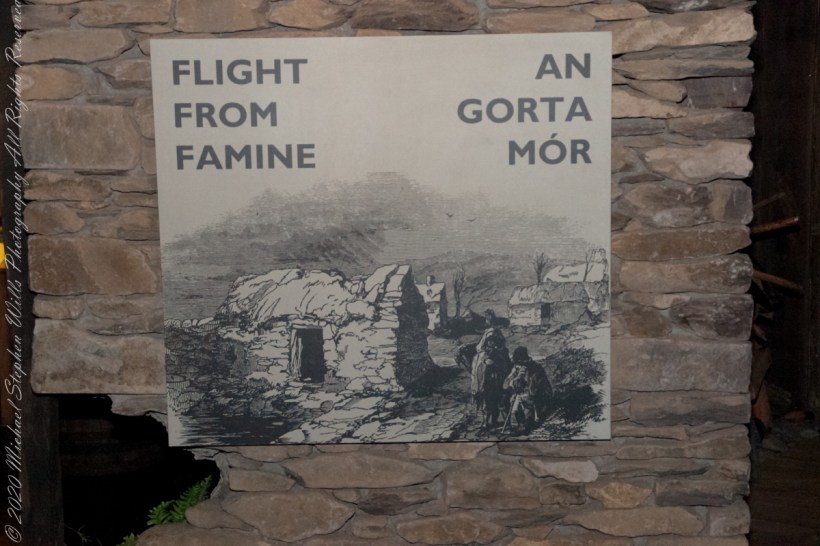
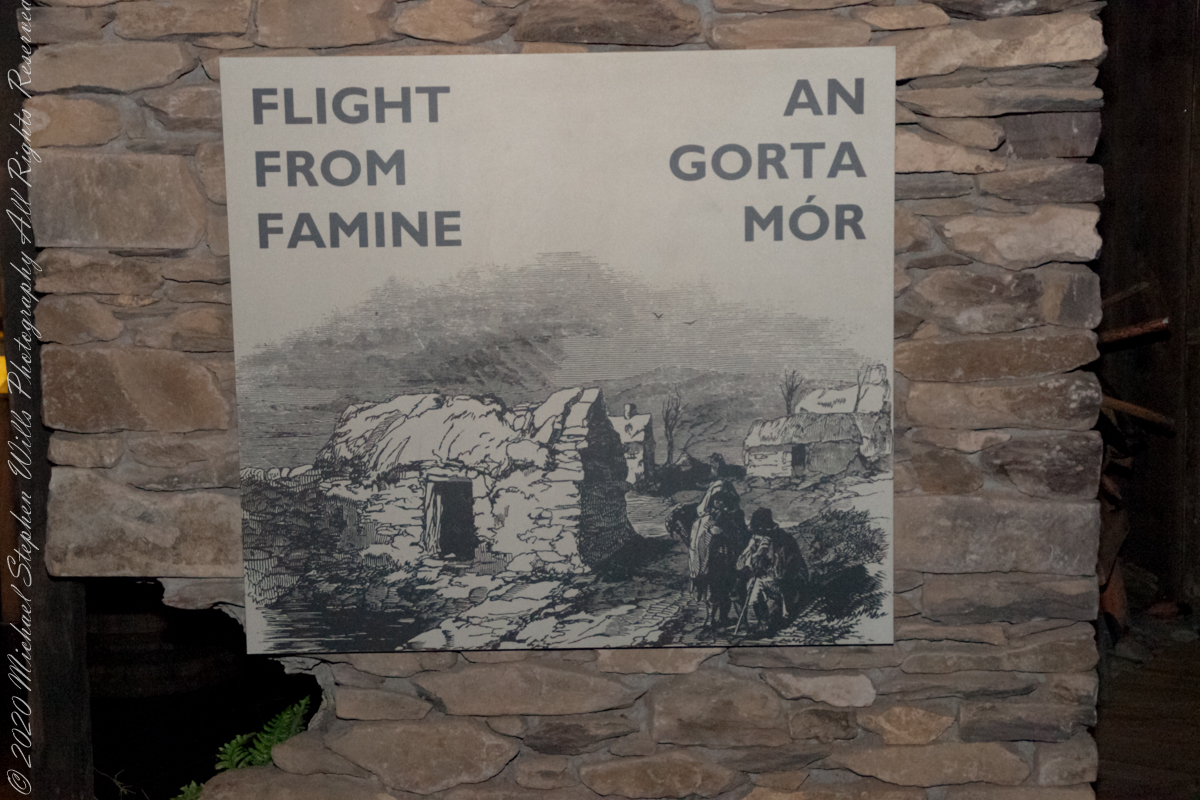
An Gorta Mor

The Great Famine had profound social, cultural, and political impacts on Ireland and its relationship with Britain. It led to a significant decline in the Irish population due to death and mass emigration and is remembered as one of the darkest periods in Irish history. The event also left deep scars on the collective memory of the Irish people and played a role in the growth of Irish nationalism and the push for Irish independence in the following decades

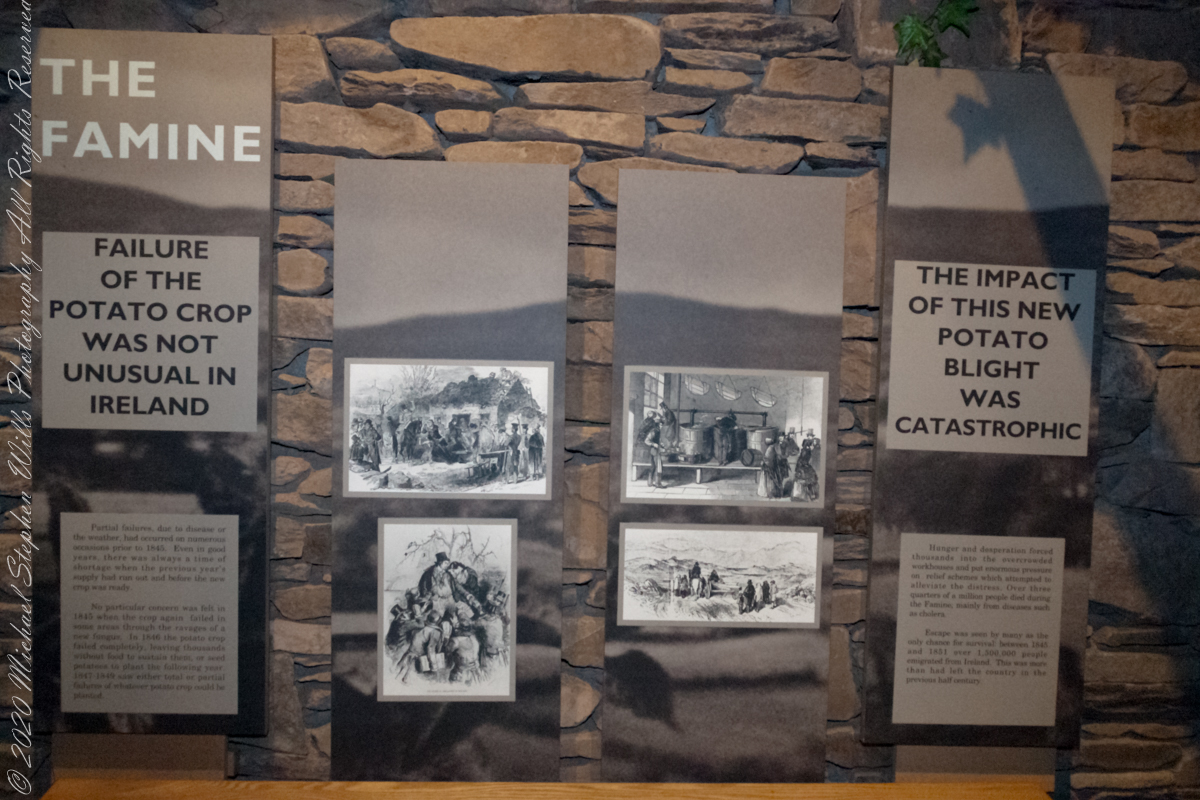
“Partial failures, due to disease or the weather, had occurred on numerous occasions prior to 1845. Even in good years, there was always a time of shortage when the previous year’s supply had run out and before the new crop was ready.”


“No particular concern was felt in 1845 when the crop again failed in some areas through the ravages of a new fungus. In 1846 the potato crop failed completely, leaving thousands without food to sustain them, or seed potatoes to plant the following year. 1847 – 1849 saw either total or partial failures of whatever potato crop could be planted.”

“Hunger and desperation forced thousands into the overcrowded workhouses and put enormous pressure on relief schemes which attempted to alleviate the distress. Over three quarters of a million people died during the Famine, mainly from diseases such as cholera. Escape was seen by many as the only change for survival: between 1845 and 1851 over 1.5 million people emigrated from Ireland. This was more than had left the country in the previous half century.”

The Great Famine of Ireland, often referred to as the “Irish Potato Famine,” occurred between 1845 and 1852, with the most acute suffering taking place between 1847 and 1849. The causes of this devastating period in Irish history are multifaceted and debated among historians, but the following are generally acknowledged as the primary factors:

Potato Blight (Phytophthora infestans): The immediate cause of the famine was a potato disease known as late blight. The potato was a staple crop in Ireland, and for many poor Irish, it was the primary source of nutrition. The blight destroyed the potato crop year after year, leading to widespread hunger.
Over-reliance on a Single Variety of Potato: The Irish mainly grew a type of potato called the “Lumper,” which was particularly susceptible to the blight. This lack of genetic diversity made the entire crop more vulnerable to disease.

Land Ownership and Tenancy: Most of the land in Ireland was owned by a small number of landlords, many of whom were absentee, living in England. The Irish Catholic majority often worked as tenant farmers, living on small plots of land and paying rent to these landlords. The land was subdivided among heirs, leading to plots becoming increasingly smaller and less productive over generations.

British Colonial Policies: The relationship between Ireland and Britain played a significant role in exacerbating the famine’s effects. Some British policies and economic theories at the time discouraged intervention. For instance:
Corn Laws: These tariffs protected British grain producers from cheaper foreign competition, making grain more expensive and less accessible for the starving Irish.


Economic Beliefs: The prevailing laissez-faire economic philosophy of the time held that markets should be allowed to self-regulate without government intervention.

Exports: Even as the famine raged, Ireland continued to export food (like grain, meat, and dairy) to Britain, which was a source of controversy. Many felt these exports should have been halted or reduced to feed the starving Irish population.
Inadequate Relief Efforts: While the British government did undertake some relief measures, such as opening public works projects and distributing maize (known as “peel’s brimstone”), these efforts were often insufficient, mismanaged, or too late. The public works projects sometimes did not lead to meaningful infrastructure improvements and instead focused on tasks like building roads that led nowhere.

Social and Cultural Factors: Discrimination against the Irish Catholics by the Protestant English elite, language barriers (many Irish spoke only Gaelic), and distrust between the local population and English officials further complicated relief efforts.

The Great Famine had profound social, cultural, and political impacts on Ireland and its relationship with Britain. It led to a significant decline in the Irish population due to death and mass emigration and is remembered as one of the darkest periods in Irish history. The event also left deep scars on the collective memory of the Irish people and played a role in the growth of Irish nationalism and the push for Irish independence in the following decades.

Reference: text in quotes is from “The Famine” poster. Cobh Heritage Center, May 2014.

Copyright 2023 Michael Stephen Wills All Rights Reserved

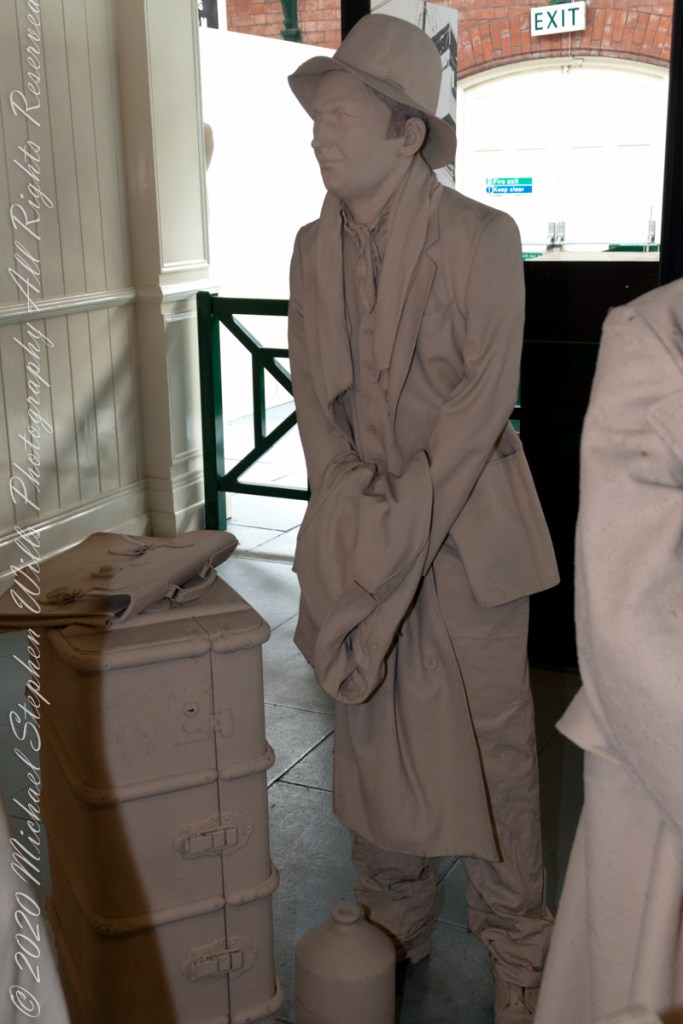
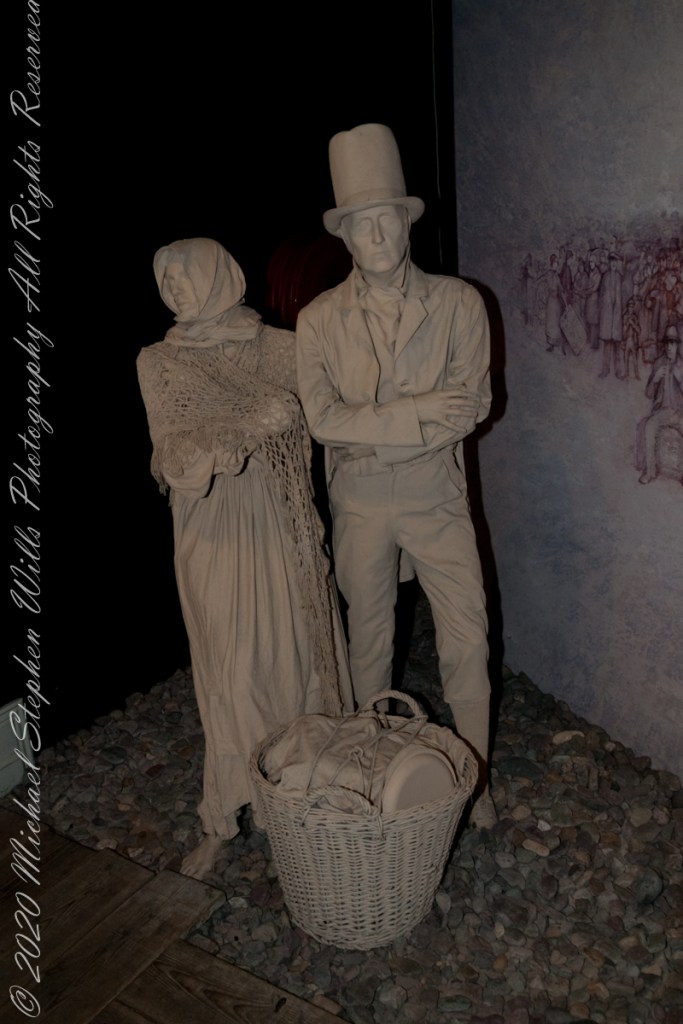
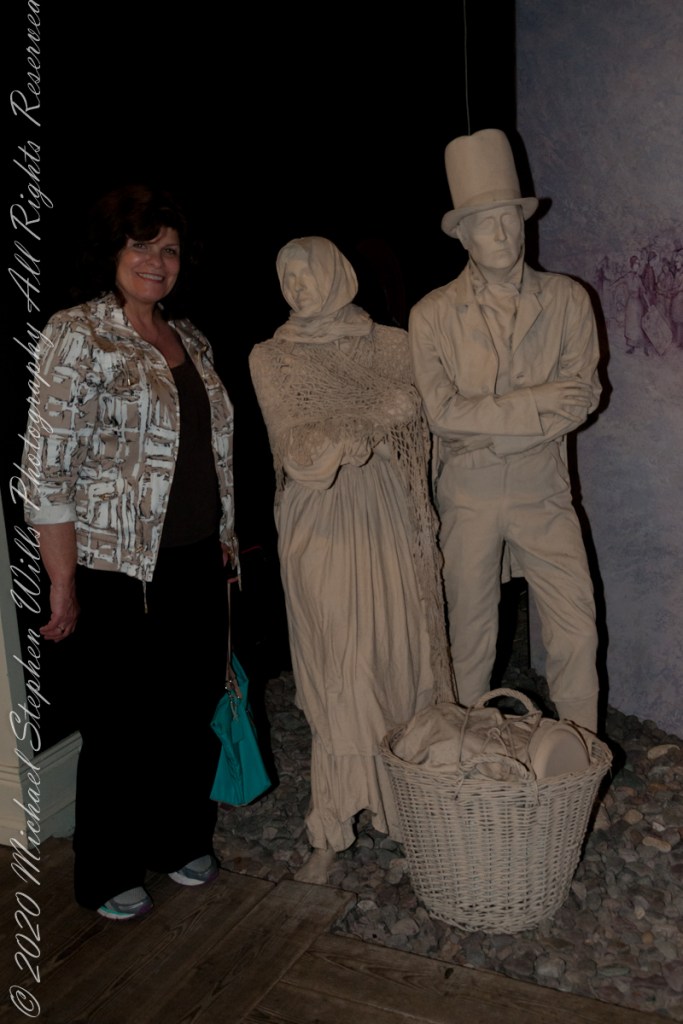
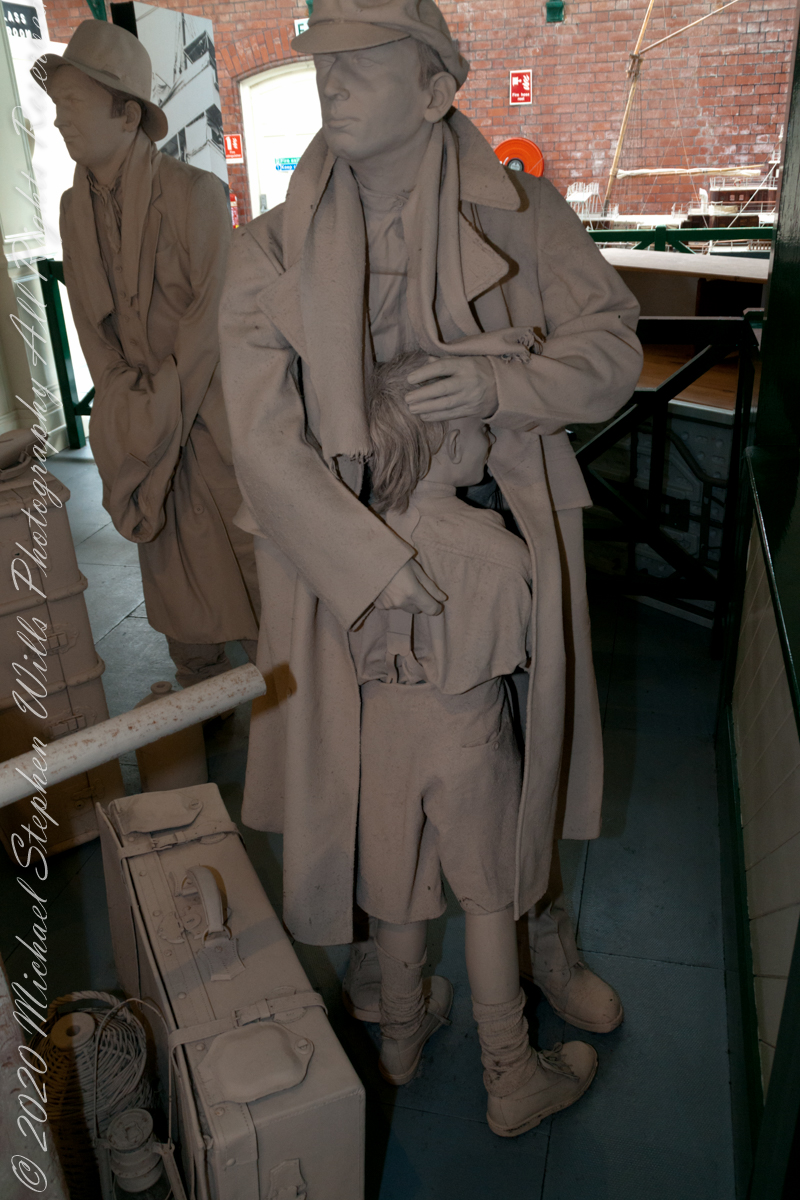
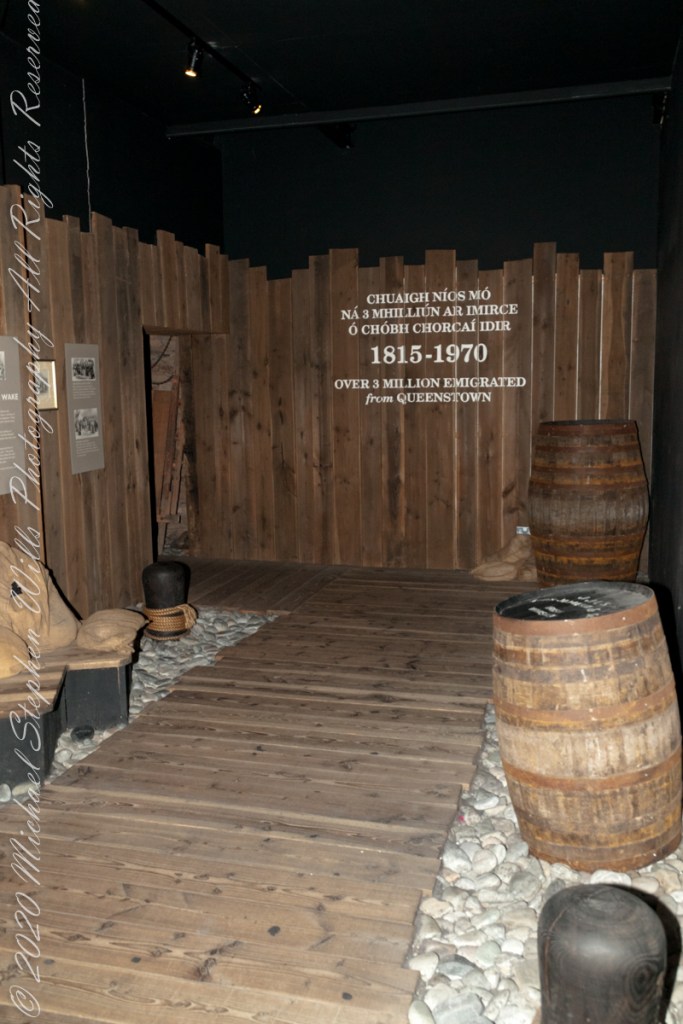
Irish Emigrant Experiences

Cobh Heritage Center

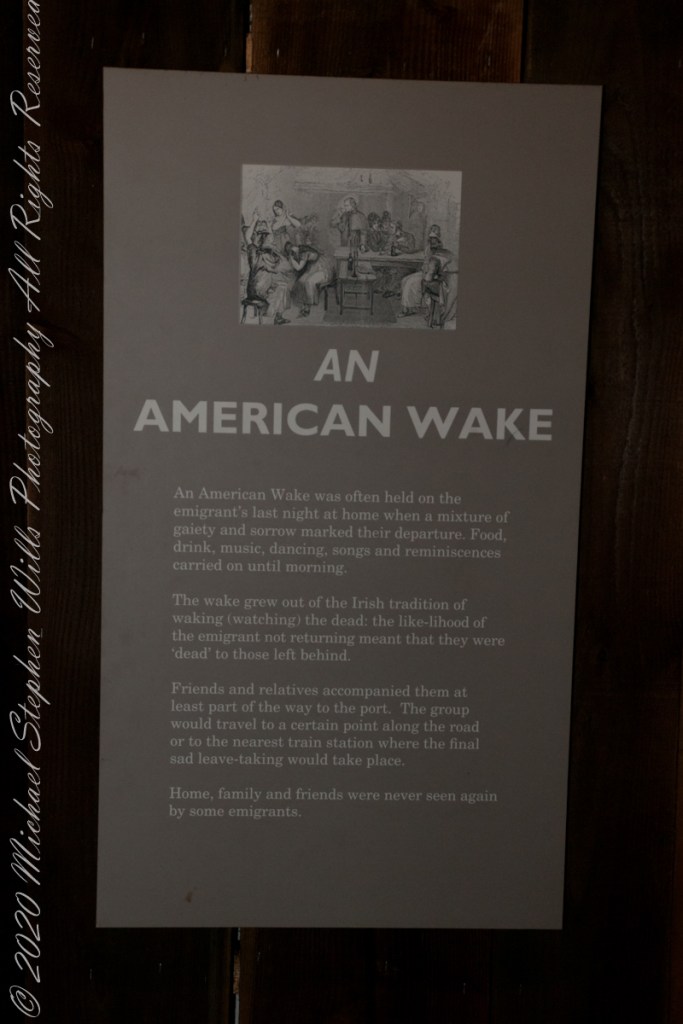
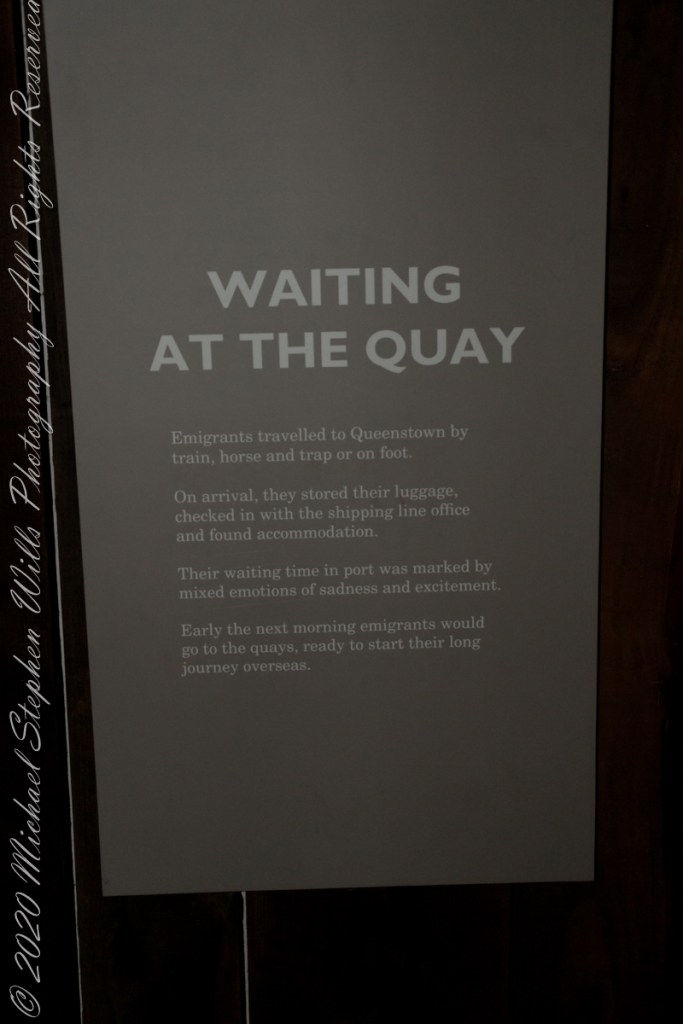
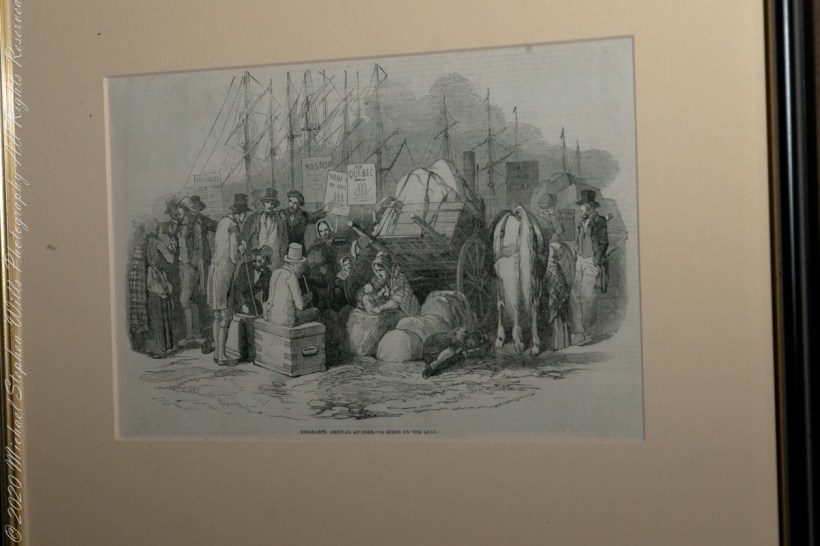
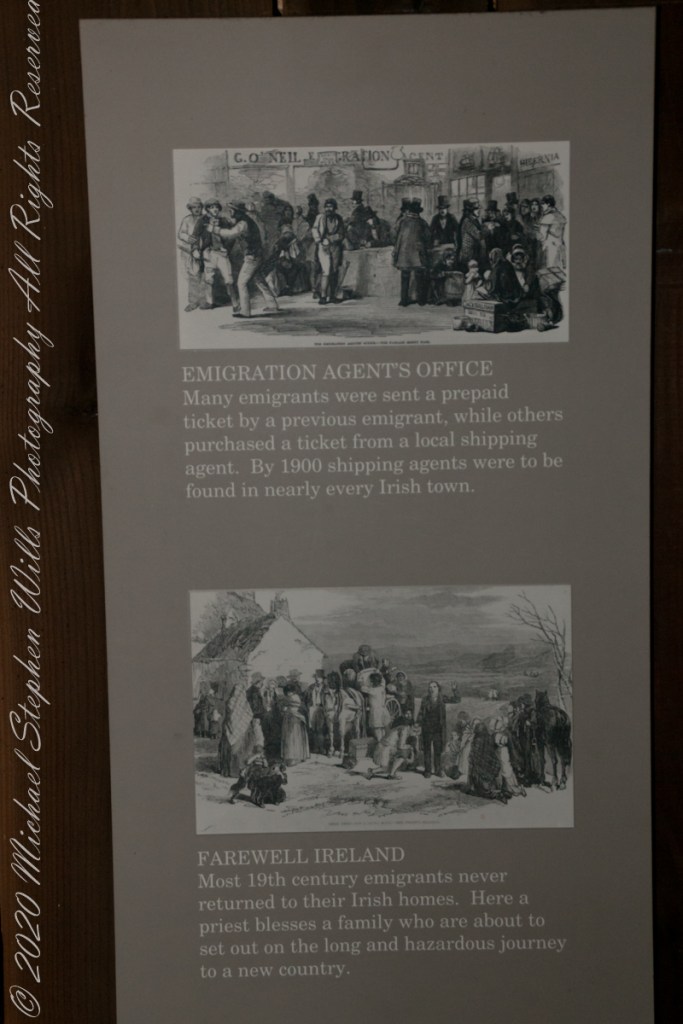
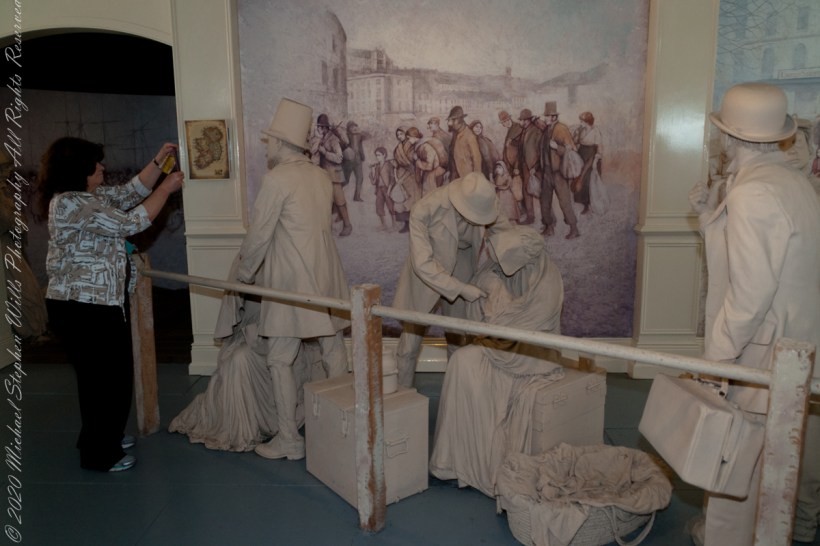
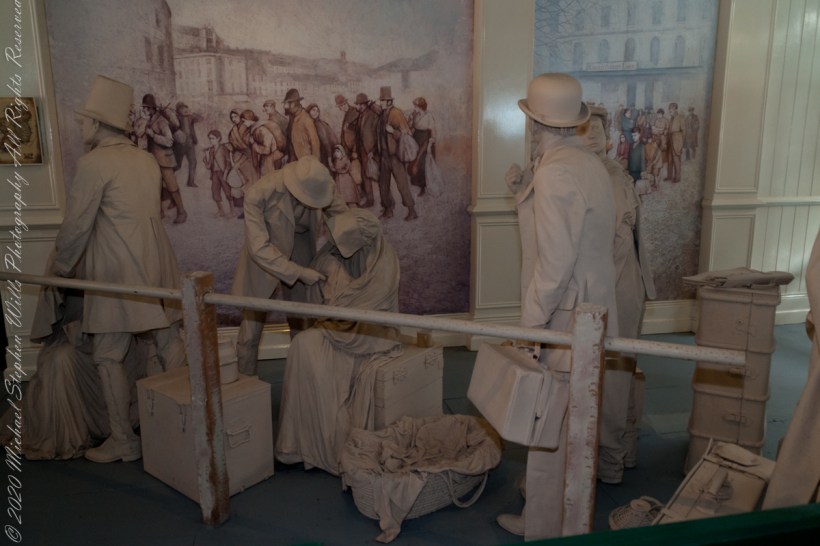
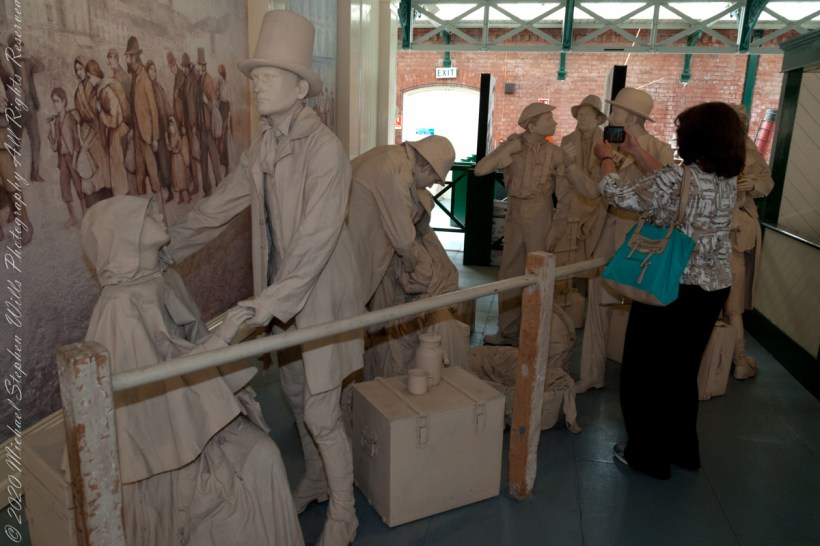
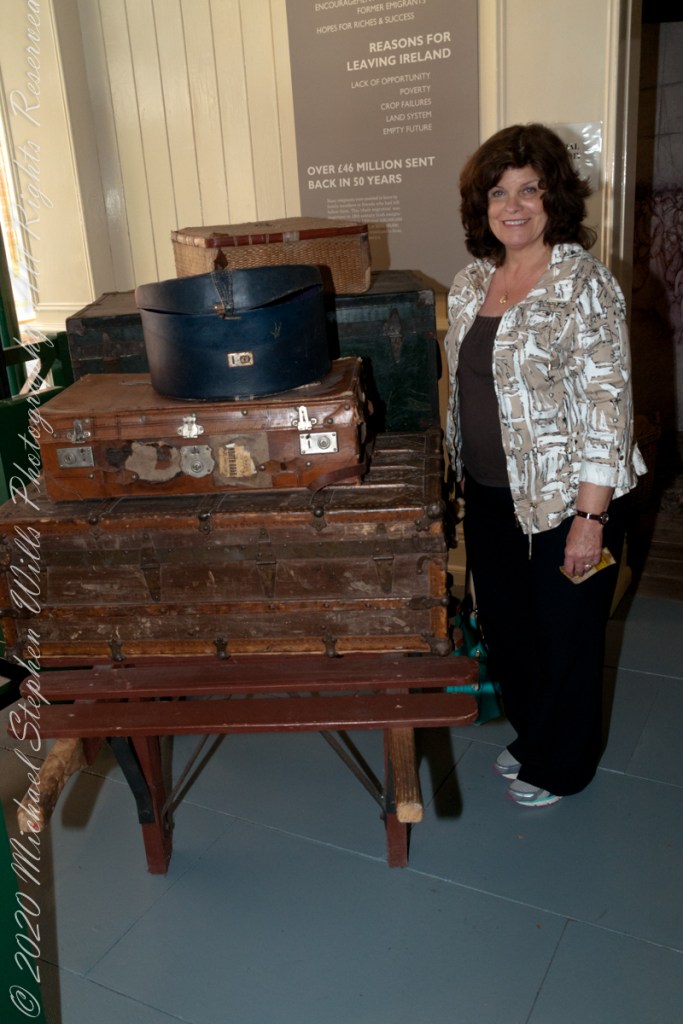
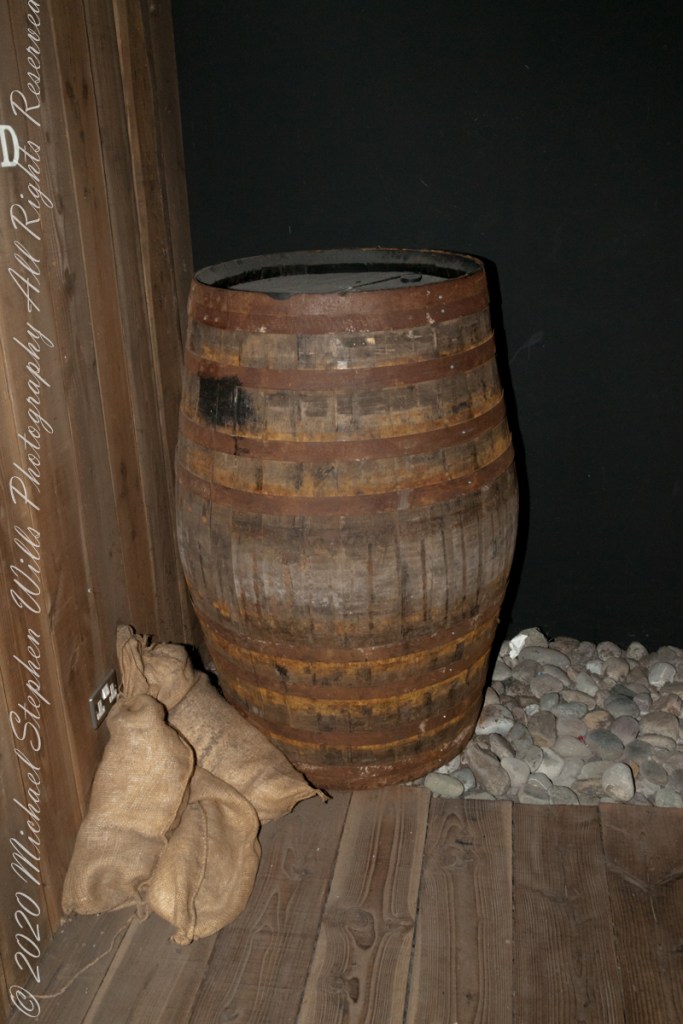
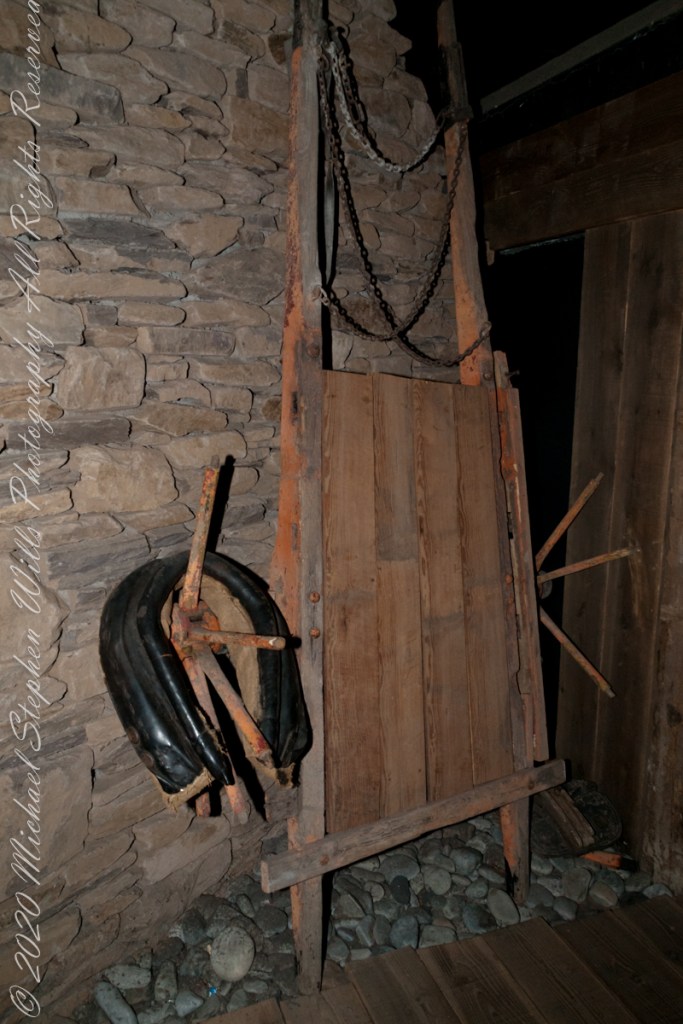
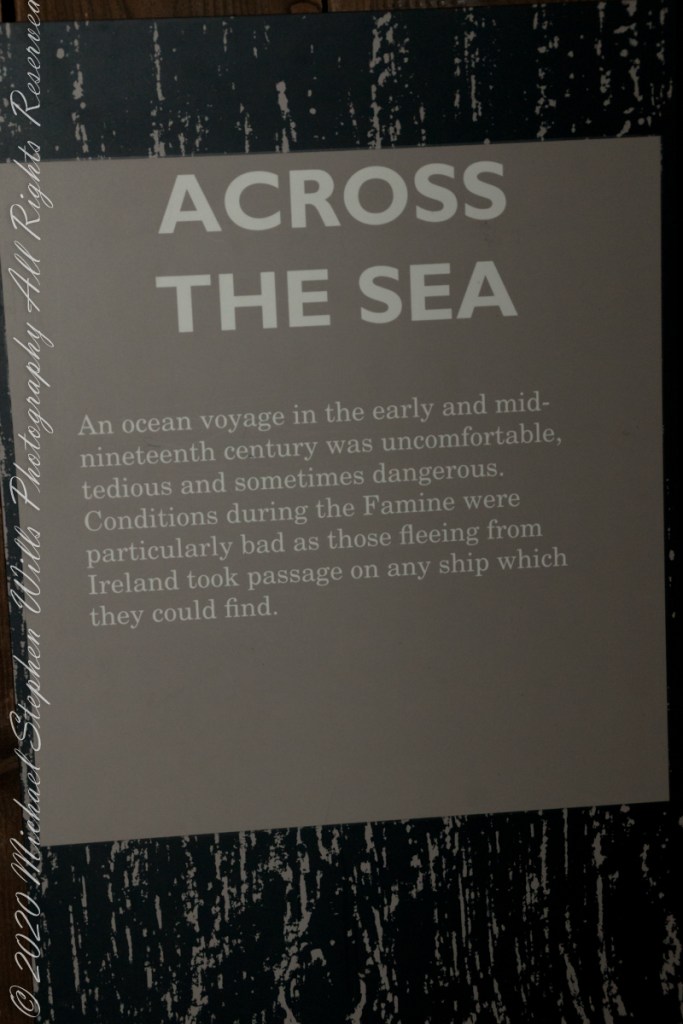
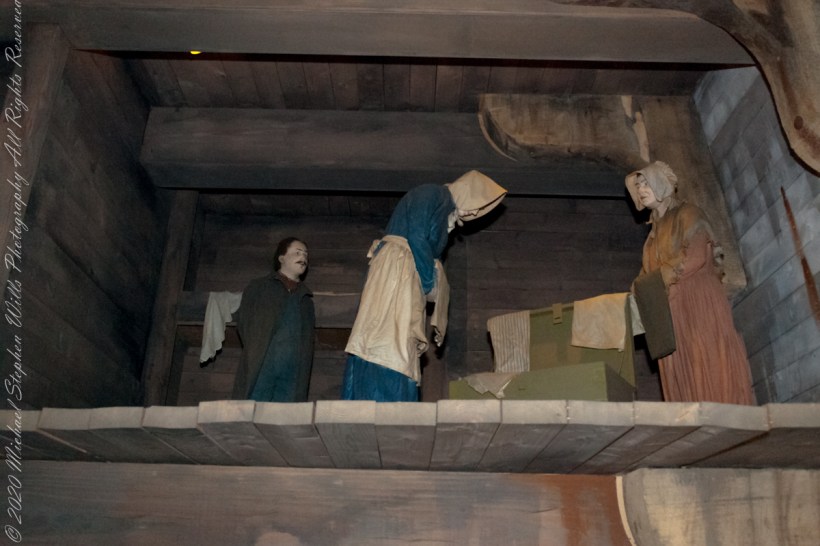
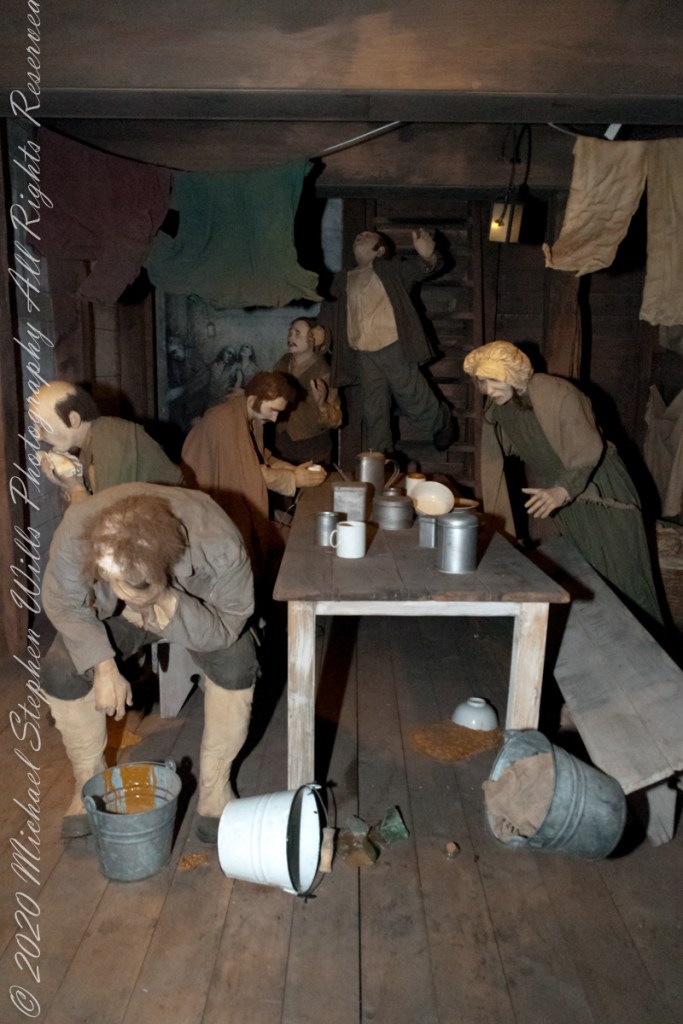
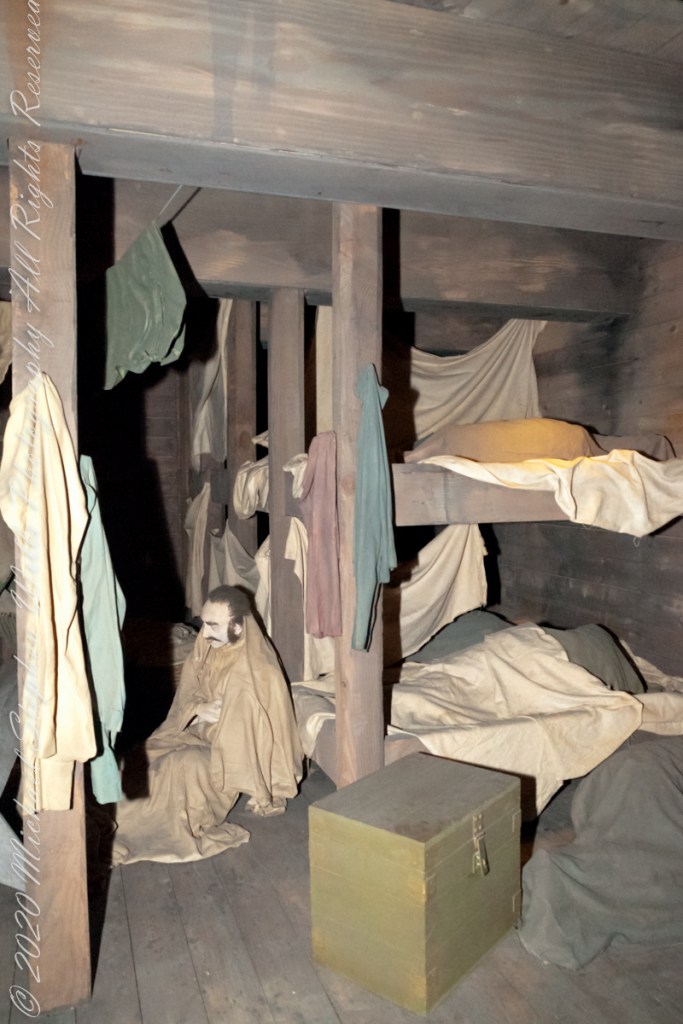
Continuing from the “Queenstown Glamor” of the SS Servia these are exhibits of what it was like to emigrate from Ireland in the 19th century.

Copyright 2021 Michael Stephen Wills All Rights Reserved

Queenstown Glamour

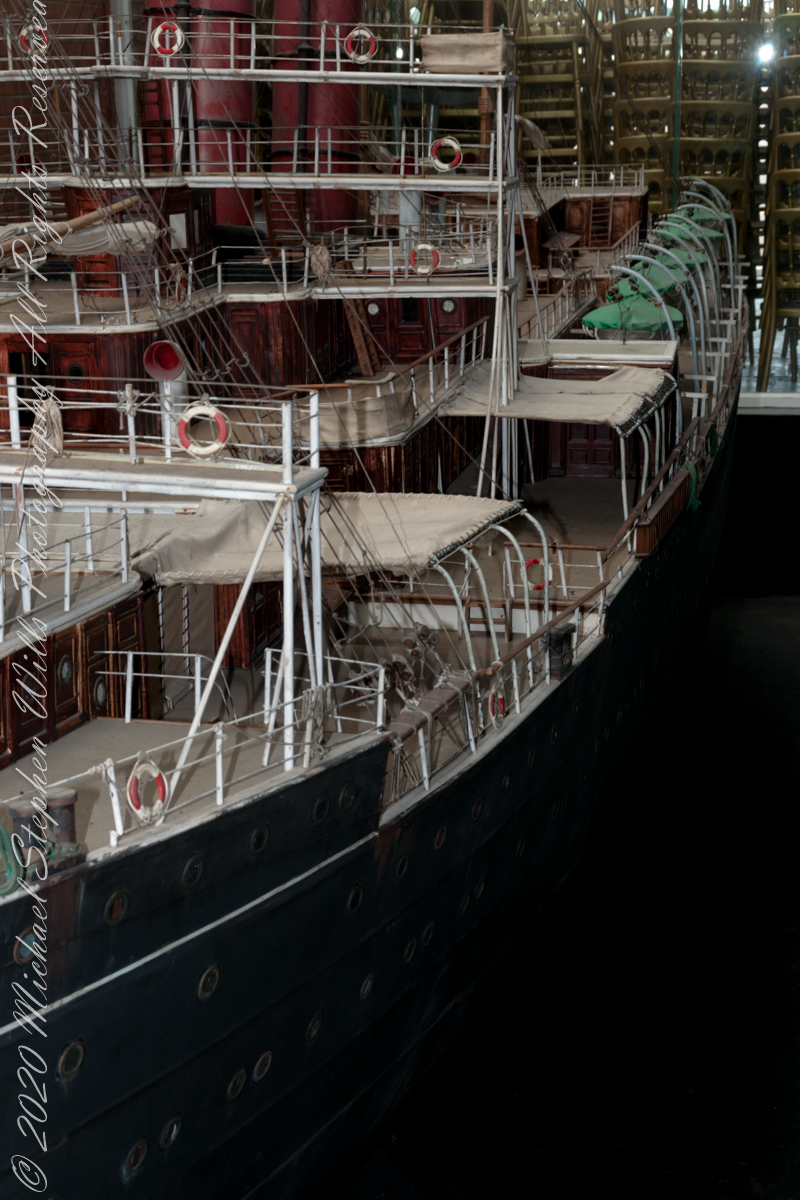
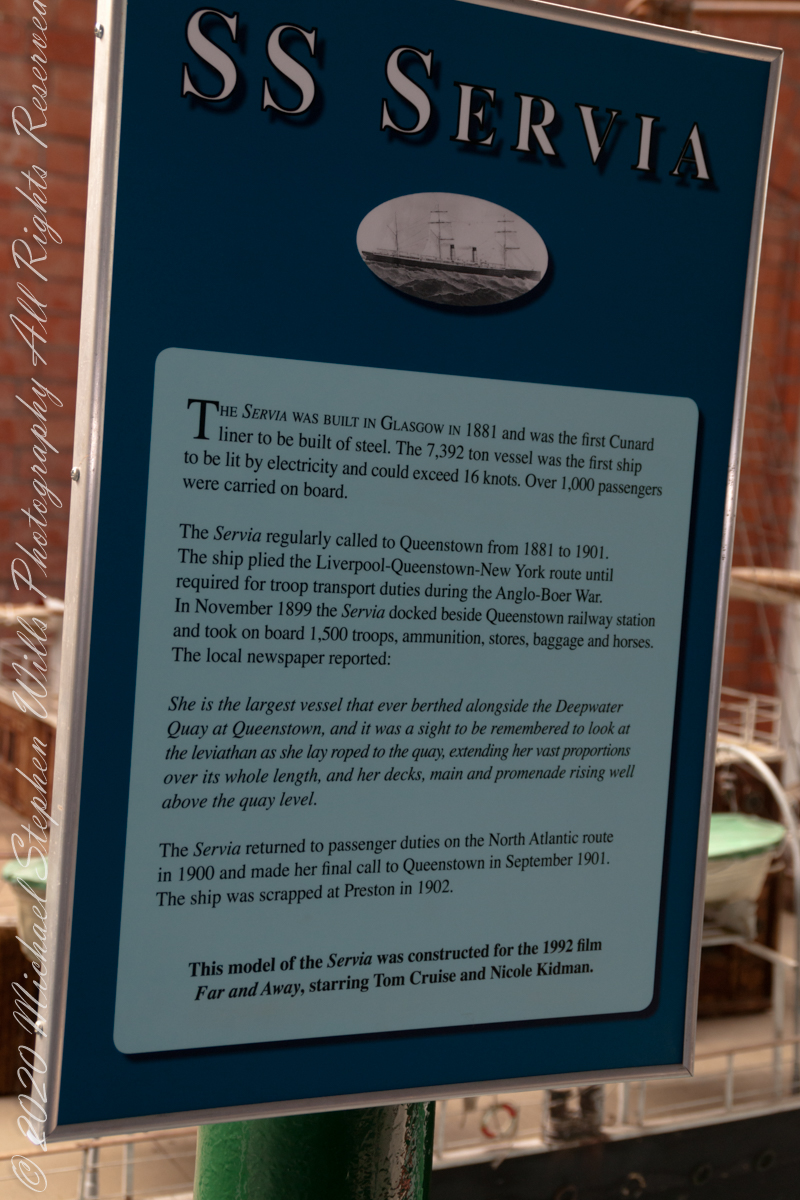
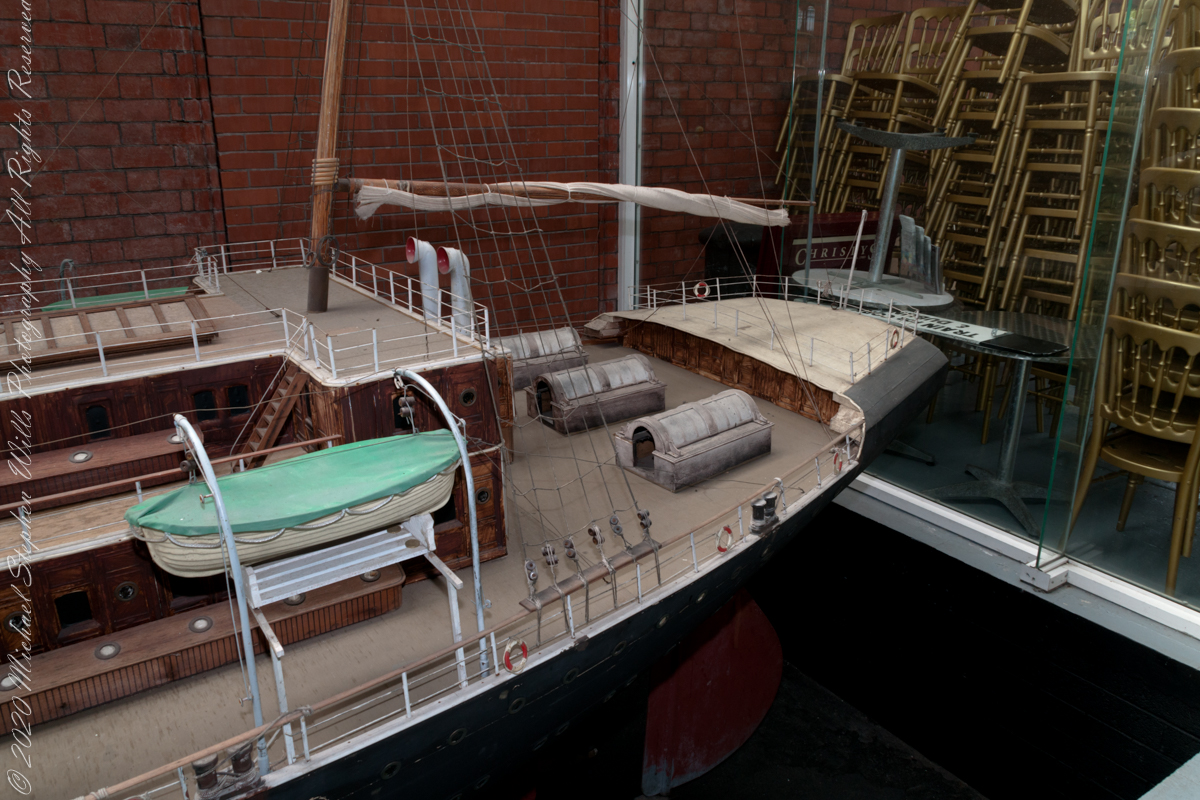
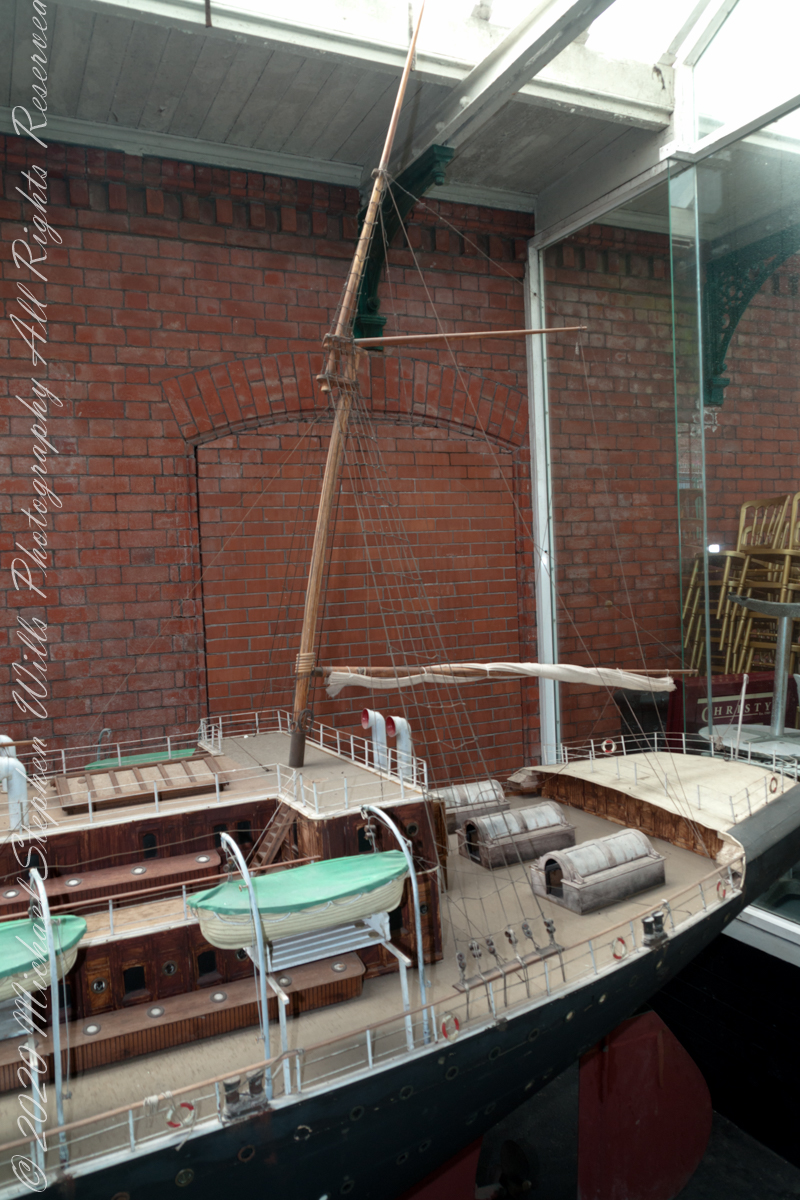
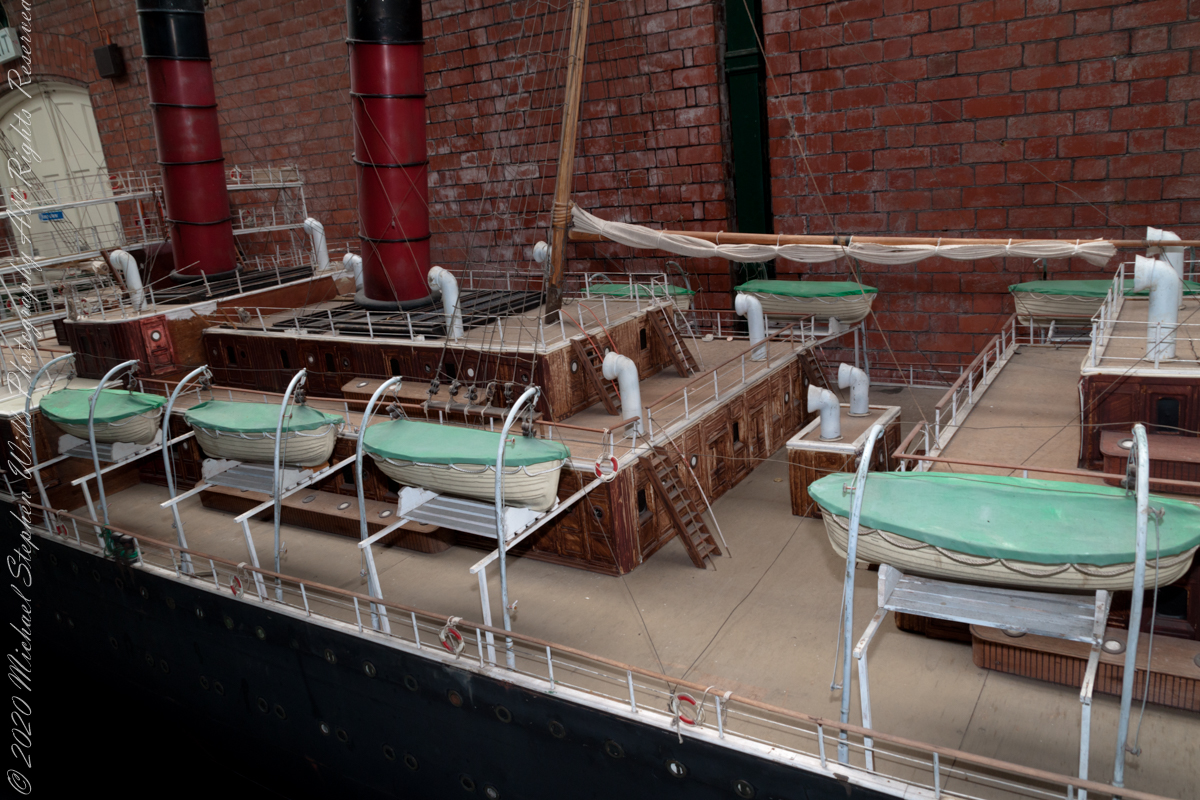
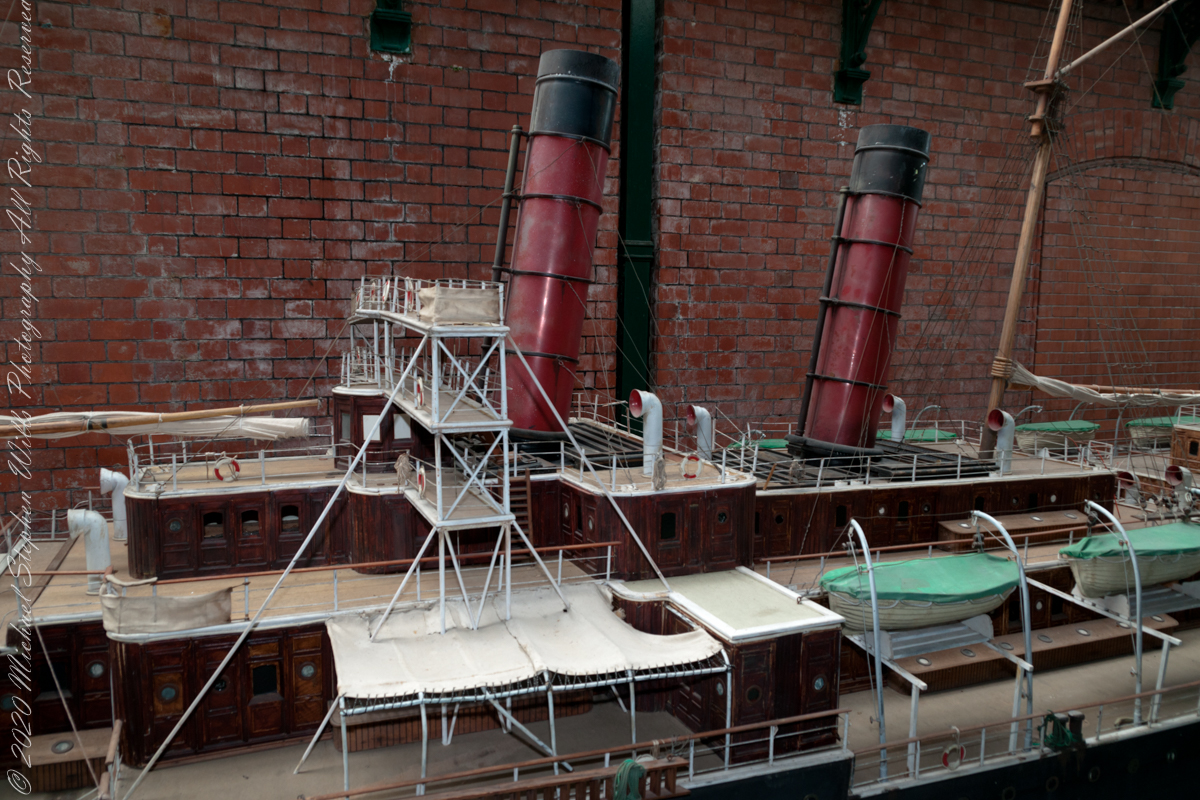
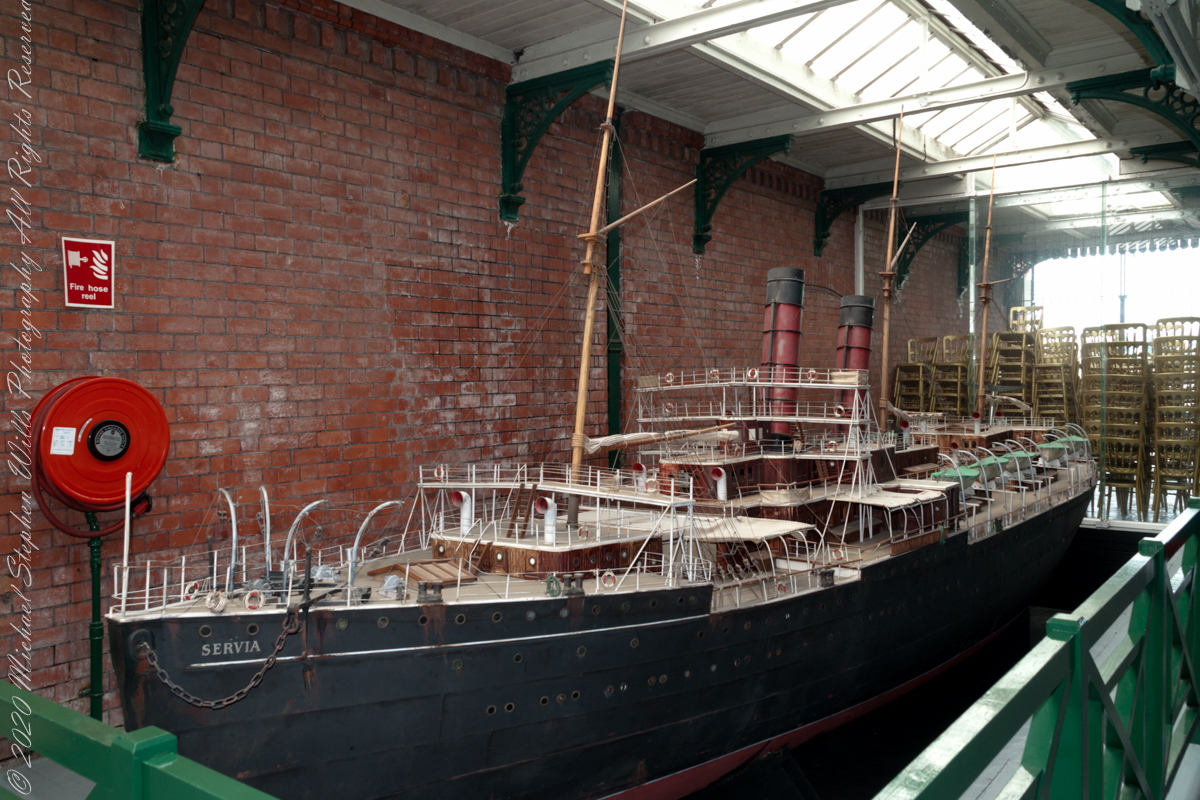
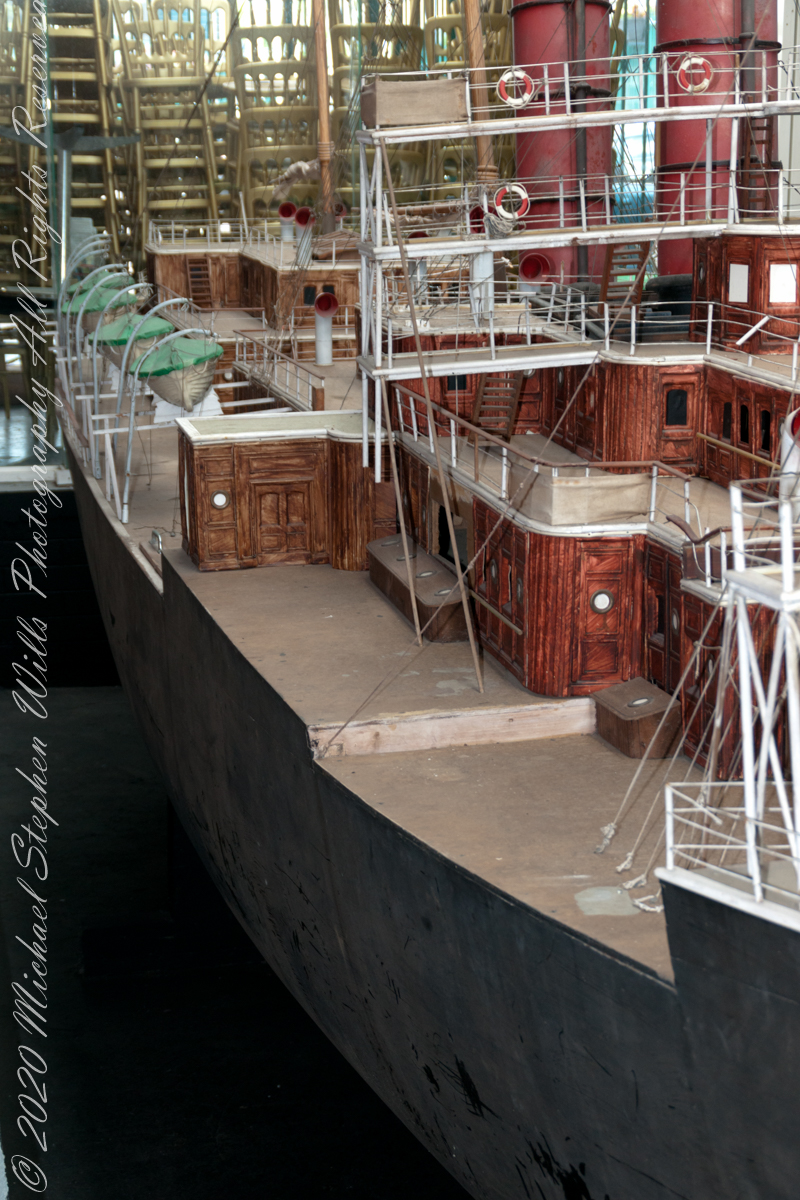
The SS Servia, a notable transatlantic ocean liner, features in the movie “Far and Away.”

Nothing so grand as the SS (or HMS) Servia carried my ancestors from Ireland to America. This ship model, created for the 1992 film “Far and Away” is on display within Cobh Heritage Center. Said by some to be the first true transatlantic ocean liner. Launched in 1881 as luxury transportation by the Cunard Line of today’s Queen Mary. Last year, we enjoyed the arrival of Cunard’s Queen Victoria to Cape Canaveral. (Click the link for my blog of the event, one of the last cruise ships to sale during the pandemic of 2020).

It is notable the model played a small role in the film, yet is an incredible accomplishment. By the way, from 1849 to 1920 Cobh was known as “Queenstown” in honor of a visit by Queen Victoria. The Irish Free State returned the name to the original.

References

SS Servia – Wikipedia

Far and Away – Wikipedia

Copyright 2021 Michael Stephen Wills All Rights Reserved