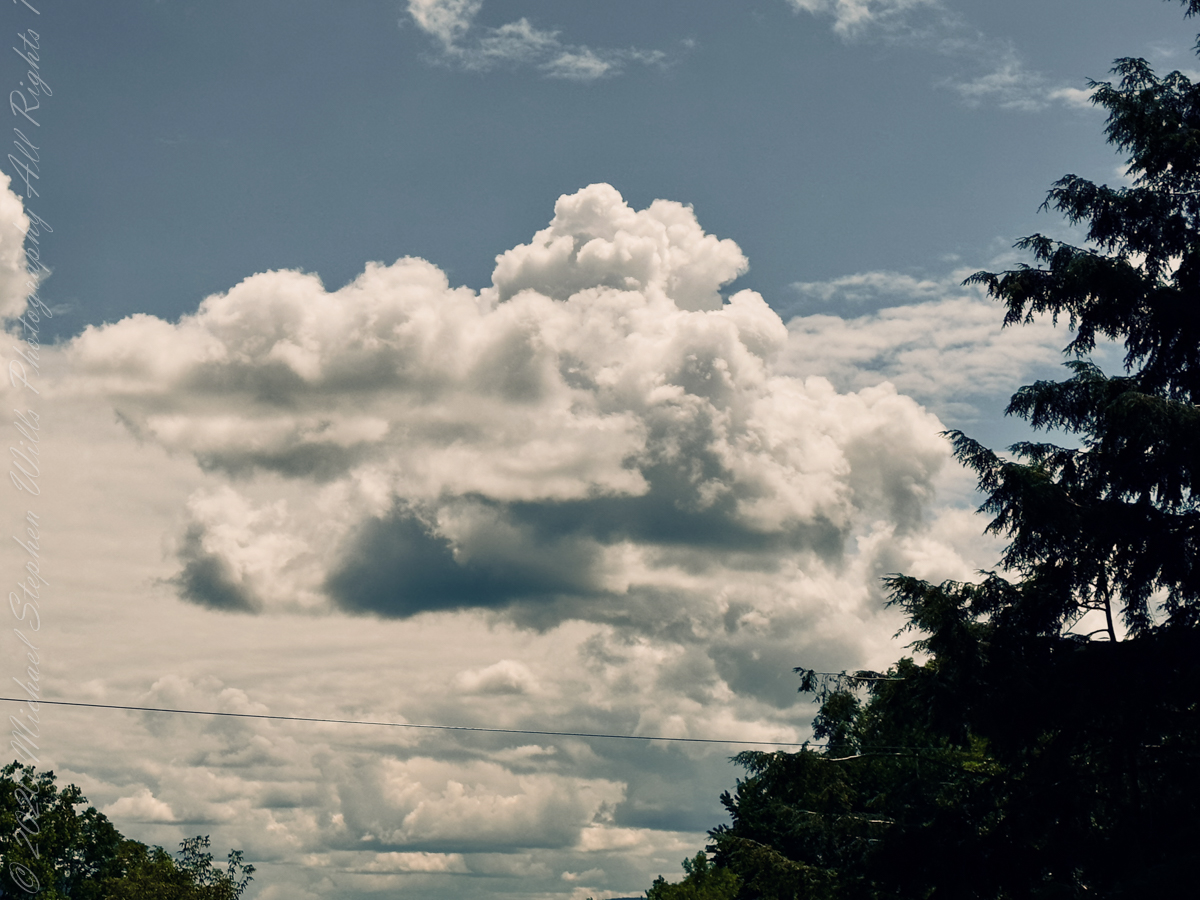
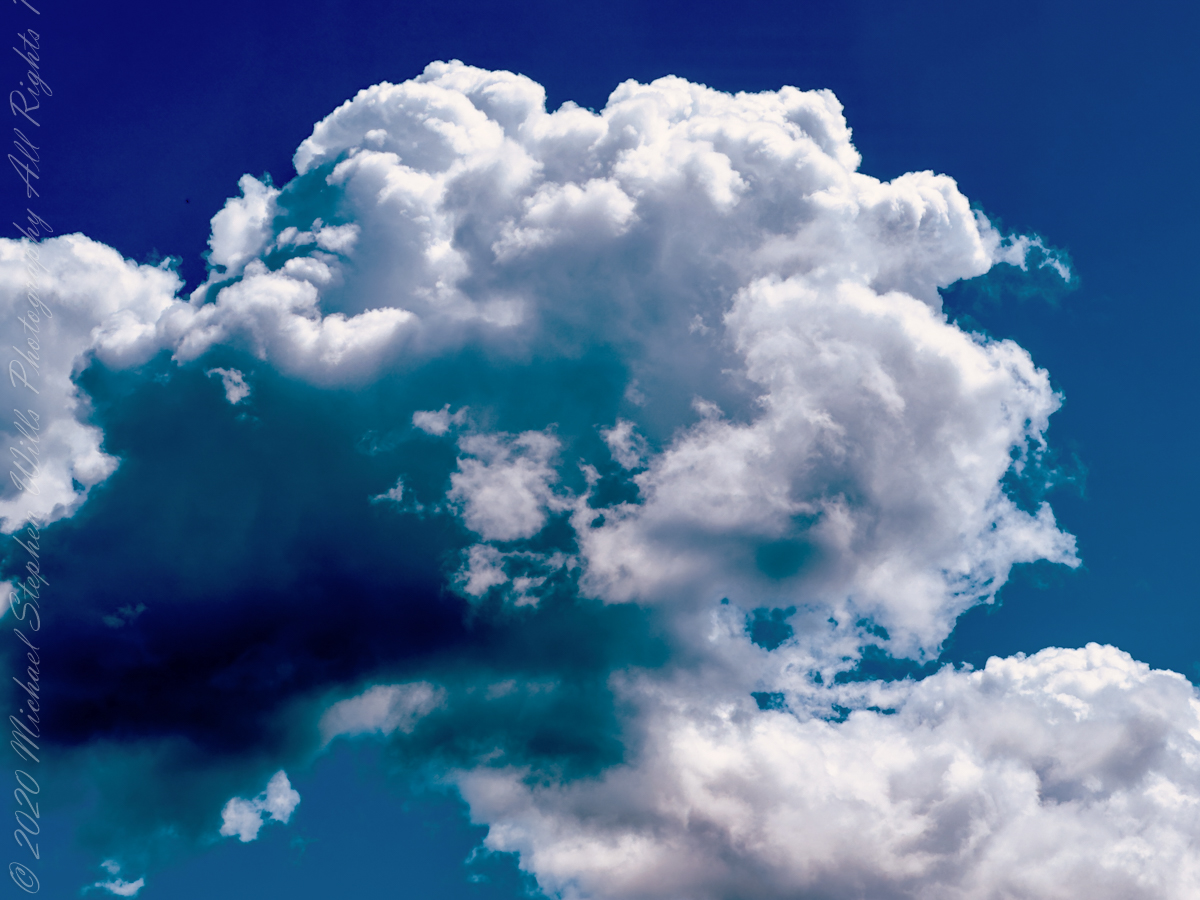
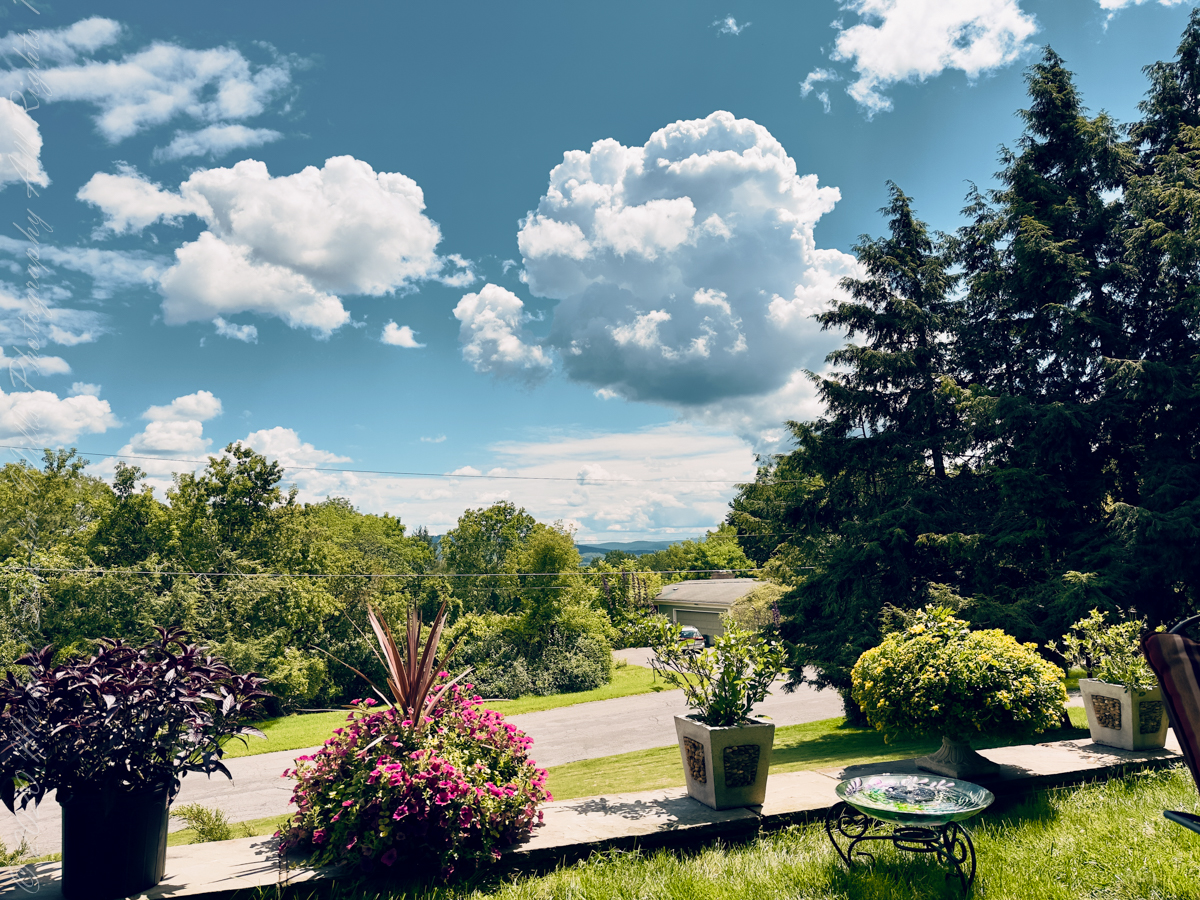
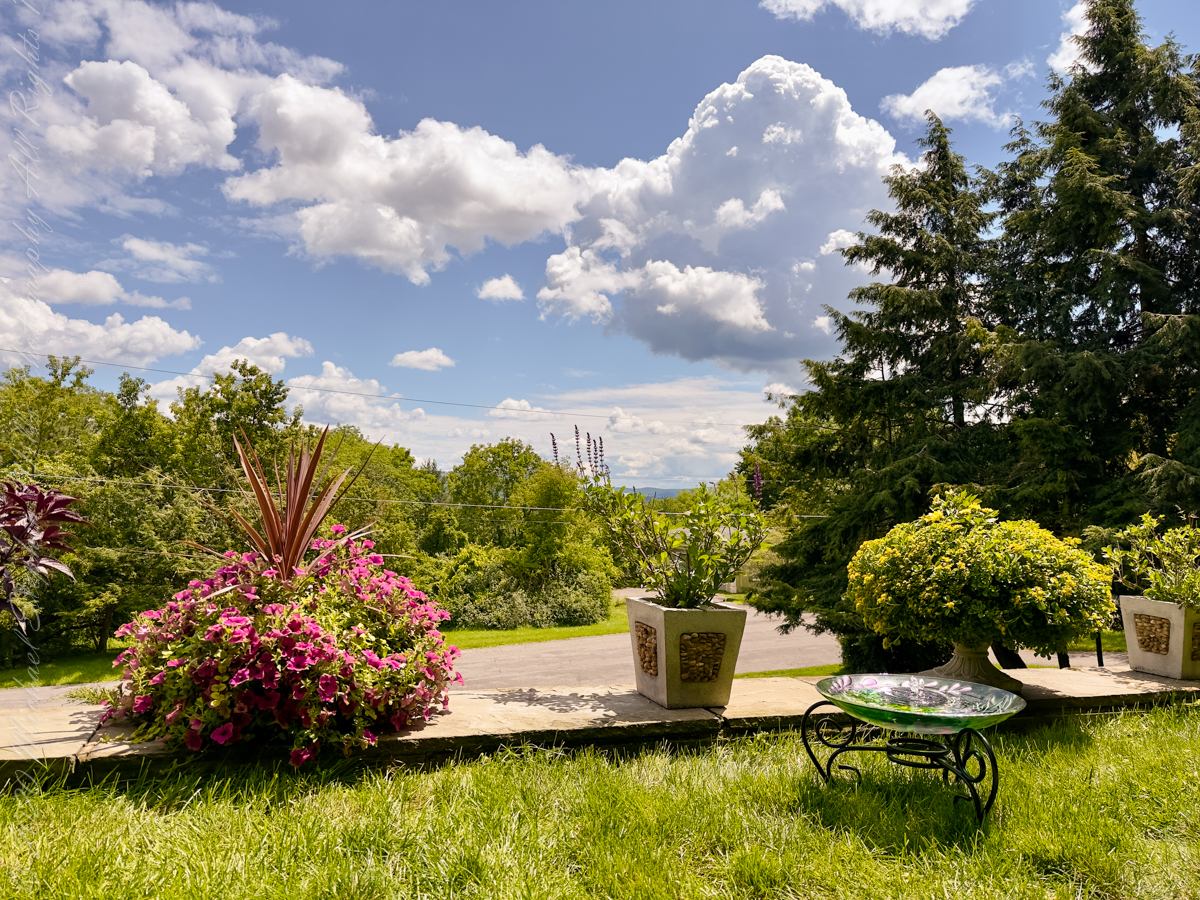

from our porch
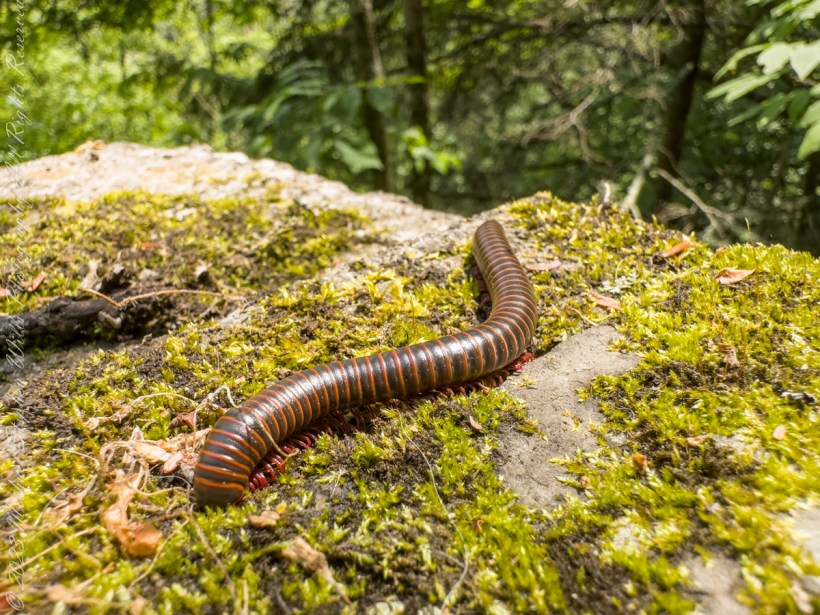
Visitors to Robert H. Treman park think nothing of crushing millipedes on the trail, it is concerning to encounter evidence of such disrespectful and boorish behavior. Here is an intact millipede I found last week. Millipedes are a group of arthropods that are characterized by having two pairs of jointed legs on most body segments; […]
Visitors to Robert H. Treman park think nothing of crushing millipedes on the trail, it is concerning to encounter evidence of such disrespectful and boorish behavior. Here is an intact millipede I found last week.
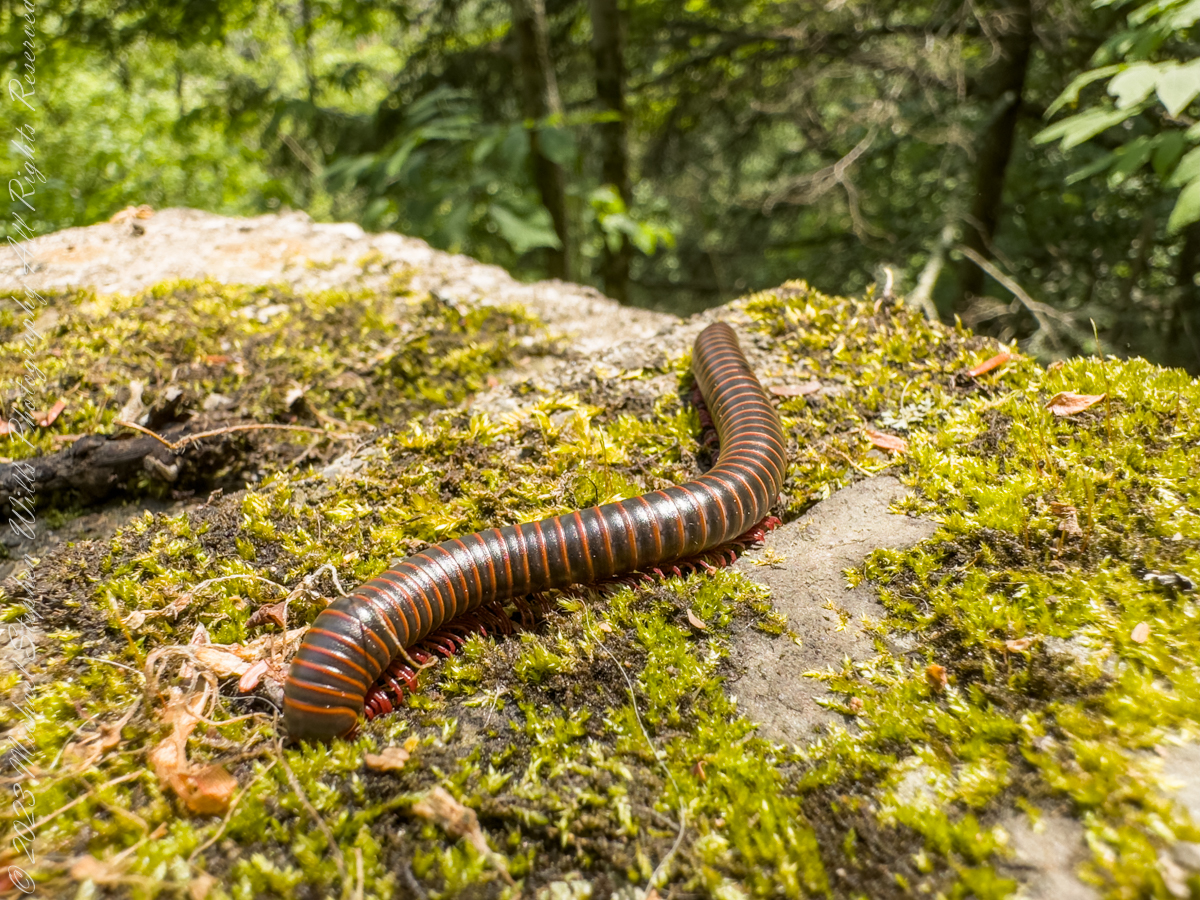
Millipedes are a group of arthropods that are characterized by having two pairs of jointed legs on most body segments; they are known scientifically as the class Diplopoda, the name derived from this feature. Each double-legged segment is a result of two single segments fused together. Most millipedes have very elongated cylindrical or flattened bodies with more than 20 segments, while pill millipedes are shorter and can roll into a tight ball. Although the name “millipede” derives from Latin for “thousand feet”, no species was known to have 1,000 or more until the discovery of Eumillipes persephone, which can have over 1,300 legs.
There are approximately 12,000 named species classified into 16 orders and around 140 families, making Diplopoda the largest class of myriapods, an arthropod group which also includes centipedes and other multi-legged creatures. Most millipedes are slow-moving detritivores, eating decaying leaves and other dead plant matter. Some eat fungi or drink plant fluids, and a small number are predatory.
Millipedes are generally harmless to humans, although some can become household or garden pests. Millipedes can be an unwanted nuisance particularly in greenhouses where they can potentially cause severe damage to emergent seedlings. Most millipedes defend themselves with a variety of chemicals secreted from pores along the body, although the tiny bristle millipedes are covered with tufts of detachable bristles. Its primary defense mechanism is to curl into a tight coil, thereby protecting its legs and other vital delicate areas on the body behind a hard exoskeleton. Reproduction in most species is carried out by modified male legs called gonopods, which transfer packets of sperm to females.
Millipedes are among the first animals to have colonized land during the Silurian period. Early forms probably ate mosses and primitive vascular plants. Millipedes also exhibit the earliest evidence of chemical defense, as some Devonian fossils have defensive gland openings called ozopores. Millipedes, centipedes, and other terrestrial arthropods attained very large sizes in comparison to modern species in the oxygen-rich environments of the Devonian and Carboniferous periods, and some could grow larger than one meter. As oxygen levels lowered through time, arthropods became smaller.
Most millipedes are detritivores and feed on decomposing vegetation, feces, or organic matter mixed with soil. They often play important roles in the breakdown and decomposition of plant litter: estimates of consumption rates for individual species range from 1 to 11 percent of all leaf litter, depending on species and region, and collectively millipedes may consume nearly all the leaf litter in a region. The leaf litter is fragmented in the millipede gut and excreted as pellets of leaf fragments, algae, fungi, and bacteria, which facilitates decomposition by the microorganisms.
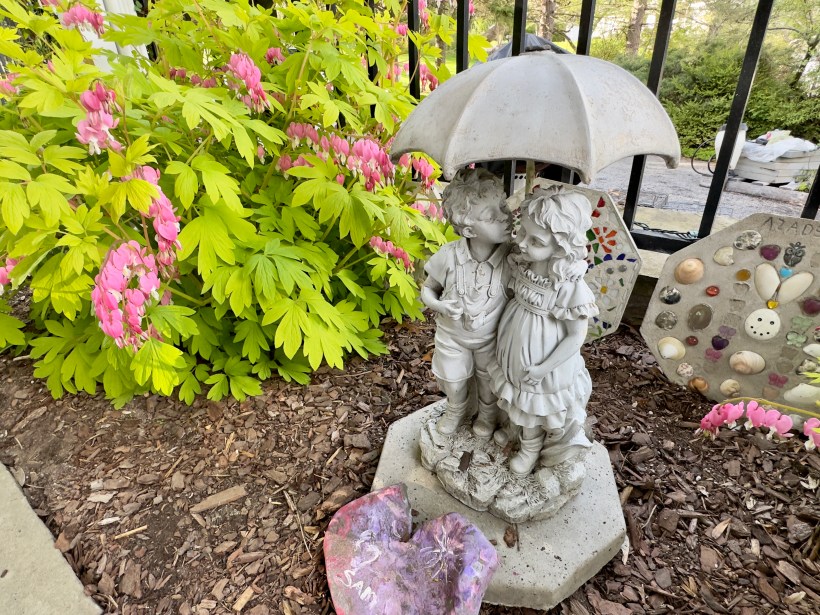
In Springtime
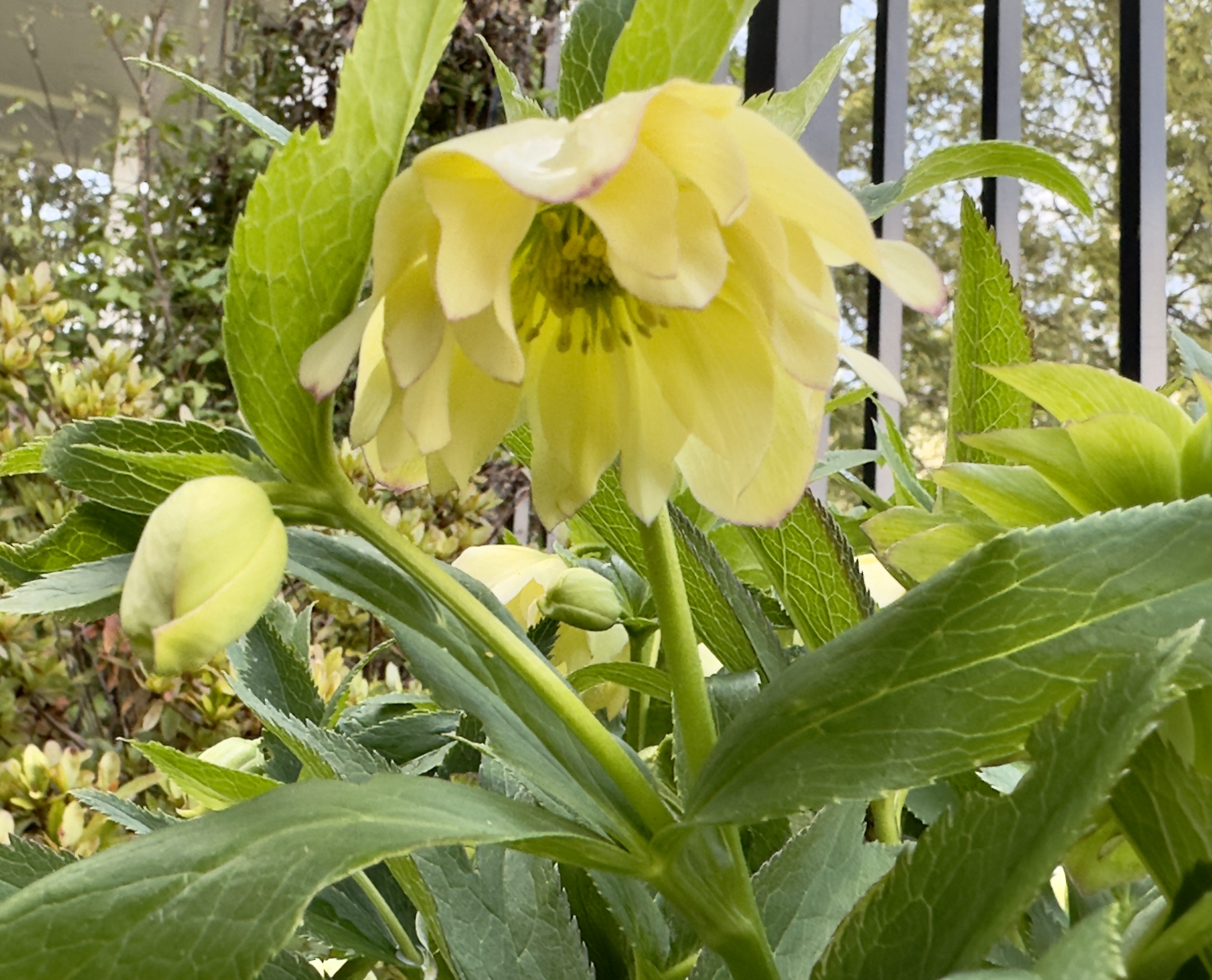
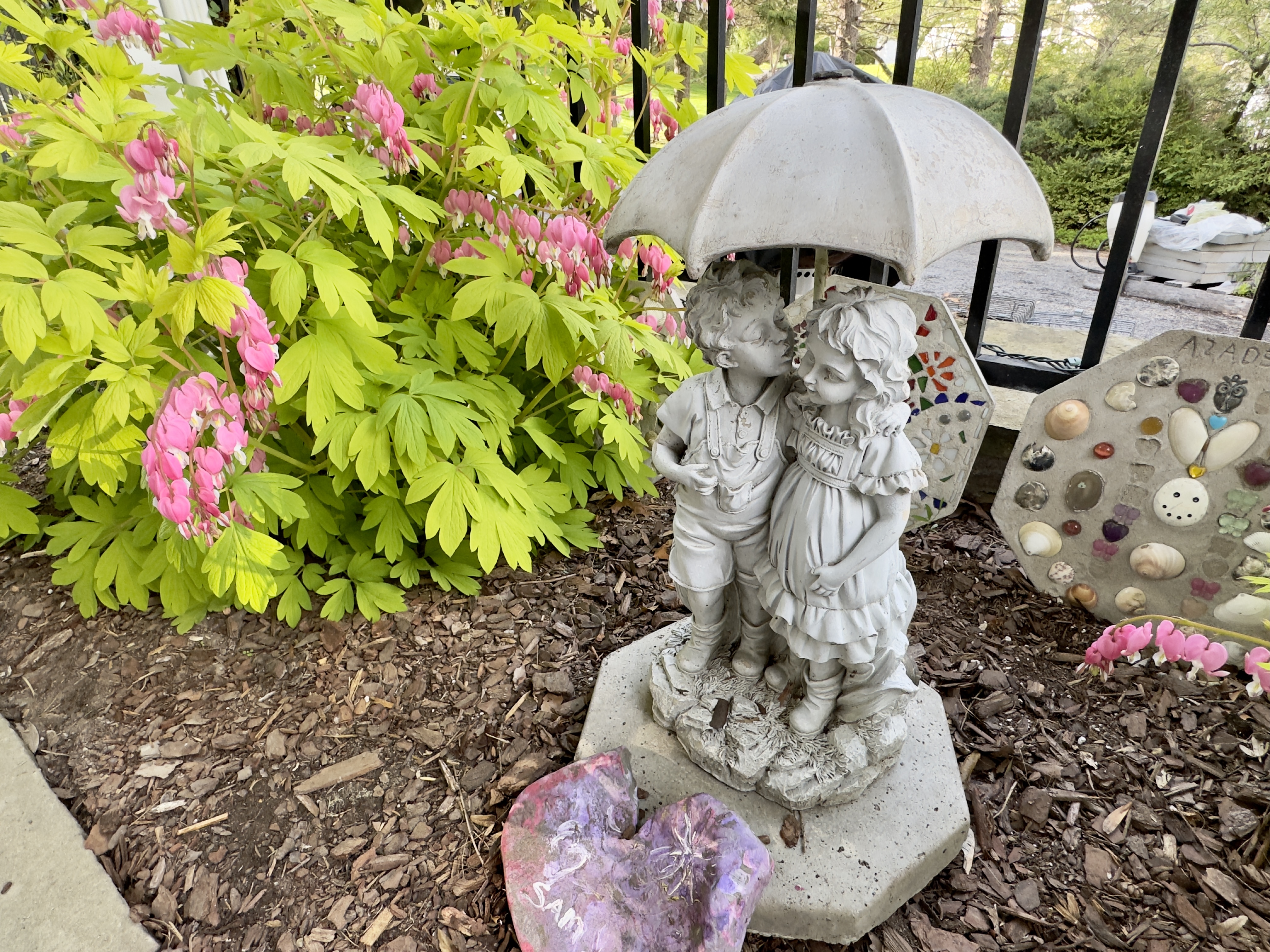
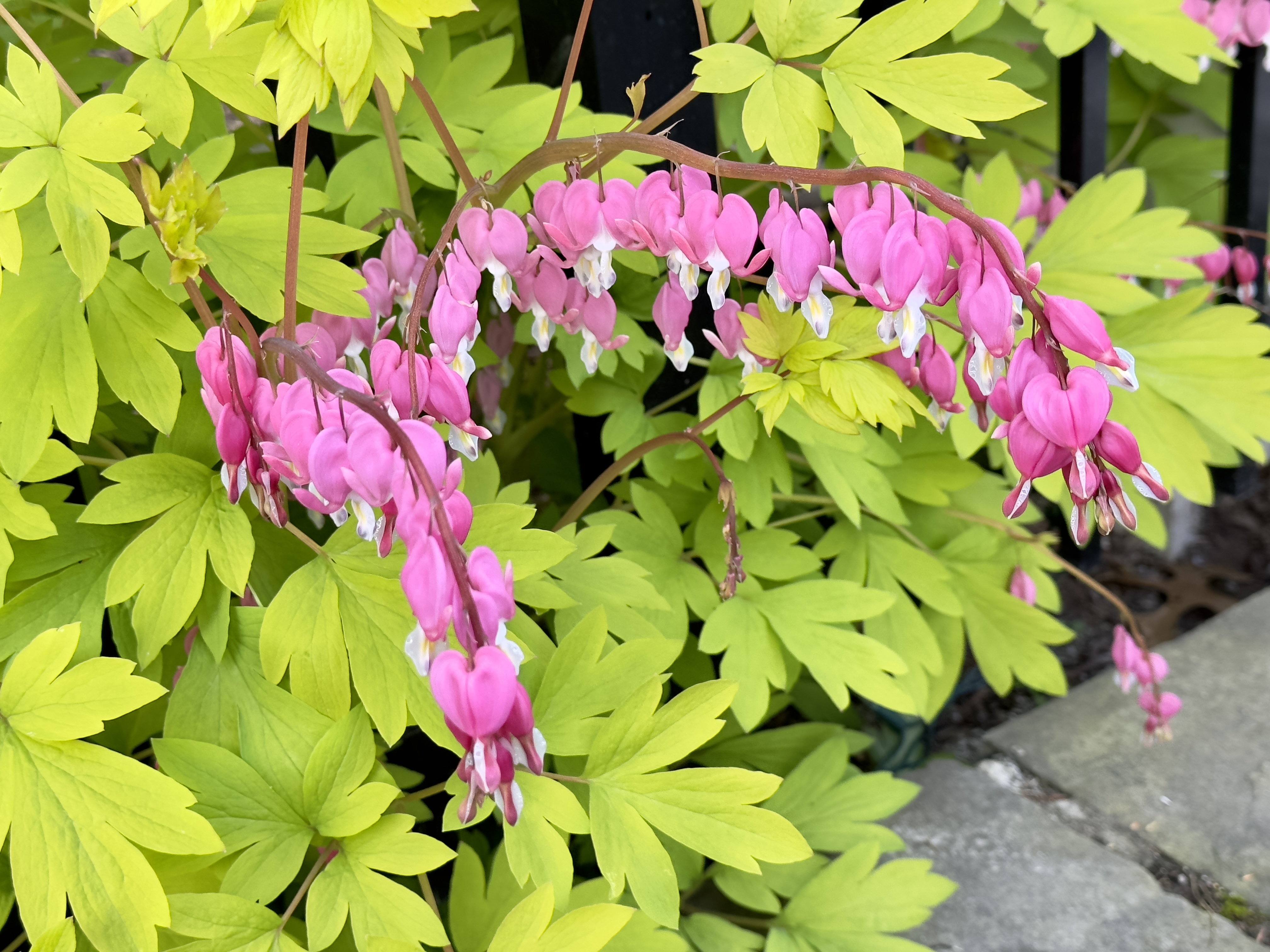
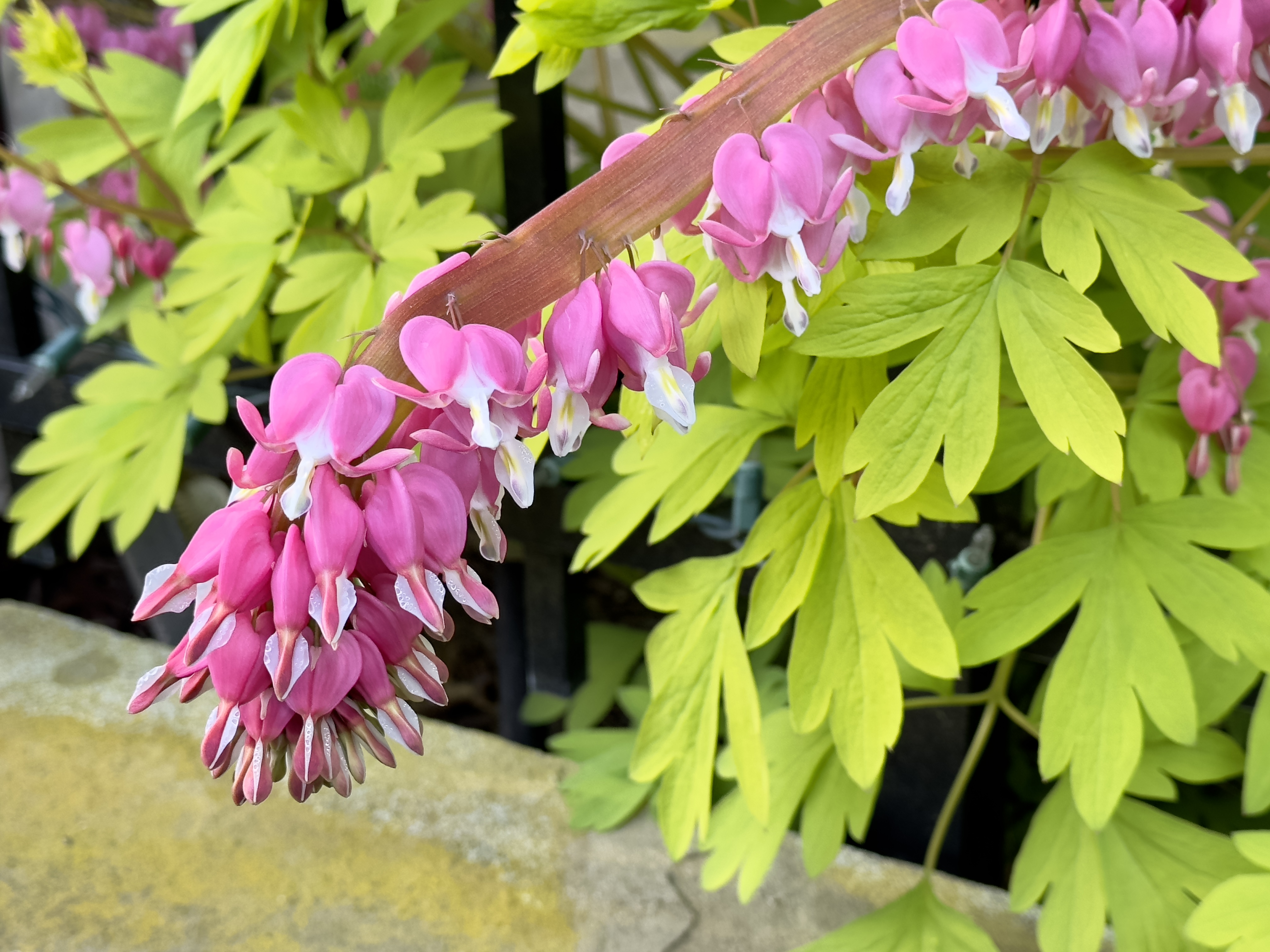
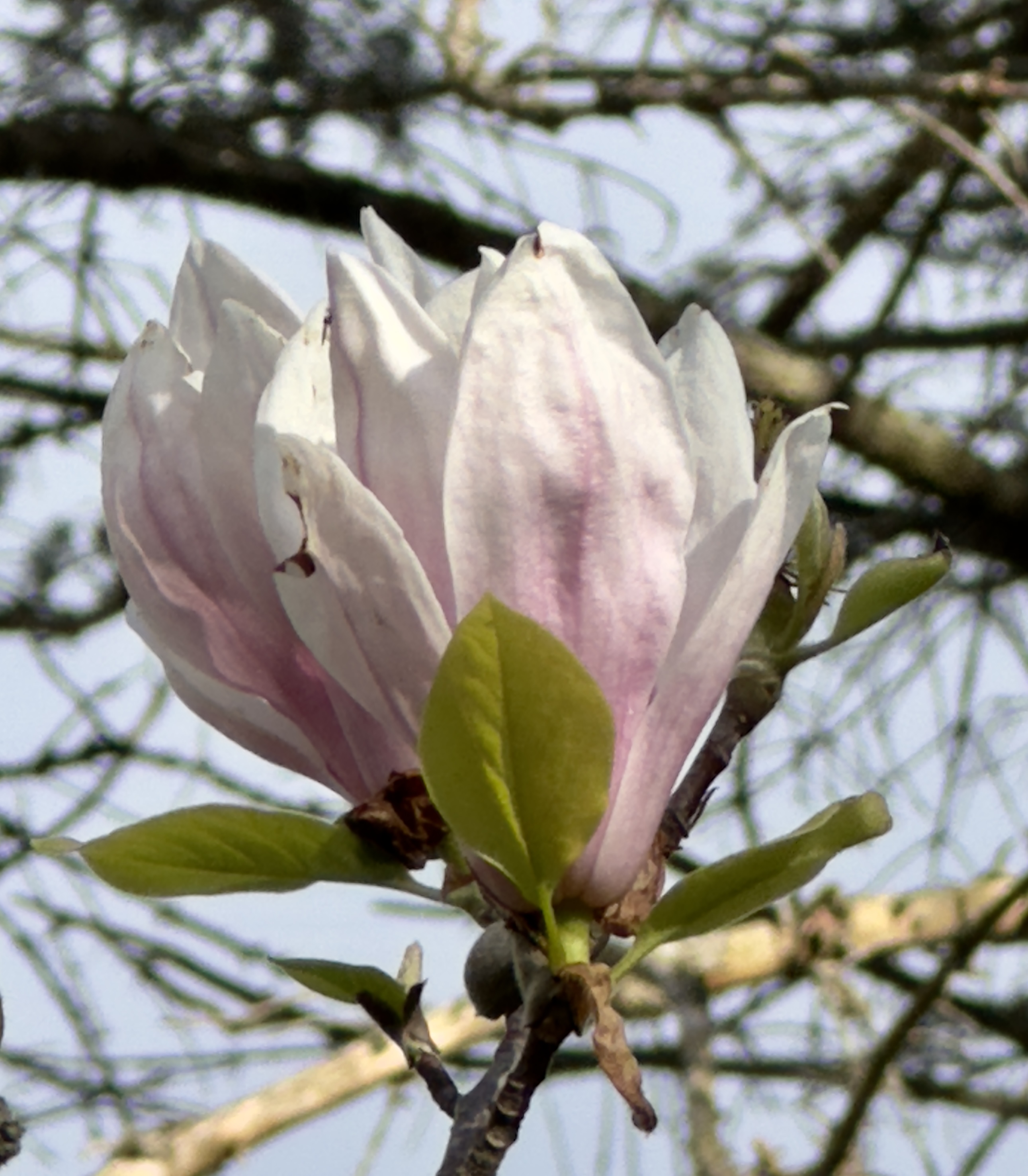
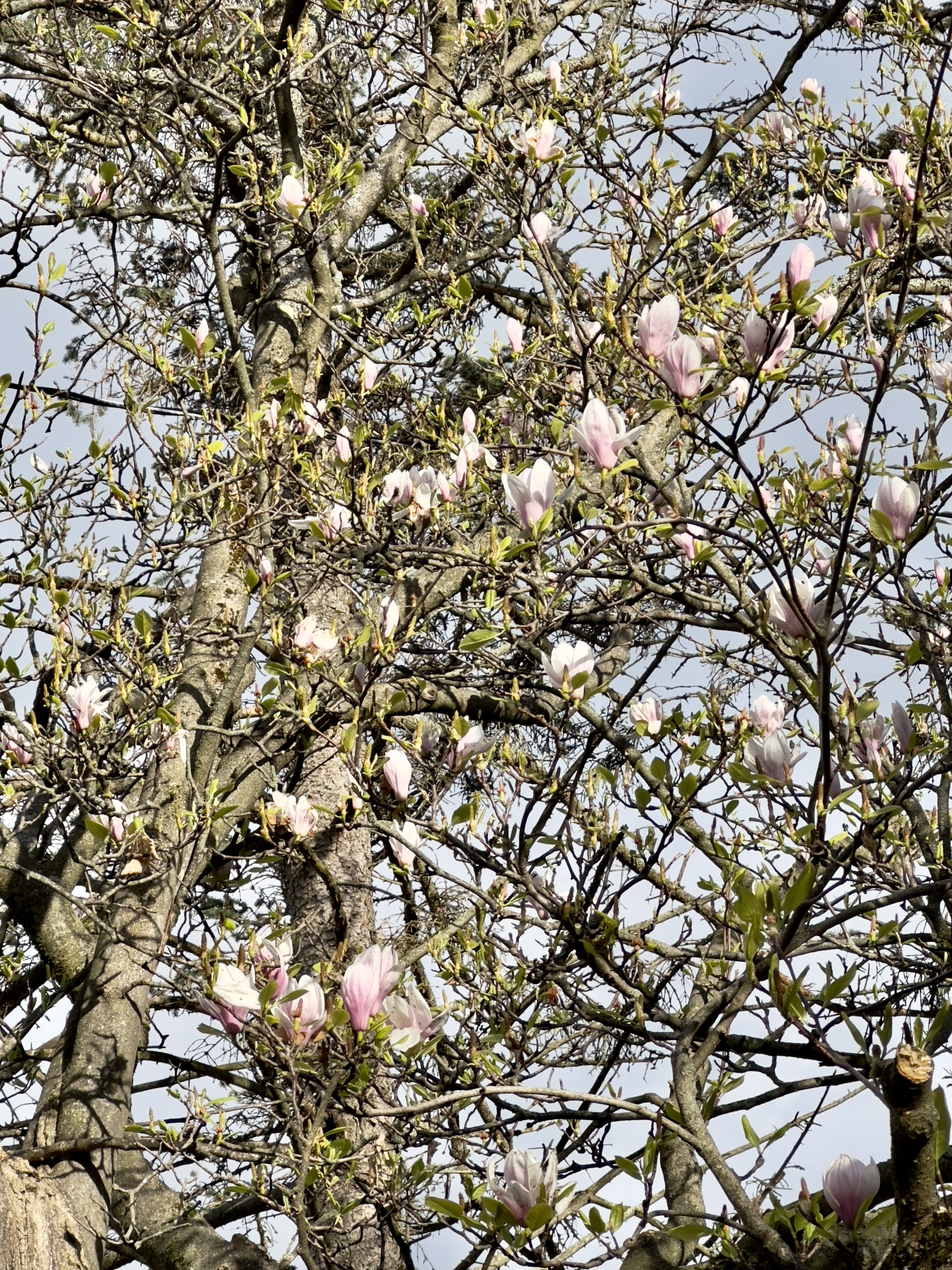
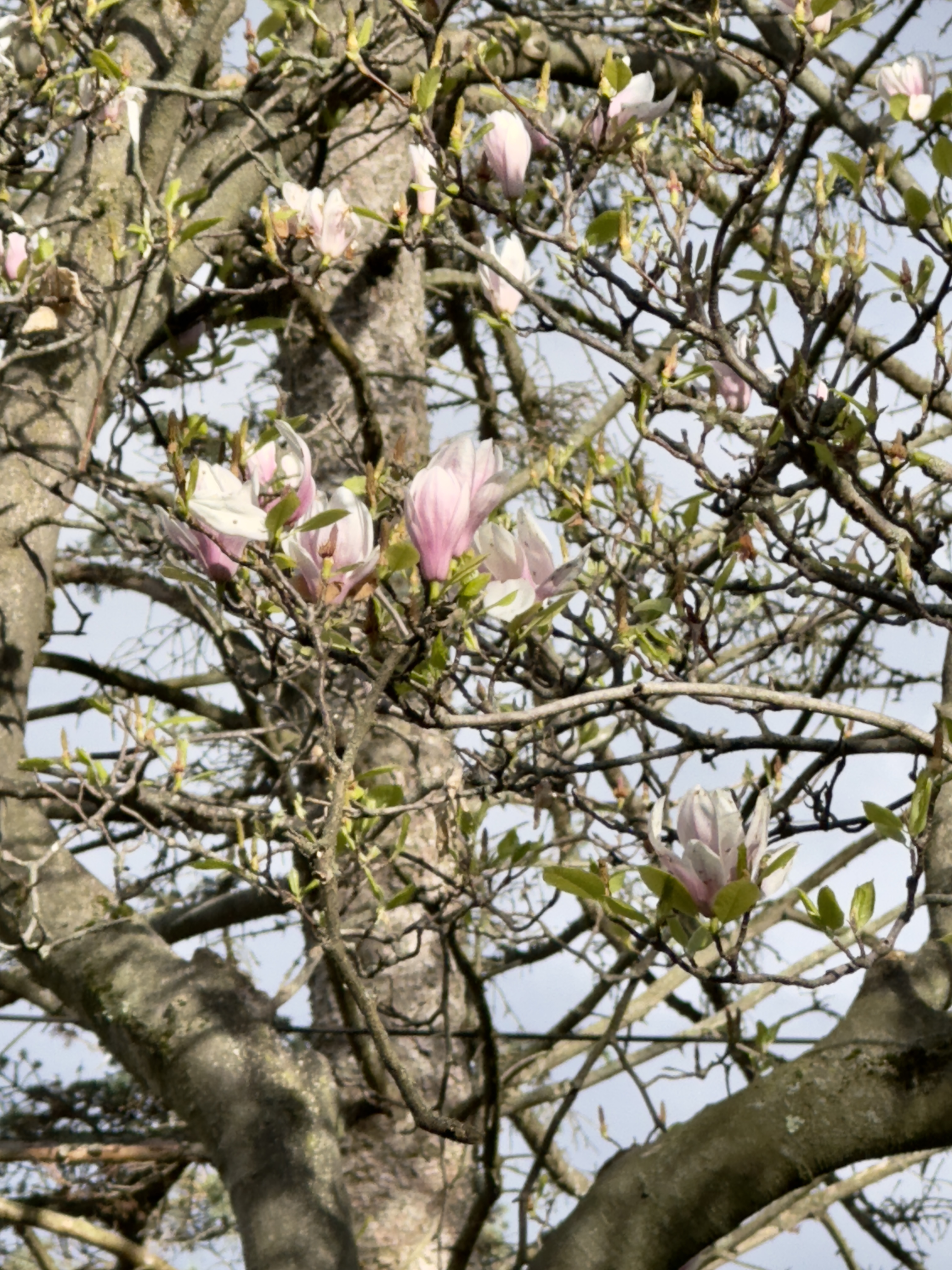
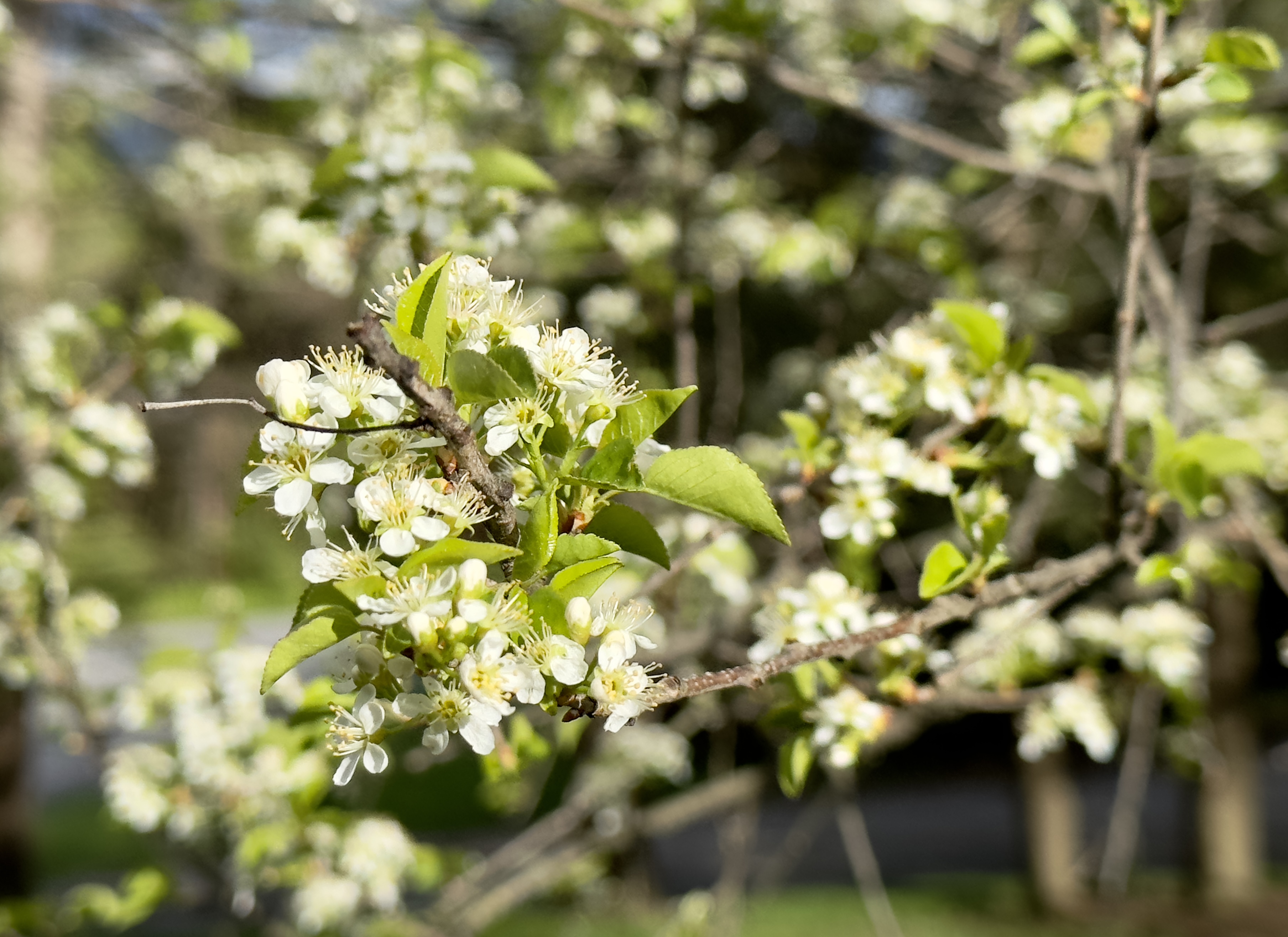
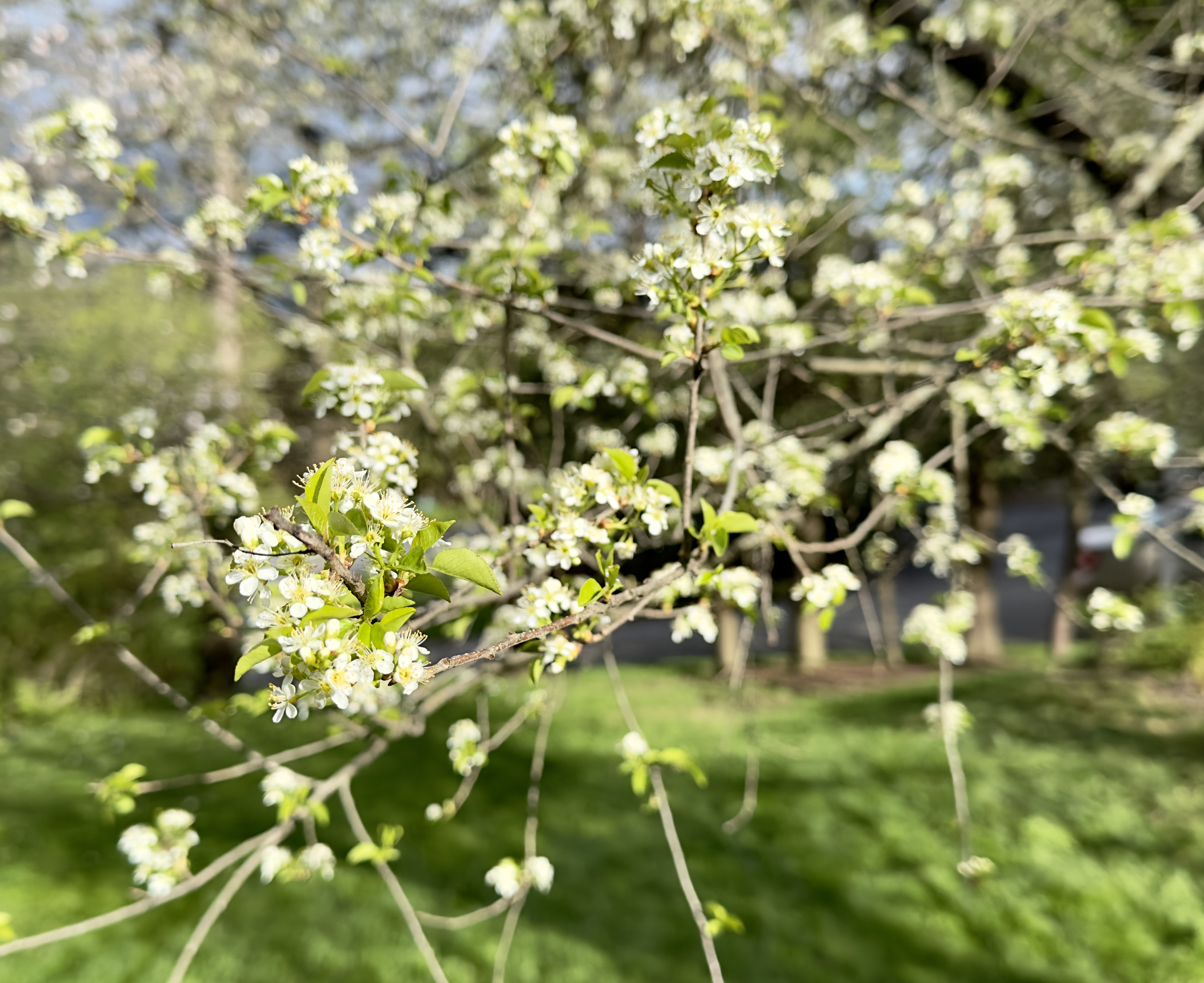
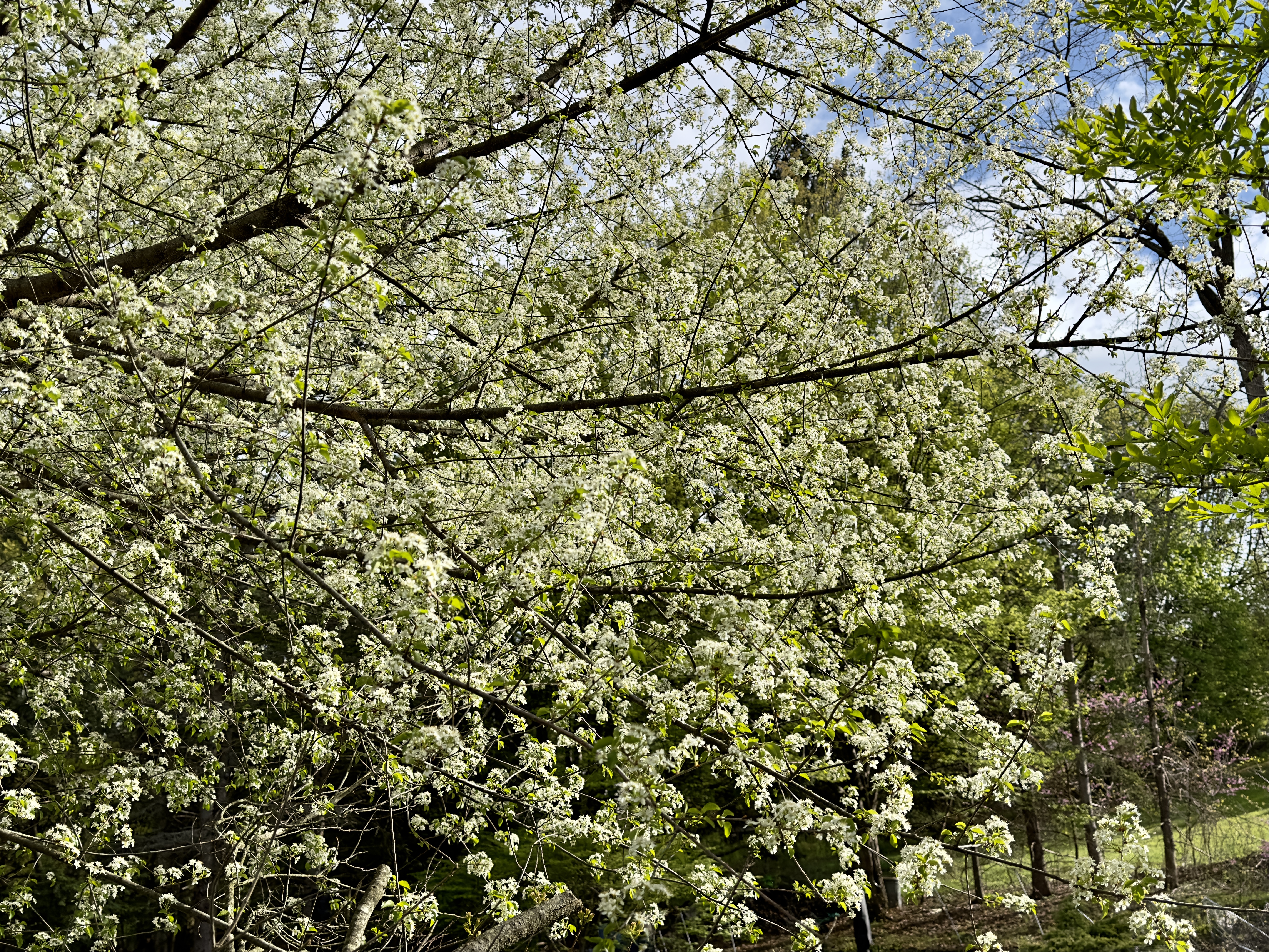
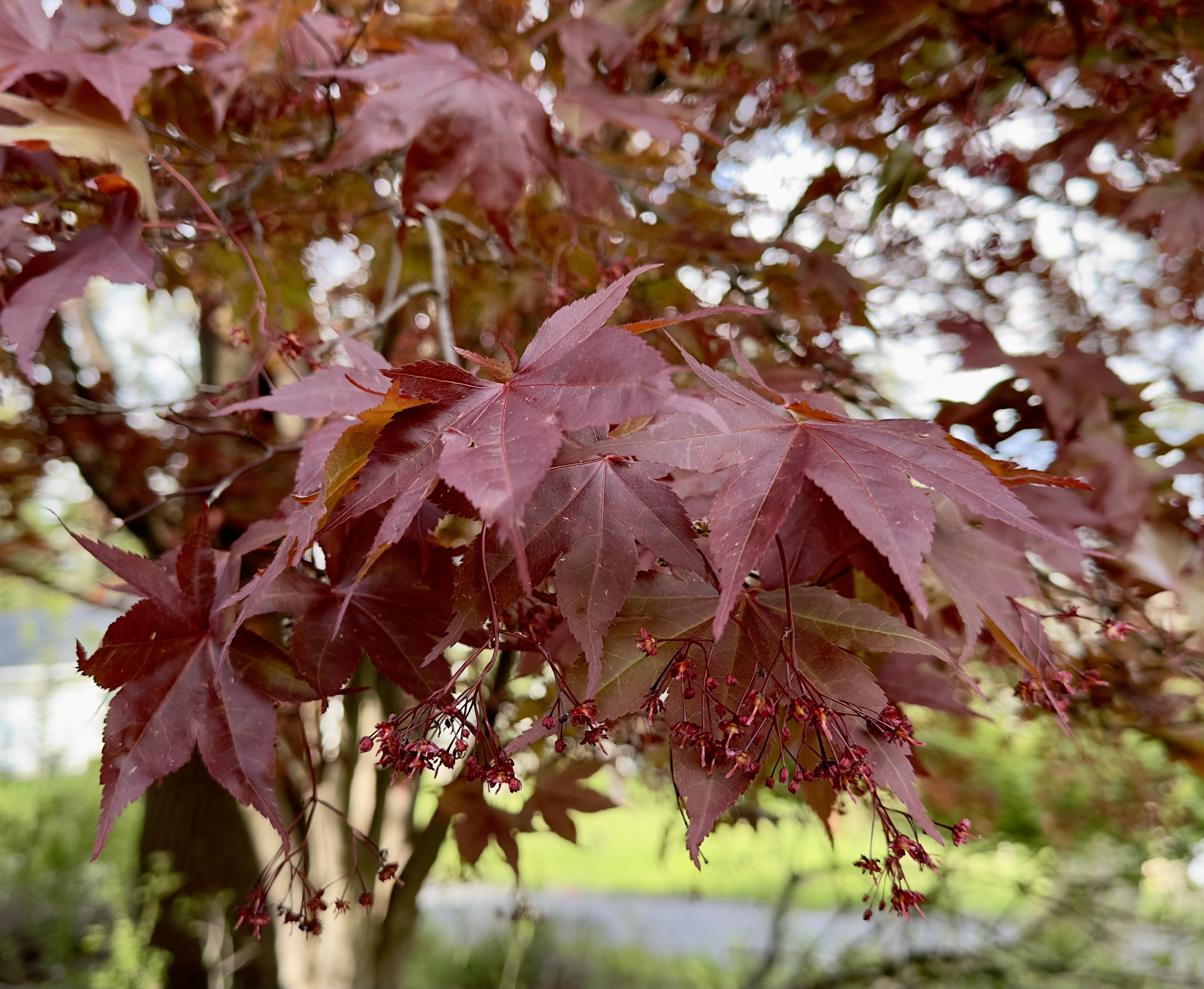
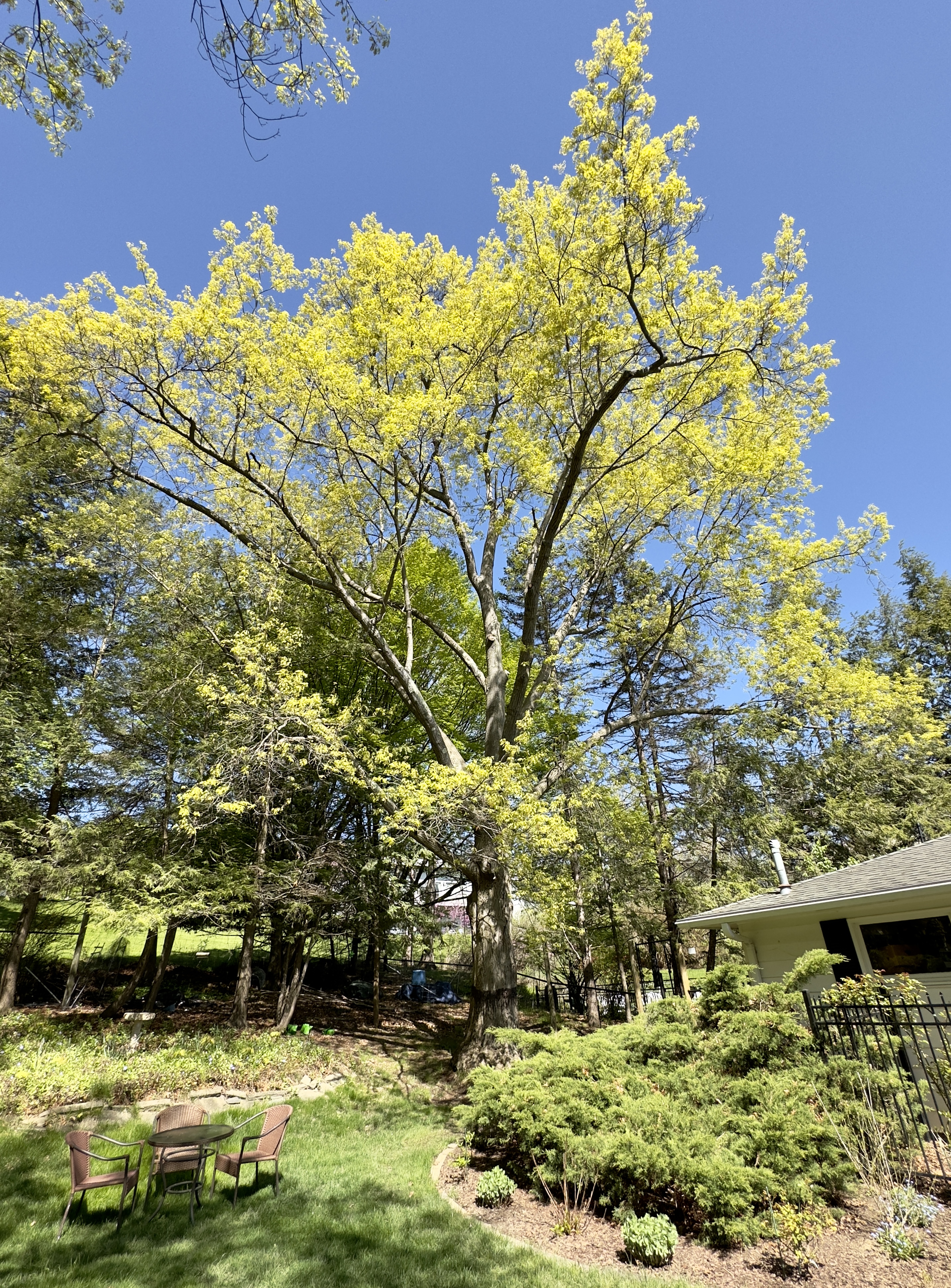
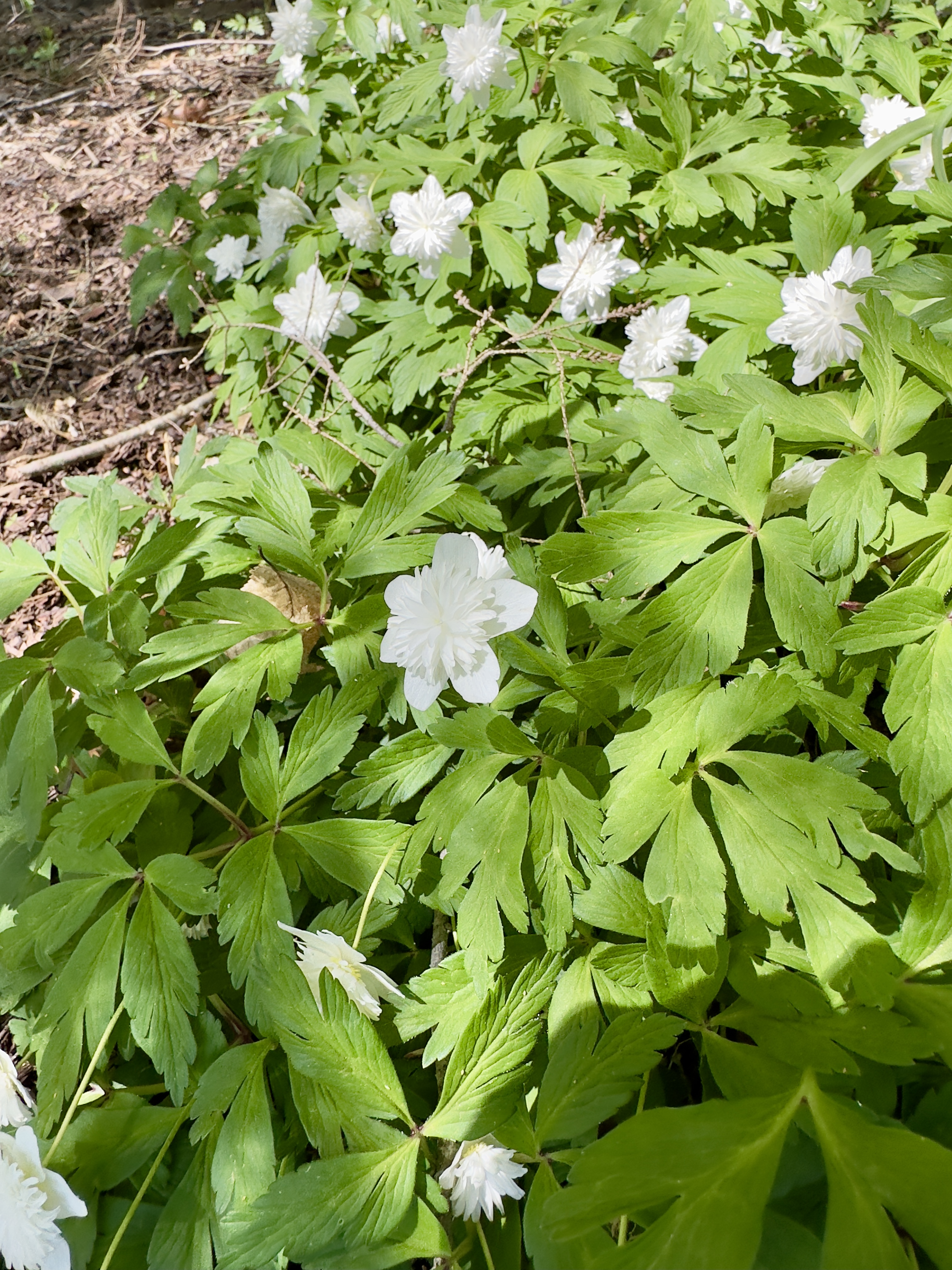
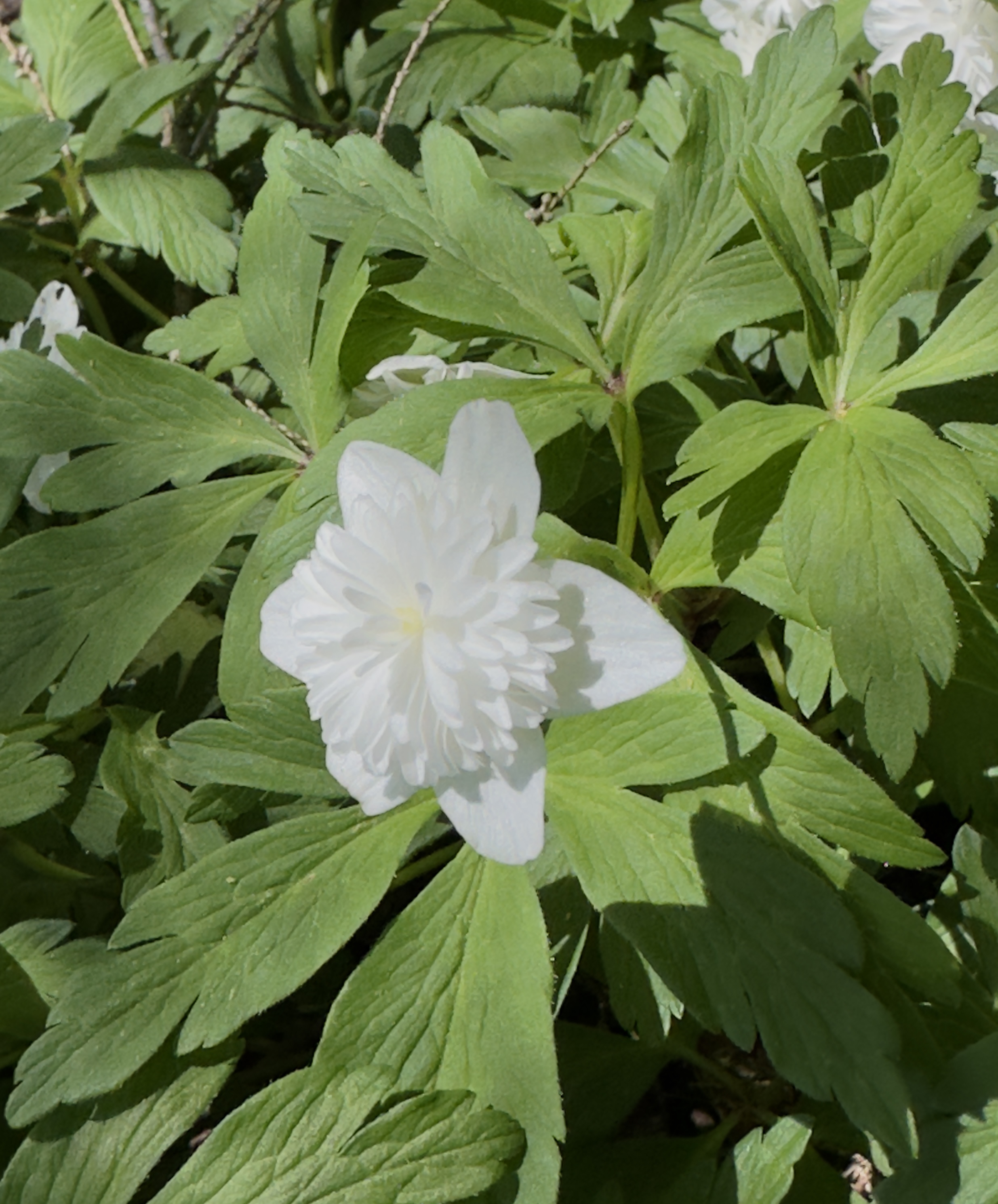
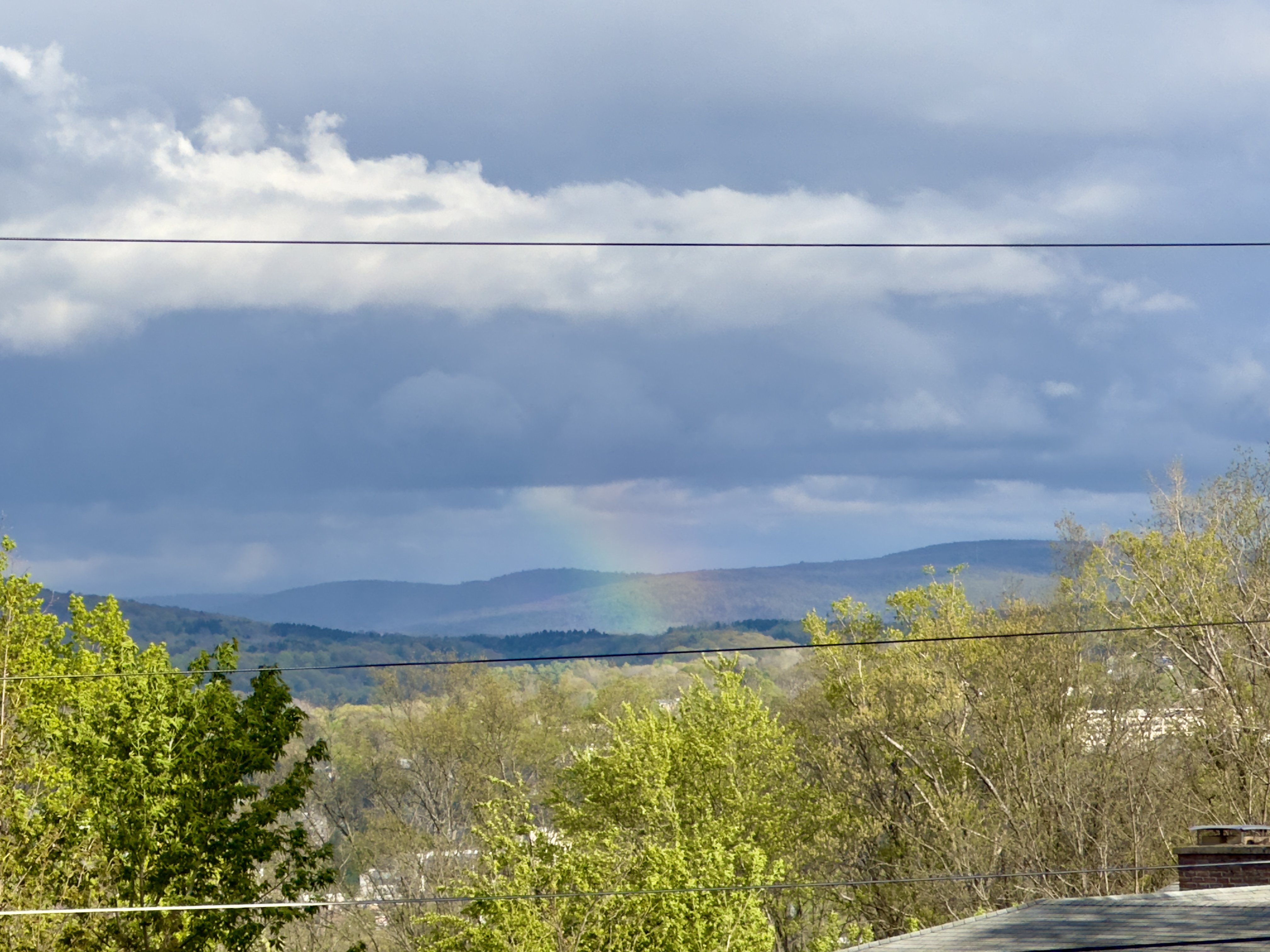
A few days past May Day 2023 I traversed our home gardens with the Apple Phone 14 ProMax to see what I could see…..
the rest of the story
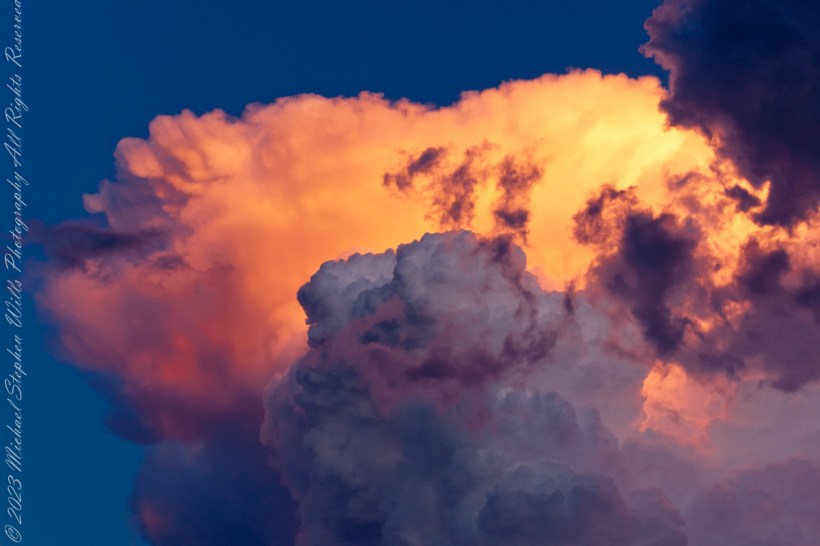
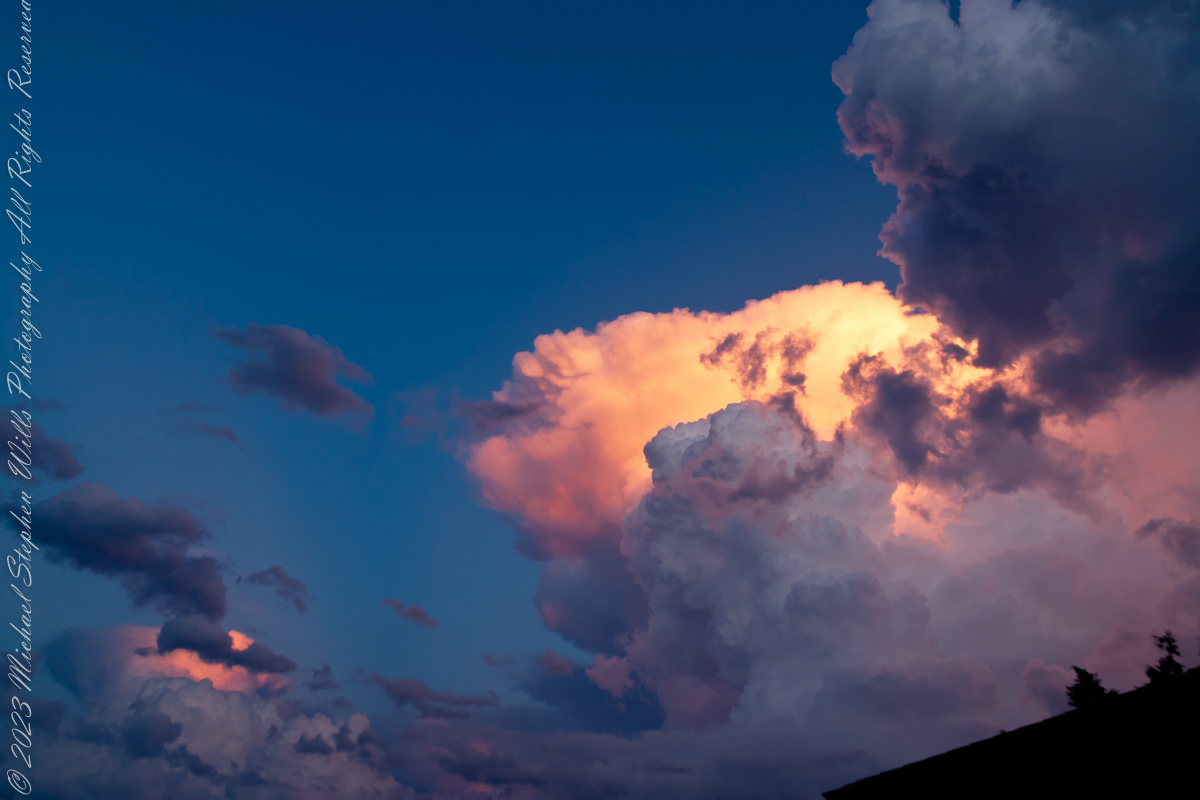
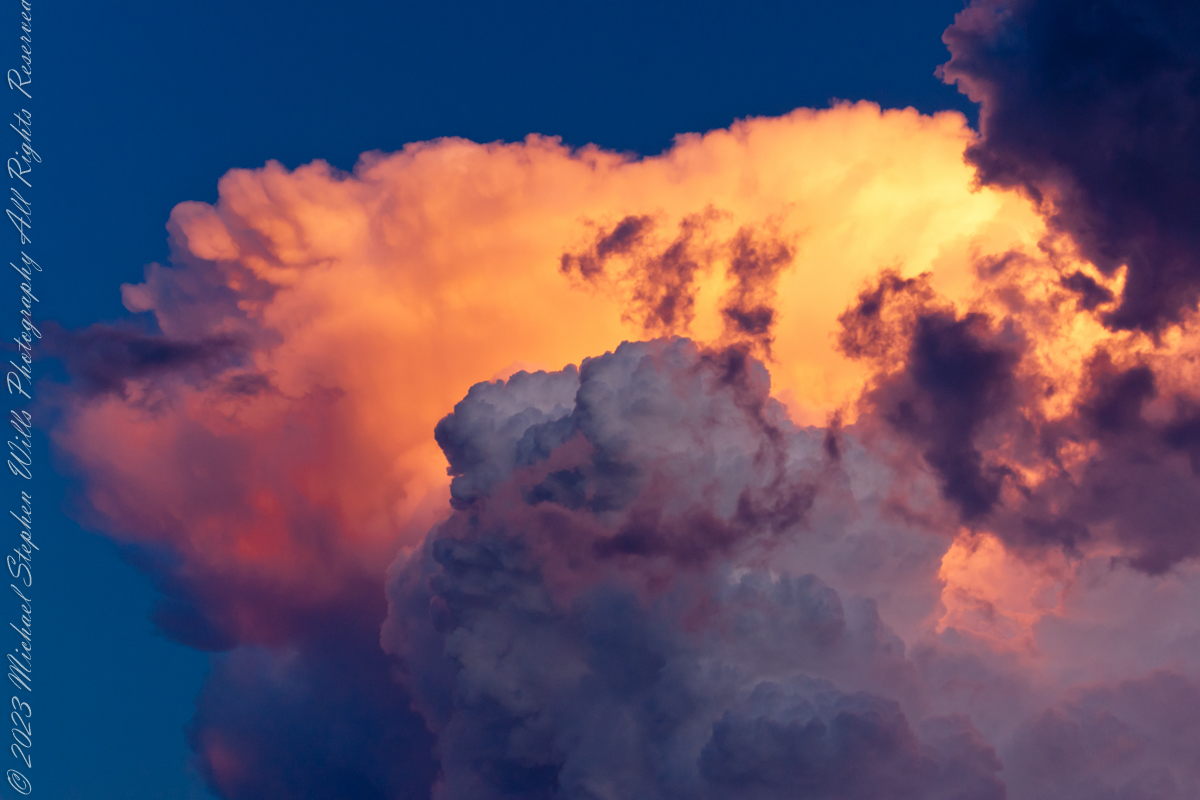
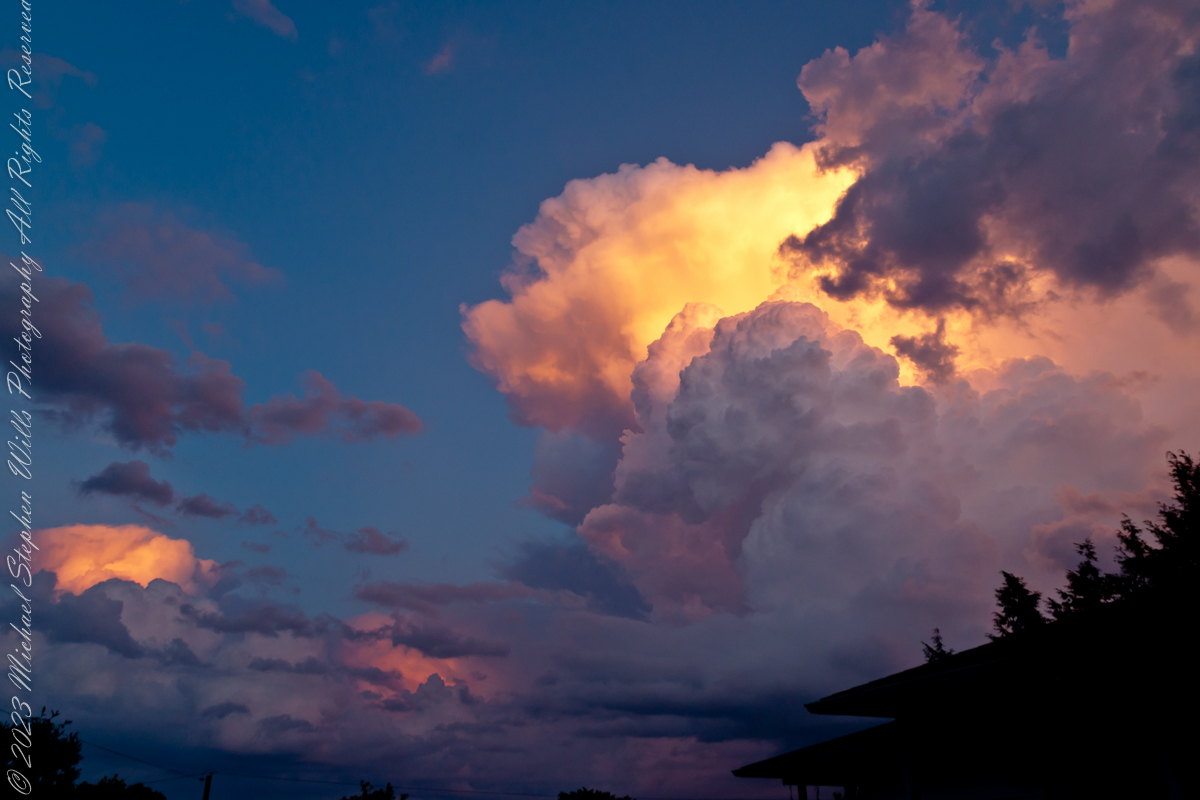
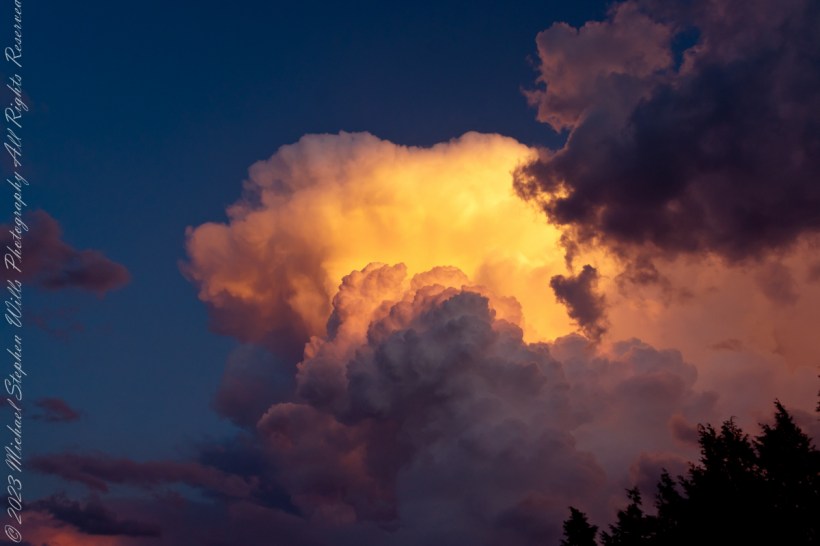
Here are the rest of the images captured in that August 2014 sunset.
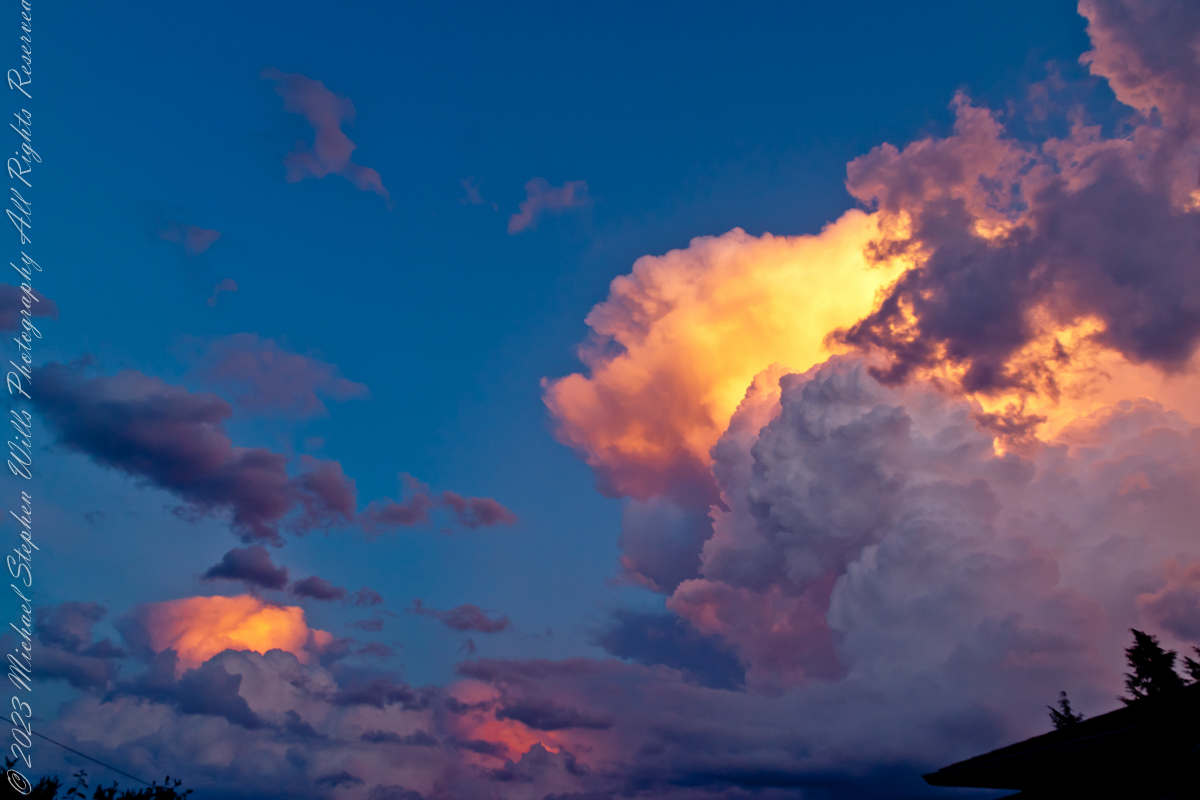
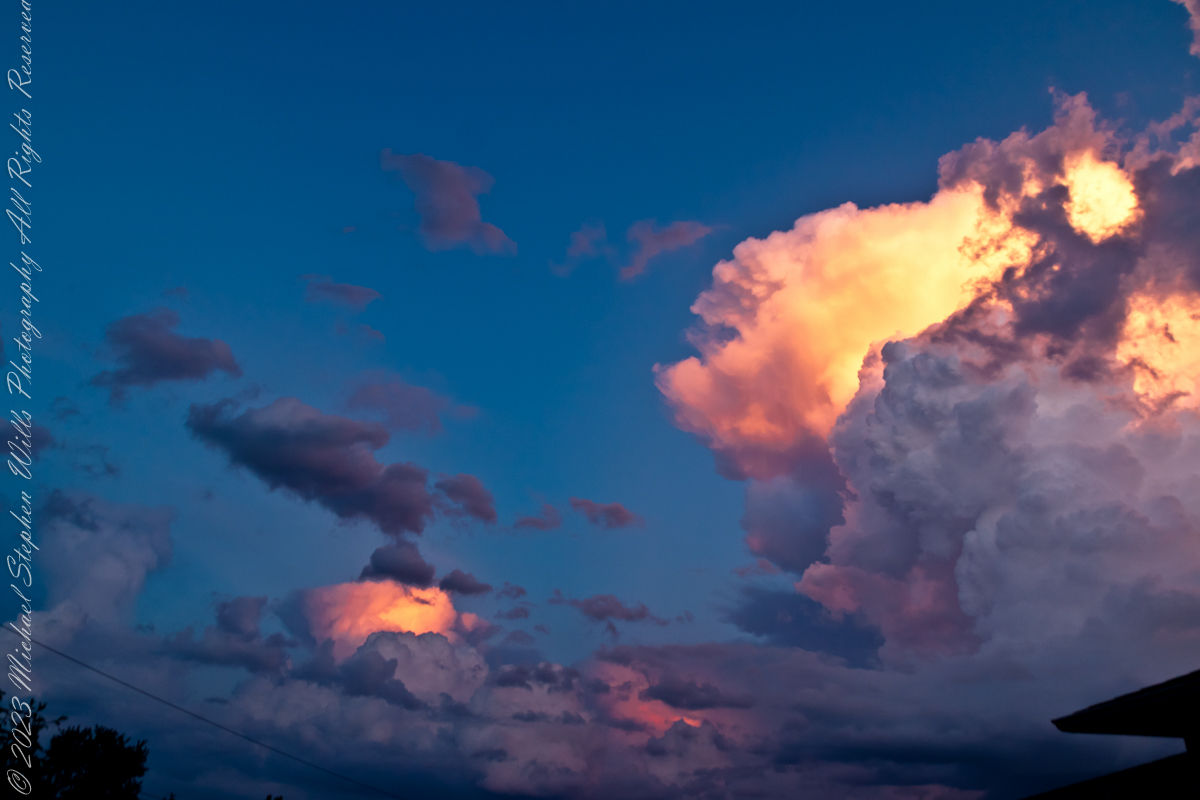
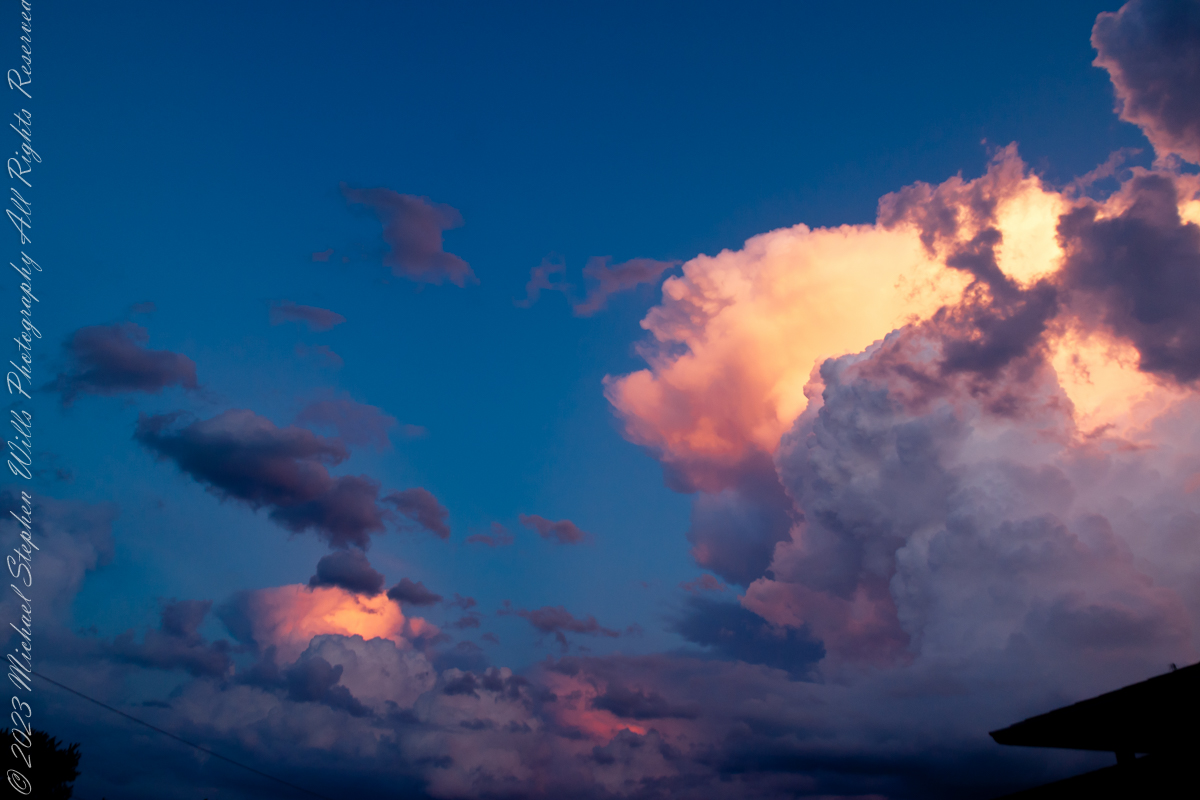
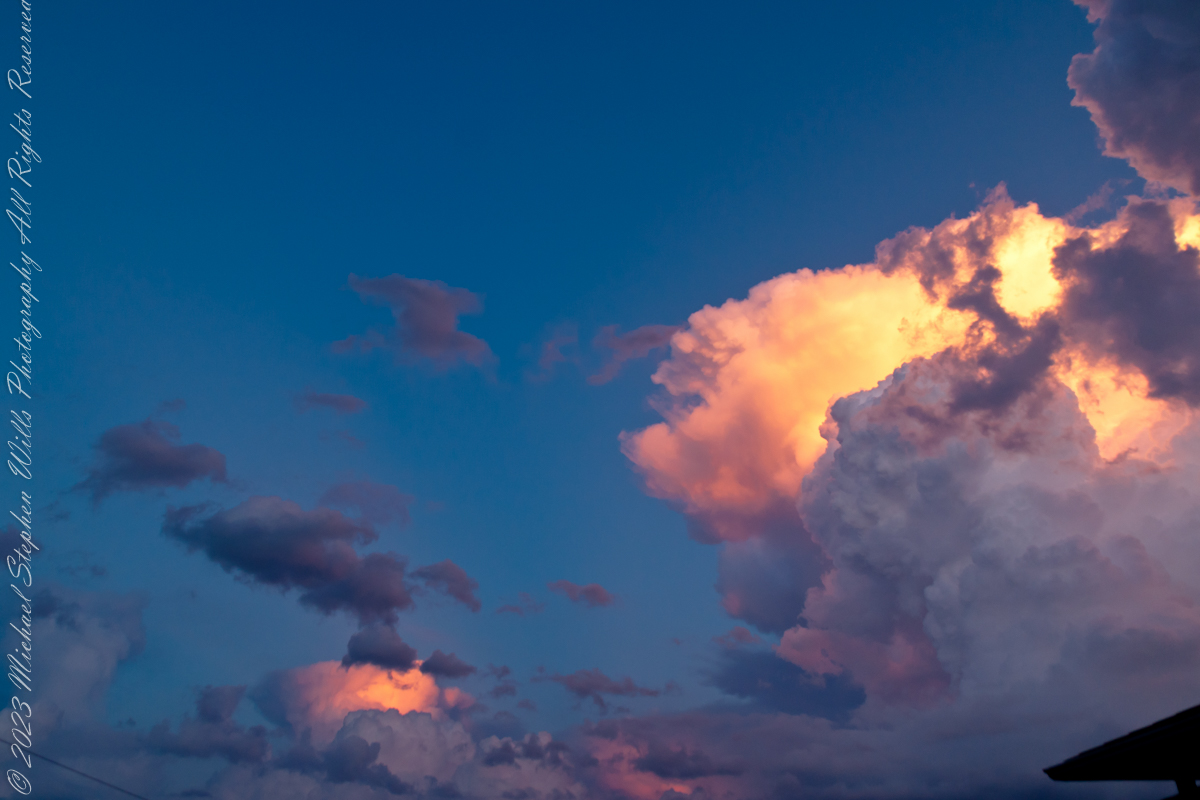
a highly idealized fantasy world
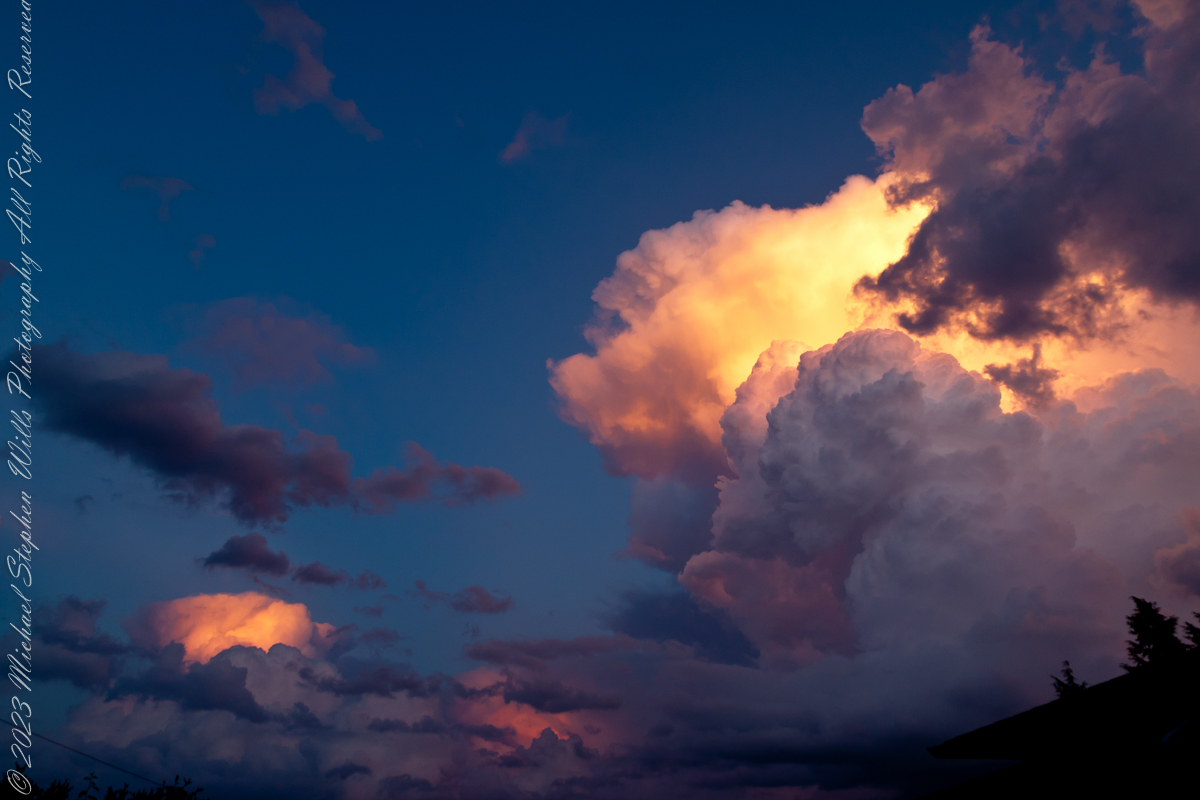
The combination of water vapor in all its forms and the sun dipping below the horizon combined to form these magical images.
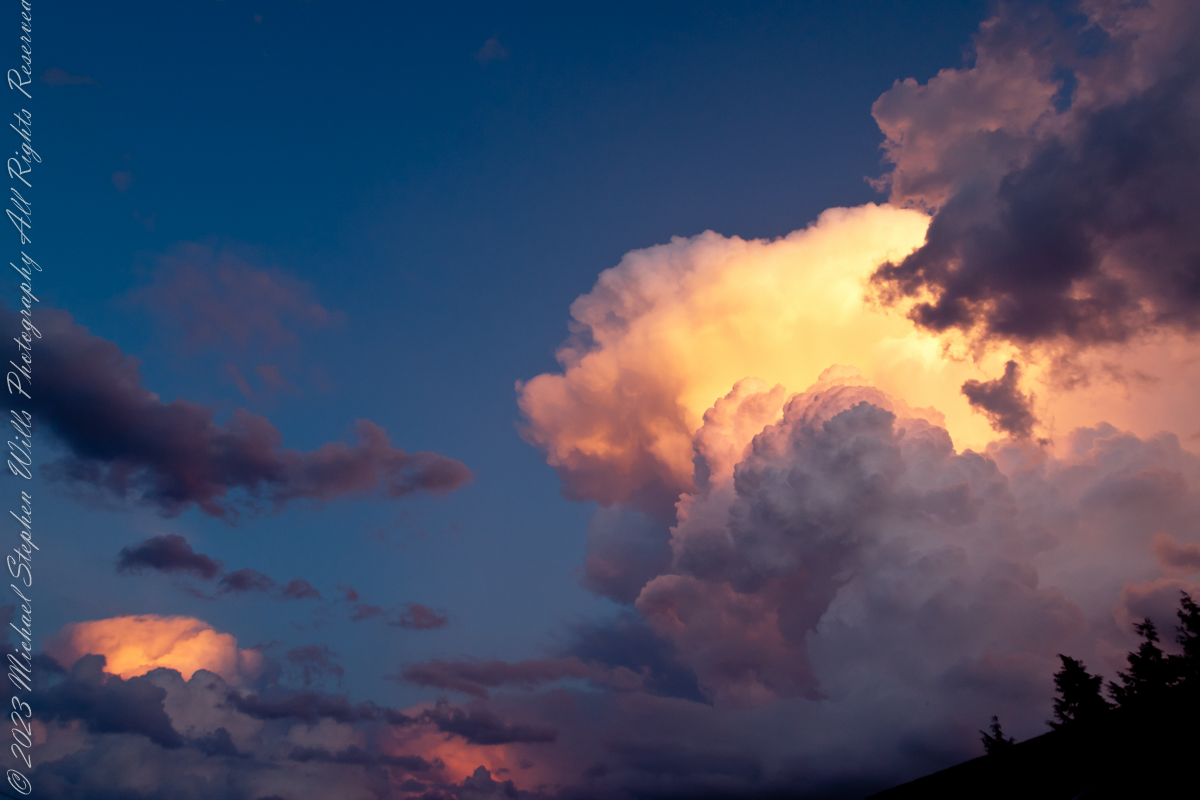
Maxfield Parrish refined his art to duplicate these effects in oil.
Parrish’s art is characterized by vibrant colors; the color Parrish blue was named after him. He achieved such luminous color through glazing. This process involves applying layers of translucent paint and oil medium (glazes) over a base rendering. Parrish usually used a blue and white monochromatic underpainting.
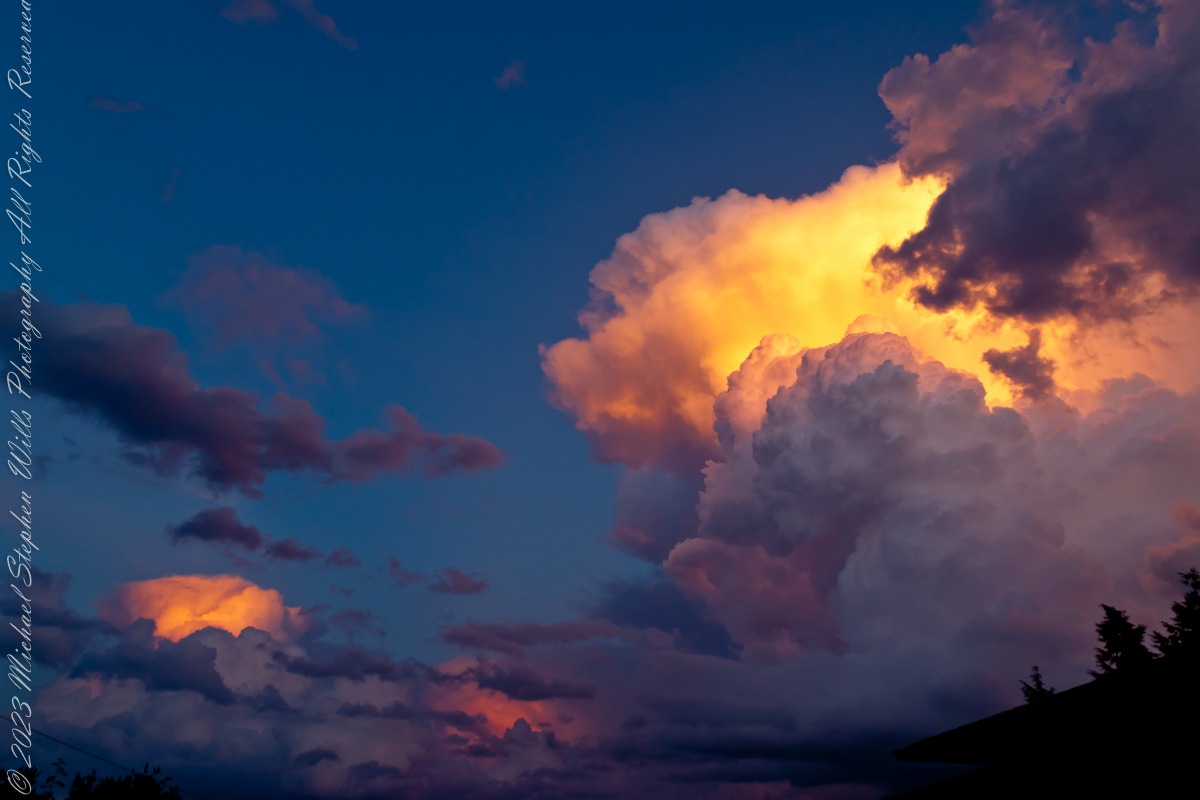
His paintings/illustrations were unique in that they depicted a highly idealized fantasy world that was accessible to the public. Although you will rarely see a glimpse of that color in reality, he was and still is linked with a particularly bright shade of blue that coated the skies of his landscapes. And it was not an easy task for him to complete. He invented a time-consuming process that involved a cobalt blue base and white undercoating, which he then coated with a series of thin alternating coatings of oil and varnish. When exposed to ultraviolet light, the resins he employed, known as Damar, fluoresce a shade of yellow-green, giving the painted sky its distinctive turquoise tint.
Reference: “Maxfield Parrish” from Wikipedia
Just the Facts
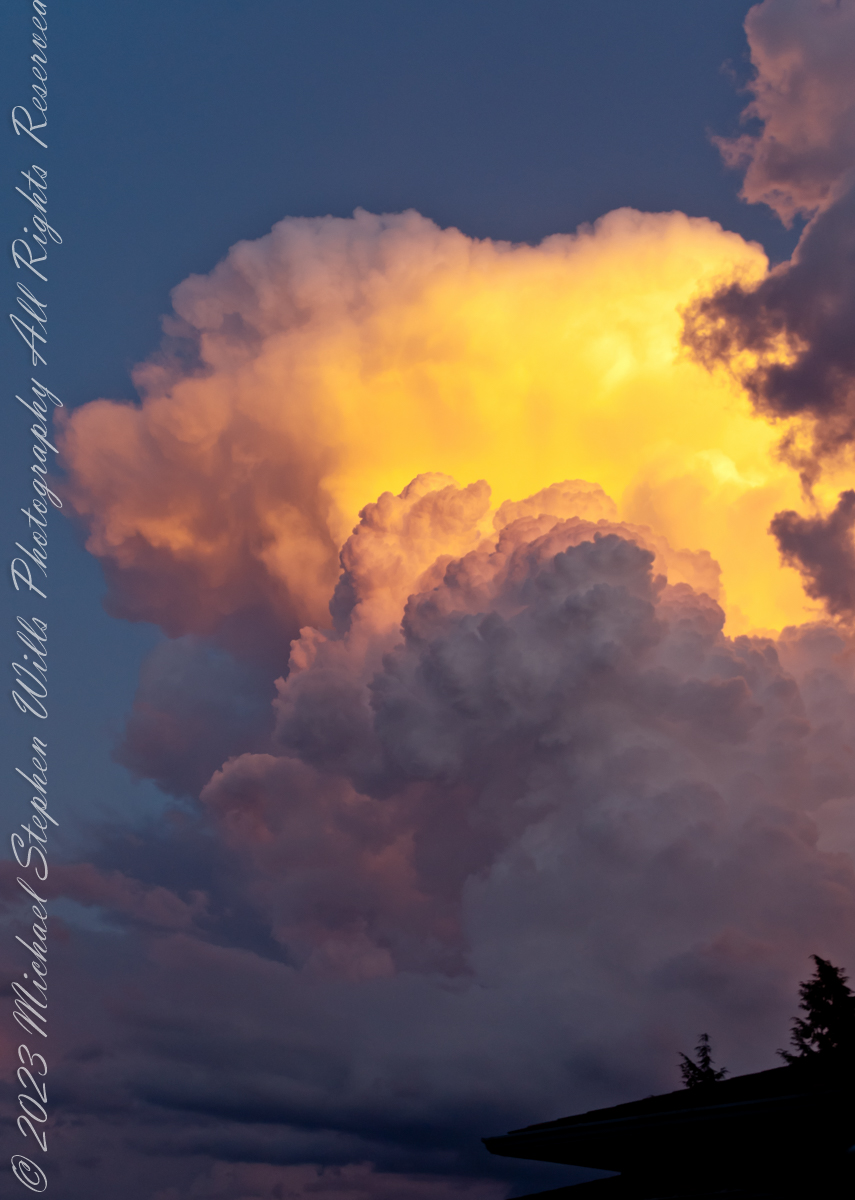
Cumulonimbus (from Latin cumulus ‘heaped’, and nimbus ‘rainstorm’) is a dense, towering vertical cloud, typically forming from water vapor condensing in the lower troposphere that builds upward carried by powerful buoyant air currents.
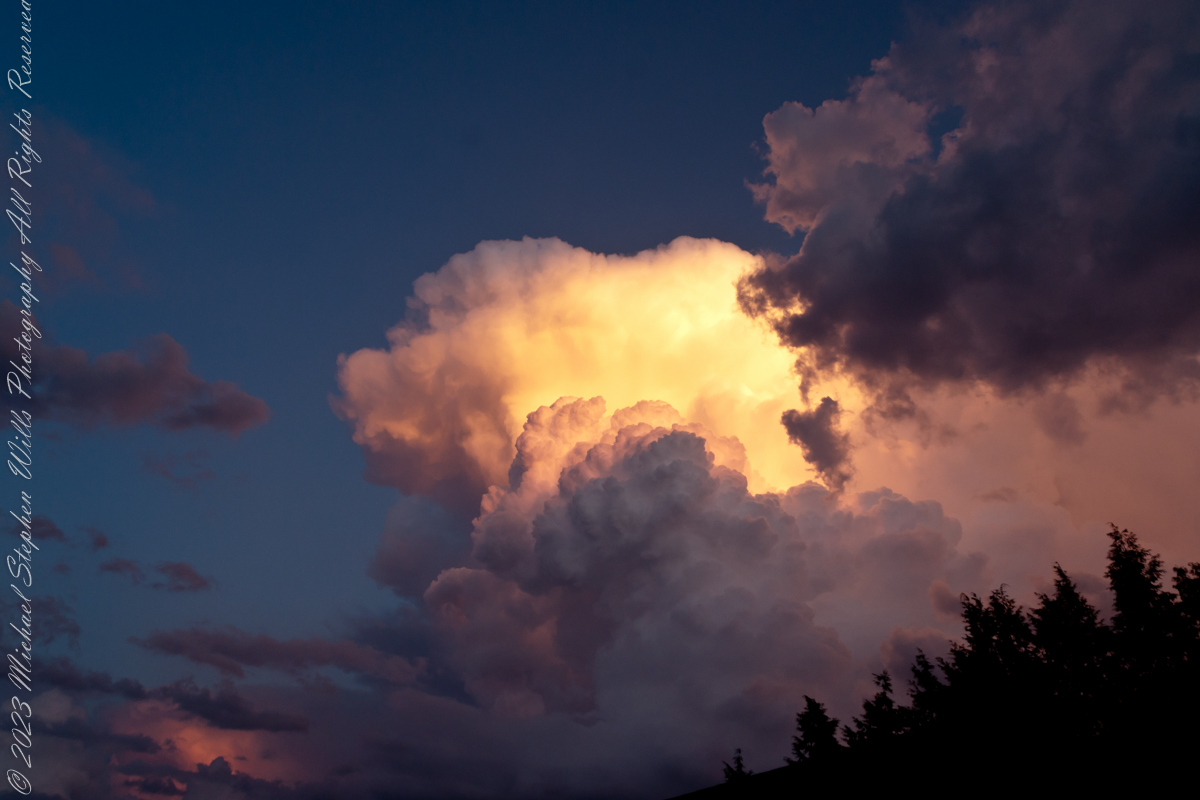
Above the lower portions of the cumulonimbus the water vapor becomes ice crystals, such as snow and graupel, the interaction of which can lead to hail and to lightning formation, respectively. When occurring as a thunderstorm these clouds may be referred to as thunderheads. Cumulonimbus can form alone, in clusters, or along squall lines.
Graupel also called soft hail, hominy snow, or snow pellets, is precipitation that forms when supercooled water droplets in air are collected and freeze on falling snowflakes, forming 2–5 mm (0.08–0.20 in) balls of crisp, opaque rime.
Graupel is distinct from hail and ice pellets in both formation and appearance. However, both hail and graupel are common in thunderstorms with cumulonimbus clouds, though graupel also falls in winter storms, and at higher elevations as well.
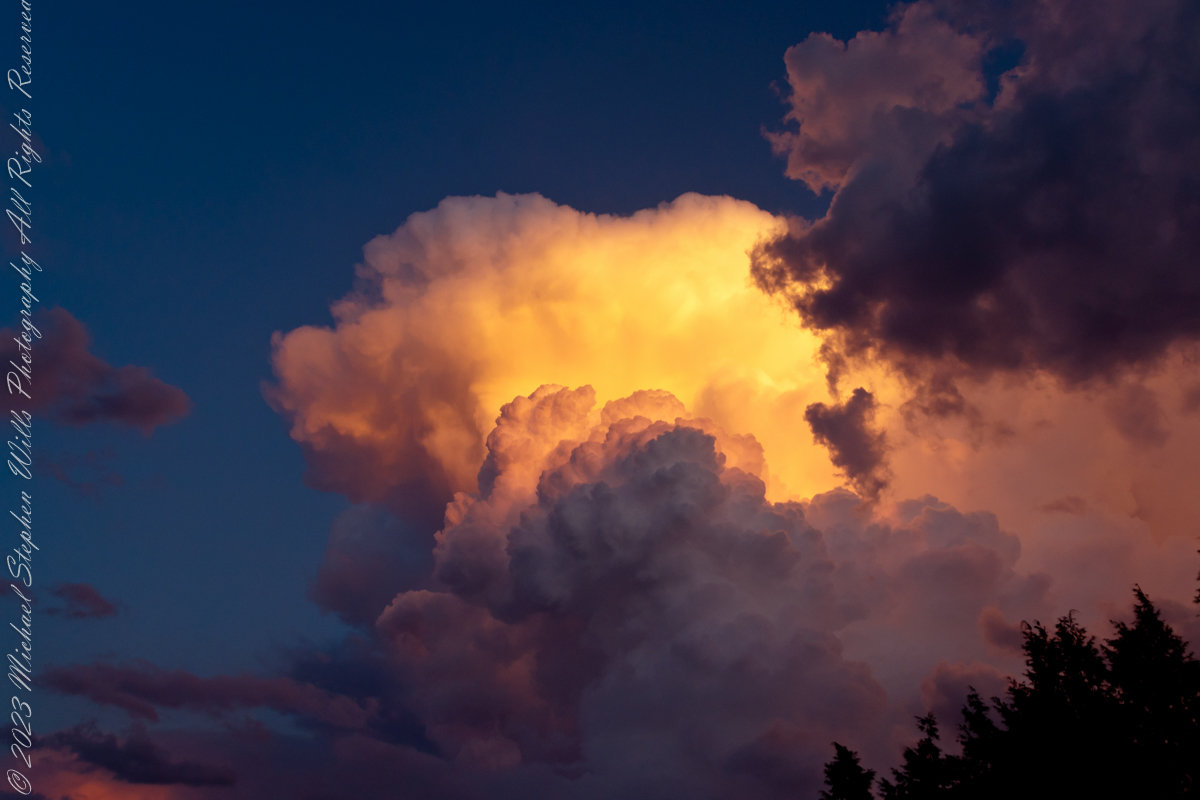
These clouds can produce lightning and other dangerous severe weather, such as tornadoes, hazardous winds, and large hailstones. Cumulonimbus progresses from overdeveloped cumulus congestus clouds and may further develop as part of a supercell. Cumulonimbus is abbreviated Cb.
Reference: “Cumulonumbus Cloud” and “Graupel” from Wikipedia
Out of Season Dandelion
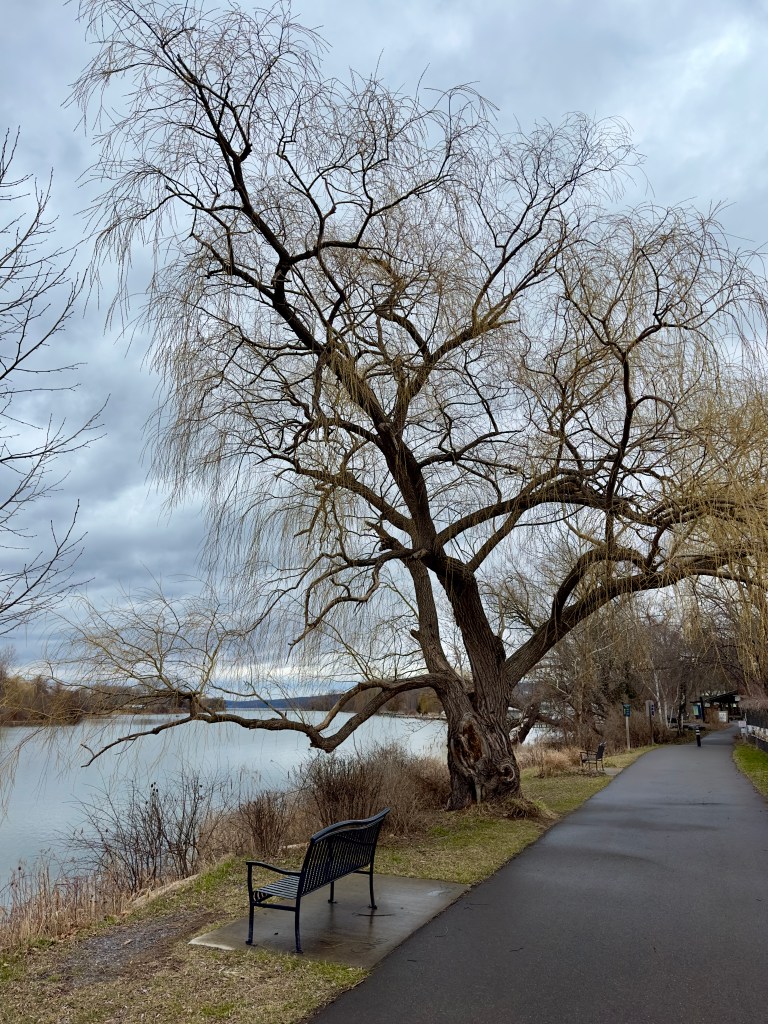
A willow, nurtured by Cayuga Inlet waters, with a bench.
All photographs are from the Apple IPhone 14 ProMax, raw format and perfected on the phone.
Click Me for more photographic art from my OnLine Gallery, “Finger Lakes Memories.”
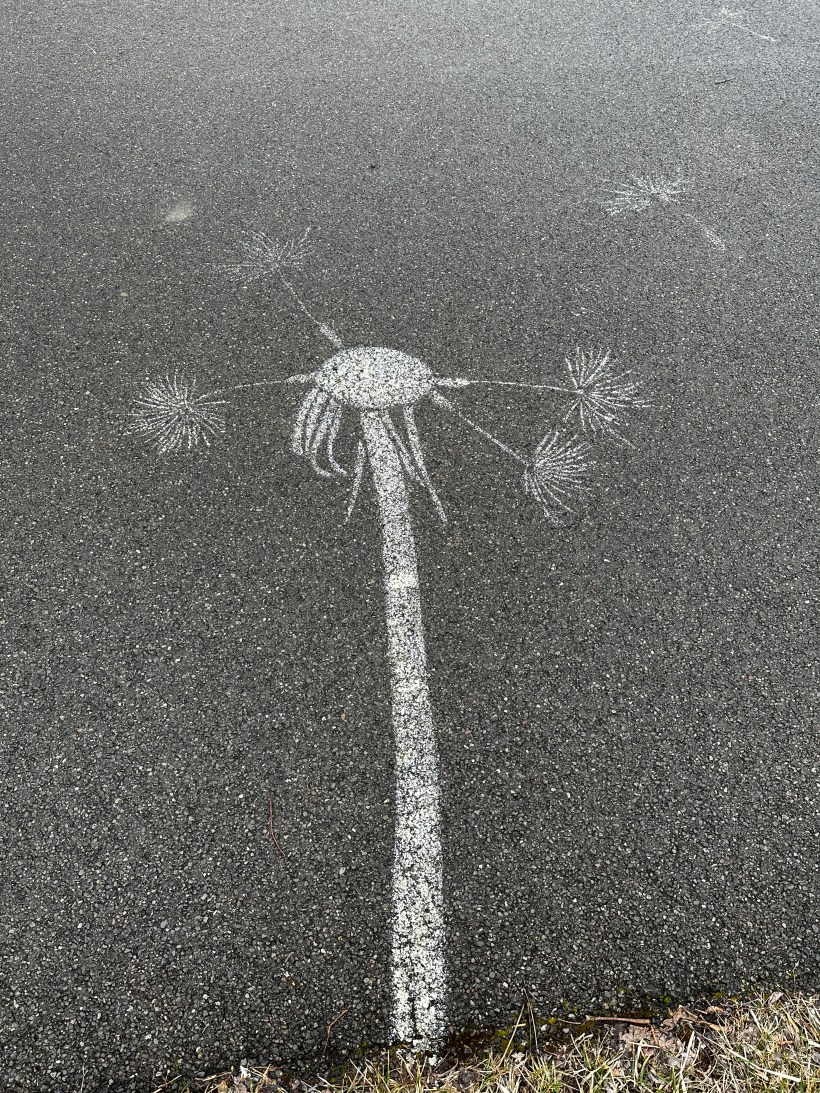
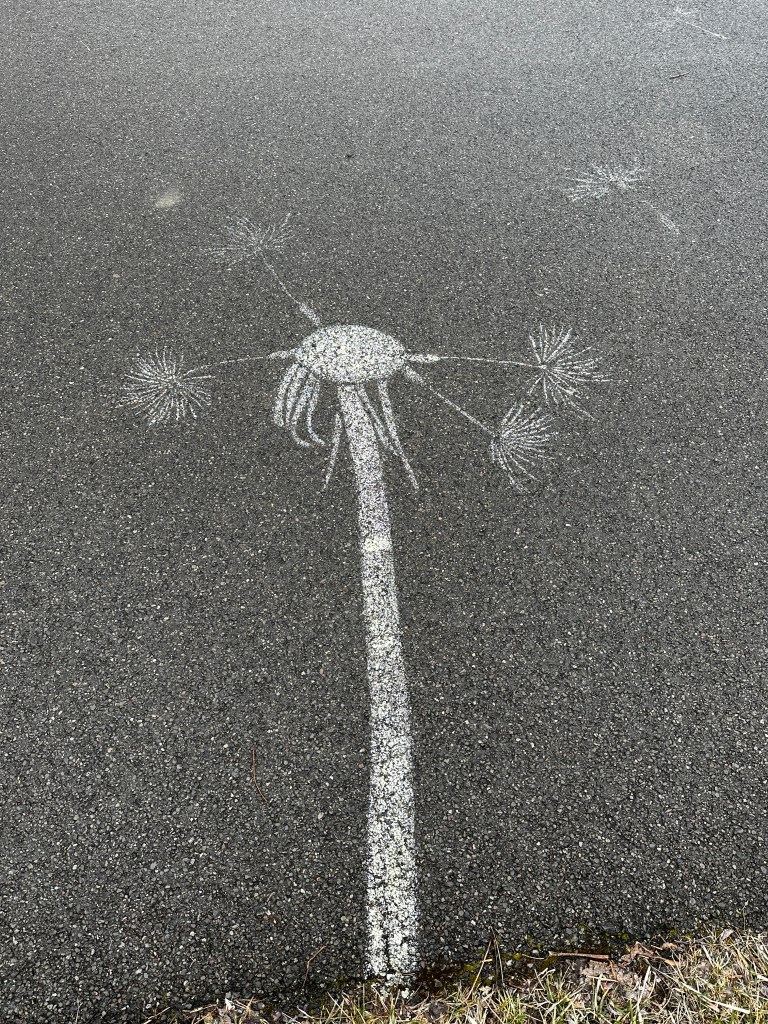
Stenciled on asphalt pavement along the Cayuga Lake Inlet, the white paint delimits dandelion flower stalk and seedhead, mostly denuded, with floating seeds held aloft by the pappus.
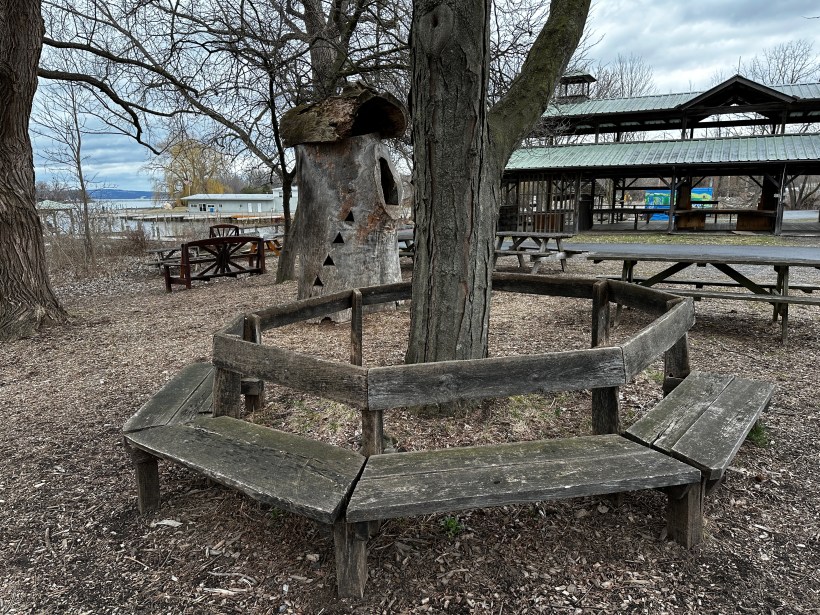
A circular bench that has seen better days, a hollowed out tree trunk repurposed as a children’s playgound house, picnic benches and, in background, a portion of the Farmer’s Market pavilion, to the right is Johnson Boatyard, Cayuga Inlet and lake. This is the Steamboat Landing, historically the southern port on Cayuga Lake. The entire area is long overdue for a facelift.
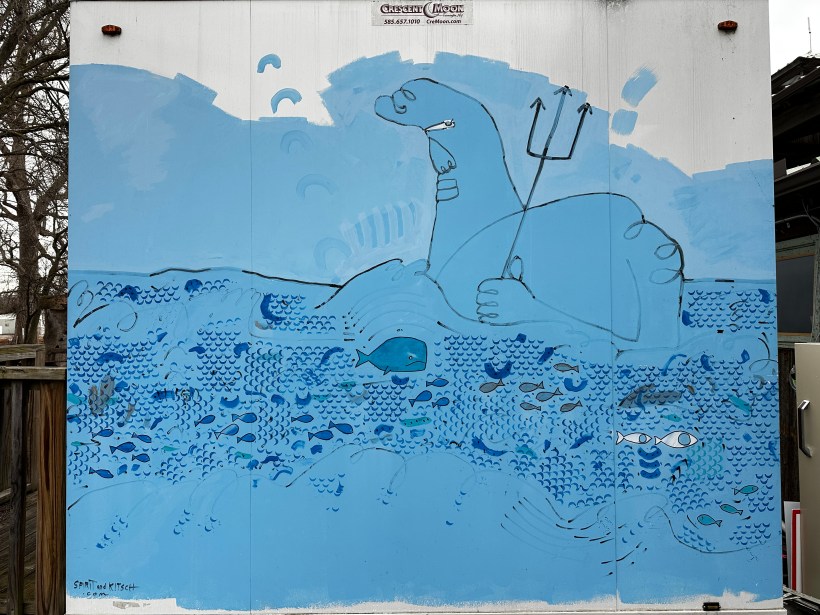
Painted on the side of restroom building, various shades of blue, black outlines, something or other holding a trident surrounded by fanciful fish.
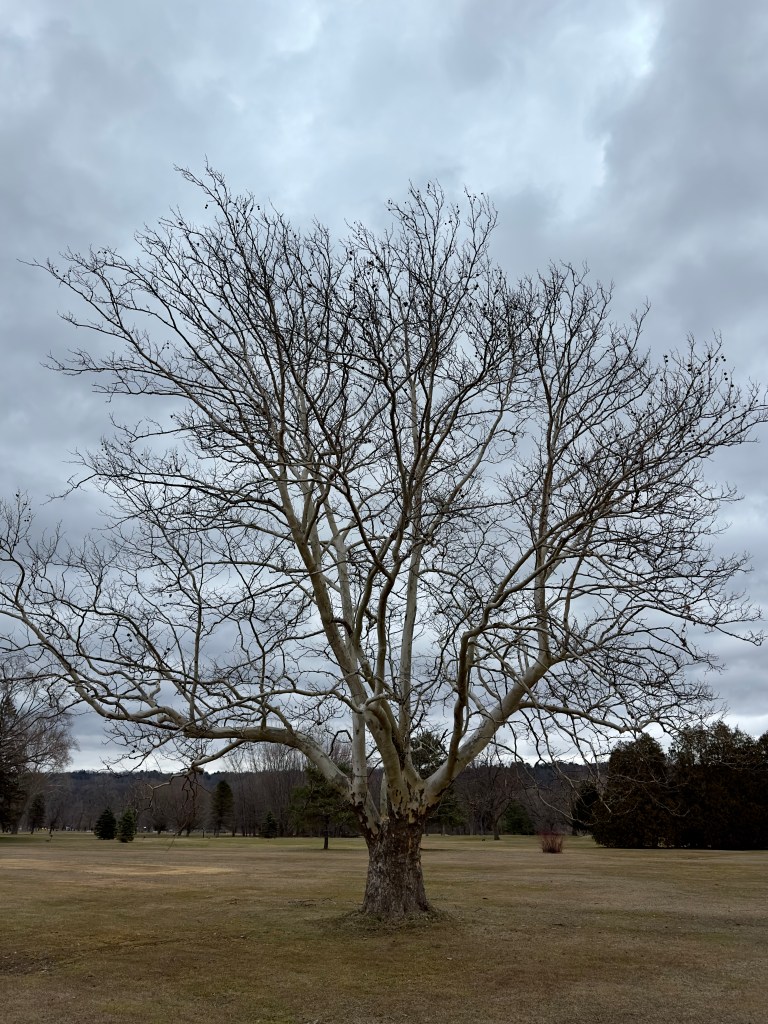
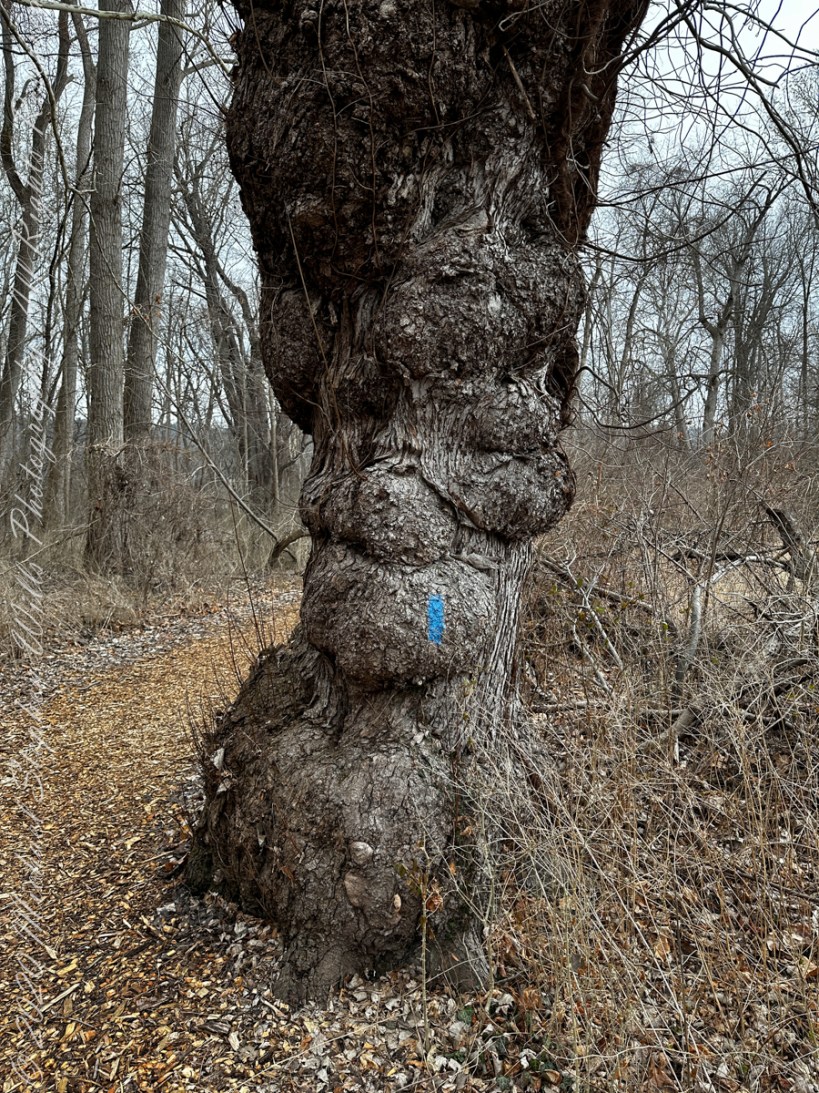
On the trail to Lighthouse Point, this tree is in fine winter form on this early spring afternoon in March. Newman Municipal Golf Course
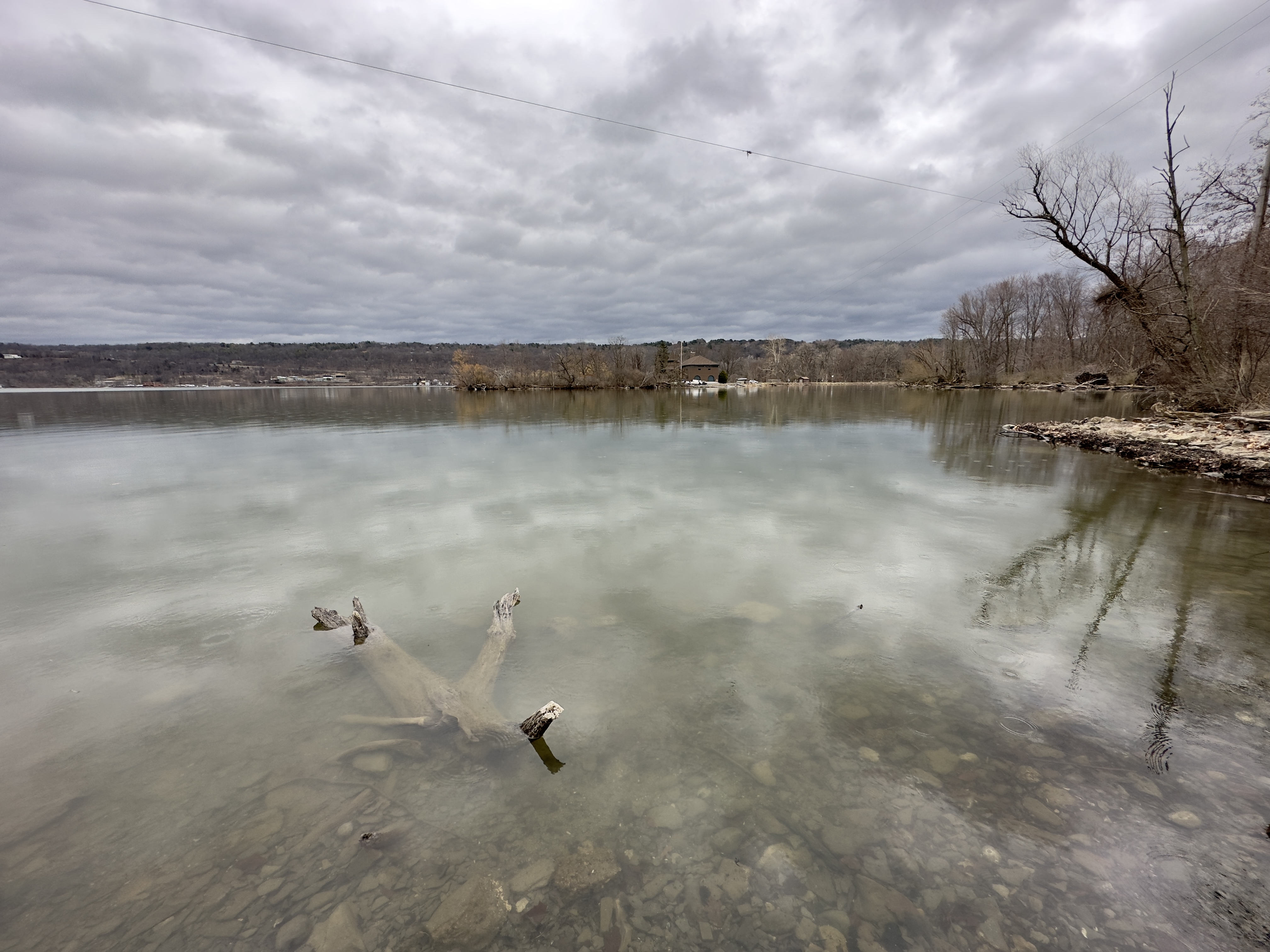
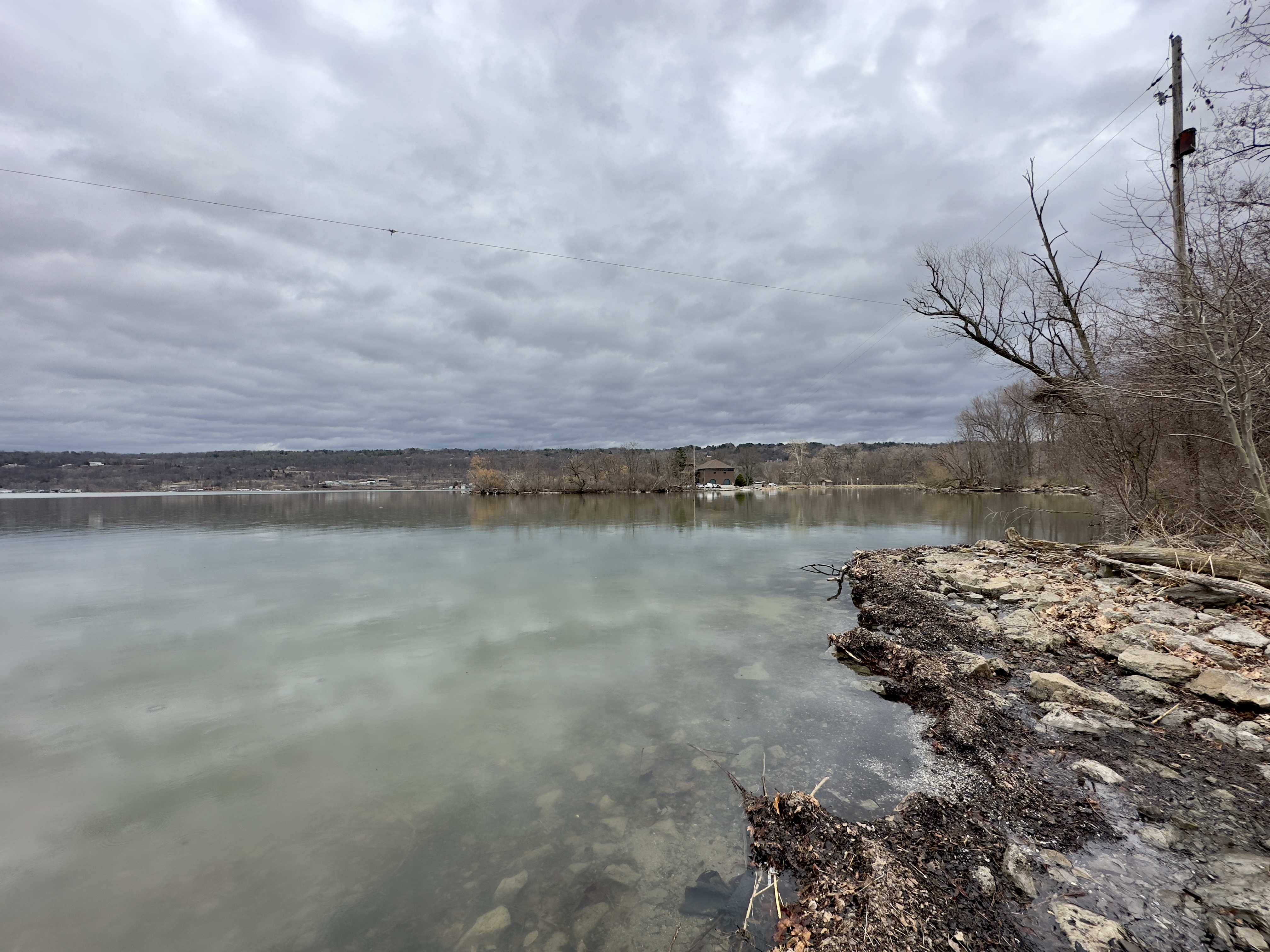
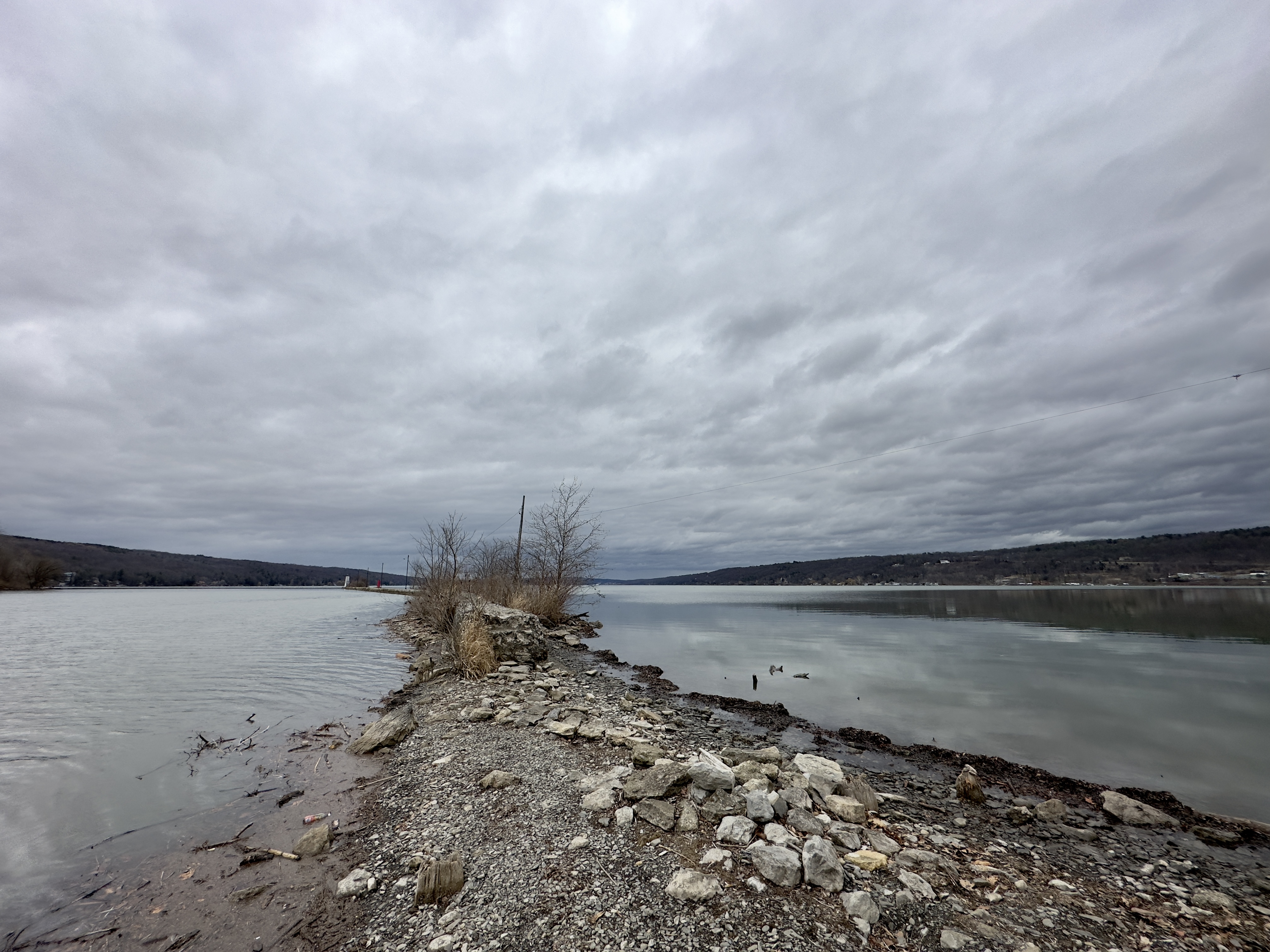
Cayuga Lake Views from Lighthouse Point
Fuertes Bird Sanctuary / Renwick Wood
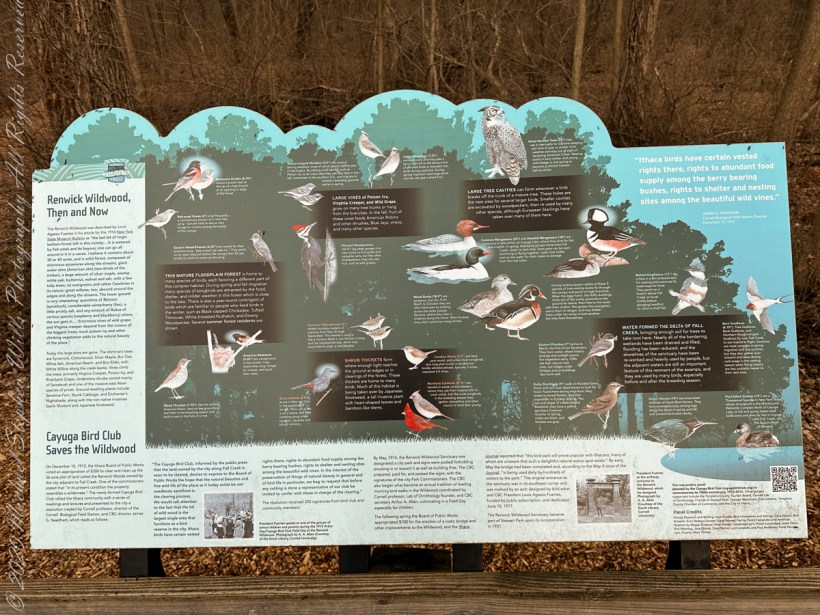
This large sign found along the Cayuga Waterfront Trial at the entrance to Renwick Woods. It provides the origin story (floodplain, delta of Fall Creek), how it came to be conserved and the importance of the place to birds.
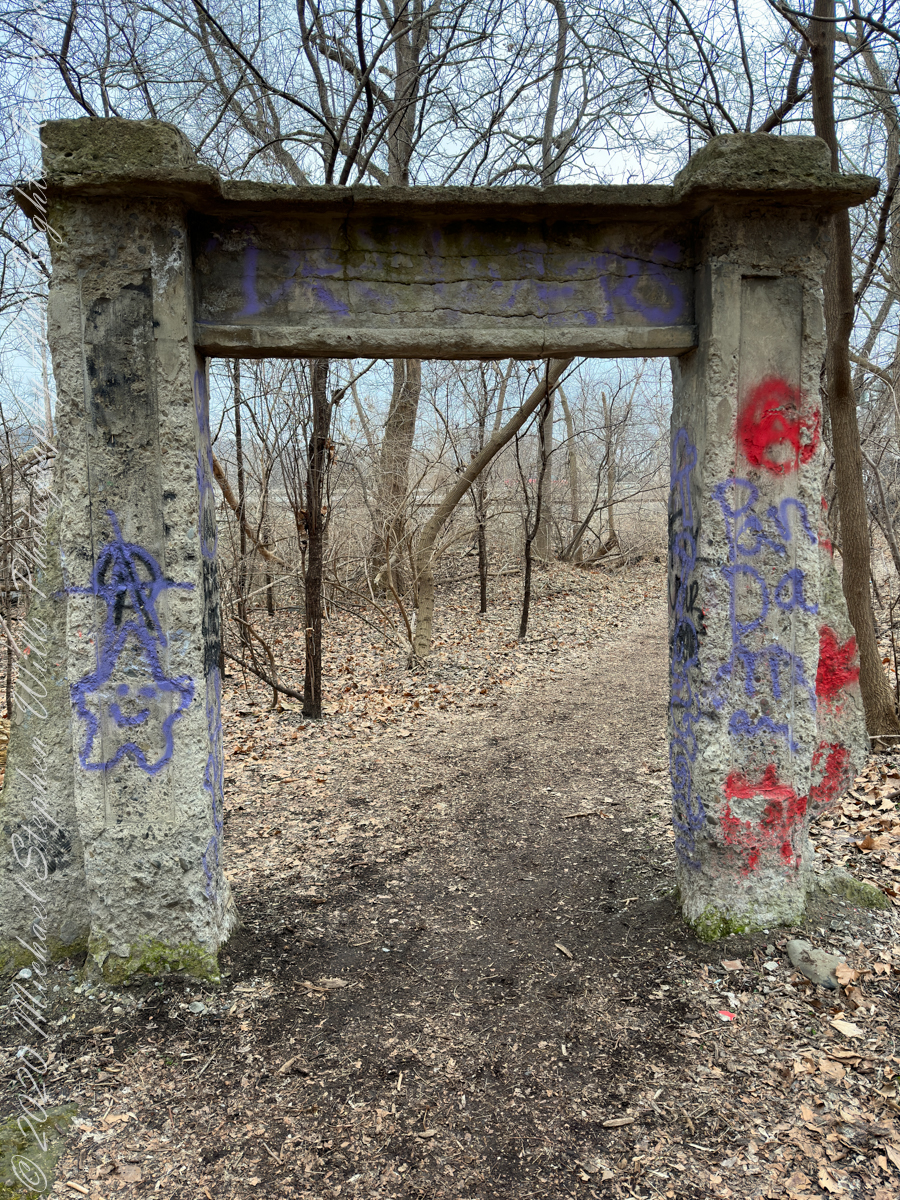
The original entrance to the Fuertes Bird Sanctuary, now called Renwick Wood, was marked by this arch, designed by Louis Agassiz Fuertes, dedicated June 10, 1917.
The professor was born February 7, 1874, at Ithaca, the son of Prof. Estevan Antonio and Mary Stone (Perry) Fuertes. He was graduated by Cornell with the degree of A.B., in 1897, and married Margaret F. Sumner of Ithaca, in 1904. Since 1898 he had been a painter of birds.
Professor Fuentes illustrated such volumes as “Birding on a Broncho,” “Citizen Bird,” Song Birds and “Water Fowls.” His permanent work included habitat groups in the American Museum of Natural History; 25 decorative panels for F.M. Brewster, at New Haven, Conn., birds of New York at the State Museum, Albany; murals in the Flamingo Hotel, at Miami, Fla., paintings for the New York Zoological Society, Bronx. (Source: Find a Grave)
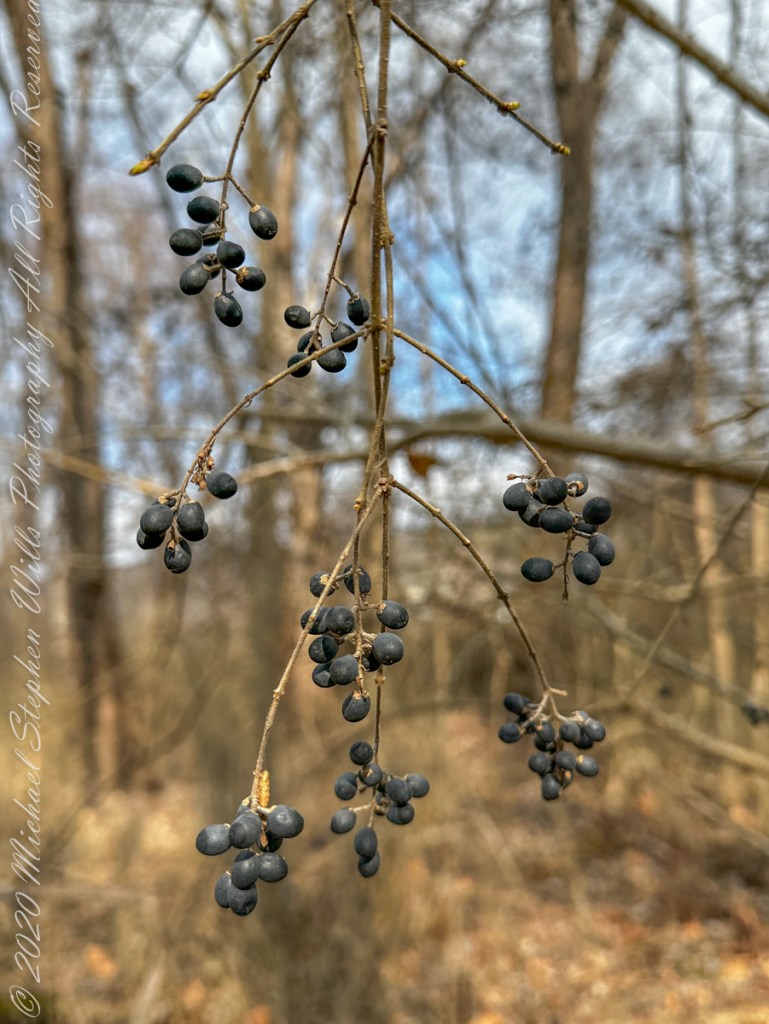
The flowers of this small shrub identify it as a member of the Rose family. The berries I captured in the following photograph are edible (non-poisonous), though astringent. Autumn time, the leaves turn red. It is native to eastern North America. I found these berrys along the Renwick Wood trail.
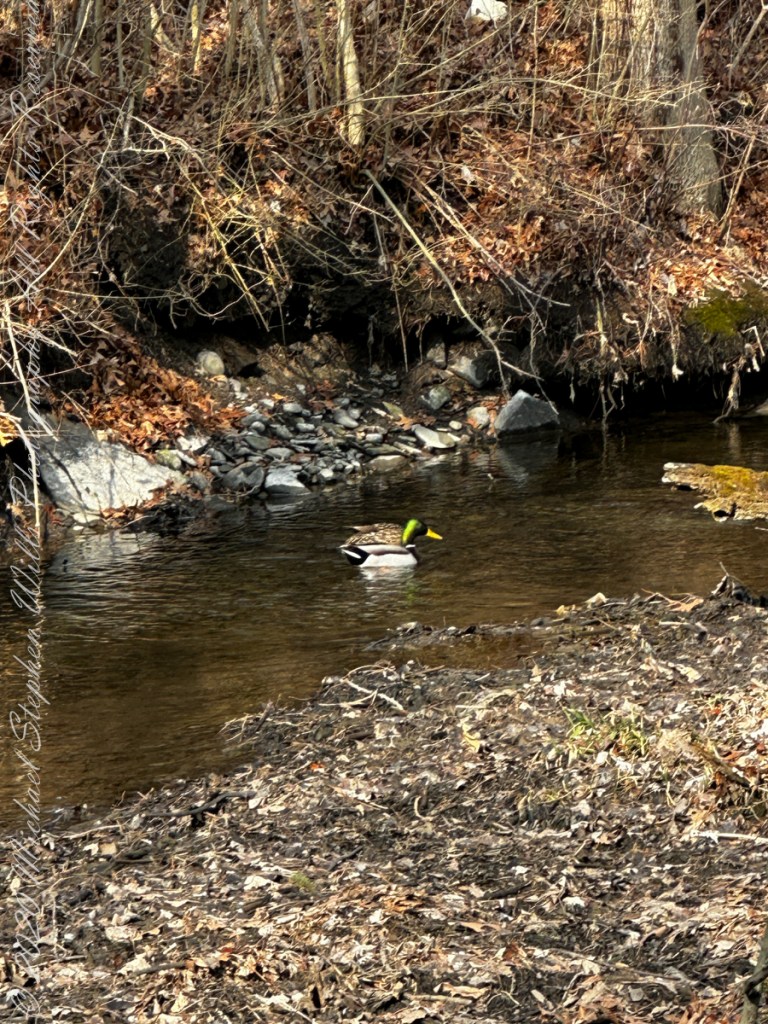
A pair of Mallard ducks foraging along a Fall Creek bayou on the edge of Renwick Woods where Stewart Park begins.
Ithaca Fire Department was training at their facility on Pier Road, next to Newman Golf Course, and across Fall Creek from Renwick Woods.

Wave Riders
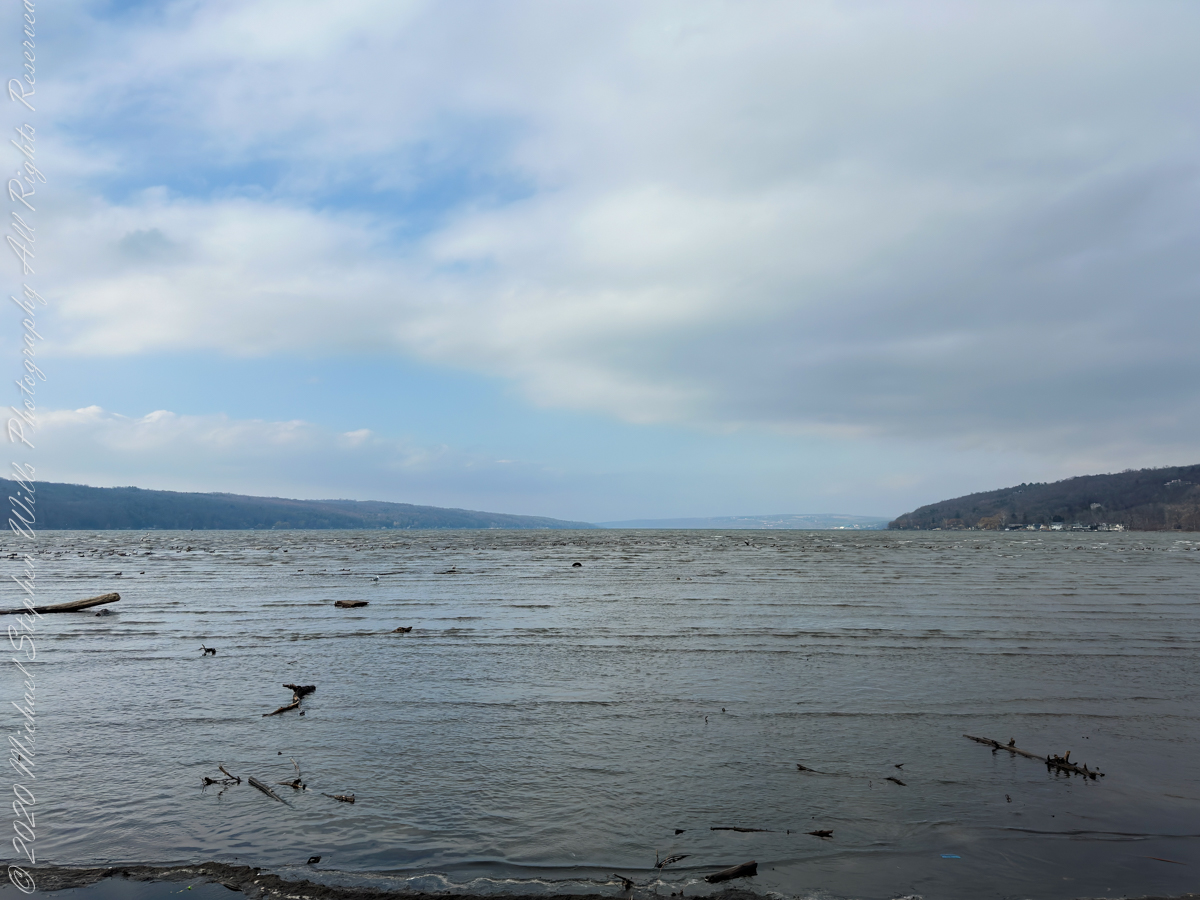
Pam and I have sailed past Crowbar Point, the arm of land projecting into the lake on left, so we know this end of Cayuga Lake well. The lake reach northward is deceiving as the bulk of the 39-mile reach is north of the headlands of the west lakeshore visible in the distance as the apparent end of the lake.
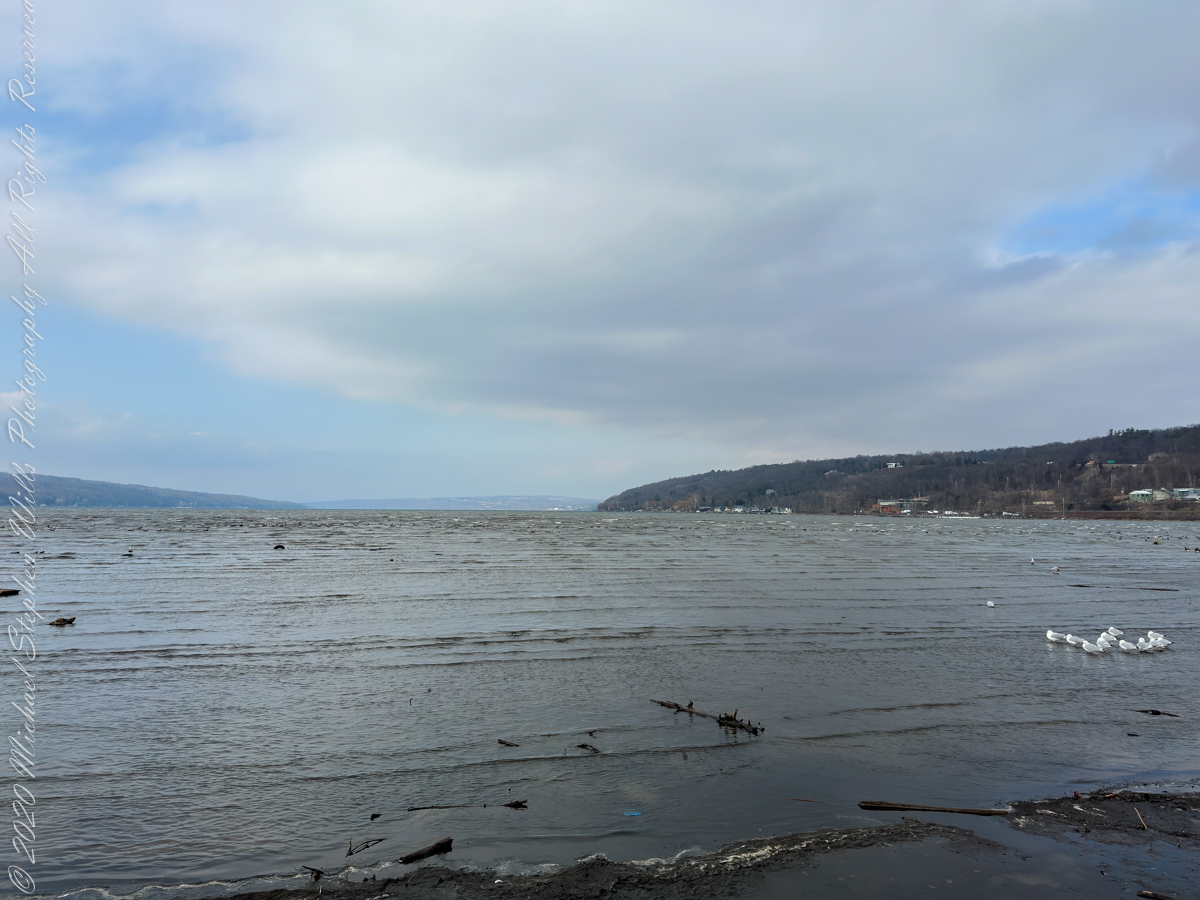
I love the pale blue of late February / early March skies.
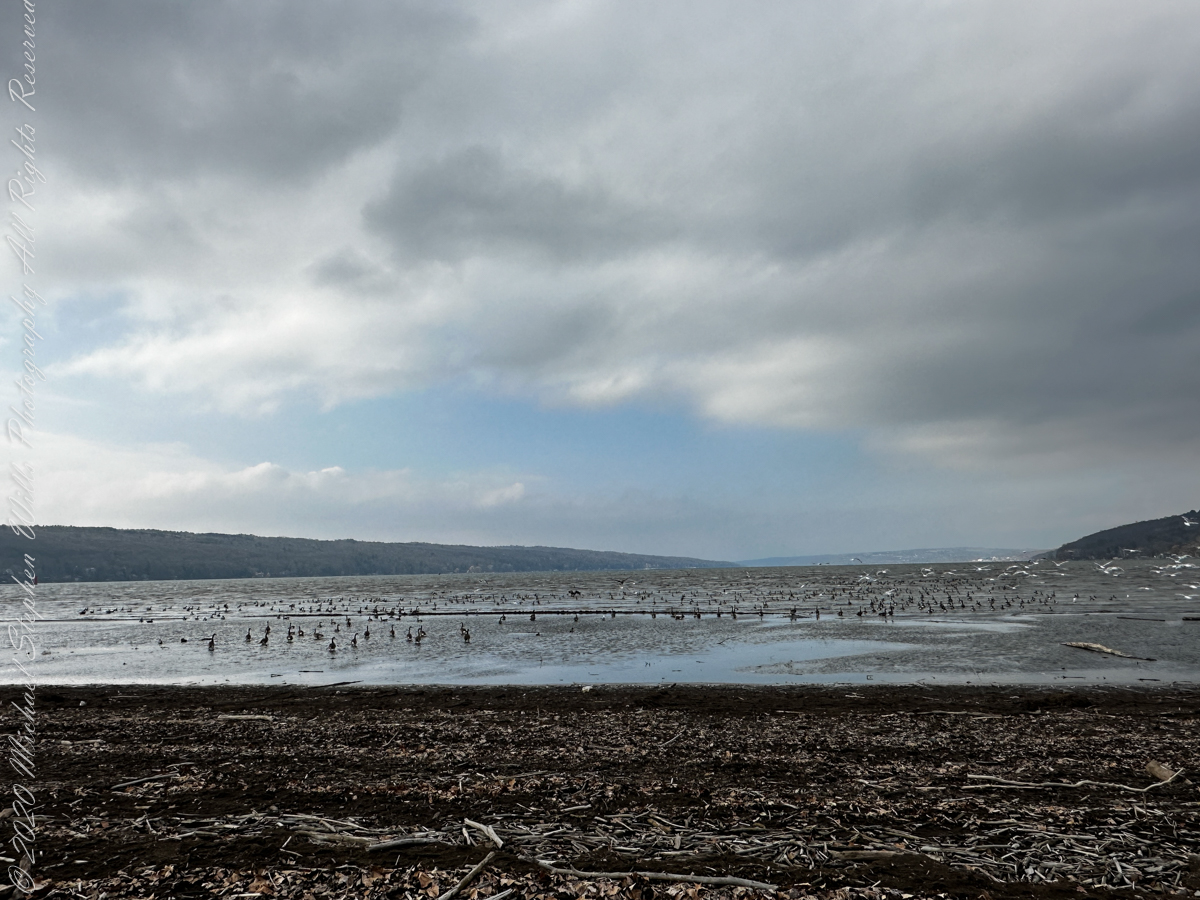
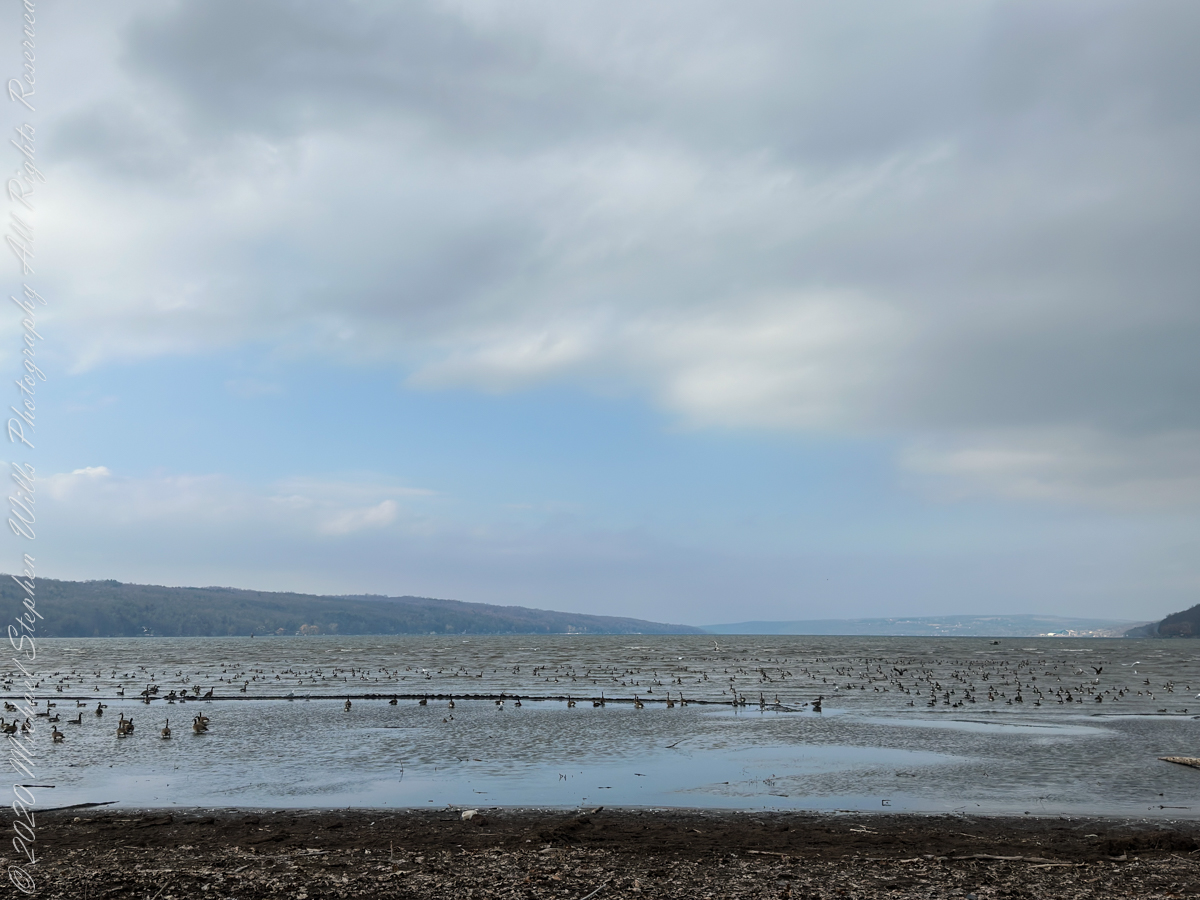
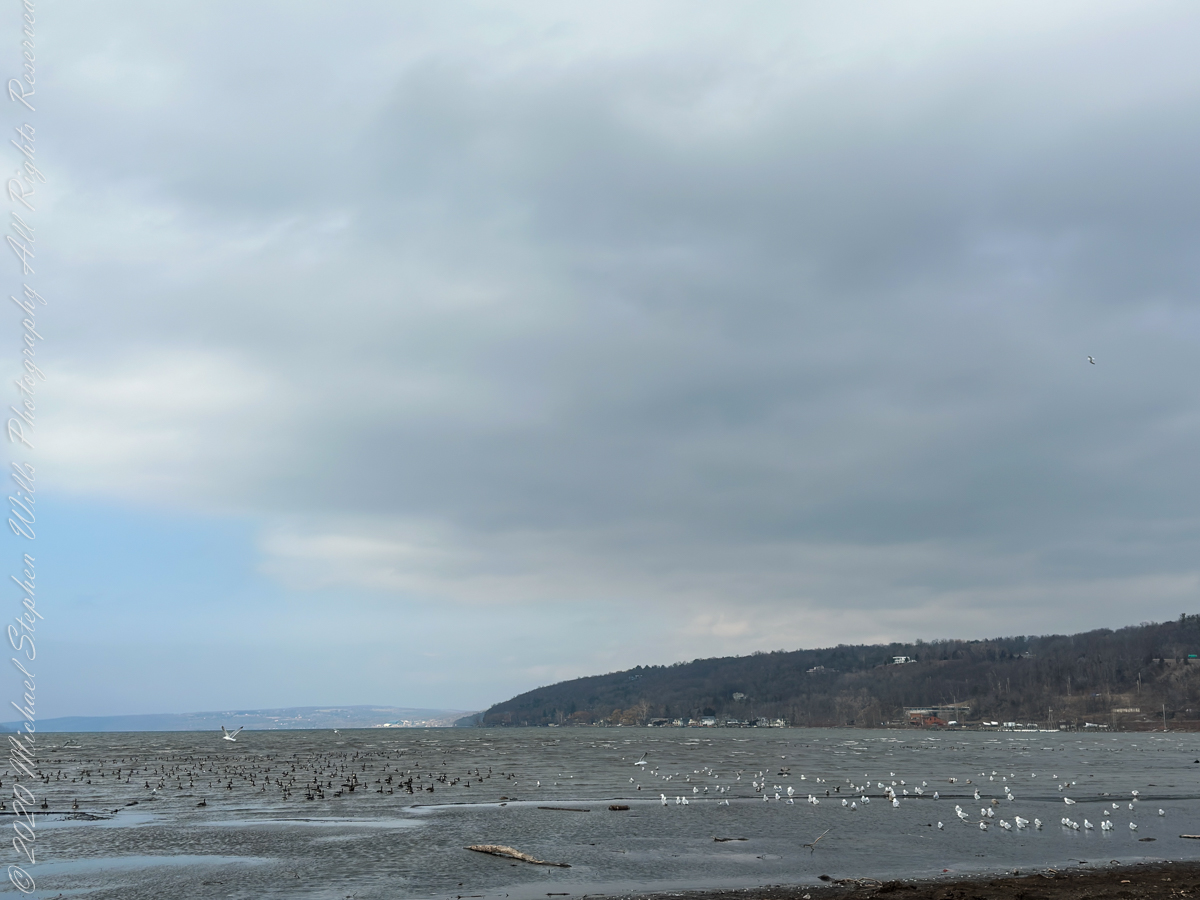
Here is a video of a large gathering of Canadian Geese, multitudes landing to ride lake waves on an unsettled, windy March afternoon.

Stewart Park
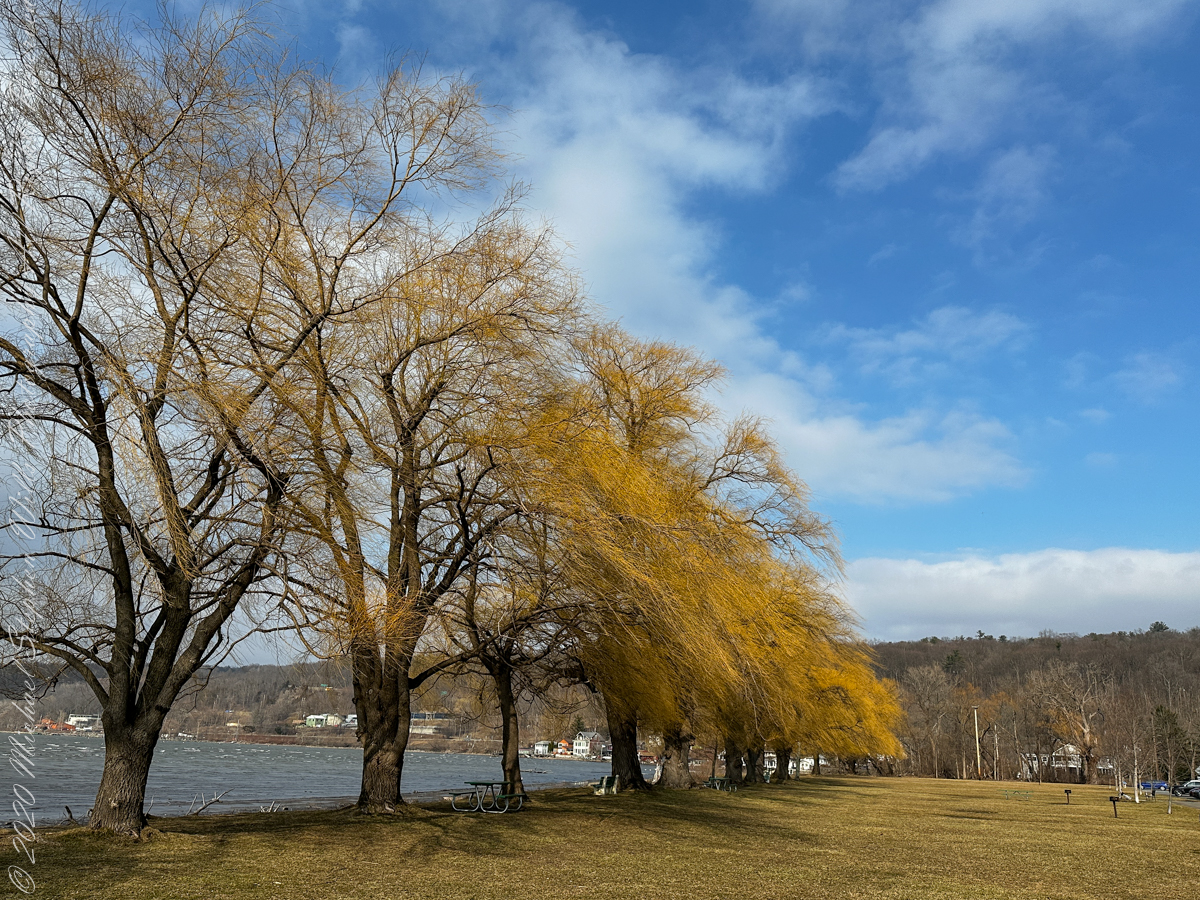
Among the earliest plants to flower, brilliant yellow willows (Salix alba ‘Tristis’) are glorious early spring as new growth sprouts.
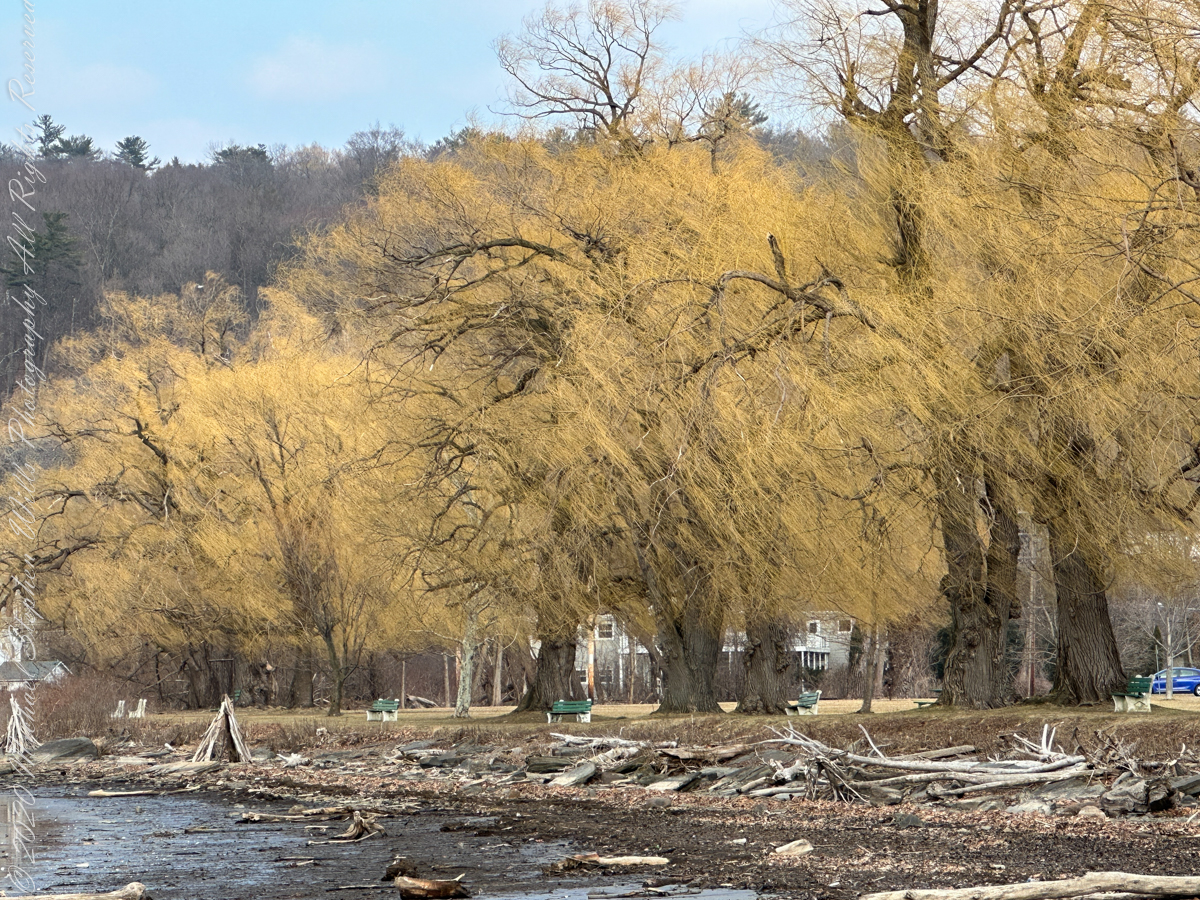
Willows native to New York State are all shrub-like, the homeland of these large trees is Europe and Asia.
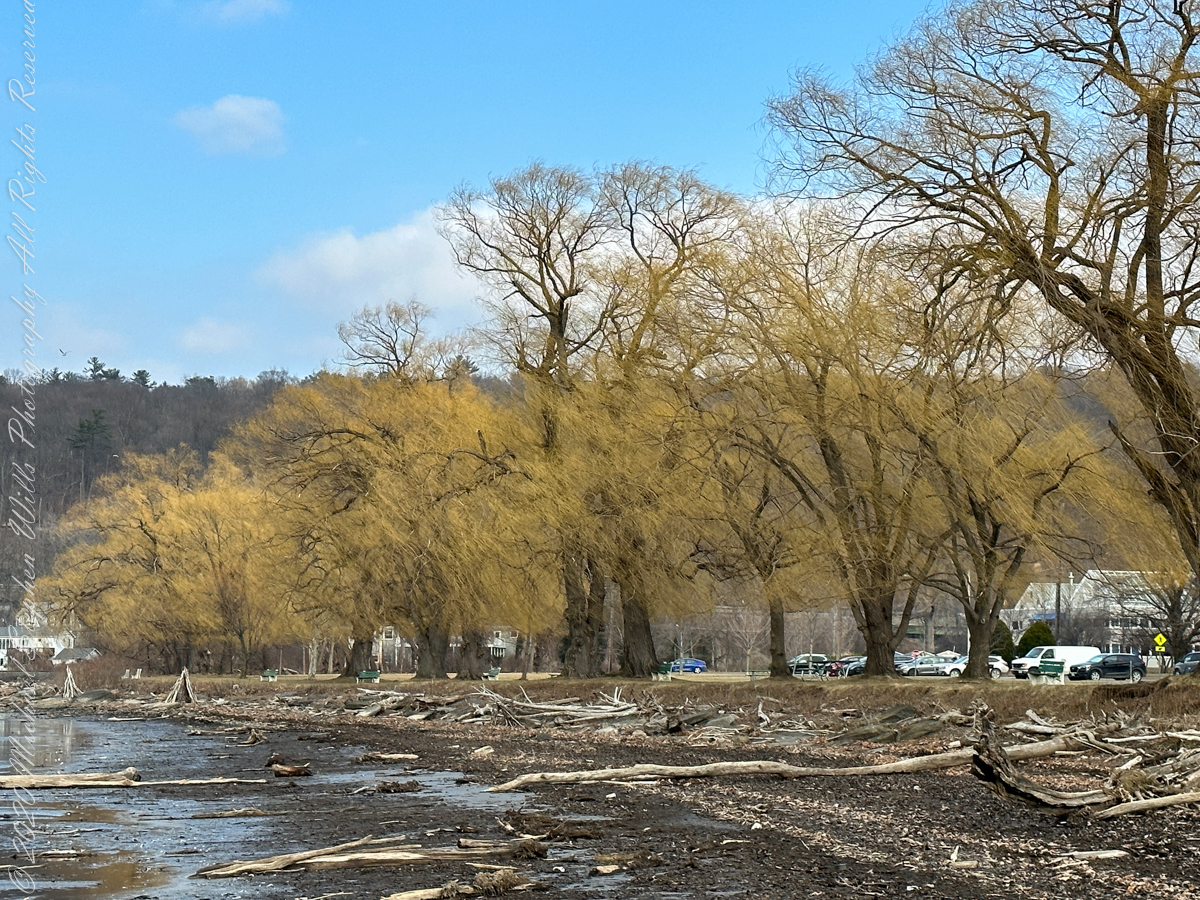
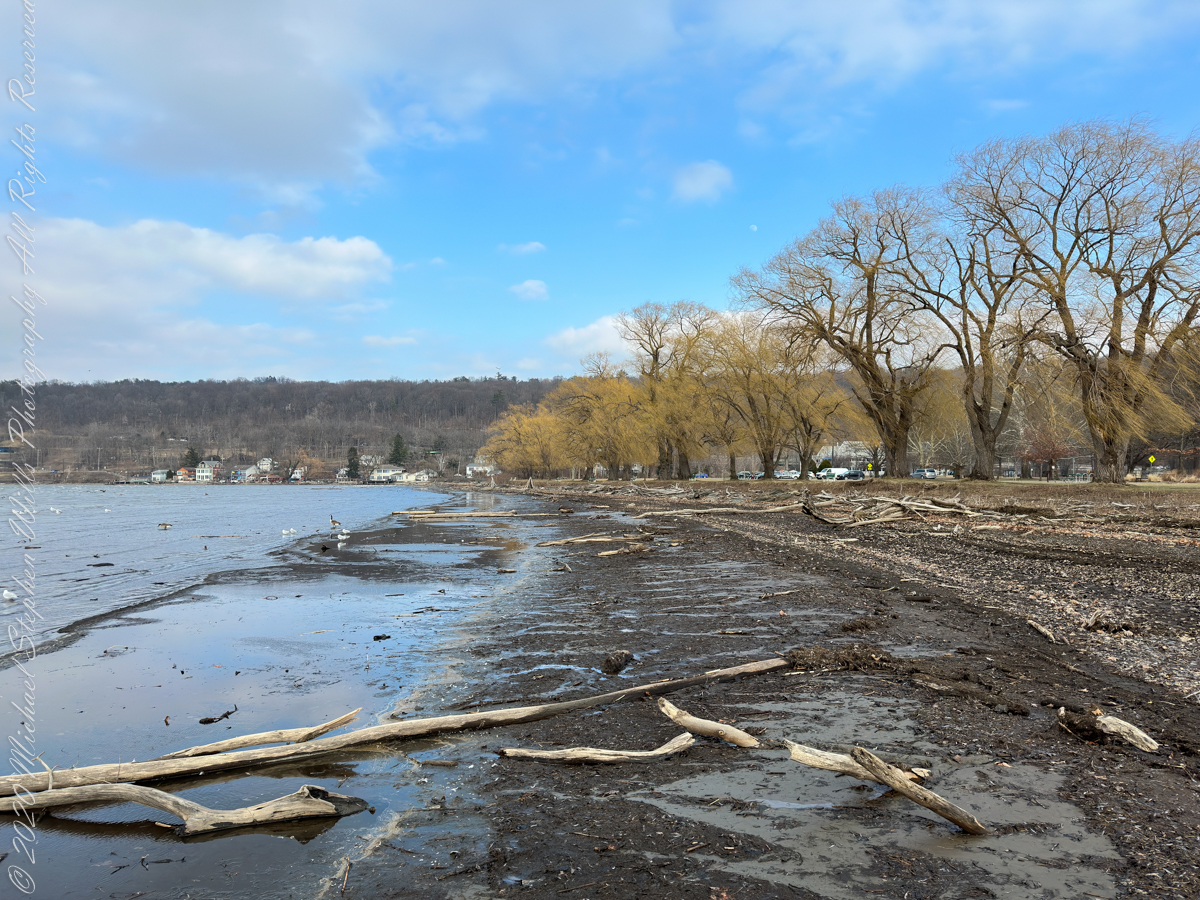
Also known as White Willow, for the white undersides of the leaves that flash in the wind. These flourish on the southernmost shore of Cayuga Lake.
Willow bark does NOT have analgesic properties. The genus name, Salix, is the root for acetylsalicylic acid (aka aspirin), a chemical that does not appear in nature, originally synthesized from salicylic acid extracted from Meadowsweet.
 Michael Stephen Wills Photography