Autumn Reflections: The Majesty of Acer Rubrum

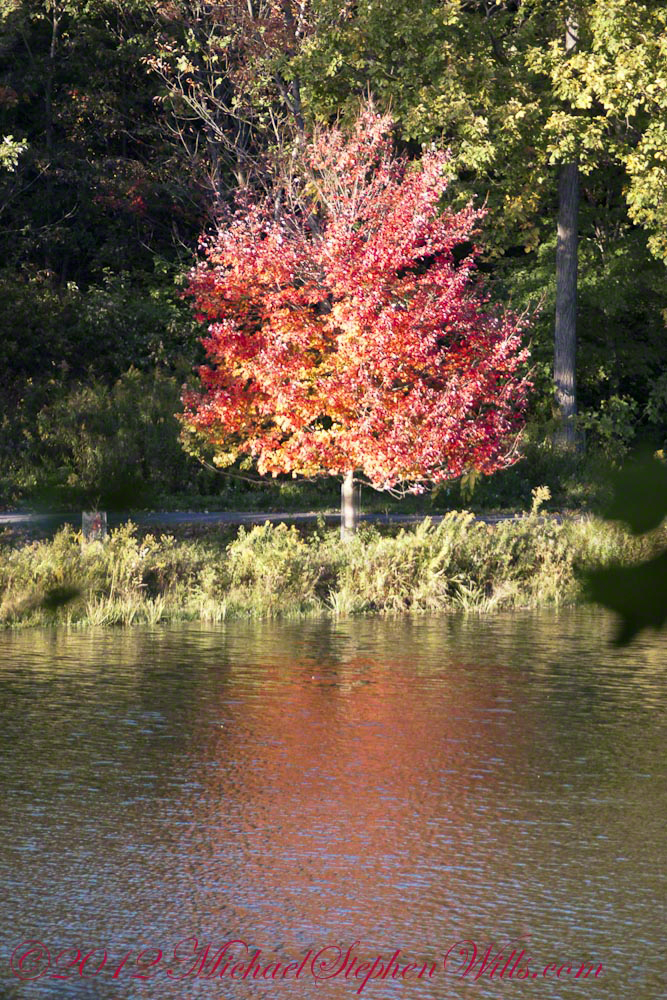
On a serene autumn afternoon by Beebe Lake, a solitary red maple stood out against the backdrop, showcasing its vibrant colors and resilience, symbolizing autumn’s fleeting beauty.

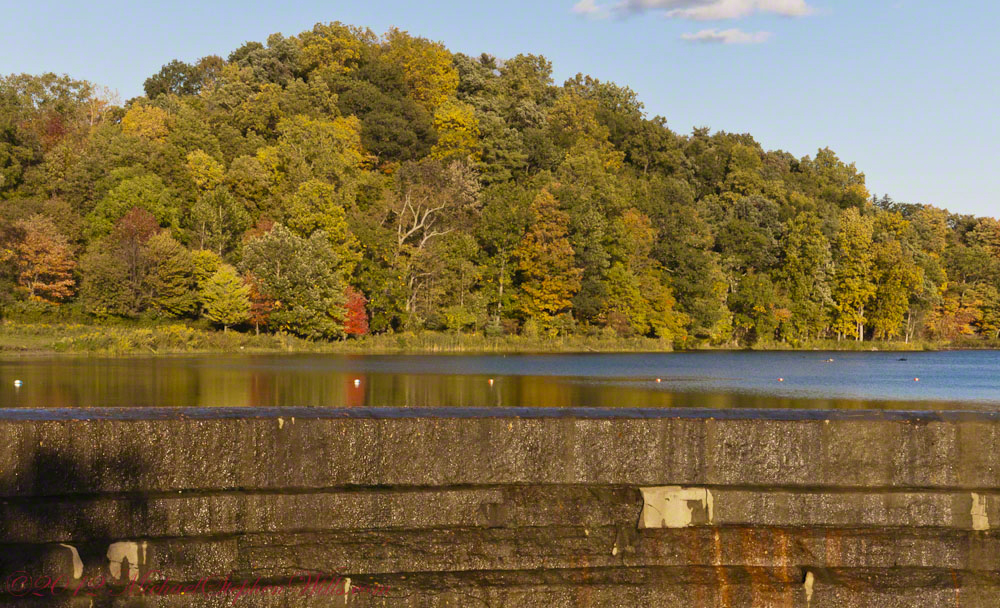
It was one of those serene autumn afternoons that linger in memory, the kind where the sky seems impossibly clear, the air crisp and gently scented with fallen leaves. I stood at the edge of Beebe Lake, my gaze first drawn to the textured concrete dam holding back the water, its weathered facade contrasting sharply with the soft reflections shimmering across the lake’s calm surface. Beyond, the wooded hillside rose gently, a tapestry woven with the warm hues of autumn—golds, greens, oranges, and reds mingling like brush strokes on a canvas.

An October Glory, turning before all others

Yet amidst this collective beauty, one tree captured my attention, singular in its brilliance—a solitary red maple standing proudly on the lakeshore. Its leaves had turned a vivid crimson, blazing brightly as though defying the muted earth tones surrounding it. Even from a distance, framed and partially obscured by larger trees, its vibrant reflection cast a fiery echo on the water, rippling softly in the afternoon breeze.

The maple, Acer Rubrum, seemed perfectly at home here, thriving robustly at the water’s edge. I remembered reading how adaptable red maples are, able to flourish in conditions ranging from dry uplands to swampy shores. This spot, near the edge of the tranquil Beebe Lake, seemed to showcase its resilient character perfectly.

Up close, the maple’s glow was even more striking. Its leaves cascaded in fiery clusters, hues deepening from bright scarlet at the tips to a darker maroon closer to the branches. This dramatic gradient seemed symbolic of autumn itself—beautiful, fleeting, and subtly tinged with the melancholy reminder of winter’s approach.

The Red Maple (Acer Rubrum) to tolerant of diverse conditions, making it a perfect choice for this spot on the short of Beebe Lake.

A memory surfaced of early spring in the Finger Lakes region, a time when maples, including this red maple, generously share their sap. Though not traditionally tapped like its sweeter cousin, the sugar maple, this species’ sap can indeed be boiled down into syrup, a surprising sweetness hidden within its sturdy trunk. Standing in its shadow, imagining those early spring days, it seemed astonishing that the same tree could offer both the delicate sweetness of syrup and the fierce beauty now on display.

Curiously, the transformation of the tree appeared methodical yet whimsical—it changed colors from the top down, its upper branches already bare, exposing slender twigs pointing skyward. Like an artist carefully removing layers to reveal something deeper beneath, the maple unveiled its upper bare bones first, as though reminding observers of the quiet strength supporting its autumn splendor.
This Red Maple (Acer Rubrum) turns from the top down and has already bare for most top branches.

As I lingered, taking in this turning tree, joggers passed by along the path, their rhythmic footsteps a gentle percussion beneath the rustling leaves. Briefly, they glanced toward the vivid maple, perhaps drawn, like me, by its striking contrast to the surrounding foliage. It felt like we shared a secret admiration for this singular tree, recognizing in it a quiet assertion of individuality amidst conformity.

Eventually, I viewed the maple once more from afar, framed now by broader sweeps of branches and leaves, partially obscured but no less vivid. Through layers of leaves and dappled sunlight, it glowed like a distant flame, a beacon that seemed to encapsulate the entire mood of the season—warm yet cool, bright yet transient.
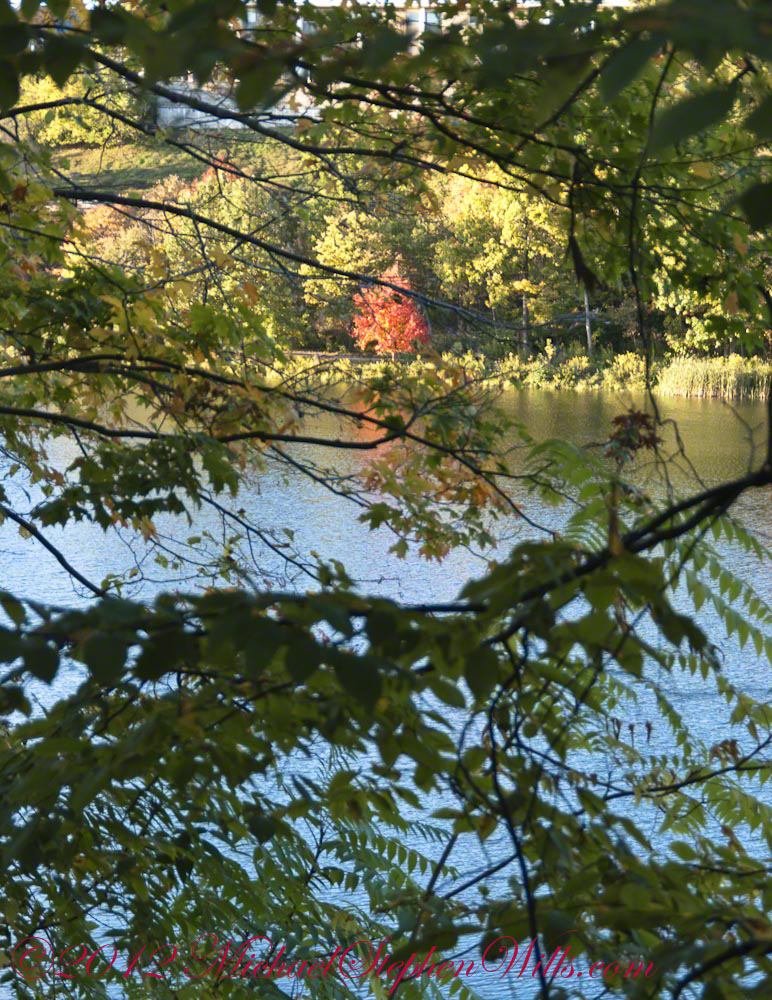
The Red Maple (Acer Rubrum) is the first to flower in spring and the first to turn in autumn.

Walking away, the image of that maple lingered, its reflection shimmering gently in the afternoon sun, a moment suspended between summer’s lush vitality and winter’s bare stillness. Beebe Lake had offered scenic beauty, a quiet meditation, a reflection mirrored not only on its tranquil surface but in the heart of an observer captivated by a single tree’s fleeting glory.
Enter your email to receive notification of future postings. I will not sell or share your email address.

Autumn Trail Adventures: Nature’s Colorful Showcase

The Cayuga Waterfront Trail showcases autumn’s beauty through vibrant plants like pokeweed, oak, Virginia Creeper, and New England Asters.

A Flash of Red: The Mysterious Pokeweed

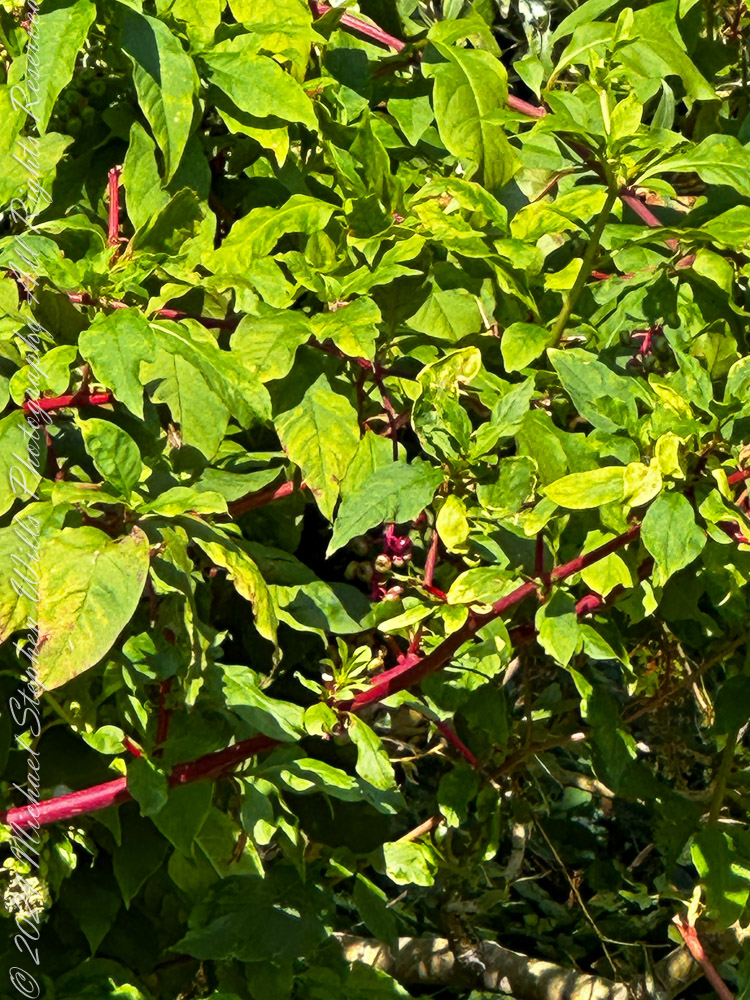
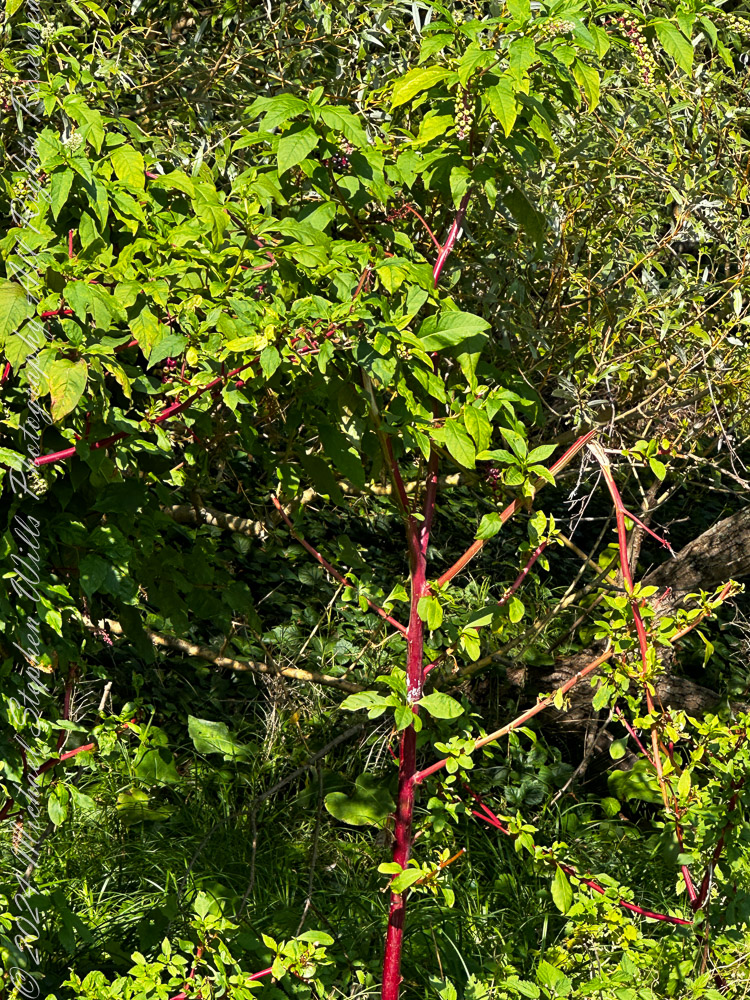
Our explorations along Ithaca’s Cayuga Waterfront Trail begins with the striking Pokeweed (Phytolacca americana), its ruby-red stems rising like sentinels against a sea of green leaves. At a glance, it’s bold, almost tropical, yet this native plant is a quintessential autumn feature in the Northeast. Those drooping clusters of berries (not yet ripe here) are food for birds like robins and mourning doves — though toxic to us, pokeweed adds a bit of danger to its beauty.

Nature’s Note: While visually stunning, pokeweed’s ripe purple berries were historically used as dye. Early settlers and Native Americans knew its power, though caution is always the rule here!

The Mighty Oak: Sentinel of the Trail

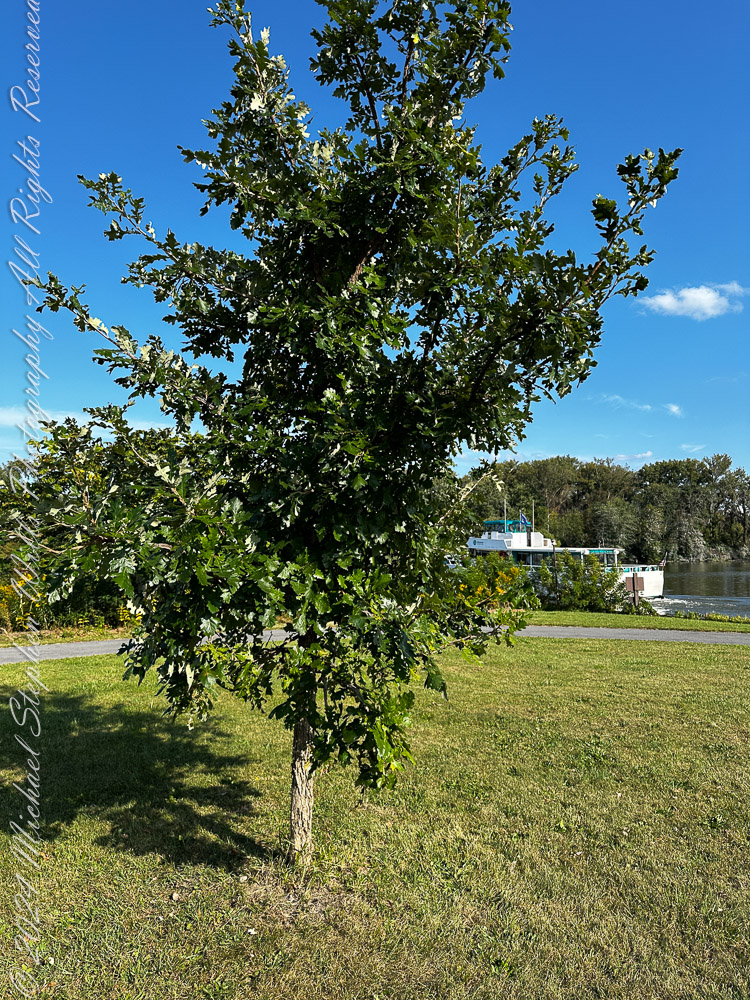
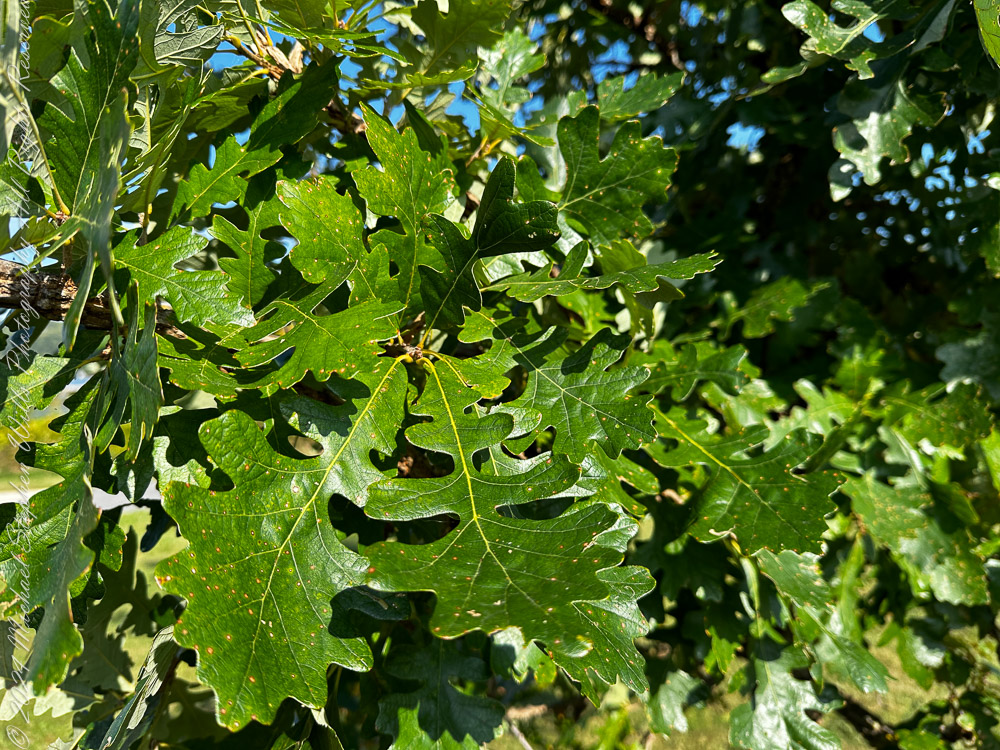
Next, we imnagine the cool shade of an oak tree, its lobed leaves silhouetted like green lacework against the clear blue sky. The photogenic Oaks are ecosystem powerhouses. Supporting hundreds of species of moths, butterflies, and birds, oaks quietly hold the fabric of nature together.

In autumn, these leaves will transform, dropping gently to create warm beds for overwintering insects. Stand beneath its branches long enough, and you’ll swear it whispers stories of the seasons gone by.

Quick Fact: Oaks produce acorns that are a favorite food of squirrels. Ever notice a squirrel “planting” them? That’s nature’s accidental reforestation plan in action.

Reflections of Autumn’s Palette

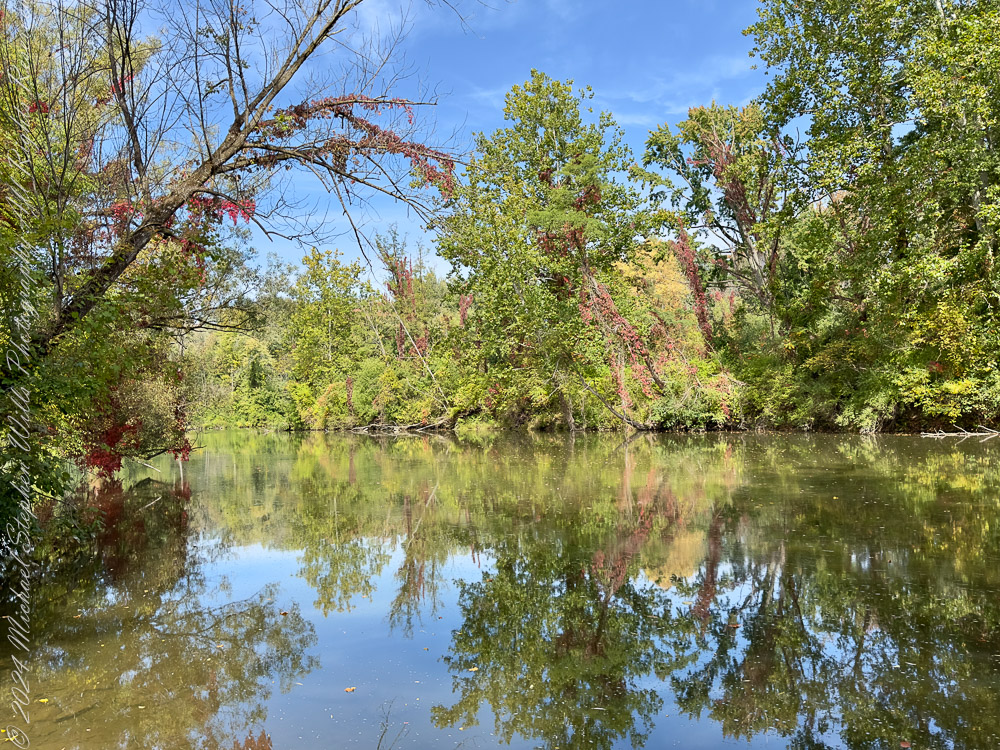
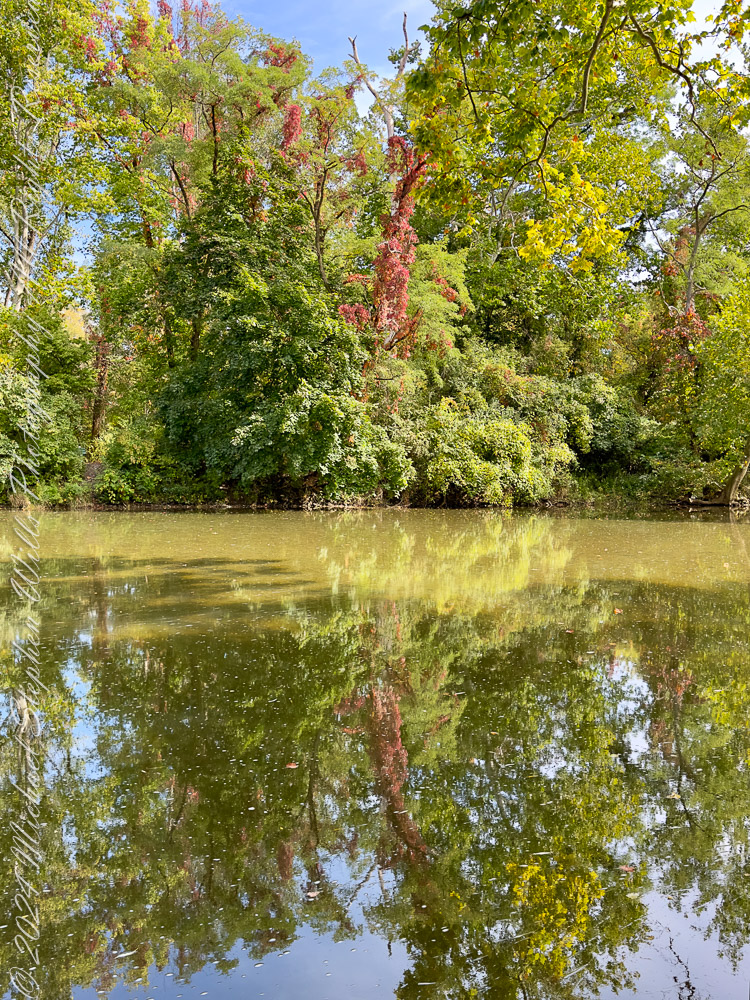
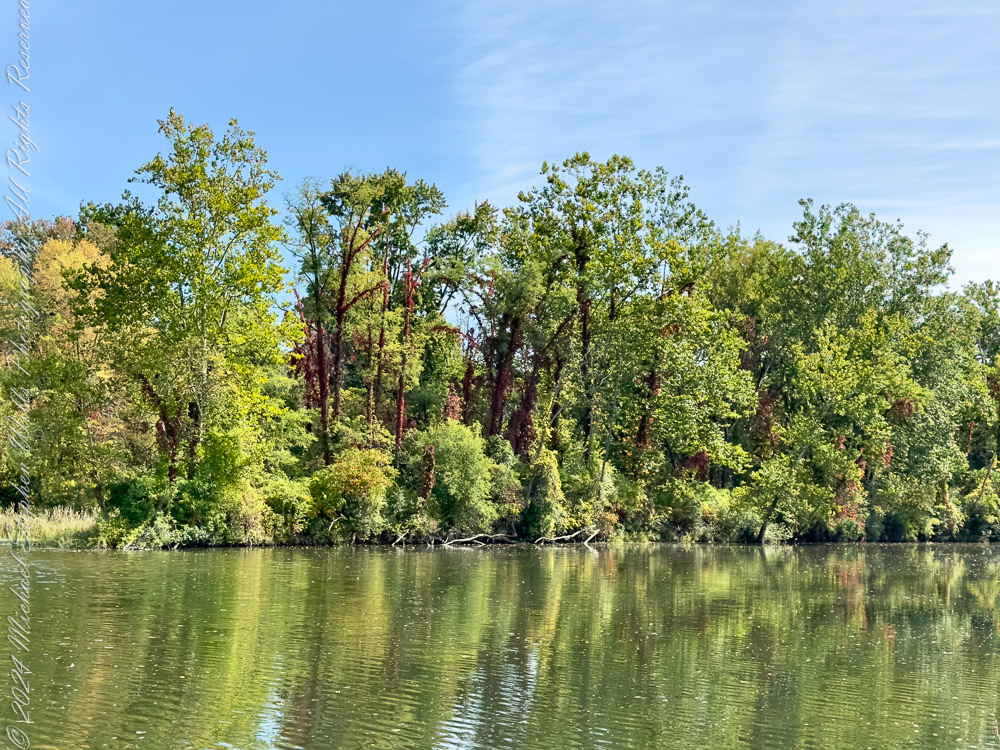
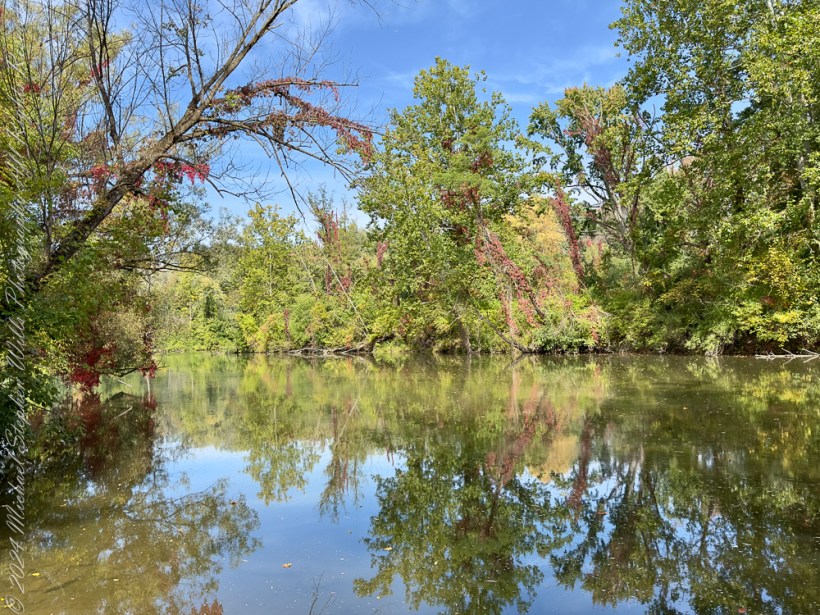
We reach the water’s edge, where the serene surface where Fall Creek joins Cayuga Lake mirrors the fiery splashes of red Virginia Creeper (Parthenocissus quinquefolia) winding through the trees. This climbing vine, with its scarlet fall foliage, is like nature’s ribbon tying the forest together.

The reflection — a perfect painting — blurs the boundary between land and water. Here, quiet reigns, save for the soft ripple of a fish or the rustle of leaves overhead.

Curious Note: Virginia Creeper is often mistaken for poison ivy. The secret? Virginia Creeper has five leaflets, while poison ivy wears three — nature’s rhyme: “Leaves of three, let it be.”

Aster Alley: A Burst of Purple Beauty

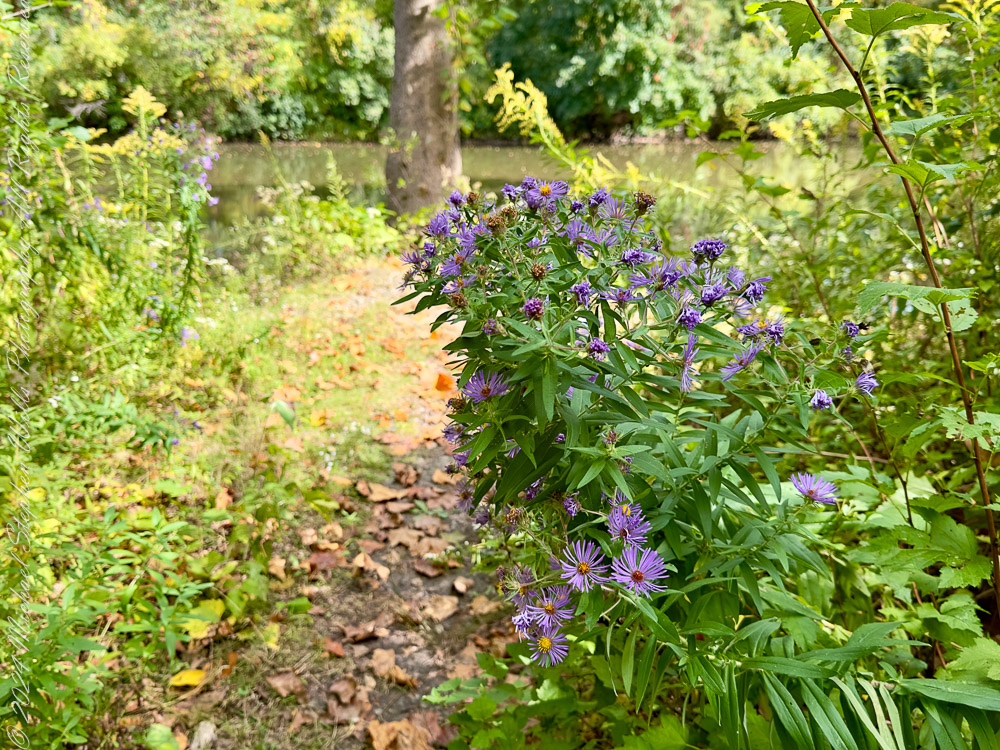
On the trail’s side, a cheerful gathering of New England Asters (Symphyotrichum novae-angliae) steals the spotlight. These vibrant purple flowers, with their golden centers, are late-season treasures. As most blooms fade, asters feed pollinators like bees and butterflies in their final push before winter.

Walk by slowly, and you might catch a bumblebee lazily humming its thanks — a last sip of nectar before the chill sets in.

Did You Know? Asters get their name from the Greek word for star. Fitting, don’t you think?

Nature’s Quilt: Pine Needle Carpet

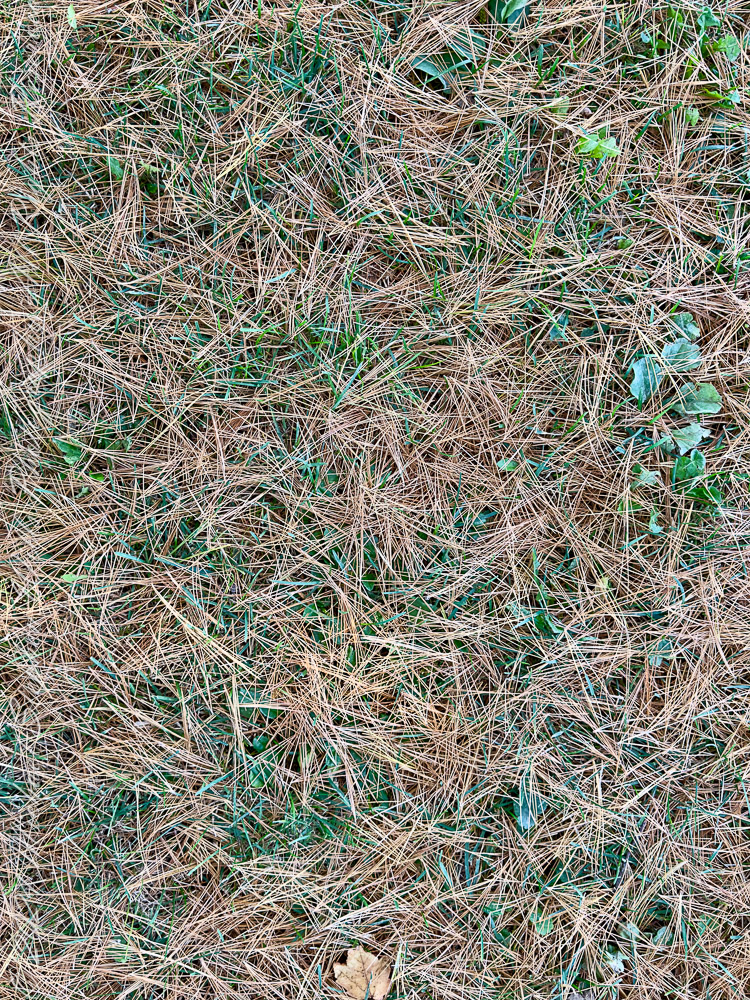
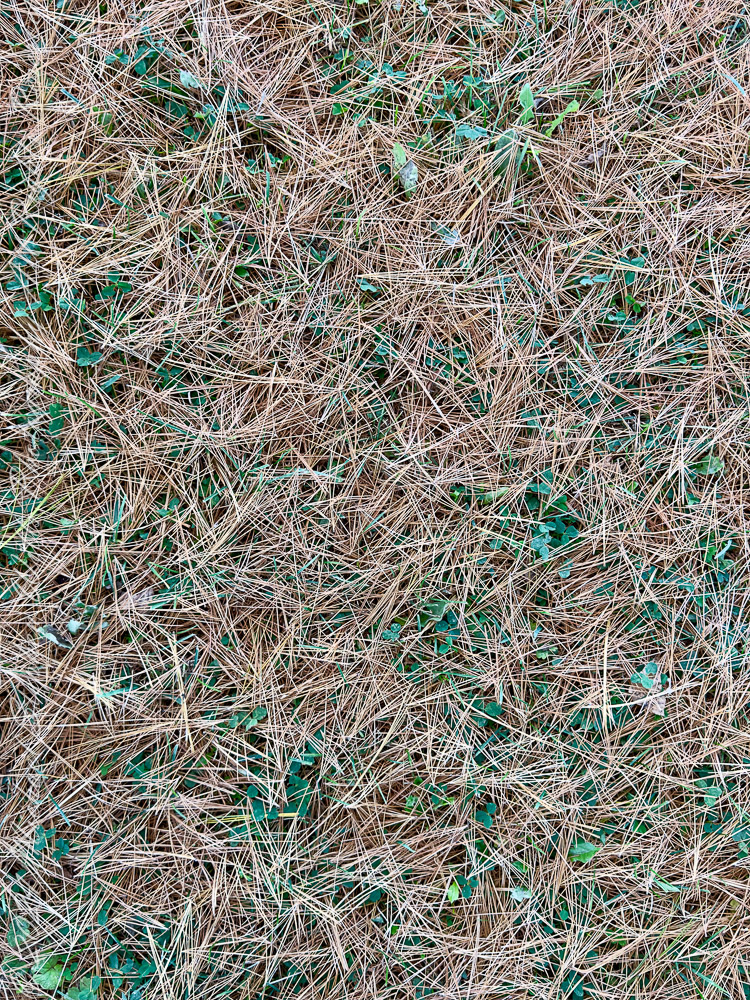
Finally, we tread across a textured carpet of pine needles, blanketing the ground in warm, earthy hues. Beneath this seemingly simple scene lies a story of renewal. As pines shed their needles, they enrich the soil with organic matter, providing a soft bed for new life to sprout in the spring.

The crunch underfoot feels both nostalgic and meditative — a gentle reminder that every fallen needle is part of nature’s endless cycle.

Fun Observation: Pine needles, often called “nature’s mulch,” are slightly acidic, which helps pine trees thrive while keeping competition at bay.

Closing Thoughts

From the bold reds of pokeweed to the mirrored waters adorned with Virginia Creeper, and the twinkle of asters amid the foliage, autumn along the Cayuga Waterfront Trail is a celebration of nature’s resilience and beauty. It’s a quiet reminder that even as the seasons shift, the world remains vibrant — a living, breathing tapestry stitched together by trees, plants, and reflections.

So, walk slowly, listen closely, and let the stories of leaves, stems, and waters guide your journey.

Enter your email to receive notification of future postings. I will not sell or share your email address.

The Majestic Cottonwoods of Stewart Park

Discover the timeless beauty of two towering Cottonwood trees along the shores of Cayuga Lake. Explore their natural history, cultural significance, and how they’ve shaped the landscape of Stewart Park for generations.

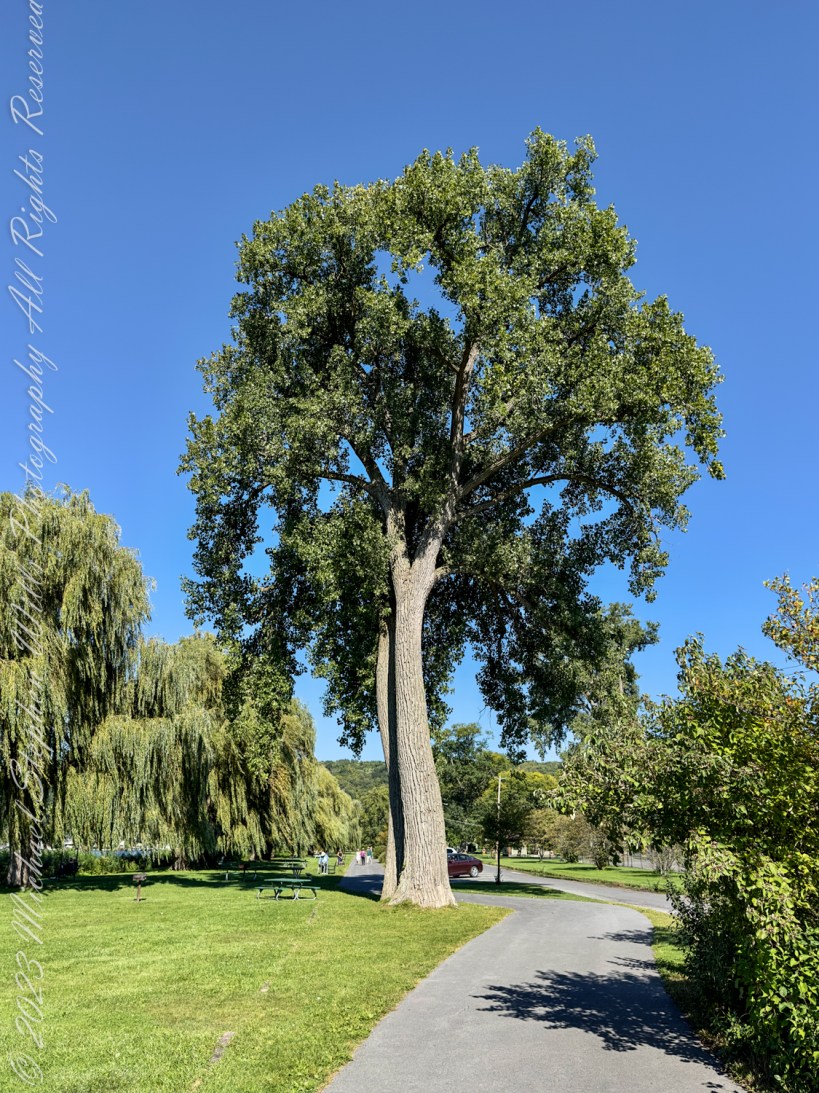
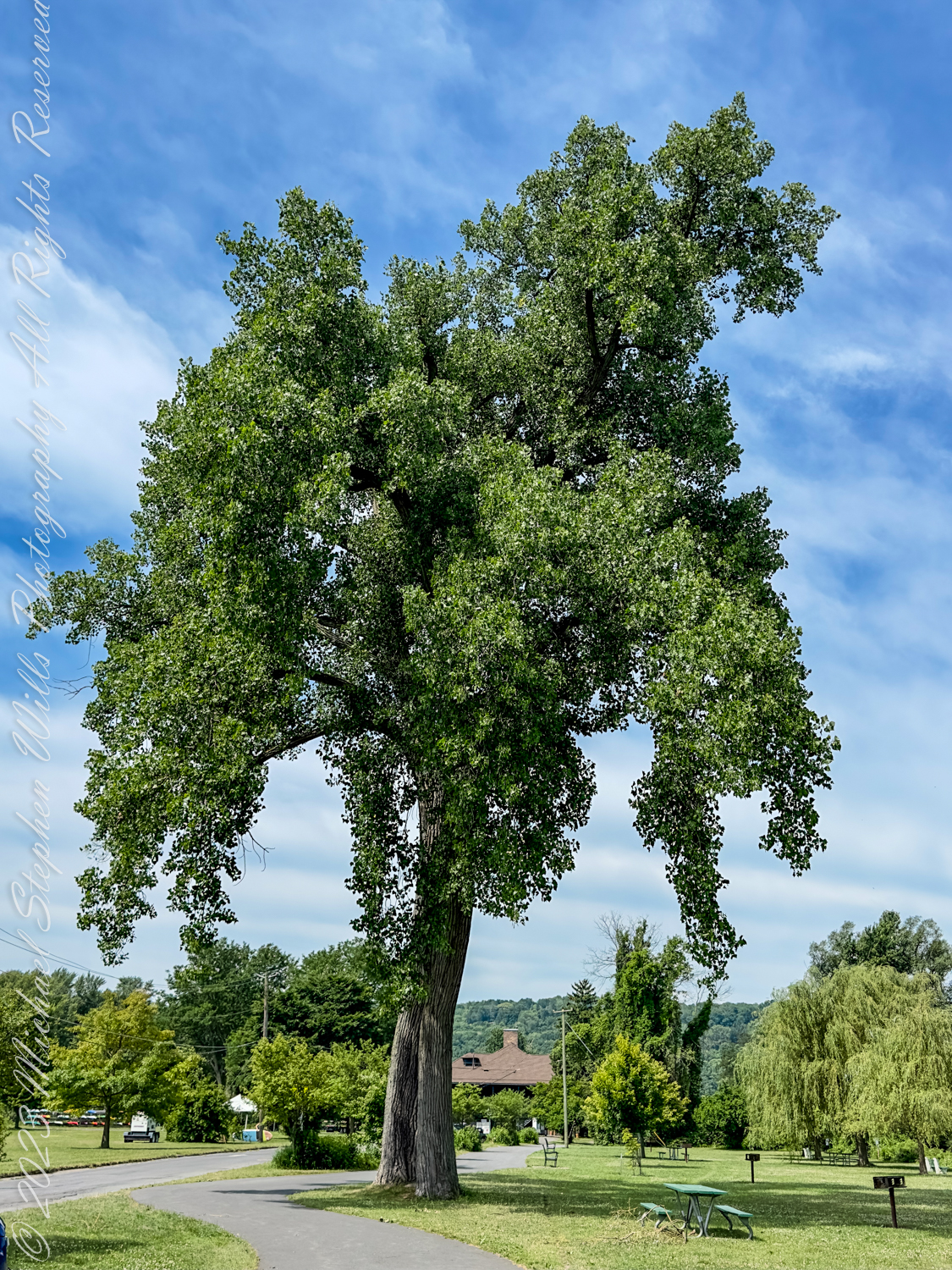
Walking with Pam in Stewart Park, the shores of Cayuga Lake shimmer under the bright September sun, offering a serene setting for reflection. Ahead, two towering Cottonwood trees stand in quiet majesty, their branches spreading wide, casting long shadows over the grass and walkway. Drawn toward them, I find myself in awe of their presence—these two trees, ancient sentinels by the water, who have silently borne witness to the changing world around them.

View Facing East/Southeast, September 10, 2024

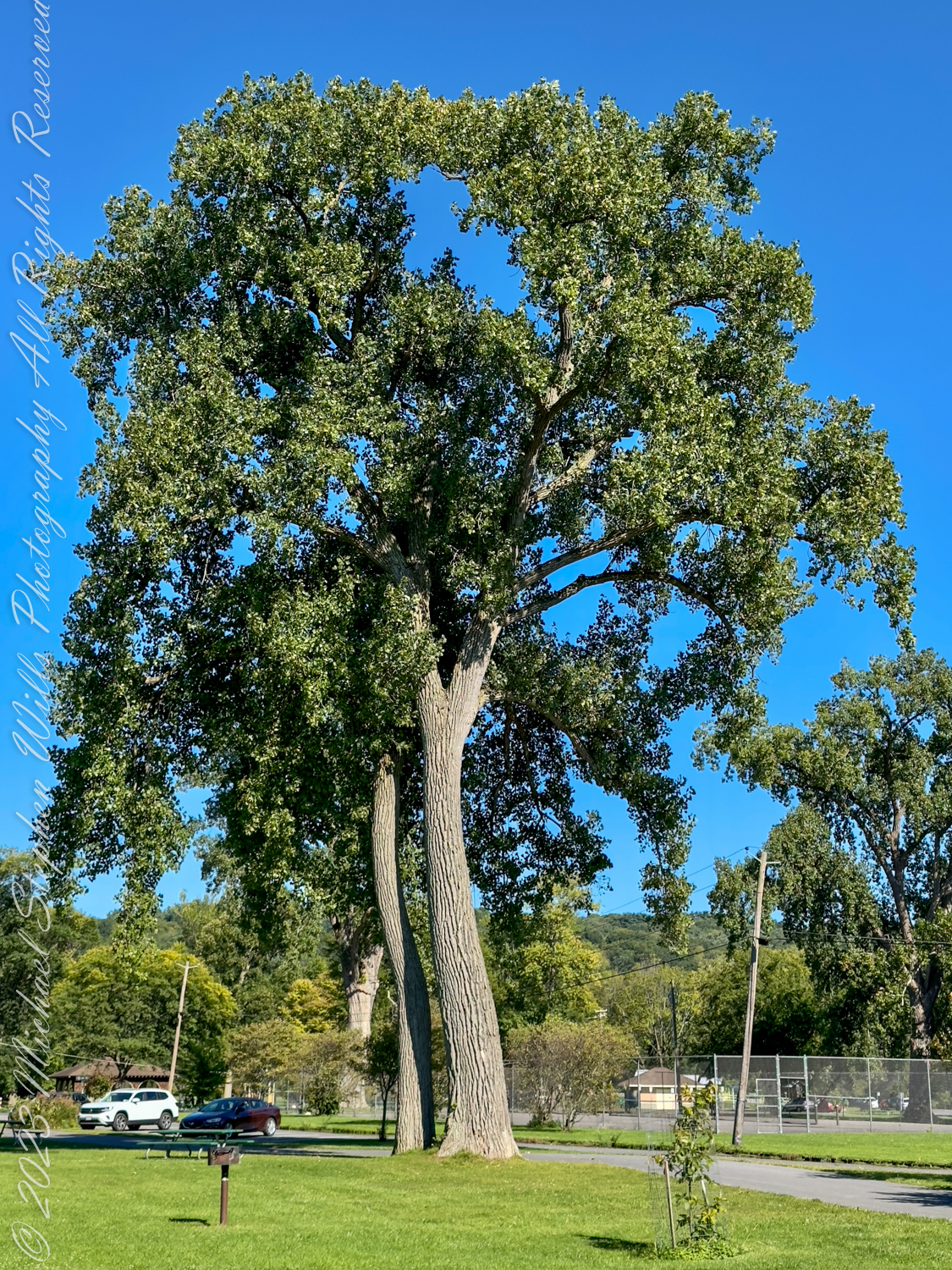
Cottonwoods, scientifically known as Populus deltoides, are members of the poplar family and are among the tallest trees in North America. The ones before me have thrived for decades, their thick, furrowed trunks a testament to the endurance of life on the edge of the lake. It’s remarkable to think of all the storms and seasons they’ve weathered—their roots digging deep into the moist earth, nourished by the lake’s constant ebb and flow. I feel as though these trees, standing side by side, companions, connected through the unseen networks of roots beneath the soil. Their relationship to one another seems profound, they have grown up together, providing support and strength as they aged. Their canopies overlapping as though embracing one another.

There’s an undeniable symmetry to their relationship, both in form and function. One can imagine them as silent witnesses to the changing landscape around them—the gradual expansion of the park, the families that come and go, the laughter of children playing nearby, and the quiet conversations of couples walking hand in hand. These trees have become part of the fabric of Stewart Park, deeply entwined with the human history that unfolds here every day.

View Facing East, September 10, 2024

The branches reach skyward, their leaves shimmering in the breeze, producing the characteristic fluttering sound of Cottonwoods. There’s something deeply soothing about this rustling—the way the wind seems to dance through the leaves, creating a rhythm that feels eternal. It reminds me that these trees have long been part of human experience, a backdrop to countless strolls, picnics, and quiet moments of contemplation here at Stewart Park.

Cottonwoods are fast-growing, often found near bodies of water where their shallow roots can tap into consistent moisture. And yet, their rapid growth comes with a trade-off; their wood is soft and brittle, prone to breaking in high winds. But in Stewart Park, these two trees have found a perfect balance, their large, sweeping canopies offering shade and shelter without suffering too much damage from the storms that blow through the Finger Lakes. Their resilience is remarkable—a reminder of nature’s ability to thrive in challenging conditions.

Historically, Cottonwoods have played a significant role in the lives of the people who encountered them. Native Americans once used the bark for medicinal purposes and fashioned the wood into canoes. Early settlers appreciated the trees for their rapid growth and ability to provide shade and timber in otherwise open expanses of the Midwest and Northeast. Even today, their legacy endures as they continue to offer shade and shelter, albeit more for leisure than for survival.

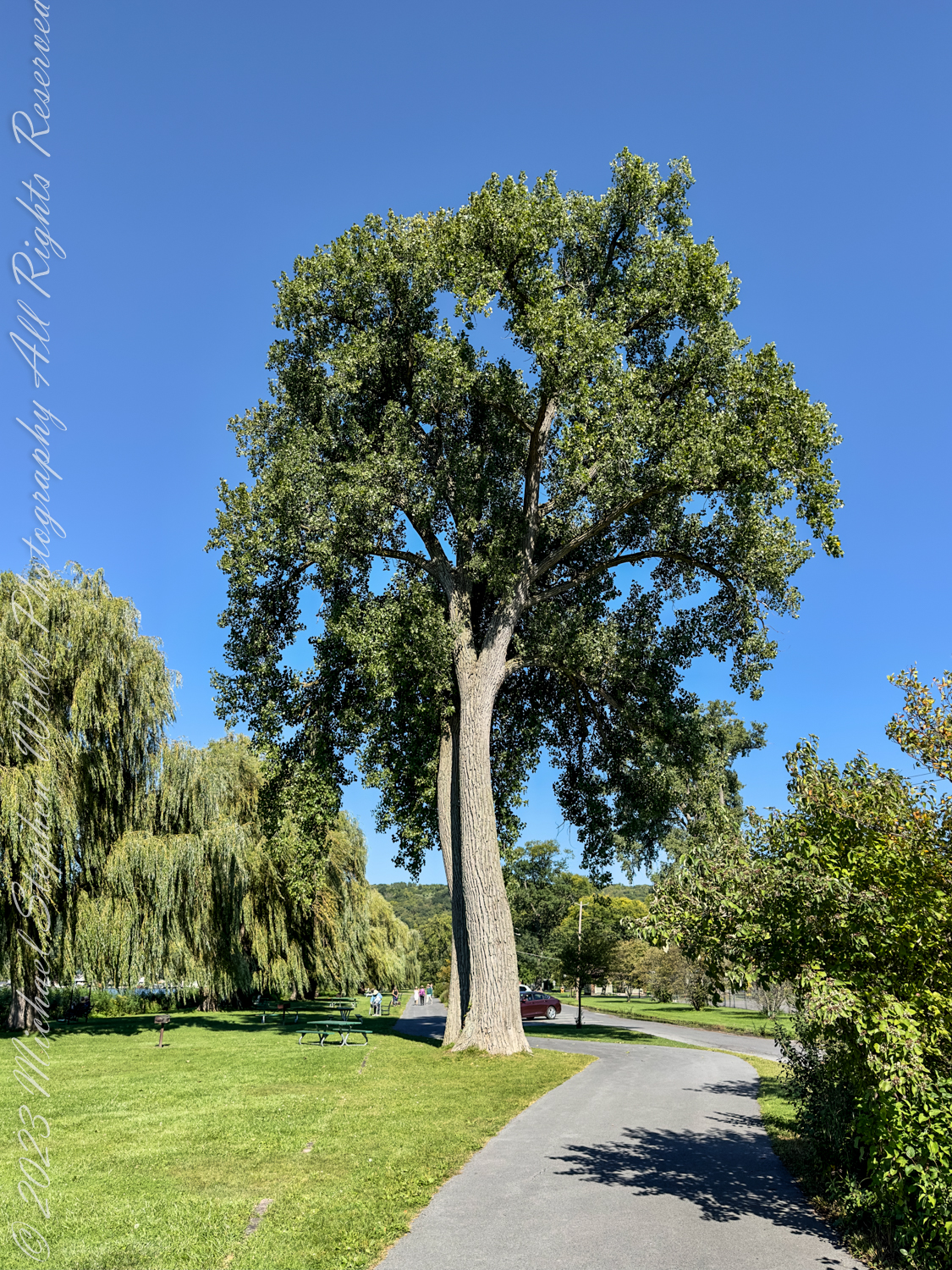
I notice how the pathway itself bends gently to accommodate the Cottonwoods. The paved trail, so clearly designed with these majestic trees in mind, arcs around their broad bases as if to honor their presence. In a world where nature is so often bent to human will, it’s refreshing to see this small, quiet gesture of deference—a reminder that in our modern parks, nature can sometimes lead the way.

View Facing West, June 25, 2024

The path doesn’t cut through or impose upon these trees. Instead, it respects their claim to the land, curving around them in a way that feels organic, almost reverent. The roots of these Cottonwoods must reach far beyond what I can see, extending outward in all directions beneath the soil, beneath the path itself. It’s as though the trees and the human-made elements of the park have reached a compromise—a harmonious balance where both can coexist without either having to sacrifice too much.

In their wisdom, the planners of this park understood that these trees had already laid their claim long before the park’s paths were laid out. It’s a small but profound testament to the enduring power of nature and the foresight of those who designed this space. As I walk along the path, I feel the subtle shift in the landscape—the way the curve of the trail encourages a more leisurely pace, inviting visitors to pause for a moment and take in the grandeur of these ancient trees.

The curve itself creates a sense of flow, as if the path is gently nudging us toward a deeper appreciation of the Cottonwoods. There’s no rush here. The trees stand in their place, rooted and steadfast, while we are invited to move around them, to change our course slightly in order to make space for something larger than ourselves. The path becomes a metaphor for our relationship with nature—we must sometimes bend and yield to its greater forces, rather than insist on our own straight and rigid lines.

This curved path speaks to the broader theme of adaptability—how both nature and humanity have learned to accommodate one another. The Cottonwoods have withstood the test of time, their roots dug deep into the soil, while we have found ways to move alongside them, adjusting our course to allow for their growth. It’s a quiet but powerful reminder of the importance of coexistence and respect, of making space for the natural world rather than always seeking to dominate it.

As we pass by, I notice the texture of their bark—deeply furrowed and rough, a tactile reminder of the passage of time. Each ridge and crevice holds the story of countless seasons—of dry summers, harsh winters, and everything in between. I reach out and touch one of the trunks, feeling the coolness of the bark under my hand. There’s a vitality here that can only be sensed up close, a quiet hum of life that pulses just beneath the surface.

Yet, despite their imposing size and age, the Cottonwoods remain humble in their role. They do not demand attention like a flowering dogwood or a brightly colored maple. Instead, they offer something more enduring—a quiet, steady presence that provides shelter and shade without fanfare. Their leaves turn a brilliant yellow in autumn, adding to the kaleidoscope of colors that make up the Finger Lakes’ fall landscape. But even in winter, when the leaves are gone, their bare branches stand against the cold sky, offering a stark beauty all their own.

As I step back to take in the full view of these two Cottonwoods, I am filled with a sense of gratitude. Their lives, so intimately tied to this place, remind me of the interconnectedness of all living things—the way nature, time, and humanity overlap in ways both seen and unseen. These trees, growing together on the shores of Cayuga Lake, are not just part of the landscape—they are part of the story of Stewart Park and, in a broader sense, the story of this region. They remind me that, like them, we are all shaped by our surroundings, by the people and places that stand beside us as we grow. And in that way, we are never truly alone.

Copyright 2024 Michael Stephen Wills All Rights Reserved

Lessons in the Woods: A Grandfather’s Nature Walk

On a crisp September morning, a grandfather leads his grandsons on a nature walk, discovering the mysteries of the forest. Together, they encounter a curious caterpillar and uncover the wonders of the natural world.

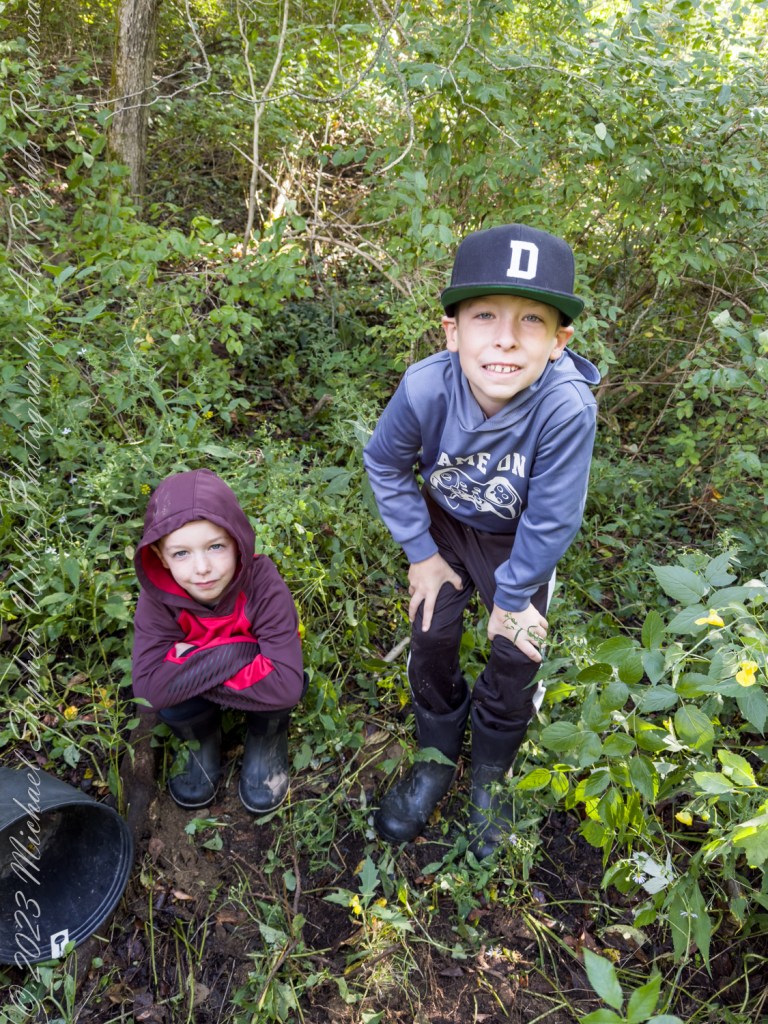
Unseasonably warm September morning air gently stirred the leaves as I guided my grandsons, Sam and Rory, through our woods near Freeville. Our boots crunched softly on the damp earth, and the sounds of nature enveloped us like an old, familiar melody. Today we were on a mission of discovery, with Mother Nature as our guide.

“Grandpa, look at this!” Sam called, excitement radiating from his face. Rory, always close behind his older brother, crouched down, his bright eyes scanning the ground for any movement. I smiled. Sam’s sharp curiosity and Rory’s quiet attentiveness reminded me so much of myself at their age, exploring the woods.

We stopped at a patch of earth, where the boys had found a small hole in the ground, evidence of something recently disturbed. “Do you think it’s a mole, Grandpa?” Rory asked, his voice a mix of wonder and uncertainty.

“Maybe,” I said, leaning down beside them. “Or it could be something larger, like a chipmunk. These woods are full of surprises.”

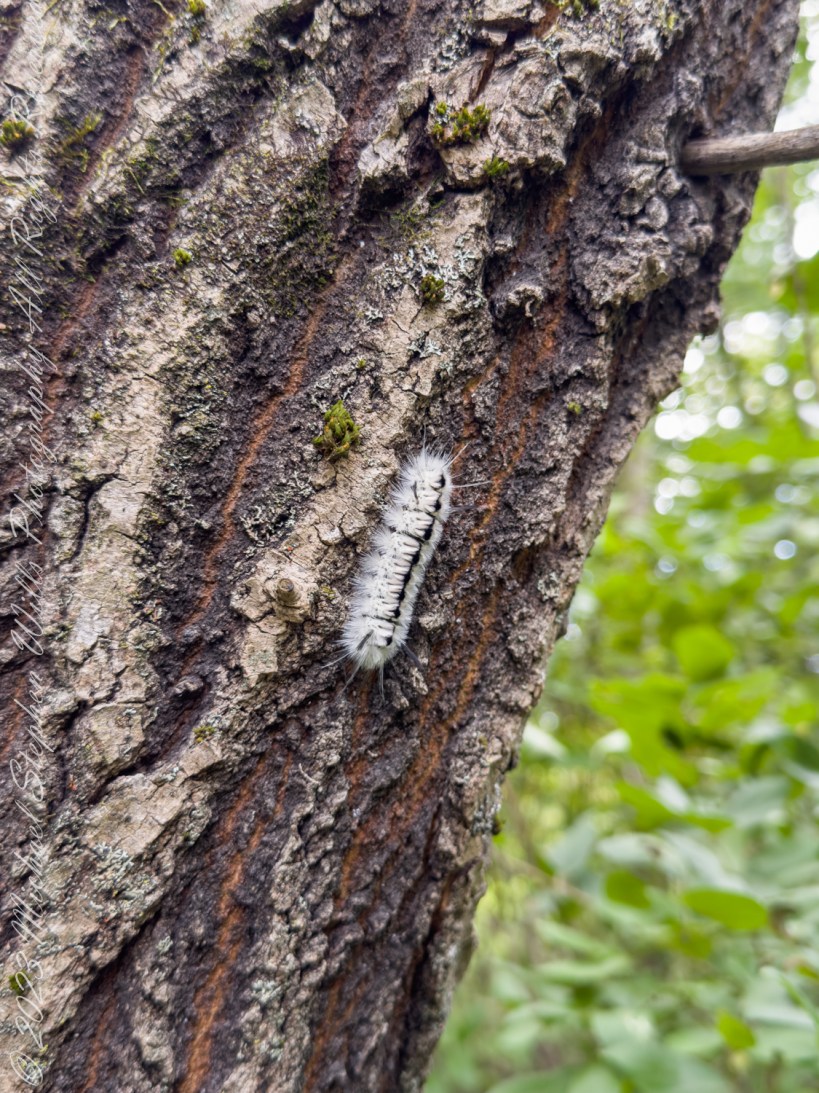
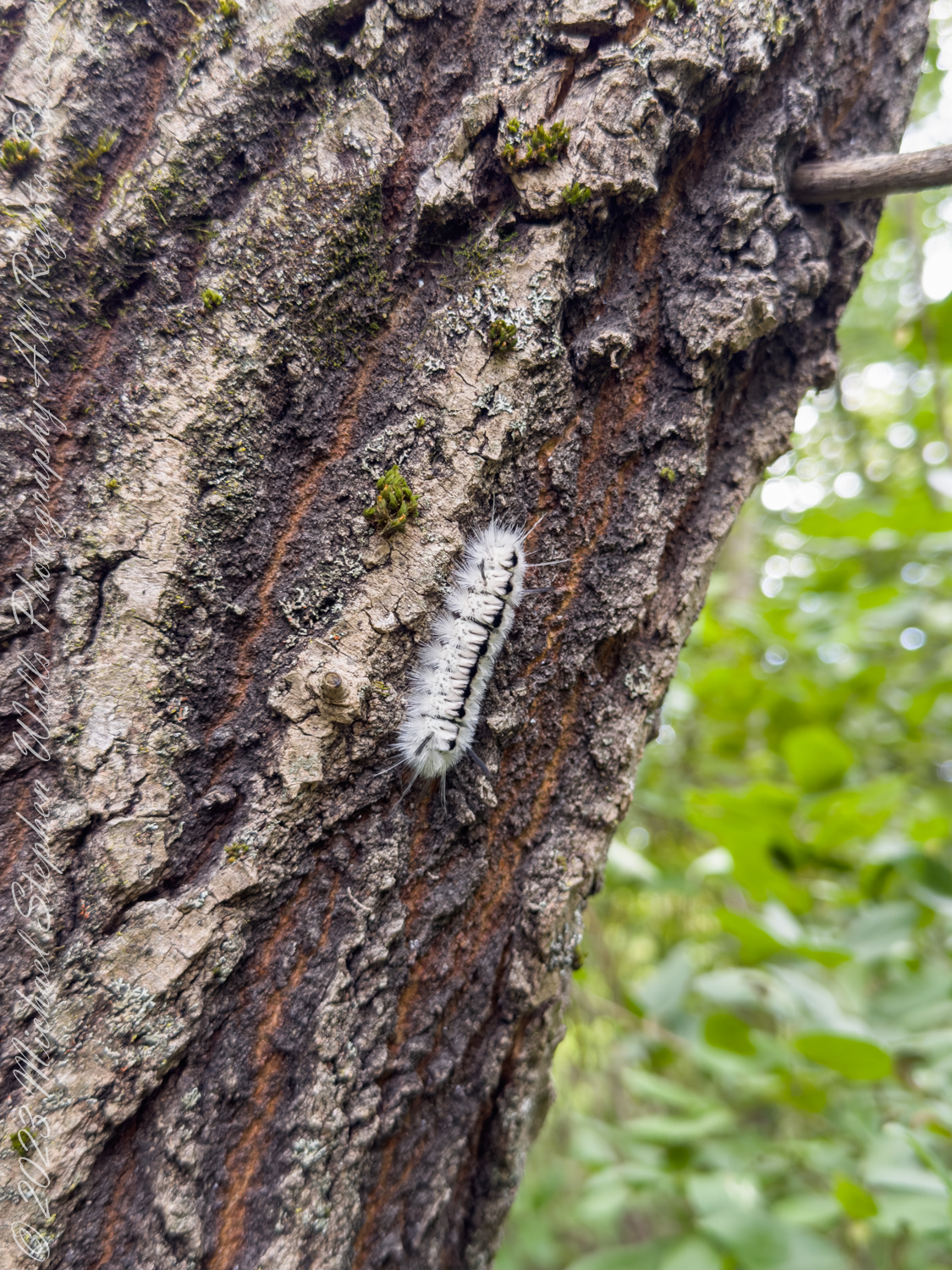
As they explored further, I glanced at the trees, their trunks coated in a rich tapestry of moss and lichen. Then, something caught my eye—a familiar white and black figure on the bark of a young tree, I’ll call it a hickory.

“Hey, boys, come over here for a second. I’ve got something to show you,” I called, my voice calm but laced with excitement. Sam and Rory, ever eager, bounded over. “Look at this caterpillar.”

Their faces lit up when they spotted it. “Whoa, it’s so fuzzy!” Sam exclaimed.

“Yeah, but don’t touch,” I warned gently, kneeling to get a better look. “This little guy is called a Hickory Tussock Moth Caterpillar. See those long white hairs? Some of them can irritate your skin. Always good to admire from a distance.”

Rory looked up at me, wide-eyed. “What does it turn into?”

I smiled. “That’s the magic of it. This caterpillar will eventually become a moth, a Hickory Tussock Moth, in fact. But right now, it’s preparing for a long journey. In just a few weeks, it’ll spin itself a cocoon and wait all winter before emerging as a moth in the spring.”

Sam squinted at the caterpillar, studying its every bristle. “So it’s it’s going to sleep for the winter?”

“Exactly,” I said, pleased with his understanding. “It’s one of nature’s ways of resting and preparing for something new.”

The boys stared at the caterpillar in silence for a moment, and I could tell their young minds were spinning with thoughts. Maybe they were thinking about their own journeys—how each season brought something new to learn, something new to experience.

As we moved on from the caterpillar, deeper into the woods, I couldn’t help but feel a quiet sense of gratitude. These moments, small as they may seem, were the kinds of memories that last a lifetime. I was passing down not just knowledge but a love for the natural world, a connection to the earth that I hoped would stay with them long after I was gone.

We finished our adventure with planting two oak saplings. The boys dug in the rich soil, each working carefully as we prepared a young sapling to take root. I watched as they placed the sapling into the earth, their hands gentle yet sure. Together, we packed the soil around its base.

“You know,” I said softly, “these oaks will grow just like you two. Stronger every year. And one day, you’ll bring your own children here to see it.”

Sam and Rory exchanged a look, a flicker of understanding passing between them, and I knew the lesson had landed. Nature has a way of teaching us that growth, whether in a tree or in ourselves, takes time and patience.

As we packed up to leave, I glanced back at the hickory tree where the caterpillar still clung, a tiny, determined creature, preparing for the change to come. In that moment, I felt the same sense of wonder I’d seen in the boys’ eyes earlier. Even after all these years, nature never ceased to amaze me.

“Come on, boys,” I said, with one last glance at the woods. “Let’s see what other adventures await us.”

Copyright 2024 Michael Stephen Wills All Rights Reserved