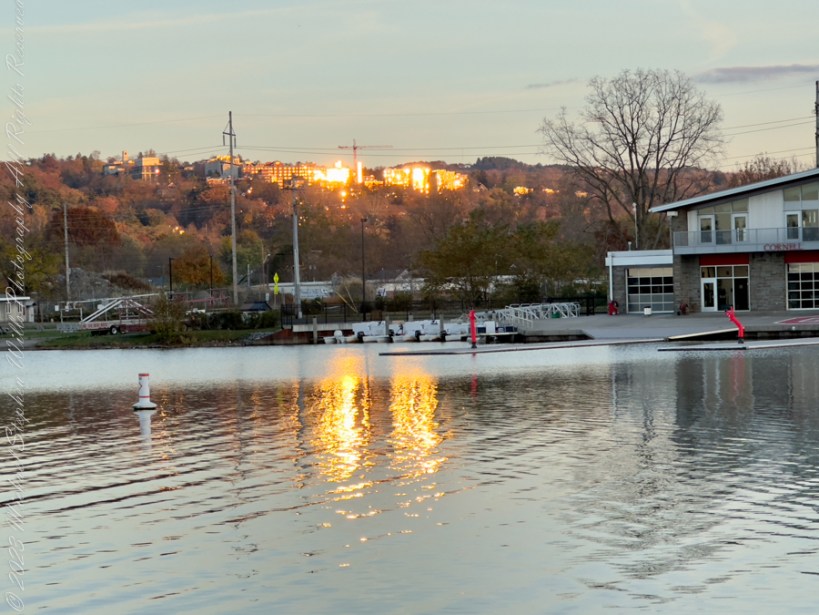
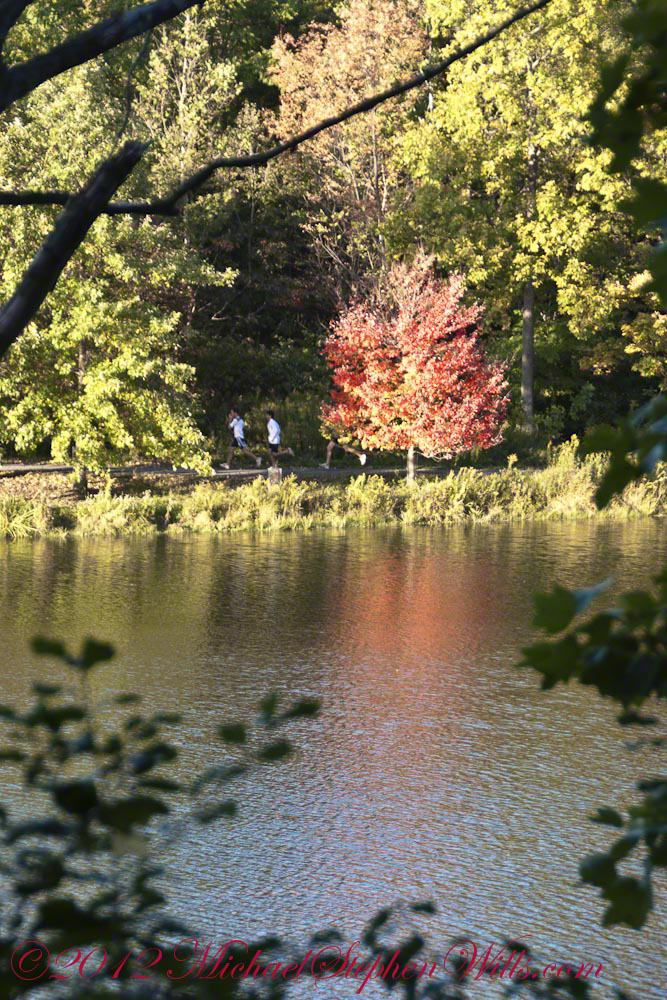
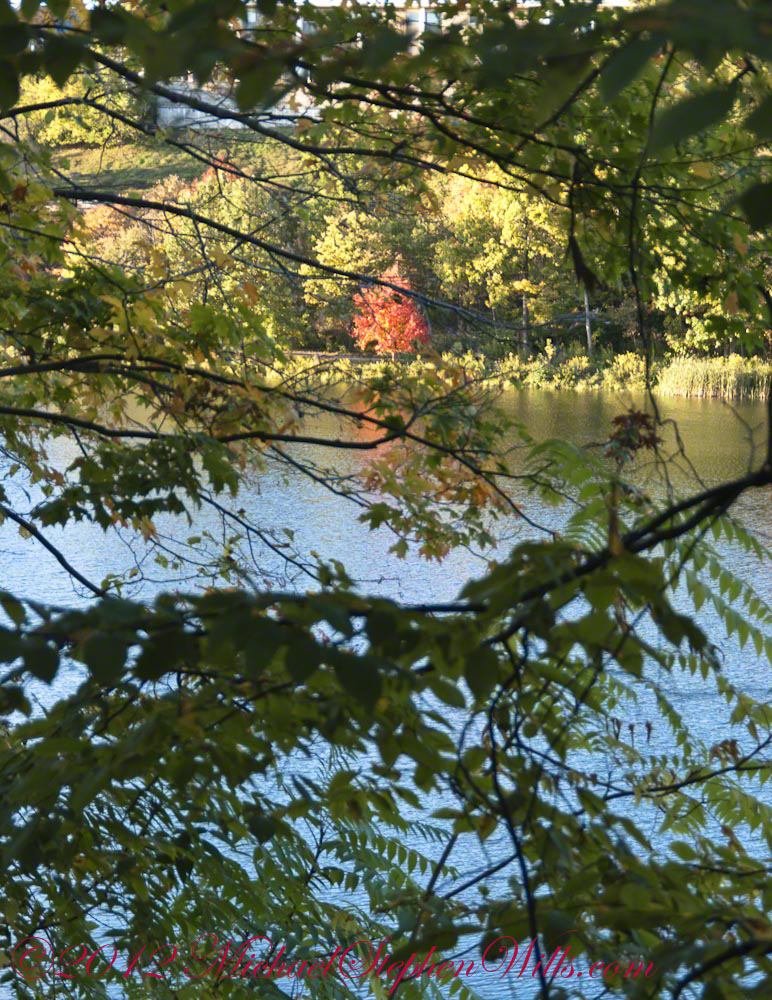
An evening at Cayuga Lake Inlet, home to the Cornell University Crew, is depicted as a serene haven for reflection. The Collyer Boathouse, vital to the local lore, sits across the inlet holding a rich history of crew camaraderie and competition.
Hartung–Boothroyd Observatory is a leading educational facility, aiding in the study of astrophysics, tracking asteroids, and fostering diverse academic collaborations.
Perched on Mount Pleasant in the town of Dryden, New York, the Hartung-Boothroyd Observatory (HBO) stands as a testament to the celestial curiosity that Cornell University has nurtured for decades. It is a gateway to the stars, a place where the heavens unfold in wondrous detail to the eyes of astrophiles and the lenses of powerful telescopes.
The observatory is home to a reflecting telescope, one of the largest in New York State dedicated to both education and research. This remarkable instrument, housed under a retractable dome, has provided students and researchers with direct experience in astronomical observations since its establishment in 1974.
HBO isn’t just an observatory; it is a bridge between the terrestrial and the cosmic. It represents an educational philosophy that values direct engagement with the subject of study. Undergraduates, graduates, and faculty members flock to the facility to engage in projects that range from studying variable stars and exoplanets to tracking asteroids. Here, theoretical astrophysics meets the tactile world, allowing for an integrated understanding of the universe’s complexities.
Are images are from a handheld Apple Iphone 14 ProMax, raw files edited on camera and then from Adobe Lightroom.
It is used mainly as a Cornell University (Ithaca, New York) teaching facility for upper-level astronomy classes. The observatory is named financial contributions of M. John Hartung ’08 (chemical industrialist and donor) and in honor of the labor of Samuel L. Boothroyd (founding professor and chairman of astronomy 1921–1942). The telescope construction began in the 1930s and the observatory was dedicated in 1974. It contains the James R. Houck 60 centimeter telescope and various instruments.
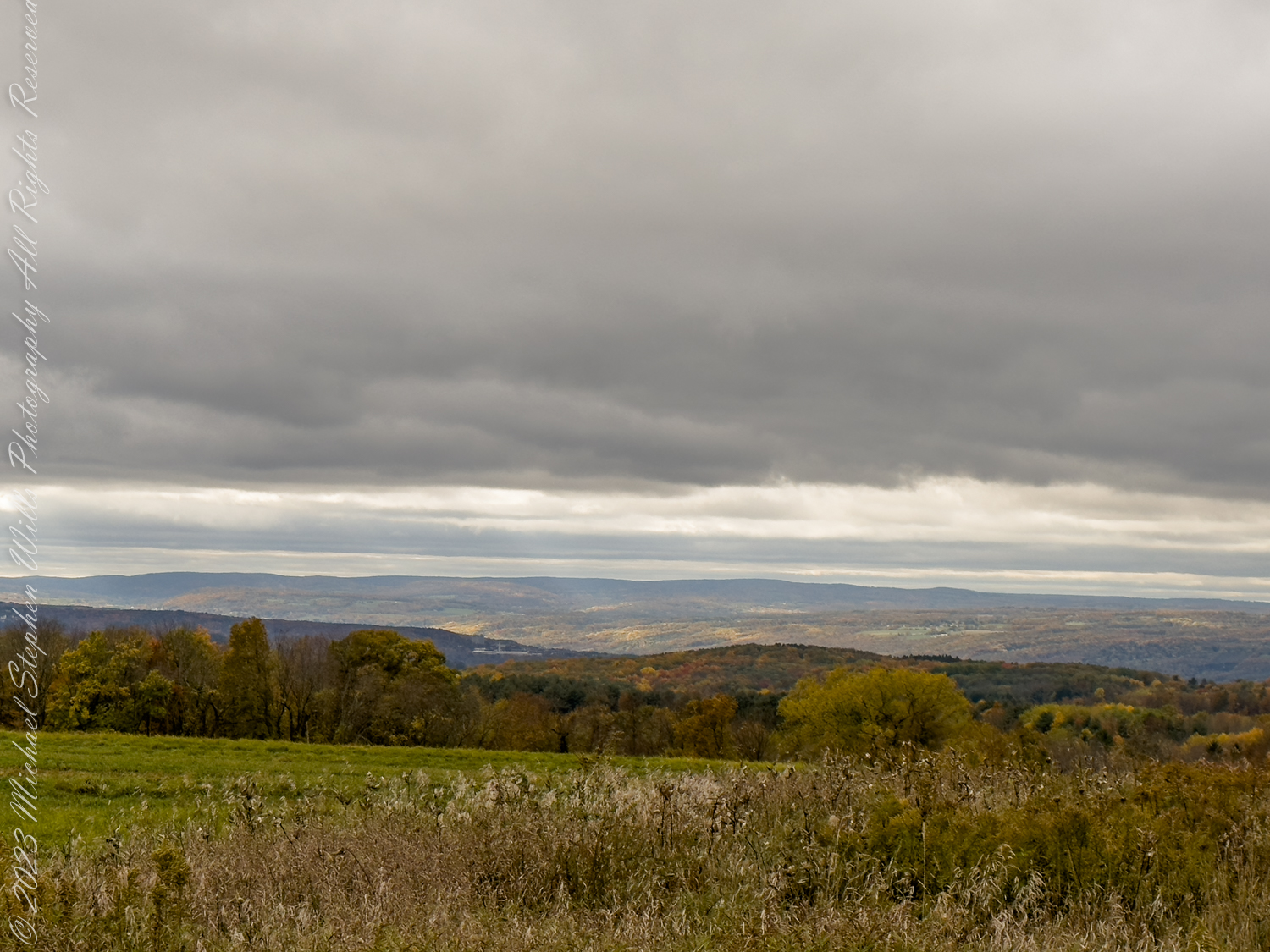
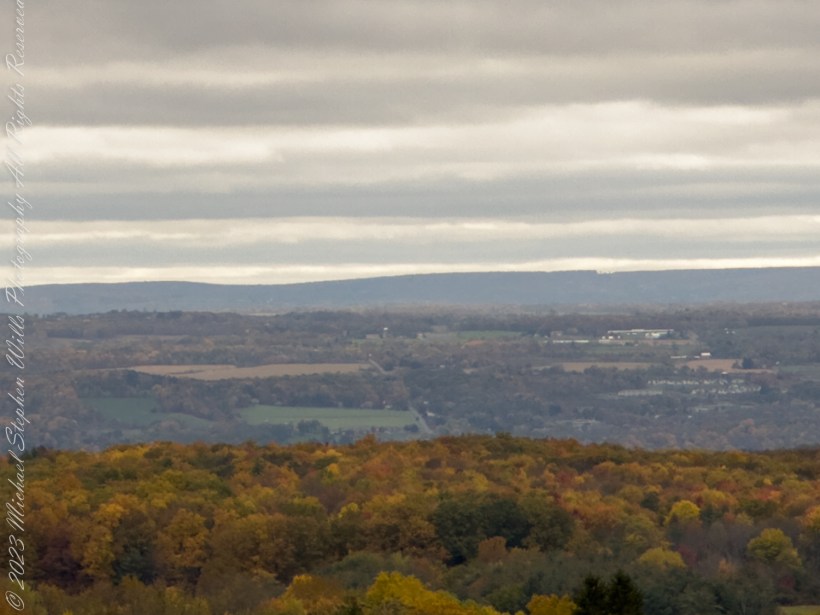
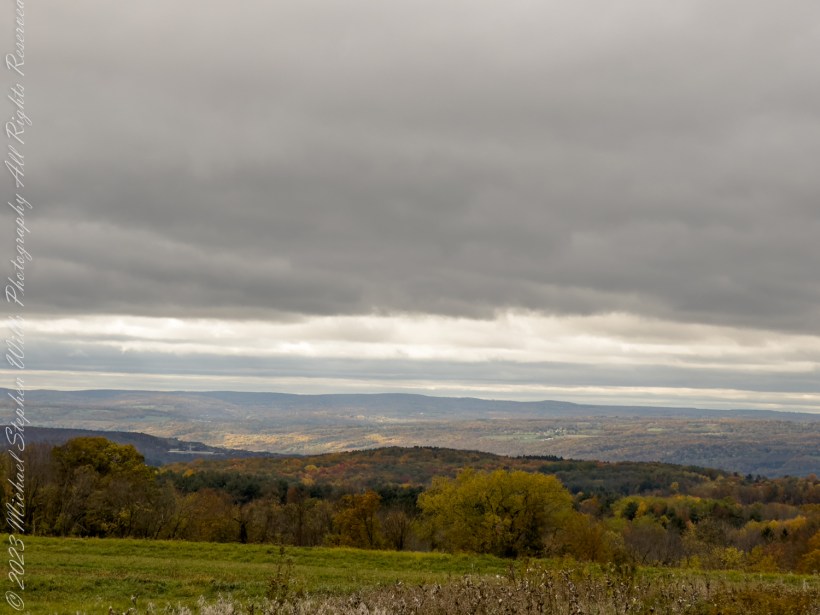
View east from Cornell University’s Hartung–Boothroyd Observatory
The James R. Houck telescope at HBO was a project initiated by its namesake in 1972, using optics and a lightweight tube which had been fabricated in the late 1930s by Samuel T. Boothroyd, Cornell’s first astronomer, and a mounting constructed by George Gull ’72 as his senior design thesis in Mechanical Engineering.
View southwest toward Ithaca College
The telescope, control electronics and instruments are largely the result of work done by undergraduates since 1970. It was manufactured by the students at the Tompkins, Tioga and Seneca BOCES and by Therm, Inc., with mirror coatings by Evaporated Metal Films corporation, all in Ithaca. The latter corporation was founded by members of Boothroyd’s scientific team, as he pioneered the use of evaporated metal coatings in astronomical optics. The telescope and observatory were dedicated in 1974.
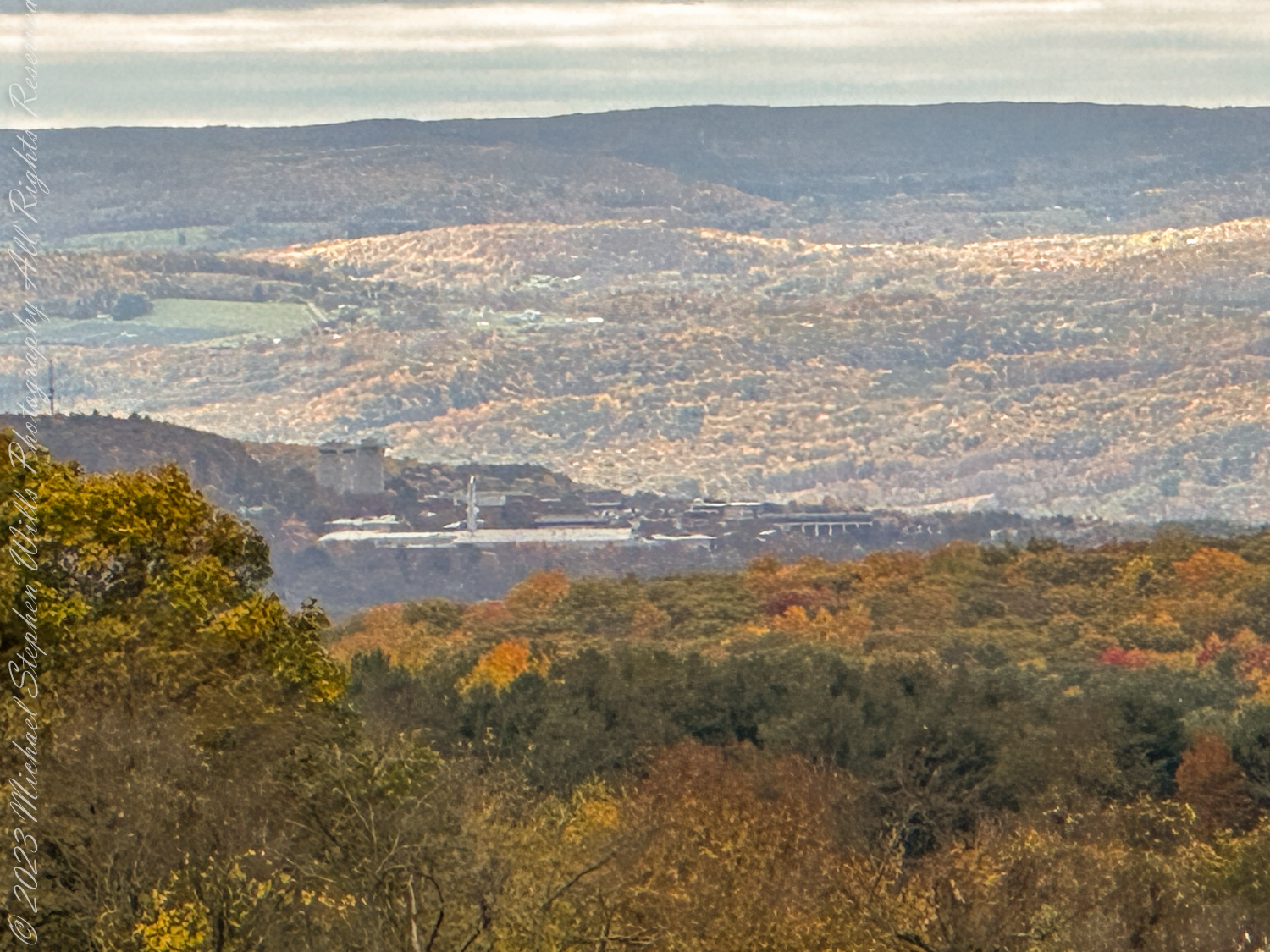
View southwest toward Ithaca College I zoomed in to see the residential towers.
The primary mirror is made of Pyrex from the Corning Glass Works and is in fact from a 1/8-scale test pour by the Corning company in preparation for the making of the 200″ Palomar mirror. It is 0.635 m (25 inches) in size, but the outer half inch is masked. The focal length of the mirror is 2.5m (100″) or f/4.
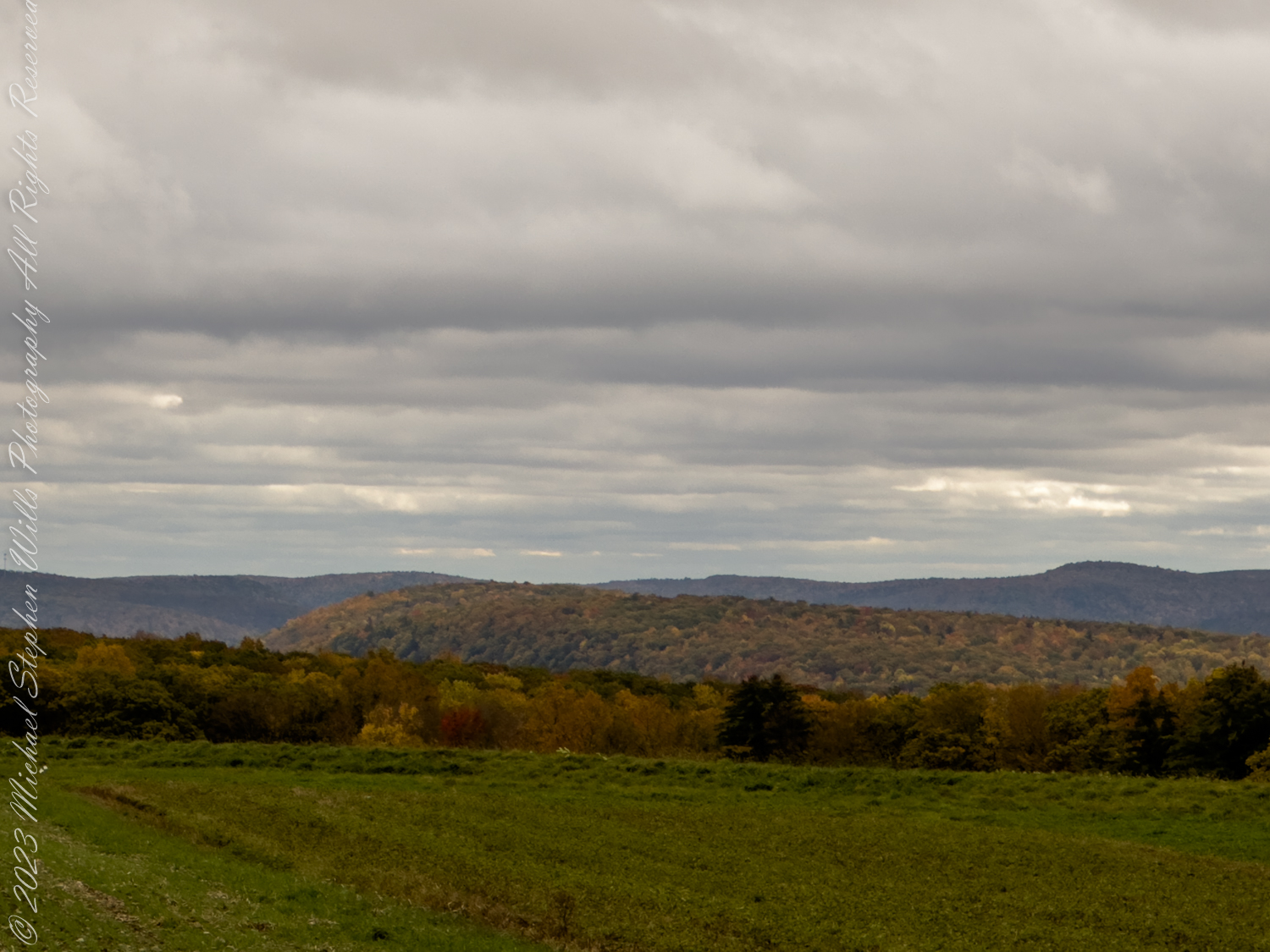
View southeast toward Hammond Hill
The Cassegrain design of the James R. Houck telescope is a combination of a primary concave mirror and a secondary convex mirror, often used in optical telescopes, the main characteristic being that the optical path folds back onto itself, relative to the optical system’s primary mirror entrance aperture. This design puts the focal point at a convenient location behind the primary mirror and the convex secondary adds a telephoto effect creating a much longer focal length in a mechanically short system.
View south
The secondary is an 8″ mirror made of Cervit (a low thermal coefficient material). In combination with the primary, it yields a final f/13.5 beam to the nominal focus, which lies 18.5″ behind the primary mirror’s vertex. At nominal focus, the plate scale is about 24 arcsec/mm, with an effective focal length of 8.57 m.
View southwest toward Ithaca College
The telescope, control electronics and instruments are largely the result of work done by undergraduates since 1970. It was manufactured by the students at the Tompkins, Tioga and Seneca BOCES and by Therm, Inc., with mirror coatings by Evaporated Metal Films corporation, all in Ithaca. The latter corporation was founded by members of Boothroyd’s scientific team, as he pioneered the use of evaporated metal coatings in astronomical optics.
The dome itself, like all professional observatories, is unheated. The telescope and instrumentation can be controlled from a neighboring control room which is heated and offers standard amenities plus several computers for simultaneous data reduction.
The observatory was founded by James Houck and managed by him through 2006. The principal contact is Don Barry, who managed the facility from 2006-2015, and taught Experimental Astronomy using the facility.
“Graduates” of the HBO project are now senior engineers and technical managers as well as graduate students, research associates and faculty at major universities.
Moreover, the observatory is a beacon for interdisciplinary collaboration. It’s not uncommon to find astronomers working alongside computer scientists, engineers, and educators. This cross-pollination of ideas enhances the potential for innovation, fostering new techniques in data analysis, instrument design, and educational methods. The observatory’s role extends beyond its primary function; it is a hub of convergence for diverse academic disciplines, all under the umbrella of exploring the unknown.
HBO also contributes to the global astronomical community through its research. The data collected here feed into larger networks of observation and analysis, aiding in the collective endeavor of mapping and understanding the universe. Its strategic location in upstate New York, away from the light pollution of large urban centers, grants it relatively clear night skies, making it an invaluable resource for both optical astronomy and astrophotography.
In an era where space exploration has captured the public imagination like never before, observatories such as the Hartung-Boothroyd are more crucial than ever. They serve as terrestrial launchpads, propelling minds into the realm of scientific inquiry. Here, the vastness of space becomes approachable, the mechanics of the cosmos decipherable, and the mysteries of the universe a little less mysterious.
As the night falls and the stars emerge, the Hartung-Boothroyd Observatory continues its silent vigil over the heavens. It stands as a beacon of knowledge and discovery, an educational catalyst, and a gateway to the stars. For the students and astronomers who work from this dome on Mount Pleasant, HBO is more than an observatory—it is a vessel navigating the infinite ocean of the night sky, a journey that begins in the heart of Cornell University and extends to the edges of the observable universe.
Baker Laboratory dates back to World War I. With 200,000 square feet of space, the lab is home to Cornell’s Chemistry and Chemical Biology Department, the Chemistry Research Computing Facility, the Nuclear Magnetic Resonance Facility, and the Advanced ESR Technology Research Center (whew!!).
Trees on a Knoll
On the right, on a knoll, is a European beech tree (Fagus sylvatica). The Latin name holds a double irony. Standing, alone, high above East Avenue on the Cornell campus (sylvatica means “of forests”) as a memory of the forests growing above Cayuga Lake is a being once worshiped as a god. In Celtic mythology, Fagus is the god of beeches.
A maple is on the left, genus Acer of unknown species. I recognize it from the shape.
Copyright 2023 Michael Stephen Wills All Rights Reserved
Cornell University is on a west-facing hill above Cayuga lake. Libe Slope is between the West Campus and Quadrangle / Libraries.
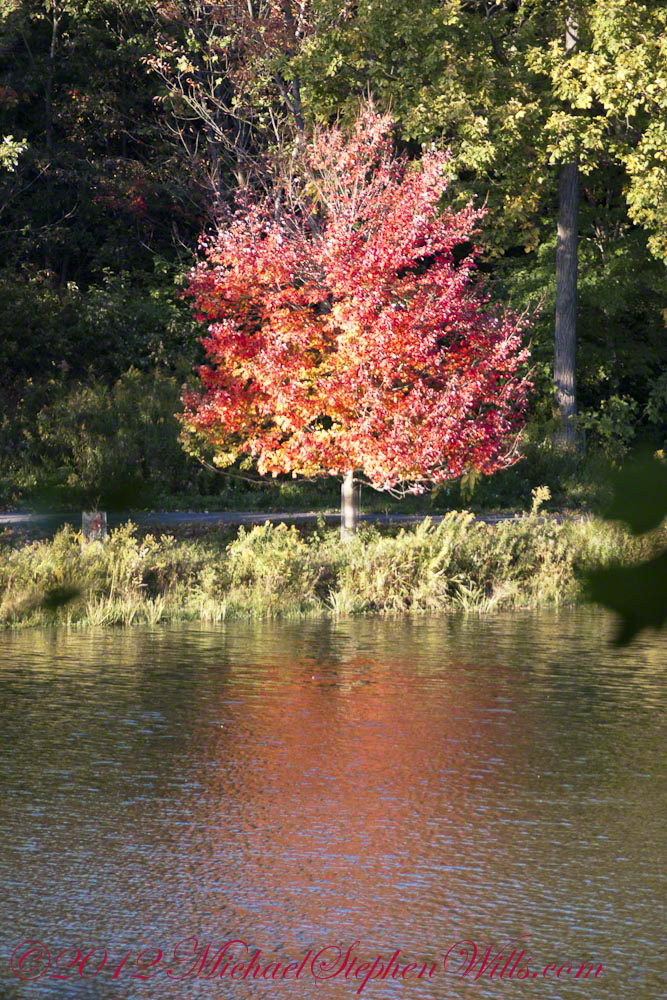
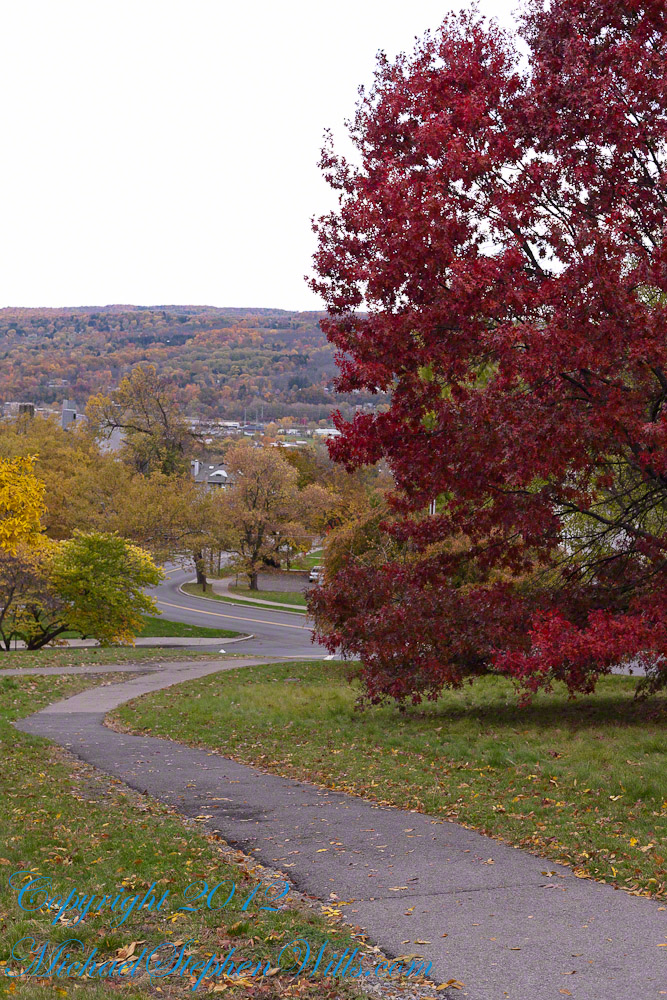
Besides the exercise of walking the 18 degree incline several times each day, Cornell students and alumni remember The Slope for autumn color.
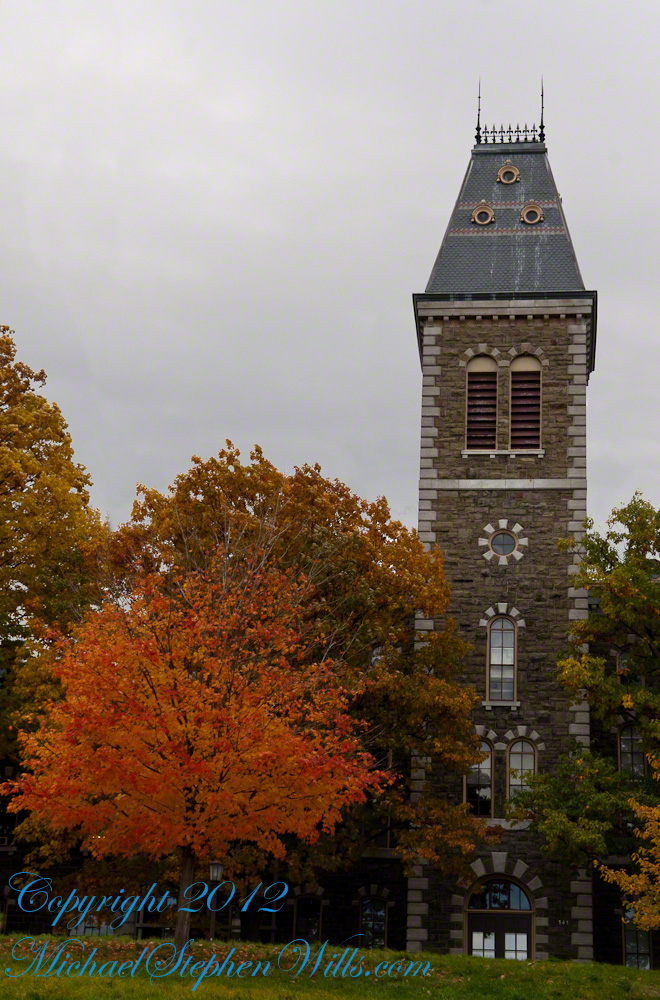
Built in 1868, McGraw Hall has the honor of having the first of Cornell’s towers. The building is built of Ithaca stone and is home to the American Studies Program, Department of History, Department of Anthropology, and Archaeology Intercollege Program. The first floor of McGraw Hall houses the McGraw Hall Museum, a collection of roughly 20,000 objects from around the globe used for teaching by the Anthropology Department.
Hickory
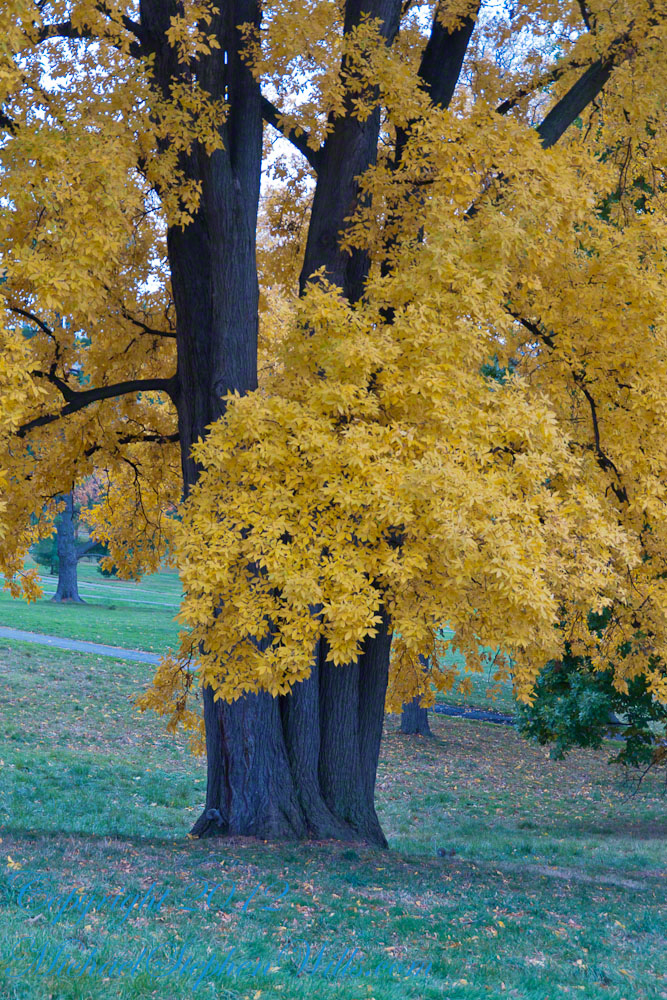
This is a Pignut Hickory (Carya glabra), the largest tree according to a 2009 Campus Tree Inventory (see link, below).
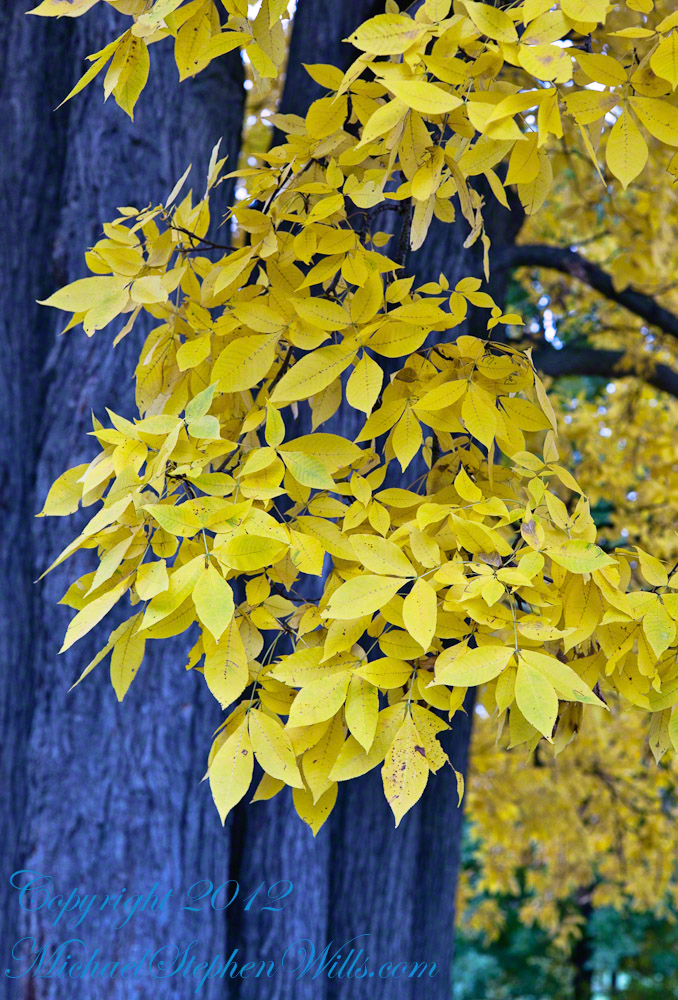
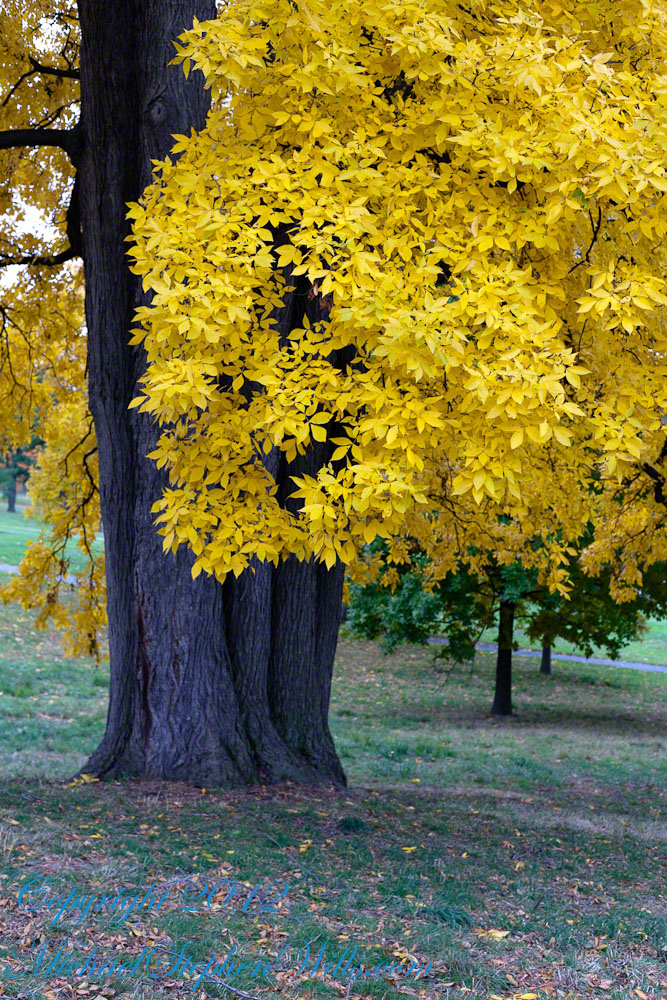
Seen from the north on a cloudy October day, this Pignut Hickory (Carya glabra) is the largest tree on the Cornell Campus, at 79 inches in diameter.
This hickory grows south of the Johnson Museum and among the autumn glories, it is the largest and brightest yellow canopy on Libe Slope.
Contrast
I remember this hickory for the contrast between the canopy and trunk, the way the clumps of yellow hang from dark boughs. An overcast day is the best to capture this spectacle. October 20, 2012 provided both bright sun and dark, rolling autumn clouds. I waited on the north side, sheltered from the glare of the sky, for these perfect moments.
Leaves and Nuts
The pignut hickory is native to these Eastern United States. It is known to favor moist slopes and this specimen has thrived on The Slope. The ground beneath it is thick with nuts.
One week later as Hurricane Sandy approached the east coast
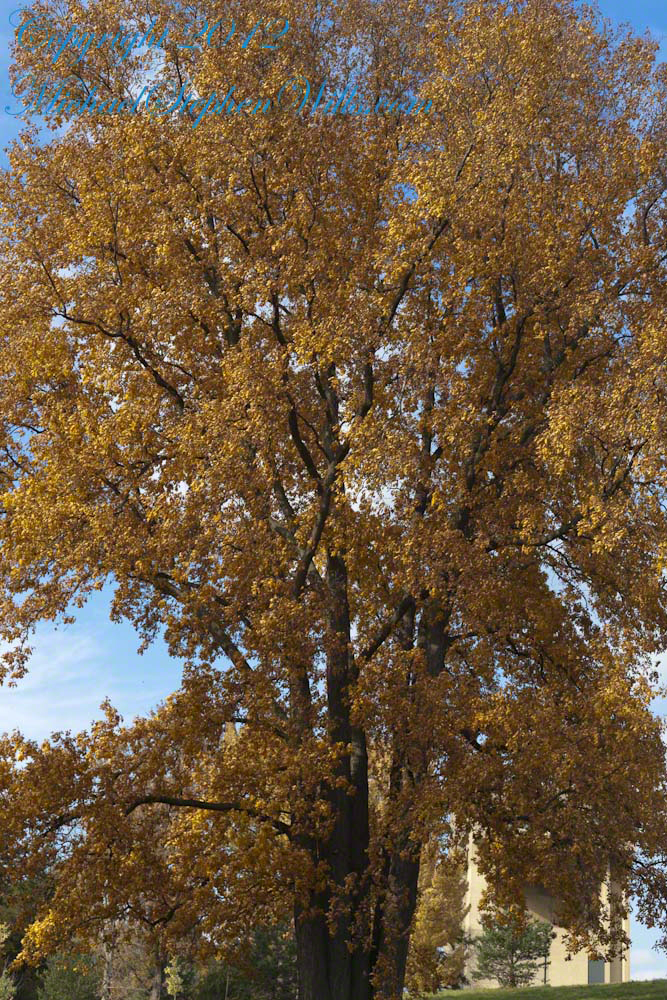
Just one week later, late afternoon on a sunny Friday as hurricane Sandy approached the east coast the hickory has fewer, tawny golden leaves.
Later in October the bright yellow leaves of the Libe Slope Hickory darken to a tawny gold. The Johnson Museum is in the right background.
Wonderful Flow of Limbs among Gold
Seen from the north on a cloudy October day, this Pignut Hickory (Carya glabra) is the largest tree on the Cornell Campus, at 79 inches in diameter.
References
A Photo Tour of Key Buildings at Cornell University by Allen Grove
Thursday last, grandsons Sam and Rory and I visited Sapsucker Woods, enjoying a late summer morning from a wooden observation platform over this watery swamp. “Look, hot dogs!!”
“Typha is a genus of about 30 species of monocotyledonous flowering plants in the family Typhaceae. These plants have a variety of common names, in British English as bulrush or reedmace, in American English as reed, cattail, or punks, in Australia as cumbungi or bulrush, in Canada as bulrush or cattail, and in New Zealand as reed, cattail, bulrush or raupo.”
“Many parts of the Typha plant are edible to humans. Before the plant flowers, the tender inside of the shoots can be squeezed out and eaten raw or cooked. The starchy rhizomes are nutritious with a protein content comparable to that of maize or rice. They can be processed into a flour with 266 kcal per 100 grams, and are most often harvested from late autumn to early spring. They are fibrous, and the starch must be scraped or sucked from the tough fibers. Baby shoots emerging from the rhizomes, which are sometimes subterranean, can be picked and eaten raw. Also underground is a carbohydrate lump which can be peeled and eaten raw or cooked like a potato. The plant is one championed by survival experts because various parts can be eaten throughout the year. Plants growing in polluted water can accumulate lead and pesticide residues in their rhizomes, and these should not be eaten.”
“The rind of young stems can be peeled off, and the tender white heart inside can be eaten raw or boiled and eaten like asparagus. This food has been popular among the Cossacks in Russia, and has been called “Cossack asparagus”. The leaf bases can be eaten raw or cooked, especially in late spring when they are young and tender. In early summer the sheath can be removed from the developing green flower spike, which can then be boiled and eaten like corn on the cob. In mid-summer when the male flowers are mature, the pollen can be collected and used as a flour supplement or thickener.”
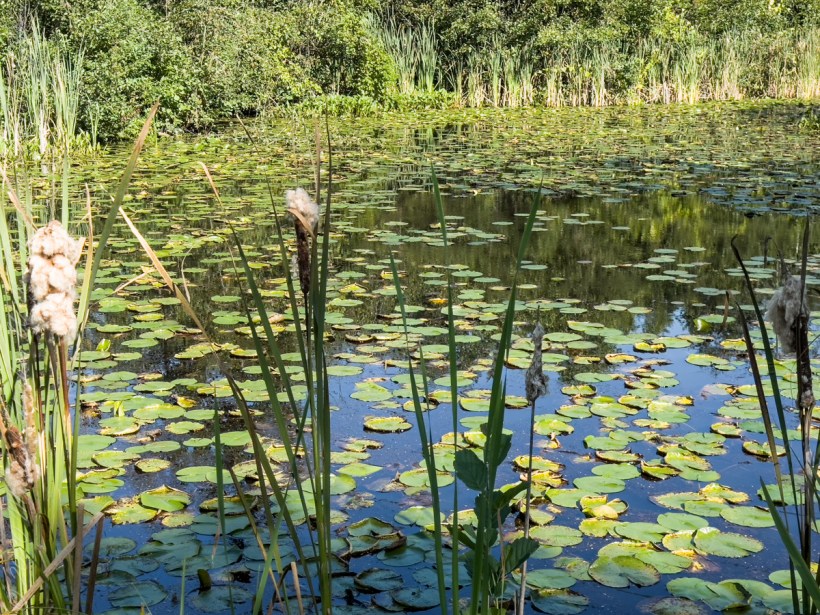
Thursday last, grandsons Sam and Rory and I visited Sapsucker Woods, enjoying a late summer morning we clambered onto a wooden platform over a watery swamp.
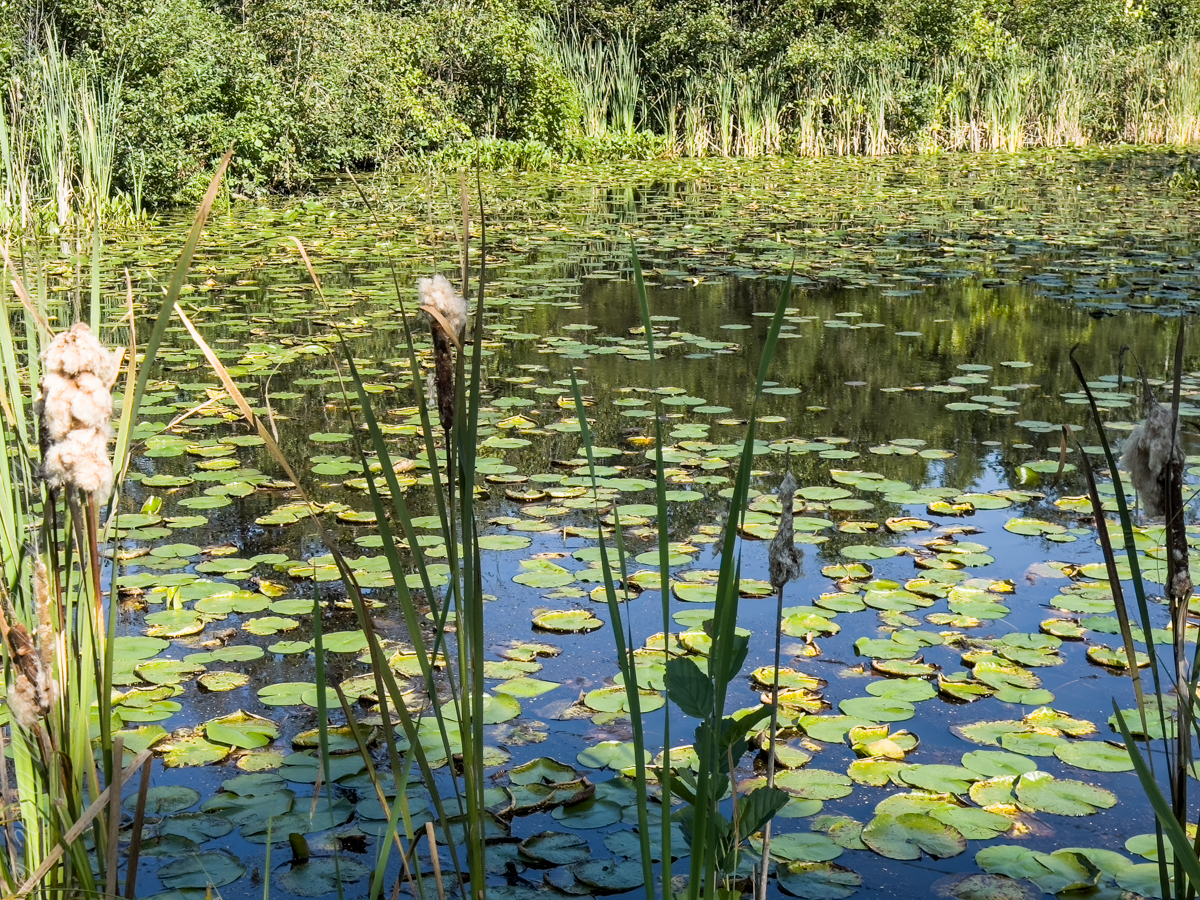
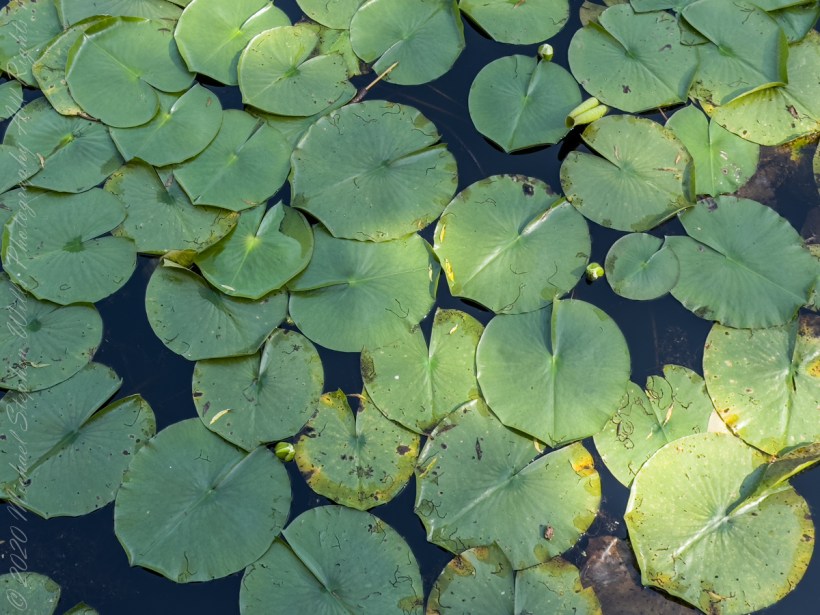
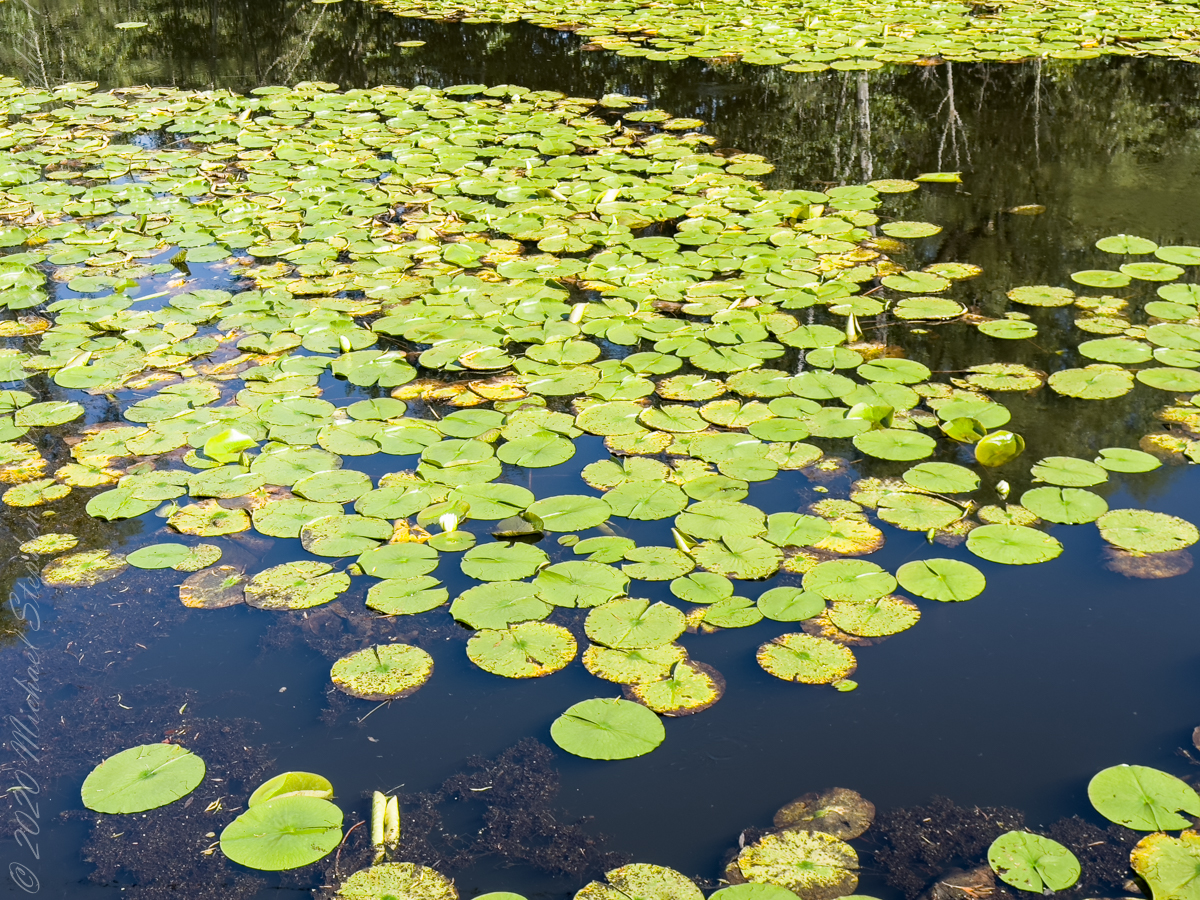
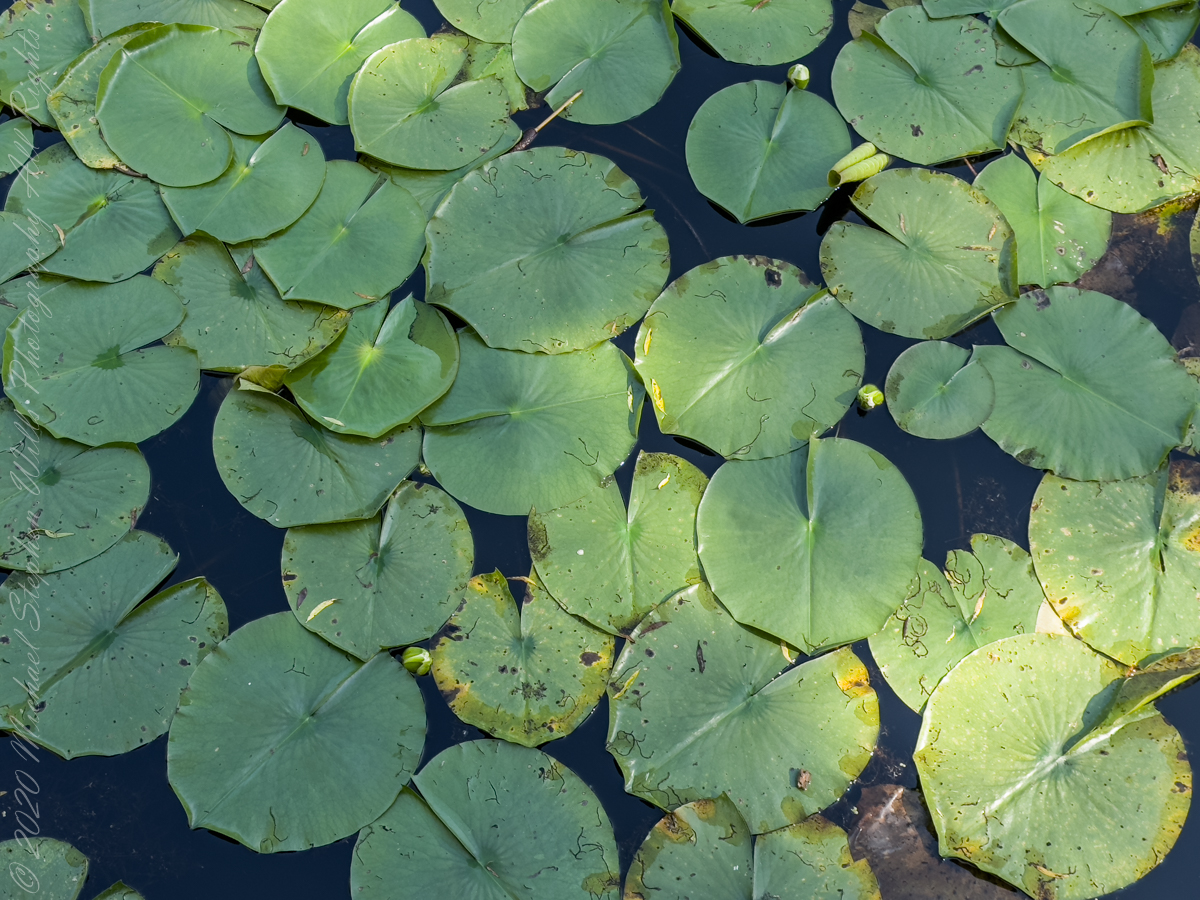
Look closely for flowers and buds of the White Water Lily native to New York State.
Although the young leaves of White Water-lily reportedly can be boiled and served as a vegetable, the main human use of this plant appears to have been medicinal. Native Americans used it as a herbal remedy for a variety of ailments, including colds, tuberculosis, bronchial complaints, toothaches, and mouth sores.
The many names for this plant: American White Waterlily, American White Water-lily, Fragrant Water-lily, Fragrant White Water Lily, Fragrant White Water-lily, Sweet Water-lily, Sweet-scented Water Lily, Sweet-scented White Waterlily, Tompkins County, Water, Water Lily, Waterlily, White Water Lily, White Waterlily, White Water-lily (Nymphaea odorata ssp. odorata)
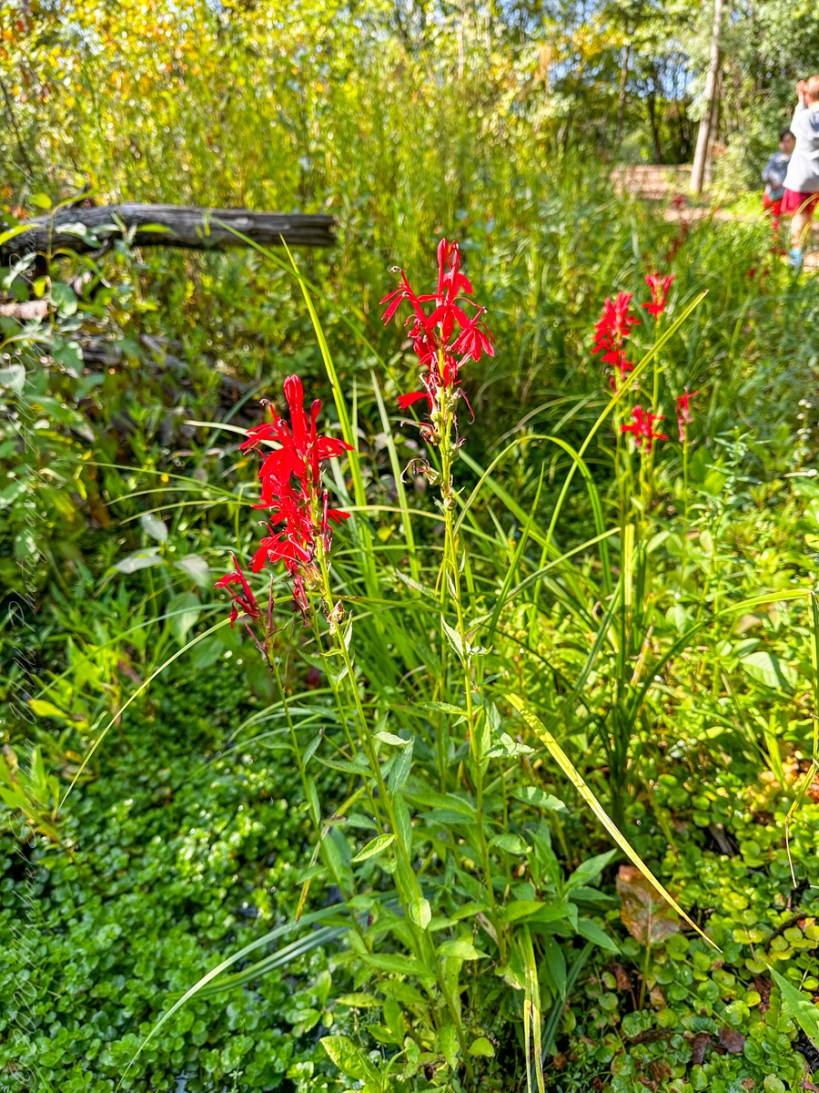
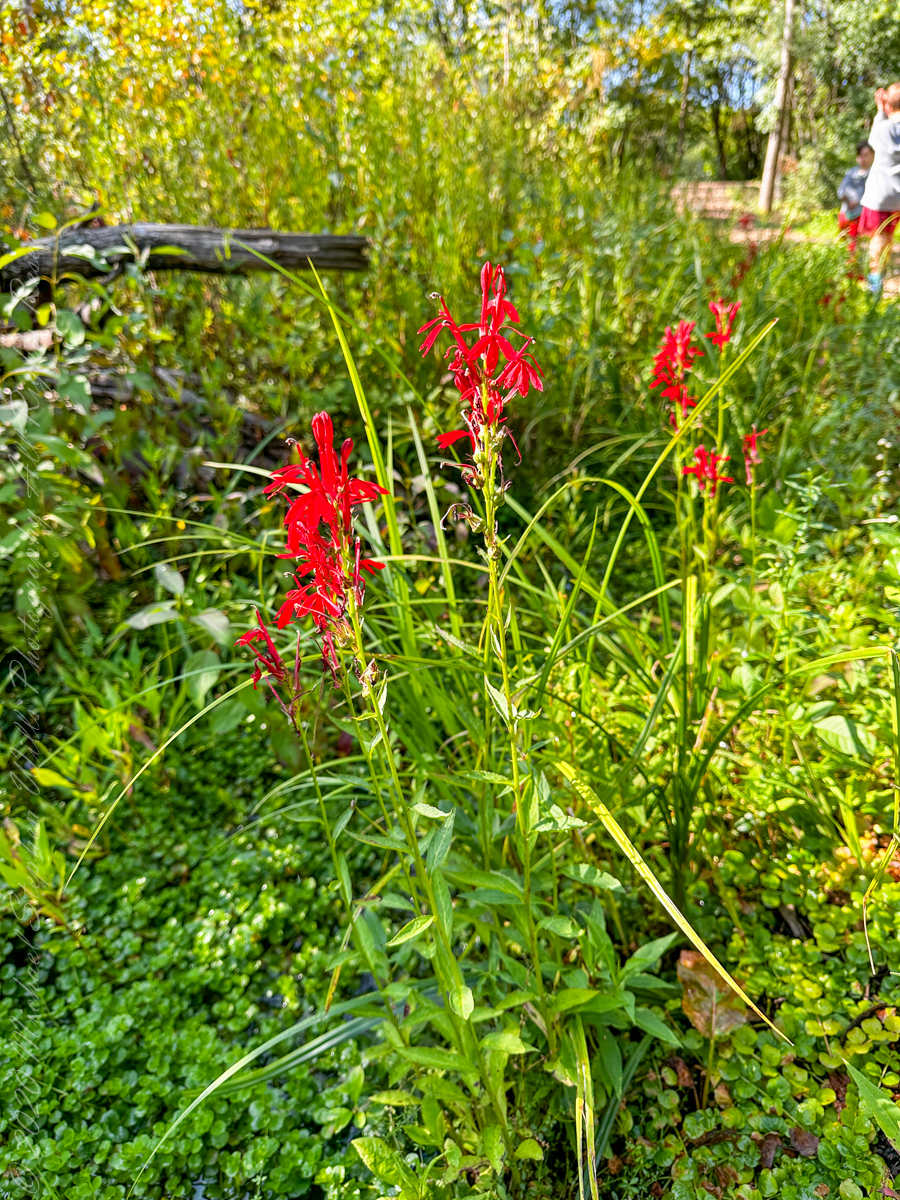
Thursday last, grandsons Sam and Rory and I visited Sapsucker Woods, enjoying a late summer morning we came upon many scarlet beauties.
Cardinal Flower (Lobelia cardinalis) is also known as Bog Sage, Cardinal Flower, Cornell Lab of Ornithology, Finger Lake Region, Hog’s Physic, Indian Pink, Red Bay, Sapsucker Woods, Scarlet Lobelia, Slinkweed, Water Gladiole.
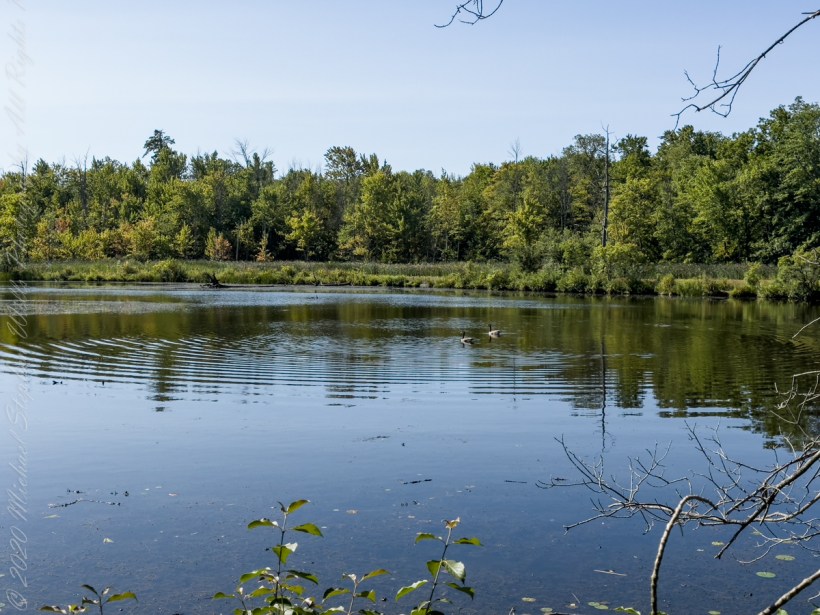
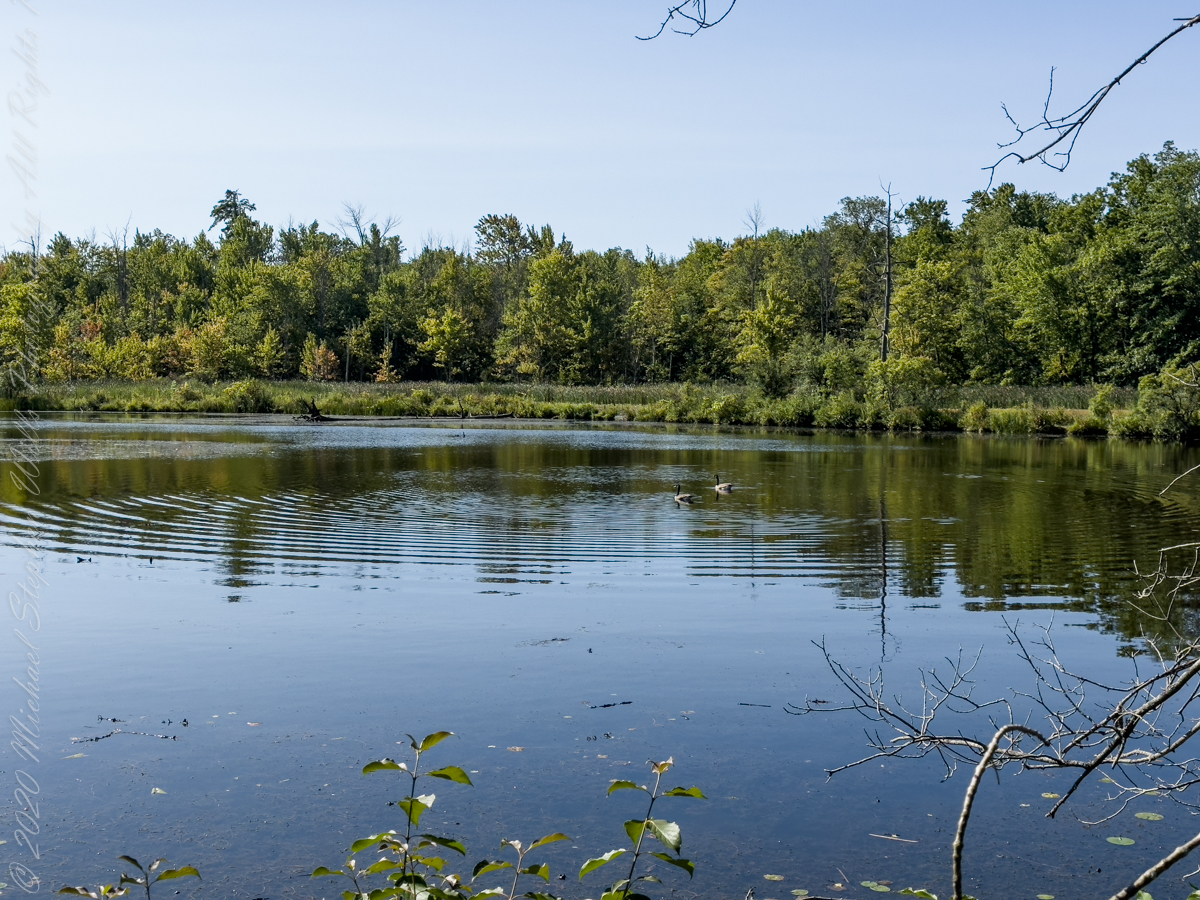
Thursday last, grandsons Sam and Rory and I visited Sapsucker Woods, enjoying a late summer morning. From the north side on Wilson Trail, these Canada geese landed on the pond.
In North America, nonmigratory Canada goose populations have been on the rise. The species is frequently found on golf courses, parking lots, and urban parks, which would have previously hosted only migratory geese on rare occasions.
Owing to its adaptability to human-altered areas, it has become one of the most common waterfowl species in North America. In many areas, nonmigratory Canada geese are now regarded as pests by humans.
They are suspected of being a cause of an increase in high fecal coliforms at beaches. An extended hunting season, deploying noise makers, and hazing by dogs have been used to disrupt suspect flocks.
A goal of conservationists has been to focus hunting on the nonmigratory populations (which tend to be larger and more of a nuisance) as opposed to migratory flocks showing natural behavior, which may be rarer.
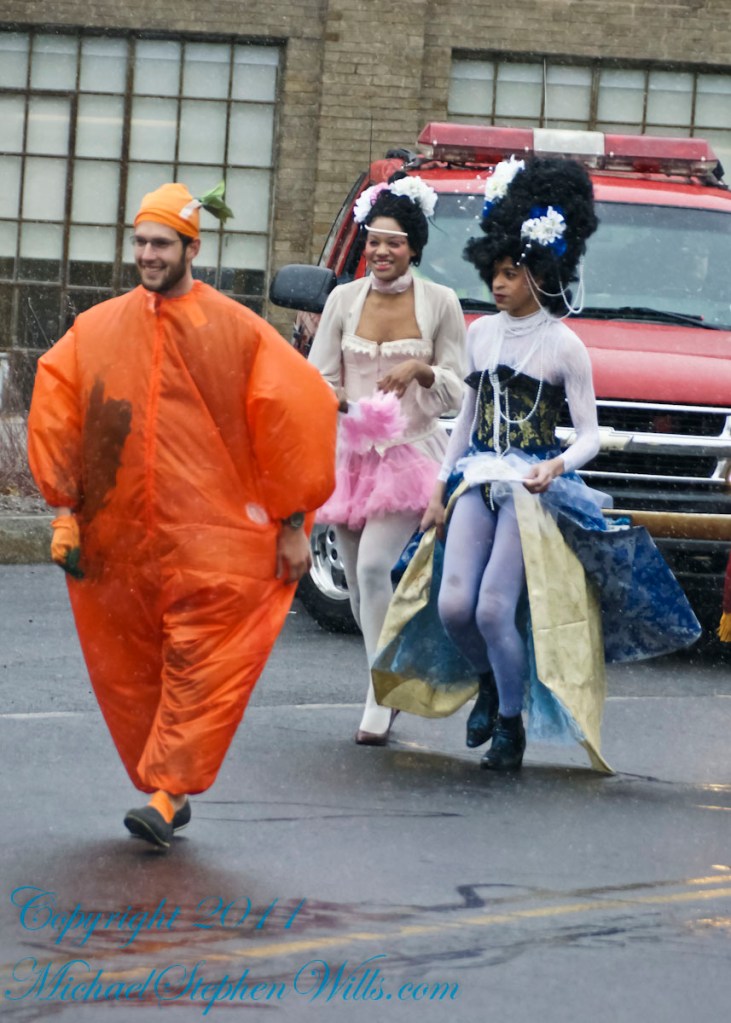
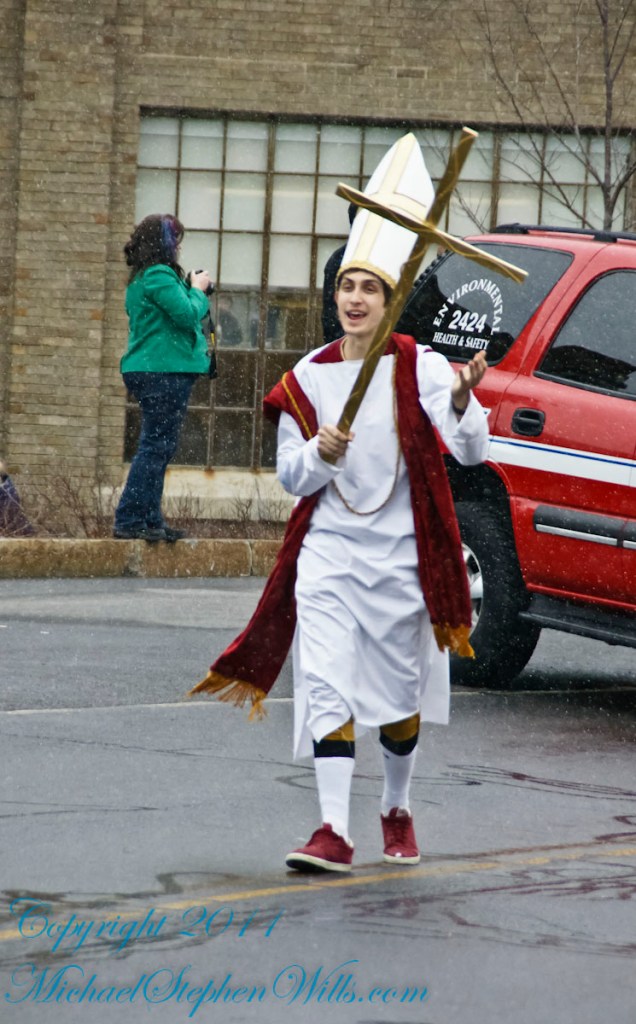
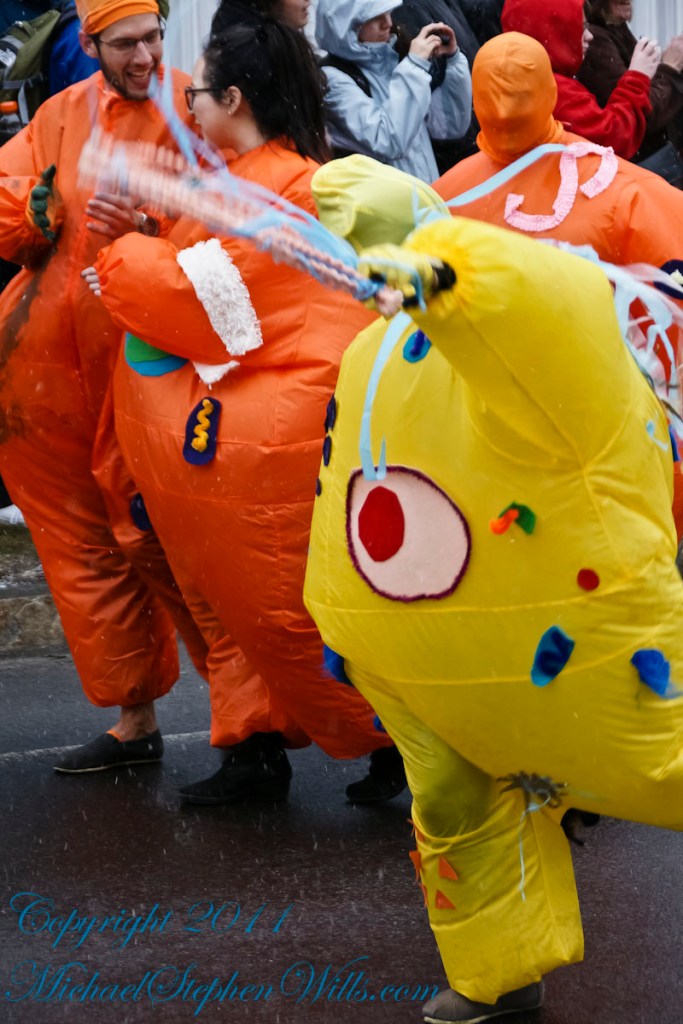
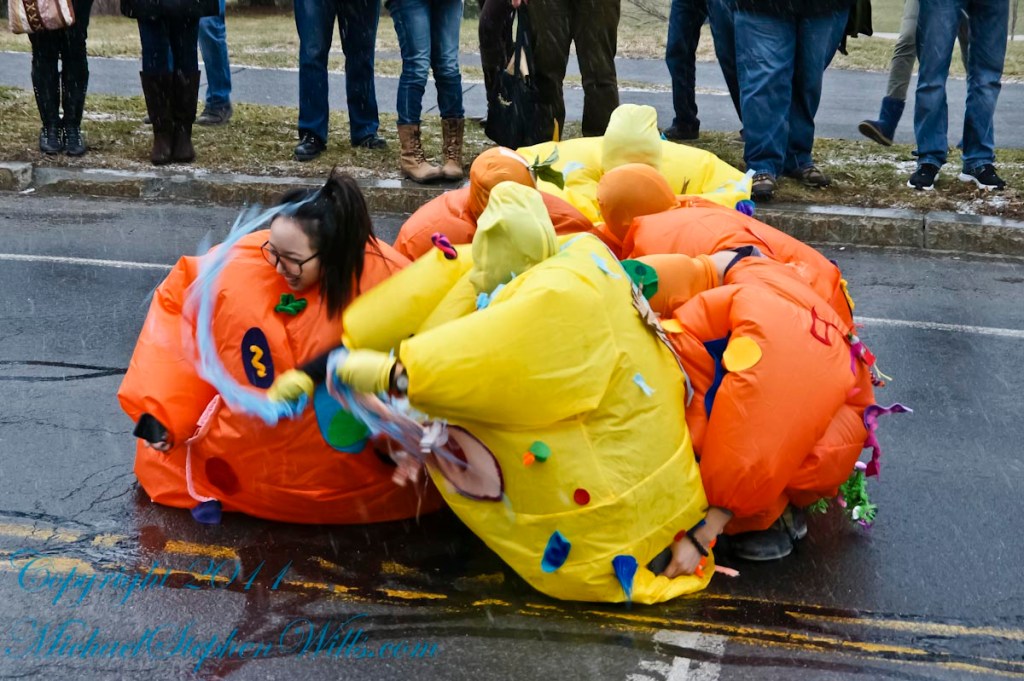
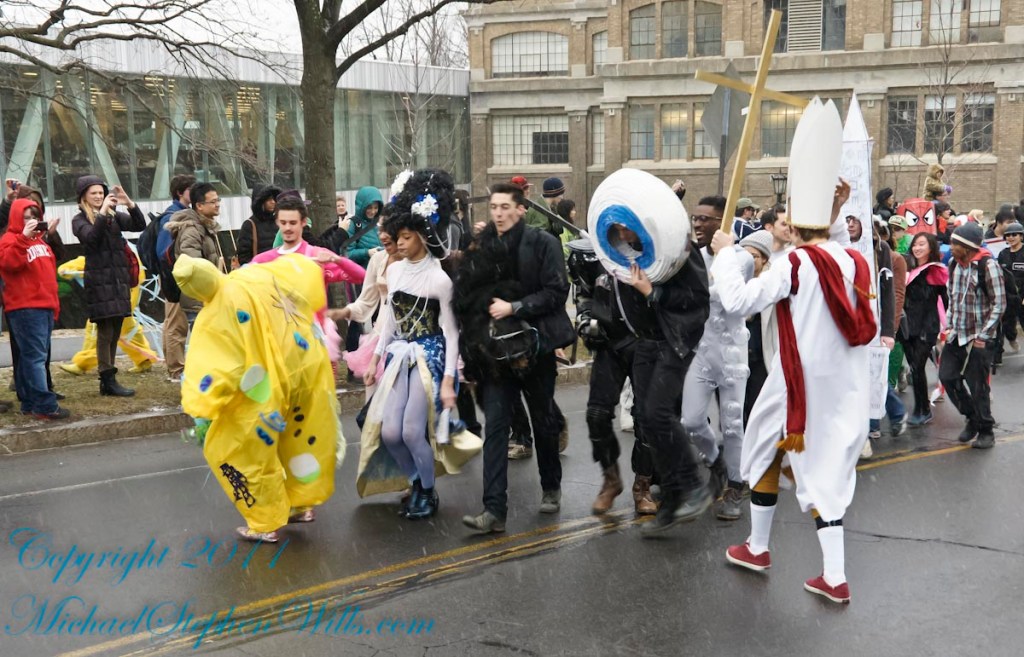
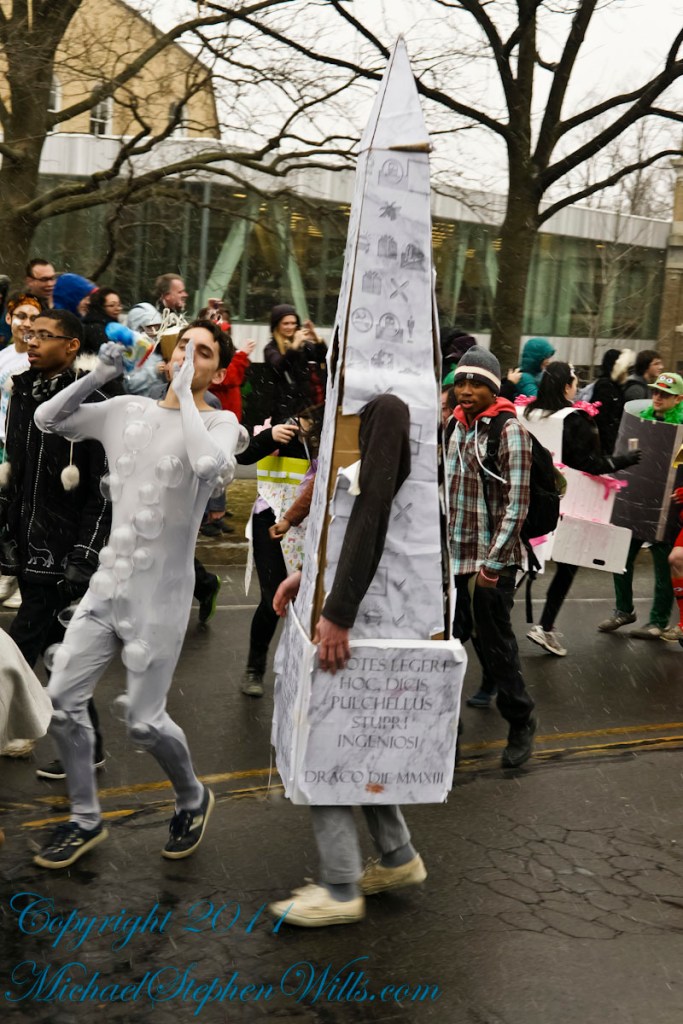
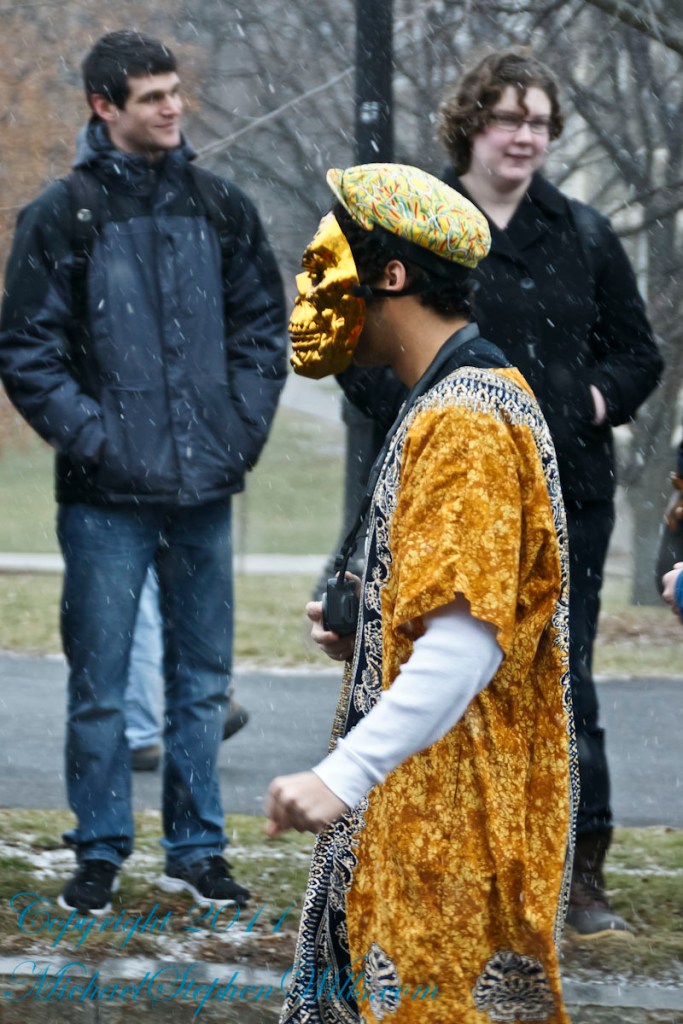
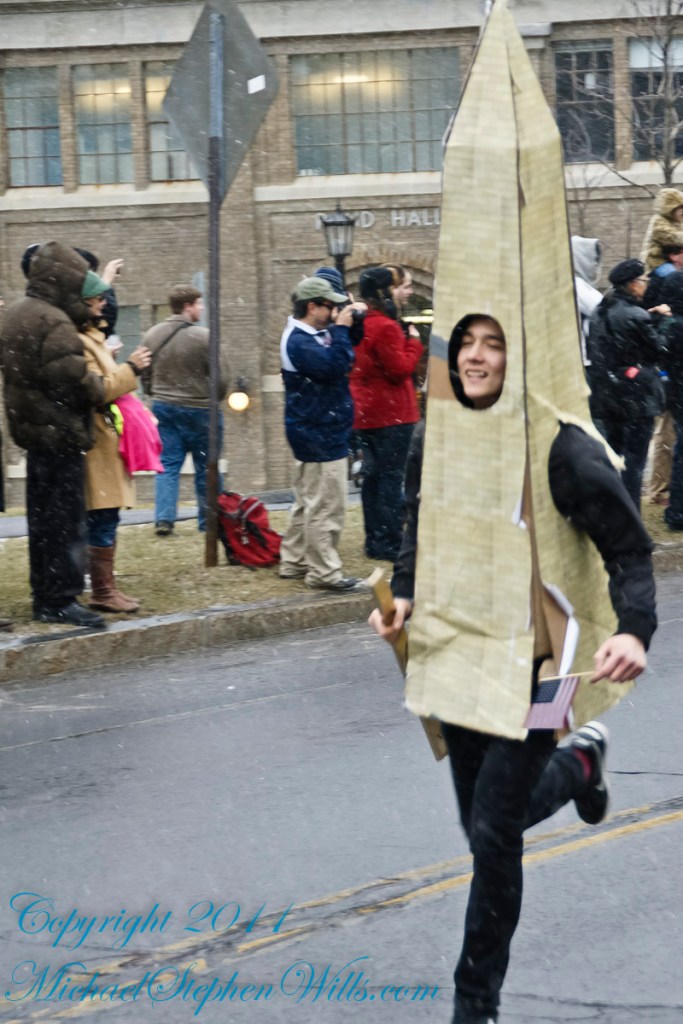
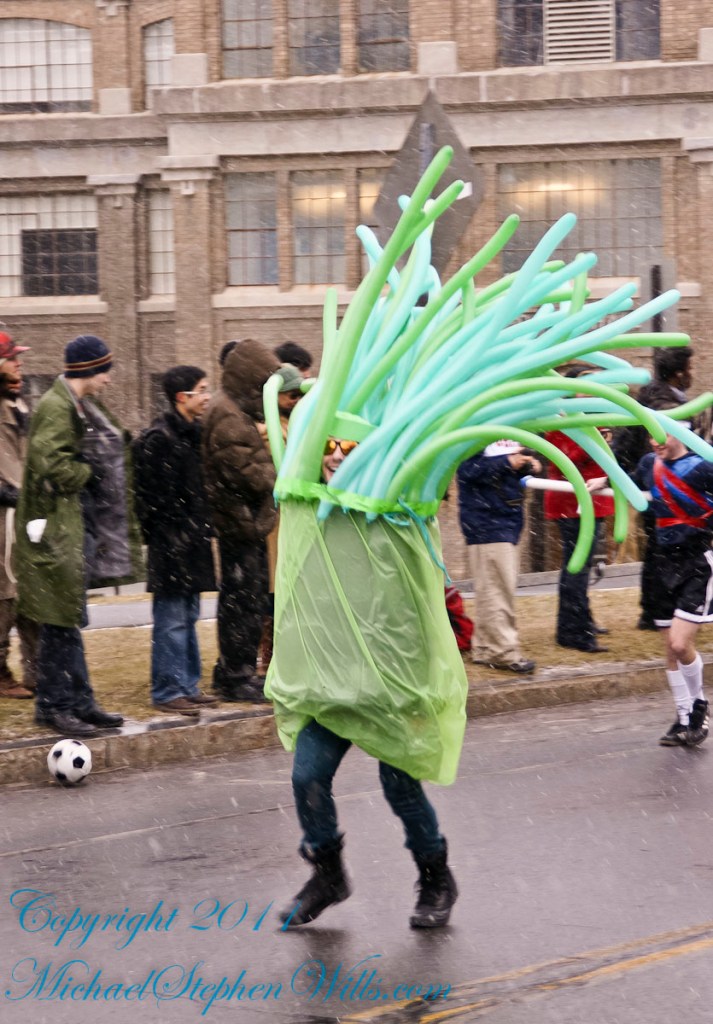
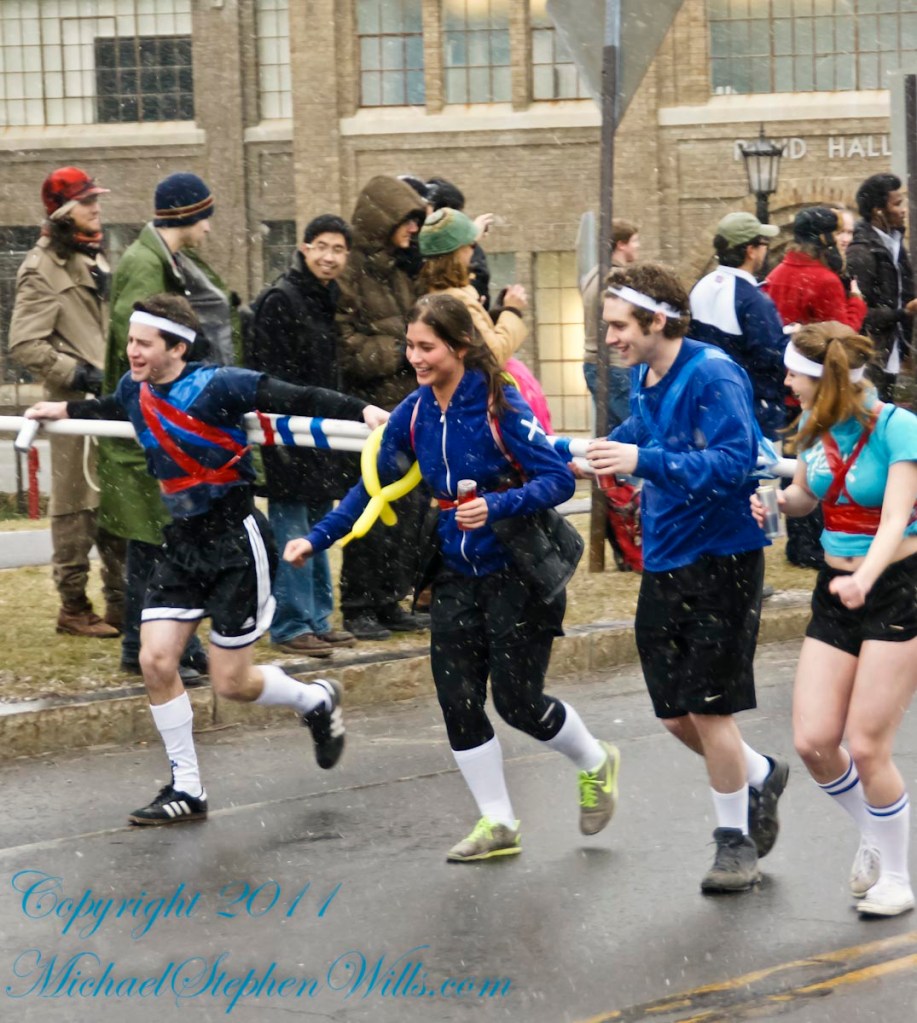
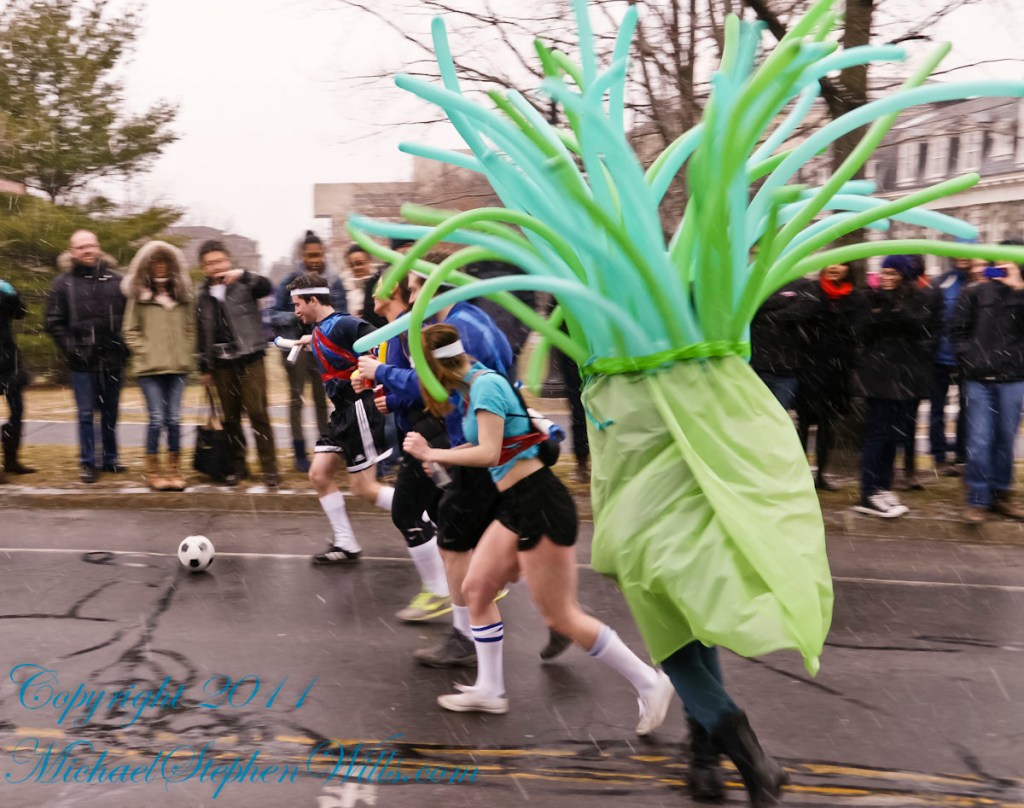
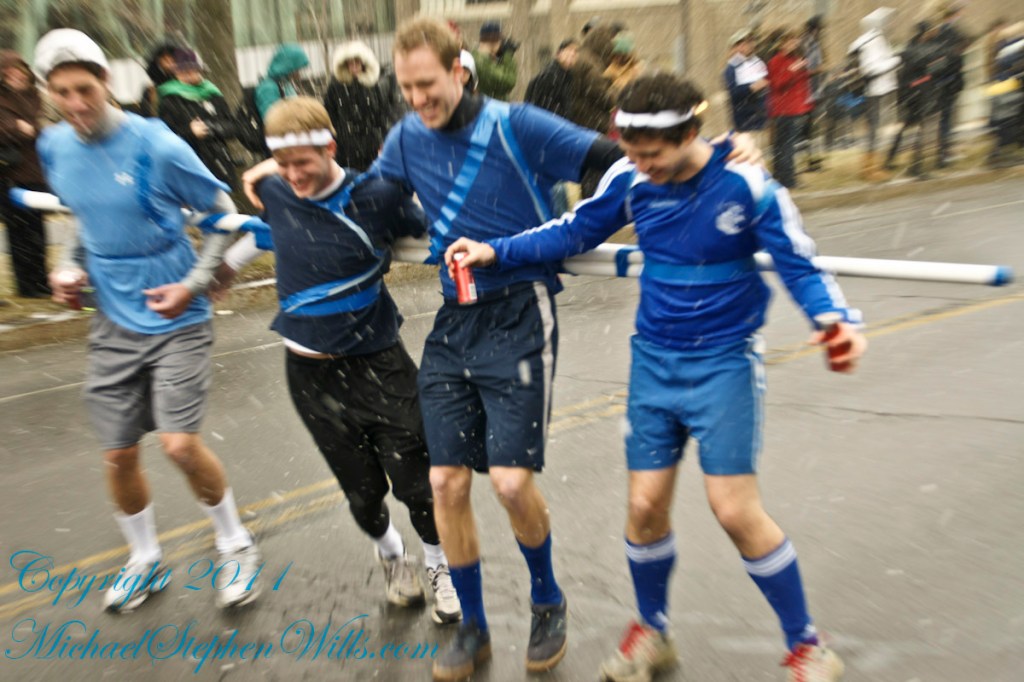
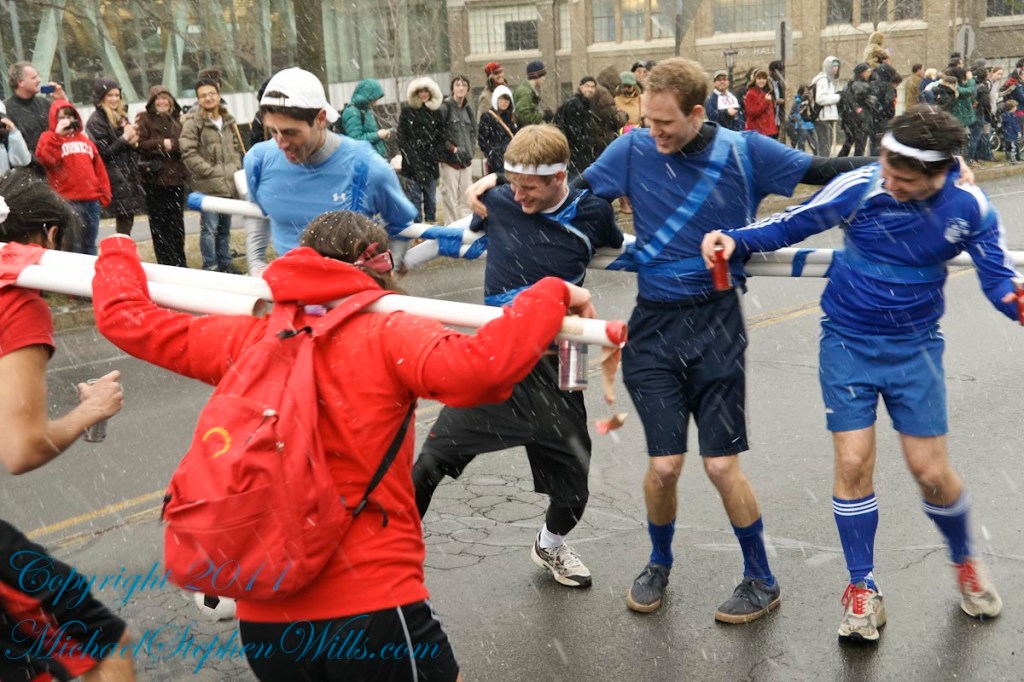
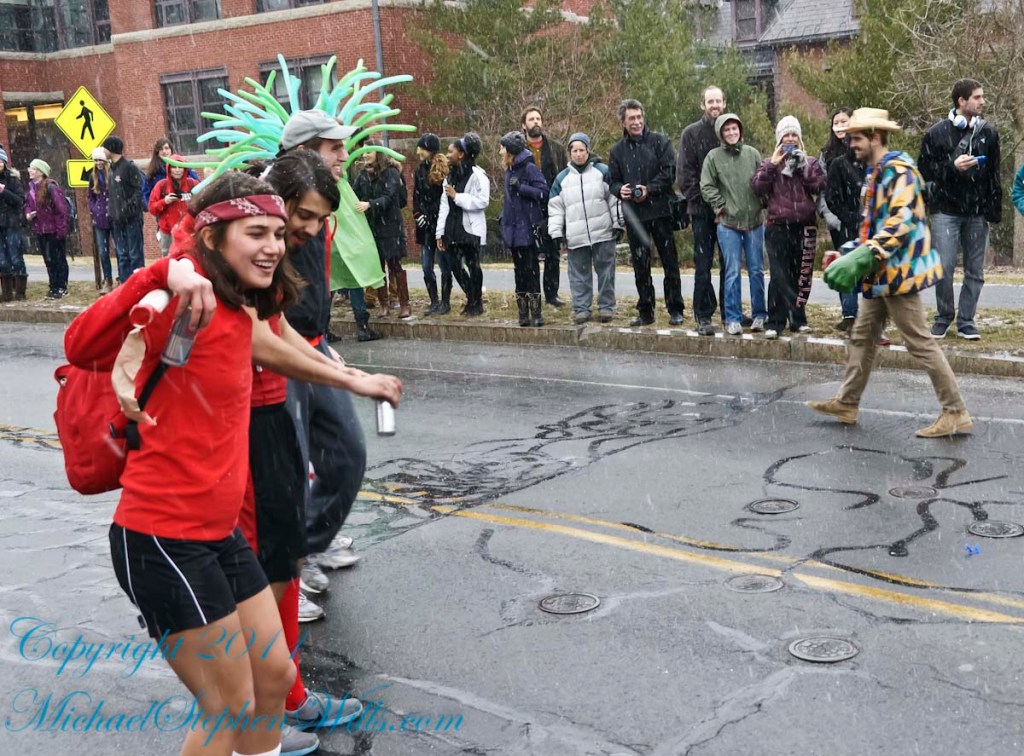
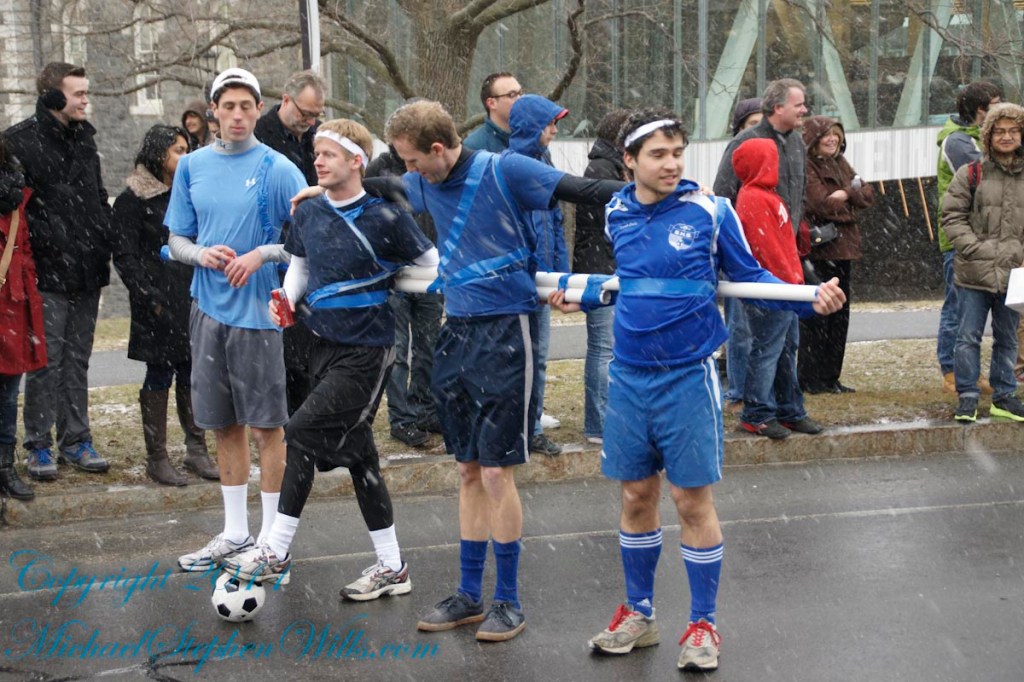
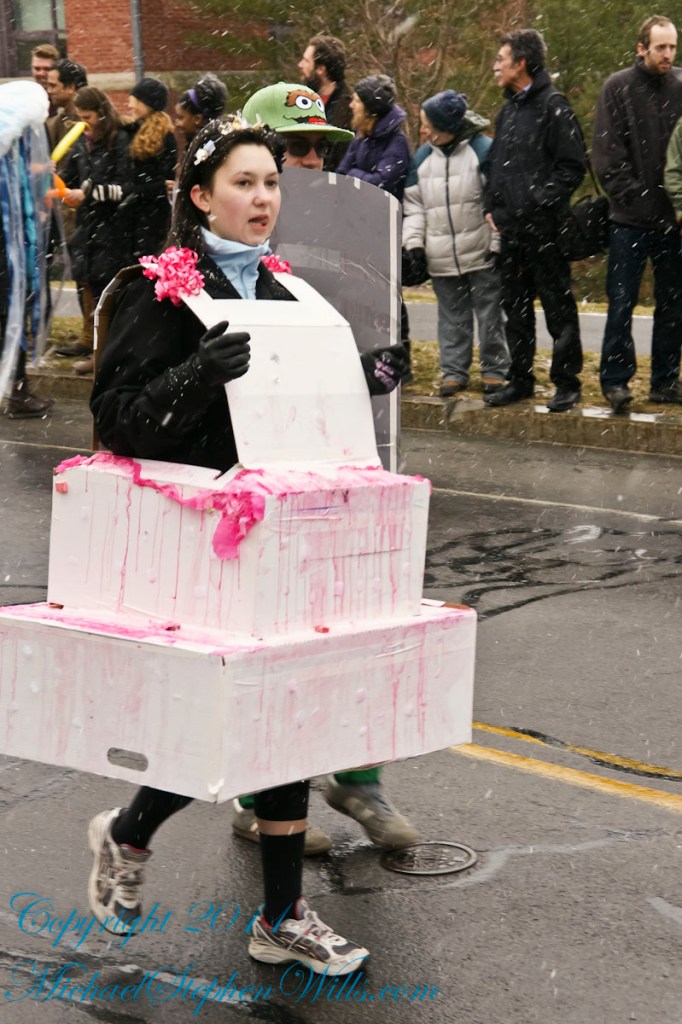
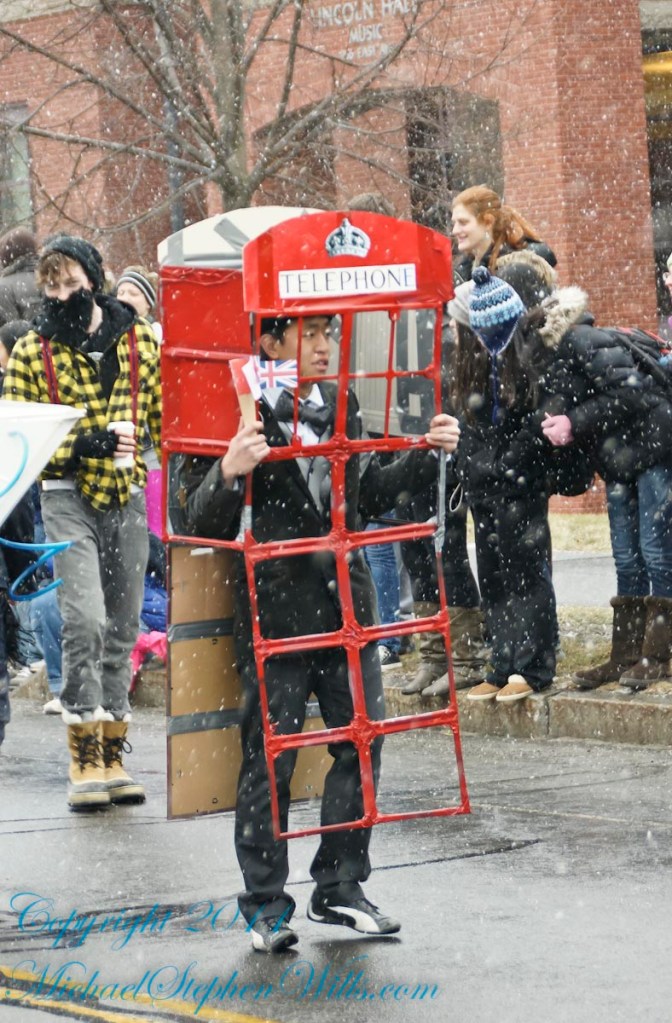
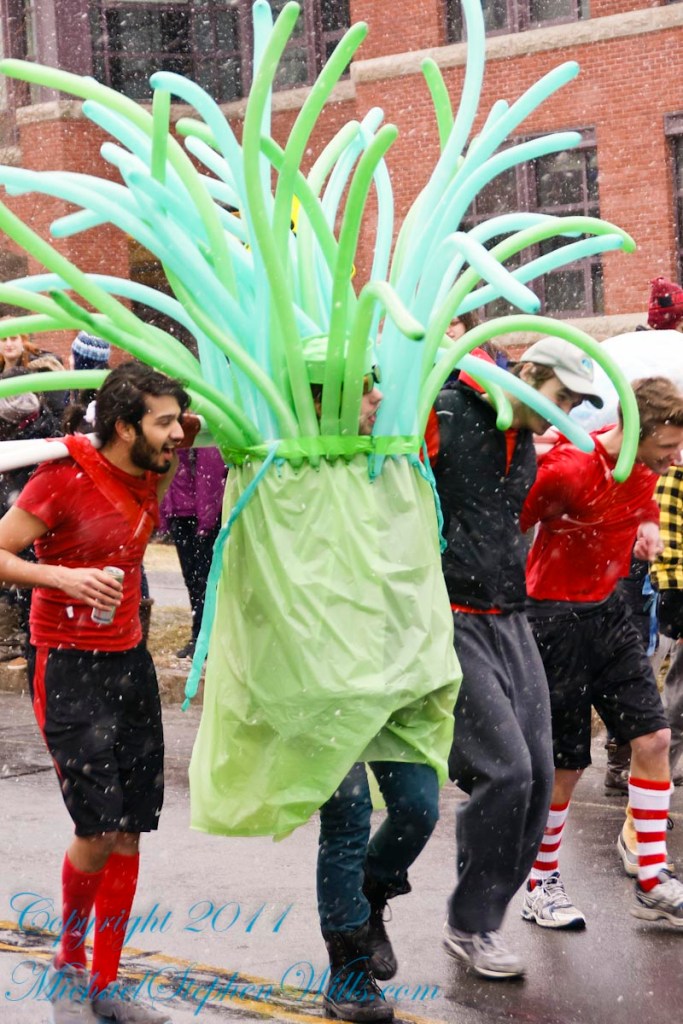
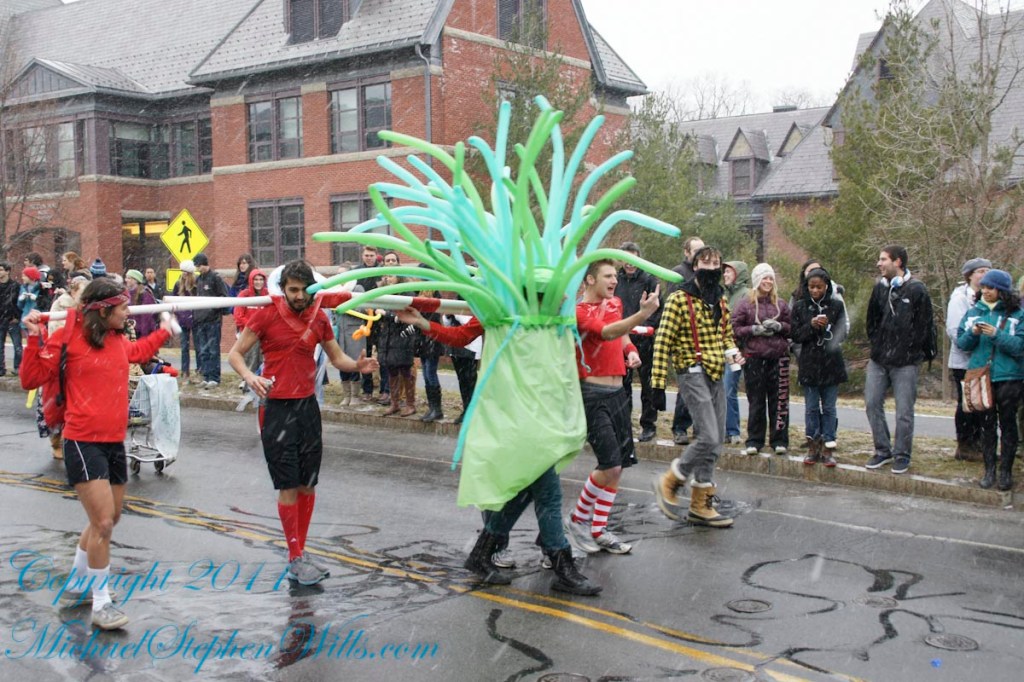
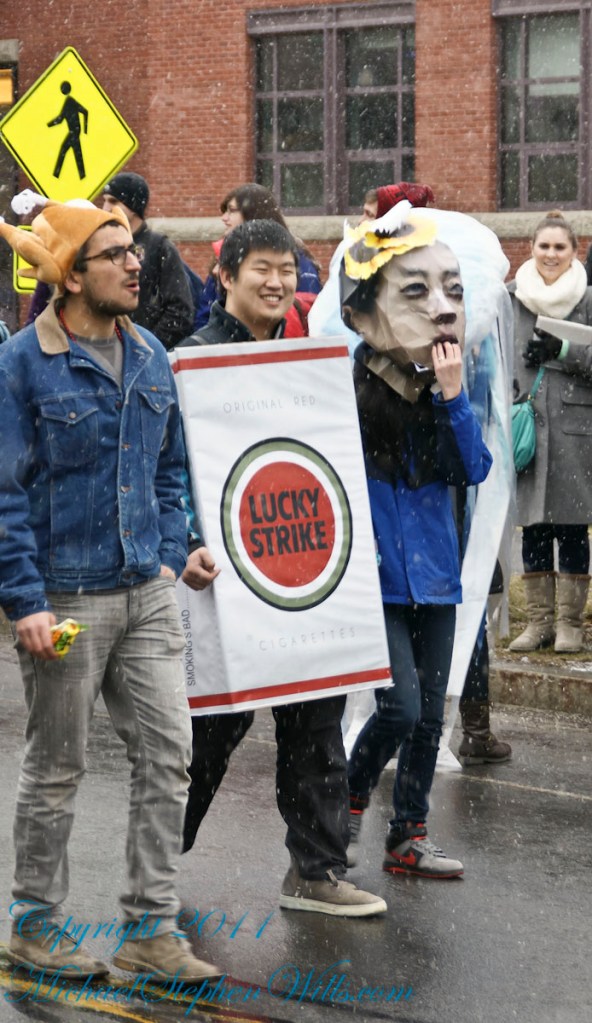
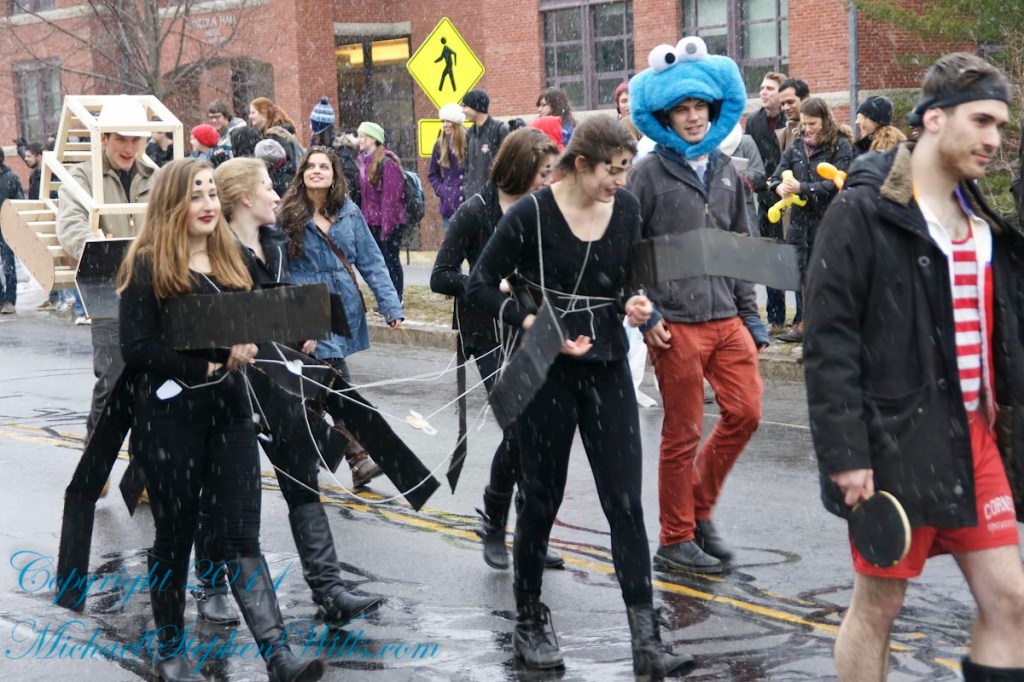
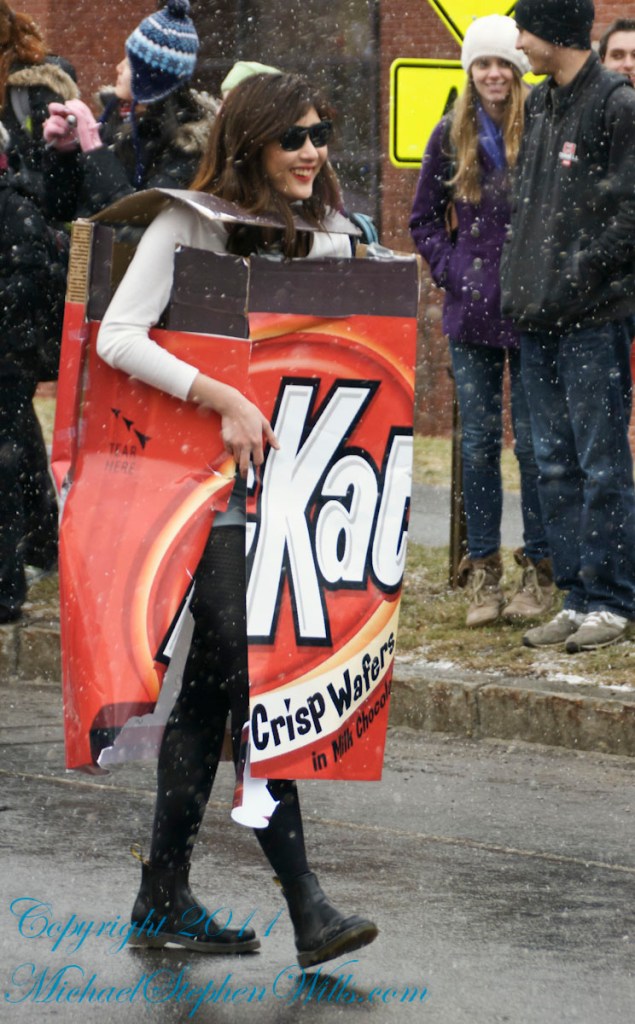
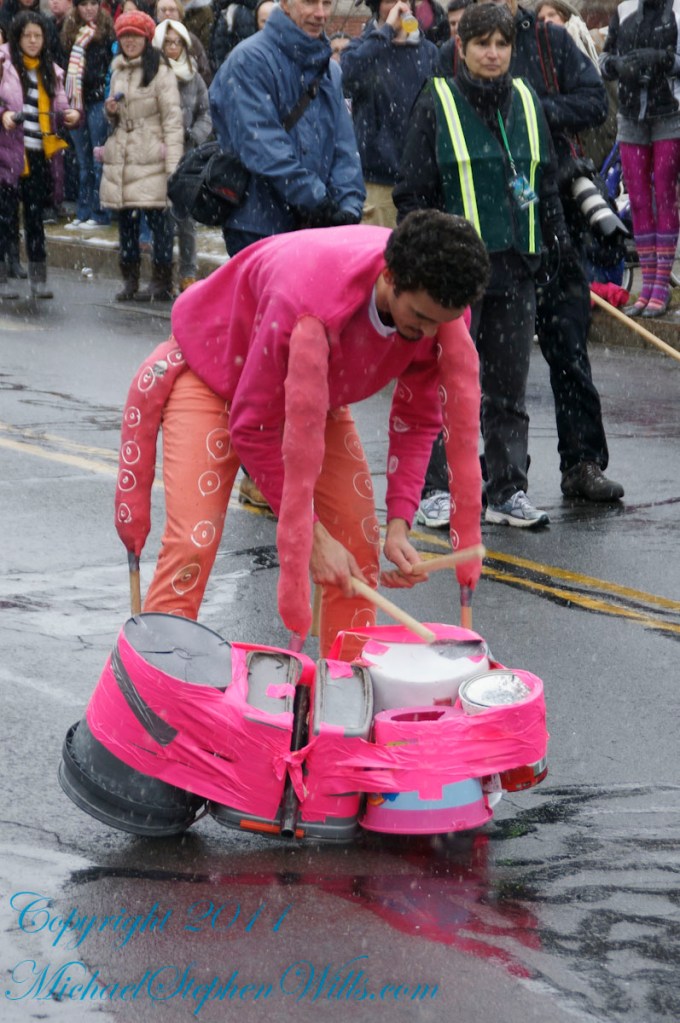
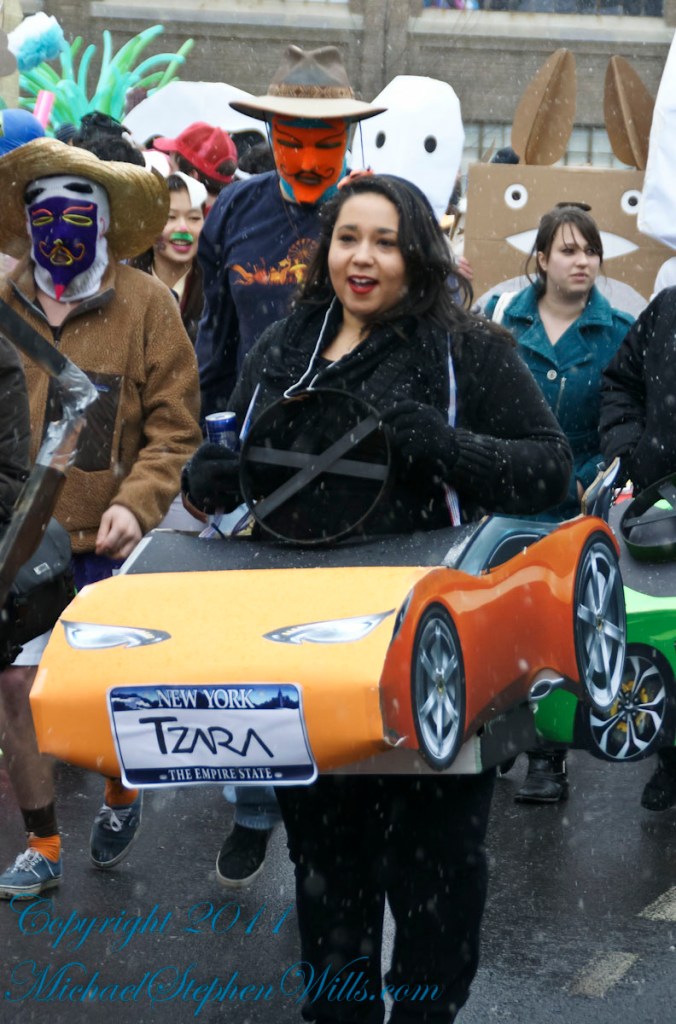
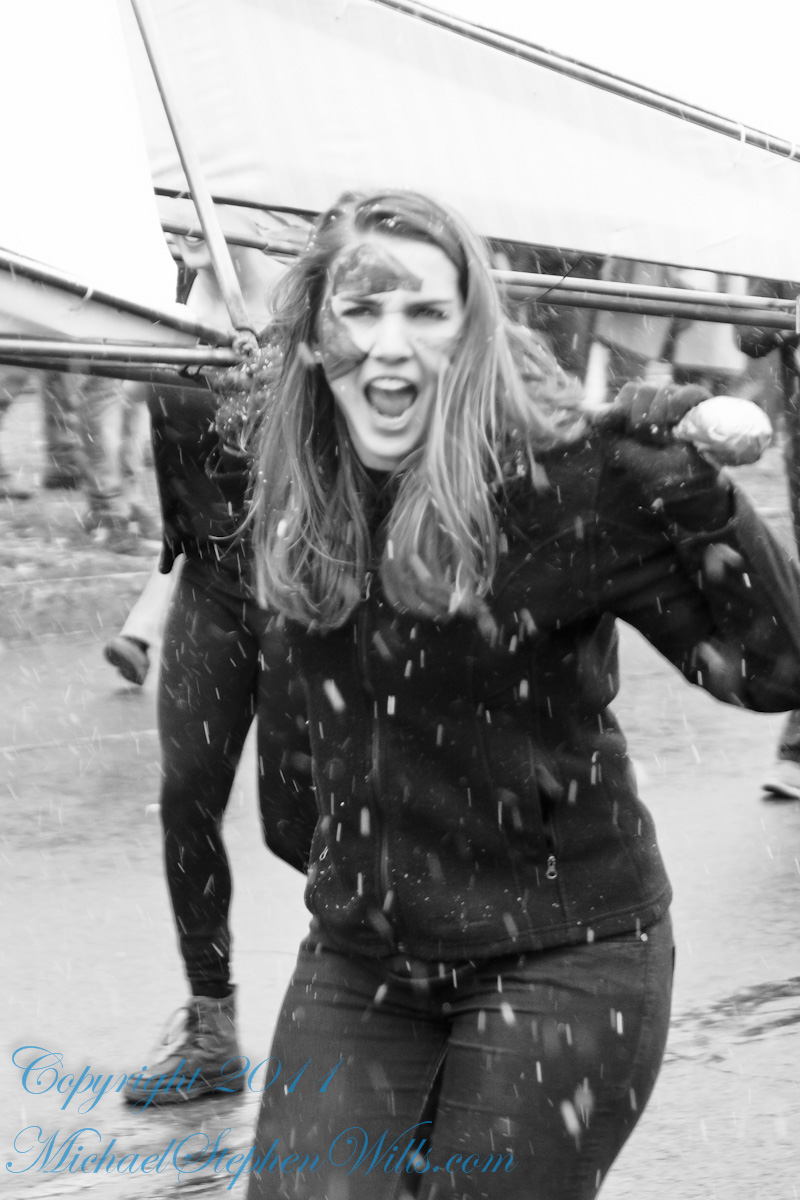
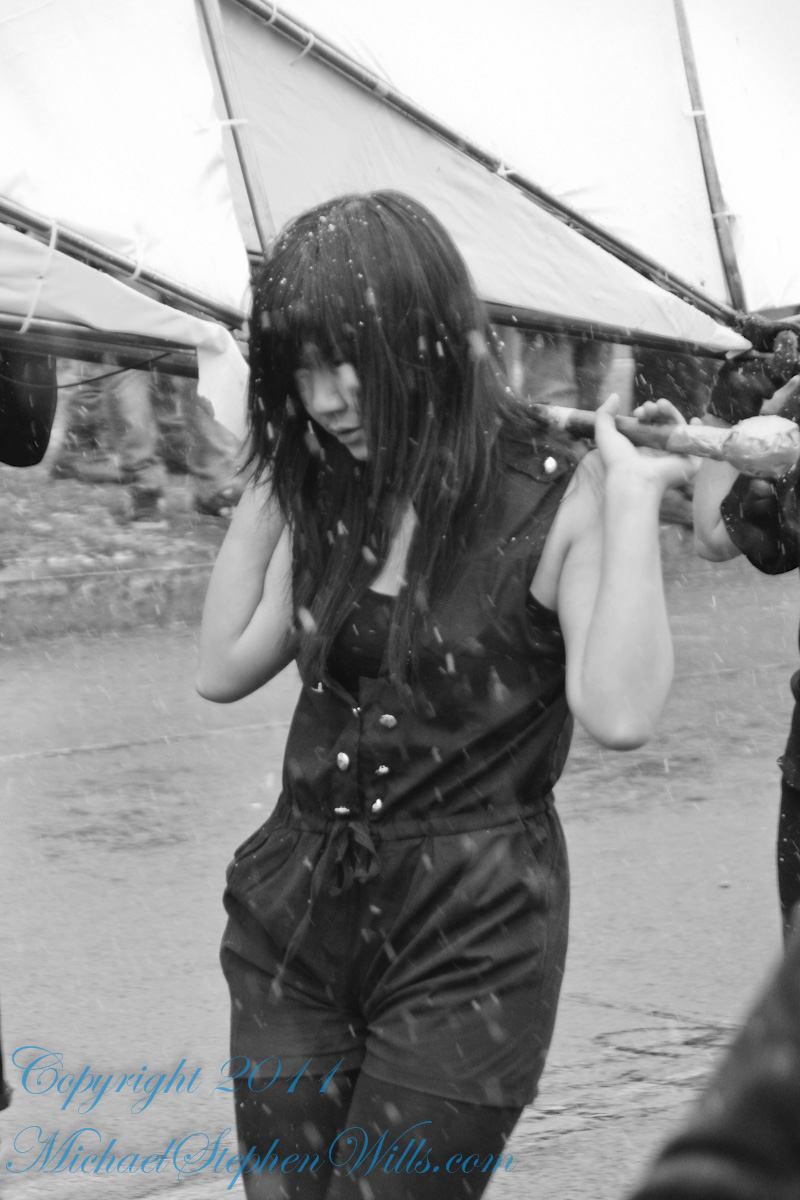
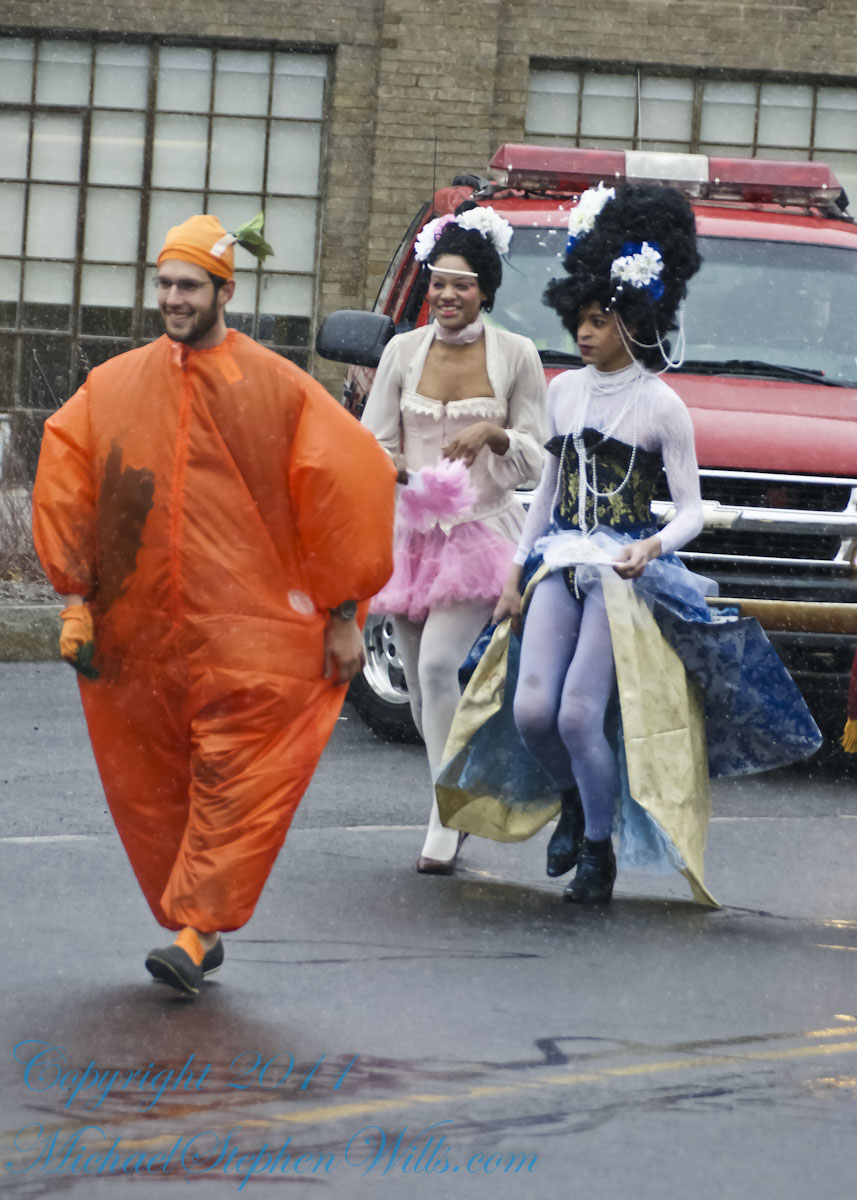
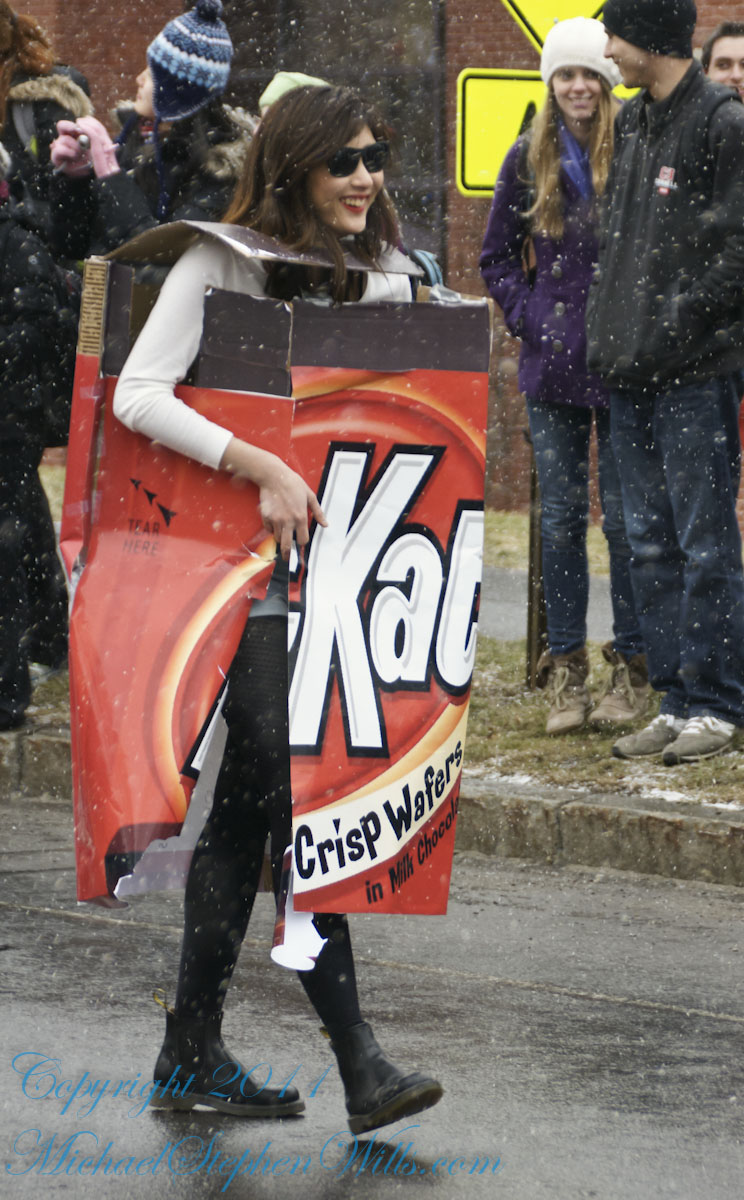
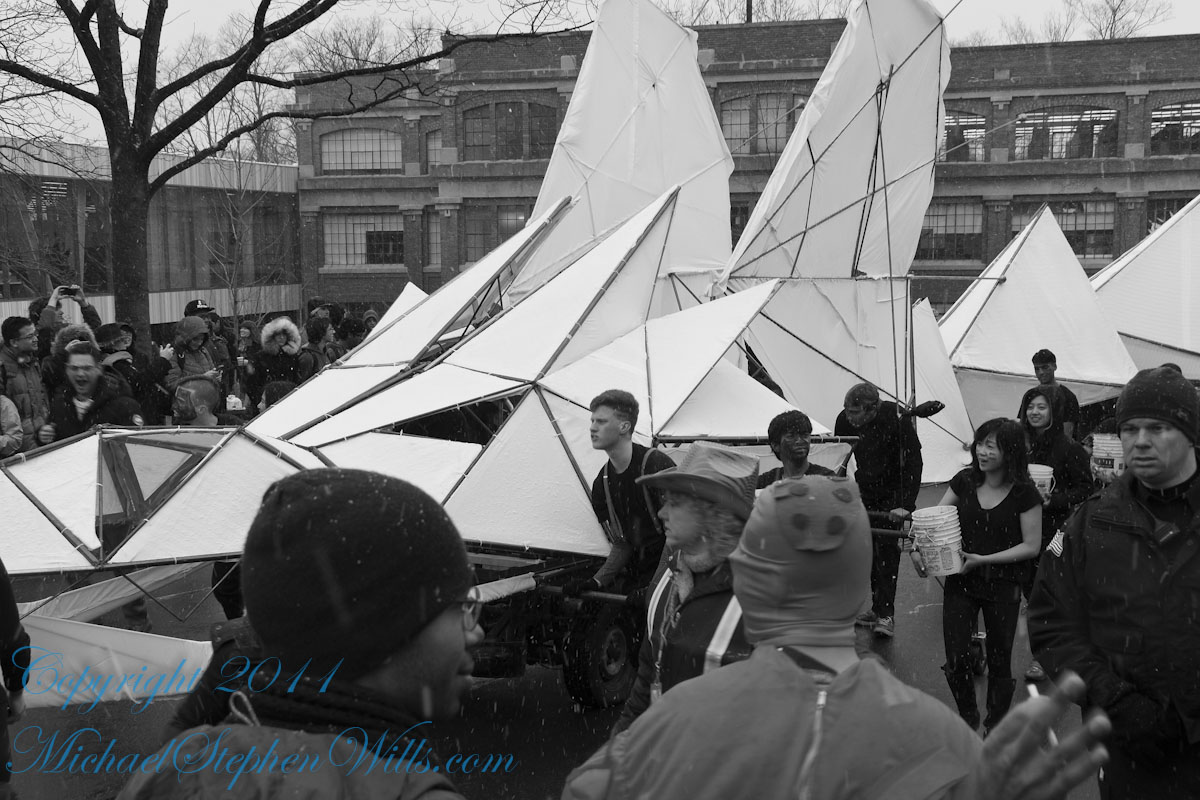
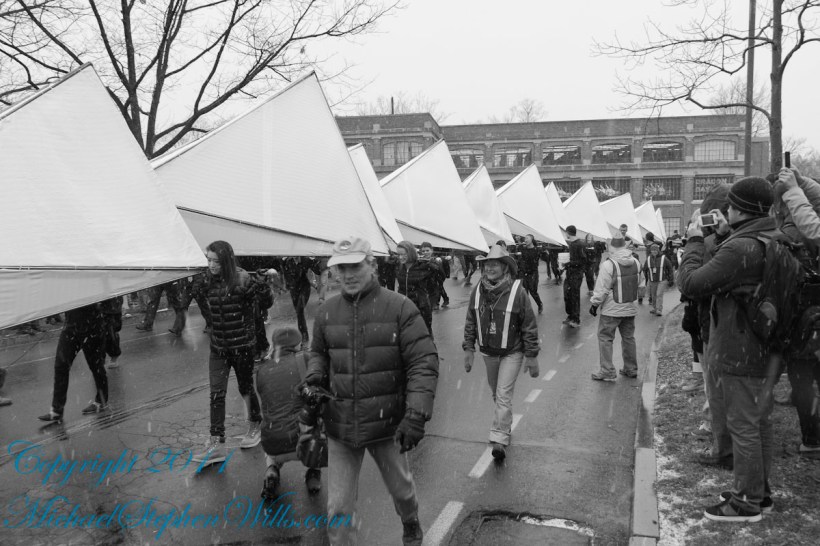
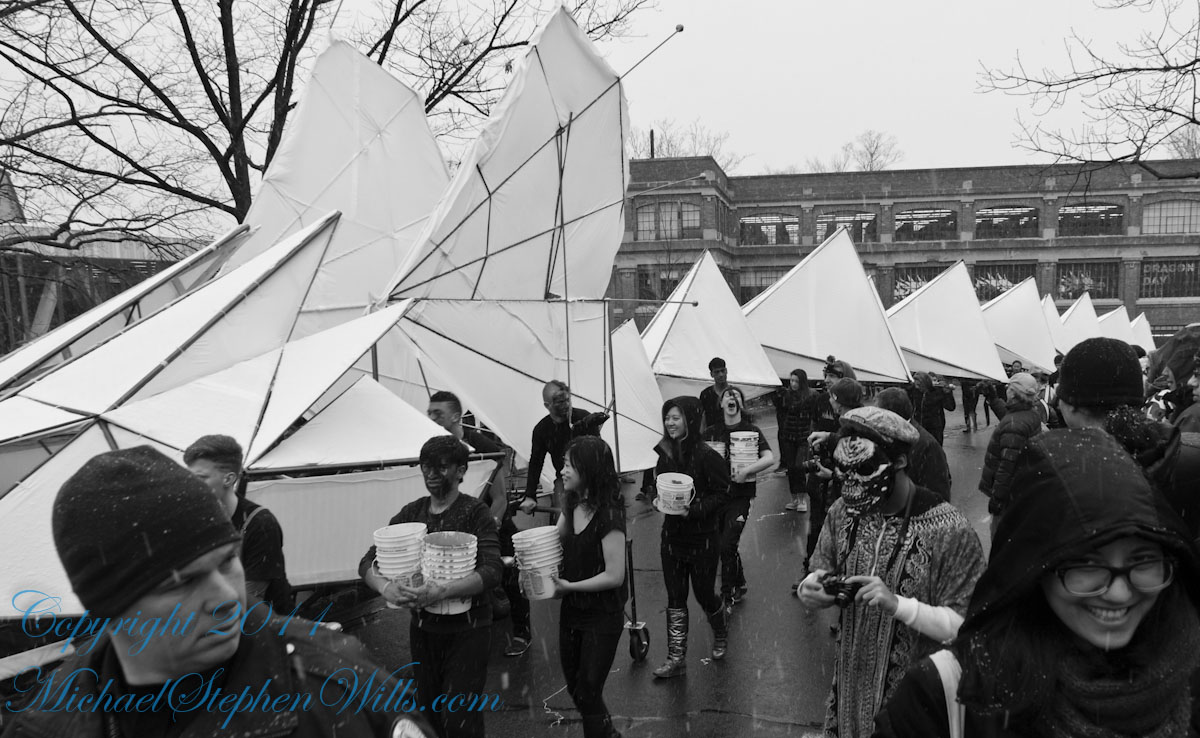
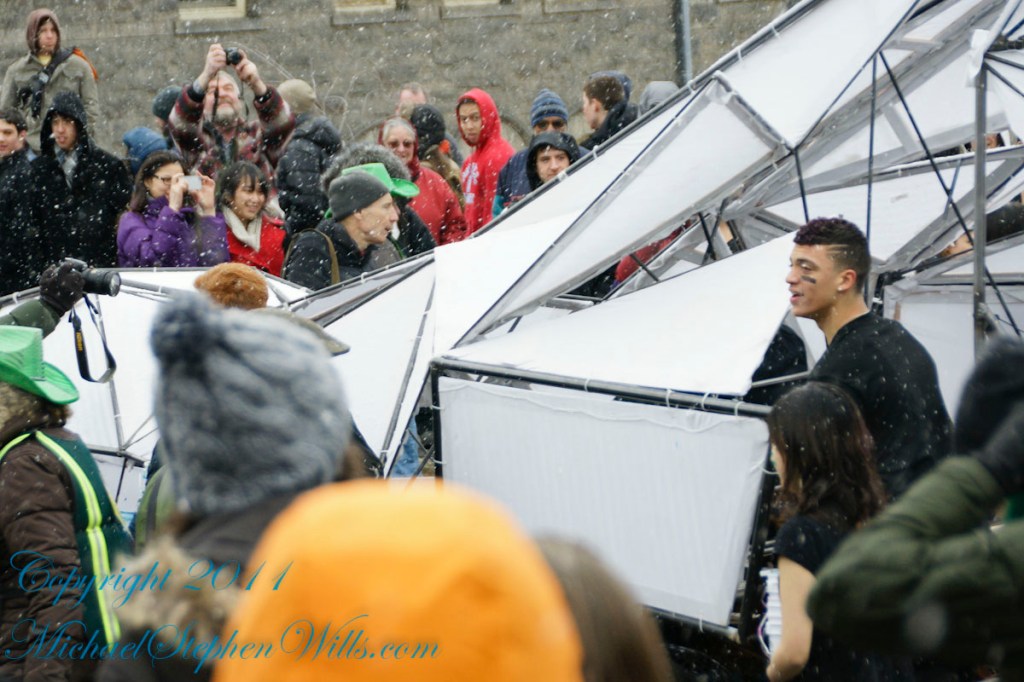
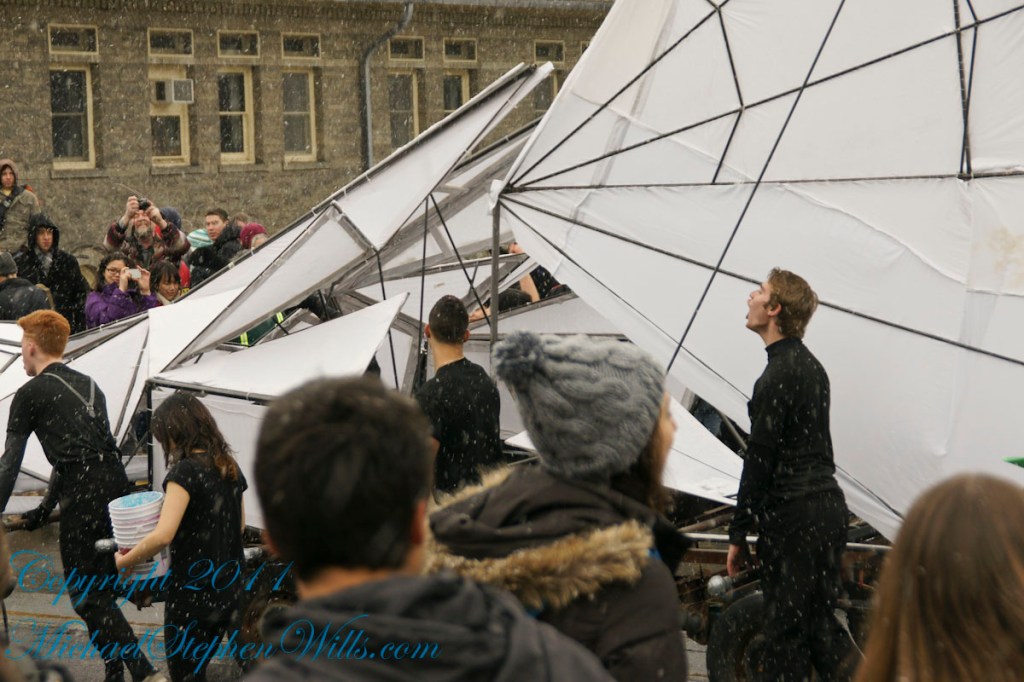
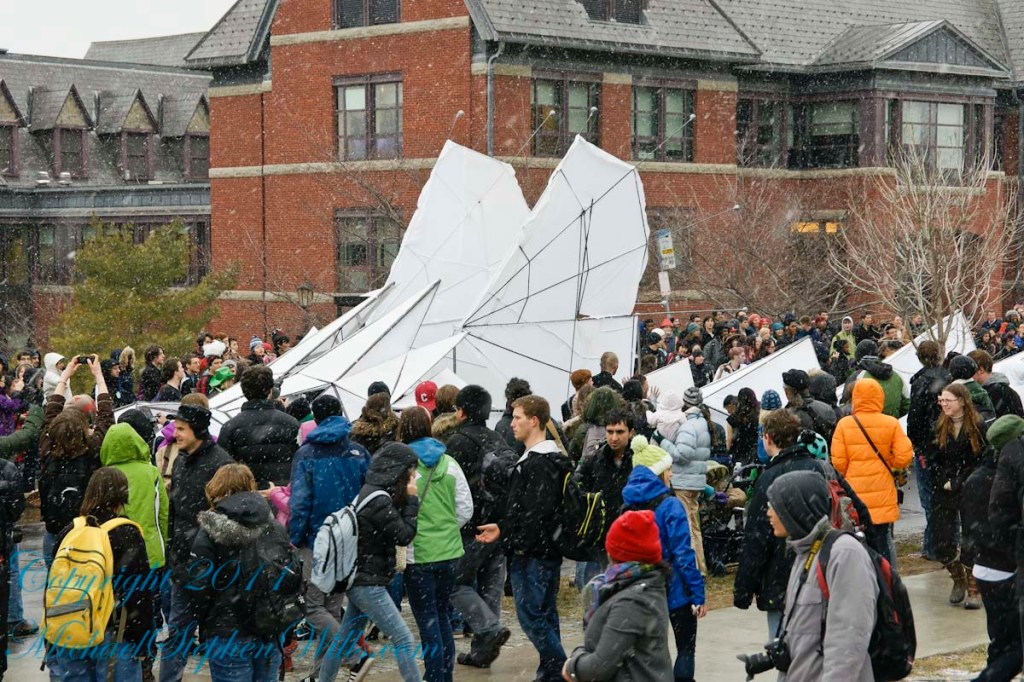
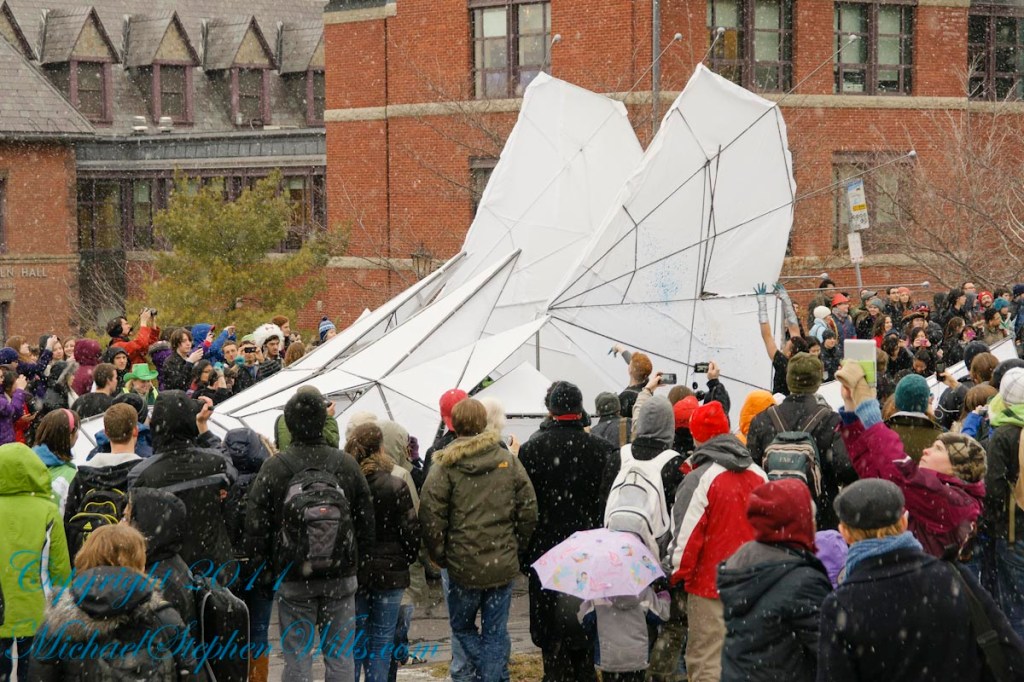
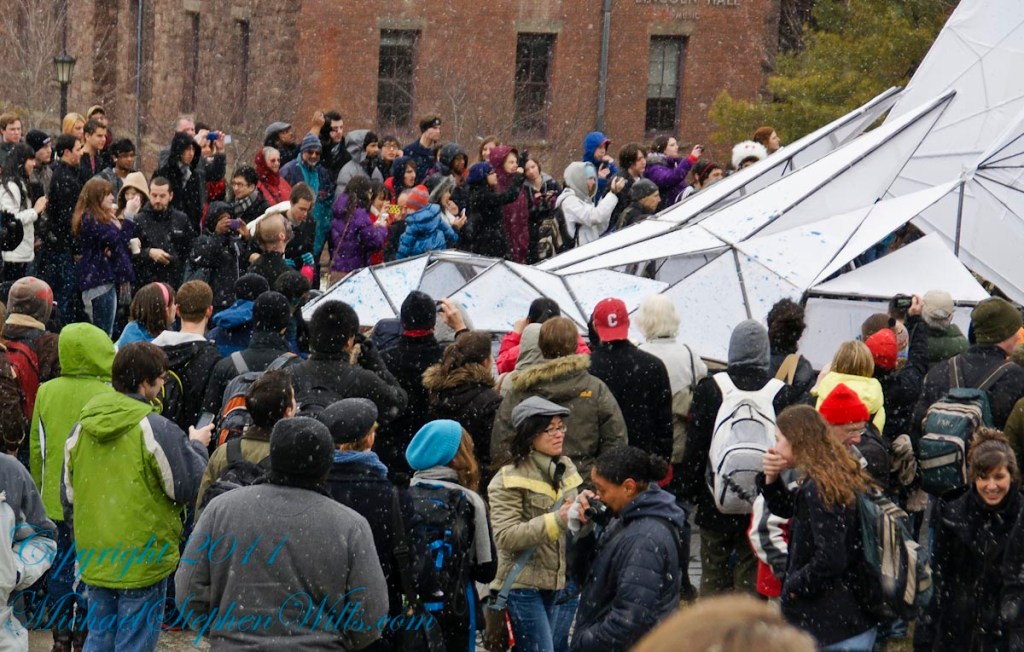
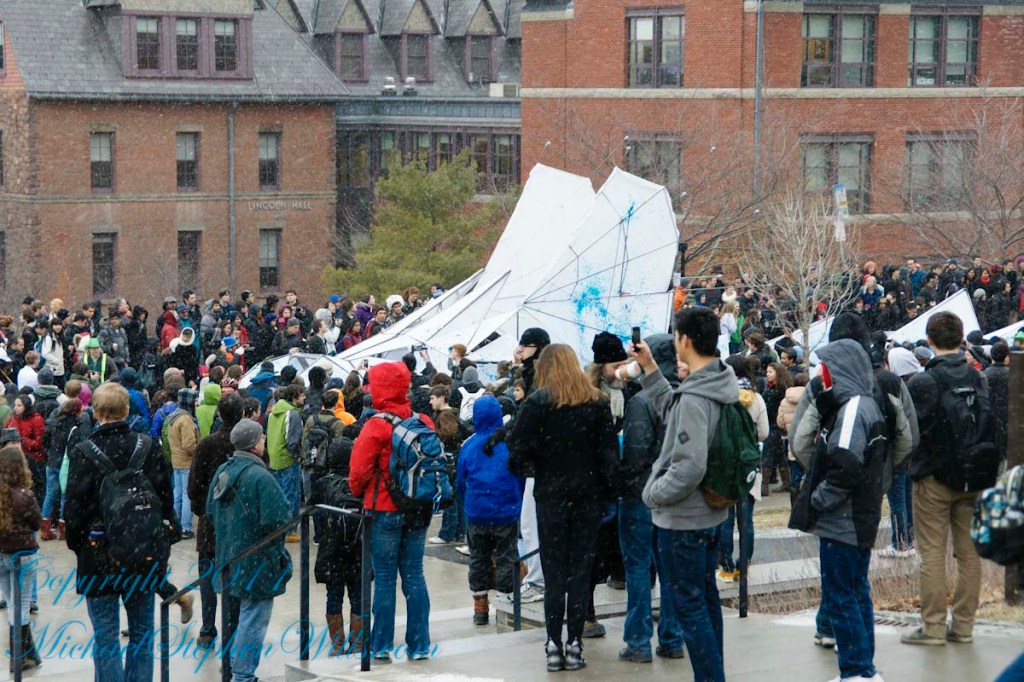
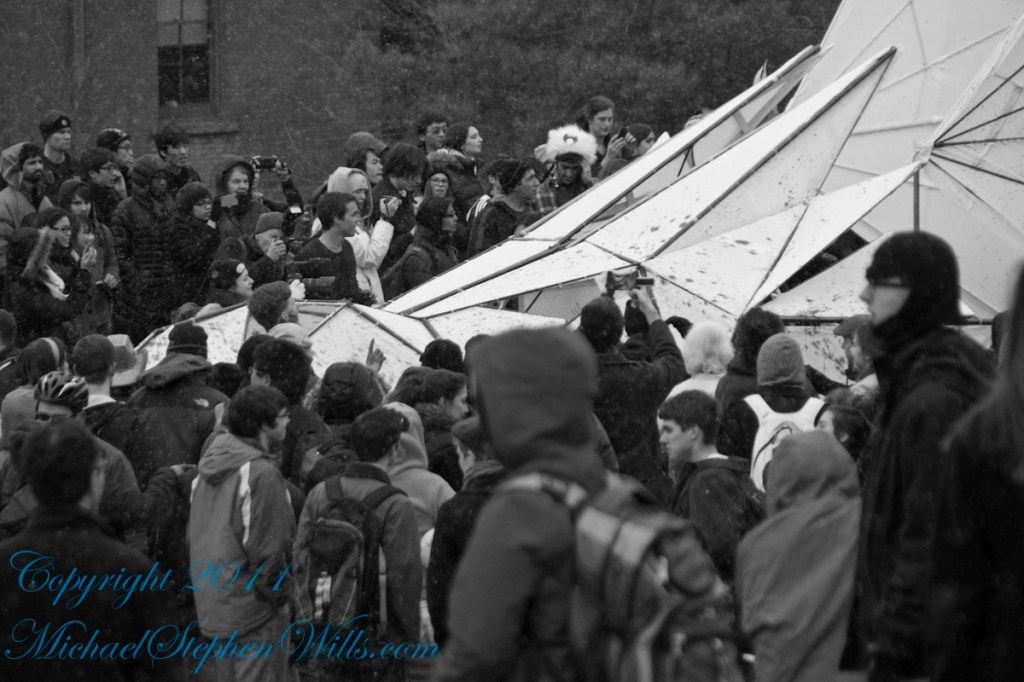
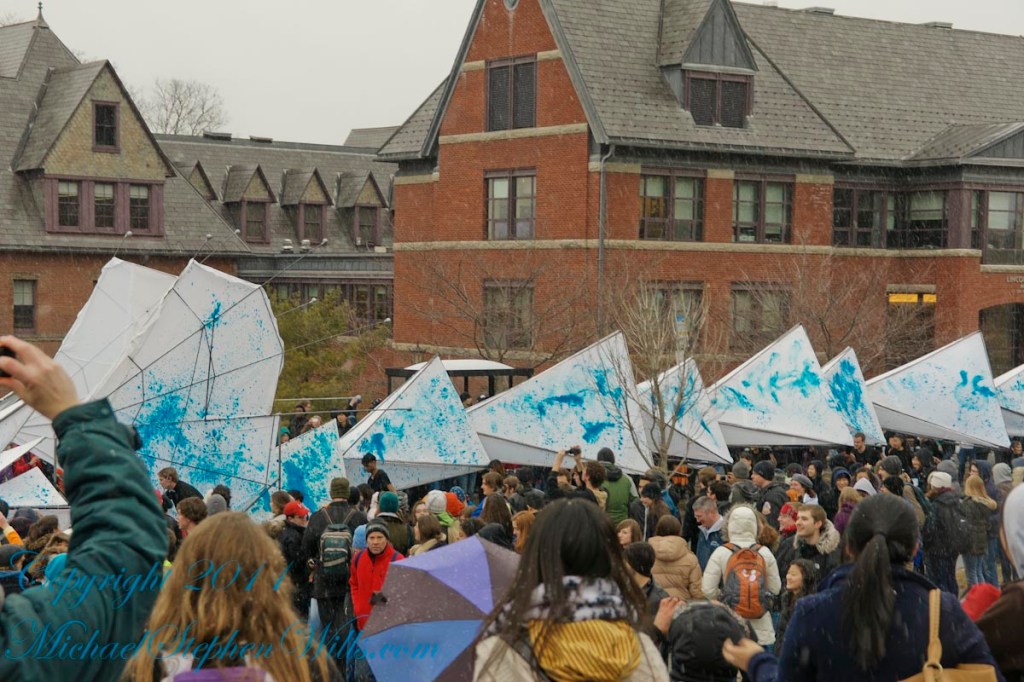
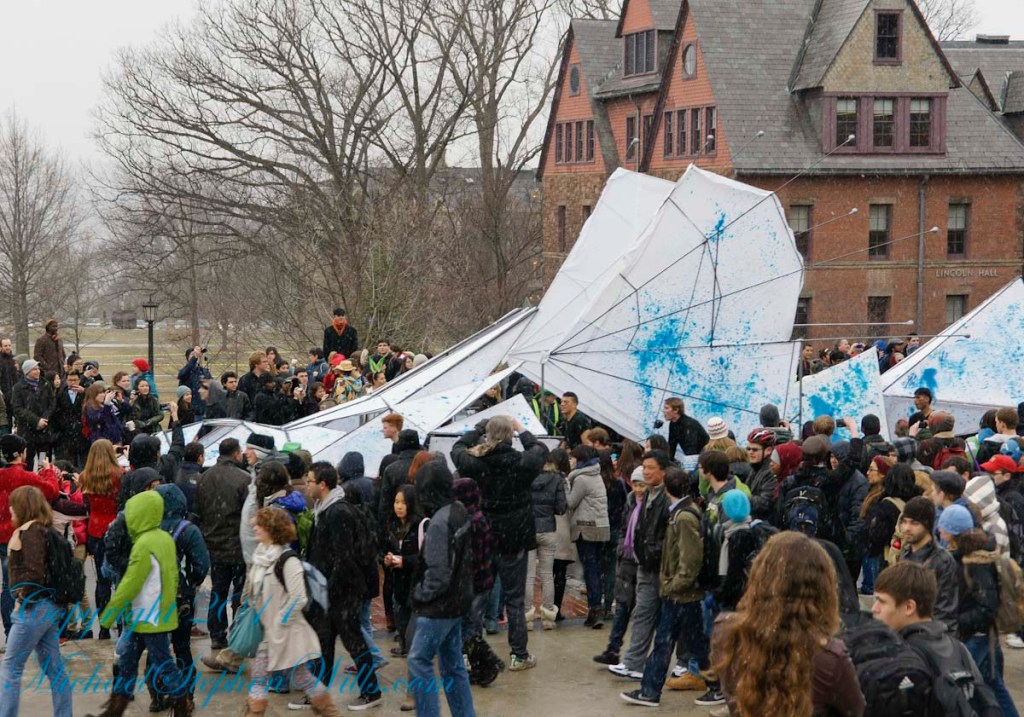
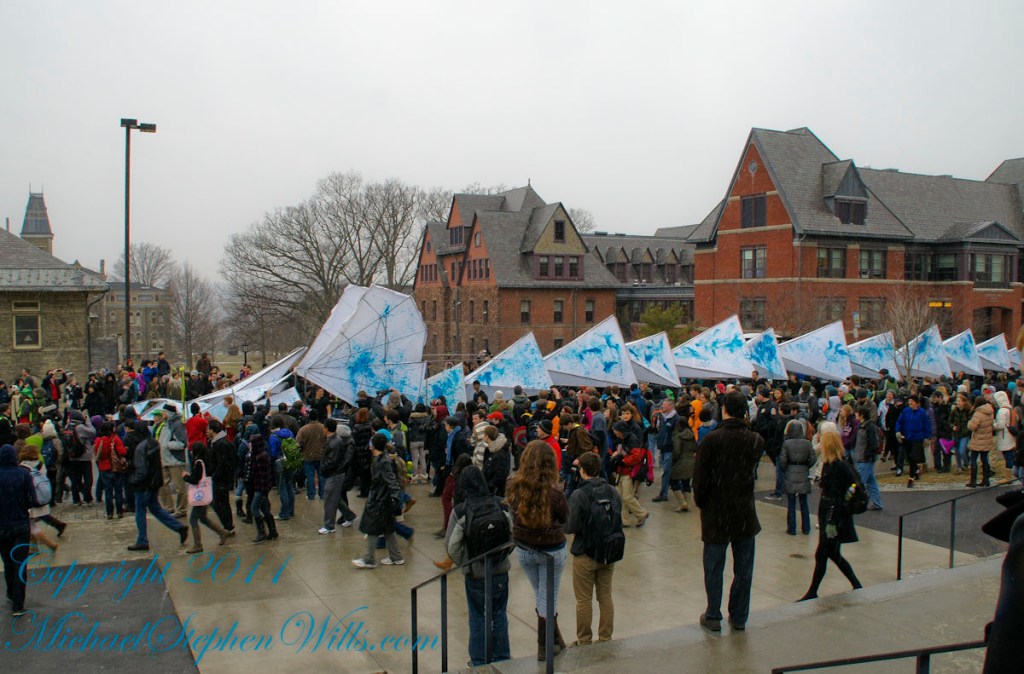
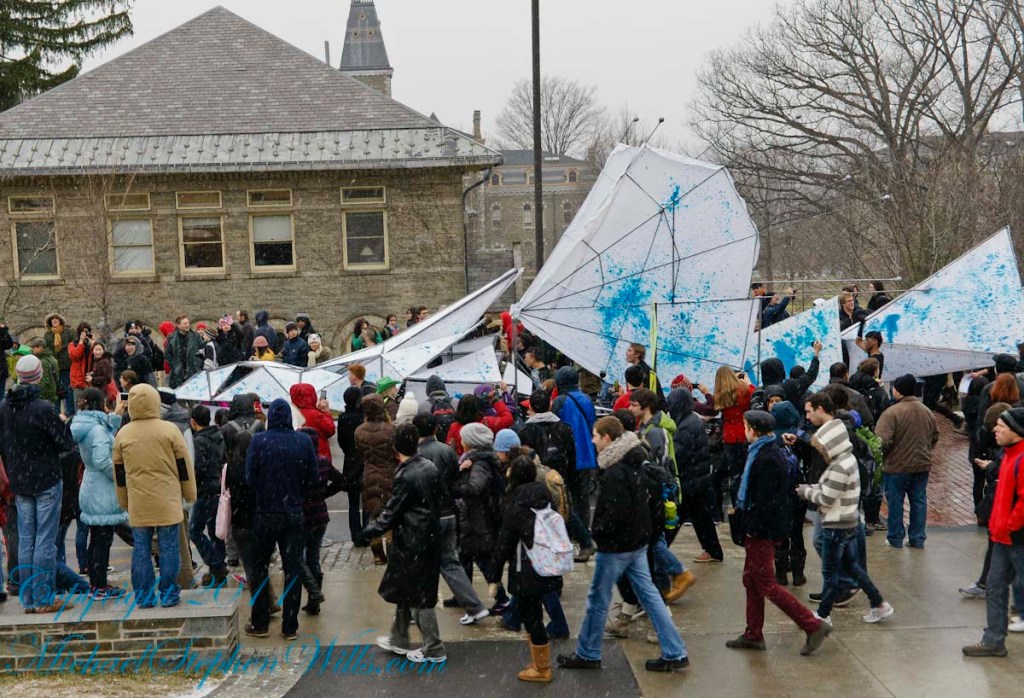
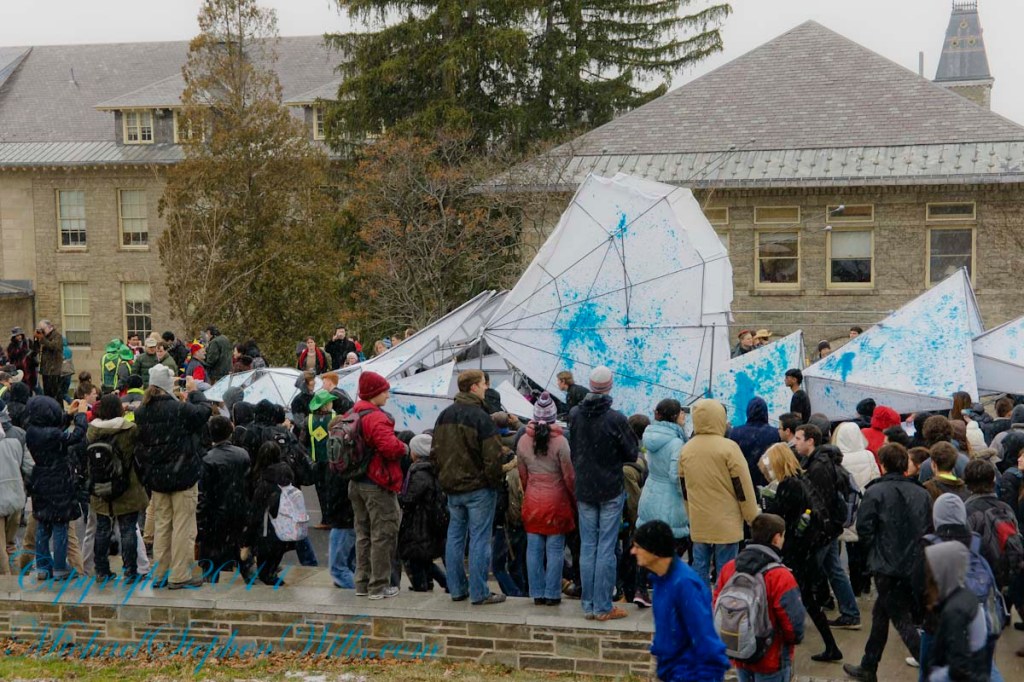
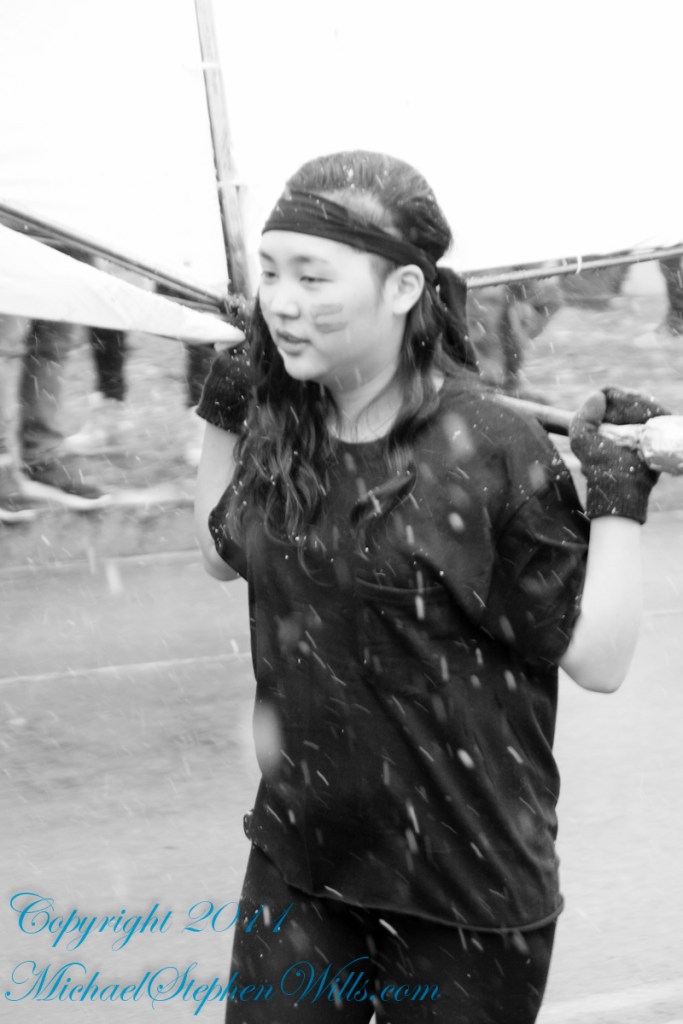
A series of group and individual portraits from the 2013 Dragon Day Parade on the Cornell University Campus. I am happy to report this tradition resumed 2022 after a 2-year pandemic enforced hiatus. This tradition was and is celebrated for over 100 years.











 Michael Stephen Wills Photography