Discovering Fogbows: A Coastal Wonder

I had a haunting experience at Cocoa Beach, witnessing a rare fogbow—a ghostly arc formed by fine mist—evoking emotions and reflections on nature’s beauty.

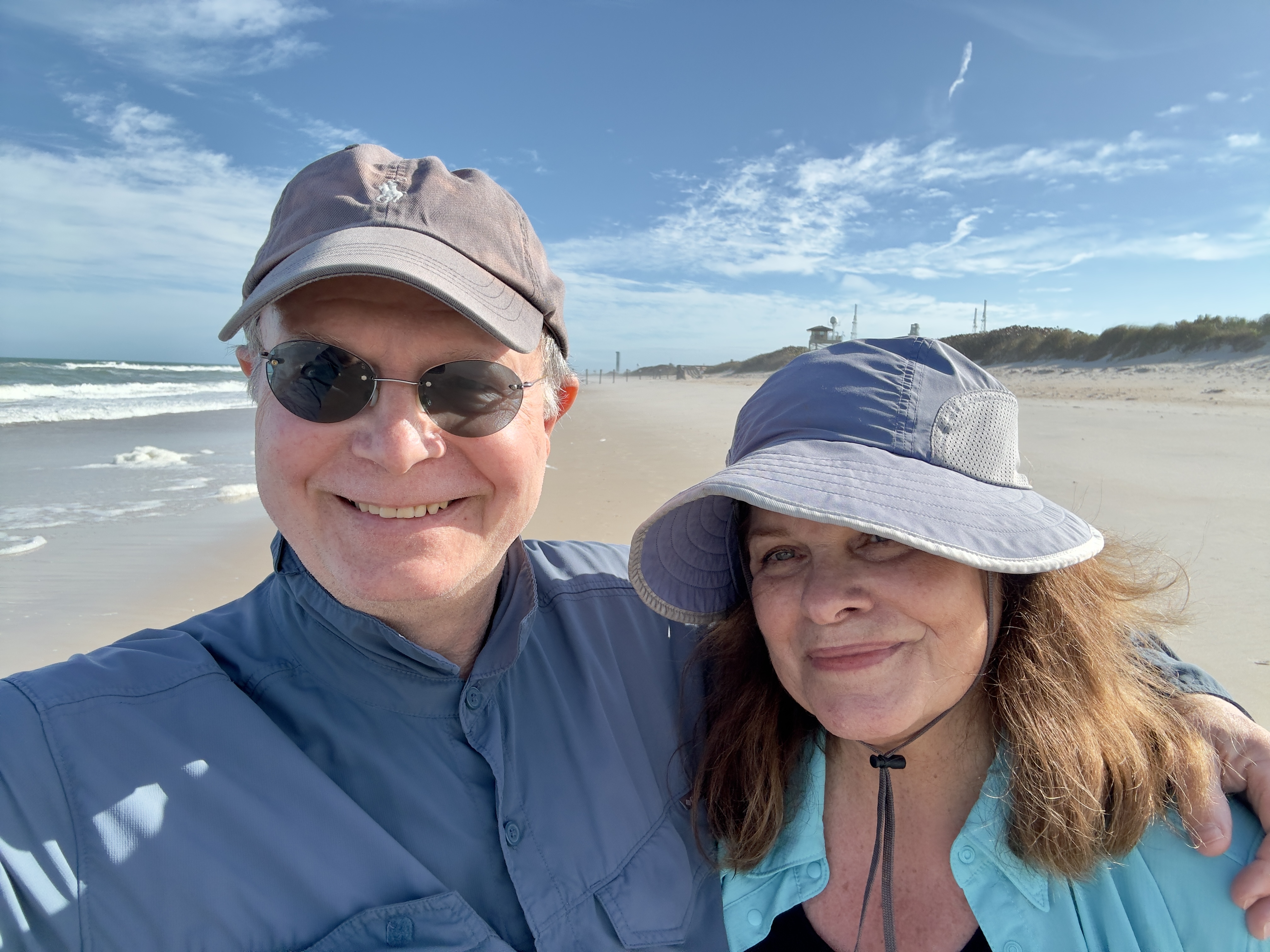
The fog haunted Cocoa Beach for days, softening the edges of the afternoon. I had been walking along Cocoa Beach, feeling the cool ocean breeze on my face, when I noticed a change in the light. It was a little after four, the sun drifting lower in the western sky, its warmth fading into a hazy glow. The air smelled of salt and mist, and waves lapped gently at the shore, their rhythm unbroken by the deepening fog.

And then I saw it.
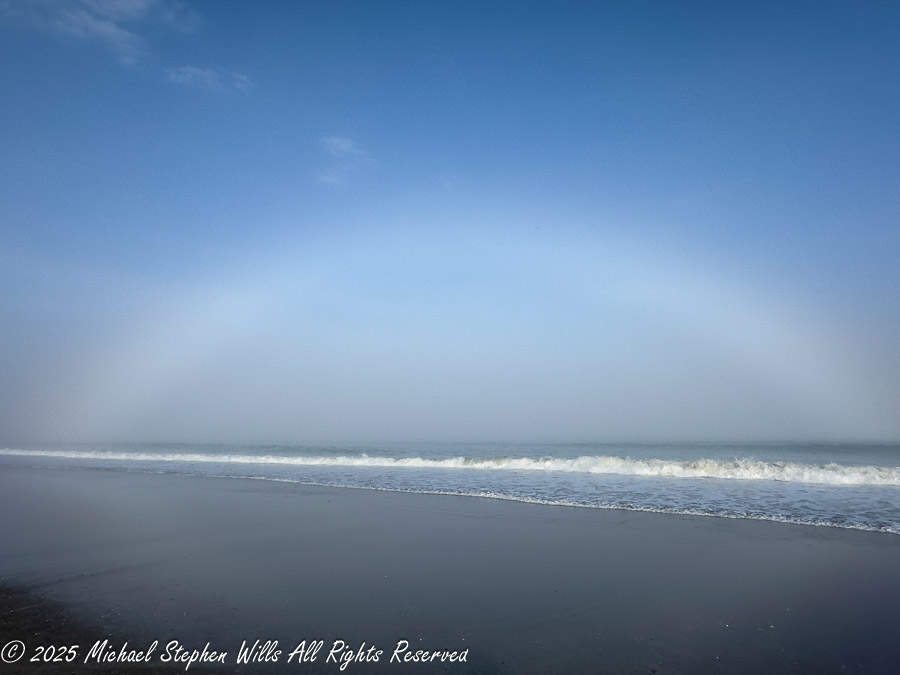
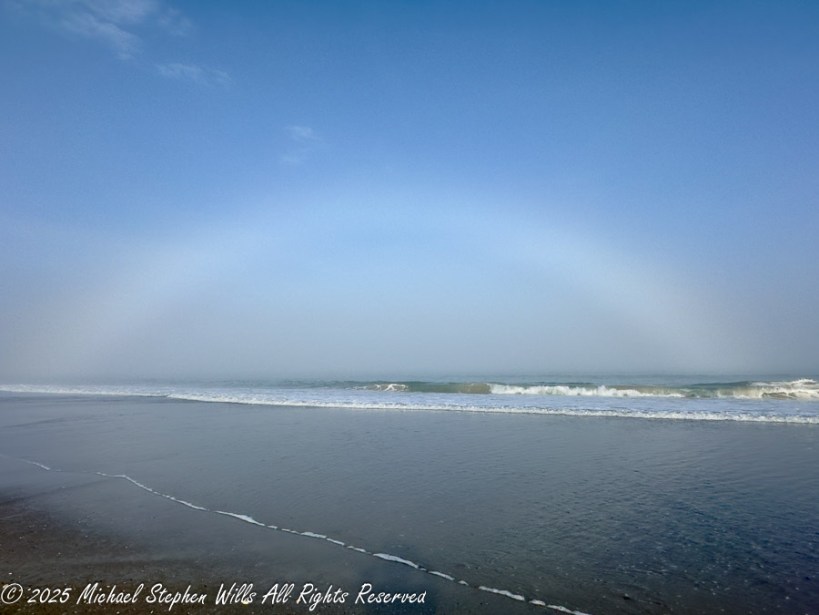
A pale arc stretched across the horizon, a ghost of a rainbow bending above the waves. At first, I wondered if my eyes were playing tricks on me—where were the usual bright bands of red, orange, and violet? But no, the arc was real, a fogbow, forming where sunlight met the fine sea mist. Unlike the rainbows that appear after summer storms, this one was almost entirely white, as if the ocean had conjured it from air and silence.

Sailors once whispered of such things—a white rainbow at sea, a sign of hidden land or wandering souls. Some believed it to be a bridge between realms, a fleeting passage where the living and the lost might momentarily brush against one another. Others saw it as an omen, a spectral warning of treacherous fog ahead. I wondered what the mariners of old might have thought, standing at the bow of a ship, watching a pale arc rise from the mist, its edges dissolving like breath against glass.

I stood still, watching, as the science of the moment unfolded before me. Unlike traditional rainbows, which form when light bends through large raindrops, fogbows are born from infinitesimally smaller droplets, often less than 0.1 millimeters in diameter. Their size diffuses the light, scattering it so finely that the colors blend together into a spectral whisper rather than a vibrant shout. The physics of it fascinated me—this was diffraction in action, nature bending light in a way that rendered it nearly colorless.
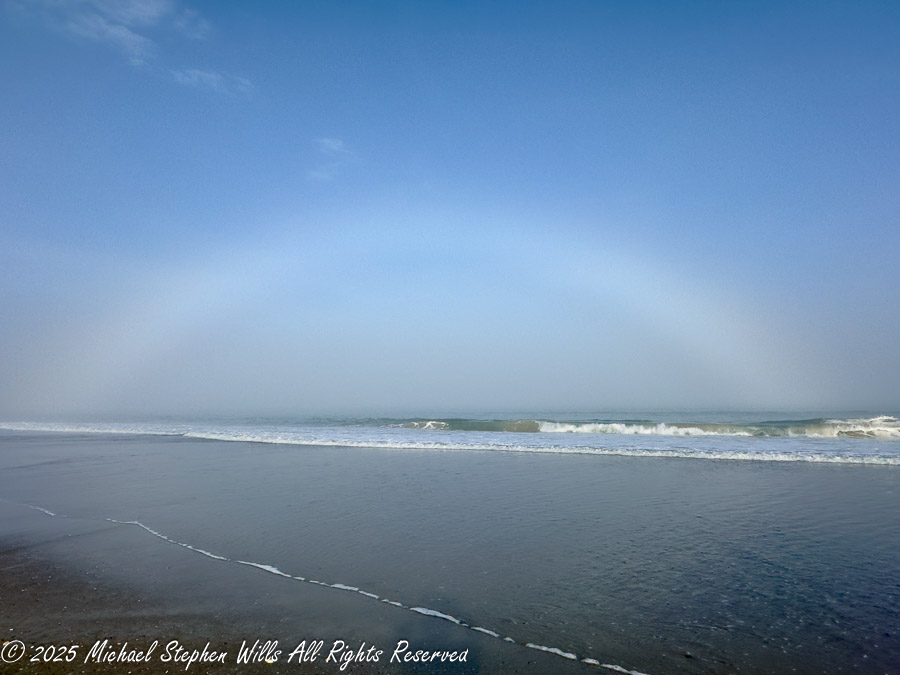
The effect was surreal. The fogbow arched over the breaking waves like something out of a dream, a halo of sea and sky, momentary yet timeless. It seemed to pulse in the shifting mist, visible one moment, fading the next, as if deciding whether to reveal itself fully or slip back into the fog’s embrace.
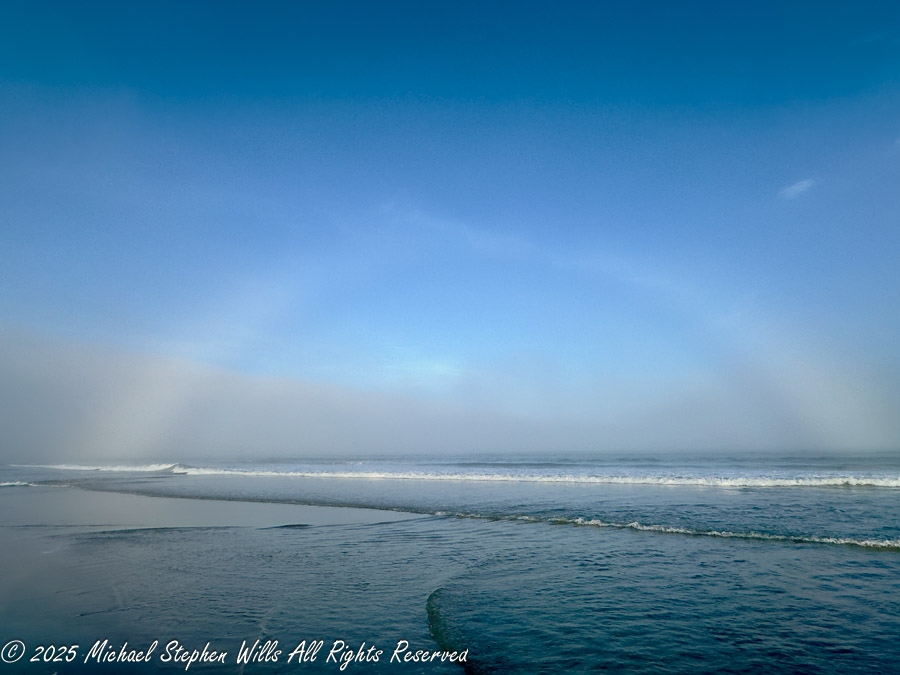
For several minutes, I just stood there, taking it in. The world felt different inside that mist, quieter, more reflective. The fog dampened the usual sounds of the beach—the calls of shorebirds, the laughter of distant walkers—leaving only the hush of the waves and the distant hum of the ocean’s breath.

I knew that fogbows were rare, requiring just the right balance of thin fog, moisture, and a low-angled sun. I was lucky to be in the right place at the right time, a witness to something subtle yet profound.

And just as silently as it had appeared, the fogbow began to dissolve. The mist thickened, swallowing its arc, the sky shifting back to its usual muted gray. But the memory of it lingered—a white rainbow over the sea, ephemeral and elusive, like a secret the ocean had briefly chosen to share.
Enter your email to receive notification of future postings. I will not sell or share your email address.

Long Ride

An expert surfer takes a wave

An expert surfer takes a wave near Jetty Pier Park, Cape Canaveral, Florida. Taken with an Apple IPhone 8.

Click video to start. To do this from WordPress Reader, you need to first click the title of this post to open a new page.

Copyright 2024 All Rights Reserved Michael Stephen Wills

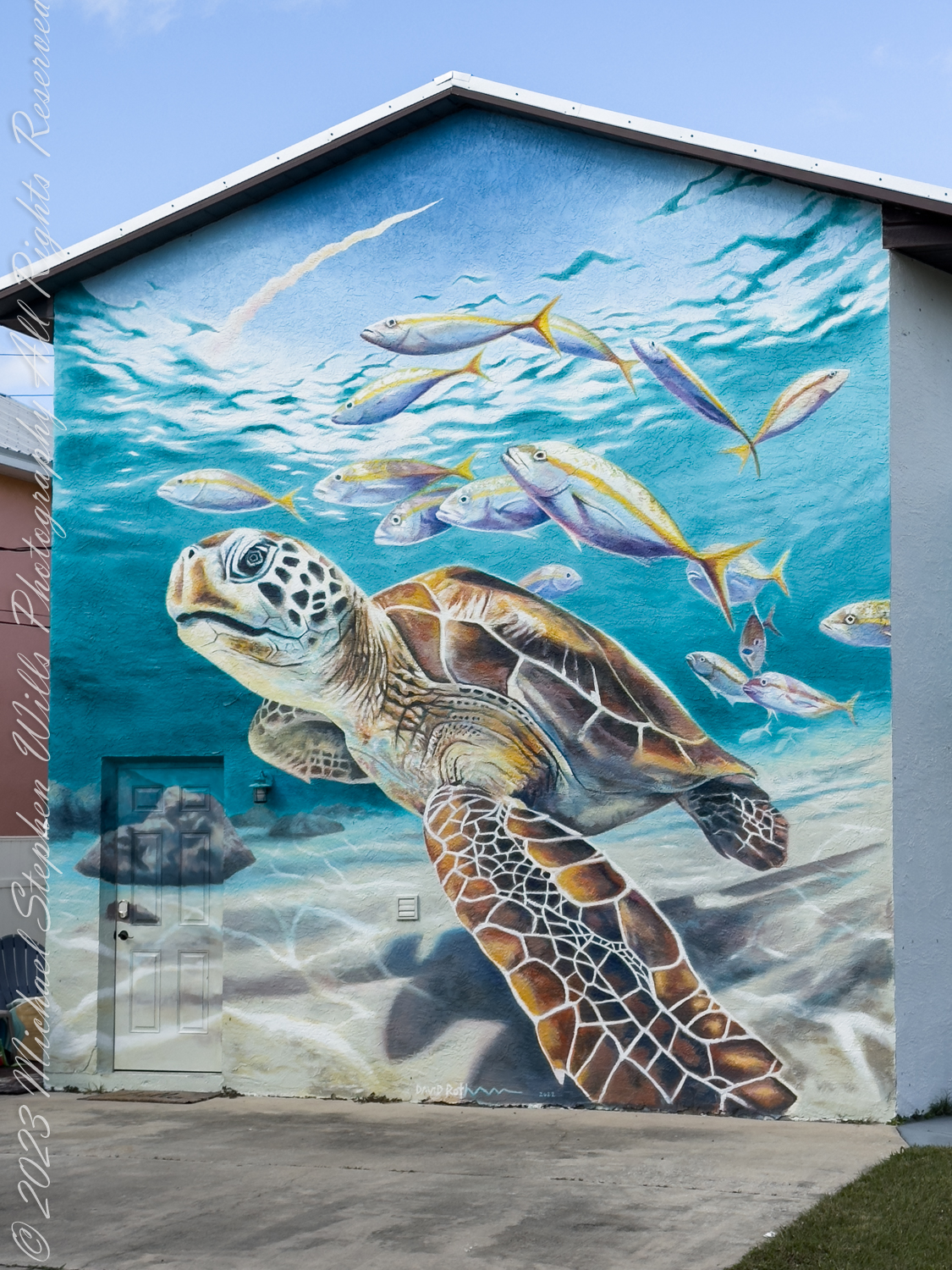
Sea Turtle Portrait

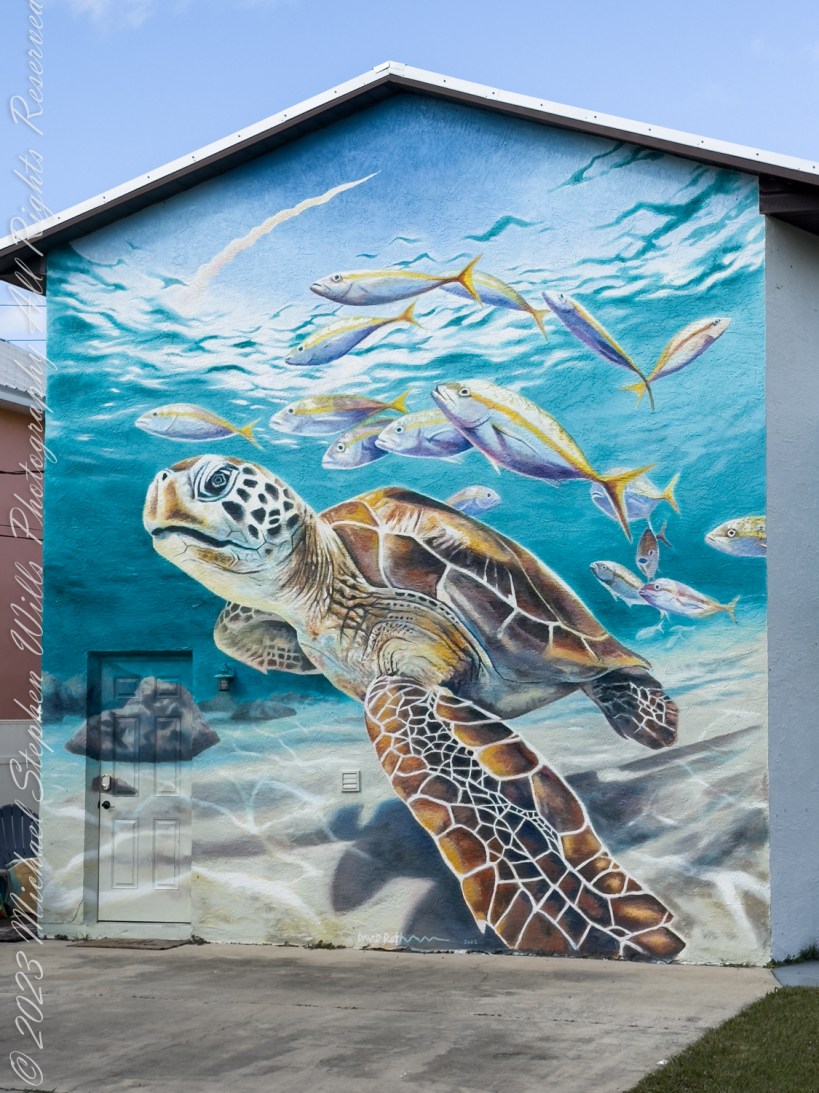
Portrait of a Sea Turtle with fish, sea floor and a rocket launch. 541 Washington Ave, Cape Canaveral, FL 32920 Near Cheri Down Park, Brevard County, Florida

Portrait of a Sea Turtle with fish, sea floor and a rocket launch. 541 Washington Ave, Cape Canaveral, FL 32920 Near Cheri Down Park, Brevard County, Florida

Along the bottom margin is the artist’s signature, “David Roth 2022.”

Copyright 2024 Michael Stephen Wills All Rights Reserved

The Grand Goodbye: Intertwining Paths at the Edge of the Ocean

Step onto the sands of Cape Canaveral and witness the majestic departure of the Adventure of the Seas—feel the sea’s call in this tranquil yet vibrant maritime farewell.

As I walk along the stretch of Cape Canaveral Beach, the soft crunch of shells underfoot and the rhythmic lull of the waves create a symphony of natural tranquility. The sand is cool and firm, a consequence of the tide’s playful retreat.

The beach is a canvas of human relaxation. Families are sculpting sandcastles, while others are sprawled on towels, soaking up the hesitant sun that plays peek-a-boo with the clouds. The beachgoers are a mix of the attentive and the oblivious, the latter lost in books or surrendering to the lull of the ocean breeze. Children’s laughter punctuates the air, as unfettered as the seagulls that dance above.

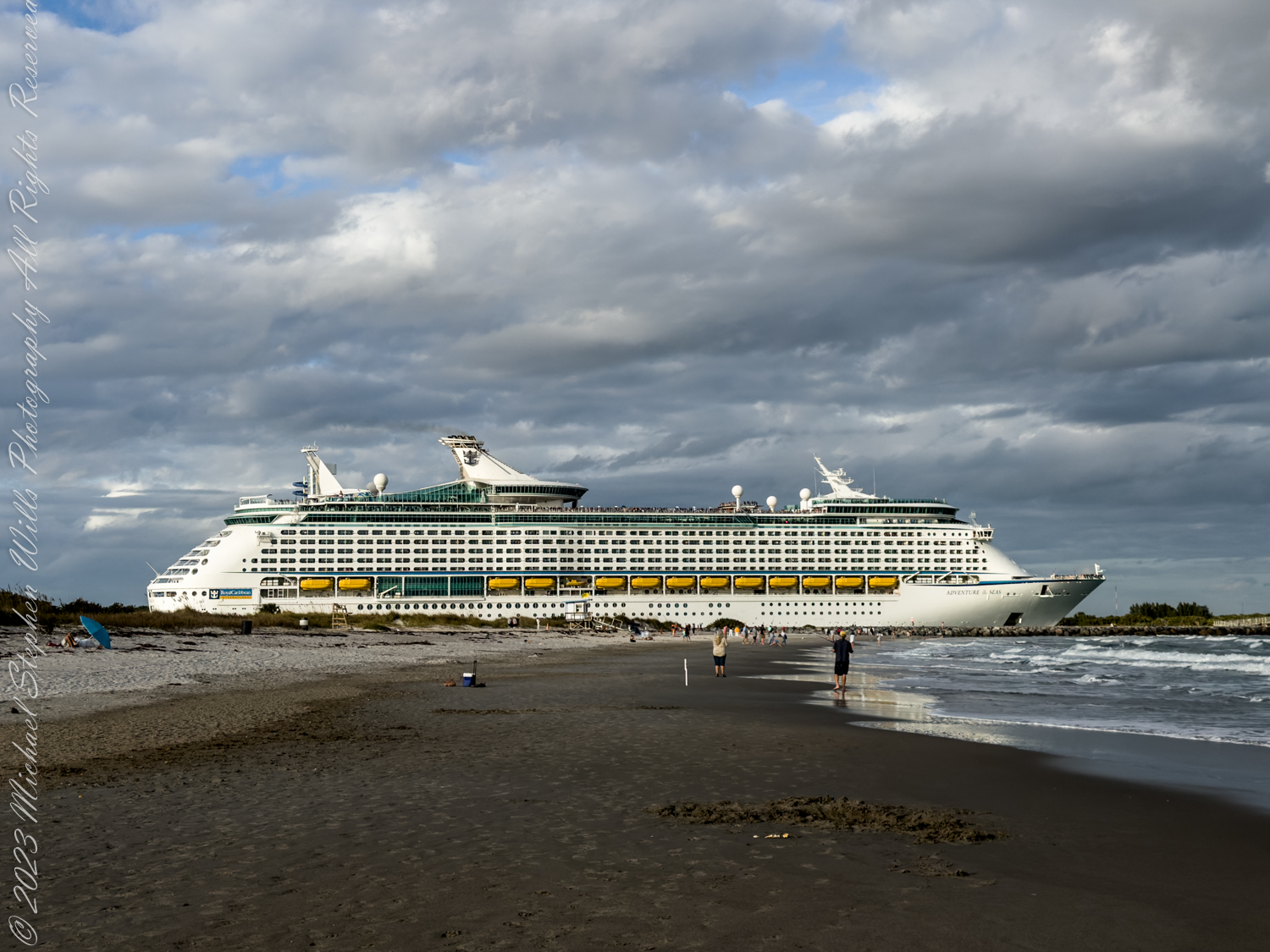
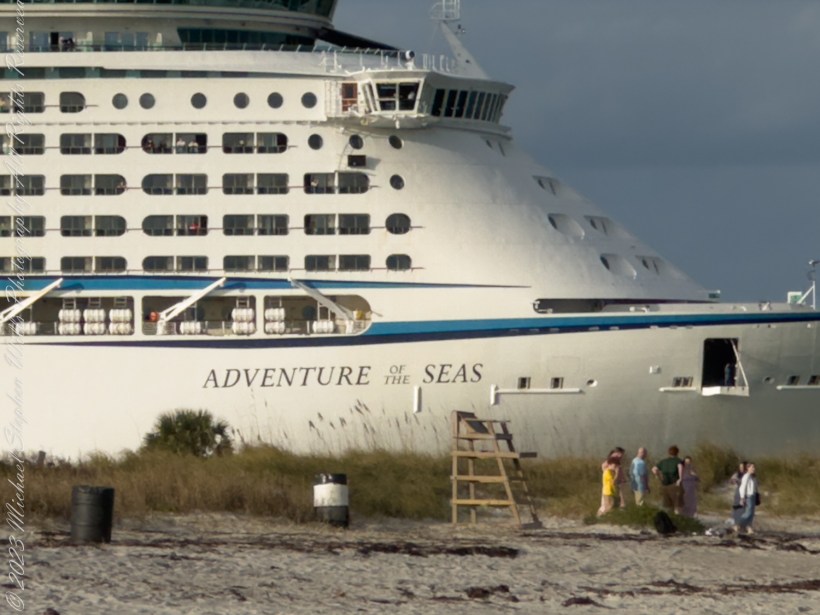
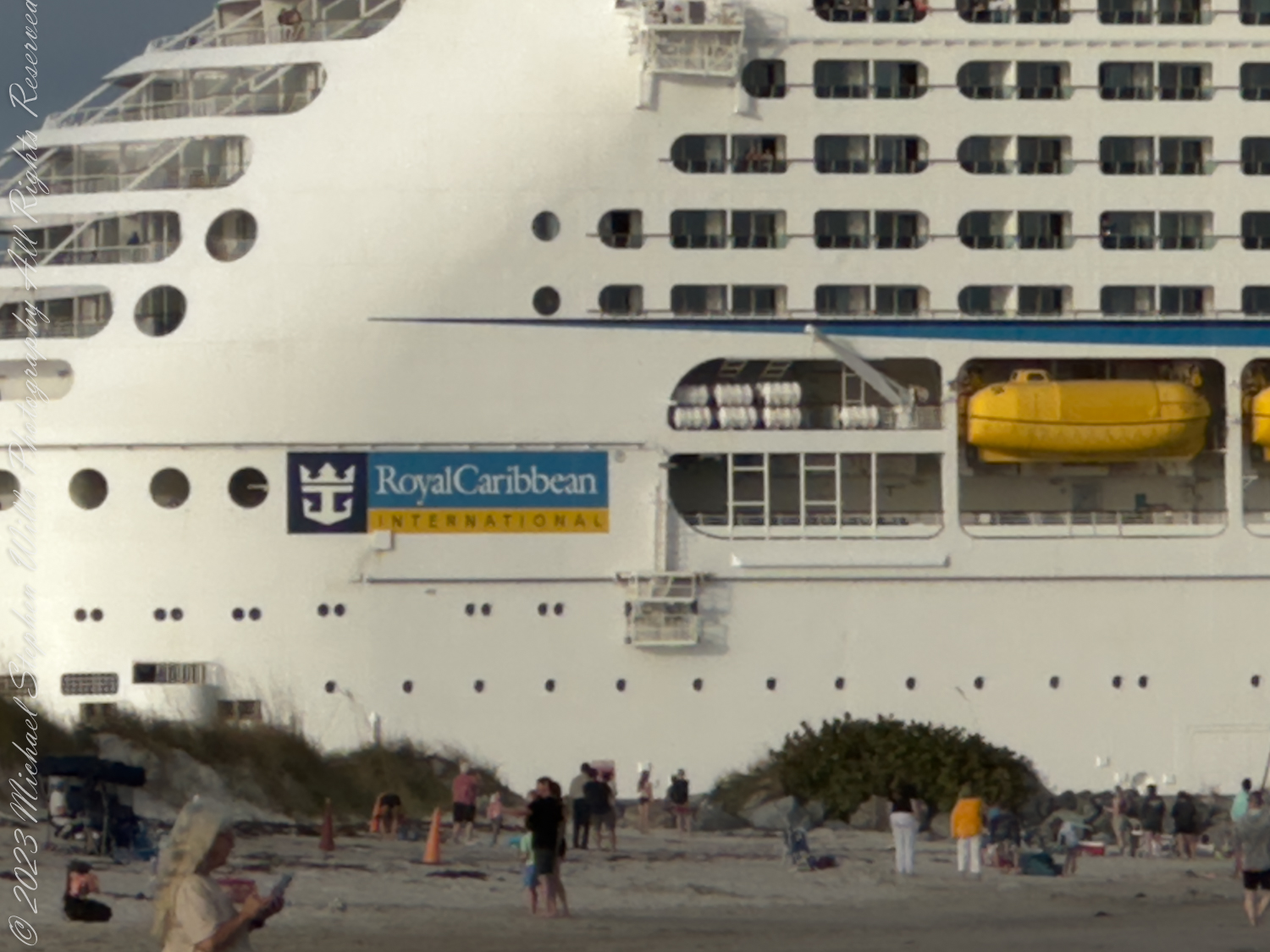
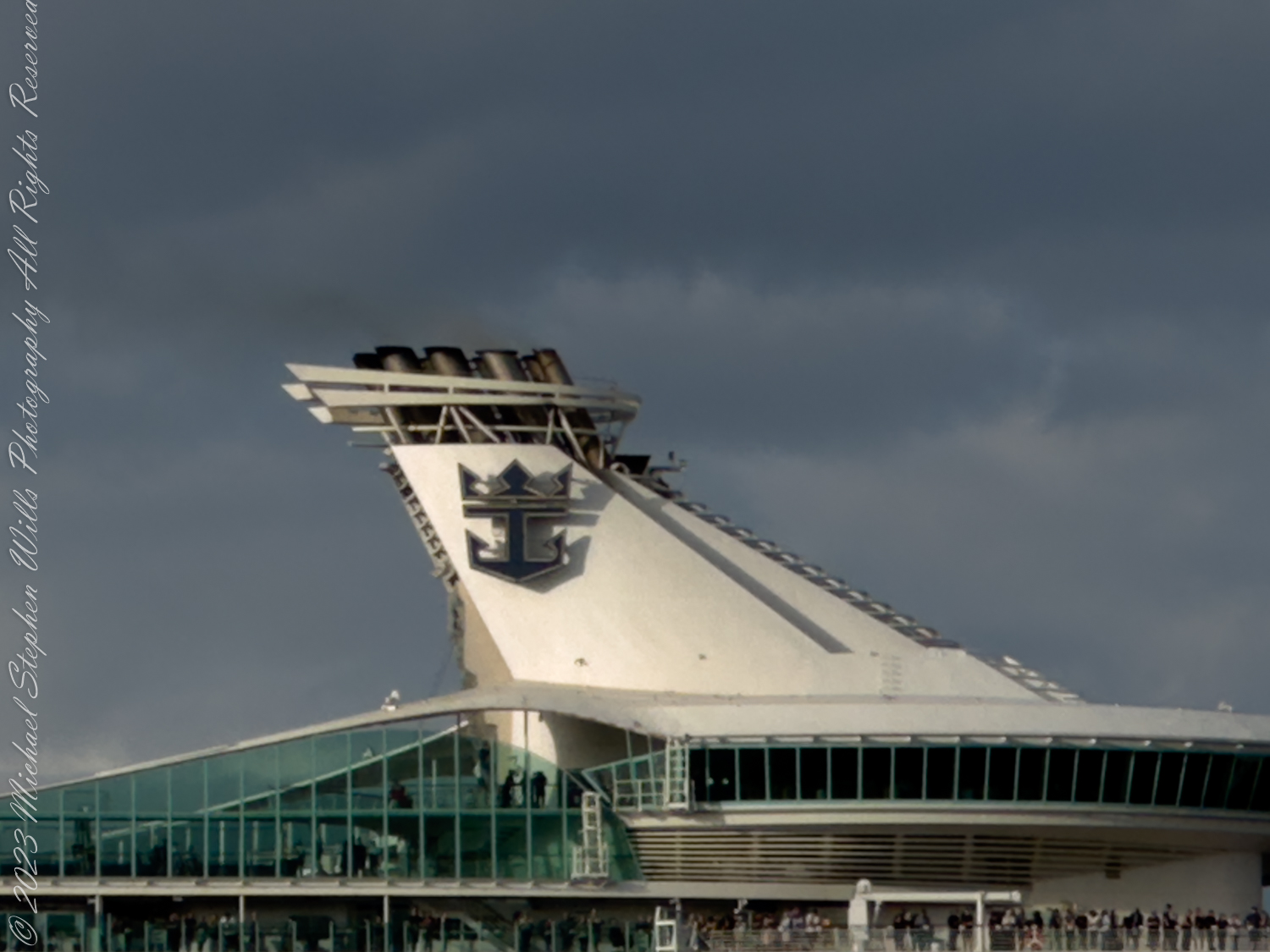
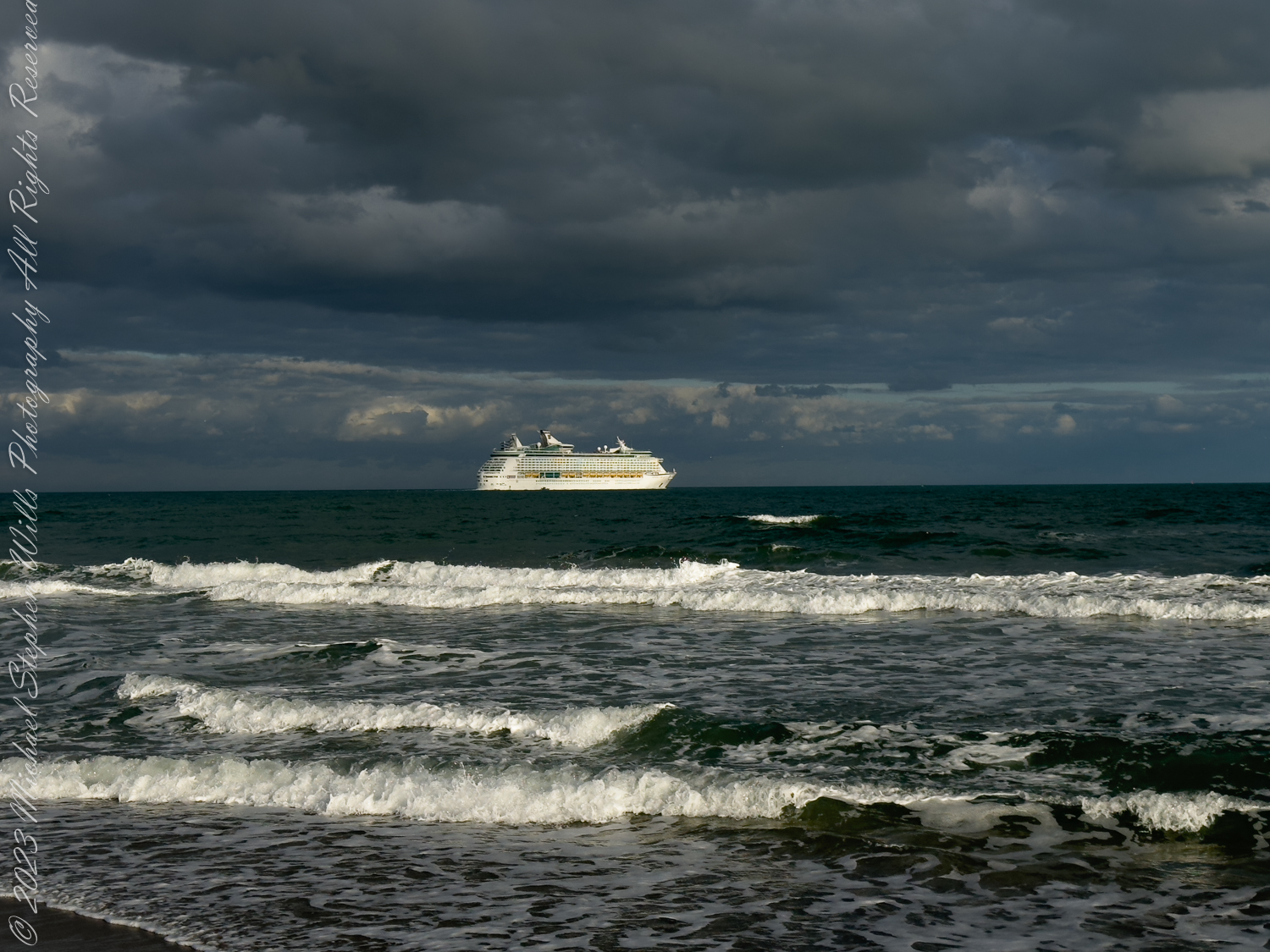
And then, there it is—the grandeur of the ‘Adventure of the Seas,’ a Royal Caribbean marvel, cutting a fine figure, dwarfing the jetty. The juxtaposition is startling. Here on the shore, life is leisurely and measured in moments and tides. Out there, on that floating citadel, time is about to be sliced into days and nights of Caribbean adventure. The ship, immense and sovereign, is like a skyscraper laid on its side, a testament to human ingenuity and the desire to explore beyond the water’s edge.
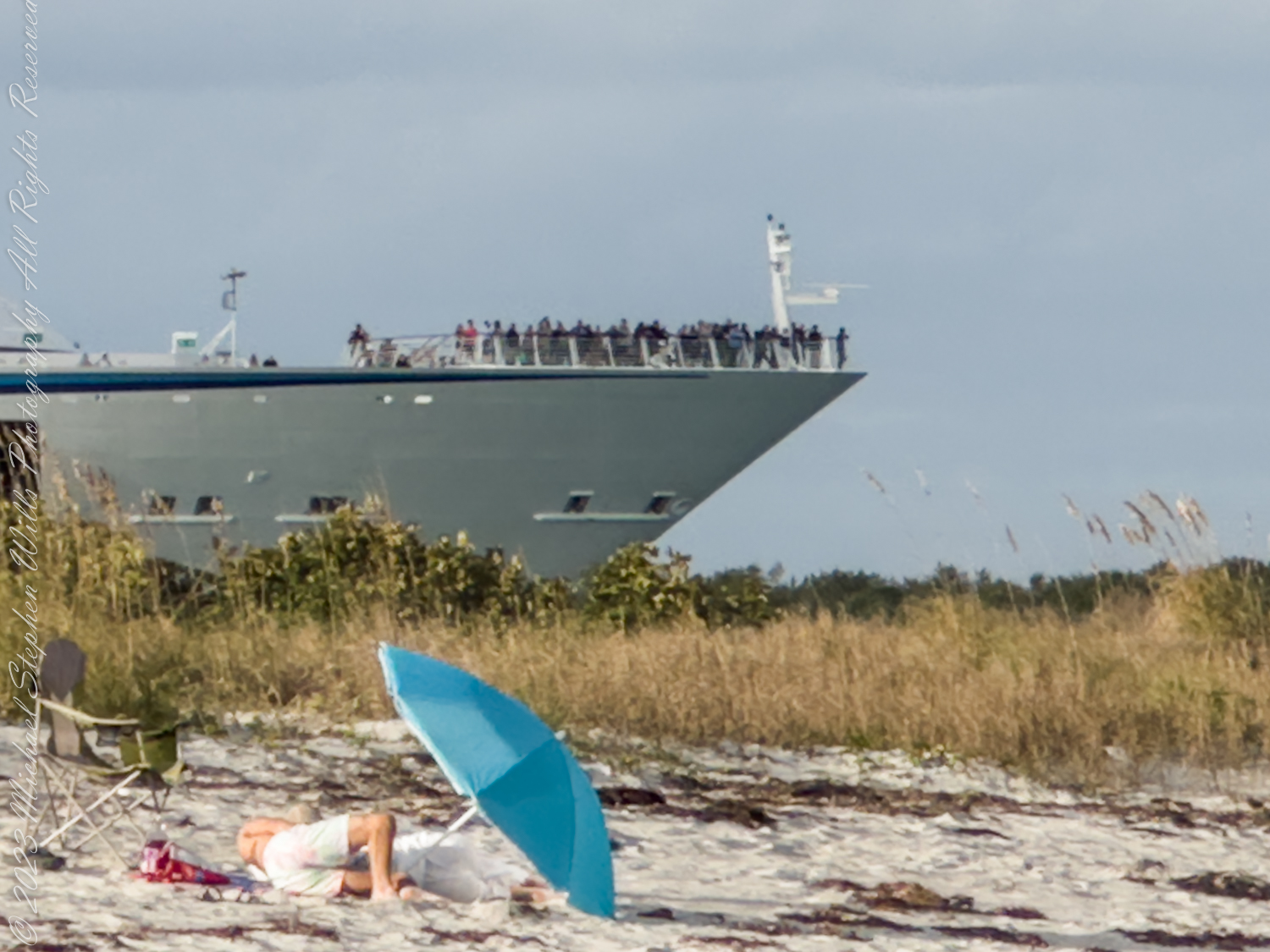
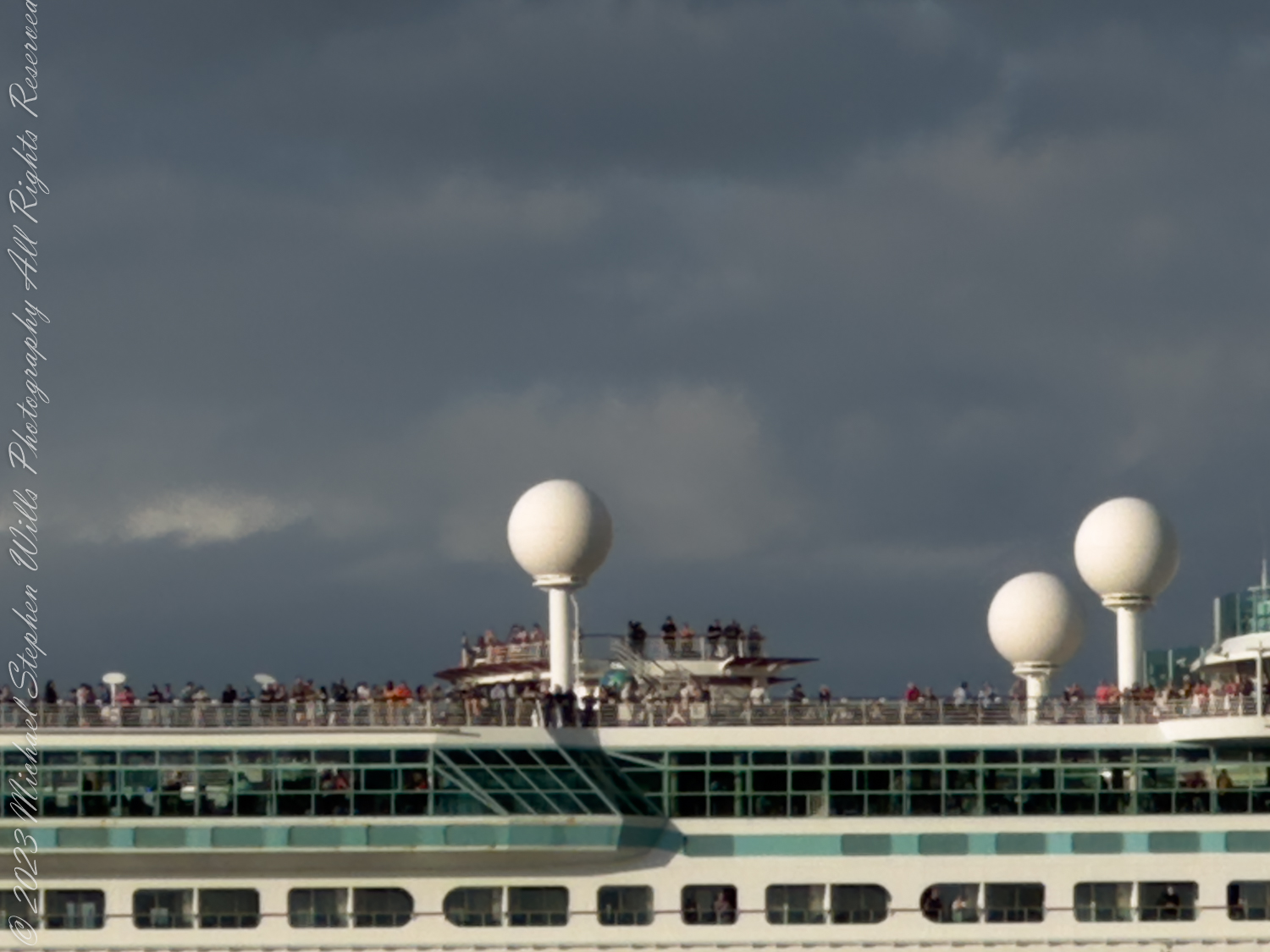
I can’t help but feel small as I watch the ship’s gentle departure, a behemoth gliding on the water with a grace that belies its size. On its decks, the passengers are tiny figures, distant and yet full of stories. Among them stands one passenger on the bow, just outside the safety of the fence—a silhouette against the vastness of the sea. A soul brave enough to step out of the bounds, perhaps seeking a moment of solitude before melding into the ship’s communal tapestry.
The air is laden with the salty tang of the ocean and the murmur of human voices. The beach, a haven of repose, and the ship, a vessel of discovery, create a harmony of contrasts. It’s a poignant reminder of life’s beautiful dichotomies—the stillness and the movement, the familiar and the unknown.

As the ship picks up pace, making its way towards its first destination on an 8-night voyage through the Eastern Caribbean, I’m captivated by the thought of the worlds it will touch. Ports like Labadee, Puerto Plata, and Charlotte Amalie await the footprints of those aboard, each stop an opportunity for stories yet to be written.

I imagine the passengers, soon to be awash in the colors, sounds, and textures of distant lands, while I remain, feet buried in the sand, a keeper of the threshold between land and sea. The vessel’s wake is a fading signature on the water, a reminder of the paths we choose and the adventures we seek.

The last glimpse of ‘Adventure of the Seas’ is a postcard-perfect vision, a snapshot of human endeavor set against the canvas of nature’s immensity. And as it disappears from sight, the beach slowly reclaims its quietude, the momentary disruption of departure ebbing away like the tide.

In the quiet aftermath, I’m left with a sense of wonder and a yearning for the unknown. The ship’s journey has stirred a wanderlust within me, a desire to set sail on my own journey, to find new horizons beyond the comforting embrace of the shore. But for now, I’m content to walk this beach, to carry the image of that grand departure, and to dream of the day when I, too, will step beyond the fence and into the vast embrace of the sea.

Copyright 2024 Michael Stephen Wills All Rights Reserved

Between Dunes and Discovery: Embracing History at Kennedy Space Center

Explore Cape Canaveral National Seashore and Kennedy Space Center with us, where pristine beaches meet the legacy of human space exploration, and feel the awe of standing where history was made.

A Journey Through Time and Space: Our Visit to Cape Canaveral National Seashore and Kennedy Space Center

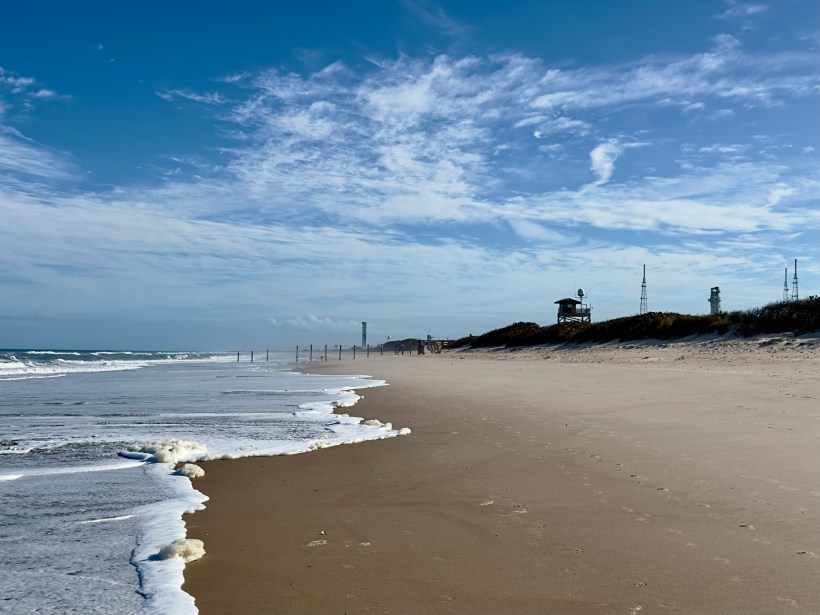
As we arrived at the pristine shores of Playalinda Beach within the Canaveral National Seashore, the gentle whisper of waves against the shoreline beckoned us. The sun kissed the horizon, casting a warm glow across the 24 miles of untouched, protected coastline that lay before us. Here, on the east coast of Florida, where crystal-blue waters embrace the shell-laden sands, we found ourselves at the intersection of natural beauty and human achievement.

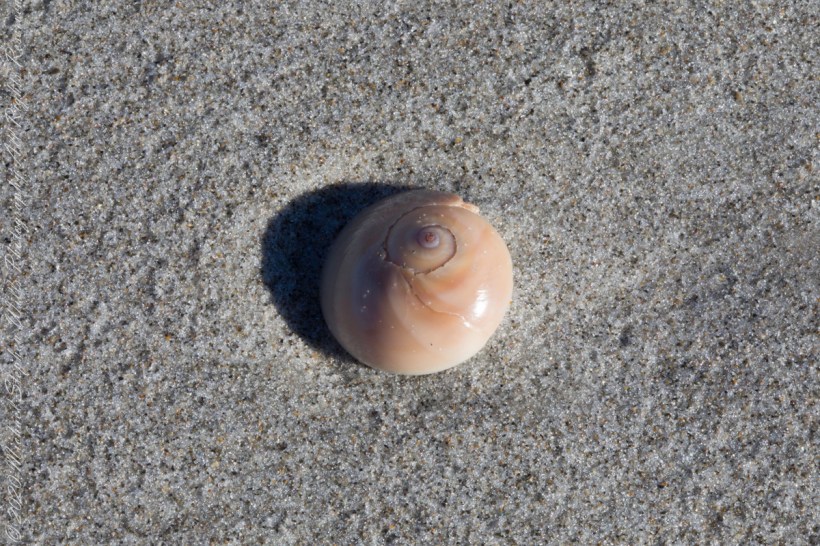
Shell of the Moon Snail (Naticidae) found in the surf wash.

The Serenity of Playalinda

We strode along the boardwalk, passing through dunes adorned with sea oats, to find our spot upon the soft sands of Playalinda. The beach, known for its tranquility and the chance to observe a vibrant array of wildlife, offered us a moment of peace. With no distractions—no concessions, no showers, just nature—we were able to disconnect from the world and reconnect with the earth. From our vantage point, the Merritt Island Wildlife Refuge across the water was a haven for migrating birds, dolphins, and, with some luck and the right season, sea turtles nest on the beach itself.

Witness to History: The Apollo 11 Legacy

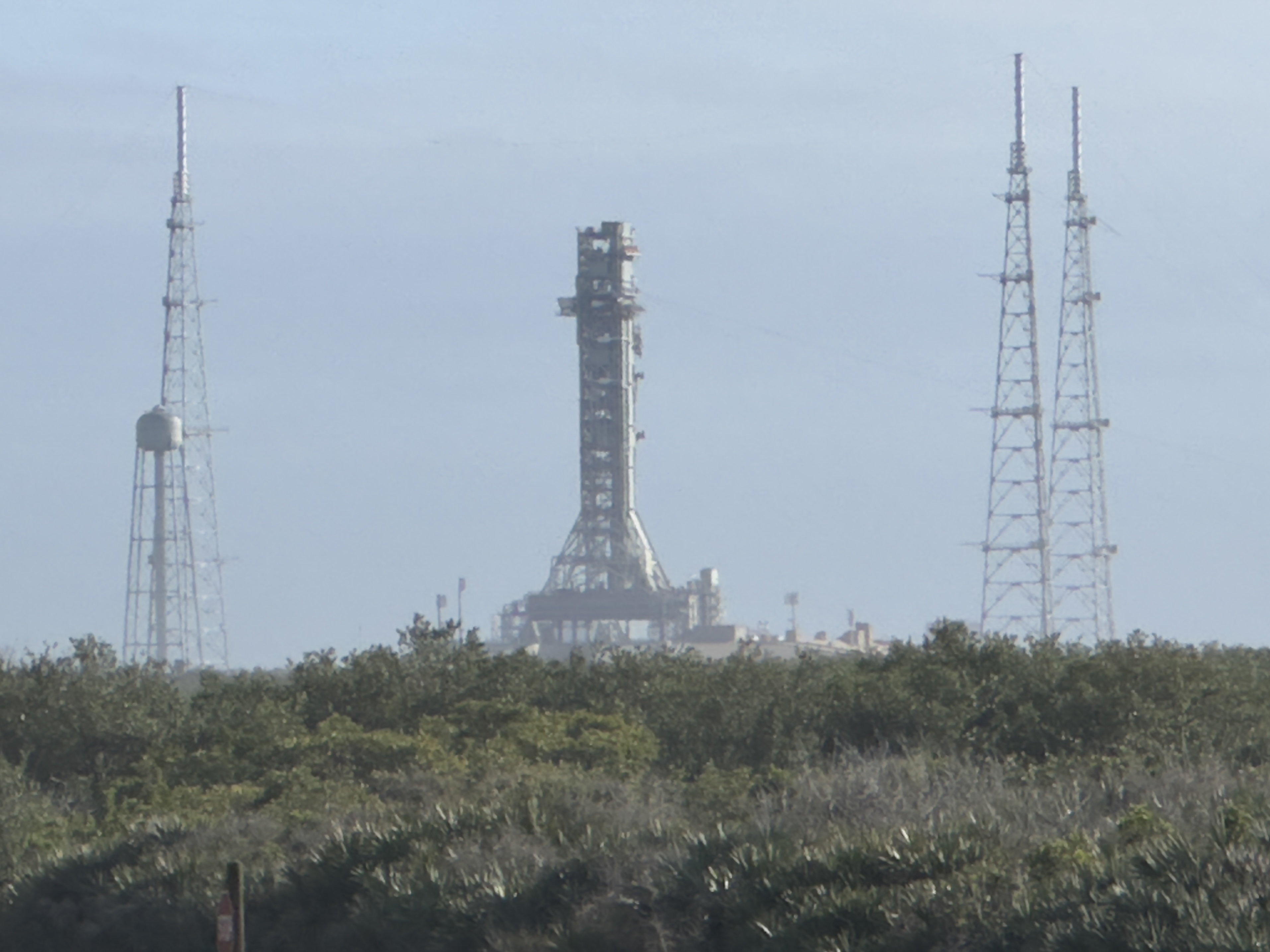
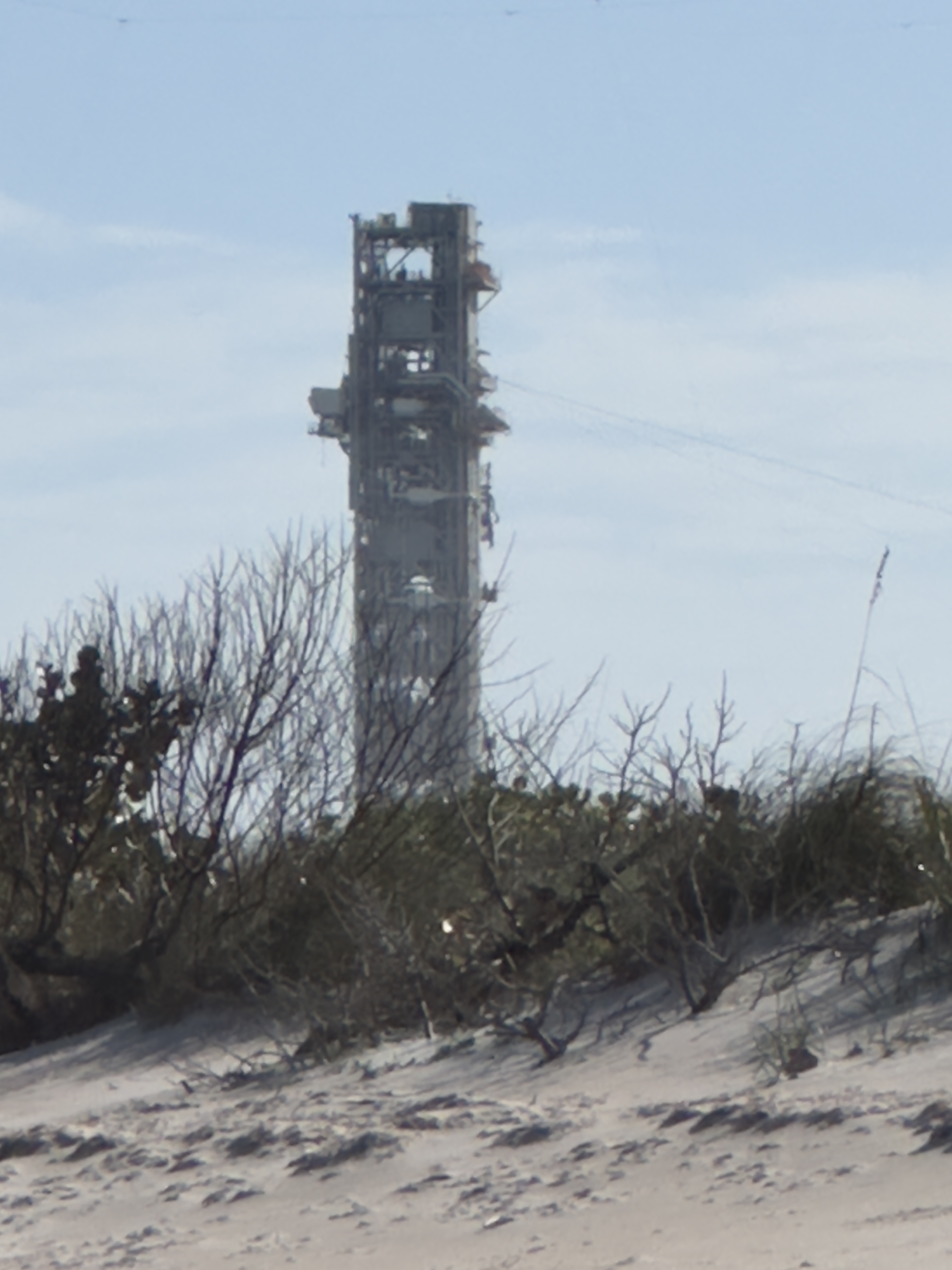
But it wasn’t just the natural allure that drew us here. Playalinda holds a unique position, offering an unobstructed view of the historic launch pads of Kennedy Space Center, where Apollo 11 began its monumental journey to the Moon. As we walked south towards the fence bordering the Space Center, the anticipation built within us. Here, we were tracing the footsteps of giants, those brave astronauts who dared to venture into the unknown.

The Vistas of Exploration

Each step brought us closer to the site where humanity took one of its most significant leaps. Gazing upon the launch complex from the fence, we were reminded of the powerful forces harnessed to break the bonds of gravity. Imagining the roar of the engines, the earth-shaking vibrations, and the fiery ascent of the Saturn V rocket, we felt a deep connection to the past and a sense of awe for the pioneering spirit that propelled us into a new era of exploration.

Reflections Amidst the Dunes

As we wandered back along the beach, the foam of the ocean’s edge lapping at our feet, we reflected on the duality of our surroundings. Here, in this place of quiet solitude, we also stood at the forefront of human innovation and ambition. The juxtaposition of the peaceful beach with the technological marvels just a stone’s throw away was not lost on us.

Our journey to the Cape Canaveral National Seashore and the Kennedy Space Center fence was more than just a visit to a beach or a historic site; it was a pilgrimage to a place where dreams materialize and reach for the stars. It was here that we came to understand the full spectrum of emotions that accompany great achievements—the hope, the fear, the triumph.

Conclusion

Our visit to the Cape Canaveral National Seashore and the Kennedy Space Center was an experience that will linger in our memories for years to come. It was a reminder of what we can achieve when we are united by a common goal, and it filled us with pride and optimism for the future. As we looked back one last time, the setting sun seemed to whisper a promise of the wonders yet to come, both here on the shores of Playalinda and in the vast expanse of space that awaits us.

Copyright 2024 Michael Stephen Wills All Rights Reserved

Queen Victoria Arrival

Little did they know what lay in store….

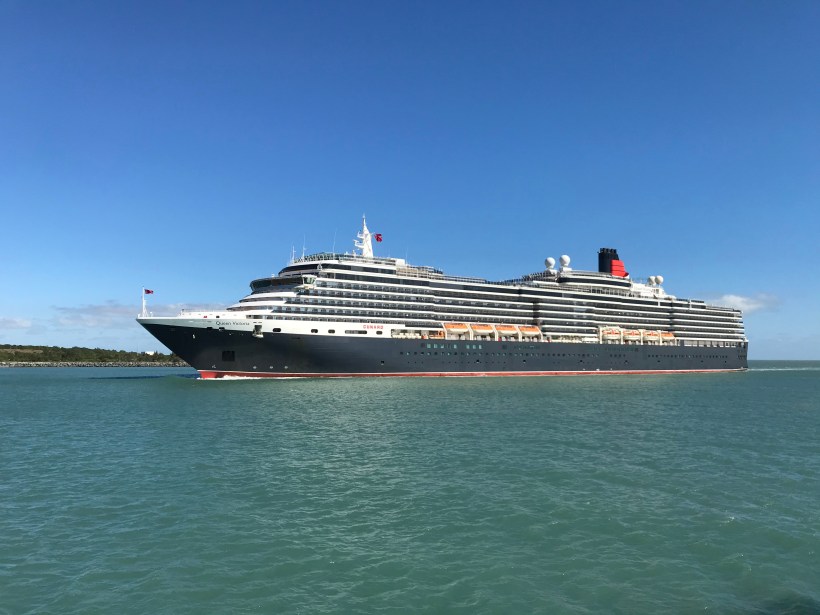
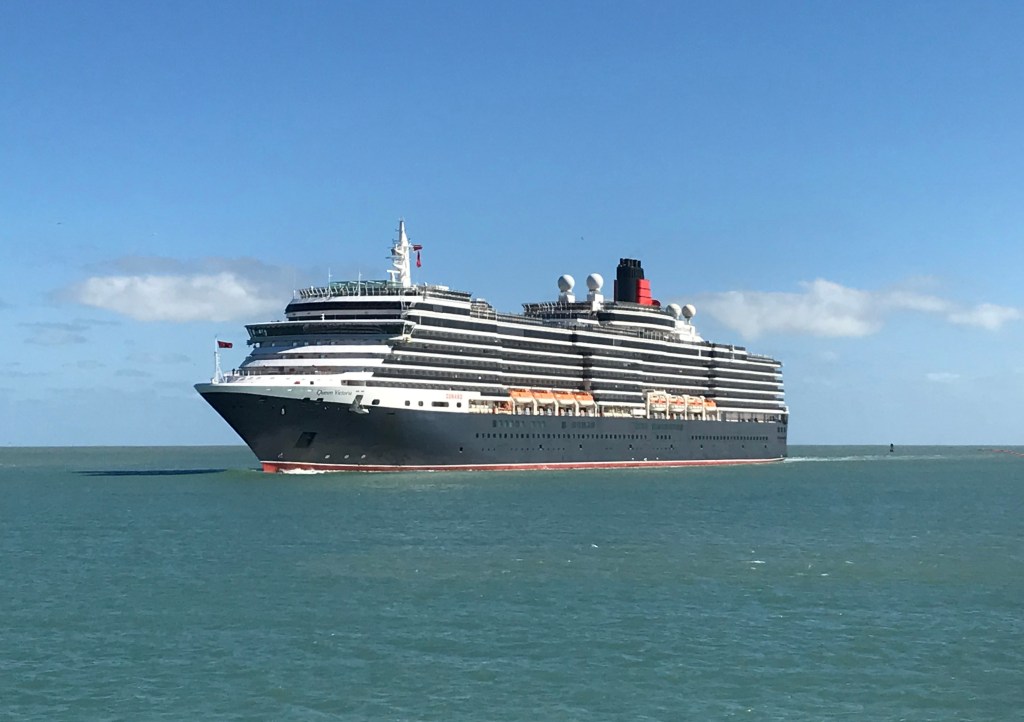
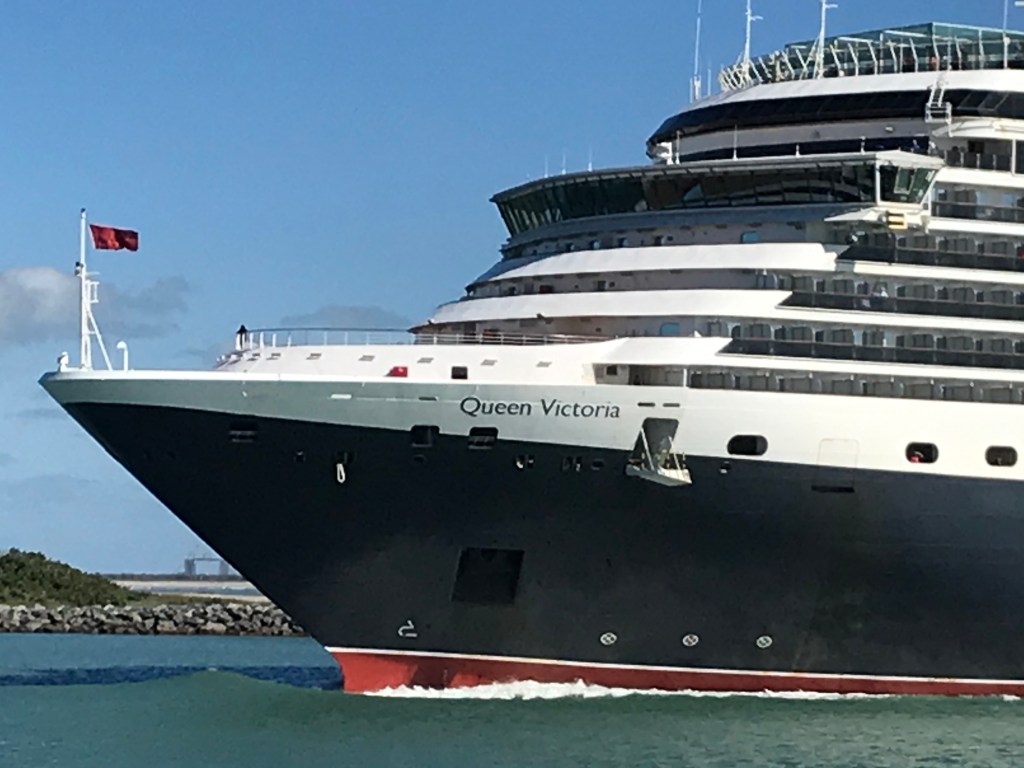
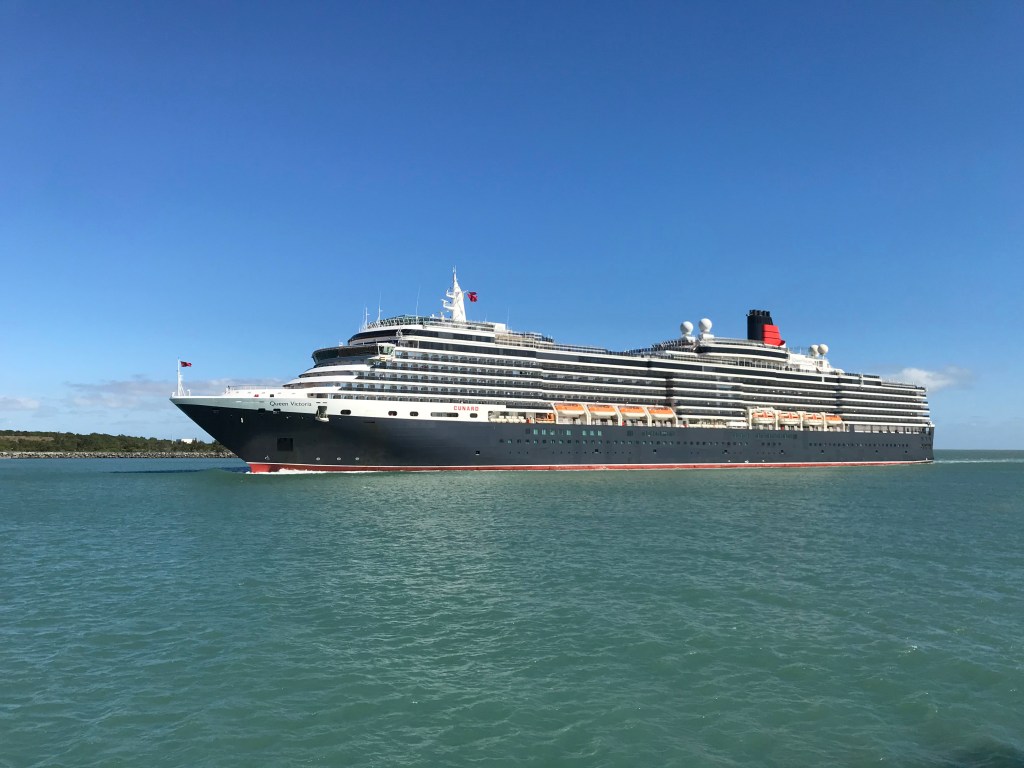
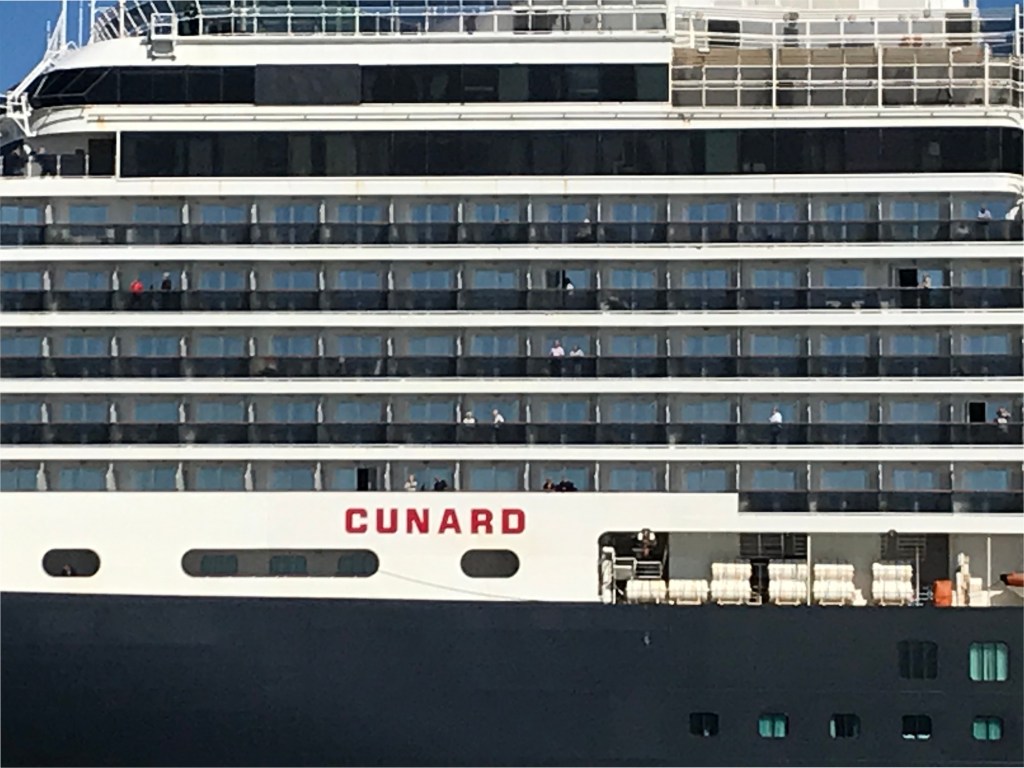
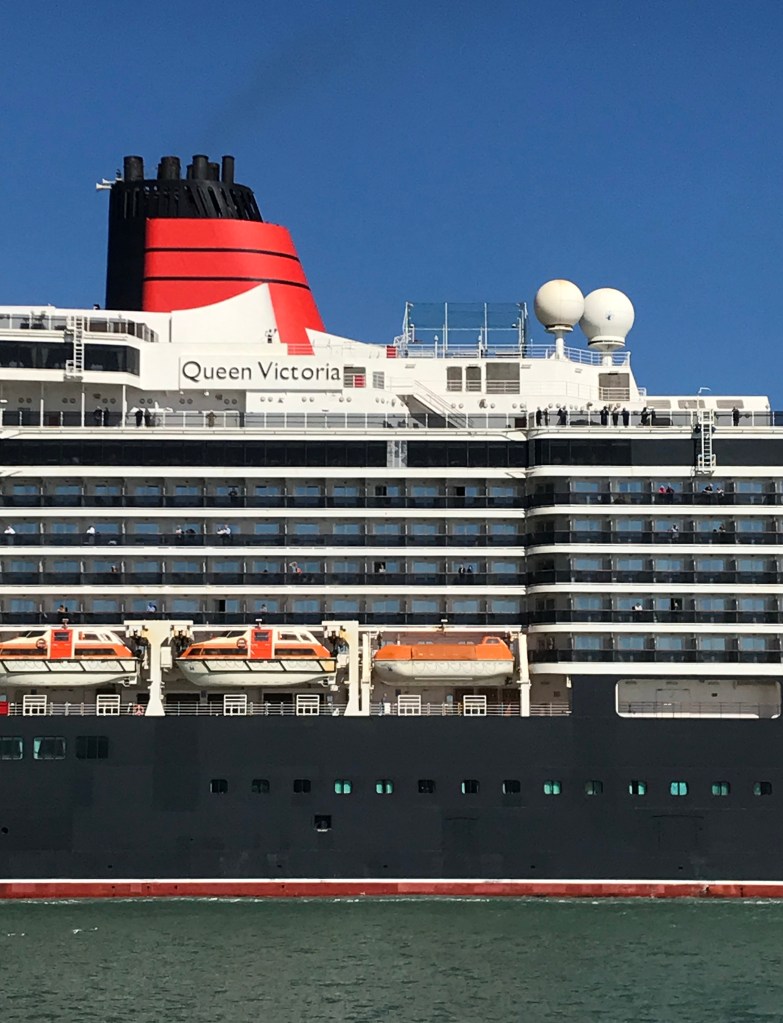
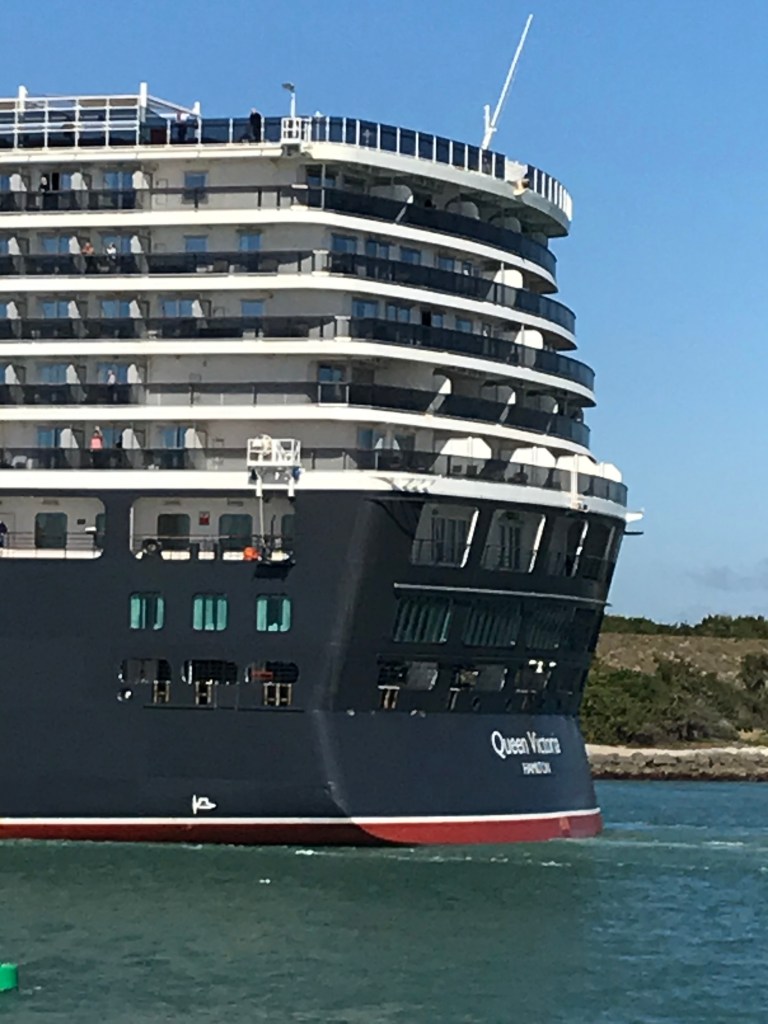
Pam and I walked from Cheri Down park this morning of February 2020 to Jetty Park where we were fortuitous witnesses to the arrival of the Cunard ship Queen Victoria on an 84-day cruise around South America.

Click video to start. To do this from WordPress Reader, for best results first click the title of this post to open a new page. Ditto for the photograph

I used my IPhone 7 to capture the event. Understanding the context of a ship’s arrival opens a whole new world. Standing on the pier I researched the voyage.

Here is the list of ports on the itinerary. These include the Caribbean, Central America and many of the same ports visited on the 2016 Oceania cruise Pam and I enjoyed from Lima, Peru to Buenos Aires, Argentina.

Hamburg, Germany
Southampton, England
Kings Wharf, Bermuda
Port Canaveral, Florida
 Fort Lauderdale, Florida
San Juan, Puerto Rico
Bridgetown, Barbados
Manaus, Brazil
Santarem, Brazil
Salvador de Bahia, Brazil
Rio de Janeiro, Brazil
Montevideo, Uruguay
Buenos Aires, rgentina
Puerto Madryn, Argentina
Ushuaia, Argentinia
Cape Horn, Chile
Punta Arenas, Chile
Puerto Montt, Chile
San Antonio, Chile
Coquimbo, Chile
Arica, Chile
Callao (Lima), Peru
 Manta, Ecuador
 Panama City, Panama
Panama Canal, Panama
Cartagena, Columbia
Willemstad, Dutch Antiles
Fort Lauderdale, Florida
Ponta Delgada, Azores
Southampton, England
Hamburg, Germany

Little did they or we know the happy voyage was destined to terminate and return.

Copyright 2022 All Rights Reserved Michael Stephen Wills

Iridescent Plumage

shiver me timbers

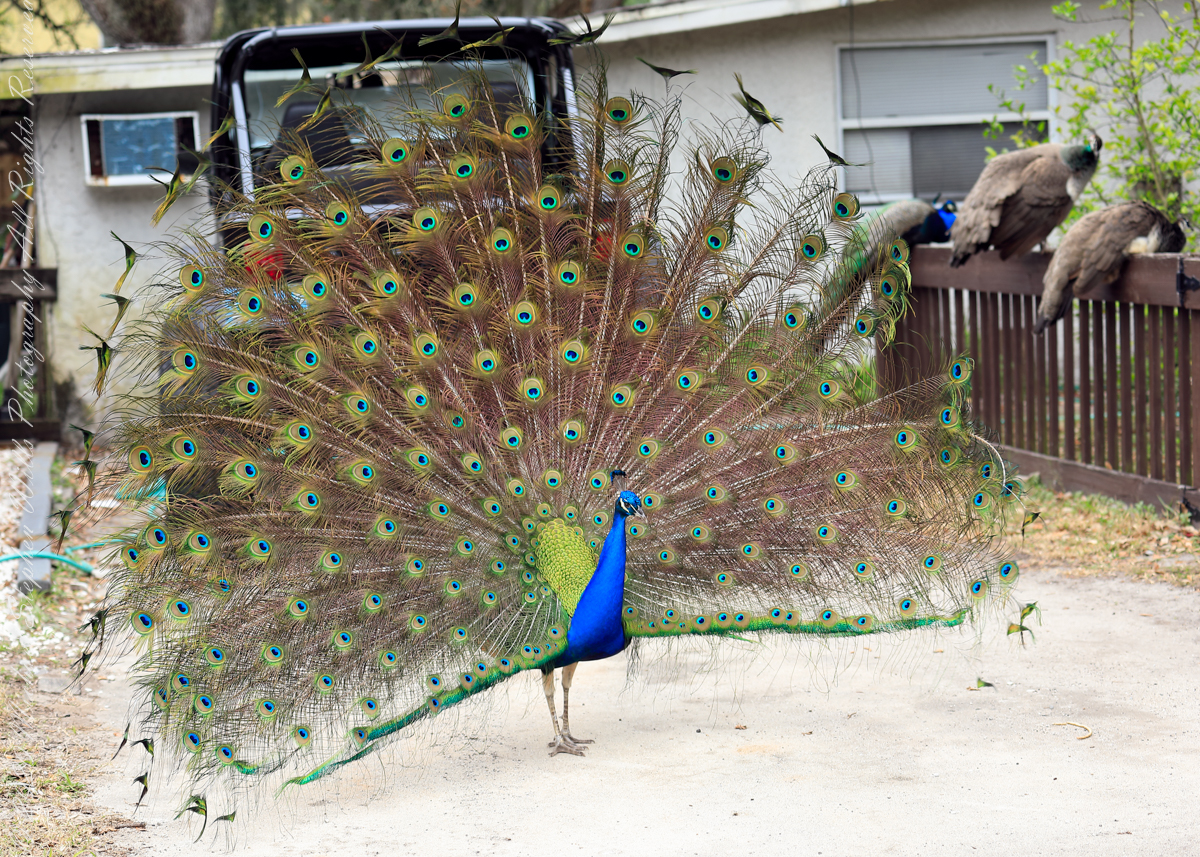
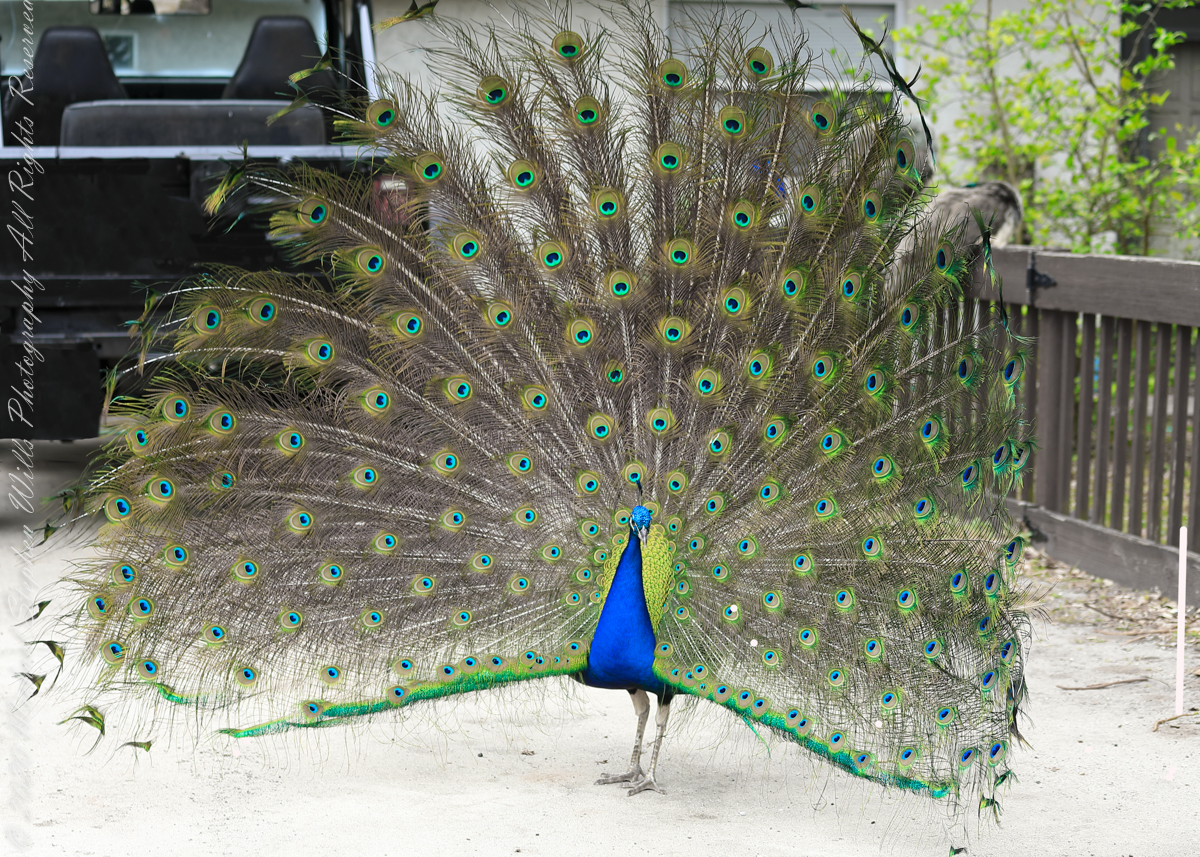
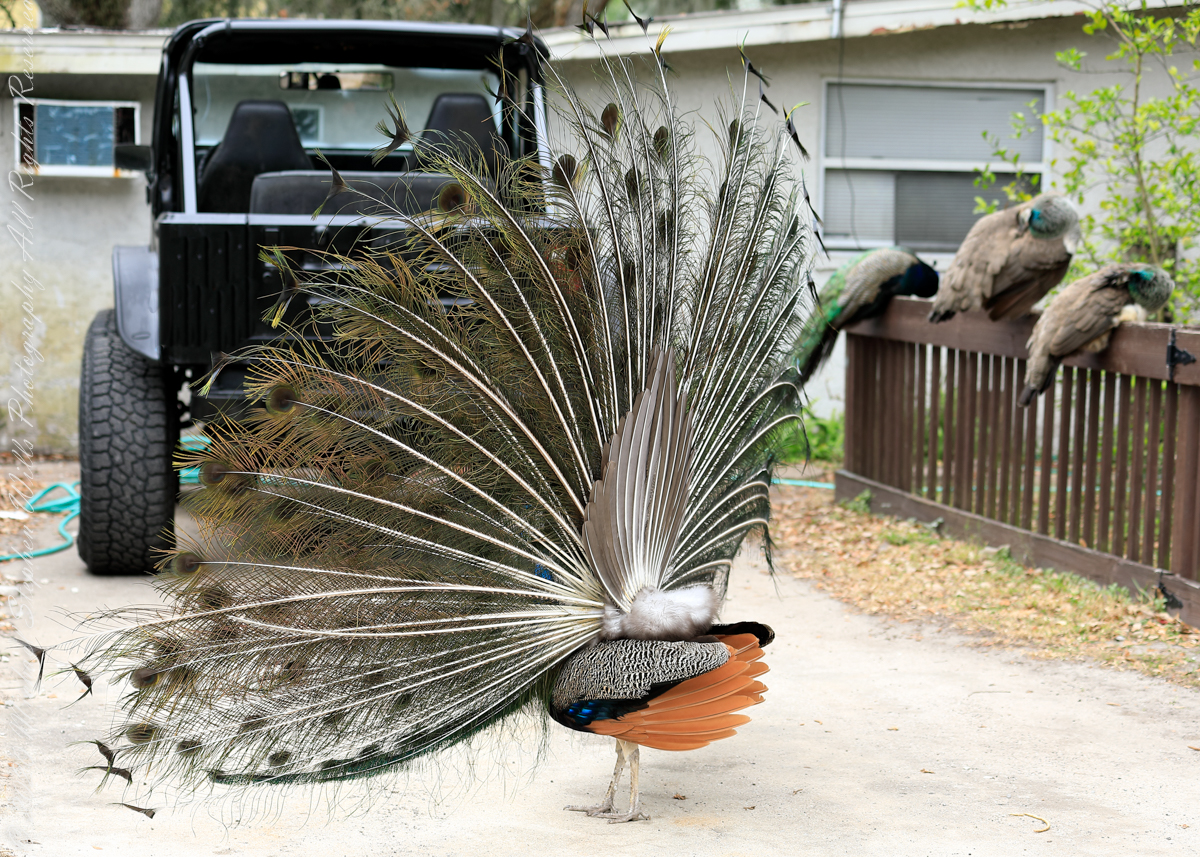
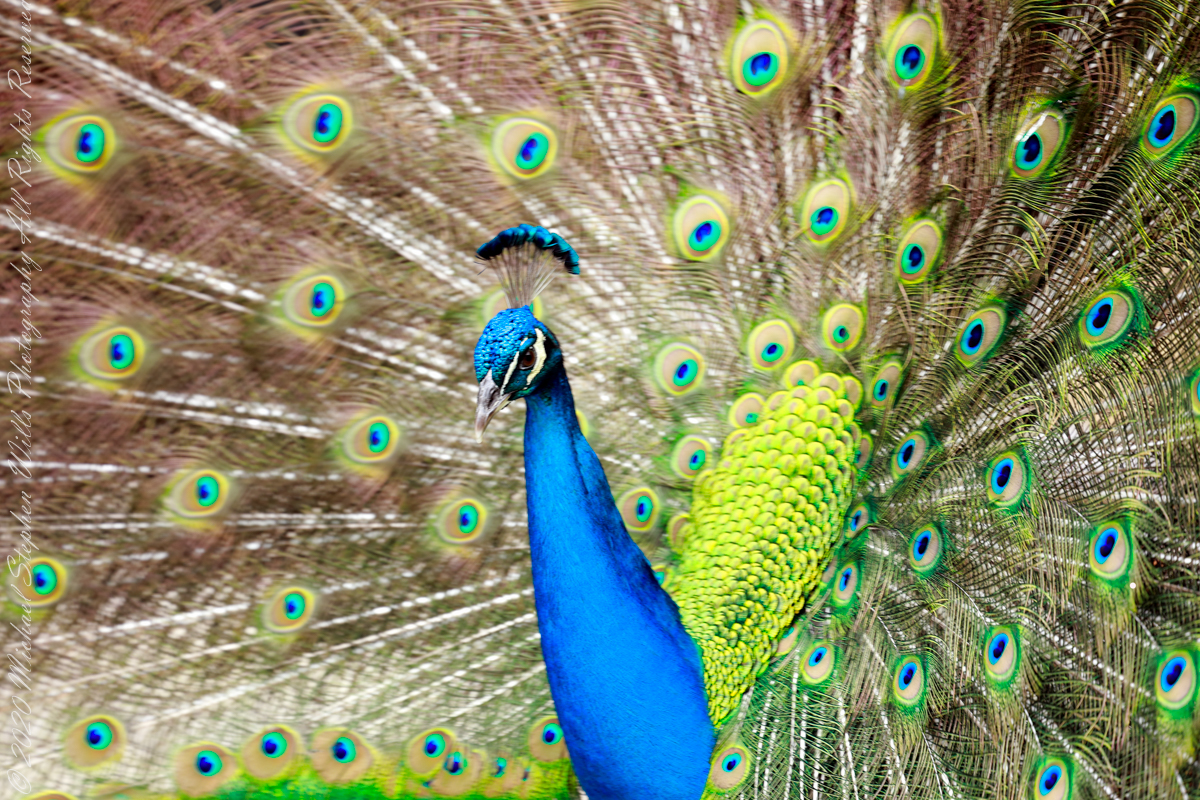
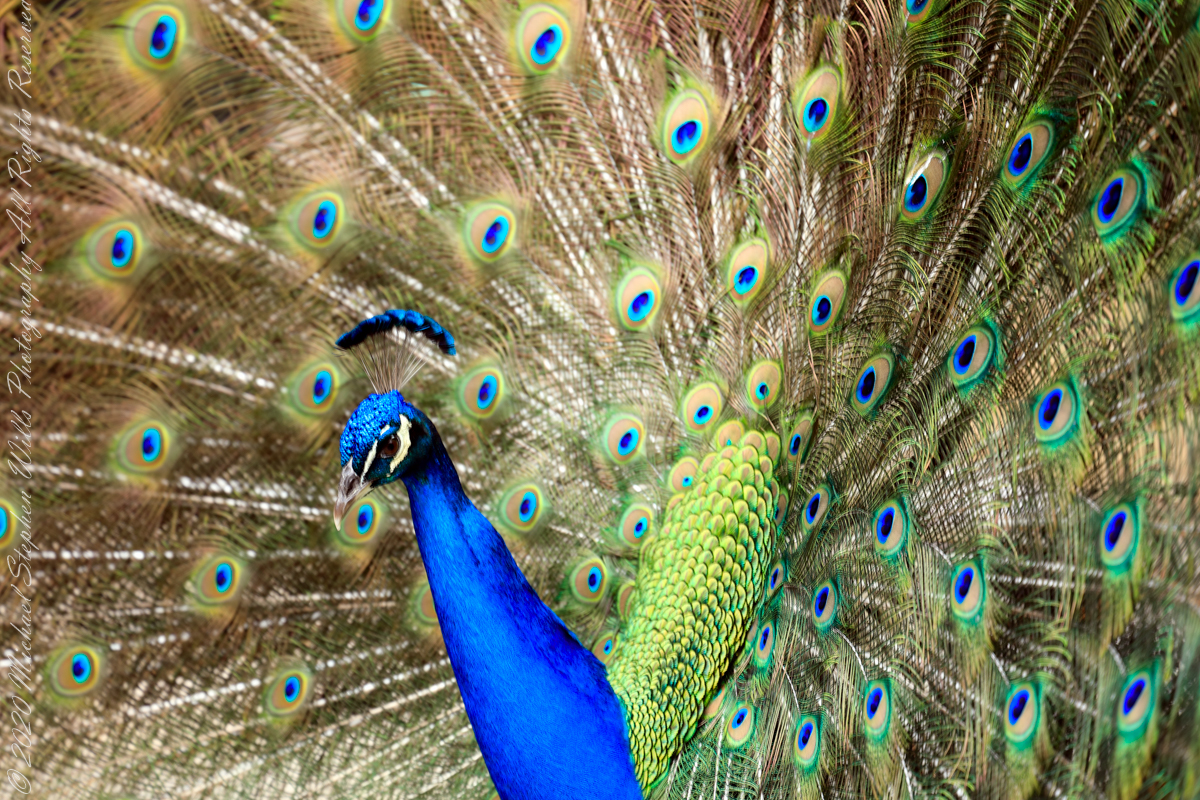
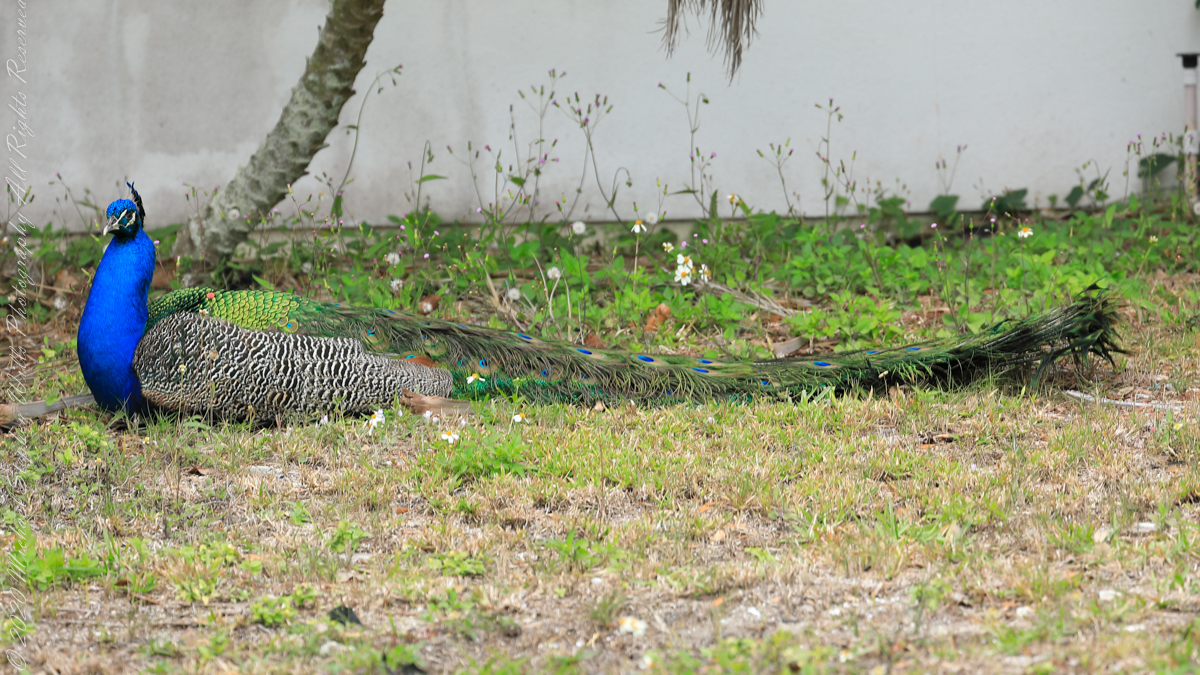
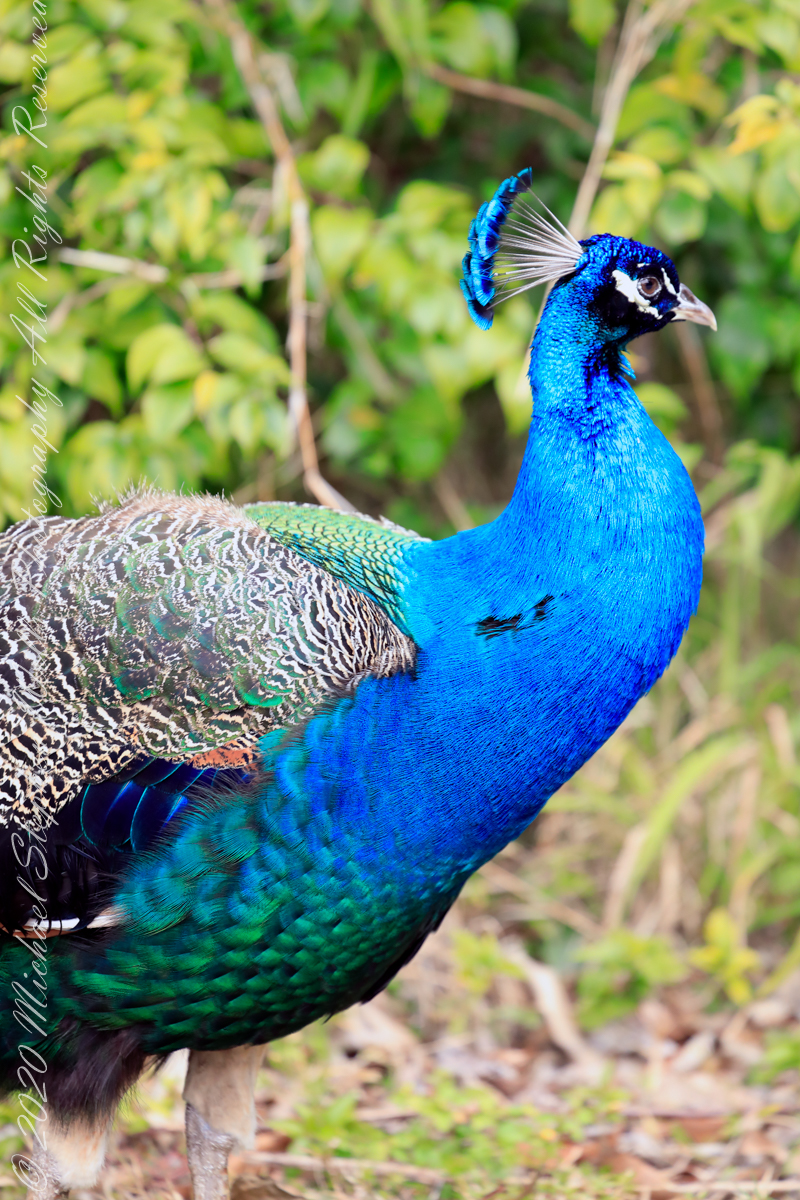
The third of my postings about the peafowl of Cape Canaveral…..we had our most intimate interactions on a Oak Lane, a small unpaved road off a Circle K (roadside convenience store). At one point a peacock approached Pam on the open windowed passenger side and almost pecked her.

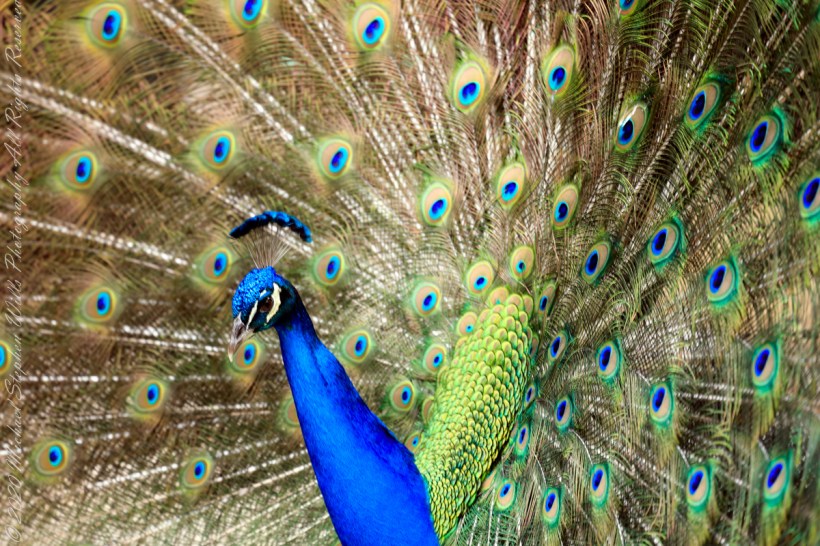
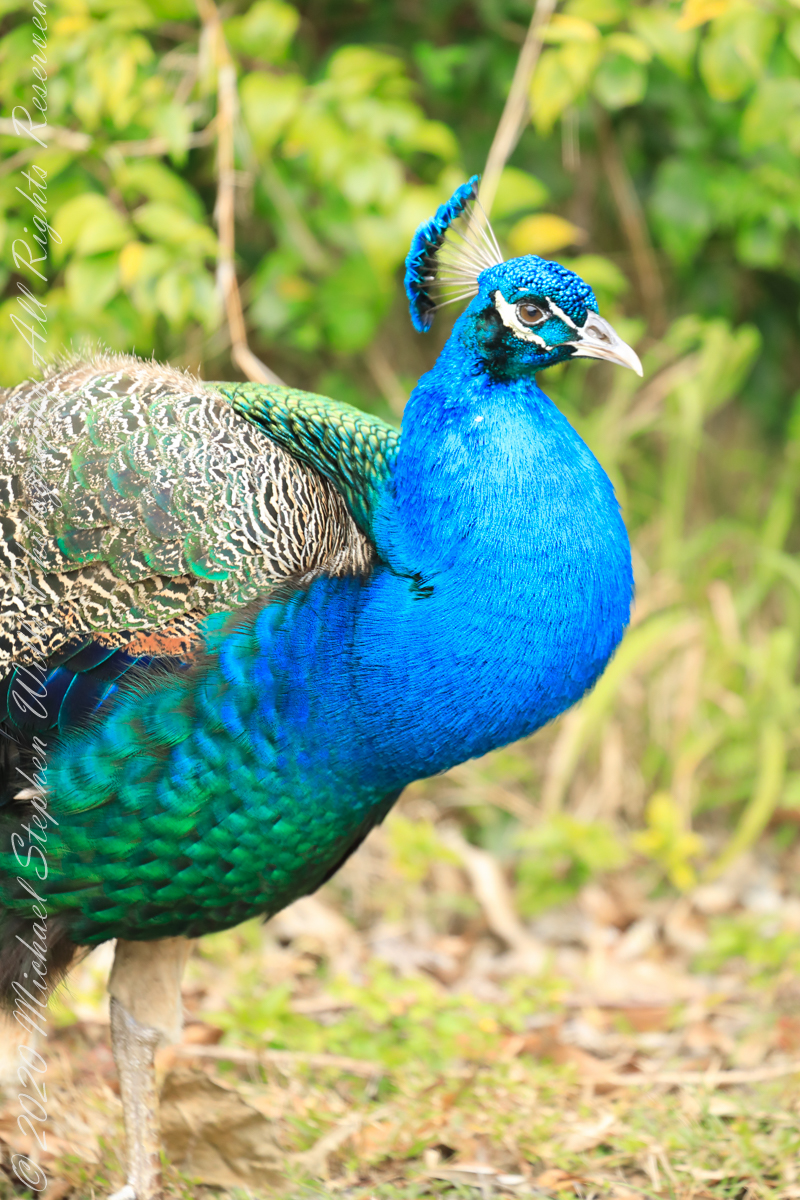
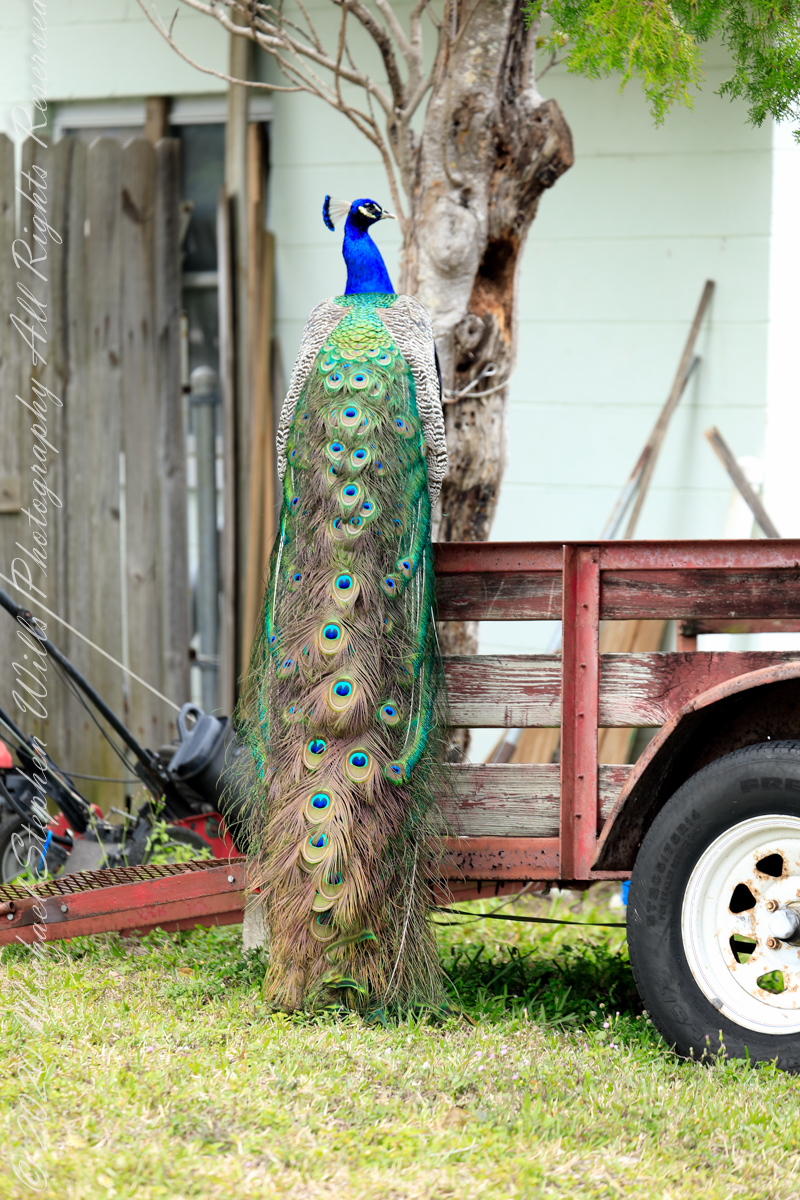
The iridescent coloration is an illusion created by the structure of fine feather elements, called barbules. The impression on peahens varies with viewing angle, between 90 (head on) and 45 degrees to either side. The peacock will shiver his train when faced with a favored peahen. 

Click me for the first post of this series, “Male and Female Peafowl.”

Copyright 2022 Michael Stephen Wills All Rights Reserved

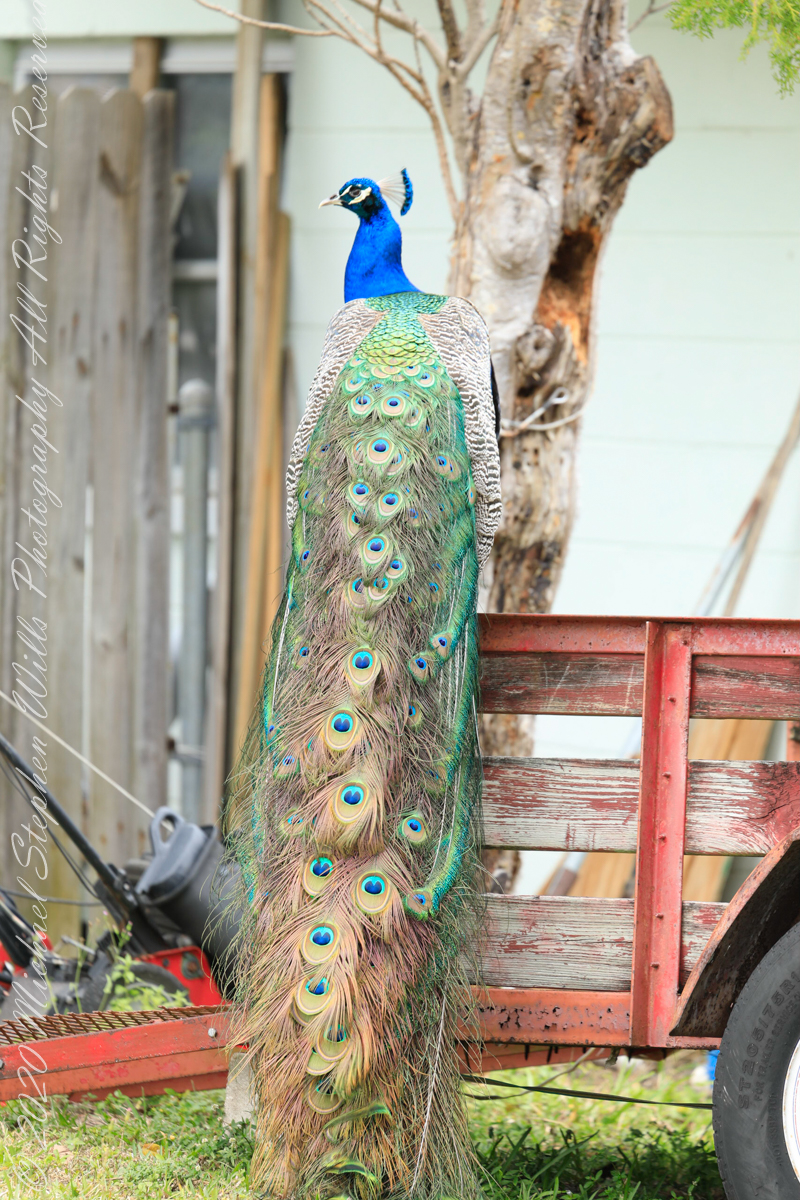
Train of the Male Peafowl

And some history about the “Peacock Neighborhood” of Cape Canaveral

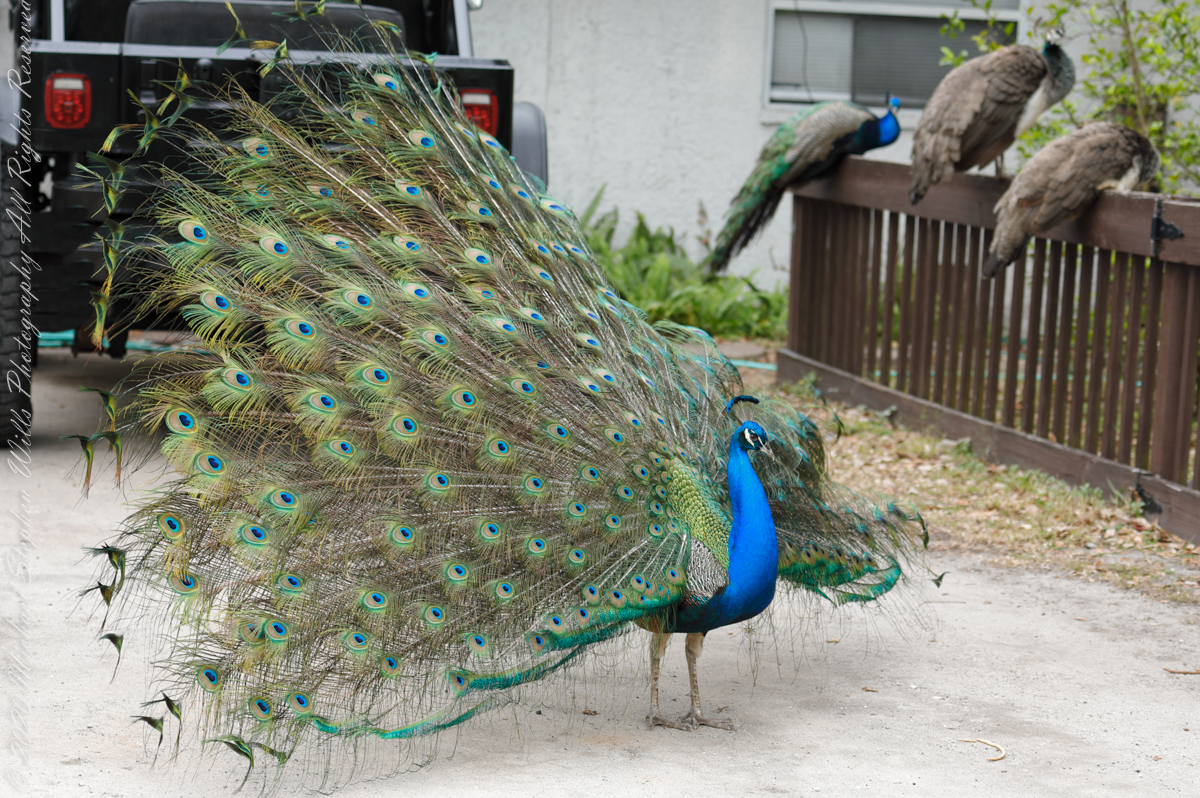
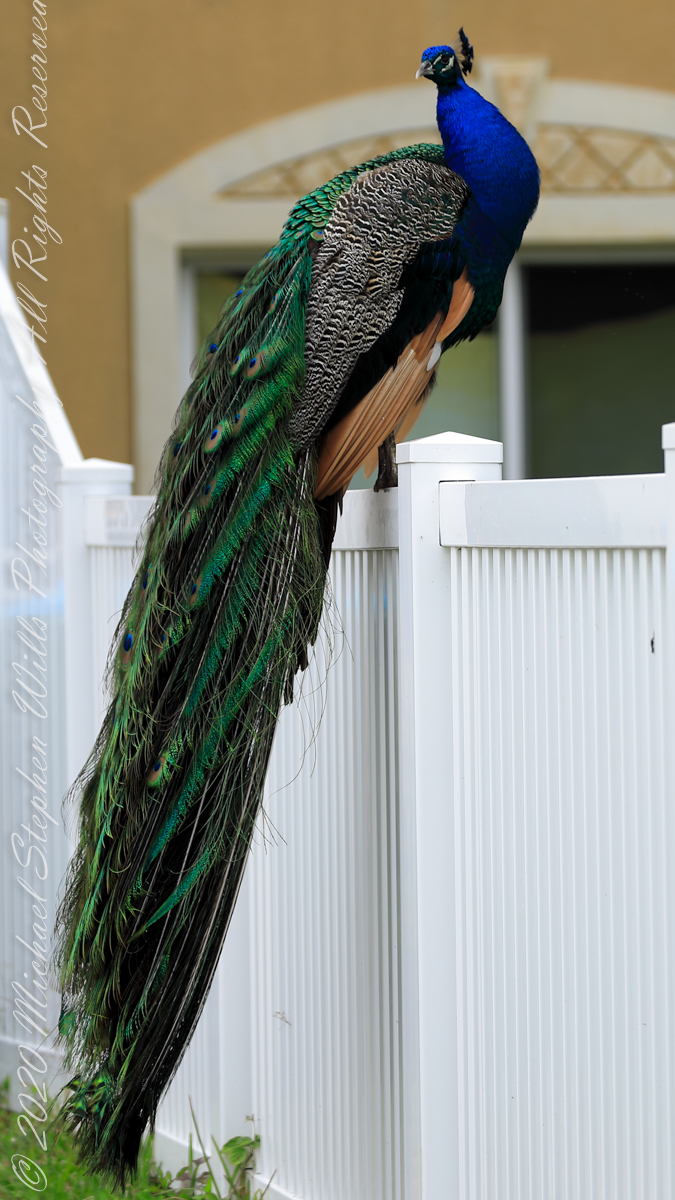
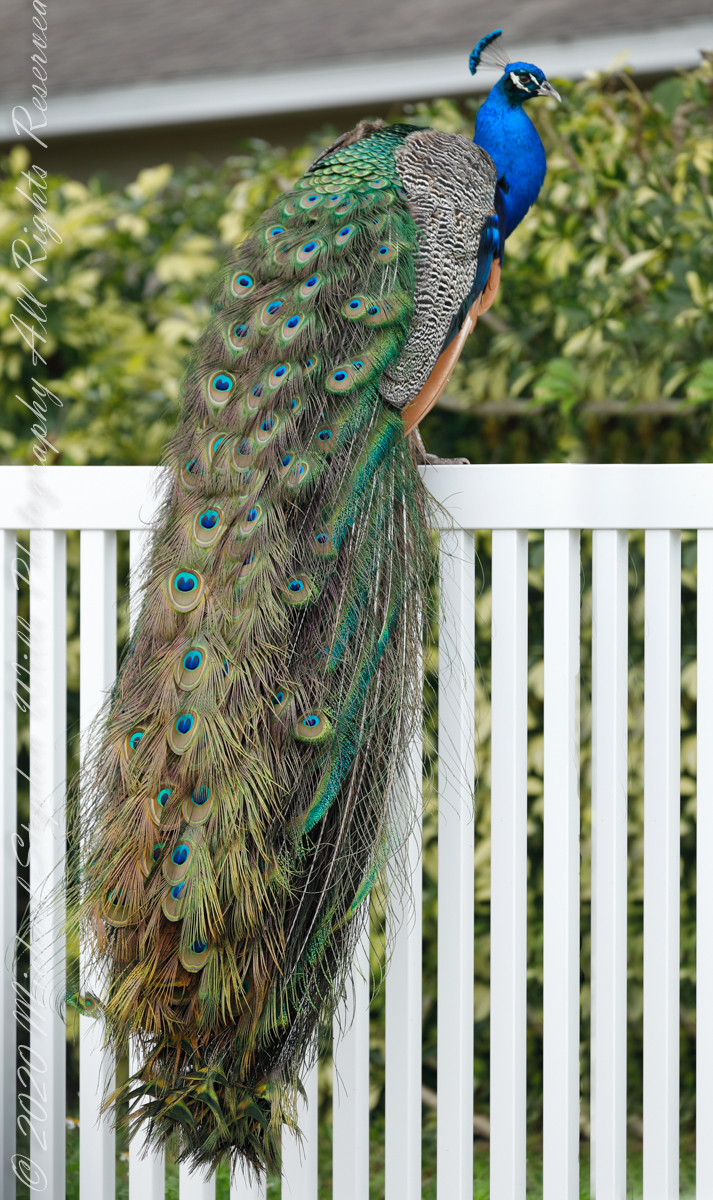
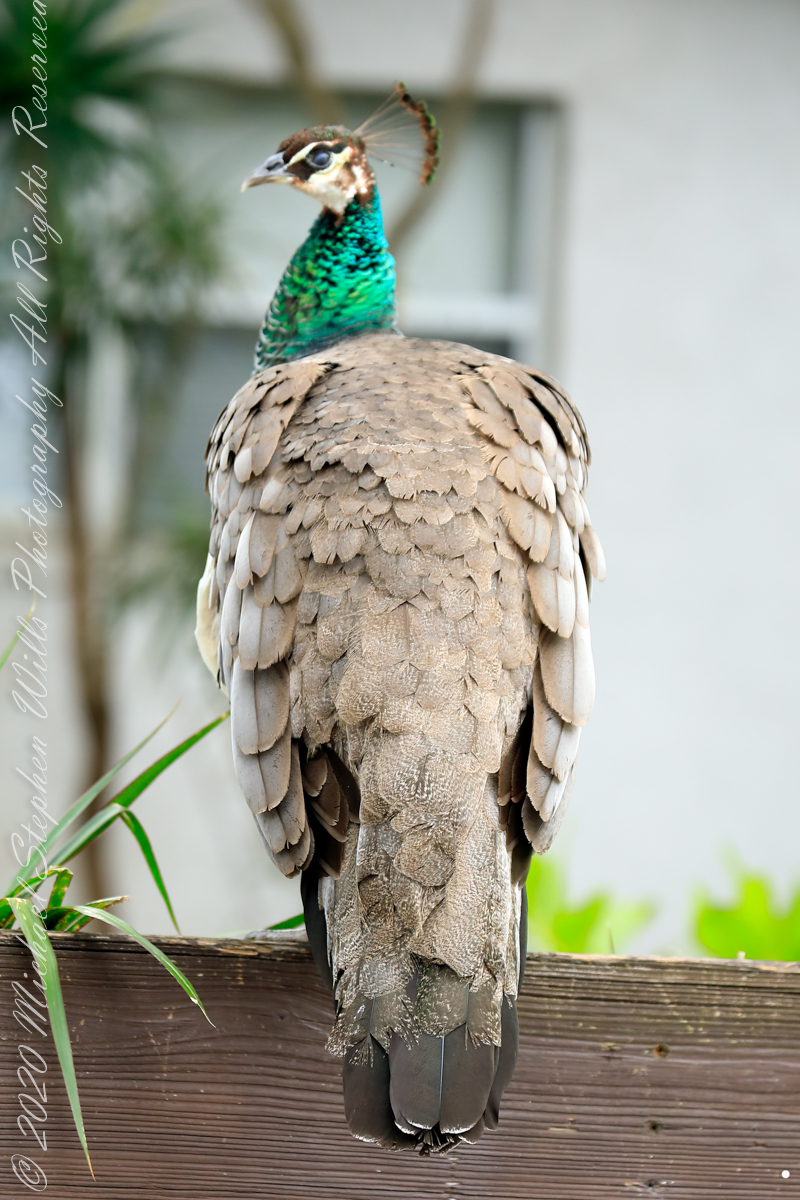
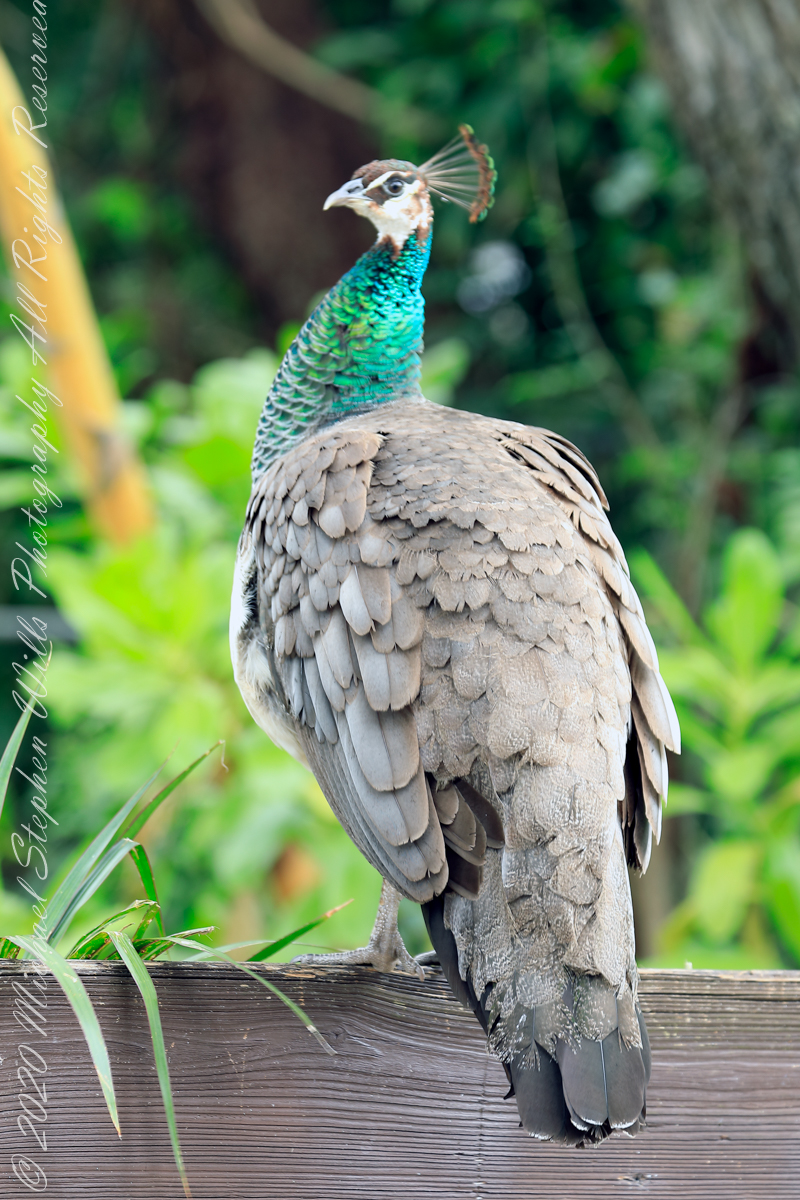
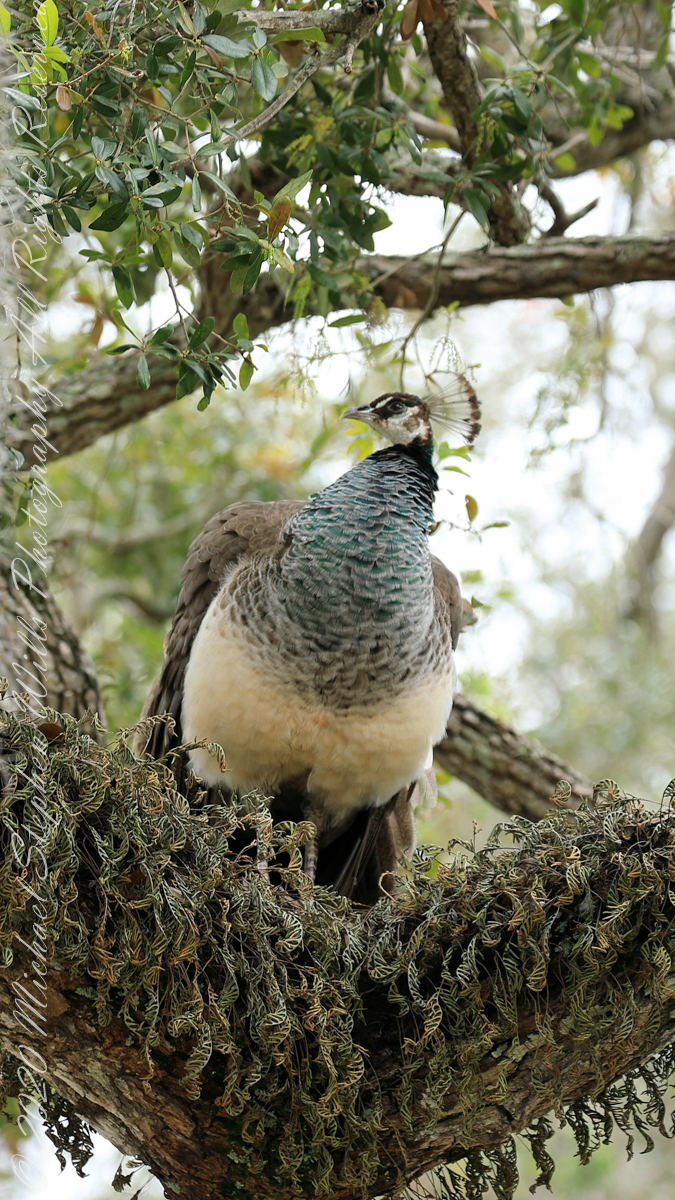
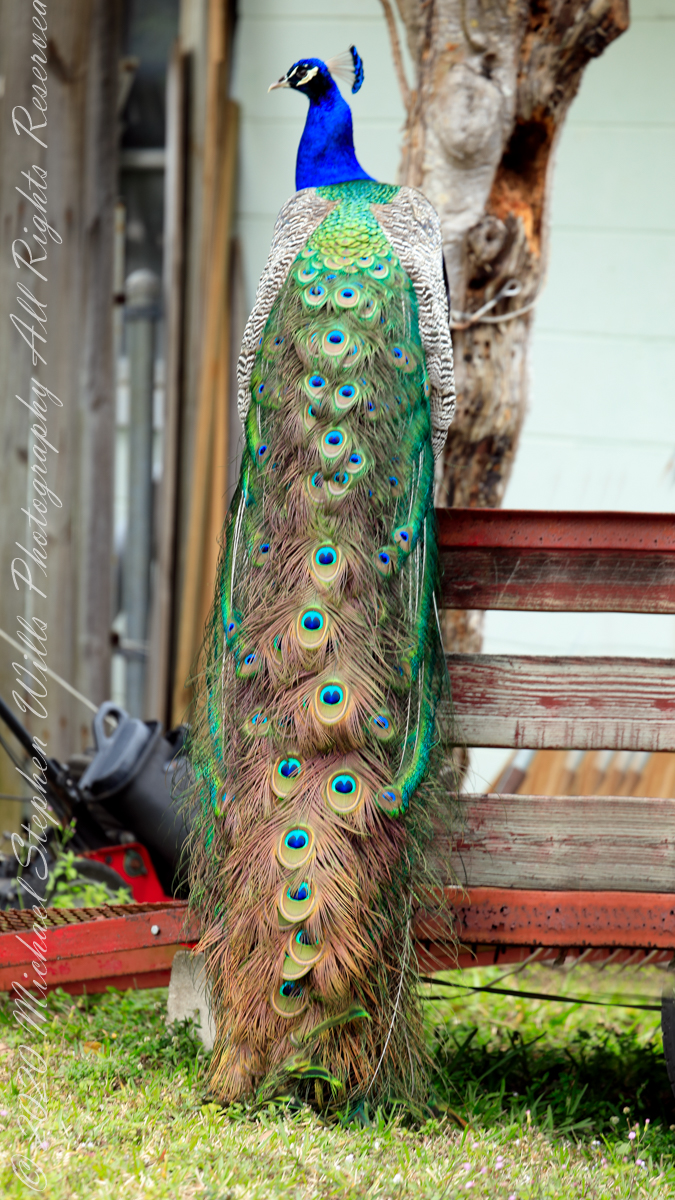
February is Peafowl mating season and for Cape Canaveral the displays were especially fine. These were captured on a photography expedition via automobile, being especially fortunate in observing peacocks (male peafowl) on high perches oriented perfectly to display the magnificent train (trail).

Here is some information on Reddit from “Mr_mayhem77 “According to locals, the Eberwein family lived between Port Canaveral and what is now the Villages of Seaport. In fact a street is actually named after them (Eberwein Drive) at the northern edge of Cape Canaveral. They had the peafowl among many farm animals. The family moved in 1986 and abandoned the peafowls. Over the years the peafowl have slowly populated our community with the greatest concentration being north of Central Ave.”

Copyright 2022 Michael Stephen Wills All Rights Reserved

Male and Female Peafowl

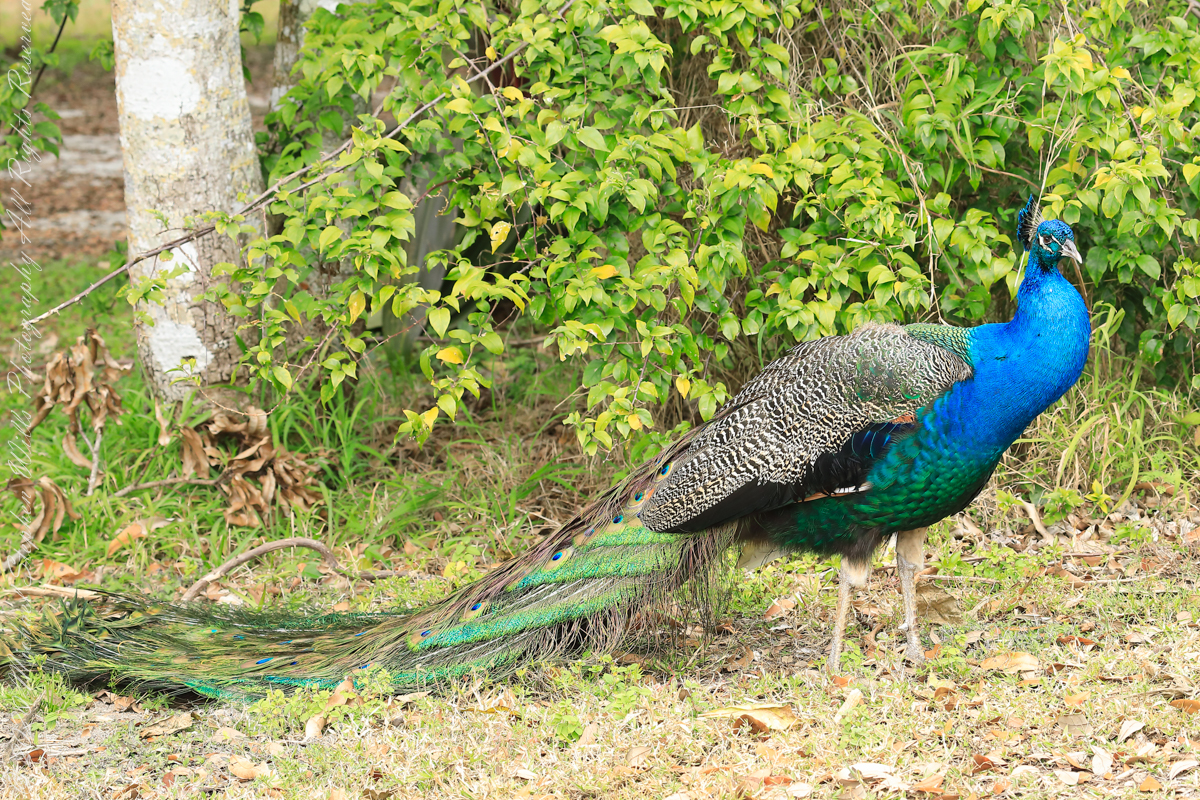
Peacock Neighborhood, Cape Canaveral I

On a day February 2022 Pam and I decided to walk the beach starting from Cheri Down Park, Ridgewood Avenue, Cape Canaveral headed north toward Jetty Park hoping to catch a postponed rocket launch rescheduled for that afternoon. We were encouraged to find video news crew positioned near the park entrance as these professionals were in the know for the best spots to watch the spectacle.

We walked a mile or so, more than halfway to Jetty Park, when the word circulated the rocket launch was cancelled. Rather than turn around, we decided to explore the walkway that opens on “Peacock Beach” as Google Map listed a public parking space there, quite a bit closer to Jetty Park. This park charges a hefty entrance fee to non-residents, so we were parking at Cheri Down, we saved $10 for each mile walked.

Having leisure, we decided to walk back to Cheri Down the long way. In what turned out to be a 1.7 mile stroll we encountered these residents for which the beach is named. Then and there Pam and I decided to return for a dedicated photography expedition, the results of which I will share over several posts.

Click Me for the next post of this series, “Train of the Male Peafowl”

Copyright 2022 Michael Stephen Wills All Rights Reserved

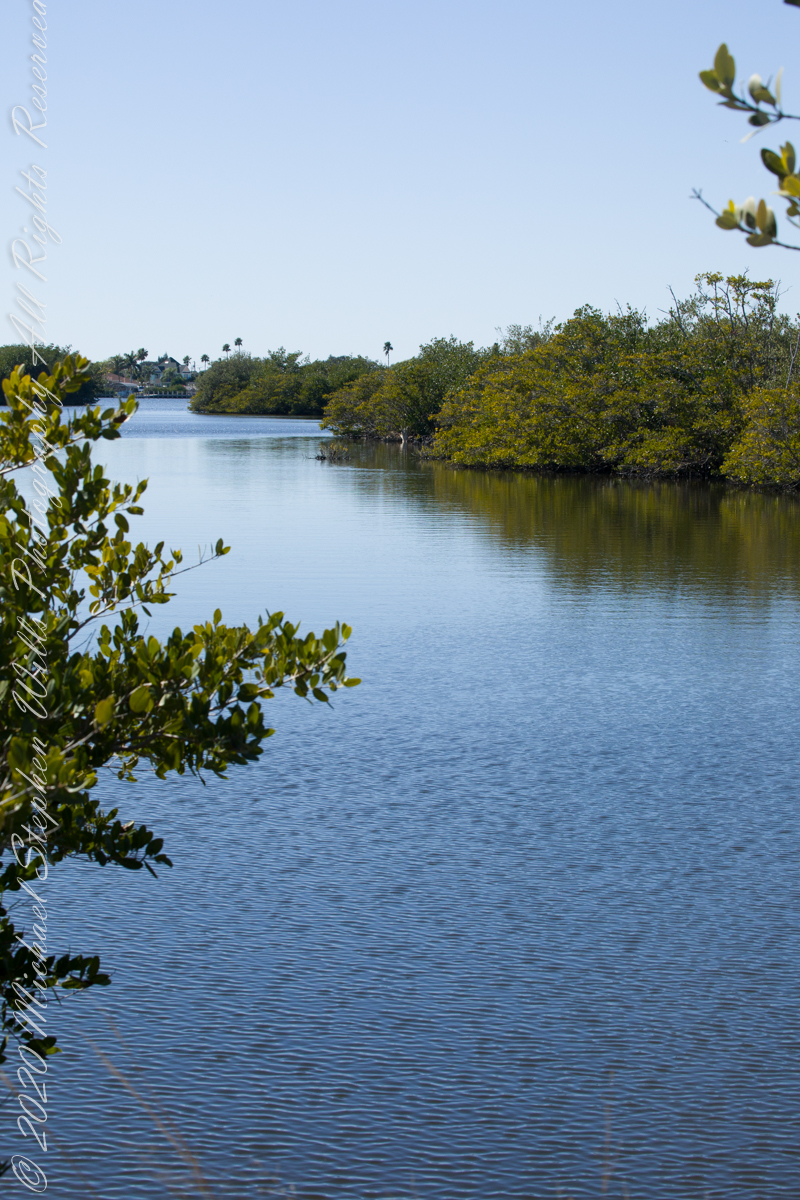
Ulumay Wildlife Sanctuary

Brevard County Park on Merrit Island

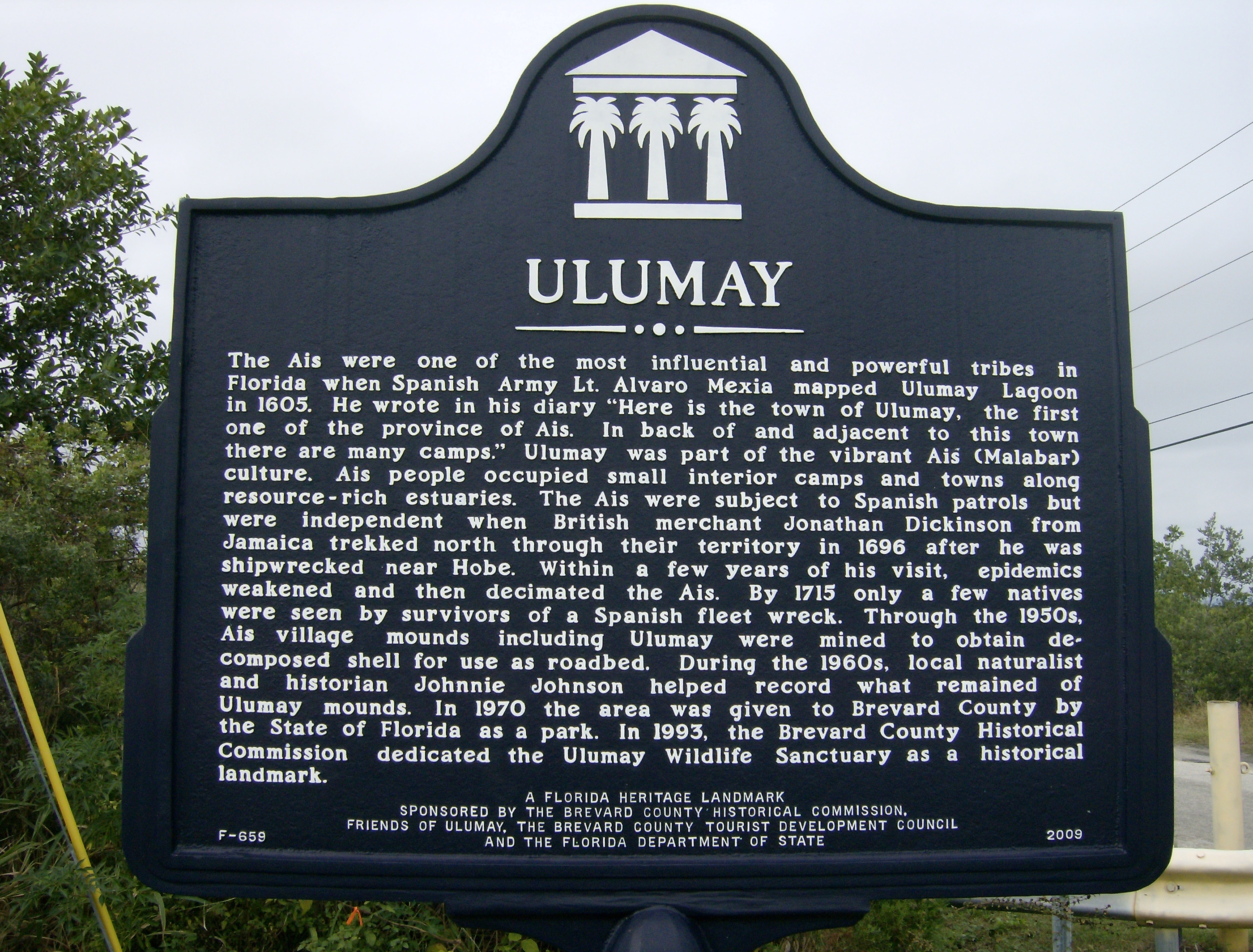
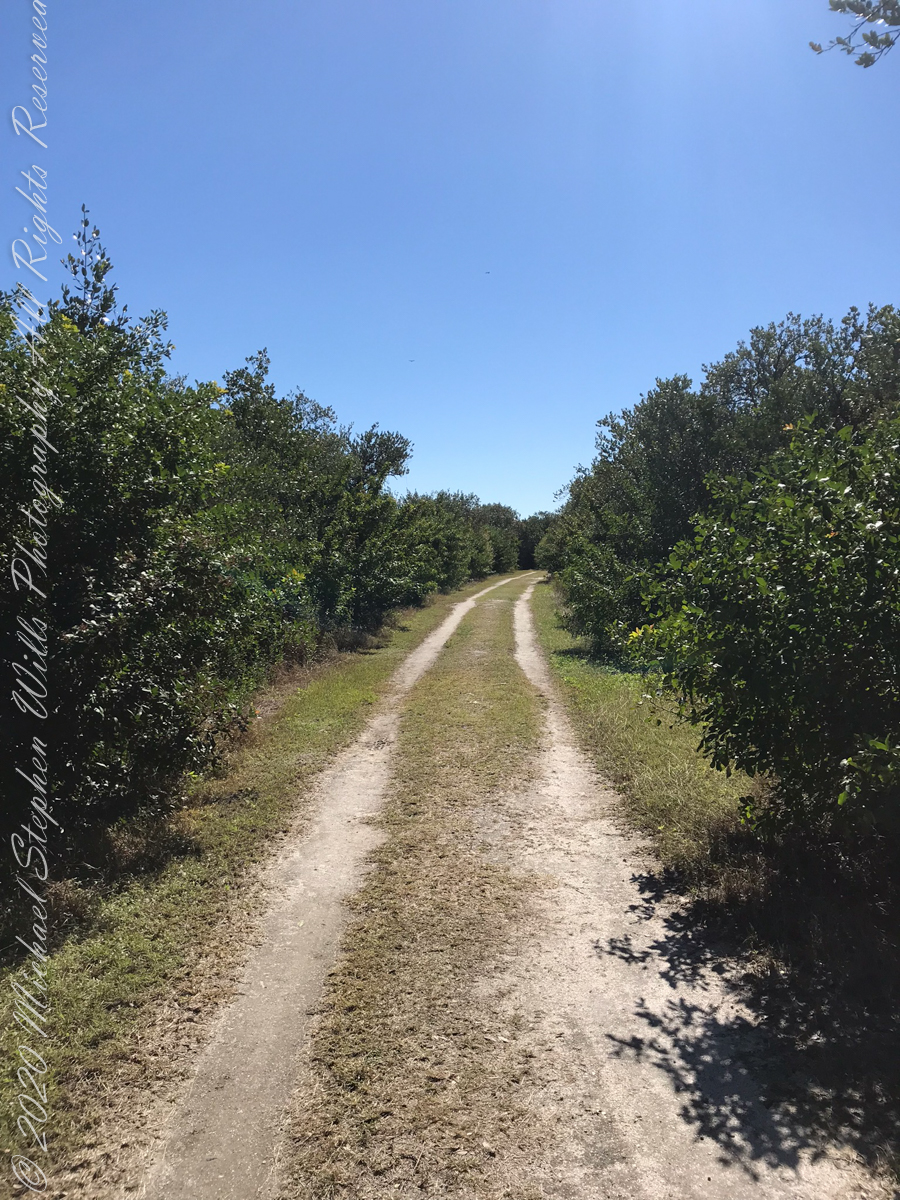
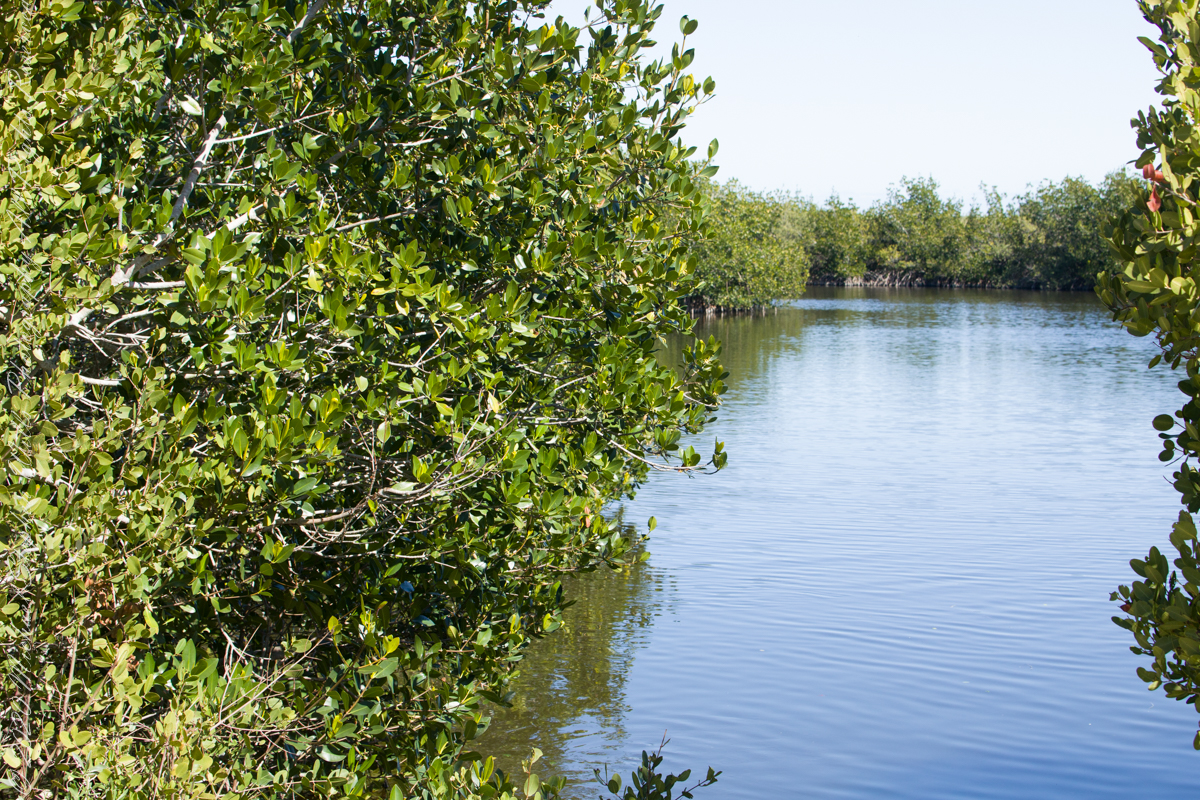
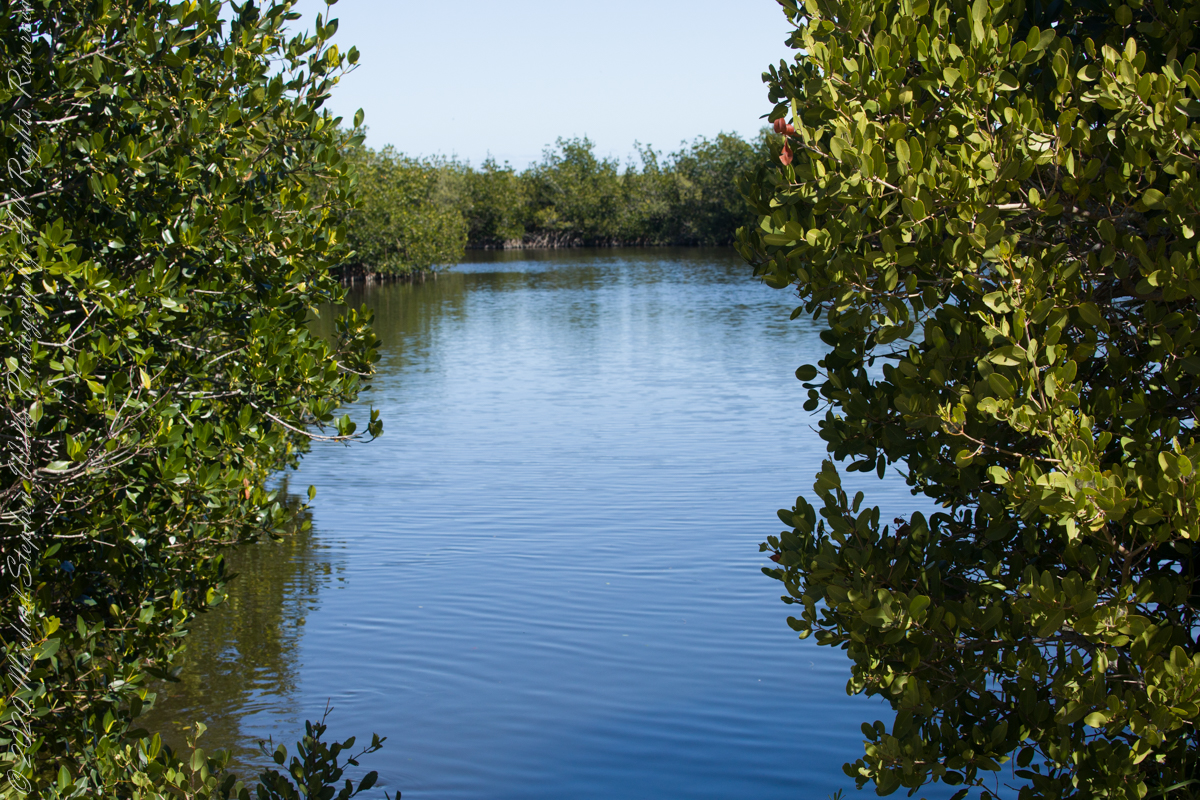
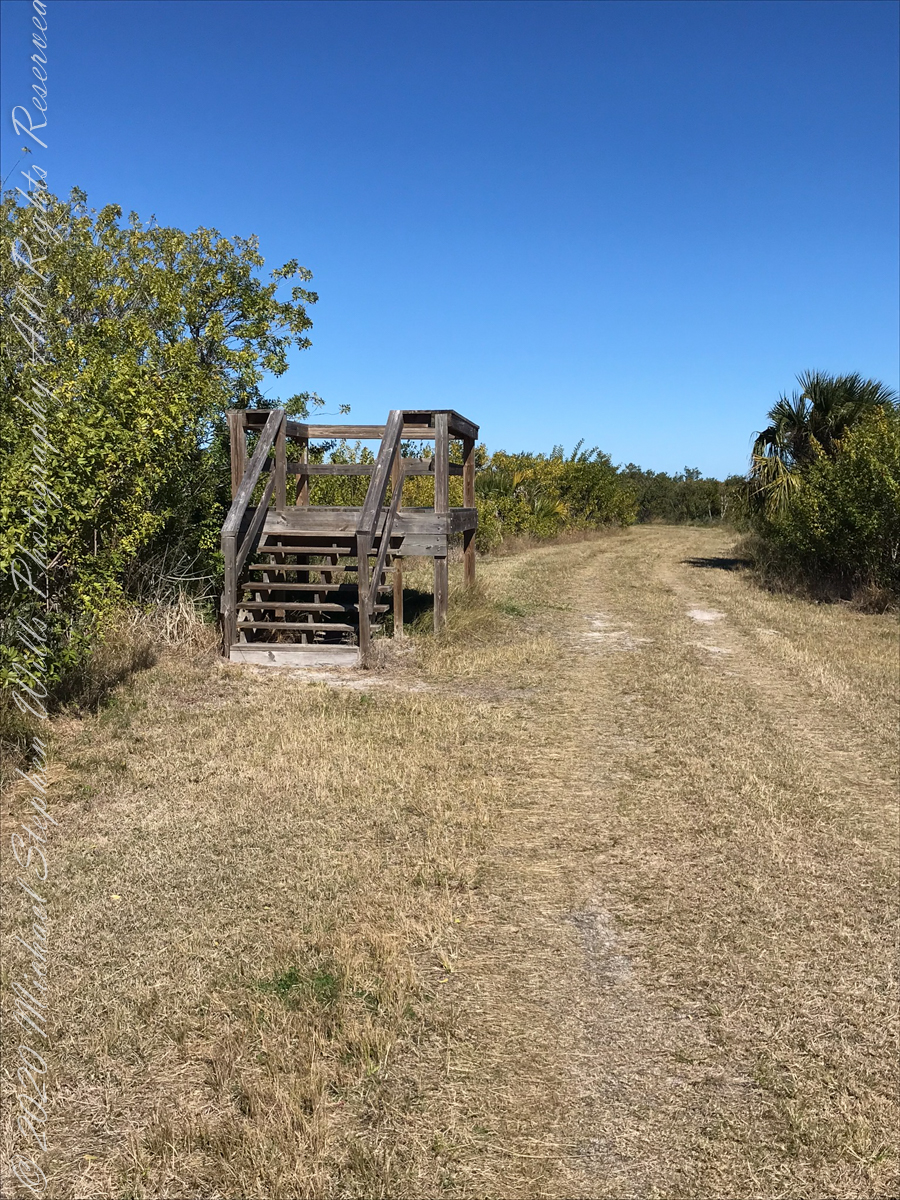
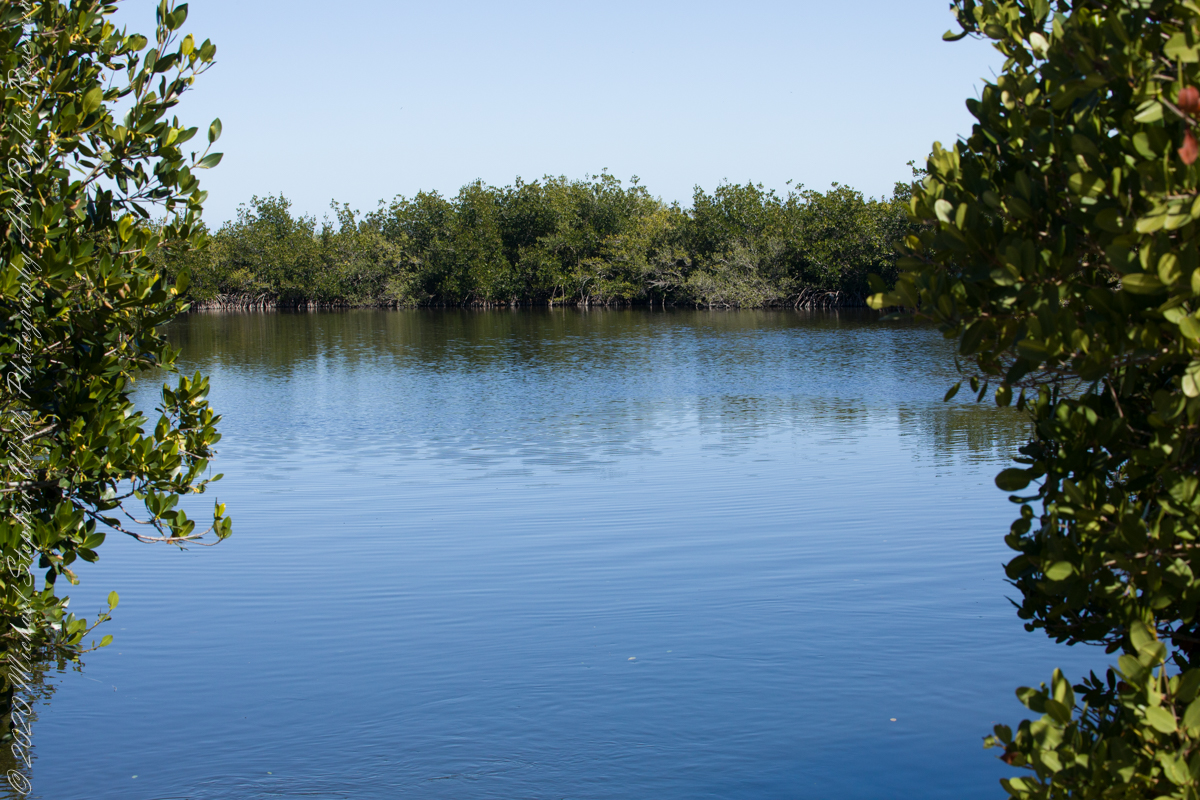
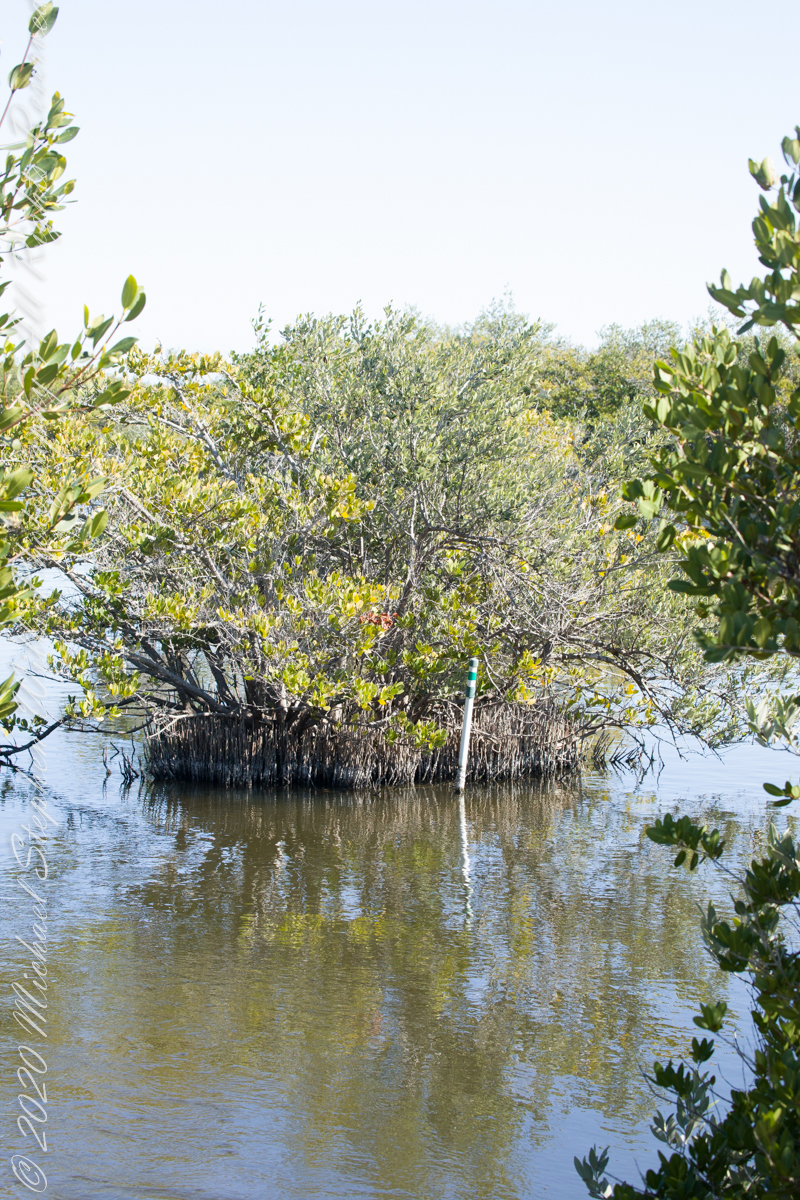
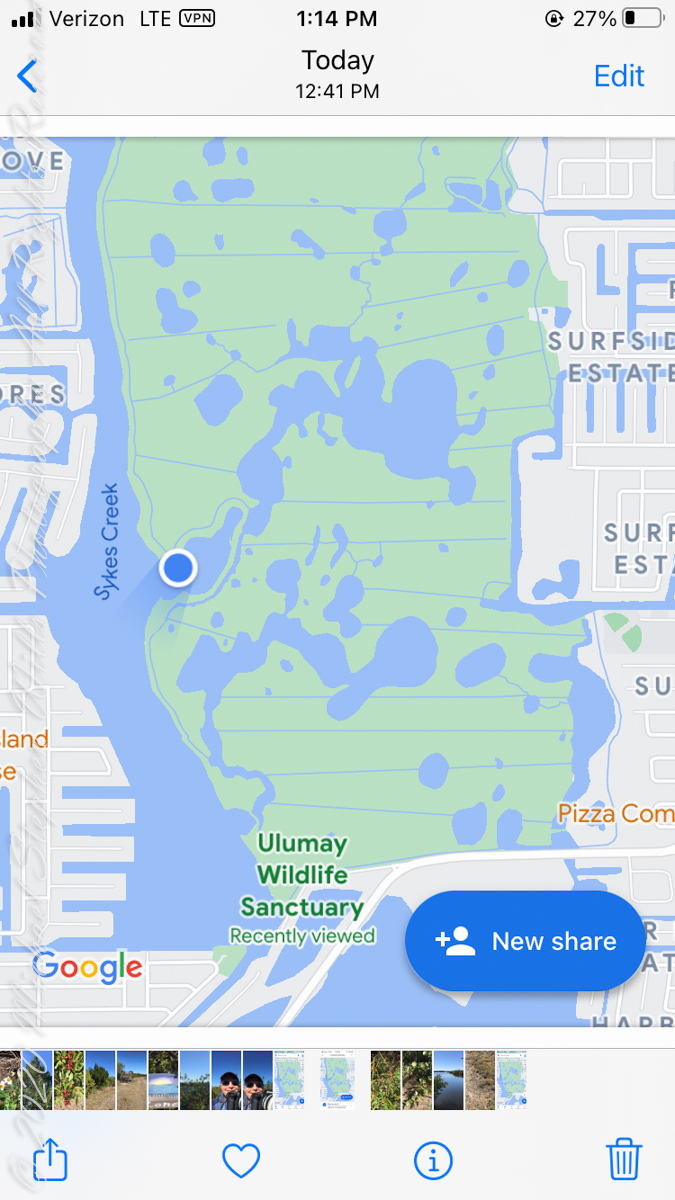
Ulumay is the name of the Native American settlement of the Ais people decimated by disease after the arrival of Europeans. The park is a natural lagoon and bird rookery linked with canals created for mosquito control and surrounded by a manmade dike. A trail on the dike provides access to the waterways for the fisherman, birdwatchers, and paddlers.

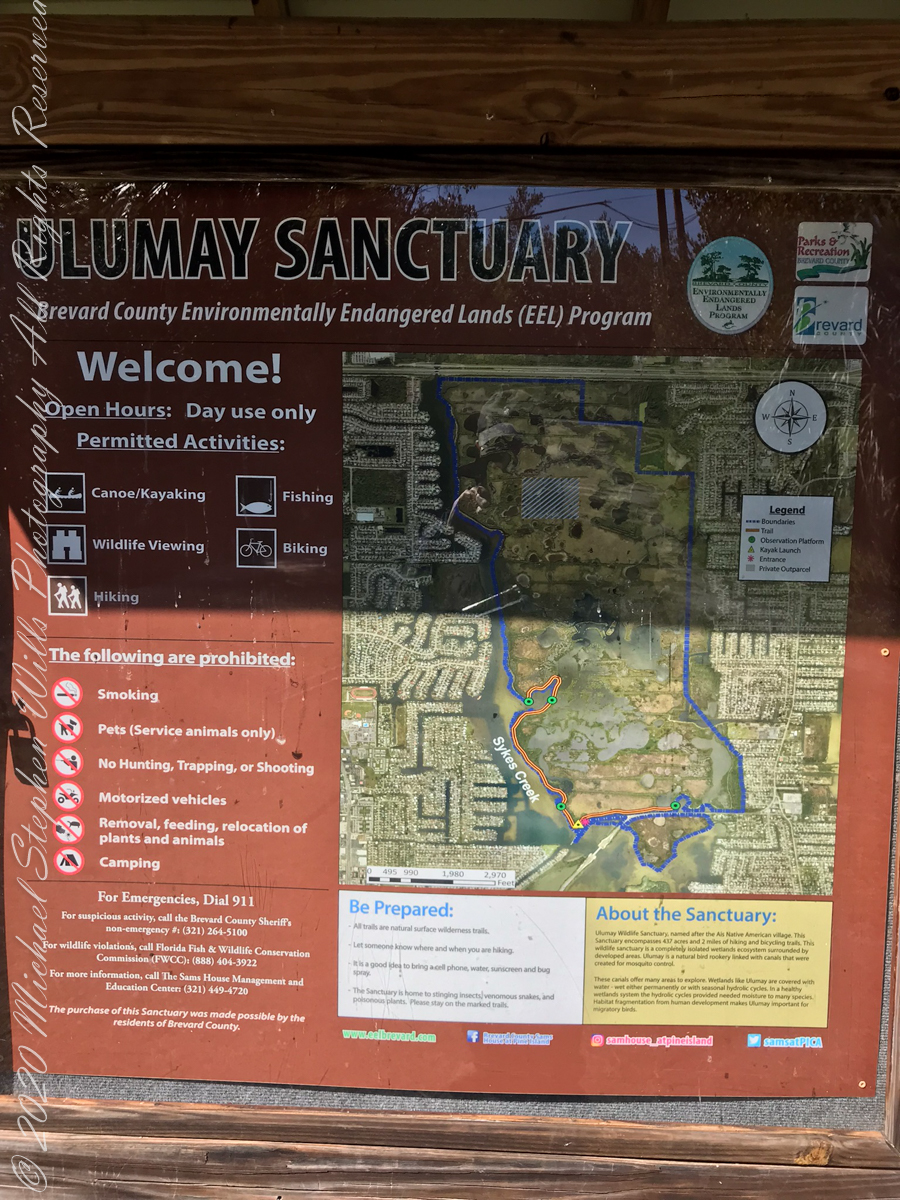
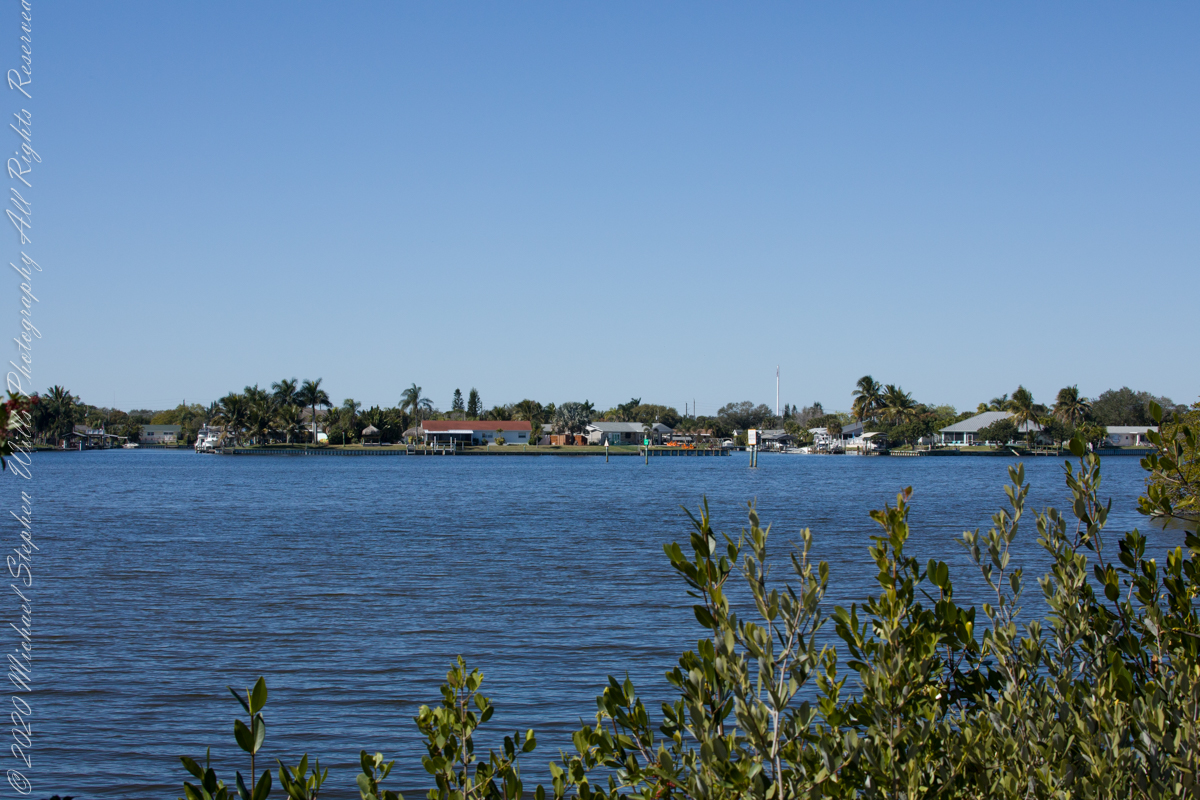
This informative placard, placed at the entrance. Note the 600 park acres is surrounded by residential properties.

I left Pam at the entrance, seen below at the words “Ulumay Wildlife”; she had a reasonable concern about alligators. It is quite possible to find a large specimen blocking the one and only trail. “What? Me Worry?” When pursued by an alligator, remember to zig-zag.

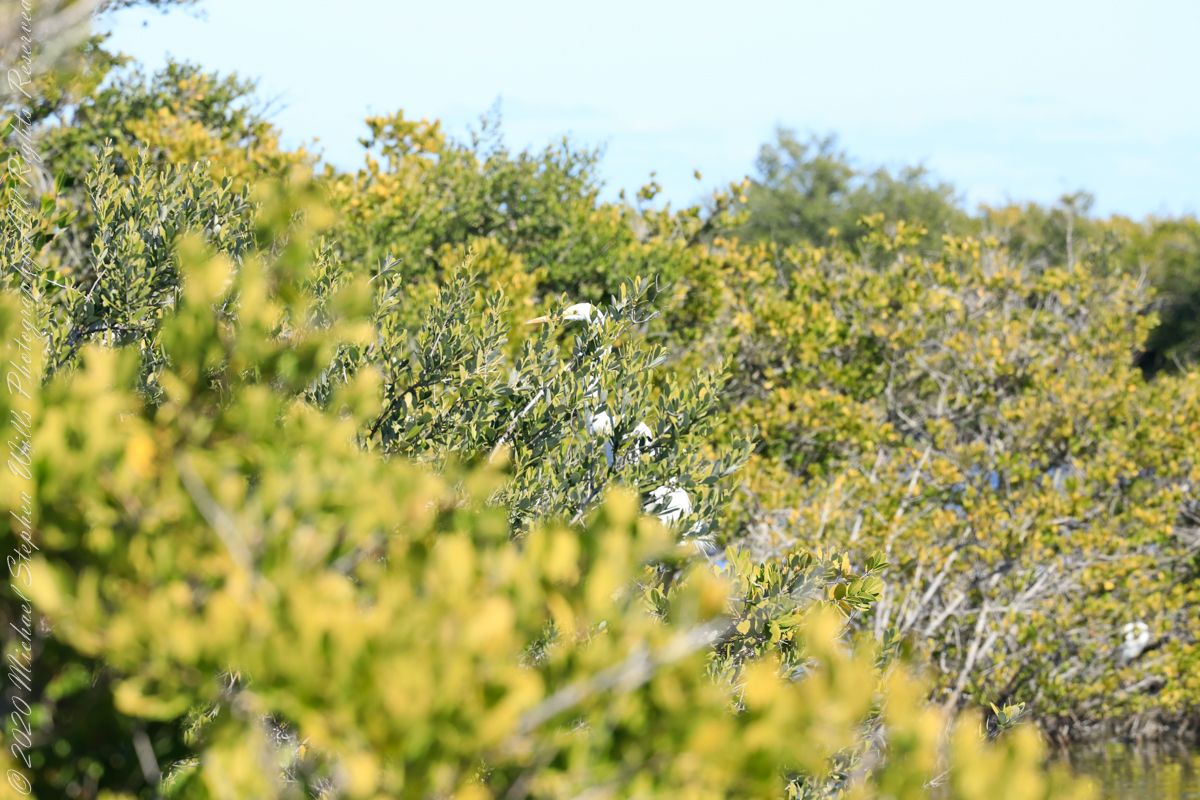
“Flora and Fauna”

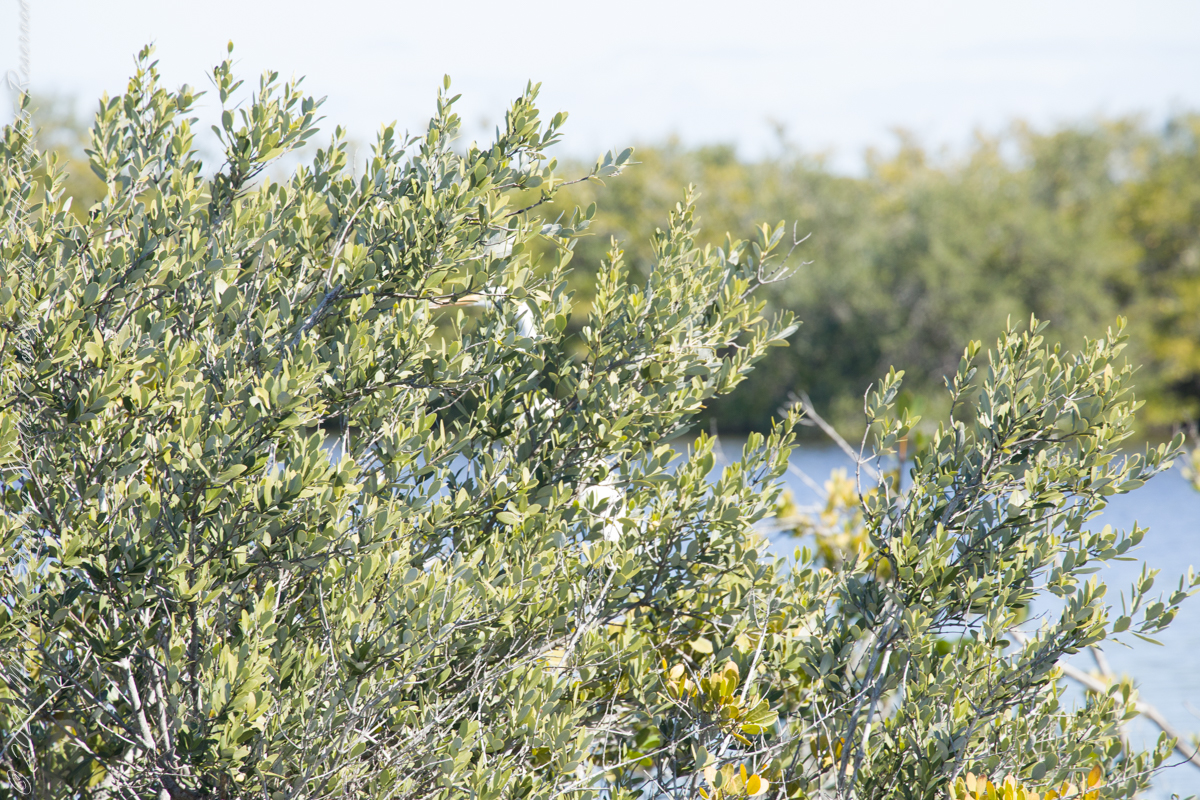
Waterways, sightings

Second Stand

Third Stand

No sightings of alligators or manatees.