On the first day of 2006 I ventured from my home on Fall Creek on a photo expedition.
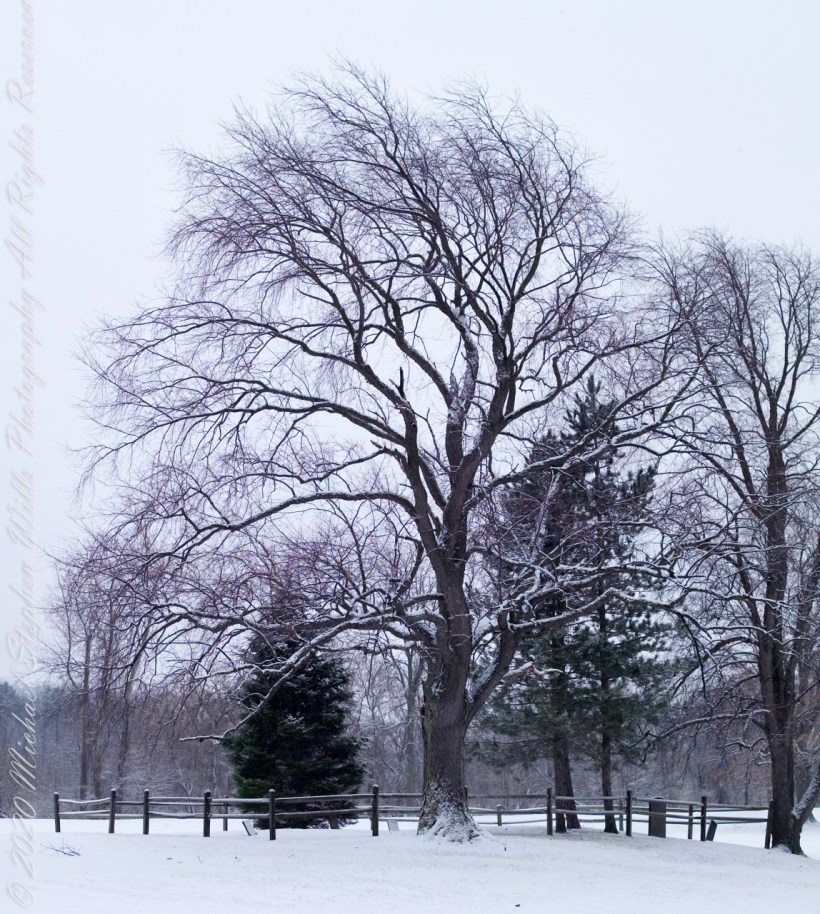
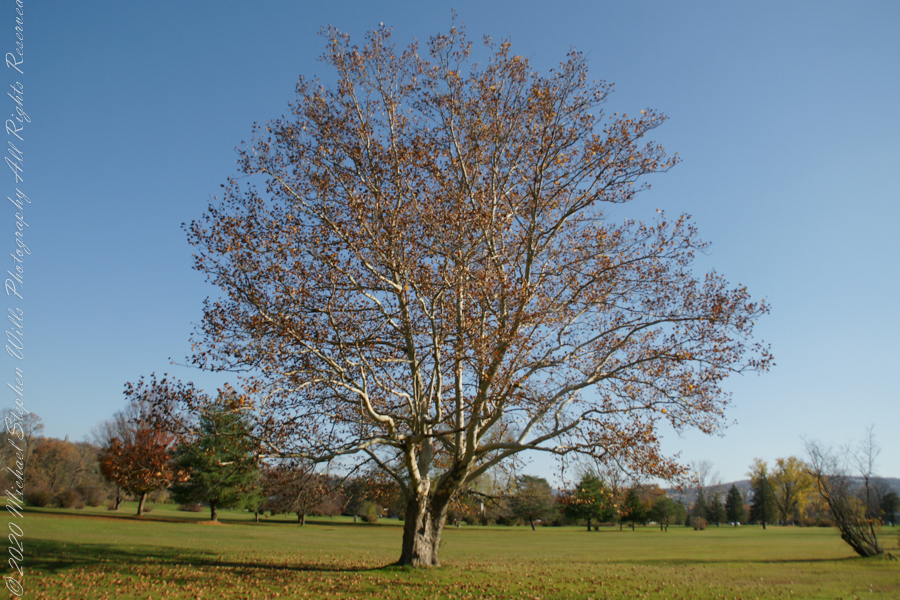
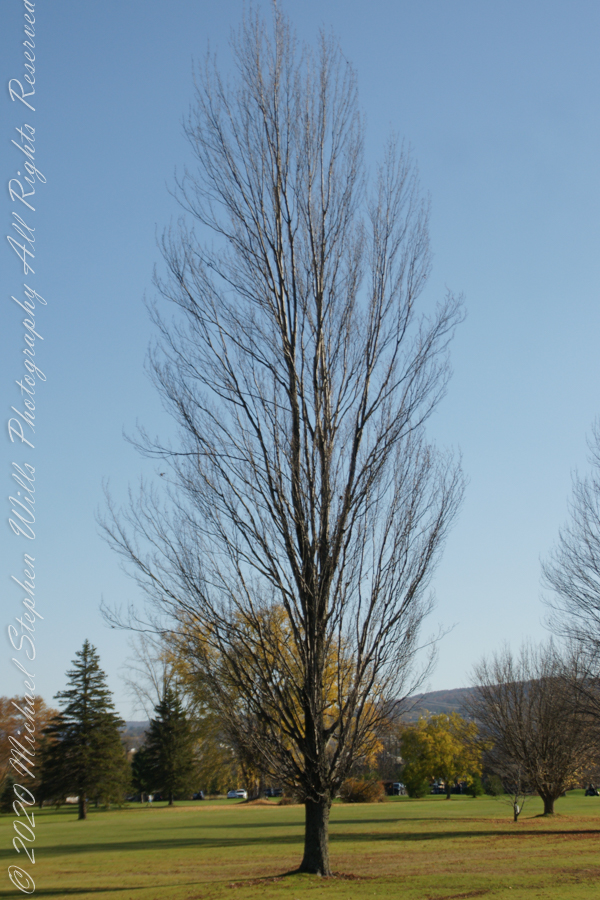
Each November, the eerie form of these limbs are revealed. I call the tree an “elm” though I am not certain. There are other lone survivor elms nearby, the leaves are right for an elm. Some elm species/specimens have the same shape.
Copyright 2023 All Rights Reserved Michael Stephen Wills
Winter 2020 I posted “Winter People Watching” featuring the Sony F828 and candid street photography.
What I love about this place, a unique feature, is the size and different vantage points making it possible to view the same place from different angles. November 2019, readers were shown “The Bend,” a place with Taughannock gorge makes a 90 degree turn, changing from a southeastern to an eastern flow. Here are photographs from spot overlooked by that post.
Here the camera faces away from the sun, the graduated neutral density filter allowing me to capture the cloudless blue sky, a little milky the way it is here February with a hint of spring.
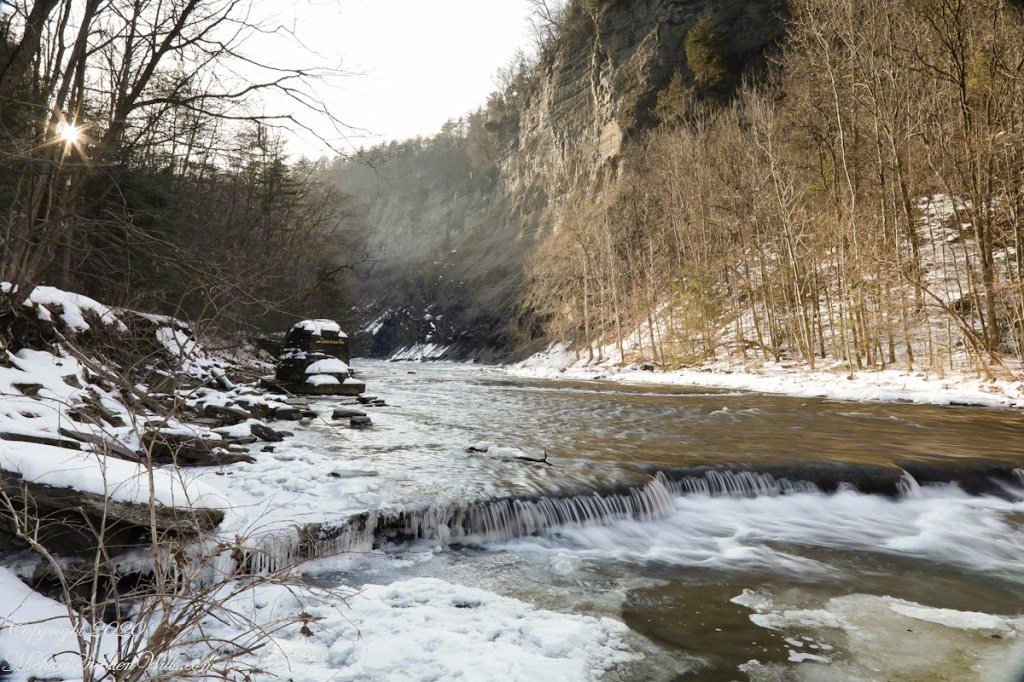
The gorge makes a 90 degree turn, changing from a southeastern to an eastern flow. Here is am in the creek bed facing east.
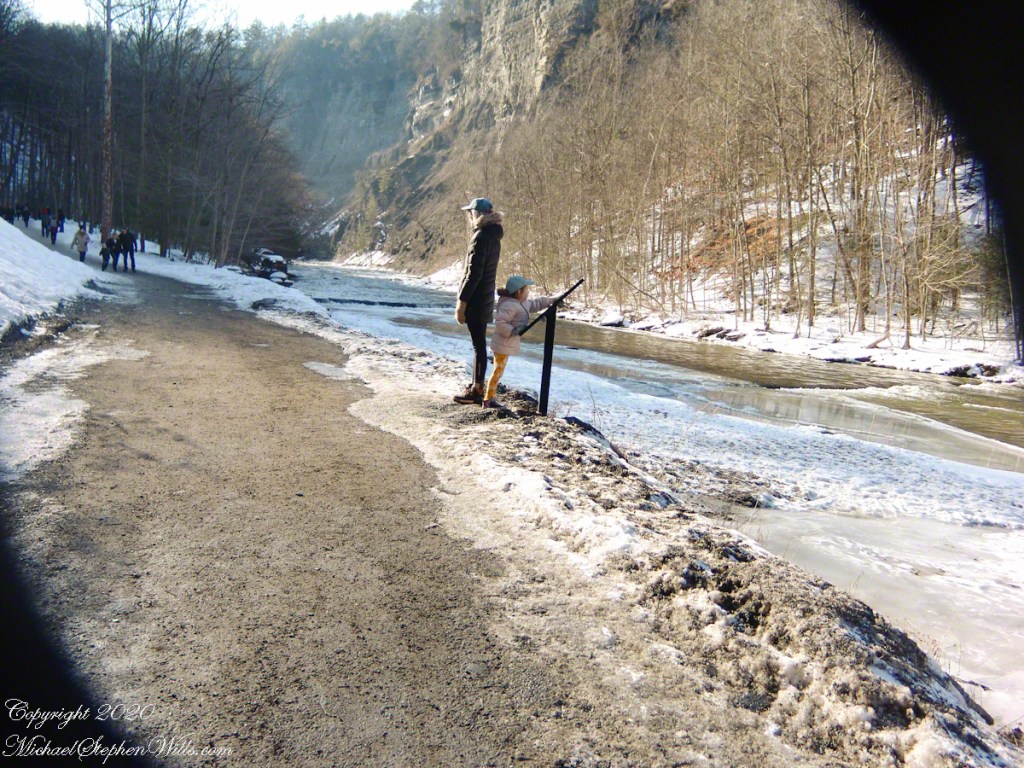
This little one is studying the information placard with rapt attention, learning how the African continent, pushing against North America, across the eaons, formed the right angle fractures mirrored by this dramatic change in Taughannock Gorge. For the Big Bend photographs I was standing behind them, along the stream bed.
Here is a broader slice of that sky.
The gorge makes a 90 degree turn, changing from a southeastern to an eastern flow. Here is am in the creek bed facing east.
Can you see the tiny figures of hikers, dwarfed by the frozen cliff?
The gorge makes a 90 degree turn, changing from a southeastern to an eastern flow. Here is am in the creek bed facing east.
Copyright 2023 All Rights Reserved Michael Stephen Wills
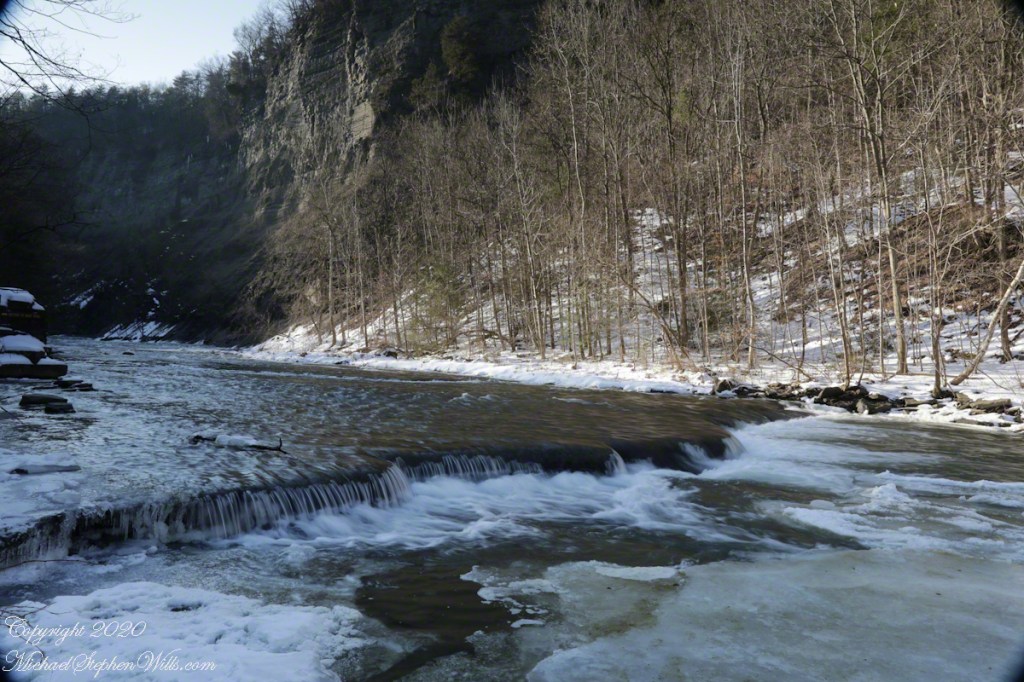
Purling of the water beneath this foot high waterfall was enhanced by reducing ISO to 100, tamping down the aperture to f/22 resulting in an shutter speed of 1/10th second. I set the graduated Neutral Density filter to shade the left side.
On the cliffs ahead is where the observation platform is cut into the rock. It has a great view of the waterfall, in some ways the experience of the falls is enhanced, compared to hiking the 3/4 mile path and standing below.
The Gorge Walls, hundreds of feet above the creek are very dangerous to stand below.
A marvelous forest grows on talus from the high gorge walls.
A sign on a disused pier warns waders to leave the creek bed. Ahead the gorge walls tower above the creek. Rocks dislodge and crash down unexpectedly, crushing foolish waders. It is appalling to see, in warmer months, people walking below those cliffs gathering the fallen rocks to make delicately balanced cairns.
Copyright 2023 All Rights Reserved Michael Stephen Wills
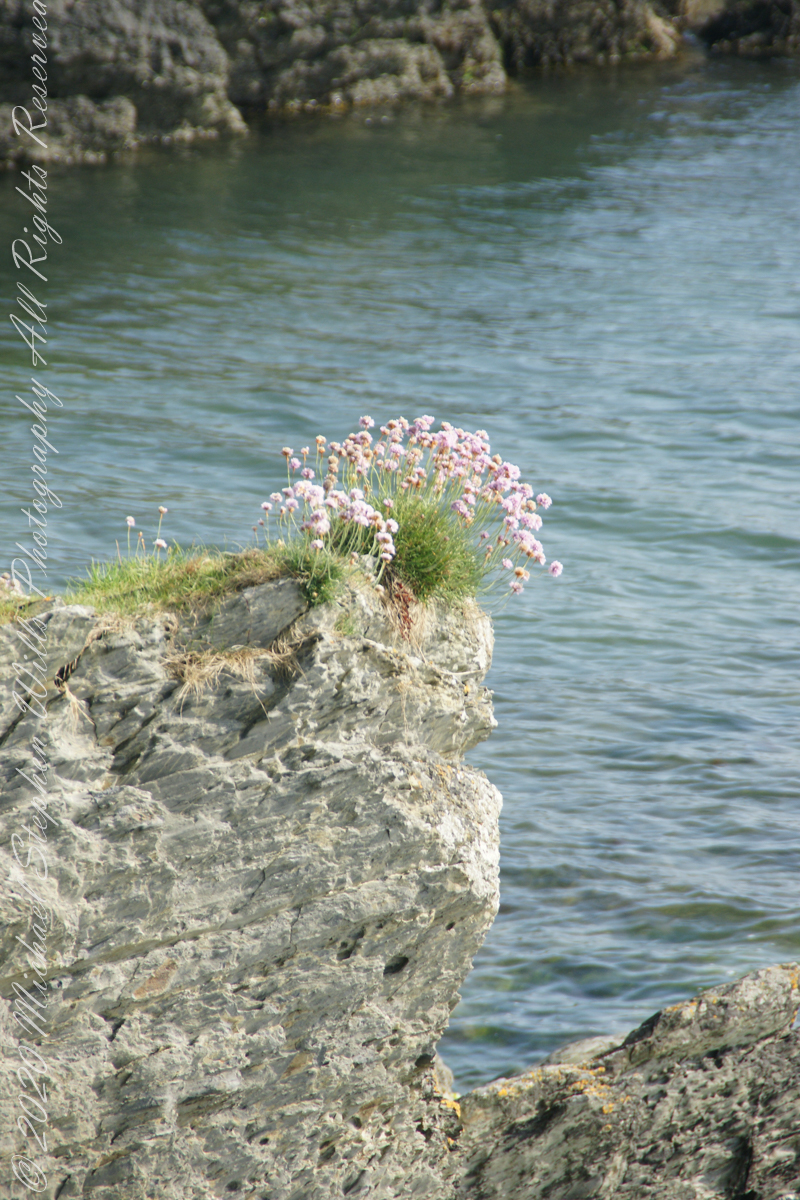
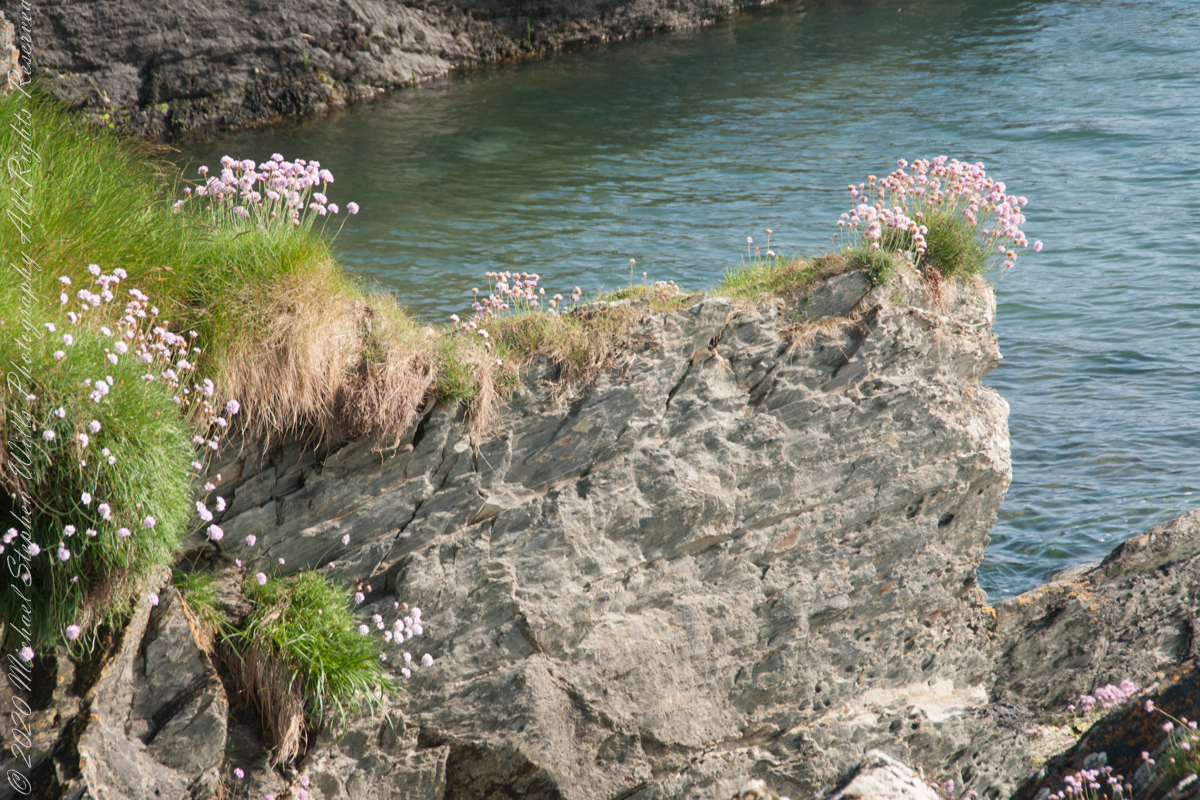
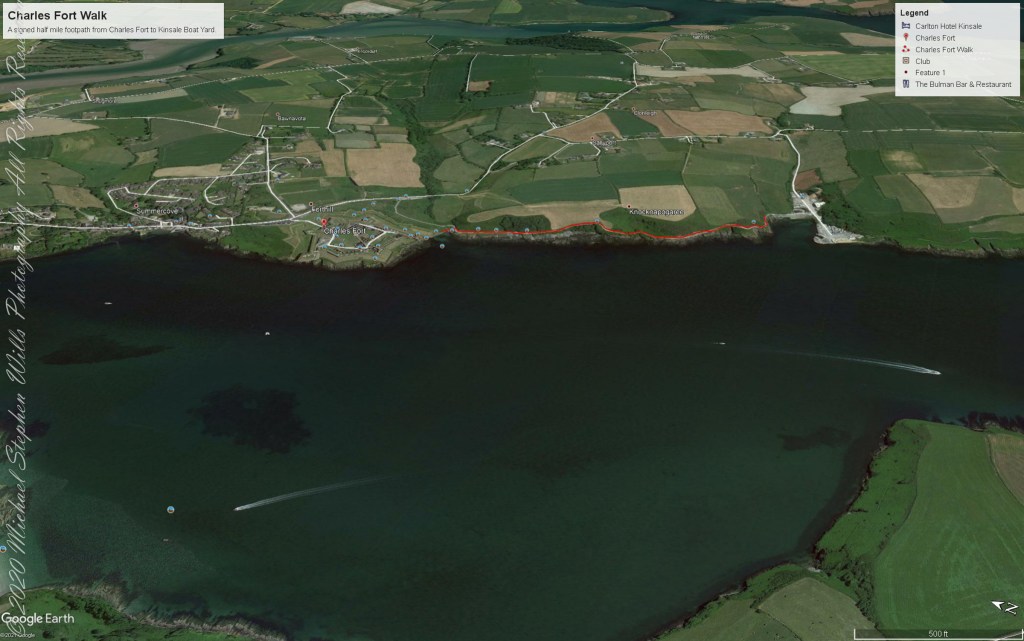
We continued down the half mile “Sallyport” footpath, marked in red on the Google Earth view provided at the end of this post, along shoreline cliffs to find these croppings of Sea Pink on jagged rocks.
Oddly, the jags being perfect places for Sea Pink to perch. Scientific name, Armeria maritima, and also known by Thrift or Sea Thrift, a reason these evergreen perennials are found on the obverse of the British Three Pence coin issued 1937 – 1952. Thrifty can mean to buy a lot for a little money — three pence is very little money.
Click any pic for a larger view, in a new tab, or a slide show. When using WordPress Reader, you need to open the post first.
Another sign informing hikers of the view.
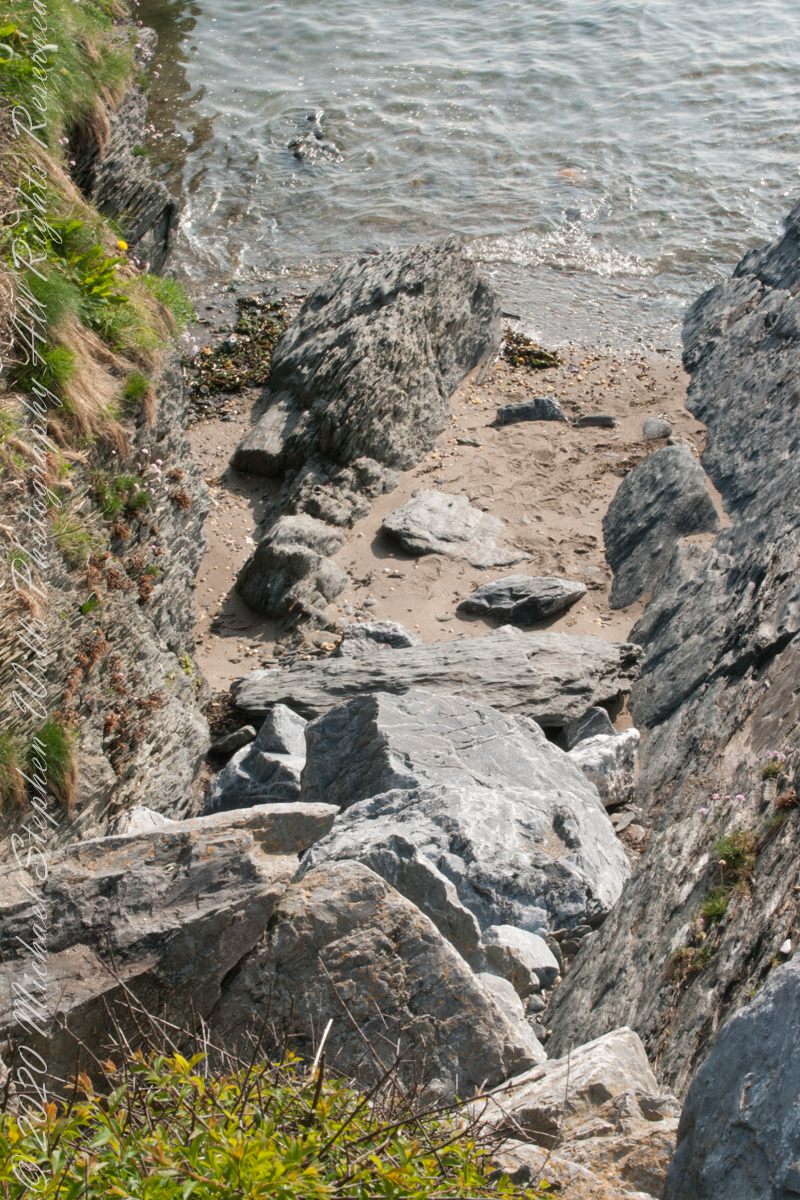
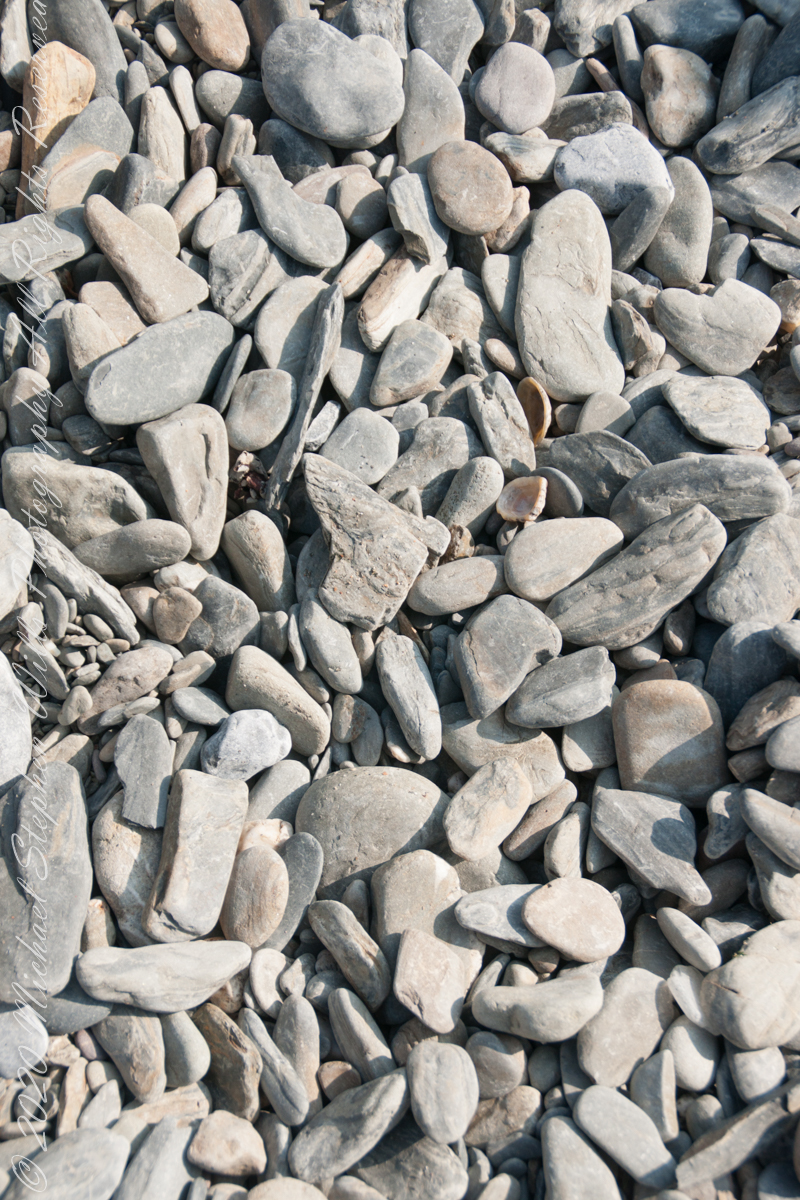
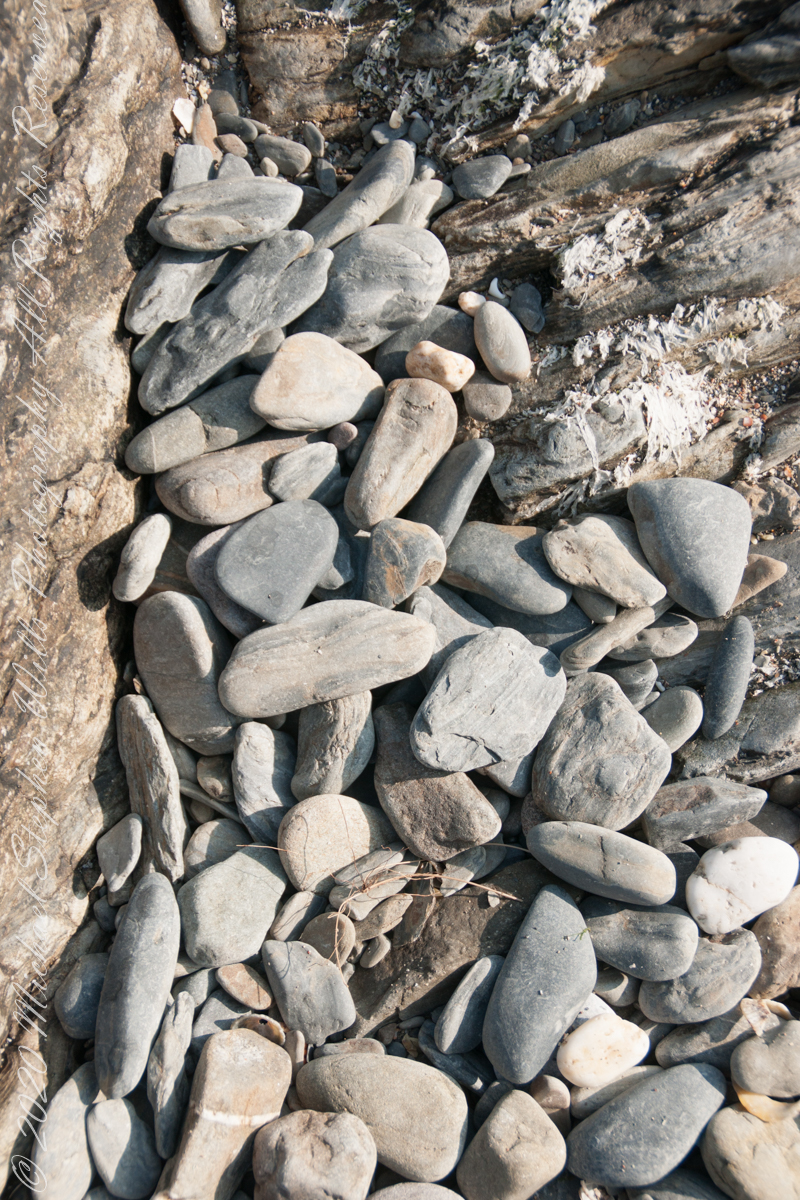
DeclivitySea SmoothedSmoothed over time by wave actionA half mile footpath, marked in red, leads from Charles fort along the shoreline cliffs, surmounted by working farmland.
Reference
“Armeria maritima” – wikipedia
Copyright 2023 Michael Stephen Wills All Rights Reserved
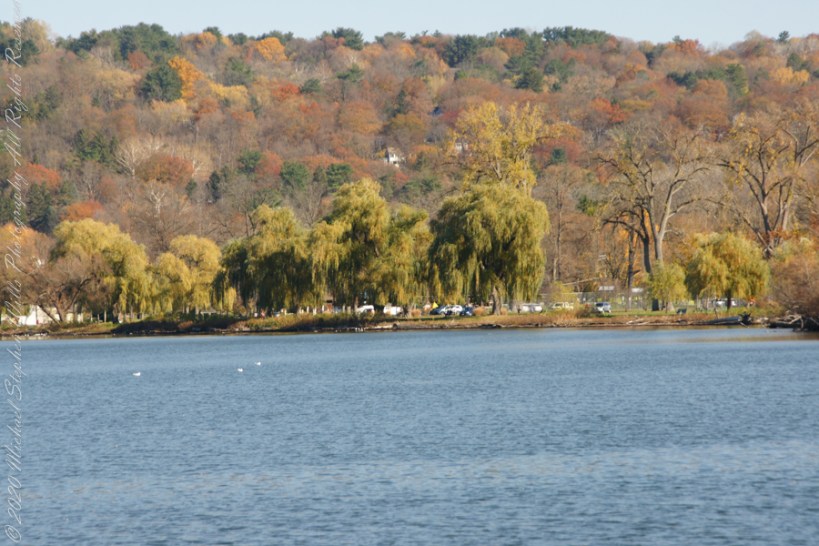
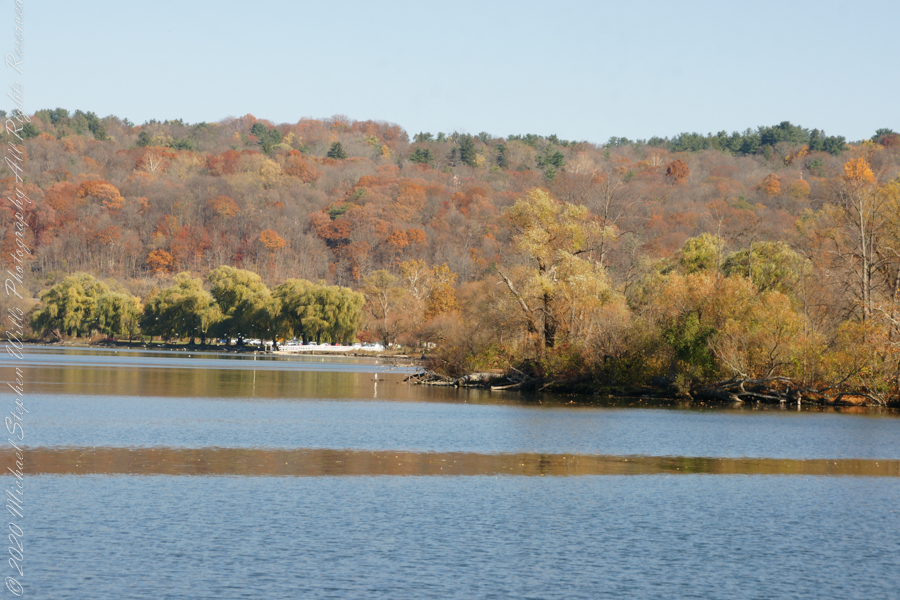
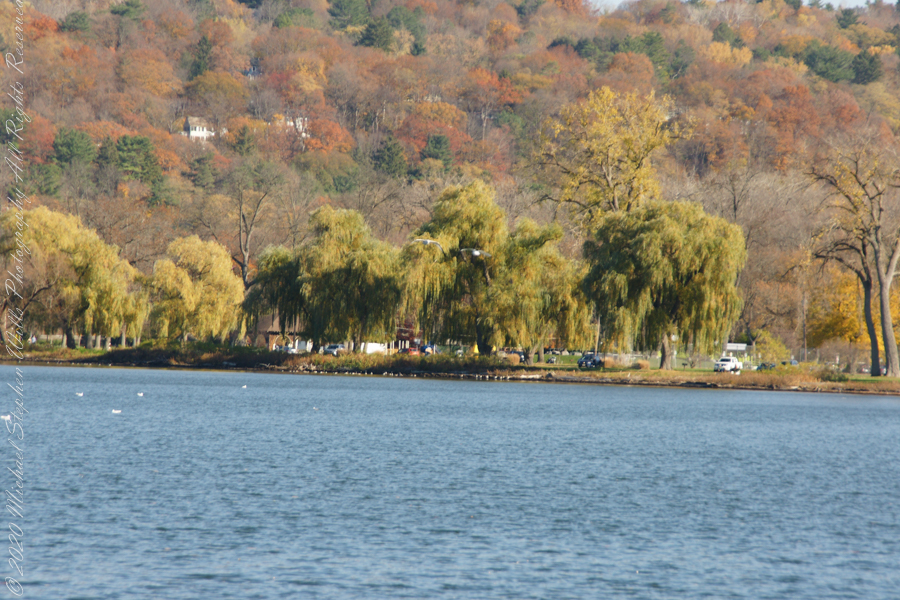
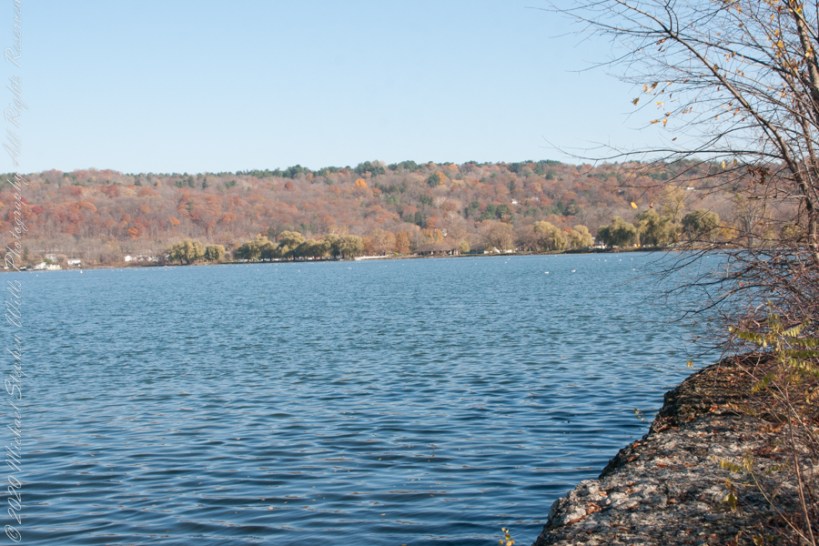
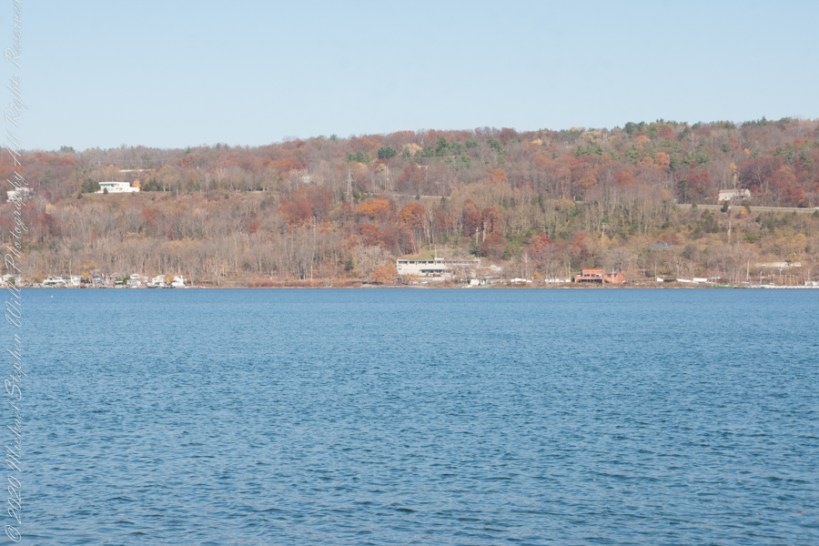
Here is the south end of Cayuga Lake on a bright November afternoon. Stewart Park is enjoyed by Ithacans year round.
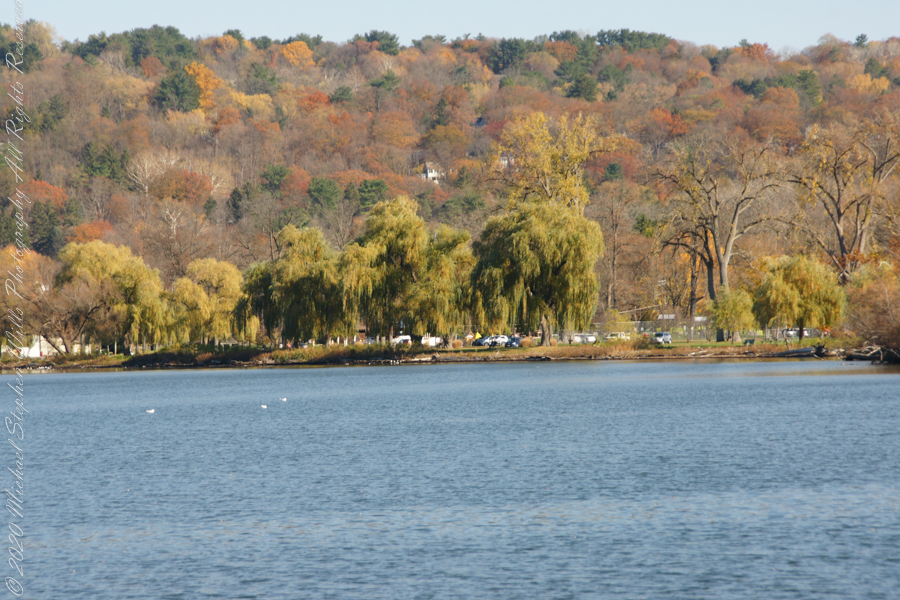
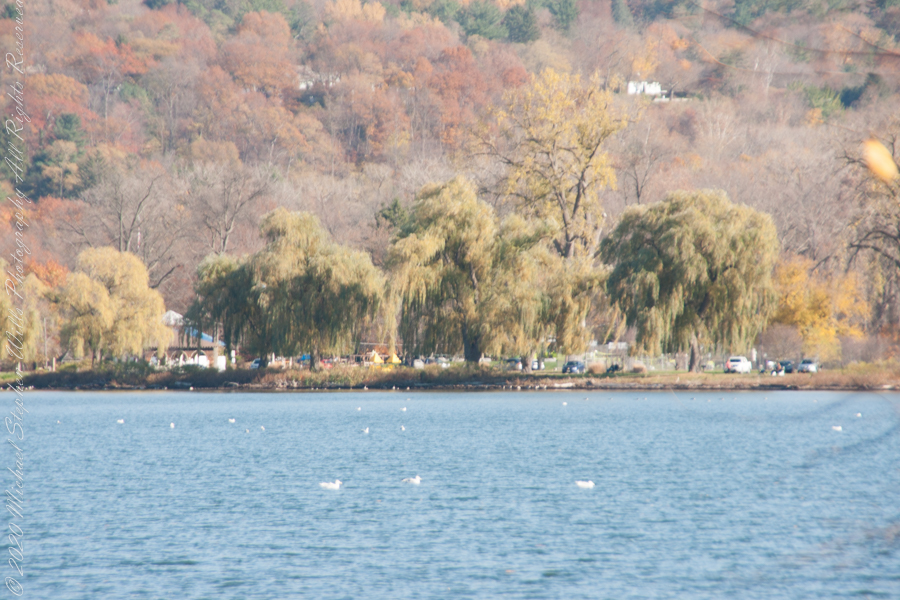
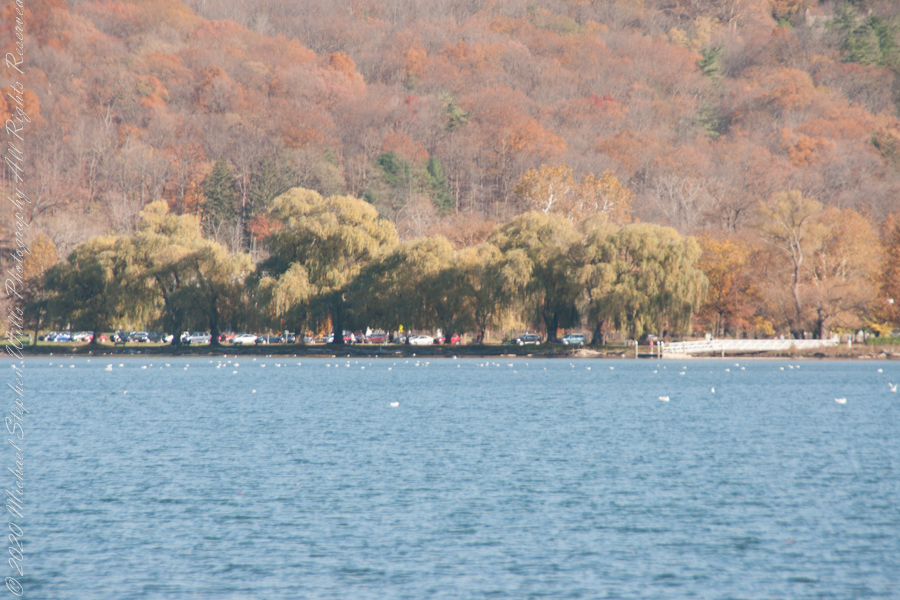
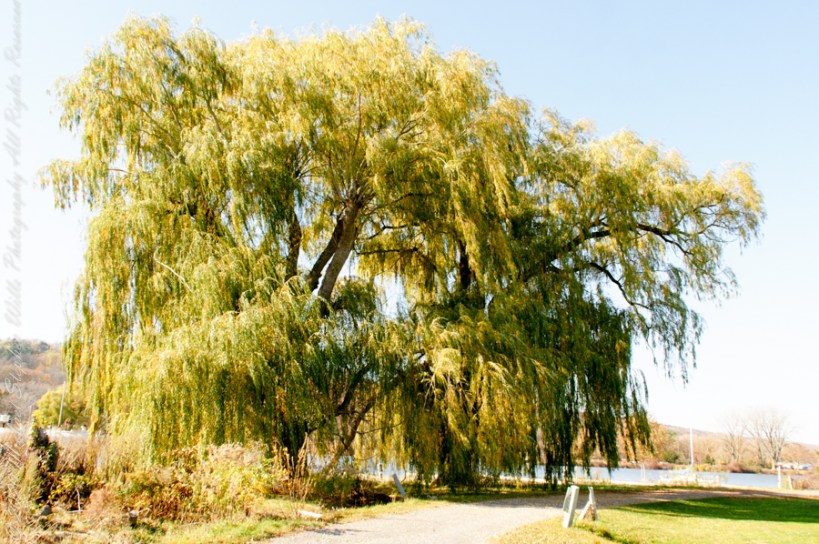
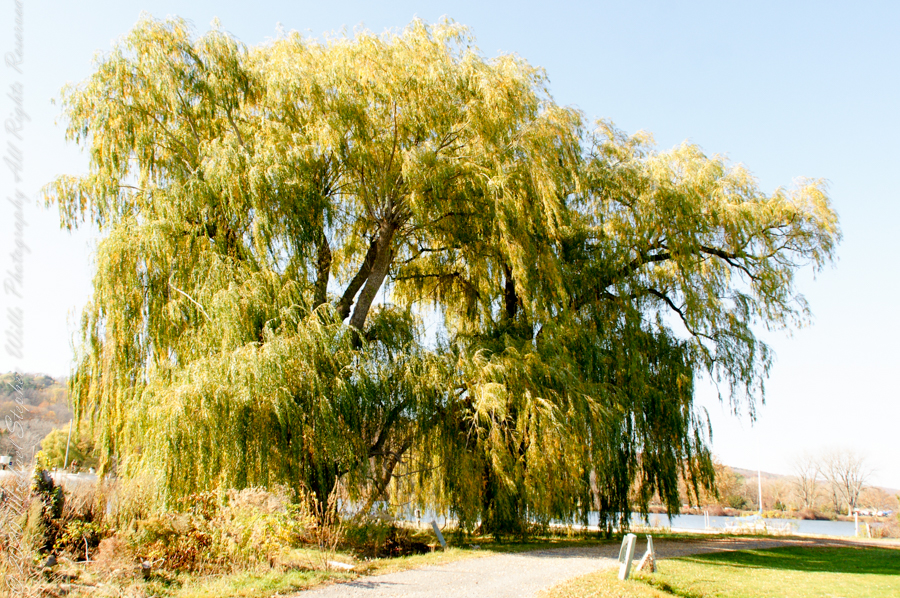
Everyone is a fan of the Willows framing the lake views.
Can’t get enough of Stewart Park..
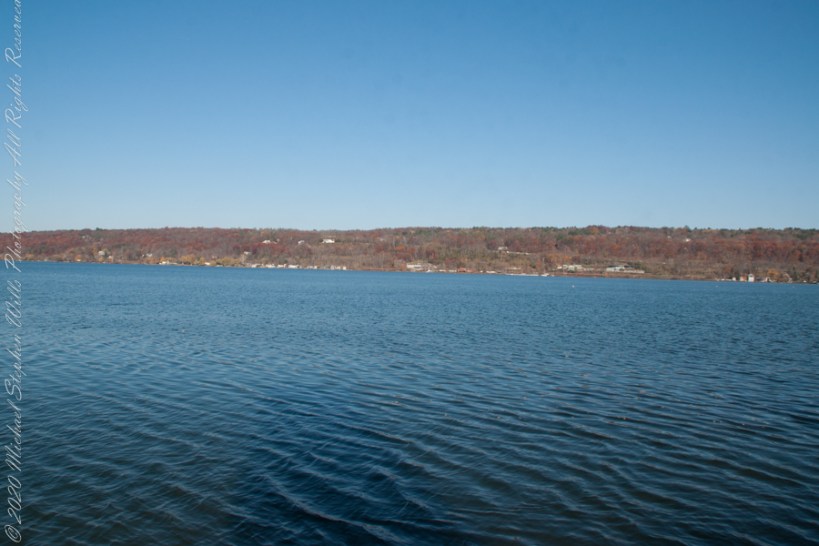
An unzoomed view, to give an idea of the distance across the water.
Pam and I have great memories of sailing this stretch from our years of membership in Cornell Family Sailing.
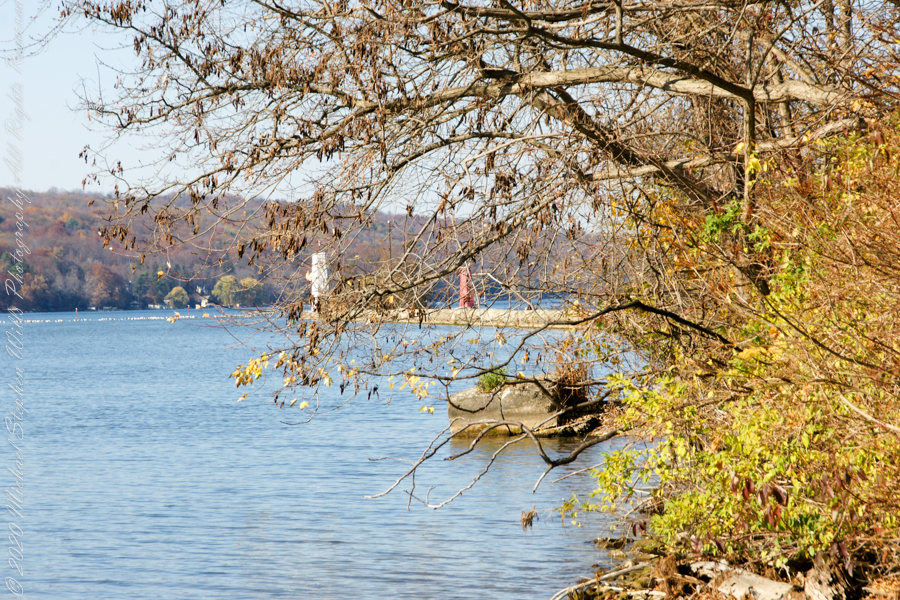
The east lake shore.
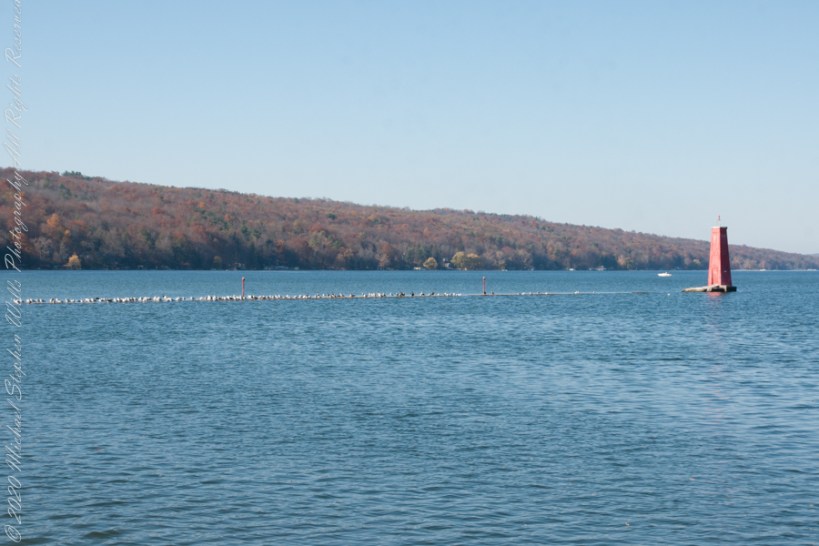
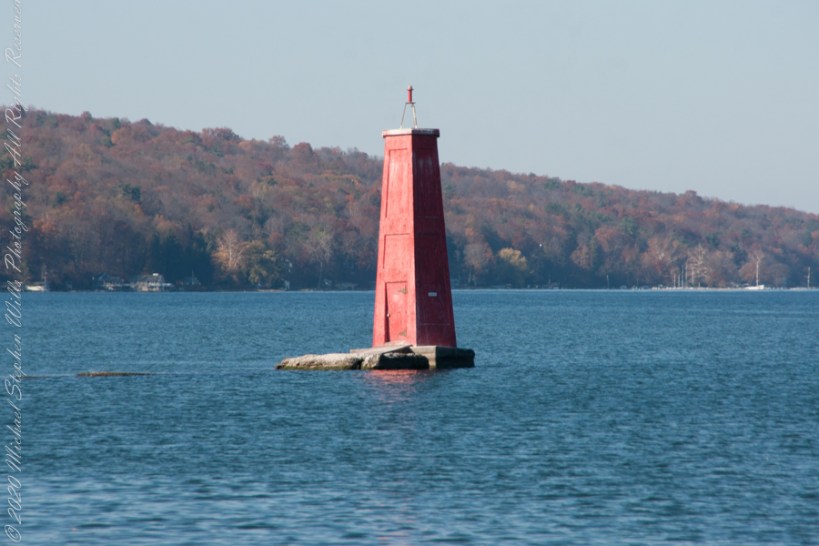
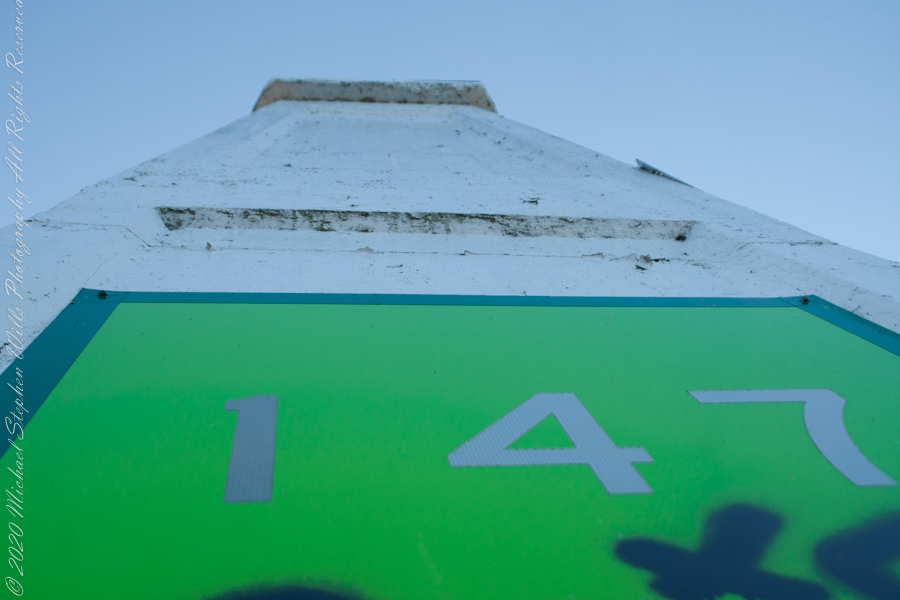
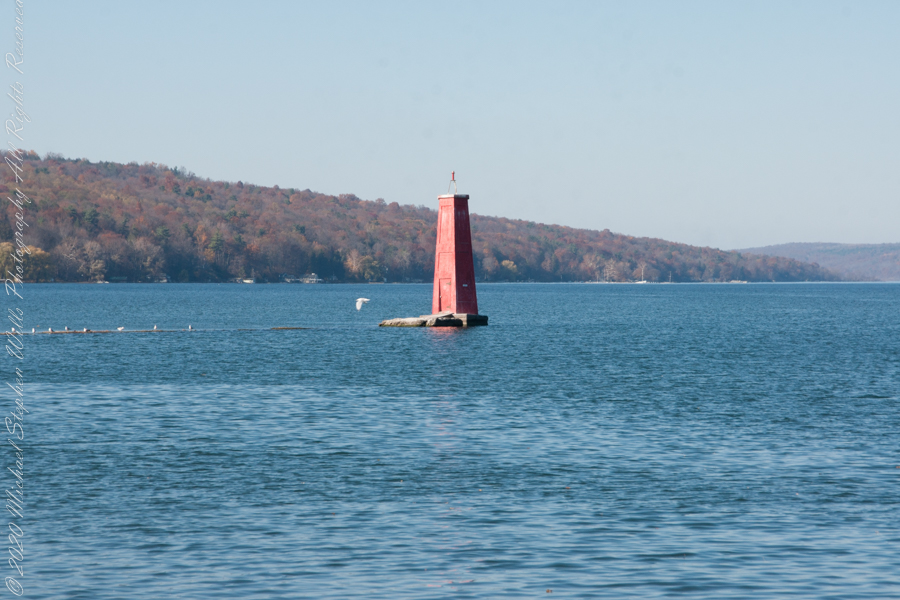
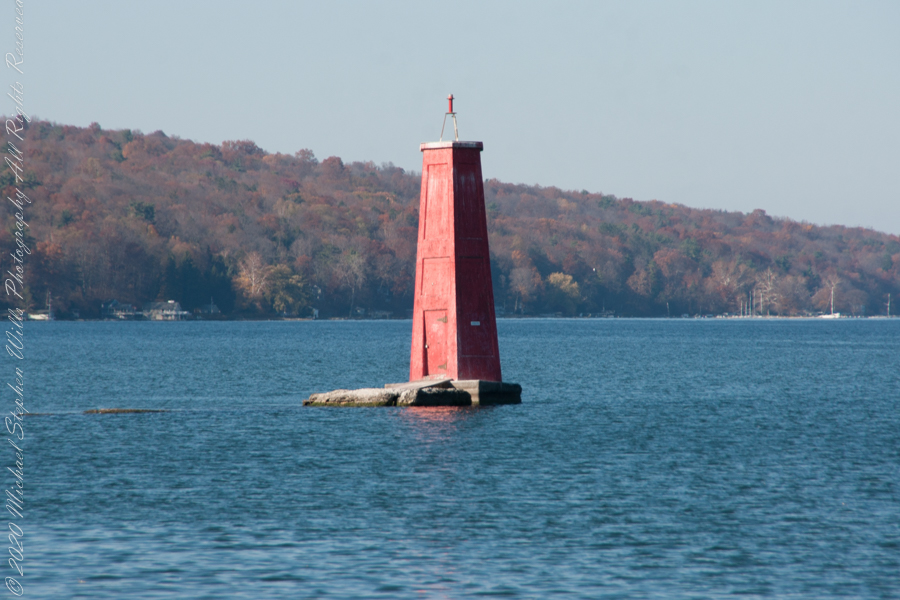
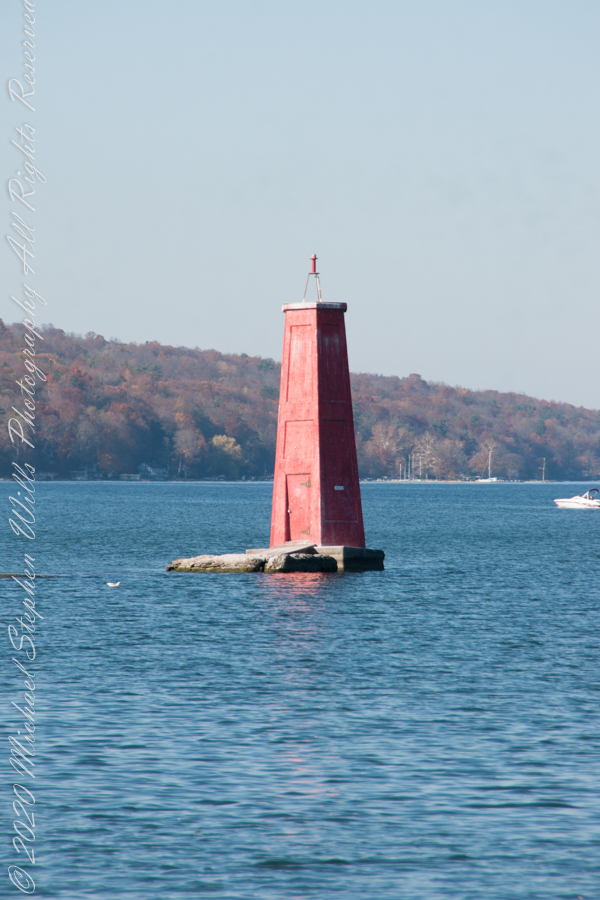
The West Lake Shore. This photograph captures the electric line that powers the Red Tower light. Seagulls enjoy that causeway…I’ve never seen humans walk it.
Copyright 2022 Michael Stephen Wills All Rights Reserved
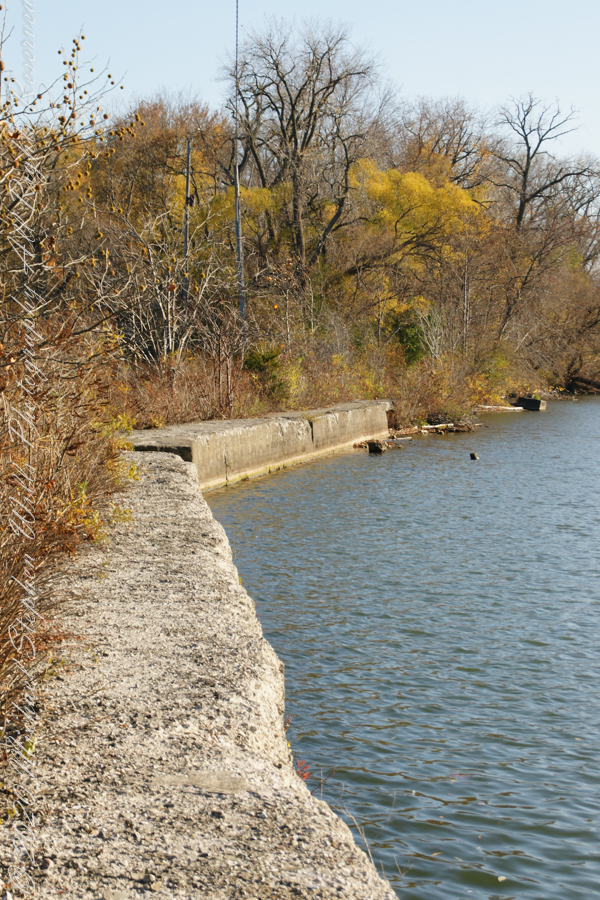
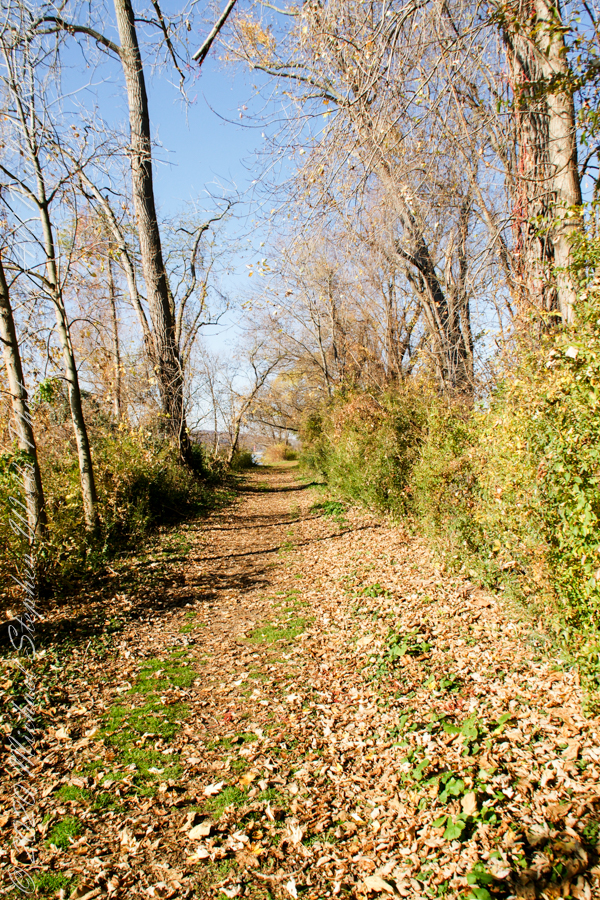
Post 1 of Lighthouse Point provided an impression of our hike along the golf course, from there we turned onto this wooded path on the shores of Cayuga Inlet.
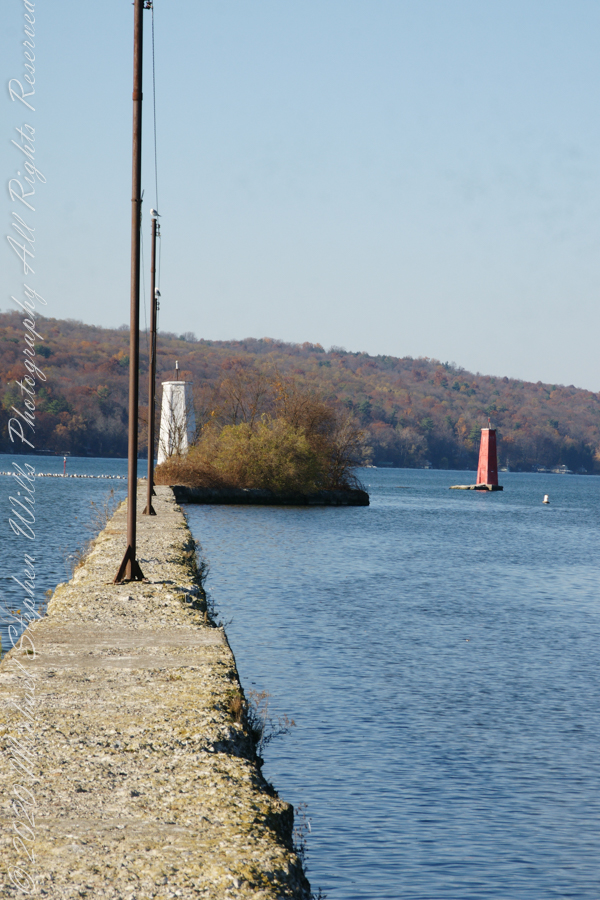
First view of the paired Lighthouses marking the Cayuga Inlet. The white tower is connected to shore by a causeway something less than a quarter mile in length. The red tower marks the other side. These navigation guides allow boats to safely enter the channel exiting the south end of Cayuga Lake. The Erie Canal connects to the north end, allowing access to the Great Lakes and, eventually, the Atlantic Ocean.
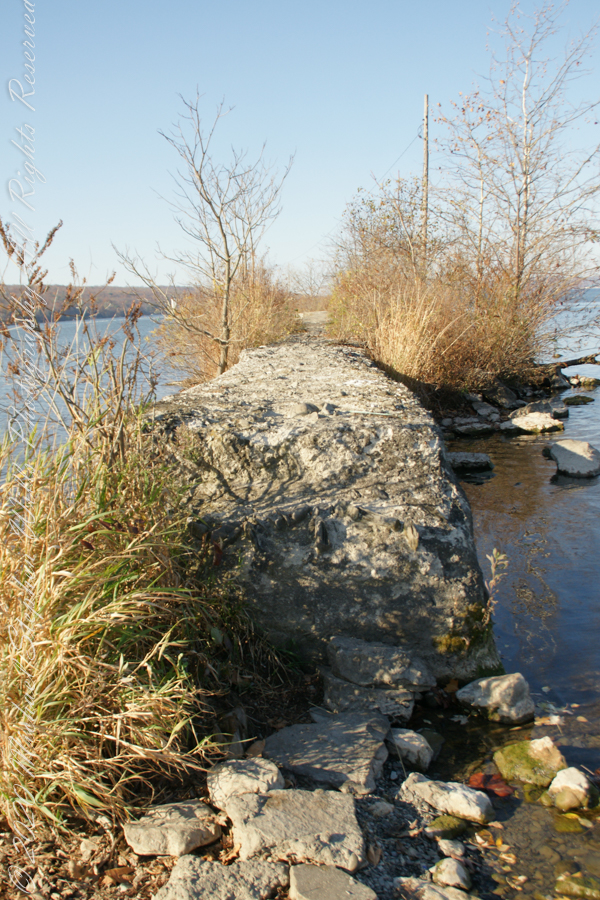
The 4-foot-high step up to the concrete causeway path is an insurmountable obstacle to some. I managed to clamber over.
Looking back to shore….
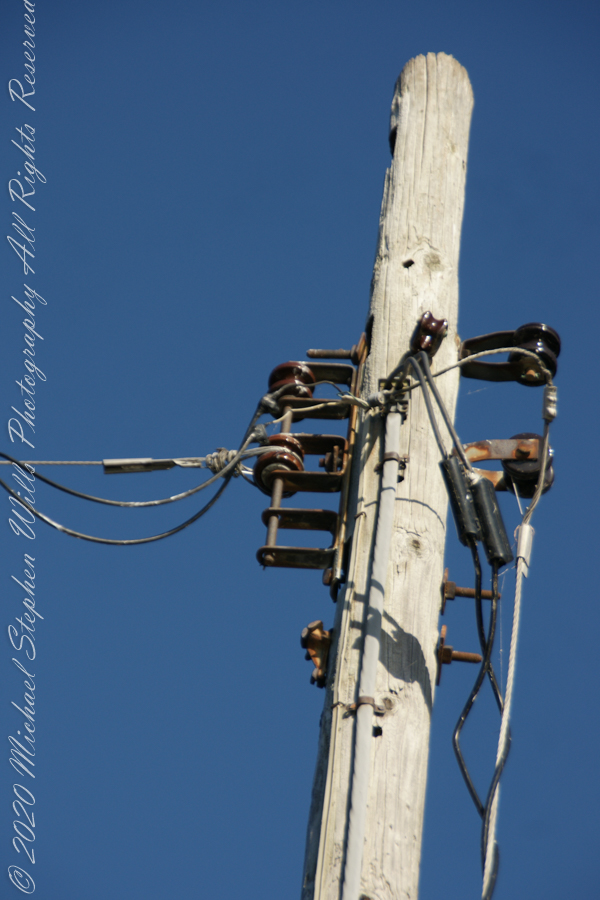
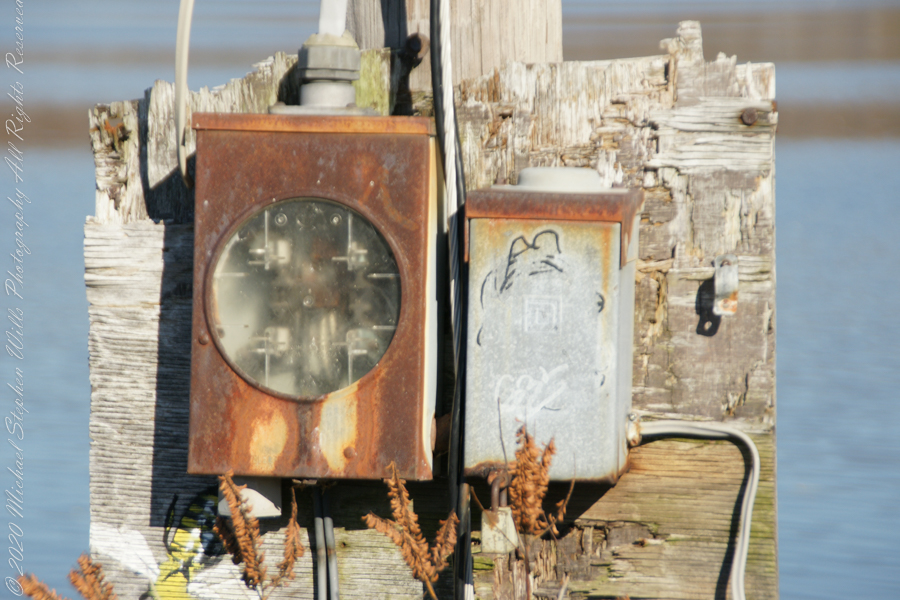
Rusted iron poles support the electric line for the white tower. They remind me of ship masts.
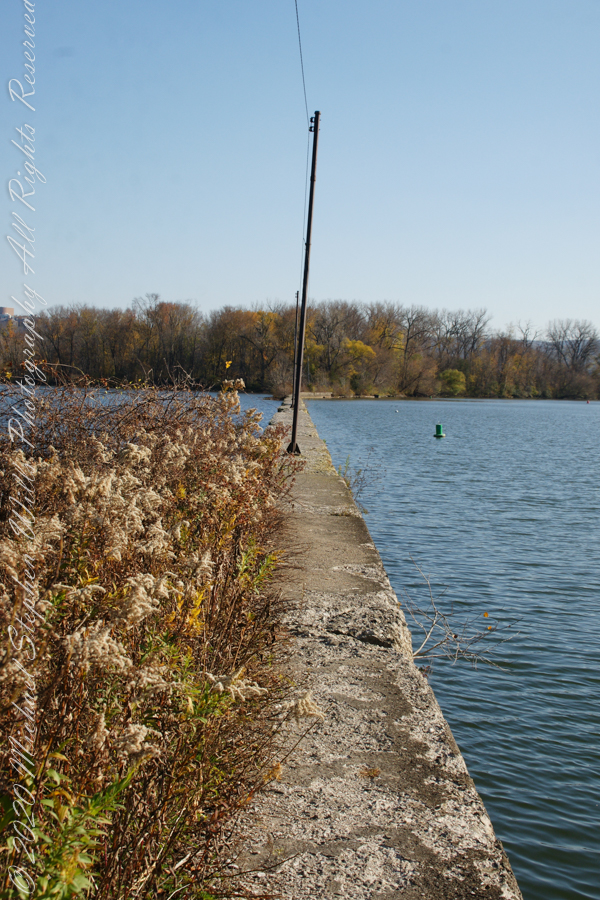
The straight shot back to shore.
Copyright 2022 Michael Stephen Wills All Rights Reserved
November 3rd, 2022, Blessed Us with an azure sky, an Indian Summer Day. During our walks on Cass Park Shorts we’d look across to see hikers emerging from the gold course to walk the Lighthouse causeway. After decades of longing, these Ithaca residents took upon themselves the adventure of finding the path and walking it. This series of posts documents the walk and some treasures discovered on the way.
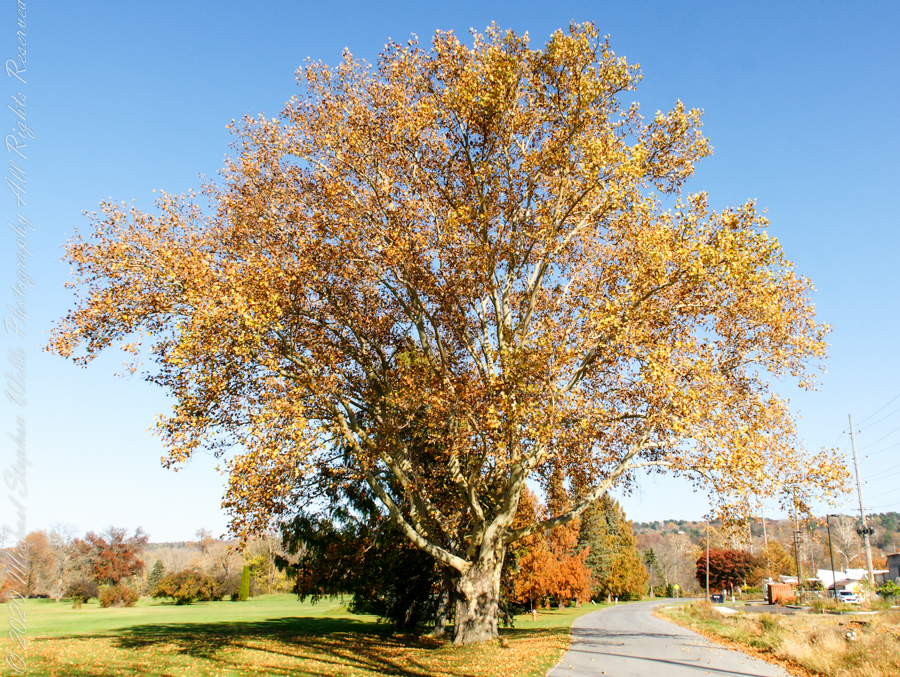
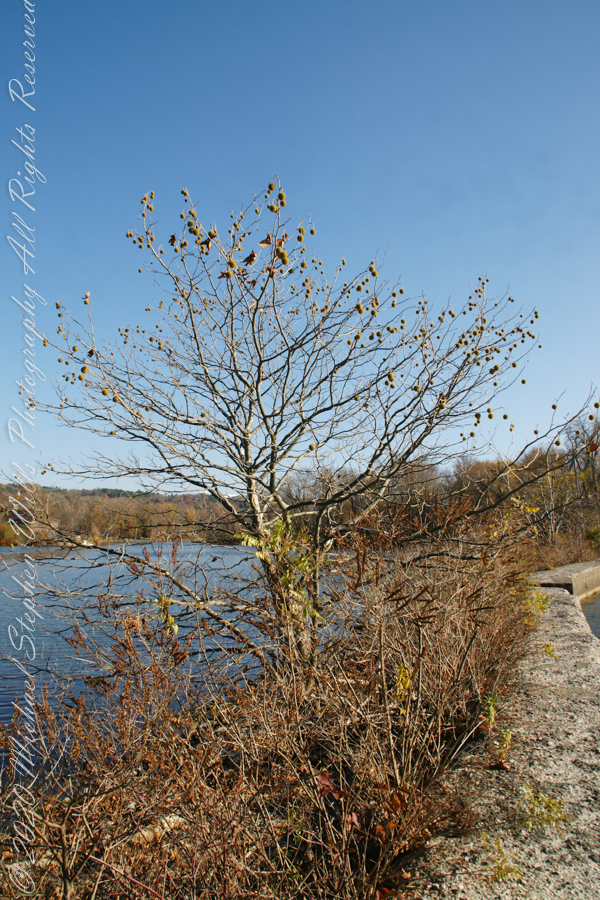
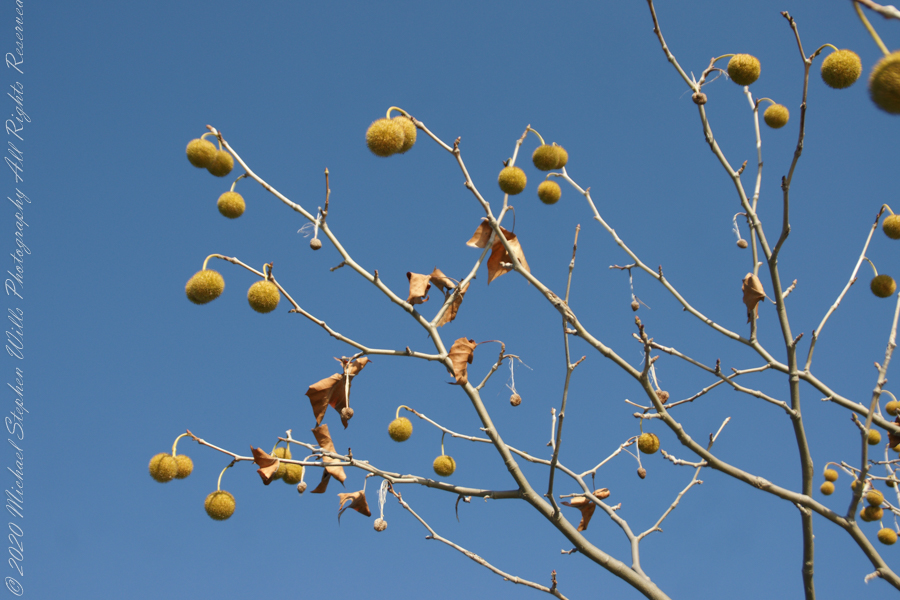
Sycamore, aka Plane Tree
Willow on Cayuga Inlet and Newman Golf Course
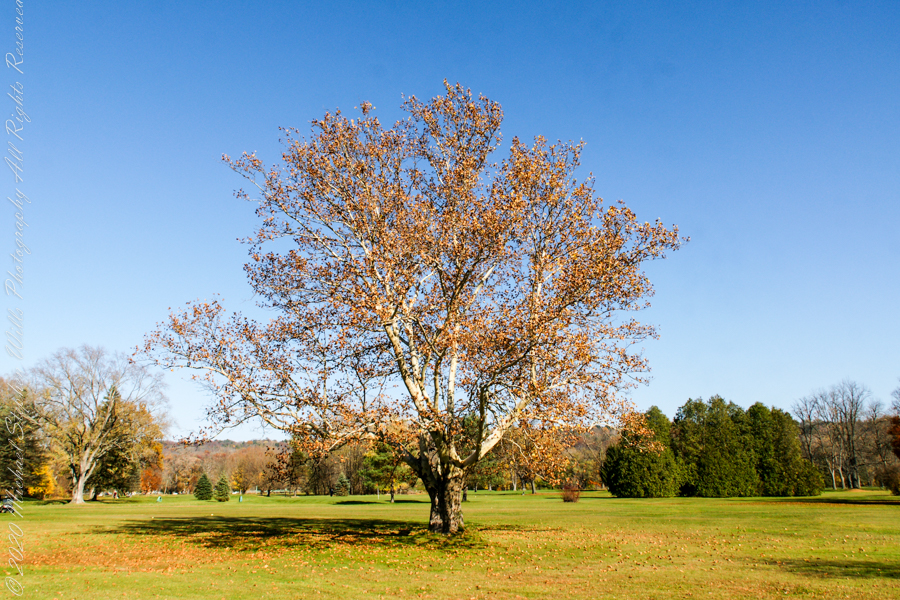
might be another Sycamore on the golf course
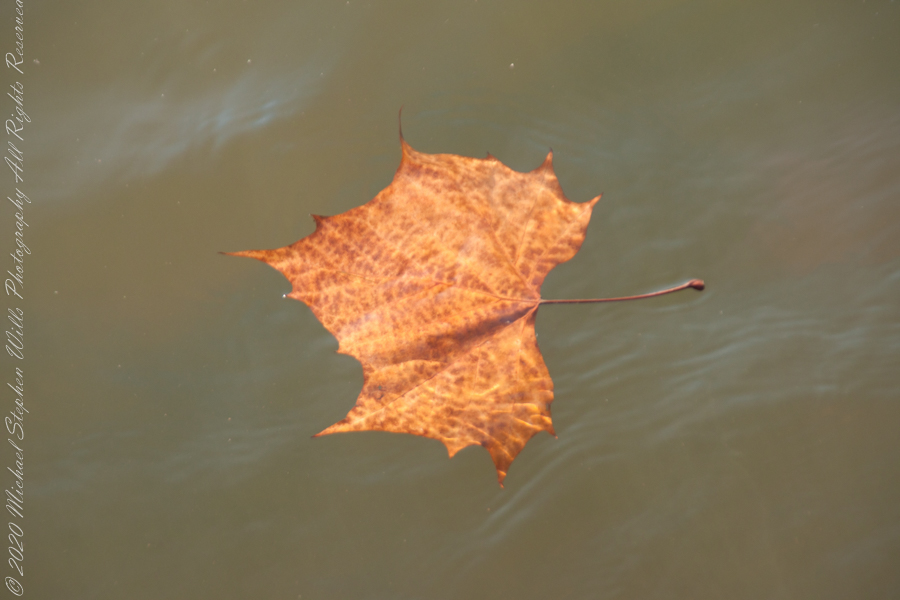
An uncultivated Sycamore sprouting from the causeway leading to the lighthouse “The reason Sycamores are also called “Buttonwood”. Children love to throw these seed heads at each other, sometimes “exploding”The reason Sycamores are also called “Buttonwood”. Children love to throw these seed heads at each other, sometimes “exploding” on impactSycamore leaf floating in Cayuga Inlet
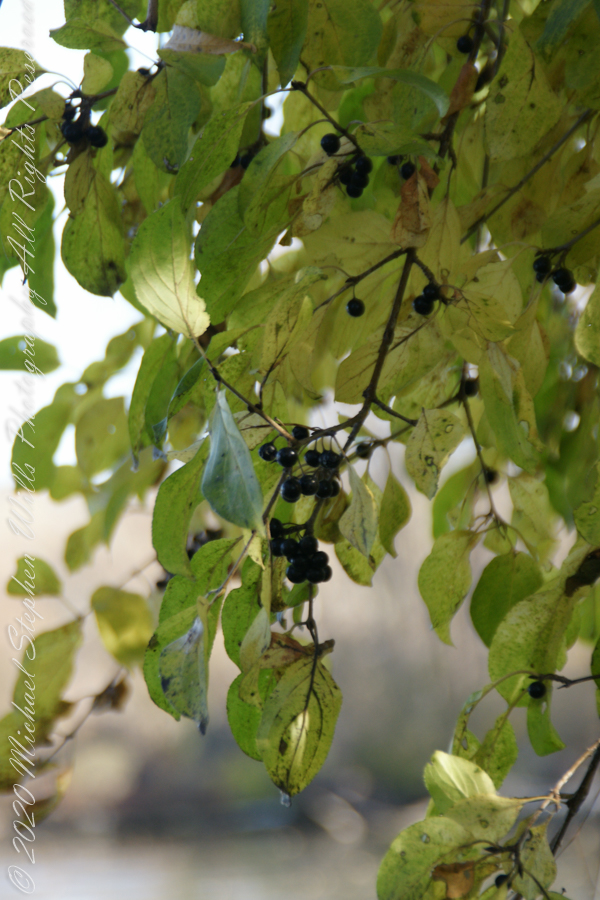
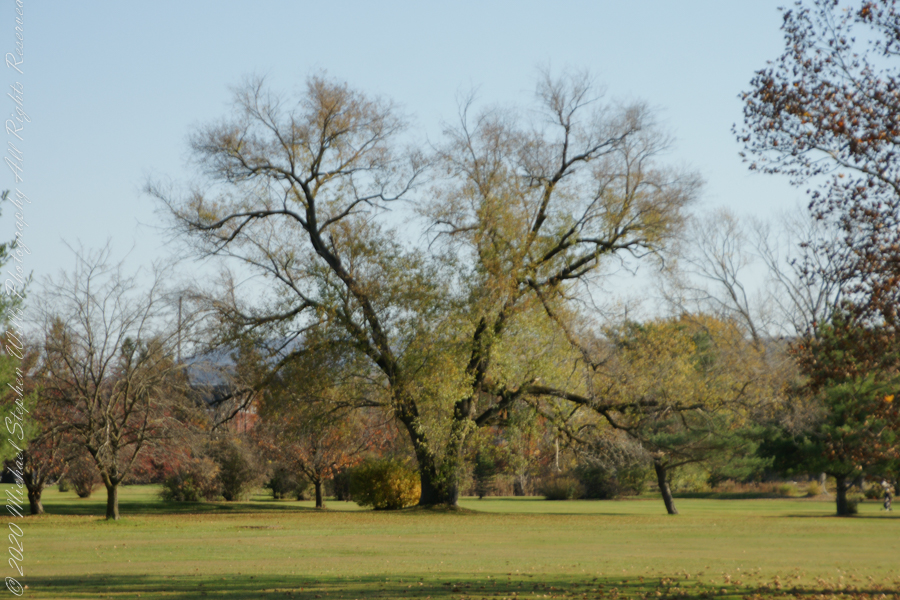
Unidentified tree on golf course
Unidentified tree on golf course
Unidentified tree on golf course
Copyright 2022 Michael Stephen Wills All Rights Reserved
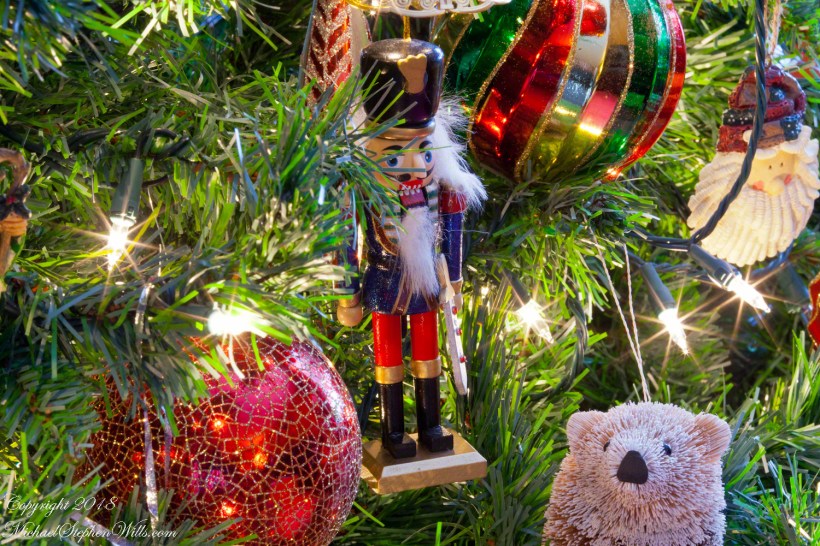
Our Nutcracker wooden figure carries a weight of memories. Early memories are of my sister, Christina’s Sugar Plum Fairy solo for Saint Aidan Parish talent program, Mom’s appreciation of performance of Swan Lake in her pre-child past, a friend of my Mom was a former dancer who taught Christina ballet. Hanging quietly, these memories swirl around the Nutcrackers open maw.
Click this photograph for my Fine Art Photography gallery
Thirteen years ago we observed New Years Day 2009 in the lobby of Winthrop Medical Center, Mineola, New York waiting for the outcome of Mom’s hip replacement surgery grateful the head of Orthopedics was performing the surgery. That year saw large changes played out in the last four years of her life, she never returned to her home of 52 years.
From then on her winters were spent with her daughter Diane in Mesa, Arizona. Mom would call us, amused at the sight of neighbors walking by in 50 degree weather in winter parkas. She was well known in Albertson for her habit of walking everywhere, it was fortunate she never needed to learn how to drive a car: all she needed was readily at hand.
I needed to return to Albertson several times a year to our childhood home. December 2009, Pam and I melded the trip with a day in New York City. Memories of Mom’s enjoyment of Swan Lake drew me to purchase tickets for The Nutcracker. The New York City Ballet has performed The Nutcracker every Christmas season since 1954, when I was one year old. The 56th performance was our first.
As with Dante’s version of hell, the David H. Koch Theater has rings. I sprang for the highest ring, the fourth, the least costly and, optimistically, the best vantage to view the formations of grouped dancers.
A full orchestra is dedicated to each performance, the hall acoustics are fabulous, and we were able to appreciate the scenes, the grouped dancers and, even, the soloists. The last scene of the first act, the Snowflakes (or Snow Crystals), brought tears to my eyes, the music, the scene was impossibly beautiful and brought back some experiences of mine in winter nature.
We were hooked after that, immersed in the very real (i.e., non-virtual) alternate reality at least two Sunday afternoon performances each year, seeing all Tchaikovsky’s ballets in the style of Balanchine for which the New York Ballet is famous. For the 59th season of The Nutcracker were brought two granddaughters, took fourth third row orchestra seats. We marveled at the experience. It included, during intermission, a photo session with a character from the performance.
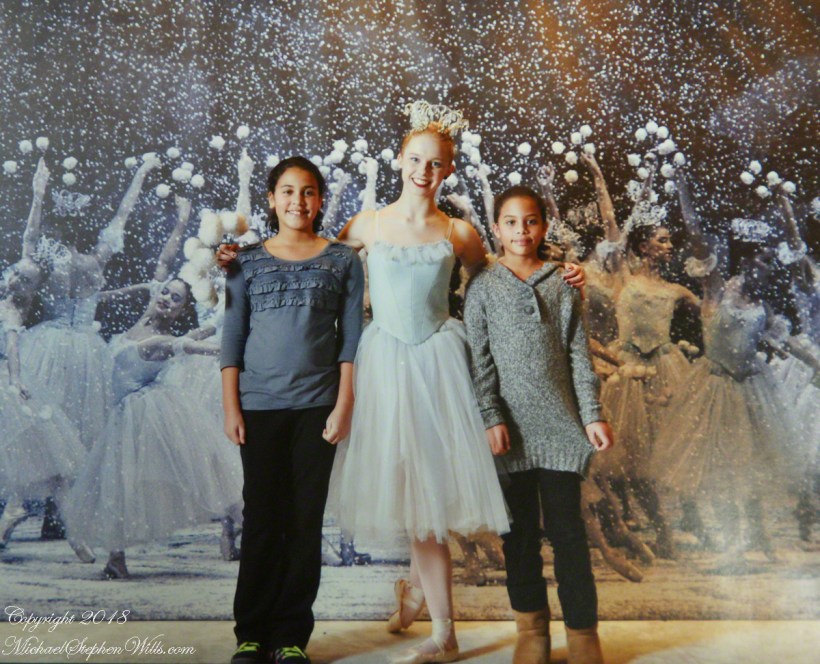
Here they are with a Snowflake. This is a scan of one of the 8 x 10 prints we received from this session.
Nia and Gabby with the Nutcracker Ballet character “Snowflake” during the intermission of a December 2012 performance.
We planned to share a performance of Swan Lake with Mom during the September 2013 season, in her 90th year. Mom passed away in her birth month, June, 2013.