Threaded with bird call
Folded sails greet the first light
A new year takes flight
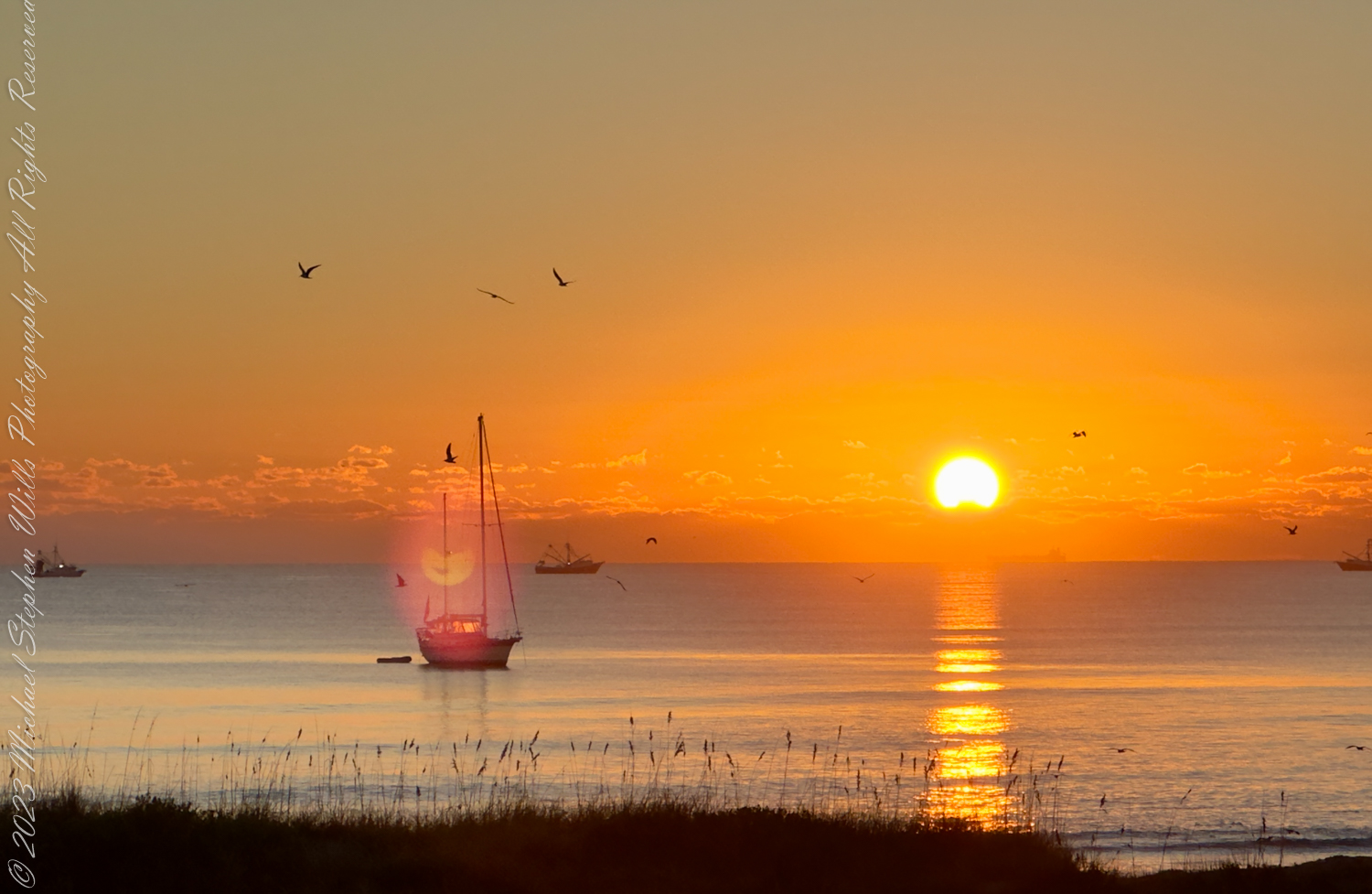

Threaded with bird call
Folded sails greet the first light
A new year takes flight
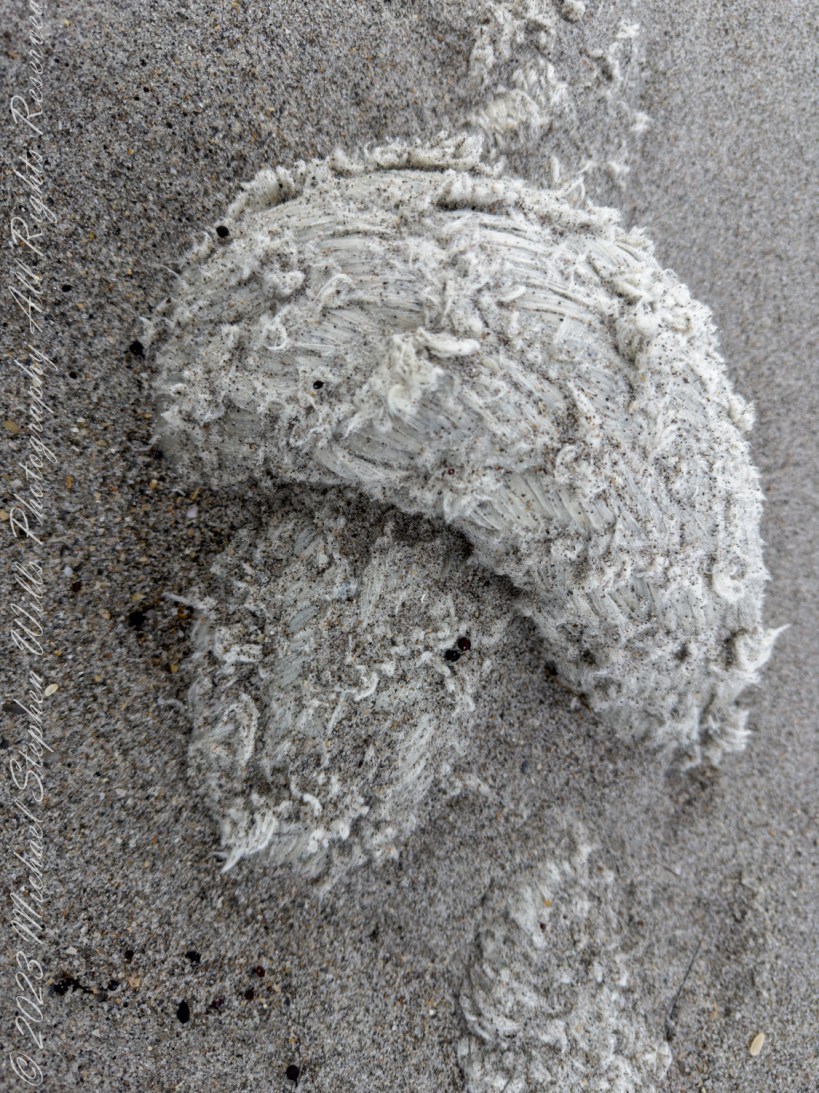
Discover the mysterious journey of an ocean-worn hawser on Cocoa Beach. Join me in unraveling its sea-tossed tales and the profound messages the tides bring to our shores.
As I strolled along the familiar expanse of Cocoa Beach, a silver mist hung over the horizon, blurring the line where the Atlantic whispered to the skies. My footsteps, a quiet percussion against the hush of dawn, were the only sound until the waves added their chorus. I was here to greet the sunrise, a ritual that never failed to ground me, but today, the ocean had laid out a surprise – a hawser, heavy and worn, beached like a leviathan of the deep.
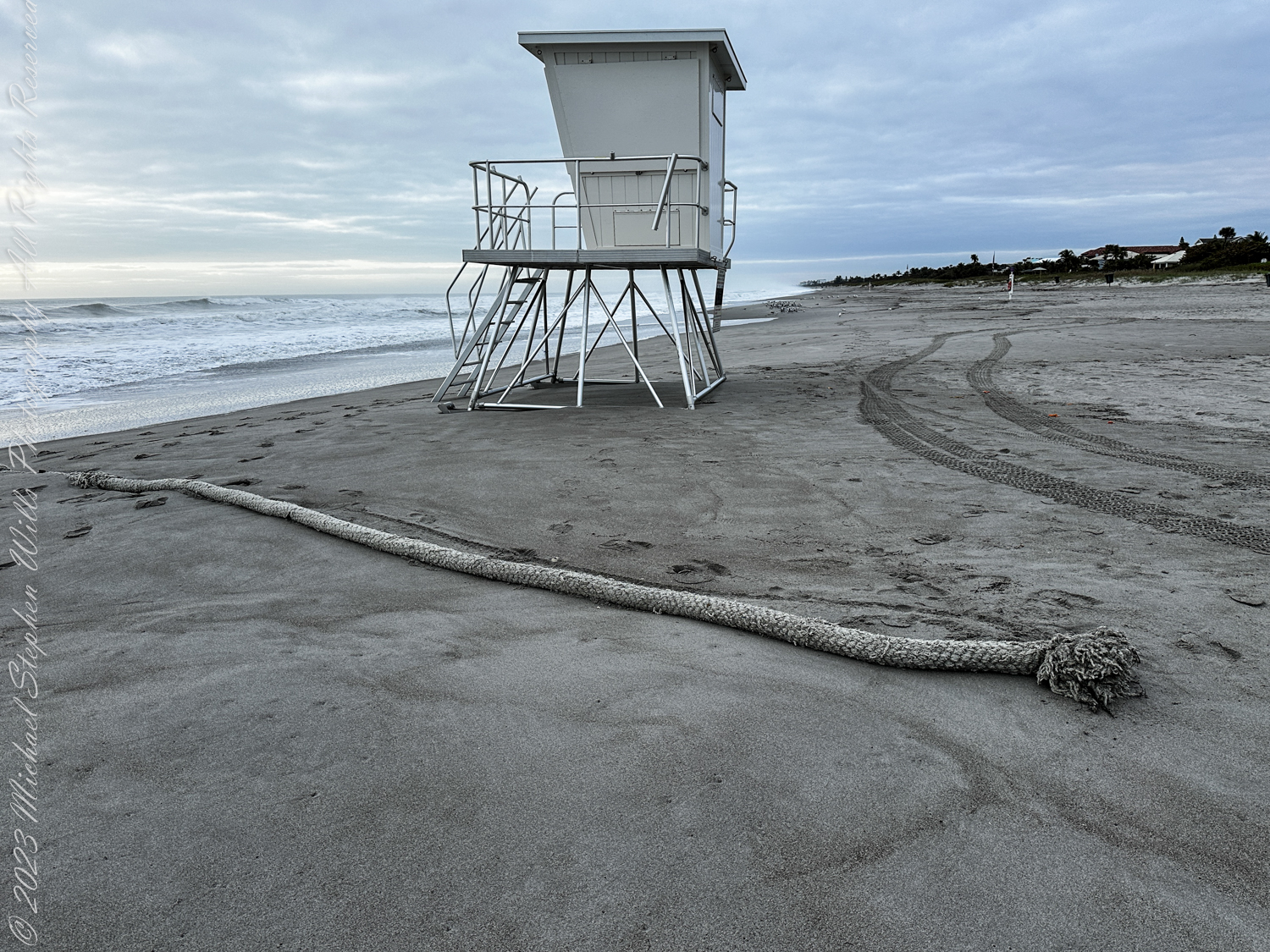
There it lay, a colossal rope, its many fibers frayed and clinging to sand, a testament to its battle with the ocean’s might. This hawser, a lifeline once to vessels that dared to navigate treacherous waters, was now at the mercy of the tides that once heeded its command. I approached, curious, reverence growing within me for this unexpected relic of human endeavor.
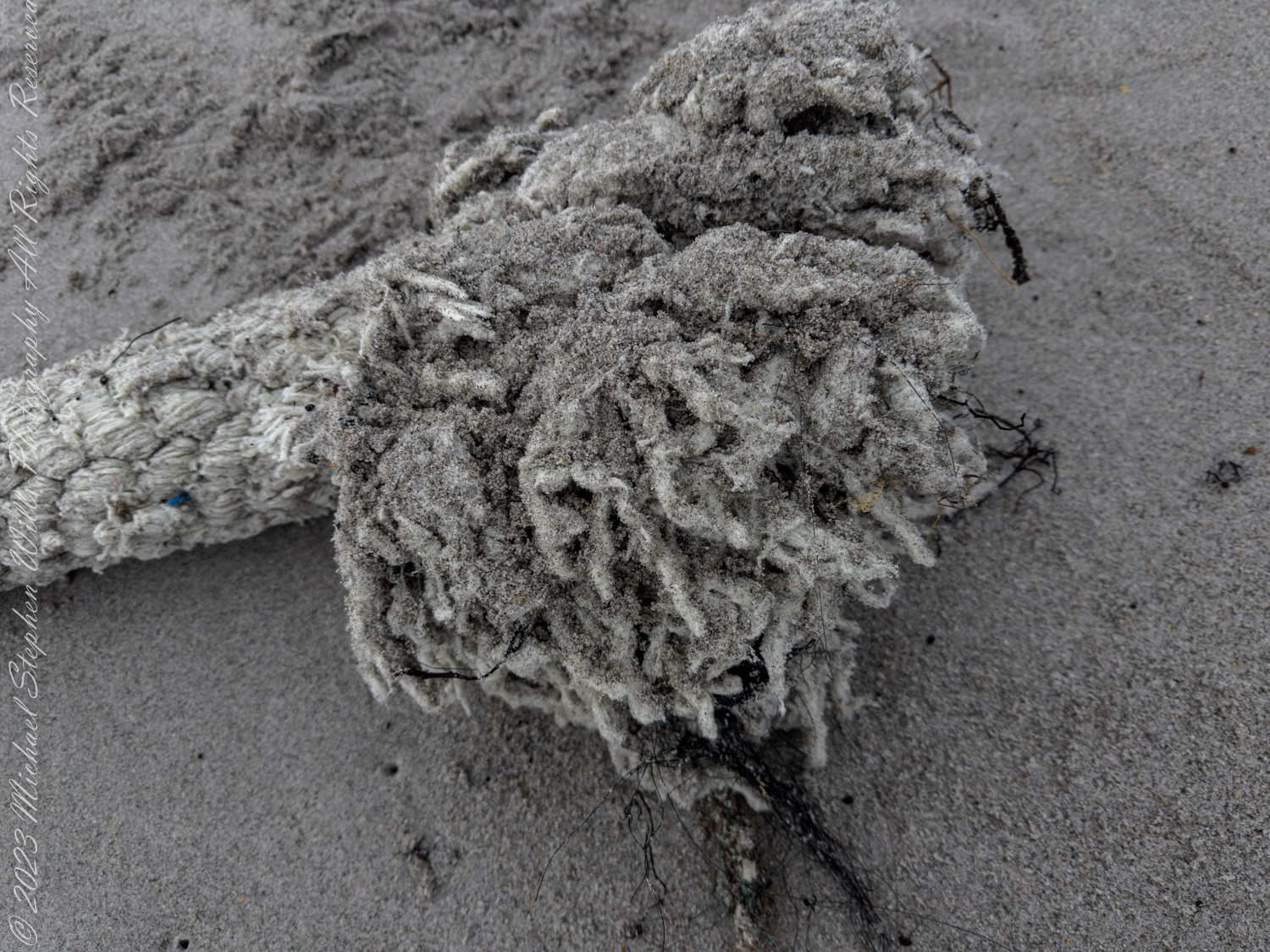
The hawser’s journey to my path was a story written in the ebb and flow of the tides. The high tide, under the pull of the moon’s invisible hands, had surged with purpose, pushing this massive rope to the shore as its offering. High tides are nature’s way of reaching out, touching the land, and sometimes, they bring gifts from the depths, each with a tale to tell.
Touching the hawser, I felt connected to the lives it must have touched, the storms it weathered, and the unspoken histories it held. Each thread was a narrative, a voyage, a storm survived. The macro images of the hawser’s frayed ends resembled the intricate work of a natural tapestry – artful, chaotic, yet purposeful. It was a mosaic of experience, and now, it was a part of Cocoa Beach’s landscape.
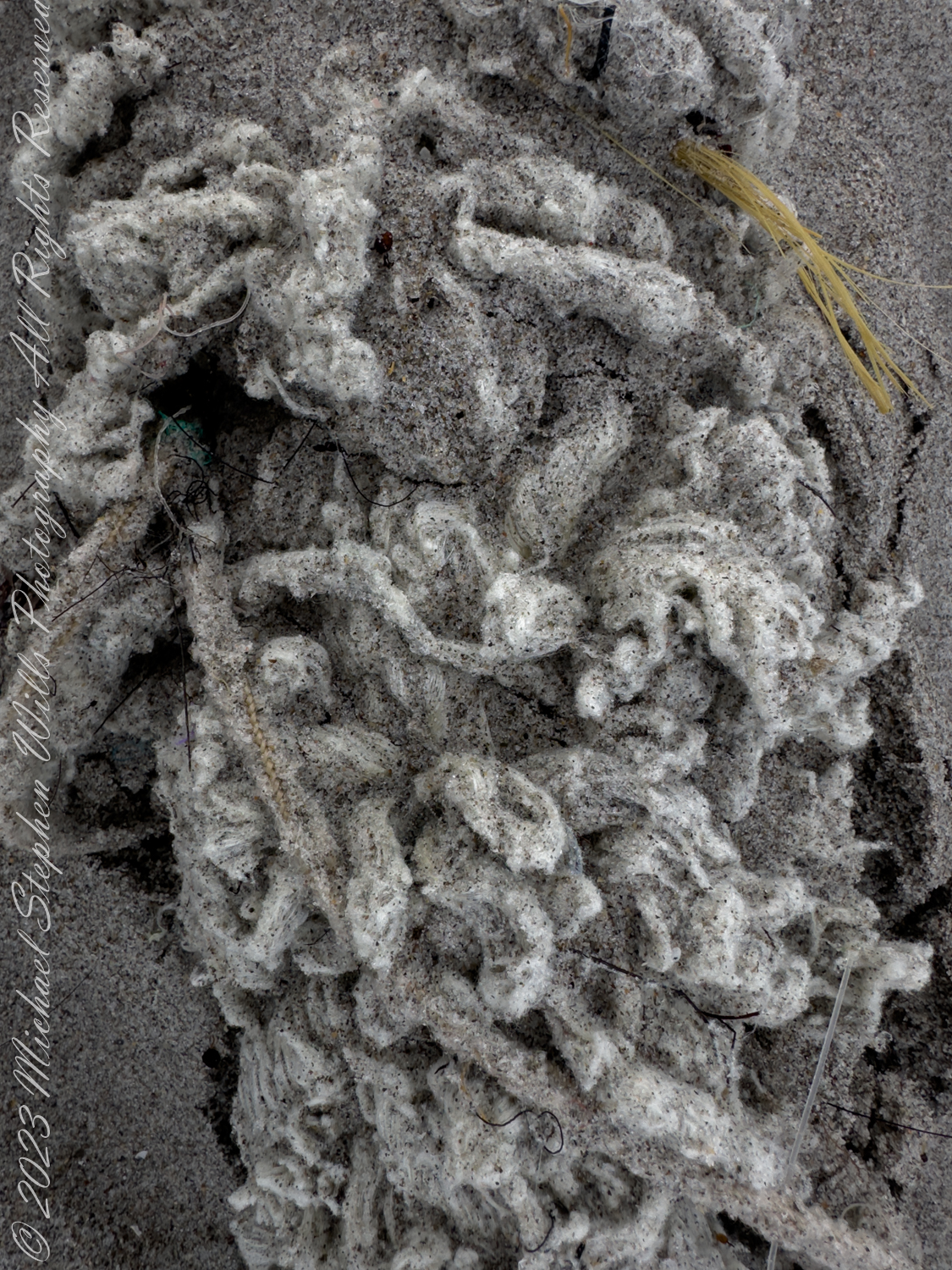
The hawser at the foot of the lifeguard station stood as a symbol of humanity’s interaction with the mighty sea. We build structures, craft vessels, and forge hawsers, asserting our presence. Yet, the tides remind us of our place within the grand tapestry of nature. Tides dance around our creations, sometimes reclaiming them, other times presenting them back to us, reshaped, redefined.
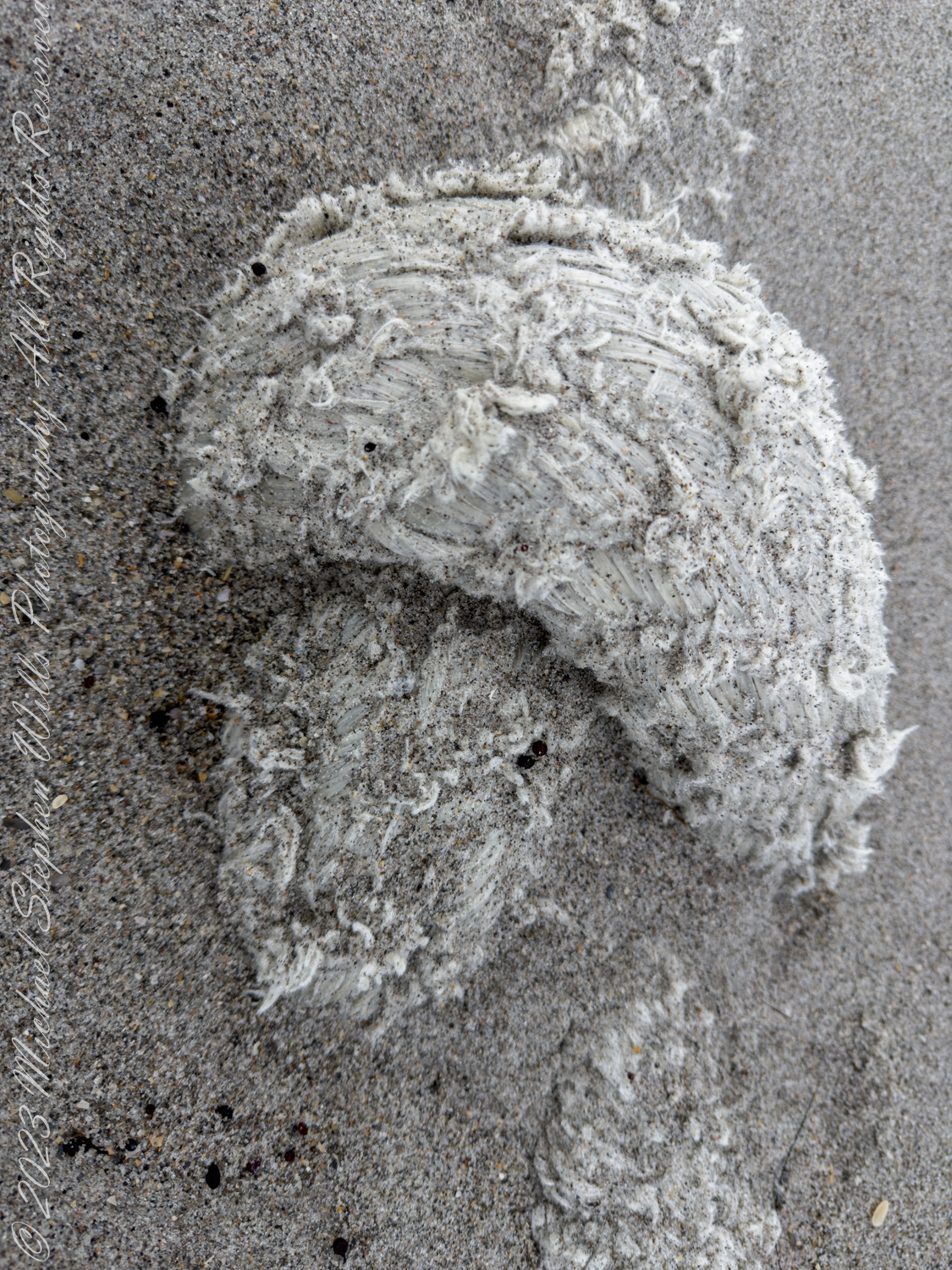
As I sat by the hawser, the sun broke free from the horizon, casting golden hues over the beach. The tide was retreating, pulling back into the ocean’s embrace, leaving behind patterns on the sand, and the hawser – a silent sentinel of the shore. It was a moment of reflection on the power of the tides, the constant cycle of giving and taking, and the marks they leave upon both the earth and our lives.
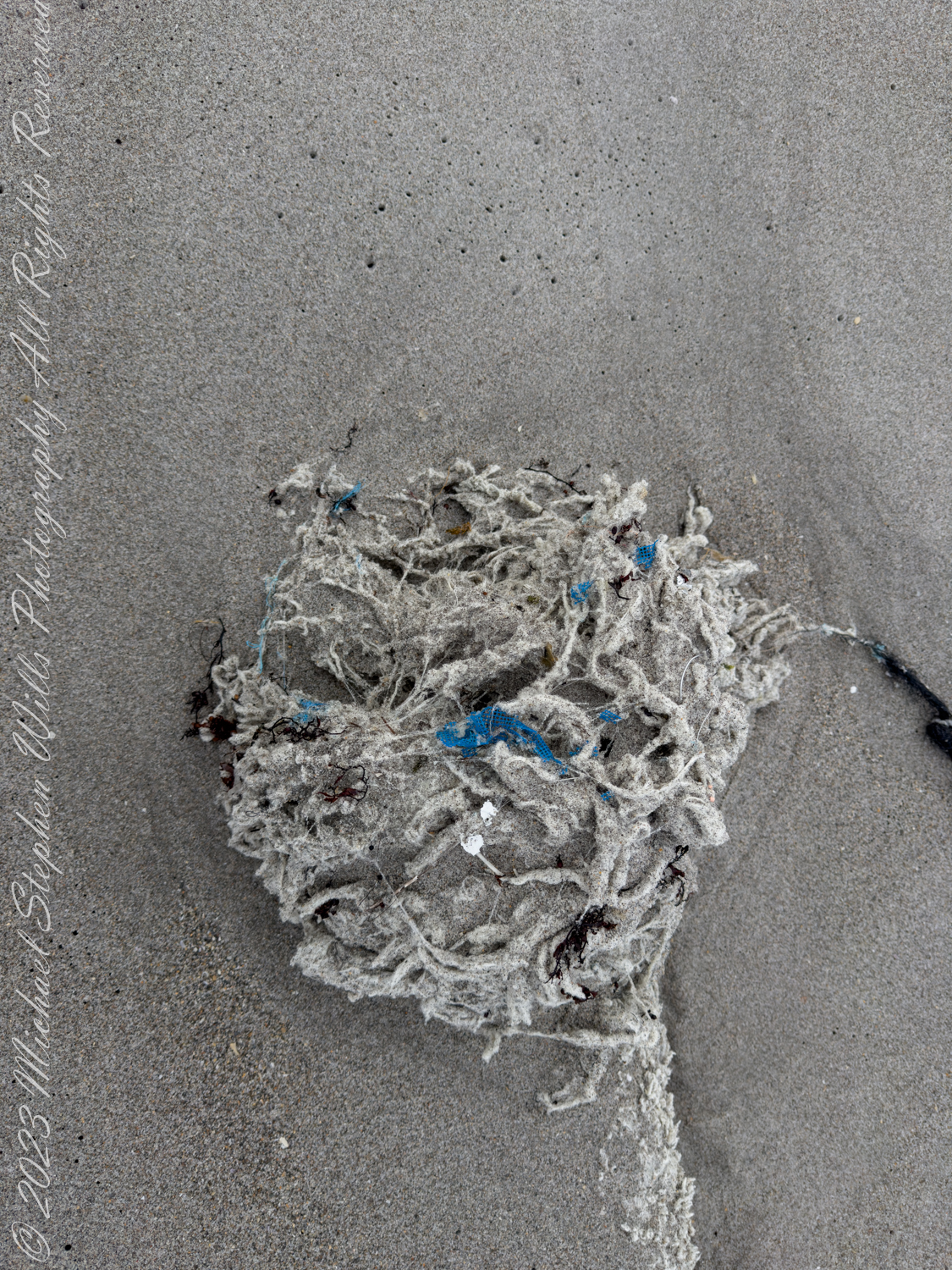
The tides had brought the hawser to Cocoa Beach, and with it, a moment of connection to the vastness of the sea and the shared journeys of all who traverse it. As I walked away, the hawser remained – a fixture until the tide would rise again, perhaps to claim it back or offer another token of the ocean’s depths. The power of the tides is a powerful metaphor for life’s ebb and flow, each wave a new beginning, each retreat a chance to reflect on the imprints left behind.
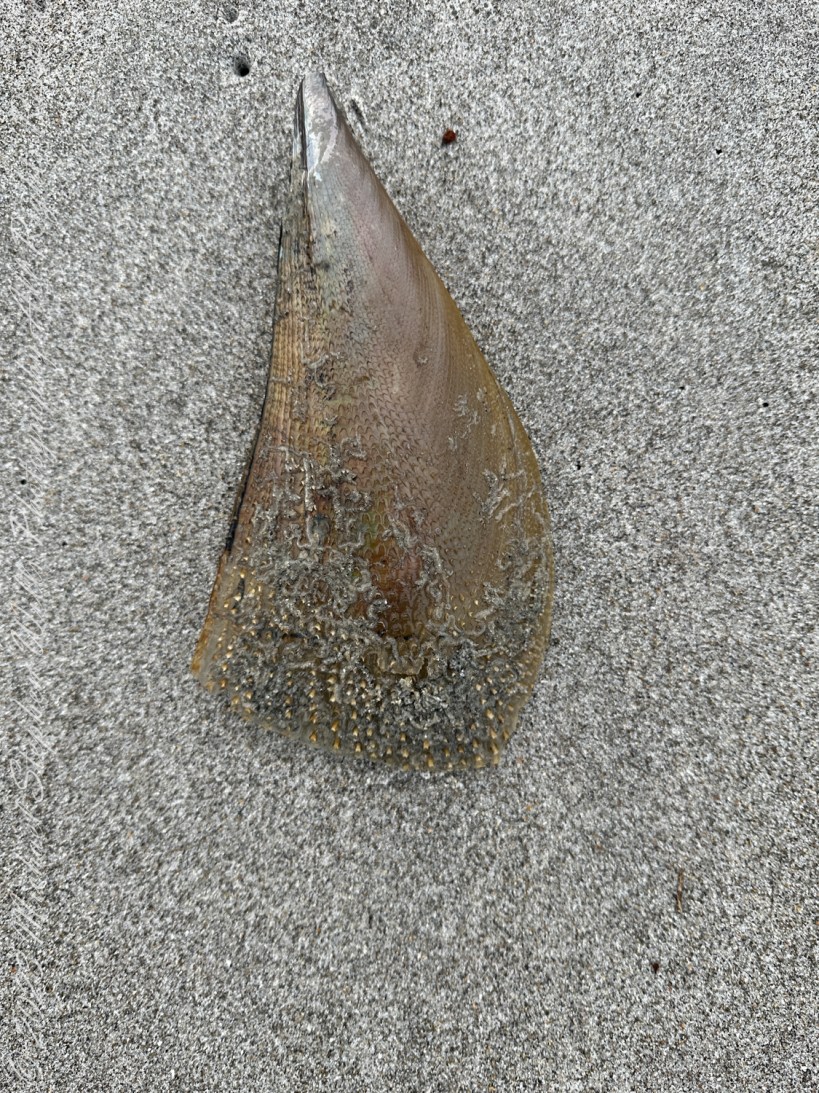
Join me in reliving the enchanting evening on Cocoa Beach where my wife and I discovered a rare, intact Atrina rigida shell. Dive into the world of this fascinating bivalve through our story of ecological wonder and natural beauty.
One evening, as the sun dipped below the horizon, my wife Pam and I walked along the Cocoa Beach shore. There, among the relics of the receding high tide, I found a complete shell, a rare occurrence where often only fragments are discovered. This intact specimen was a rigid pen shell, scientifically known as Atrina rigida, its 6-inch length and 4-inch width a testament to its resilience in the face of the ocean’s might.
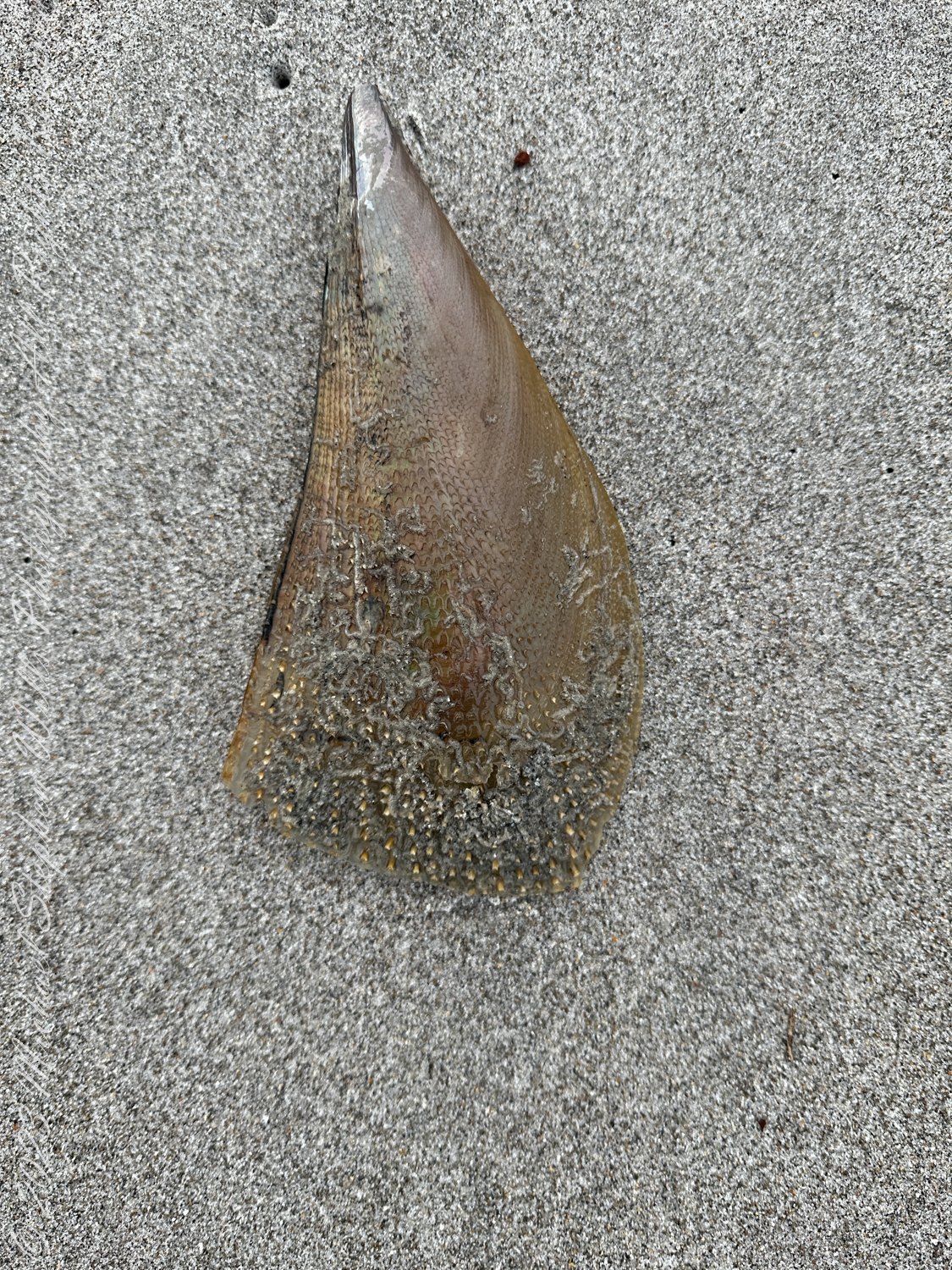
The scientific name ‘Atrina rigida’ is steeped in Latin origins, with ‘atrium’ suggesting a ‘hall’ and ‘rigidus’ denoting ‘stiff.’ This nomenclature reflects the shell’s hardy structure, reminiscent of a grand hall’s architecture, standing firm against the elements. The common name “Pen Shell” draws from the shell’s elongated, pen-like appearance when it stands vertically in the sand, resembling antique writing quills used in centuries past.
“The rigid pen mollusk burrows as it grows, but the wide posterior end of the shell always remains exposed so water from above the seafloor can be drawn through the inhalant chamber of the mantle cavity. Typical of bivalves, water is drawn over gills or ctenidium by the beating of cilia where oxygen from the water is absorbed. Suspended food and other water-borne nutrients also become trapped in mucus, which is then transported to the mouth, digested and expelled as feces. Unique gutter-like waste canals in the viscera of the inhalant chamber also help to keep gills and other organs clear from silt and other unwanted water-borne particles by expelling these as pseudofeces. Its anterior end is typically buried in fine substrate and attached by byssal threads, with its wider posterior gaping end extending just above the sea bottom surface to facilitate filter-feeding. Algae (e.g. Lobophora variegata) and invertebrates such as sponges and encrusting corals tend to grow on the exposed part of the shell and may camouflage it very well.” [1]
Typically, one finds only broken shards of these shells, the complete forms often victims to the ocean’s relentless energy or human activity. The intact shell I found lying atop the sand was therefore a unique and precious find, its wholeness mirroring the unbroken evening calm.
Look inside a rigid pen shell to find a hidden treasure: the nacre, or mother-of-pearl, lining the interior. This lustrous, iridescent layer is typically found on the inner surface, a stark contrast to the rough exterior. The nacre’s smooth, reflective quality has made pen shells a source of ornamentation throughout history, their beauty extracted from the depths to adorn human creations.
“Sea silk is an extremely fine, rare, and valuable fabric that is made from the long silky filaments or byssus secreted by a gland in the foot of pen shells (in particular Pinna nobilis). The byssus is used by the clam to attach itself to the seabed.
Sea silk was produced in the Mediterranean region from the large marine bivalve mollusk Pinna nobilis until early in the 20th century. The animal, whose shell is sometimes almost a metre long, adheres itself pointed end down to rocks in the intertidal zone using a tuft of very strong thin fibres. These byssi or filaments (which can be six centimeters long) are spun and, when treated with lemon juice, turn a golden color, which never fades.
The cloth produced from these filaments can be woven even more finely than silk, and is extremely light and warm; it was said that a pair of women’s gloves made from the fabric could fit into half a walnut shell and a pair of stockings in a snuffbox. The cloth attracts clothes moths, the larvae of which will eat it.
Pinna nobilis is also sometimes gathered for its edible flesh and occasional pearls of fair quality.” [2]
Our discovery on Cocoa Beach, a location known for its diverse marine life, added to the sense of connection with the natural world. The shell’s journey to rest upon the sand, whole and unblemished, felt like a shared secret between the ocean and us, a fleeting glimpse into the life of a creature whose home is often hidden beneath the waves.
This encounter with a complete Atrina rigida emphasizes the importance of marine conservation and protecting such fragile ecosystems. It serves as a poignant reminder of our responsibility to the environment and the need for collective action to preserve the ocean’s myriad inhabitants.
Finding a whole rigid pen shell amidst our peaceful walk was an extraordinary event that transcended mere chance. It provided a moment of awe, an opportunity to marvel at the elegance of nature’s design, and a reminder of the delicate balance that exists within our planet’s ecosystems. This intact Atrina rigida from Cocoa Beach will forever symbolize the enduring beauty and complexity of the marine world.
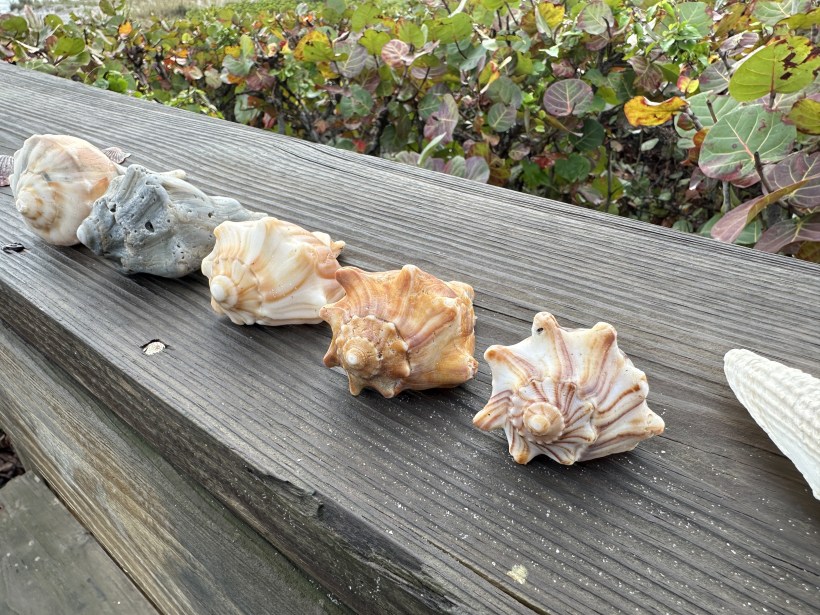
As you stroll along the beach, the beauty of whelk shells captures your attention. Ever wondered how these intricate structures form? Dive into the secrets of their creation, from cosmic origins to mollusk mastery. Discover the fascinating world within their shells
As I wander along the coast, the variety of seashells scattered across the beach fascinates me, particularly the whelk shells with their intricate designs and robust structure. This marvel of nature prompts me to delve into the science behind the formation of these shells, which are not just homes for the marine creatures but also a testament to the extraordinary processes that take place both within the organisms and across the cosmos.
The journey of a whelk shell begins within the mollusk itself, specifically with an organ called the mantle. This organ is a marvel of biological engineering, responsible for laying down the calcium that forms the shell’s backbone. It secretes a matrix, a kind of biological scaffolding composed of proteins and polysaccharides, and then directs the deposition of calcium carbonate within this matrix to create the hard shell. The mantle’s work is meticulous, ensuring the shell’s growth and repair throughout the whelk’s lifetime.
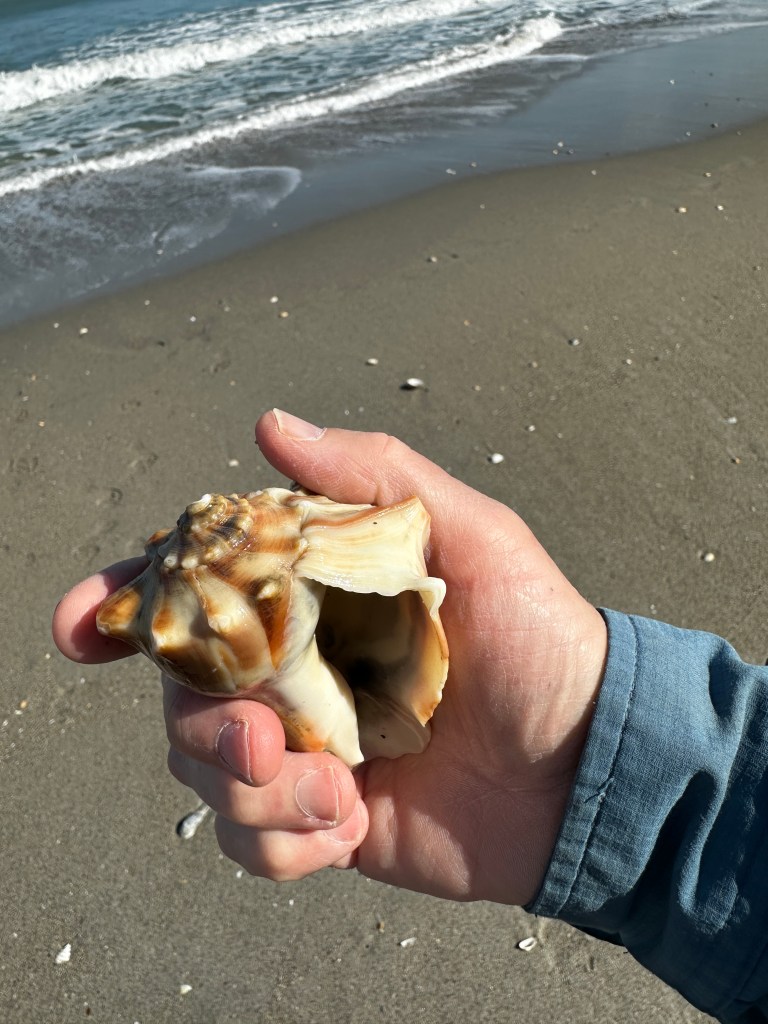
So why do the elements calcium, carbon, and oxygen play such a crucial role in shell formation? It’s a question of availability and suitability. These elements are abundant in the marine environment—calcium dissolved in seawater, carbon, and oxygen from both water and air. Their chemical properties allow the formation of calcium carbonate, a stable compound that can adopt various forms like calcite and aragonite, offering structural diversity for shells. Calcium carbonate’s moderate solubility enables mollusks to control shell formation precisely, and its biocompatibility ensures the process is safe for the living organism. Above all, the resulting crystalline structure provides immense strength and rigidity, a natural armor against predators and environmental challenges.
Calcium carbonate (CaCO₃) is not just a building block for shells; it’s a common substance that shapes our world. Found in rocks as calcite and aragonite, it forms limestone, the basis of pearls, and even the eggshells we encounter daily. This compound is an active player in both industrial applications and biological functions, serving as an agricultural amendment, a component in cement, and even a dietary supplement for humans.
Whelks are not alchemists; they do not create calcium carbonate from thin air. Instead, they are master extractors, pulling calcium and carbonate ions from their surroundings and depositing them as calcium carbonate to form their shells. The mantle is at the heart of this process, secreting proteins and enzymes to facilitate ion extraction from the water. The precise regulation of ion concentrations and pH ensures the calcium carbonate crystallizes in the desired form, perfectly tailored for the whelk’s protection.
It’s astounding to think that the elements composing whelk shells are not just earthly but cosmic in origin. The calcium (atomic number 20), carbon (atomic number 6), and oxygen (atomic number 8) that are so critical to these marine structures owe their abundance to the stars. The life cycles of stars, from their hydrogen (atomic number 1) and helium (atomic number 2) fueled births to the explosive supernovae and neutron star collisions that mark their deaths, generate and scatter these elements throughout the universe. These star-born materials eventually coalesced to form our solar system and Earth, providing the necessary ingredients for geological and biological phenomena, including the formation of the whelk shells I hold in my hand.
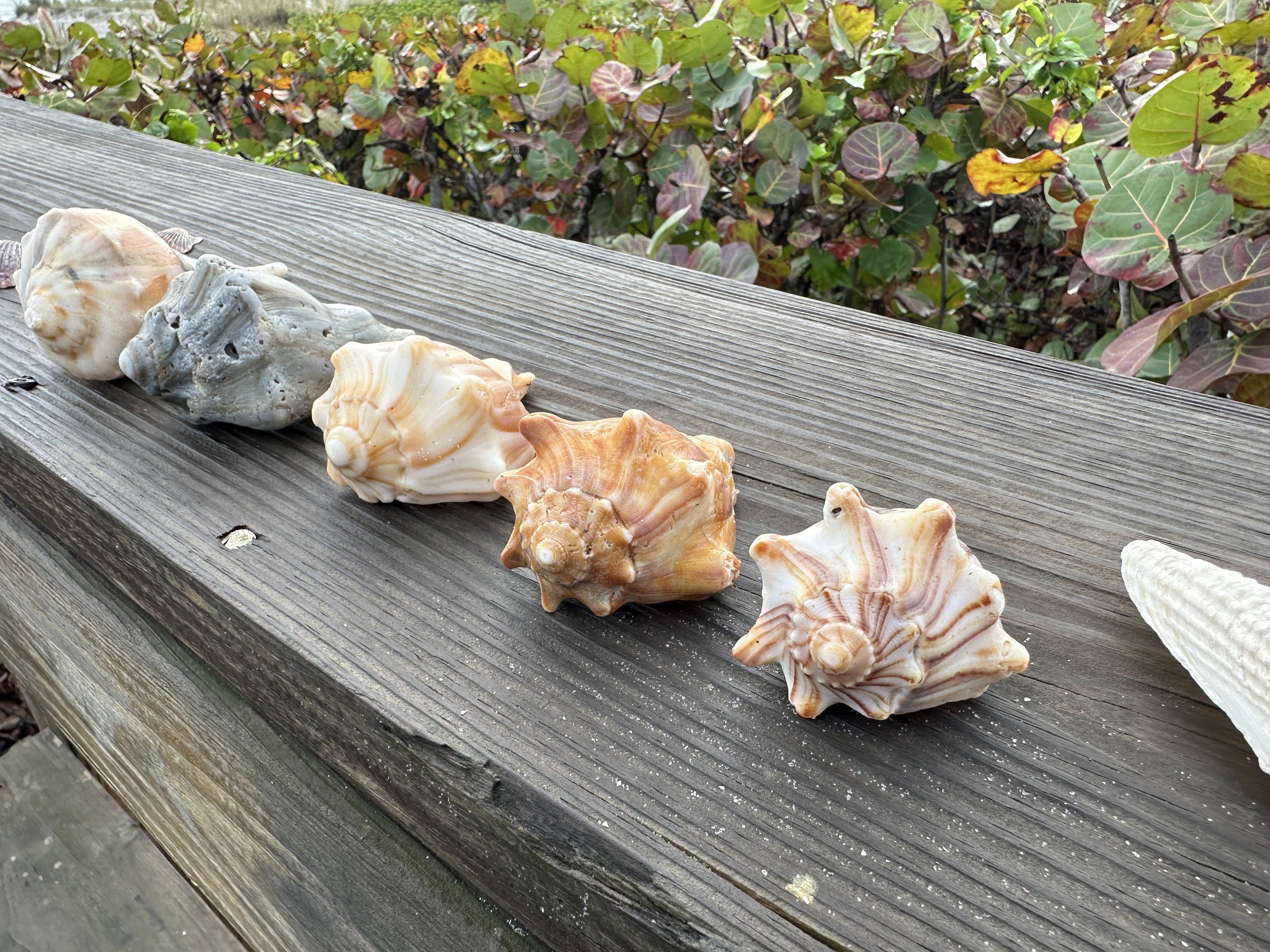
As I reflect on the shells before me, I am reminded of the interconnectedness of all things—from the inner workings of a tiny mollusk to the vast and violent furnaces of stars. These shells are not just remnants of life; they are cosmic artifacts, a reminder of our connection to the universe and the extraordinary processes that shape our existence.
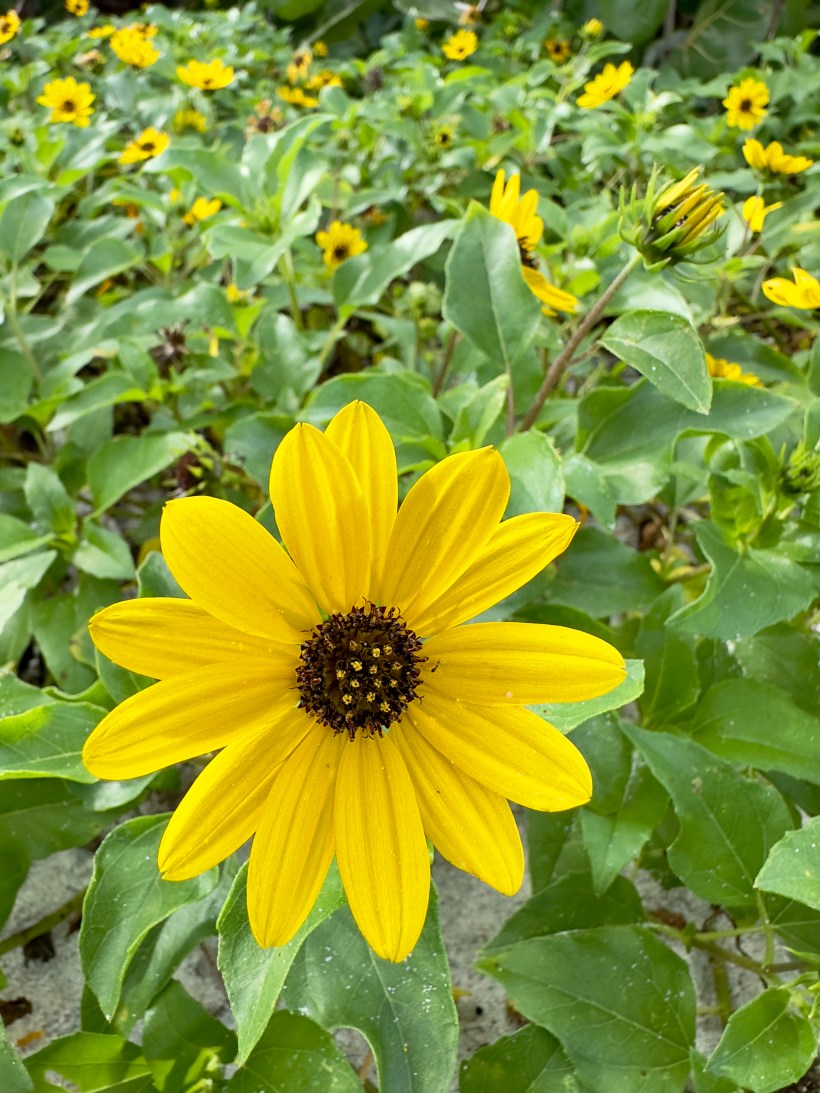
Discover the resilient beauty of Florida’s dune sunflowers through the eyes of a beachcomber. Uncover the secrets of Helianthus debilis, a symbol of hope thriving where sea meets sand. Join the coastal dance of life.
Strolling along the beachfront of Patrick Space Force Base, Florida, my gaze is captivated by a cluster of dune sunflowers, or Helianthus debilis. These hardy perennials are native to the coastal sand dunes of the southeastern United States and have made a home amidst the sandy grains where few dare to take root.
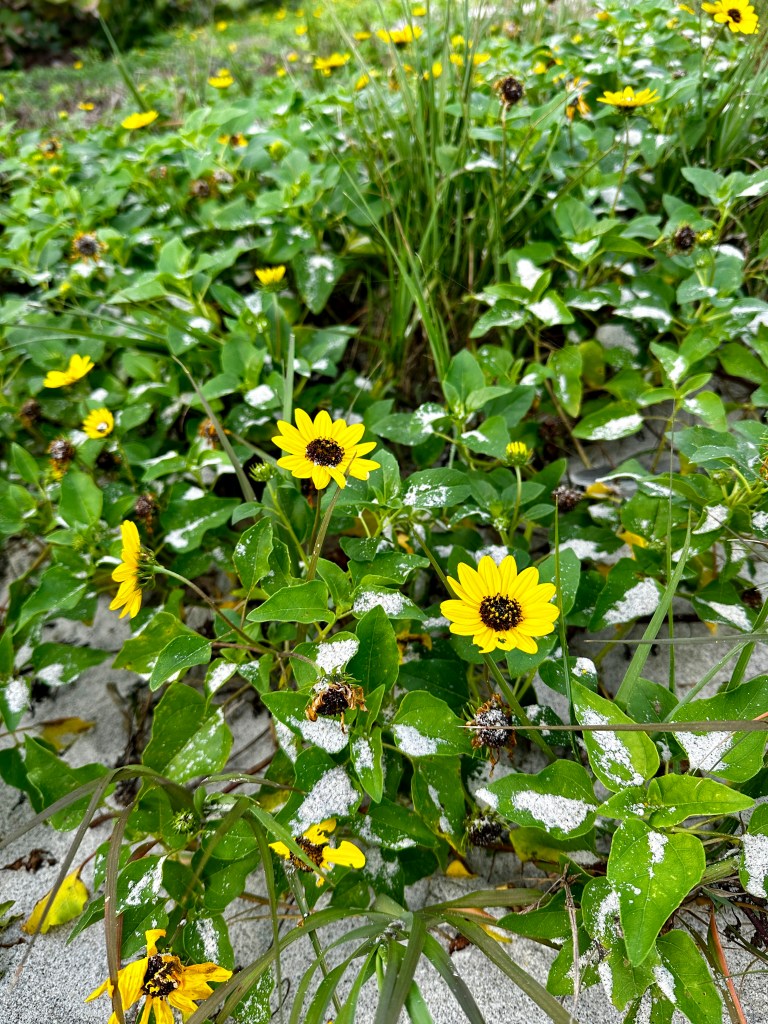
Helianthus debilis, distinguished by its large, yellow ray florets and dark center disks, thrives in this challenging environment. The dunes provide a unique ecosystem, where the sunflowers can withstand high salinity, shifting sands, and the full force of the sun’s rays. Their deep root systems anchor the sandy soil, helping to prevent erosion and maintain the integrity of the dune landscape.
The dune sunflower’s adaptation to its coastal environment is a marvel of nature. Its silvery-green leaves are covered with tiny hairs, reflecting sunlight and conserving moisture. The flowers bloom throughout the year, ensuring a constant presence of color along the dunes. Their hardiness is a testament to the sunflower’s evolutionary success in a habitat where freshwater is scarce and the soil is nutrient-poor.
As a native species, the dune sunflower plays a crucial role in the coastal ecosystem. It serves as a food source for local wildlife, including insects and birds, and its presence helps stabilize dune formations. The ecological value of Helianthus debilis extends beyond its beauty, as it contributes to the biodiversity and resilience of the coastal dunes.
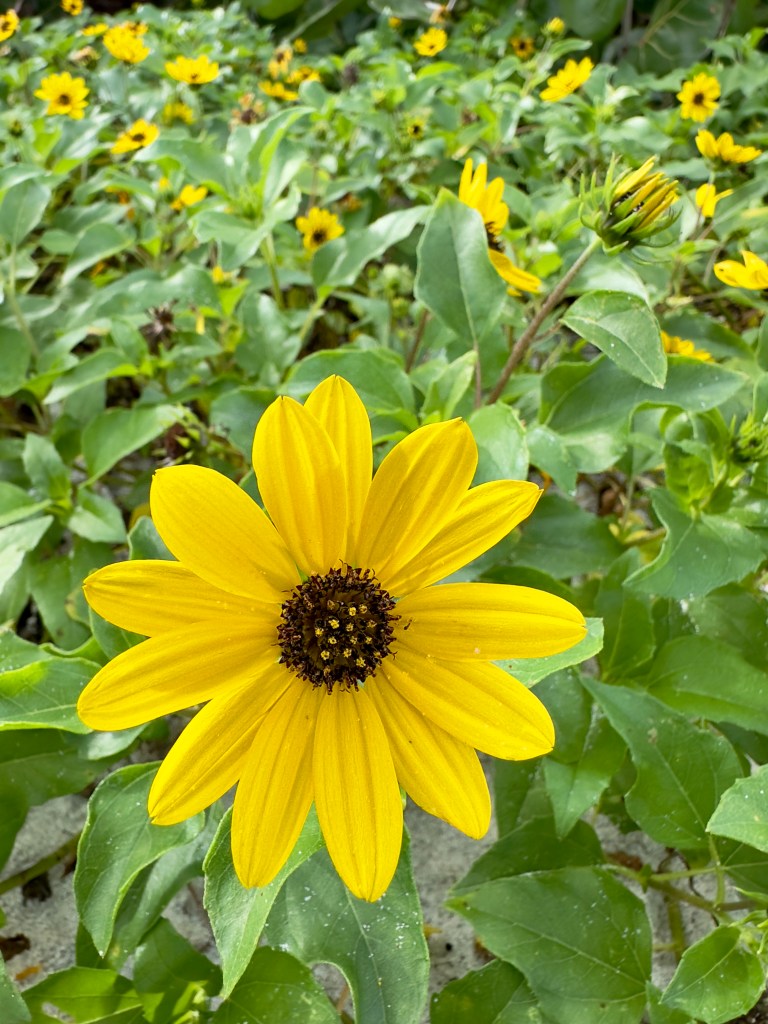
The life of a dune sunflower is inextricably linked to the ebb and flow of the coastal environment. Each plant is a microhabitat, supporting a range of organisms from the larvae of the dune butterfly to the burrowing beetles that find refuge in the sand. The interaction between the sunflowers and these creatures creates a dynamic web of life, each species depending on the others for survival.
The dune sunflower’s ability to flourish in such an austere environment is a profound reminder of the resilience of nature. As I observe the sunflowers, I am struck by their tenacity, their willingness to face the elements head-on. They are a beacon of life in a place where existence is a daily challenge, and their perseverance is a lesson in the art of endurance.
As the sun begins to set, casting a warm glow over the dunes, I take a final look at the Helianthus debilis. Their scientific wonders and ecological im portance leave a lasting impression. They are not just flowers; they are a testament to nature’s ingenuity, an embodiment of the delicate balance between life and the environment. These dune sunflowers are a symbol of hope, a reminder that in the face of adversity, life finds a way to not just survive, but to thrive.
Discover the fleeting artistry of sand castles and the mighty forces of tides sculpted by the moon’s dance. Explore the impermanent intersection of human endeavor and nature’s rhythm.
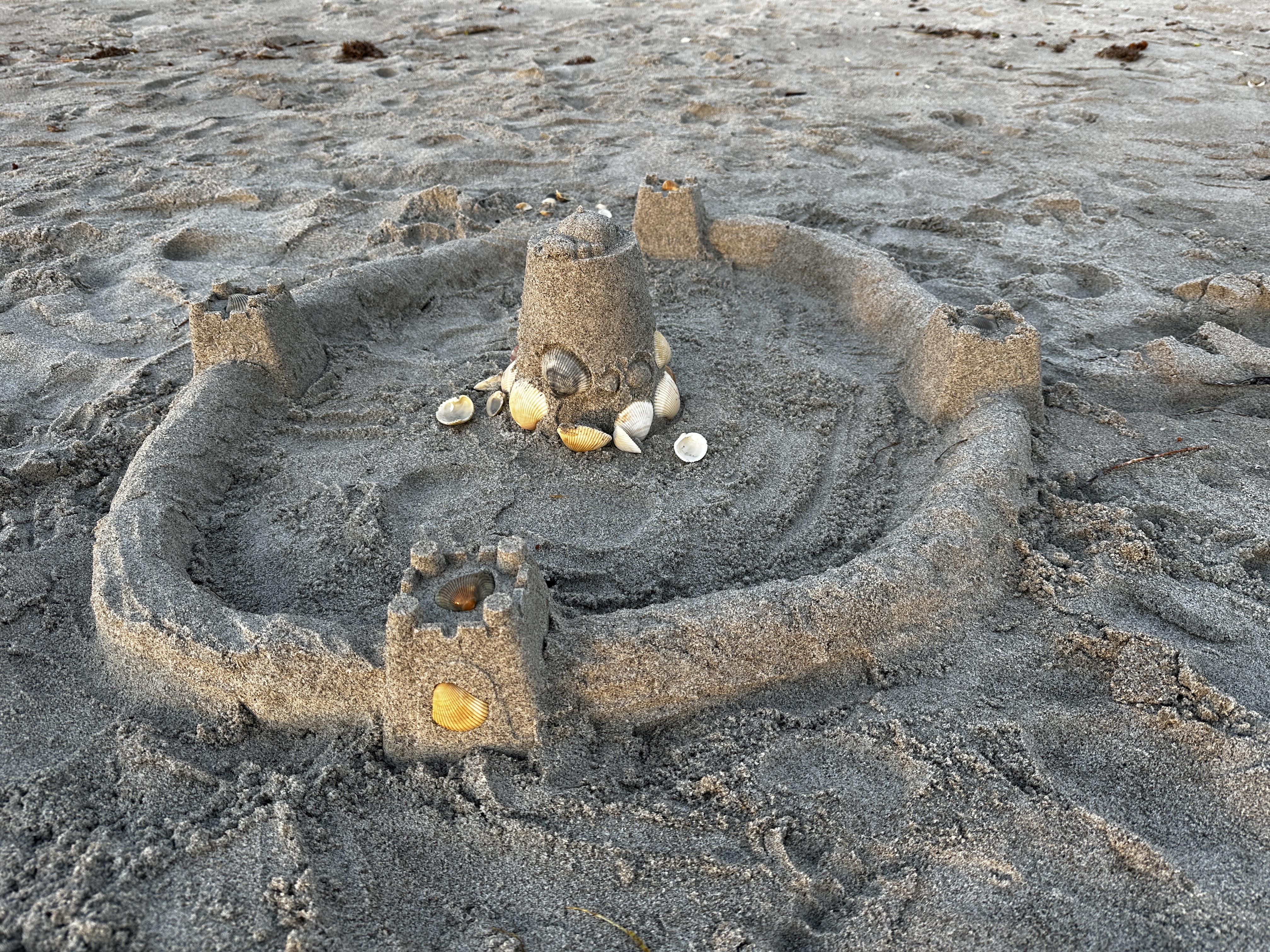
The photographs of a sand castle at Cocoa Beach, Florida, present a clear depiction of the transitory nature of human-made structures in the face of natural forces. This discourse will explore the before and after states of a sand castle through high tide, examining the interplay between human endeavors, the tides influenced by the moon’s phases, and the inevitable passage of time.
The initial photograph captures a sand castle in its pristine condition, with detailed turrets, walls, and the decorative placement of shells. This creation is a testament to human creativity, ingenuity, and the desire to imprint our presence on the natural world. Sand castles, often built by children or families, represent the joy of craftsmanship and temporary beauty.
Tides are long-period waves that move through the oceans in response to the gravitational pull exerted by the moon and sun. The gravitational forces of these celestial bodies generate tidal forces, which cause Earth—and its water—to bulge out on the side closest to the moon and the side directly opposite. This bulging of water results in high tides.
The moon’s phases, from new moon to full moon and back, play a crucial role in the magnitude of tides. During the full moon and new moon—times known as spring tides—the sun, moon, and Earth form a line, resulting in the combined gravitational pull of the moon and sun, causing higher than average tides. In contrast, during the first and third quarters of the moon, or neap tides, the sun and moon are at right angles to each other, which moderates the tidal effect.
The second photograph shows the aftermath of a high tide on the sand castle. The rising water has eroded the structure, diminishing its form and washing away its distinct features. The tide does not discriminate in its impact; it is a natural, cyclic event that reshapes coastlines and affects human and ecological systems alike. The high tide symbolizes nature’s reclaiming of human-made imprints, demonstrating the impermanence of our works against the relentless forces of nature.
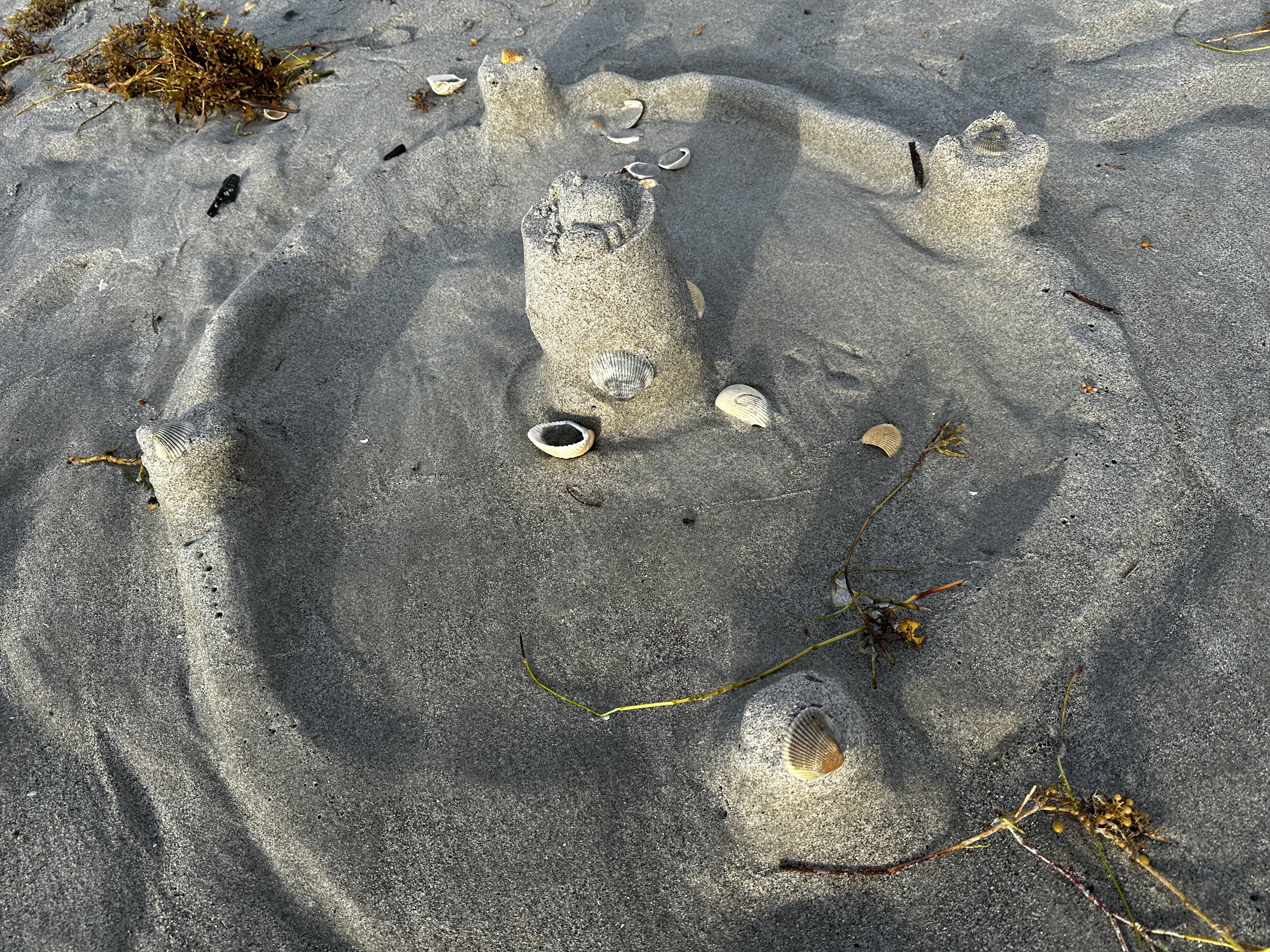
Time is the ultimate sculptor, working incessantly through agents like wind, water, and biological processes. The eroded sand castle in the second photograph is a reminder of the ephemeral nature of all things. The structures we build, no matter how strong or well-designed, are subject to decay and dissolution over time. The sand castle’s fleeting existence underscores the concept that time, coupled with natural forces, will eventually return human creations back to their elemental forms.
The before and after states of the sand castle serve as a poignant illustration of the dialogue between human endeavors and the immutable forces of nature. While the tides, governed by the moon’s gravitational pull, are predictable, their effects are a constant reminder of the transient nature of human constructs in the grand scheme of time and nature’s cycles. As we appreciate the beauty of temporary creations like sand castles, we also learn to respect the power of the natural world and the passage of time that shapes our existence.
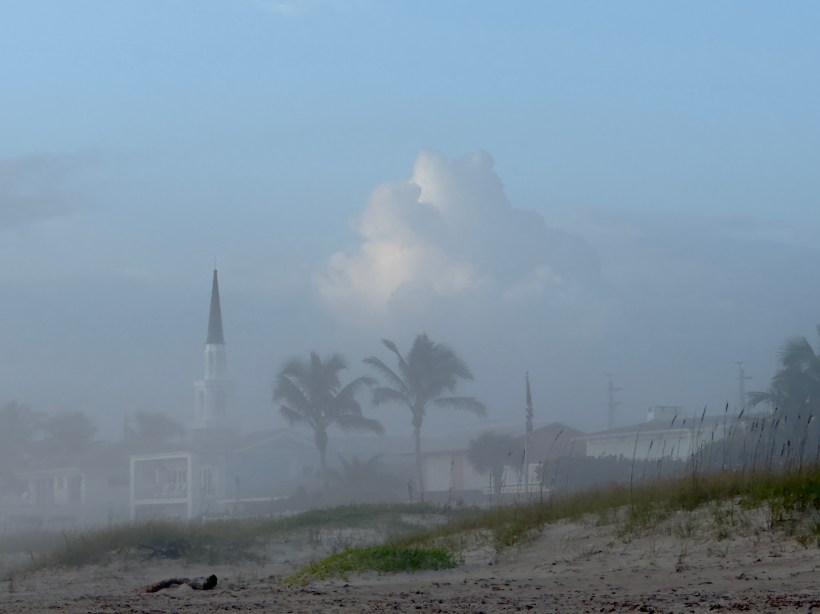
Embark on a serene journey through a fog-enshrouded Cocoa Beach at dawn. Feel the mystique of Florida’s Space Coast in this introspective walk captured in poignant blank verse.
Upon Cocoa Beach, in morning’s gentle embrace,
The world lies shrouded in a silken fog’s lace.
Soft sands whisper ‘neath my solitary feet,
As dawn’s quietude and ocean’s breath meet.
The sky, a canvas of muted grey,
A prelude to the coming of day.
The air, cool and moist upon my skin,
A tender caress, a whispering kin.
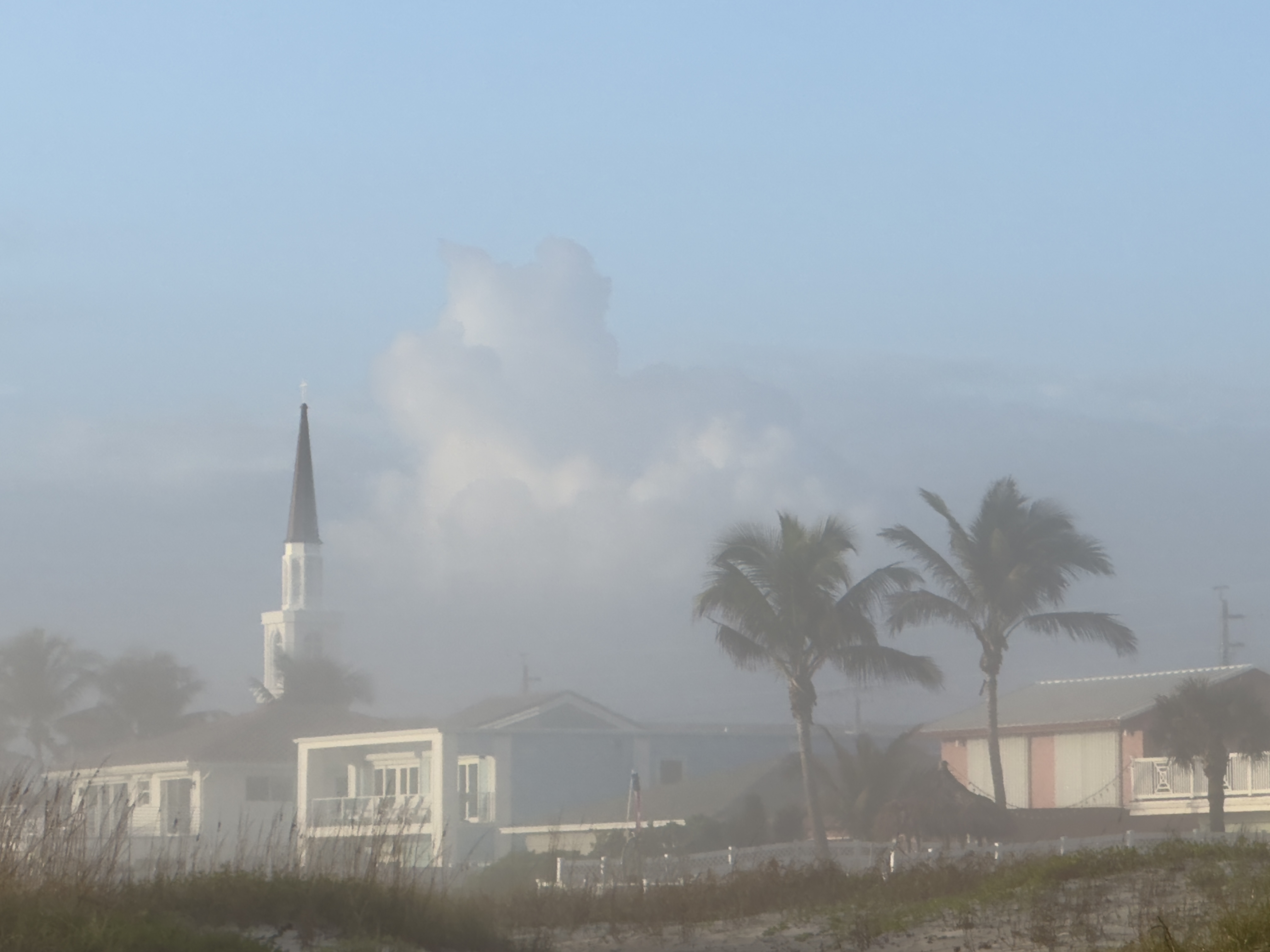
The steeple rises, a ghostly spire,
Amidst the mist, it stands, silent and dire.
Palm trees sway with a rhythmic grace,
In this hazy realm, time slows its pace.

A hammock hangs, still and forlorn,
Awaiting the laughter of a day reborn.
Houses peek, their outlines blurred,
In this soft world, all is unstirred.
The sea’s soft roar, a distant sound,
A symphony in the fog, profound.
I walk, and my thoughts begin to roam,
In this misty morning, I find a home.
The light grows, a gradual birth,
As the sun climbs to illuminate the earth.
The fog begins to lift, to rise,
Revealing the awakening of the skies.
Yet, in this moment, I am alone,
A soul adrift in a world of its own.
Here, where space and time coast,
I am but a specter, a fleeting ghost.
Explore Cape Canaveral National Seashore and Kennedy Space Center with us, where pristine beaches meet the legacy of human space exploration, and feel the awe of standing where history was made.
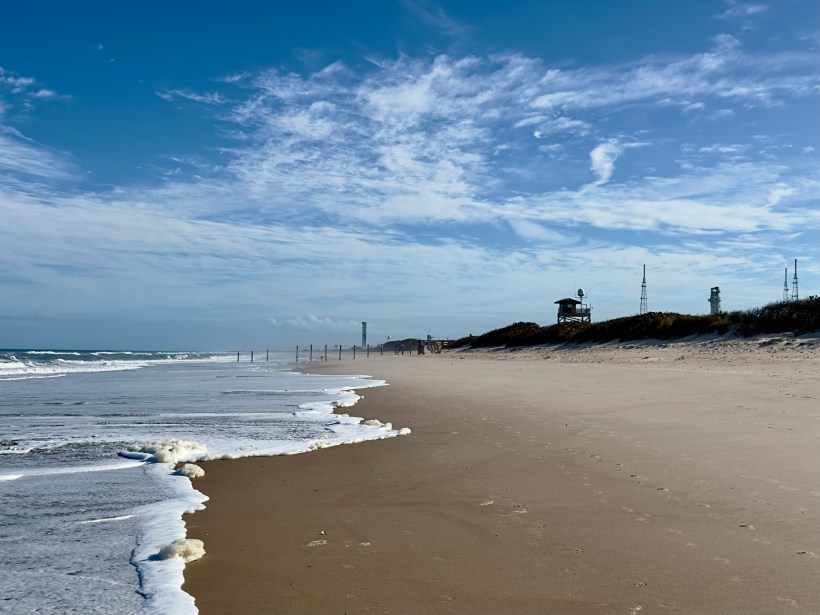
As we arrived at the pristine shores of Playalinda Beach within the Canaveral National Seashore, the gentle whisper of waves against the shoreline beckoned us. The sun kissed the horizon, casting a warm glow across the 24 miles of untouched, protected coastline that lay before us. Here, on the east coast of Florida, where crystal-blue waters embrace the shell-laden sands, we found ourselves at the intersection of natural beauty and human achievement.
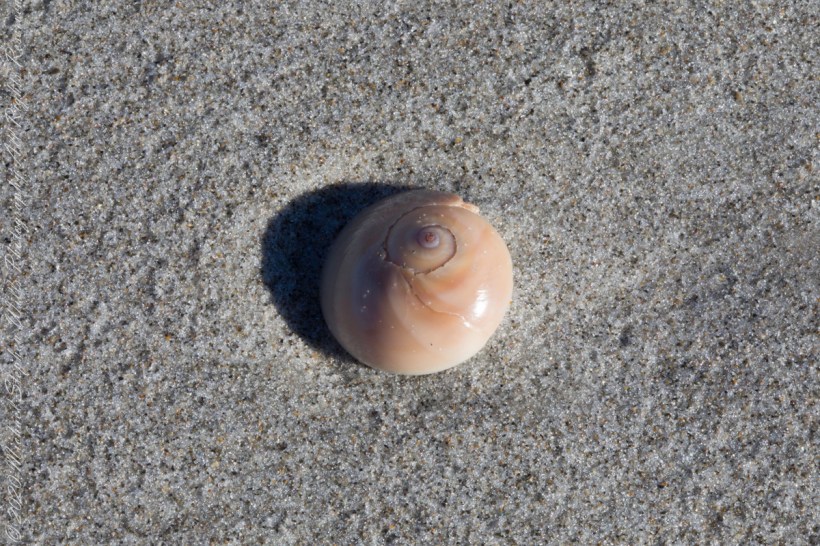
We strode along the boardwalk, passing through dunes adorned with sea oats, to find our spot upon the soft sands of Playalinda. The beach, known for its tranquility and the chance to observe a vibrant array of wildlife, offered us a moment of peace. With no distractions—no concessions, no showers, just nature—we were able to disconnect from the world and reconnect with the earth. From our vantage point, the Merritt Island Wildlife Refuge across the water was a haven for migrating birds, dolphins, and, with some luck and the right season, sea turtles nest on the beach itself.

But it wasn’t just the natural allure that drew us here. Playalinda holds a unique position, offering an unobstructed view of the historic launch pads of Kennedy Space Center, where Apollo 11 began its monumental journey to the Moon. As we walked south towards the fence bordering the Space Center, the anticipation built within us. Here, we were tracing the footsteps of giants, those brave astronauts who dared to venture into the unknown.
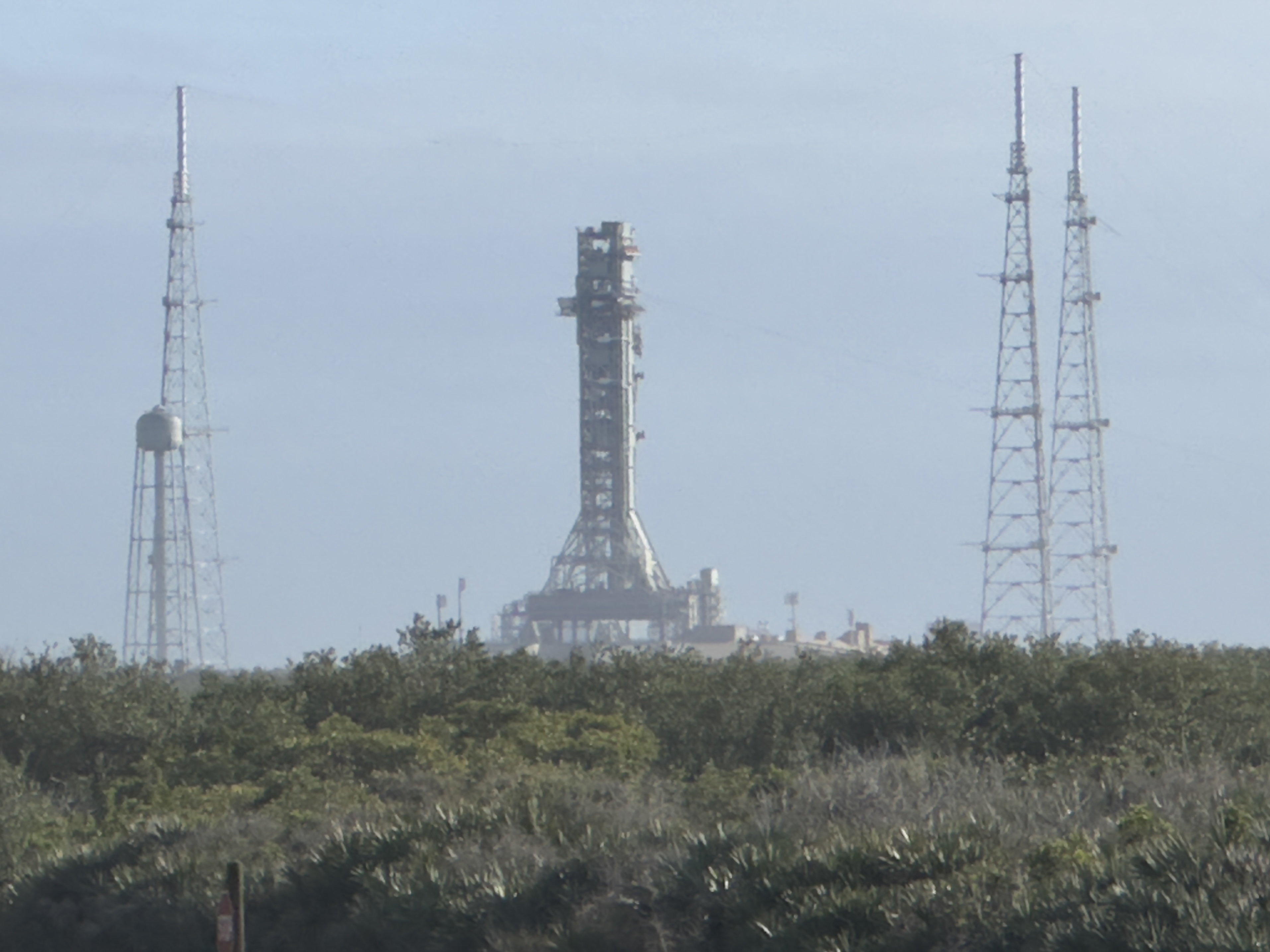
Each step brought us closer to the site where humanity took one of its most significant leaps. Gazing upon the launch complex from the fence, we were reminded of the powerful forces harnessed to break the bonds of gravity. Imagining the roar of the engines, the earth-shaking vibrations, and the fiery ascent of the Saturn V rocket, we felt a deep connection to the past and a sense of awe for the pioneering spirit that propelled us into a new era of exploration.
As we wandered back along the beach, the foam of the ocean’s edge lapping at our feet, we reflected on the duality of our surroundings. Here, in this place of quiet solitude, we also stood at the forefront of human innovation and ambition. The juxtaposition of the peaceful beach with the technological marvels just a stone’s throw away was not lost on us.
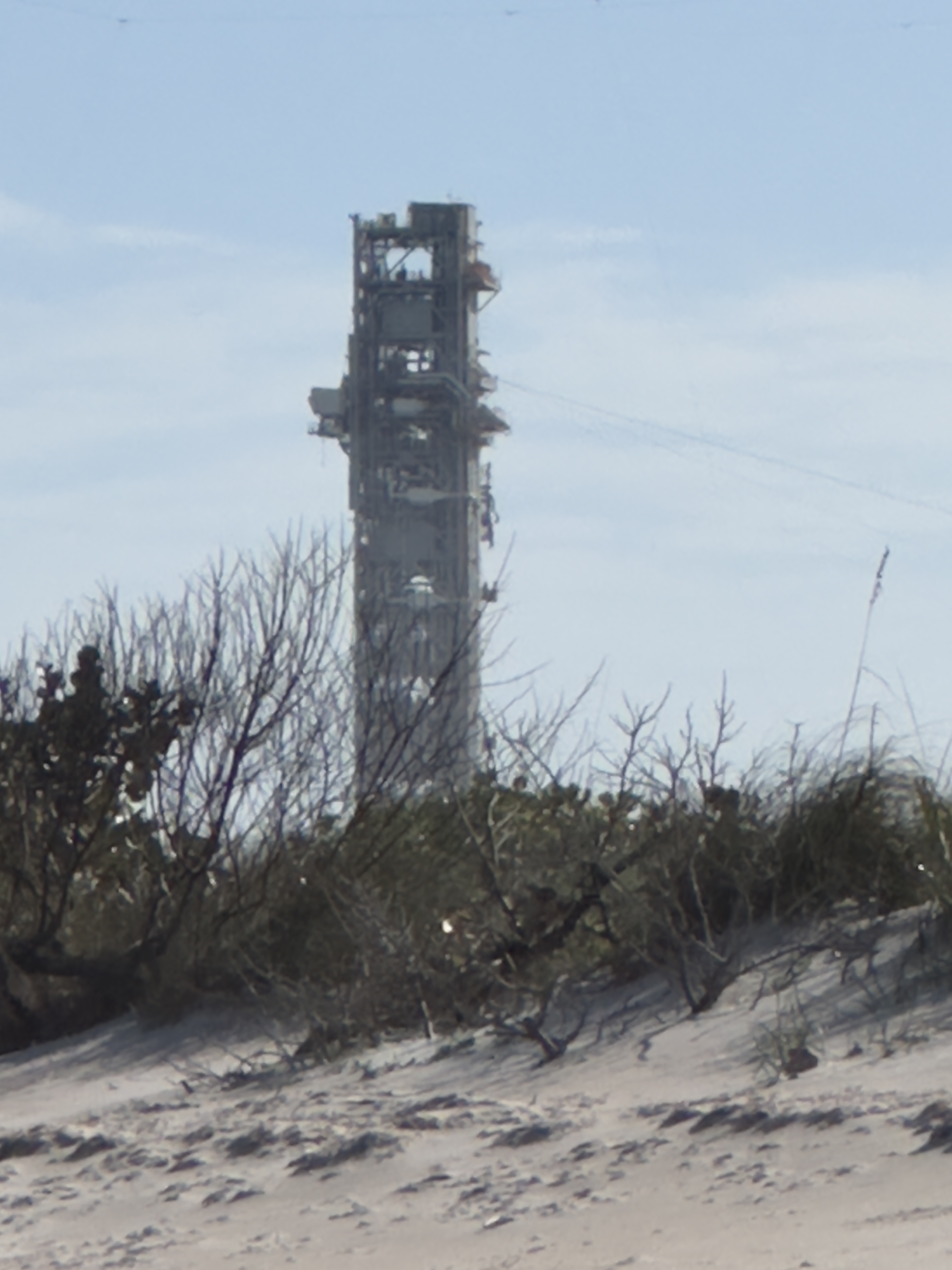
Our journey to the Cape Canaveral National Seashore and the Kennedy Space Center fence was more than just a visit to a beach or a historic site; it was a pilgrimage to a place where dreams materialize and reach for the stars. It was here that we came to understand the full spectrum of emotions that accompany great achievements—the hope, the fear, the triumph.
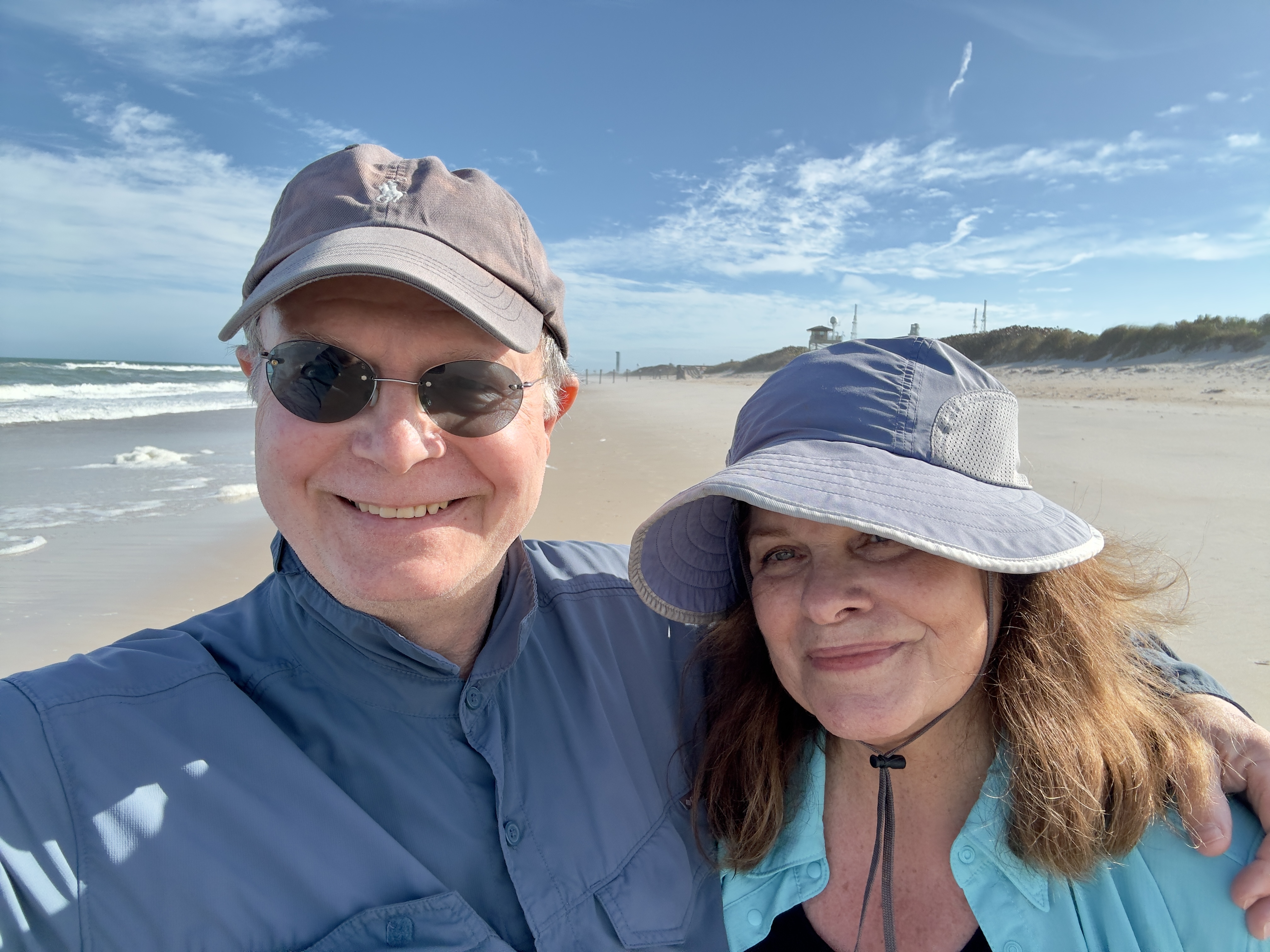
Our visit to the Cape Canaveral National Seashore and the Kennedy Space Center was an experience that will linger in our memories for years to come. It was a reminder of what we can achieve when we are united by a common goal, and it filled us with pride and optimism for the future. As we looked back one last time, the setting sun seemed to whisper a promise of the wonders yet to come, both here on the shores of Playalinda and in the vast expanse of space that awaits us.
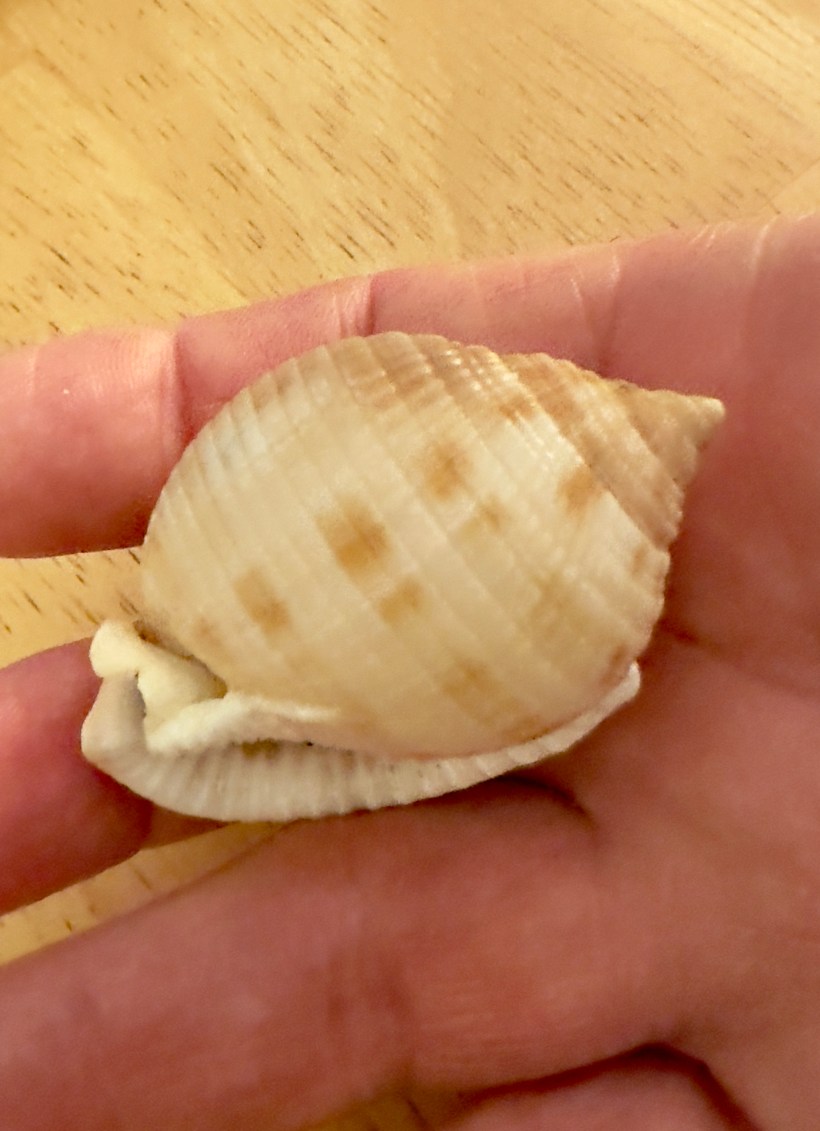
Amidst the golden dawn at Cocoa Beach, a rare treasure emerged from the high tide’s embrace—a Scotch Bonnet shell. Discover its journey from the ocean’s depths to a beachcomber’s palm, and unravel the tales of marine life woven into its striking tartan pattern in this captivating story.
As the first light of dawn stretched its golden fingers across the horizon, I made my way down the familiar path to Cocoa Beach. It was an early January morning, and the air was crisp, with a hint of salt carried on the gentle breeze. The tide was high, giving the beach an intimate feel, as if the ocean itself was reaching out to share its secrets.
I’ve always found beachcombing to be a meditative experience, but today’s stroll was particularly enchanting. The beach was deserted, save for the scuttling sandpipers searching for their breakfast. The rhythmic crash of the waves provided a soothing soundtrack to my thoughts. As I walked, my eyes scanned the shoreline, seeking treasures among the flotsam of the sea.
And then, I saw it—a distinctive shell caught between the ebb and flow of the waves. Its bold pattern and unique shape were unmistakable even from a distance. I quickened my pace, eager to claim my prize before the sea could reclaim it. As I picked it up, water cascading off its curved surface, I marveled at the beauty in my hand: a Scotch Bonnet shell, a rarity to behold, especially here in Florida.
The Scotch Bonnet, named for its resemblance to the traditional Scottish tam o’ shanter hat, is a shell as fascinating as it is beautiful. Its scientific name, Phalium granulatum, speaks to the granulated texture that adorns its exterior. In my hand lay a symphony of creamy white and tan, with bold, brownish squares that resembled a carefully woven tartan. It was a mature specimen, its wide aperture and thickened outer lip suggesting it had lived a full life before arriving at my feet.
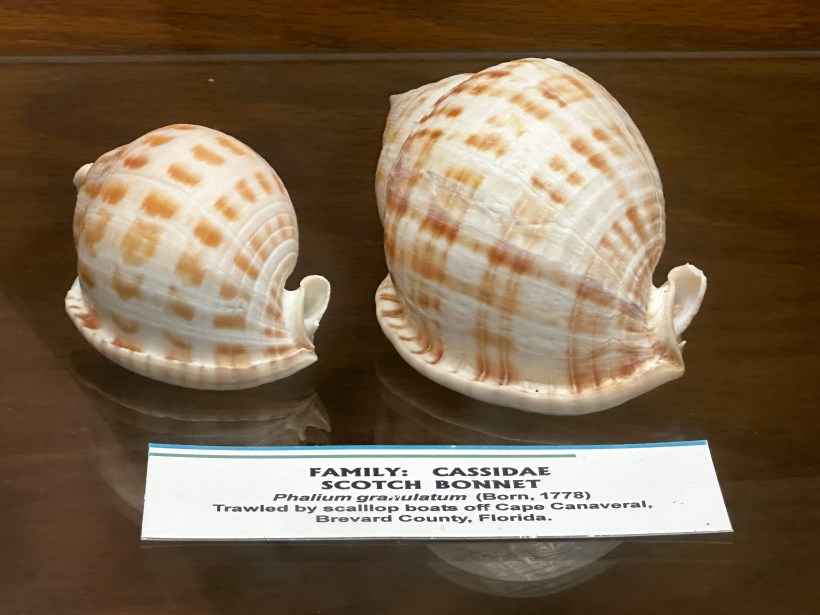
Fascinated by my find, I visited the Brevard County Museum of Natural History later that day. There, I learned that the Scotch Bonnet is more than just a pretty shell—it’s the former home of a gastropod, a creature that once crawled along the ocean floor of the Atlantic, from North Carolina to Brazil. These mollusks begin life as tiny larvae, floating in the currents until they grow large enough to settle on the seabed. They feast on sea stars, their radula—a toothy tongue—scraping their prey into digestible pieces.
The Scotch Bonnet’s predators are as varied as the ocean itself, from fish to other sea snails that prey upon the young or unsuspecting. Yet, the shell’s thick construction provides a sturdy defense, a fortress that serves its inhabitant well during its life.
The end of the Scotch Bonnet’s life cycle often provides a beginning for others. After death, the empty shell becomes a sought-after real estate for hermit crabs and a canvas for encrusting organisms like barnacles. It’s a reminder of the interconnectedness of the marine ecosystem, where even in death, life flourishes.
In the quiet of the museum, I reflected on the journey of the shell in my pocket. It was not just a Scotch Bonnet; it was a chronicle of survival, adaptation, and ecological significance. It was a legacy of the ocean’s depth and a symbol of life’s tenacity.
As I left the museum, I thought about the Scotch Bonnet’s significance to beachcombers and collectors. Its scarcity makes it a coveted find, a gem among shells. To hold one is to touch a piece of the ocean’s mystery, to connect with a world that is often beyond our reach.
That January morning on Cocoa Beach, the high tide had gifted me a treasure. But it wasn’t just the discovery of the Scotch Bonnet that was precious—it was the reminder that beauty and wonder can be found in the smallest of ocean’s offerings. Every shell has a story, a past woven into the fabric of the marine world. And as I pocketed my find, I carried with me not just a shell, but the echoes of an underwater tapestry, rich and alive, just waiting to be discovered.

Morning’s first blush stirs,
Horizon whispers in gold
Day’s ancient new song.
 Michael Stephen Wills Photography