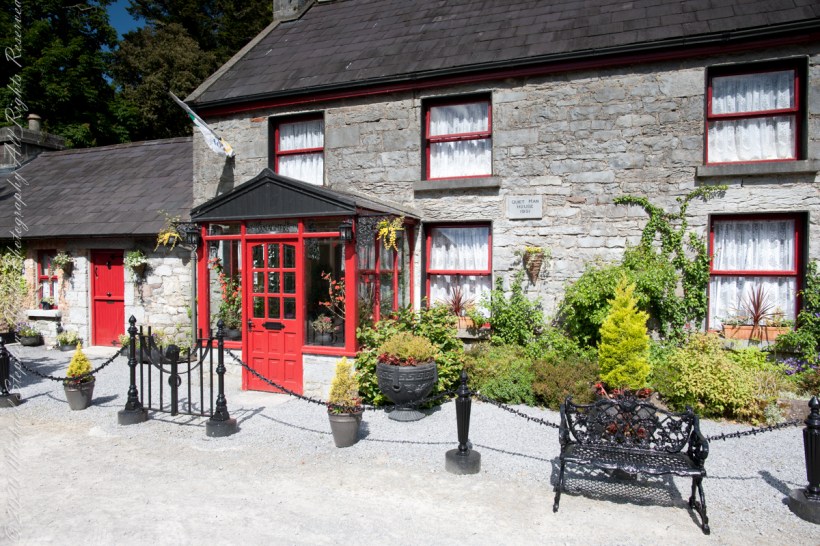
A location from the 1952 film “The Quiet Man”. The house appears on no maps, located on the Ashford Castle grounds. Head toward the Ashford Castle Old School House and you will come upon it. County Mayo, near the Village Cong, Connemara, County Mayo, Republic of Ireland.
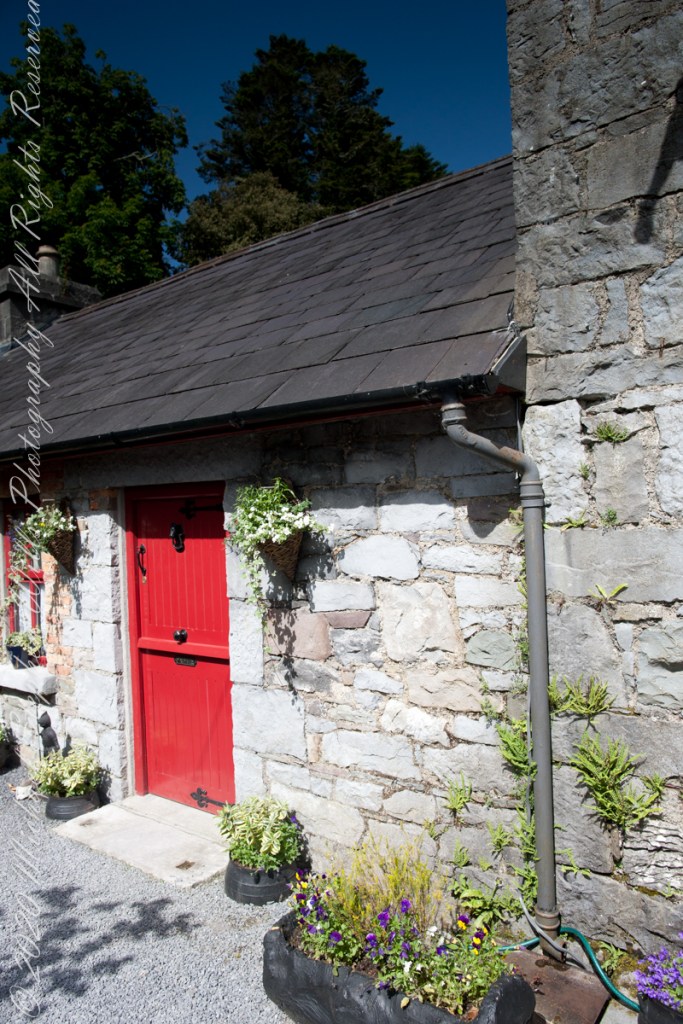
I recall there are scenes from “The Quiet Man” featuring characters using this Dutch door, seen to the left in the above photograph and below in a closer shot.
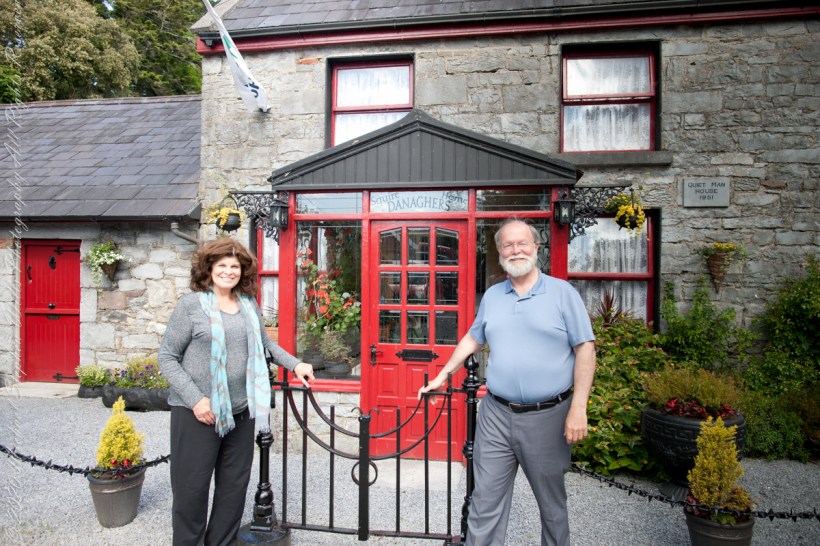
In this photograph the glass etching on entrance, identifying the home, is clearer. Also note the plaque: “Quiet Man House 1951.” Is the plaque wrong? No, while 1952 was the world-wide film release year, filming commenced on June 7, 1951.
Discover the charm of Cong, Ireland, through a stunning sculpture celebrating The Quiet Man. Join me as I explore the town’s cinematic legacy and reflect on the enduring magic of film.
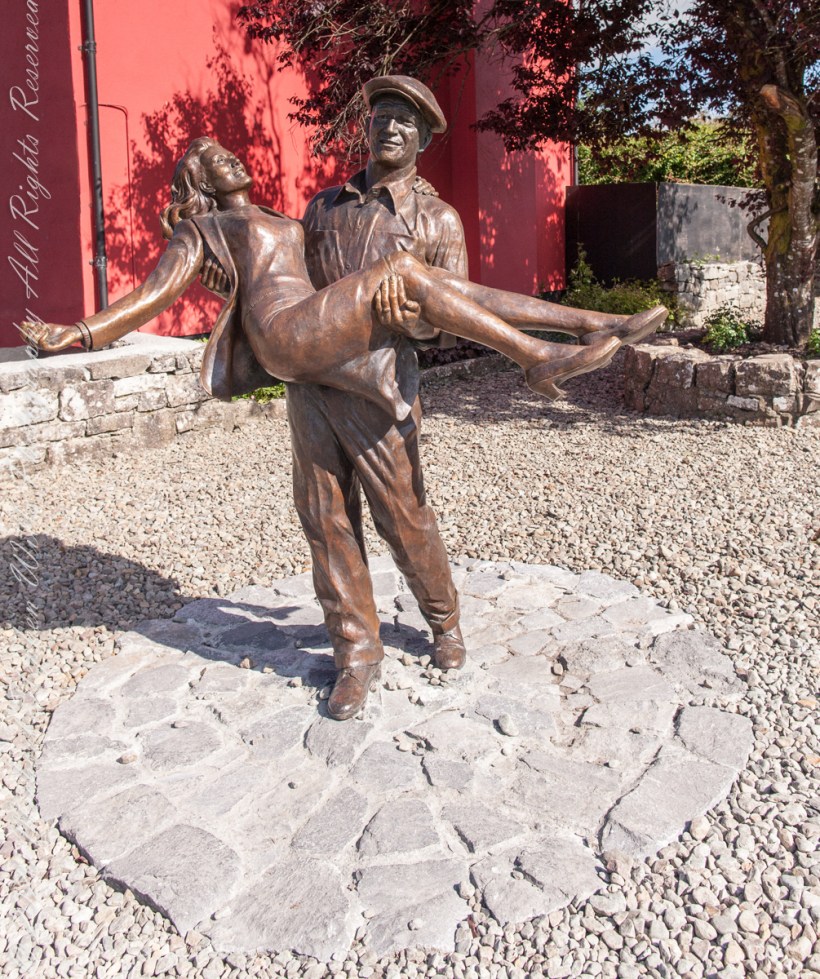
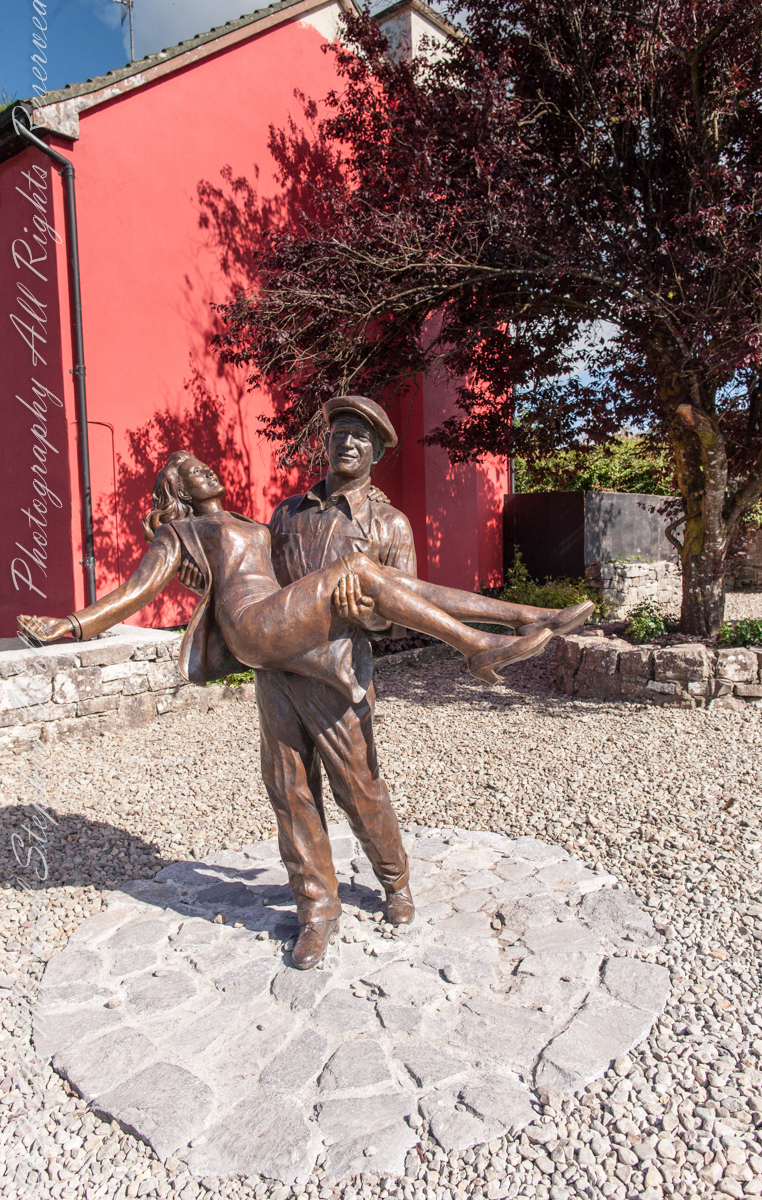
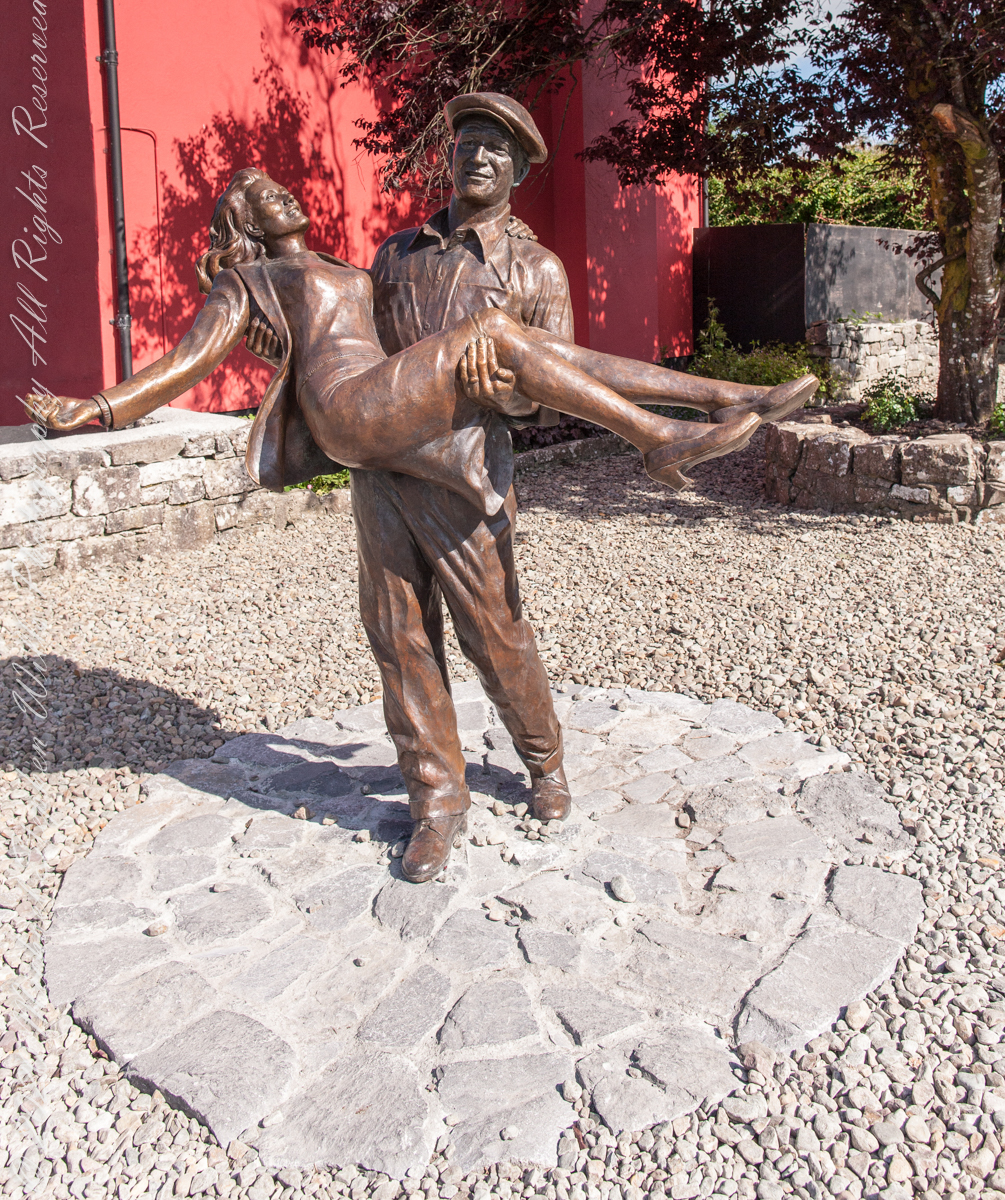
During a May 2014 exploration of the village Cong in County Mayo, Ireland, we encountered this remarkable sculpture that transported me back to one of my favorite classic films, “The Quiet Man.” The bronze statue, depicting John Wayne’s character, Sean Thornton, carrying Maureen O’Hara’s Mary Kate Danaher, stands against the backdrop of the town, a visual homage to the cinematic legacy that has become intertwined with Cong’s identity.
As I stood before the sculpture, memories of watching The Quiet Man flooded back. The Quiet Man, with its vibrant depiction of Irish culture and scenery, had always held a special place in my heart. It’s a story of love, cultural clashes, and the journey of a man returning to his roots, themes that resonate deeply within the lush landscapes of County Mayo. Cong served as the primary filming location, and the town has embraced this legacy wholeheartedly, turning the film into a cornerstone of its identity.
The sculpture, created by Mark Rode, who has a foundry an hour away in Swinford, was installed the year before, 2013, yet it felt as though it had always been there, seamlessly blending with the surroundings. Rode’s work captures the essence of the characters with remarkable detail. In The Quiet Man, the scene where Sean carries Mary Kate in his arms takes place after he retrieves her from the train station. This moment symbolizes their reconciliation and is a pivotal scene in the film, capturing their renewed bond and Sean’s determination to stand up for their relationship. The piece celebrates not just the film, but also the spirit of the town and its connection to cinematic history.
Mark Rode, known for his ability to bring characters to life through sculpture, has a unique talent for capturing the essence of his subjects. His works often reflect a deep understanding of human emotion and storytelling, qualities that shine through in this particular piece. The installation of the sculpture was met with excitement from both locals and visitors, further cementing Cong’s status as a beloved tourist destination.
Reflecting on our visit, I realized how much this small town had embraced its role in cinematic history. The streets of Cong are dotted with nods to The Quiet Man—from themed shops to plaques marking filming locations. Each element serves as a reminder of the film’s impact on the town and its people. The statue stands as a centerpiece, inviting fans of the film to relive its magic while introducing new generations to its charm.
I couldn’t help but meditate on the lasting impact of art and film on a community. The installation of this sculpture not only celebrates a beloved movie but also invigorates the town’s economy through tourism, drawing visitors eager to walk in the footsteps of their favorite characters. It’s a testament to the power of storytelling and its ability to transcend time, connecting people across generations and cultures.
The statue of Sean and Mary Kate in Cong is a symbol of the town’s vibrant history and its enduring connection to the film. Mark Rode’s creation captures this essence beautifully, inviting all who visit to pause, reminisce, and celebrate the intertwining of art and life in this picturesque Irish village.
Here presented are two versions of the same image. One cropped. Please leave a comment stating which you prefer and why. Thank You
Use this slide show, flip back and forth to compare the images, reach a conclusion on which you prefer.
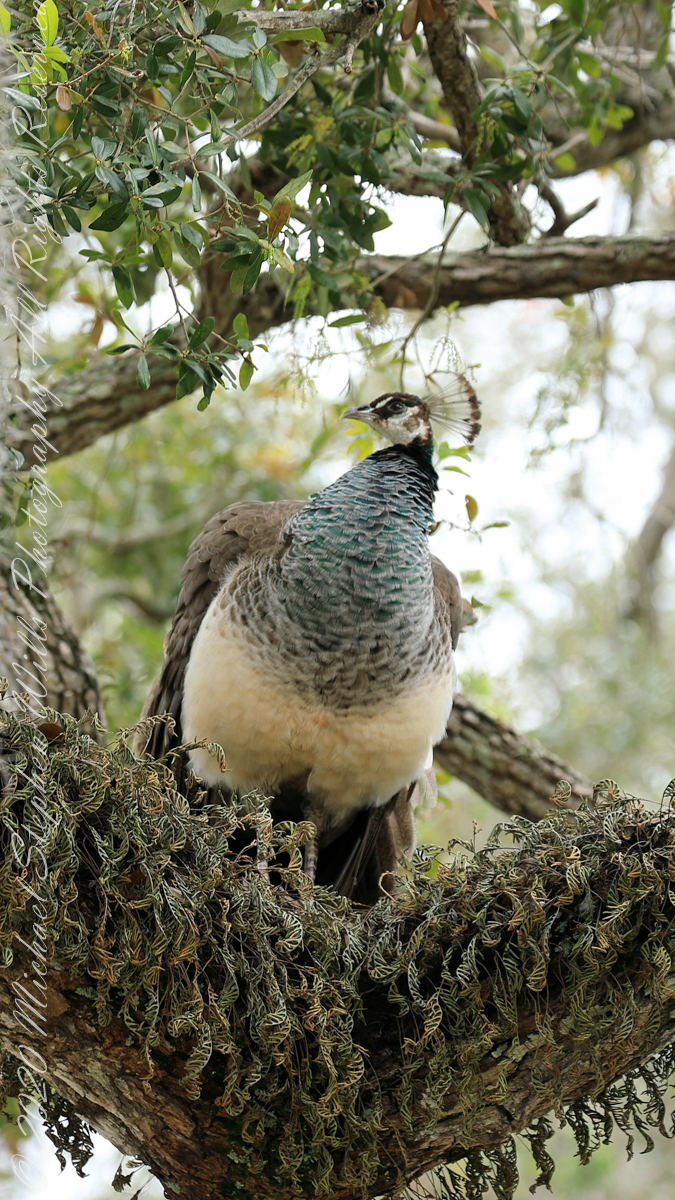
The third of my postings about the peafowl of Cape Canaveral…..we had our most intimate interactions on a Oak Lane, a small unpaved road off a Circle K (roadside convenience store). At one point a peacock approached Pam on the open windowed passenger side and almost pecked her.
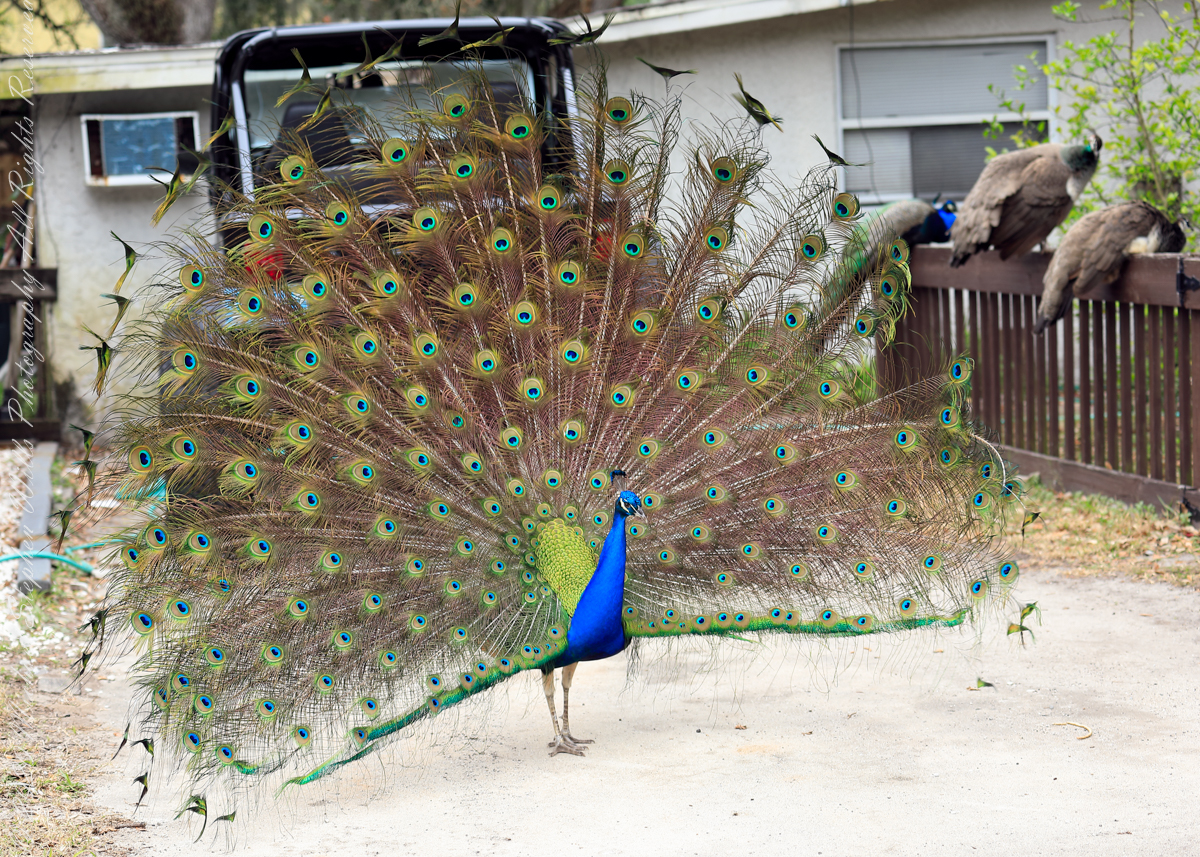
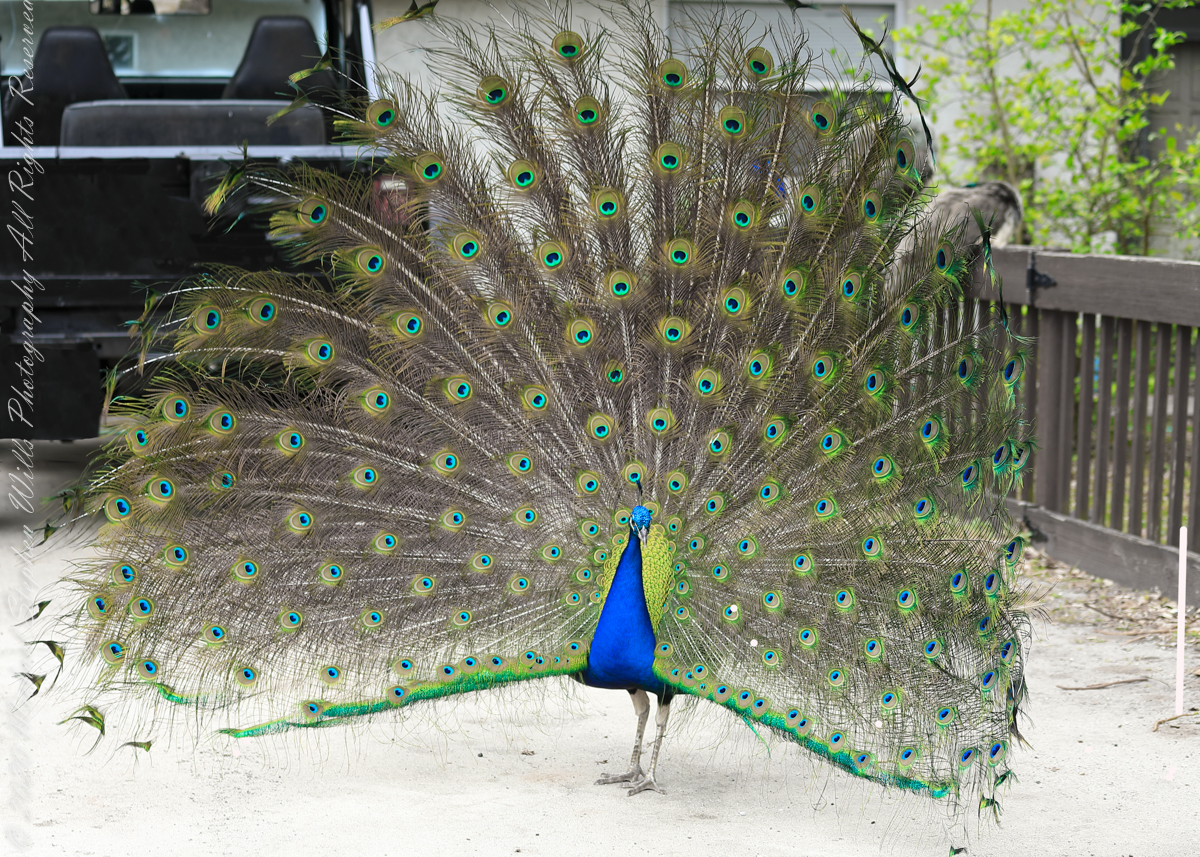
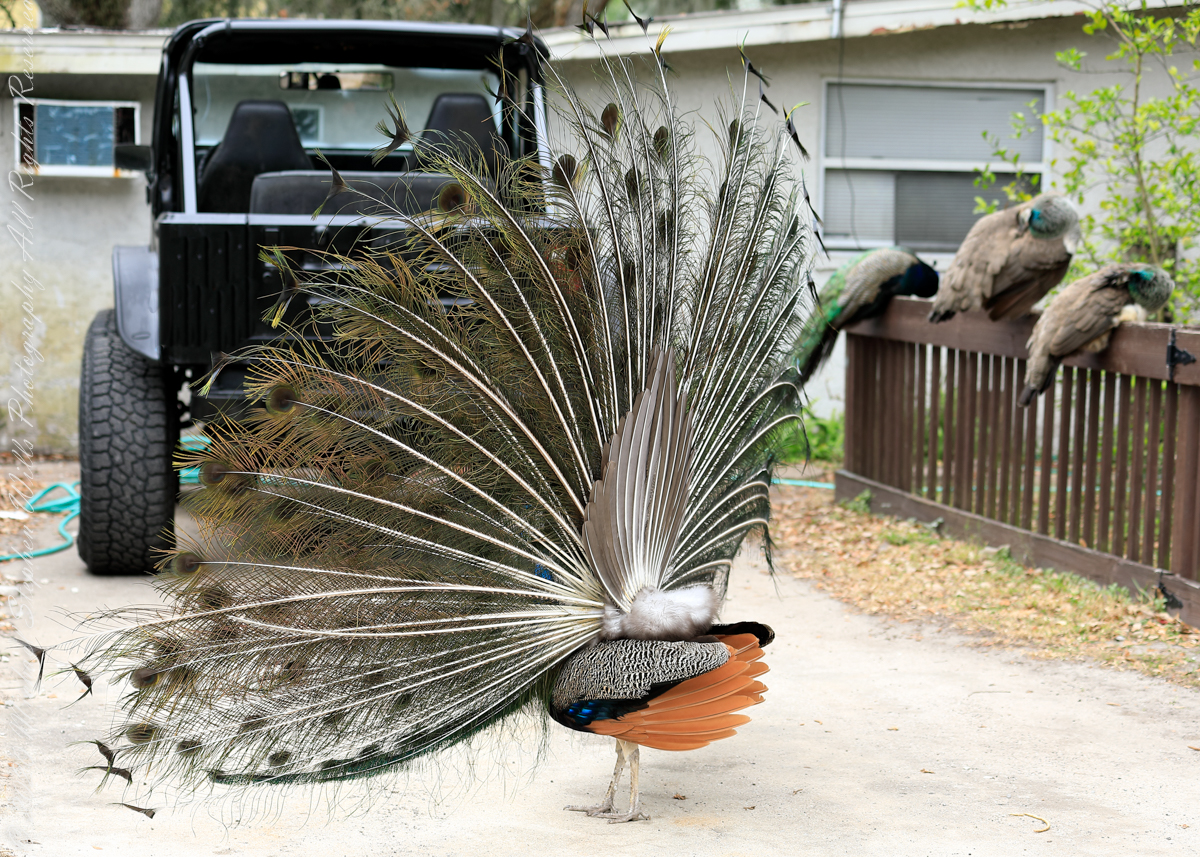
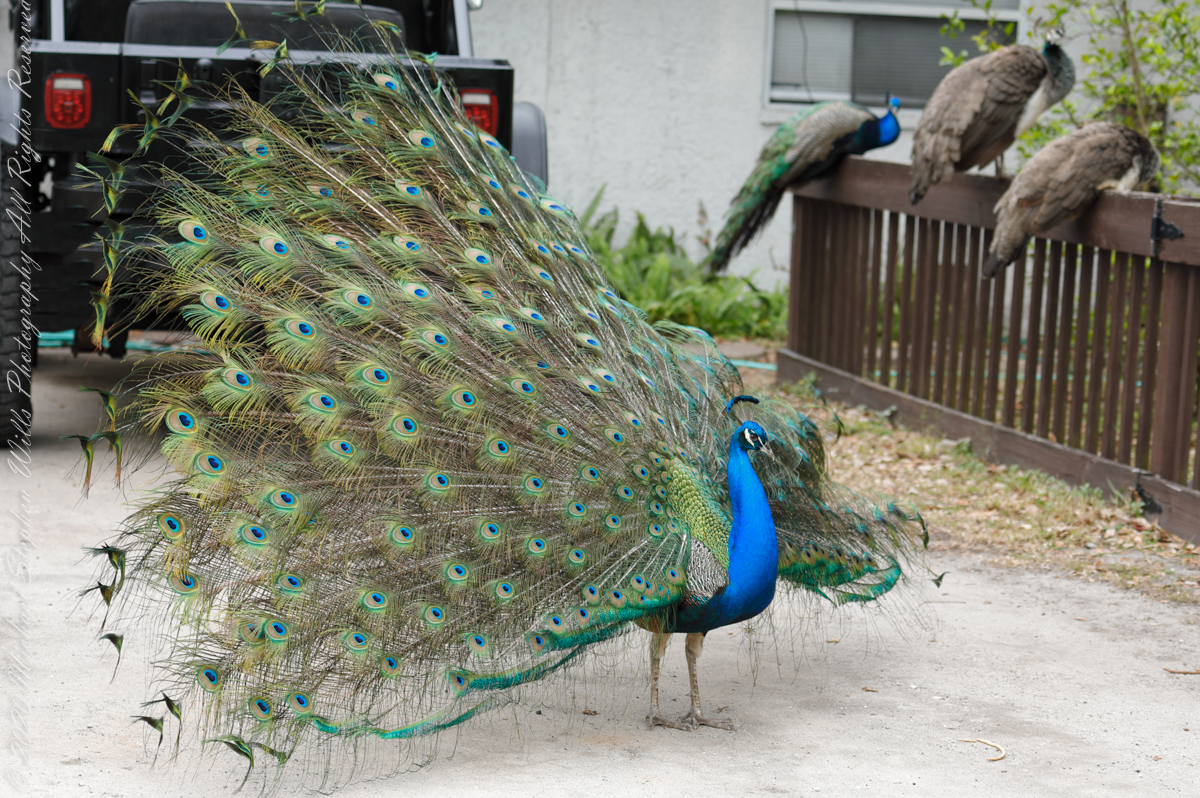
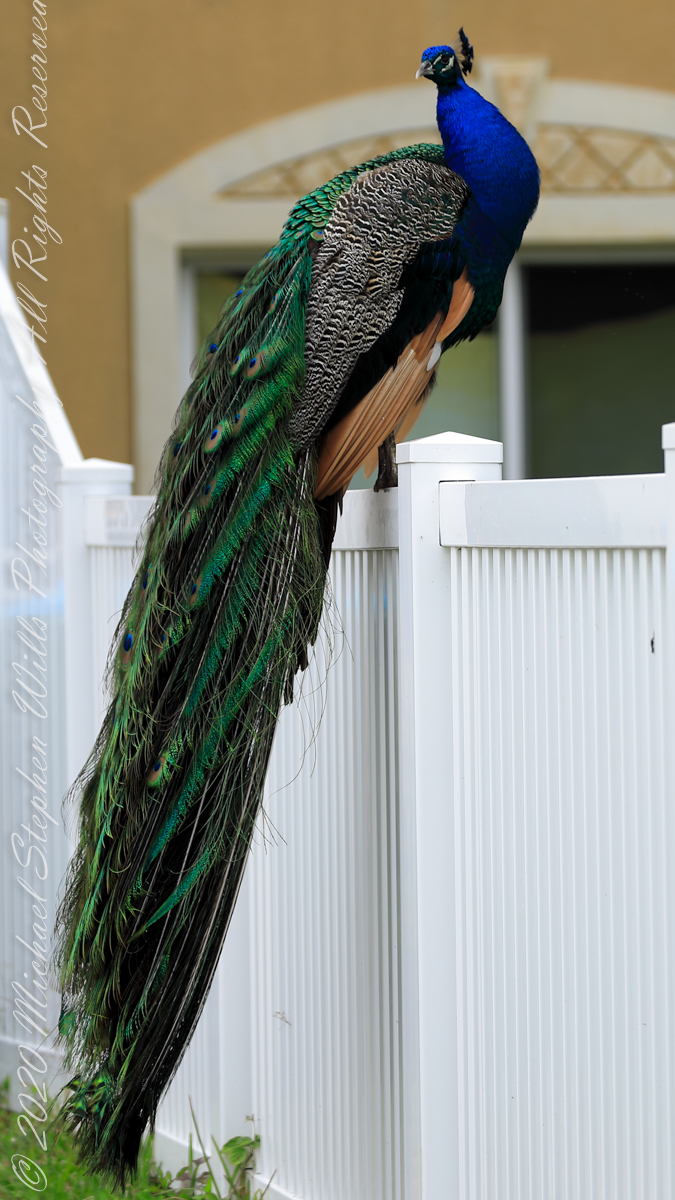
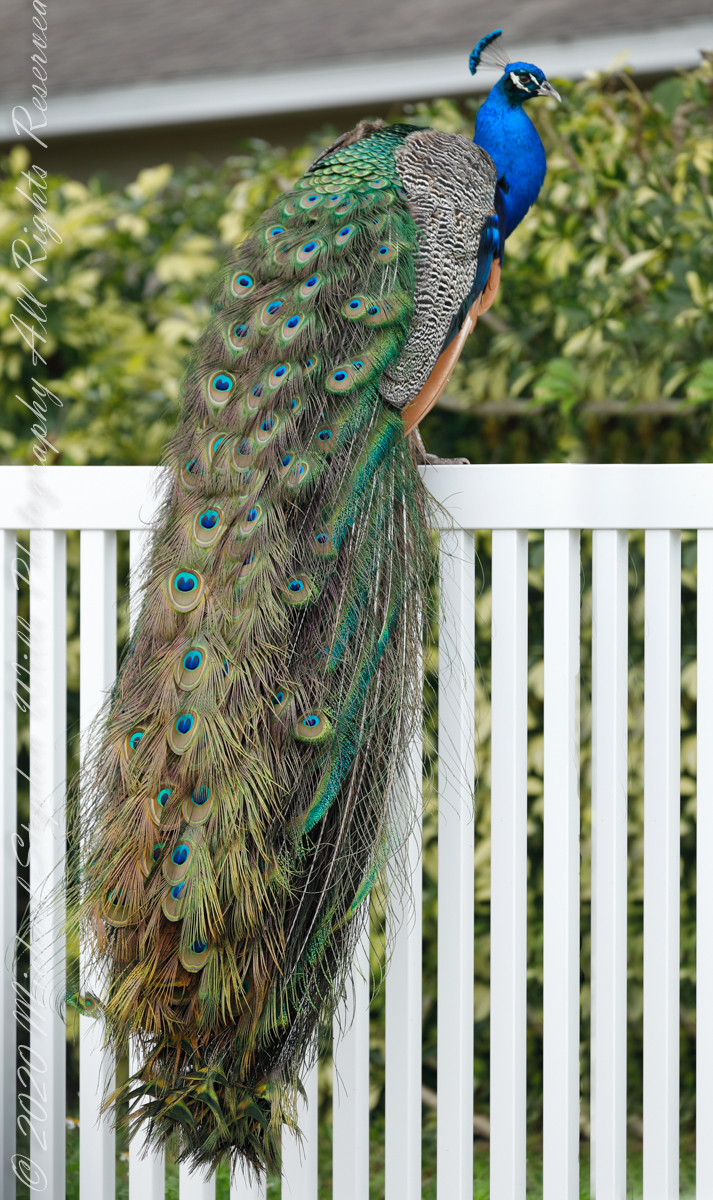
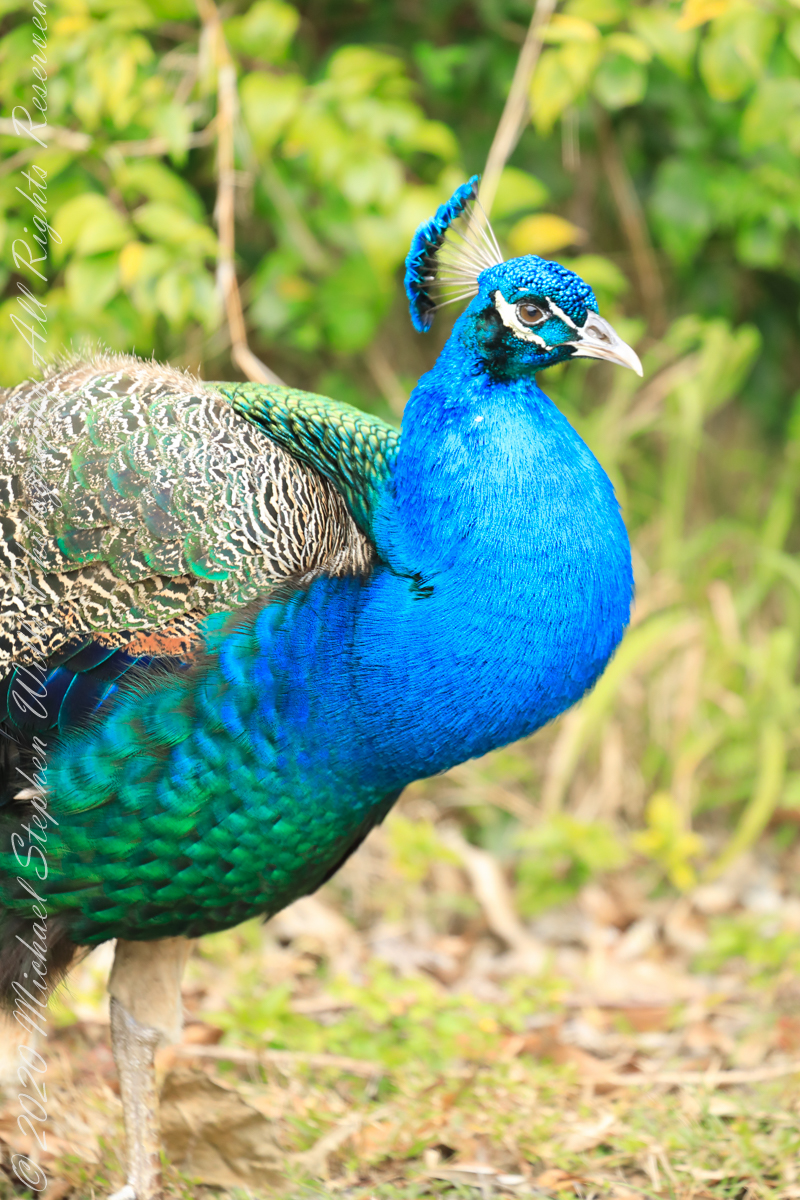
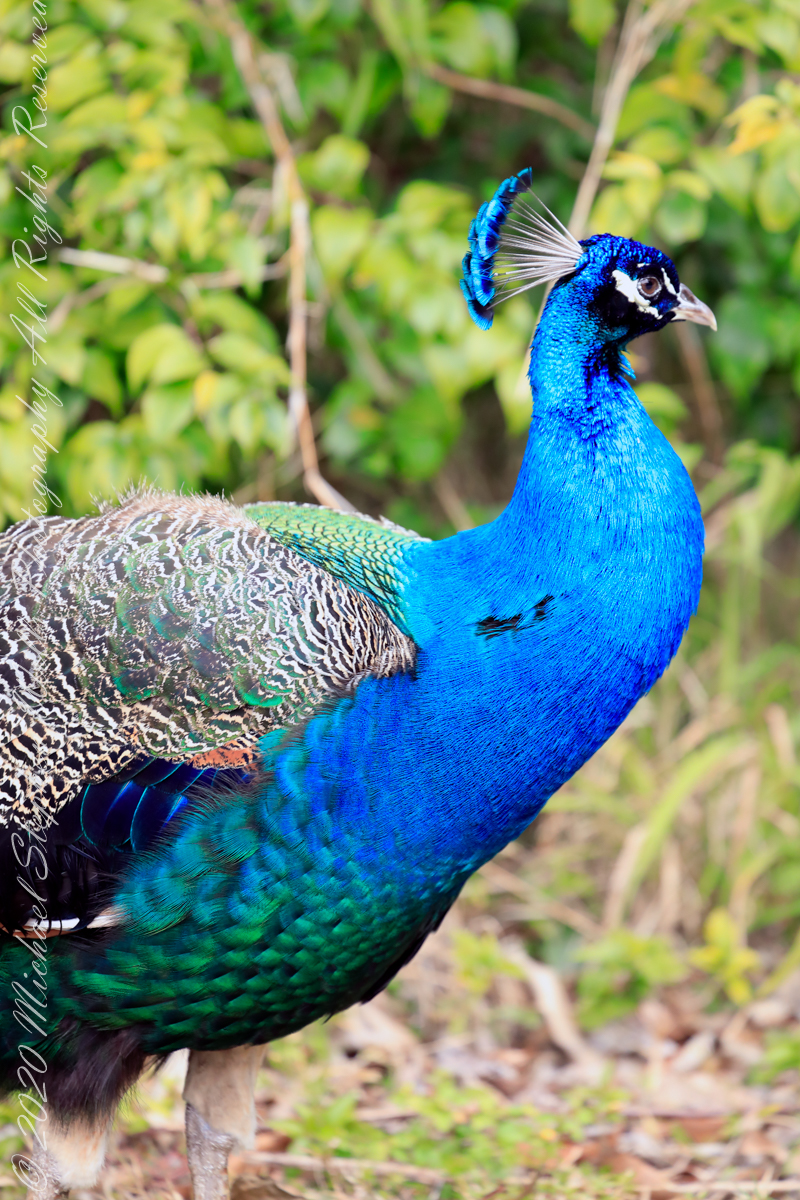
Peacock and audience45 degrees away from face-onAn interesting take on his displayShowboat with a Gladiator (Jeep)
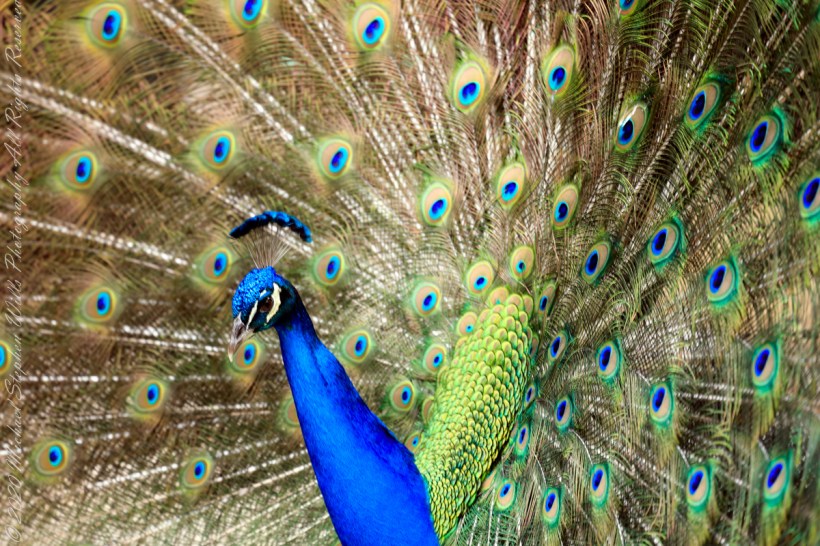
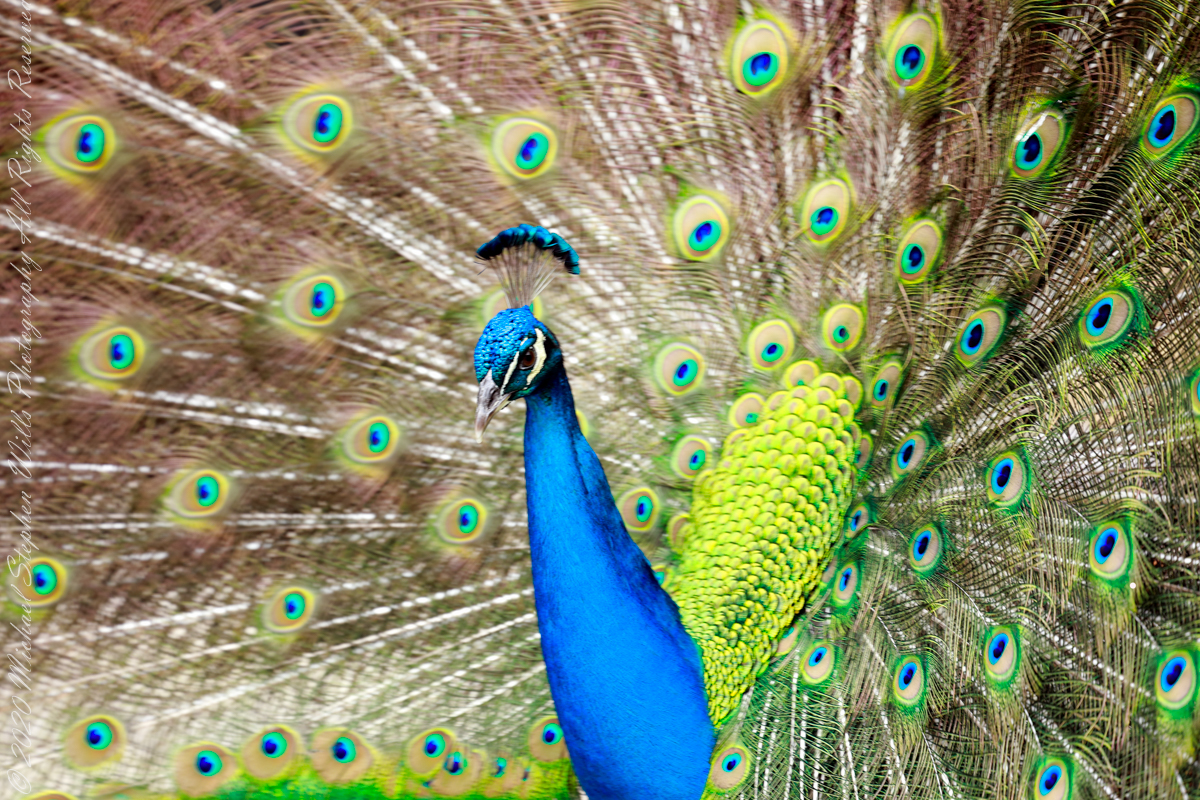
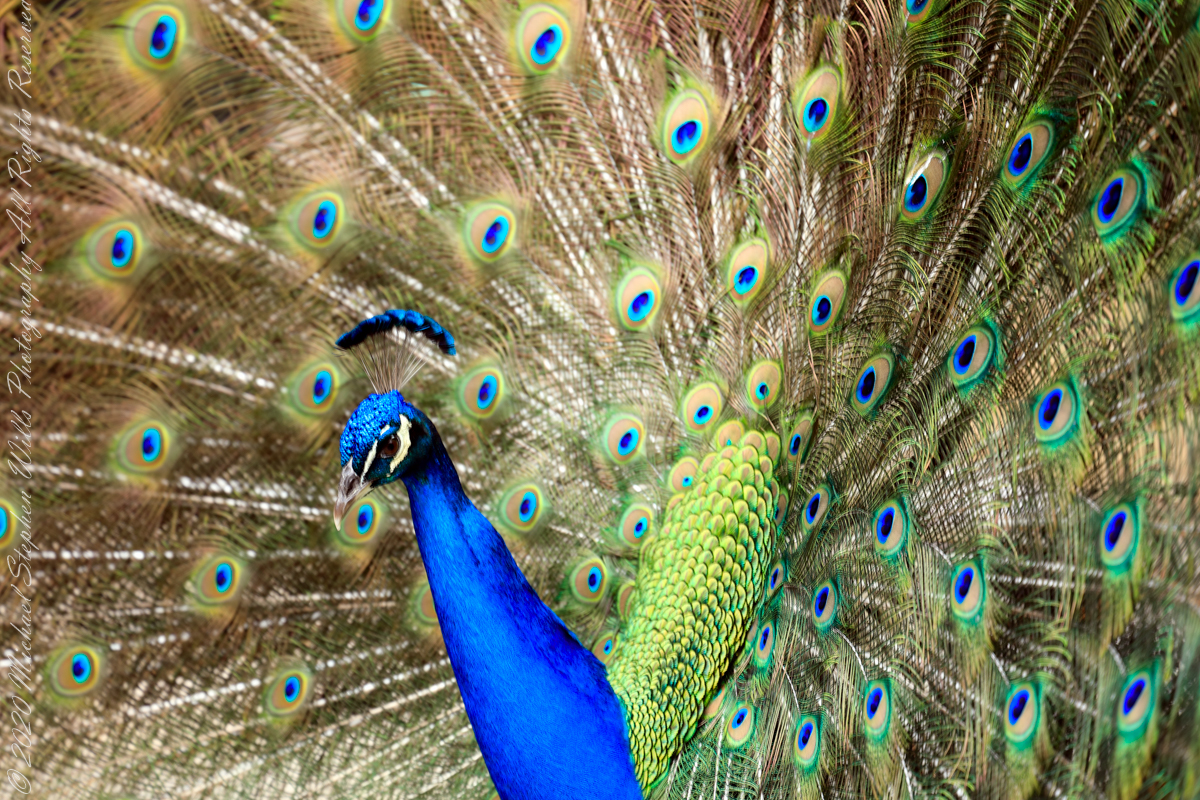
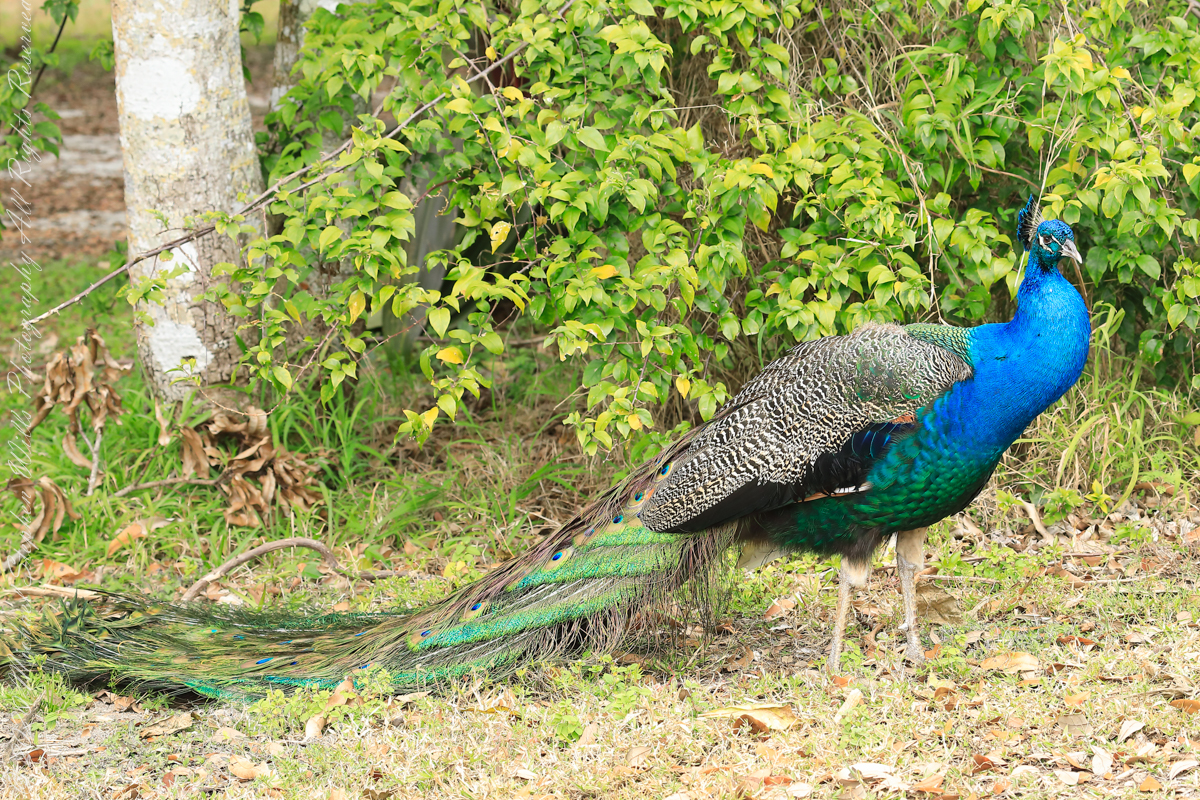
The iridescent coloration is an illusion created by the structure of fine feather elements, called barbules. The impression on peahens varies with viewing angle, between 90 (head on) and 45 degrees to either side. The peacock will shiver his train when faced with a favored peahen.
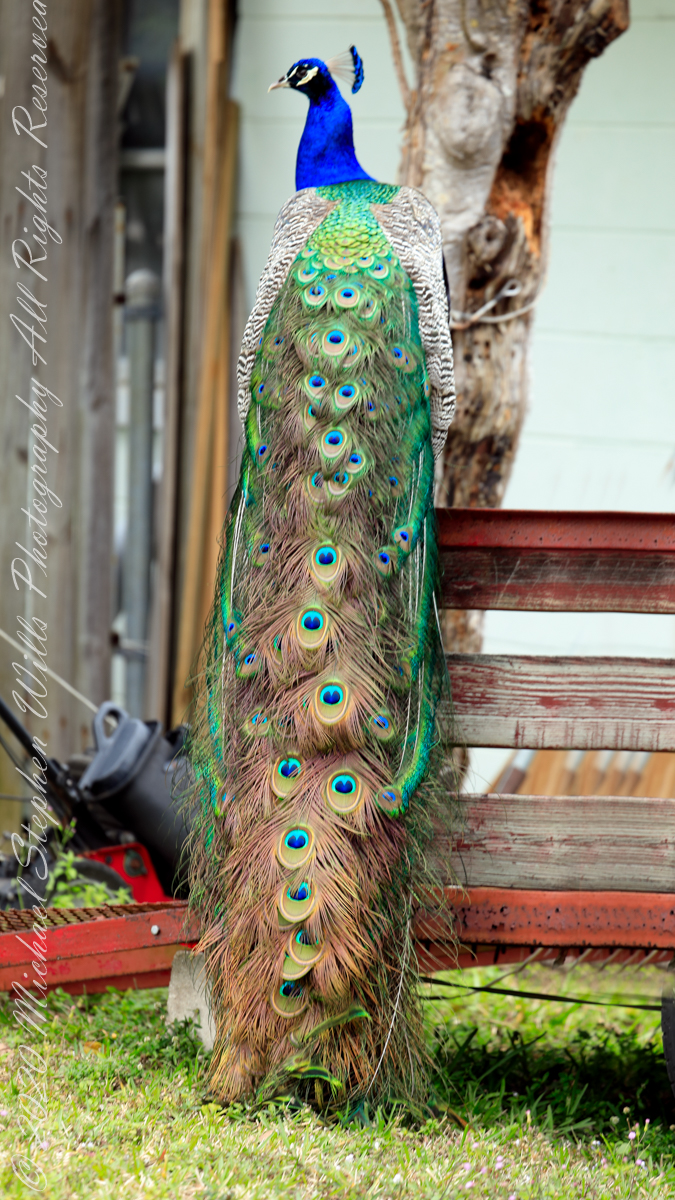
February is Peafowl mating season and for Cape Canaveral the displays were especially fine. These were captured on a photography expedition via automobile, being especially fortunate in observing peacocks (male peafowl) on high perches oriented perfectly to display the magnificent train (trail).
Here is some information on Reddit from “Mr_mayhem77 “According to locals, the Eberwein family lived between Port Canaveral and what is now the Villages of Seaport. In fact a street is actually named after them (Eberwein Drive) at the northern edge of Cape Canaveral. They had the peafowl among many farm animals. The family moved in 1986 and abandoned the peafowls. Over the years the peafowl have slowly populated our community with the greatest concentration being north of Central Ave.”
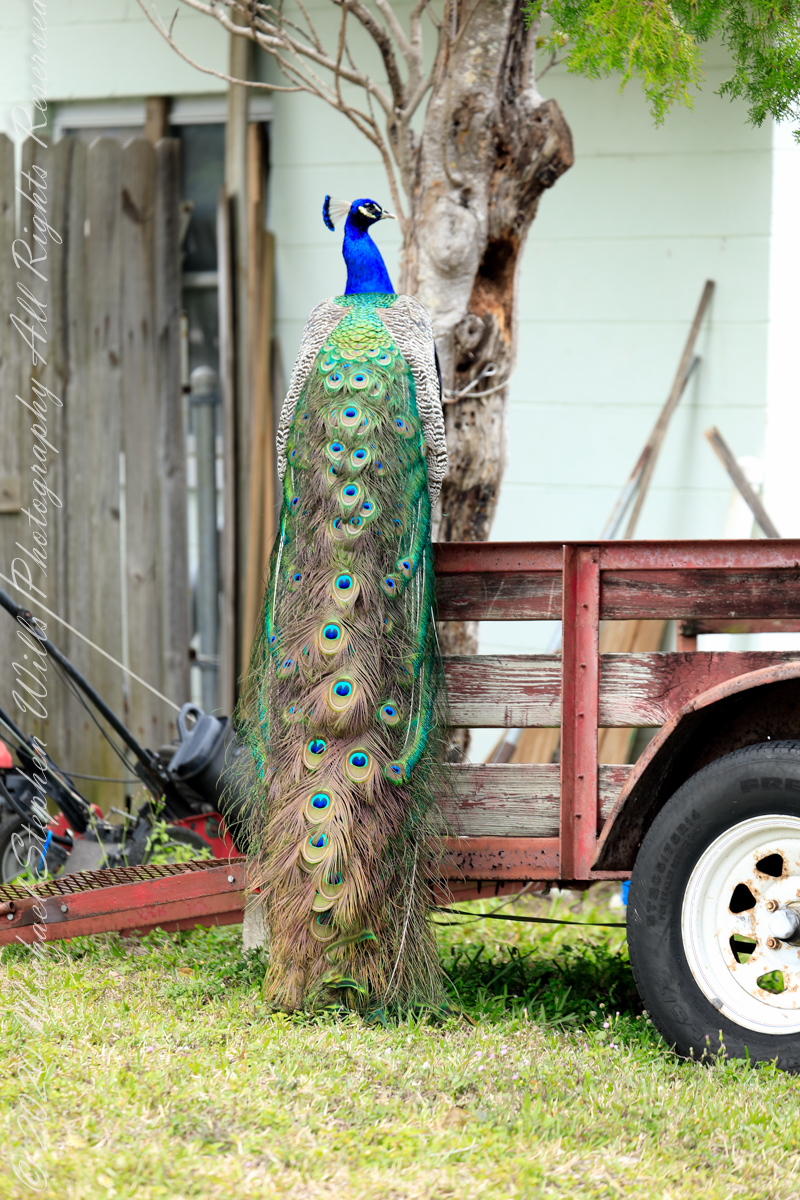
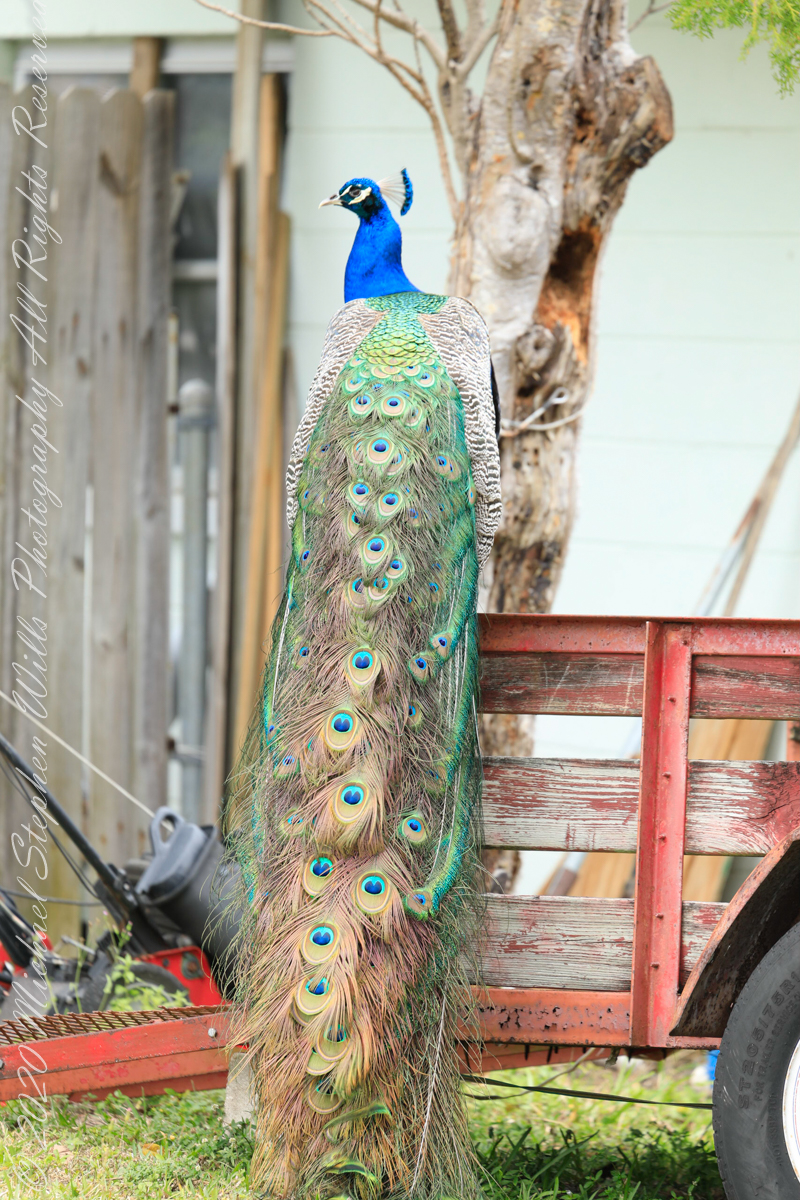
“Slumming” among lawn equipment
Copyright 2022 Michael Stephen Wills All Rights Reserved
On a day February 2022 Pam and I decided to walk the beach starting from Cheri Down Park, Ridgewood Avenue, Cape Canaveral headed north toward Jetty Park hoping to catch a postponed rocket launch rescheduled for that afternoon. We were encouraged to find video news crew positioned near the park entrance as these professionals were in the know for the best spots to watch the spectacle.
We walked a mile or so, more than halfway to Jetty Park, when the word circulated the rocket launch was cancelled. Rather than turn around, we decided to explore the walkway that opens on “Peacock Beach” as Google Map listed a public parking space there, quite a bit closer to Jetty Park. This park charges a hefty entrance fee to non-residents, so we were parking at Cheri Down, we saved $10 for each mile walked.
GorgeousIiridescent blue and green Dimorphism on display
Having leisure, we decided to walk back to Cheri Down the long way. In what turned out to be a 1.7 mile stroll we encountered these residents for which the beach is named. Then and there Pam and I decided to return for a dedicated photography expedition, the results of which I will share over several posts.
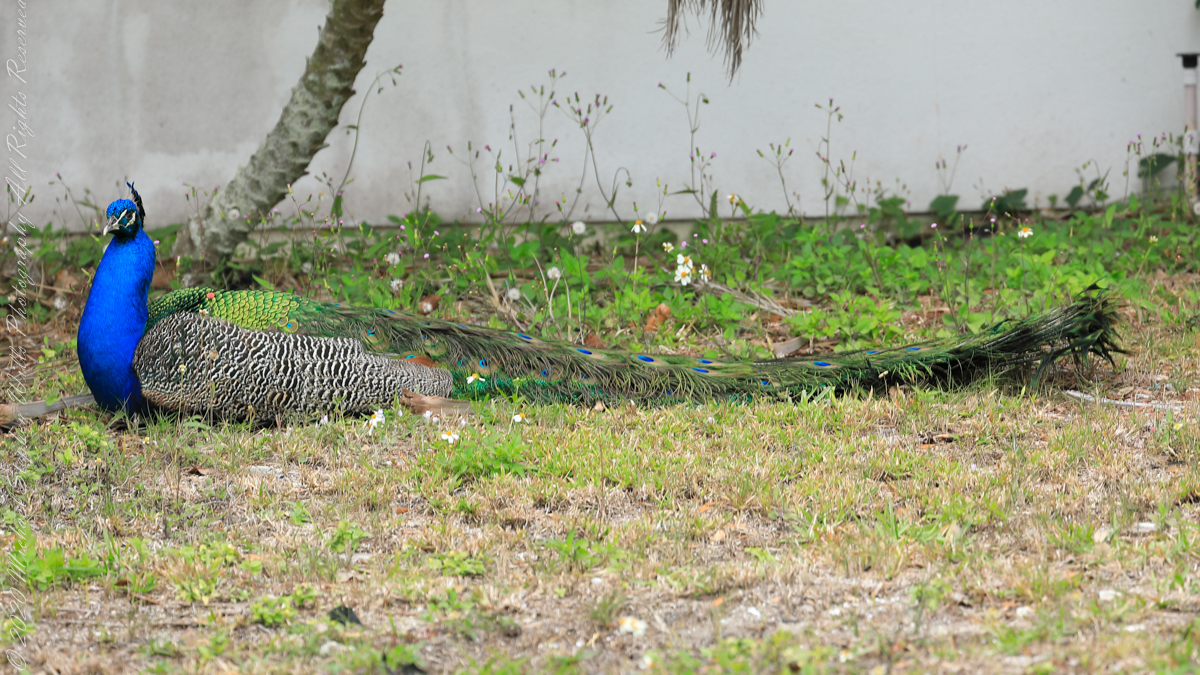
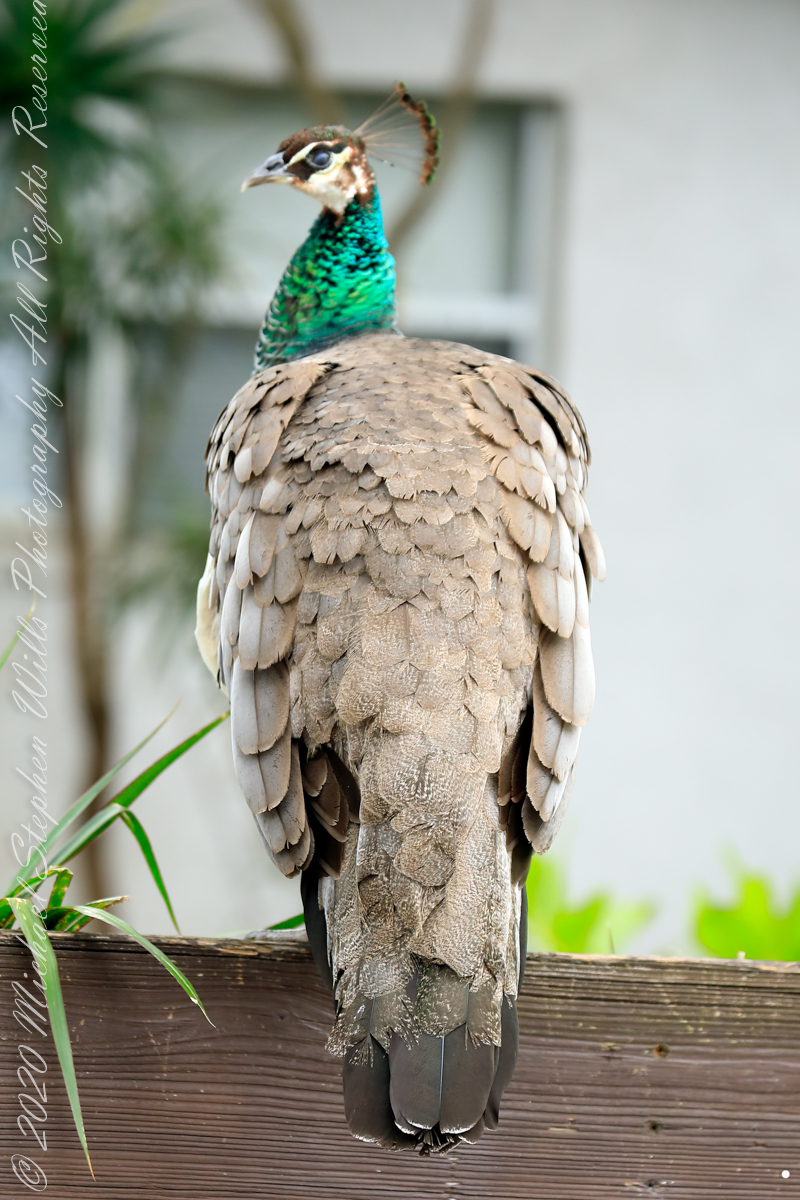
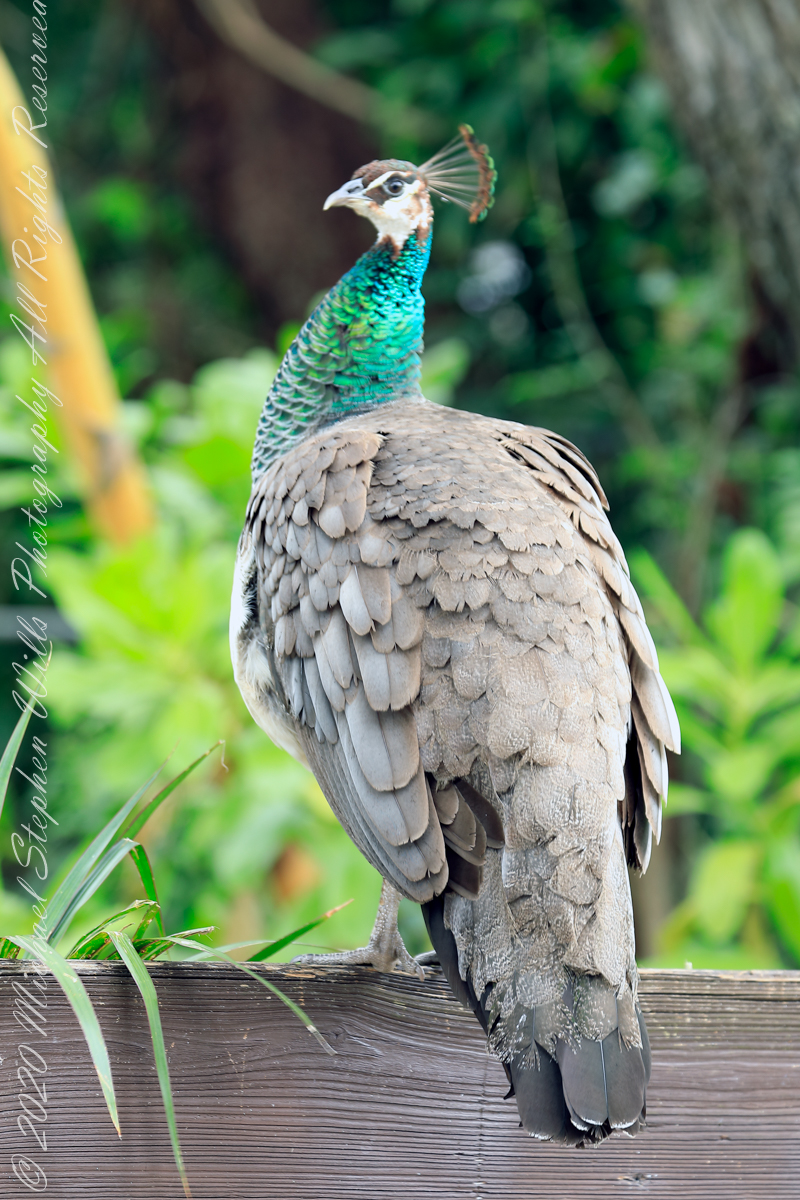
Females share the head crestIridescent green neckA bed of moss
Explore the Hill of Tara with us! Discover the rich history of Saint Patrick’s statue, the legendary bonfire, and stunning panoramic views of County Meath. Join our journey through Ireland’s ancient and mystical landscapes in our blog post.
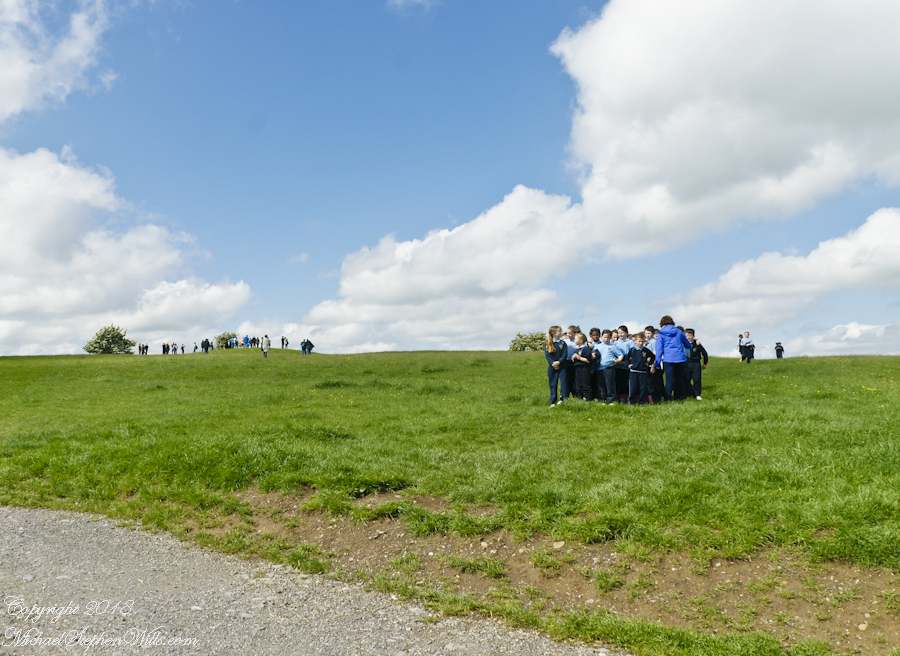
Arriving around noon on a Tuesday, Pam and I were greeted at the Hill of Tara by these children, headed to the school bus.
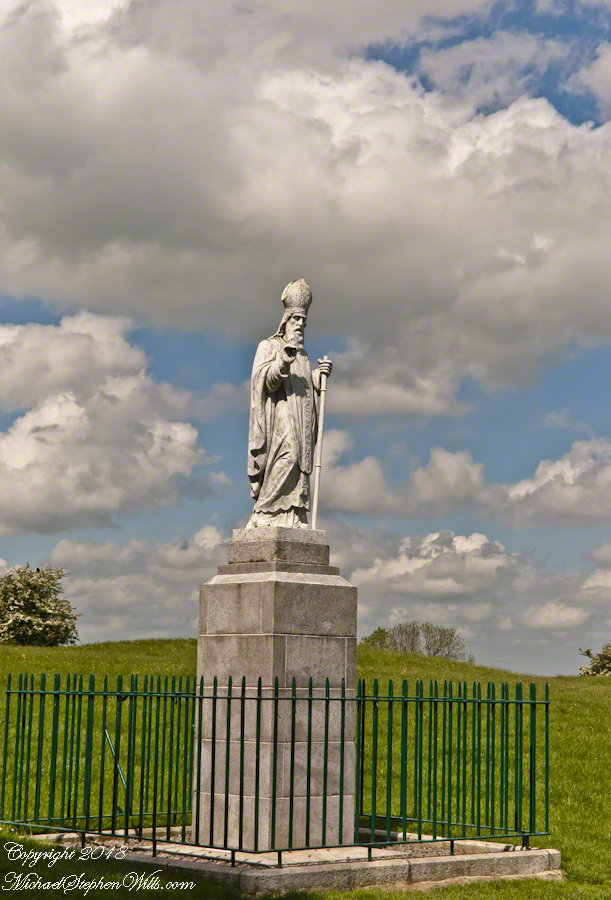
A statue of Saint Patrick fittingly welcomes visitors to the Hill of Tara, County Meath, Ireland. This statue of cast concrete was an existing statue donated by the Sisters of Charity, moved from an existing installation to the Hill of Tara in the year 2000 AD. The creator is anonymous, the is no plaque or other attribution on or around the statue. The original statue was erected on the summit of the Hill of Tara shortly after Catholic emancipation in 1829, commemorated the events of 433AD when St. Patrick lit a bonfire on the nearby hill of Slane on the eve of Easter Sunday. Slane was the second site we visited on our day of arrival, Saturday, May 24.
Lighting such a fire was contrary to the pagan laws of the time which dictated that the first fire lit that night be in Tara. Observing St. Patrick’s bonfire from afar, the chief druid of the ancient Gaelic capital predicted that if the flame were not extinguished that night, Christianity would never be extinguished in Ireland. The saint’s bonfire continued burning and the next morning, Easter Sunday, St. Patrick entered Tara to convert the king and his followers to Christianity.
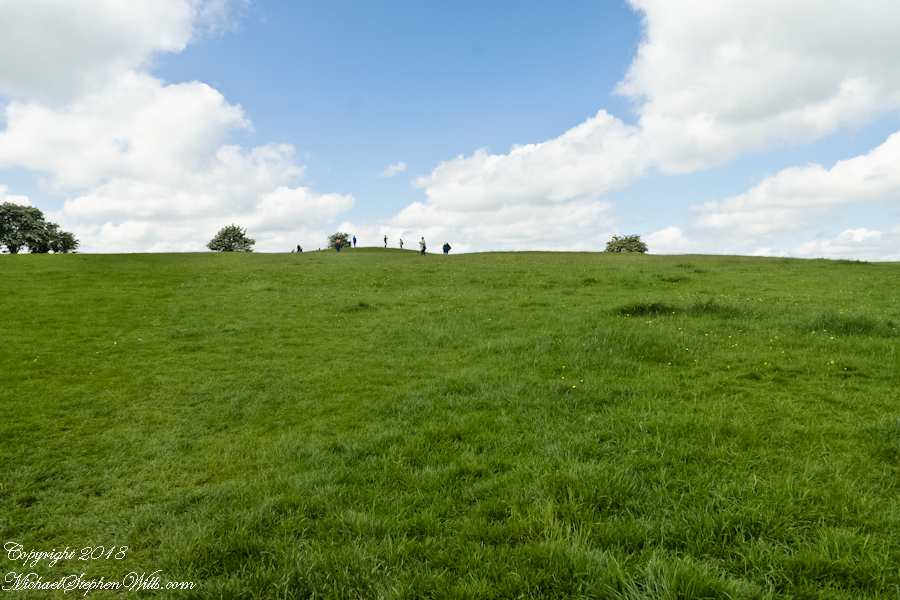
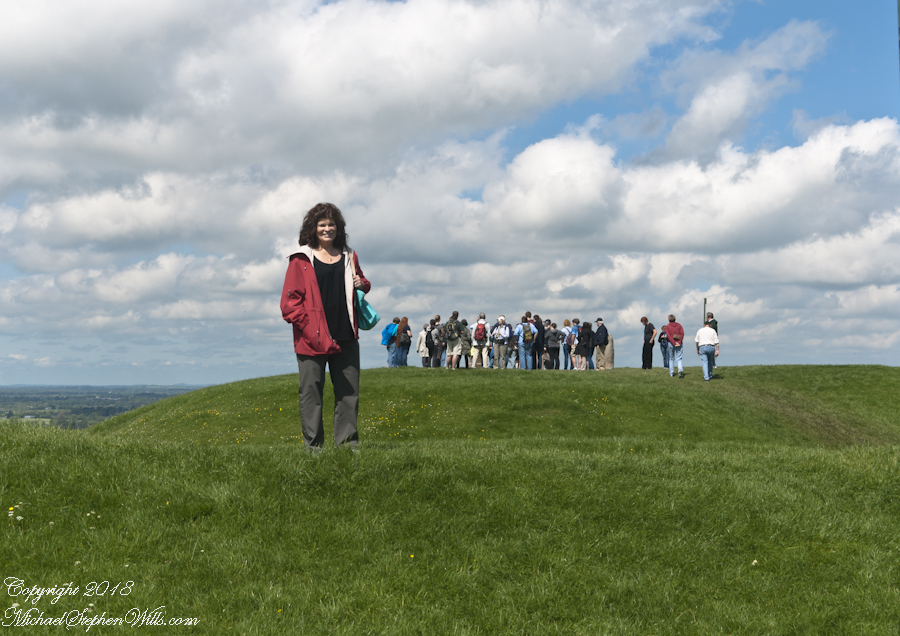
A series of mounds surmounts the hilltop, one is visible across the expanse of grass.
Climbing higher, the view opens.
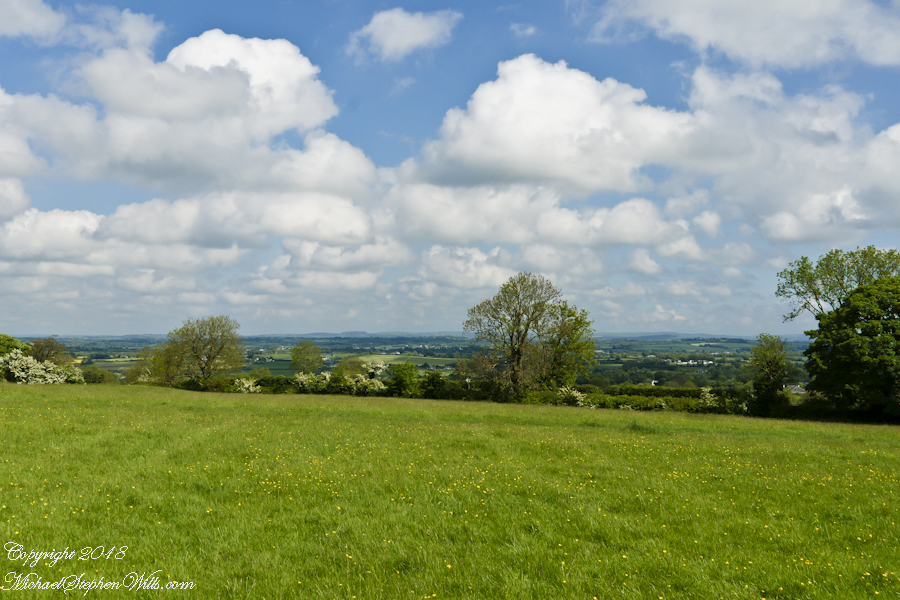
On the top, views from all cardinal directions, 360 degrees.
The Hill of Slane is visible in the east, the tall cathedral ruin though not visible in this view.
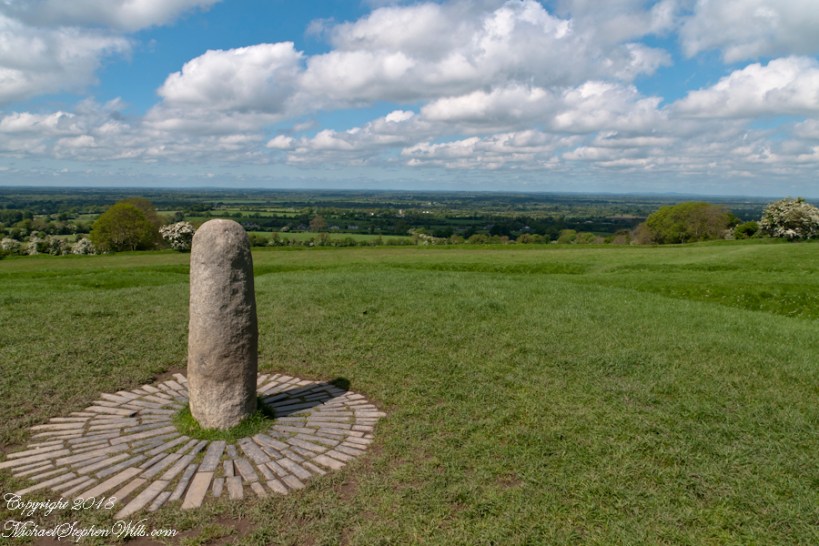
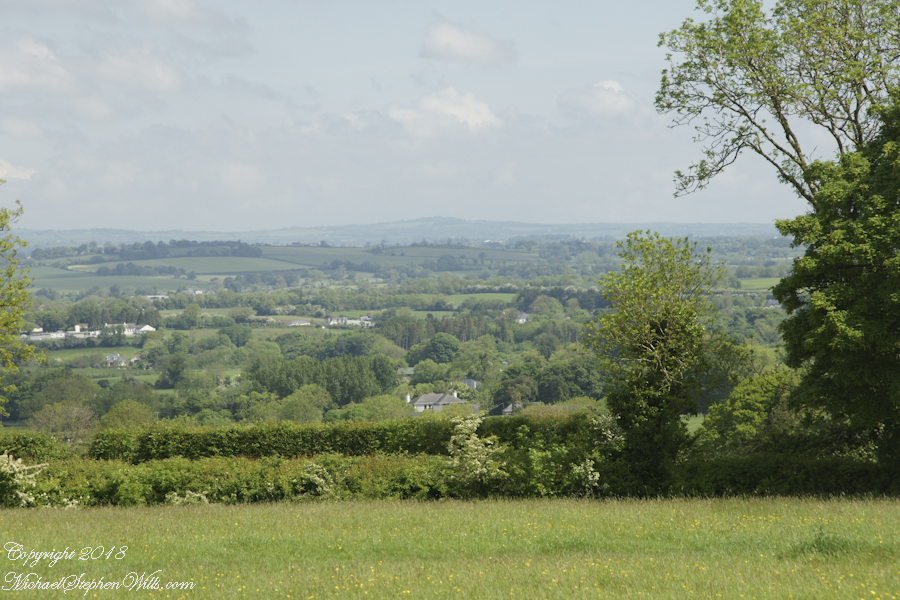
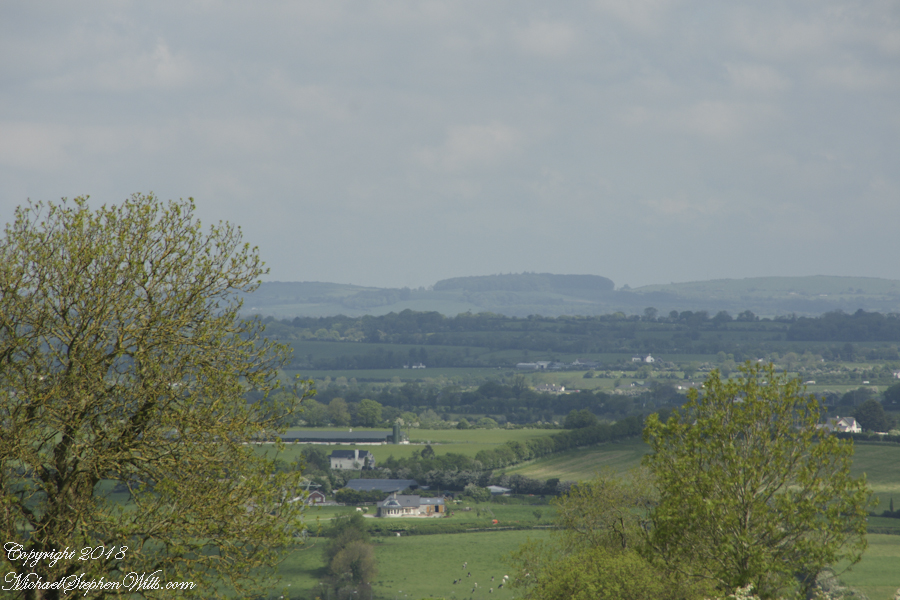
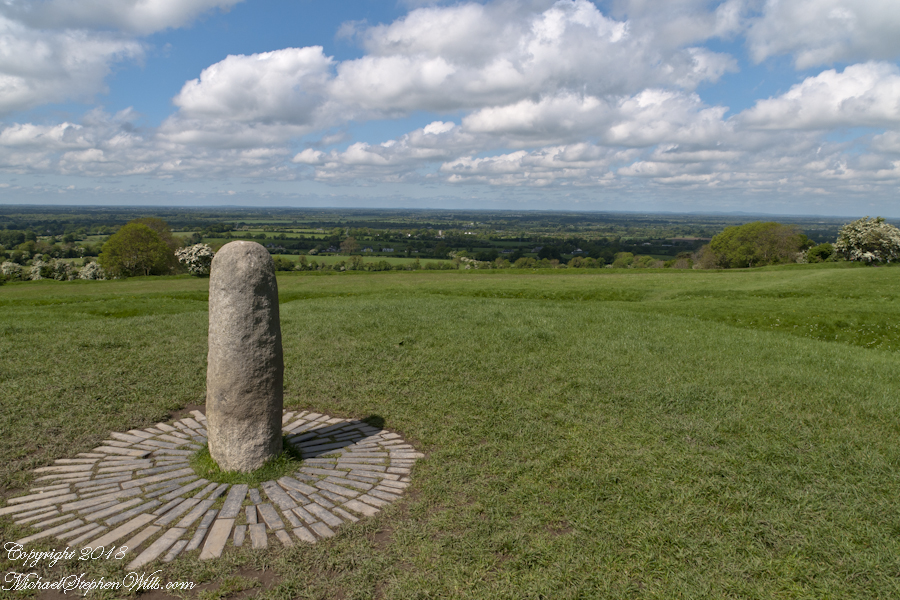
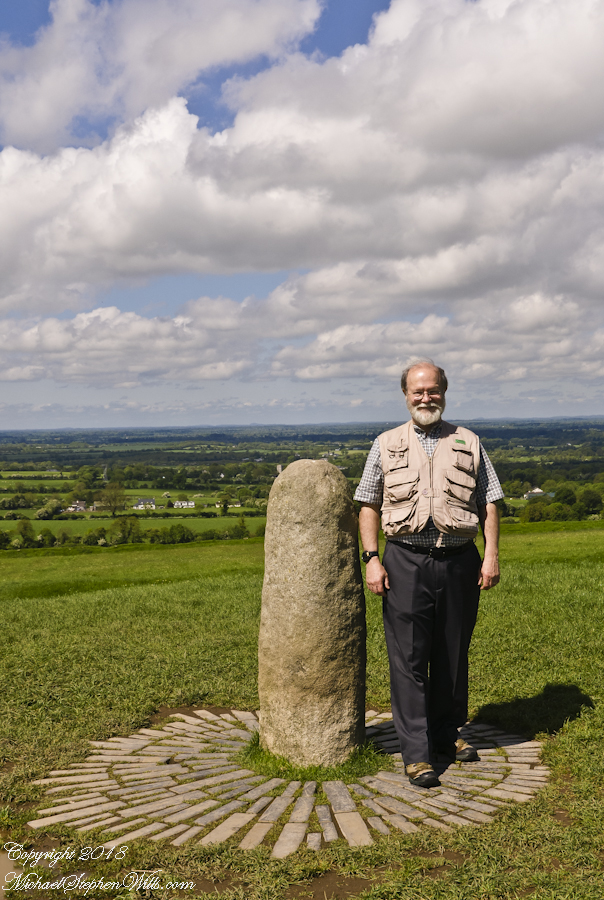
The first of the following panel is a view northwest from looking across County Meath with views of Counties Westmeath and Cavan. On the horizon, right, is Hag’s Mountain, (Irish: Sliabh na Caillí) , site of the Loughcrew Cairns. The standing stone is the “Stone of Destiny: (Irish: Lia Fáil), which served in coronation the coronation of the High Kings of Ireland. It stands on the Inauguration Mound (Irish: an Forrad) of Tara. This photograph was taken the morning of May 27, 2014 hours before the stone was vandalized, doused with green and red paint.
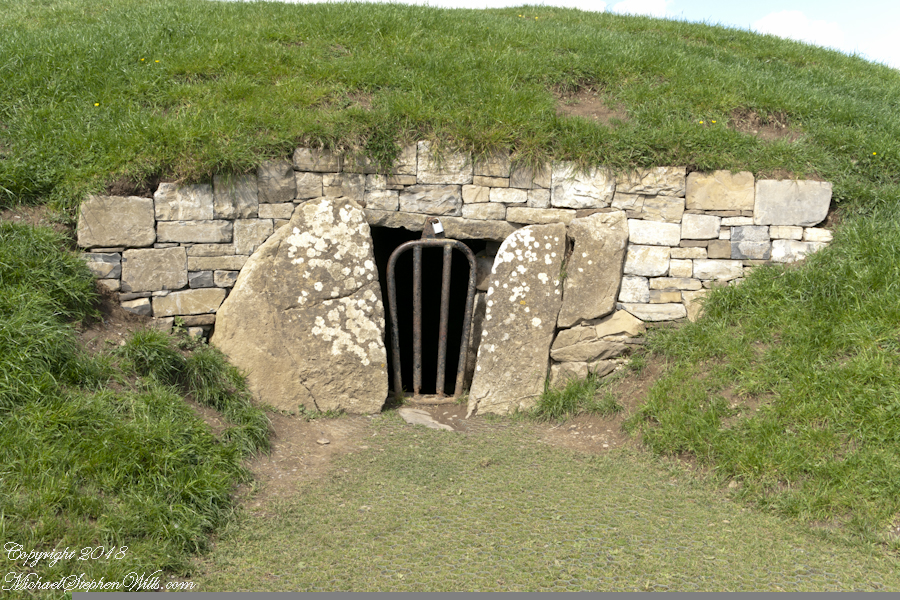
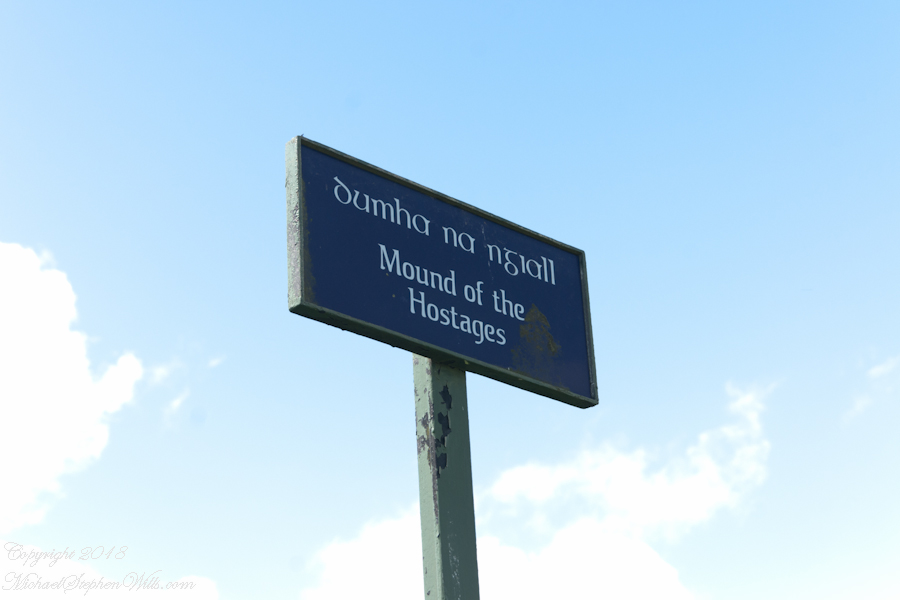
A bit to the east is the Mound of the Hostages, a passage tomb.
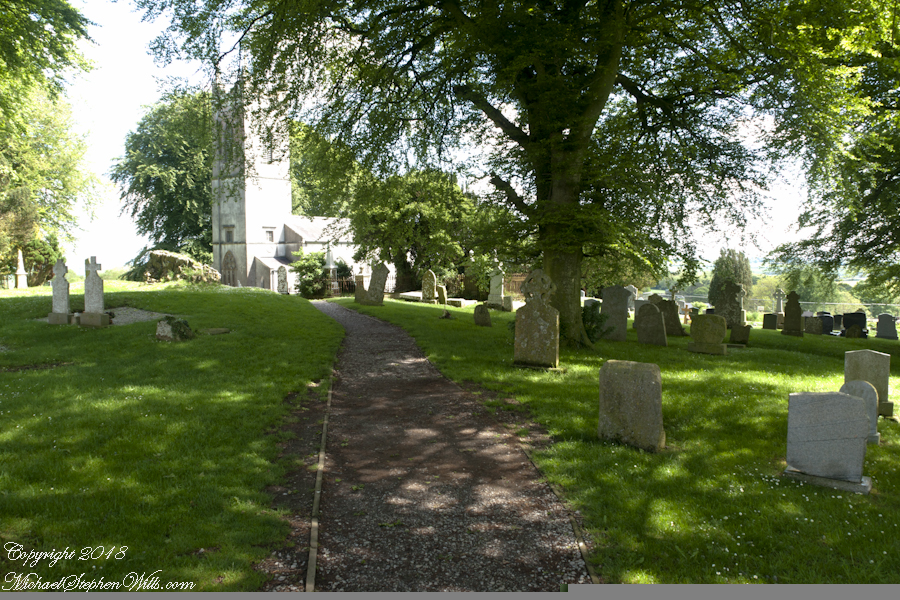
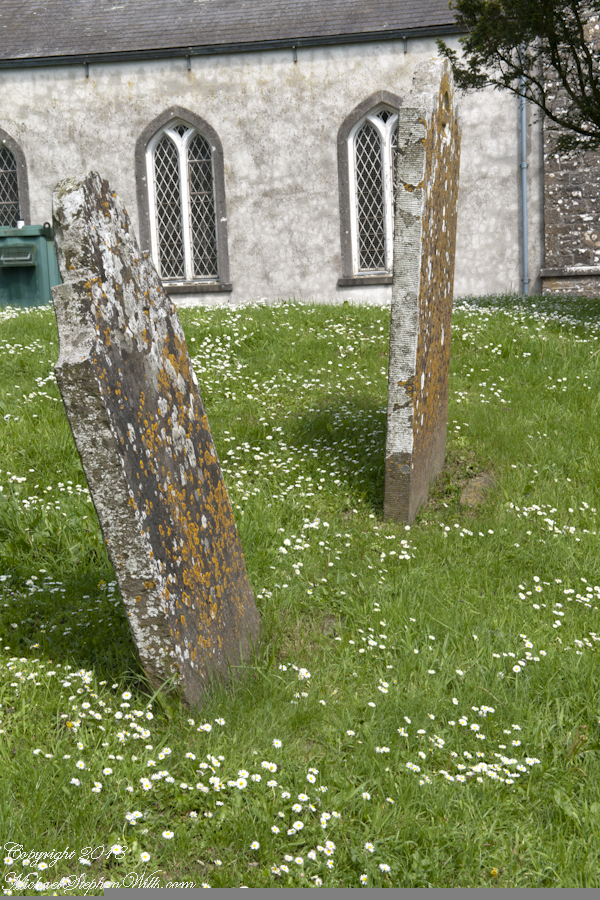
Walk into a glade, through the ancient graveyard to the visitors center in a deconsecrated church.
Browse my reasonably priced stock photography. This blog features three (3) photographs I published last week to Getty Istock and my Fine Art gallery.
After reading my last post “Valparaiso Connections VII” why Captain Pratt was so honored by the nation?
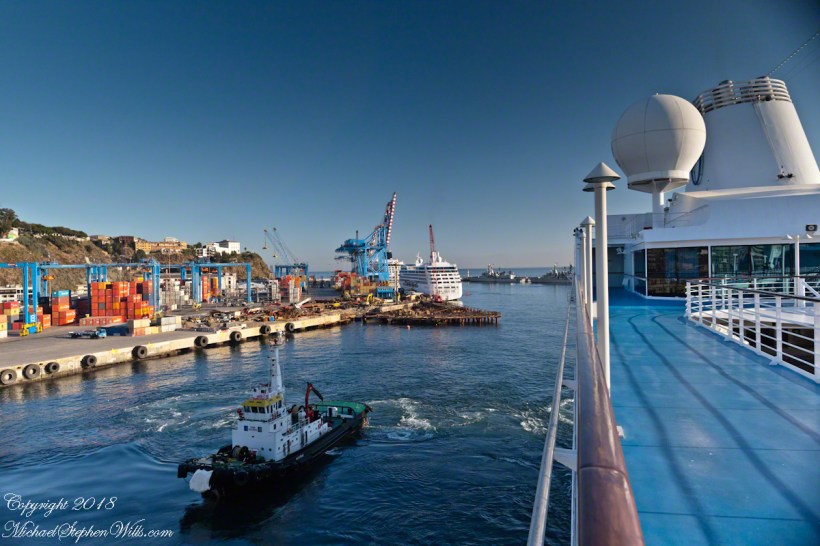
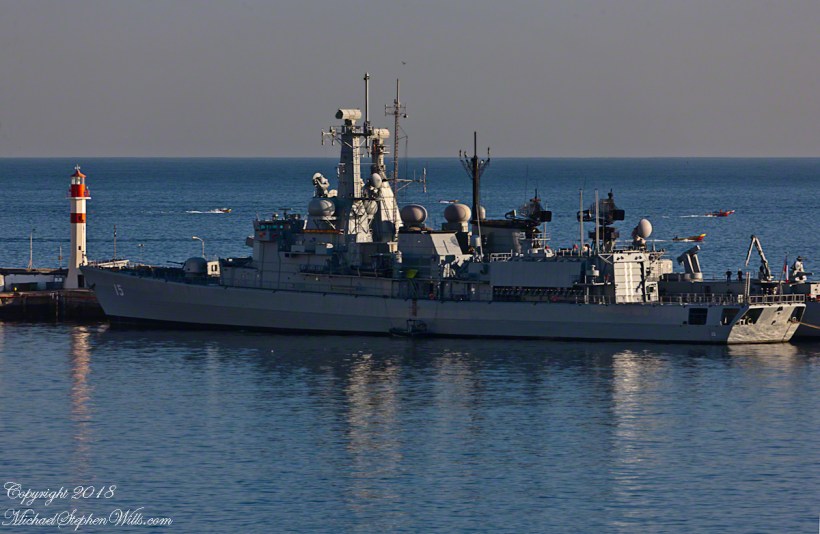
From the starboard side of the Regatta while docking at Valparaiso. On the right is the port with shipping containers, beyond are the Chilean Navy frigates Almirante Blanco Encalada and Almirante Latorre at anchor.
On that morning, May 21, 1879 the two Chilean ships blockading Iquique port were surprised by two Peruvian warships from the port of Callao, the monitor Huáscar and armored frigate Independencia.
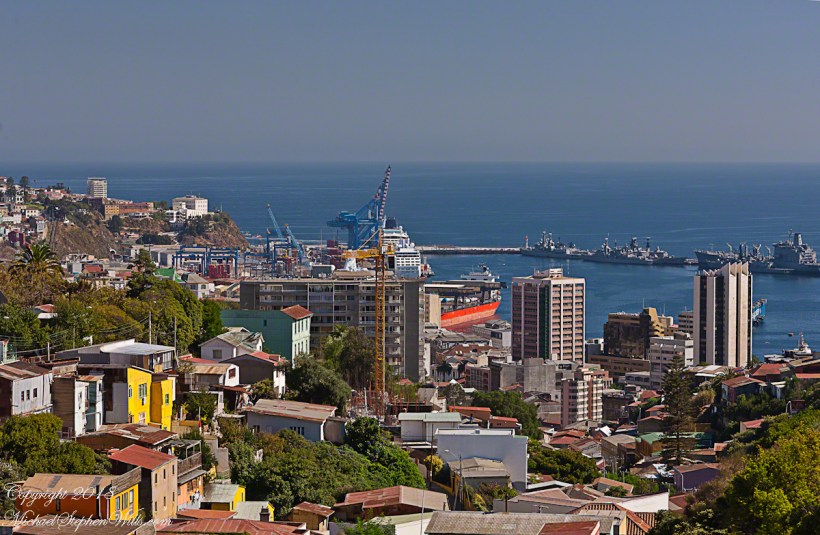
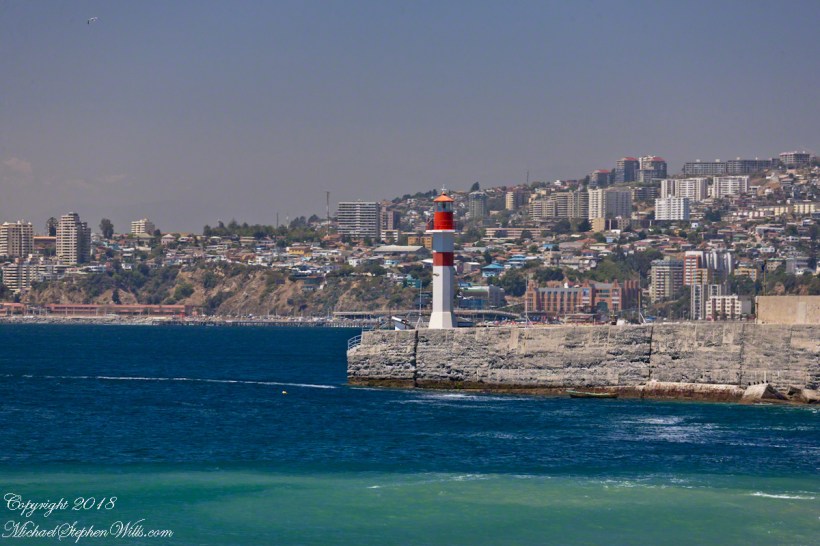
View west from La Sebastiana, former residence of Neruda, on Florida Hill. We look over the city, docks and Chilean Naval Vessels to the Pacific Ocean.
Arturo Prat commanded the Chilean corvette Esmeralda. Carlos Condell de la Haza was Covadonga’s commander.
CS Almirante Blanco Encalada (FF-15), a modern frigate of the Chilean Navy at anchor. With the Durante Point lighthouse, several fast fishing boats returning with their catch.
The Chileans are outgunned by the Peruvians in armored ships. Condell fled in the Convadonga, pursued by the Independencia. This was the wiser course and most militarily effective because, following the Convadonga into shallow waters the deeper draft Independencia lost advantage when it ran aground and was lost.
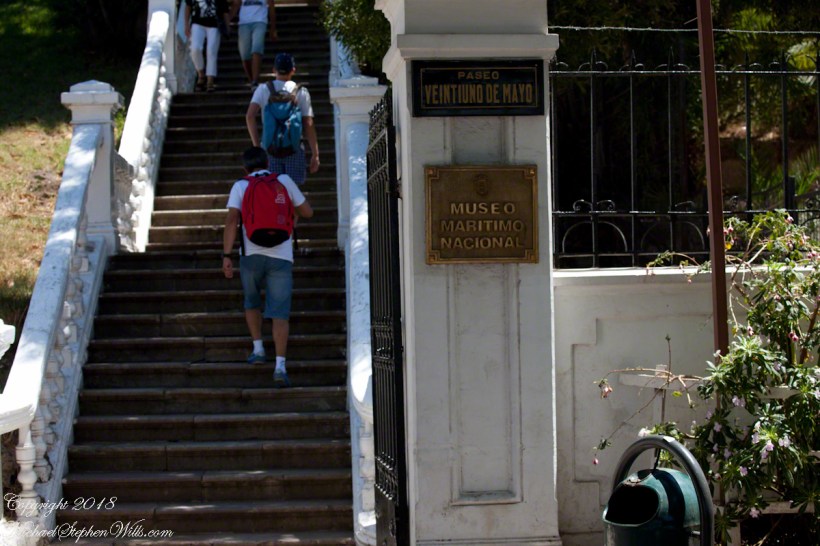
We did not have time to explore the National Maritime Museum.
Prat stood ground in the middle of the bay, any canon shots simply bounced off the heavily armored Huascar. The Esmeralda suffered shot after shot until the command of the Huascar, Captain Graf, decided to ram the Esmeralda to force a surrender and safe useless death.
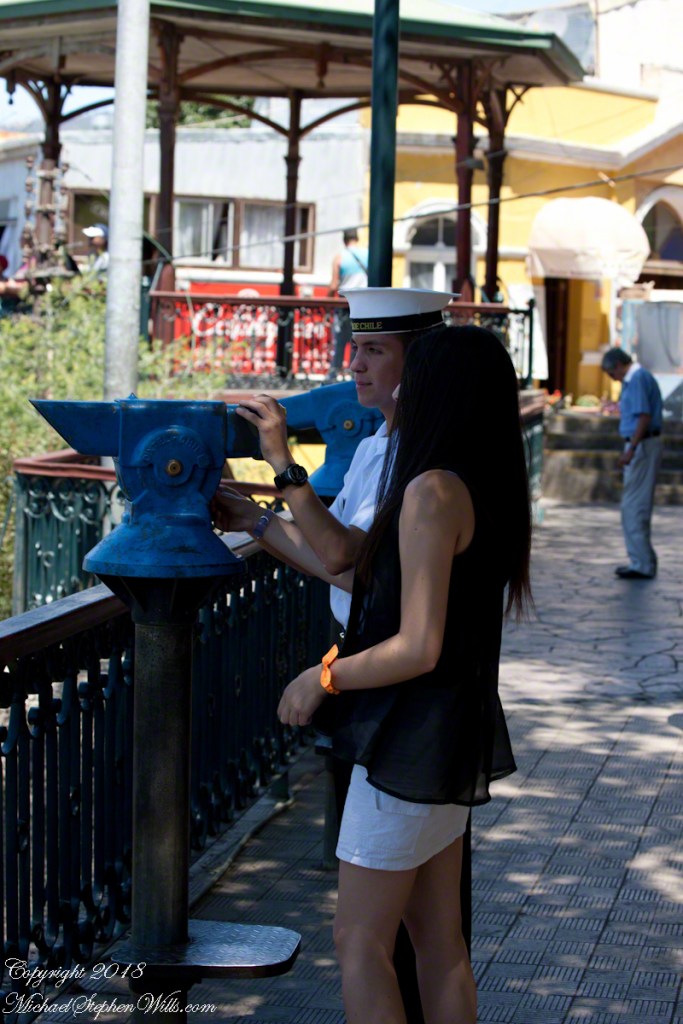
Naval Cadet with friend viewing the ships at anchor.
At the first ram to the stern, as the ships were in contact, Prat ordered an attack, “Let’s board, boys.” In the confusion only two seamen joined Prat. One failed to board, Prat and Petty Officer Juan de Dios Aldea attacked. Dios Aldea was mortally wounded. Prat continued to advance alone, to the amazement of the Peruvians, awed at his courage. Prat was gunned down on the deck of the Huascar.
He crew watched in horror. When the Esmeralda was rammed again, this time in the bow, Sublieutenant Ignacio Serrano lead of 10 Chileans to board for an attack with machetes and rifles. They were massacred by the mounted Gatling gun, only Serrano survived.
The example of Prat and his crew is taught today. Arturo Pratt is the most common street name, as well as plazas, buildings. Four major warships were named after him. The current active ship is the frigate FFG 11, the Capitan Prat. The Chilean naval academy is named Escuela Naval Arturo Prat. His portrait is on the 10,000 peso Chilean note.
Lighthouse on Punta Duprat
Copyright 2022 Michael Stephen Wills All Rights Reserved
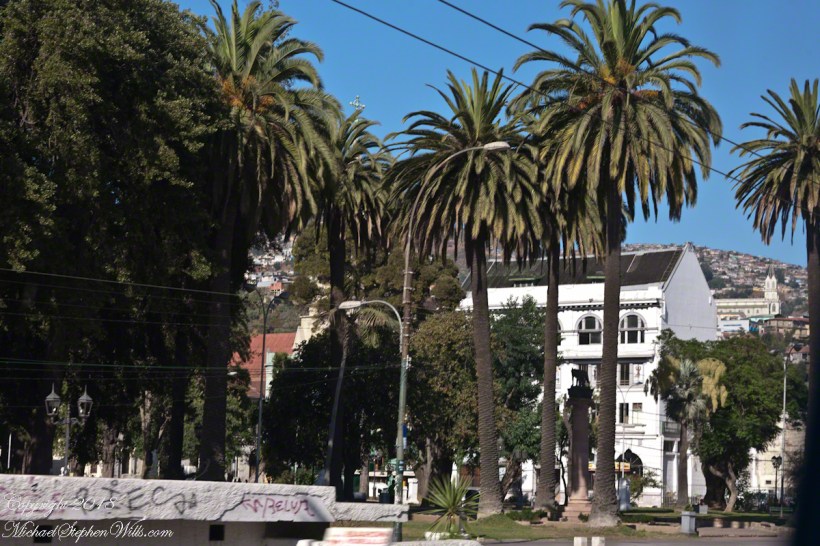
This is an answer for those of who responded to my last post Valparaiso Connections VI with “what does that desert in Peru have to do with Valparaiso?” It starts with the Plaza Victoria at the end of Pedro Montt Avenue. Victoria, as in victory not Queen Victoria. At the beginning of the 19thcentury this was a beach, the site of several ship wrecks. It was set aside as a gathering place by the Mayor, named Plaza Nueva (New Plaza), for a bullring until bullfights a law banned bullfighting on September 1823. The plaza became a place of public executions and, after Chile’s victory in the Battle of Yungay, a place of celebration, formally renamed for the victory.
The Central Valley of Chile is an exception to the topology north through Lima where agriculture and population centers follow river valleys watered by the Andes and surrounded by waterless wastes. Yungay, is among one of those watered desert valleys. Located 120 miles north of Lima, Peru at about 8,000 feet just below a summit of the Western Andes, remnants of cultures from 10,000 B.C. are proof of agriculture and human settlement. It was near Yungay, on January 20, 1839 (summer in the southern hemisphere) a force of Chilean and Peruvian dissidents called the United Restorative Army defeated a Peru-Bolivian Confederation Army to end the War of Confederation. The resulting split into different countries of Peru and Bolivia weakened a threat to Chile and Argentina, aimed in large part toward the broad and fertile Central Valley of Chile. The desperation in view in my post Valparaiso Connections VI was in large measure a motivation war, this motivation is still powerful today.
The subsequent prosperity allowed reclamation of the land of Plaza Victoria from the sea. For example, in my post Valparaiso Connections V we learned how French immigrants arrived and developed Central Valley wineries in the 19th century. Around the time of the victory Chacobuco Street was built adjacent to the plaza on reclaimed land, the Plaza Victoria was pulled from the sea.
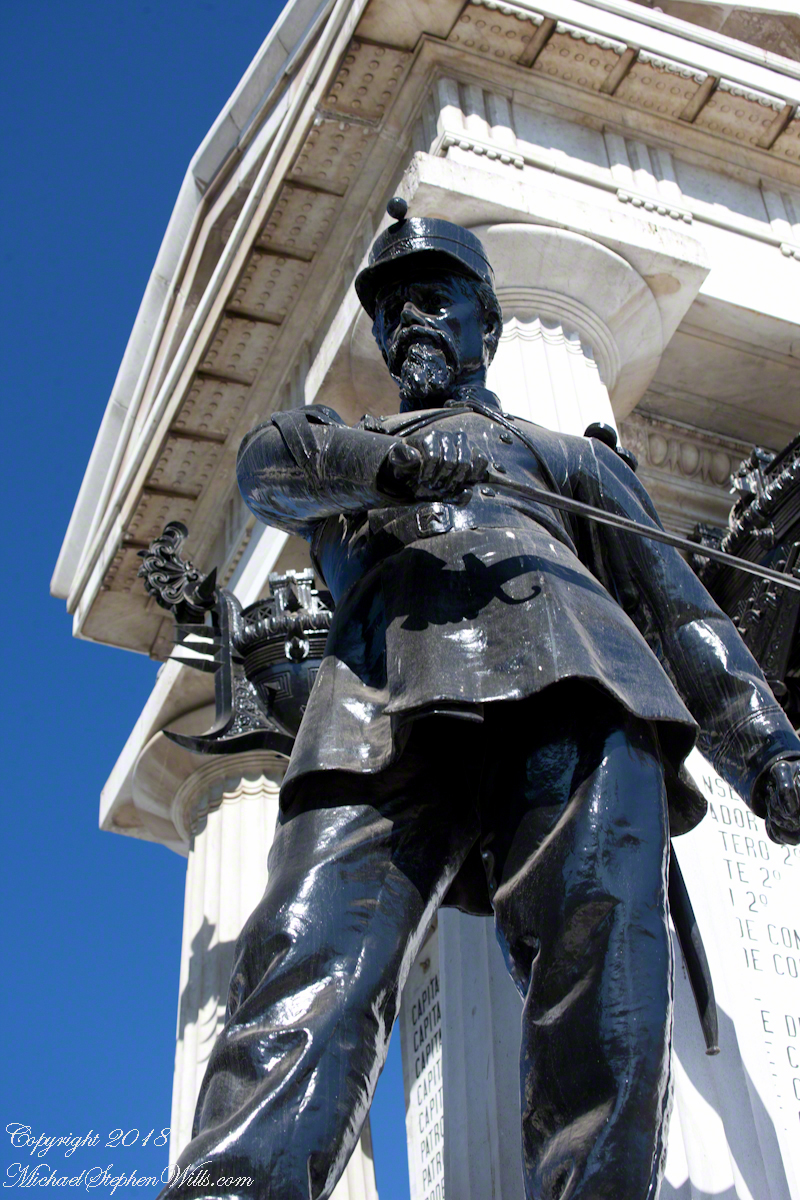
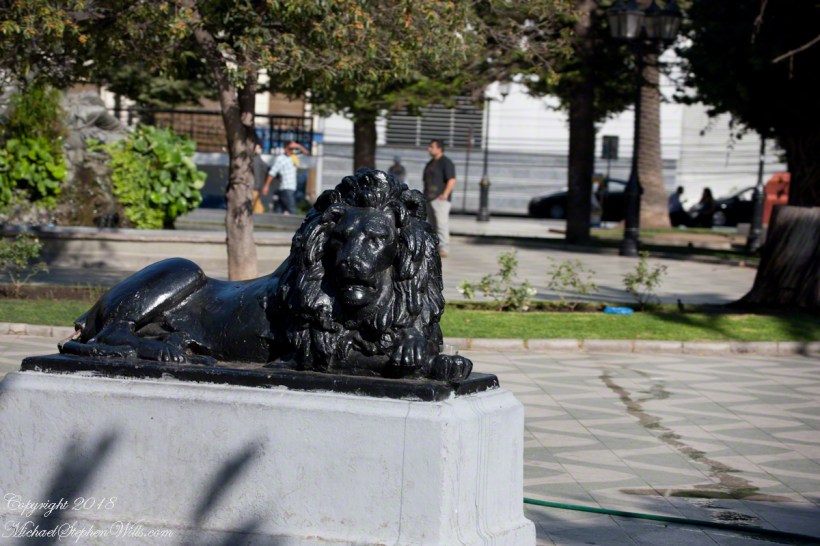
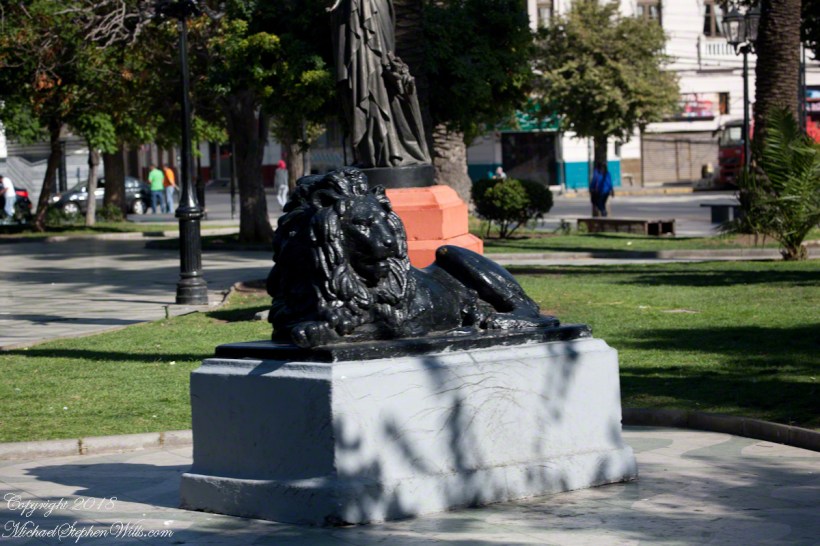
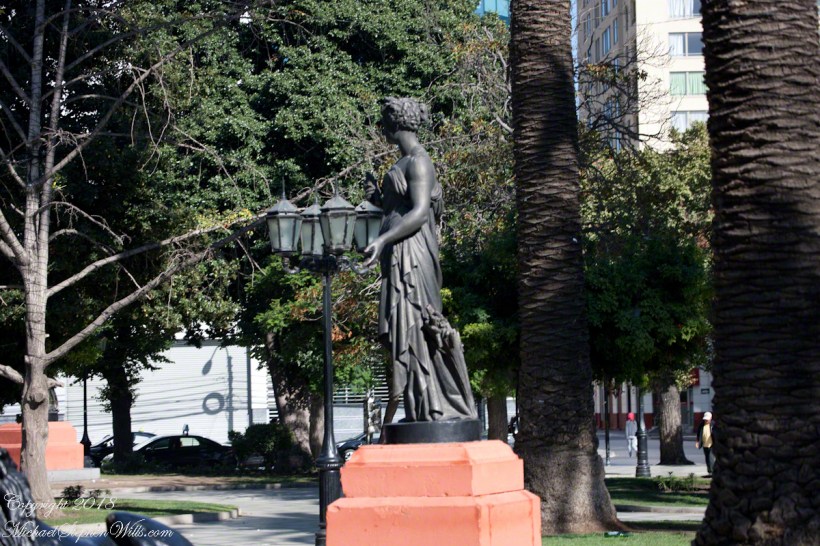
The concrete Lions and bronze statue captured in the above gallery, were elements of a round of enhancements to Plaza Victoria begun 1870.
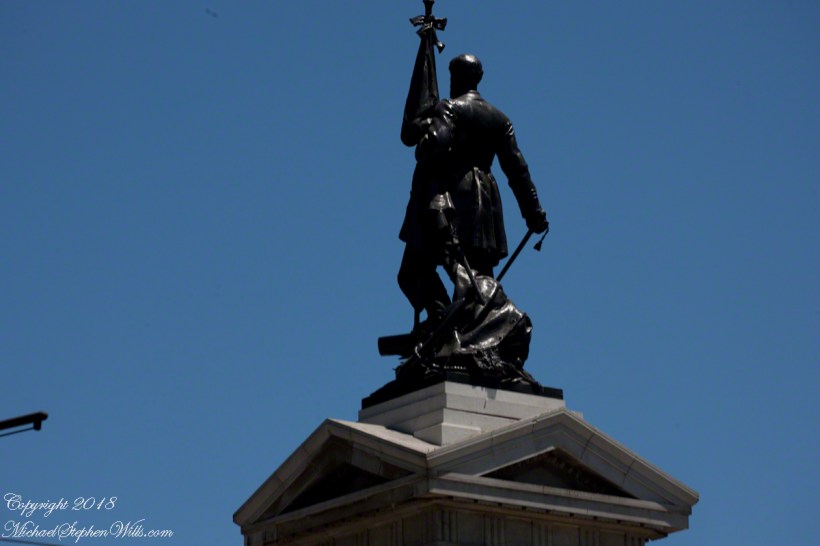
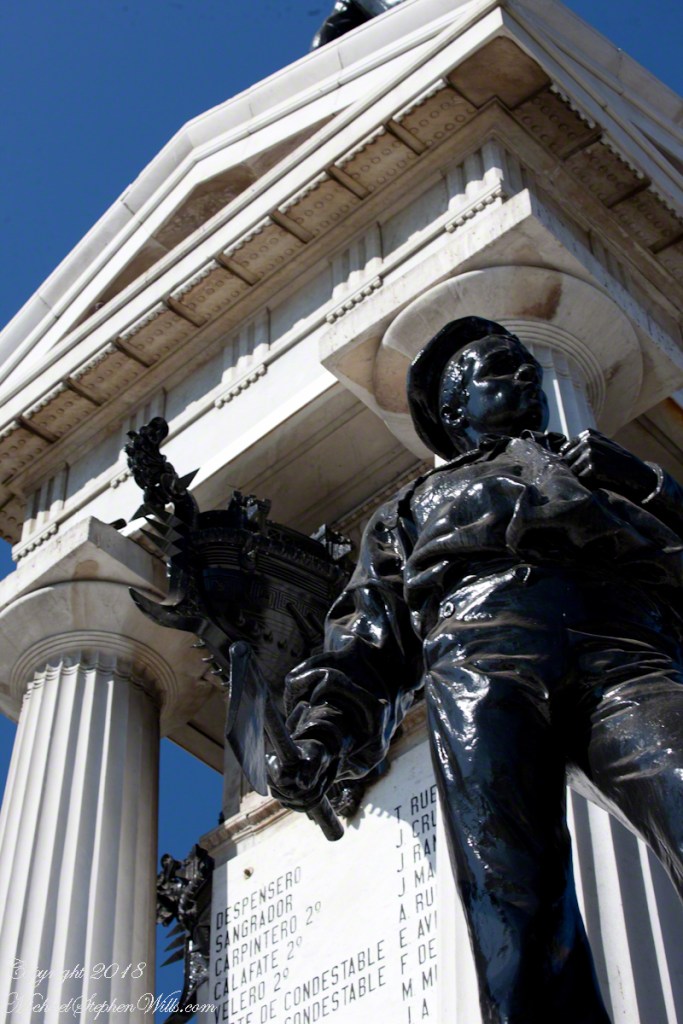
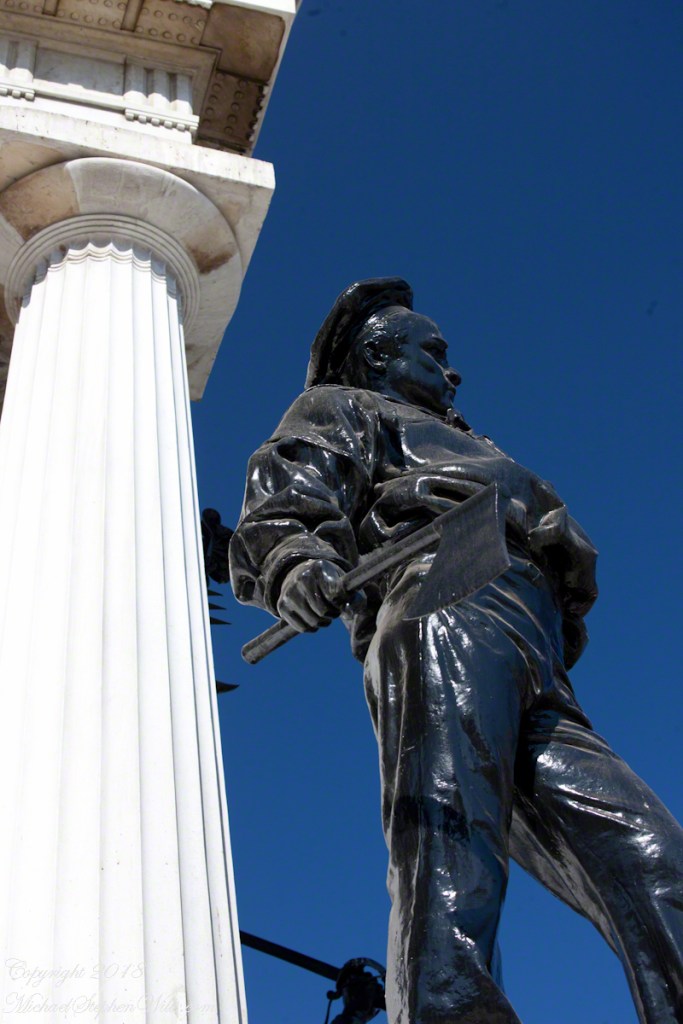
Monument to the Heroes of Iquique
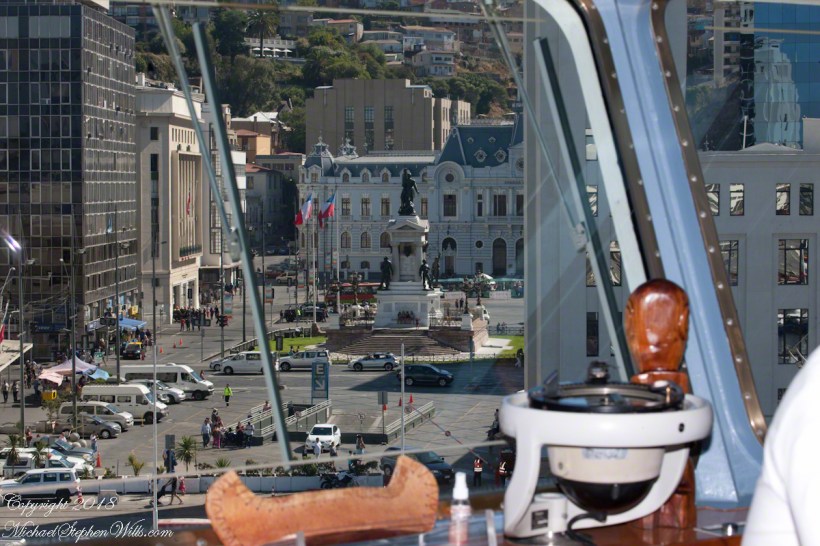
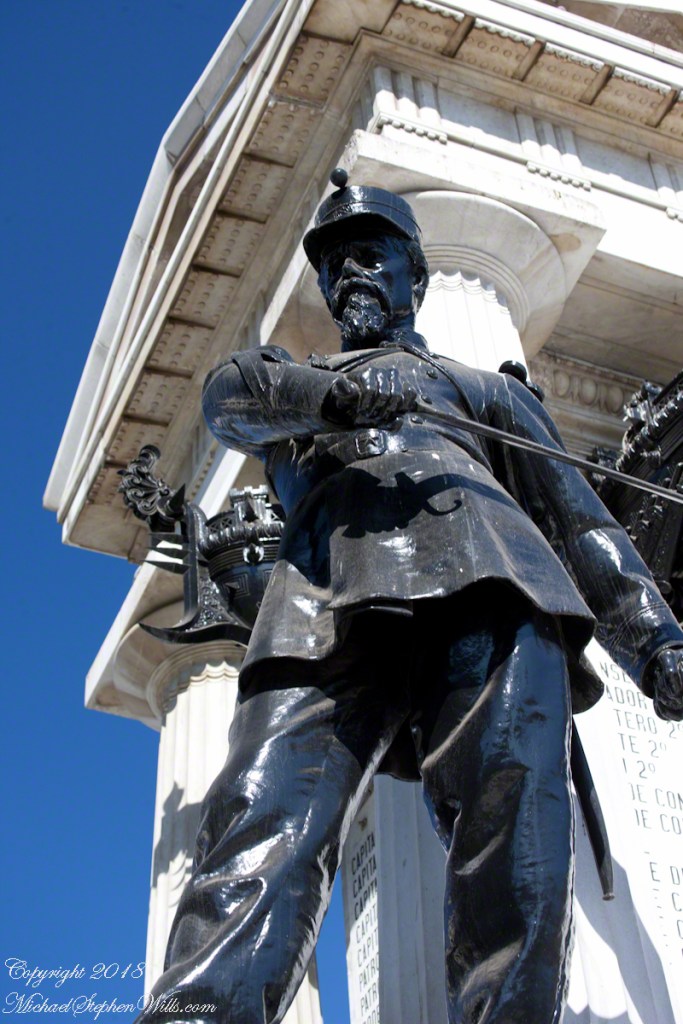
Here we see from the Regatta bridge a monument to the Heroes of Iquique. The Battle of Iquique, May 21, 1879, is remembered annually as Naval Glories Day (Dia de las Glorias Navales) .
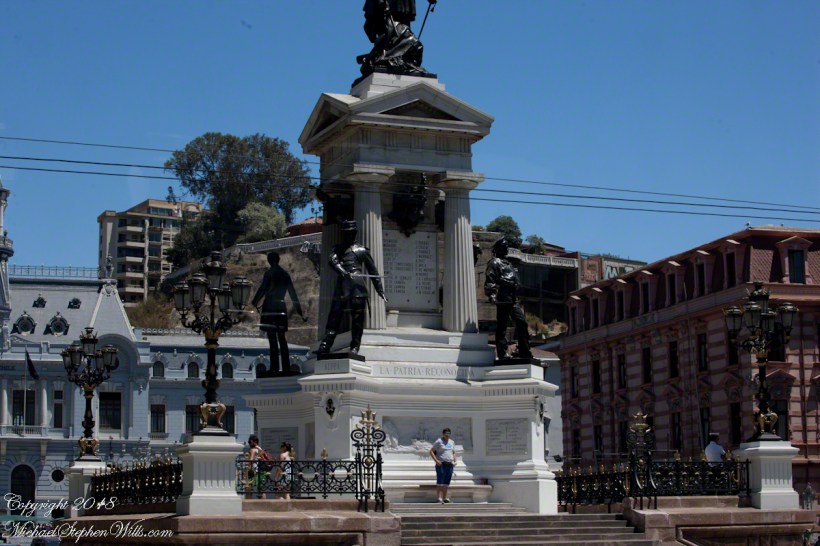
This monument commemorates the destruction of the Chilean warship Esmeralda. At the monument peak is Arturo Prat Chacón, captain of the Esmeralda who perished with his wooden ship. He and the crew were blockading the then Peruvian port of Iquique along with another ship, the Covadonga.
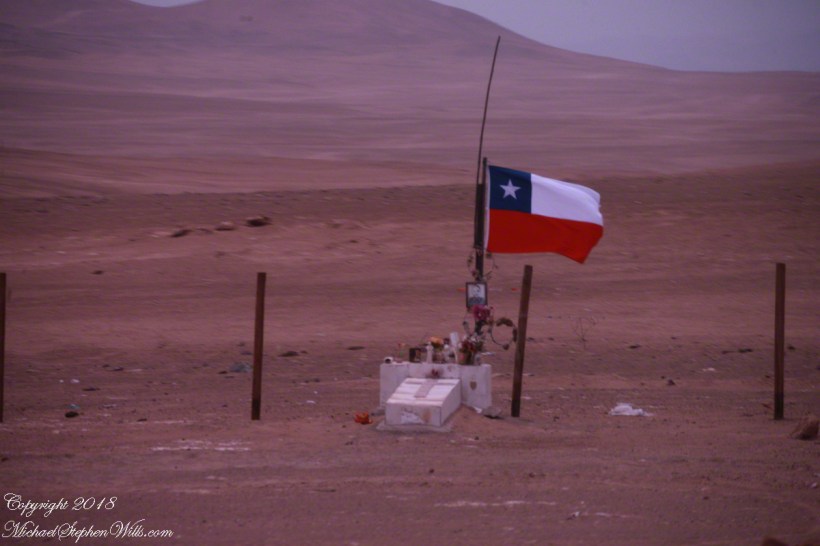
May 1879 was in the initial phase of the War of the Pacific, fought over rich mineral deposits of the Atacama desert. Today, the Chilean flag is over these barren wastes, seen here flying over a roadside memorial to an automobile accident victim. The desert is the backdrop, there are no animals or plants here, only red dirt. NASA uses the Atacama in simulations of the Martian environment.
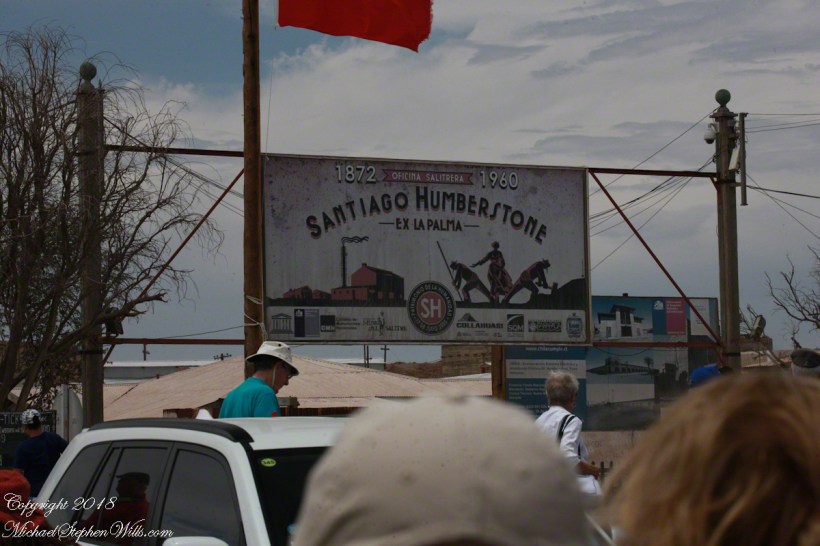
There are deposits of the mineral saltpeter, mined by large operations. Here is the entrance of a World Heritate site we visited while docked at Iquique.
The mining operation was literally scraping the deposits lying on the ground and processing it into, among other products, nitrogen fertilizer. At that time the operation was hugely lucrative, employing thousands in very difficult conditions. That is a different story.
Captain Prat faced two armored Peruvian warships, one the iron clad Huáscar. Over the course of four hours the Esmeralda was overpowered and sunk. The Huascar and the 22,500 mountain peak at Yungay, Huascarán, are named for an Inca chief.
The monument honors the bravery of Captain Prat and his crew, all of whom are named on plaques.
After the Huáscar rammed Esmeralda a third time to sink it, the Huáscar captain, Miguel Grau Seminario, rescued Chilean survivors in danger of drowning. In the meantime, the armored Peruvian warship was lured into the shallows and destroyed. Although the blockage on Iquique was lifted Peru lost one of its most powerful ships at the cost to Chile of an older wooden ship.
The defeat and examples of the Esmerelda crew and captain brought a wave of recruits to the Chilean forces. Chile was the victor of the War of the Pacific, vast tracks of the Atacama desert were taken from Bolivia, including the Saltpeter mines, shutting that country off from the Pacific Ocean. There is a connection between these memories and the Training Ship anchored in the harbor, the sixth ship to carry the name, Esmeralda (BE-43).
See my posting Valparaiso Connections V for the more recent history of the Esmeralda.
Copyright 2022 Michael Stephen Wills All Rights Reserved
Ricardo left a blank between the French Memorial Column of the Parque Italia, seen above. He made of mention of Salvadore Allende Plaza. The above photograph includes a graffiti inscribed corner of the set of steps, a platform and the area in front, a plaza, dedicated to the memory of Allende and named “Plaza del Pueblo Salvador Allende Gossens” on the 100th anniversary of his birth, 2008. The structure was not new, it was called “The People’s Plaza”, the name change was pushed through by Alberto Neumann, communist councilor. So the suppression and torture (see “Valparaiso Connections V”) was not successful in wiping out the ideals, such as they are.
The accomplishments of the Allende Presidency are another matter. The Macroeconomic Populism policies he implemented left the economy in tatters. We have only to look at the current state of Venezuela to see the entirely expected results of this economic model: hyperinflation followed by stagflation and implosion. The reactionary military coup of 1973 was, in the essentials, a rational response and a rescue from economic and social disaster until the reaction itself descended into madness.
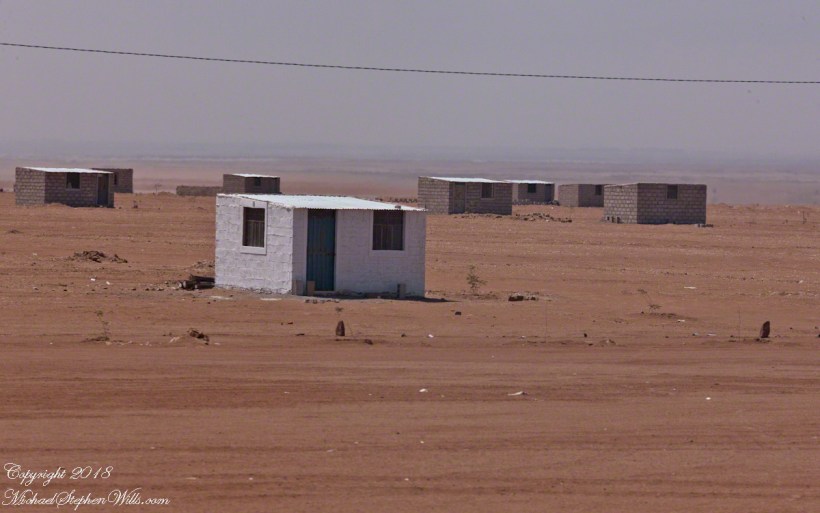
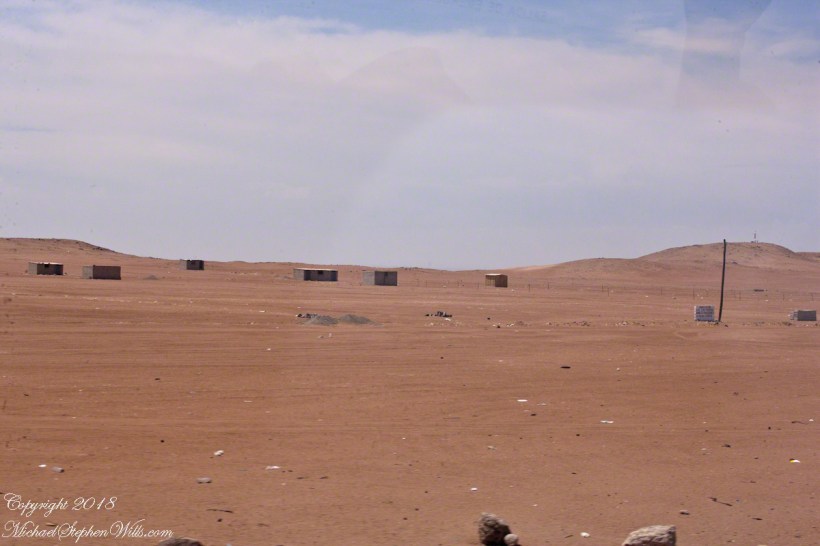
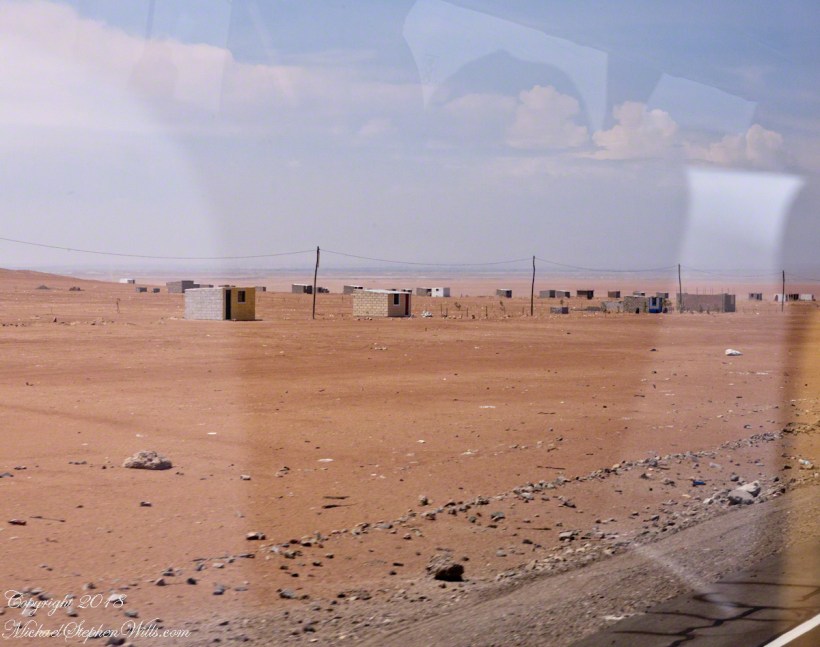
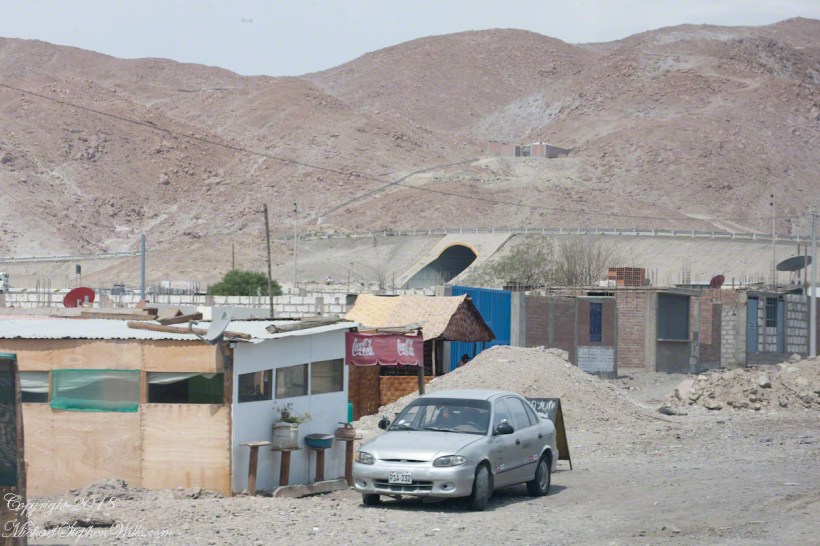
The following series of photographs are from a neighboring country, Peru, are an illustration of the pressures the political elites of Chile are negotiating. Taken from the road between the port of Mollendo and the city of Arequipa, on a vast, waterless plain.
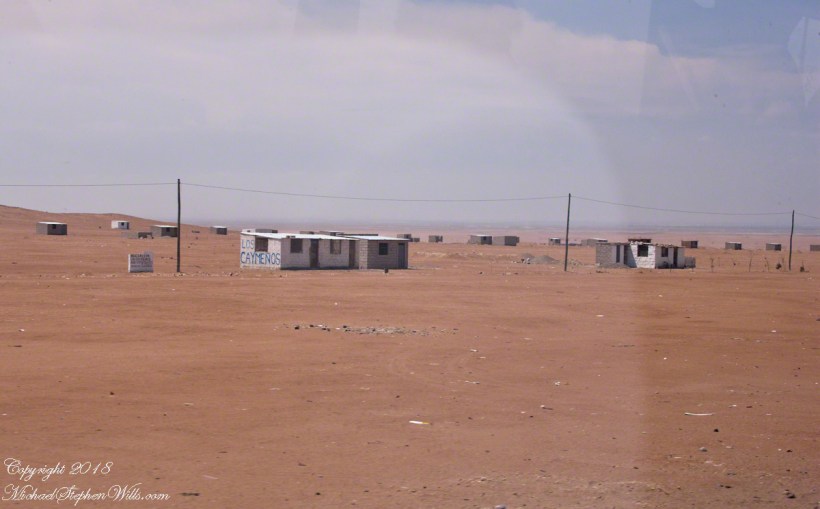
Migrants from the Titicaca Region formed a cooperative named “Asociacion Las Caymenos Agro Exportadores”. It is the named scrawled on the small cement brick wall.
Desperate people from rural areas migrate to cities, form associations or regional clubs based on a common origin, and grab land as a group.
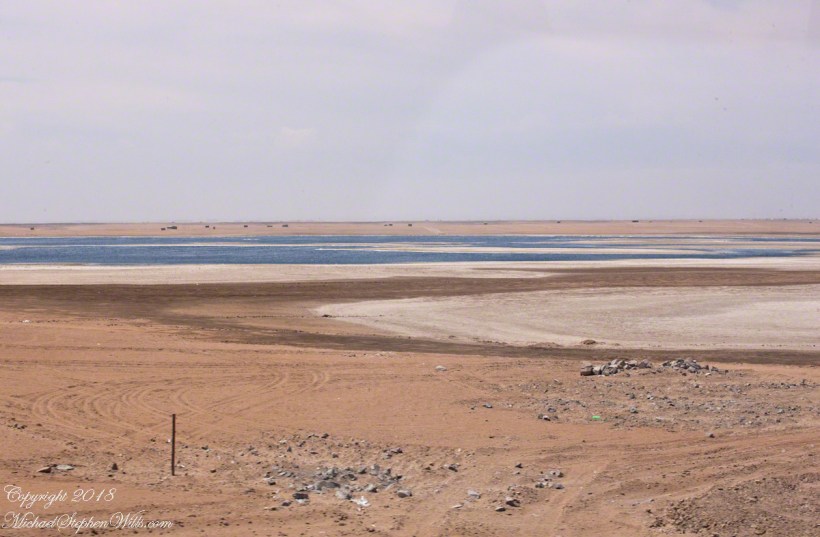
In this case, it is property useless for the named purpose, “agricultural export.” What they have is a dream. a dream of the government directing water to the area.
Towards this end, individuals of the group mark out plots using rocks and build structures from concrete brick and metal roofing.
This small patch of water is the basis of their desperate hope.
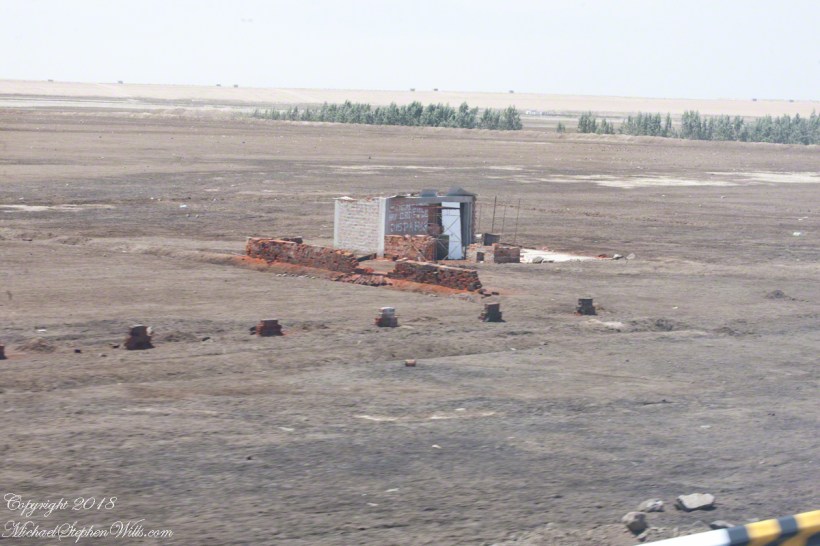
This is a more consolidate group of migrate squatters on the road called “1S” near the turnoff for Lima and a place named La Reparticion.
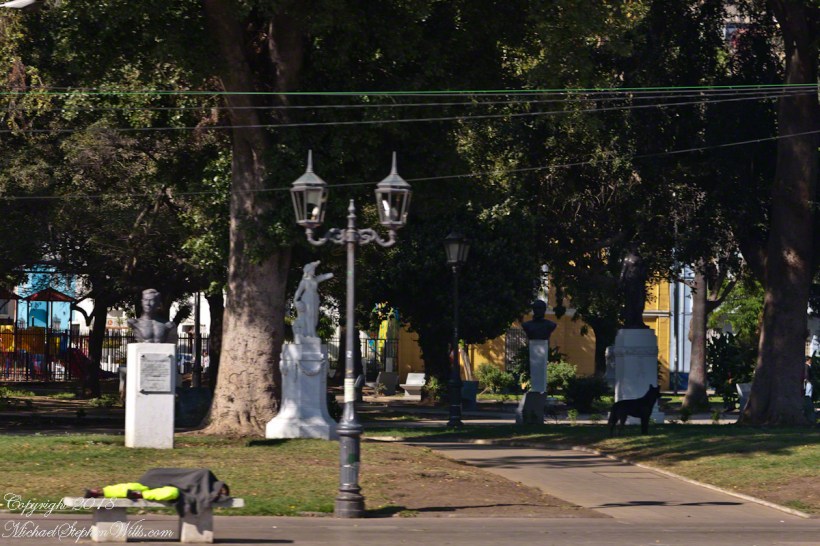
Dreams for a better life, offset by desperate circumstances bring us back to Valparaiso and the Parque Italia adjacent to Allende Plaza. The park is a small patch of green, some wonderful trees, with statuary and monuments dedicated to people of Italian heritage.
Beyond the sleeper are statues each on a plinth. The second from the right is a bust of Giovanni Battista Pastene, a gift from the city of Genoa dedicated October 12, 1961. Pastene was the first governor of Valparaiso (the region, not the city) in the 16th century. He came to Honduras in his own ship, enter the service of Pizzaro and, as master of the ship Conception, was a maritime explorer.
P
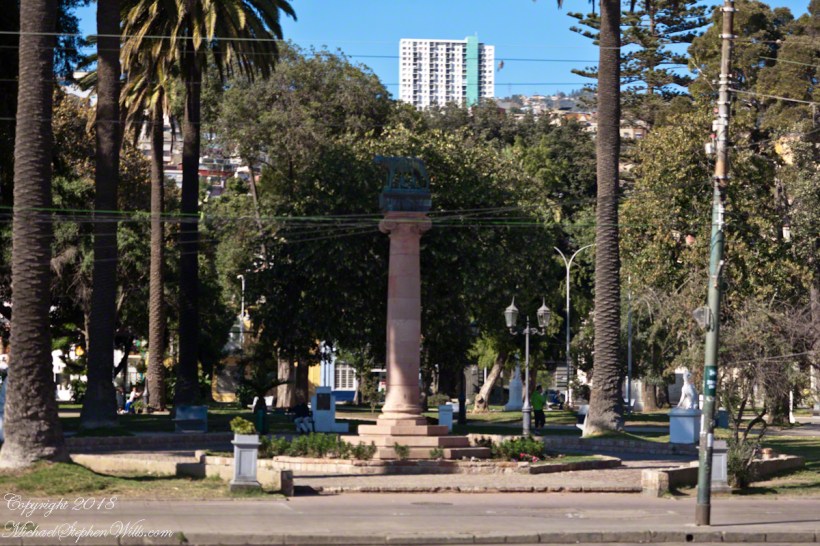
The Italian refugee collectivity of Valparaiso presented this column, in 1936, surmounted by a bronze sculpture of the Capitoline Wolf feeding the infant founders of Rome, Romulus and Remus. It is a copy of an ancient statue kept on Capitoline Hill, Rome, Italy.
The wife of Allende was of Italian heritage, Hortensia Bussi. The Fire Brigade Sesta Compagnia di Pompieri Cristoforo Colombo, operates today from Independence Avenue.
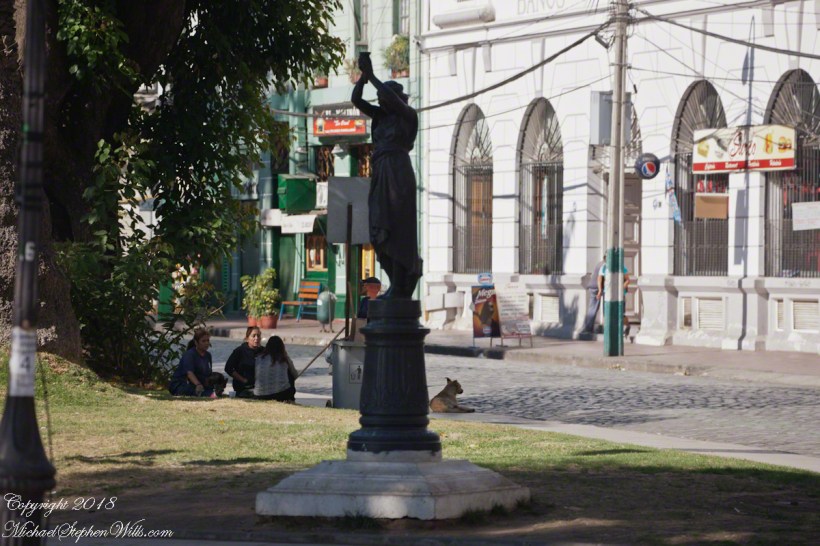
Here we have a gathering of friends, sharing the shade and beverages on this Saturday summer morning.

 Michael Stephen Wills Photography