Twilight Serenade: Experiencing the Eclipse Amidst Nature’s Splendor

Step into the enchanting world of the VanRiper Conservation Area during a total solar eclipse. Witness nature’s grand spectacle, where daylight fades into an ethereal twilight, and the cosmos whispers secrets to those who listen.

Standing within the serenity of the VanRiper Conservation Area, we had the rare privilege to witness a celestial marvel—the total solar eclipse. The coordinates, 42°43’8.62″N 76°45’30.41″W, marked not a unique vantage point on the southern edge of the total eclipse zone. Here, the total eclipse enveloped the sky for an awe-inspiring 50 seconds, a fleeting yet unforgettable spectacle that we were fortunate enough to experience.
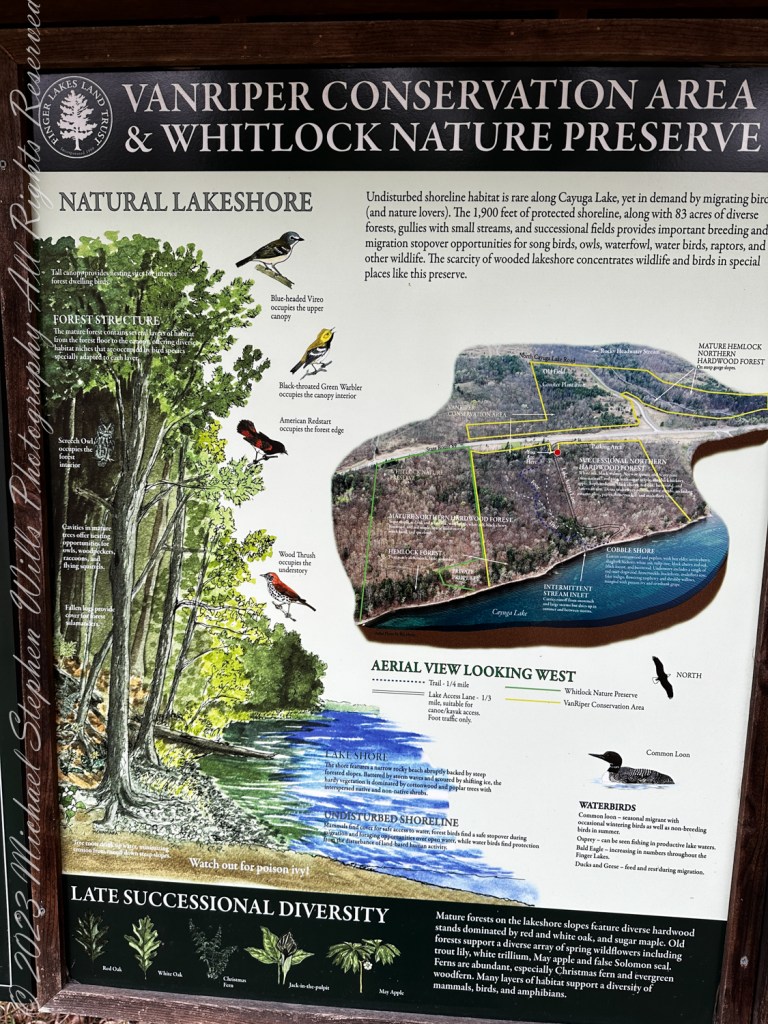
The VanRiper Conservation Area served as a magnificent backdrop to this astronomical event. Known for its diverse habitats, including wetlands, forests, and meadows, the area is a haven for wildlife and a sanctuary for those who seek solace in nature; a place where the sky seems vast, unobstructed by the trappings of urban life, offering a clear canvas for the eclipse to paint its momentary magic.
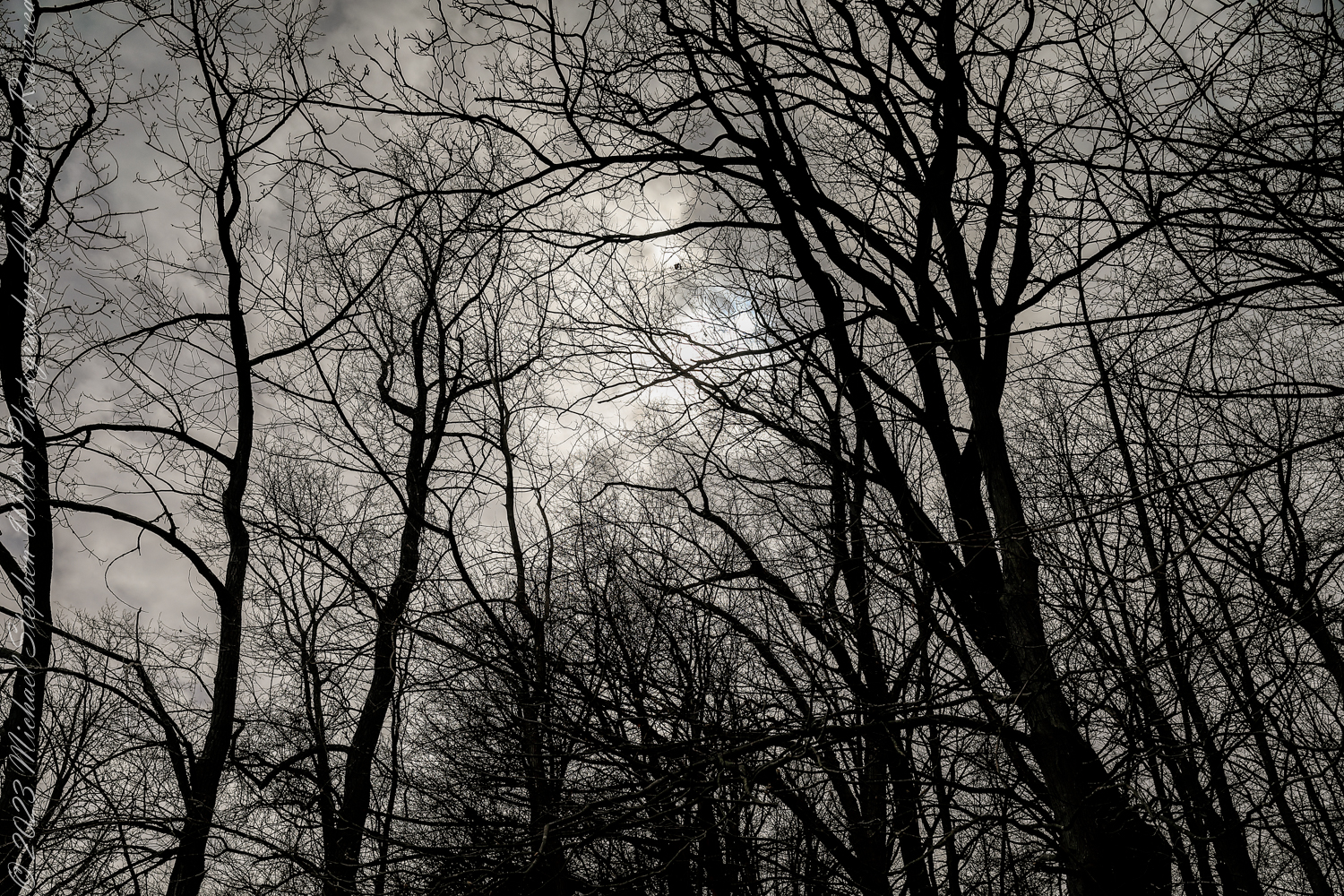
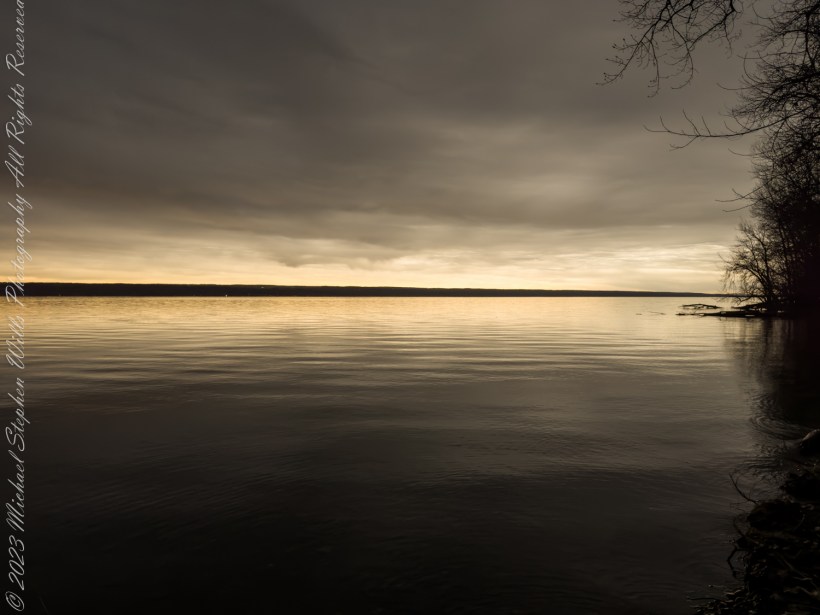
13:38:07, 39 minutes 41 seconds before the moon’s edge touched the sun. From the shoreline of VanRipen Conservation Area, Town of Romulus, Seneca County, Finger Lakes Region, New York State

As the time for the eclipse approached, a thick blanket of clouds enveloped the sky, obscuring our view of the sun entirely. This unexpected veil not only robbed us of the celestial spectacle but also intensified the darkness, casting a deeper shadow over the landscape and amplifying the surreal, twilight ambiance.

As the moon began its slow sweep over the sun, an eerie twilight descended upon the conservation area. The temperature dropped noticeably, a testament to the sun’s masked radiance. The birds, momentarily confused by the sudden dusk, fell silent, heightening the surreal atmosphere. This was the moment I had been waiting for, the total eclipse, where day momentarily turns to night, and the ordinary becomes extraordinary.
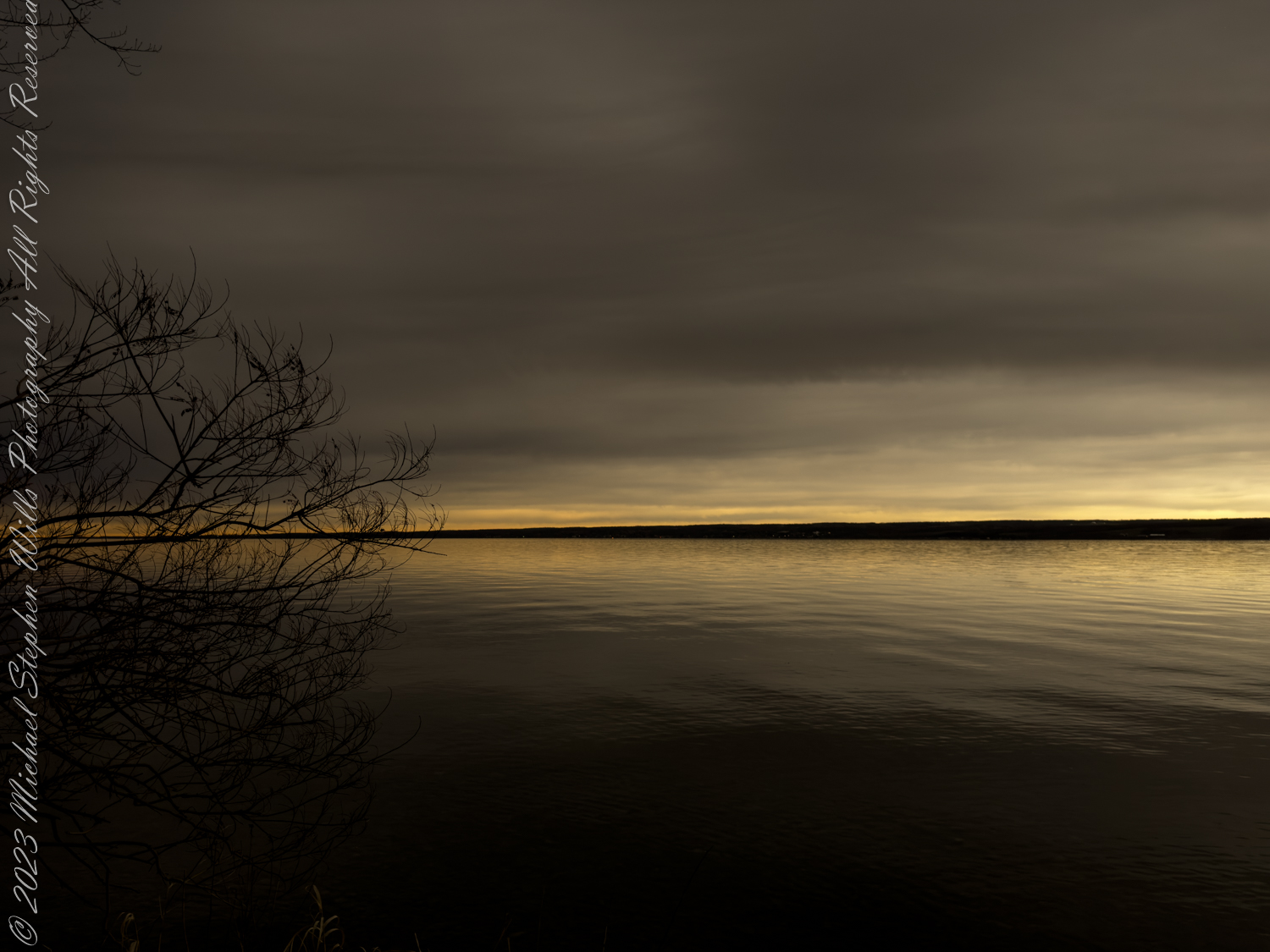
15:21:37, 56 seconds to totality. From the shoreline of VanRipen Conservation Area, Town of Romulus, Seneca County, Finger Lakes Region, New York State

Positioned on the southern edge of the total eclipse zone, I observed a fascinating phenomenon: the southern side of the horizon retained a brighter hue compared to the north, which veiled itself in deeper shades of twilight. This luminous gradient painted across the sky was a direct consequence of our location’s proximity to the eclipse’s path of totality.

In this captivating 4-minute YouTube video, you’re whisked away to the shores of Cayuga Lake, beneath a cloudy sky, on the day of the Total Eclipse, April 8, 2024 viewed from the VanRiper Conservation Area Cayuga Lake Shoreline in the town of Romulus, Seneca County of the Finger Lakes of New York State. As the moon dances across the sun at 5 times normal speed you witness the gradual darkening of the lake. On the opposite shore, the town of Aurora lights wink with the total eclipse of the sun. In normal time Loons herald the Sun’s return with a bright and eerie serenade, a natural symphony celebrating light’s triumph over darkness. Join us on this remarkable journey, where day turns to night and back again, all within the embrace of the Finger Lakes Region.

The totality lasted for a mere 50 seconds, when time seemed to stand still, yet it was a period rich with emotion and wonder. To witness the total eclipse was to see the universe align in a rare spectacle of shadow and light, a reminder of our place in the cosmos.

Reflecting on the experience, the VanRiper Conservation Area was a portal to a deeper understanding and appreciation of the natural world. Its untouched Cayuga Lake shoreline provided a setting for observing the eclipse with a reminder of the beauty and fragility of our planet.

As the eclipse passed and daylight returned the silence was filled with Loon calls, a celebration of life and the return of light. The solar eclipse was a convergence of time, place, and celestial mechanics, offering a spectacle for the eyes, a moment of introspection about our existence in this vast universe: a reminder of the ephemeral nature of life and the enduring awe of the cosmos. In the heart of the conservation area, I stood at the crossroads of science, nature, and spirituality, left to reflect on the dance of shadows and light.
Copyright 2024 Michael Stephen Wills All Rights Reserved

Hatch, Birth, Good Luck!

If you ever feel like you’re struggling with independence, just remember these creatures who start life with the ultimate “figure it out yourself” kit.

Introducing the “Self-Service Buffet” of the animal kingdom, where the motto is “Hatch, Birth, Good Luck!” These creatures don’t stick around for cuddles or parenting classes:

Sea Turtles – The Ultimate Sand Sprinters: These little guys burst from their eggs and make a mad dash for the ocean, dodging seagulls and crabs. It’s like the world’s most stressful obstacle course, where the prize is simply survival.

Salmon – Swimmers on a Solo Mission: After hatching, young salmon are on their own, navigating the perilous waters without a GPS or even a pep talk. They’ve got more instinct in their little fins than most of us have in our entire body!

Praying Mantises – The Loner Ninjas: These insects hatch ready to rumble, with no parental guidance on how to be the ultimate predator. It’s a tough world where your siblings might just see you as their first meal. Talk about family drama!

Kangaroo Rats – Desert Hoppers Inc.: Born in the harsh desert, these tiny rodents are all about the solo journey from the get-go. No room service or guided tours here; just a lot of hopping and hoping.

Octopuses – The Brainy Solitaires: Octopus moms are the epitome of “do it yourself,” laying their eggs and then, well, signing off. The babies hatch fully equipped with all the smarts and skills they need, making them the envy of every overbooked parent.

Komodo Dragons – The Scaly Independents: These formidable lizards hatch ready to take on the world, with a fierce look in their eye that says, “I didn’t choose the dragon life, the dragon life chose me.”

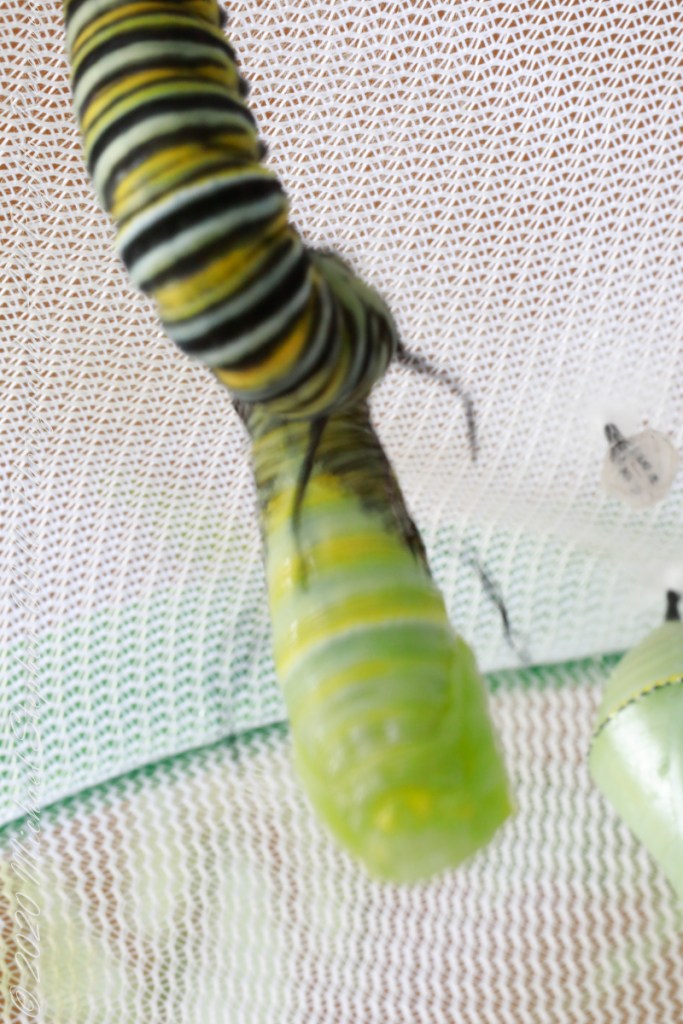
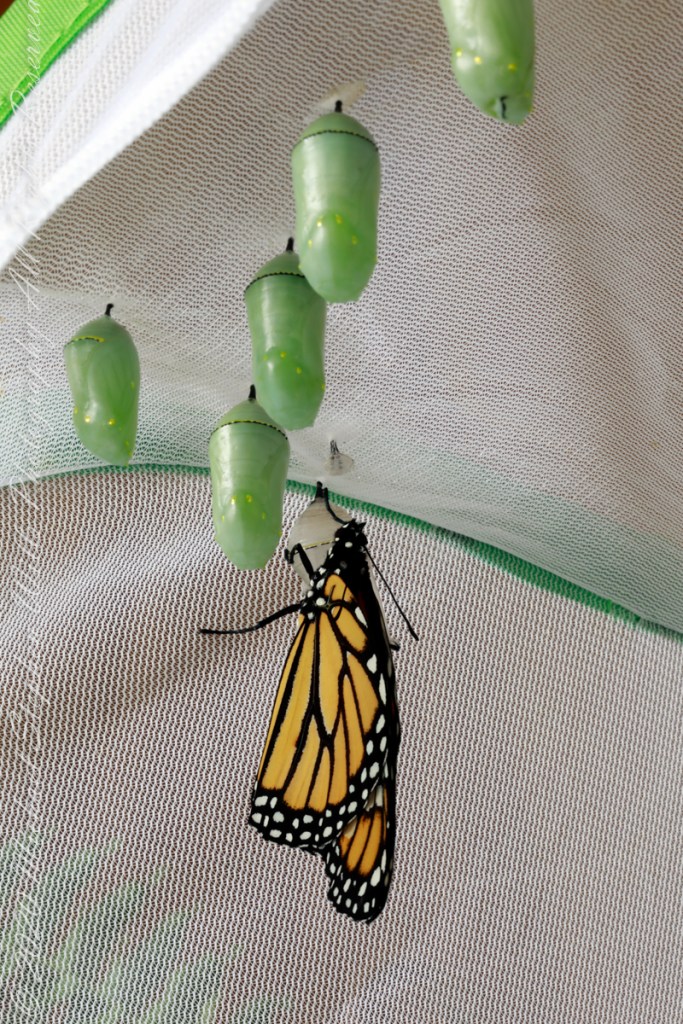
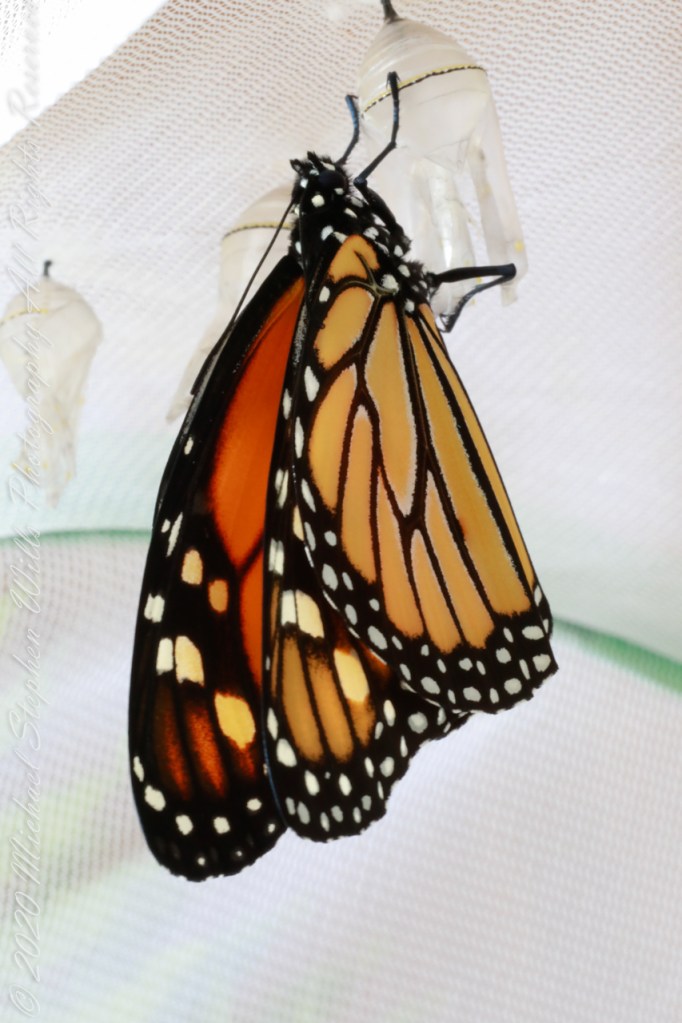
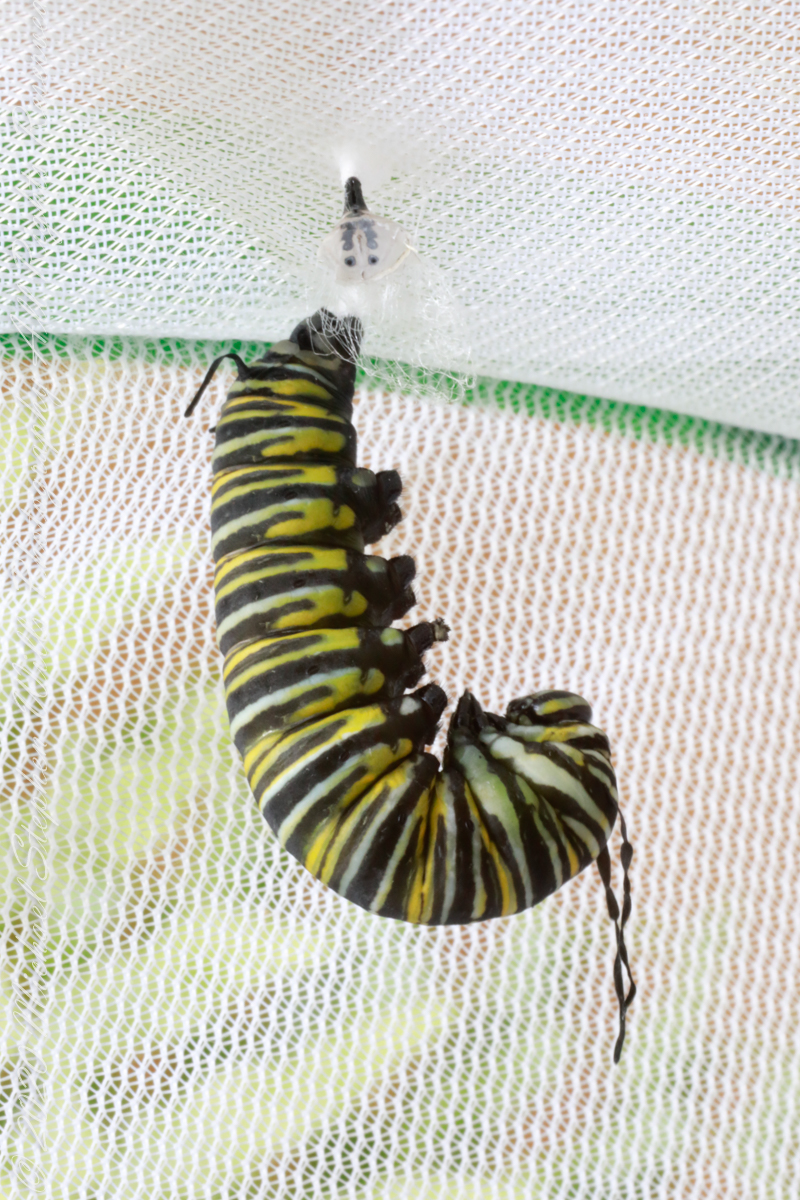
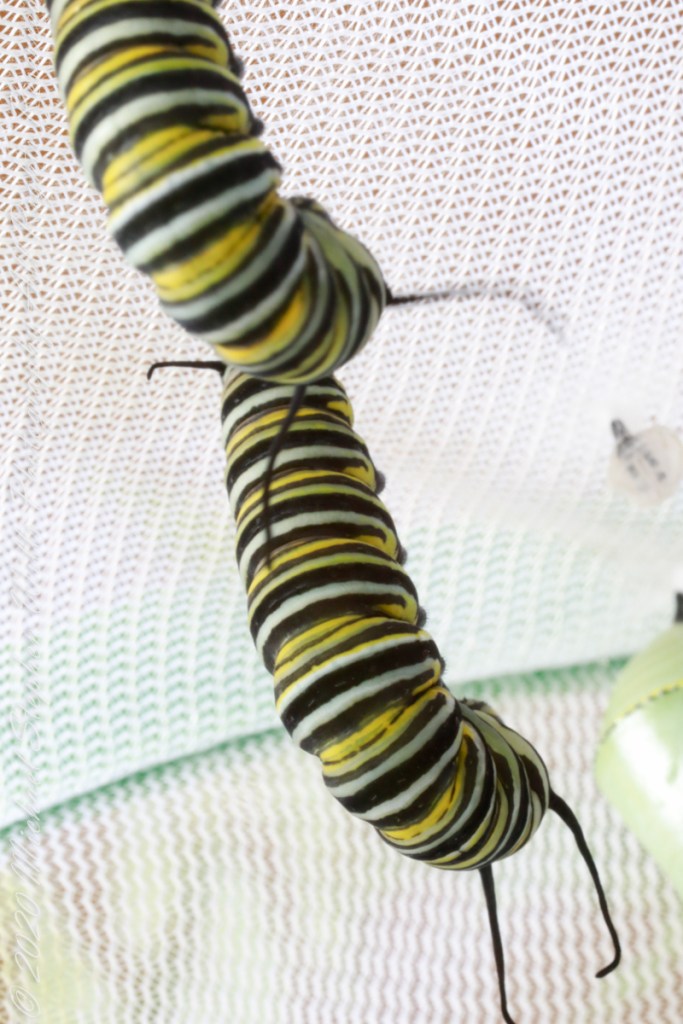
Butterflies – The Winged Wanderers: From caterpillar to chrysalis, and then to butterfly, these creatures do it all on their own. If butterflies had social media, their status would perpetually be “Just transformed. Who dis?”

So, if you ever feel like you’re struggling with independence, just remember these creatures who start life with the ultimate “figure it out yourself” kit. They might just inspire you to tackle your own obstacles – though hopefully, with fewer predators involved.

Copyright 2024 Michael Stephen Wills All Rights Reserved

Wildflowers Late Winter / Early Spring 2

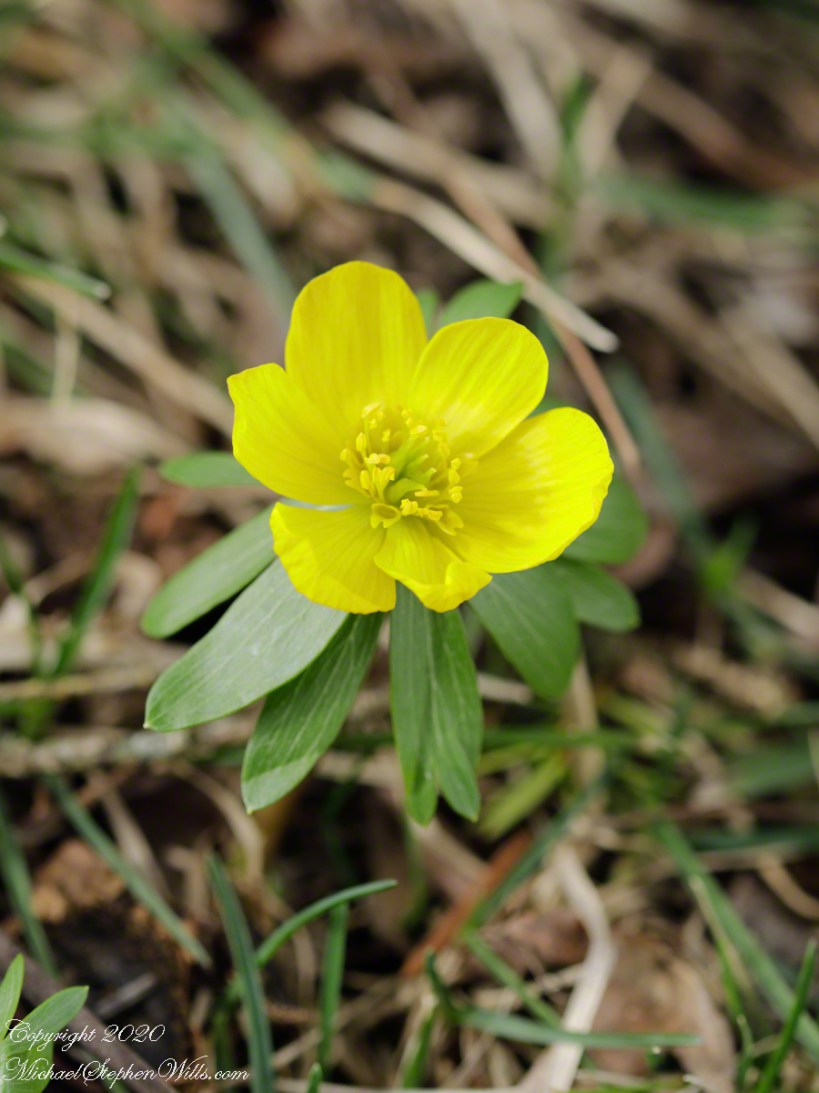
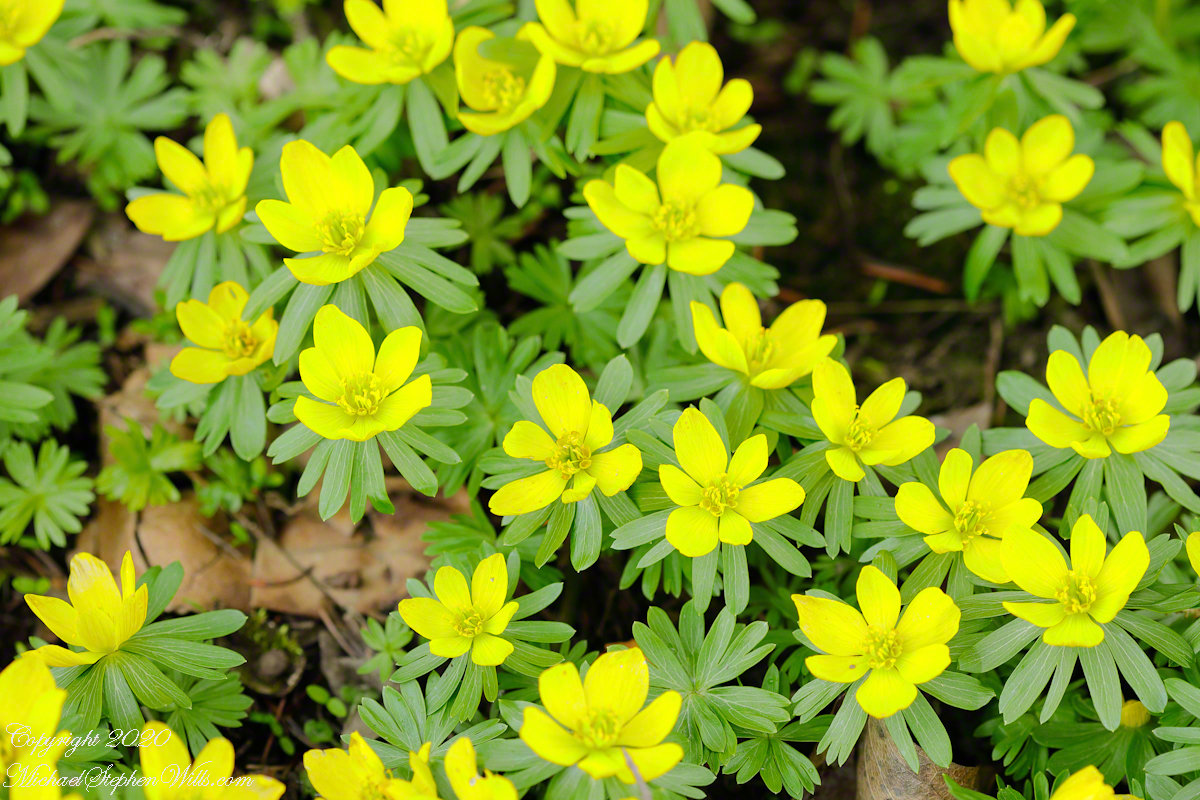
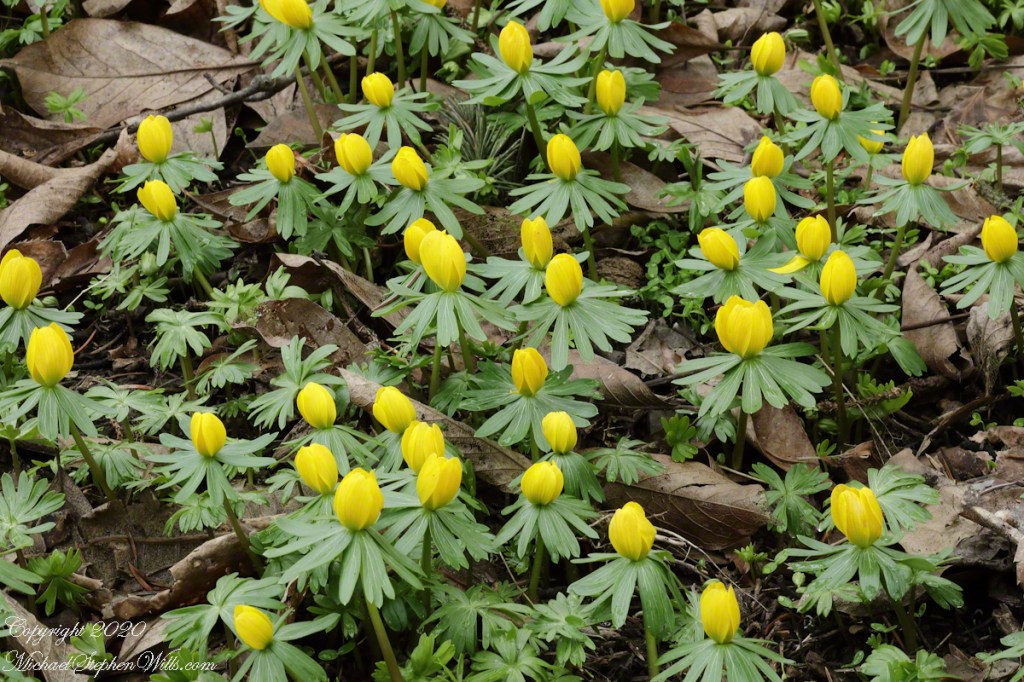
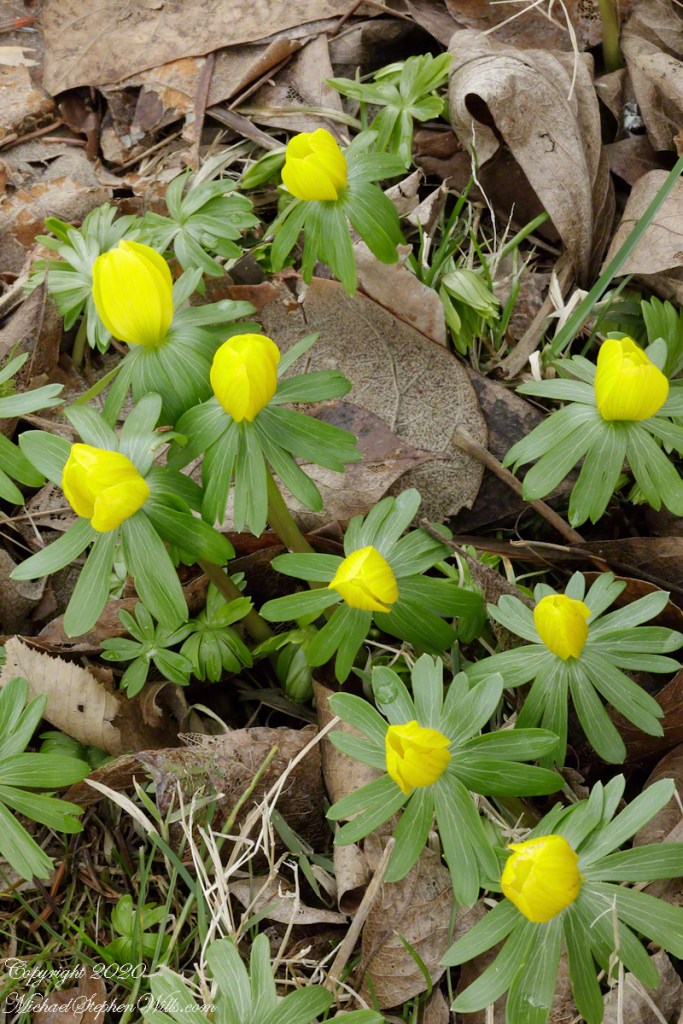
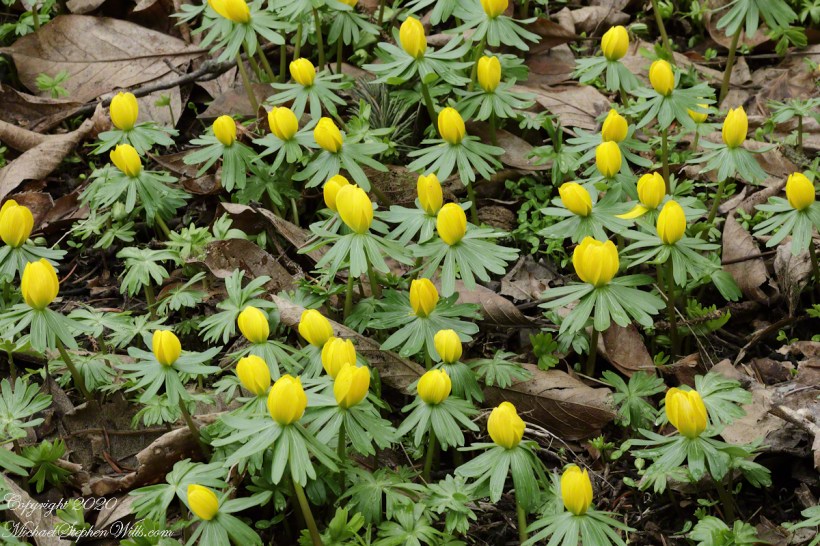
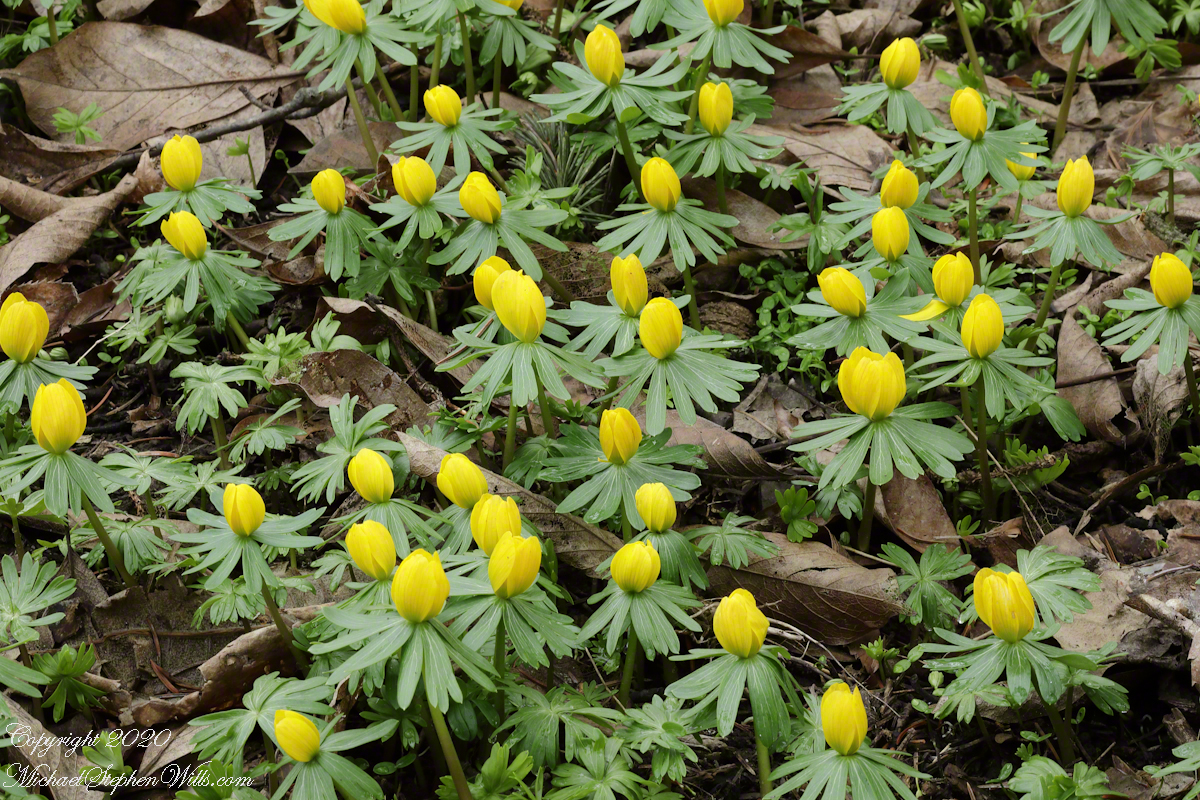
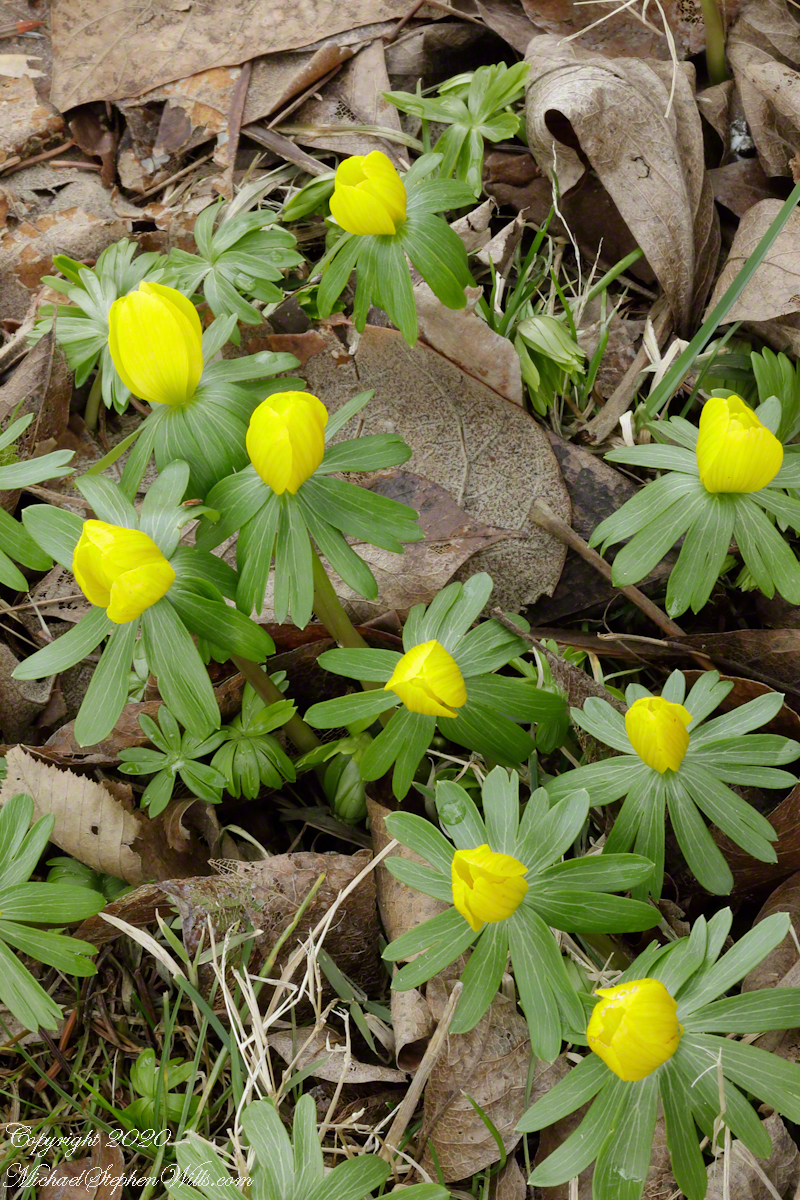
With the thermometer in the 60’s on March 10, 2020 the “buttercups” of yesterday are open. When we first moved here, the plants were much thinner. I used fertilizer spikes on the Magnolia tree around which they grow. Each early the flowers pollinate, forming seeds and spreading.

A tripod held the composition steady, and the timer was set to 2 seconds for extra stability at the f25 setting.

Here is a slideshow of yesterday and today’s shots.

Copyright 2021 All Rights Reserved Michael Stephen Wills

Wildflowers Late Winter / Early Spring 1

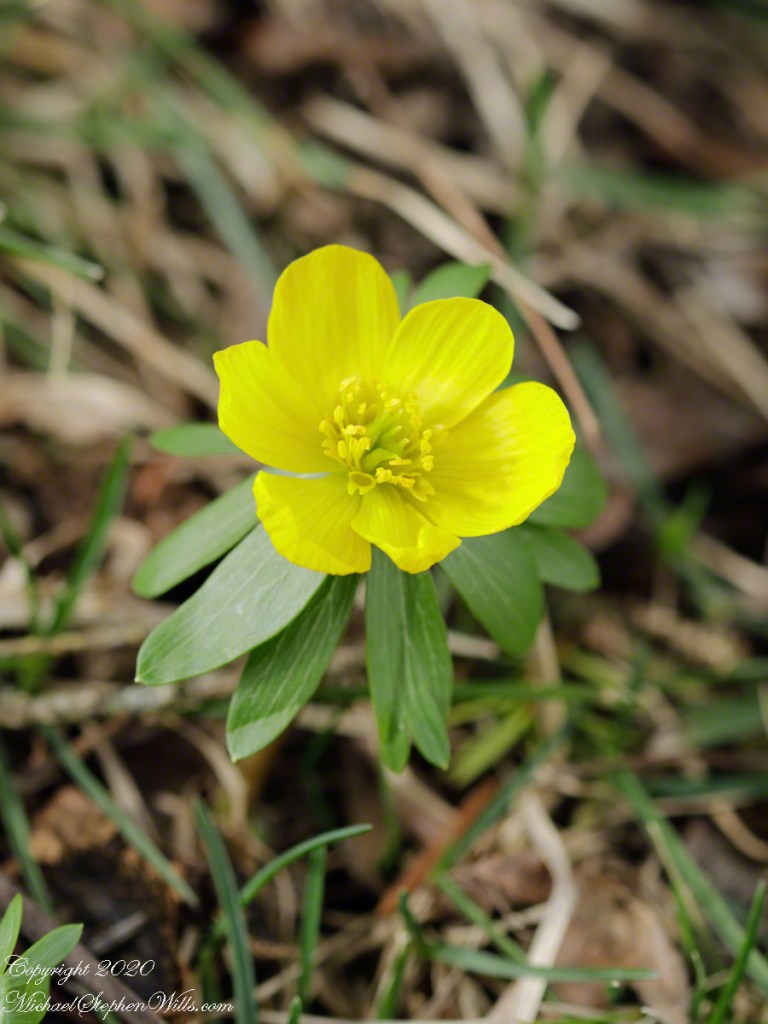
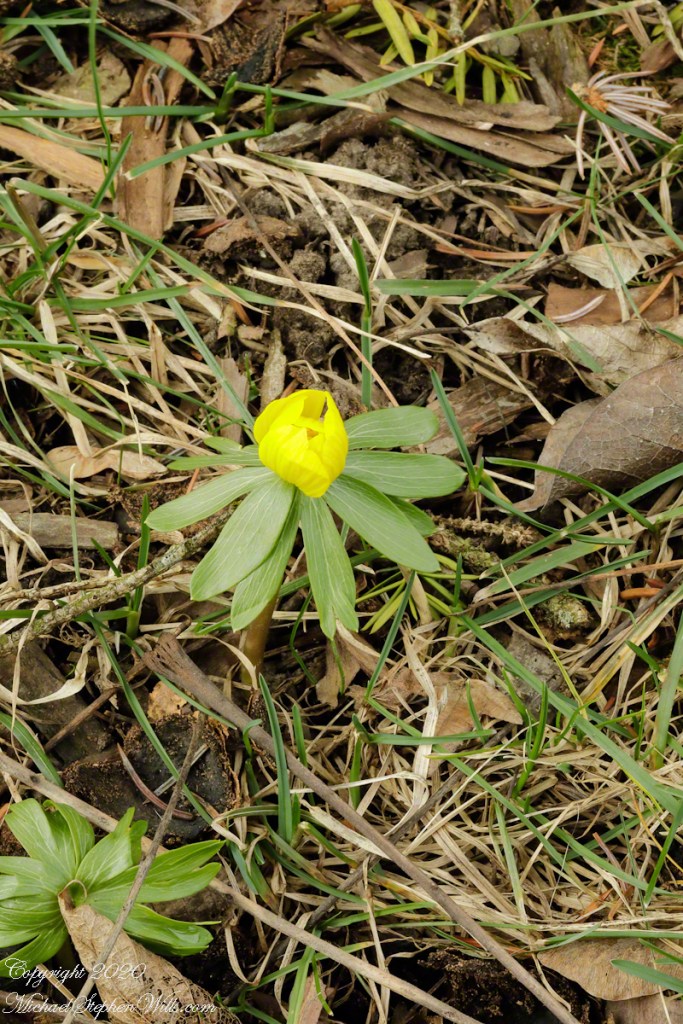
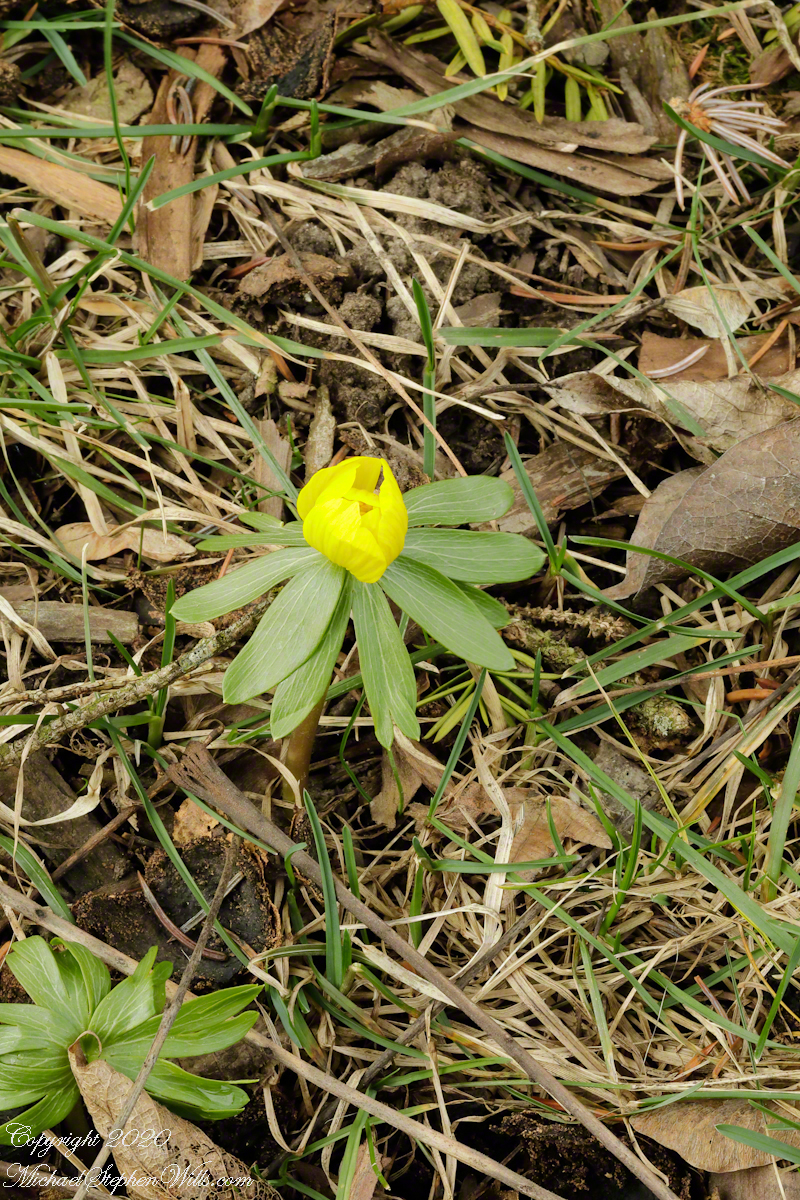
In February 2020, I captured images of the first flowers to bloom on their property with a Canon 5D Mark IV DSLR and a macro lens. The flowers belong to the Eranthis genus, known for early flowering.

These flowers are the first to bloom on our property, around the magnolia tree, and are also the first wildflowers photographed with my then new Canon 5D Mark IV dslr . Each year these “buttercups” grow thicker and spread. The latin scientific name Eranthis hyemalis proclaims the early nature of its flowering both in the genus, “Eranthis” – composed of two Greek language roots meaning “spring flower”, and species, “hyemalis” – a term from the Latin language meaning, “winter flowering.” The genus encompasses eight species, all early flowering plants with the common name winter aconite. These can also rightly be called Buttercups as the plant belongs to family Ranunculaceae, buttercups.

To capture the intricate details possible with the Canon EF 100 mm f/2.8 Macro lens I used here, it’s often necessary to adjust the camera settings to allow for a longer exposure time. This adjustment ensures that enough light reaches the sensor, particularly in macro photography or low-light situations, which helps in producing sharper and more detailed images. All these photographs are from f25. Setting a longer exposure compensates for the reduced light that might be a consequence of using a smaller aperture (higher f-number) for greater depth of field, a common technique in macro photography.”

It’s important to note that while setting a longer exposure can improve image quality by allowing more light to hit the camera’s sensor, it can also introduce the risk of motion blur if the camera or subject moves during the exposure. To minimize camera shake and achieve the best results, I used a Manfrotto “BeFree” tripod and the camera’s built-in timer set to a 2 second delay after a manual shutter release.

With the thermometer hovering above freezing, these blooms did not open today. The calendar says “late winter”, these Aconite are singing “early spring.”

Reference: Wikipedia “Eranthis hyemalis” and “Eranthis.”

Copyright 2024 All Rights Reserved Michael Stephen Wills

Woodland Goldenrods

Woodland goldenrods in the Finger Lakes Region contribute to ecosystem biodiversity and resilience.

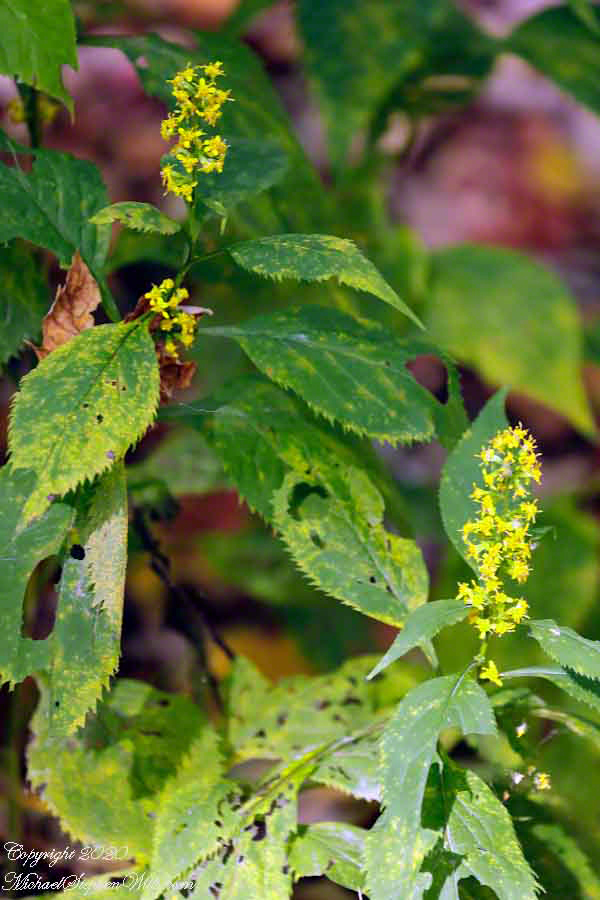
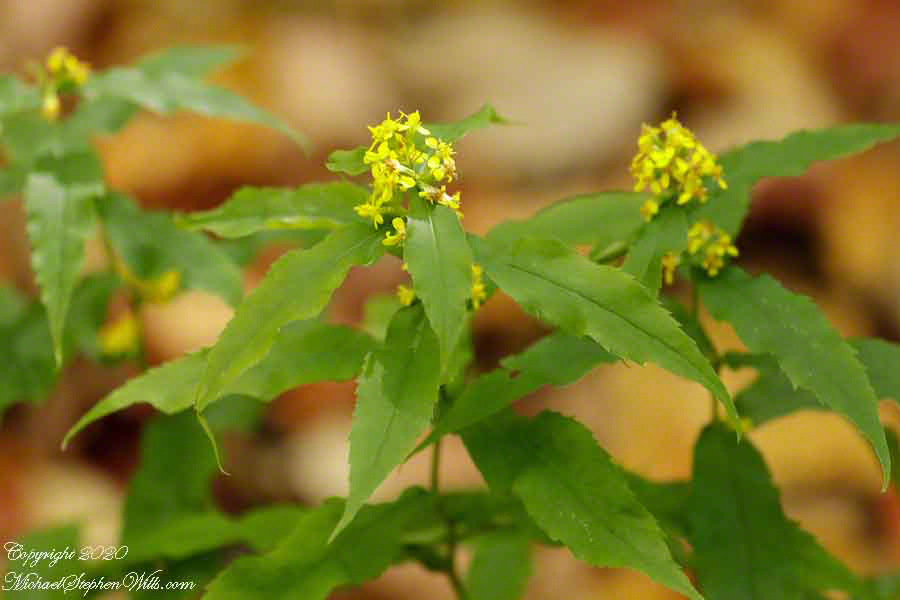
In the Finger Lakes Region of Central New York State, a tapestry of flora unfurls across the landscape, marked by the vibrant yellows of woodland goldenrods. These wildflowers are not just a visual spectacle; they are integral to the ecosystem, contributing to its biodiversity and offering a feast for pollinators.

Woodland goldenrods (Solidago species) are part of a larger genus that encompasses over 100 species, many of which thrive in the varied habitats of the Finger Lakes. This region, with its rich soils, ample rainfall, and diverse topography, hosts an array of goldenrod species, each adapted to specific niches within the woodland understory.

Hint: click image for larger view. Ctrl/+ to enlarge / Ctrl/- to reduce

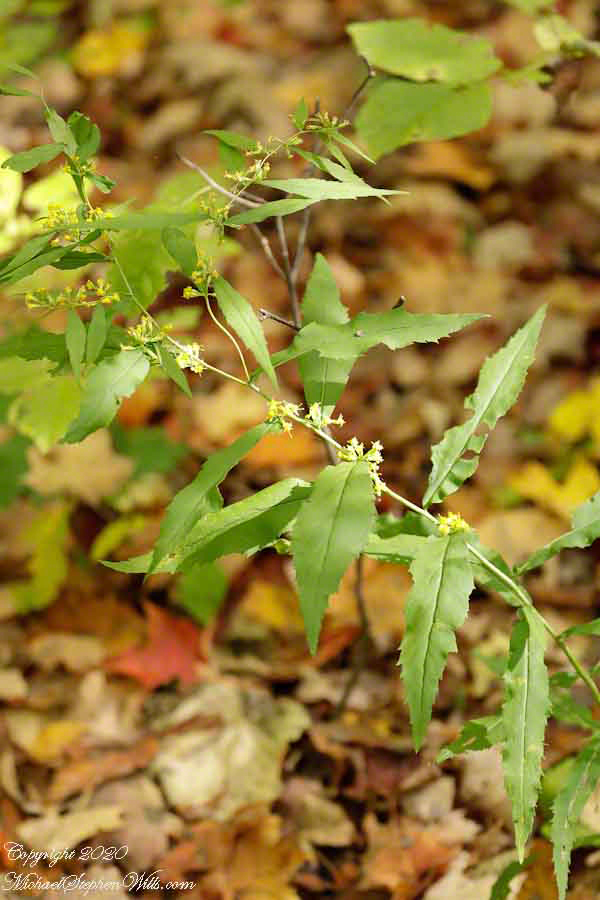
Solidago caesia, commonly known as blue-stemmed or wreath goldenrod, is one species that graces these woods. Unlike the typical roadside goldenrods, this species thrives in the dappled shade, its delicate arching stems culminating in small bursts of yellow flowers that appear like beaded necklaces draped over the greenery.

Another species, Solidago flexicaulis, or zigzag goldenrod, earns its name from the characteristic bending pattern of its stem, which zigzags between leaf nodes. Its flowers are more clustered, favoring the shade and moist conditions of the forest floor. Its presence is often a sign of a healthy, undisturbed woodland.

Solidago odora, or anise-scented goldenrod, brings a sensory delight to the mix with leaves that emit a licorice-like fragrance when crushed. This goldenrod favors the edges of woodlands and clearings, where sunlight can reach its clusters of tiny, bright yellow flowers.

The downy goldenrod, Solidago puberula, is yet another species that decorates the region’s woodlands. It prefers dry, sandy soils, often found on the slopes and ridges that contour the Finger Lakes. Its name comes from the fine hairs that cover its stems and leaves, a characteristic that distinguishes it from its kin.

Each of these goldenrods plays a role in the woodland ecosystem. Their flowers provide nectar and pollen for a variety of insects, from bees and butterflies to beetles and flies. The seeds are a food source for birds, and the plants themselves offer habitat to numerous woodland creatures.

The presence of woodland goldenrods also indicates the health of the region’s forests. These plants are often pioneers in disturbed areas, contributing to soil stabilization and the natural succession process. They are resilient and adaptable, capable of surviving in a range of conditions from full sun to dense shade, though each species has its preference.

In the Finger Lakes Region, the goldenrods bloom from late summer into the fall, their golden hues a prelude to the coming autumnal display. They stand as a testament to the beauty and complexity of these woodlands, their very existence a reminder of the delicate balance within these ecosystems.

In conclusion, the woodland goldenrods of the Finger Lakes are more than just a splash of color in the verdant forests. They are a vital part of the ecological tapestry, contributing to the biodiversity and resilience of the region. Each species, with its unique adaptations and preferences, adds to the rich natural heritage of Central New York State, reminding us of the intricate web of life that thrives in these woodlands.

Click Me to view my photographs on Getty.

Copyright 2023 Michael Stephen Wills All Rights Reserved http://www.MichaelStephenWills.com

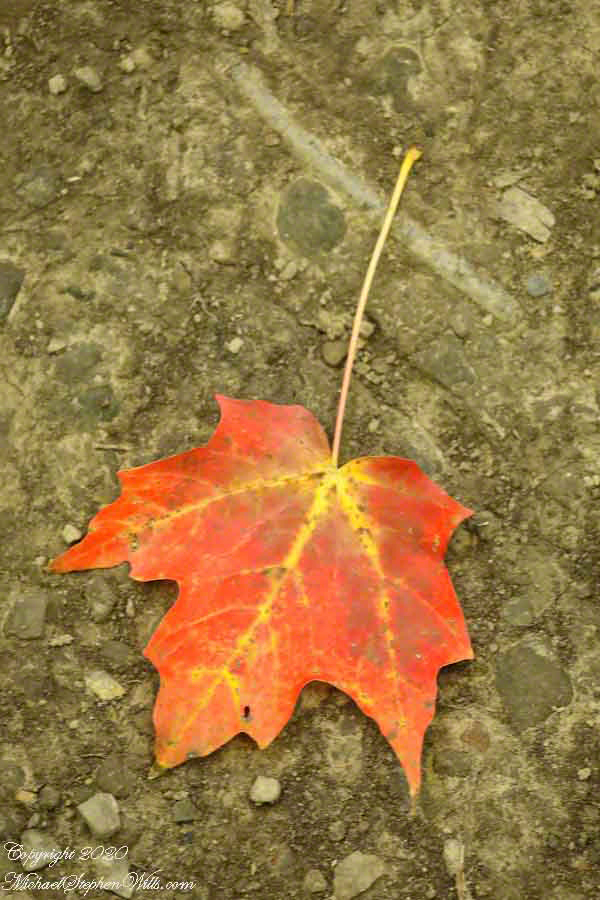
Maple Leaves and Us

The maple leaf is here portrayed as a symbol of life’s journey, intricacy, and impermanence, offering profound reflections on existence and human aspiration.

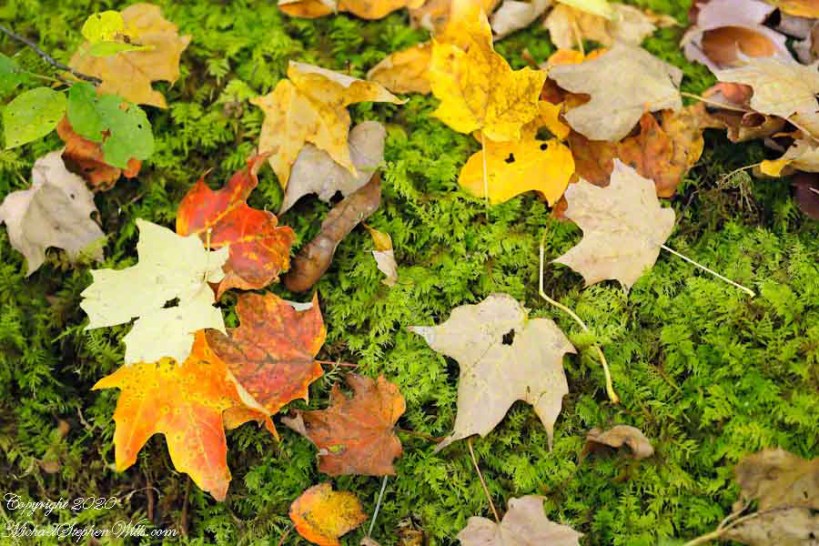
The maple leaf, a symbol cast from the arboreal giants that stand sentinel over the forests of the North, is an emblem woven into the very fabric of the natural world and the ethos of nations. In the hush of the woodland, where light dapples through the canopy, one might find the ground strewn with these deciduous gems, each a small testament to the grandeur of the cosmos and the cyclical poetry of life.

A maple leaf is an allegory for the human condition. The leaf, in its singular form, is a paragon of symmetry, its serrated edges a crown of nature’s meticulous artisanship. The veins that stretch across its surface, much like the lines upon an aged hand, speak of life’s intricate network, the invisible bonds that connect and sustain us. Each leaf, a verdant vessel, courses with the sap of existence, a lifeblood shared in the quiet brotherhood of the forest.

Hint: click image for larger view. Ctrl/+ to enlarge / Ctrl/- to reduce

Yet, as the seasons wheel from the halcyon days of summer to the mellowing glow of autumn, the maple leaf undergoes a transformation as profound as any in the human soul. It becomes a canvas upon which the twilight of the year is painted. Scarlet, amber, and gold – these are the hues of the leaf’s maturation, a visual sonnet to the passage of time. Mann may have mused on this metamorphosis, the leaf becoming an artifact of beauty at the very precipice of its own demise, a reflection on the bittersweet nature of all earthly endeavors.

Philosophically, the maple leaf’s journey from bud to decay is a microcosm of existence itself. In spring, it burgeons forth from the stark limbs of its parent tree, a symbol of rebirth and the perennial hope that accompanies new beginnings. In its zenith, it offers shelter and sustenance, an unheralded giver of life. But as it yields to the inevitable fall, swirling in the autumn winds to its rest upon the soft earth, it evokes a meditation on the impermanence of all things. The leaf, once the very emblem of vitality, now melds with the soil in quietus, a return to the elemental from which it sprung.

The maple leaf, then, is not merely an object of transient beauty, nor simply a token of the land it hails from. It is a narrative, a silent orator of the eternal truths that bind the soul of the artist to the canvas of the universe. It is a vessel for the musings of poets and philosophers, a simple yet profound cipher for the myriad complexities of existence.

I find maple leaves imbued with a weight of existential significance: its simple, pleasing shape a metaphor for the human aspiration towards beauty and the poignant inevitability of its corruption. For in the visage of the leaf, one might glimpse the duality of passion – the longing for the sublime, coupled inexorably with the sorrow of its fleeting grasp. Thus, the maple leaf, in its silent splendor, becomes a memento mori, a delicate reminder of the rapturous agony of life and the solemn peace of death.

Click Me to view my photographs on Getty.

Copyright 2023 Michael Stephen Wills All Rights Reserved http://www.MichaelStephenWills.com

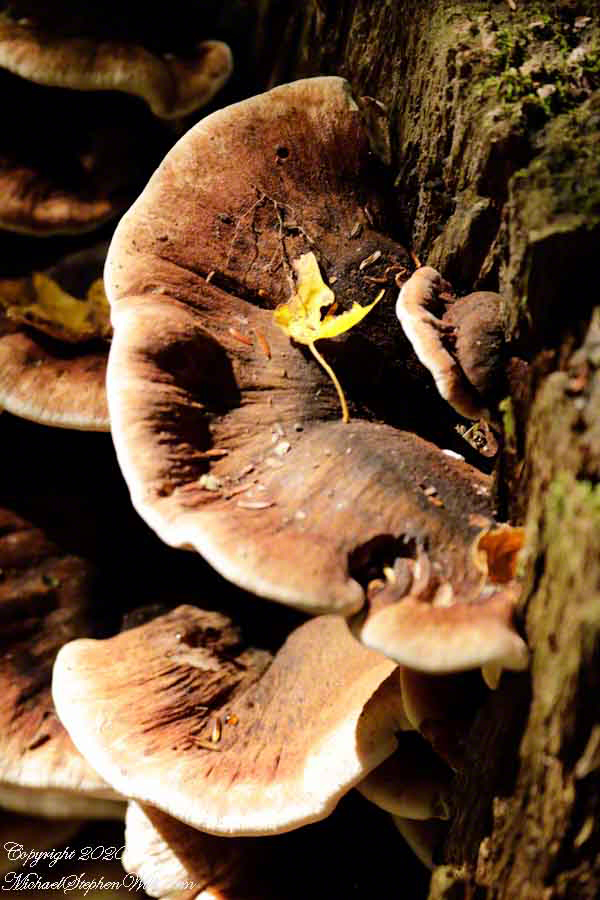
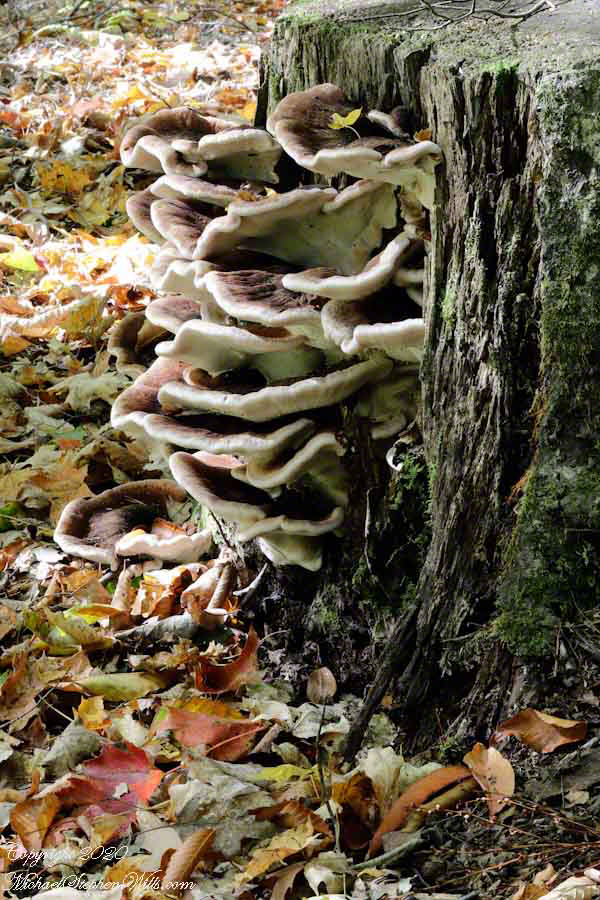
Fungal…

Shelf fungi, known for their ecological role and unique physical features, hold significant cultural and practical importance in Native American traditions, medicine and art.

Overview

Shelf fungus, also known as bracket fungus, comprises various species of polypore mushrooms that grow on trees, logs, or branches, forming shelf-like structures. These fungi are integral to forest ecosystems, functioning as decomposers that break down the cellulose and lignin in wood, facilitating nutrient cycling. They possess a hard, woody basidiocarp — the fruiting body — which can persist for years. The spore-producing surface is typically on the underside, featuring numerous tiny pores where spores are released. Shelf fungi are diverse, with species ranging from saprophytic to parasitic, some contributing to tree diseases like heart rot.

Hint: click image for larger view. Ctrl/+ to enlarge / Ctrl/- to reduce

Poetically Fungal

Shelf fungi captivate me with their silent tenacity, perched like wooden sentinels on forest guardians. Their presence is a reminder of nature’s cycles, breaking down the old to nourish the new. Each time I spy their intricate layers and earthy hues, I’m reminded of life’s layered complexities. They are nature’s artists, painting decay with a purposeful brush, turning fallen timber into rich soil. To me, they symbolize resilience, a testament to thriving in place, despite the odds. In their quiet existence, they echo the beauty of transformation, an emblem of life’s perpetual motion within the stillness of the woods.

Natively Fungal

The relationship between Native Americans and shelf fungi is rooted in a profound understanding of the natural world, where every element has a role in the cultural and practical life of a community. Shelf fungi, with their sturdy, shelf-like projections from trees, have been an integral part of Native American tradition, utilized for both medicinal and practical purposes.

Medicinally, various tribes recognized the healing properties of certain shelf fungi. The Iroquois, for example, used bracket fungi in poultices to treat wounds and swelling. Other tribes found uses for shelf fungi as anti-inflammatory agents or as a means to stop bleeding, embracing the fungi’s natural anticoagulant properties.

In everyday life, the unique physical properties of shelf fungi lent themselves to multiple uses. The Piptoporus betulinus, commonly known as the birch polypore, was carried by the Otzi the Iceman, a natural mummy dating back to over 5,000 years ago, likely for its antiseptic properties and as a means to carry embers due to its ability to smolder without flame. This hints at a broader prehistoric and indigenous use of fungi for fire carrying.

The tinder fungus, a type of shelf fungus, was particularly valued for its ability to hold a flame. Native Americans often used this fungus to transport fire between camps. They would hollow out a section of the fungus, fill it with hot embers, and cover it to create a portable and long-lasting source of fire. This was an essential technology for survival, especially during long treks or in adverse weather conditions.

Moreover, the Ganoderma species, commonly referred to as the Artist’s Conk, served as a canvas for art. These fungi have a white pore surface that darkens when touched. Native American artists utilized this characteristic to etch drawings and messages, turning these fungi into storytelling and communicative tools.

The profound connection between Native Americans and shelf fungi illustrates a deep ecological wisdom where even a simple fungus is interwoven into the fabric of cultural and survival practices. This symbiosis underscores the importance of every organism within an ecosystem, a lesson that resonates with contemporary efforts to understand and preserve our natural world.

Copyright 2023 Michael Stephen Wills All Right Reserved http://www.MichaelStephenWills.com

Dam Pond

Fillmore Glen Autumn

As the season of harvest waned to the deep, fiery heart of November, I found myself beneath the boundless expanse of heaven’s azure, wandering the untouched expanses of the wilds. The sun, in its unwavering journey, cast its gaze upon the earth, illuminating the realm with a clarity that seemed to transcend the ages. It was upon such an afternoon that mine eyes beheld a vision of yesteryear’s industry, a relic from a time long since passed into the annals of history—an ancient dam and pond, nestled in the forest.

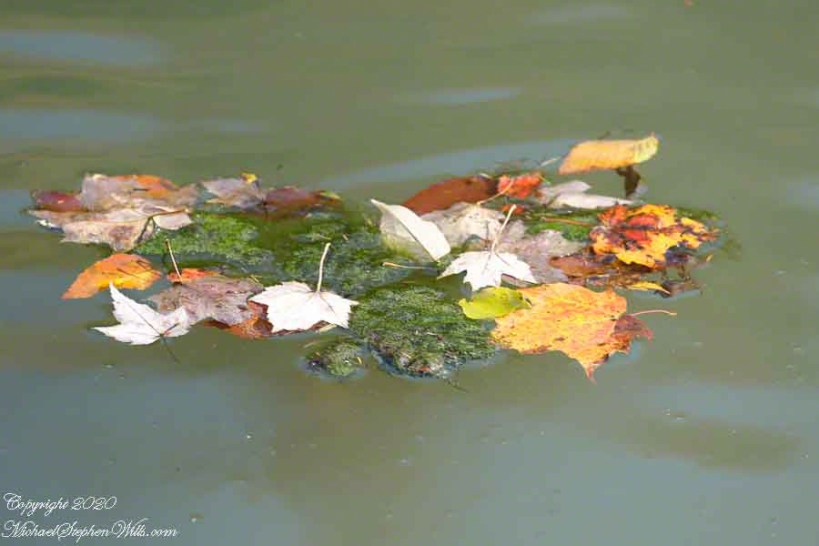
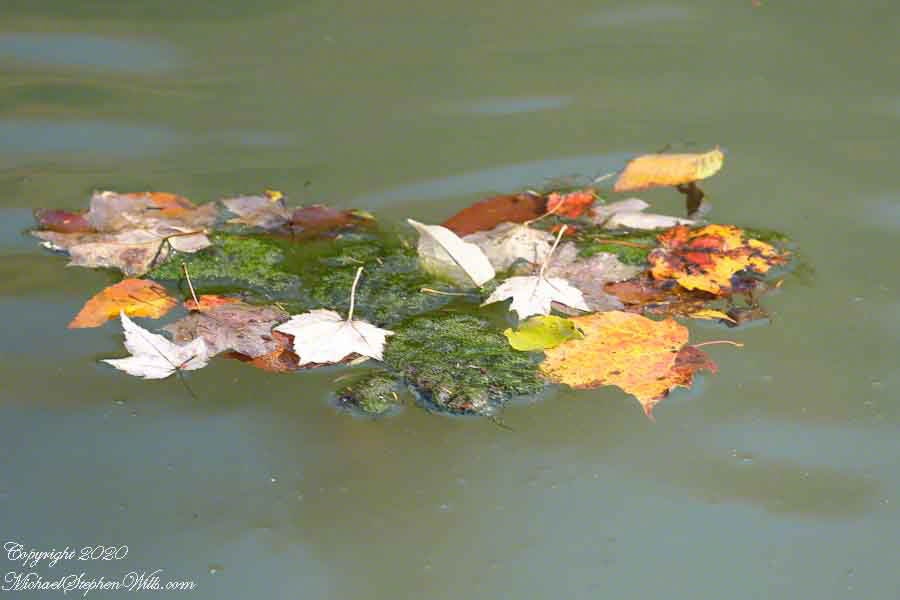
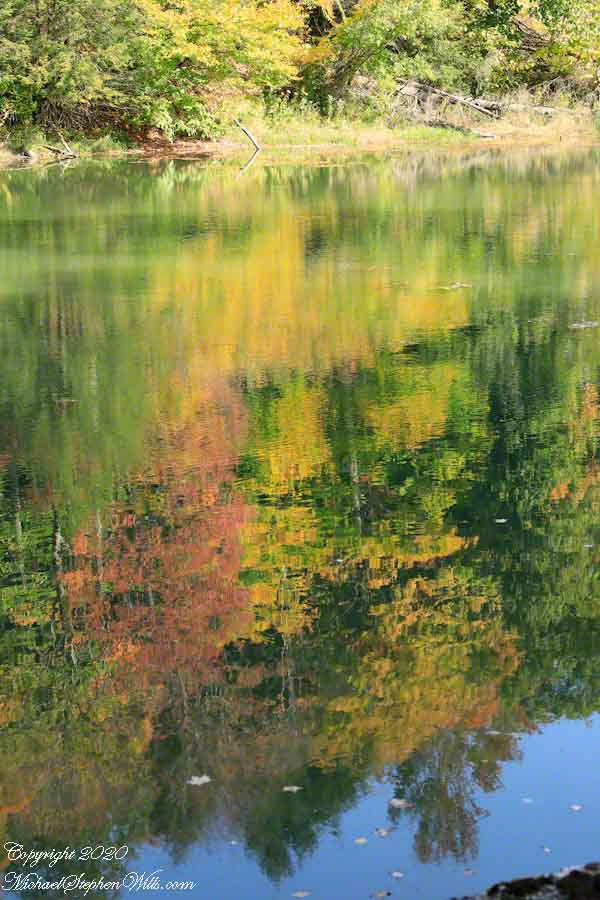
The water, a mirror to the sky, held within its embrace the autumnal celebration of the maples. Leaves, flames of red and gold, lay scattered upon the surface, drifting languidly atop the pond. Amongst this mosaic of nature’s final flourish, green tendrils of algae weaved patterns, as though the very spirits of the forest sought to lay claim to the waters with their verdant touch.

Hint: click image for larger view. Ctrl/+ to enlarge / Ctrl/- to reduce

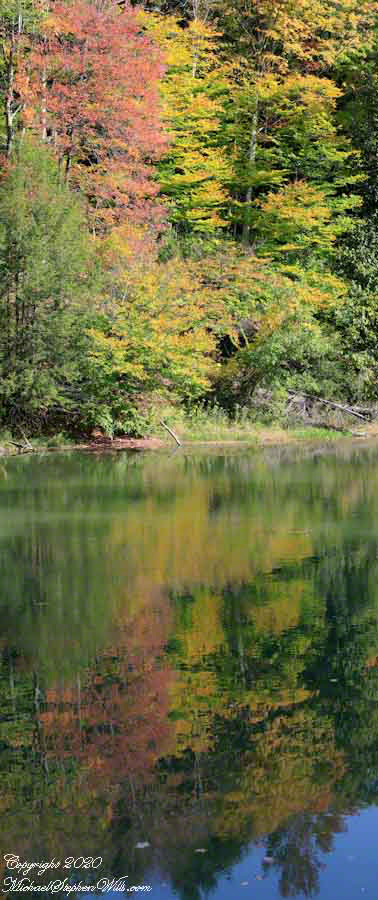
The trees, mighty sentinels of maple, stood in grandeur around the pond, their boughs heavy with the weight of the season. Their leaves, caught in the throes of change, were painted with the brilliant hues of yellow and red, a testament to the time when the earth itself becomes an artist of unrivaled skill.

And there, frozen in the midst of this tranquil domain, stood the gears of the mill race, once alive with industry’s hum, now silent and immobile. They reached towards the heavens, their shadows etched upon the pond below, as if in a final, defiant stand against the passage of time.

Such a sight, in the clear, sunny afternoon of this November day in the year 2511, spoke to me of the enduring dance between man’s creations and the relentless, reclaiming hand of nature. It was a scene that stirred within me a profound reverence, a sense of communion with the generations that had walked these woods before. Here, in this hallowed place, time seemed to pause, allowing me a moment of solemn reflection in the ceaseless flow of eternity.

Copyright 2023 Michael Stephen Wills All Right Reserved http://www.MichaelStephenWills.com

Golden Paths…

Fillmore Glen Autumn

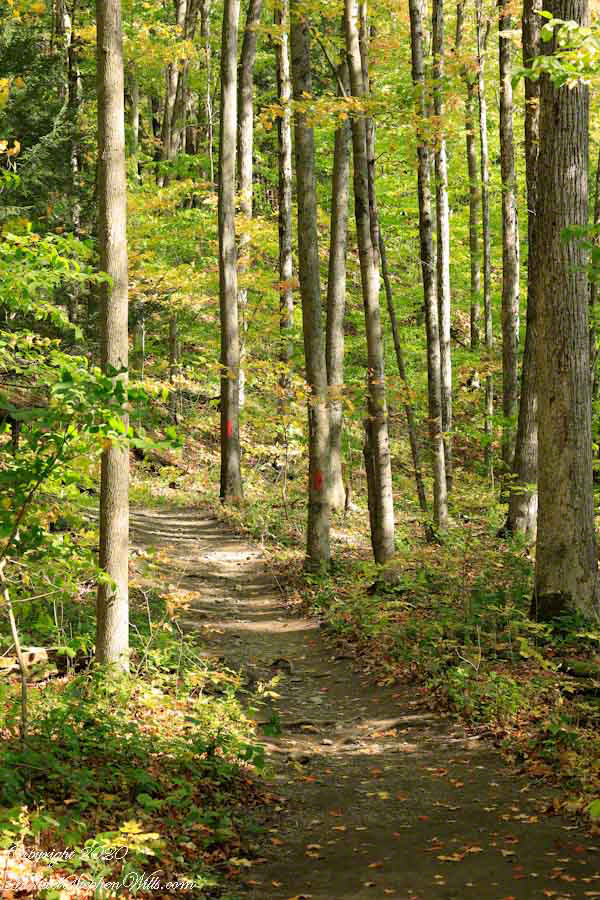
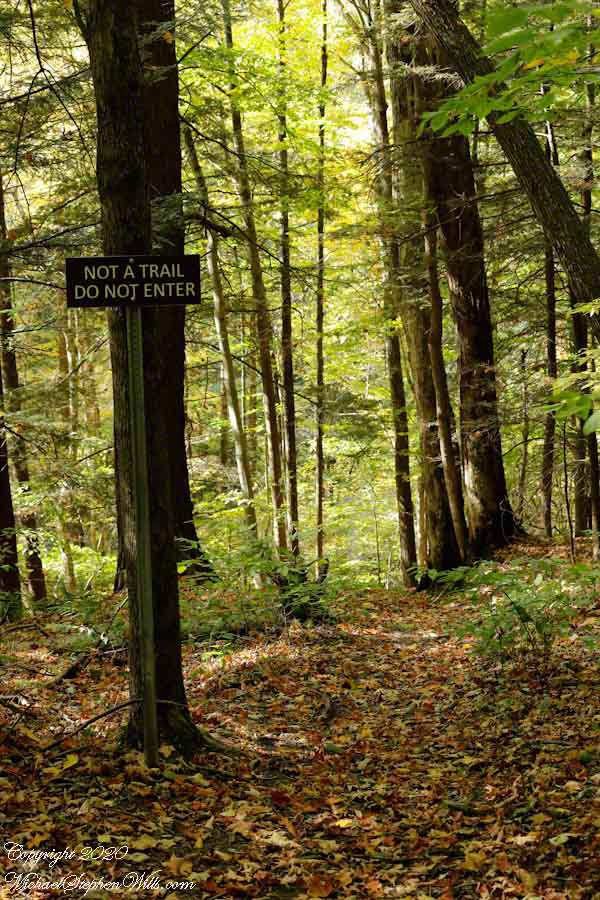
Within Fillmore Glen, as autumn unfurls its vibrant tapestry, there lies a path that seems to exist between the pages of an unwritten folklore. It is a trail not marked for travel, bearing a solitary sign, “Not a trail. Do not enter,” which stands like a silent sentinel amidst the riot of colors. Yet, the path stretches on, an irresistible lure, a golden ribbon that meanders through the heart of the wood, carpeted with leaves that have taken their final, graceful descent to create a mosaic of reds, oranges, and yellows.

Hint: click image for larger view. Ctrl/+ to enlarge / Ctrl/- to reduce

The path is a secret thoroughfare, known only to the whispering trees and the shy creatures that watch from the underbrush. The air here is thick with the scent of damp earth and the musk of decay that heralds the deepening of autumn. It is a place out of time, where the distant sound of falling water is a constant undertone, a reminder of the unseen river that carves its way through the glen, its voice rising and falling with the wind.

The leaves that blanket the path rustle with the passage of unseen feet—perhaps the fox, or the silent owl that hunts at twilight. The golden footpaths are corridors of light, as the sun filters through the thinning canopy, casting long shadows and illuminating patches of the forest floor with a warm, amber glow.
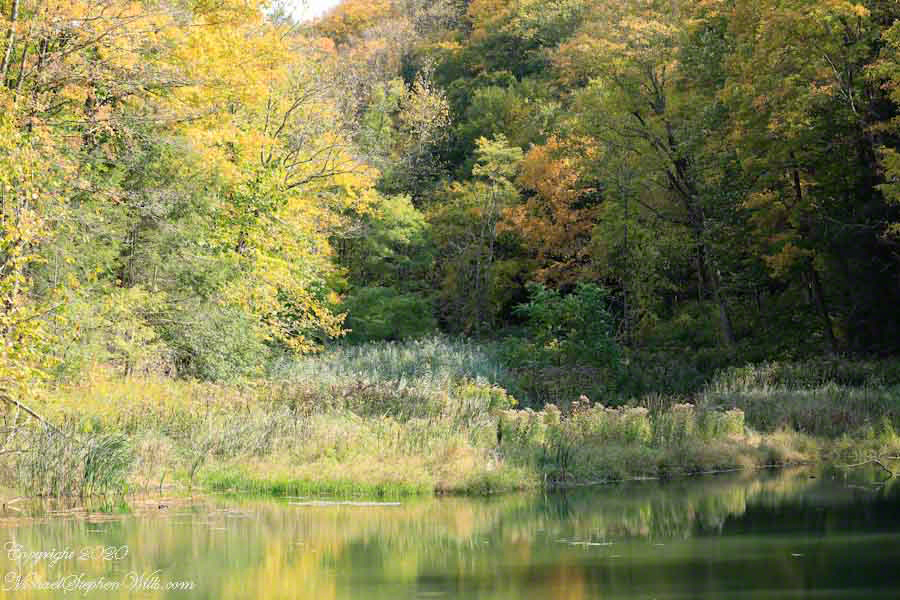
Here, one’s footsteps become a part of the glen’s own rhythm, a soft tread upon the sacred ground. The sign’s warning goes unheeded by the whispering woods, which seem to beckon with a voice as old as the hills, inviting the soul to wander and to wonder. In Fillmore Glen, the path is not just a physical journey but a passage through the soul of autumn itself, a dance with the ephemeral, a fleeting embrace of the golden, transient beauty of the fall. It is not merely a place to walk; it is a path to feel, to breathe, to exist in harmony with the quiet pulse of the earth.

Copyright 2023 Michael Stephen Wills All Right Reserved http://www.MichaelStephenWills.com

Woodland Shelters…

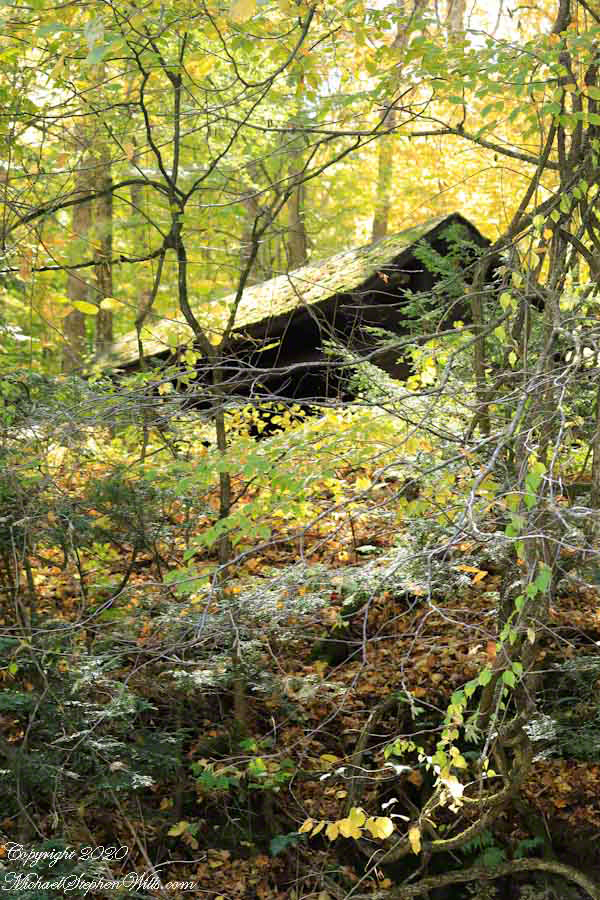
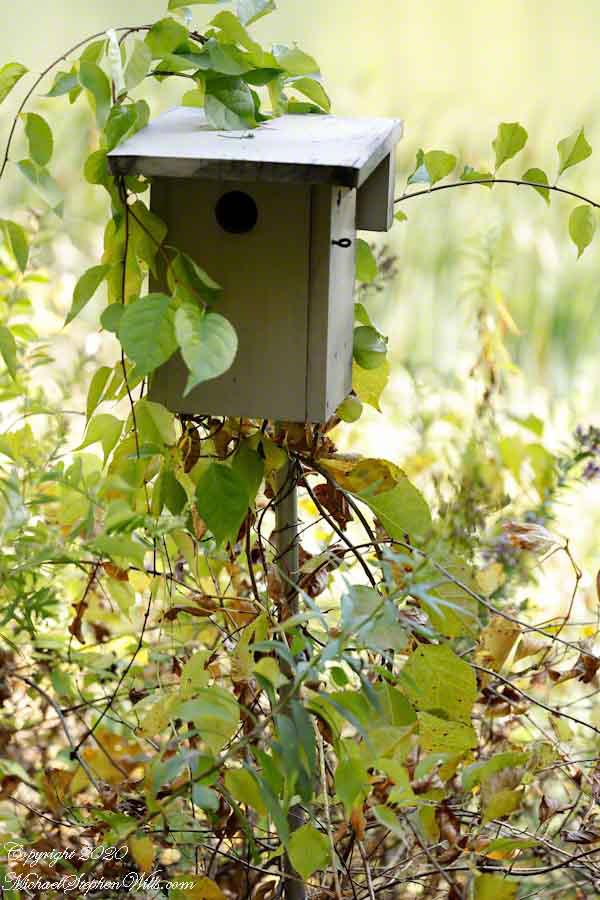
Here we have the harmony between humans and nature, represented through woodland shelters like lean-tos and birdhouses. It portrays these shelters as spaces of coexistence, mutualistic masterpieces blending function, form, and aesthetic in nature.

…on the Dam Pond at Fillmore Glen.

Hint: click image for larger view. Ctrl/+ to enlarge / Ctrl/- to reduce

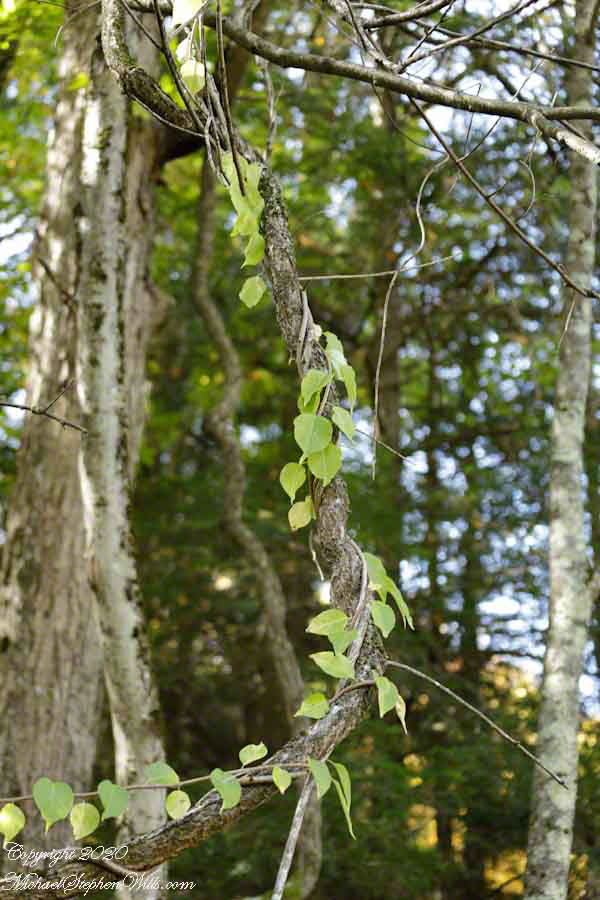
…vines running free.

In the dappled sanctuary of the woodlands, where the rustle of leaves is a constant whisper and the breeze carries the secrets of the earth, there lies an unspoken harmony between the realm of the rooted and the realm of the roving. Here, the art of shelter is not just necessity but poetry—a dialogue between man and nature, bird and branch, leaf and sky. It is in the woodland shelters—those humble lean-tos and the charming birdhouses—that this conversation finds its most enchanting expressions.

A lean-to, a simple structure, a slant of sanctuary against the embracing trunk of a venerable oak or the crook of a steadfast pine, rises like an ode to minimalist refuge. It is both a testament to human ingenuity and a bow to the grandeur of the forest. Constructed from the very bones of the woods, with limbs that have fallen in the last tempest’s dance, it is clad in the textures of the wild—a tapestry of bark, a patchwork of leaves. It does not impose but rather suggests, whispering, “Here, rest awhile, where the earth holds you and the canopy cradles the sky.”

Within this woodland embrace, the lean-to is the hermit’s haven, the hiker’s pause, the dreamer’s alcove. It is the place where one can commune with the murmur of the brook, the chitter of the squirrel, and the silent flight of the owl at twilight. It is here that the smoke of a small fire mingles with the mist of dawn, where stories unfold to the rhythm of the crackling embers and the forest listens.
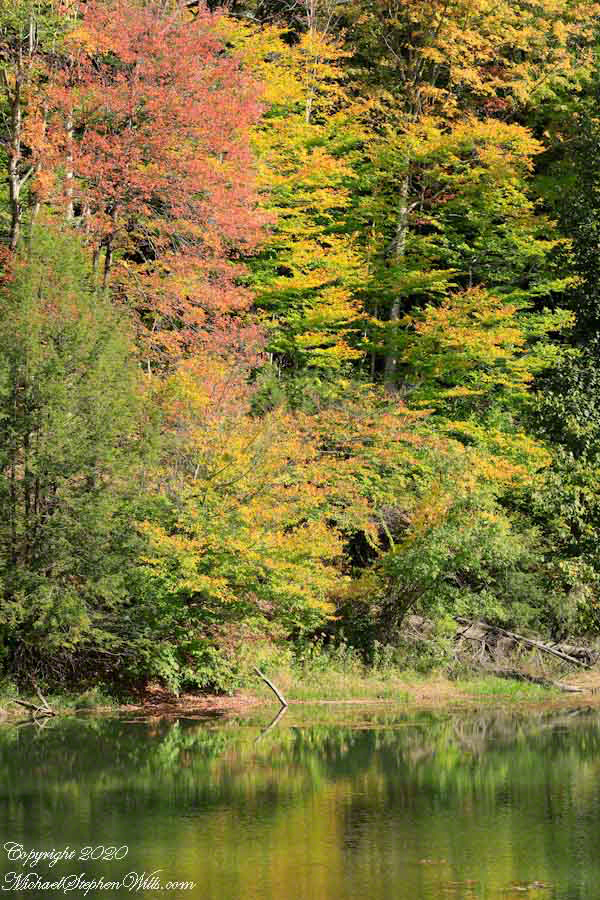
And what of the birdhouses, those quaint dwellings that pepper the woodland tableau? They are not mere shelters but the grand stages for the aerial ballet of wings and the morning serenades of feathered minstrels. Each is a mansion of possibility, an invitation etched in wood and lovingly placed among the boughs. They are the outposts of avian dreams, where the pulse of tiny hearts beats in time with the dripping of rain and the warmth of the sun’s caress.

The birdhouse is a symbol of the generosity of the woodsman’s spirit, a gift to the skyborne, a token of respect to the delicate denizens of the firmament. Here, the chickadee, the finch, the nuthatch, and the wren find respite and nurture the next generation of sky dancers. Each hole is a portal to a home, each perch a threshold to the warmth within, and every departure and return is witnessed by the vigilant trees, the silent sentinels of the forest.

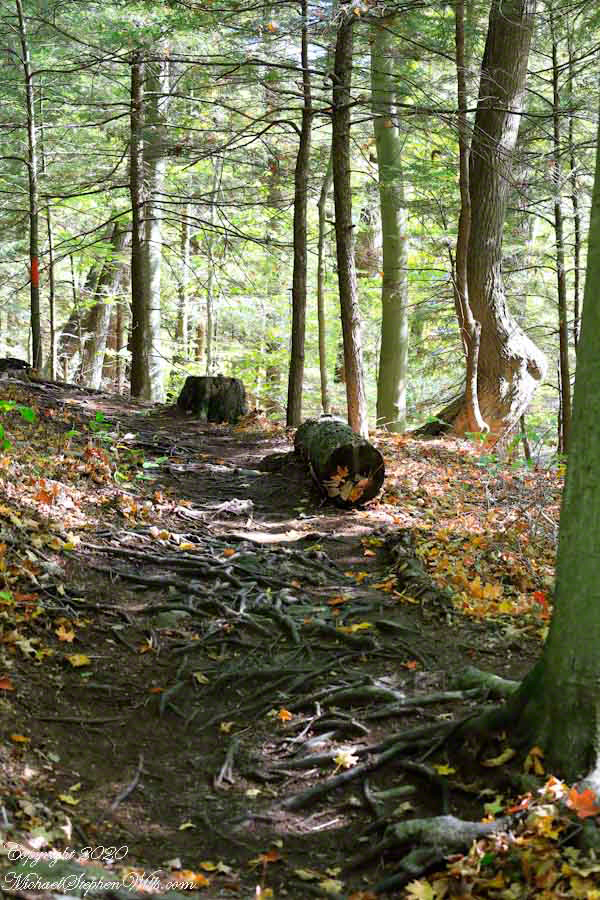
Lean-tos and birdhouses, these woodland shelters, are the chorus of the sylvan symphony, the unseen chords that bind human to habitat, life to life. They are proof that in the quiet places of the world, where humanity treads lightly and the wild holds sway, there can be a beautiful coexistence, a mutualistic masterpiece painted on the canvas of the wilderness. They stand as symbols of the beauty that arises from the marriage of function and form, purpose and aesthetic, the innate and the crafted.

In the woodland shelters, there is a rhapsody played in the key of nature—a song of simplicity, of connection, of the perpetual dance between the earth and its many children. It is here, in the lean-tos and birdhouses, that the heart of the woods beats strongest, beneath the watchful eyes of ancient trees and the endless sky.

Copyright 2023 Michael Stephen Wills All Rights Reserved MichaelStephenWills.com