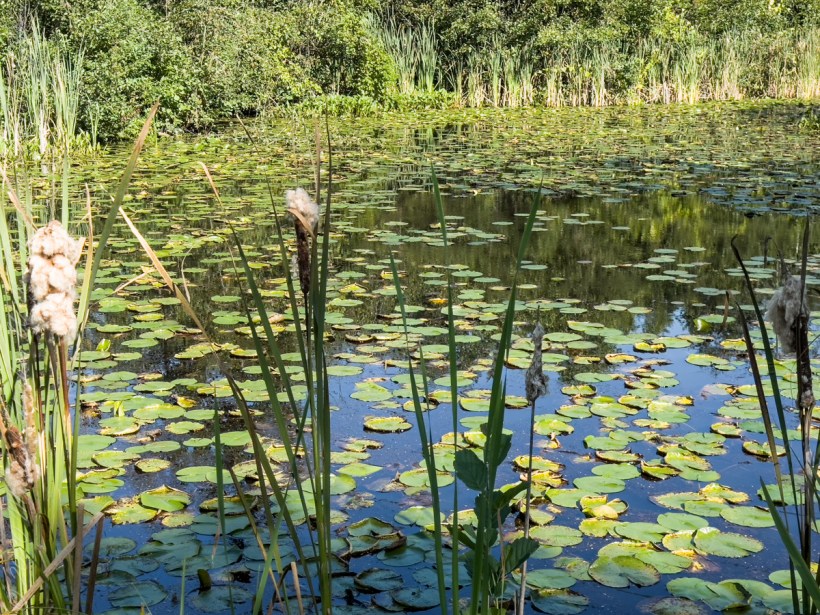
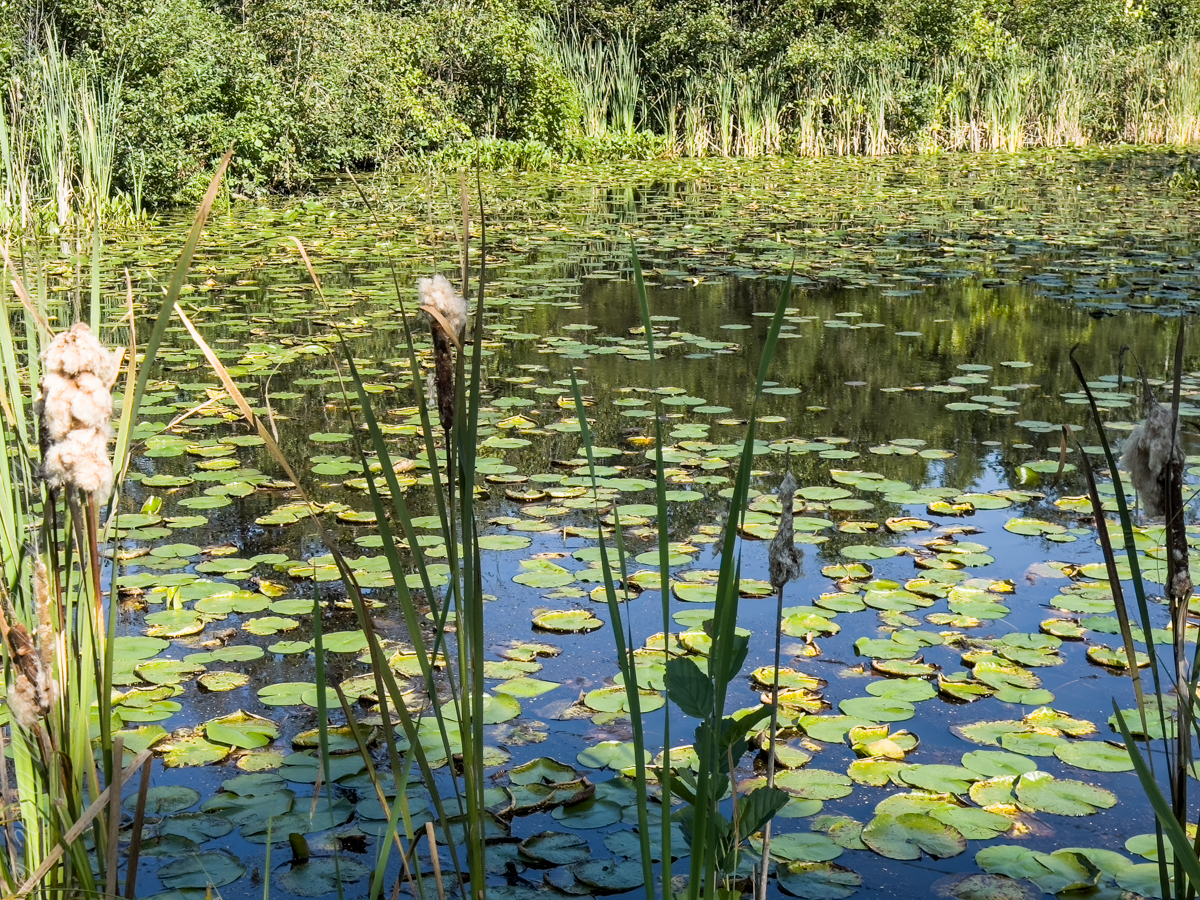
Thursday last, grandsons Sam and Rory and I visited Sapsucker Woods, enjoying a late summer morning from a wooden observation platform over this watery swamp. “Look, hot dogs!!”
“Typha is a genus of about 30 species of monocotyledonous flowering plants in the family Typhaceae. These plants have a variety of common names, in British English as bulrush or reedmace, in American English as reed, cattail, or punks, in Australia as cumbungi or bulrush, in Canada as bulrush or cattail, and in New Zealand as reed, cattail, bulrush or raupo.”
“Many parts of the Typha plant are edible to humans. Before the plant flowers, the tender inside of the shoots can be squeezed out and eaten raw or cooked. The starchy rhizomes are nutritious with a protein content comparable to that of maize or rice. They can be processed into a flour with 266 kcal per 100 grams, and are most often harvested from late autumn to early spring. They are fibrous, and the starch must be scraped or sucked from the tough fibers. Baby shoots emerging from the rhizomes, which are sometimes subterranean, can be picked and eaten raw. Also underground is a carbohydrate lump which can be peeled and eaten raw or cooked like a potato. The plant is one championed by survival experts because various parts can be eaten throughout the year. Plants growing in polluted water can accumulate lead and pesticide residues in their rhizomes, and these should not be eaten.”
“The rind of young stems can be peeled off, and the tender white heart inside can be eaten raw or boiled and eaten like asparagus. This food has been popular among the Cossacks in Russia, and has been called “Cossack asparagus”. The leaf bases can be eaten raw or cooked, especially in late spring when they are young and tender. In early summer the sheath can be removed from the developing green flower spike, which can then be boiled and eaten like corn on the cob. In mid-summer when the male flowers are mature, the pollen can be collected and used as a flour supplement or thickener.”
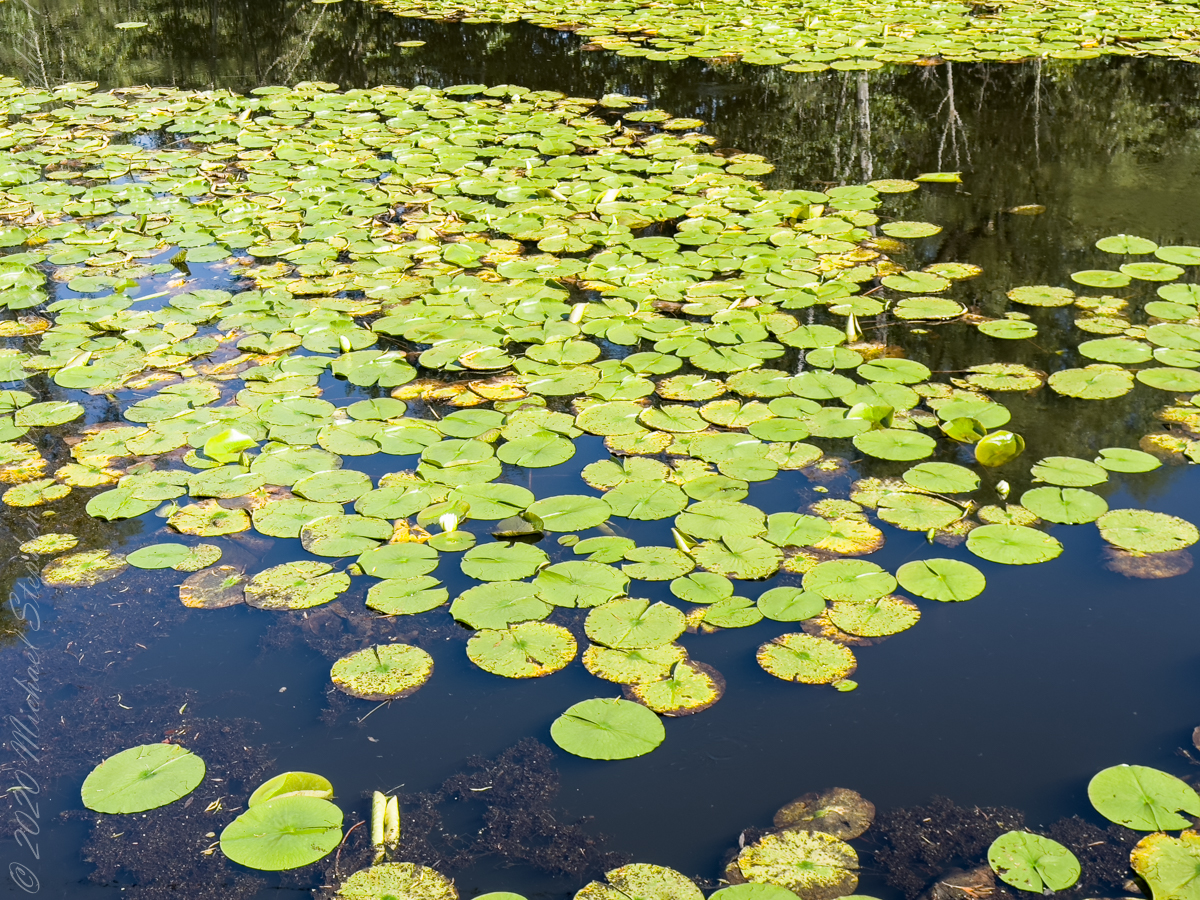
Thursday last, grandsons Sam and Rory and I visited Sapsucker Woods, enjoying a late summer morning we clambered onto a wooden platform over a watery swamp.
Look closely for flowers and buds of the White Water Lily native to New York State.
Although the young leaves of White Water-lily reportedly can be boiled and served as a vegetable, the main human use of this plant appears to have been medicinal. Native Americans used it as a herbal remedy for a variety of ailments, including colds, tuberculosis, bronchial complaints, toothaches, and mouth sores.
The many names for this plant: American White Waterlily, American White Water-lily, Fragrant Water-lily, Fragrant White Water Lily, Fragrant White Water-lily, Sweet Water-lily, Sweet-scented Water Lily, Sweet-scented White Waterlily, Tompkins County, Water, Water Lily, Waterlily, White Water Lily, White Waterlily, White Water-lily (Nymphaea odorata ssp. odorata)
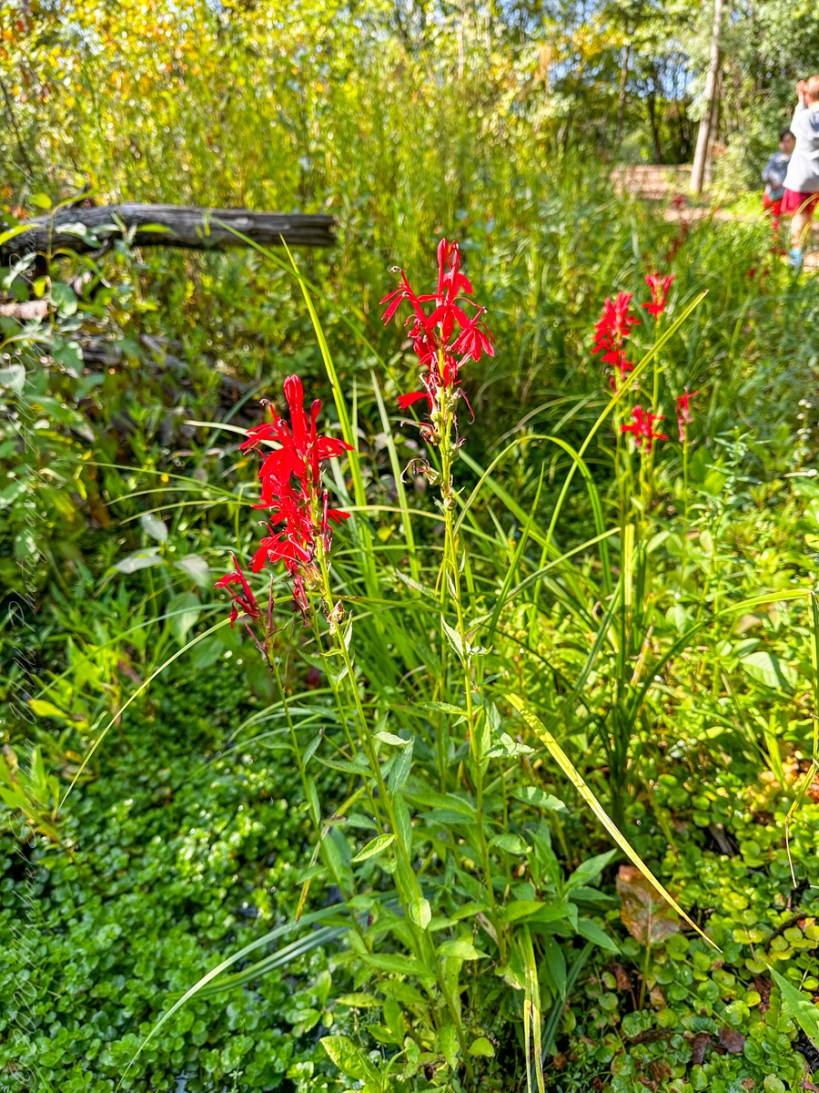
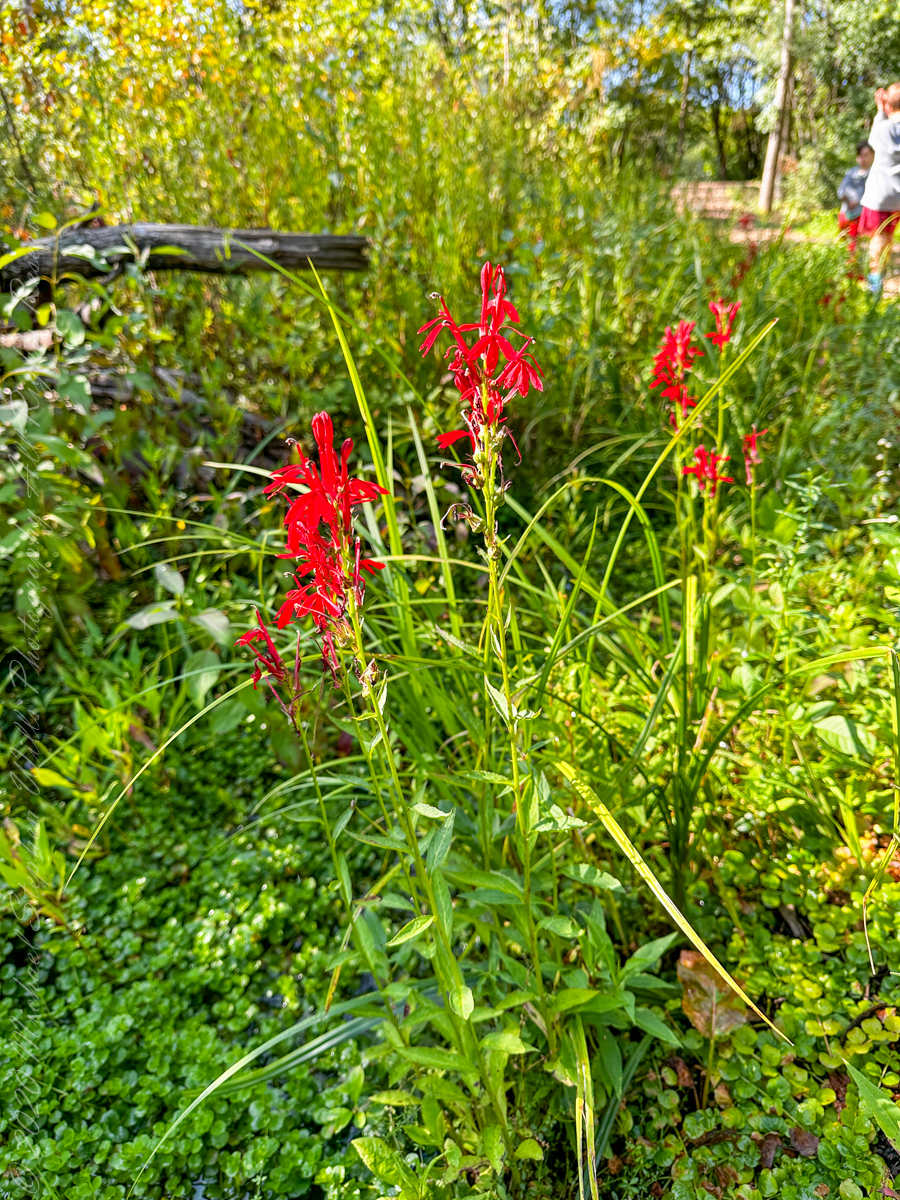
Thursday last, grandsons Sam and Rory and I visited Sapsucker Woods, enjoying a late summer morning we came upon many scarlet beauties.
Cardinal Flower (Lobelia cardinalis) is also known as Bog Sage, Cardinal Flower, Cornell Lab of Ornithology, Finger Lake Region, Hog’s Physic, Indian Pink, Red Bay, Sapsucker Woods, Scarlet Lobelia, Slinkweed, Water Gladiole.
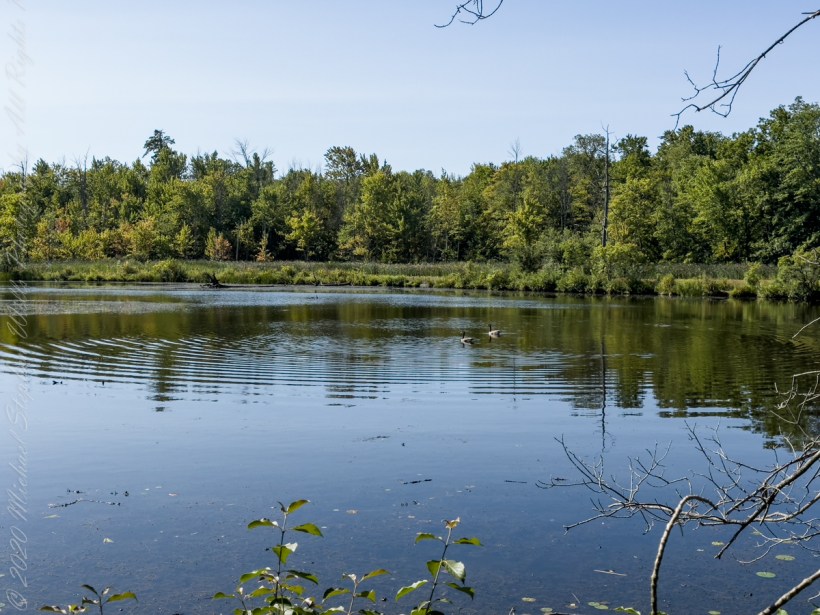
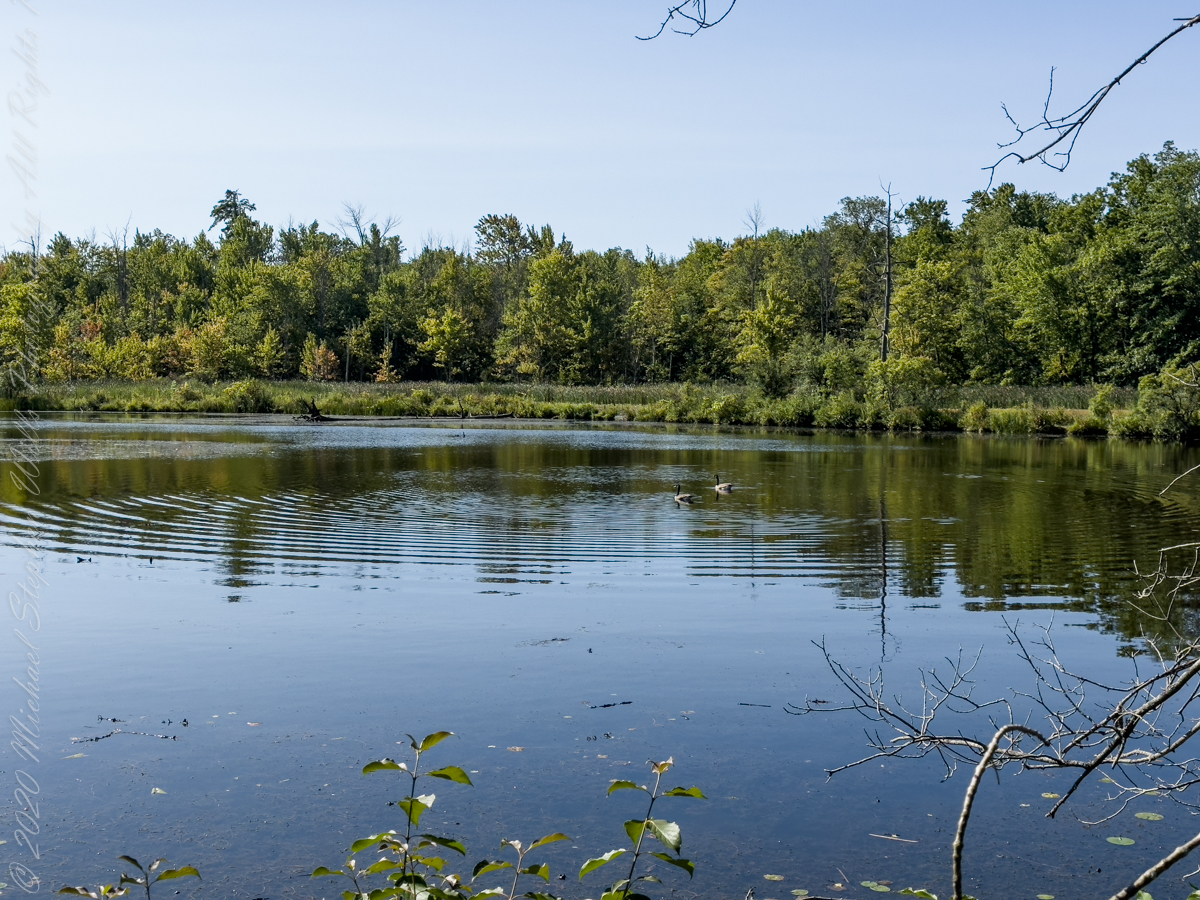
Thursday last, grandsons Sam and Rory and I visited Sapsucker Woods, enjoying a late summer morning. From the north side on Wilson Trail, these Canada geese landed on the pond.
In North America, nonmigratory Canada goose populations have been on the rise. The species is frequently found on golf courses, parking lots, and urban parks, which would have previously hosted only migratory geese on rare occasions.
Owing to its adaptability to human-altered areas, it has become one of the most common waterfowl species in North America. In many areas, nonmigratory Canada geese are now regarded as pests by humans.
They are suspected of being a cause of an increase in high fecal coliforms at beaches. An extended hunting season, deploying noise makers, and hazing by dogs have been used to disrupt suspect flocks.
A goal of conservationists has been to focus hunting on the nonmigratory populations (which tend to be larger and more of a nuisance) as opposed to migratory flocks showing natural behavior, which may be rarer.
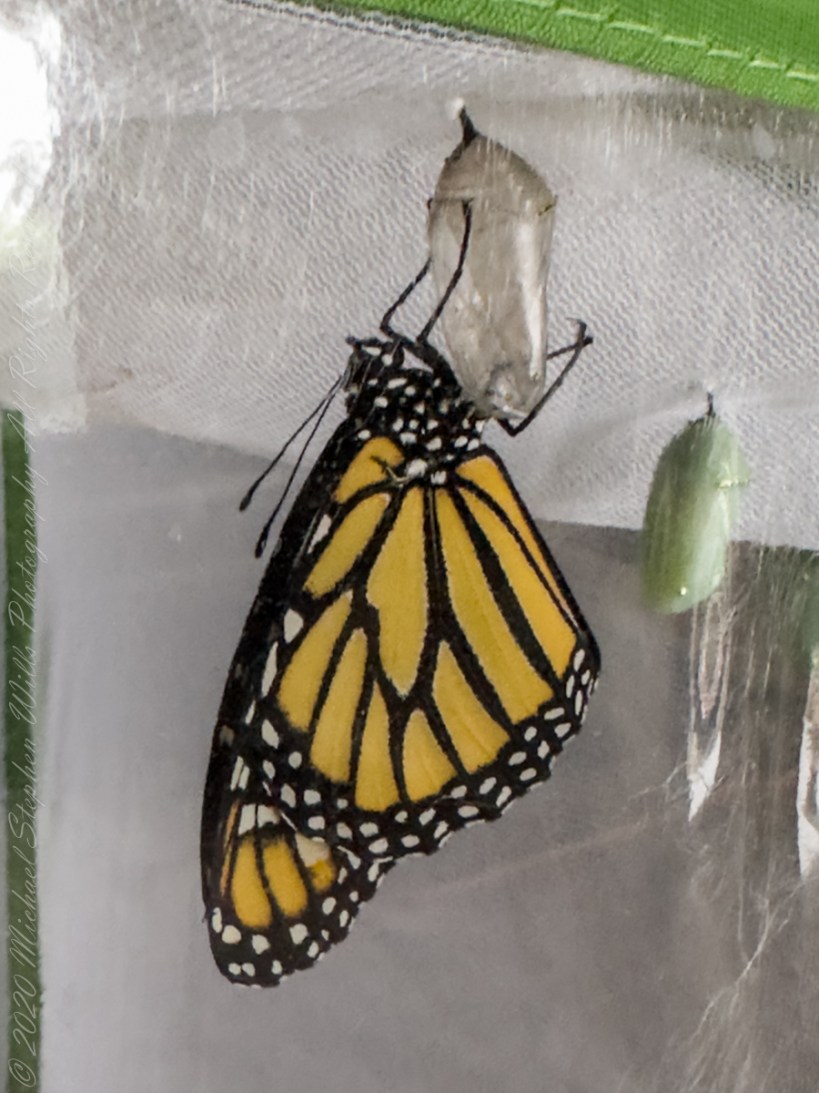
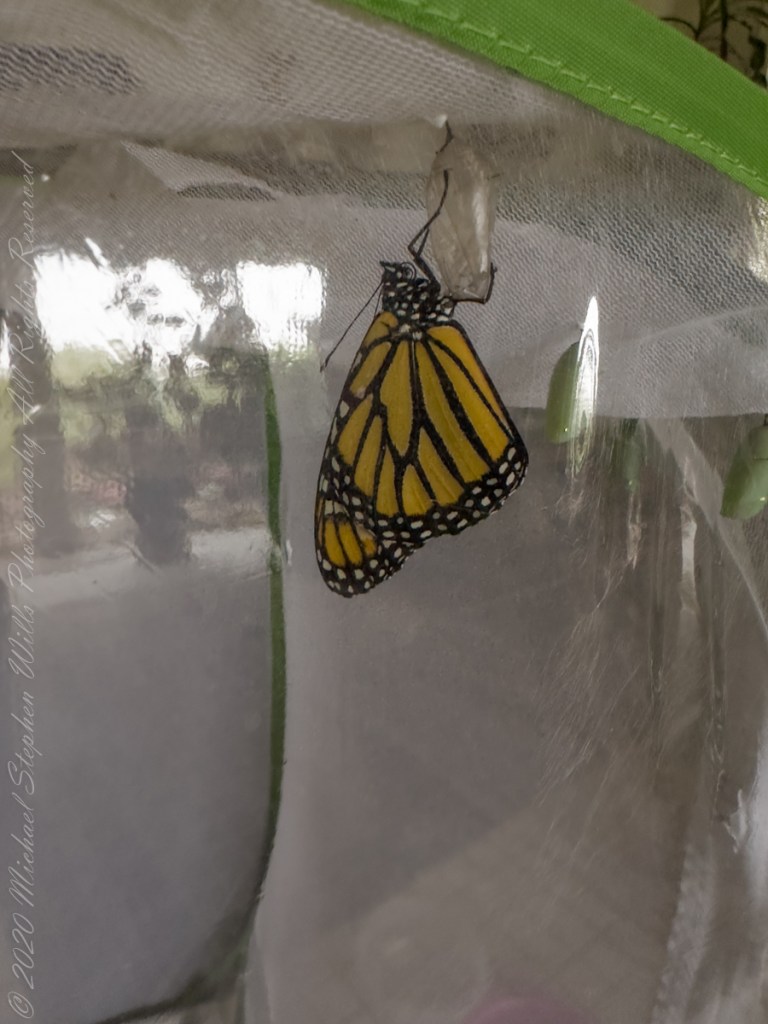
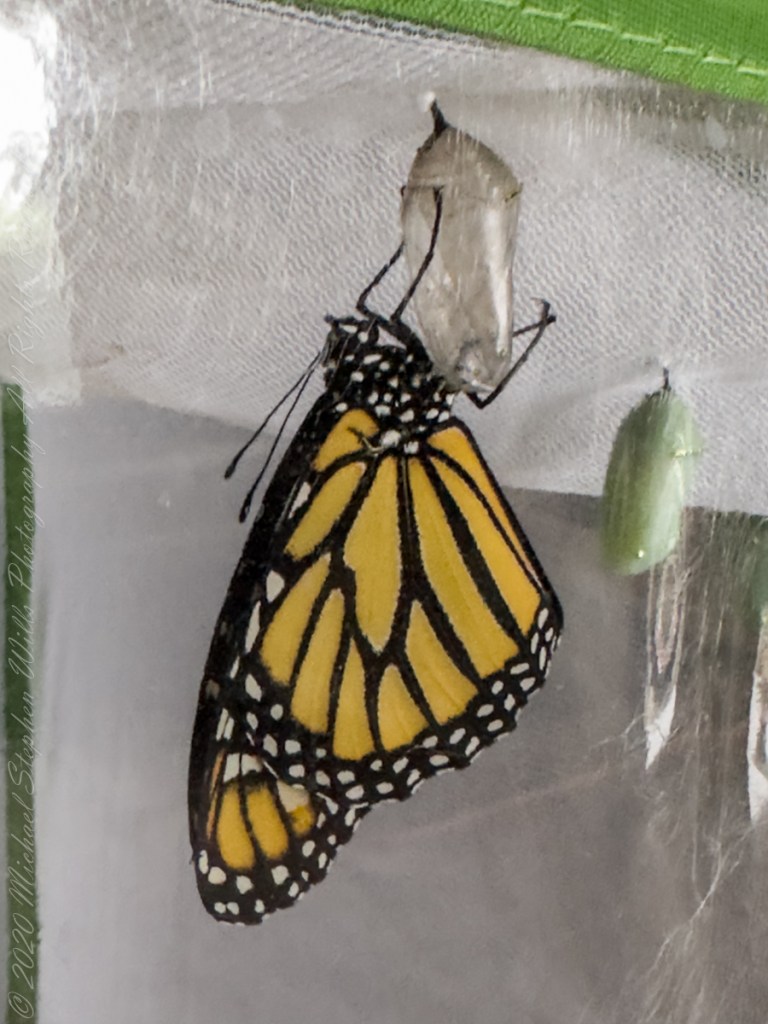
We let our first monarch butterfly rest overnight, until noon of the following day.
Pam did better with tracking the monarch’s flight, so I used video. Thanks Pam!
I delay butterfly release when:
the forecasted high temp is below 65° F (18° C) or 60° F (16° C) if sunny and calm. When no other option exists, 50-59° F and sunny is borderline acceptable.
the forecast calls for rain. A light rain is not a problem for butterflies with day-old dry wings, but it’s not a good release option for first-day newborns.
the butterfly emerges too late in the day. I keep it overnight if the butterfly cannot get 3 hours warming of flight muscles in the sun.
there are storms in the forecast. I wait when there are less than four (4) hours of good weather projected. When extreme weather (like a hurricane) is forecast within twenty four (24) hours, I keep the butterfly safe until the storm passes. Twenty four (24) or more hours should provide ample time to find shelter from the storm.
I am not sure about a release. Keeping a butterfly overnight is acceptable. In fact, a butterfly’s wings are stronger on day two (2), providing better capability to escape predators. A butterfly can easily hang from the mesh cage roof overnight. I do not worry about feeding a butterfly unless a second night of shelter is necessary.
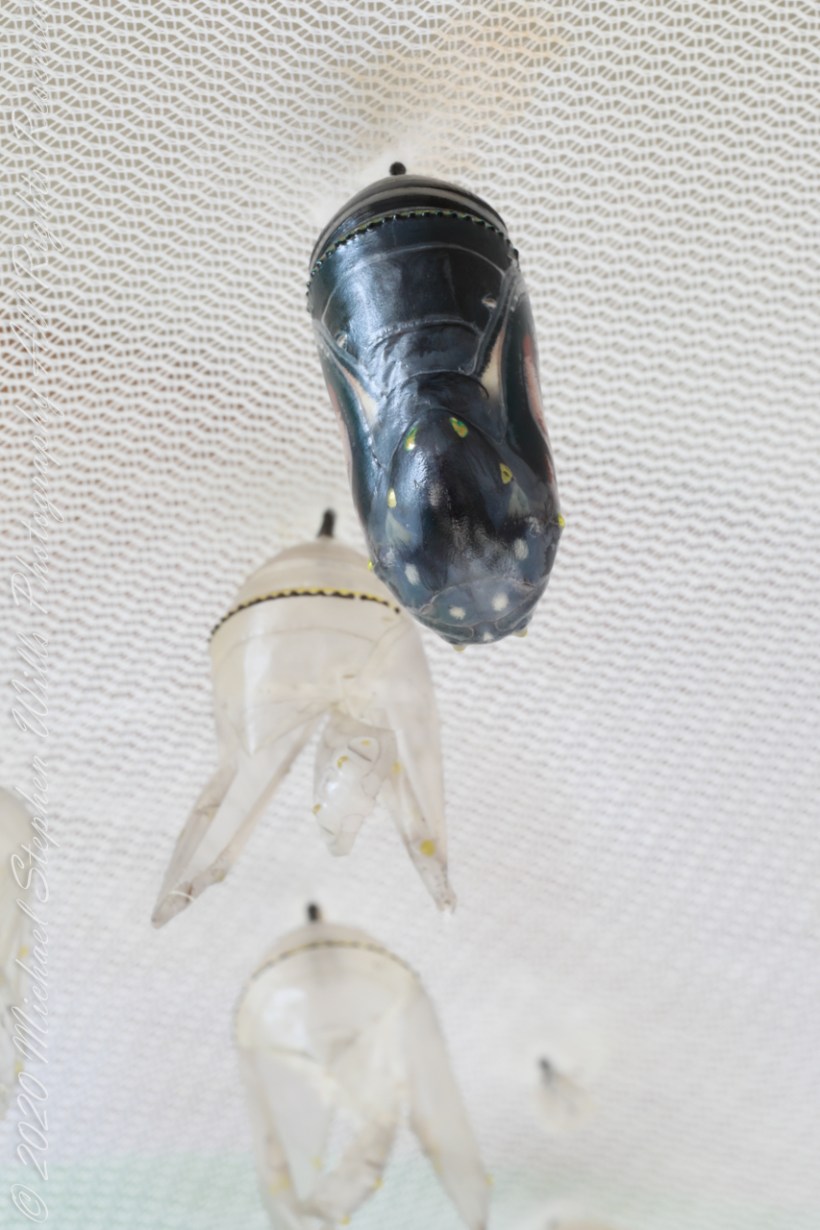
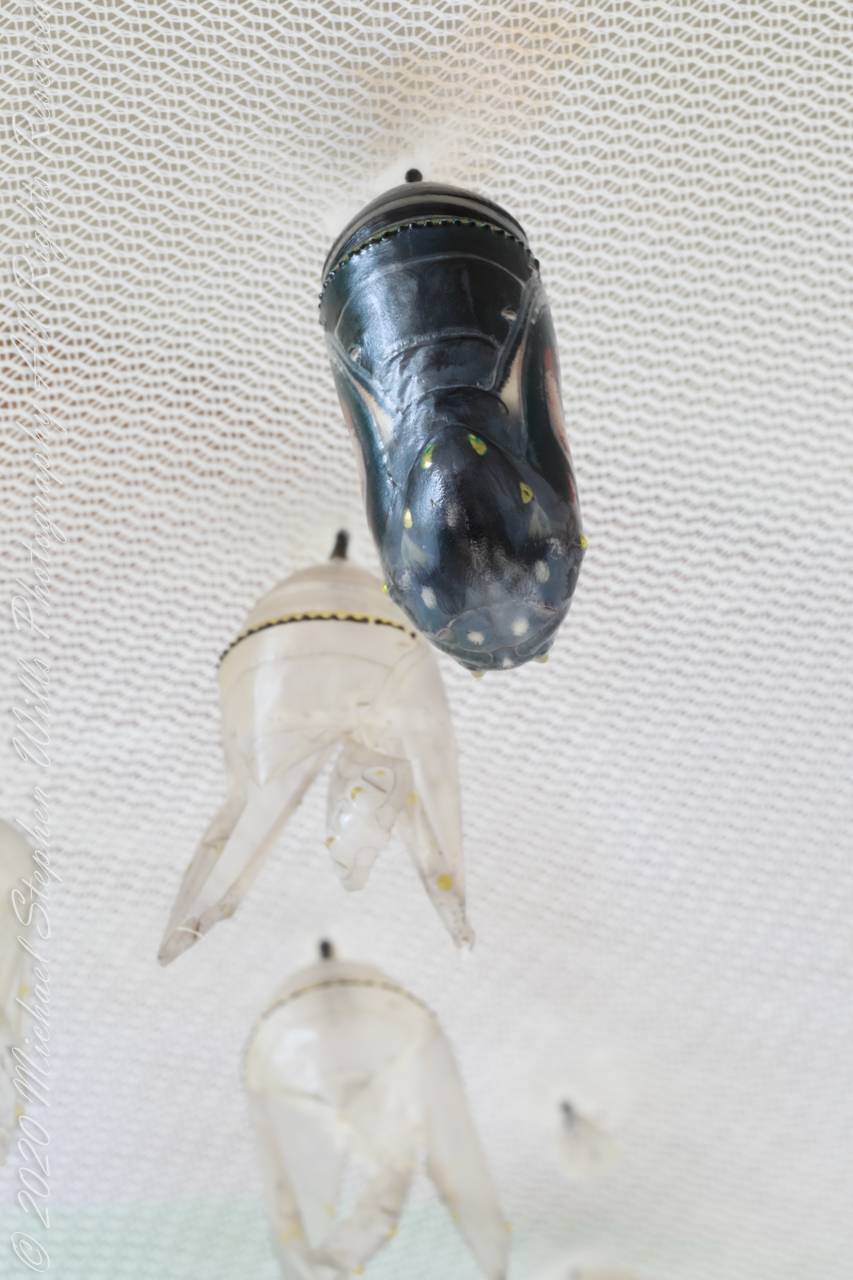
As the moment of emergence approaches, the skin of a Monarch chrysalis becomes translucent to reveal the butterfly compressed into that small space.
Copyright 2023 Michael Stephen Wills All Rights Reserved
Our grandchildren spent the day with us, the last week of their summer before school begins. This July I had improved on my Monarch collection from 2022, when 9 butterflies were released, by two (2) caterpillars for a total of eleven (11) raised over several weeks to the chrysalis stage. When leaving to pick up the children for an outing one chrysalis skin had turned clear, a sign the enclosed butterfly is close to emerging. We returned from an outing for lunch to find this chrysalis unopened, so we checked now and then for progress. Four hours later, just as their Mom arrived for them, the grandchildren and everyone witnessed this event. What luck!!
“Migrating monarchs soar at heights of up to 1,200 feet. As sunlight hits those wings, it heats them up, but unevenly. Black areas get hotter, while white areas stay cooler. The scientists believe that when these forces are alternated, as they are with a monarch’s white spots set against black bands on the wings’ edges, it seems to create micro-vortices of air that reduce drag—making flight more efficient.”
“Monarchs begin leaving the northern US and Canada in mid-August. They usually fly for 4-6 hours during the day, coming down from the skies to feed in the afternoon and then find roosting sites for the night. Monarchs cannot fly unless their flight muscles reach 55ºF. On a sunny day, these muscles in their thorax can warm to above air temperature when they bask (the black scales on their bodies help absorb heat), so they can actually fly if it is 50ºF and sunny. But on a cloudy day, they generally don’t fly if it is below 60ºF.“
“Migrating monarchs use a combination of powered flight and gliding flight, maximizing gliding flight to conserve energy and reduce wear and tear on flight muscles. Monarchs can glide forward 3-4 feet for every foot they drop in altitude. If they have favorable tail or quartering winds, monarchs can flap their wings once every 20-30 feet and maintain altitude. Monarchs are so light that they can easily be lifted by the rising air. But they are not weightless. In order to stay in the air, they must move forward while also staying within the thermal. They do this by moving in a circle. The rising air in the thermal carries them upward, and their overall movement ends up being an upward spiral. Monarchs spiral upwards in the thermal until they reach the limit/top of the thermal (where the rising air has cooled to the same temperature as the air around it). At that point, the monarch glides forward in a S/SW direction with the aid of the wind. It glides until it finds another thermal and rides that column of rising air upwards again.”
This video includes an interview with Michael Wills about raising Monarch butterflies and this stage of the lifecycle. Video by Pam Wills using an IPhone 8
Reference: text in italics and quotes is from one of two online articles. “The monarch butterfly’s spots may be its superpower” National Geographic, June 2023 and “Fall Migration – How do they do it?” by Candy Sarikonda, September 2014.
Copyright 2023 Michael Stephen Wills All Rights Reserved
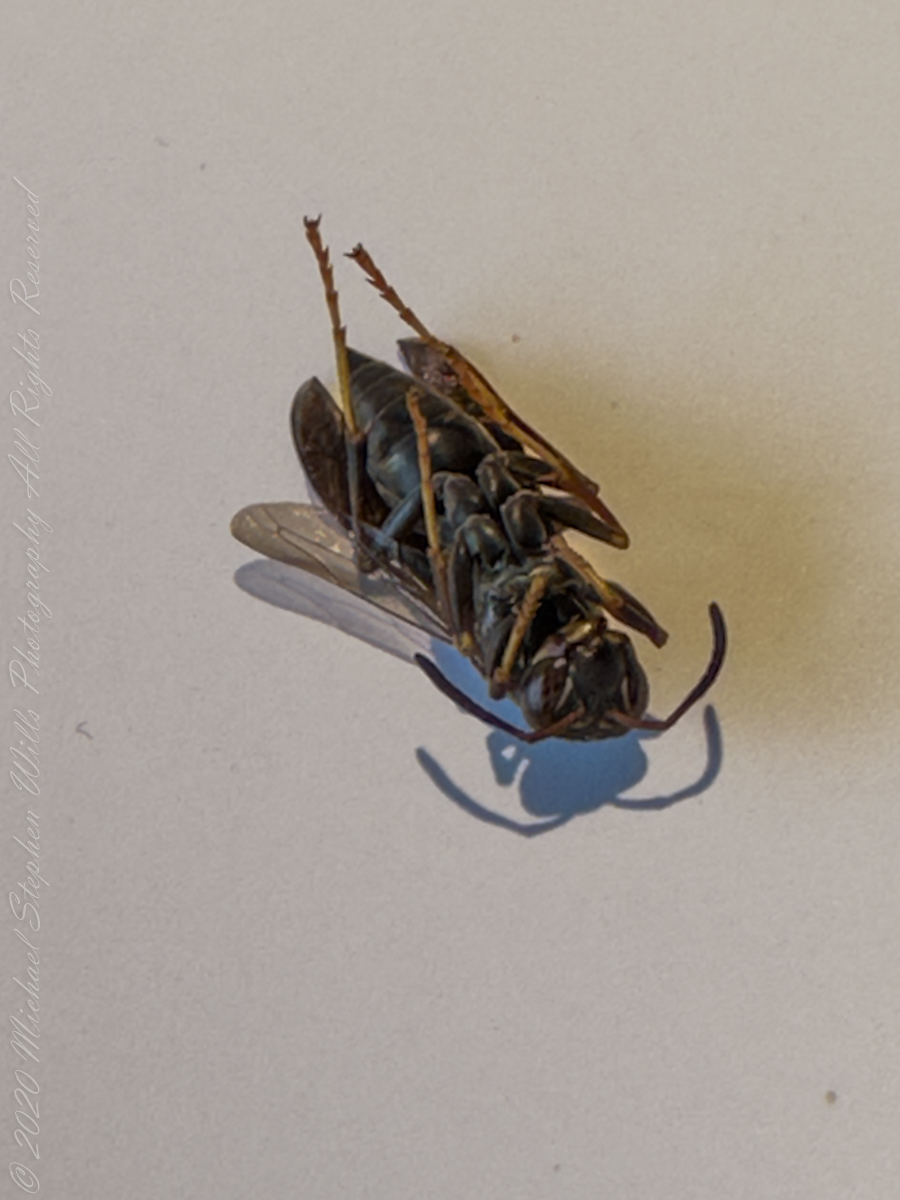
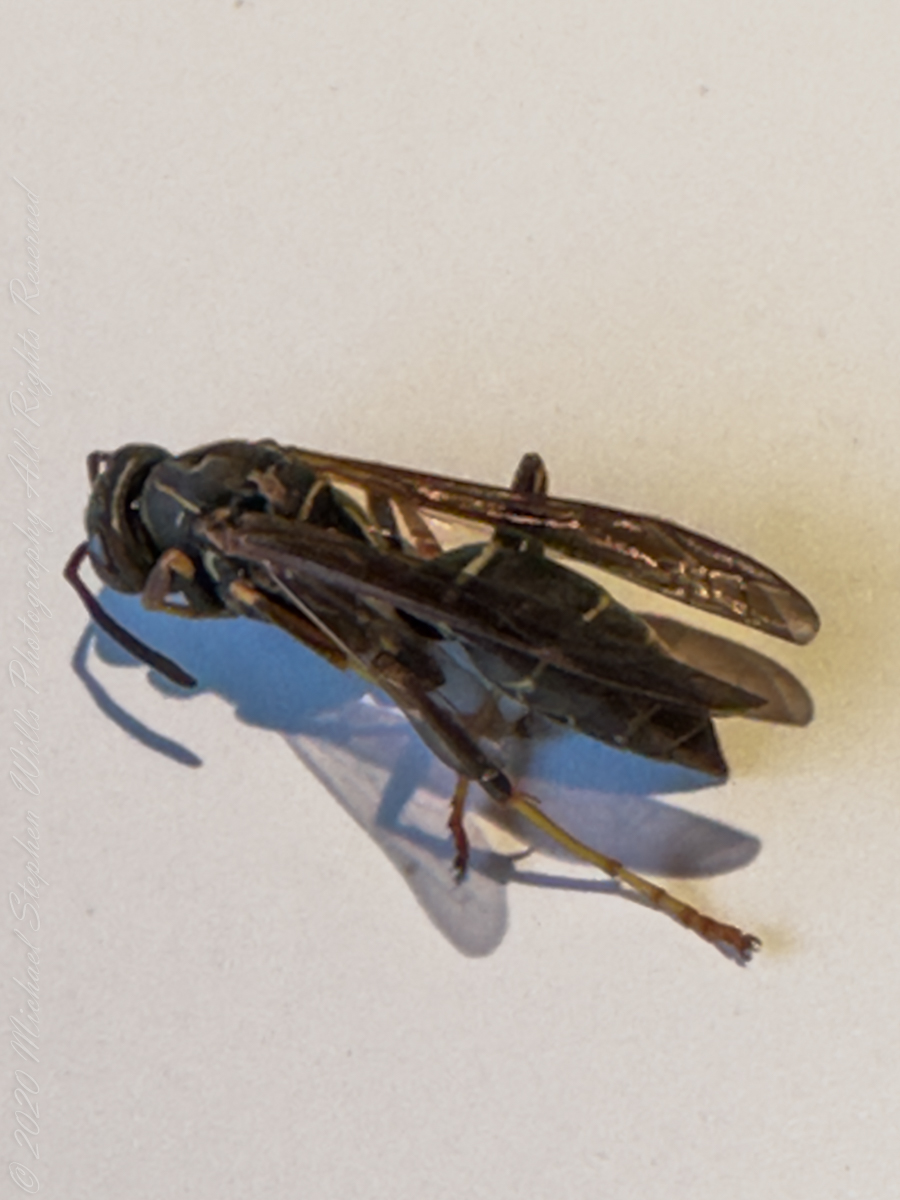
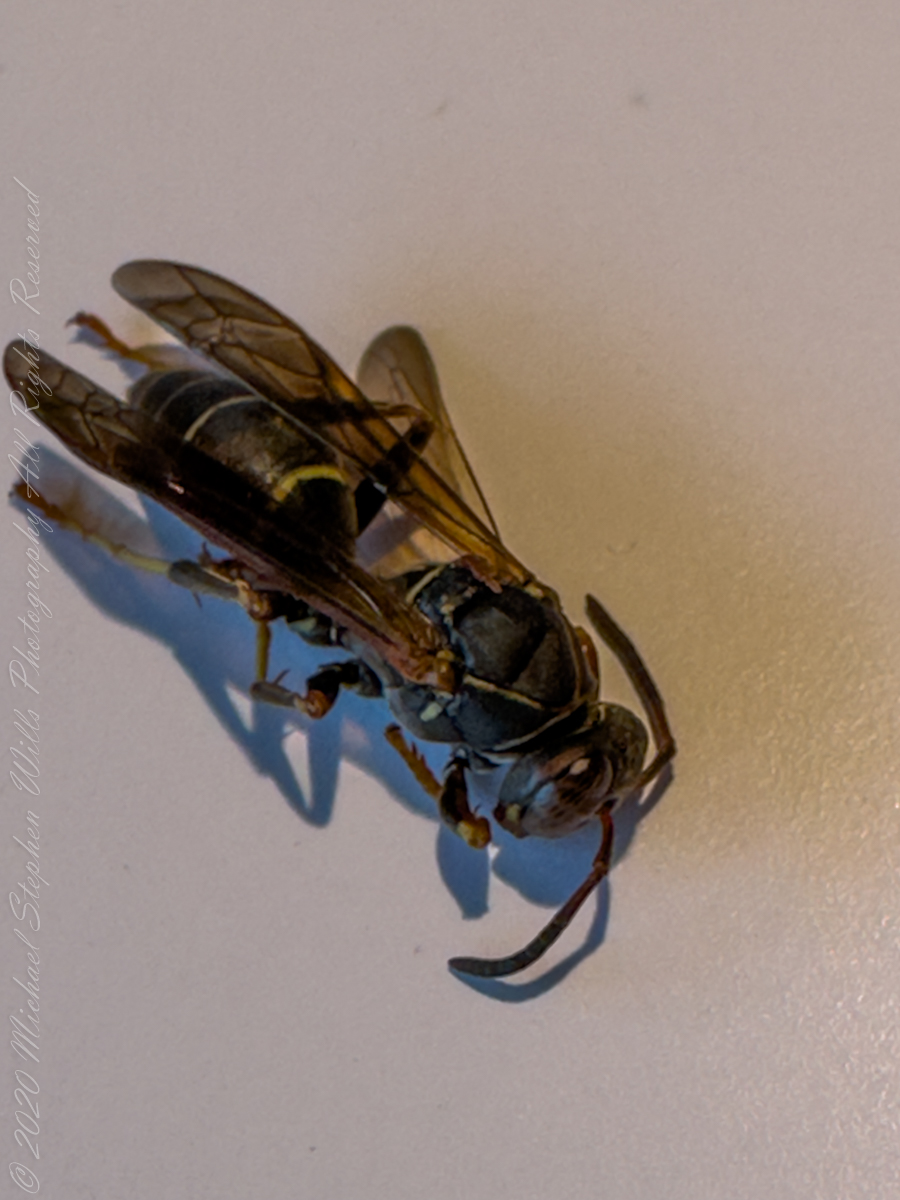
After reading a New York Times article with the sub-title “A beekeeper in Savannah, Ga., found what turned out to be a yellow-legged hornet. State and federal officials, along with academic experts, are working to eradicate the species” I spotted this wasp foraging our flowers in Ithaca, New York. Its yellow legs caught my eye, although the apparent size (seemed larger in article photograph) and face and body markings seemed different. Using an Apple Iphone 14 ProMax I captured three macros from different angles, I attached them to an email to the local Cooperative Extension office. They gave me a quick response, confirming my suspicion this was a different “yellow-legged wasp.” The agent suggested it might be a “paper wasp” and directed me to a Cornell site were, for a $25 fee, an identification could be made.
Instead, this morning I found “insectidentification.org” with an excellent search capability. Under “Bee, Ant, Wasp and Similar insects that can be found in the state/territory of New York,” the third row from top spotted an exact match being the only Yellow-legged native wasp. I am going to respond to the agent with this identification as others in the area may have the same question, given the name of the invasive wasp.
“It is the Yellow-legged Mud-dauber Wasp (Sceliphron caementarium), also known as Black and Yellow Mud Dauber, Black-waisted Mud-dauber. Of the Latin species name, Sceliphron caementarium, caementarius means mason or builder of walls.”
“These are solitary parasitoid wasps and build nests made of mud. The family of sphecid wasps collect mud balls at puddle and pool edges for constructing nests comprised of up to 25 vertically arranged, individual cylindrical cells. Frequently, nests are built in shaded areas inside formations that are sheltered from the weather or from other environmental elements. These sites may be naturally-occurring, or man-made structures. Some examples are: under and inside various types of bridges, barns, garages, open-air porches, or under housing eaves. A female might take only a day to construct a cell requiring dozens of trips carrying mud. Females will add new cells one by one to the nest after each cell is provisioned. They provision these nests with spiders, such as crab spiders, orb-weaver spiders and jumping spiders in particular, as food for the developing larvae. Each mud cell contains one egg and is provided with several prey items. The wasp then seals the cell with a thick mud plug. After initial creation and covering of the clutch, this sphecid wasp uses more mud as a means covering and protecting the whole cluster of cells, thereby forming a smooth appearance, and a uniform nest. The entire nest may attain an area equal to, or larger than, the size of an average human fist.”
“After finishing a series of cells, she leaves and does not return. While consuming the prey and increasing in size, the larva molts several times, until it molts into a pupa. Once the pupa has developed into an adult wasp, the adult emerges from its pupal case and breaks out of its mud chamber.”
“Various parasites attack these nests, including several species of cuckoo wasps, primarily by sneaking into the nest while the resident mud dauber is out foraging.”
“Adults can be seen in mid-summer feeding on nectar at flowers, especially Queen Anne’s lace (Daucus carota), parsnips and water parsnips (Sium suave, Sium latifolium, Berula erecta). They have a low reproductive rate. Stings are rare due to their solitary and usually nonaggressive nature; however, nests are aggressively defended.“
“Like other solitary wasps, Sceliphron species are not aggressive unless threatened. They are sometimes regarded as beneficial due to their control of spider populations, though the spiders themselves may be beneficial in controlling pest insects.”
“This species is found in a wide variety of habitats, such as rock ledges, man-made structures, puddles and other water edges, cypress domes, in long leaf pines (Pinus palustris), and in turkey oaks.“
“S. caementarium is widespread in Canada, the United States, Central America and the West Indies, and has been introduced to many Pacific Islands (including Australia, Hawaii, and Japan), Peru and Europe, where it has become established in some countries of the Mediterranean Basin (Croatia, France and Corsica, Italy, Cyprus,Malta, the Canary Islands, and Madeira) and Austria, and Ukraine.“
“Sceliphron caementarium can reach a length of 24–28 mm (15⁄16–1+3⁄32 in). Their petiole is generally black and is about half the length of the entire abdomen, however the population in the desert southwest often has a yellow petiole. The thorax shows various yellow markings, while the abdomen is normally black, with yellow propodeum (typical of females). The eyes are black, the antennae are black, and the legs are yellow with black trochanters and femurs. Within the United States, it is the only species with yellow-marked legs. The wings are a tawny color.”
“In 1996, Birgenair Flight 301 crashed near Puerto Rico. The most probable cause of this Boeing 757 crash was a blockage in a pitot tube by a mud dauber’s nest.”
Around our home these mud-daubers favor hollows within our aluminum fencing.
Reference: text in italics and quotes paraphrased from Wikipedia “Sceliphron caementarium” and “Sceliphron.”
Copyright 2023 Michael Stephen Wills All Rights Reserved
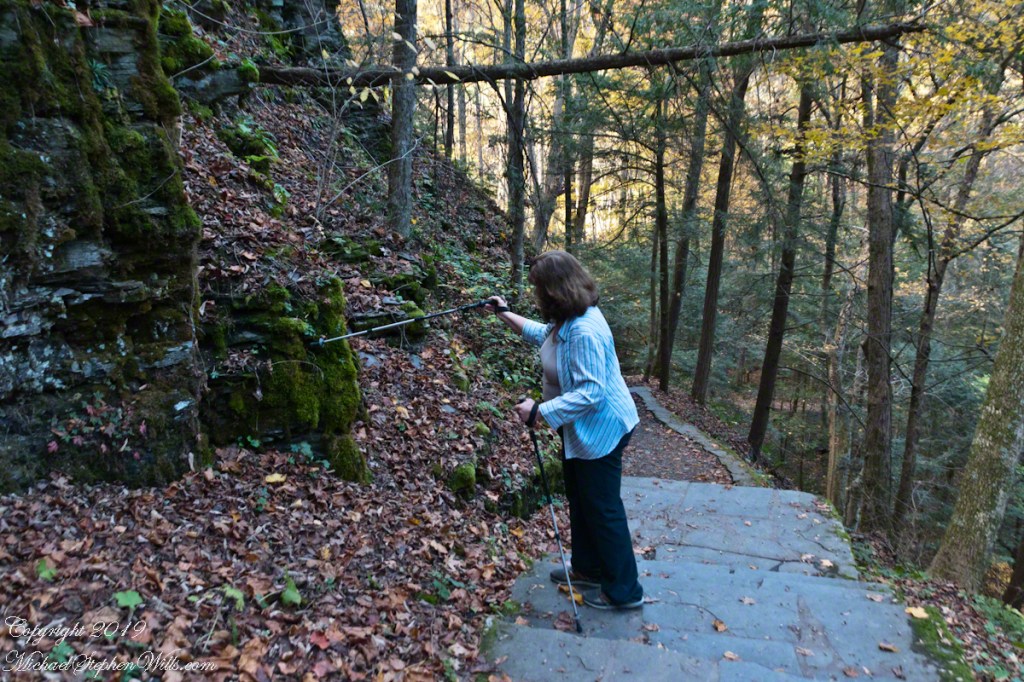
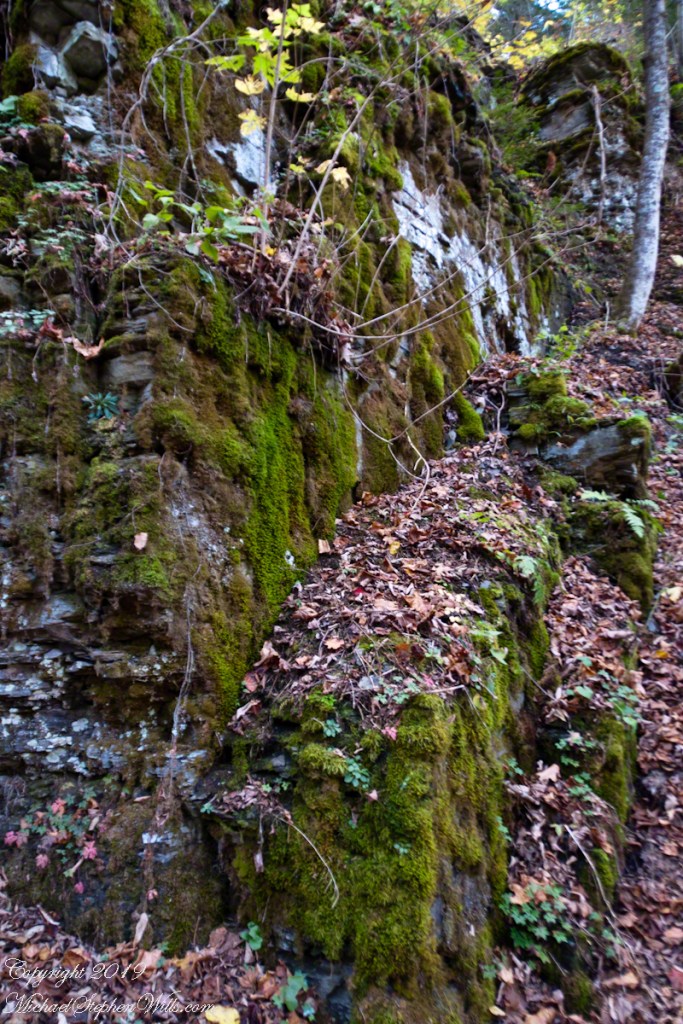
Pam examining thick moss growth on the sedimentary rock of Treman gorge. These layers of shale, sandstone, siltstone formed at the bottom of a broad, shallow sea over 380 million years ago.
Click photograph for a larger view. To do this from WordPress Reader, you need to first click the title of this post to open a new page.
Pam examines the moss
Towards the bottom of the 223 Cliff Stair steps moss takes over the Devonian shale of the cliff wall surface. Here, the cliff shelters the wall from sunlight 365 days a year.
Cliff Stair Wall, autumn Moss
Robert H. Treman New York State Park.
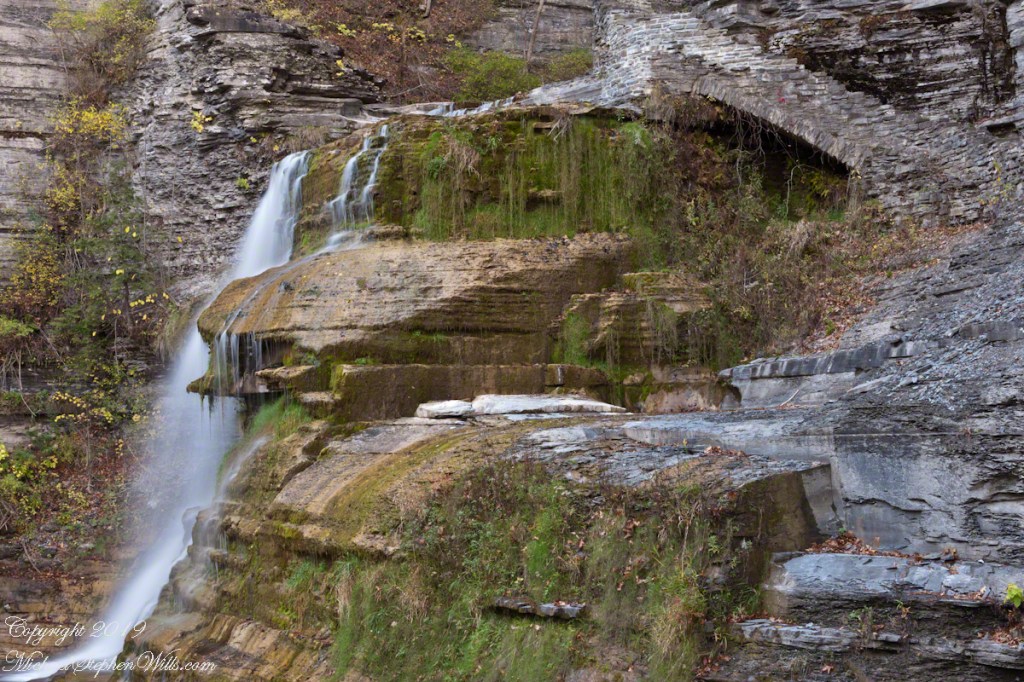
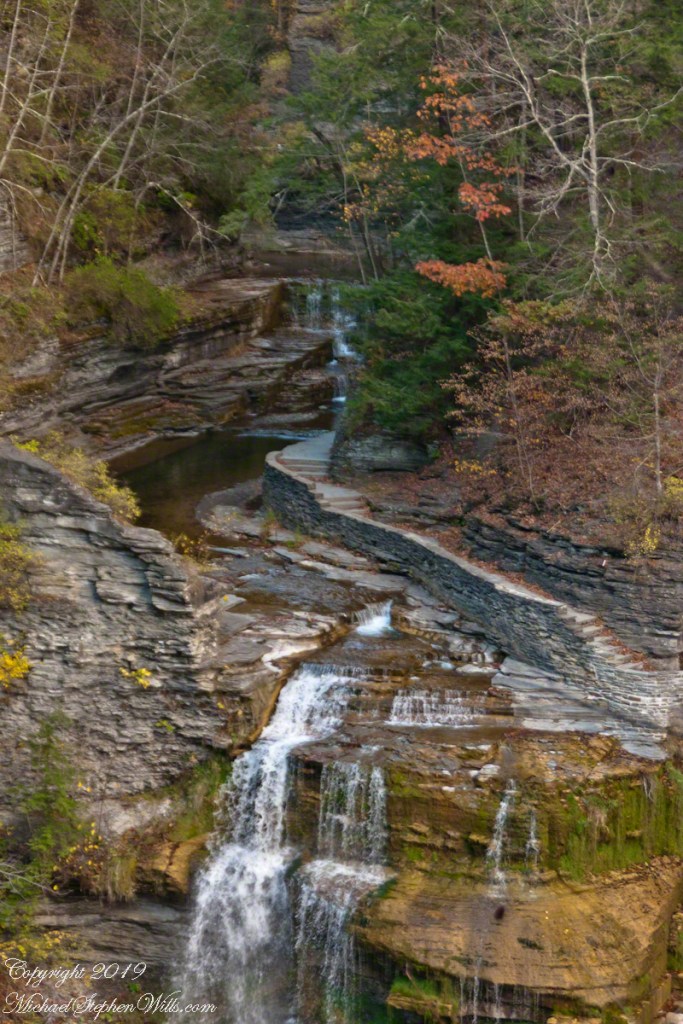
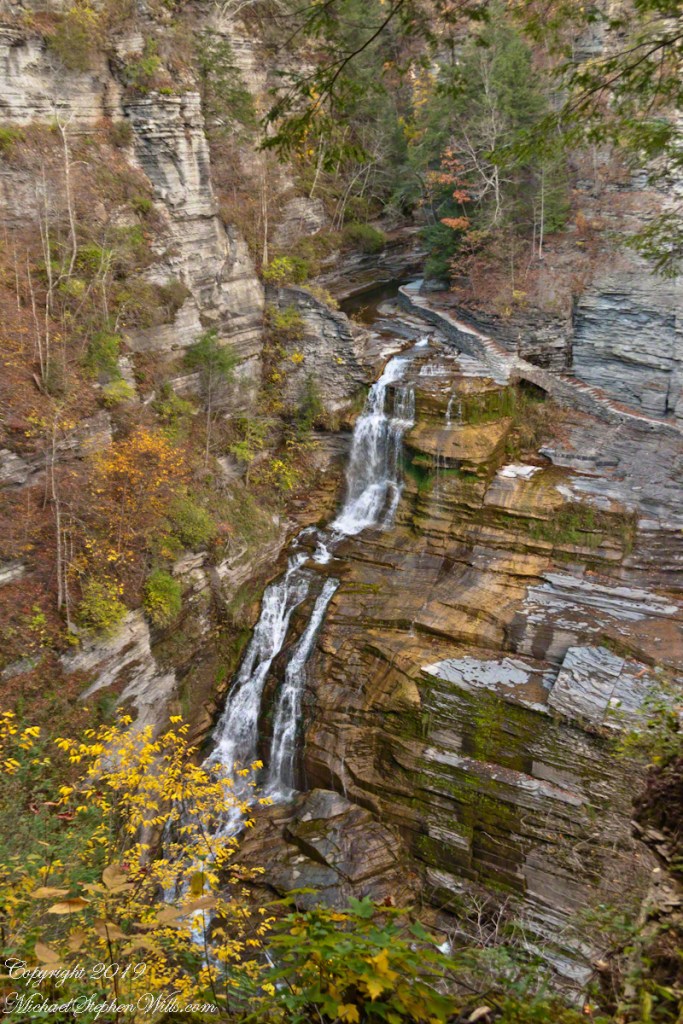
Click for a slideshow of this sequence Lucifer Falls and Cliff Stair Views
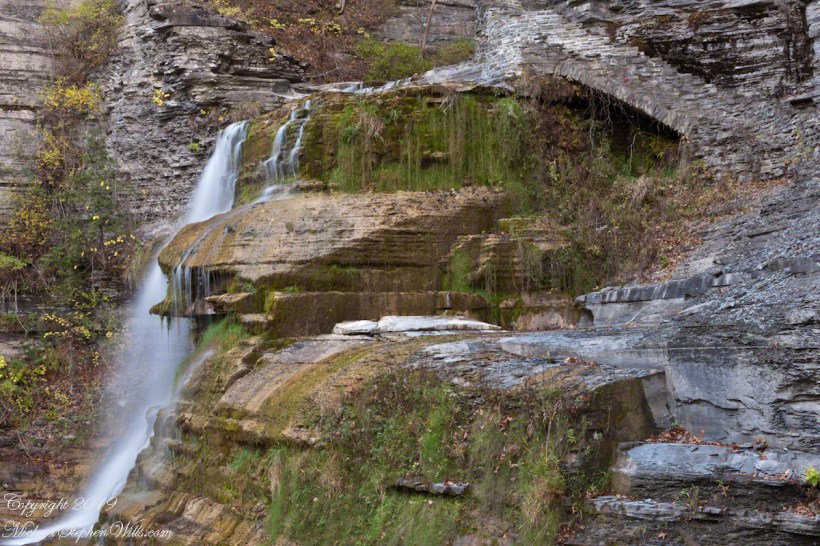
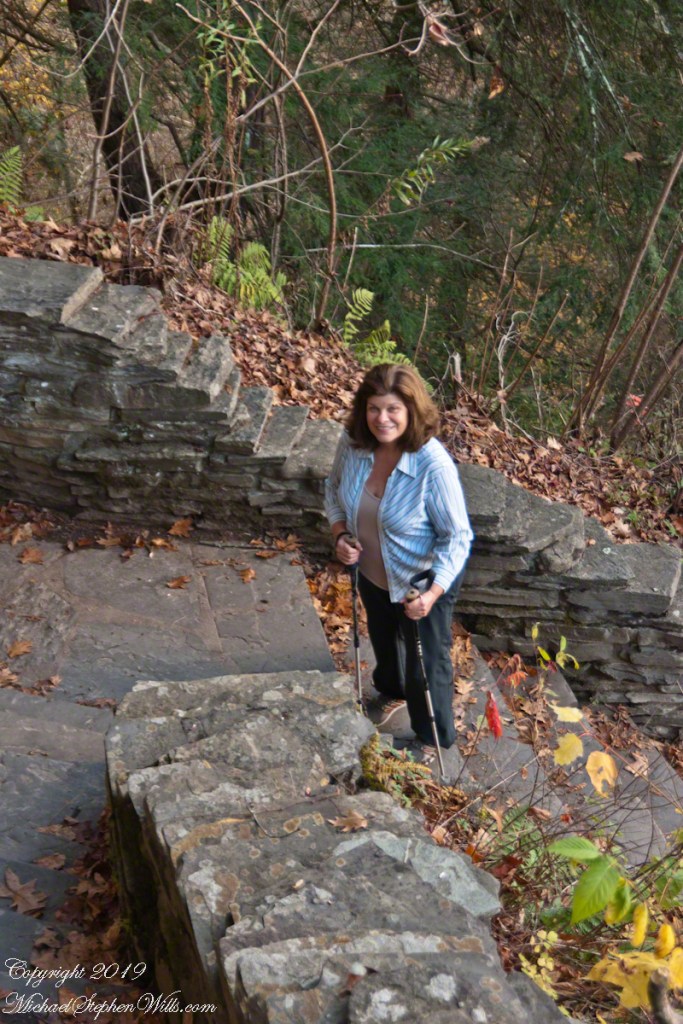
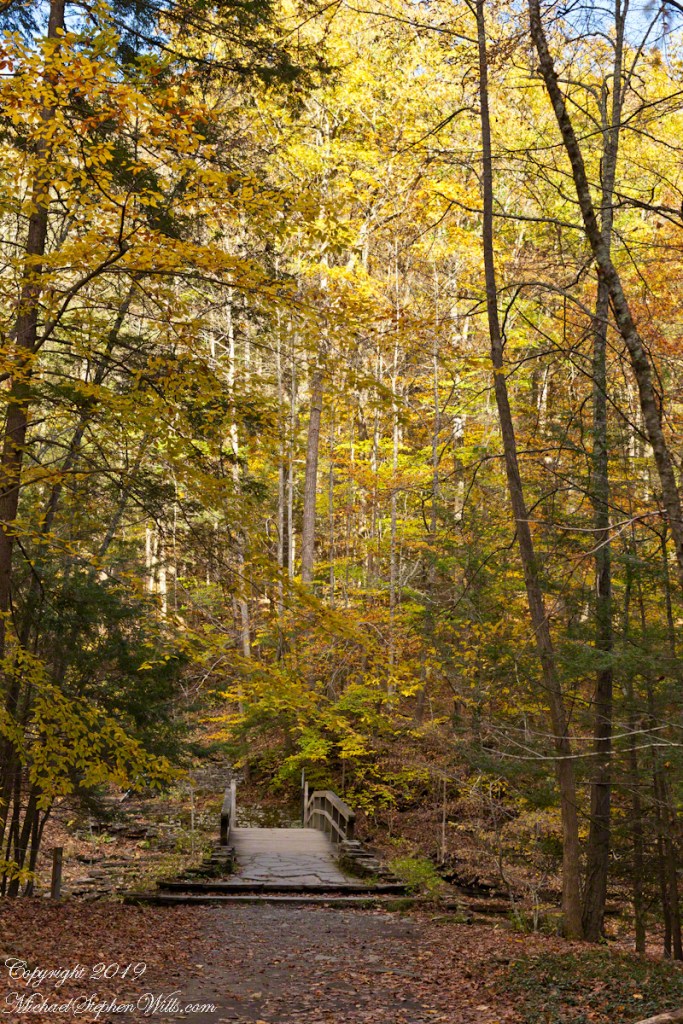
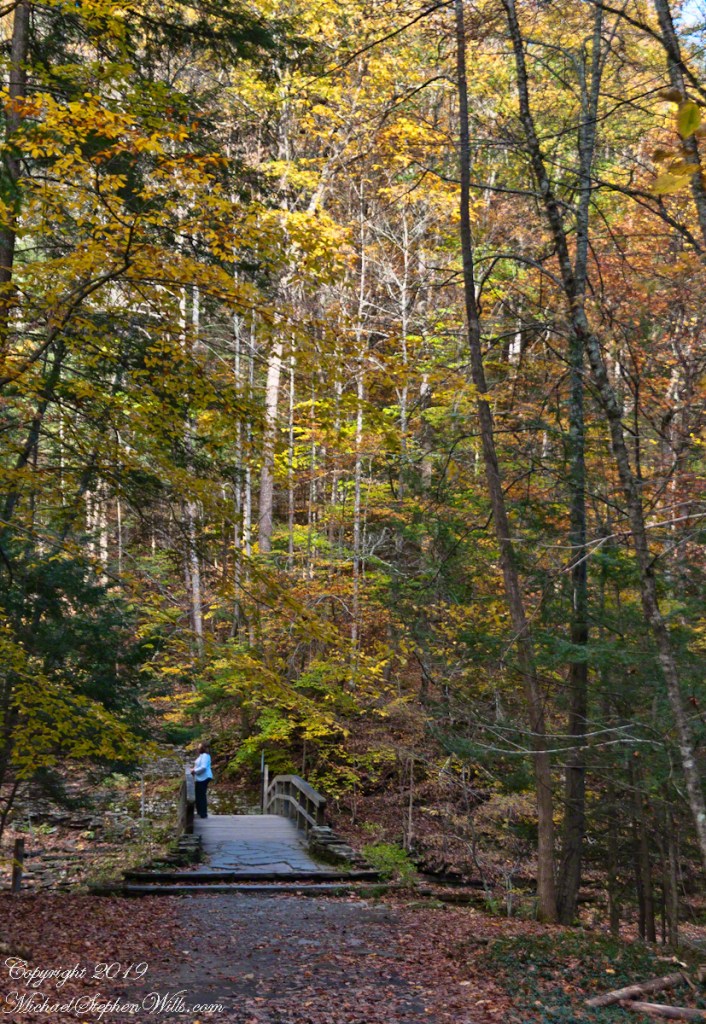
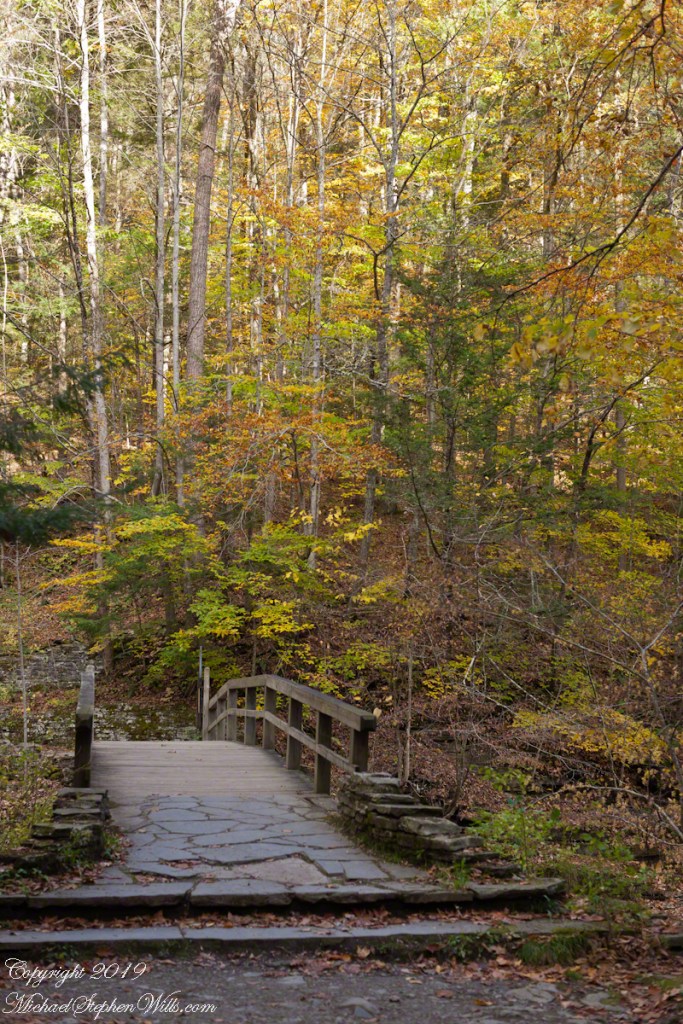
Brink of Lucifer FallsLucifer Falls Overlook from the Gorge TrailLucifer Falls from Rim Trail OverlookPam on the Cliff StaircaseUnidentified TreeThis geranium species (scientific name Geranium robertianum) are also called “Herb-Robert” for a reputed ability to ward off disease and, in the Scottish Highlands, “red-shanks” for the deep red color of the stalks, seen in this photograph. Robert H. Treman New York State Park. Source, “How to Know the Wildflowers” by Mrs. William Star Dana, 1989, Houghton Mifflin, Boston.Autumn foot BridgeWoman on Footbridge, ContemplationOver the bridge
Copyright 2023 All Rights Reserved Michael Stephen Wills
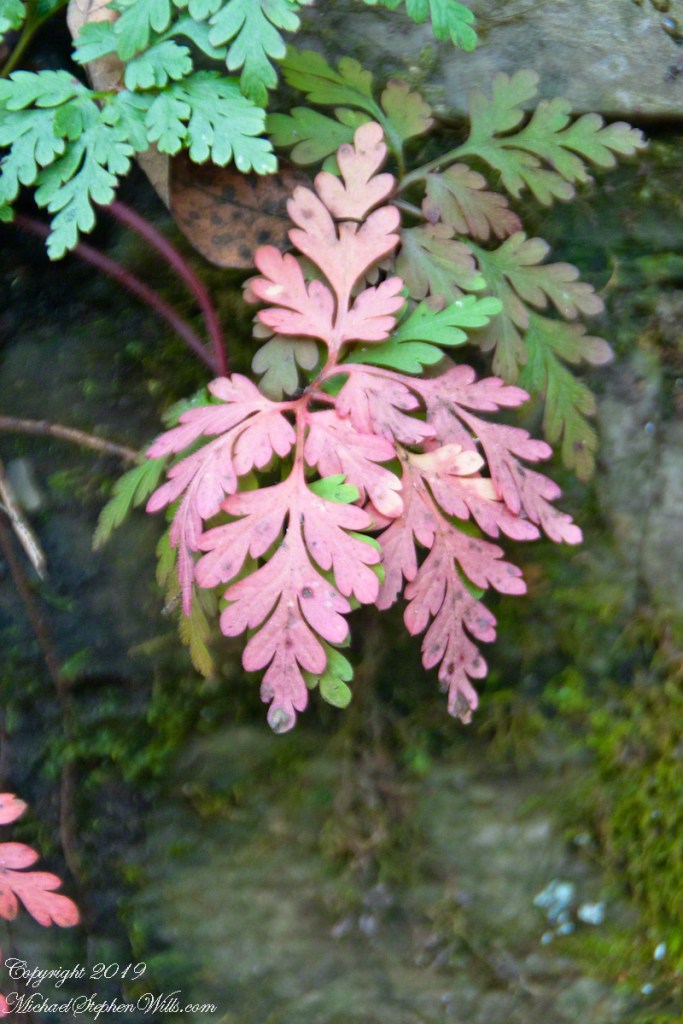
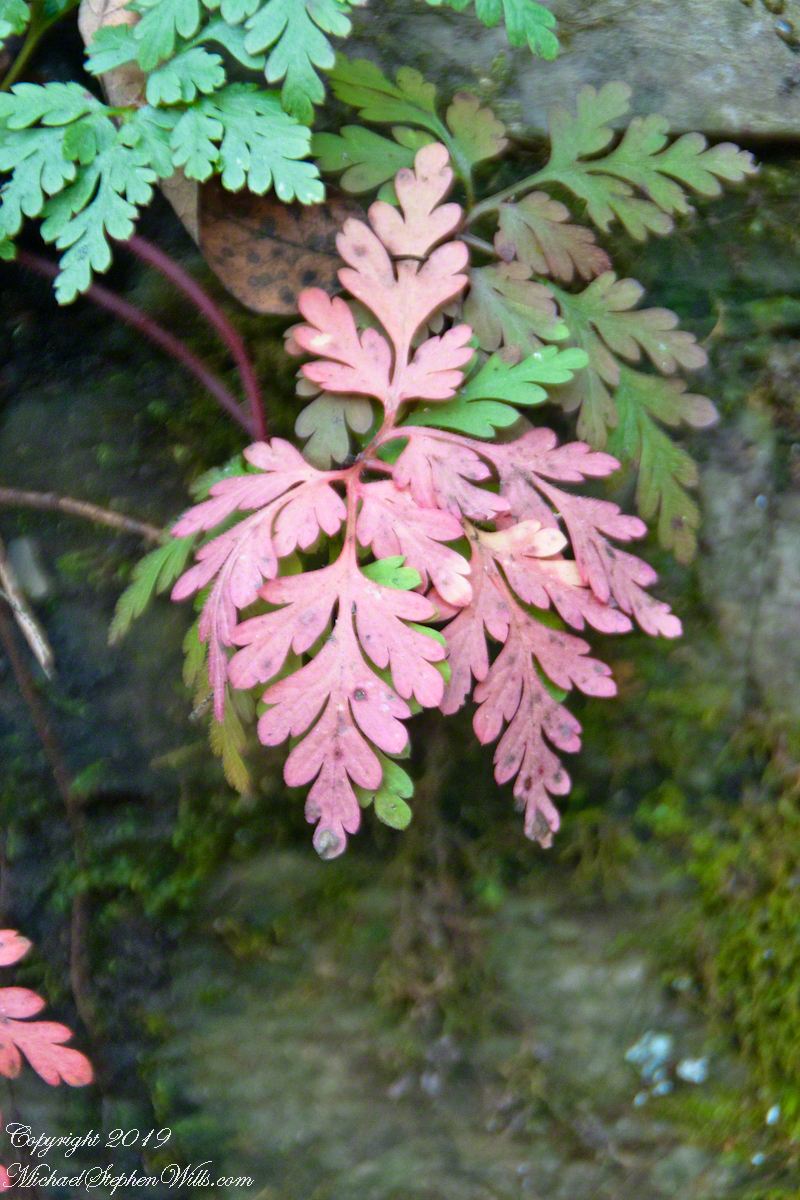
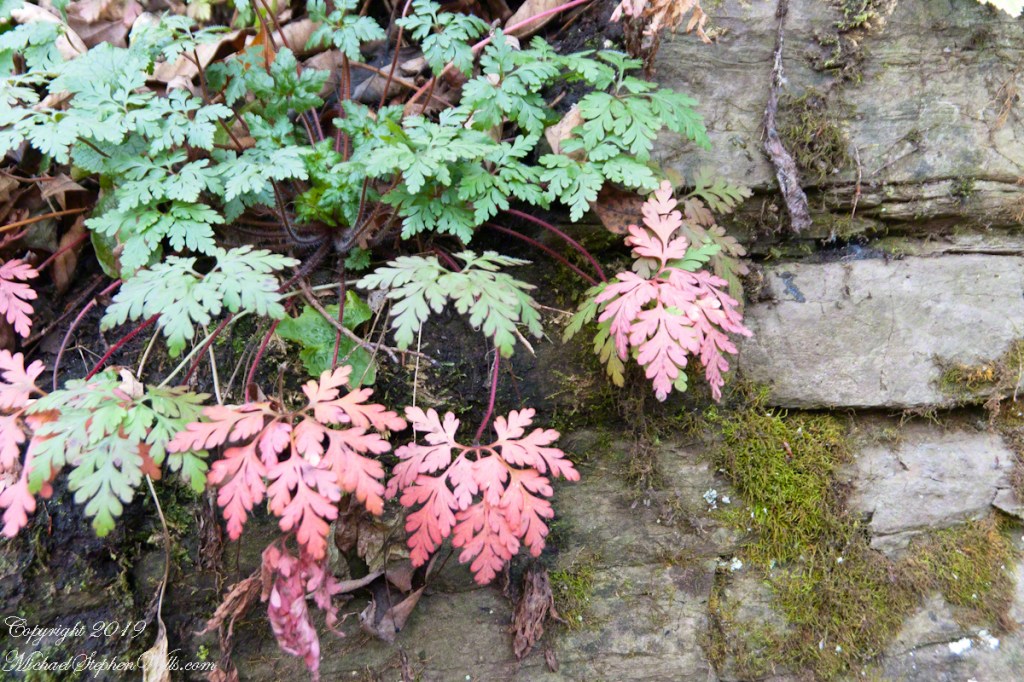
This geranium species (scientific name Geranium robertianum) are also called “Herb-Robert” for a reputed ability to ward off disease.
Click photograph for a larger view. To do this from WordPress Reader, you need to first click the title of this post to open a new page.
Cliff Stair Wall, autumn Geranium and mosses
Scottish Highlands residents call these wild geraniums “red-shanks” for the deep red color of the stalks, seen in both photographs.
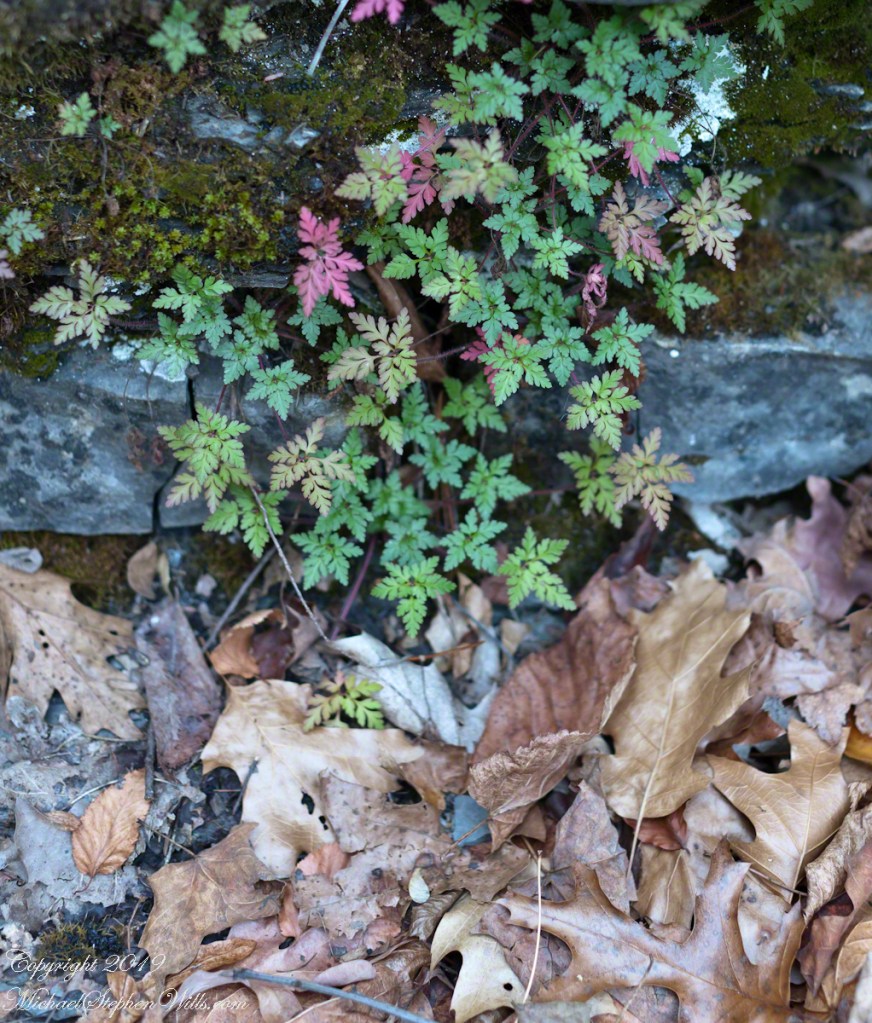
This geranium species (scientific name Geranium robertianum) are also called “Herb-Robert” for a reputed ability to ward off disease and, in the Scottish Highlands, “red-shanks” for the deep red color of the stalks, seen in this photograph. Robert H. Treman New York State Park. Source, “How to Know the Wildflowers” by Mrs. William Star Dana, 1989, Houghton Mifflin, Boston.
Robert H. Treman New York State Park.
Source, “How to Know the Wildflowers” by Mrs. William Star Dana, 1989, Houghton Mifflin, Boston.
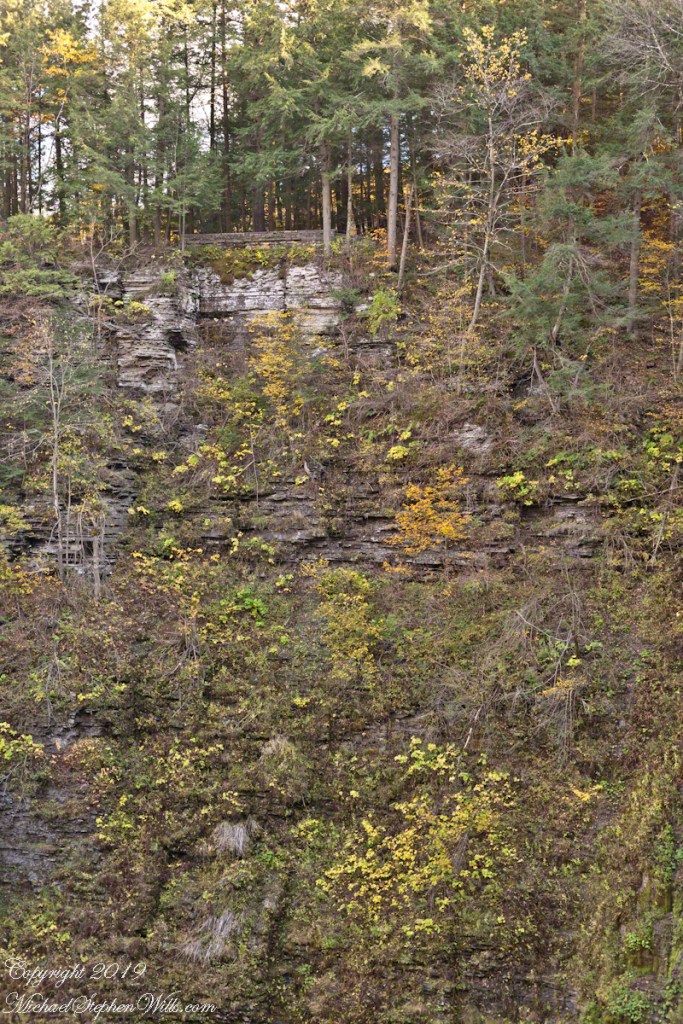
Click for a slideshow of this sequence Cliff Stair Views
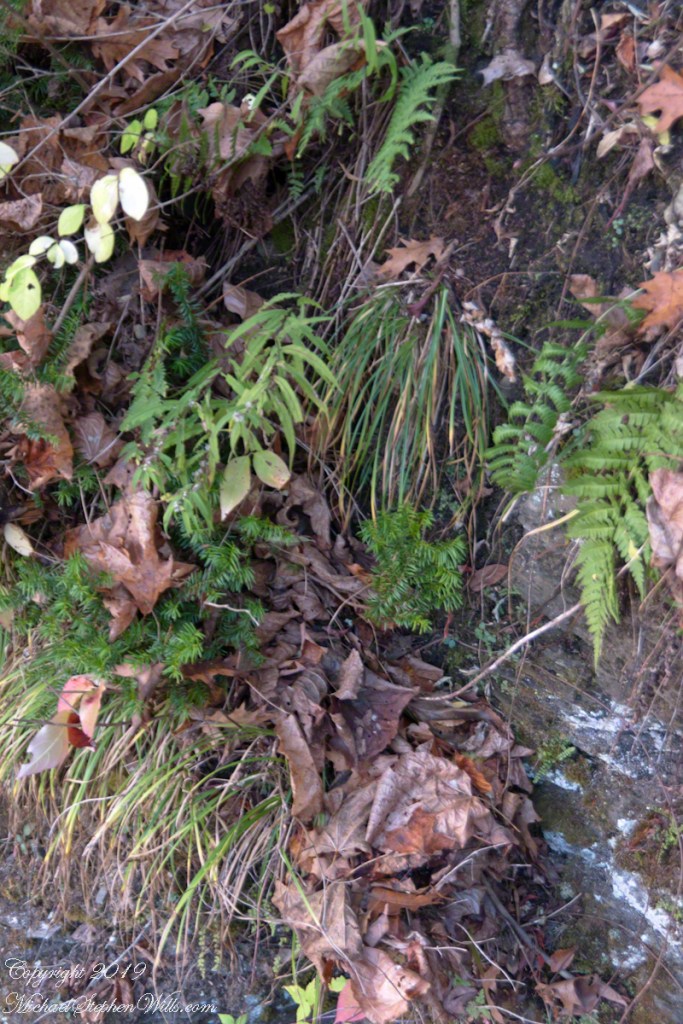
Lucifer Falls from Rim Trail OverlookLucifer Falls from Rim Trail OverlookUnidentified TreePam on the Cliff StaircaseCliff Stair Wall, autumn with fern generationsCliff Stair Wall, autumn Geranium and mossesThis geranium species (scientific name Geranium robertianum) are also called “Herb-Robert” for a reputed ability to ward off disease and, in the Scottish Highlands, “red-shanks” for the deep red color of the stalks, seen in this photograph. Robert H. Treman New York State Park. Source, “How to Know the Wildflowers” by Mrs. William Star Dana, 1989, Houghton Mifflin, Boston.Wild geranium leaves tinged with autumn color above a gathering of spent oak and elm leaves. Robert H. Treman New York State Park of the Finger Lakes Region.
Copyright 2023 All Rights Reserved Michael Stephen Wills
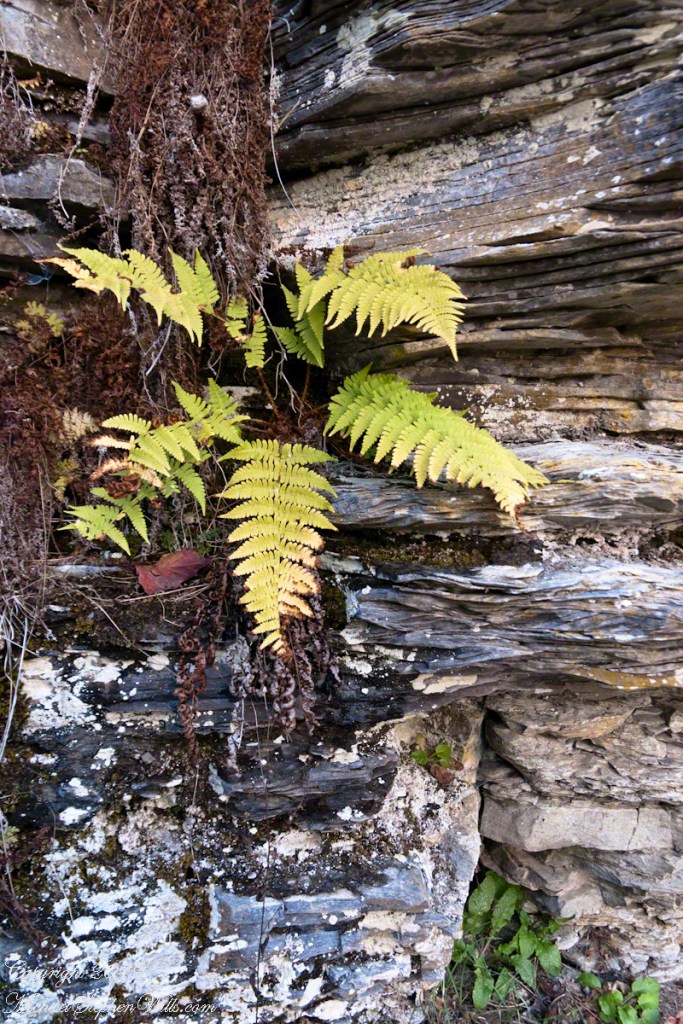
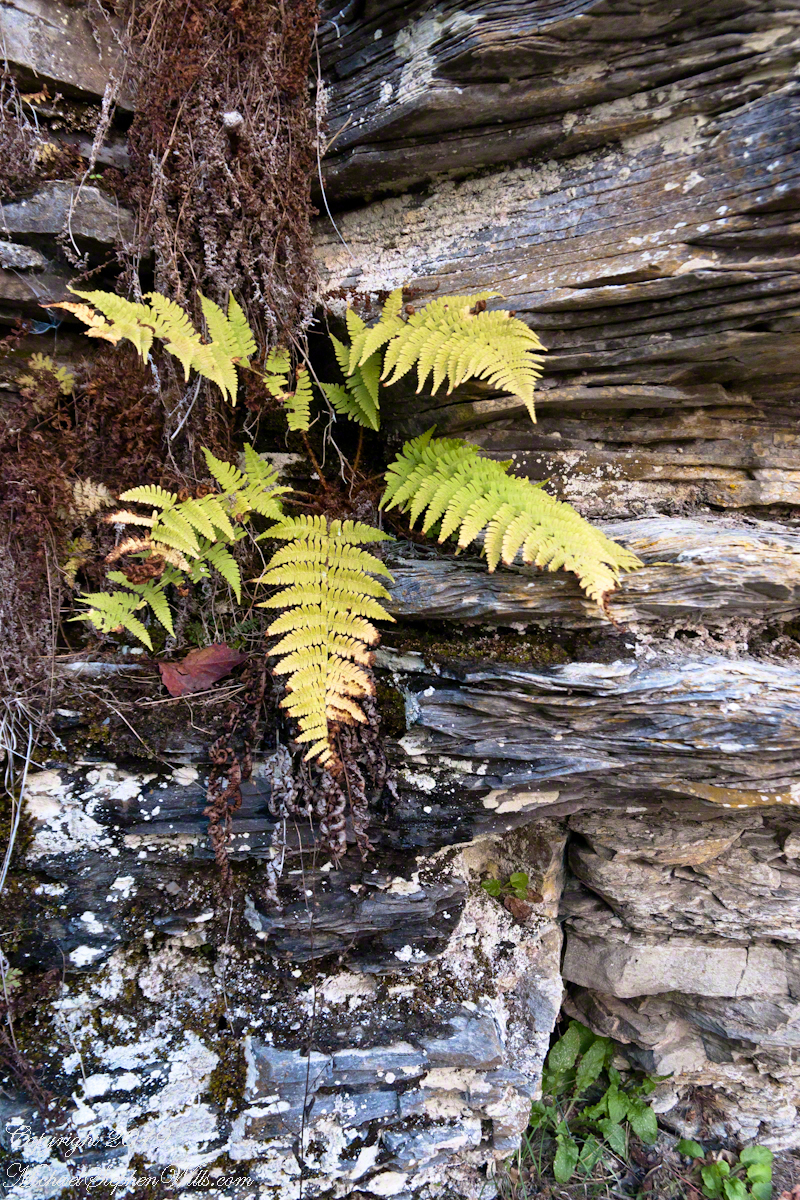
Each autumn, species of fern turns yellow towards a winter death. Here we see growing from Devonian shale, both the yellowed and desiccated fern fronds. Robert H. Treman New York State Park.
Click photograph for a larger view. To do this from WordPress Reader, you need to first click the title of this post to open a new page.
Cliff Stair Wall, autumn with fern generations
Click for a slideshow of this sequence Cliff Stair views
Lucifer Falls from Rim Trail OverlookPam on the Cliff StaircaseCliff Stair Wall, autumn with hemlock
Copyright 2023 All Rights Reserved Michael Stephen Wills