Autumn Reflections: The Majesty of Acer Rubrum

On a serene autumn afternoon by Beebe Lake, a solitary red maple stood out against the backdrop, showcasing its vibrant colors and resilience, symbolizing autumn’s fleeting beauty.

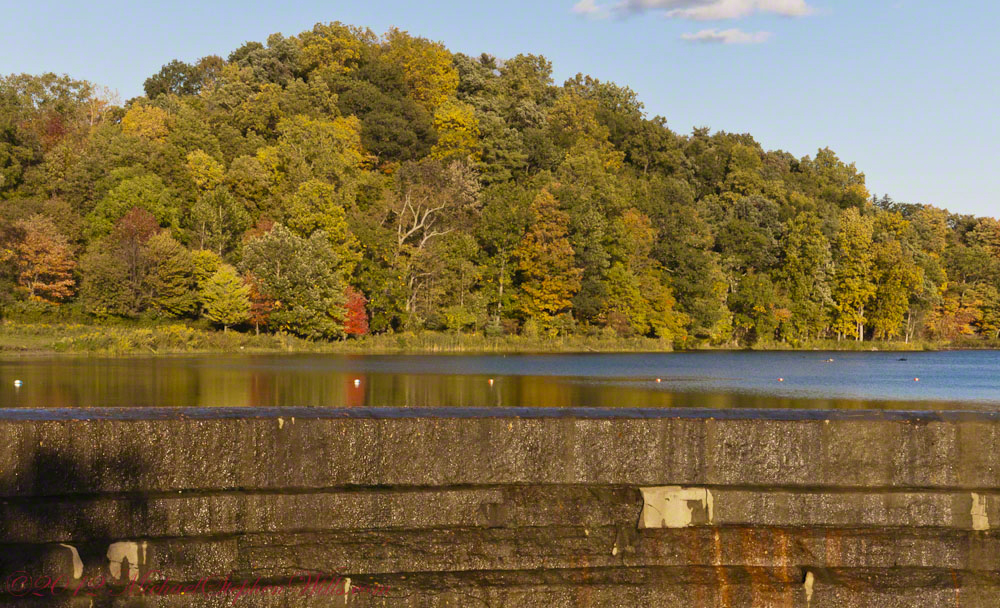
It was one of those serene autumn afternoons that linger in memory, the kind where the sky seems impossibly clear, the air crisp and gently scented with fallen leaves. I stood at the edge of Beebe Lake, my gaze first drawn to the textured concrete dam holding back the water, its weathered facade contrasting sharply with the soft reflections shimmering across the lake’s calm surface. Beyond, the wooded hillside rose gently, a tapestry woven with the warm hues of autumn—golds, greens, oranges, and reds mingling like brush strokes on a canvas.

An October Glory, turning before all others

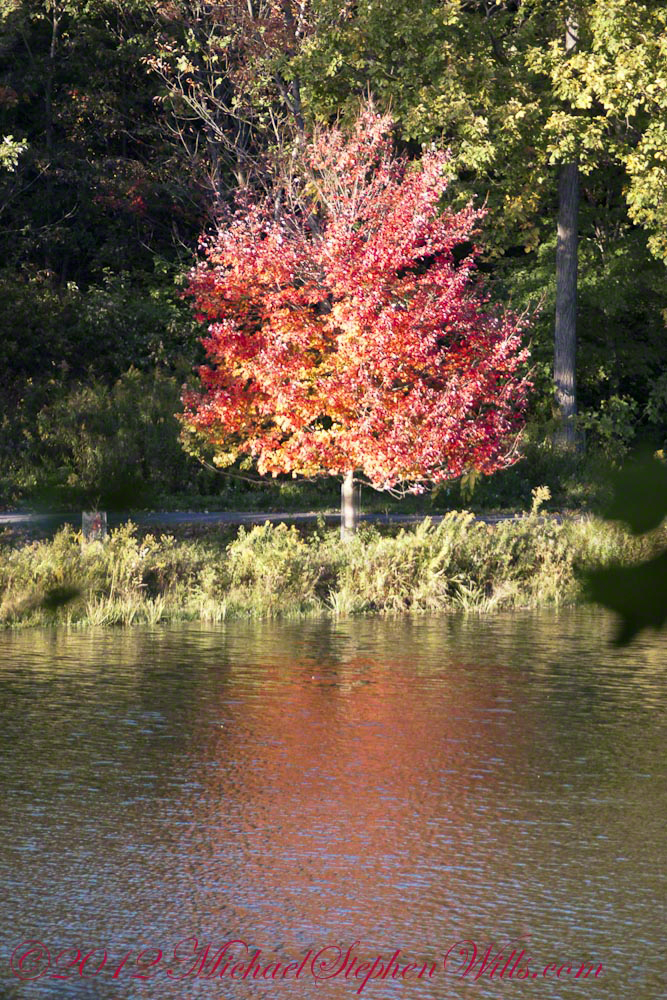
Yet amidst this collective beauty, one tree captured my attention, singular in its brilliance—a solitary red maple standing proudly on the lakeshore. Its leaves had turned a vivid crimson, blazing brightly as though defying the muted earth tones surrounding it. Even from a distance, framed and partially obscured by larger trees, its vibrant reflection cast a fiery echo on the water, rippling softly in the afternoon breeze.

The maple, Acer Rubrum, seemed perfectly at home here, thriving robustly at the water’s edge. I remembered reading how adaptable red maples are, able to flourish in conditions ranging from dry uplands to swampy shores. This spot, near the edge of the tranquil Beebe Lake, seemed to showcase its resilient character perfectly.

Up close, the maple’s glow was even more striking. Its leaves cascaded in fiery clusters, hues deepening from bright scarlet at the tips to a darker maroon closer to the branches. This dramatic gradient seemed symbolic of autumn itself—beautiful, fleeting, and subtly tinged with the melancholy reminder of winter’s approach.

The Red Maple (Acer Rubrum) to tolerant of diverse conditions, making it a perfect choice for this spot on the short of Beebe Lake.

A memory surfaced of early spring in the Finger Lakes region, a time when maples, including this red maple, generously share their sap. Though not traditionally tapped like its sweeter cousin, the sugar maple, this species’ sap can indeed be boiled down into syrup, a surprising sweetness hidden within its sturdy trunk. Standing in its shadow, imagining those early spring days, it seemed astonishing that the same tree could offer both the delicate sweetness of syrup and the fierce beauty now on display.

Curiously, the transformation of the tree appeared methodical yet whimsical—it changed colors from the top down, its upper branches already bare, exposing slender twigs pointing skyward. Like an artist carefully removing layers to reveal something deeper beneath, the maple unveiled its upper bare bones first, as though reminding observers of the quiet strength supporting its autumn splendor.
This Red Maple (Acer Rubrum) turns from the top down and has already bare for most top branches.

As I lingered, taking in this turning tree, joggers passed by along the path, their rhythmic footsteps a gentle percussion beneath the rustling leaves. Briefly, they glanced toward the vivid maple, perhaps drawn, like me, by its striking contrast to the surrounding foliage. It felt like we shared a secret admiration for this singular tree, recognizing in it a quiet assertion of individuality amidst conformity.

Eventually, I viewed the maple once more from afar, framed now by broader sweeps of branches and leaves, partially obscured but no less vivid. Through layers of leaves and dappled sunlight, it glowed like a distant flame, a beacon that seemed to encapsulate the entire mood of the season—warm yet cool, bright yet transient.
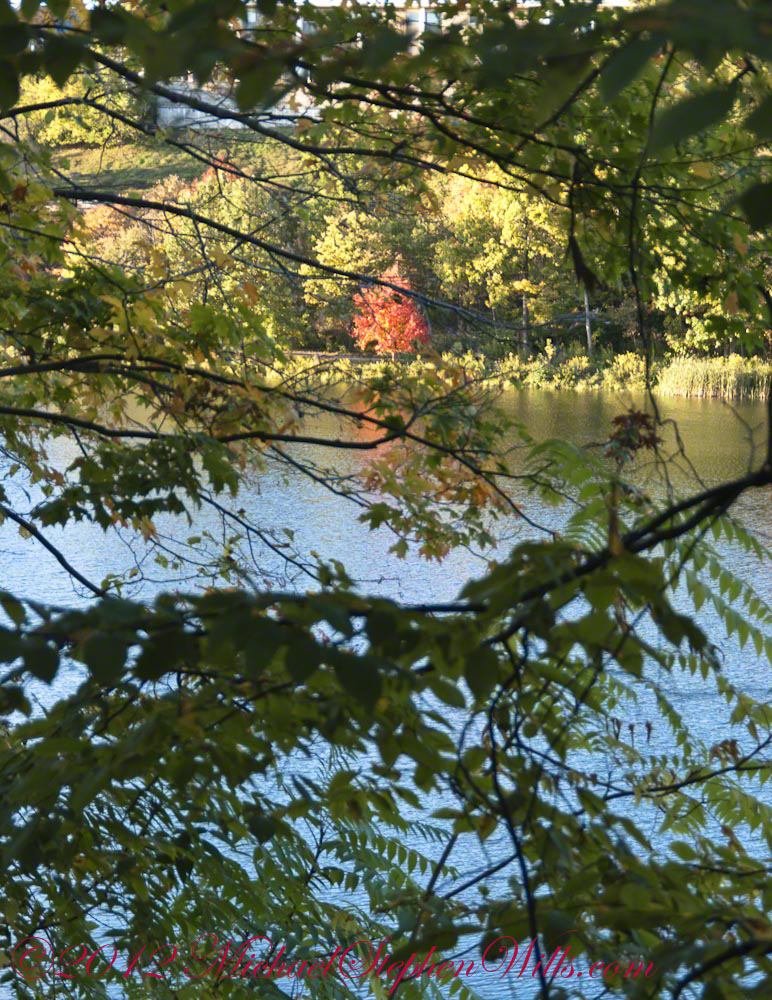
The Red Maple (Acer Rubrum) is the first to flower in spring and the first to turn in autumn.

Walking away, the image of that maple lingered, its reflection shimmering gently in the afternoon sun, a moment suspended between summer’s lush vitality and winter’s bare stillness. Beebe Lake had offered scenic beauty, a quiet meditation, a reflection mirrored not only on its tranquil surface but in the heart of an observer captivated by a single tree’s fleeting glory.
Enter your email to receive notification of future postings. I will not sell or share your email address.

Capturing Fall’s Beauty: A Journey of Healing

During a reflective walk, the author parallels the beauty of autumn his wife’s healing journey post-surgery, celebrating transformation and resilience.

As I waited for Pam to finish her 30-minute physical therapy session at the Northeast Ithaca medical complex, I decided to capture moments of the fall season through my camera lens while walking. There’s something about this time of year—the crispness in the air, the vibrancy of the colors—that invites reflection, especially with the significance of Pam’s recovery following her hip replacement. These moments, both large and small, weave together to form the tapestry of life, and today, I felt a strong pull to observe, to pause, and to appreciate.

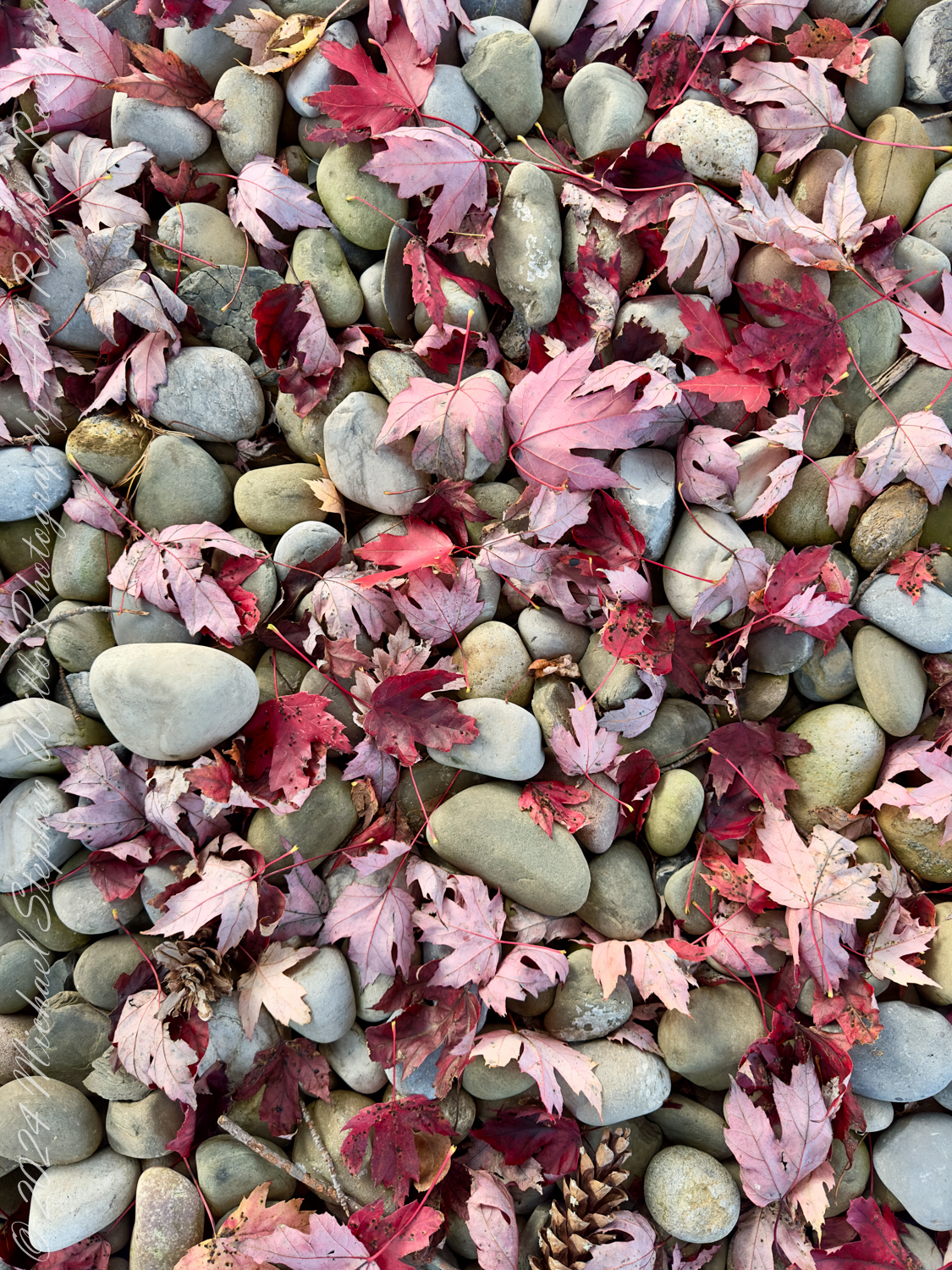
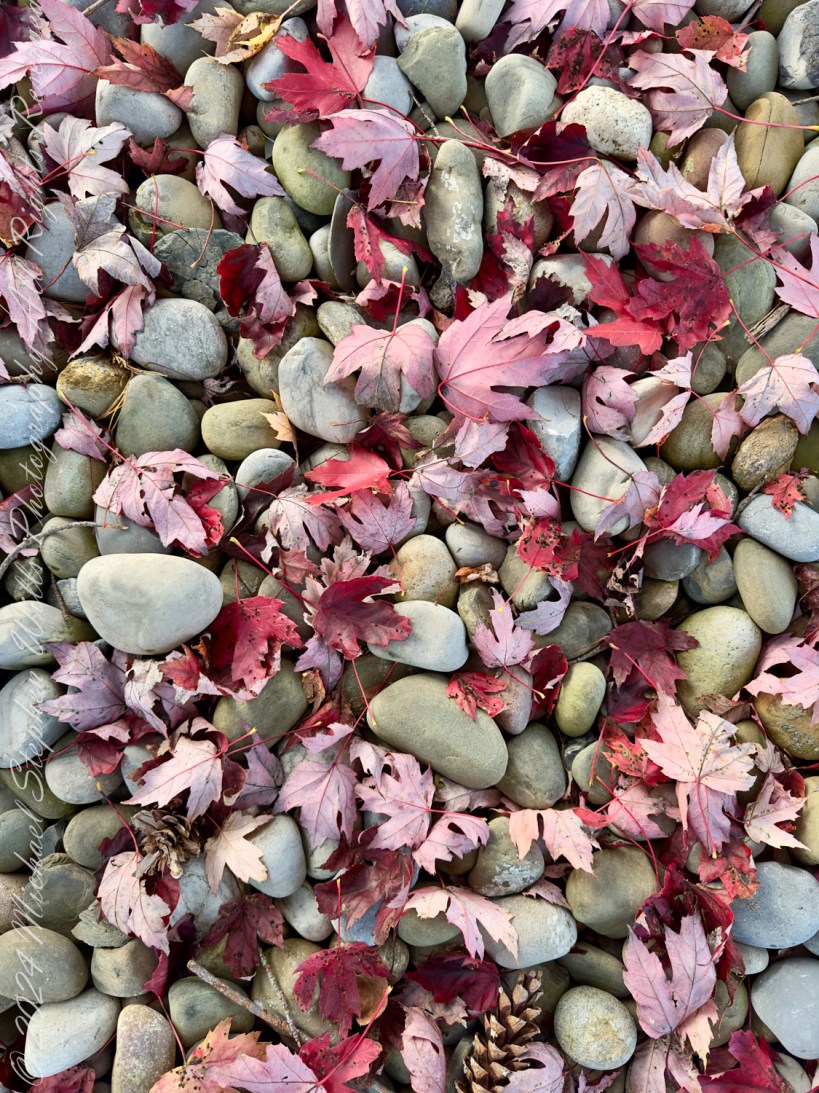
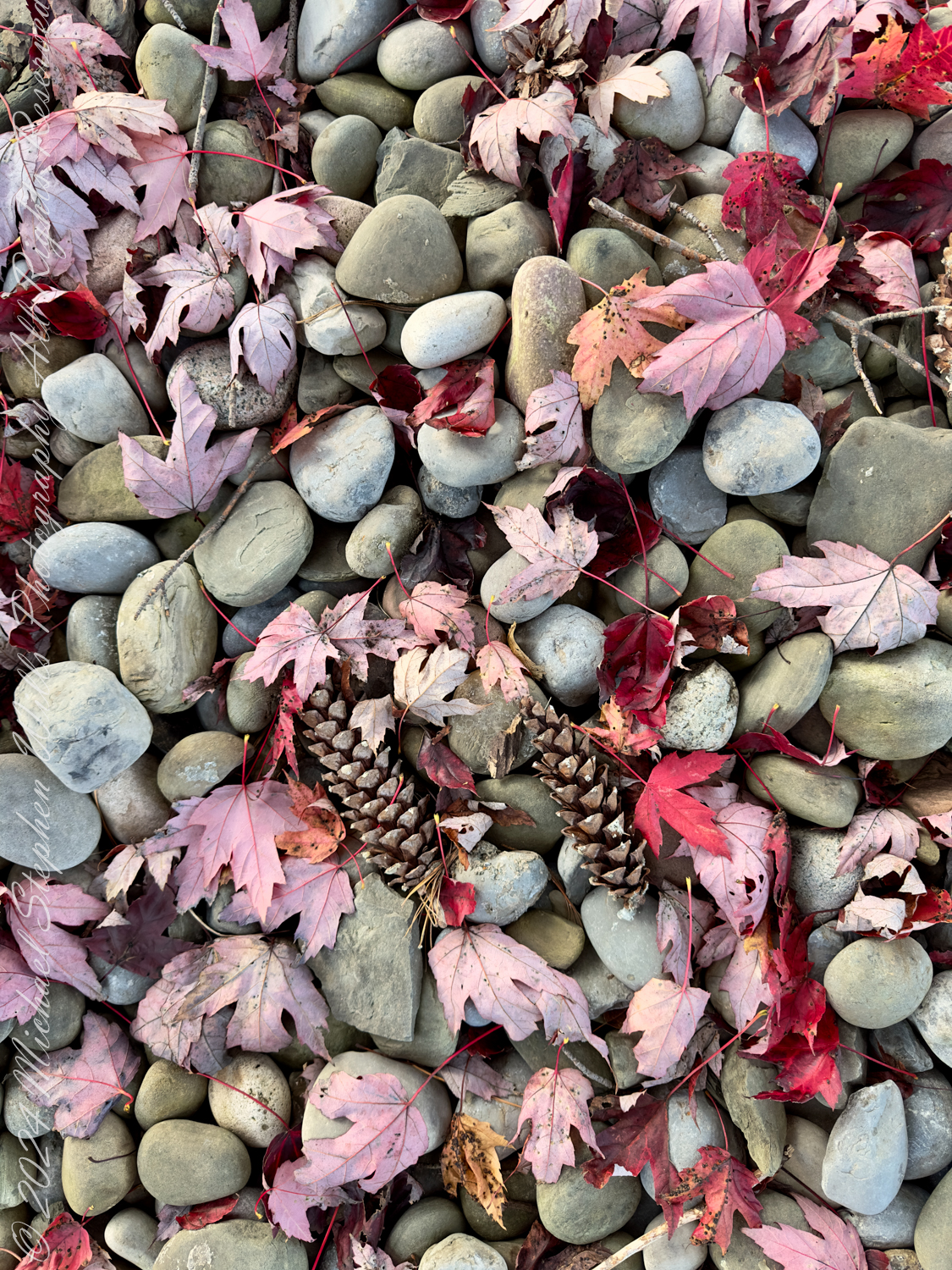
The first scene that caught my eye was a delicate scattering of maple leaves over smooth, weather-worn stones. The contrast between the rigid rocks and the soft, decaying leaves reminded me of life’s cyclical nature. The bright red and pale pink hues of the leaves, now beginning their slow decomposition, seemed to symbolize the passage of time—how even in their decay, they added beauty and texture to the scene. The leaves, having served their purpose on the tree, now danced with the wind, finding a new purpose in creating a natural mosaic. Much like how Pam’s healing journey is both the end of one struggle and the beginning of a new phase in our lives.

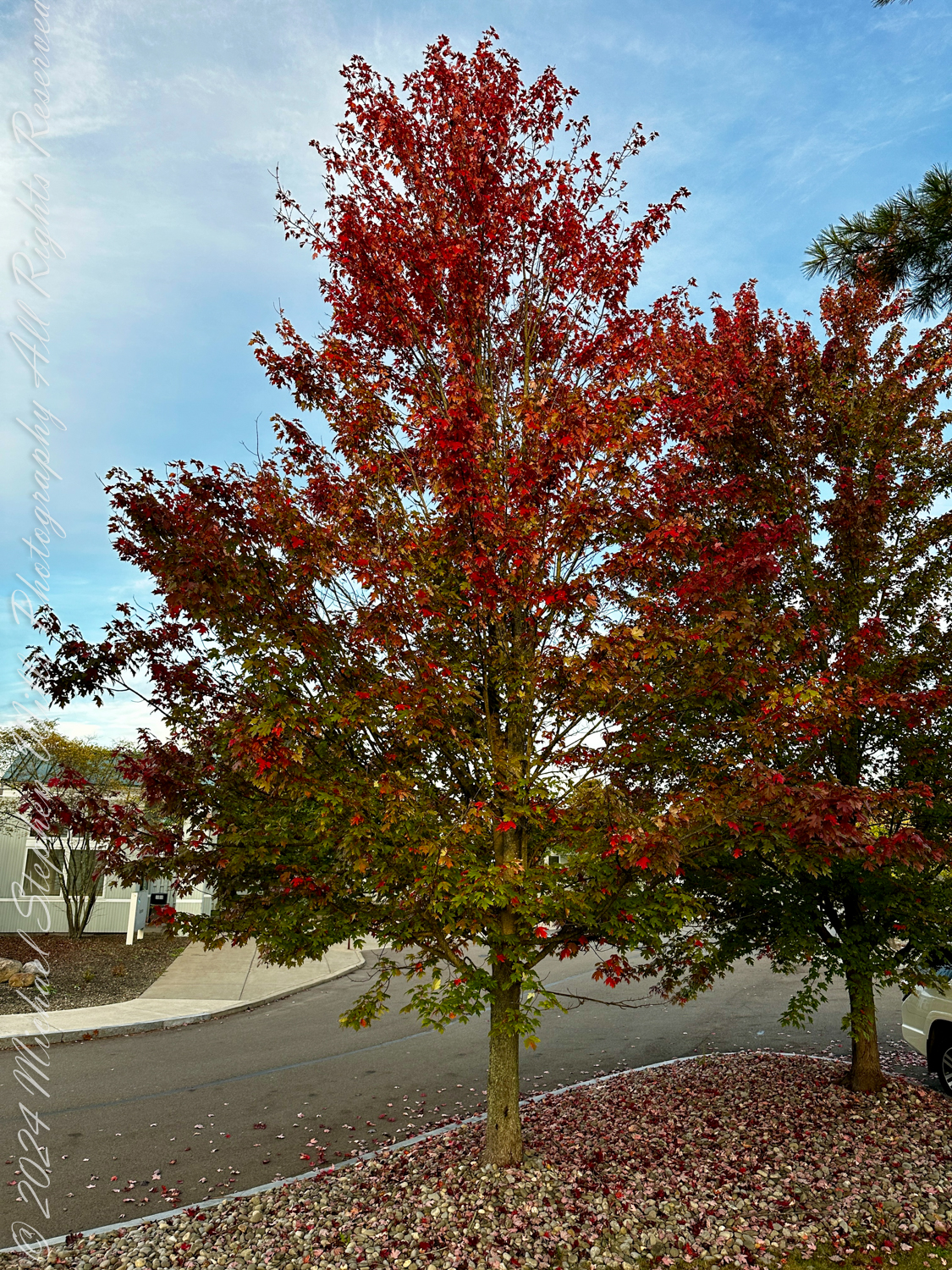
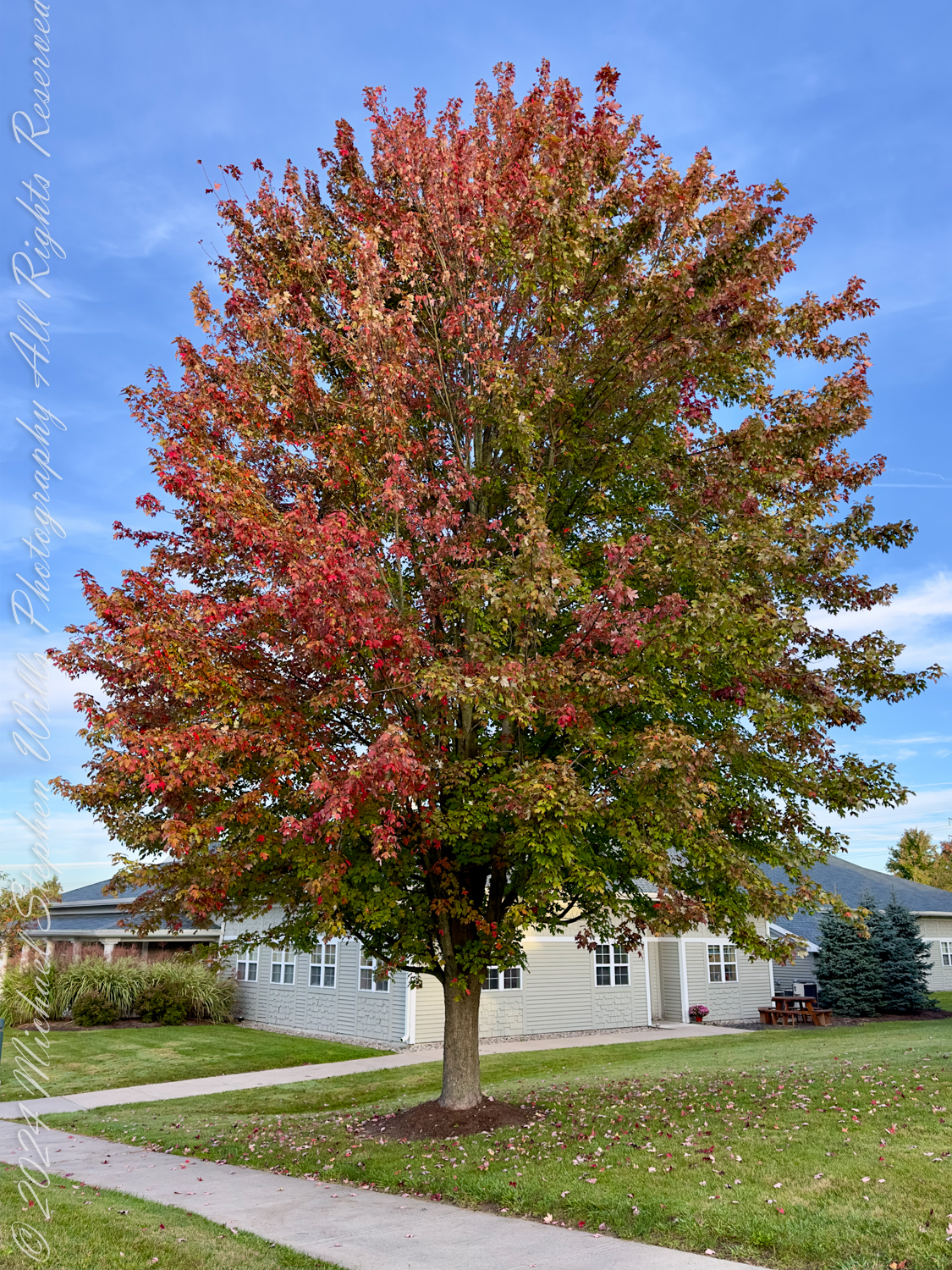
As I continued walking, I came upon a maple tree, standing tall with its branches adorned in fiery reds. The vibrancy of the foliage against the sky reminded me of strength in adversity. The tree had begun its seasonal transformation, shedding its leaves as it prepares for winter—a time of rest before the renewal of spring. I thought about how Pam, too, is in a season of transformation. Her body is adjusting, healing from the surgery, and preparing for new movement and freedom that will come in time. Watching the wind gently tug at the leaves, I couldn’t help but feel grateful for her resilience.

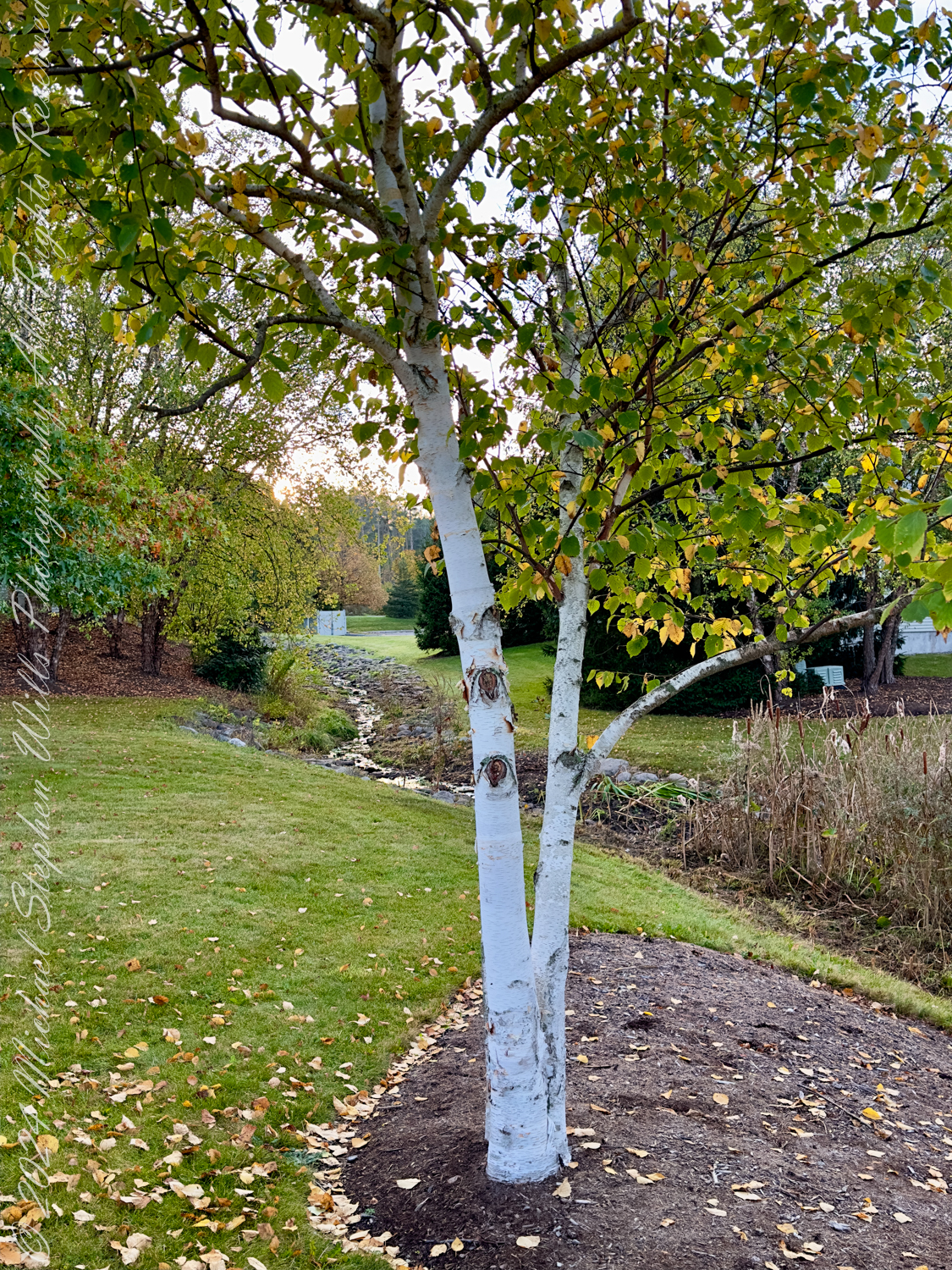
Nearby, a slender birch tree stood out, its bark a striking white against the greens and golds of early fall. The birch, with its smooth and peeling bark, fascinates me. It exudes a quiet elegance, standing firm and graceful; a symbol of quiet endurance, a steadfast presence amidst the ever-changing landscape. Much like the birch, Pam has weathered the storm of surgery with grace, moving through pain and discomfort with a quiet determination. The sound of a gentle stream nearby only added to the serenity of the scene, offering a soft, meditative backdrop to my thoughts.

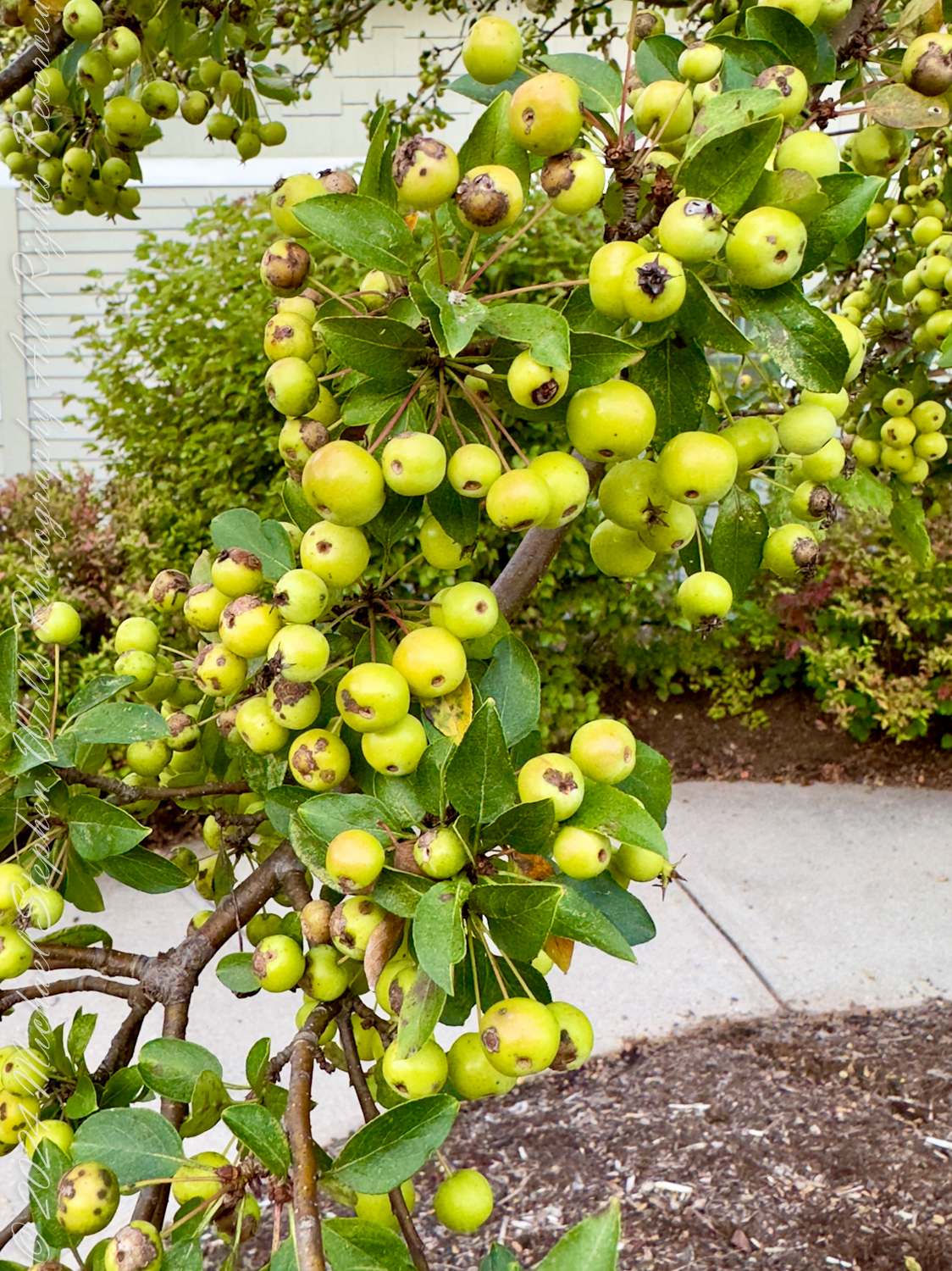
Further along, I encountered clusters of green crabapples hanging heavily from a tree. Their small, round forms were imperfect, dotted with blemishes and signs of wear, yet there was beauty in their abundance. These fruits, while not perfect, are a testament to the tree’s efforts throughout the year, a reminder that growth and effort often result in the imperfect. Pam’s recovery isn’t without its challenges, but each step, each small victory, is a testament to her effort and determination. The crabapples reminded me that perfection is not the goal—progress and perseverance are.

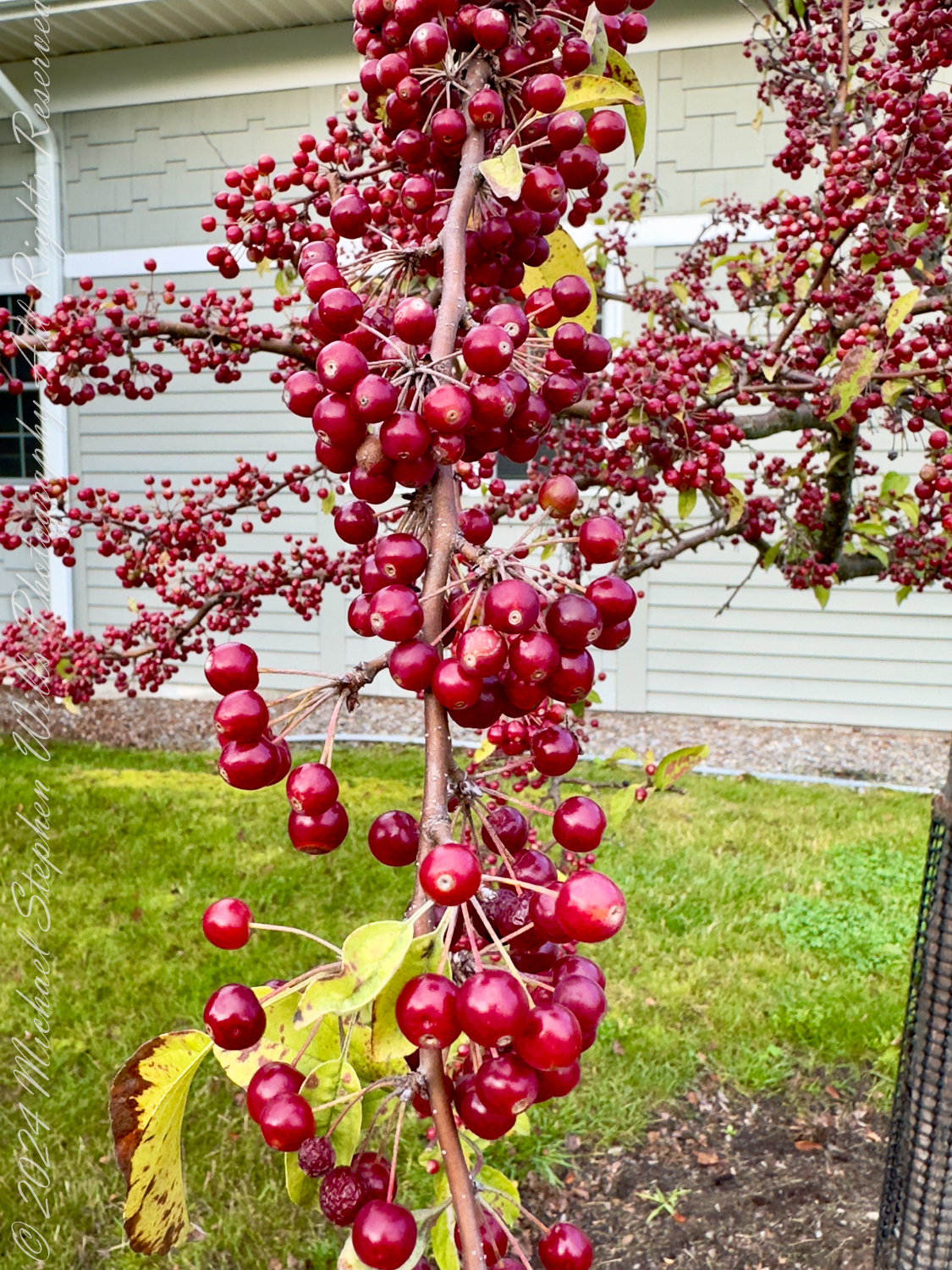
On another tree, I found its branches laden with bright red berries, their glossy surfaces shining in the light. These berries, hanging so densely, added a sense of richness to the landscape, a vibrant contrast to the yellowing leaves of nearby trees. In many cultures, red berries symbolize vitality and protection, and in this moment, I thought of Pam’s vitality, her strength to heal and return to her daily life. The image of the berries will always remind me of this chapter of her recovery—a time where her strength was most evident.

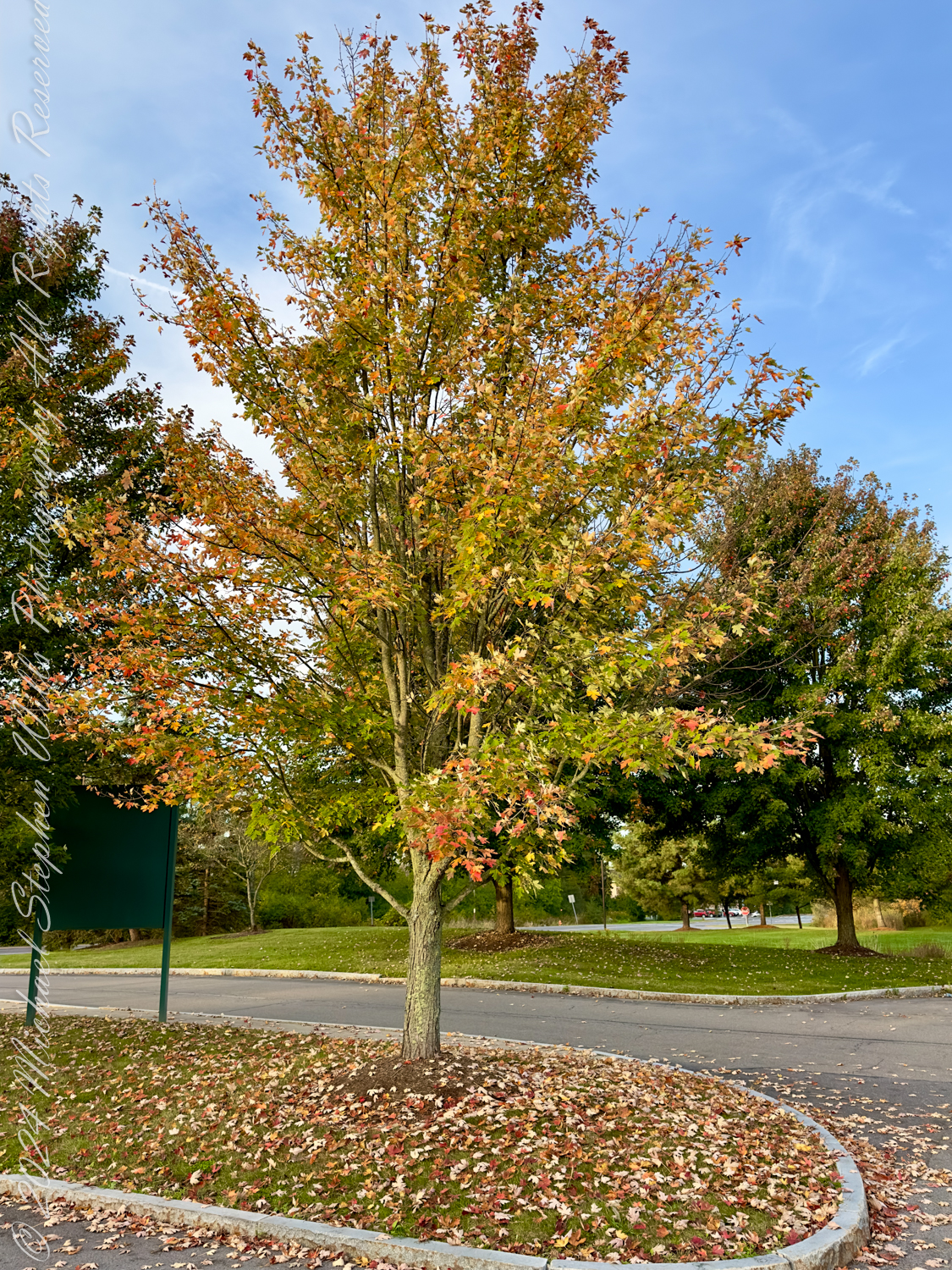
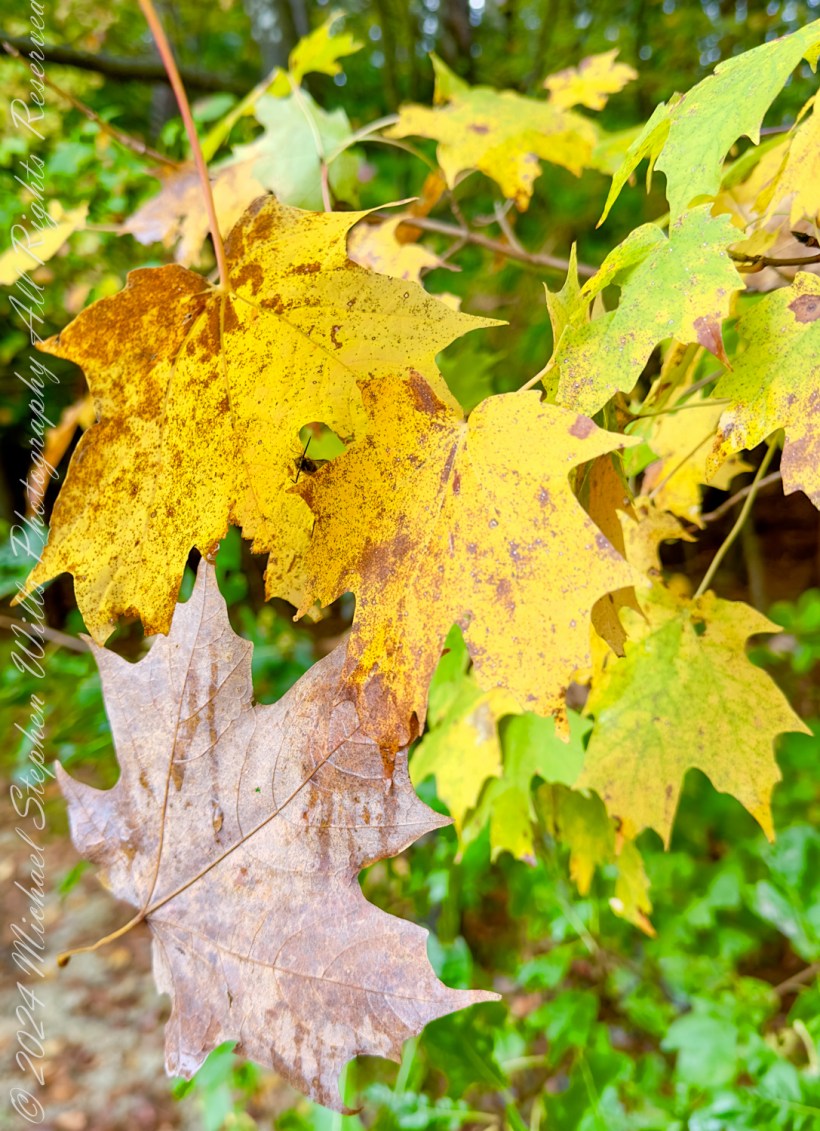
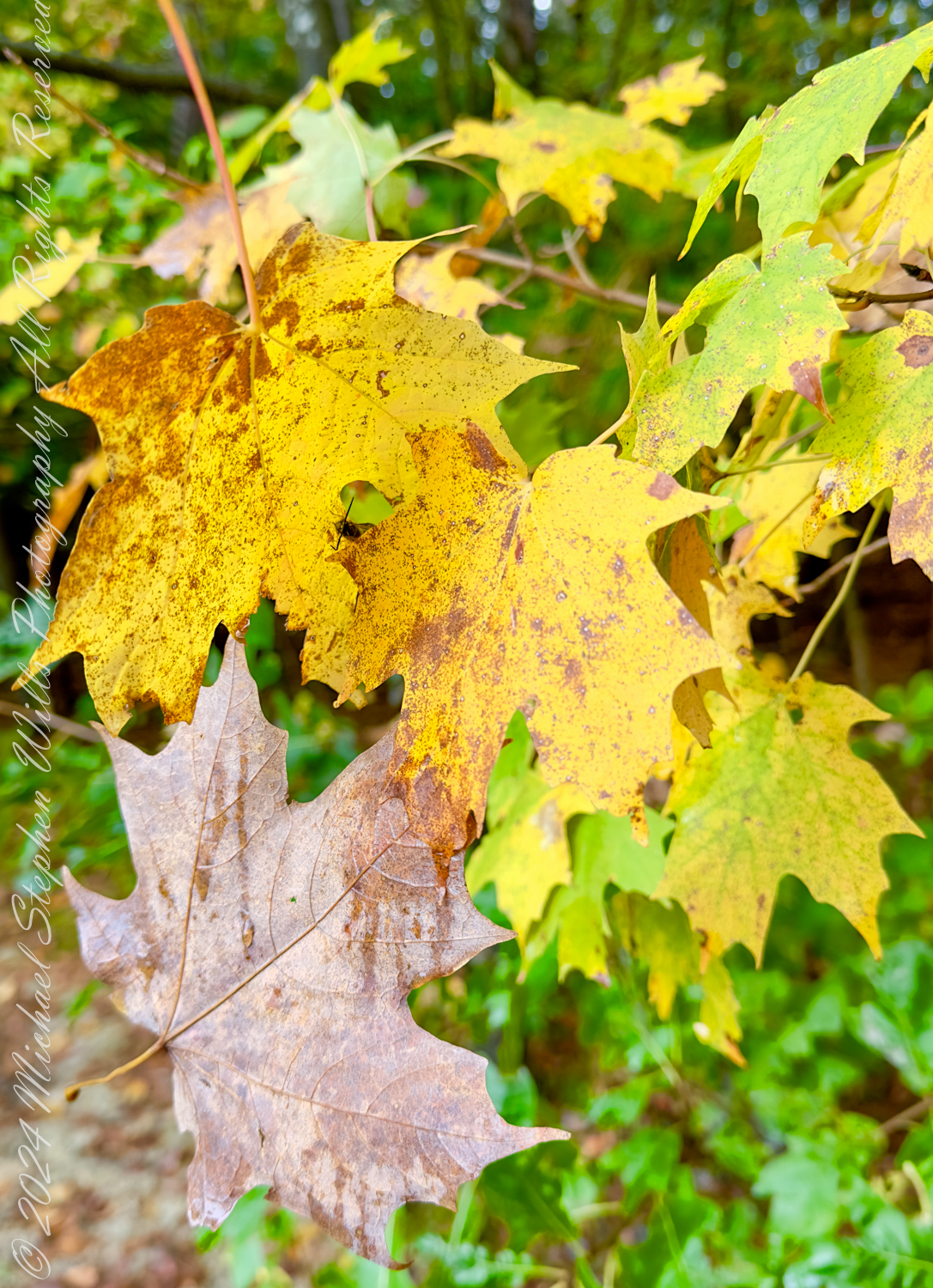
As my walk continued, I marveled at another maple tree, its colors starting to fade into yellows and oranges, the leaves slowly dropping to the ground. The fallen leaves created a soft blanket around the tree, a reminder that letting go is a natural part of life. We often hold on to things, ideas, or even pain, long after they have served their purpose. Watching these leaves fall, I thought about Pam letting go of the pain and limitations she’s carried for months. Her body, much like this tree, is learning to release, to move forward.

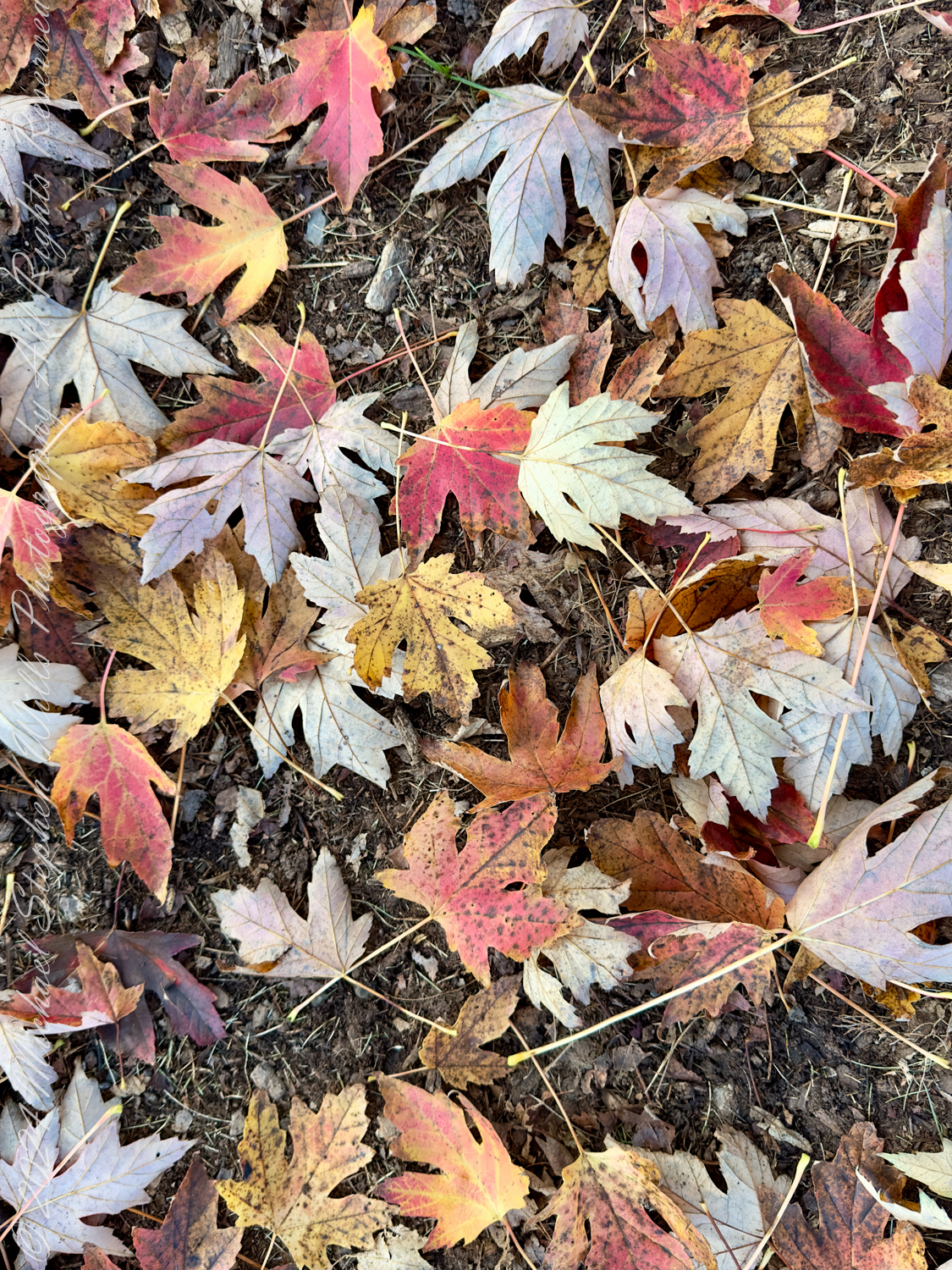
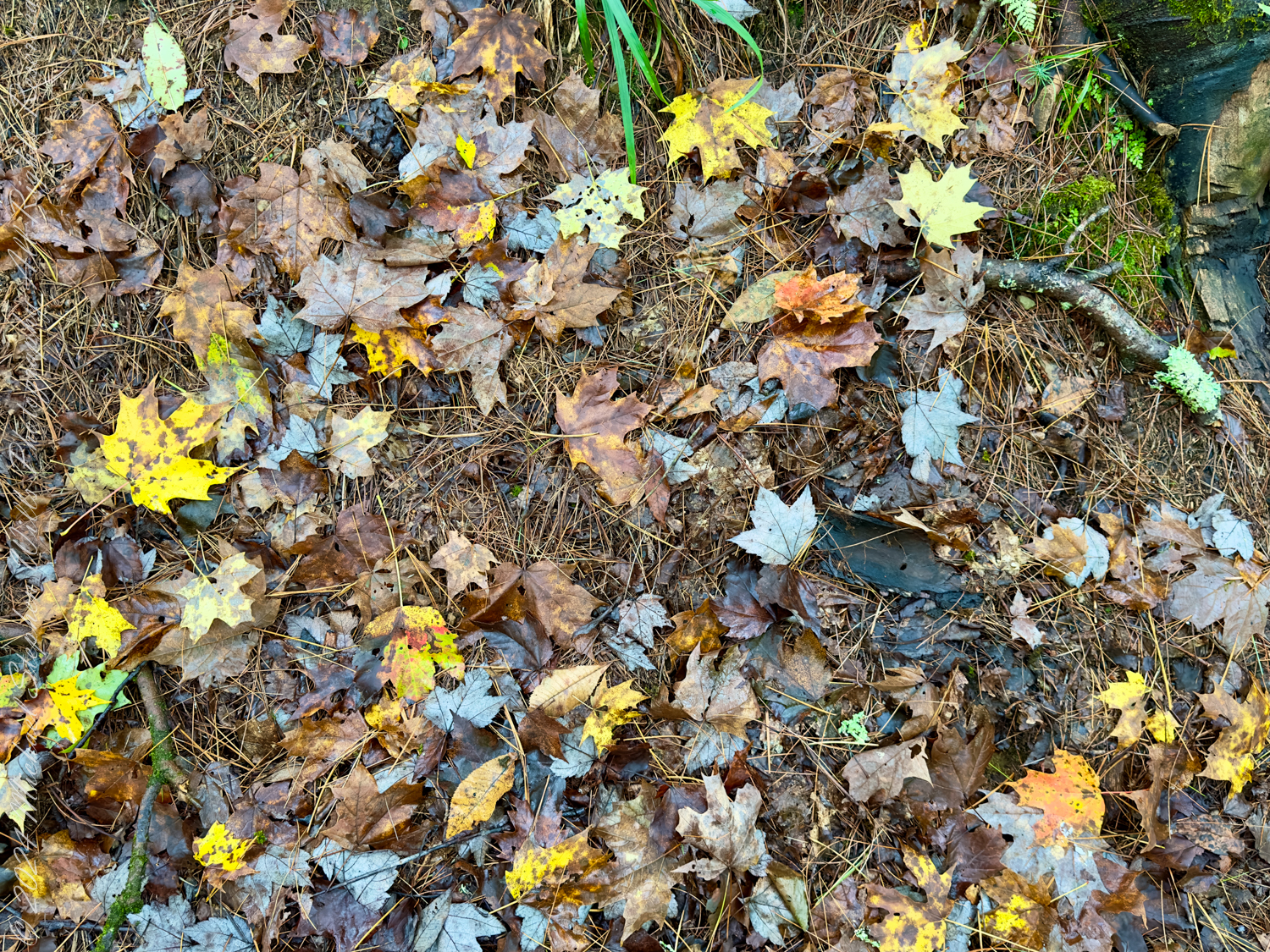
On the ground, I noticed a close-up of more fallen leaves, these ones touched with both vibrant and fading hues, each in a different stage of its journey. Together, they formed a beautiful, textured layer over the soil, offering nutrients to the earth below. Even in their end, they contribute to new life. It struck me that even in difficult times, there is always a sense of renewal and growth. Pam’s healing is part of a larger cycle—one of renewal and transformation.

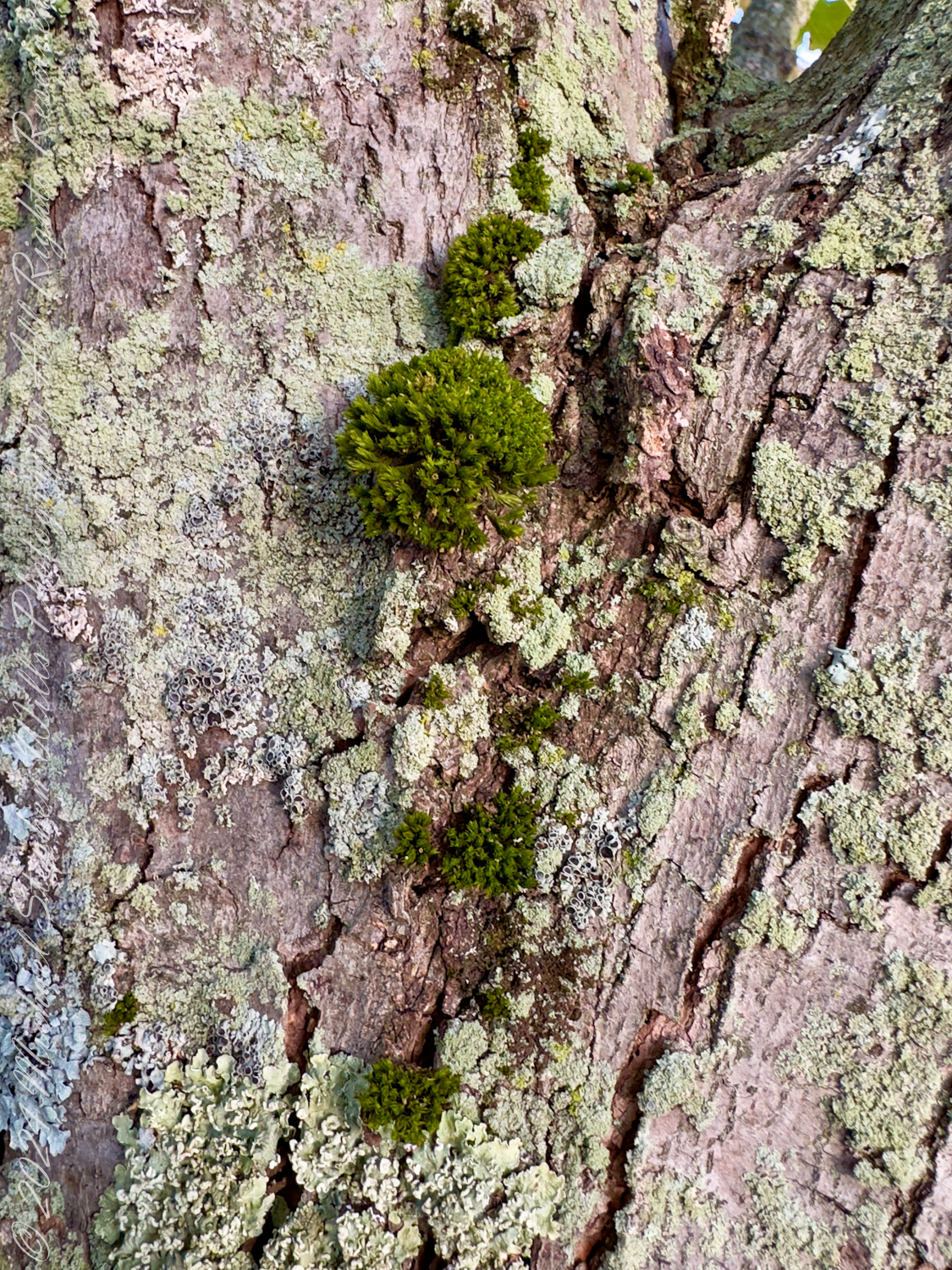
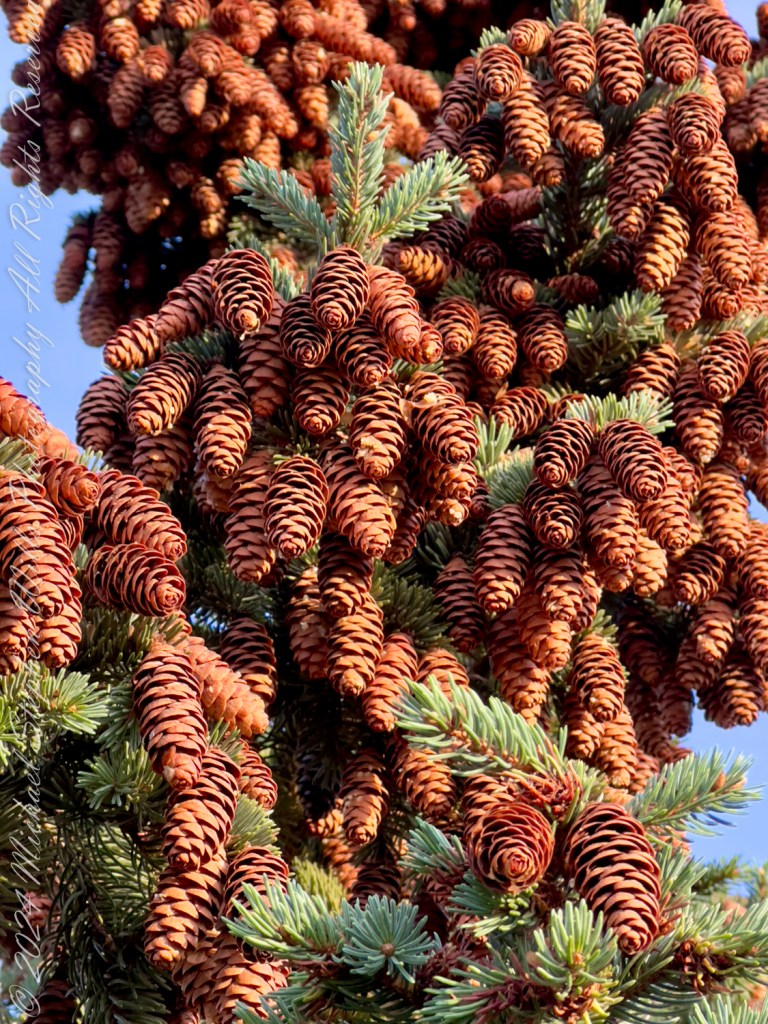
The final images of my walk were close-ups of a tree trunk covered in moss and lichen, and then the cones of a towering spruce tree. The moss, a soft green against the rough bark, seemed like nature’s way of nurturing the tree, offering protection and a touch of life in an otherwise harsh world. The cones, hanging in abundance from the spruce, signified a sense of continuity, of life moving forward even as the seasons change.

As I made my way, I realized this walk had been a meditation on Pam’s recovery, on the beauty of change, on the lessons nature offers in every season. Just as the trees prepare for winter and eventual rebirth, Pam too is in a season of healing, and I am grateful for every step she takes toward renewal.

Enter your email to receive notification of future postings. I will not sell or share your email address.

A Moment Frozen: Nature’s Finger Lakes Art

Maple leaves suspended in a spider web create a rare, timeless moment in nature.

Walking along the Finger Lakes Trail in Robert H. Treman State Park, I come across something that makes me stop—maple leaves, caught mid-fall, suspended in a delicate spider web. Time itself seems to pause with them, as if the leaves, in their slow descent, had found a way to defy gravity. Yellow, brown, and green, they hang like fragile ornaments, arrested in motion. For a moment, it feels like the world is holding its breath.

Maple leaves caught in freefall by spider web. Finger Lakes Trail, Robert H Treman State Park, Ithaca, Tompkins County, New York State

This brief suspension of nature’s inevitable course is uncanny, a moment frozen between one season and the next. These leaves, so close to their final rest on the forest floor, now seem to defy their fate, held up by threads too fine to see. I’m tempted to reach out and free them, to let them continue their journey down to the earth, but something stops me. It’s as if the web, like a clock halted mid-tick, has granted me the rarest gift—a chance to stop the flow of time.

In this moment, I reflect on how life itself is always in motion, how we are carried forward whether we like it or not. But here, in this quiet pocket of the forest, these leaves offer a small rebellion against that forward push. They hang, caught between what was and what will be, suspended between summer and winter, life and decay.

I snap a photo, knowing it’s just an echo of the real thing, a poor attempt to capture a miracle of nature. The leaves will eventually fall, the web will loosen, and time will move on. But for now, in this moment, they remain suspended, as do I—caught in the beauty of a moment where time, for once, seems to stand still.

Enter your email to receive notification of future postings. I will not sell or share your email address.

Thayer Preserve: Autumn Still Life 2

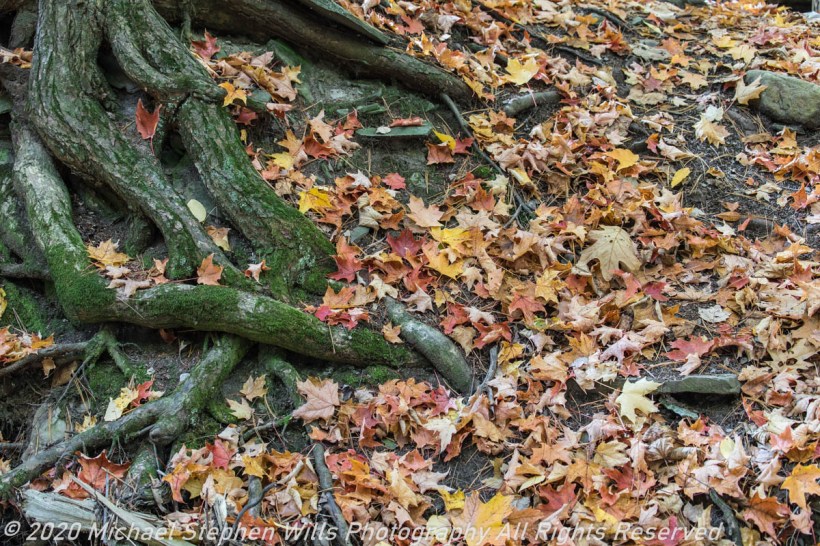
Hemlock Roots

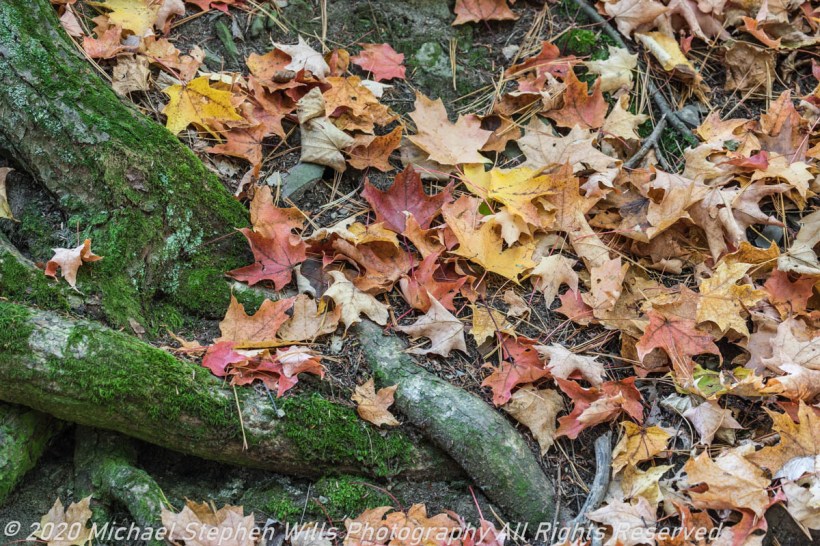
Maple leaves and hemlock roots share an environment yet play distinct roles in the ecosystem. Maple leaves, broad and vibrant, capture sunlight. This process fuels their growth and contributes to the air we breathe. Each fall, these leaves turn yellow and brown, signaling a natural change. They fall, joining the forest floor. Here, they decompose, becoming part of the soil. This enriches the earth, supporting new plant life.

Hemlock roots anchor these mighty trees. Reaching deep into the soil, drawing up water and nutrients. These roots also stabilize soil, preventing erosion and are a network, unseen but vital, connecting the tree to its environment.

Click photograph for larger view. Use combination keys to enlarge/reduce: Ctrl+ (Control / Plus) and Ctrl- (Control / Minus)

These natural processes have parallels in human generations. Like the leaves, each generation has its time in the sun. People grow, contribute to their world, and then make way for the next. The knowledge and experiences they leave behind enrich the lives of those who follow, much like fallen leaves nourish the soil.

Similarly, the hemlock roots parallel the foundational elements of human society. Traditions, cultures, and values are passed down, anchoring each new generation. They provide stability and nourishment, helping to guide growth and development.

Over time, just as the forest evolves through the cycles of leaves falling and roots growing, human societies change. Each generation builds upon the last, growing in the richness left behind. This ongoing cycle speaks to the resilience and interconnectedness of life, whether in a forest or in human communities.

In both nature and human experience, there is a rhythm of growth, contribution, and renewal. The falling of maple leaves, and the steadfastness of hemlock roots illustrate this beautifully, reminding us of the continuity and change inherent in all living systems.

Click Me to view my photographs on Getty.

Copyright 2023 Michael Stephen Wills All Rights Reserved http://www.MichaelStephenWills.com

Thayer Preserve: Autumn Still Life 1

color pallet

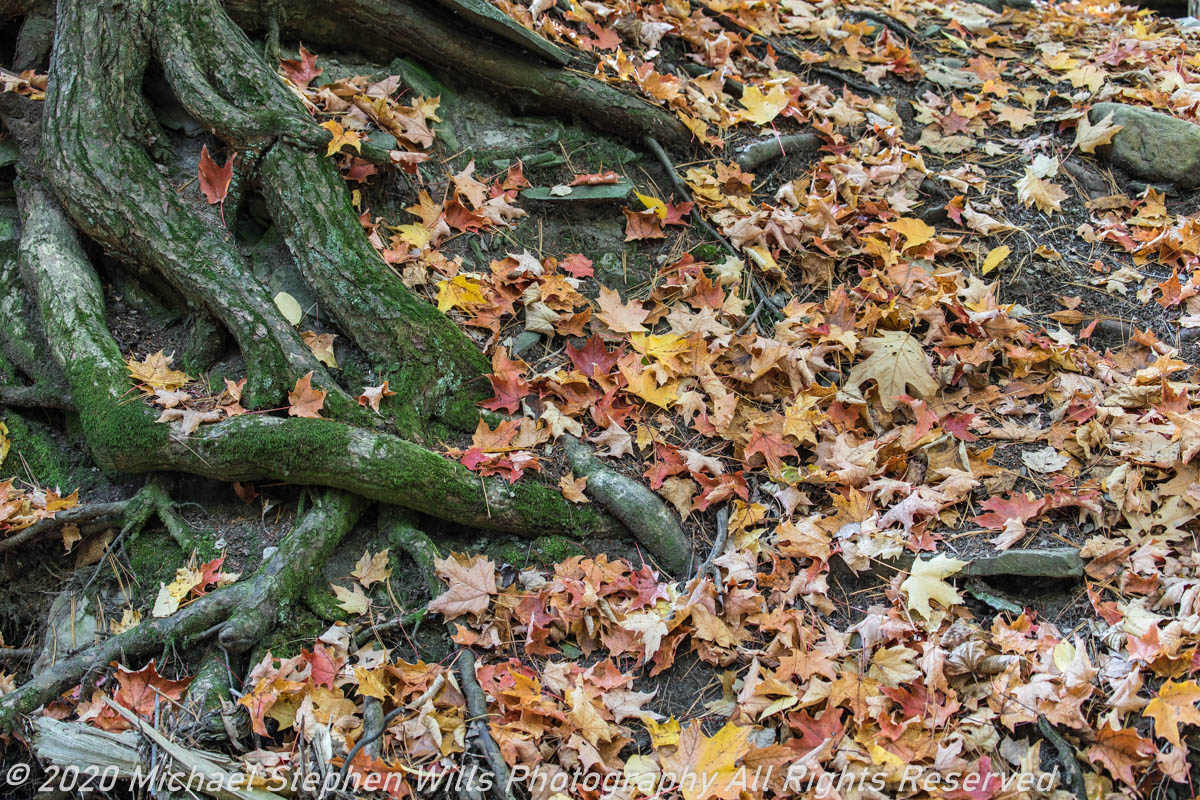
In the heart of nature, where Lick Creek flows, the land is a preserve. It guards the essence of the wild. Trees, tall and timeless, hemlocks, stand like sentinels. Their roots twist and turn, merging with the earth. Among them, maple leaves lie. They have journeyed from their branches to the ground. Yellow and brown, they rest. They carpet the soil, a patchwork of autumn’s farewell.

The creek murmurs. Its waters are a constant traveler, never still. They speak of journeys unseen. Along its banks, the leaves are at the end of their own journey. Melding with the earth, becoming part of something greater.

Click photograph for larger view. Use combination keys to enlarge/reduce: Ctrl+ (Control / Plus) and Ctrl- (Control / Minus)

Here, time moves differently. It’s marked not by clocks but by the subtle shifts of nature. Leaves fall, waters flow, the trees stand watch. This is a cycle, ancient and endless. In this preserve, every element has a role, a purpose. Together, they create a harmony.

This place, where leaves fall and waters flow, is more than a preserve. It is a reminder. In nature’s embrace, everything finds its place. Everything belongs. Even as leaves fall, they find a new purpose. In their resting, they nourish. In their silence, they speak of life’s endless cycle.

Click Me to view my photographs on Getty.

Copyright 2023 Michael Stephen Wills All Rights Reserved http://www.MichaelStephenWills.com