The Majestic Cottonwoods of Stewart Park

Discover the timeless beauty of two towering Cottonwood trees along the shores of Cayuga Lake. Explore their natural history, cultural significance, and how they’ve shaped the landscape of Stewart Park for generations.

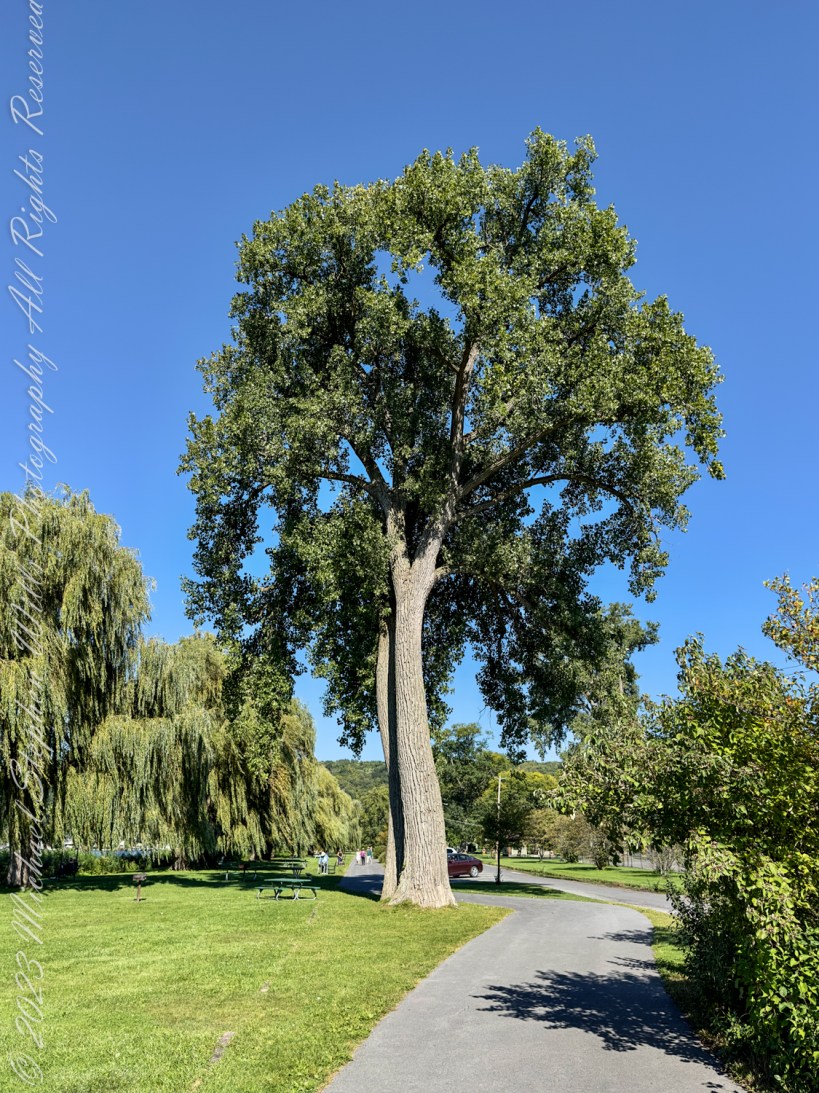
Walking with Pam in Stewart Park, the shores of Cayuga Lake shimmer under the bright September sun, offering a serene setting for reflection. Ahead, two towering Cottonwood trees stand in quiet majesty, their branches spreading wide, casting long shadows over the grass and walkway. Drawn toward them, I find myself in awe of their presence—these two trees, ancient sentinels by the water, who have silently borne witness to the changing world around them.
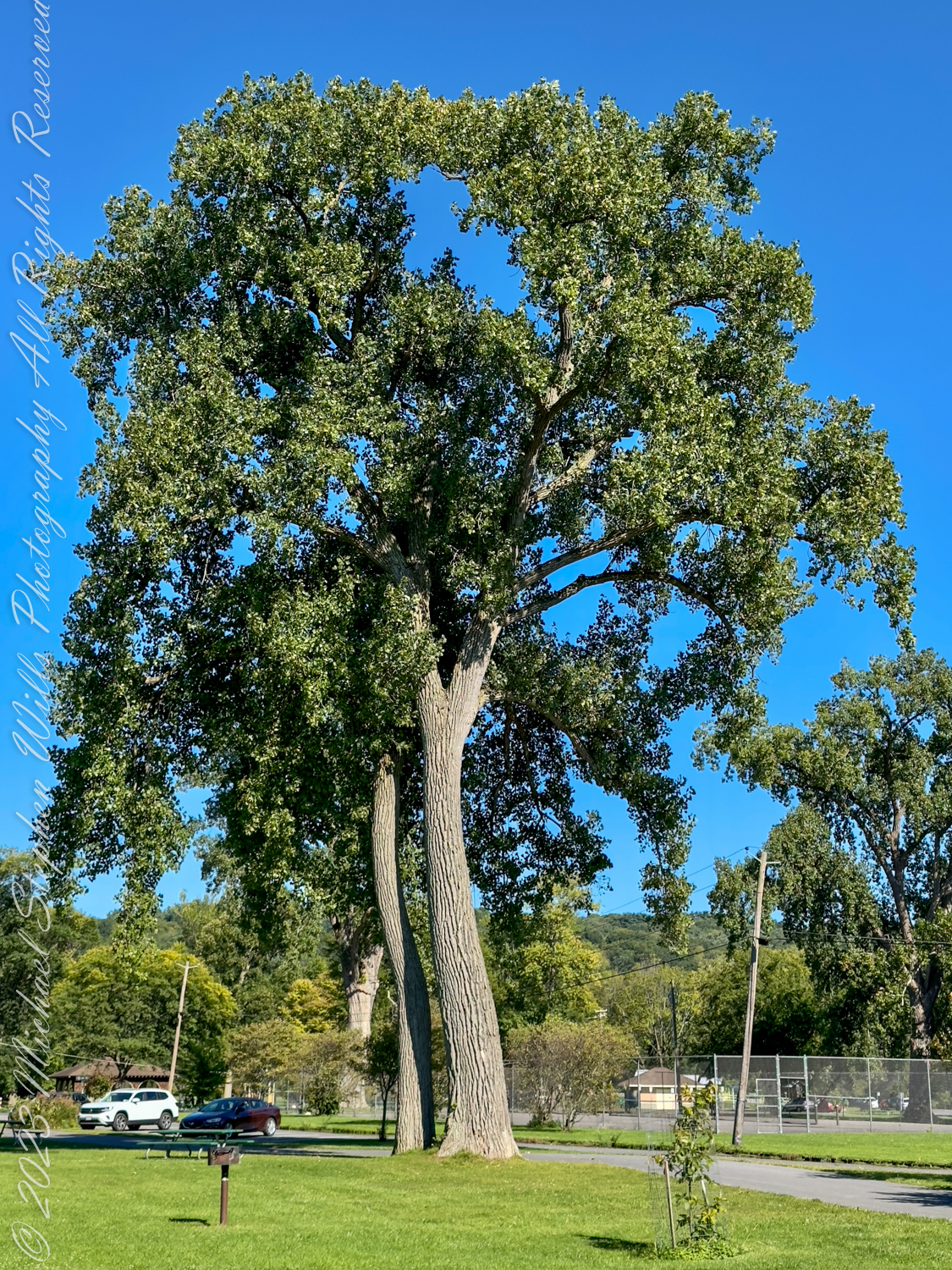
View Facing East/Southeast, September 10, 2024

Cottonwoods, scientifically known as Populus deltoides, are members of the poplar family and are among the tallest trees in North America. The ones before me have thrived for decades, their thick, furrowed trunks a testament to the endurance of life on the edge of the lake. It’s remarkable to think of all the storms and seasons they’ve weathered—their roots digging deep into the moist earth, nourished by the lake’s constant ebb and flow. I feel as though these trees, standing side by side, companions, connected through the unseen networks of roots beneath the soil. Their relationship to one another seems profound, they have grown up together, providing support and strength as they aged. Their canopies overlapping as though embracing one another.

There’s an undeniable symmetry to their relationship, both in form and function. One can imagine them as silent witnesses to the changing landscape around them—the gradual expansion of the park, the families that come and go, the laughter of children playing nearby, and the quiet conversations of couples walking hand in hand. These trees have become part of the fabric of Stewart Park, deeply entwined with the human history that unfolds here every day.
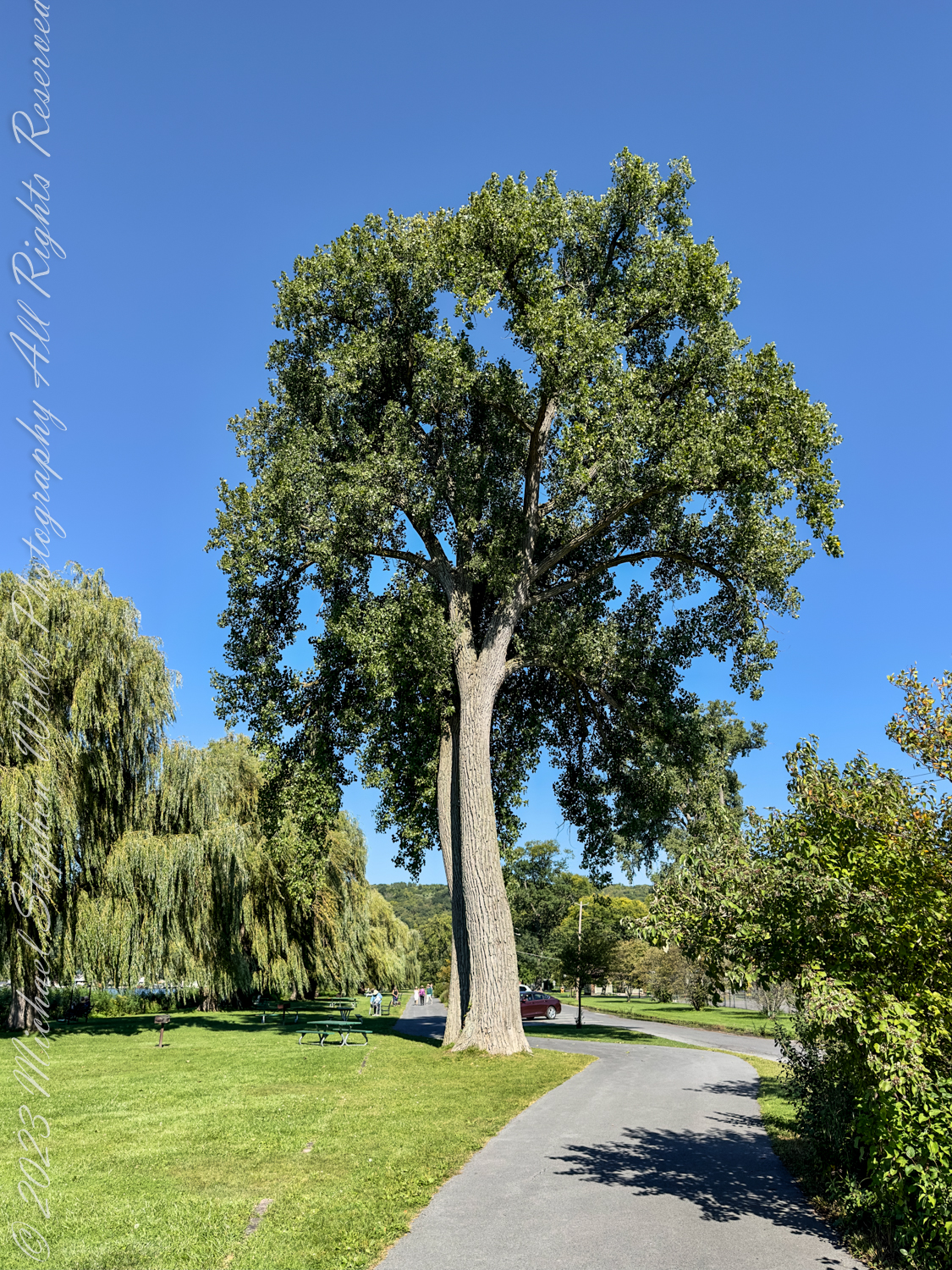
View Facing East, September 10, 2024

The branches reach skyward, their leaves shimmering in the breeze, producing the characteristic fluttering sound of Cottonwoods. There’s something deeply soothing about this rustling—the way the wind seems to dance through the leaves, creating a rhythm that feels eternal. It reminds me that these trees have long been part of human experience, a backdrop to countless strolls, picnics, and quiet moments of contemplation here at Stewart Park.

Cottonwoods are fast-growing, often found near bodies of water where their shallow roots can tap into consistent moisture. And yet, their rapid growth comes with a trade-off; their wood is soft and brittle, prone to breaking in high winds. But in Stewart Park, these two trees have found a perfect balance, their large, sweeping canopies offering shade and shelter without suffering too much damage from the storms that blow through the Finger Lakes. Their resilience is remarkable—a reminder of nature’s ability to thrive in challenging conditions.

Historically, Cottonwoods have played a significant role in the lives of the people who encountered them. Native Americans once used the bark for medicinal purposes and fashioned the wood into canoes. Early settlers appreciated the trees for their rapid growth and ability to provide shade and timber in otherwise open expanses of the Midwest and Northeast. Even today, their legacy endures as they continue to offer shade and shelter, albeit more for leisure than for survival.

I notice how the pathway itself bends gently to accommodate the Cottonwoods. The paved trail, so clearly designed with these majestic trees in mind, arcs around their broad bases as if to honor their presence. In a world where nature is so often bent to human will, it’s refreshing to see this small, quiet gesture of deference—a reminder that in our modern parks, nature can sometimes lead the way.
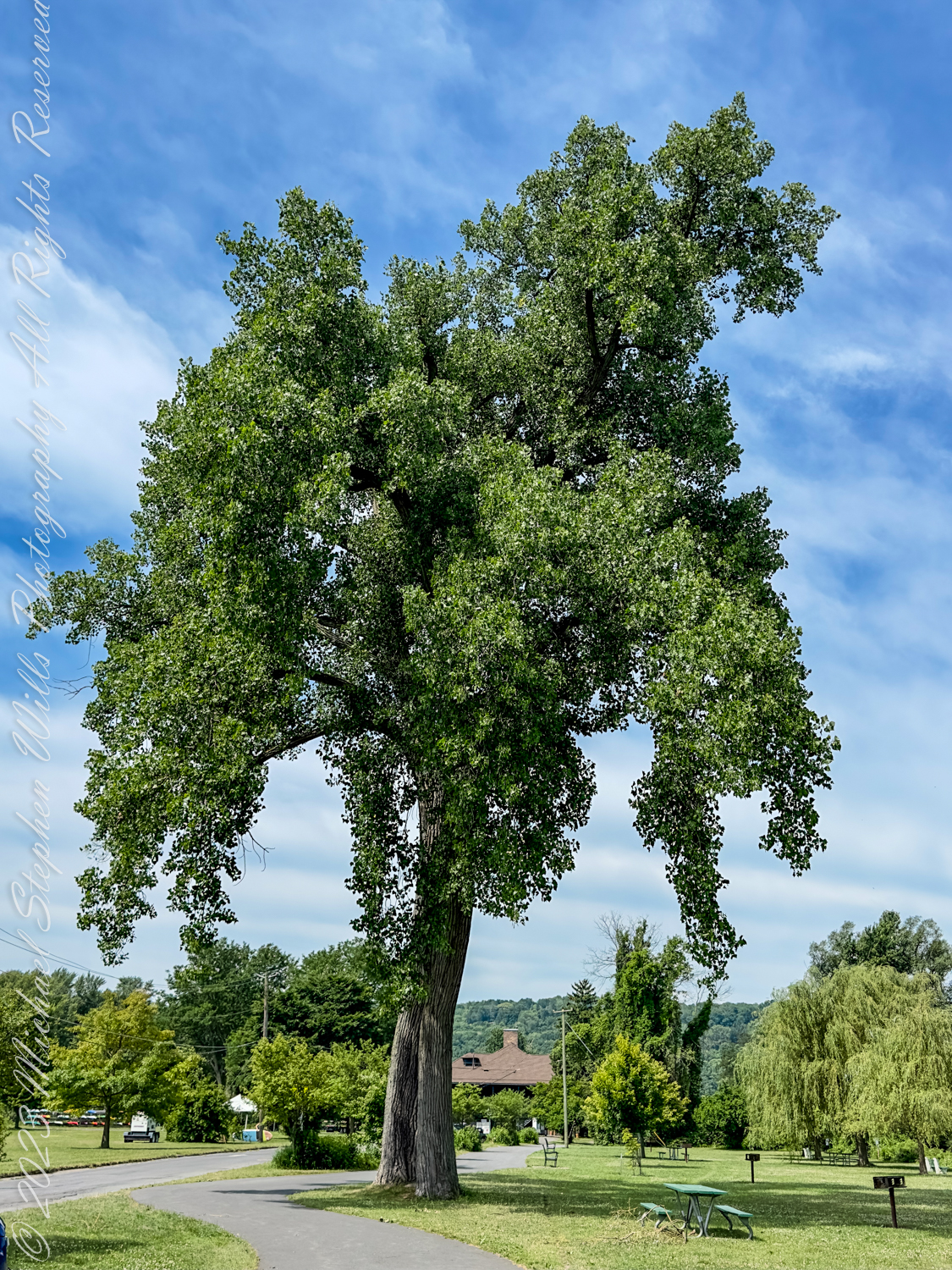
View Facing West, June 25, 2024

The path doesn’t cut through or impose upon these trees. Instead, it respects their claim to the land, curving around them in a way that feels organic, almost reverent. The roots of these Cottonwoods must reach far beyond what I can see, extending outward in all directions beneath the soil, beneath the path itself. It’s as though the trees and the human-made elements of the park have reached a compromise—a harmonious balance where both can coexist without either having to sacrifice too much.

In their wisdom, the planners of this park understood that these trees had already laid their claim long before the park’s paths were laid out. It’s a small but profound testament to the enduring power of nature and the foresight of those who designed this space. As I walk along the path, I feel the subtle shift in the landscape—the way the curve of the trail encourages a more leisurely pace, inviting visitors to pause for a moment and take in the grandeur of these ancient trees.

The curve itself creates a sense of flow, as if the path is gently nudging us toward a deeper appreciation of the Cottonwoods. There’s no rush here. The trees stand in their place, rooted and steadfast, while we are invited to move around them, to change our course slightly in order to make space for something larger than ourselves. The path becomes a metaphor for our relationship with nature—we must sometimes bend and yield to its greater forces, rather than insist on our own straight and rigid lines.

This curved path speaks to the broader theme of adaptability—how both nature and humanity have learned to accommodate one another. The Cottonwoods have withstood the test of time, their roots dug deep into the soil, while we have found ways to move alongside them, adjusting our course to allow for their growth. It’s a quiet but powerful reminder of the importance of coexistence and respect, of making space for the natural world rather than always seeking to dominate it.

As we pass by, I notice the texture of their bark—deeply furrowed and rough, a tactile reminder of the passage of time. Each ridge and crevice holds the story of countless seasons—of dry summers, harsh winters, and everything in between. I reach out and touch one of the trunks, feeling the coolness of the bark under my hand. There’s a vitality here that can only be sensed up close, a quiet hum of life that pulses just beneath the surface.

Yet, despite their imposing size and age, the Cottonwoods remain humble in their role. They do not demand attention like a flowering dogwood or a brightly colored maple. Instead, they offer something more enduring—a quiet, steady presence that provides shelter and shade without fanfare. Their leaves turn a brilliant yellow in autumn, adding to the kaleidoscope of colors that make up the Finger Lakes’ fall landscape. But even in winter, when the leaves are gone, their bare branches stand against the cold sky, offering a stark beauty all their own.

As I step back to take in the full view of these two Cottonwoods, I am filled with a sense of gratitude. Their lives, so intimately tied to this place, remind me of the interconnectedness of all living things—the way nature, time, and humanity overlap in ways both seen and unseen. These trees, growing together on the shores of Cayuga Lake, are not just part of the landscape—they are part of the story of Stewart Park and, in a broader sense, the story of this region. They remind me that, like them, we are all shaped by our surroundings, by the people and places that stand beside us as we grow. And in that way, we are never truly alone.
Copyright 2024 Michael Stephen Wills All Rights Reserved

Taughannock Gorge with the kids – part 2

Several possible sources have been proposed for the name Taughannock, all of which describe Native American origins. One translation suggests that the name is derived from a combination of Iroquois and Algonquin terms meaning “great fall in the woods”.  An alternate theory suggests that the name may refer to a Lenni Lenape (Delaware) chief named Taughannock who died near the falls during a battle.

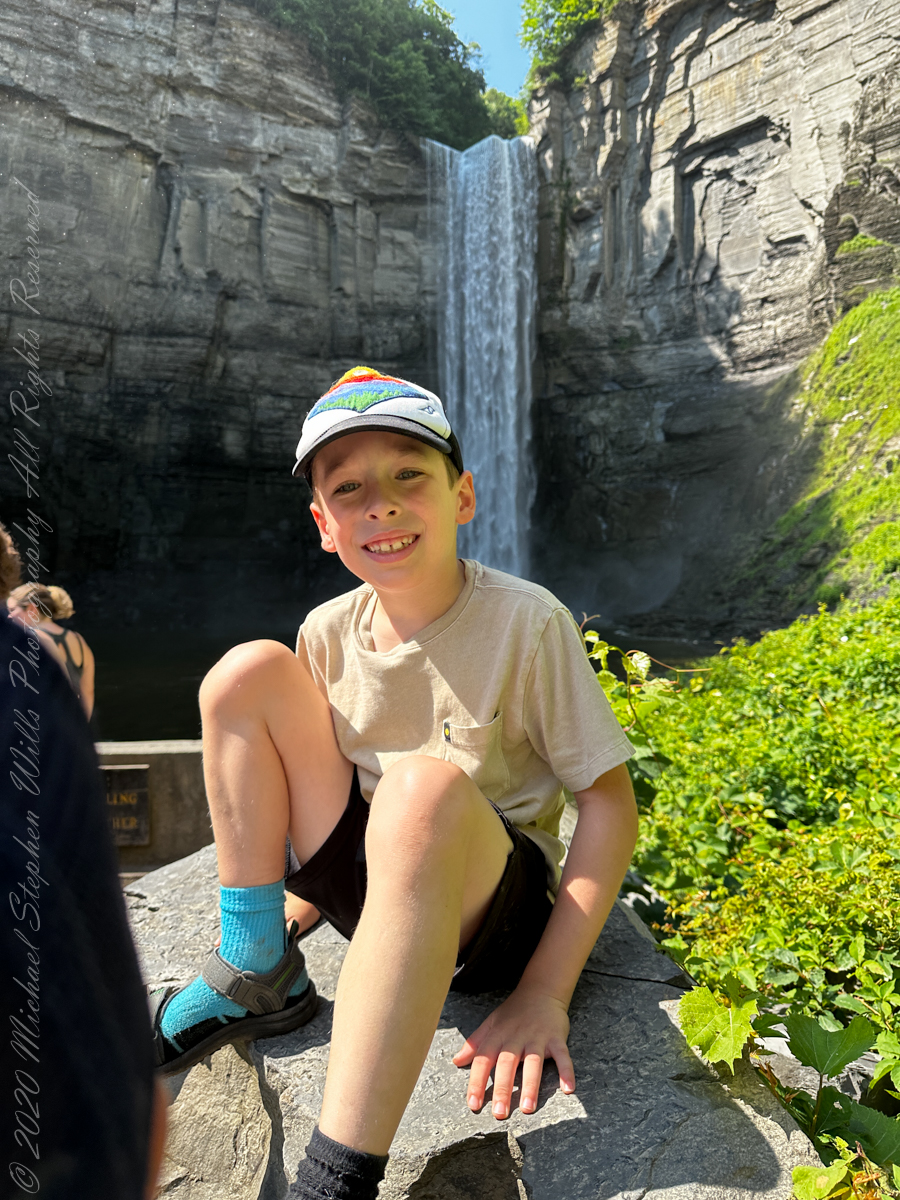
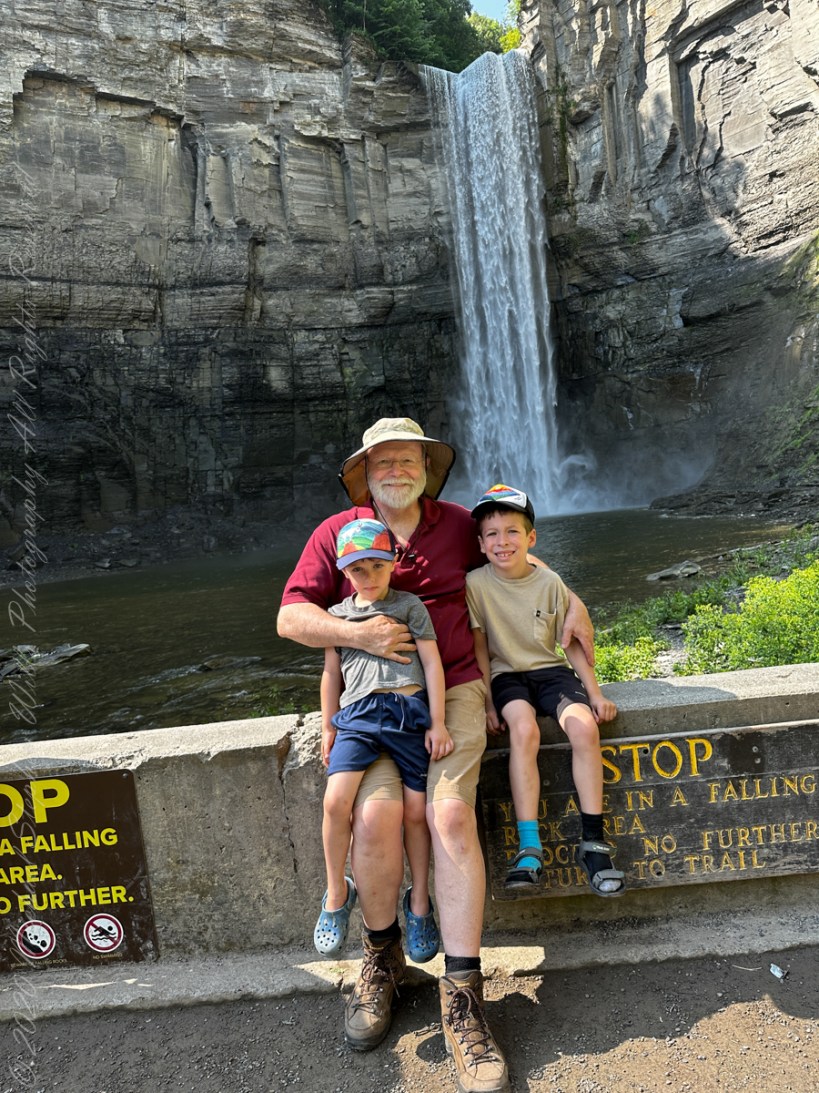
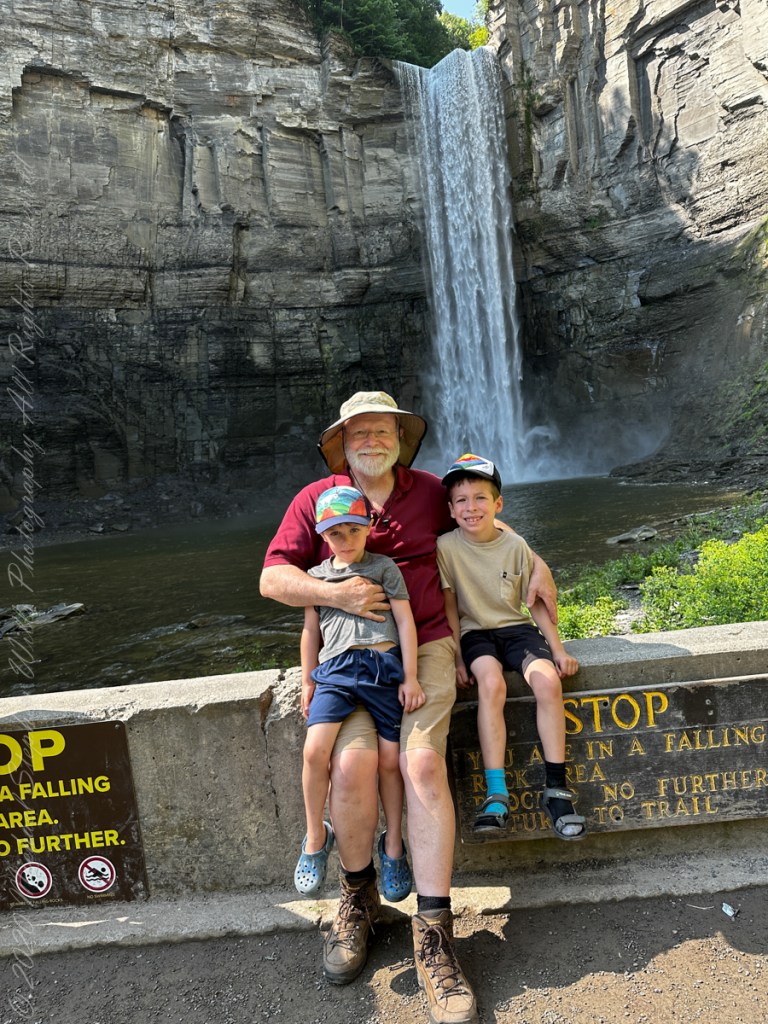
A nice lady offered to take the photo….challenged to keep it straight.

During the second half of the nineteenth century, steamboats, railroads and Victorian hotels were built in the region to serve tourists who traveled to view the falls. By 1925 the hotels were failing due to a decline in tourism, and New York State began acquiring land to form a park.

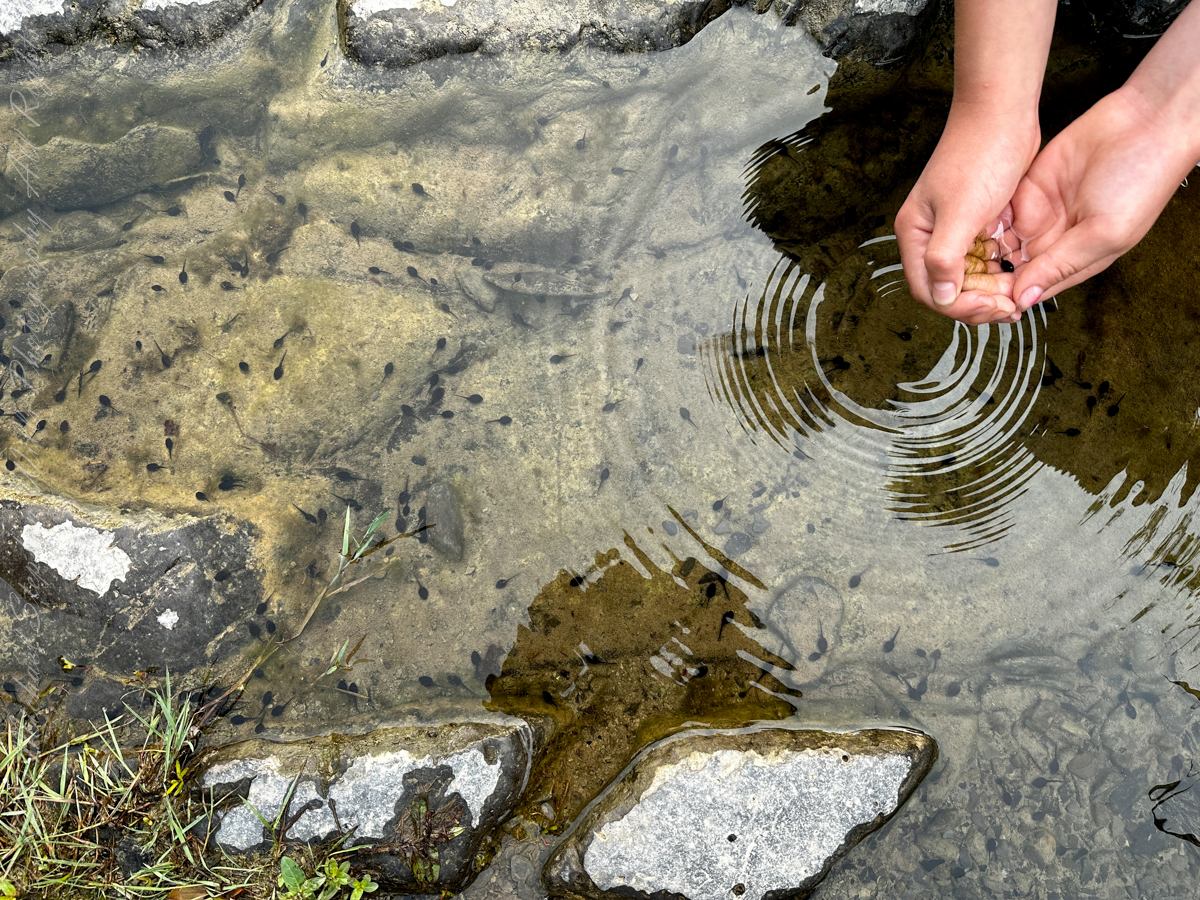
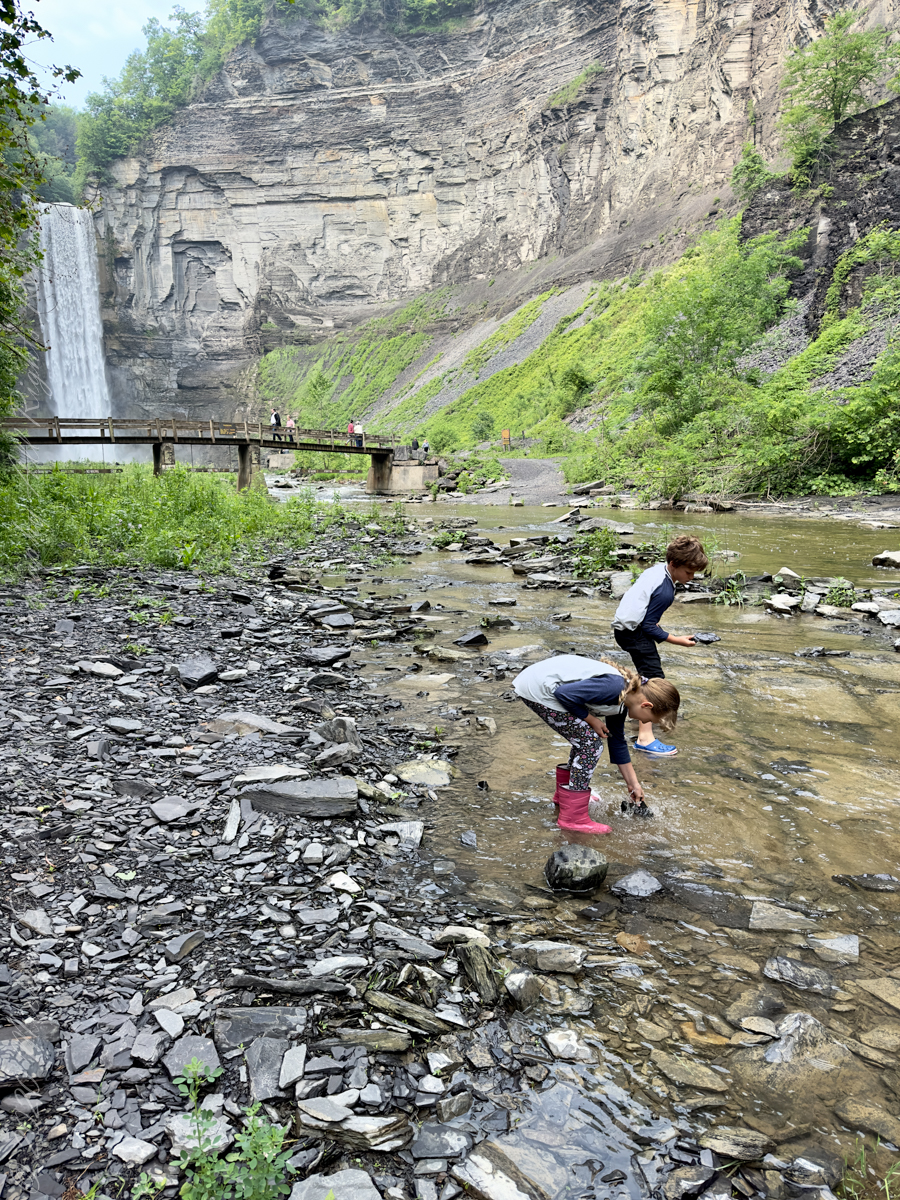
Pollywogs!! Catch and release

J.S. Halsey built a two and a half story hotel in 1850, known variously as the Cataract Hotel or Taughannock House (or simply as Halsey’s Hotel) at the Taughannock Falls Overlook.

Visitors could reach the hotel by taking a train to Cayuga Lake, take a steamboat across the lake to Goodwin’s Point, then finally board a stagecoach to reach the hotel. The hotel site today is the location of the park visitor center and parking lot.

Enjoy!!

Taughannock Gorge with the kids

and ice cream!!

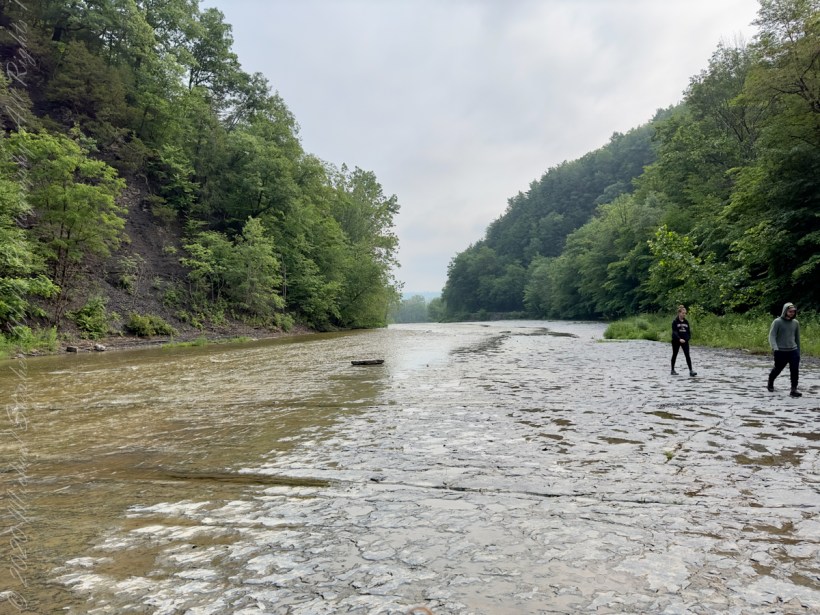
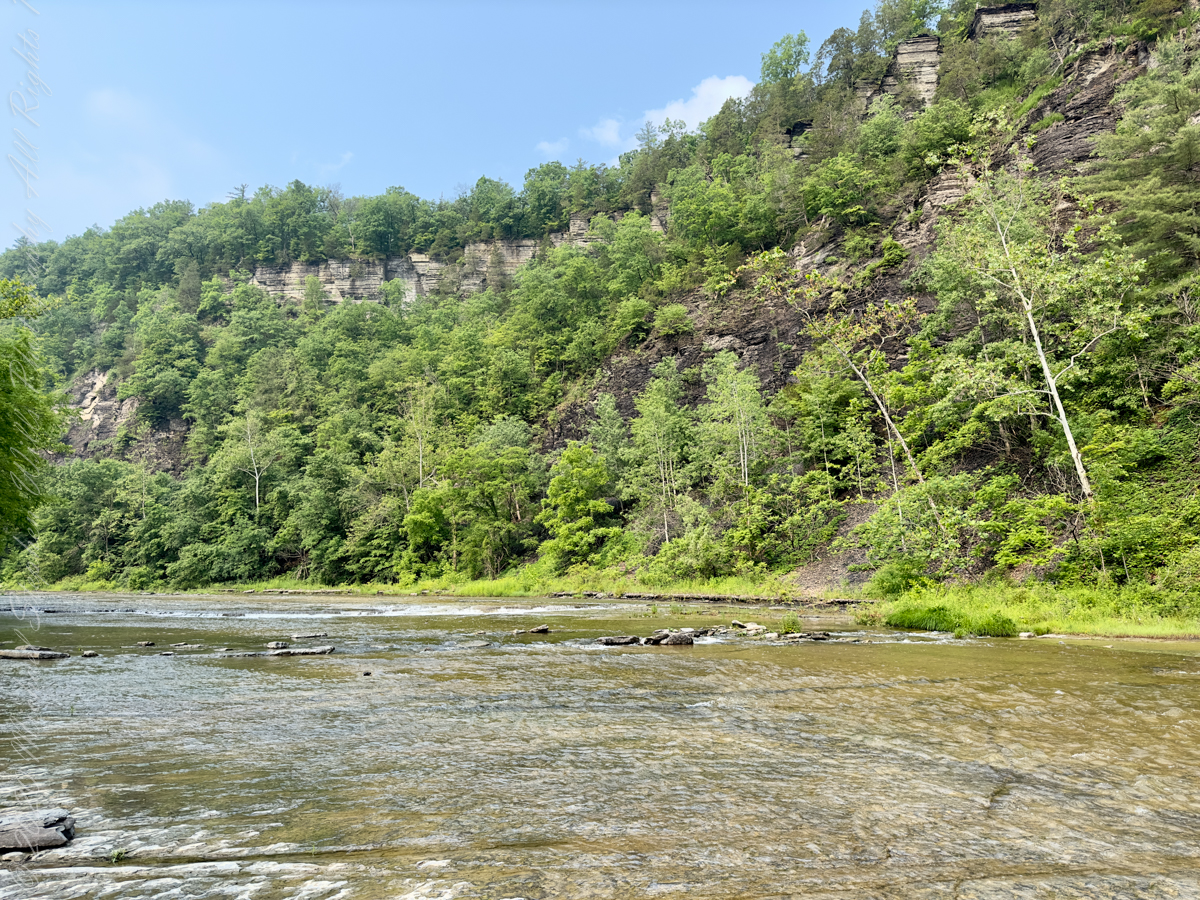
The waterfall and gorge comprise an example of a hanging valley, formed where Taughannock Creek’s stream-carved valley meets the deeper glacially carved valley that contains Cayuga Lake.

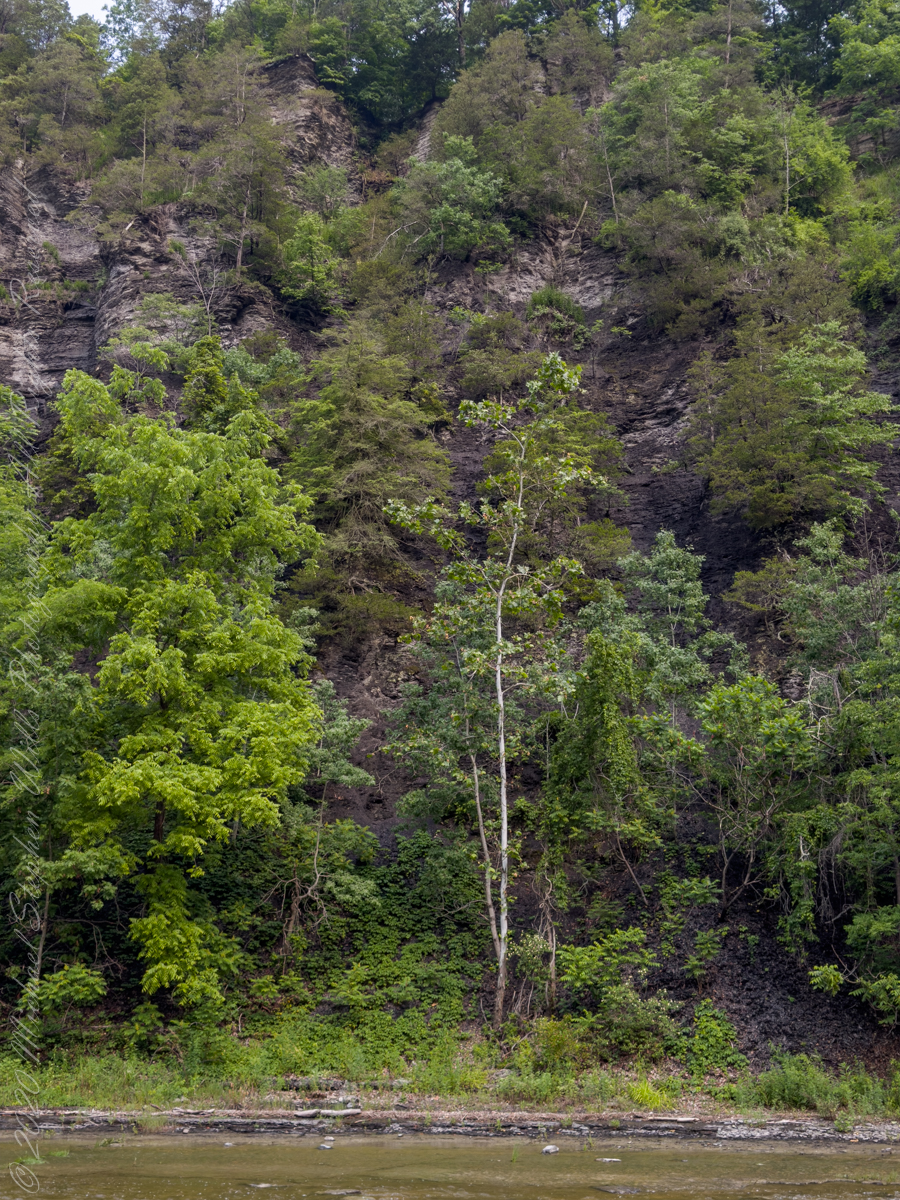
The gorge has continued to retreat westward from Cayuga Lake as easily eroded shale near the fall’s base is worn away by the stream, which supports erosion-resistant siltstone and sandstone found in the upper portions of the gorge.

Pollywogs!! Catch and release

Annual freeze and thaw cycles also act upon small faults in the rock, causing large sections to occasionally break away, further expanding the gorge.

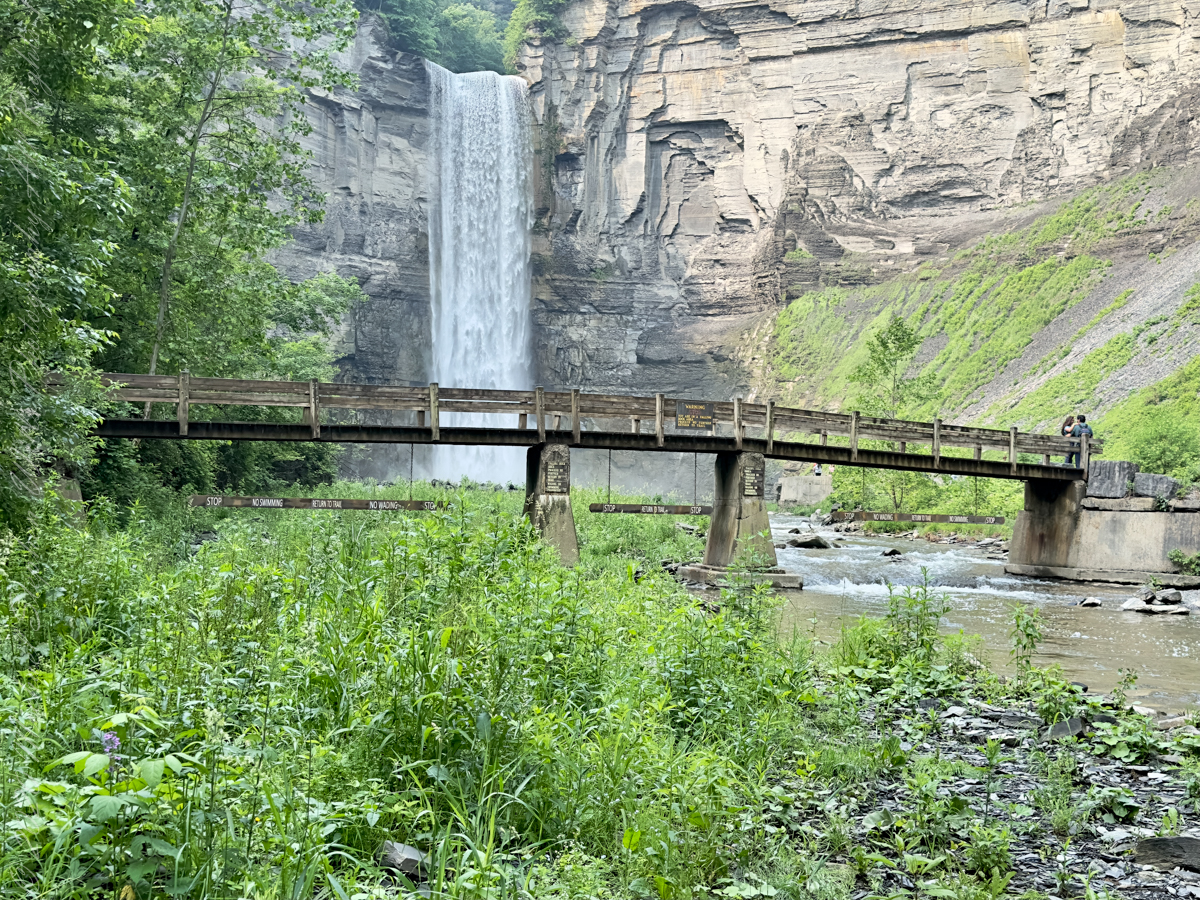
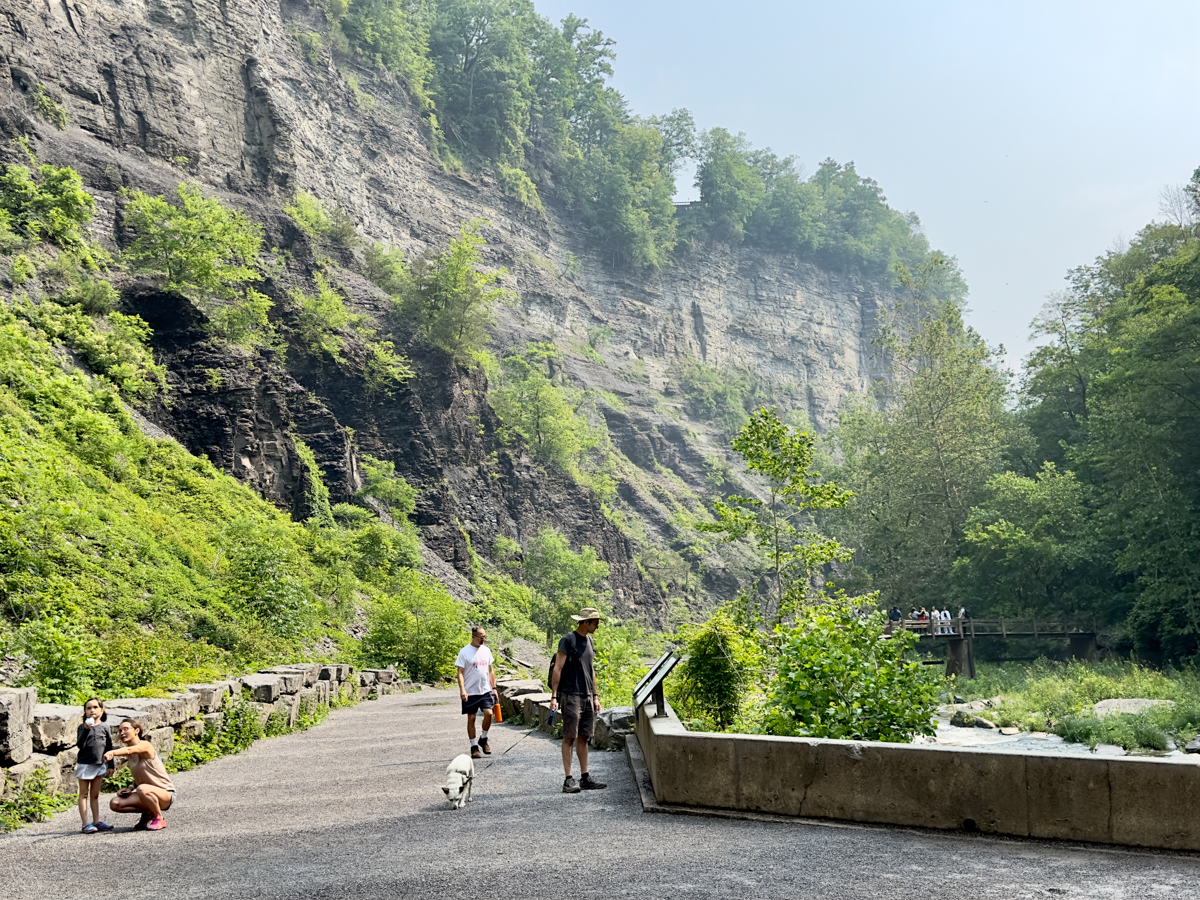
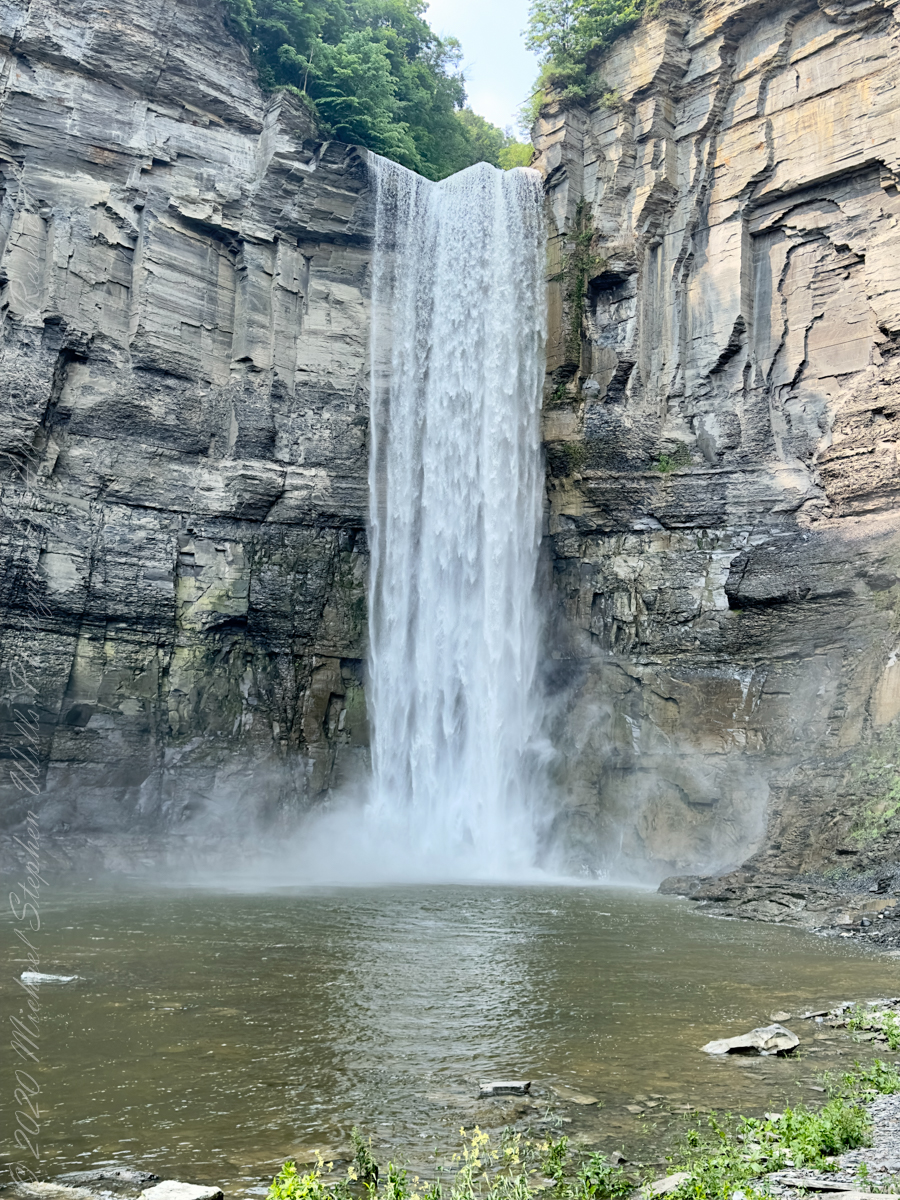
Taughannock Falls’ main cataract is a 215-foot drop (66 m), making it 33 feet (10 m) taller than Niagara Falls. It is the tallest single-drop waterfall east of the Rocky Mountains. The waterfall is located along Taughannock Creek, which flows through a long gorge with cliffs up to 400 feet (120 m) high.

Enjoy!!

Around and About Athens, New York, part 2

Real Estate and Ancestors

Pam eventually caught up to report a breakthrough contact made through casual street interactions. She talked to random strangers on 2nd Street hoping to learn more about her ancestor, Jan Van Loon. The breakthrough was a name and phone number of a woman, the daughter of a new acquaintance, and a tip about an old cemetery.

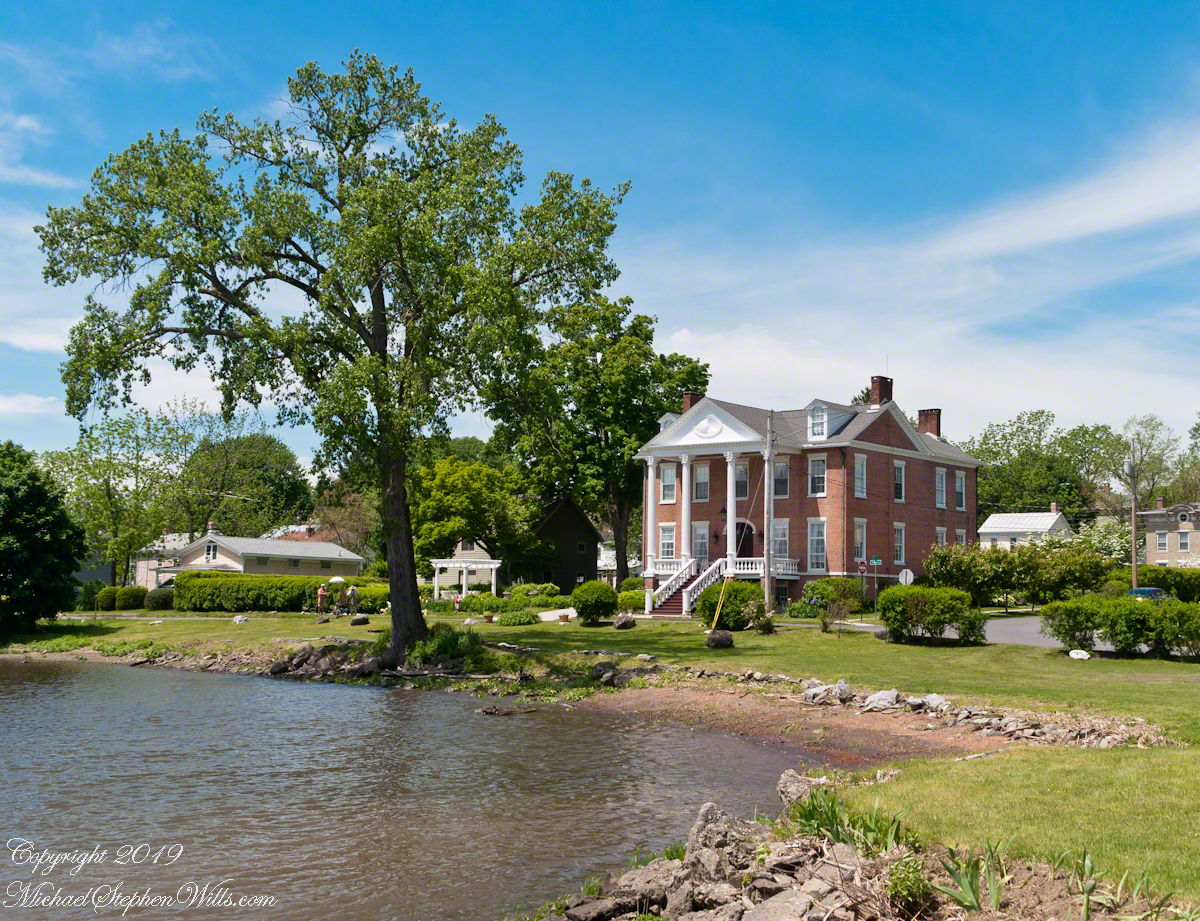
Two people are visible in this first photograph, taken from the south end of Athen’s Riverside Park. Look to the left of the large tree where a artist, under the small white umbrella, is painting while in conversation with a second person. Pam struck up a conversation……

Click any photograph for a larger version

“For Sale: 1825 Federal Home on the Hudson River”

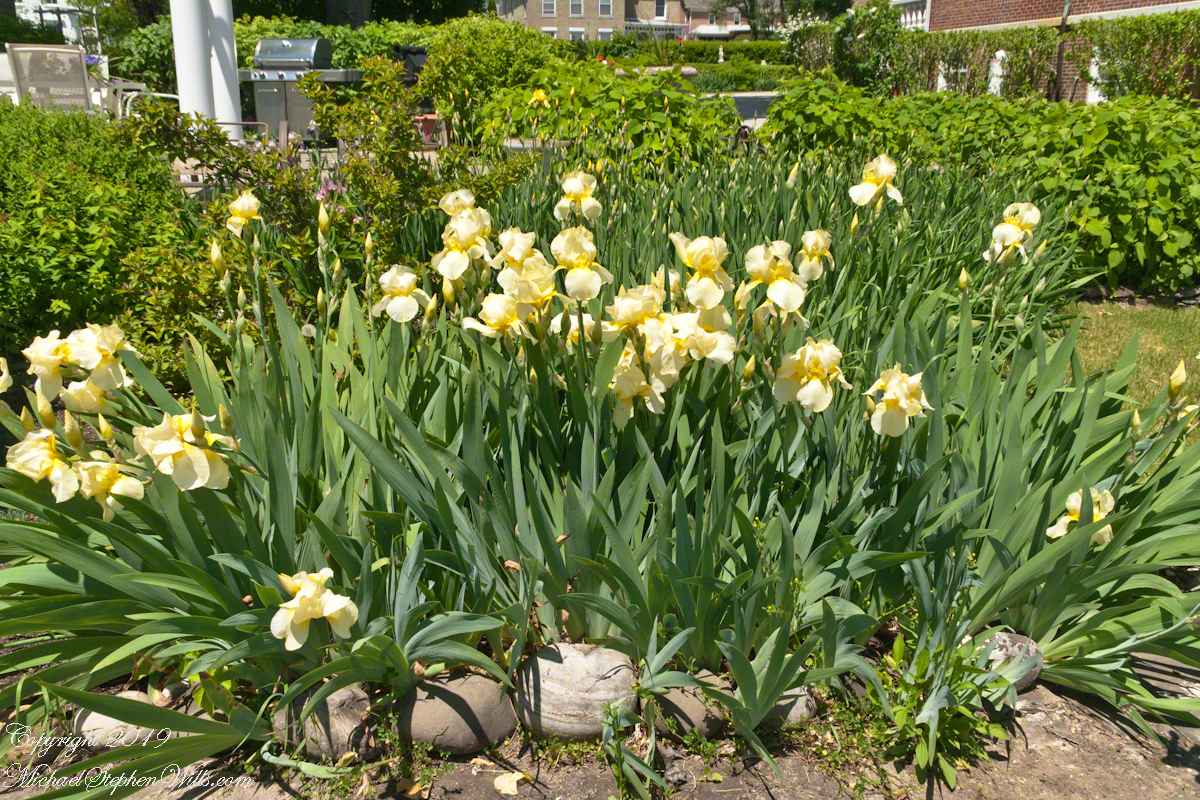
The artist had an easel and a painting in progress, the subjects were yellow irises, part of a formal garden on the grounds of the mansion. We first took it to be a museum or public building of some sort, but were mistaken. It is a home. In the course of a conversation that touched upon Henry Hudson’s 1608 journey up the river (they knew nothing of Jan Van Loon, or of deeper local history in general), and the work of the second man who was the owner of the mansion. Here is more about the place from the Zillow listing. There was no “for sale” sign in evidence.

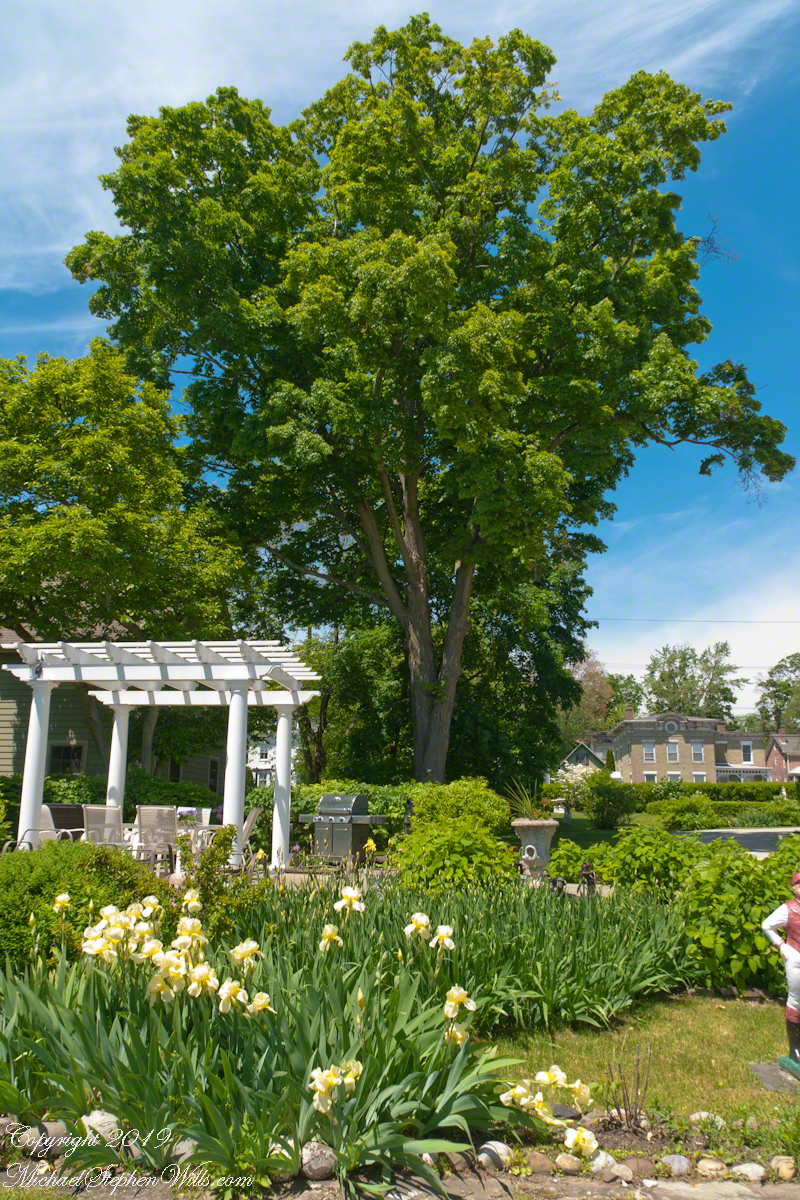
From the portion of the 12 South Water Street garden on the road. We chatted with the house owners and an artist as he painted these yellow iris blooms.
The Zillow Listing…WOW
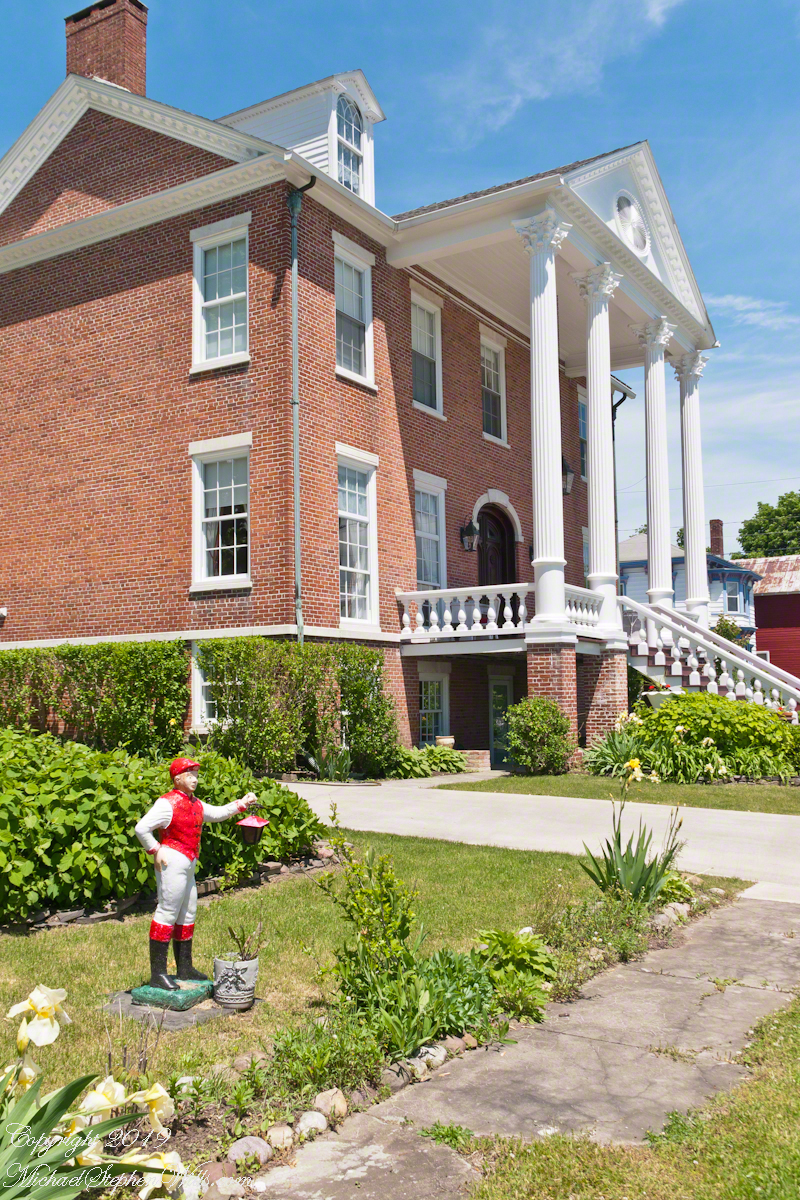
” A freshly renovated home and grounds on the Hudson River, at 12 South Water Street, Athens, New York. Barely visible, to the left of the tree, is an artist, painting large yellow irises while chatting with the owner of the property. Here is what the listing on Zillow has to say, “This majestic 1825 Federal home on the banks of the Hudson River was designed by architect Barnabas Waterman for shipping entrepreneur Anthony Rutgers Livingston. Steeped in history, the house has undergone an extensive – yet sensitive – restoration. Enter into a grand hallway with Double Parlors to the right and a formal DR on the left. Original Federal flourishes abound with acanthus leaf capitals and entablatures, Corinthian columns, and intact mantels and molding. The high ceilings and tall windows provide extraordinary elegance, light and comfort. A thoughtful kitchen renovation and 1/2 Bath for 21st century convenience. Upstairs is a Full Bath and four spacious and airy Bedrooms, the Master with ensuite bath. The walk – out lower level features a family room with fireplace, a full bath and the original kitchen with hearth and beehive oven. A stroll past the box-wood garden leads to a 3-bay Garage with Studio and 1/2 Bath above, perfect for artist, home office or guests. Convenient to Thruway, Catskill, Hudson. 2- hrs NY.”

Formal Garden

Restored Hudson River Mansion

Barely a half mile apart, a great distance separates the homestead of Jan Van Loon and the 12 South Water Street former mansion of a shipping magnate including 125 years and the American Revolution.

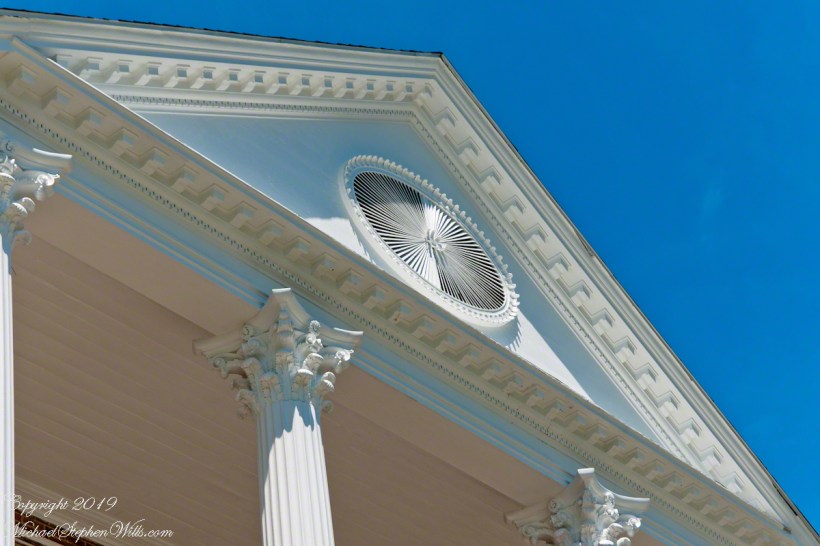
Stylized Acanthus Leaves grace these Corinthian Capitals

Click Me for “Around and About Athens, New York, part 3

Copyright 2022 All Rights Reserved Michael Stephen Wills

Around and About Athens, New York, part 1

Enjoyments of Athens, New York

Memorial Day Weekend 2019 Pam and I visited Athens, first settled in the 17th Century by an ancestor through her maternal grandmother. Click me for more about the Van Loons. Jan Van Loon is 10 generations removed from Pam and her siblings and is one of 1024 (512 pairs) of ancestors. Whatever became of the other 1022 people (and all those in between) Pam was there with me that day to enjoy the experience of walking around town and talking about Jan Van Loon’s connection to herself.

Click any photograph for a larger version

Founded as Loonenberg, named after the first settler Jan Van Loon. today,Athens is a lovely destination, a historic village on the Hudson River.

We stopped for a very enjoyable latte at Bonfiglio and Bread on 2nd street. As we ambled south on 2nd street Pam spotted someone to talk to and I proceeded with the goal of the Hudson River, visible at the bottom of the street.

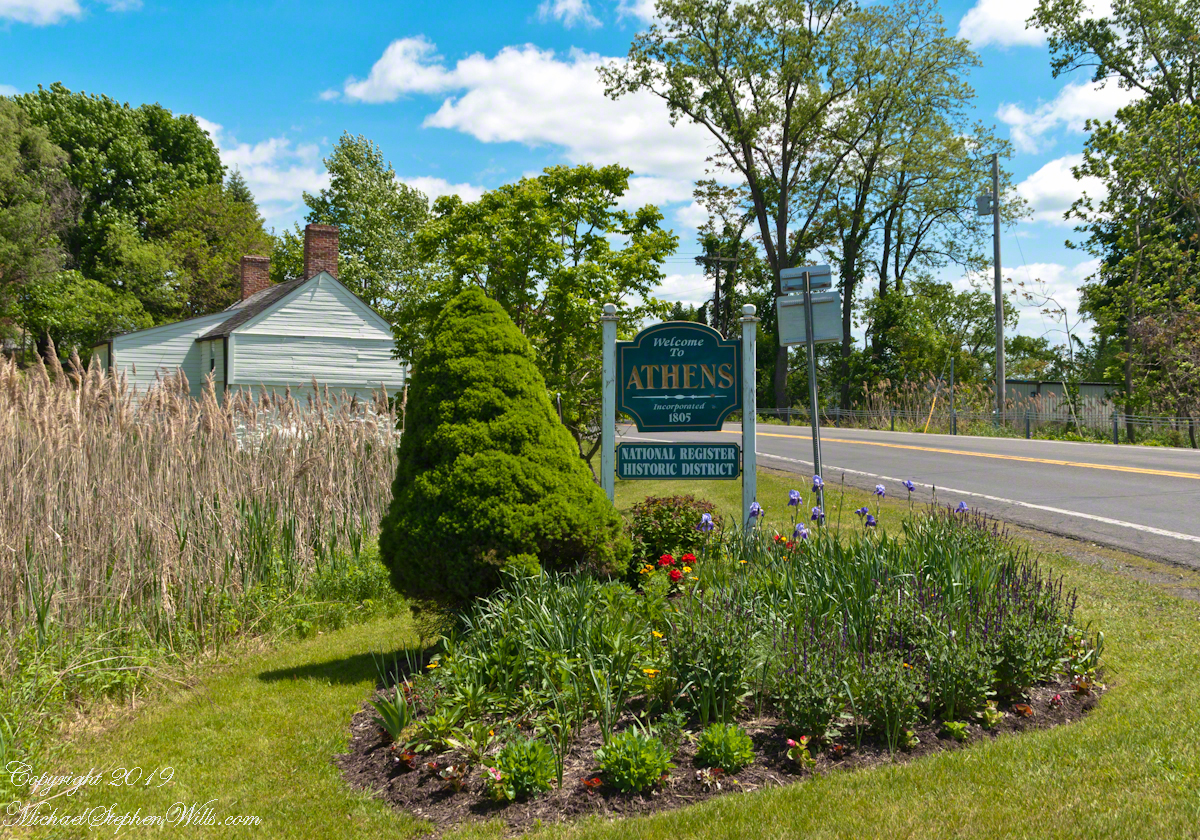
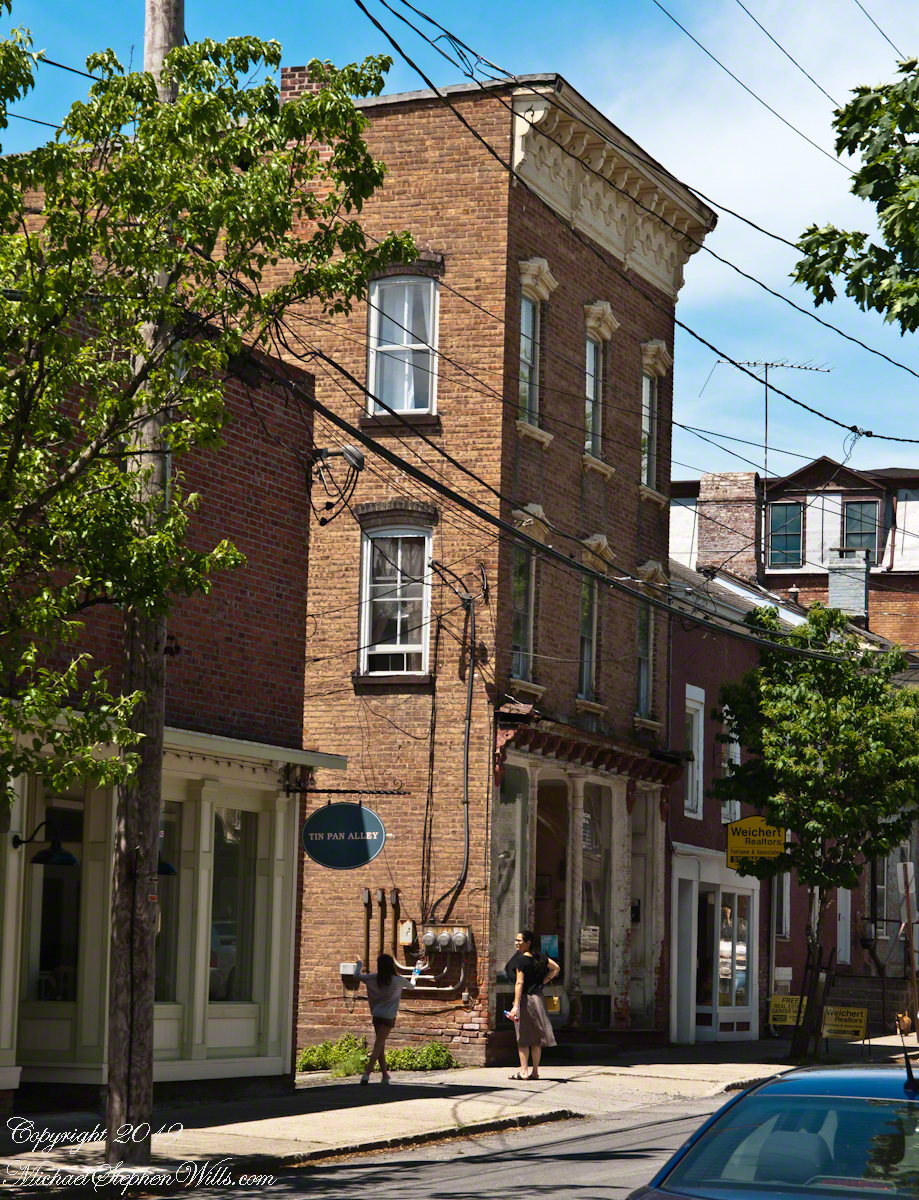
I noticed this architectural specimen and turned to capture this side in a good light and was lucky to capture a young co-admirer of its style with whom I assume is her Mother. Athens, developed as a “National Register Historic Site,” is a charming place to stroll and admire.

Southeast view on 2nd Street between Water and Washington streets. Athens, New York

Hudson Riverfront

Yesterday I did a Red Cross blood donation at an elementary school on Hudson Street here in Ithaca. Henry Hudson, the first European to sail up the river that now bears his name, is memorialized this way across New York State so much so it is unusual to find the “Riverfront Park” named as such.

The city of Hudson, in Columbia County directly across the river named its park “Henry Hudson Riverfront Park.”

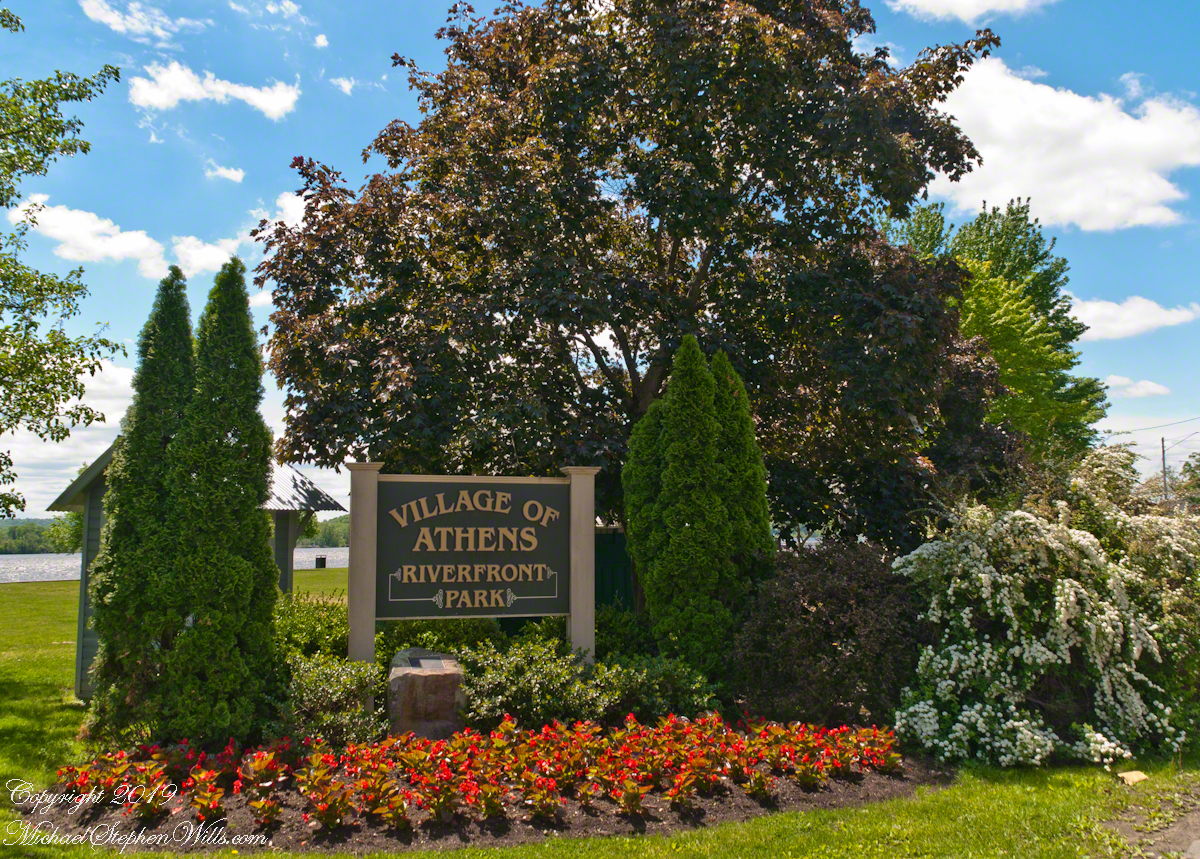
Looking east toward the entrance of the Riverfront Park, Athens, New York. Found at the east end of 2nd Street.

Peace and Quiet

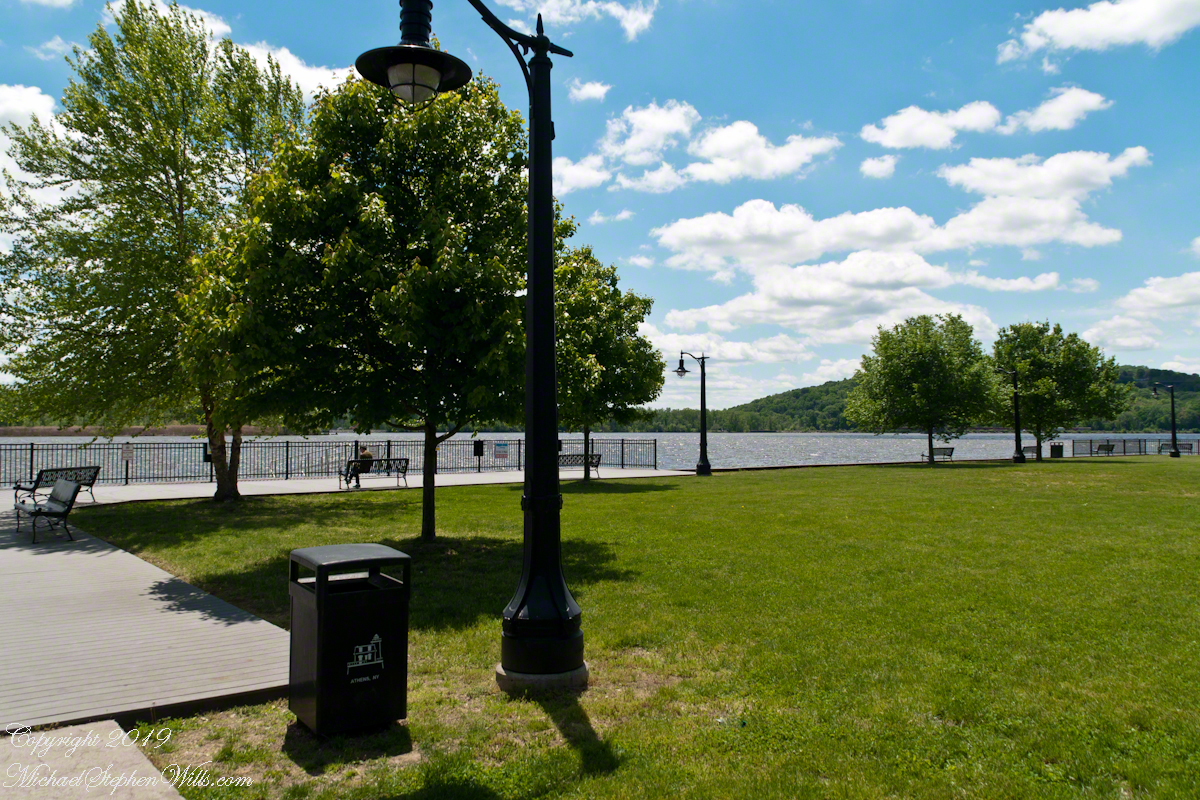
The Athens Park is a gathering place for the village with a large swath of grass, a short boardwalk, benches and generous shade trees along with river…….

The photograph captions will speak for themselves for the rest of today’s post. Enjoy!!

A sole reader enjoys the solitude and view across the Hudson. A large mid-stream island, Middle Ground Flats, provides a swath of green instead of a view of the city Hudson.

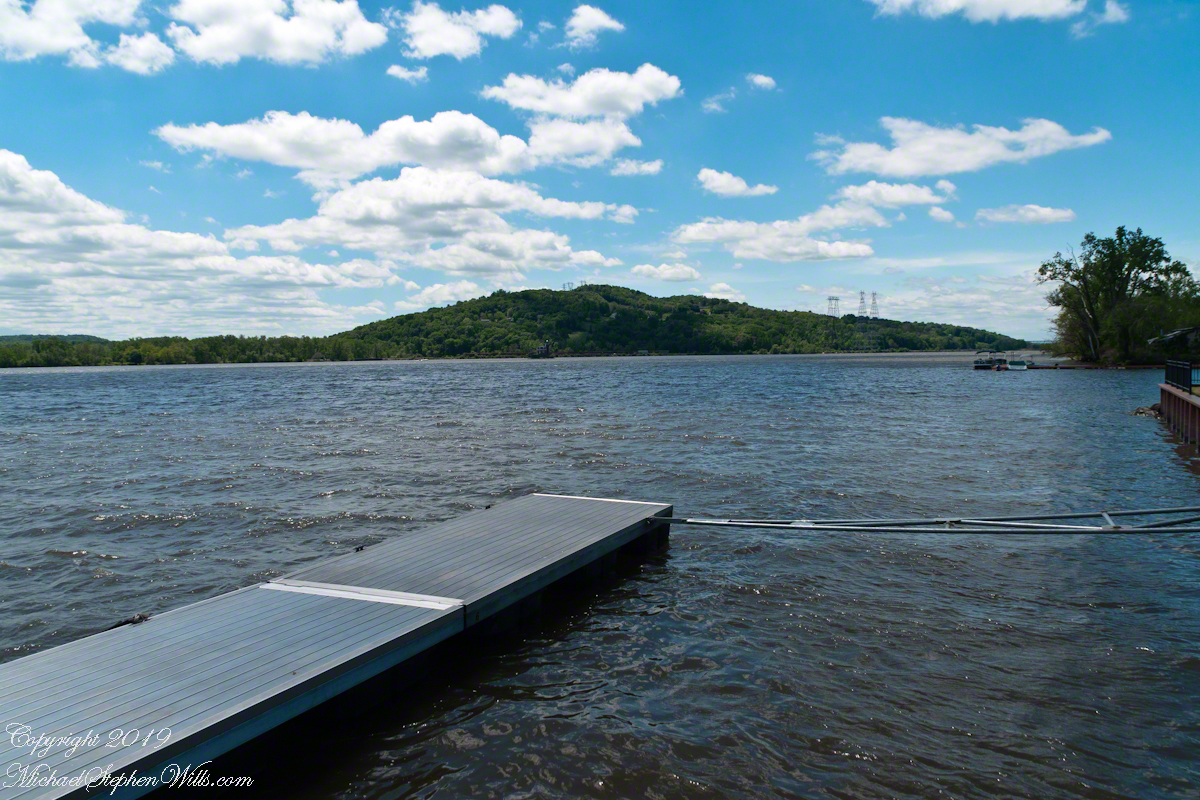
…and a dock.

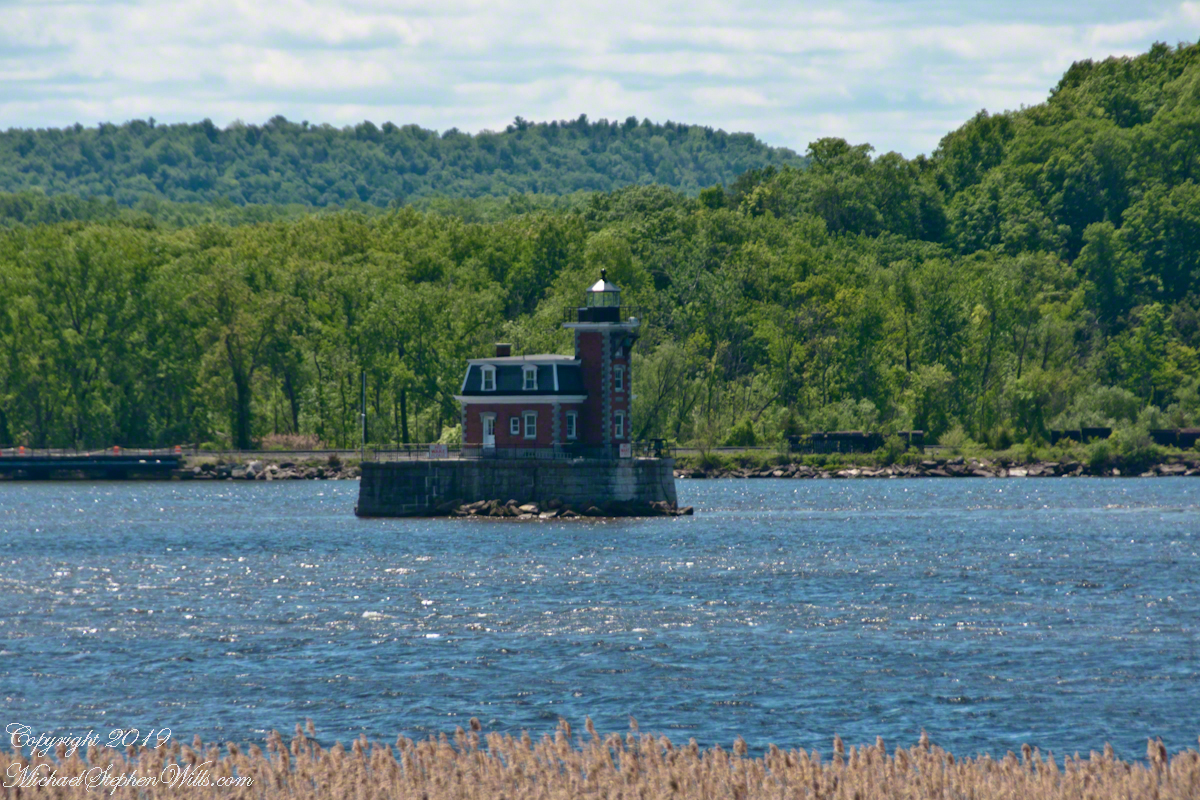
The map shows a dotted line between this dock in the Athens Riverside Park and the Henry Hudson Riverside park of the city of Hudson. Barely visible in front of the wooded hills is the Hudson-Athens lighthouse.
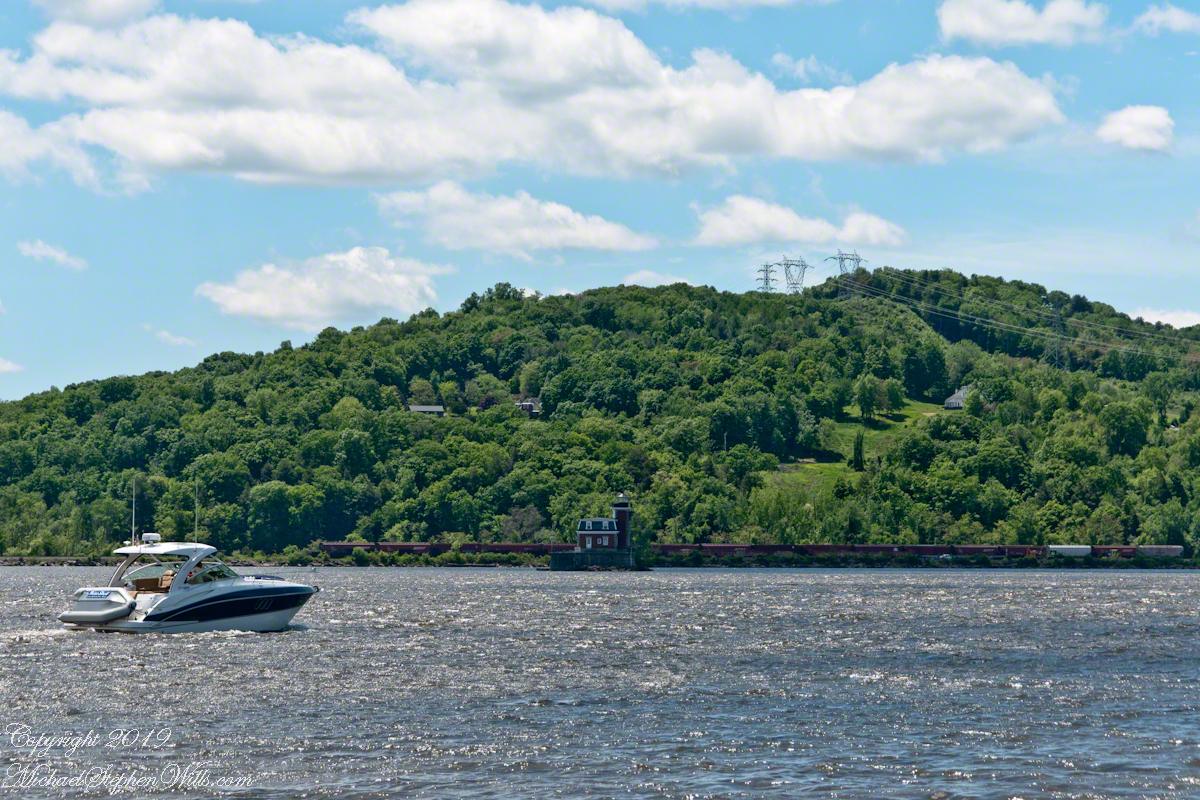
A pleasure craft motoring south on the Hudson River passes in front of the Hudson-Athens Lighthouse. On the eastern shore is a line of freight cars. Amtrack uses this line for service between New York City, Albany and beyond. We have enjoyed this Hudson River view from the train and highly recommend that trip.
Built 1874, the Hudson-Athens lighthouse guides traffics around the island named “Middle Ground Flats.”

Click me for more photography on Getty IStock.

Copyright 2022 All Rights Reserved Michael Stephen Wills

An Afternoon’s Exercise Around Taughannock Gorge

Yesterday afternoon was bright, sunny enough for me to break out of the winter exercise routine for a walk around Taughannock Falls, a New York State Park 7.5 miles from the front door through farmland and small villages with views of Cayuga Lake.

The route around the gorge, following the North and South Rim trails with a side trip to the edge of Cayuga Lake is 3 miles with a modest elevation change of about 500 feet.

My route began at the top with a cell phone, from the Falls Overlook, there is a gradual slope, until the end where flights of steep stone steps end at the gorge floor. The steps were free of ice and snow.

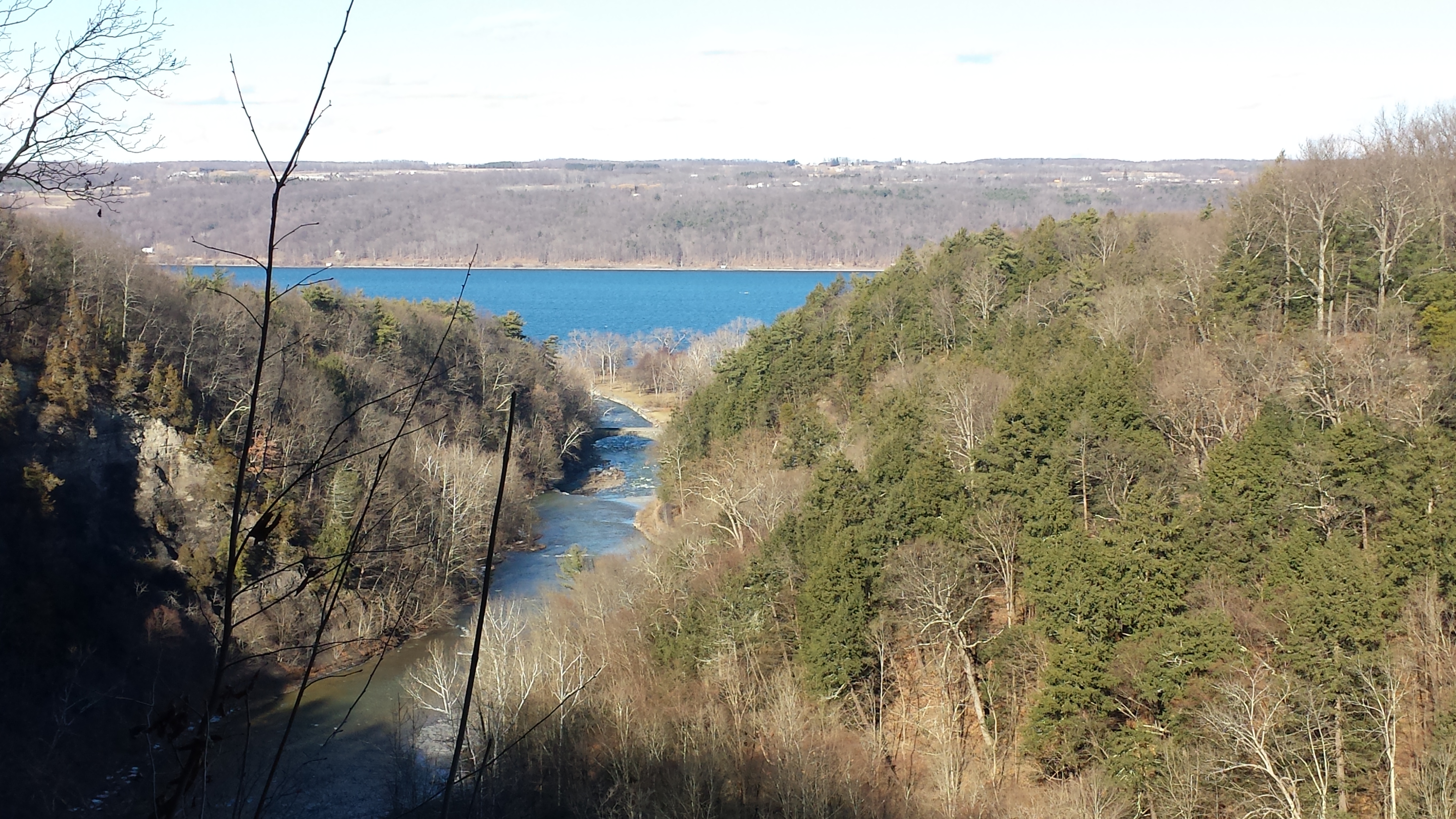
These photographs are from the cell phone. Here is the lake and a portion of the gorge. Yes, the lake is a dark blue on sunny days and is ice free this year. Another trail follows the gorge floor to below the falls, I opted out of the additional 1.5 miles today in the interest of finishing well before sunset.
Click any photograph to visit my Fine Art version of Taughannock Falls.

Taughannock Gorge and Cayuga Lake from the North Rim Trail – CLICK ME for my Fine Art version of Taughannock Falls.

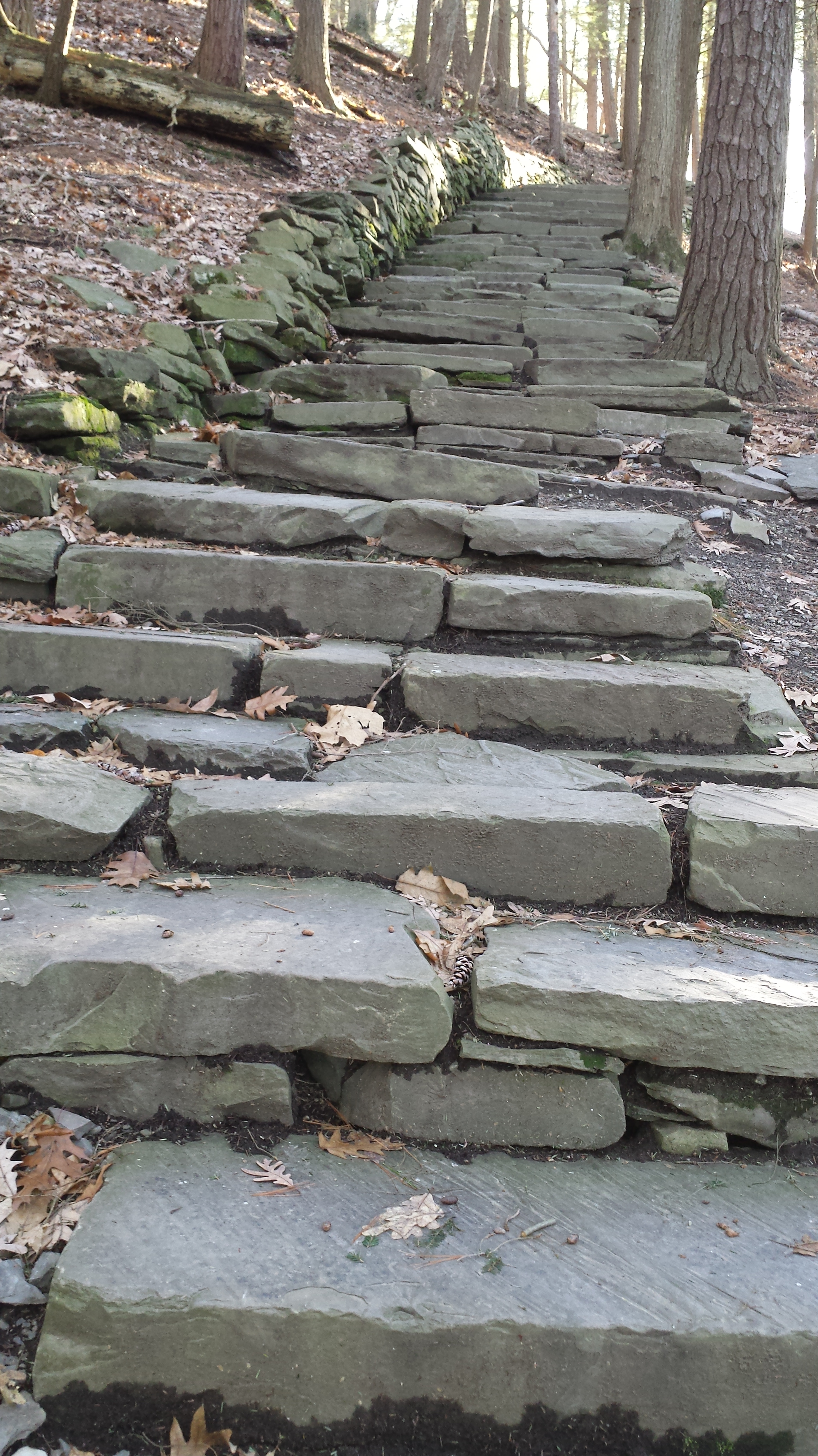
I have a few versions of these South Rim Trail stone steps taken at this perfect time of day, the low sun through the trees. Built in the 1930s by Roosevelt’s Civilian Conservation Corp, the steps and the entire trail are a work of art.

Climbing up from the gorge to the South Rim Trail – CLICK ME for my Fine Art version of Taughannock Falls.

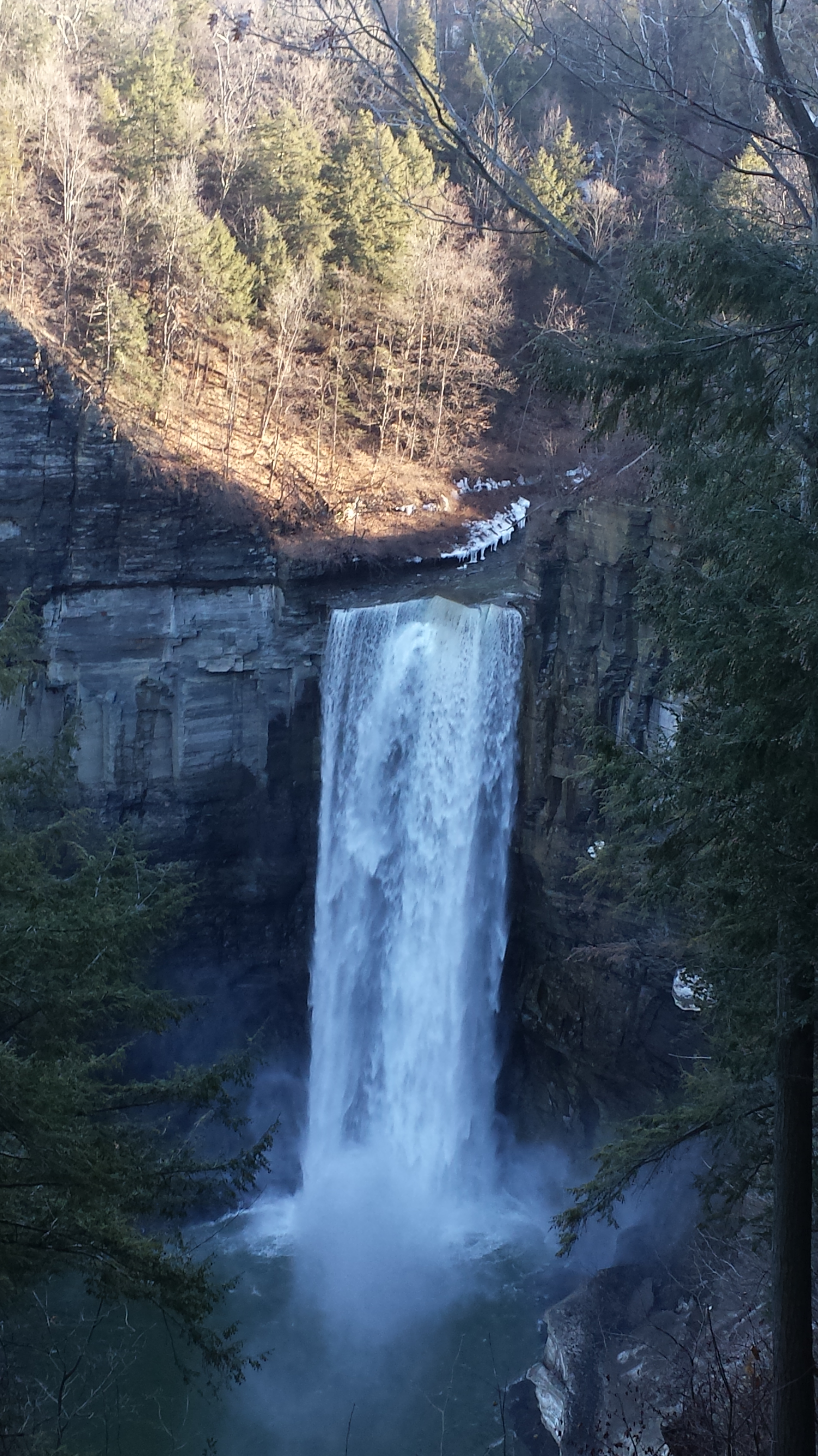
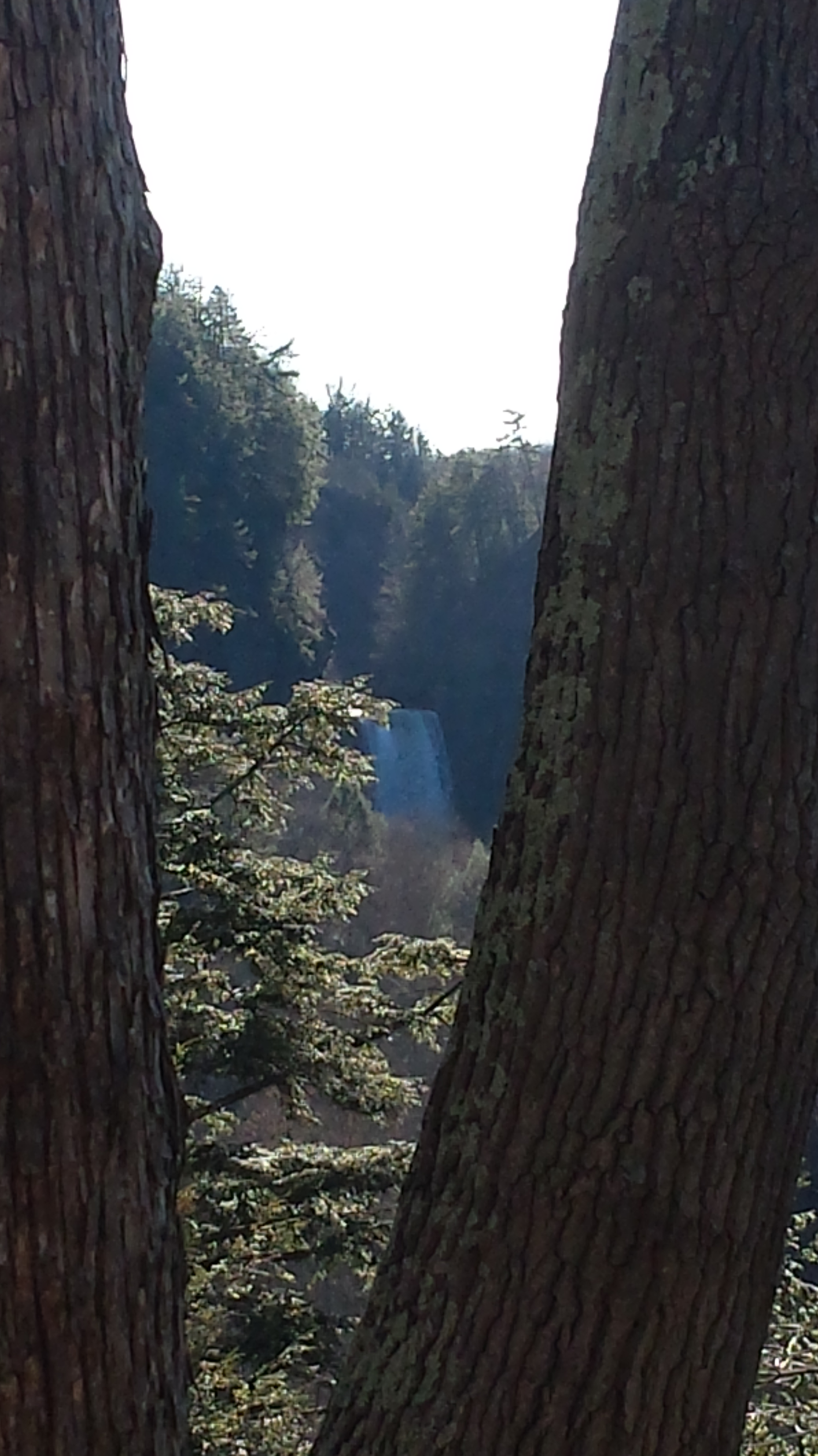
The far view of Taughannock Falls always fascinated me. I’ve never done it justice. There are several view points from the South Rim, overlooking the gorge were it bends to the south with only the upper third of the falls visible. The flow today was photogenic. I used the cell phone zoom to catch the view between the trunks of two trees.

View of the falls from the South Rim – CLICK ME for my Fine Art version of Taughannock Falls.

The top of the south rim was the only ice. It is there through April some years. Here is the closest, full view of Taughannock Falls from the North Rim. It is the same view you will find in my Fine Art version of the falls.

View of the falls from the North Rim – CLICK ME for the Fine Art version of Taughannock Falls.

And a cell phone video of the falls for the full effect.

Enjoy!!