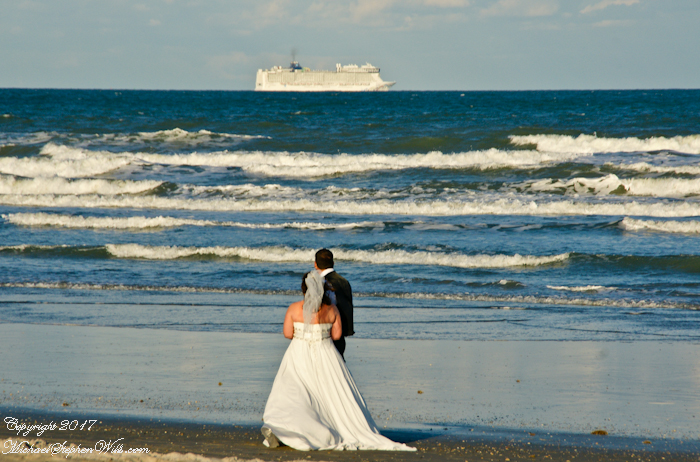
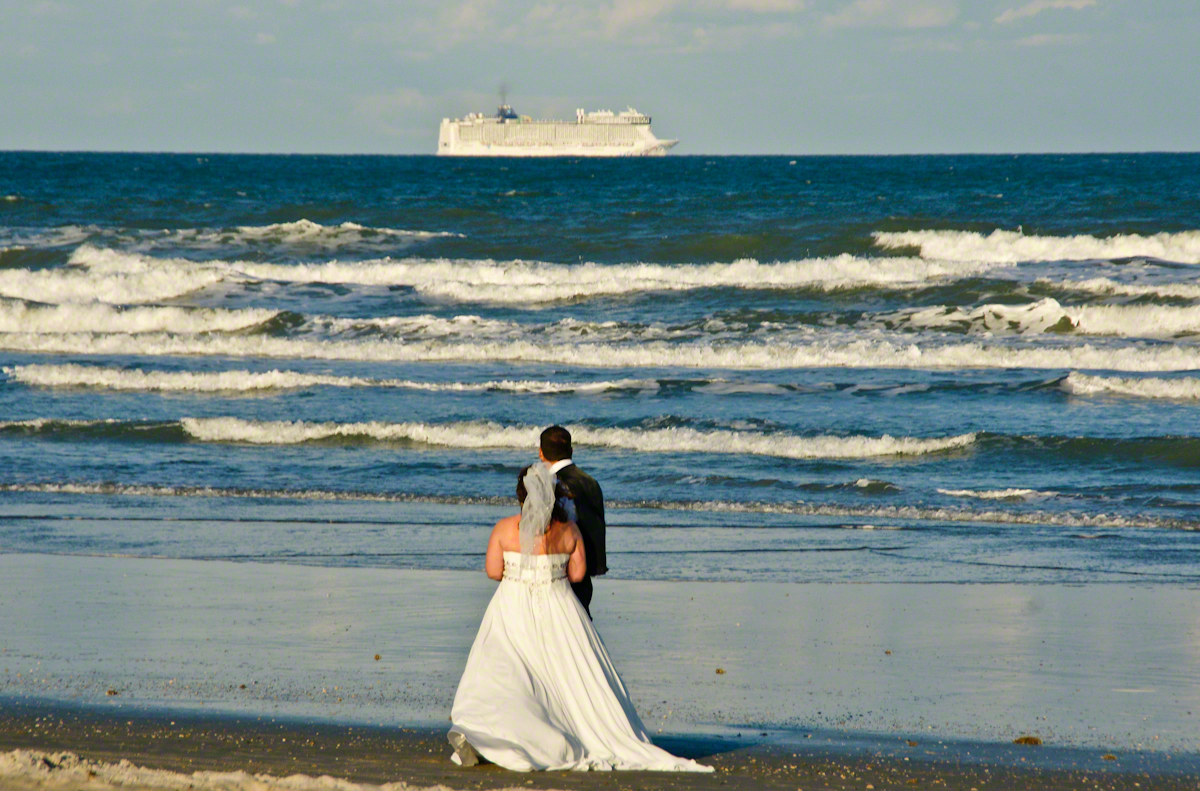
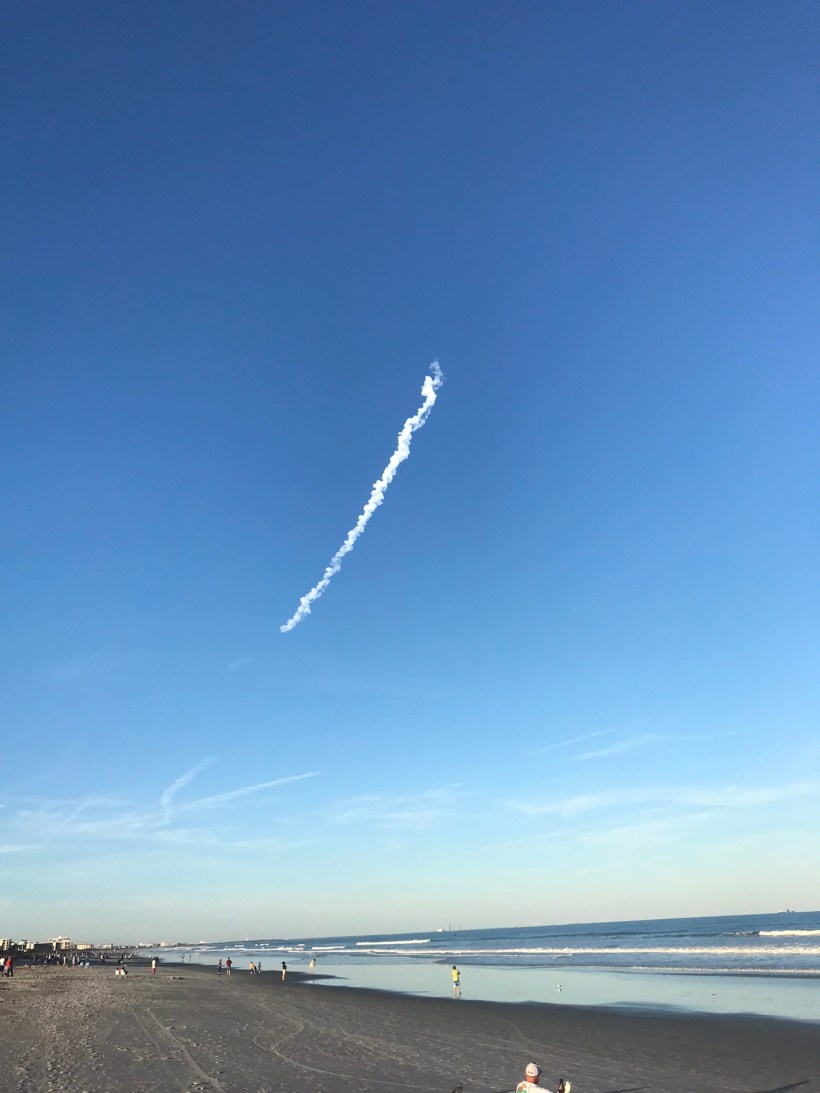
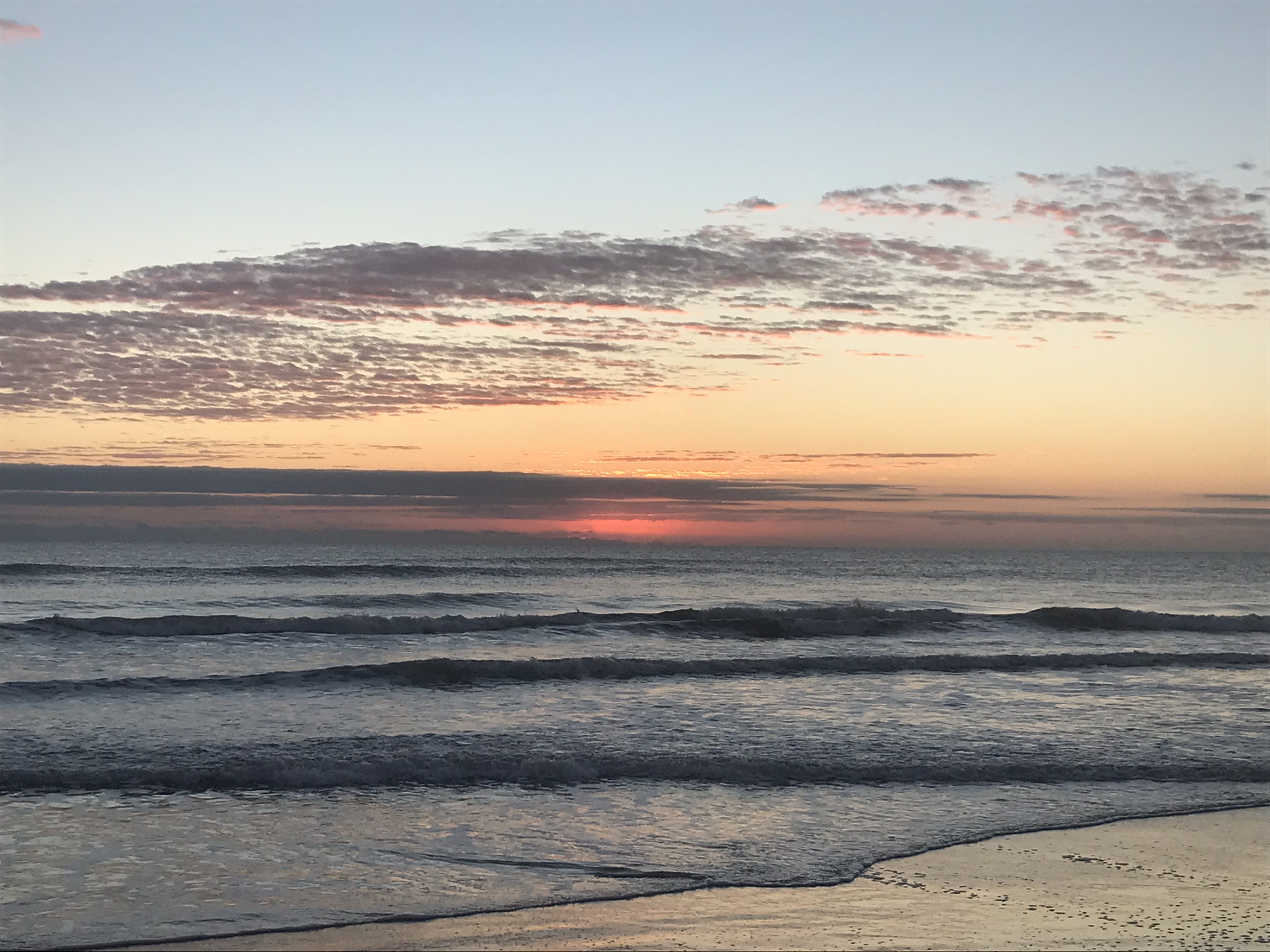
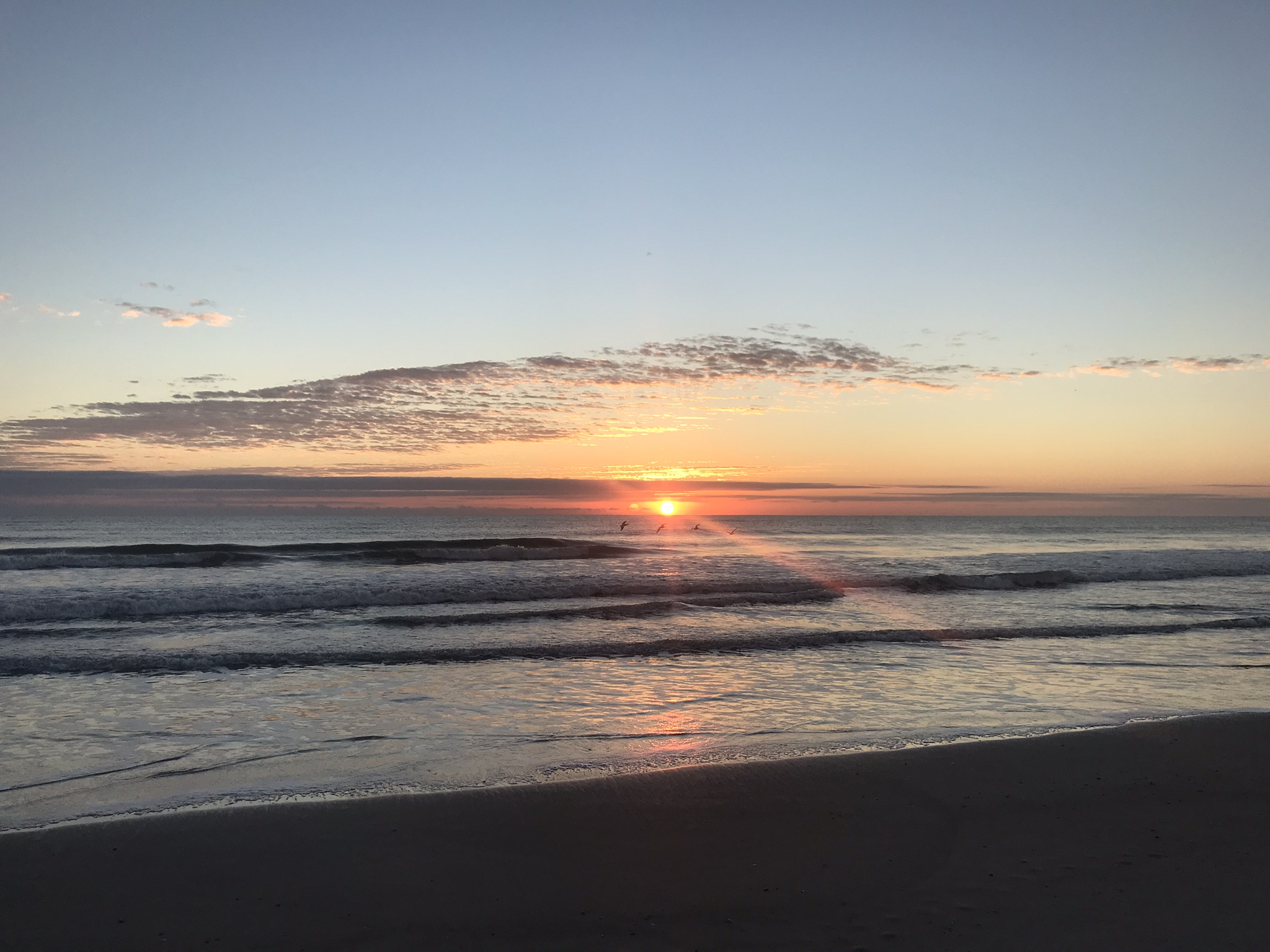
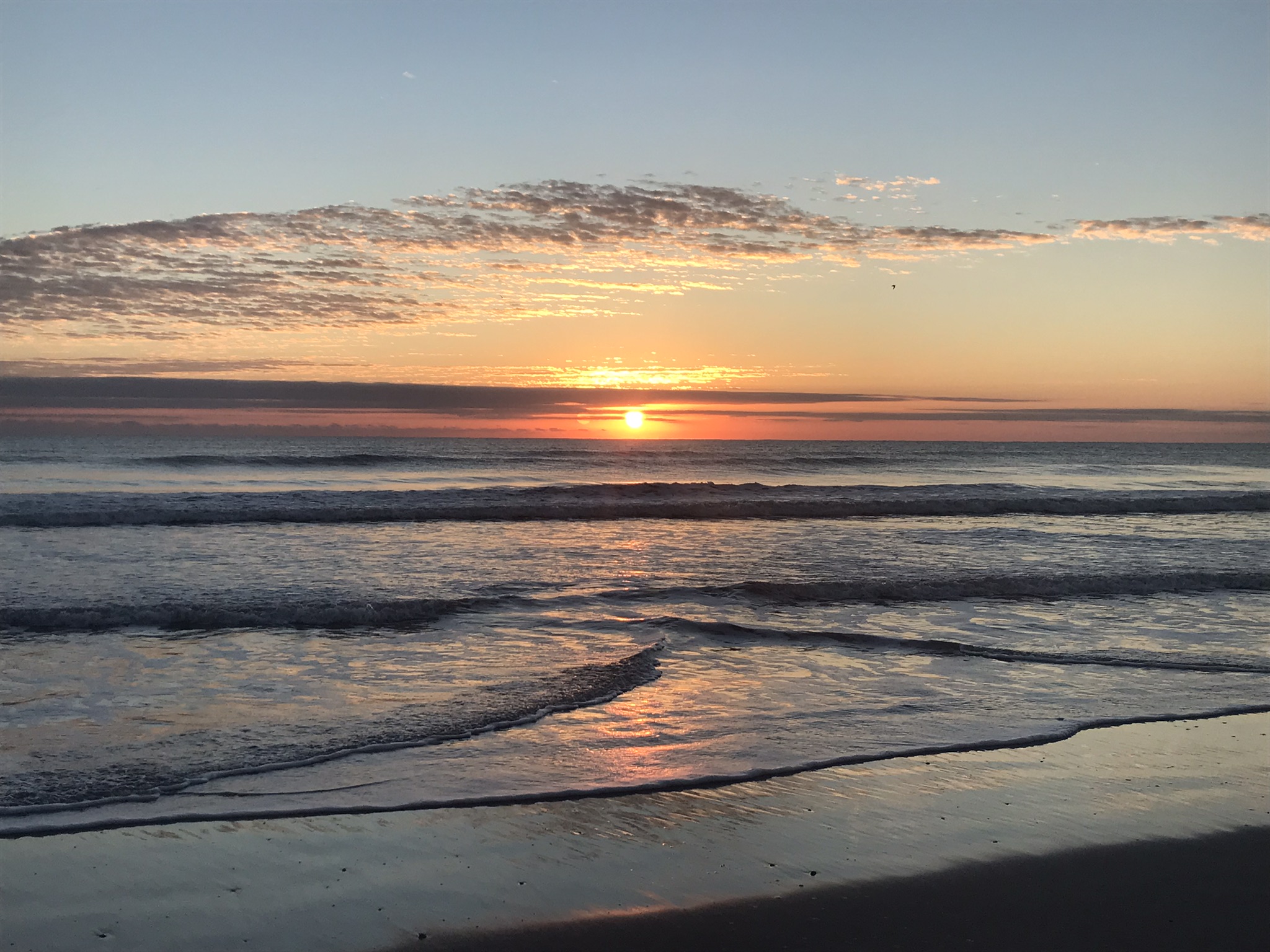
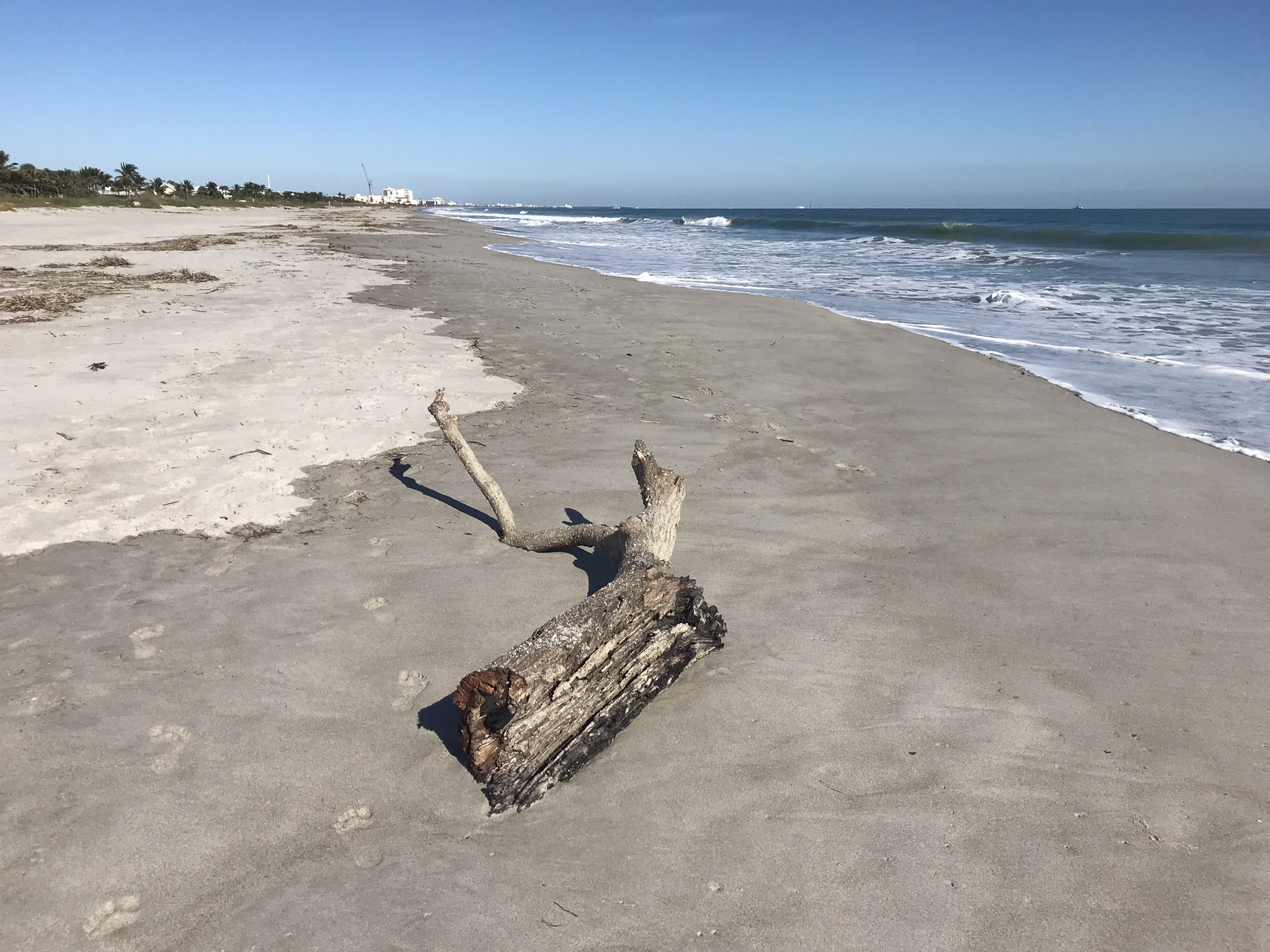
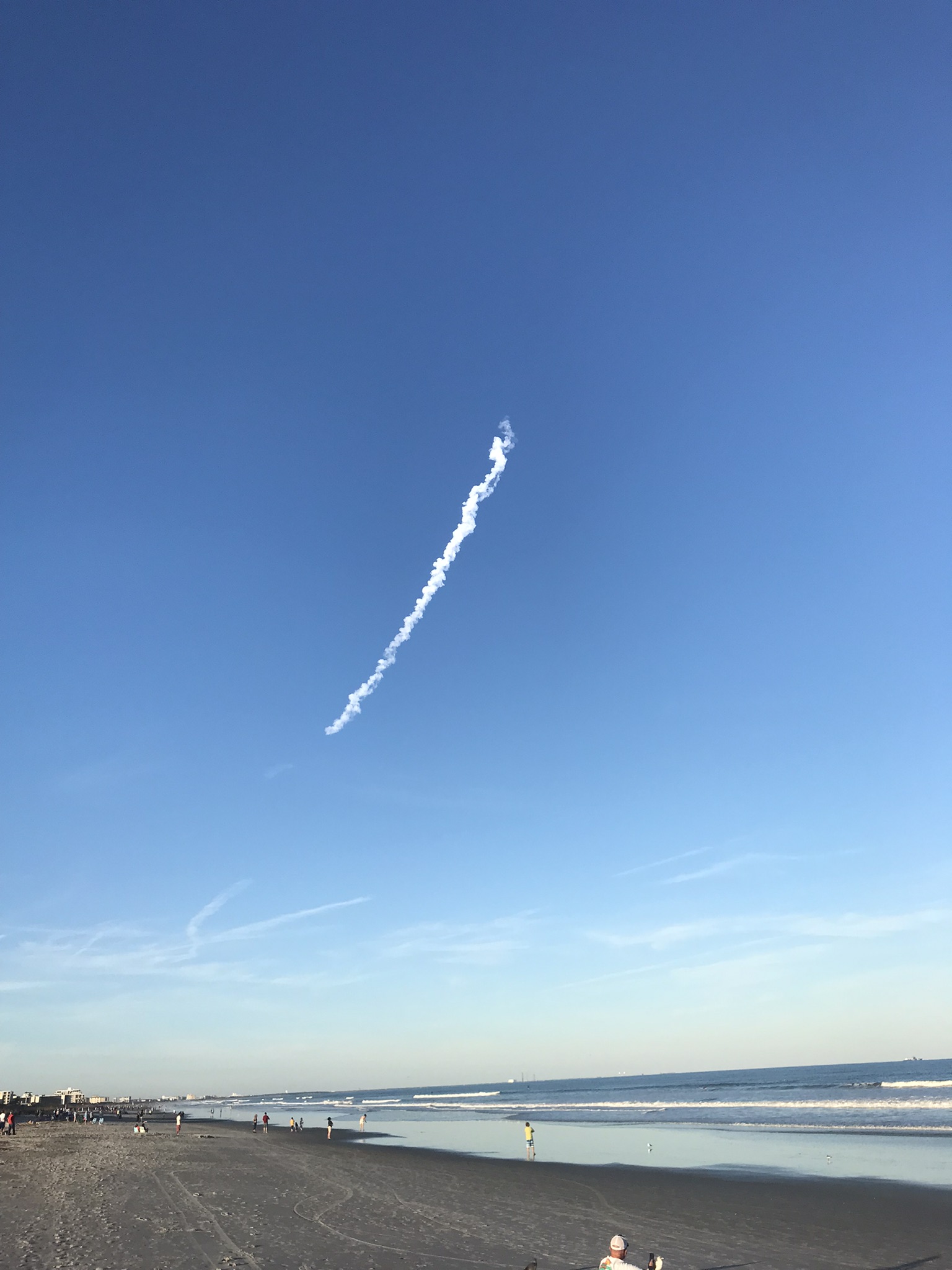
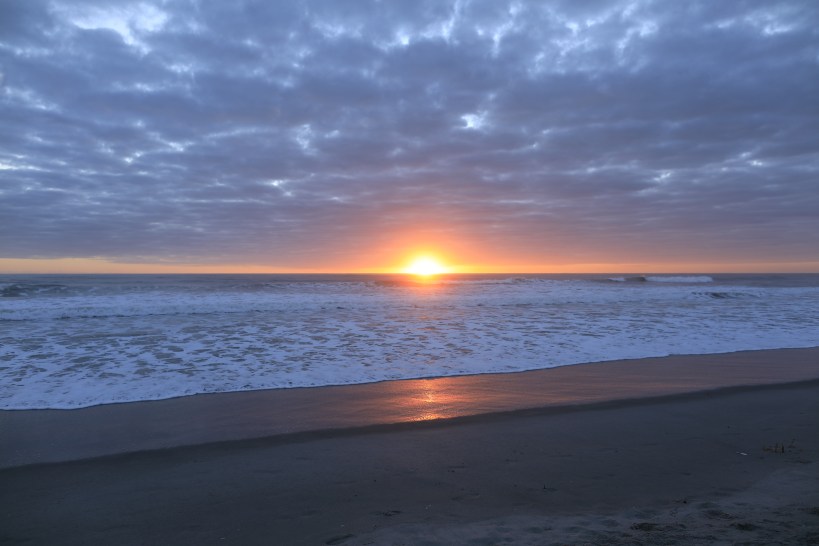
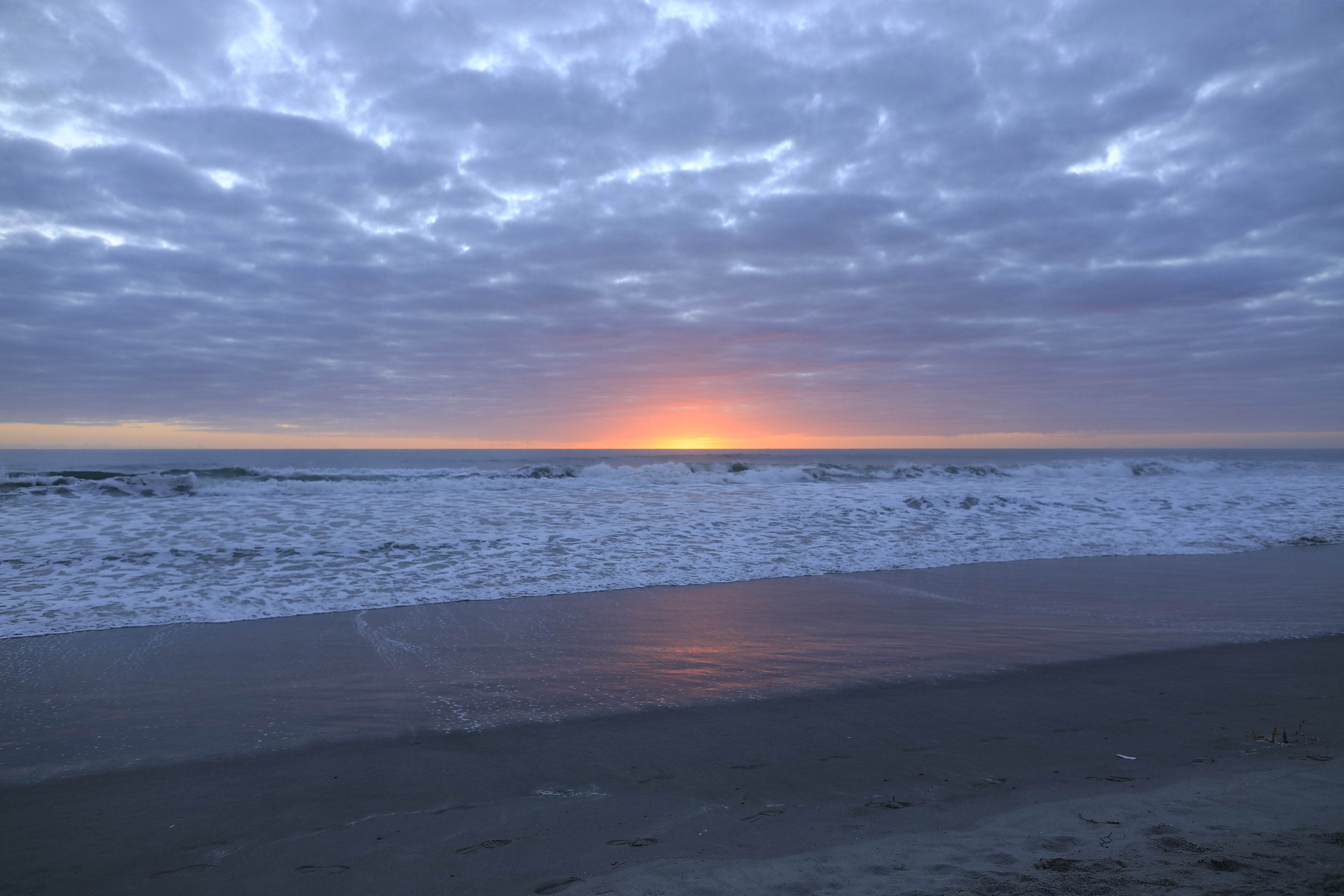
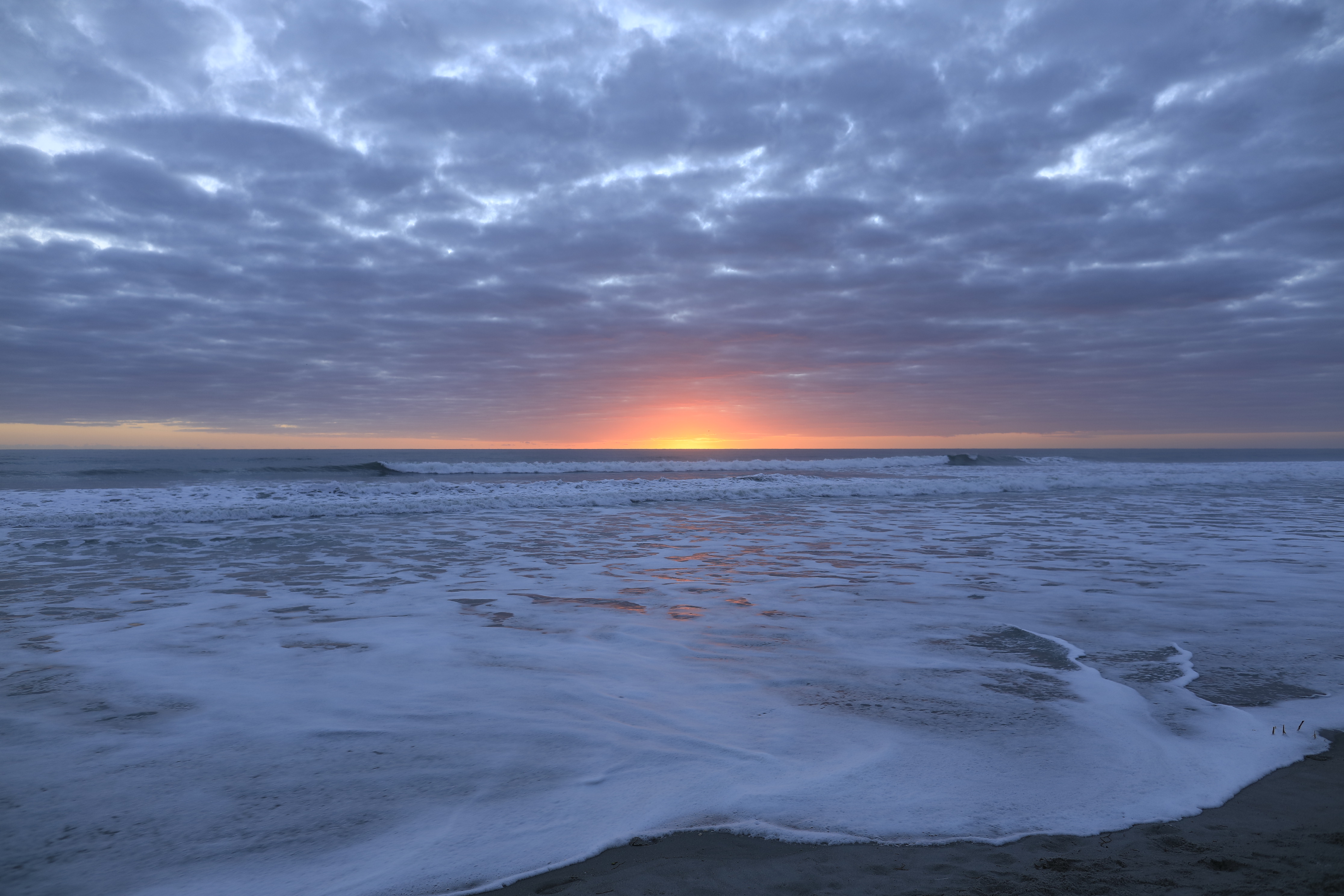
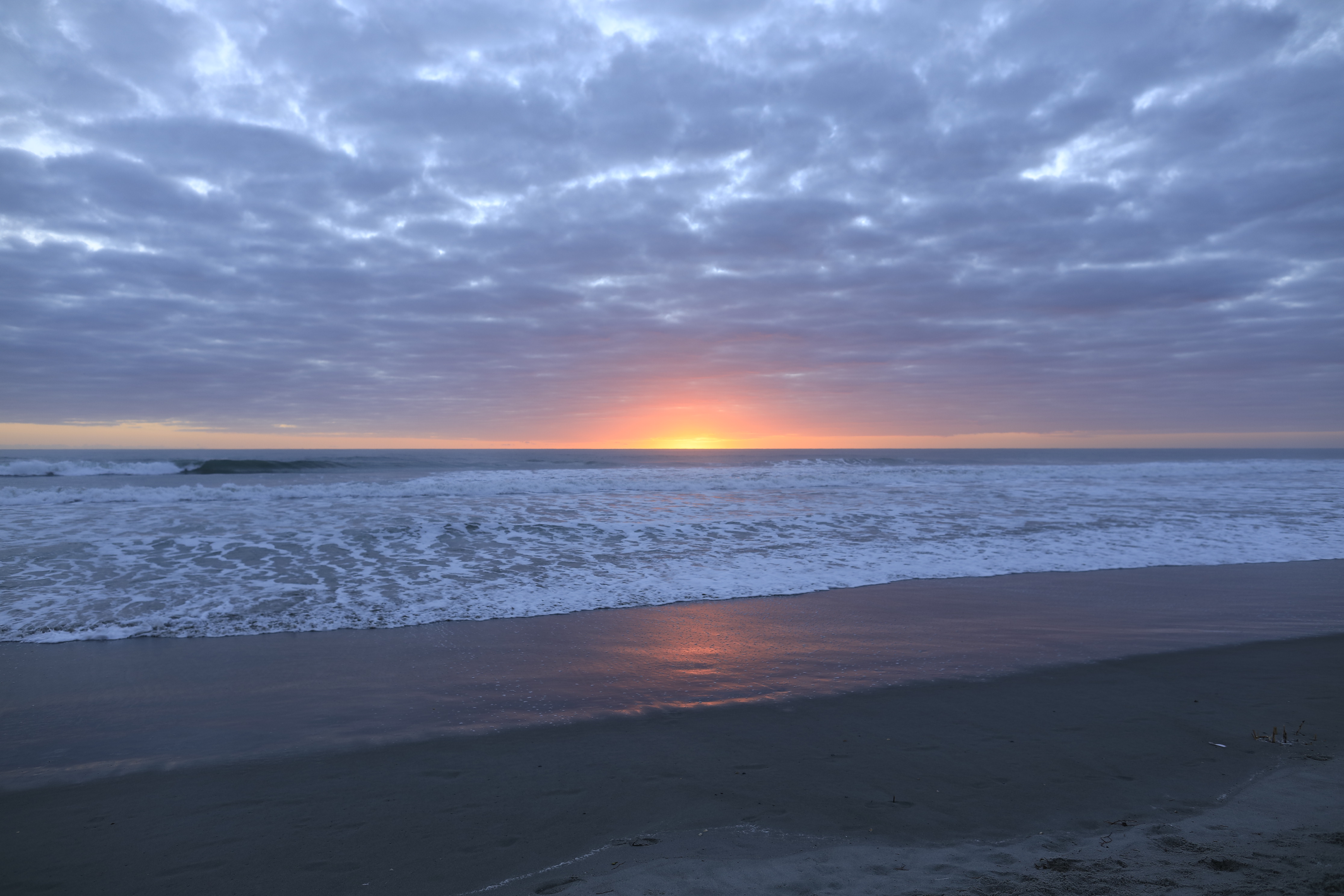
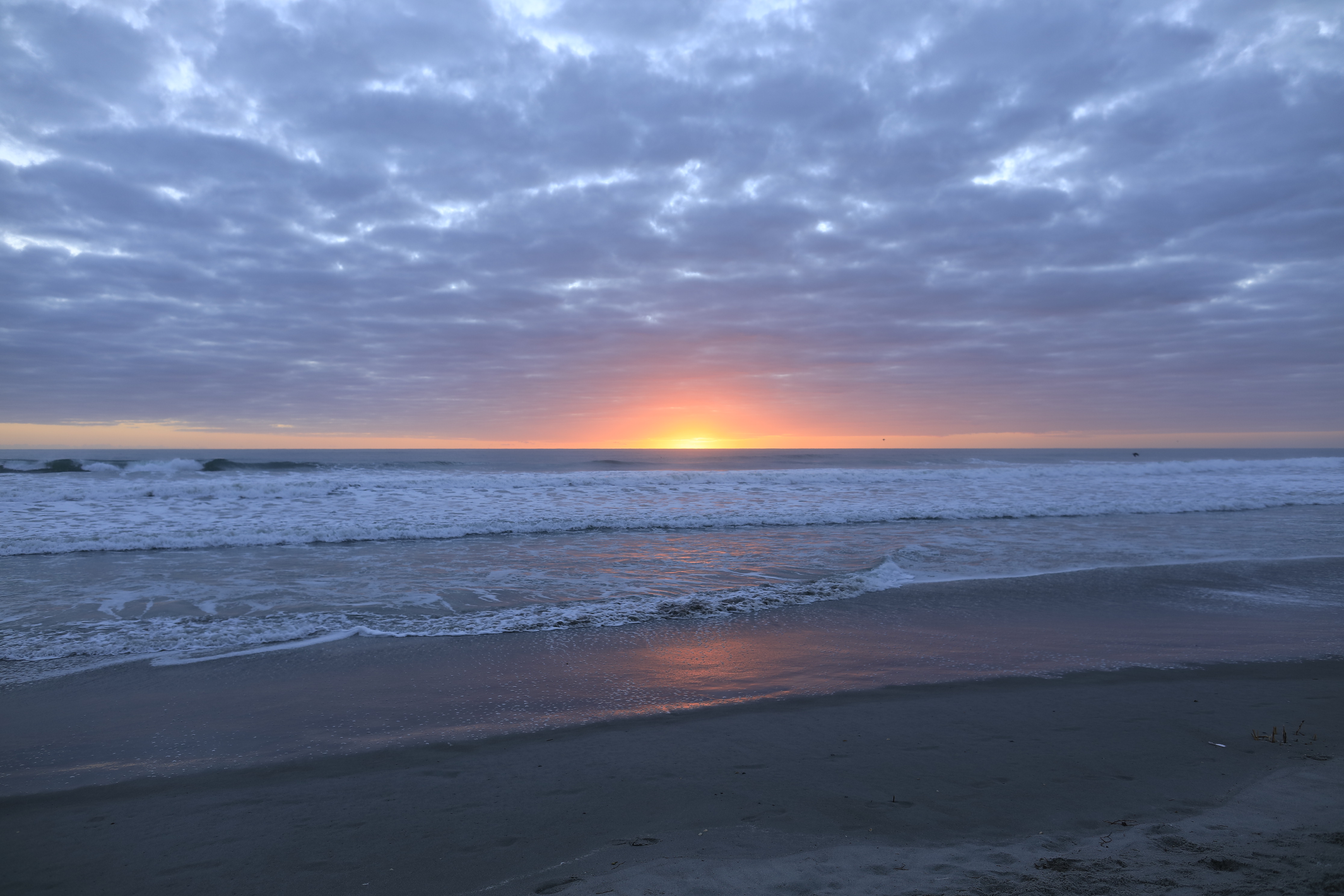
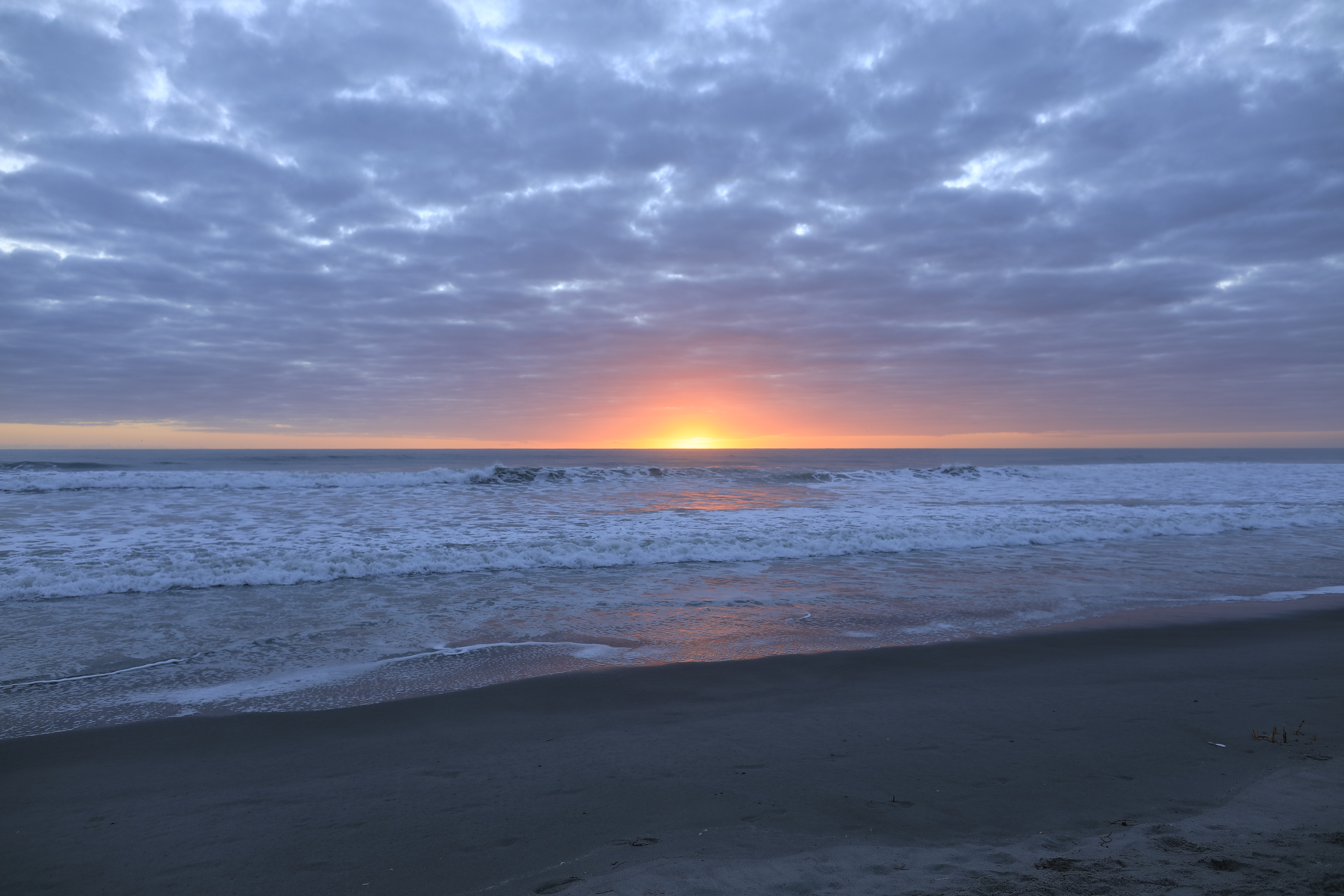
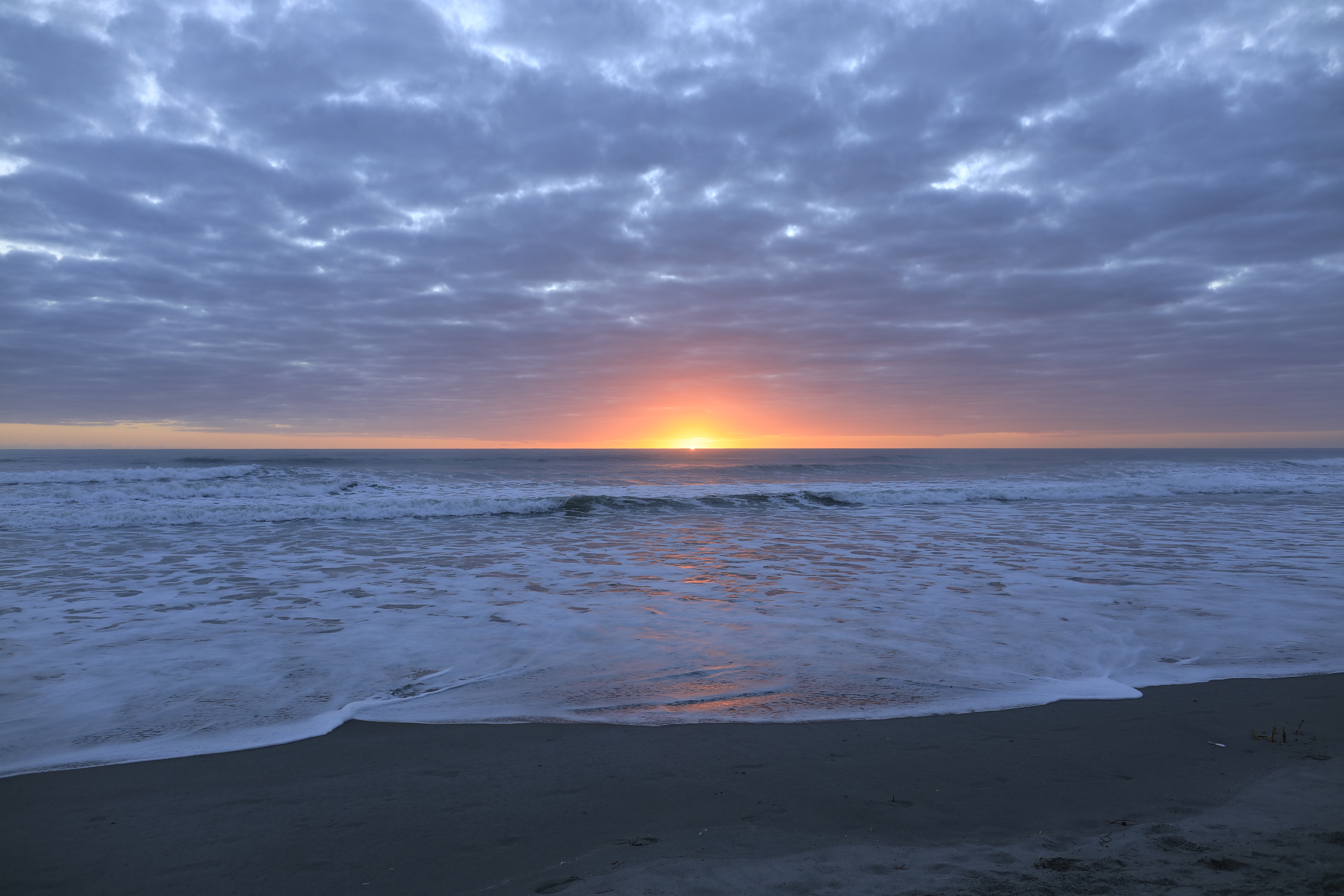
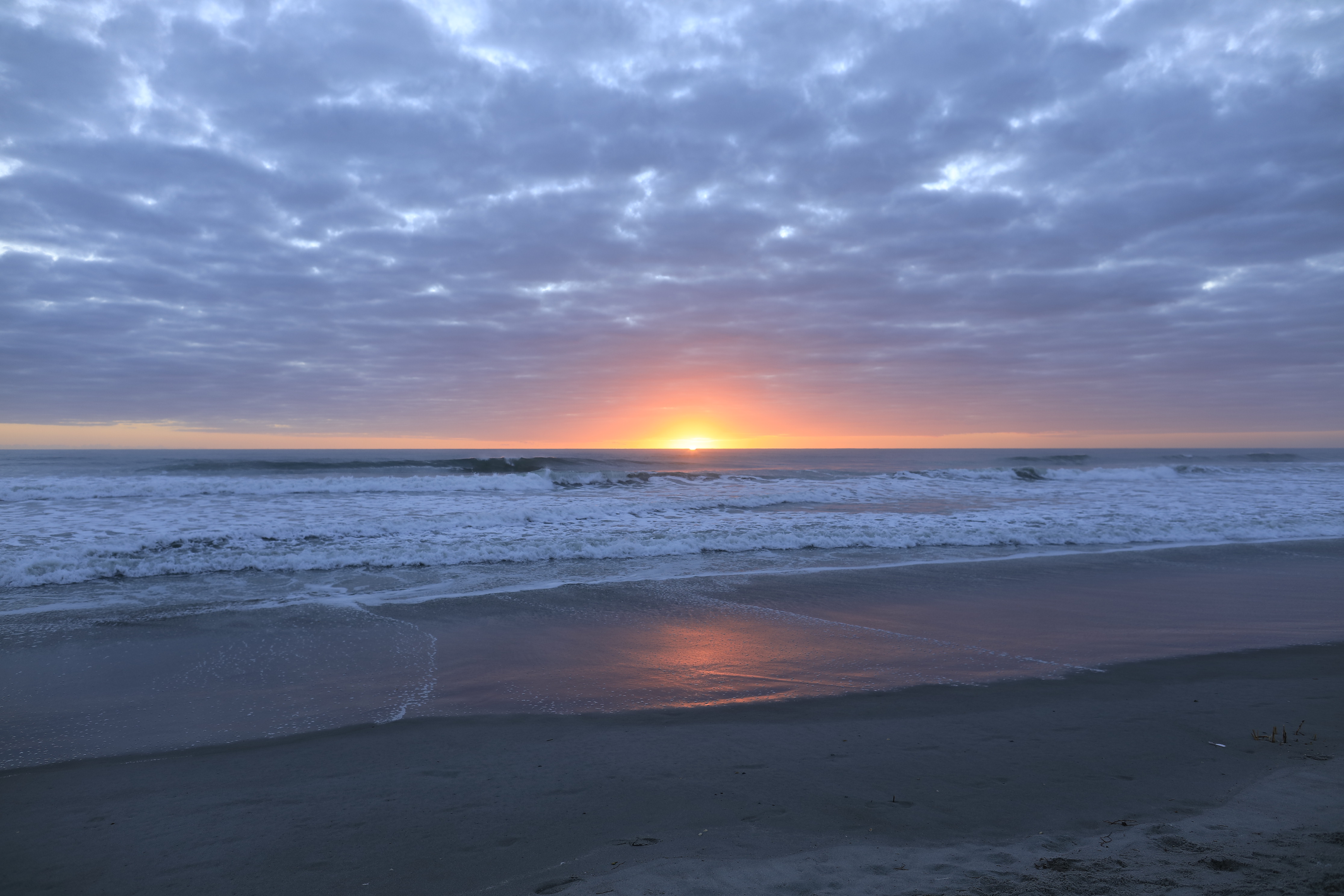
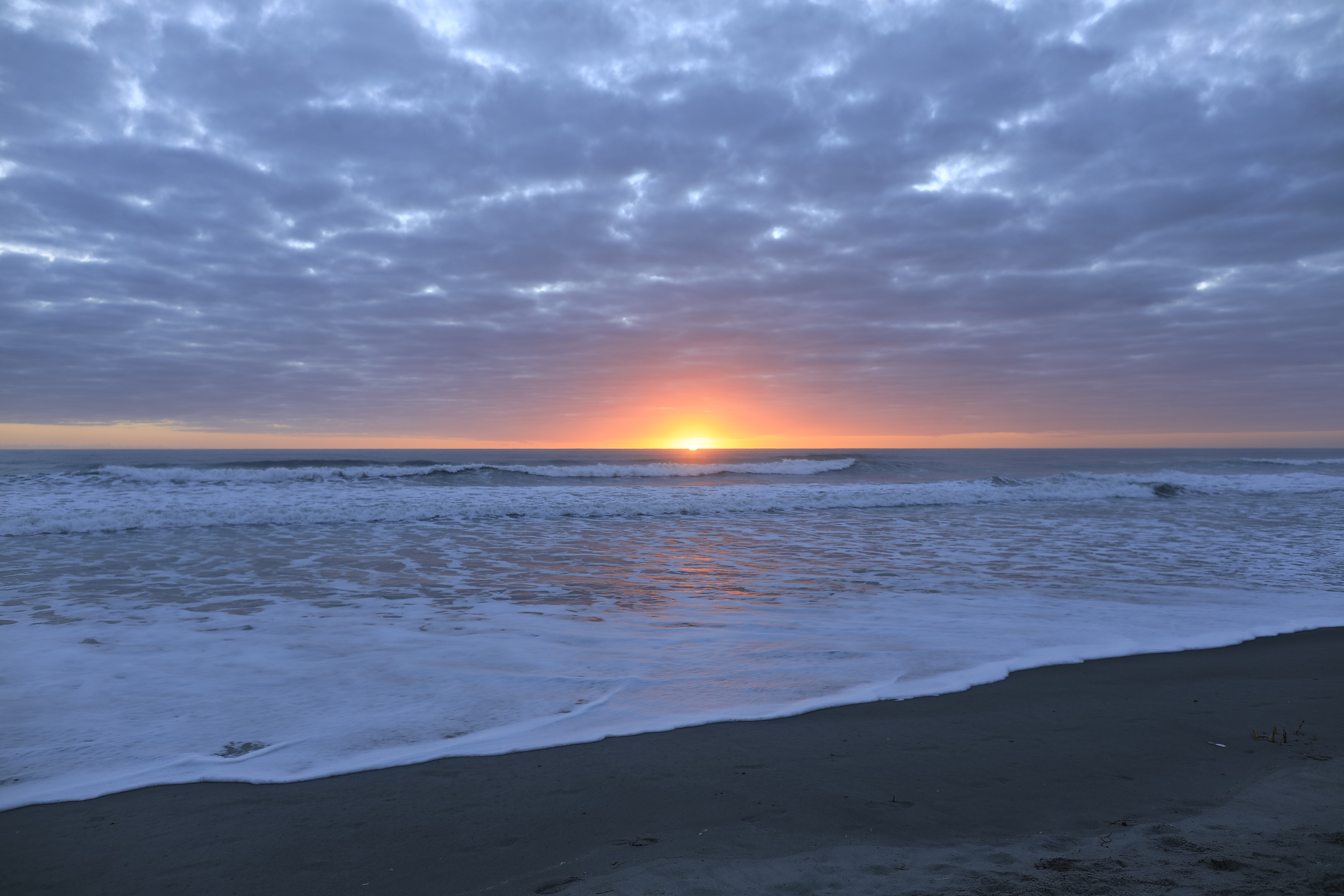
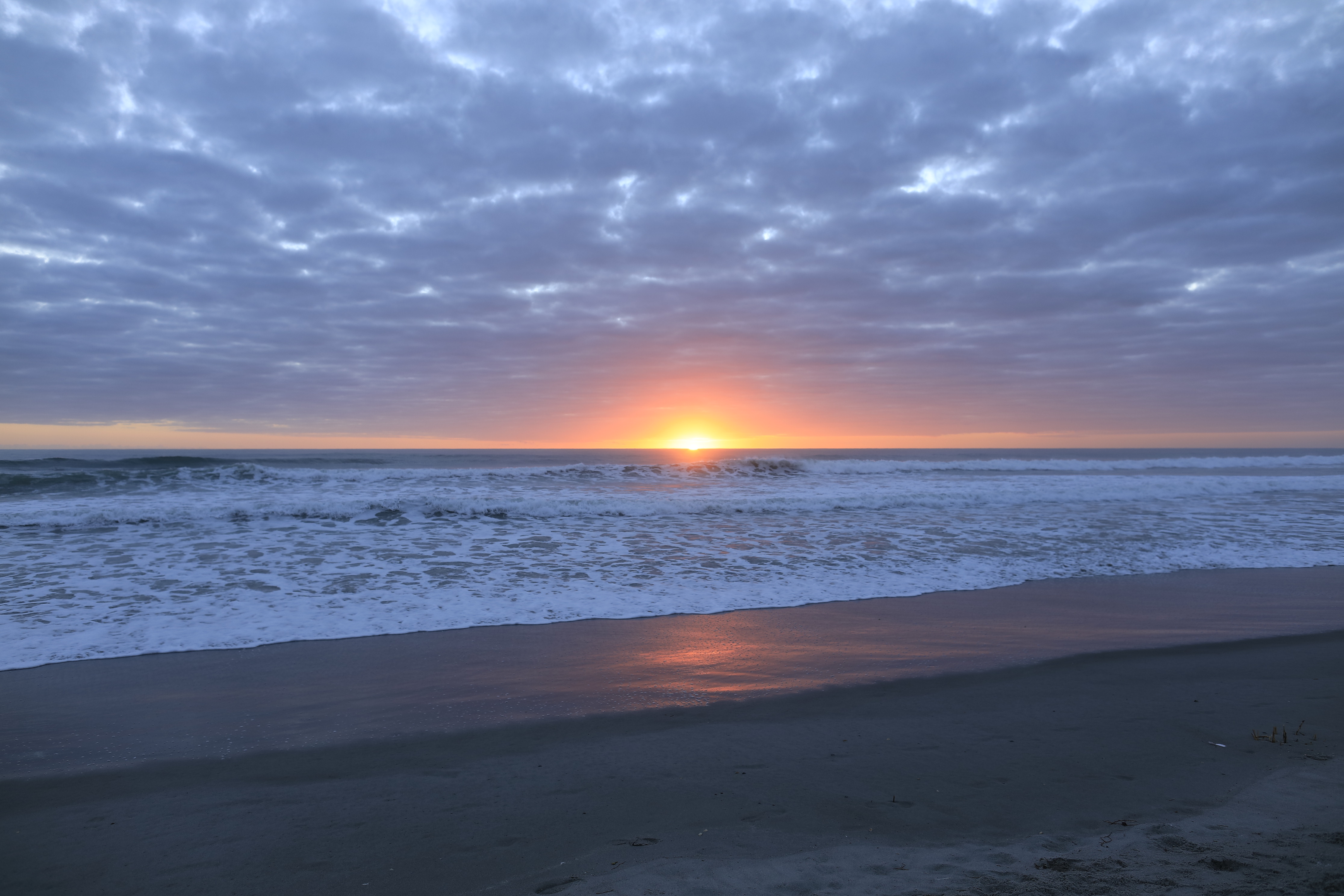
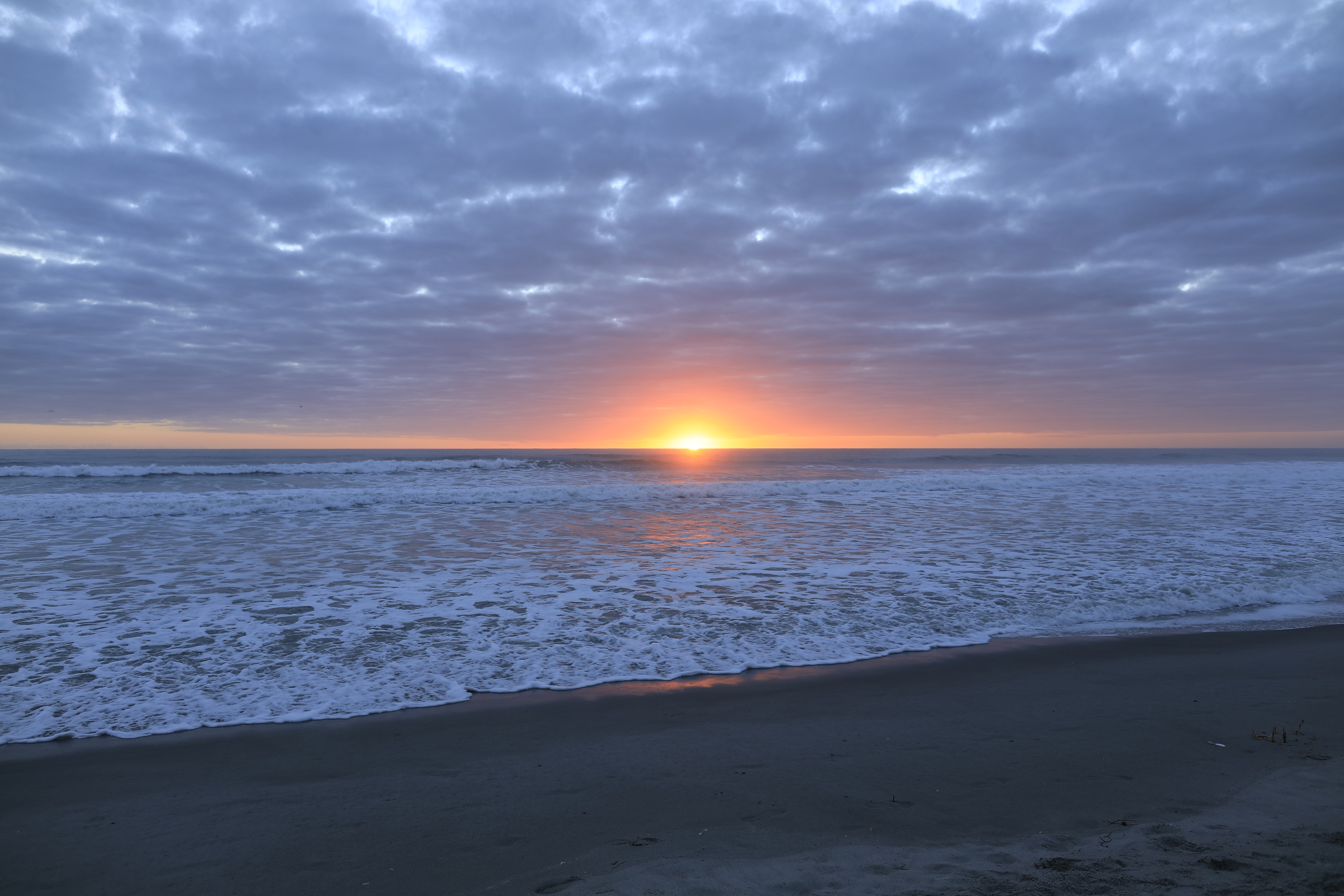
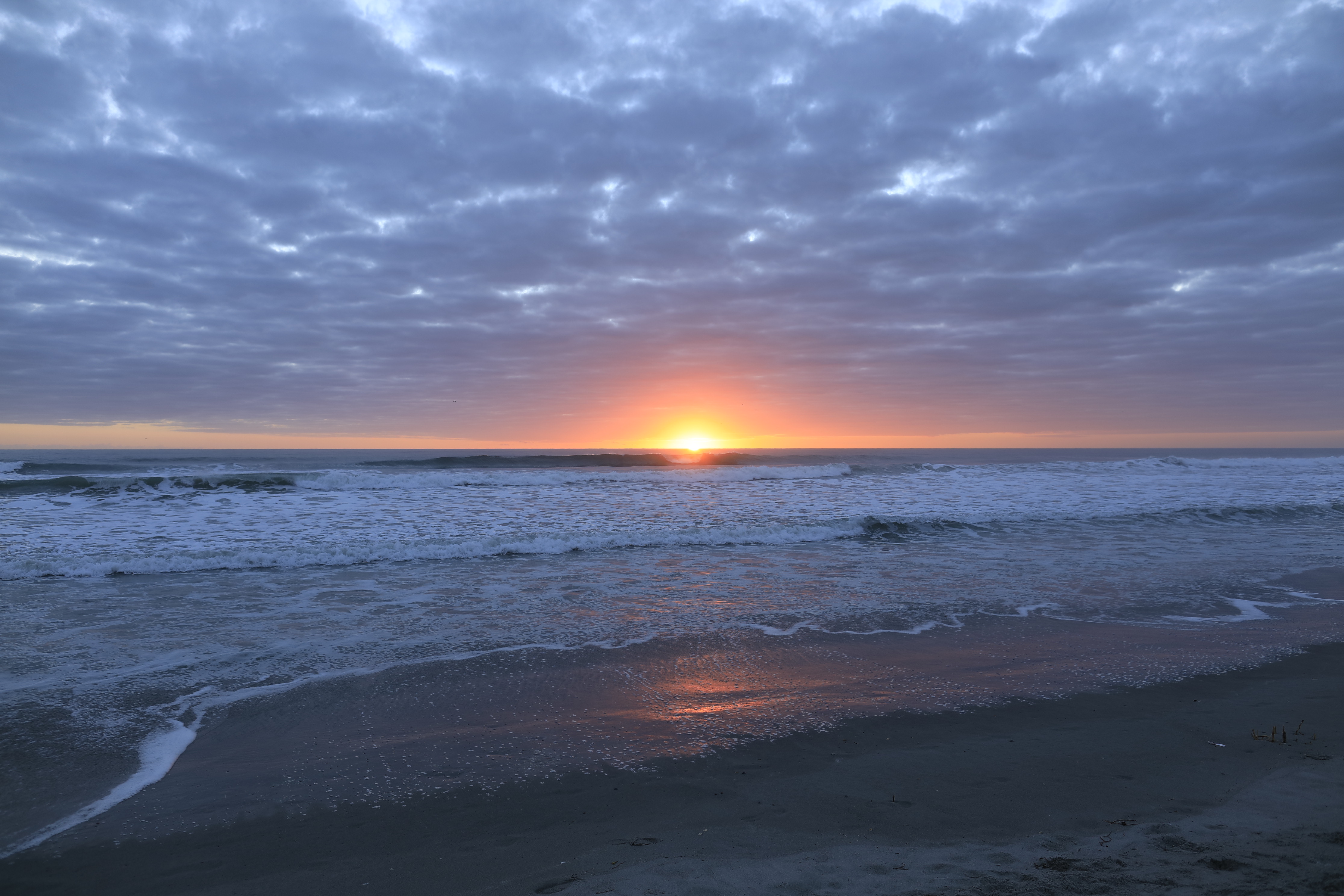
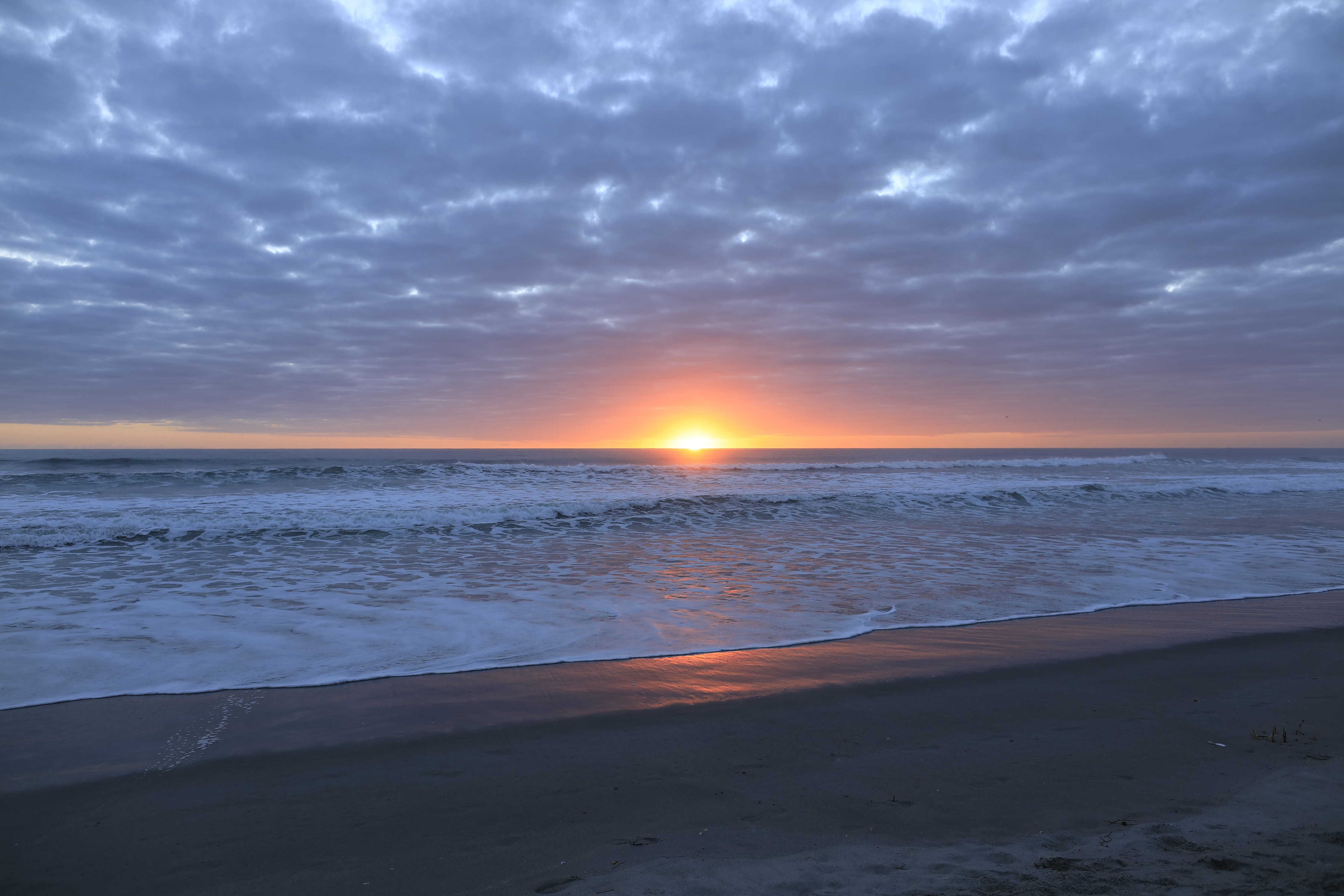
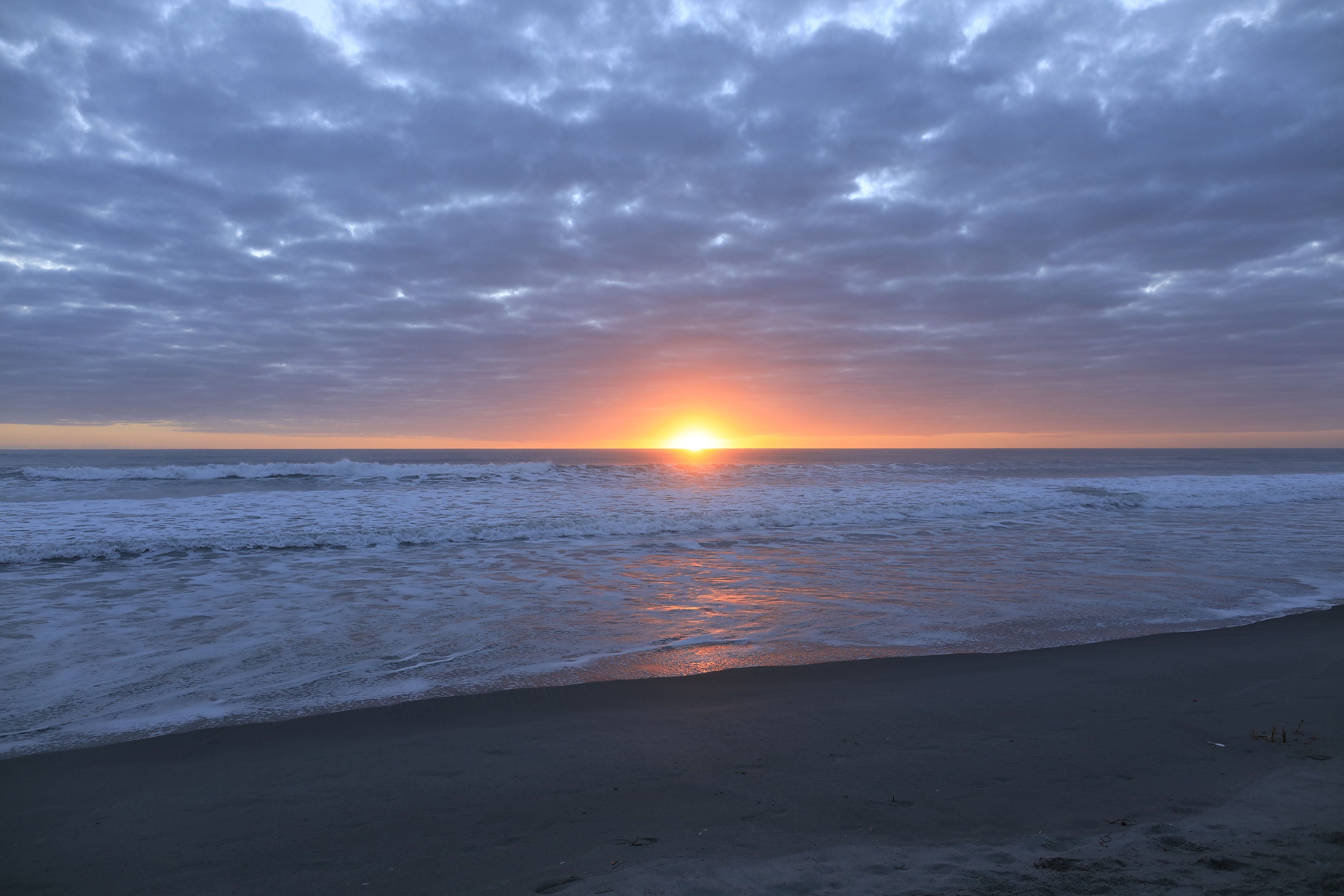
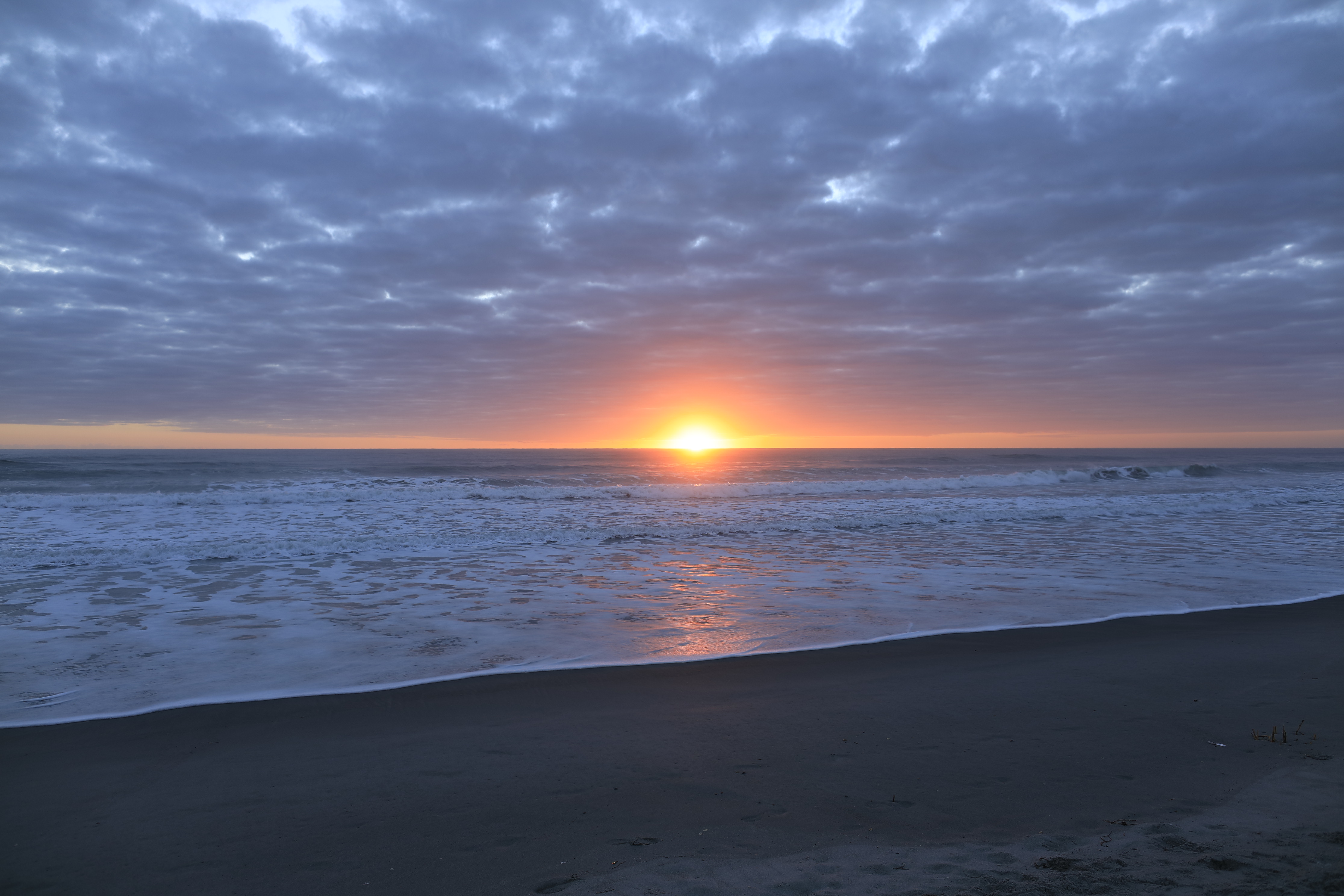
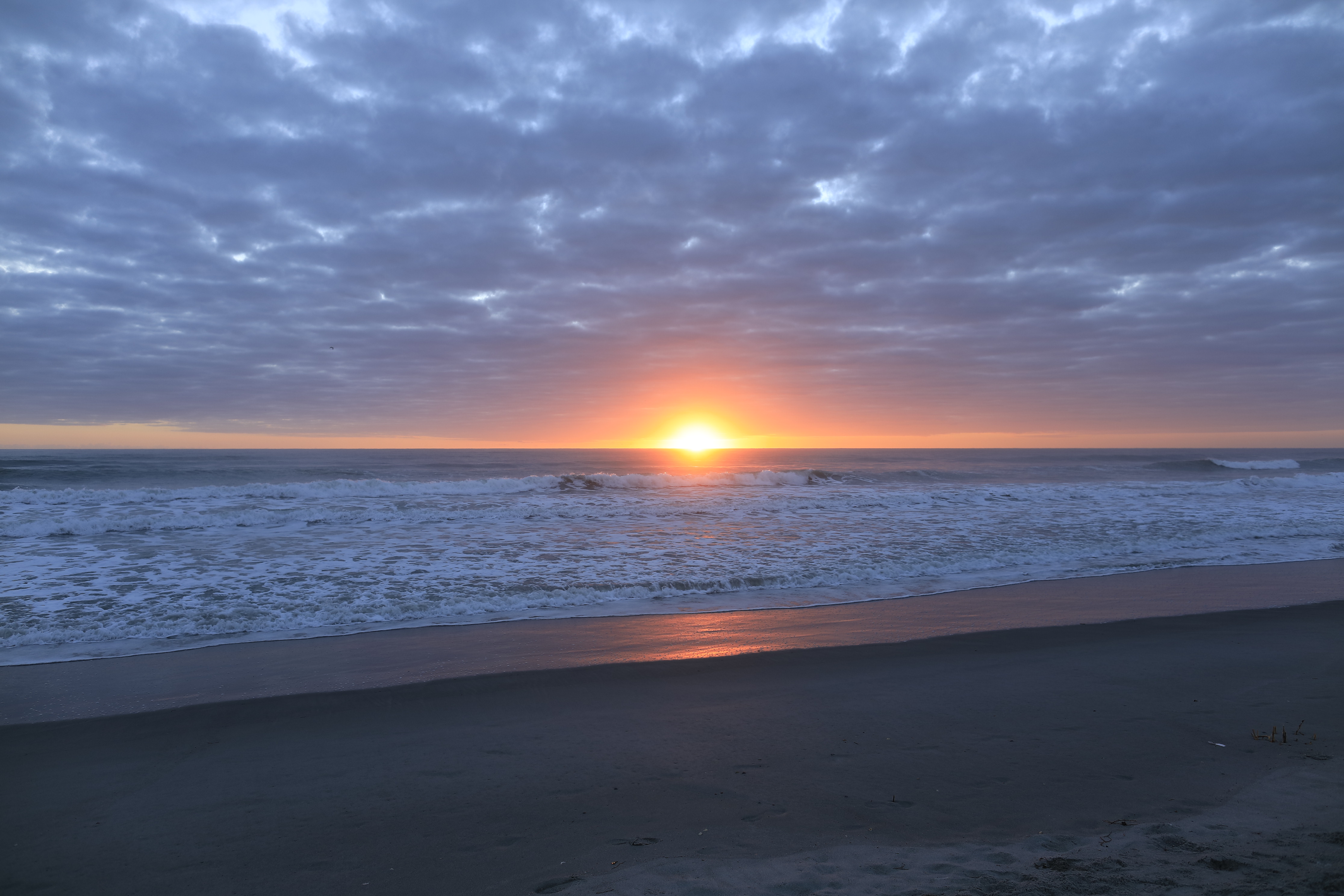
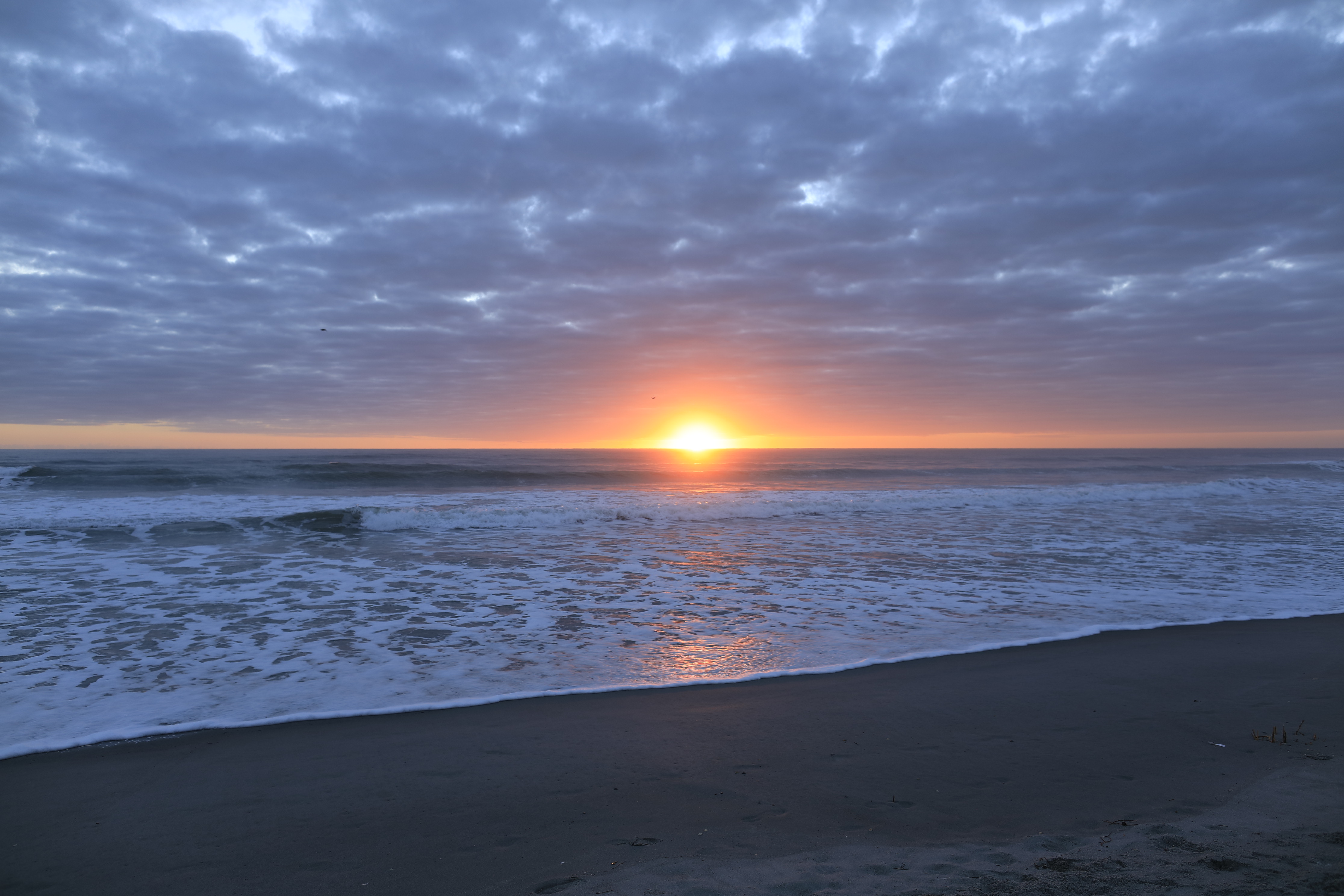
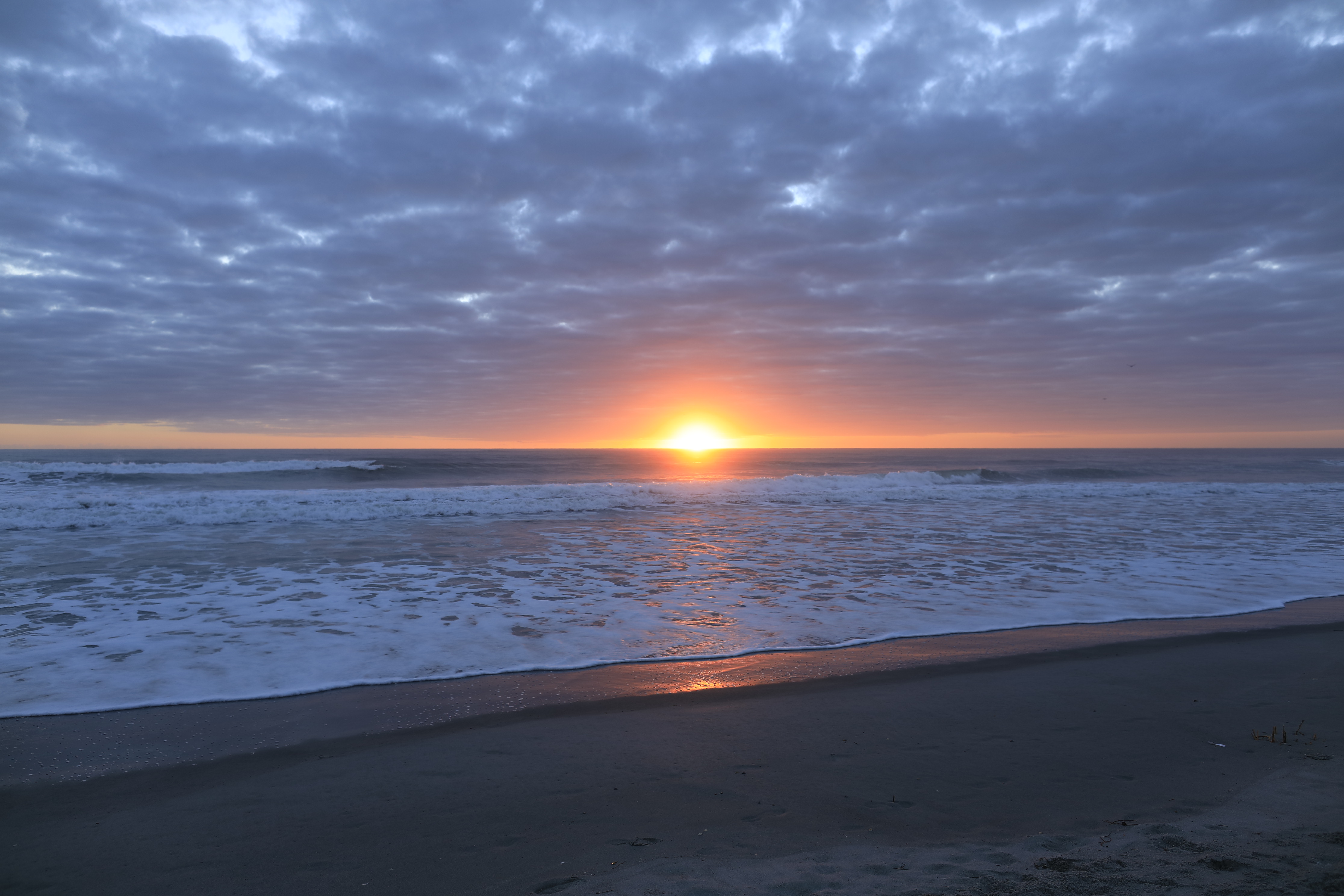
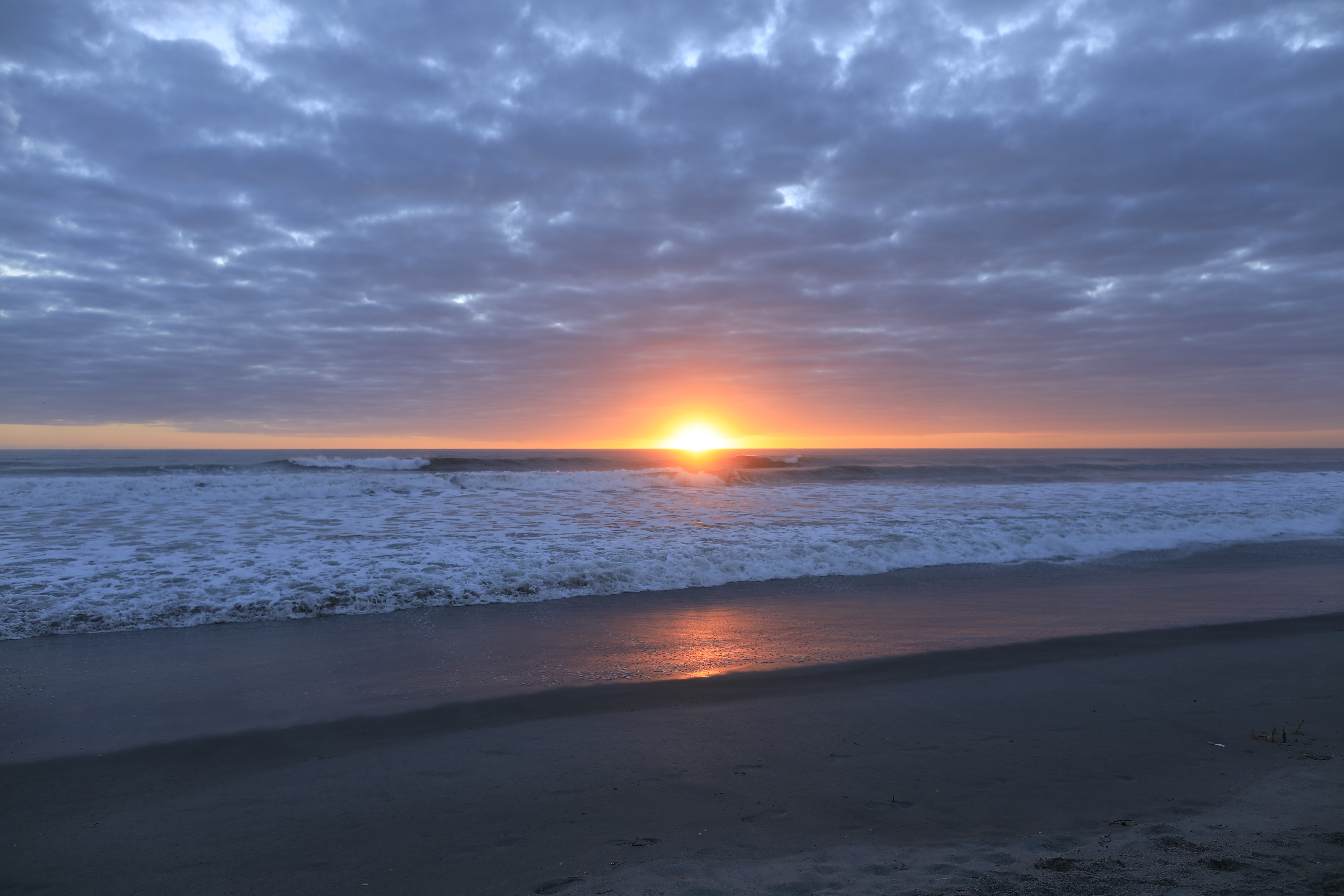
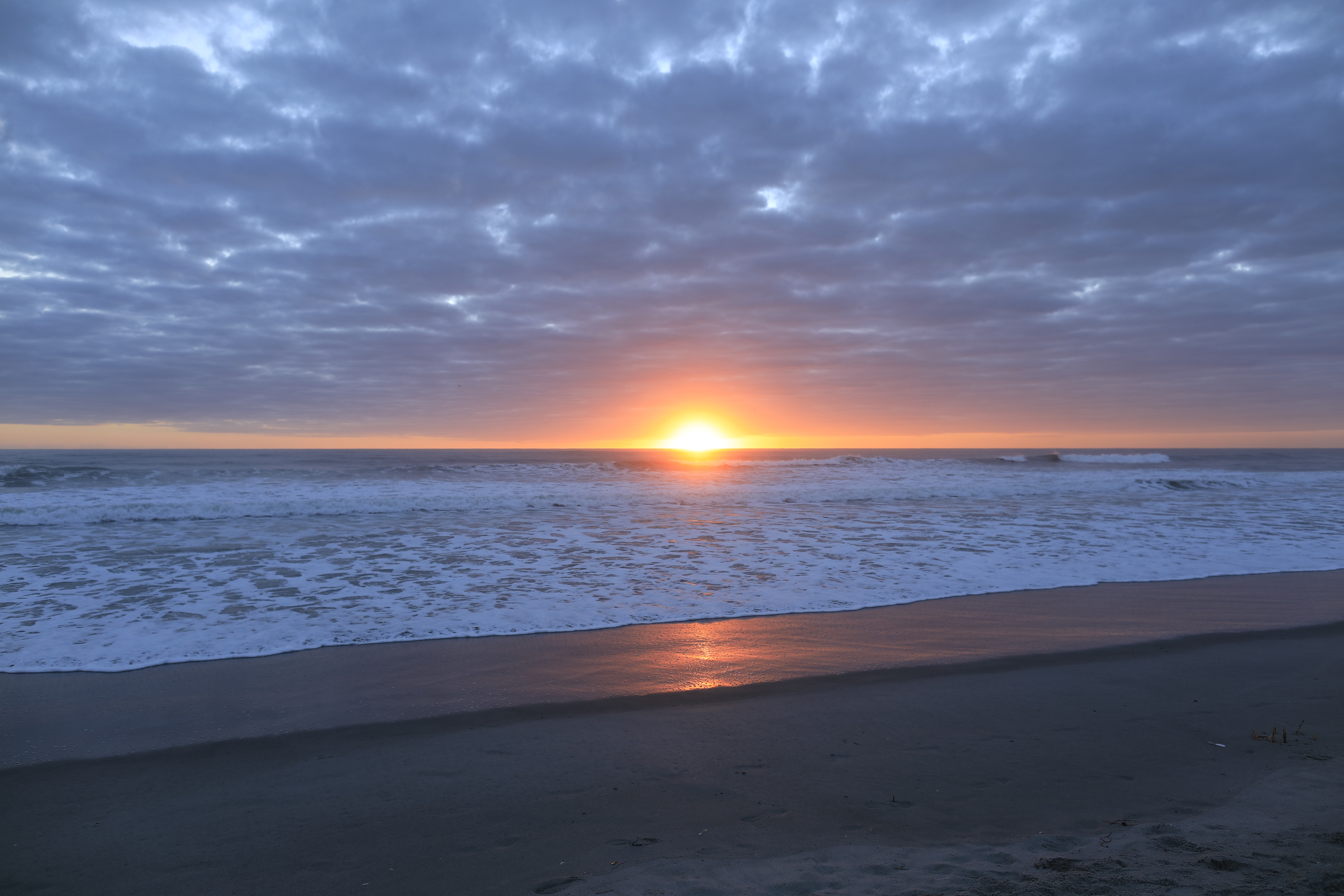
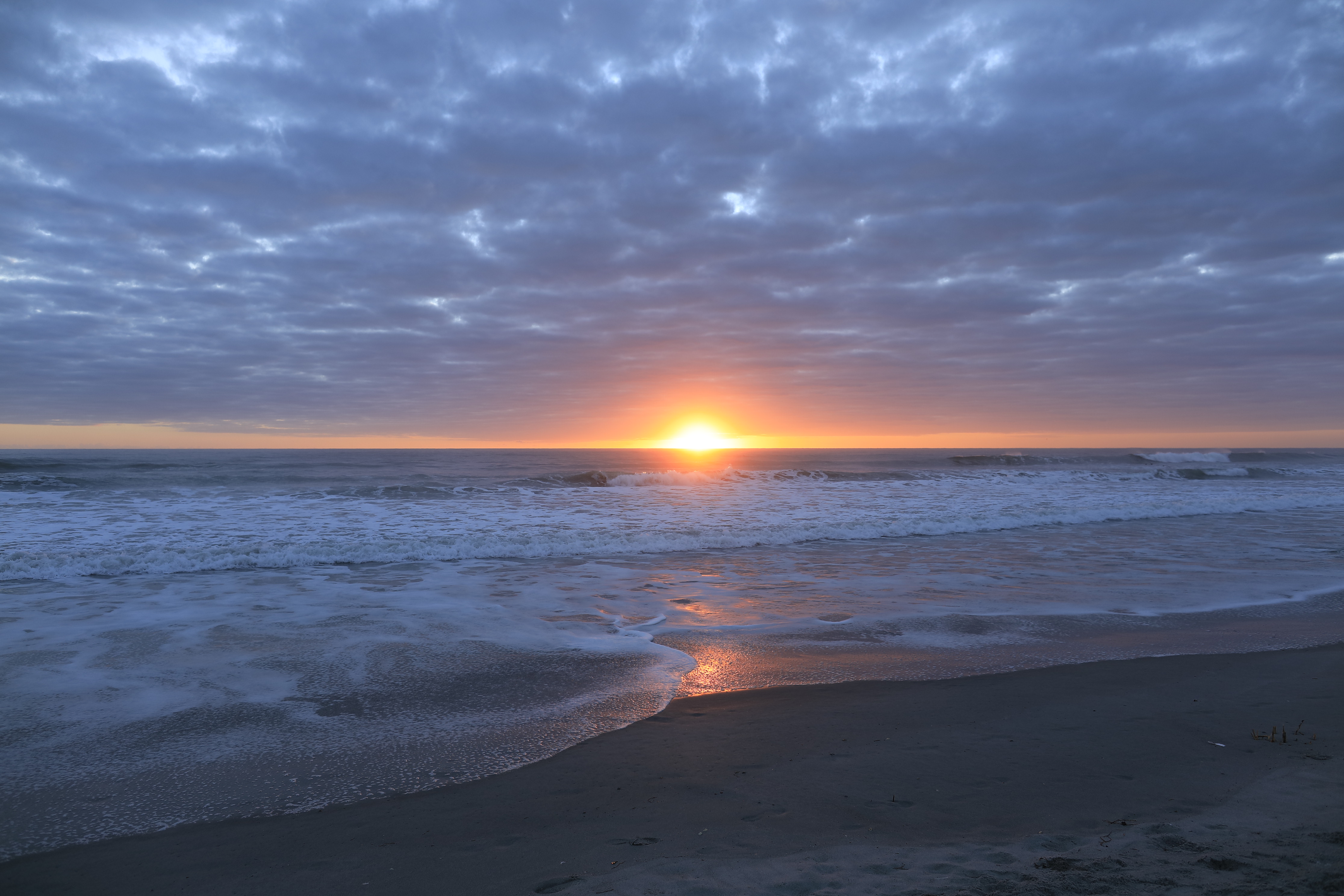
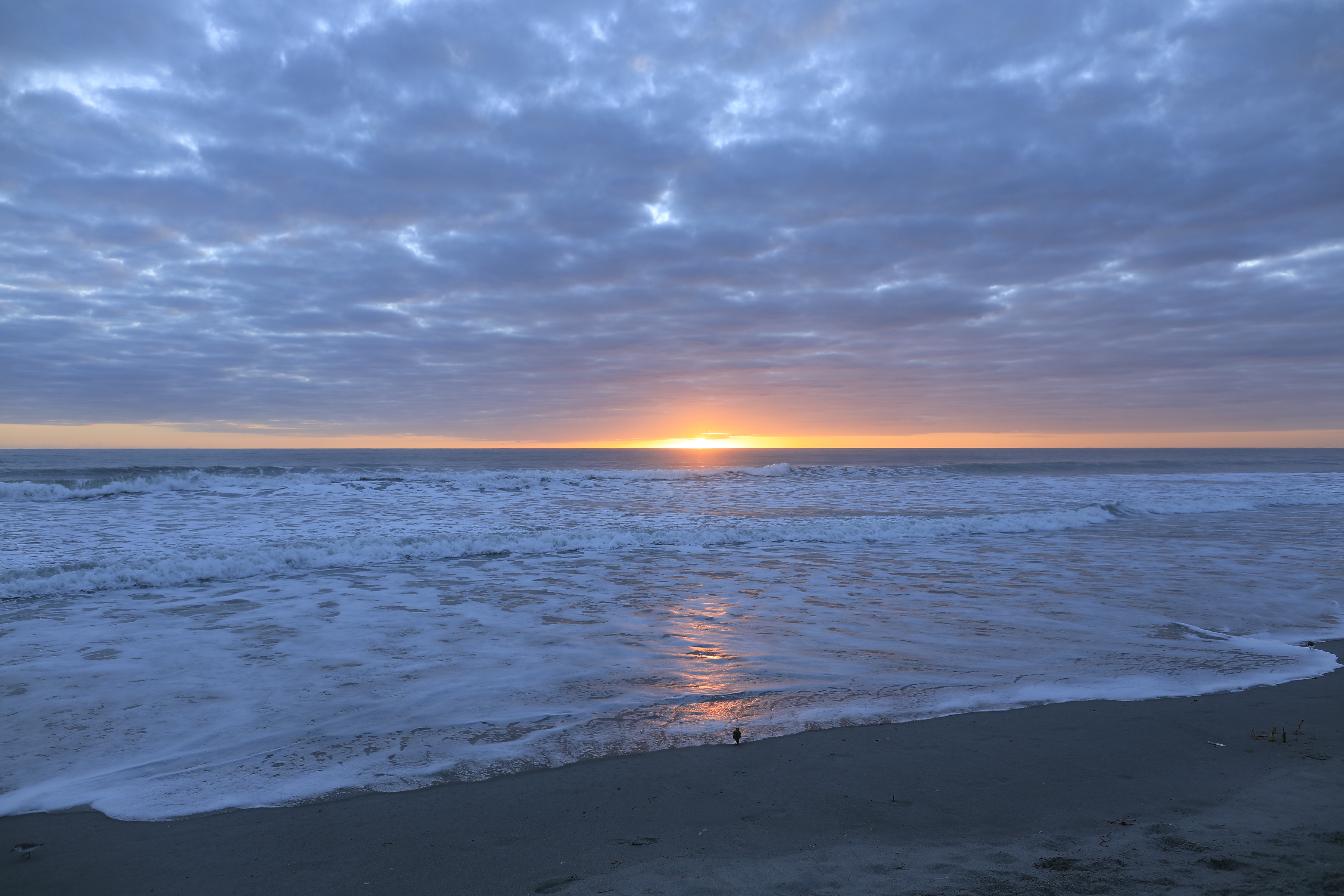
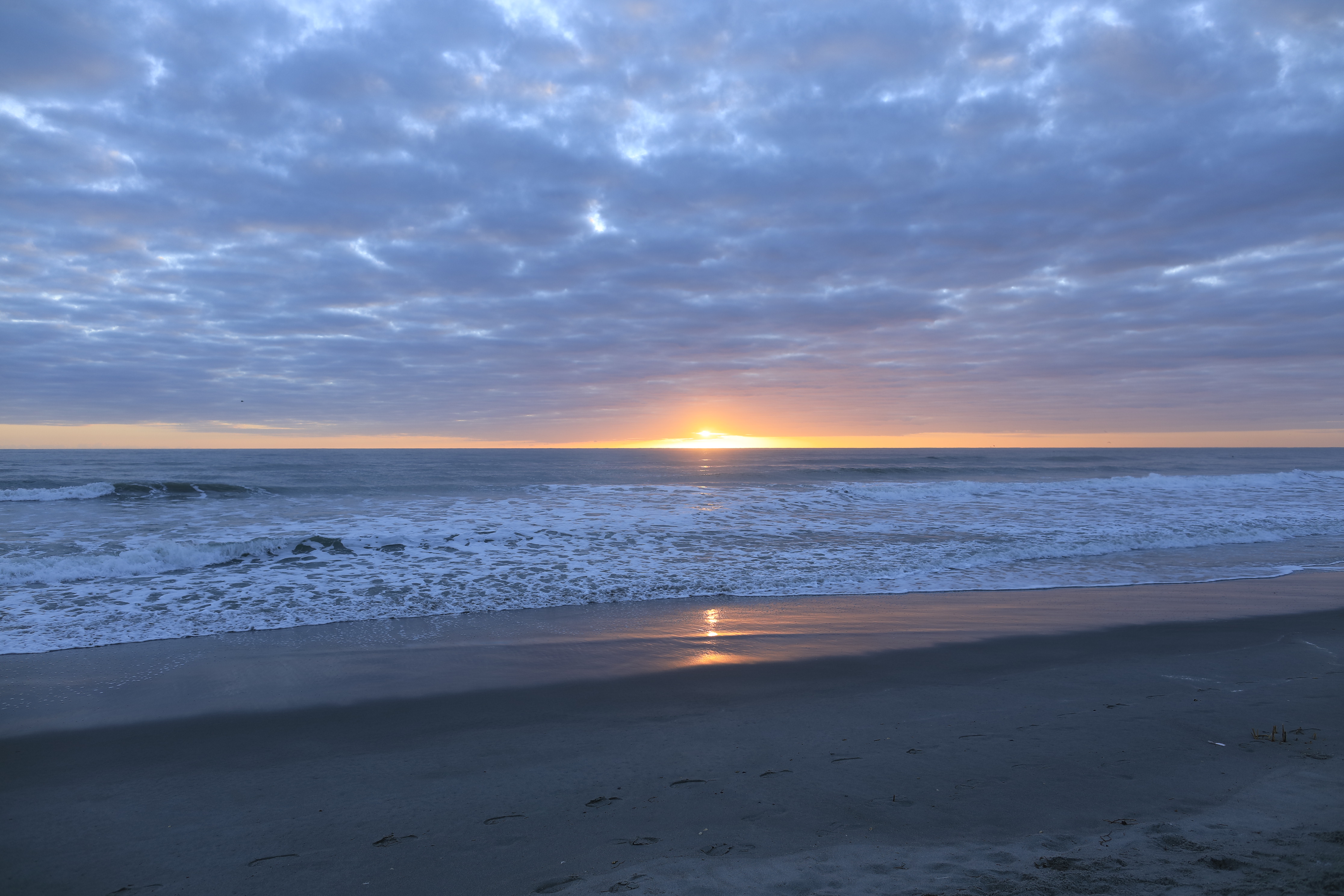
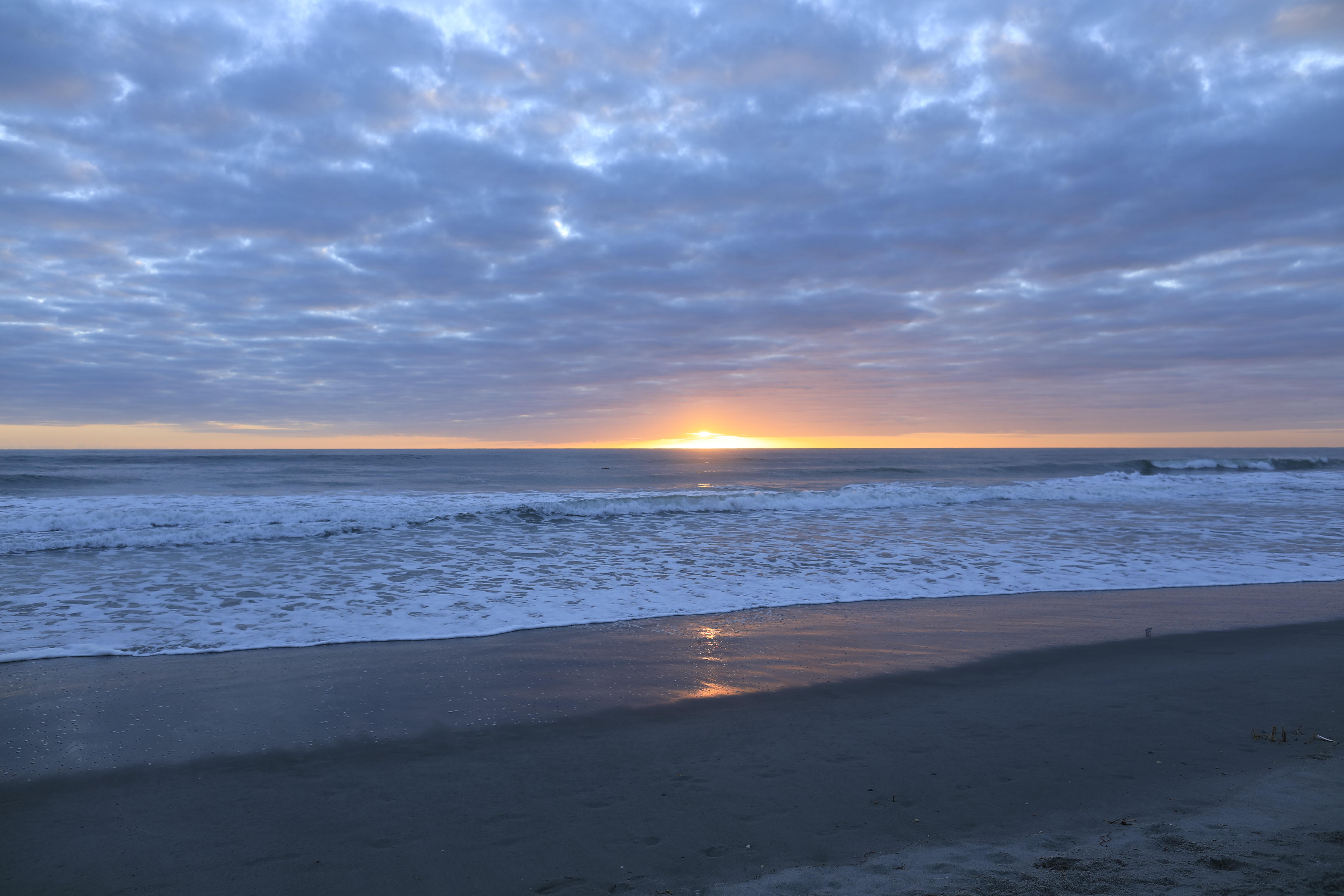
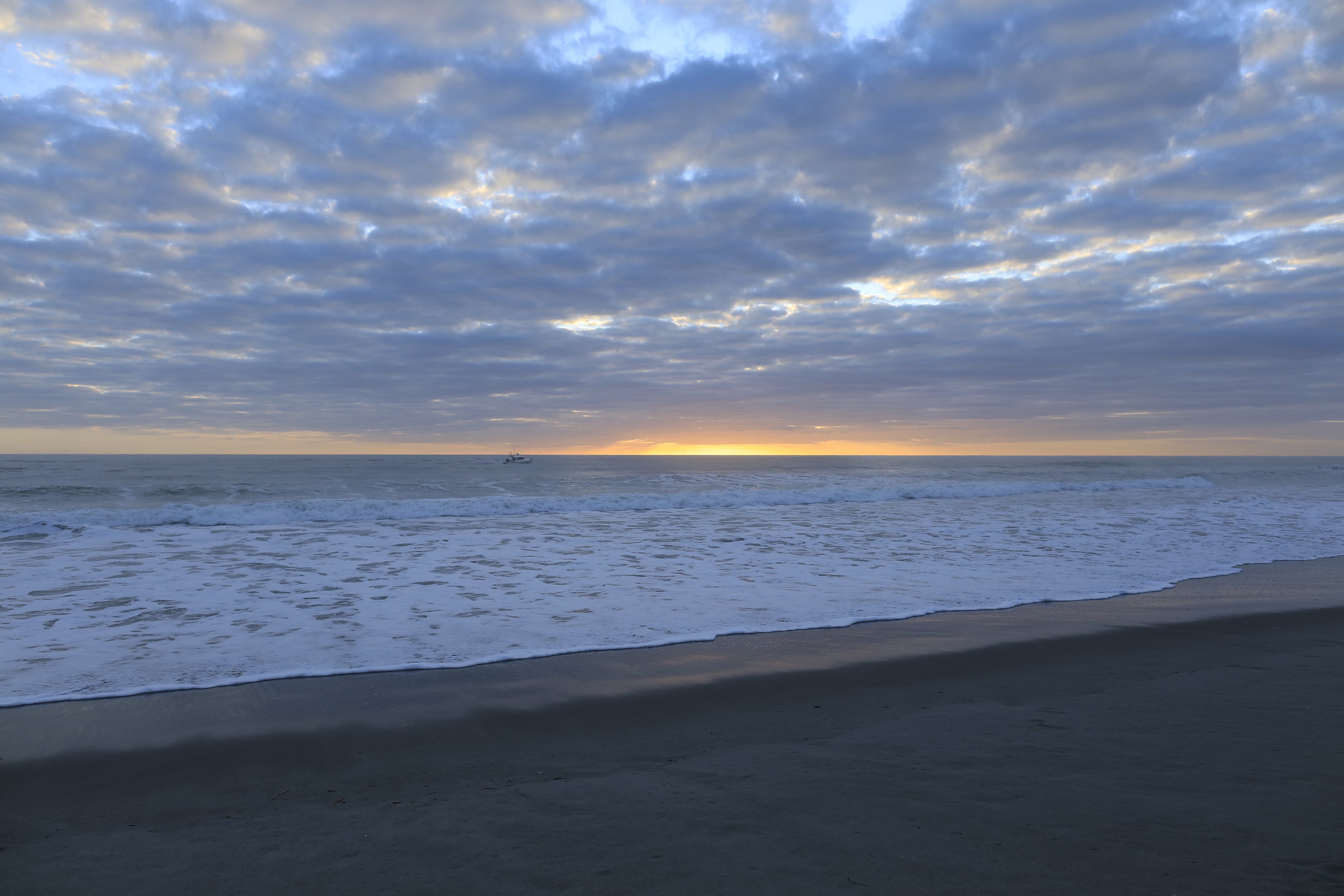
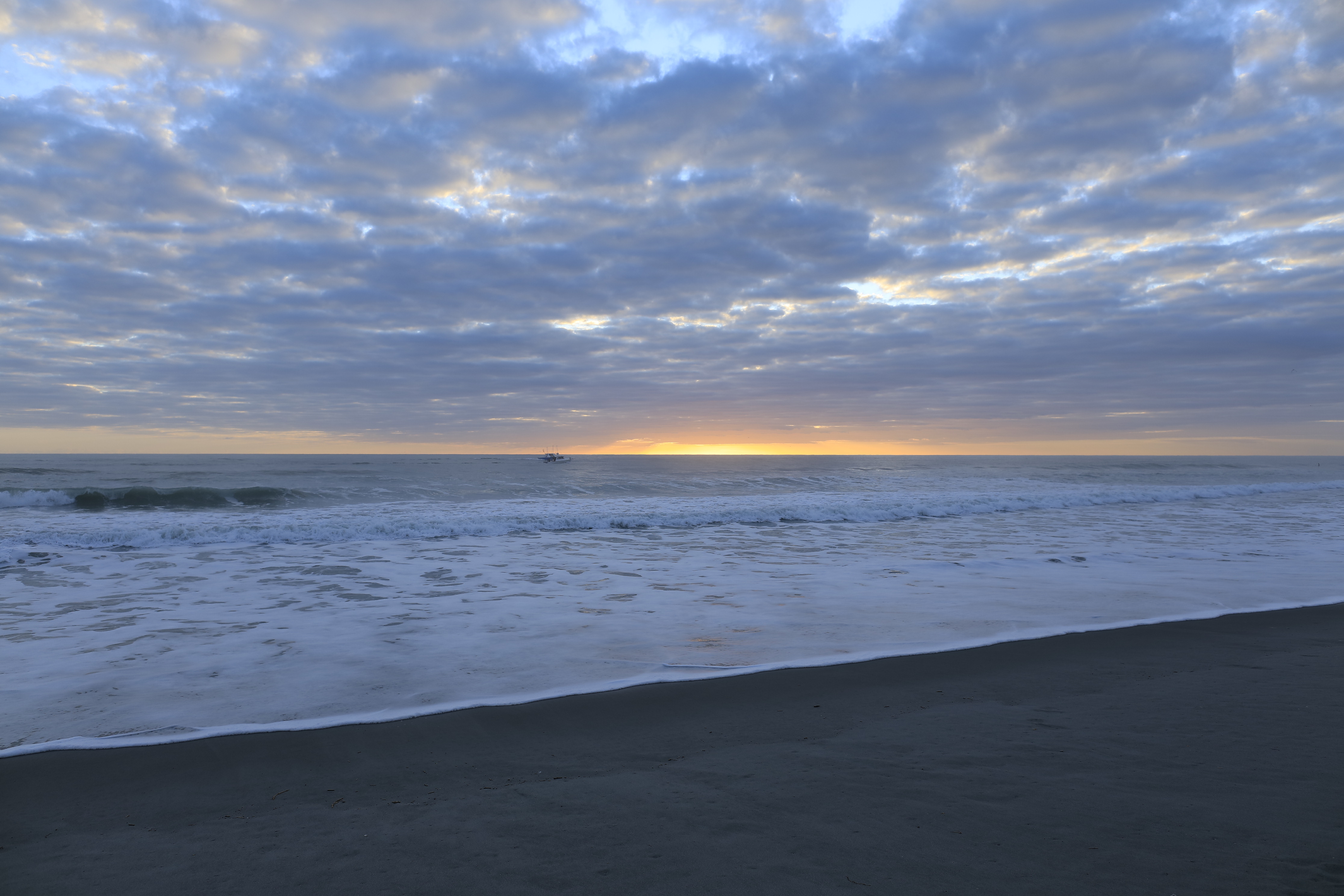
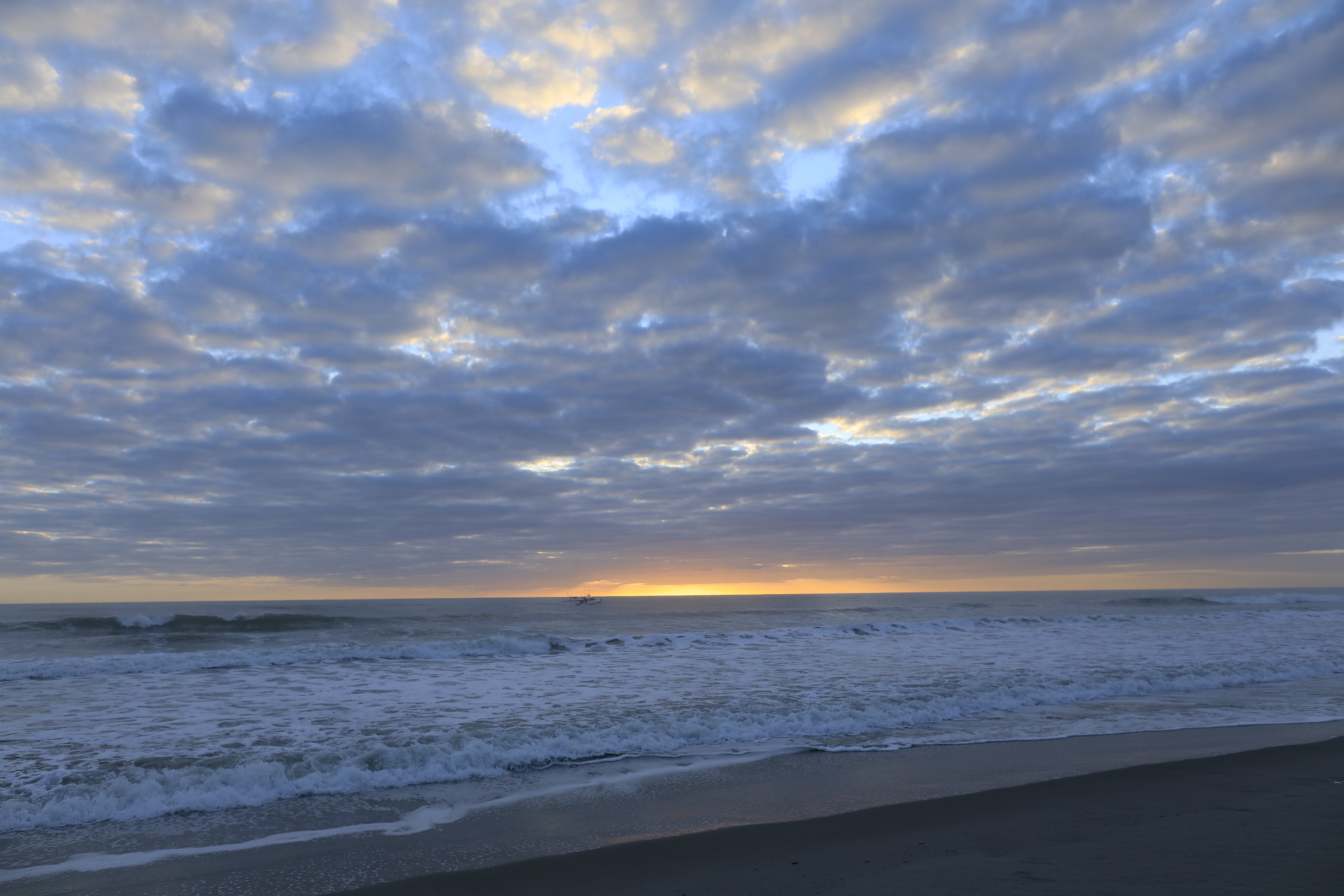
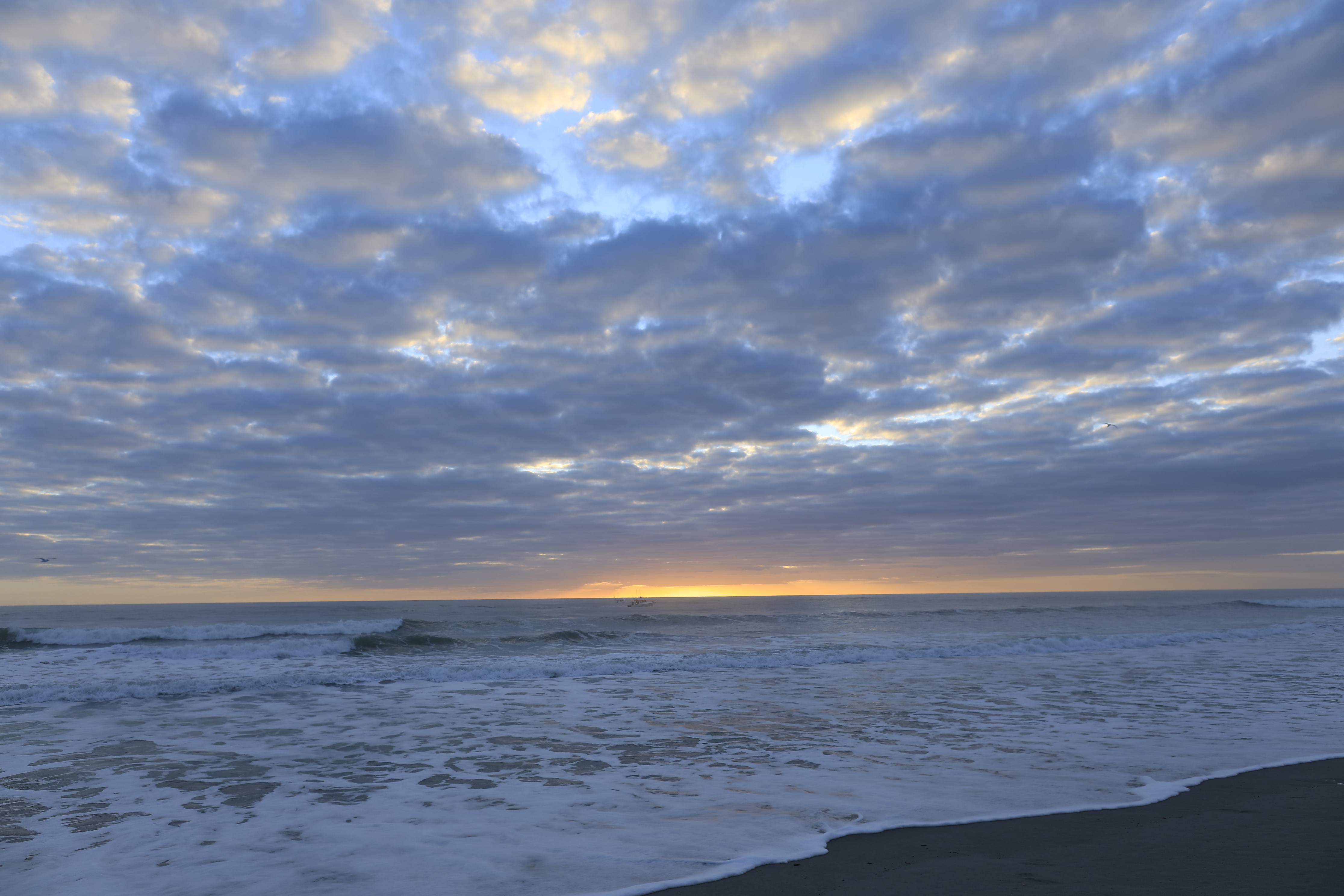
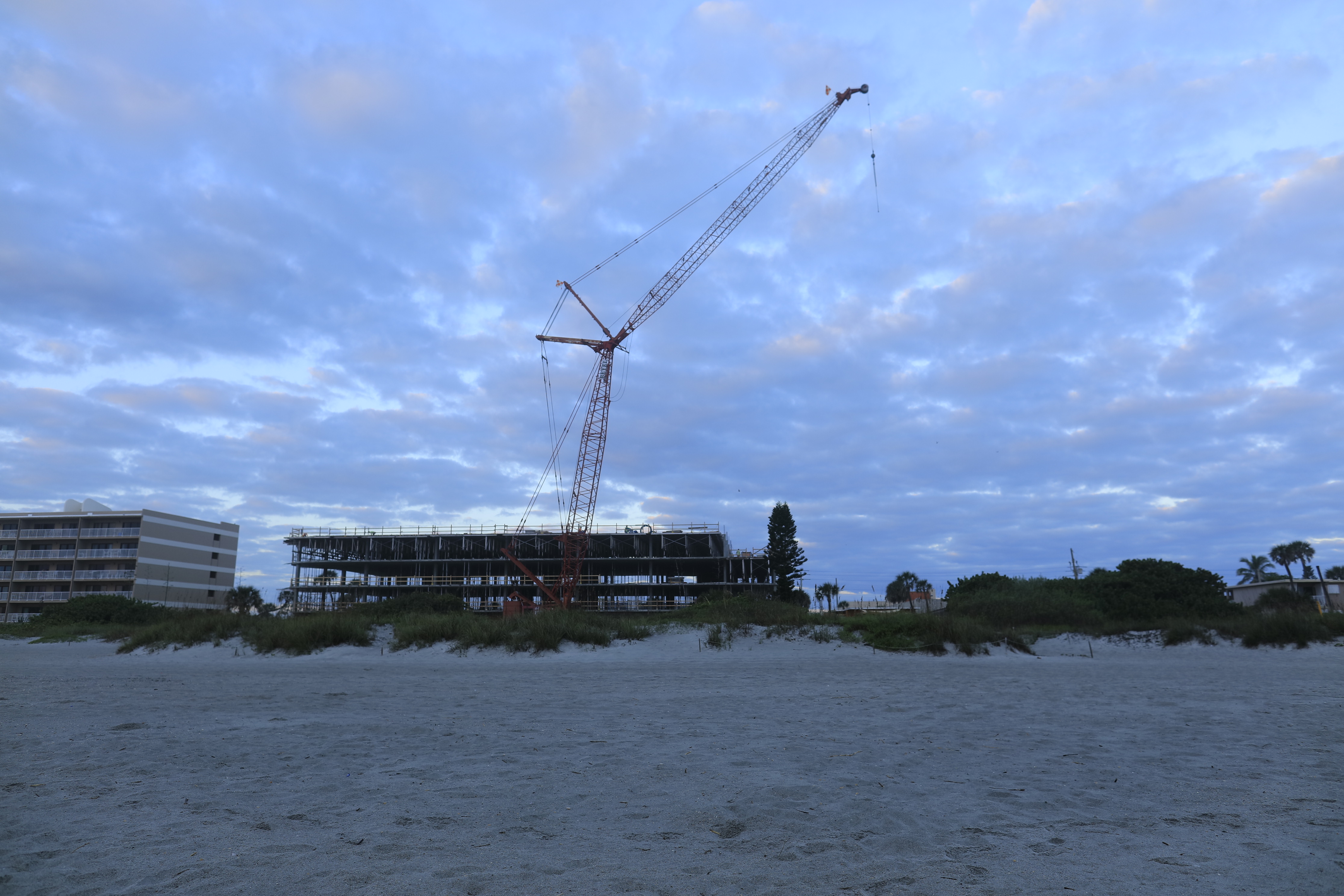
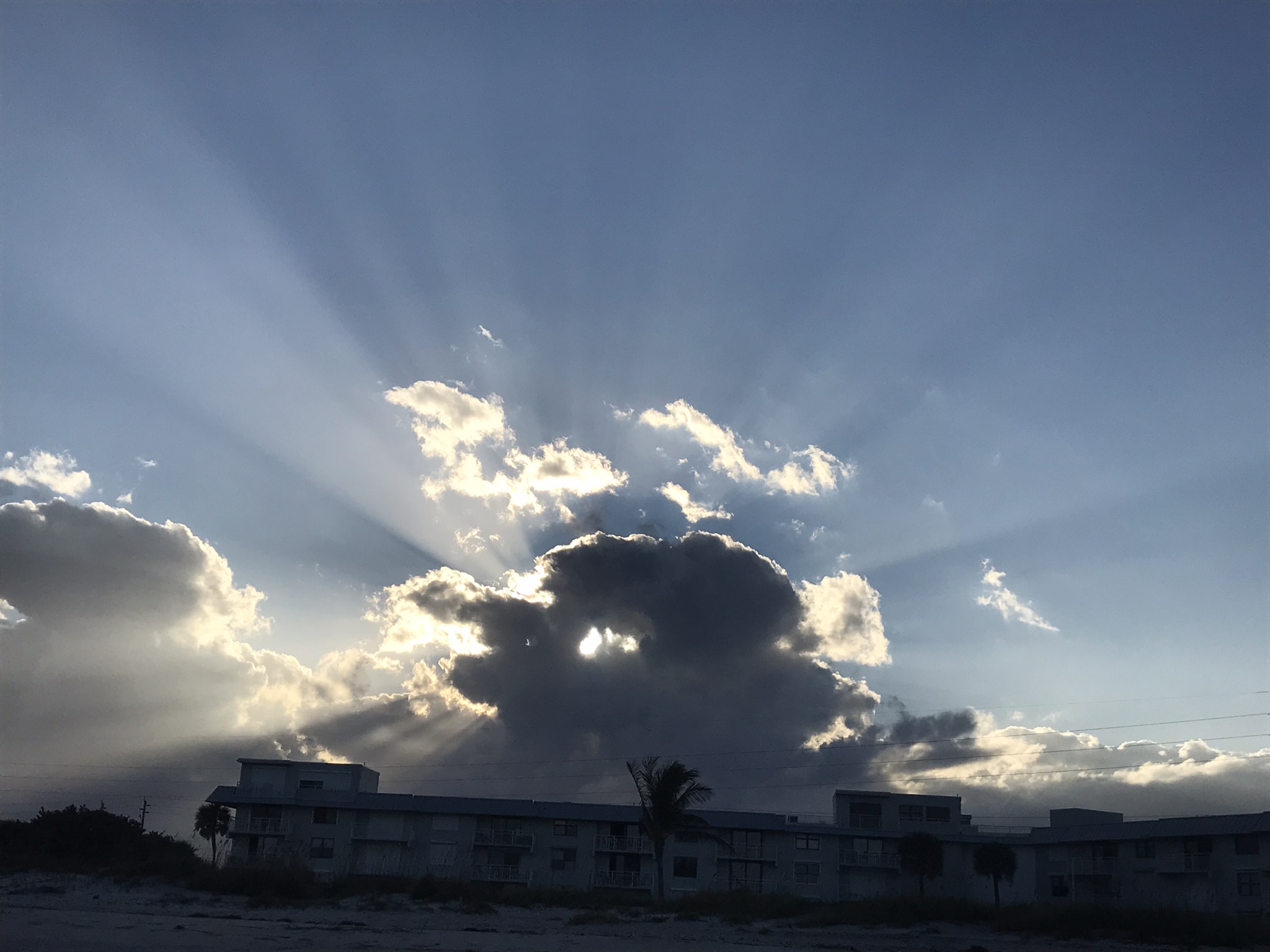
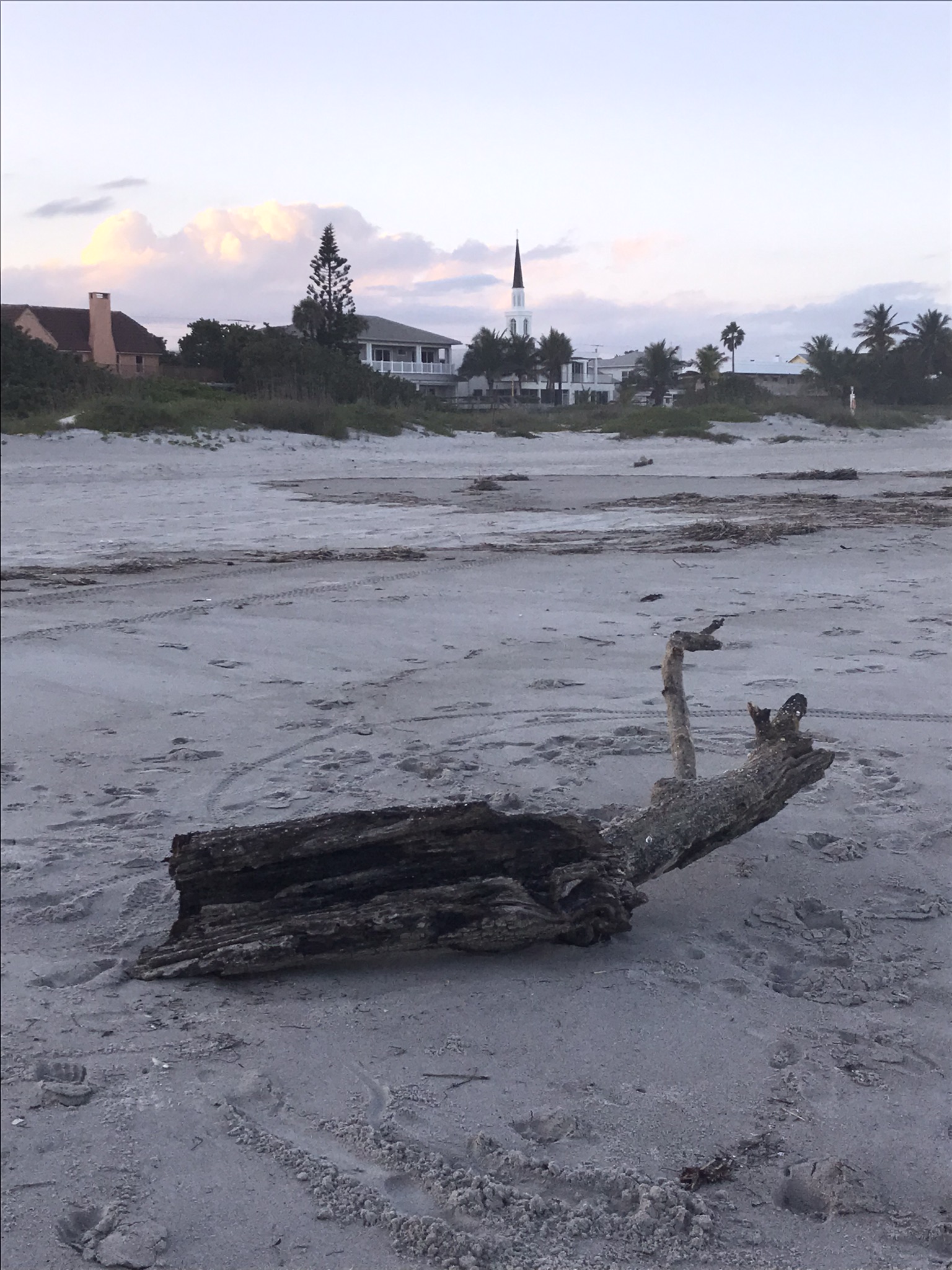
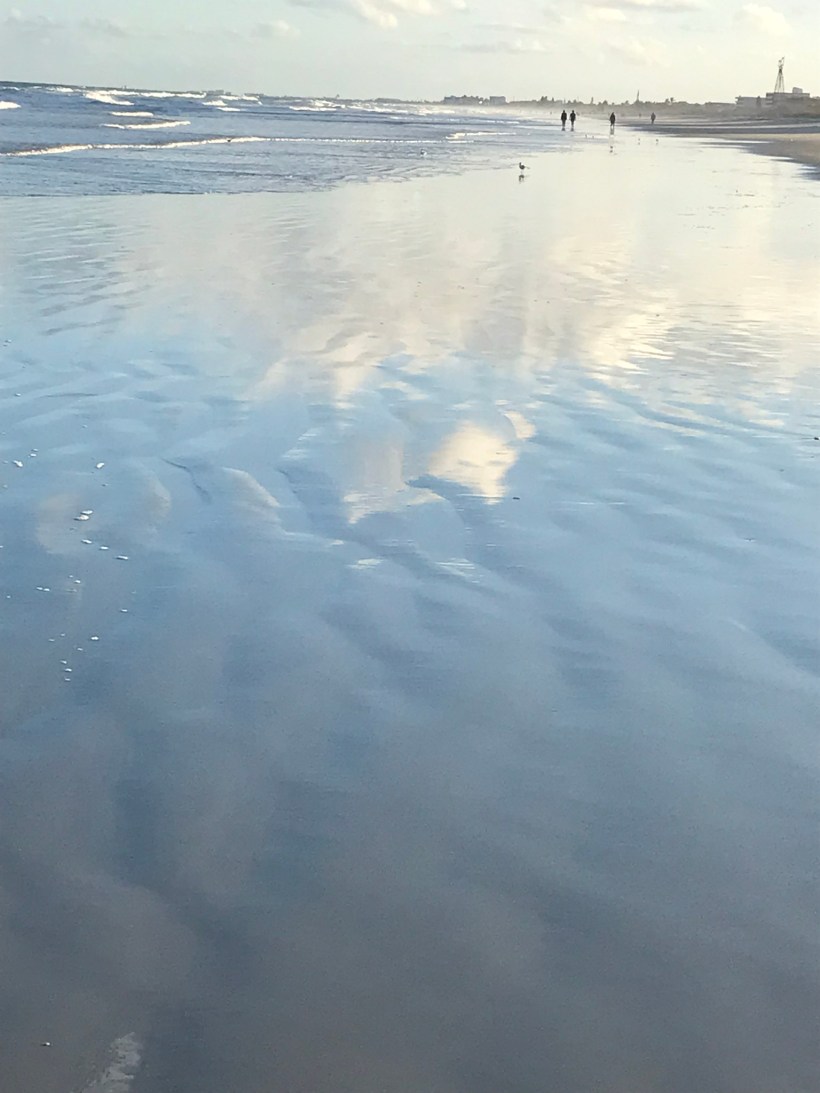
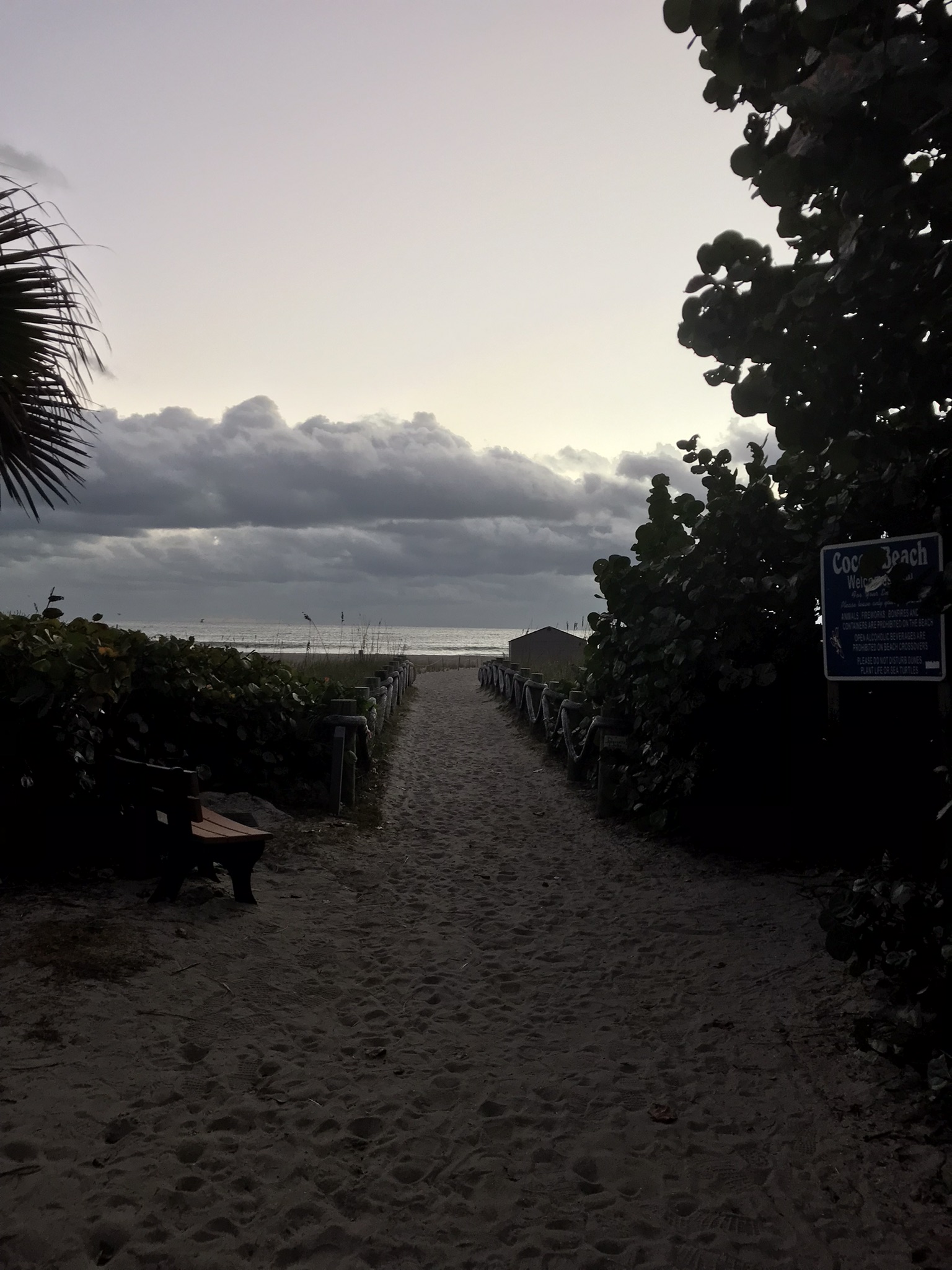
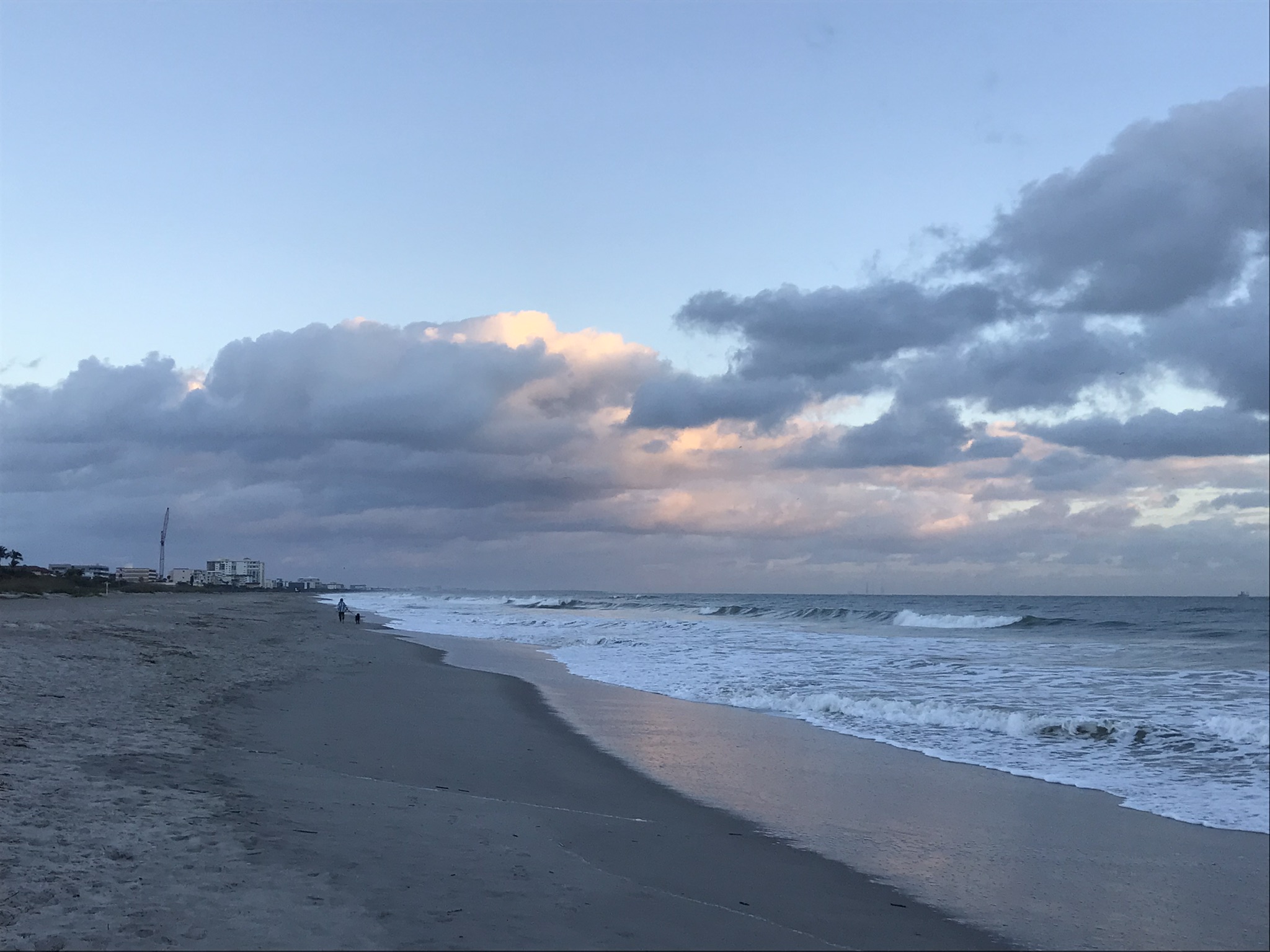
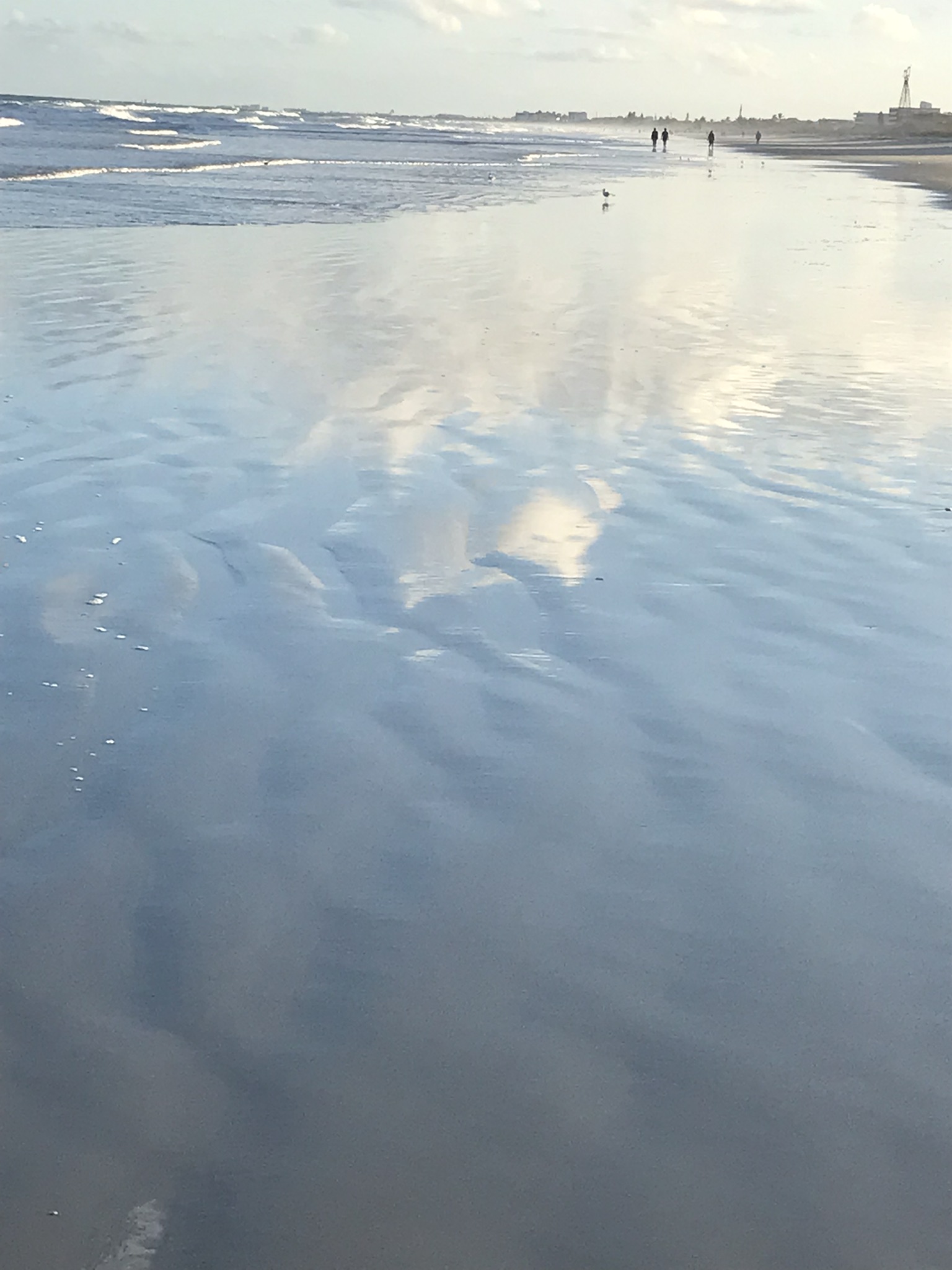
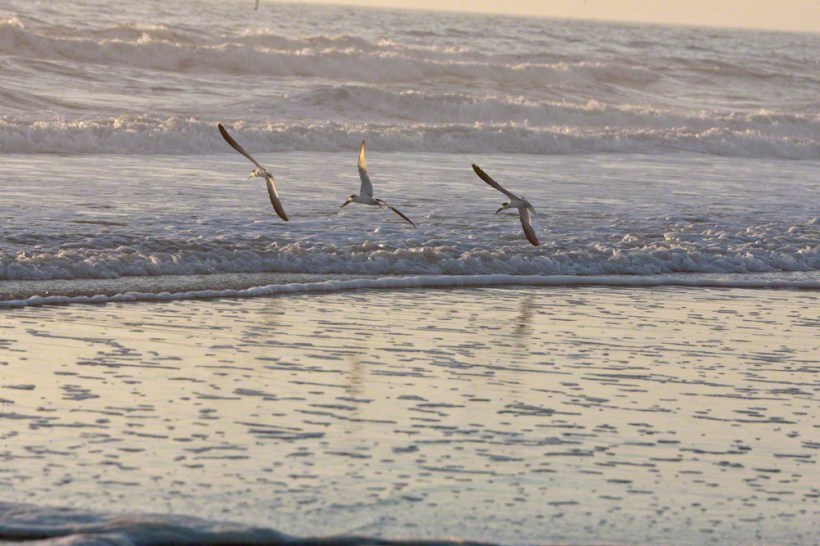
With grandchildren in the Miami Area and a sister in Daytona Beach, Florida was on my mind this morning and memories of this beautiful experience on Cocoa Beach came to mind. After an eventful day touring the NASA launch control center, Pam and I took an evening walk during the golden hour, me with camera in hand.
Full in expectation of catching the passing scene with lots of shot I set to full size jpeg mode using a Sony Alpha 700 dslr with a DT 18-200mm f3.5-6.3 lens. The light was exceptional, so I did not expect much post production work.
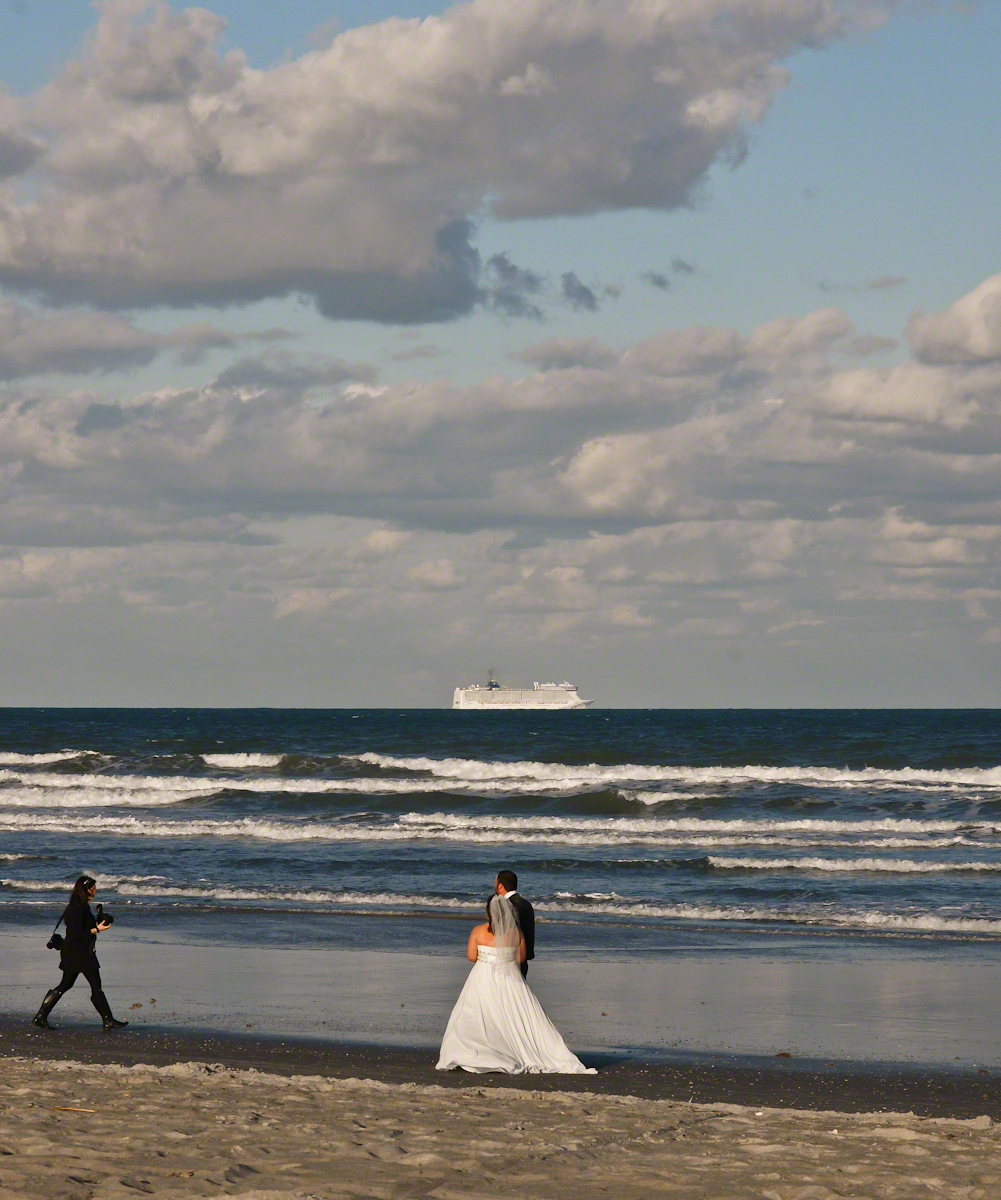
My first impression was of the line of cruise ships heading south from Port Canaveral, the starboard side lit perfectly behind human denizens of the Cocoa Beach shore, in full enjoyment mode. A synergy of the images struck me. I took a few experimental shots then, as we progressed down the beach front this unusual tableau came into view.
Newlyweds on Cocoa Beach give rapt attention to a distant cruise ship, it looks like an elegant child’s toy.
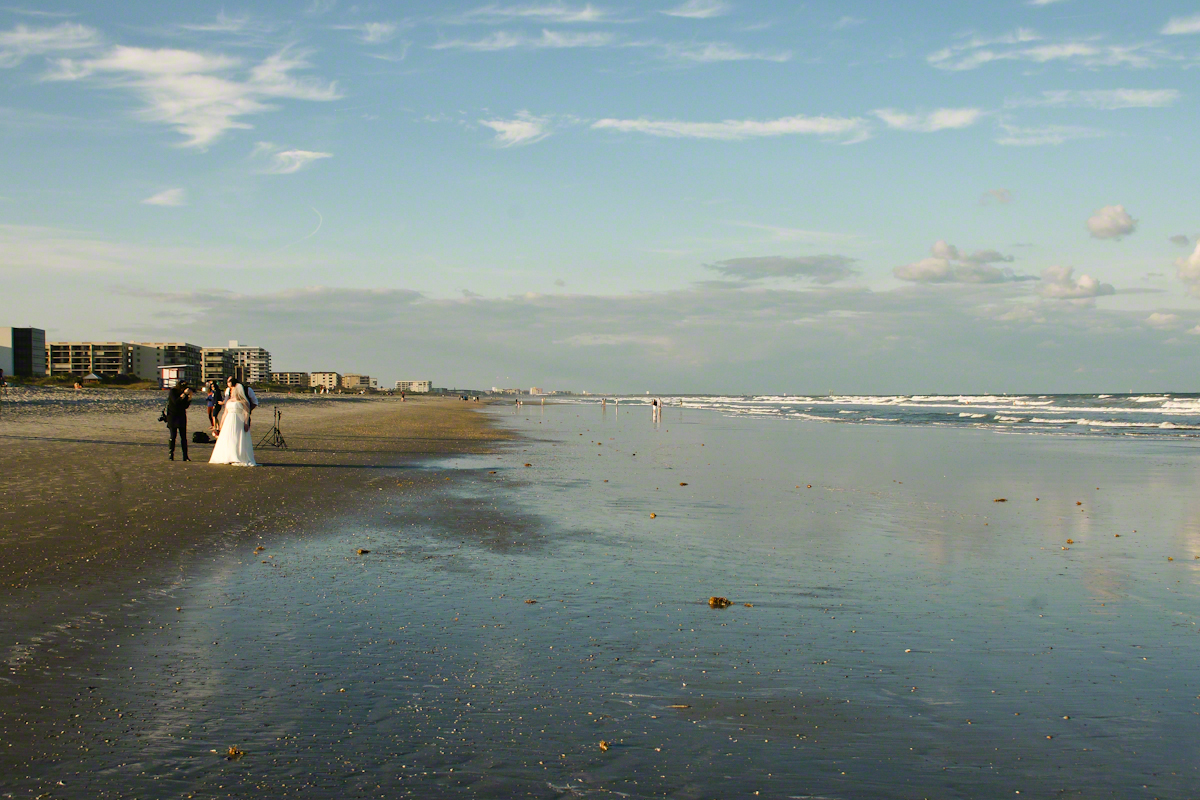
The session proceeded smoothly and professionally, it was a pleasure to watch. I felt no compunction for capturing these private moments on a public beach, the transcendence of the images reflect well on all participants.
Bride and groom pose while photographer composes the shot, her assistant behind.
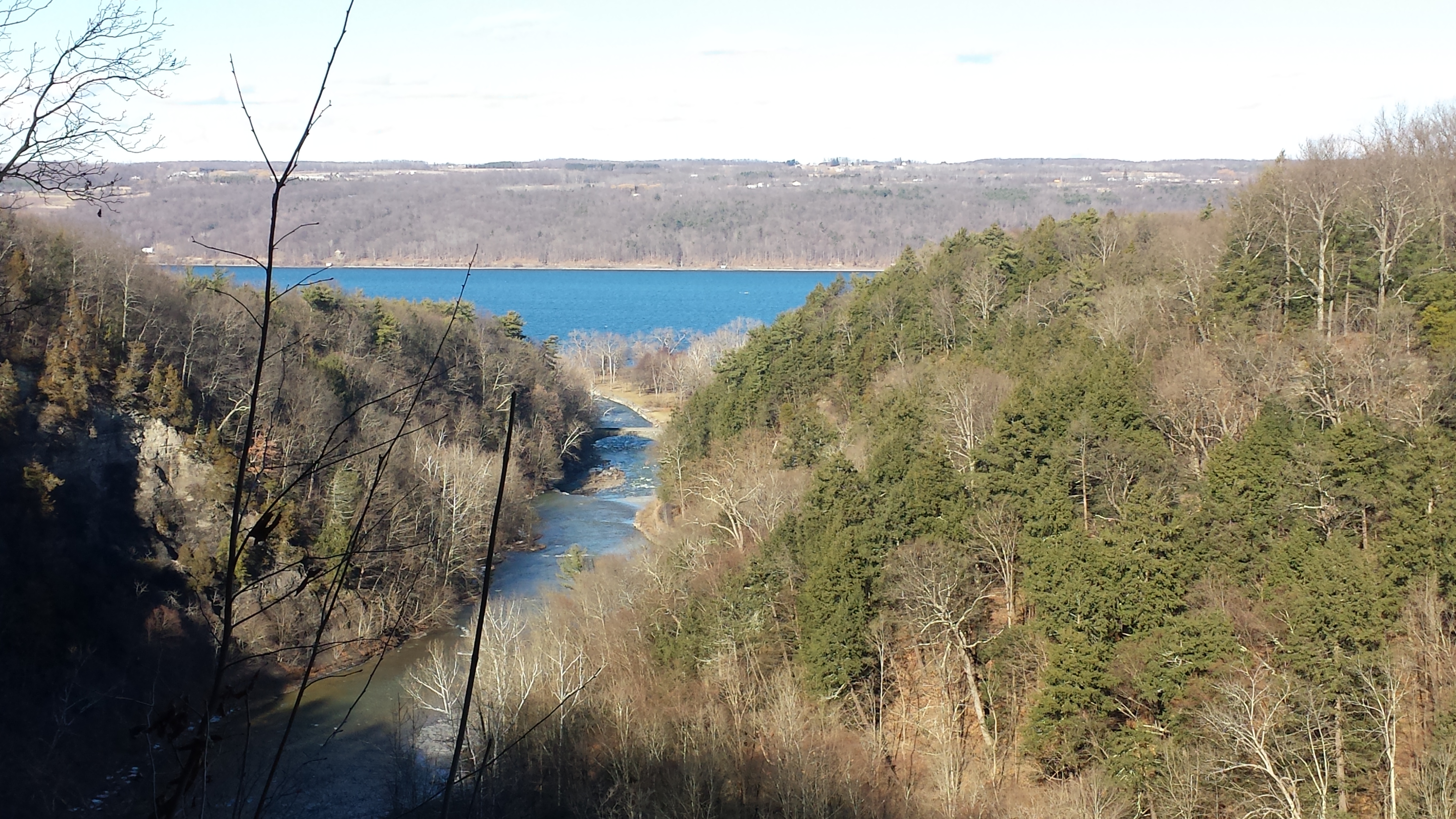
Yesterday afternoon was bright, sunny enough for me to break out of the winter exercise routine for a walk around Taughannock Falls, a New York State Park 7.5 miles from the front door through farmland and small villages with views of Cayuga Lake.
The route around the gorge, following the North and South Rim trails with a side trip to the edge of Cayuga Lake is 3 miles with a modest elevation change of about 500 feet.
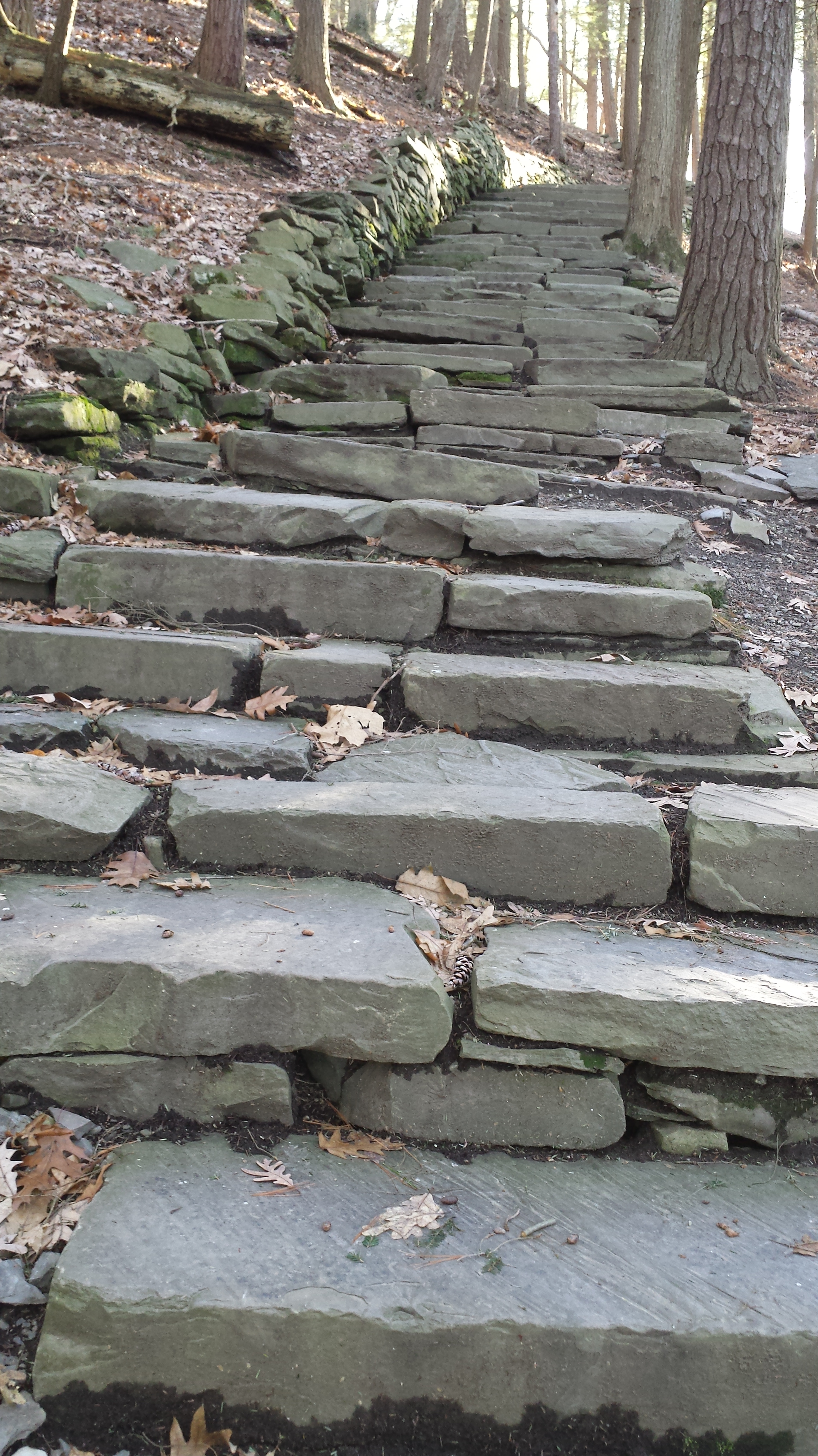
My route began at the top with a cell phone, from the Falls Overlook, there is a gradual slope, until the end where flights of steep stone steps end at the gorge floor. The steps were free of ice and snow.
These photographs are from the cell phone. Here is the lake and a portion of the gorge. Yes, the lake is a dark blue on sunny days and is ice free this year. Another trail follows the gorge floor to below the falls, I opted out of the additional 1.5 miles today in the interest of finishing well before sunset.
Click any photograph to visit my Fine Art version of Taughannock Falls.
I have a few versions of these South Rim Trail stone steps taken at this perfect time of day, the low sun through the trees. Built in the 1930s by Roosevelt’s Civilian Conservation Corp, the steps and the entire trail are a work of art.
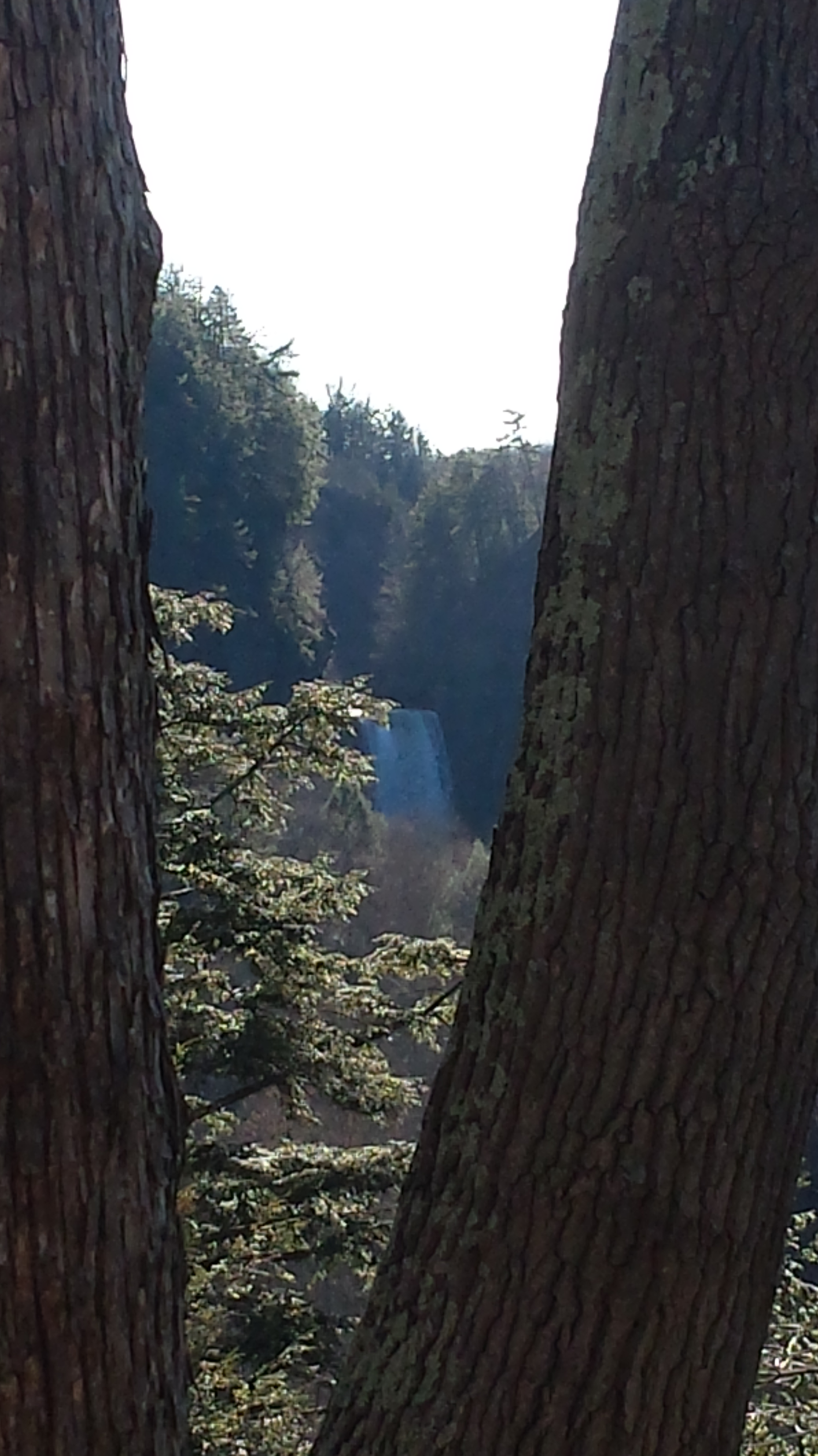
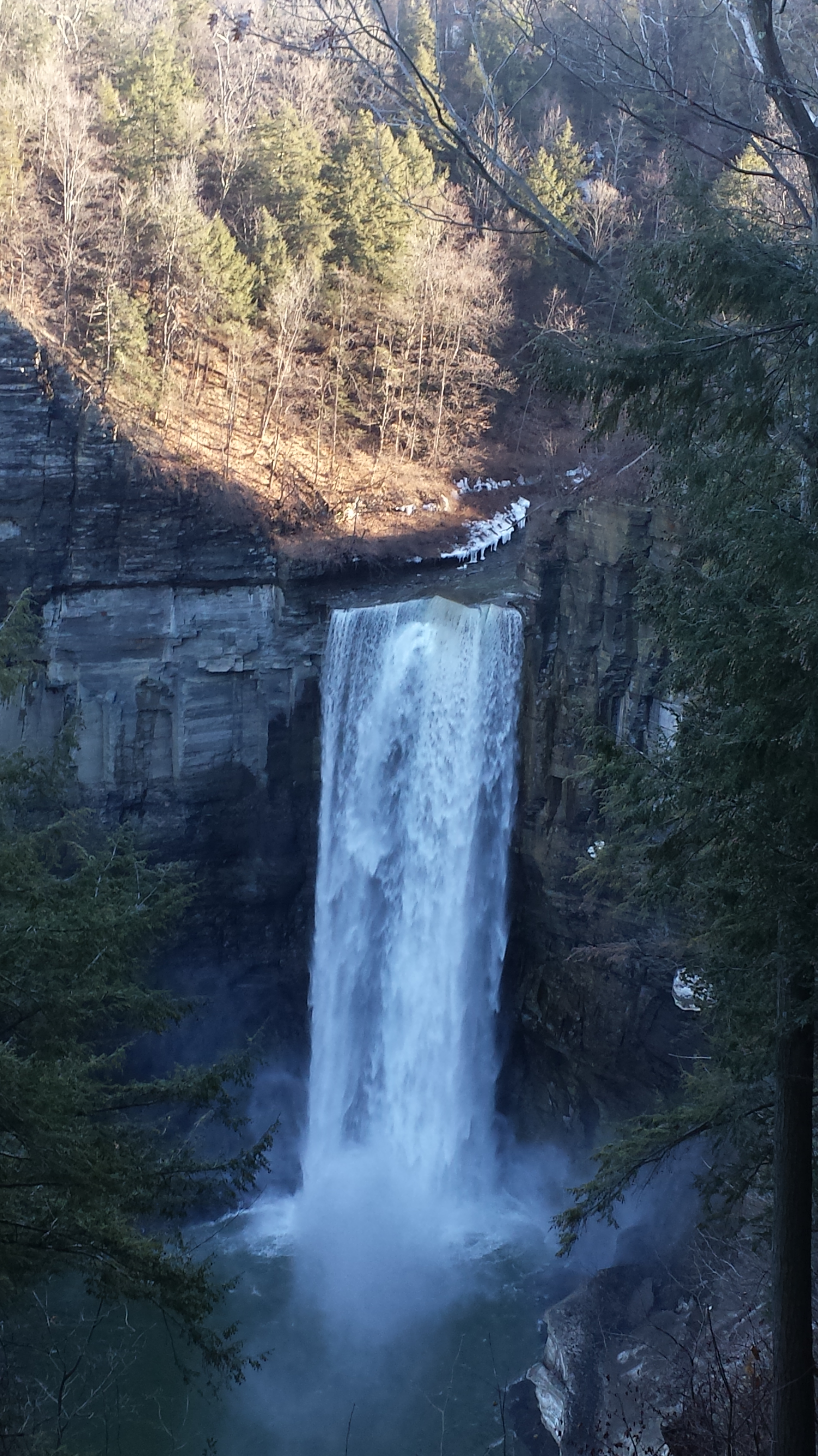
The far view of Taughannock Falls always fascinated me. I’ve never done it justice. There are several view points from the South Rim, overlooking the gorge were it bends to the south with only the upper third of the falls visible. The flow today was photogenic. I used the cell phone zoom to catch the view between the trunks of two trees.
The top of the south rim was the only ice. It is there through April some years. Here is the closest, full view of Taughannock Falls from the North Rim. It is the same view you will find in my Fine Art version of the falls.
And a cell phone video of the falls for the full effect.
Enjoy!!
Copyright 2022 Michael Stephen Wills All Rights Reserved
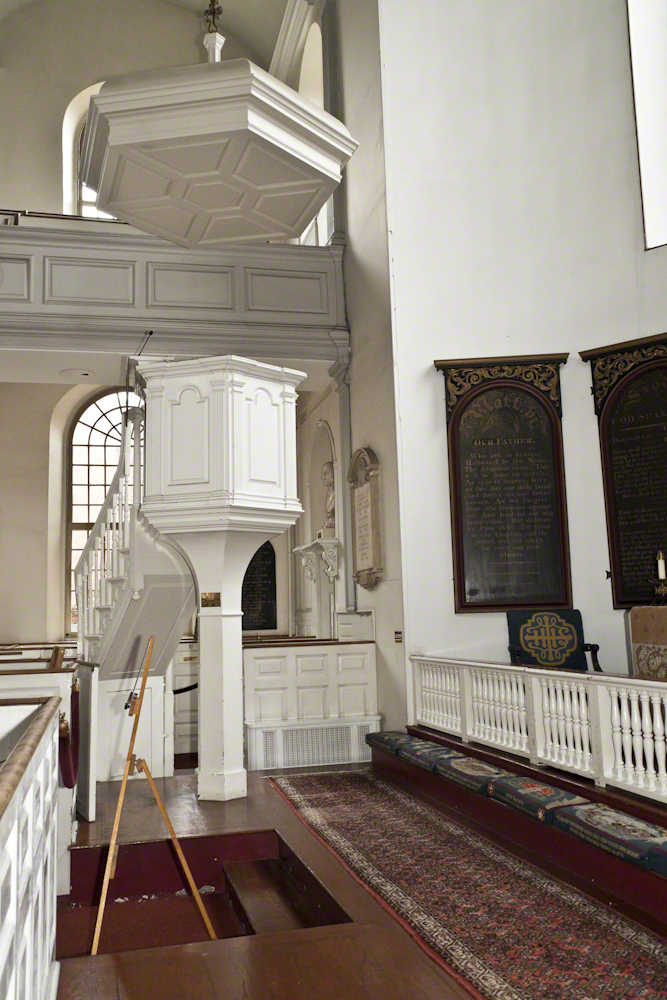
A luminous white pulpit rising from an elegant beam, as of light, graces Old North Church altar. In 1775, the Tory church minister preached from this pulpit in support of the English King. The floor space is filled not with pews; but boxes, each was the property of the occupants to furnish and decorate to taste. Today, each box has a brass plate naming the former owners.
As with sports stadium box seats today, these boxes provided the owners access to church services. Just before the pulpit is he box awarded to wealthy merchants for essential contributions to Christ Church, the formal name of the church and congregation. Today, there is a more direct sports connection: lanterns were lit in the tower for the Boston Red Socks 2004 World Series win.
Click any photograph to access my Online Fine Art Gallery
Pulpit of Old North Church, Boston
A bit after 10 pm on April 17, 1775 two men entered the church from the front door, pictured here under the arch. The church sexton Robert John Newman and Captain John Pulling carried two simple lanterns of glass and iron coated with tin. A third man, Thomas Bernard, stood watch because Boston was occupied by British “Regular” troops who patrolled the streets.
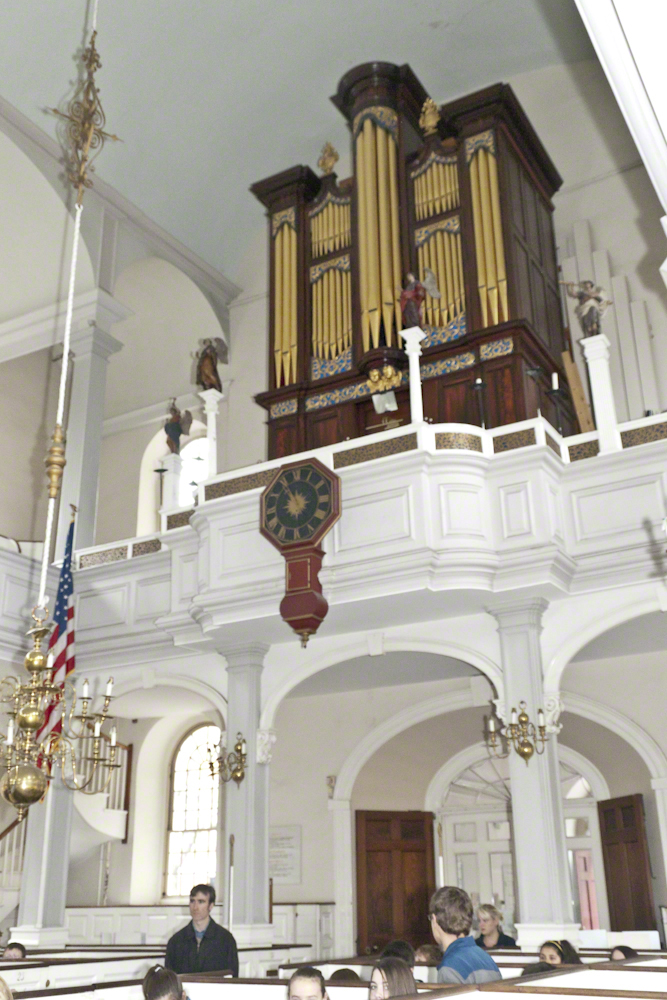
Organ above the Entrance to Old North Church, Boston
The lanterns beamed from the northwest side for but a minute, enough to serve the purpose of a backup signal to patriots across the Charles River in case Paul Revere and a second rider, William Dawes, were apprehended or killed before they could deliver the British attack plans.
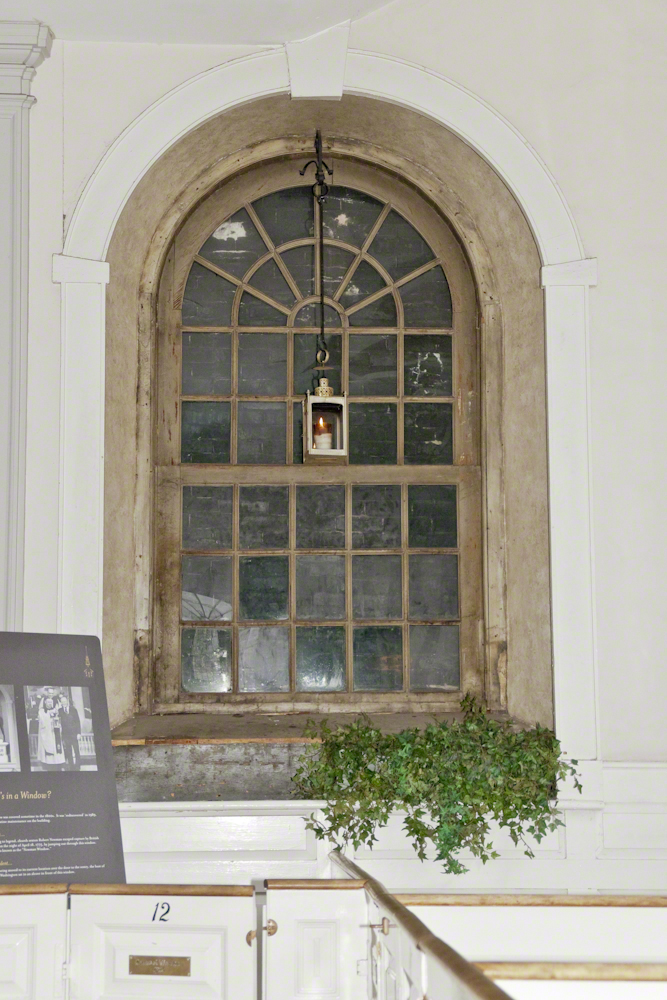
The British patrols were alert and, in no time, they were breaking down this same front door. Robert Newman made his escape from this window. The frame was bricked over and only discovered in the twentieth century. It was celebrated during the USA bicentennial by President Ford, who presented the replica lantern that now hangs with the candle lit.
Newman Window and Freedom Lantern
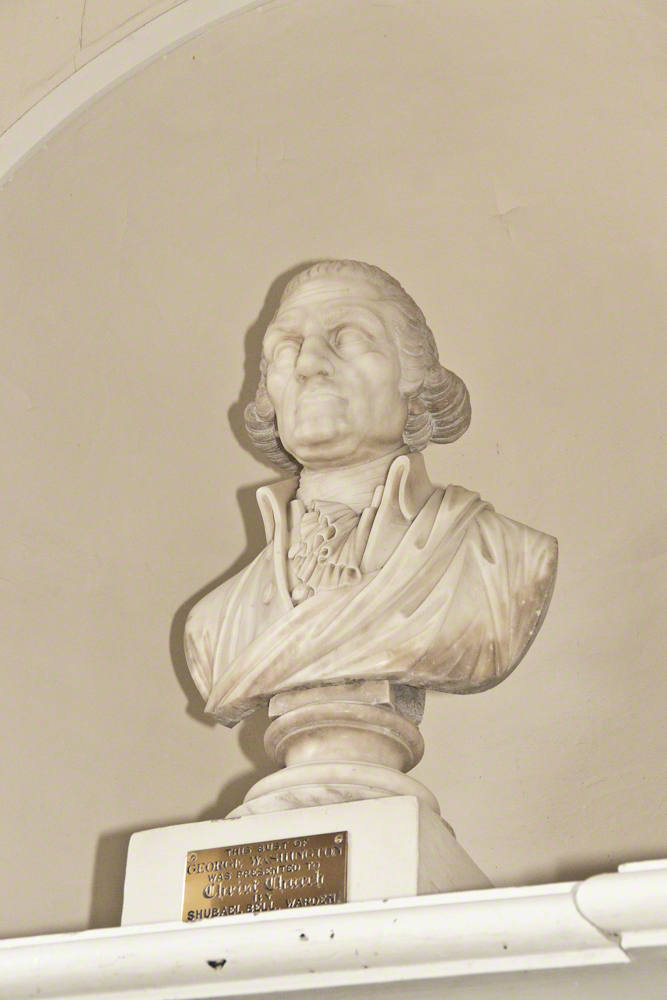
If you look closely, this bust of George Washington is visible in the Old North Pulpit photograph in a niche to the right rear. It is the oldest image of our first president. The Marquis de Lafayette is reported to have said this is the best likeness of Washington he had ever seen.
George Washington
Copyright 2022 Michael Stephen Wills All Rights Reserved
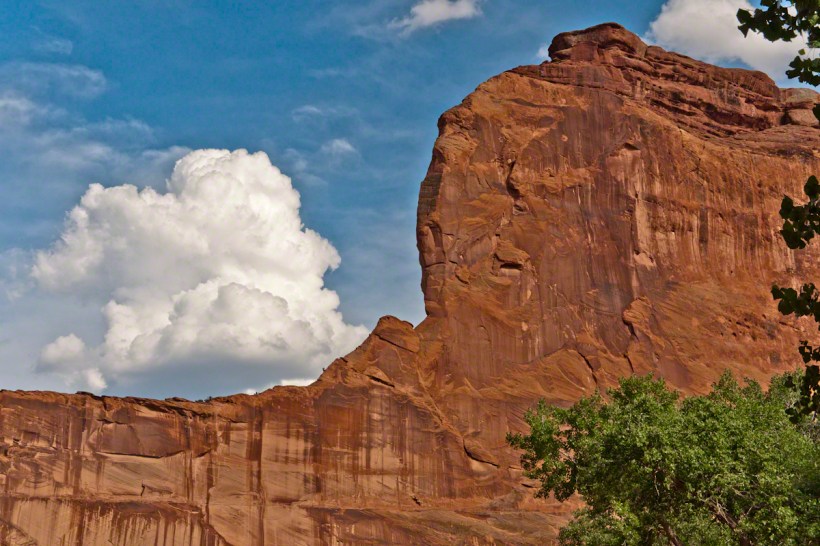
The Whitehouse Ruin of Canyon de Chelly is just visible at left in the far cliff, in the notch of the near cliff. The ruin trail is visible on the canyon floor. Notice the road following the canyon and the plantings with house on the right.
The landscapes I capture, like the face of a missing friend, fade gently from memory. My piece “Moon Fin Canyon de Chelly” became a mysterious vision. I remembered the context, the canyon topology was lost until I constructed the panorama, above, from three shots taken one evening, July 2008, from a cliff near the White House Overlook. Five years after my visit with Sean Wills, Pam and I returned to Canyon de Chelly to walk the same path.
At that time, a 50 mm lens was my widest angle, so I would take multiple images in sequence and use Photoshop later to construct a panorama. This past Sunday afternoon I spent stitching together my work from 2008. In doing so I see “my fin”, in the center, bordered by the canyon road, is attached to the White House Ruin cliff via a thin ridge.
During that session a photogenic thunderhead, lit by the evening, hovered behind the fin as the gibbous moon did that long ago evening.
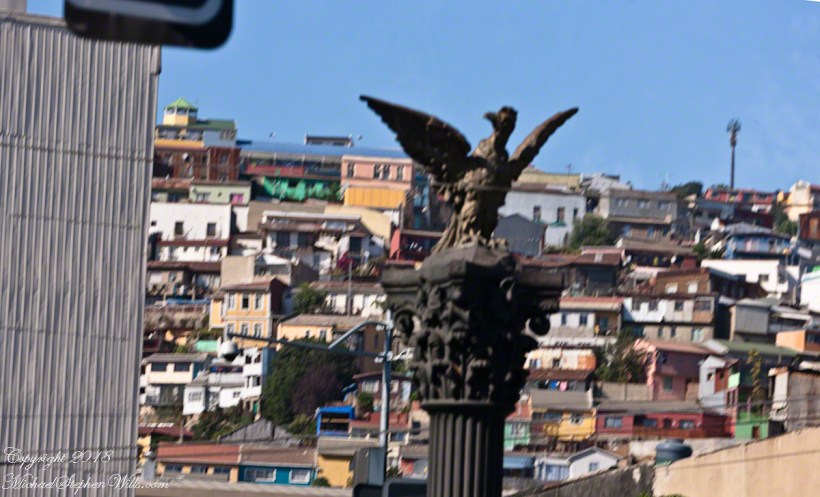
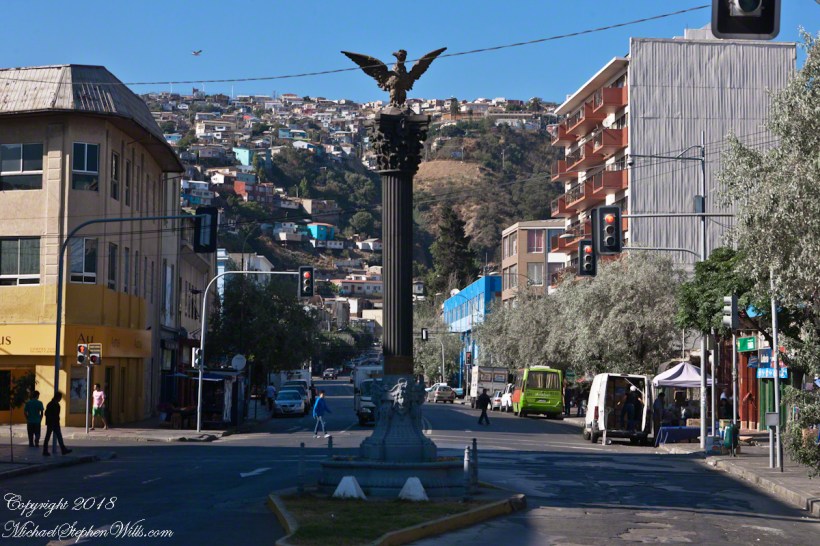
Trundled along within our bubble, the Mercedes tour bus proceeded up Avenue Montt when Ricardo pointed out this statue for ridicule. A depiction of the Chilean national bird, the Condor, porteños derisively call it “The Chicken,” and in truth the wingspan is undersized. From the vantage of the above photograph, the statue form does capture an impression of soaring among the hills of Valparaiso. Keep in mind, beyond those hills is Aconcagua, the highest mountain of the western hemisphere, home to Condors.
A reason for writing multiple Varparaiso “connection” posts is to better understand the jumbled impressions from that day. In a previous post I coined the term Varparasians for natives of the city. I found in researching this post the residents, as for Buenos Aires, call themselves porteños (people of the port). This cast iron statue speaks to the contributions of French immigrants to the city and nation.
Gift of the French Colony for the Centennial of Chile – Valparaíso, 1810 – 1910.
Here the view is south towards (what I believe is) Cerro Florida (Florida Hill). France Avenue continues, beyond the monument, following a steep and winding path up the hills, at the crest intersecting with German Avenue. Adjacent, on the right, is Park Italia where we’ll visit in part VI. Above a cast iron basin, at each corner of the commemorative column base is a female mask, above them a gold band inscribed (from the) “The French of Valparaiso” with 1810 – 1910 to denote the centennial. A condor with outspread wings surmounts the column.
The artist, Nicanor Plaza, born in Santiago, Chile was living in Florence, Italy at the time of this commission. He was a natural choice for the commission. Trained in Chile and Paris, Plaza taught for the Academy of Fine Arts of Santiago. It is of cast iron, produced by the French company Val Osne, an art foundry dating back to 1835. The owner, Jean Pierre Andre Victor, invented a cast iron ornamental technique originally used to produce street furniture.
From 1854 to 1895 immigration from France burgeoned, from a country total of 1,654 to 8,266. This cohort is credited with developing the vineyards of the Central Valley, still famous today. The Chilean president Augusto Pinochet descended on his father’s side from an 18th-century French Breton immigrant from Lamballe and his mother was a descendant from 17th century immigrants, partially Basque. Pinochet’s legacy can only be attributed to himself and the ruling Junta. What is of concern is (1) Pinochet was protected against prosecution throughout his life. (2) The same people who protected him still hold power. A case in point is the Esmeralda, still in service.
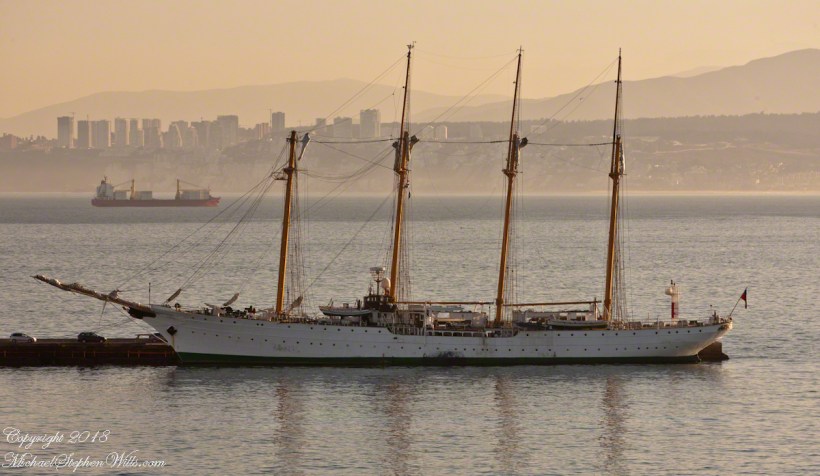
The Naval Training Vessel Esmeralda
I took this photograph at dawn from our stateroom balcony, it is the Esmeralda, a four-masted top sail schooner, from Spain, christened May 12, 1953. From 1973 to 1980 it was a floating torture chamber where up to 100 persons were subjected to hideous treatment by the Pinochet regime. Protests erupt wherever it docks in a foreign port yet it remains in service. A relatively small part of the puzzle, yet it serves as an unacknowledged monument to the failure of Chile’s ruling elite to come to terms with the recent past.
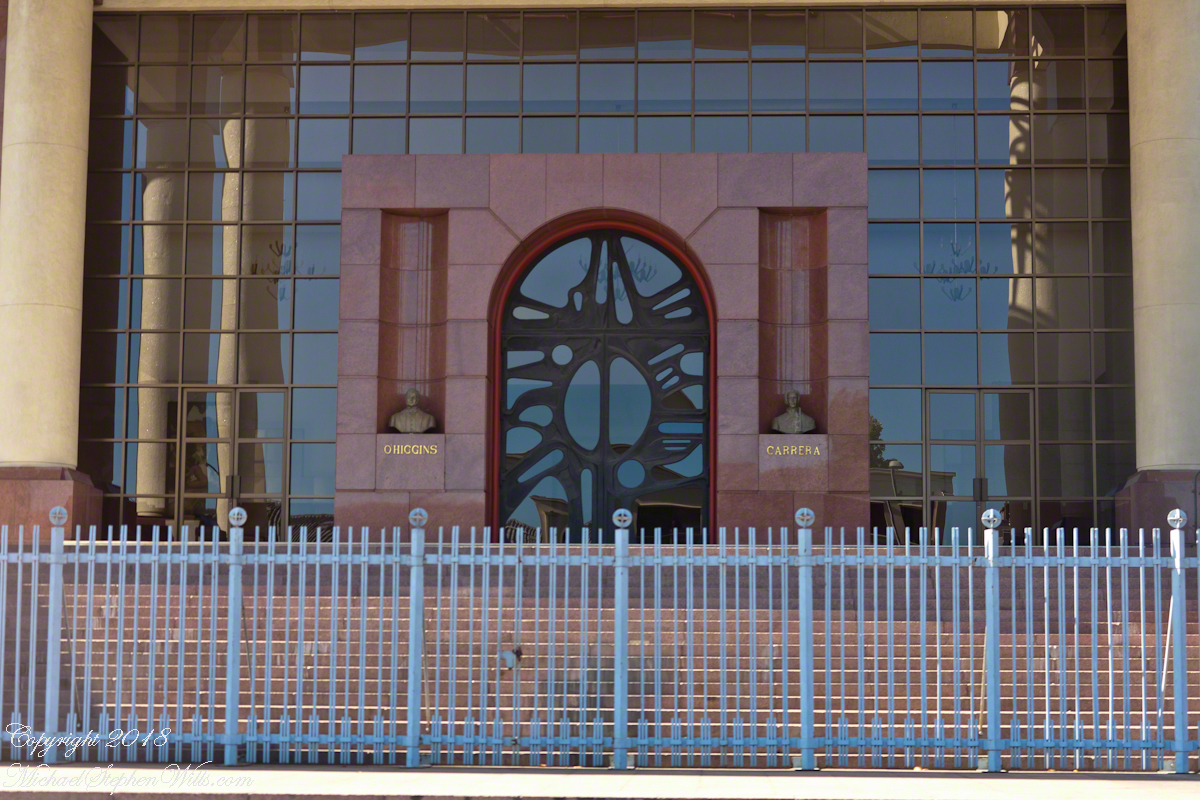
“Valparaiso Connections III” brought us to Pedro Montt Avenue and the building of this imposing façade, Congreso Nacional de Chile (National Congress of Chile). The very fact it is in Valparaiso is a recollection of the former National Congress, disbanded by the ruling Junta on September 13, 1973. During the final years the Pinochet dictatorship chose Valparaiso for the site of a new congress building. The former National Congress building still stands in Santiago, now housing the offices of both houses of congress.
I am fascinated the façade is shared by two founding fathers of Chile, Bernardo O’Higgins and José Miguel Carrera. O’Higgins father never married his mother (in other words, Bernardo was a bastard). Cared for by his mother’s privileged family, he used his mother’s family name until the death of his father. Carrera, was also born of privilege, the acknowledge son of his father who attended the best schools, well positioned to lead the movement for Chilean independence. Benefactors looked after O’Higgins, they sent the seventeen year old to Europe to finish his education.
Click either photograph to visit my Fine Art Gallery. Enjoy!!
In the chaos of war, in spite of ill-health and lack of military training, O’Higgins out performed Carrera as an officer through reckless bravery; surviving, he became an admired military leader through this example and ultimate victories. Carrera resented being overtaken (by a bastard), did not respect O’Higgins leadership and the two feuded. O’Higgins became the first head of the independent Chile while Carrera gathered a force. Exiled in Paraguay, Carrera marched across the intervening wastes battling indigenous forces. Eventually captured by those loyal to O’Higgins, Carrera suffered a mock trial and execution.
All five of Carrera’s legitimate offspring married and prospered, today his descendants number in the hundreds, being the majority of Chile’s ruling class. Today, the followers of Carrera (Carreristas) fight for his recognition against the O’Higginistas, who they despise. The balance is on display on the National Congress façade on Pedro Montt Avenue. The building is next to Plaza O’Higgins.
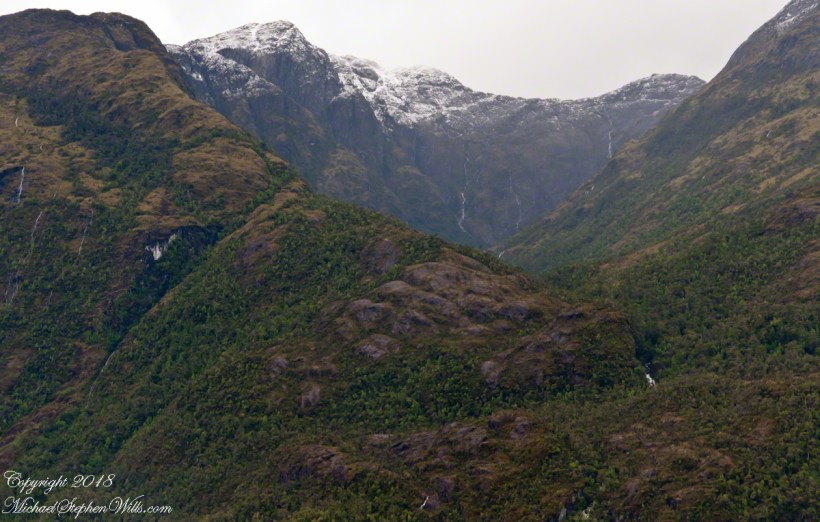
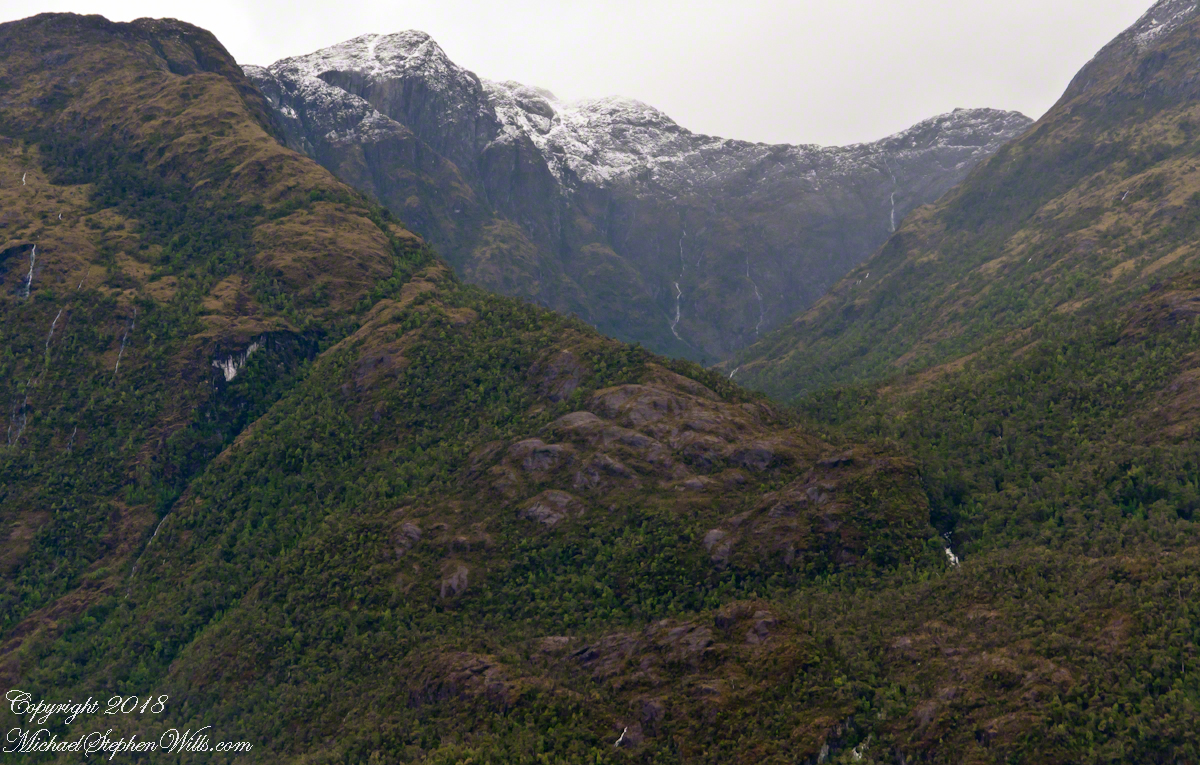
Measured by acreage, O’Higgins is far ahead of Carrera. The following photograph, from my posting “A Far Country VII: View of Tempanos Fjord” is from within Bernardo O’Higgins National Park, the largest protected land in Chile.
A large lake in Patagonia is named after General Carrera.
Copyright 2018 All Rights Reserved Michael Stephen Wills