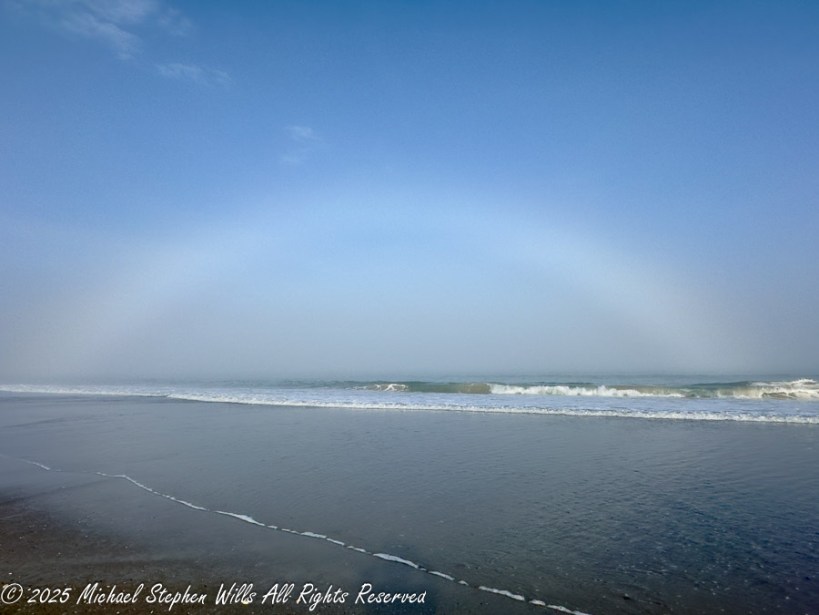
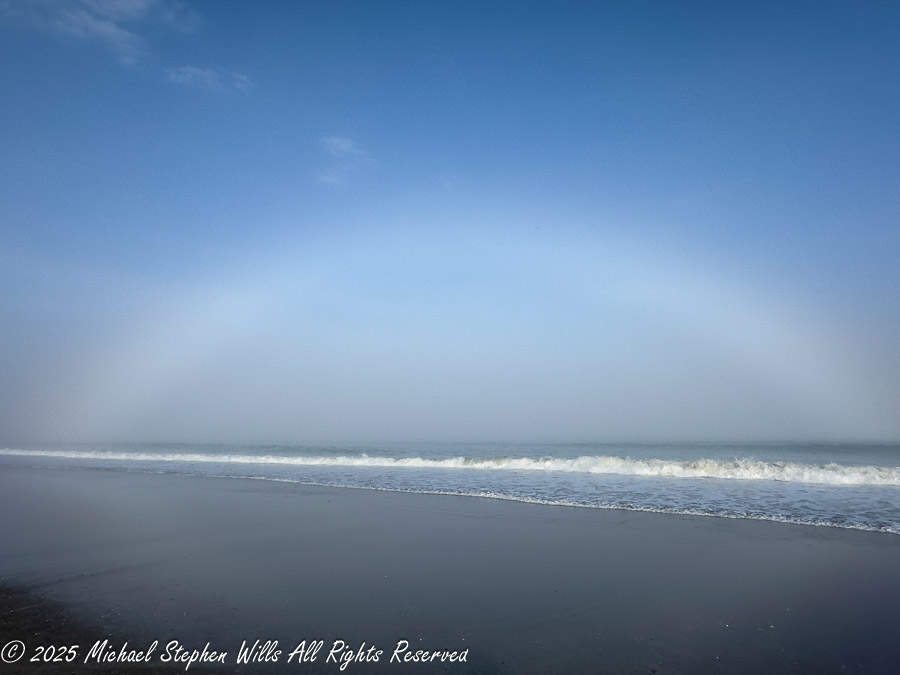
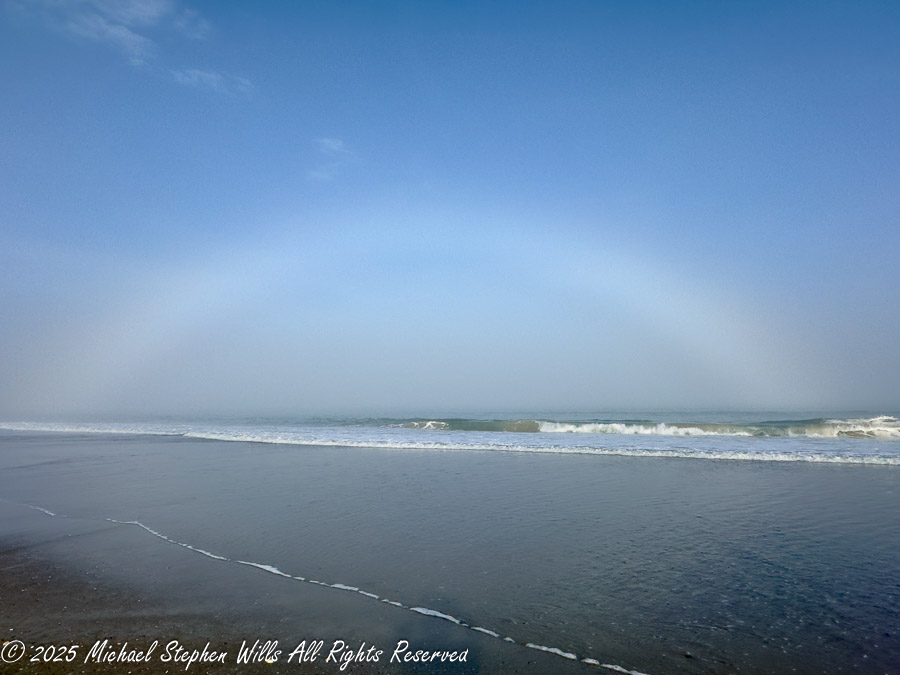
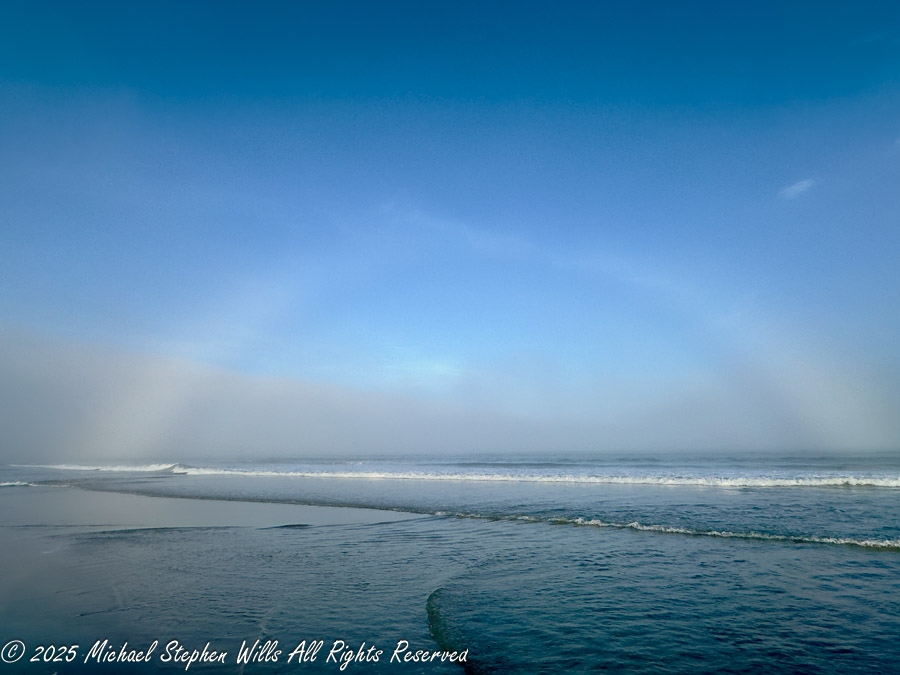
I had a haunting experience at Cocoa Beach, witnessing a rare fogbow—a ghostly arc formed by fine mist—evoking emotions and reflections on nature’s beauty.
The fog haunted Cocoa Beach for days, softening the edges of the afternoon. I had been walking along Cocoa Beach, feeling the cool ocean breeze on my face, when I noticed a change in the light. It was a little after four, the sun drifting lower in the western sky, its warmth fading into a hazy glow. The air smelled of salt and mist, and waves lapped gently at the shore, their rhythm unbroken by the deepening fog.
And then I saw it.
A pale arc stretched across the horizon, a ghost of a rainbow bending above the waves. At first, I wondered if my eyes were playing tricks on me—where were the usual bright bands of red, orange, and violet? But no, the arc was real, a fogbow, forming where sunlight met the fine sea mist. Unlike the rainbows that appear after summer storms, this one was almost entirely white, as if the ocean had conjured it from air and silence.
Sailors once whispered of such things—a white rainbow at sea, a sign of hidden land or wandering souls. Some believed it to be a bridge between realms, a fleeting passage where the living and the lost might momentarily brush against one another. Others saw it as an omen, a spectral warning of treacherous fog ahead. I wondered what the mariners of old might have thought, standing at the bow of a ship, watching a pale arc rise from the mist, its edges dissolving like breath against glass.
I stood still, watching, as the science of the moment unfolded before me. Unlike traditional rainbows, which form when light bends through large raindrops, fogbows are born from infinitesimally smaller droplets, often less than 0.1 millimeters in diameter. Their size diffuses the light, scattering it so finely that the colors blend together into a spectral whisper rather than a vibrant shout. The physics of it fascinated me—this was diffraction in action, nature bending light in a way that rendered it nearly colorless.
The effect was surreal. The fogbow arched over the breaking waves like something out of a dream, a halo of sea and sky, momentary yet timeless. It seemed to pulse in the shifting mist, visible one moment, fading the next, as if deciding whether to reveal itself fully or slip back into the fog’s embrace.
For several minutes, I just stood there, taking it in. The world felt different inside that mist, quieter, more reflective. The fog dampened the usual sounds of the beach—the calls of shorebirds, the laughter of distant walkers—leaving only the hush of the waves and the distant hum of the ocean’s breath.
I knew that fogbows were rare, requiring just the right balance of thin fog, moisture, and a low-angled sun. I was lucky to be in the right place at the right time, a witness to something subtle yet profound.
And just as silently as it had appeared, the fogbow began to dissolve. The mist thickened, swallowing its arc, the sky shifting back to its usual muted gray. But the memory of it lingered—a white rainbow over the sea, ephemeral and elusive, like a secret the ocean had briefly chosen to share.
Enter your email to receive notification of future postings. I will not sell or share your email address.
Copyright 2024 All Rights Reserved Michael Stephen Wills
As I stood within the hallowed confines of Saint Fin Barre’s Cathedral in Cork City, Ireland, I found myself drawn to the intricate artistry that tells the story of faith, resilience, and devotion. The figures and symbols within this magnificent edifice bring to life the history of Saint Fin Barre as well as the broader narrative of Christian tradition and its enduring influence on the region.
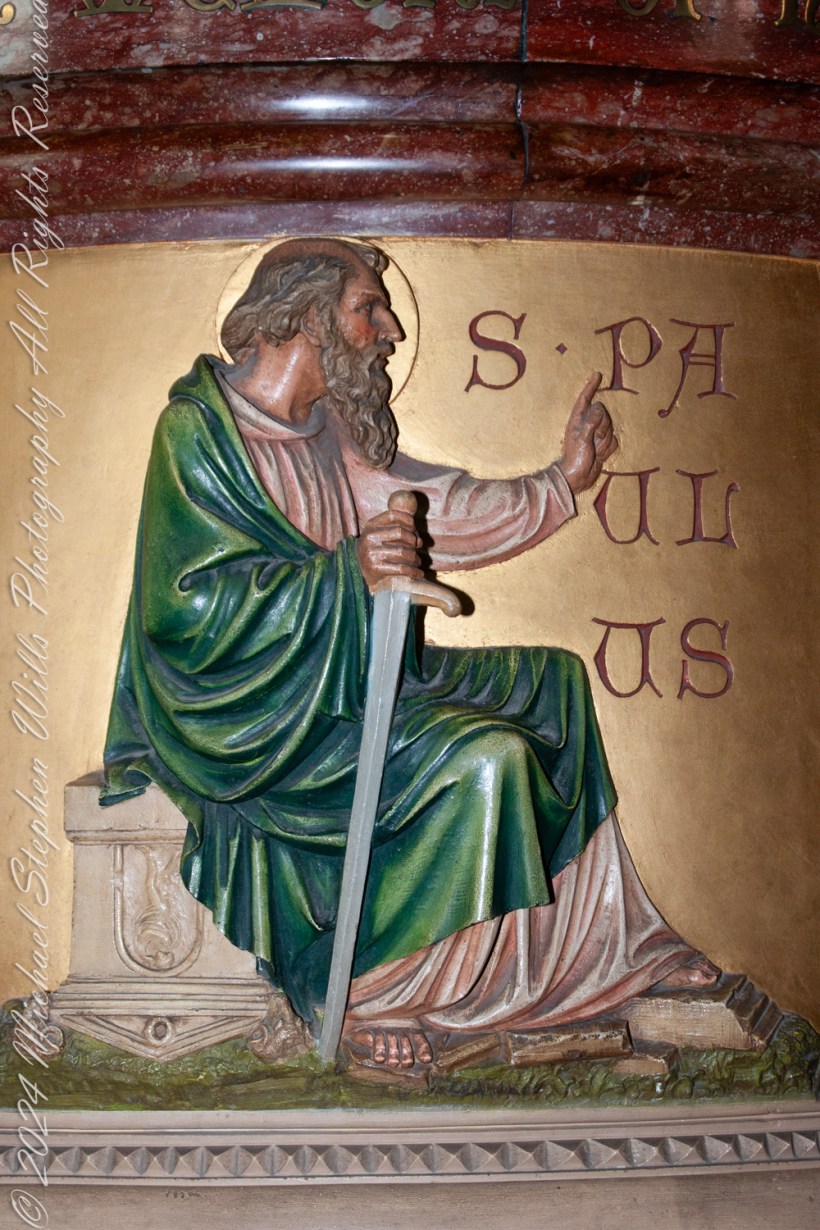
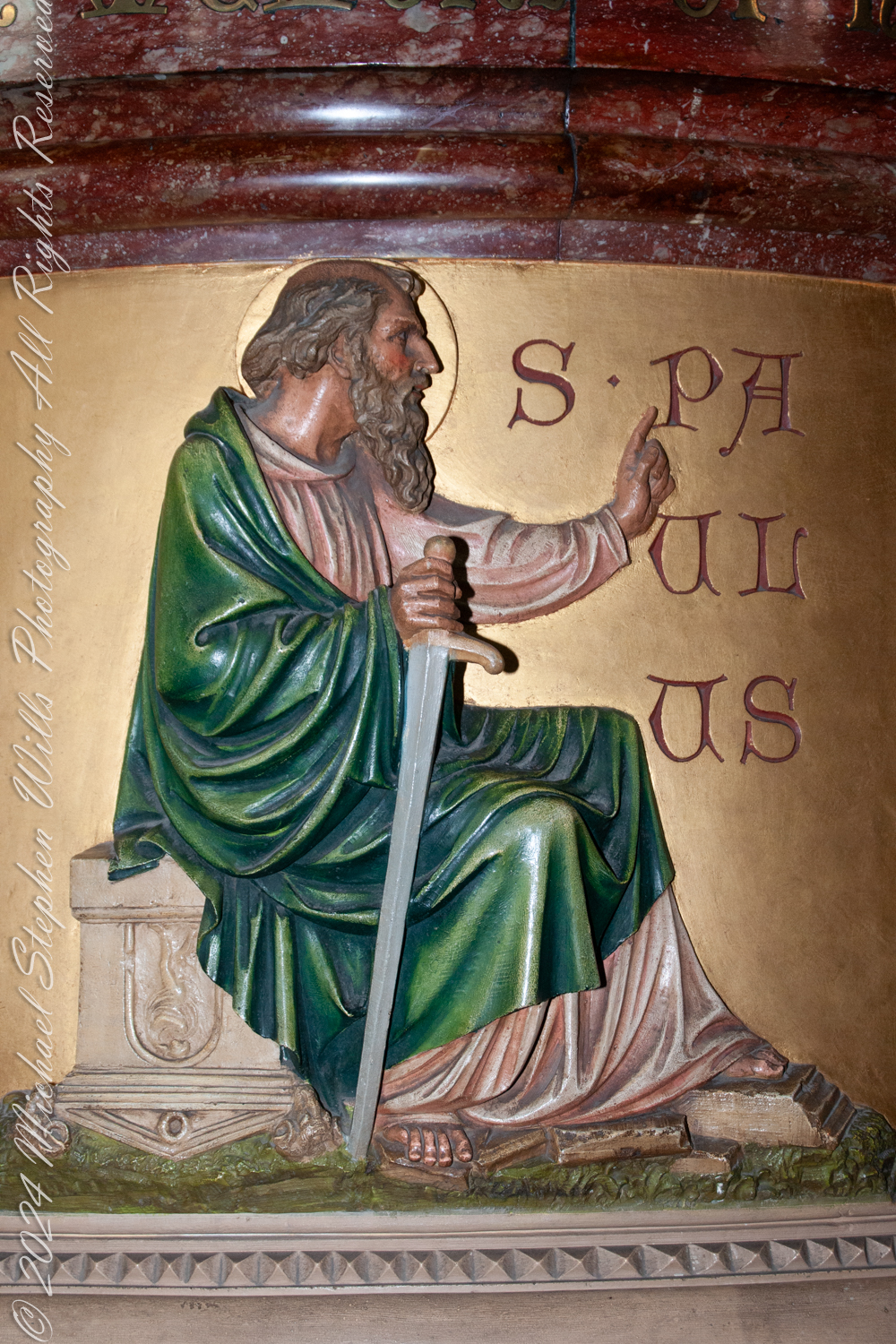
Near the entrance, the cylindrical pulpit’s relief figures of five evangelists captured my imagination. Here was the relief of Saint Paul seated with his characteristic sword, a symbol of both his martyrdom and the “sword of the Spirit” from chapter 6, verse 17 of the New Testiment Epistle to the Ephesians. His hand gestures toward the heavens, as if calling upon divine guidance to symbolize his role as an intermediary or messenger of God’s revelation. The rich green of his robes, juxtaposed against the golden background, speaks of hope, growth, and the everlasting promise of salvation. Here I found Saint Paul embodying the courage and conviction needed to preach and defend the faith—a sentiment that resonates deeply in the cathedral’s design and purpose.
Saint Paul
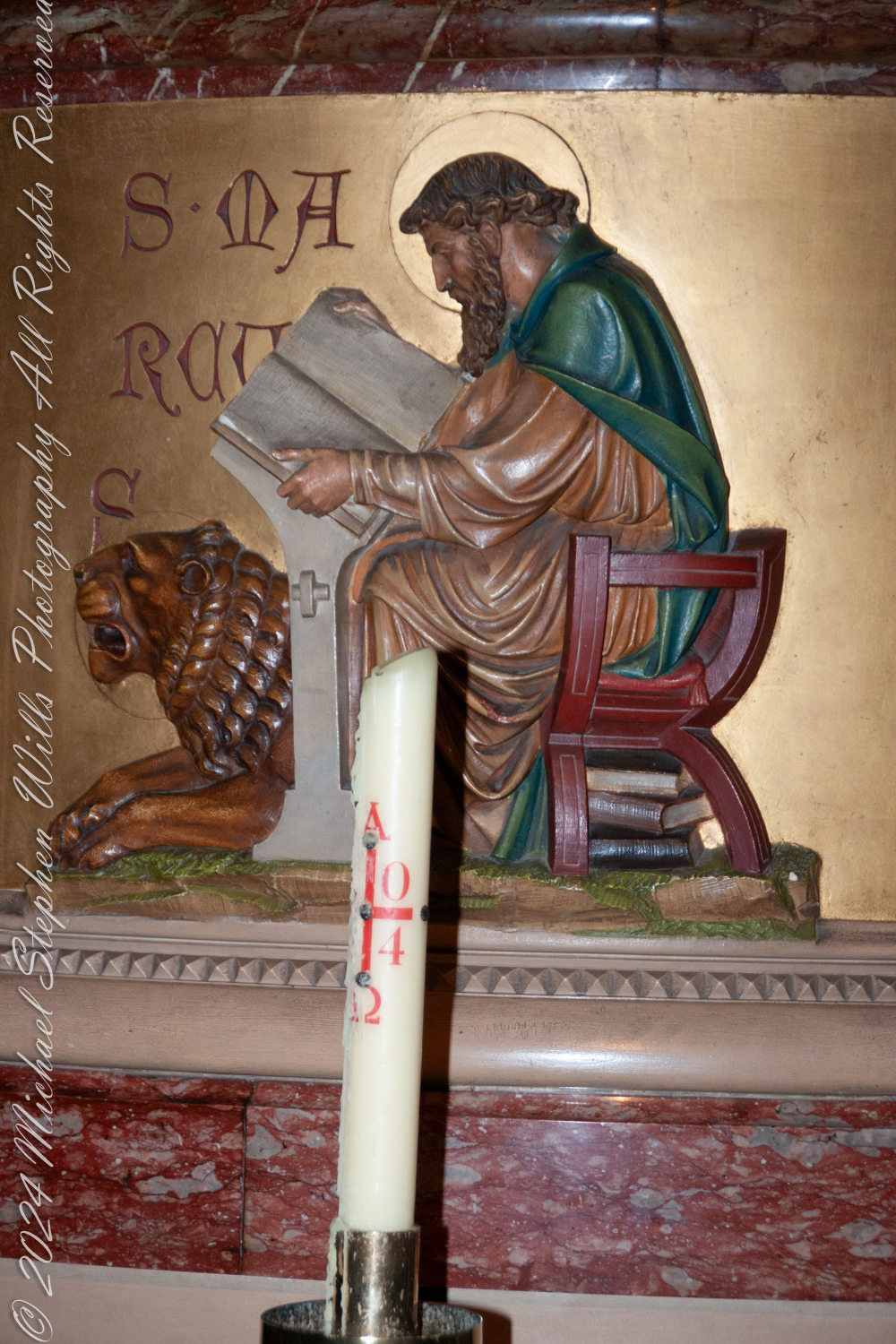
Rounding the circle, another relief brought Saint Mark to life. With the lion at his side, Saint Mark writes intently, reminding us of his contributions to the Gospels. The warm, earthy tones of his attire and the contemplative tilt of his head evoke the diligence and introspection of a writer who draws inspiration from divine revelation. The lion, its expression both fierce and loyal, represents courage and the Gospel’s enduring power.
Saint Mark
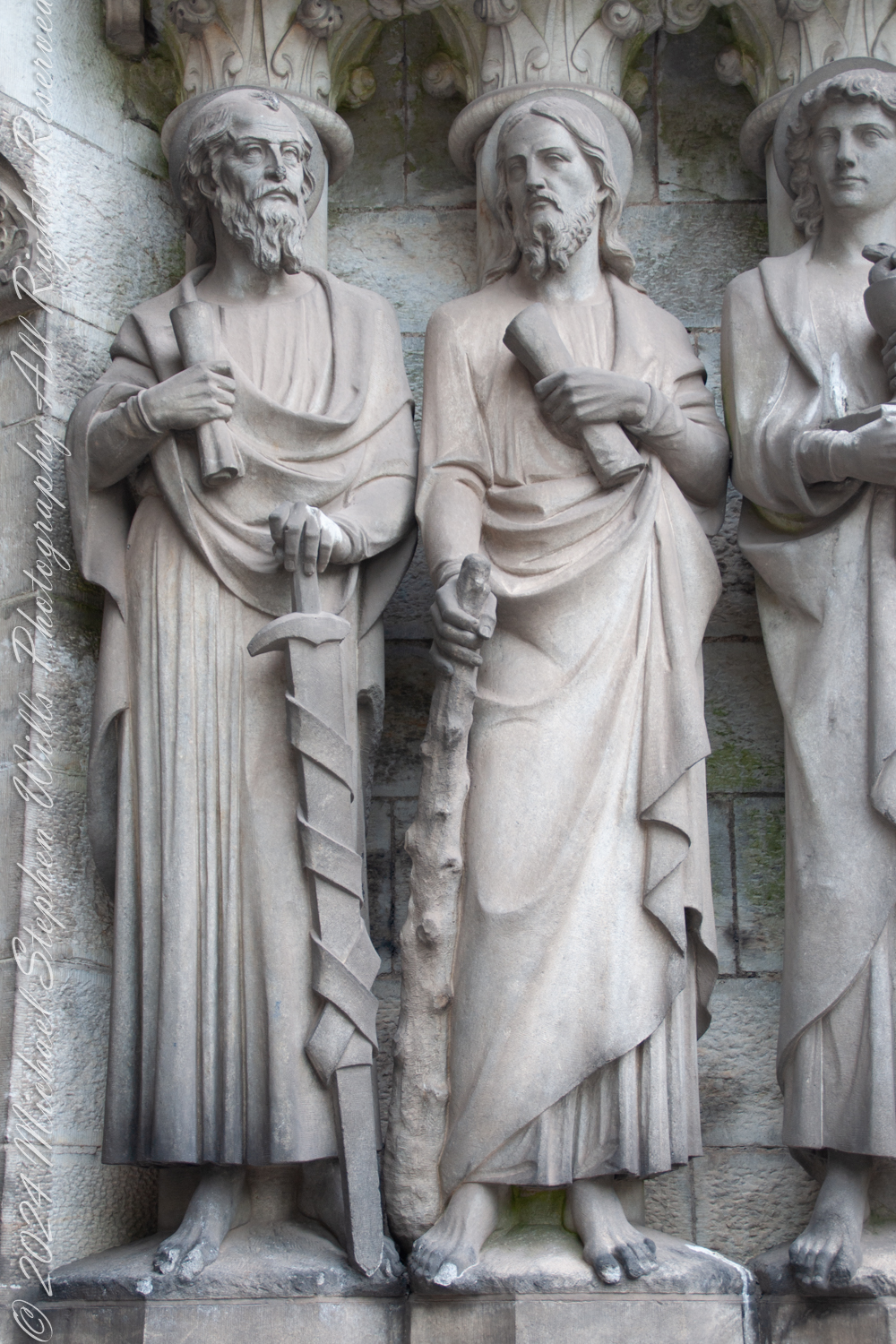
The cathedral’s external sculptures echo these individual representations of the apostles, where stone figures silently stand guard at the west entrance. The central figure of my photograph, holding a scroll in his left hand and a long cudgel (club) in his right, is Saint James the Less (also known as James the Minor). The scroll symbolizes his role spreading the word of God. The cudgel alludes to his martyrdom, as tradition holds that his executioners brutally beat him to death with such a club. His serene expression contrasts with Saint Paul, on the left, who holds the traditional “sword of the spirit” of his Epistle to the Ephesians. These carvings are spiritual sentinels, inviting visitors to contemplate the legacy of those who laid the foundations of the Church.
As the patron saint of the city, Saint Fin Barre’s enduring legacy profoundly impacts Cork’s spiritual and cultural history. His legacy dates back to the 7th century when he established a monastic settlement on the site where the cathedral now stands. This sacred location has witnessed centuries of devotion, destruction, and renewal. The visionary architect William Burges designed the cathedral in the 19th century as both a tribute to Saint Fin Barre’s enduring influence and a testament to William Burges’s own artistic genius.
Walking through the cathedral, I felt the interplay of past and present, earth and heaven. These saints and apostles are figures from history, embodiments of virtues and struggles that are timeless. Their stories invite us to reflect on our own faith, perseverance, and the ways we leave our mark on the world.
Saint Fin Barre’s Cathedral is a place of worship and a narrative in stone, wood, and glass. The intricate carvings and the evocative sculptures, among much else, create a space that transcends the ordinary. Here, the saints and apostles stand as eternal witnesses to the human journey toward the divine. As I left the cathedral, the image of Saint Paul, resolute and unyielding, stayed with me—a reminder that we must build faith, much like the cathedral itself, stone by stone, moment by moment, to endure the test of time.
Enter your email to receive notification of future postings. I will not sell or share your email address.
Copyright 2024 All Rights Reserved Michael Stephen Wills
Saint Fin Barre’s Cathedral features stunning Victorian Gothic artistry, with symbolic ceilings and intricate designs reflecting divine themes and craftsmanship.
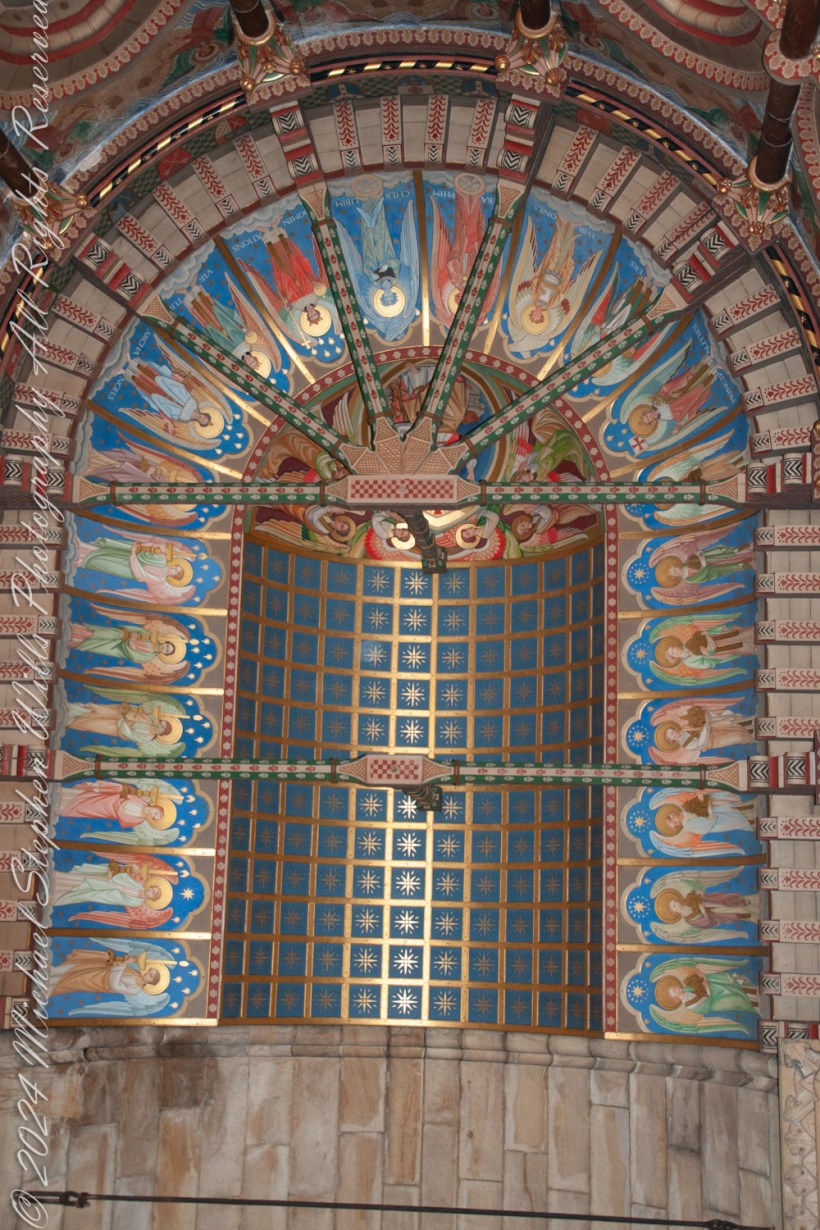
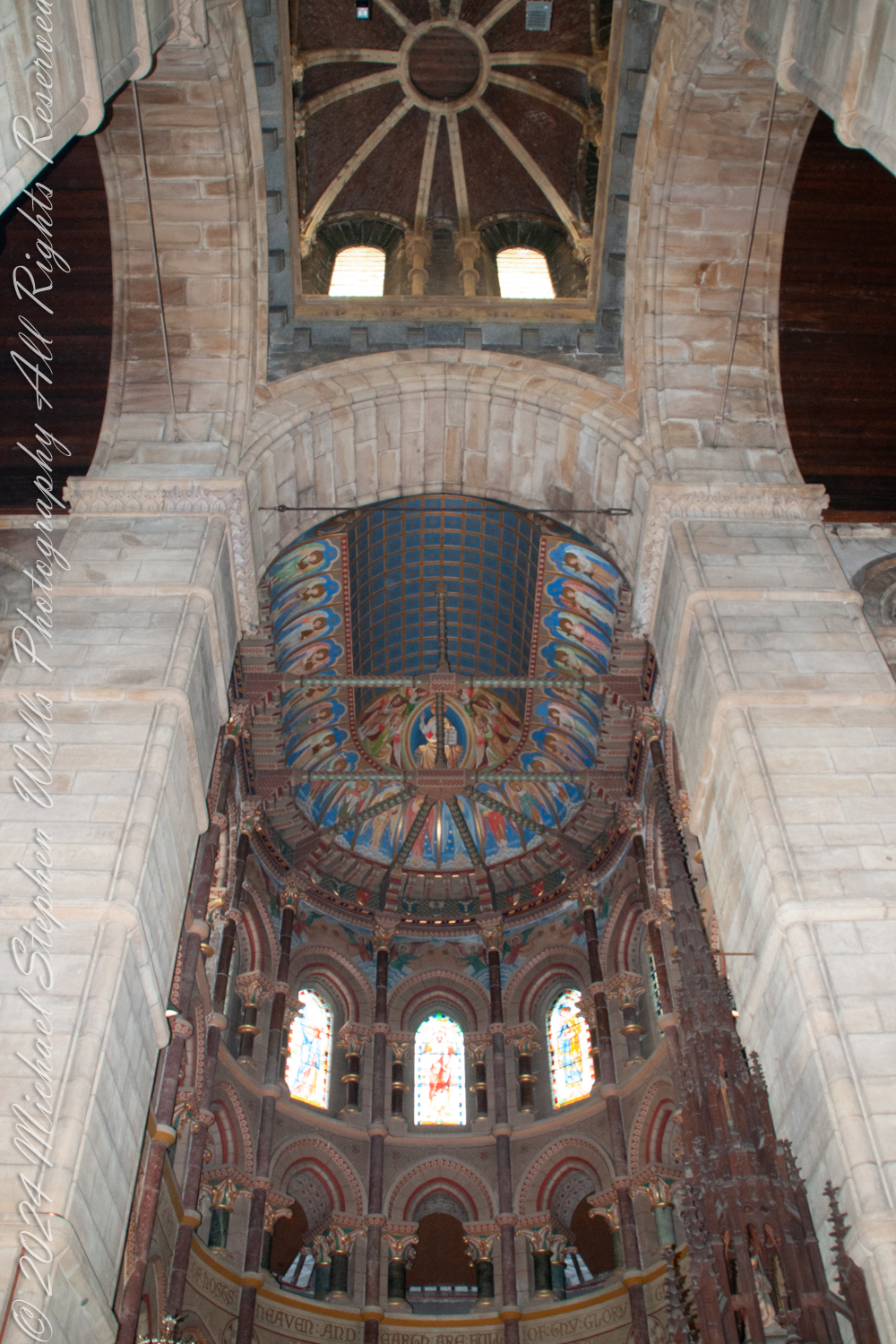
As I stood on the floor of Saint Fin Barre’s Cathedral in Cork, Ireland, I gazed upward toward the Apse and sanctuary ceiling at the eastern end. Turning my eyes directly to the west, I found myself captivated by the crossing ceiling—the very heart where the nave intersects with the transepts, forming the iconic cross shape typical of Gothic cathedral architecture.
In my imagination the central tower and spire soared majestically above the crossing ceiling. The ceiling there featured intricate architectural elements like ribbed vaults and a lantern tower, allowing light to flood into the space below. This crossing served as a beautiful transitional space between the sanctuary and the main body of the cathedral, the nave.
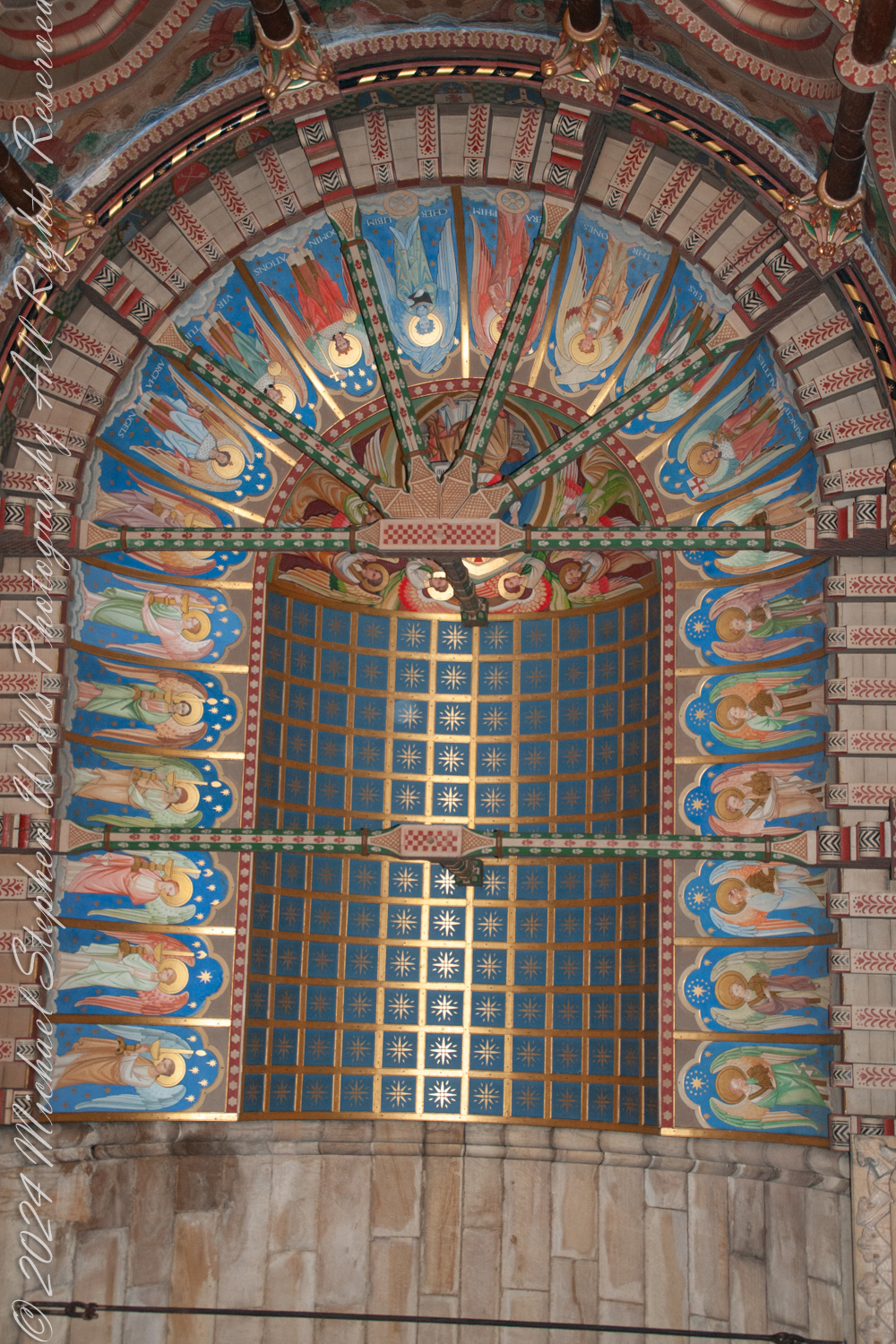
Focusing my camera on the Sanctuary Ceiling of Saint Fin Barre’s Cathedral, I was struck by the stunning example of Victorian Gothic Revival artistry before me. Designed by the architect William Burges, who envisioned every detail of the cathedral, the ceiling reflected his meticulous attention to detail and his love for vibrant colors and symbolic ornamentation.
The rich iconography drew me in. Angels adorned the ceiling, likely representing the celestial hierarchy or the glorification of Christ. Each angel held symbolic items—trumpets, stars, or scrolls—emphasizing their roles as messengers and worshippers of God.
The radiant color scheme was breathtaking. Deep blues, shimmering golds, lush greens, and vivid reds combined to create a striking visual effect, symbolizing heaven and divine majesty. Gold accents caught and reflected the light, reinforcing the idea of heavenly glory.
Geometric and star patterns embellished the vaults. The blue panels dotted with gold stars symbolized the heavens—a common motif in Gothic church ceilings. These stars seemed to represent divine guidance or eternity, adding another layer of meaning to the already rich tapestry above me.
The structural elements themselves were works of art. Painted ribs intersected across the ceiling, highlighting the Gothic architecture’s ribbed vaulting. Their intricate designs in green and red emphasized both structural beauty and functional elegance.
The symbolism was profound. The angels with their instruments and the starry heavens collectively evoked themes of divine worship and the glory of God’s kingdom. This alignment with the Victorian Gothic ideal of infusing spiritual symbolism into architectural elements was evident in every brushstroke.
Knowing that William Burges envisioned Saint Fin Barre’s Cathedral as a “Bible in stone,” I felt a deep connection to his purpose. Standing beneath the Sanctuary Ceiling—the focal point above the altar—I sensed how it served to elevate worshippers’ gaze and spirits toward the divine.
Capturing these scenes through my lens, I was documenting a testament to the artistic and architectural achievements of the 19th century. Saint Fin Barre’s Cathedral is a place of worship and also a living gallery of history, faith, and unparalleled craftsmanship.
Enter your email to receive notification of future postings. I will not sell or share your email address.
Copyright 2024 All Rights Reserved Michael Stephen Wills
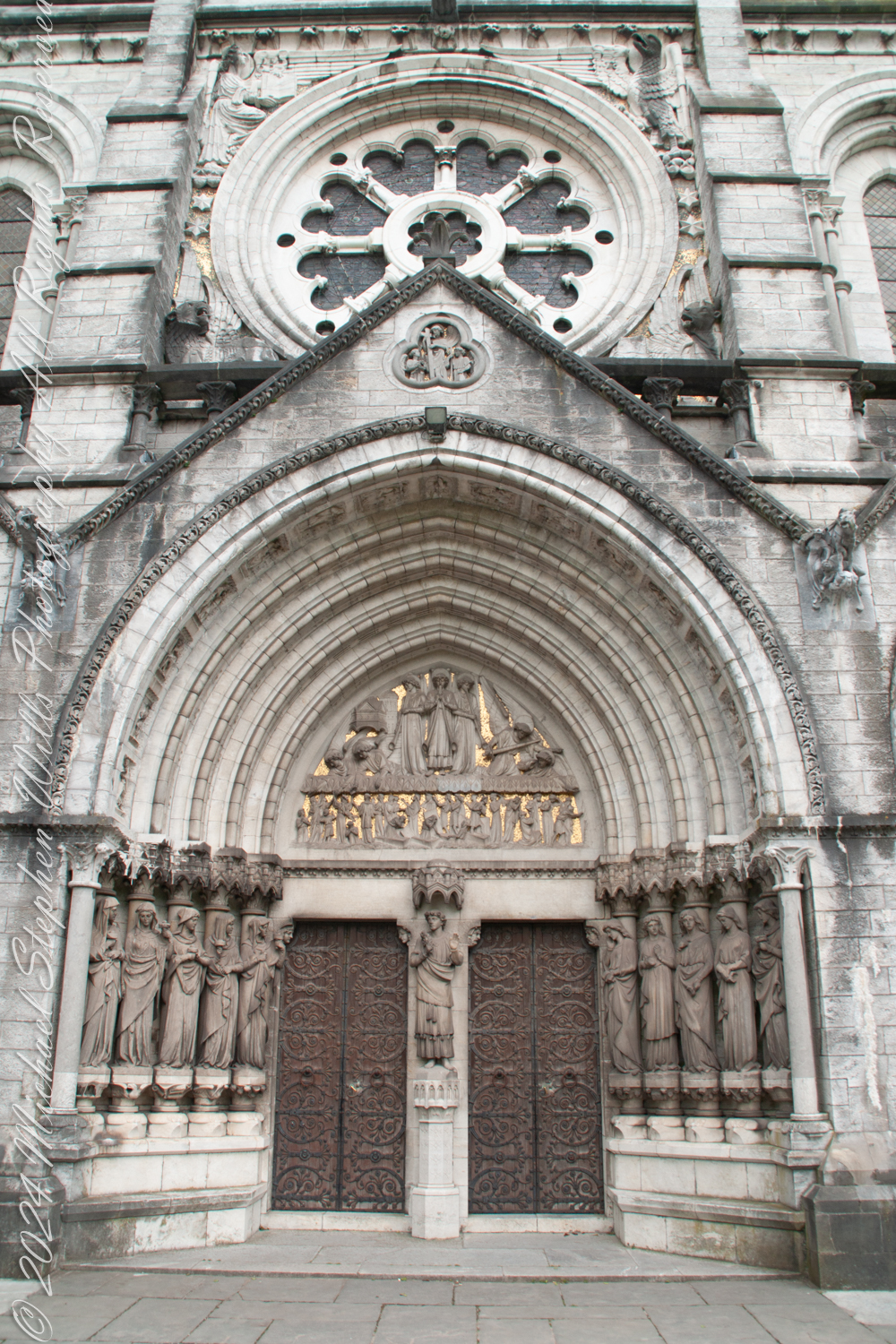
The towering Western Portico of Saint Fin Barre’s Cathedral leads into the sacred space of the church while serving as a canvas for a profound narrative of divine judgment and grace. Standing before it, I am drawn into its intricate details, particularly the central set of doors flanked by the ten virgins—five wise and five foolish—embodied in stunning columnar statues. Their story is drawn from the Gospel of Matthew (25:1–13), a parable of spiritual preparedness that echoes throughout the cathedral’s architecture.
The parable tells of ten virgins who go out to meet the bridegroom, each carrying a lamp. The wise virgins take oil with their lamps, while the foolish take none. When the bridegroom is delayed, all ten fall asleep. At midnight, the cry rings out, “Here is the bridegroom! Come out to meet him!” The virgins awaken and trim their lamps. The foolish ones, realizing their lamps are going out, plead with the wise to share their oil, but the wise refuse, saying, “There may not be enough for both us and you. Instead, go to those who sell oil and buy some for yourselves.” While the foolish virgins are away buying oil, the bridegroom arrives, and the wise virgins go with him into the wedding banquet. The door is shut. Later, the foolish virgins return, crying, “Lord, Lord, open the door for us!” But he replies, “Truly I tell you, I do not know you.” The parable concludes with the warning: “Therefore, keep watch, because you do not know the day or the hour.”
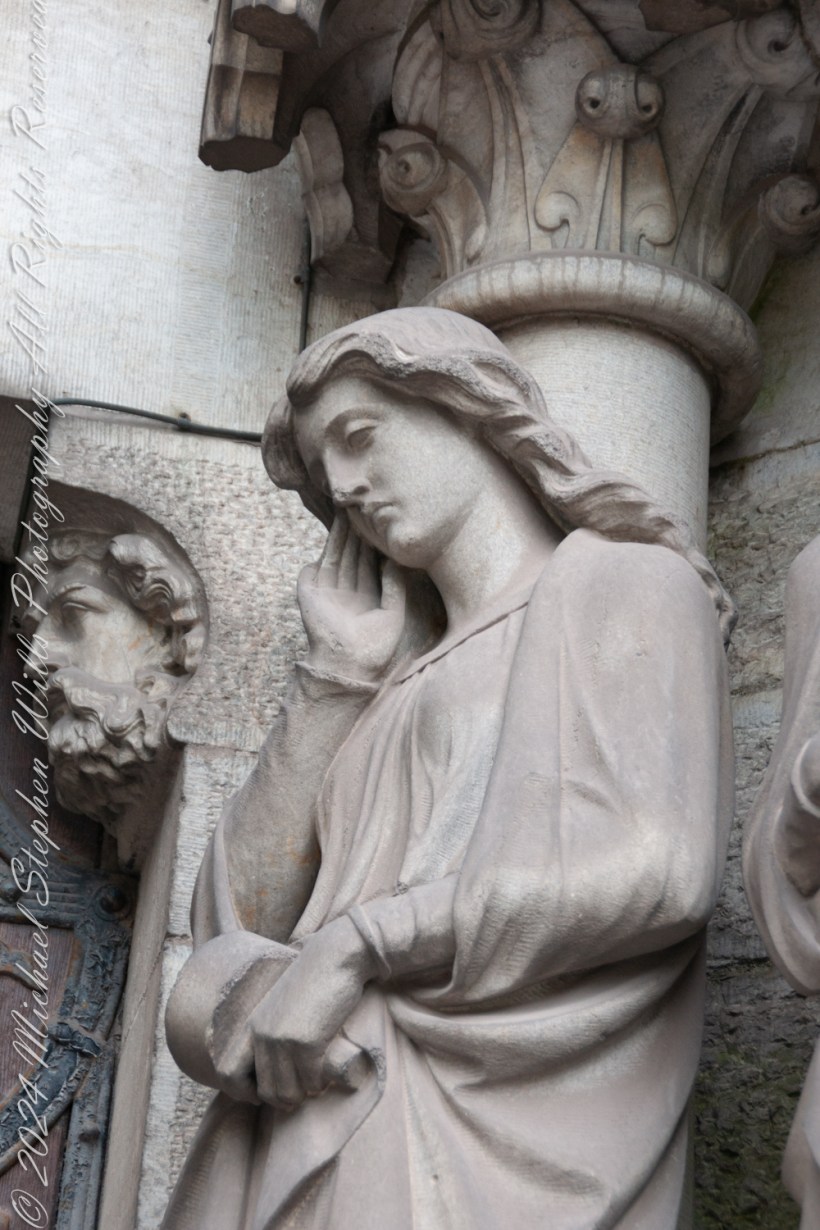
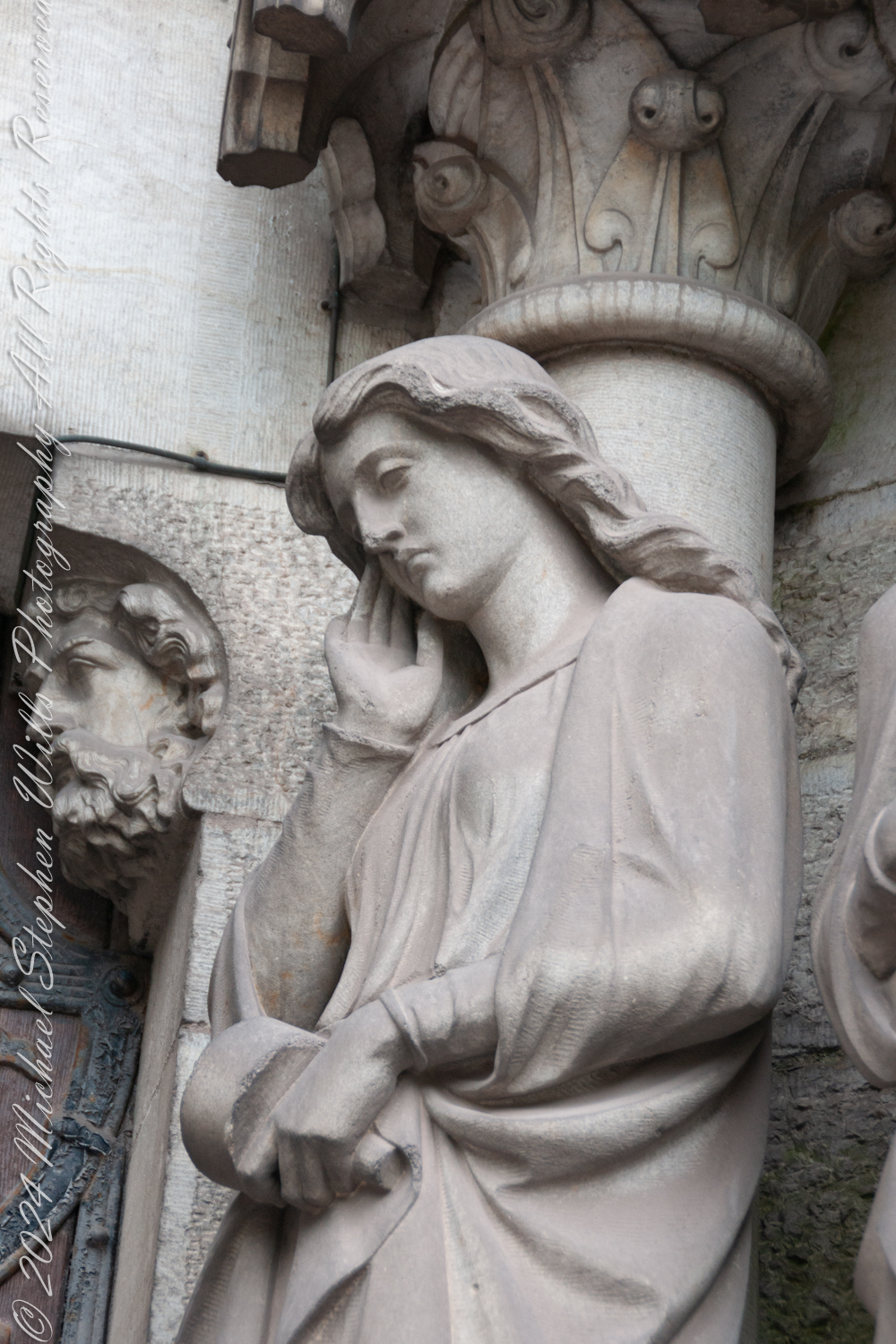
On either side of the central door, the virgins stand as sentinels, embodying this story. The wise virgins, to the right of Christ, hold their lamps aloft, flames burning brightly, symbols of readiness and spiritual vigilance. Their faces are serene, reflecting a sense of fulfillment in their preparedness to meet the bridegroom. To the left, the foolish virgins clutch their unlit lamps, their postures and expressions marked by despair and regret. The detail in their sculpting is exquisite—draped garments, forlorn gazes, and, in the case of the leftmost virgin, a subtle gesture of mourning, her hand resting thoughtfully against her cheek as though lamenting her unpreparedness.
Beneath each figure lies a pedestal adorned with imagery that amplifies their symbolic meaning. The wise virgins stand upon a foundation of flourishing life: vines, flowers, and fruits, evoking the vitality and promise of spiritual readiness. In contrast, the pedestals of the foolish virgins are carved with desolation—withered branches, skeletal forms, and motifs of death, stark reminders of the spiritual decay brought by neglect and complacency.
At the heart of the narrative stands Christ, the Bridegroom. His figure, commanding yet compassionate, turns toward the wise virgins, his gesture one of welcome and blessing. The flowing robes and the serene expression of the Christ figure emphasize his dual roles as judge and redeemer. It is a moment of movement captured in stone—Christ leaning into the wise while his back turns on the foolish, a subtle yet striking commentary on divine justice.
Above the door, the tympanum deepens this narrative, depicting the ultimate moment of judgment. Surmounted by three angels announcing the resurrection, their imagery and gold background harking to the Resurrection Angel of the east cathedral side with gold a symbol of purity and divine light; the dead rise from their graves, their fates determined by their spiritual choices. On the right, angels extend their hands to the faithful, pulling them upward toward eternal life. Their forms radiate lightness, their wings creating a sense of ascension and joy. On the left, the scene is markedly darker: angels, stern and unyielding, drive the condemned downward, their bodies twisted in expressions of agony. Flames lick at the edges of the scene, signaling the fires of damnation.
The weight of this imagery is palpable. The parable of the ten virgins, brought to life in stone, underscores the centrality of vigilance and readiness in the Christian faith. The Western Portico is a story carved in stone, a vivid testament to the choices each person must make. Standing before it, I am not merely a viewer but a participant, invited to reflect on my own readiness and my place in this cosmic drama. The intricacy and theological depth of this space leave an indelible impression, a reminder of the eternal truths that the cathedral seeks to communicate through its art.
Enter your email to receive notification of future postings. I will not sell or share your email address.
Copyright 2024 All Rights Reserved Michael Stephen Wills
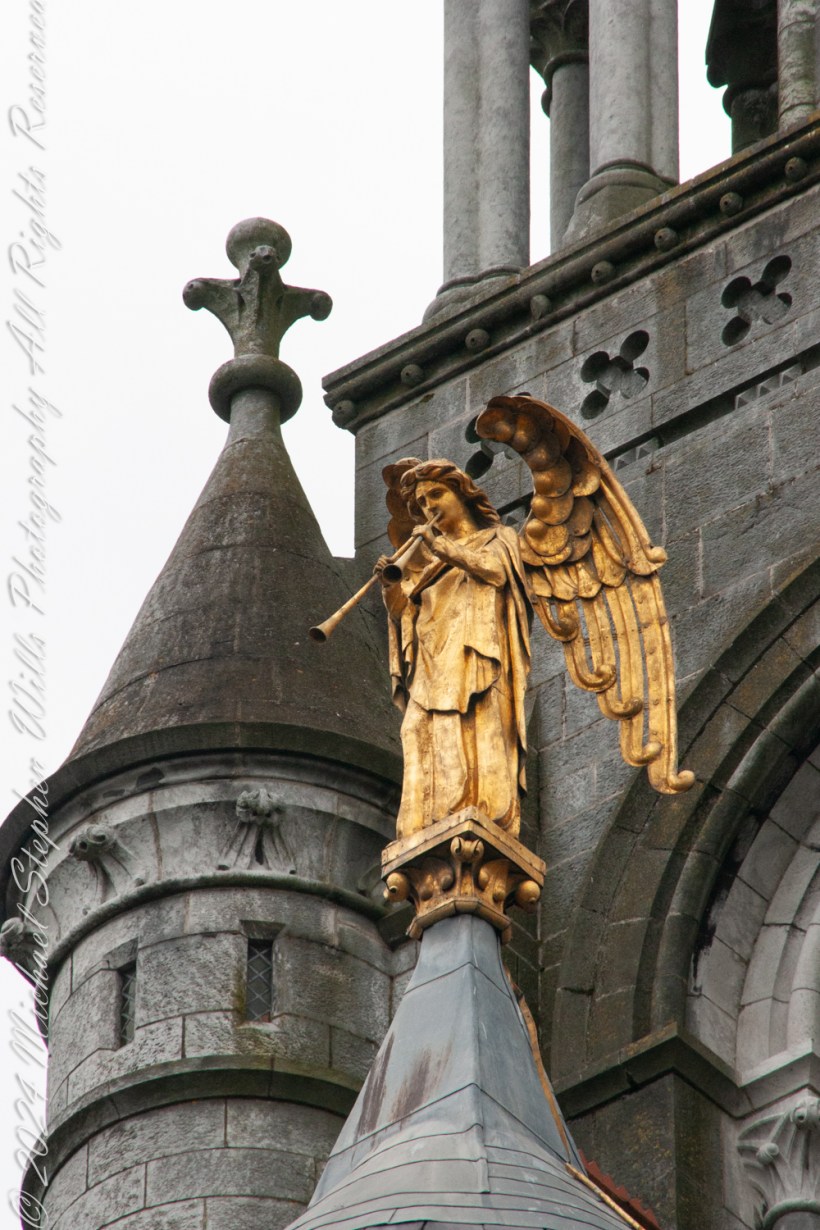
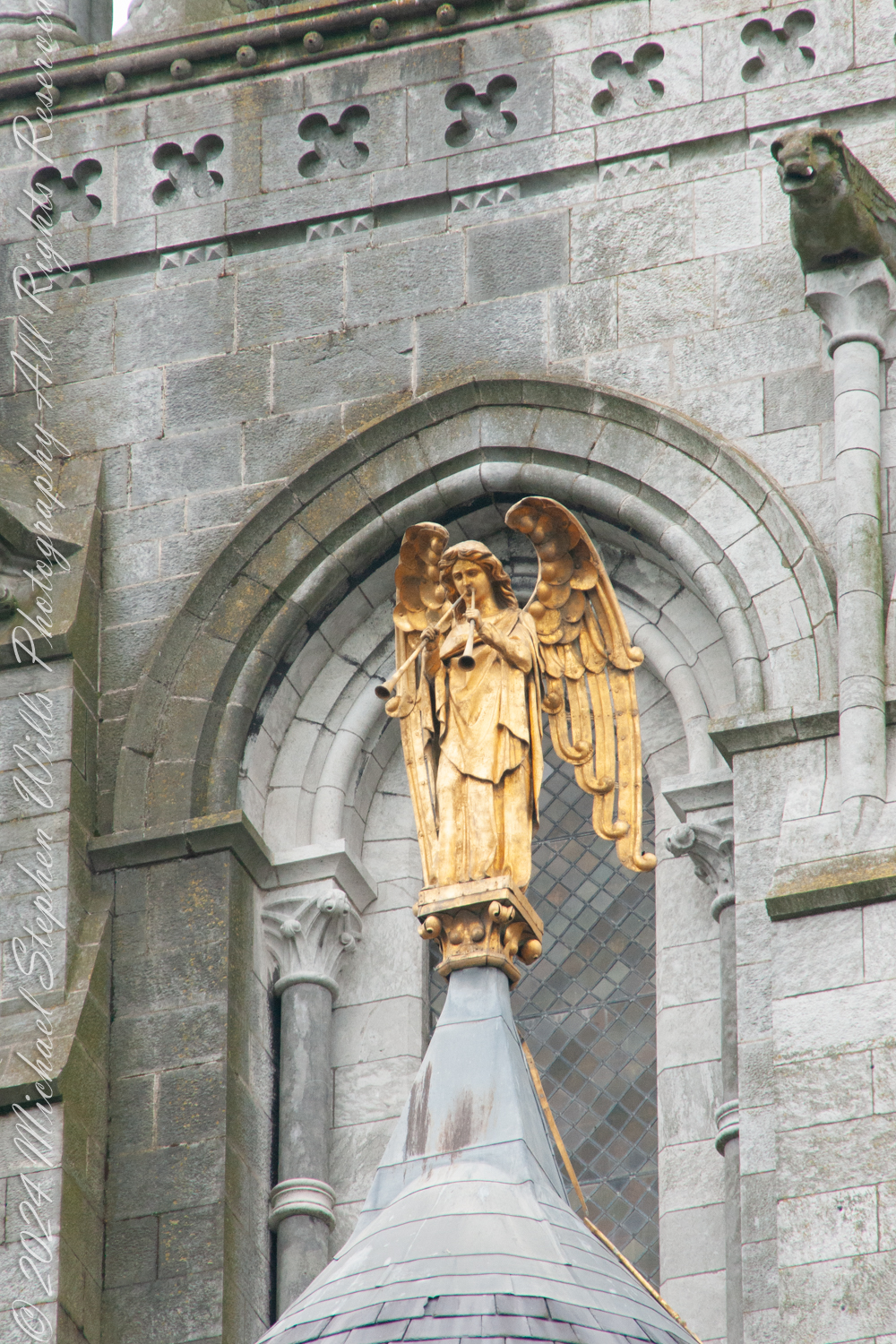
Standing on the east side of Saint Fin Barre’s Cathedral, I lift my gaze to the gilded angel high above the polygonal apse. Known as “The Resurrection Angel,” this radiant figure with its trumpet held aloft commands both awe and contemplation. As an enduring symbol of hope, renewal, and spiritual vigilance this angel carries a profound and dramatic promise: the sound of its trumpet will one day warn the people of Cork of the world’s imminent end, giving them the opportunity to be among the first to ascend to heaven.
The Resurrection Angel’s trumpet echoes the apocalyptic imagery of the Book of Revelation, particularly Revelation 11:15, where the seventh trumpet announces, “The kingdoms of this world have become the kingdoms of our Lord.” Yet in Cork, this celestial figure is imbued with a uniquely local significance. It stands as both guardian and guide, poised to fulfill its divine purpose when the end of days draws near. The legend elevates the angel’s presence beyond theology or art—it becomes a tangible connection between the celestial and the earthly, rooted in the lives of Cork’s citizens.
From an epistemological perspective, the Resurrection Angel poses fascinating questions about how we prepare for the unknown. What does it mean to live in the shadow of an angelic trumpet, one that might sound at any moment? Its silence is a paradox, a quiet yet profound proclamation of life’s transience. The legend suggests that the people of Cork, by virtue of the angel’s warning, are uniquely favored—a notion that intertwines faith with identity and imbues the city with a sense of divine guardianship.
The angel’s golden form shines brightly against the gray stone of the cathedral, a deliberate contrast that speaks to its otherworldly purpose. Gold, a symbol of purity and divine light, captures the eternal amid the temporal. The Resurrection Angel reflects the ambitions of the cathedral’s architect, William Burges, who intended every detail of Saint Fin Barre’s to serve as a testament to faith and artistry. This angel was the final piece installed, marking the cathedral’s completion and fulfilling Burges’ vision of a “perfect work.” According to lore, Burges himself declared that if the angel were ever to fall, it would signal the end of the world—a statement that deepens the mystique surrounding this celestial figure.
For Cork, the angel embodies the city’s resilience and collective spirit. Over centuries, Cork has weathered fires, floods, and rebellion, yet it has always risen anew. The angel, with its legend of warning and redemption, mirrors this cyclical journey of challenge and renewal. Its trumpet, silent but ever-present, reminds the people of Cork to stay vigilant, to hope, and to strive for goodness in the time they have.
As I stand beneath its watchful gaze, I feel the weight of the legend and its implications. If the angel’s trumpet were to sound today, would we be ready? It invites not fear but reflection—a challenge to live with purpose and awareness of the sacred in the everyday. And as I step away, the angel remains, steadfast and golden, a silent guardian over Cork, holding its promise and its warning aloft for generations to come.
Enter your email to receive notification of future postings. I will not sell or share your email address.
Copyright 2024 All Rights Reserved Michael Stephen Wills
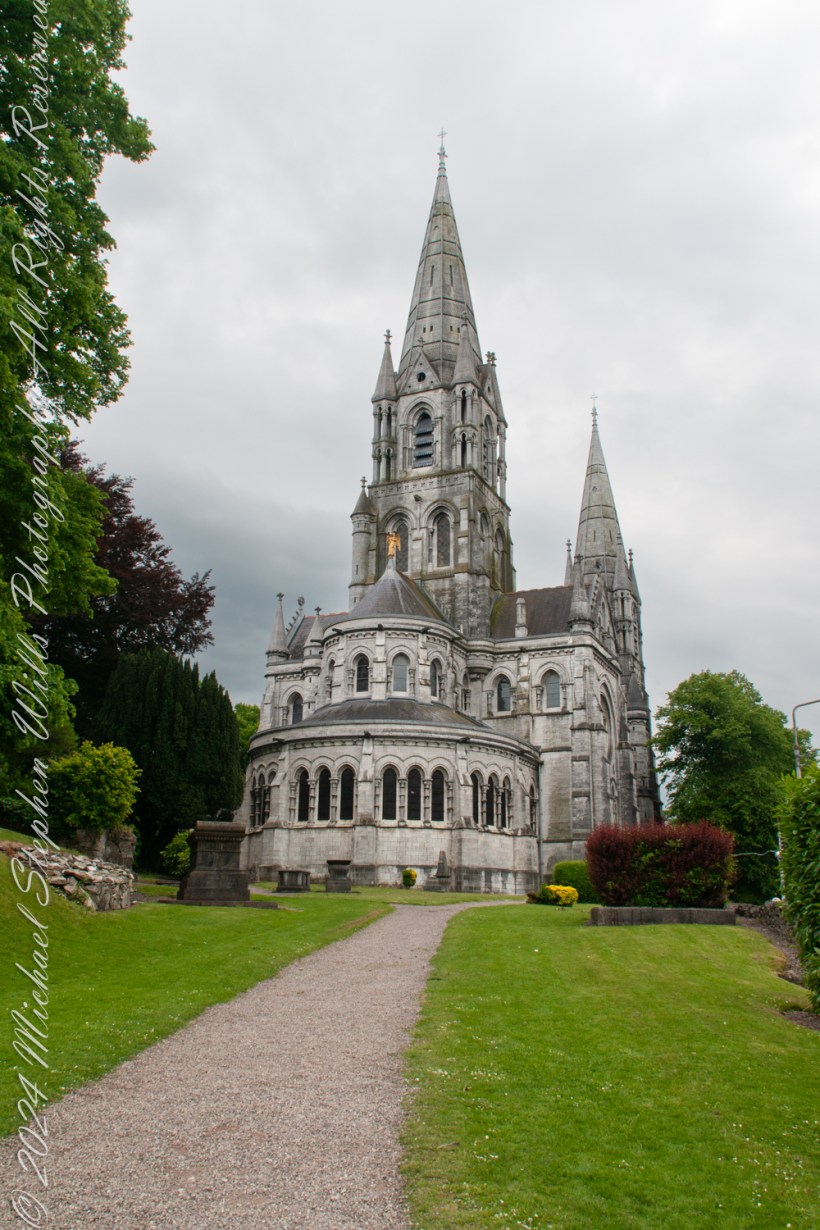
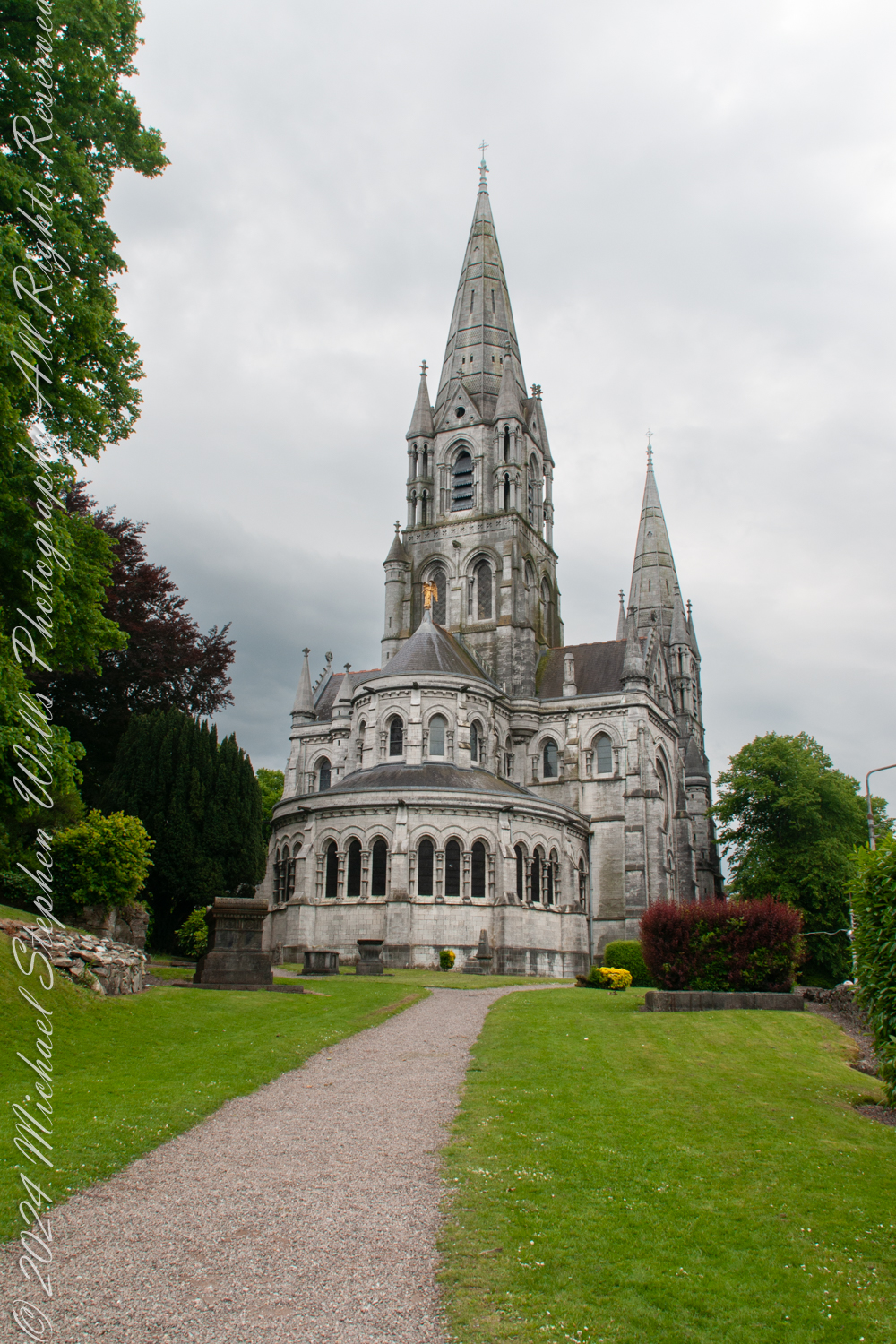
Approaching from the east, we see the polygonal apse at the eastern end houses the high altar and is a key liturgical and architectural feature. Each angular bay is delineated with tall lancet windows filled with stained glass, adding to the richness of the design. Saint Fin Barre’s Cathedral, a masterpiece of Gothic Revival architecture, stands as a beacon of faith and artistry in the heart of Cork, Ireland. Designed by the renowned Victorian architect William Burges, the cathedral is both a testament to the spiritual fervor of its time and a bold statement of artistic vision.
Approaching from the east, we see the polygonal apse at the eastern end houses the high altar and is a key liturgical and architectural feature
Commissioned in 1862, the cathedral replaced an earlier structure, marking a new chapter in Cork’s ecclesiastical history. William Burges, known for his theatrical approach to design, was the perfect choice for this ambitious project. His vision for Saint Fin Barre’s Cathedral blended medieval inspiration with Victorian ingenuity, creating a building that is as much a work of art as a place of worship.
Burges, a figure of eccentric brilliance, was deeply influenced by the principles of the Gothic Revival movement, which sought to recapture the grandeur of medieval European architecture. Drawing from this aesthetic, he designed the cathedral with meticulous attention to detail. Its three spires dominate the Cork skyline, with the central spire rising to an impressive height of 73 meters. These spires are not merely structural; they are symbolic, reaching heavenward in a gesture of devotion.
The exterior of the cathedral, constructed from Cork limestone and Bath stone, is adorned with intricate carvings and sculptures. These include depictions of biblical scenes, saints, and gargoyles, all painstakingly crafted under Burges’s watchful eye. Every detail reflects his belief that architecture should educate as well as inspire. Bishop Street, The Lough, Cork City, County Cork, Ireland
Enter your email to receive notification of future postings. I will not sell or share your email address.
Copyright 2024 All Rights Reserved Michael Stephen Wills
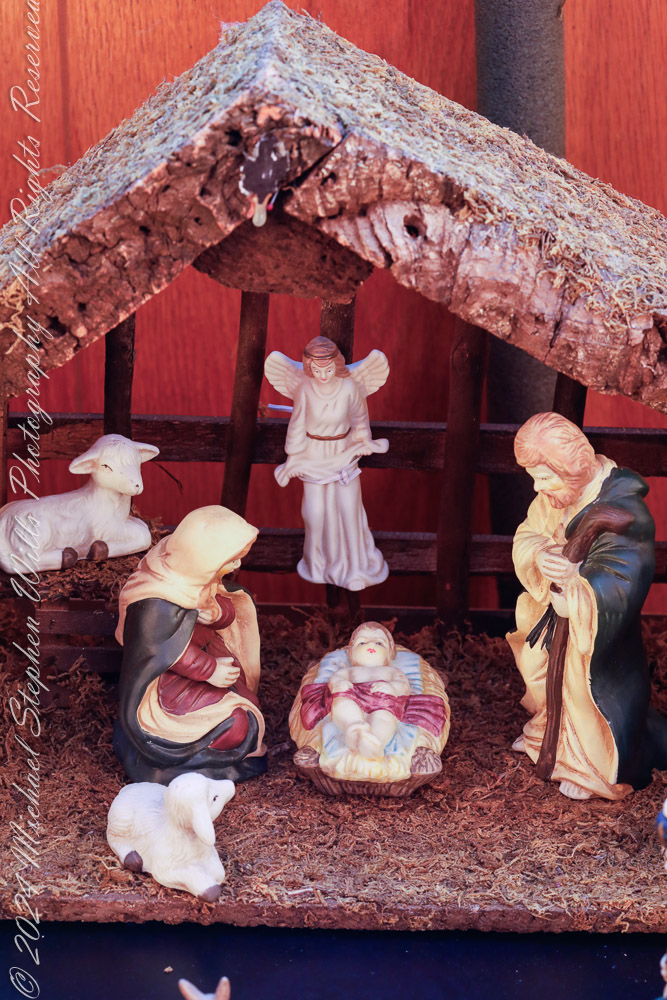
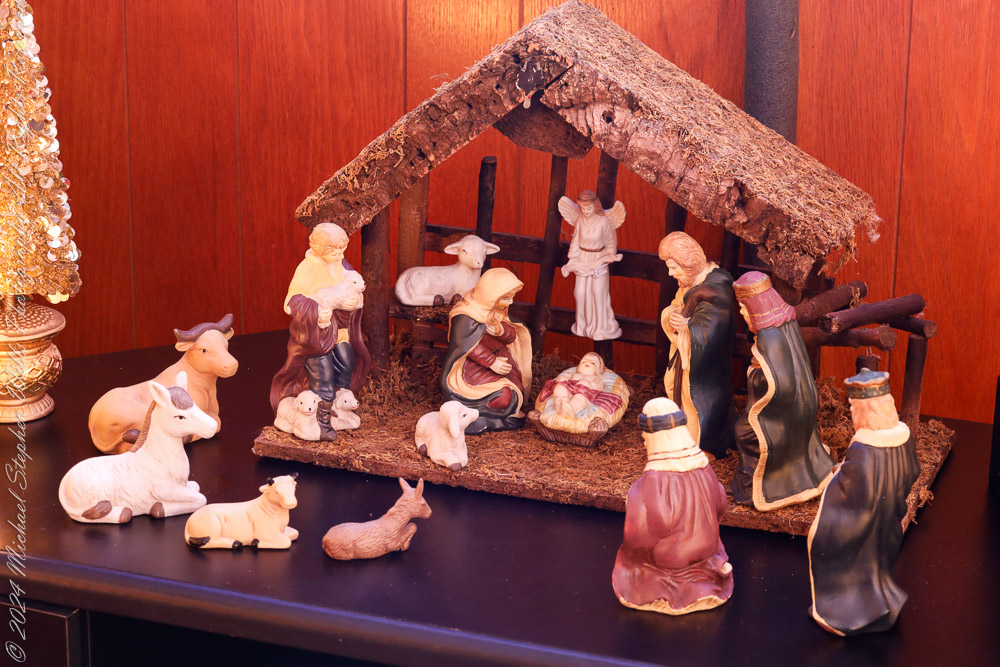
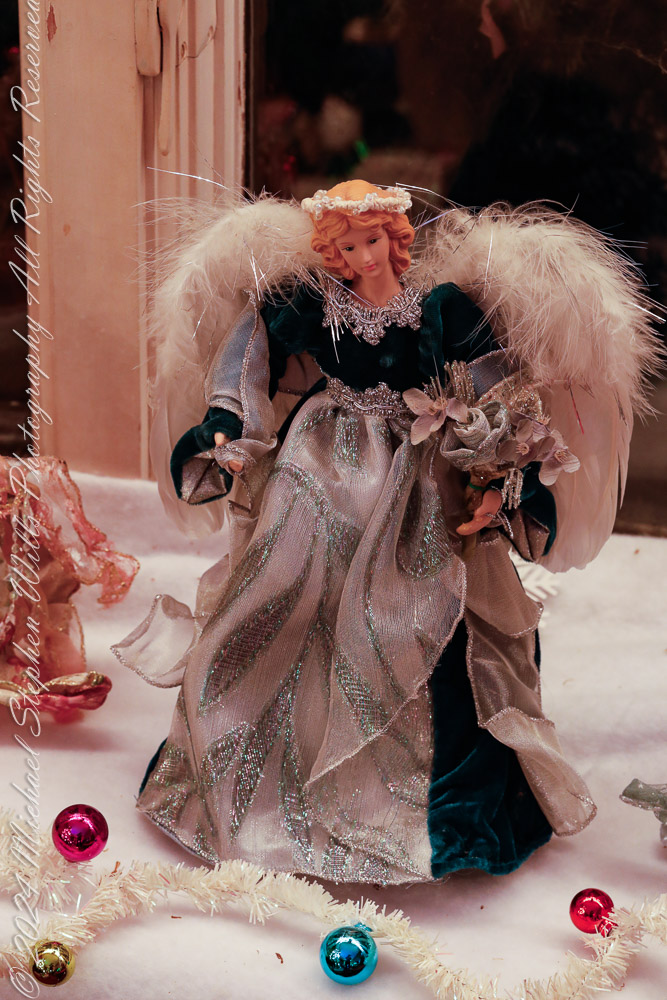
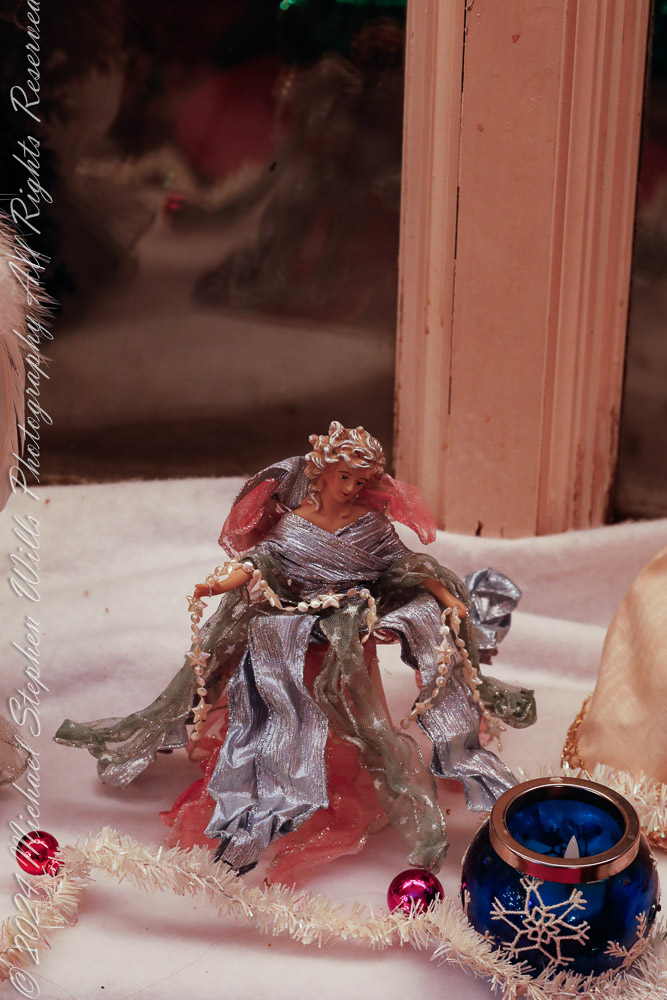
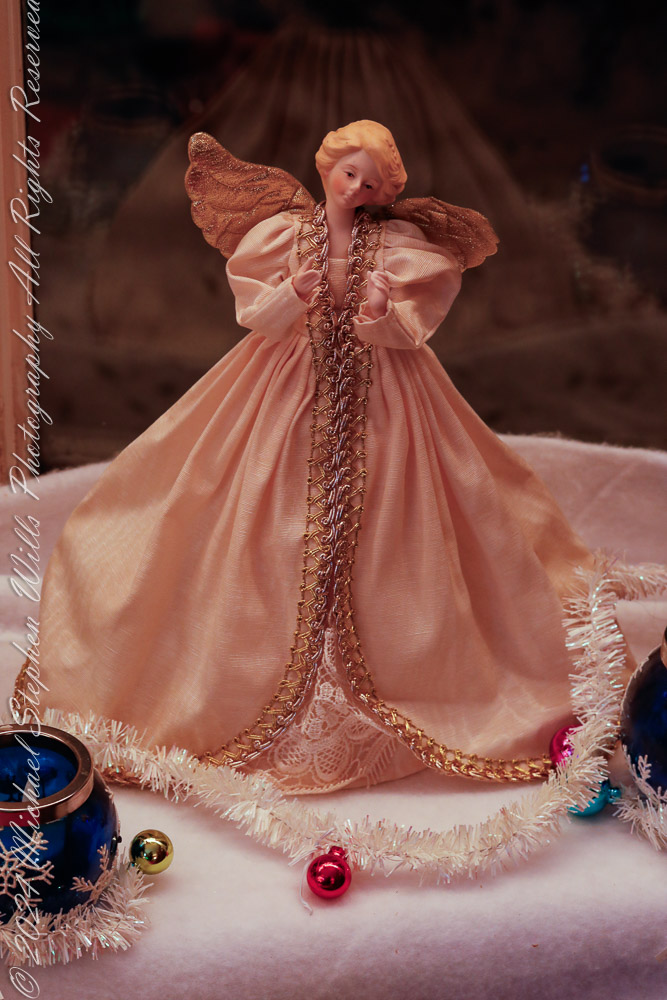
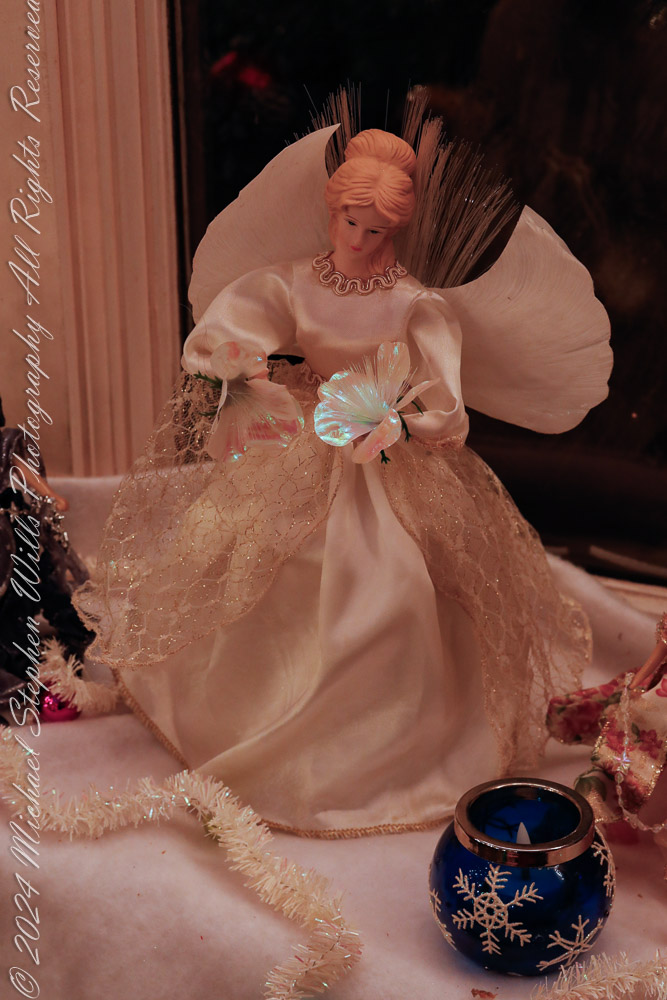
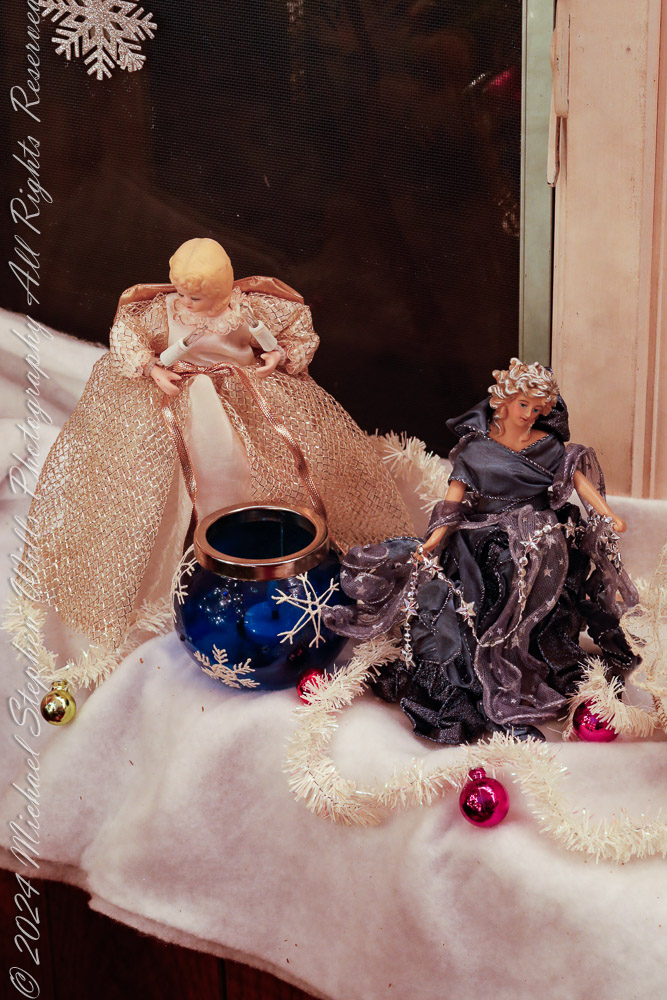
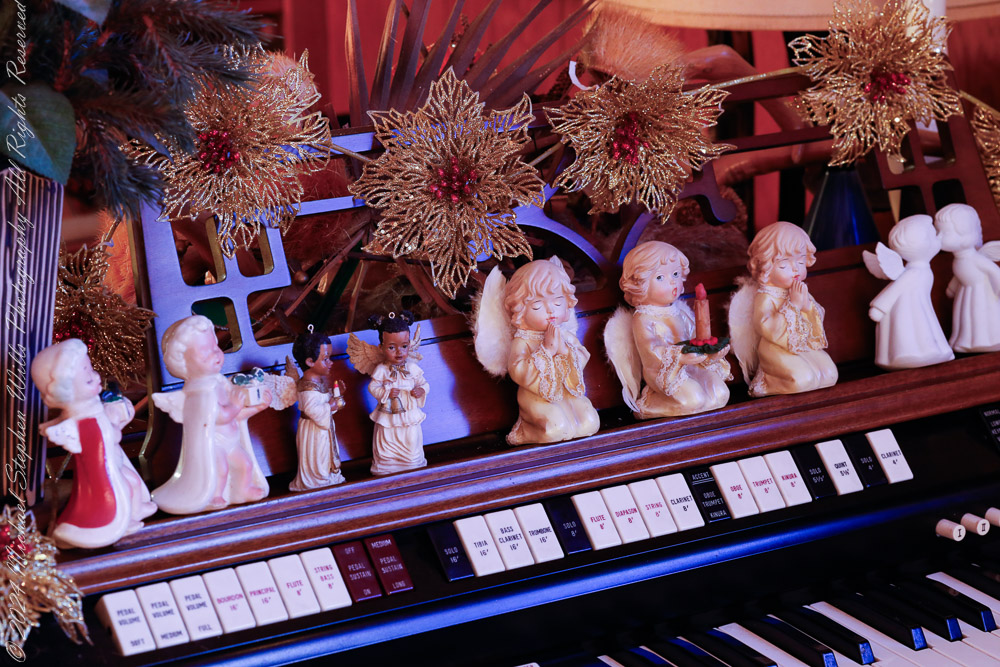
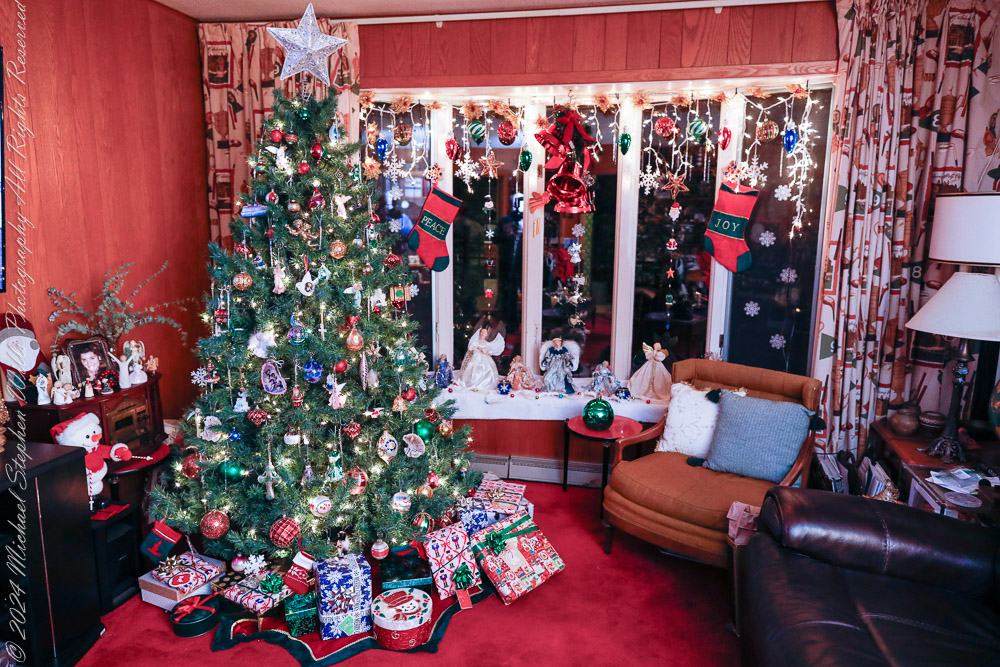
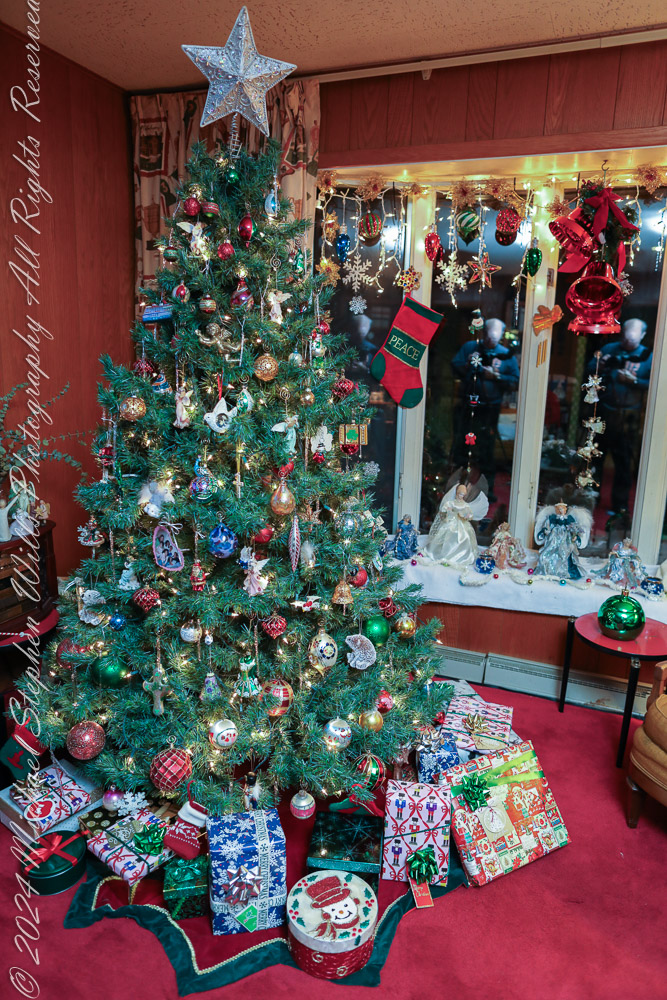
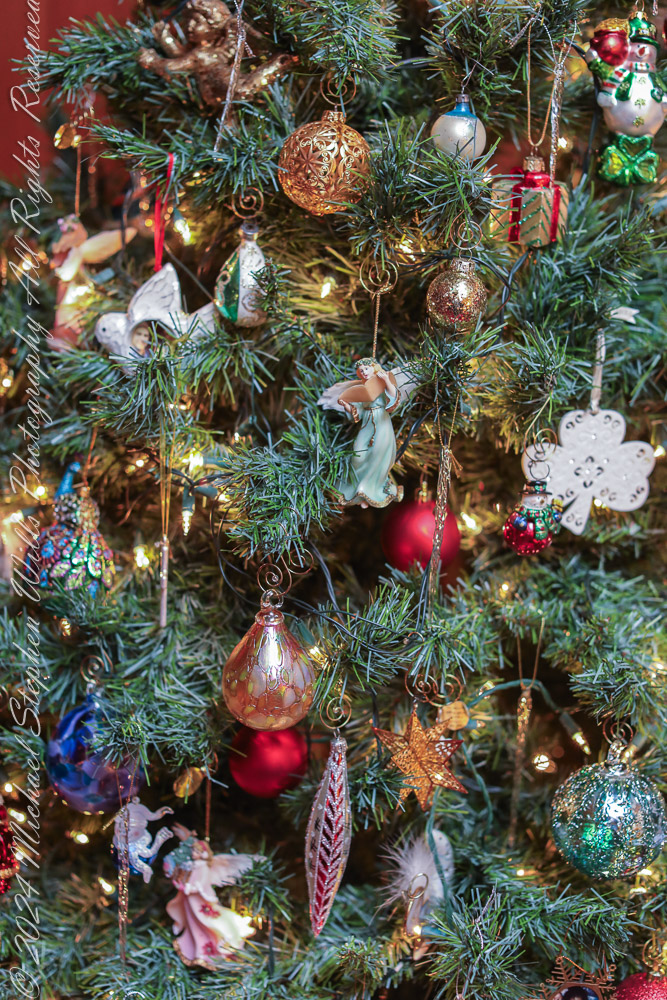
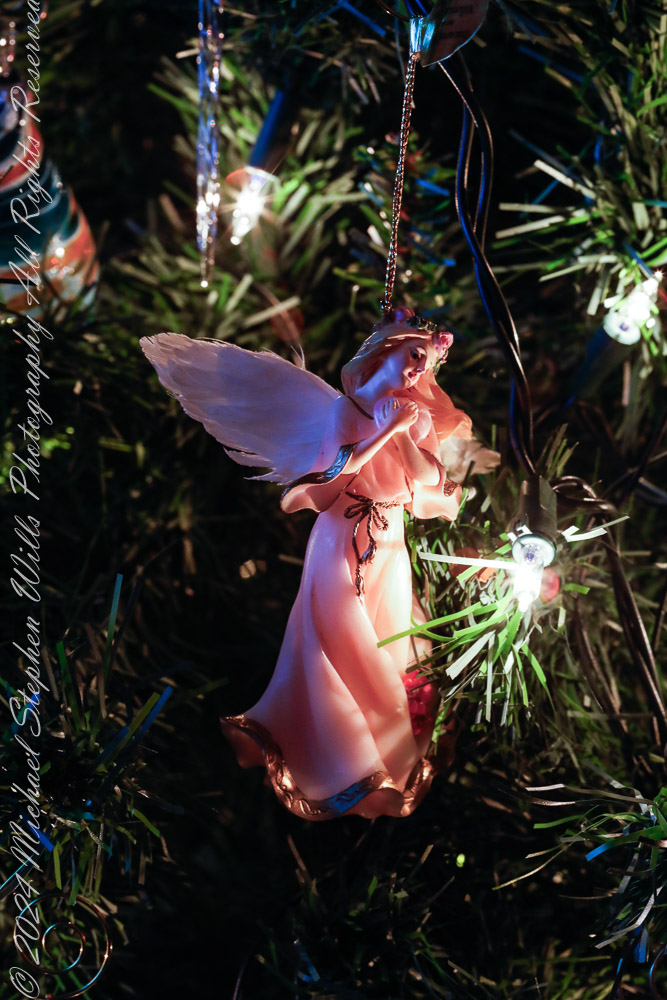
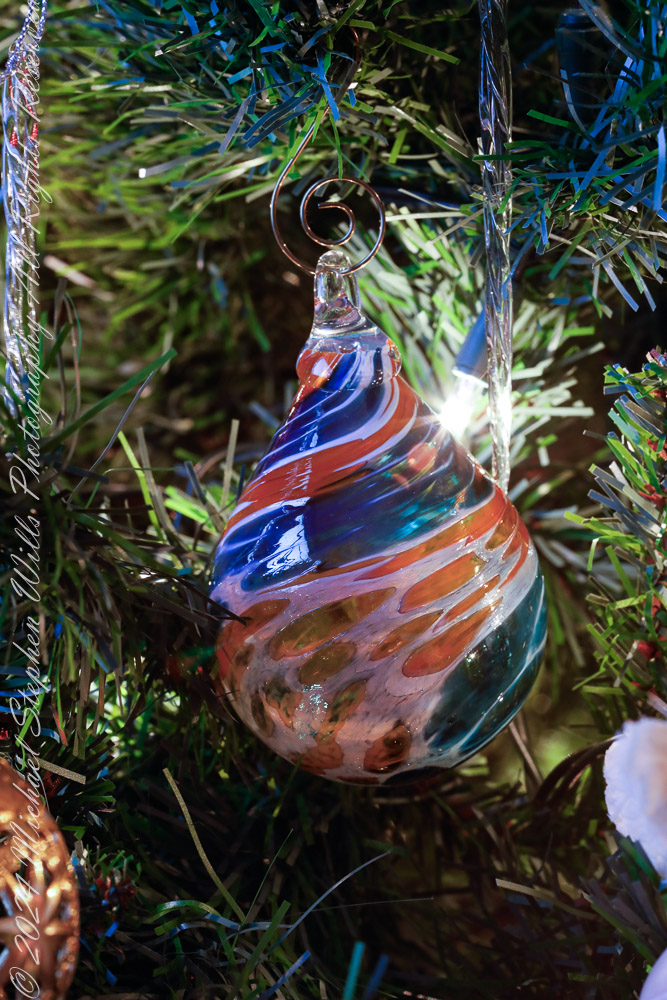
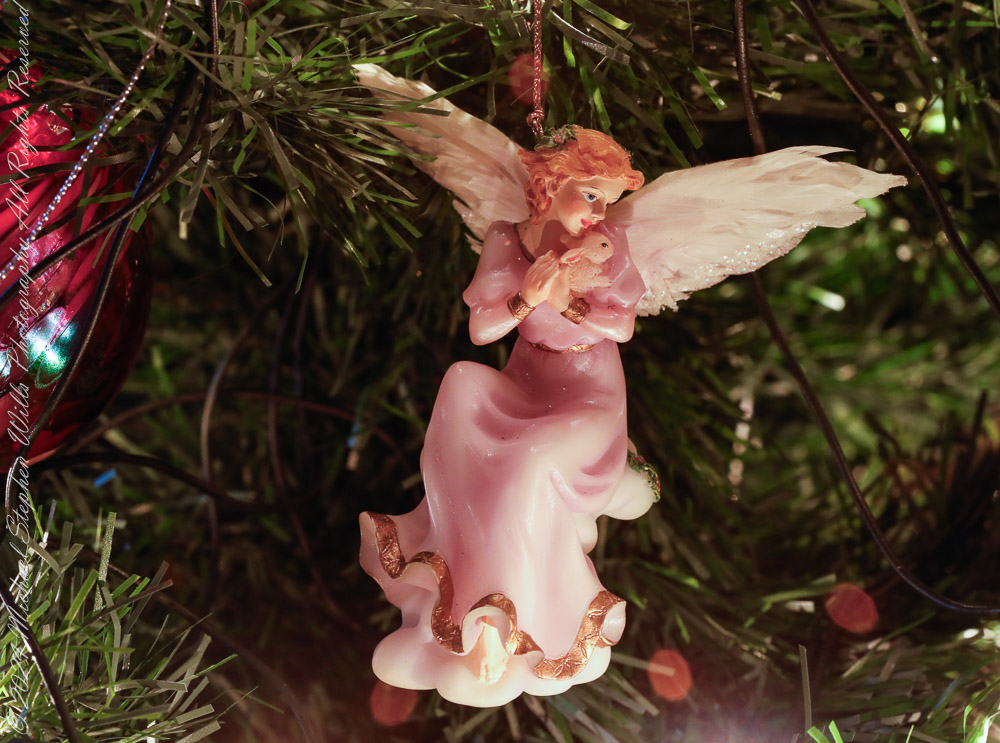
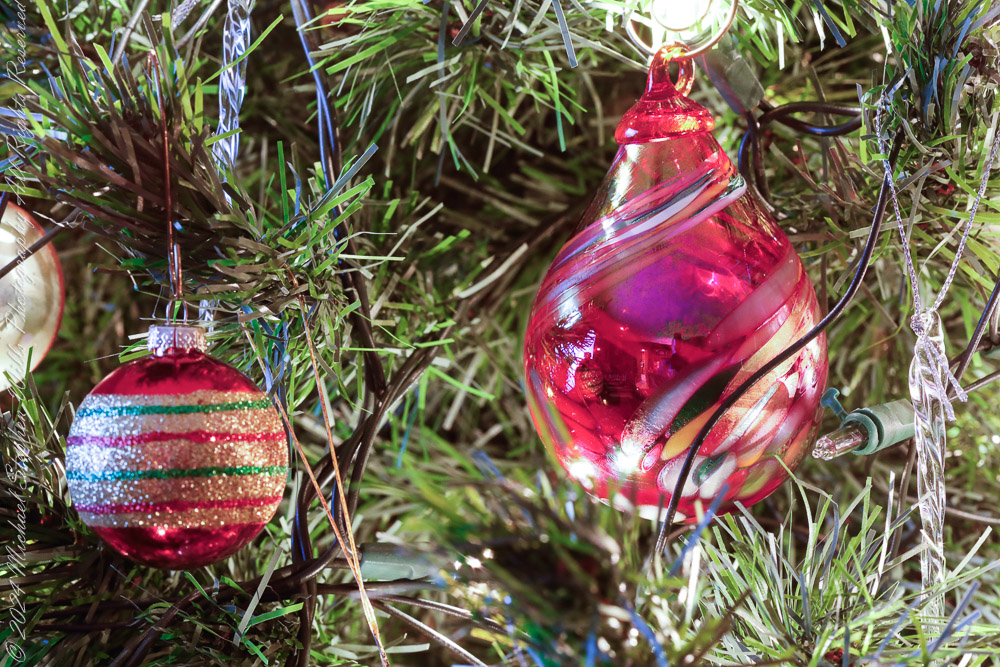
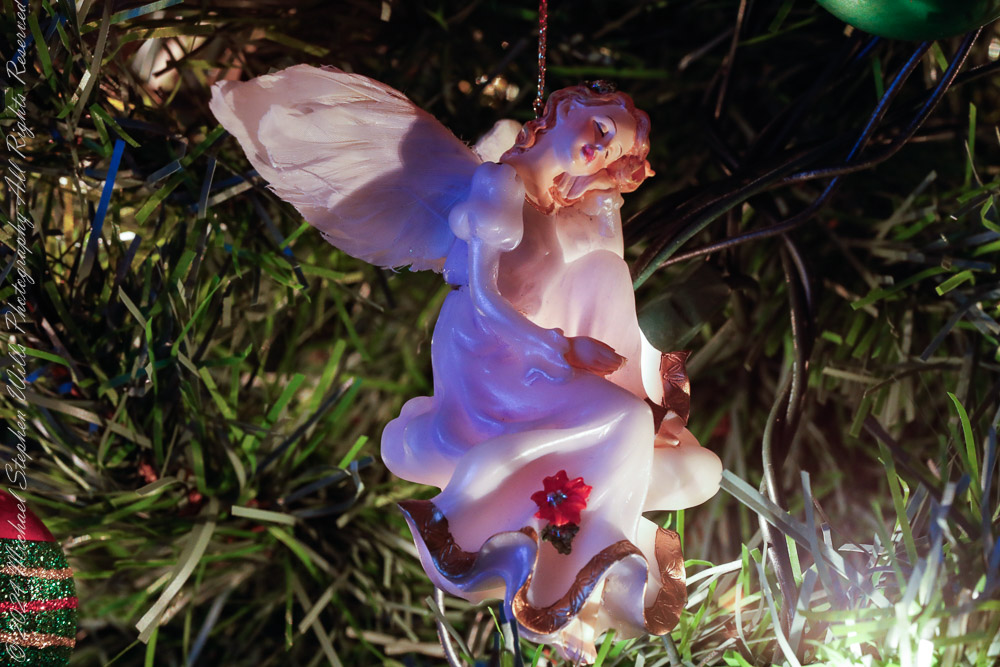
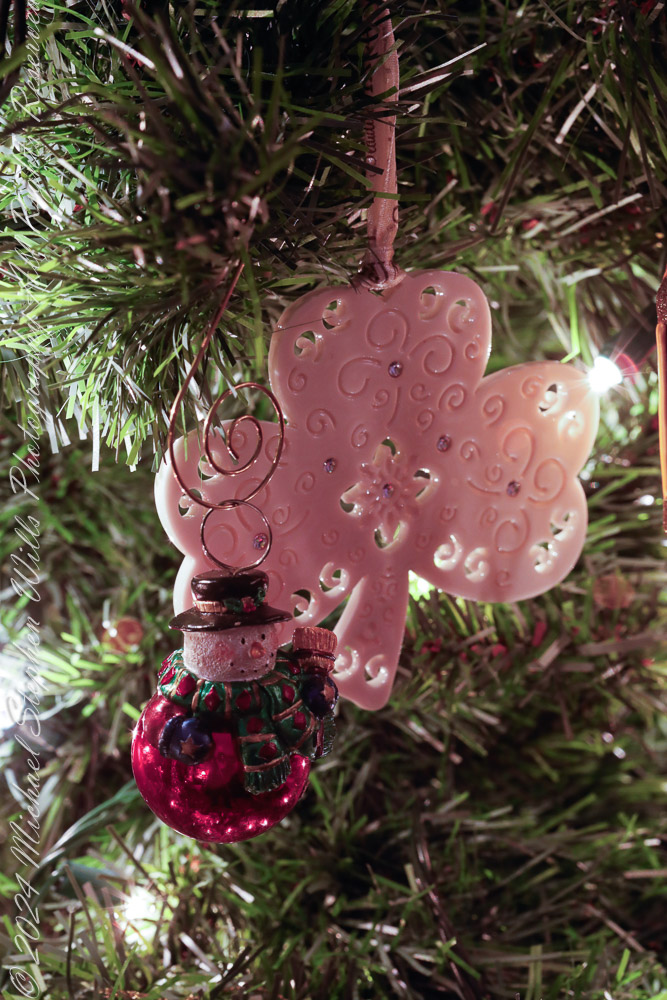
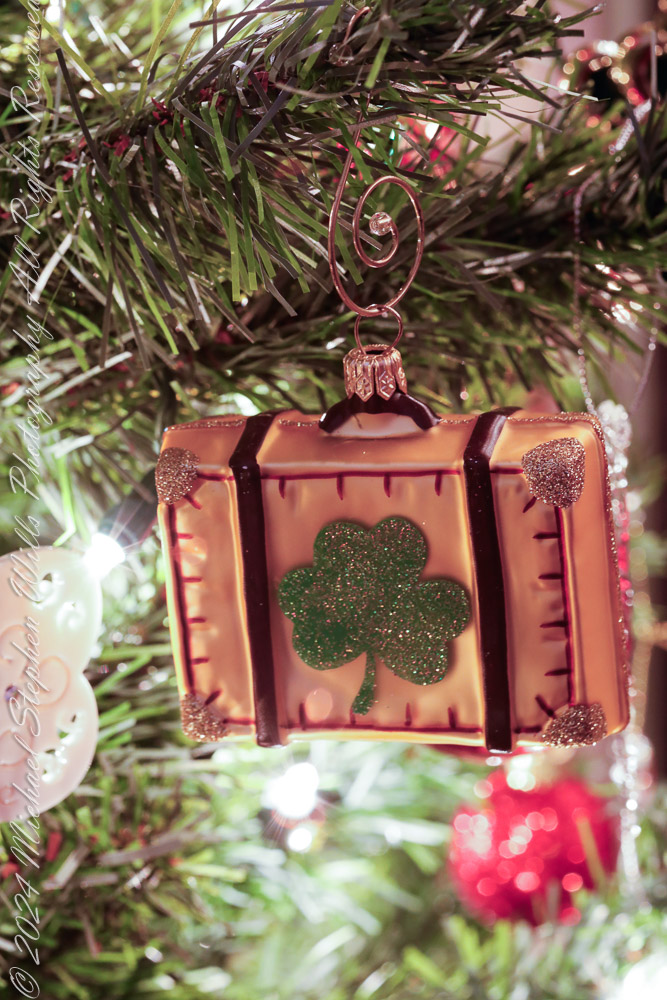
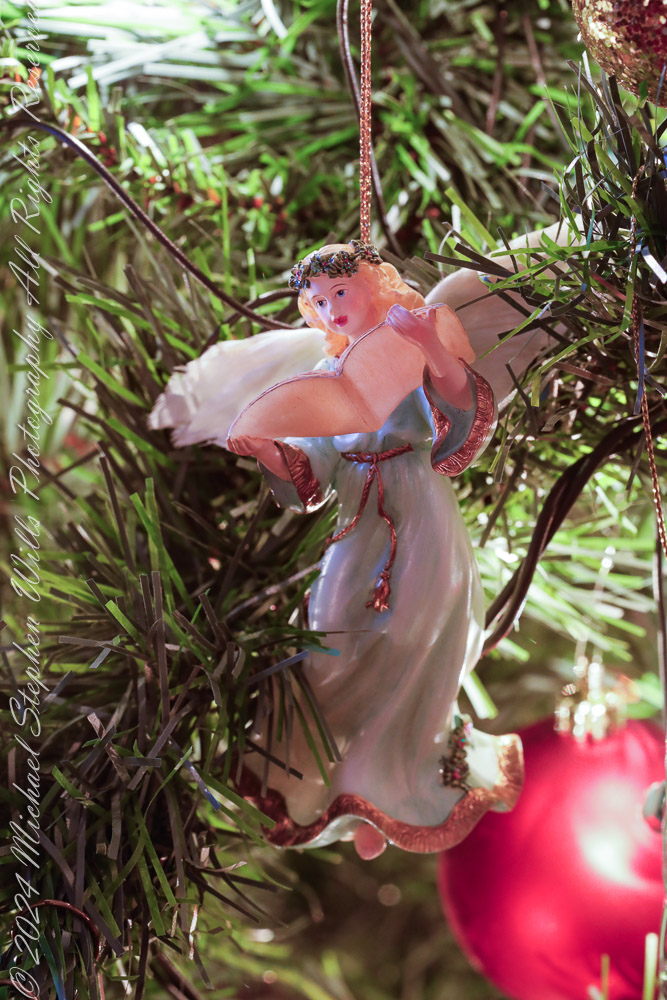
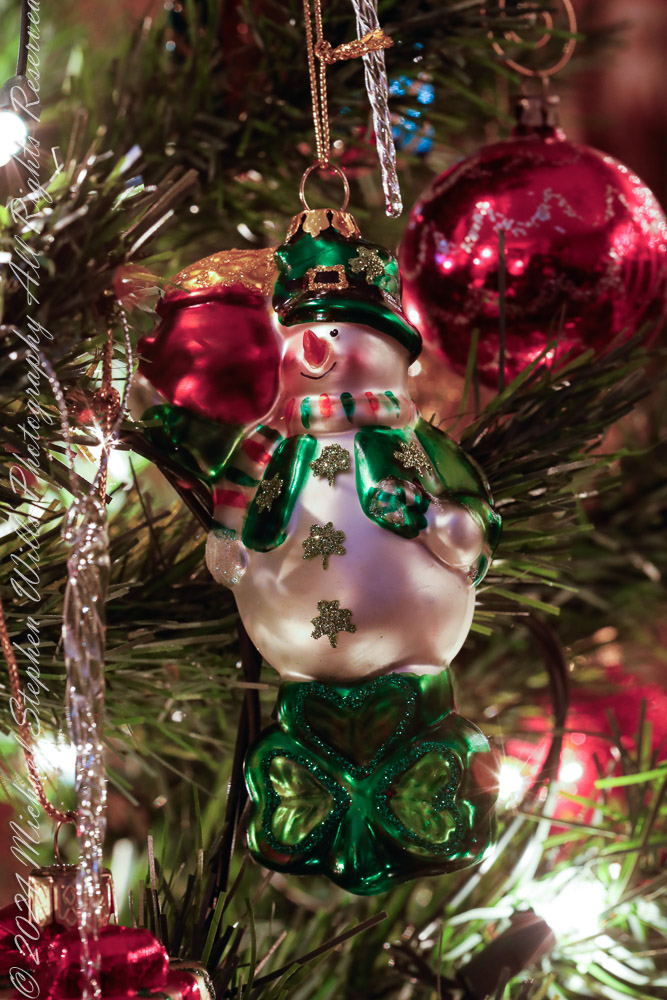
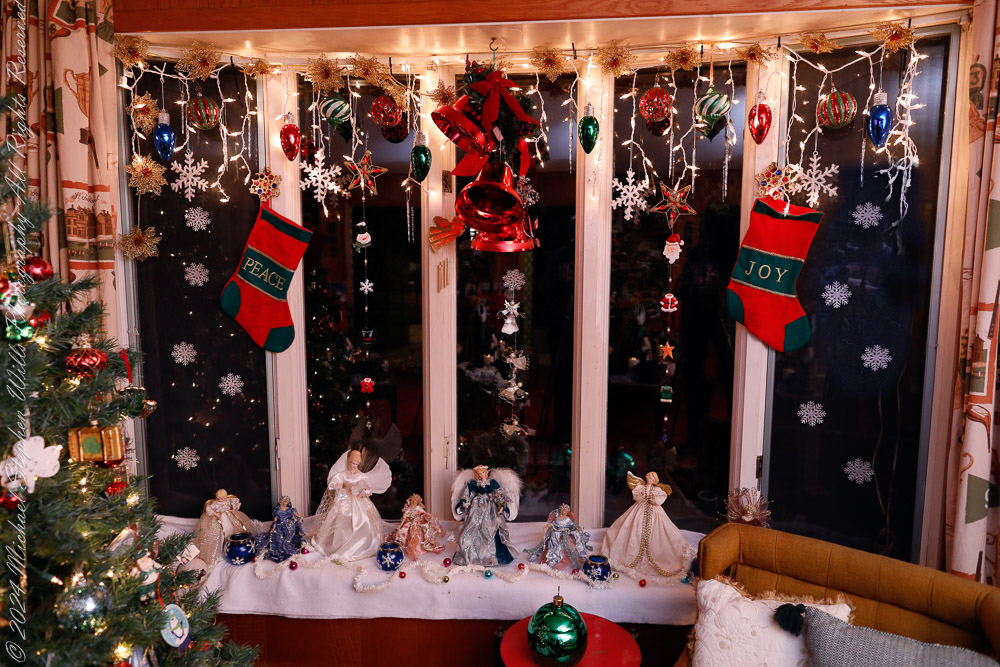
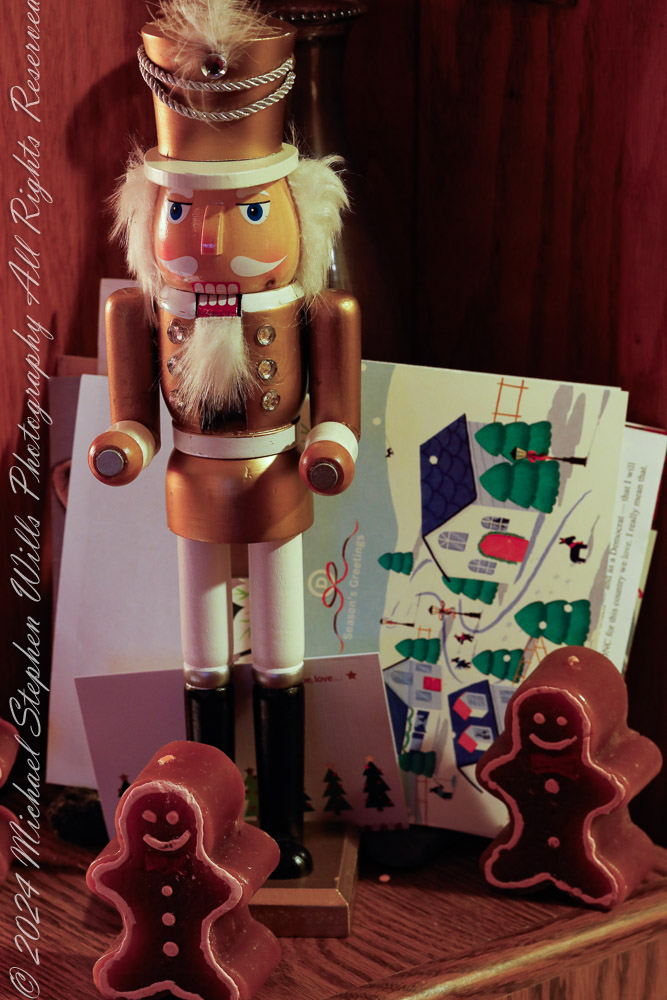
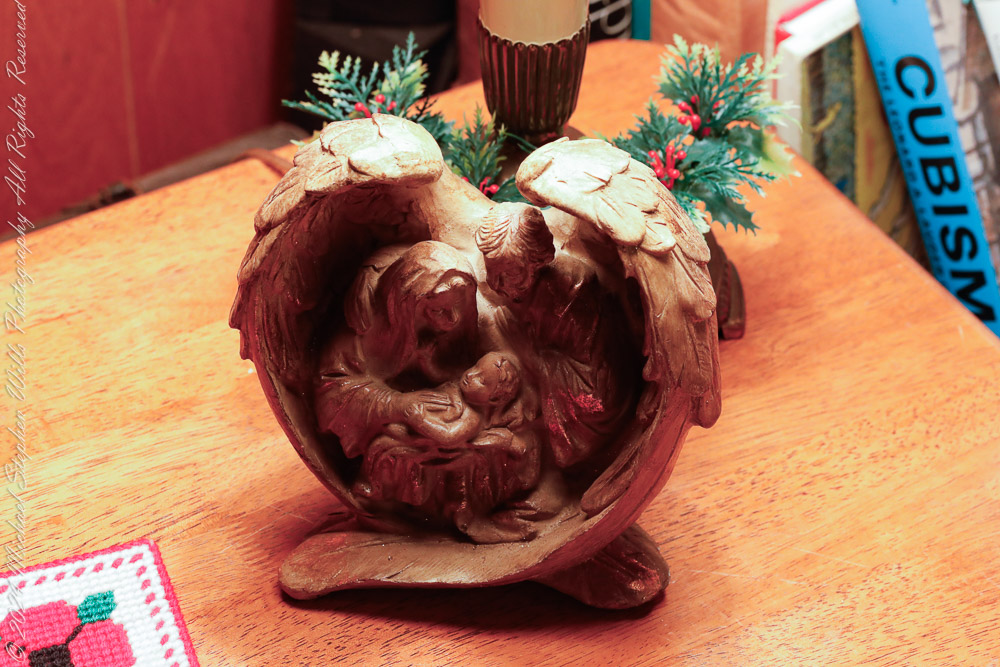
As the year draws to a close, our home is filled with the glow of lights, the shimmer of cherished ornaments, and the spirit of the season. Each decoration holds a memory, from angels watching over us to the Nativity scene that reminds us of the humble birth of Christ, our Savior.
This Christmas, we celebrate the greatest gift of all: God’s love made manifest through the birth of Jesus Christ. May the peace of His presence fill your hearts and homes, bringing comfort, joy, and hope that transcends all seasons.
As we gather with loved ones, let us remember the message of the angels: “Glory to God in the highest, and on earth peace, goodwill toward men.”
From our family to yours, may this holy season be a time of deep gratitude, boundless love, and renewed faith in the light that shines in the darkness.
Pam’s Christmas Decorations 2024
Enter your email to receive notification of future postings. I will not sell or share your email address.
Copyright 2024 All Rights Reserved Michael Stephen Wills
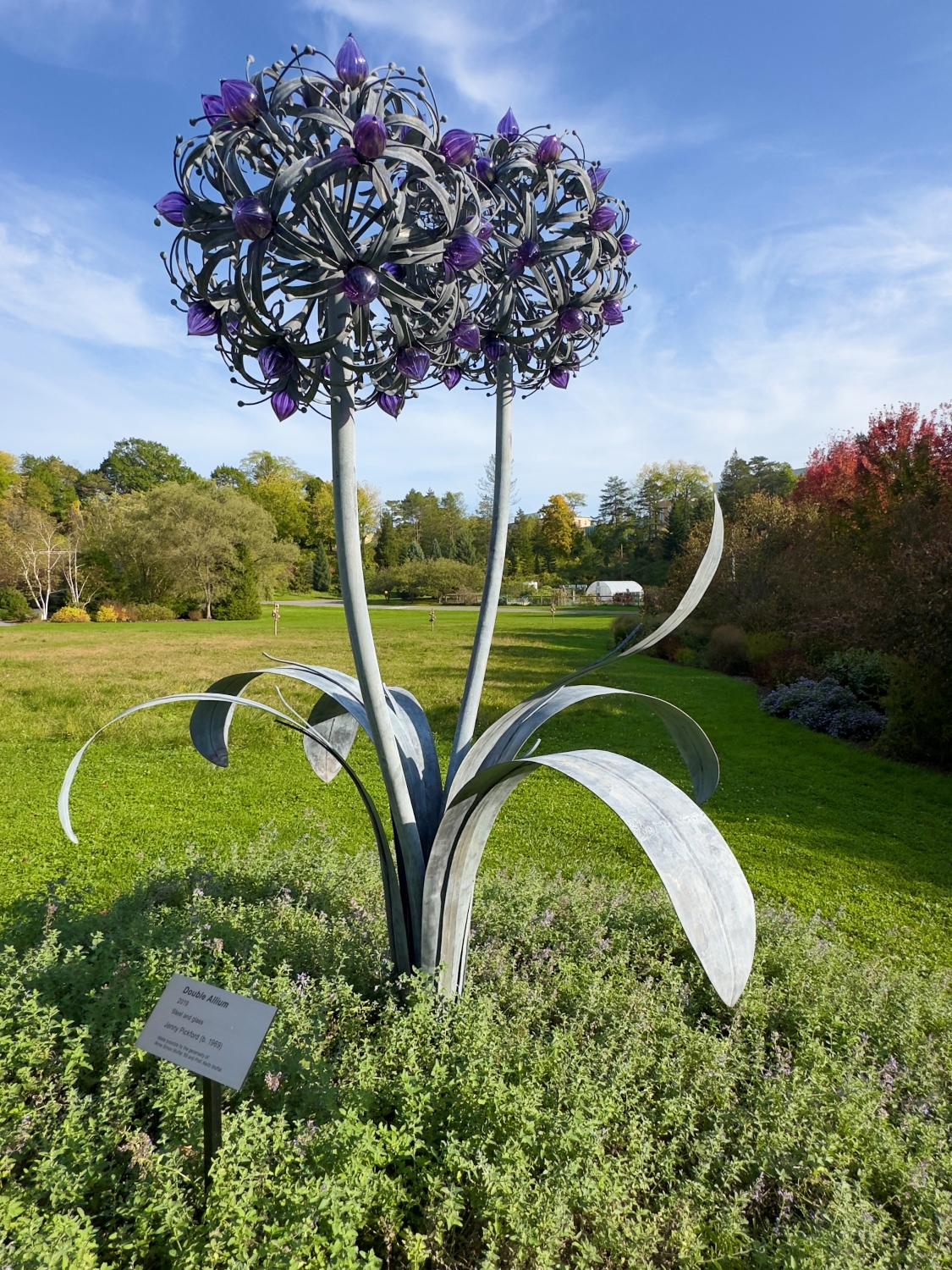
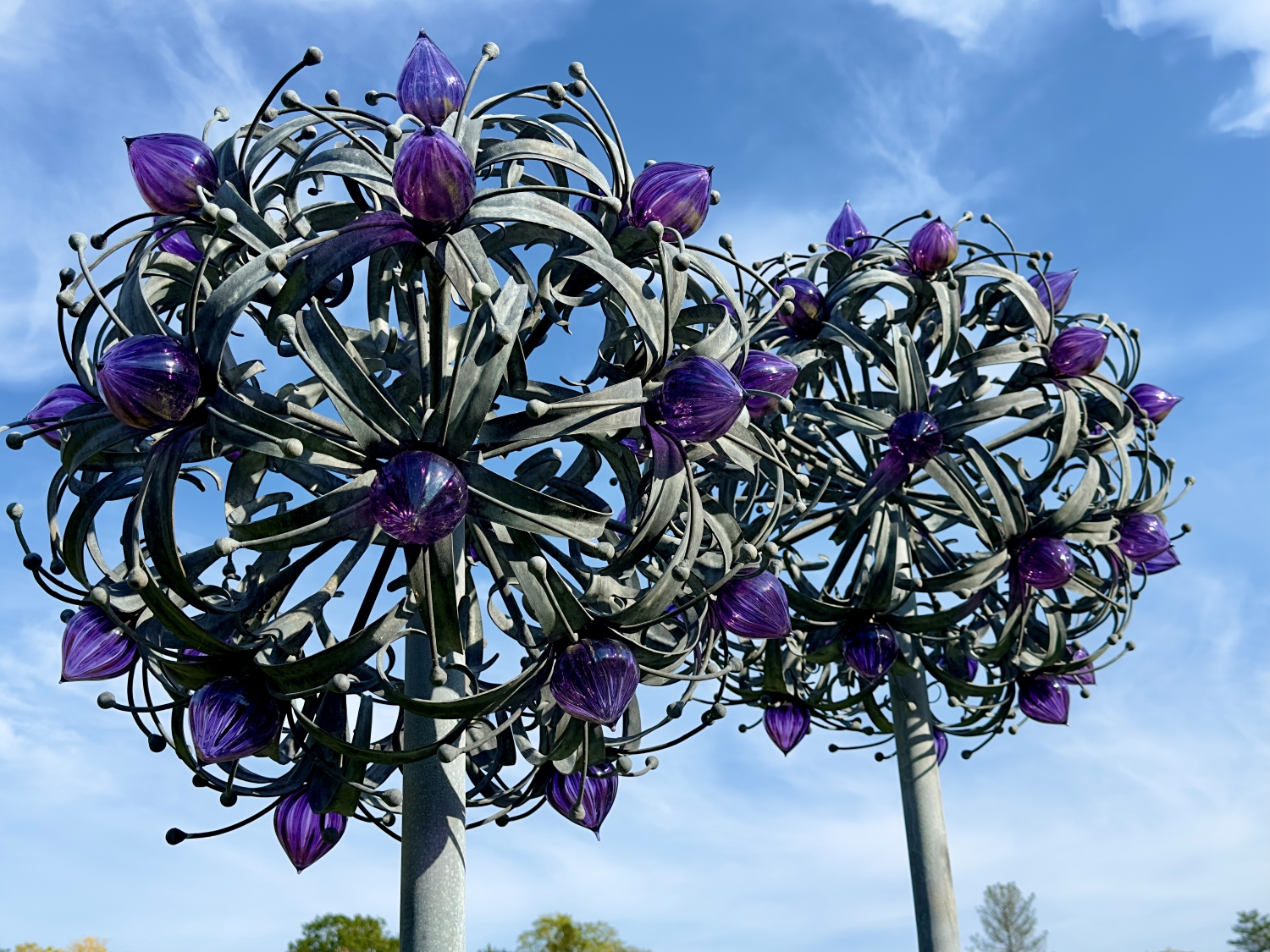
As I wander the paths of the Cornell Botanical Gardens near the Nevin Welcome Center, a towering sculpture arrests my attention, rising well over ten feet into the bright autumn sky. At first glance, it’s unmistakable—a pair of massive allium blooms crafted from steel and glass, an artistic tribute to the very flowers my wife, Pam, has come to love. This creation, titled Double Allium, is the work of British artist Jenny Pickford, completed in 2019. Made of robust steel and translucent purple glass, it stands proudly among the greenery, capturing both the delicacy and boldness of allium flowers.
A few summers ago Pam planted several allium in sunny locations, which exploded into violet firework-like blooms, each sphere teeming with tiny star-shaped flowers that clustered together into one massive, round bloom. When the alliums blossomed, they attracted a small frenzy of bees, and it became a shared delight for us to watch our garden transform into a pollinator’s paradise. Pam was captivated by the plants’ structure and beauty, as well as their ecological role in supporting bees—a small, vibrant ecosystem within our yard. Standing before Double Allium, I’m reminded of those summer days and the quiet joy we both found in observing our garden.
Bees and Allium in our summer garden, 2024
The scientific name for alliums, Allium giganteum (for the larger ornamental varieties), links them to a vast genus that includes onions, garlic, and leeks. These plants have been cultivated and revered by humans for thousands of years, not only for their culinary value but also for their symbolism in various cultures. In ancient Egypt, alliums were believed to represent eternity; their spherical form and concentric layers were thought to mirror the eternal nature of life. Even today, they bring a sense of timelessness to gardens worldwide, their tall stalks and spherical blooms defying gravity, standing tall against the changing seasons.
As I study Pickford’s sculpture, I’m struck by how faithfully it captures this essence of alliums—strength paired with grace, structure married to elegance. The steel stems curve gently yet rise powerfully from the ground, while the glass petals shimmer in the light, giving an almost ethereal quality to the blooms. Pickford, born in 1969, is known for her botanical-inspired sculptures that explore the intersection of nature and art. With Double Allium, she’s created a piece that feels alive, as if the blooms might sway in the wind or burst into real flowers at any moment.
For Pam and me, this sculpture pays homage to a beautiful plant; it’s a connection to our own experience with nature, a reminder of those summer mornings watching bees dance among our alliums. Standing beneath Double Allium, I feel a sense of continuity—a link between the art and our own small garden, between our life and the ancient cultures that cherished these plants, between the permanence of steel and the fleeting beauty of each summer bloom.
In this towering sculpture, Pickford has given us a mirror that reflects nature as well as our personal connection to it. “Double Allium” is a celebration of growth, strength, and beauty, qualities that Pam and I cherish in the alliums we tend and that we find echoed in this remarkable work of art.
Enter your email to receive notification of future postings. I will not sell or share your email address.
Copyright 2024 All Rights Reserved Michael Stephen Wills
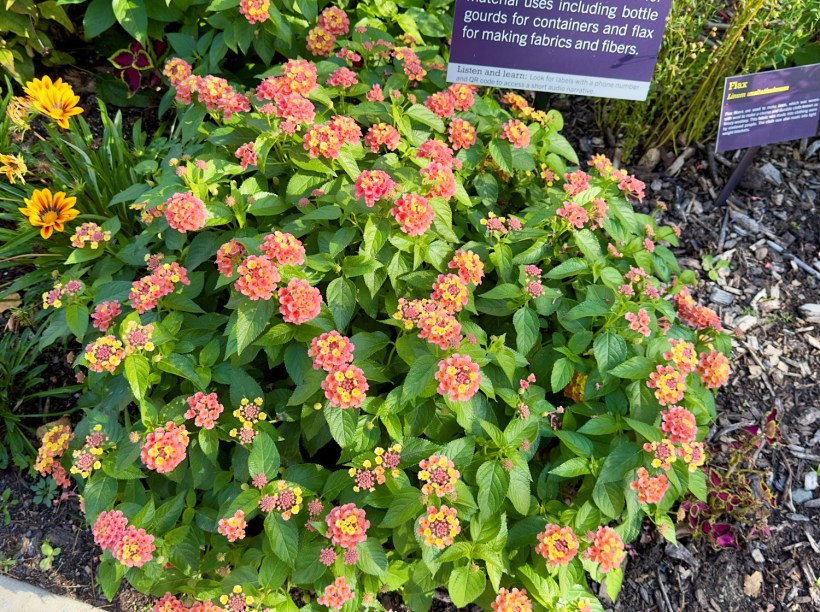
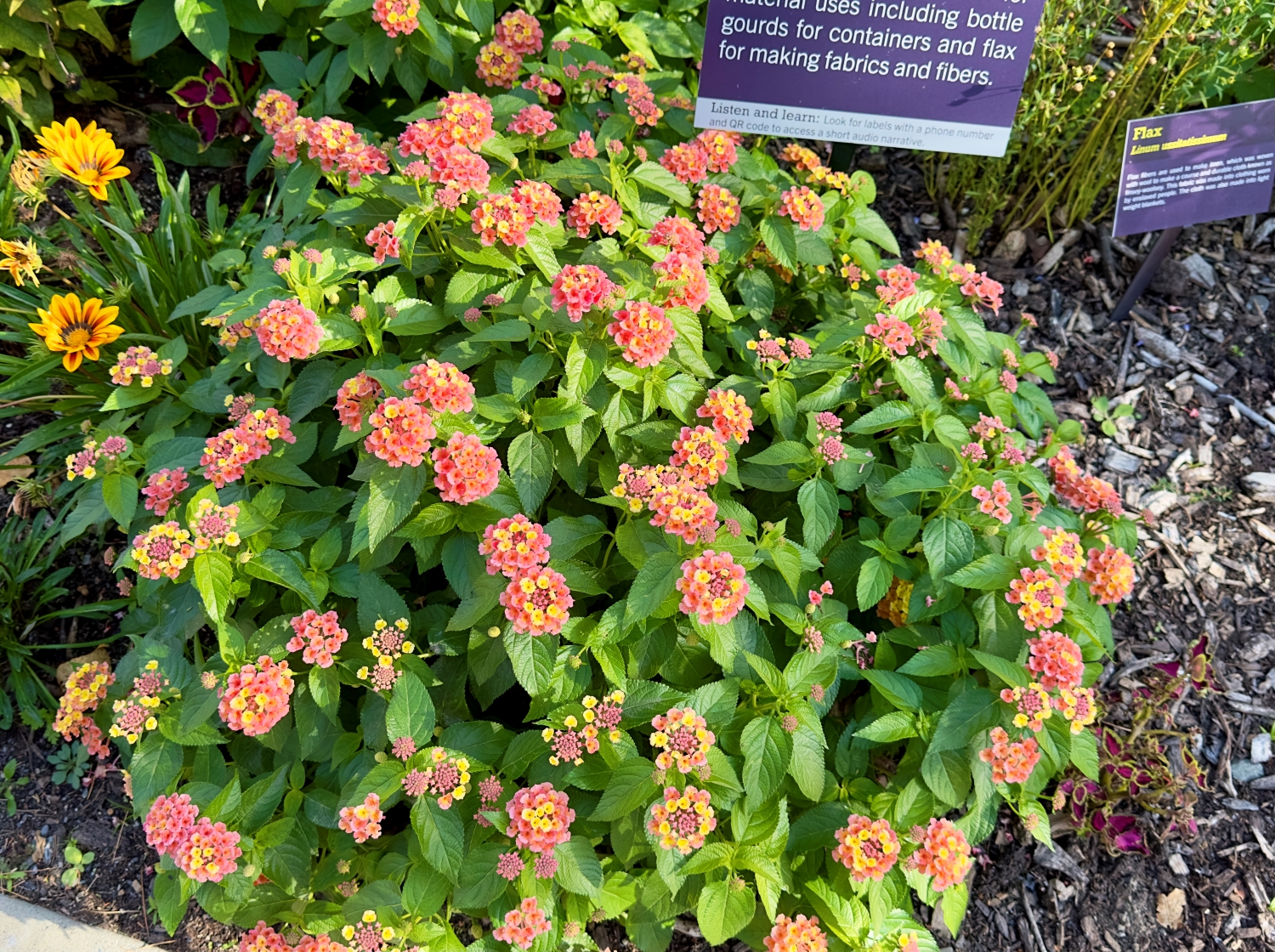
As I walk through the plantings around the Nevin Center at Cornell Botanical Gardens, a vibrant, eye-catching display catches my attention: the unmistakable Lantana camara. This plant, with its clusters of small, multicolored flowers, radiates warmth and liveliness, thriving among other garden residents in a riot of pink, orange, and yellow hues. Lantana is a plant with a rich, complex story—one that intertwines scientific discovery, historical intrigue, and enduring appeal in gardens worldwide.
Scientific Name and Origins
Lantana camara, commonly known simply as lantana, belongs to the Verbenaceae family. Originating in the tropical and subtropical regions of the Americas, particularly Central and South America, lantana has now spread globally. Its adaptability and resilience have allowed it to thrive in diverse environments, from warm Mediterranean climates to more tropical locales. The name Lantana comes from a genus of unrelated plants in the honeysuckle family, with which it shares a similar floral structure, while camara refers to a type or variety within this diverse genus.
Historical Journey and Spread
The journey of lantana around the world is one of both horticultural fascination and ecological caution. European explorers and botanists first brought lantana to Europe in the 17th century, where it quickly became a prized garden plant for its vibrant blooms and robust nature. By the 19th century, lantana had spread to various British colonies, including those in Africa, Asia, and Australia, as part of ornamental landscaping efforts. However, lantana’s success came with a downside: in regions with no natural predators or competition, it rapidly became invasive, outcompeting native plants and disrupting local ecosystems. Today, lantana is still admired for its beauty, but in some countries, it’s also carefully managed or controlled.
Garden Favorite and Common Uses
Despite its invasive tendencies in certain climates, lantana remains a beloved plant in gardens worldwide. Known for its drought tolerance and ability to bloom continuously in warm weather, lantana is a favorite for adding color and vibrancy to gardens and landscapes. Gardeners prize lantana for its resilience in hot, sunny locations and its ability to attract butterflies and other pollinators. The flowers emit a light fragrance and produce tiny berries, which, while attractive, are also toxic if ingested. Thus, lantana brings both allure and a hint of danger, drawing in pollinators while repelling those who might threaten it.
Medicinal and Cultural Uses
Historically, lantana has also been used medicinally in various cultures. In traditional folk medicine, parts of the plant have been used to treat ailments such as fevers, respiratory infections, and skin conditions. Indigenous communities in its native regions would often make poultices from the leaves to apply to wounds or inflamed areas. Though some of these traditional uses persist today, modern science advises caution due to the plant’s potential toxicity, especially to livestock and humans if ingested in significant quantities.
A Double-Edged Beauty
Lantana camara is a plant of contrasts. Its cheerful flowers and pollinator-friendly nature make it a joy to behold in controlled garden settings, like those around the Nevin Center. But its spread across continents and the ecological impact in sensitive regions remind us of nature’s unpredictability. Lantana’s resilience, beauty, and storied history make it a plant to admire—and respect. Whether as a garden ornament or an object of scientific curiosity, lantana captures the complexity of human interaction with nature, bringing a colorful reminder that beauty often comes with responsibility.
Enter your email to receive notification of future postings. I will not sell or share your email address.
Copyright 2024 All Rights Reserved Michael Stephen Wills
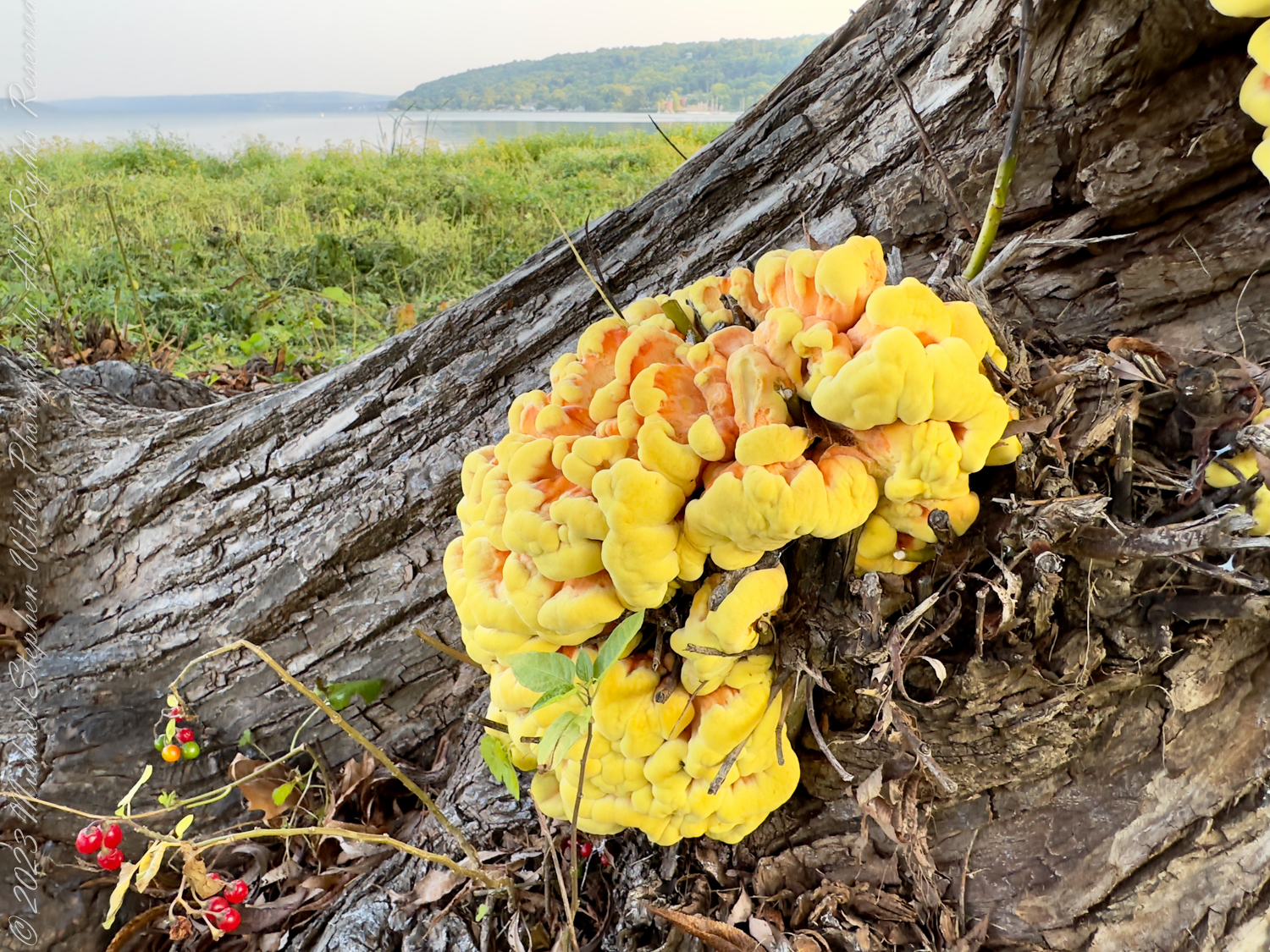
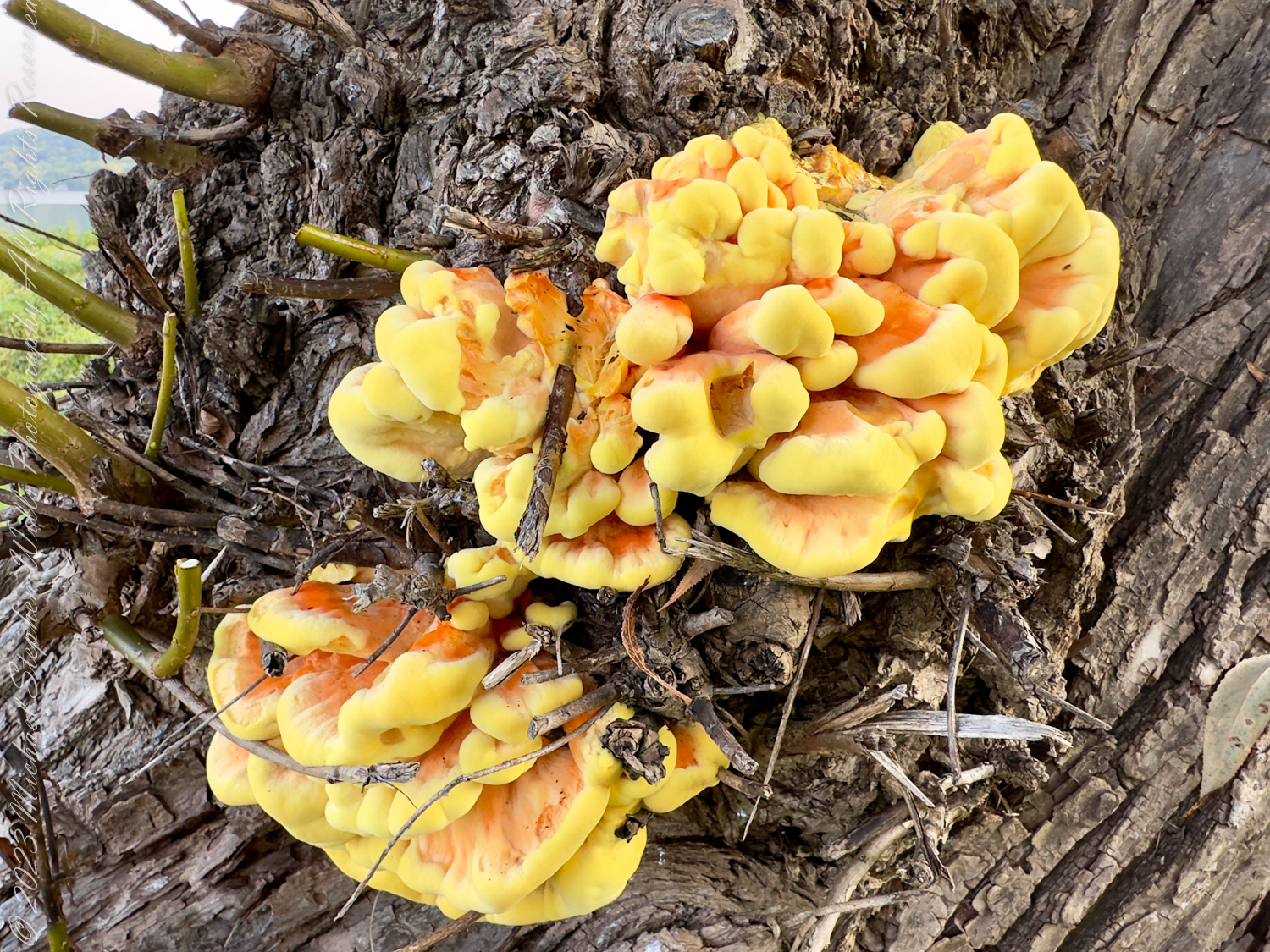
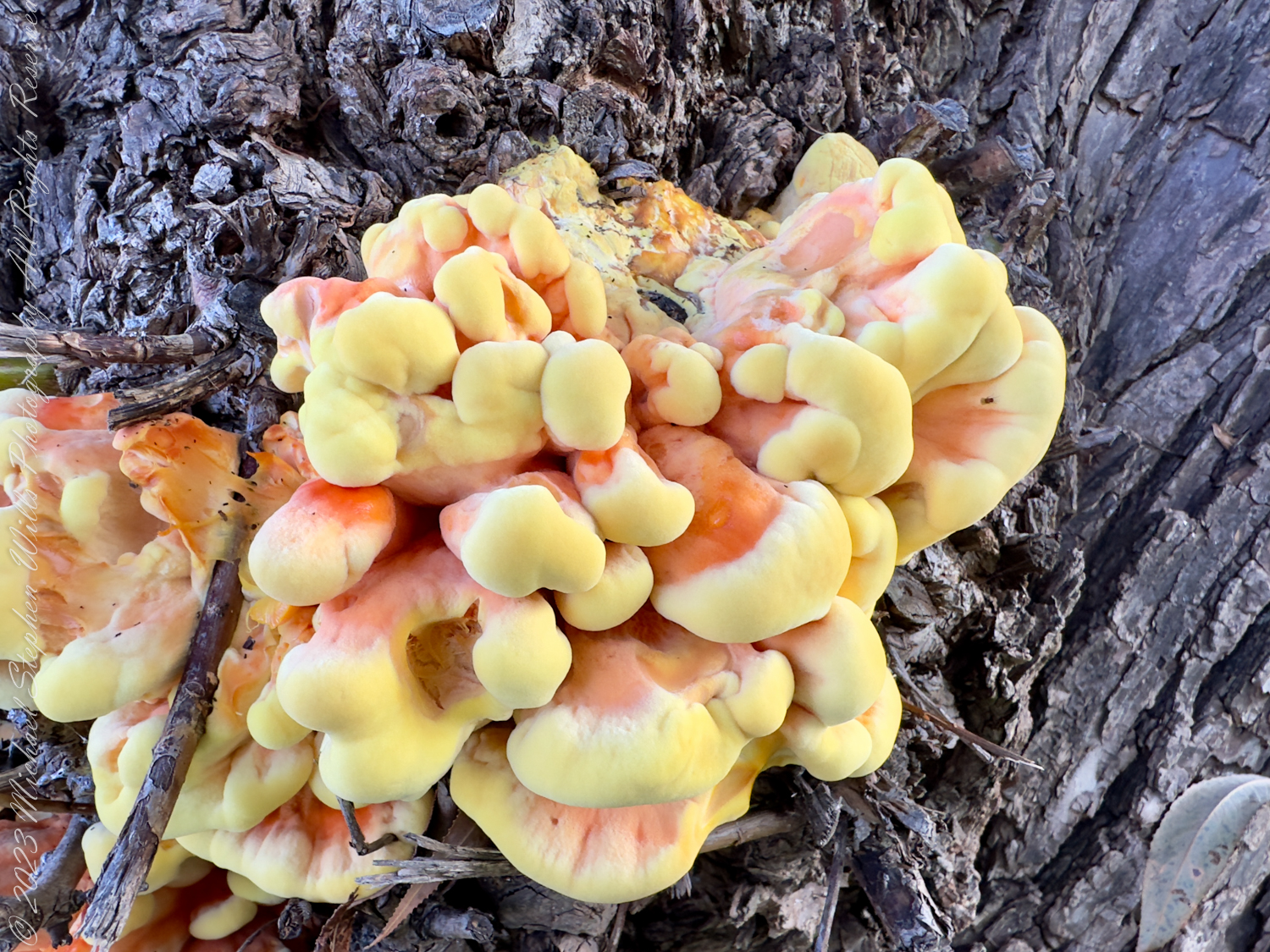
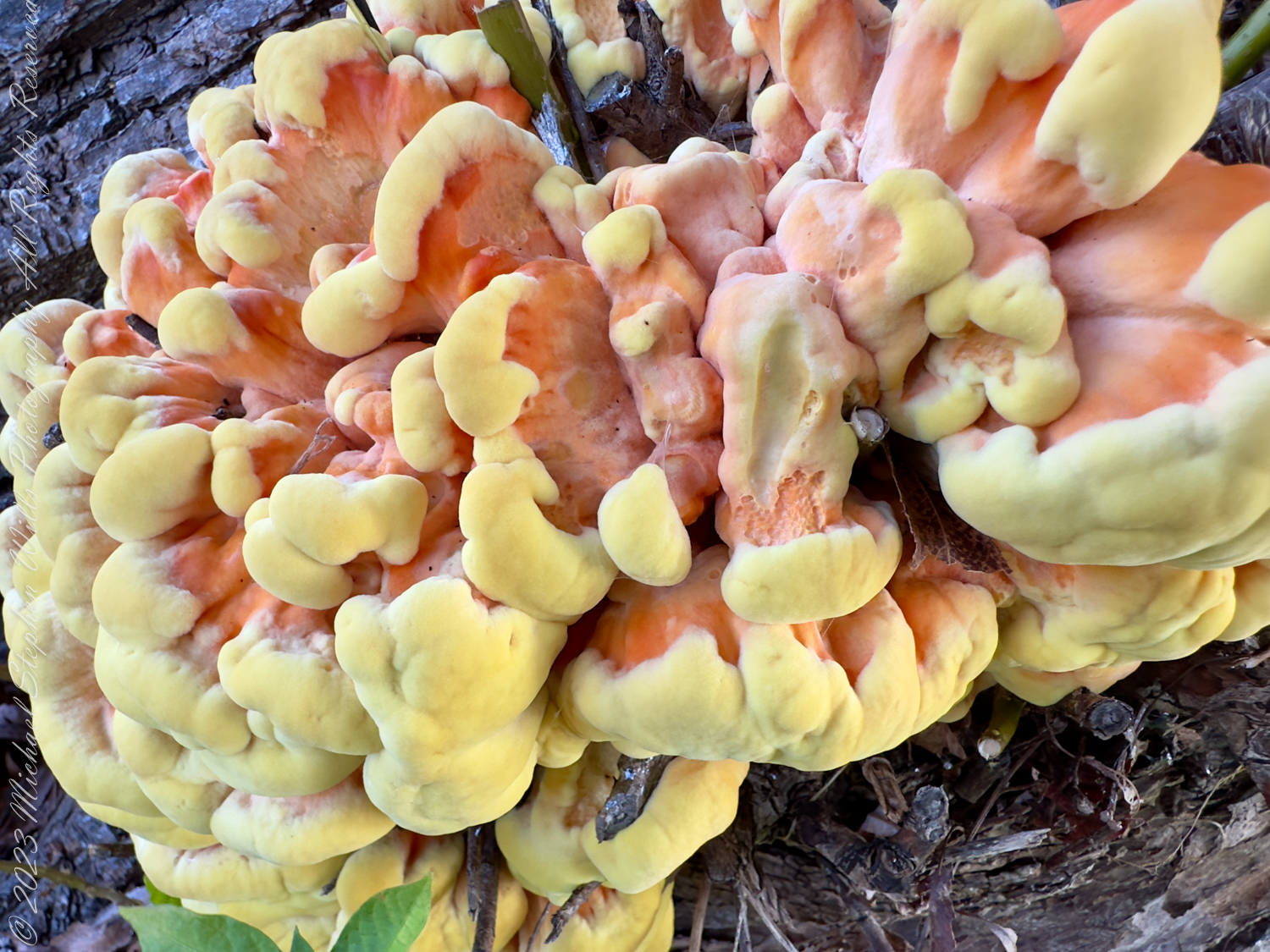
On a sunny September morning along the shores of Cayuga Lake, I encountered the vibrant Chicken of the Woods fungus. Its striking colors and intriguing history make it a fascinating discovery in nature’s ongoing cycle of life and decay.
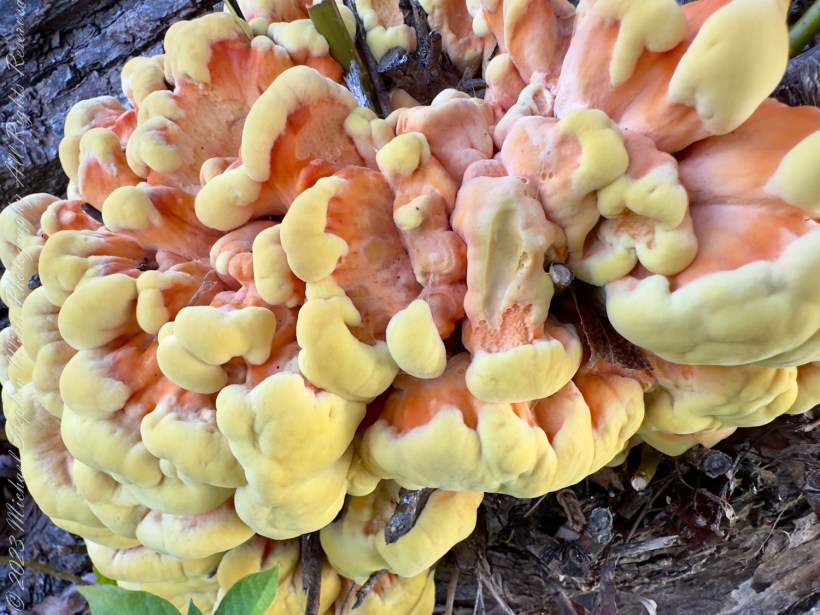
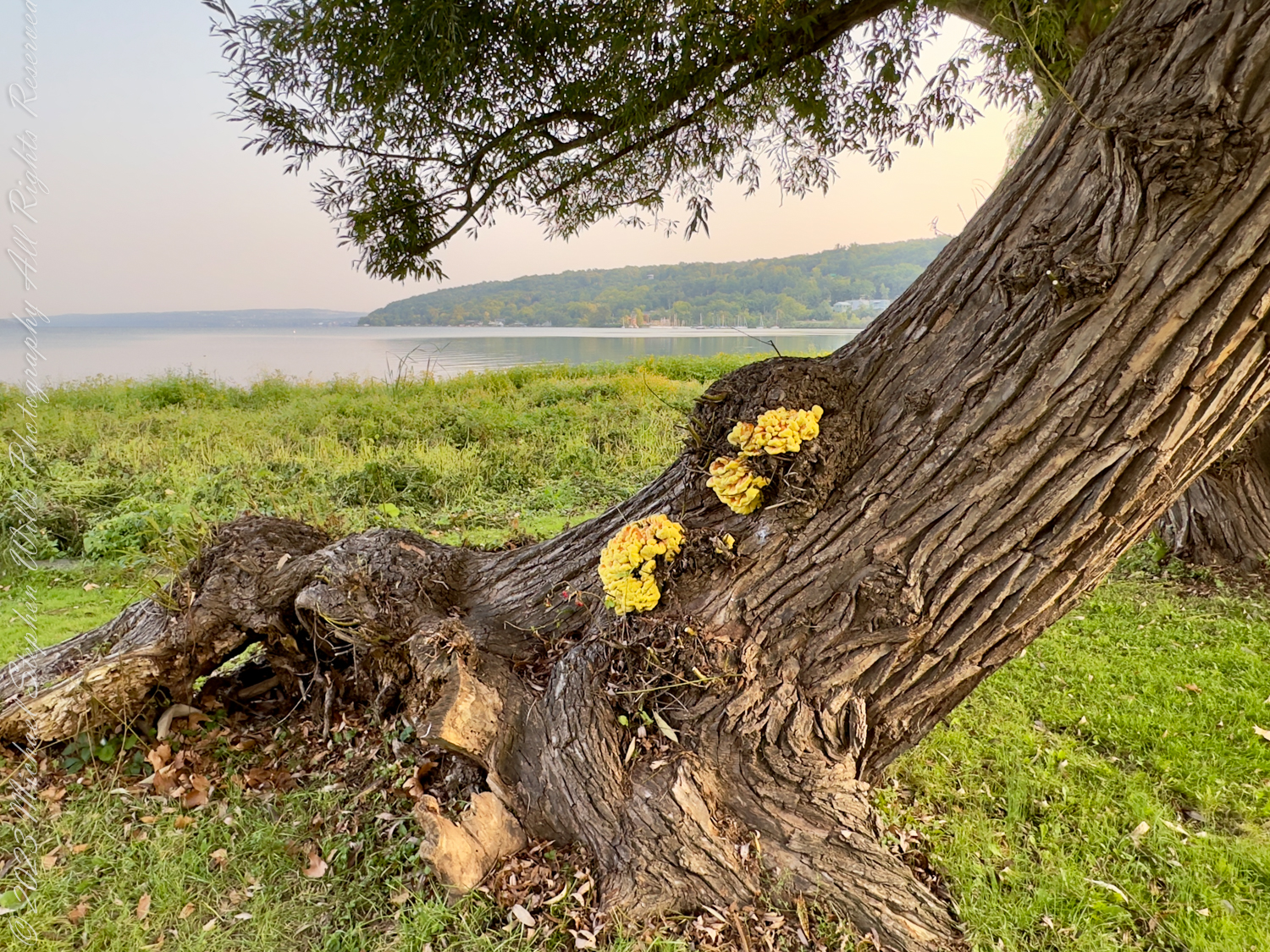
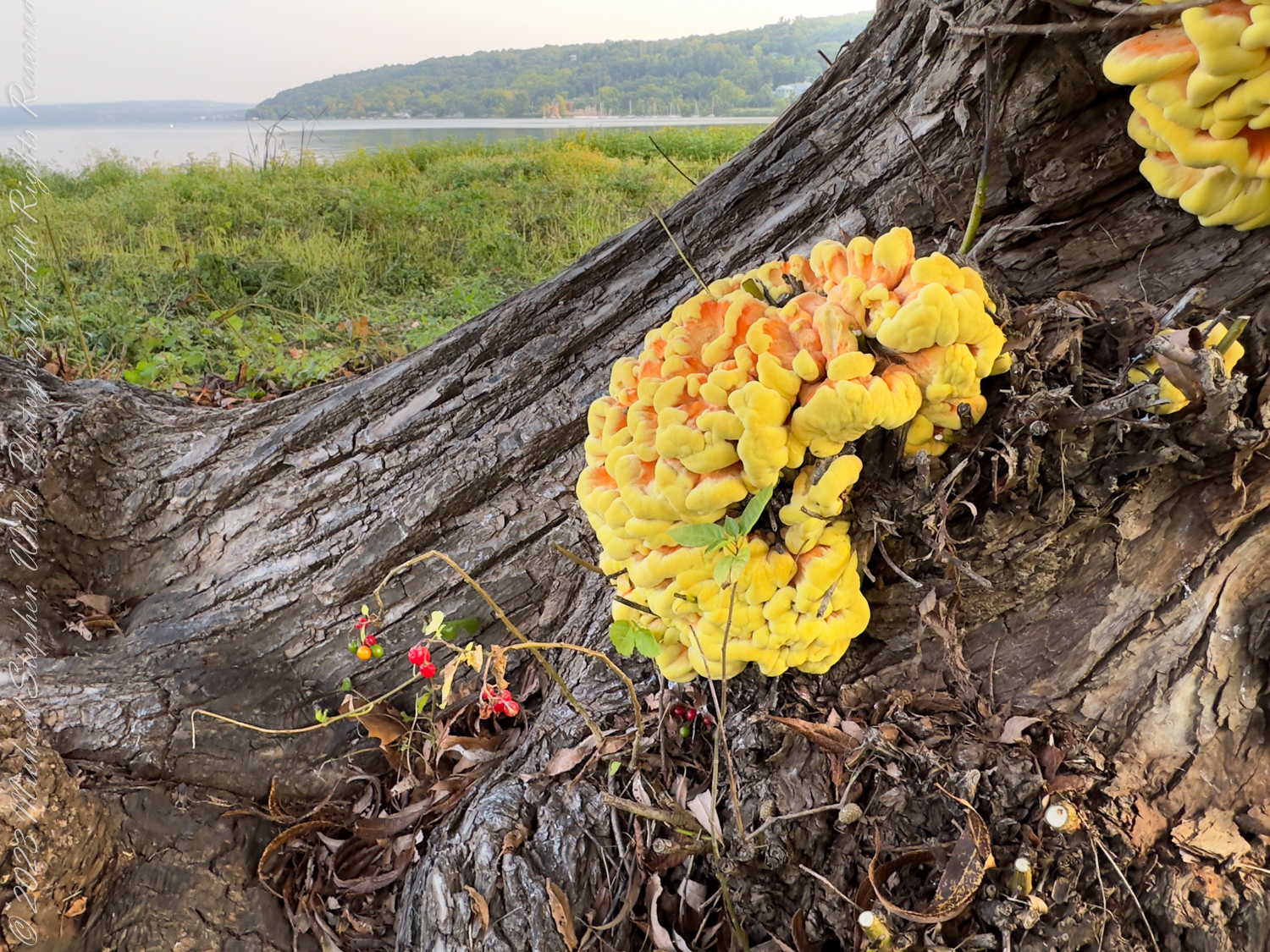
It was a crisp, sunny September morning when Pam and I set out for a leisurely walk along the shore of Cayuga Lake in Ithaca, New York. The lake shimmered in the morning light, framed by the early hints of fall colors on the surrounding hills. We had been walking for some time, enjoying the peaceful rhythm of nature, when something unusual caught my eye—a cluster of bright yellow-orange growths on the trunk of an apparently hale White Willow tree.
Curious, I approached the tree, and upon closer inspection, I realized these growths were something special, took these photographs of the vibrant clusters and later researched them to be Laetiporus sulphureus, commonly known as Chicken of the Woods. The striking colors of the fungus, a combination of deep orange and golden yellow, stood out in stark contrast to the gnarled, dark bark of the willow. It was a discovery that sparked a deeper interest in learning about the fascinating history and characteristics of this unique fungus.
The Vibrant History of Chicken of the Woods
Laetiporus sulphureus has been known to mycologists and naturalists for centuries, and its distinctive appearance has earned it a place among the most recognizable fungi in the world. Its common name, Chicken of the Woods, stems from the texture and flavor of its flesh, which, when cooked, is said to resemble that of chicken. This has made it a popular edible mushroom among foragers, particularly in Europe and North America, where it often grows on hardwood trees such as oak, cherry, and, as I found, occasionally on willows.
The fungus was first scientifically described by German mycologist August Batsch in 1789. Since then, it has been the subject of numerous studies, particularly due to its unique ability to grow on living trees, decaying wood, and sometimes even on dead trunks. This dual nature makes it both a decomposer and a potential pathogen, depending on the health of its host tree.
Historically, Chicken of the Woods has had various uses, ranging from culinary to medicinal. In traditional folk medicine, it was used for its antibacterial properties, and some cultures believed it could help heal wounds or infections when applied as a poultice. Today, research continues into its potential medicinal applications, including its possible role in supporting immune function and its antioxidant properties.
A Friend to Some, a Foe to Trees
While Laetiporus sulphureus may delight foragers and mushroom enthusiasts, it is not always welcomed by the trees it inhabits. The fungus is classified as a saprotroph, meaning it feeds on dead or decaying organic matter. However, it is also capable of acting as a parasite, attacking the heartwood of living trees. Over time, the fungus can cause brown rot, a form of decay that weakens the tree from the inside out. For trees already compromised by age or environmental stress, an infestation of Chicken of the Woods can be the final blow, leading to their eventual death and collapse.
The willow tree I encountered by Cayuga Lake had clearly seen many seasons, its twisted trunk and sprawling limbs a testament to decades of life along the shoreline. The presence of the fungus, while beautiful and intriguing, could also be an indicator that this tree was in decline. Still, the symbiotic relationship between the tree and the fungus was a reminder of nature’s cycles—of life, decay, and renewal.
Culinary and Medicinal Uses of Chicken of the Woods
One of the most interesting aspects of Chicken of the Woods is its edibility. Foragers and chefs alike prize the young, tender fruiting bodies for their chicken-like texture and mild flavor. When prepared properly, the fungus can be sautéed, fried, or even used in stews, providing a nutritious and flavorful addition to a variety of dishes. However, caution is required, as some individuals may experience allergic reactions or gastrointestinal upset after consuming it. Additionally, older specimens of the fungus can become woody and less palatable.
Beyond the kitchen, Chicken of the Woods has a history of medicinal use. In some cultures, it has been used to treat ailments ranging from respiratory infections to digestive issues. Modern research is beginning to explore the bioactive compounds present in the fungus, with preliminary studies suggesting that it may have antibacterial and antioxidant properties. These potential health benefits add yet another layer of intrigue to this already fascinating species.
An Essential Role in the Ecosystem
As well as serving human needs, Chicken of the Woods also plays a vital role in the ecosystems it inhabits. As a decomposer, the fungus breaks down dead and decaying wood, returning valuable nutrients to the soil and promoting the growth of new plant life. In this way, it contributes to the cycle of life and death that sustains forest ecosystems. Various insects and animals, including beetles and birds, may also use the fungus as a food source or shelter, further highlighting its ecological importance.
A Lasting Impression
As Pam and I continued our walk along Cayuga Lake, I couldn’t help but feel a sense of gratitude for the serendipitous discovery I had made that morning. The sight of the Chicken of the Woods clinging to the willow tree was a vivid reminder of nature’s endless capacity for surprise and wonder. Though this fungus may be humble in its origin, its history, uses, and ecological significance elevate it to a position of great interest and value in the natural world.
In that quiet September morning light, standing beside the lake with the colors of early autumn beginning to emerge, I realized that moments like these—moments of connection with nature—are what keep me returning to the trails and shores of Ithaca, always eager for the next discovery.
Copyright 2024 Michael Stephen Wills All Rights Reserved





 Michael Stephen Wills Photography