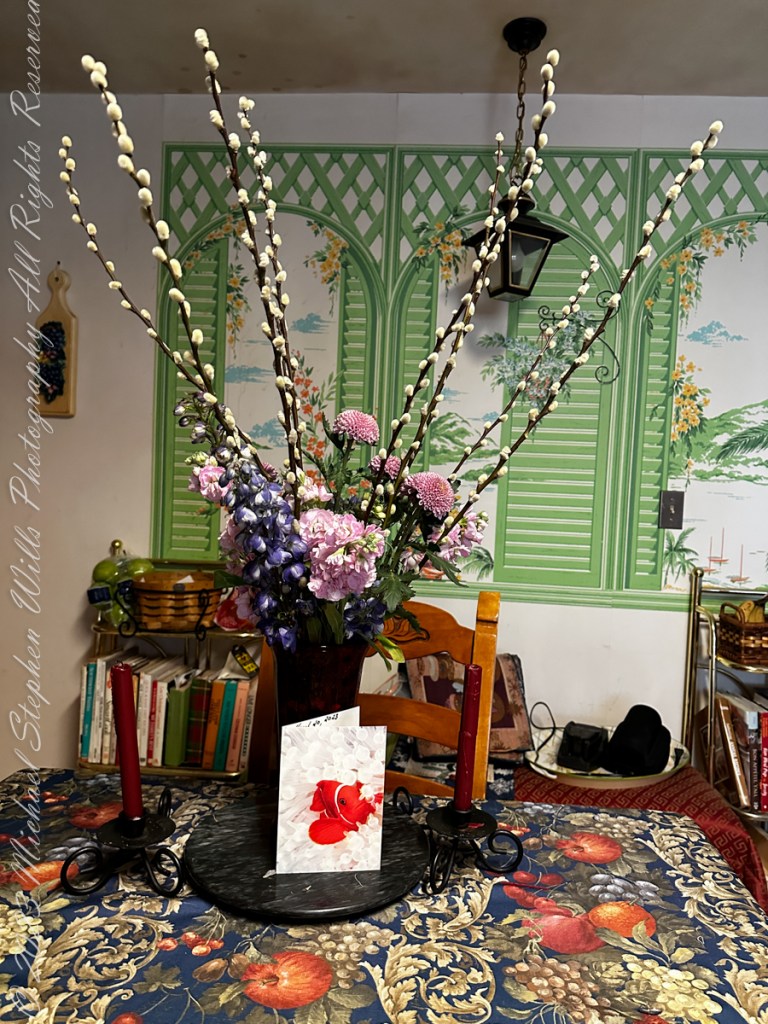
The arrangement is composed of Pussy Willow, “Lollipop” chrysanthemums, Blue Larkspur (Delphinium) and an unidentified pink flower the grows from a spike, like the Larkspur.
On the card is a Spine-cheeked ClownFish. This fish species lives among the tentacles of the Bubble-tip sea anemone, also in photograph. “Both organisms form a symbiotic relationship: the clownfish will rarely stray more than a few yards from its stinging tent of protection. The anemone benefits from the darting antics of the clownfish, which protect the anemone from its predators.” Quote from the Sierra club. Photograph on card by Mike Bacon.
Copyright 2023 Michael Stephen Wills All Rights Reserved
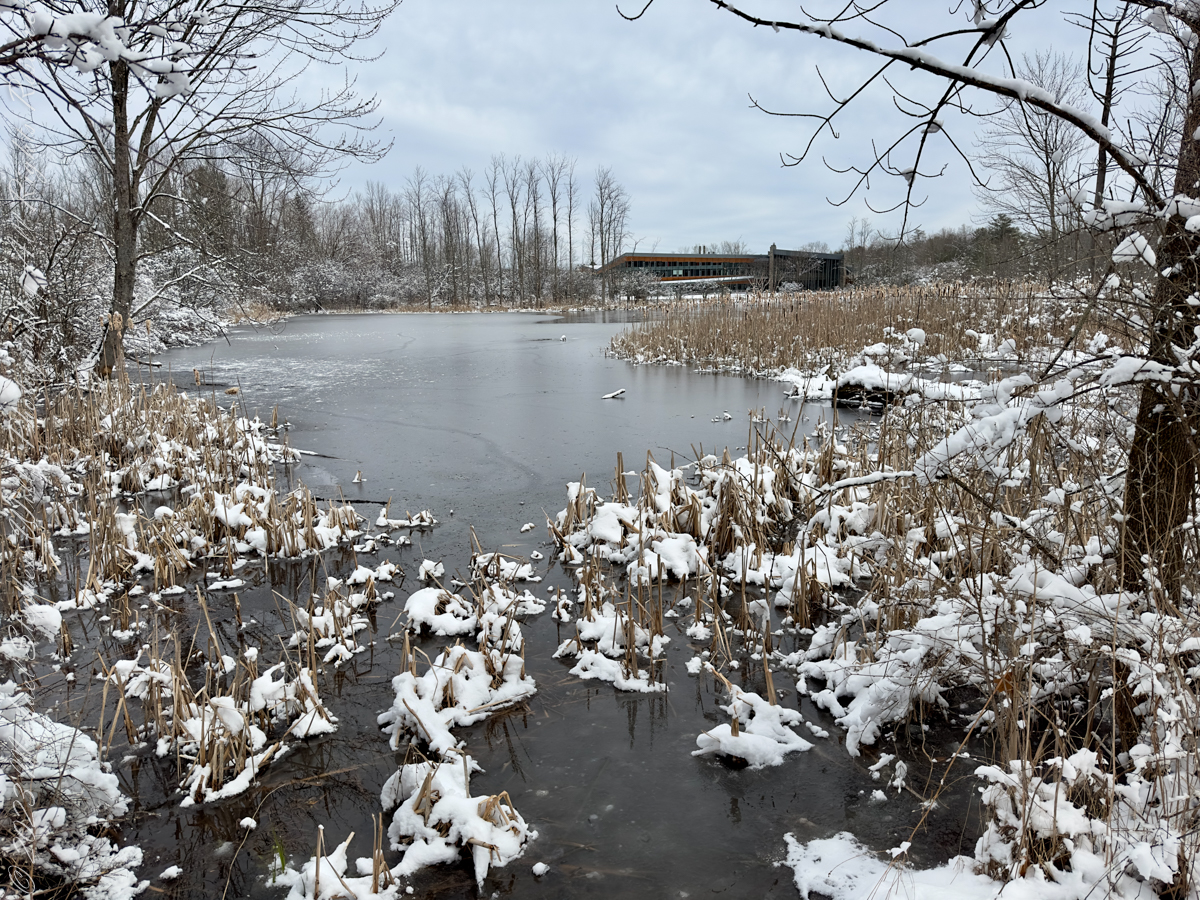
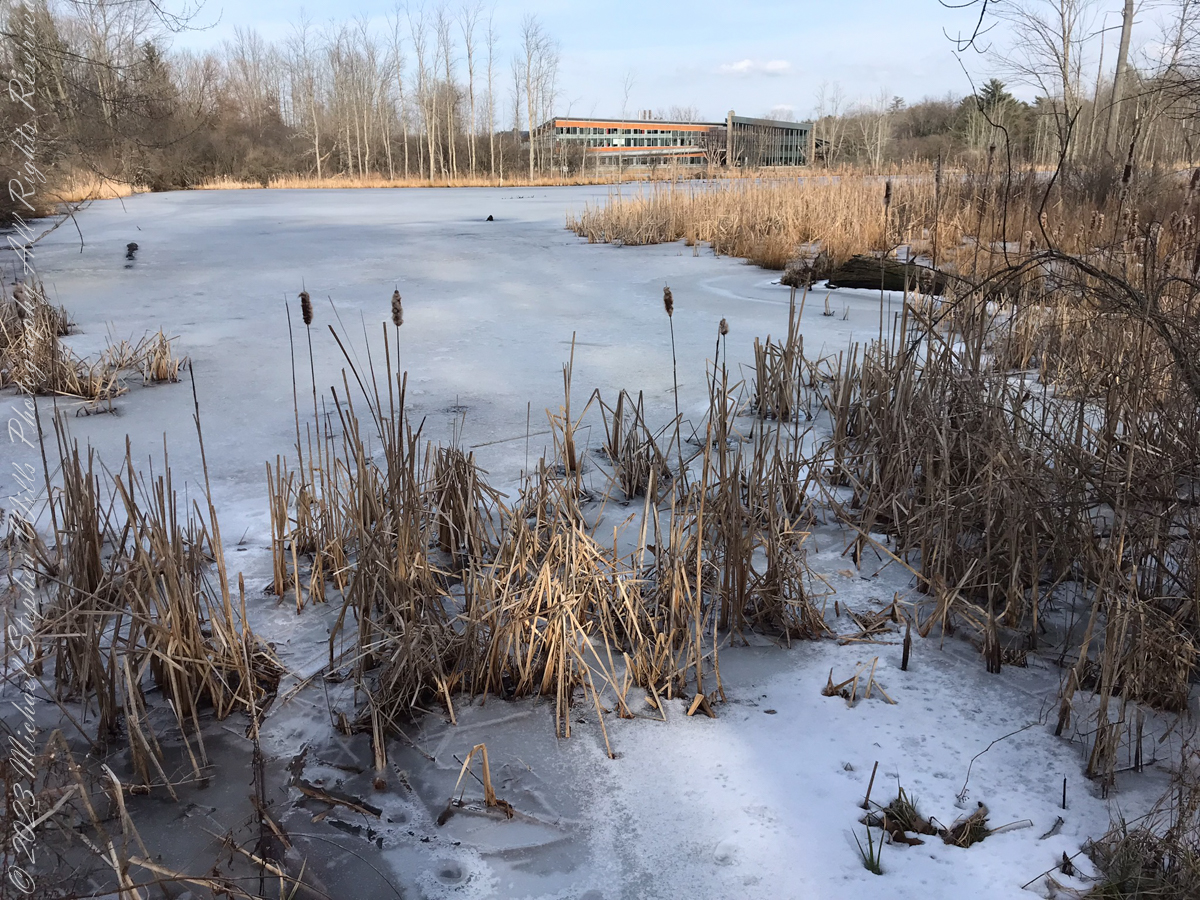
These two views of Imogene Powers Johnson Center for Birds and Biodiversity across Sapsucker Woods Pond on a March afternoon are separated by 12 months, a year. Wilson Trail, Sapsucker Woods, Cornell Lab of Ornithology, Ithaca, Tompkins County, New York.
2023 using the IPhone 14 ProMax triple camera, raw format, edited on the phone
In the foreground is the cattail plant, the North American species Typha latifolia. There are over 30 species in this useful genera.
2022 using the IPhone 7 back camera
Culinary
Many parts of the Typha plant are edible to humans. Before the plant flowers, the tender inside of the shoots can be squeezed out and eaten raw or cooked. The starchy rhizomes are nutritious with a protein content comparable to that of maize or rice. They can be processed into flour with 266 kcal per 100 grams and are most often harvested from late autumn to early spring. They are fibrous, and the starch must be scraped or sucked from the tough fibers. Baby shoots emerging from the rhizomes, which are sometimes subterranean, can be picked and eaten raw. Also underground is a carbohydrate lump which can be peeled and eaten raw or cooked like a potato. The plant is one championed by survival experts because various parts can be eaten throughout the year. Plants growing in polluted water can accumulate lead and pesticide residues in their rhizomes, and these should not be eaten.
The rind of young stems can be peeled off, and the tender white heart inside can be eaten raw or boiled and eaten like asparagus. This food has been popular among the Cossacks in Russia and has been called “Cossack asparagus.” The leaf bases can be eaten raw or cooked, especially in late spring when they are young and tender. In early summer the sheath can be removed from the developing green flower spike, which can then be boiled and eaten like corn on the cob. In mid-summer when the male flowers are mature, the pollen can be collected and used as a flour supplement or thickener.
Agriculture
The seeds have a high linoleic acid content and can be used to feed cattle and chickens. They can also be found in African countries like Ghana.
Harvesting cattail removes nutrients from the wetland that would otherwise return via the decomposition of decaying plant matter. Floating mats of cattails remove nutrients from eutrophic bodies of freshwater.
Building material
For local native tribes around Lake Titicaca in Peru and Bolivia, Typha were among the most important plants and every part of the plant had multiple uses. For example, they were used to construct rafts and other boats.
During World War II, the United States Navy used the down of Typha as a substitute for kapok in life vests and aviation jackets. Tests showed that even after 100 hours of submersion, the buoyancy was still effective.
Typha are used as thermal insulation in buildings as an organic alternative to conventional insulating materials such as glass wool or stone wool.
Paper
Typha stems and leaves can be used to make paper. It is strong with a heavy texture and it is hard to bleach, so it is not suitable for industrial production of graphical paper. In 1853, considerable amounts of cattail paper were produced in New York, due to a shortage of raw materials.[33] In 1948, French scientists tested methods for annual harvesting of the leaves. Because of the high cost, these methods were abandoned, no further research was done. Today Typha is used to make decorative paper.
Fiber
Fibers up to 4 meters long can be obtained from the stems when they are treated mechanically or chemically with sodium hydroxide. The stem fibers resemble jute and can be used to produce raw textiles. The leaf fibers can be used as an alternative to cotton and linen in clothing. The yield of leaf fiber is 30 to 40 percent and Typha glauca can produce 7 to 10 tons per hectare annually.
Biofuel
Typha can be used as a source of starch to produce ethanol. Because of their high productivity in northern latitudes, Typha are considered to be a bioenergy crop.
Other
The seed hairs were used by some indigenous peoples of the Americas[which?] as tinder for starting fires. Some tribes also used Typha down to line moccasins, and for bedding, diapers, baby powder, and cradleboards. One Native American word for Typha meant “fruit for papoose’s bed”. Typha down is still used in some areas to stuff clothing items and pillows. Typha can be dipped in wax or fat and then lit as a candle, the stem serving as a wick. Without the use of wax or fat it will smolder slowly, somewhat like incense, and may repel insects.
The flower stalks can be made into chopsticks. The leaves can be treated to weave into baskets, mats, or sandals. The rushes are harvested and the leaves often dried for later use in chair seats. Re-wetted, the leaves are twisted and wrapped around the chair rungs to form a densely woven seat that is then stuffed (usually with the left over rush).
Small-scale experiments have indicated that Typha are able to remove arsenic from drinking water.[37][38] The boiled rootstocks have been used as a diuretic for increasing urination, or mashed to make a jelly-like paste for sores, boils, wounds, burns, scabs, and smallpox pustules.
Cattail pollen is used as a banker source of food for predatory insects and mites (such as Amblyseius swirskii) in greenhouses. The cattail, or, as it is commonly referred to in the American Midwest, the sausage tail, has been the subject of multiple artist renditions, gaining popularity in the mid-twentieth century. The term, sausage tail, derives from the similarity that cattails have with sausages, a name given to the plant by the Midwest Polish community who had noticed a striking similarity between the plant and a common Polish dish, kiełbasa.
Copyright 2023 Michael Stephen Wills All Rights Reserved
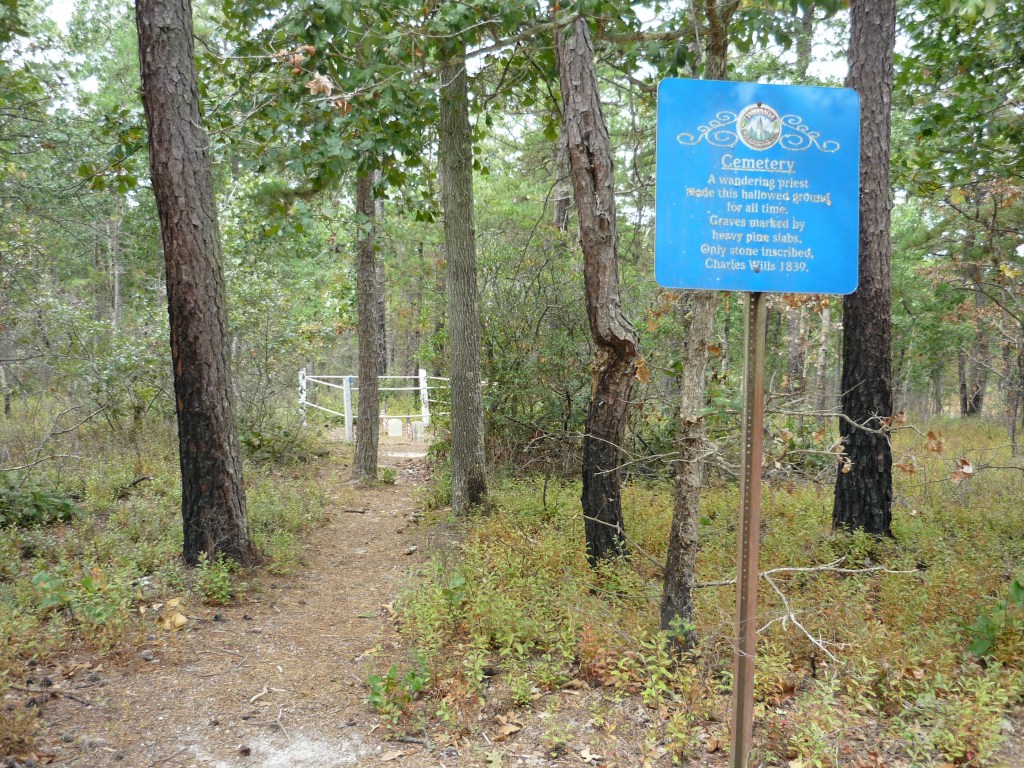
Today I spiffed up the Google Maps entry for this spot. Click the link, above, for more of this story.
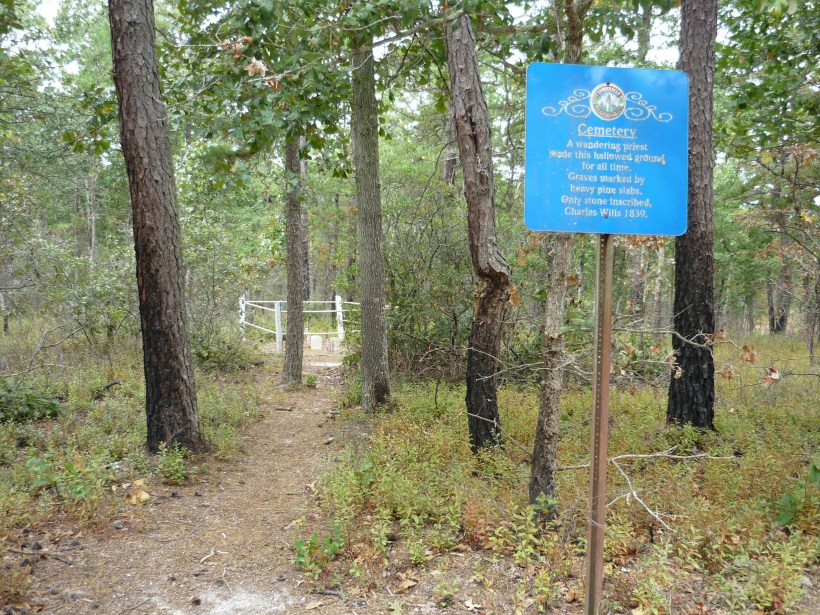
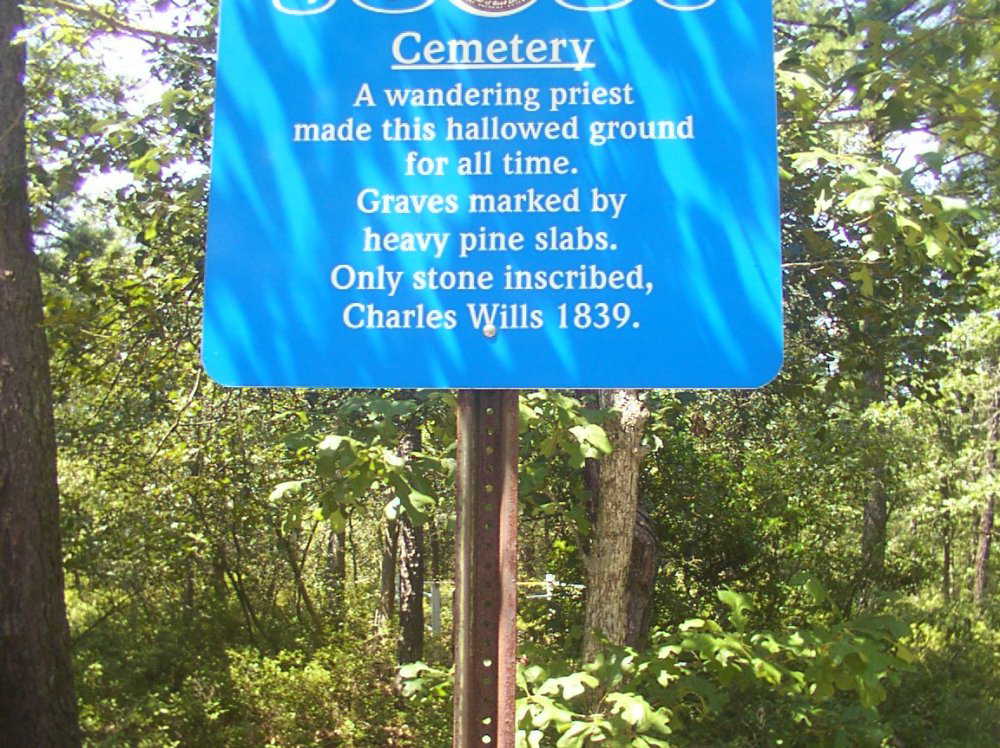
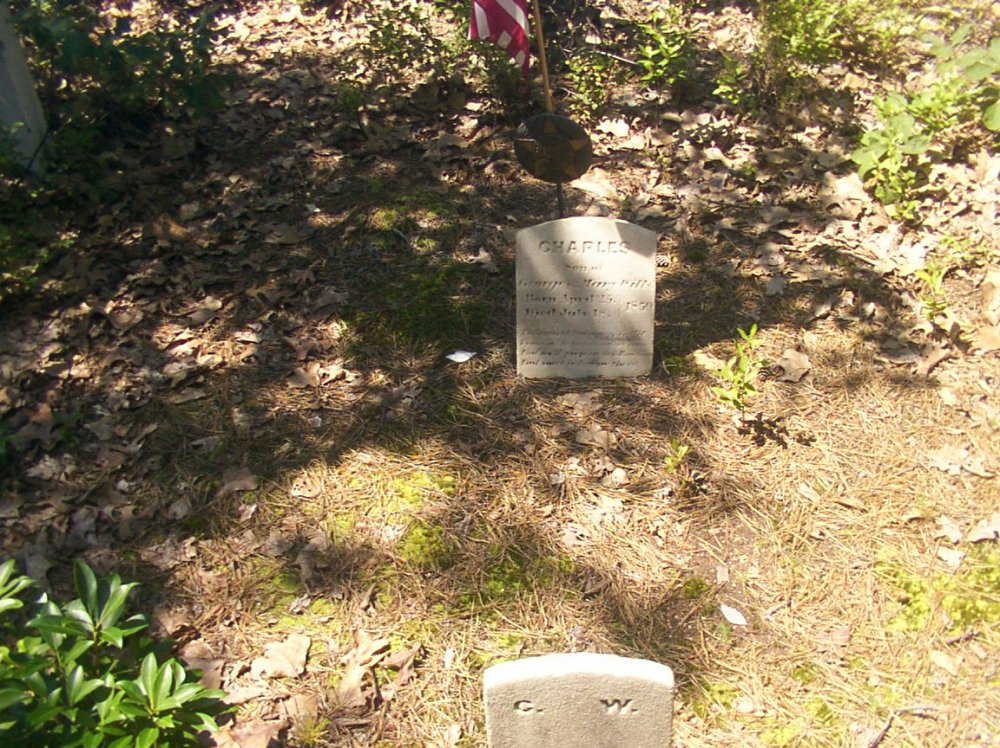
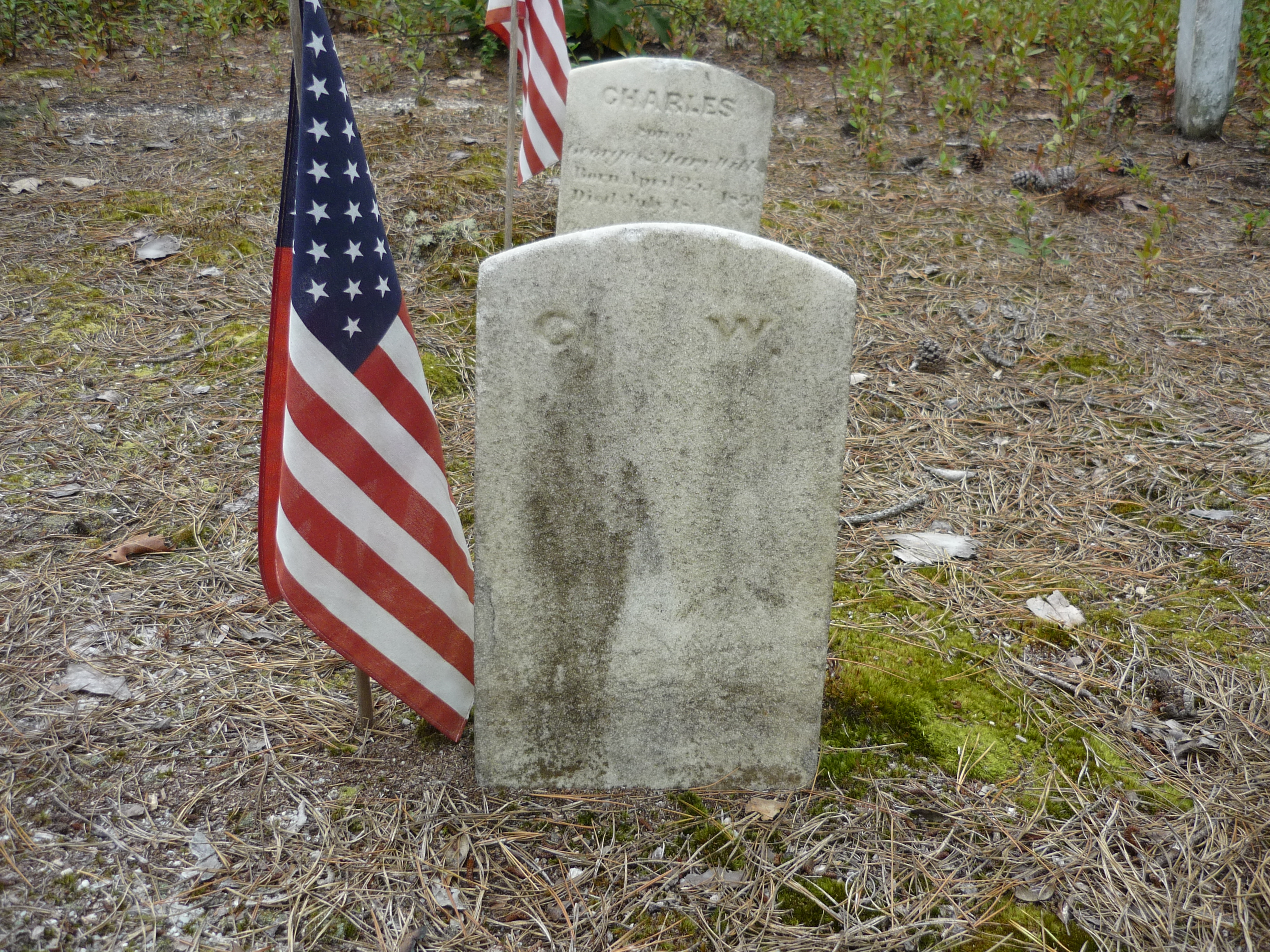
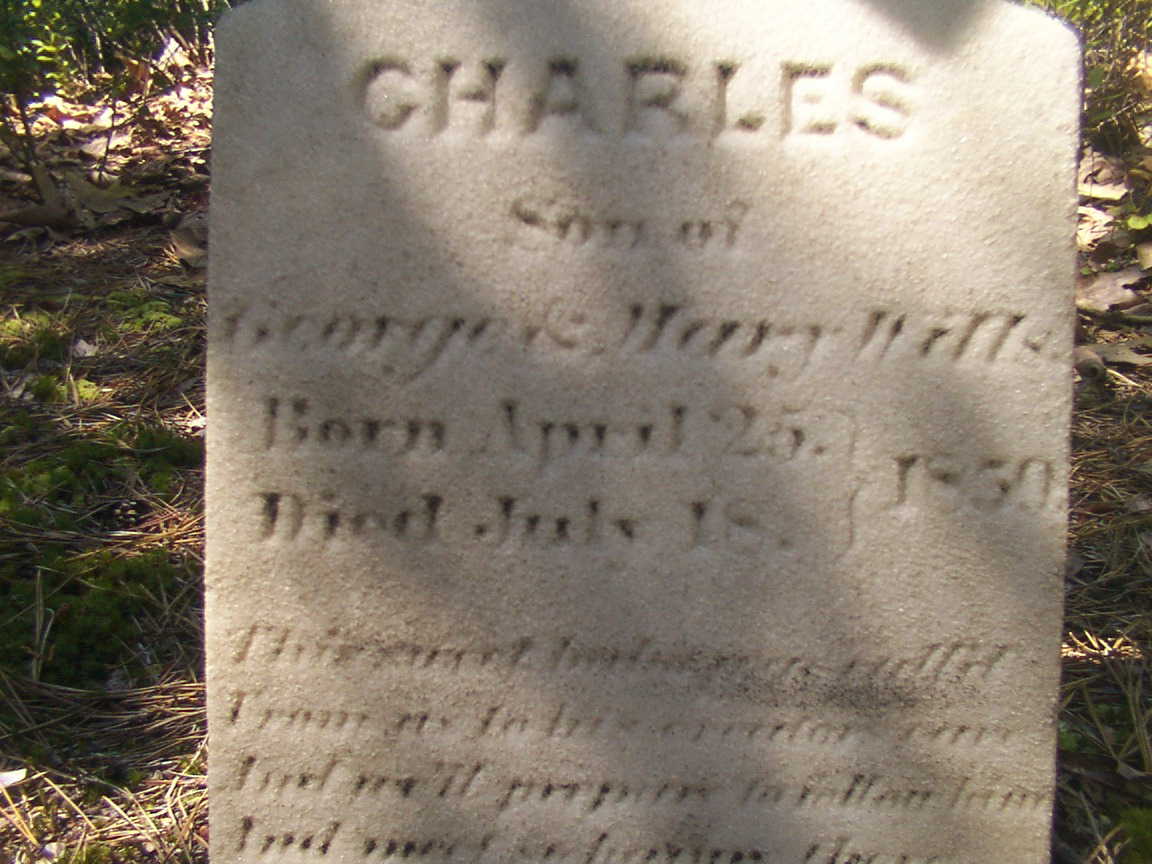
Path through the pinesStone is inscribed “1850” IMHOI am gratified to find Charles’ grave honored The stone is inscribed with “1850” not the 1839 from the recent, blue, signage.
Copyright 2023 Michael Stephen Wills All Rights Reserved
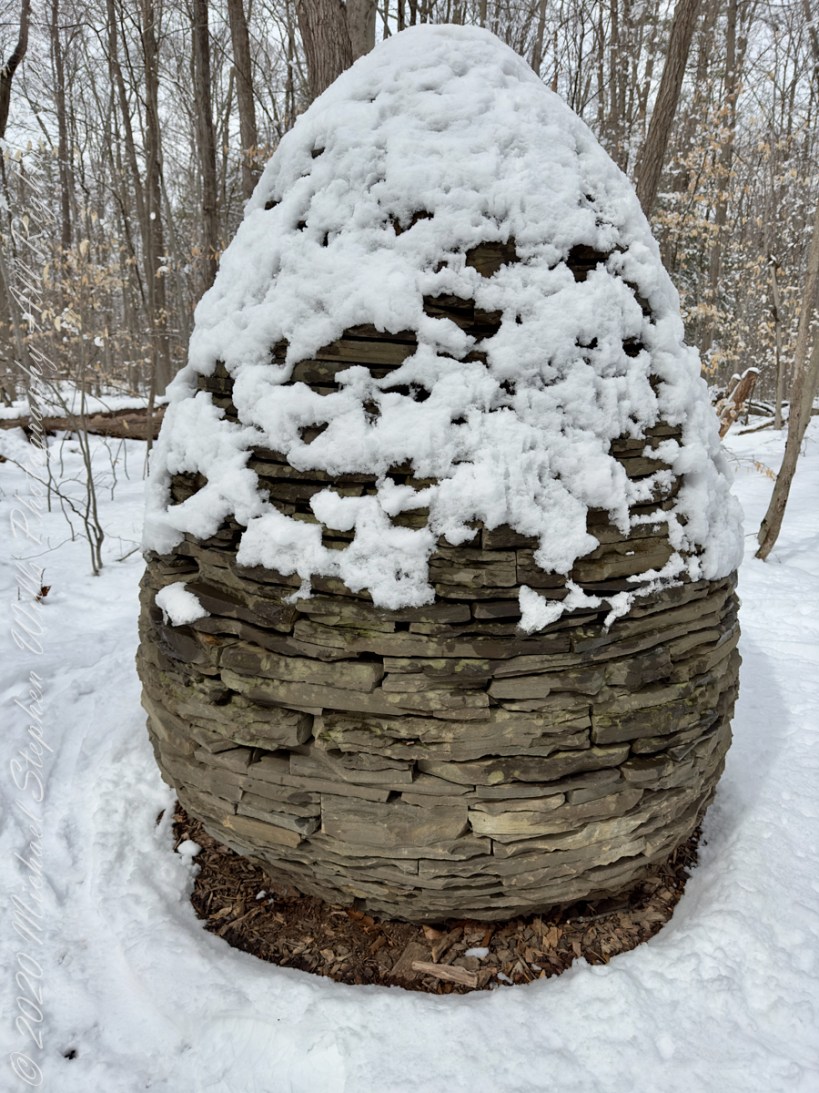
Found along the Hoyt-Pileated Trail, Sapsucker Woods, Sunday, March 12, 2023.
Text of plaque reads: Andy Goldsworthy; British, born 1956; “Sapsucker Cairn” (formerly New York Cone), 1995 – 2008; Llenroc and other local stone; Gift of Sirje Helder Gold and Michael O. Gold, rededicated in memory of their beloved son Maximilian Arnold Gold; Herbert F. Johnson Museum of Art.
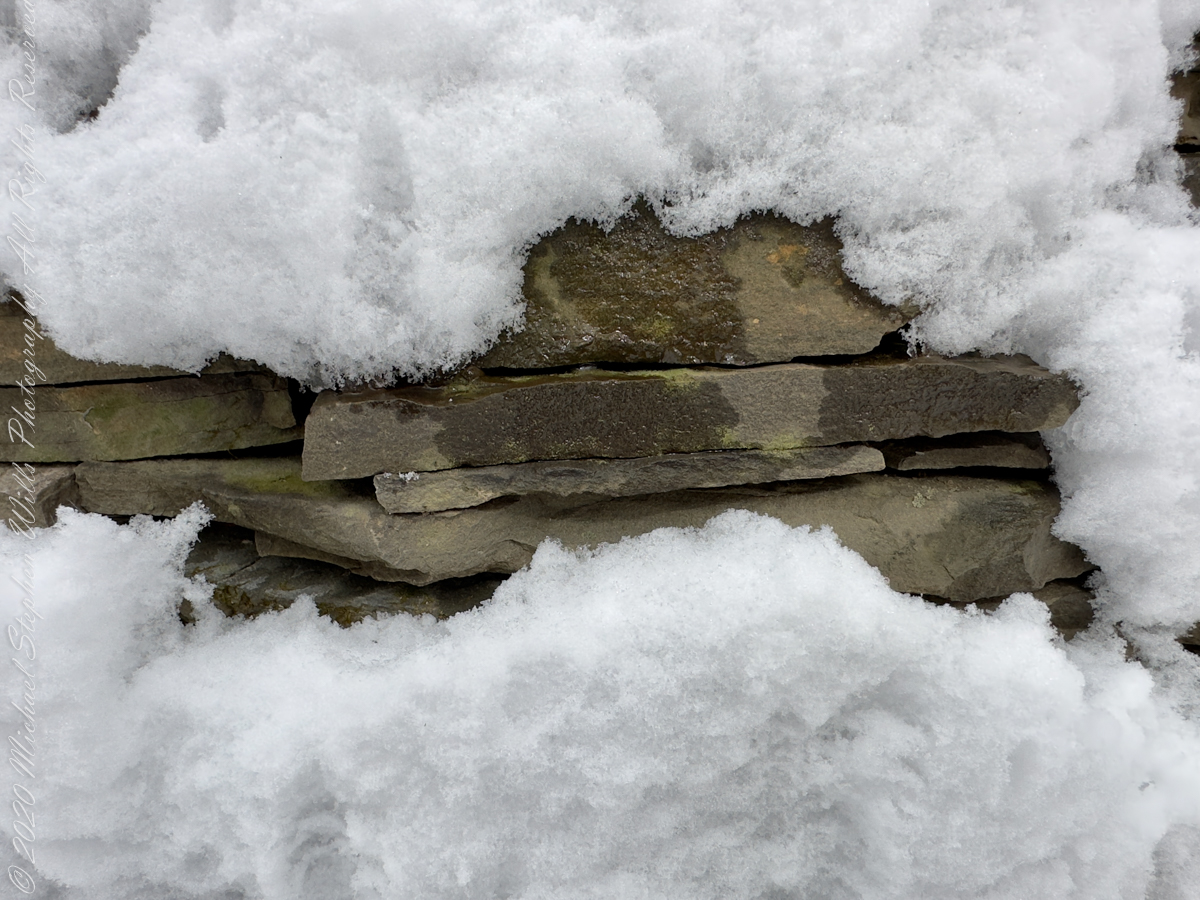
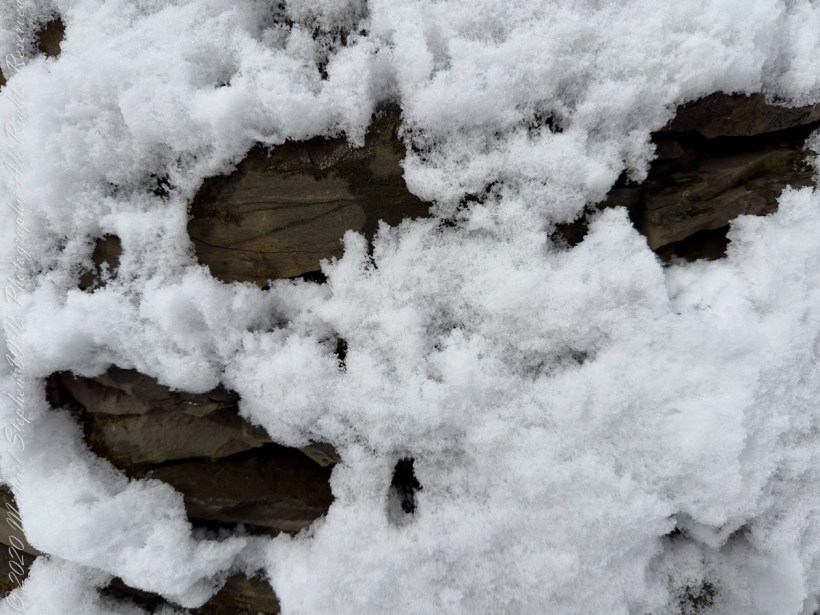
A sculpture transformed by a March snowfall. Notice how the stone, warmed by sunlight filtering through the leafless trees, melts surrounding snow.
Llenroc (Cornell spelled backwards) stone is a type of bluestone that is quarried in the Finger Lakes region of New York. It has a mix of blue-gray and rust color and is traditionally used on Cornell University’s campus. Llenroc is also the name of a Gothic revival villa built by Ezra Cornell, the founder of Cornell University.
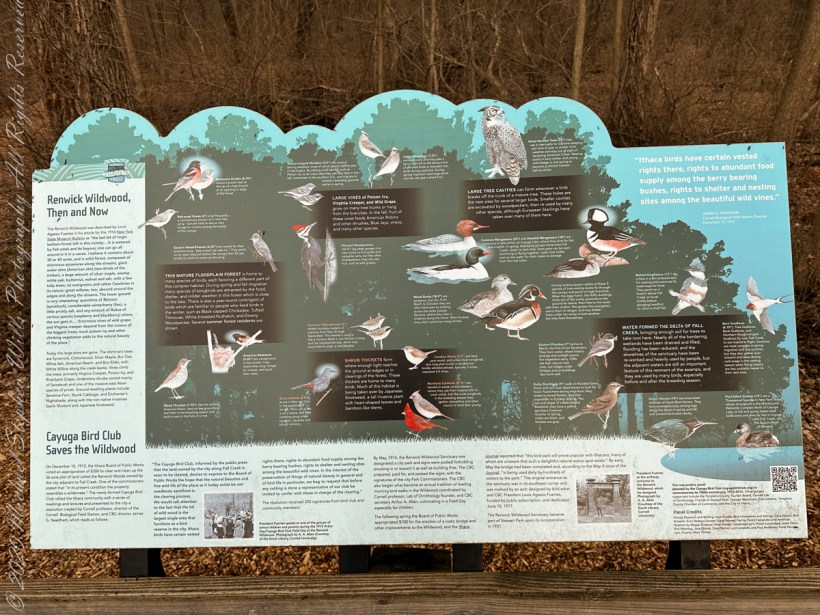
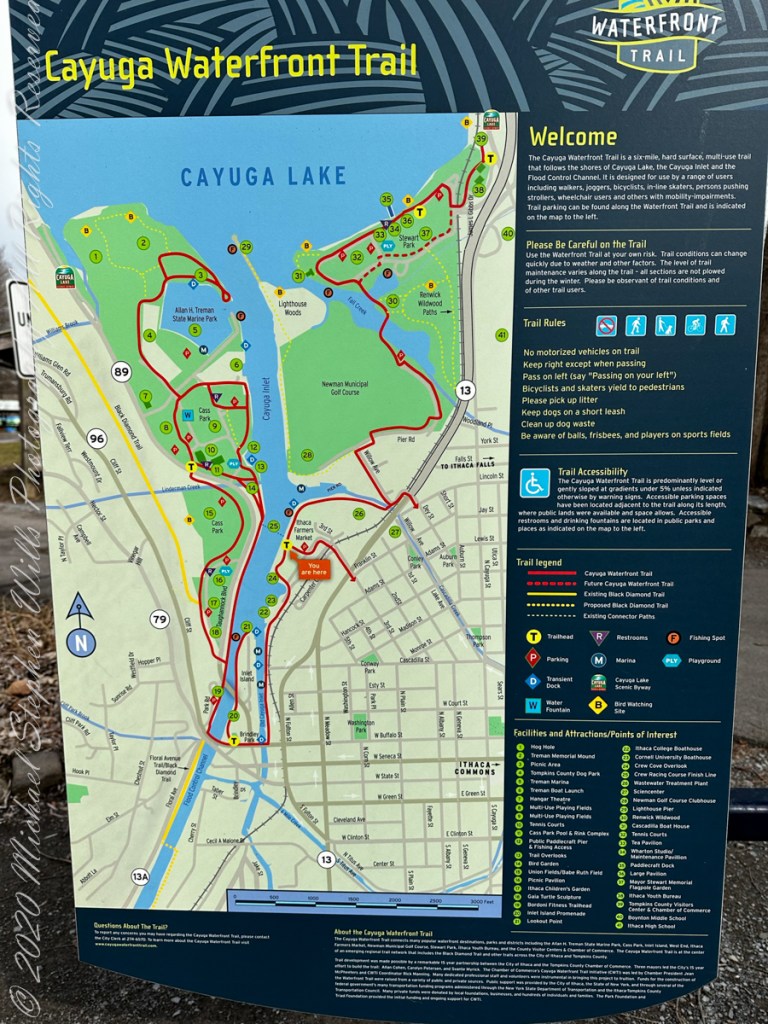
This large sign found along the Cayuga Waterfront Trial at the entrance to Renwick Woods. It provides the origin story (floodplain, delta of Fall Creek), how it came to be conserved and the importance of the place to birds.
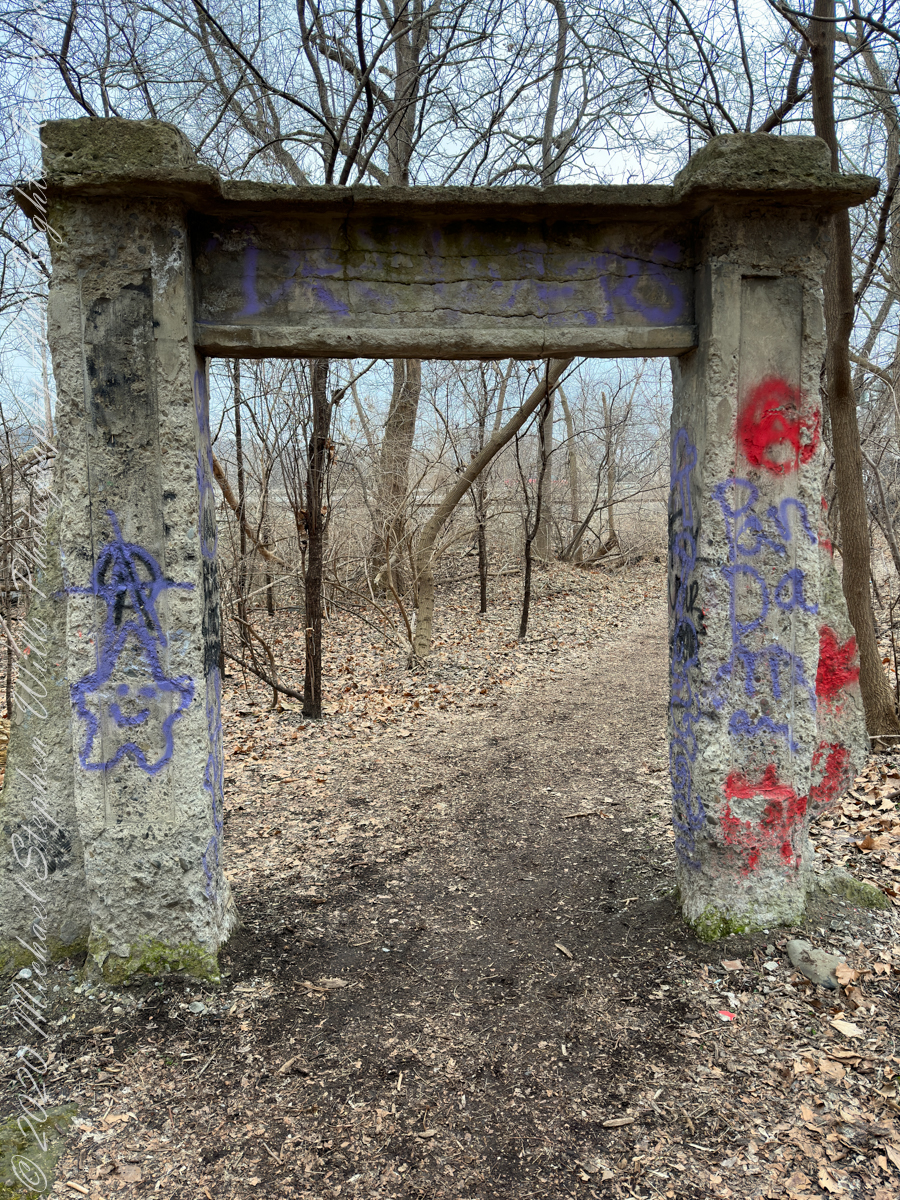
The original entrance to the Fuertes Bird Sanctuary, now called Renwick Wood, was marked by this arch, designed by Louis Agassiz Fuertes, dedicated June 10, 1917.
The professor was born February 7, 1874, at Ithaca, the son of Prof. Estevan Antonio and Mary Stone (Perry) Fuertes. He was graduated by Cornell with the degree of A.B., in 1897, and married Margaret F. Sumner of Ithaca, in 1904. Since 1898 he had been a painter of birds.
Professor Fuentes illustrated such volumes as “Birding on a Broncho,” “Citizen Bird,” Song Birds and “Water Fowls.” His permanent work included habitat groups in the American Museum of Natural History; 25 decorative panels for F.M. Brewster, at New Haven, Conn., birds of New York at the State Museum, Albany; murals in the Flamingo Hotel, at Miami, Fla., paintings for the New York Zoological Society, Bronx. (Source: Find a Grave)
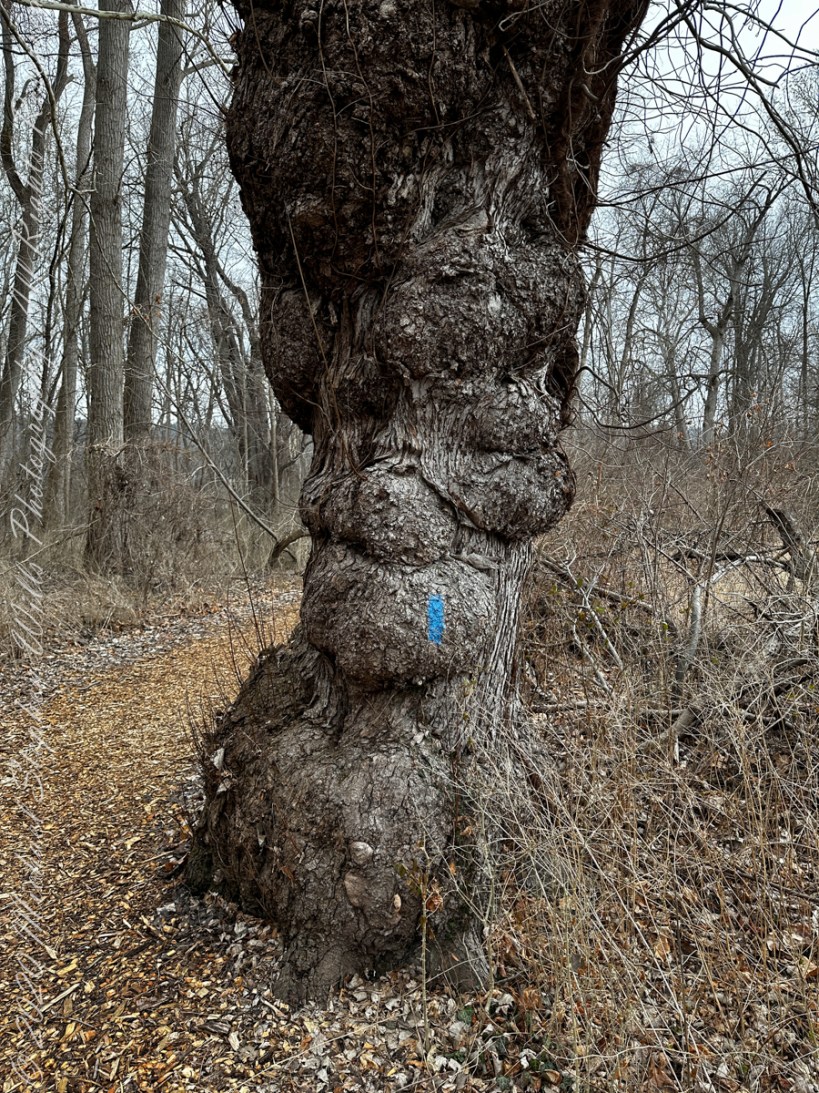
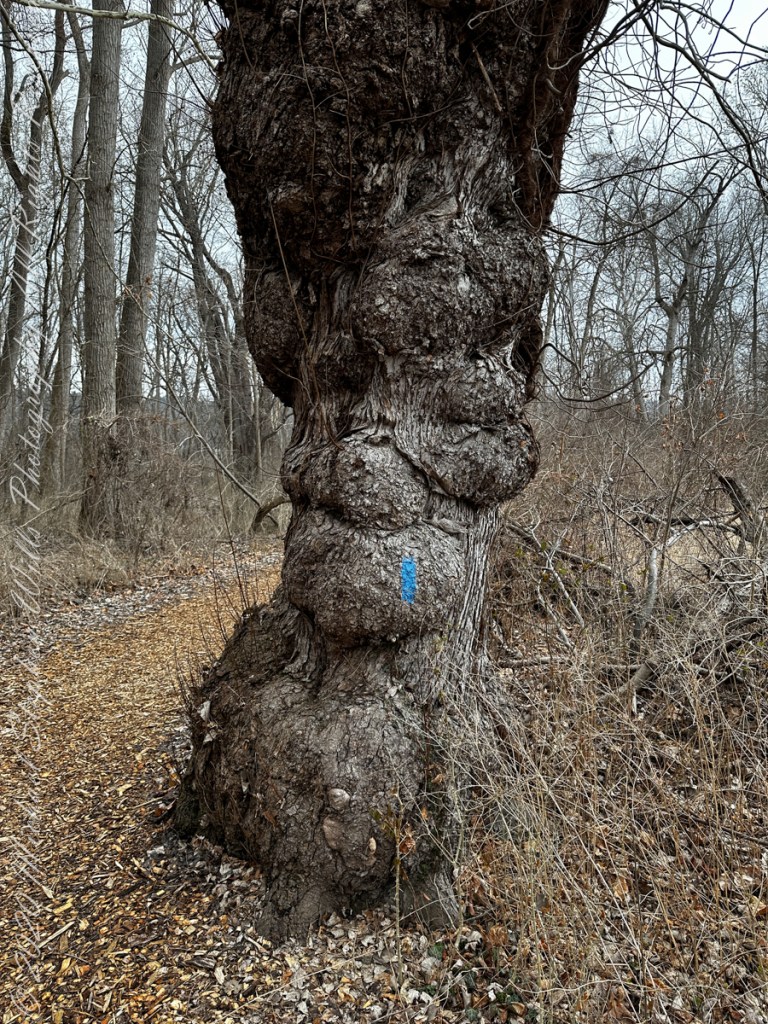
Misshapen tree trunk on the shore of Fall Creek, Renwick Woods
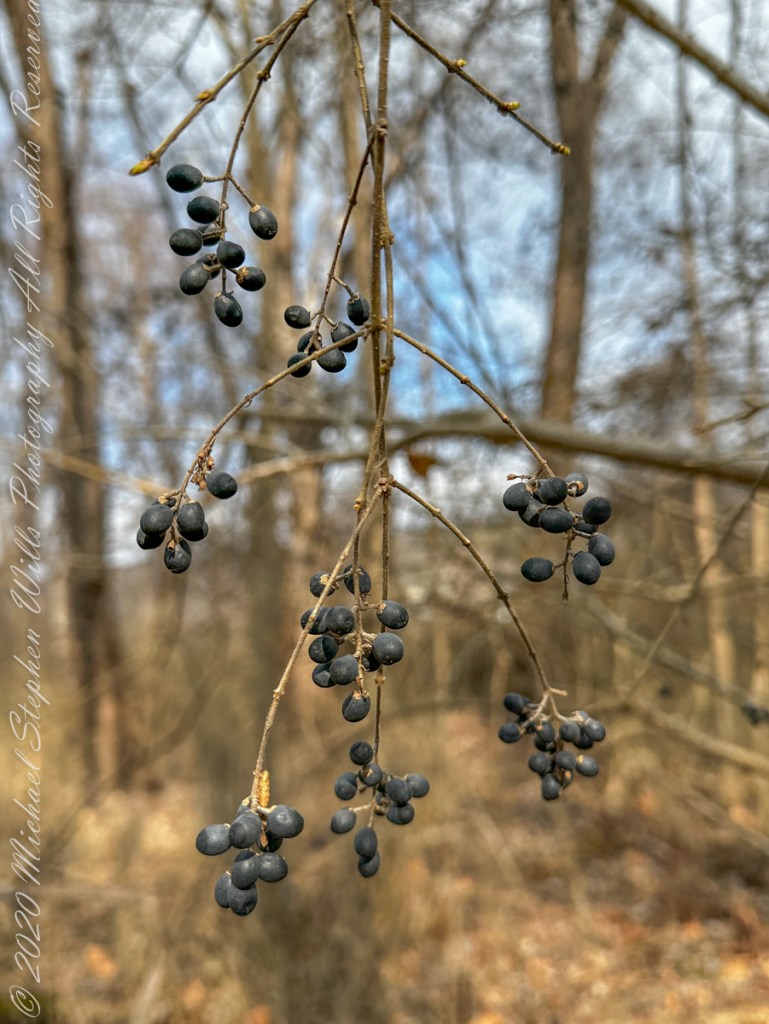
The flowers of this small shrub identify it as a member of the Rose family. The berries I captured in the following photograph are edible (non-poisonous), though astringent. Autumn time, the leaves turn red. It is native to eastern North America. I found these berrys along the Renwick Wood trail.
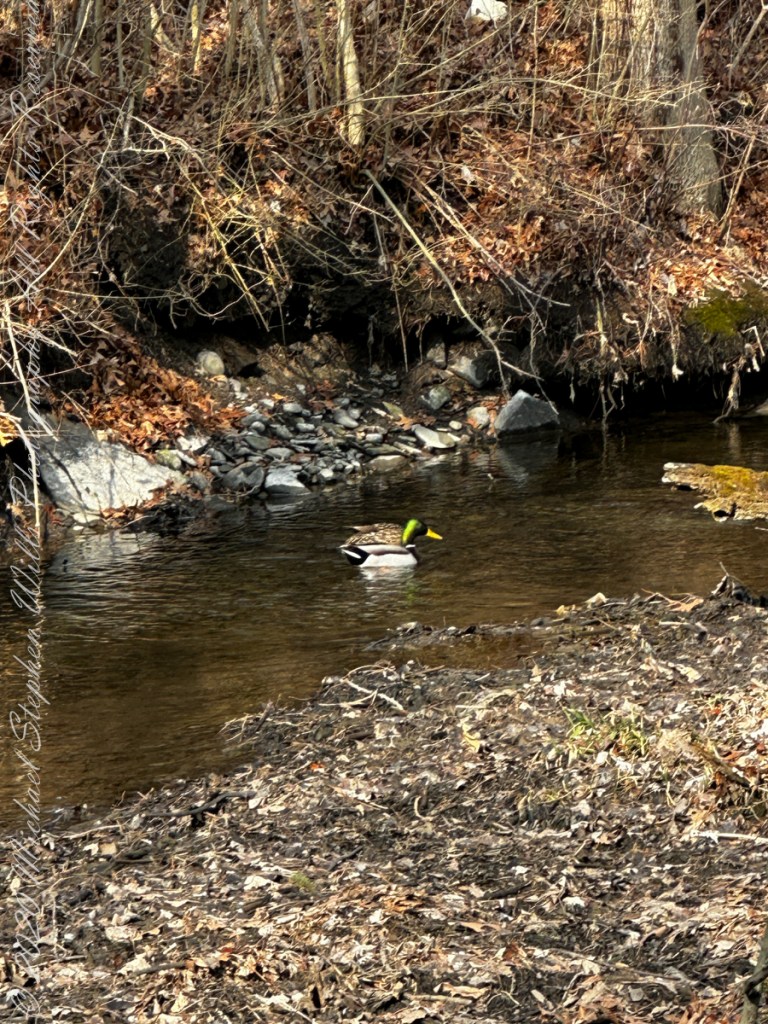
A pair of Mallard ducks foraging along a Fall Creek bayou on the edge of Renwick Woods where Stewart Park begins.
Ithaca Fire Department was training at their facility on Pier Road, next to Newman Golf Course, and across Fall Creek from Renwick Woods.
Copyright 2023 Michael Stephen Wills All Rights Reserved
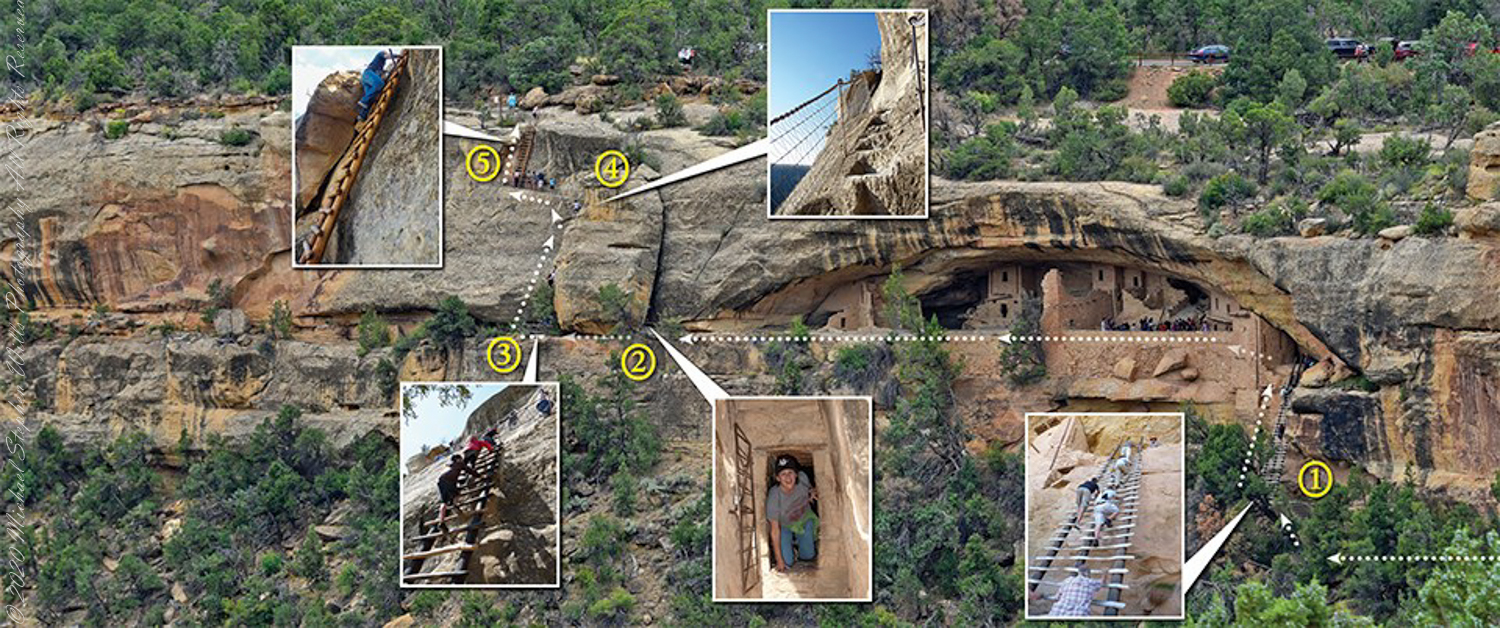
A visit to Balcony House is a 0.25-mile (0.4 km) hike. The tour requires walking down a 130-step metal staircase then, (1) climbing up one 32-foot (9.8 m) ladder to enter, two small ladders, and 12 uneven stone steps within the site.
(2) crawling through an 18-inch wide (46 cm) by 12-foot (3.7 m) long tunnel as you leave the site.
(3 – 5) ascending a 60-foot (18 m) open cliff face with uneven stone steps and two 17-foot (5 m) ladders to exit. Mesa Verde National Park, near Cortez, Montezuma County, Colorado.
Photograph and caption (above) is from the US Park Service, Mesa Verde, Balcony House tour web site
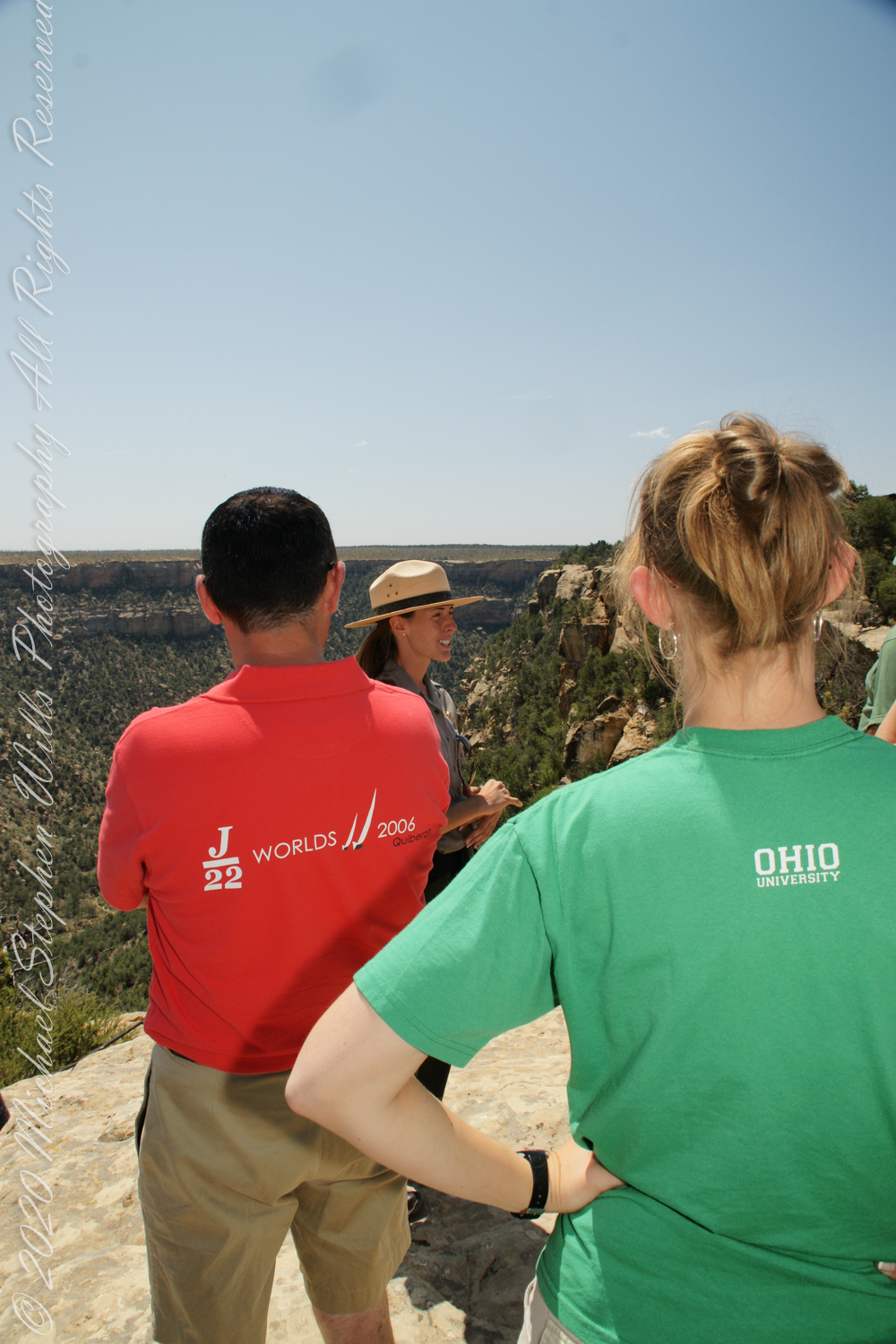
We purchased our timed tour ticket at the visitor center at the foot of the Mesa, essentially a flat top mountain rising dramatically from the surrounding plain. In the second photograph we are looking over the mesa rim overlooking Soda Canyon.
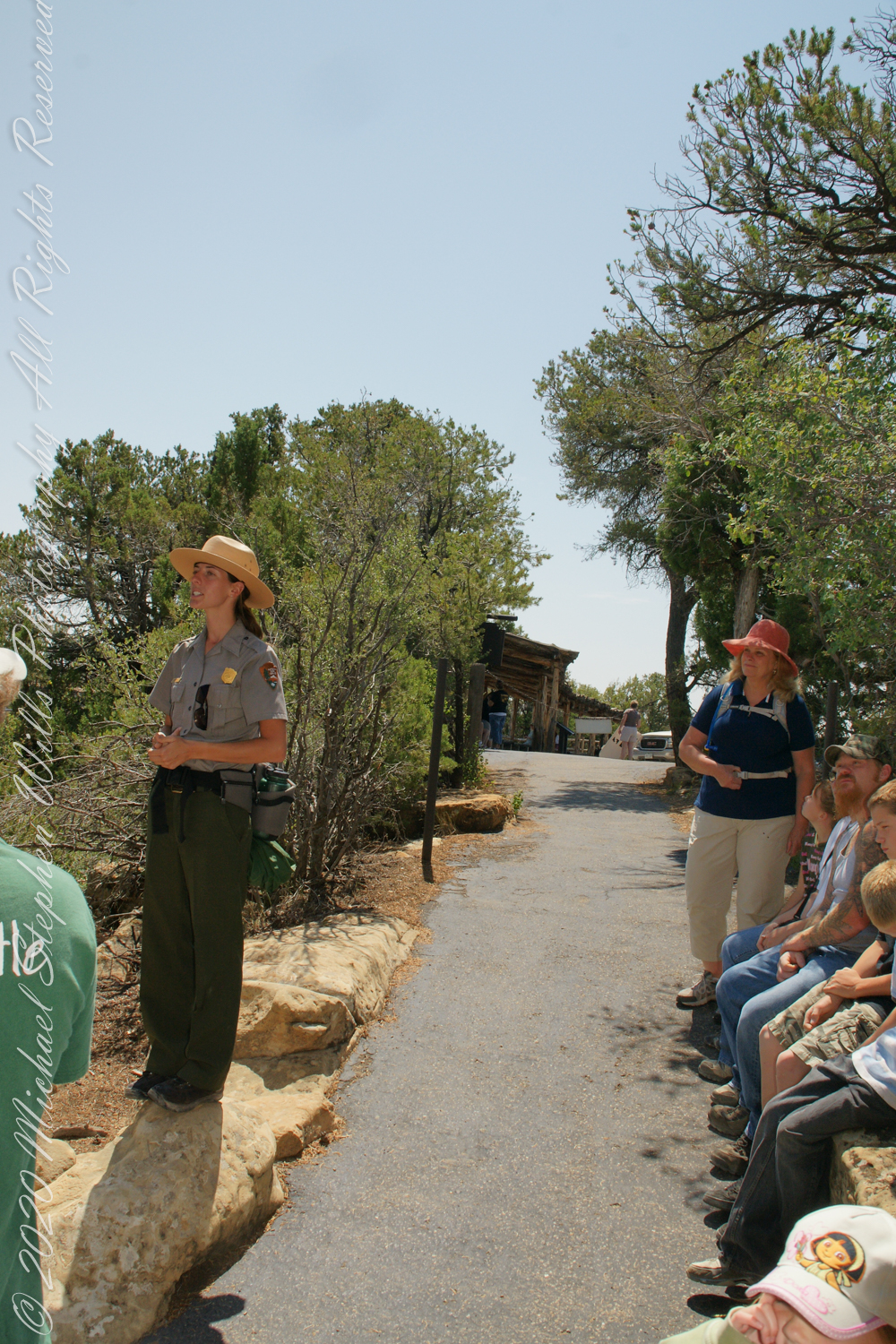
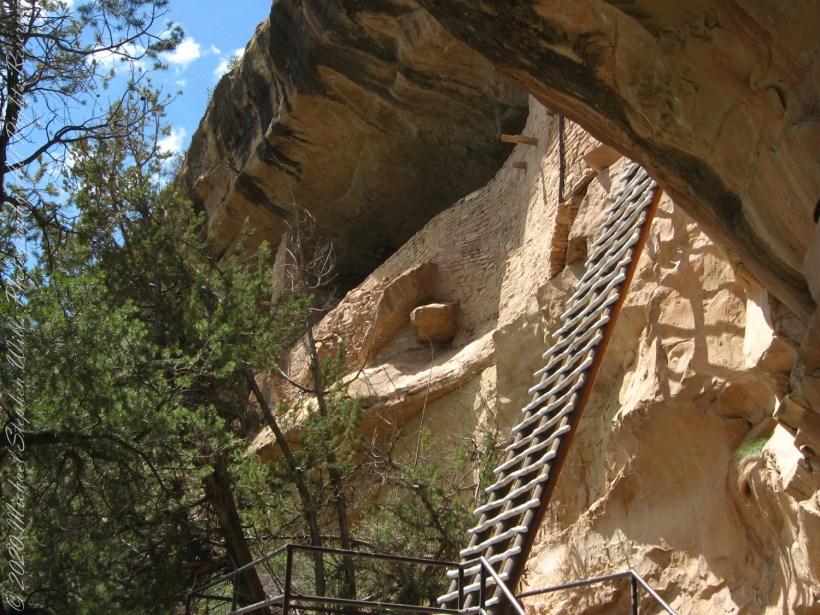
The tour is a small adventure, starting with a climb down into Soda Canyon and a climb up a 32 foot ladder. The ladder is solid and we had plenty of time to climb with one person ascending at a time. I was a bit overwhelmed by the experience and had my equipment tucked away for safety. I had to leave my sturdy tripod in the car. A more adventurous photographer captured the following ladder photograph.
Here we are looking back to the entrance, where visitors crawl on hands and knees to enter.
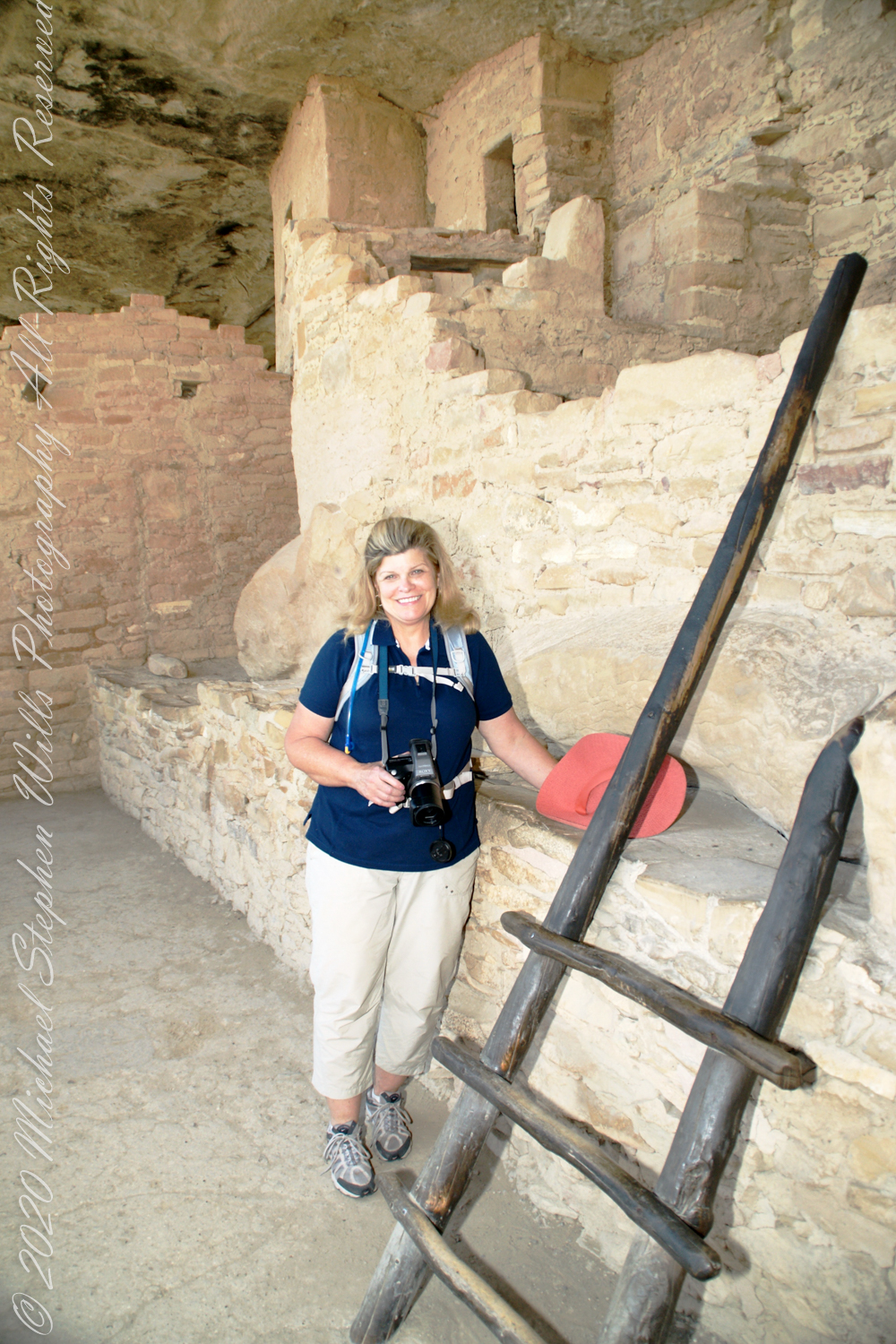
Here is Pam twenty two (22) minutes into the tour. The structures are build into a naturally occurring cleft in the mesa cliff, below the rock shelf of the mesa top. The rock shelf is the roof above Pam.
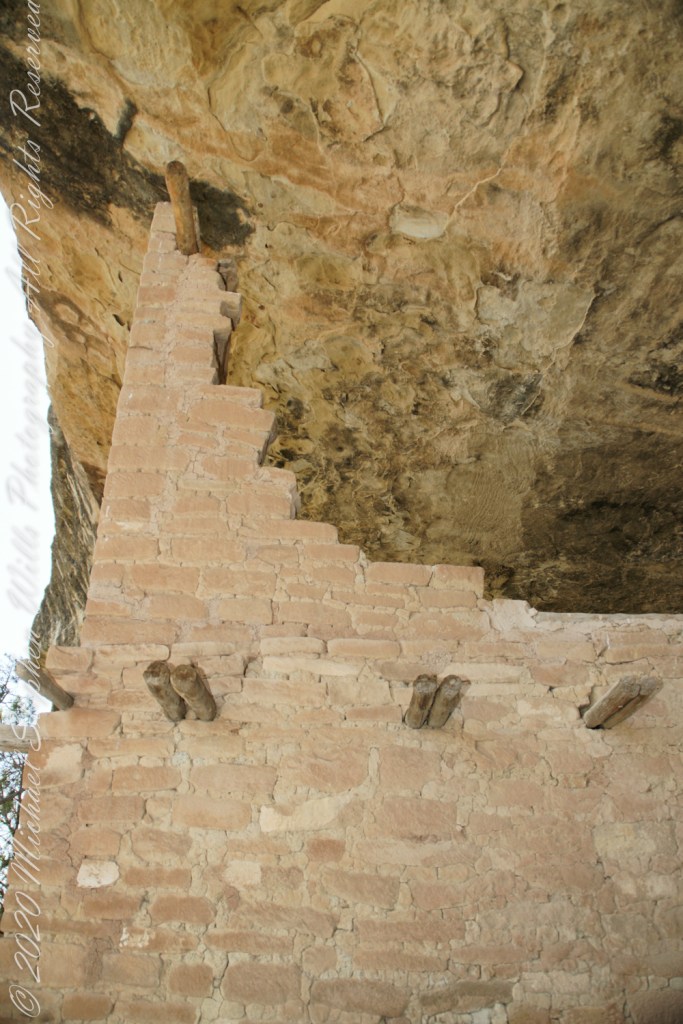
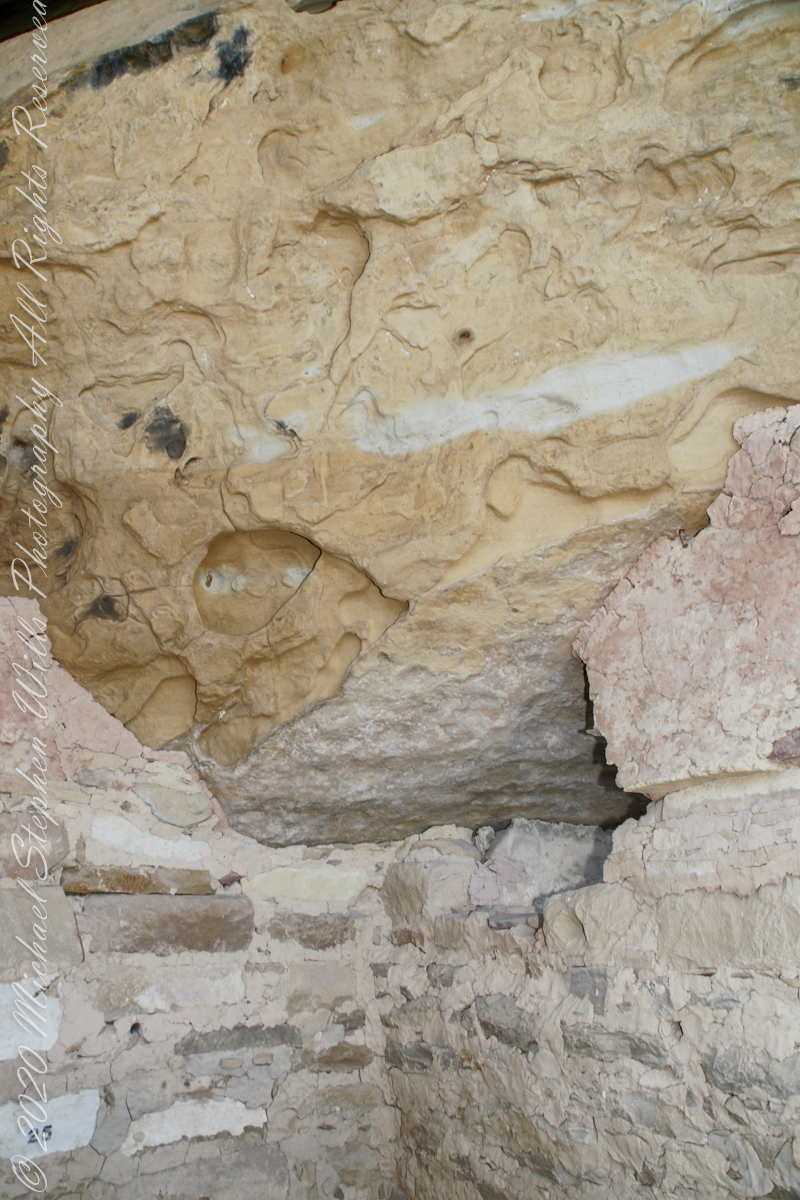
Looking up to the ceiling above a rock and mud wall. The structures have been carefully, lovingly, conserved since the rediscovery of Mesa Verde in 1884. The conservation work began 1910.
The 38 rooms and two kivas house up to 30 people. The cliff northeast facing cliff provided little warmth from the sun in winter. At 7,000 feet and 37 degrees latitude, the mesa is cold wintertime — the average low being 18 degrees Fahrenheit (minus 8 Celsius). As other locations offer a southern exposure, the warmest side for the northern hemisphere, why was this site chosen by the ancients? The answer is found in the two water seeps emerging from the ground at the juncture geological layers where the water gathers and finds a way from surface rainfalls. The high desert climate here was dry then and now.
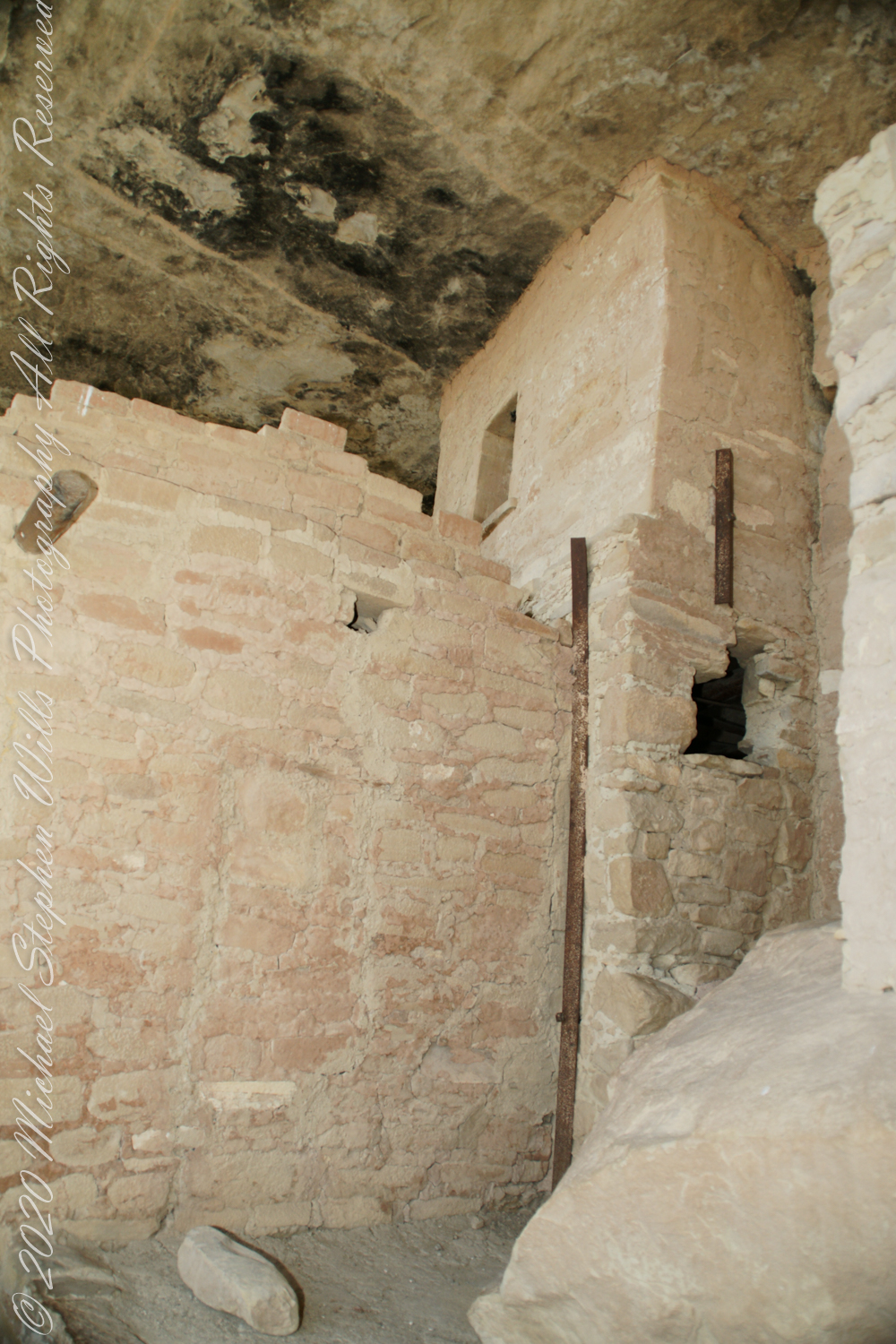
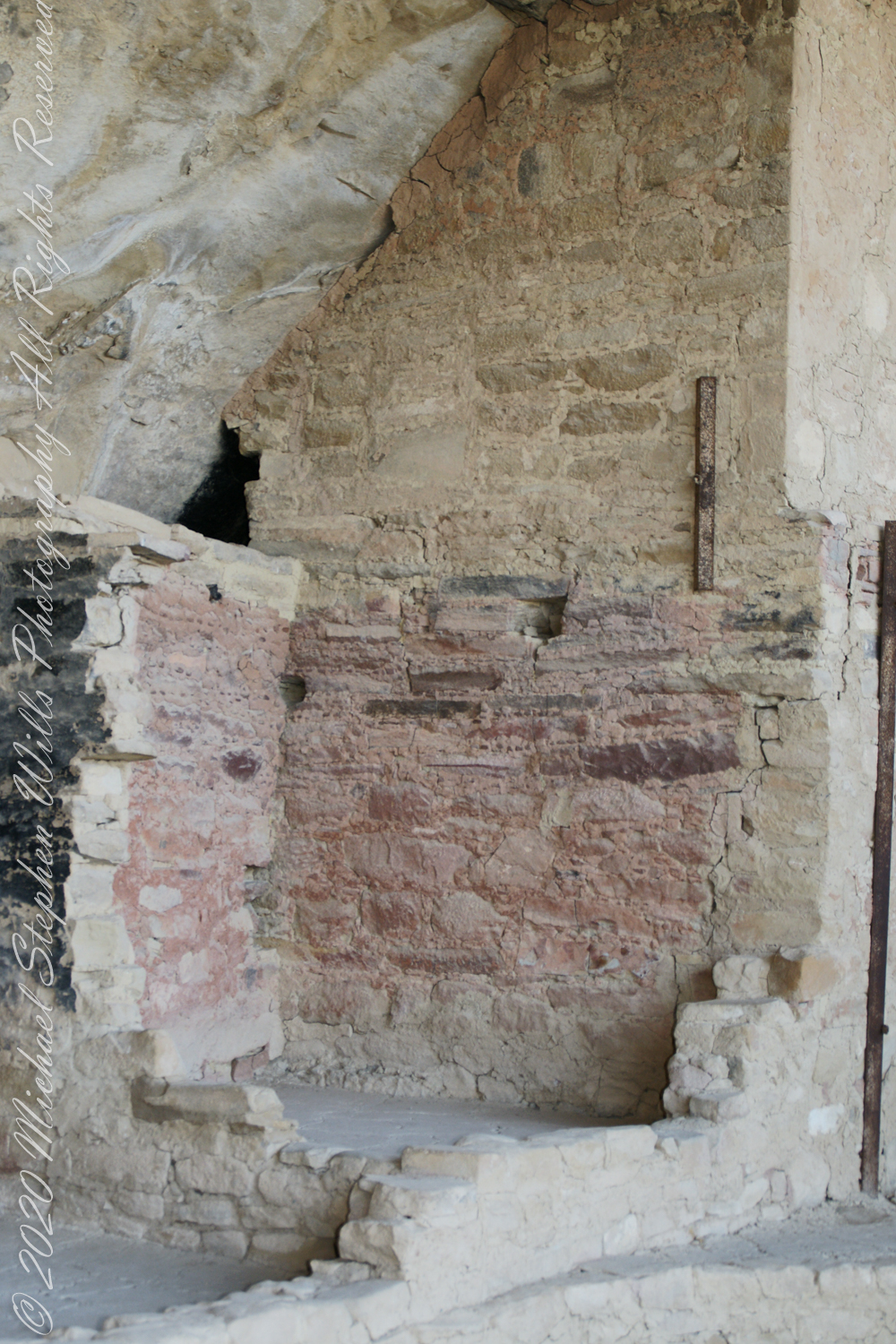
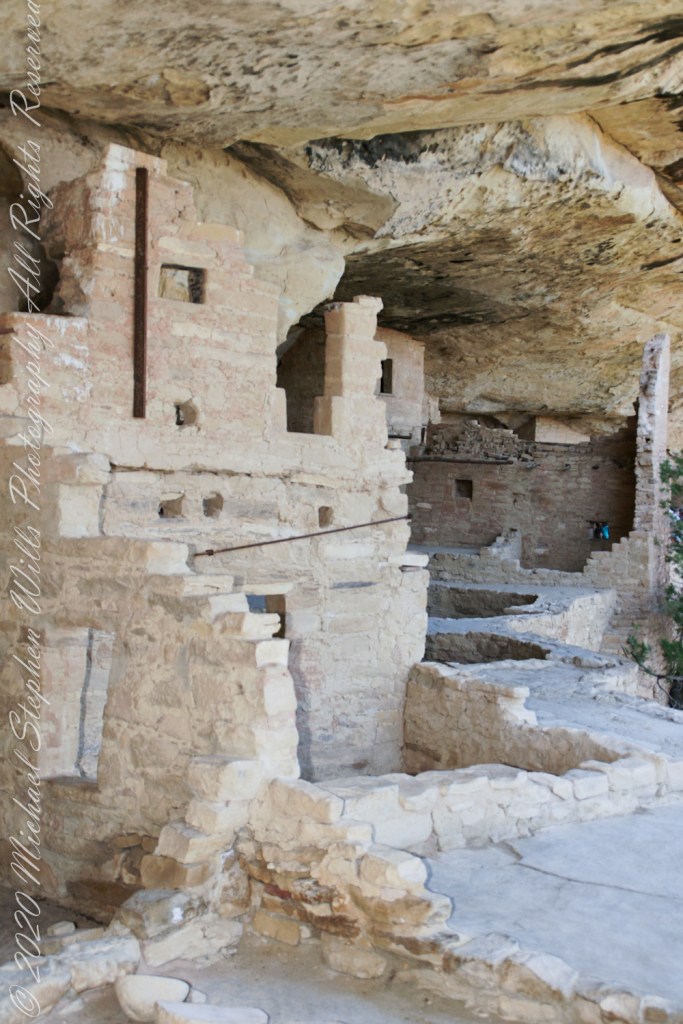
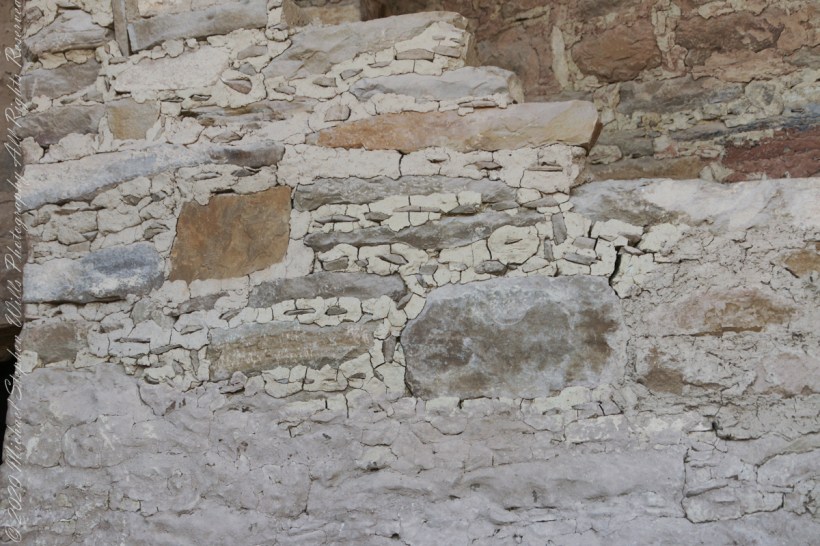
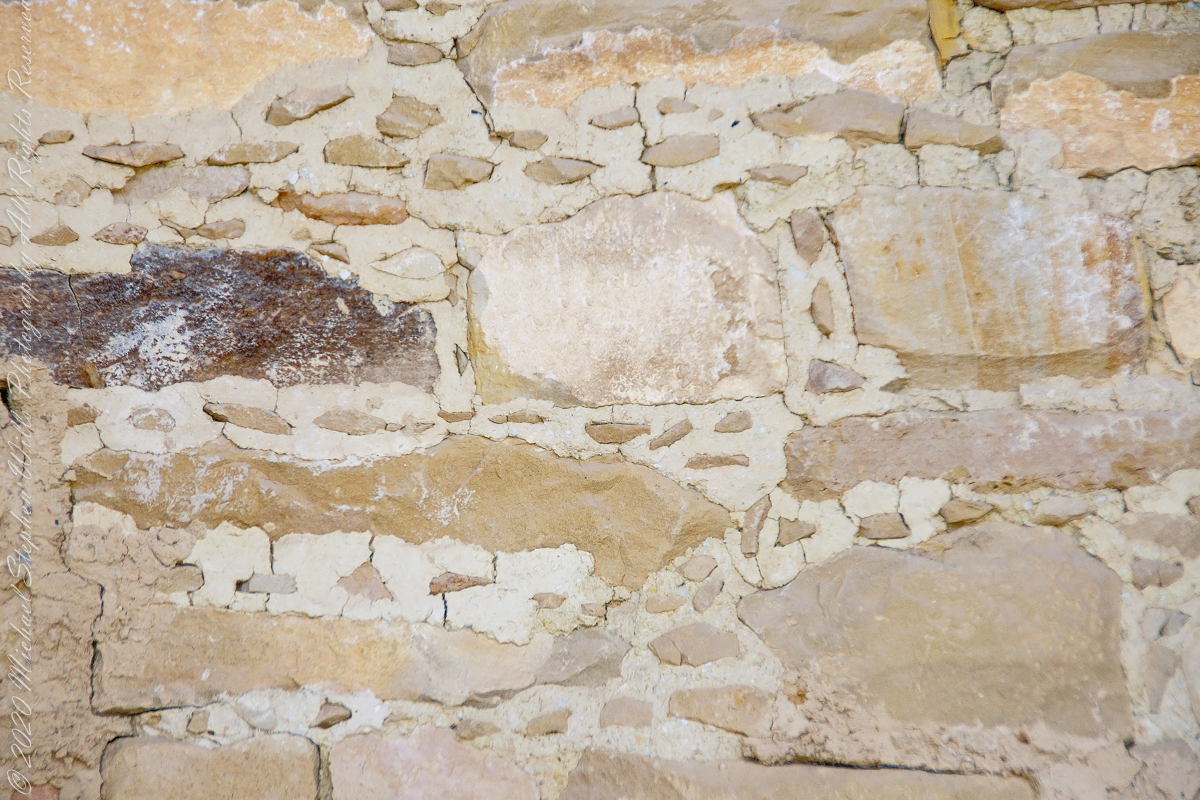
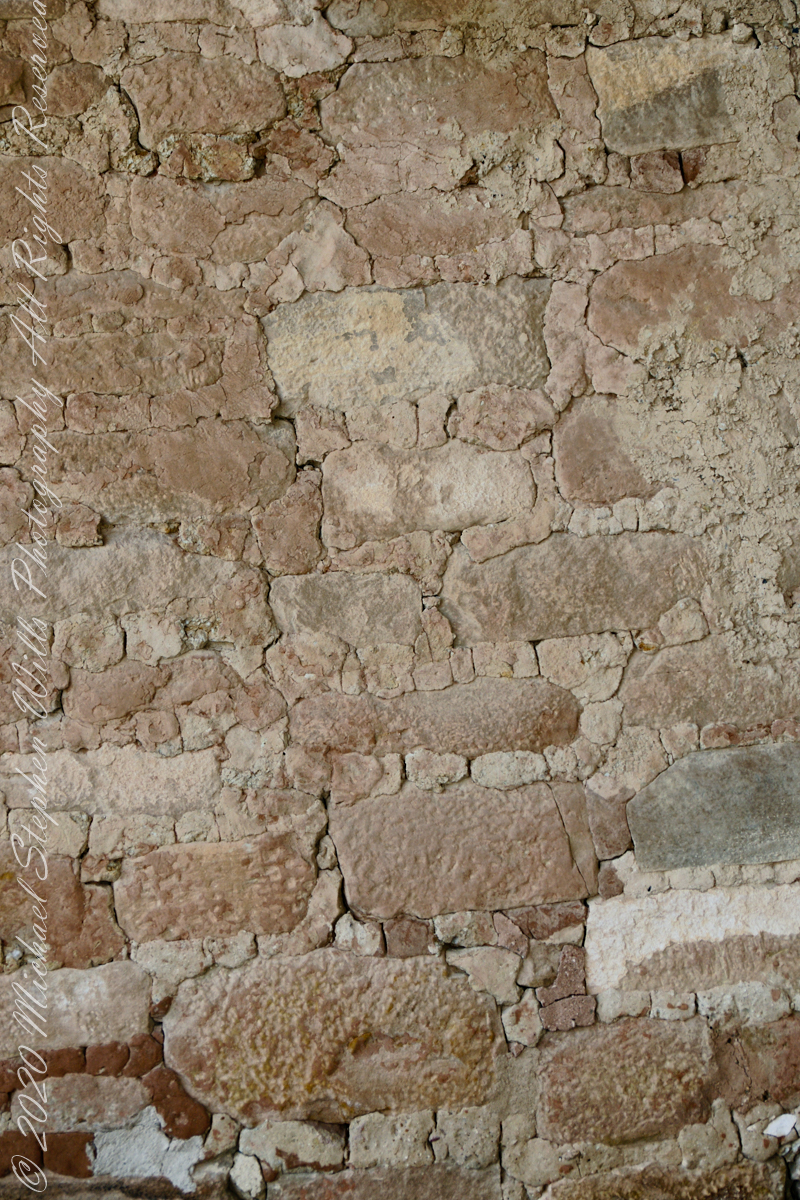
The walls demonstrate an enormous variety around basic patterns.
Plaza
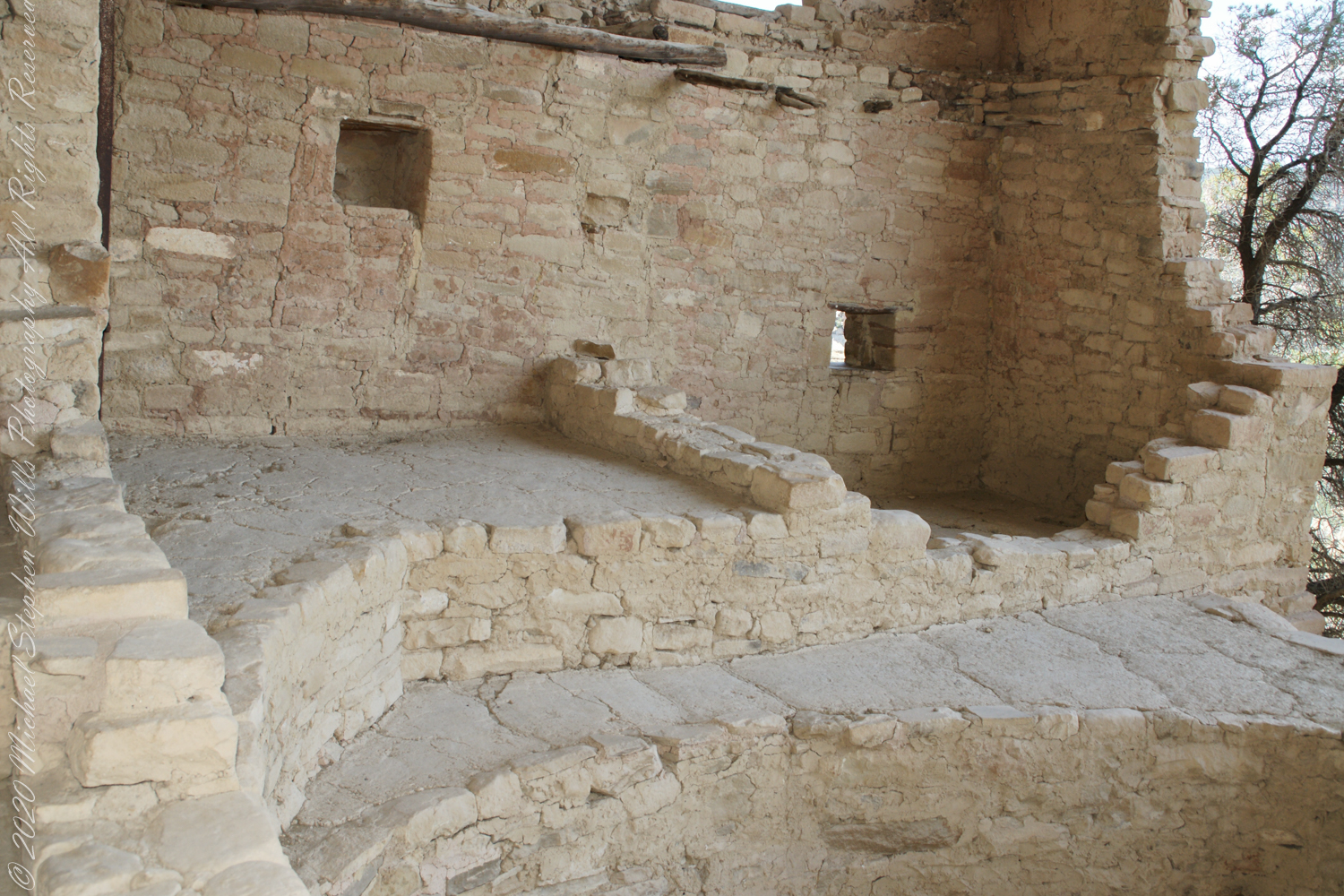
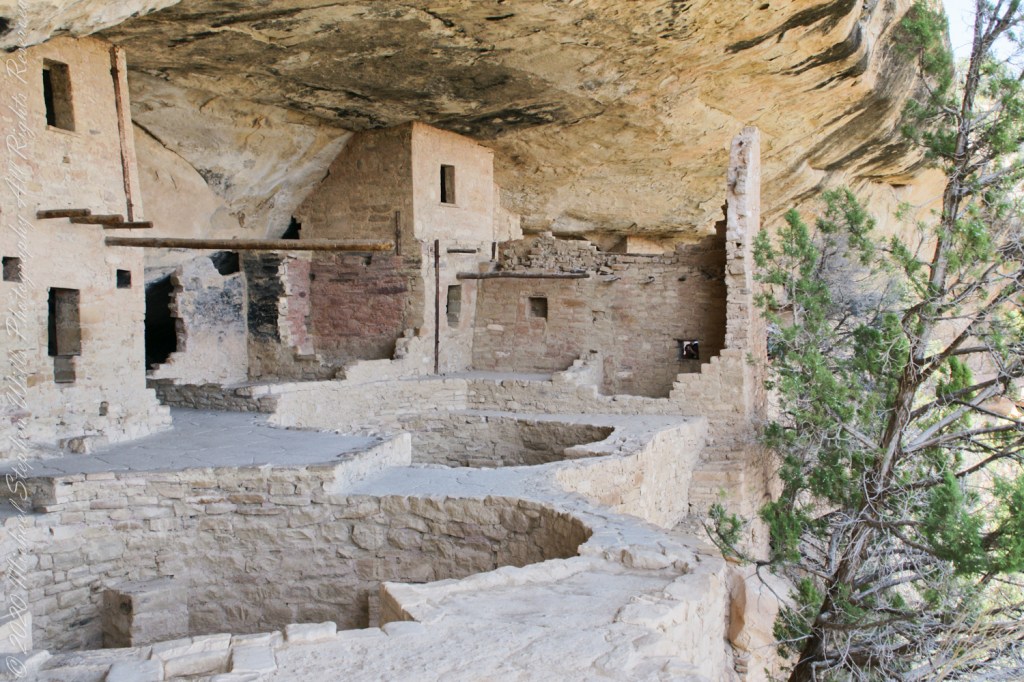
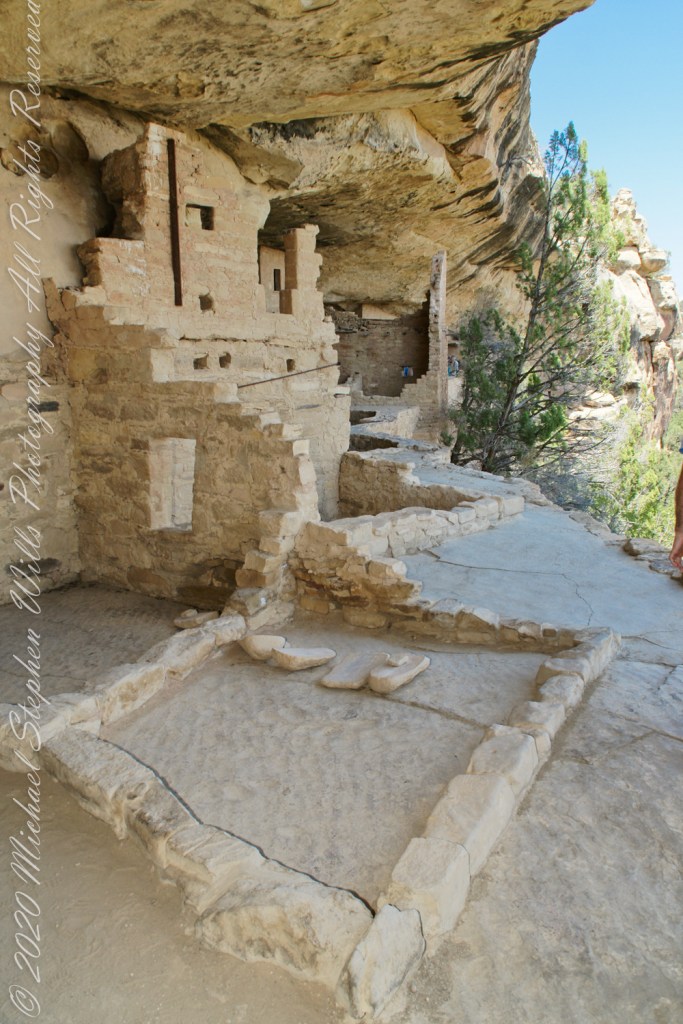
I had enough time to capture these “fine art” views of Balcony House, looking back toward the entrance. The round, in-ground structures are kivas, ceremonial and communal gathering spaces.
Possibly the most adventurous and potentially frightening tour component was the end, crawling on hands and knees along an 18 inch wide (46 centimeters) 12 foot long (3.7 meters) tunnel followed by a climb up a 60 foot (20 meters) open (exposed to falling over) cliff face.
Copyright 2023 Michael Stephen Wills All Rights Reserved
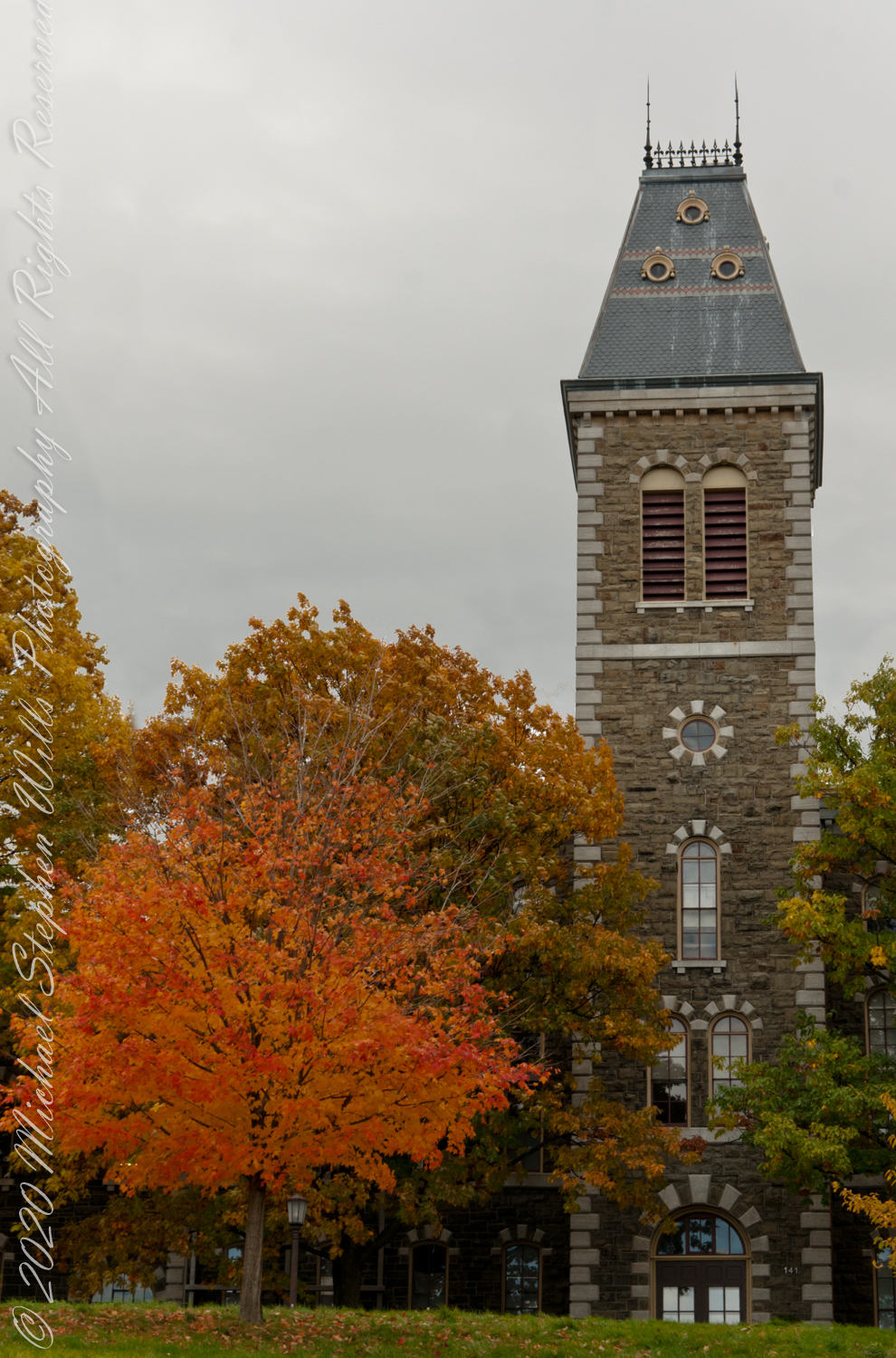
Named for founding trustee John McGraw, who gave $120,000 for construction of the building, McGraw Hall, designed by architect Archimedes N. Russell, opened in 1872.
Built of an Ithaca stone known as Lenrock, the four-story building was the first on campus to include a tower and today is home to the American Studies Program, Department of History, Department of Anthropology, and Archaeology Intercollege Program.
Jennie McGraw, daughter of John McGraw, donated the chimes to be placed in the tower, where they stayed until McGraw Tower was built in 1891.
This year the College of Arts and Sciences inaugurated a comprehensive renovation of McGraw Hall.
Copyright 2023 Michael Stephen Wills All Rights Reserved
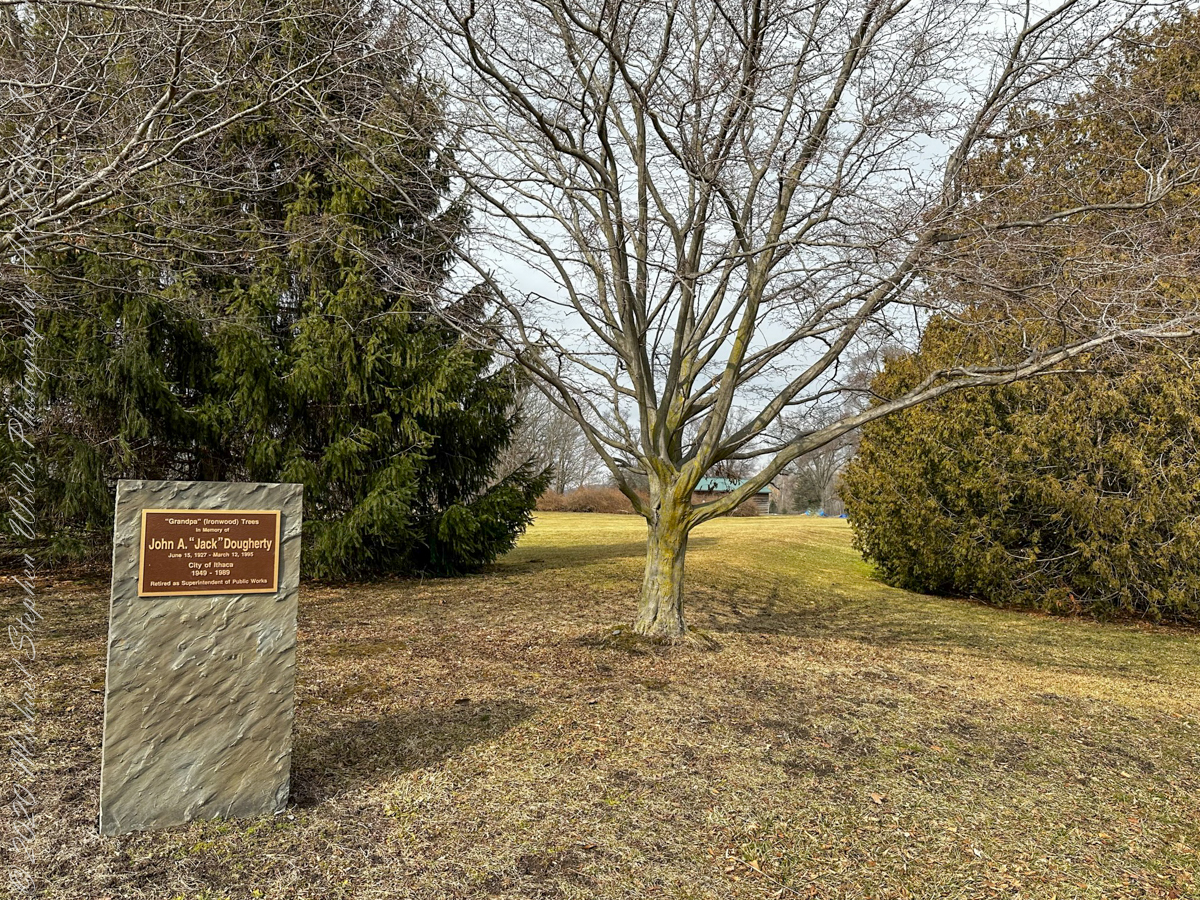
Another Cayuga Waterfront Trail stop is this memorial. The plaque reads ” ‘Grandpa’ (Ironwood) Trees in memory of John A. ‘Jack’ Dougherty; June 15, 1927 – March 12, 1995; City of Ithaca 1949-1989, Retired as Superintendent of Public Works.” Located near the intersection of Pier Road and Willow Avenue, Newman Golf Course, Ithaca, Tompkins County, New York. That is an Ironwood tree, midgound center.
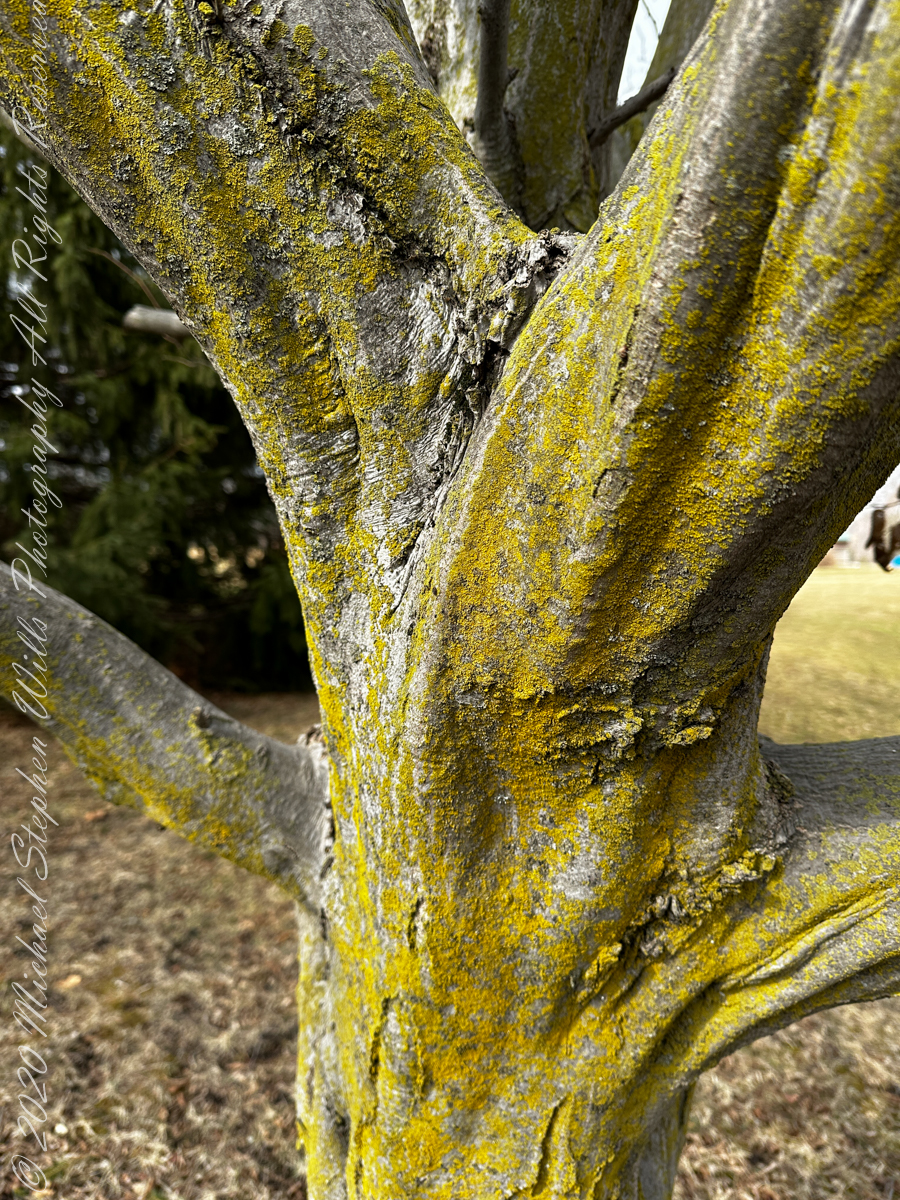
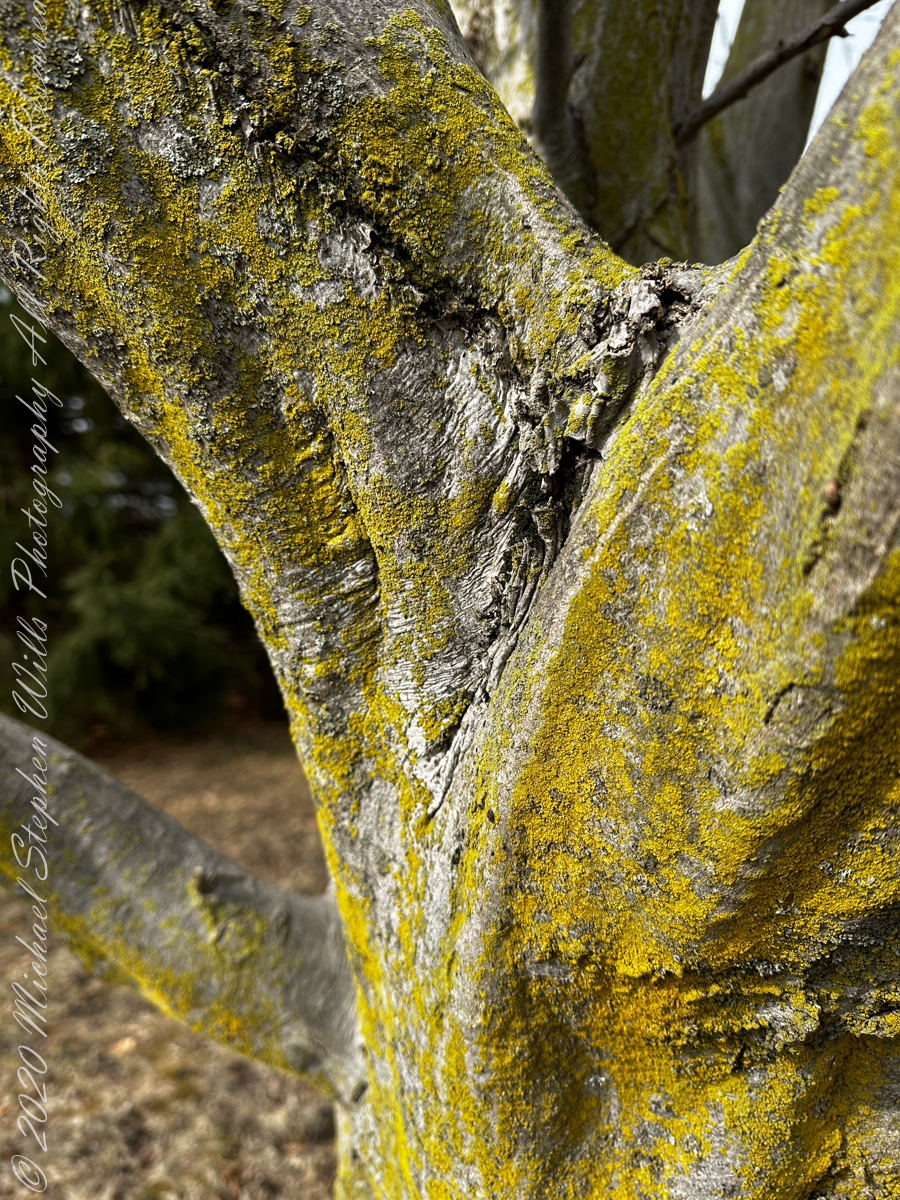
The American Hornbeam (scientific name: Carpinus caroliniana) is also known as Musclewood for the rippled surface of the mature trunk. Other names are blue-beech, ironwood and muscle beech.
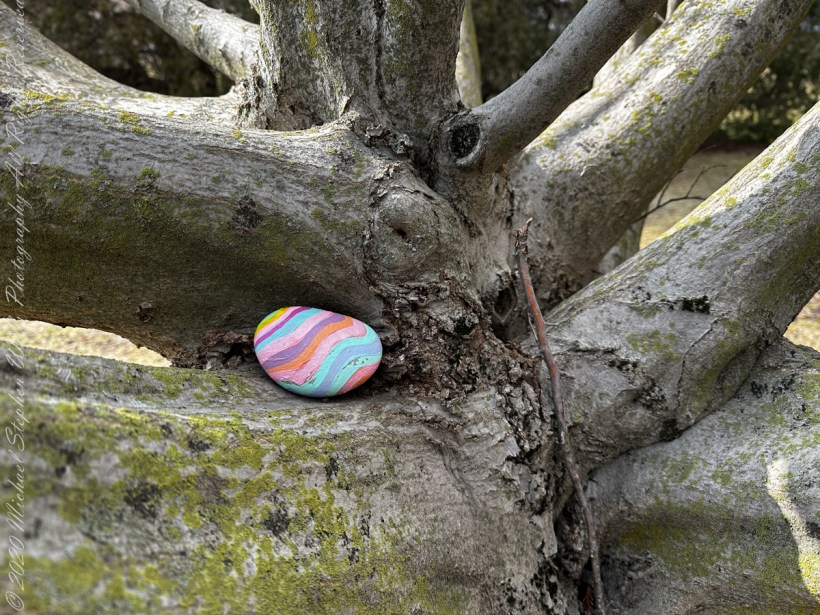
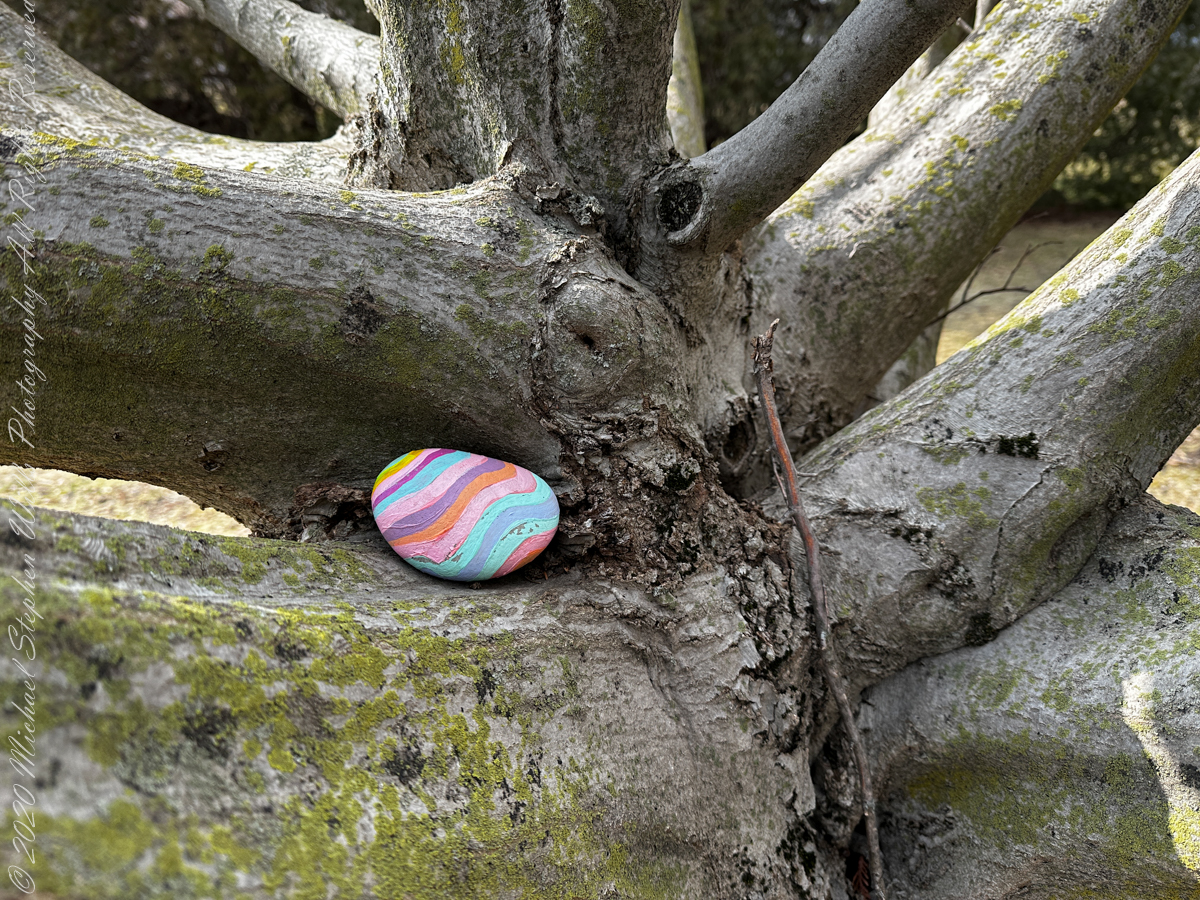
Nestled on the trunk……
Copyright 2023 Michael Stephen Wills All Rights Reserved
When the ancestral Puebloans moved from living next to their fields, in adobe structures, to these cliff dwellings, their building techniques were left behind.
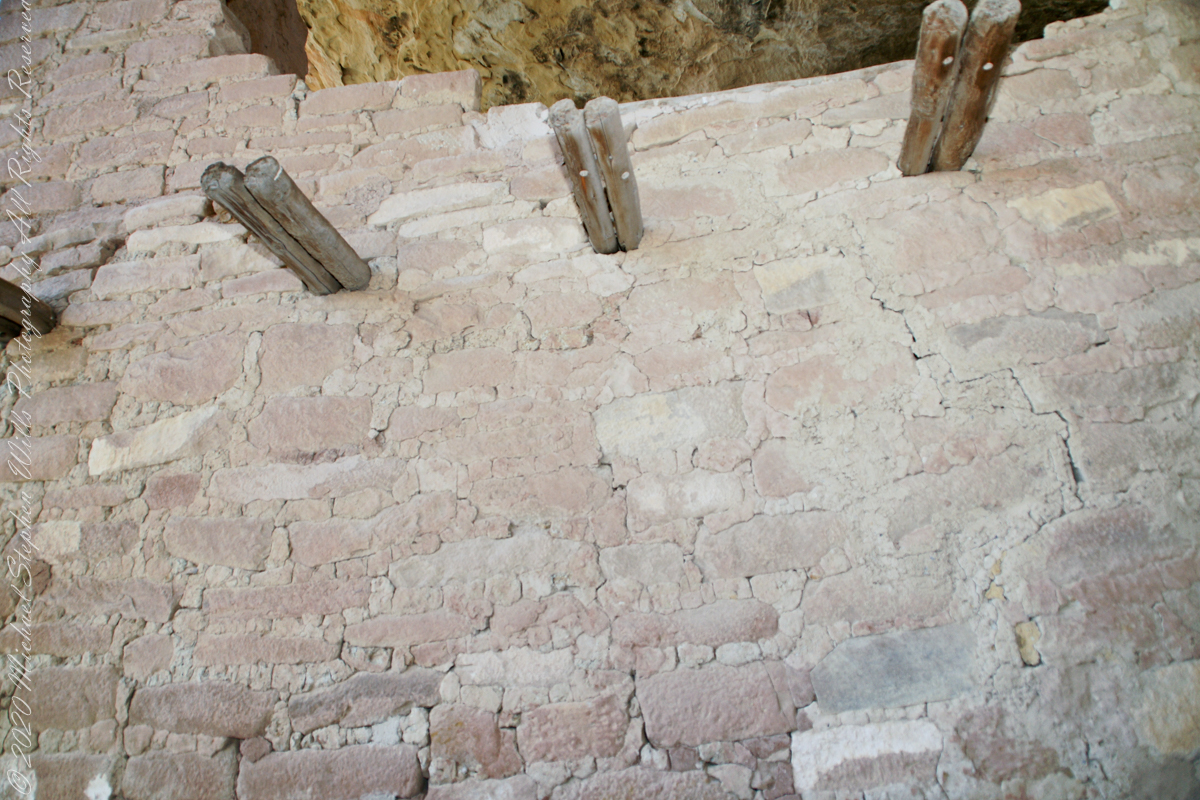
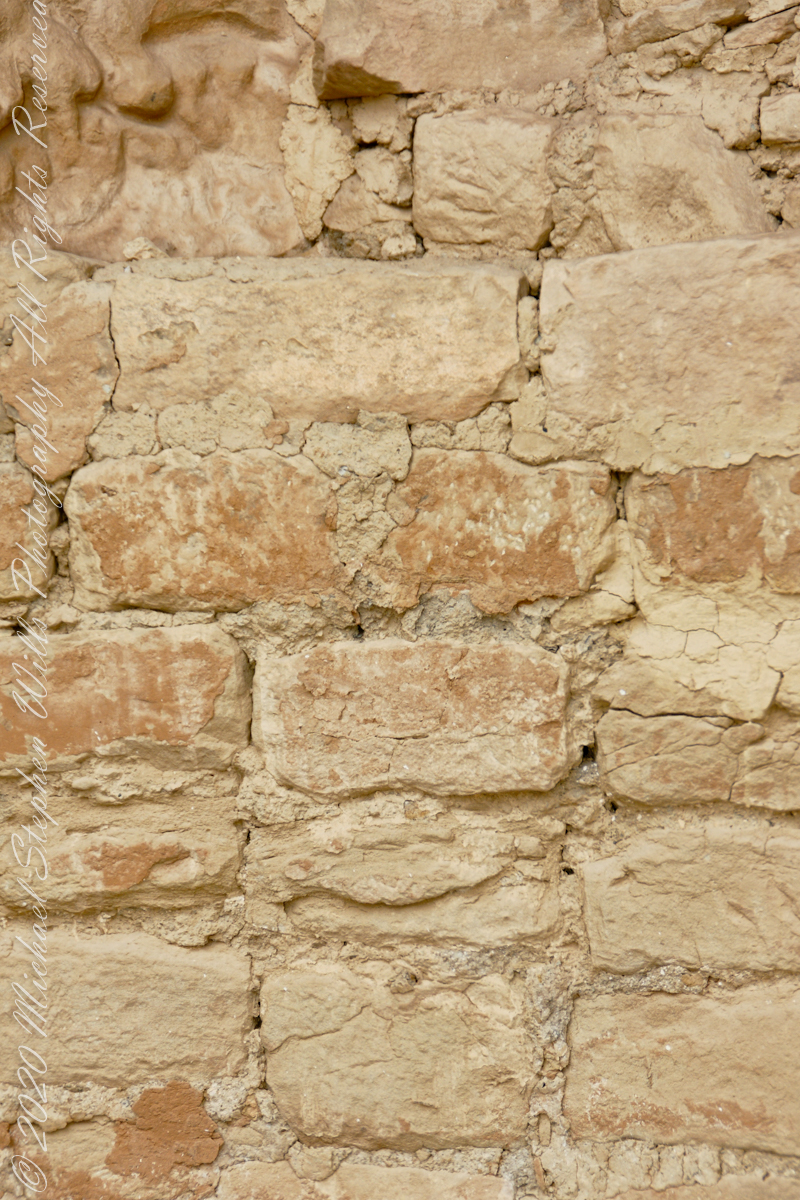
Stone and Mud Mortar with wood beams. Mesa Verde National Park, Montezuma County, near Cortez, Colorado.
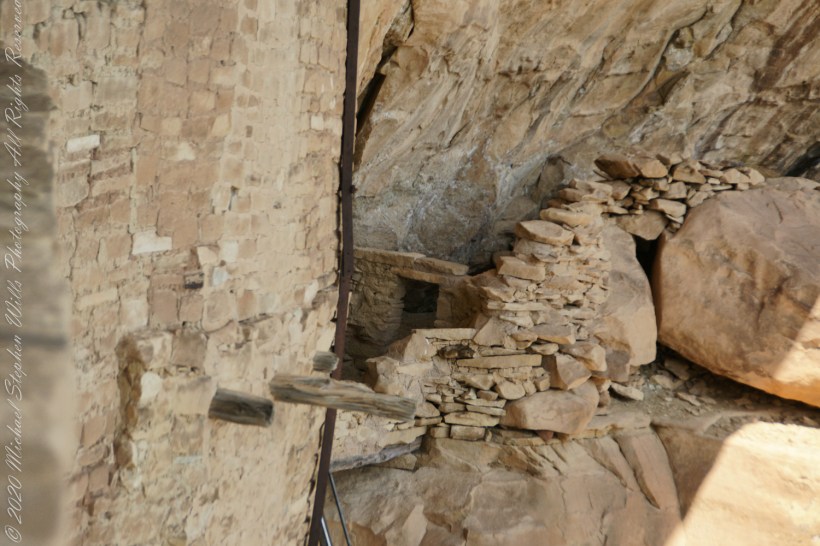
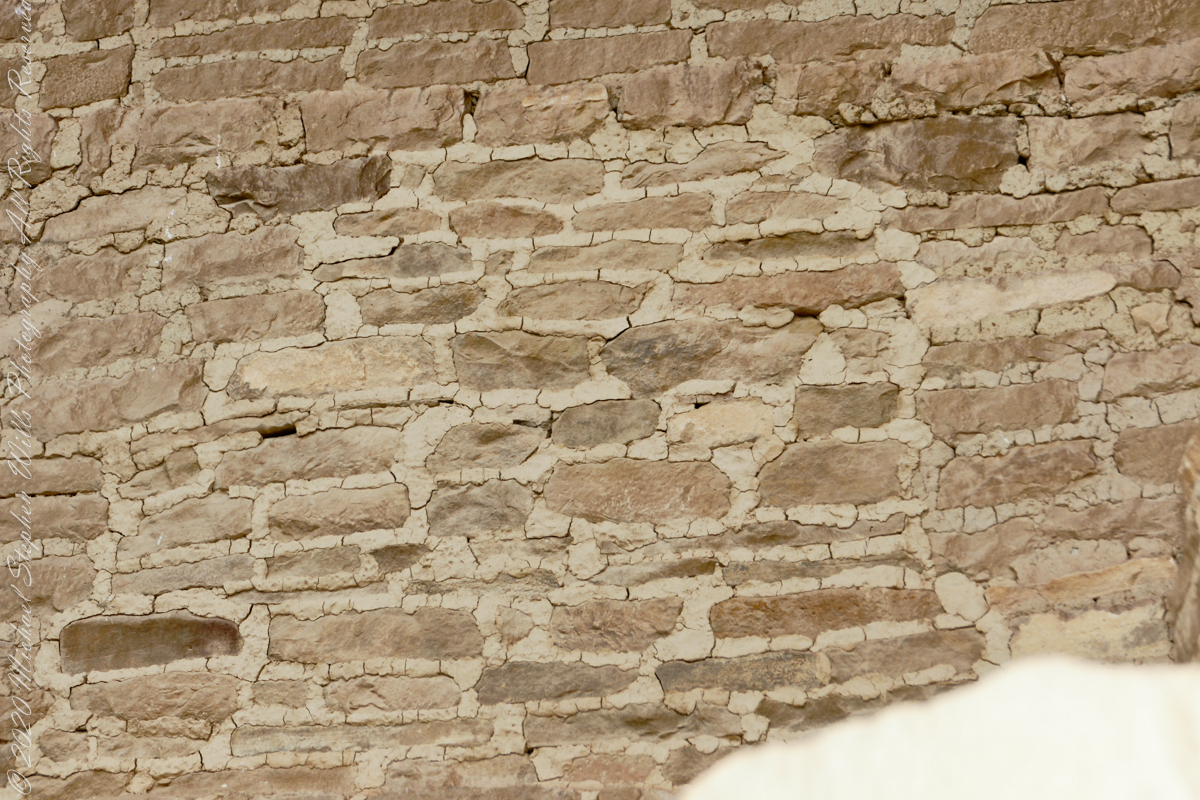
Mud mortar was used to bind stones. Wood poles were used for to construct floors. These are walls captured during the Ranger guided tour of Balcony House.
..
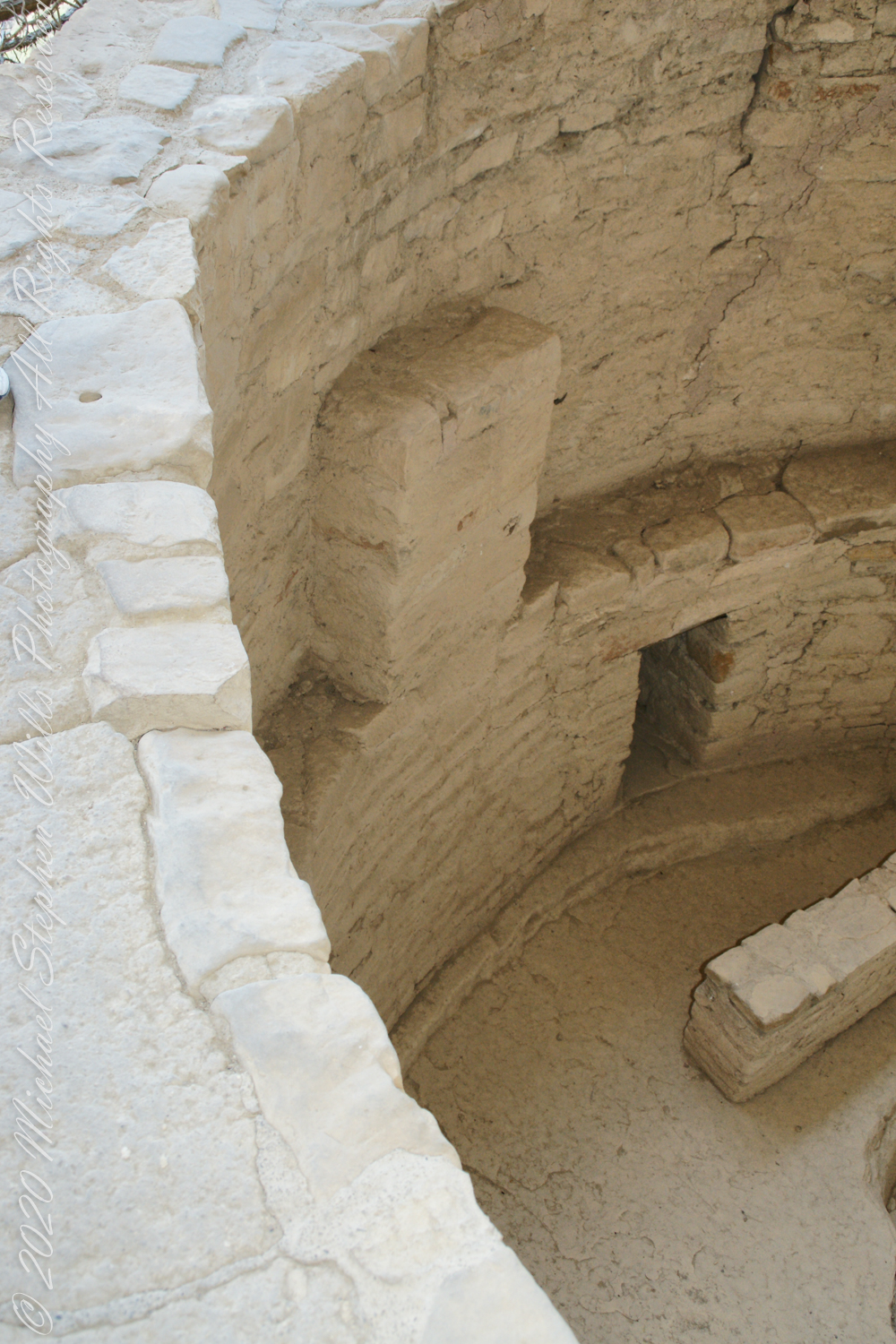
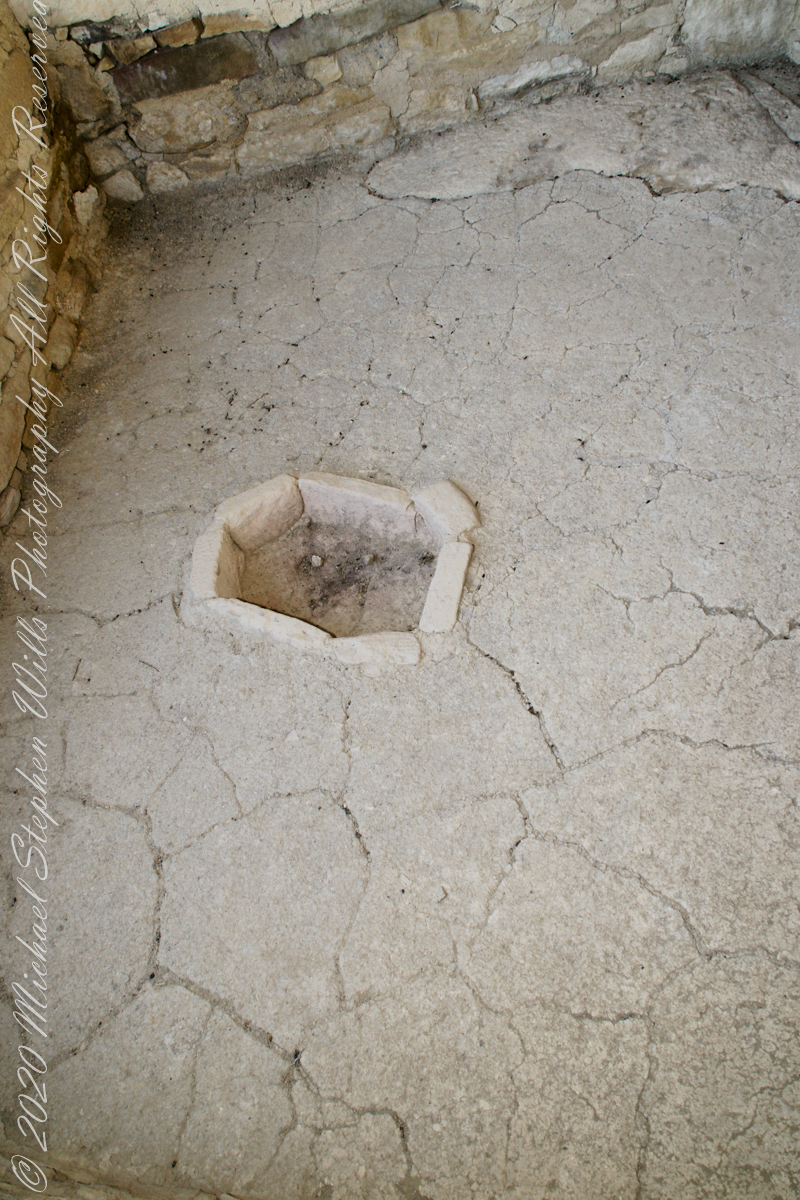
This flat Kiva floor was achieved through clay, softened with water, formed and allowed to dry.
Clay Kiva Floor. Mesa Verde National Park, Montezuma County, near Cortez, Colorado.
Cliff Palace
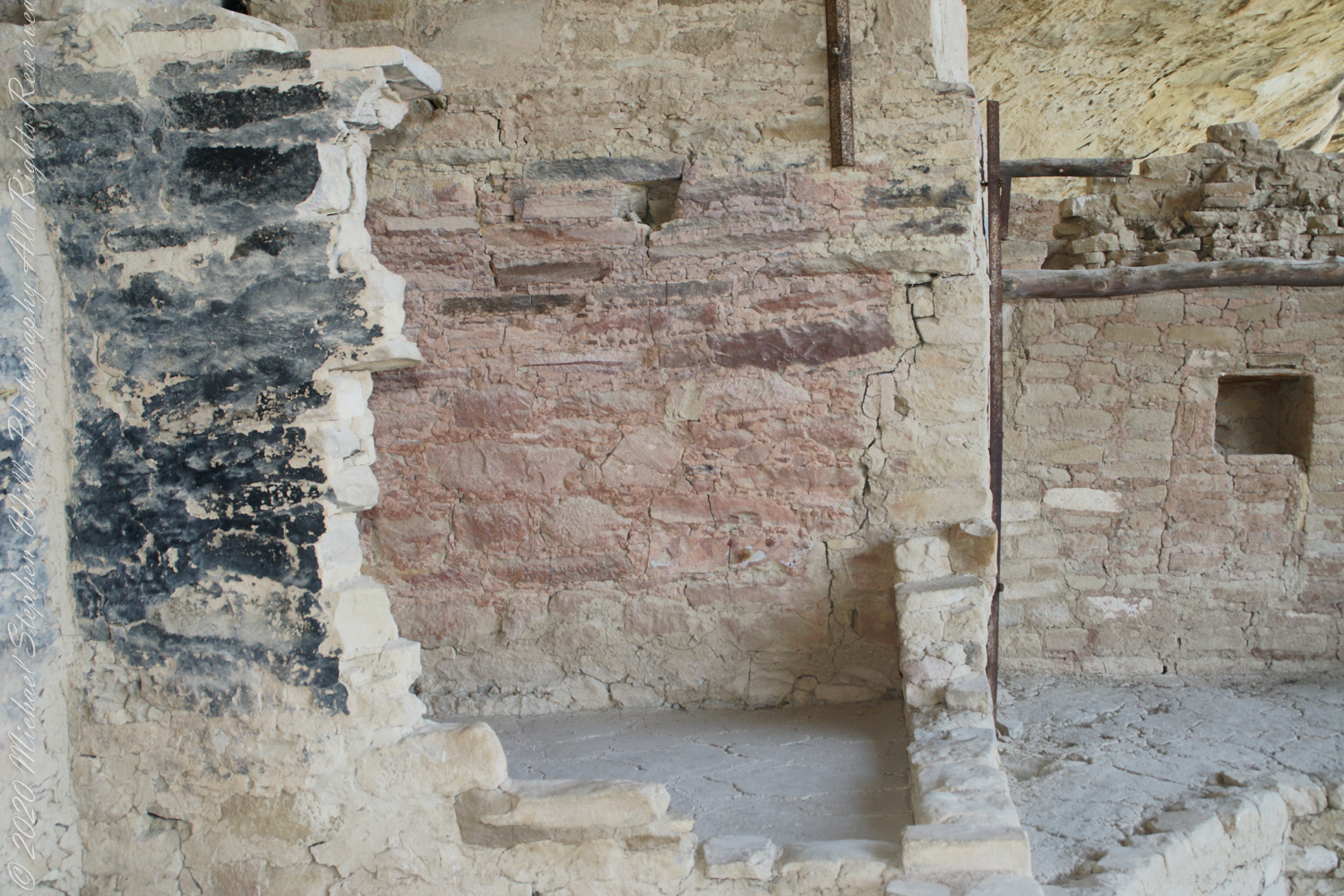
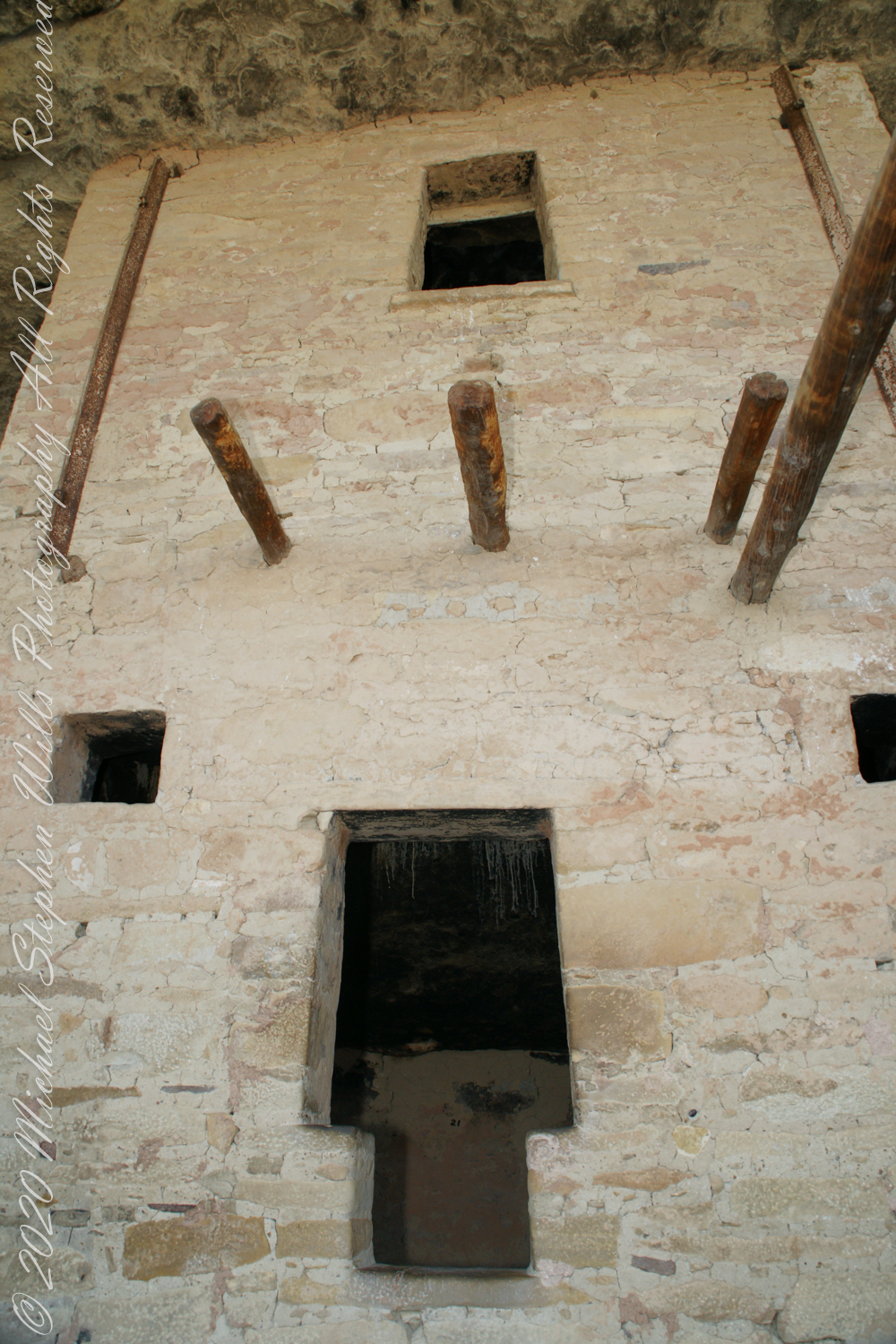
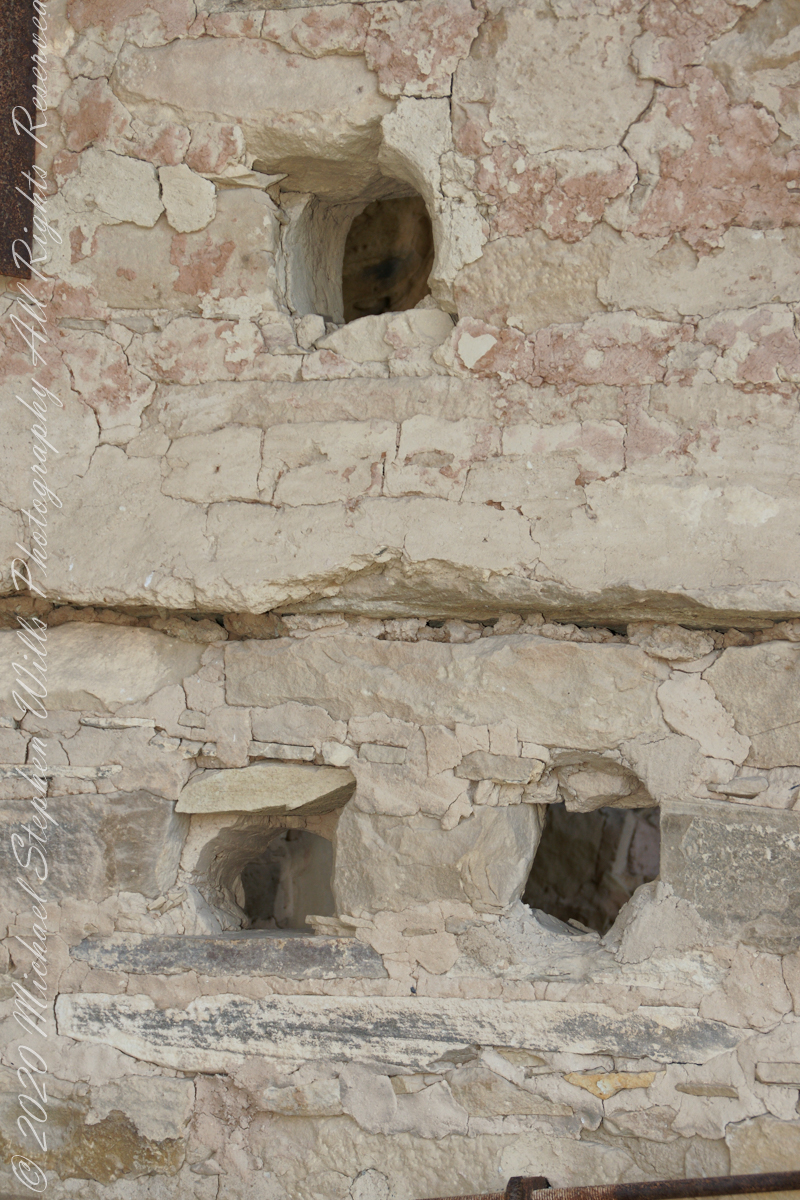
In this wall the poles rotted and crumbled, leaving behind these characteristic holes.
These architects excelled with adapting to the materials at hand.
.
The walls demonstrate an enormous variety around basic patterns.
Copyright 2023 Michael Stephen Wills All Rights Reserved











 Michael Stephen Wills Photography