The air was soddenly warm that Thanksgiving morning in 2023, carrying a foreboding of climate change. Standing on the grounds of Ithaca High School, I couldn’t help but feel the incongruity of the unseasonable warmth. The annual “Turkey Trot” was unfolding around me, an event filled with cheerful camaraderie, yet beneath the surface of this tradition, the world itself seemed to whisper a warning. My attention drifted from the runners to the ground, where fallen leaves painted a story that echoed this uneasy tension.
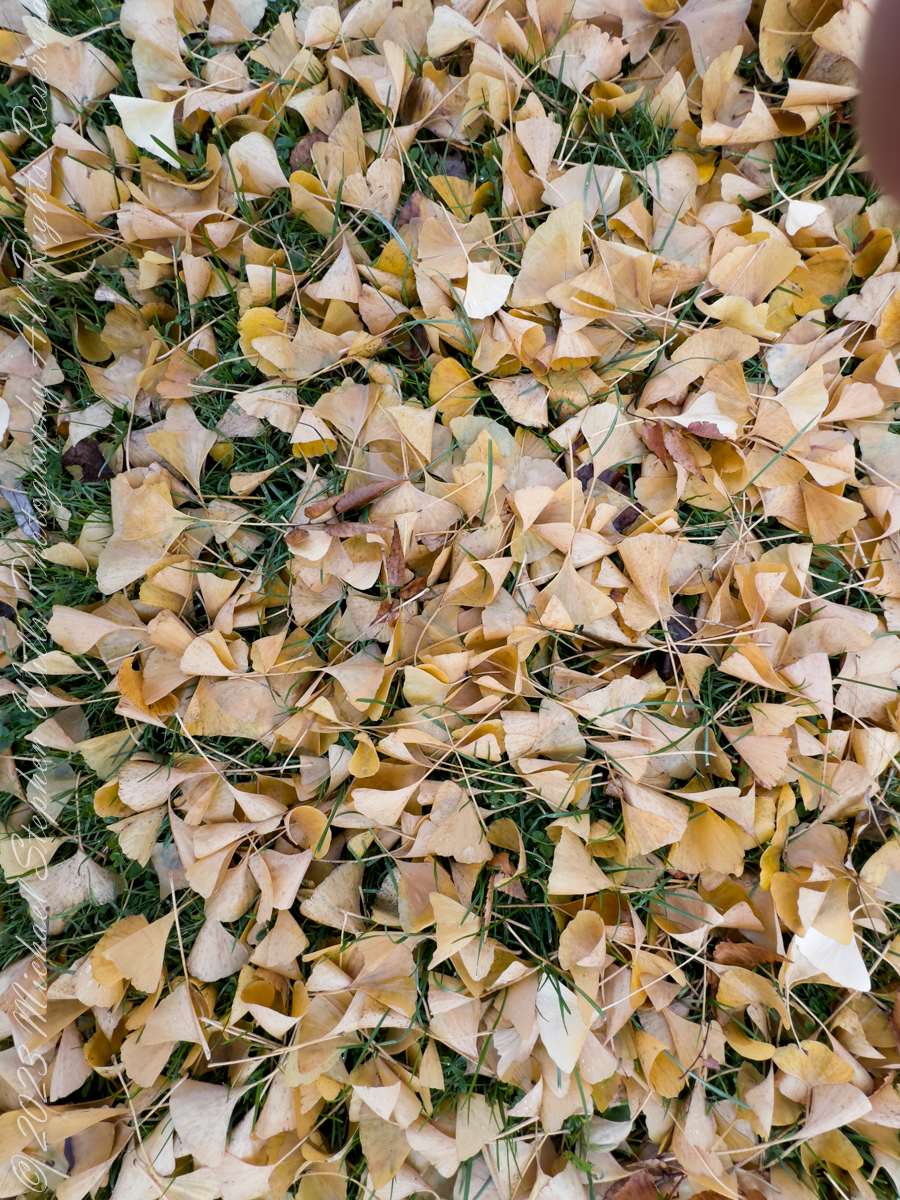
The ginkgo leaves, their vibrant golden hues glowing against the damp grass, seemed almost out of place in the humid air. Ginkgos are ancient survivors, trees that have witnessed millennia of change, yet even they now face a future shaped by the rapid pace of human disruption. Their fan-like shapes, so delicate and timeless, carried an irony—symbols of endurance scattered on a landscape where the seasons no longer held the predictability they once did. That morning, their luminous beauty felt like a quiet plea, a reminder of nature’s fragility in the face of human indifference.
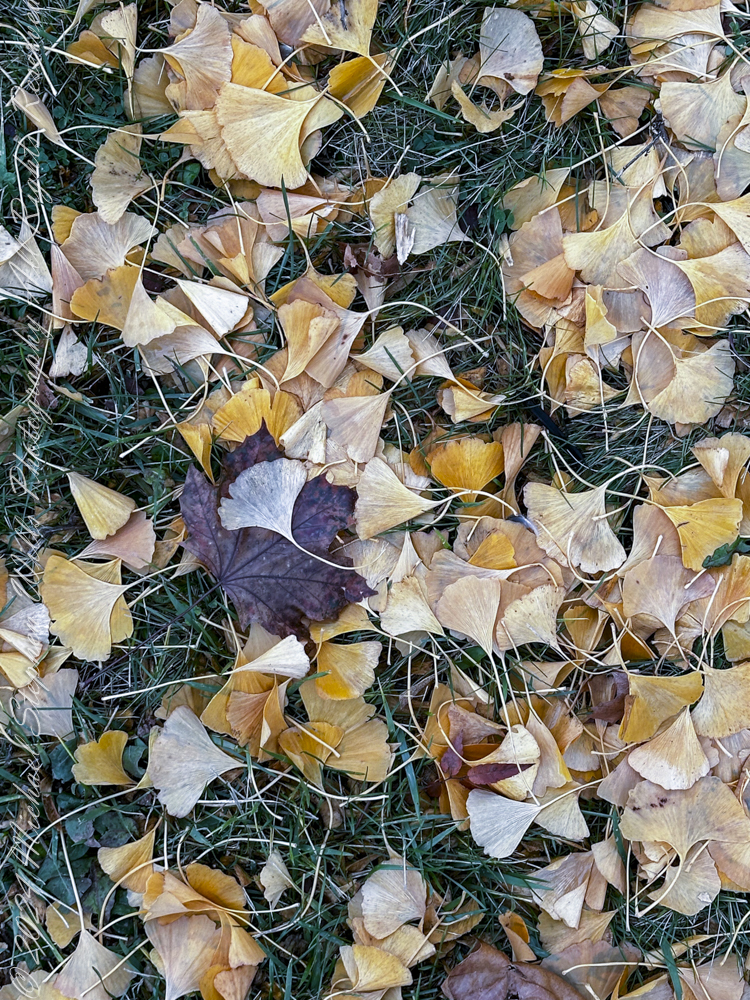
As a spectator of the 2023 “Turkey Trot” on Thanksgiving Day I found these Ginko and Sycamore leaves at Ithaca High School, Ithaca, Tompkins County New York. Finger Lakes Region
Among them, the sycamore leaves lay darker and more rugged, their broader forms curled and weathered by the elements. The sycamore is a resilient tree, often thriving in difficult conditions, yet its leaves bore a somber note against the warmth of the day. Together, the ginkgo and sycamore leaves formed a poignant tableau—a meeting of strength and delicacy, both subject to the same unrelenting forces of change. As I stood there, the leaves seemed to whisper their own story, a testament to survival amidst an increasingly uncertain world.
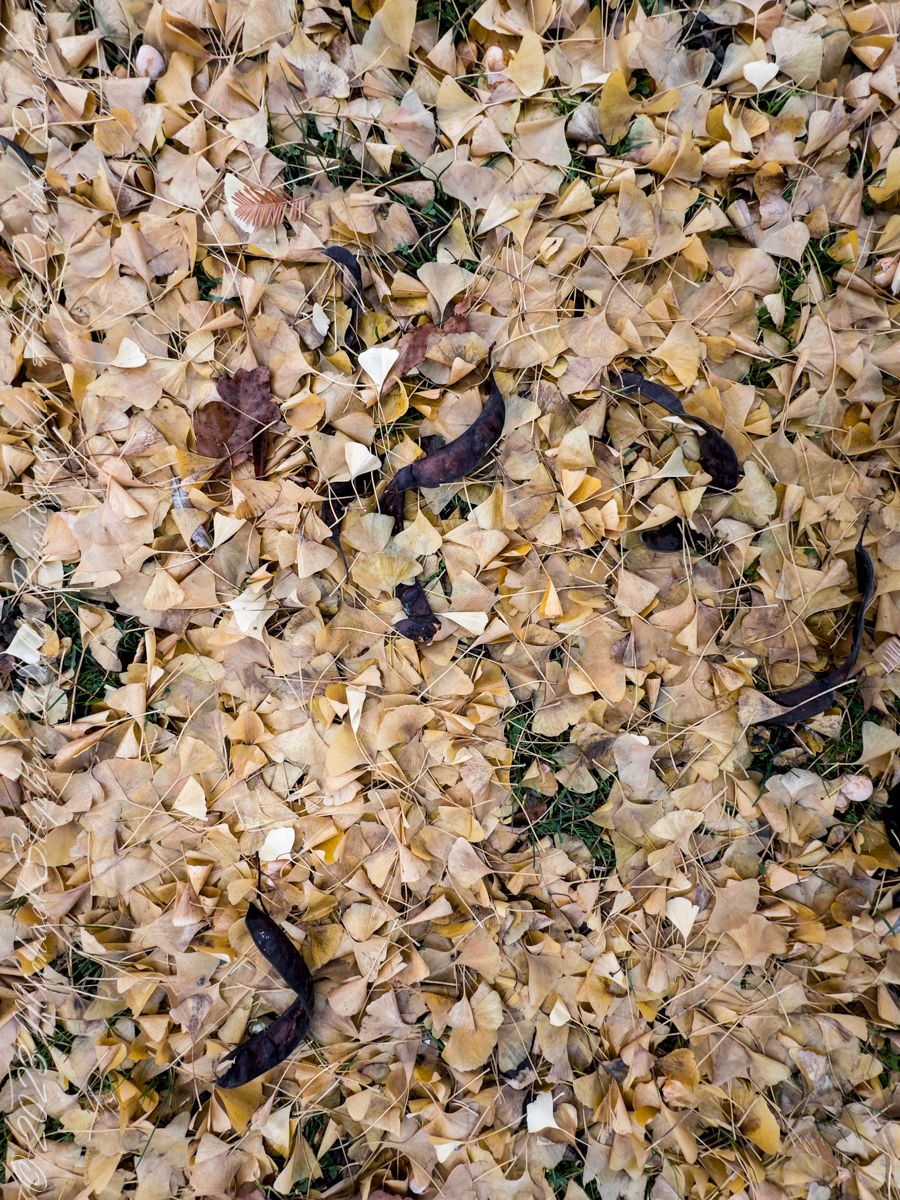
Ginko Leaves and Honey Locust Pods, Stewart Park on a December 2023 afternoon
The Turkey Trot unfolded with its usual energy—children dashed ahead with gleeful abandon, adults paced themselves in cheerful determination, and older participants moved with quiet dignity. The warmth seemed to amplify the human vibrancy of the event, yet it also cast a shadow of dissonance. This race, this celebration of resilience and community, was happening against the backdrop of a world in flux. The warmth of the morning was a reminder that even cherished traditions like this might one day feel the strain of climate shifts.
I crouched to capture the leaves in a photograph, drawn by their interplay of color and form. The ginkgo leaves glimmered like gold coins scattered across the ground, while the sycamore leaves added a depth and weight that anchored the scene. Together, they reminded me of the cyclical nature of life, the beauty and decay that coexist within the same space. Yet this year, the warmth in the air added an unsettling layer to the story. These leaves, so central to the rhythm of seasons, were now falling in a world where those rhythms seemed increasingly disrupted.
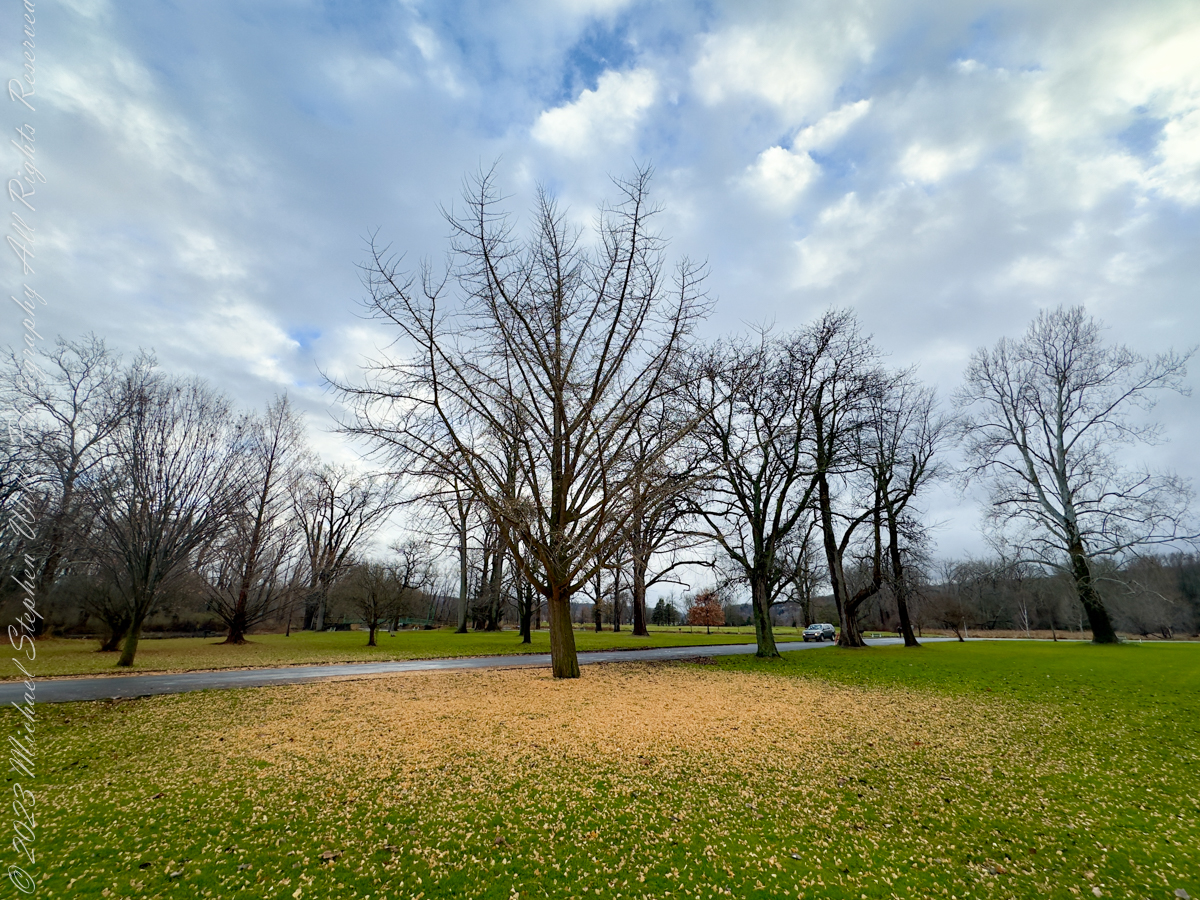
Bare Ginko tree with leaf pattern, Stewart Park on a December afternoon 2023
As the sunlight broke through the clouds, it illuminated the edges of the ginkgo leaves, making them shimmer with an almost otherworldly light. I lingered in that moment, feeling the weight of its quiet truth: life is fleeting, but its beauty endures in the connections we foster and the memories we hold. That Thanksgiving, the humid warmth of the air reminded me that we live in a time of profound change, yet even amid uncertainty, there is still wonder to be found beneath our feet. It is a wonder worth preserving.
Enter your email to receive notification of future postings. I will not sell or share your email address.
Copyright 2024 All Rights Reserved Michael Stephen Wills
As I step into Cascadilla Gorge from the Linn Street entrance, I’m greeted by the soft rustling of leaves and the constant, soothing rush of water. The air this Halloween Day is warm, the autumn colors vibrant against the cool blue sky. I know Cascadilla Gorge is part of the Cornell Botanical Gardens, but the immediate beauty of this natural sanctuary makes it easy to forget I’m still within the city limits of Ithaca. The sounds of the gorge draw me in, as if whispering there’s more to see, more to explore. With a deep breath, I begin my journey up the trail, eager to discover what lies ahead.
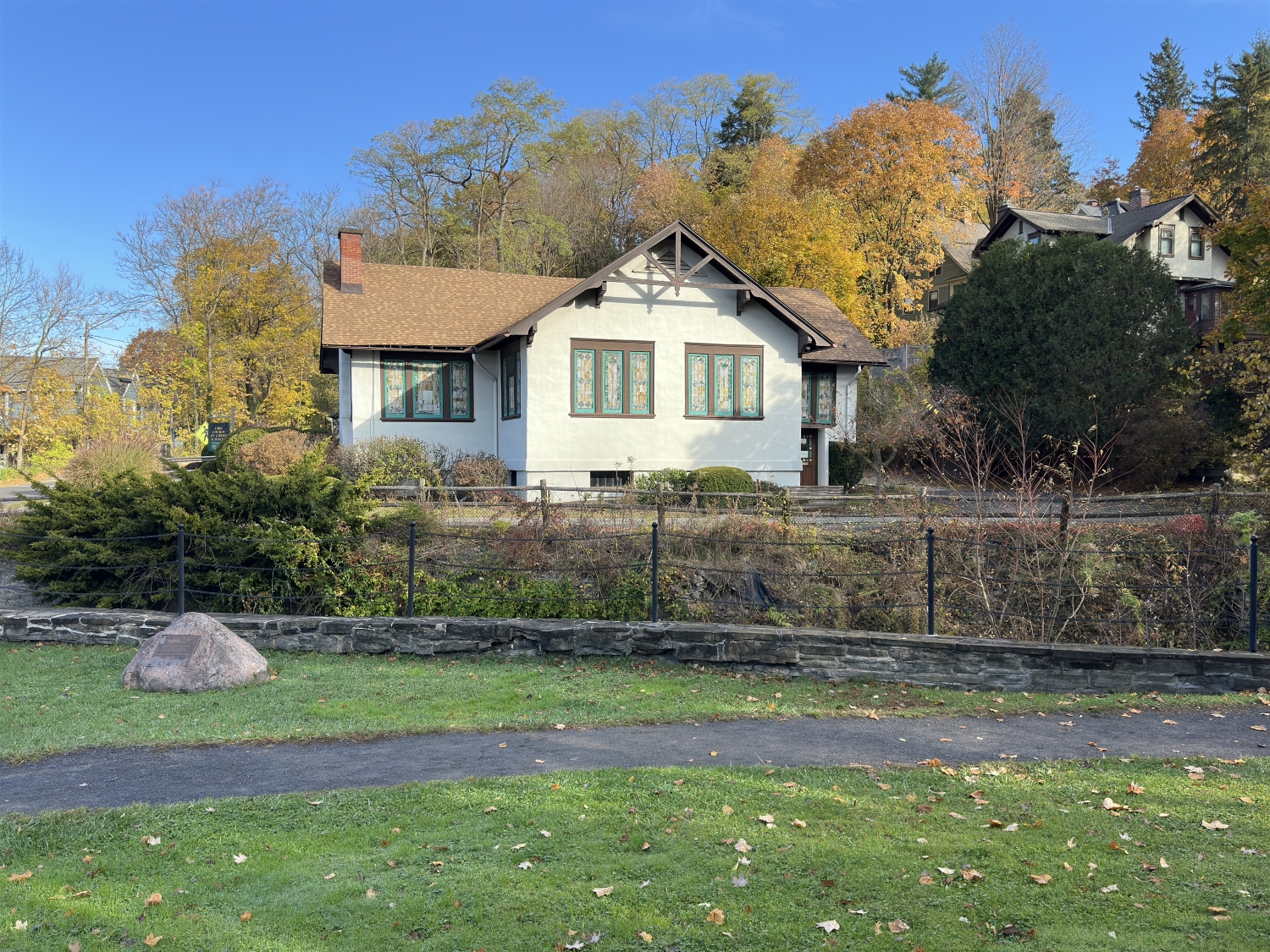
Just a short way in, I notice the First Church of Christ, Scientist perched on the corner of University Avenue and Cascadilla Park Road. The architecture of the church is both quaint and elegant, with its light-colored facade framed by dark trim and roof. Surrounded by foliage, it feels like the church belongs here, as much a part of the landscape as the trees and rocks. The sight of this historic building nestled so close to the gorge reminds me that this wild and ancient place is woven into the fabric of Ithaca’s community life.
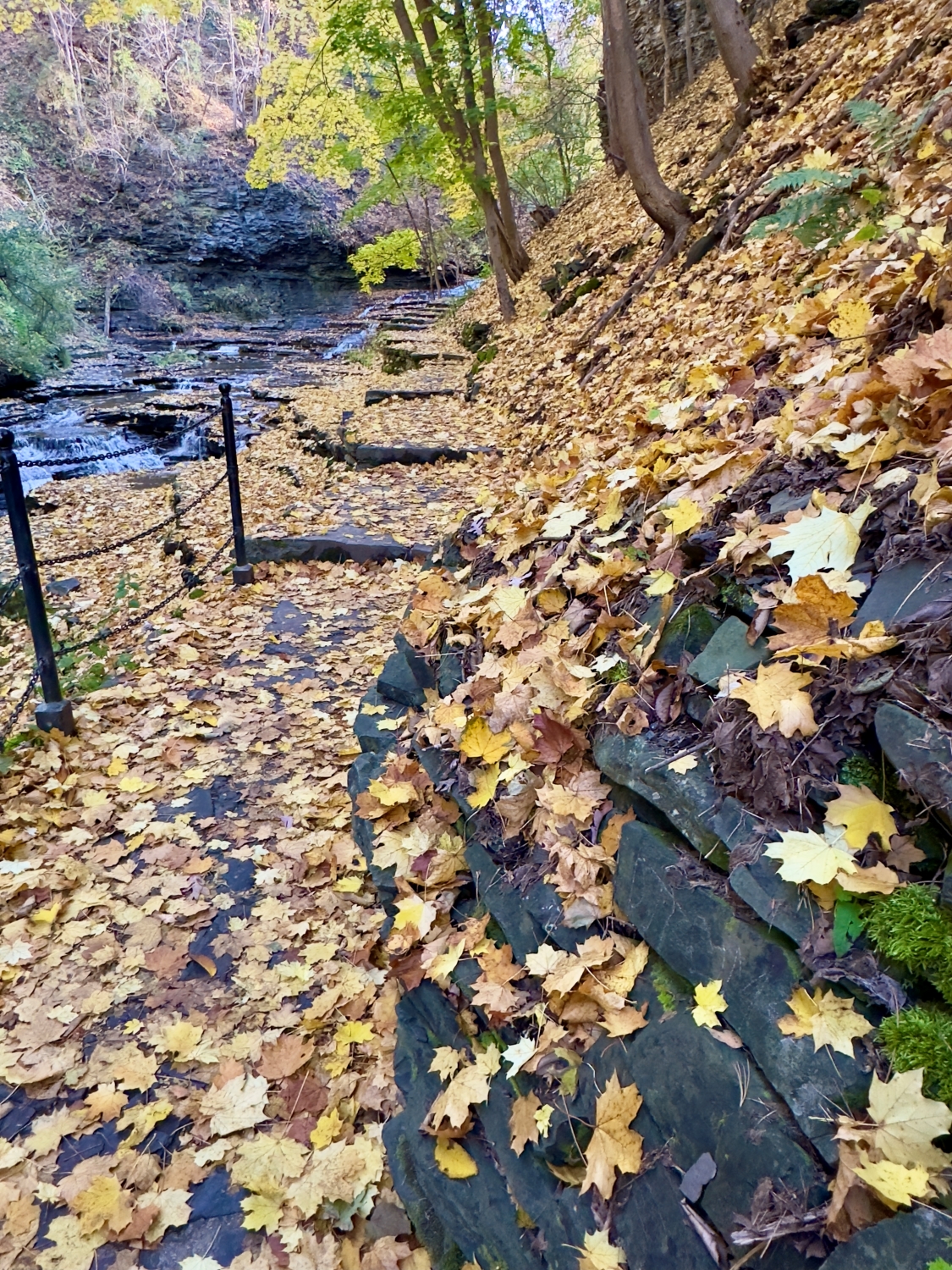
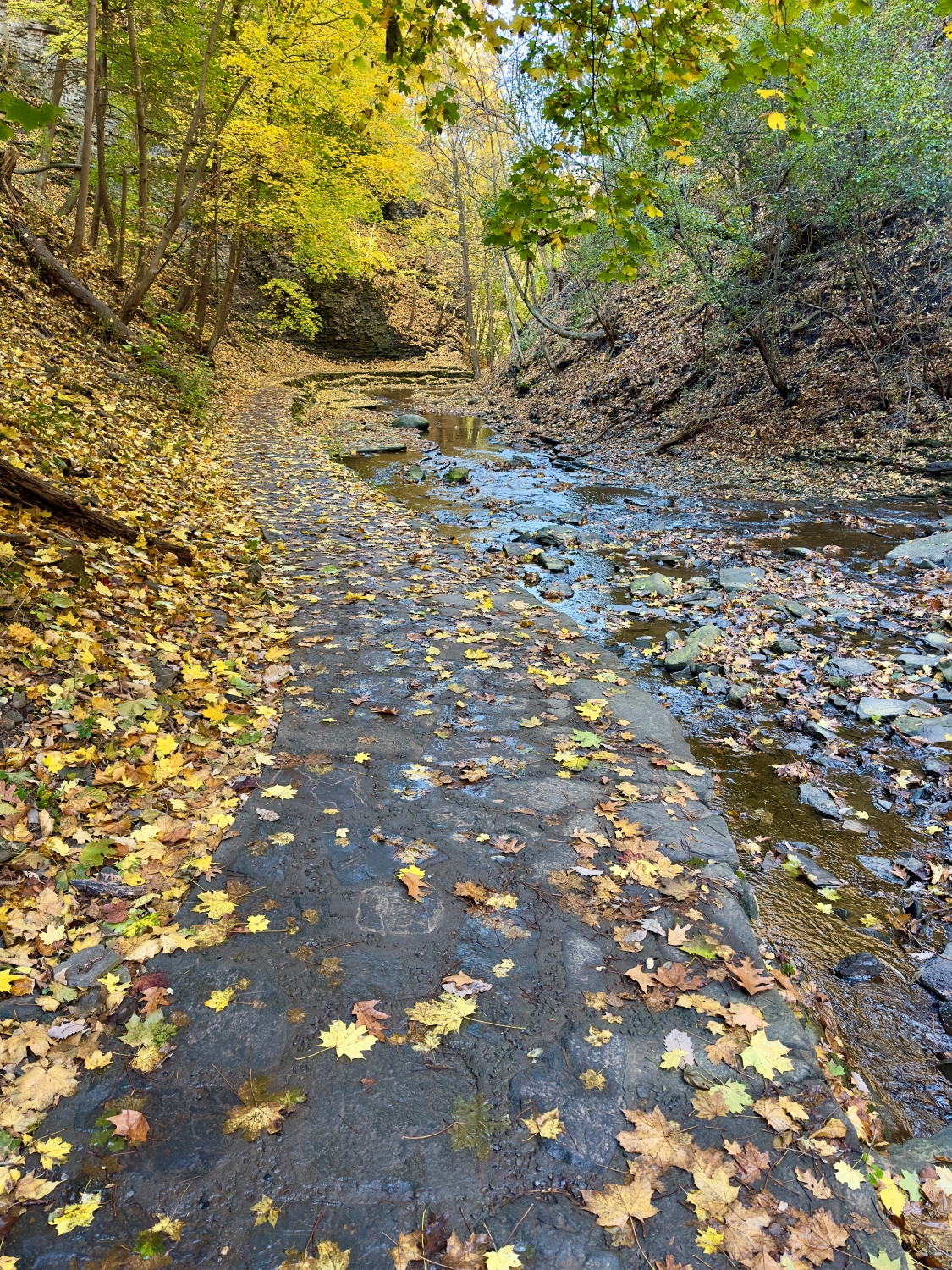
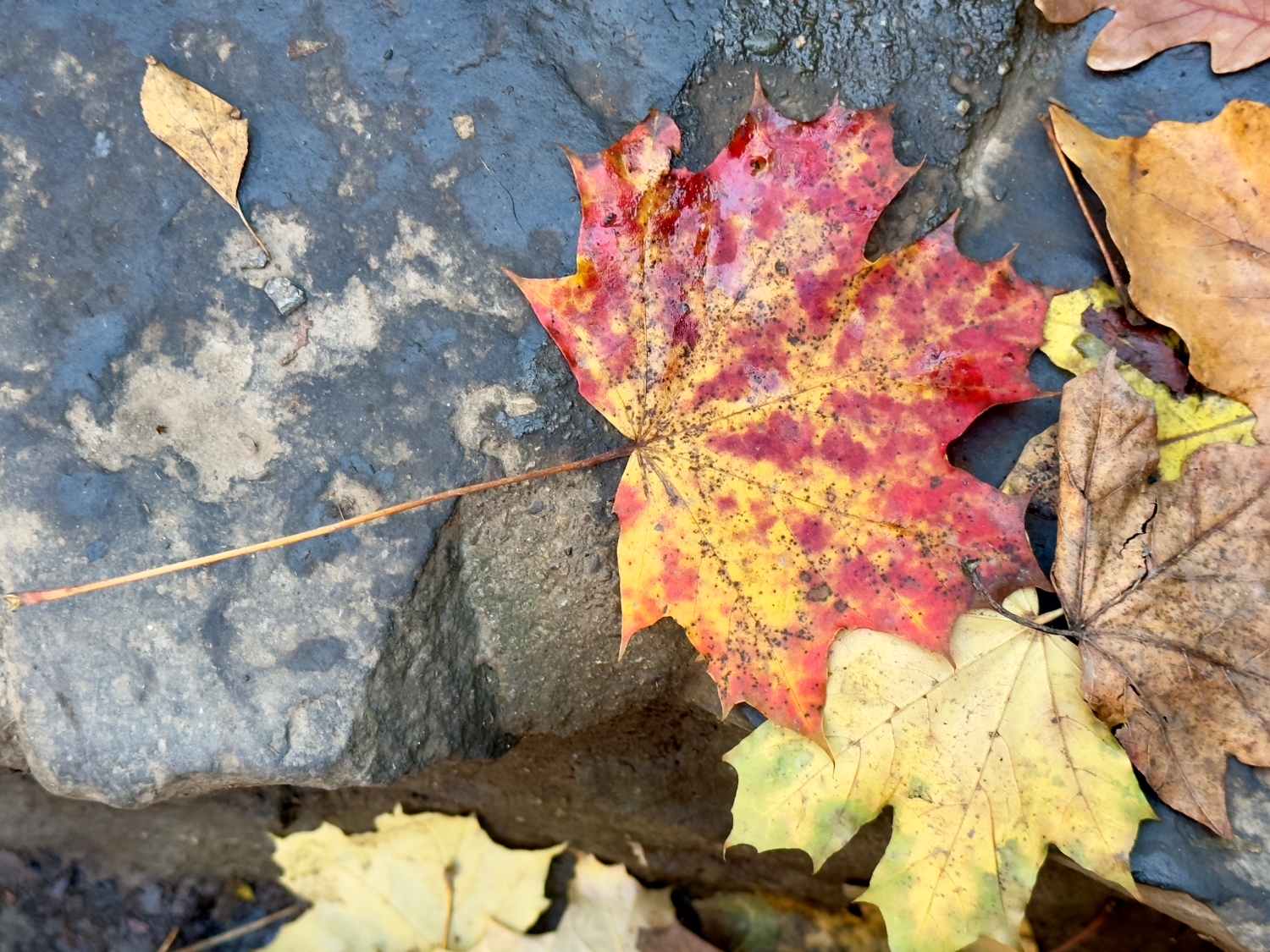
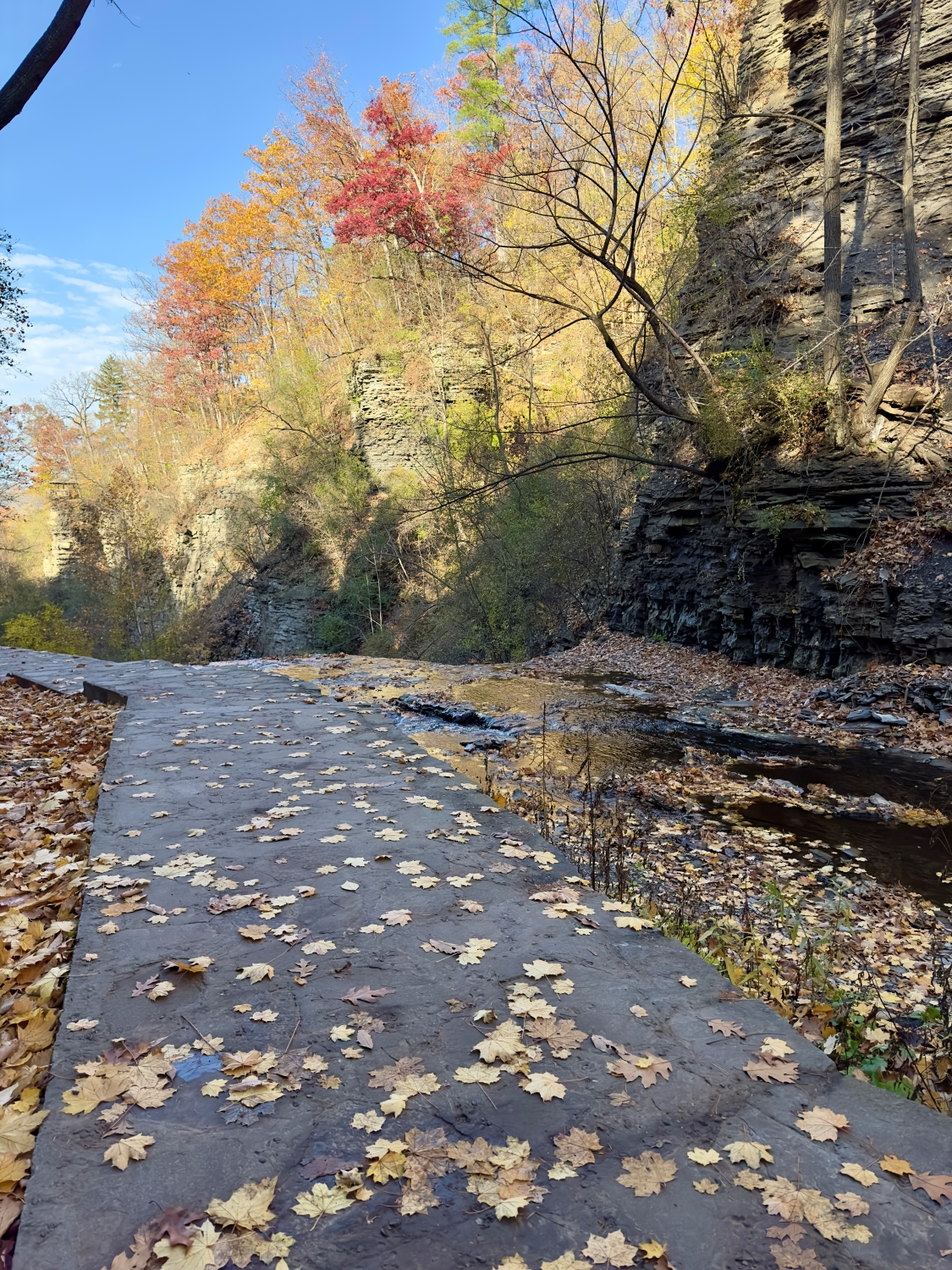
I move further along the trail, and the terrain begins to shift. Fallen leaves create a golden carpet along the path, their crisp shapes overlapping like nature’s confetti celebrating the season. Each step crunches underfoot, adding my own rhythm to the symphony of sounds. The trees overhead are a kaleidoscope of colors—deep golds, fiery oranges, and the occasional flash of red from Virginia Creeper vines (Parthenocissus quinquefolia). Together, the trees create a canopy that filters sunlight, casting dappled patterns on the gorge walls. It’s an ever-changing play of light and shadow, one moment bright and the next subdued, adding a layer of magic to the experience.
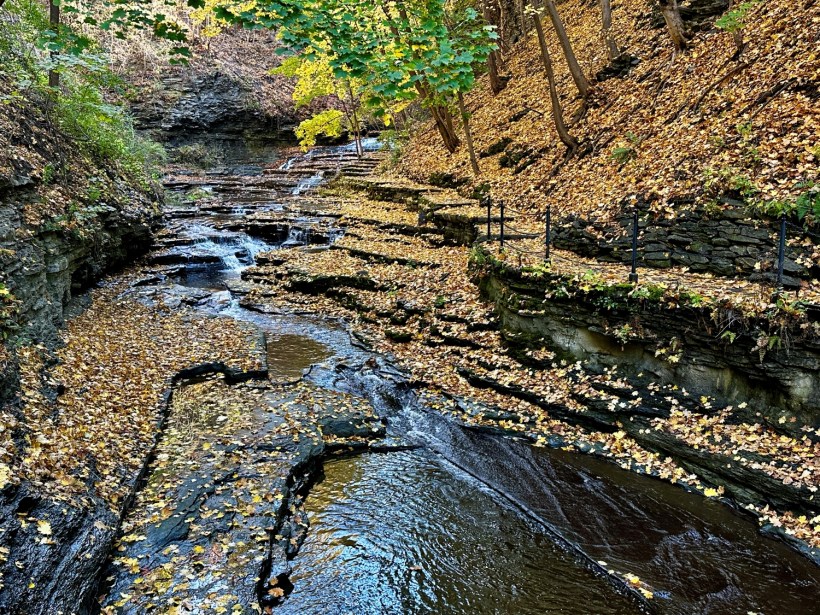
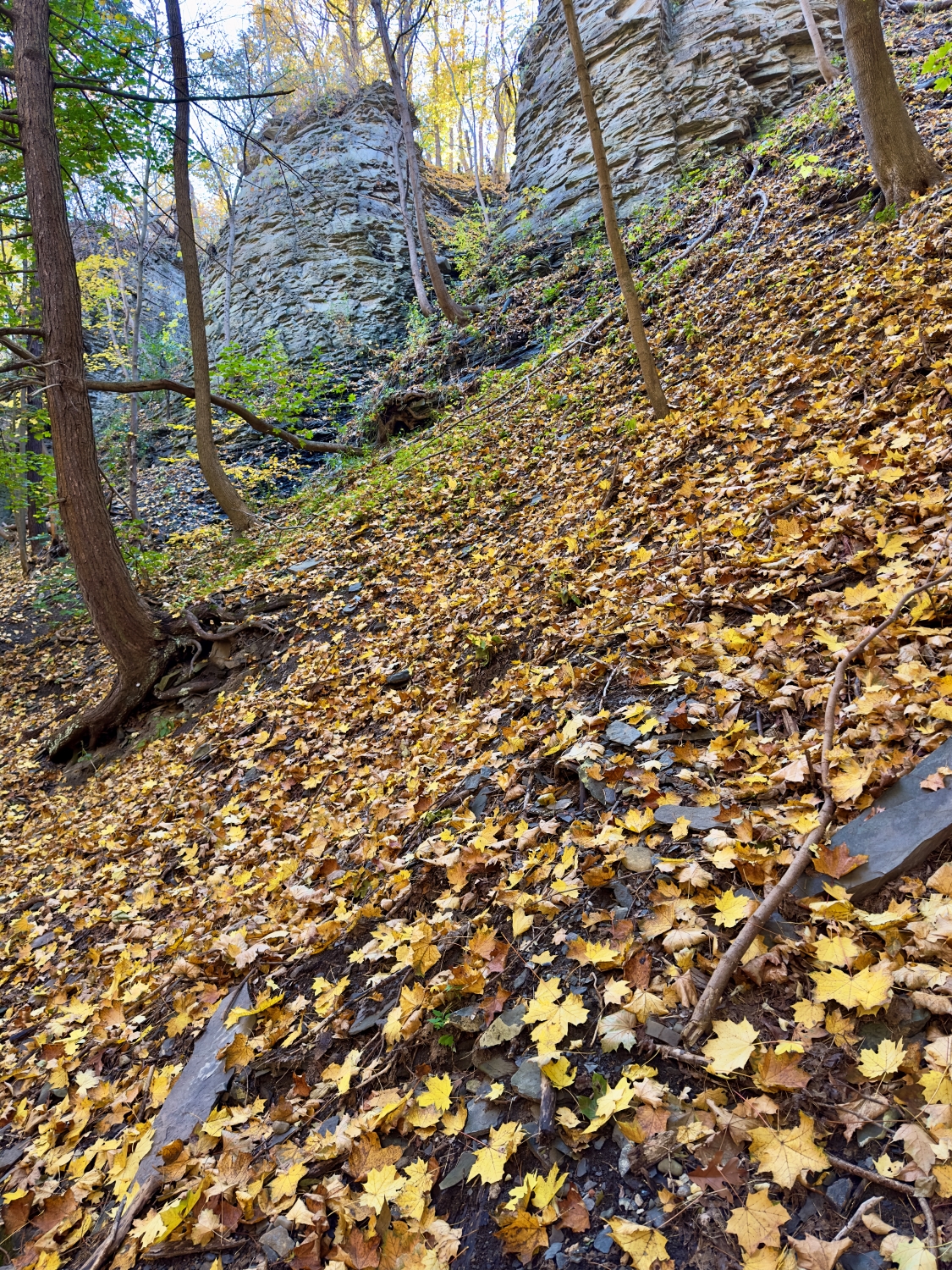
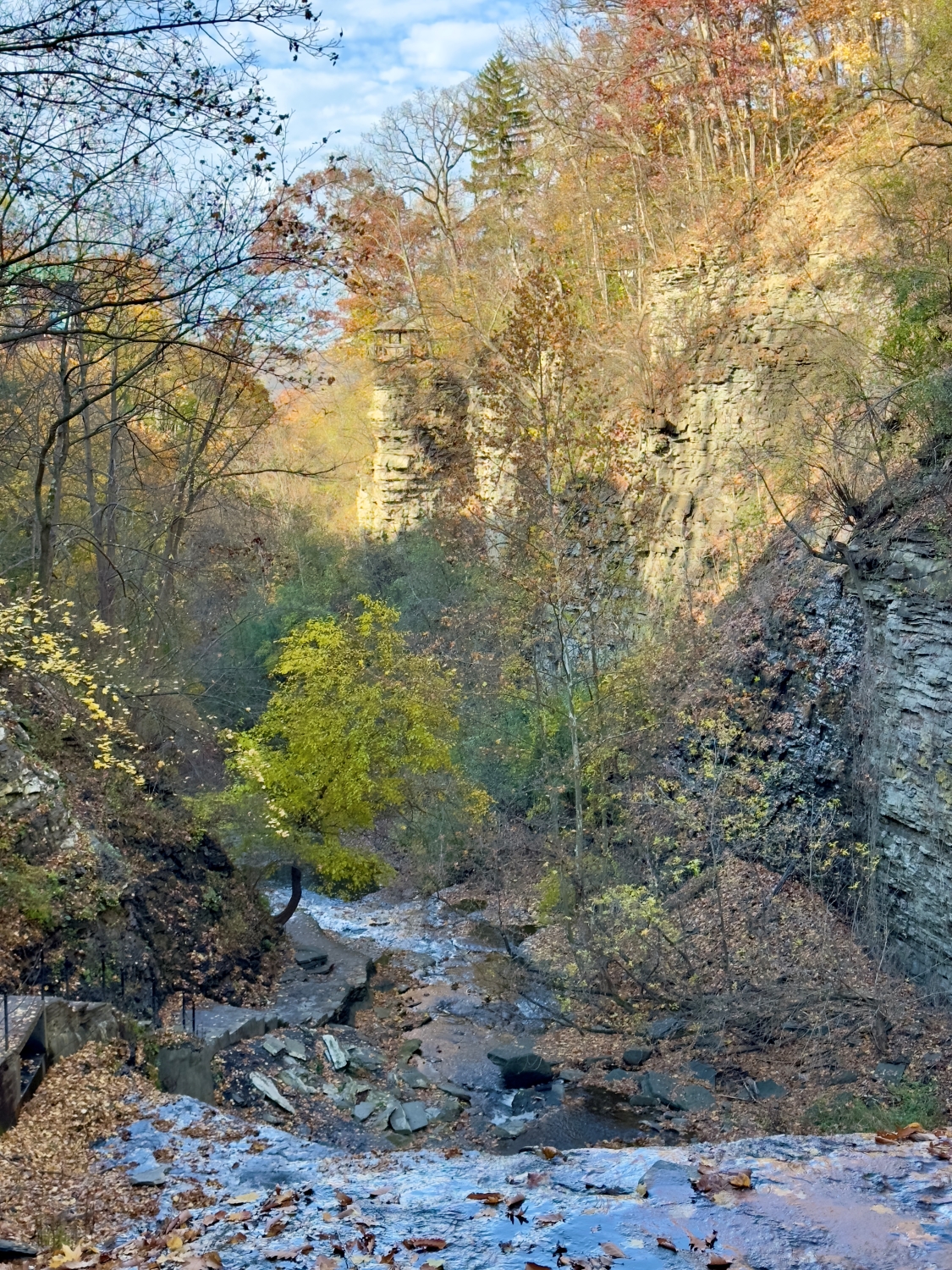
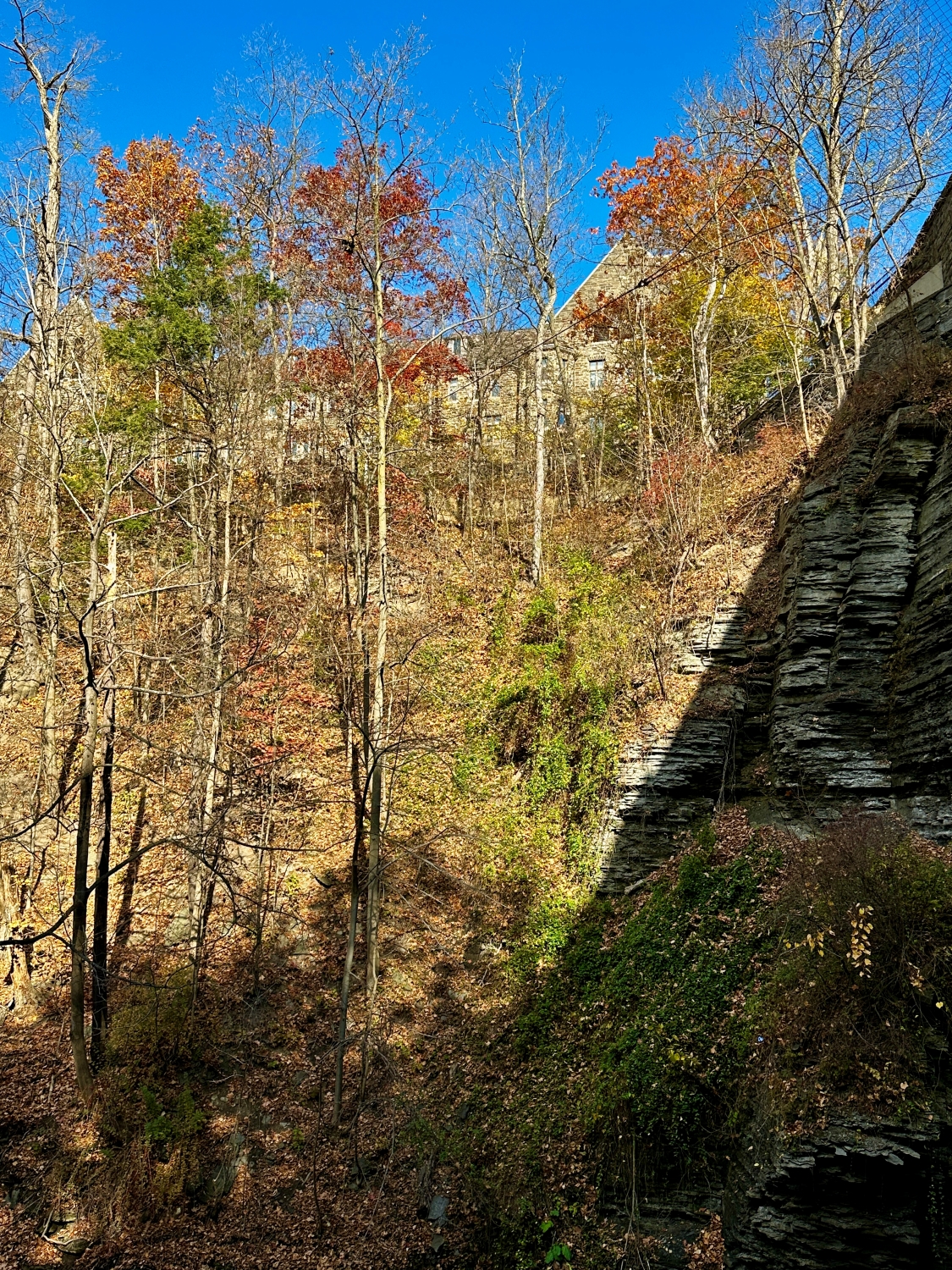
As I follow the trail upward, the gorge narrows, and I find myself surrounded by towering walls of rock. Here, layers of siltstone and shale formed more than 300 hundred million years ago are exposed, a testament to the forces of water and time that carved this place across mere millennia of recent geologic time. The rock formations are fascinating, with the water flowing over them in gentle cascades, finding every groove and crevice. There’s something humbling about standing in a place shaped by forces so much larger and older than myself. I pause, letting the rush of water and the stillness of stone fill my senses.
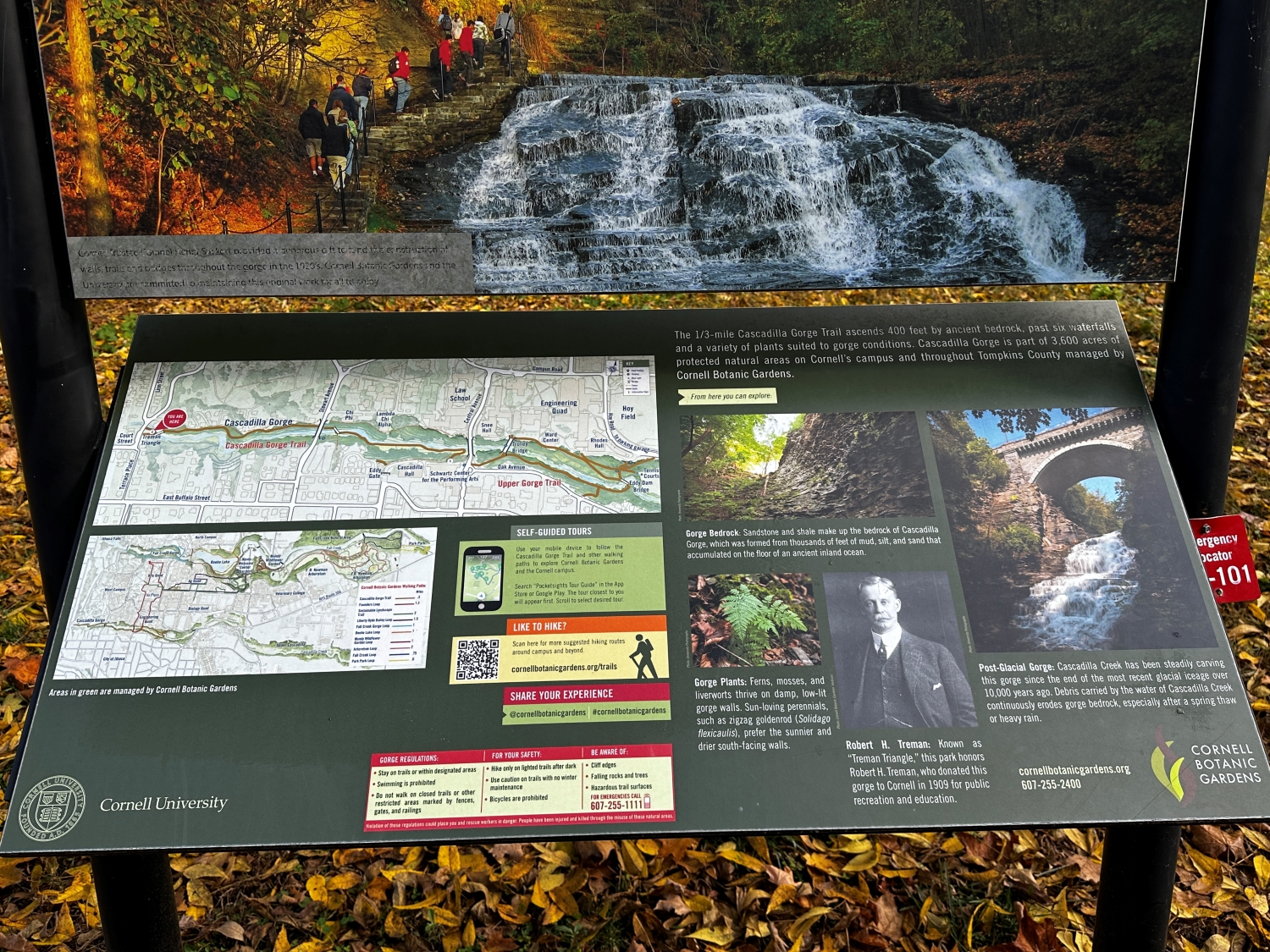
Along the way, I come across an interpretive sign provided by the Cornell Botanical Gardens. They tell the story of Cascadilla Gorge, how it was formed from the bedrock of sandstone and shale that eroded from mountains to the east, in the Devonian era when an ancient inland sea covered the region. The signs also introduce Robert H. Treman, a philanthropist who saw the beauty and educational value of the gorge. Thanks to him and the efforts of many, this natural wonder is preserved for all to experience. Knowing this adds depth to my walk; it’s a reminder that places like this exist not only by chance but because people cared enough to protect them.
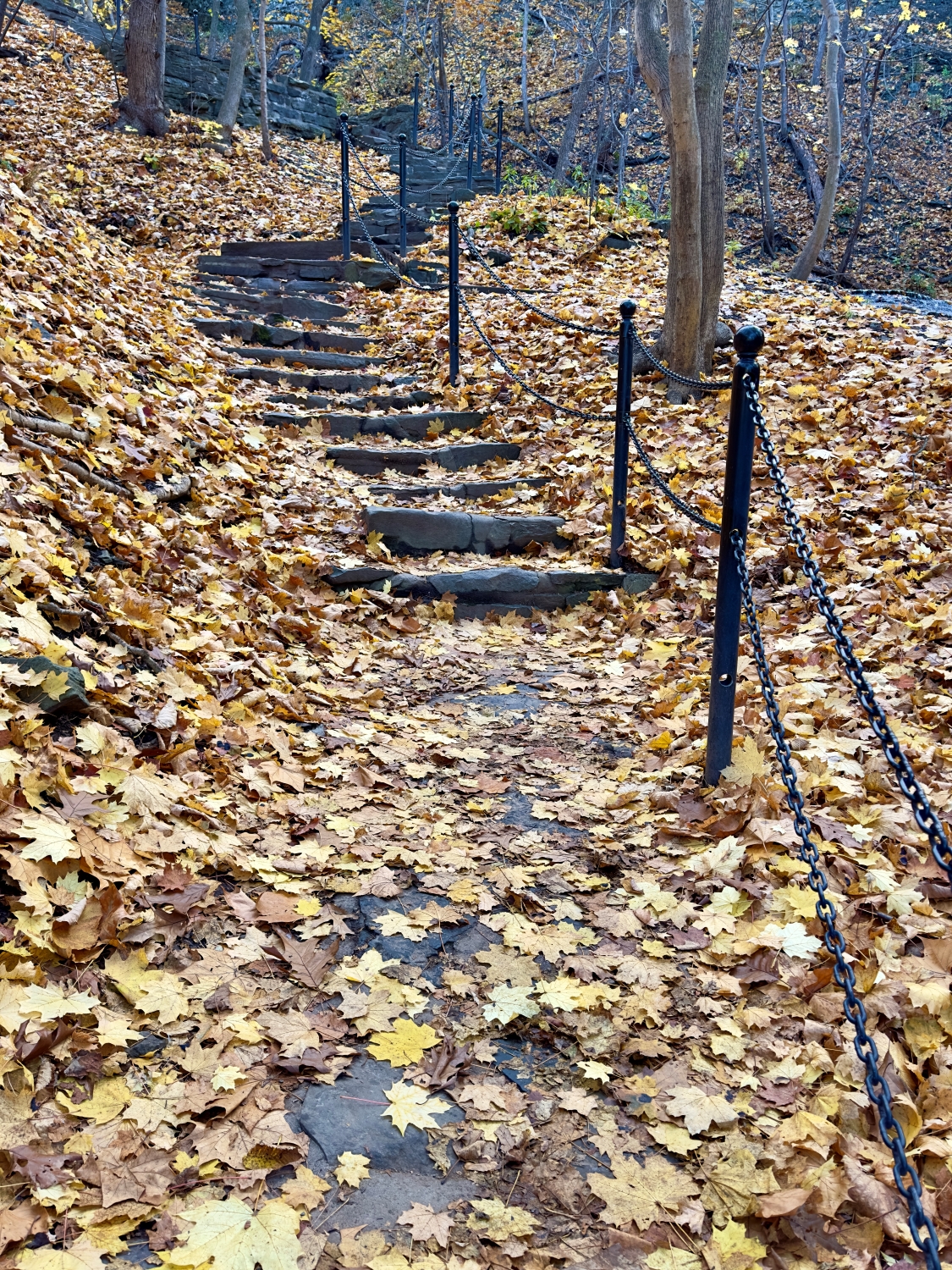
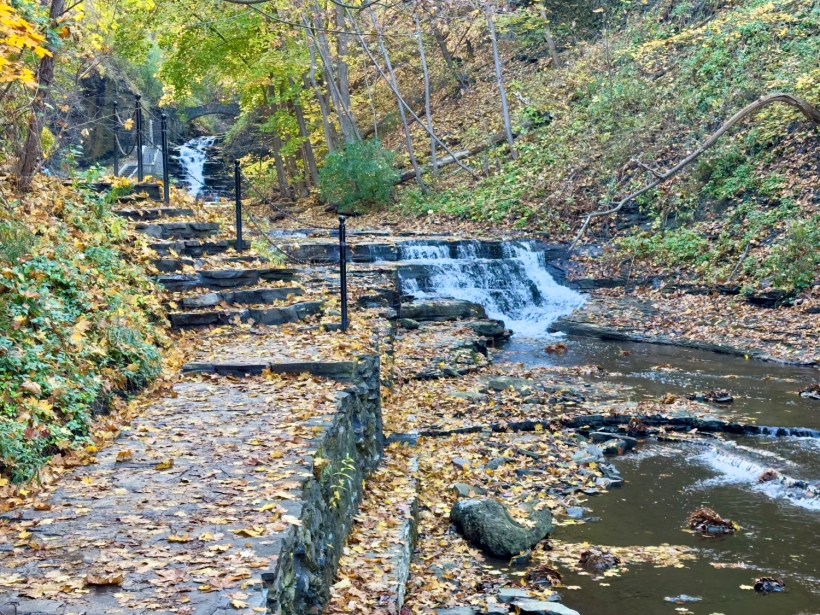
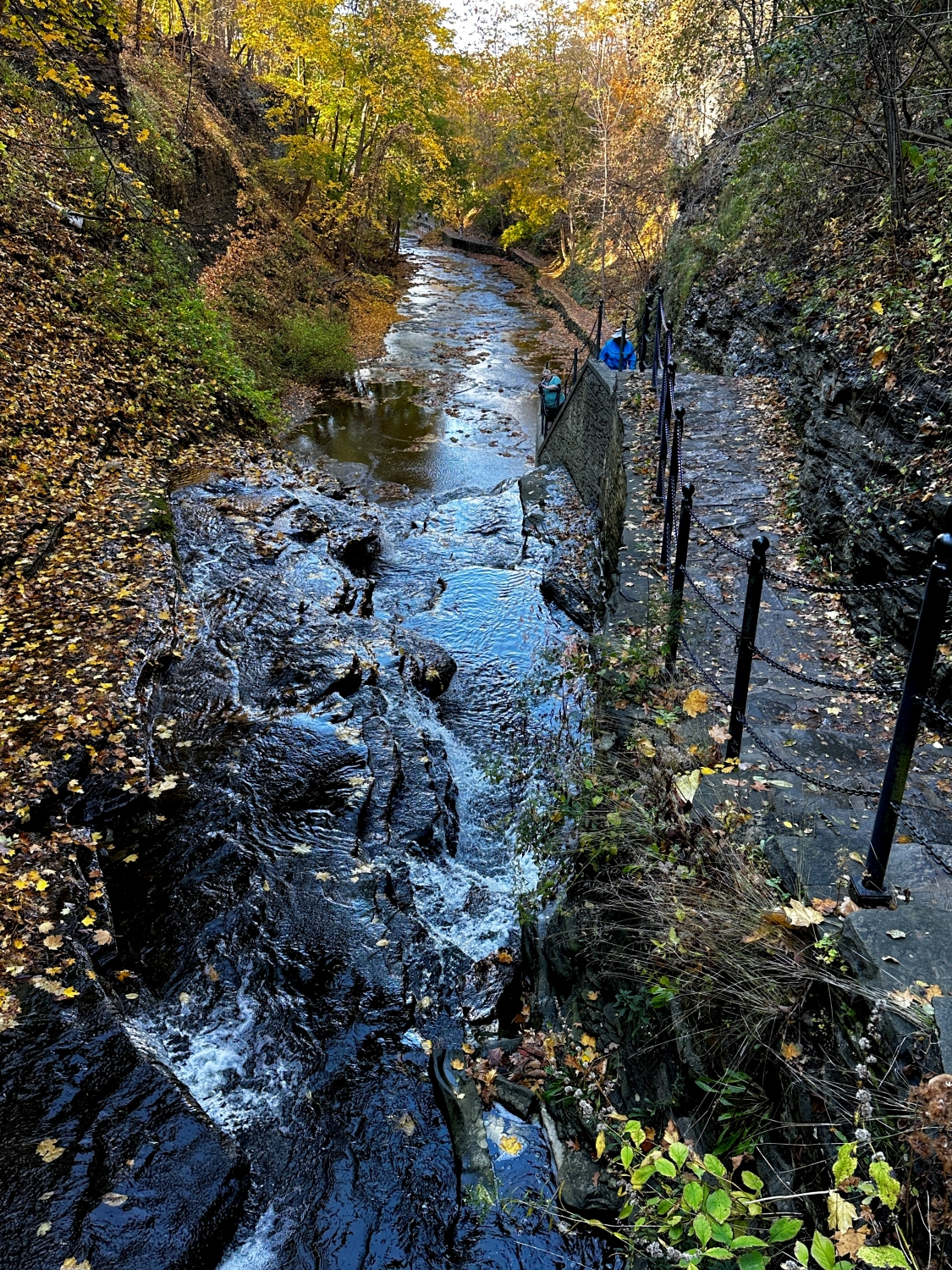
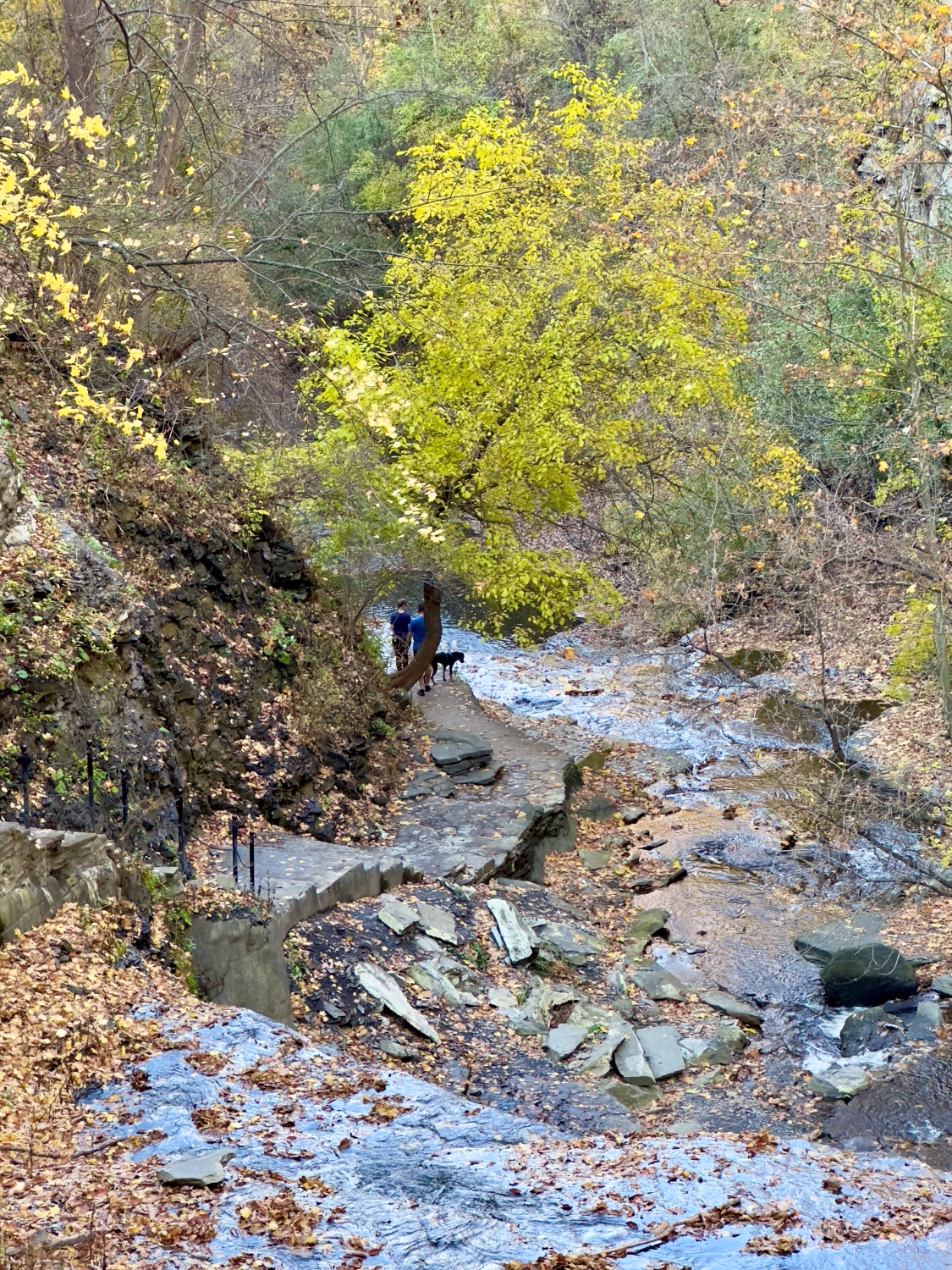
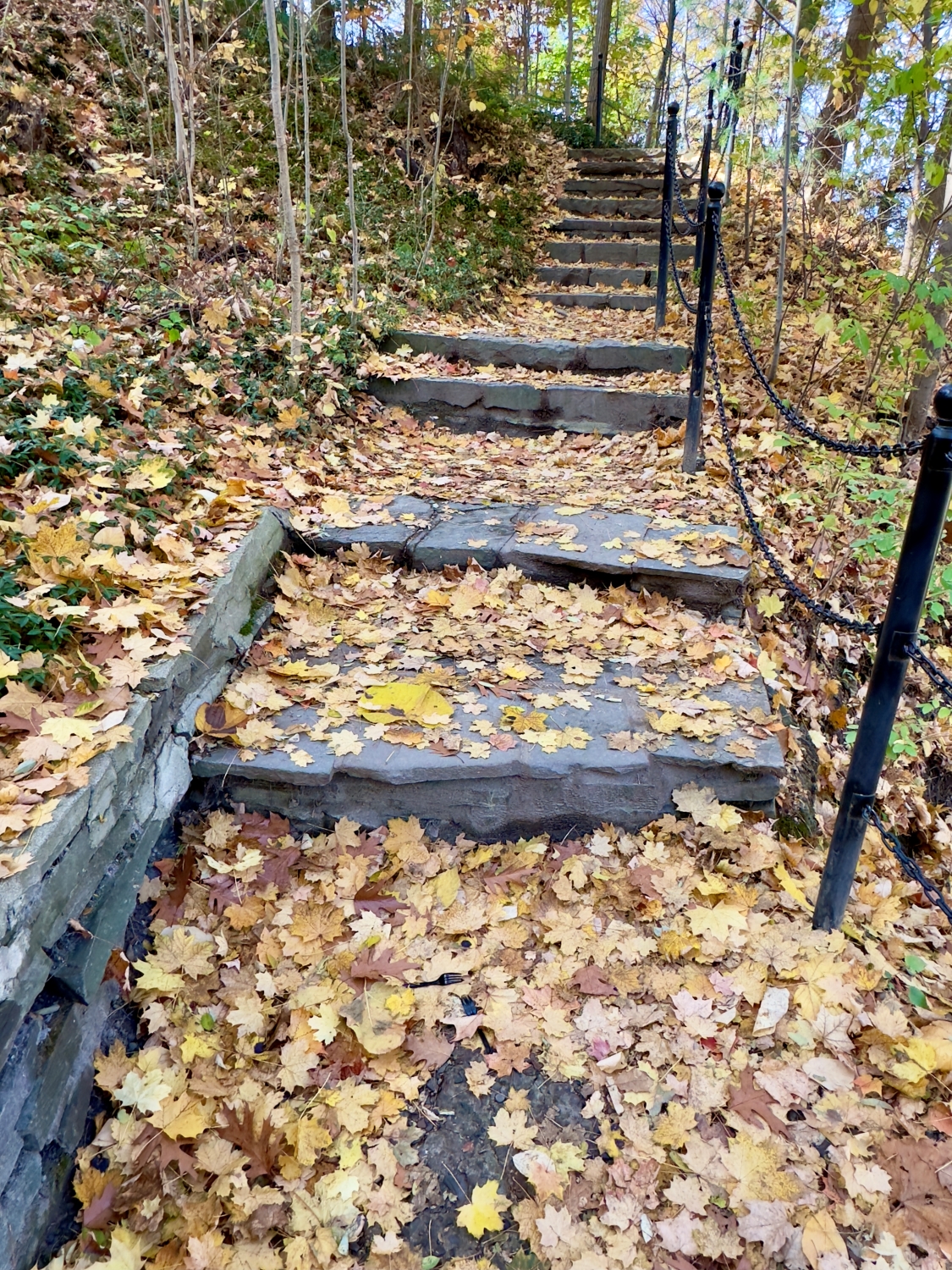
The sandstone staircases along the trail are a marvel in themselves. Some sections are steep, winding up the gorge in a series of steps that seem to have been placed with precision, blending seamlessly into the natural landscape. The steps are covered with leaves now, making each ascent feel a bit like climbing through a fairy-tale forest. The chains along the path provide a comforting grip, especially as I climb higher. I look back and see how far I’ve come, the creek below winding its way over rocks and around bends, each step a small journey of its own.
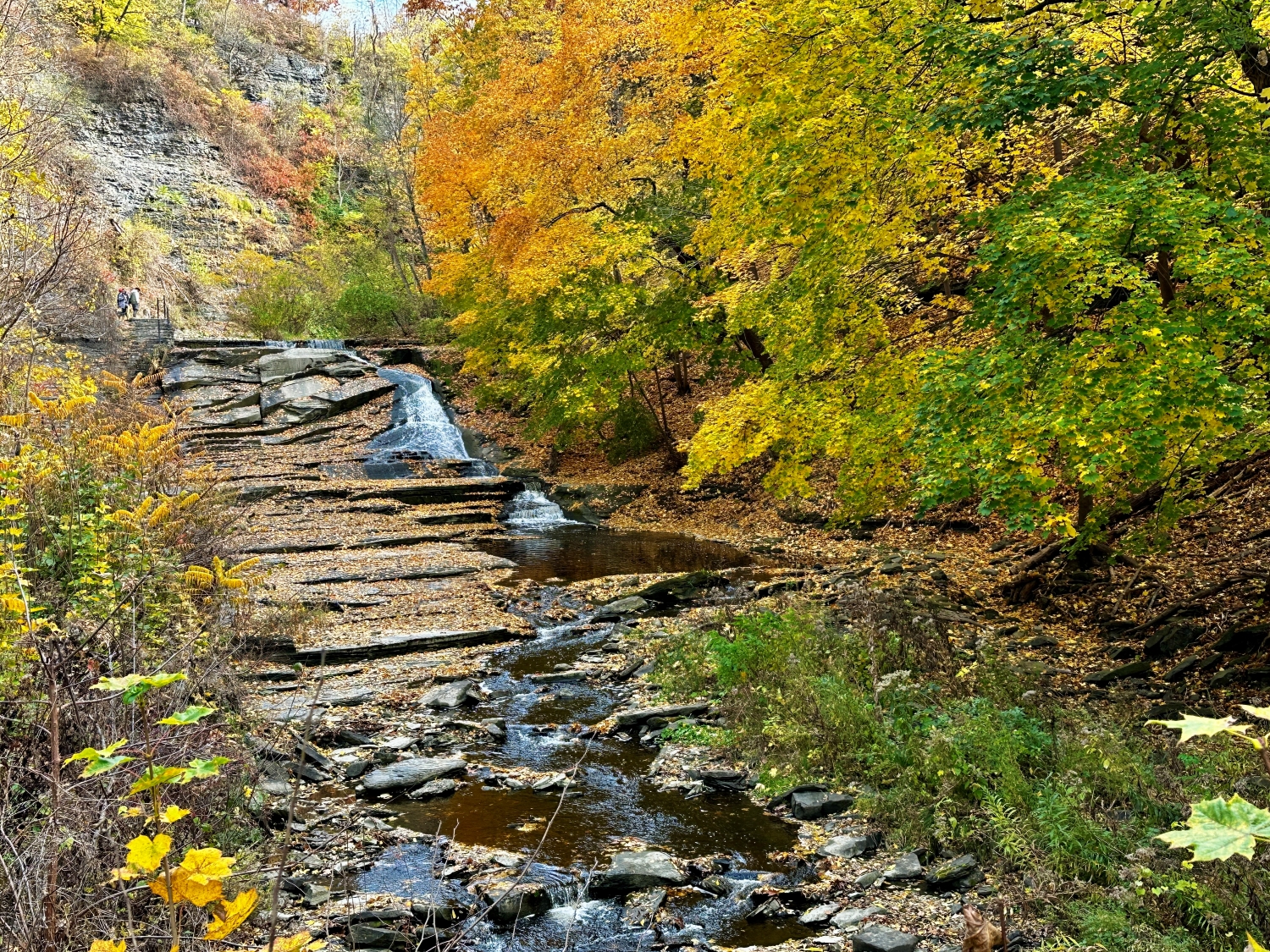
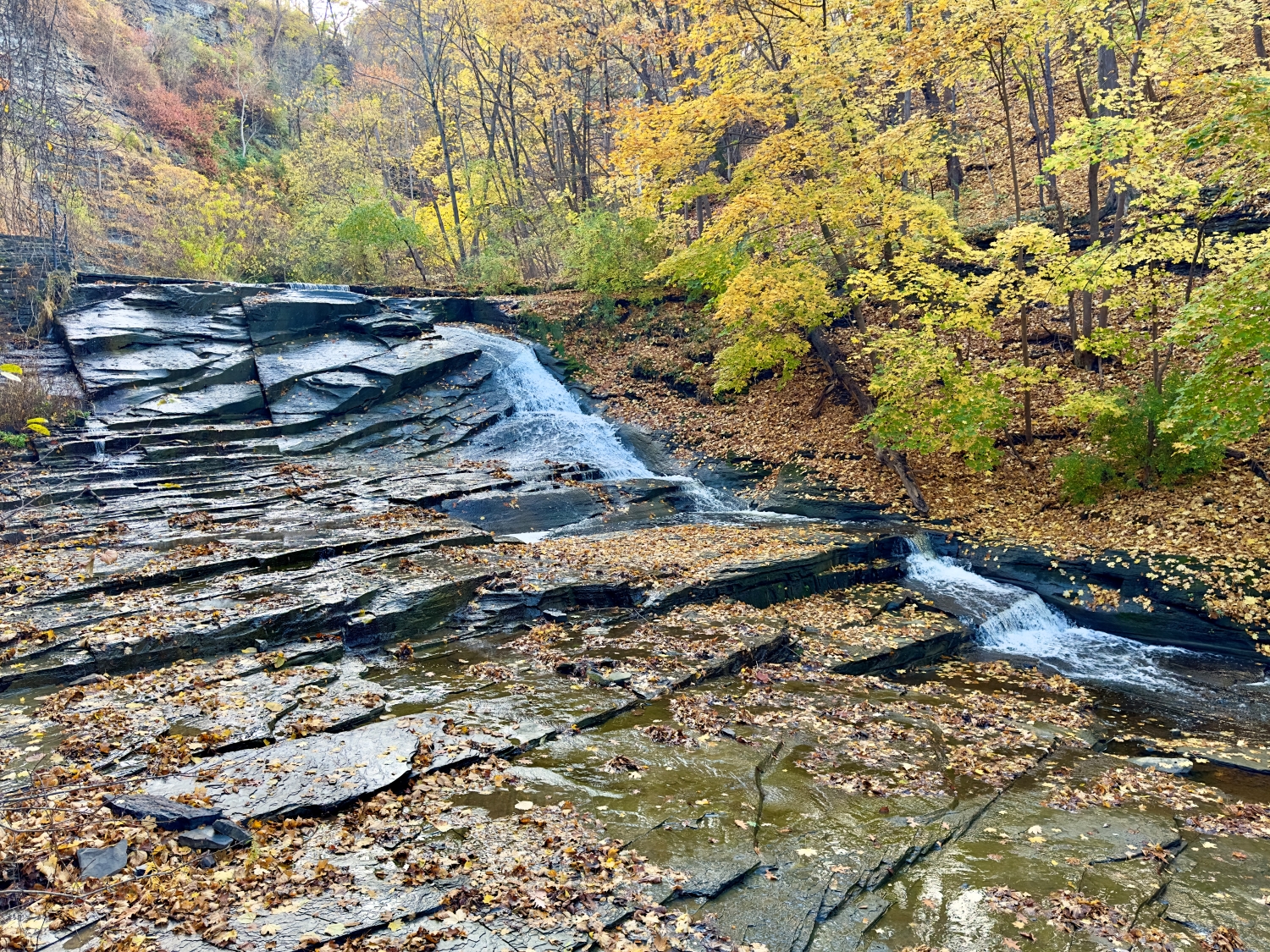
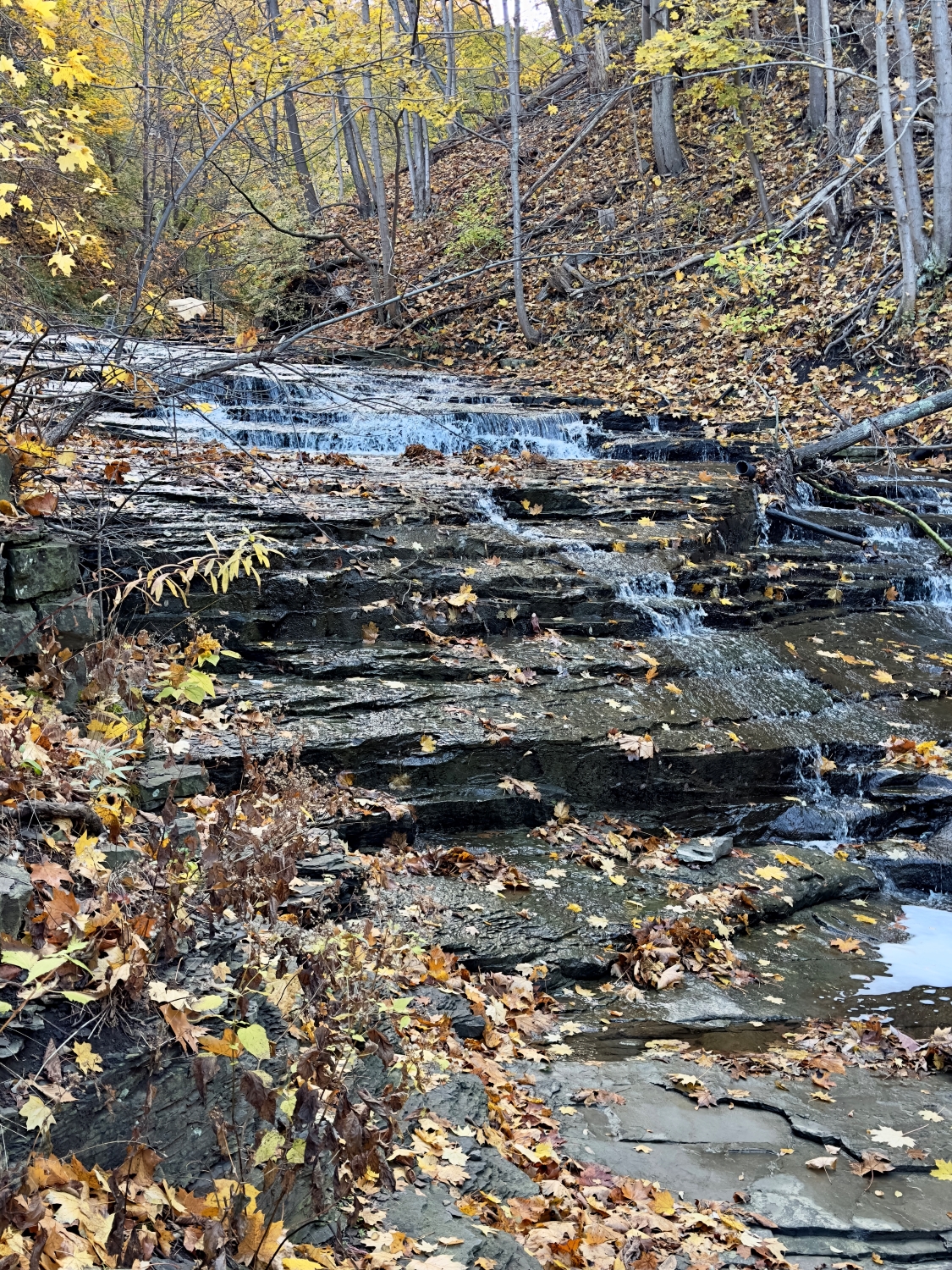
I pass several small waterfalls, each one unique in its character. Some are gentle trickles, while others pour over the rocks with more force, their sound reverberating off the gorge walls. I stop frequently, entranced by the way the water carves its path, eternally moving, adapting, wearing down even the hardest stone. Leaves float down from above, landing in the creek and swirling in miniature whirlpools before being carried downstream. It’s mesmerizing to watch nature at work in such a quiet, persistent way.
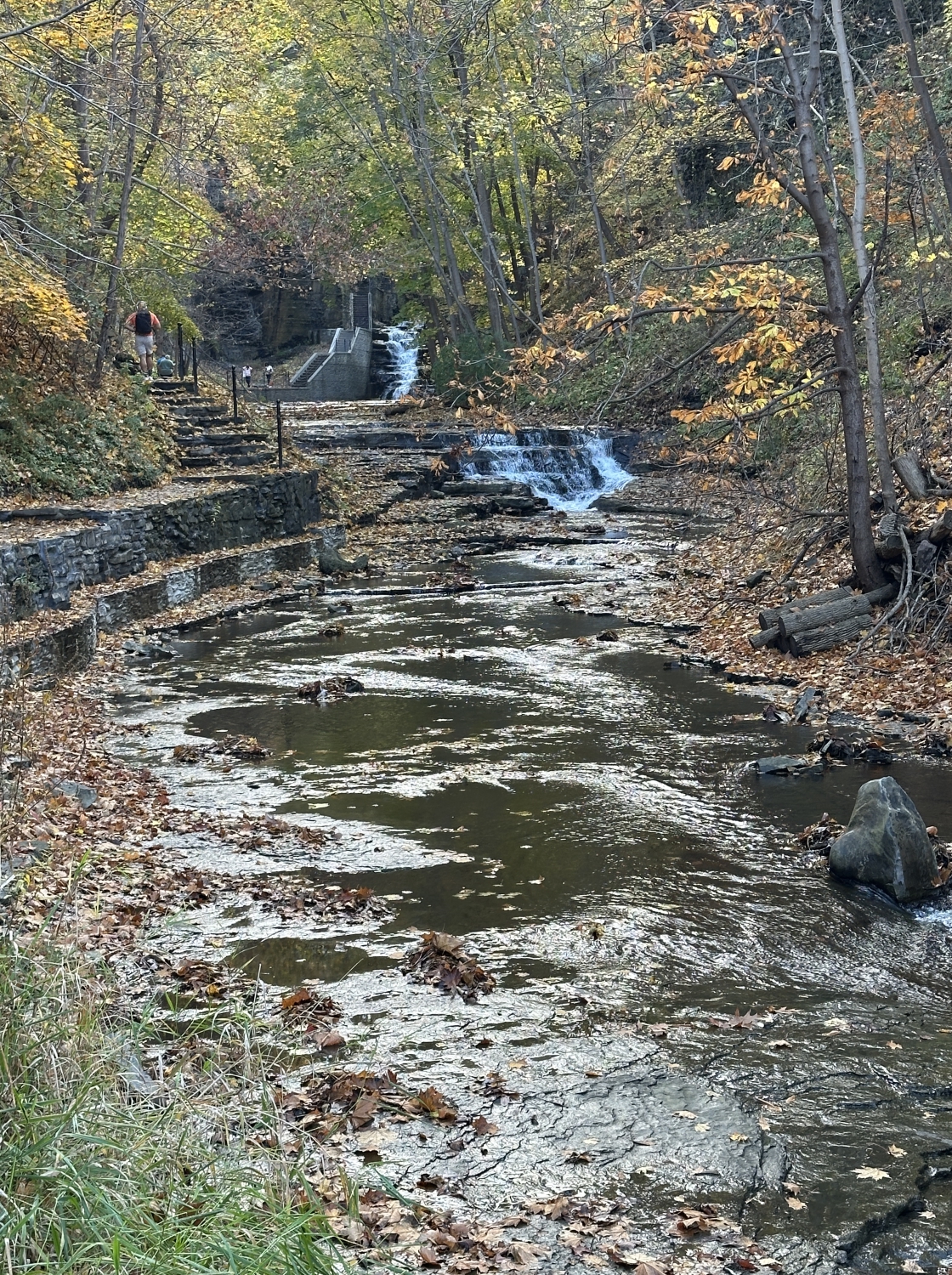
Further up the gorge, the views open up, and I can see the layers of rock descending in terraces, each level a little cascade of its own. I watch as the water flows across these steps, catching the light as it moves—a silvery ribbon winding through the golden autumn landscape. The tranquility of the scene is meditative. Around me, the trees stand as silent witnesses, their branches bare in places but still adorned with clusters of leaves clinging through the last days of fall.
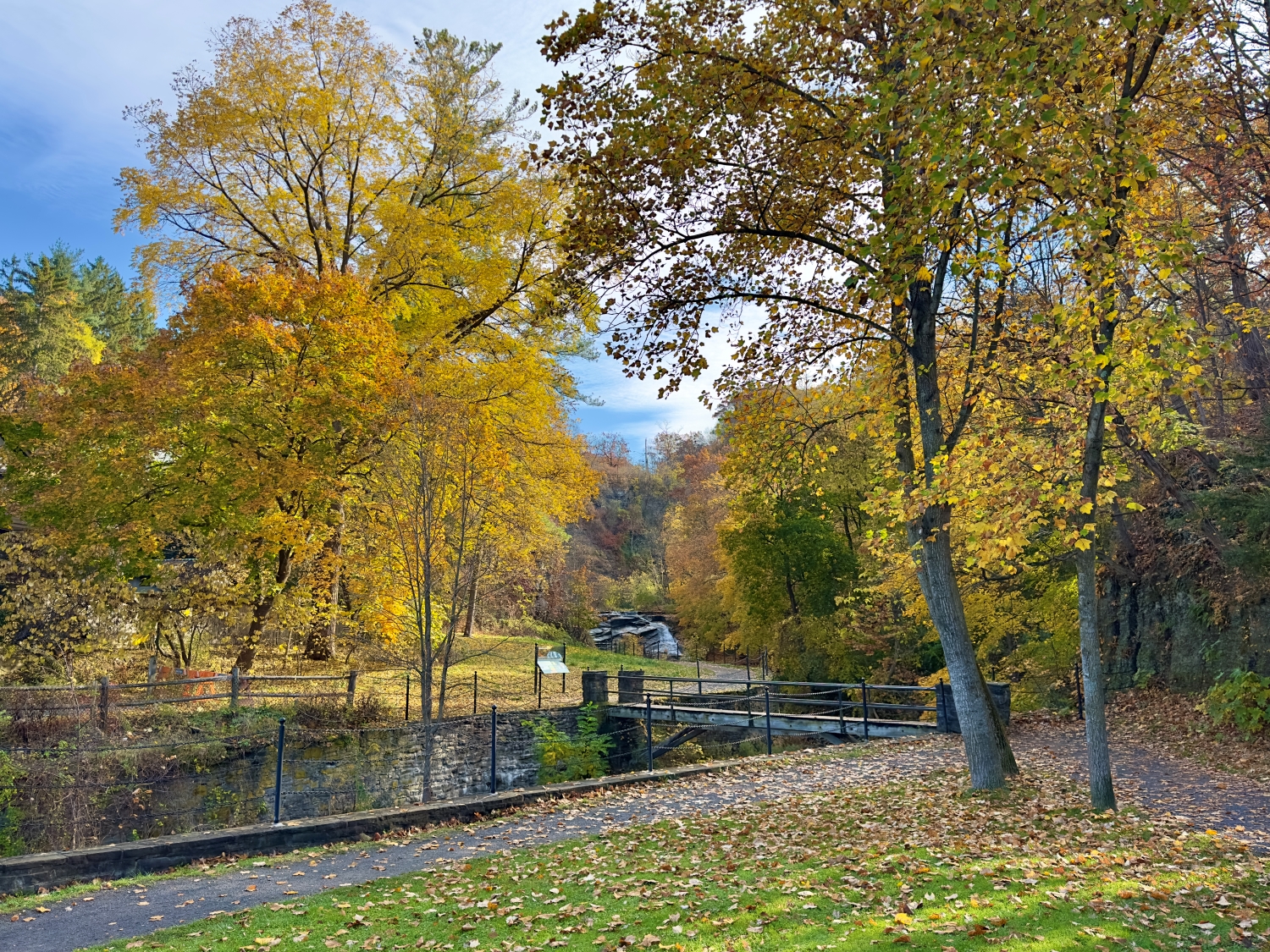
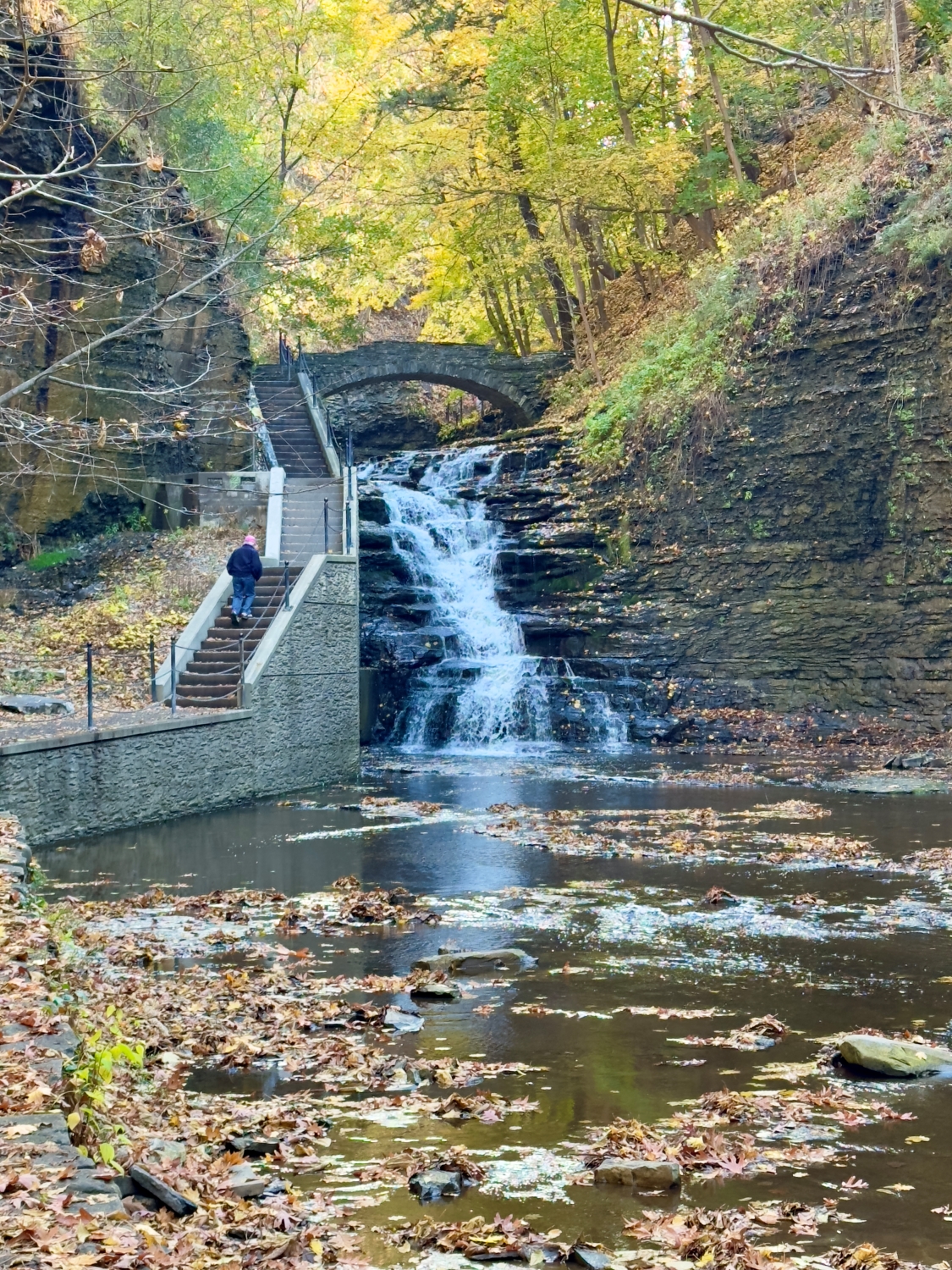
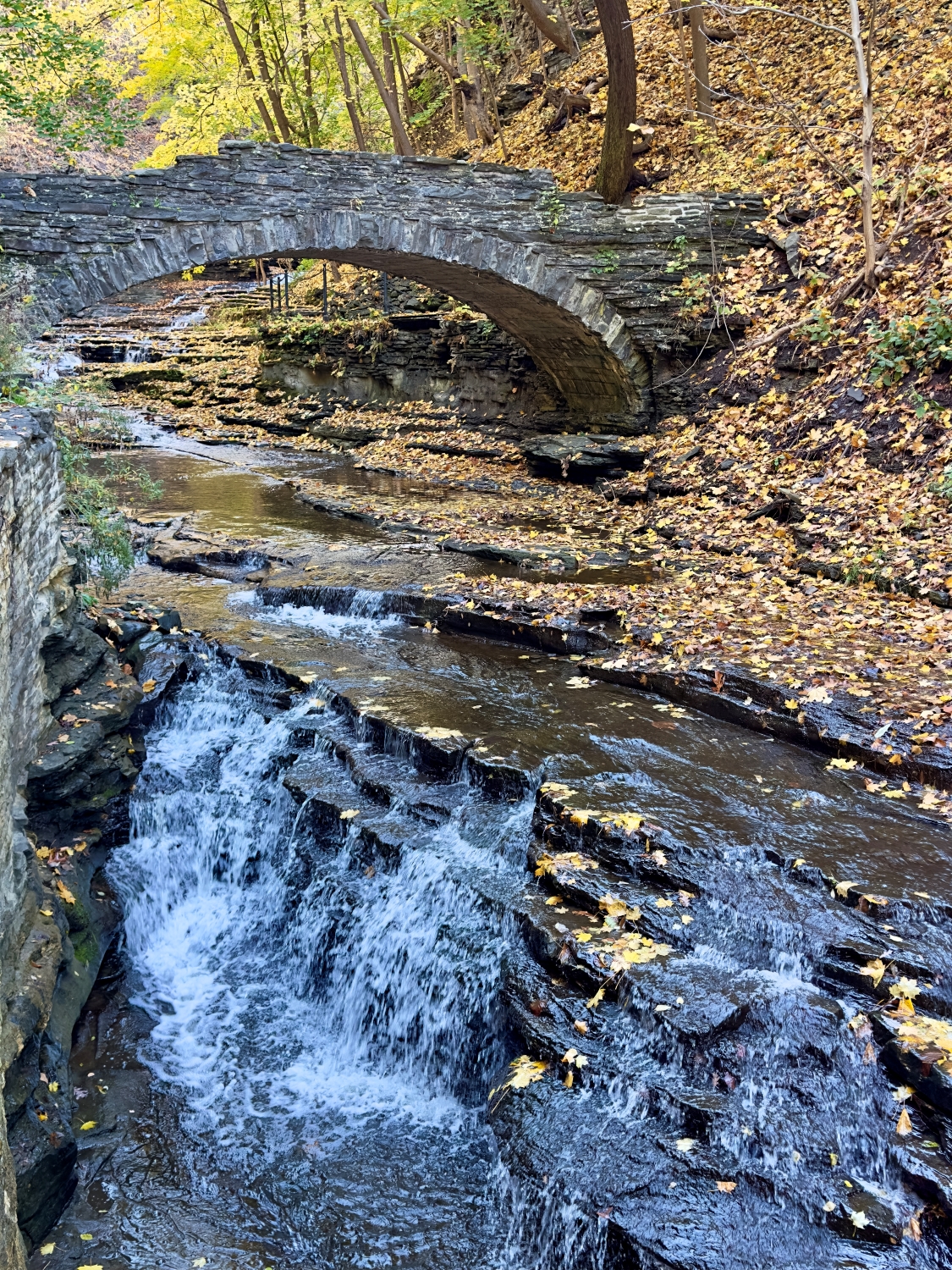
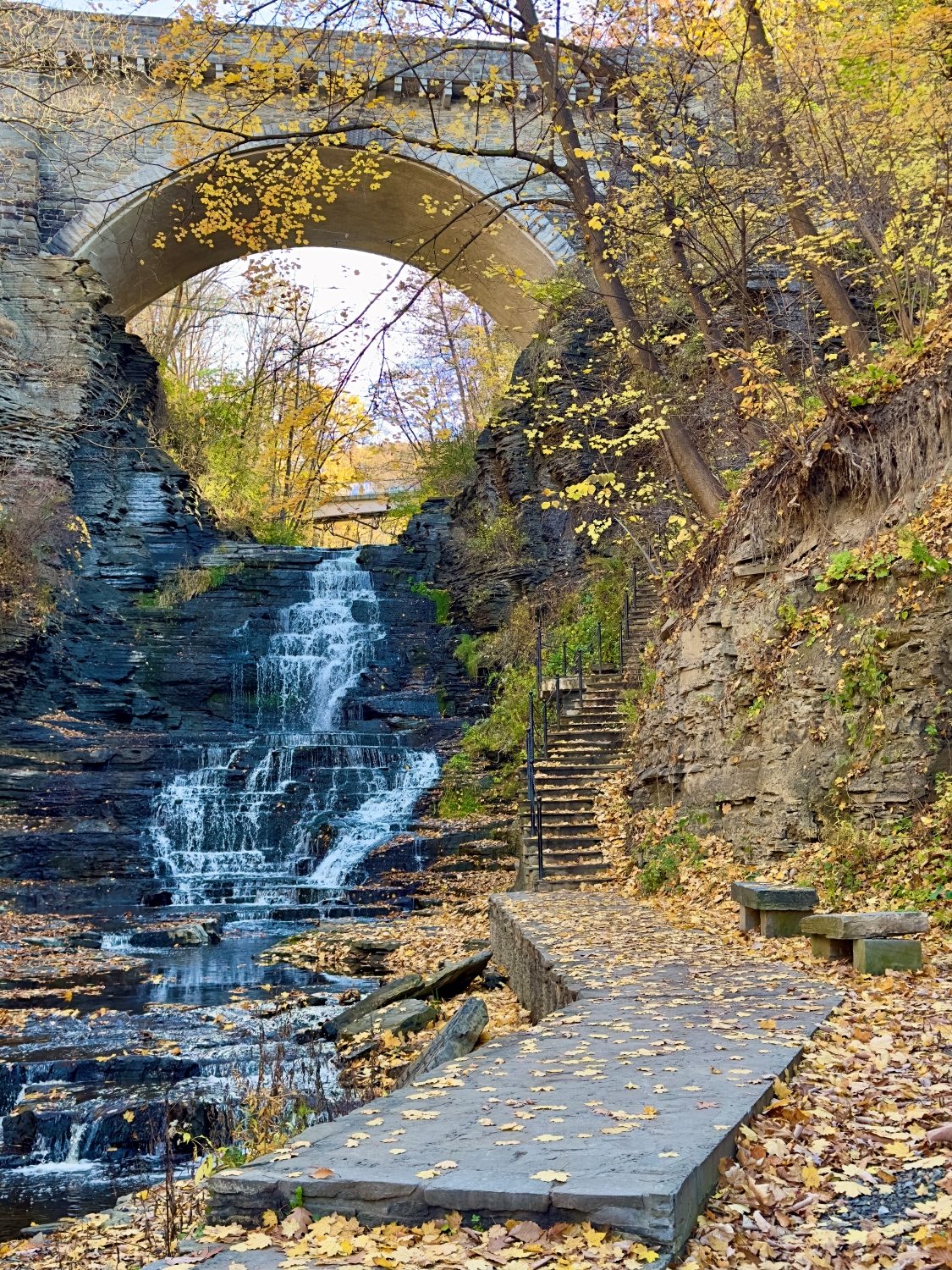
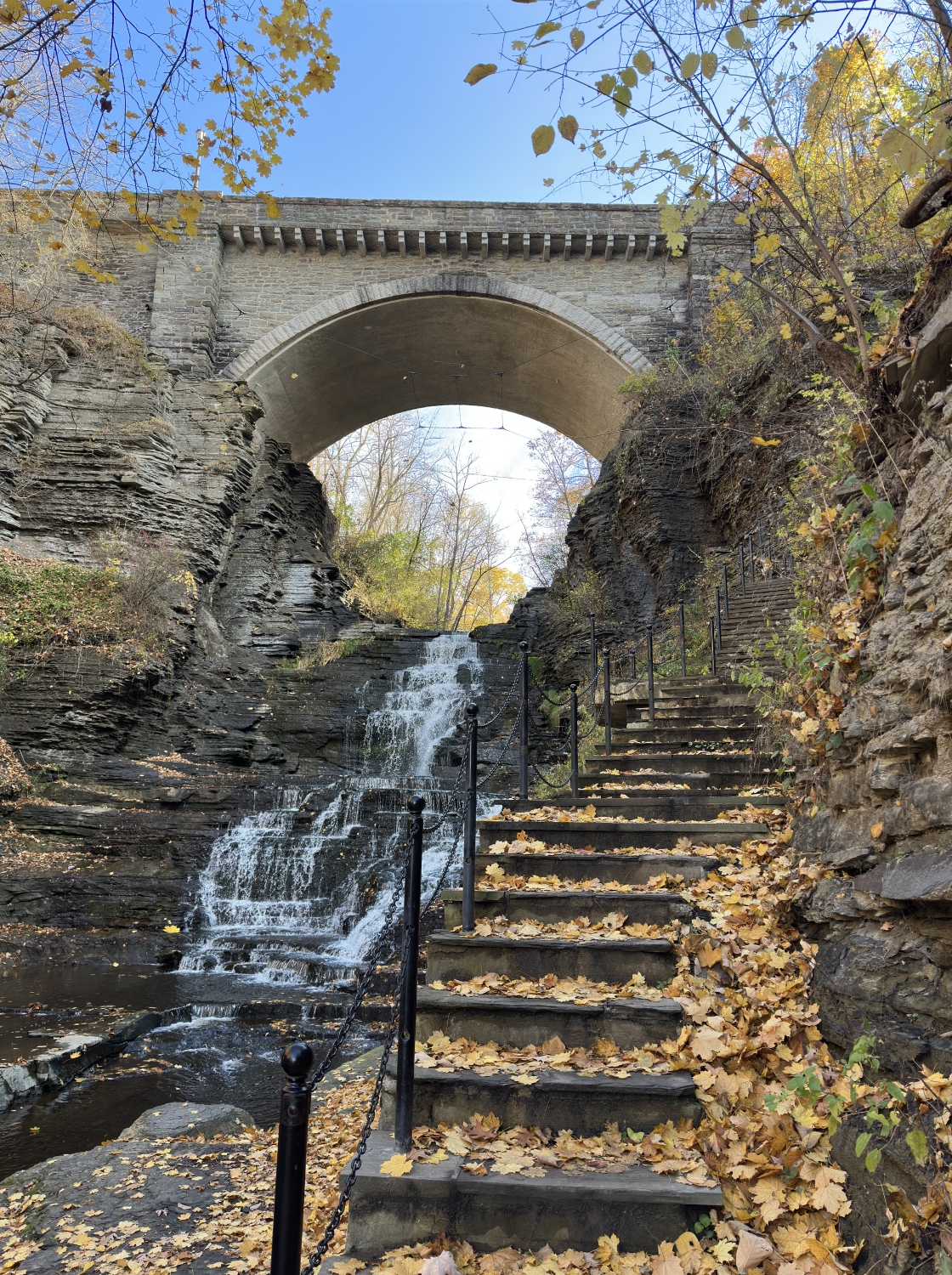
Finally, I reach one of the larger waterfalls, framed by a graceful stone arch bridge that crosses high above. The scene is something out of a painting. Water pours over the rocks, gathering in pools below before spilling onward. I pause on the bridge, looking down at the gorge below and the trail I’ve followed, grateful for the journey.
Along the way, artists are positioned along the path, each lost in the beauty of Cascadilla Gorge. They stand or sit in quiet reverie, brushes or pencils in hand, capturing the gorge’s unique character. Some focus on the play of light over the water’s surface, while others seem intent on the rugged details of the rock formations. Their presence adds a contemplative depth to the scene; it’s as if each artist has uncovered a hidden aspect of the gorge that I have overlooked in my journey upward.
I slow my pace to take it all in, appreciating how the artists interpret this natural wonder through their own eyes. Their canvases reveal layers of colors that shift as the sun filters through the leaves, casting vibrant golds and subtle greens on the cascading water. The scene feels almost collaborative—nature and human hand creating art together, each reflection of the gorge as unique as the individual capturing it. I’m tempted to pause beside them, to see how they choose to frame the towering walls, the stone bridge arching above the water, and the gentle curves of the creek as it meanders downstream. I can imagine each artist’s work holding a different piece of this place, like fragments of a memory.
Bridge View looking up Cascadilla CreekBridge View looking back the way I came
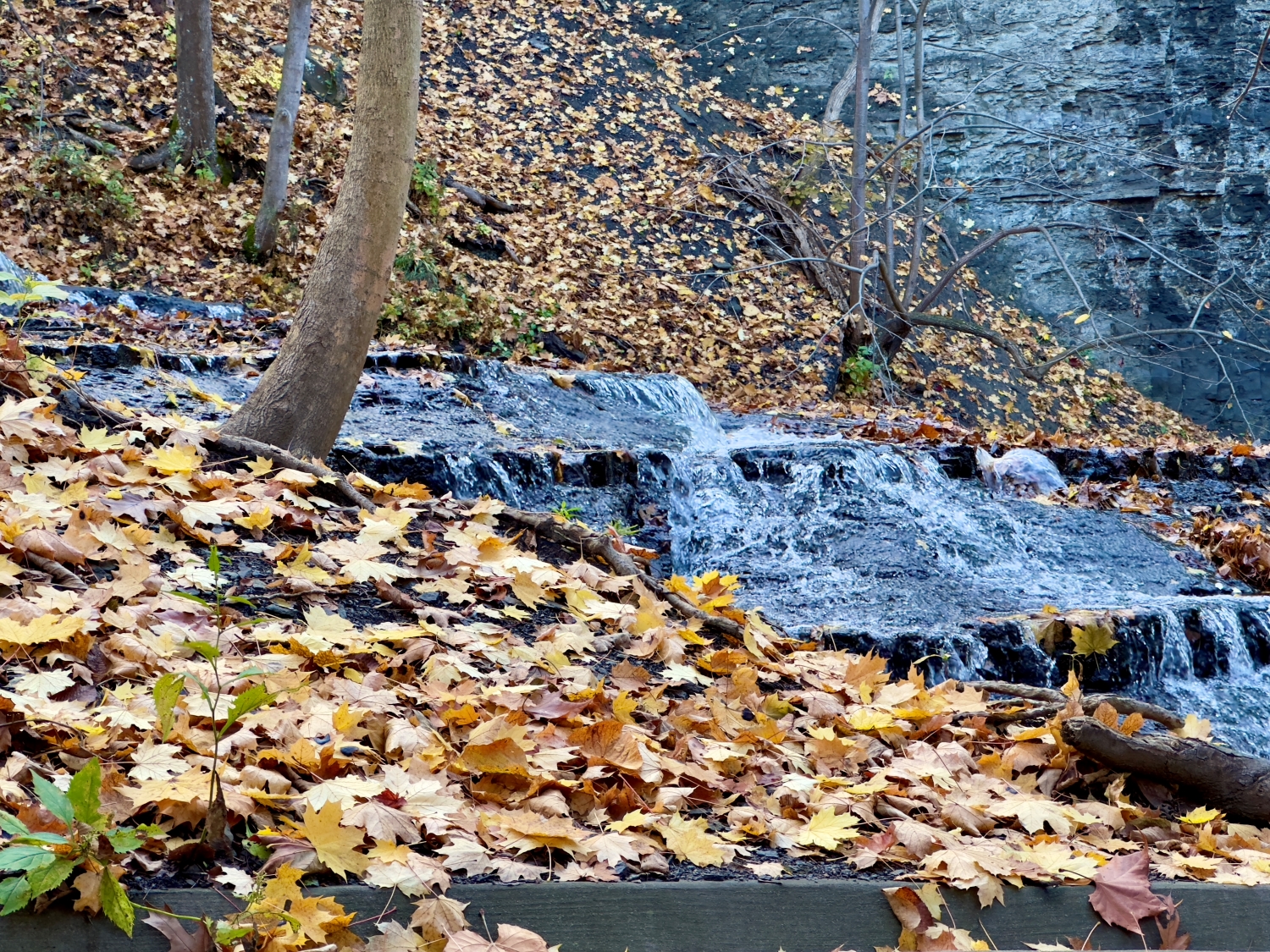
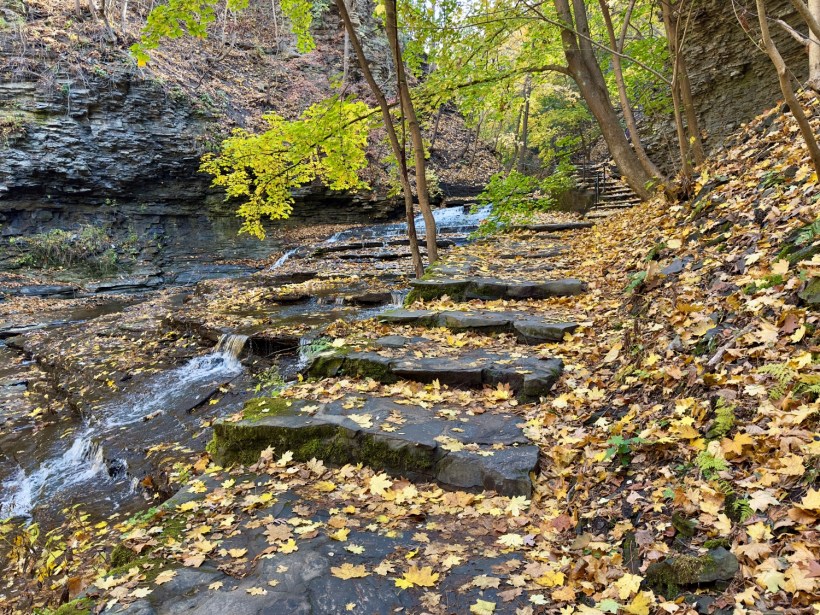
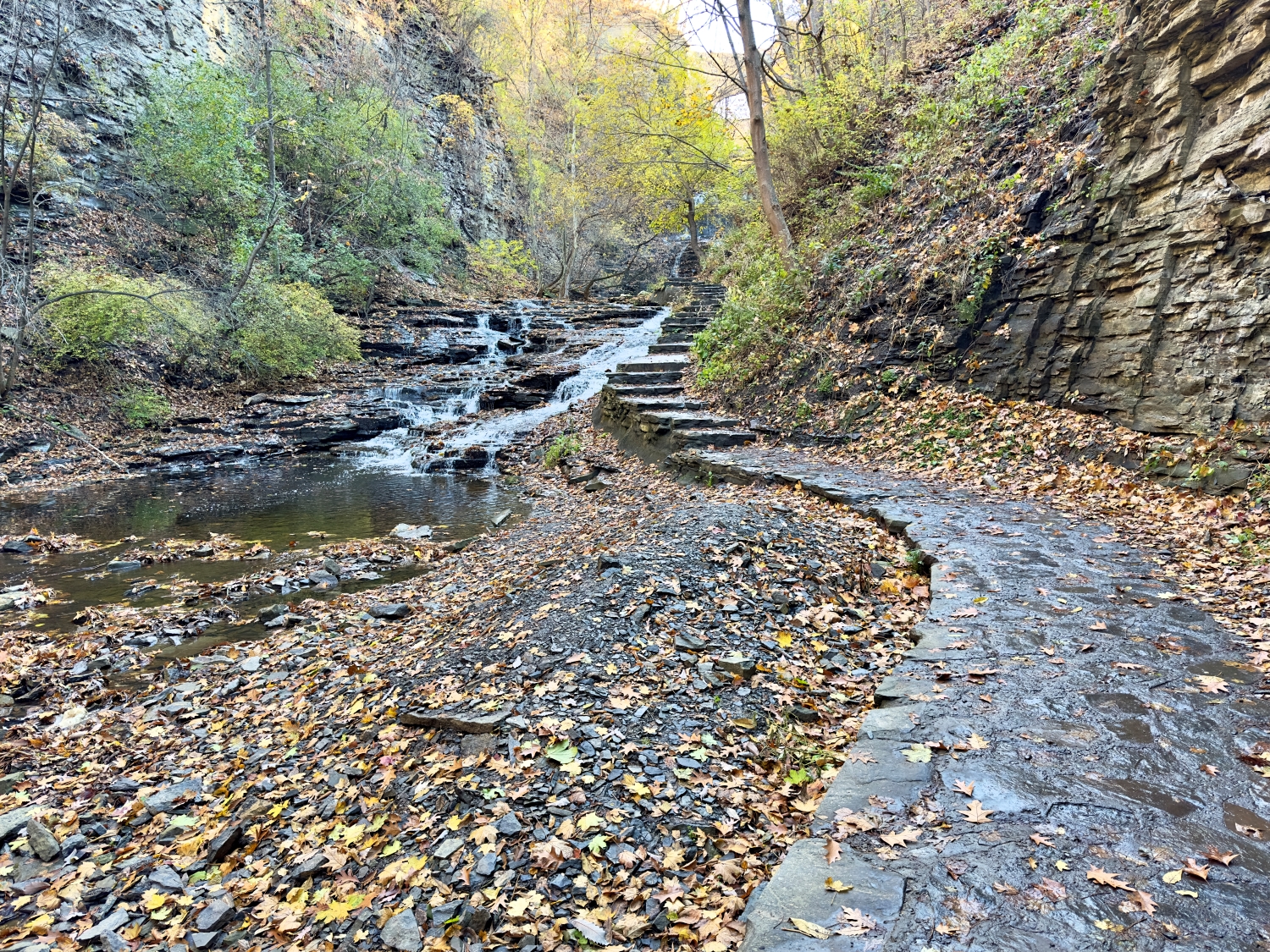
As I continue, the sound of rushing water grows louder, drawing me towards another cascade that tumbles in steps down the gorge. The rocks are layered in angular formations, giving the water a zigzagging path to follow. Leaves are scattered across the stones, their colors—yellows, browns, and the occasional splash of red—standing out against the dark, wet rock. There’s a timelessness here, a feeling that this scene has remained unchanged for centuries, save for the shifting leaves and the ever-present flow of the creek. The thought makes me feel like a small part of something much larger, a guest in an ancient place shaped by nature’s slow, steady hand.
The path narrows again, following the edge of the creek where the water has worn smooth channels into the stone.
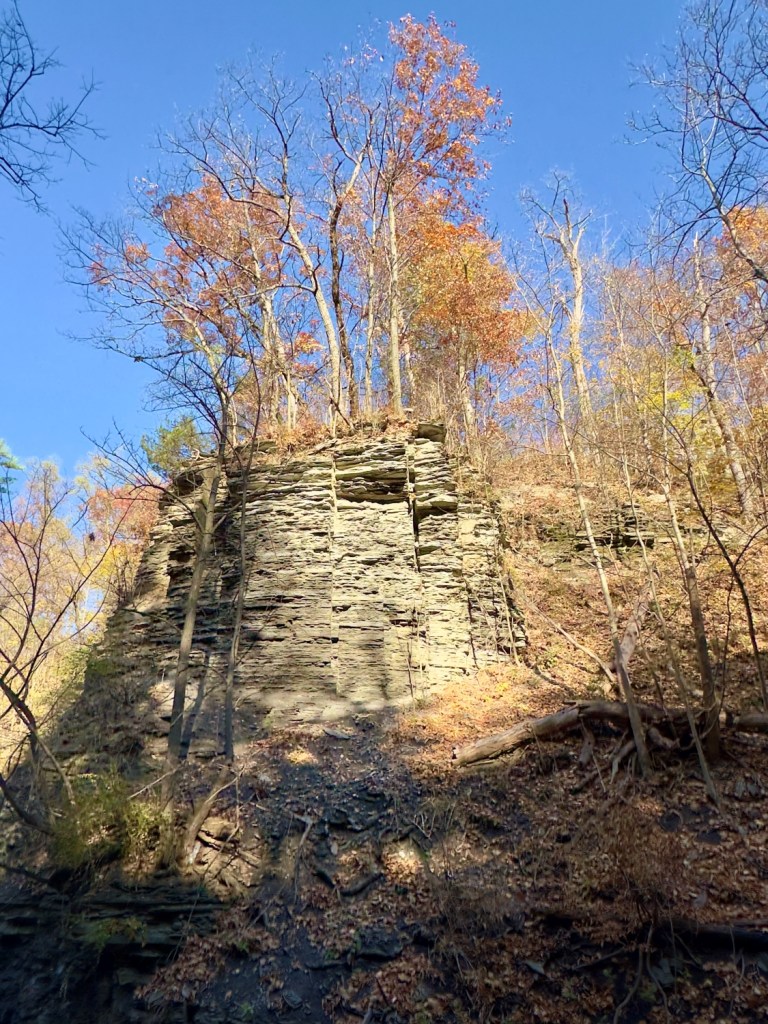
Moving forward, the trail climbs steeply, and I find myself surrounded by tall rock faces on either side. The walls are layered and weathered, a geological history book open to the forces that shaped this land. It’s humbling to see how this place puts everything into perspective, how it reminds us of our place in the natural world.
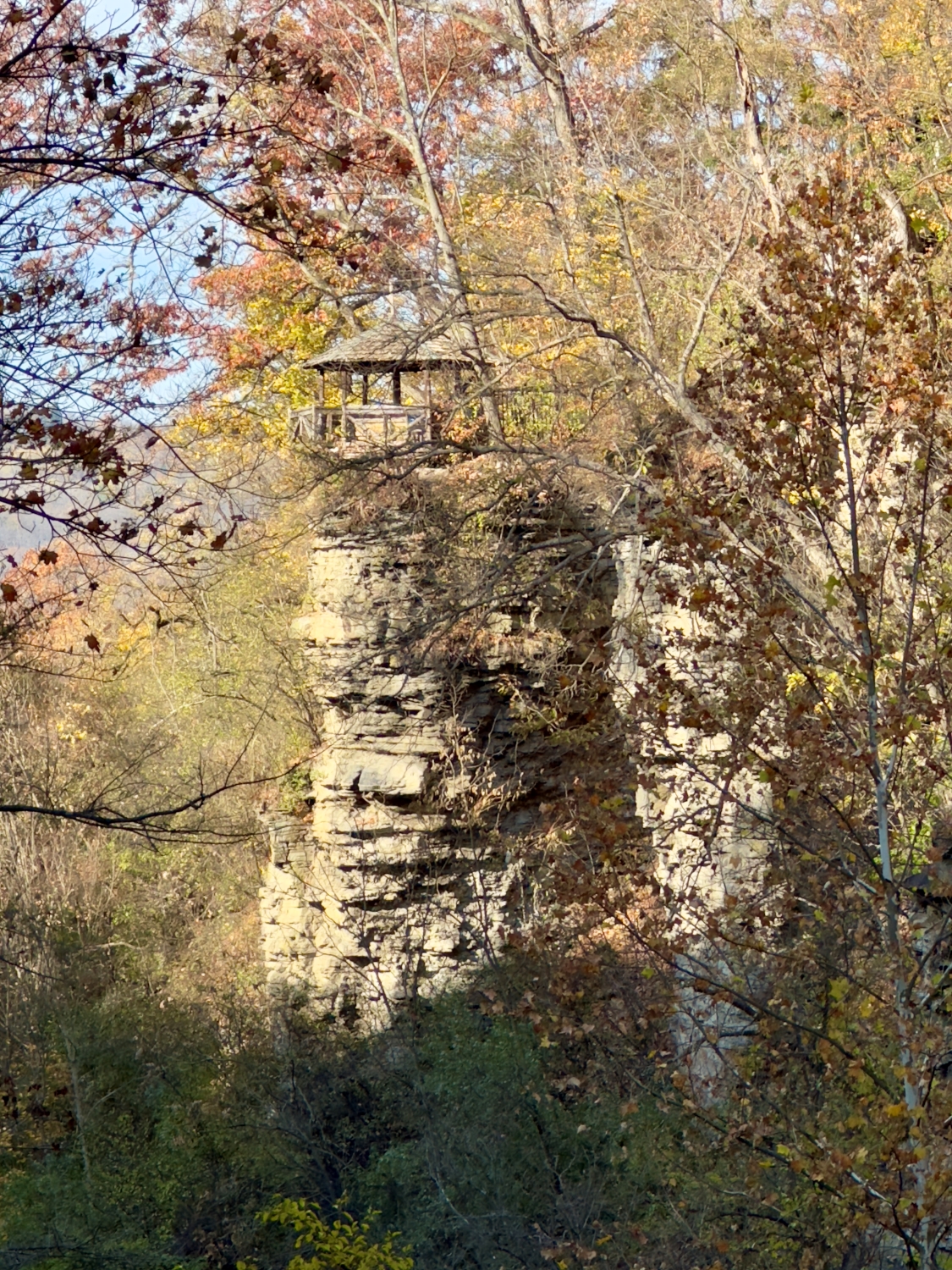
Columns of sedimentary rock
Ahead, the path becomes more rugged, the air feels cooler here, shaded by the gorge’s high walls, and the sounds of the city are long gone, replaced by the steady rhythm of water and the drift of leaves. The layers of ancient limestone that form these towering walls give shape to our landscape and ecosystem. As rainwater falls and seeps through the porous rock, the limestone raises the pH of the water, neutralizing its natural acidity. This subtle alchemy nurtures the flora and fauna, fostering a unique biome that thrives in the gorge. The artists fade from view as I move further into the solitude of the trail, but their presence lingers in my mind. Each turn of the path reveals another scene worthy of capturing, another moment that seems to call out for remembrance.
Looking back toward the way I came
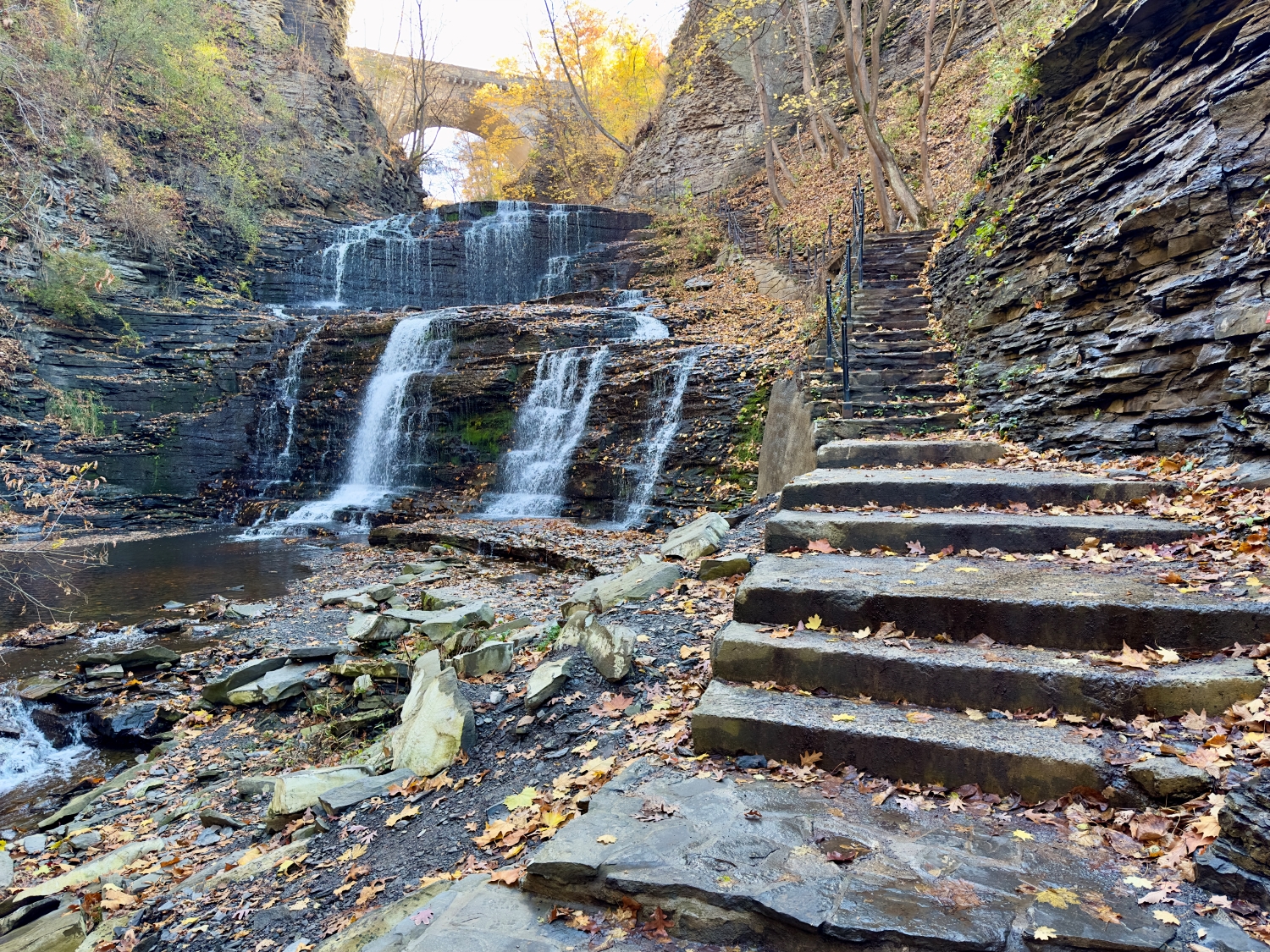
The trail steepens, and I press onward, the sound of the water intensifying as I near a grand waterfall framed by the impressive stone steps leading up to the College Avenue Stone Arch. Each step is littered with leaves, their colors vivid against the worn stone—golds, russets, and the occasional brilliant red, like embers scattered along my path. The waterfall beside me spills down in steady streams, each cascade creating rivulets that catch the light as they flow downward.
The gorge walls rise sharply on either side, embracing the path in rugged layers that tell stories of geological time. I feel as if I’m climbing a passage through history itself. These rocks, these trees, the very water carving its way through the stone—all have been here far longer than I can fathom, shaped by forces beyond my understanding. There’s a certain thrill in being among such enduring elements, a reminder of how small and fleeting we are in the face of nature’s grandeur.
Reaching the next tier of the trail, I pause to take in the sight of the massive stone arch spanning the gorge above. The bridge is a striking feature, its wide arch perfectly framing the sky and the last vibrant colors of autumn. It feels like a gateway, a fitting culmination to the journey. Standing beneath it, I’m struck by how well it harmonizes with the gorge, the careful craftsmanship of its stonework complementing the rough beauty of the surrounding cliffs.
The sunlight flows around the arch, illuminating the leaves that cling to the branches above, casting a warm glow over the scene. I feel a sense of reverence here, a quiet acknowledgment of both human artistry and the relentless beauty of nature.
I paused to capture this video of the moment.
Sights and Sounds of Autumn
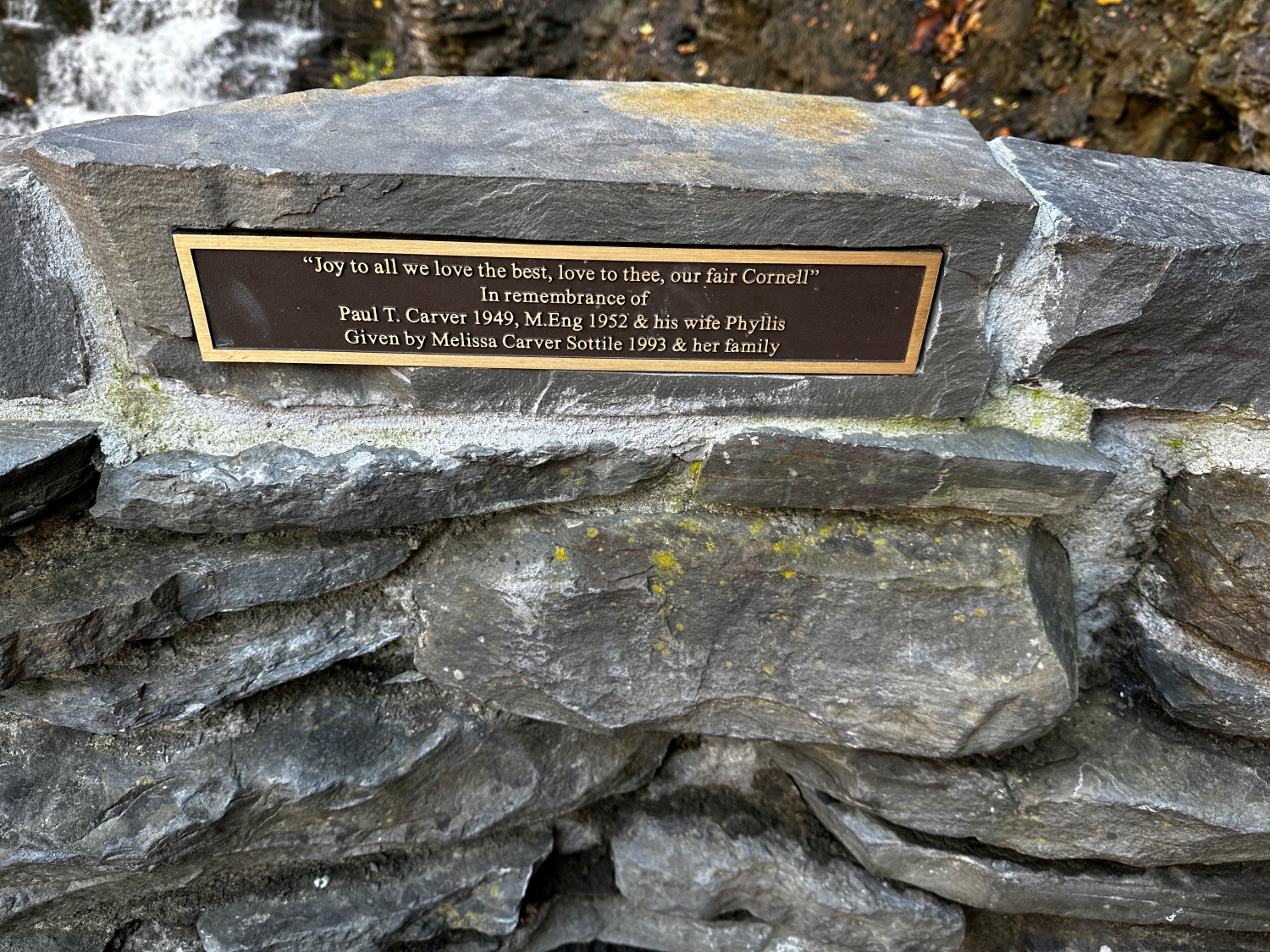
The final ascent is graced by a bench where a stone plaque catches my eye. It’s a tribute, etched with words that resonate in this place: “Joy to all we love the best, love to thee, our fair Cornell.” A gift from a family whose lives intertwined with Cornell, it serves as a reminder of the deep connections people have to this landscape, to the university, and to the memories rooted in these trails and gorges. I pause, reflecting on my own connection to this path, which has taken me through an ever-unfolding tapestry of nature and history.
The last stretch of steps is leaf blanketed, their shapes and colors a beautiful final mosaic before I emerge from the shaded coolness of the gorge. The sun filters down through the thinning trees, illuminating the stone buildings of the Cornell campus that peek through the branches ahead. With each step, I feel the transition, moving from the curated wildness of Cascadilla Gorge and its trail to the structured beauty of the university grounds.
Myron Taylor Hall, Cornell Law School from the gorge.
As I reach the top, the Schwartz Center for the Performing Arts comes into view, its modern architecture a contrast to the ancient rocks I’ve left behind. Here, in this space where art, education, and nature converge, I take a last look back into the gorge and a journey, a gem in the heart of the Finger Lakes, a place that holds stories, both old and new, and invites every visitor to become a part of them.
Enter your email to receive notification of future postings. I will not sell or share your email address.
Copyright 2024 All Rights Reserved Michael Stephen Wills
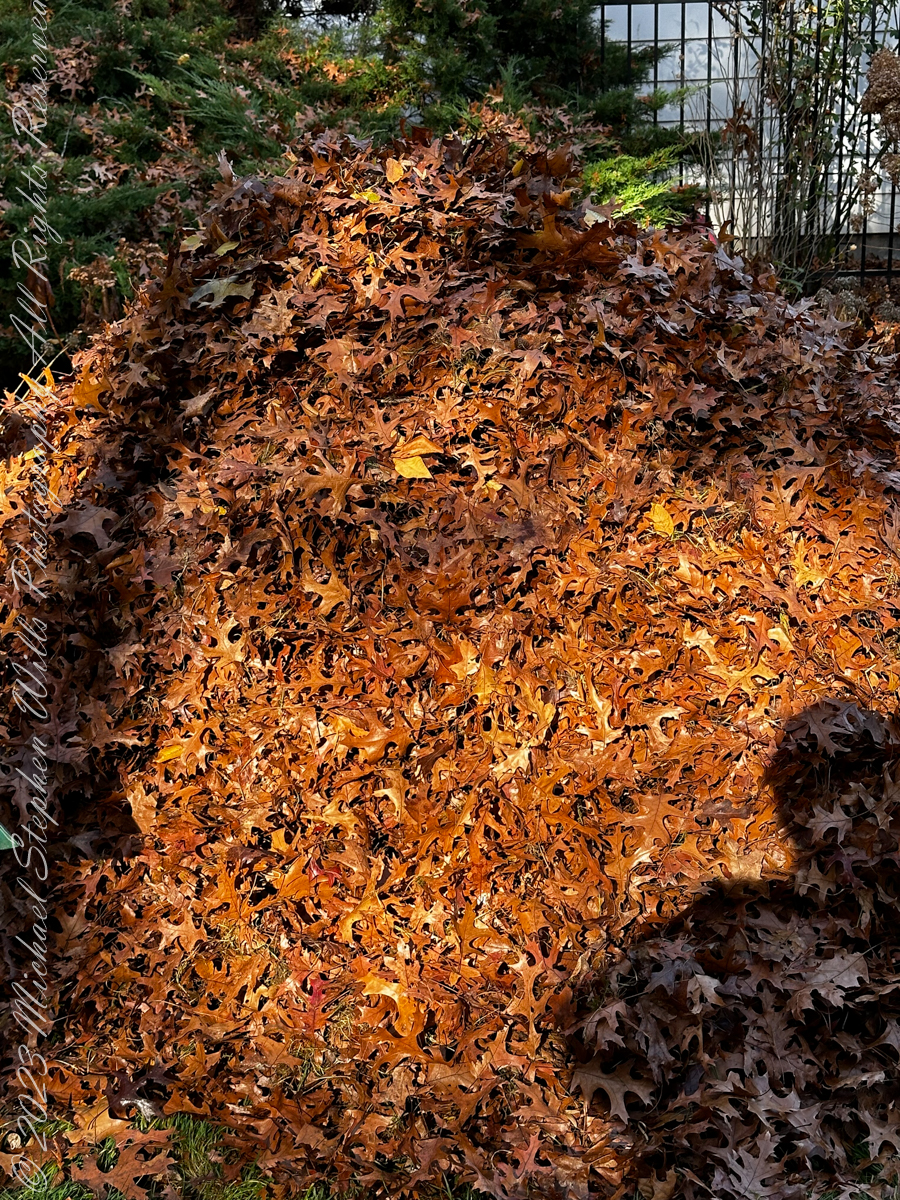
In the gentle embrace of the Finger Lakes region of New York State, the crisp post-Thanksgiving air is a mix of woodsmoke and the faint whisper of winter on the horizon. The earthy scent of fallen leaves, damp from the morning dew, begins to permeate the atmosphere, beckoning families outdoors to partake in the timeless ritual of leaf gathering.
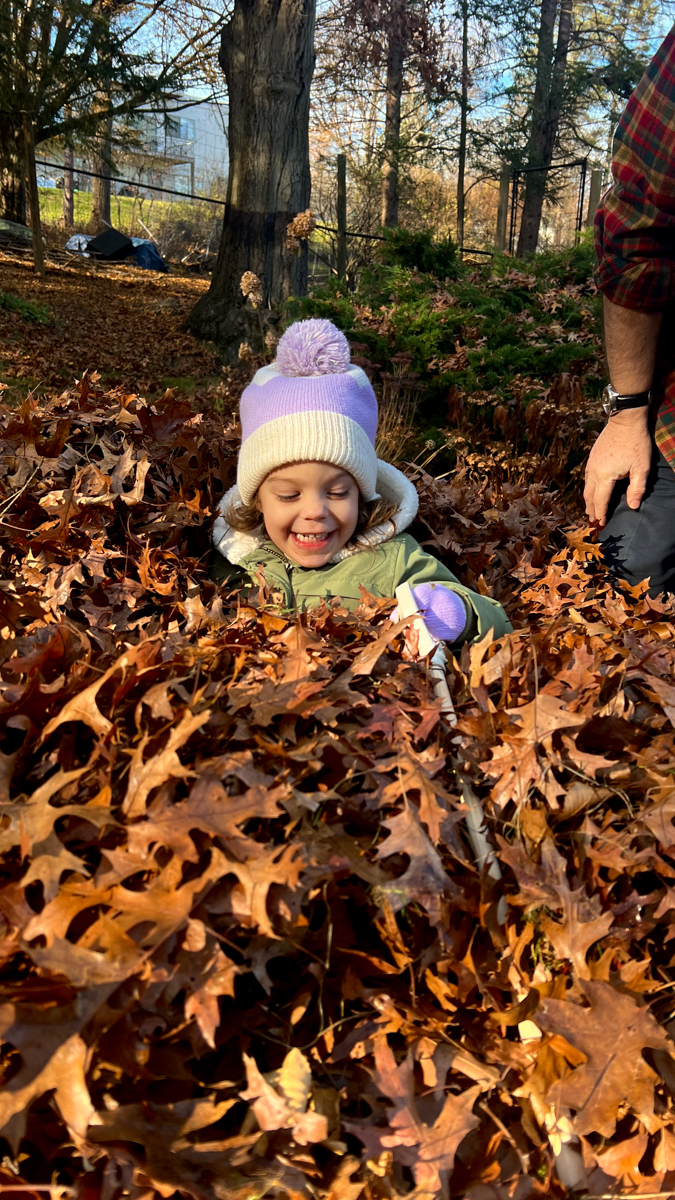
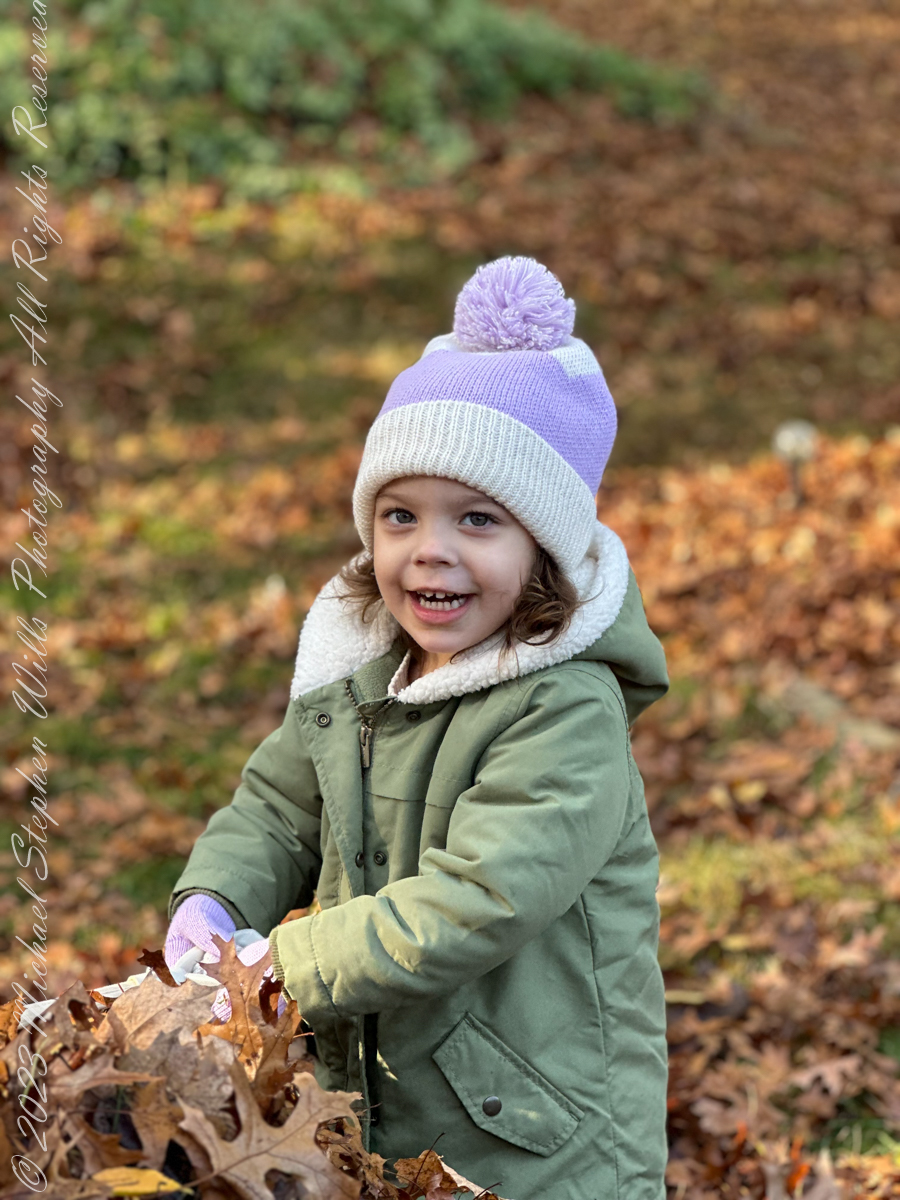
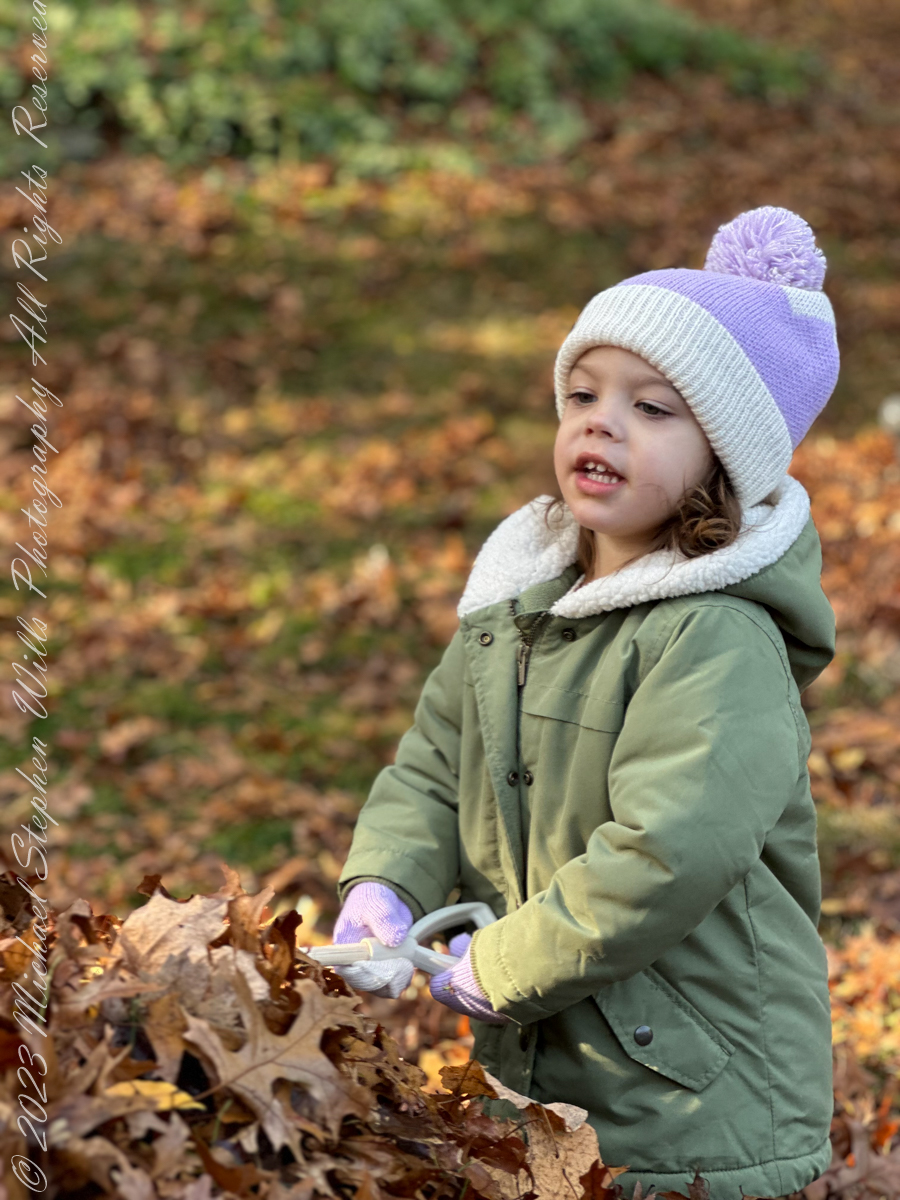
The landscape is a canvas of russet and gold, painted by the hands of autumn. In one of the many serene backyards, framed by the skeletal silhouettes of trees now slumbering after their fiery display, a mound of leaves becomes the center of joyous activity. Here, a child, bundled in the cozy layers necessary to fend off the chill, is immersed in the simple, yet profound act of play. The leaves, a tapestry of oaks and maples, become her castle, her sea, her world to explore.
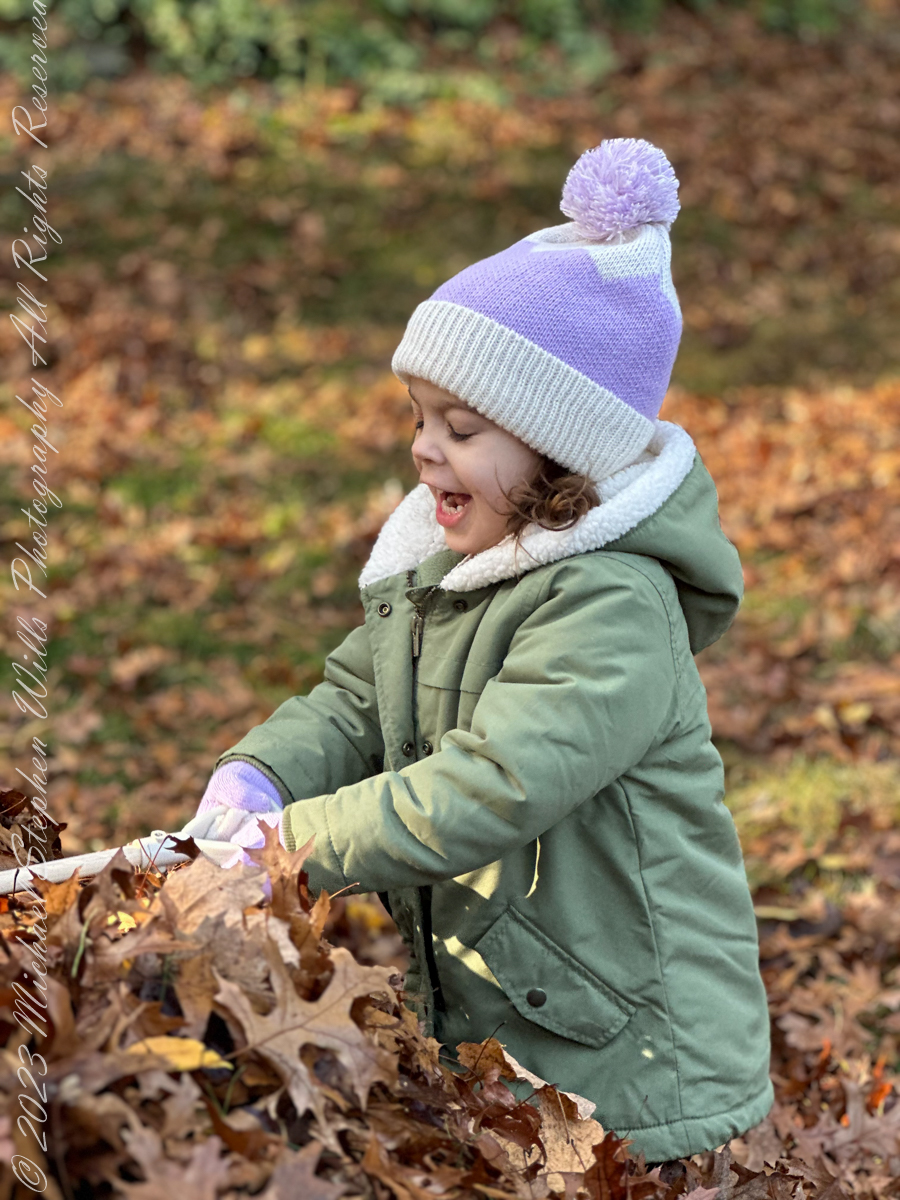
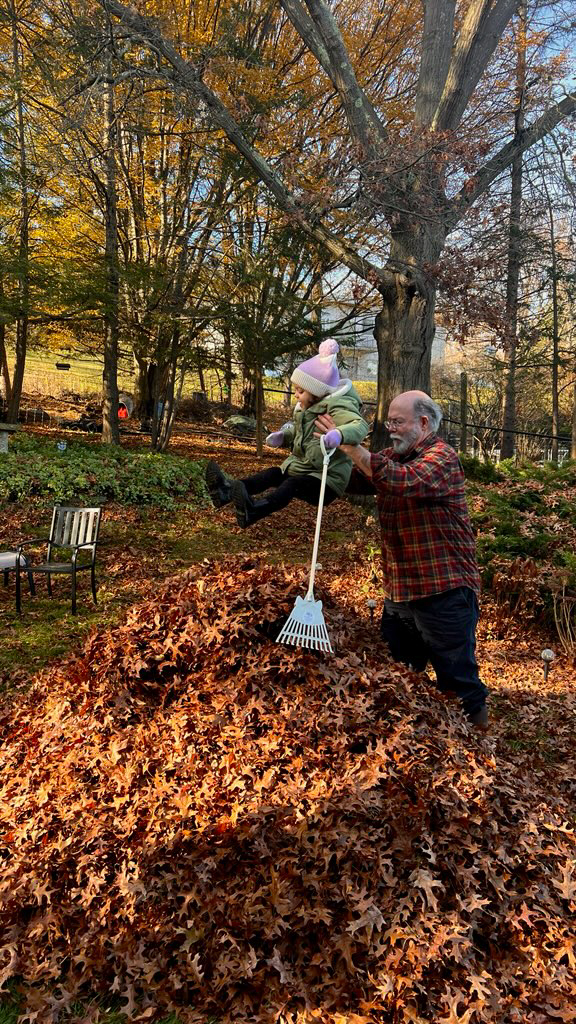
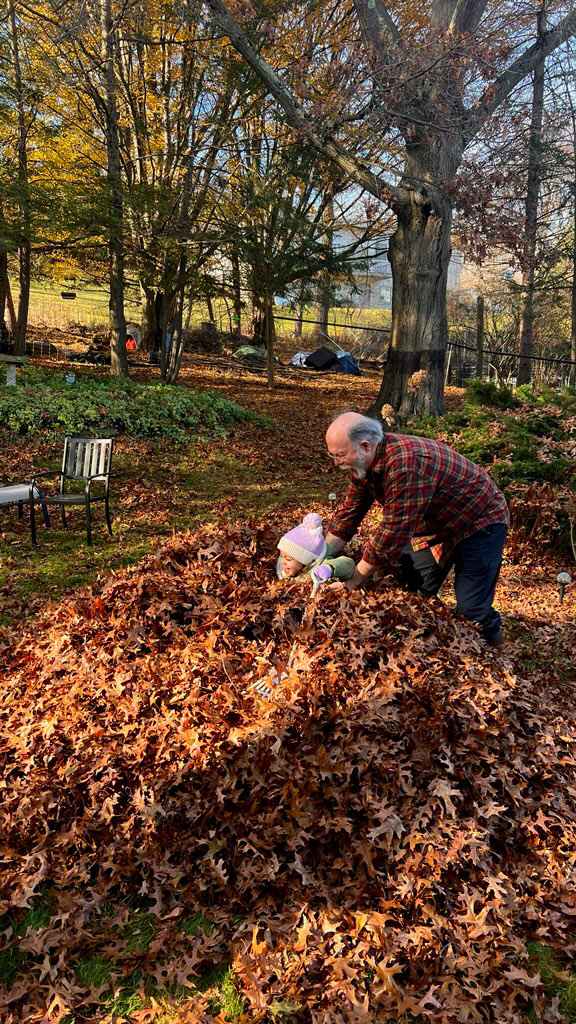
Her laughter rings clear, a melodic counterpoint to the rustling leaves as she is lifted high by loving hands only to descend into the crunchy embrace of her leafy playpen. A grandfather, his face etched with the smile lines of countless summers and autumns past, becomes the orchestrator of this joy. His flannel shirt, a patchwork of reds and greens, reflects the colors of the season, and his hands, weathered from years of tending to the earth and its cycles, now tenderly guide the child in her play.
The rake, usually a tool of labor, becomes a wand of magic, directing the leaves into heaps that rise and fall with each jump and dive. The child’s mittened hands grasp at the leaves, each one a different hue, a different shape, a different story. They fly up around her like a flock of birds taking flight, then settle back into their collective, creating a soft rustling symphony that speaks of the changing season.
The photographs of this gallery are by Soraya Leathers
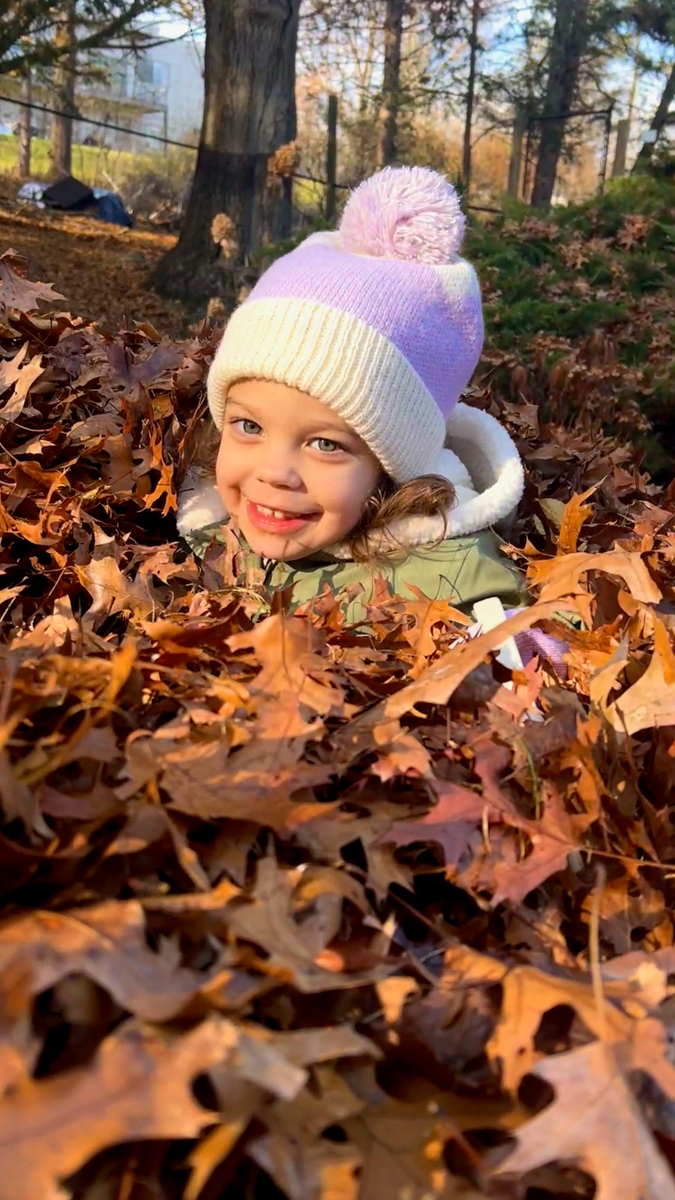
As the sun begins to dip lower, casting elongated shadows across the yard, the child’s energy wanes. The vibrant activity gives way to tranquil moments of rest, with the child now lying still among the leaves, her eyes reflecting the vastness of the sky above, clear and blue, a window between the earthly and the infinite.
The day wanes, and the leaf-gathering winds down. A final tableau shows the child, now indoors, cocooned in the warmth of a blanket that mirrors the plaid of her grandfather’s shirt, the same colors now muted and soft. Her eyes are heavy with the weight of a day well spent, her dreams surely filled with the laughter and the leaves and the boundless love that turns even the simplest act into a treasure of memories.
This is the essence of leaf gathering in the Finger Lakes after Thanksgiving – not just the collection of what has fallen, but the gathering of family, of joy, and of moments that will be cherished and recalled long after the last leaf has been tucked into the earth’s winter bed. It’s a time when the harvest is not just of the land’s bounty but of the heart’s. Each leaf, a reminder that even as the world prepares to sleep beneath the snow, life is rich, full, and evergreen in the hearts of those who share it.
The Catskill Mountains are not mountains. The Catskills started as a high plateau. Over eons, before the first humans, water, the sun, and wind carved high steep peaks: rounded, forested and teeming with life.
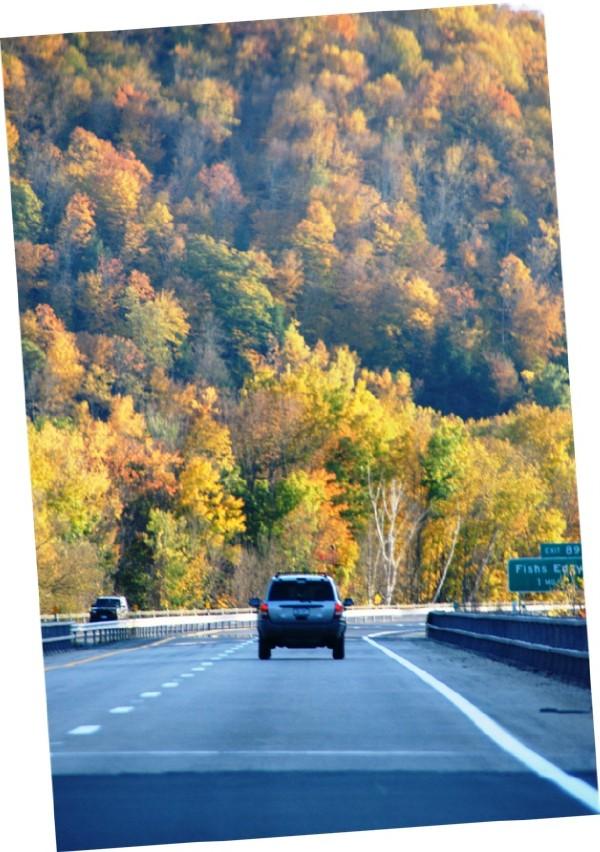
October 2008, on a return trip from family on Long Island, we traveled the winding road called “Route 17”, through the high autumn hillsides.
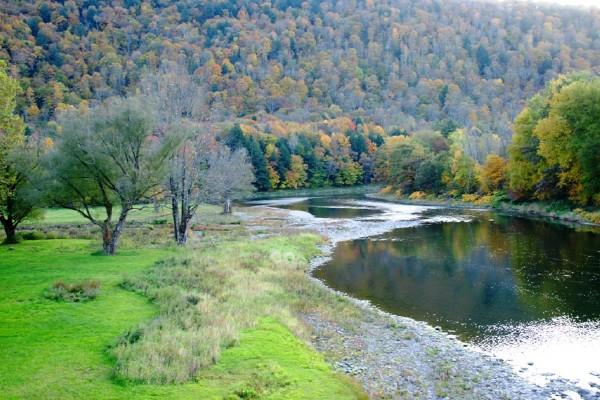
As the sun passed over the western hills we stopped to explore a place called “Fishs Eddy”, a town on the banks of the Delaware River.
Delaware River view at Fishes Eddy
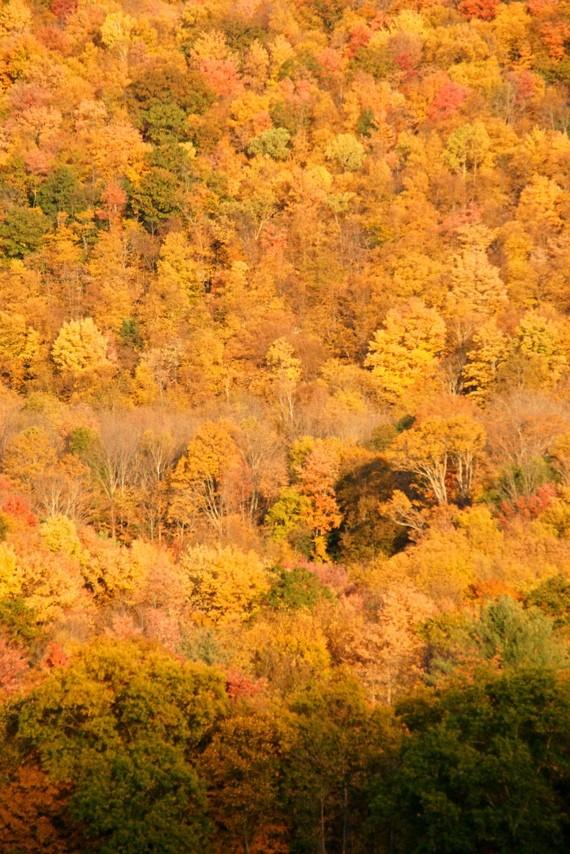
On the east side, facing sunset is a formation that would be a cliff if it was not for the hardwood trees growing from every available nook, crevice. Everywhere a root could be sunk, roots fed trees that, one late October afternoon, made a hill bright with autumn.
Turkey Habitat
Turkeys live in this type of habitat. We took a trail, barely a road that climbed past failed farms and hunting shacks.
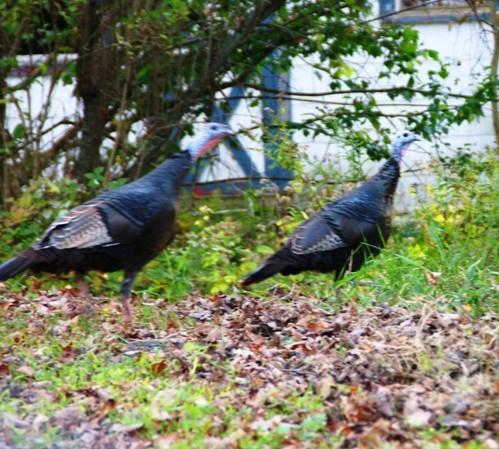
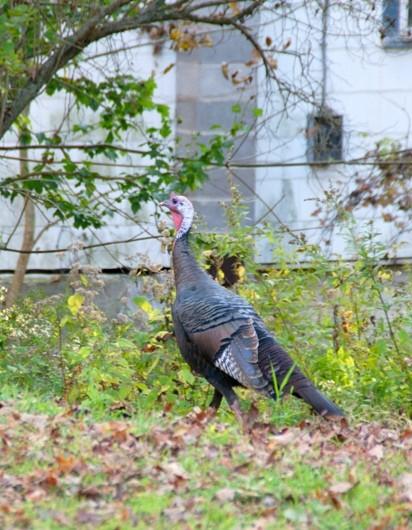
On a level place, in front of a ruined home, we came upon a Tom (male) turkey and his four hens. The hens fled at the sight of us. With barely time to raise the camera I caught Tom and the last hen as she fled into the bushes.
Tom Turkey Defiant
I say she, because Tom stayed behind. He stood erect, all three feet of him, defiant and strutting in a direction opposite from the hens.
This is the bird Benjamin Franklin proposed as the national emblem of the new United State of America (the bald eagle won that competition).
Hunted into almost oblivion, across the United States the wild turkey is making a dramatic comeback in many places, including the forests and farmland of rural New York State
This fellow made no noise. His strutting posture and head bobbing said it all.
We left Tom Turkey in peace to his domain and hens.
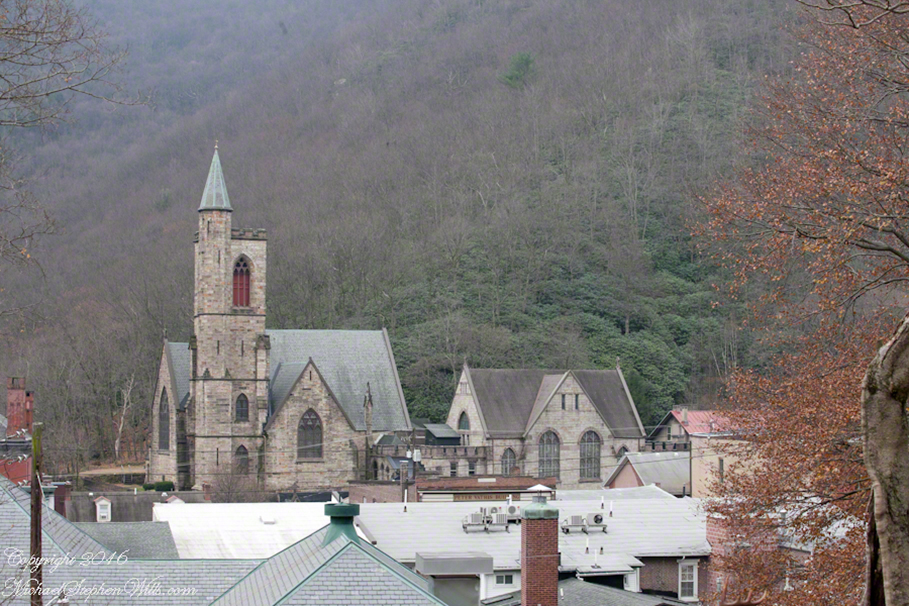
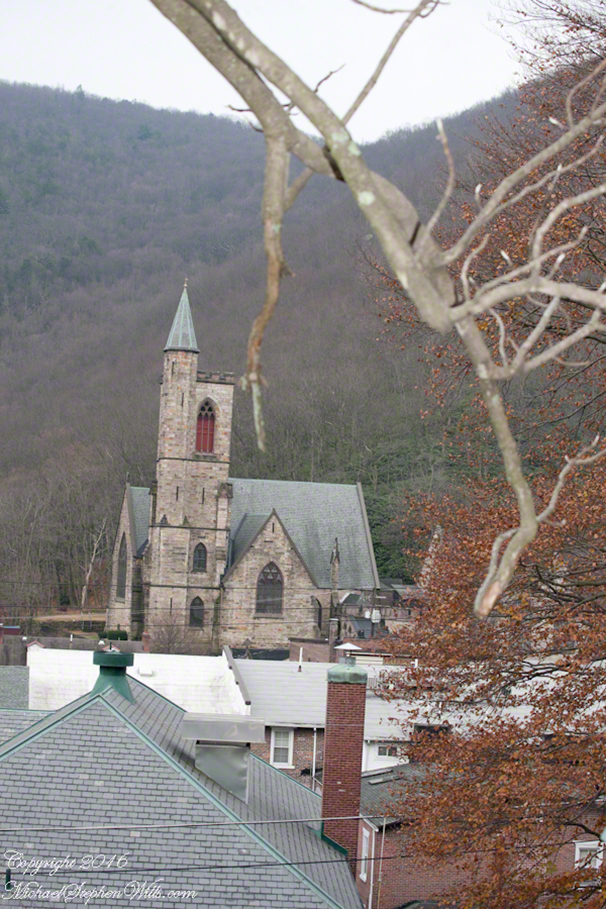
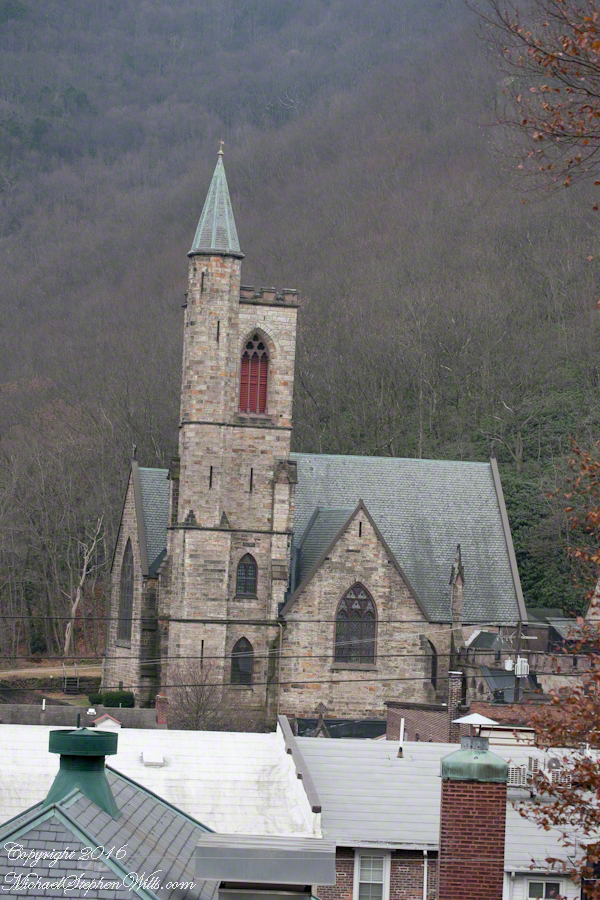
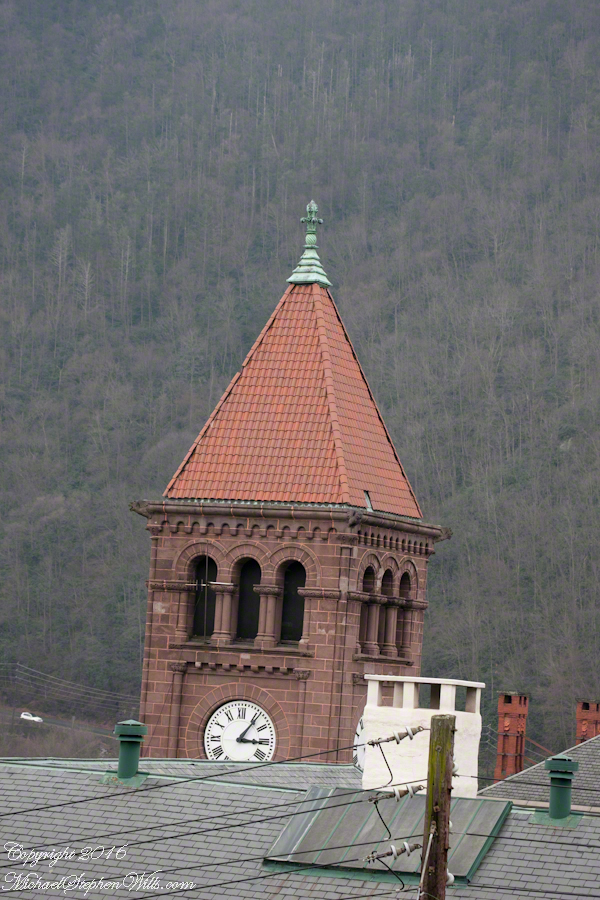
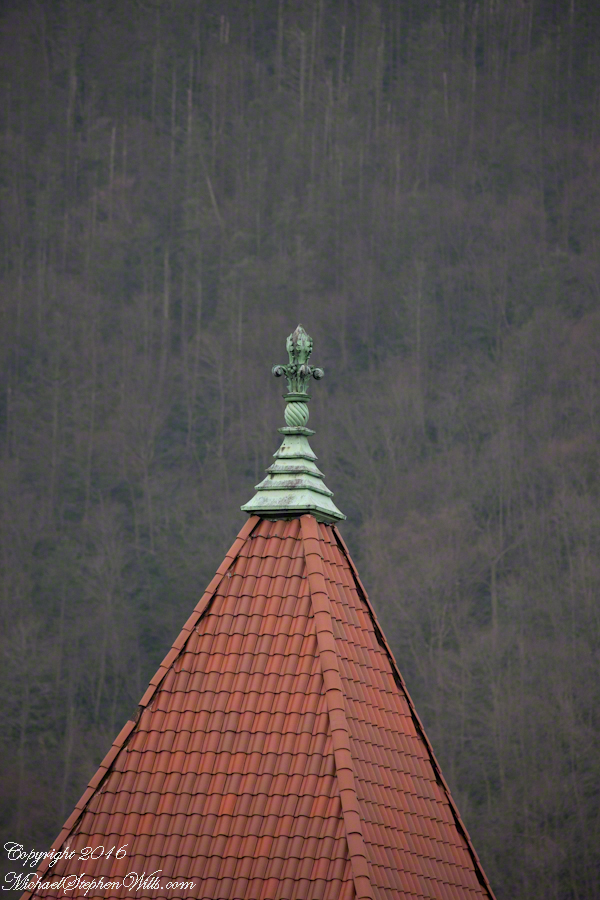
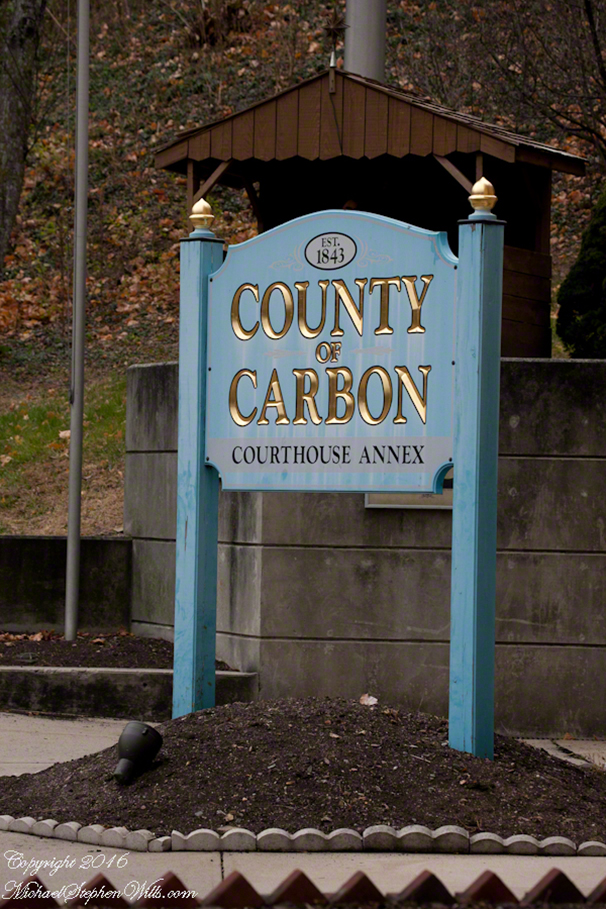
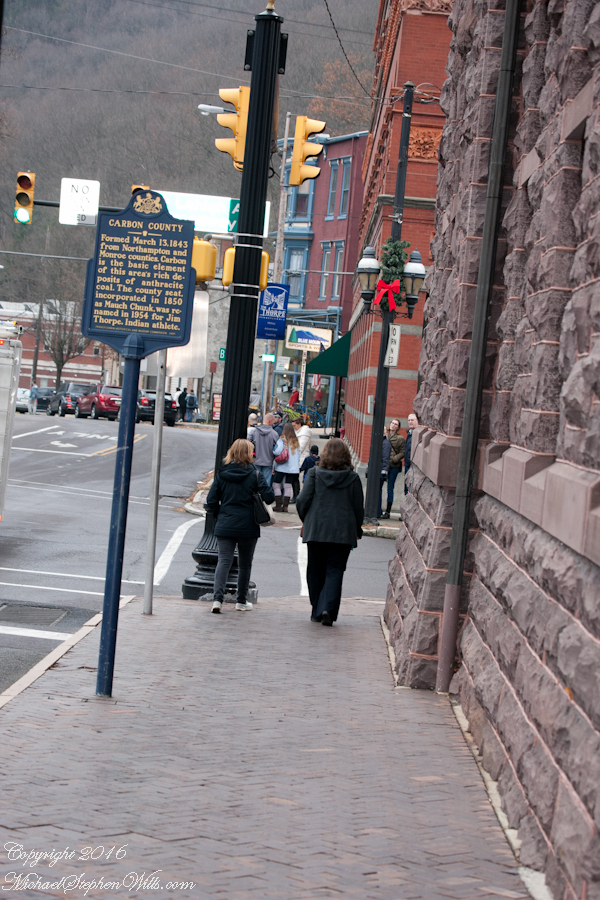
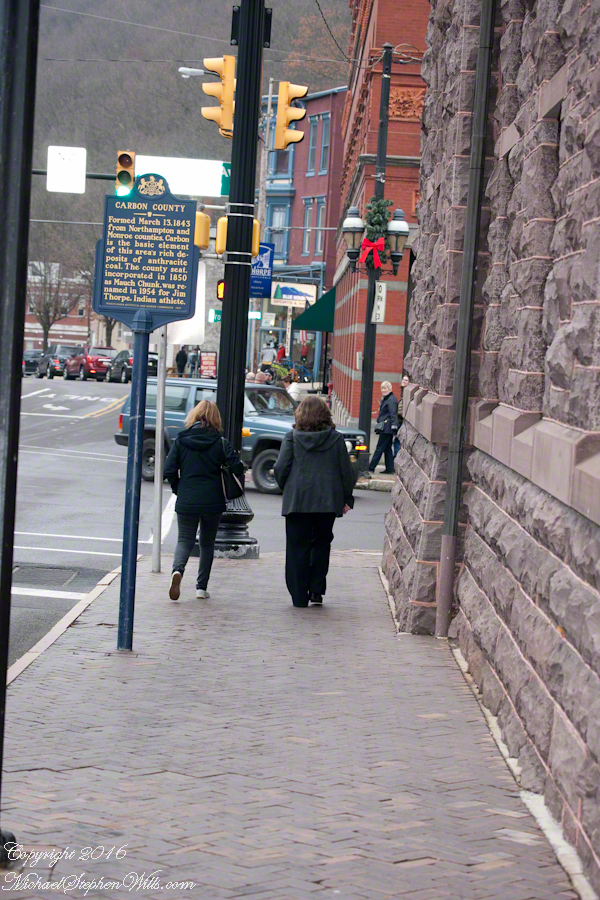
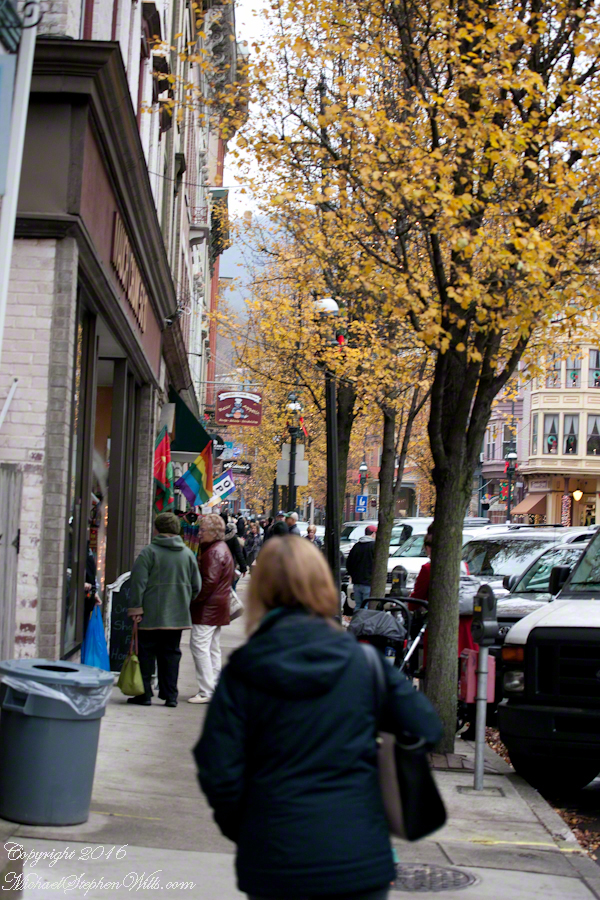
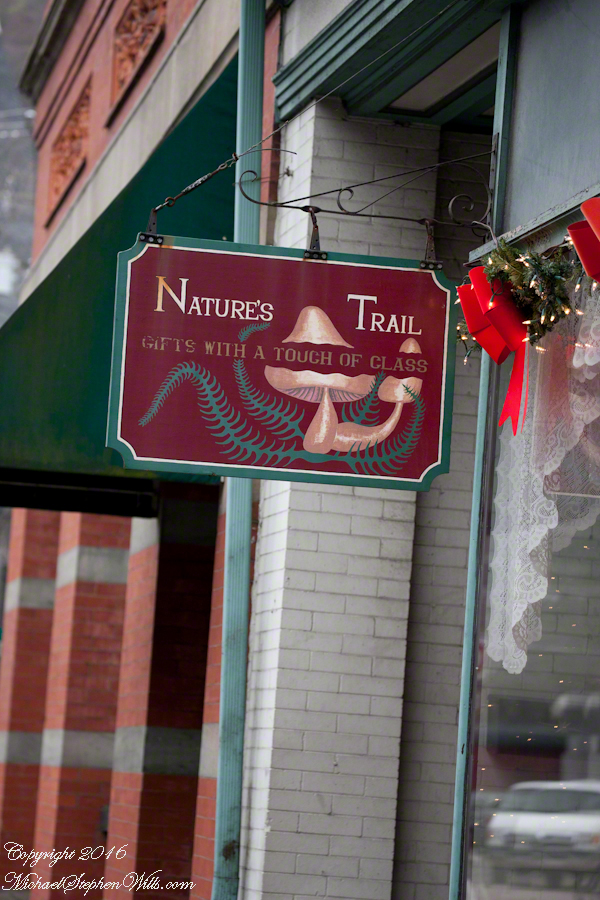
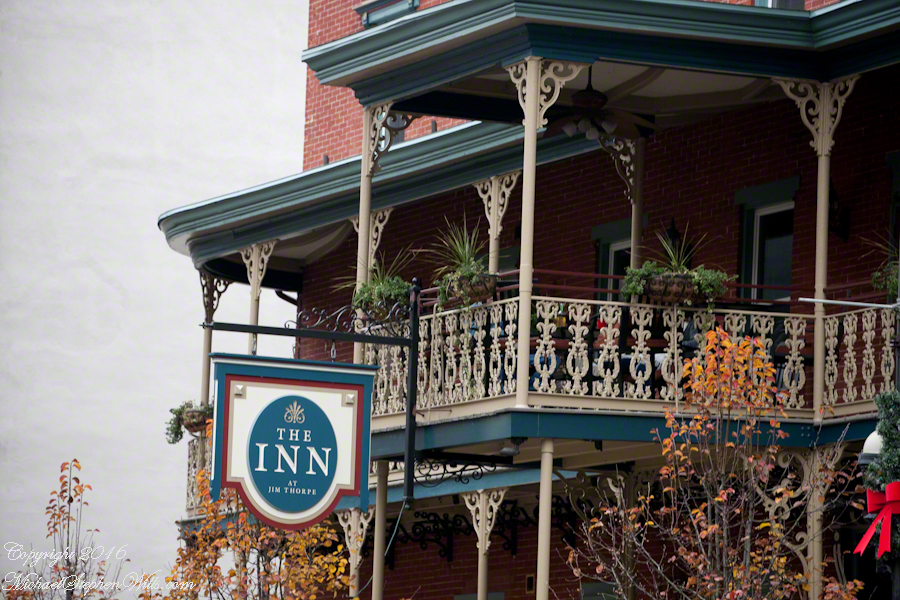
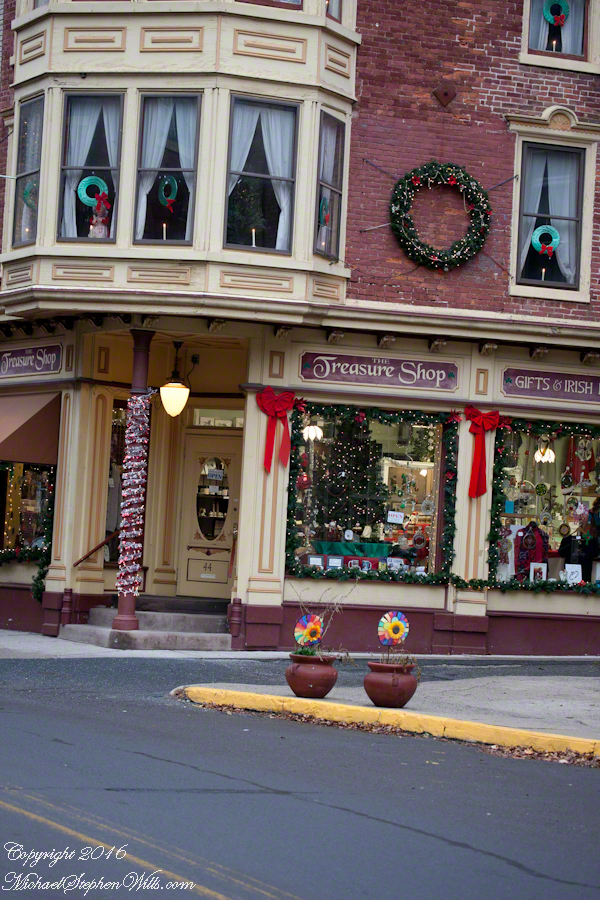
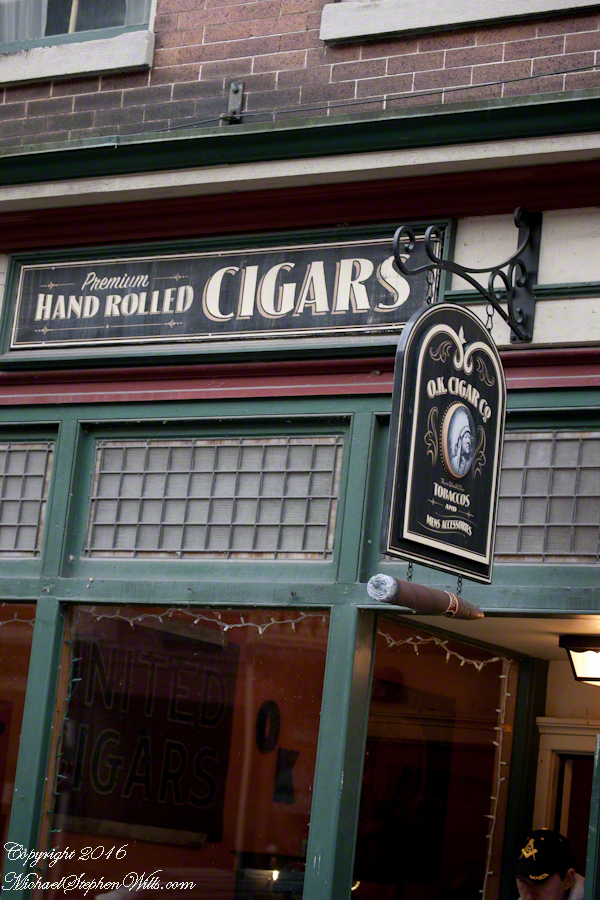
Presenting impressions of Jim Thorpe town on Black Friday 2016: unedited shots taken in late afternoon.
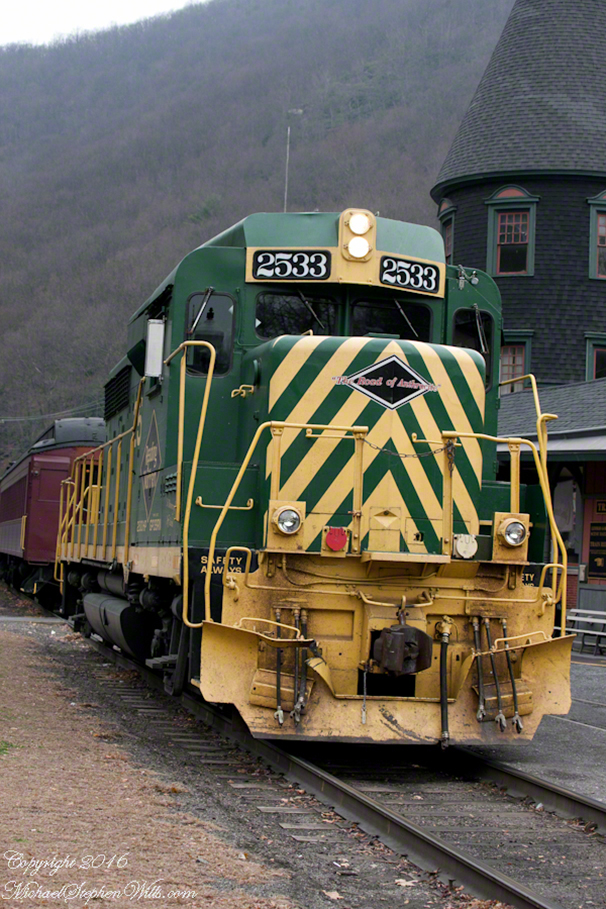
The best place to park is behind the train station, along the river. $5 for the day.
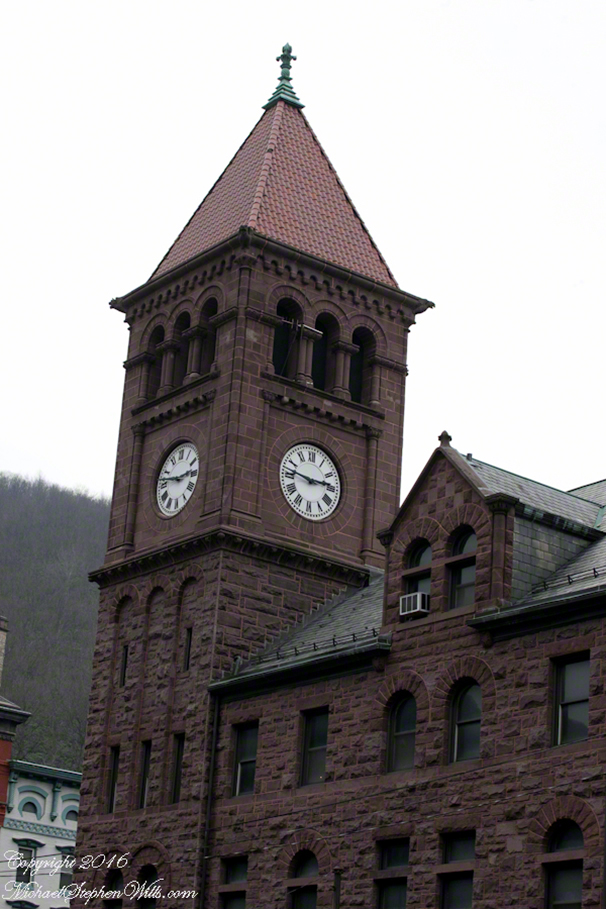
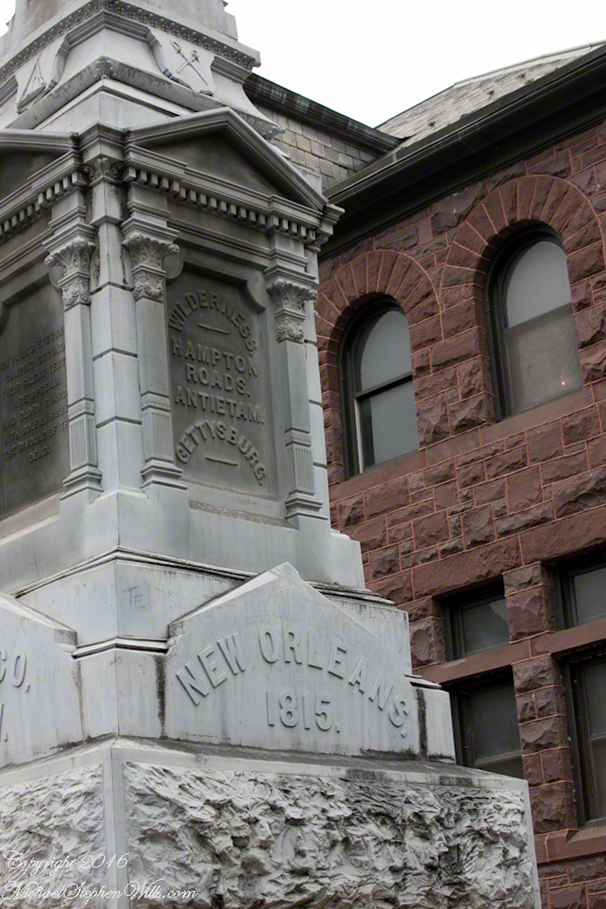
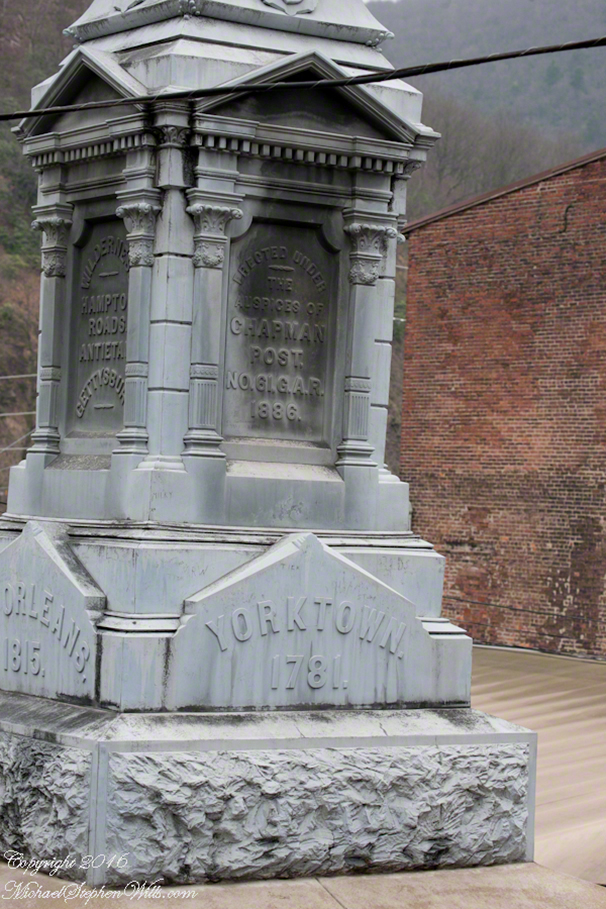
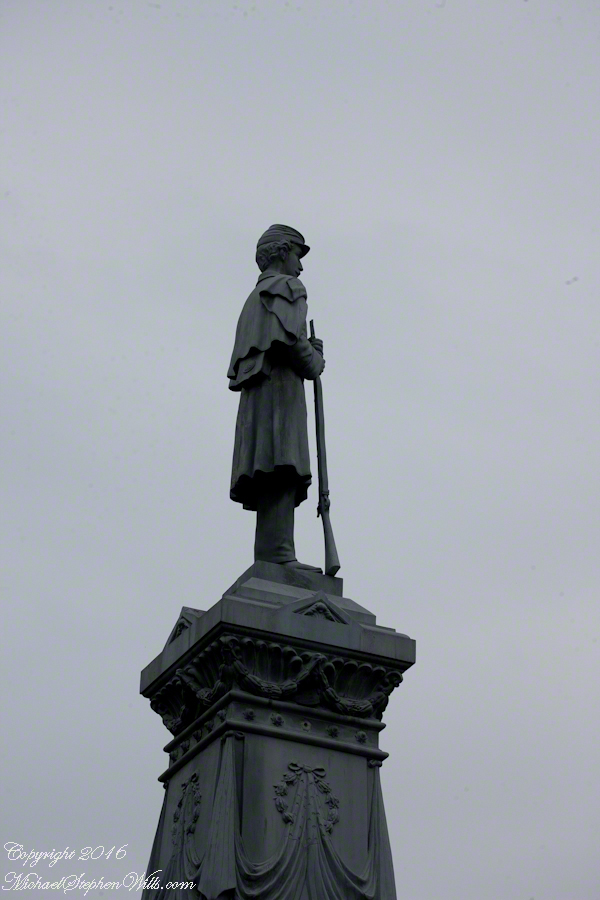
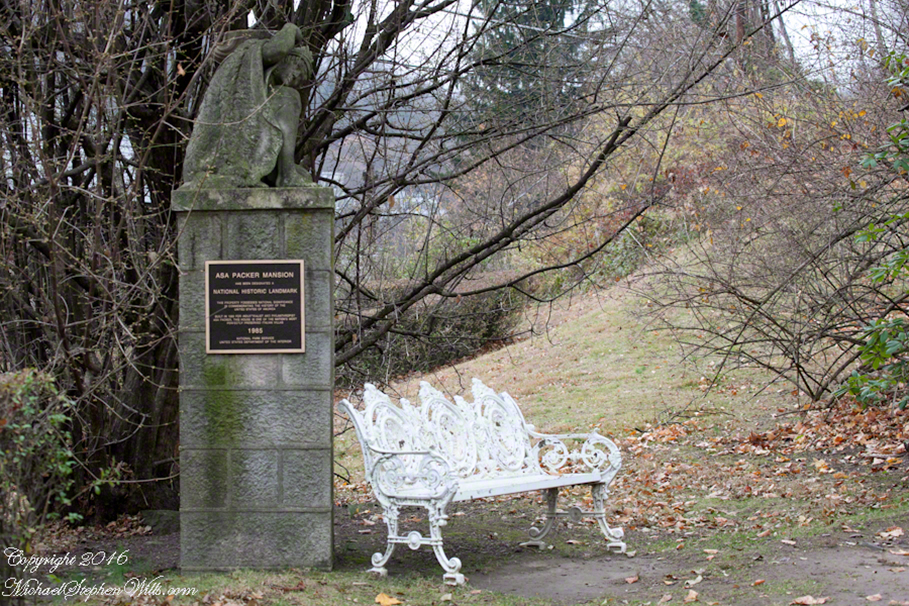
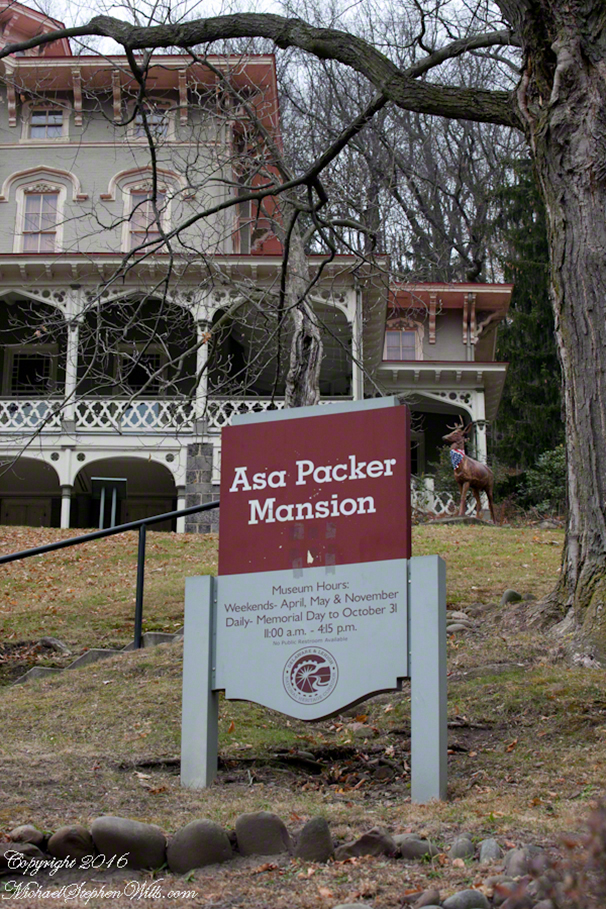
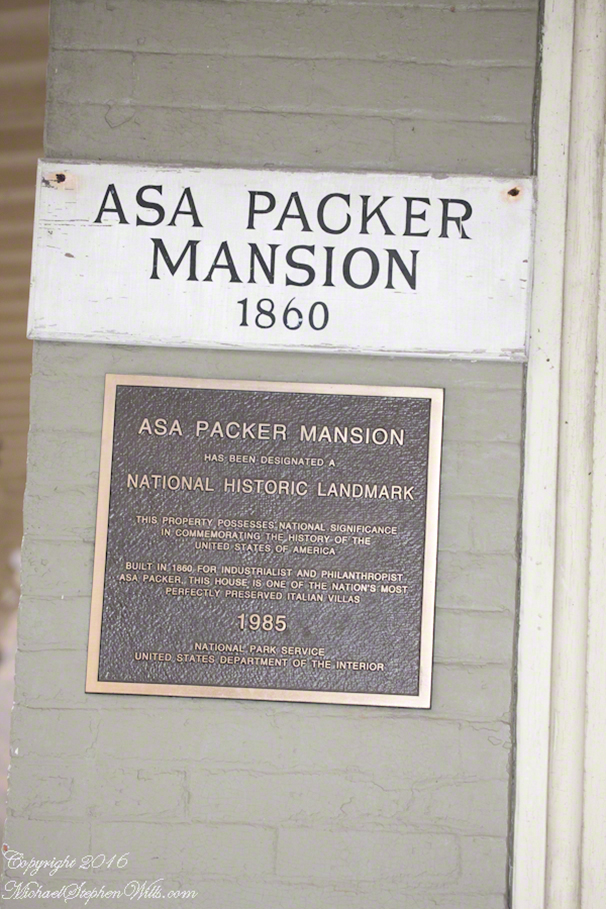
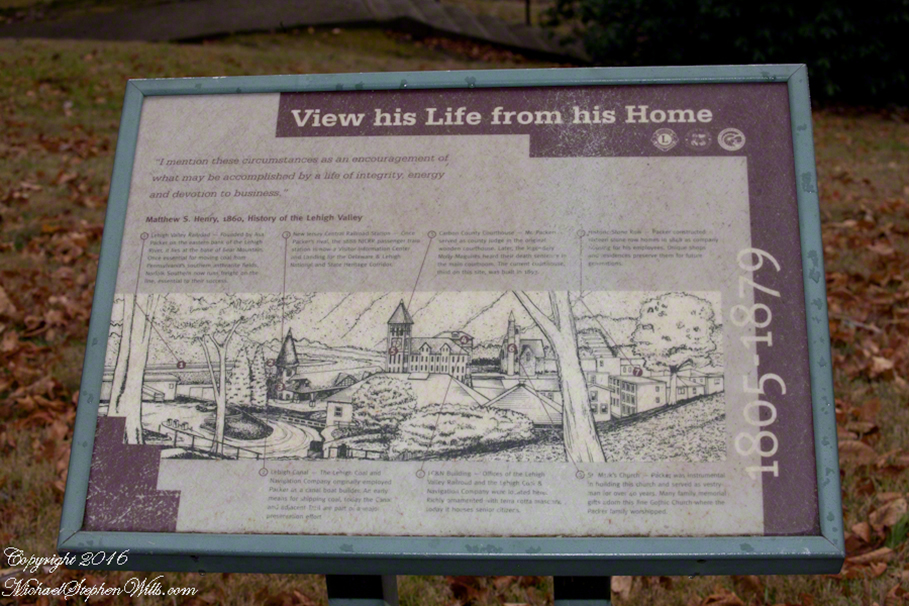
Hike up the hill to the Asa Packer Museum. The attraction is closed for the winter, but well worth the climb past the Civil War monument, so steep there are switchbacks.
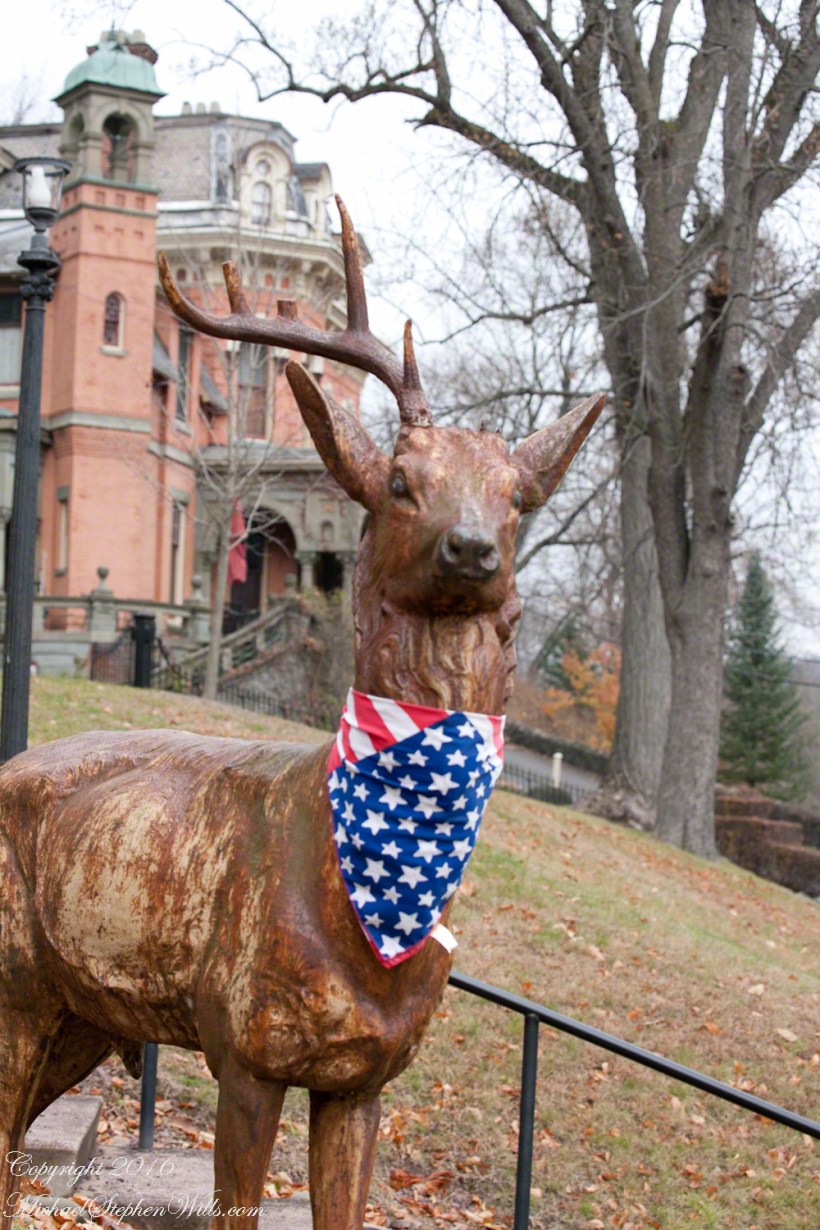
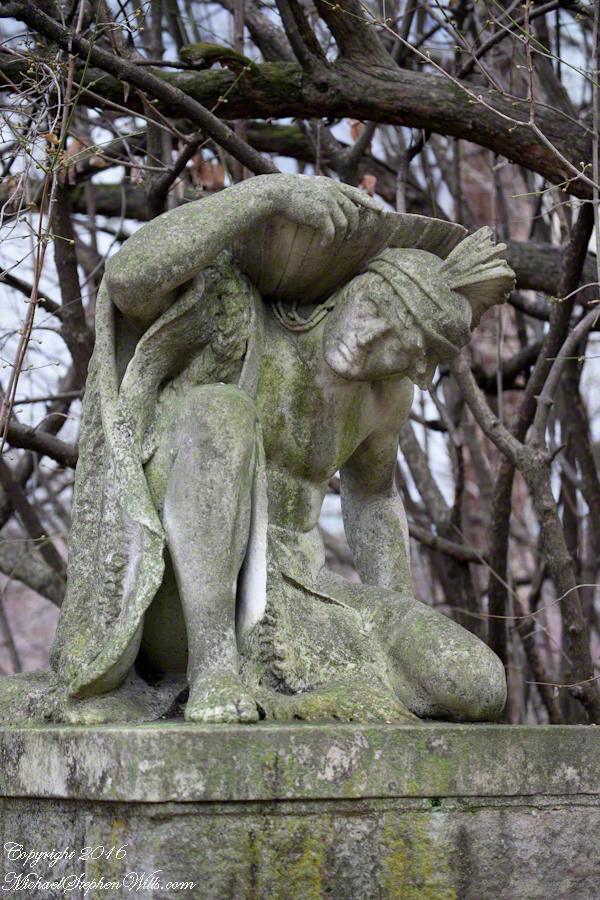
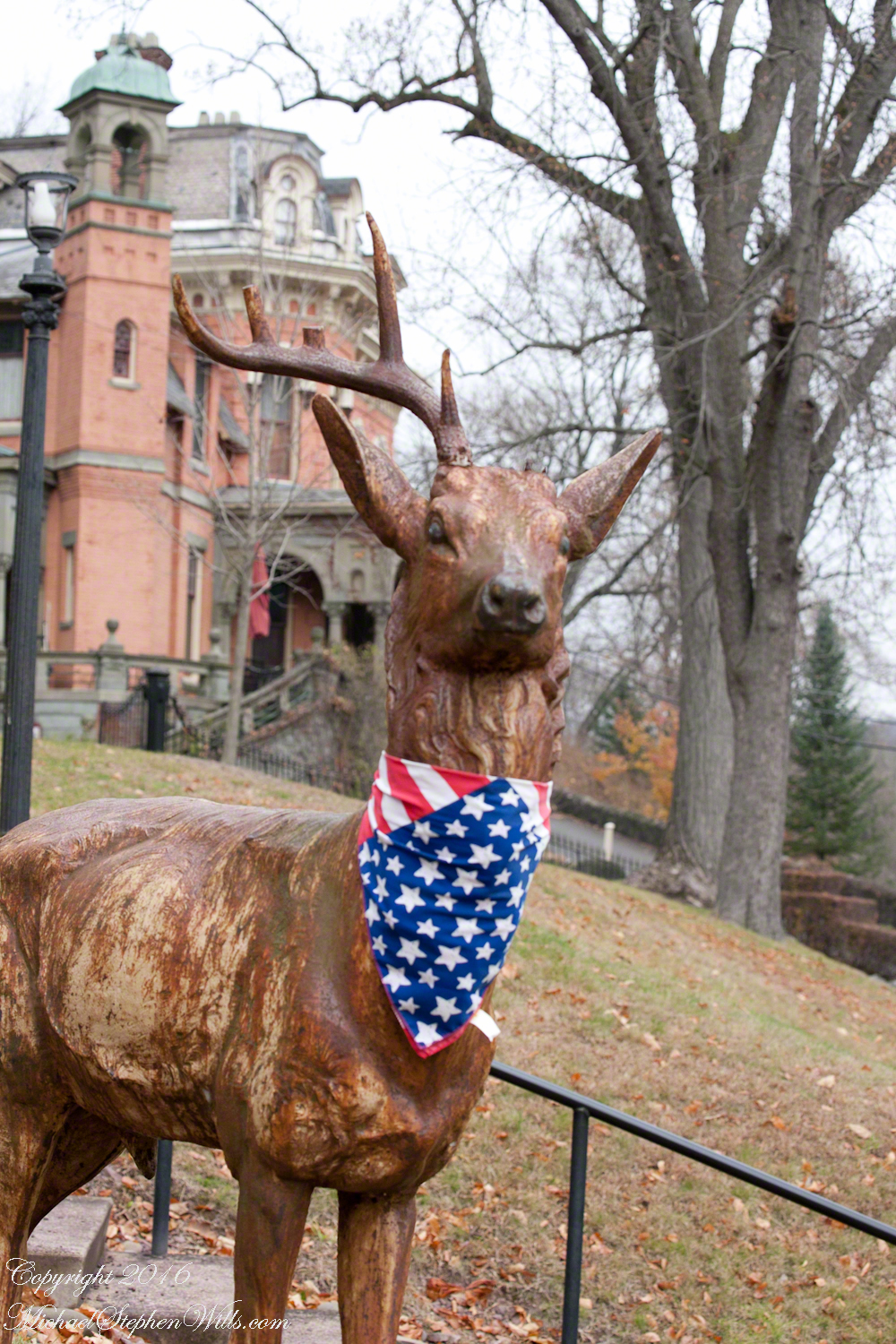
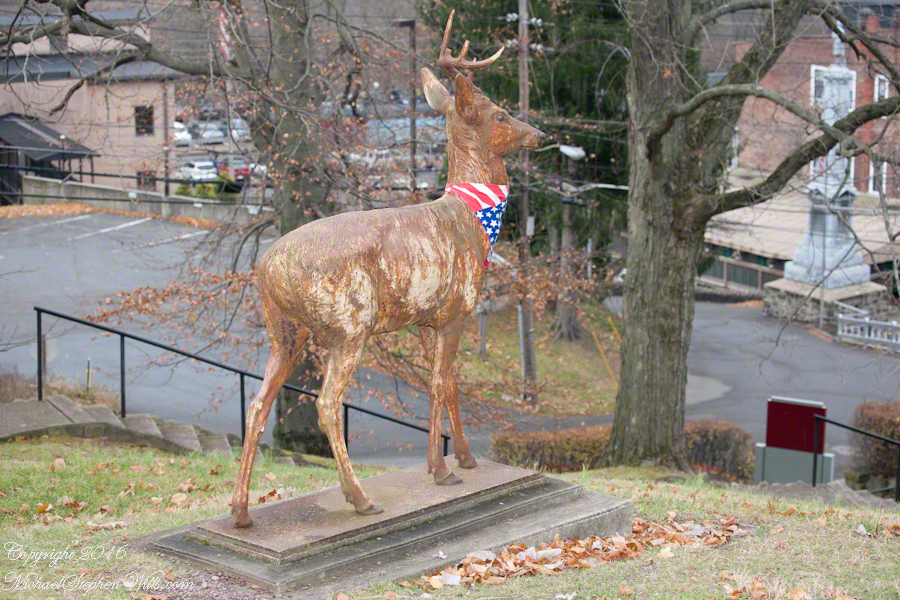
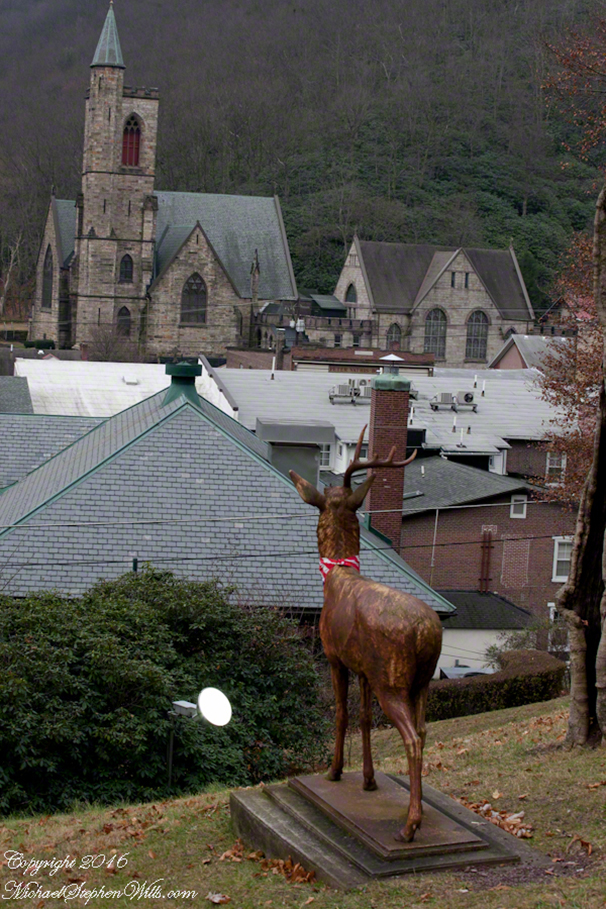
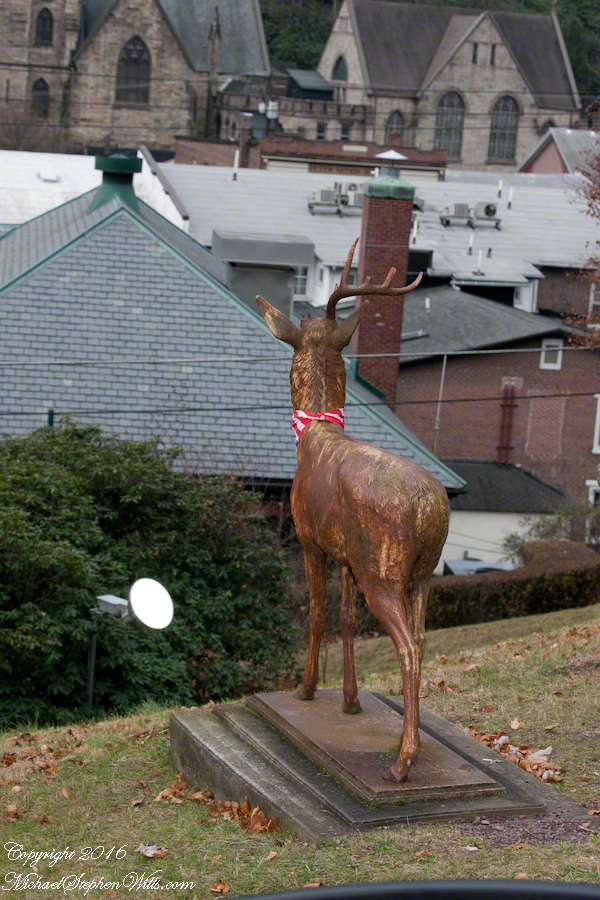
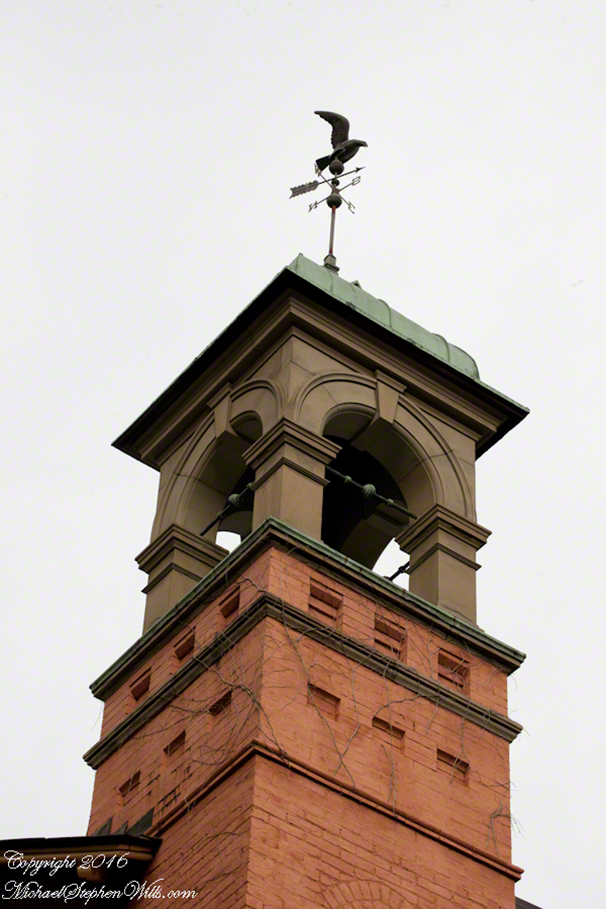
Even closed the site yields detail after detail, all interesting and worth learning more about. I was fascinated by the casted buck sculpture, can you tell? Placed to greet visitors, it demands your attention.
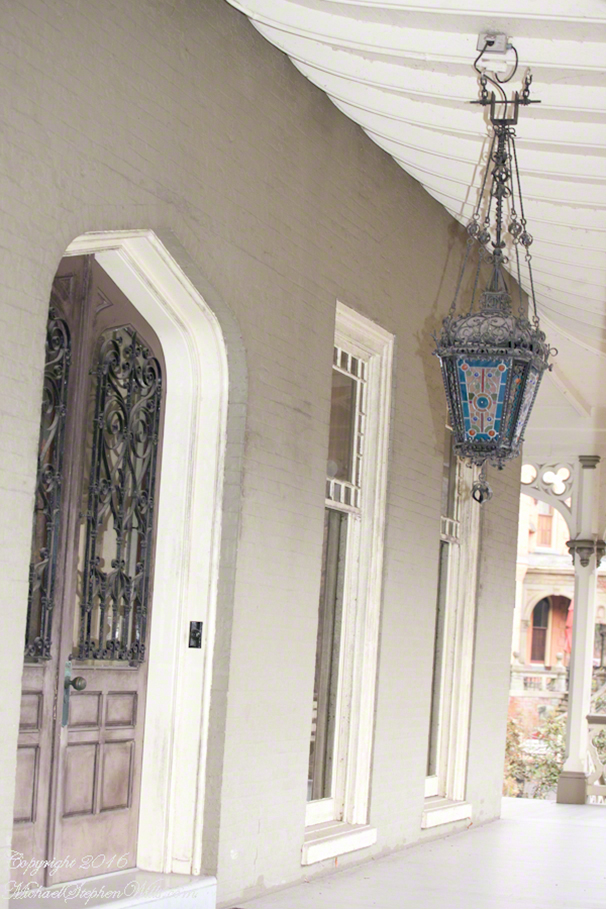
Climb some more to explore the porch…
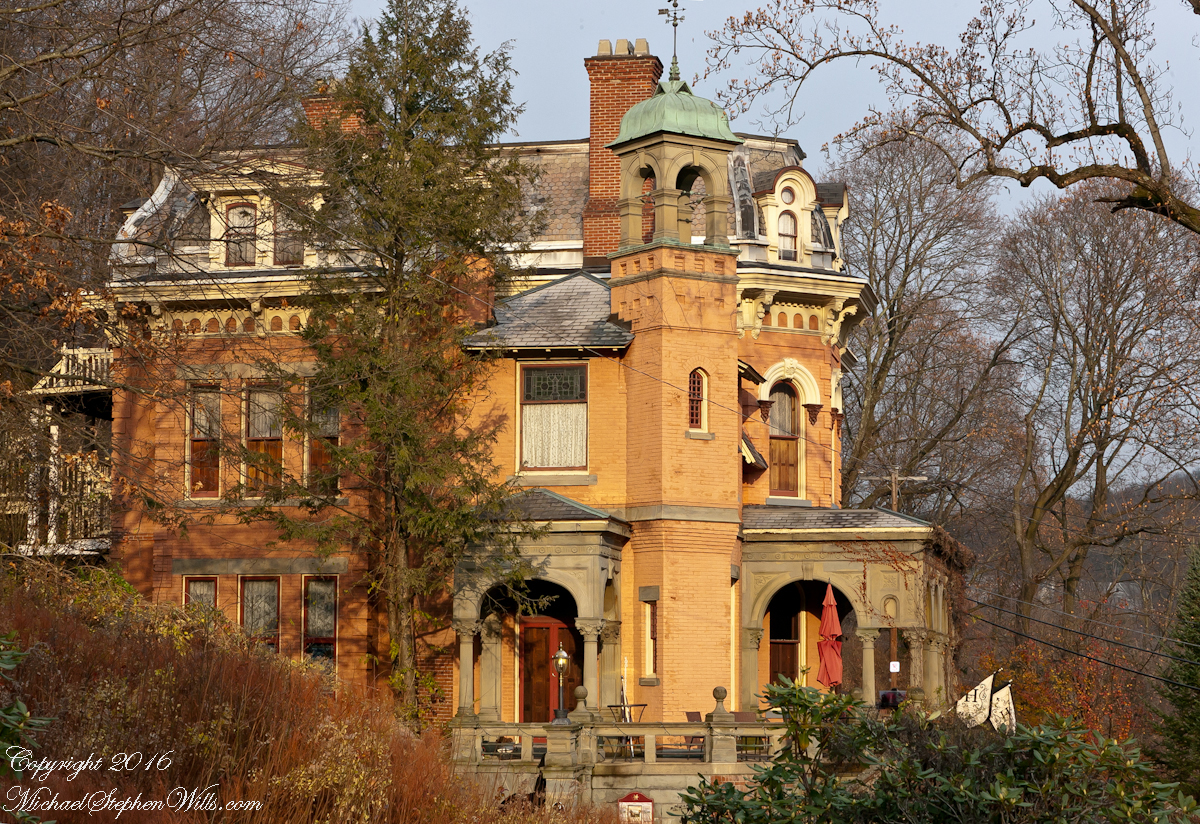
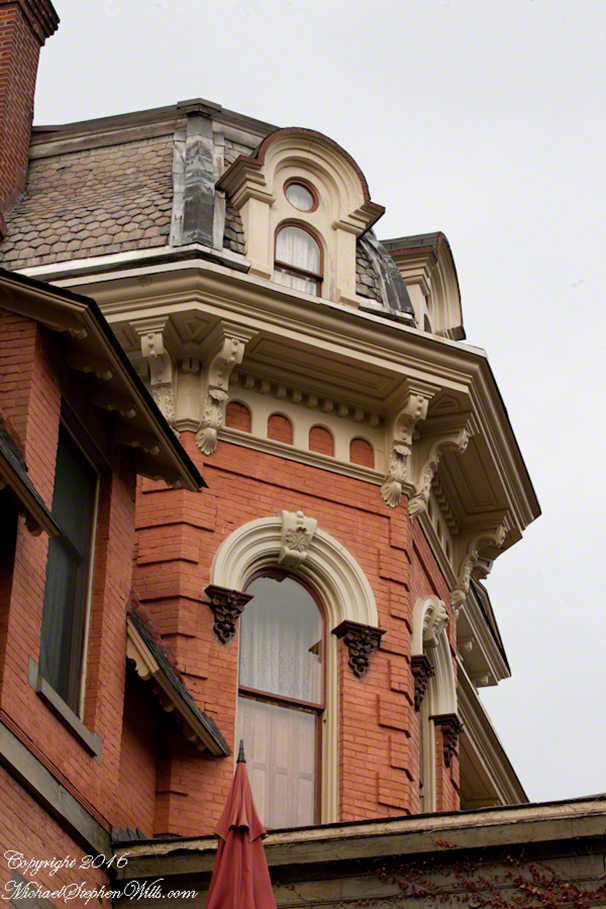
The sun makes an appearance, drawing attention to the other mansion of the site. Two brothers, and families, lived up here.
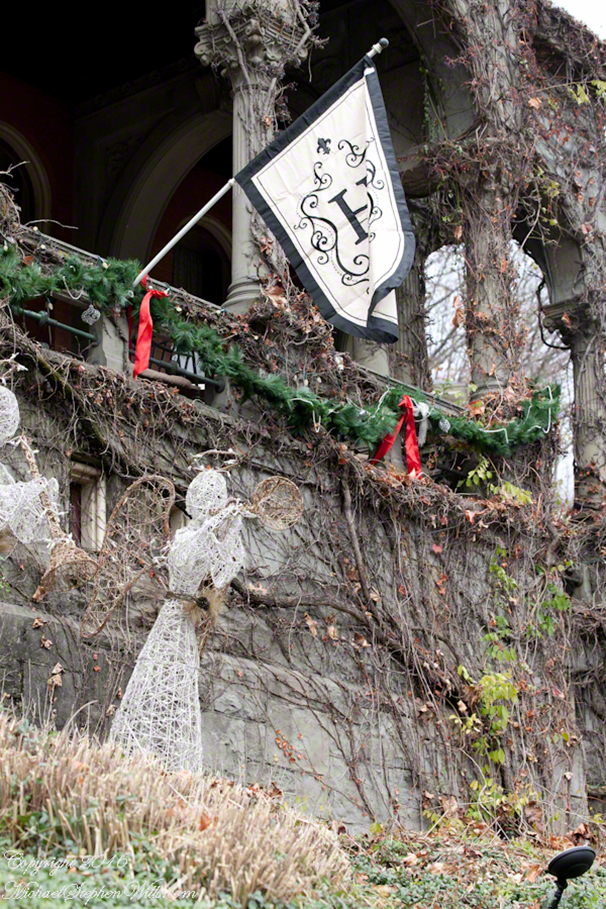
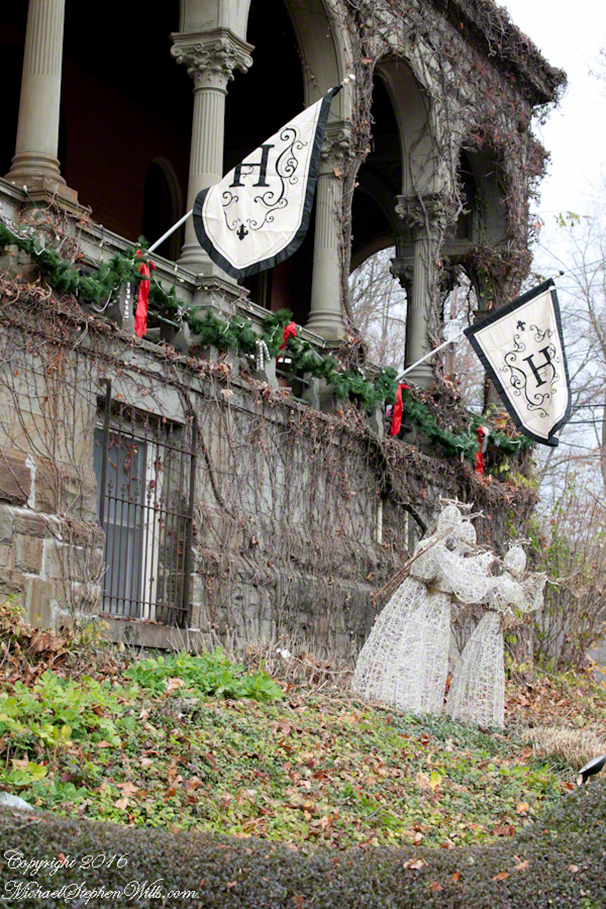
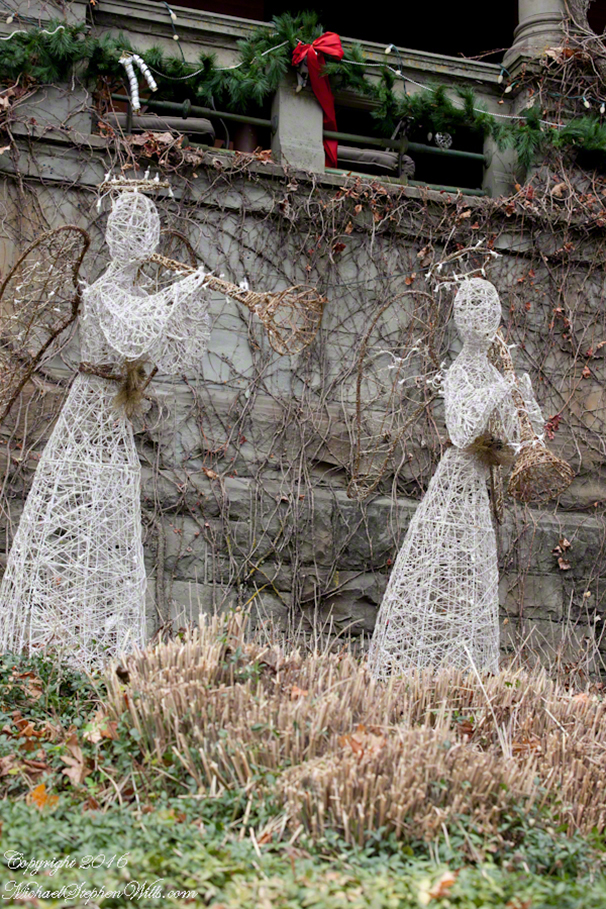
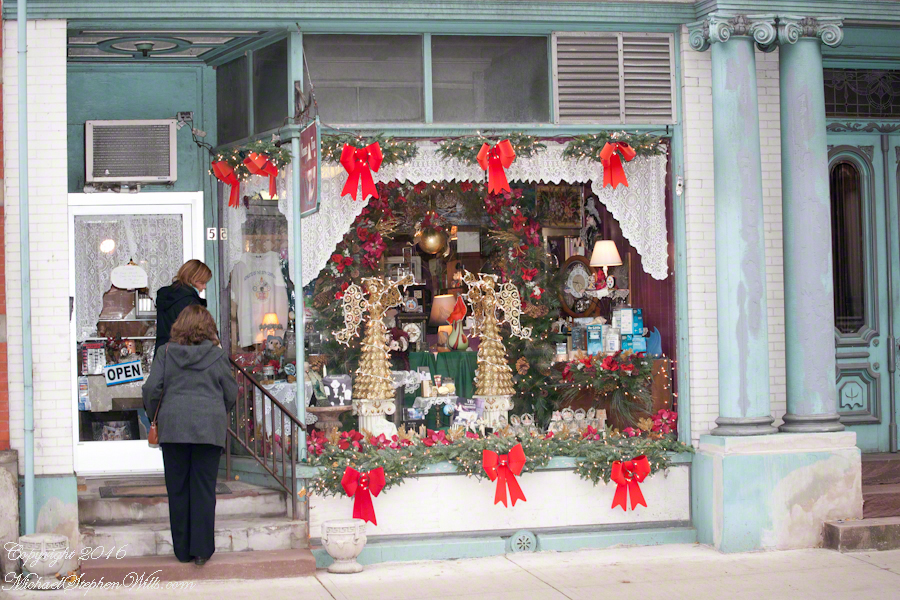
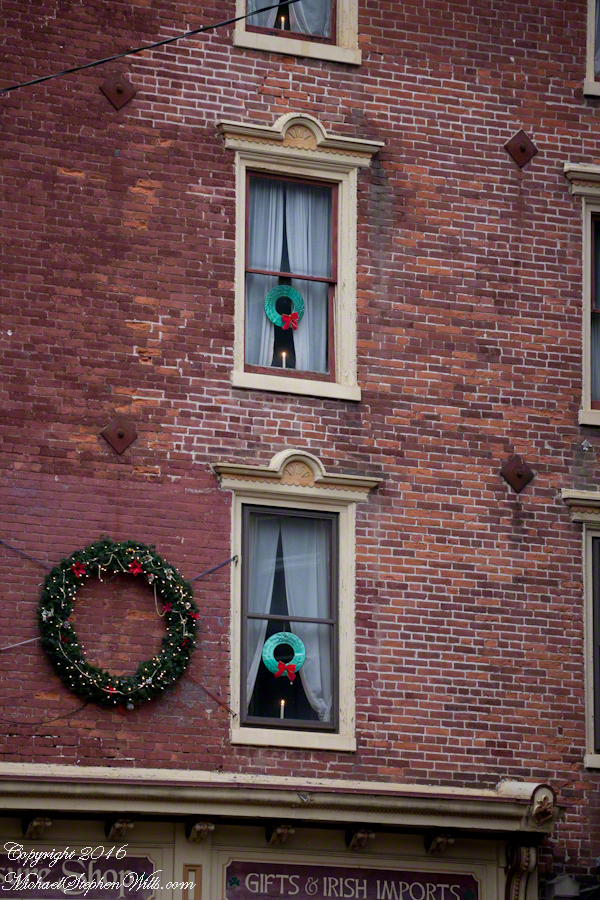
Of course, my interest turned to that neighboring mansion. It is a B&B. “Mystery weekends” advertised. That is a two day event. Guests, presented with a scenario, draw on their resources to solve…..a crime. Today, the façade decorated for Christmas. The entire village decorated for Christmas!! Christmas!! Christmas!!! I just love CHRISTMAS
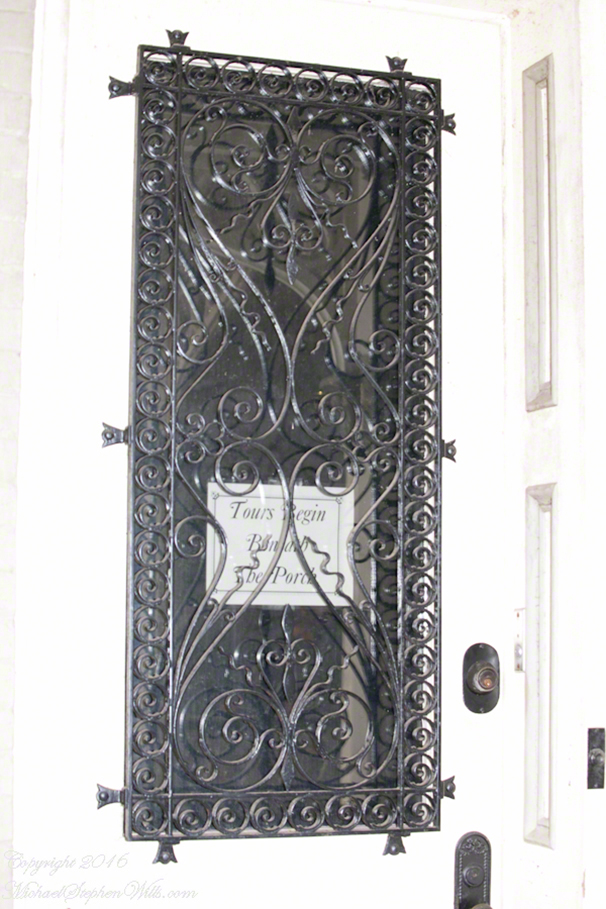
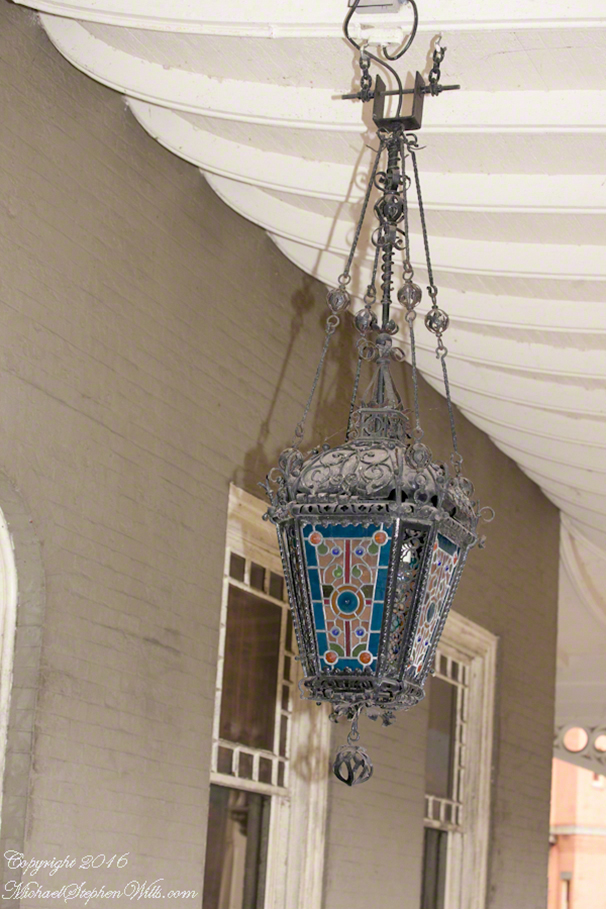
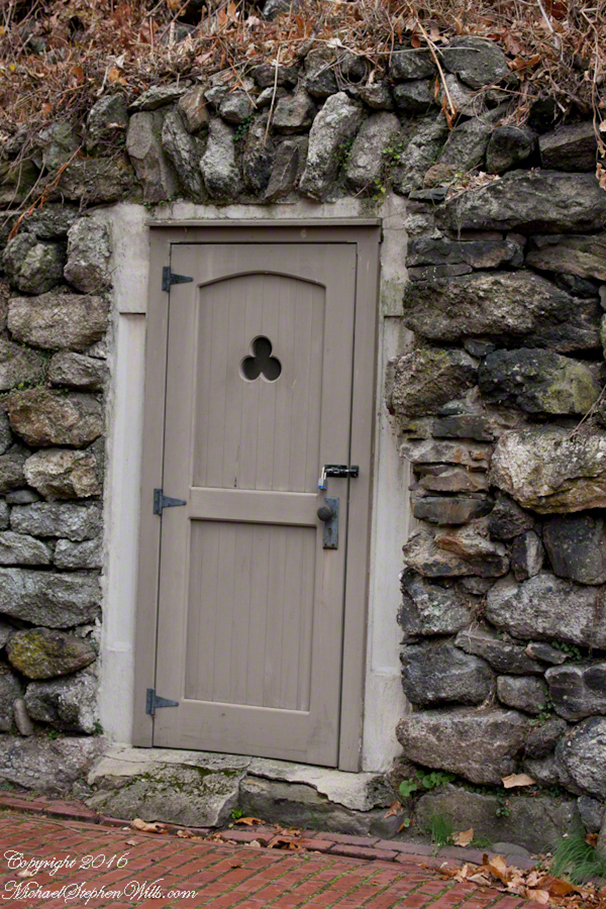
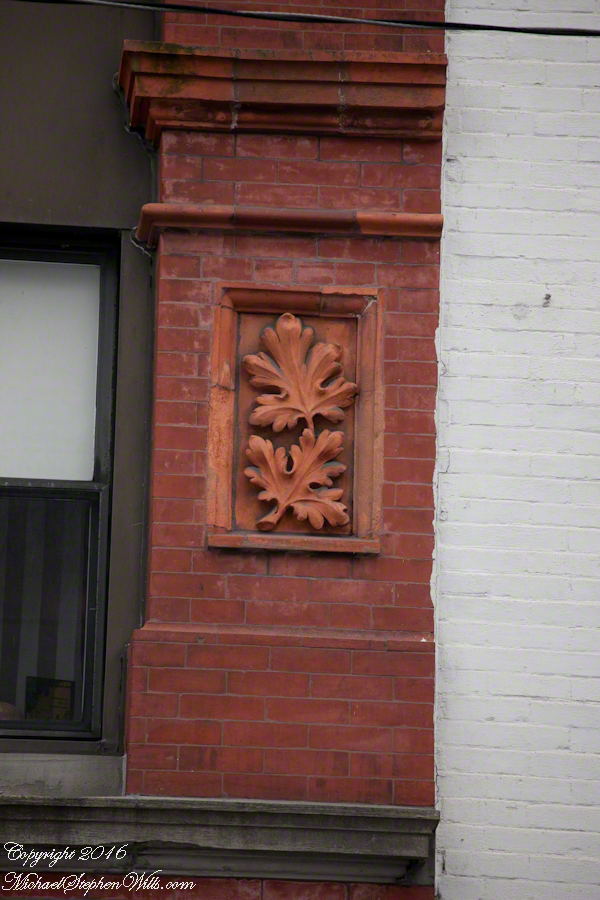
For me, the charm of these places are the details. These pull the attentive visitor into the character of the owner and/or designer. A simple storage room dug into the hillside, designed and crafted with love in the interest of the residents who experience it everyday. Built for a lifetime and longer. The door and fittings appear to be modern, “nice work.”
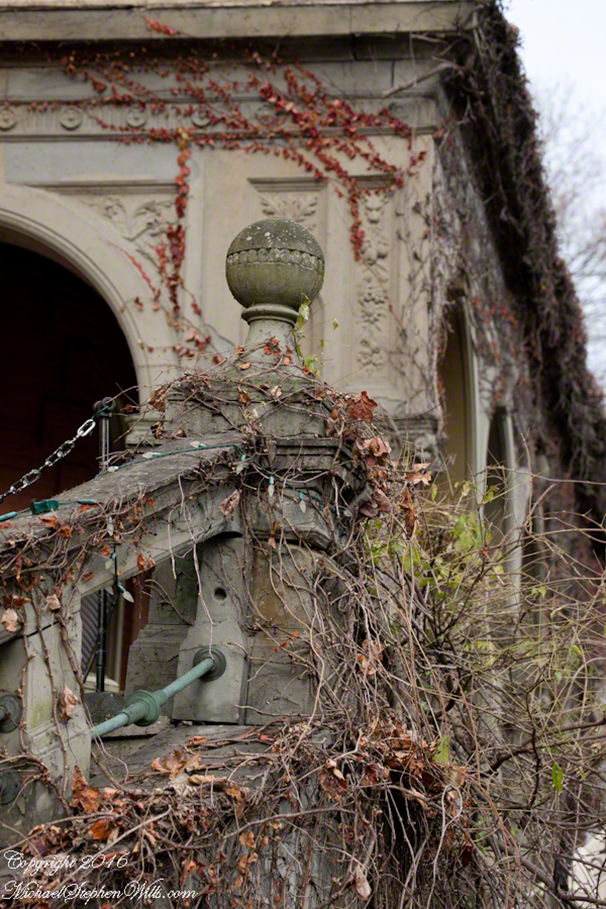
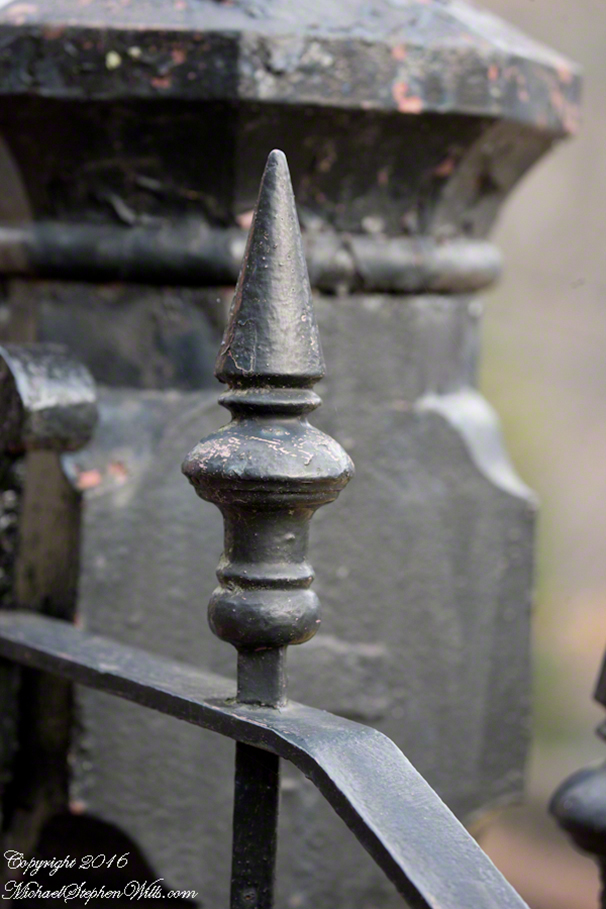
A substantial finial of a thick wrought iron fence rail.
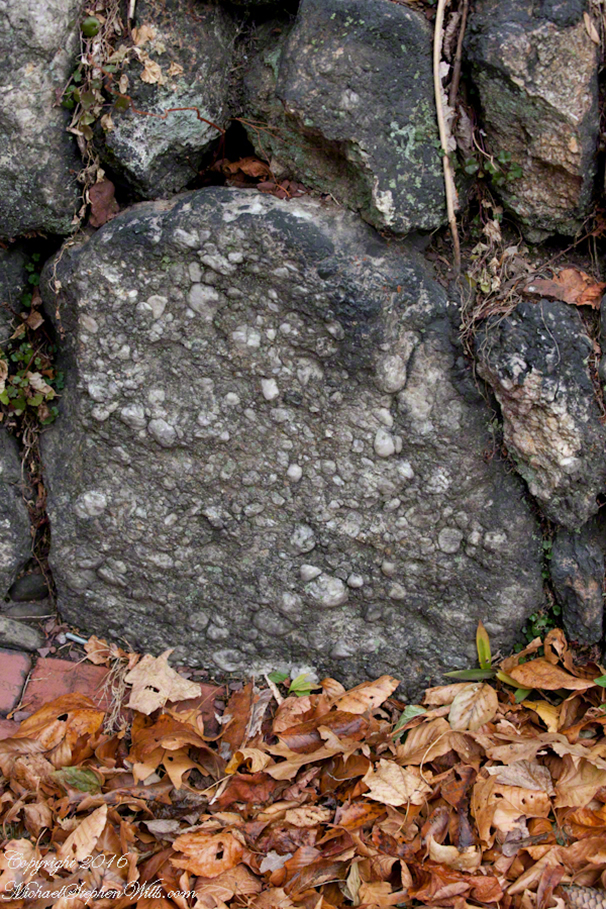
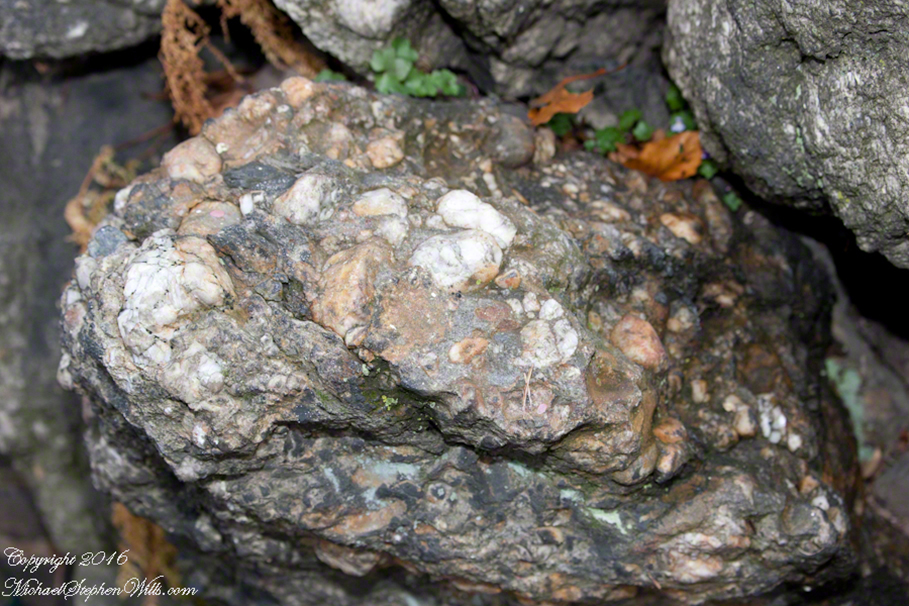
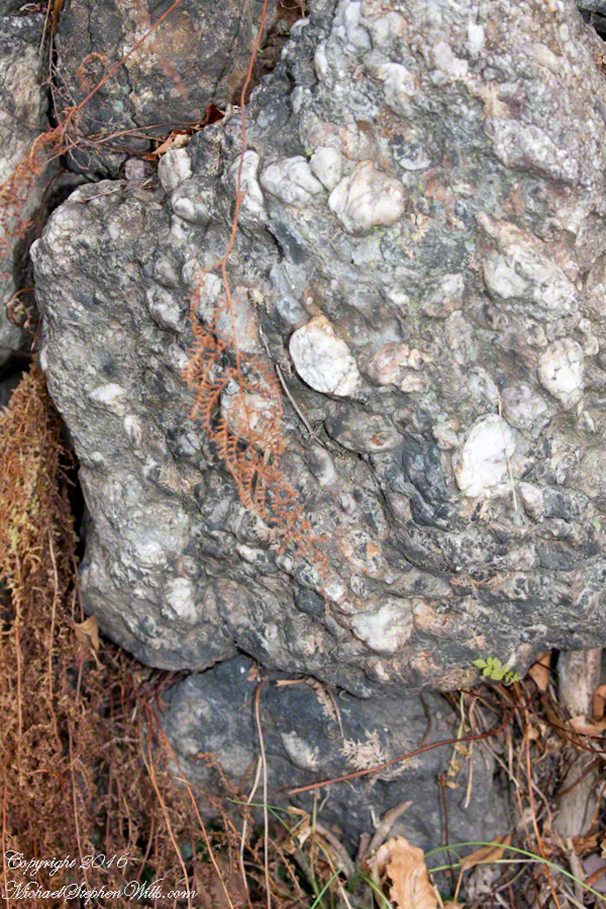
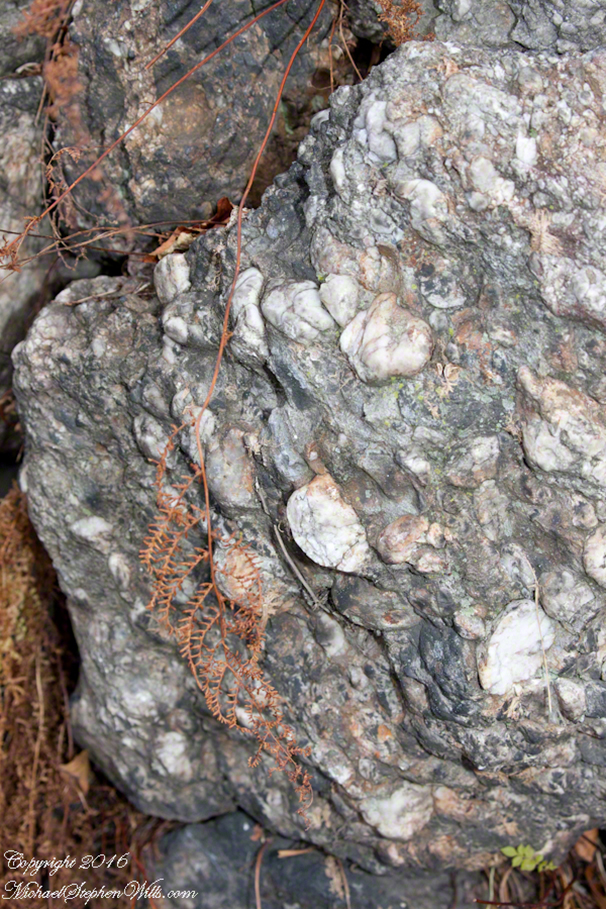
More so, the choice of building materials for retaining walls. These were spotted in the countryside, quarry or wherever by someone with an eye for unusual beauty…or a rock hounds. The boulders are carefully dressed conglomerate specimens with interesting clasts and matrix.
The museum is a place to enjoy the gathering night. Take note of the thick groves of rhododendron, native to this area: a reason to return springtime. The surrounding hills, locally called mountains, increase the charm of the setting.
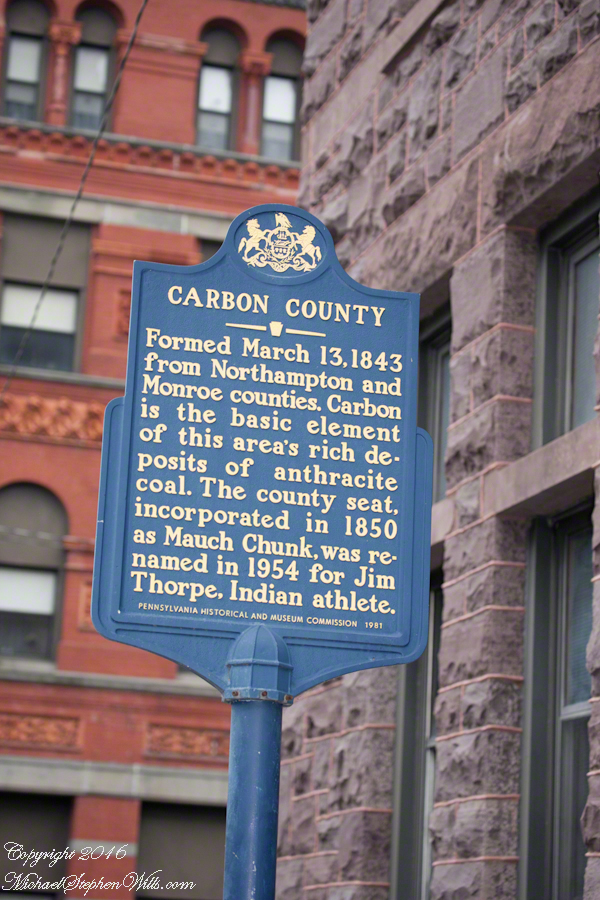
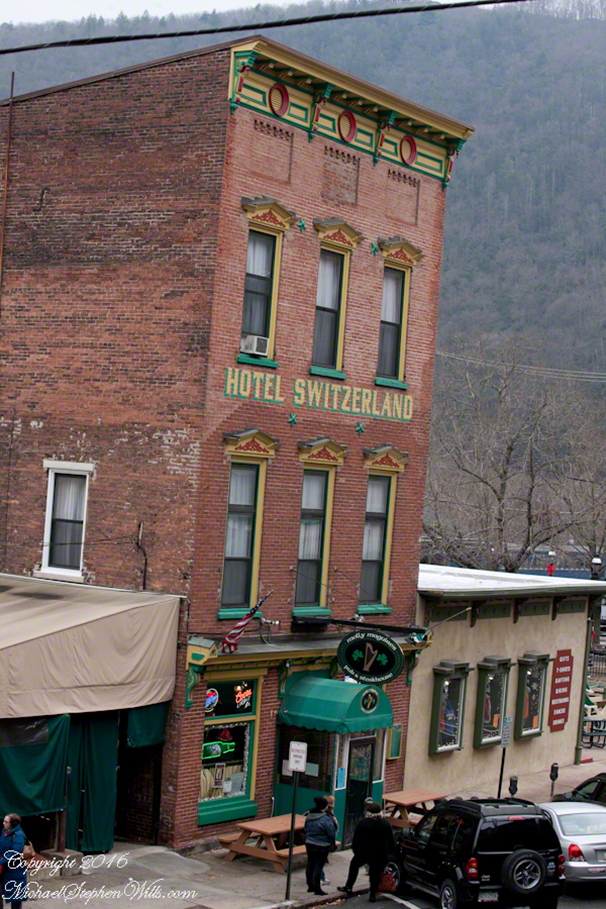
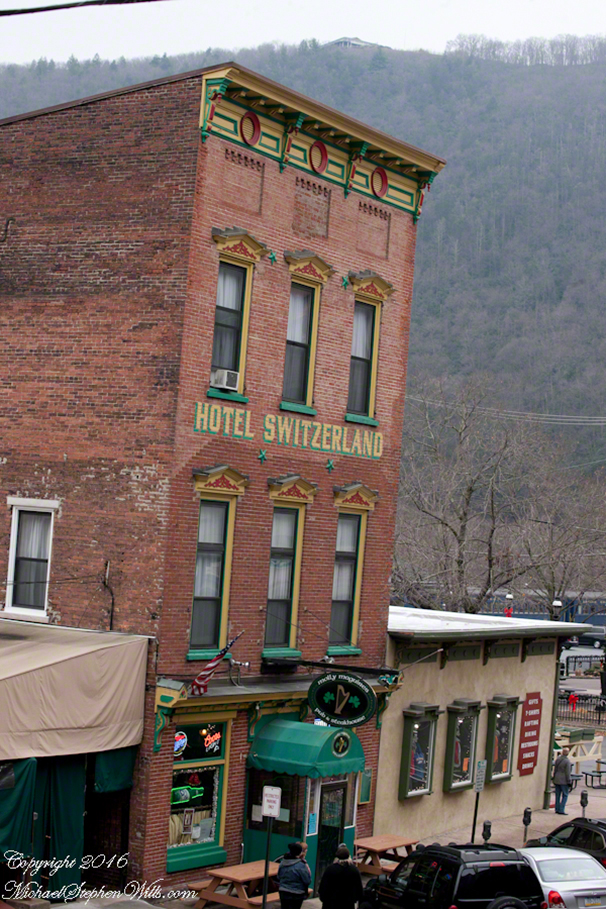
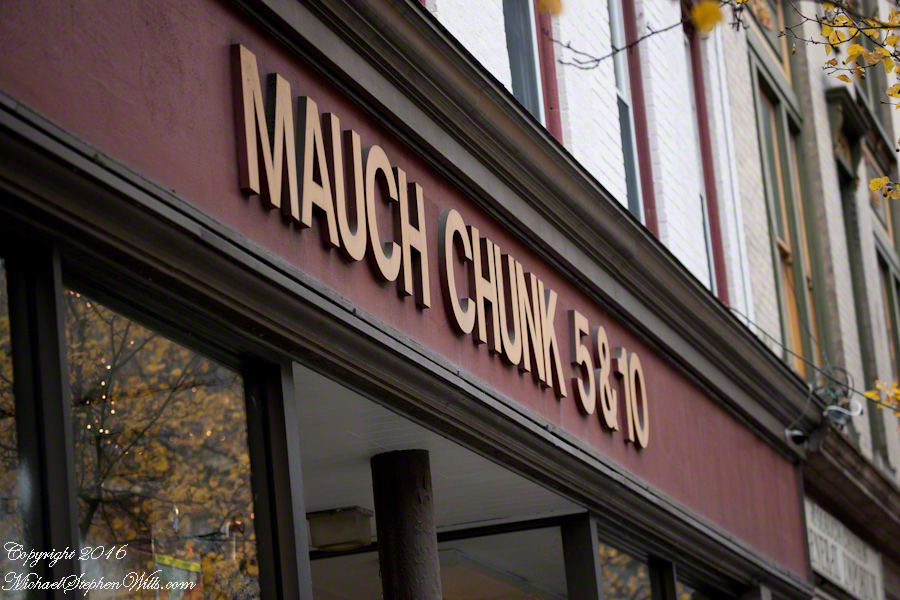
We descended into town for shopping, dinner at Molly Maquire’s and a show in the Mauch Chunk Opera house. The village was named Mauch Chunk previously until the town fathers decided to rename it to Jim Thorpe, the notable native American sports star, in a then failed effort to encourage tourism. The last decade business has improved.
Molly Maguire’s Irish Pub is a fine place for a companionable meal. Pam and I enjoyed the New York Strip steak with, of course, potatoes. A baked potato for me. Pam had the red skinned garlic mashed potatoes.
The pub is located near the train station.
If you don’t know about the Molly Macguires…google ’em.
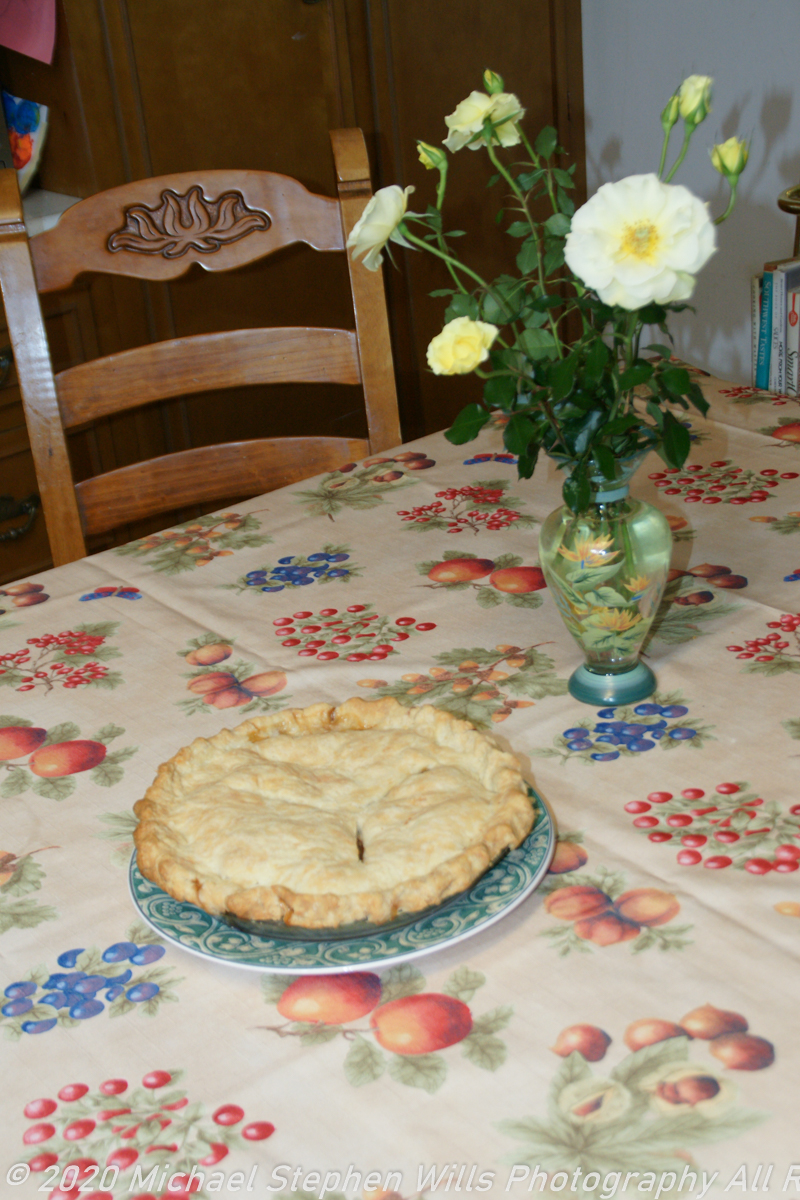
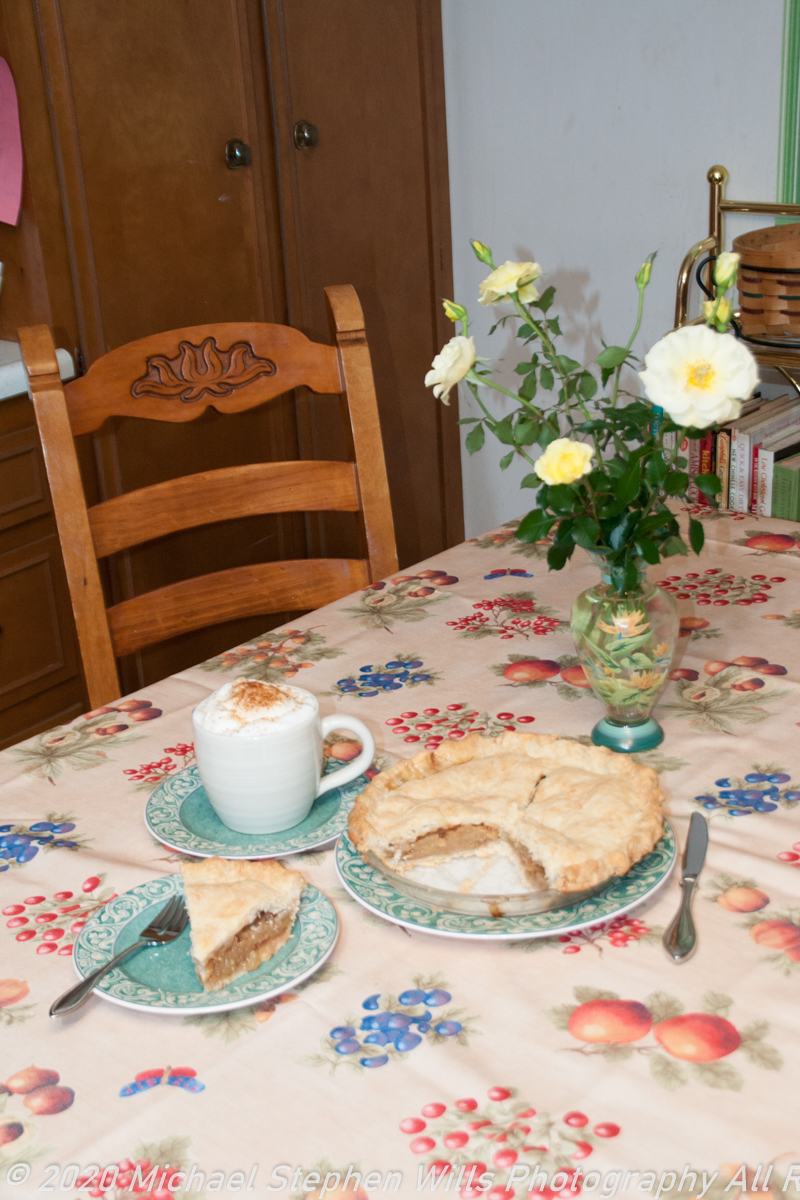
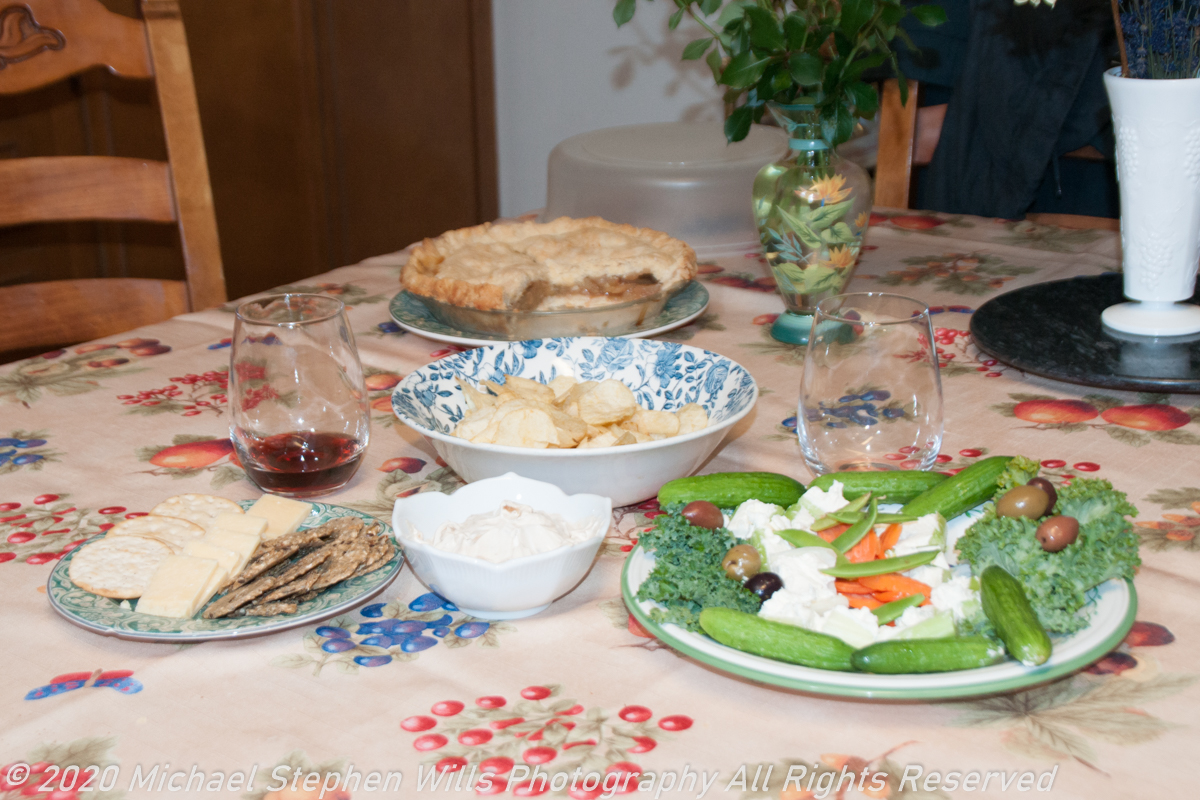
Breakfast: Homemade Apple Pie (Grannie Smith Apples), Coffee with foamed milk and cinnamon Lunch: Relish plate, sour cream onion dip, potato chips (avocado oil), Irish cheddar cheese and crackers, Dr. Frank Pino Noir The roses are the last blooms from our garden.
Copyright 2020 Michael Stephen Wills All Rights Reserved
You will be well-remembered for years when Pam’s salad is part of your holiday celebration. We hosted 2017 Thanksgiving and Pam’s salad was requested by her son and daughter’s families. When we went around the table to give thanks, our six year old grandson offered, “I am thankful for the jello”, meaning Pam’s salad.
My wife, Pamela Wills, perfected this recipe over the years as a nutritious and tasty dish she could make in advance.
Thanksgiving, Hanukkah, Christmas or Anytime
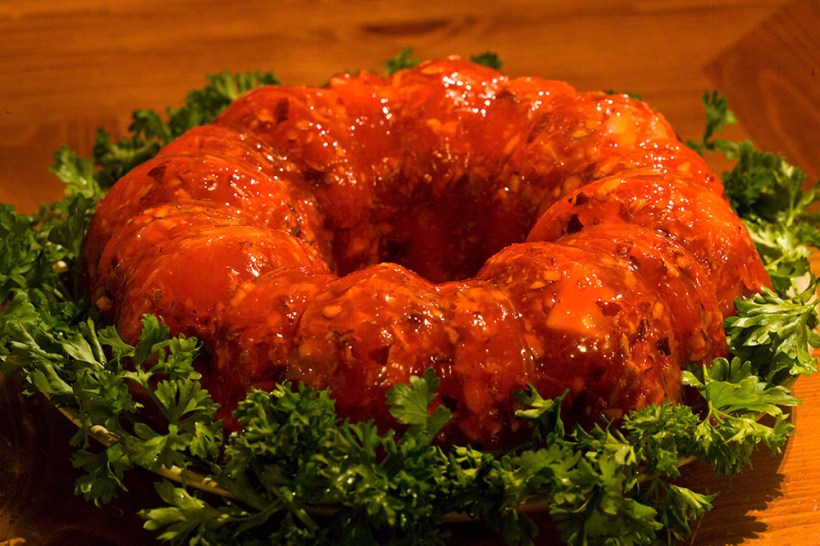
Holiday Cranberry-Pecan Salad travels well and is a visually appealing dish to share at parties.
Holiday Cranberry-Pecan Salad
Ingredients:
1 12 oz. bag of raw cranberries
1 6 oz. box of raspberry gelatin
1 6 oz. box of orange gelatin
3 cups orange juice
3 cups boiling water
1 large orange
2 large apples of your choice (I use sweet/tart/firm apples)
1 tablespoon orange rind
½ cup chopped pecans
Curly leaf parsley
3-4 small bunches of green grapes. I dip the grapes in water, then in sugar and let dry. Or you can use raw cranberries.
Directions:
Boil water. In large mixing bowl pour water over raspberry and orange gelatin and stir until dissolved. Wait a few minutes until the gelatin cools down (keep stirring). Add orange juice and stir again. Place in refrigerator until gelatin is the consistency of raw egg whites. This is tricky step since, if you don’t let it set up enough, the fruit will sink to the bottom. When set too much the fruit mixture won’t blend with the gelatin.
In food processor finely chopped cranberries. By hand cut orange and apples into small bit-size pieces. Combine chopped cranberries, apples and orange. Fold in grated orange rind and pecans. Set this aside while waiting for the gelatin (see above).
Fold fruit mixture into the gelatin. With a large spoon scoop up mixture and transfer it to a Bundt pan. Cover with plastic wrap and return to the refrigerator for several hours or until set.
To serve:
Dip bottom of mold into a sink of a few inches of luke warm water (not too warm or the gelatin will melt). Turn upside down on a large round platter or plate and garnish around the edges with parsley and the sugar-coated grapes or raw cranberries.
This is a great dish to share at a holiday party since you can make it in advance. My family prefers it over cooked cranberry relish and it is even good enough to serve as a dessert. It is easy to make, it’s festive and has always been a big hit. Enjoy!
Note: EAT the parsley garnish. Parsely is packed with vitamins and minerals. Just 7.5 grams (a fraction of an ounce) contains 150+% of most people’s Vitamin K requirement and about 15% for Vitamin A and C.

 Michael Stephen Wills Photography