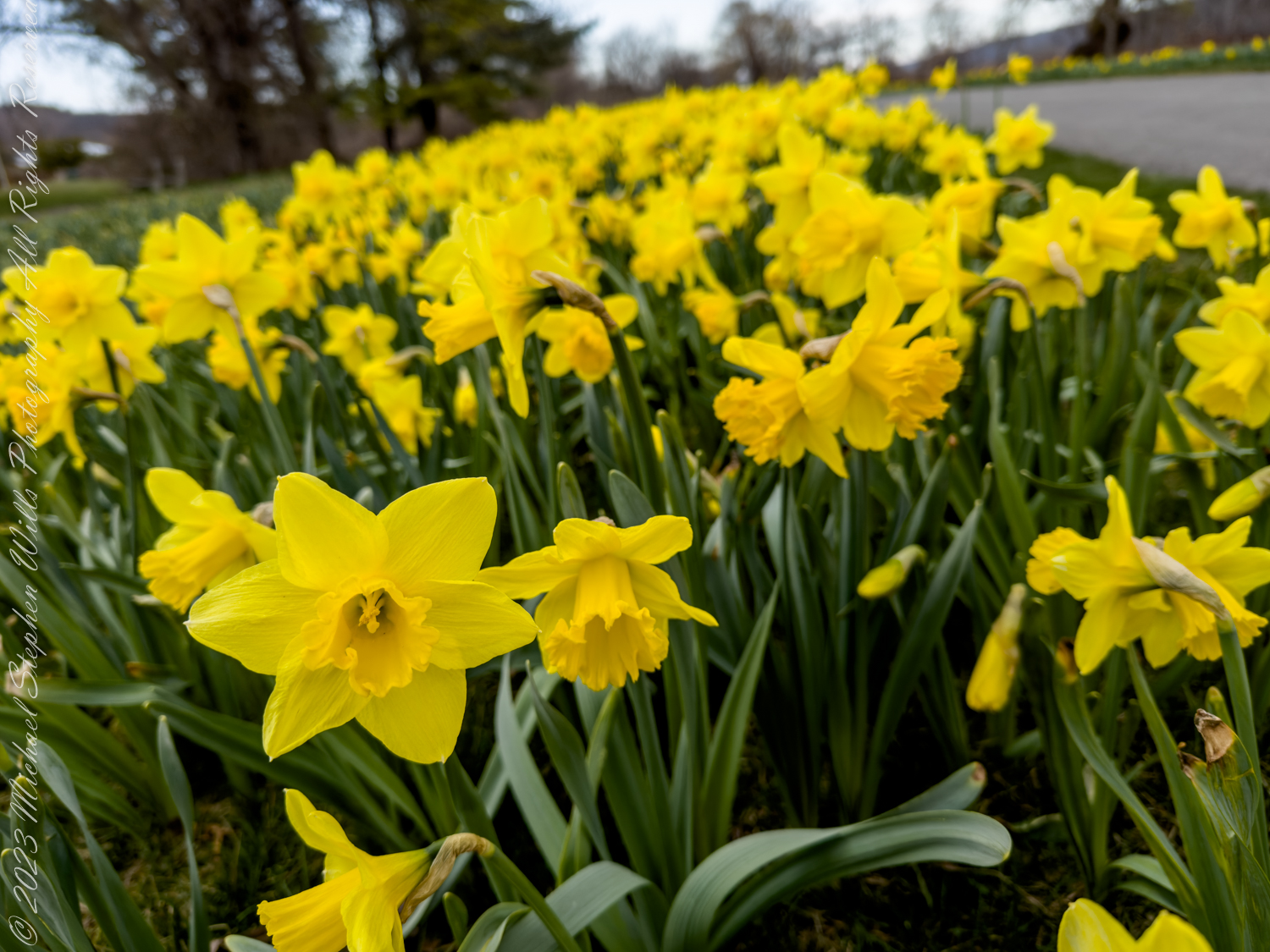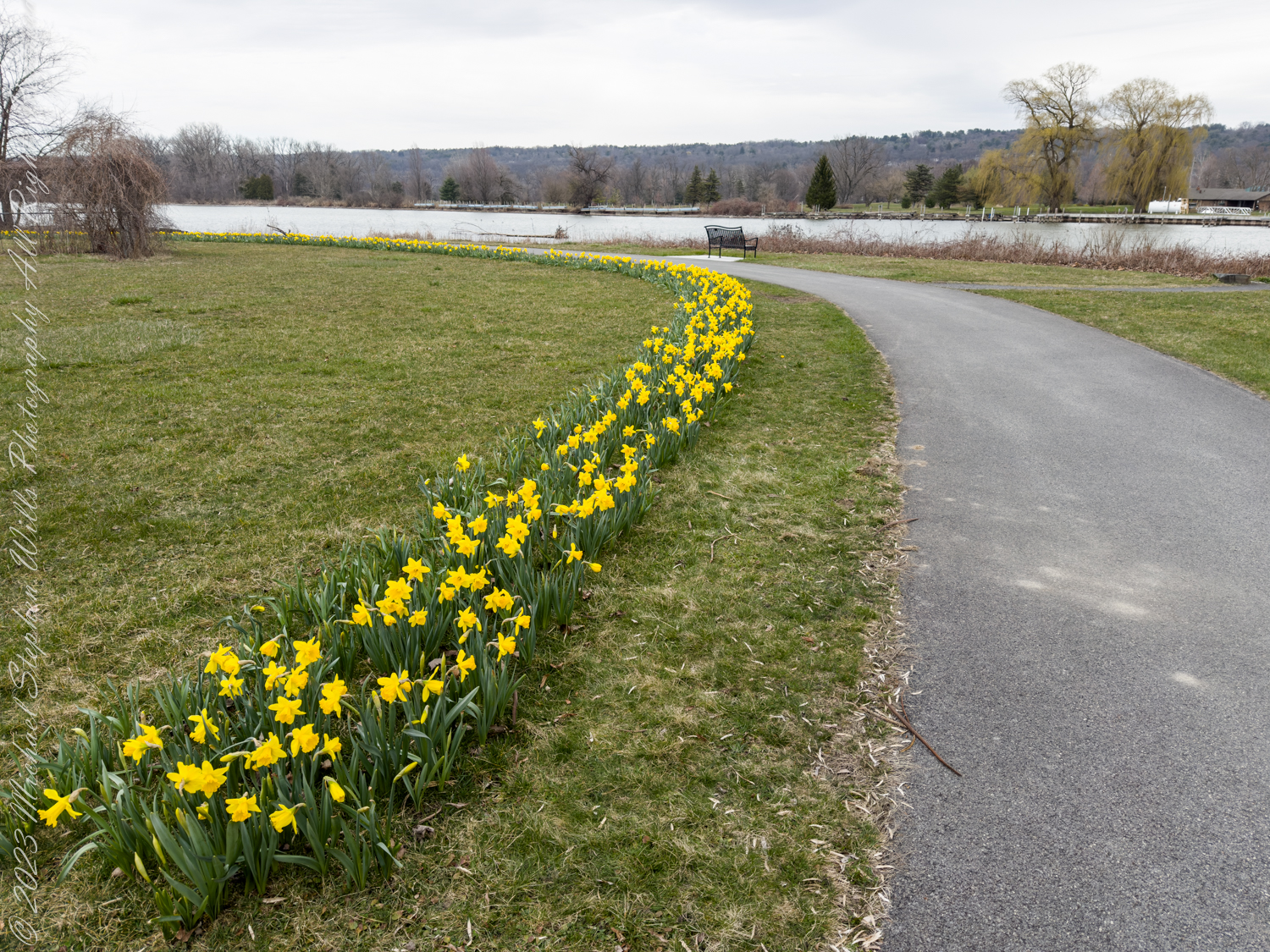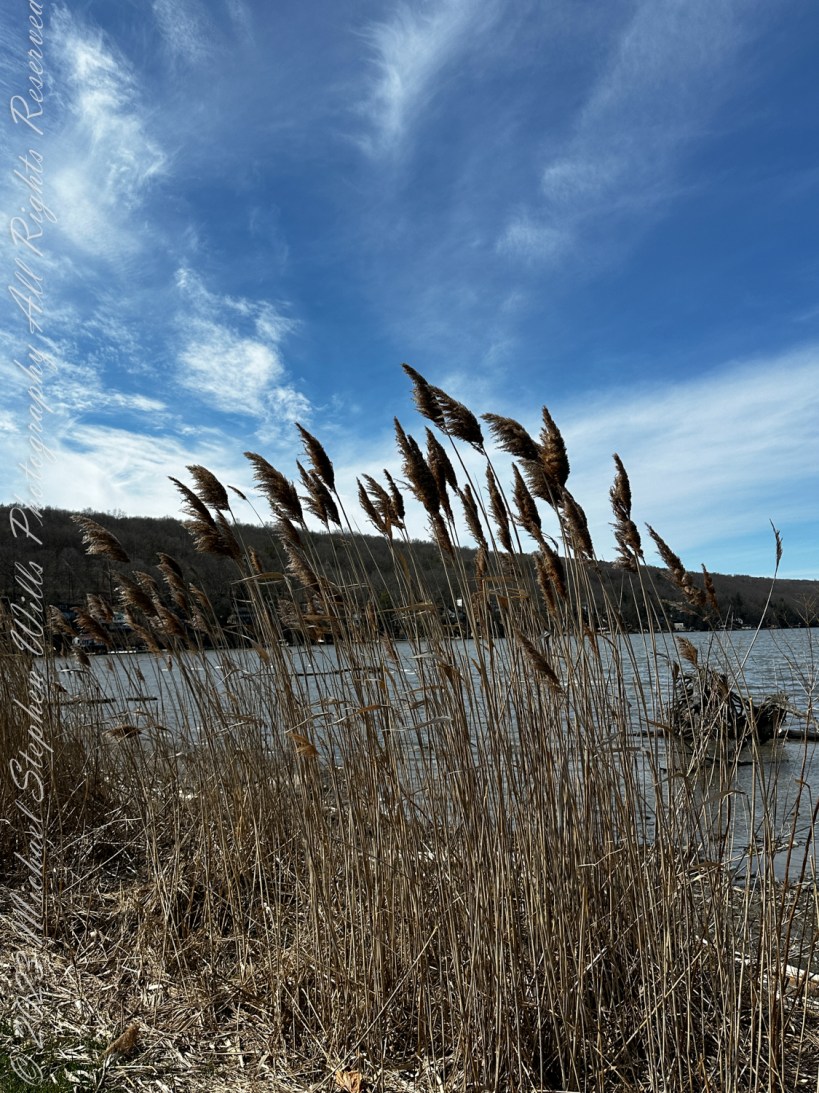
With the thermometer in the 60’s on March 10, 2020 the “buttercups” of yesterday are open. When we first moved here, the plants were much thinner. I used fertilizer spikes on the Magnolia tree around which they grow. Each early the flowers pollinate, forming seeds and spreading.
A tripod held the composition steady, and the timer was set to 2 seconds for extra stability at the f25 setting.
Here is a slideshow of yesterday and today’s shots.
Copyright 2021 All Rights Reserved Michael Stephen Wills
To continue my posting “Climb Hill of Tara” my first submission of three Hill of Tara photographs to Getty Istock had two of the photographs returned for revision.
A statue of Saint Patrick fittingly welcomes visitors to the Hill of Tara, County Meath, Ireland. This statue of cast concrete was an existing statue donated by the Sisters of Charity, moved from an existing installation to the Hill of Tara in the year 2000 AD. The creator is anonymous, the is no plaque or other attribution on or around the statue.
The original statue was erected on the summit of the Hill of Tara shortly after Catholic emancipation in 1829, commemorated the events of 433AD when St. Patrick lit a bonfire on the nearby hill of Slane on the eve of Easter Sunday.
Lighting such a fire was contrary to the pagan laws of the time which dictated that the first fire lit that night be in Tara. Observing St. Patrick’s bonfire from afar, the chief druid of the ancient Gaelic capital predicted that if the flame were not extinguished that night, Christianity would never be extinguished in Ireland. The saint’s bonfire continued burning and the next morning, Easter Sunday, St. Patrick entered Tara to convert the king and his followers to Christianity.
For the fenced statue of Saint Patrick the revieweR wrote:
Please provide a full description for the work of art featured in this image. Include the artist, date of creation, location, etc. Works of art created by someone other than yourself must be free of copyright protection to be considered. If this work of art is indeed under copyright protection, a property release signed by the copyright holder will need to be provided.
Hmmmm….What I do while capturing a photograph of a statue is take photos of any plaque, sign, whatever to acquire the name of the creator, how it came to be there, community connections. There was nothing around the statue nor the very informative Office of Public Works placards at the entrance. I was proud to submit the statue photograph, as it turned out so well, and hoped for the best.
Last week, I put in a query to Ireland’s Office of Public Works (OPW), the agency responsible for the Hill of Tara, and did not receive a response when, for other queries, they were helpful. This Saturday and Monday mornings, several hours of internet research revealed this history.
The original statue was placed on Tara sometime after the 1829 Catholic emancipation. It was molded concrete, created by Thomas Curry of Navan at his own expense to honor the connection of Saint Patrick to Tara.
The OPW removed Curry’s statue 1992 for repair of a century of wear. During the removal the statue was damaged beyond repair and, afterwards, was further damaged by vandals who decapitated and used it for target practice.
Initially, the OWP decided not to replace Saint Patrick citing the “pagan” nature of the place. After an angry meeting of local people at the Skryne Parish Hall. In this meeting the local Rathfeigh Historical Society formed the “Committee to Restore St. Patrick to Tara.” In turn, pressure was put on Michael D. Higgins, Minister for Arts, Culture and the Gaeltacht (and the OPW). It was decided a new statue was to be created, based on a competition, and instead of it former place at the hill summit (called Rath na Rí), it was to be near the entrance, outside the Interpretative Center, to offer a Céad Míle Fáilte to visitors and be seen on departure.
The outcome was the competition winner was rejected by locals. The winning entry, by sculptor Annette Hennessy, did not follow competition rules that specified the statue incorporate traditional features to include shamrocks, harp, miter, a crozier and, perhaps, fleeing snakes. Hennessy’s design was of a shaven headed teenage boy in a short (“mini-skirt”) kilt, a handbag-shaped bell in hand. She agreed hers was “not a traditional style statue” saying it “acknowledges our Pagan Celtic history.”
The rejection included a statement from Dr. Leo Curran, chairman of the Rathfeigh Historical Society, “We agreed that most of the monuments in Tara are from the pre-Christian era, but St. Patrick should be at the uppermost layer, representing Christian tradition extinguishing paganism.”
By this time, a new government and minister were in place. The decision was made to search Ireland to find a suitable, existing, replacement statue. By 2000 the present statue, donated by the Sisters of Charity, was in place at the Hill of Tara entrance.
At the end of this post I provide the two references from my internet research and from which many facts and all the quotes were used here. I concluded the statue author was anonymous without copyright protection and submitted a revised image description, attaching a copy of my research.
What happened to my IStock photograph of Saint Patrick on the Hill of Tara? Getty accepted my application, published the photo and it is one of my top downloads, and earners.
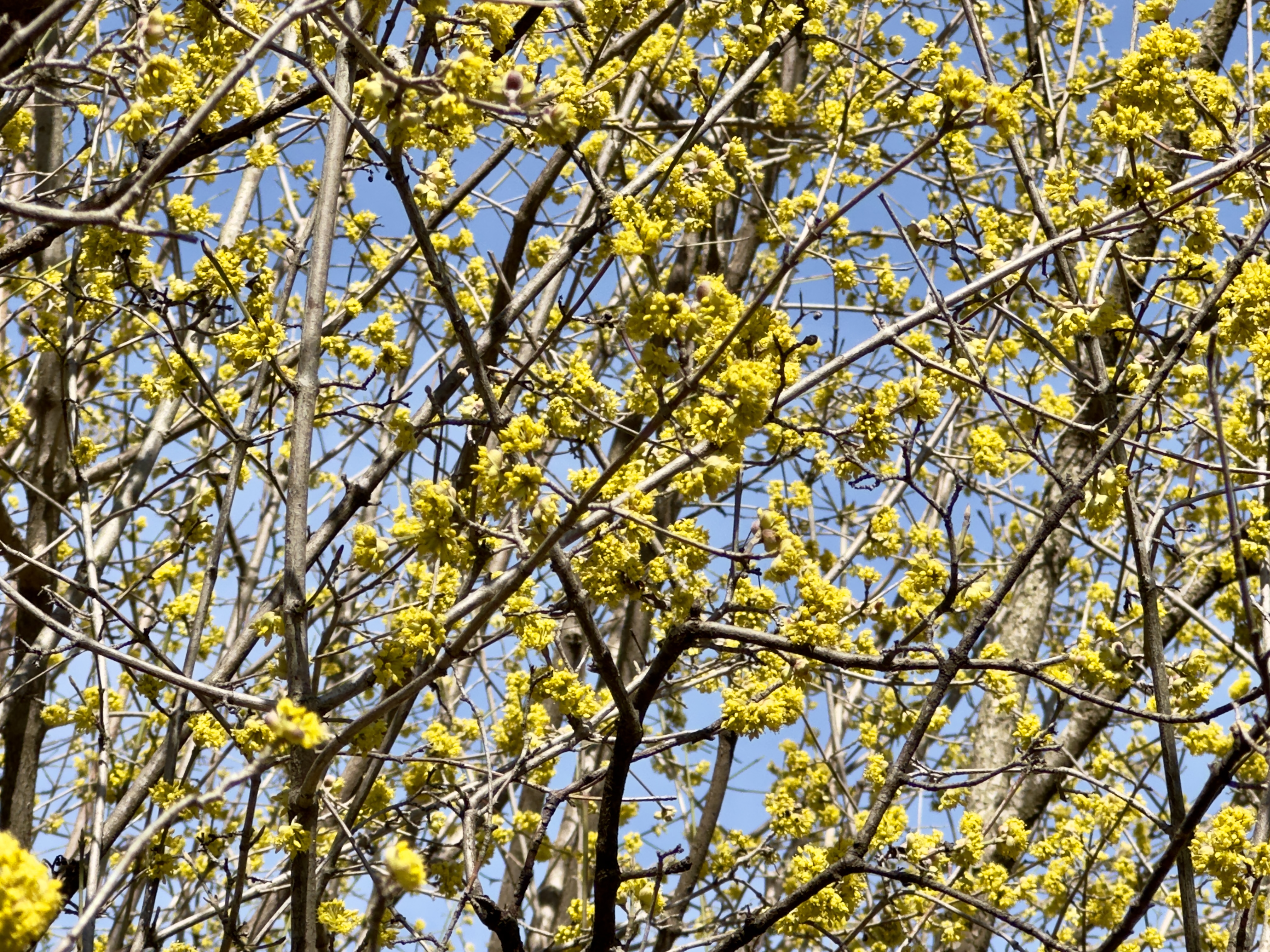
In February 2020, I captured images of the first flowers to bloom on their property with a Canon 5D Mark IV DSLR and a macro lens. The flowers belong to the Eranthis genus, known for early flowering.
These flowers are the first to bloom on our property, around the magnolia tree, and are also the first wildflowers photographed with my then new Canon 5D Mark IV dslr . Each year these “buttercups” grow thicker and spread. The latin scientific name Eranthis hyemalis proclaims the early nature of its flowering both in the genus, “Eranthis” – composed of two Greek language roots meaning “spring flower”, and species, “hyemalis” – a term from the Latin language meaning, “winter flowering.” The genus encompasses eight species, all early flowering plants with the common name winter aconite. These can also rightly be called Buttercups as the plant belongs to family Ranunculaceae, buttercups.
To capture the intricate details possible with the Canon EF 100 mm f/2.8 Macro lens I used here, it’s often necessary to adjust the camera settings to allow for a longer exposure time. This adjustment ensures that enough light reaches the sensor, particularly in macro photography or low-light situations, which helps in producing sharper and more detailed images. All these photographs are from f25. Setting a longer exposure compensates for the reduced light that might be a consequence of using a smaller aperture (higher f-number) for greater depth of field, a common technique in macro photography.”
It’s important to note that while setting a longer exposure can improve image quality by allowing more light to hit the camera’s sensor, it can also introduce the risk of motion blur if the camera or subject moves during the exposure. To minimize camera shake and achieve the best results, I used a Manfrotto “BeFree” tripod and the camera’s built-in timer set to a 2 second delay after a manual shutter release.
With the thermometer hovering above freezing, these blooms did not open today. The calendar says “late winter”, these Aconite are singing “early spring.”
Reference: Wikipedia “Eranthis hyemalis” and “Eranthis.”
Copyright 2024 All Rights Reserved Michael Stephen Wills
Portrait of a Sea Turtle with fish, sea floor and a rocket launch. 541 Washington Ave, Cape Canaveral, FL 32920 Near Cheri Down Park, Brevard County, Florida
Along the bottom margin is the artist’s signature, “David Roth 2022.”
Copyright 2024 Michael Stephen Wills All Rights Reserved
The exposed mudflats on tidal wetlands attract a variety of shorebirds. Shorebirds are seasonal residents that make long migratory journeys between their breeding grounds in the Arctic and their wintering areas in South America. Merritt Island NWR provides an important resting and feeding area for this group of birds. Some stay for the winter, and others use the refuge as a fuel stop before continuing on their journey.
In tidal areas, shorebird feeding schedules are influenced by the cycle of the tides. Changes in tidal cycles expose foraging areas in mudflats for a period during the day. At other points during the cycle, the water in these same areas becomes too deep or the ground too dry for shorebirds to feed effectively.
Shorebirds of different species can and do forage together. Because bill length and shape varies from species to species, birds can pursue different prey in the same area at the same time without competing with each other. Because of varying bill lengths, the different bird species find their food at different depths in the substrate. Mixed species of shorebirds are a common sight.
Reference: the text of this blog was transcribed from signage along the Blackpoint Wildlife Drive of Merritt Island National Wildlife Refuge, Brevard County, Florida
Copyright 2024 Michael Stephen Wills All Rights Reserved.
As my wife, Pam, and I entered the breezy expanse of the Merritt Island National Wildlife Refuge, the world seemed to slow down, allowing us to savor every moment of my journey along Blackpoint Drive. The sky, a sprawling canvas of muted greys, reflected in the wind ruffled waters, enhancing the tranquility of this haven.
Our first encounter was with the elegant Roseate Spoonbills (Platalea ajaja), their vibrant pink feathers a stark contrast against the earthy tones of the marsh. They waded with purpose, their spoon-shaped bills sifting through the water, a dance of survival that was both methodical and beautiful.
In the company of the spoonbills were the stoic Great Egrets (Ardea alba), statuesque in their white plumage. They stood motionless, like sentinels guarding the water’s edge, only to strike with lightning speed when prey ventured too close.
We watched as the Glossy Ibises (Plegadis falcinellus) dipped their curved bills into the water, each movement a study of precision, their dark feathers glistening with an iridescent sheen when caught by the light.
Amongst these avian aristocrats, the unassuming American White Ibises (Eudocimus albus) went about their business. Their red beaks probed the shallows, unperturbed by the presence of their more colorful neighbors or by my watchful eyes.
As we ventured further, the landscape shifted, the water opening up to reveal a gathering of Spoonbills and White Ibises, a community united by the need to feed and the safety of numbers. The occasional flap of wings and contented calls created a symphony that celebrated life in these wetlands.
Isolation took on a new meaning when I spotted a solitary Roseate Spoonbill, its reflection a perfect mirror image on the water’s surface. It was a moment of quiet introspection, the bird and I alone in our thoughts.
Another scene captured my attention as a single spoonbill foraged alongside a Glossy Ibis. The two species, different in appearance and yet similar in their quest for sustenance, shared the space in harmonious coexistence.
Further along, the vista opened up, and we were greeted by a panoramic view of spoonbills dotted along the distant shoreline, the greenery forming a lush backdrop to their pink hues. The expanse of the refuge unfolded before me, a reminder of the vastness and the wild beauty that had drawn us here.
On another stretch, the spoonbills perched in the green embrace of the mangroves, their pink feathers a burst of color among the leaves. It was a scene of natural artistry, the birds blending yet standing out against their verdant stage.
In the final leg of our journey, I found spoonbills perched high in the shrubbery, a testament to the refuge’s diversity. Even in the dense foliage, life thrived, and these birds, usually seen wading, now adorned the treetops like living ornaments.
This drive along Blackpoint was more than a mere observation; it was a passage through a world where time held little sway, and nature was the sole architect. Each bird, each ripple on the water, and each whisper of the grass told a story of existence, resilience, and the intricate web of life. Here, in this secluded corner of the world, we found a connection to the earth and its inhabitants that would stay with us long after.
Copyright 2024 Michael Stephen Wills All Rights Reserved
On the winding Blackpoint Wildlife Drive, Pam and I were spellbound by a ballet of Roseate Spoonbills and Wood Storks, a wild canvas coming alive, revealing the magic bestowed by our cherished Senior Passport
As Pam and I embarked on our journey along the Blackpoint Wildlife Drive we found ourselves privy to an otherworldly marshland assembly. Our eyes were drawn to the stately Wood Storks, or Mycteria americana, standing with a poise that belied their somewhat awkward appearance. Their towering figures were hunched in contemplation, their bald heads surveying the waters for a potential feast.
Beside them Roseate Spoonbills (Platalea ajaja) painted the landscape with strokes of vivid pink. Their spoon-shaped bills, an evolutionary masterpiece, skimmed the shallow waters. It was a delightful contrast, the elegant pink plumage among the grasses, like a splash of paint on a raw canvas.
Companion to these gentle giants, the diminutive Tricolored Heron, Egretta tricolor, stalked the shallows. Its slender form was a study in grace, and the blue-gray feathers shimmered with a hint of lavender as it moved with stealthy precision, a silent hunter amidst the reeds.
The discovery felt like stumbling upon a secret meeting, a council of the feathered kind, where each bird played its role in the delicate balance of the ecosystem. Pam and I shared a look of awe, our whispered words lost in the gentle rustling of the wind. There was a sense of unity, of different species coexisting in harmony, and we were the transient witnesses to their world.
Our journey within Merritt Island National Wildlife Refuge was not just a passage through land but through time. Each turn of the drive revealed another chapter of this living story, and our hearts raced with the excitement of what we might find next. The National Park Service Senior Passport, which we clutched like a treasure map, granted us the privilege to explore this bounty of nature. It was more than a pass; it was a key to worlds unseen and adventures untold.
As senior citizens, this passport to nature’s sanctuaries was a reminder that wonderment has no age. It afforded us the freedom to explore, to learn, and to lose ourselves in the beauty of our nation’s natural heritage. Each stamp in our passport was not just a mark of where we had been, but a memory etched into our lives, a story waiting to be told.
This drive, with Pam by my side, was more than birdwatching. We communicated with nature, laying testament to the beauty that lay in the simple things, the everyday miracles of life that often go unnoticed. We left the Blackpoint Wildlife Drive with a renewed sense of purpose and a reminder of our place in this vast, interconnected web of life.
We returned home with our spirits lifted and our minds filled with the colors of the birds—the Wood Storks, the Roseate Spoonbills, the Tricolored Heron—and the many unnamed creatures that had crossed our paths. It was a mosaic of life, each creature a piece that completed this intricate puzzle of existence. Our encounter with this unusual congregation was a gift, a moment of pure, unadulterated joy, a chapter in our ongoing adventure, one we would recount with smiles and a sparkle in our eyes for years to come.
Copyright 2024 Michael Stephen Wills All Rights Reserved
In the crisp solitude of Cocoa Beach at dawn, witness a world untouched: golden light dances on waves, the chill air whispers, and a singular peace reigns over the empty shore.
Upon Cocoa’s shore at dawn’s first light, Where waves dance and shimmer with cold delight, A lone watcher, I stand in solitude’s embrace, Feeling the north wind’s brisk and biting trace.
The sand, a canvas of untouched grains, Bears witness to the sun’s golden reins, As it climbs, a fiery charioteer, Breaking the grip of night’s lingering fear.
Windy February Sunrise
The sea froths in a wild, wind-driven churn, As the day ignites and the horizons burn. Forty degrees, a chill to the bone, Yet in this brisk morn, I find myself alone.
No footprints mar the beach’s pristine face, Save mine, etched briefly in time’s fleeting grace. The gulls have fled the gusts’ relentless push, Leaving the skies to the clouds’ rosy blush.
In this brisk February gale, I watch the sun’s rays like warriors pale, Brandishing light against the cold, dark sea, A spectacle of warmth, just for me.
The beach, expansive, a desolate stage, A world apart from the human age. The waves, the wind, the chill, the light, Compose a symphony of nature’s might.
I breathe in deep the saline air, Each gust a verse in the morning’s prayer. The sea’s rhythm against the shore, A melody I’ve come to adore.
Here in this chill, this wind, this hue, I find a peace profound and true. Cocoa Beach at sunrise, a sight to behold, A memory in my heart, forever enfolded.
Copyright 2024 Michael Stephen Wills All Rights Reserved
Beneath the brooding storm clouds moving with silent intent, I stood, the air electric with the storm’s approach. Yet, turning east, the Sun’s Eye winked at the horizon, igniting the sky in defiance—a fleeting warmth against the impending tempest’s chill.
Amidst the sprawling canvas of Cocoa Beach, a beachcomber such as I stands witness to the theater of the skies, a stage upon which the sun and storm perform their eternal dance. The dawn of this particular February morning brought with it a spectacle of dual realms, a chiaroscuro of the celestial drama that unfolds in minutes and lingers in the heart.
To the east, ‘the Sun’s Eye’—a fierce, glowing orb—peered over the horizon, its gaze cutting through the cool morning mist. The sea, a mirror of the skies, blushed with the hues of a blooming peach, its waves whispering secrets as they lapped the shore. Each frothy crest reflected the sun’s burgeoning fire, a symphony of light that sang of the world’s awakening. It was a moment of birth and beginning, the kindling of a day where the potential hung ripe as the citrus in the Floridian groves.
This radiance, however, was but a half of the morning’s tale. As I turned, facing west, the sky told a different story. Here, the heavens grew heavy with brooding storm clouds, a tumultuous sea of gray above the green. These undulating specters crept forward, a procession of ashen waves threatening to swallow the day’s young light. The air, charged with the tension of an impending tempest, hummed with the promise of nature’s fury.
Twenty-one minutes—a mere breath in the lifespan of the cosmos—was all it took for the scenery to shift, the mood to transform. To the east, the promise of warmth and the whisper of daylight’s caress; to the west, the cold omen of a storm’s embrace. This juxtaposition, this confrontation of fire and shadow, was a testament to the Earth’s ephemeral beauty.
In the presence of such a display, I—a mere beachcomber—was a sentinel between two worlds. The sunrise spoke to me of hope, of the unyielding rhythm of time that brings renewal each day. Its golden fingers painted the world in a palette of possibility, a reminder that each dawn brings its own story, its own song to be sung.
The approaching storm, in contrast, murmured of respect for the forces beyond our grasp, the humbling power that nature wields with indifferent grace. Its darkening clouds, layered like the furrowed brows of ancient gods, were a canvas of the world’s raw strength, its capacity for change, for washing the old away with a torrent.
Here, on this stretch of sand, the universe seemed to converge—a meeting point of opposing forces, a confluence of light and darkness, creation and destruction. In the face of such majesty, I found a profound tranquility, a sense of my place in the grand tapestry. For what are we but observers, participants in the grand design, bearing witness to the moments when the world reveals its contrasting character?
This morning’s display was a parable of life itself, written in the language of the skies. The Sun’s Eye, ever-watchful, ever-prescient, promised the comfort of the familiar, the steady passage of time marked by the constancy of its rise and fall. The storm, brooding and unpredictable, was a reminder of life’s uncertainty, the inevitability of change and the beauty found within it.
As the light grew and the darkness encroached, I stood at the crossroads of day and night, life and experience. With the sand beneath my feet and the salt air filling my lungs, I embraced the duality of existence, knowing well that each sunrise heralds not just the day, but the inescapable storm that follows. In Cocoa Beach, on the Space Coast, the universe had unfolded its dual nature before me, an eternal beachcomber, in the span of a single, breathtaking morning.
Copyright 2024 Michael Stephen Wills All Rights Reserved
Discover the captivating world of Laughing Gulls, the jesters of Cocoa Beach’s shores. Dive into their lives, exploring the dance of courtship, the adaptability in their diet, and their vital role in the coastal symphony.
On the shores of Cocoa Beach, where the Atlantic’s waves gently knead the sands of Brevard County, Laughing Gulls (Leucophaeus atricilla) enact their daily ballet of survival and adaptation. In the span of mere minutes, the shifting light of Florida’s coastal theater presents two scenes, each with the same protagonist yet donned in starkly different costumes.
The Many Faces of Adaptation
The first gull, captured against the frothy lace of the incoming tide, is the epitome of the breeding plumage: a sleek, black hood that starkly contrasts its pearl-grey wings. This attire is not merely for allure but speaks of its readiness to engage in the rituals of courtship and the responsibilities of rearing the next generation. This black hood, a seasonal crown, fades as the duties of breeding wane, revealing the less conspicuous garb of the non-breeding season—a mottled grey head atop the same sturdy body, ready to blend into the off-season’s landscape.
Laughing Gull with breeding plumageLaughing Gull, nonbreeding plumage
Minutes Of Separation
The mere minutes that separate the two photographs are but a whisper in the grand dialogue of evolutionary time. Yet, they offer a glimpse into the ever-present duality of the Laughing Gull’s life. In one, the gull stands resolute, black-headed and bold against the soft chaos of the sea’s edge. In the other, its head appears dusted with the wisdom of age, a visual softening that speaks to the less confrontational time of year.
Here are some observations to make sense of this disparity:
Overlap of Molting Periods: Laughing Gulls do not all breed at the same time; some individuals may start molting into or out of breeding plumage earlier or later than others. This can result in birds with different plumage being seen together.
Varied Maturity: Younger gulls or those not yet of breeding age may not have developed the breeding plumage, while adults in the same flock may display full breeding colors.
Breeding Colonies: Gulls often nest in colonies where birds in different stages of the breeding cycle can be observed together, including those that may have lost mates or failed to breed and therefore did not develop breeding plumage.
Health or Nutritional Status: Sometimes a bird’s plumage can be affected by its health or nutritional status. A gull in poor health might not molt into breeding plumage as expected.
Geographic and Climatic Factors: Local environmental conditions can influence the timing of molting. Birds in the same location can experience different environmental cues that might affect their molt.
Non-breeding Visitors: During the breeding season, some non-breeding birds may still be present and intermingle with breeding birds, either because they are passing through the area or they are non-breeding residents.
Extended Breeding Season: In areas with a long breeding season, such as in subtropical and tropical regions, the breeding and non-breeding plumages can be seen at the same time due to the extended period over which breeding can occur.
Masters of the Coastal Realm
The Laughing Gulls are more than just residents of the coast; they are its caretakers and witnesses. Their laughing calls are synonymous with the ocean’s breath, a soundscape that harmonizes with the rhythmic crashing of waves. These birds thrive in the intertidal zone, a challenging environment where land and sea engage in a perpetual tussle. Here, they must be opportunistic, agile, and resourceful, for the beach offers both a cornucopia of food and the threat of unpredictability.
The Ebb and Flow of Existence
The life of a Laughing Gull is intimately tied to the ebb and flow of the tides. Their diet is a testament to their adaptability, comprising anything the sea yields—fish, crustaceans, and even the unfortunate insects that stray too close to the brine. They are pirates of the shore, unafraid to snatch a meal from another bird or scavenge the remains of human activity.
Reflections on Change and Constancy
Laughing Gulls are the embodiment of the sea’s narrative around us—a story of change and constancy. Their lives are a testament to the tumultuous history of the ocean, and their presence is a thread that connects us to the vast, blue mystery. They remind us that, while the sea’s moods are many and its faces ever-changing, it remains a central force in the narrative of life on Earth.
In the Face of Tomorrow
In the space between these two images, we find a profound lesson on the nature of time and the resilience of life. The Laughing Gulls of Cocoa Beach, with their shifting plumage and timeless cries, are messengers of the past, envoys of the present, and harbingers of the future. As we contemplate their existence, we are reminded of our own place within the natural world—a world that requires our understanding and protection, lest the laughter of these gulls fades into the silent archives of history.
The Laughing Gulls of Cocoa Beach continue their dance, unfazed by the human gaze, their lives a fluid adaptation to the sea’s caprices. And as the sun marches across the sky, casting the story of these gulls into relief against the shifting sands, we are privileged to observe, to learn, and to cherish the Atlantic Ocean’s enduring tale.
Copyright 2024 Michael Stephen Wills All Rights Reserved