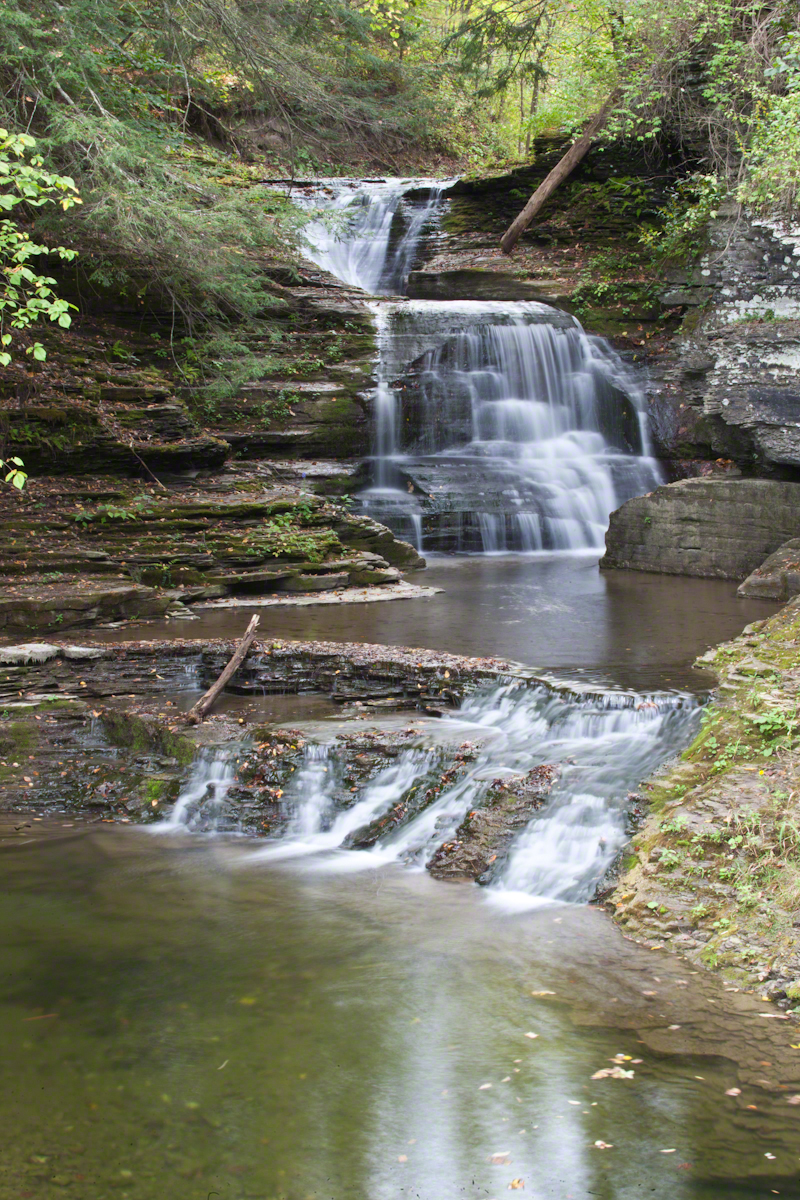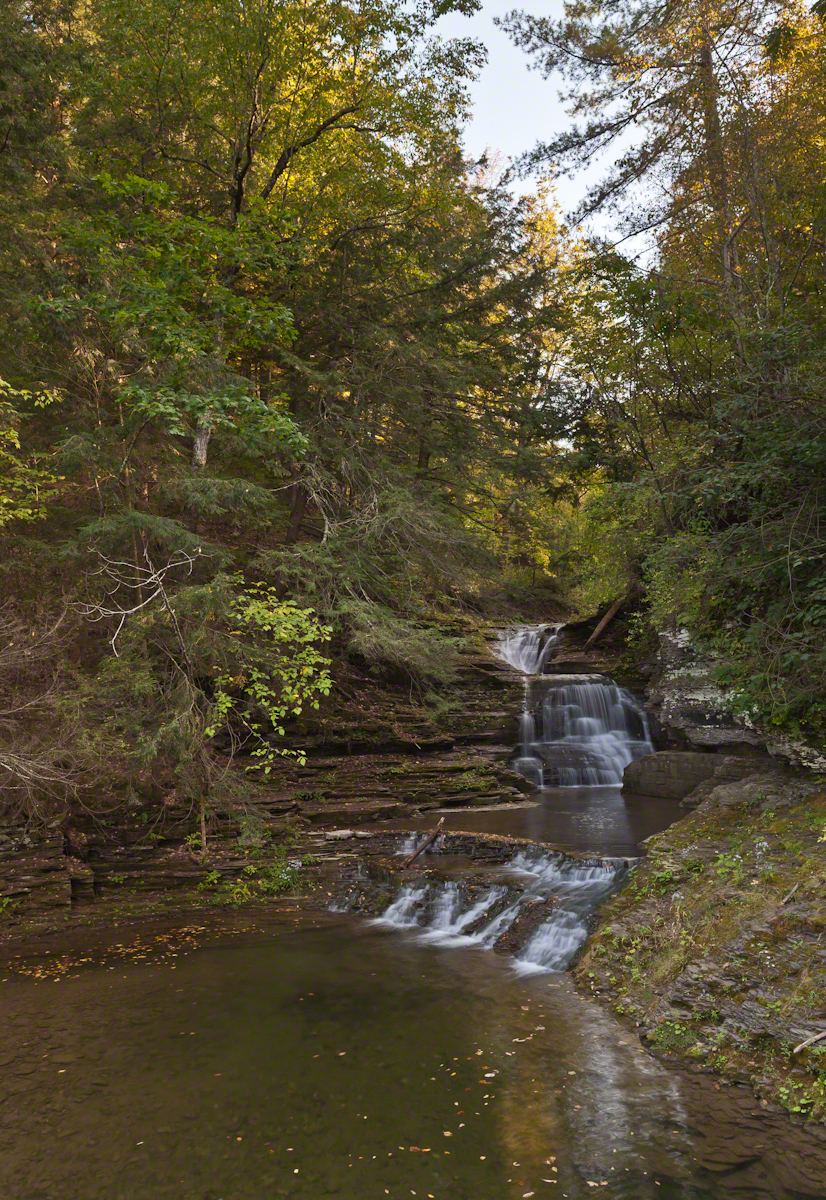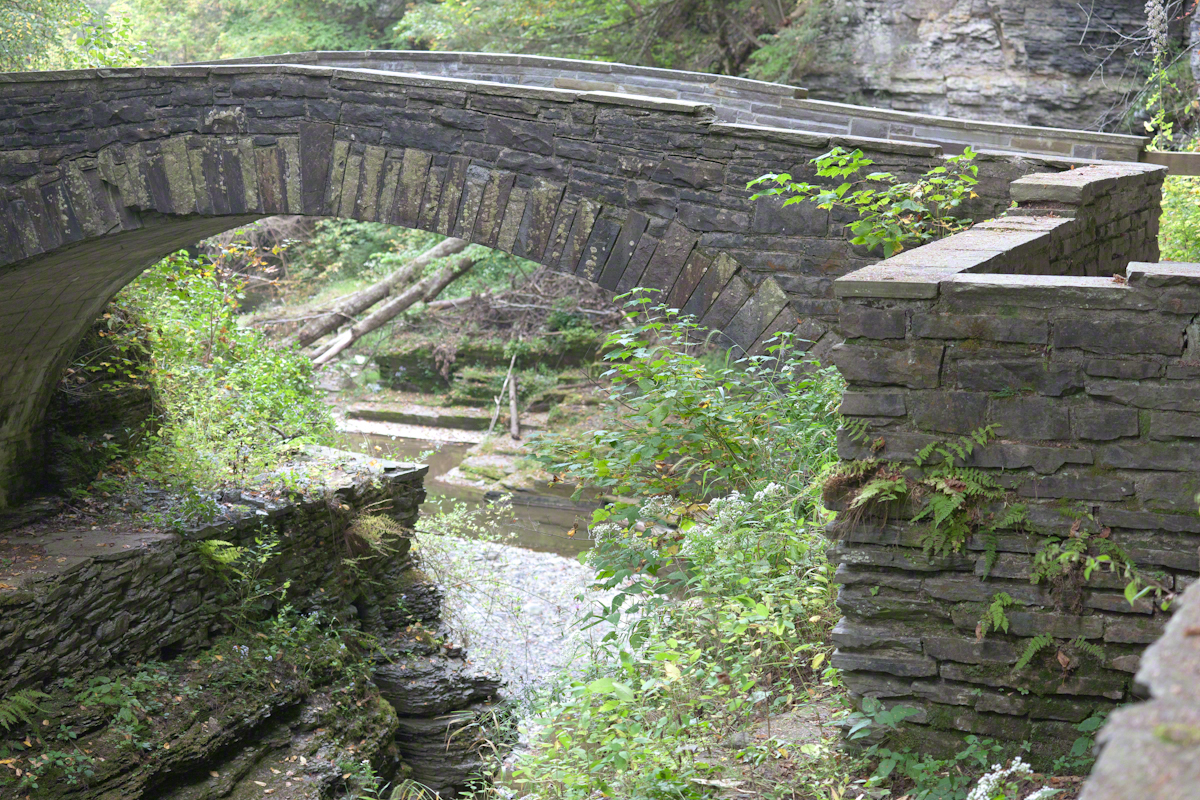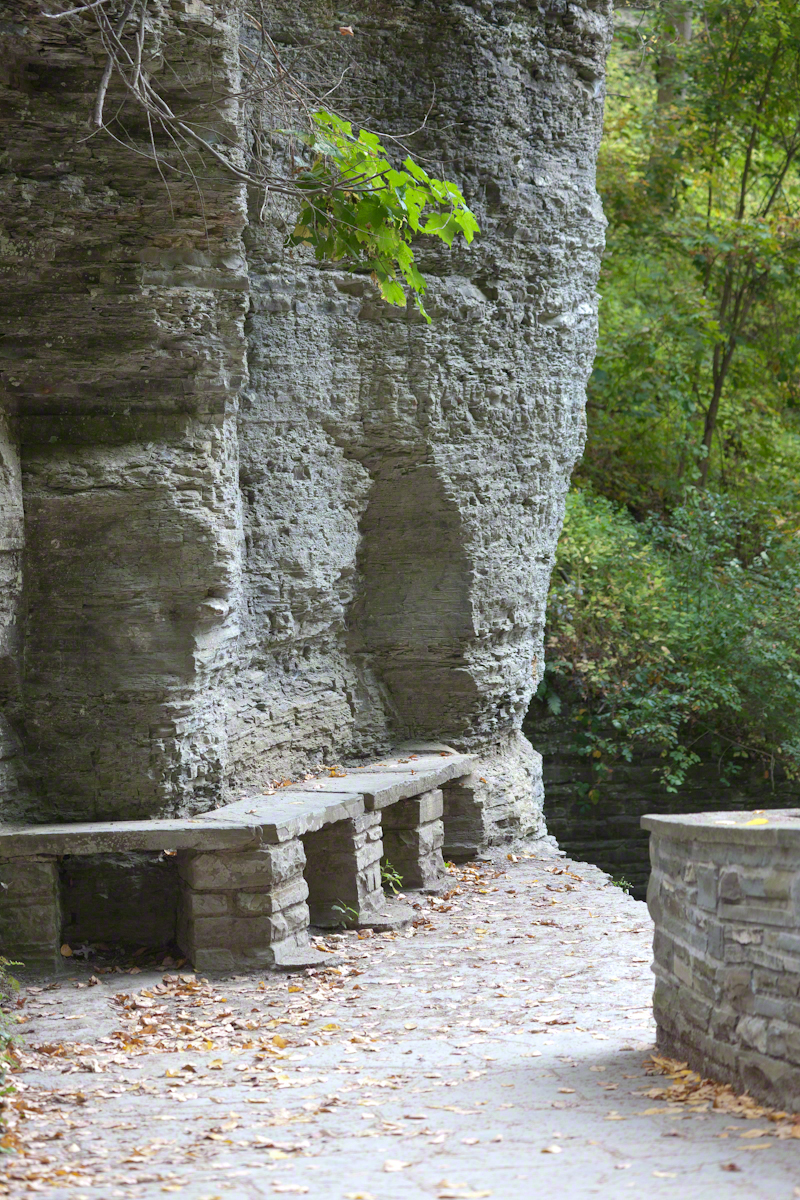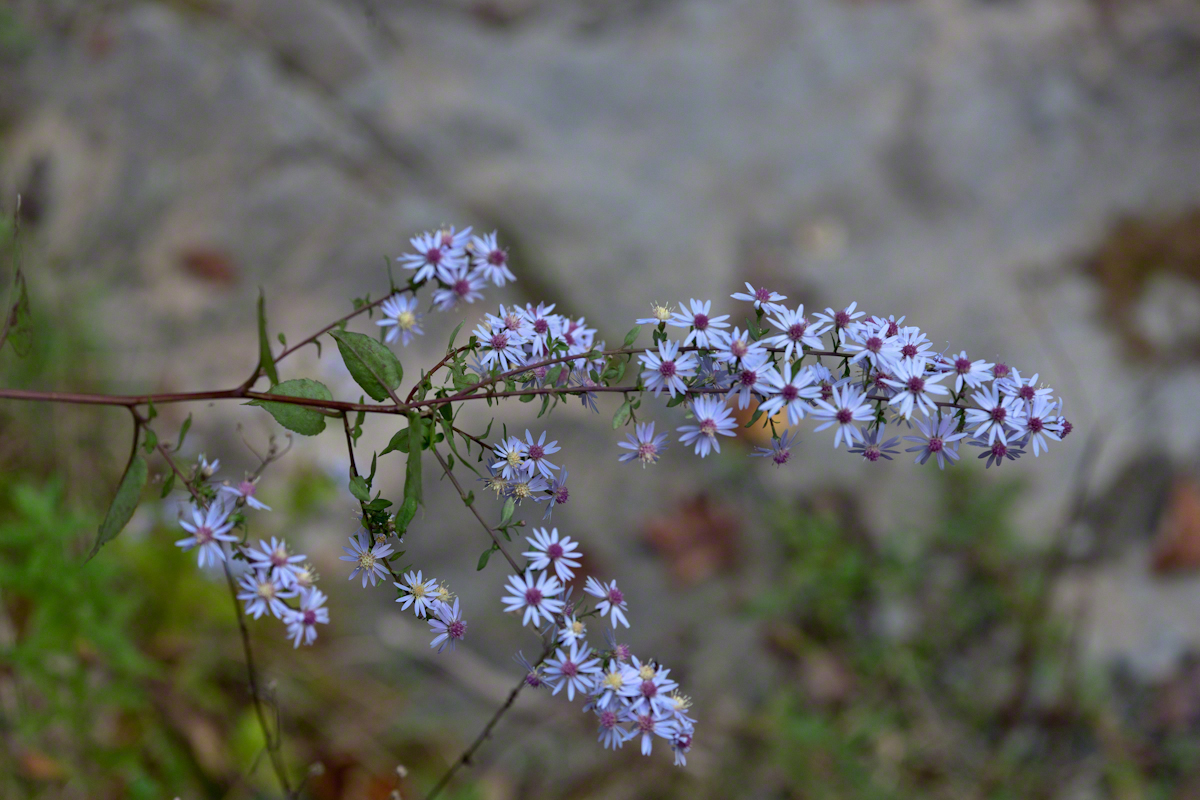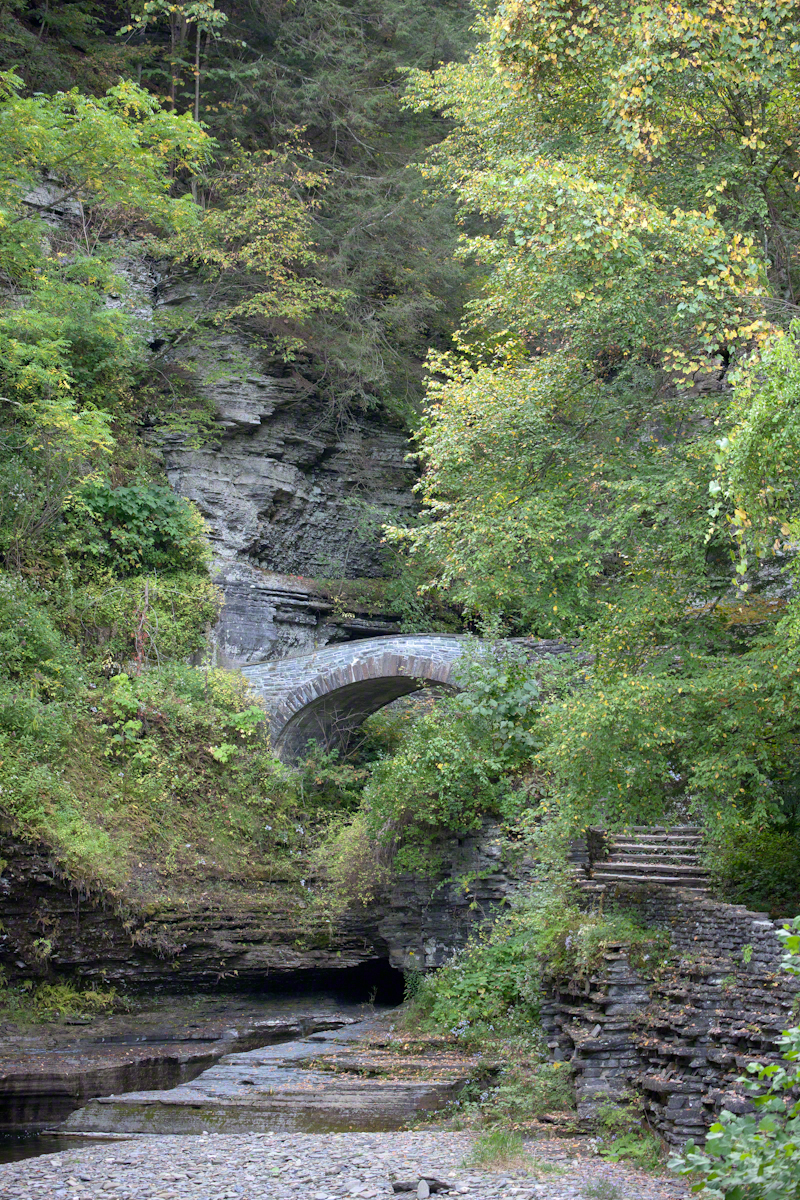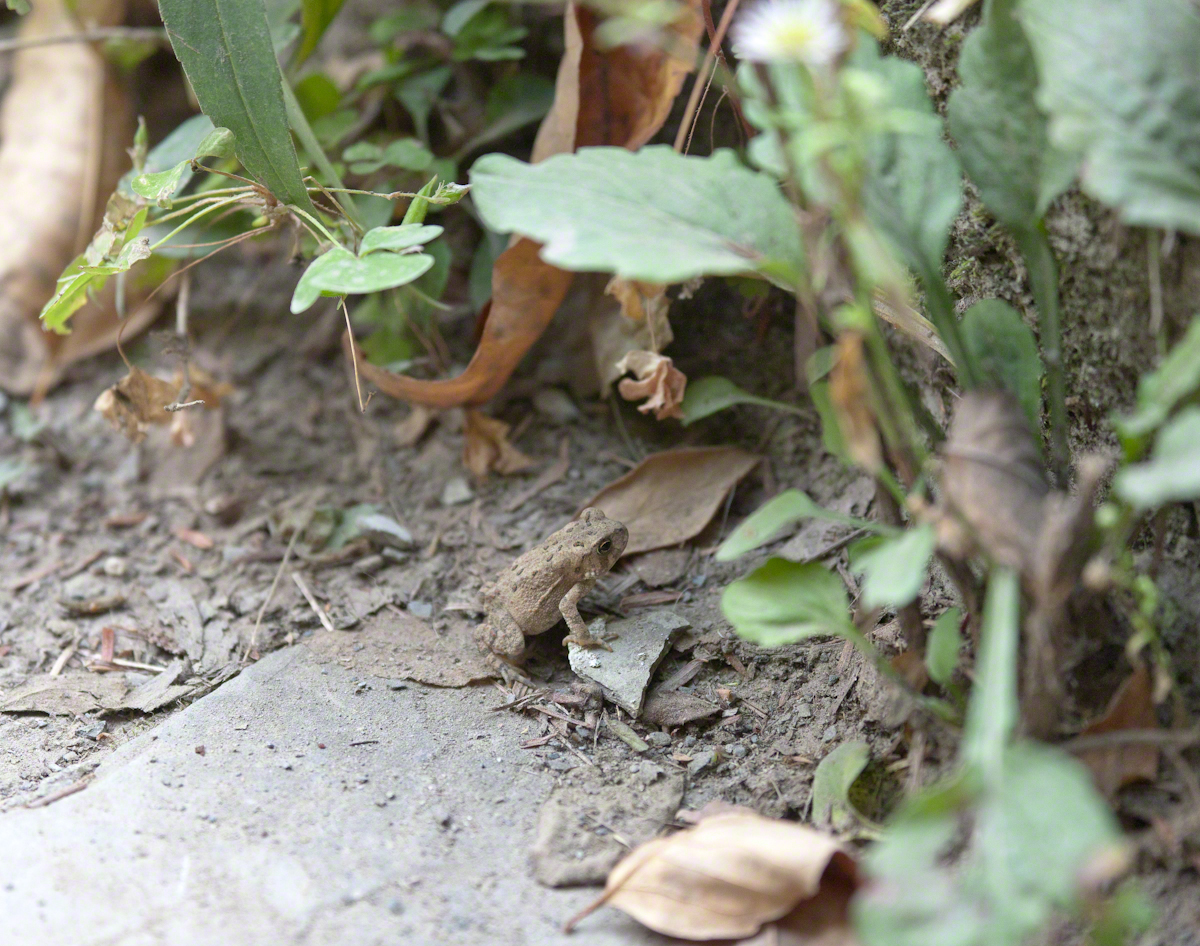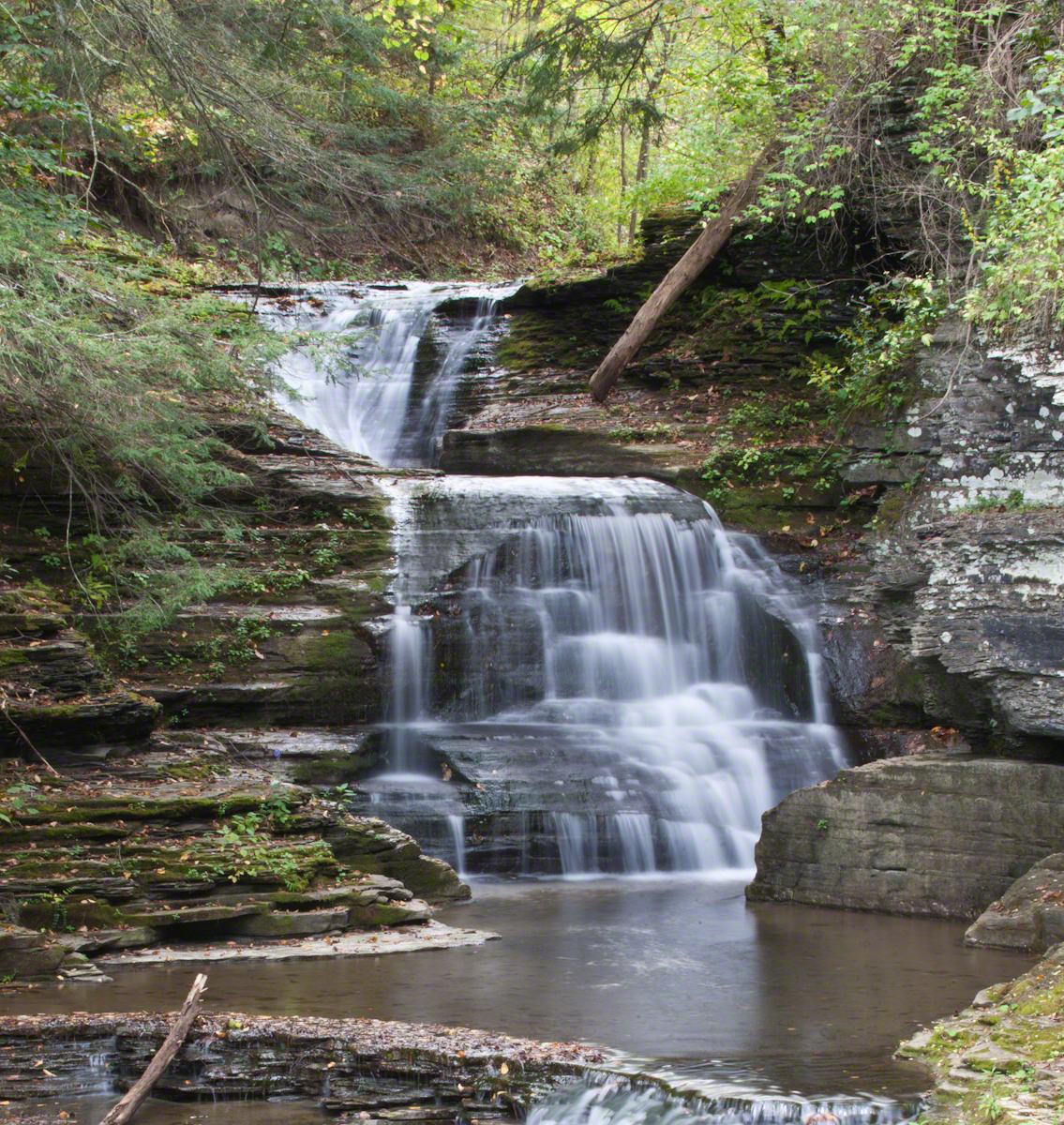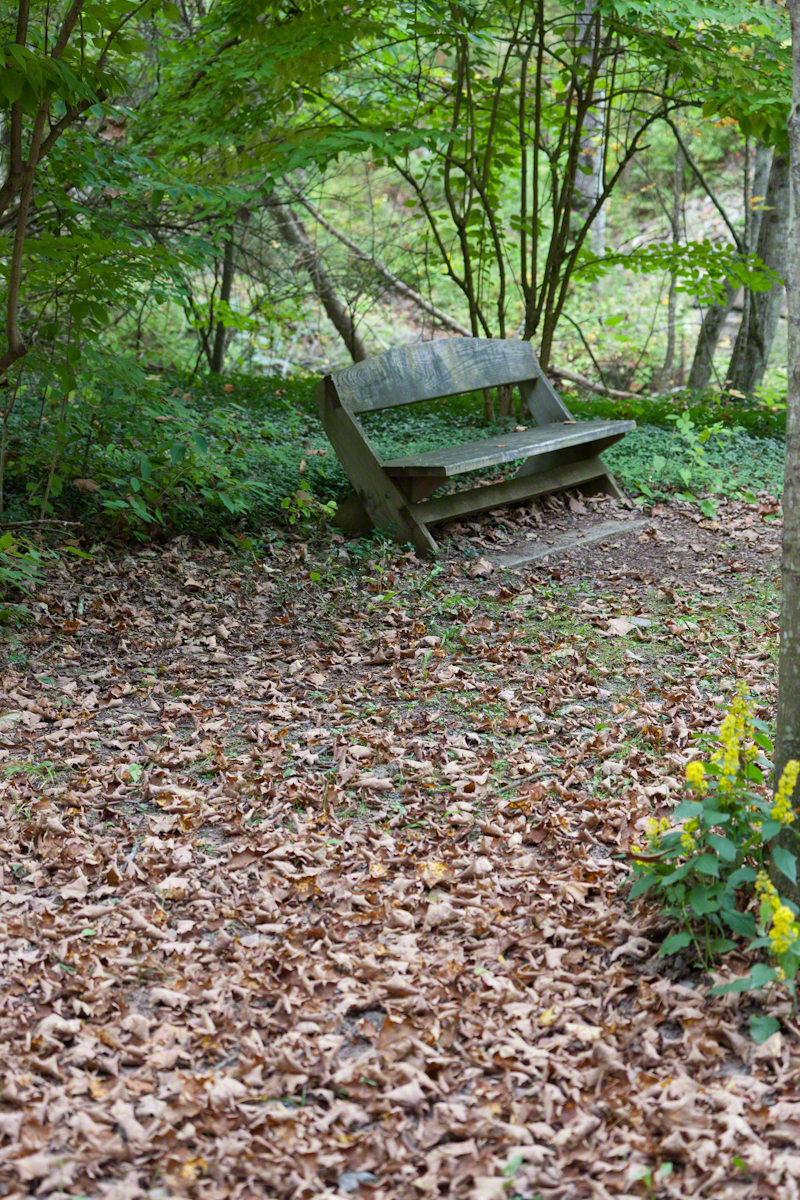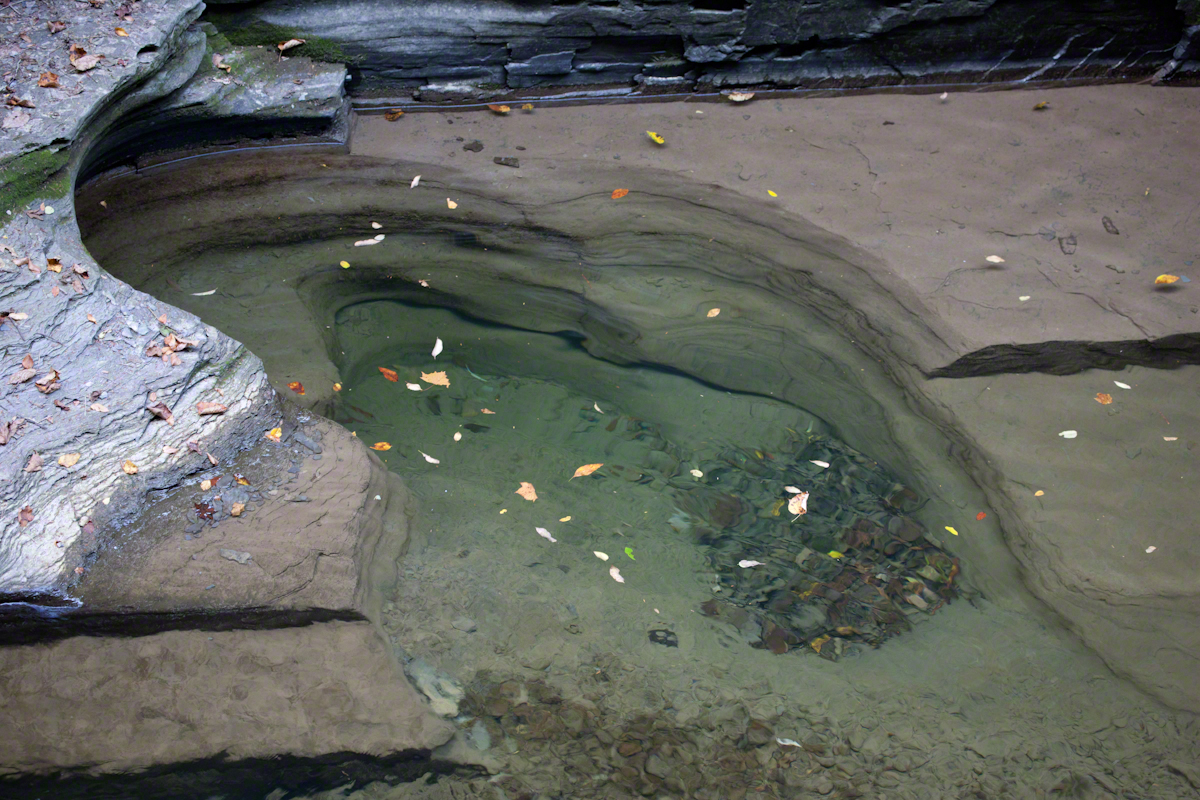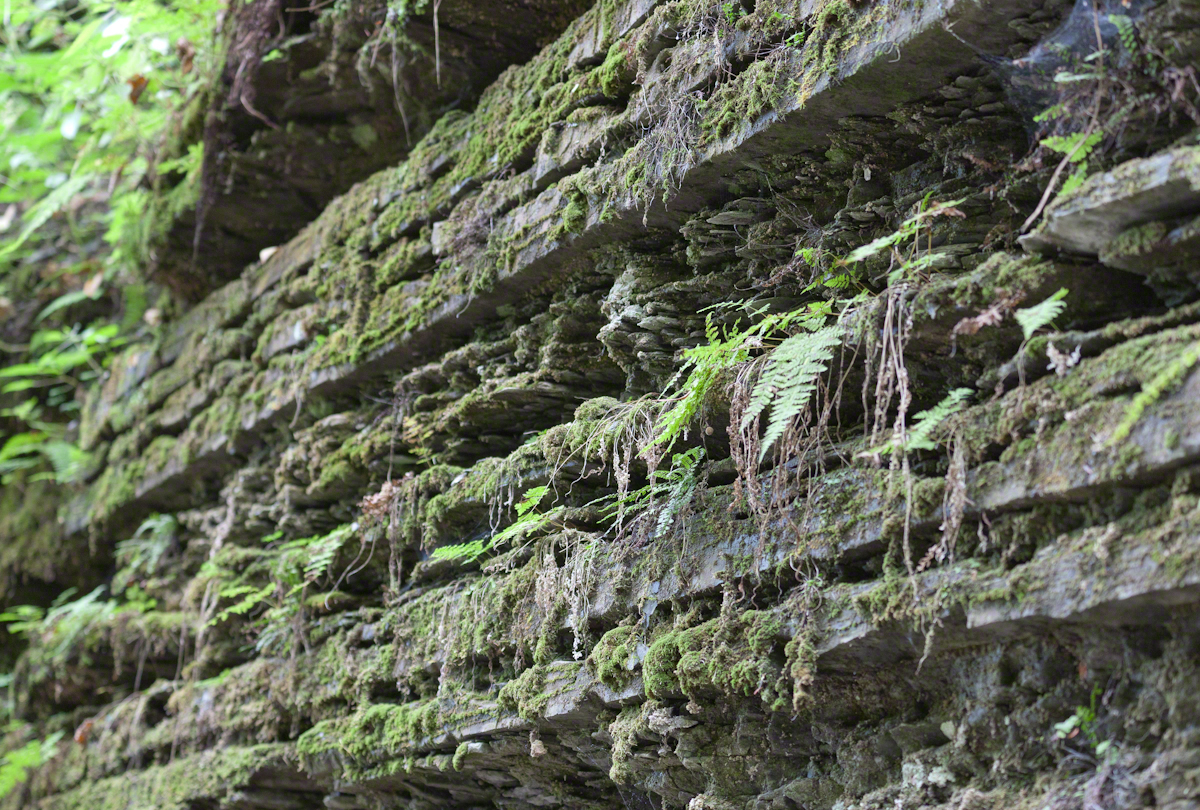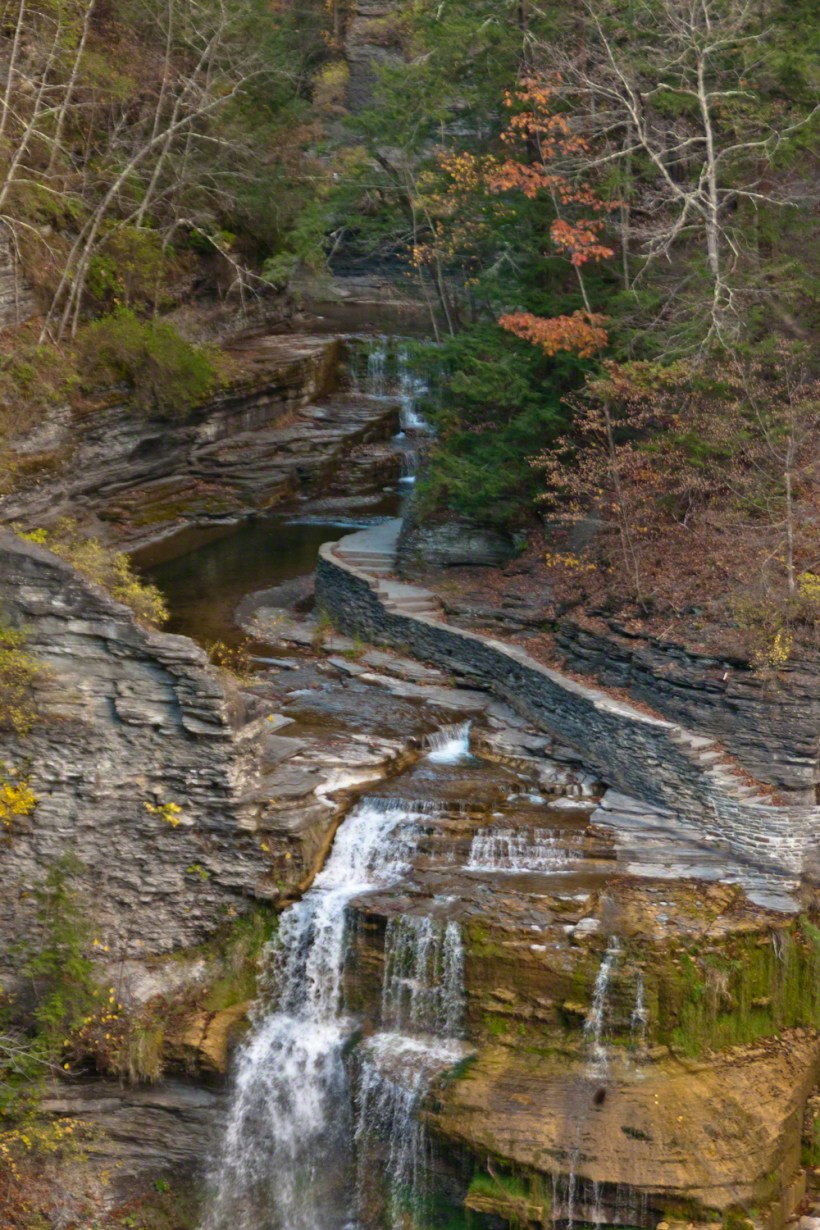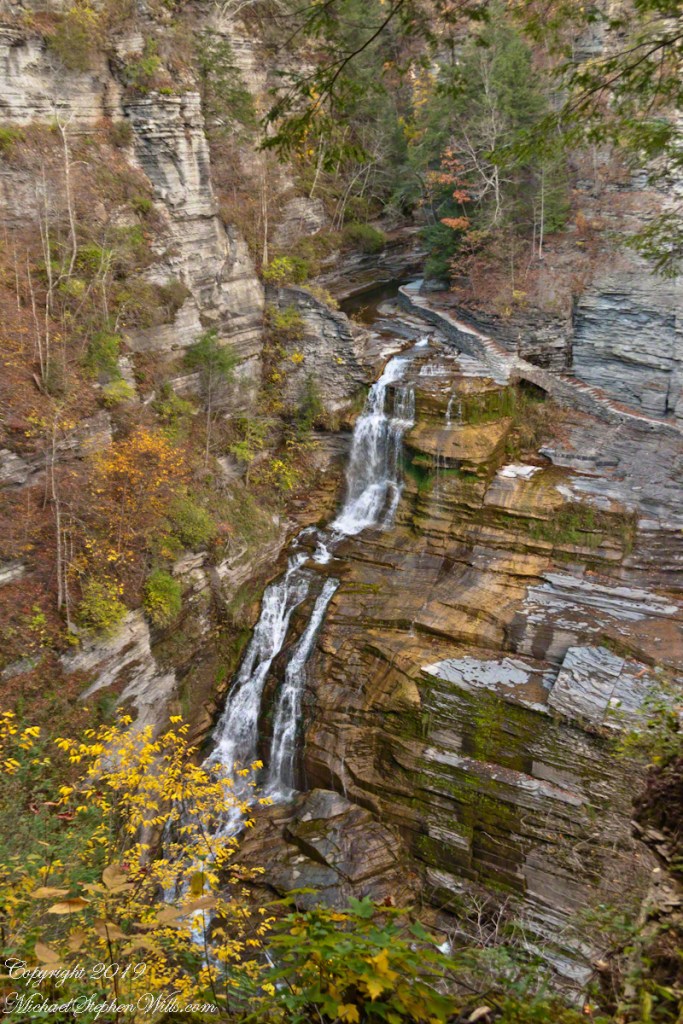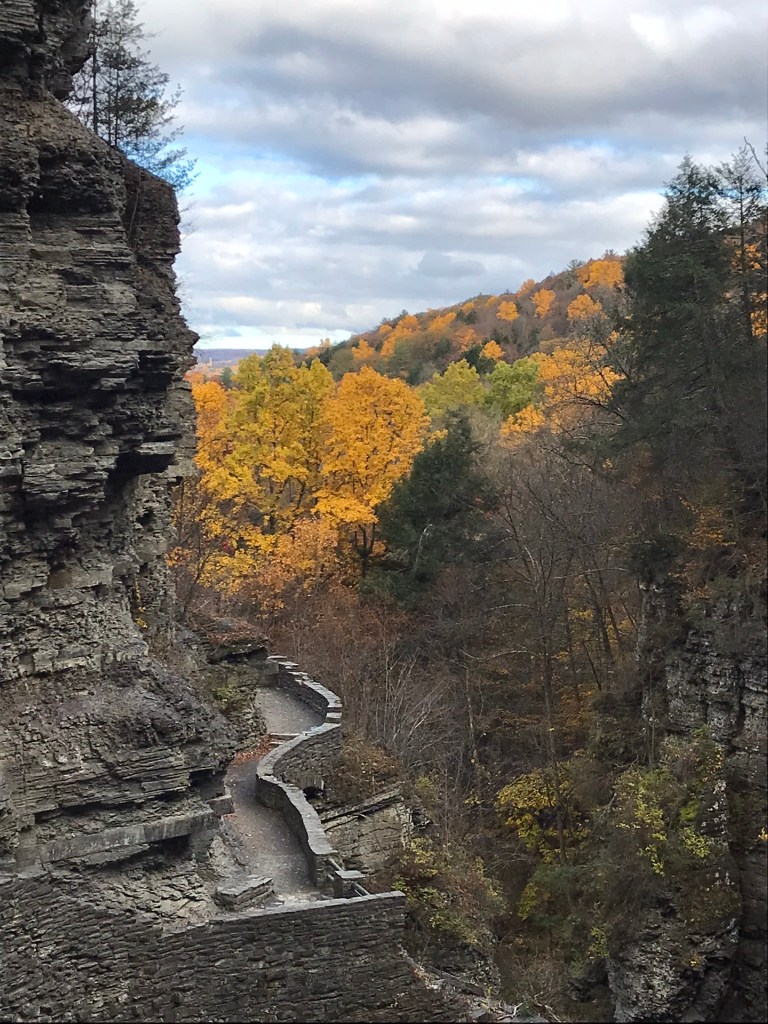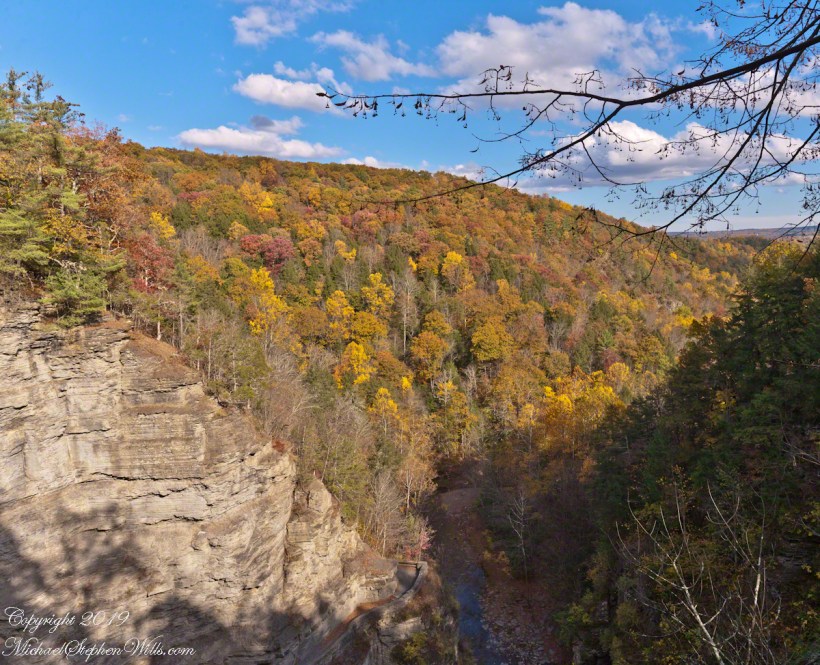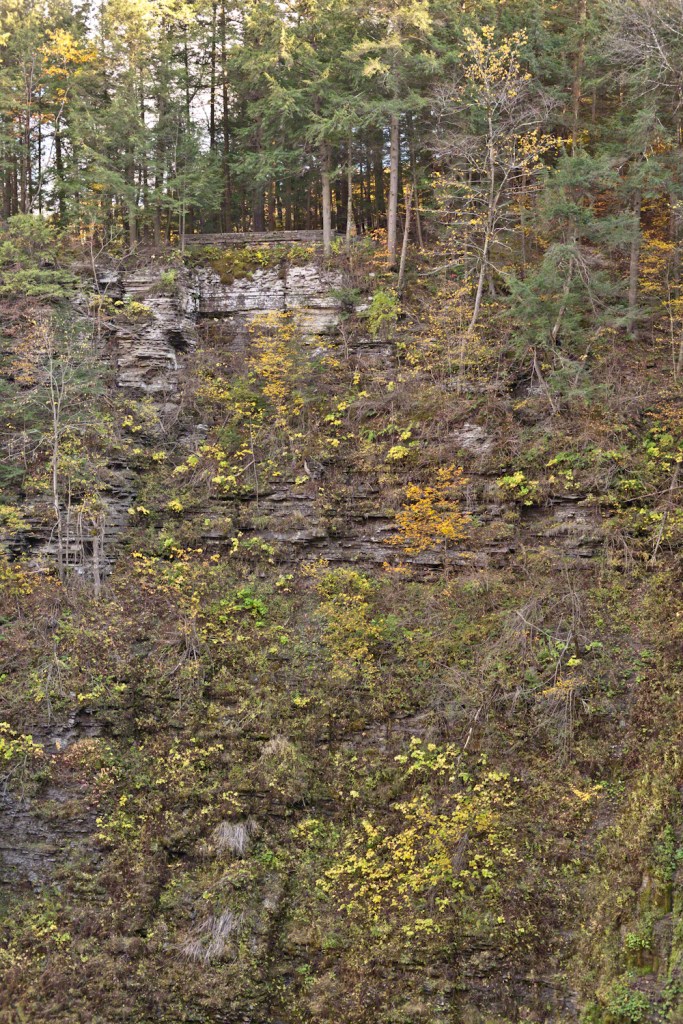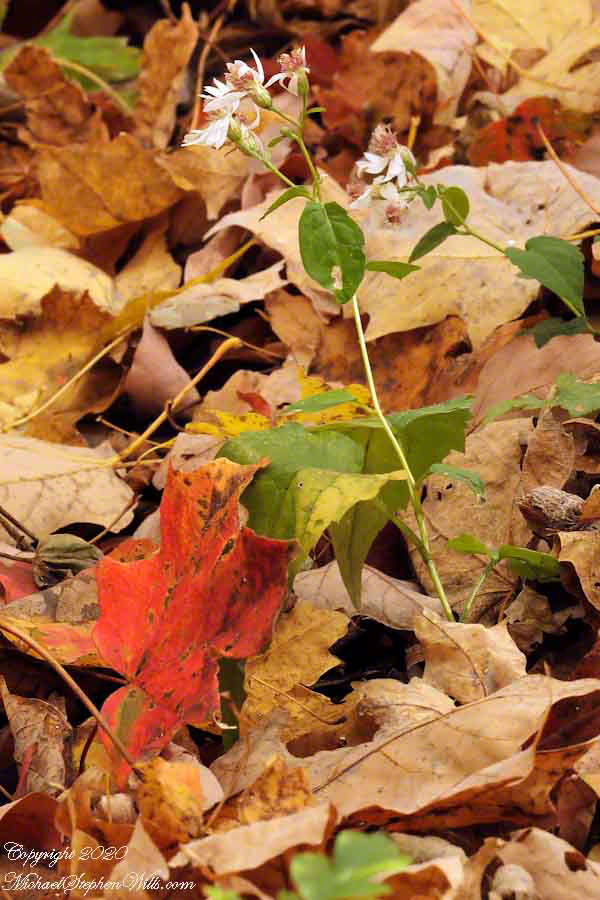
Treman Early Autumn Walk XI

Thomas Edison and Henry Ford innovatively used goldenrod to produce rubber, potentially counteracting rubber shortages.

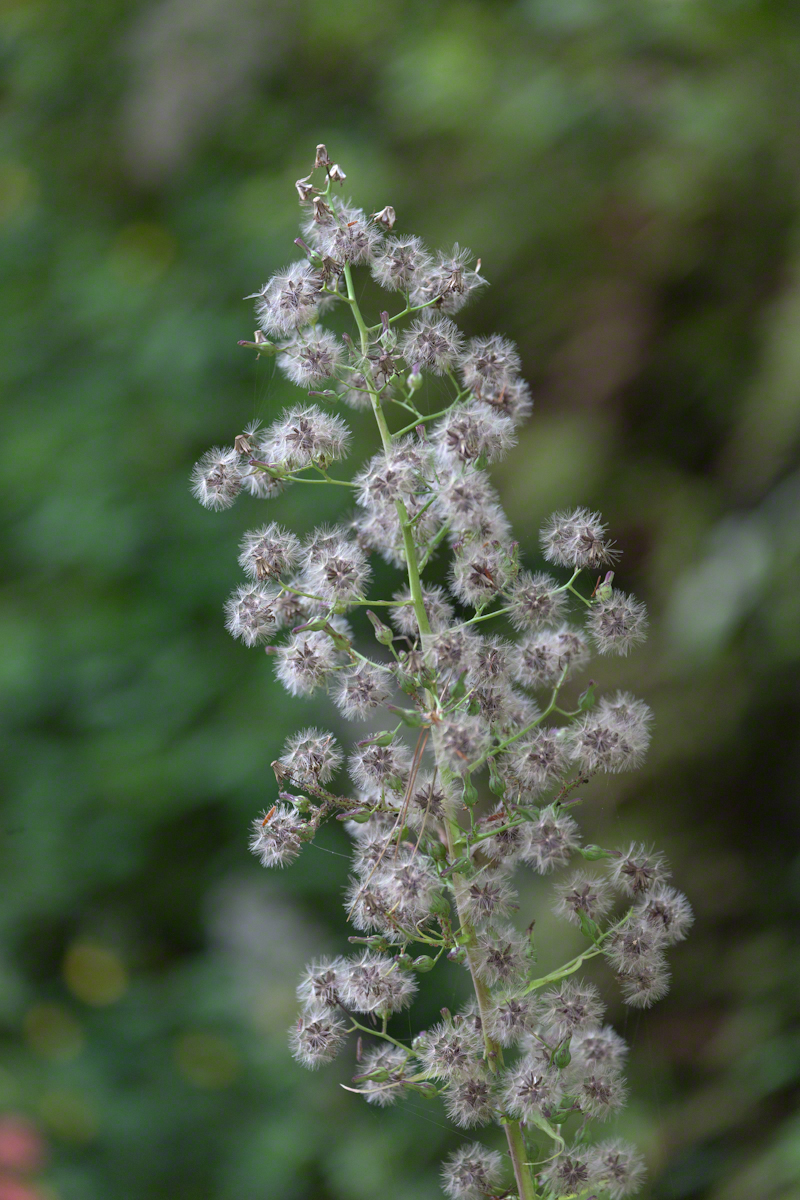
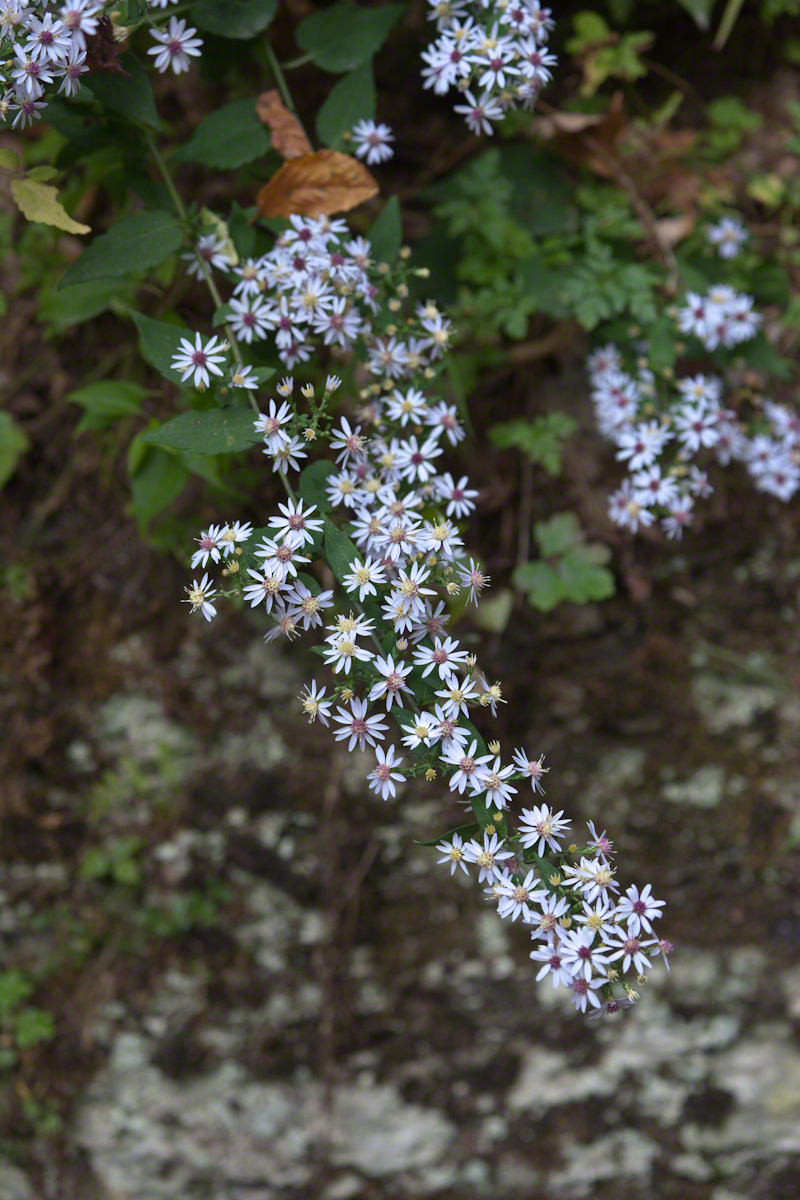
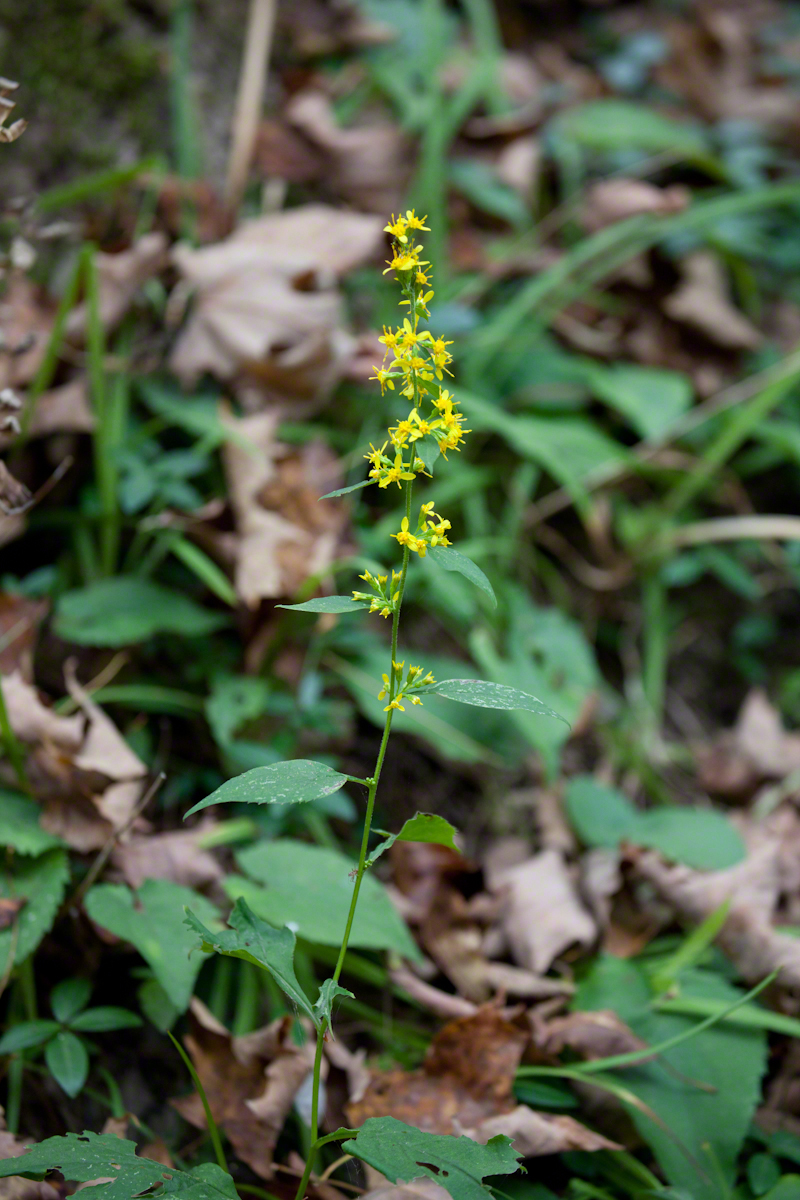
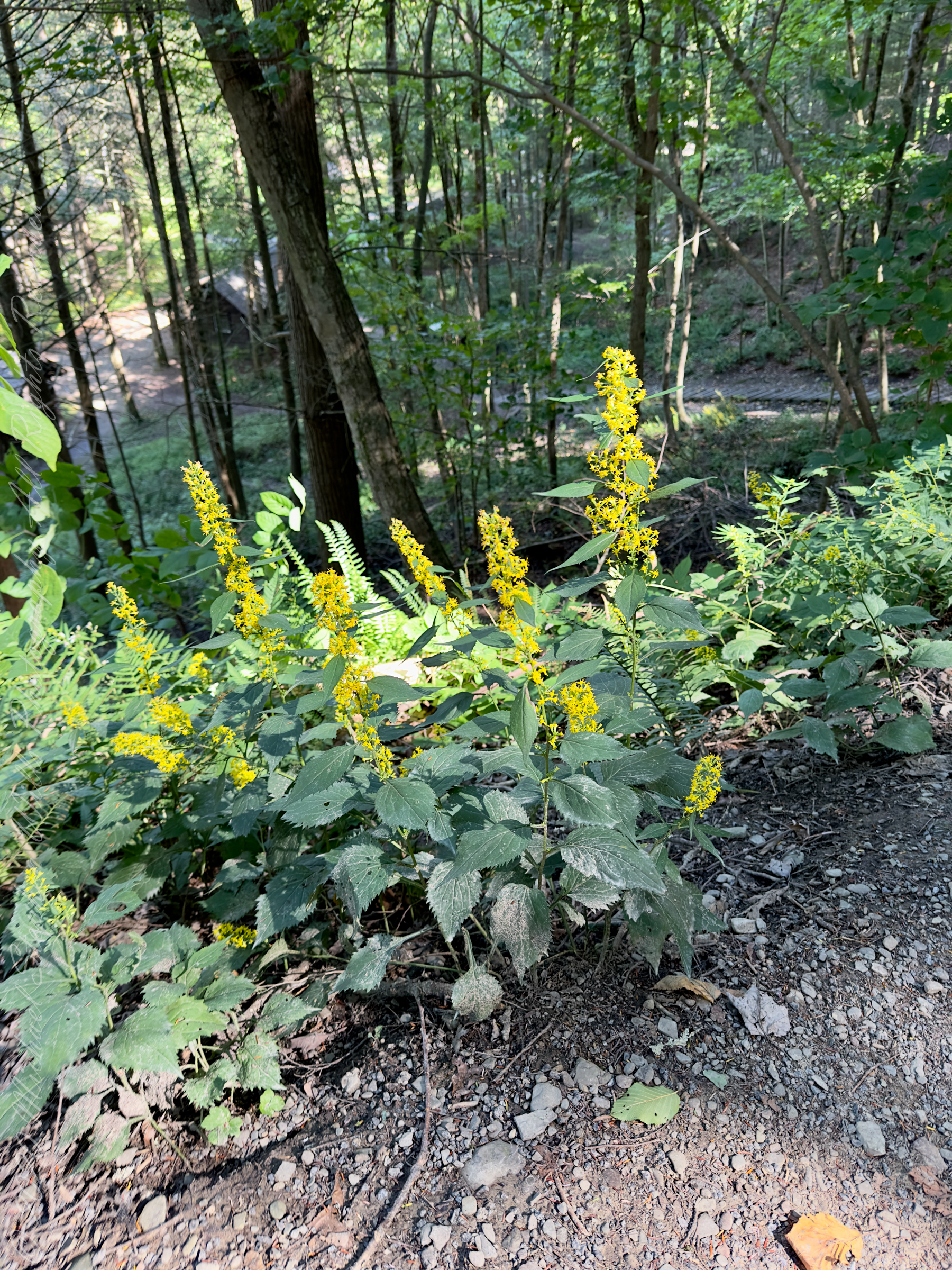
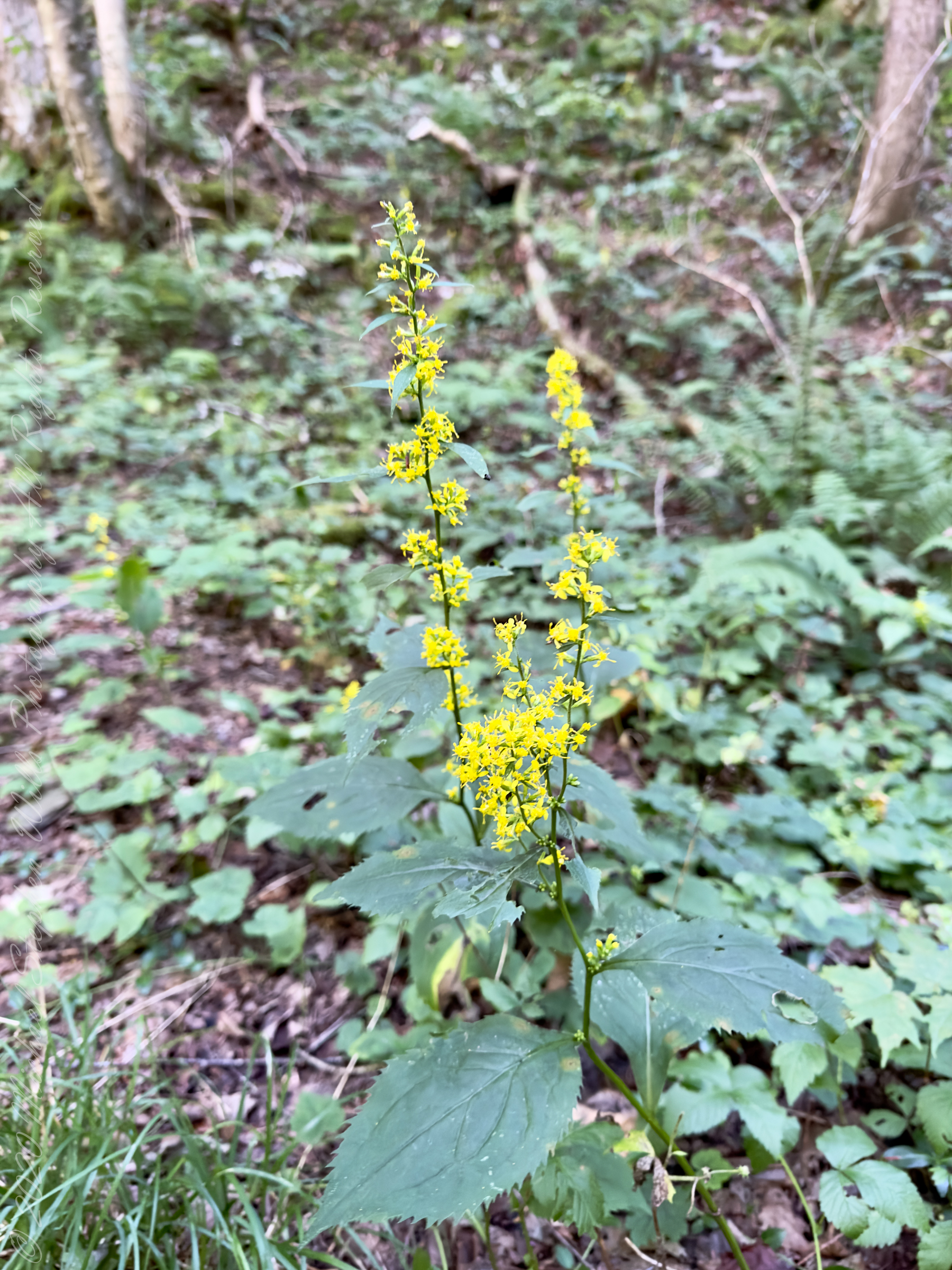
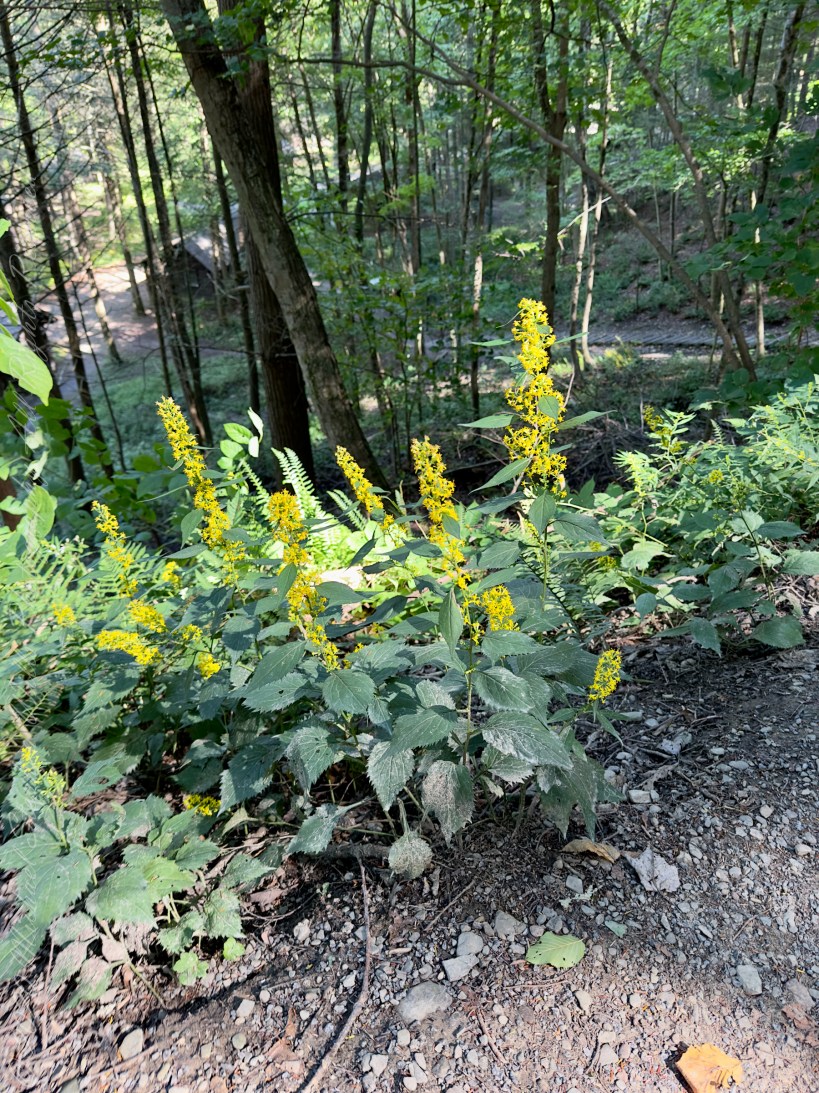
Where the Rim Trail descends to an ending on the Enfield Gorge floor a perennial patch of sunlight promotes an extravagant woodland growth of Zigzag goldenrod.

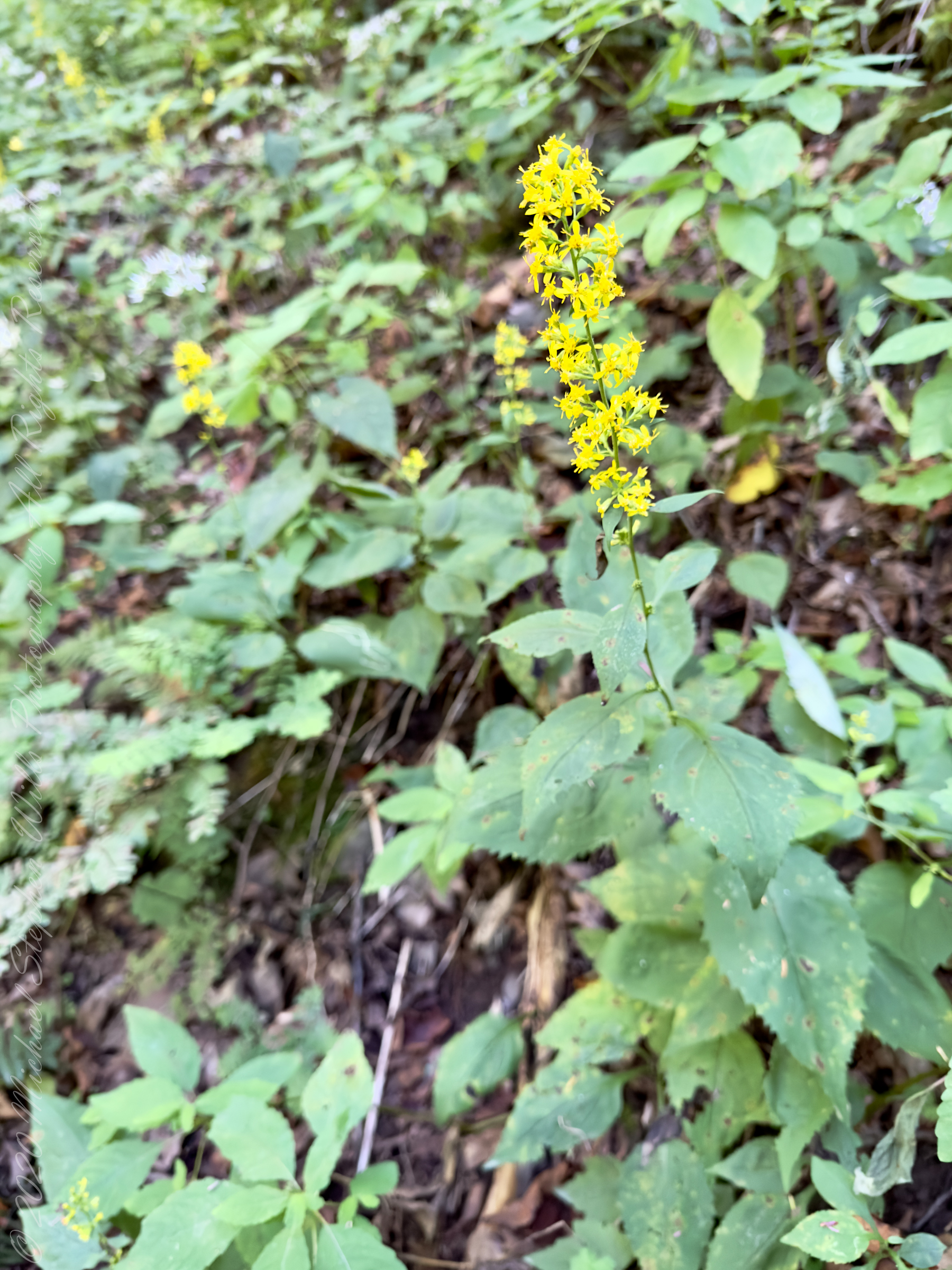
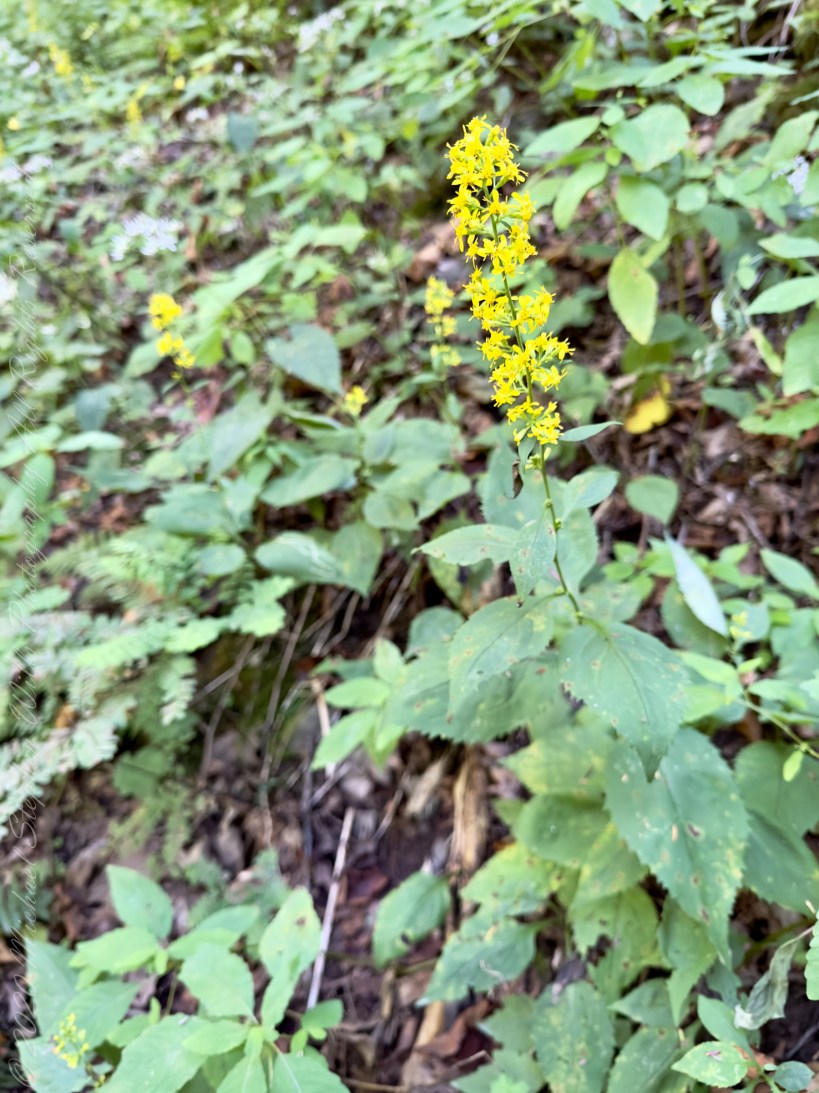
Solidago flexicaulis, AKA Broadleaf Goldenrod and Ziazag Goldenrod

“Inventor Thomas Edison experimented with goldenrod to produce rubber, which it contains naturally. Edison created a fertilization and cultivation process to maximize the rubber content in each plant. His experiments produced a 12 ft-tall (3.7 m) plant that yielded as much as 12% rubber. The tires on the Model T given to him by his friend Henry Ford were made from goldenrod. Like George Washington Carver, Henry Ford was deeply interested in the regenerative properties of soil and the potential of alternative crops such as peanuts and soybeans to produce plastics, paint, fuel and other products.  Ford had long believed that the world would eventually need a substitute for gasoline and supported the production of ethanol (or grain alcohol) as an alternative fuel. In 1942, he would showcase a car with a lightweight plastic body made from soybeans. Ford and Carver began corresponding via letter in 1934, and their mutual admiration deepened after George Washington Carver made a visit to Michigan in 1937.”
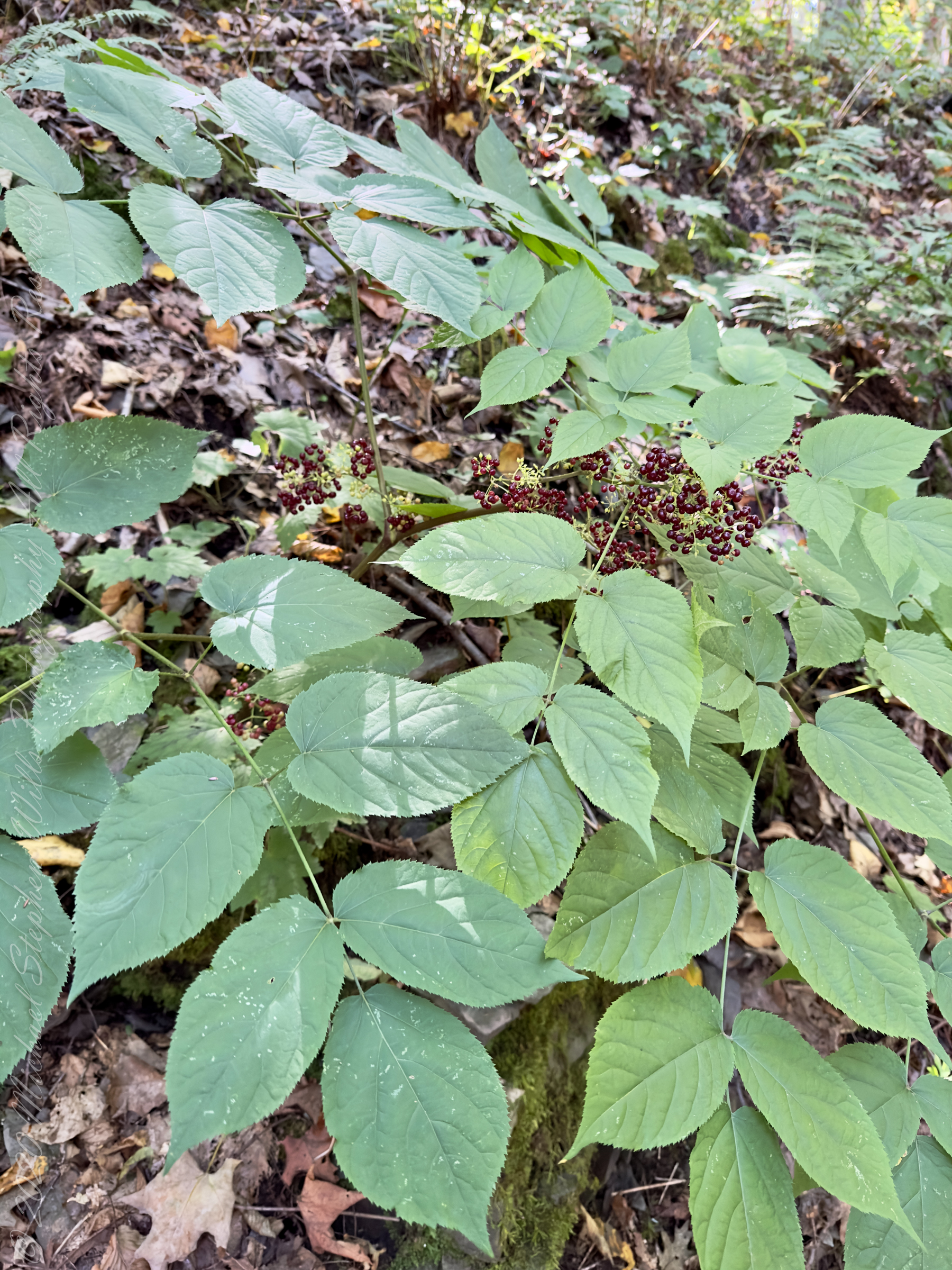
“By the time World War II began, Ford had made repeated journeys to Tuskegee to convince George Washington Carver to come to Dearborn and help him develop a synthetic rubber to help compensate for wartime rubber shortages. Carver arrived on July 19, 1942, and set up a laboratory in an old water works building in Dearborn. He and Ford experimented with different crops, including sweet potatoes and dandelions, eventually devising a way to make the rubber substitute from goldenrod, a plant weed commercially viable. Carver died in January 1943, Ford in April 1947, but the relationship between their two institutions continued to flourish: As recently as the late 1990s, Ford awarded grants of $4 million over two years to the George Washington Carver School at Tuskegee.”

“Extensive process development was conducted during World War II to commercialize goldenrod as a source of rubber. The rubber is only contained in the leaves, not the stems or blooms. Typical rubber content of the leaves is 7%. The resulting rubber is of low molecular weight, resulting in an excessively tacky compound with poor tensile properties.”

References: text in italics and quotes is from the Wikipedia, “Solidago.”

Copyright 2023 All Rights Reserved Michael Stephen Wills

Treman Early Autumn Walk X

The zigzag goldenrod is a crucial plant to North American pollinator biodiversity, hosting diverse insects.

After crossing the bridge at Swan Road I turned back down the gorge on the Rim Trail, climbing above the gorge where these interesting woodland goldenrod thrive.

“Solidago flexicaulis, the broadleaved goldenrod, or zigzag goldenrod,is a North American species of herbaceous perennial plants in the family Asteraceae. It is native to the eastern and central parts of the United States and Canada, from Nova Scotia west to Ontario and the Dakotas, and south as far as Alabama and Louisiana. It grows in a variety of habitats including mesic upland forests, well drained floodplain forests, seepage swamp hummocks, and rocky woodlands.”

“The plant is called the “zigzag goldenrod” because the thin, wiry stem zigs and zags back and forth, changing direction at each node (leaf attachment point). The plant bears sometimes as many as 250 small yellow flower heads, some at the end of the stem, others in the axils of the leaves. The leaves are very broad, almost round, but with an elongated tip at the end and large teeth along the edges.”

“Goldenrod is considered a keystone species and has been called the single most important plant for North American pollinator biodiversity. Goldenrod species are used as a food source by the larvae of many Lepidoptera species. As many as 104 species of butterflies and moths use it as a host plant for their larvae, and 42 species of bees are goldenrod specialists, visiting only goldenrod for food. Some lepidopteran larvae bore into plant tissues and form a bulbous tissue mass called a gall around it, upon which the larva then feeds. Various parasitoid wasps find these galls and lay eggs in the larvae, penetrating the bulb with their ovipositors. Woodpeckers are known to peck open the galls and eat the insects in the center.”

“Solidago flexicaulis is host to the following insect induced galls: Asteromyia modesta, a species of gall midges in the family Cecidomyiidae. Gnorimoschema gallaesolidaginis also called the solidago gall moth, goldenrod gall moth or goldenrod gallmaker, is a moth in the family Gelechiidae.”

References: text in italics and quotes is from the Wikipedia, “Solidago flexicaulis,” “Solidago,” “Asteromyia modesta,” and “Gnorimoschema gallaesolidaginis.”

Copyright 2023 All Rights Reserved Michael Stephen Wills

Fruit of the Starflower

A member of the primrose family

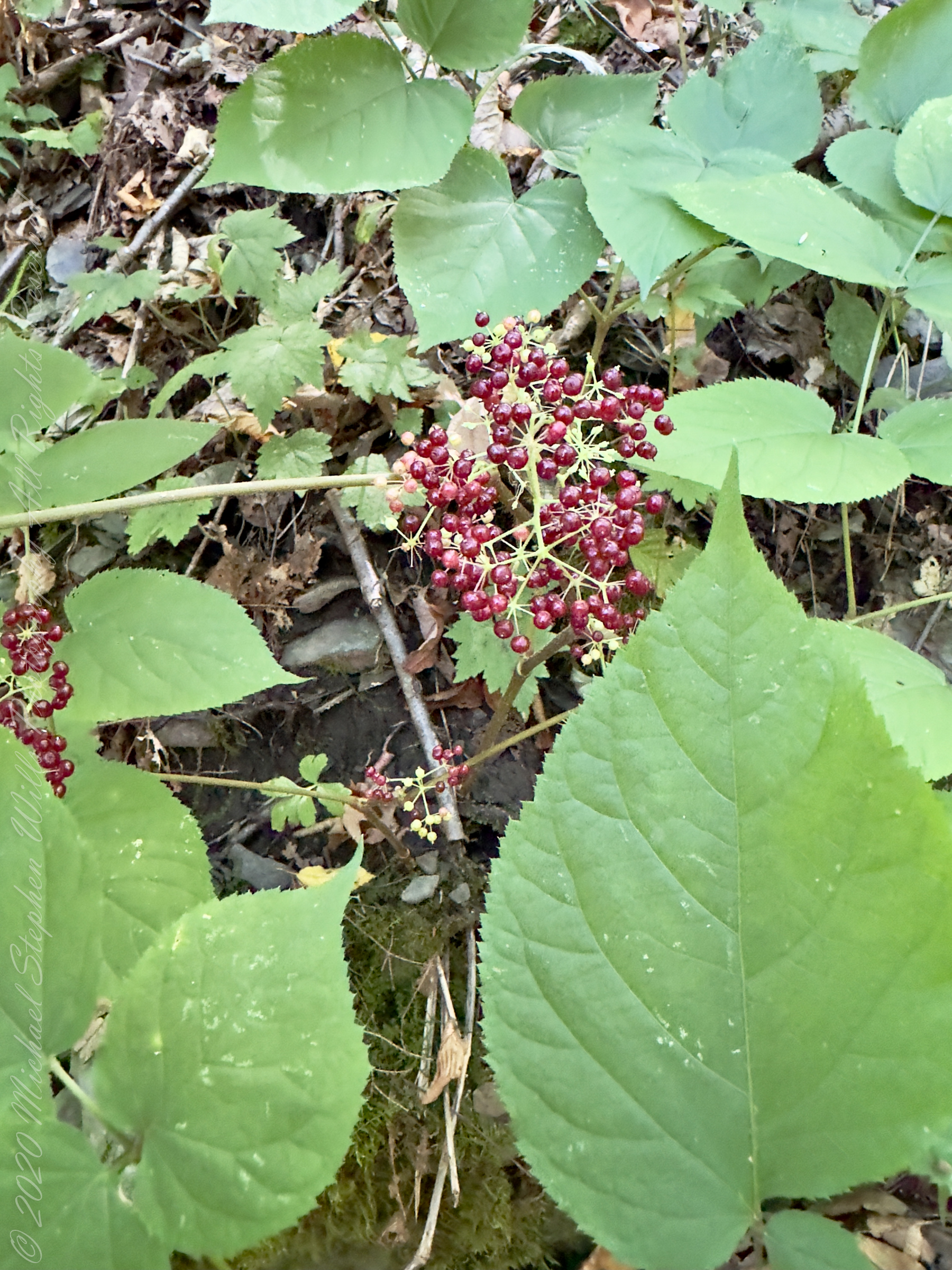
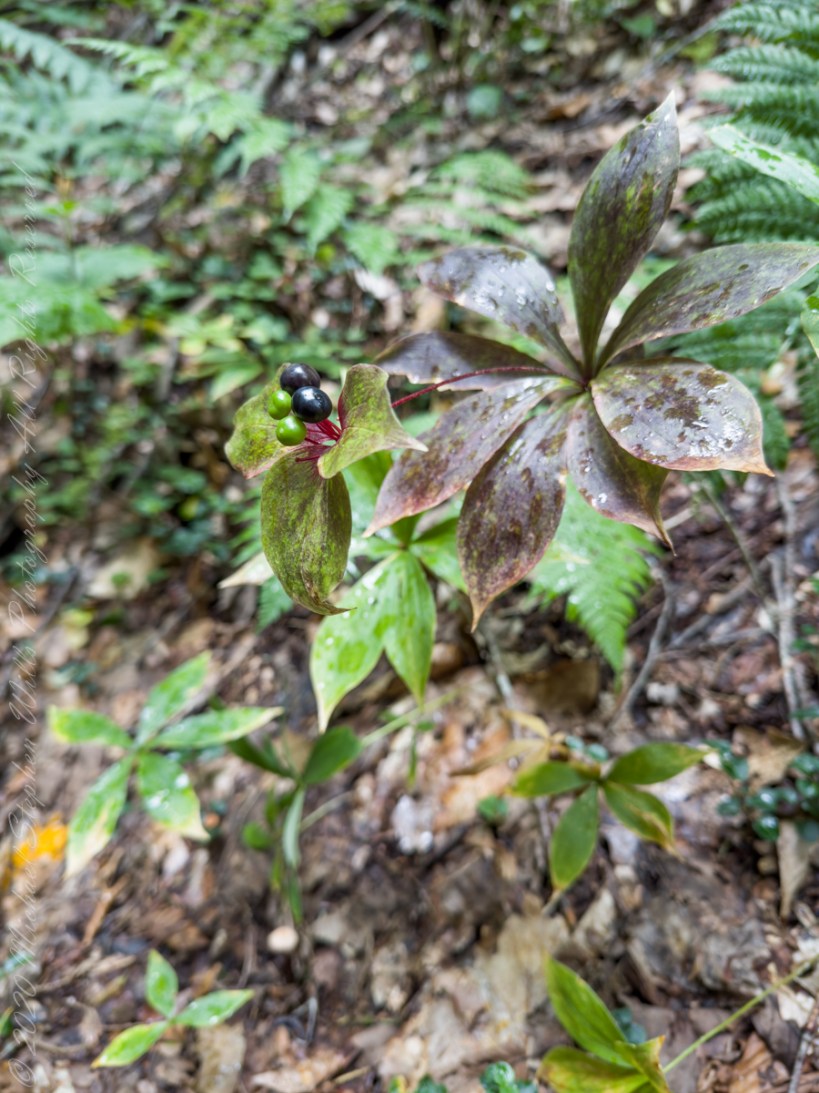
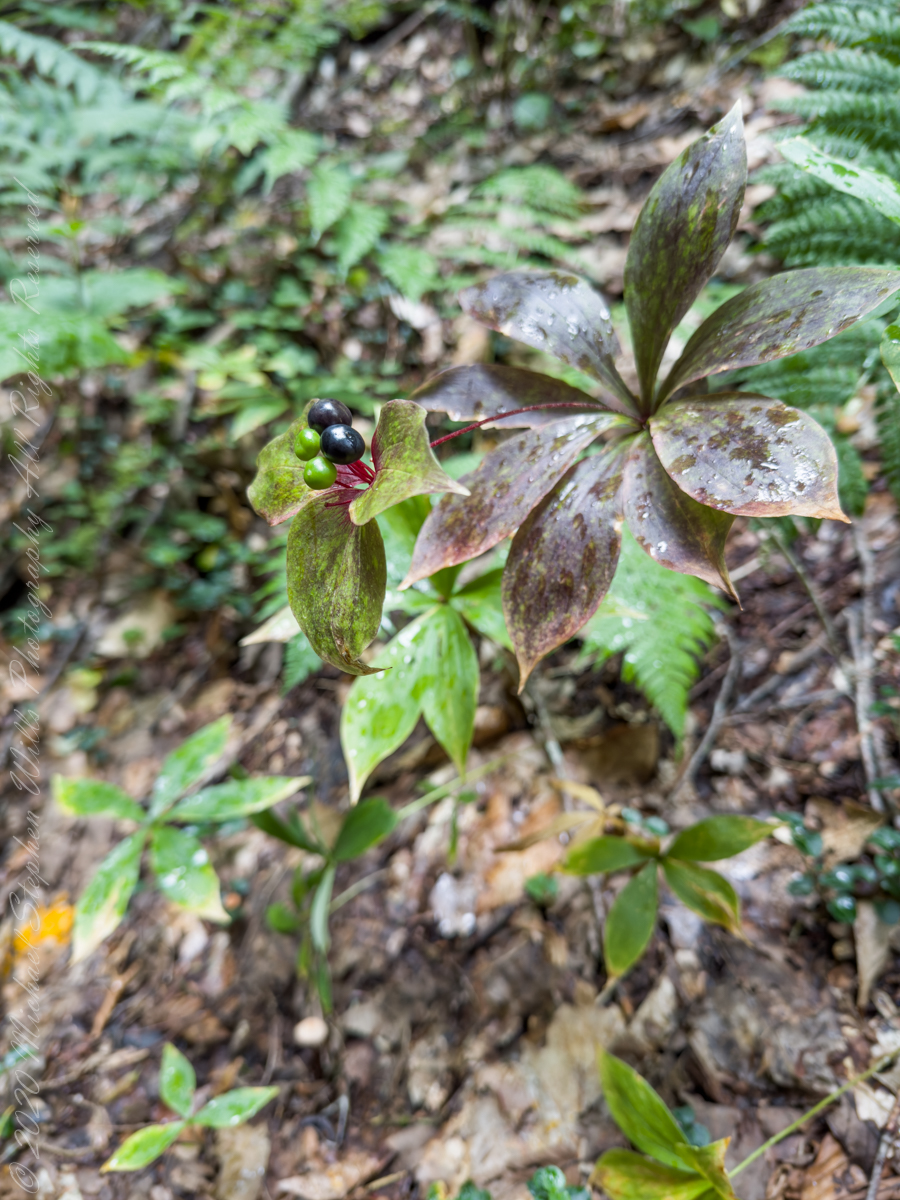
These dark blue berries at the end of a slender naked stalk that arises from the leaf joint at the top of the plant were encountered on a late August day in Fillmore Glen, Moravia, Cayuga County, New York State.  Lysimachia borealis is a perennial wildflower commonly known as Starflower.  After blooming in the spring, as a member of the primrose family these are some of the first flowers to appear, the fertilized flowers develop into this round purple fruit.  To confuse identification, the plant is also known as Trientalis borealis.

“Lysimachia species are used as food plants by the larvae of some butterflies and moths, including the dot moth, grey pug, lime-speck pug, small angle shades, and v-pug.”   Chipmunks eat these fruits as a minor portion of their diet.

“Bees of the genus Macropis are specialized to pollinate oil-producing Lysimachia plants. These bees use exclusively Lysimachia floral oils for building their nests and provisioning cells. Lysimachia floral-specific chemicals are strong attractors for Macropis nuda and Macropis fulvipes bees that are seldom found in other plant genera.”

Do not confuse this with another “starflower,” Borago officinalis, from which an oil is produced commercially.

Reference: text in italics and quotes is from the Wikipedia, “Lysimachia.”

Copyright 2023 Michael Stephen Wills All Rights Reserved

Pam’s Photography

Here is a sample of my wife Pam’s photography skills by way of a video with music created by her IPhone 8.

In and around Cocoa Beach and Brevard County, January and February

Copyright 2023 Michael Stephen Wills All Rights Reserved

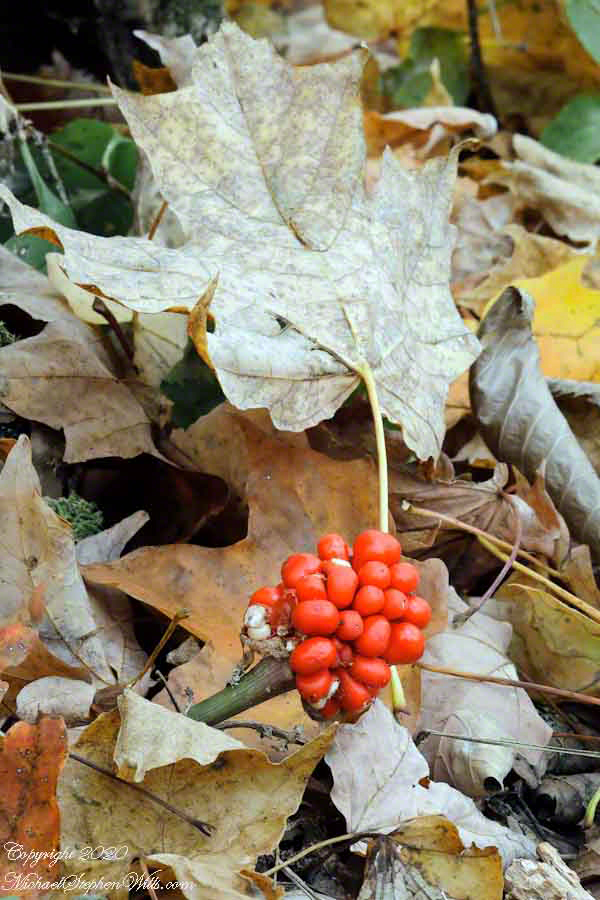
Jack-in-the-Pulpit “Gone to Seed”

Those of you who know Georgia O’Keefe may be familiar with the form and coloring of Jack-in-the-pulpit from the series of six oil canvasses from 1930

“Arisaema triphyllum sensu lato is a herbaceous, perennial, flowering plant growing from a corm. It typically grows up to two feet tall, but populations in Georgia and Florida are known to reach almost twice that height. It has 1 or 2 leaves, each with three leaflets (triphyllum). Occasionally the lateral leaflets will be two-parted or lobed, giving the appearance of five leaflets per leaf. One species (A. quinatum) typically has five pseudo-leaflets per leaf.”

Those of you who know Georgia O’Keefe may be familiar with the form and coloring of Jack-in-the-pulpit from the series of six oil canvasses from 1930, her time in the east living near a spring. There is a spathe, the pulpit, strongly colored in dramatic vertical, flowing stripes, wrapped around a spandix, the “jack”, being a stem covered with male and female flowers.

Around the time my photography habit started in 2002 I was surprised by the jacks growing from the walls of Fillmore Glen, spying the distinctive forms flowing a bit above eye level under the three large leaves. Seeing them was like recognizing a friend in Halloween disguise, the exotic O’Keefe shapes in a known place.

“The small, inconspicuous flowers of Jack-in-the-pulpit are borne on a fleshy, spike-like inflorescence called a spadix (“Jack”), which is enclosed (or nearly enclosed) by a large, sometimes colorful bract called a spathe (“pulpit”). The flowers are clustered around the base of the spadix inside the spathe. A sterile spadix appendix protrudes from the mouth of the spathe tube. The appendix is covered by the leafy tip of the spathe, referred to as the spathe hood (or spathe lamina). The lip along the mouth of the spathe tube, used as a landing platform for winged insects, is called the spathe flange.”

“The inflorescence can be male (with male flowers only), bisexual (with both male and female flowers), or female (with female flowers only). In a small plant, most if not all of the flowers are male. As the plant matures and grows larger, the spadix produces female flowers as well as male flowers. The transition from male to female continues until eventually the plant produces female flowers only.[6] This is an example of dichogamy, a rare phenomenon in flowering plants. Due to this sex-change lifecycle, this species is sometimes called colloquially as Jack or Jill in the pulpit  or Jill-in-the-pulpit.”

“The unripe fruits are smooth, shiny green berries (each 1 cm wide) clustered around the thickened spadix. Fruits ripen in the late summer and early fall, turning a conspicuous bright red color. Each berry typically produces 1–5 seeds, which are white to light tan in color, rounded, often with flattened edges and a short sharp point at the top. If the seeds are freed from the berry, they will germinate the next spring, producing seedlings each with a single rounded leaf. A seedling needs three or more years of growth before it becomes mature enough to flower.”

“The Arisaema triphyllum complex includes four closely-related species: Arisaema pusillum, Arisaema stewardsonii, Arisaema quinatum, and Arisaema triphyllum sensu stricto. A fifth species (Arisaema acuminatum) is sometimes included but its validity is controversial.”

Ecology

“Arisaema triphyllum sensu lato flowers from April to June.[citation needed] Arisaema triphyllum sensu stricto is the first to flower in the spring. In regions where the species are sympatric, Arisaema stewardsonii and Arisaema pusillum begin to flower 1–2 and 2–3 weeks later, respectively. Since an individual flowering period can last 1–3 weeks or more, it is not unusual to find all three species in flower at the same time. In the southeastern United States, Arisaema quinatum is reported to flower later than either A. pusillum or A. triphyllum s.s.”

“Arisaema triphyllum sensu lato is pollinated by fungus gnats, which it attracts by smell and are trapped by the flower. They manage to escape from a hole at the bottom of the male’s pulpit, but cannot do so when they fall inside a female pulpit, which do not have exit holes Thus the Jill-in-the-pulpit is a rare femme fatale in the plant world: luring the gnats in with scent, but ultimately killing the pollinators in a death trap.”

“Other insects are known to visit the flowers as well, such as gall gnats and beetles.[6] The plant is not self-pollinating since the male flowers on a specific plant have already matured and died before the female flowers of that same plant are mature. So the female flowers need to be pollinated by the male flowers of a different plant. This inhibits inbreeding and contributes to the health of the species.”

Here is another “jack” posting

Reference: text in italics and quotes is from the Wikipedia, “Arisaema triphyllum.”

Copyright 2023 Michael Stephen Wills All Rights Reserved

Ad Astra

To The Stars

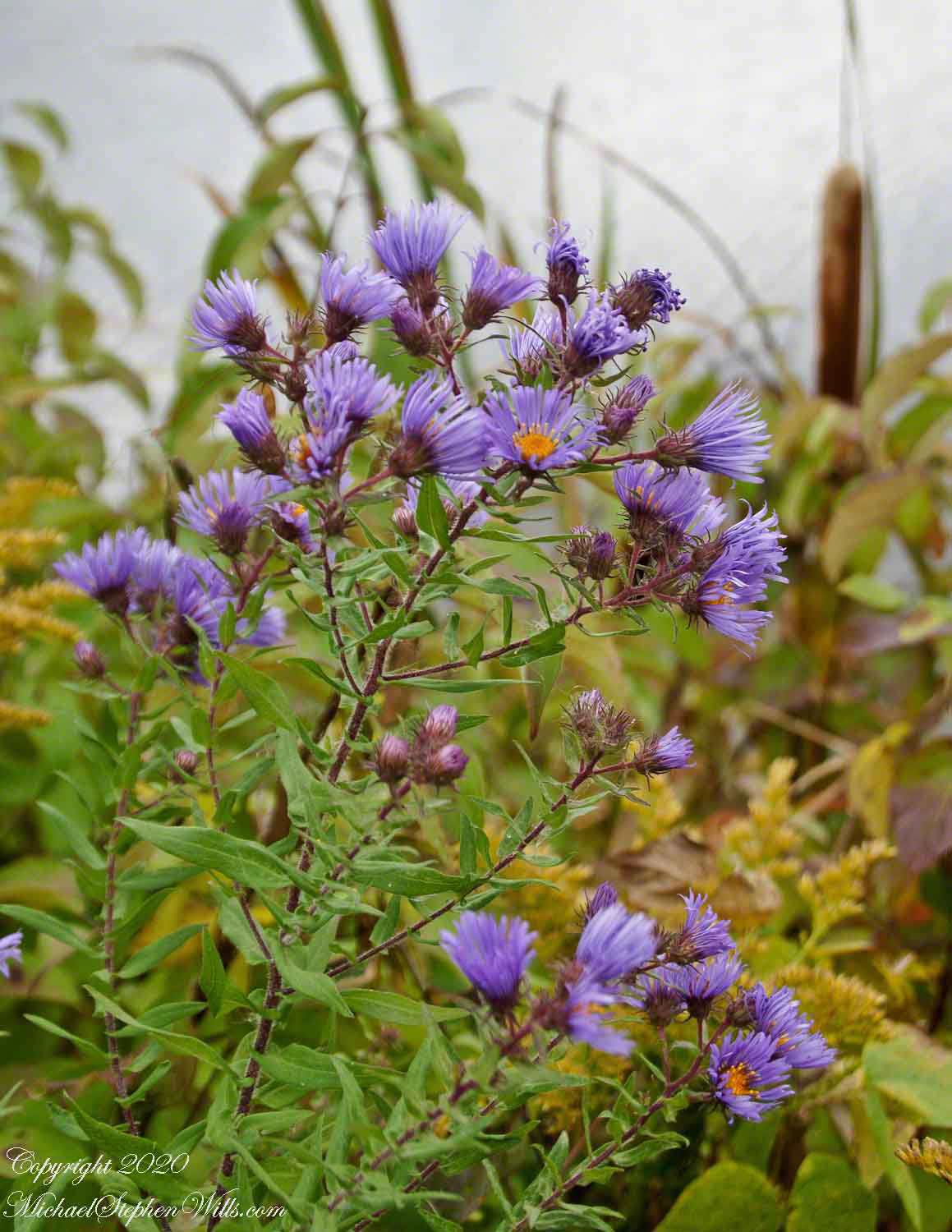
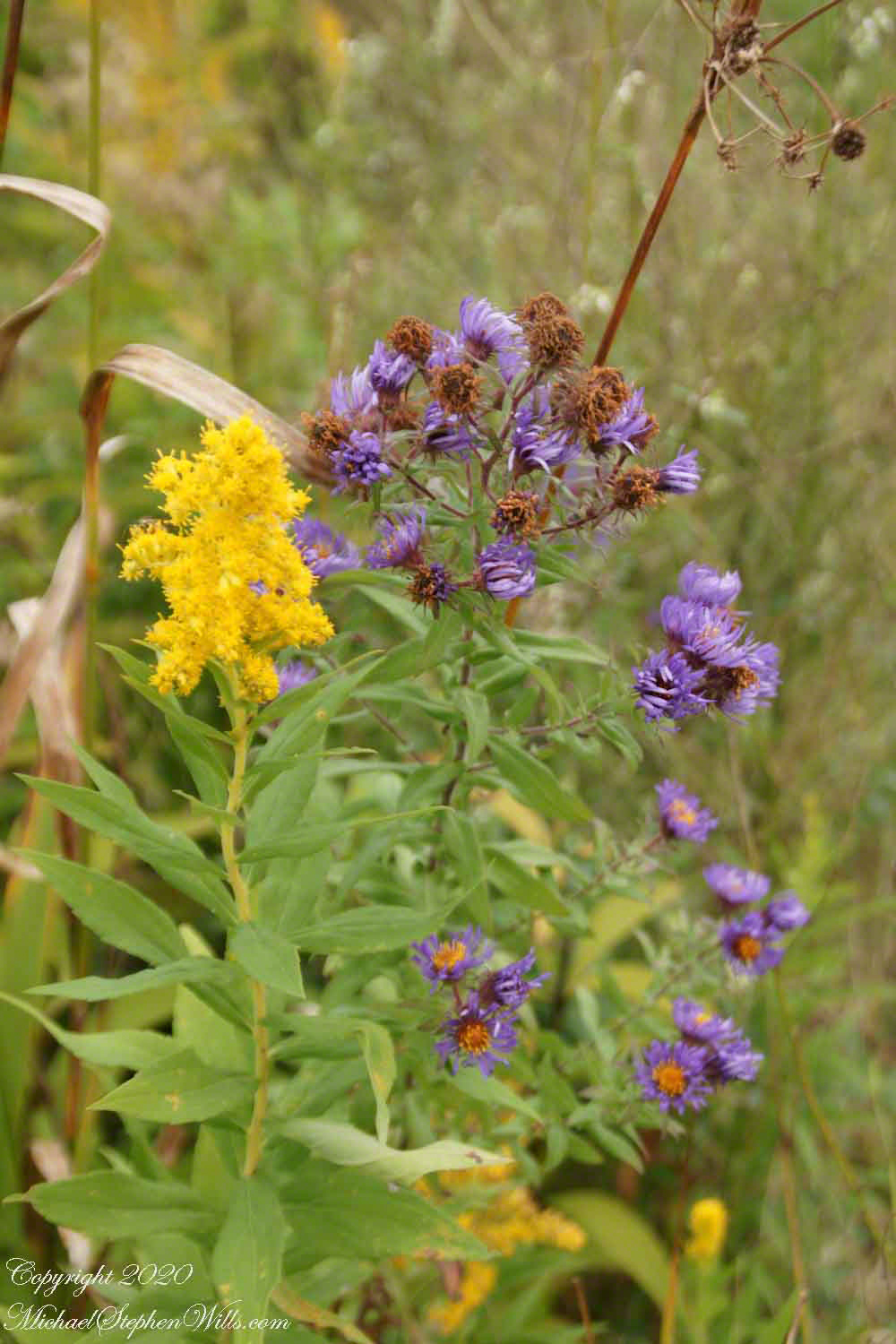
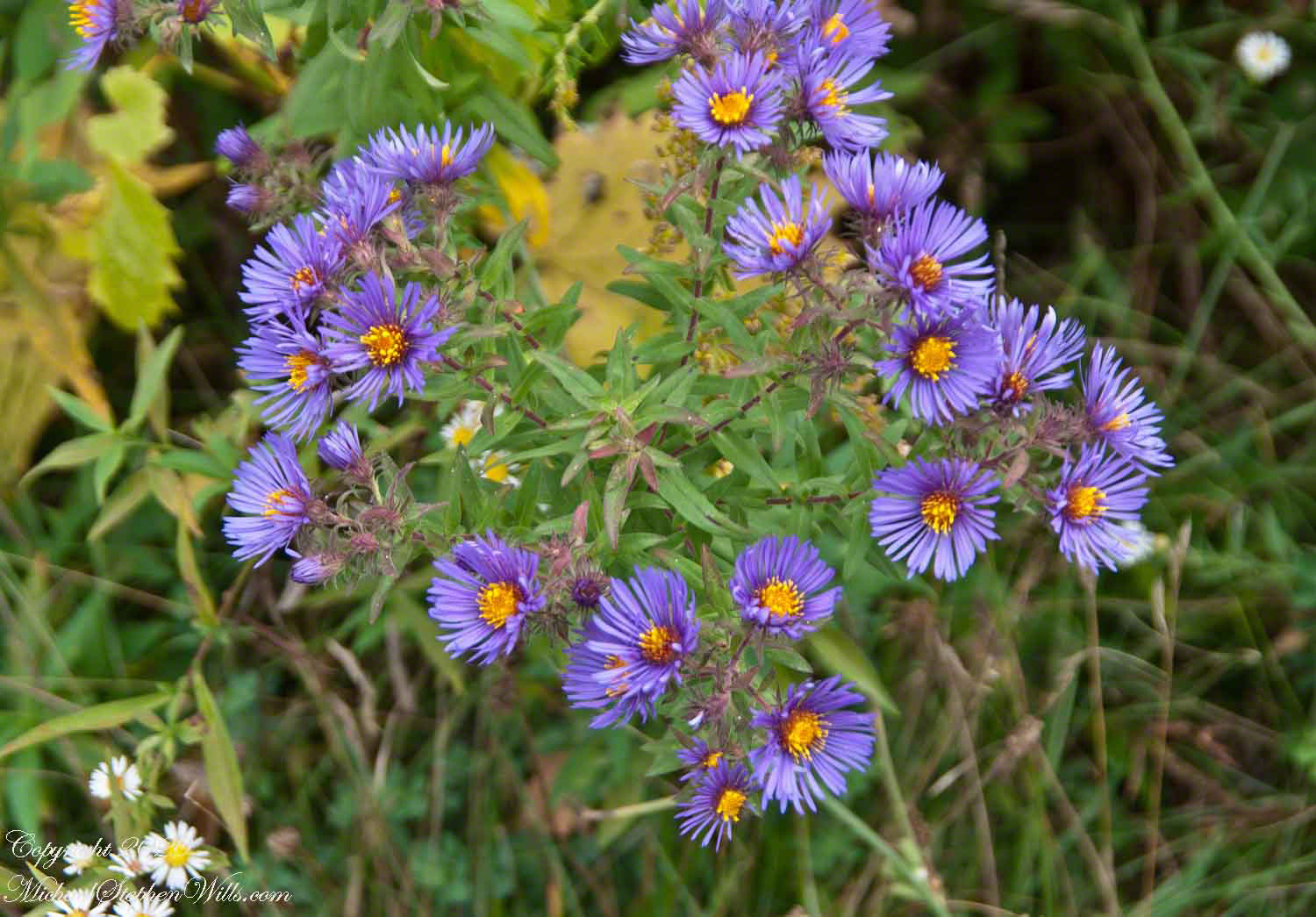
A mass of lavender asters produced for a painterly, restful esthetic. Over the years I have tended beds of these wildflowers. The sunlight of late August/early September here in the Finger Lakes is especially clear and this is when these asters bloom. This were caught on a clear September evening with the sun just behind a stand of large Ash trees.

Click Me to visit this image in my fine art gallery

Symphyotrichum novi-belgii (formerly Aster novi-belgii), commonly called New York aster. Symphyotrichum, a genus in the family Asteraceae, whose species were once considered to be part of the genus Aster. Plants in both these genera are popularly known as Michaelmas daisy because they bloom around September 29, St. Michael’s Day. The Latin specific epithet novi-belgii (literally “New Belgium”) refers not to modern Belgium, but the 17th century Dutch colony New Netherland which was established on land currently occupied by New York state (as Belgica Foederata was the Latin term for the United Netherlands at the time).

Reference: Wikipedia “Symphyotrichum novi-belgii.”

Copyright 2023 Michael StephenWills All Rights Reserved

Lake Treman

formed by a 1930’s Dam on Buttermilk Creek

Lake Treman from the dam.

Buttermilk creek flowing into Lake Treman.

Dam on Buttermilk creek that forms Lake Treman. Here is stunning Civilian Conservation Corp (1930’s) work in this 36-foot-high stone dam that is not only a spectacle to observe but also serves as part of the trail that encircles Lake Treman. The man-made lake’s wooded shores and placid waters are a stark comparison to the gorge’s rocky cliffs and surging water

August 2023, Buttermilk Falls New York State Park, Ithaca, Tompkins County, New York.

Copyright 2023 Michael Stephen Wills All Rights Reserved

Wild Ducks

On Lake Treman.

Two species of wild ducks rest on a fallen tree trunk.

That is a female Wood Duck (Aix sponsa) on right.

Wood Ducks mainly eat berries, acorns, and seeds, but also insects, making them omnivores. They are able to crush acorns after swallowing them within their gizzard.

August 2023, Buttermilk Falls New York State Park, Ithaca, Tompkins County, New York.

Copyright 2023 Michael Stephen Wills All Rights Reserved

Thin Leaved Sunflower

The flowers attract many kinds of insects, including bees and butterflies.

Thin Leaved Sunflowers (Helianthus decapetalus)

As with other members of the family Asteraceae, Thin Leaved Sunflowers are composed of ray florets. The scientific species name “decapetalus” is inaccurate on several counts. The flower is composed of 8-12 (not only 10, as in “deca”) of these ray florets, not petals. These ray florets are part of the flower reproductive organs, a flower petal is adjacent to, not a component of, a flowers reproductive parts.

The flowers attract many kinds of insects, including bees and butterflies, some of which, such as the painted lady and the silvery checkerspot, use the plant as a larval host. The seeds provide a source of food for birds. Muskrats eat the leaves and stems and use the stems in the construction of their lodges. Here we see a honeybee gathering nectar and pollen.

August 2023, Buttermilk Falls New York State Park, Ithaca, Tompkins County, New York.

Copyright 2023 Michael Stephen Wills All Rights Reserved

Ghost Pipes that grow in the dark

chlorophyll free

I found these popping up from leaf litter, a mixture of last year’s maple and elm, on an August morning. The dappled light, varied from bright to very dark, exceeded the dynamic range of my equipment, so I set up the Sony dslr Alpha700 with the Sony lens DT 18-200mm f3.5-6.3 on a tripod and, using the remote feature, placed the flash at an optimal angle.

Monotropa uniflora, also known as ghost plant, ghost pipe, or Indian pipe, is an herbaceous perennial plant native to temperate regions of Asia, North America, and northern South America, but with large gaps between areas. The plant is sometimes completely waxy white, but often has black flecks or pale pink coloration. Rare variants may have a deep red color. The name “Monotropa” is Greek for “one turn” and “uniflora” is Latin for “one flowered” as there is one sharply curved stem for each single flower. It flowers from early summer to early autumn, often a few days after rainfall. The fruit, an oval capsule-like structure, enlarges and becomes upright when the seeds mature, at this point stem and capsule looking desiccated and dark brown or black. The seeds of Monotropa uniflora are small, ranging between 0.6–0.8 mm (3⁄128–1⁄32 in) in length.

Unlike most plants, it is white and does not contain chlorophyll. Instead of generating food using the energy from sunlight, it is parasitic, and more specifically a mycoheterotroph. Its hosts are certain fungi that are mycorrhizal with trees, meaning it ultimately gets its food from photosynthetic trees. Since it is not dependent on sunlight to grow, it can grow in very dark environments as in the understory of dense forest. The complex relationship that allows this plant to grow also makes propagation difficult.

The flowers of Monotropa uniflora are visited by various bee and fly species, most commonly bumblebees. Bumblebees are an important pollen dispersal agent for the plant.

Like most mycoheterotrophic plants, Monotropa uniflora associates with a small range of fungal hosts, all of them members of Russulaceae.

It is often associated with beech trees.

The plant contains glycosides and may be toxic to humans.

In addition to various reported medical uses, the plant has been used as an anxiolytic in herbal medicine since the late 19th century.

Reference: in italics is from “Monotropa uniflora,” Wikipedia

Copyright 2023 Michael Stephen Wills All Rights Reserved