An Afternoon’s Exercise Around Taughannock Gorge

Yesterday afternoon was bright, sunny enough for me to break out of the winter exercise routine for a walk around Taughannock Falls, a New York State Park 7.5 miles from the front door through farmland and small villages with views of Cayuga Lake.

The route around the gorge, following the North and South Rim trails with a side trip to the edge of Cayuga Lake is 3 miles with a modest elevation change of about 500 feet.

My route began at the top with a cell phone, from the Falls Overlook, there is a gradual slope, until the end where flights of steep stone steps end at the gorge floor. The steps were free of ice and snow.

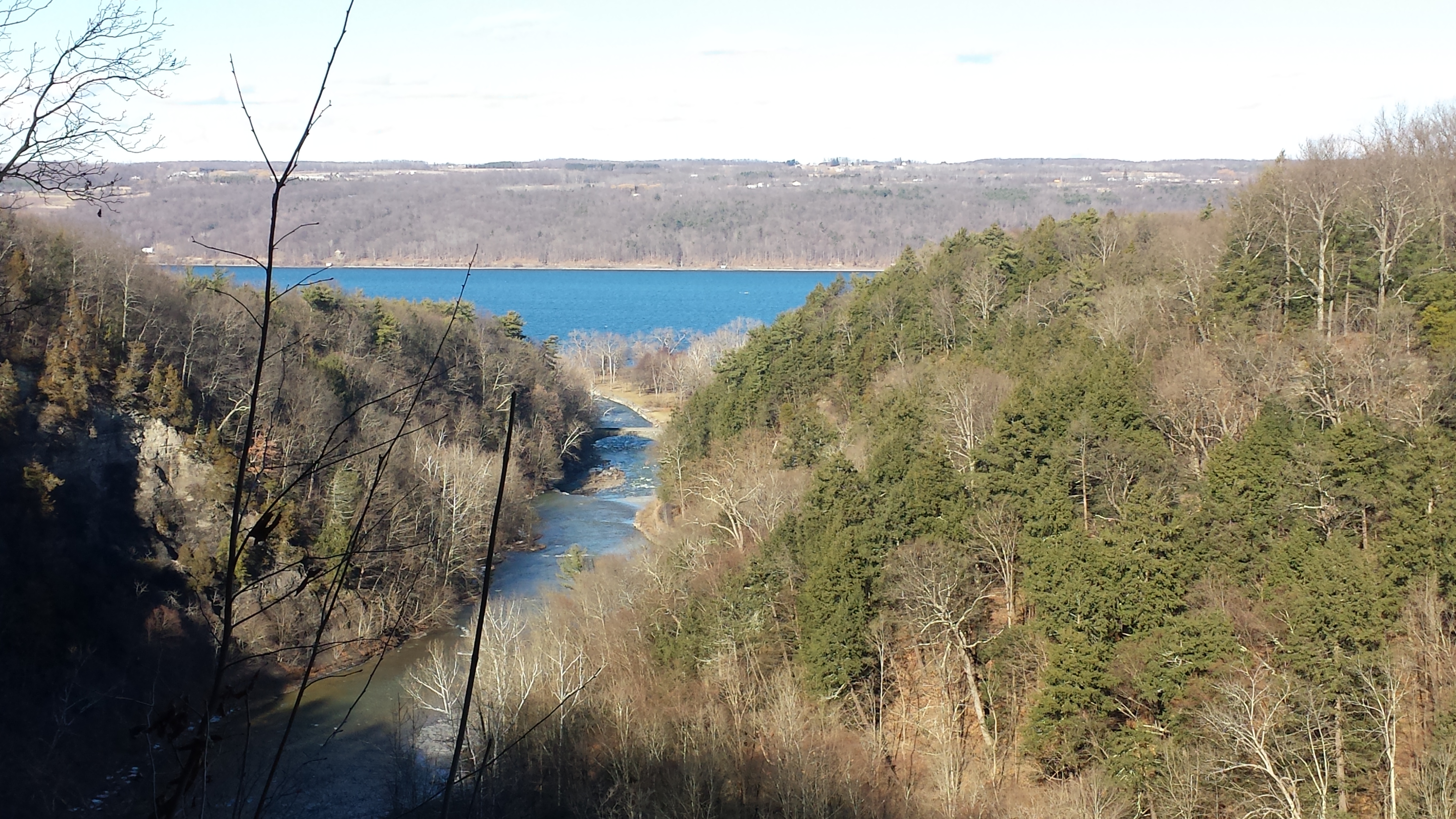
These photographs are from the cell phone. Here is the lake and a portion of the gorge. Yes, the lake is a dark blue on sunny days and is ice free this year. Another trail follows the gorge floor to below the falls, I opted out of the additional 1.5 miles today in the interest of finishing well before sunset.

Click any photograph to visit my Fine Art version of Taughannock Falls.

Taughannock Gorge and Cayuga Lake from the North Rim Trail – CLICK ME for my Fine Art version of Taughannock Falls.

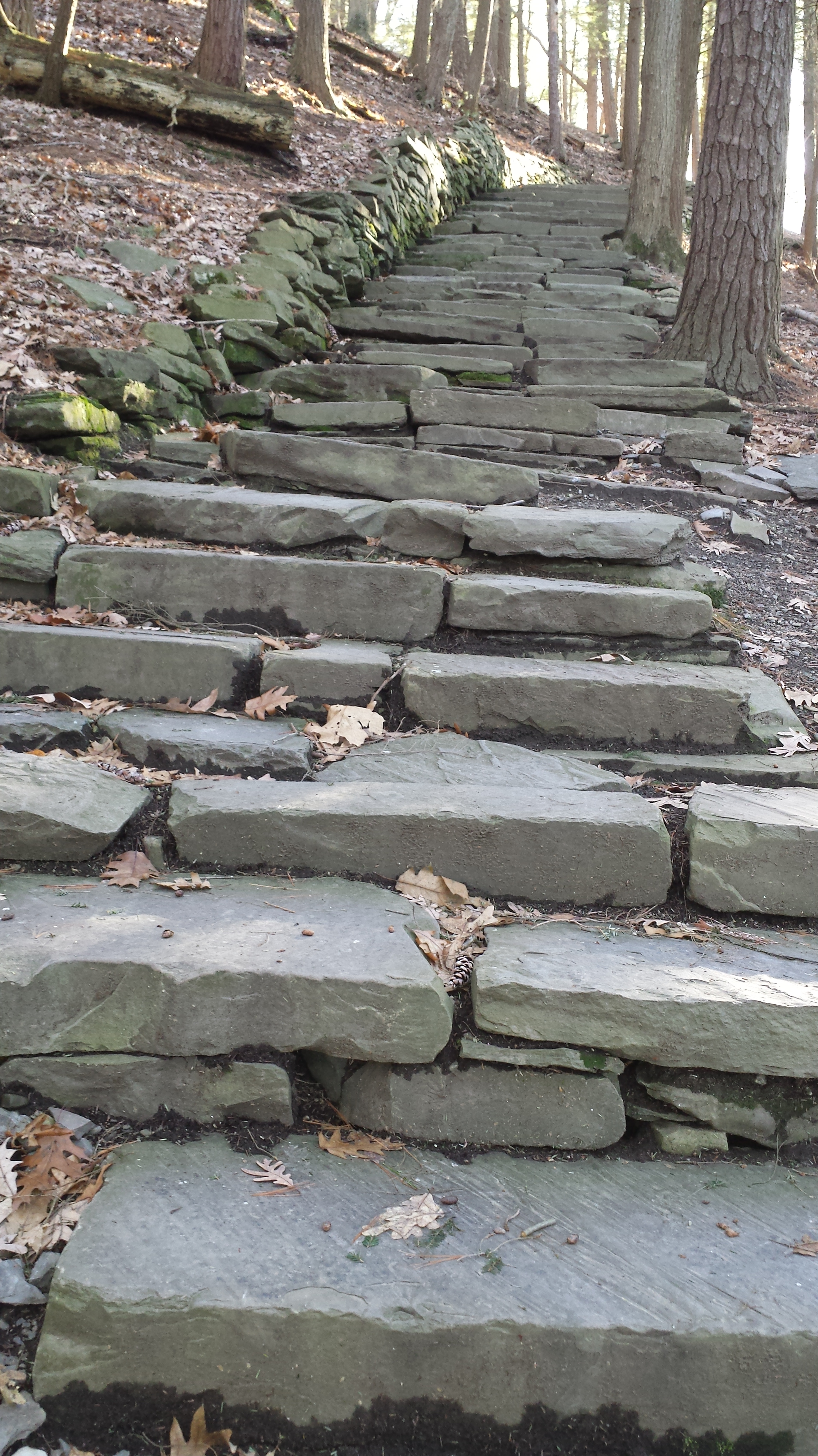
I have a few versions of these South Rim Trail stone steps taken at this perfect time of day, the low sun through the trees. Built in the 1930s by Roosevelt’s Civilian Conservation Corp, the steps and the entire trail are a work of art.

Climbing up from the gorge to the South Rim Trail – CLICK ME for my Fine Art version of Taughannock Falls.

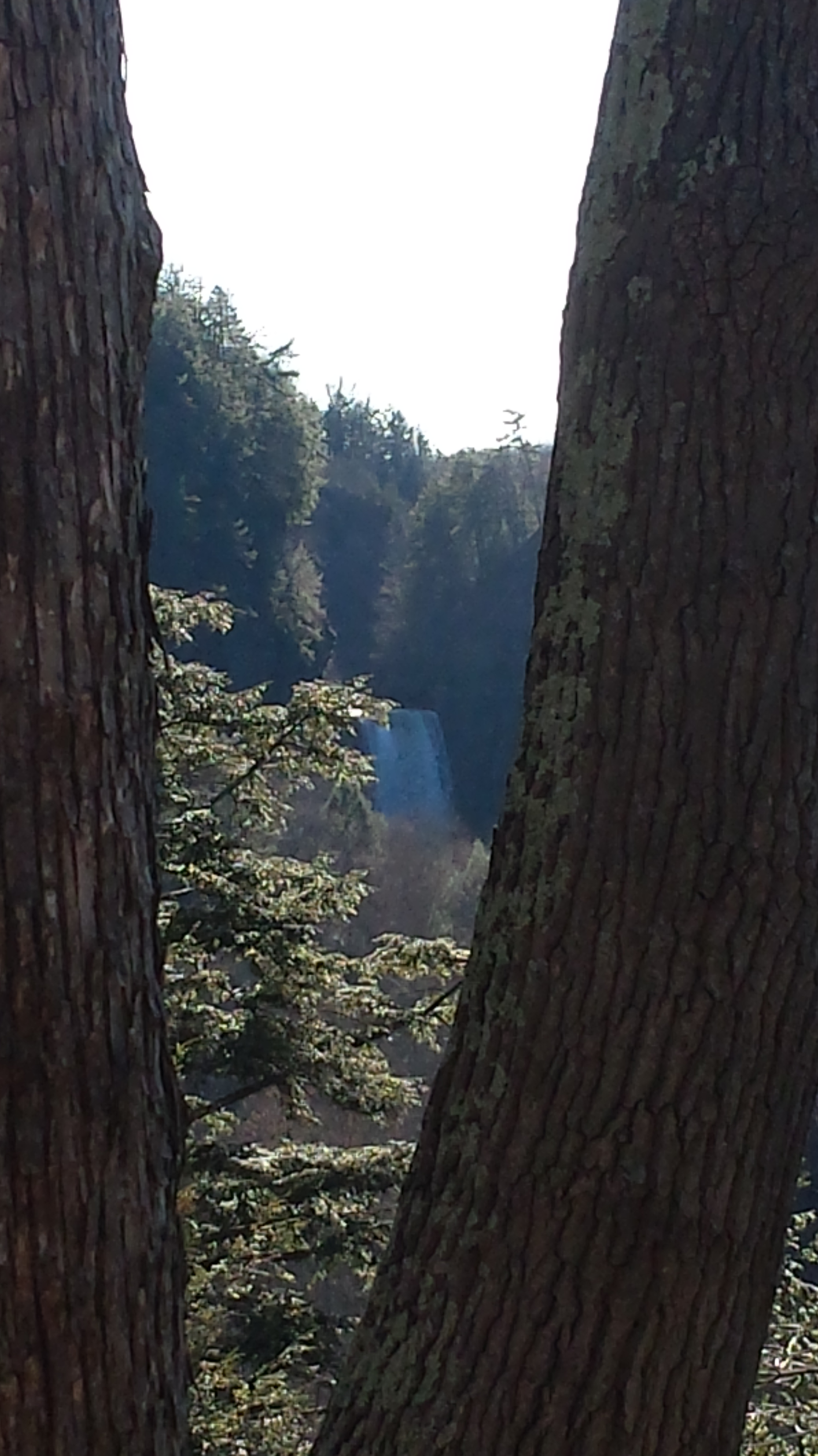
The far view of Taughannock Falls always fascinated me. I’ve never done it justice. There are several view points from the South Rim, overlooking the gorge were it bends to the south with only the upper third of the falls visible. The flow today was photogenic. I used the cell phone zoom to catch the view between the trunks of two trees.

View of the falls from the South Rim – CLICK ME for my Fine Art version of Taughannock Falls.

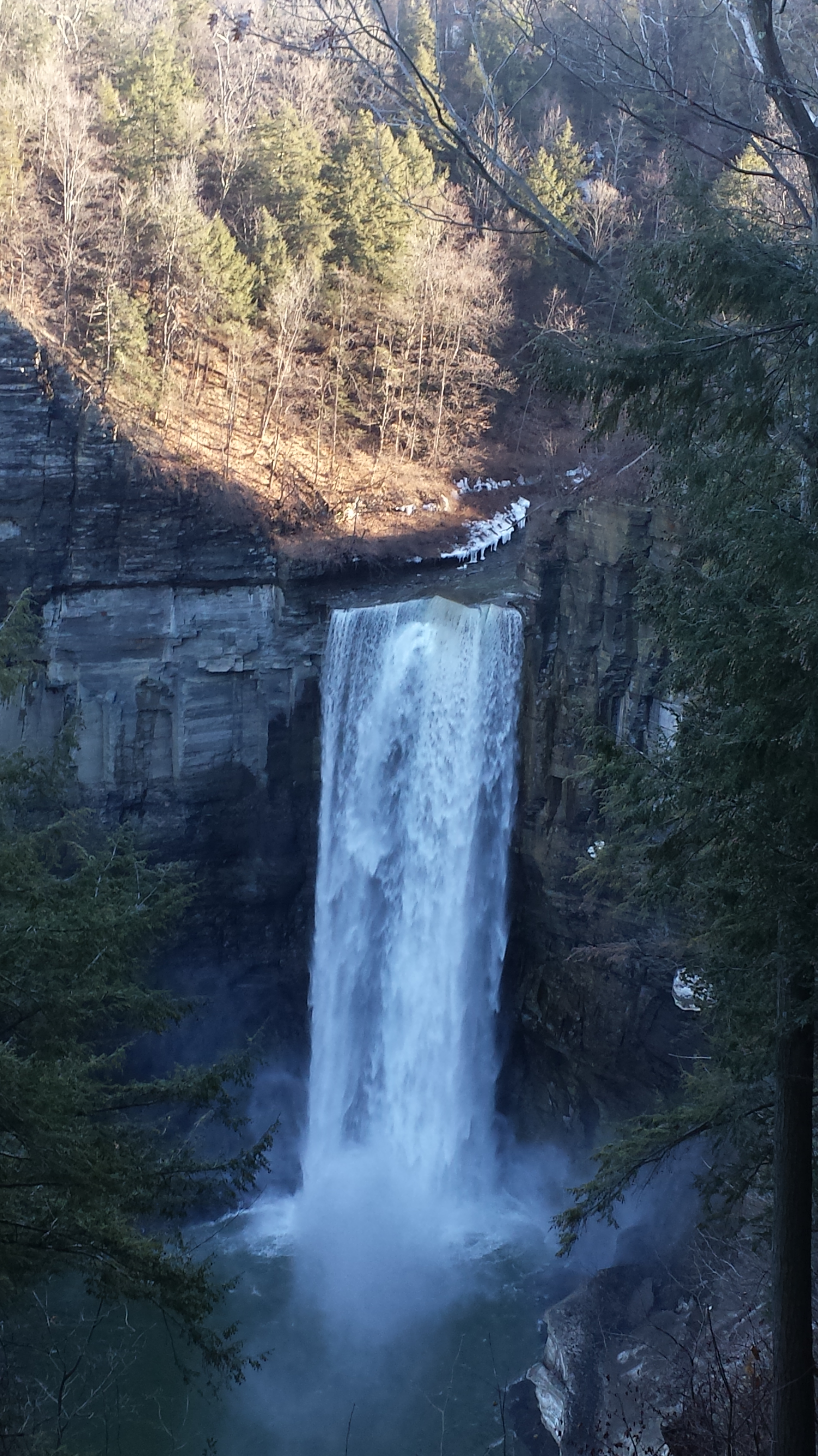
The top of the south rim was the only ice. It is there through April some years. Here is the closest, full view of Taughannock Falls from the North Rim. It is the same view you will find in my Fine Art version of the falls.

View of the falls from the North Rim – CLICK ME for the Fine Art version of Taughannock Falls.

And a cell phone video of the falls for the full effect.

Enjoy!!

Island Romance

Happy Valentine’s Day with the original Moby Dick

Thinking about the Aran Islands for my posts, “Killeany Bouy” and “Inisheer Welcomes the 2014 Gaeltacht Irish Football champions” brought me back to Isla Mocha.

Herman Melville’s thoughts were in and around this island off the central Chilean coast when he penned “Moby Dick” in the mid-nineteenth century while sitting in the city of Boston.  He was brought Moby Dick not only by his own experiences on a whaling ship, almost certainly Melville owned a copy of Jeremiah N. Reynolds’ “Mocha Dick: Or The White Whale of the Pacific: A Leaf from a Manuscript Journal,” an true-life account of adventures around Isla Mocha.  Sometime around 1810 Reynolds personally experienced encounters with Mocha Dick after the crew of an Antarctic expedition mutinied, stranding him at Valparaíso, Chile where he remained for two years.

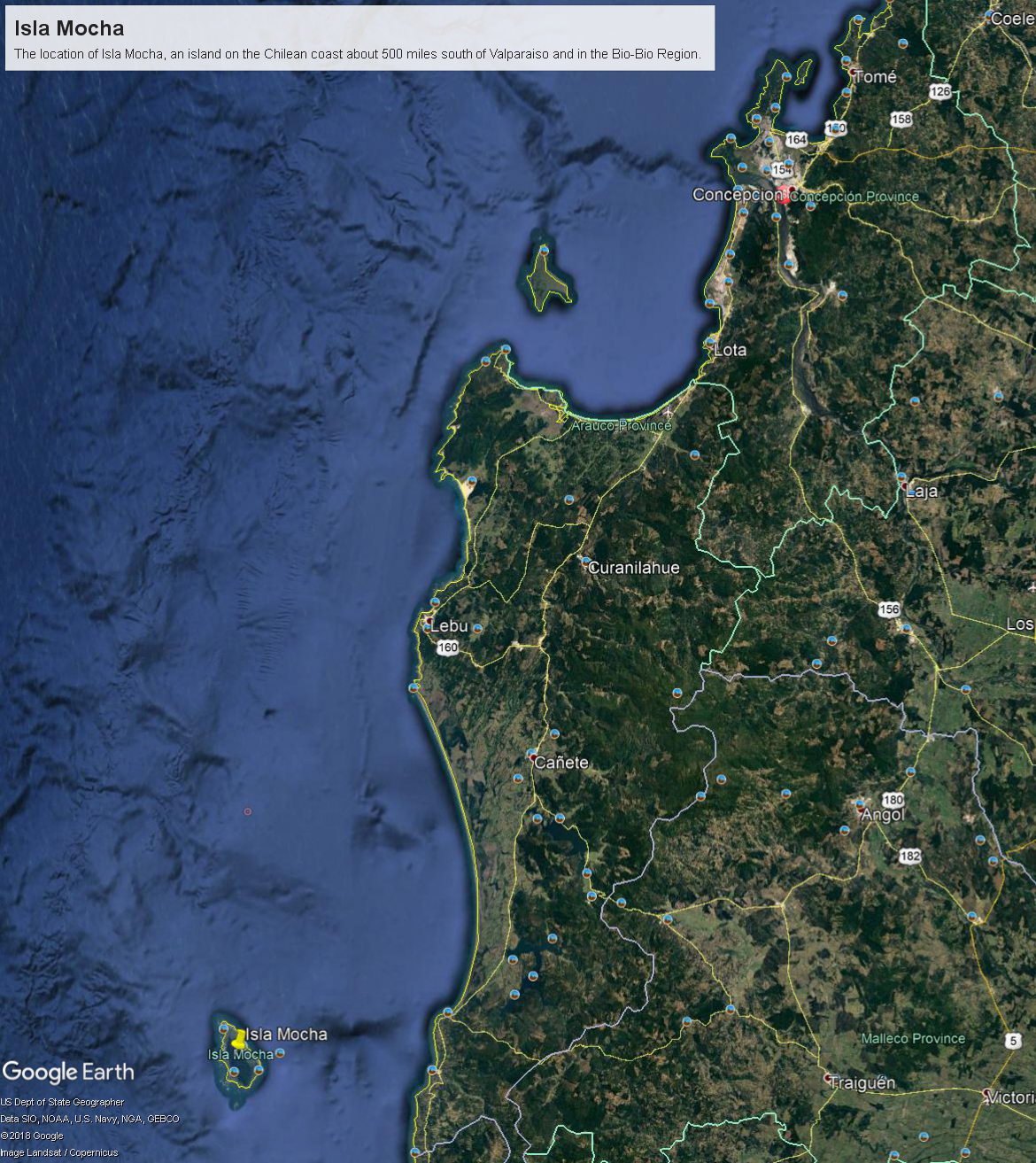
Located  38°21’45.62″S,  73°55’6.91″W, around 8 miles in size north to south, 3.5 miles east to west Isla Mocha is surprisingly simple to find.  A ridge of mountains run the north south axis, just 20 miles off the coast, a ship following the coast will find it easily, as I did from the balcony of the Oceania Regatta during a “sea day” of travel between Valparaiso and Puerto Montt.

MochaIslandGoogleMpasNarrow

Since waking that day I was on the lookout for Isla Mocha.  In preparation for our month-long cruise around South America every mile of our itinerary was scoured for interesting sights, experiences and information.  When I first learned of Isla Mocha (Mocha Island in English) and the connection with Melville reading about it in Boston, just as I was in Ithaca, one of my goals for that day was to catch sight of Isla Mocha as it rose from the horizon.

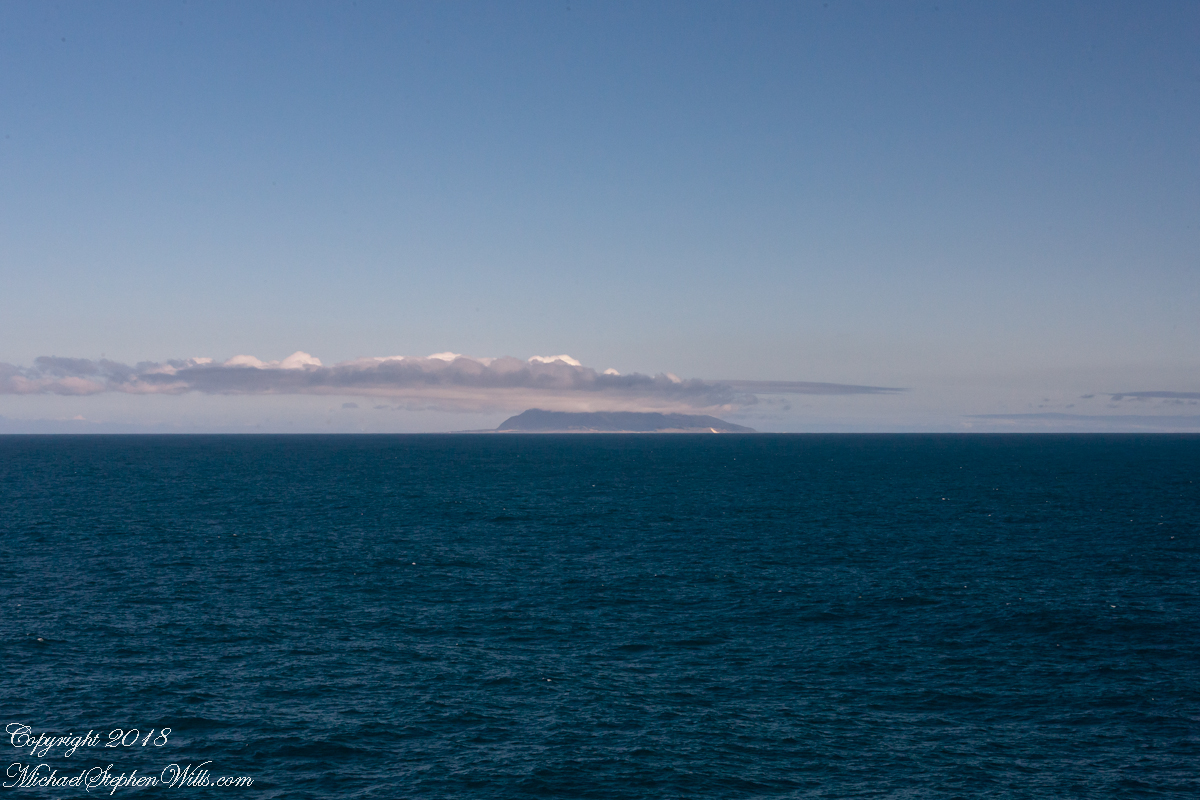
My goal was made easier for the cloud formation from the island mountains.  Here is my first photograph, taken from our balcony on the port side.  I chose the port side just for the landward view as the ship progressed southward on the western coast of South America.  The Canon EOS-1Ds Mark III was tripod mounted with an EF 70-300 f4-5.6L variable lens set to 70 mm.  We are northwest of the island with the coast just visible.

Isla Mocha First Sighting

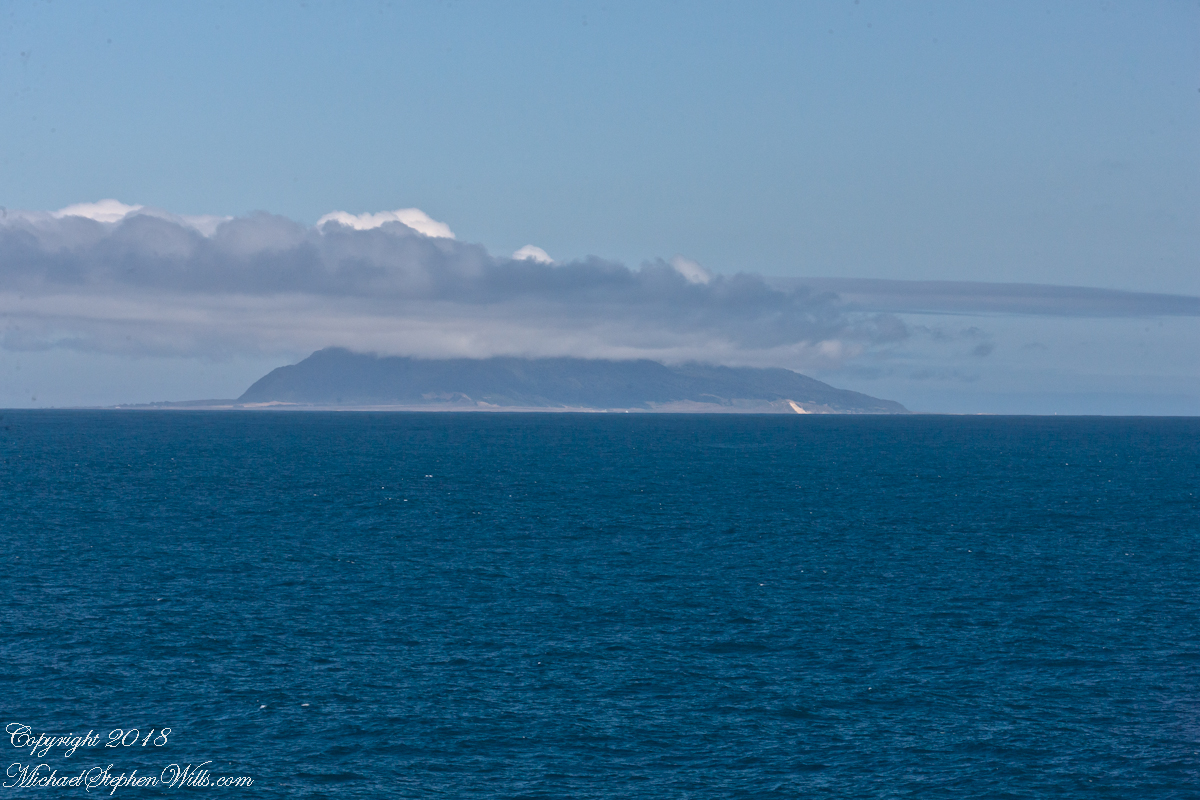
Another view with 188 mm focal length.  The ship must have turned eastward, as the view progressed the island came closer.  It was a fantastic thought to cruise above the subduction zone where the Nazca plate dives beneath the South American Plate.  In the distance, on a clear day, the volcanic cones Villarrea and Quertrupillan are visible.

RomanceOfIslandsMochaIsland2016-2

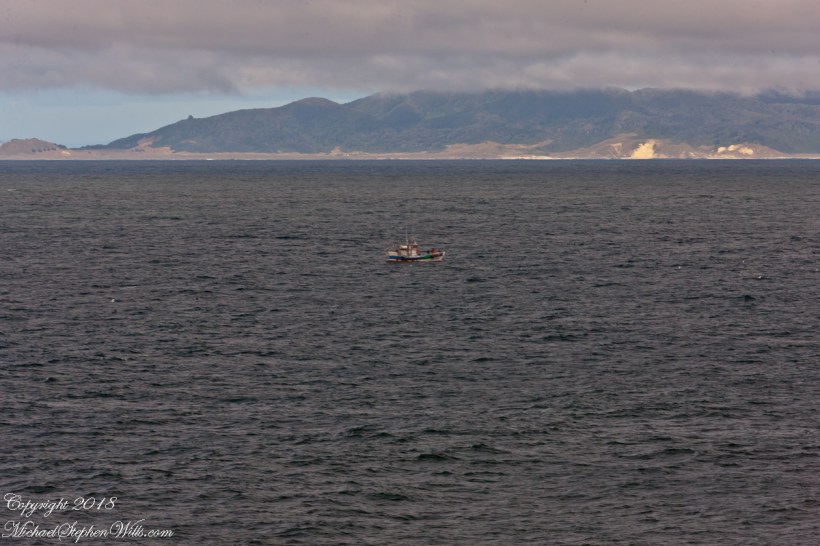
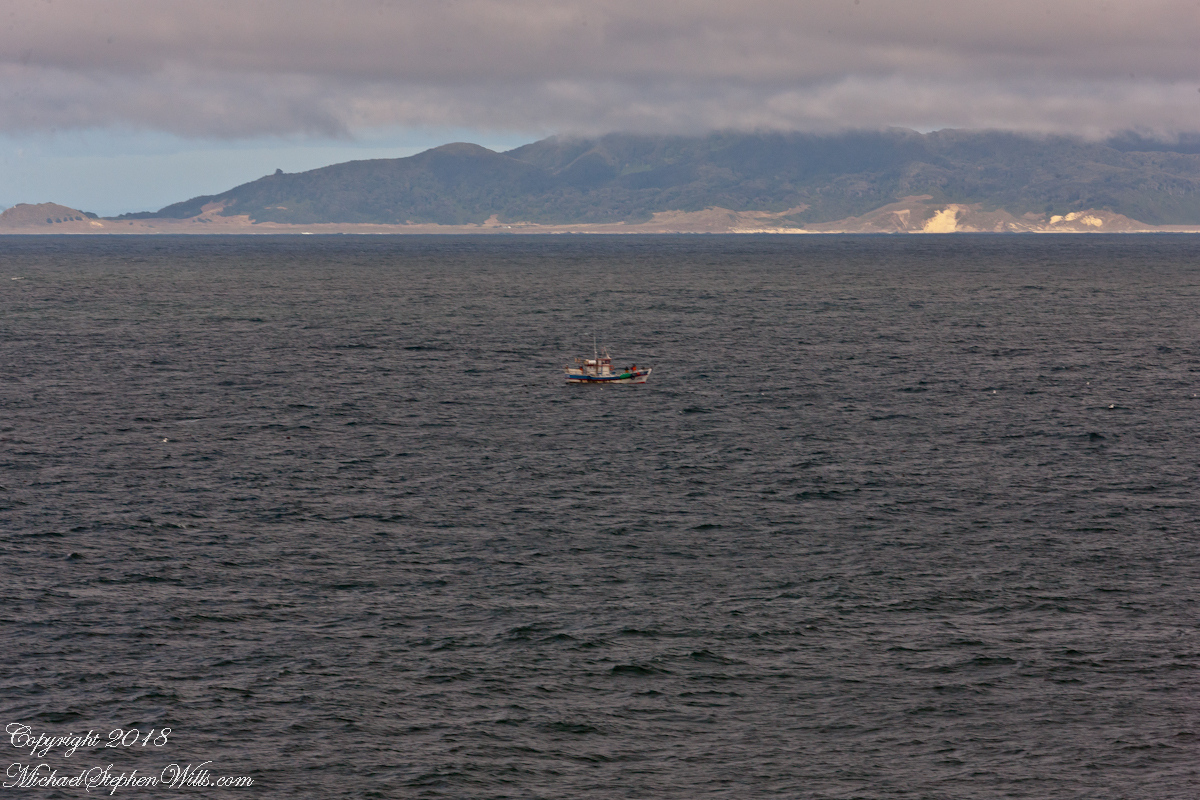
With the island due east, only a few miles away, the lens at 221 mm focal length.  A fisherman is having an easier day in a calm sea.  The indigenous people told stories of the souls of the dead travelling west to Isla Mocha.  Pirates used the island as a resupply base.  The fishing boat was the only sign of life.

RomanceOfIslandsMochaIsland2016-3

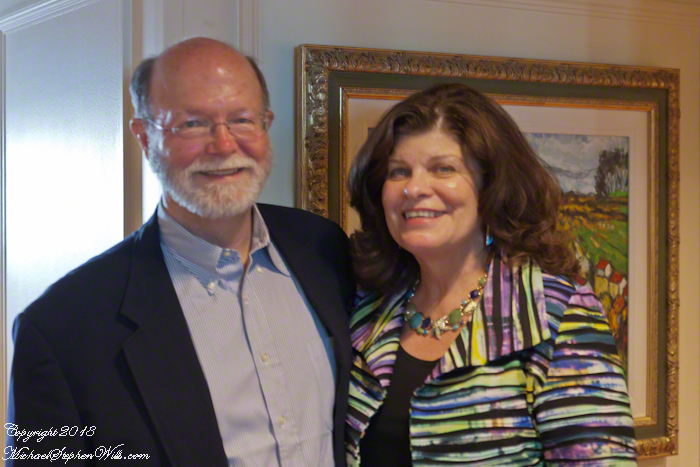
That was February 14th Valentine’s Day.  With Isla Mocha passing into the distance I changed for an evening with Pam.  Here we are headed to dinner, somewhere off the coast of Chile’s Lakes (and volcano) region.

Valentines Day 2016

Valparaiso Connections VIII

Captain Arturo Prat and Chilean Naval Tradition

Captain Arturo Prat and the Esmeralda

After reading my last post “Valparaiso Connections VII” why Captain Pratt was so honored by the nation?  

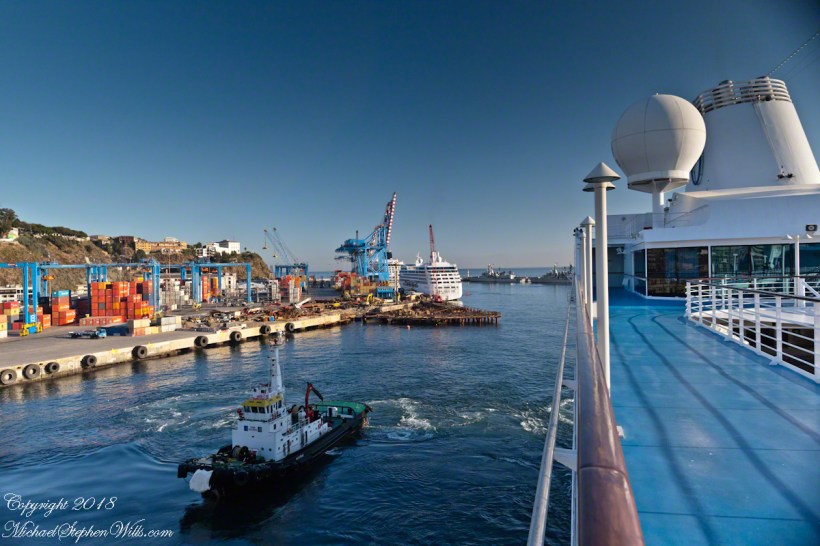
From the starboard side of the Regatta while docking at Valparaiso. On the right is the port with shipping containers, beyond are the Chilean Navy frigates 
Almirante Blanco Encalada and
Almirante Latorre at anchor.

On that morning, May 21, 1879 the two Chilean ships blockading Iquique port were surprised by two Peruvian warships from the port of Callao, the monitor Huáscar and armored frigate Independencia.

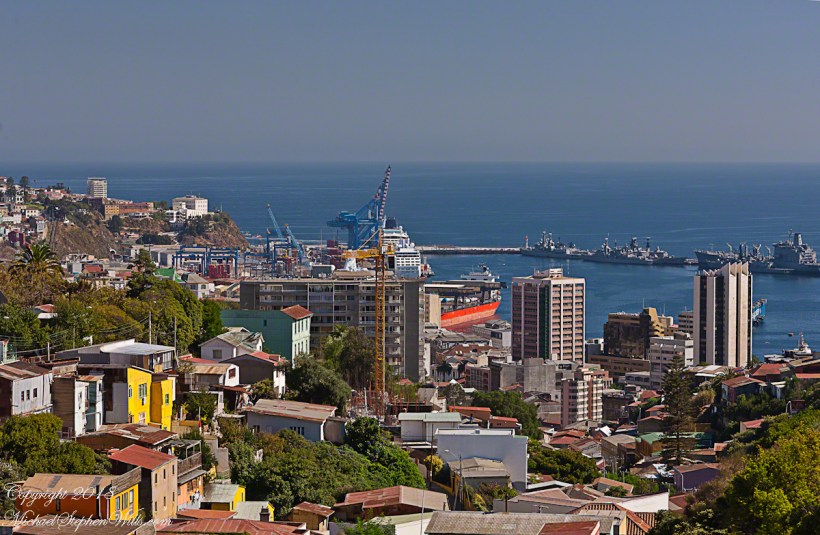
View west from La Sebastiana, former residence of Neruda, on Florida Hill.  We look over the city, docks and Chilean Naval Vessels to the Pacific Ocean.


Arturo Prat commanded the Chilean corvette Esmeralda. 
 Carlos Condell de la Haza  was Covadonga’s commander.

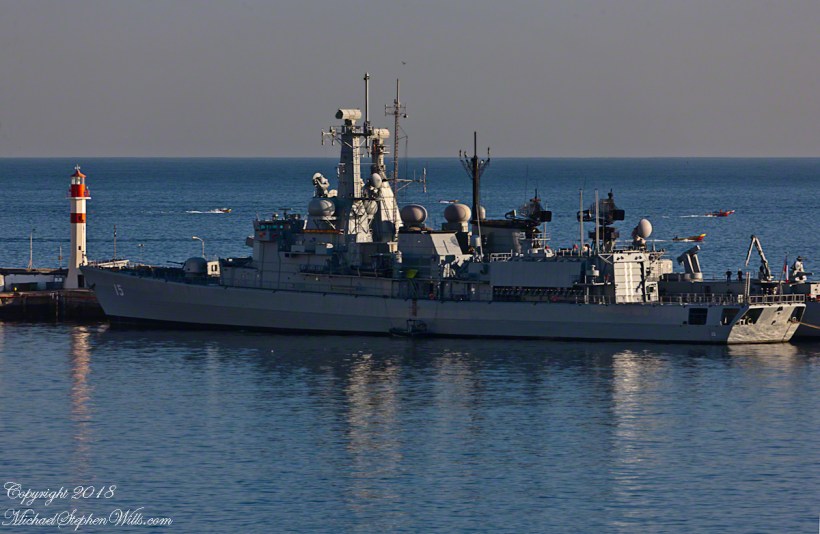
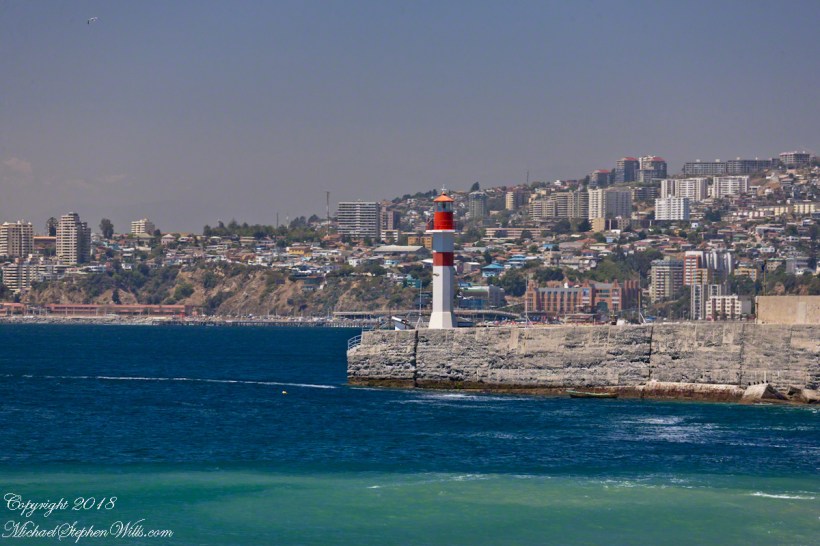
CS Almirante Blanco Encalada (FF-15), a modern frigate of the Chilean Navy at anchor.  With the Durante Point lighthouse, several fast fishing boats returning with their catch. 

The Chileans are outgunned by the Peruvians in armored ships.  Condell fled in the Convadonga, pursued by the Independencia.  This was the wiser course and most militarily effective because, following the Convadonga into shallow waters the deeper draft Independencia lost advantage when it ran aground and was lost. 

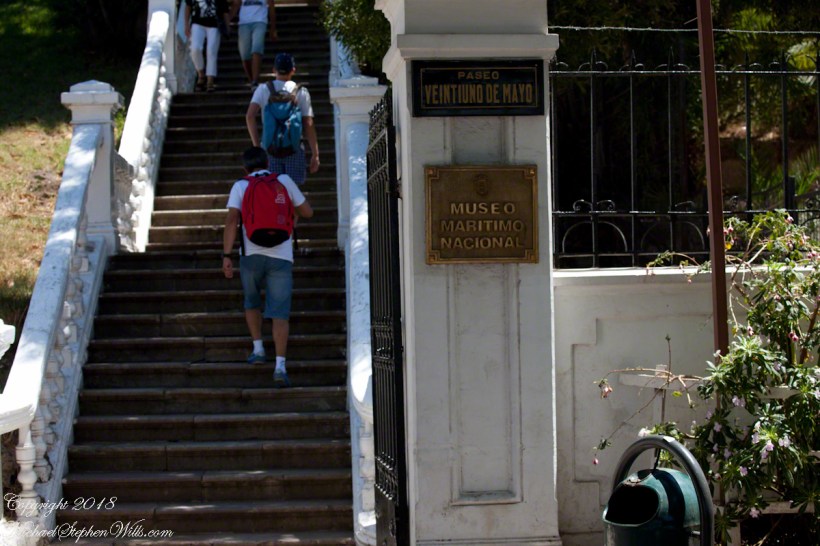
We did not have time to explore the National Maritime Museum.

Prat stood ground in the middle of the bay, any canon shots simply bounced off the heavily armored Huascar.  The Esmeralda suffered shot after shot until the command of the Huascar, Captain Graf, decided to ram the Esmeralda to force a surrender and safe useless death.

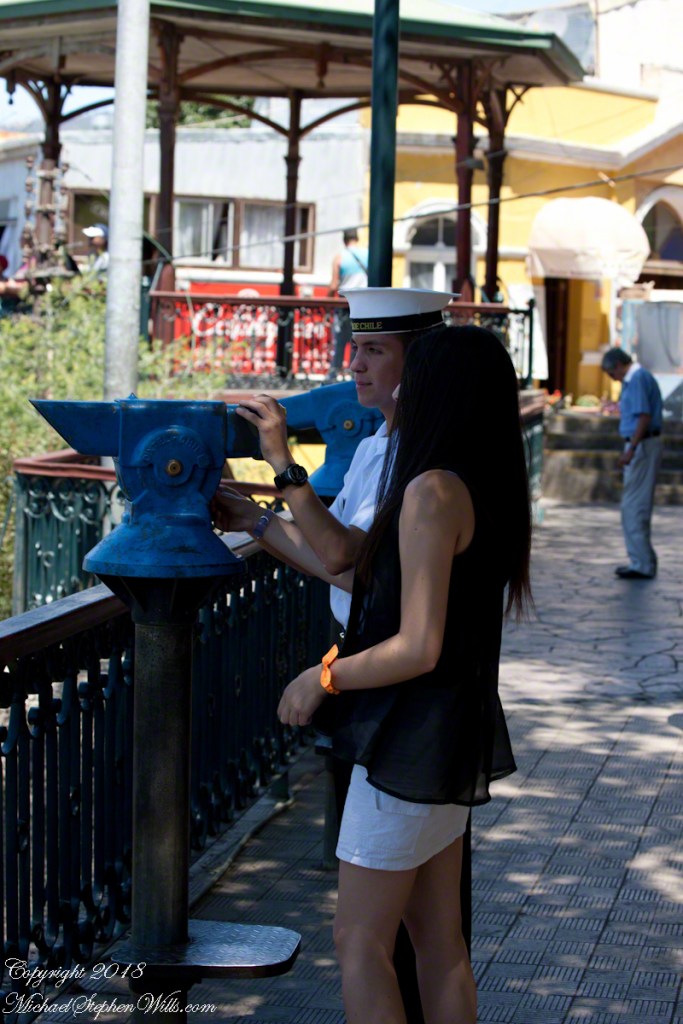
Naval Cadet with friend viewing the ships at anchor.

At the first ram to the stern, as the ships were in contact, Prat ordered an attack, “Let’s board, boys.”  In the confusion only two seamen joined   Prat.  One failed to board, Prat and Petty Officer Juan de Dios Aldea attacked.  Dios Aldea was mortally wounded.  Prat continued to advance alone, to the amazement of the Peruvians, awed at his courage.  Prat was gunned down on the deck of the Huascar. 

He crew watched in horror.  When the Esmeralda was rammed again, this time in the bow, Sublieutenant Ignacio Serrano lead  of 10 Chileans to board for an attack with machetes and rifles.  They were massacred by the mounted Gatling gun, only Serrano survived.  

The example of Prat and his crew is taught today.  Arturo Pratt is the most common street name, as well as plazas, buildings.  Four major warships were named after him.  The current active ship is the frigate FFG 11, the Capitan Prat.  The Chilean naval academy is named 
Escuela Naval Arturo Prat.  His portrait is on the 10,000 peso Chilean note.

Lighthouse on Punta Duprat

Valparaiso Connections VI

Memories of Allende and Italy

Memories of Allende and Italy

Ricardo left a blank between the French Memorial Column of the Parque Italia, seen above.  He made of mention of Salvadore Allende Plaza.  The above photograph includes a graffiti inscribed corner of the set of steps, a platform and the area in front, a plaza, dedicated to the memory of Allende and named “Plaza del Pueblo Salvador Allende Gossens” on the 100th anniversary of his birth, 2008.  The structure was not new, it was called “The People’s Plaza”, the name change was pushed through by Alberto Neumann, communist councilor.  So the suppression and torture (see “Valparaiso Connections V”) was not successful in wiping out the ideals, such as they are.  

The accomplishments of the Allende Presidency are another matter.  The Macroeconomic Populism policies he implemented left the economy in tatters.  We have only to look at the current state of Venezuela to see the entirely expected results of this economic model: hyperinflation followed by stagflation and implosion.  The reactionary military coup of 1973 was, in the essentials, a rational response and a rescue from economic and social disaster until the reaction itself descended into madness.
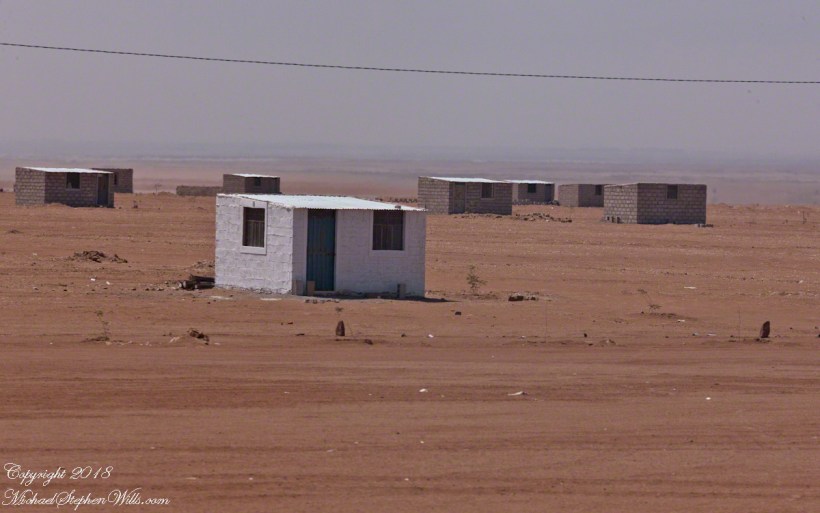
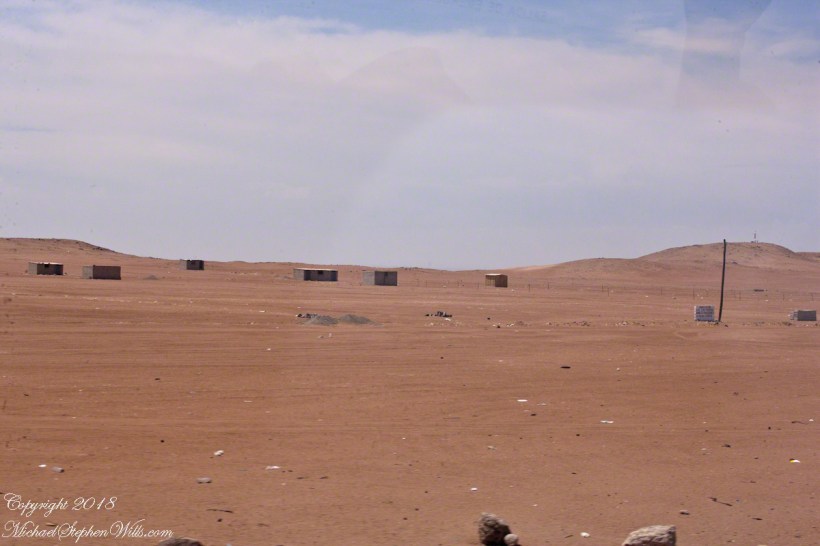
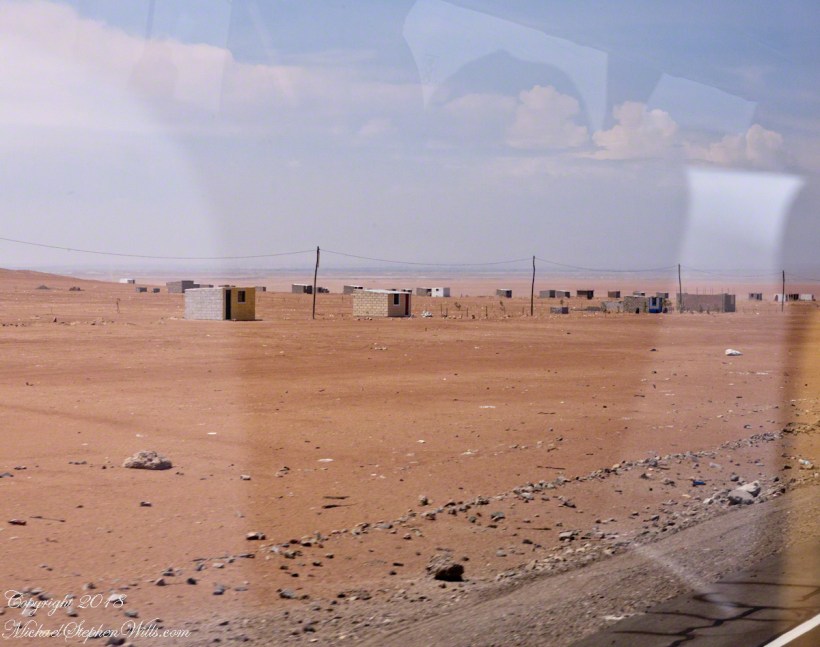
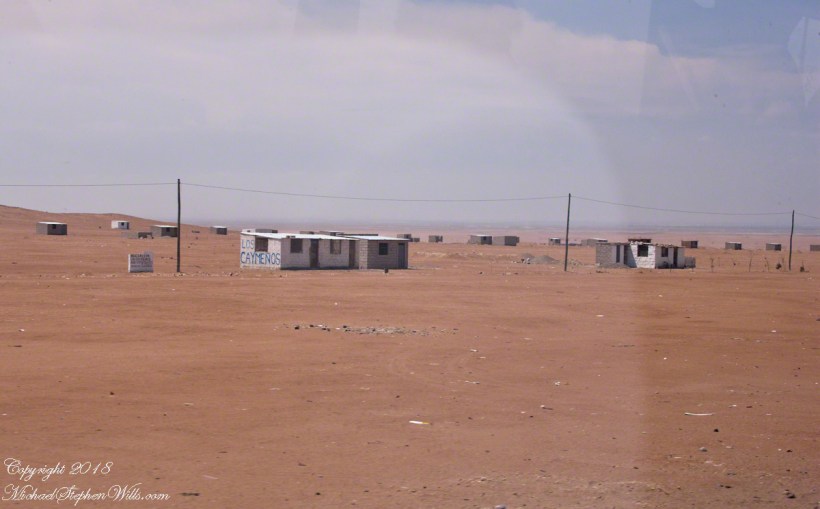
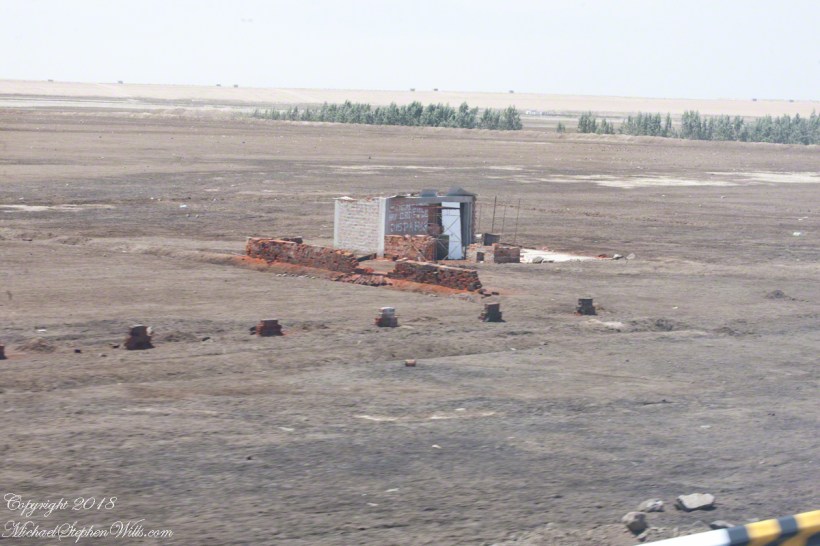
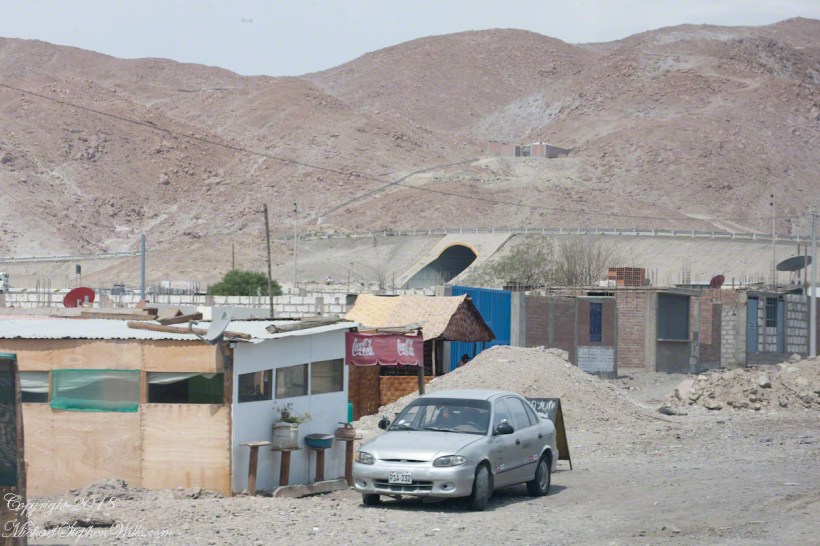
The following series of photographs are from a neighboring country, Peru, are an illustration of the pressures the political elites of Chile are negotiating.  Taken from the road between the port of Mollendo and the city of Arequipa, on a vast, waterless plain.

Migrants from the Titicaca Region formed a cooperative named “Asociacion Las Caymenos Agro Exportadores”.  It is the named scrawled on the small cement brick wall.

Desperate people from rural areas migrate to cities, form associations or regional clubs based on a common origin, and grab land as a group.   

In this case, it is property useless for the named purpose, “agricultural export.”  What they have is a dream. a dream of the government directing water to the area.  

Towards this end, individuals of the group mark out plots using rocks and build structures from concrete brick and metal roofing.  

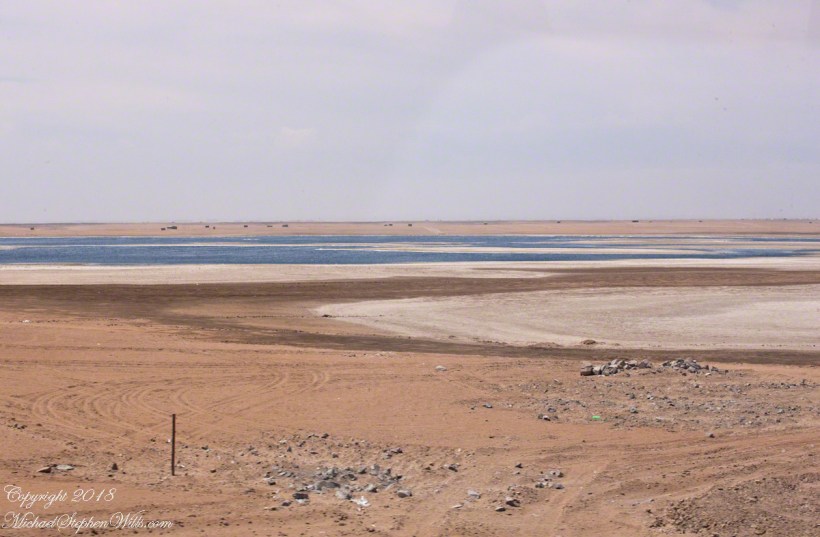
This small patch of water is the basis of their desperate hope.

This is a more consolidate group of migrate squatters on the road called “1S” near the turnoff for Lima and a place named La Reparticion.

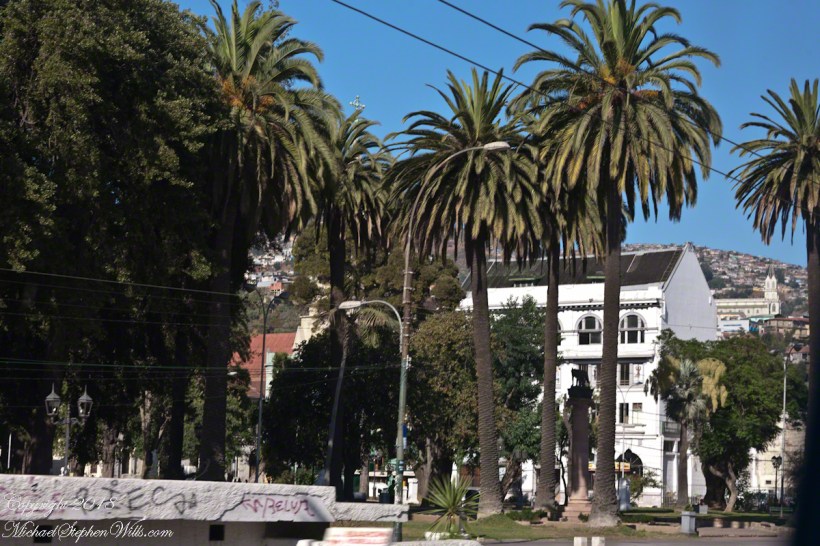
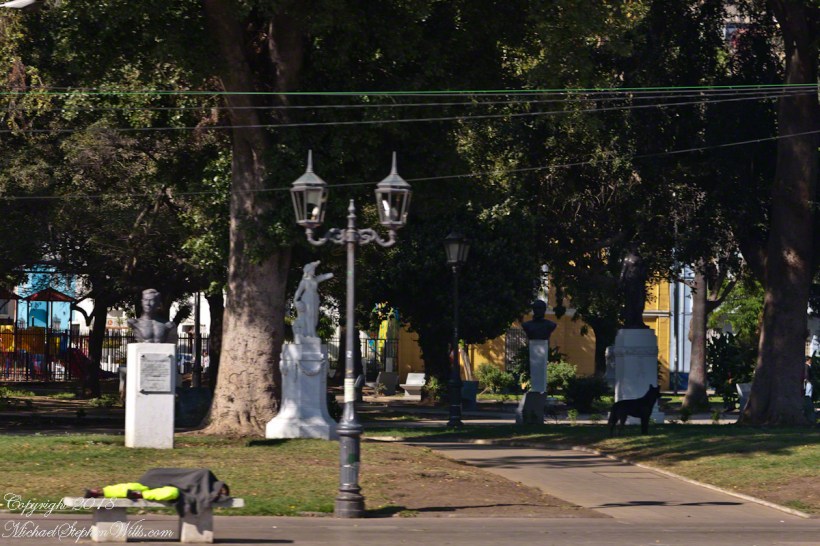
Dreams for a better life, offset by desperate circumstances bring us back to Valparaiso and the Parque Italia adjacent to Allende Plaza.  The park is a small patch of green, some wonderful trees, with statuary and monuments dedicated to people of Italian heritage.

Beyond the sleeper are statues each on a plinth.  The second from the right is a bust of Giovanni Battista Pastene, a gift from the city of Genoa dedicated October 12, 1961.  Pastene was the first governor of Valparaiso (the region, not the city) in the 16th century.  He came to Honduras in his own ship, enter the service of Pizzaro and, as master of the ship Conception, was a maritime explorer.

P

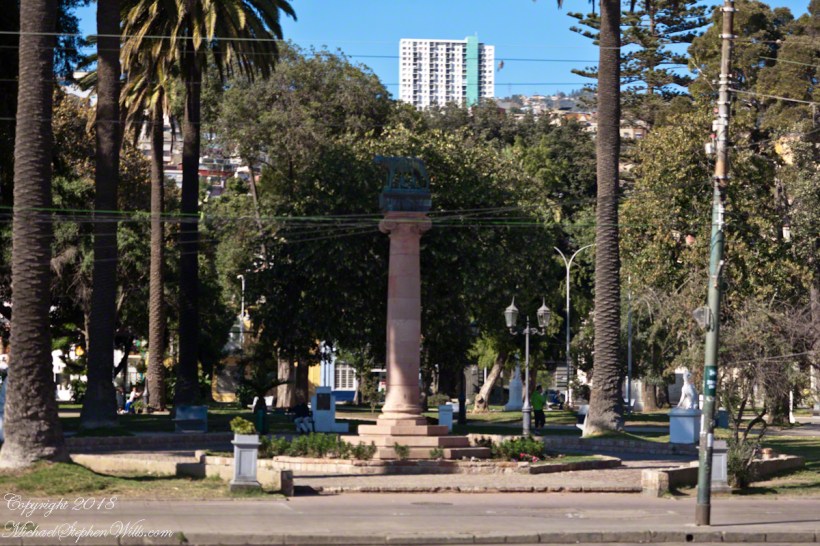
The Italian refugee collectivity of Valparaiso presented this column, in 1936, surmounted by a bronze sculpture of the Capitoline Wolf feeding the infant founders of Rome, Romulus and Remus.  It is a copy of an ancient statue kept on Capitoline Hill, Rome, Italy.


The wife of Allende was of Italian heritage, Hortensia Bussi.  The 
Fire Brigade Sesta Compagnia di Pompieri Cristoforo Colombo, operates today from Independence Avenue.

Here we have a gathering of friends, sharing the shade and beverages on this Saturday summer morning.

Click this link for the next posting in this series Valparaiso Connections VII.

Valparaiso Connections II

the Chilean difference

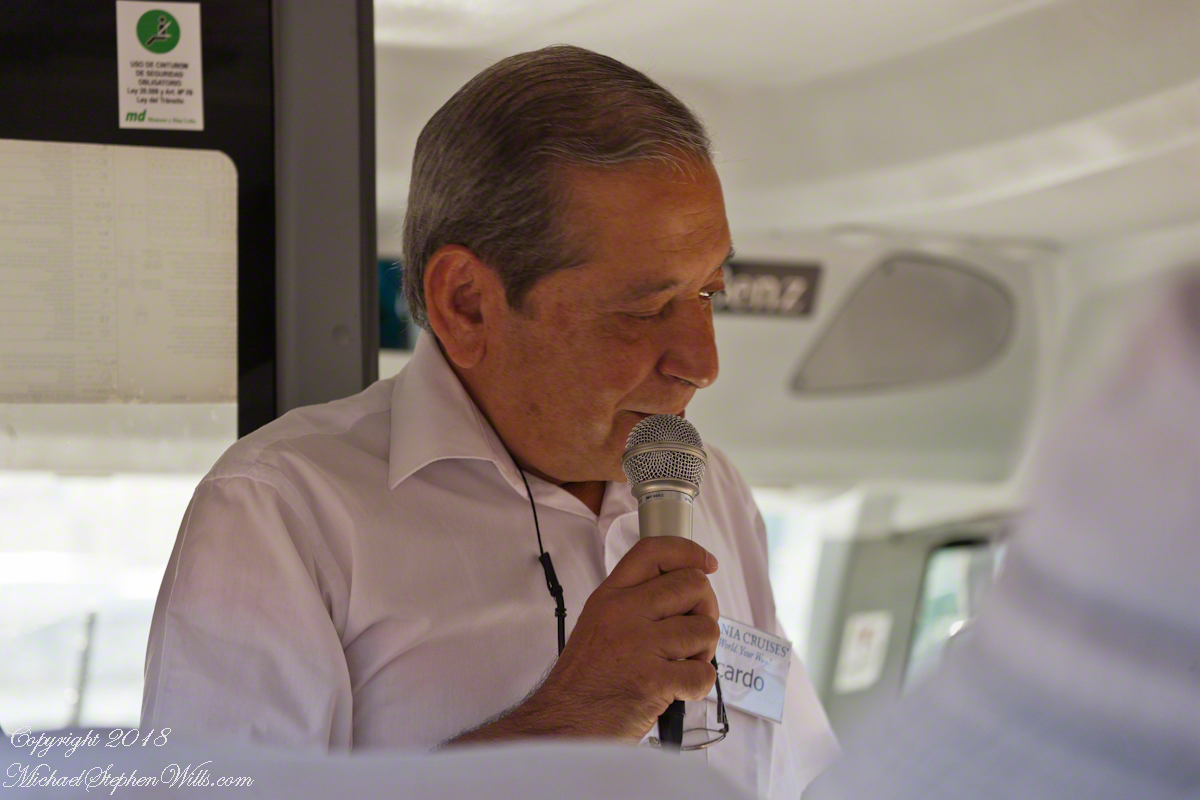
Ricaro’s name tag reads, “Oceania Cruises, your world, your way.”  I began my two previous blogs with Ricardo, “Valparaiso Separation” and “Valparaiso Connections I.” There’s a lot to be said for the Oceania tours.  Every one lead by a knowledgeable native of the host country, fluent in English, we became familiar, some more than others, with them personally, one non-representative example.  As were progressed down the coast from Iquique to Cape Horn we met a cross section of Chileans.  Unlike other countries, in Chile we met only unsmiling guards on the streets, no protest rallies.


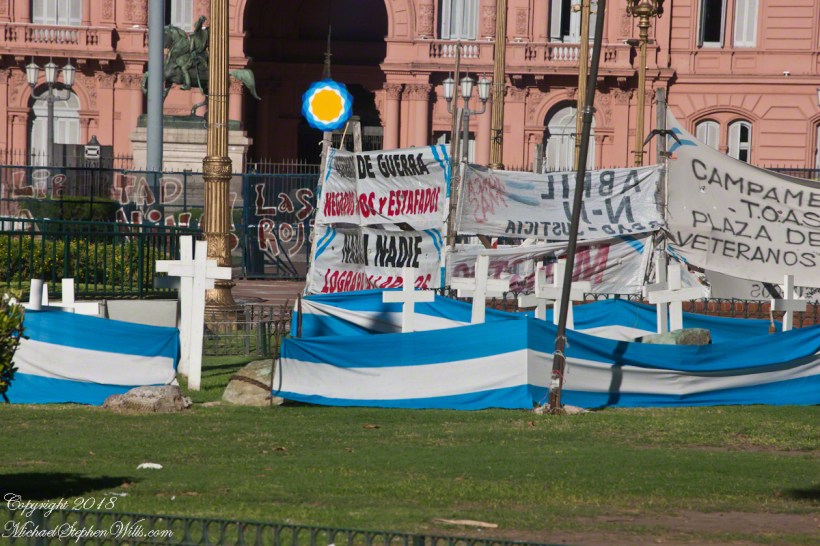
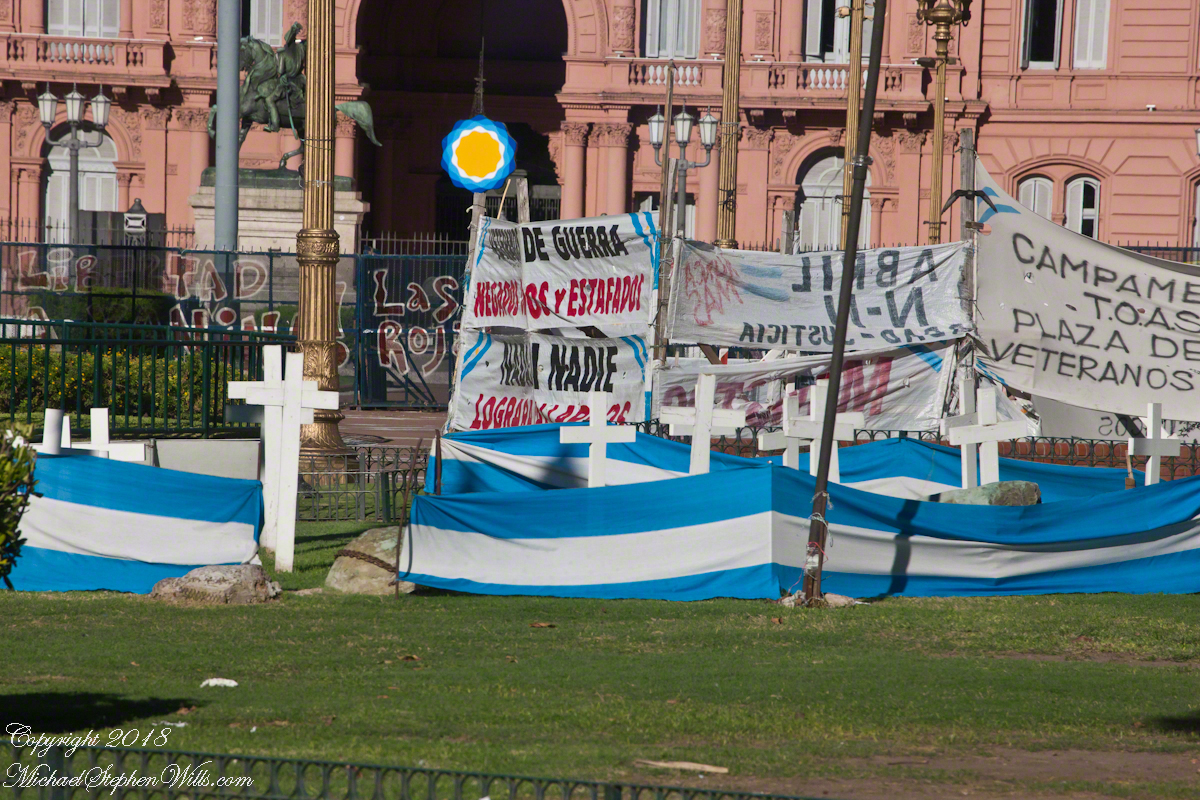
As the tour bus is about to turn down Varparaiso’s Argentina Avenue, here is a flash forward to an elaborate demonstration tableau in the Plaza de Mayo, the Casa Rosada as a backdrop, rose as in the color of bull’s blood used as pigment.  The protest was in support for veterans and causalities of the ill considered 1982 Falklands War.  We zoomed by the Parque De La Memoria, dedicated to the 30,000 people “disappeared” by the same military dictatorship of the Falklands War debacle.

http://bit.ly/MichaelsGalleries

Our entry to both Valparaiso and Buenos Aires was a cruise over the secret graves of thousands dropped, alive, into the ocean from military aircraft.

What is most chilling is the silence about this throughout our travels in Chile.  No memorials, no protests, silence, only stone faced military guards.

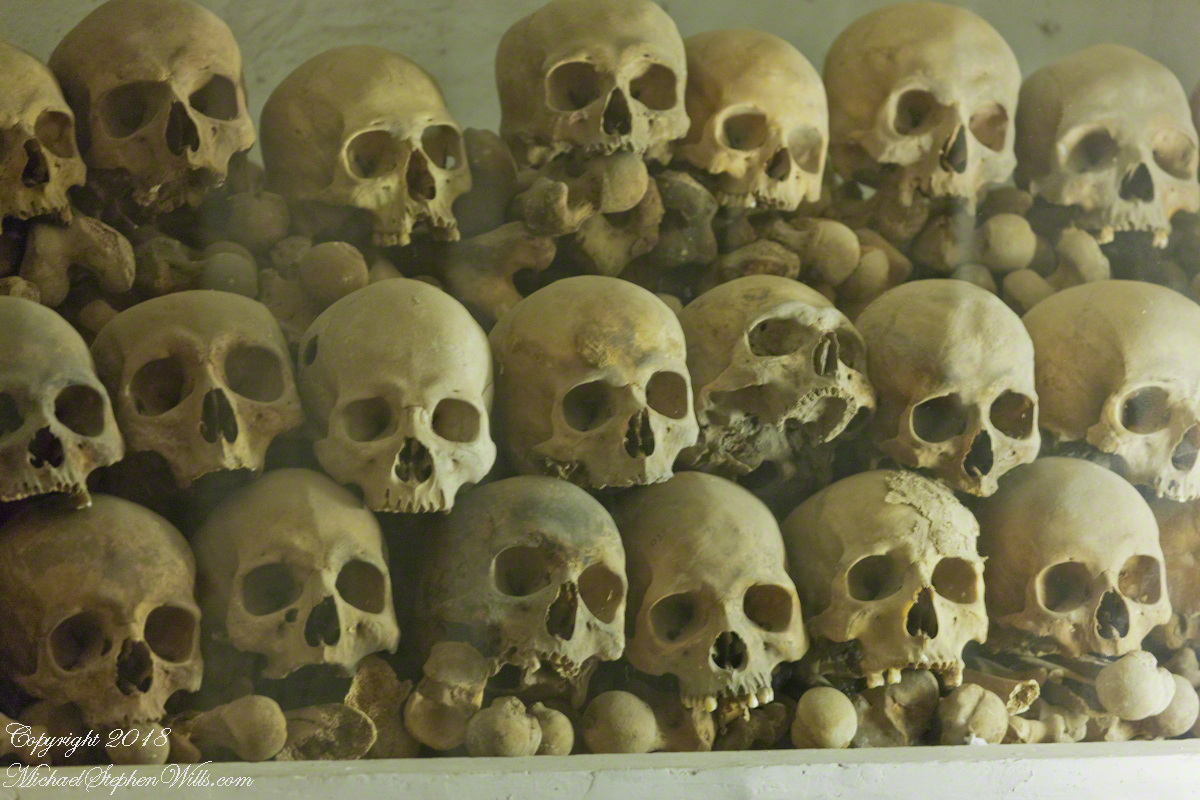
The following is from Basílica y Convento de San Francisco de Lima, beneath which are catacombs piled with disarticulated skeletons buried and cared for in the Catholic tradition .

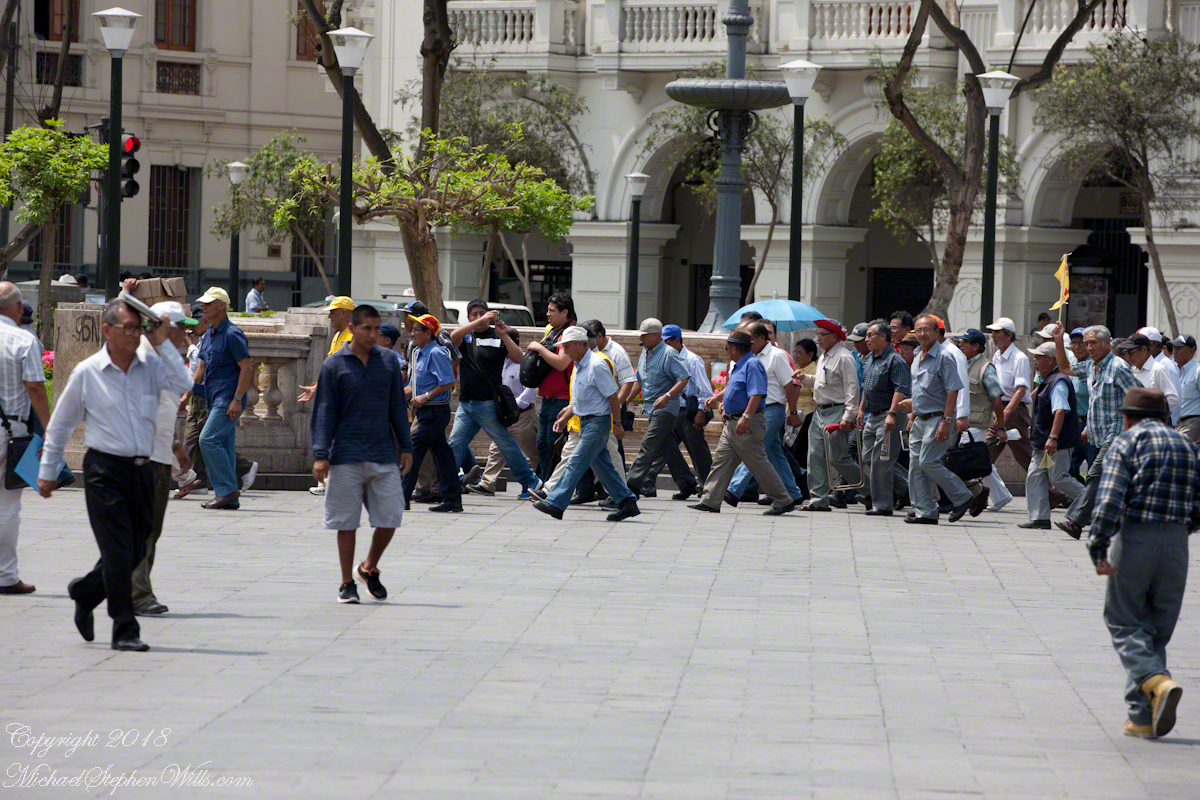
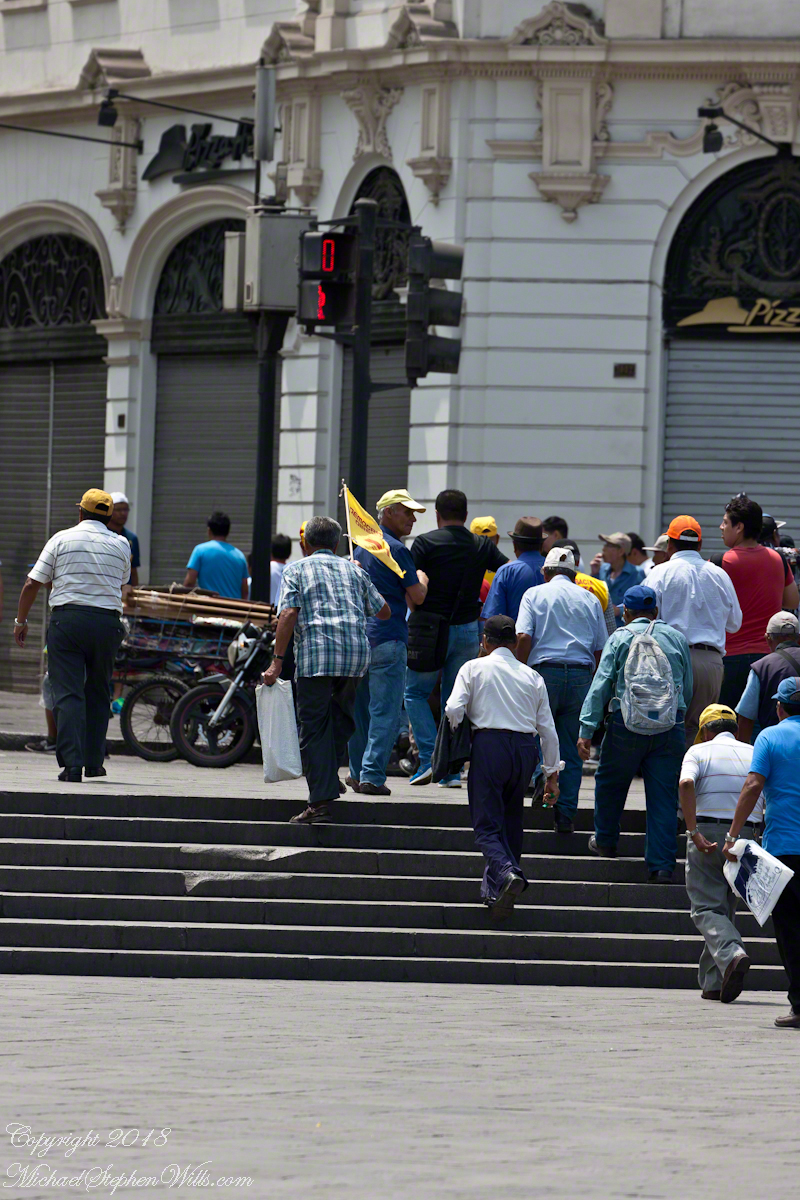
In Lima’s Plaza de Armas we witnessed this peaceful demonstration by pensioners protesting low payments.  To be honest, around this time, in Chile, there were huge demonstrations, hundreds of thousands in Santiago, about the same issue.

The Lima crowd was peaceful.

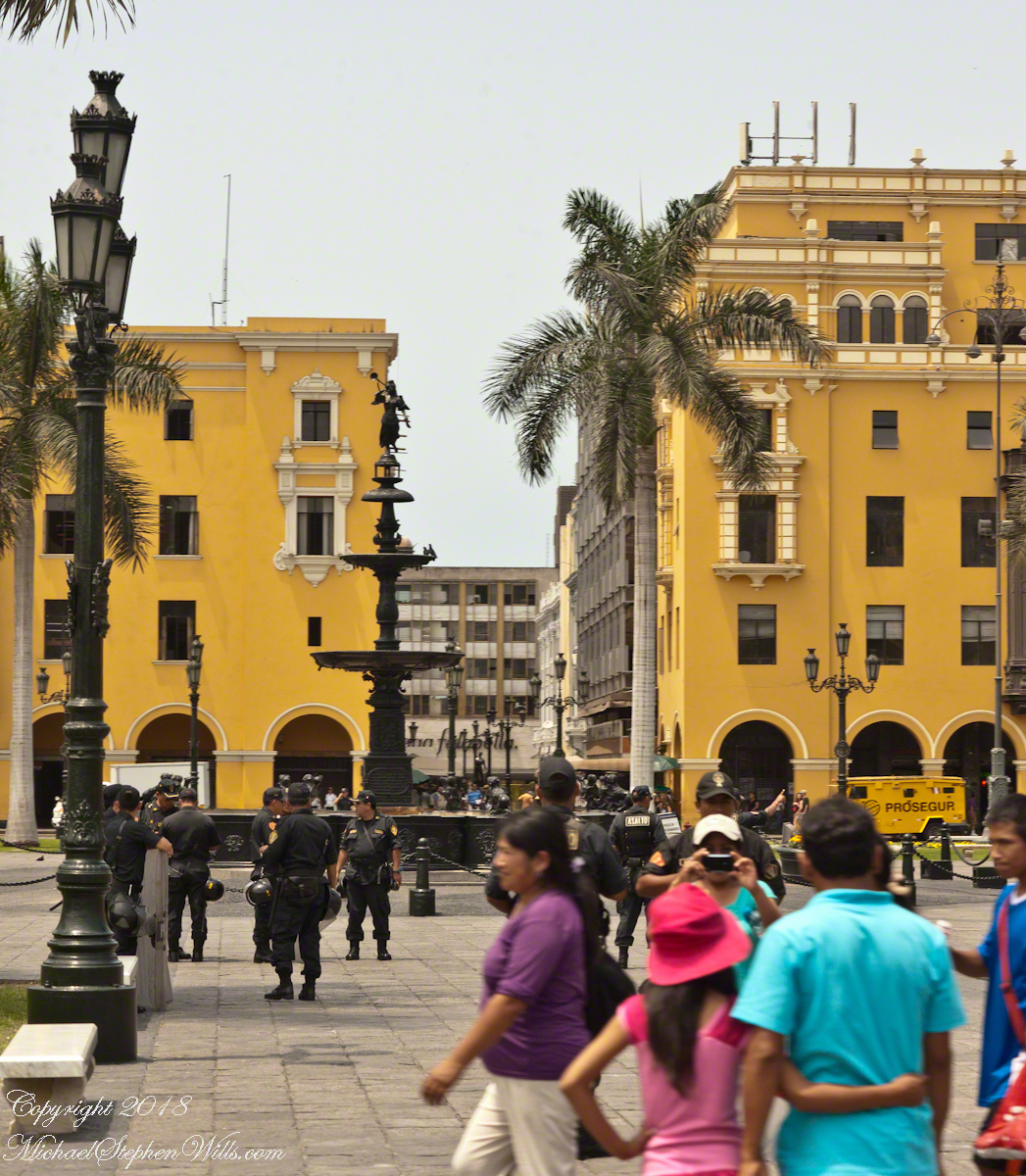
Watched by a heavy contingent of armed police supported by large “paddy wagons” to cart people away.  The vehicle marked “Prodegur” (i.e., prosecution) was one of them.  Given the history of government disappearances in the region, how brave the demonstrators must be.

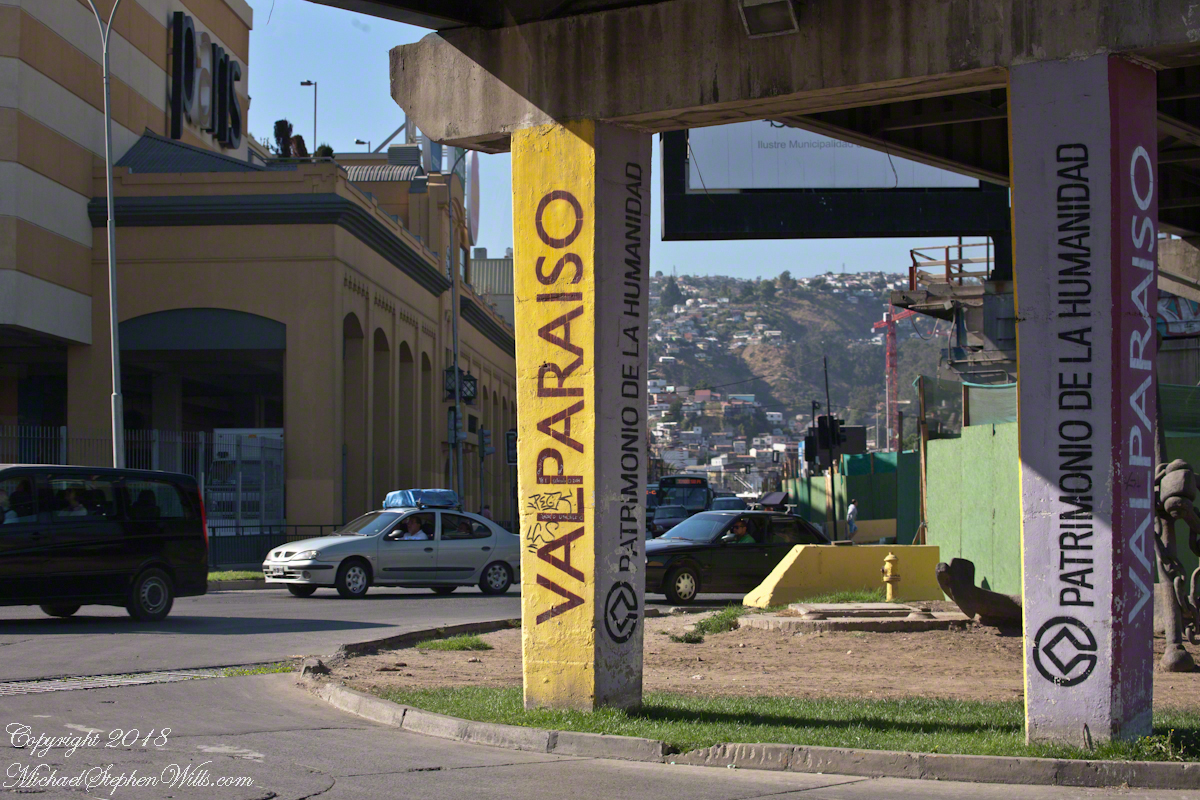
Our vehicle turns onto Argentina Avenue, passing under Spanish Avenue and these supports bruiting the “Patrimony of Humanity” status of Valparaiso.

Turning onto Argentina Avenue, the overpass support columns announce Valparaiso’s status as a World Heritage Site. It is the old city around the port which holds this designation.

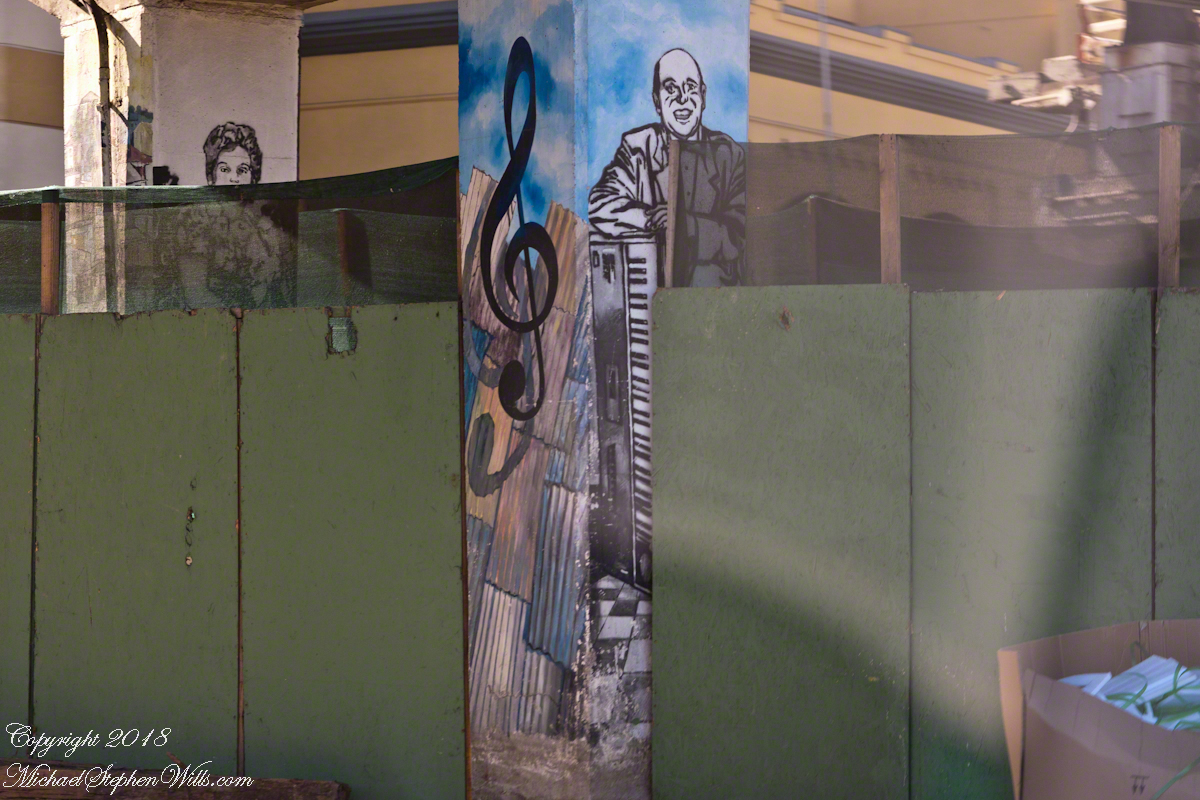
Other murals feature the zinc panels of the Old Town and cultural opportunities.  I noticed the pictured flooring is identical that of Hotel Brighton, see “Our Fifteen Minutes of Fame on Conception Hill.”

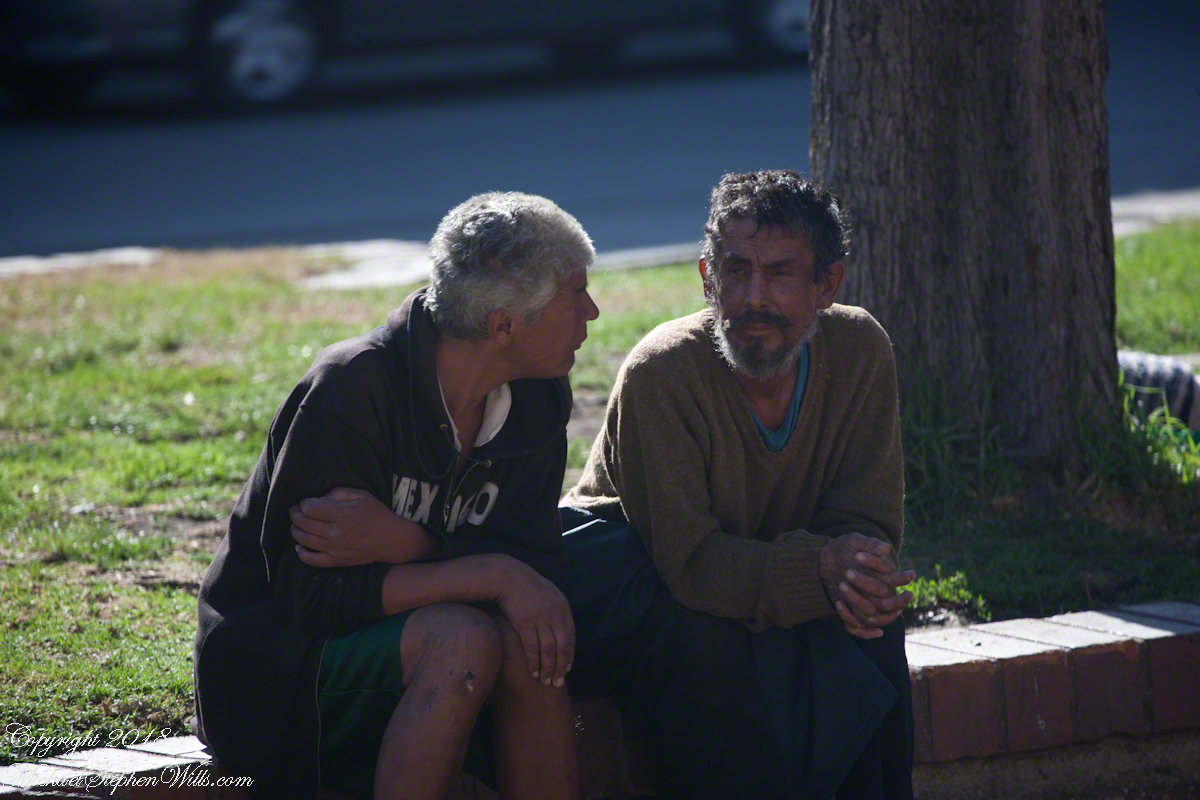
I wonder how a man of a certain ago scrapes his knees, these appear to be homeless people.

Two men carry on conversation on Avenue Argentina, Valparaiso during the weekend Avenue Argentina street fair.

They gives us big smiles and waves when they spotted me / us.  The people were open and friendly.

Valparaiso Connections I

The Albatross and Valparaiso

We’ll start in the parking lot of the Valparaiso Passenger Terminal, introduced in my last posting, “Valparaiso Old and New”.  The terminal was our first stop in Valparaiso, it services cruise ship passengers, it was in the parking lot we met Ricardo, a guide and city native.  In his late sixties, Ricardo lived through numbing changes:  the political turn left and election of Allende, followed by a military coup d’état (called golpe de estado in Spanish) and rise of a military officer, Pinochet, to dictator.  From the 70’s through 80’s Pinochet ruled, abolishing the congress in Santiago, enjoying ruthless suppression of opponents with the full support and assistance of the military.  In the late 80’s Pinochet allowed a return to democracy, a new constitution with a bi-cameral (two houses) congress in Valparaiso and elected president.  Ricardo was quiet about these times, as are most Chileans and we did not press him.

Click any photograph to open my Fine Art Gallery.

The bus passed a carved wooden statue of the albatross, near the terminal entrance.  A bird of the southern ocean, familiar to mariners for the habit of following ships, this aspect of soaring the a familiar posture.

Here is a specimen in this posture following the Regatta on February 22 as we traversed the Southern Atlantic between the Falkands and Punta del Este.  That day, many albatross soared among the 20+ foot waves, the wingtips very close to the water surface.


The day before, February 21, the Regatta approached the southern most point of the western hemisphere, Cape Horn, coming within a mile of the landing point and monument.  At the top you can see the steel sculpture of the outline of an albatross set in a stone plinth.

A cropped version of the above image, the albatross outline is easier to see.  Also visible, at the cliff base, the landing, stairs, a platform painted as a Chilean flag, the railings leading up to the Albatross Monument.

All of this to emphasize the unique position and reason for being of Valparaiso of the eastern South Pacific, made evident by the recurring motif of an albatross soaring among the waves.  This retired anchor, close to the albatross sculpture, on our way to Argentina Avenue and the weekend street fair (to be continued).

Valparaiso Old and New

Stray Thoughts on Labeling, Valparaiso Port

Shortly after breakfast Pam and I were among a gathering of travelers, several friends made in the last ten days among them, waiting in the Regatta lounge for tour assignments.  In my previous posting, “Valparaiso Separation, you can see exactly where the Regatta was docked among the orderly chaos of the port as seen from the Ascensor Conception.  “Valparaiso Separation” also includes several photographs from my early morning hours on our port side stateroom terrace photographing the approach to Valparaiso and the city itself.

Walking down the gang plank, our bus assignment in hand, number 17, we boarded a shuttle to take us through the port, to customs.  See the upper left corner?  Here is part of a loading crane, seemingly the underside of a bridge.  In “Valparaiso Departure I”  you saw it loading rolls of wire.

The structure labeled TCVAL is called the Gottwald, a mobile harbor crane from the TEREX based in Dusseldorf, Germany.  TCVAL is an acronym, “Terminal Cerros de Valparaíso” (Hills Terminal of Valparaiso), and stands for the port management company.

I caught two overviews of the area from our stateroom balcony.

Looking along the port side of the Regatta.  Our room was on the same level as the bridge, visible on the right with several Regatta officers enjoying the Valparaiso port view.  From here, the shipping containers (“Hamburg SUD”) are loaded onto semi-tractor trailers for points all around South America, they call the southern most land “The Cone.”

We are surrounded by labels, the #17 in our hands, “Regatta” on the ship bow, all with a story to tell.

Unlabeled from this side, two towers covered with multi-colored panels, shades of green and blue with white, the Hotel ibis Valparaiso.  I looked it up on Google Maps.

To the right is AIEP Valparaiso, a technical college, founded just three years before, 2013.  We are seeing them from behind, the side that faces the harbor, both the hotel and school front a street named Errázuriz.

Take note of the lower floors with the large, crisscrossed supporting struts.

Back on the shuttle, we pass along those lower floors.  Look to the right of the Gandara Chile, SA truck….dinosaur models.  The floor above seems to be retail displays of bulk packaged products.

Everywhere stacked shipping containers….

…throngs of busy workers.  This fellow works for “Building Services”, a cleaner.

We’ve looked right.  To the left a view of the port opens.  War ships in the distance.  Foreground is a general cargo ship, the crane midship is used for unloading in smaller ports.  Currently unloaded, we can tell by how high it is riding.  There is a rope ladder on the visible starboard side, a landing boat with an outboard motor along side.  One person is visible on the upper deck, wearing a baseball cap.

Named “Danstar” home port Valparaiso, the Chilean flag hangs stern side.  A general cargo ship, I looked it up.  On the day I started this post, it was sailing the southern pacific heading from Hanga Roa, Easter Island.  The label on the bridge, CA 4392, is the radio call sign.  The bilge pump is working….wonder how strict the pollution stands are for Valparaiso harbor?

Back to the left, an unpromising aspect.  No labels here.  Shortly after the transport unloaded us for customs.  I generally do not photograph those workings, no use being pulled aside for questioning by unsympathetic officers.  Just a precaution, the entire trip the customs people were friendly and the inspections cursory.

Here is where our slip of paper, #17, is used just in case we forget the number.  Here is wonderful guide, Ricardo, holding a loft the #17 flag in from of bus #17.  The wonderful city of Valparaiso laid out for us in the morning sun, the sky cloudless.
New buses, nice!!!

Ricardo introduces himself.  His name tag “Oceania, Your World, Your Way.”  Cannot help getting some humor from that.

Valparaiso Separation

Learn about funiculars

To begin with an epilogue to my last post, “Our Fifteen Minutes of Fame on Conception Hill” , our meeting with the El Mercurio reporter never appeared.  Inquiries to the newspaper were promptly and courteously replied to, there was nothing.  They suggested a search of the online archive and only a January 2014 fashion show, the article featured a photo from the same terrace.  After our pleasant time we walked off some calories on Gervasoni Promenade, a showcase of city harbor and hillside views.
ValparaisoConceptionAscensor-6

Most city visits on this cruise we traded independence and flexibility for the convenience of the guided tour.  Ricardo, our guide, was a knowledgeable, good humored companion to our small group.  After we left the promenade for Calle Conception Ricardo was most helpful.
Ascensor Concepcion

It was here I entered a photographic fugue, losing touch with my surroundings through concentration on capturing the moment.

Ascensor Concepcion

I walked ahead of Pam, expecting her to follow, and caught the view of the arriving care of the Conception funicular.

Ascensor Concepcion

Wow, that’s the Regatta at dock.  Other elements of this vista are the harbor, of course, then the famous Turri clock tower.  Hmmm, almost 1:30 pm.

Ascensor Concepcion

I was fascinated by the view of a drydock the Regatta passed while docking early that  morning.  It is the red structure with the letters “Sociber”, it even has a Facebook page!!!

Ascensor Concepcion

Once at street level the experience of the crowd on the alley opening onto Calle Prat, waiting for the ride up, brought back reality.  “Where’s Pam?”  I could not go back up because of the crowd, the views from the car fell from my mind.

Ascensor Concepcion

I was on the street, disoriented and alone.

Ascensor Concepcion

I fell back on photography to pass the time.  Nowhere near the charm of Cerro Conception, typical downtown urban environment.

Ascensor Concepcion

A man approached the family across Prat, “What is going on?” I wondered when the tour bus arrived.  Still no Pam.

Ascensor Concepcion

Oh, it is an ice cream vendor.  Delicious.  “Where’s Pam?”  Ricardo not around, either.  Back on the bus, waiting, a younger member of the tour was an Irish wag who declaimed on the benefits of freedom, even temporary.

Ascensor Concepcion

Finally, Ricardo arrived followed by a few other tour members and Pam.  Whew!!  I’ll never live down “deserting” her.  She was not able to find the entrance to the Conception funicular.  Along with a few others they kept each other company until Ricardo rounded them up.   That was a long 20 minutes (reading from the photograph metadata), I was worried.  As I mentioned, at the time I was clueless about my whereabouts.  Reviewing the numerous photographs, I found the “Servicio Nacional de Aduanas” (National Customs) building across the where Calle Esmeralda joins with Cochrane and pieced it together from there.

About the Conception funicular, that morning while the Regata docked I caught this view of Valparaiso hillside.  It is a microcosm of the Andean topography, ravines cut through the heights.  This is when I noted the Sociber drydock, it is on the lower left…look down into it — the business is to sell that dry space in the middle of the harbor for ship repair.  The space and be flooded, opened to allow entry of a ship, then drained for work on the hull or whatever.

The city pioneers adapted to this terrain.  As a entrepreneurial endeavor, in 1882 Mr. Liberio E. Brieba Pacheco founded the Mechanical Elevators Company of Valparaíso.  Conception funicular opened the following year to facilitate the urbanization of Alegre and Concepción hills.  Conception funicular is closed for repairs currently, from 1883 until recently this, the oldest and first funicular of Valparaiso lifted people from the downtown Plan (plain) to the hilltop for a small fee.

Funicular is derived from latin “funis” for rope.  It is an elevator that runs two counter balanced cars on a rails on a steep, less than vertical, slope.  As one car rises the other lowers.

SONY DSC

Here are some views of the Conception funicular and environs as seen from the upper Regatta deck.  First, a 24 mm wide angle view.  Look to the center for the rails and one car at the top.  Above are the buildings of Cerro Conception (Conception Hill).

ValparaisoConceptionAscensor-3

The funicular emerges from downtown on the right in the following view. The prominent church is Parroquia Perpetuo Socorro, just above the midpoint.  It rises from Cerro Cordillera, above Cerro Conception.  A Catholic church founded by the Redemptionist Fathers, the first stone was laid down 1905.  Learning from the devastating earthquake of 1906, the engineer Juan Tonkin chose construction of Oregon pine and concrete to stand tall today.  What a view (I’ve seen photographs).

ValparaisoConceptionAscensor-2

A view a bit to the right, many of the colorful exteriors are zinc panels brought from early sailing ships, repurposed as siding.

ValparaisoConceptionAscensor-4
ValparaisoConceptionAscensor-5

After the wide angle shot I used the variable “zoom” lens for the rest.  Here is a close view of the Conception funicular.  The business of building and running these services thrived, over the years up to 29 funiculars and one elevator, served the city portenos (people of the port).  In 2018 seven are in operation, nine are under a process of restoration and modernization, including Conception.

Our Fifteen Minutes of Fame on Conception Hill

A modest dose of history with wine and empanada

Posting about our departure from Valparaiso, Chile (see Valparaiso Departure III “The Sunset”) brings us to the time spent wandering this World Heritage Site, added to the UNESCO list in 2003.  Within the amphitheater of hills is Cerro Conception (Conception Hill), historically settled by English and German immigrants.  The façade of the Hotel Brighton, a building from the 19th century heyday of Valparaiso when it was a stopping point for shipping through the Straits of Magellan, reveals why so many of the buildings are alike: all are constructed from materials dropped off from sailing ships.

Hotel BrightonThe theme of the Hotel Brighton evokes thoughts of immigrants remembering their origins, emigres claiming a spot of real estate to mold a sense of place for themselves.  This goes both ways, Valparaiso, Indiana was formerly Porterville of Porter County.  The motive force behind the renaming were the memories of the retired Captain David Porter, the sole survivor of an attack on his ship USS Essex by the British frigates Phoebe and Cherub in the War of 1812, within sight of Valparaiso. Fifty eight (58) United States Marines lost their lives in that sea battle.  To point out the obvious, Captain Porter is the namesake of Porter County.  

Pam corrects me when I say we “stopped for lunch” at the Hotel Brighton, pointing out we “only” had a glass of red wine and an empanada.  Both were tasty, even more so with this marvelous view looking north into the other hills of the city.  The yellow umbrella is on the hotel restaurant terrace.  

Hotel Brighton

I missed capturing the signature wrought iron gate forming the word “Brighton” among decorative scrolls.  Built on the edge of Conception Hill it overlooks the coastal plain almost all of which is man-made.

Hotel Brighton

During our refreshment, this young lady (see photograph below) introduced herself as a reporter for El Mercurio.  Accompanied by a photographer, she interviewed us and we had our photograph taken, I returned the favor with the following photograph saying the story might appear in the next edition.  Standing next to her, with a puzzled look, is our waitress who was from the States.

Hotel Brighton

El Mercurio de Valparaiso is the oldest continuously published Spanish language newspaper in the world.  In my research for these photographs I discovered the newpaper officers were a short walk from the landing of the Ascensor Conception.

Valparaiso Departure III “The Sunset”

The Sun’s Progress

Two minutes after capturing the last light on Concon Point, see “Valparaiso Departure II”, turning the camera 180 degrees, to the south, looking along the Chilean coast, to capture birds on the wing headed toward shore at day’s end.
ValparaisoDeparture-22
Remembering other times,

ValparaisoDeparture-23

waiting for darkness

ValparaisoDeparture-24

with a sky map, studying it to make sense of the stars.

ValparaisoDeparture-25

How far?  How large?

ValparaisoDeparture-26

Light from our star, eight minutes old,

ValparaisoDeparture-27

grazed the earth’s rim the breath of a moth wing ago.

ValparaisoDeparture-28

Connect the dots, stories of heroes, monsters.

Our star, as we know it now

ValparaisoDeparture-31

Singular, alone,

Progress, an illusion to be understood

No less mysterious for that

ValparaisoDeparture-45

Look back to the sheltering headland of Valparaiso, glowing.

ValparaisoDeparture-47