
Frond in Snow
Green Promise
Green Promise
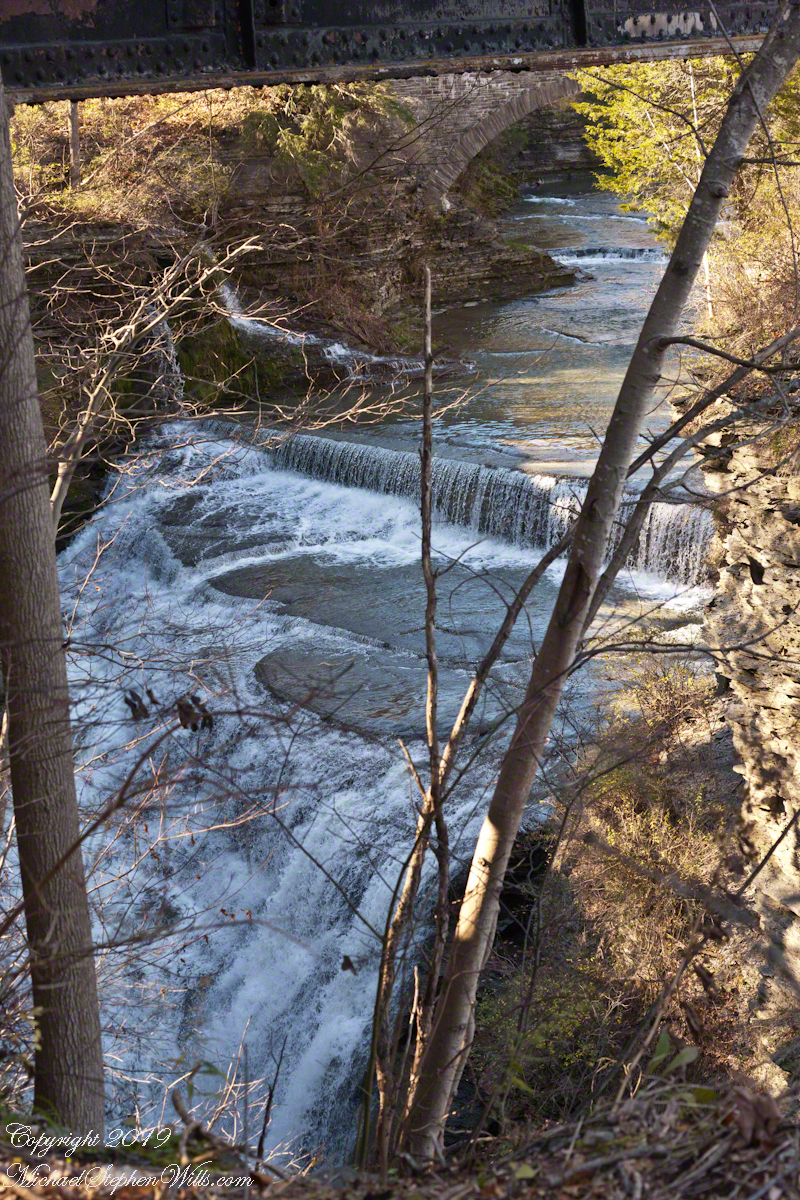
Experience here the frozen beauty of Taughannock Falls in winter, the verdant revival of spring, the lush warmth of summer, and autumn’s fiery transformation. The falls symbolize the unending cycle of seasons.
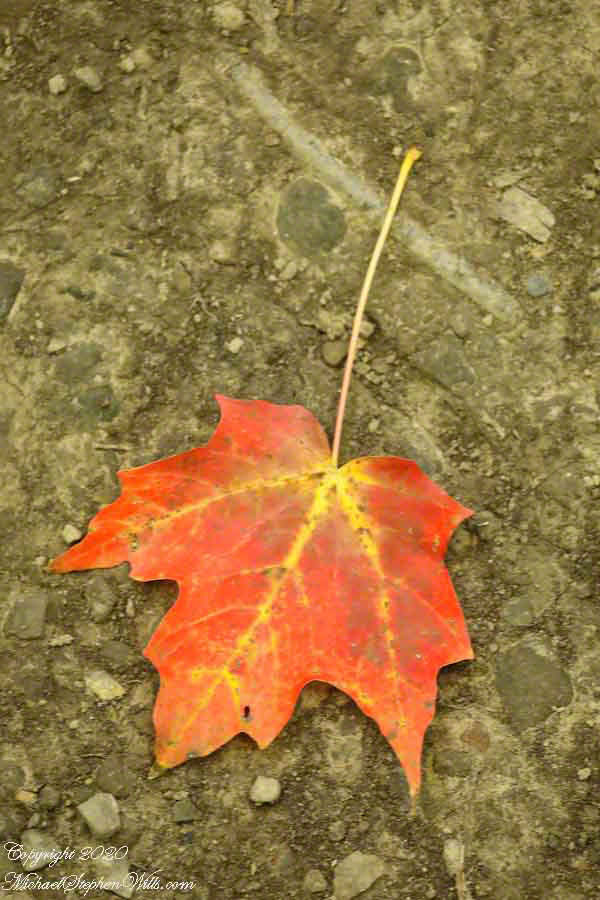
Autumn at Treman Park
Pam and I visited Treman for our last visit of 2017. It was a bright, warm October afternoon. Here is a slide show of our experience, the details shared in recent postings. Enjoy!!
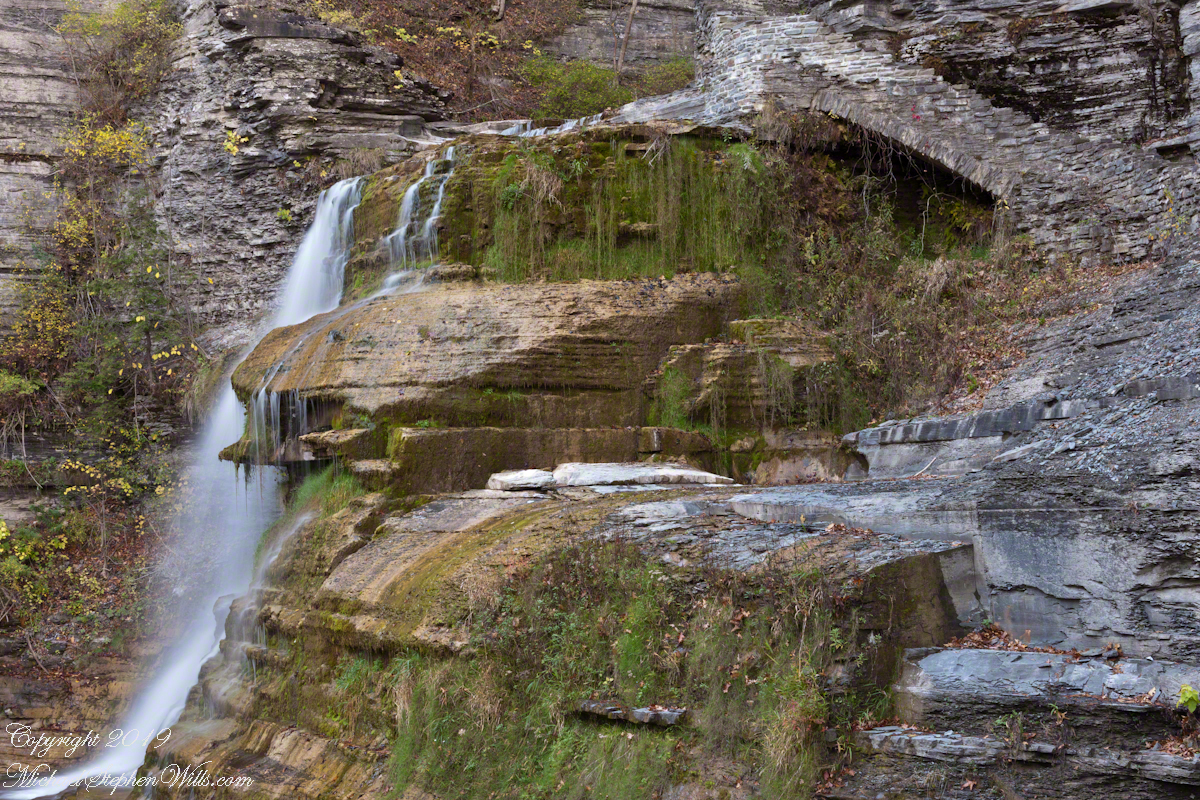
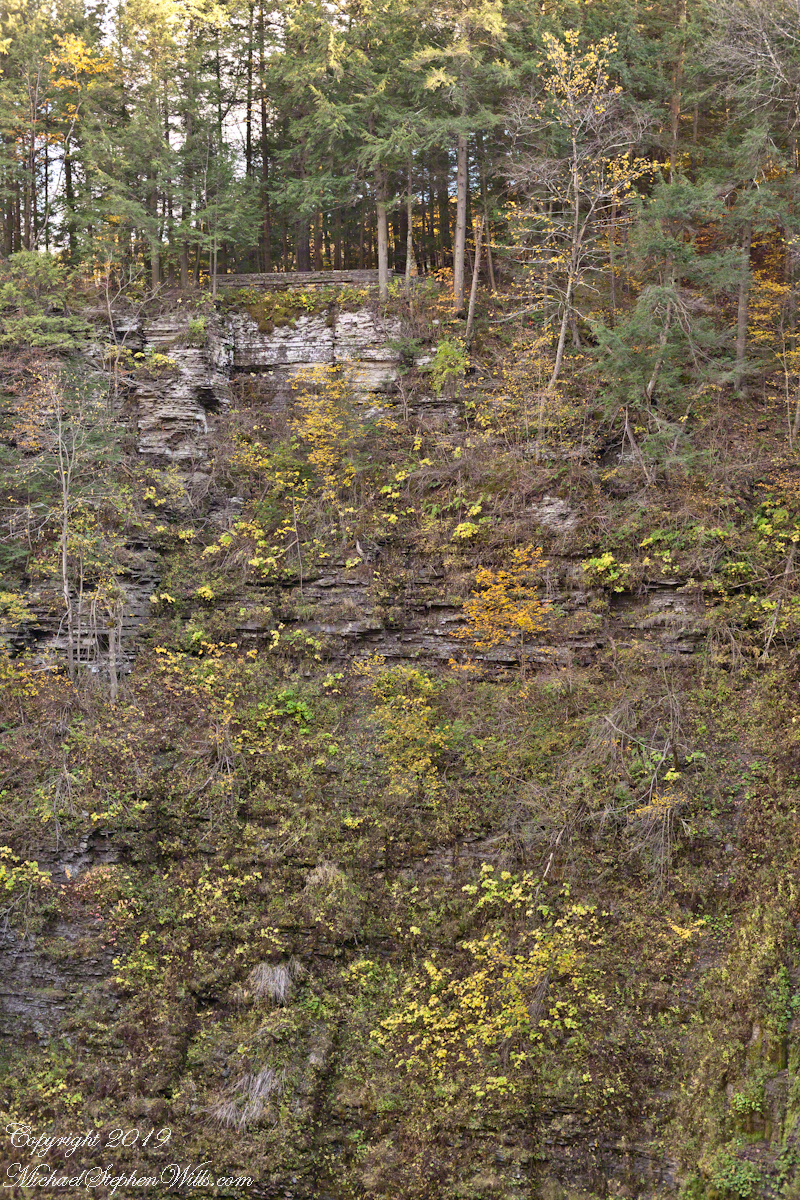
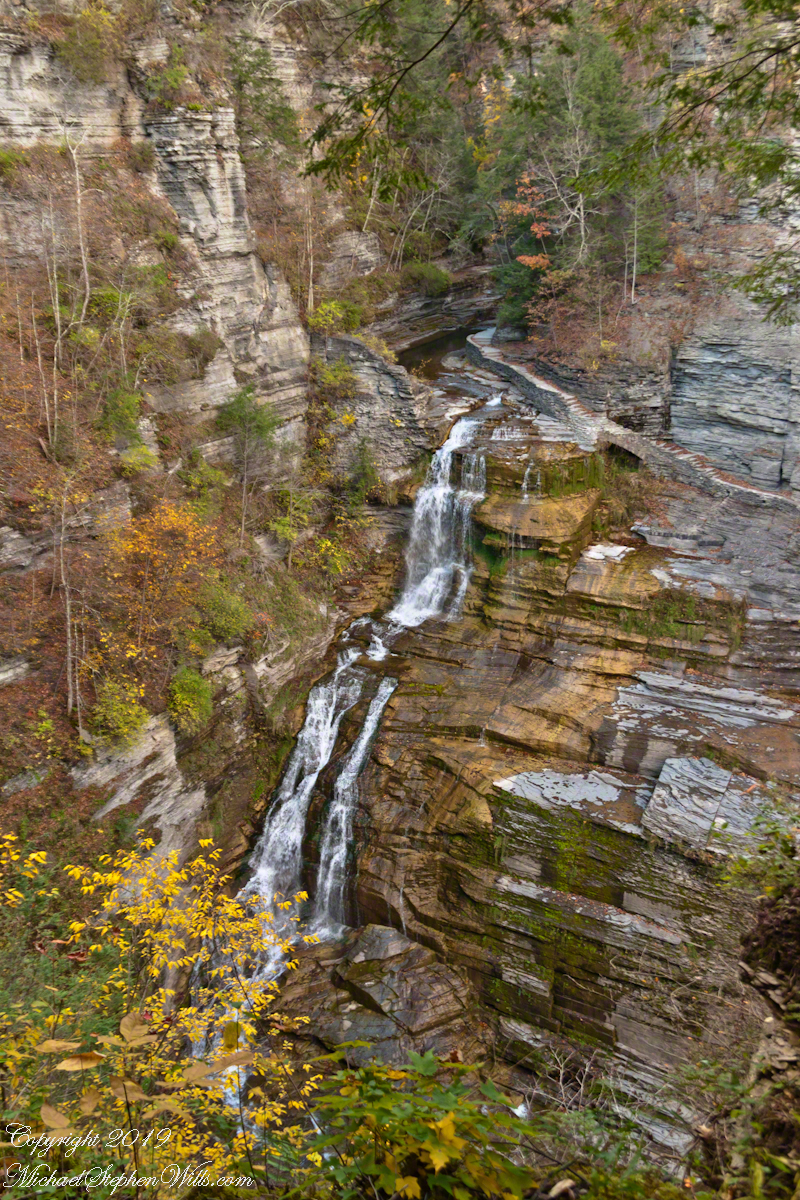
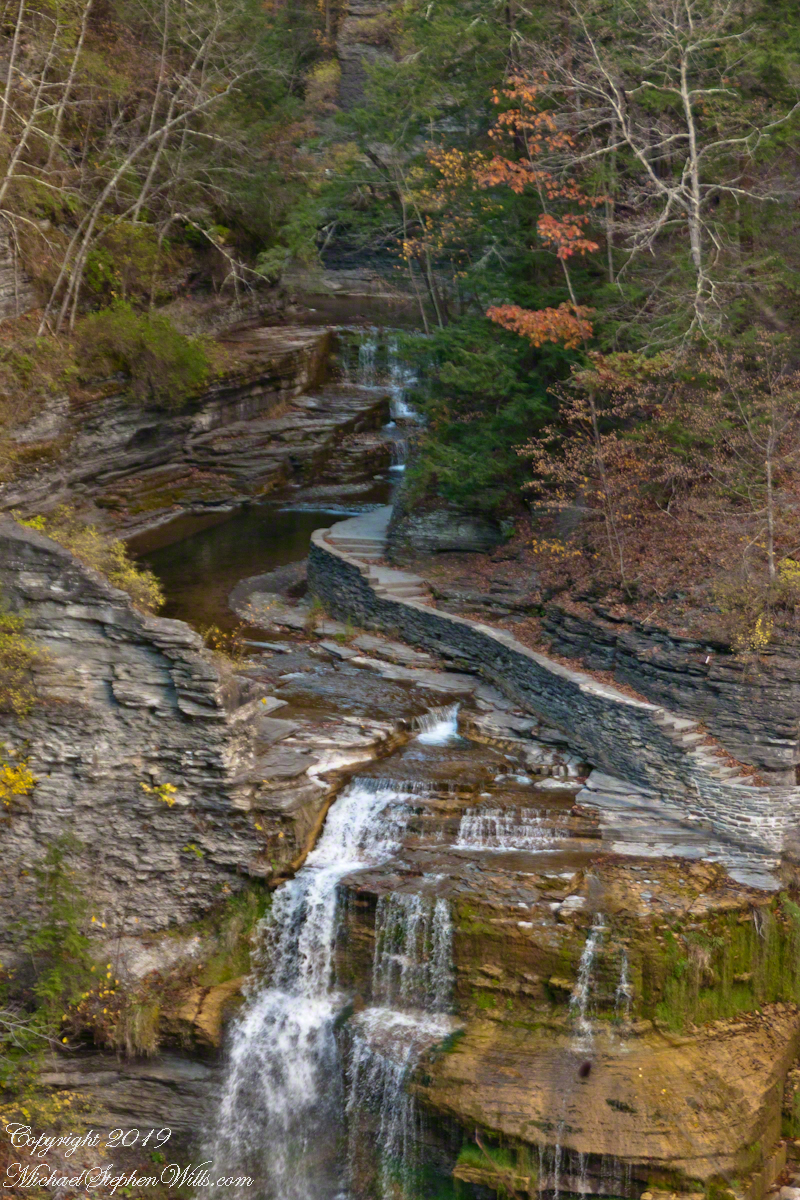

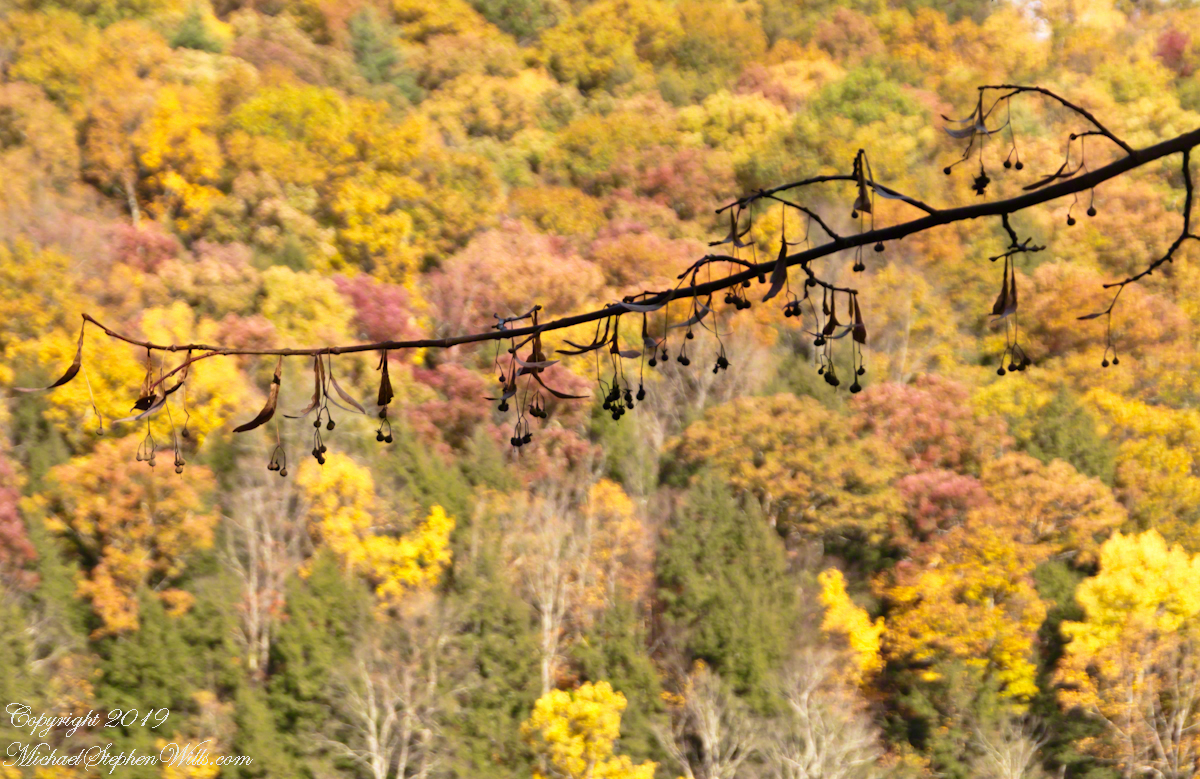
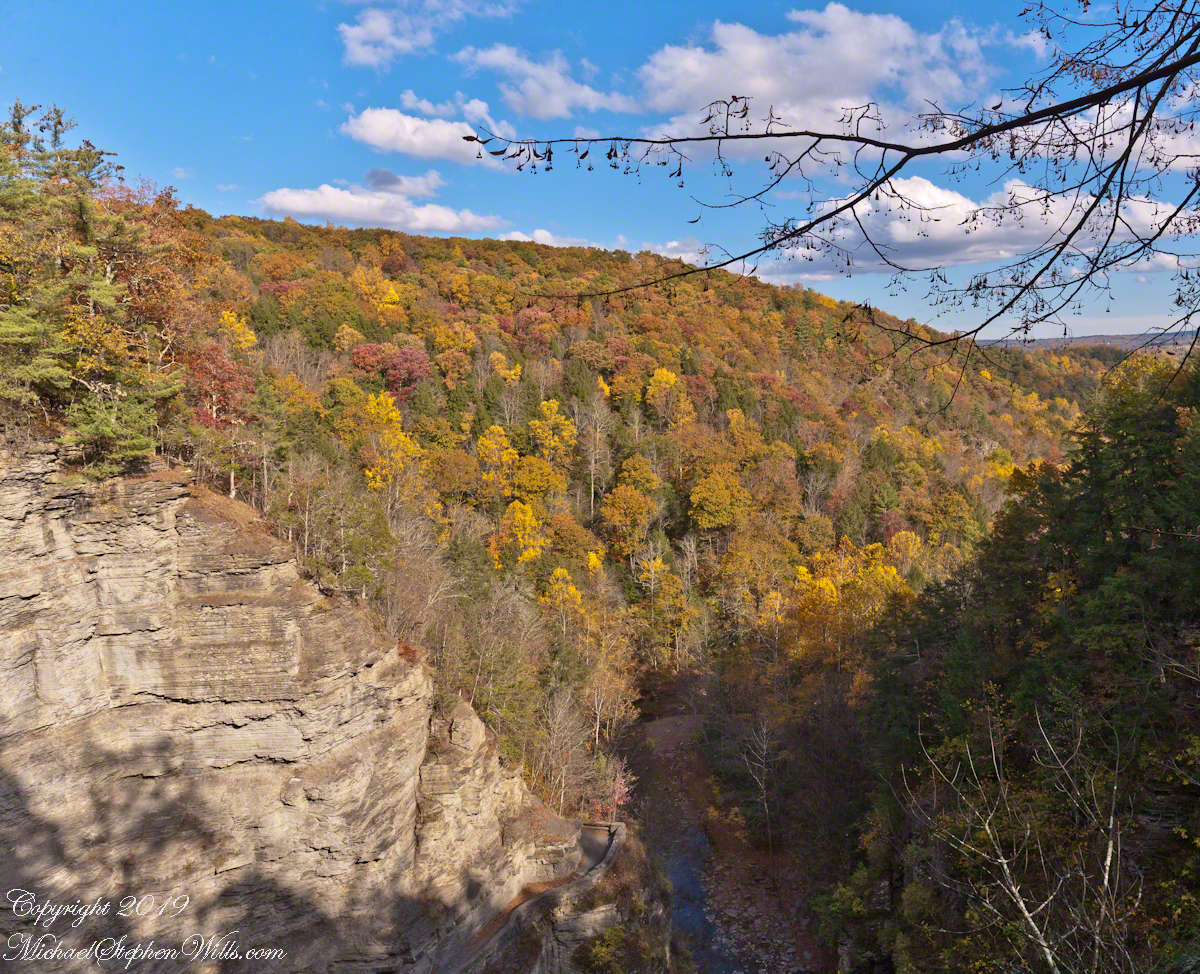
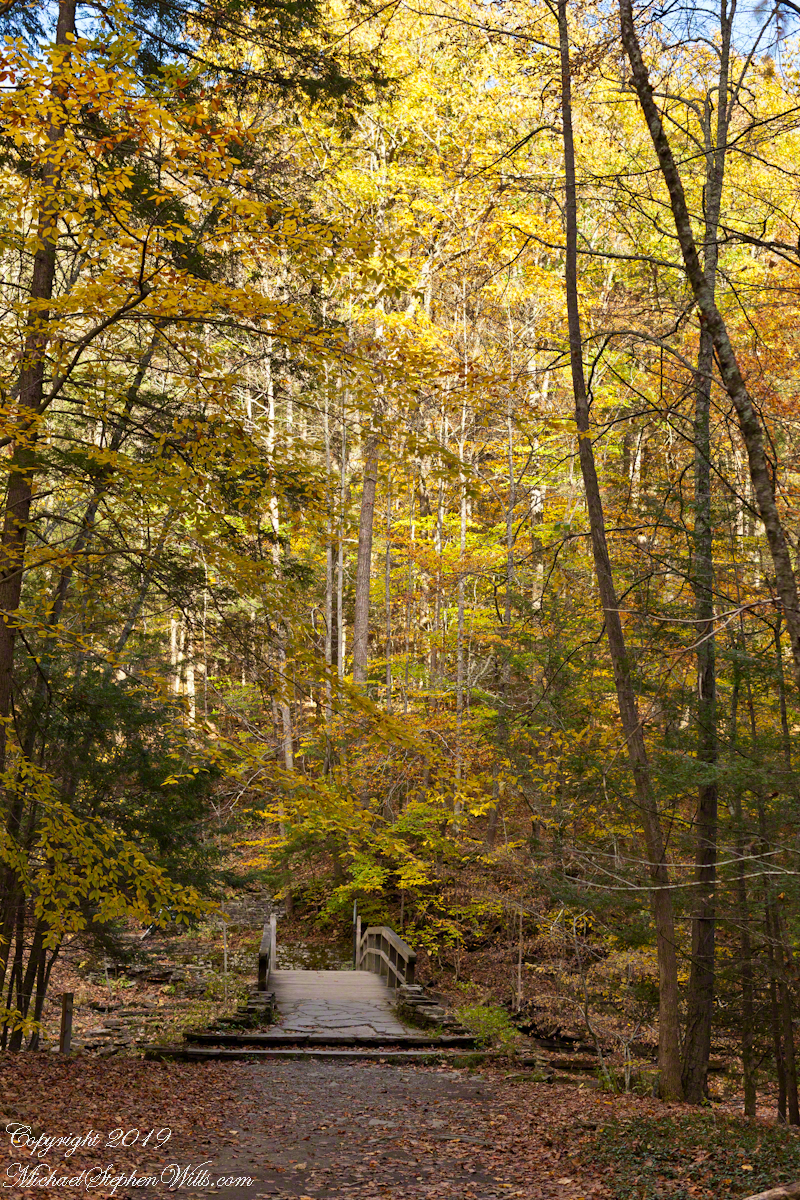
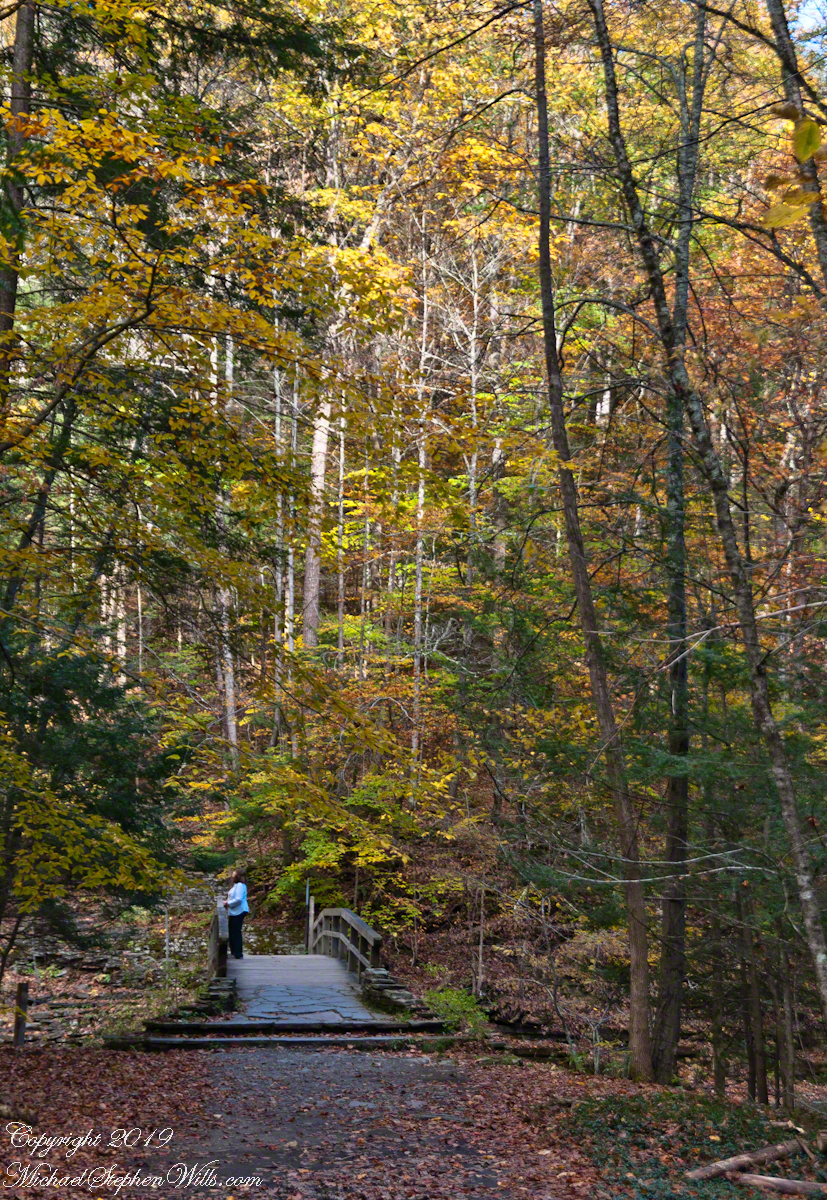
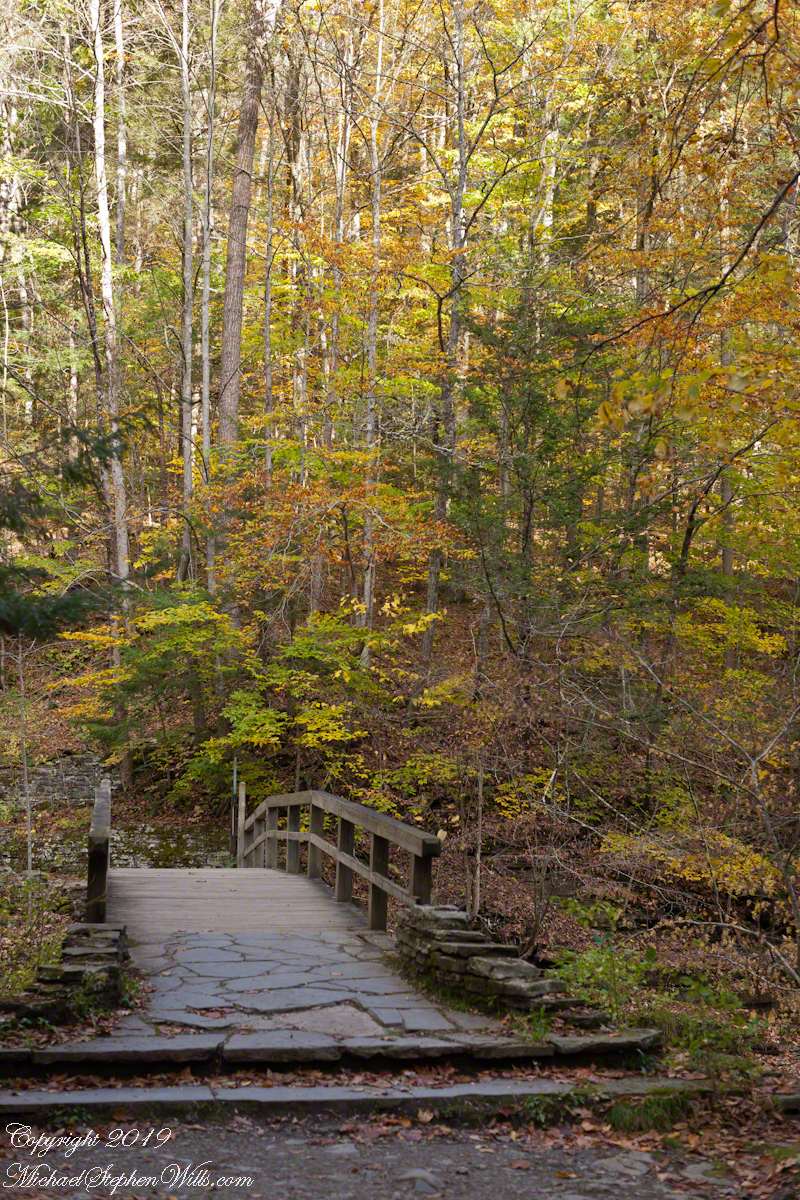
In November the gorge is closed for the winter due to dangerous conditions under the steep, crumbling walls. Robert H. Treman New York State Park.
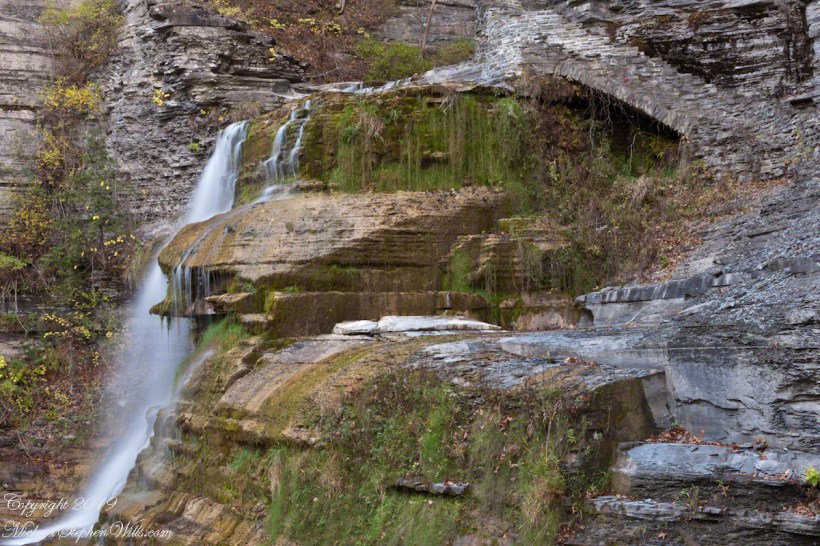
A Wall with Moss Padding
Pam examining thick moss growth on the sedimentary rock of Treman gorge. These layers of shale, sandstone, siltstone formed at the bottom of a broad, shallow sea over 380 million years ago.
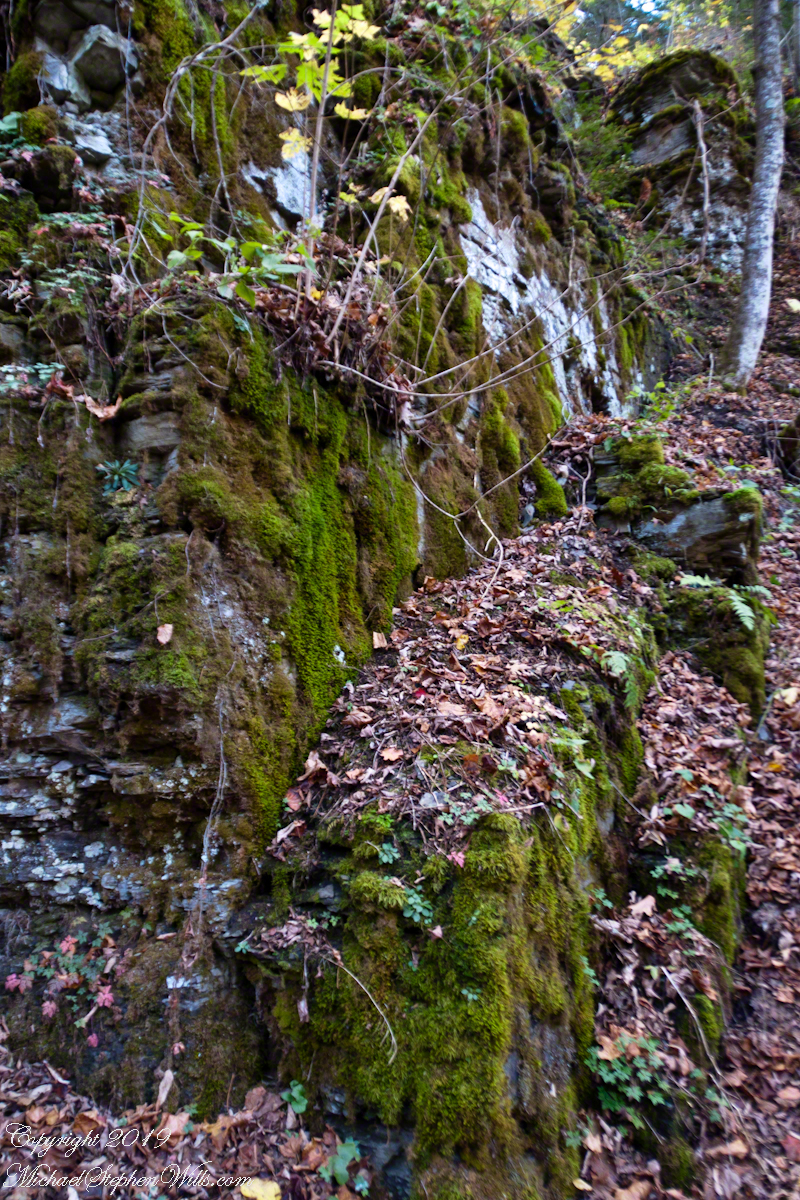
Towards the bottom of the 223 Cliff Stair steps moss takes over the Devonian shale of the cliff wall surface. Here, the cliff shelters the wall from sunlight 365 days a year.
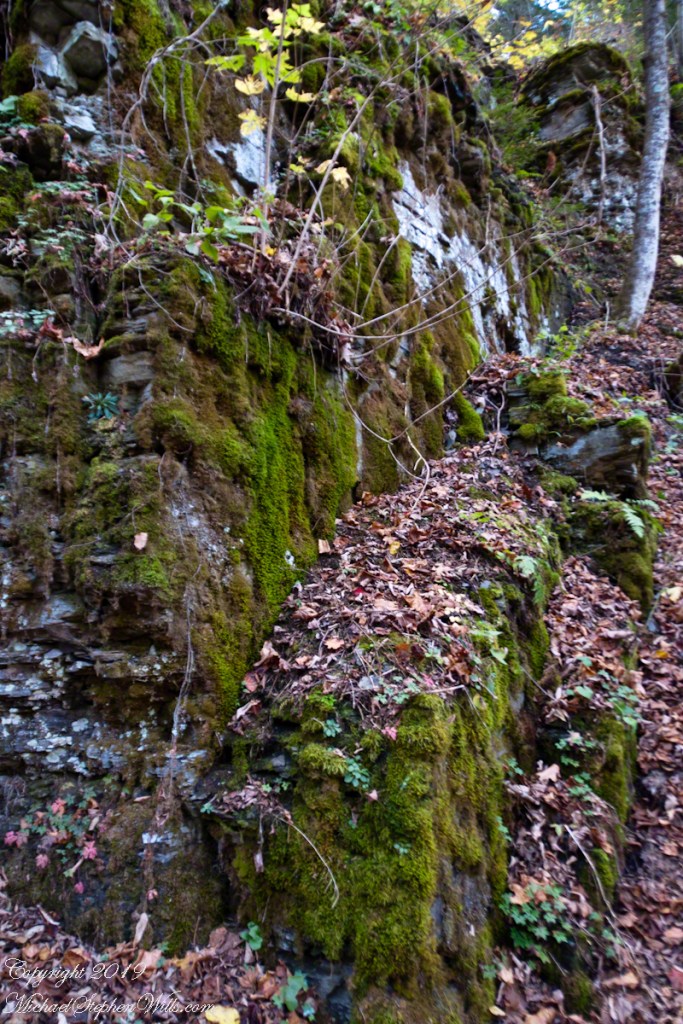
Robert H. Treman New York State Park.

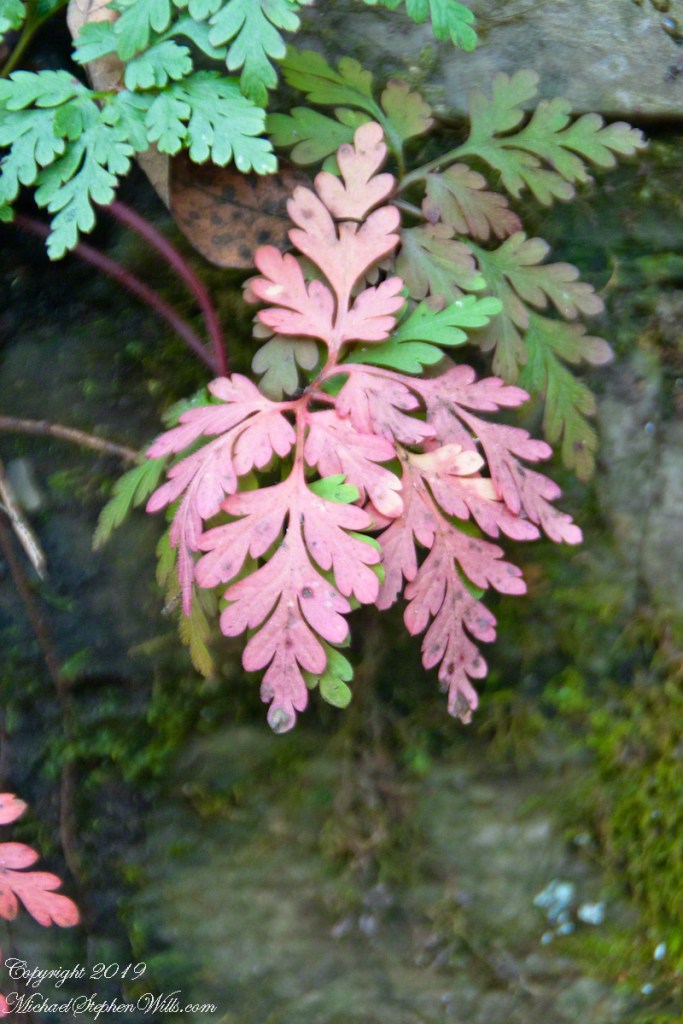
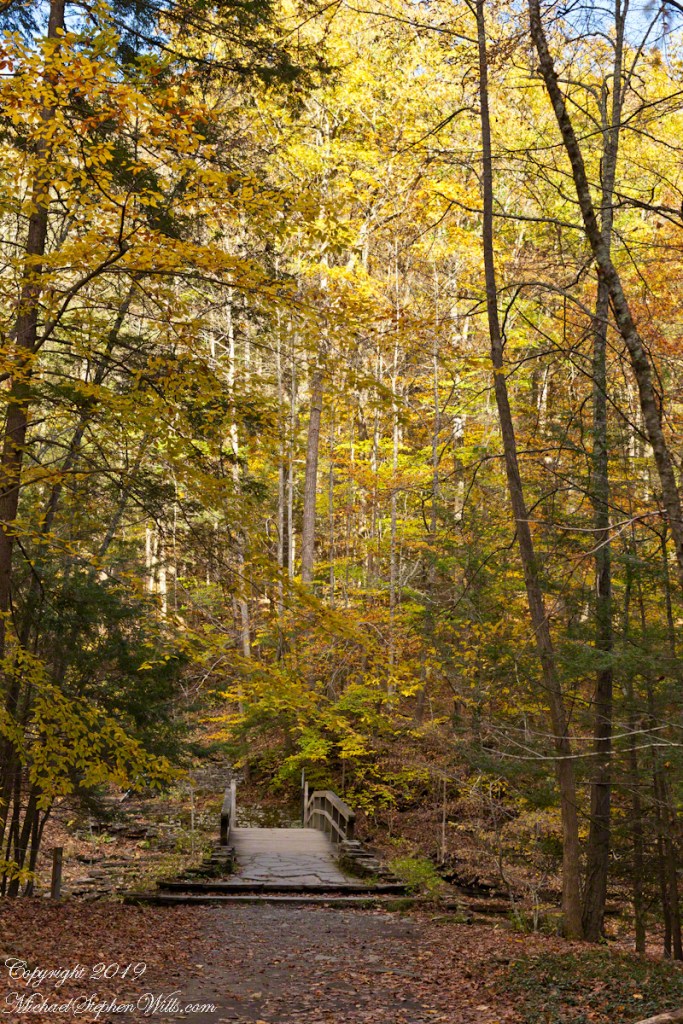
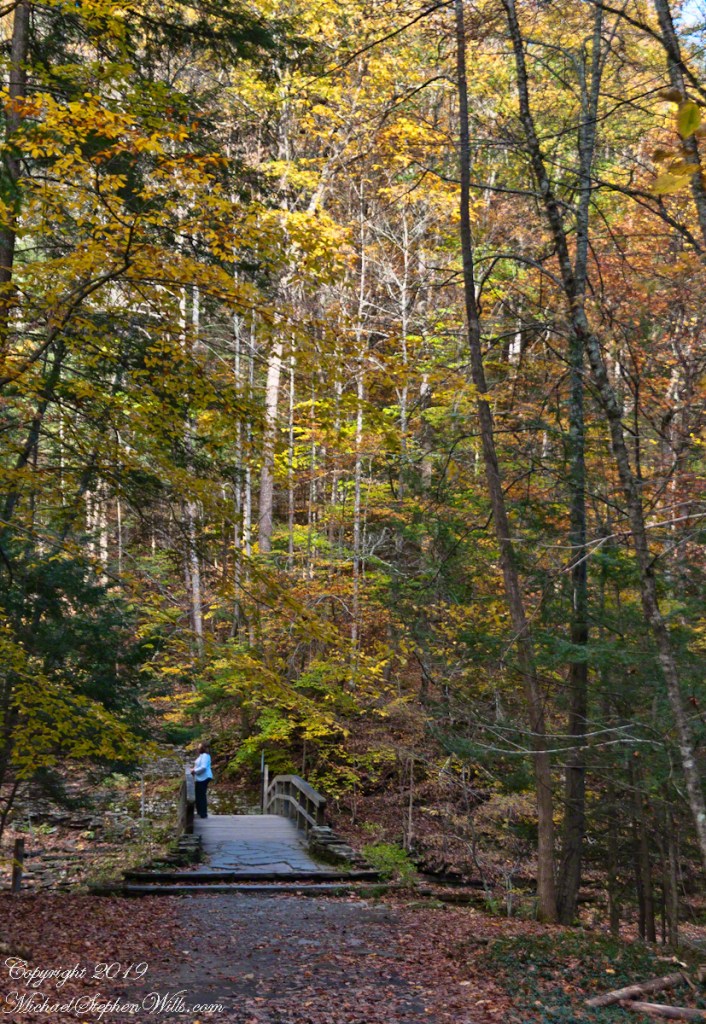
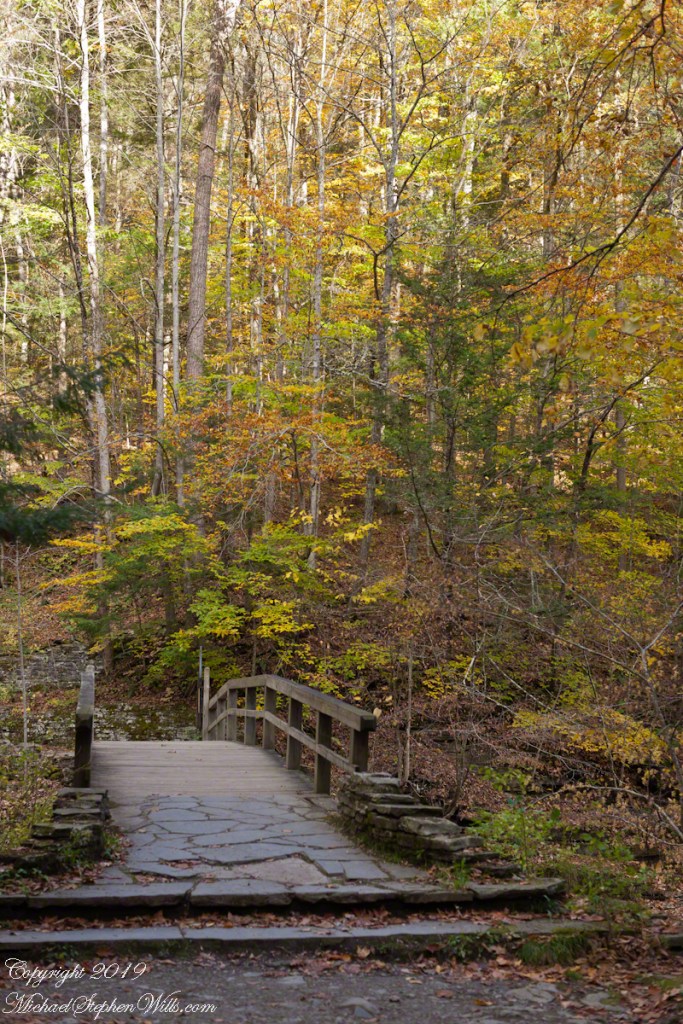
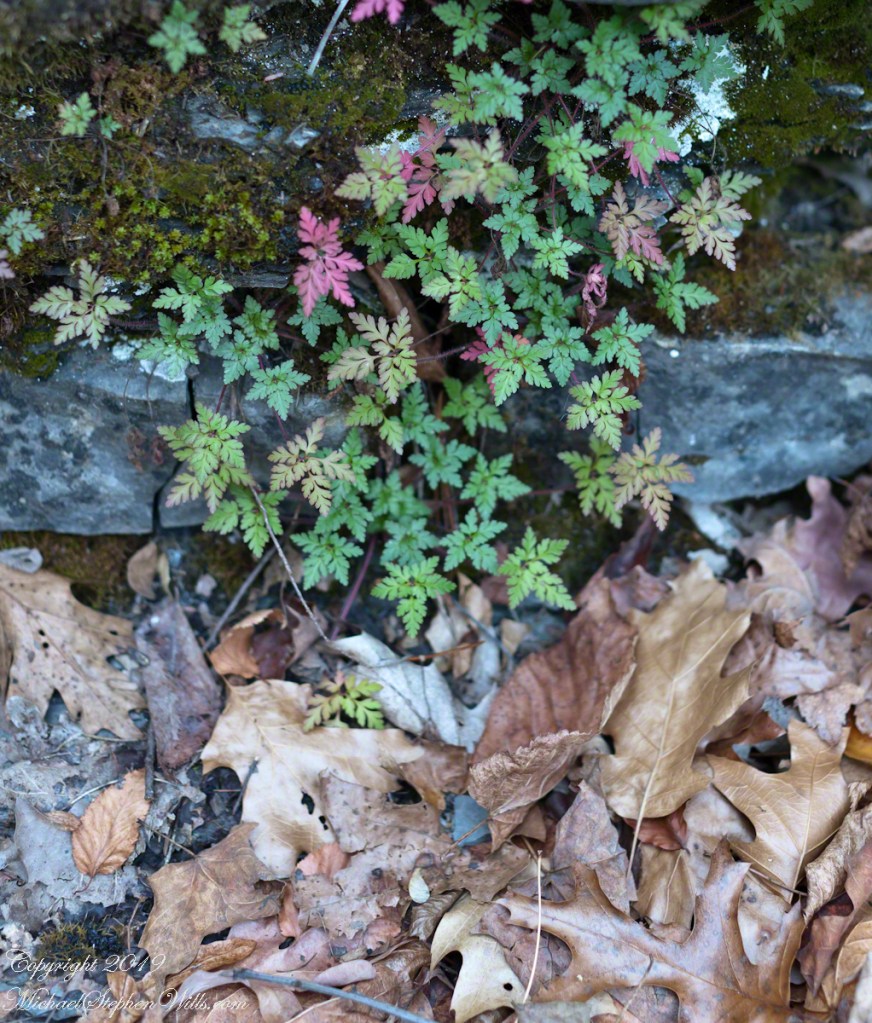
“Red-shanks”
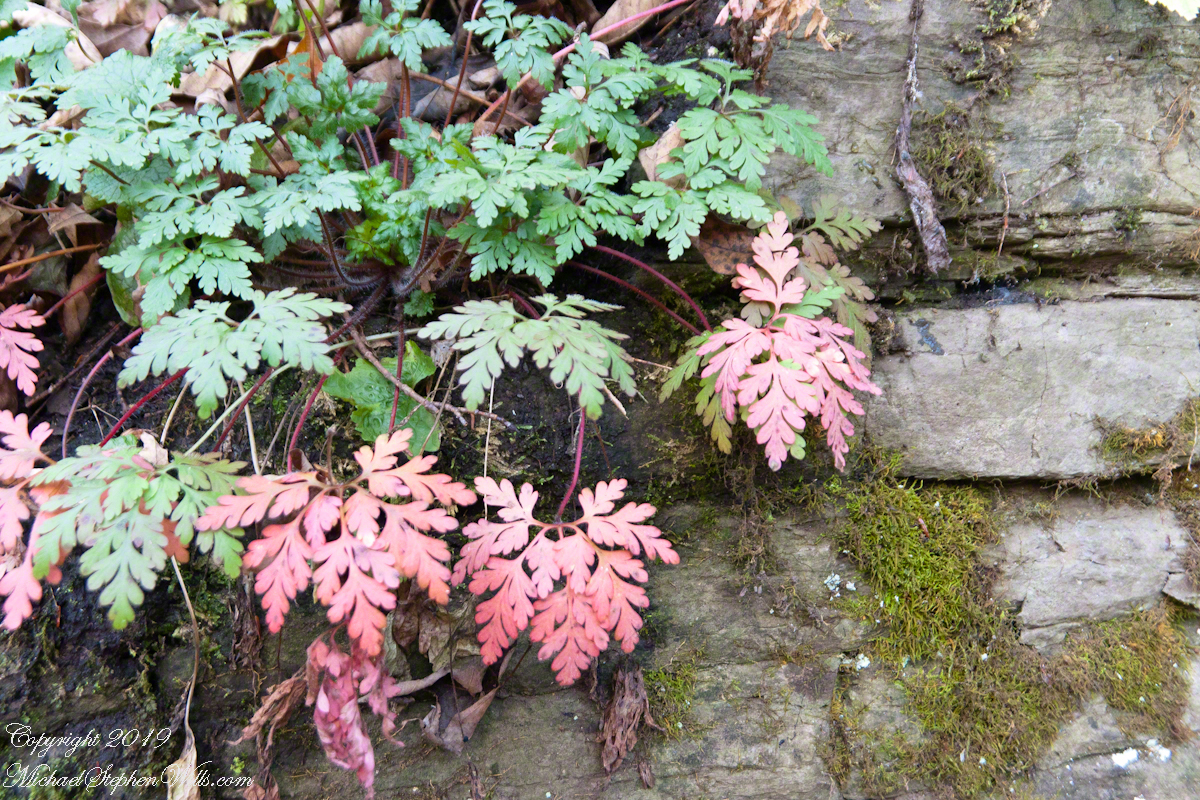
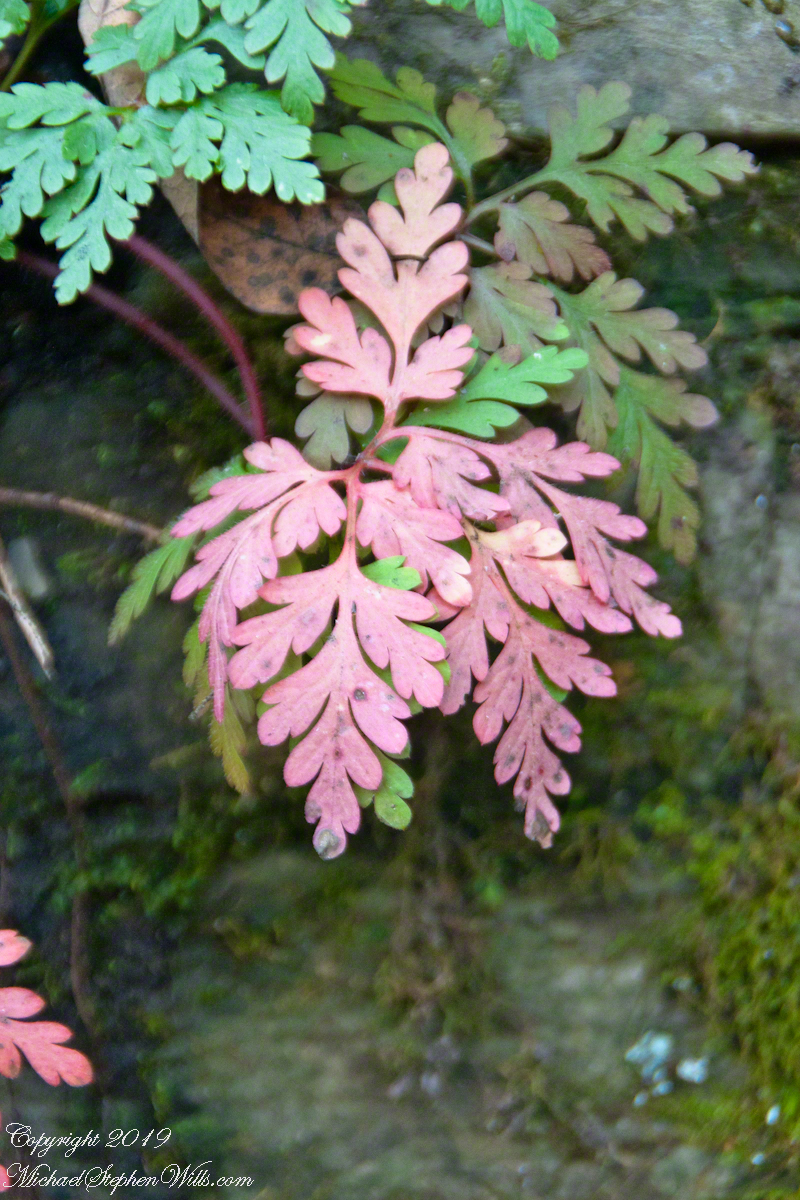
This geranium species (scientific name Geranium robertianum) are also called “Herb-Robert” for a reputed ability to ward off disease.
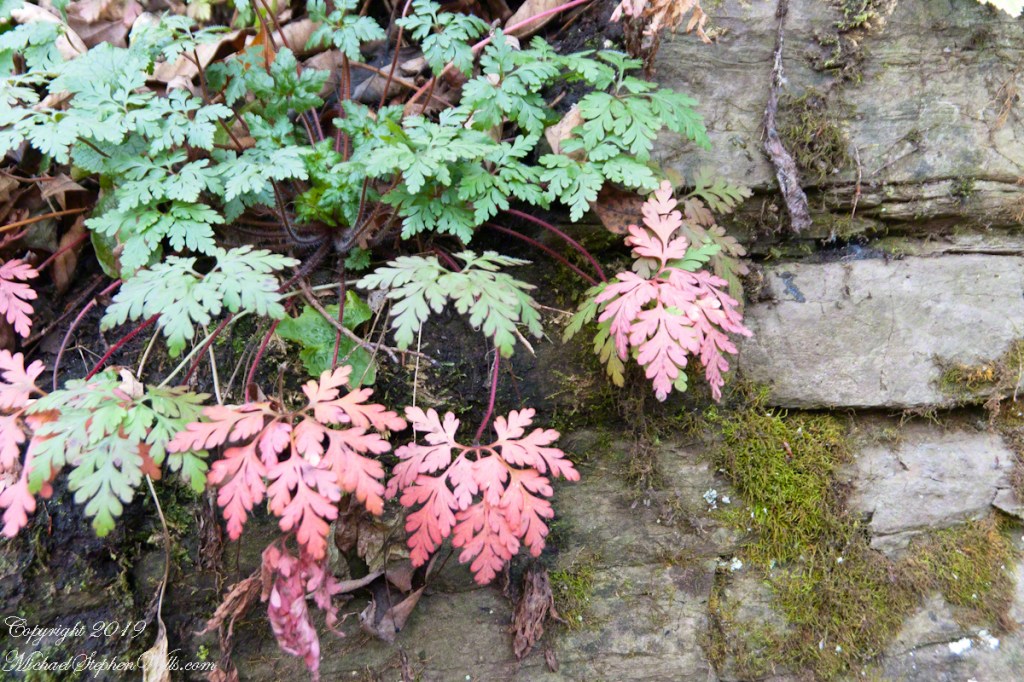
Scottish Highlands residents call these wild geraniums “red-shanks” for the deep red color of the stalks, seen in both photographs.
Robert H. Treman New York State Park.
Source, “How to Know the Wildflowers” by Mrs. William Star Dana, 1989, Houghton Mifflin, Boston.
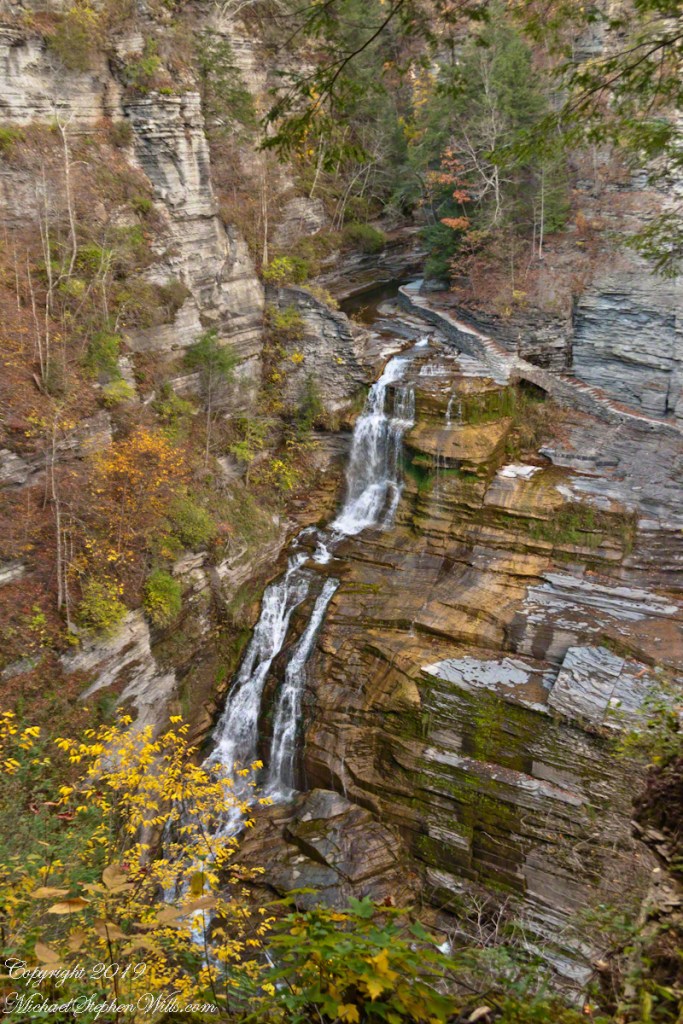
read the sign
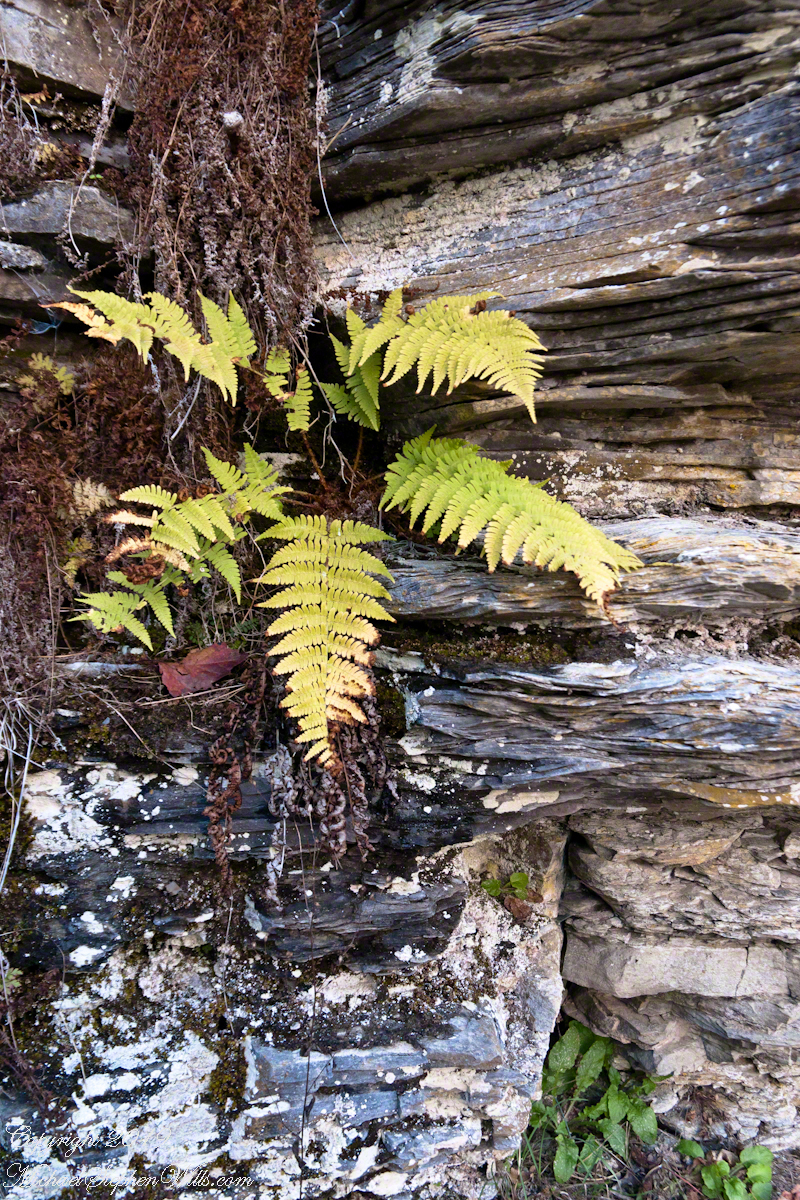
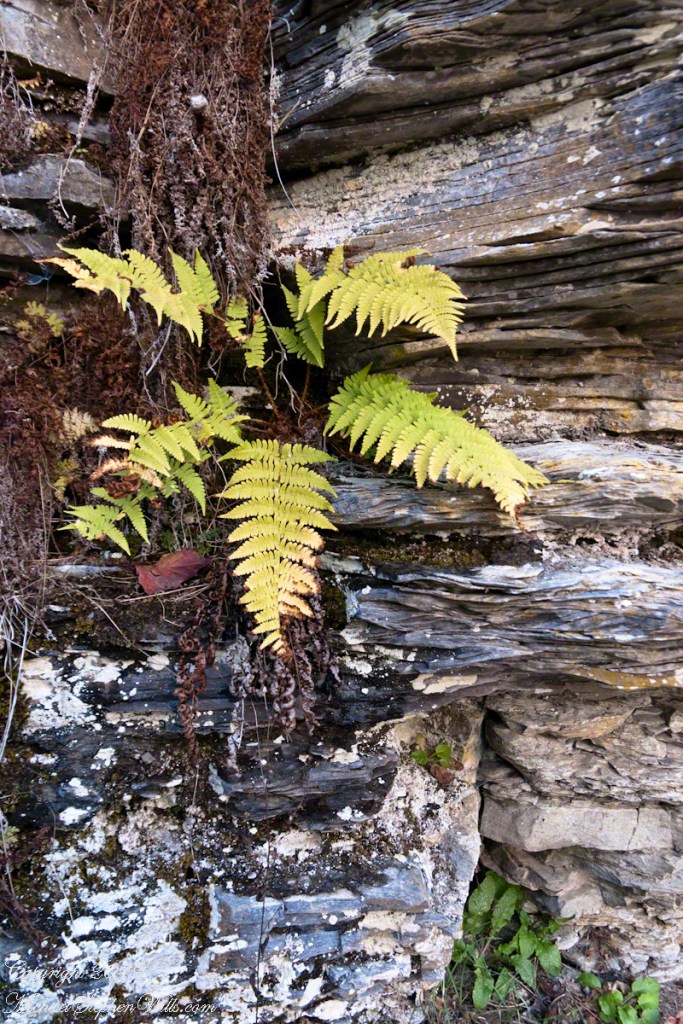
Each autumn, species of fern turns yellow towards a winter death. Here we see growing from Devonian shale, both the yellowed and desiccated fern fronds. Robert H. Treman New York State Park.
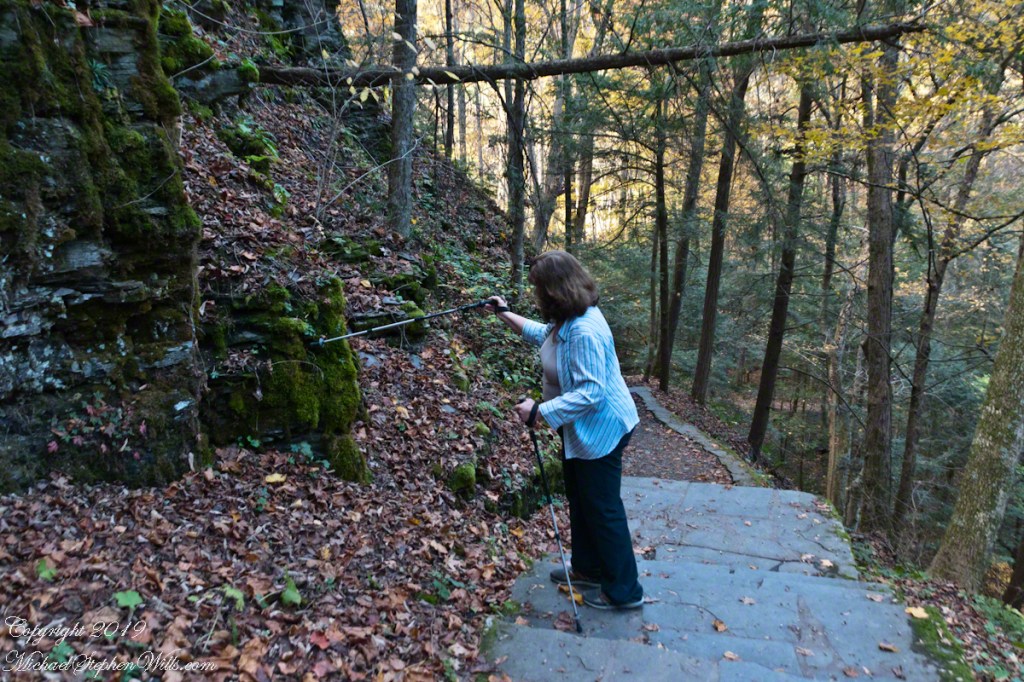
Pam pauses for a photograph
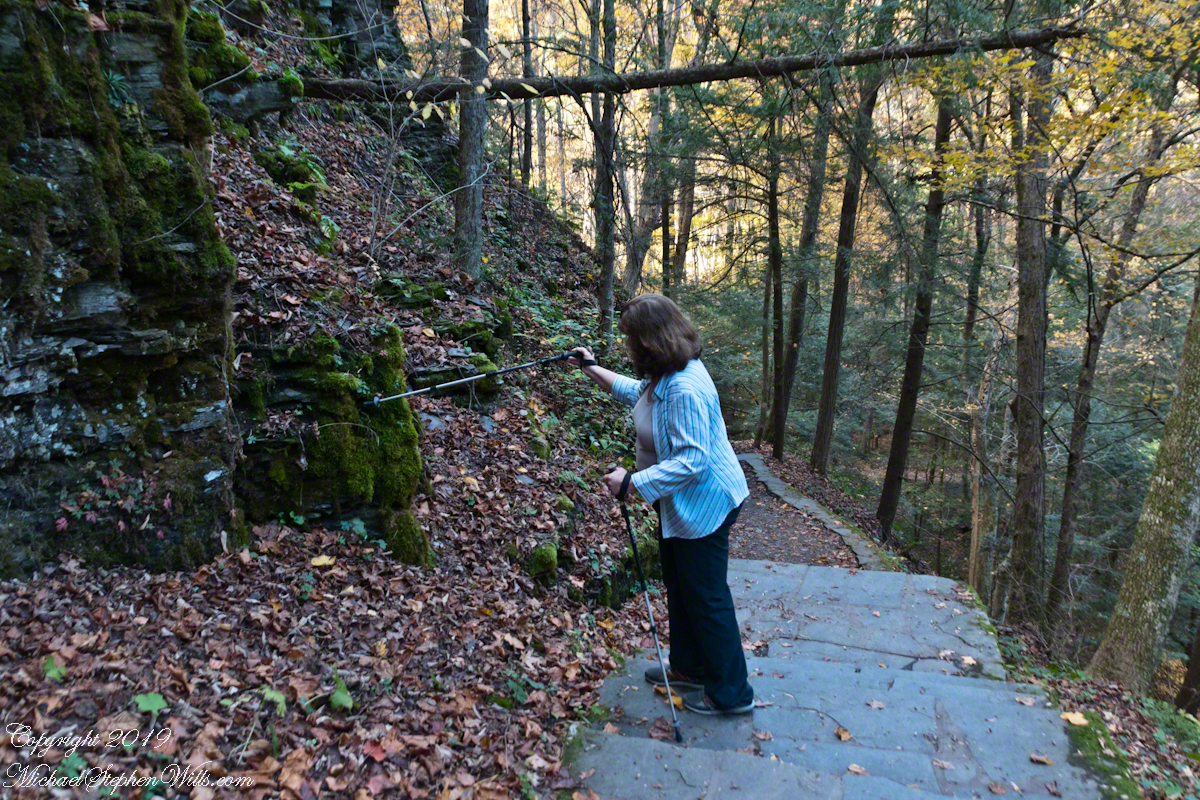
On a day in late October 2017 Pam and Mike did a photography walk. Here is Pam pausing to pose during a descent into the gorge on the cliff staircase after visiting the overlook high above Lucifer Falls, Robert H. Treman New York State Park in the Finger Lakes Region.
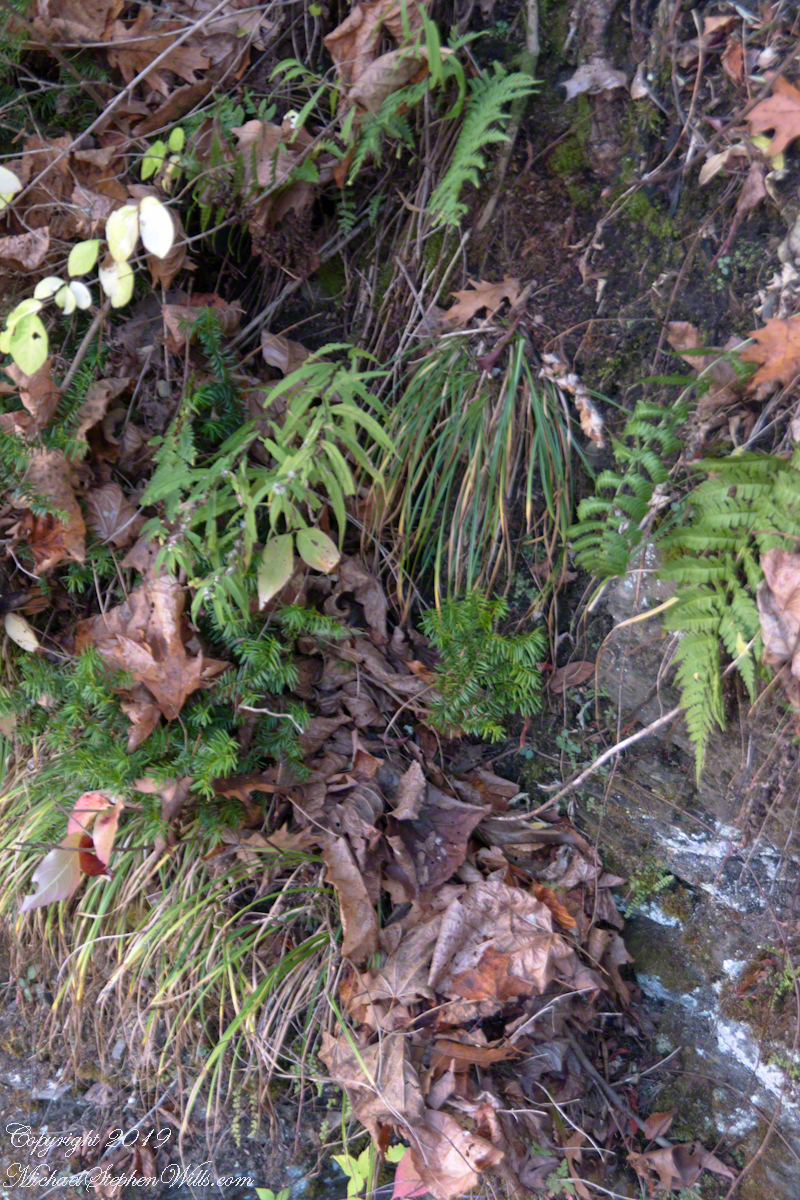
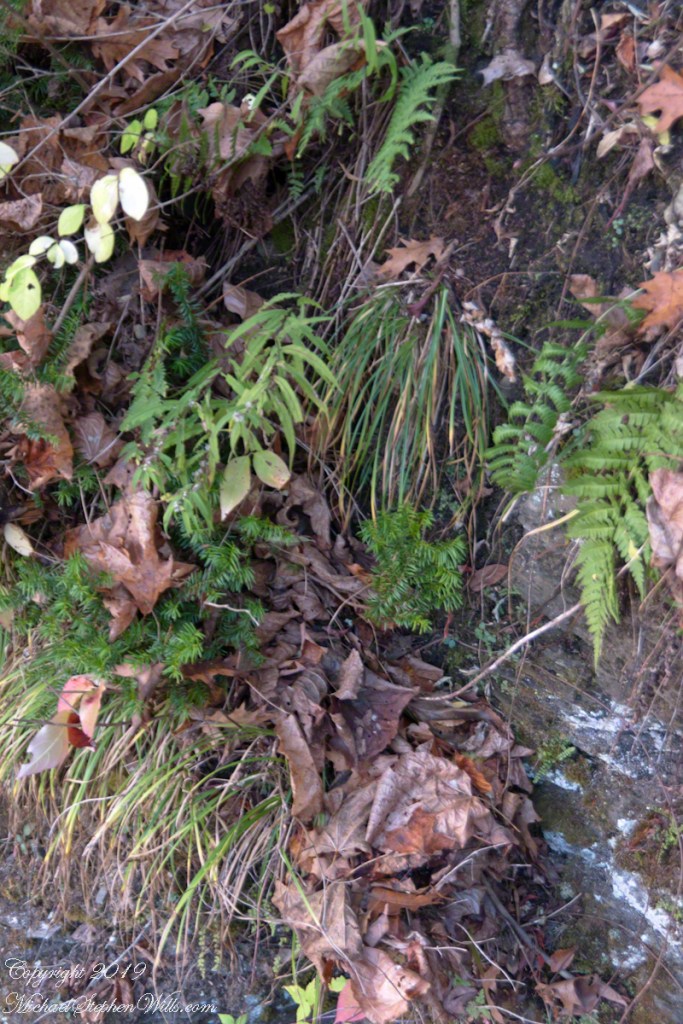
Grasses, hemlock saplings, goldenrod, spent leaves and ferns on the wall of the 223 Cliff Stair steps.
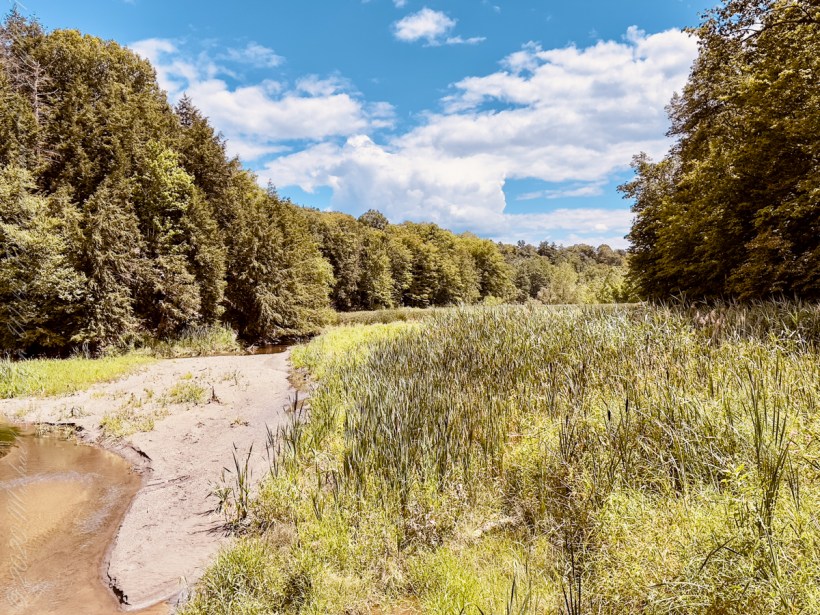
formed by a 1930’s Dam on Buttermilk Creek
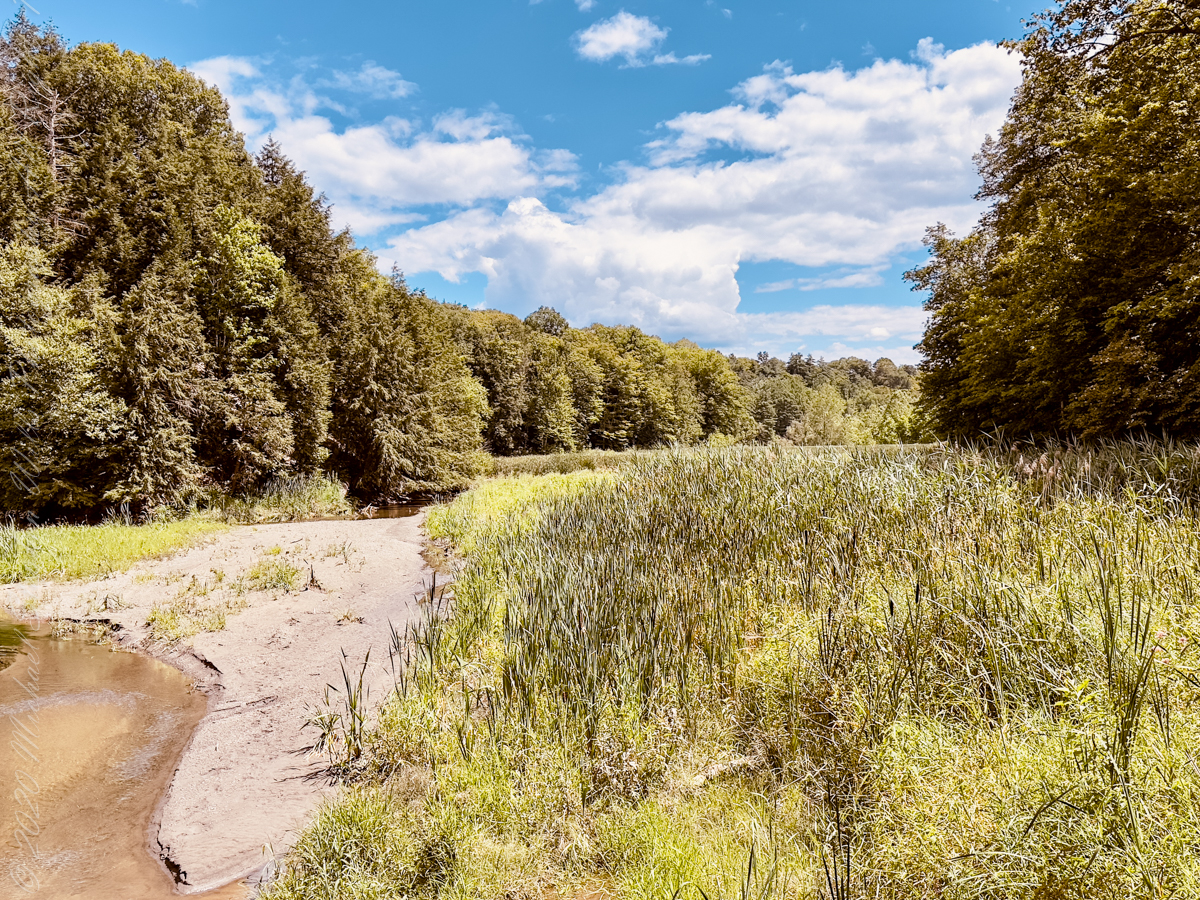
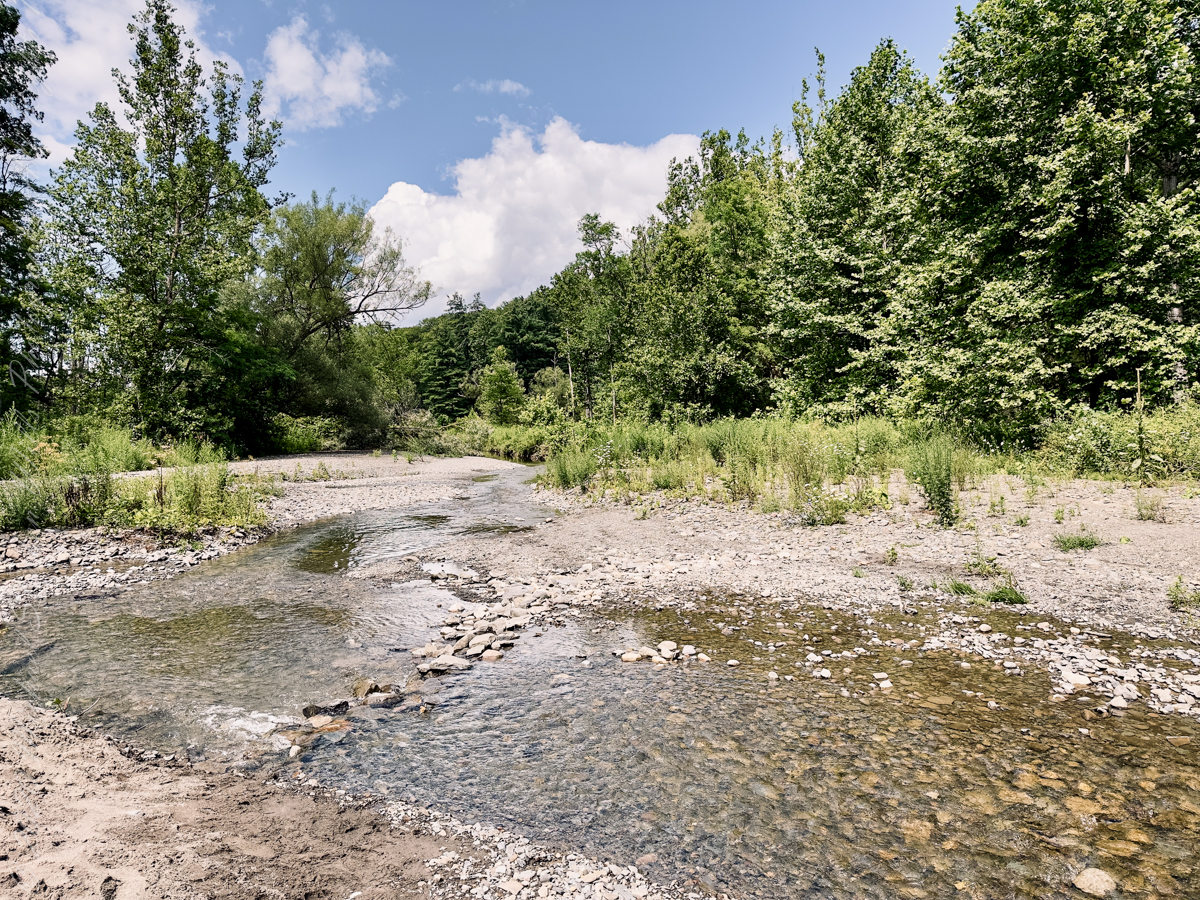
Dam on Buttermilk creek that forms Lake Treman. Here is stunning Civilian Conservation Corp (1930’s) work in this 36-foot-high stone dam that is not only a spectacle to observe but also serves as part of the trail that encircles Lake Treman. The man-made lake’s wooded shores and placid waters are a stark comparison to the gorge’s rocky cliffs and surging water
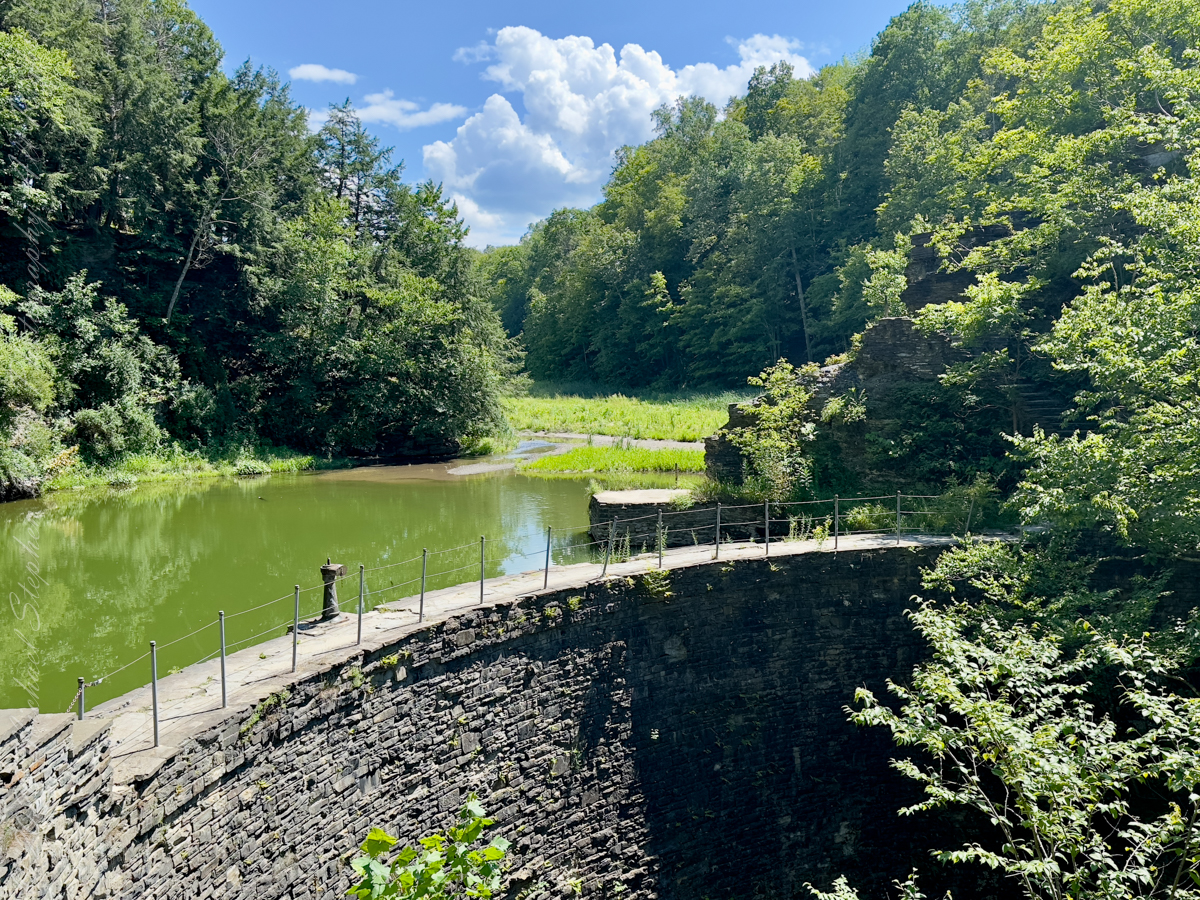
August 2023, Buttermilk Falls New York State Park, Ithaca, Tompkins County, New York.
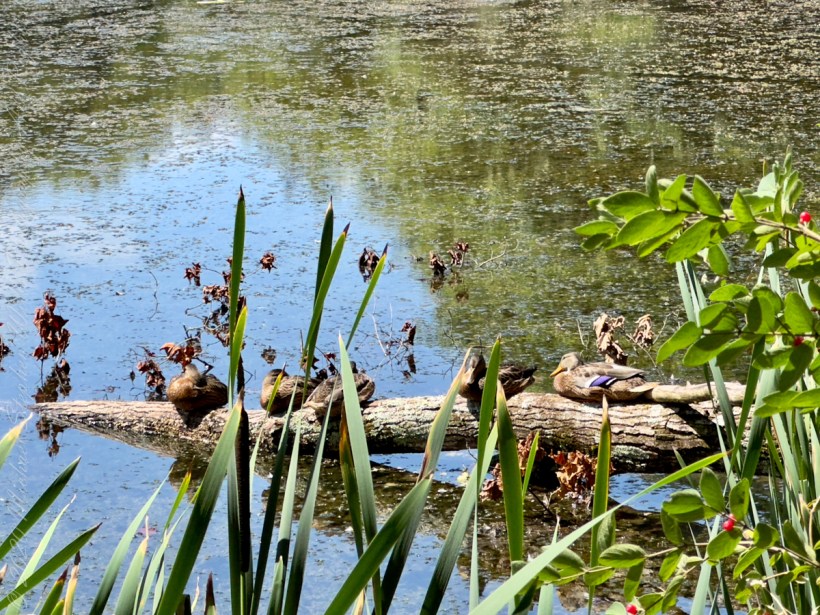
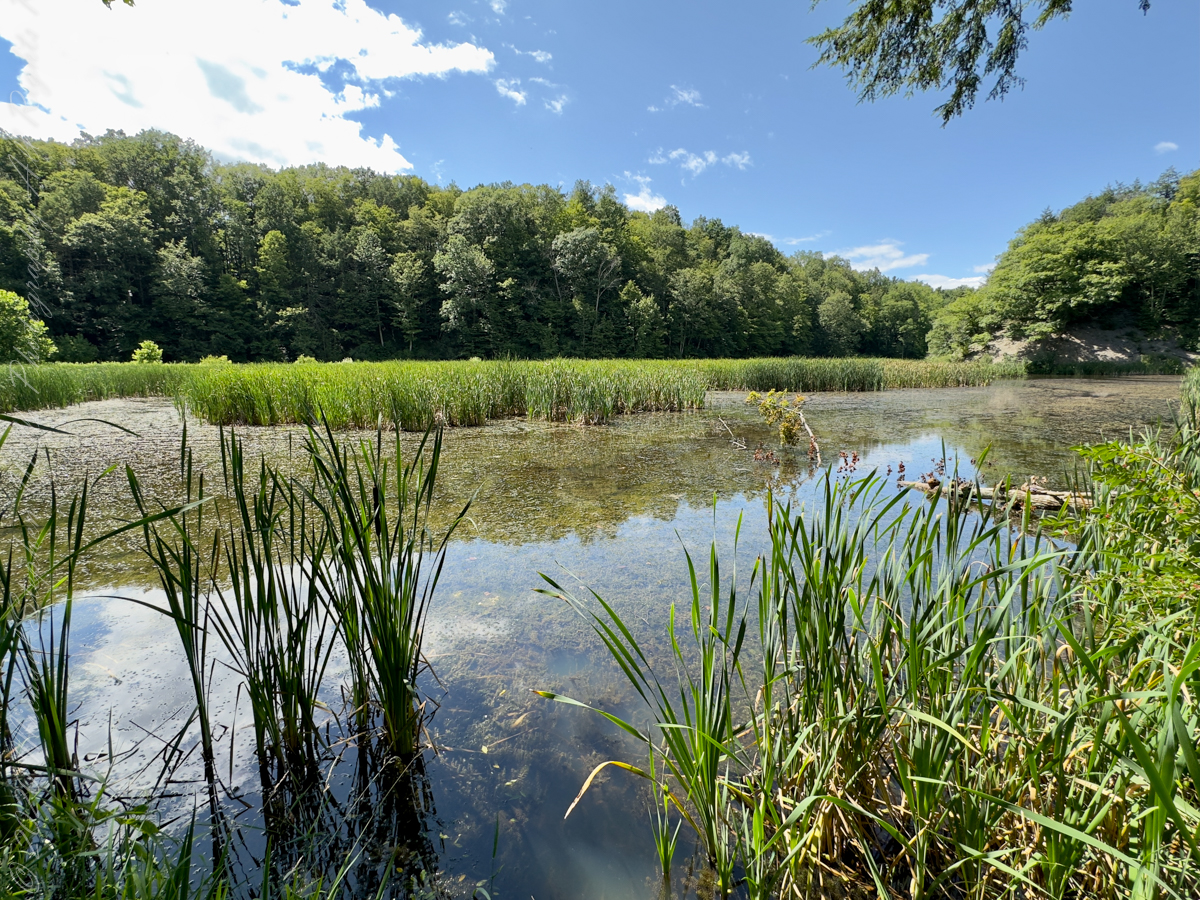
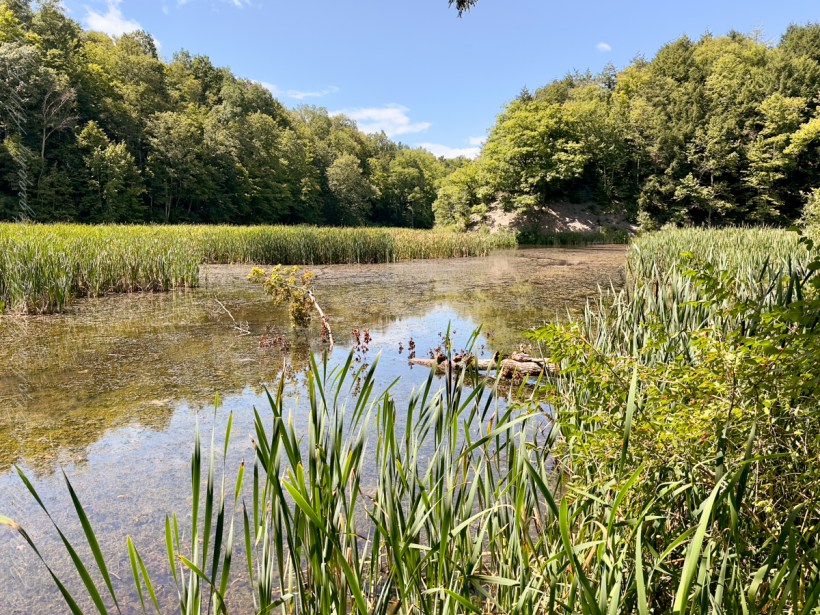
On Lake Treman.
Two species of wild ducks rest on a fallen tree trunk.
That is a female Wood Duck (Aix sponsa) on right.
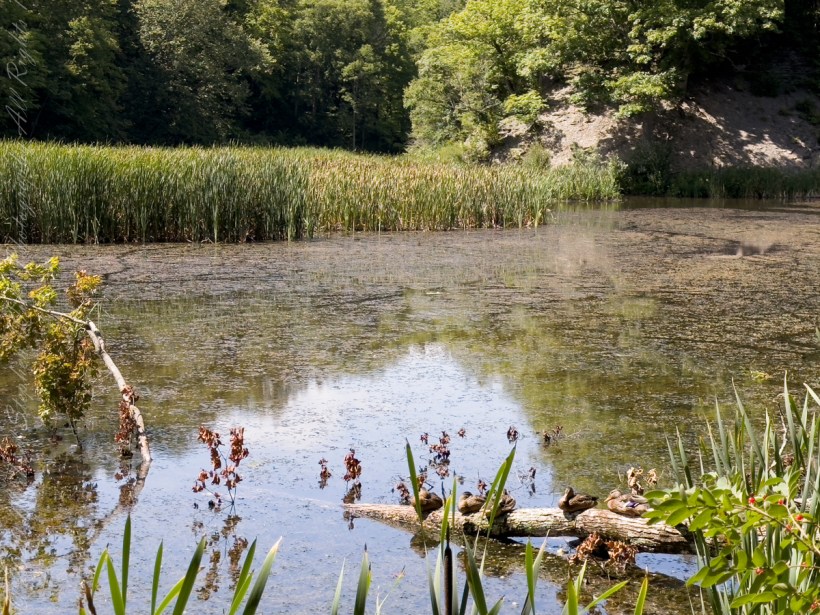
Wood Ducks mainly eat berries, acorns, and seeds, but also insects, making them omnivores. They are able to crush acorns after swallowing them within their gizzard.
August 2023, Buttermilk Falls New York State Park, Ithaca, Tompkins County, New York.
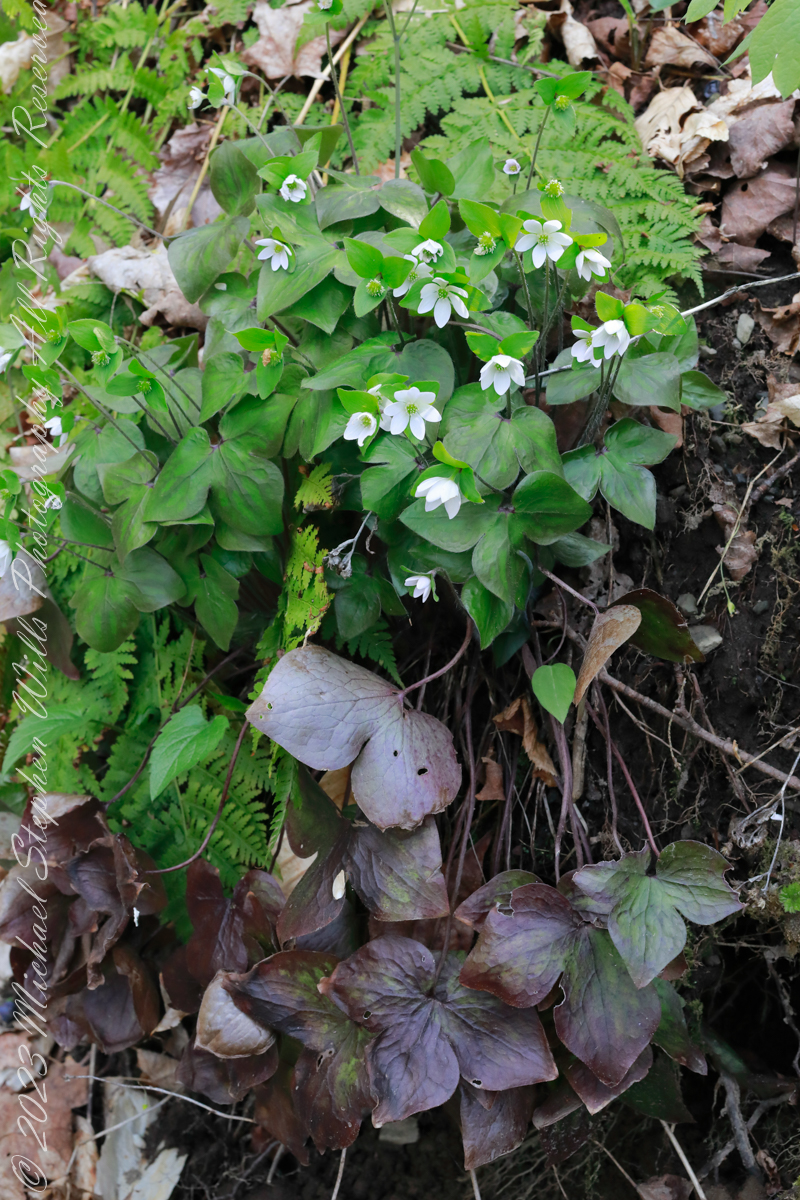
Old Leaves
This Hepatica acutiloba, the sharp-lobed hepatica, I found in Fillmore Glen last April, capturing them with the Apple Iphone 14 proMax.
Hepatica acutiloba is also known as sharp-lobed hepatica, liverwort, kidneywort, pennywort, liverleaf. The perennial nature of this plant is seen here in the purplish leaves hanging below, from a previous year’s growth.
The word hepatica derives from the Greek ἡπατικός hēpatikós, from ἧπαρ hêpar ‘liver’, because its three-lobed leaf blotched leaves resemble a diseased human liver.
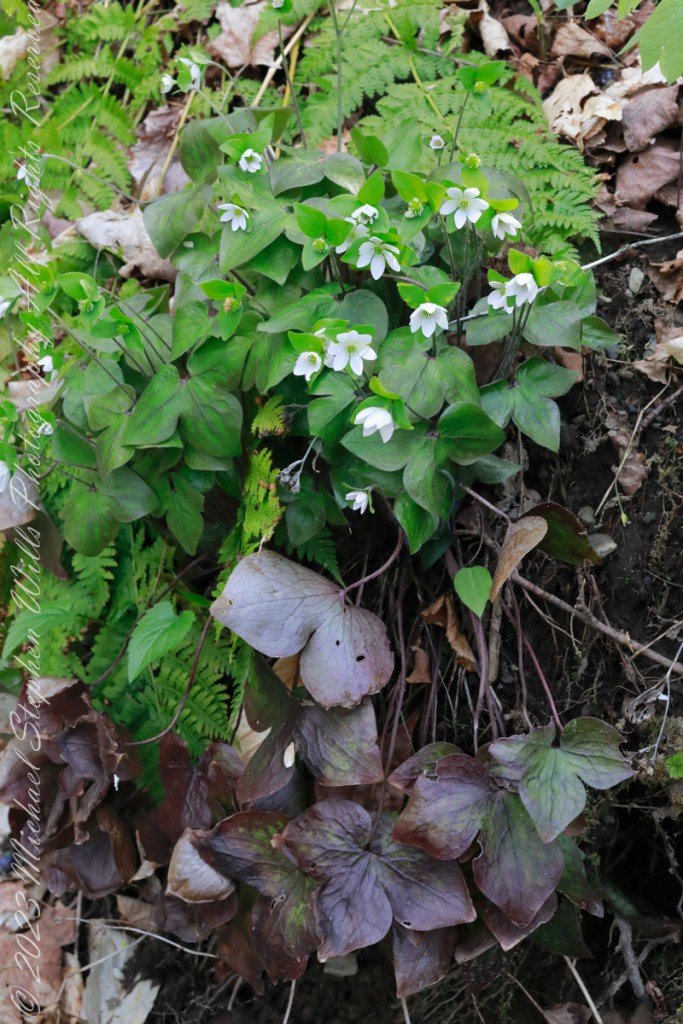
Plants of genus Hepatica are native to Europe, Asia, and North America.
Europe: Albania, Austria, the Baltic states, Belarus, Bulgaria, Corsica, Czechoslovakia, Denmark, European Russia, Finland, France, Germany, Greece, Hungary, Italy, Norway, Poland, Romania, Spain, Sweden, Switzerland, Ukraine, Yugoslavia
Central Asia: Kazakhstan, Kyrgyzstan, Tajikistan, Western Siberia
Eastern Asia: North China, South Central China, East China, Japan, Korea, Manchuria, Primorsky Krai
South Asia: Pakistan, Western Himalaya
Canada: Manitoba, New Brunswick, Nova Scotia, Ontario, Québec
United States: Alabama, Arkansas, Connecticut, Delaware, District of Columbia, Florida, Georgia, Illinois, Indiana, Iowa, Kentucky, Maine, Maryland, Massachusetts, Michigan, Minnesota, Mississippi, Missouri, New Hampshire, New Jersey, New York, North Carolina, Ohio, Pennsylvania, Rhode Island, South Carolina, Tennessee, Vermont, Virginia, West Virginia, Wisconsin
Plants of the genus have been introduced to Belgium.
These tufted perennials grow to 10 centimeters in height with wiry roots. Leaves usually three-lobed and untoothed. Flowers can be blue, pinkish, or white. Three sepals, small and green. Petals usually 5, can be more, without a nectary. Stamens numerous. Ovary superior; styles short with capitate stigmas. Pollination is by insects. Fruits many, one-seeded. Seeds are green when ripe. dispersed by ants.
 Michael Stephen Wills Photography