Frabel’s Tower of Babel: A Modern Artistic Interpretation

At McKee Botanical Garden, the glass sculpture Tower captivates with its beauty, symbolizing unity amidst nature, blending art and environment.

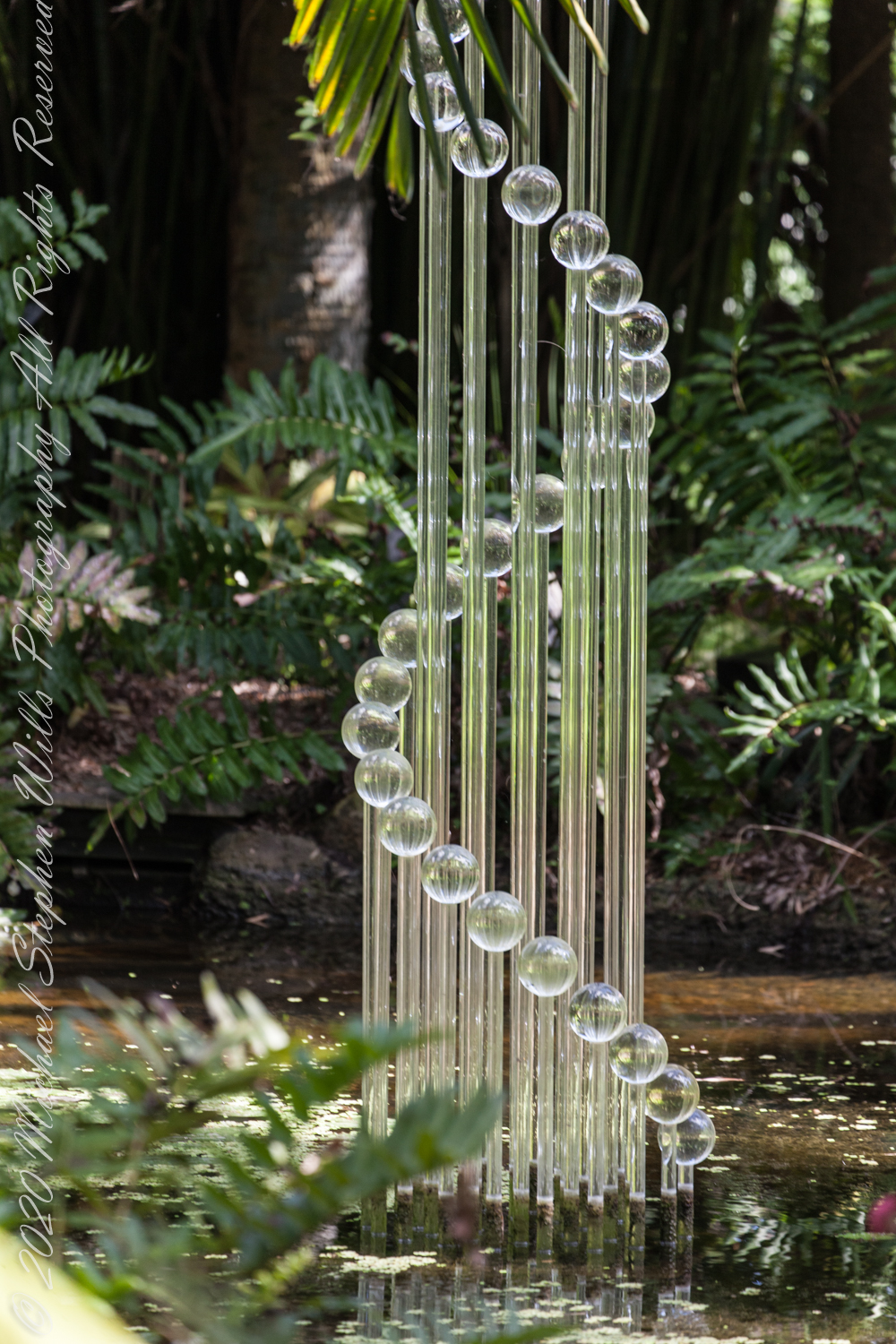
The air was crisp yet warmed by the steady rays of the January sun as I wandered through McKee Botanical Garden. The interplay of light and shadow danced across the palm fronds, creating an enchanting ambiance that whispered serenity. My pace slowed as I approached a reflective pond tucked away within this verdant sanctuary. There, shimmering like a fragment of the heavens brought to Earth, stood a glass sculpture titled Tower.

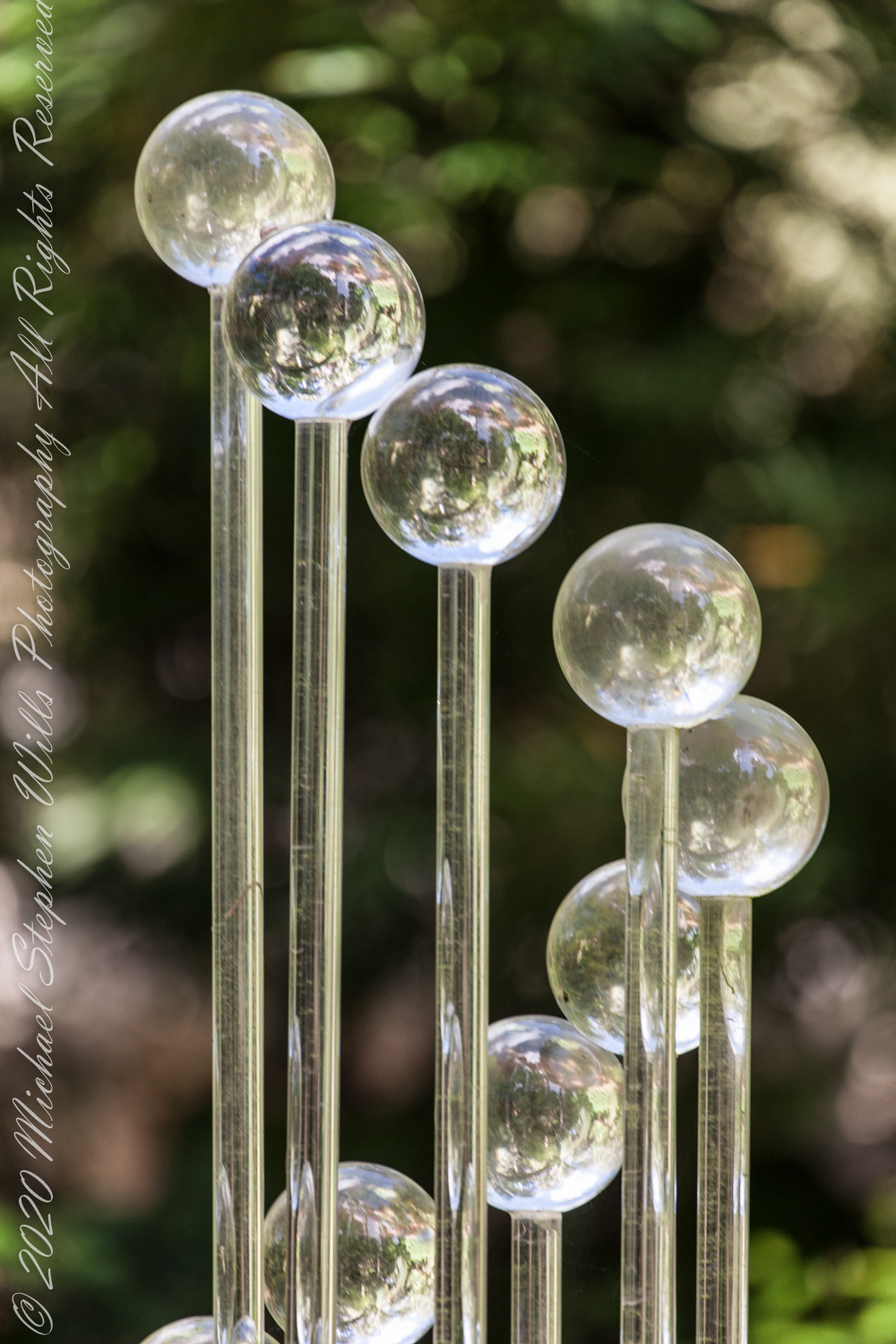
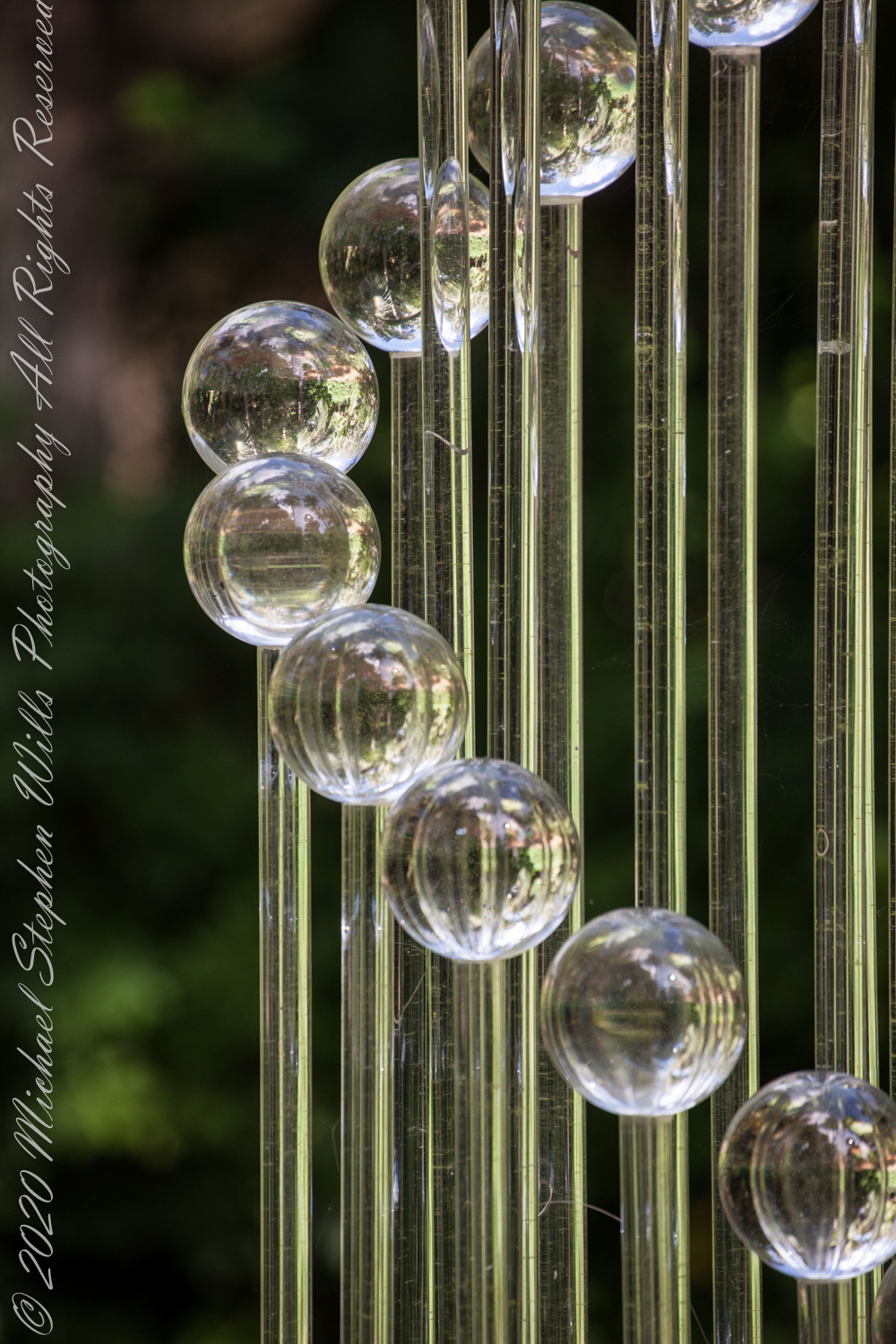
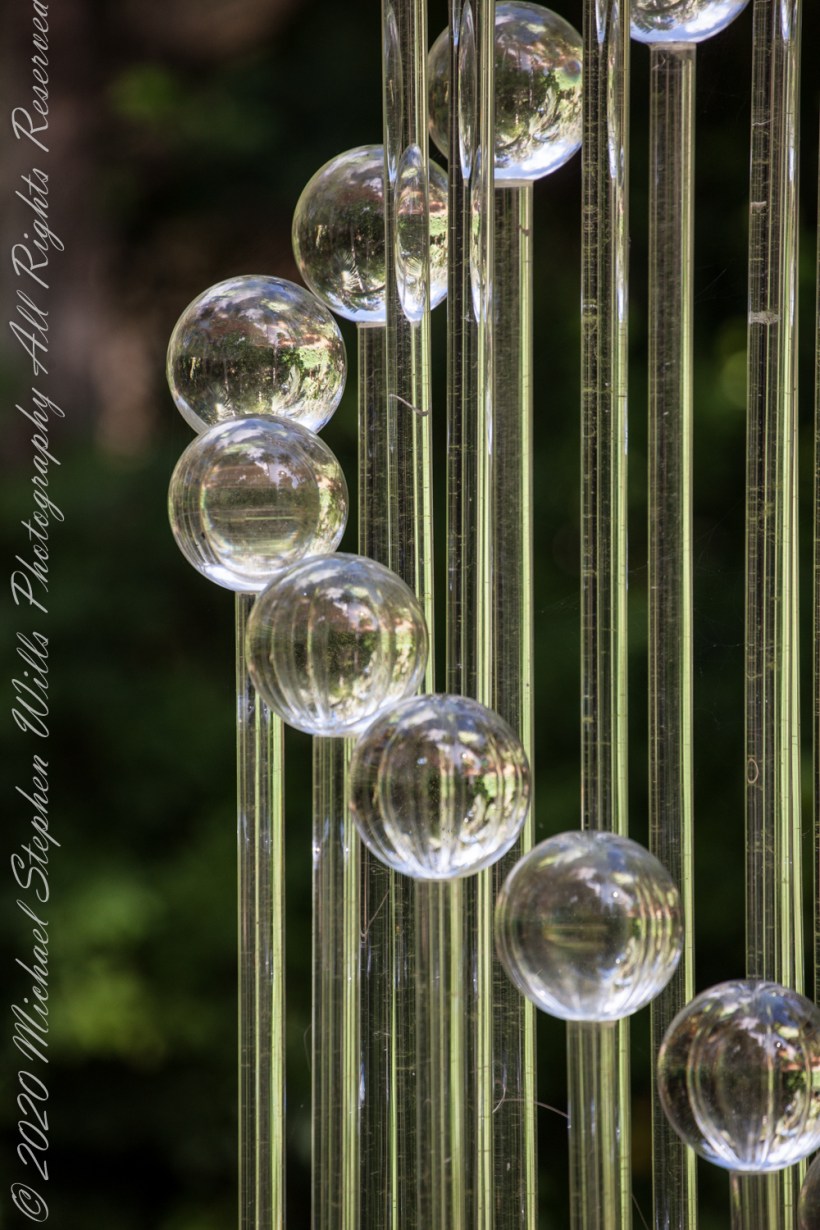
At first glance, the sculpture seemed ethereal, almost unreal—a spiral staircase to the skies crafted of crystalline spheres and slender rods. Its reflection on the water below doubled the dreamlike quality, as if the sculpture extended into an unseen realm. Upon closer inspection, I noticed the intricate craftsmanship of Hans Godo Fräbel, the sculptor whose genius birthed this luminous creation.
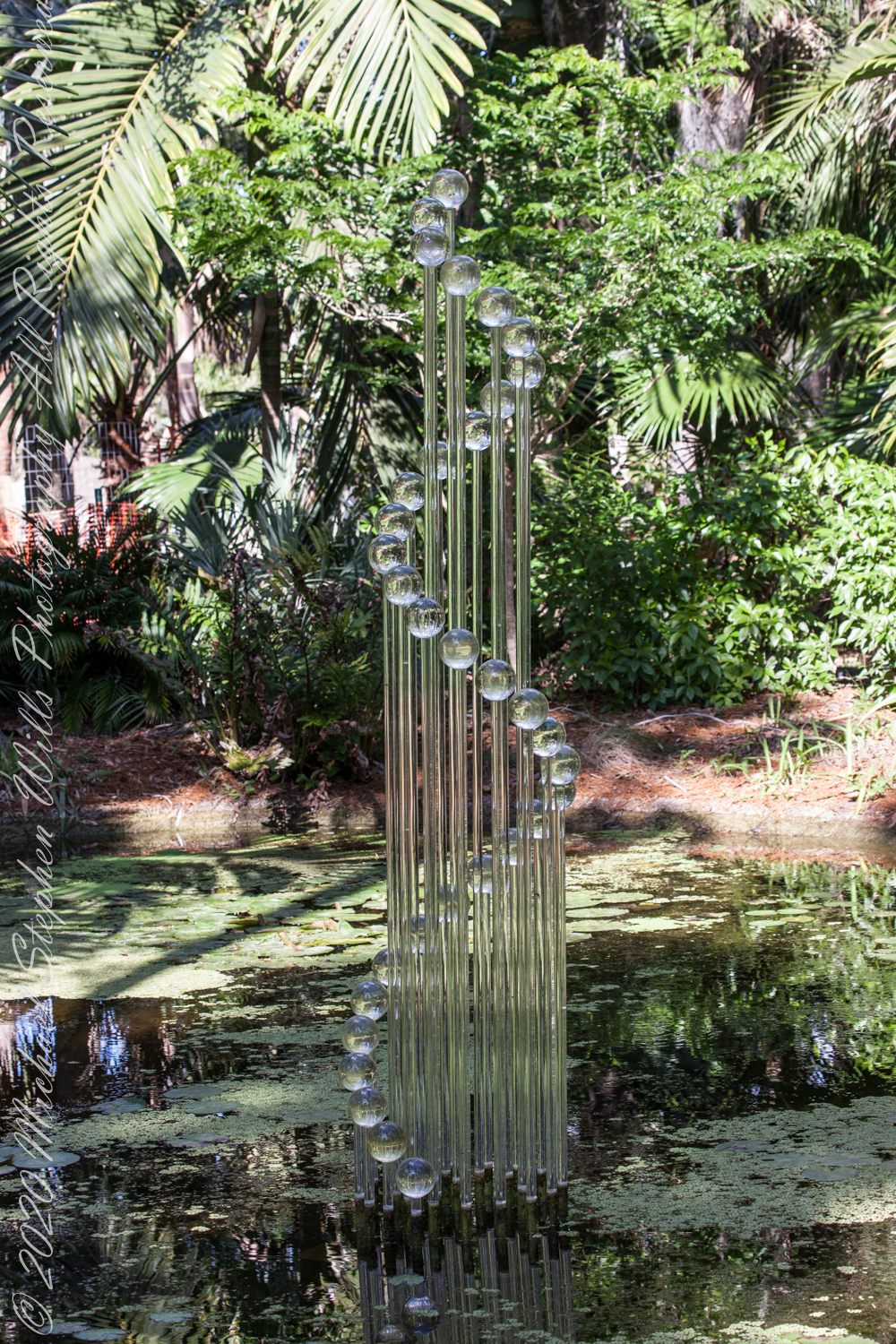
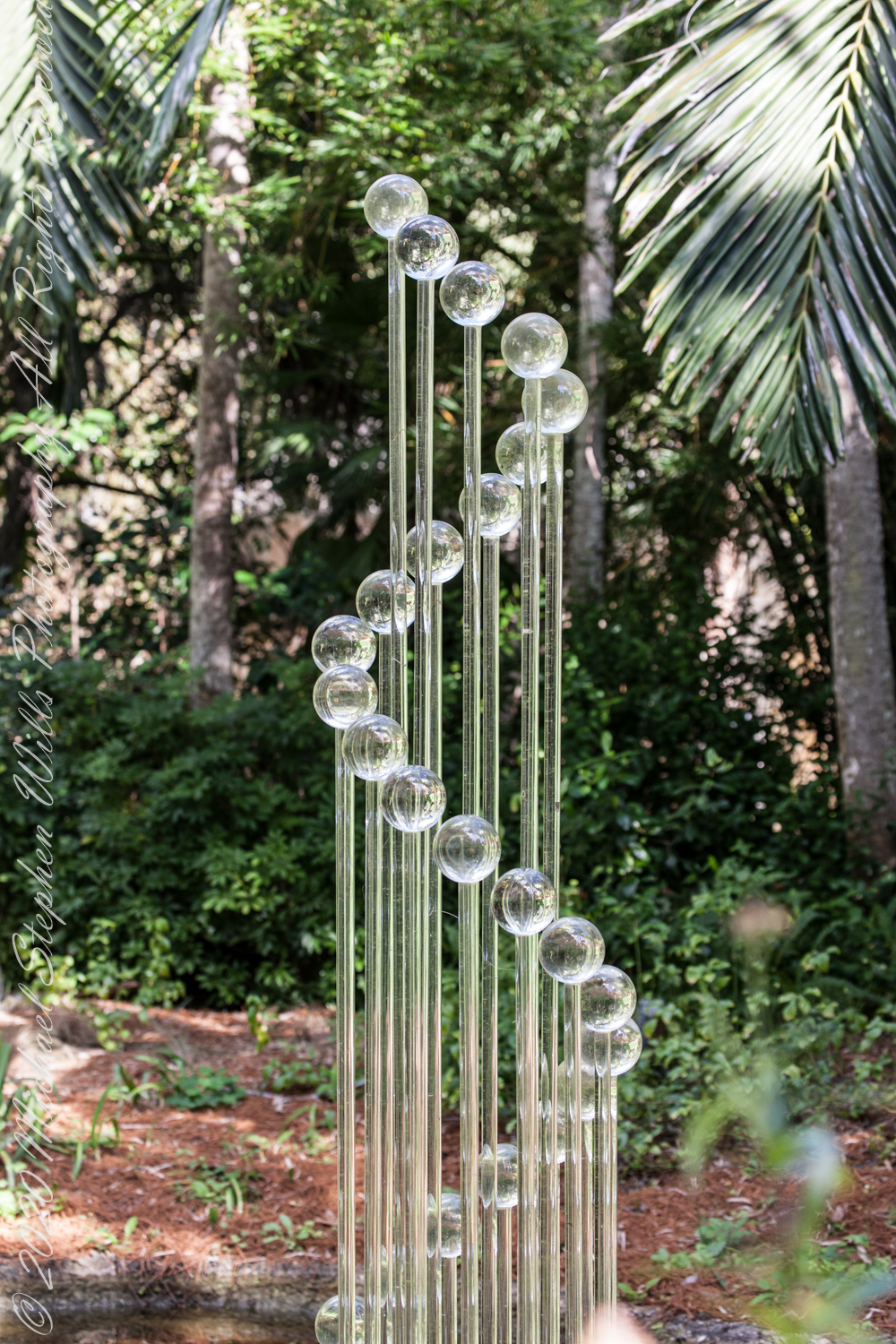
A nearby sign informed me that Tower is a larger version of Fräbel’s 1979 work Tower of Babel. It described how the sculpture’s glass rods and spheres were meticulously arranged to create abstract, clear shapes that play with light. Indeed, as the sun shifted overhead, the sculpture sparkled, refracting sunlight into tiny rainbows and revealing textures hidden within its transparent façade.

The setting amplified its majesty. Towering palm trees framed the sculpture, their dark green leaves offering a contrasting backdrop to the glass’s brilliance. Water lilies floated lazily on the pond’s surface, and an occasional ripple sent the reflection dancing. The combination of nature and art created an environment that felt both grounding and transcendent.

Standing before this masterpiece, I felt a profound connection to its narrative. The reference to the Tower of Babel resonated deeply. Here was a modern interpretation of an ancient story, one of human ambition and divine mystery, yet here it existed harmoniously in nature, not in defiance of it. The clear glass, fragile yet resilient, seemed to symbolize transparency and unity—a stark contrast to the biblical tale’s discord.
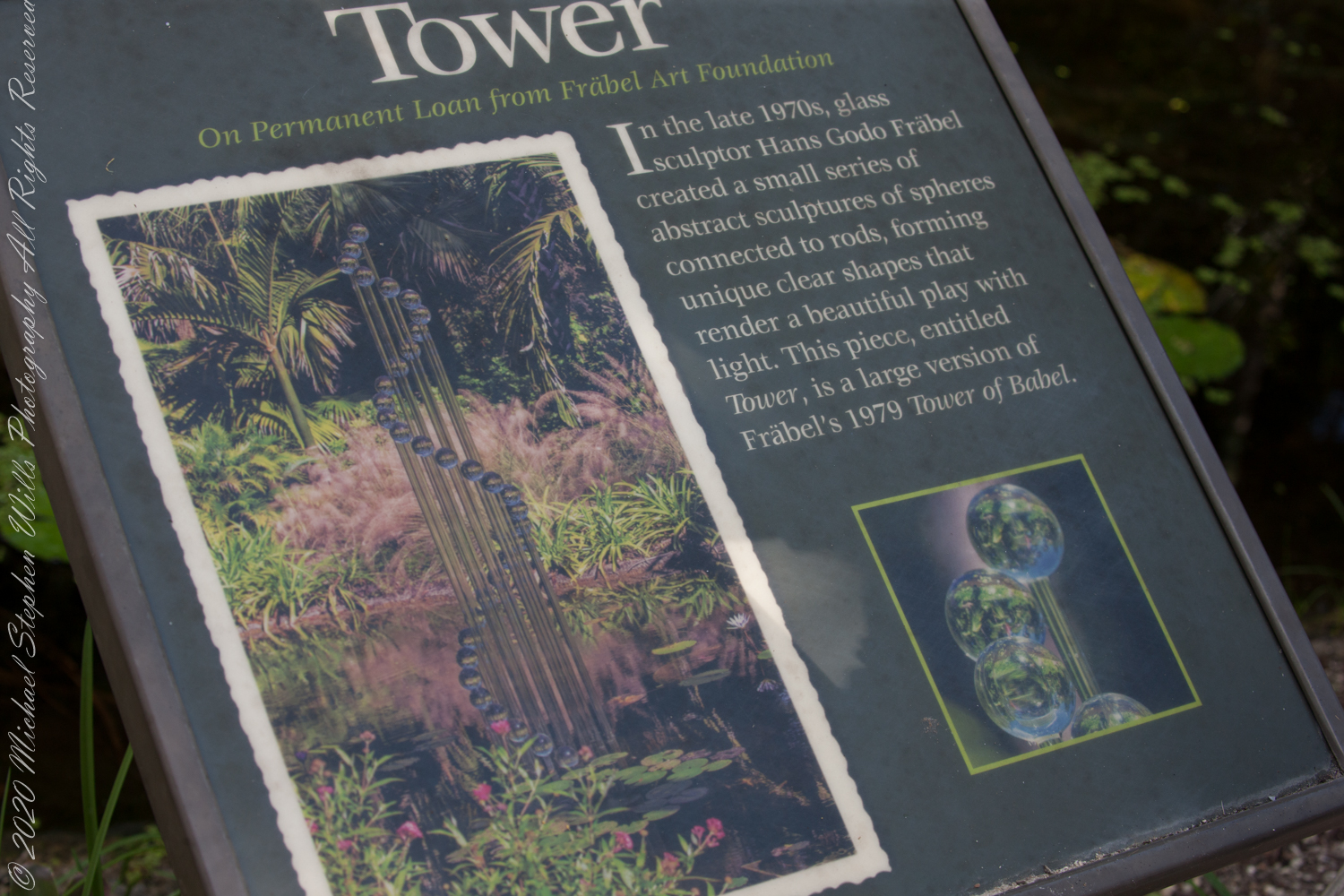
I lingered, watching how the sunlight flirted with the sculpture, how it cast prismatic shadows onto the surrounding foliage. Each sphere held reflections of the garden, tiny worlds encapsulated in glass, reminding me of the interconnectedness of all things. This moment, this meeting of human ingenuity and the natural world, felt timeless.

As I turned to leave, I glanced back one last time. The Tower stood resolute, a testament to creativity and a gentle reminder of the beauty that arises when humanity and nature coexist in harmony. It was an encounter that left me both inspired and at peace, grateful for the opportunity to witness such a sublime union of art and environment.

Click me for a dinosaur at McKee Gardens, Neovenator, teeth like steak knives

References: text is from the park placard with minor edits.

Enter your email to receive notification of future postings. I will not sell or share your email address.

Capturing Punta del Este: A Morning of Candid Moments

A photographer captures candid moments in Punta del Este, celebrating the city’s vibrant life and juxtaposition of modernity and tradition.

The morning sunlight bathed Punta del Este in a soft, golden glow we rode in a tour bus with large, clean windows along the streets near Punta de las Salinas, my camera Canon dslr at ready, with a Canon EF 70-300 f/4-5.6 L IS USM lens. This was the perfect time of day for street photography—the light was forgiving, and the people were starting their routines. There’s something magical about candid moments, the kind you can only find when the subjects are unaware they’re being watched. It’s these fleeting, authentic snippets of life that draw me to photography.

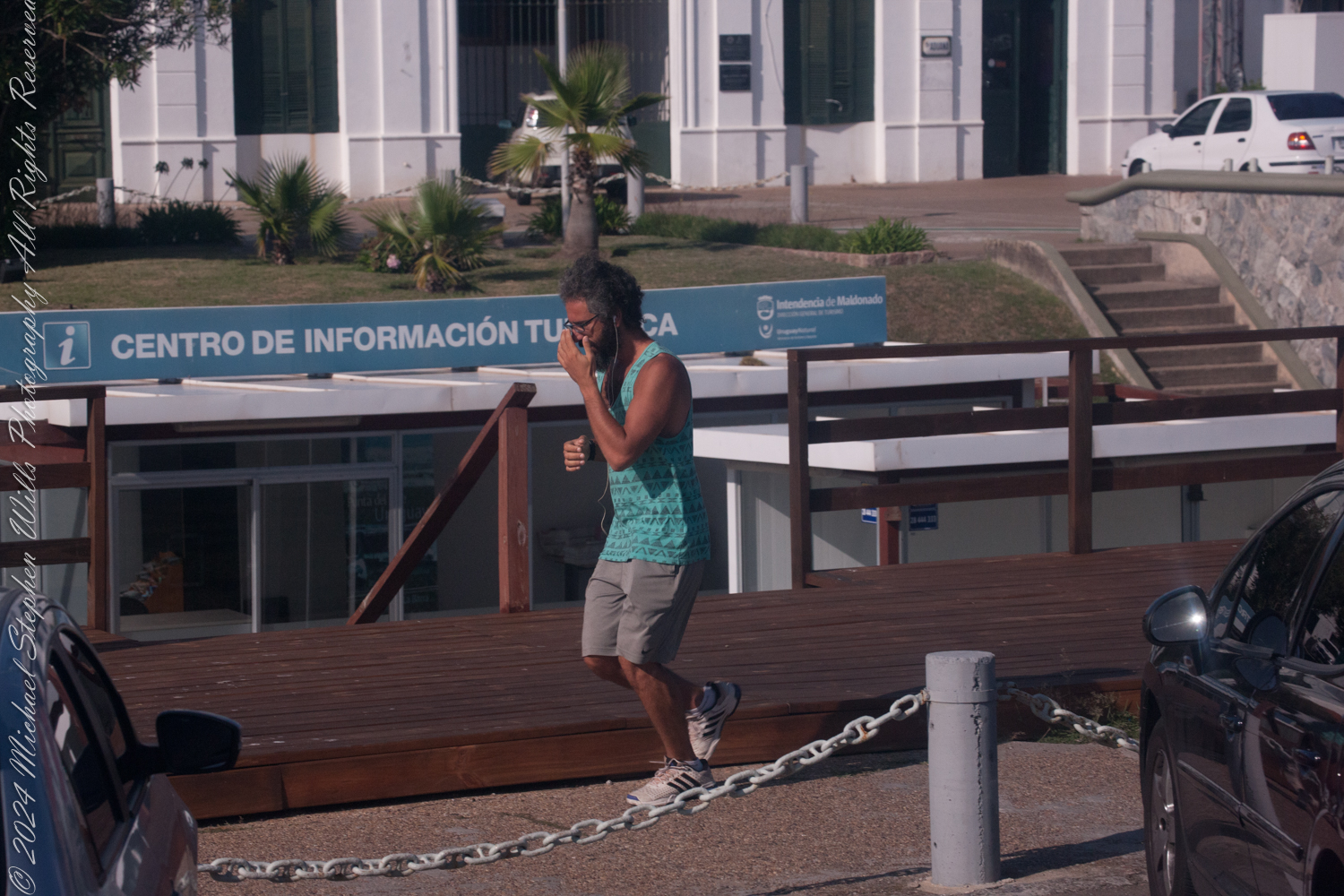
I came across the Centro de Información Turística, a modest but bustling hub for visitors. A man in a bright turquoise tank top walked briskly past, talking animatedly into his phone. He was a splash of vibrant color against the clean, white facade of the building, his movement so dynamic that I couldn’t resist snapping a photo. The contrast of his modern, casual style against the timeless architecture behind him captured the essence of Punta del Este—a place where history and the contemporary coexist seamlessly.

Candid shots of people at their leisure in and around Great Britain Square of Punta del Este. Departamento de Maldonado, Uruguay

We were headed to the shoreline for the sound of the waves and the refreshing scent of salt in the air. There, on a low stone wall, an older man in neon green shorts leaned back, exercising his arms. His weathered face was relaxed, a picture of contentment. Behind him, the ocean swirled and crashed against the rocks, and I marveled at how effortlessly this simple scene captured the spirit of life in this coastal city—a balance between the energy of the waves and human moments.
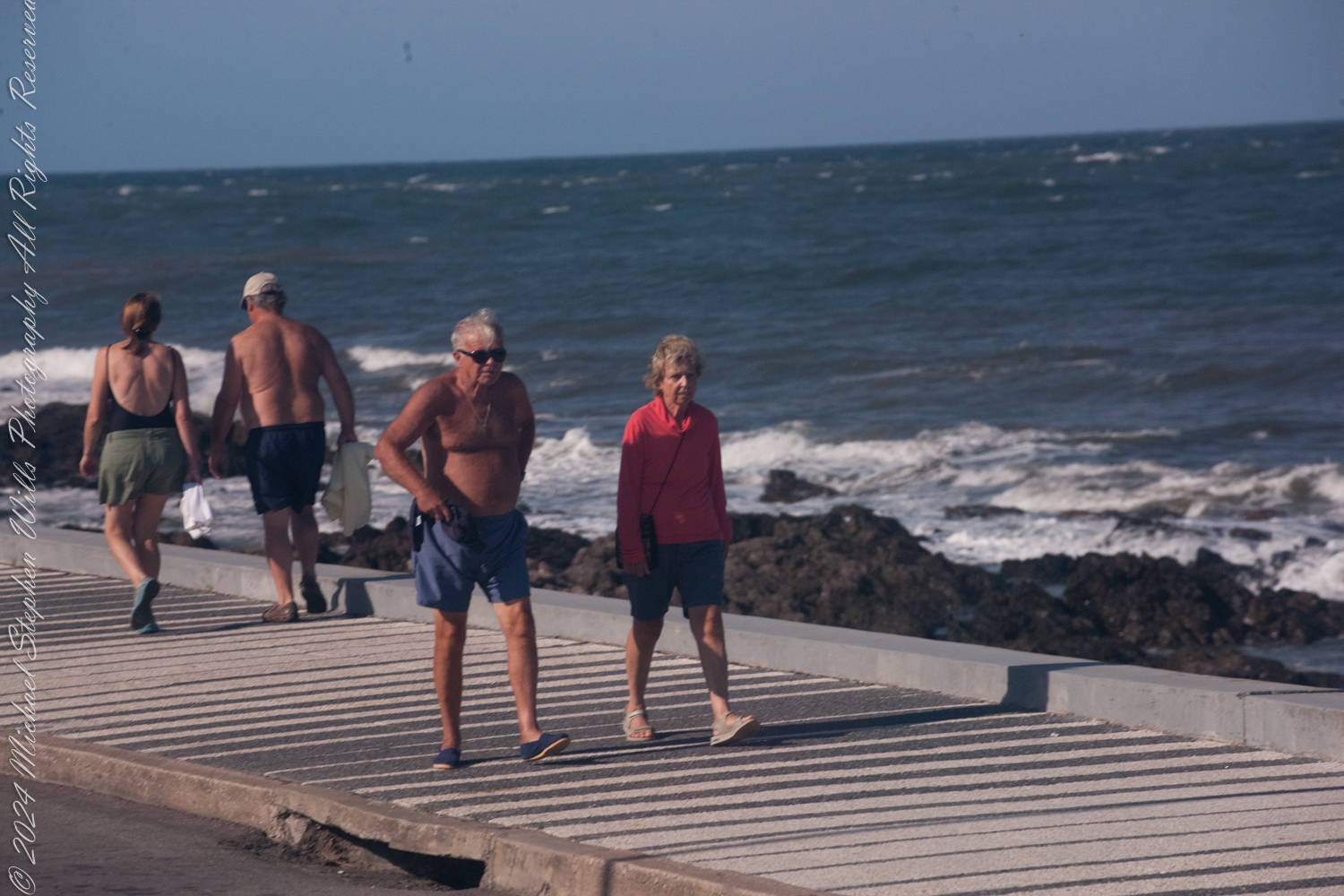
Further down the walkway, a group of people strolled leisurely, their conversations punctuated by laughter. One couple caught my eye—an older man in sunglasses walking beside a woman in a bright red sweater. The warmth between them was palpable, the kind of comfort that comes with years spent together. I raised my camera and framed them against the endless blue horizon. The waves rolled in behind them, their rhythm a perfect counterpoint to the couple’s measured pace. It was a reminder that even in a world that feels transient, some things remain steady and enduring.

Crossing the road, I noticed a young family out for a walk. The parents, both casually dressed, pushed a stroller with a little boy inside. The child’s curiosity was evident as he leaned forward, his tiny hands gripping the sides of the stroller as if ready to leap out and explore the world. The scene felt timeless—youthful energy, familial love, and the sense of new beginnings. It was an image I knew I had to capture, a slice of life that would resonate universally.

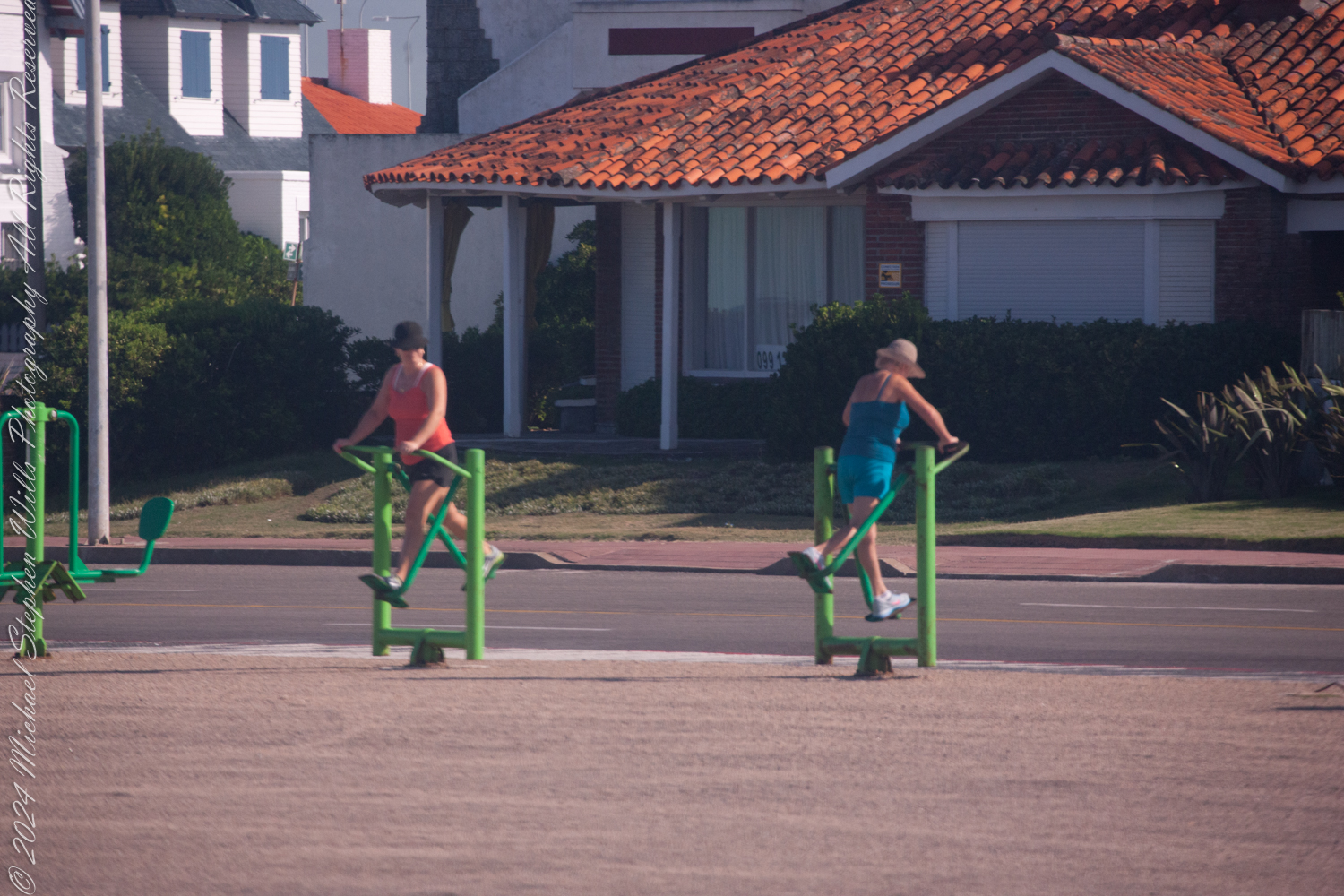
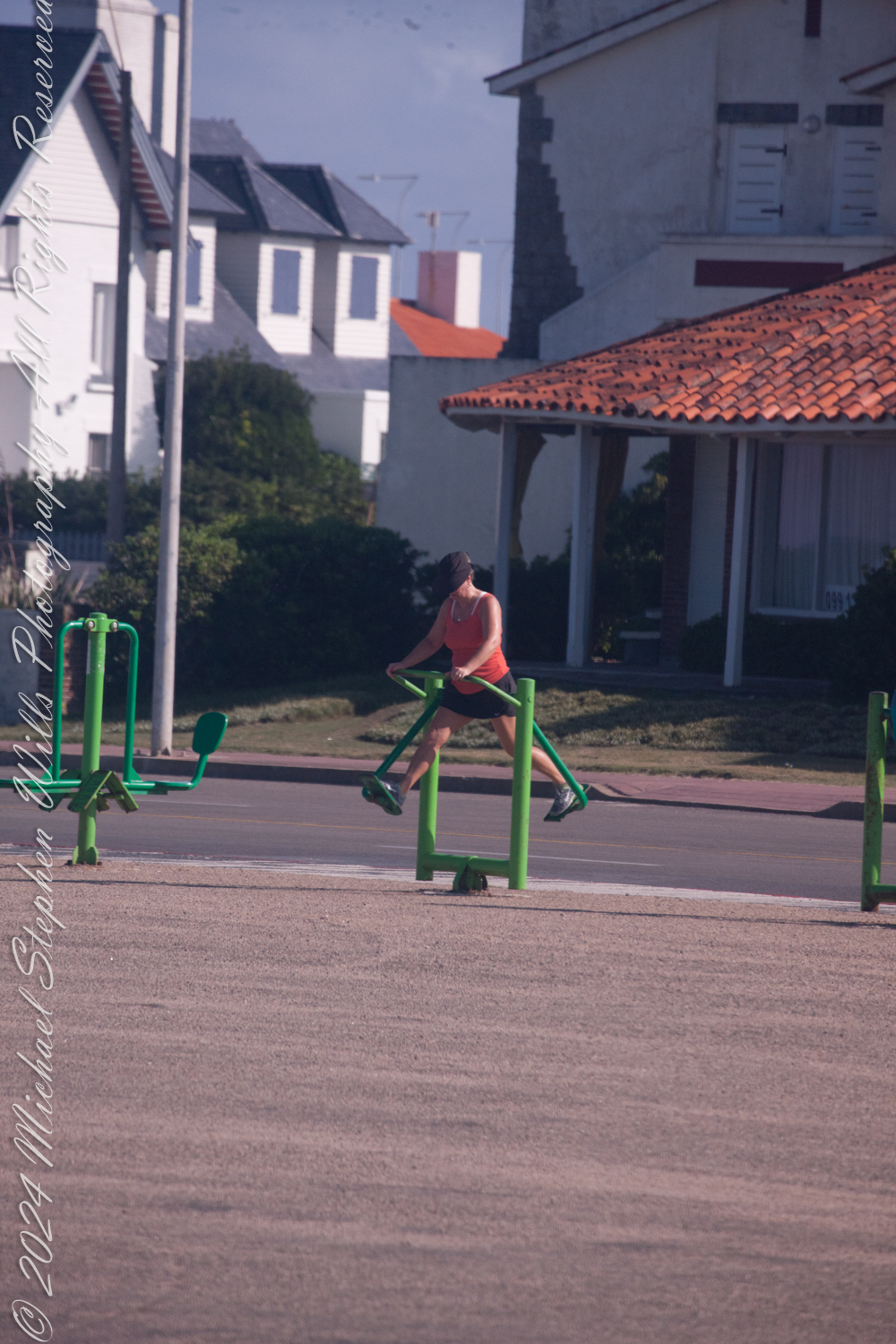
Progressing to our destination, we passed a small exercise area, where two women worked out on bright green outdoor machines. Their movements were deliberate, their focus unwavering. One wore a vivid orange top, her energy radiating even from a distance, while the other in teal moved with a more relaxed rhythm. The scene was a perfect metaphor for the city itself—a blend of activity and leisure, where people embraced life at their own pace.

We passed a row of homes and modern apartments facing the ocean. One balcony caught my attention—a young woman stood there, brushing her hair as the breeze played with it. She seemed lost in thought, gazing out at the sea, her solitude a sharp contrast to the bustling streets below. The light hit her at just the right angle, turning her into a silhouette against the backdrop of glass and steel. I clicked the shutter—a quiet moment amid the city’s liveliness.

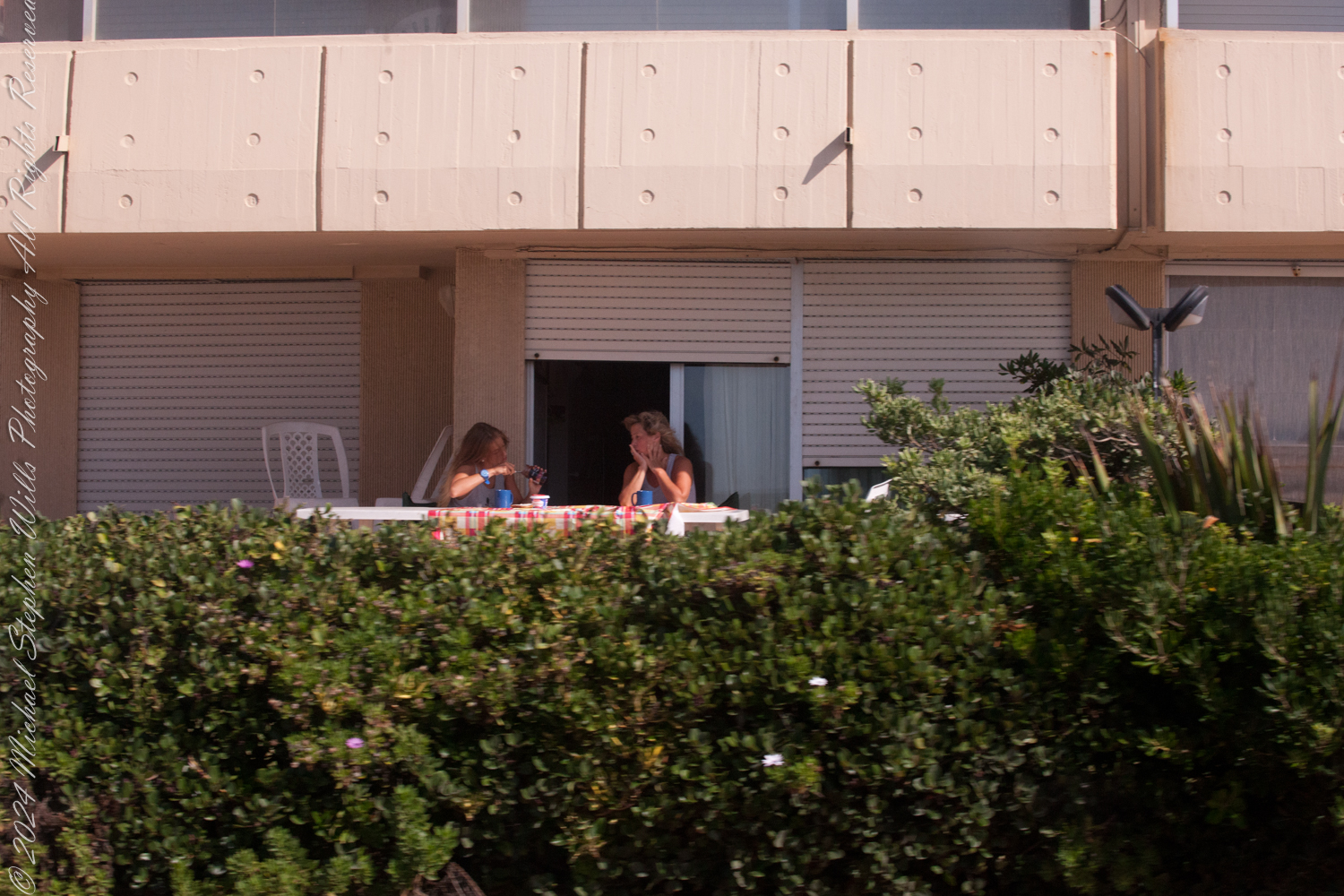
Further along, another balcony revealed two women sitting at a small table, sharing what looked like breakfast. They were deep in conversation, their gestures animated as they leaned toward one another. The table was set simply, with two cups and a plate of food, but the scene exuded warmth and connection. It reminded me that even in a city known for its glamour and style, the real beauty lies in these intimate, unguarded moments.

As I reviewed the images on my camera, I felt a sense of satisfaction. Punta del Este had revealed itself in layers that morning—a city of contrasts and harmonies, where every street and every person seemed to have a story to tell. Through my lens, I had tried to capture not just the people, but the rhythm of life here, the interplay of light and shadow, motion and stillness, solitude and togetherness. And as the sun climbed higher in the sky, I knew I had witnessed something special—an ordinary morning made extraordinary by the people who lived it.

Enter your email to receive notification of future postings. I will not sell or share your email address.

Discovering La Sirena de la Garza at Punta de las Salinas

At Punta del Este, Uruguay, the beauty of the ocean and sculptures creates a profound connection between nature, art, and mythology.

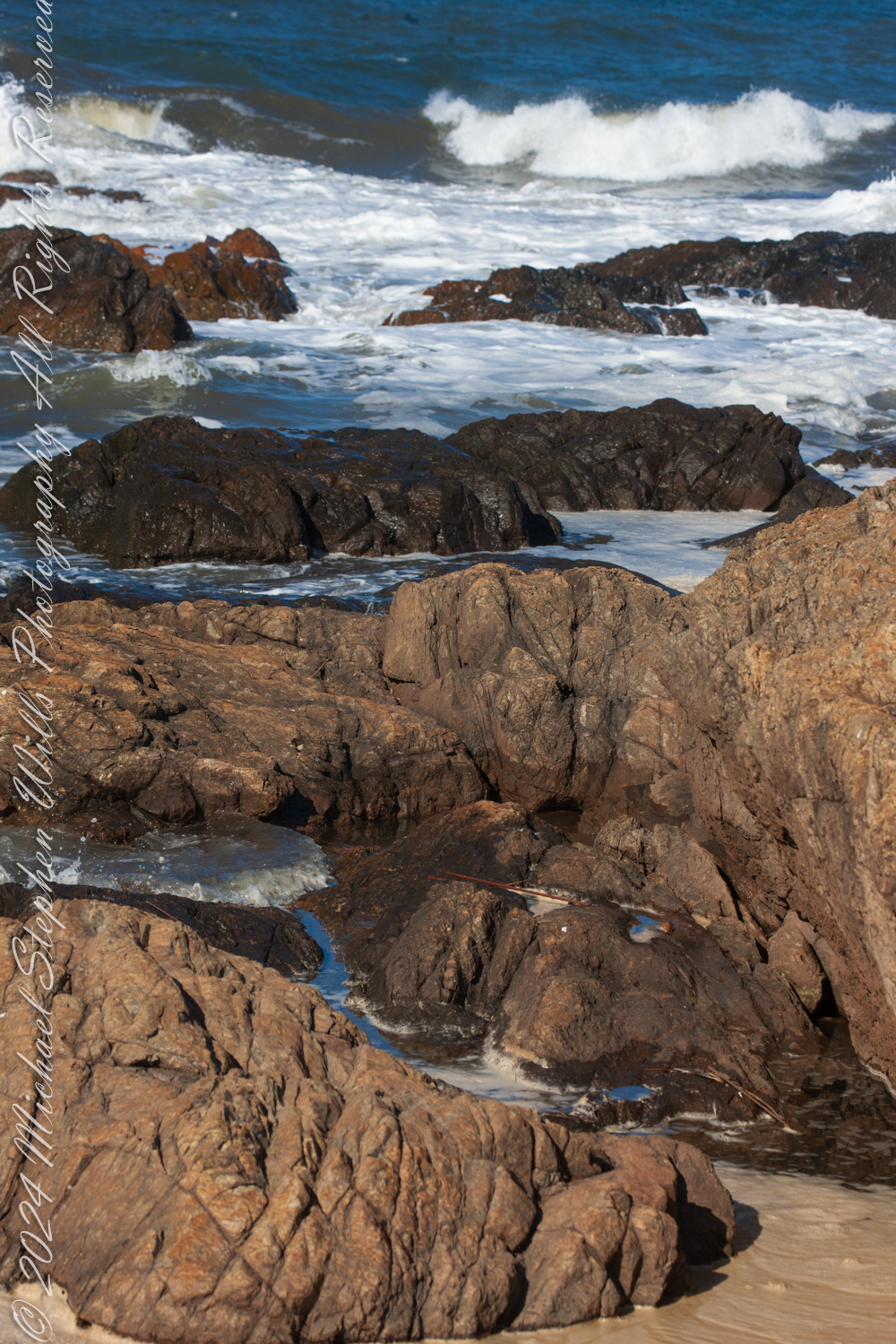
As I stood at the edge of Punta del Este, Uruguay, I marveled at the wild beauty of the place. We were at Punta de las Salinas, the very tip of the peninsula, the edge of where the Atlantic Ocean meets the Río de la Plata. This easternmost point of Uruguay, where time feels suspended as restless waves crash against rocky shores. A sea breeze carries a distinct salty tang.

This is at Great Britain Square, Punta de las Salinas of Punta del Este. We are at the tip of the peninsula, the easternmost point of Uruguay. Punta del Este, Departamento de Maldonado, Uruguay

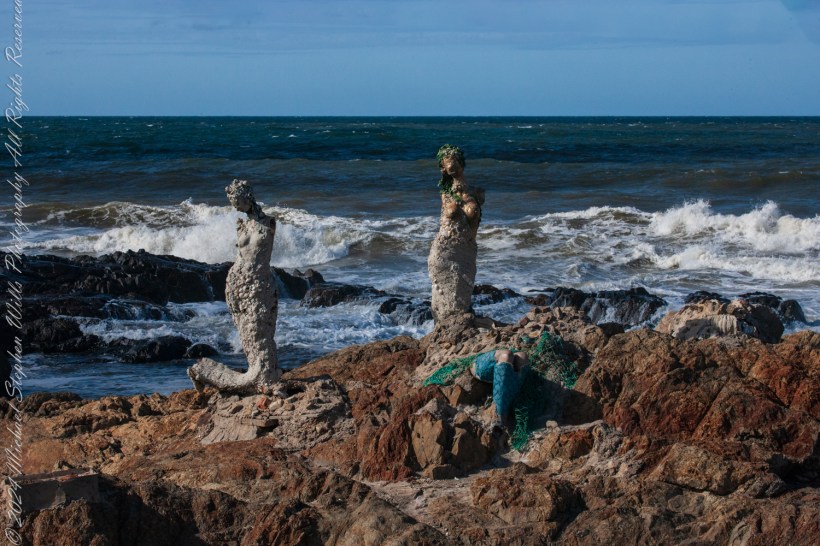
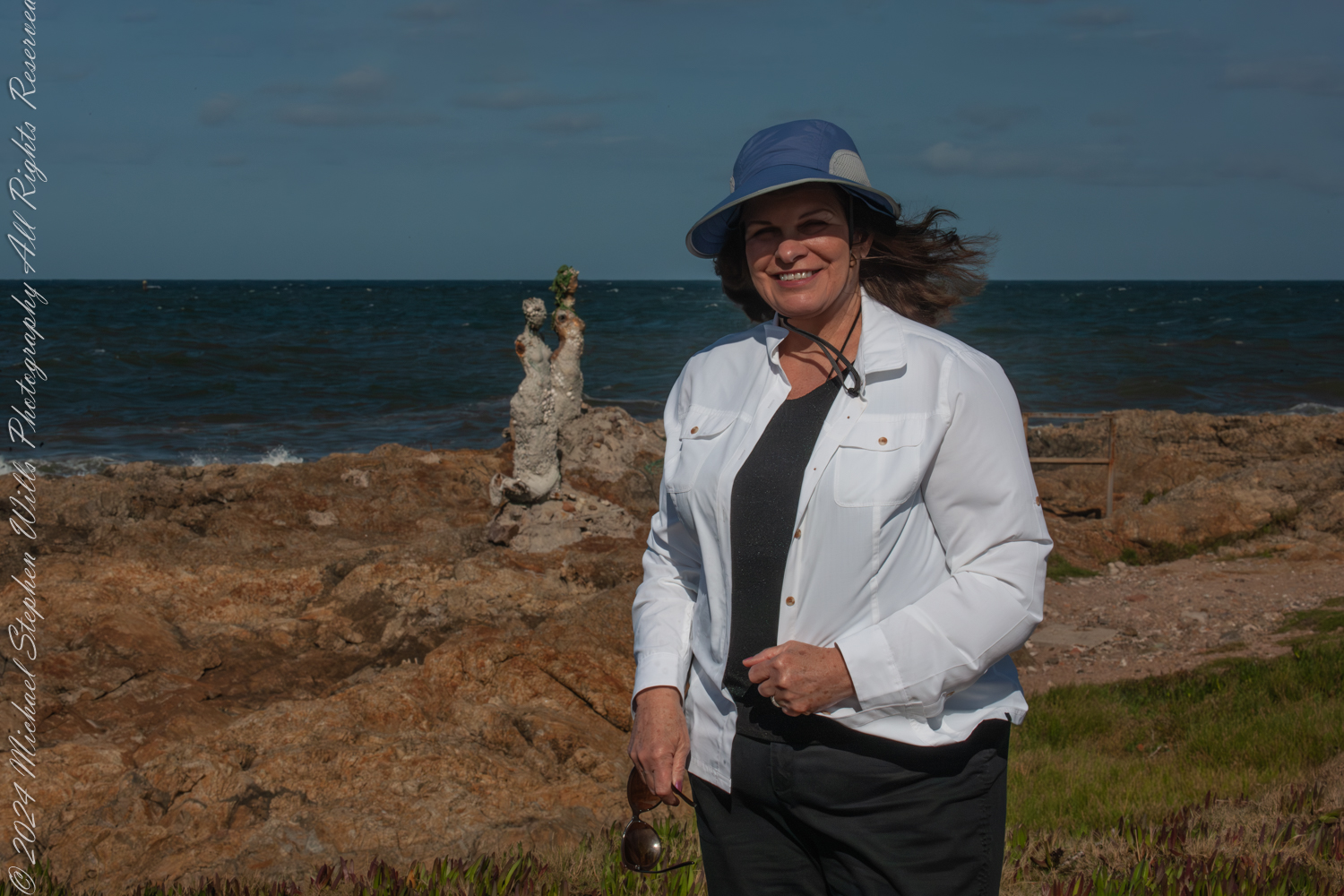
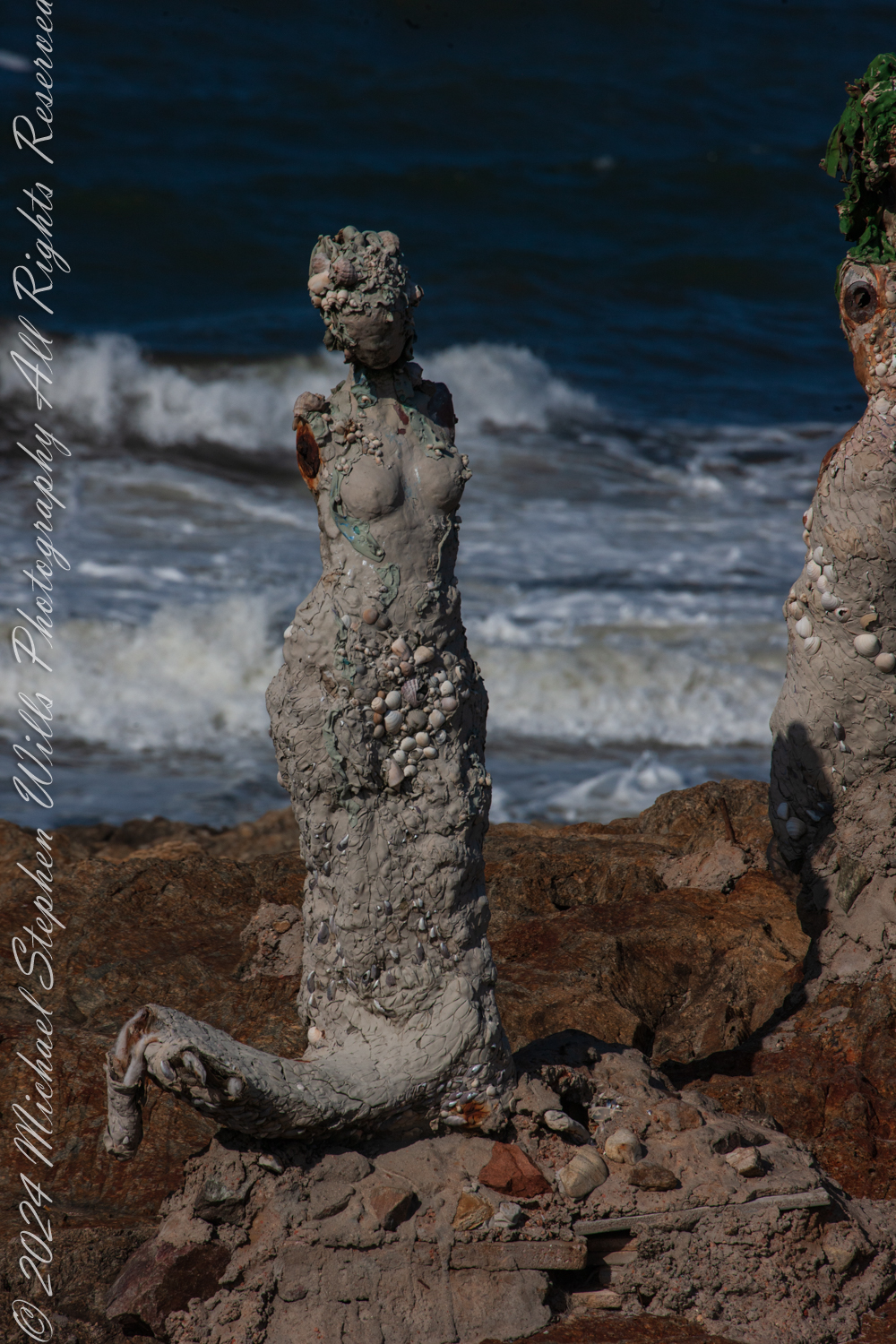
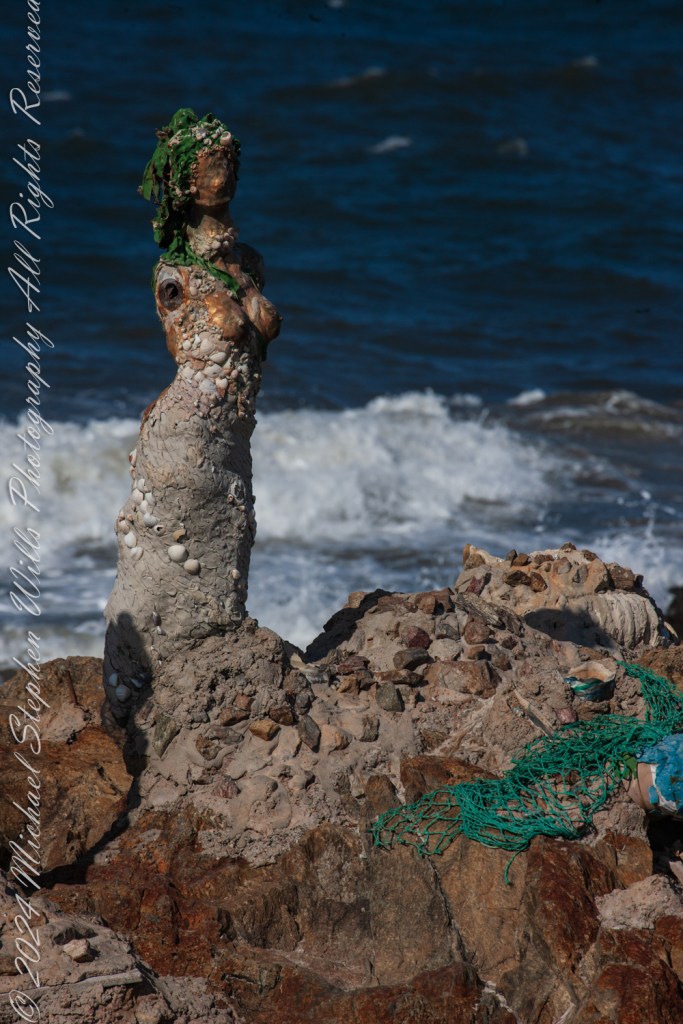
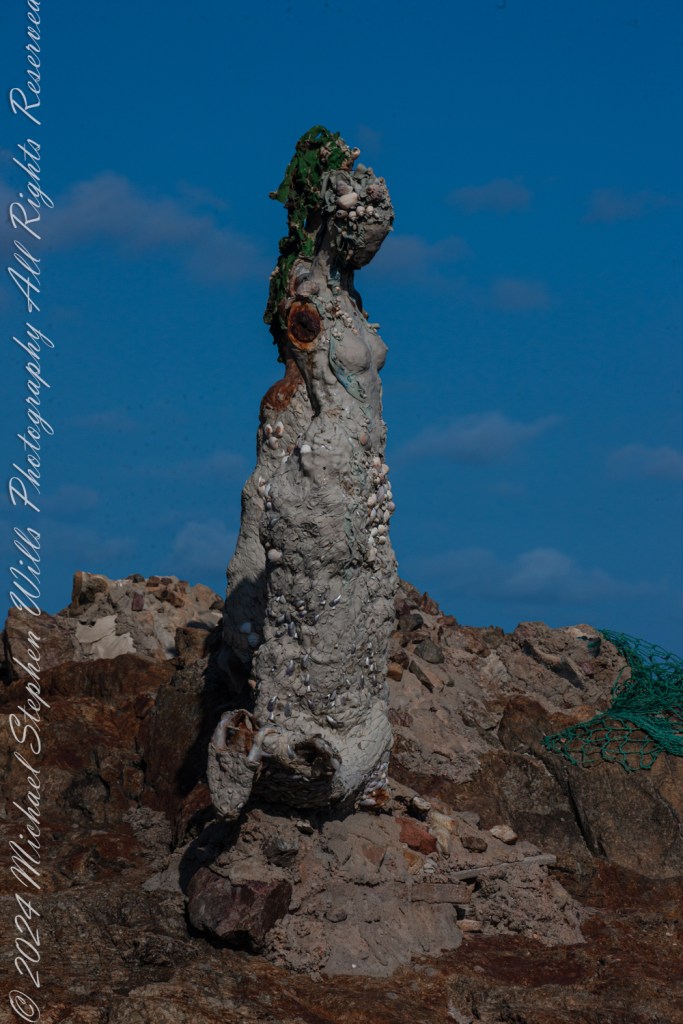
Pam, my wife, stood beside me, a bright smile on her face as the ocean wind tugged at her sunhat. Behind her, rising among the rocks, was an art installation that seemed to embody the spirit of the place “El Canto de las Sirenas” (The Song of the Mermaids). These sculptures by the artist Lily Perkins, their forms shaped and worn by the elements, appeared almost as though they were natural extensions of the rocky coastline. They gazed out to sea, their haunting beauty a poignant reminder of myth and humanity’s eternal connection with the ocean.

The sirens, crafted with an earthy texture and adorned with bits of marine debris, seemed to tell a story of resilience and adaptation. They stood stoically against the backdrop of the churning waves, their barnacle-like surfaces merging seamlessly with their rugged surroundings. I felt a strange connection to them, as if they were silent witnesses to the ever-changing dance of the sea and sky.

Pam during our 2016 South American tour. This is at Great Britain Square, Punta de las Salinas of Punta del Este. We are at the tip of the peninsula, the easternmost point of Uruguay. Over her shoulder is the art installation “El Canto de las Sirenas” (The Song of the Mermaids) (2012) by the artist Lily Perkins. Punta del Este, Departamento de Maldonado, Uruguay

The morning was perfect for photography. I adjusted my Canon camera, capturing the interplay of light and shadow across the jagged rocks, the turquoise waves, and the statues. The textures of the sirens came alive through the lens, each detail hinting at the passage of time and the endless conversations between water and stone. Pam posed in front of one of the sculptures, her presence adding a touch of humanity to the scene, as though she were part of this mythological tableau.

I took a moment to step back and absorb the scene. The coastline stretched out before me, rugged and raw, with the waves crashing in an eternal rhythm. The sirens belonged here, their forms shaped artist hands, then also by the elements. They merged into this unique place, much like the wind, the rocks, and the ocean.

As we walked along the rocky outcrop, the sound of the waves filled the air, drowning out any other noise. It was easy to lose oneself in the hypnotic patterns of the water, the spray catching the sunlight like tiny jewels. I found myself reflecting on the history of this place—Punta del Este, a meeting point of cultures and stories, a place where the natural world and human creativity converge.

Great Britain Square, where we started this journey, seemed an apt setting for such an installation. The name itself evokes a sense of exploration and connection across vast distances, much like the sirens that seem to call out across the waves. The symbolism was not lost on me as I thought about how we, too, were travelers, drawn to the edges of the earth by a desire to explore and understand.

Plaza Gran Bretana (Great Britain Square) is named for the World War II naval battle near here between the German battleship Graf Spee and the English ships Ajax, Achilles and Exeter. The plaza also has an anchor marking the boundary between Rio de la Plata and the Atlantic Ocean.

Pam and I lingered for a while longer, taking in the scenery and enjoying the peacefulness of the moment. The sculptures seemed almost alive, their forms shifting subtly as the light changed. They reminded me of the stories of sirens from ancient mythology—creatures that lured sailors to their doom with their enchanting voices. But here, they seemed more like guardians, watching over the waters and the land, their presence a testament to the enduring power of art and nature.
As the morning wore on, we made our way back, leaving the sirens behind to their eternal vigil. The experience stayed with me, though, a vivid memory of a place where myth and reality intertwine. Punta de las Salinas, with its rugged beauty and its mysterious sirens, had left an indelible mark on my heart.

Enter your email to receive notification of future postings. I will not sell or share your email address.

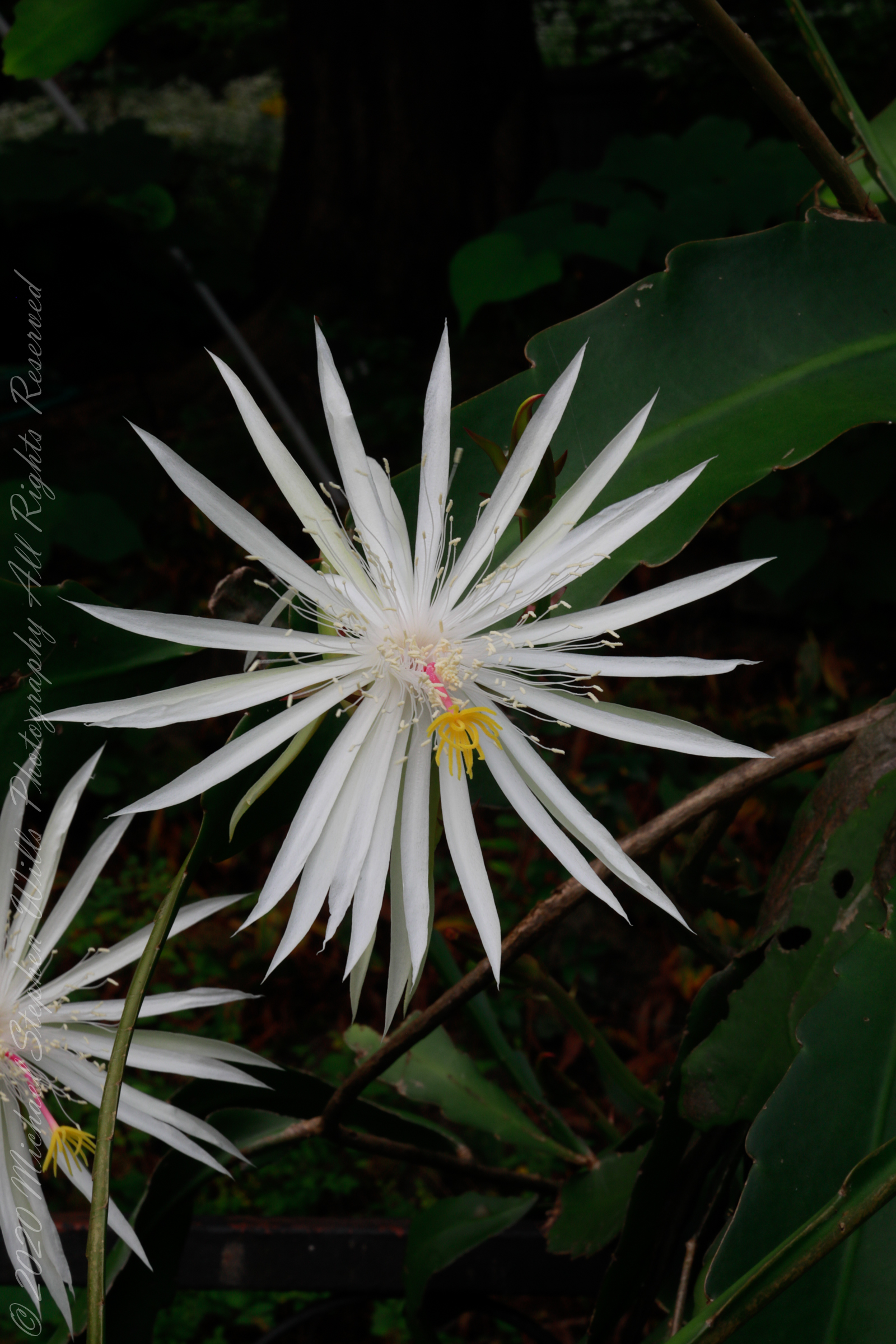
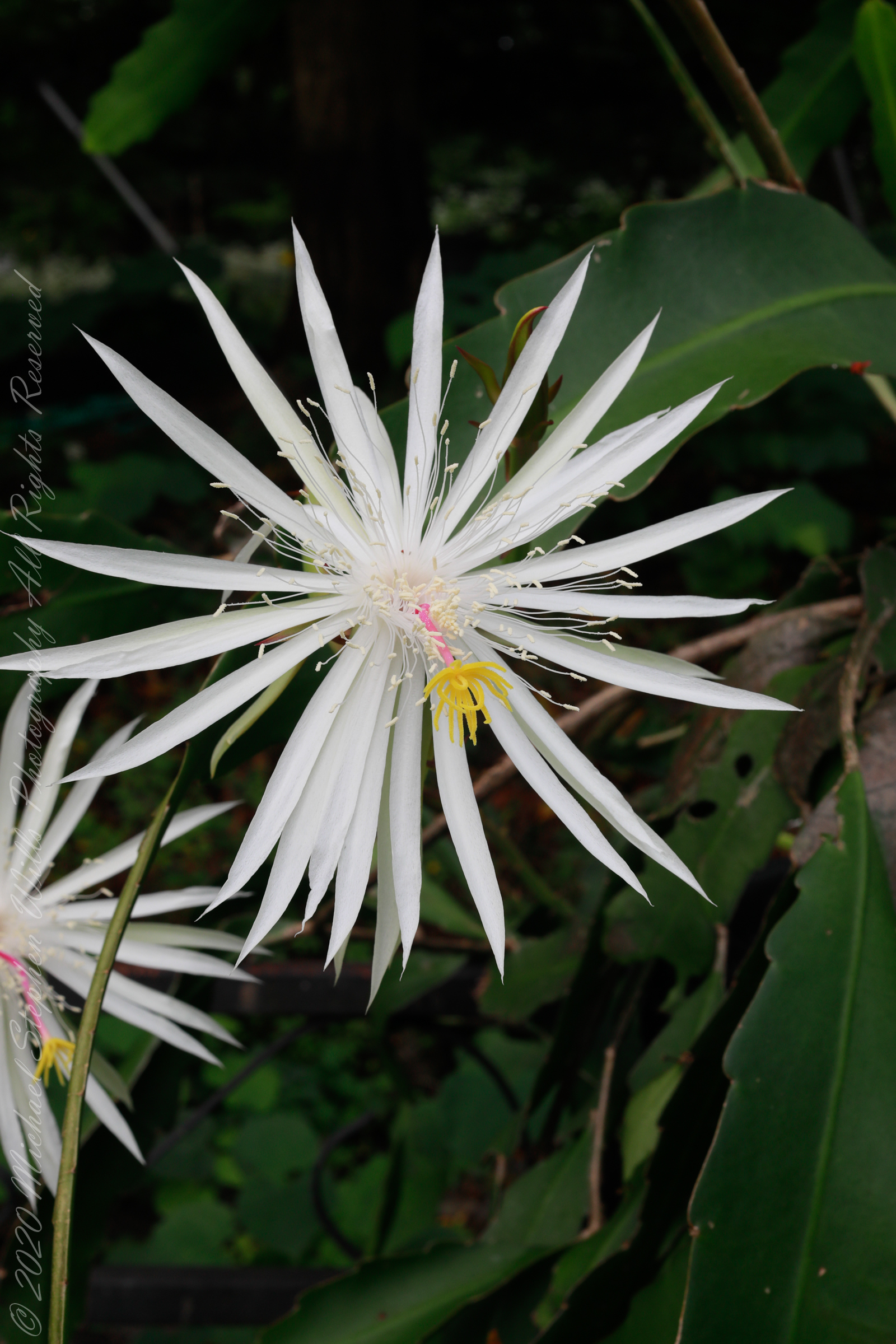
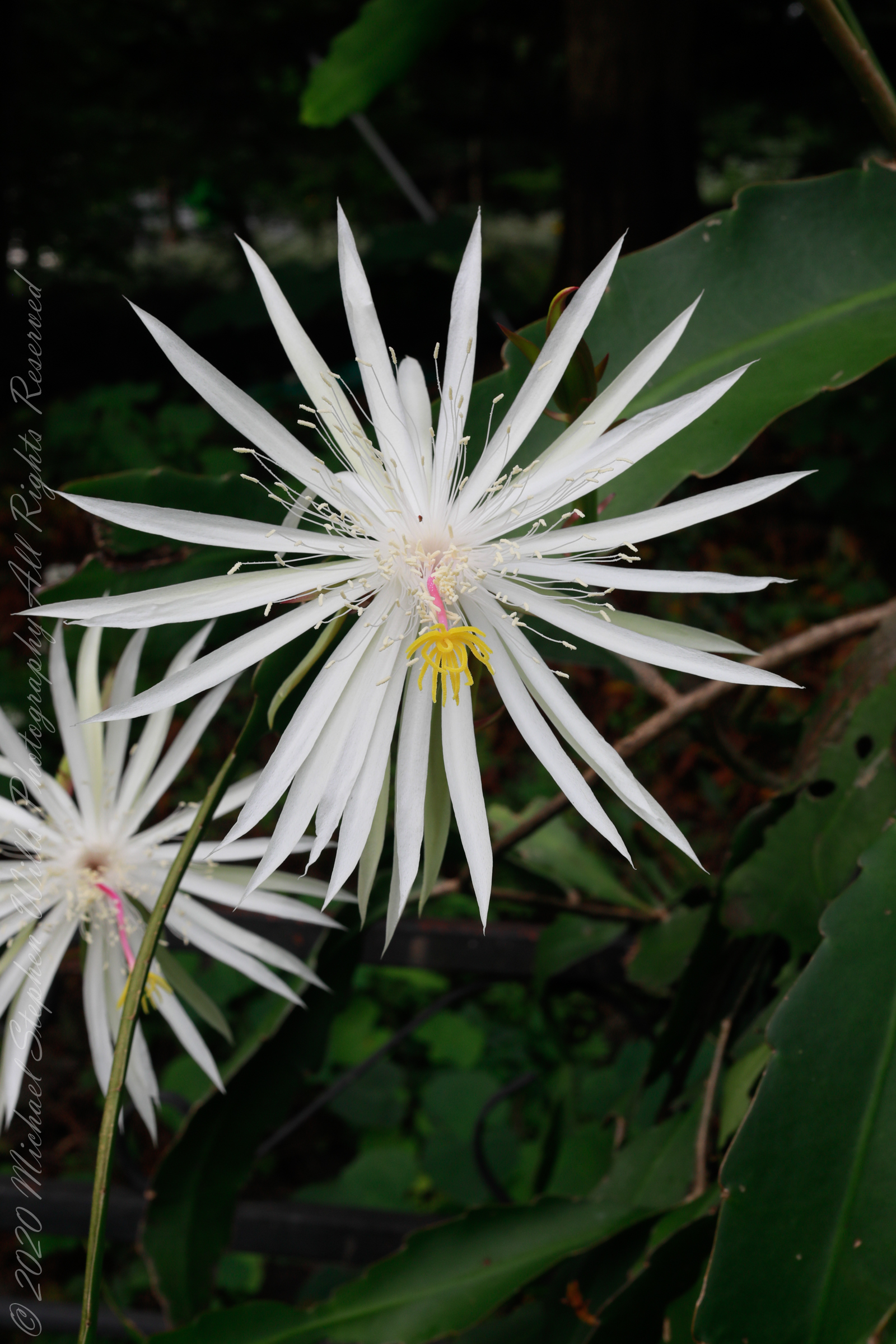
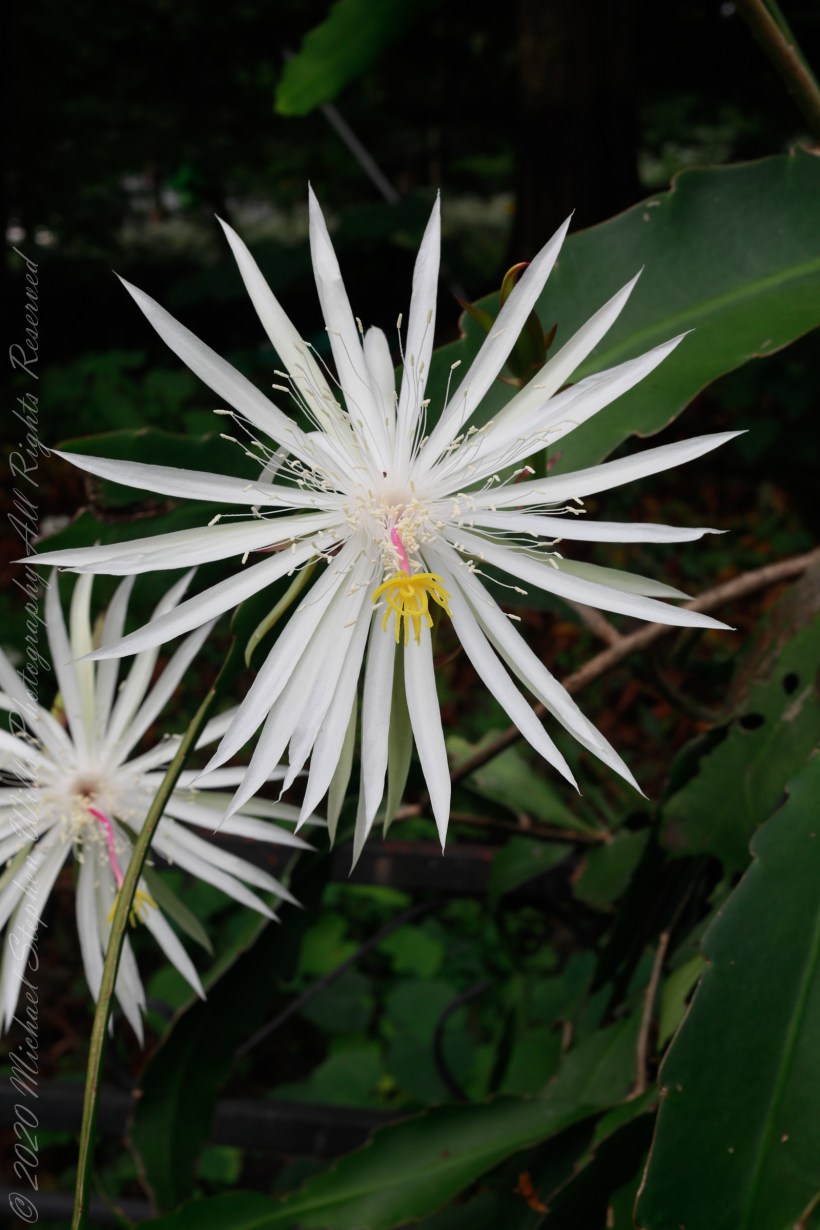
Epiphyte

Discover the enchanting world of Epiphyllum, where the “Night Blooming Cereus” thrives without soil, capturing moisture and nutrients from the air. Explore its unique beauty and ecological significance. Read more to delve into this fascinating plant’s story.

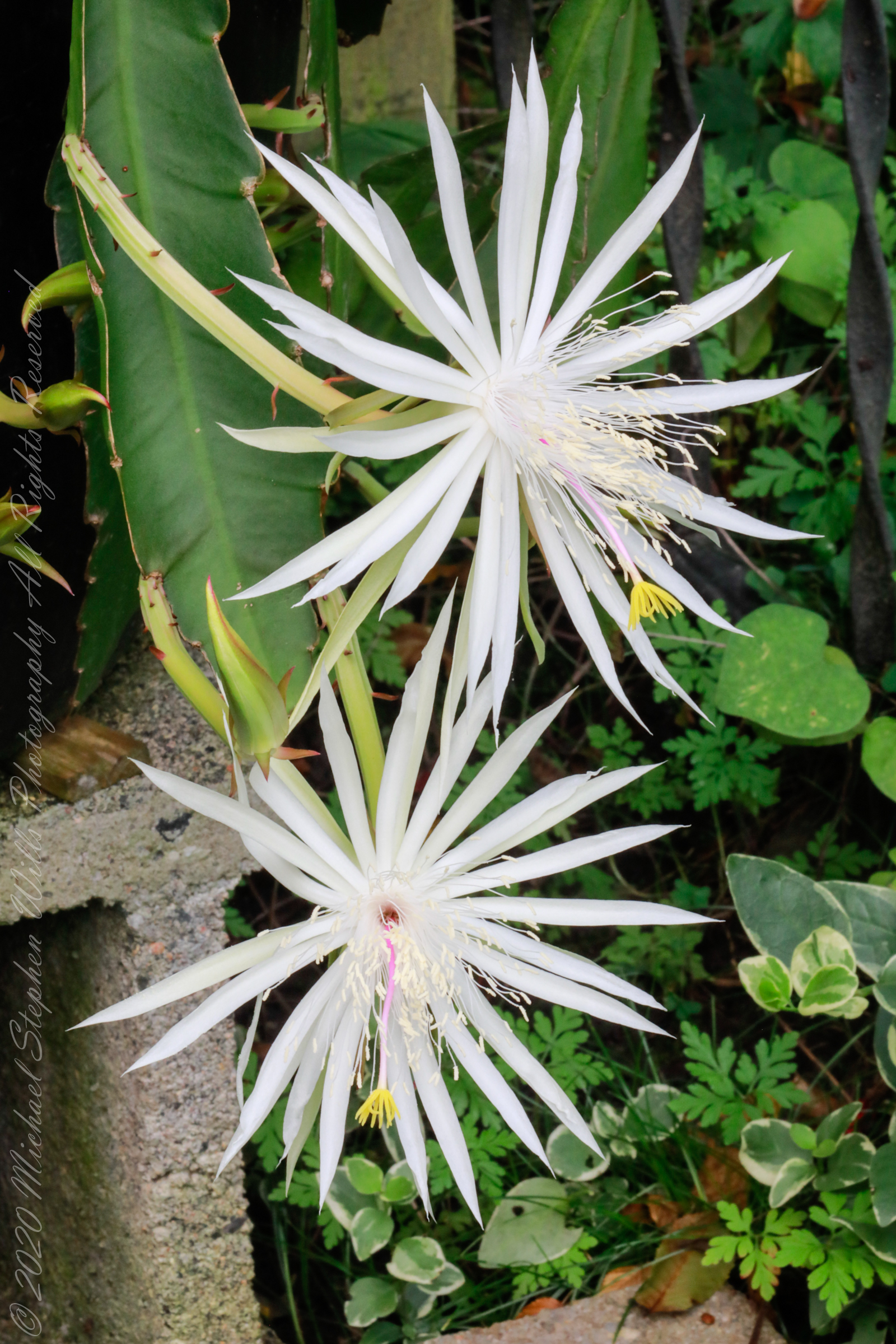
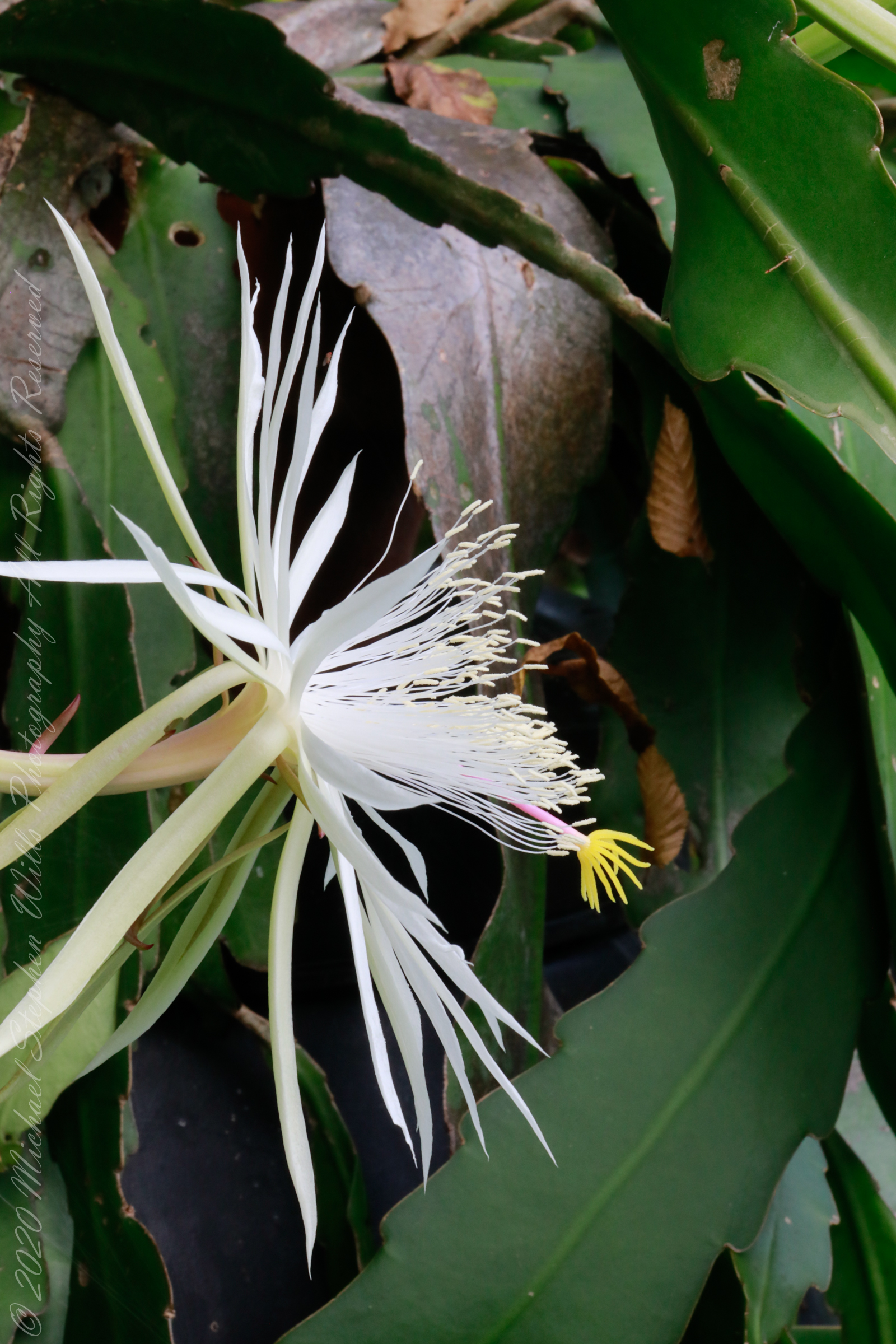
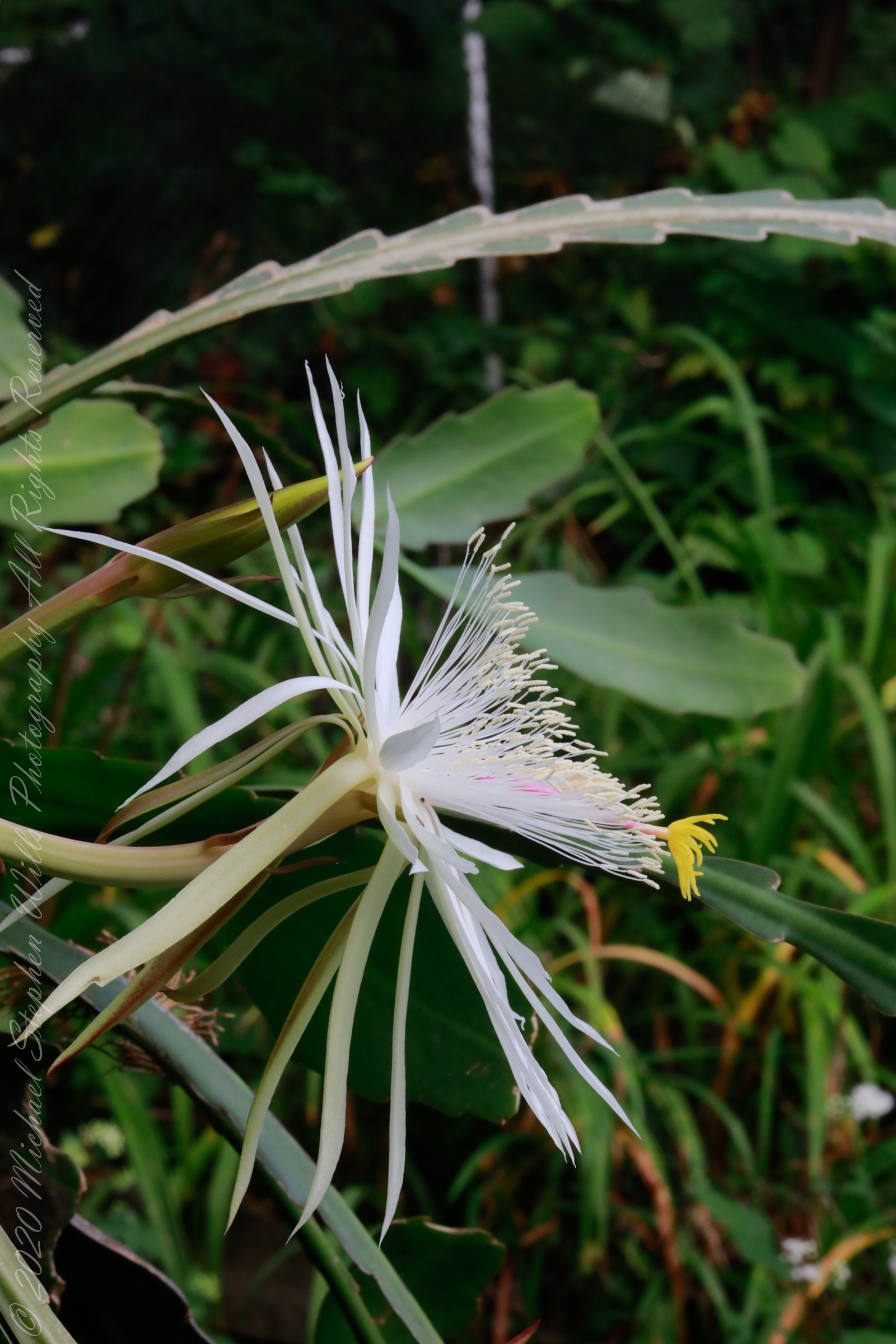
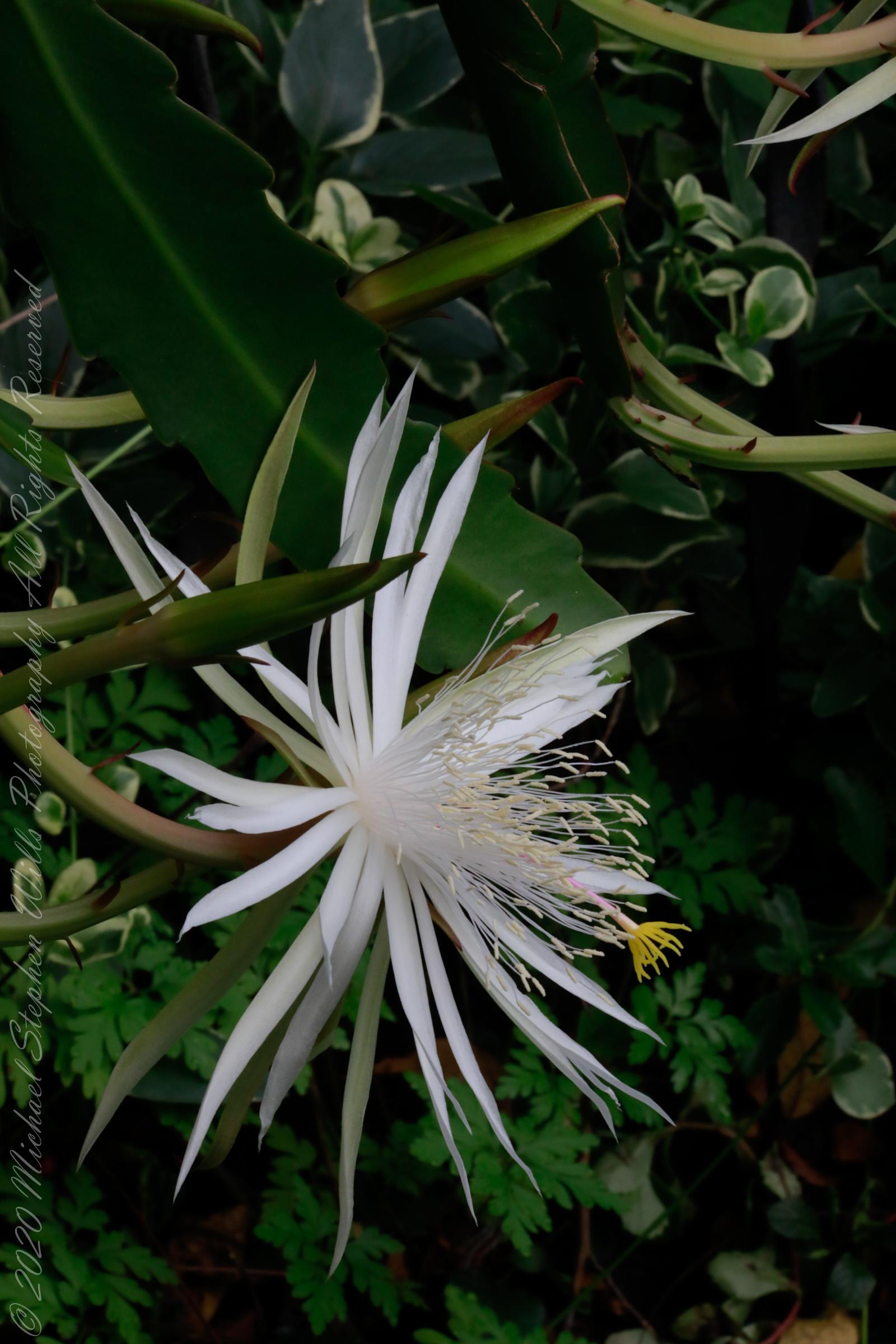
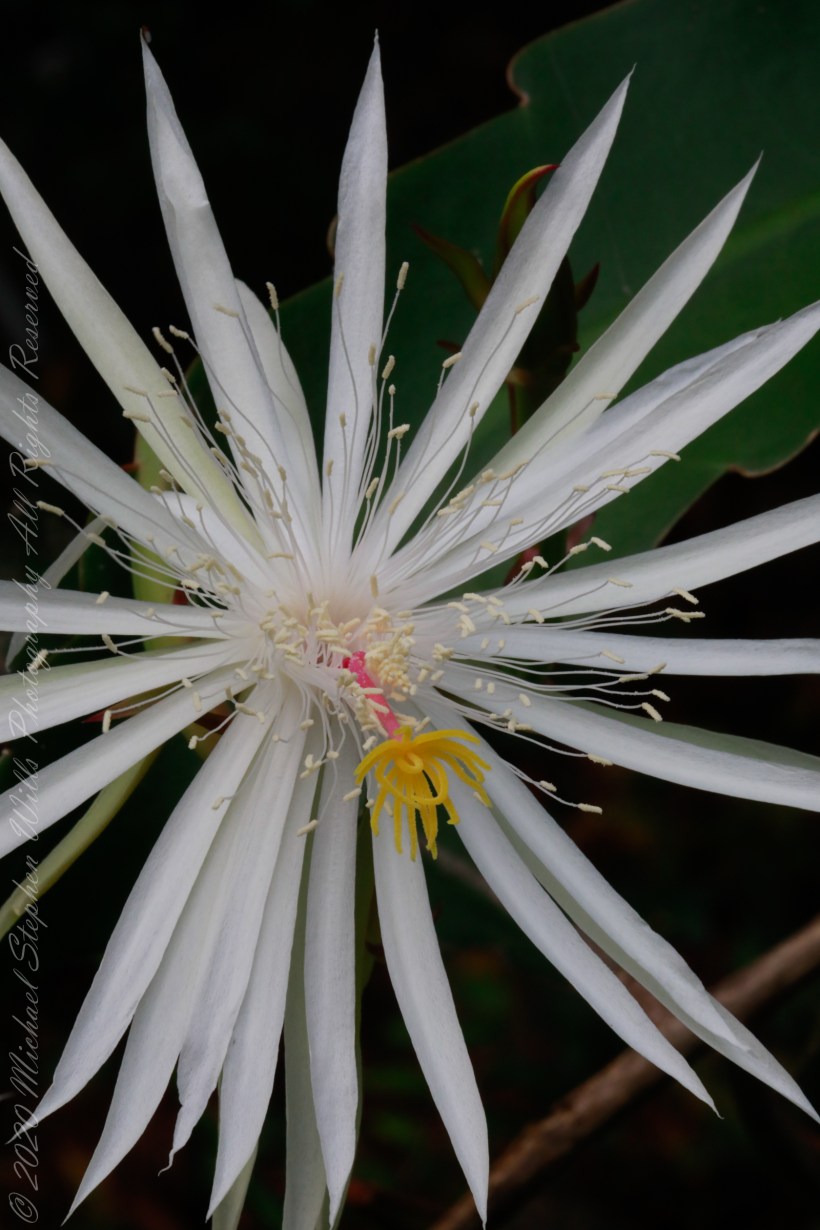
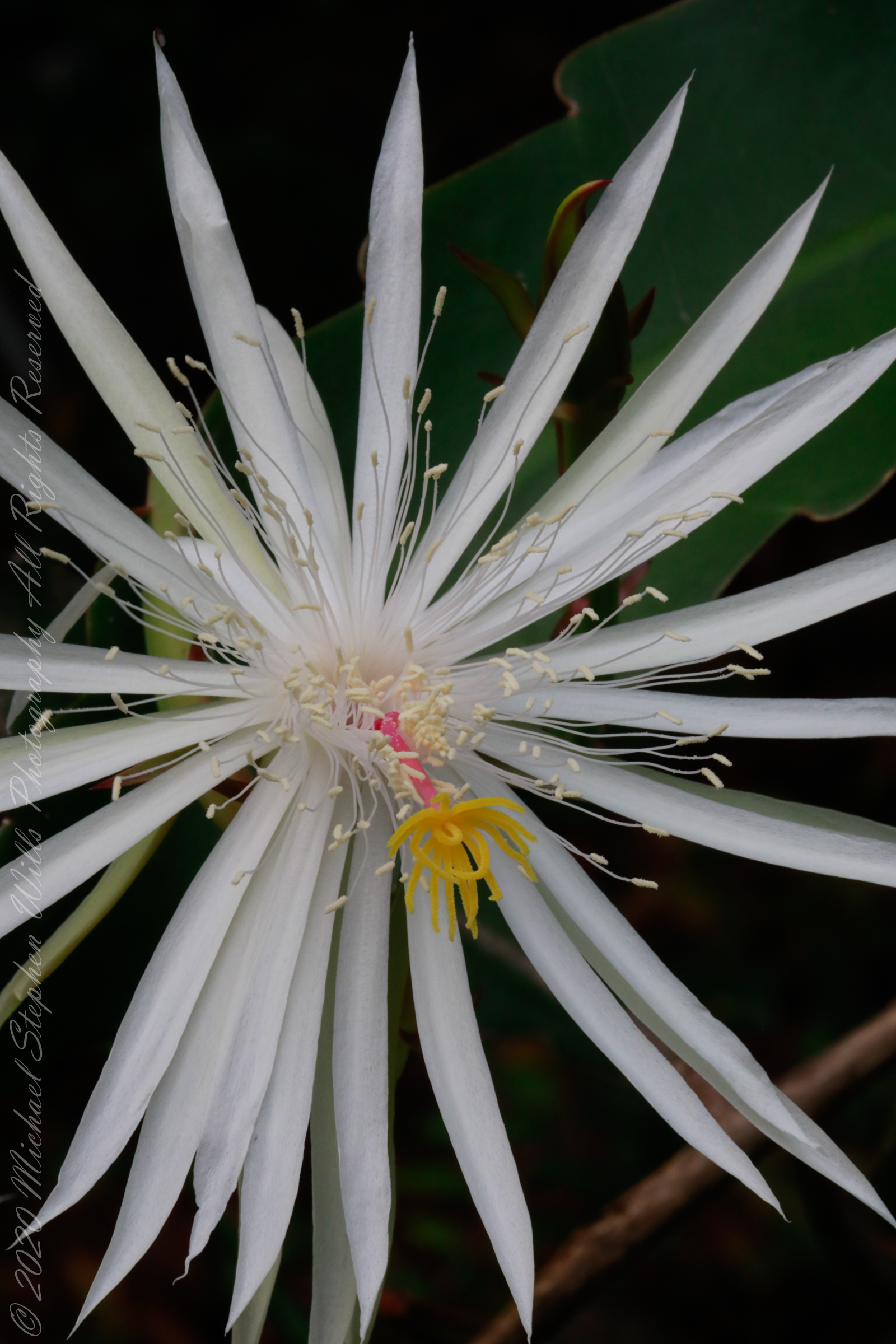
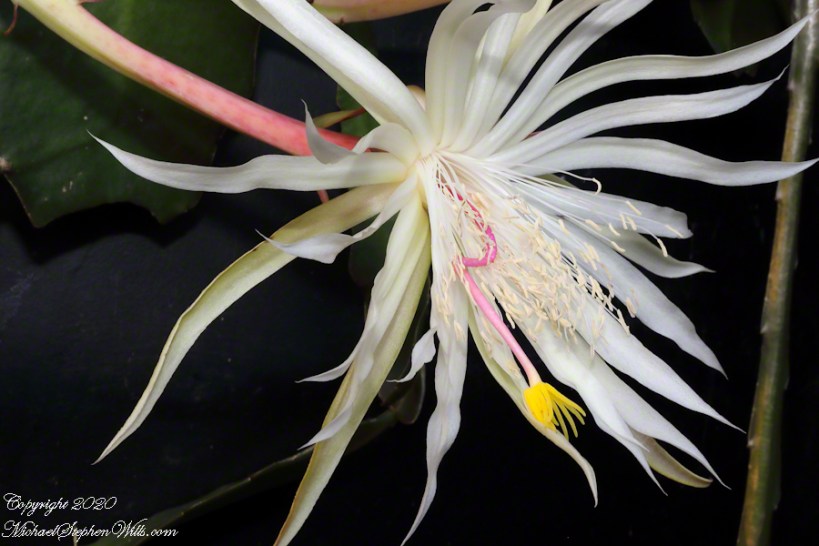
The Epiphyllum genus, which includes my “Night Blooming Cereus,” consists of epiphytic plants. The term “epiphytic” comes from the Greek epi- (meaning “upon”) and phyton (meaning “plant”). Epiphytic plants, sometimes called “air plants,” do not root in soil. However, this term can be misleading, as many aquatic algae species are also epiphytes on other aquatic plants (seaweeds or aquatic angiosperms). Therefore, it’s essential not to confuse the genus root word “phyllum” (leaf) with the generic term “phytic” (plant), even though they share the common prefix “epi.” A plant can be epiphytic without being part of the Epiphyllum genus.

These were captured with the Canon EOS 5D Mark IV dslr on a Manfrotto tripod.

An epiphyte is a plant or plant-like organism that grows on the surface of another plant, deriving its moisture and nutrients from the air, rain, or debris accumulating around it. The host plants on which epiphytes grow are called phorophytes. Unlike parasites, epiphytes use other plants merely for physical support and do not negatively impact the host. Epiphytes can also be called epibionts when growing on non-plant organisms. Common in both temperate zones (mosses, liverworts, lichens, algae) and the tropics (ferns, cacti, orchids, bromeliads), epiphytes enhance biodiversity and biomass in their ecosystems. They make excellent houseplants due to their minimal water and soil needs and create rich habitats for various organisms, including animals, fungi, bacteria, and myxomycetes.

Epiphytes are not connected to the soil and must source nutrients from fog, dew, rain, mist, and decomposing organic material. They have an advantage in the canopy, where they access more light and are less vulnerable to herbivores. Epiphytes also benefit animals that live in their water reservoirs, like some frogs and arthropods.

Epiphytes significantly affect their host’s microenvironment and the broader ecosystem. They hold water in the canopy, reducing soil water input, and create cooler, moister conditions, which can decrease the host plant’s water loss through transpiration. Non-vascular epiphytes, like lichens and mosses, are particularly efficient at rapid water uptake.

Click me for another “Cereus” Post.

Reference: my post draws heavily on this source: Wikipedia, “Epiphyte.”

Copyright 2024 Michael Stephen Wills All Rights Reserved

Still Blooming

Though it is sometimes referred to as a night-blooming cereus, it is not closely related to any of the species in the tribe Cereeae

It was a quiet day, upping shutter speed via an increased ISO and both exposures are equally sharp.

These were captured with the Canon EOS 5D Mark IV dslr on a Manfrotto tripod.

“The flowers are nocturnal. They grow on flattened stems and are up to 30 cm (12 in) long and 17 cm (7 in) wide, and very fragrant. The principal odor components in the aroma are benzyl salicylate and methyl linoleate.[5] Pericarpels are nude, slightly angled, and green. Bracteoles are short and narrow up through ca. 10 millimetres (0.39 in) long. Receptacles are up through 20 cm long, 1 cm thick, brownish, and arching. The outer tepals are linear, acute, 8–10 cm long, and reddish through amber. The inner tepals are whitish, oblanceolate or oblong, acuminate, up through 8–10 cm long and 2.5 centimetres (0.98 in) wide. The stamens are greenish white or white, slender and weak. The styles are greenish white, pale yellow, or white, 4 mm thick, as long as inner tepals, and with many lobes.”
“The fruits are oblong, up through 12 x 8 cm, purplish red, and angled.”

“It is known to have medicinal properties in many Asian cultures, including India, Vietnam, and Malaysia. The plant is widely used in traditional medicine to treat respiratory ailments, bleeding conditions, and is also believed to have the property of reducing pain and inflammation.”

Click me for another “Cereus” Post.

Copyright 2023 Michael Stephen Wills All Rights Reserved

Night bloomer

Though it is sometimes referred to as a night-blooming cereus, it is not closely related to any of the species in the tribe Cereeae

This set compares a deep focus exposure to a shallow focus with bokeh.

These were captured with the Canon EOS 5D Mark IV dslr on a Manfrotto tripod.

“Epiphyllum oxypetalum is an easily cultivated, fast growing Epiphyllum. Epiphyllum from Greek epi- “upon” + phullon “leaf.” Oxypetalum = with acute petals. It flowers in late spring through late summer; large specimens can produce several crops of flowers in one season. This is a widely cultivated Epiphyllum species.”

“It is known to have medicinal properties in many Asian cultures, including India, Vietnam, and Malaysia. The plant is widely used in traditional medicine to treat respiratory ailments, bleeding conditions, and is also believed to have the property of reducing pain and inflammation.”

Click me for another “Cereus” Post.

Copyright 2023 Michael Stephen Wills All Rights Reserved

Cereus not

Though it is sometimes referred to as a night-blooming cereus, it is not closely related to any of the species in the tribe Cereeae

“Epiphyllum oxypetalum, the Dutchman’s pipe cactus, princess of the night or queen of the night, is a species of cactus. It blooms nocturnally, and its flowers wilt before dawn. Though it is sometimes referred to as a night-blooming cereus, it is not closely related to any of the species in the tribe Cereeae, such as Selenicereus, that are more commonly known as night-blooming cereus. All Cereus species bloom at night and are terrestrial plants; Epiphyllum species are usually epiphytic.”

These were captured with the Canon EOS 5D Mark IV dslr on a Manfrotto tripod.

“Epiphyllum (“upon the leaf” in Greek) is a genus of epiphytic plants in the cactus family (Cactaceae), native to Central America and South America. Common names for these species include climbing cacti, orchid cacti and leaf cacti.”

Click me for another “Cereus” Post.

Copyright 2023 Michael Stephen Wills All Rights Reserved

Mass Bloom 2023

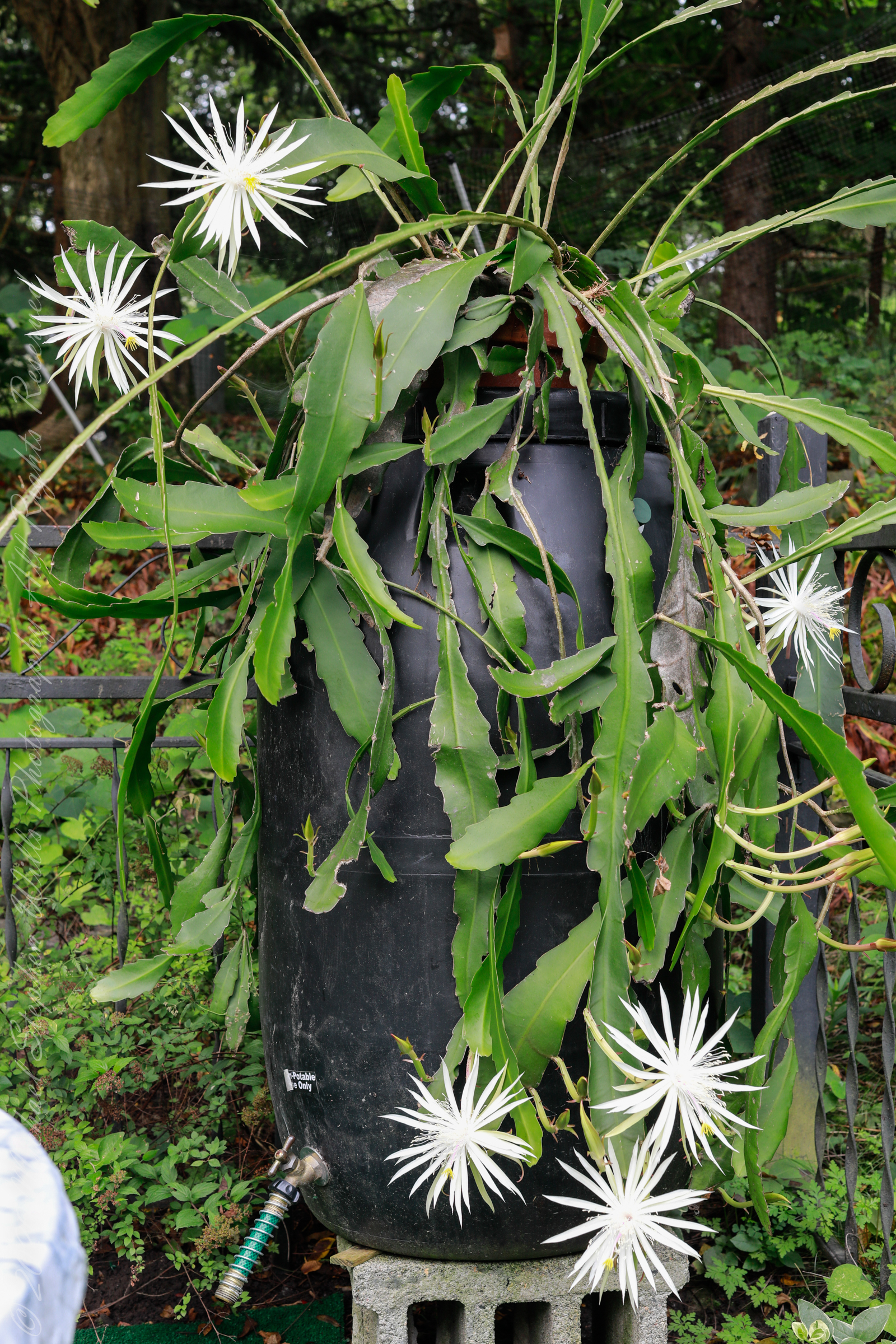
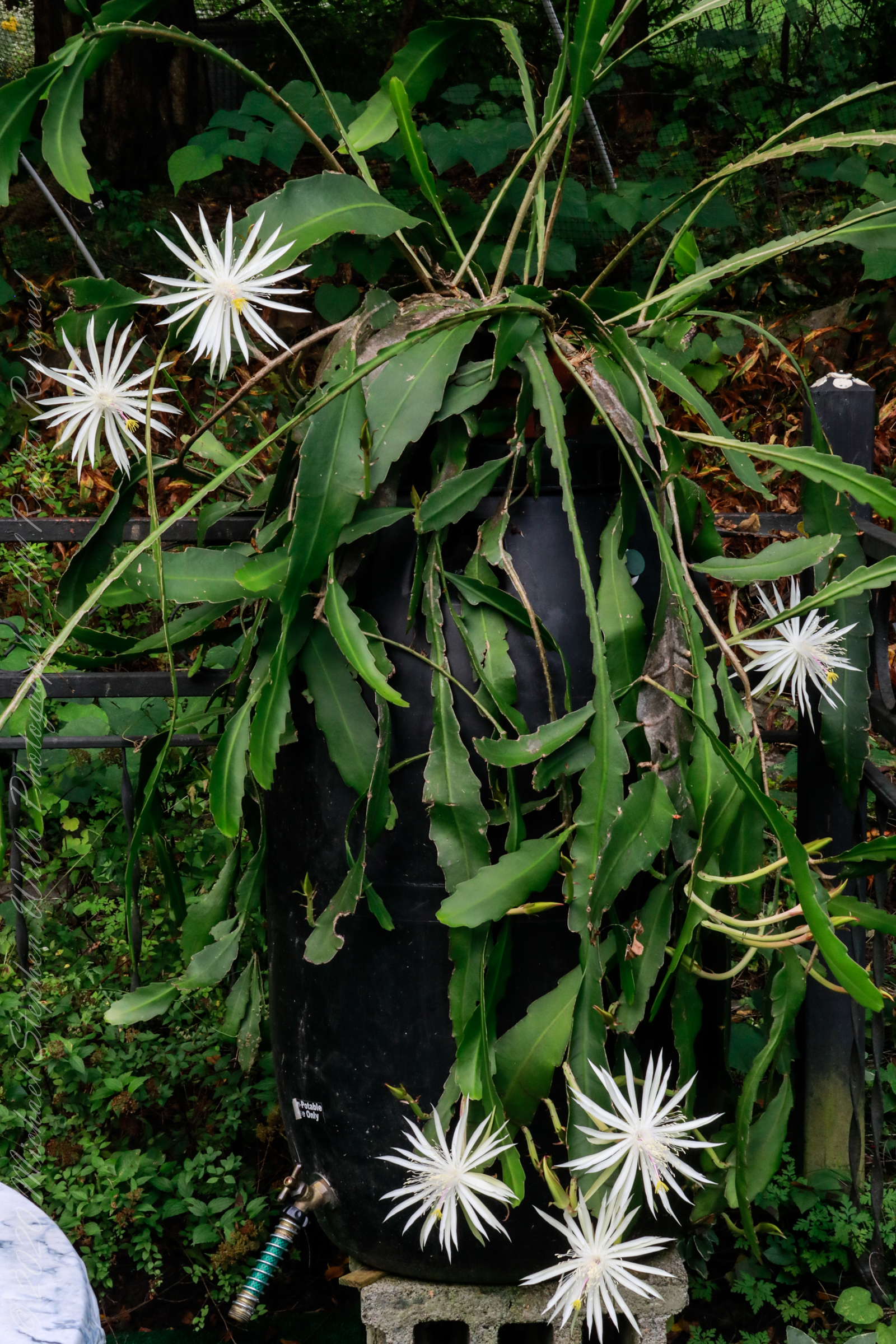
Our “cereus” summers on a water barrel poolside, this year, 2023, over 40 blossoms opened over the course of a week in September.

These were captured with the Canon EOS 5D Mark IV dslr on a Manfrotto tripod.

“Epiphyllum (“upon the leaf” in Greek) is a genus of epiphytic plants in the cactus family (Cactaceae), native to Central America and South America. Common names for these species include climbing cacti, orchid cacti and leaf cacti.”

Click me for another “Cereus” Post.

Copyright 2023 Michael Stephen Wills All Rights Reserved

View from the Quarry

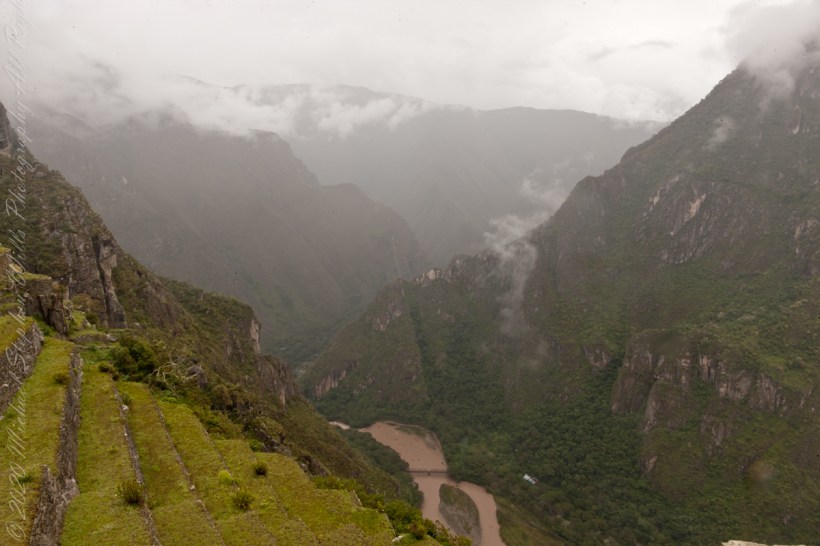
Views while entering Machu Picchu

Click Me for my Online Gallery

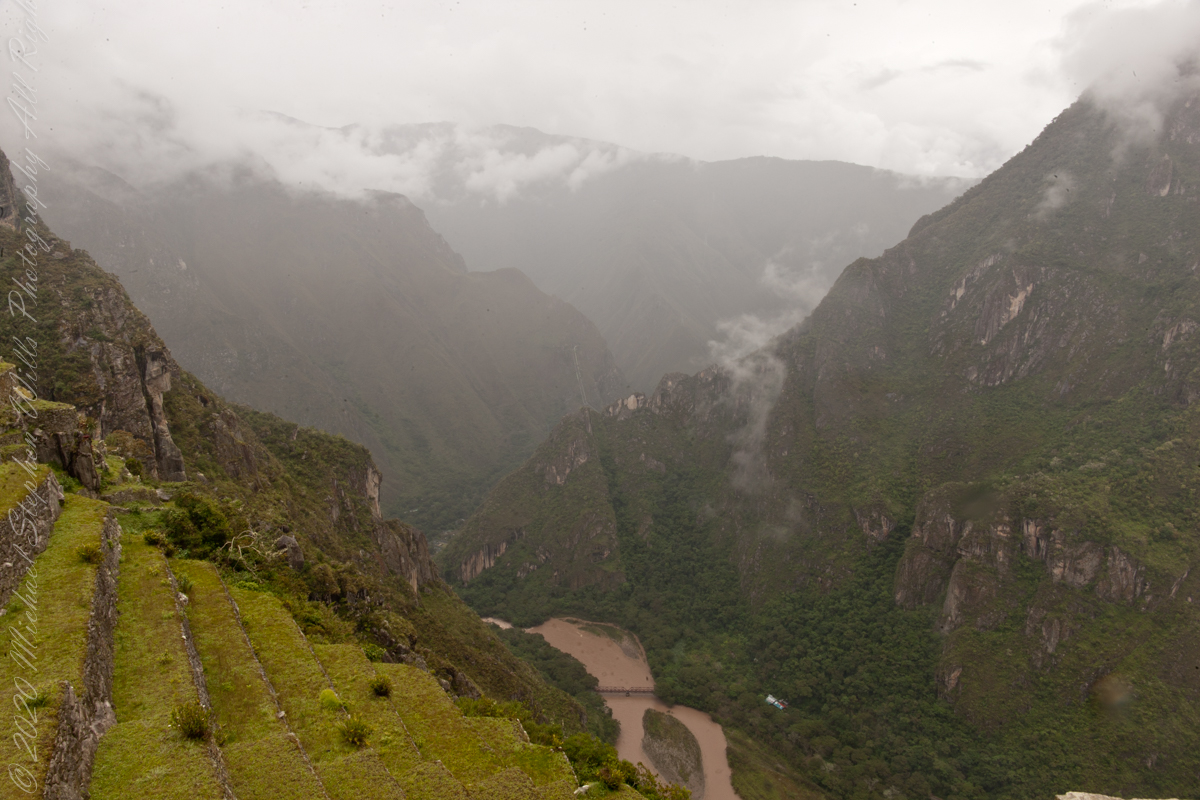
I set up a Manfrotto BeFree tripod with the Canon EOS 1DS Mark III mounted with the Canon EF 70-300 f/4-5.6 L IS USM lens to capture our experience while entering Machu Picchu.

The eastern shoulder of Huayna Picchu is left and the Urubamba river curves around it. Leading the eye to the distance is an uninhabited andean valley covered in rain forest.

Copyright 2023 Michael Stephen Wills All Rights Reserved

Quarry on the Machu Picchu Ridge

The site itself may have been intentionally built on fault lines to afford better drainage and a ready supply of fractured stone.

Click Me for my Online Gallery

“The central buildings of the Machu Picchu Sanctuary use the classical Inca architectural style of polished dry-stone walls of regular shape. The Incas were masters of this technique, called ashlar, in which blocks of stone are cut to fit together tightly without mortar.”

The site itself may have been intentionally built on fault lines to afford better drainage and a ready supply of fractured stone. ‘Machu Picchu clearly shows us that the Incan civilization was an empire of fractured rocks’.

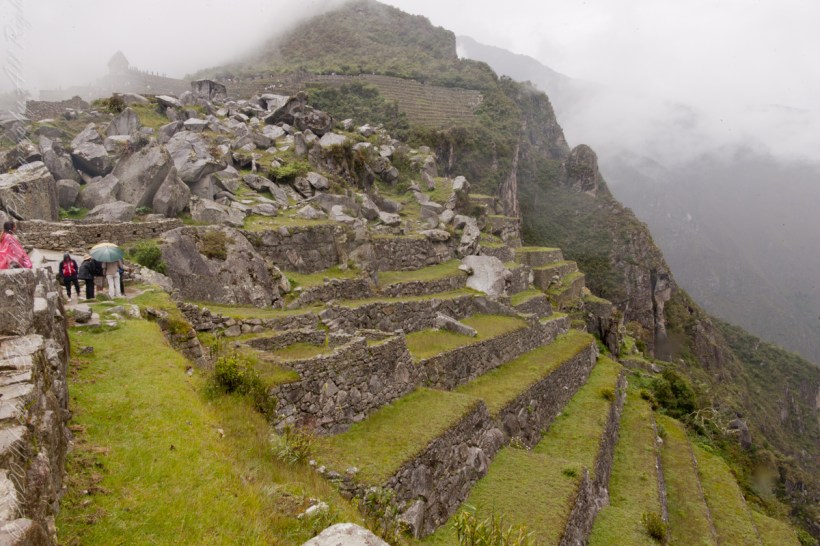
Inca quarried the rock for Machu Picchu from the mountain ridge itself.

“The section of the mountain where Machu Picchu was built provided various challenges that the Incas solved with local materials. One issue was the seismic activity due to two fault lines. It made mortar and similar building methods nearly useless. Instead, the Inca mined stones from the quarry at the site, lined them up and shaped them to fit together perfectly, stabilizing the structures. Inca walls have many stabilizing features: doors and windows are trapezoidal, narrowing from bottom to top; corners usually are rounded; inside corners often incline slightly into the rooms, and outside corners were often tied together by “L”-shaped blocks; walls are offset slightly from row to row rather than rising straight from bottom to top.”

Main Temple survived multiple earthquakes

“Heavy rainfall required terraces and stone chips to drain rainwater and prevent mudslides, landslides, erosion, and flooding. Terraces were layered with stone chips, sand, dirt, and topsoil, to absorb water and prevent it from running down the mountain. Similar layering protected the large city center from flooding. Multiple canals and reserves throughout the city provided water that could be supplied to the terraces for irrigation and to prevent erosion and flooding.”

Agricultural Terraces

“The Incas never used wheels in a practical way, although their use in toys shows that they knew the principle. The use of wheels in engineering may have been limited due to the lack of strong draft animals, combined with steep terrain and dense vegetation. The approach to moving and placing the enormous stones remains uncertain, probably involving hundreds of men to push the stones up inclines. A few stones have knobs that could have been used to lever them into position; the knobs were generally sanded away, with a few overlooked.”

Reference: text in italics and quotes is from the Wikipedia “Machu Picchu”, web page.

Copyright 2023 Michael Stephen Wills All Rights Reserved