Mirror

…on the wall

On Lick Brook, Thayer Preserve, still pools become mirrors at low flow during a dry autumn.

Click photograph for larger view. Use combination keys to enlarge/reduce: Ctrl+ (Control / Plus) and Ctrl- (Control / Minus)

Click Me to view my photographs on Getty.

Copyright 2023 Michael Stephen Wills All Rights Reserved http://www.MichaelStephenWills.com

Light, Hope

The post describes a photographic expedition featuring a sunflower field and maples at Frear Memorial Park, and explores the notable Frear family’s history in Ithaca, New York.

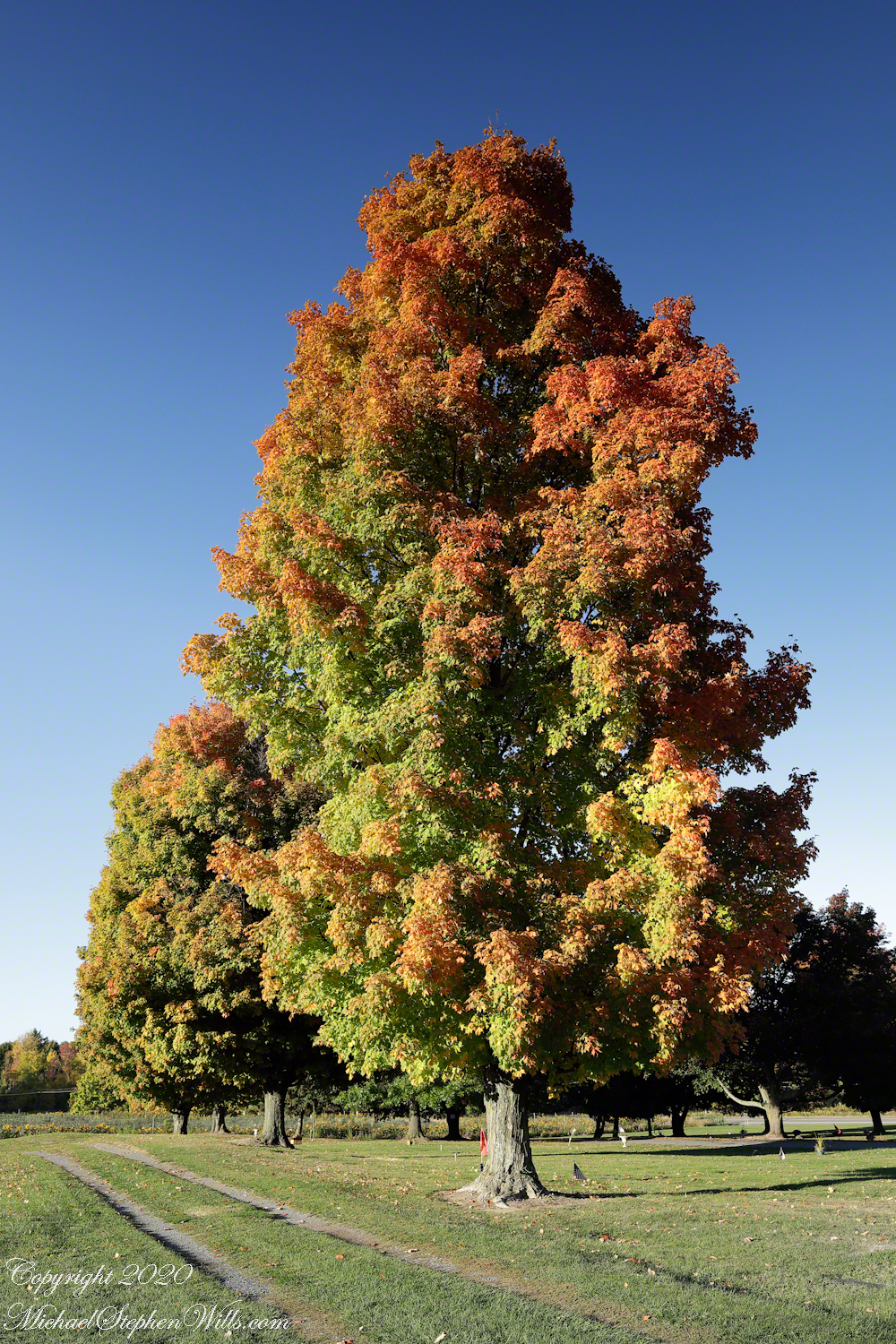
Descending Hayts Road toward Cayuga Lake in the course of a photographic scouting expedition I spotted a mature linear maple tree planting forming the western edge of Frear Memorial Park. This day Pam and I headed out at day’s end, stopping here to capture the turning maples.

Click photograph for larger view. Use combination keys to enlarge/reduce: Ctrl+ (Control / Plus) and Ctrl- (Control / Minus)

A sunflower field was a hidden surprise. The 24 mm “wide angle” lens was mounted on a Canon EOS 5D Mark IV dslr on a light carbon fiber tripod.

The Frear family has a notable presence in Ithaca, New York’s history. One significant member was William Frear, a well-known businessman who lived his entire life in Ithaca. He ran a candy store and a photograph gallery, and was involved in the county fair. William passed away in 1915 at his daughter’s home on East Buffalo Street in Ithaca​​.

In terms of the Frear family’s broader historical context, the name was found in the USA, the UK, Canada, and Scotland between 1840 and 1920, with the most Frear families in the USA recorded in 1880. Remarkably, in 1840, about 67% of all recorded Frear families in the USA were living in New York, indicating a significant concentration of the family in the state​​.

The family tree of William Frear includes his parents Baltus Frear (1793–1881) and Lavina Westerveldt Frear (1800–1868), his spouse Ann Amelia Hopkins Frear (1838–1906), and his children Baltus W Frear (1865–1885), Donna Frear Luker (1868–1929), T Wilbur Frear (1874–1874), and Edward Hughson Frear (1876–1910)​​.

This snapshot of the Frear family in Ithaca provides a glimpse into their lives and contributions to the local community during the 19th and early 20th centuries.

Additionally, there is a Frear Park in Troy, New York. Donated by the family of William H. Frear in June, 1917, Wright Lake and Bradley Lake, located in the park were named for members of the Frear Family. The Frear Family was originally from France where the name was as Frere. The Frere’s moved to England to escape prosecutions, where the spelling of the name was changed to Frear. The family was founded in the United States by Joseph Frear, Grandfather of William H. Frear of Troy, New York.


Click Me to view my photographs on Getty.

Copyright 2023 Michael Stephen Wills All Rights Reserved http://www.MichaelStephenWills.com

Lengthening Shadows

Sere Goldenrod

West Hill, Ithaca, resolves to this plain here sere goldenrod, abandoned barn, silo, distant hills. We headed out from home as sunset approached.

Click photograph for larger view. Use combination keys to enlarge/reduce: Ctrl+ (Control / Plus) and Ctrl- (Control / Minus)
Click to view my autumn photographs on Getty.

Mizpah and Mitzvah

I was reading the story of Jacob and Laban and encountered the word “Mizpah” is Hebrew for “watchtower”. It is used to refer to an emotional bond or covenant made between two people with God as their witness, often symbolized by a pile of stones marking an agreement​​. Mizpah sounds similar to “Mitzvah,” often used to mean “a good deed,” and is related to the Aramaic word “tzavta,” which means to attach or join. This term is commonly used to describe any charitable act and has deep roots in Jewish tradition and texts, such as the Jerusalem Talmud.​​

The relationship between “Mizpah” and “Mitzvah” seems to be more linguistic and symbolic rather than direct. Both terms originate from Semitic languages and carry connotations of connection and covenant. “Mizpah” symbolizes a bond overseen by God, while “Mitzvah” refers to actions that connect individuals through good deeds, potentially strengthening communal bonds.

Click Me to view my photographs on Getty.

Copyright 2023 Michael Stephen Wills All Rights Reserved http://www.MichaelStephenWills.com

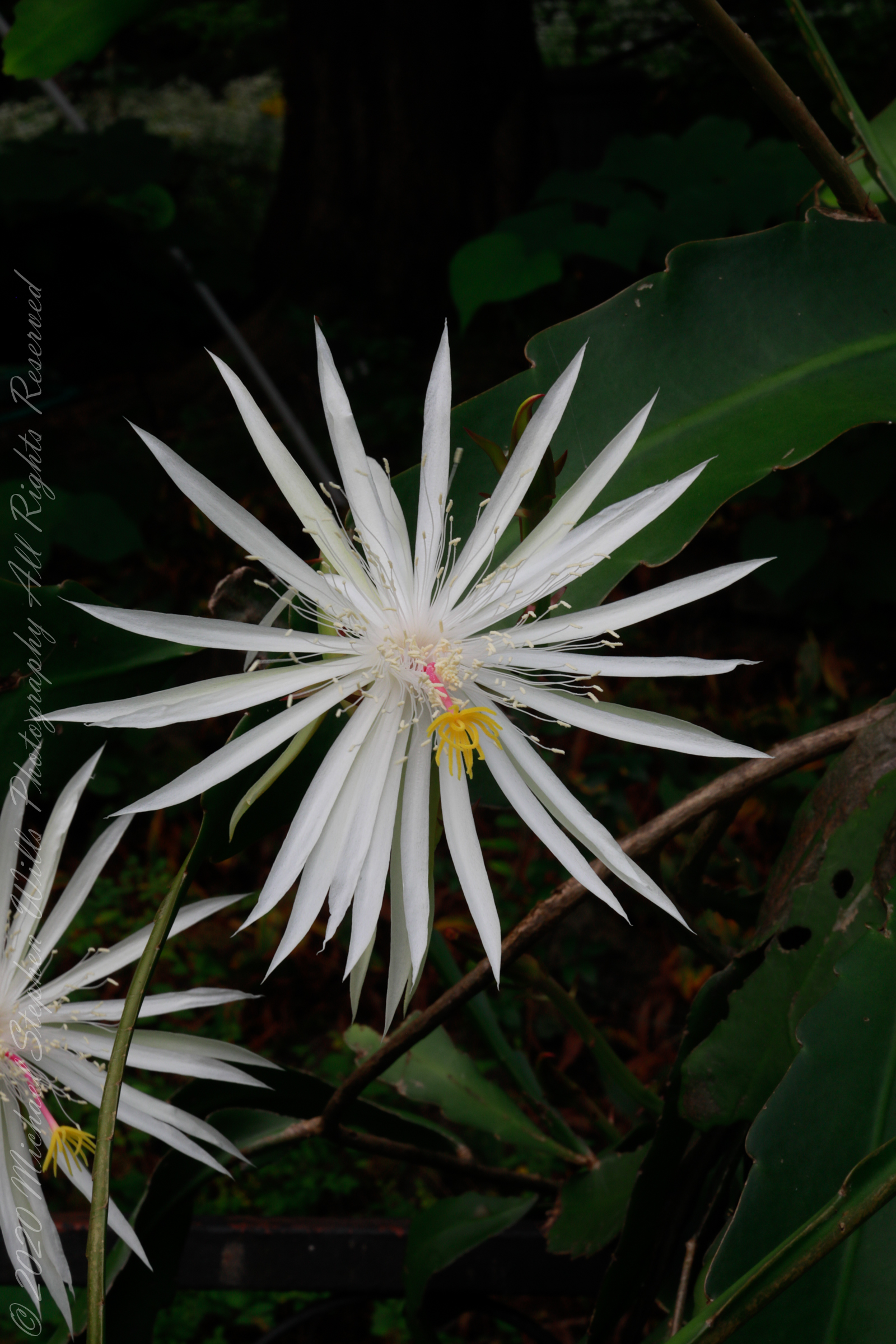
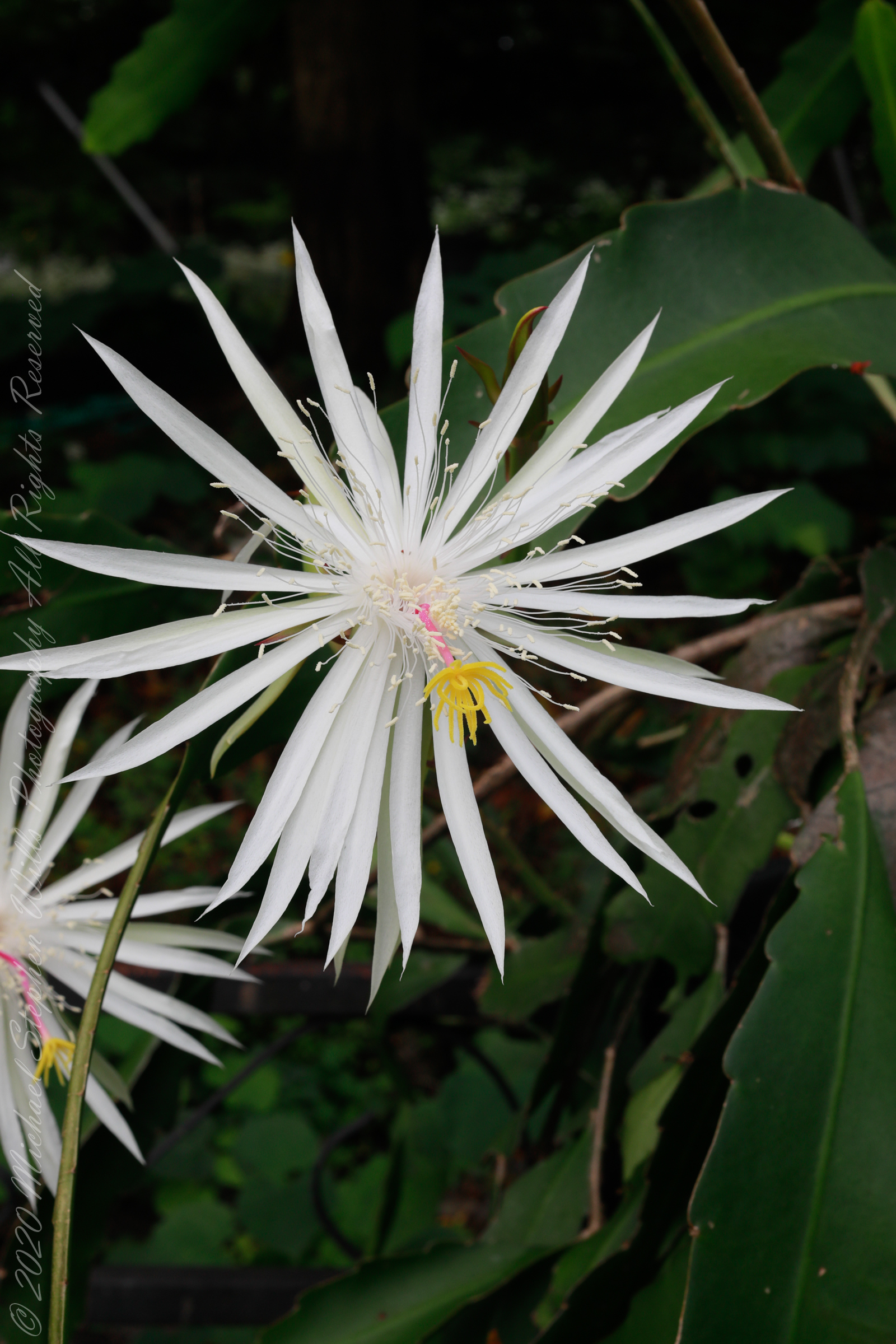
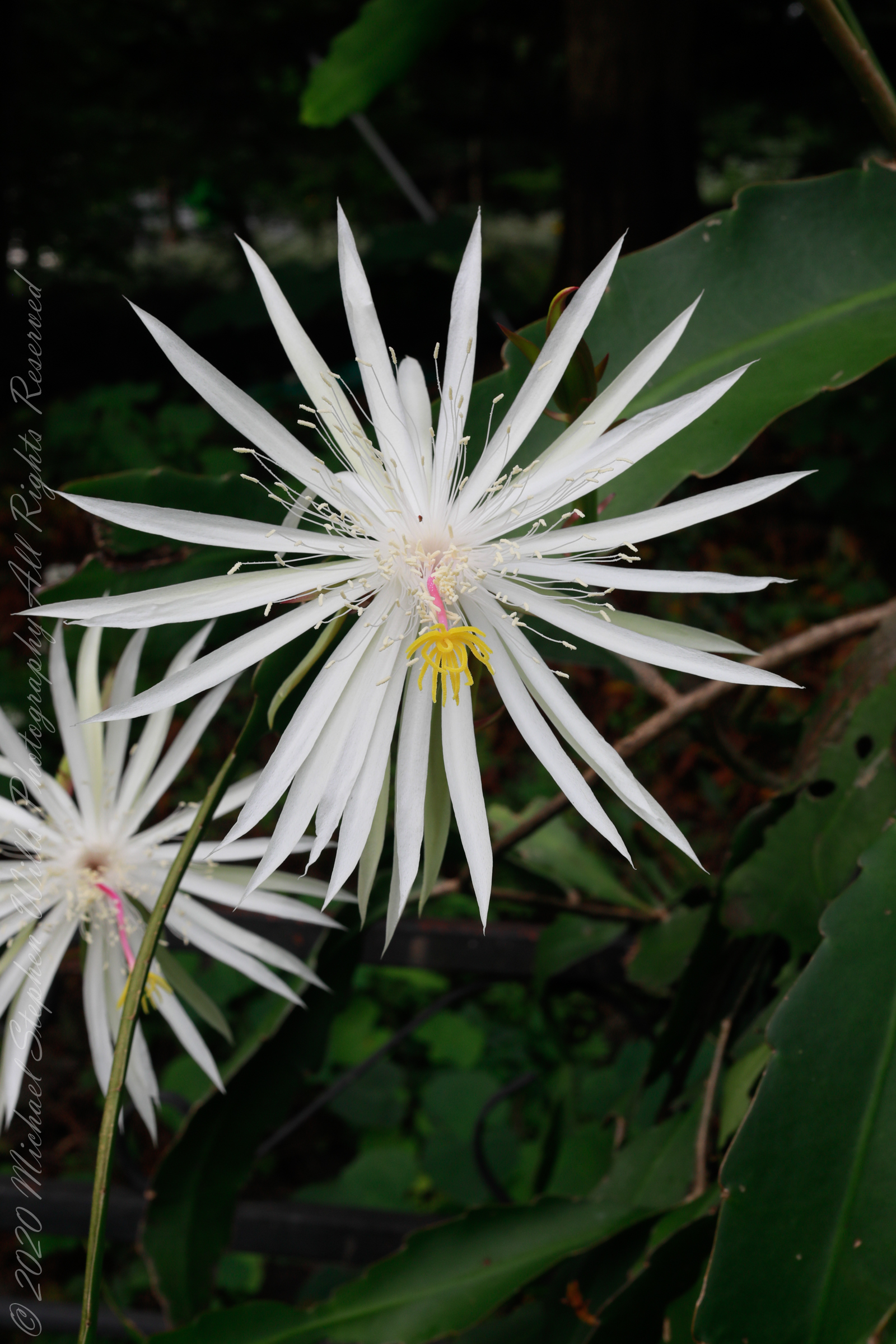
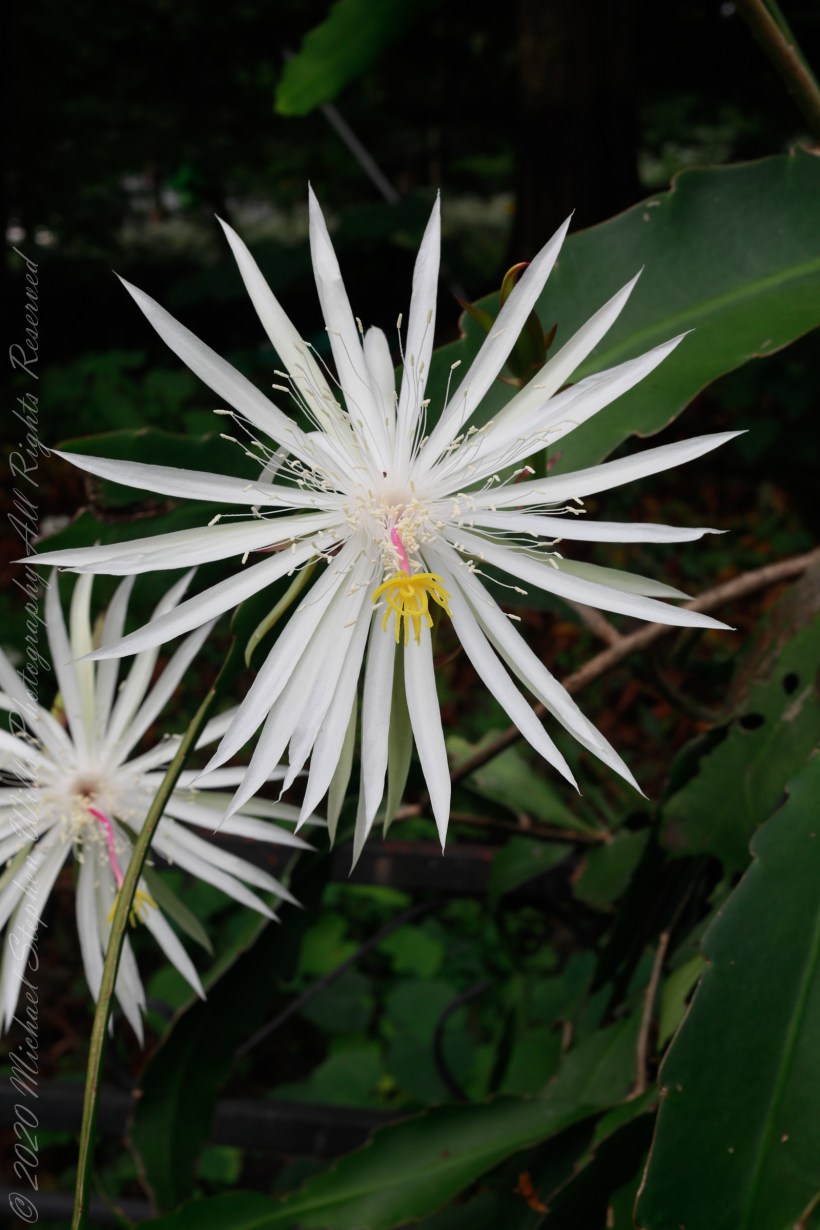
Still Blooming

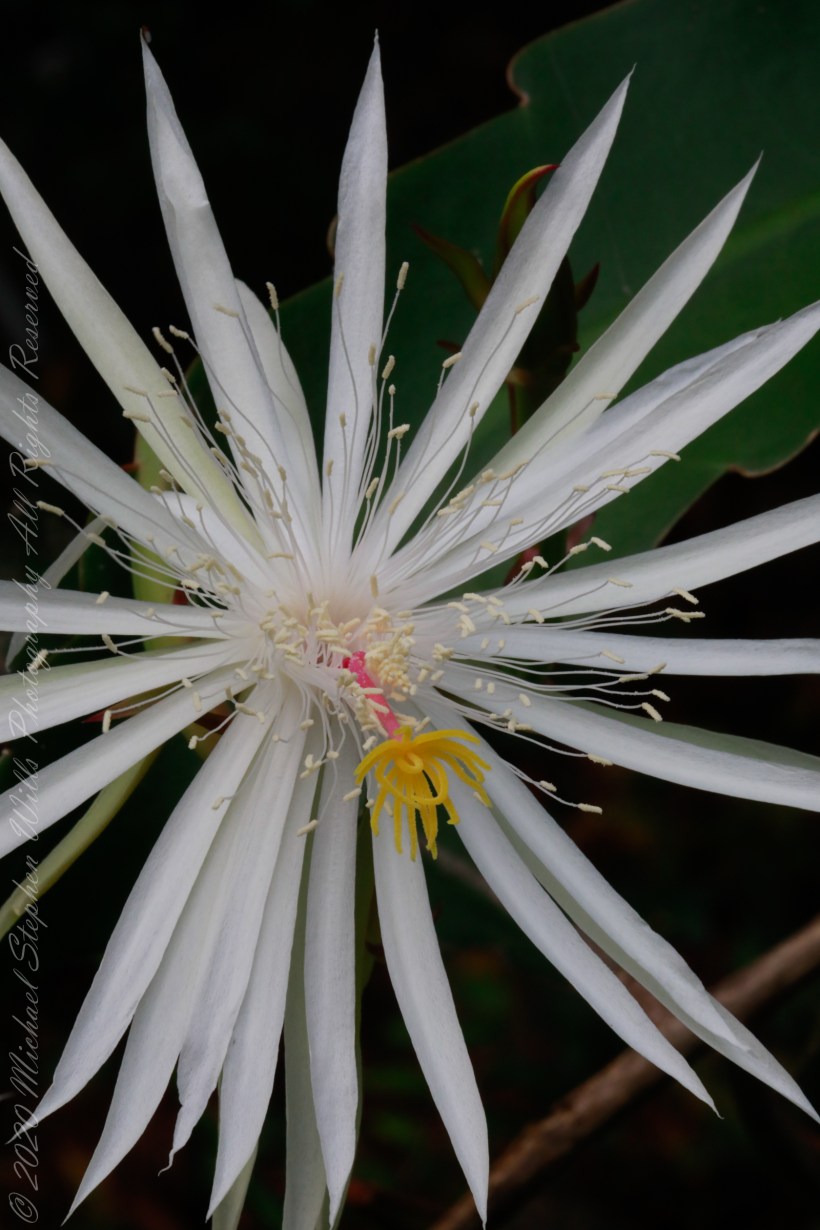
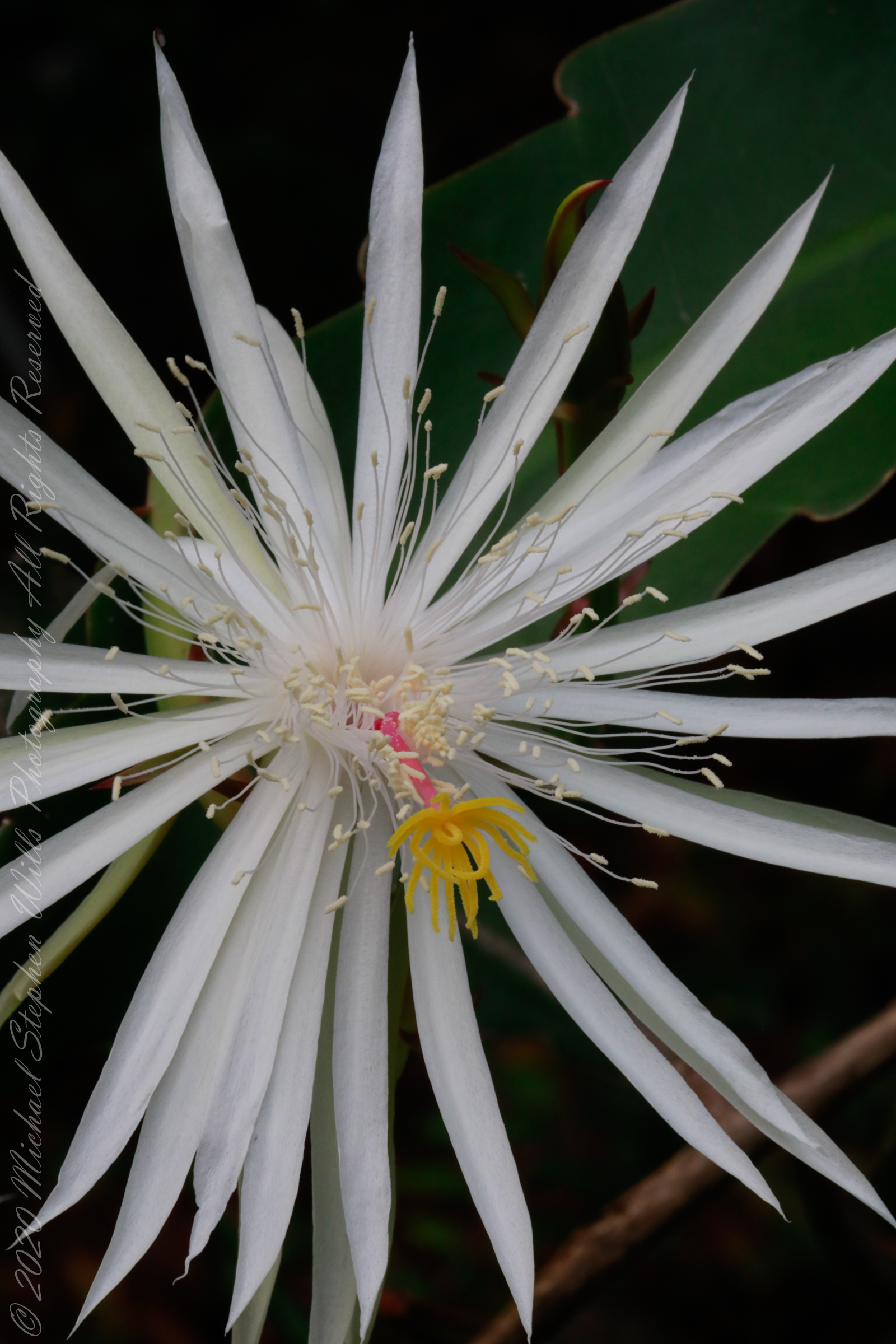
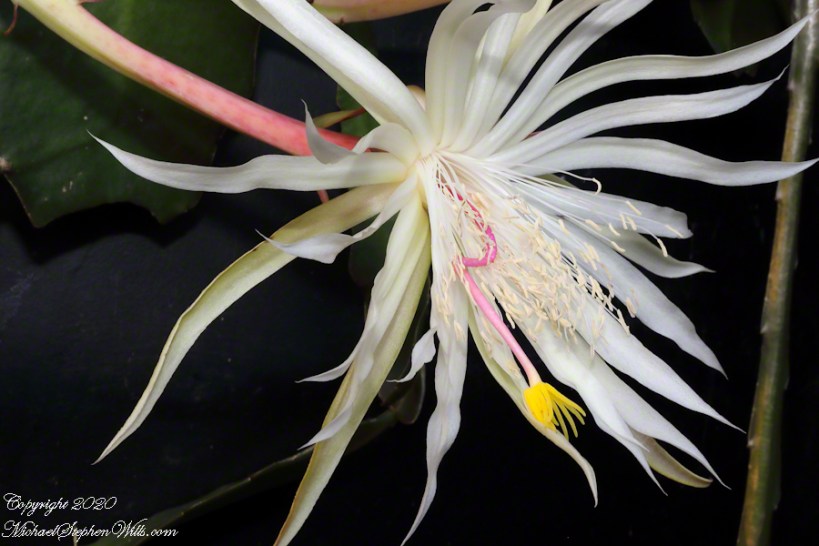
Though it is sometimes referred to as a night-blooming cereus, it is not closely related to any of the species in the tribe Cereeae

It was a quiet day, upping shutter speed via an increased ISO and both exposures are equally sharp.

These were captured with the Canon EOS 5D Mark IV dslr on a Manfrotto tripod.

“The flowers are nocturnal. They grow on flattened stems and are up to 30 cm (12 in) long and 17 cm (7 in) wide, and very fragrant. The principal odor components in the aroma are benzyl salicylate and methyl linoleate.[5] Pericarpels are nude, slightly angled, and green. Bracteoles are short and narrow up through ca. 10 millimetres (0.39 in) long. Receptacles are up through 20 cm long, 1 cm thick, brownish, and arching. The outer tepals are linear, acute, 8–10 cm long, and reddish through amber. The inner tepals are whitish, oblanceolate or oblong, acuminate, up through 8–10 cm long and 2.5 centimetres (0.98 in) wide. The stamens are greenish white or white, slender and weak. The styles are greenish white, pale yellow, or white, 4 mm thick, as long as inner tepals, and with many lobes.”

“The fruits are oblong, up through 12 x 8 cm, purplish red, and angled.”

“It is known to have medicinal properties in many Asian cultures, including India, Vietnam, and Malaysia. The plant is widely used in traditional medicine to treat respiratory ailments, bleeding conditions, and is also believed to have the property of reducing pain and inflammation.”

Click me for another “Cereus” Post.

Copyright 2023 Michael Stephen Wills All Rights Reserved

Night bloomer

Though it is sometimes referred to as a night-blooming cereus, it is not closely related to any of the species in the tribe Cereeae

This set compares a deep focus exposure to a shallow focus with bokeh.

These were captured with the Canon EOS 5D Mark IV dslr on a Manfrotto tripod.

“Epiphyllum oxypetalum is an easily cultivated, fast growing Epiphyllum. Epiphyllum from Greek epi- “upon” + phullon “leaf.” Oxypetalum = with acute petals. It flowers in late spring through late summer; large specimens can produce several crops of flowers in one season. This is a widely cultivated Epiphyllum species.”

“It is known to have medicinal properties in many Asian cultures, including India, Vietnam, and Malaysia. The plant is widely used in traditional medicine to treat respiratory ailments, bleeding conditions, and is also believed to have the property of reducing pain and inflammation.”

Click me for another “Cereus” Post.

Copyright 2023 Michael Stephen Wills All Rights Reserved

Cereus not

Though it is sometimes referred to as a night-blooming cereus, it is not closely related to any of the species in the tribe Cereeae

“Epiphyllum oxypetalum, the Dutchman’s pipe cactus, princess of the night or queen of the night, is a species of cactus. It blooms nocturnally, and its flowers wilt before dawn. Though it is sometimes referred to as a night-blooming cereus, it is not closely related to any of the species in the tribe Cereeae, such as Selenicereus, that are more commonly known as night-blooming cereus. All Cereus species bloom at night and are terrestrial plants; Epiphyllum species are usually epiphytic.”

These were captured with the Canon EOS 5D Mark IV dslr on a Manfrotto tripod.

“Epiphyllum (“upon the leaf” in Greek) is a genus of epiphytic plants in the cactus family (Cactaceae), native to Central America and South America. Common names for these species include climbing cacti, orchid cacti and leaf cacti.”

Click me for another “Cereus” Post.

Copyright 2023 Michael Stephen Wills All Rights Reserved

Mass Bloom 2023

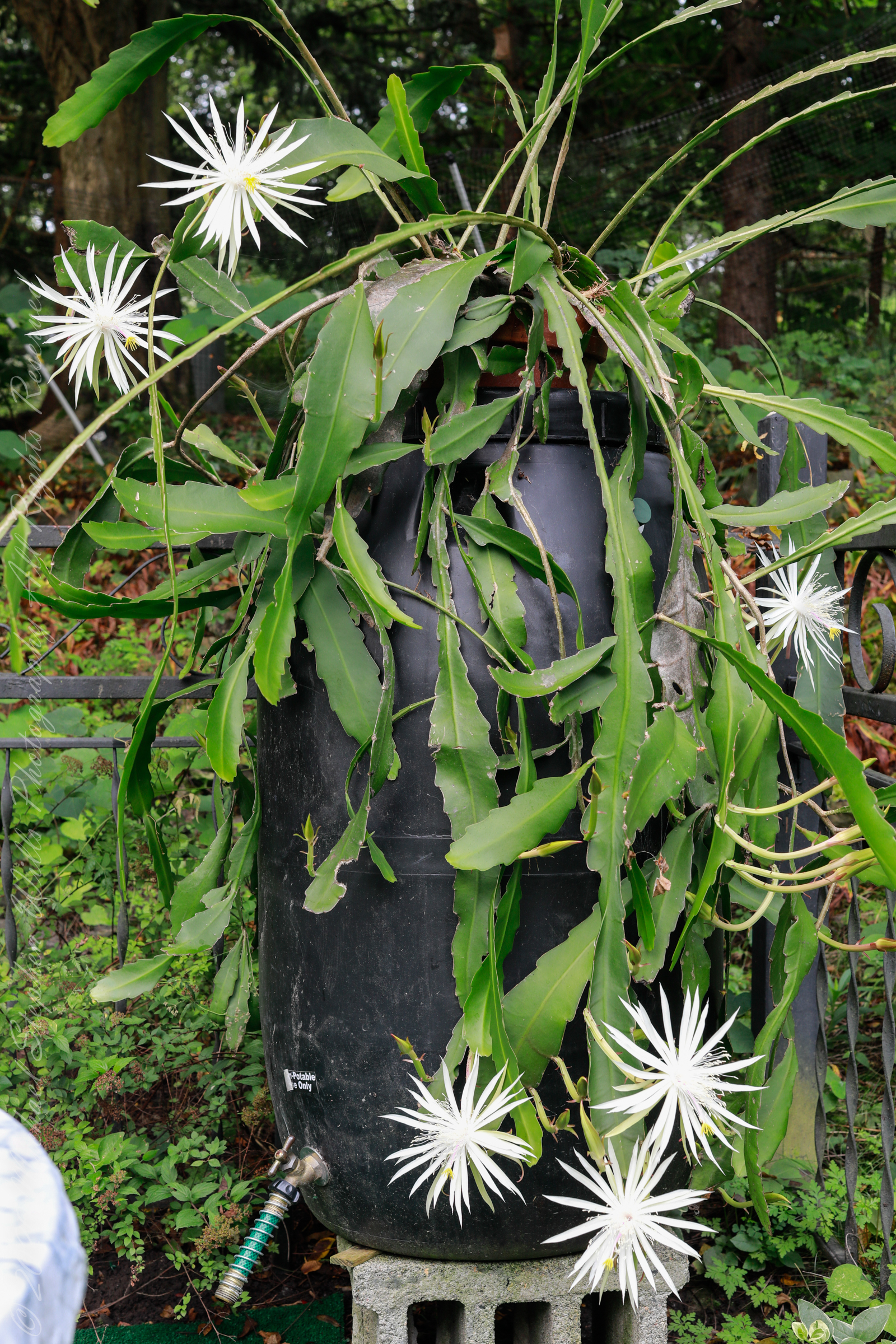
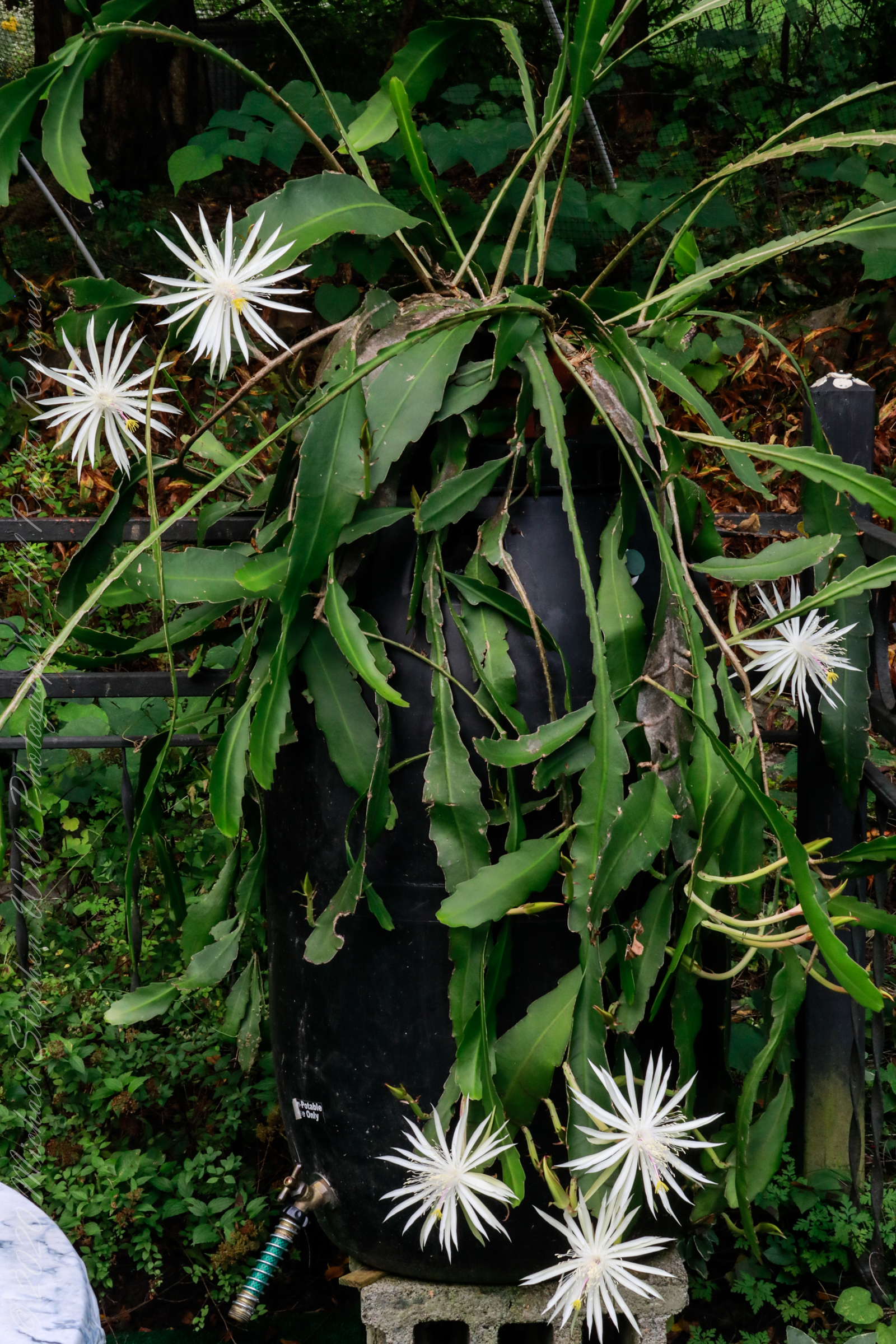
Our “cereus” summers on a water barrel poolside, this year, 2023, over 40 blossoms opened over the course of a week in September.

These were captured with the Canon EOS 5D Mark IV dslr on a Manfrotto tripod.

“Epiphyllum (“upon the leaf” in Greek) is a genus of epiphytic plants in the cactus family (Cactaceae), native to Central America and South America. Common names for these species include climbing cacti, orchid cacti and leaf cacti.”

Click me for another “Cereus” Post.

Copyright 2023 Michael Stephen Wills All Rights Reserved

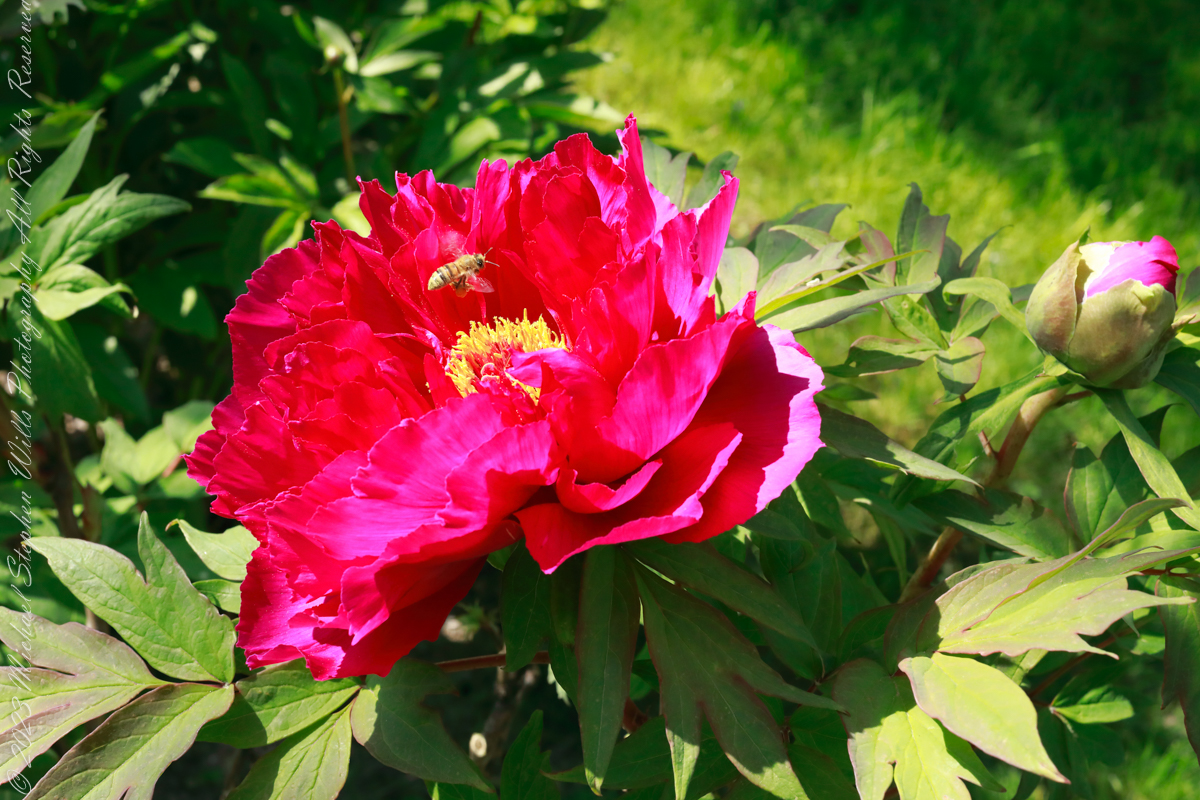
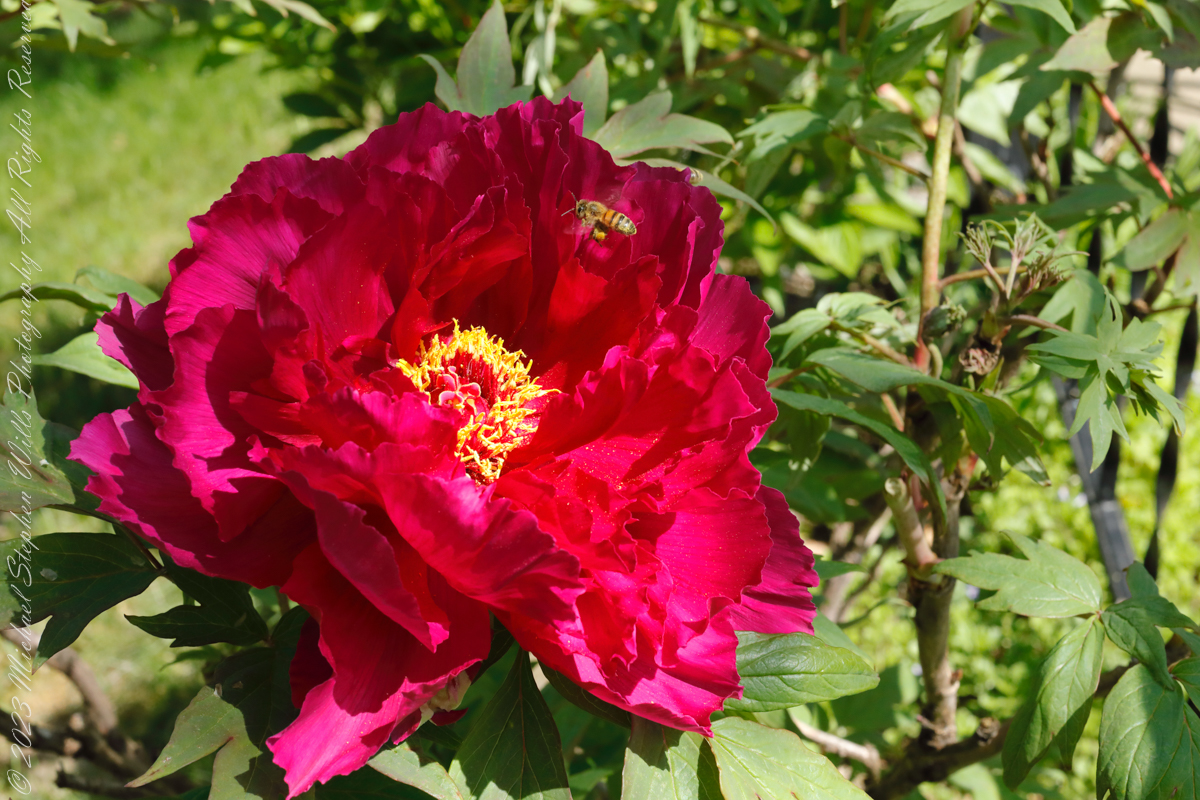
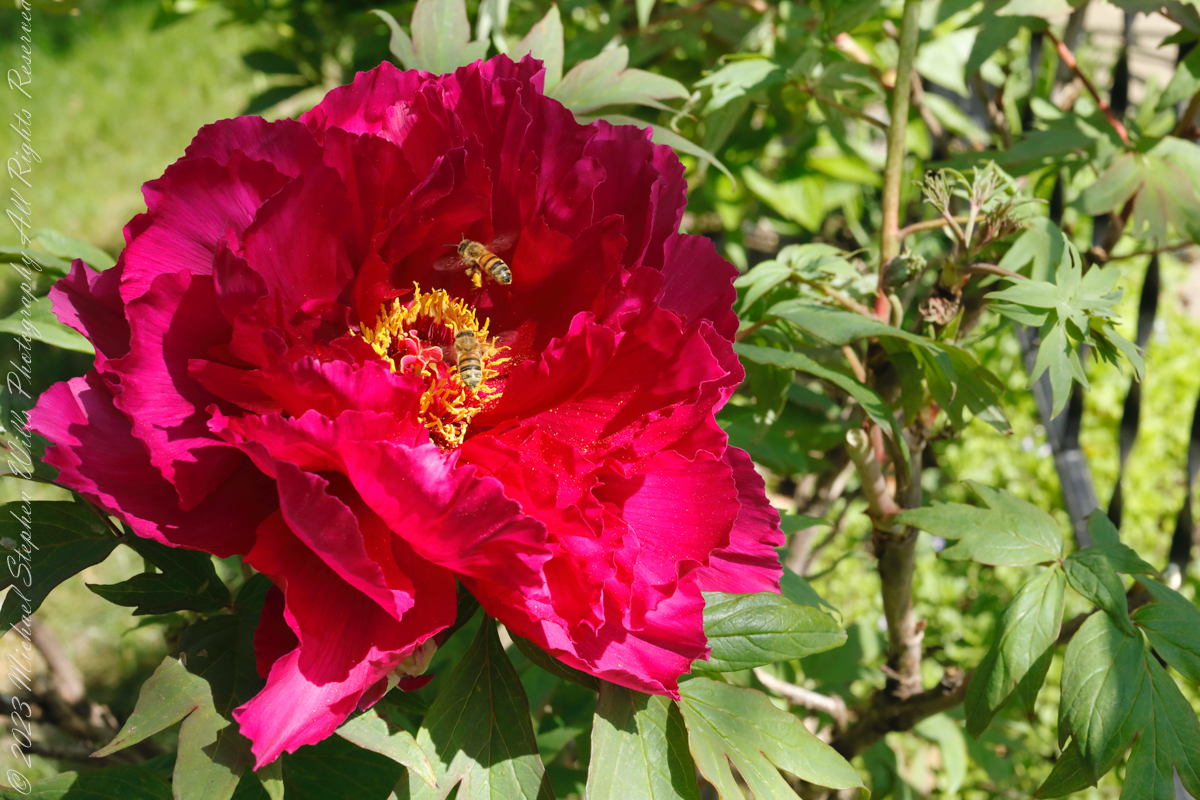
Woody Peony and Honeybees, 50 mm

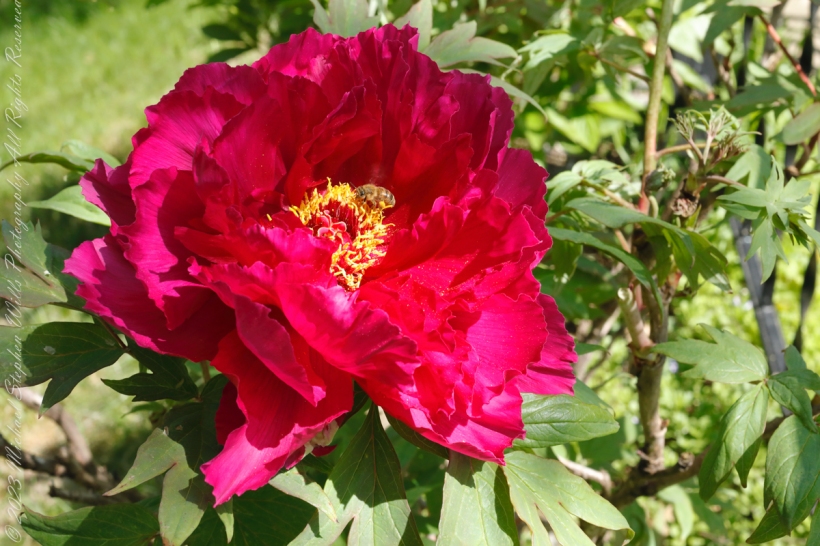
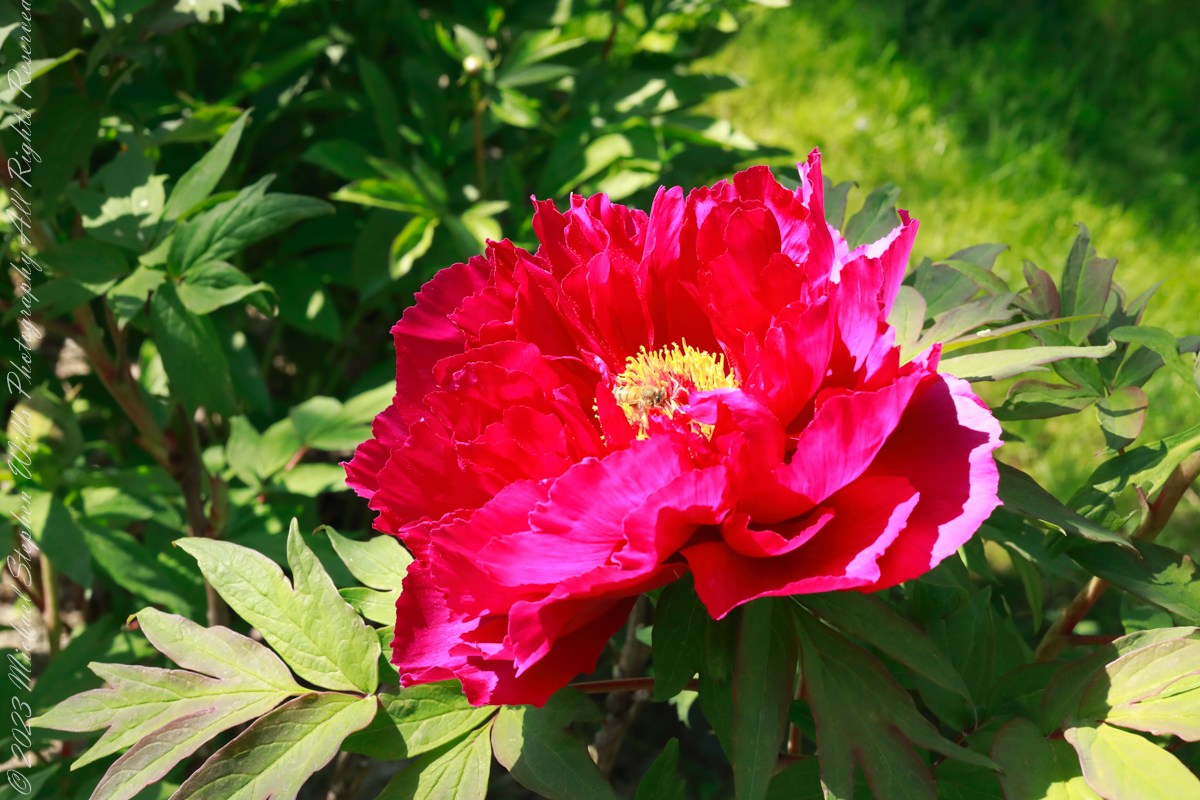
The bees happily rolled around among the stamens, notice their full pollen sacs.

Like the previous year, spring 2022, though cold, is early. As I write this the peony blooms presented here, photographed May, 2021 are seeding. Every year, Pam and I marvel at the color. 2019 this peony was in full bloom only by the end of May, around Memorial Day.

These photographs were taken with a Canon EOS 5D Mark IV dslr, and the Canon EF 50 mm f/1.2L USM lens stabilized with the Manfrotto BeFree Carbon Fiber tripod with ball head. Color results from the Canon dslr are impressive. In prior years I favored shooting late evening in the shade with a slight underexposure. This year I experimented with full sunlight. I found a slight under exposure captured the plum – fine burgundy wine nature of this Japanese cultivar, “Shimadaijin,” planted in the 1970’s or 1980’s.

This set brings out the petal’s fiery nature. In the wild, woody (also called tree) peonies favored cliffs and scrub of western and central China, eastern Himalayas (southeastern Tibet).

By a happy accident our neighbor’s honeybees foraged the nectar and pollen of these newly opened blooms. The woody stems hold the profusion of large flowers each one erect. “Tree” is a misnomer as this plant is a shrub growing mid-thigh high. One of the classic ornamental genera of China, known there as moutan or hua wang “King of Flowers.”

Cultivation in China began in Chekiang in the early 4th century AD. By the early Tang period (circa 700 AD) hundreds of varieties were grown.

The bees happily rolled around among the stamens, notice their full pollen sacs.

ISO 1600 f16 1/250 sec

References
Roger Philips and Martyn Rix, “The Botanical Garden, Vol 1, Trees and Shrubs” p 133
Wikipedia “Magenta” color

Copyright 2023 All Rights Reserved Michael Stephen Wills

Early Spring V

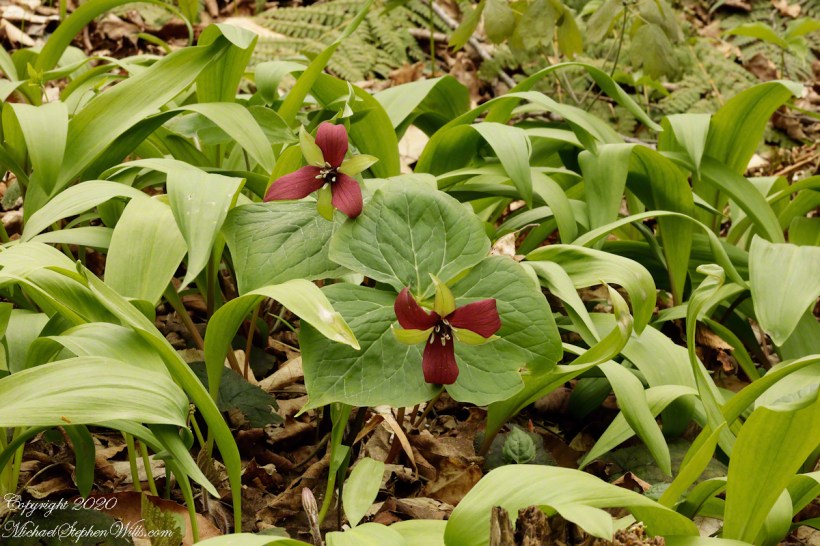
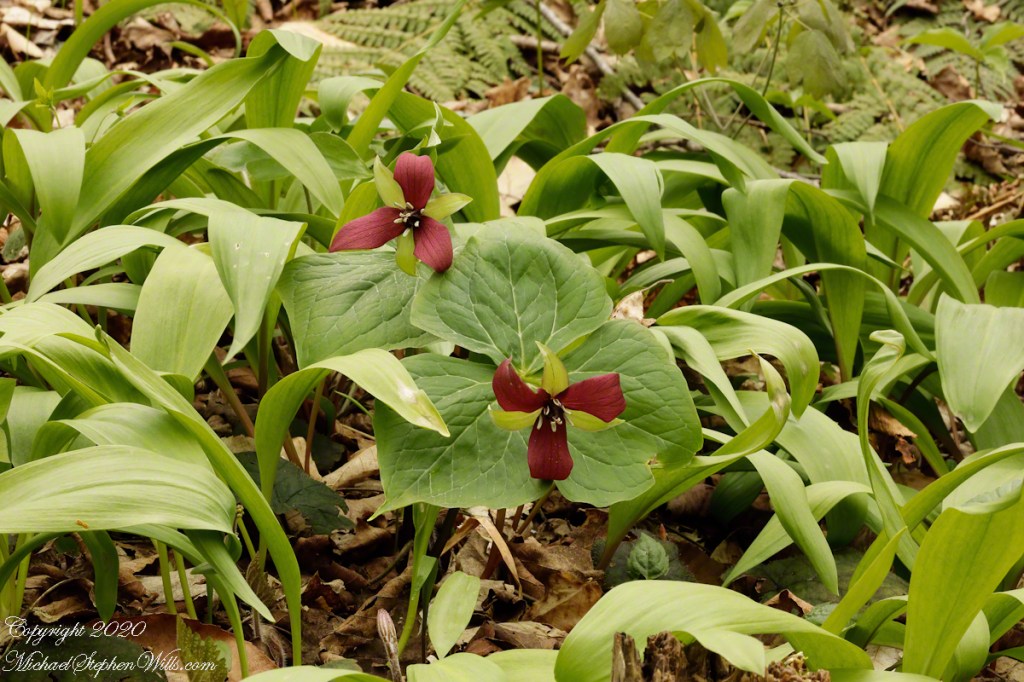
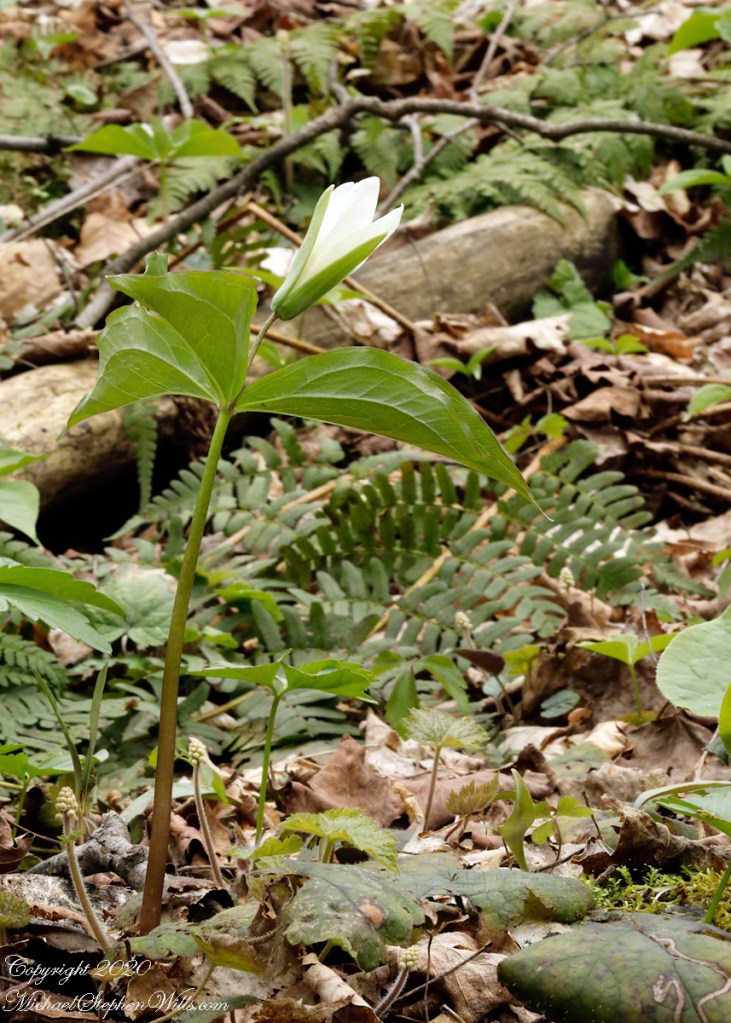
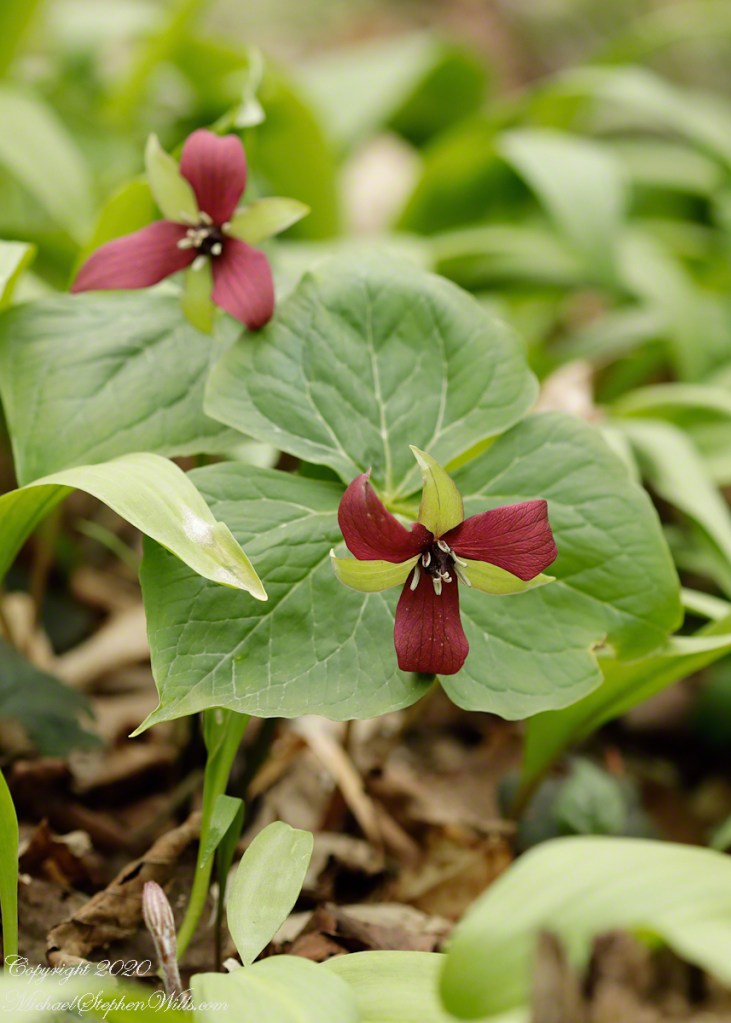
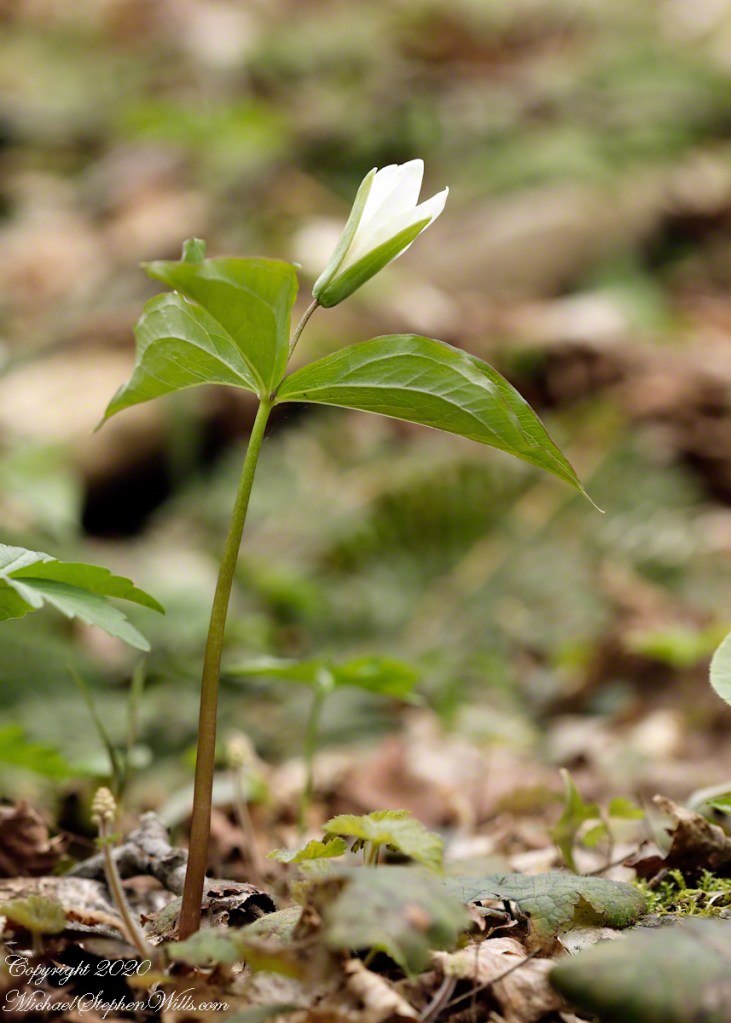
Purple vs. White Trillium

Purple Trillium, a different species from the white, present different challenges. The purple blooms tend to dip down toward the ground. White flowers face upward toward the sky. My successful photographs of purple (Click me for another Purple Trillium posting) have the camera lower than the plant, say where there is a bank above the trail.

Shot from beneath, White Trillium project a hopeful air. Here is a comparison of the two species in the environmental and individual treatments.

Click photograph for larger image. To do this from WordPress Reader, you need to first click the title of this post to open a new page.

Click for my “Finger Lakes Memories” Fine Art Photography Gallery.

Copyright 2020 All Rights Reserved Michael Stephen Wills

Parts of the Scorpion

Twenty million years ago a then nonexistent earth-bound human civilization could recognize none of the prominent stars of the constellation Scorpius (The Scorpion) as these, compared to our 4.6 billion year old star, lit up less than 12 million years ago. The brightest star, Alpha Scorpii AKA Antares, is a red giant destined to burst into a supernova bright as the full moon within two million years. Will the human race be around to witness it?

Such as it is, The Scorpion was traced out by the Babylonian astronomers around 8 BCE following even more ancient Sumerian traditions naming Alpha Scorpii “The Heart of the Scorpion.”

I first became aware of Antares March 2009 during a stay on Cocoa Beach. Setting the room clock to a 5 am alarm to view the sunrise. As I sat listening to the surf, Antares glowed dark red in the south. It is the reddish tint star in the following illustration.

Till Credner, CC BY-SA 3.0 https://creativecommons.org/licenses/by-sa/3.0, via Wikimedia Commons

Here is a photograph of Antares, the reddish dot in center, along with the 6 of the 18 Scorpius bright stars. For this shot a Canon EOS 5D Mark IV dlsr had mounted a Canon lens EF 70-300 f4-5.6L IS USM set to 70 mm focal length, 1600 ISO. Exposure was “bulb,” meaning when the shutter button is pressed and held the shutter remains open: for this exposure this was for approximately 10 seconds. The equipment was held steady on a Manfrotto BeFree Carbon Fiber tripod. As the Earth continued to turn, the resulting star images are smeared a bit.

Bracketing Antares, the Scorpion Heart are “The Arteries” Theta and Tau. About those Greek letters, these designate relative brightness of each star respective of the others in the constellation. “Alpha” the first letter of the Greek alphabet is the brightest. Here are the other letters listed, with the alphabetic order in brackets Beta(2), Delta(4), Pi(16), Sigma(18), Tau(19). Ancient Greek built on the traditions of the Mesopotamians (Babylonian and Sumerian) and were in turn used for modern stellar nomenclature, including the tracings of sky images, the constellations.

The position of a relatively minor star, Tau, near Antares elevates it to the important function of an artery. The stars themselves run against their brightness hierarchy placement: The star Delta Scorpii, after having been a stable 2.3 magnitude star, flared in July 2000 to 1.9 in a matter of weeks. It has since become a variable star fluctuating between 2.0 and 1.6. This means that at its brightest it is the second brightest star in Scorpius.

Copyright 2023 Michael Stephen Wills All Rights Reserved