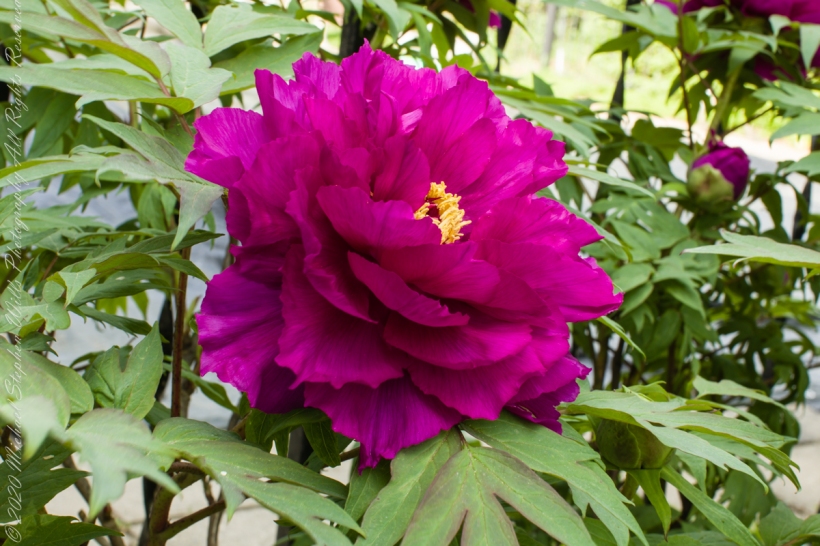
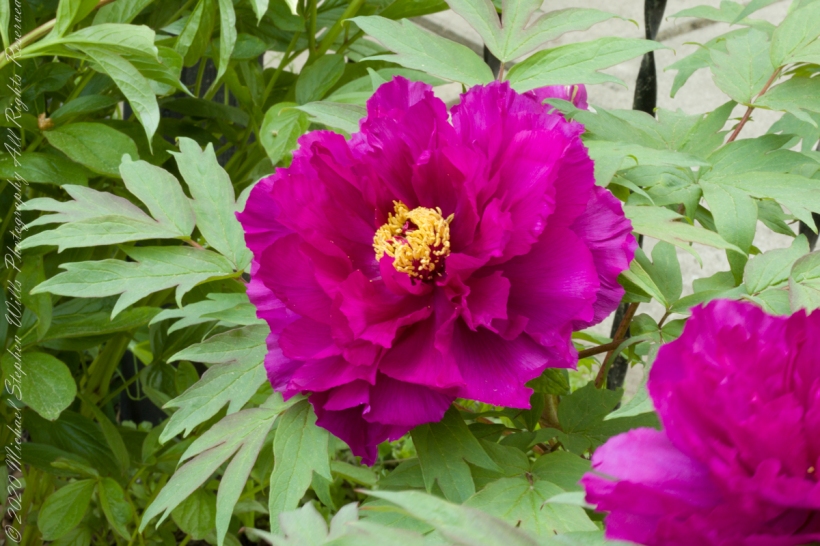
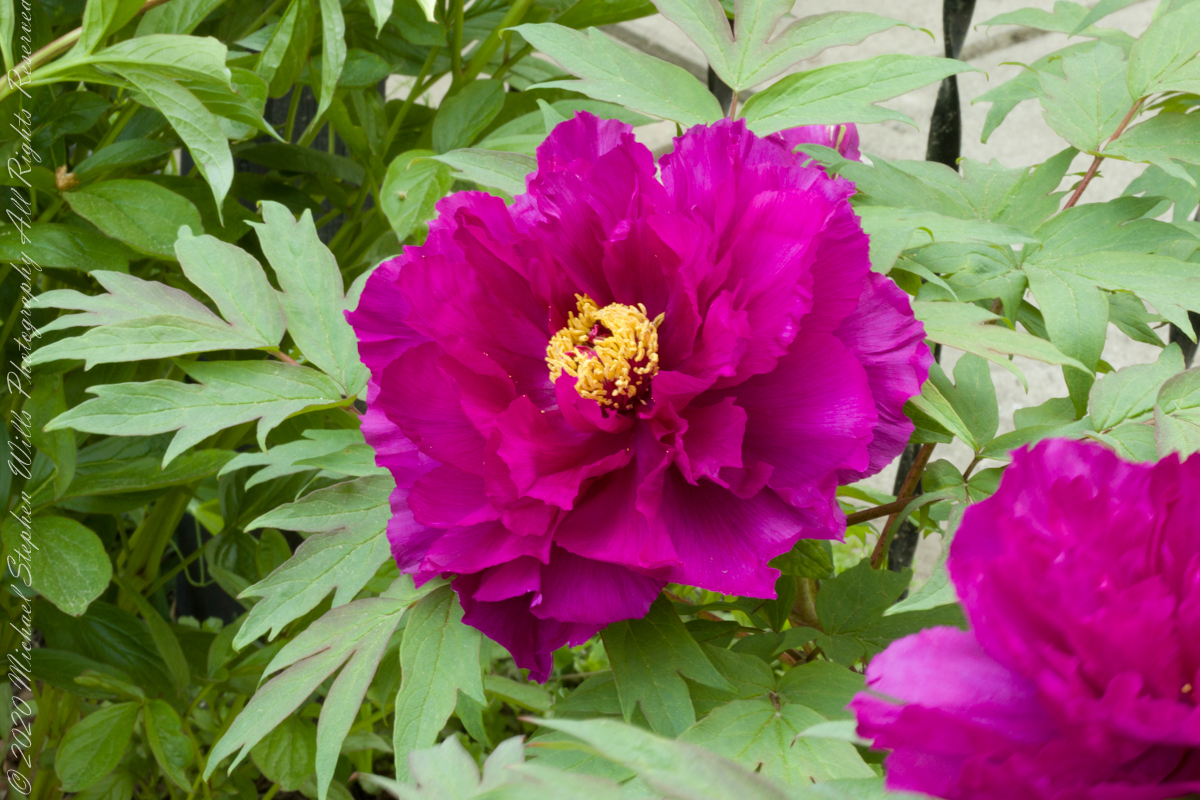
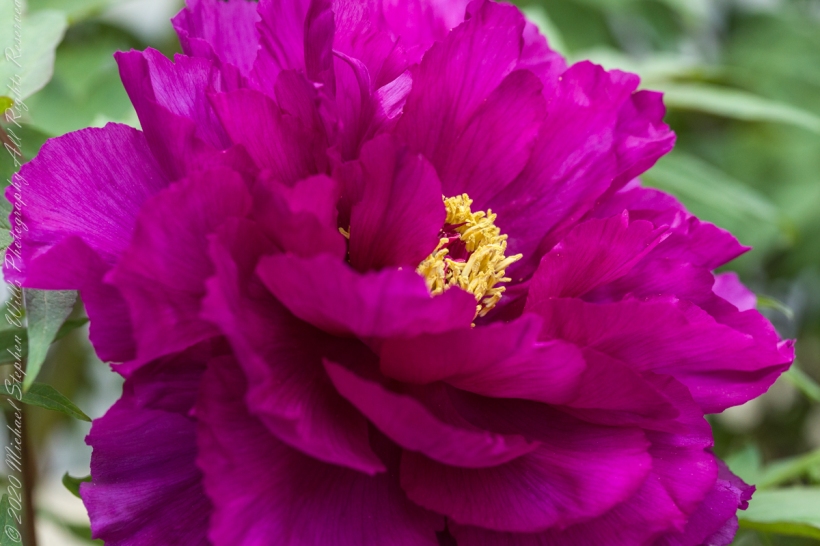
See my May Woody Peony postings for background on this peony variety.
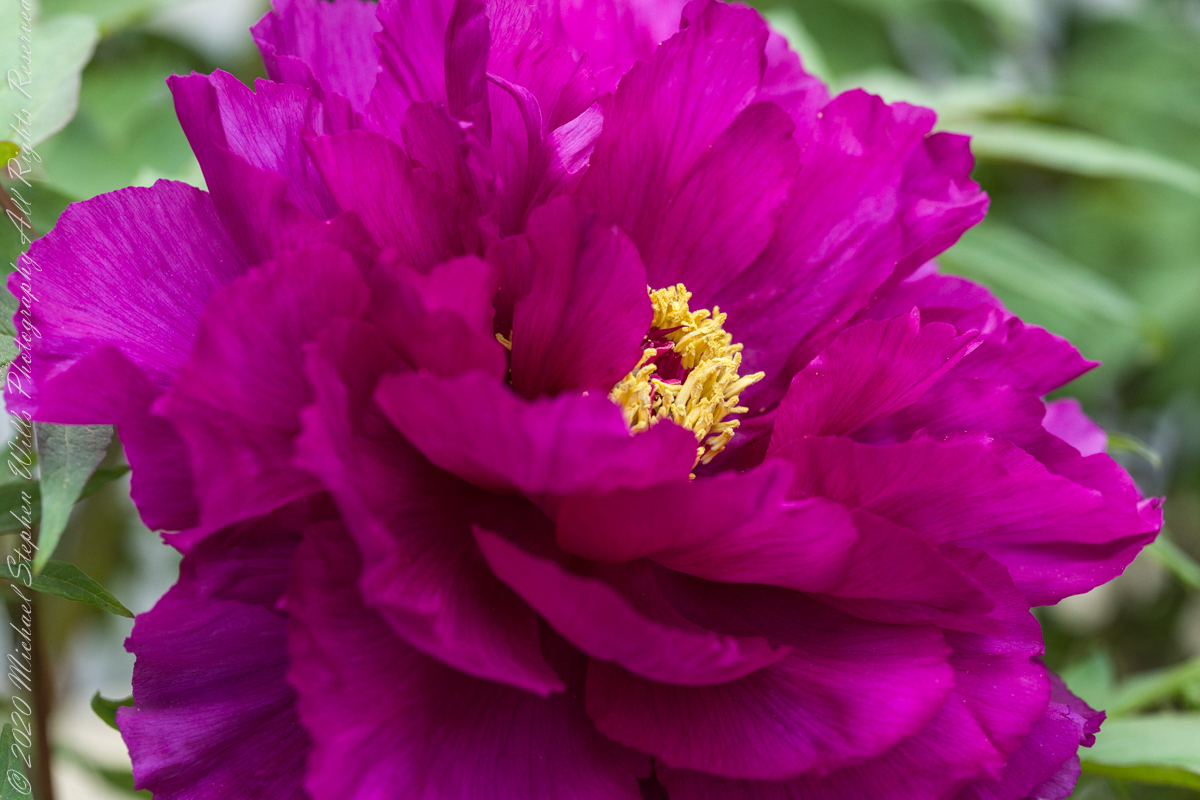
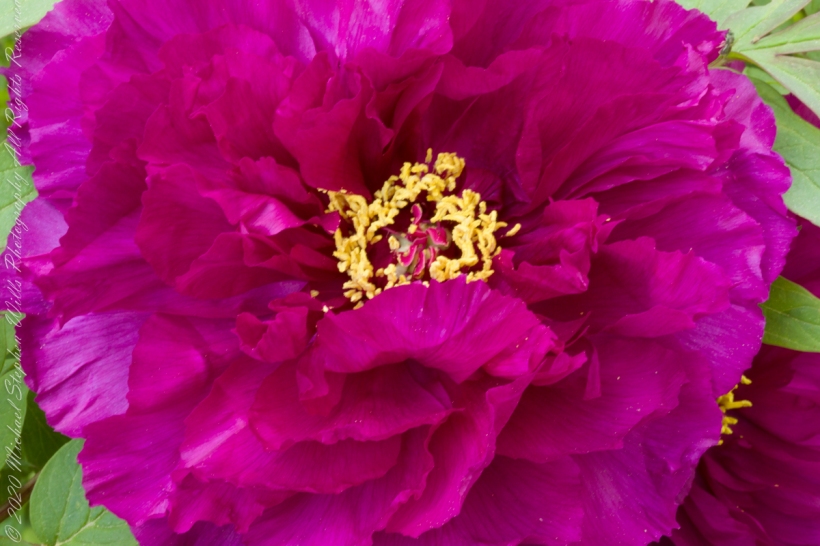
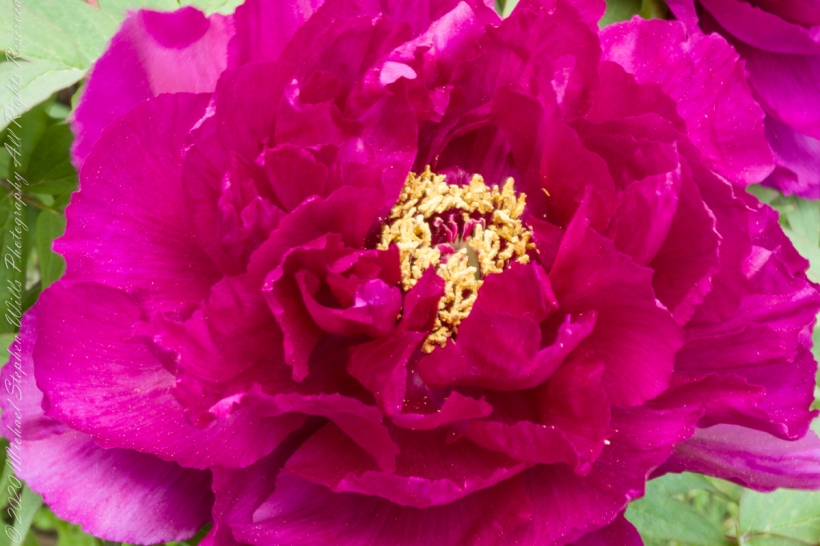
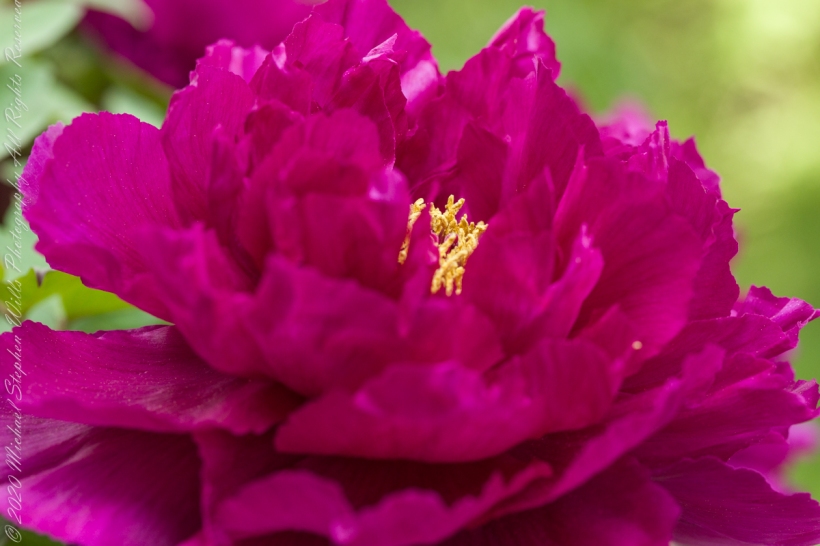
These photographs were taken with a Canon EOS 5D Mark IV dslr and the Canon EF 100mm f/2.8 Macro USM lens stabilized with the Manfrotto BeFree Carbon Fiber tripod with ball head.
The morning breezes of May caused me to “up” ISO to 1600 for a faster shutter speed at higher f-stop.
ISO 1600 f32 1/6 sec
Taking full advantage of the macro lens, the higher ISO helped to maintain sharper focus on the highlighted feature, in this case the stamens.
ISO 1600 f5.6 1/400 sec
A gallery of macros with various settings and aspects of the bloom.
ISO 1600 f32 1/6 sec
ISO 100 f32. 1/6 sec
ISO 1600 f5.6 1/320 sec
ISO 1600 f5.6 1/400 sec
Copyright 2021 All Rights Reserved Michael Stephen Wills
“It is difficult / to get the news from poems / yet men die miserably every day / for lack / of what is found there.” Asphodel that Greeny Flower WC Williams
Here is a Sunny Sunday reader assignment. Which handling of this woody peony blossom do you prefer? Please leave your preferences in the comments section with details of your reasoning. Thank you!!
These photographs were taken with a Canon EOS 5D Mark IV dslr, new for me as of 2020, and the Canon EF 50 mm f/1.2L USM lens stabilized with the Manfrotto BeFree Carbon Fiber tripod with ball head. This setup allowed me to fiddle with camera settings, here you see a variation in the width of the shutter diaphragm opening, or F-stop. The smaller the opening (higher F-stop) less light is let through to the image sensor, longer exposure time (allowing the subject to move, as in the morning breeze) offset by greater depth of field, more of which provides sharp focus as the subject elements are further from the lens.
In this first photograph, the F-stop is moderately high. The entire blossom and plant are in focus, the background moderately blurred though still recognizable.
ISO 200 1/6 sec f/16
For the second photograph F-stop is low, opening up the shutter diaphragm, allowing more light in for a faster shutter release, less time for the morning breeze to rise up and ruin the shot. The beautiful background blurring, bokeh, is a feature of this 50 mm lens. At the same time, at F/4.0 the shutter diaphragm is not wide open. The blossom is entirely in focus, many plant leaves and the other blossom, to left, are out of focus. This places emphasis on the primary subject of the photograph while providing a feel for the surroundings.
ISO 200 1/100 sec F/4.0
Here are the same photographs, click on one to open a gallery for you to flip back and forth to compare.
ISO 200 1/6 sec f/16
ISO 200 1/100 sec F/4.0
Copyright 2021 All Rights Reserved Michael Stephen Wills
This yellow woody (also called tree) peony blooms later than our red varieties. The first set of three were photographed May 26, 2021 have unopened buds. Yet, these are early compared to those photographed June 6, 2019 used in the last still life.
These first photographs were taken with a Canon EOS 5D Mark IV dslr, new for me as of 2020, fitted with a 600EX-RT Speedlite (flash) and the Canon EF 70-300 mm (variable) f/4-5.6L USM lens stabilized with the Manfrotto BeFree Carbon Fiber tripod with ball head.
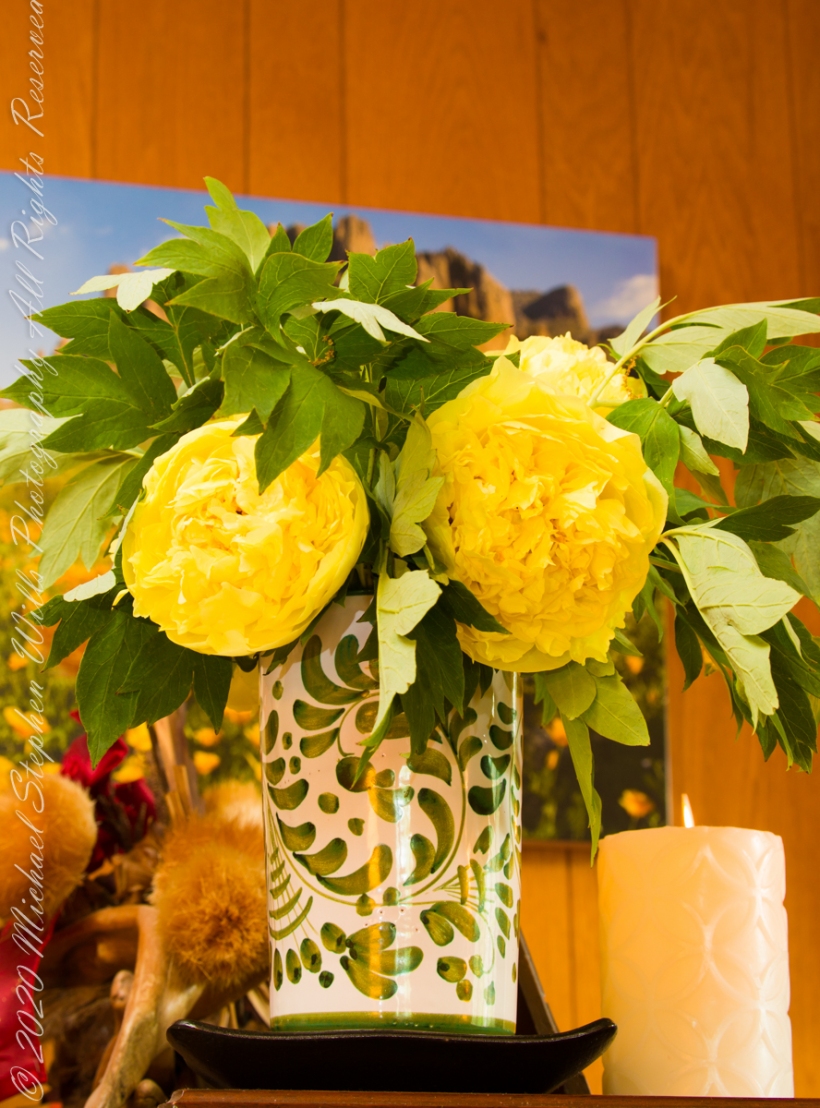
Our Itoh yellow tree peony has flowers on stalks too slender to hold the heavy blooms upright. The flowers open hidden among thick leaves. Here they are a still life of cut blossoms and leaves. The cultivars of Paeonia, the mouton, or hua wang, king of flowers, are ofe of the classic ornamental genera of China. By the 11th and 12th centuries the center off cultivation was in Sichuan, and there yellow-flowered varieties appeared.
Canon EF 70 – 300 mm USM, ISO 400, 146 mm, 0.3 sec at f/6.3
Click the pic for a larger view
Crossbreeding of yellow-flowered P. delavayi with traditional double-flowered P. suffruticosa cultivars by Victor Lemoine in Nancy, France has led to the introduction of the color yellow into the cultivated double-flowered tree-peonies. These hybrids are known as the Paeonia × lemoinei group. In 1948 horticultulturist Toichi Itoh from Tokyo used pollen from ‘Alice Harding’ to fertilize the herbaceous P. lactiflora ‘Katoden’, which resulted in a new category of peonies, the Itoh or intersectional cultivars. These are herbaceous, have leaves like tree peonies, with many large flowers from late spring to early autumn, and good peony wilt resistance. I am guessing our Yellow Wooden Peony is a type of this hybrid because the long stems are more herbaceous than woody, the heavy flowers droop so the best form to capture them is the still life.
Canon EF 70 – 300 mm USM, ISO 400, 70 mm, 1/5 sec at f/5.0
Canon EF 70 – 300 mm USM, ISO 400, 70 mm, 1 sec at f/11
Click the pics to flip back and forth.
Compare the above two exposures to appreciate the effect of the f-stop and excellent bokeh of the Canon “L” lens.
This still life from the 2019 bloom was taken with a Canon EOS-1Ds Mark III dslr and the Canon EF 50 mm f/1.2L USM lens used above. Stabilization provided by a Manfrotto 3036 (studio) tripod with the 468MG hydrostatic ball head. That room is bright from large, east-facing windows. Late afternoon light is soaked up by the black velvet backdrop leaving the lemon yellow leaves to shine.
Canon EF 50mm f/1.2L USM, daylight, 1/8 sec at f/7.1
Click the pic to over a larger view
Copyright 2021 All Rights Reserved Michael Stephen Wills
References
Wikipedia “Paeonia × suffruticosa“
Roger Philips and Martyn Rix, “The Botanical Garden, Vol 1, Trees and Shrubs” p 133
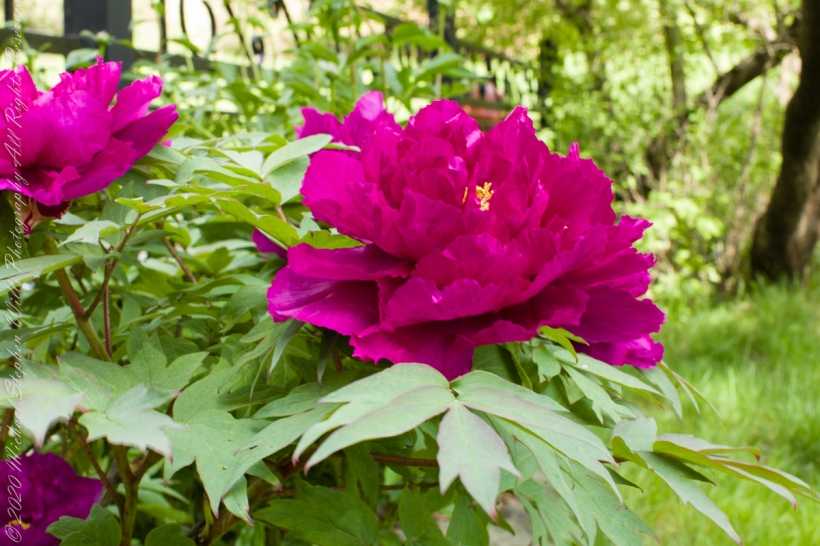
Spring 2021, though cold, is early. As I write this the peony blooms presented here, photographed May 20, 2021 are seeding, the gorgeous purple magenta petals strewn beneath the woody stems. In my last posting, from Memorial Day 2019, the plant is in full bloom the end of May.
These photographs were taken with a Canon EOS 5D Mark IV dslr, new for me as of 2020, and the Canon EF 50 mm f/1.2L USM lens stabilized with the Manfrotto BeFree Carbon Fiber tripod with ball head. Color results from the Canon dslr are impressive, the first time the unique purple magenta is accurately represented here. I found a slight under exposure captured the plum – fine burgundy wine nature of this Japanese cultivar, “Shimadaijin,” planted in the 1970’s or 1980’s.
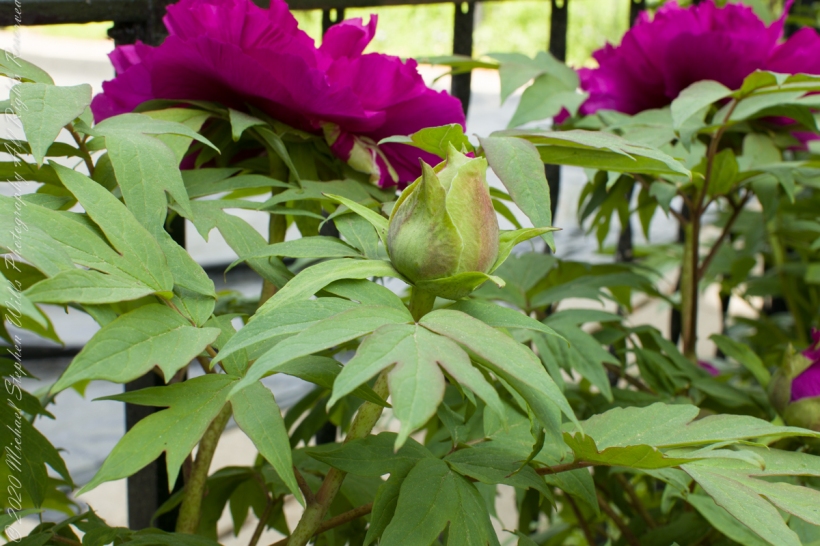
Here is the last unopened bud of this season, enclosed by a calyx of 5 green sepals with reddish highlights . In the wild, woody (also called tree) peonies favored cliffs and scrub of western and central China, eastern Himalayas (southeastern Tibet).
Lens Canon EF 50mm f/1.2L USM. ISO 200 f5.0
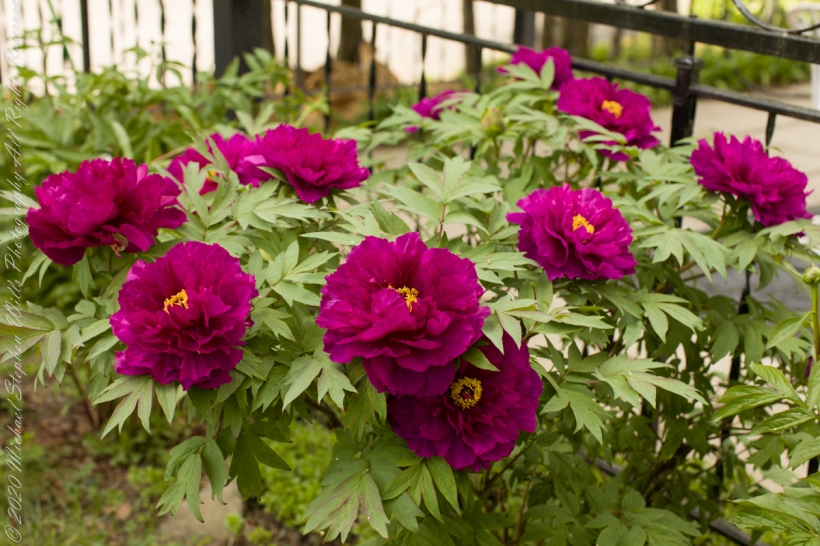
The bud is toward the back, slightly out of focus, of this overview. The woody stems hold the profusion of large flowers each one erect. “Tree” is a misnomer as this plant is a shrub growing mid-thigh high. One of the classic ornamental genera of China, known there as moutan or hua wang “King of Flowers.”
Lens Canon EF 50mm f/1.2L USM. ISO 200 f5.0.
Cultivation in China began in Chekiang in the early 4th century AD. By the early Tang period (circa 700 AD) hundreds of varieties were grown.
Lens Canon EF 50mm f/1.2L USM. ISO 200 f16
Copyright 2021 All Rights Reserved Michael Stephen Wills
References
Wikipedia “Magenta” color
Roger Philips and Martyn Rix, “The Botanical Garden, Vol 1, Trees and Shrubs” p 133
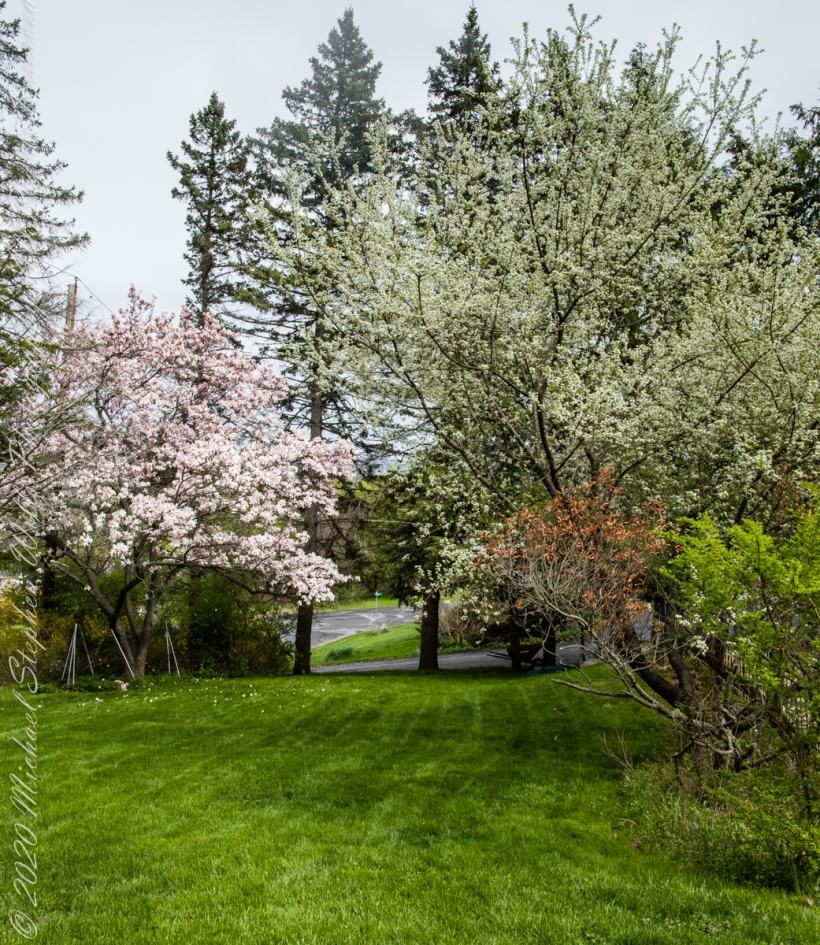
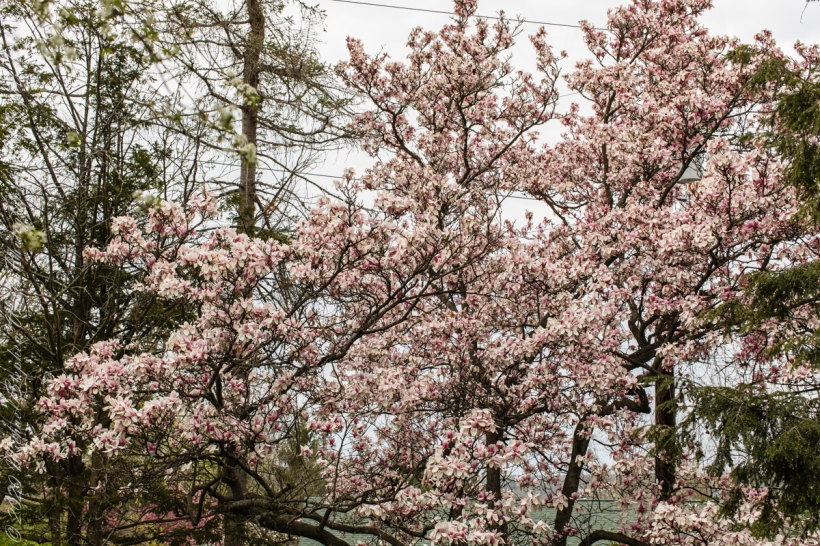
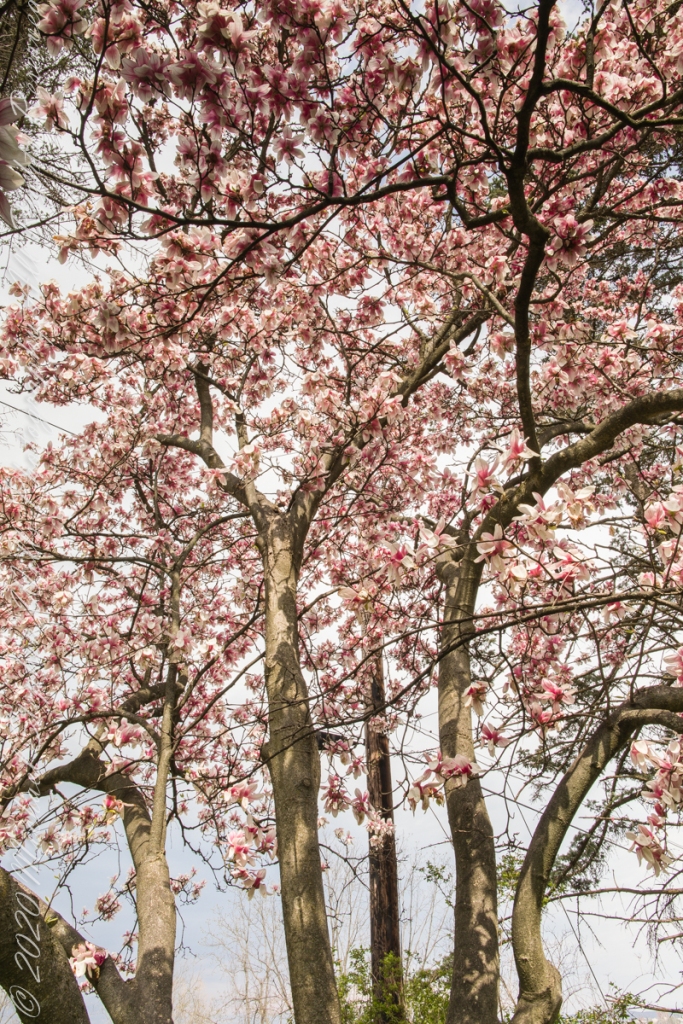
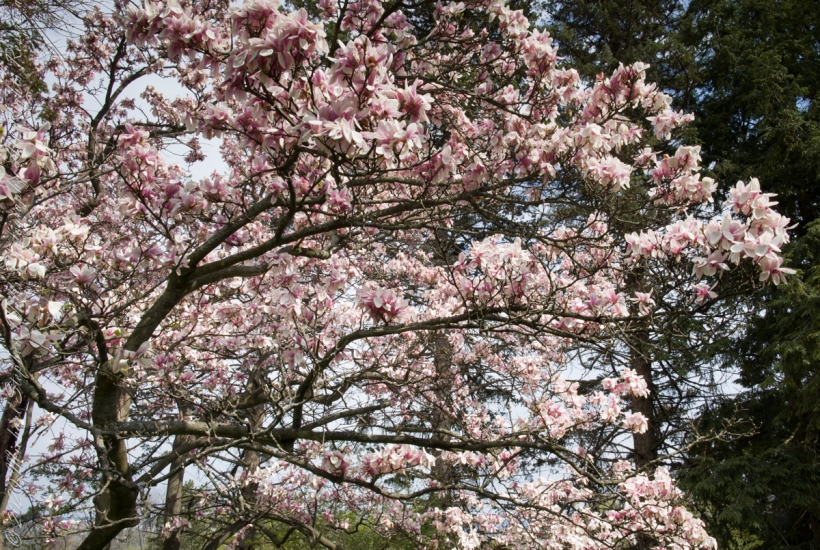
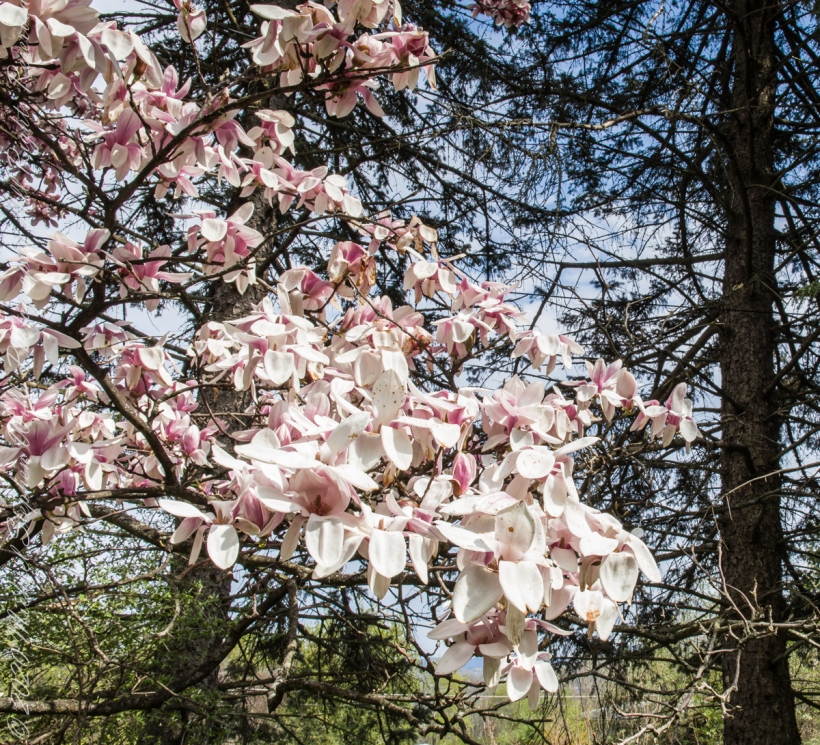
The Magnolia genus has been around for eons, come characteristics are protective from beetles as they existed before bees and relied upon beetles for fertilization. Our’s may be the species Magnolia dawsoniana (Dawson’s Magnolia), it shares many of the published characteristics: among them tolerance to our hardiness zone 5, flower color and shape, tree growth pattern.
This was an exceptional year for blooms. starting late April, lasting into May. The fence around trunks is for protection against bucks (male deer), from rubbing their horns in autumn.
Canon 50 mm f1.2
For most of these 2021 photographs I used the lens Canon 24 mm f/1.4L II USM, the one captioned 50 mm I used Canon 50mm f/1.2L USM. The Canon EOS 5D Mark IV dslr with the Manfrotto Studio tripod with hydrostatic ball head for all.
The last great year was 2018……
Canon 100 mm “macro” lens
For these 2018 photographs the Canon 24 mm and Canon EF 100mm f/2.8L “Macro” lenses with Canon’s EOS-1Ds Mark III dslr.
Copyright 2021 All Rights Reserved Michael Stephen Wills
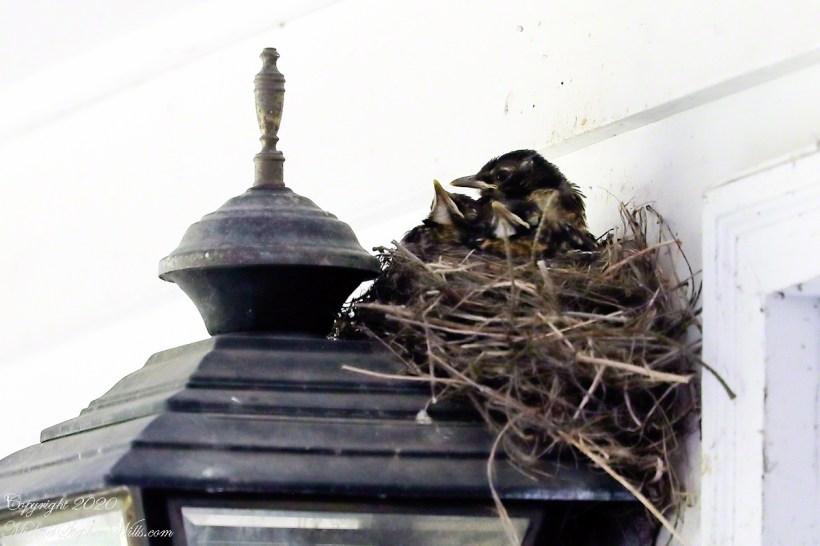
Our backyard robins returned this year. Pam, remembering the “miss” they made on her roses, tore down the first bits of nest on our carriage light. They persisted and I implored her to “have a heart,” agreeing to look after their mess. Here she is in the second day, note how she shimmies to form the nest bowl.
Copyright 2021 All Rights Reserved, Michael Stephen Wills
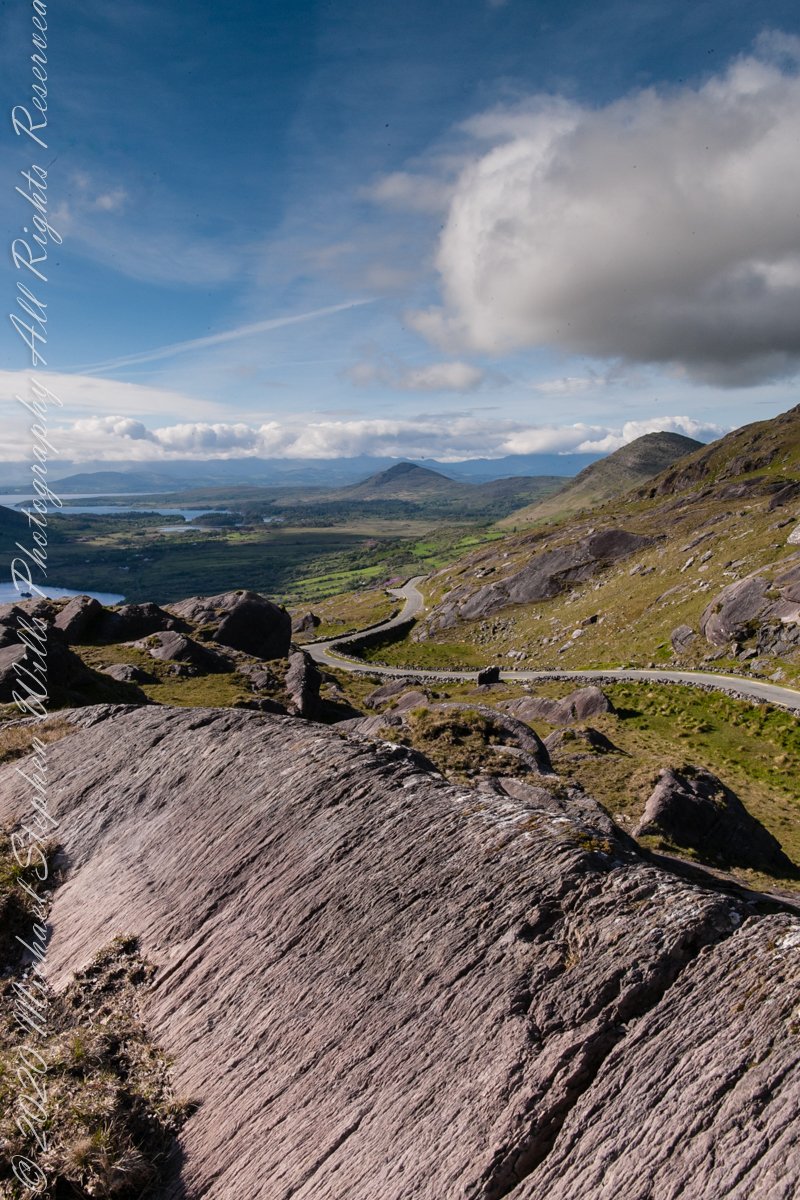
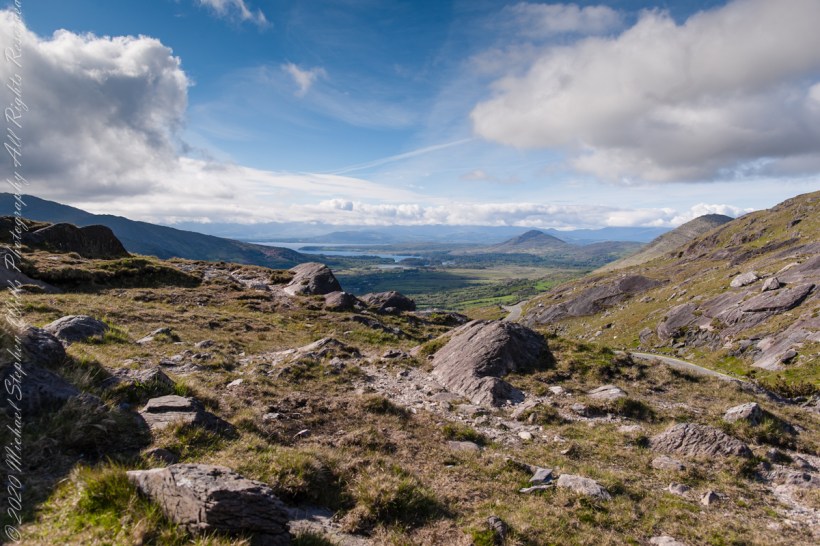
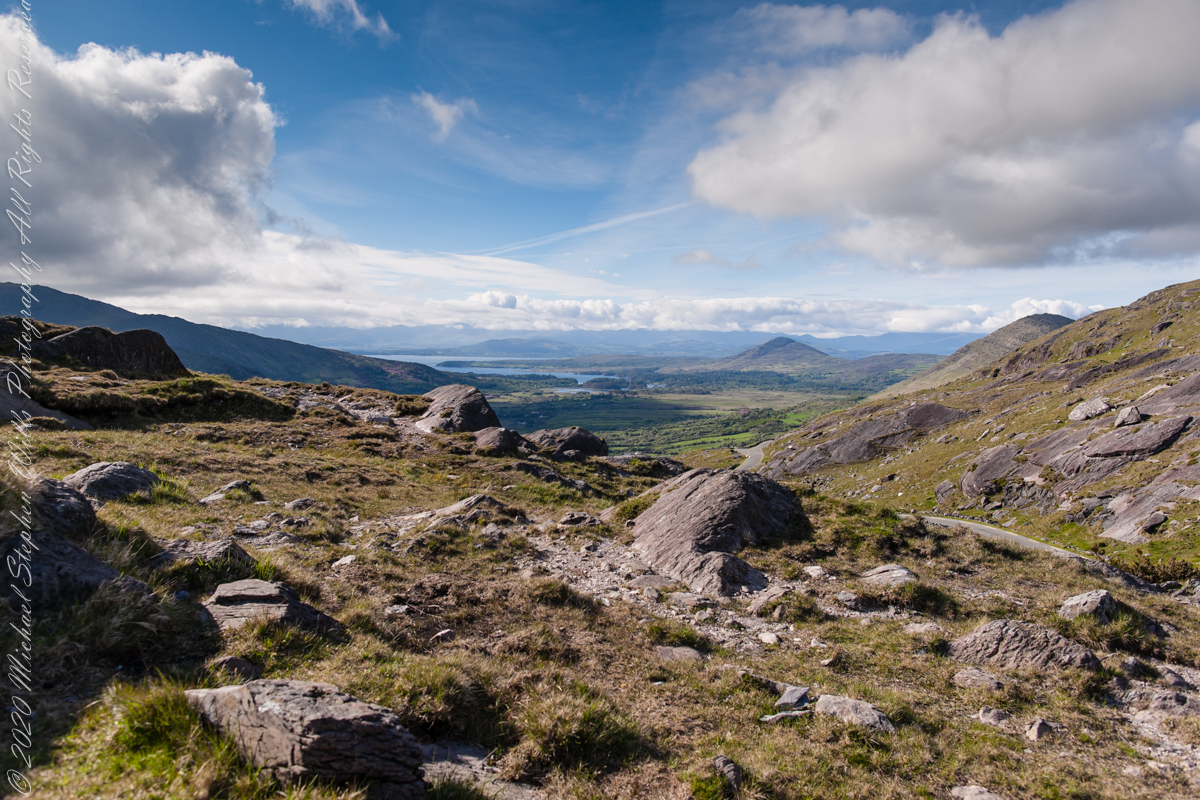
Number four of seven from the Kerry County side near the top of Healy Pass, R574. With a Canon 24 mm, wide angle, lens mounted on the Canon 5D Mark IV dslr, all on a sturdy Manfrotto studio tripod and hydrostatic ball head, I moved the rig forward, as can be seen by comparing the four photographs shared so far in this series. Your can see the foreground “reef” boulder of today’s photograph in the previous three views.
As I moved forward the ground dropped away and the view opens up. The near water is Glenmore Lake, discussed in yesterday’s view, the far waters are rivers and the Atlantic, as discussed in the first view. The road is Healy Pass, R574, in this direction headed toward Lauragh.
Beara Peninsula, Coolcreen townland, County Kerry, Republic of Ireland.
You can easily view a higher resolution versions by clicking on the photograph to open a browser tab.
Number one of seven from the Kerry County side near the top of Healy Pass. Visible in the distance from this point on R574, Healy Pass, are the Rivers Drunminboyr, Glanstrasna flowing into a sheltered inlet of the Atlantic Ocean. Beara Peninsula, Coolcreen townland, County Kerry, Republic of Ireland.
You can easily view a higher resolution versions by clicking on the photograph to open a browser tab.
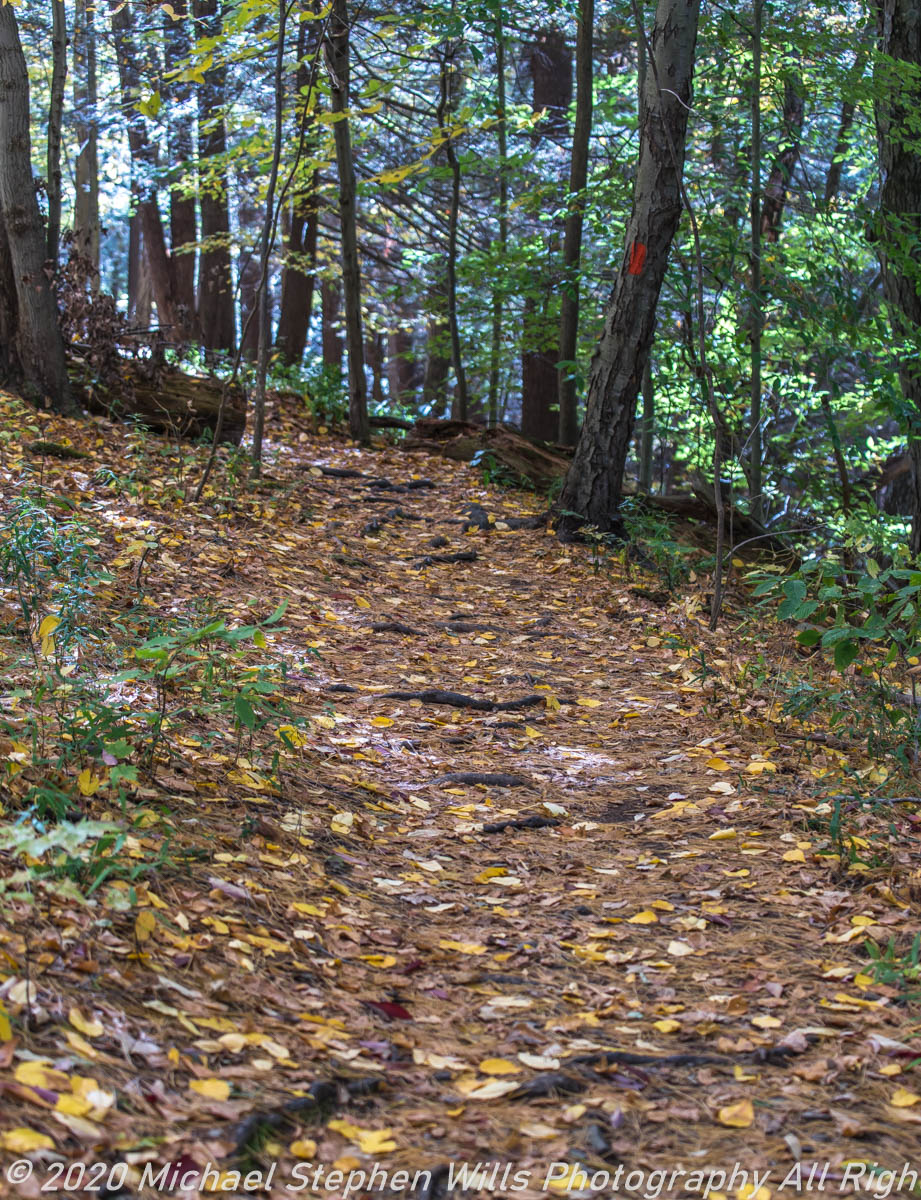
Sandbank Road climbs from the valley of Ithaca city to the rural peneplain on the way to Buttermilk Falls, we passed the sign for this preserve many times, today we explored this place, new to us. The trail descends to Lick Creek canyon.
Click photograph for larger view. Use combination keys to enlarge/reduce: Ctrl+ (Control / Plus) and Ctrl- (Control / Minus)
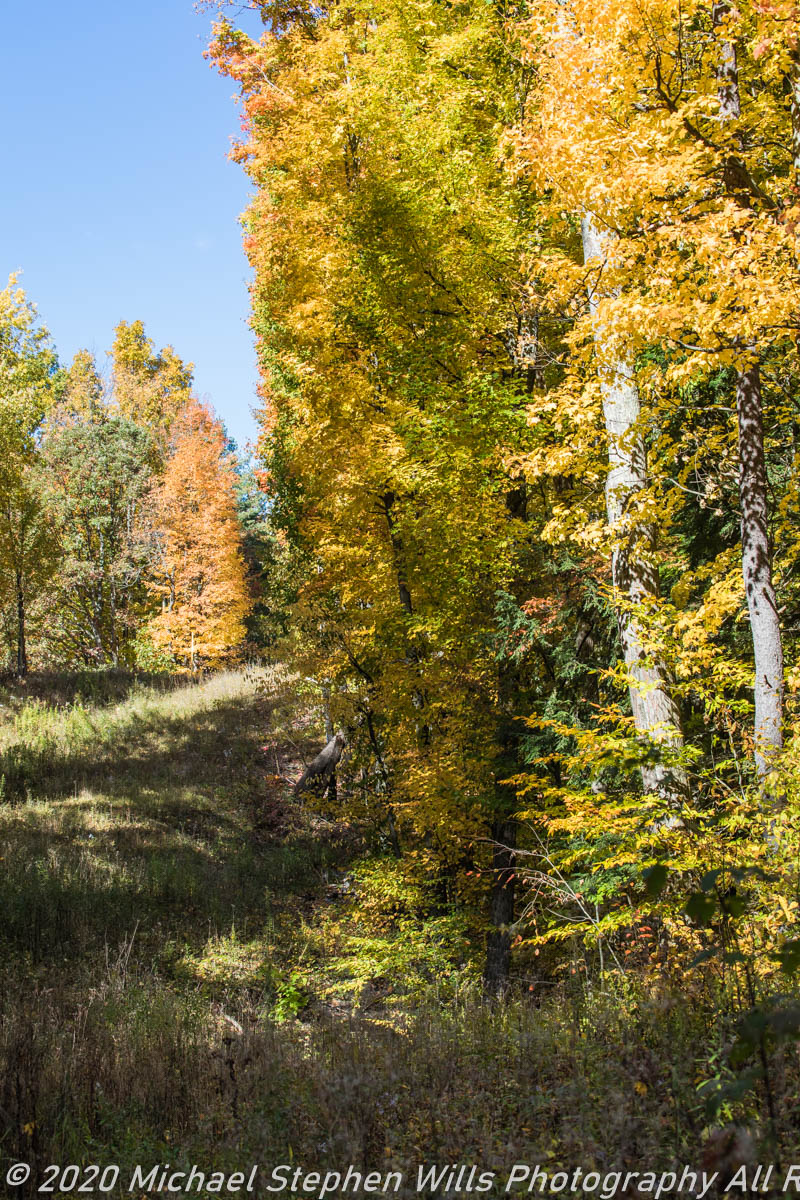
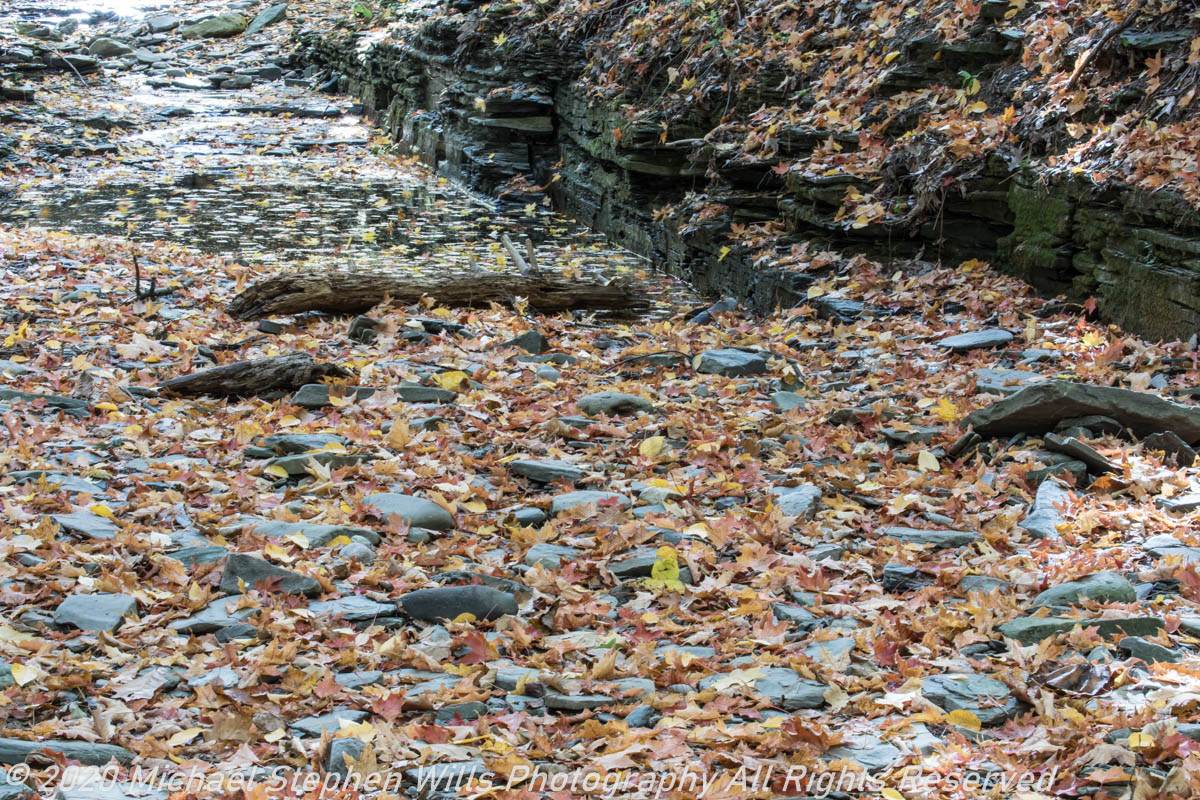
We stopped to enjoy the open space of a powerline clear cut where the trail intersects the creek bed. Here we turned, following the water.
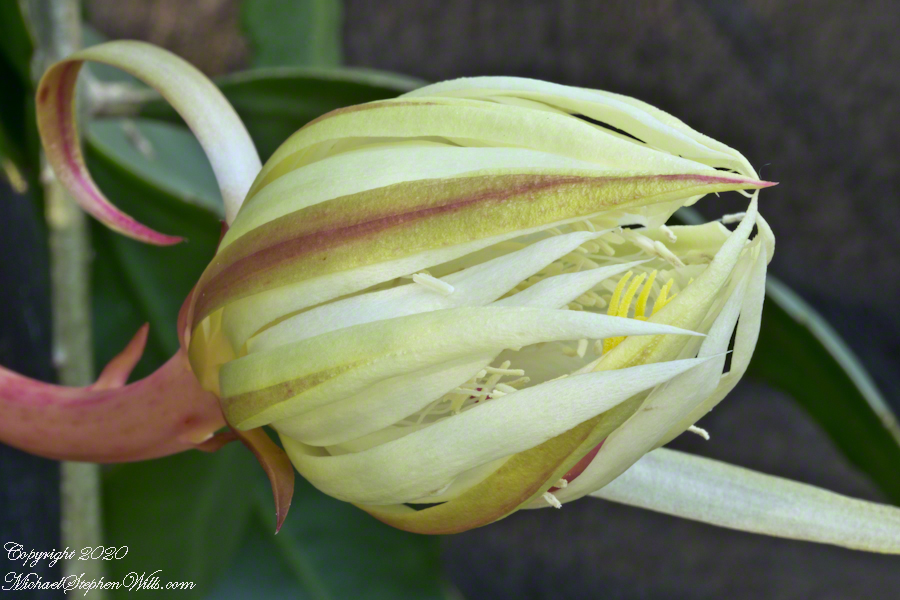
For the final post of this series on Cereus blooms, of the four buds two failed to fully open after the weather turned cold in late September/Early October. Here is the failed bloom from the same opening bud featured in the last Cereus posting.










 Michael Stephen Wills Photography