Yellow-legged Wasp?

A case of mistaken identity.

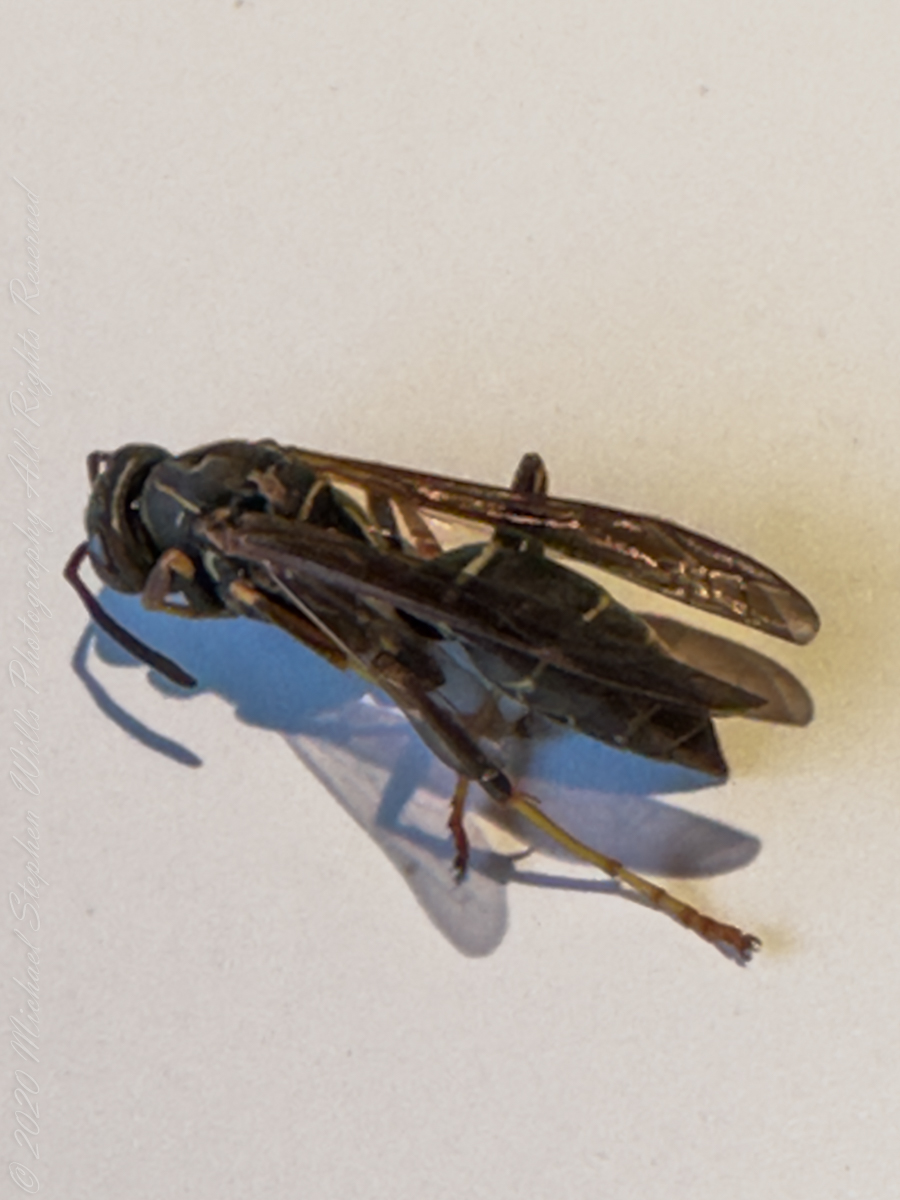
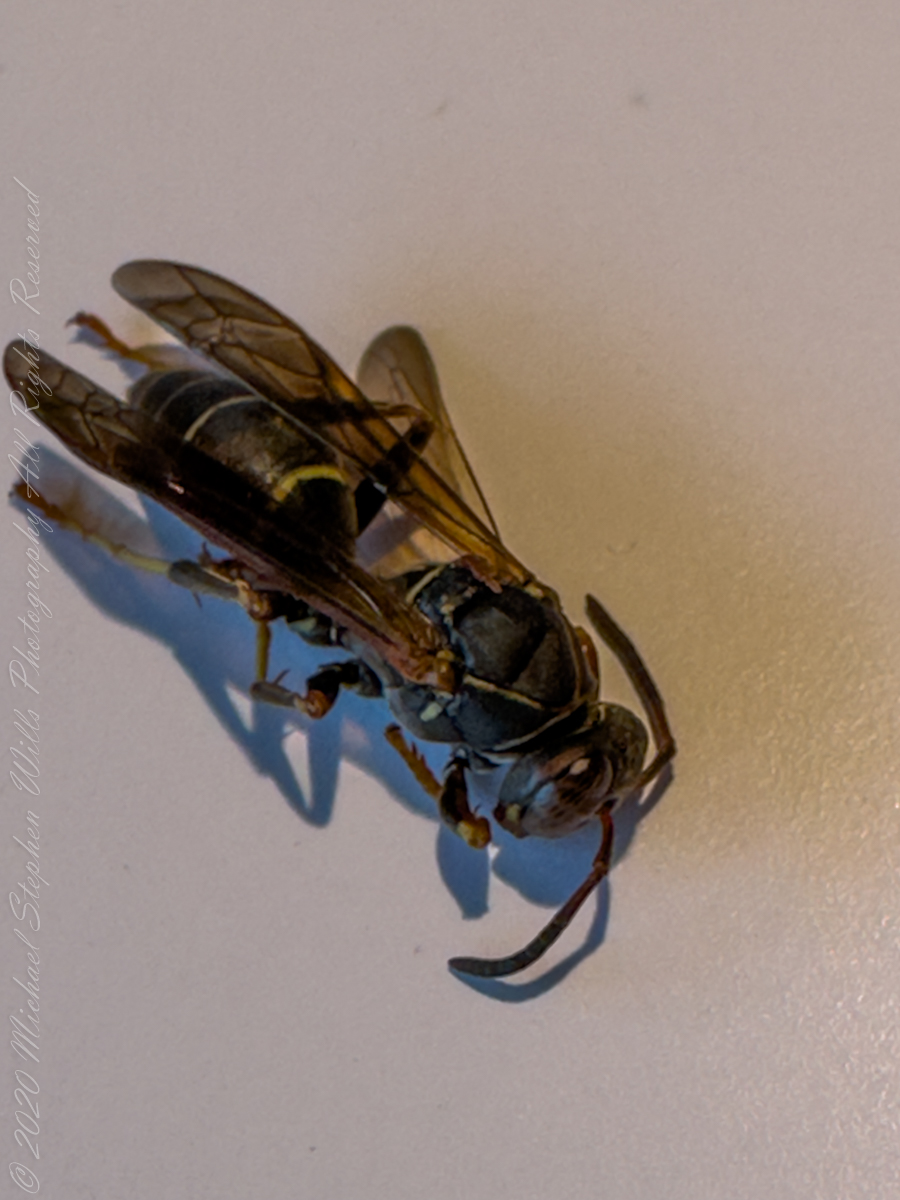
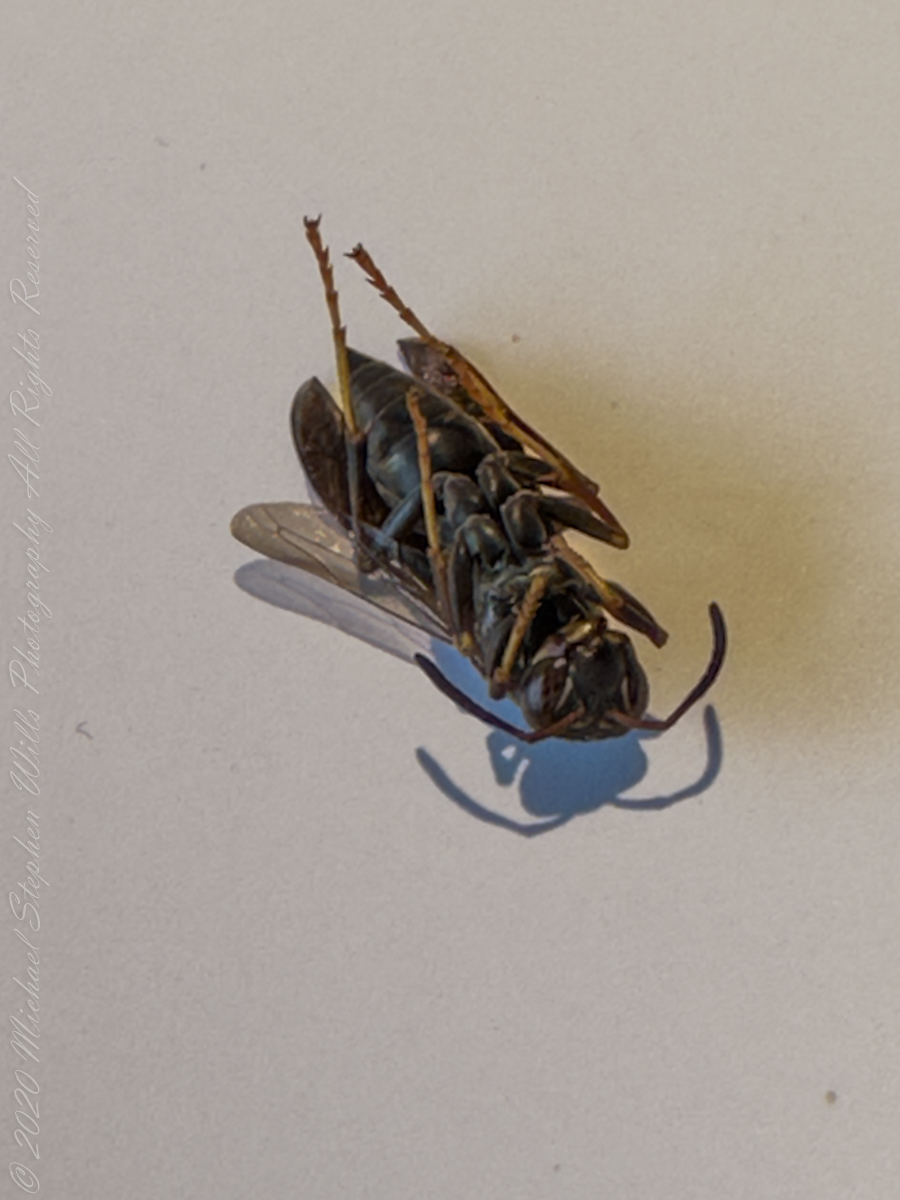
After reading a New York Times article with the sub-title “A beekeeper in Savannah, Ga., found what turned out to be a yellow-legged hornet. State and federal officials, along with academic experts, are working to eradicate the species” I spotted this wasp foraging our flowers in Ithaca, New York. Its yellow legs caught my eye, although the apparent size (seemed larger in article photograph) and face and body markings seemed different. Using an Apple Iphone 14 ProMax I captured three macros from different angles, I attached them to an email to the local Cooperative Extension office. They gave me a quick response, confirming my suspicion this was a different “yellow-legged wasp.” The agent suggested it might be a “paper wasp” and directed me to a Cornell site were, for a $25 fee, an identification could be made.

Instead, this morning I found “insectidentification.org” with an excellent search capability. Under “Bee, Ant, Wasp and Similar insects that can be found in the state/territory of New York,” the third row from top spotted an exact match being the only Yellow-legged native wasp. I am going to respond to the agent with this identification as others in the area may have the same question, given the name of the invasive wasp.

“It is the Yellow-legged Mud-dauber Wasp (Sceliphron caementarium), also known as Black and Yellow Mud Dauber, Black-waisted Mud-dauber. Of the Latin species name, Sceliphron caementarium, caementarius means mason or builder of walls.”

“These are solitary parasitoid wasps and build nests made of mud. The family of sphecid wasps collect mud balls at puddle and pool edges for constructing nests comprised of up to 25 vertically arranged, individual cylindrical cells. Frequently, nests are built in shaded areas inside formations that are sheltered from the weather or from other environmental elements. These sites may be naturally-occurring, or man-made structures. Some examples are: under and inside various types of bridges, barns, garages, open-air porches, or under housing eaves. A female might take only a day to construct a cell requiring dozens of trips carrying mud. Females will add new cells one by one to the nest after each cell is provisioned. They provision these nests with spiders, such as crab spiders, orb-weaver spiders and jumping spiders in particular, as food for the developing larvae. Each mud cell contains one egg and is provided with several prey items. The wasp then seals the cell with a thick mud plug. After initial creation and covering of the clutch, this sphecid wasp uses more mud as a means covering and protecting the whole cluster of cells, thereby forming a smooth appearance, and a uniform nest. The entire nest may attain an area equal to, or larger than, the size of an average human fist.”

“After finishing a series of cells, she leaves and does not return. While consuming the prey and increasing in size, the larva molts several times, until it molts into a pupa. Once the pupa has developed into an adult wasp, the adult emerges from its pupal case and breaks out of its mud chamber.”

“Various parasites attack these nests, including several species of cuckoo wasps, primarily by sneaking into the nest while the resident mud dauber is out foraging.”


“Adults can be seen in mid-summer feeding on nectar at flowers, especially Queen Anne’s lace (Daucus carota), parsnips and water parsnips (Sium suave, Sium latifolium, Berula erecta). They have a low reproductive rate. Stings are rare due to their solitary and usually nonaggressive nature; however, nests are aggressively defended.


“Like other solitary wasps, Sceliphron species are not aggressive unless threatened. They are sometimes regarded as beneficial due to their control of spider populations, though the spiders themselves may be beneficial in controlling pest insects.”


This species is found in a wide variety of habitats, such as rock ledges, man-made structures, puddles and other water edges, cypress domes, in long leaf pines (Pinus palustris), and in turkey oaks.


“S. caementarium is widespread in Canada, the United States, Central America and the West Indies, and has been introduced to many Pacific Islands (including Australia, Hawaii, and Japan), Peru and Europe, where it has become established in some countries of the Mediterranean Basin (Croatia, France and Corsica, Italy, Cyprus,Malta, the Canary Islands, and Madeira) and Austria, and Ukraine.


“Sceliphron caementarium can reach a length of 24–28 mm (15⁄16–1+3⁄32 in). Their petiole is generally black and is about half the length of the entire abdomen, however the population in the desert southwest often has a yellow petiole. The thorax shows various yellow markings, while the abdomen is normally black, with yellow propodeum (typical of females). The eyes are black, the antennae are black, and the legs are yellow with black trochanters and femurs. Within the United States, it is the only species with yellow-marked legs. The wings are a tawny color.”

“In 1996, Birgenair Flight 301 crashed near Puerto Rico. The most probable cause of this Boeing 757 crash was a blockage in a pitot tube by a mud dauber’s nest.”

Around our home these mud-daubers favor hollows within our aluminum fencing.

Reference: text in italics and quotes paraphrased from Wikipedia “Sceliphron caementarium” and “Sceliphron.”

Copyright 2023 Michael Stephen Wills All Rights Reserved

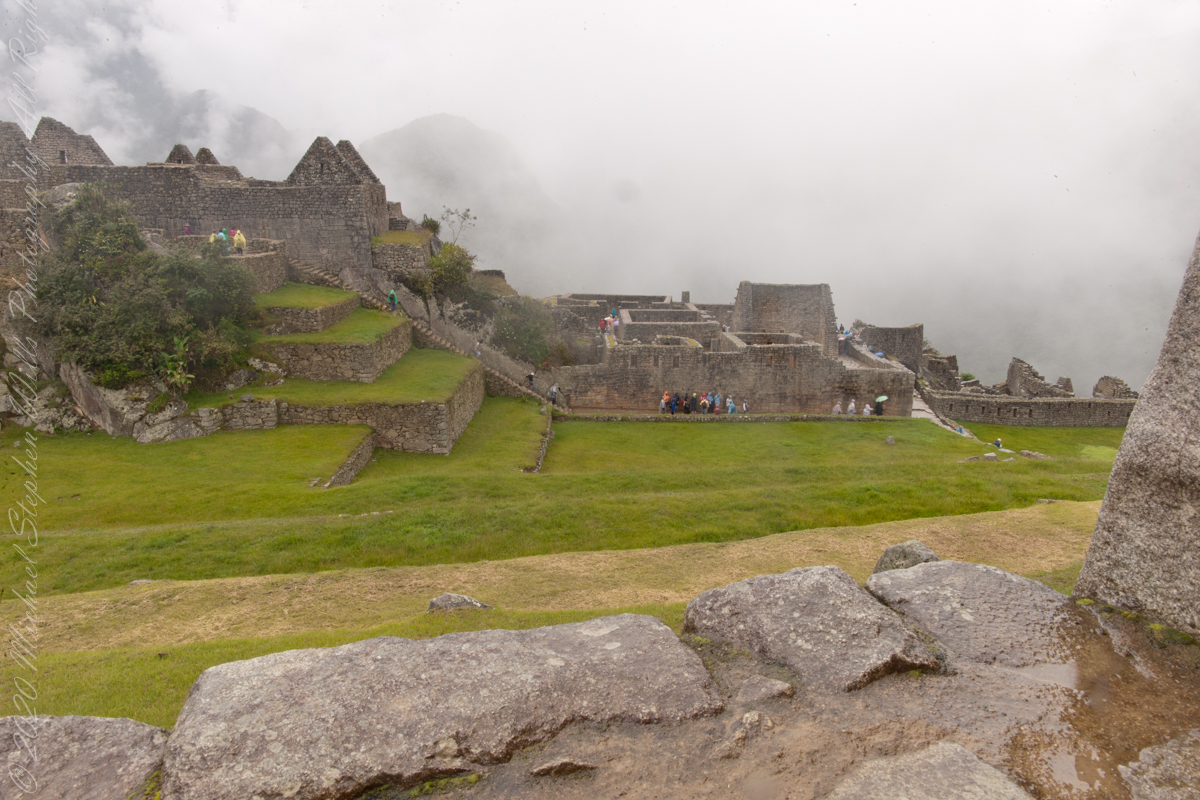
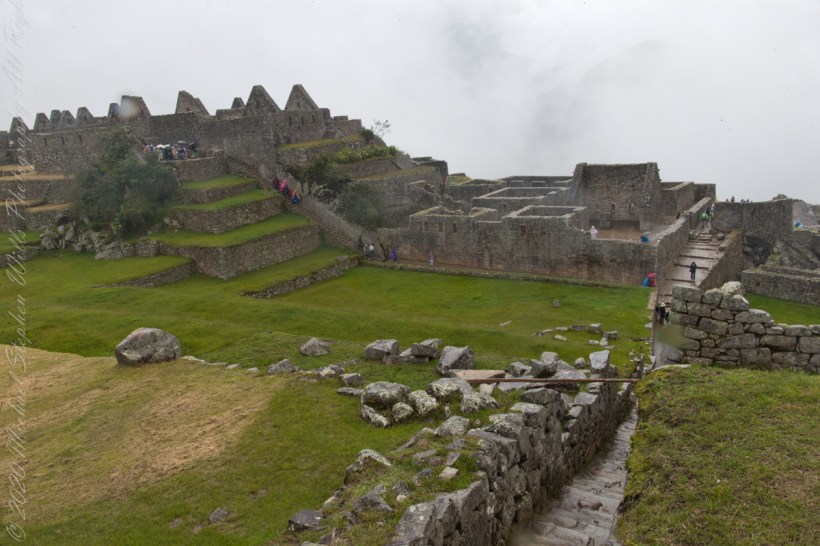
Temple of the Three Windows

The tripartite world of the Incas.

Click Me for my Online Gallery

“The Temple of the 3 Windows is one of the most surprising constructions in Machu Picchu. The carving of its walls is perfect. There are several hypotheses as to why they built three huge windows there with incredible views of the mountain range. It is presumed that the purpose was to worship the Inca gods, especially those who guard the tripartite world of the Incas: the heavenly world (Hanan pacha), the earthly world (Kay pacha) and the underworld (Uku pacha).
The temple is an immense trapezoidal wall, 10 meters long and 4 meters wide, built with huge stones carved and assembled to perfection.”

“All three windows are also trapezoidal. On both sides there are two additional closed windows (like niches) where the Incas left ceremonial objects of gold and silver.”

“The temple served a religious function. The white granite stone with which it was built has a different carving from the rest of the constructions at Machu Picchu. The fineness of its walls indicates that it was one of the most important buildings in the citadel.”

“A few steps from this temple there are other buildings with religious purposes of great importance: the Main Temple, the Temple of the Sun and the Intihuatana.

“There are many hypotheses about the religious rituals that were performed in the Temple of the 3 Windows. It is believed that the Inca worldview of the world divided into three worlds was worshiped: the heavenly world (Hanan pacha), the earthly world (Kay pacha) and the underworld (Uku pacha).”

“For the Incas, the Hanan pacha was the world of the gods, of the celestial beings (the sun, the moon, the stars). The Kay pacha was the earthly world, of men and animals. Finally, the Uku pacha was the world of the dead, of beings that wait to reincarnate to return to the earthly world.”

“The tripartite world of the Incas was represented by three animals: the condor (kuntur), the puma (puma) and the snake (amaru). The ‘three’ is present in many of the Inca constructions such as the ‘chakana’ (also called the Andean cross) present in the Temple of the Sun in Ollantaytambo.”

Reference: text in italics and quotes paraphrased from the web page “imachupicchu.com.”

Copyright 2023 Michael Stephen Wills All Rights Reserved

Main Temple

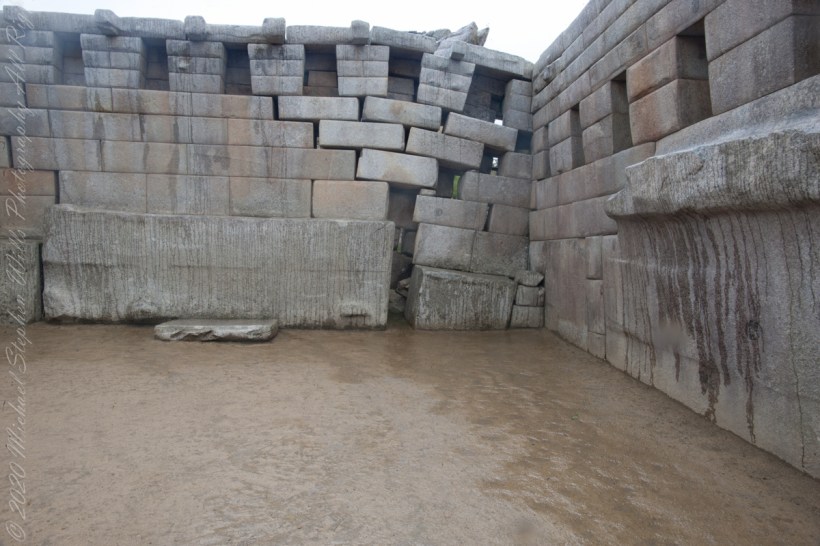
Earthquakes over the years have undermined the Main Temple structure.

Click Me for my Online Gallery

“The Main, or Principle, Temple situated on the Sacred Plaza of the Urban Sector of Machu Picchi, is an impressive rectangular shaped building consisting of two lateral and one rear wall.  The base of the temple are large lithic stones supporting more regular sized and precisely carved stones.  The temple features seventeen trapezoidal shaped niches most likely used for ceremonial offerings.  Six stone pegs of the rear walls might have been used to hang decorations or aid rituals.

Main Temple Left Corner

Tradition states during Inca times the temple was adorned with colorful mantles, emblems and mummies of important Inca leaders and an effigy of P’unchao, a divine sacred symbol made of solid gold representing the Inca god Wiraqocha.  When the Incas abandoned Machu Picchu at the time of the Spanish Conquest, they removed the most important artefacts leaving behind just the stone structure.”

“Earthquakes over the years have undermined the Main Temple structure, notably the rear right hand corner of the building, where the stones have separated and moved downwards.”

Reference: text in italics and quotes paraphrased from the web page “The Only Peru Guide.”

Copyright 2023 Michael Stephen Wills All Rights Reserved

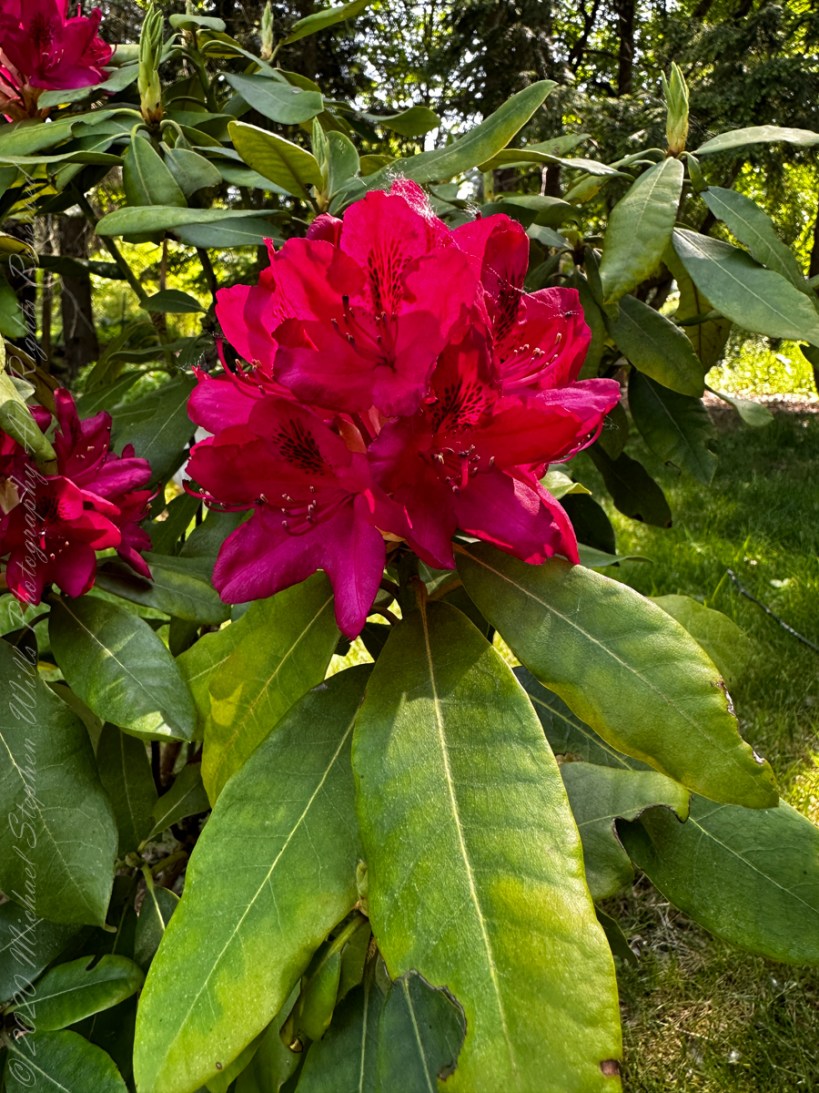
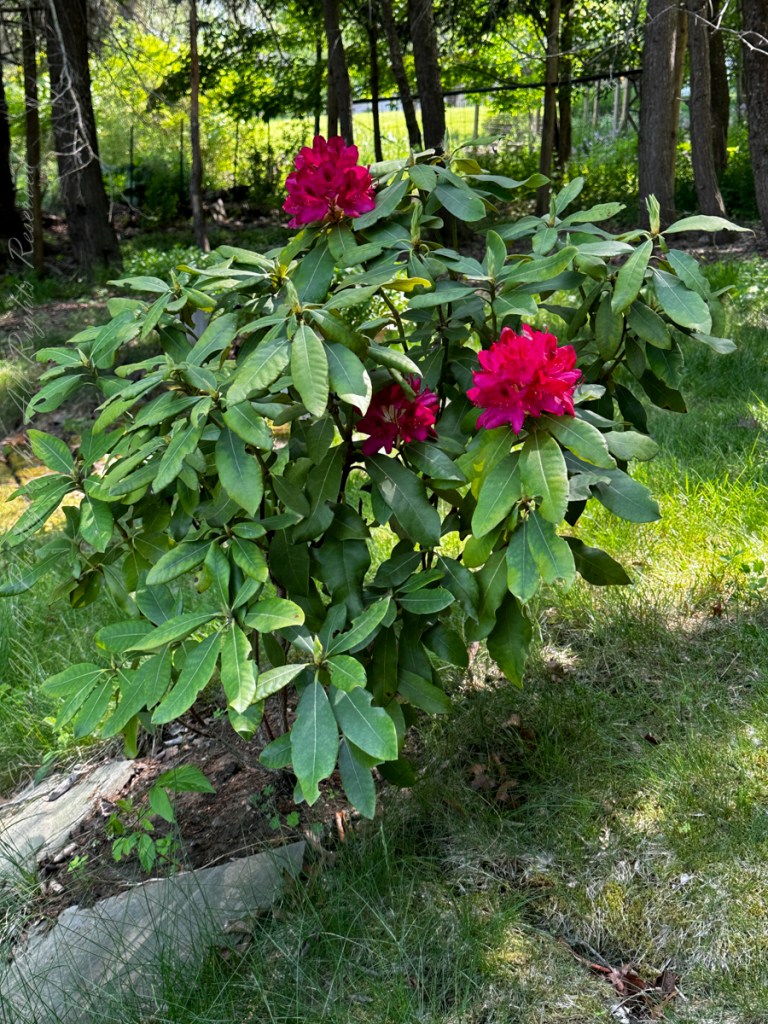
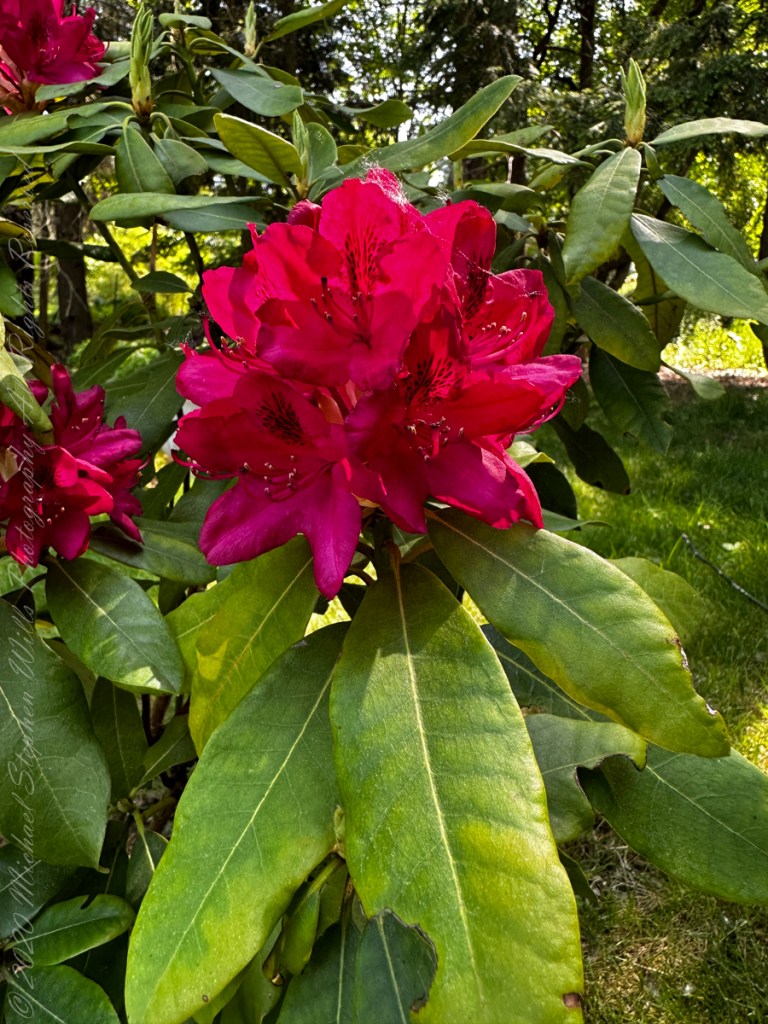
First Blooms

Floriography!!!

“Like other ericaceous plants (i.e. of the heather family -Ericaceae), most rhododendrons prefer acid soils with a pH of roughly 4.5–5.5; some tropical Vireyas and a few other rhododendron species grow as epiphytes and require a planting mix similar to orchids.”

“Rhododendrons have fibrous roots and prefer well-drained soils high in organic material. In areas with poorly drained or alkaline soils, rhododendrons are often grown in raised beds using media such as composted pine bark. Mulching and careful watering are important, especially before the plant is established. Rhododendron species have long been used in traditional medicine.”

“Animal studies and in vitro research have identified possible anti-inflammatory and hepatoprotective activities which may be due to the antioxidant effects of flavonoids or other phenolic compounds and saponins the plant contains.”

“In the language of flowers, the Rhododendron symbolizes danger and to beware. Floriography (language of flowers) is a means of cryptological communication through the use or arrangement of flowers.”

“Meaning has been attributed to flowers for thousands of years, and some form of floriography has been practiced in traditional cultures throughout Europe, Asia, and Africa. Plants and flowers are used as symbols in the Hebrew Bible, particularly of love and lovers in the Song of Songs, as an emblem for the Israelite people, and for the coming Messiah. William Shakespeare ascribed emblematic meanings to flowers, especially in Hamlet. Interest in floriography soared in Victorian England and in the United States during the 19th century.”

“Gifts of blooms, plants, and specific floral arrangements were used to send a coded message to the recipient, allowing the sender to express feelings which could not be spoken aloud in Victorian society. Armed with floral dictionaries, Victorians often exchanged small “talking bouquets”, called nosegays or tussie-mussies, which could be worn or carried as a fashion accessory.”

Reference: text in italics and quotes is from Wikiedia, “Rhododendron.”

Copyright 2023 Michael Stephen Wills All Rights Reserved

Central Square

All these celebrations ramifications in centers planned for the host to hundreds of citizens who saw the cult of their deities as well made

Click Me for my Online Gallery

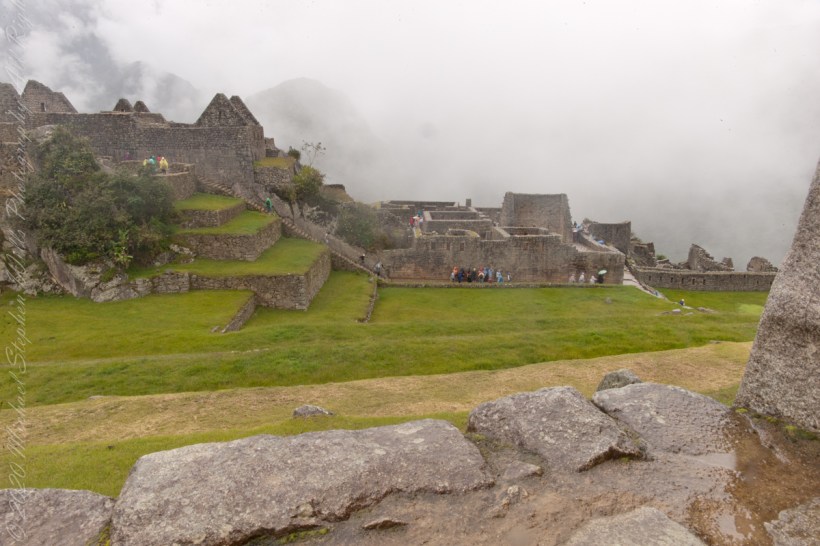
For the Inca civilization, and especially during the time that the city of Machu Picchu was the most important place as Sanctuary of the Inca aristocratic class, the Congregation of its inhabitants in the numerous events, mostly rituals and celebrations worshipping sacred Inca gods, as it had a very important and momentous significance for the Incan society. All these celebrations ramifications in centers planned for the host to hundreds of citizens who saw the cult of their deities as well made. Also, this civilization granted a special attention details, to organization and structure of both class, of the city itself, so that the expert anthropologist community has been able to prove the existence of a straight relationship between the main square and the structuring of the Incan society.

“Among the several locations which have shaped the division of the Citadel of Machu Picchu in their different urban areas and consequently in their different social classes, the Central Square or Main Plaza of Machu Picchu is the symbol of one of the most important for hosting the more far-reaching sacred celebrations of the Inca religion, due to its vast size are the ideal location to accommodate this type of mass religious and social ceremonies. The Central Square shows how the Incan society followed a strict, but at the same time, well-structured organization of the city in their different social classes; the anthropologist community states that this vast space was created to establish the spaces of the city limited the inhabitants depending on its status quo within Inca society.”
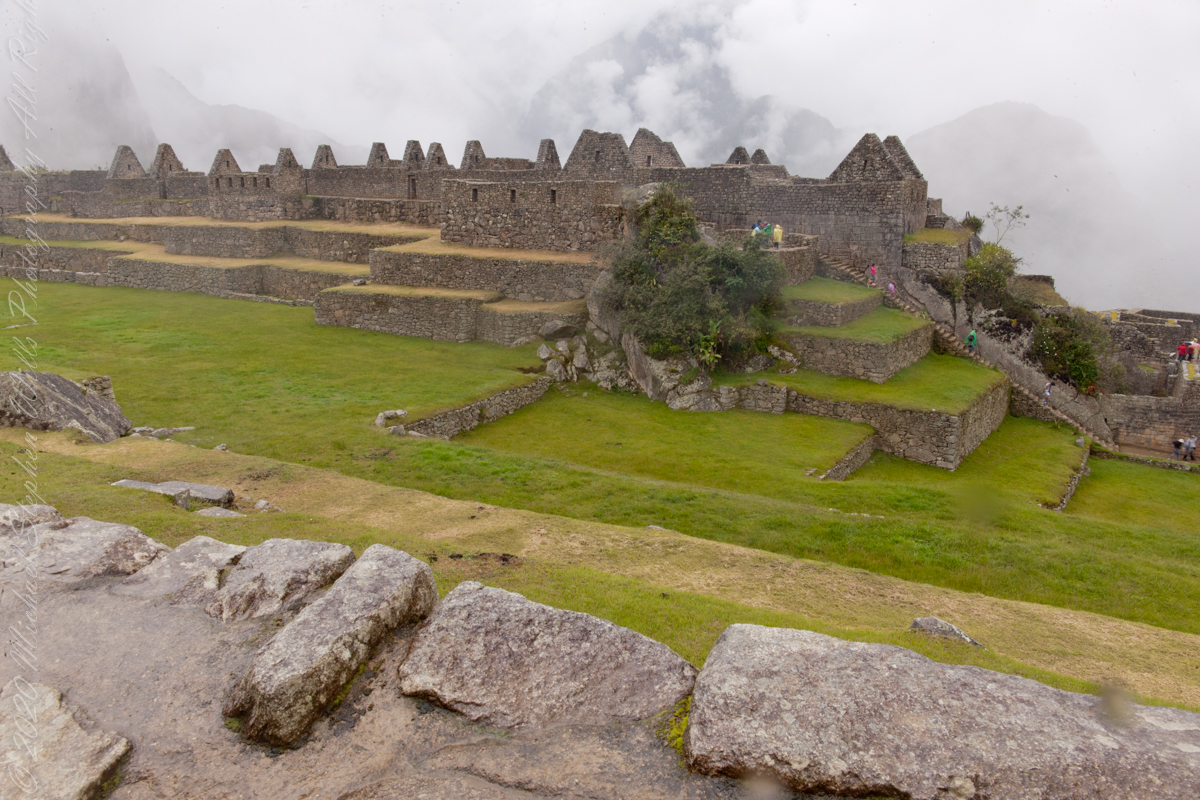
“After several studies by experts of the world community of anthropology, it has come to understand that the Main Plaza has played a very important role in the Inca society and the segregation of its social classes. This explains the reason for the existence of a physical axis to do distinction of several Inca social classes, which were separated one from the other not only different privileges of every social class, but also by the existence of the sub urban areas which host different individuals of the society. The main square makes this Division structural member of the urban section of the city of Machu Picchu differentiating the two sub urban sectors known as Hanan or high sector, which is home to buildings with greater religious significance for the city, and Hurin or low sector.”

“The areas around the Central Plaza of Machu Picchu are surrounded by a rocky structure that accommodates a series of terraces from where you can appreciate a great view of Huayna Picchu. Here is where is located the construction of three covers, which gives way to the Central or main square, complex of buildings typical of the Inca civilization called “kanchas”, which all have a symmetrical distribution in their facades and are in turn communicated with the other, which favored the life of society in the city to offer a space that housed both spaces end residential for labor purposes through different plugs and local. The massive yet refined architecture of Machu Picchu blends exceptionally well with the stunning natural environment, with which it is intricately linked. Numerous subsidiary centers, an extensive road and trail system, irrigation canals and agricultural terraces bear witness to longstanding, often on-going human use.”

The rugged topography making some areas difficult to access has resulted in a mosaic of used areas and diverse natural habitats. The Eastern slopes of the tropical Andes with its enormous gradient from high altitude “Puna” grasslands and Polylepis thickets to montane cloud forests all the way down towards the tropical lowland forests are known to harbor a rich biodiversity and high endemism of global significance. Despite its small size the property contributes to conserving a very rich habitat and species diversity with remarkable endemic and relict flora and fauna.

Reference: text in italics and quotes is from the UNESCO World Heritage and Google Earth, Machu Picchu, web pages.

Copyright 2023 Michael Stephen Wills All Rights Reserved

Hall, Rooms, Doorways

negotiating the Urban Sector of Machu Picchu

Click Me for my Online Gallery

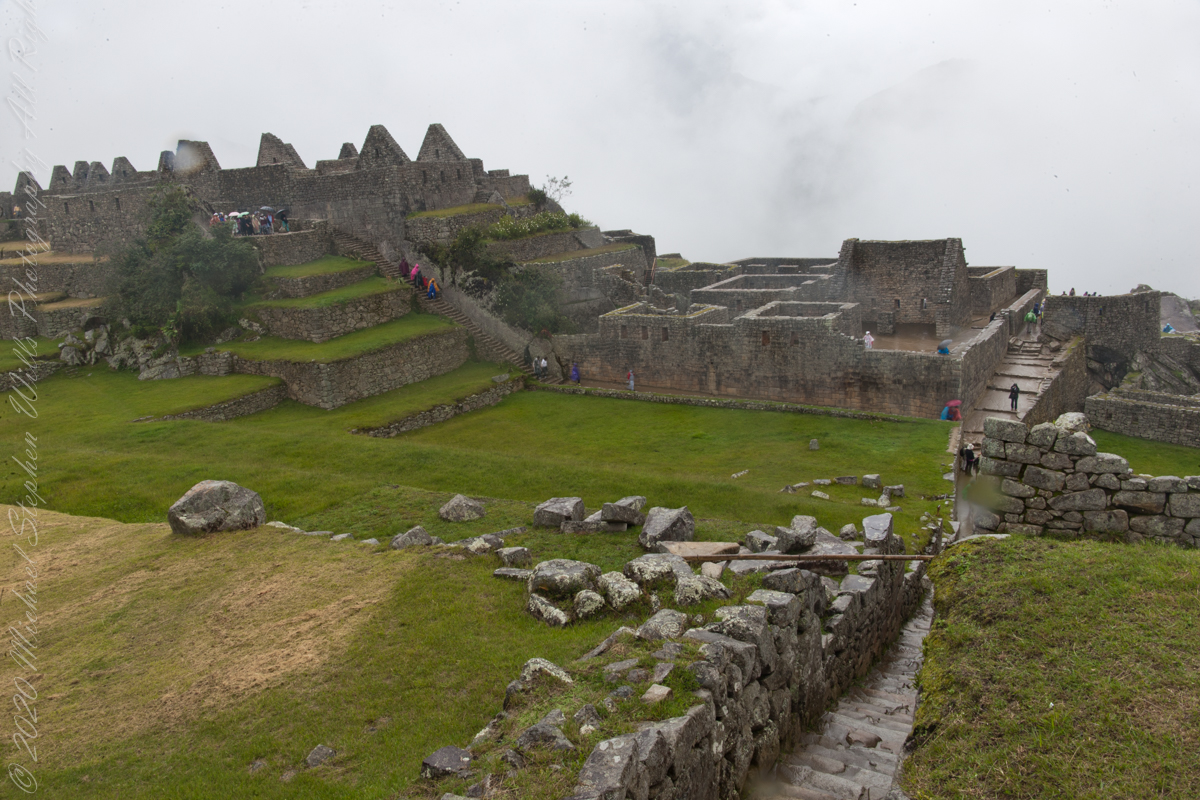
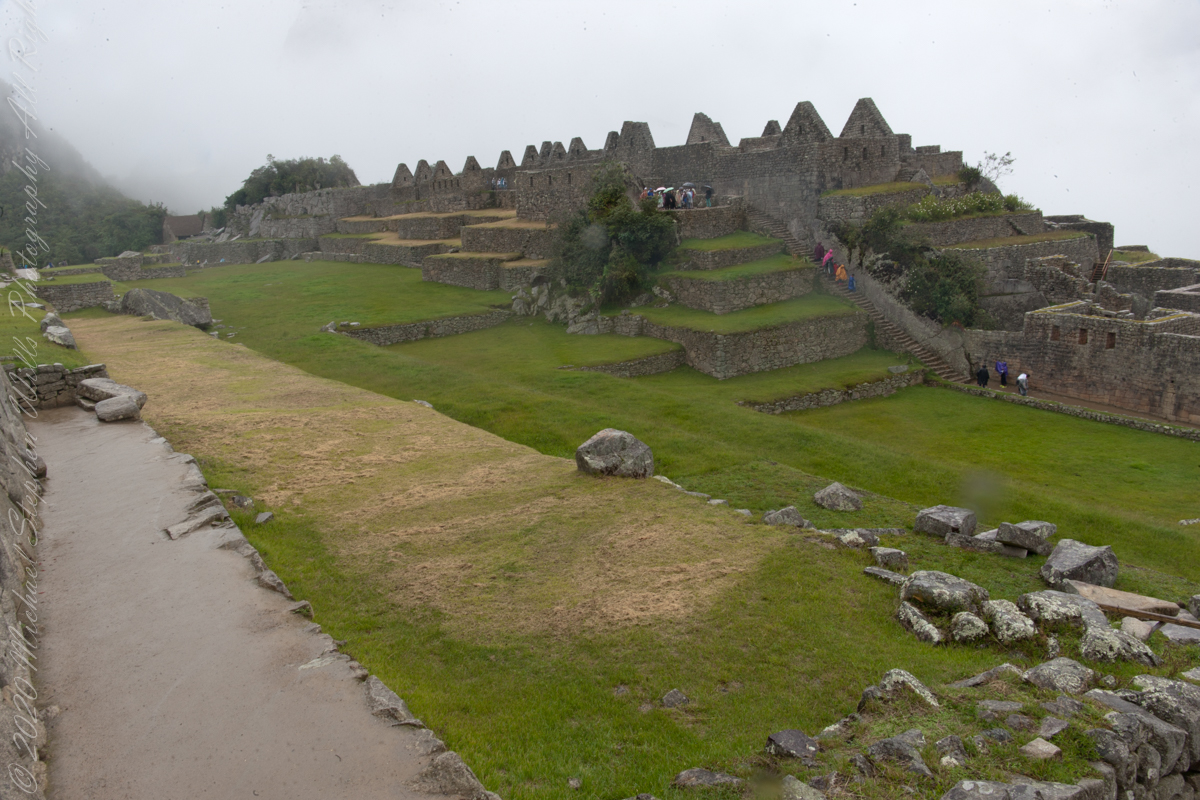
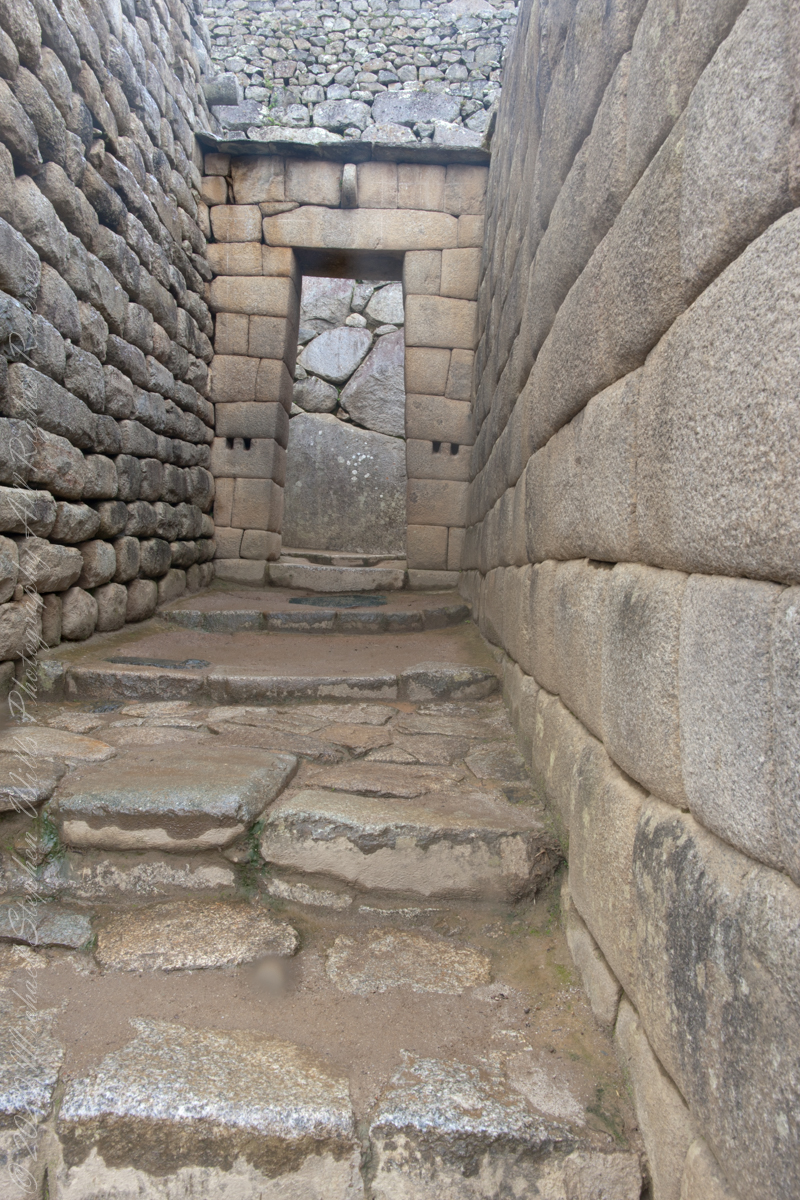
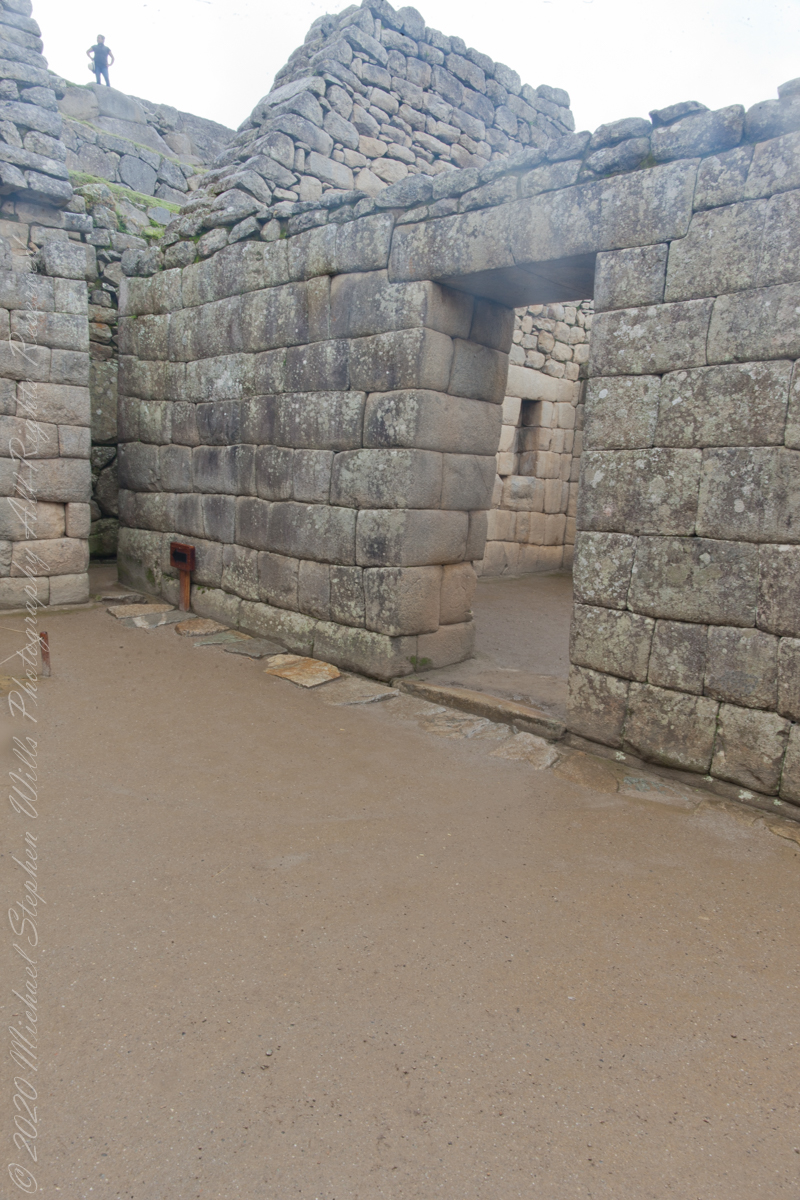
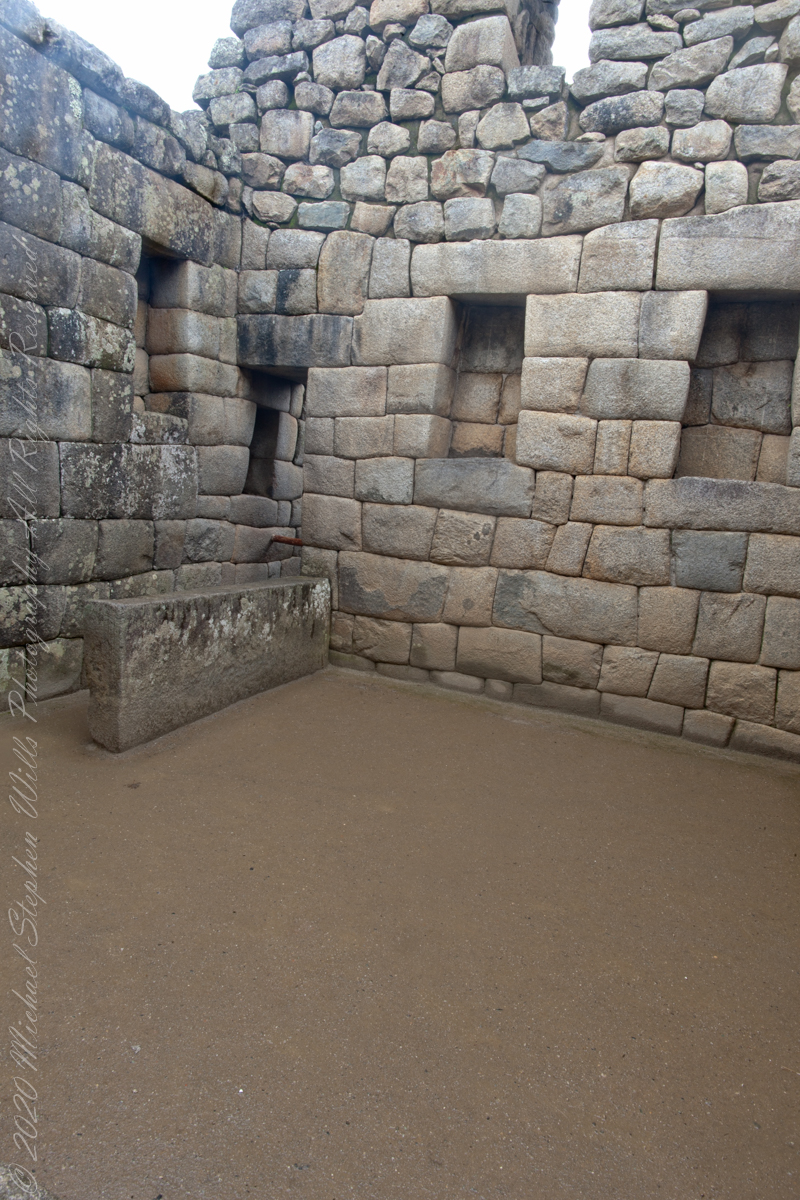
The central buildings use the classical Inca architectural style of polished dry-stone walls of regular shape. The Incas were masters of this technique, called ashlar, in which blocks of stone are cut to fit together tightly without mortar.

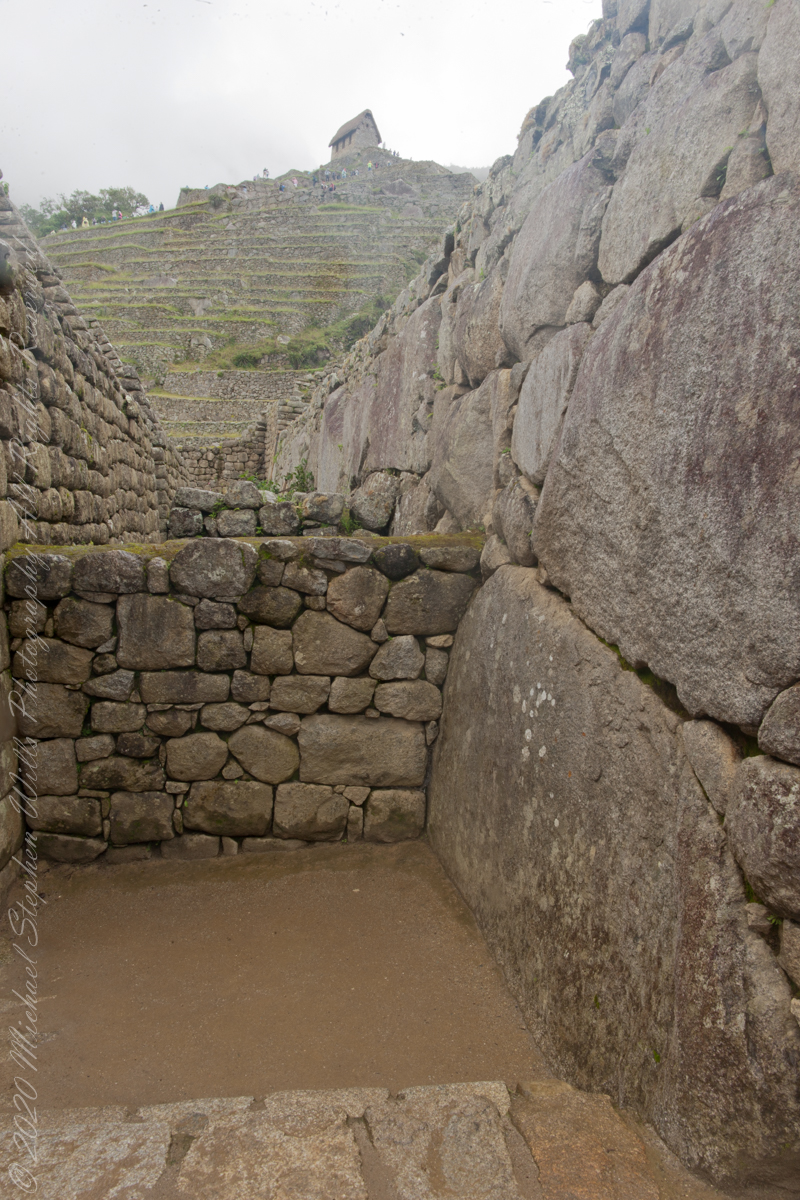
You can tell we are climbing from the angle of the guardhouse.

The site itself may have been intentionally built on fault lines to afford better drainage and a ready supply of fractured stone. ‘Machu Picchu clearly shows us that the Incan civilization was an empire of fractured rocks‘”.

The section of the mountain where Machu Picchu was built provided various challenges that the Incas solved with local materials. One issue was the seismic activity due to two fault lines. It made mortar and similar building methods nearly useless. Instead, the Inca mined stones from the quarry at the site, lined them up and shaped them to fit together perfectly, stabilizing the structures. Inca walls have many stabilizing features: doors and windows are trapezoidal, narrowing from bottom to top; corners usually are rounded; inside corners often incline slightly into the rooms, and outside corners were often tied together by “L”-shaped blocks; walls are offset slightly from row to row rather than rising straight from bottom to top.
“I See You”

Heavy rainfall required terraces and stone chips to drain rainwater and prevent mudslides, landslides, erosion, and flooding. Terraces were layered with stone chips, sand, dirt, and topsoil, to absorb water and prevent it from running down the mountain. Similar layering protected the large city center from flooding.[106] Multiple canals and reserves throughout the city provided water that could be supplied to the terraces for irrigation and to prevent erosion and flooding.”

The Incas never used wheels in a practical way, although their use in toys shows that they knew the principle. The use of wheels in engineering may have been limited due to the lack of strong draft animals, combined with steep terrain and dense vegetation. The approach to moving and placing the enormous stones remains uncertain, probably involving hundreds of men to push the stones up inclines. A few stones have knobs that could have been used to lever them into position; the knobs were generally sanded away, with a few overlooked.”

Click Me for the next Chapter, “Central Square.”

Reference: text in italics and quotes is from the Wikipedia “Machu Picchu.:

Copyright 2023 Michael Stephen Wills All Rights Reserved

Ad Astra

To The Stars

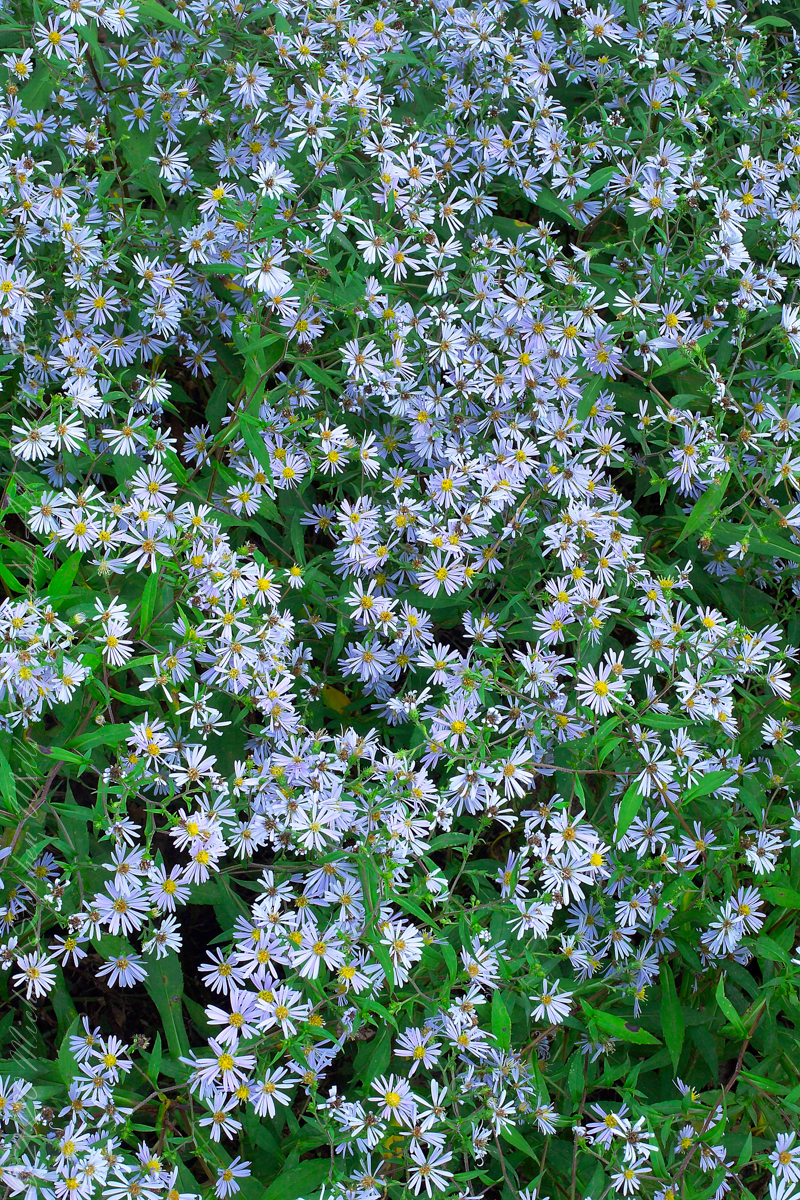
A mass of lavender asters produced for a painterly, restful esthetic. Over the years I have tended beds of these wildflowers. The sunlight of late August/early September here in the Finger Lakes is especially clear and this is when these asters bloom. This were caught on a clear September evening with the sun just behind a stand of large Ash trees.

Click Me to visit this image in my fine art gallery

Symphyotrichum novi-belgii (formerly Aster novi-belgii), commonly called New York aster. Symphyotrichum, a genus in the family Asteraceae, whose species were once considered to be part of the genus Aster. Plants in both these genera are popularly known as Michaelmas daisy because they bloom around September 29, St. Michael’s Day. The Latin specific epithet novi-belgii (literally “New Belgium”) refers not to modern Belgium, but the 17th century Dutch colony New Netherland which was established on land currently occupied by New York state (as Belgica Foederata was the Latin term for the United Netherlands at the time).

Reference: Wikipedia “Symphyotrichum novi-belgii.”

Copyright 2023 Michael StephenWills All Rights Reserved

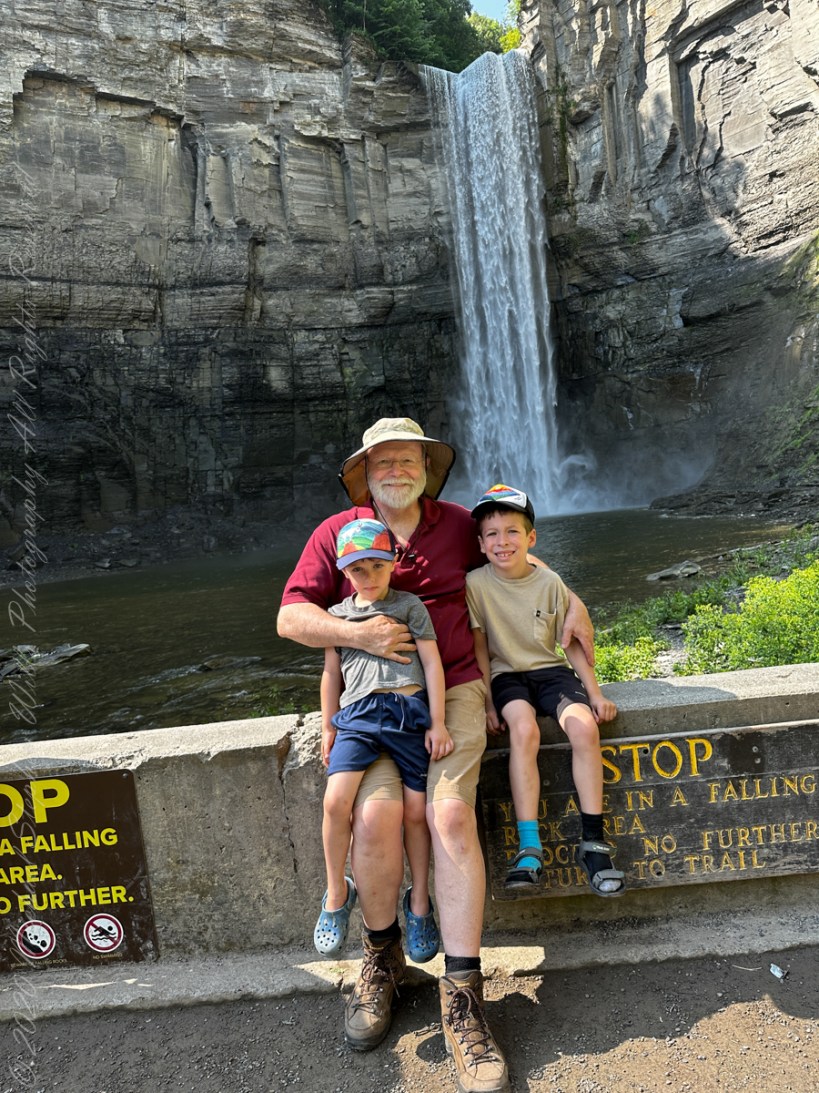
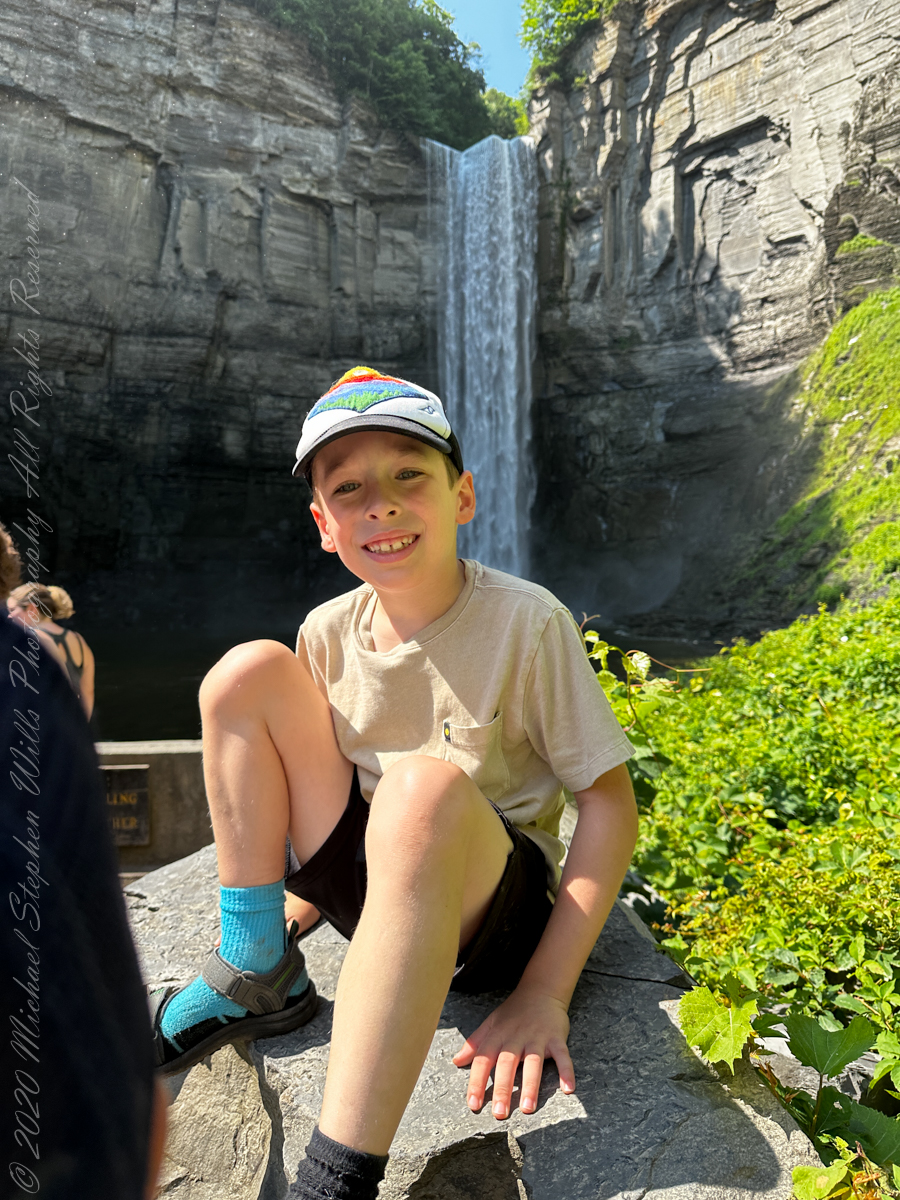
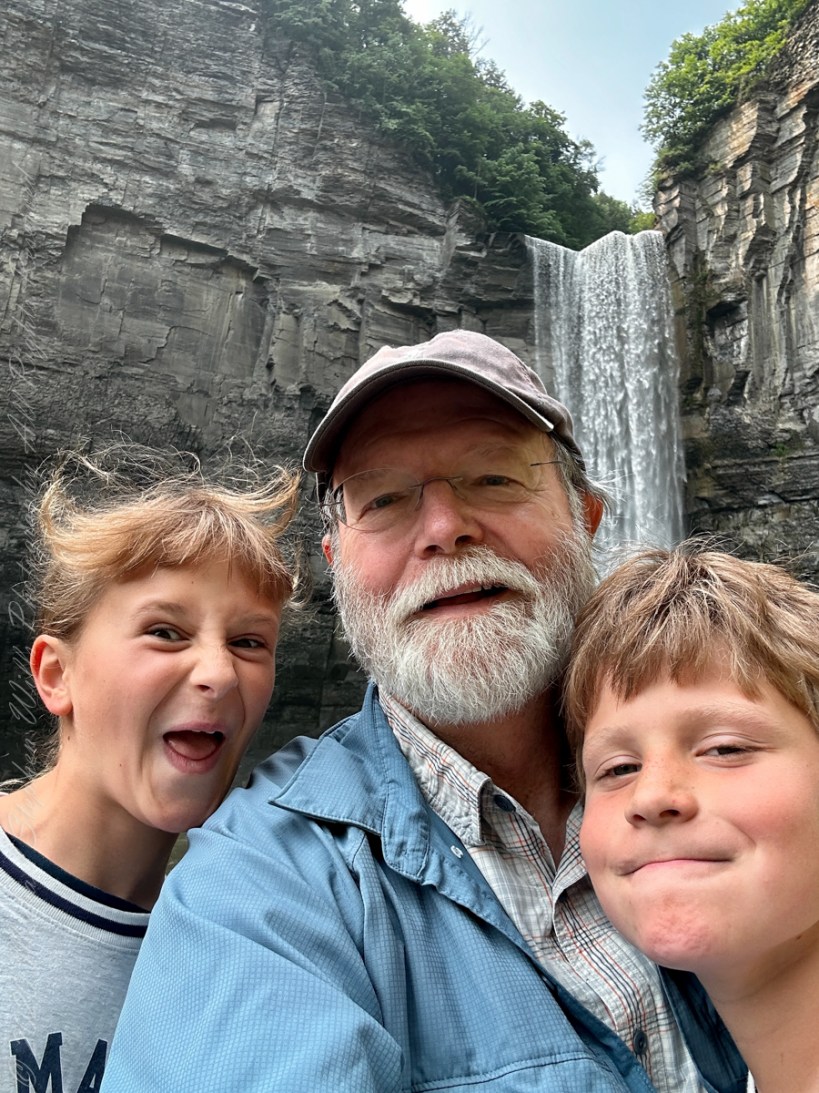
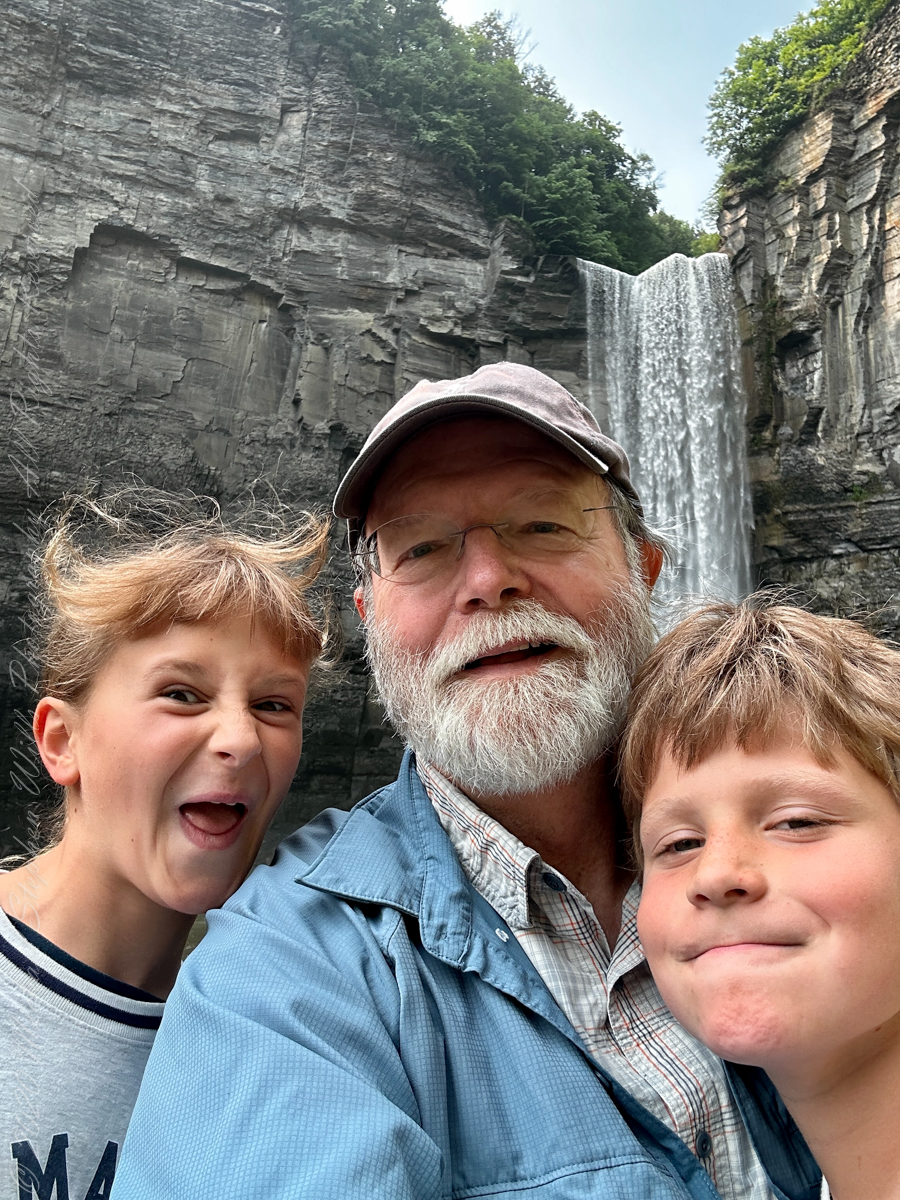
Taughannock Gorge with the kids – part 2

Several possible sources have been proposed for the name Taughannock, all of which describe Native American origins. One translation suggests that the name is derived from a combination of Iroquois and Algonquin terms meaning “great fall in the woods”.  An alternate theory suggests that the name may refer to a Lenni Lenape (Delaware) chief named Taughannock who died near the falls during a battle.

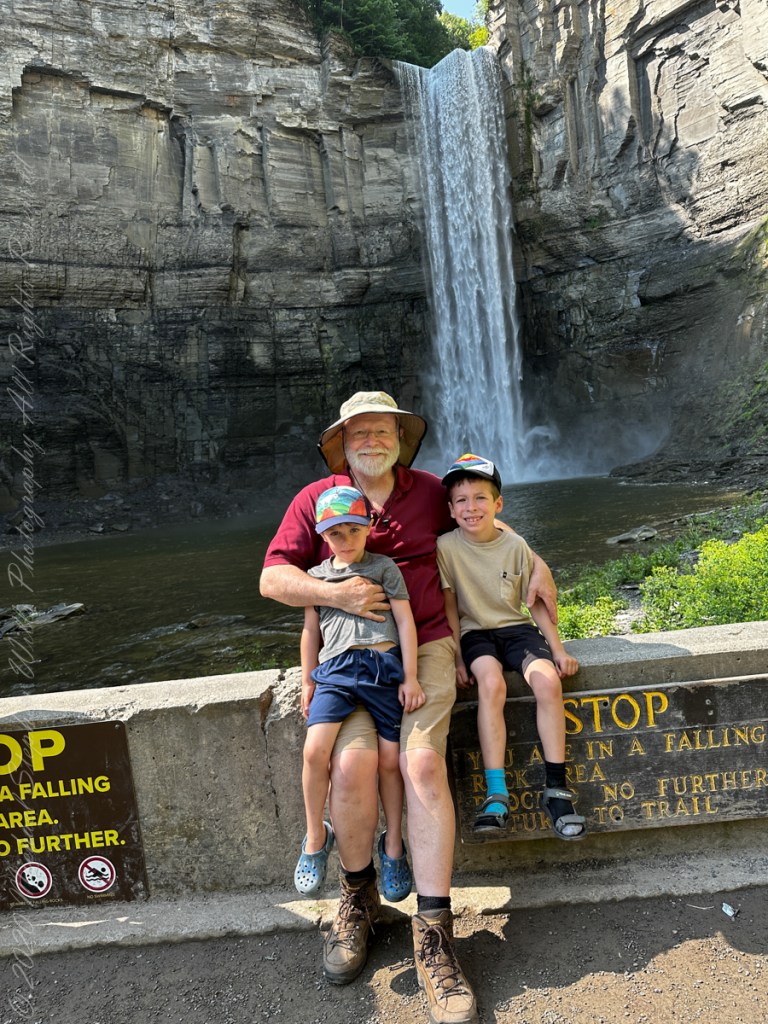
A nice lady offered to take the photo….challenged to keep it straight.

During the second half of the nineteenth century, steamboats, railroads and Victorian hotels were built in the region to serve tourists who traveled to view the falls. By 1925 the hotels were failing due to a decline in tourism, and New York State began acquiring land to form a park.

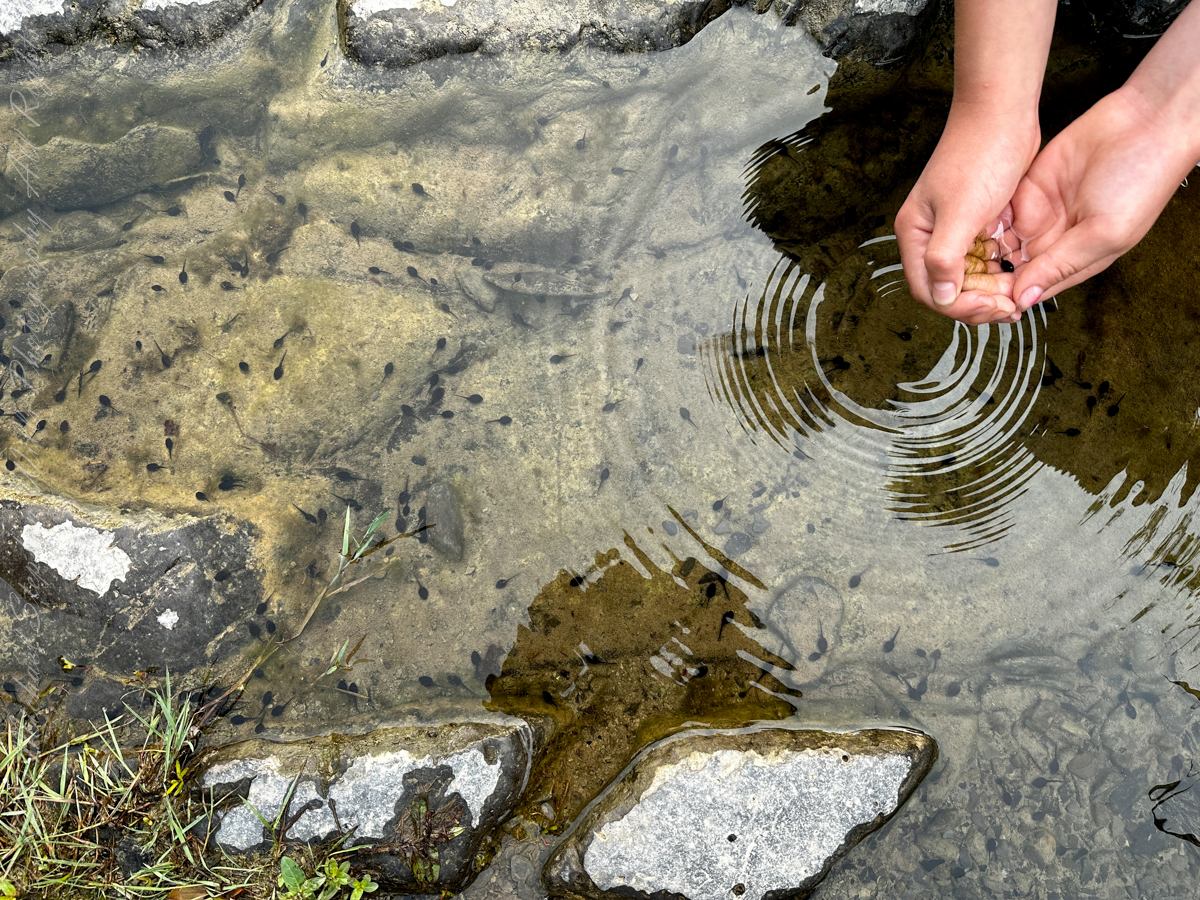
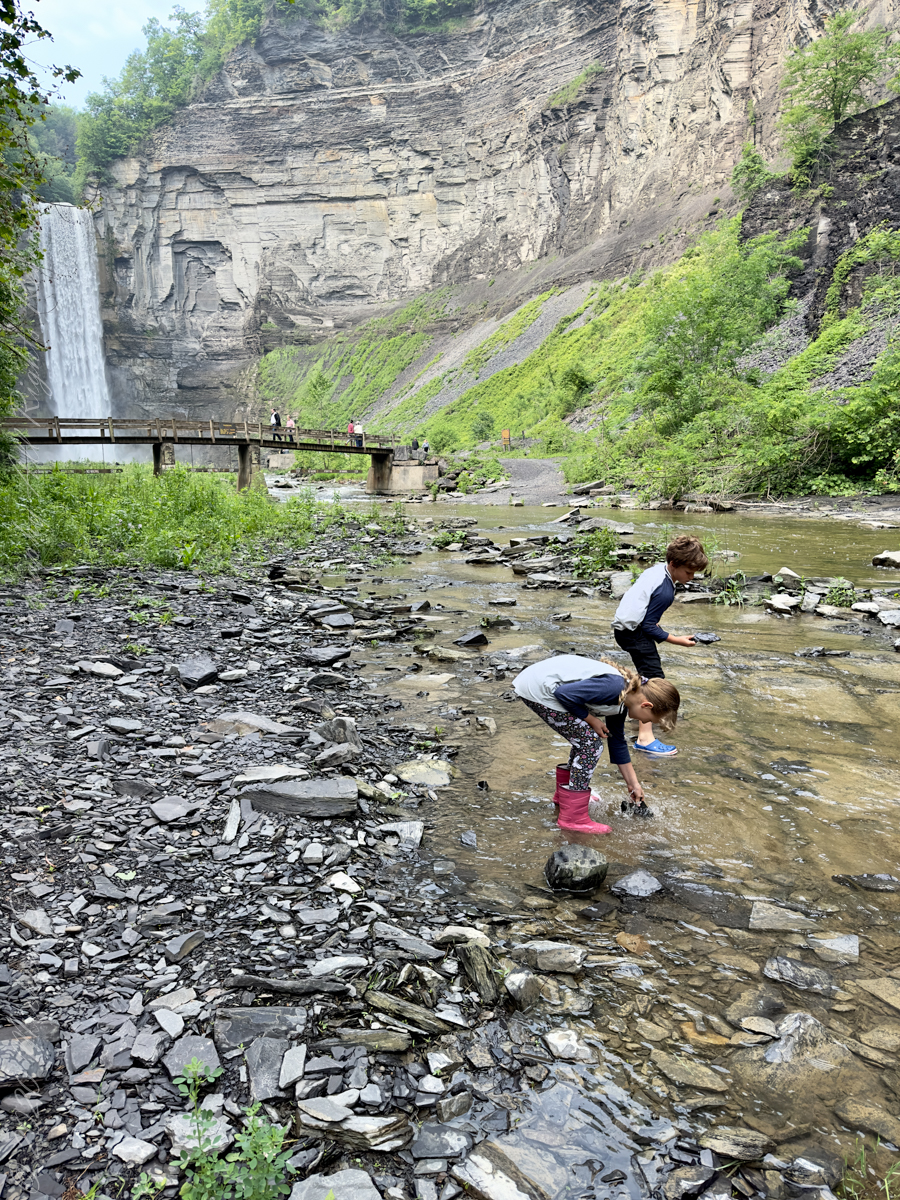
Pollywogs!! Catch and release

J.S. Halsey built a two and a half story hotel in 1850, known variously as the Cataract Hotel or Taughannock House (or simply as Halsey’s Hotel) at the Taughannock Falls Overlook.

Visitors could reach the hotel by taking a train to Cayuga Lake, take a steamboat across the lake to Goodwin’s Point, then finally board a stagecoach to reach the hotel. The hotel site today is the location of the park visitor center and parking lot.

Enjoy!!

Taughannock Gorge with the kids

and ice cream!!

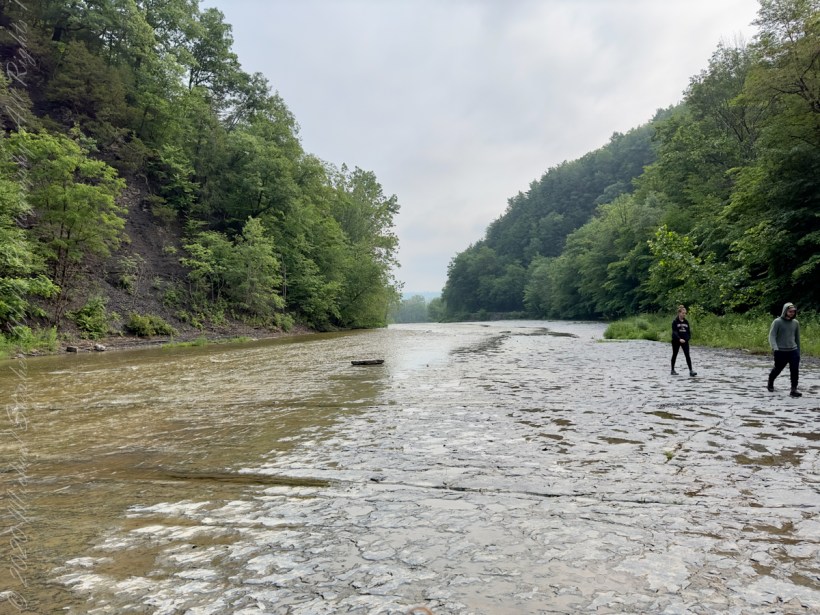
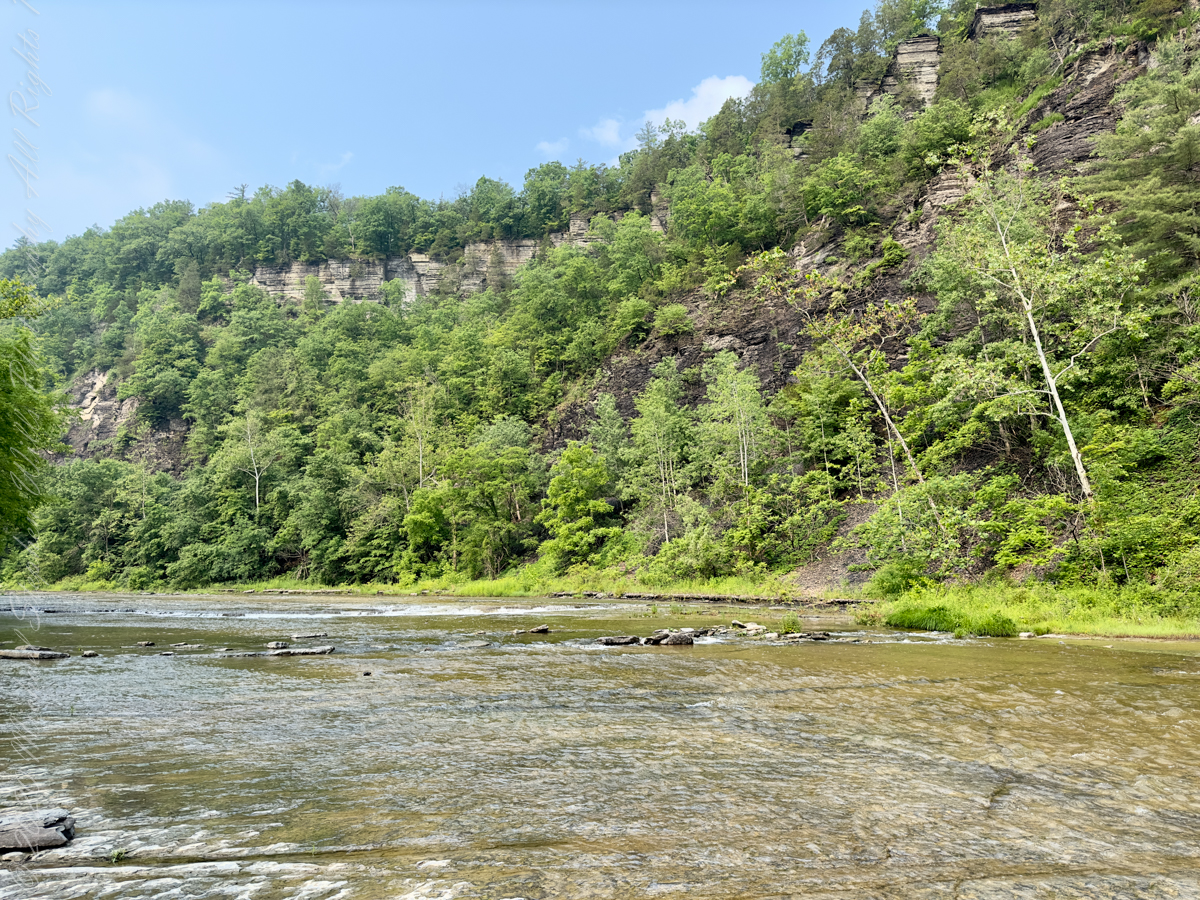
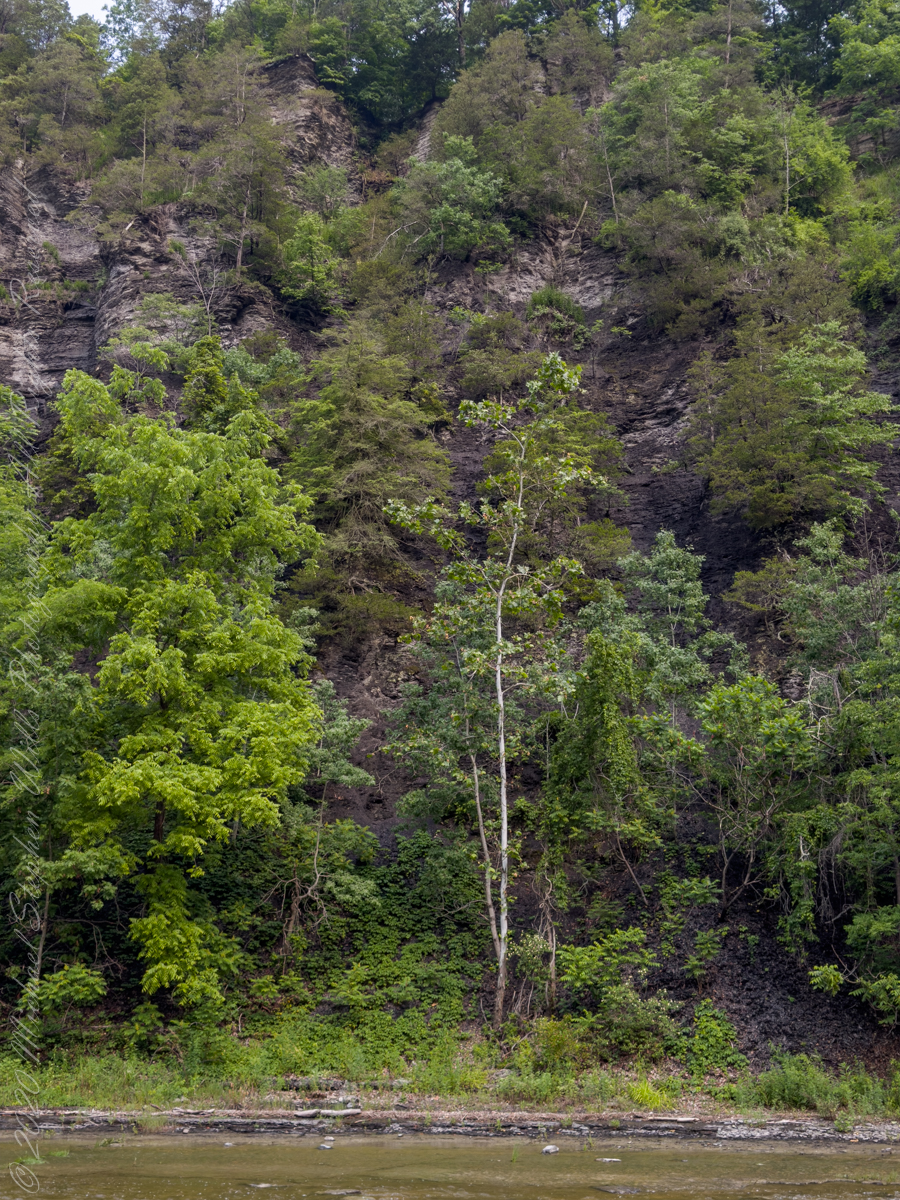
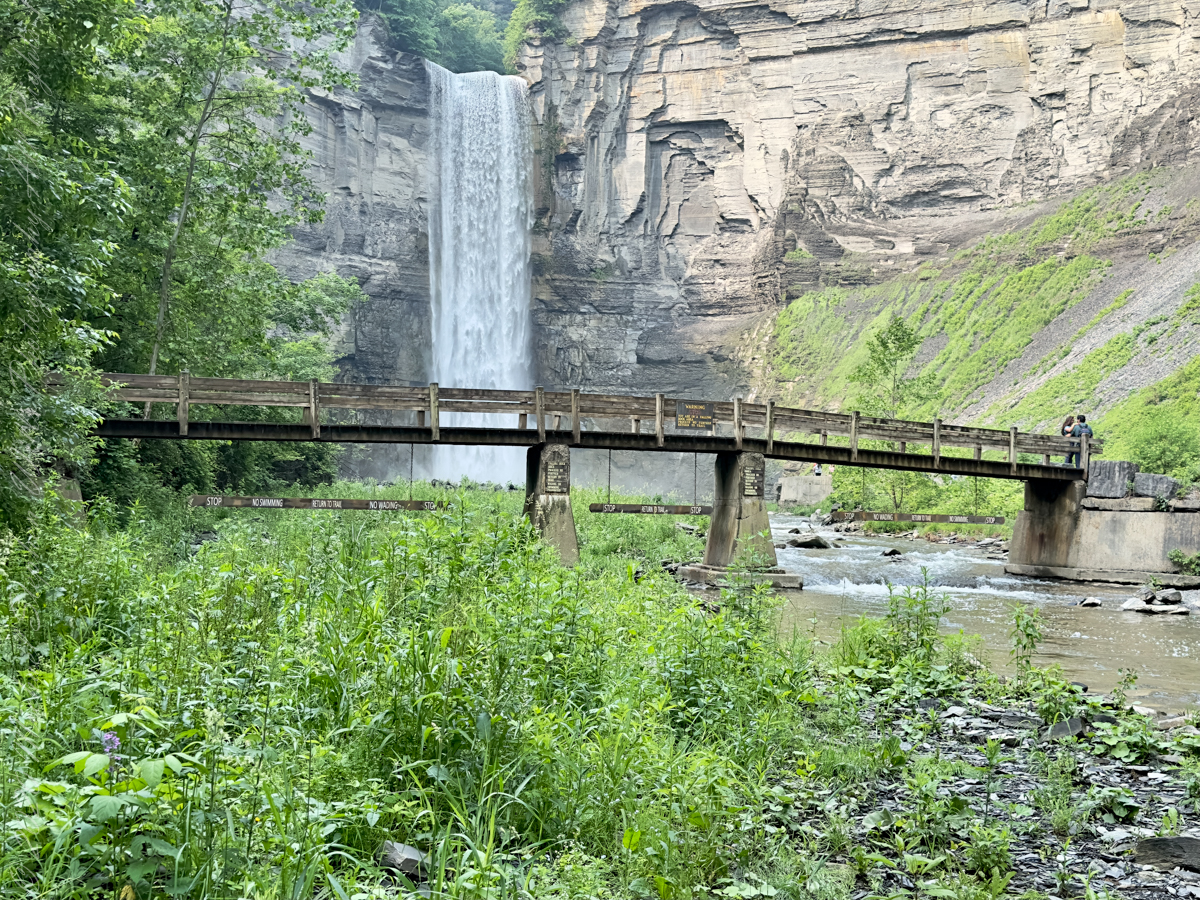
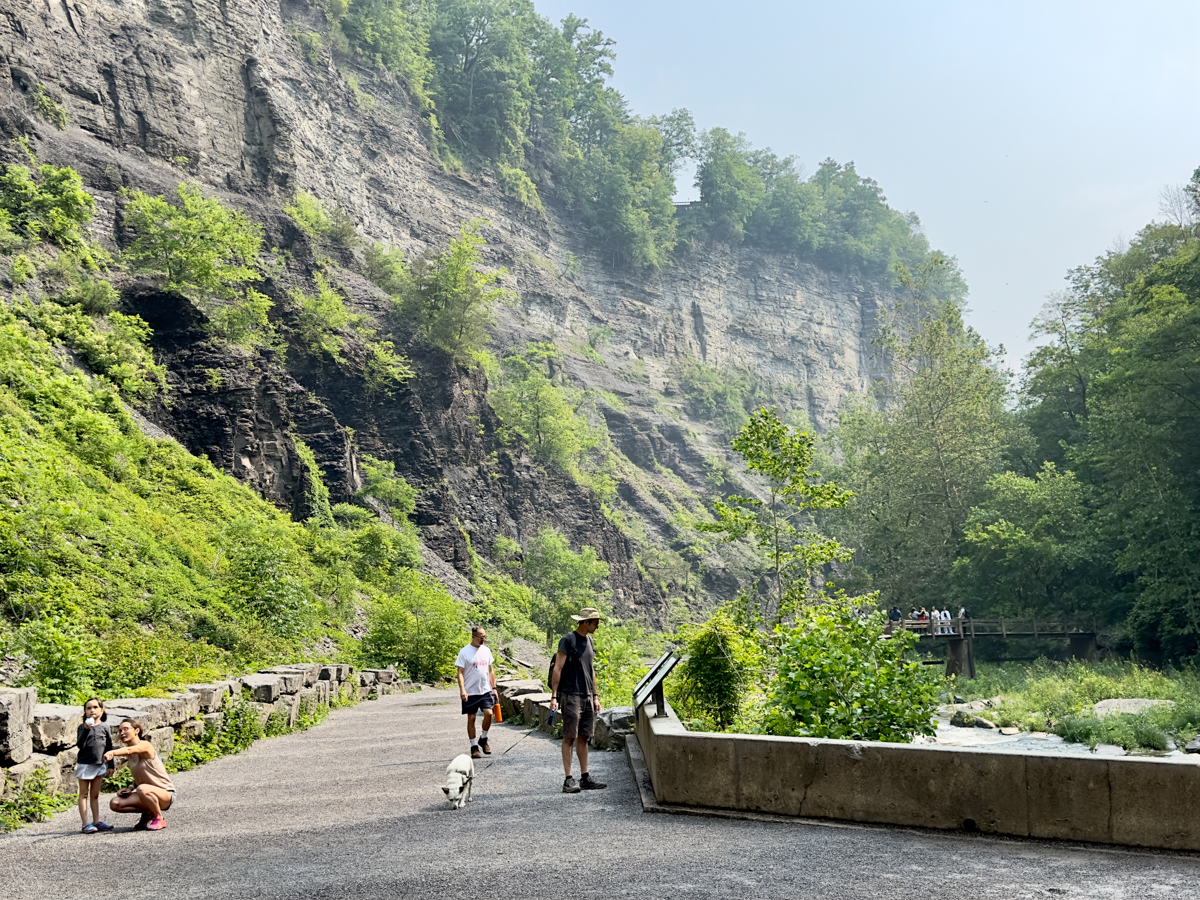
The waterfall and gorge comprise an example of a hanging valley, formed where Taughannock Creek’s stream-carved valley meets the deeper glacially carved valley that contains Cayuga Lake.

The gorge has continued to retreat westward from Cayuga Lake as easily eroded shale near the fall’s base is worn away by the stream, which supports erosion-resistant siltstone and sandstone found in the upper portions of the gorge.

Pollywogs!! Catch and release

Annual freeze and thaw cycles also act upon small faults in the rock, causing large sections to occasionally break away, further expanding the gorge.

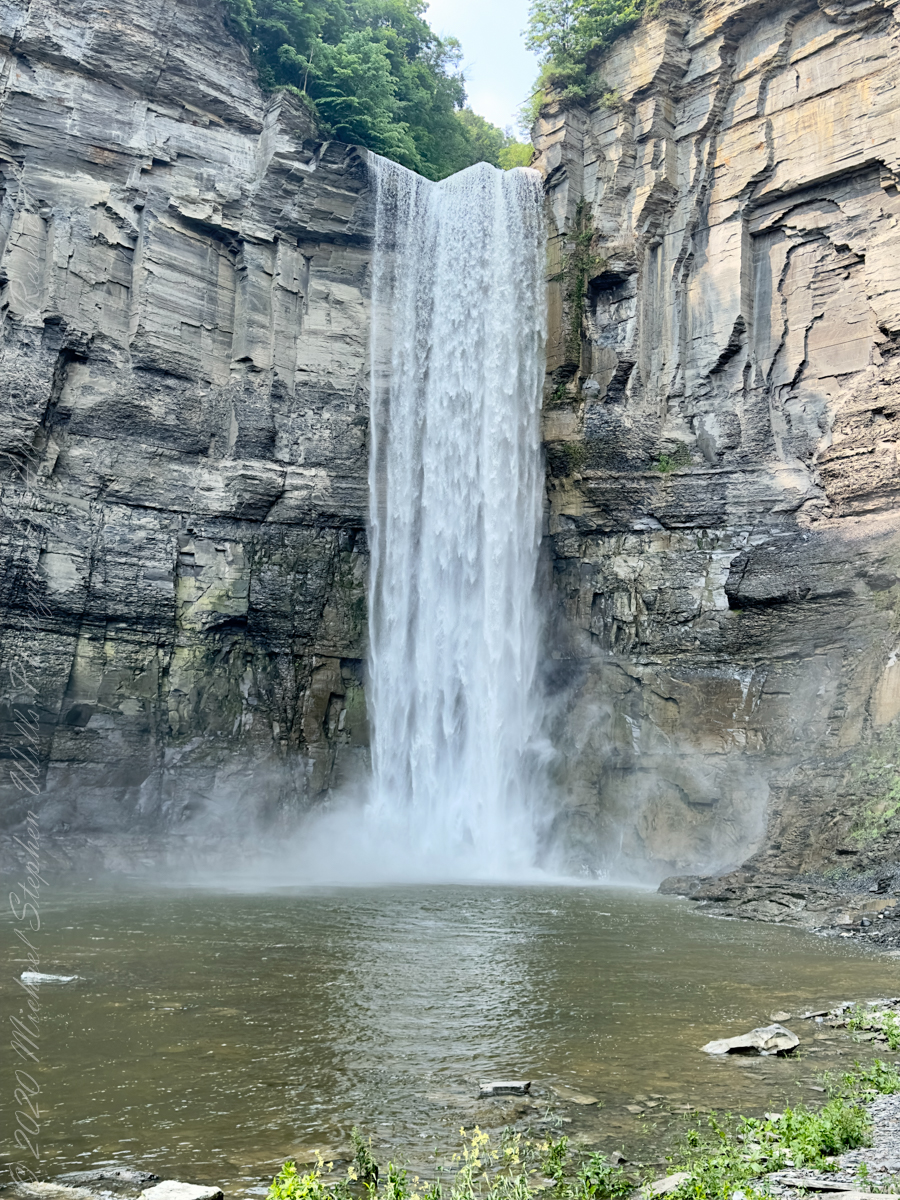
Taughannock Falls’ main cataract is a 215-foot drop (66 m), making it 33 feet (10 m) taller than Niagara Falls. It is the tallest single-drop waterfall east of the Rocky Mountains. The waterfall is located along Taughannock Creek, which flows through a long gorge with cliffs up to 400 feet (120 m) high.

Enjoy!!

Lake Treman

formed by a 1930’s Dam on Buttermilk Creek

Lake Treman from the dam.

Buttermilk creek flowing into Lake Treman.

Dam on Buttermilk creek that forms Lake Treman. Here is stunning Civilian Conservation Corp (1930’s) work in this 36-foot-high stone dam that is not only a spectacle to observe but also serves as part of the trail that encircles Lake Treman. The man-made lake’s wooded shores and placid waters are a stark comparison to the gorge’s rocky cliffs and surging water

August 2023, Buttermilk Falls New York State Park, Ithaca, Tompkins County, New York.

Copyright 2023 Michael Stephen Wills All Rights Reserved