In the hush of the forest, Jack-in-the-Pulpit speaks—not with sound, but with form and patience, reminding us that some sermons rise quietly from the earth.
You could walk past it a hundred times and never notice. There, beneath the low canopy of midsummer, where light is sifted through green, Arisaema triphyllum stands with the discretion of a shadow. Jack-in-the-Pulpit, they call it—a name as strange and gentle as the plant itself. But neither common name nor scientific binomial quite captures the feeling that you are being addressed when you encounter one.
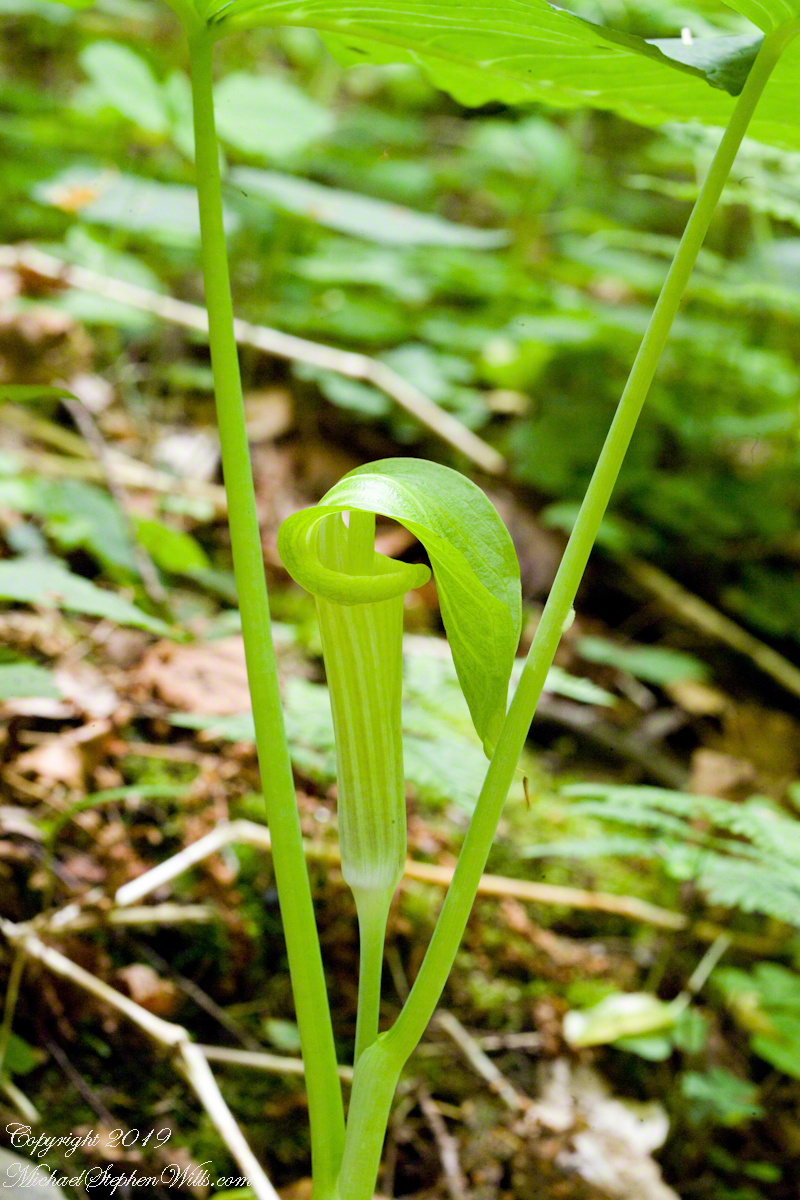
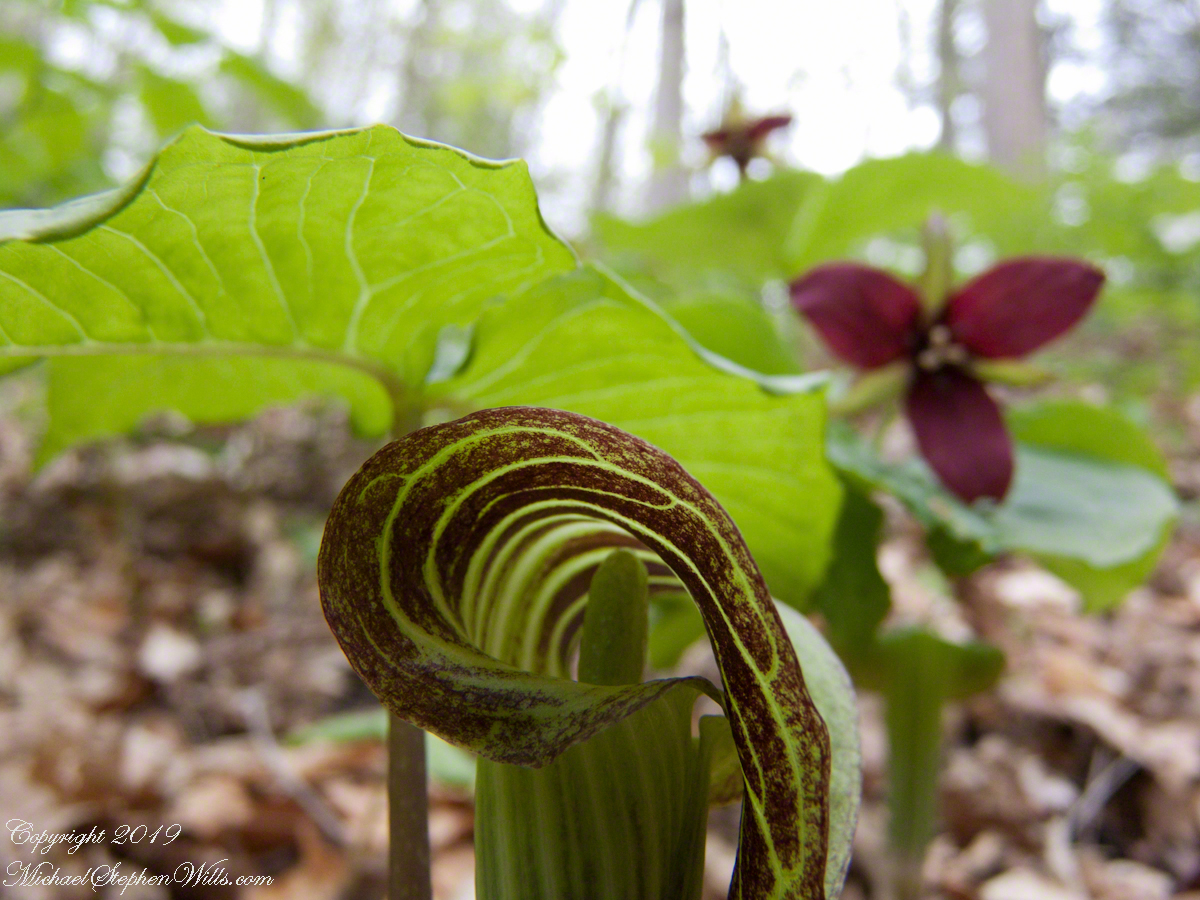
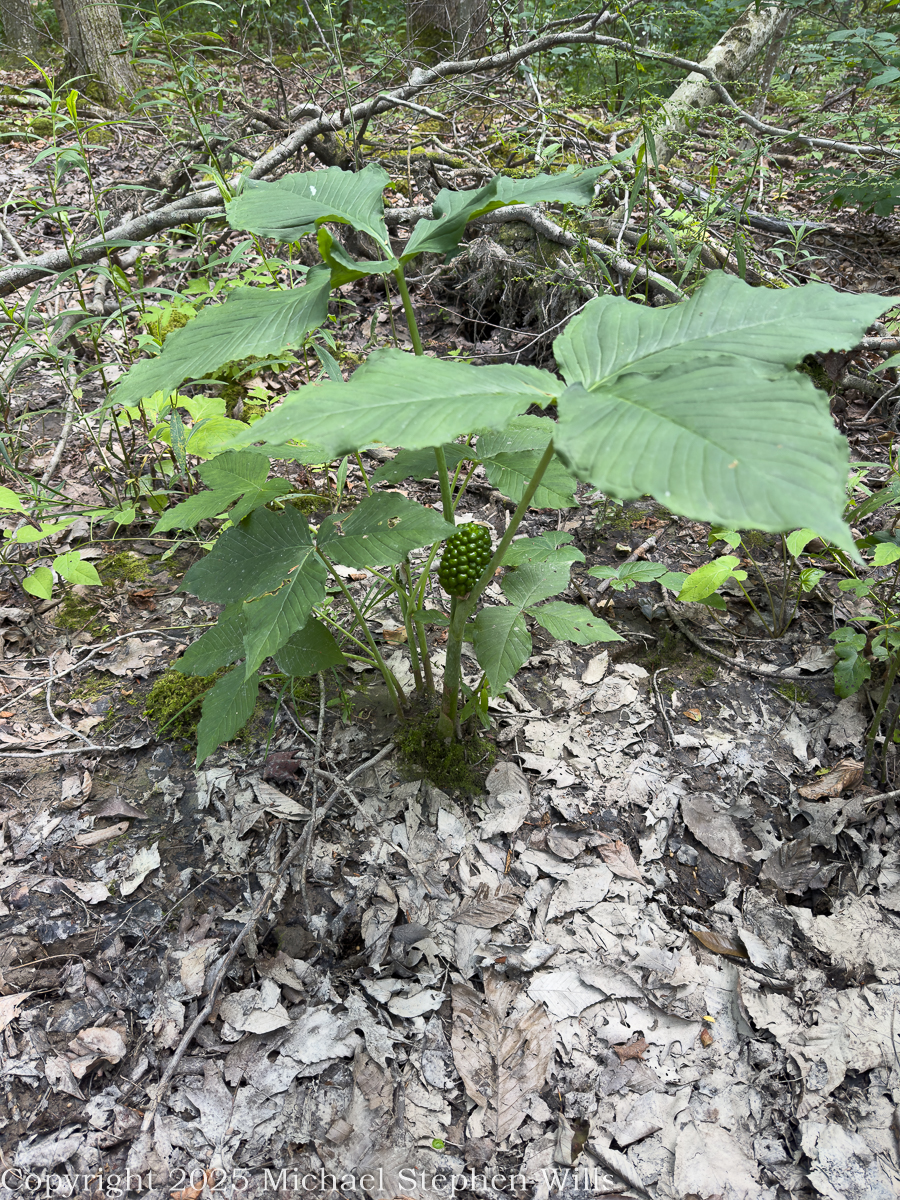
A young Jack-in-the-pulpit under its leaf canopy along the gorge trail of Filmore Glen.A mature Jack-in-the=pulpit flower with purple trillium, Fillmore Glen.
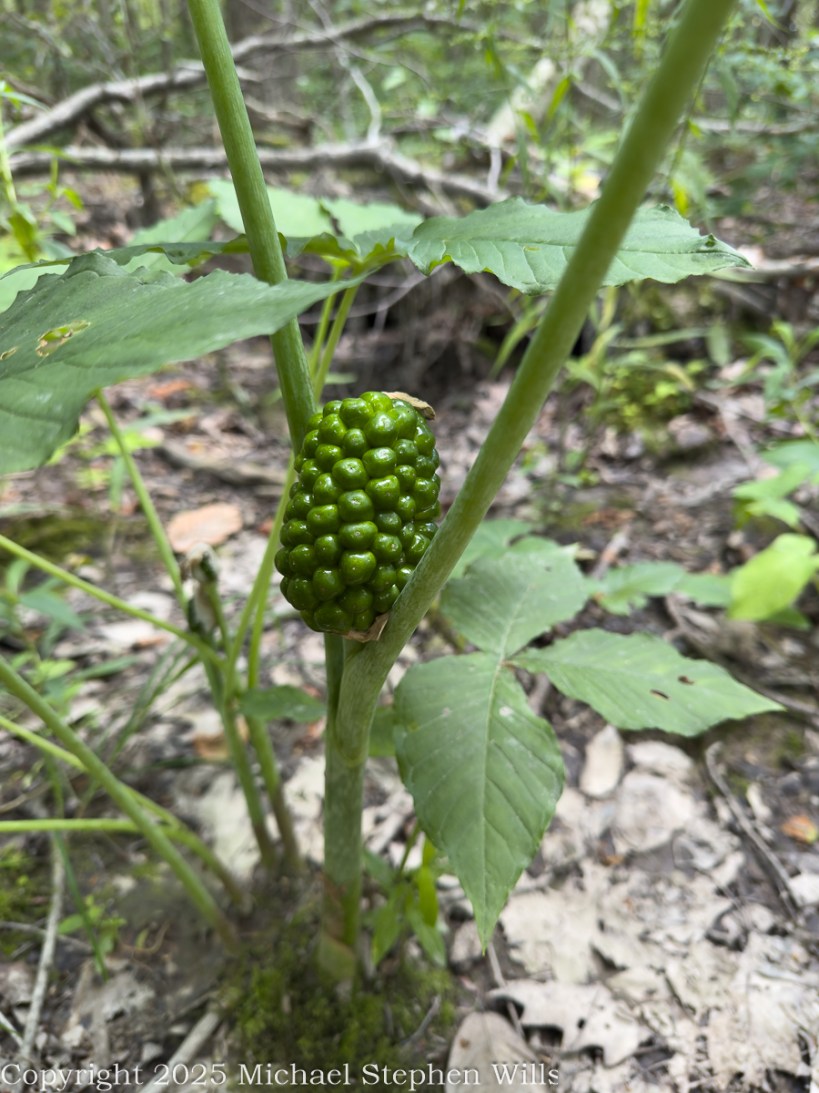
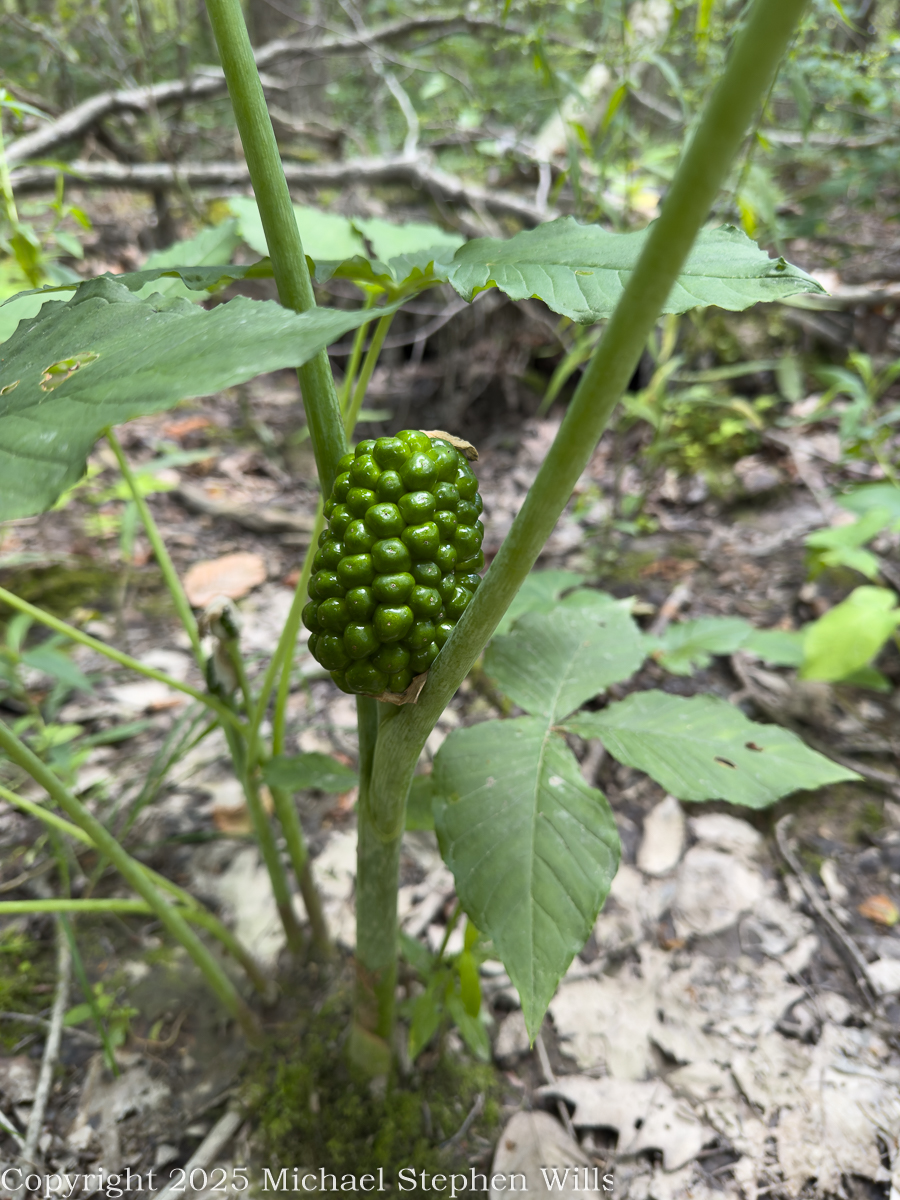
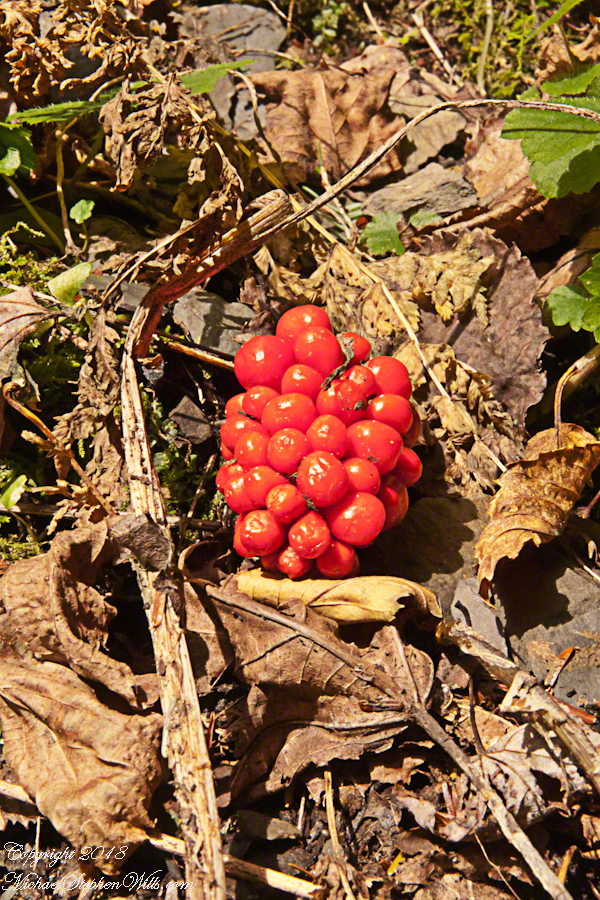
Earlier in the year, it raised a hooded spathe above the forest floor, curving protectively over a pale central spadix—the “Jack.” It looked like a figure delivering a sermon to the moss and littered leaves. Now, that sermon has passed, and the speaker has fallen silent. What remains is a column of tight green berries, glinting softly in the dappled light. They are not yet ripe, but the promise is there. In time, they will glow red like embers in the undergrowth.
Summertime, Sapsucker Woods. I might use a colloquialism and call this plant a “Jill”….and the real twist? Jack might’ve started out giving sermons but give them a good season and a strong root system, and Jack becomes Jill. It’s sequential hermaphroditism at its finest—Mother Nature’s version of career flexibility.
There is something ancient about this plant, as if it remembers a forest before our footsteps came. Its roots delve deep, not just into the soil, but into time. A corm, nestled beneath the leaf mold, waits out the harsh seasons, unseen but enduring. It is not a showy plant. It is a plant that trusts quiet. That survives on patience.
A closer look at the unripe berries.
The forest is full of these secret lives—beings that do not shout to be known. Jack-in-the-Pulpit speaks softly, in a dialect of leaf and shade and seasonal return. It is a plant you find when you have slowed down enough to belong again to the forest’s rhythm, when you’ve traded the voice in your head for the breath of leaf litter underfoot.
From Fillmore Glen
Some would call it just another spring ephemeral, a curiosity among many. But to walk away from it without feeling a kind of reverence would be to miss the point. It is not there to impress. It is there to remind.
That not all things are revealed at once. That sermons come in many forms. And that in the hush of the forest, something is always speaking—if only we remember how to listen.
Enter your email to receive notification of future postings. I will not sell or share your email address.
Copyright 2025 All Rights Reserved Michael Stephen Wills
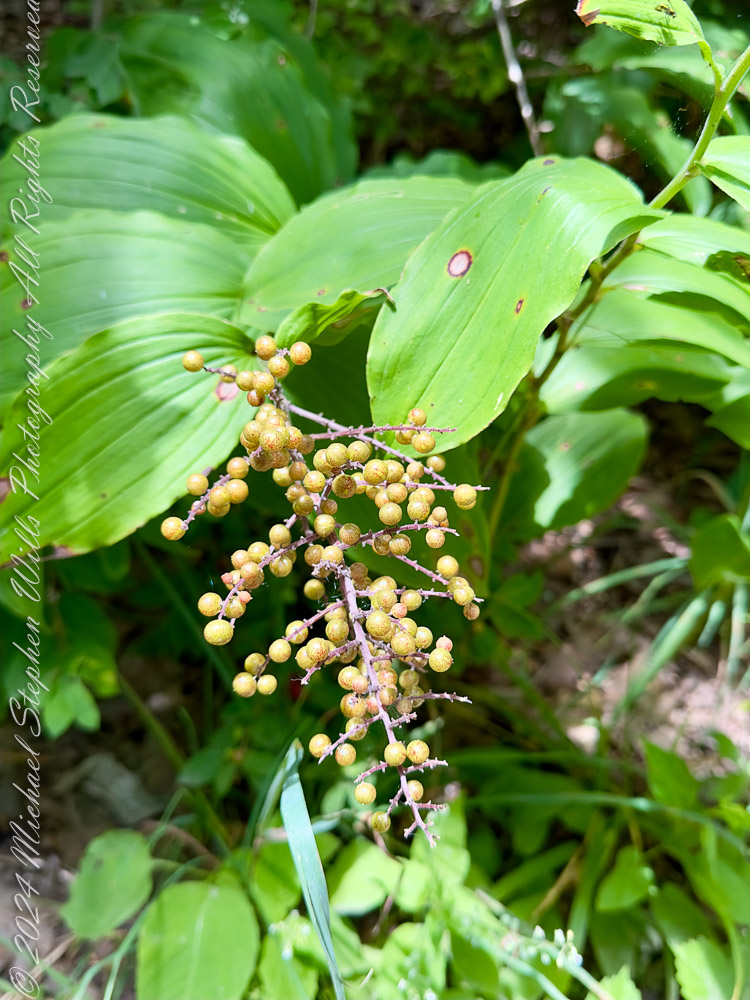
The trails of Taughannock Falls State Park always hold surprises, and on that July day, they did not disappoint. As I paused to take in the tranquility of the woods, my gaze fell upon a plant whose graceful arch and clusters of berries demanded attention. Its broad, lance-shaped leaves alternated along the stem, framing the stem’s terminal cluster of small green berries. Recognizing the plant as Maianthemum racemosum, commonly known as False Solomon’s Seal, I took a moment to admire its understated elegance.
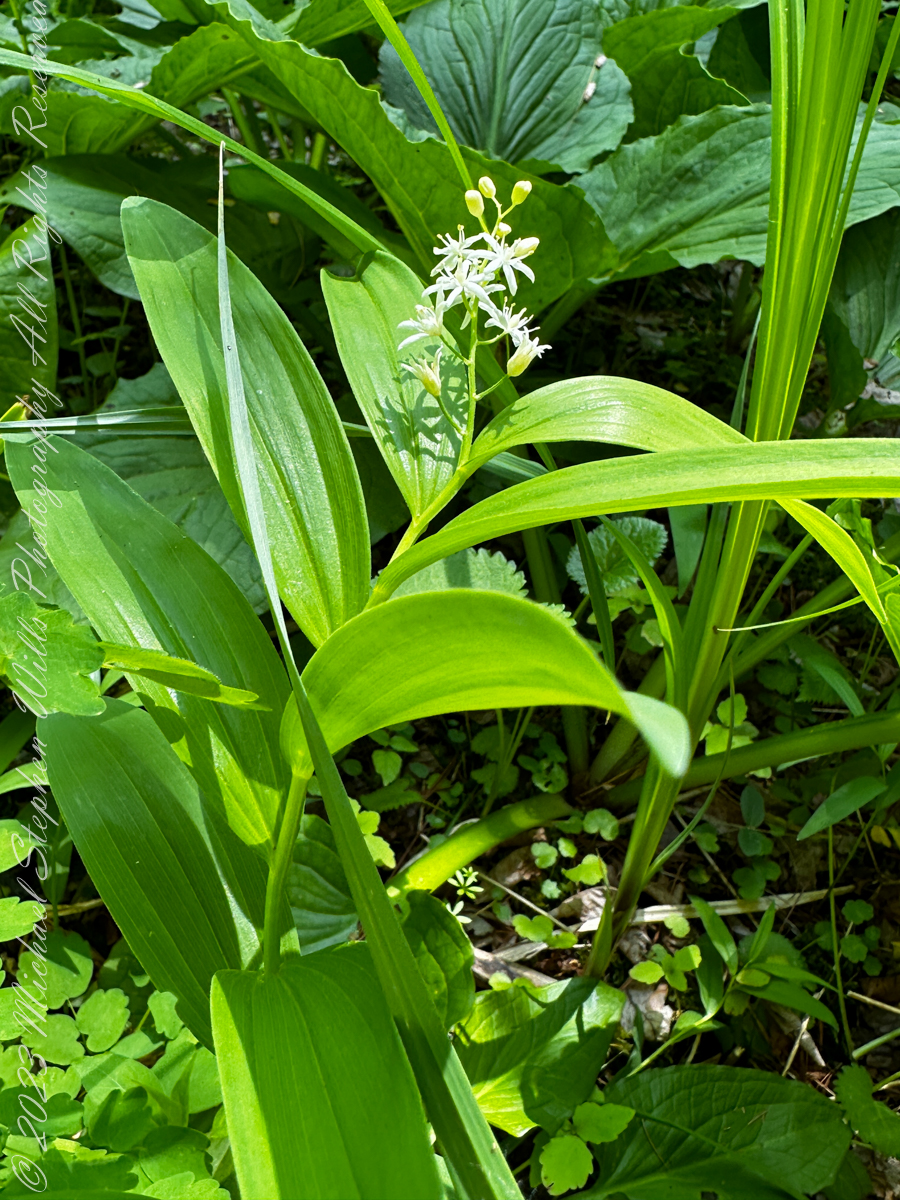
False Solomon’s Seal, scientific name Maianthemum racemosum, is common in the Finger Lakes Region. I found this specimen during a walk with the grandchildren in a local fen among the post-glacial terrain of the Finger Lakes Region. Eames Memorial Natural Area, Cornell Botanic Gardens, Town of Dryden, Tompkins County, Finger Lakes Region, New York State
Characteristics of the Plant
False Solomon’s Seal is a perennial herbaceous plant belonging to the asparagus family (Asparagaceae). It can grow up to three feet tall, its arching stems giving it a unique and recognizable silhouette. The leaves are broad and lance-shaped, with prominent veins running their length, arranged alternately along the stem. At the tip of each stem is a cluster of tiny, spherical green berries, which later in the season ripen to a speckled reddish hue. The plant blooms in late spring to early summer, producing delicate, star-shaped white flowers before transitioning to its fruiting phase.
Found throughout much of North America, Maianthemum racemosum thrives in moist, shaded woodlands, making the lush forests of Taughannock Falls State Park an ideal home. Its ability to grow in the dappled light beneath the forest canopy highlights its adaptability to varying light conditions.
Etymology of the Name
The genus name, Maianthemum, comes from the Greek words “mai” (May) and “anthemon” (flower), reflecting the plant’s tendency to bloom in late spring or early summer. The species name, racemosum, refers to the plant’s inflorescence, which forms a raceme—a cluster of flowers or berries along a single stem. Its common name, False Solomon’s Seal, derives from its superficial resemblance to Solomon’s Seal (Polygonatum spp.), though the latter has bell-shaped flowers hanging beneath its stems, in contrast to the terminal clusters of Maianthemum racemosum.
History and Folklore
False Solomon’s Seal has long been valued for its medicinal and culinary uses by Indigenous peoples and early settlers. The young shoots were harvested and cooked as a vegetable, while the ripe berries were sometimes used in jellies or preserves, though their slightly bitter flavor limited their appeal. Medicinally, teas made from the roots and leaves were used to treat a variety of ailments, including digestive issues, coughs, and sore throats. The roots were also applied as poultices for cuts and bruises, reflecting the deep understanding of natural remedies held by those who lived in harmony with the land.
The plant’s name has sparked legends. While the “false” in its name denotes its distinction from Solomon’s Seal, some folklore suggests that the plant was used to counterfeit the medicinal properties of its namesake. Others believe that its graceful arch and persistent berries symbolize resilience and adaptability, qualities often attributed to those who lived in its native habitats.
Uses and Ecological Role
Although not widely cultivated, Maianthemum racemosum is a valuable plant in its native ecosystems. Its flowers provide nectar for pollinators such as bees and butterflies, while the berries are a food source for birds and small mammals. Its rhizomatous roots also play a role in stabilizing soil in forested environments, preventing erosion and supporting the health of the woodland floor.
For those contemplating harvesting these plants be advised that collection of plants from New York State Parks is prohibited to protect natural resources and maintain ecological balance. According to the New York State Office of Parks, Recreation and Historic Preservation (OPRHP) regulations, “No person shall… remove… any… plant life” within state parks without proper authorization. Therefore, collecting plants in state parks without explicit permission is not allowed. If you have a specific research or educational purpose, you may contact the park administration to inquire about obtaining the necessary permits. However, for casual visitors, it’s best to enjoy the flora from a distance. False Solomon Seal ecological contributions are significant. In addition to its pollinator support and soil stabilization, the plant’s presence is an indicator of a healthy woodland ecosystem.
A Moment of Reflection
As I rose from my crouched position, having taken in the details of Maianthemum racemosum, I felt a quiet gratitude for the opportunity to encounter such a plant. False Solomon’s Seal, with its graceful leaves and unassuming berries, serves as a reminder of the interconnectedness of life in the forest. Its role in the ecosystem, its history with humans, and its understated beauty all speak to the richness of the natural world.
Walking onward, I carried with me a sense of awe for the intricate web of life that thrives in the woods. The False Solomon’s Seal, standing quietly among the ferns and leaf litter, seemed to embody the resilience and balance of the forest—a gentle presence in a vibrant community.
Enter your email to receive notification of future postings. I will not sell or share your email address.
Copyright 2024 All Rights Reserved Michael Stephen Wills
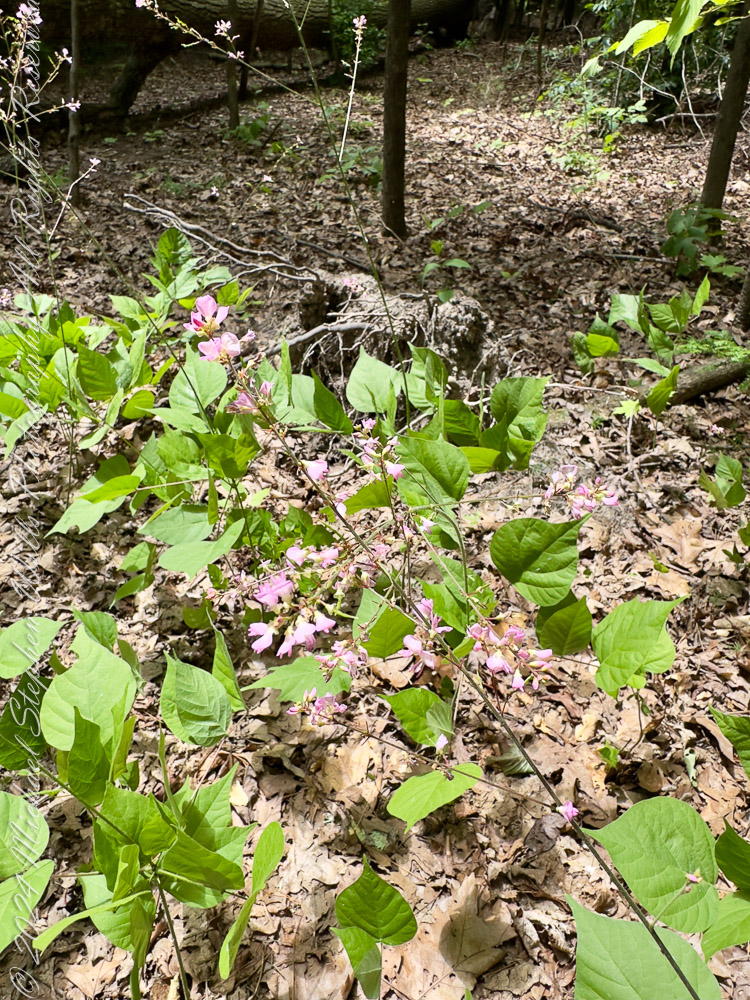
It was a high summer day as I enjoyed a customary hike around of Taughannock Falls State Park on the South and North Rim trails. Here sunlight filtered through the dense canopy, dappling the forest floor with shifting patches of light. Along the trail, my attention was drawn to a cluster of pink blossoms rising on slender, upright stems. Intrigued by their delicate beauty, I crouched down for a closer look. The plant rose above the forest floor, its trifoliate leaves broad and prominently veined, each leaflet slightly larger than I would have expected. These leaves seemed to anchor the plant to the shaded understory, while its flowers reached upward, as though eager to catch the fleeting rays of sun. I captured the plant in this photographs, later used it to identify Hylodesmum glutinosum, or Large-Flowered Tick Trefoil.
Characteristics of the Plant
The Large-Flowered Tick Trefoil is a striking member of the pea family (Fabaceae). Its pink, pea-like flowers are arranged in graceful racemes along the upper portions of its stems, their vibrant color contrasting beautifully with the green foliage around them. The leaves, broad and trifoliate, lend the plant its distinctive appearance. The name “tick trefoil” refers to the plant’s seed pods, which are flat and segmented, equipped with tiny hooks that cling stubbornly to passing animals or hikers, hitchhiking their way to new locations.
The plant is native to eastern North America, including the forests and trails of New York State. Its preference for rich, well-drained soils in partially shaded woodlands makes it a common sight in places like Taughannock Falls State Park. Blooming from mid to late summer, it provides an essential nectar source for bees and other pollinators, playing its part in the intricate web of the forest ecosystem.
Etymology of the Name
The genus name, Hylodesmum, was established only twenty-five years ago when the plant was reclassified from the genus Desmodium to a new genus within the tribe Desmodieae. The name reflects its forested habitat, with “hylo” derived from the Greek word for “wood” or “forest.” Previously described in 1802 as Hedysarum glutinosum and later placed in Desmodium, the species name glutinosum remains unchanged, meaning “sticky” in Latin. This aptly describes the plant’s seed pods, which adhere to anything that brushes past them. Together, these names encapsulate both the botanical structure and the unique dispersal strategy of this plant.
History and Folklore
Native Americans and early settlers were intimately familiar with tick trefoils. The plant’s seeds, notorious for clinging to clothing and fur, earned it a reputation as a nuisance, but its resilience and utility could not be overlooked. Indigenous peoples utilized various parts of the plant for medicinal purposes. The roots and leaves were brewed into teas to treat fevers and digestive ailments, while poultices made from the leaves were applied to wounds to promote healing. Such uses highlight the depth of knowledge early inhabitants had about their environment.
The plant’s sticky seed pods also became the subject of folklore. Children in rural communities would playfully call it “hitchhiker’s weed,” competing to see who could collect the most seeds on their clothing during outdoor adventures. These seeds, so adept at attaching themselves to passersby, were seen as symbols of persistence and adaptability, traits that many admired.
Uses and Ecological Role
While Hylodesmum glutinosum is not commonly cultivated, its ecological contributions are significant. As a member of the Fabaceae family, it has the ability to fix nitrogen in the soil through a symbiotic relationship with rhizobia bacteria in its root nodules. This makes it a valuable plant in maintaining soil fertility in its native ecosystems. Its flowers attract pollinators like bees and butterflies, ensuring that the forest remains vibrant and full of life.
In addition to its ecological importance, the plant’s seeds have a curious modern use: they’ve been studied for their ability to help detect movement in the environment. Researchers have examined the sticky pods’ structure as a natural model for creating adhesives and tracking devices, proving once again that even the smallest details in nature can inspire human ingenuity.
A Moment of Reflection
As I rose to my feet, brushing the leaf litter from my hands, I felt a renewed sense of wonder for the intricate lives of the plants surrounding me. The Large-Flowered Tick Trefoil, with its vivid pink flowers and ingenious seed pods, seemed to embody the essence of the forest: a harmonious blend of beauty, resilience, and interconnection.
Walking away, I carried with me not just the memory of its vibrant blooms, a deep respect for its role in the natural world. In the quiet of Taughannock’s wooded trails, Hylodesmum glutinosum had shared its story, a tale of persistence, adaptation, and the hidden wonders that flourish when we take the time to notice.
Enter your email to receive notification of future postings. I will not sell or share your email address.
Copyright 2024 All Rights Reserved Michael Stephen Wills
Amid the rolling hills and meadows of the Finger Lakes, Queen Anne’s Lace stands tall, its delicate white blooms weaving a tapestry of nature’s resilience and beauty. Discover the rich history, legends, and ecological importance behind this elegant wildflower.
In the Finger Lakes region of New York State, fields come alive with the delicate beauty of Queen Anne’s Lace—a wildflower that embodies nature’s elegance. Scientifically known as Daucus carota, its flowering umbels resemble intricate lace, lending poetic charm to the landscapes it graces. Beyond aesthetics, the history and mythology behind Queen Anne’s Lace, combined with its ecological importance and cultural significance, reveal a plant deeply intertwined with both nature and human culture.
The Name and Its Myths
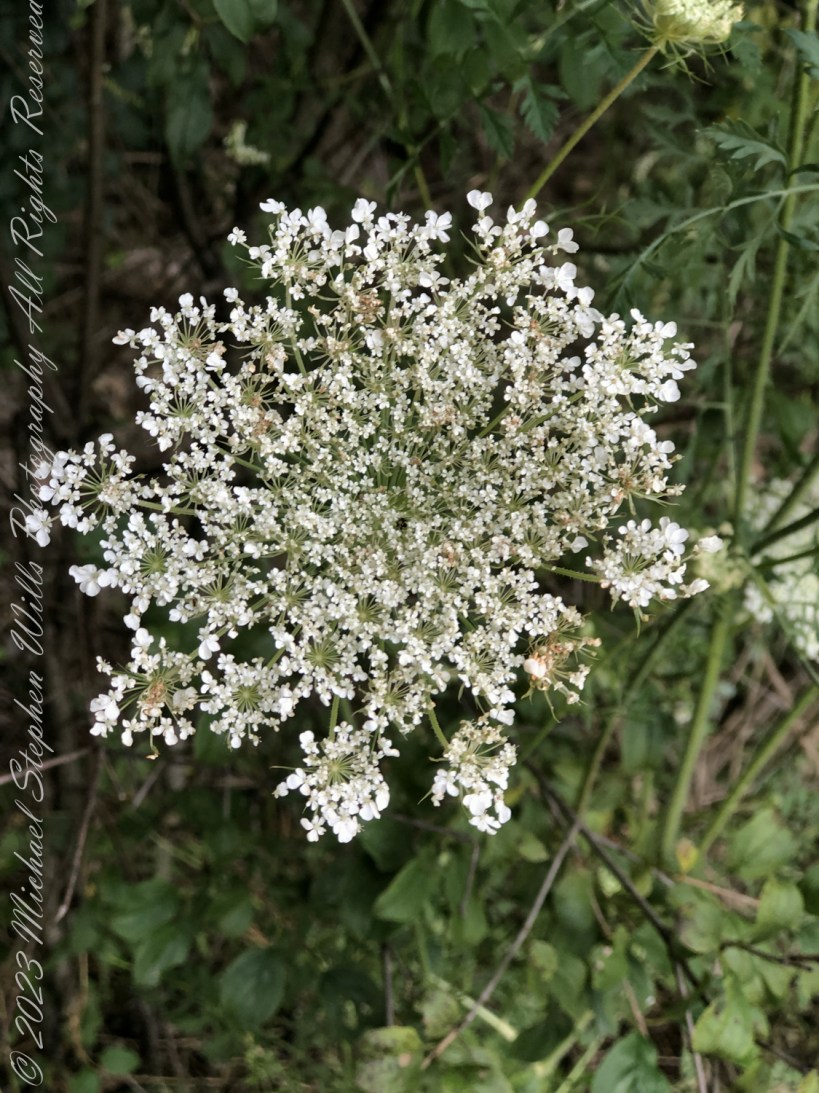
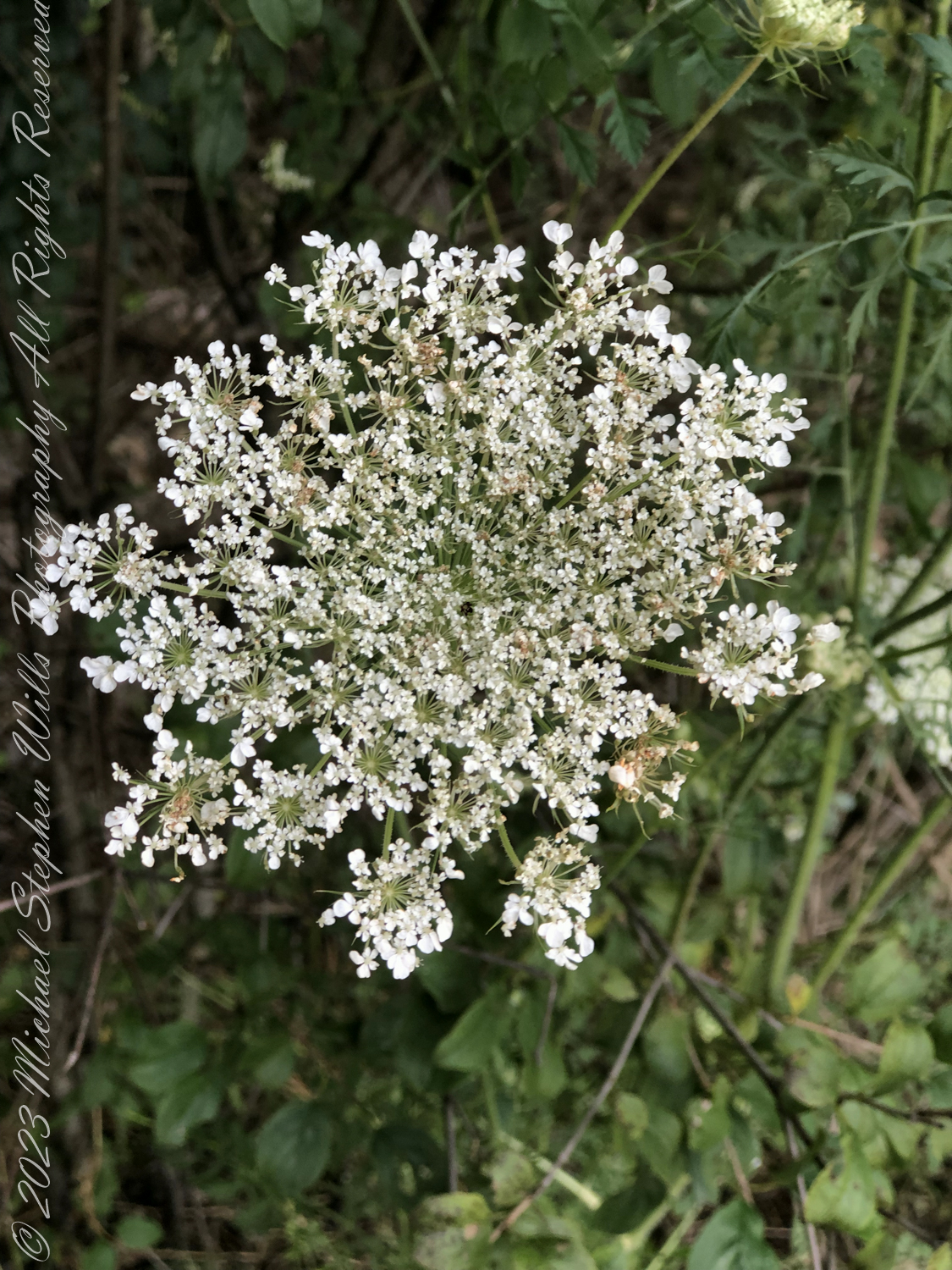
The name Queen Anne’s Lace derives from English legend. According to the tale, Queen Anne, consort to King James I, was challenged to create lace as beautiful as the flower. While sewing, she pricked her finger, and a single drop of blood stained the lace—represented by the tiny purple floret at the center of many Queen Anne’s Lace blossoms. This intricate network of white flowers surrounding a central floret mirrors the lacework attributed to Queen Anne, giving the plant a royal and historic association.
Scientifically known as Daucus carota, Queen Anne’s Lace is also known by several other common names, including wild carrot and bird’s nest, the latter inspired by the way the flower head curls inward as the seeds begin to develop, resembling a nest. The flower is closely related to the cultivated carrot, and its roots, though much smaller and woodier, share the familiar carrot scent. In fact, Queen Anne’s Lace is considered the wild ancestor of the domestic carrot, with a lineage stretching back thousands of years.
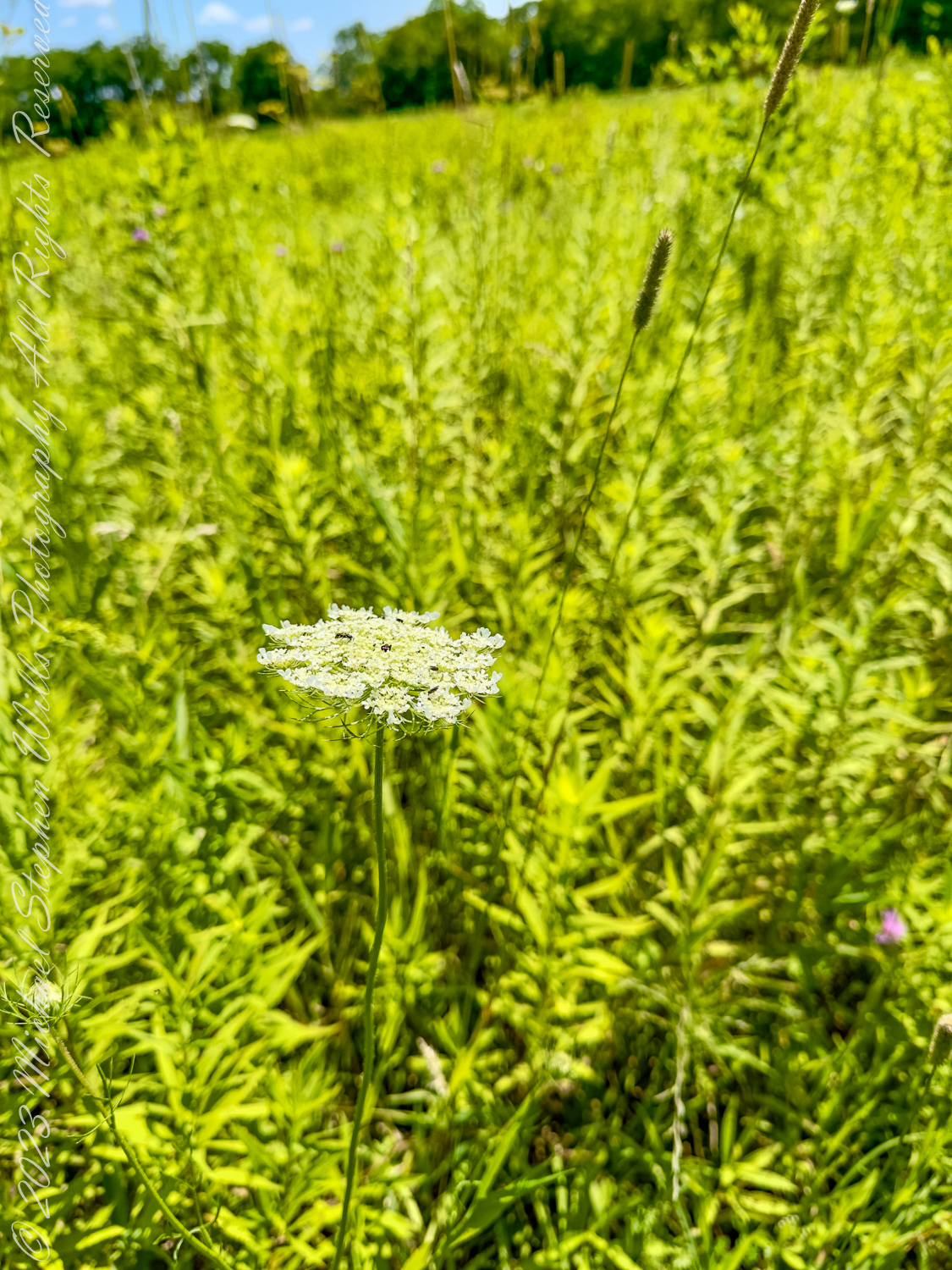
In the meadows of the Brock-Harvey Forest Preserve, Queen Anne’s Lace thrives among the native flora, showcasing its delicate beauty. The function of the central dark florets of D. carota has been subject to debate since Charles Darwin speculated that they are a vestigial trait. It has been suggested that they have the adaptive function of mimicking insects, thus either discouraging herbivory, or attracting pollinators by indicating the presence of food or opportunities for mating. Research conducted in Portugal suggests that the dark central florets of Daucus carota mimic insects, attracting pollinators like the varied carpet beetle (Anthrenus verbasci). Inflorescences with more dark florets experienced increased visitation, indicating these florets may enhance pollination efficiency.
Queen Anne’s Lace in Finger Lakes Ecology
Beyond its rich mythology, Queen Anne’s Lace plays a significant role in the ecology of the Finger Lakes region. Throughout the expansive landscapes of the Finger Lakes, from lush meadows to roadsides, Queen Anne’s Lace stands tall, its delicate blossoms dotting the green with clusters of white. This wildflower can be observed in various stages of its life cycle, from budding umbels to the intricate ‘bird’s nest’ formation.
The fields around the Finger Lakes, often framed by rolling hills and ancient forests, offer the perfect habitat for Daucus carota. The plant thrives in well-drained soils and open sunlight, often outcompeting other flora. Its deep taproots, a characteristic inherited from its cultivated cousin, the carrot, allow it to flourish in the rocky soils of the region.
In these fields, Queen Anne’s Lace performs a vital ecological role. The plant attracts a variety of pollinators, including bees, butterflies, and beneficial insects like lacewings, which help to control aphid populations. The wide, flat umbels provide an ideal landing platform for these insects, who in turn pollinate the flowers, ensuring the plant’s continued spread.
A History of Use
The plant’s ecological importance is matched by its historical uses throughout human civilization. Queen Anne’s Lace has long been a part of human history, both for its beauty and for its practical applications. The plant’s medicinal uses stretch back to ancient times. The seeds and roots were used by the ancient Greeks and Romans as a natural remedy for a variety of ailments, including digestive issues and inflammation. The seeds, when chewed, were believed to prevent conception and were used as a natural form of birth control.
For Native American tribes in the Finger Lakes region, Queen Anne’s Lace was a valuable plant. The roots were often used in the preparation of poultices to treat minor wounds and skin irritations. Additionally, the seeds were used for their diuretic properties, often in teas to help with urinary tract issues. The plant’s close relation to the domestic carrot also meant that its roots could be used as food, though they required careful preparation due to their tough texture and strong flavor.
A Symbol of Resilience and Elegance
The symbolism of Queen Anne’s Lace is steeped in both the fragility and strength it represents. Like the lace it mimics, the flower appears delicate and ephemeral, yet it is a hardy species that thrives in even the most inhospitable conditions. Its deep taproot enables it to survive droughts and poor soil, symbolizing resilience and perseverance in the face of adversity.
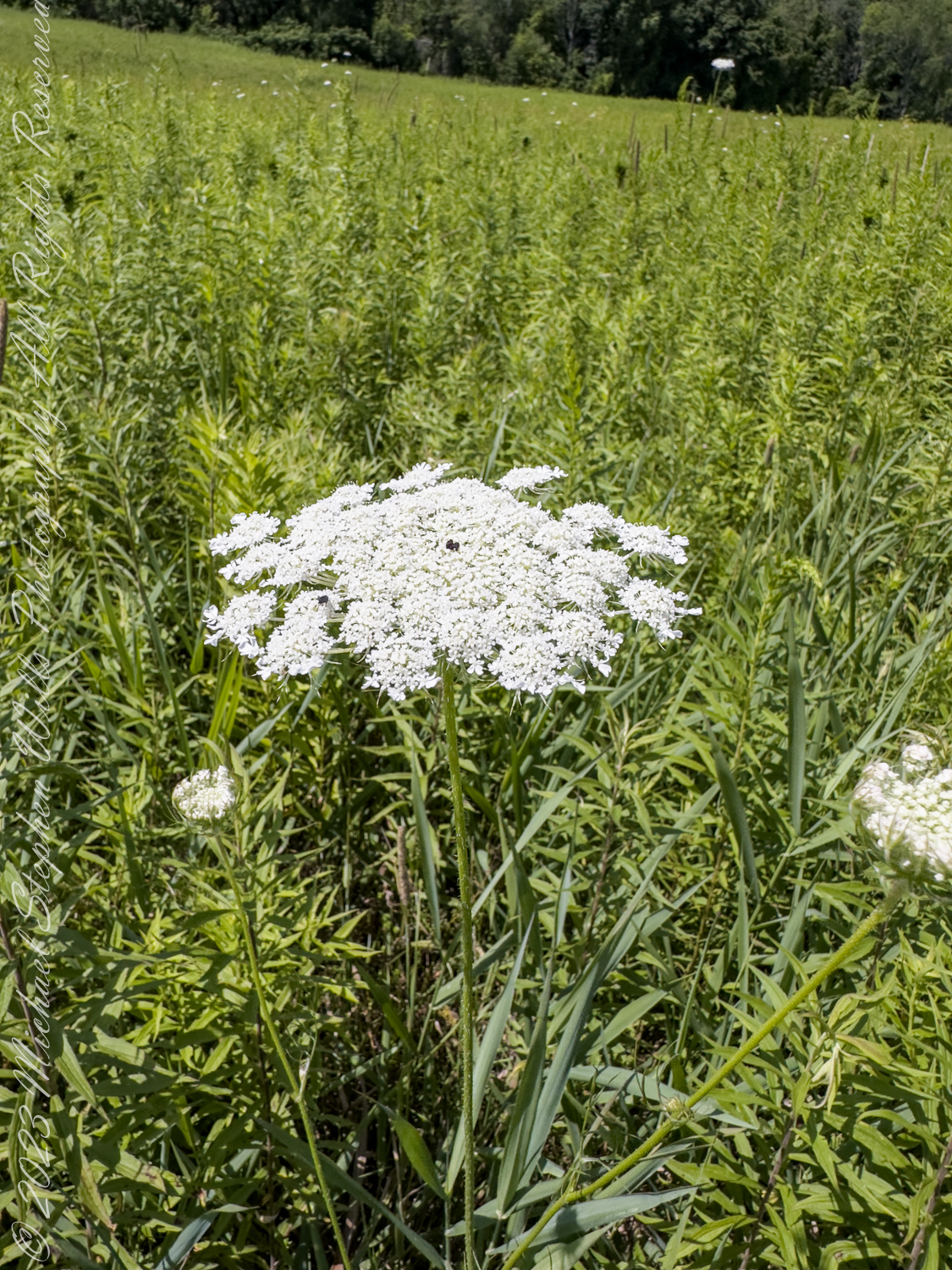
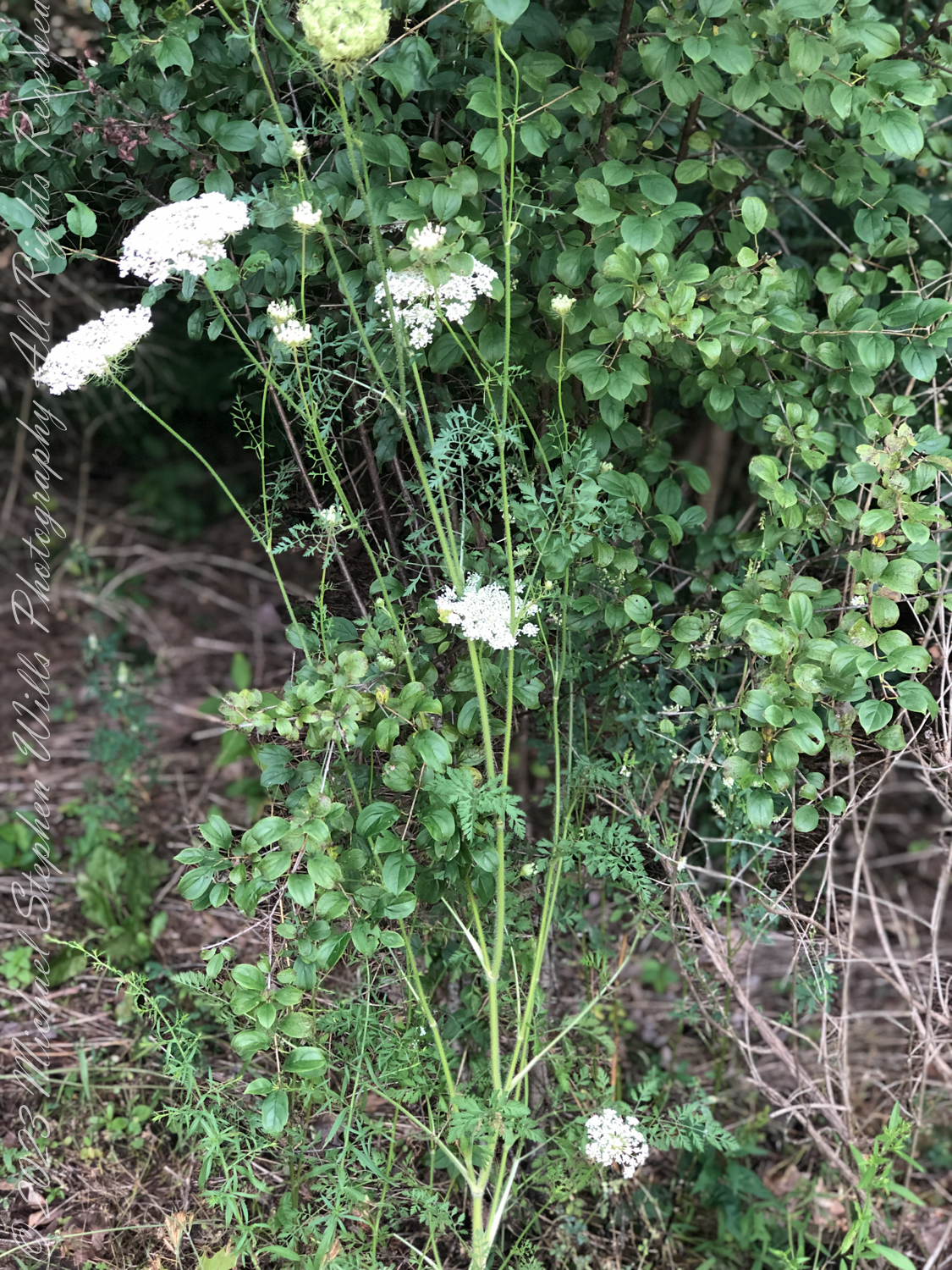
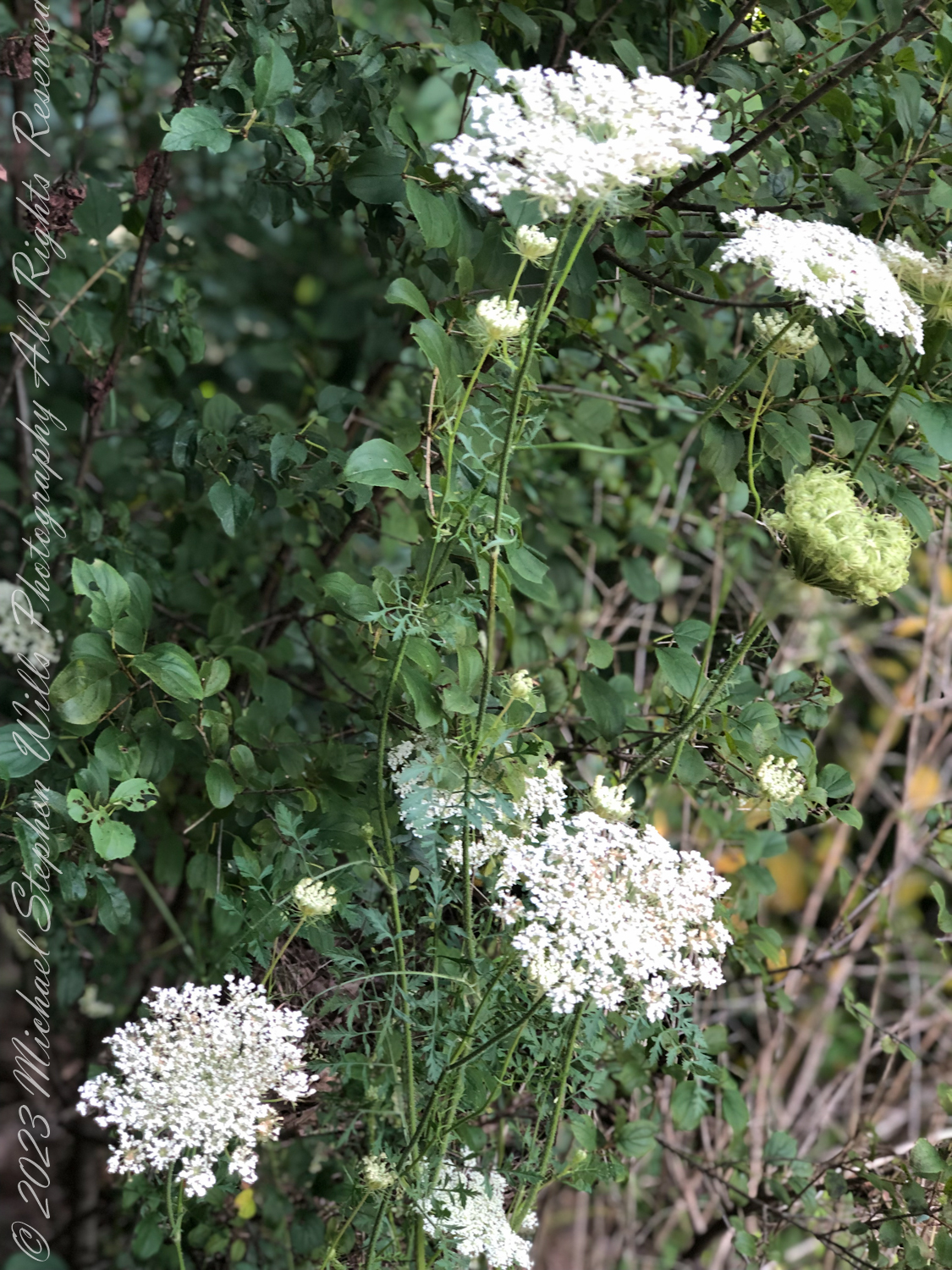
In Cayuga County, near Fillmore Glen State Park in Moravia, New York State, farm fields are often adorned with the intricate blooms of Queen Anne’s Lace.
Each summer, the fields of the Finger Lakes burst forth with Queen Anne’s Lace, their towering stalks reaching upward, crowned with intricate blossoms that sway gently in the breeze. As the season progresses, the once-flat umbels curl inward, forming a tight bird’s nest—a final act of elegance before the plant disperses its seeds to ensure future generations.
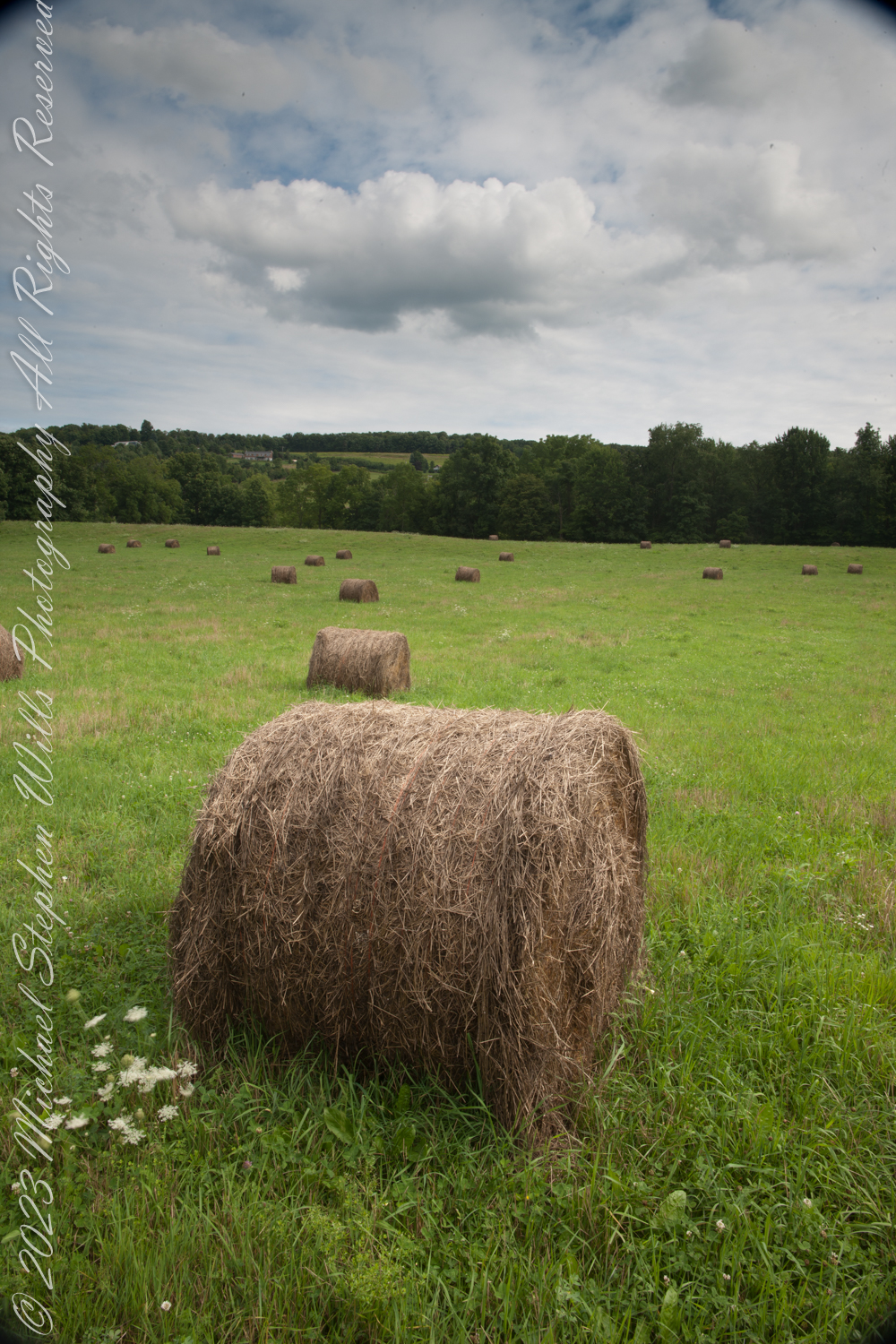
In capturing the essence of this flower in photographs that accompany this essay, the delicate yet persistent nature of Queen Anne’s Lace is evident. Whether standing tall against a backdrop of green hills, or growing alongside weathered hay bales, Queen Anne’s Lace offers a moment of reflection on the intersection of beauty, history, and nature. Its quiet presence in the Finger Lakes is a reminder that even the smallest, most unassuming plants can carry with them deep histories, enduring stories, and a legacy of utility and elegance.
As golden hues of sunset bathe the rolling hills of the Finger Lakes, the ethereal silhouettes of Queen Anne’s Lace stand as a testament to the region’s natural splendor. Whether admired for its aesthetics, revered for its medicinal uses, or simply appreciated for its ecological role, Queen Anne’s Lace remains an iconic and beloved part of the Finger Lakes’ wildflower tapestry.
Copyright 2024 Michael Stephen Wills All Rights Reserved
Discover the enchanting white bluebells blooming around our home! Explore their natural history, ethereal beauty, and fascinating folklore. Uncover the wonders of Hyacinthoides non-scripta (alba) in our latest blog post.
The surprise of finding white bluebells blooming around our home this spring was nothing short of magical. Known scientifically as Hyacinthoides non-scripta (alba), these delicate flowers add a touch of elegance and tranquility to our garden. As I delved into the history, etymology, and folklore of these enchanting blooms, I discovered a world rich in cultural significance and natural wonder.
Bluebell Natural History
White bluebells, a variant of the common bluebell, belong to the Asparagaceae family. Native to the woodlands of Western Europe, these perennials are renowned for their striking appearance and pleasant fragrance. The white bluebell, though less common than its blue counterpart, is equally captivating with its pure white, bell-shaped flowers that hang gracefully from slender stems.
Hyacinthoides non-scripta thrives in shady, moist environments, often forming dense carpets that transform forest floors into a sea of blossoms in spring. These plants are well-adapted to their woodland habitats, where they bloom before the canopy closes, taking advantage of the early spring light.
White Bluebell (Hyacinthoides non-scripta (alba)) growing around our home, May 2024
Etymology of the Scientific and Common Names
The scientific name “Hyacinthoides” is derived from the Greek word “hyakinthos,” referring to the mythological youth Hyacinthus, who was transformed into a flower. “Non-scripta” means “unmarked” or “not written,” distinguishing it from the classical hyacinth described by ancient authors. This epithet underscores the plant’s unique identity in the botanical world.
The common name “bluebell” comes from the flower’s resemblance to small bells and its predominant blue color. The “white” prefix simply describes this particular variety’s color, adding to its distinction.
White Bluebells in Folklore and History
Bluebells, including their white variants, are steeped in folklore and myth. In England, bluebells are often associated with fairy enchantments and woodland magic. Folklore suggests that bluebells ring to summon fairies, and to disturb a bluebell patch was to risk falling under a fairy spell. The white bluebells, with their ethereal appearance, add an extra layer of mystique to these tales.
Historically, bluebells were used for practical purposes as well. The sticky sap from the bulbs was employed to bind pages in books and to glue feathers onto arrows. However, it’s important to note that all parts of the plant are toxic if ingested, a fact that has also contributed to its aura of cautionary folklore.
The Surprise and Wonder of White Bluebells
Discovering white bluebells around our home has been a source of immense joy. These flowers, with their serene beauty and historical significance, connect us to the past and the natural world in a profound way. The surprise of seeing them bloom each spring reminds us of nature’s unpredictability and generosity.
Their presence in our garden brings a sense of peace and wonder, inviting us to pause and appreciate the small miracles that surround us. The delicate white bells, swaying gently in the breeze, create a visual symphony that enchants the senses and uplifts the spirit.
White bluebells serve as a testament to the rich tapestry of life that thrives in our gardens, often unnoticed. They remind us to look closely, to explore, and to cherish the natural beauty that graces our lives. As we continue to nurture our garden, the white bluebells stand as a symbol of purity, resilience, and the timeless charm of nature’s wonders.
Copyright 2024 Michael Stephen Wills All Rights Reserved
Discover the enchanting woodruff growing around our home! Explore its natural history, delightful fragrance, and fascinating role in folklore and history. Uncover the wonders of this perennial plant in our latest blog post.
As spring breathes new life into our surroundings, the delight of identifying the plants that grow around our home is a joy like no other. This year, I was thrilled to discover that the delicate and fragrant woodruff (Galium odoratum) has been gracing our garden. Known for its charming clusters of white flowers and vibrant green leaves, woodruff brings both aesthetic beauty and a rich historical tapestry to our home.
Natural History of Woodruff
Woodruff, scientifically known as Galium odoratum, is a perennial plant native to Europe, North Africa, and parts of Asia. It thrives in shady, woodland environments, often forming dense mats that carpet the forest floor. The plant typically blooms in late spring to early summer, producing tiny white flowers that contrast beautifully with its whorls of bright green leaves.
Galium odoratum is a member of the Rubiaceae family, which also includes coffee and gardenias. Its ability to spread quickly through its creeping rhizomes makes it an excellent ground cover. In addition to its visual appeal, woodruff is known for its sweet scent, which intensifies when the plant is dried. This fragrance is due to the presence of coumarin, a natural compound that also contributes to its medicinal properties.
This woodruff (Galium odoratum) grows around our home.
Etymology of the Scientific and Common Names
The scientific name Galium odoratum provides insights into the plant’s characteristics. “Galium” is derived from the Greek word “gala,” meaning milk. This refers to the plant’s historical use in curdling milk. “Odoratum,” on the other hand, highlights the plant’s pleasant aroma.
The common name “woodruff” has an interesting origin as well. The word “wood” refers to the plant’s typical habitat in wooded areas, while “ruff” is thought to be derived from the Old English “rūwe,” meaning rough or hairy, describing the texture of the plant’s leaves and stems.
Woodruff in Folklore and History
Woodruff has a storied past, steeped in folklore and history. In medieval Europe, it was used for its aromatic properties to freshen up linens and as a strewing herb to mask odors in homes and churches. Its sweet scent was believed to ward off evil spirits and bring good fortune, making it a popular choice for wreaths and garlands during festivals and celebrations.
The plant also played a role in traditional medicine. Woodruff was used to treat various ailments, including liver and gallbladder issues, and as a mild sedative. Its medicinal use is attributed to the coumarin content, which has anticoagulant and anti-inflammatory properties. However, it’s worth noting that high doses of coumarin can be toxic, so its medicinal use has largely fallen out of favor in modern times.
In Germany, woodruff is famously associated with May Wine, a traditional beverage enjoyed during spring festivals. The plant is infused into white wine, imparting its unique flavor and aroma. This custom dates back centuries and is still practiced today, symbolizing the arrival of spring and the renewal of life.
This woodruff (Galium odoratum) grows around our home.
The Surprise and Wonder of Woodruff
Discovering woodruff around our home has been a source of wonder and delight. Its presence connects us to the rich tapestry of nature and history, reminding us of the timeless beauty and utility of the plants that surround us. As I watch the delicate flowers sway gently in the breeze, I am filled with a sense of gratitude for the surprises that nature continually offers.
Woodruff’s modest appearance belies its profound impact on the landscape and our lives. It serves as a reminder that even the smallest plants can hold significant historical, cultural, and medicinal value. As we continue to explore and appreciate the natural world around us, the humble woodruff stands as a testament to the enduring connection between humanity and nature.
Copyright 2024 Michael Stephen Wills All Rights Reserved



 Michael Stephen Wills Photography