The Catskill Mountains are not mountains. The Catskills started as a high plateau. Over eons, before the first humans, water, the sun, and wind carved high steep peaks: rounded, forested and teeming with life.
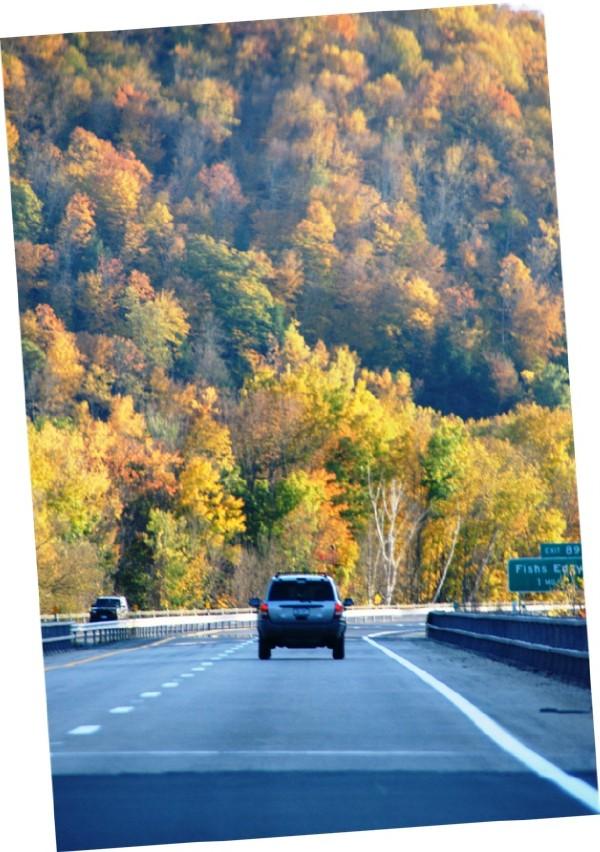
October 2008, on a return trip from family on Long Island, we traveled the winding road called “Route 17”, through the high autumn hillsides.
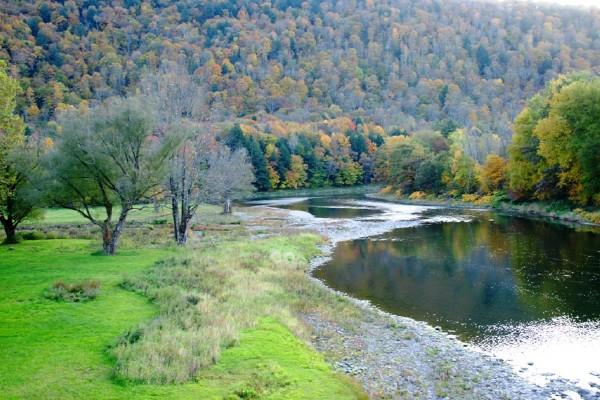
As the sun passed over the western hills we stopped to explore a place called “Fishs Eddy”, a town on the banks of the Delaware River.
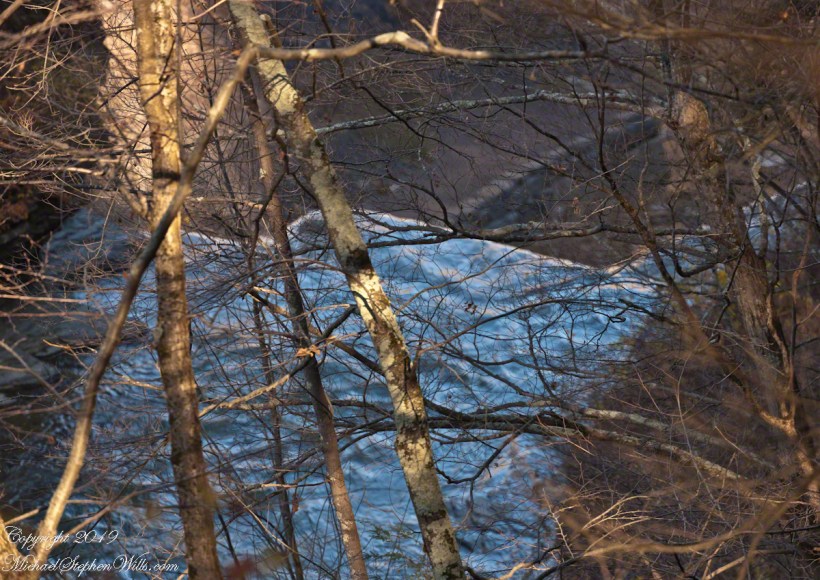
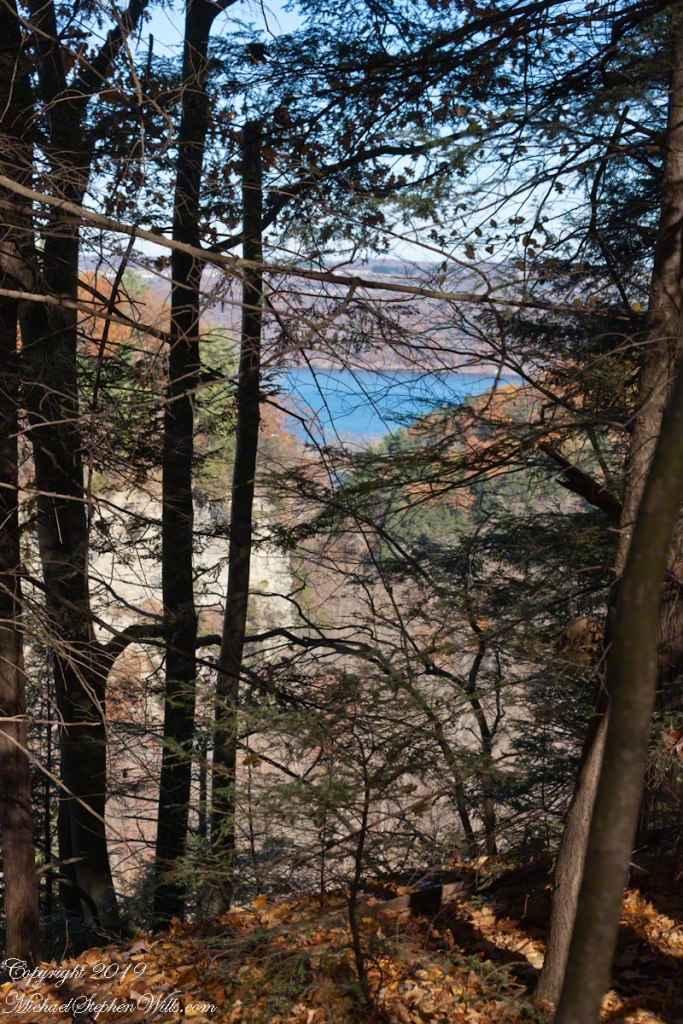
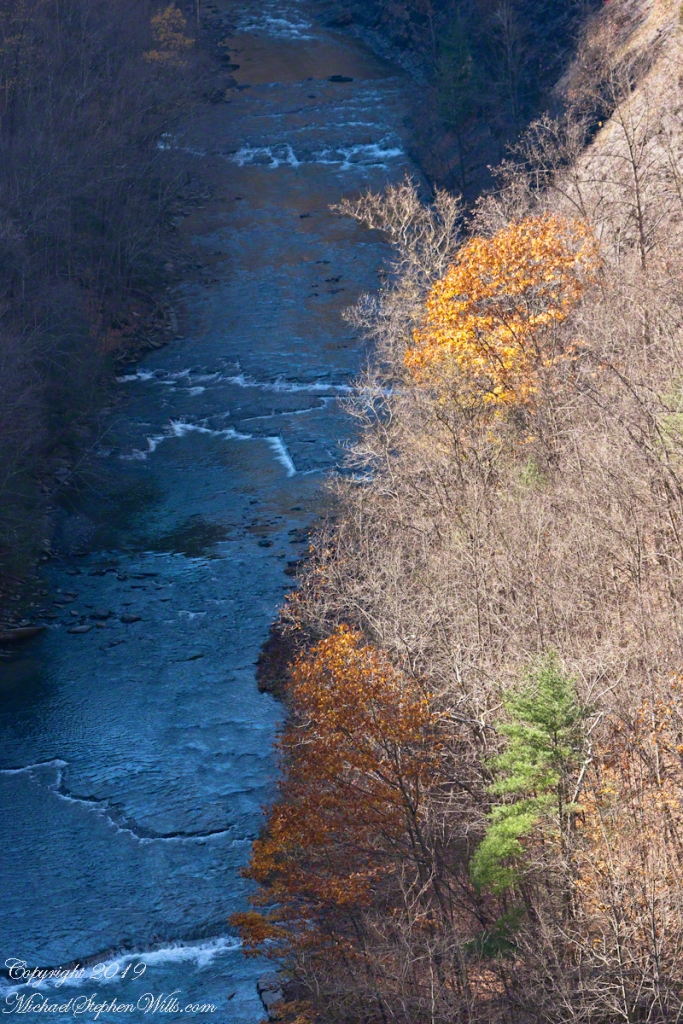
Delaware River view at Fishes Eddy
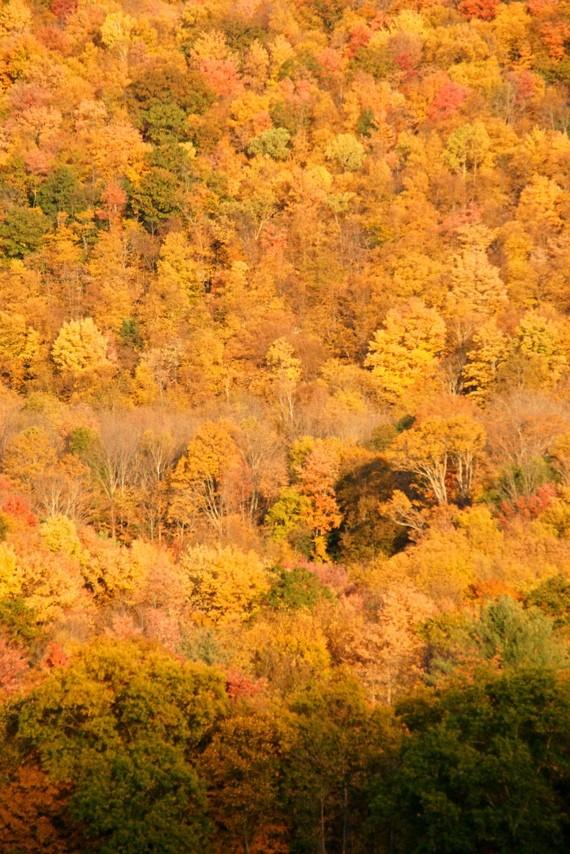
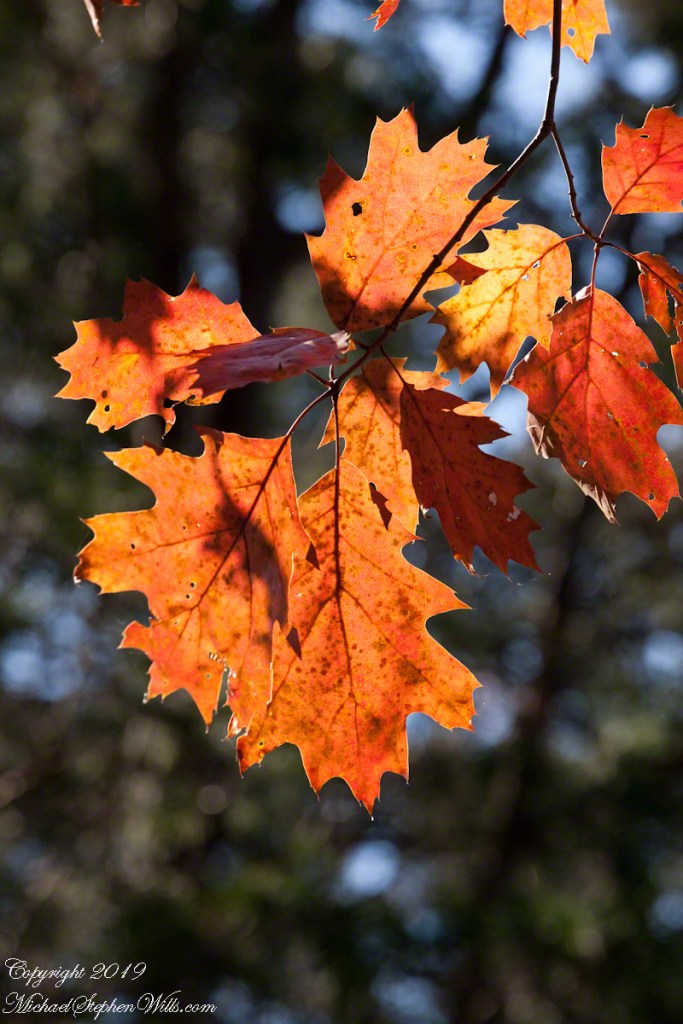
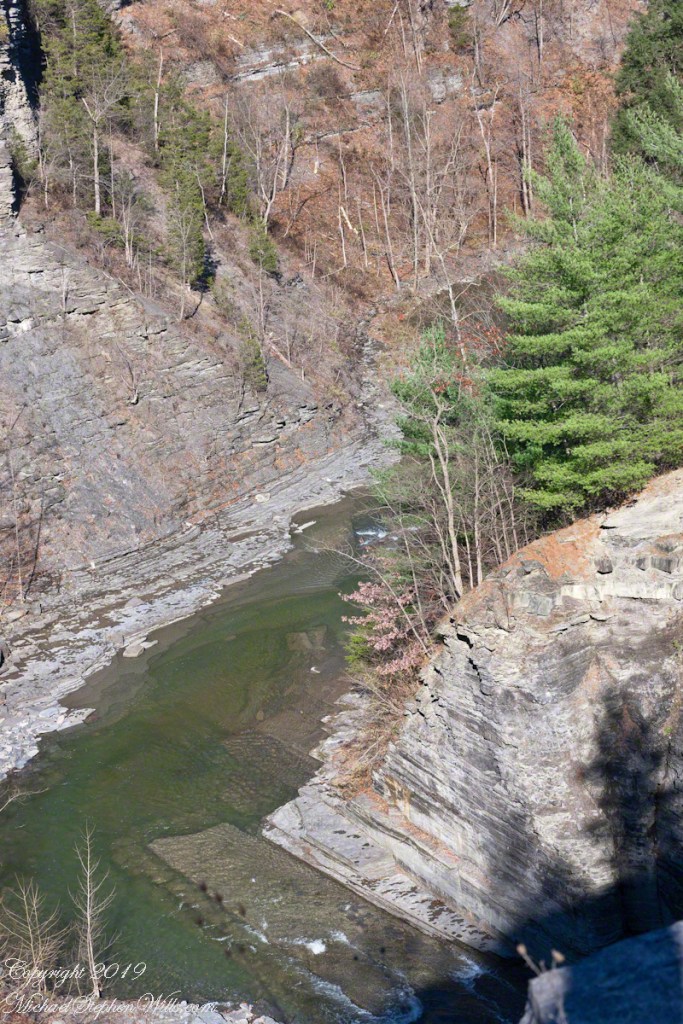
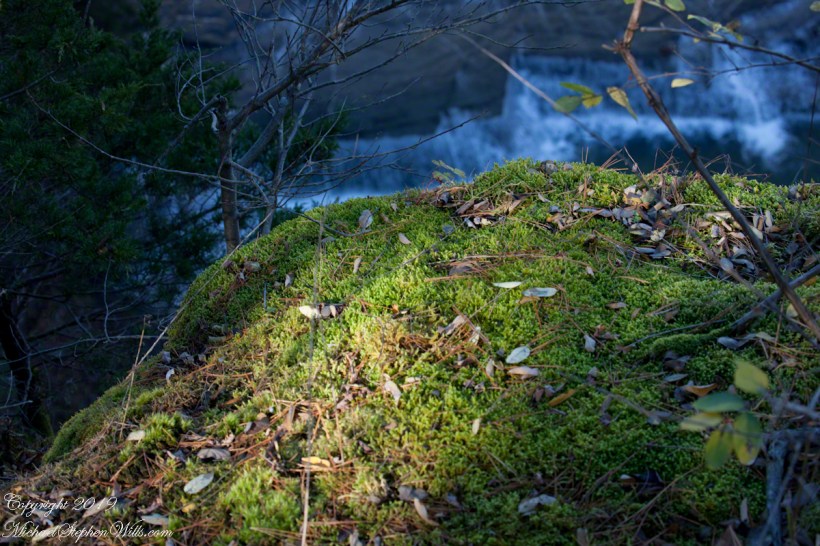
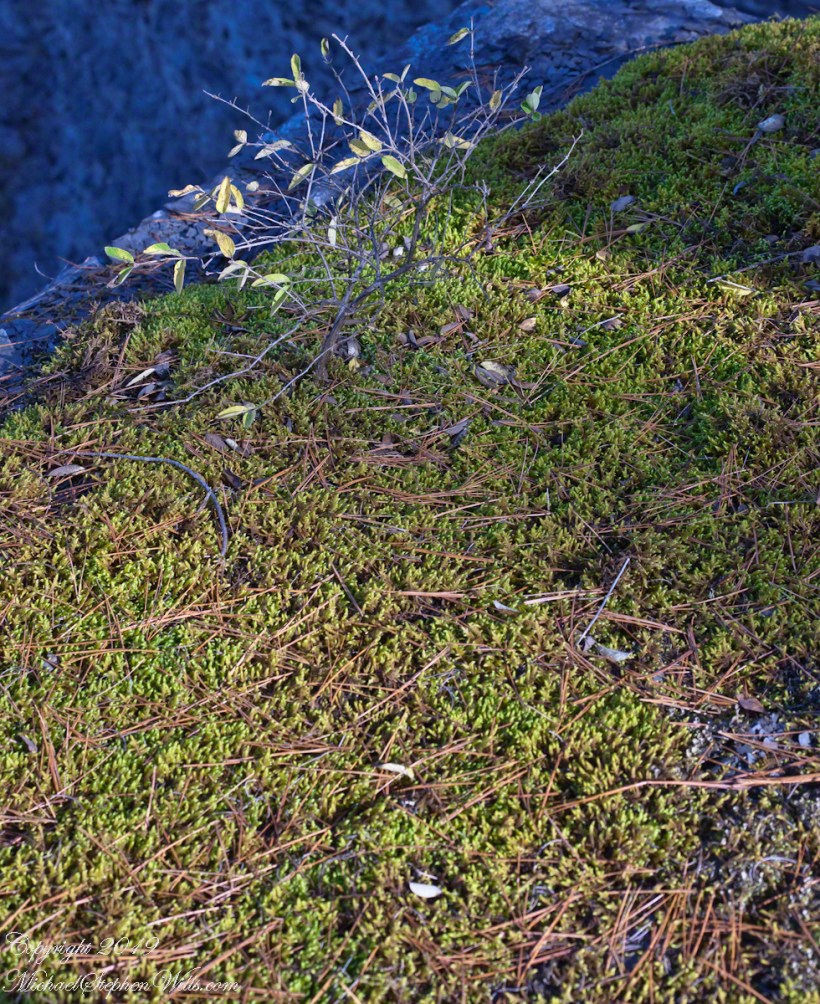
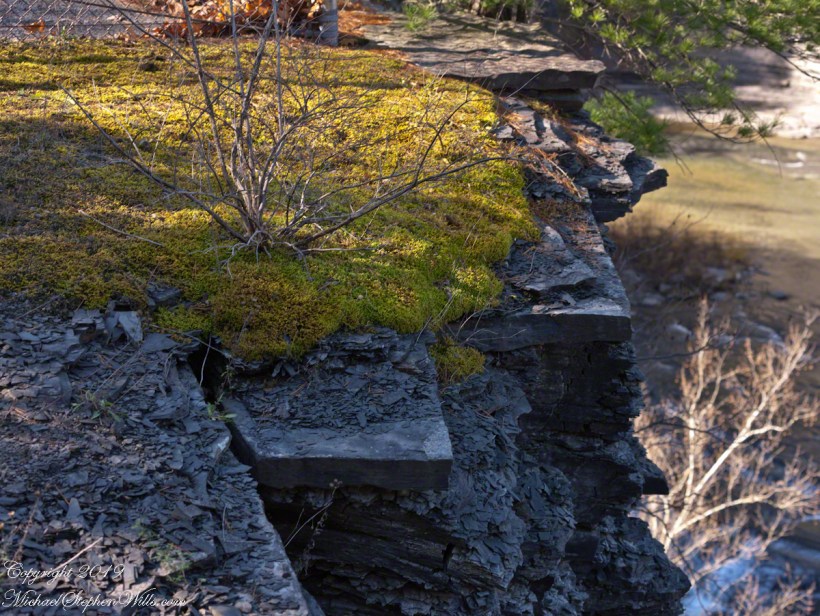
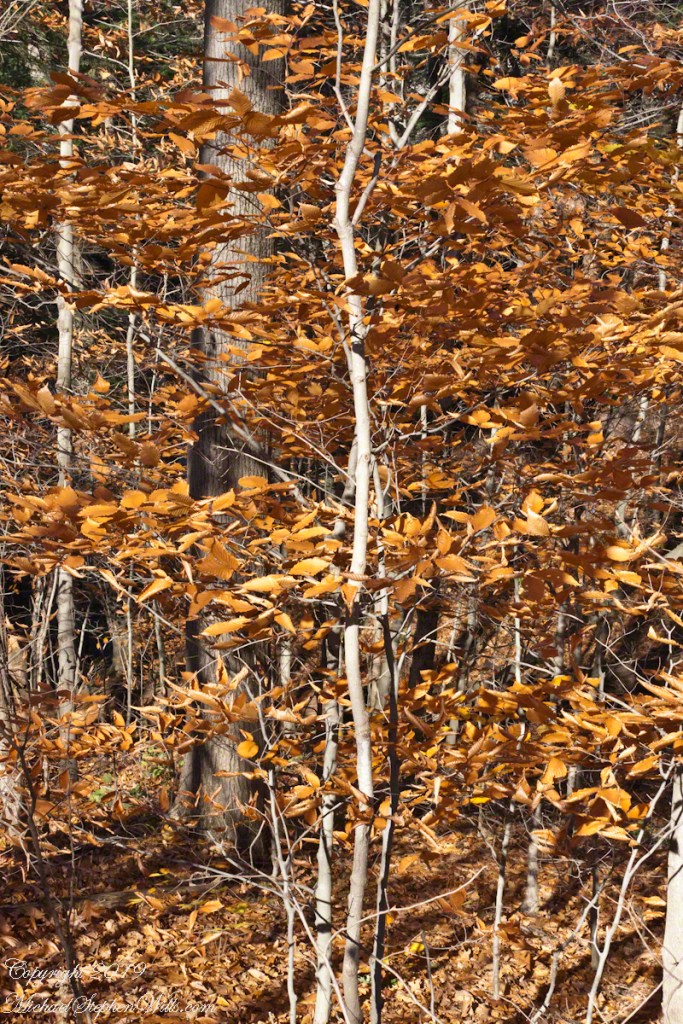
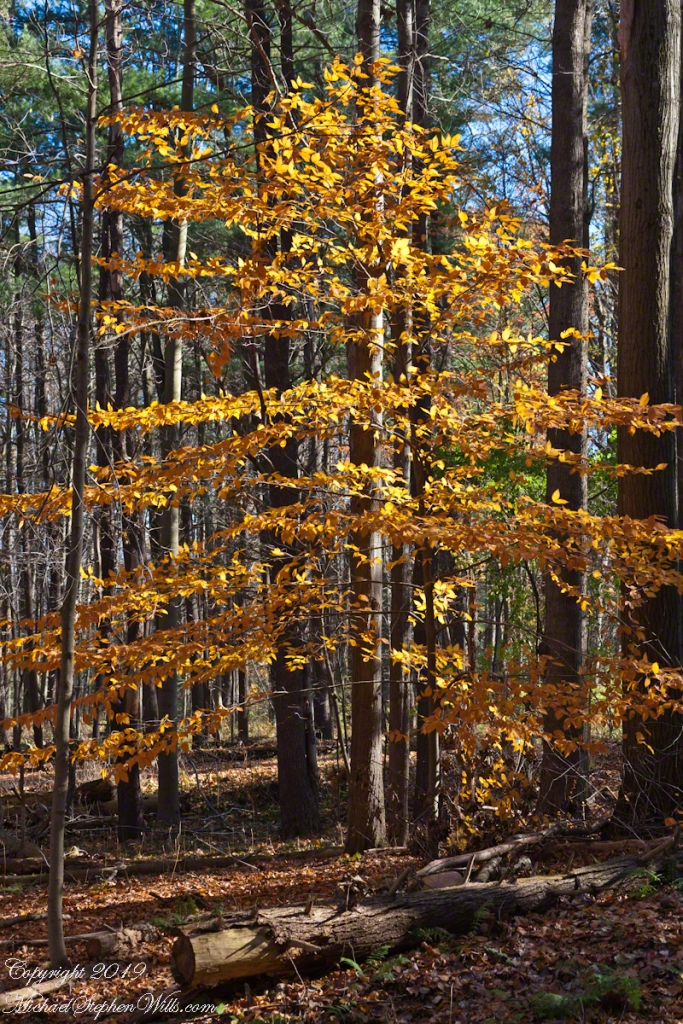
On the east side, facing sunset is a formation that would be a cliff if it was not for the hardwood trees growing from every available nook, crevice. Everywhere a root could be sunk, roots fed trees that, one late October afternoon, made a hill bright with autumn.
Turkey Habitat
Turkeys live in this type of habitat. We took a trail, barely a road that climbed past failed farms and hunting shacks.
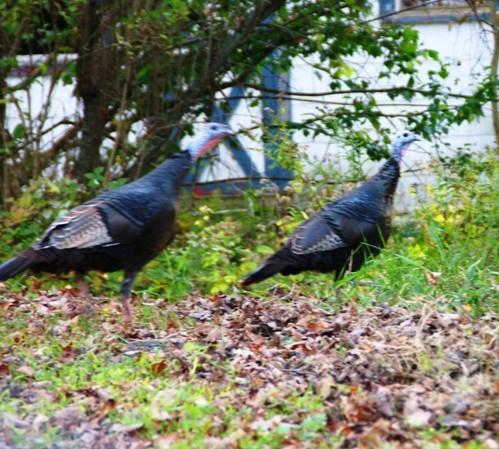
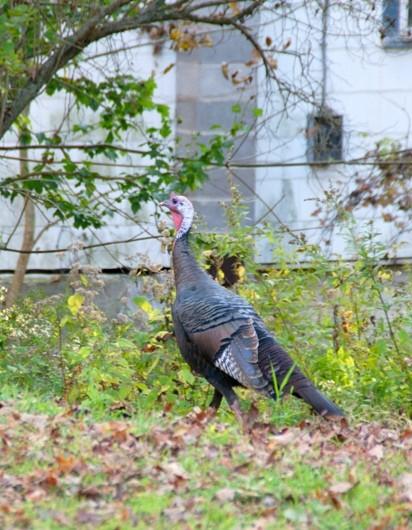
On a level place, in front of a ruined home, we came upon a Tom (male) turkey and his four hens. The hens fled at the sight of us. With barely time to raise the camera I caught Tom and the last hen as she fled into the bushes.
Tom Turkey Defiant
I say she, because Tom stayed behind. He stood erect, all three feet of him, defiant and strutting in a direction opposite from the hens.
This is the bird Benjamin Franklin proposed as the national emblem of the new United State of America (the bald eagle won that competition).
Hunted into almost oblivion, across the United States the wild turkey is making a dramatic comeback in many places, including the forests and farmland of rural New York State
This fellow made no noise. His strutting posture and head bobbing said it all.
We left Tom Turkey in peace to his domain and hens.
The Malloryville eskers near Freeville, New York, highlight the region’s glacial history and contribute significantly to biodiversity and local ecology.
Walking here, I enjoy telling the grandchildren of the immense, mile-high ice sheet that once covered this land 10,000 years ago, creating these hills and hollows.
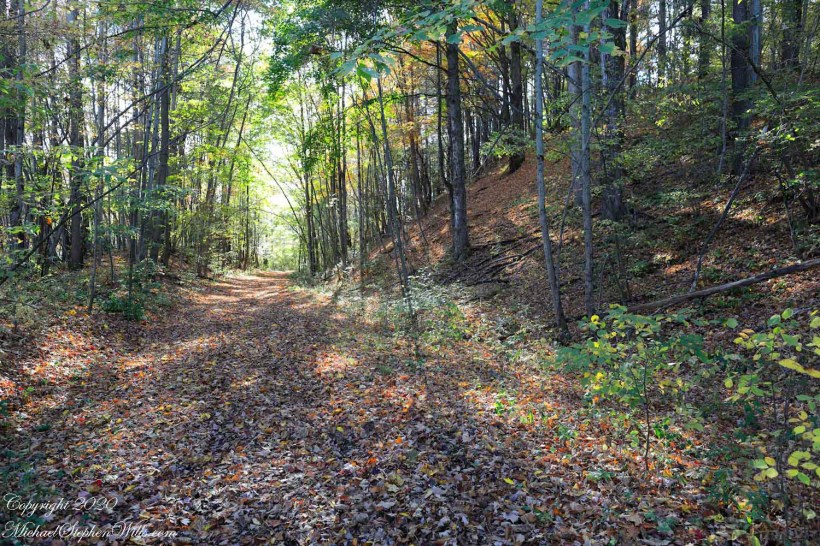
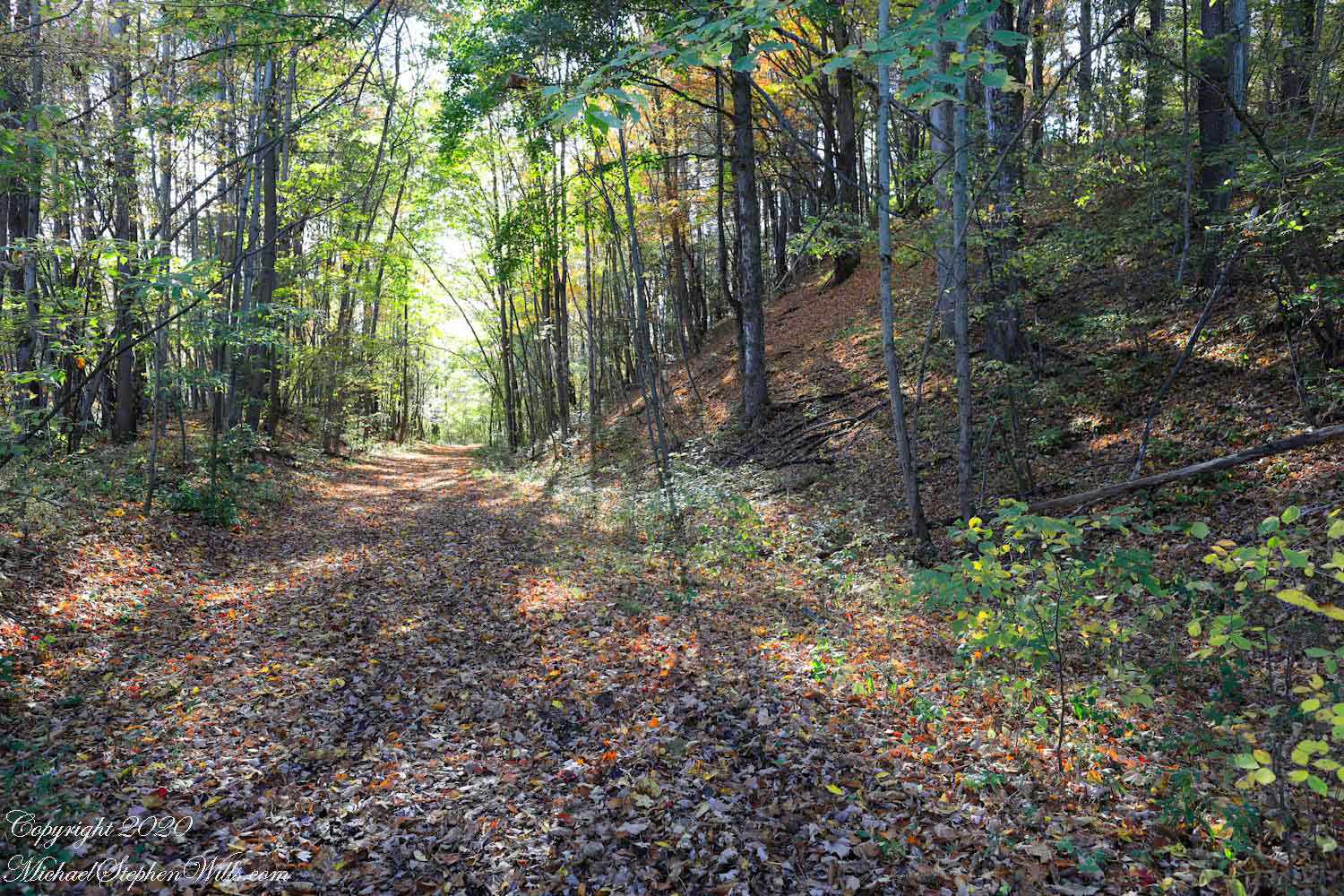
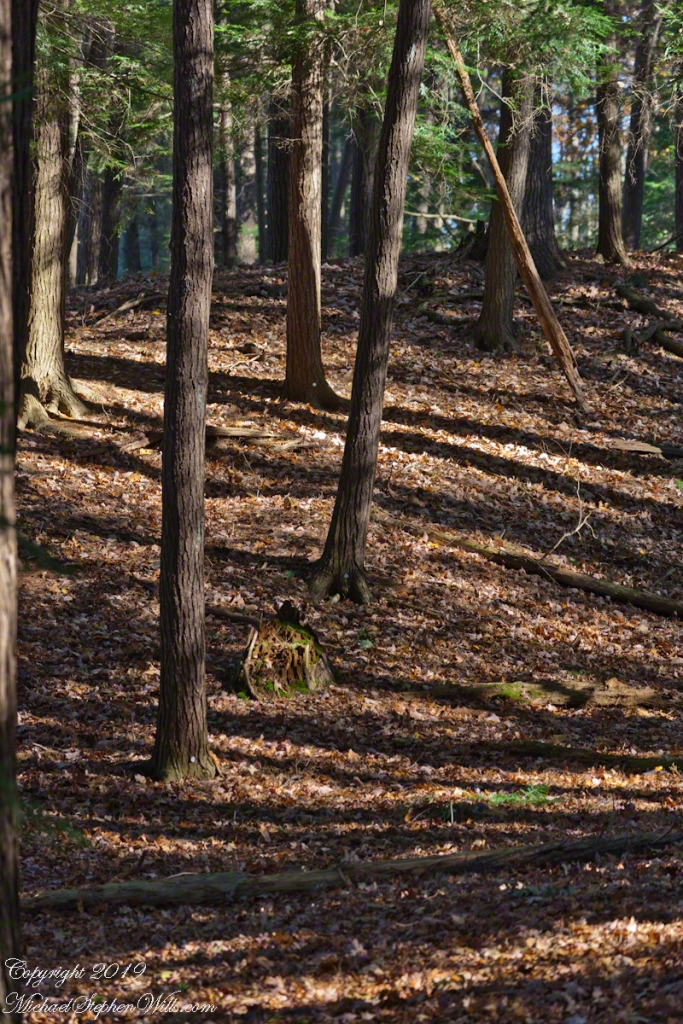
A forested path set among the glacially formed terrain of the O.D. von Engeln Malloryville Preserve near Freeville, New York.
Eskers are geological features that tell a rich tale of the glacial history of an area. In the landscape near Freeville, New York, the eskers of Malloryville stand as prominent reminders of the last Ice Age and the profound effects glaciers have had on the North American terrain. These elongated ridges, composed primarily of sand and gravel, not only offer a visual spectacle but also provide crucial insights into the glacial processes that shaped the region.
Eskers are formed by the deposition of sediment from meltwater rivers flowing on the surface of or within glaciers. As these glaciers recede, the sediment accumulates in the paths previously carved by the meltwater streams, eventually forming ridges. The Malloryville eskers are particularly notable for their well-preserved structure, giving geologists and enthusiasts alike a clear vision of the patterns of glacial meltwater flow from thousands of years ago.
Located just a few miles from Freeville, the Malloryville eskers are an intriguing natural attraction. The topography of the area, largely shaped by the Laurentide Ice Sheet during the last glacial maximum, is characterized by various glacial features, but the eskers are undeniably some of the most distinct. Their serpentine-like appearance, weaving through the landscape, immediately captures one’s attention and beckons further exploration.
From an ecological perspective, the eskers of Malloryville contribute to the area’s biodiversity. The unique microenvironments created by these ridges offer habitats that differ from the surrounding landscape. This differentiation allows for a variety of plant species to thrive, some of which are specially adapted to the well-drained soils of the eskers. Additionally, these ridges act as corridors for wildlife, facilitating movement and offering vantage points for species like deer and birds of prey.
Historically, the eskers near Freeville have also had an impact on human activity. Native American communities, recognizing the strategic advantage of these high grounds, are known to have used them as pathways or even settlement sites. In more recent history, the gravel and sand composition of the eskers have made them targets for mining activities. While this has led to the alteration or destruction of some sections, it has also highlighted the importance of preserving these unique geological features for future generations.
Efforts to study and preserve the Malloryville eskers have grown in recent years. Local educational institutions, in collaboration with geological societies, have undertaken detailed studies to understand the formation and significance of these features better. Such initiatives not only contribute to the scientific understanding of glacial processes but also raise awareness about the importance of conserving unique geological formations. Given the potential impacts of climate change on glacial landscapes worldwide, the eskers serve as a poignant reminder of the dynamic nature of our planet and the traces left behind by the ebb and flow of ice ages.
In conclusion, the eskers of Malloryville near Freeville, New York, stand as testaments to the glacial history of the region. These winding ridges, with their intricate patterns and rich ecological contributions, weave a story of natural processes that have spanned millennia. They remind us of the ever-changing nature of our planet and underscore the importance of understanding and preserving its geological wonders. Whether one views them with the eyes of a scientist, historian, or nature enthusiast, the Malloryville eskers offer a captivating glimpse into the ancient forces that have shaped the world around us.
Copyright 2020 Michael Stephen Wills All Rights Reserved
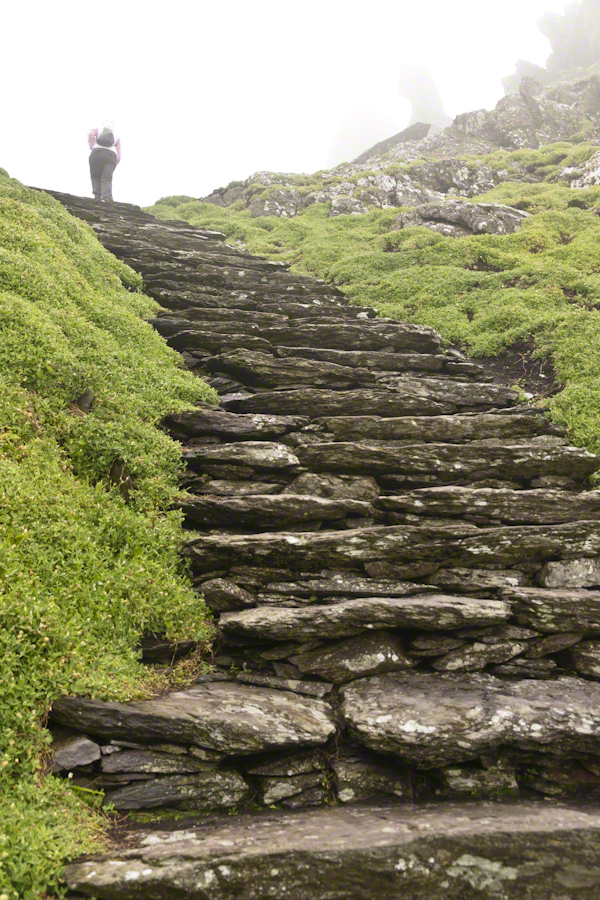
Each of the 603 steps between the Skellig Michael dock and the monastery evoked contemplation, caution, wonder and gratitude.
Contemplation: how did the monks manage to survive while placing the steps? It can only be by a careful division of labor once a survival tripod was build. By tripod I mean the basics food, shelter, warmth.
Caution: as with any steps, for a 60+ person I have learned the hard way falls take a long time to recover from.
Gratitude: for the opportunity, growth and knowledge afforded by travel.
Wonder: every step offered a new vantage and discovery.
Puffins were on my mind for most of the lower steps being immediately at hand, almost underfoot, constantly. Underfoot, not in a obnoxious way. Underfoot in being right there, unabashed, going about the business of life. Pam and I were lucky, Puffin wise, for the weather. Sensible birds, when the visibility is low Puffins stay close to the burrow, making improvements and socialize with neighbors.
Click any photograph for my Online gallery.
Bad News: Atlantic Puffin populations are on a precipitous decline across Ireland and British Islands. There are talks of a population collapse. Researchers enlisted assistance from wildlife photography enthusiasts with outstanding results released in 2017. The photographs showed parents returning with less nutritious fish. The stress on Puffin populations follows the decline of fish stocks from over fishing. I listed two references at the end of this post.
The disturbing element to our experience was not one of the birds flew in with a catch. On second thought, this is not unexpected. Late May the eggs are laid and under incubation. The individuals in these photographs were feeding only themselves. If we returned mid-June there would be chicks to feed.
Click any photograph for my Online gallery.
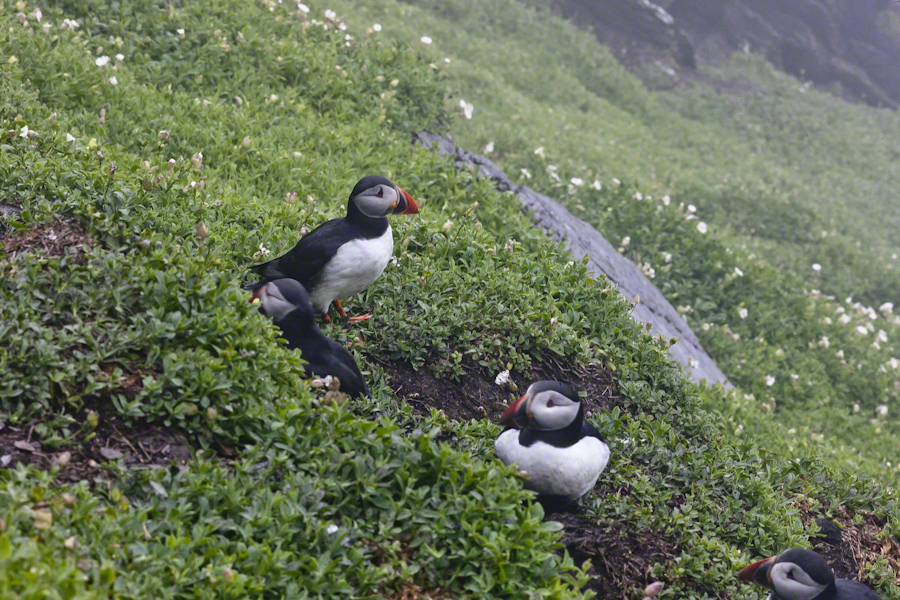
Puffin with an inquisitive attitude
Why do we love Puffins? We see reminders of ourselves. The expressive large eyes, over a striking beak and there is something expressive about the birds’ body movements. Don’t you almost know what’s on the mind of this fellow? “What’s going on, over there?”
Click any photograph for my Online gallery.
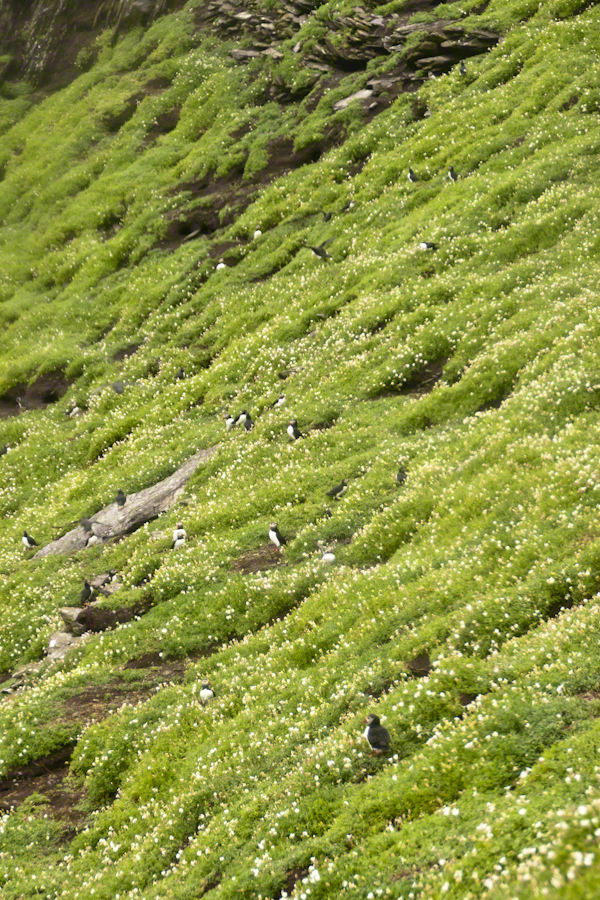
A colony of nesting puffins on a flowering cliff of green.
Puffins are small birds, the size of a human hand. This colony returned in late March or early April, each breeding pair claiming a nesting site. The coloring of the beak happens during breeding. The bird molts while at sea during the winter, the beak and other brightly colored facial characteristics are lost.
Michael Skellig puffins in social setting on cliff with burrows and flowers.
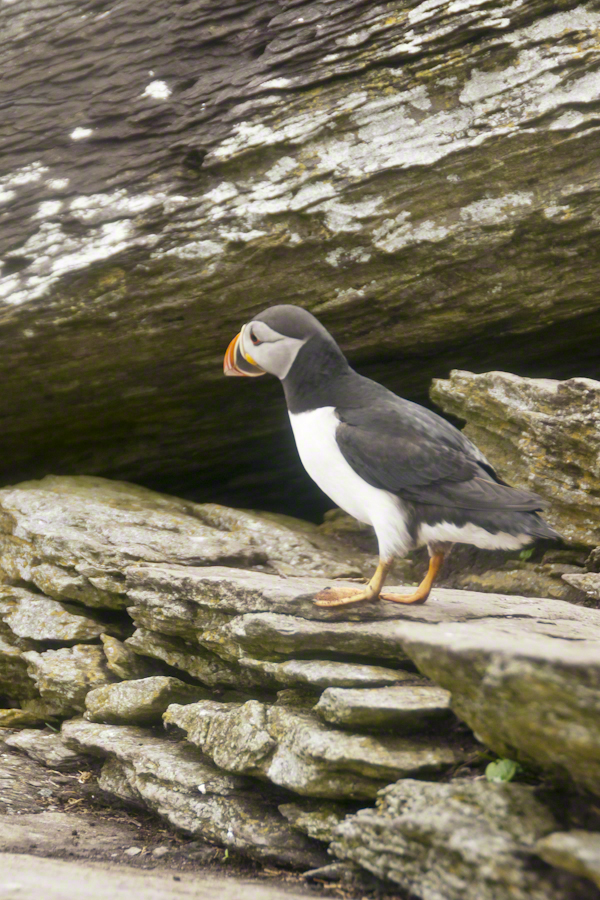
Puffin sexual differentiation is unique among birds. The coloring and markings are identical between males and females. Males are somewhat larger than females is all.
Click any photograph for my Online gallery.
Soft soil covering the flanks of Skellig Michael is the site of age old Puffin colonies.
Here is Puffin nesting behavior up close. I did some research on the flowering plants surrounding the burrows and am not sure. I believe the white flowers are a mixture of Sea Campion and Sea Mayweed.
As far as my photographic technique. There are two sets of Puffin shots from Skellig Michael. For the the walk to the top, the monastery site, I used the lighter Sony Alpha A700 dslr with a Sony variable lens, DT 18-200 mm F3.5 – 6.3. On top, I switched to the Canon EOS 1Ds Mark III and, for the descent, fitted a Canon EF 200mm f/2.8L USM lens.
The shot above and following are the Canon, taken on descent. Prior shots are the Sony, taken on ascent.
Click any photograph for my Online gallery.
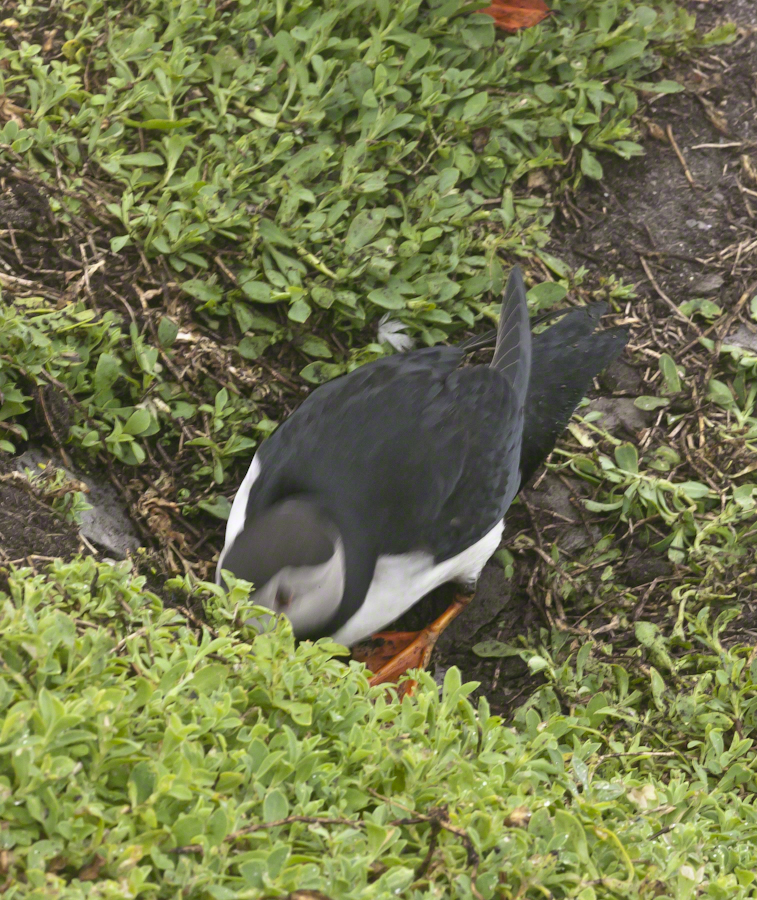
Puffin Entering Burrow
Puffins have striking black and white plumage and leg color some describe as “tangerine.” Tangerine? I guess. Here an individual ducks into the burrow.
Click any photograph for my Online gallery.
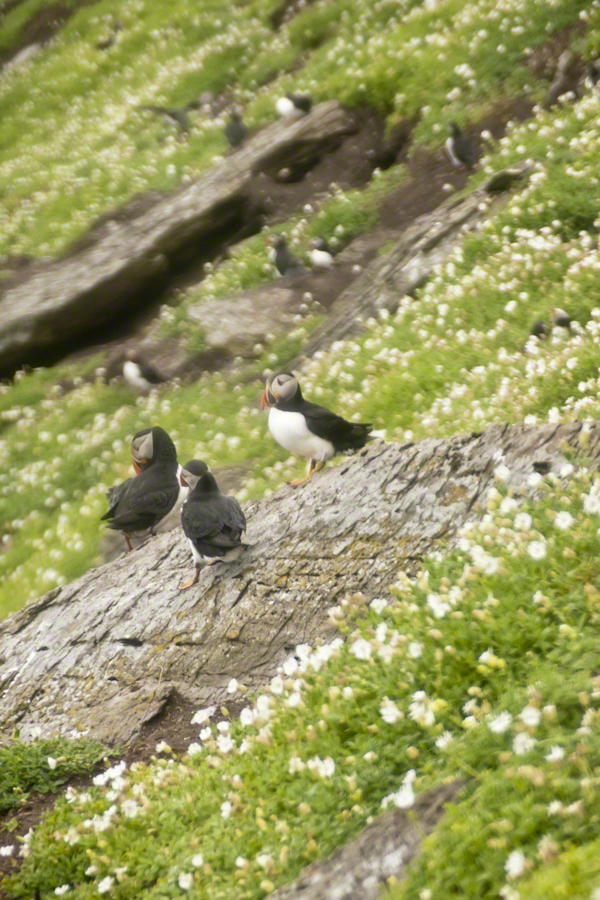
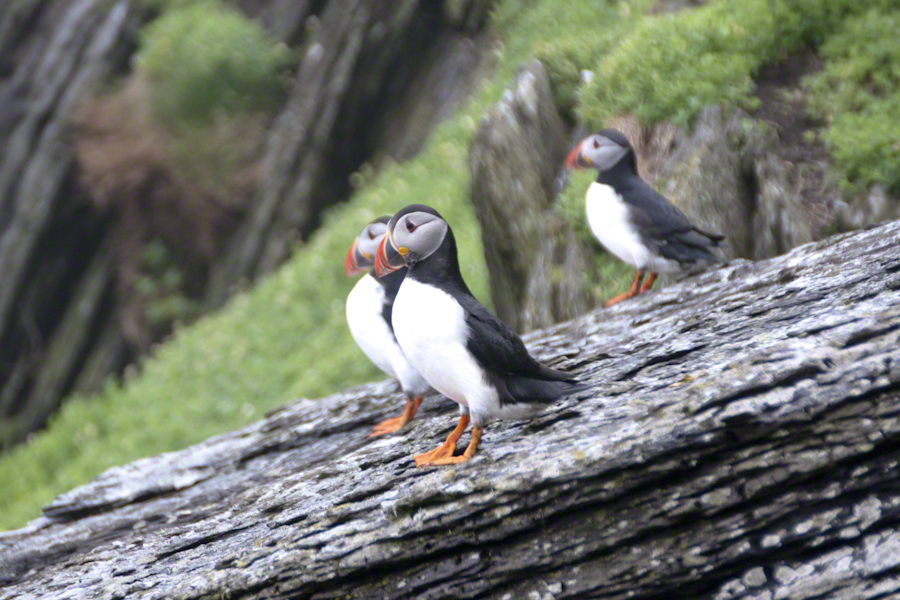
A grouping of Michael Skellig puffins, the foremost with an attitude of regard.
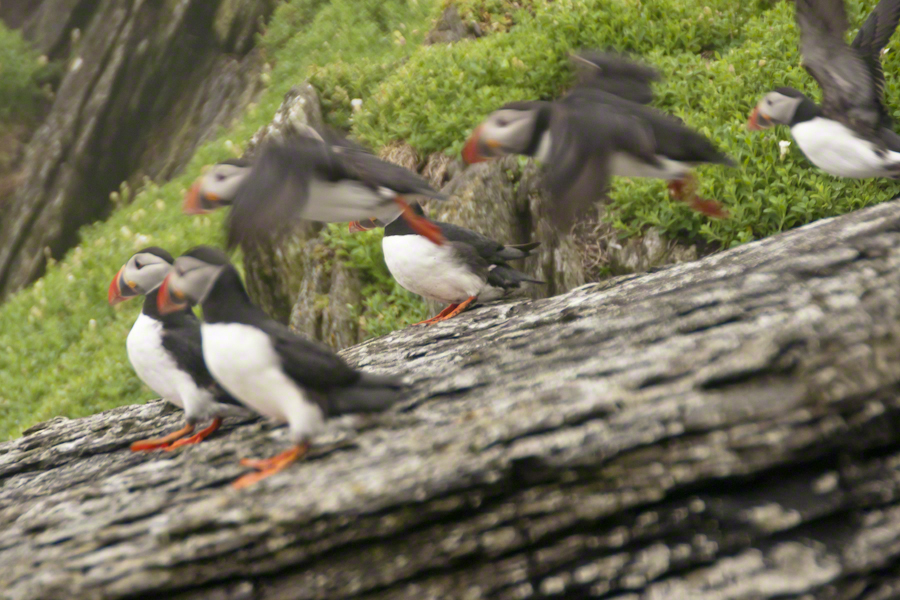
I did not spend a great deal of time in any one spot, being time limited and needing to get back to the boat. Don’t recall very much social interactions between individuals, other than this perching together on the rocks. The foreground Puffin seems to take the behavior of another bird to task.
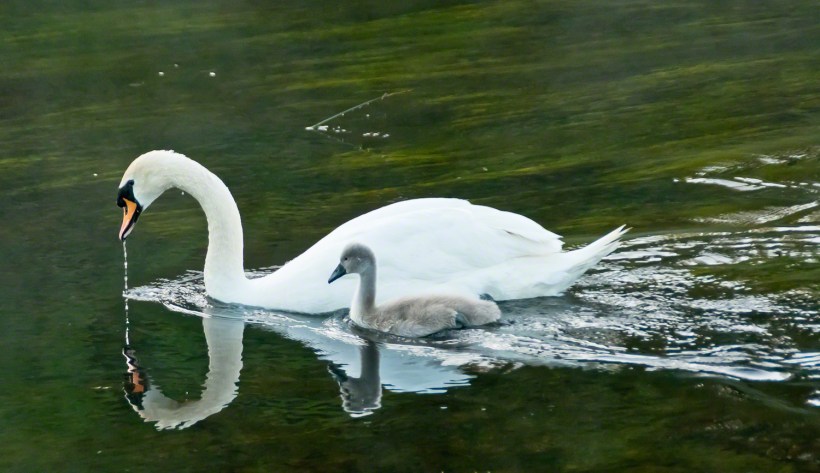
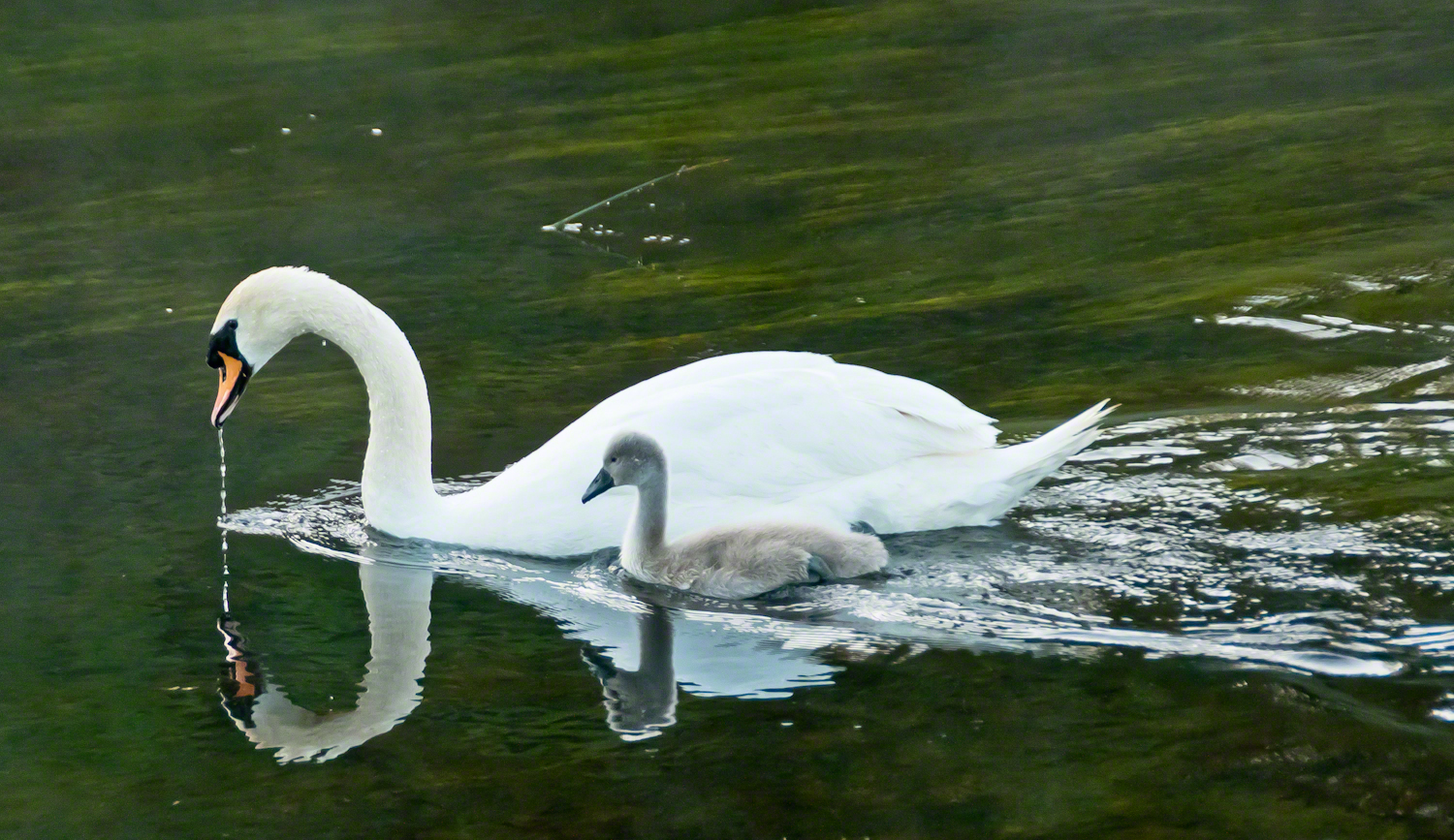
A parent swan and cygnet feeding on the River Cong outside the front door of Ashford Castle in County Mayo, in the west of Ireland. Click this link to read another Ireland story “The Cloigtheach of Glendalough.” Enter your email to receive notification of future postings. I will not sell or share your email address. […]