On this Christmas Eve we offer you our sincere wishes for a blessed celebration of your personal holiday tradition.

Click Me to view my photographs on Getty.
CLICK ME to read the first post in this series.
Angels on High
On this Christmas Eve we offer you our sincere wishes for a blessed celebration of your personal holiday tradition.

Time to Move On and Remember






Warm Wishes of Christmas



Join me in this journey, researching family history, tracing back to my early 20th-century Irish ancestors who emigrated to Canada.
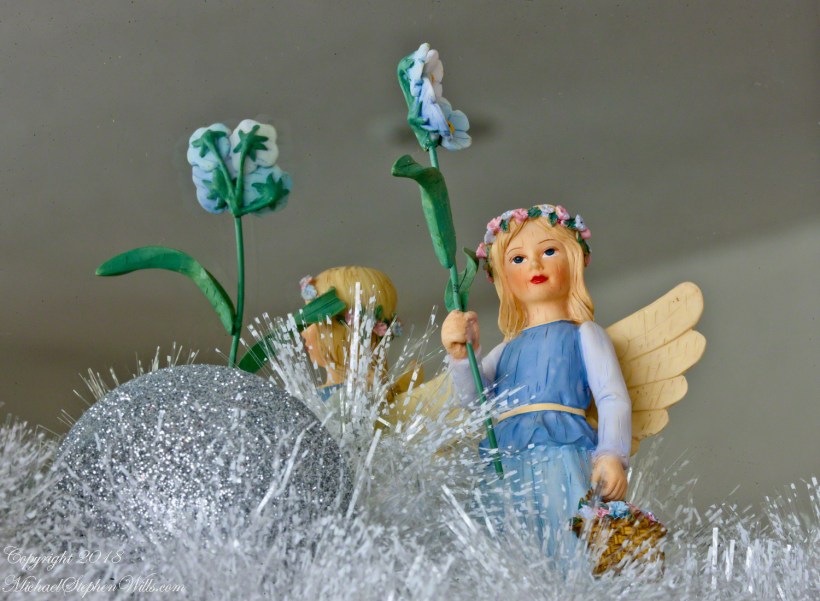
Ooen me up to experience this vigilantly poised resin fairy figure, ignoring her floral backdrop, personifying a lambent, defiant spirit.
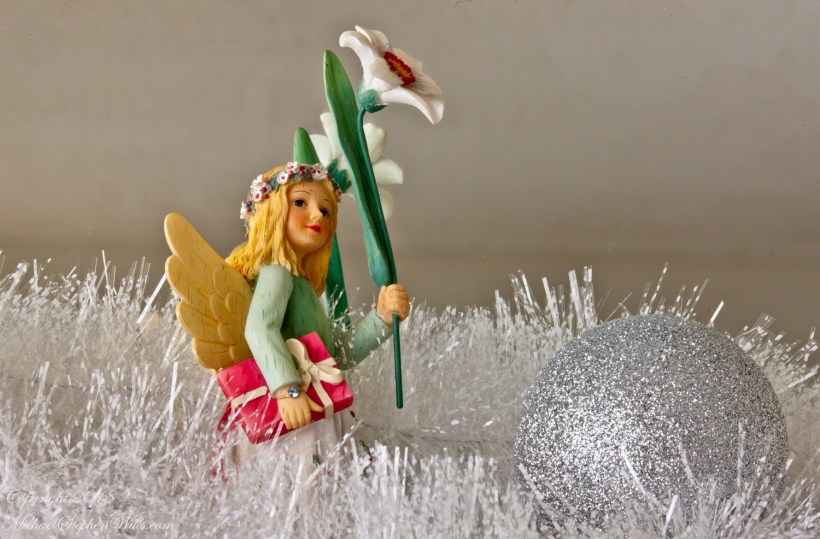
Pam incorporated a gifted resin sprite figure into her “Immaculate Conception” Christmas display, symbolizing a season’s emblem.
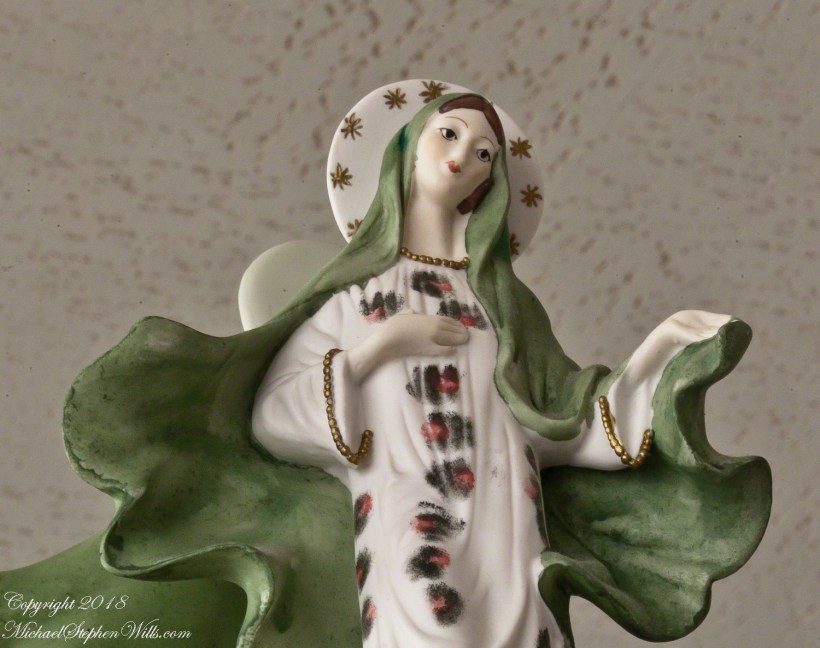
The Feast of the Immaculate Conception was December 8

The town of Ithaca evokes serene charm with its blend of history and modernity. Its community spirit is embodied in key symbols such as the local Fire Department and a public apple sculpture, a tribute to nature’s riches. Ithaca’s architectural prowess reflects generational craftsmanship, while the exuberance of local daisies exemplifies optimism. Encapsulating everyday beauty and shared experiences, Ithaca is more than a geographical location—it’s an ongoing narrative.
Old Testament
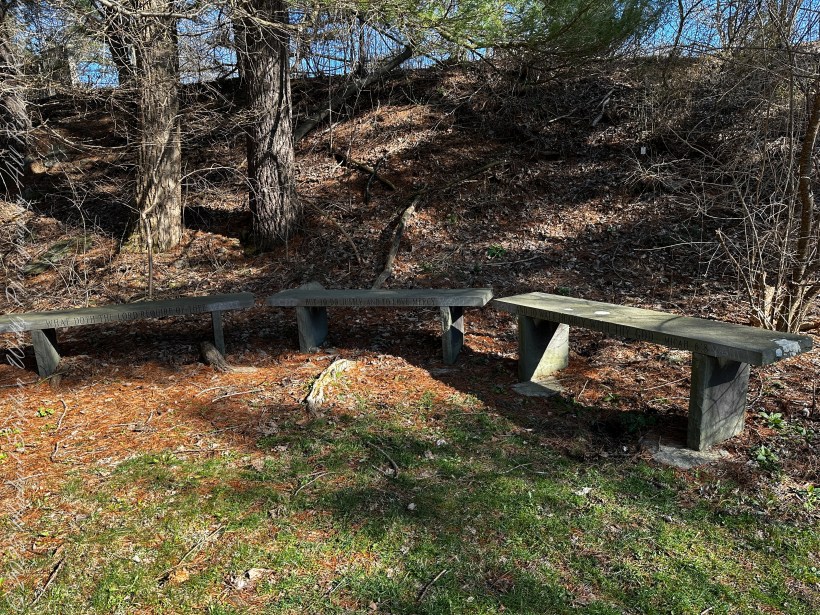
Pam and I ambled around the Arboretum for our Easter 2023 outing. We found a path new to us, with this memorial stone bench, a biblical quote engraved on the seats. Biblical Quote on bench: “What doth the lord require of thee / but to do justly and to love mercy / and to walk with thy god.” Micah 6:8
The Book of Micah is the sixth of the twelve minor prophets in the Hebrew Bible. Ostensibly, it records the sayings of Micah, whose name is Mikayahu (Hebrew: מִיכָיָ֫הוּ), meaning “Who is like Yahweh?”, an 8th-century BCE prophet from the village of Moresheth in Judah (Hebrew name from the opening verse: מיכה המרשתי). The book has three major divisions, chapters 1–2, 3–5 and 6–7, each introduced by the word “Hear,” with a pattern of alternating announcements of doom and expressions of hope within each division. Micah reproaches unjust leaders, defends the rights of the poor against the rich and powerful;[ while looking forward to a world at peace centered on Zion under the leadership of a new Davidic monarch. While the book is relatively short, it includes lament (1.8–16; 7.8–10), theophany (1.3–4), hymnic prayer of petition and confidence (7.14–20), and the “covenant lawsuit” (6.1–8), a distinct genre in which Yahweh (God) sues Israel for breach of contract of the Mosaic covenant.
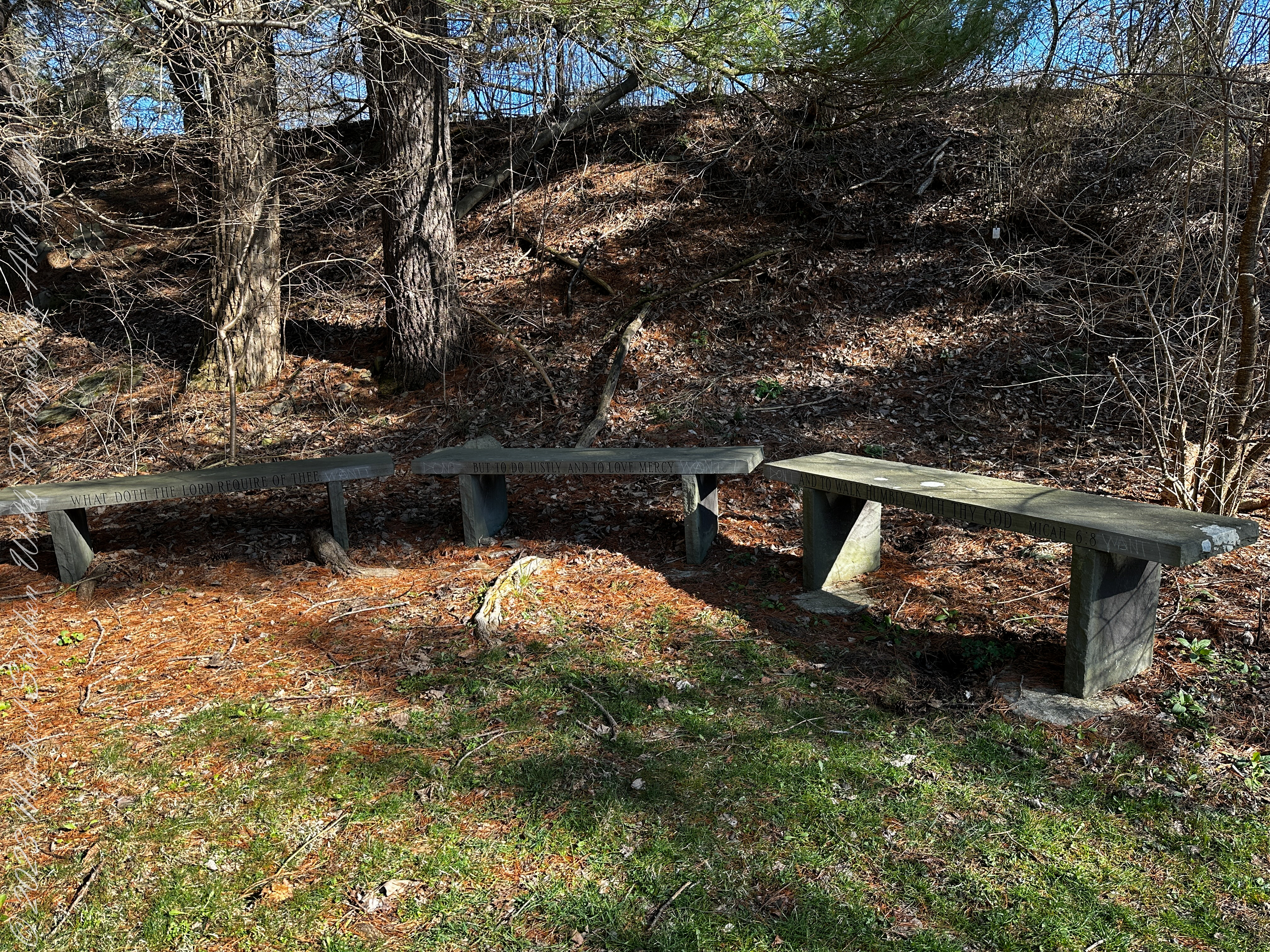
In the quote tract, (6:6–8), Micah speaks on behalf of the community asking what they should do in order to get back on God’s good side. Micah then responds by saying that God requires only “to do justice, and to love mercy, and to walk humbly with your God.” Thus declaring that the burnt offering of both animals and humans (which may have been practiced in Judah under Kings Ahaz and Manasseh) is not necessary for God.

Gifts from the past
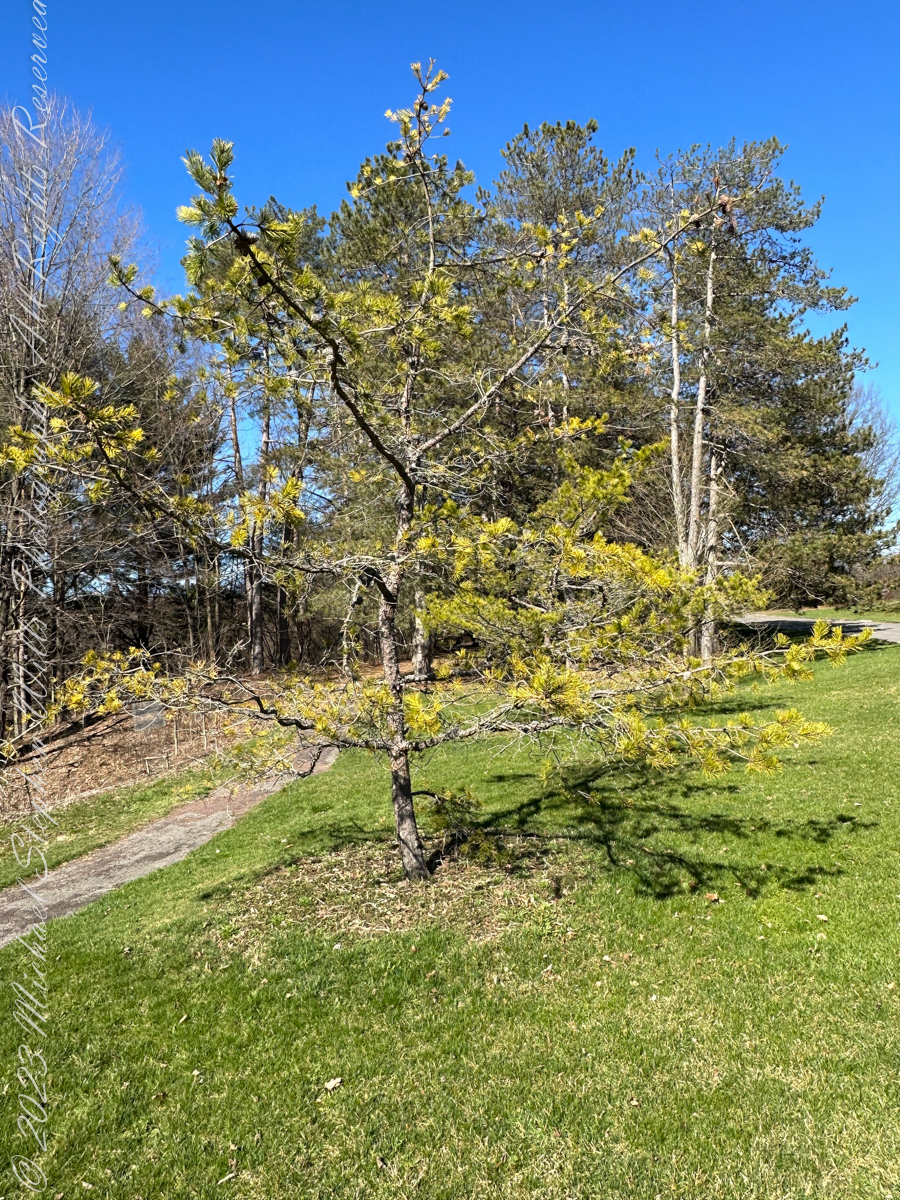
Pam and I ambled around the Arboretum for our Easter 2023 outing. Found here growing outside native range, being the Appalachian Mountains from Georgia to southern Pennsylvania, the Table Mountain Pine is named after the landform, not a particular mountain.
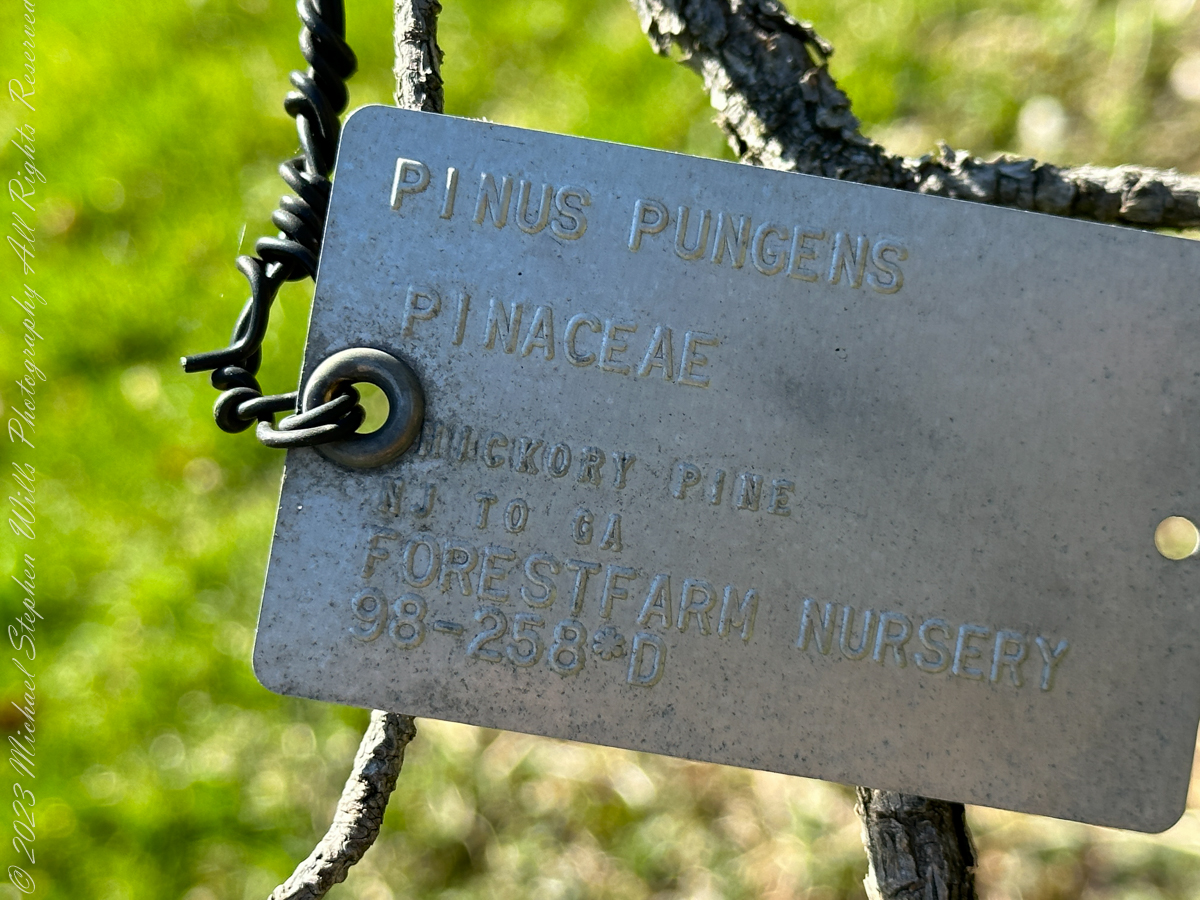
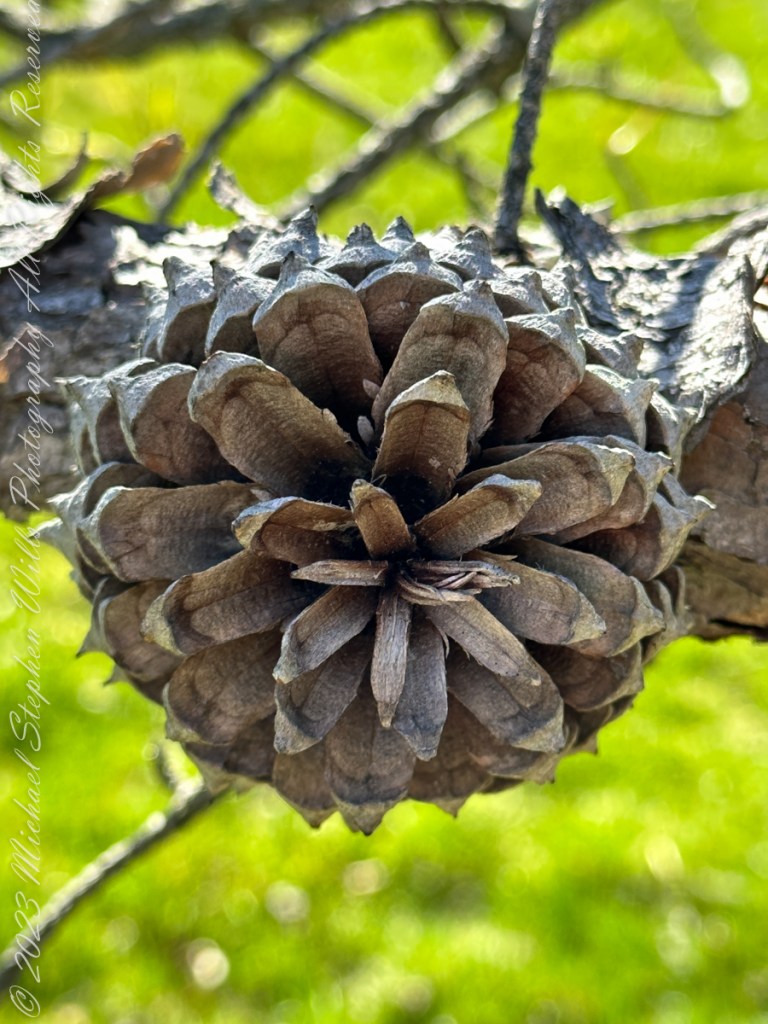
Its pinecones drew me to this scraggly, ungainly, poorly formed tree. All general mankind finds useful in the, scientific name, Pinus pungens, otherwise known as Hickory Pine, Prickly Pine and Mountain Pine, is to grind it up for pulp or chop it for tinder.
That said, the final scene of the 1992 film The Last of the Mohicans takes place in a nice Pinus pungens stand on a rocky mountaintop in North Carolina.

The tree has personality. Pinus pungens is the Lonesome Pine of the 1908 novel The Trail of the Lonesome Pine by John Fox, and popularized in the Laurel and Hardy film Way out West: “On the Blue Ridge Mountains of Virginia On the Trail of the Lonesome Pine” Several “Lonesome Pine” hiking trails have been waymarked in the Blue Ridge Mountains and elsewhere in the Appalachians.

Pinus pungens prefers dry conditions and is mostly found on rocky slopes, favoring higher elevations, from 300–1,760 meters (980–5,770 ft) altitude. It commonly grows as single scattered trees or small groves, not in large forests like most other pines, and needs periodic disturbances for seedling establishment. The three tallest known ones are in Paris Mountain State Park, South Carolina; they are 26.85 to 29.96 meters (88 ft 1 in to 98 ft 4 in) tall.