Whispers from the Rocks: The Vivid World of the Red Columbine

Discover the vibrant Red Columbine of Treman Gorge, a masterpiece of adaptation and survival nestled among ancient rocks. Explore how this delicate beauty thrives in the harsh cliffs of the Finger Lakes.

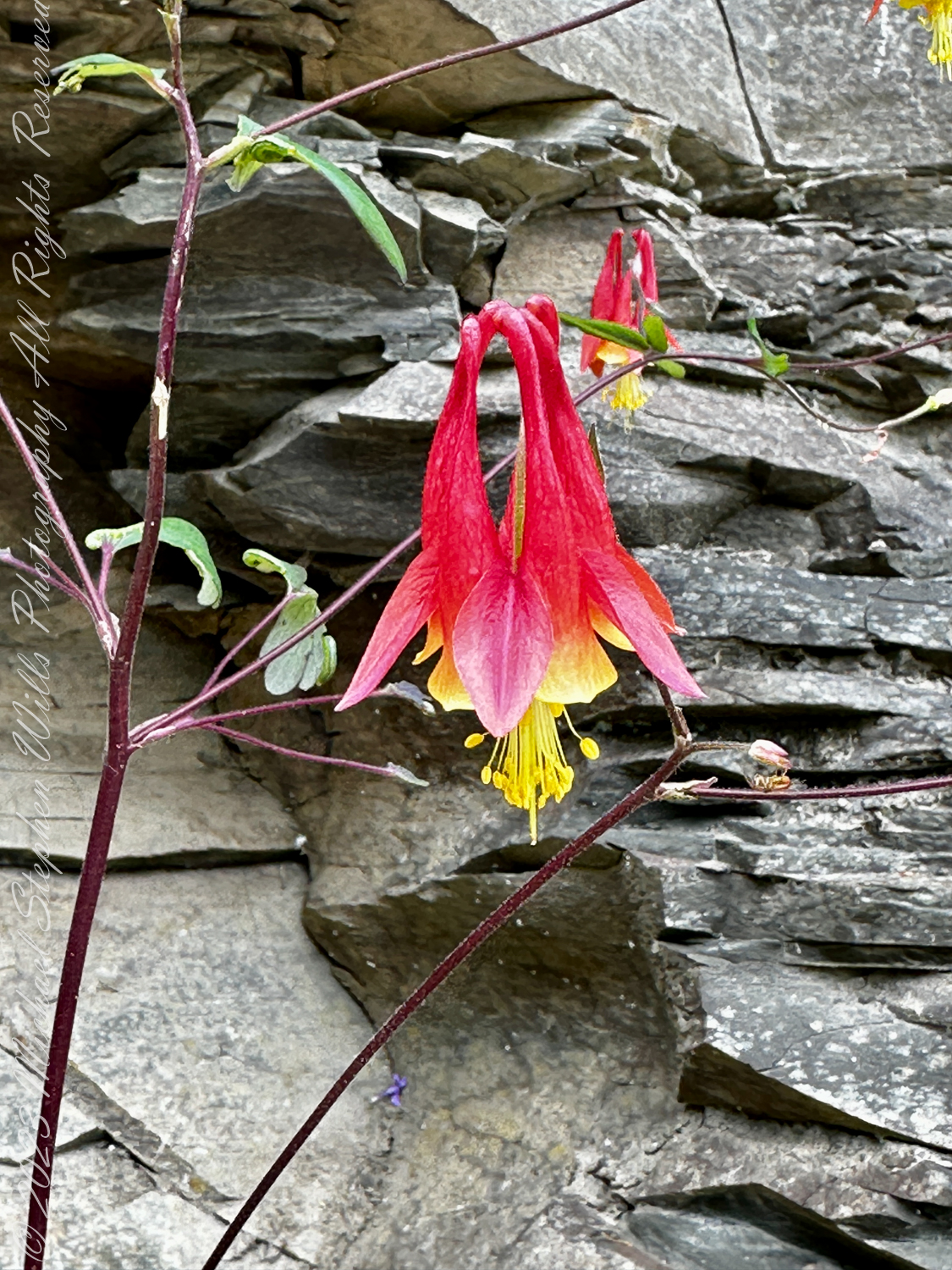
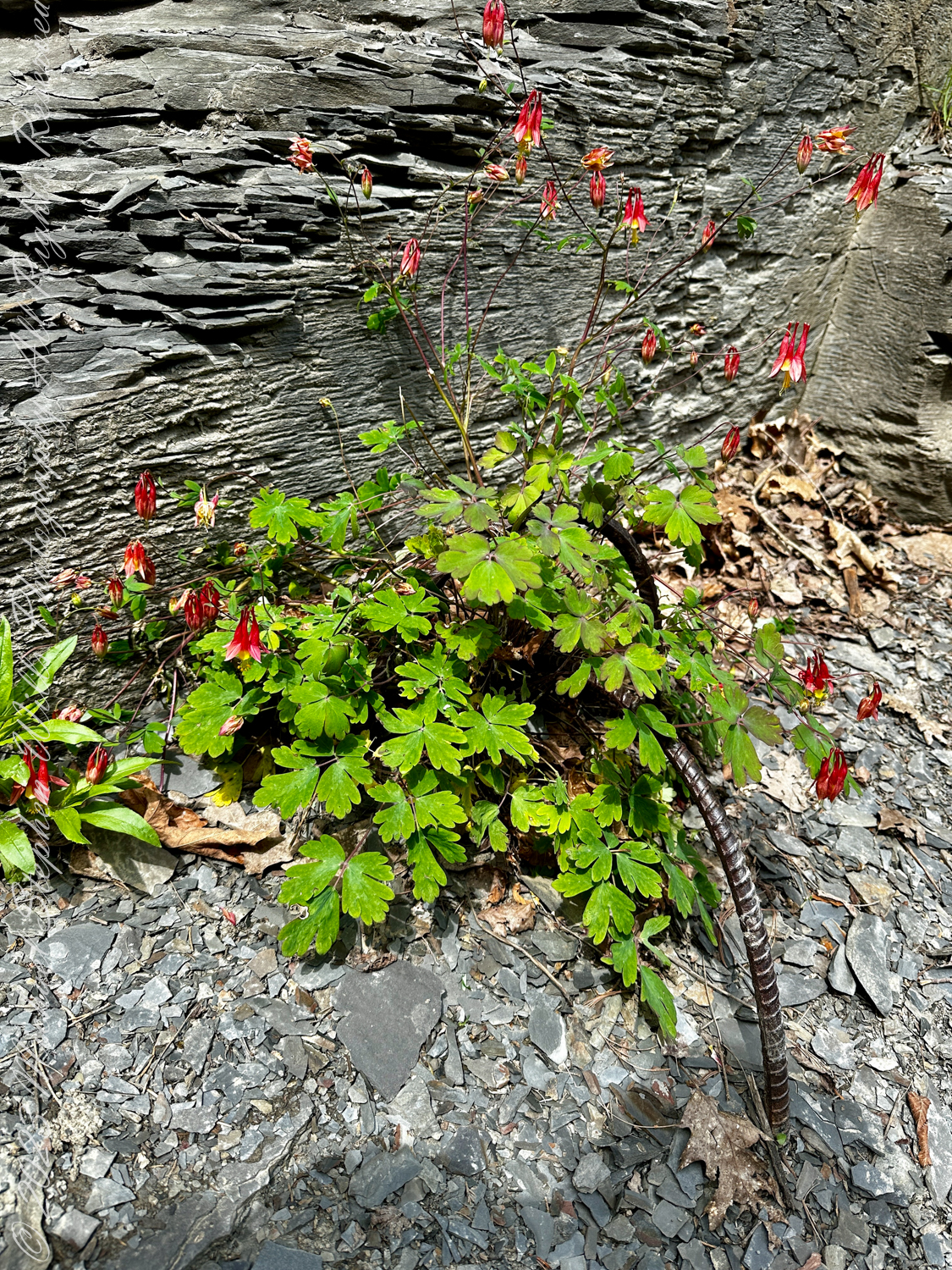
Wandering through the verdant paths of Treman Gorge, amidst the rough-hewn charm of the Finger Lakes Region, I find myself entranced by a striking botanical jewel, the Red Columbine (Aquilegia canadensis). Amid the prehistoric tapestry of shale and limestone, these delicate red and yellow flowers stand out with a vivacity that seems almost audacious against the stoic gray of their rocky backdrop.

The Red Columbine, with its unique, nodding bell-like flowers, is more than just a feast for the eyes. Each bloom is a masterclass in the art of survival and adaptation. The elongated, tubular structure of its flowers, splashed with a bold red that fades into a sun-kissed yellow, is nature’s perfect lure for its pollinators. The petals curve back, as if arching away in a graceful flare, exposing the stamens and pistils in an inviting display for hummingbirds, which, in their quest for nectar, become unwitting partners in the dance of pollination.

As I tread softly along the mossy stones, the sheer cliff faces of the gorge serve as a stark reminder of the relentless passage of time. Yet here, in this ancient cradle, the Red Columbine thrives in pockets of soil that seem to defy gravity. It’s a botanical ballet, with each plant performing its survival routine rooted in crevices that gather just enough humus to sustain life.

The air is cool and moist, the faint murmur of Enfield Creek a constant whisper beneath the chorus of bird calls. This is a place of subtle enchantment where every glance reveals the rugged beauty of nature intertwined with the delicate persistence of life. The columbines, with their whimsical spirals of spurs and lush, lobed leaves, appear almost otherworldly. They thrive here in the dappled sunlight, a testament to their resilience and a reminder of nature’s quiet defiance against the odds.

Red Columbine with steel rebar driven into the rock to anchor lifesaving lines. Found near Lucifer Falls, Robert H Treman New York State Park, Ithaca, Tompkins County

In this serene alcove, time slows. The Red Columbine’s pendulous blooms sway gently with the breeze, each movement a soft ballet in the verdant amphitheater of Treman Gorge. This flower, with its fiery hues and intricate form, embodies the spirit of the wild that surrounds us. It stands as a vibrant contrast against the somber stones, a living splash of color against the monochrome palette of the gorge.

As I pause to capture this moment, camera in hand, I am reminded of the fragile beauty that thrives in these hidden corners of the earth. The Red Columbine, with its enchanting flowers and rugged perseverance, is a symbol of the wild heart that beats strong within the quiet solitude of Treman Gorge. Here, in the heart of the Finger Lakes, beauty and resilience bloom in the most unexpected places, painting the landscape with strokes of floral brilliance.

Copyright 2024 Michael Stephen Wills All Rights Reserved

Viola pubescens: A Delight of the Deciduous Forest

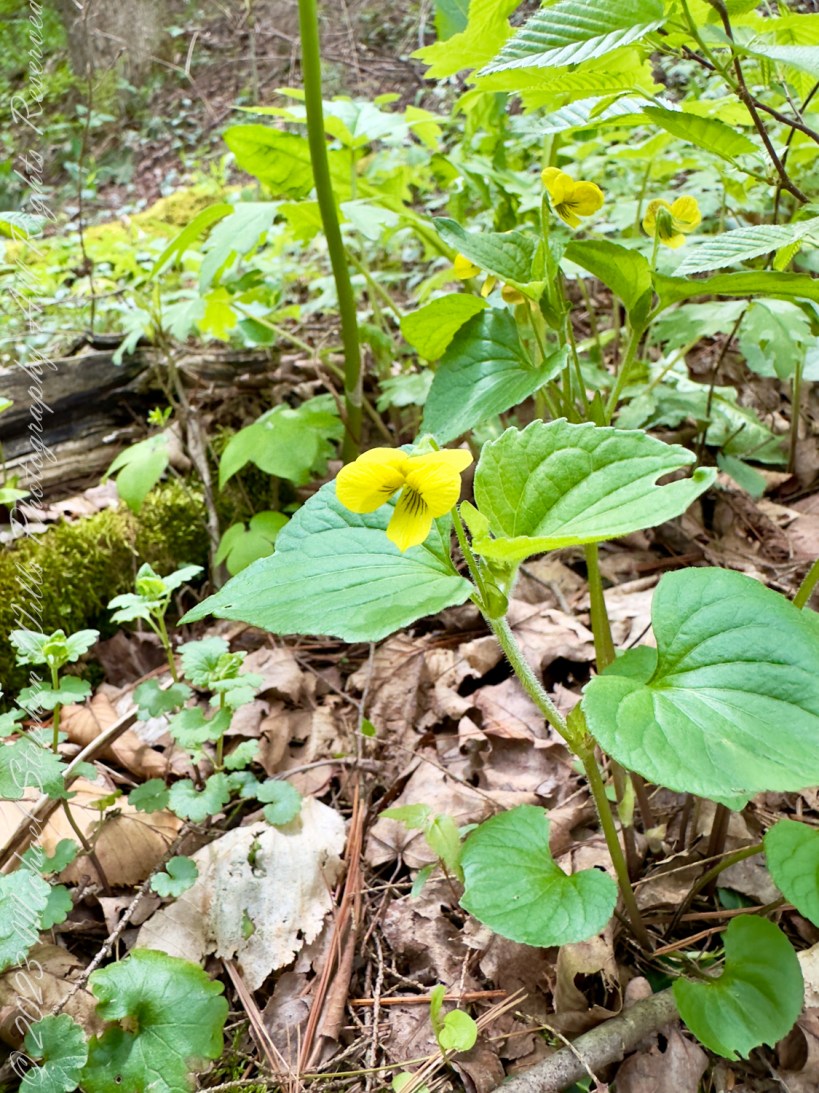
The yellow forest violet, Viola pubescens, with bright yellow flowers, serves as nectar source and butterfly host, indicating forest health and offering medicinal uses.

The yellow forest violet is easily recognizable by its bright yellow flowers, which add a splash of color to the forest floor in early to mid-spring. The petals are slightly fringed and the lower petal exhibits delicate veins that serve as nectar guides for pollinators. The leaves of Viola pubescens are heart-shaped with a slight pubescence, or fuzziness, that gives the plant its characteristic downy appearance.

As a member of the Violet family, Viola pubescens is important ecologically. It serves as an early source of nectar for pollinators such as bees and butterflies. Additionally, the plant is a host for the larvae of some Fritillary butterflies, playing a crucial role in their lifecycle.

This plant not only contributes to the biodiversity of its habitat but also enchants those who wander through its woodland home. The presence of Viola pubescens indicates a healthy, undisturbed forest ecosystem, making it an excellent indicator of ecological stability.

Viola pubescens is also noted for its medicinal uses among Native American tribes, who used various parts of the plant to treat ailments ranging from colds to heart trouble. The roots and leaves were often used in traditional remedies, showcasing the plant’s utility beyond its aesthetic appeal.

In summary, Viola pubescens, or the yellow forest violet, is a noteworthy component of the North American woodland biome. Its ecological role and historical significance make it a valued species for both naturalists and conservationists alike.

Copyright 2024 Michael Stephen Wills All Rights Reserved

Cardamine diphylla: A Woodland Marvel

Step into the spring woods and discover the broadleaf toothwort, Cardamine diphylla. Marvel at its white blossoms and deep-lobed leaves, and uncover its vital role in both early pollination and traditional medicinal practices.

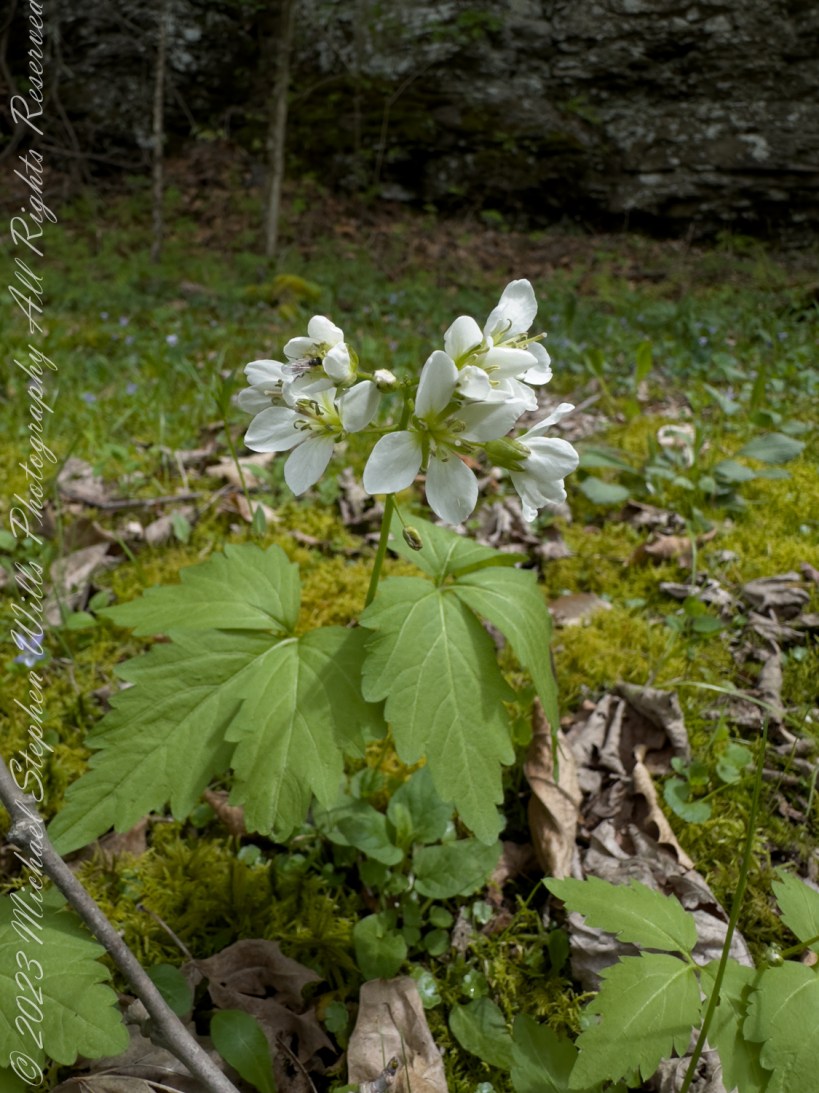
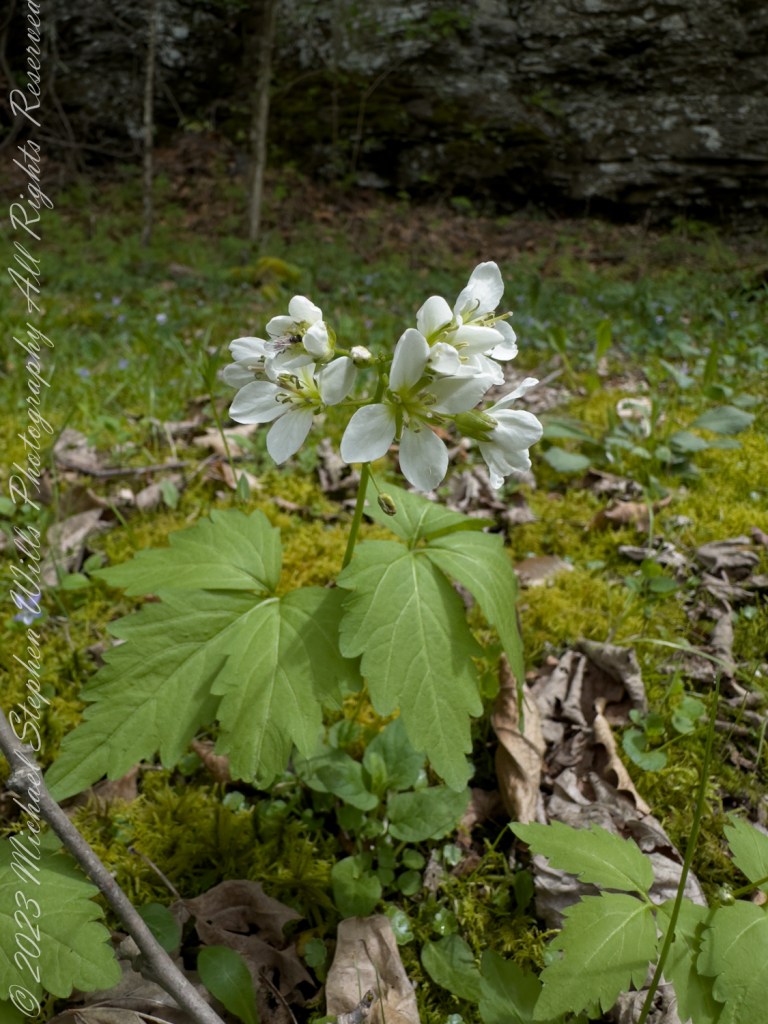
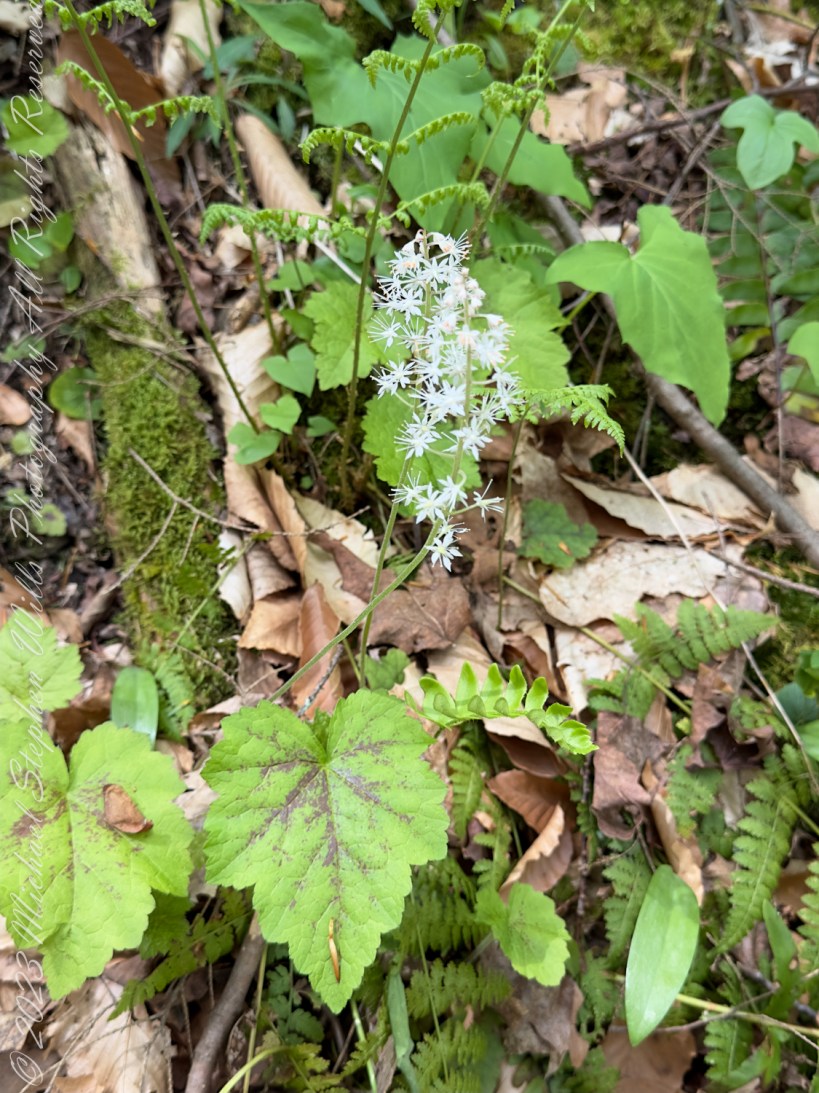
Broadleaf toothwort, Cardamine diphylla, plays a charming role in the ecosystem of deciduous forests, often carpeting the forest floor with its distinctive greenery and white blossoms during the spring. This plant is particularly noted for its broad, compound leaves that usually consist of two or three leaflets, each characterized by deep lobes and a somewhat wrinkled appearance, lending it the name “crinkle root.”

The flowers of the broadleaf toothwort are a notable feature, emerging in clusters atop slender, upright stems. Each bloom presents four white petals that form a delicate cross, a typical trait of the Brassicaceae family, to which it belongs. The flowering period spans early to mid-spring, making it one of the earlier blooms in woodland areas, which plays a critical role in the local ecology. These flowers are not just a visual treat but are also vital for early-season pollinators such as bees and butterflies, providing them with necessary nectar.

Moreover, Cardamine diphylla is more than just a visual and ecological gem. It has historical uses in traditional medicine and cuisine. Native American tribes utilized the peppery roots of the toothwort as a seasoning and as a medicinal herb to treat various ailments.

The presence of Cardamine diphylla is also an indicator of the health of the forest ecosystem. Thriving populations of this plant suggest a well-preserved habitat, which is crucial for biodiversity conservation.

In summary, Cardamine diphylla, with its ecological significance and historical uses, represents a small but vital part of North America’s natural heritage, highlighting the intricate connections within woodland ecosystems and the importance of preserving these natural environments.

Copyright 2024 Michael Stephen Wills All Rights Reserved

Reeds of Resilience: A Tale of Growth and Survival

Discover the hidden world of Phragmites australis, the common reed: a story of resilience, beauty, and ecological significance, told through the eyes of the wetlands.

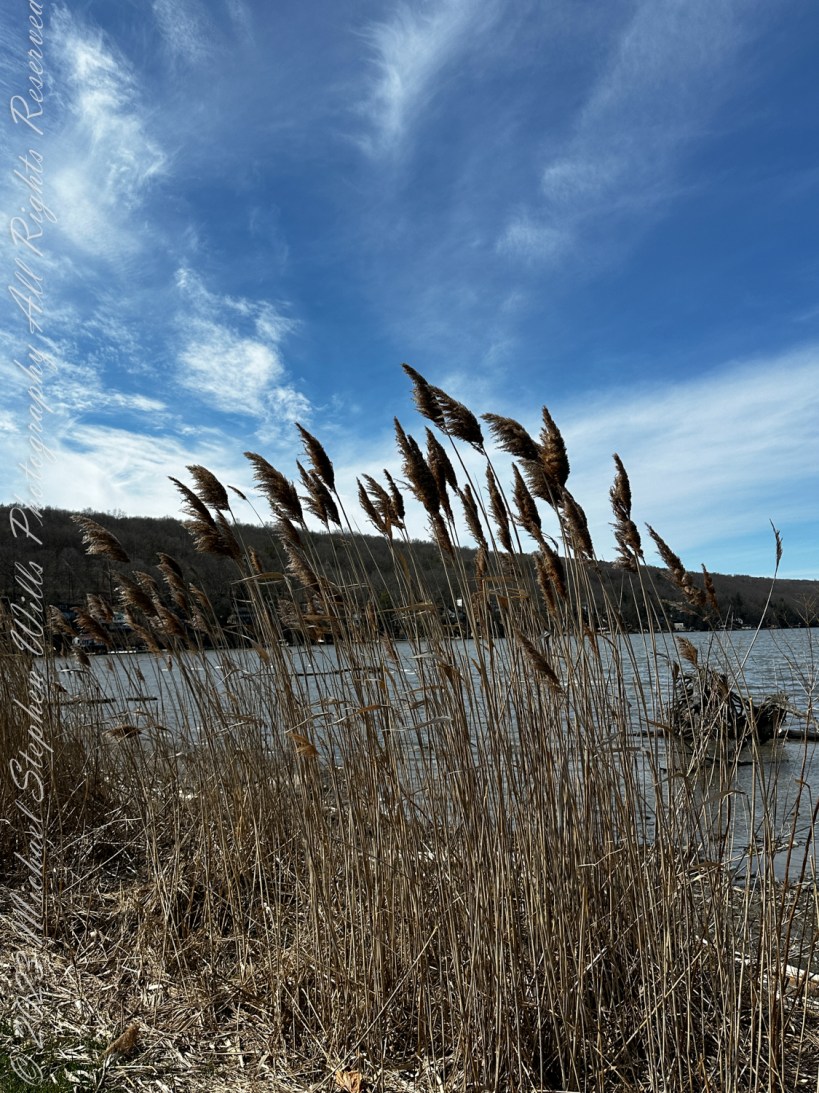
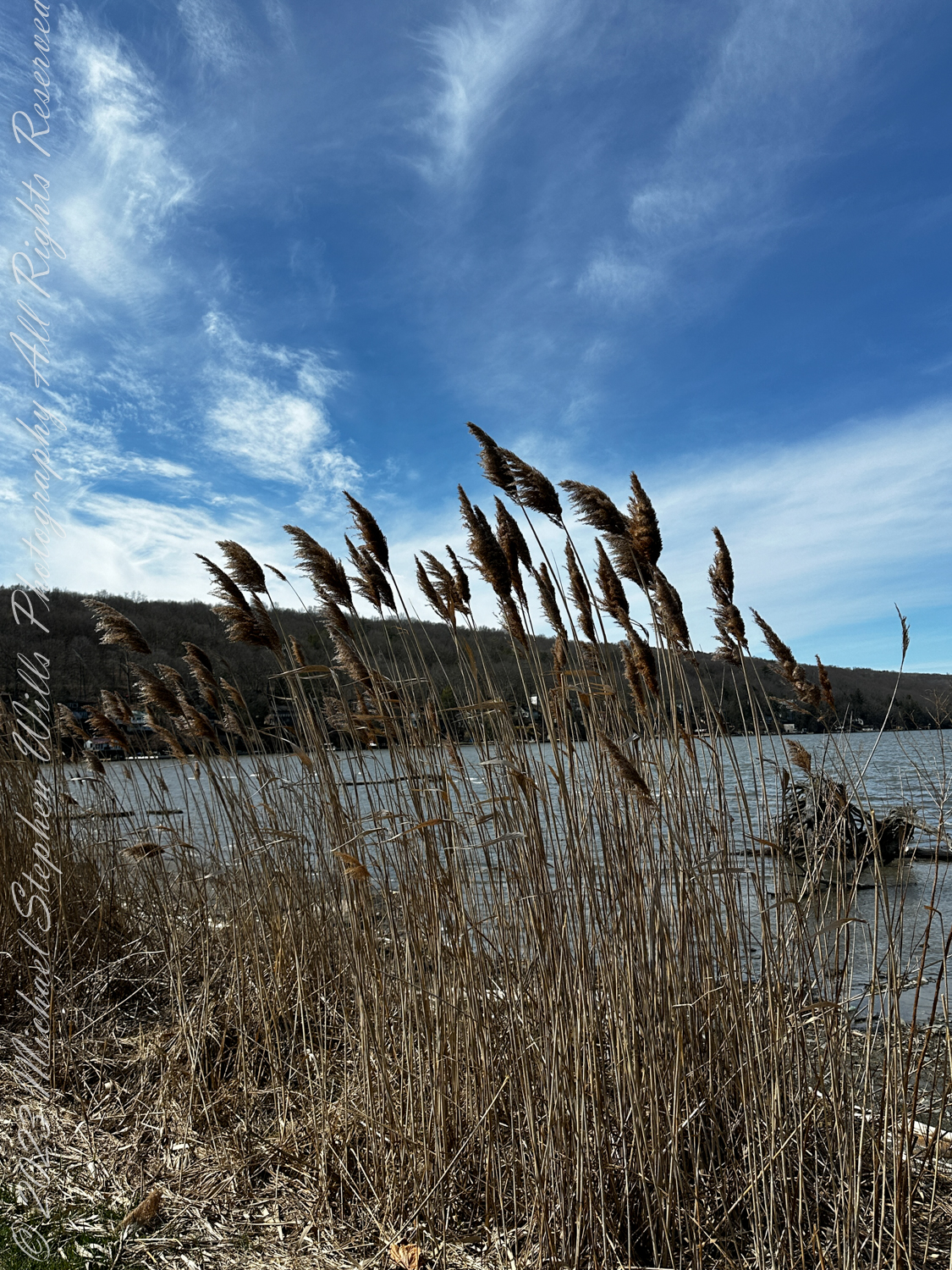
On the southern shore of Cayuga Lake, where waters mirror the ever-changing sky, I found this common reed, Phragmites australis, a plant of unassuming grace yet profound influence. This tale unfolds at the broad boarders of earth and water, a refuge and kingdom to countless beings.

Phragmites australis, a reed both simple and complex, begins its journey as a whisper in the mud. From the soft, fertile earth, it bursts forth into the world, a slender shoot reaching for the heavens. Its growth is steady and assured, fueled by the sun’s embrace and the water’s caress. In time, it stands tall, a sentinel in a sea of green, its feathery plumes, called panicles, wafted by the breeze.

This reed, you see, is a cornerstone of its ecosystem, a master architect, shaping its environment, crafting homes and havens for creatures great and small, in keeping with the genus name “Phragmites.” The Greek word “phragma” translates to “fence” or “hedge”, derived from the verb “phrassein”, meaning “to enclose.” Within that realm tiny creatures find refuge. From dragonflies and damselflies to grasshoppers and beetles are found by careful, patient observers. Insects play essential roles in pollination and nutrient cycling. Birds use the dense vegetation for shelter and foraging, you might find red-winged blackbirds, marsh wrens, and rails among the stems. Frogs, toads, and salamanders find refuge in reedy marshes. They lay their eggs in the waterlogged areas, and their tadpoles thrive amidst the reed stems. Phragmites australis is a giver of life, a source of sustenance and protection for many.

Yet, the tale of Phragmites is also one of struggle and resilience. In lands far from its native soil, it is often seen as an invader, a usurper of territories, spreading with a zeal that can overwhelm native flora and alter habitats. Its spread, unchecked, can lead to monocultures, diminishing biodiversity. But in its essence, Phragmites does not seek conquest but survival, thriving in spaces both gentle and harsh, adapting with an elegance that commands admiration.

As seasons turn, the reed undergoes a transformation, its green turning to gold, then to the brown of the earth from which it sprang. But even in decay, it nurtures life, its fallen stalks a shelter for the small and the silent, its seeds a promise of renewal. And when spring whispers anew, Phragmites rises once more, a cycle unbroken, a circle complete.

In the tale of Phragmites australis, we find a narrative of life itself—growth and decay, beauty and conflict, resilience and adaptation. This common reed, standing tall among the waters of the world, is a testament to the enduring power of nature, a reminder of the intricate tapestries of life that flourish in the quiet corners of our planet.

Click Me for another posting on the Common Reed.

Copyright 2024 Michael Stephen Wills All Rights Reserved

A Path Lined with Promise: Spring’s Embrace in Ithaca

Happy April 1, 2024

You find yourself on the cusp of spring, the earth slowly awakens from its wintery slumber, and life begins to stir in the subtlest of forms. Imagine strolling through a park in Ithaca, the evidence of spring’s tender handiwork unfolding before your eyes. As you traverse this liminal space where the grey of winter meets the vibrant hues of spring, you are greeted by a cheerful brigade of daffodils, a sure harbinger of warmer days.

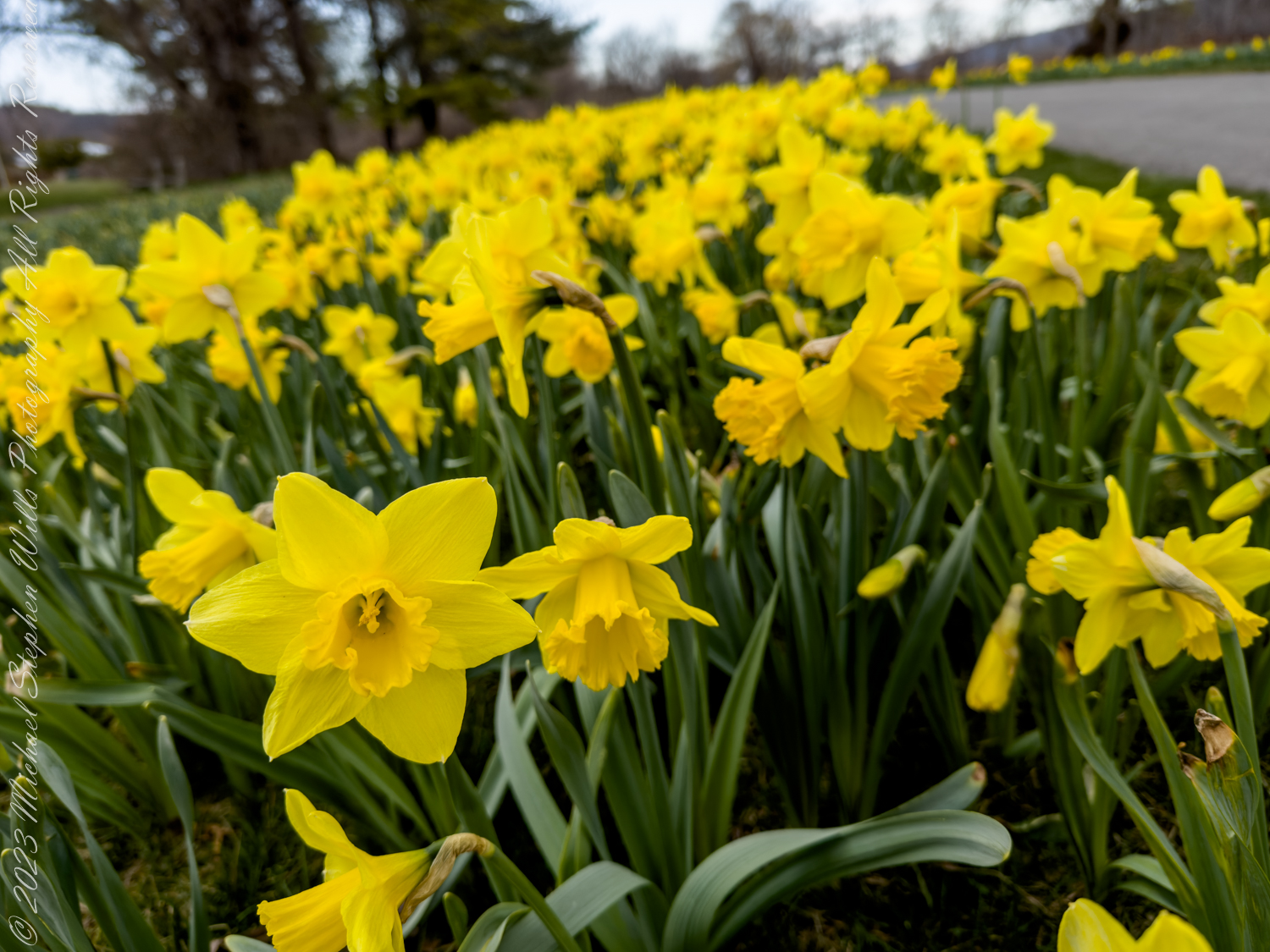
These daffodils are blooming along the Cayuga Waterfront Trail within Cass Park, Ithaca, Tompkins County, New York

Through the above image, it’s as though you are leaning in, your gaze just inches above the blooms. These daffodils are not merely flowers; they are the golden trumpets of spring, each one a burst of joy amidst the still-dormant earth. You can almost feel the softness of the petals, the coolness of the air, and the promise of renewal that each bud encapsulates. With their faces eager to bask in the strengthening sun, they seem to resonate with your own readiness for change, for the fresh possibilities that each new season brings.

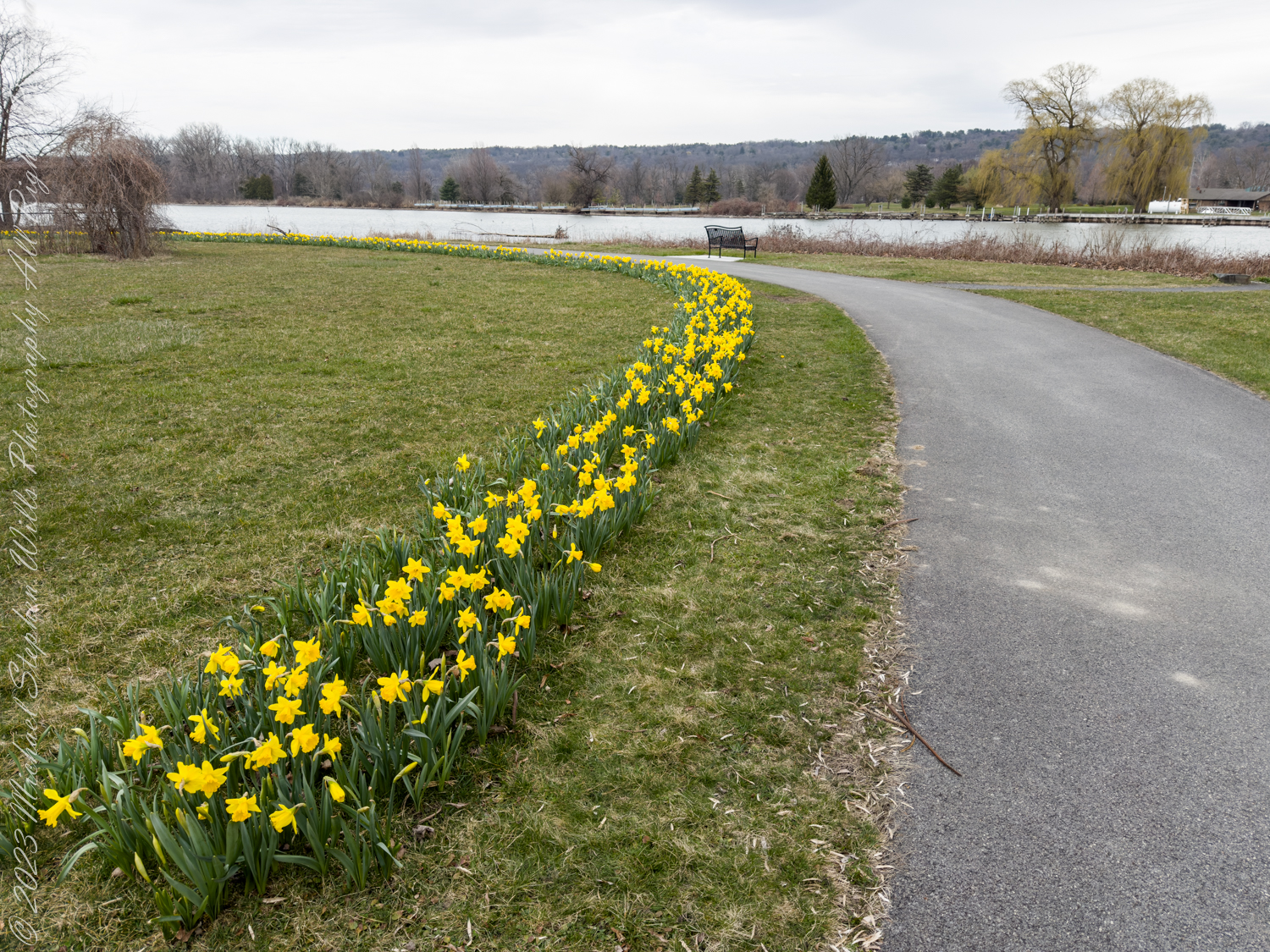
As you stand up and take a few steps back, the following image grants you a wider perspective. Here lies a path, winding gently alongside a burgeoning line of daffodils. They stand in unity, a vivid yellow line drawn against the canvas of awakening green. The bench in the distance is vacant, an invitation to sit and appreciate the tranquility of Cass Park, the expanse of water beyond serving as a mirror to the open sky. It’s a scene that calls for contemplation, urging you to appreciate the simplicity of the moment, the serenity of nature’s process.

These daffodils are blooming along the Cayuga Waterfront Trail within Cass Park. Here the trail has passed over Linderman Creek and we are looking toward the Cayuga Lake inlet. Ithaca, Tompkins County, New York

These photographs are more than visual delights; they’re sensory experiences. Can you hear the subtle sounds of the park? The distant call of birds returning home, the soft rustle of grass stirred by a gentle breeze, the hushed murmur of water lapping at the shore? Each sound is a note in the symphony of spring, played just for you.

The images you see are not frozen in time; they carry within them a narrative of life’s perseverance. The daffodils, with their bright faces and sturdy stems, have weathered the cold, the snow, and the frost. They emerge, not just as survivors of winter, but as its conquerors. Each flower is a testament to resilience, a living metaphor for the human spirit that you, too, possess.

This is the season of rejuvenation, where the old is shed, and the new embraced. With each day, the sun lingers a bit longer, casting its golden glow upon the earth. It’s the time to set aside the grayness of yesterday and look forward to the spectrum of tomorrow. The photographs are not just to be viewed; they are to be felt, to remind you that no winter lasts forever, no spring skips its turn.

As you walk away from this scene, you carry with you the warmth of the sun and the cheer of the daffodils. Let the images serve as a reminder of the perennial cycle of life, the undying hope, and the enduring beauty that awaits just outside your door. Feel encouraged to seek these moments, these fragments of beauty, in your everyday wanderings, and hold onto the message of the daffodils: after every winter, no matter how harsh, comes the gentle kiss of spring.

Copyright 2024 Michael Stephen Wills All Rights Reserved

Wildflowers Late Winter / Early Spring 2

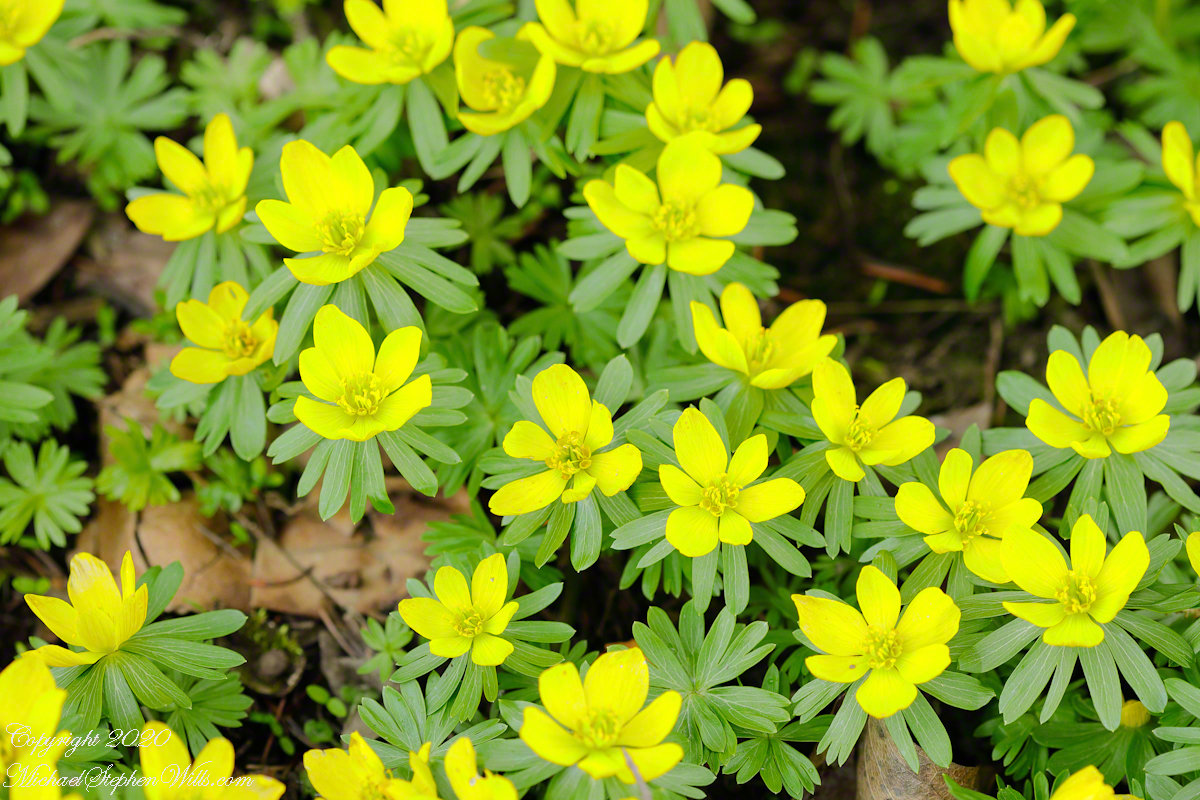
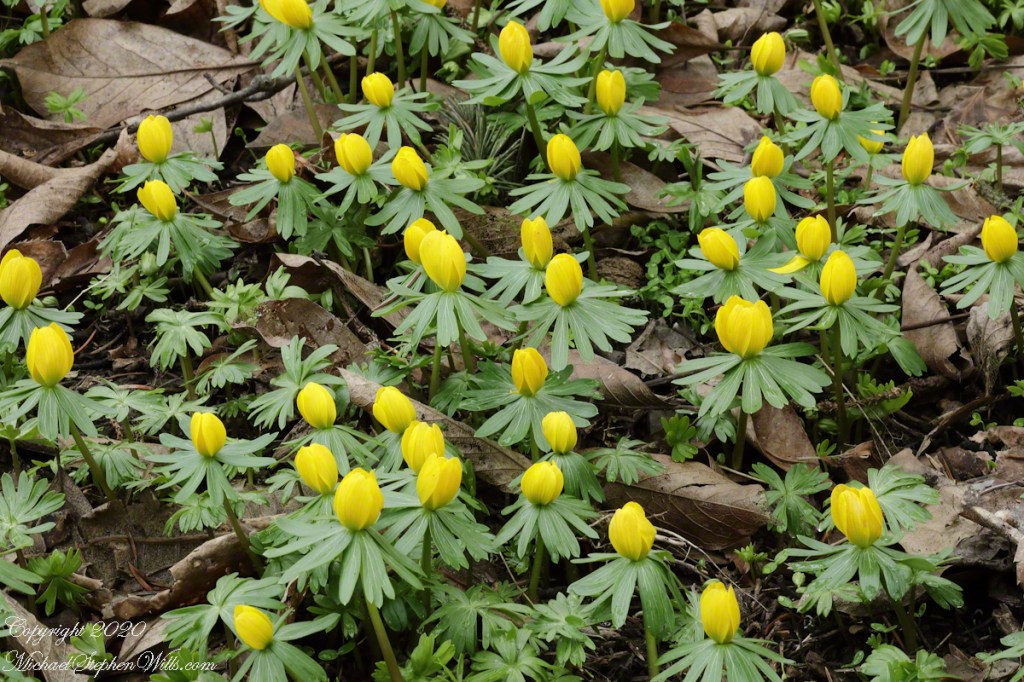
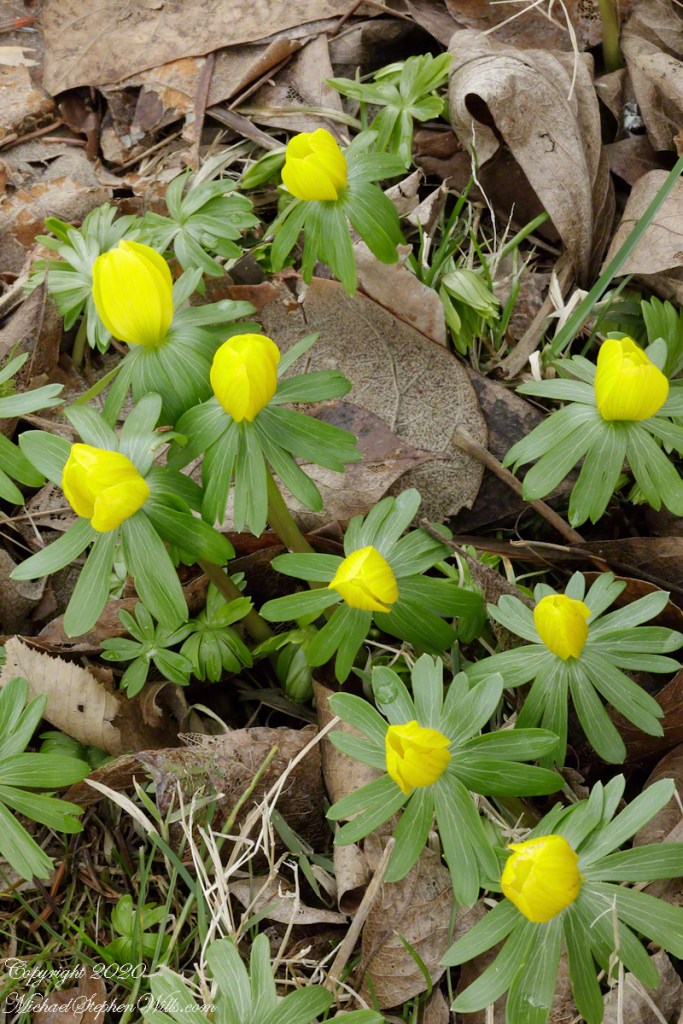
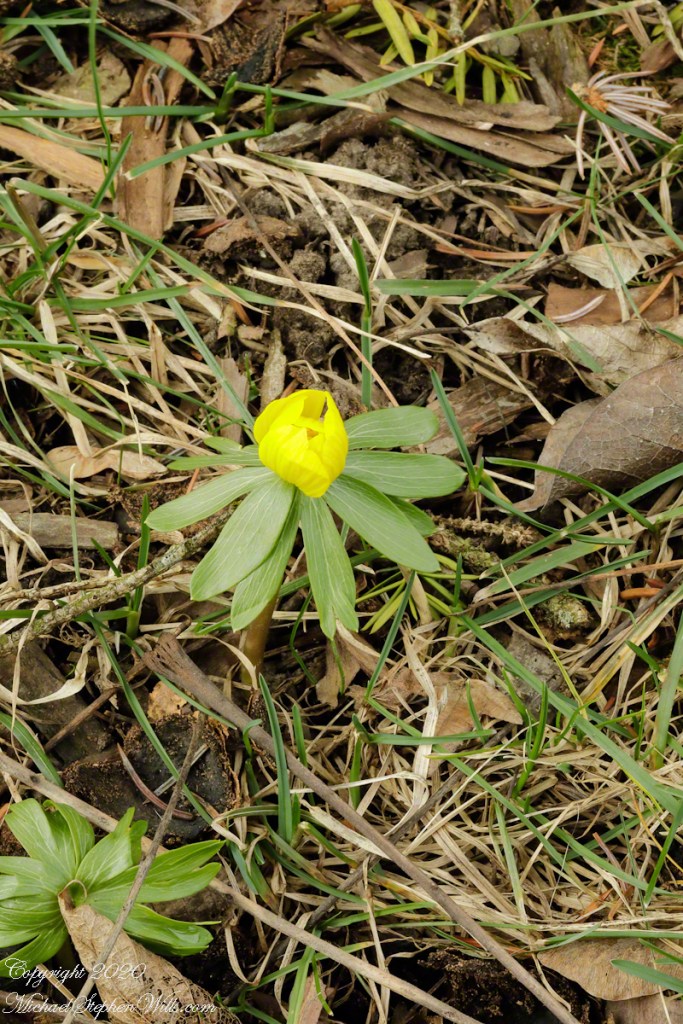
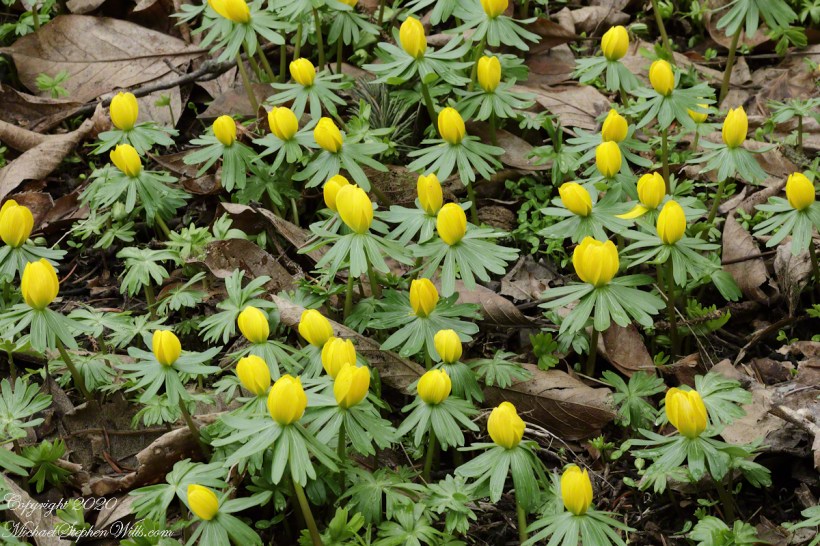
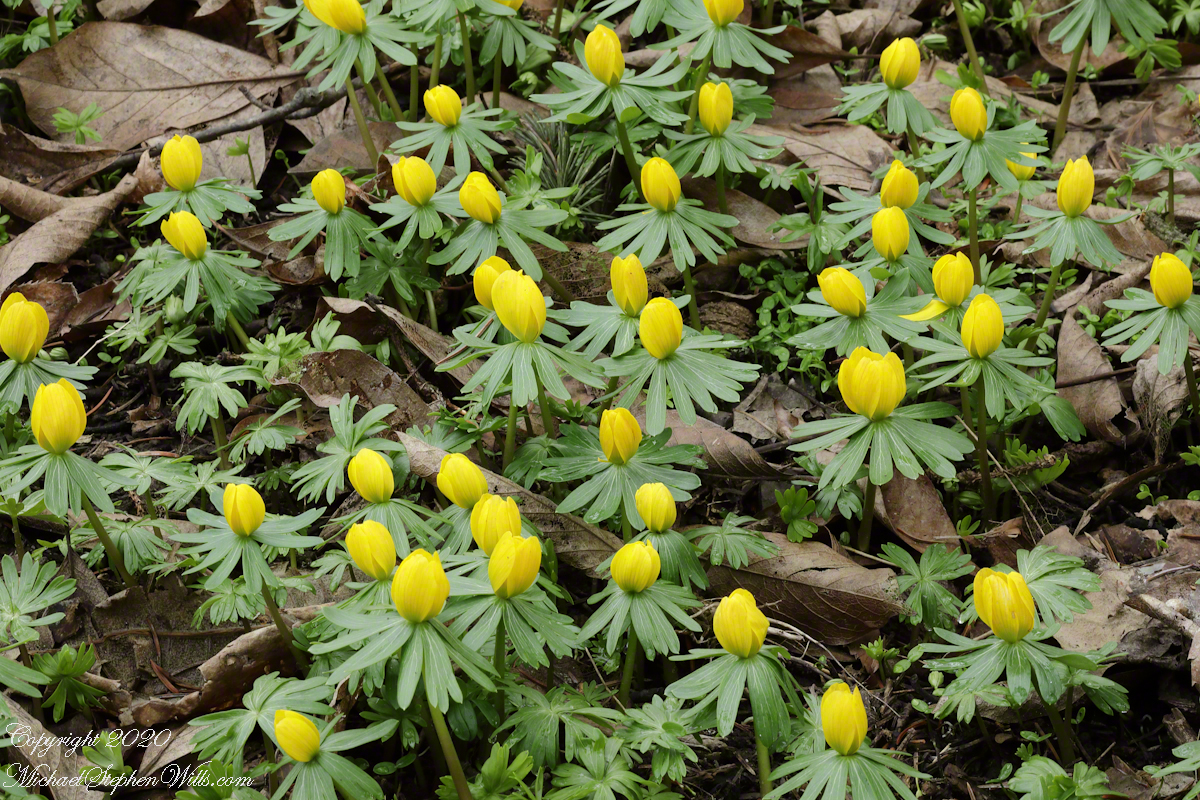
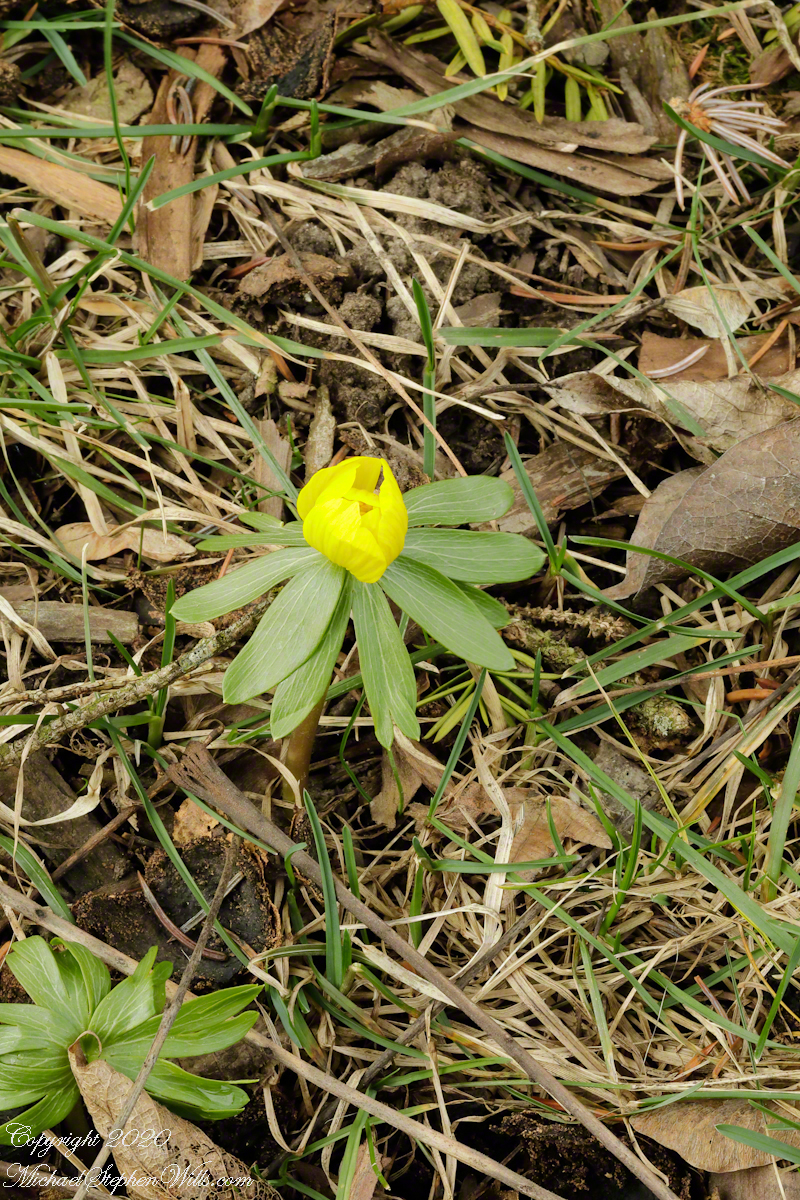
With the thermometer in the 60’s on March 10, 2020 the “buttercups” of yesterday are open. When we first moved here, the plants were much thinner. I used fertilizer spikes on the Magnolia tree around which they grow. Each early the flowers pollinate, forming seeds and spreading.

A tripod held the composition steady, and the timer was set to 2 seconds for extra stability at the f25 setting.

Here is a slideshow of yesterday and today’s shots.

Copyright 2021 All Rights Reserved Michael Stephen Wills

Wildflowers Late Winter / Early Spring 1

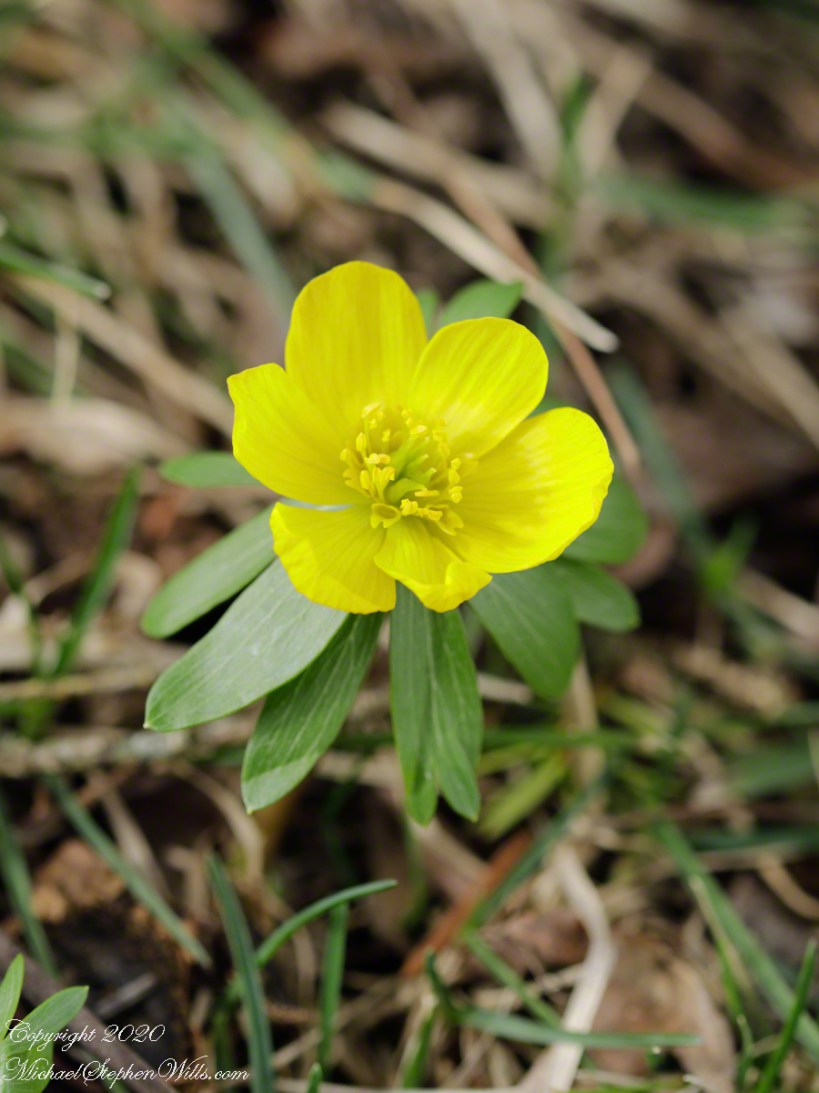
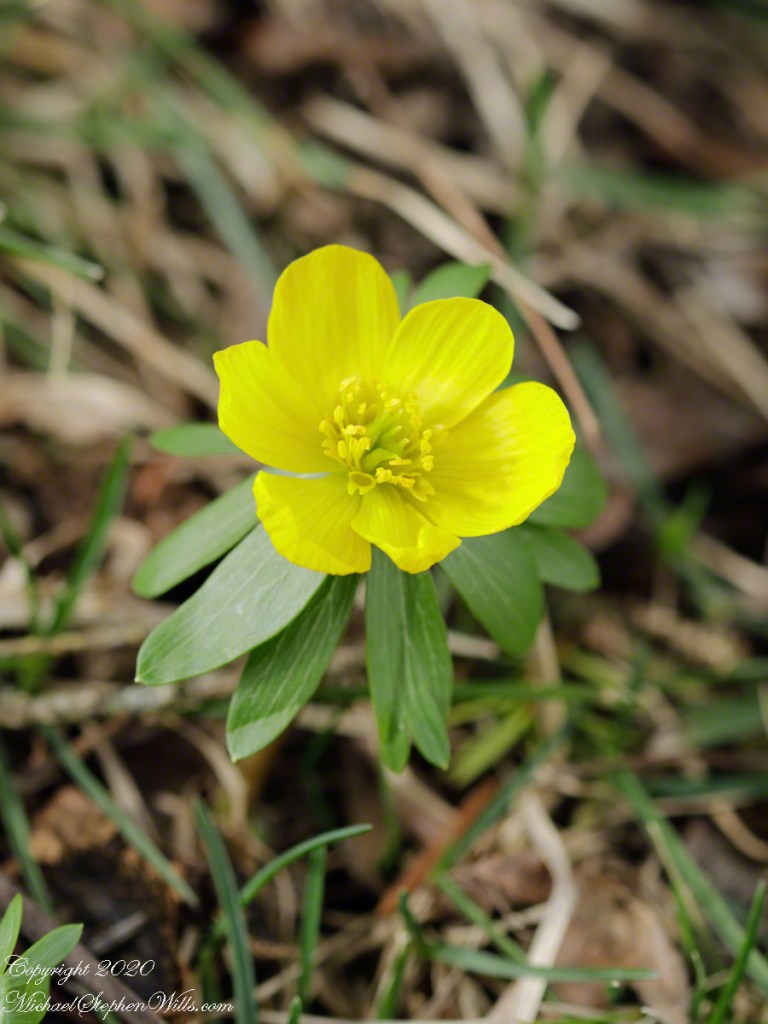
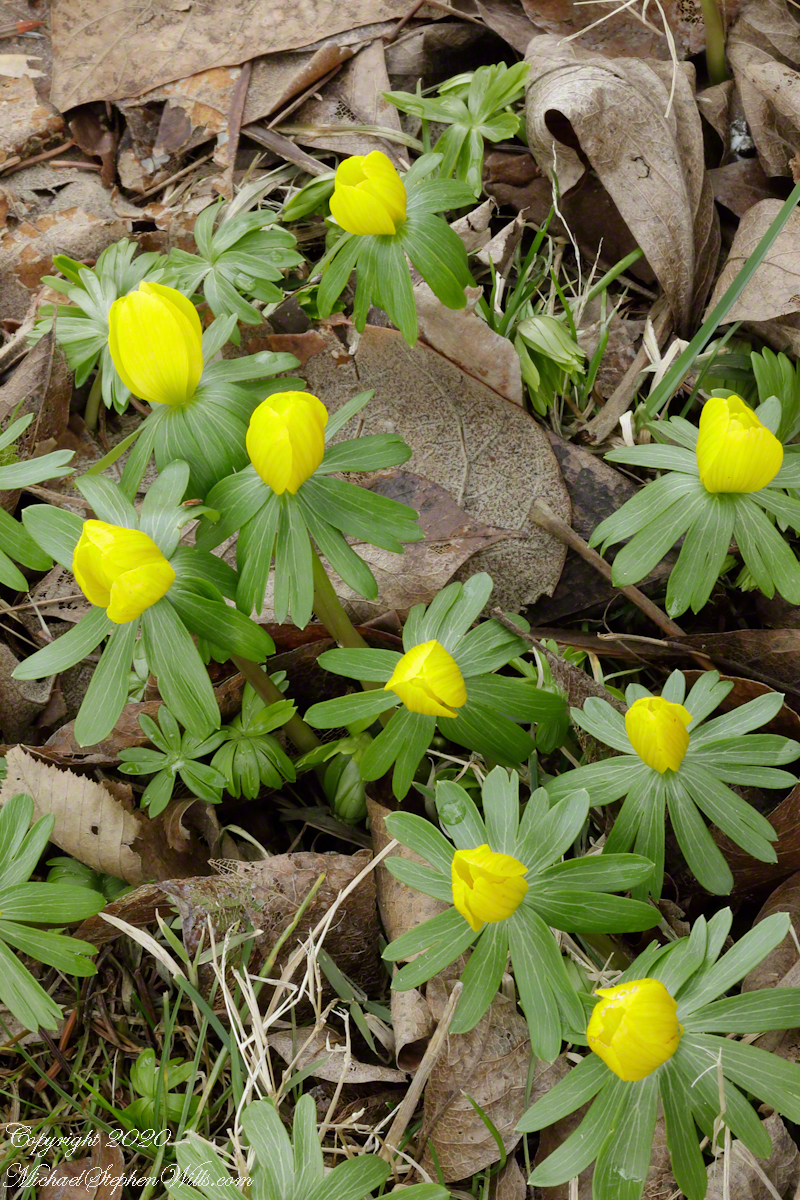
In February 2020, I captured images of the first flowers to bloom on their property with a Canon 5D Mark IV DSLR and a macro lens. The flowers belong to the Eranthis genus, known for early flowering.

These flowers are the first to bloom on our property, around the magnolia tree, and are also the first wildflowers photographed with my then new Canon 5D Mark IV dslr . Each year these “buttercups” grow thicker and spread. The latin scientific name Eranthis hyemalis proclaims the early nature of its flowering both in the genus, “Eranthis” – composed of two Greek language roots meaning “spring flower”, and species, “hyemalis” – a term from the Latin language meaning, “winter flowering.” The genus encompasses eight species, all early flowering plants with the common name winter aconite. These can also rightly be called Buttercups as the plant belongs to family Ranunculaceae, buttercups.

To capture the intricate details possible with the Canon EF 100 mm f/2.8 Macro lens I used here, it’s often necessary to adjust the camera settings to allow for a longer exposure time. This adjustment ensures that enough light reaches the sensor, particularly in macro photography or low-light situations, which helps in producing sharper and more detailed images. All these photographs are from f25. Setting a longer exposure compensates for the reduced light that might be a consequence of using a smaller aperture (higher f-number) for greater depth of field, a common technique in macro photography.”

It’s important to note that while setting a longer exposure can improve image quality by allowing more light to hit the camera’s sensor, it can also introduce the risk of motion blur if the camera or subject moves during the exposure. To minimize camera shake and achieve the best results, I used a Manfrotto “BeFree” tripod and the camera’s built-in timer set to a 2 second delay after a manual shutter release.

With the thermometer hovering above freezing, these blooms did not open today. The calendar says “late winter”, these Aconite are singing “early spring.”

Reference: Wikipedia “Eranthis hyemalis” and “Eranthis.”

Copyright 2024 All Rights Reserved Michael Stephen Wills

A Beachcomber’s Musings on Floridian Dune Ecology

Discover the resilient beauty of Florida’s dune sunflowers through the eyes of a beachcomber. Uncover the secrets of Helianthus debilis, a symbol of hope thriving where sea meets sand. Join the coastal dance of life.

Encounter with Helianthus debilis


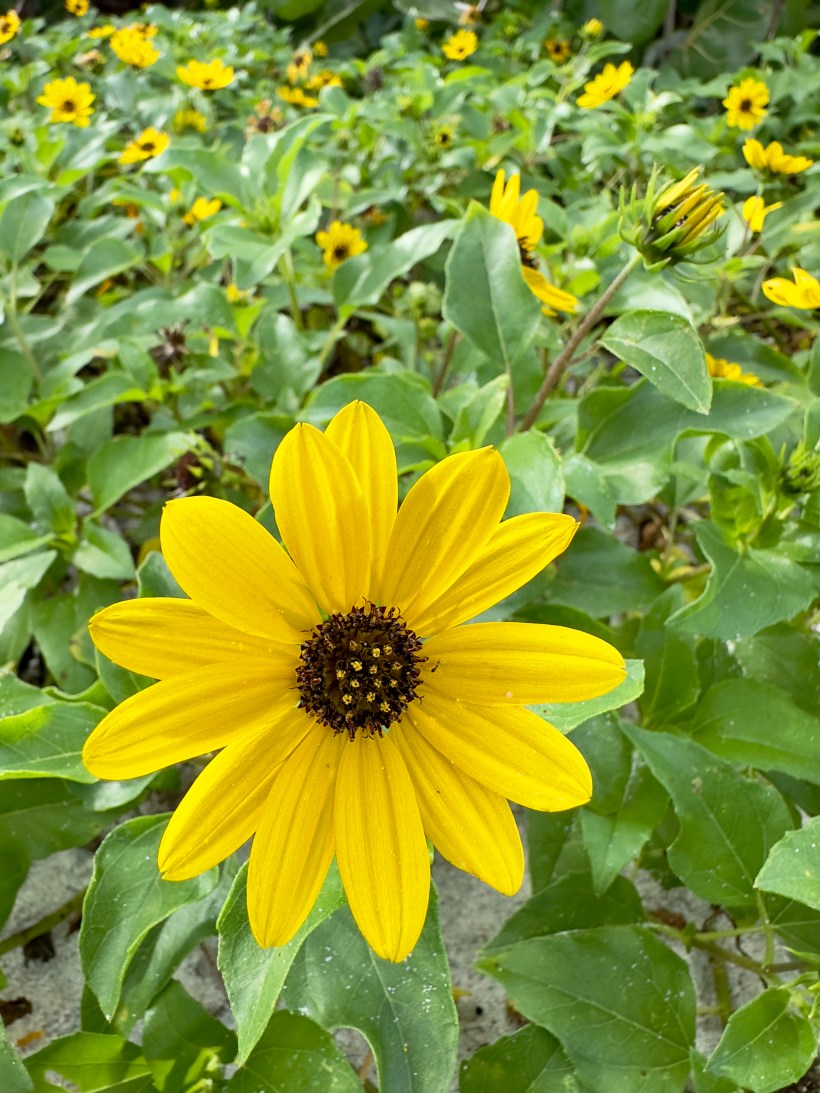
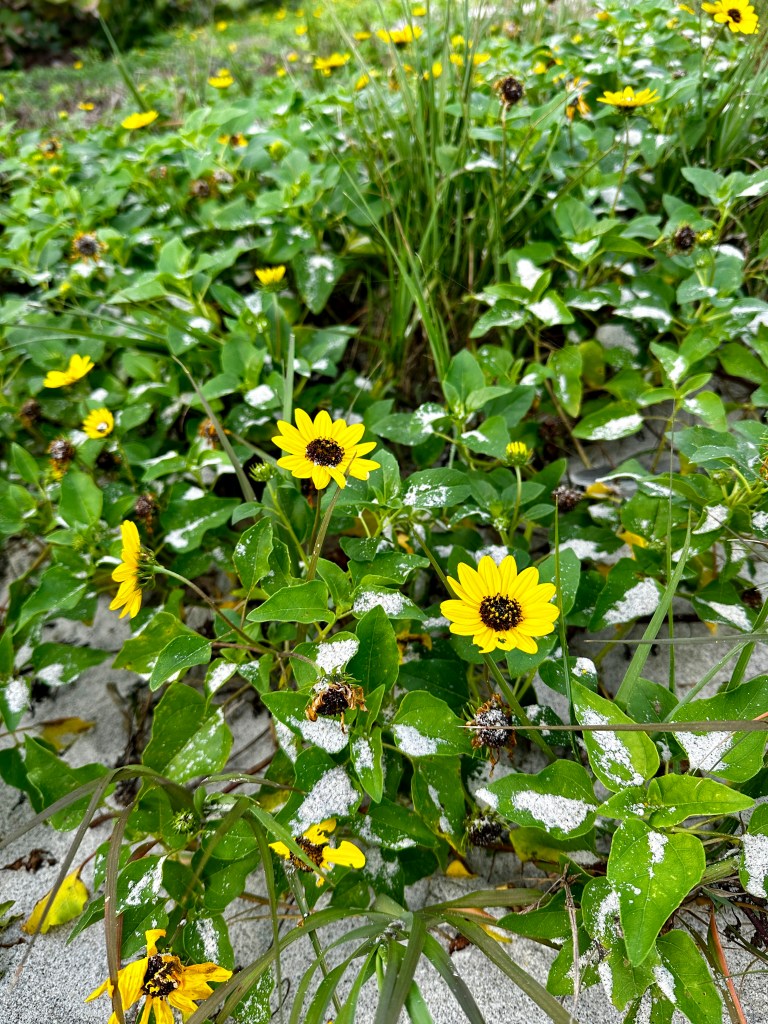
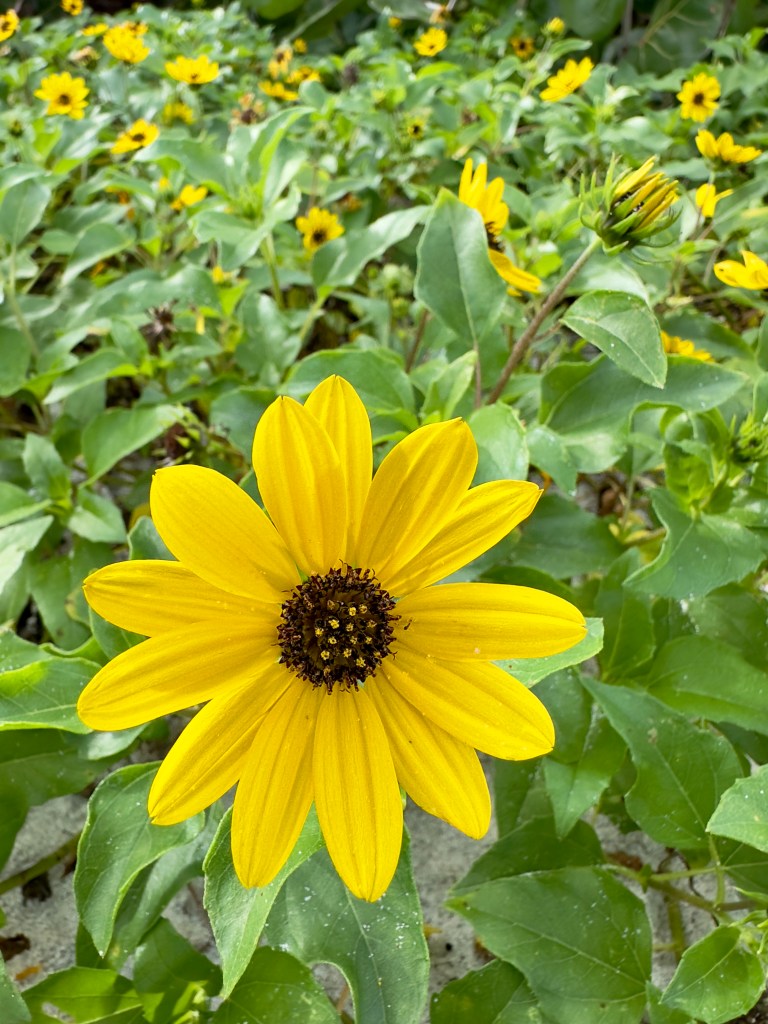
Strolling along the beachfront of Patrick Space Force Base, Florida, my gaze is captivated by a cluster of dune sunflowers, or Helianthus debilis. These hardy perennials are native to the coastal sand dunes of the southeastern United States and have made a home amidst the sandy grains where few dare to take root.

The Sunflower’s Domain


Helianthus debilis, distinguished by its large, yellow ray florets and dark center disks, thrives in this challenging environment. The dunes provide a unique ecosystem, where the sunflowers can withstand high salinity, shifting sands, and the full force of the sun’s rays. Their deep root systems anchor the sandy soil, helping to prevent erosion and maintain the integrity of the dune landscape.

Adaptation and Survival


The dune sunflower’s adaptation to its coastal environment is a marvel of nature. Its silvery-green leaves are covered with tiny hairs, reflecting sunlight and conserving moisture. The flowers bloom throughout the year, ensuring a constant presence of color along the dunes. Their hardiness is a testament to the sunflower’s evolutionary success in a habitat where freshwater is scarce and the soil is nutrient-poor.

A Native’s Role in the Ecosystem


As a native species, the dune sunflower plays a crucial role in the coastal ecosystem. It serves as a food source for local wildlife, including insects and birds, and its presence helps stabilize dune formations. The ecological value of Helianthus debilis extends beyond its beauty, as it contributes to the biodiversity and resilience of the coastal dunes.

The Dynamics of Dune Life


The life of a dune sunflower is inextricably linked to the ebb and flow of the coastal environment. Each plant is a microhabitat, supporting a range of organisms from the larvae of the dune butterfly to the burrowing beetles that find refuge in the sand. The interaction between the sunflowers and these creatures creates a dynamic web of life, each species depending on the others for survival.

Reflections on Resilience


The dune sunflower’s ability to flourish in such an austere environment is a profound reminder of the resilience of nature. As I observe the sunflowers, I am struck by their tenacity, their willingness to face the elements head-on. They are a beacon of life in a place where existence is a daily challenge, and their perseverance is a lesson in the art of endurance.

Conclusion: A Testament to Nature’s Ingenuity


As the sun begins to set, casting a warm glow over the dunes, I take a final look at the Helianthus debilis. Their scientific wonders and ecological im portance leave a lasting impression. They are not just flowers; they are a testament to nature’s ingenuity, an embodiment of the delicate balance between life and the environment. These dune sunflowers are a symbol of hope, a reminder that in the face of adversity, life finds a way to not just survive, but to thrive.

Copyright 2024 Michael Stephen Wills All Rights Reserved

Rincon Flame: The Southwestern Paintbrush’s Desert Dance

Step into the Rincon Wilderness with me, where the Southwestern Paintbrush blooms amidst the ancient stones.

Discovery in the Rincon Wilderness

In the embrace of the Rincon Mountains, east of Tucson’s hum, lies the Rincon Wilderness, a tapestry of desert life and geological marvels. These mountains, one of the “Sky Island” ranges cradling the Tucson valley, are less rugged than their siblings, the Santa Catalinas and the Santa Ritas, offering a gentler invitation to explore their secrets.

Happy Valley Saddle’s Floral Jewel

Amidst the rugged beauty of Happy Valley, a hidden corner in the quilt of the Rincon Wilderness, a singular red-orange glow caught my eye. There, among the lichen-encrusted boulders, stood the Southwestern Paintbrush, Castilleja integra, its flamboyant bracts a fiery contrast to the muted greens and grays of its surroundings.

Portrait of a Parasite

This herbaceous perennial, with its soft downy coat, is a paradox, both painting the desert with life and leeching it from others as a hemi-parasite. Its roots, entwined with those of other desert dwellers, tell a tale of survival that’s as old as the hills themselves.

The Brushstrokes of Evolution

Each leaf, narrow and dusted with hairs, speaks to the adaptive artistry of nature, designed to conserve precious moisture. The flowers, with their extended blooming season and generous nectar, court the hummingbirds who dance between the blooms, pollinators in this ancient symbiosis.

A Symbiotic Canvas

The Southwestern Paintbrush, with its colorful allure, draws more than just winged admirers. Its presence among the rocks is a reminder of the complex ecological web of the Rincon Wilderness, a part of Saguaro National Park’s rich mosaic

Click Me to visit the photographs of Michael Stephen Wills on Getty.

Copyright 2024 Michael Stephen Wills All Rights Reserved

Understanding the Sego Lily: Calochortus nuttallii

Discover the Sego Lily, Calochortus nuttallii, a symbol of resilience and beauty in the arid deserts of the West. Uncover its role in pioneer survival and its captivating presence on a serene April backpack into the Rincon Wilderness. Join us in exploring the enduring grace of this desert gem.

Continue reading “Understanding the Sego Lily: Calochortus nuttallii”