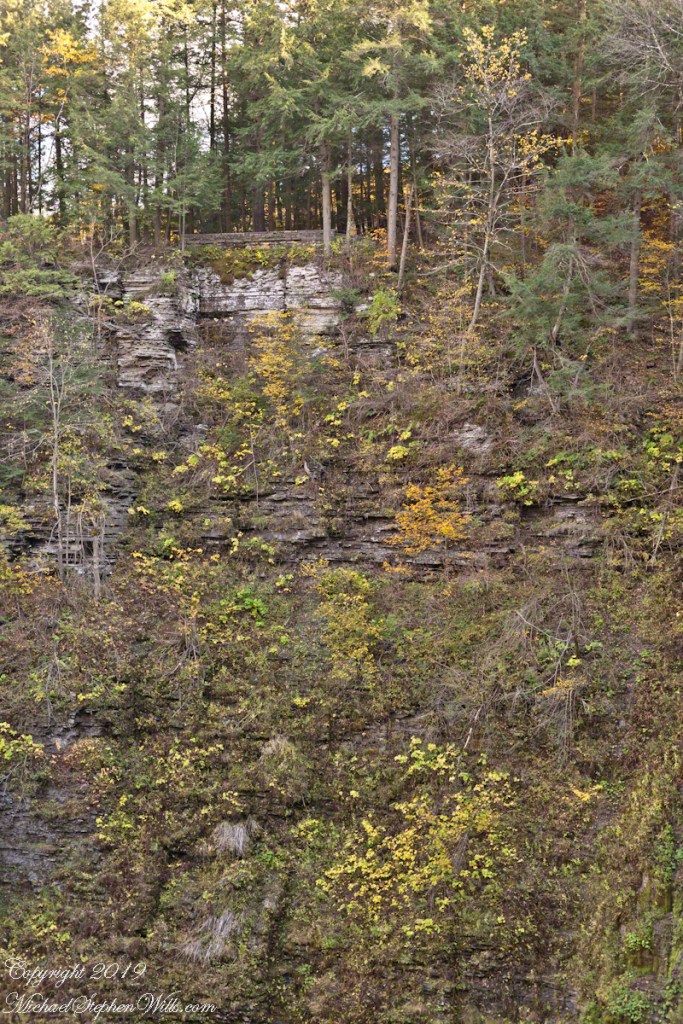
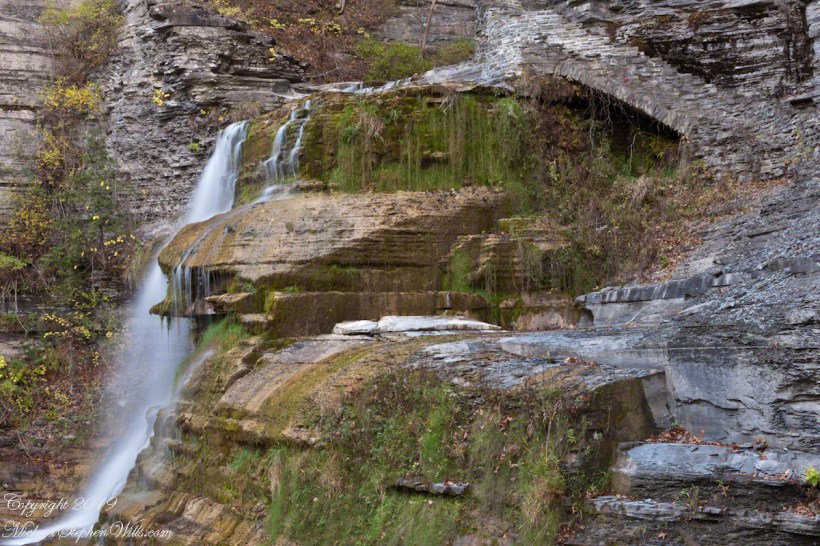
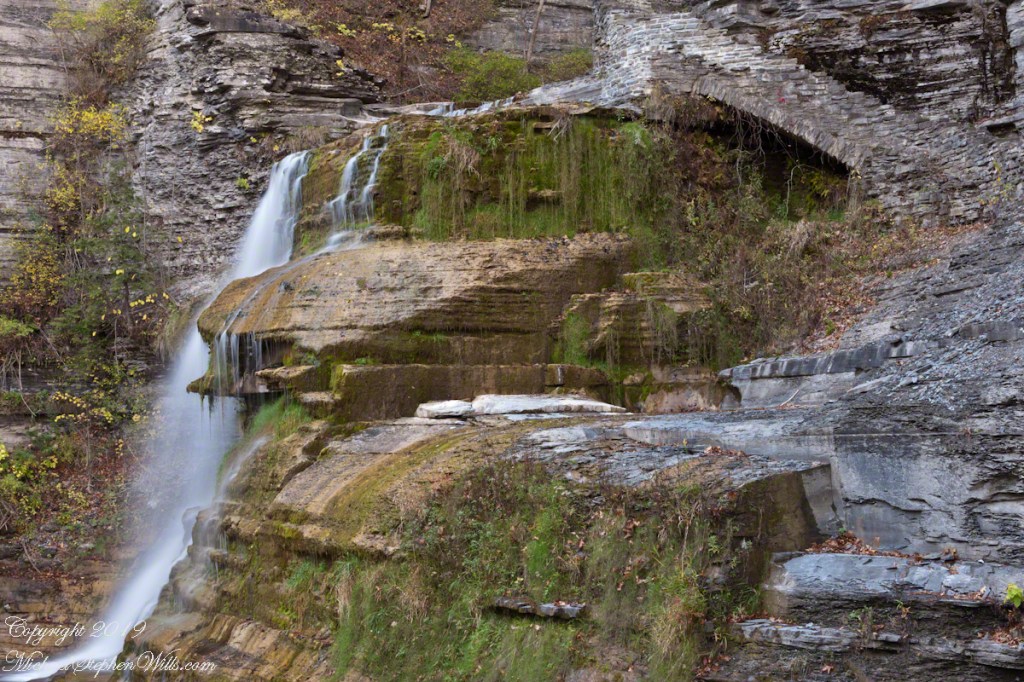
Standing on the trail alongside Lucifer Falls, crane your neck, up and up to the cliff top. Look closely to see the protective rock wall of the overlook.
Click photograph for a slideshow. To do this from WordPress Reader, you need to first click the title of this post to open the page on my site.
Lucifer Falls Overlook from the Gorge Trail
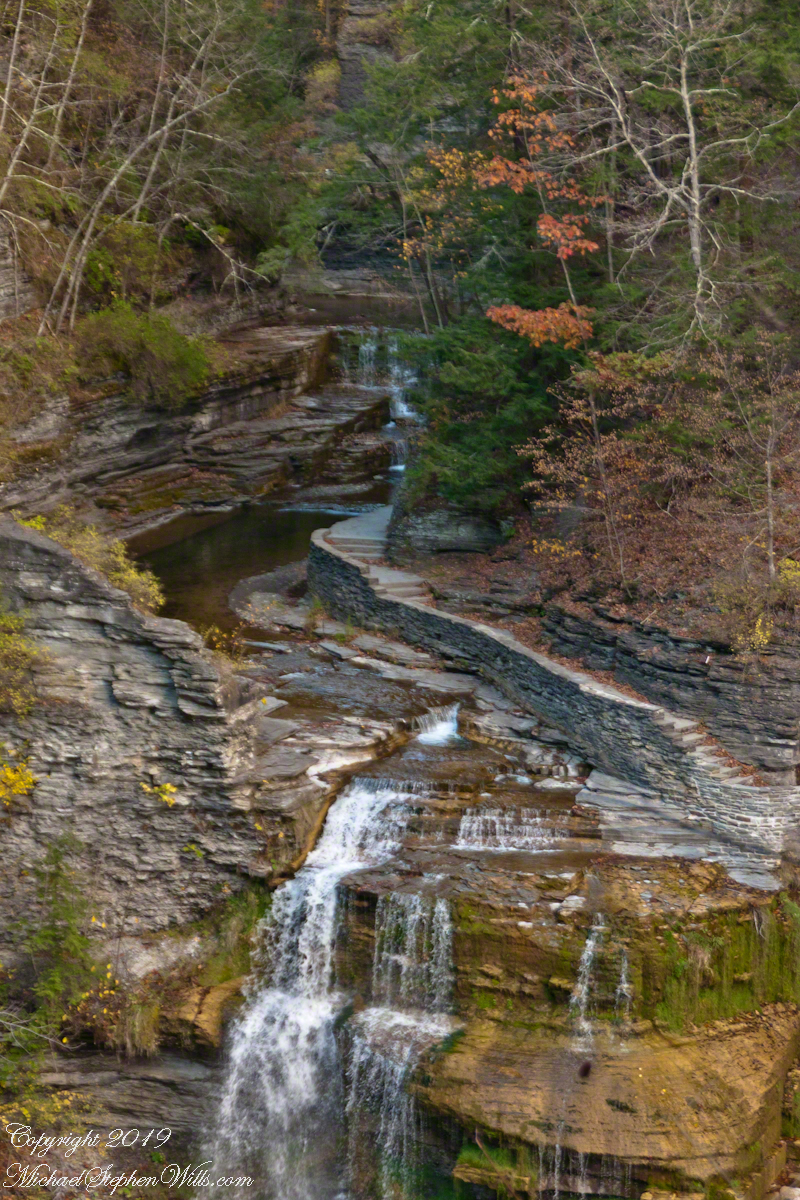
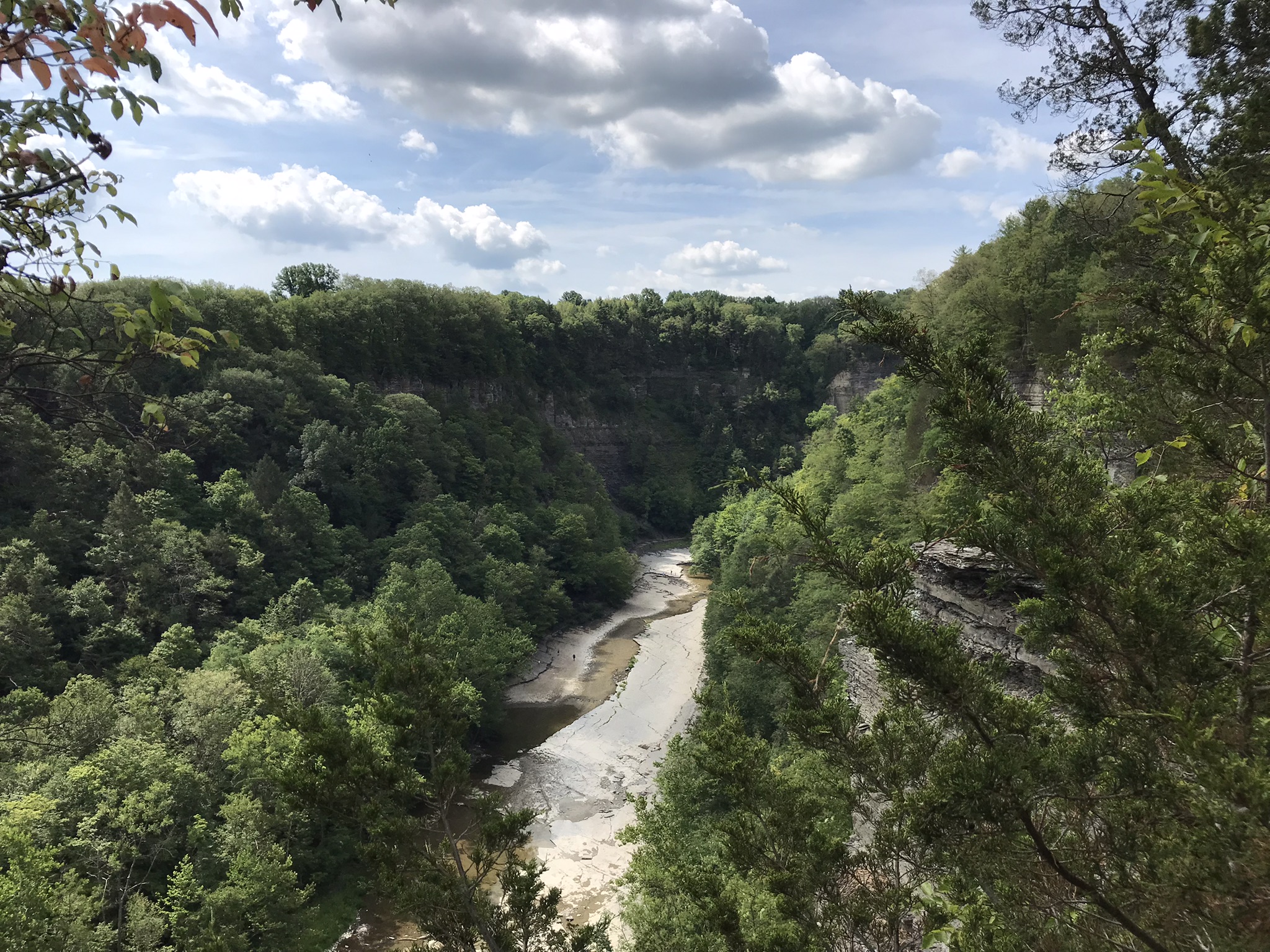
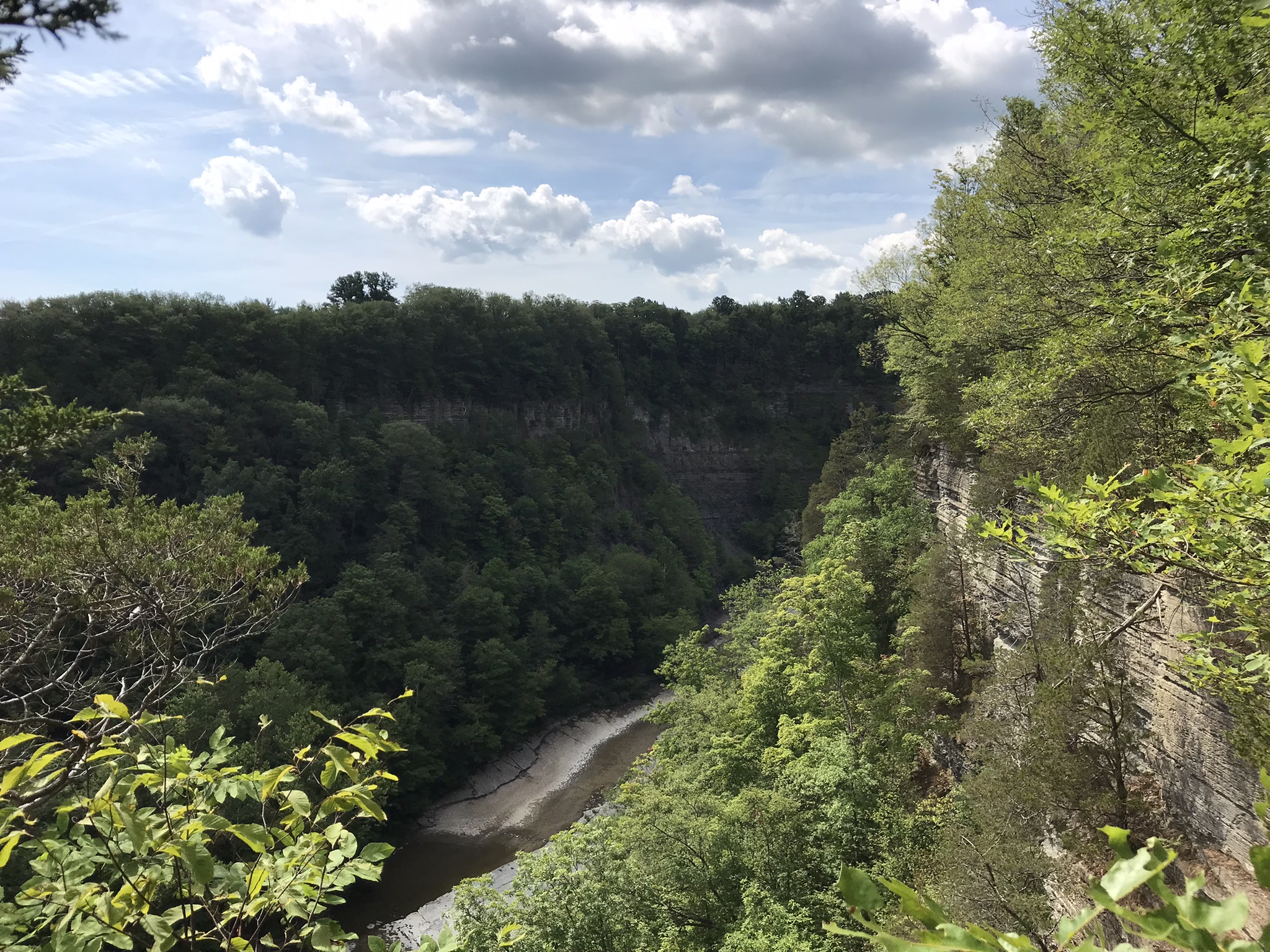
The Rim Trail includes this overlook of Lucifer Falls with, upstream, the Devil’s Kitchen waterfall, the path of the Gorge Trail in between.
Lucifer Falls from Rim Trail Overlook
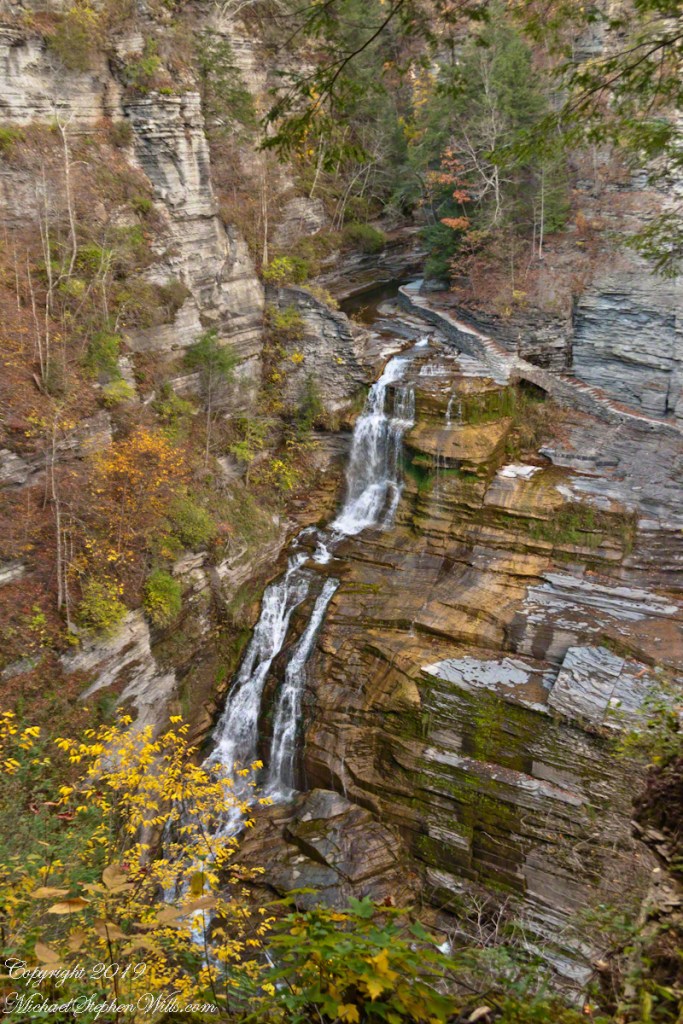
The full sweep of Lucifer Falls on an autumn evening, the sun hidden behind the gorge walls. Here the Gorge Trail emerges from the shelter of the gorge, emerging into a dizzying view.
Lucifer Falls from Rim Trail Overlook
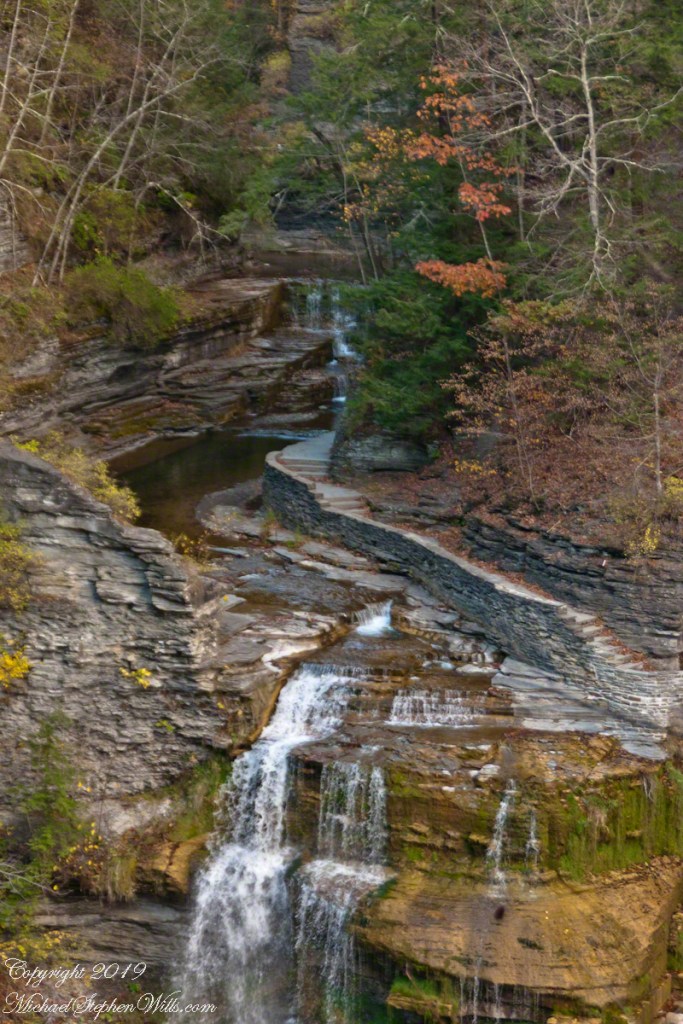
Brink of Lucifer Falls
Lucifer Falls Overlook from the Gorge Trail
Lucifer Falls from Rim Trail Overlook
Lucifer Falls from Rim Trail Overlook
Copyright 2022 All Rights Reserved Michael Stephen Wills
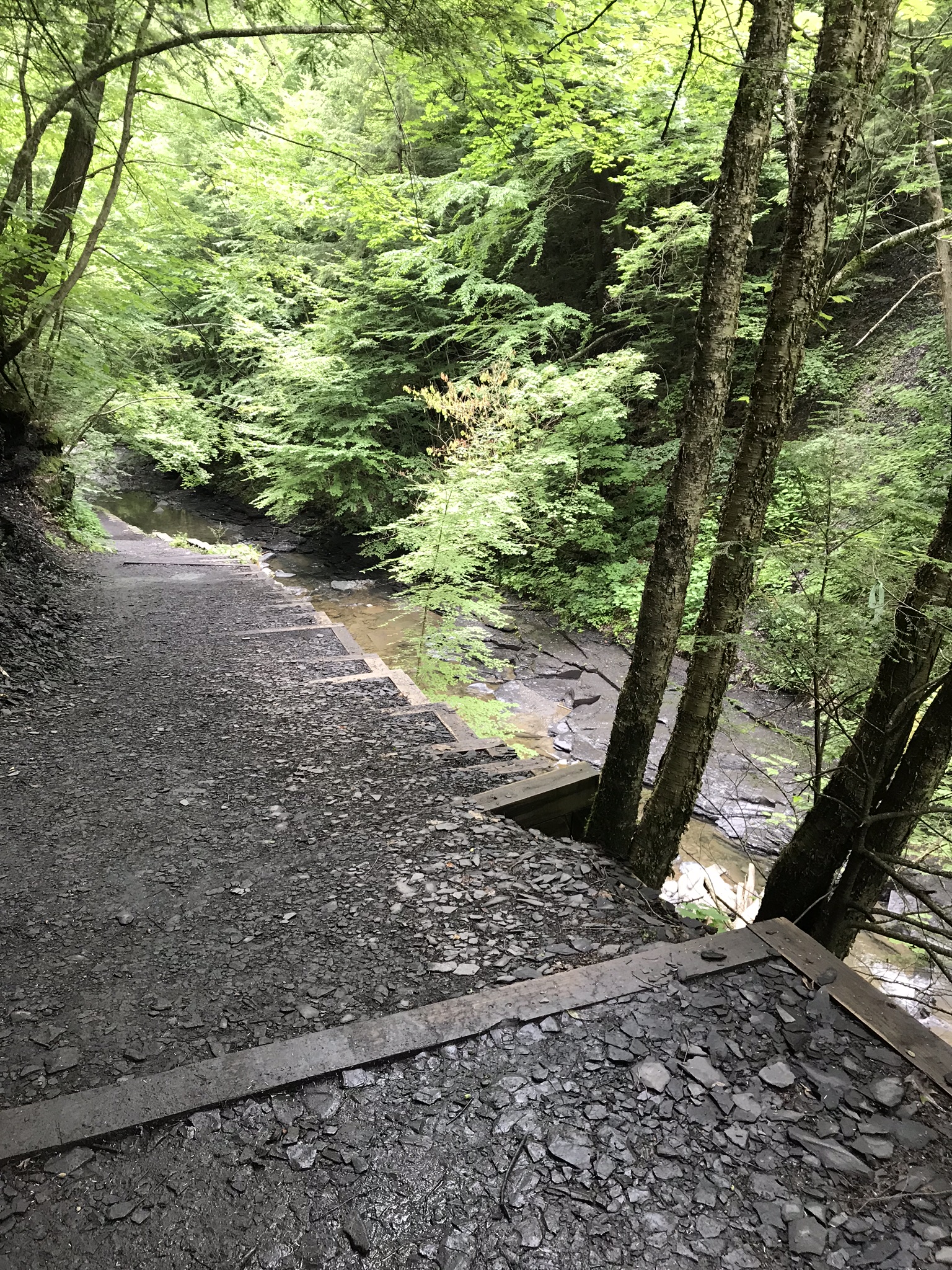
This trail, built into the slate/sandstone gorge wall, follows the descent of Lucifer Falls. Here we view the brink and the path alongside. Follow this trail to Devil’s Kitchen, up and around the corner.
Click photograph for a larger view
Brink of Lucifer Falls
Copyright 2022 All Rights Reserved Michael Stephen Wills
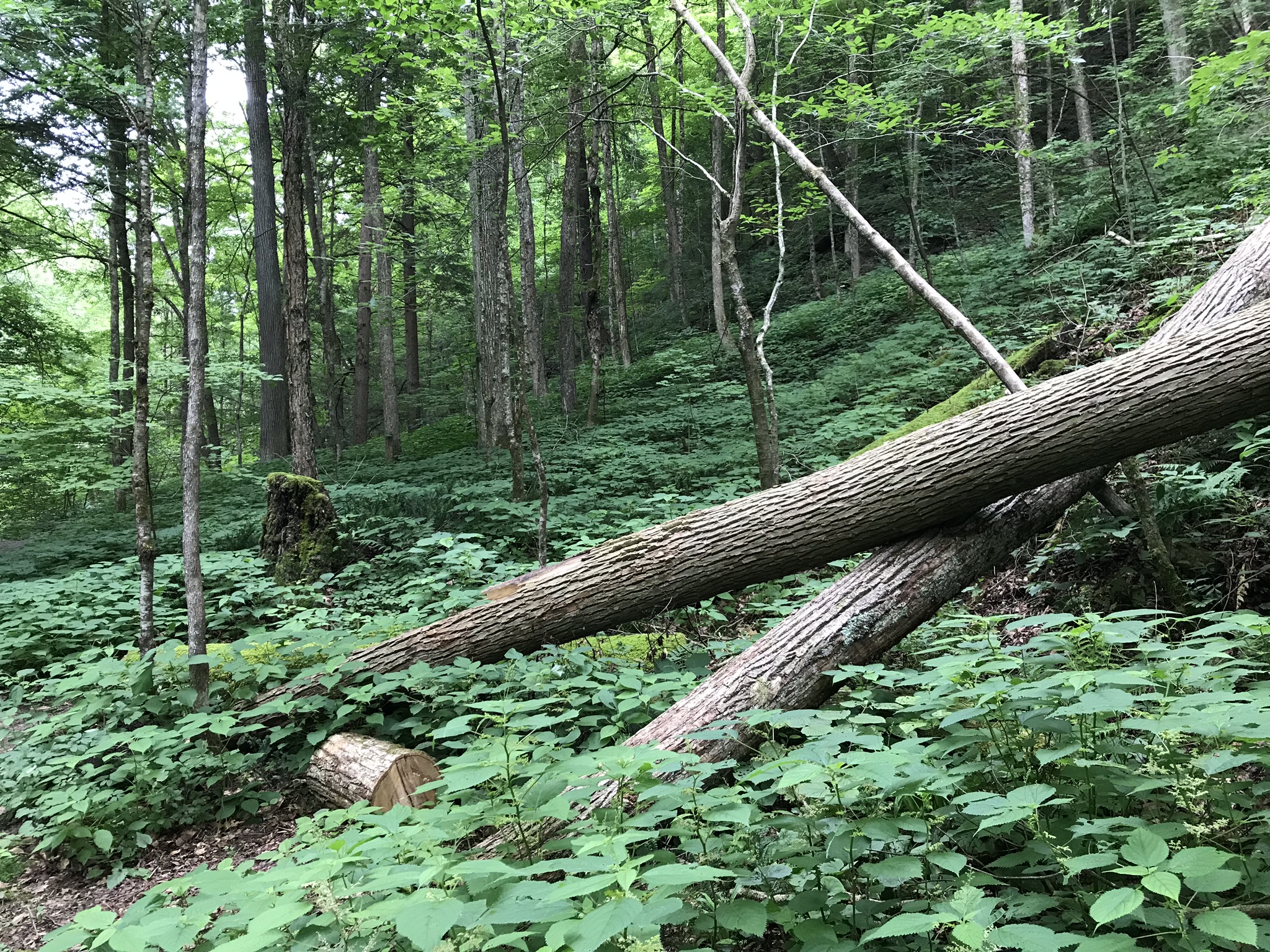
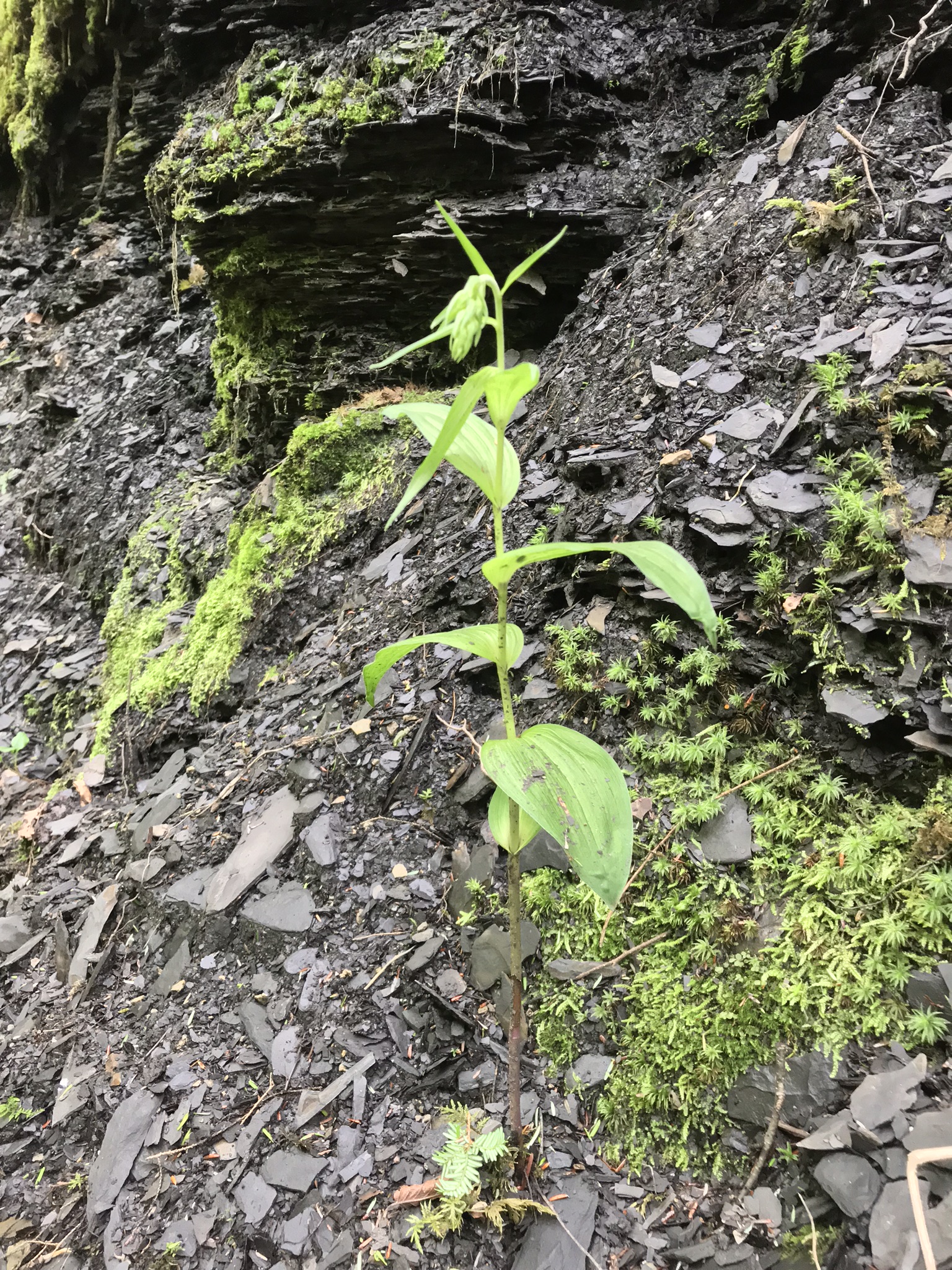
Among this jumble of fallen, cut trees is the solution to a personal mystery.
I had often seen these green berry-like fruits of summer, these were growing among tree fall on one of the few almost level places of the gorge. The green turns bluish when ripe. This photograph I used today, along with dogged determination, to identify this plant. It was in neither reference on my desk.
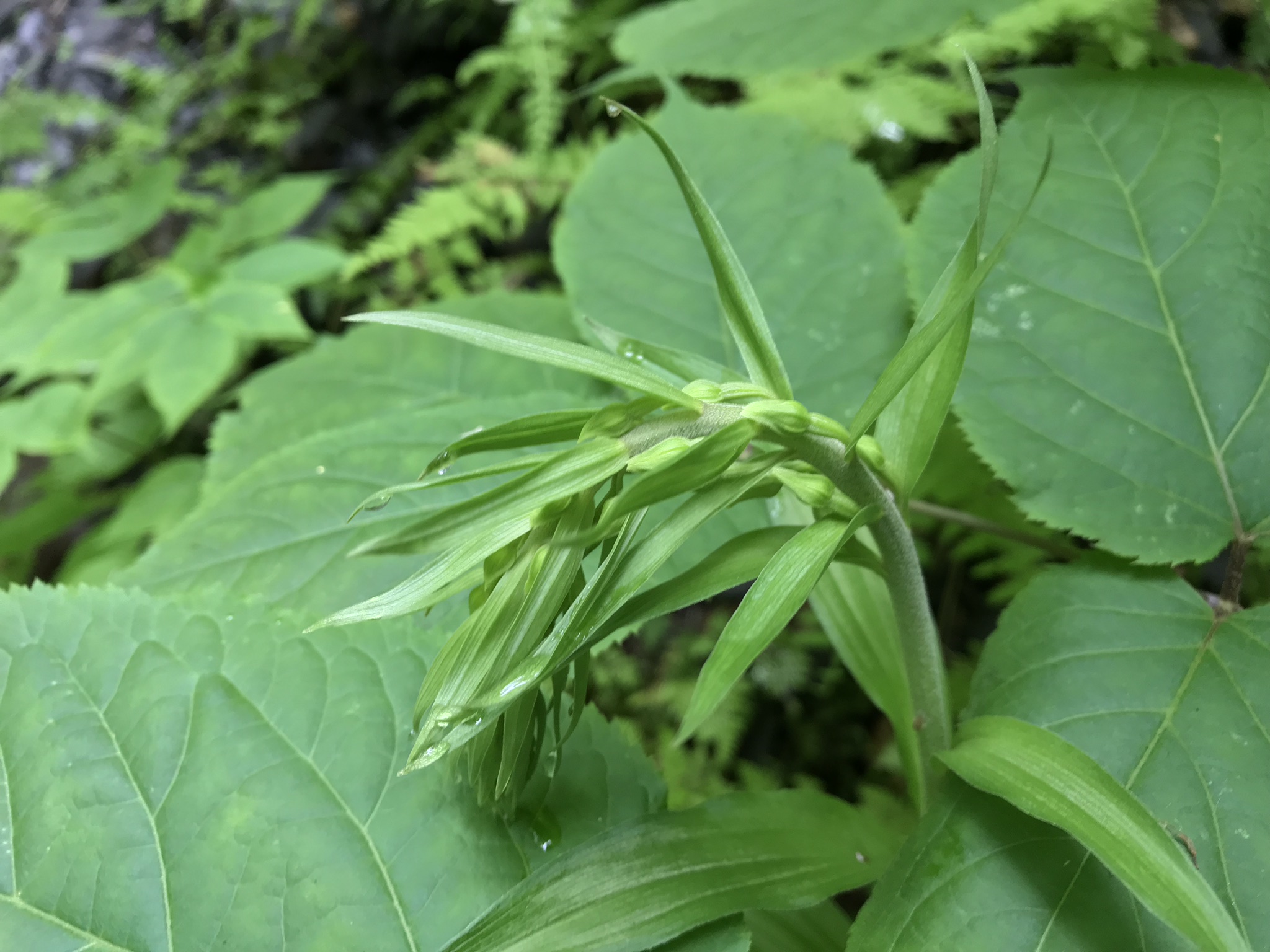
The green berry color threw me off, using the growth pattern of the fruit, the leaves and where it was growing (moist forest with little light) to identify Blue Cohosh (Caulophyllum thalictroides). The leaves are similar to meadow rue and the species name ( thalictroides) is taken from the genus name of meadow rue (Thalictrum). The two are related, belonging to the order Ranunculales.
Blue Cohosh has pharmacological properties. Another name for the plant, Papoose Root, is from the Native Americans who used preparations of the root to induce childbirth, ease the pain of labor, rectify delayed or irregular menstruation, and alleviate heavy bleeding and pain during menstruation.
Copyright 2022 Michael Stephen Wills All Rights Reserved
We laughed at the trail-head sign, “Caution Muddy Trails.” White shorts beware. Somebody complained and demanded immediate resolution to the situation.
Another sign advised the Gorge Trail was closed after the seventh bridge. In my post “Bridge Views” these bridges are described. We could cross the seventh bridge, a barrier and a strongly worded sign, “Proceed no further, you will be prosecuted,” blocked the way. Here is the view, looking upstream.
The blocked path climbs the steep northern glen wall. This is the south wall, from the bridge. There was a young mother with two children, a girl, 6 or 7, and her 7 or 8 years old brother, each well equipped for the expedition with appropriate clothing and backpacks.
The family proceeded while I lingered to gaze up the blocked trail. I was tempted to crawl over the barrier, the ascending trail was clear the entire visible length. Being more cautious with age, or growing wisdom, I suppressed the urge and took in sights on the return trip.
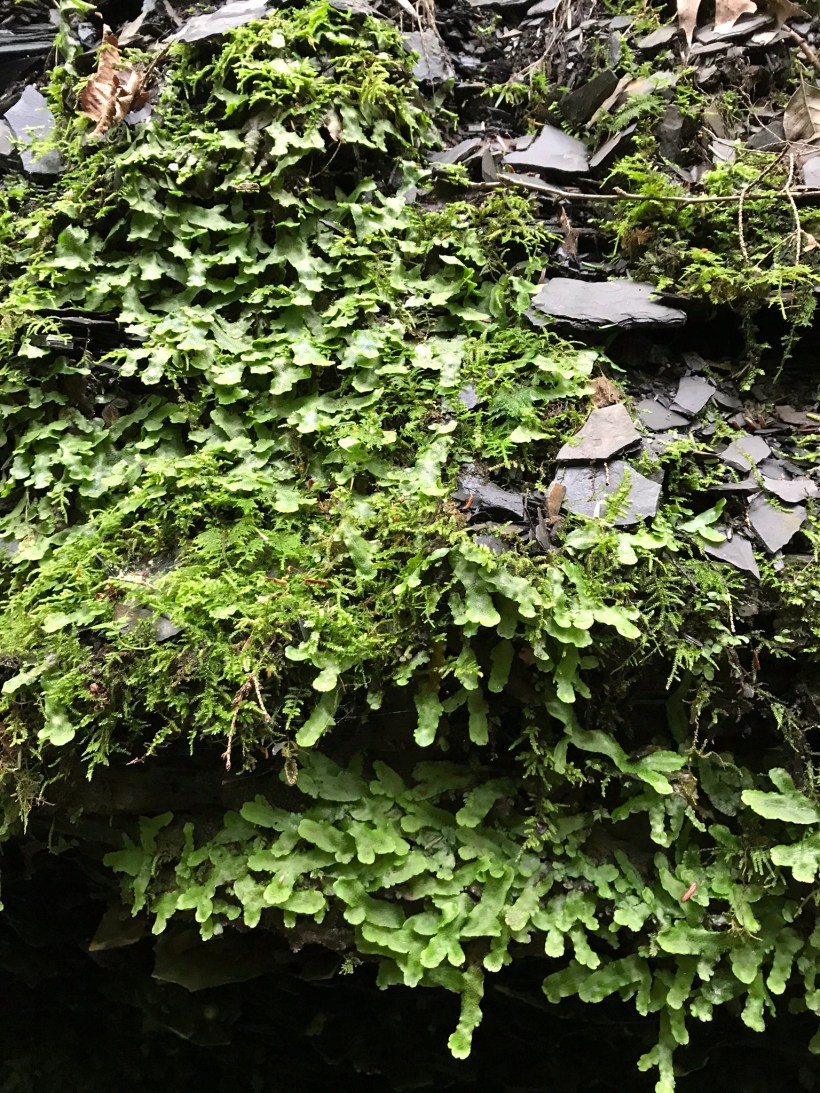
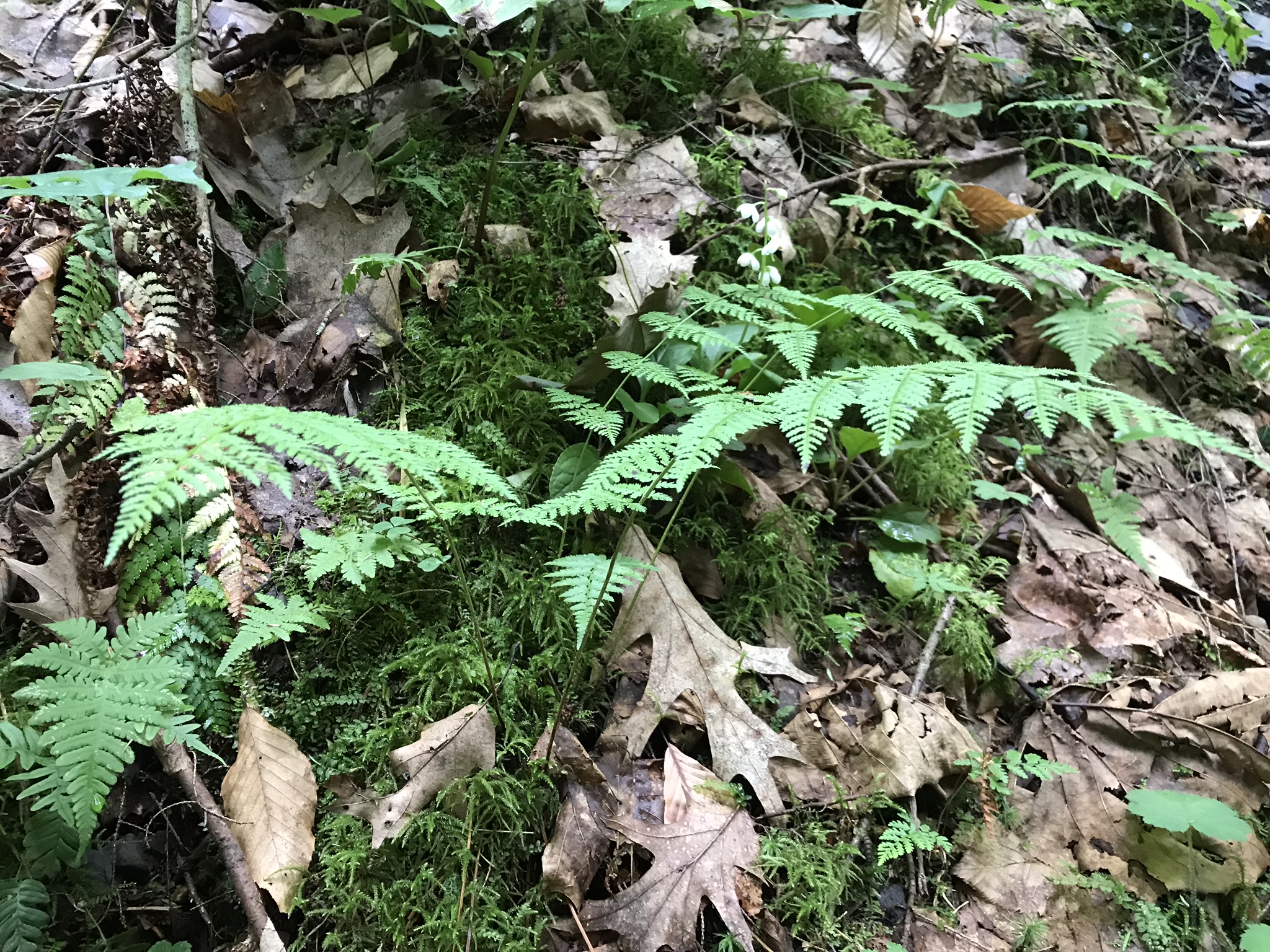
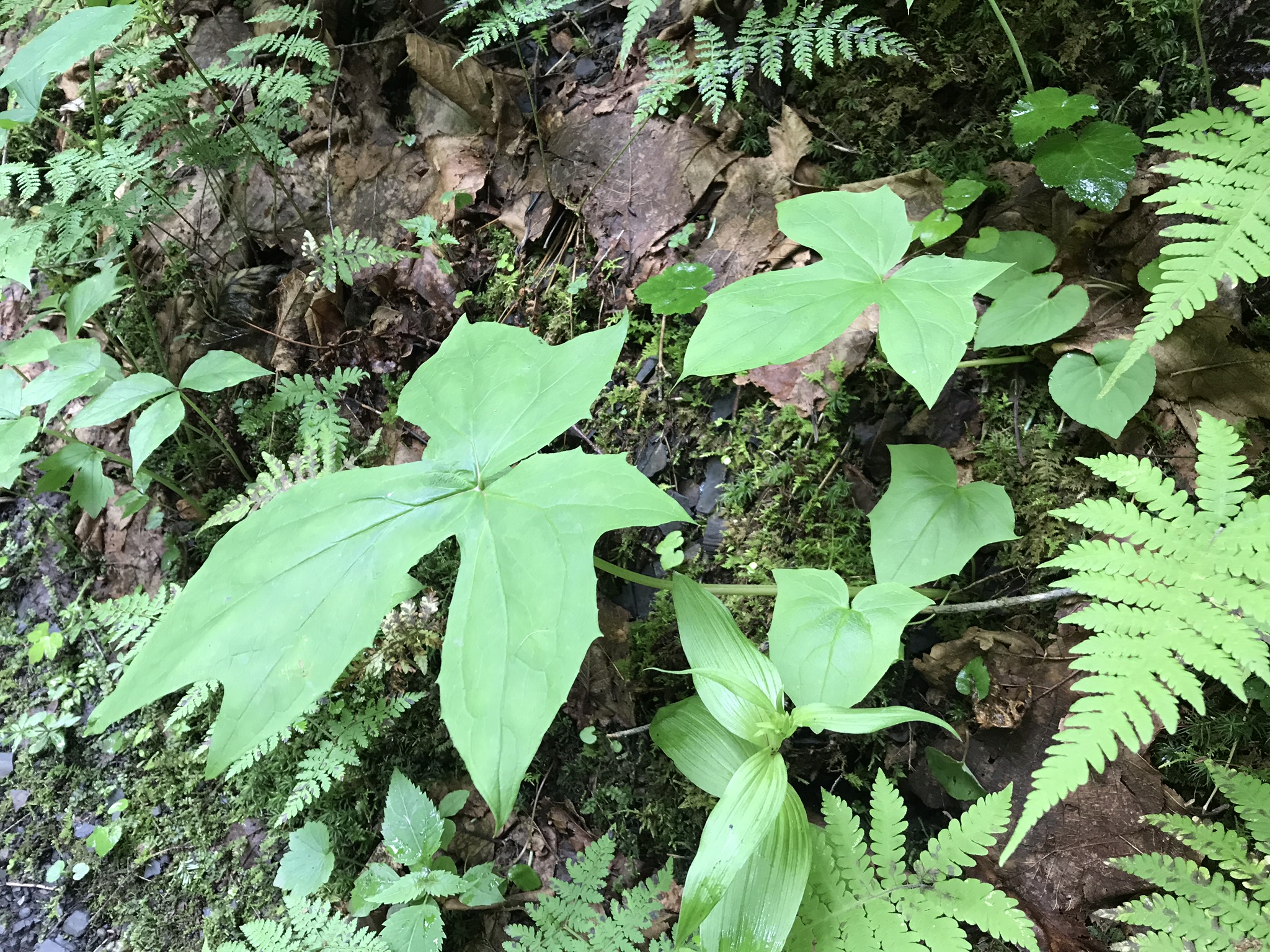
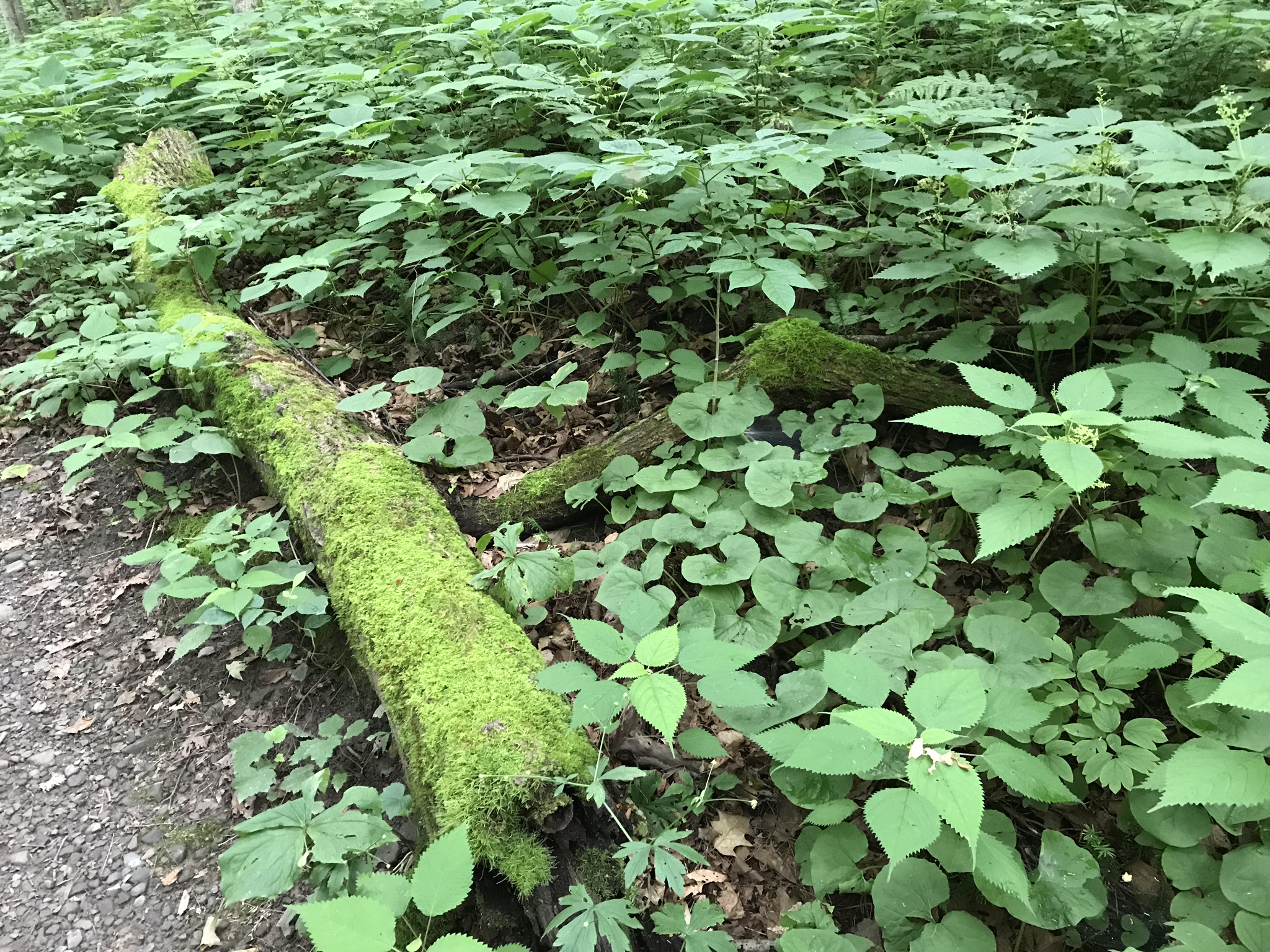
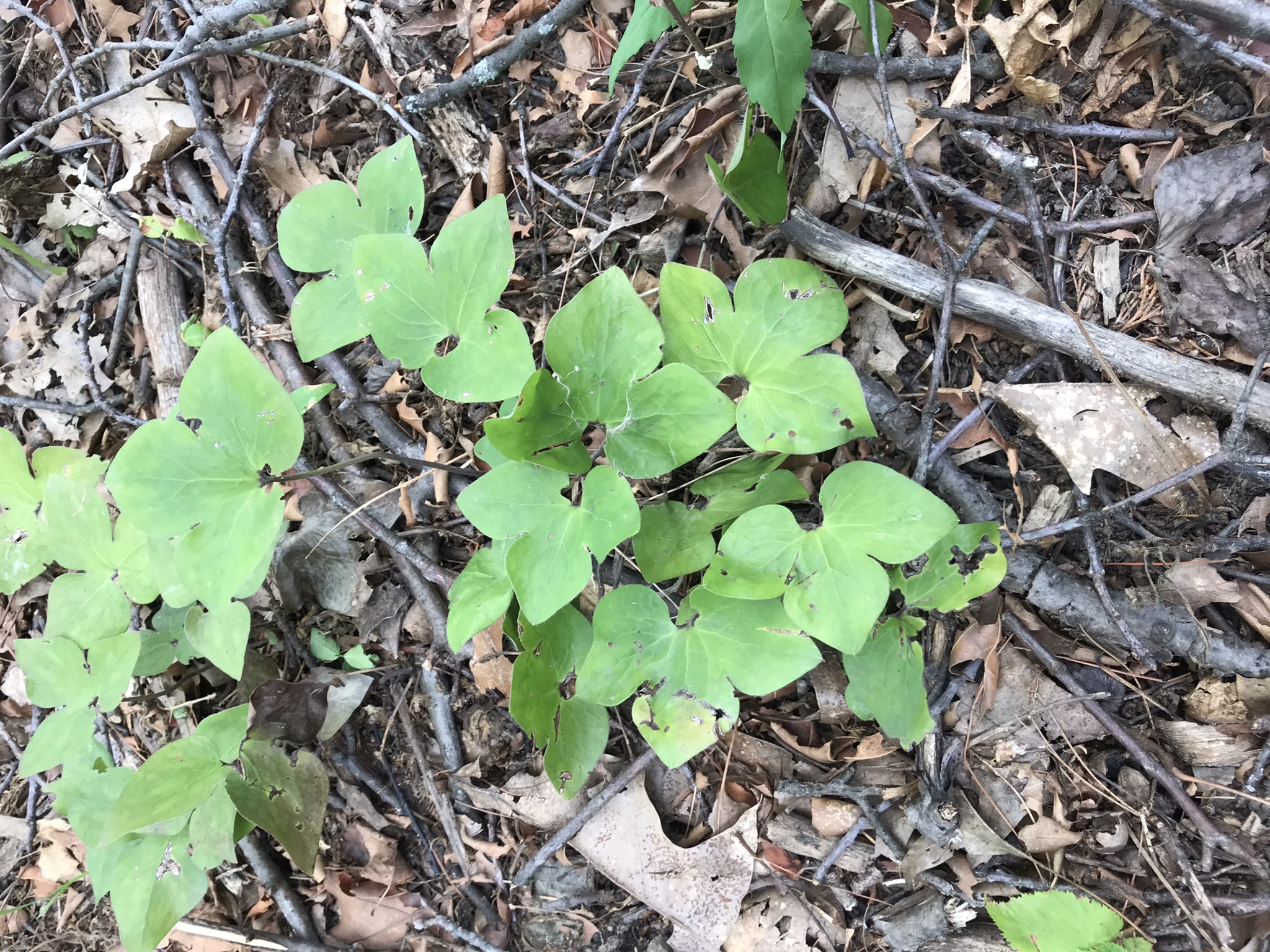
The leaves of hepatica among mosses and sorrell
On bridge number six the girl has her entire backpack contents spread over the path, a naturalist examining her kit. So sweet. Nia and Pam, at this point, were far ahead of me.
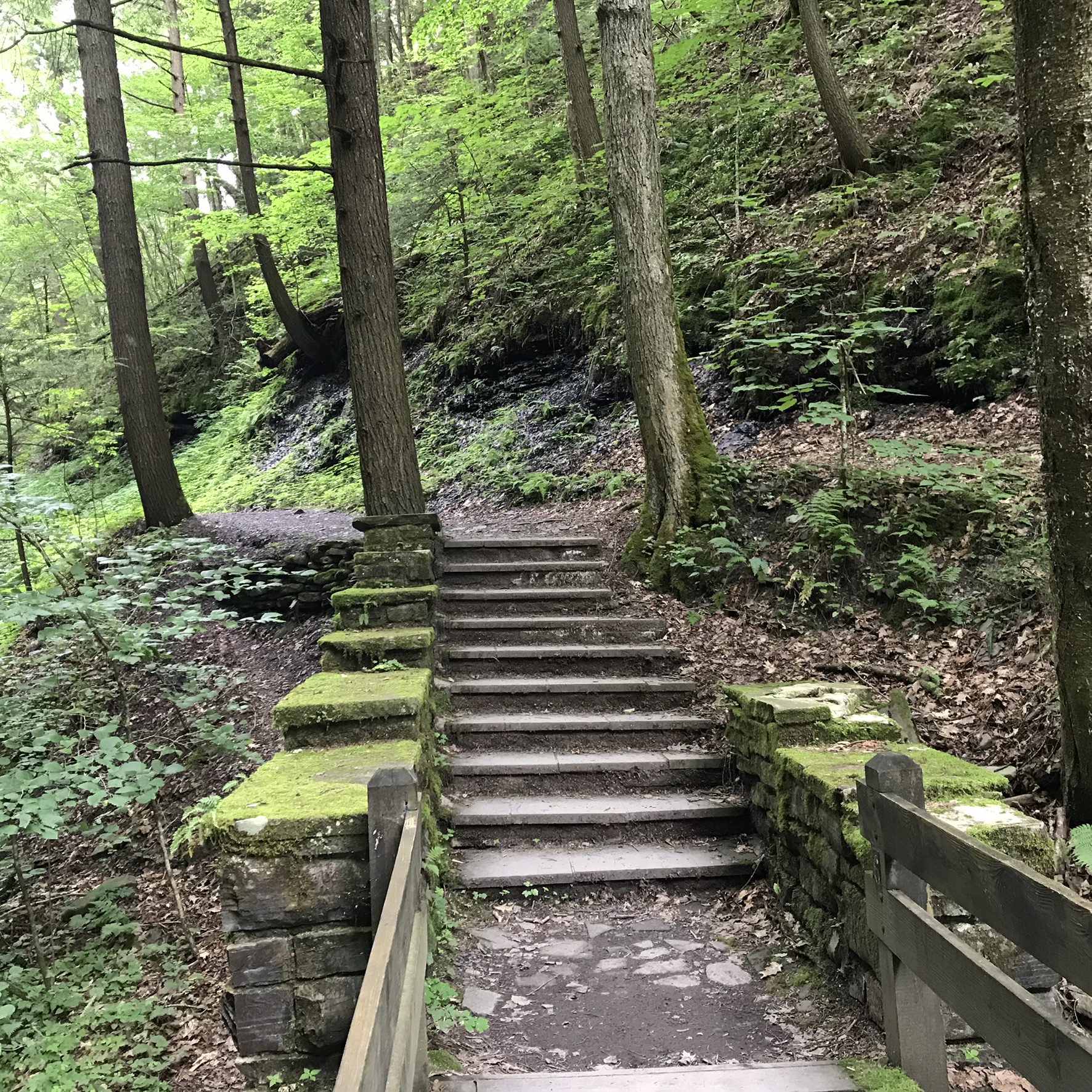
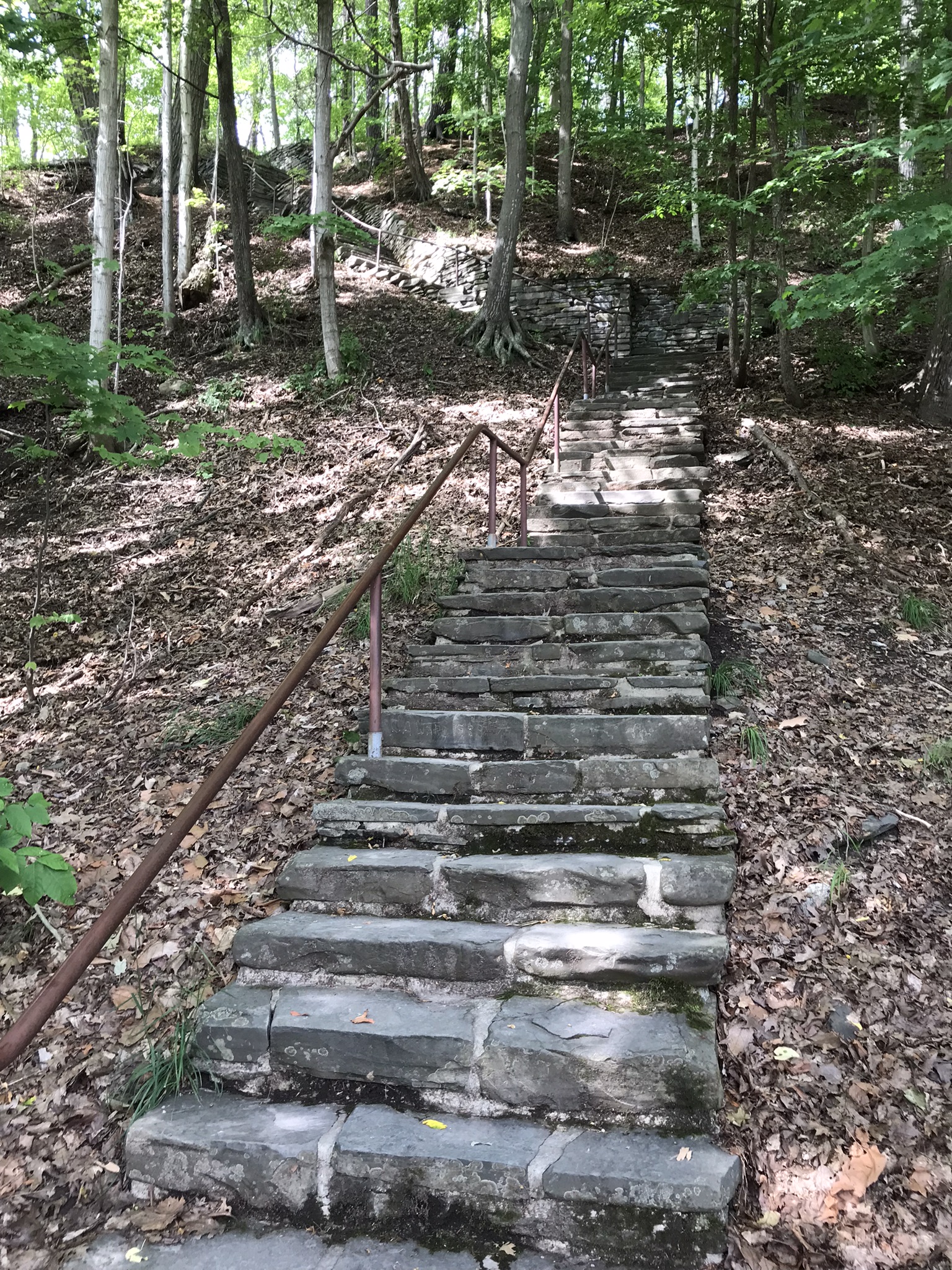
Stairs on approach to the Sixth Bridge
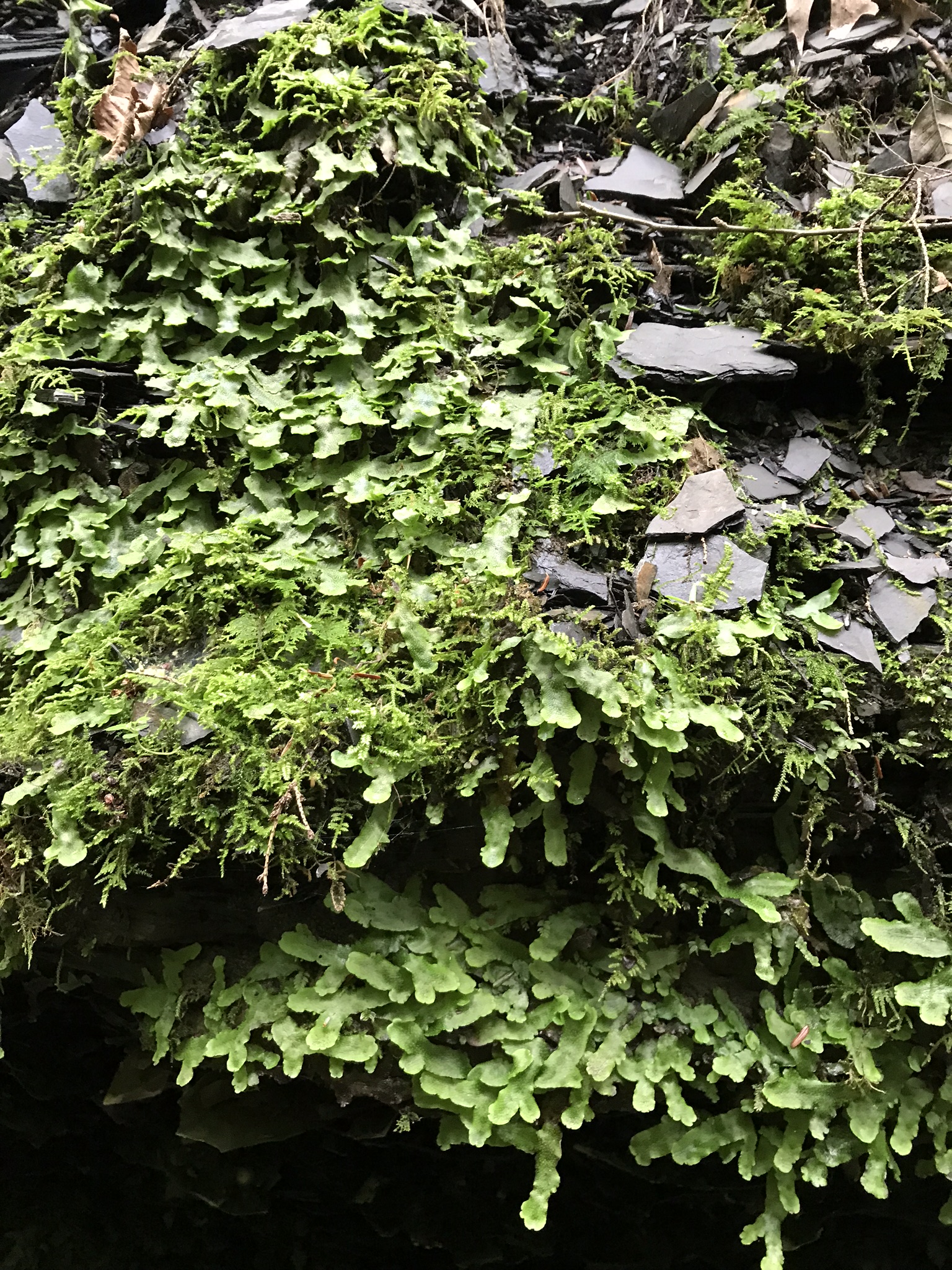
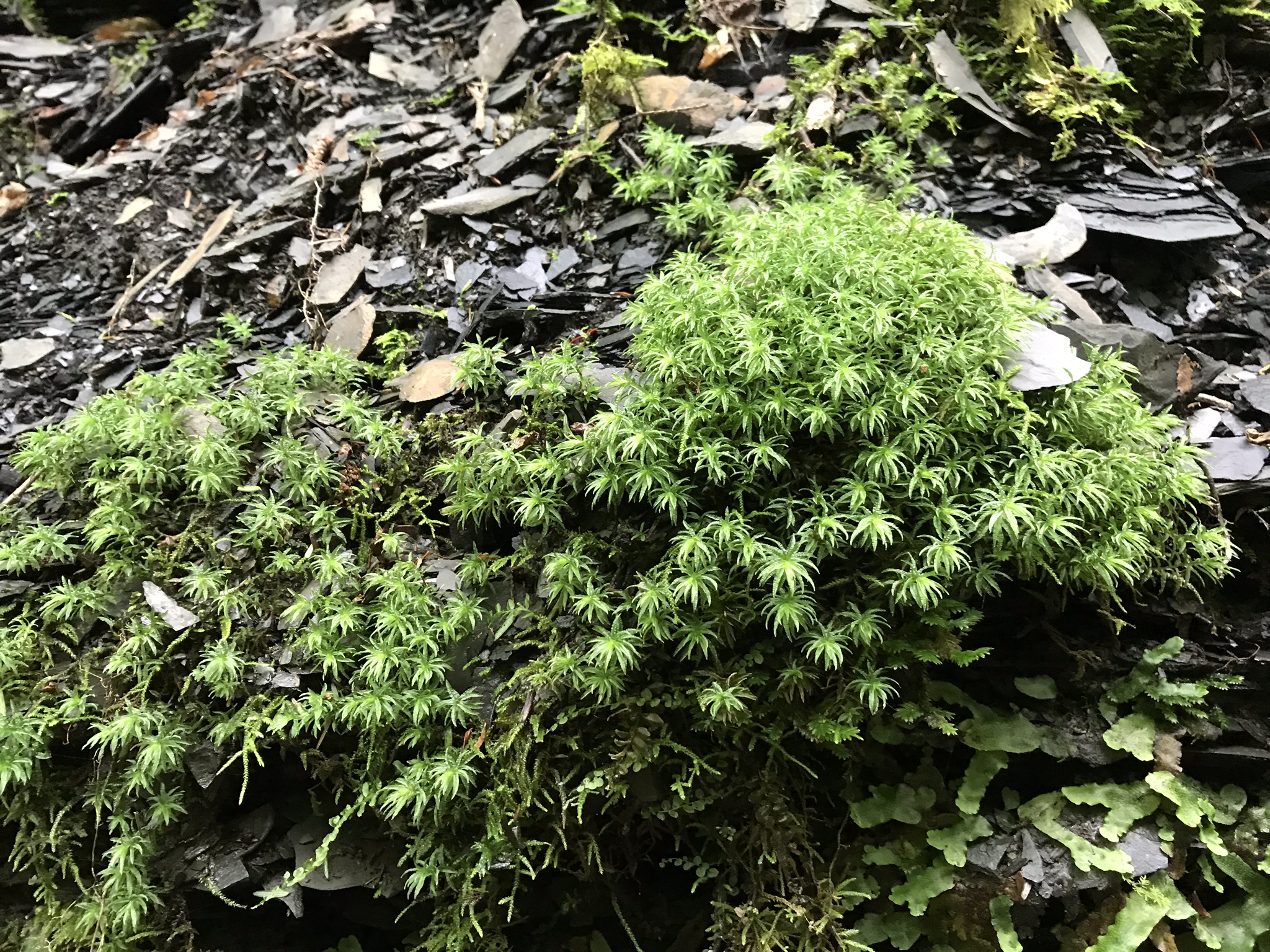
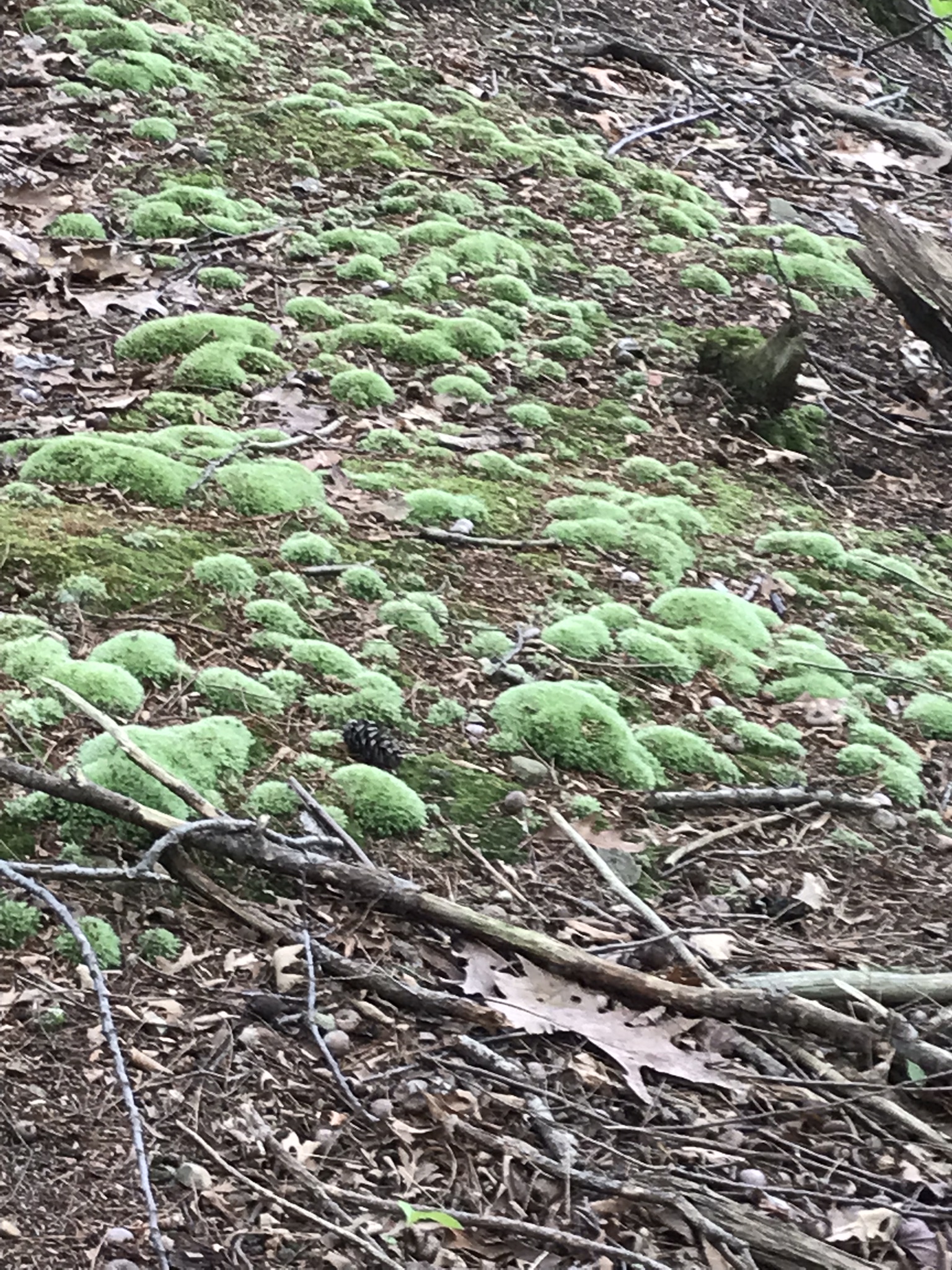
Moss is another plant proven valuable to humankind.
Sphagnum moss was used for wound dressing during World War I, being almost sterile and highly absorbent. The flat growth to the lower right I do not recognize.
An Orchid
This strange orchid, the species name references a similarity to hellebore
Broad-leaved Helleborine (Epipactis helleborine)Flower of the Broad-leaved Helleborine growing up from other leavesCompelling Leaf Arrangement
With is we left the Gorge trail for this day, with a plan to return to approach the eight bridge from the north.
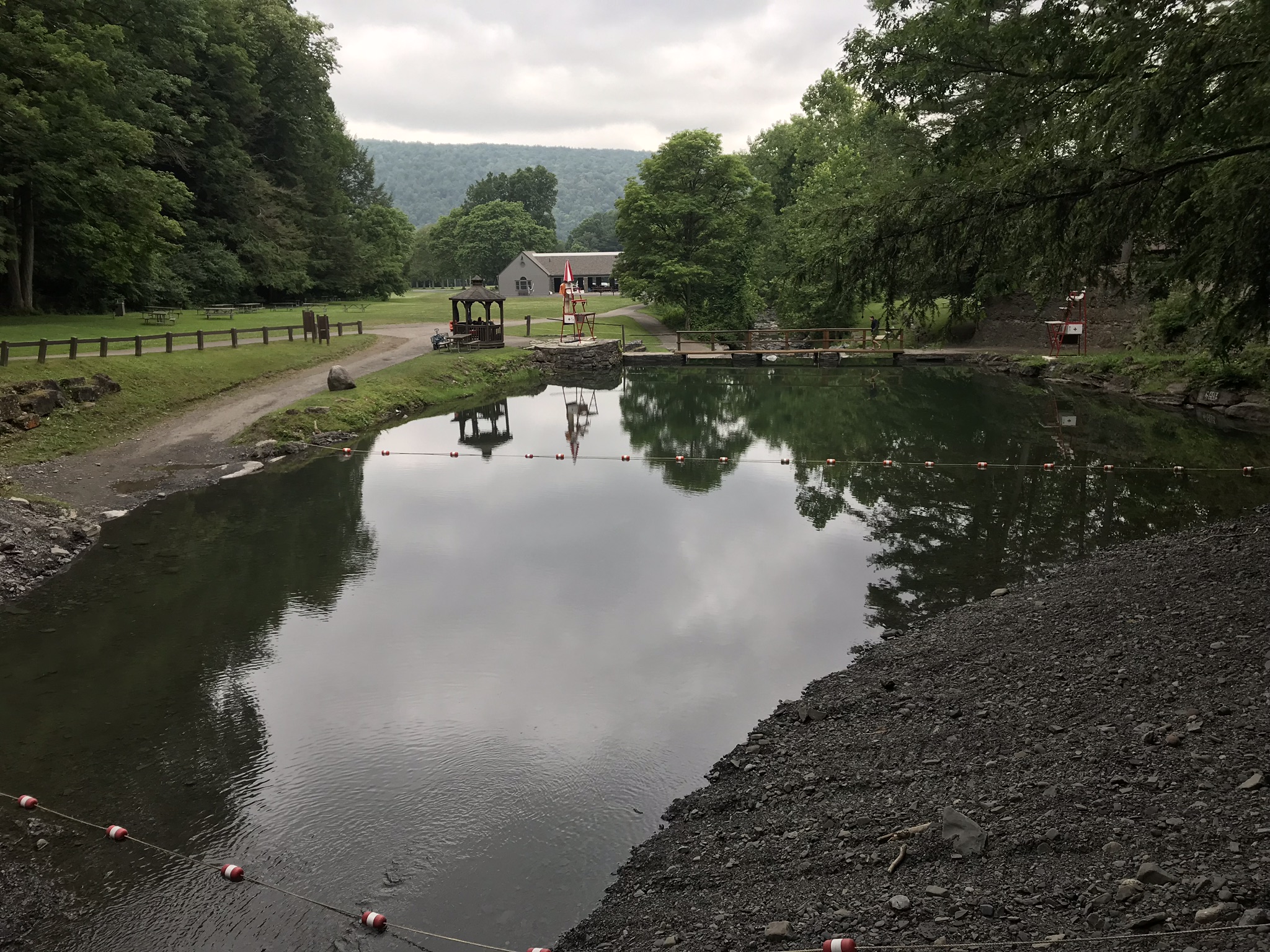
View of stream fed pool from near start of Gorge Trail
Copyright 2022 Michael Stephen Wills All Rights Reserved
Moss and soil held in place by roots, it is unsettling to pass this place. This entire section is unsettled and unsettling to someone with an overactive imagination, who notices nothing growing below this place, in a gorge otherwise covered in greenery.
This decade some exceptional trail stabilization work was completed. Here is a portion of the trail, near the above photograph, the bank of loose soil held in place with a stepped retaining wall crafted from wood 8×8 posts. Higher in Fillmore Glen a portion of the trail is closed where the hillside gave way 14 years ago.
Fallen
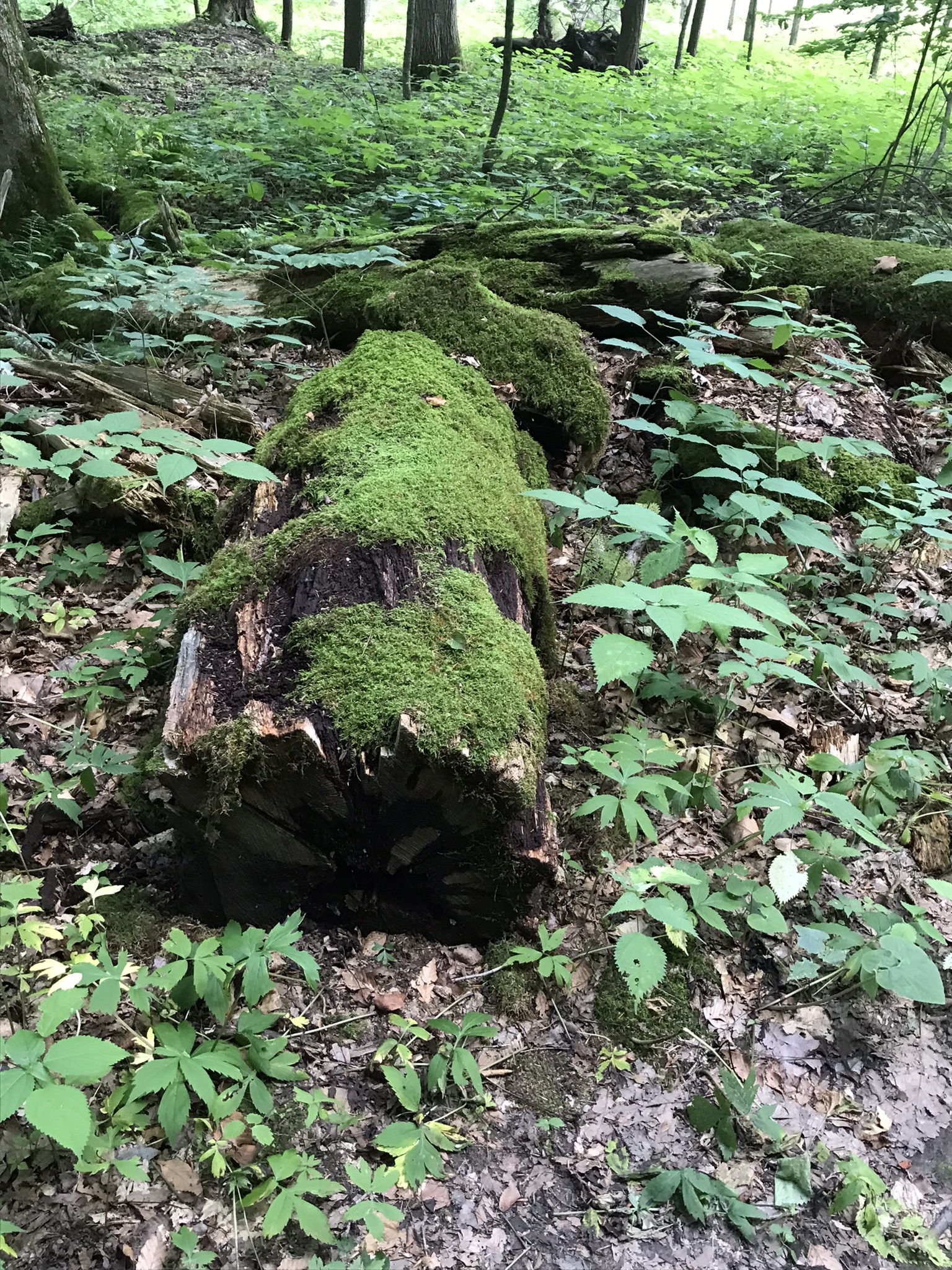
Gravity working toward disaster is seen as a constant infall, a slow rain of trees, left in place to rot over the course of a century.
Dying trees on unstable creek bank are cut before falling.
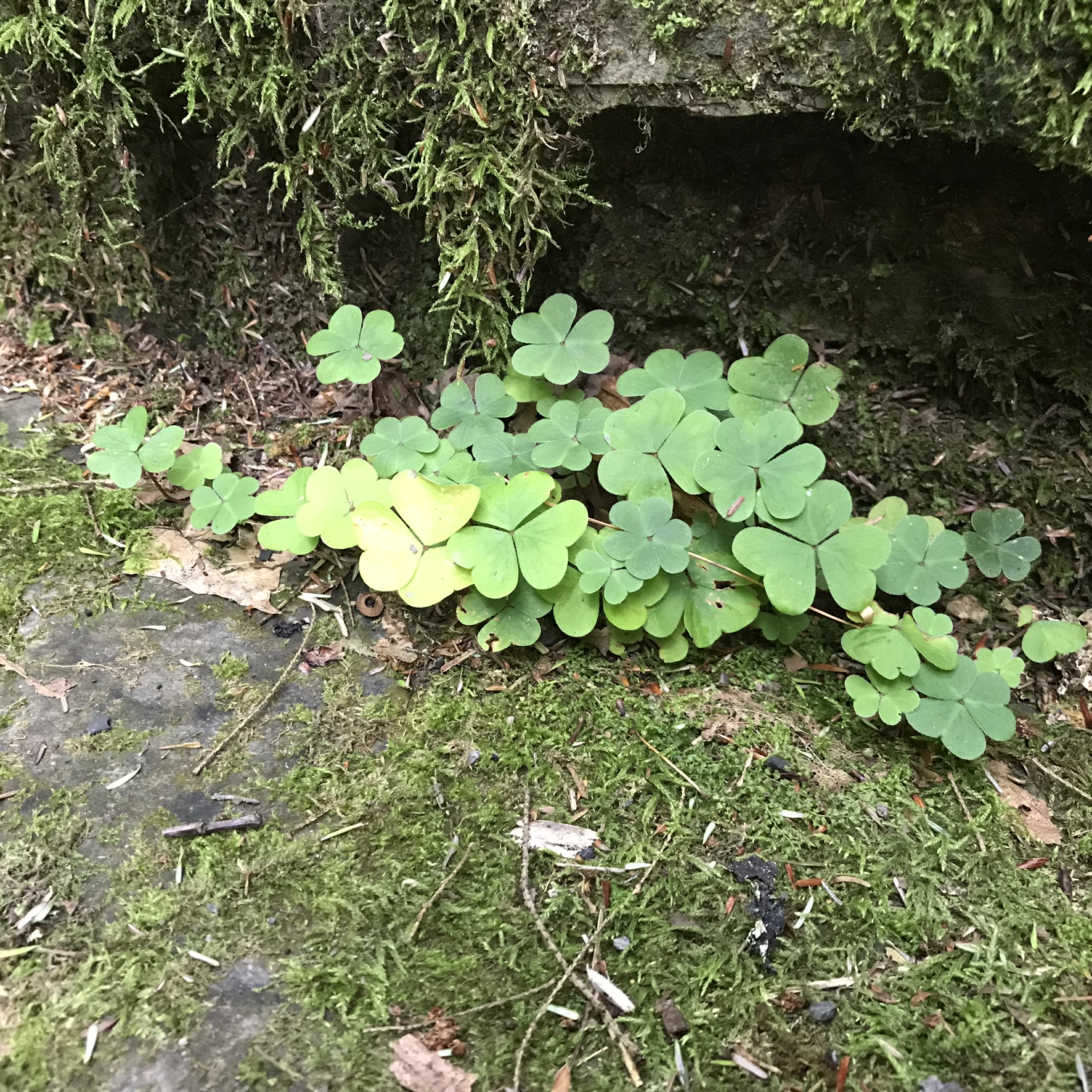
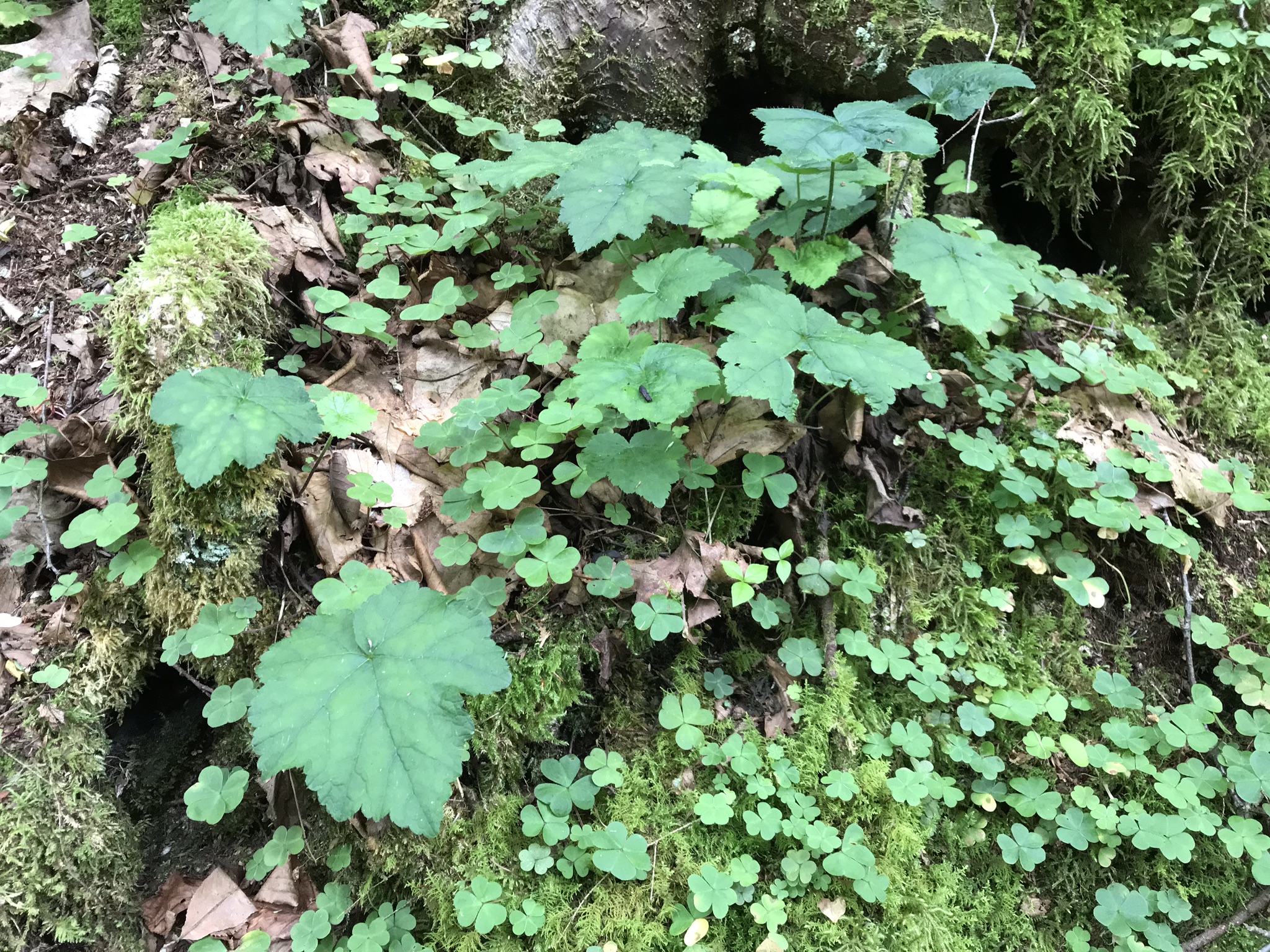
Beneath the infall, chaos, this wood sorrell took root on a shin high shale shelf among mosses. The taste of the plant is sour, leading to the name from the greek for “sour.” The family Oxalidaceae comprises 570 species. I till not venture to guess this one.
Also known as sourgrass and false shamrock, these grow on a thread of hope in a glimmer of sunlight.
Copyright 2022 Michael Stephen Wills All Rights Reserved
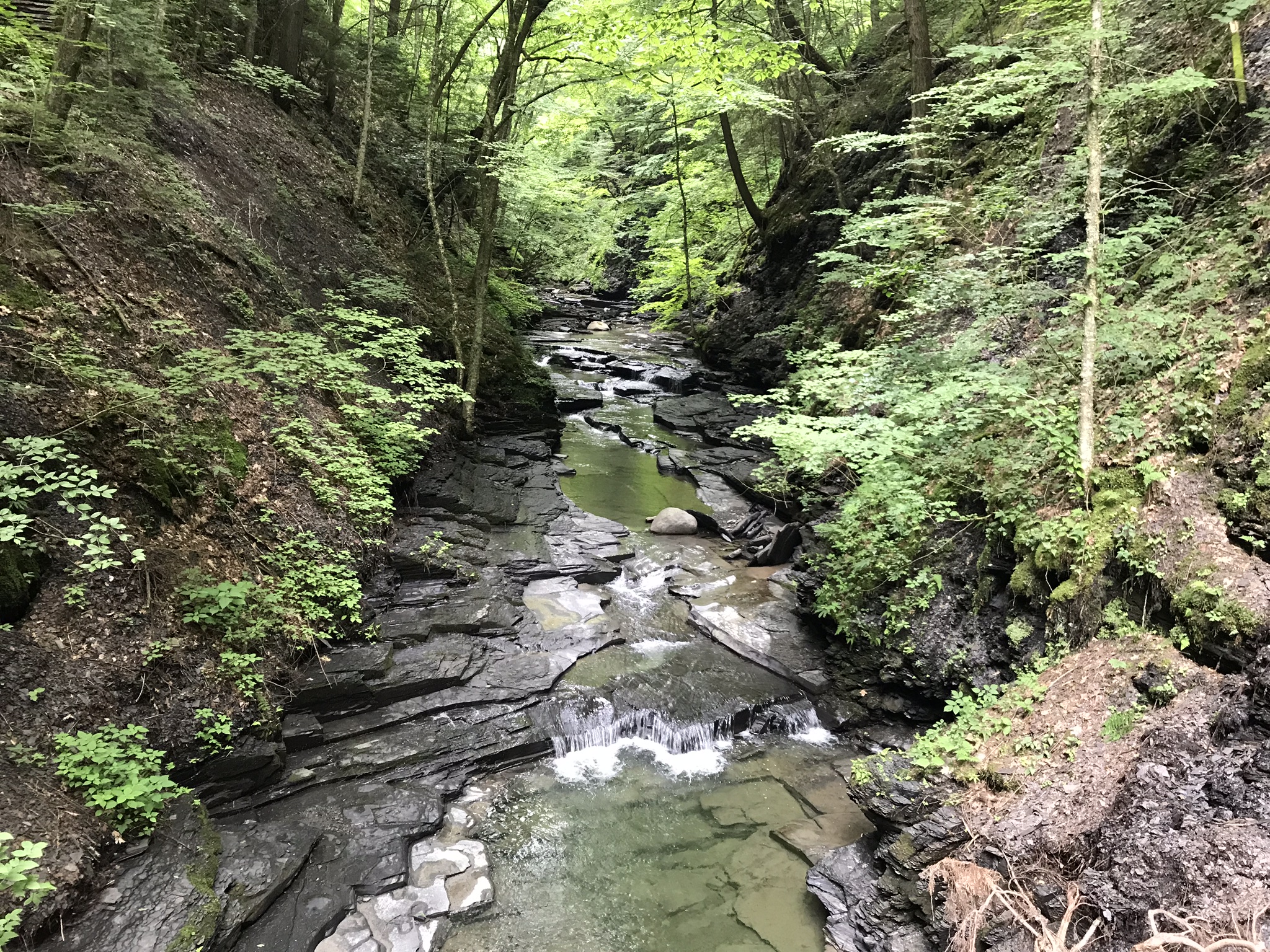
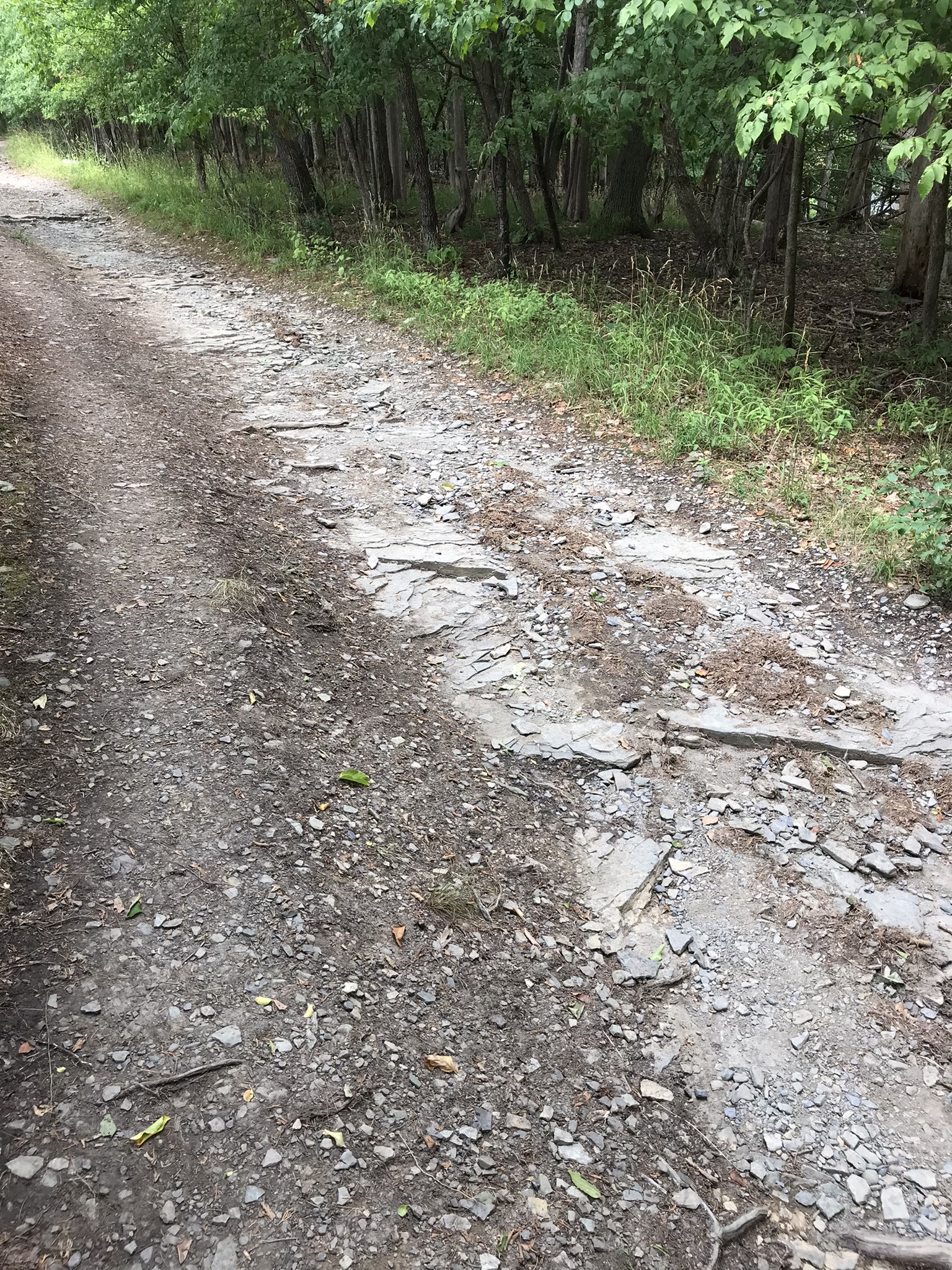
Gorge trails follows the path cut by Dry Creek through eons of multiple and various sedimentary rock. The work of the CCC crew (see “Presidents Millard Fillmore and F.D. Roosevelt”) makes it literally child’s play to negotiate a course otherwise impossible to do without getting soaking wet.
There were seven bridges, wooden over steel I-beams, we crossed today. The trail beyond bridge seven is closed due to hazardous conditions, don’t know what exactly. The gorge is plagued with landfalls. Much of the modern work is elaborate wooden supports of the land beneath the trail.
Delved Deep
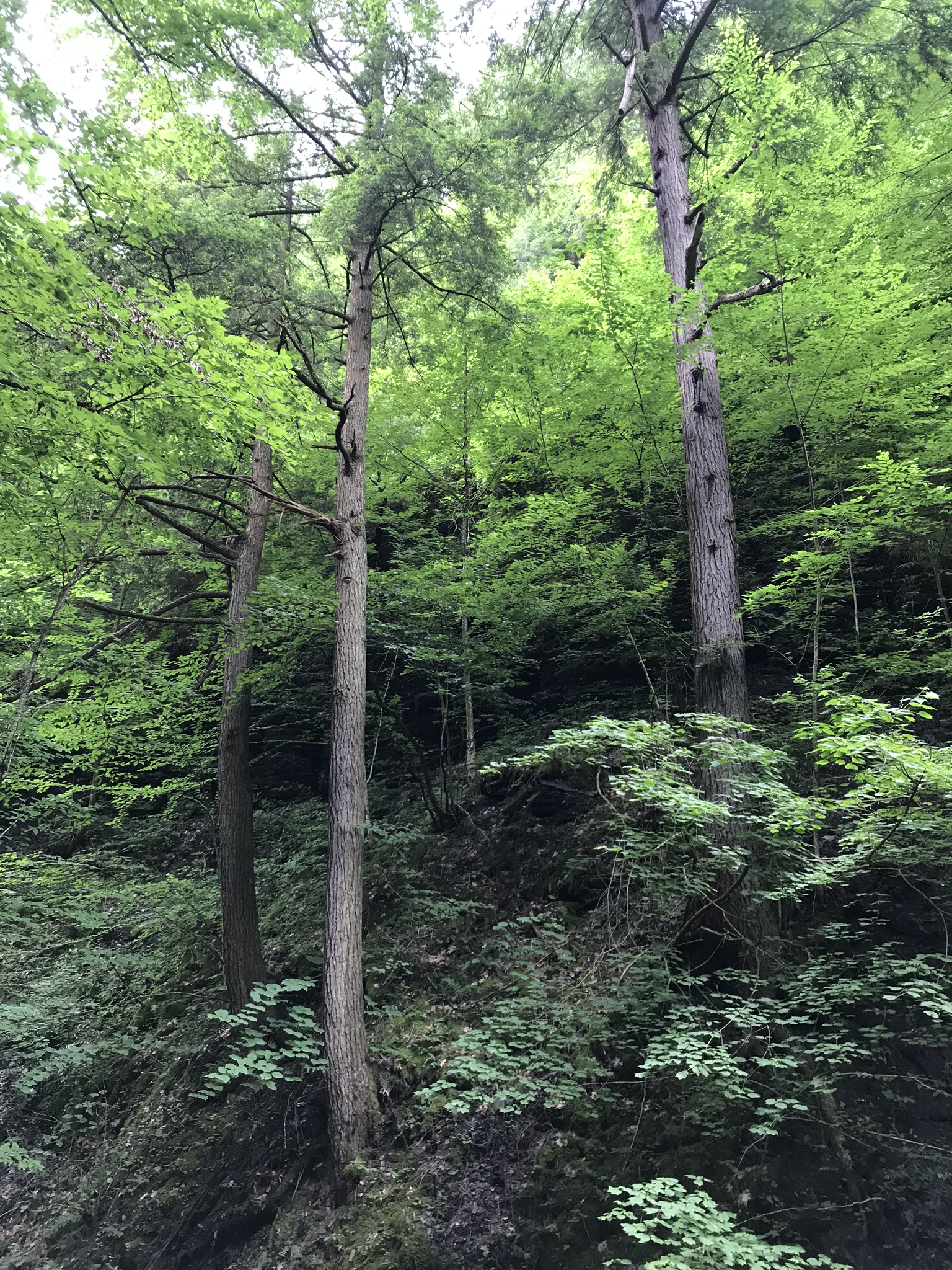
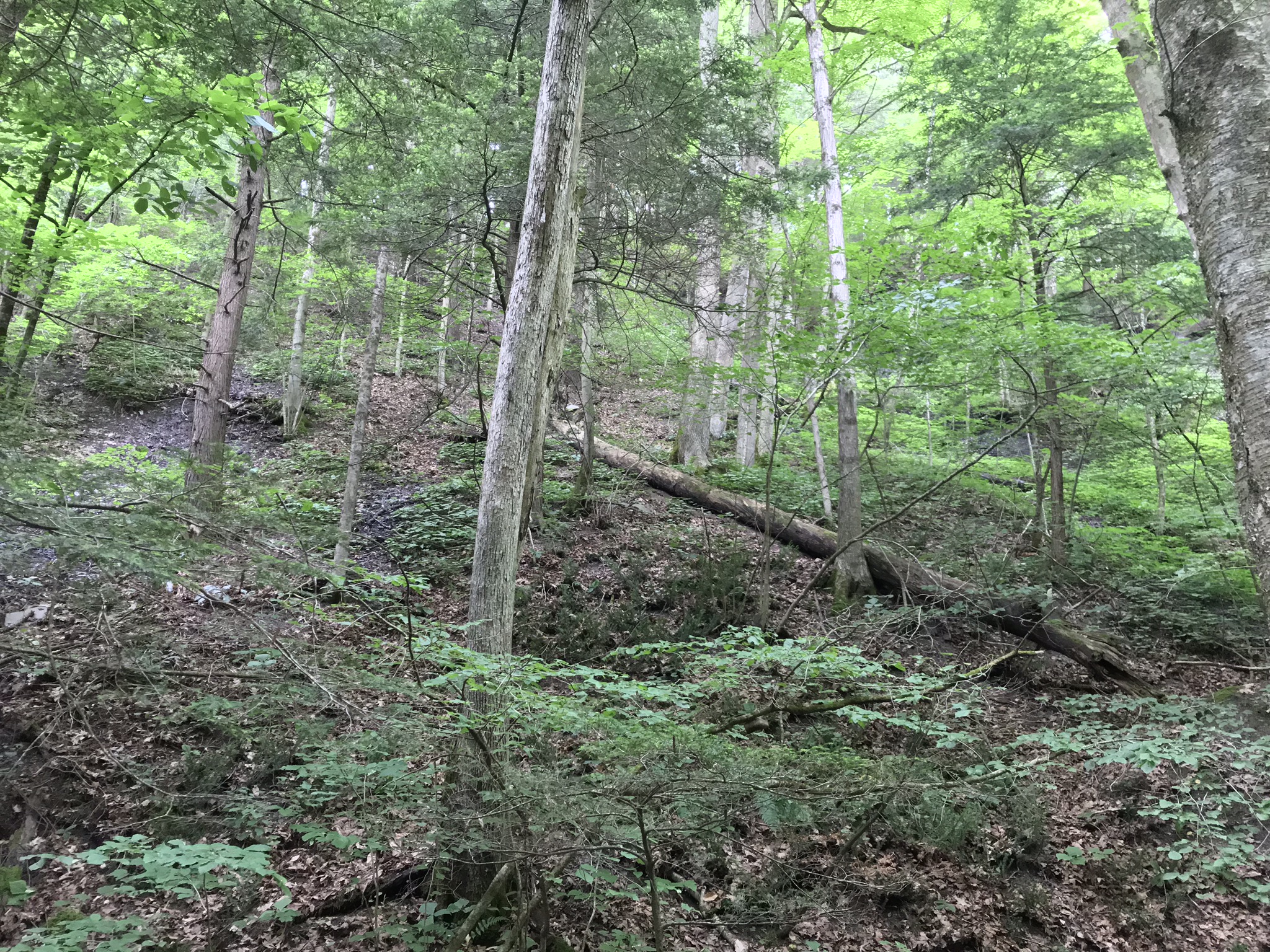
Every step on the Gorge Trail is beneath 100+ foot walls, steep slopes held in place by the forest and every variety of native wildflower.
I took the following video from a zig-zag path over a difficult steam topography tamed by two bridges and limestone walls sourced from the stream bed.
Evidence of Plate Tectonics
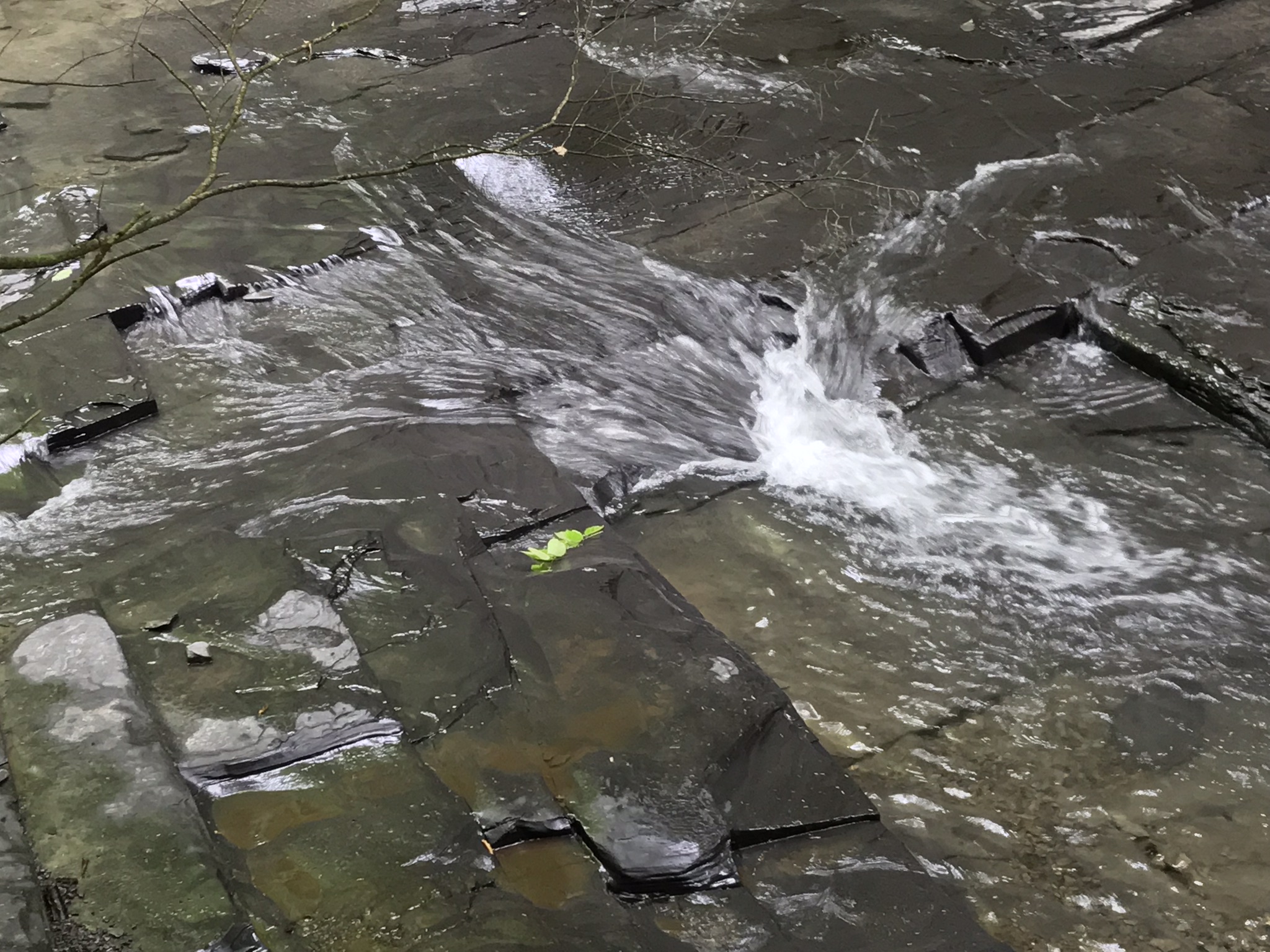
Above, is a view of the characteristic right angle faulting of the limestone base of Dry Creek, faulting produced when the North American plate pressed against the African plate, released, then after pivoting 90 degrees, pressed again against Africa before finally separating with the create of the Atlantic Ocean.
Copyright 2022 Michael Stephen Wills All Rights Reserved
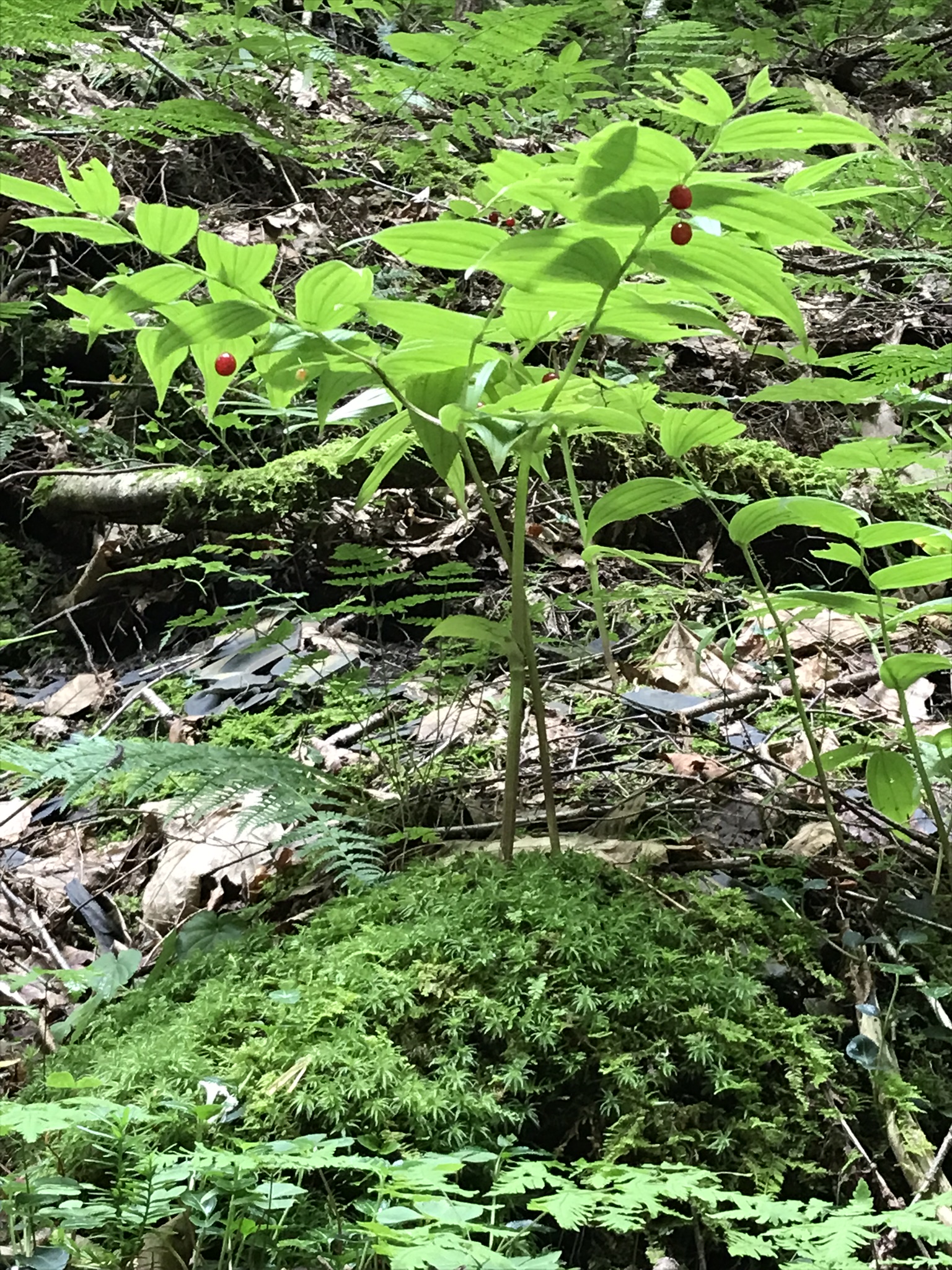
Walking the level the these red might be overlooked hanging sparsely under nodding branches. From the leaf shape you may wrongly identify this as Solomon’s Seal. This specimen, growing on a shale ledge of the glen, reveals sparse red fruit, not the plentiful dark blue of Solomon’s Seal. This is Rose Twisted-Stalk (Streptopus roseus), a member of the Lily family. The two are often found close together. I found no Solomon’s Seal this trip.
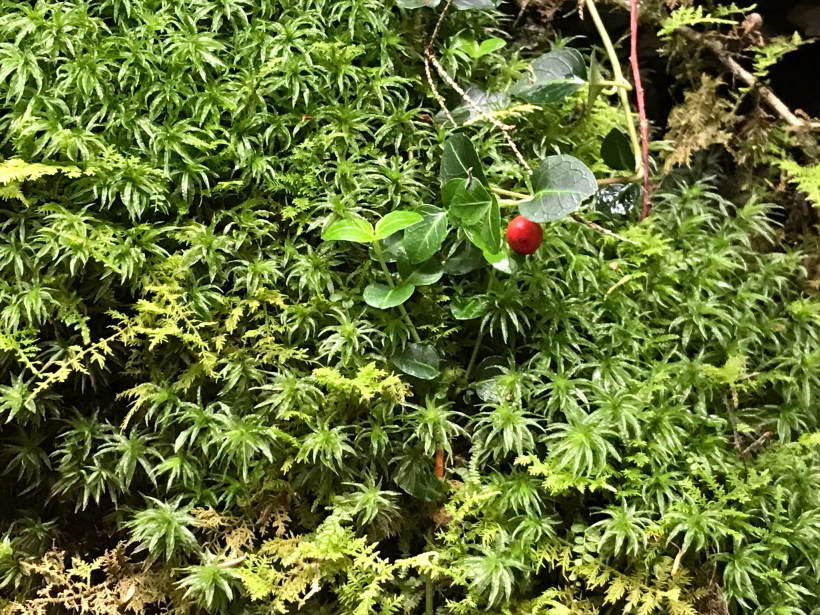
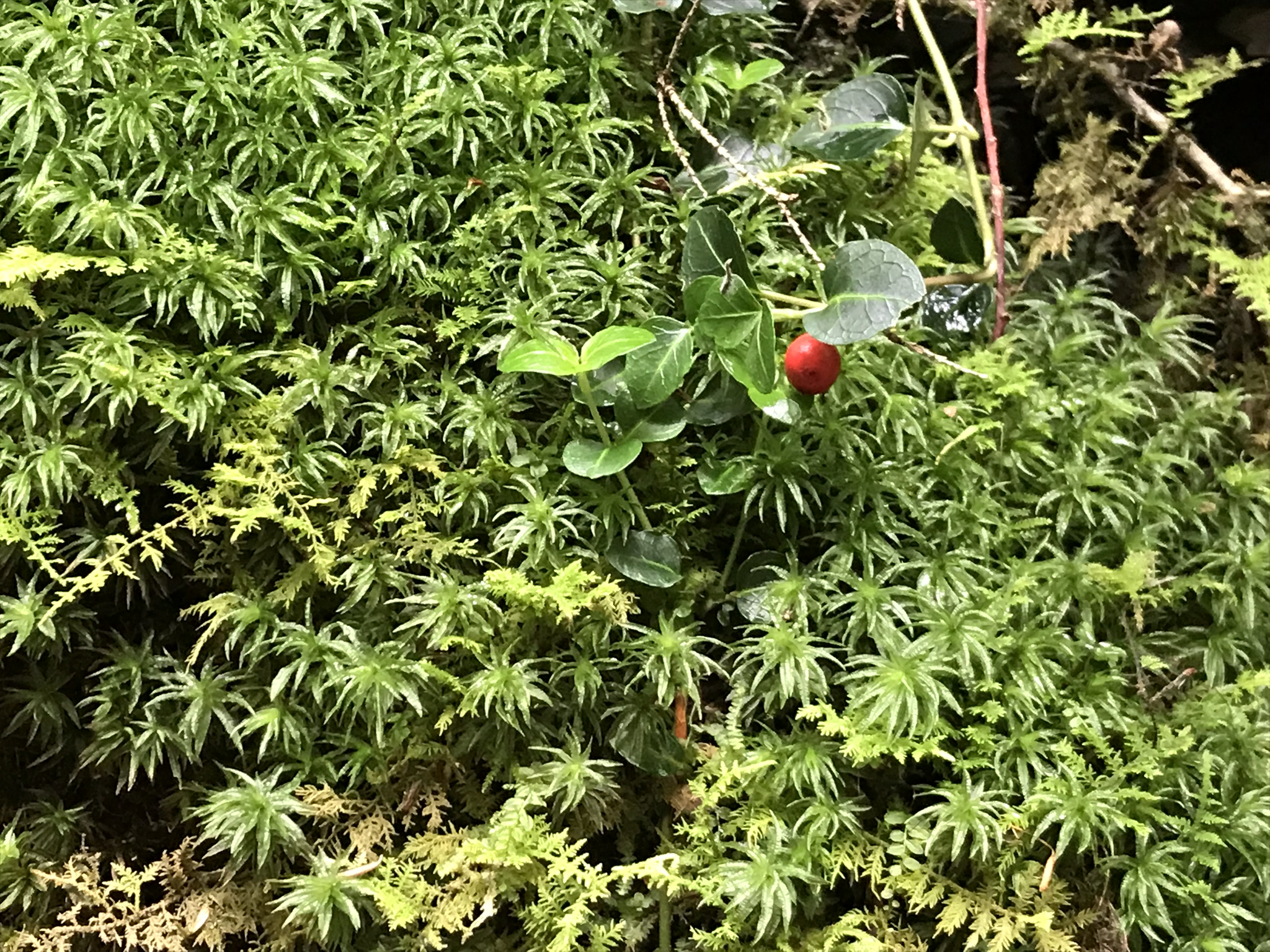
Cranberry?
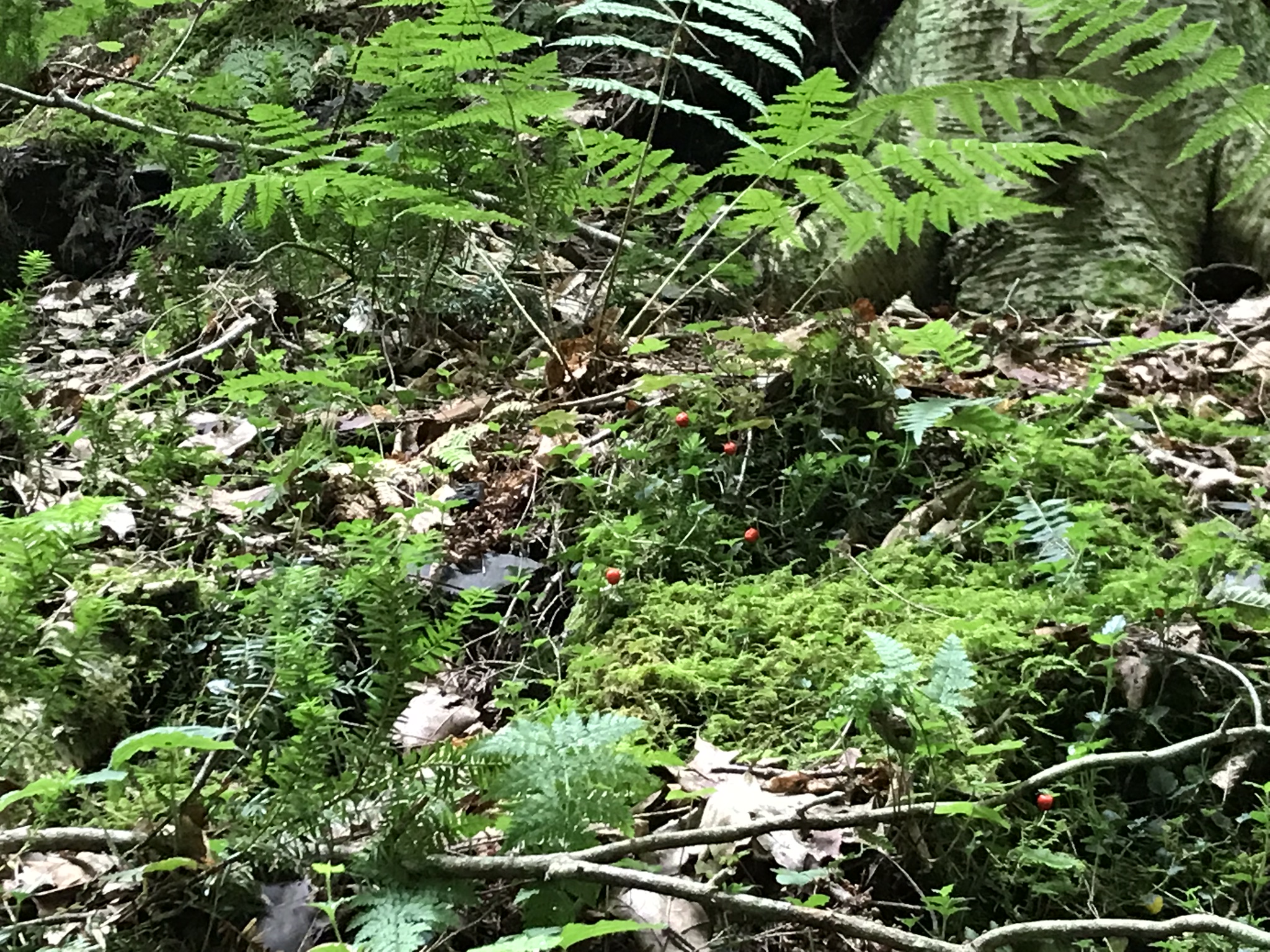
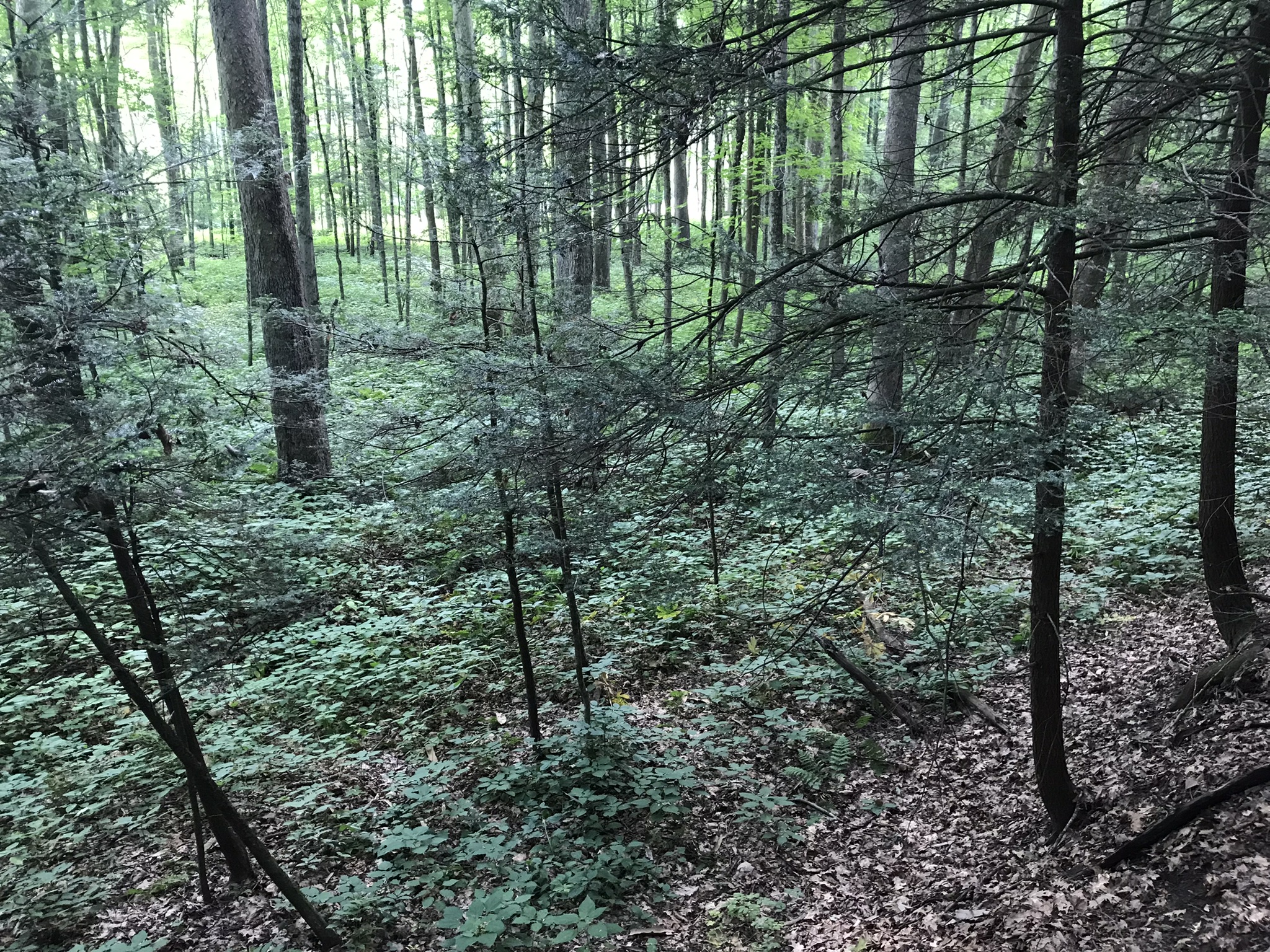
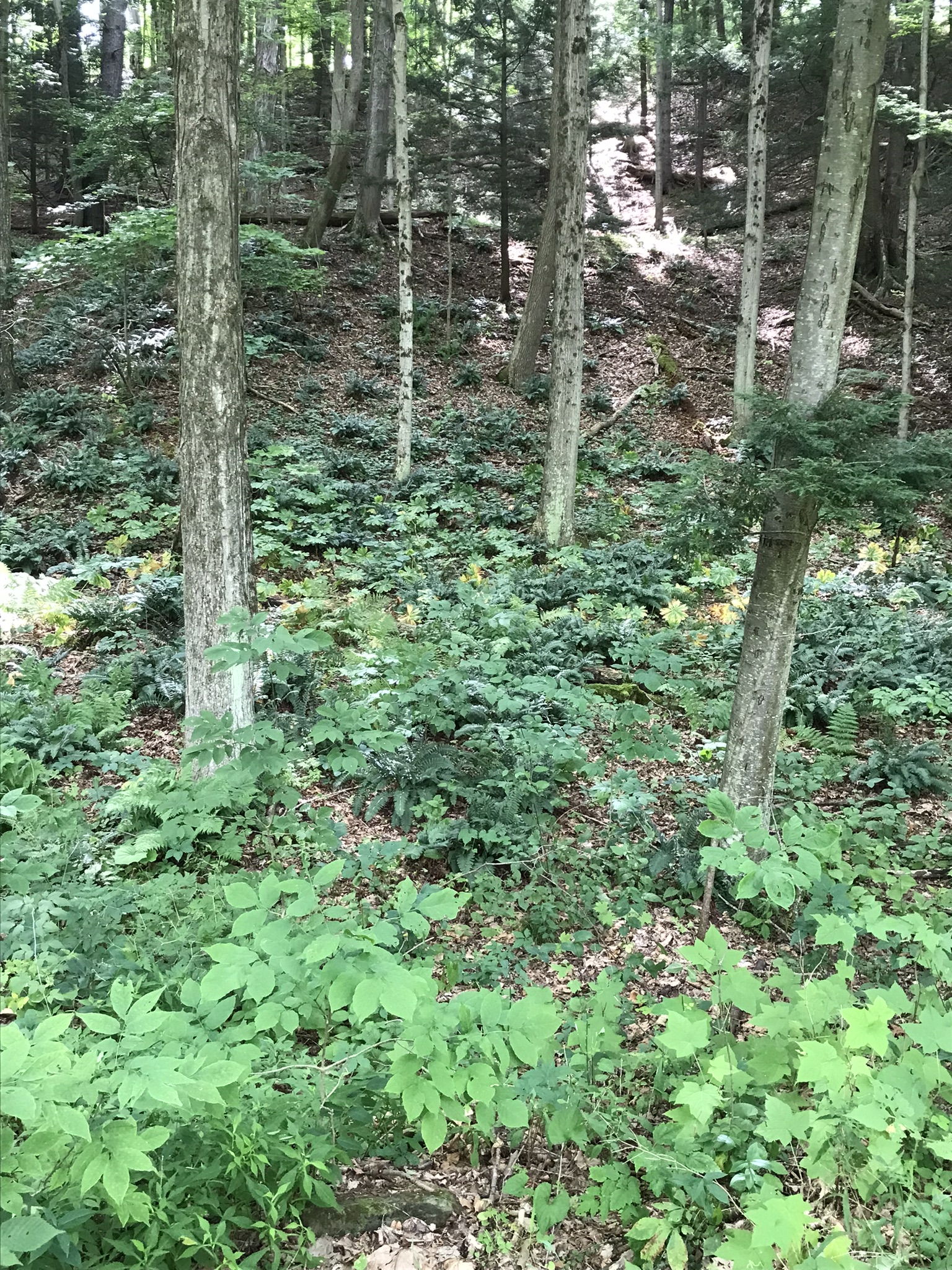
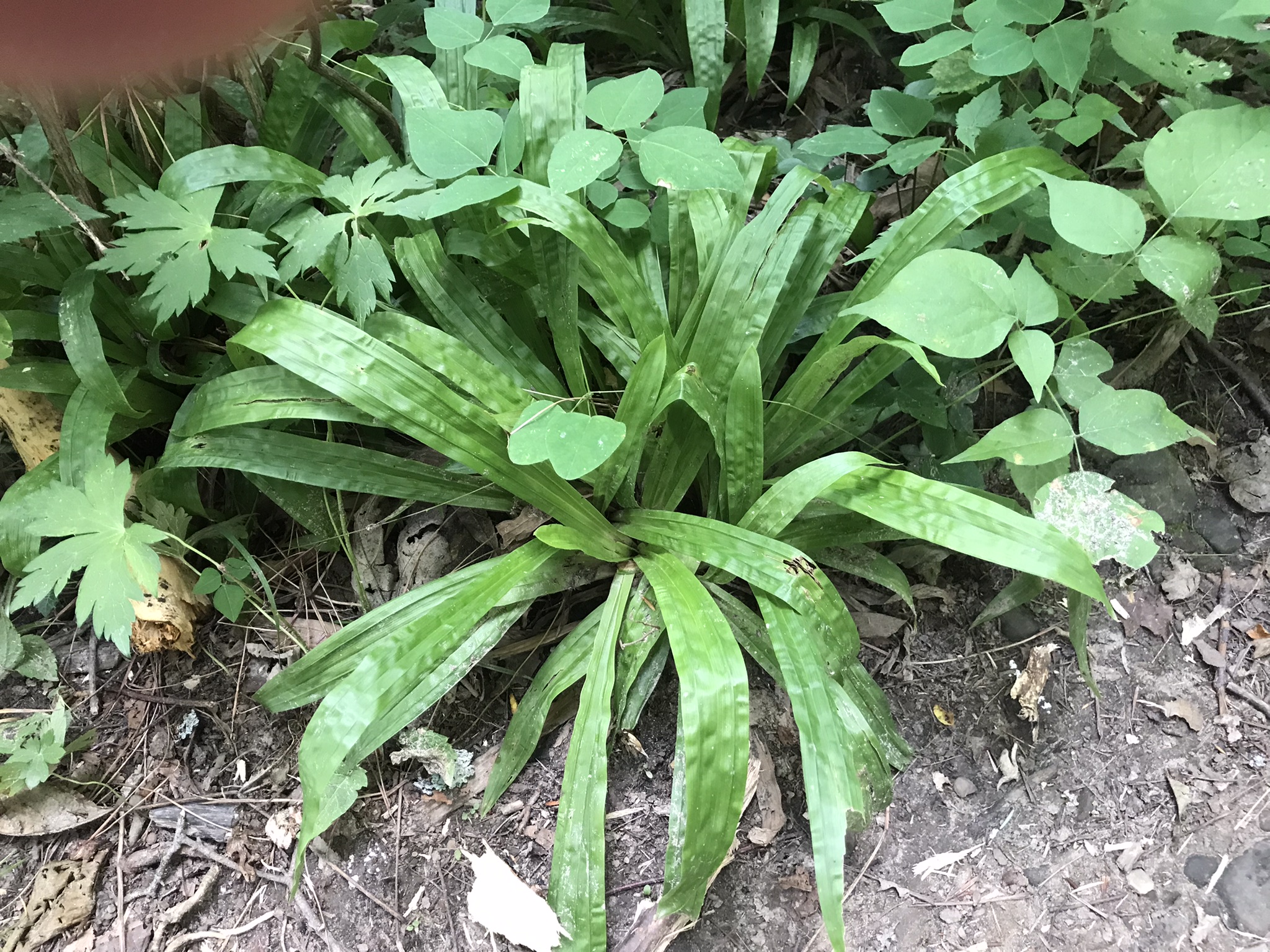
The moss beneath the Rose Twisted-Stalk is plentiful here beneath the constantly dripping porous shale glen wall, mini swamps. I am not confident enough to following identification to each the red fruit. From the damp location and leaf shape I am guessing this to be mountain- cranberry (Vaccinium vitis-idaea). The first photograph of this posting is an overview.
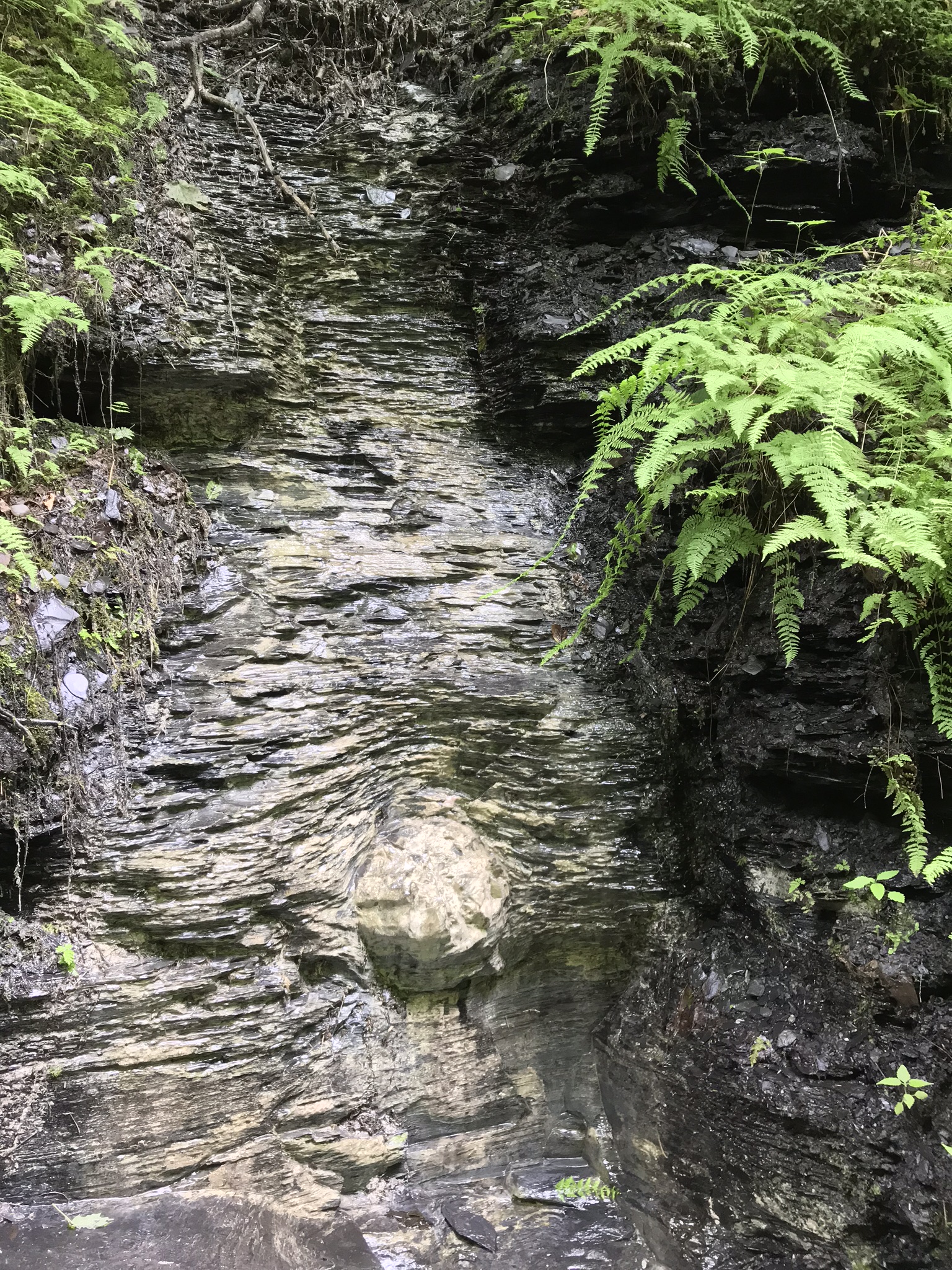
A shallow grotto
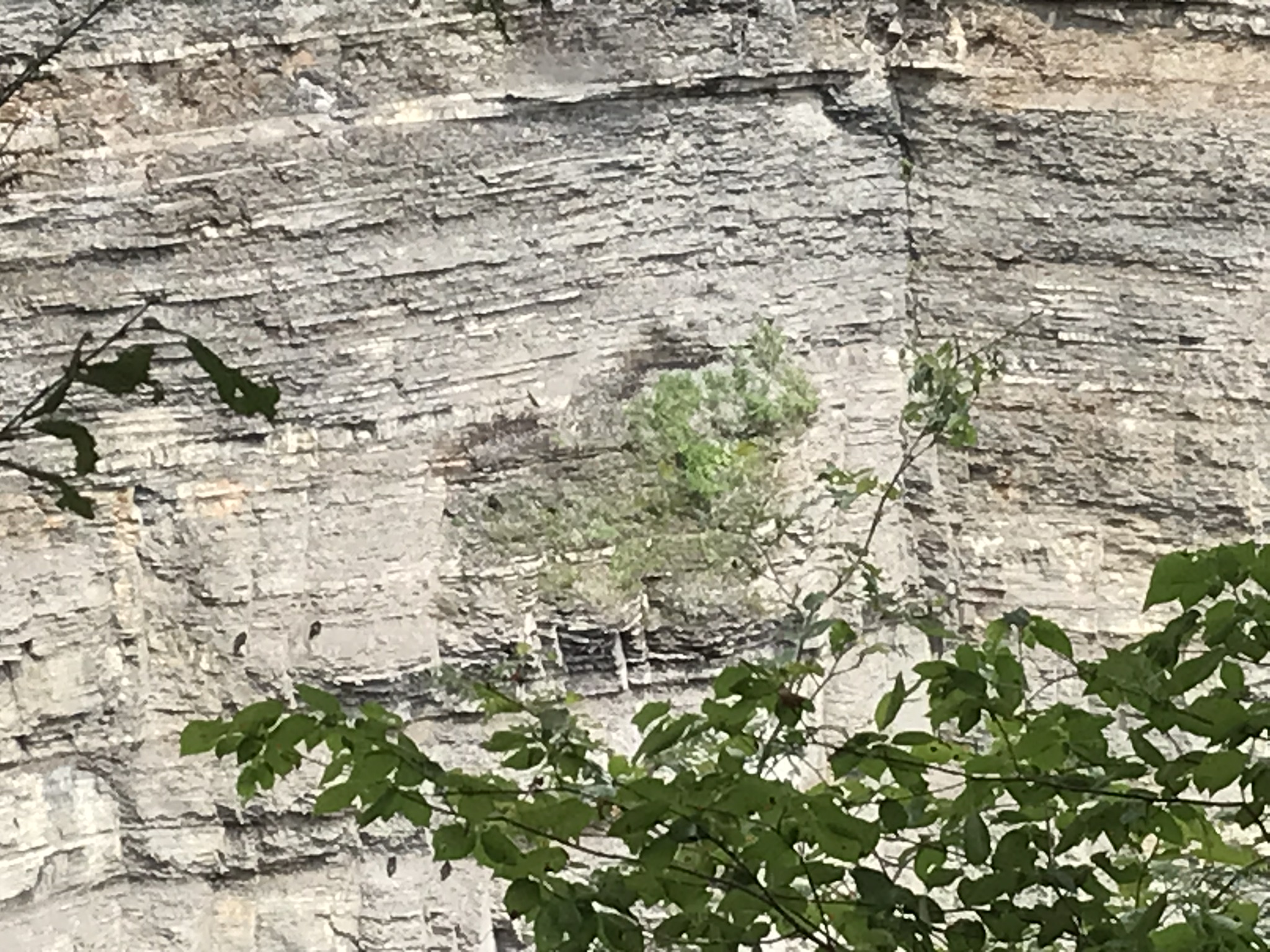
Finely layer shale in the following photograph is sediment eroded over 50 million years from the Arcadian Mountains, washed into the shallow inland sea of the Appalachian Basin. We see here a transition between fine, fragile shale and another, harder, durable sedimentary rock, limestone. There was a stone on the otherwise flat surface of the limestone around which the sediments forming the shale grew.
We see the detail because here is a persistent, sparse spring. The trail builds created a well here to carry the outflow, preventing trail erosion.
Copyright 2022 Michael Stephen Wills All Rights Reserved
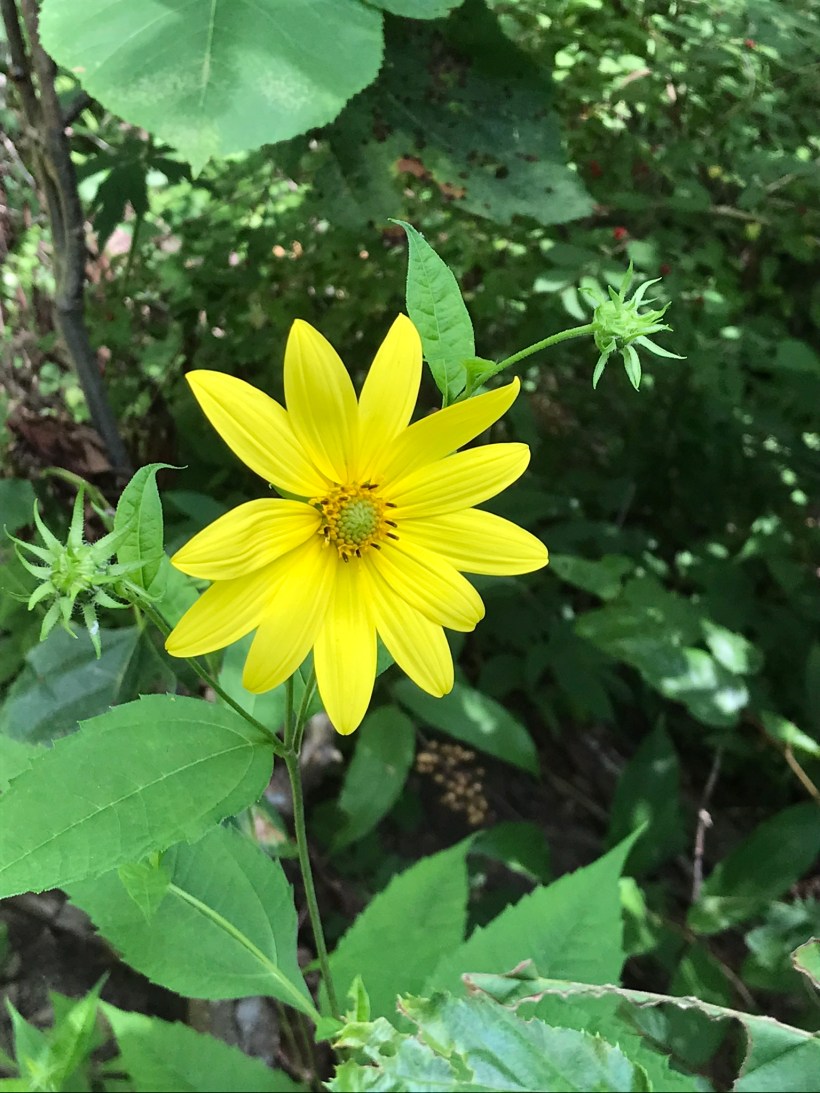
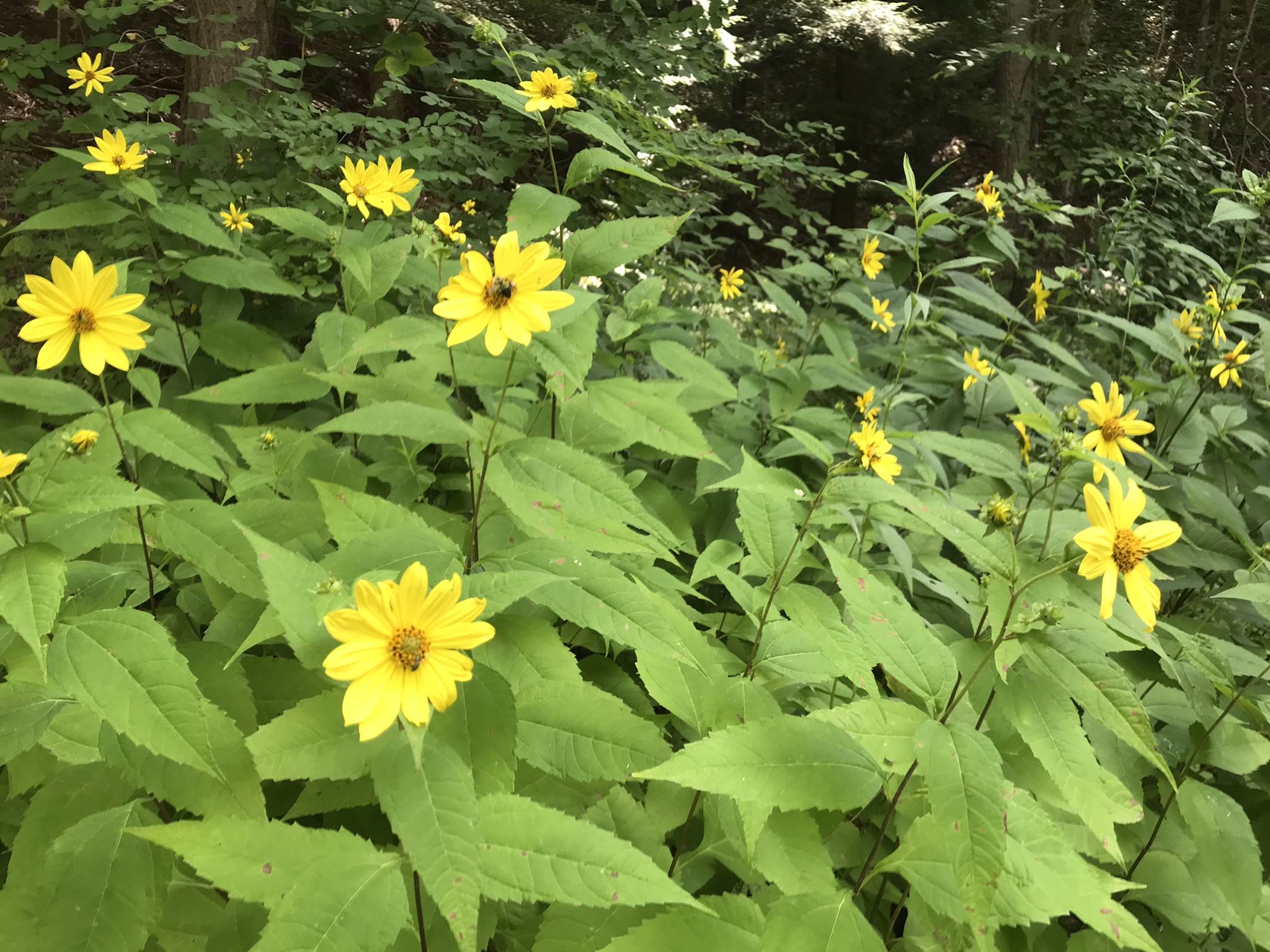
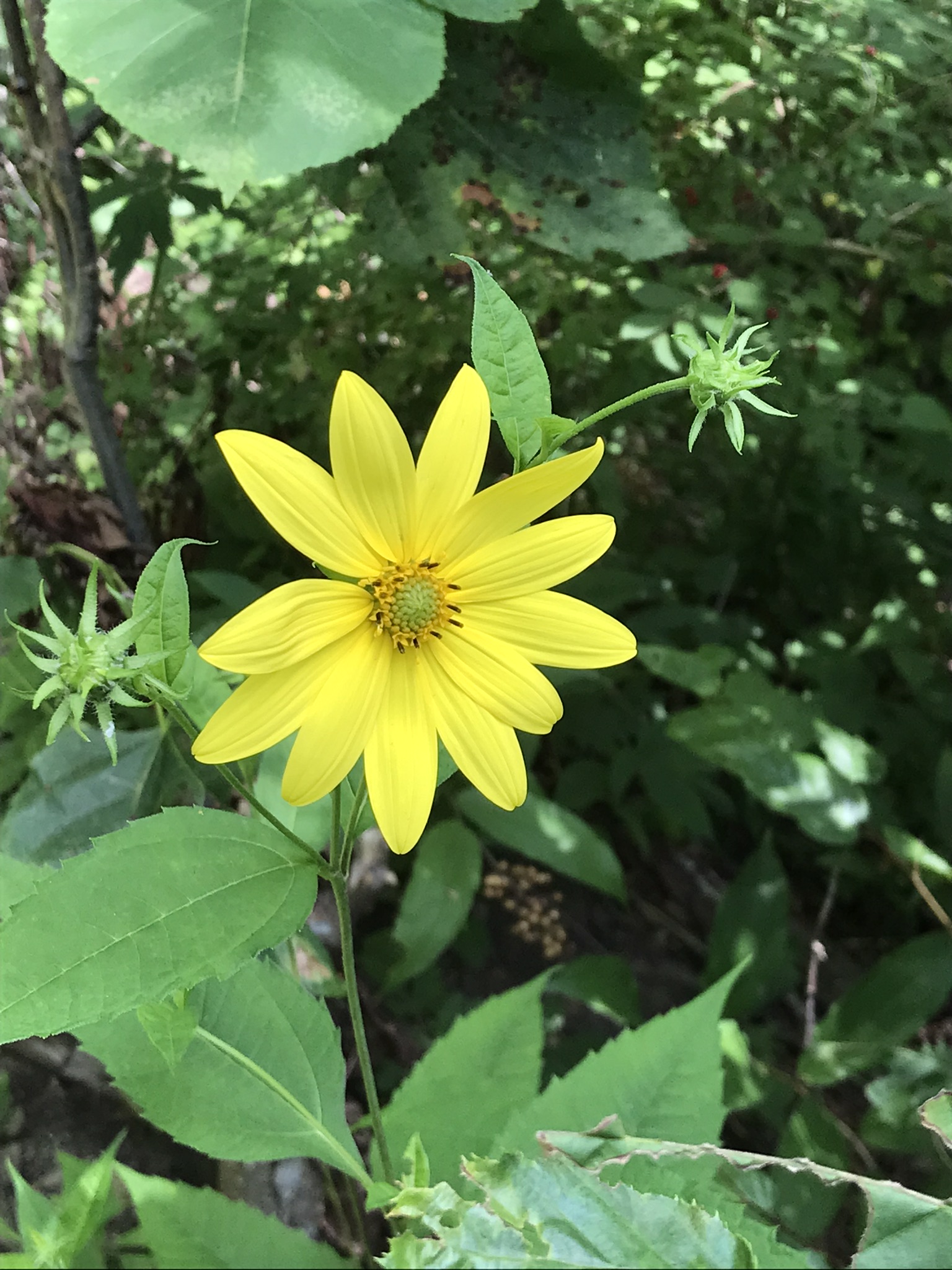
“Out in the meadow, I picked a wild sunflower, and as I looked into its golden heart, such a wave of homesickness came over me that I almost wept. I wanted Mother, with her gentle voice and quiet firmness; I longed to hear Father’s jolly songs and to see his twinkling blue eyes; I was lonesome for the sister with whom I used to play in the meadow picking daisies and wild sunflowers.”
from “Laura Ingalls Wilder, Farm Journalist, Writings from the Ozarks” edited by Stephen W. Hines”
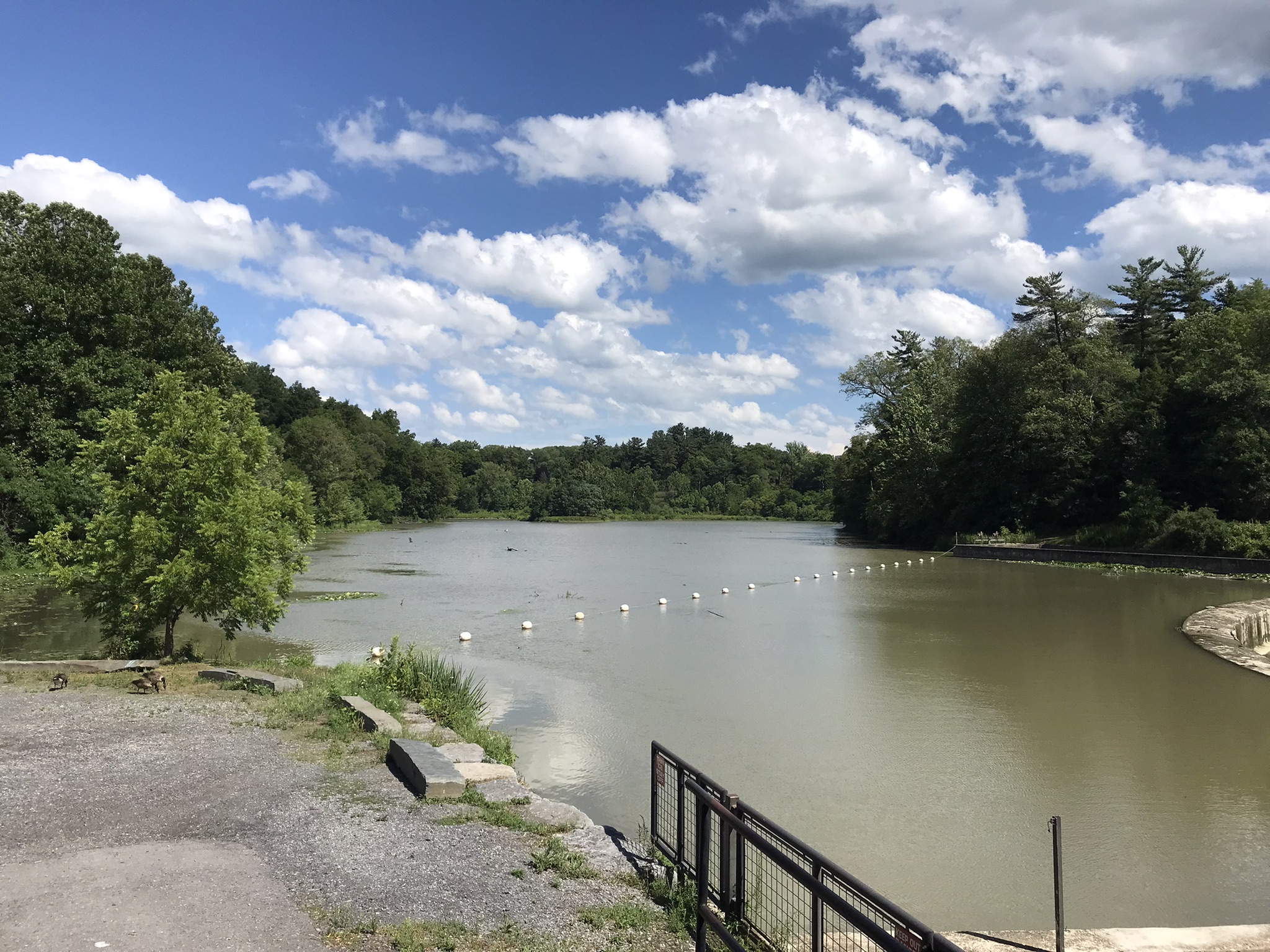
Trail sign at starting pointBeebee LakeLily Pads flowering on the north side of Beebee LakeFall Creek Gorge flooded by Beebee Lake dam
Taughannock Falls
Stairs to North Rim from Cayuga Lake shoreuphill all the wayfirst view pointsecond view pointHepatica leavestrail erosionthird view pointfourth view point, northfourth view point, south with Cayuga Lake in distancefifth view point, east with only the south gorge rim visiblefifth view point, south wiht distant view of Cayuga Lakelooking into the gorge just below the fallssouth rim trail, looking into the upper gorge with native plantsmoss looking into the gorgeVultures perched on gorge walls above and around Taughannock Falls
Buttermilk Falls, upper
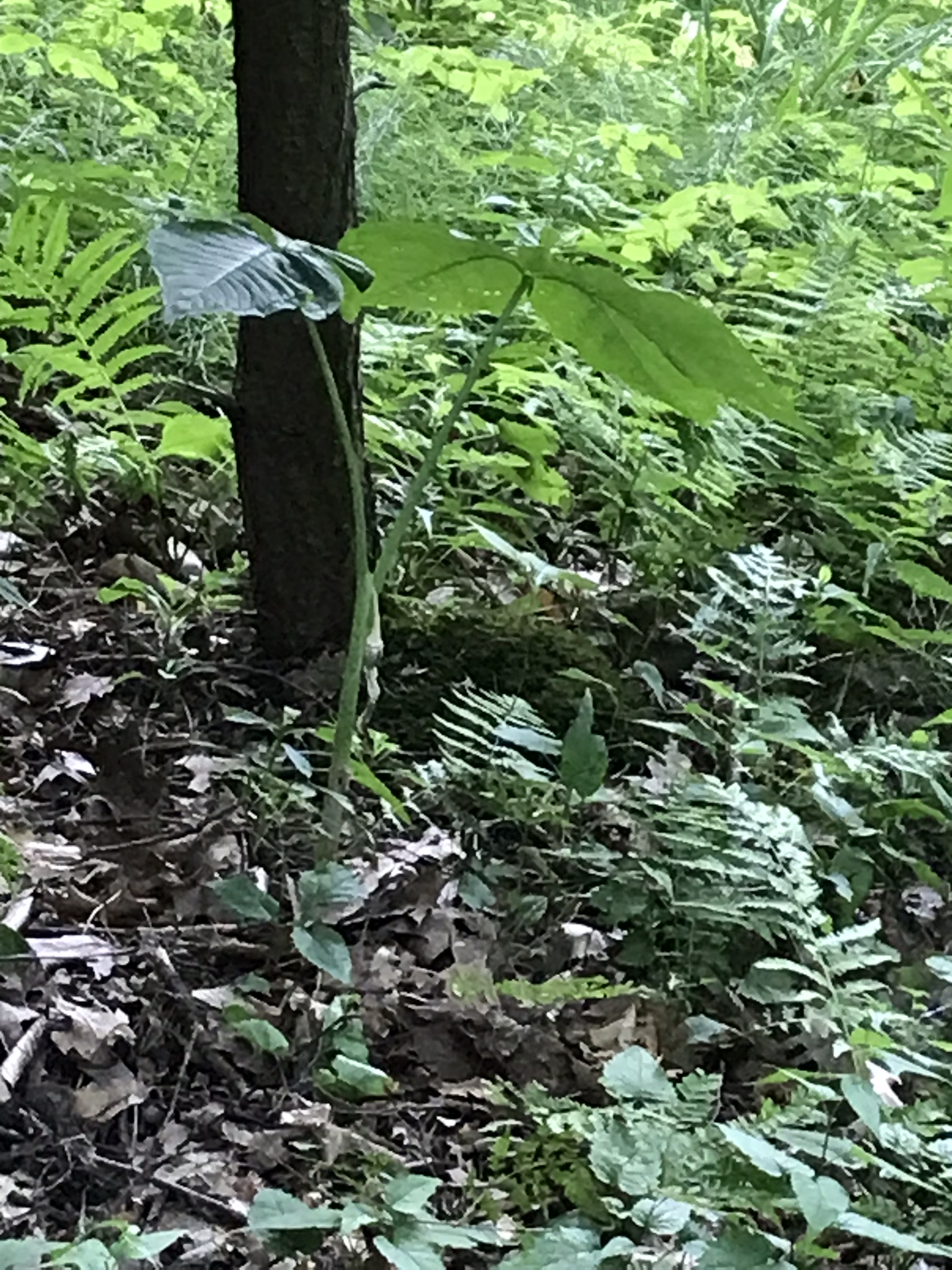
Jack in the Pulpit with spent flowerTreman Lake
A quiet moment……
Copyright 2022, Michael Stephen Wills All Rights Reserved
Friday last Pam and I joined a “James Potorti Memorial Gorge Walk” through Buttermilk Falls State Park where we learned interesting facts connected to one of my most successful photographs, “Summer Dream: Buttermilk Falls.” This is the fifth and final post of this series.
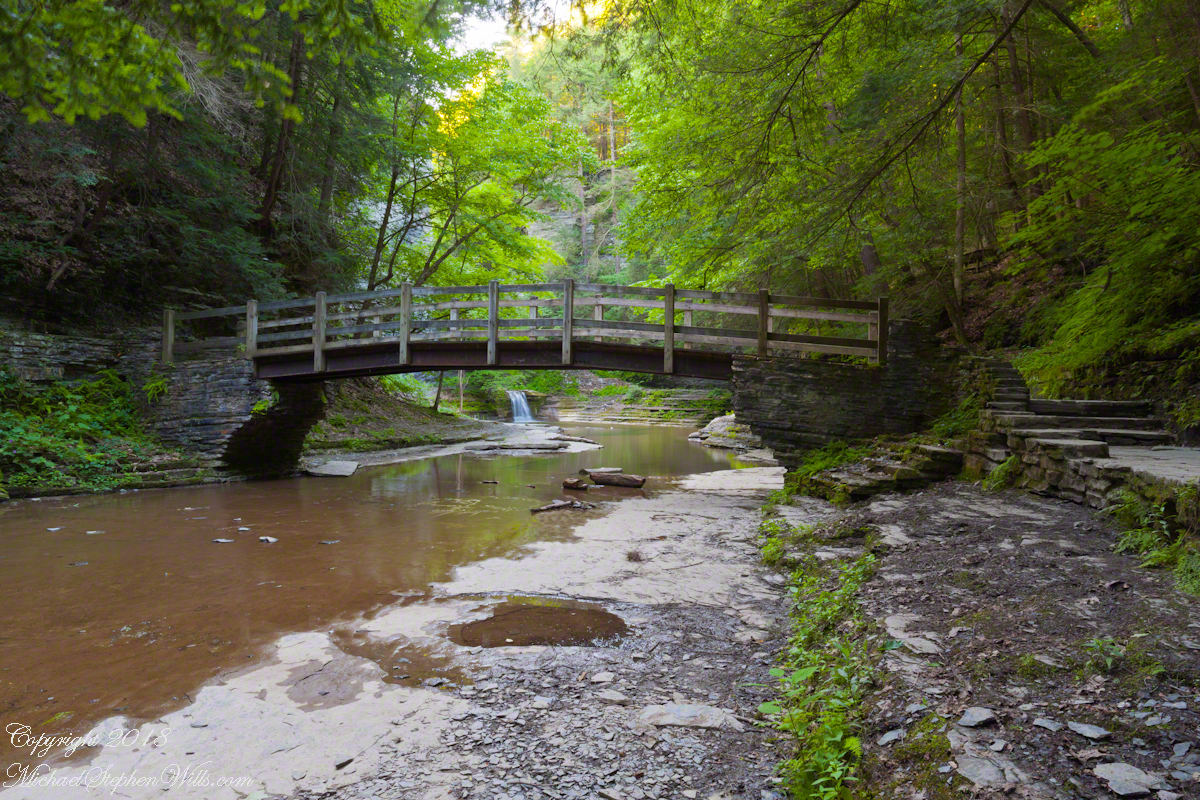
Final Photograph of my “Creek Views” post — not waterfall in distance
Upper Buttermilk Gorge Trail
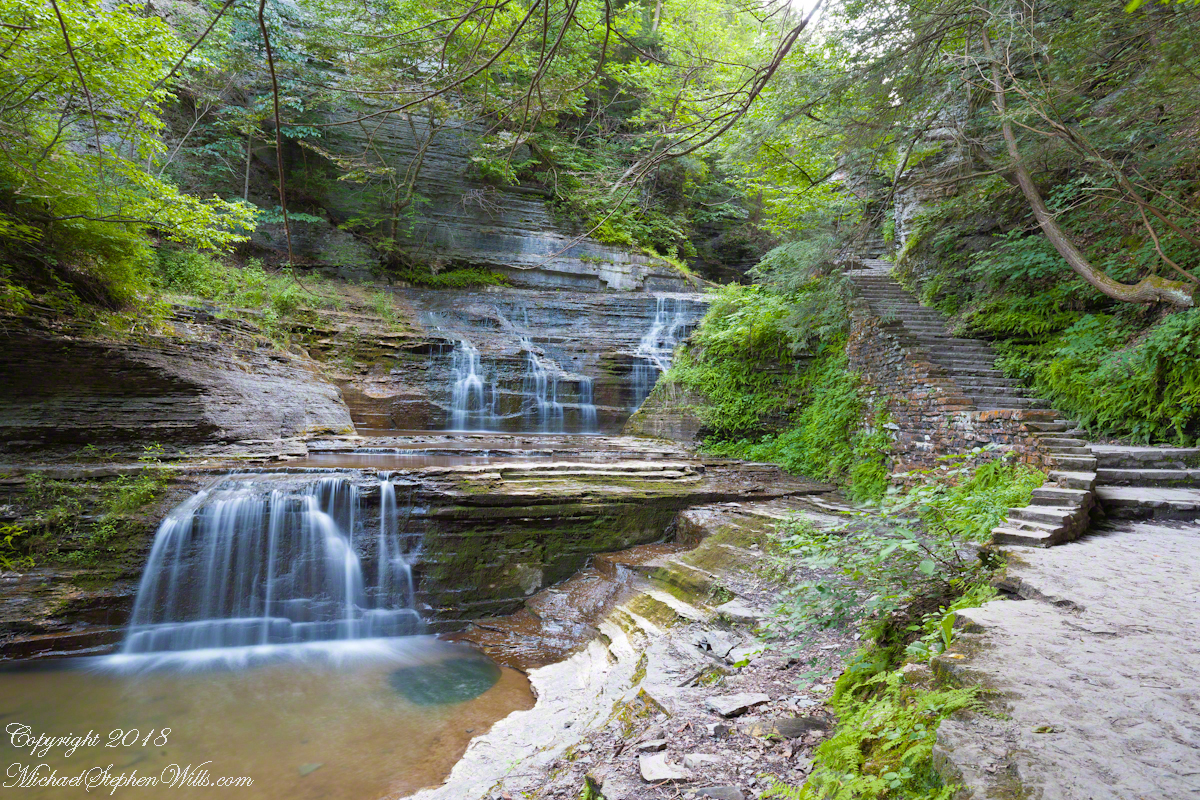
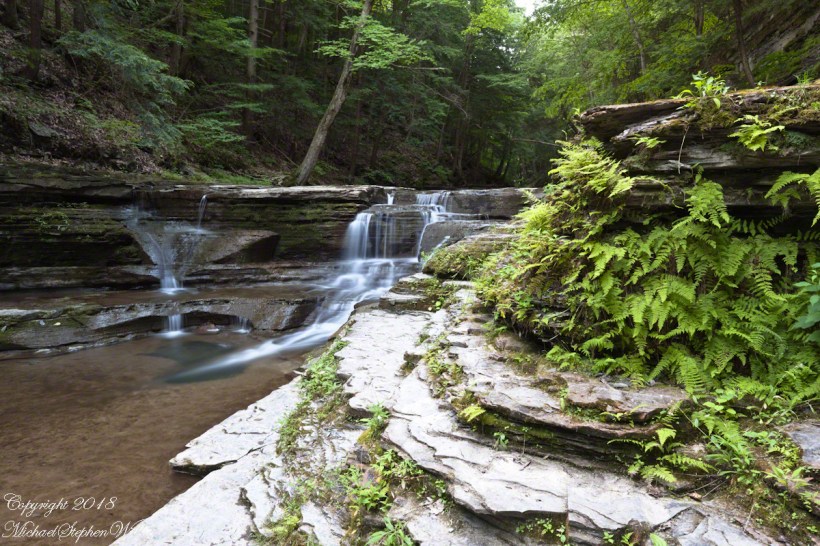
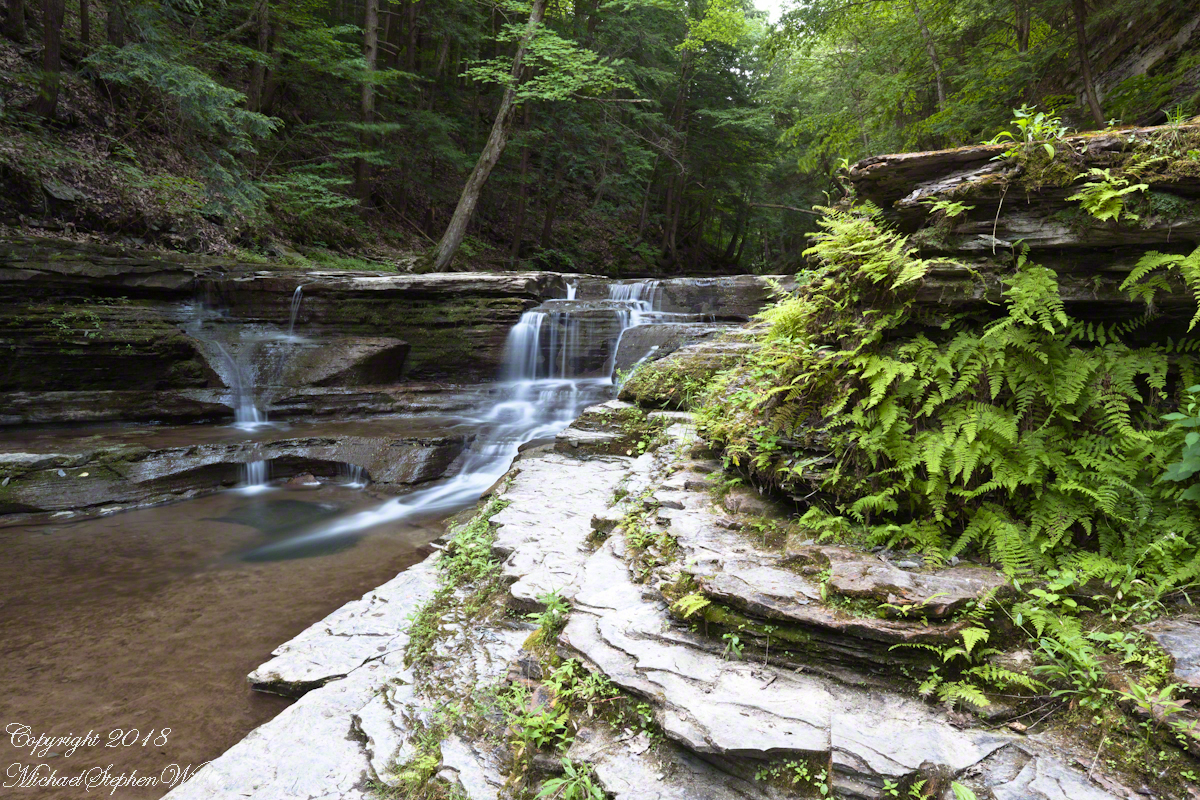
Below is a photograph of that distant waterfall. Taken using a tripod mounted Canon EOS 1DS Mark III body with the Canon lens EF 24mm f/1.4L II USM w/a neutral density filter (0.6 as I recall) it is from an early morning solo walk, July 2018.
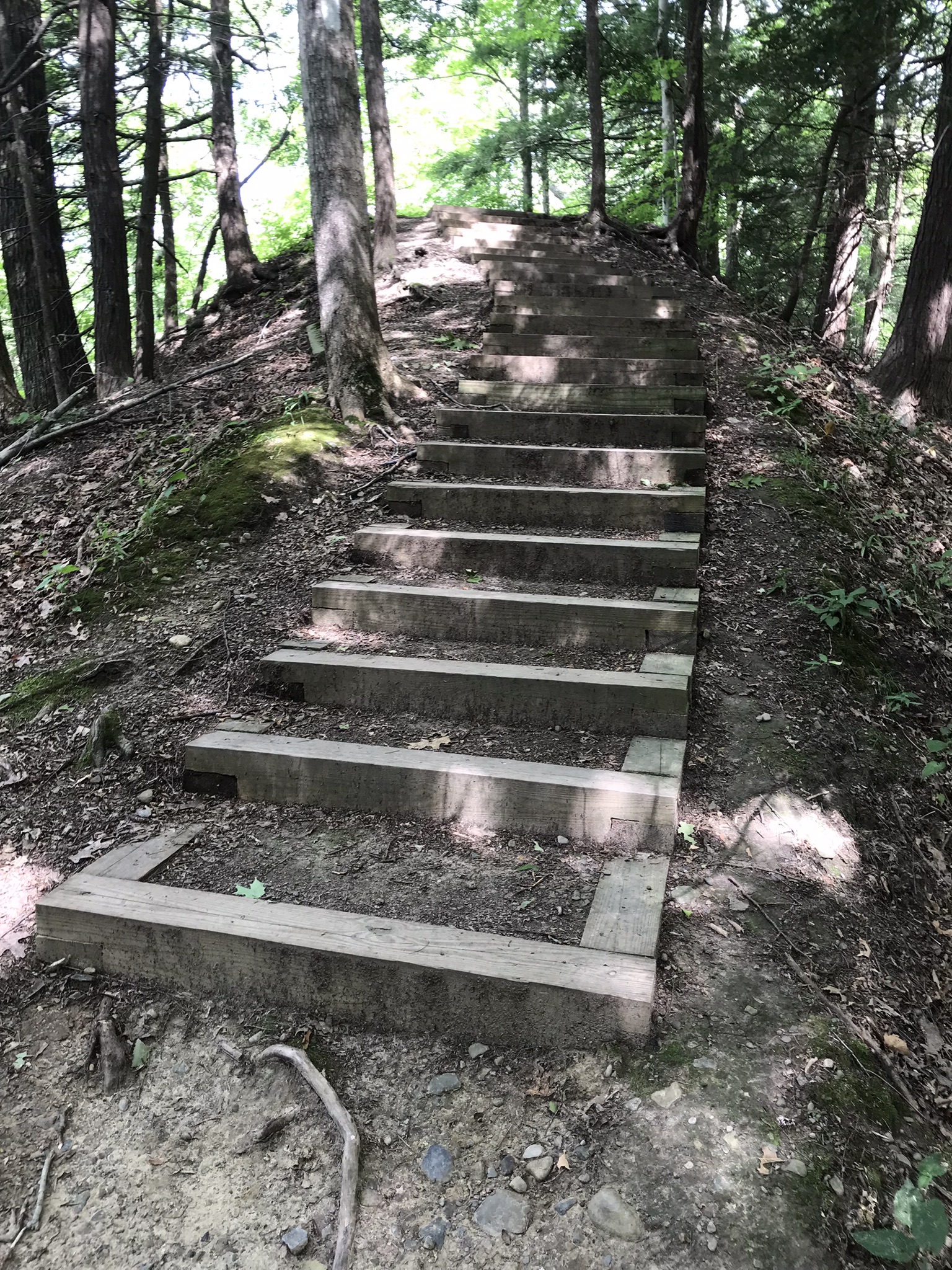
A characteristic of Finger Lakes Gorges is a constant infall from fragile sedimentary walls. Tree roots hold the slopes in place until the inevitable slippage. Tree trunks bear the mark, as you can see from tree to the right of the steps. Slippage moves the trunk horizontal, subsequent growth toward the sun curves the trunk. In extreme cases the tree forms the shape of an umbrella handle.
More examples of this slippage are seen on the right creek bank in the following photograph from my post of this series, “Creek Views.”
More curved trees
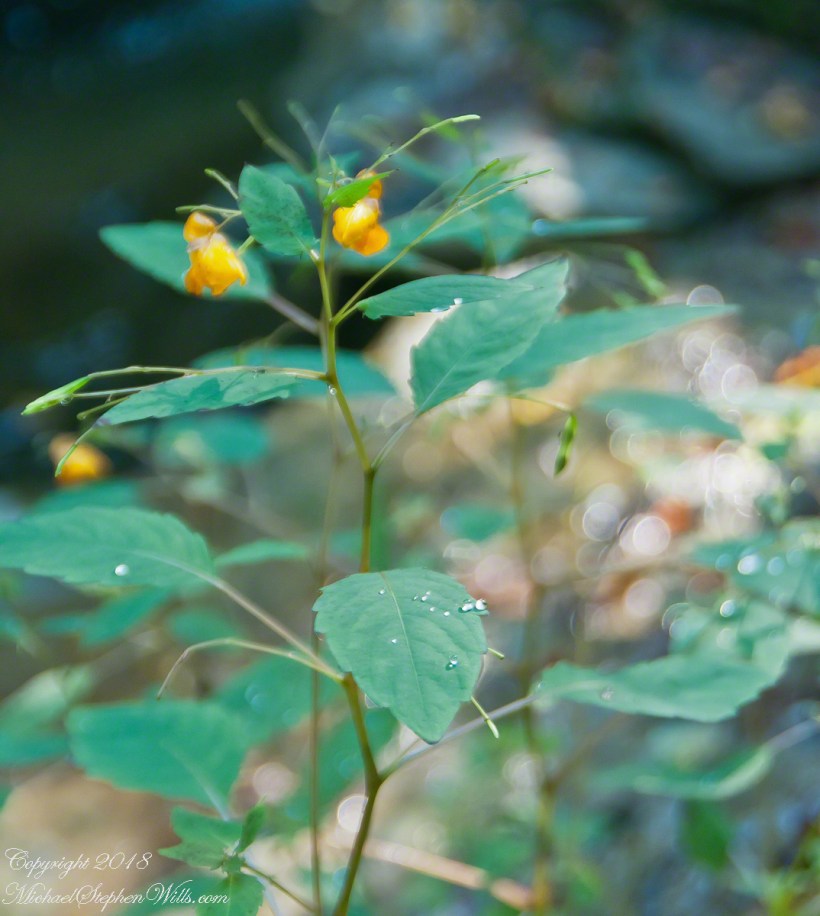
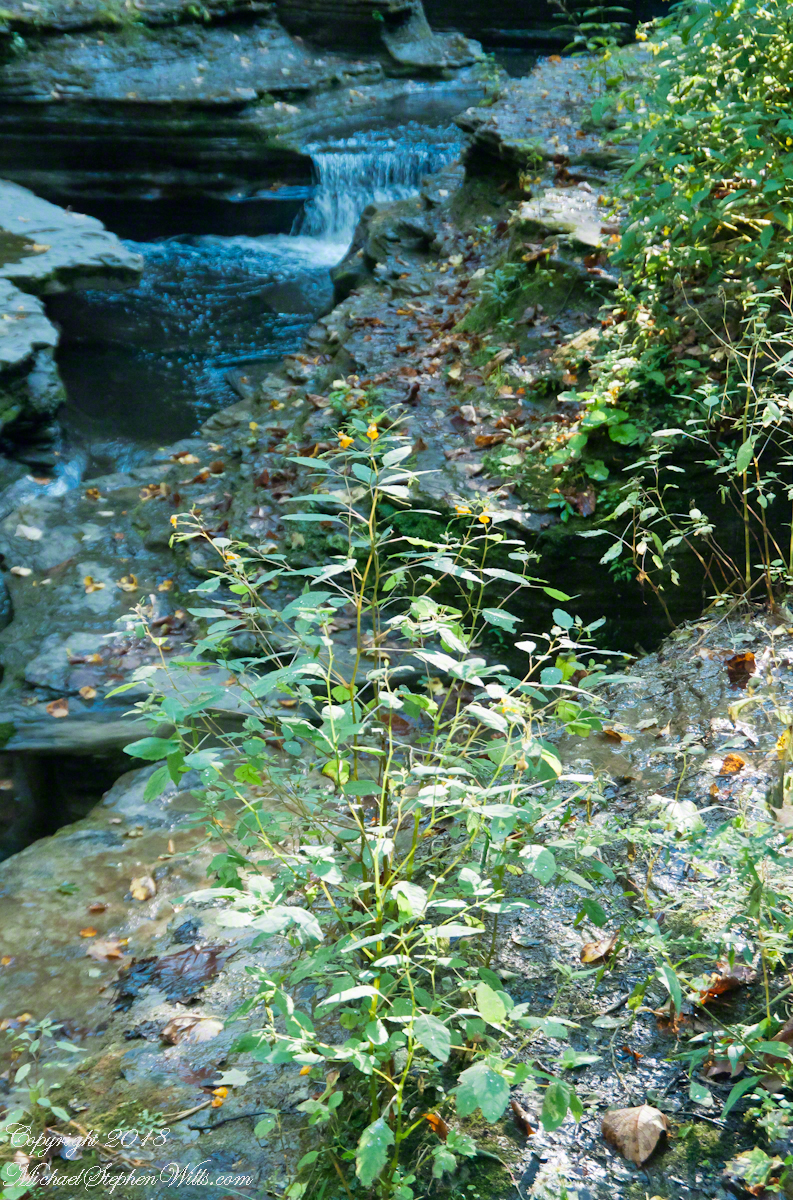
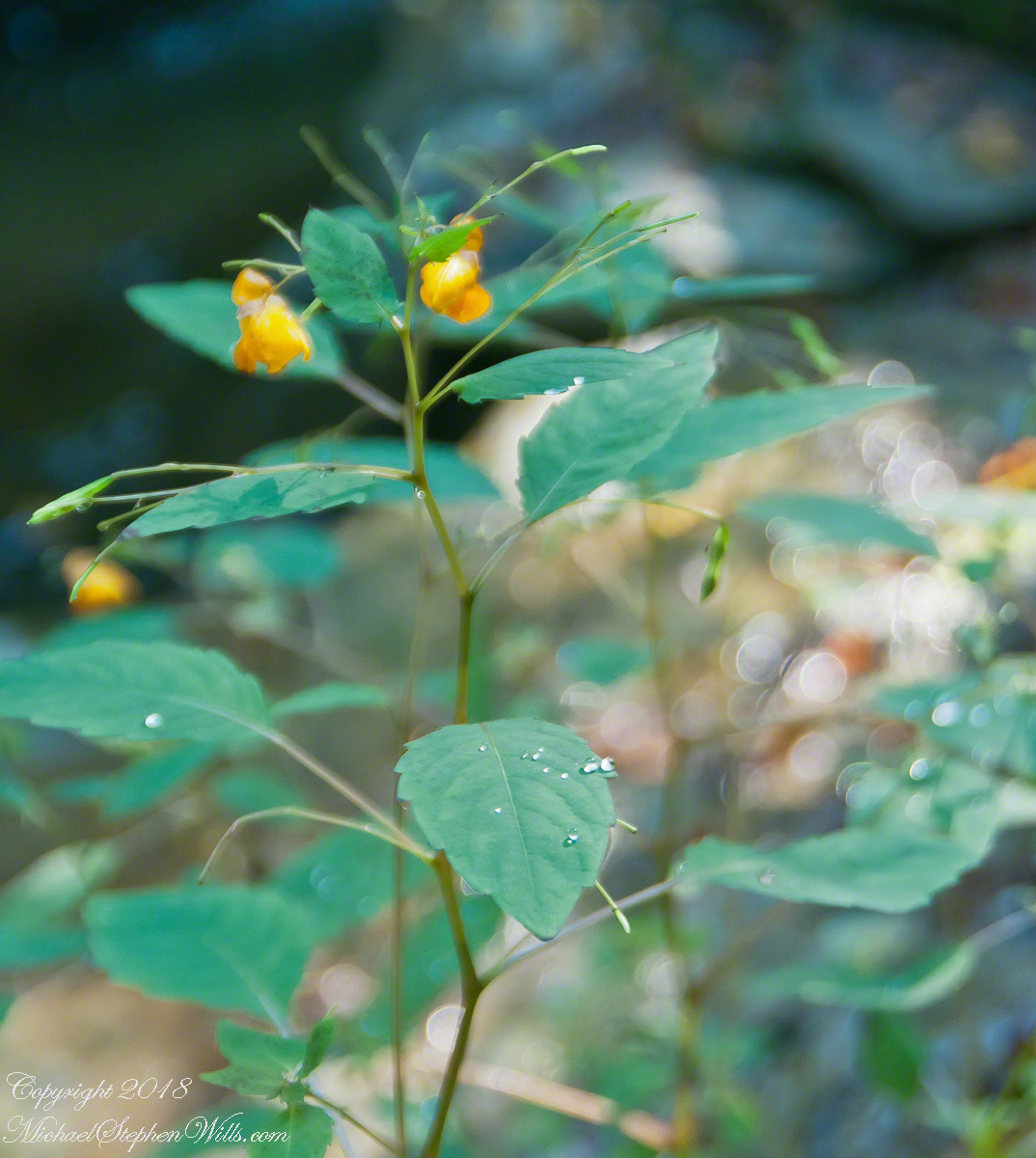
Impatiens capensis
Emerging from the gorge, soil accumulates on narrow shelves where this Jewelweed plant grows. Here we leave the gorge for now.
(Impatiens capensis) growing along the upper portion of the Buttermilk Sate Park Gorge Trail in early September, just after Labor Day. This photograph shows the plant growth pattern and the surrounding environment.(Impatiens capensis) growing along the upper portion of the Buttermilk Sate Park Gorge Trail in early September, just after Labor Day. This photograph shows the plant growth pattern and the surrounding environment.
In Memorium
James Potorti was a native of Ithaca who perished at 52 years of age in New York City on September 11, 2001 were he worked on the 96th floor of 1 World Trade Center.
Copyright 2022, Michael Stephen Wills All Rights Reserved
Friday last Pam and I joined a “James Potorti Memorial Gorge Walk” through Buttermilk Falls State Park where we learned interesting facts connected to one of my most successful photographs, “Summer Dream: Buttermilk Falls.” This is the fourth post of this series.
Starting Point
Buttermilk Falls State Park has two parks, upper and lower. Friday’s hike began at lower park. Using GoogleEarth I see the half mile trail along the lower gorge climbs 506 feet, 355 feet of this is ascended in 300 steps in the first quarter mile. Here is a view of the magnificent cascade that greets lower park visitors.
To my knowledge, nobody has ascended the creek bed at this point. The climb is not impossible, people with technical rock climbing skills and equipment can do it. We use the trail. Most often, Pam and I visit the upper park and walk down the gorge to the top of this ascent. Friday, we walk up with everyone else.
Creek Level Photographs
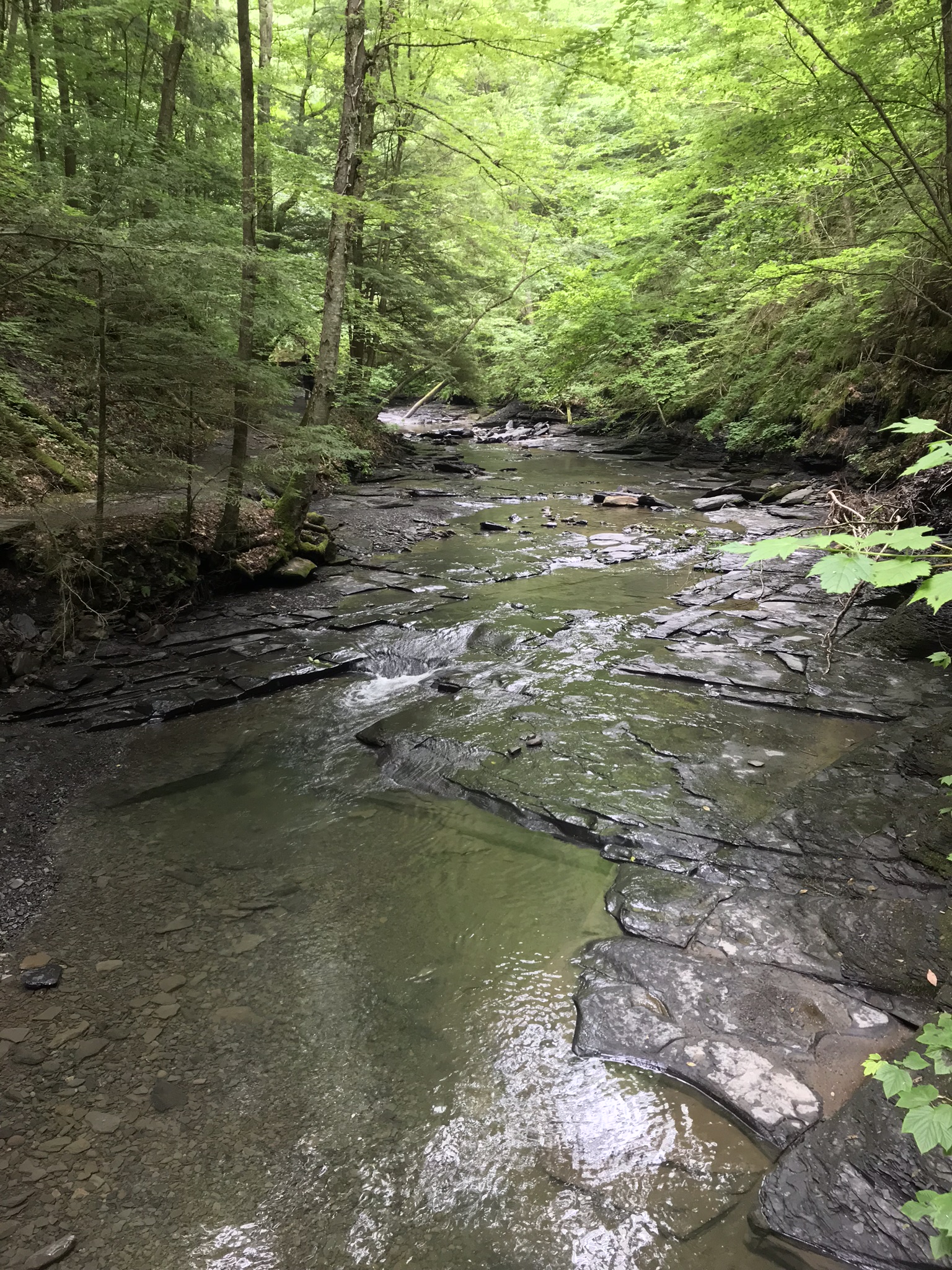
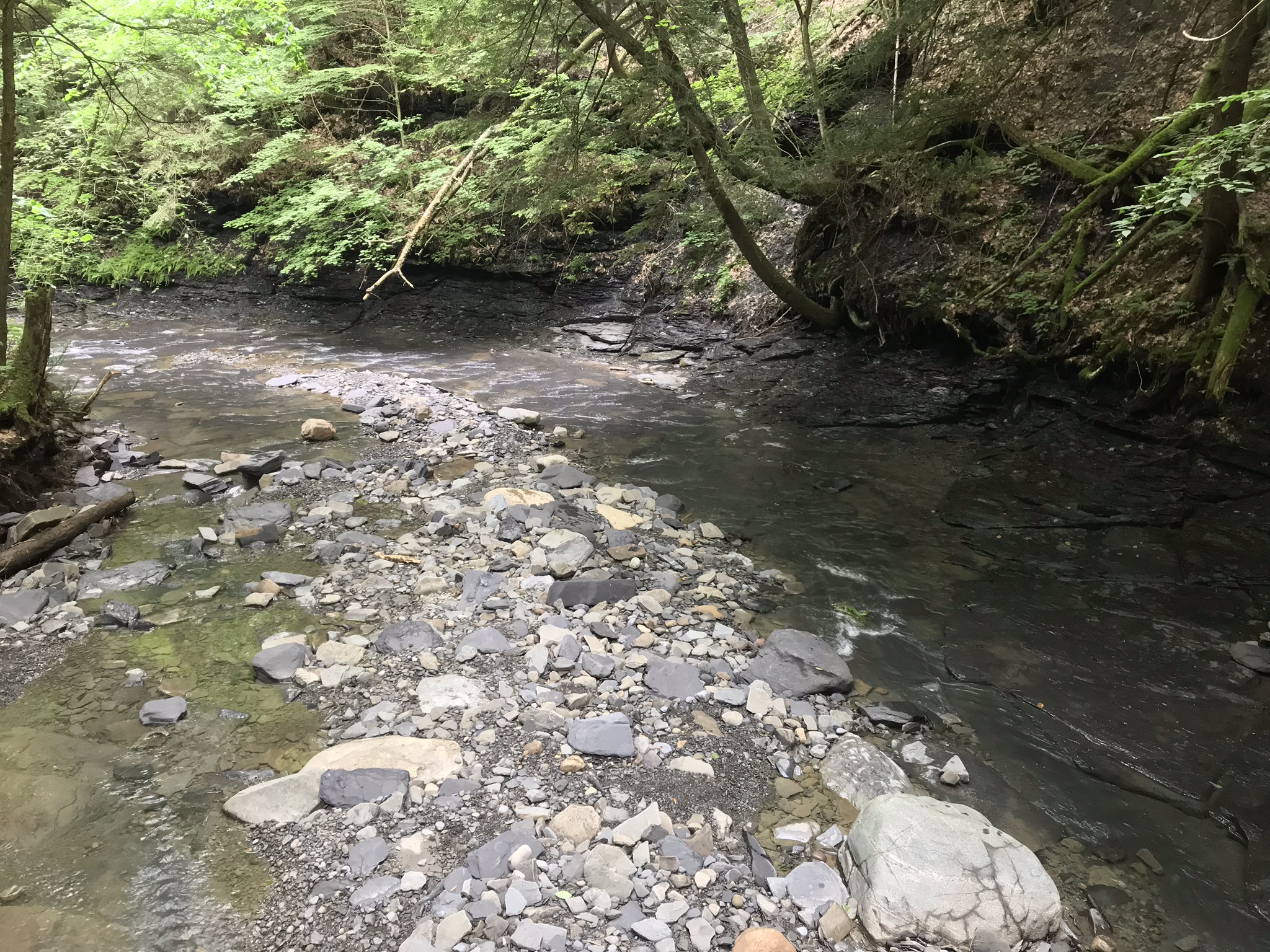
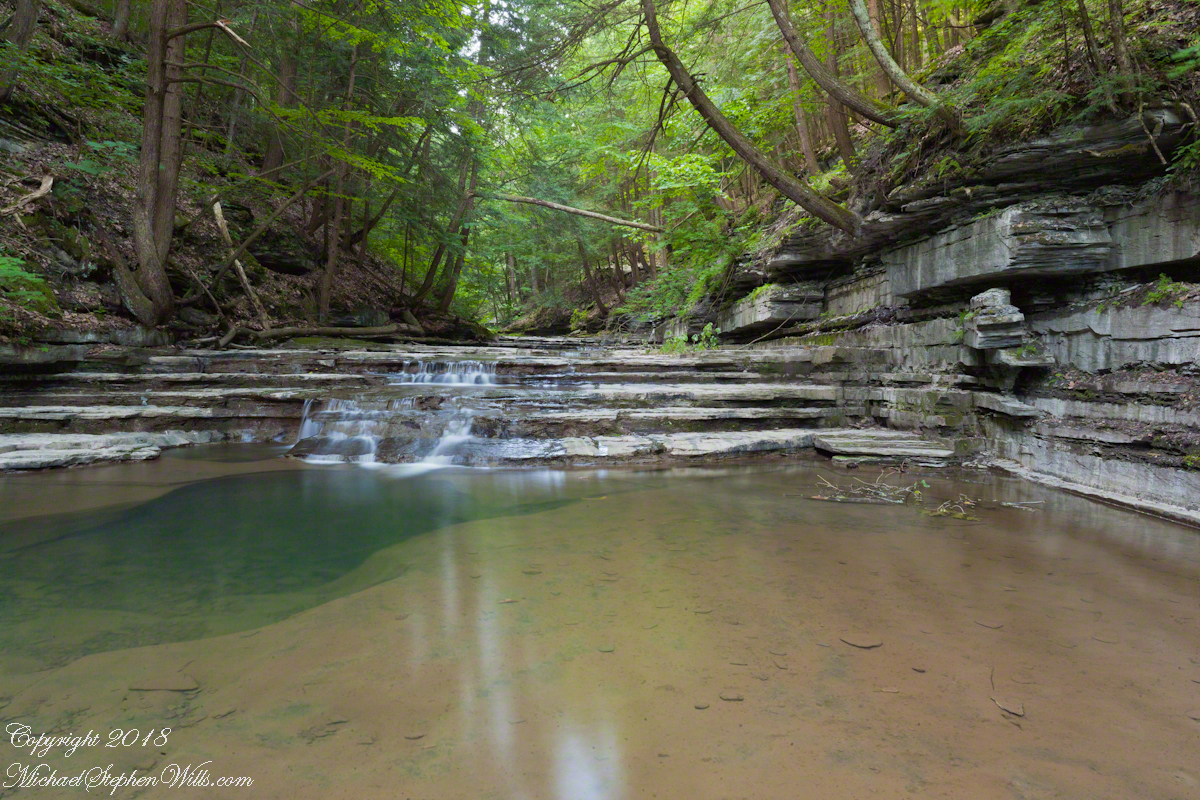
On a July morning 2018 I walked Buttermilk Creek from the scene of my “Summer Dream: Buttermilk Falls”, up the steps on the right of that photograph to where the water flows across a flat expanse of stone. The following three photographs from that walk were taken using a tripod mounted Canon EOS 1DS Mark III body with the Canon lens EF 24mm f/1.4L II USM w/a neutral density filter (0.6 as I recall).
Click any photograph for a larger view.
Natural steps
Low Flow
The “secret” behind my successful “Summer Dream: Buttermilk Falls” photograph is waiting for a seasonal low creek flow. For the same reason, this is a safe time to walk this part of the creek to capture the scene. See the previous post, “Walking Buttermilk Creek”, for the entry to this creek level walk. Attempting to walk the creek in other seasons can be fatal….there is a plaque along the trail memorializing an attempted rescue during a March flood where two people died: the rescued and the rescuer.
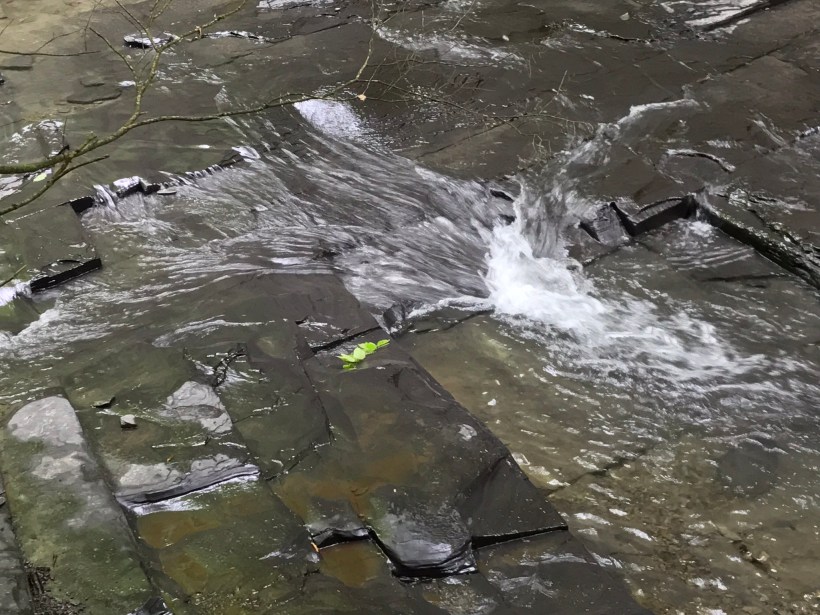
At high water the creek gouged a channel through the limestone creek bed
James Potorti was a native of Ithaca who perished at 52 years of age in New York City on September 11, 2001 were he worked on the 96th floor of 1 World Trade Center.
Copyright 2022, Michael Stephen Wills All Rights Reserved





 Michael Stephen Wills Photography