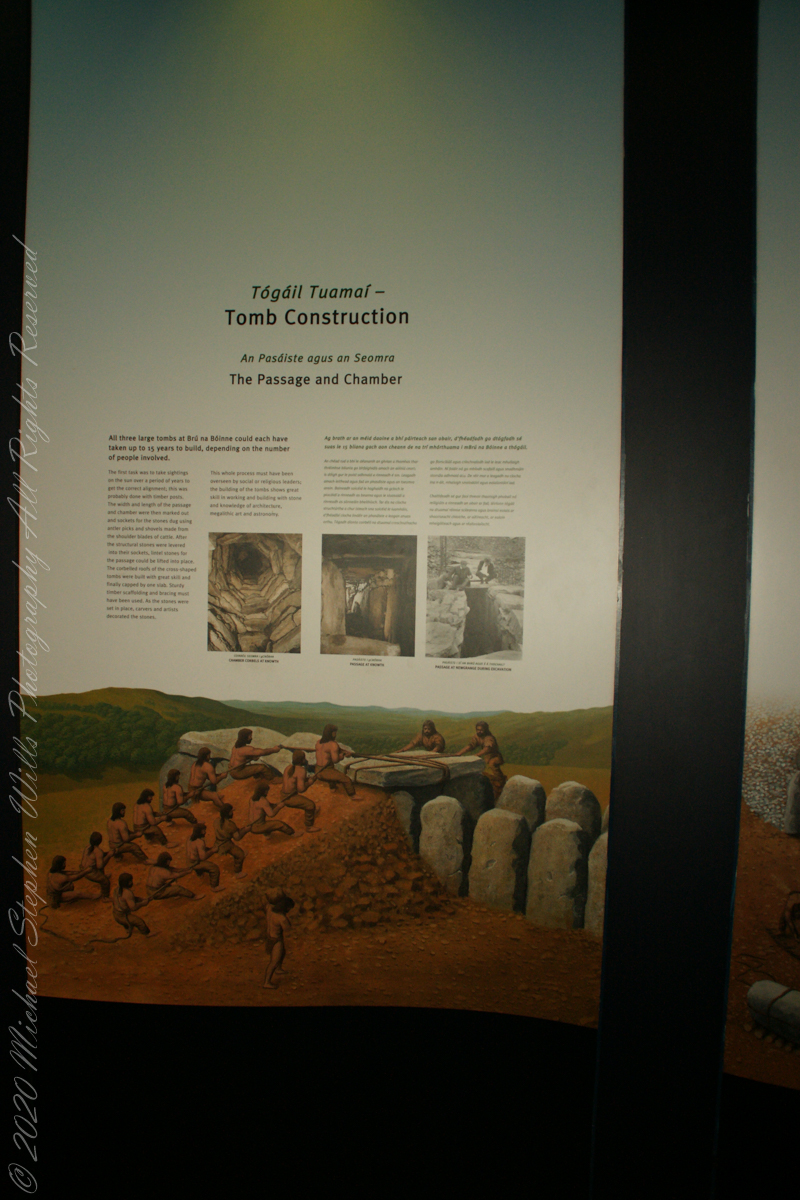
The initial task for the builders of Newgrange involved recording the annual alignment of the rising sun over several years, which was likely achieved using timber posts as markers. Subsequently, the dimensions of the passage and chamber were determined, and the groundwork was prepared by digging sockets for the structural stones. This excavation process was carried out using antler picks and shovels crafted from cattle shoulder blades.
Brú na Bóinne Visitor Center, Dunleek Lower, County Meath, Republic of Ireland
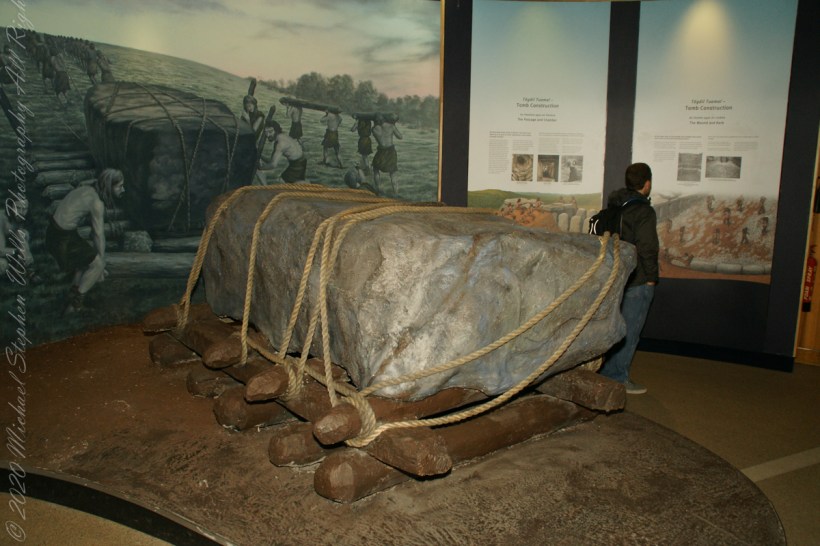
After the structural stones were carefully positioned and levered into their sockets, lintel stones for the passage could be lifted into place. The corbelled roofs of the cross-shaped tombs were built with great skill and finally capped by one slab. Sturdy timber scaffolding and bracing must have been used. As the stones were set in place, carvers and artists decorated the stones.
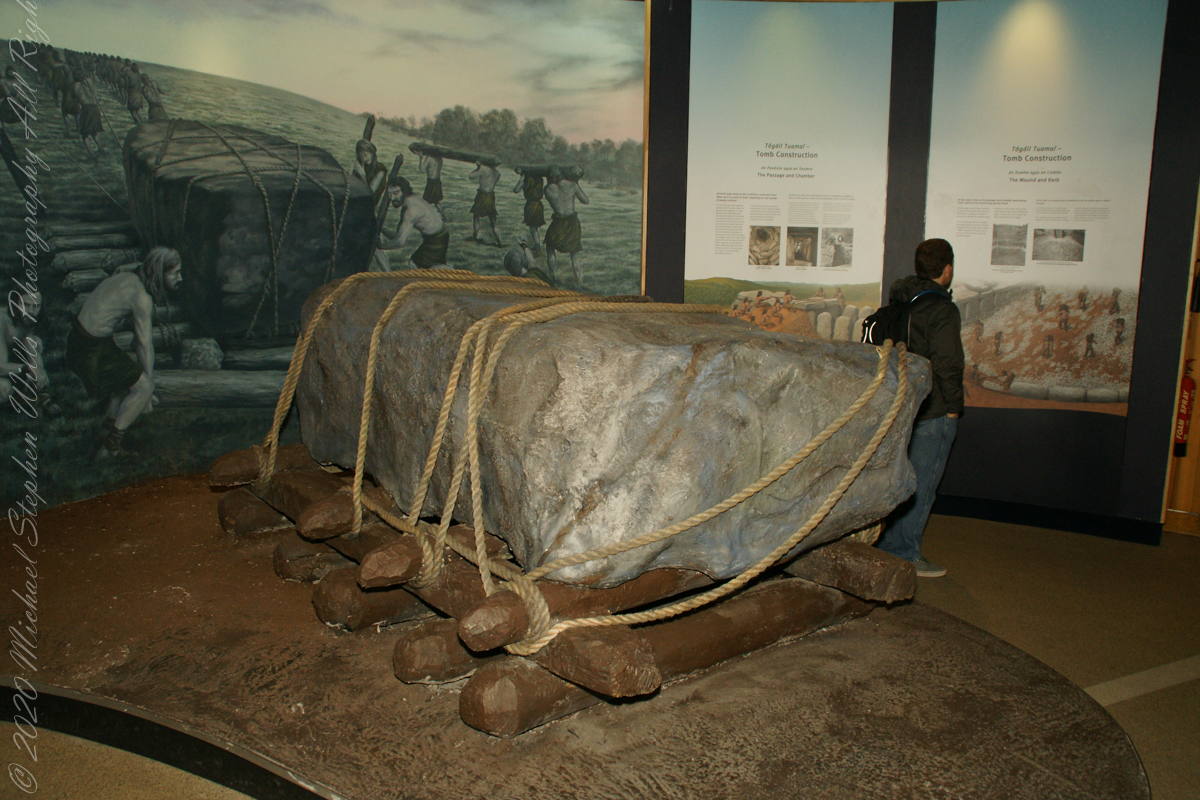
Brú na Bóinne Visitor Center display of envisioned technique for moving heavy stones during construction of Newgrange.
The whole process must have been overseen by social or religious leaders; the building of the tombs shows great skill in working and building with stone and knowledge of architecture, megalithic art and astronomy.
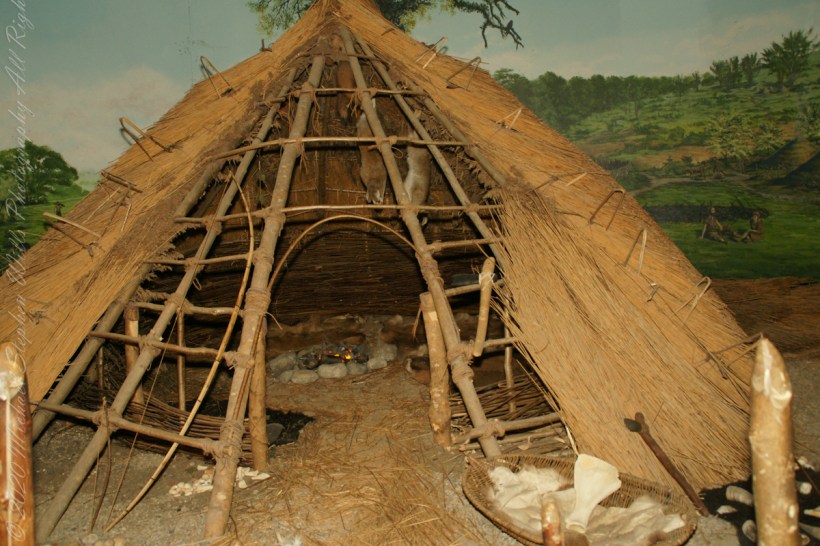
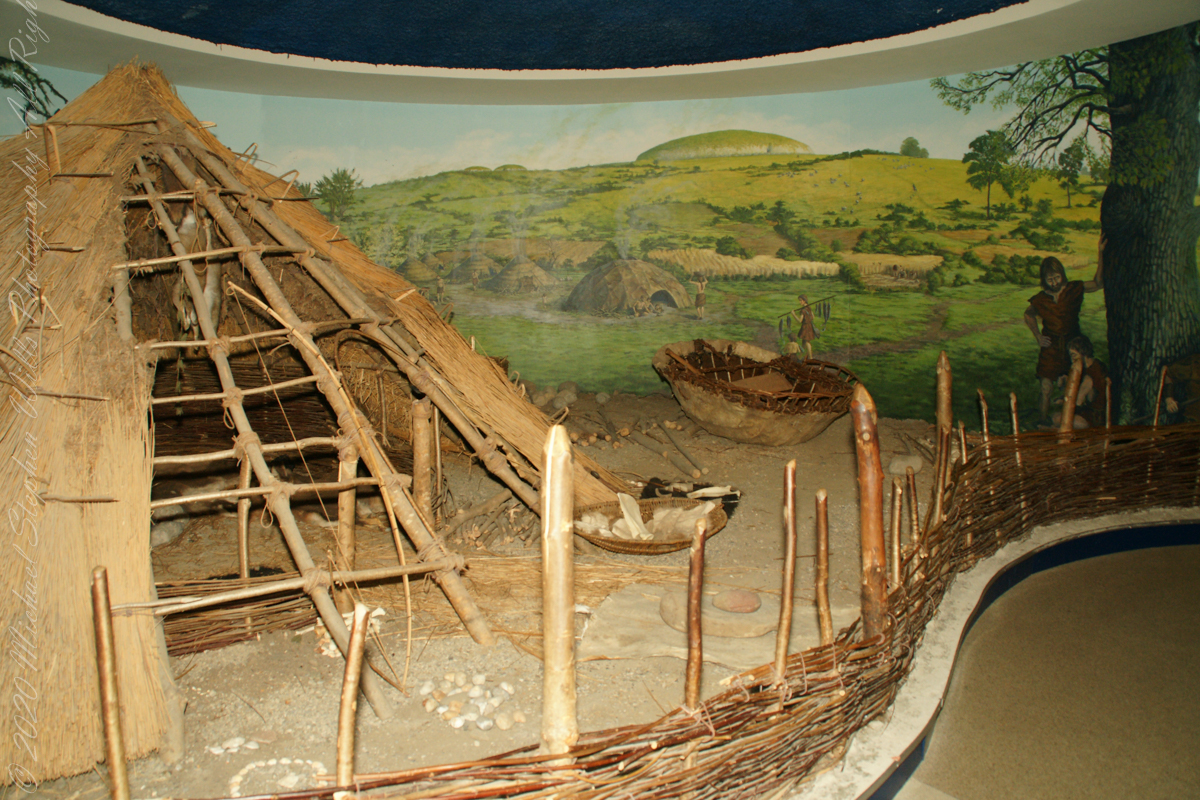
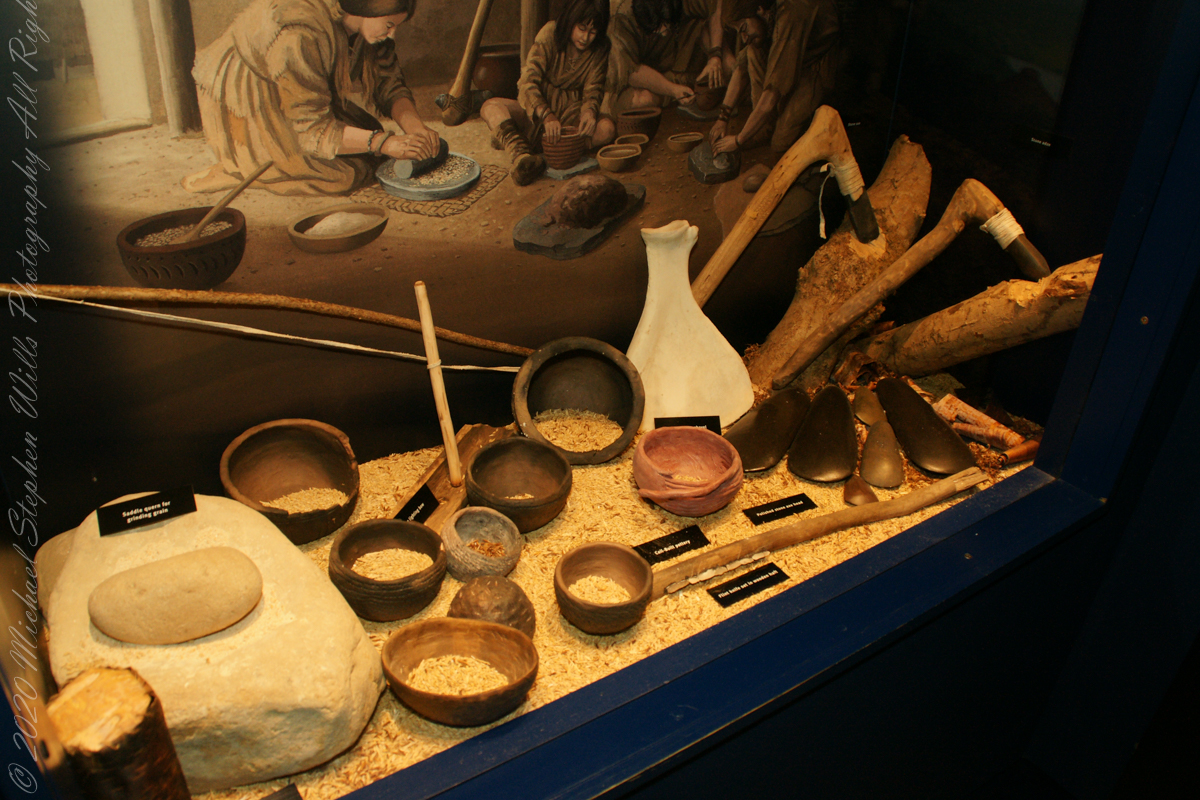
The Brú na Bóinne Visitor Center includes this tableau of the shelter of the ancient farmers who constructed Newgrange: the monument is in the background.
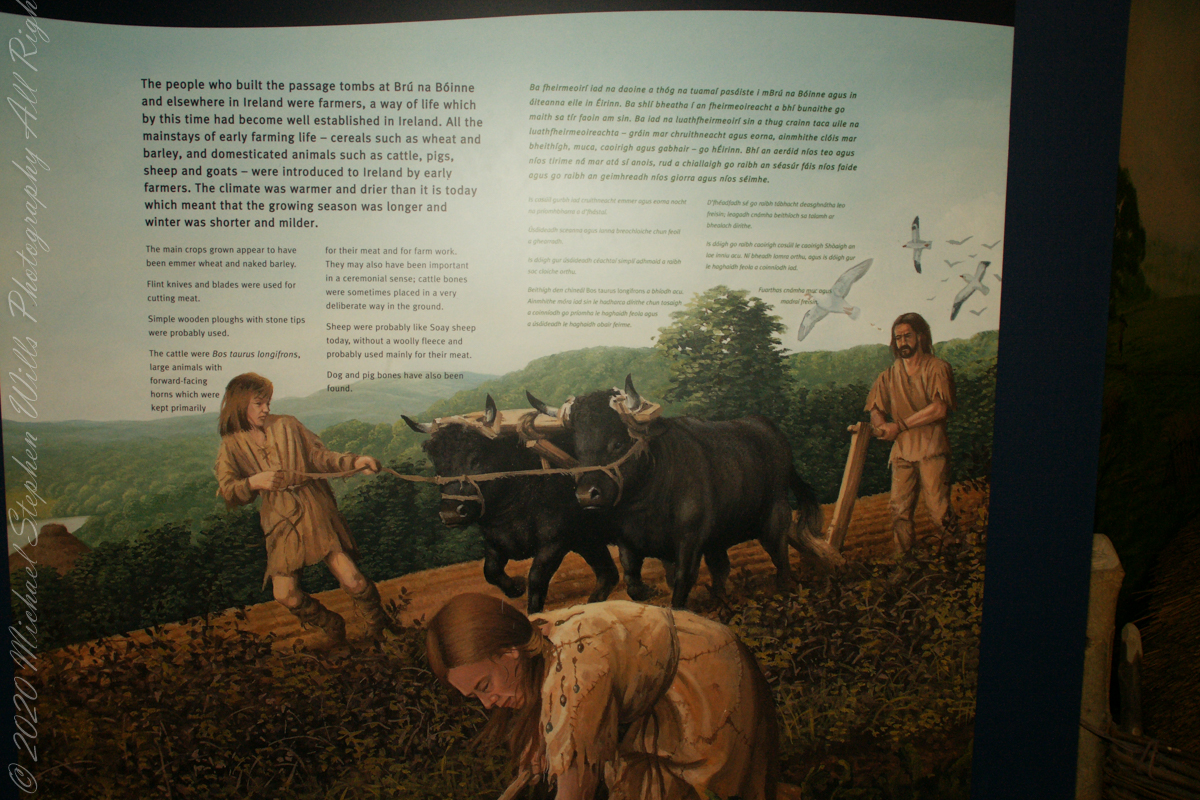
The people who built the passage tombs at Brú na Bóinne and elsewhere in Ireland were farmers, a way of life which by this time had become well established in Ireland. All the mainstays of early farming life — cereals such as wheat and barley, and domesticated animals such as cattle, pigs, sheep and goats — were introduced to Ireland by early farmers. T
he climate was warmer and drier than it is today which meant that the growing season was longer and winter was shorter and milder. The main crops grown appear to have been emmer wheat and naked barley. Flint knives and blades were used for cutting meat. Simple wooden ploughs with stone tips were probably used.
The cattle were Bos taurus longifrans, large animals with forward facing horns which were kept primarily for farm work and meat. Cattle may also have been important in a ceremonial sense; cattle bones were sometimes placed in a very deliberate way in the ground. Sheep were probably like Soay sheep today, without a woolly fleece and probably used mainly for their meat. Dog and pig bones have also been found.
Copyright 2023 Michael Stephen Wills All Rights Reserved
Thirty minutes headed up the M1 from Dublin Airport Pam and I arrived at Brú na Bóinne Visitor Center, gateway to Newgrange. Archaeologists classified Newgrange as a passage tomb, however Newgrange is now recognized to be much more than a passage tomb. Ancient Temple is a more fitting classification, a place of astrological, spiritual, religious and ceremonial importance, much as present day cathedrals are places of prestige and worship where dignitaries may be laid to rest.
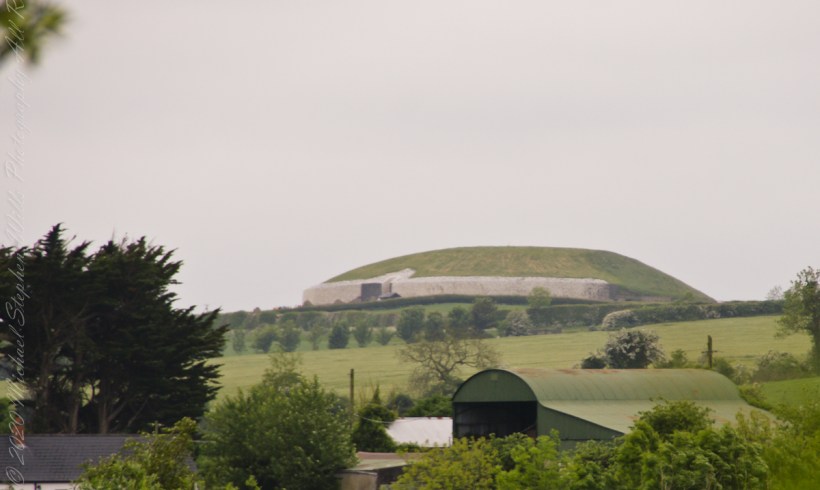
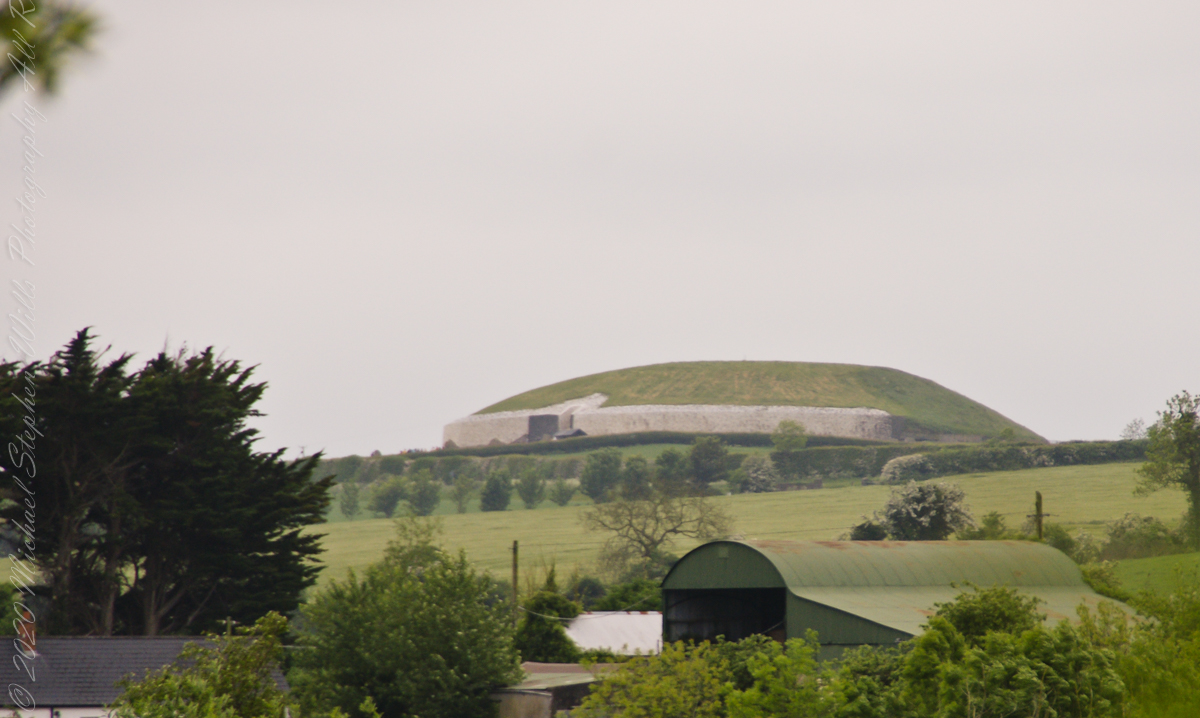
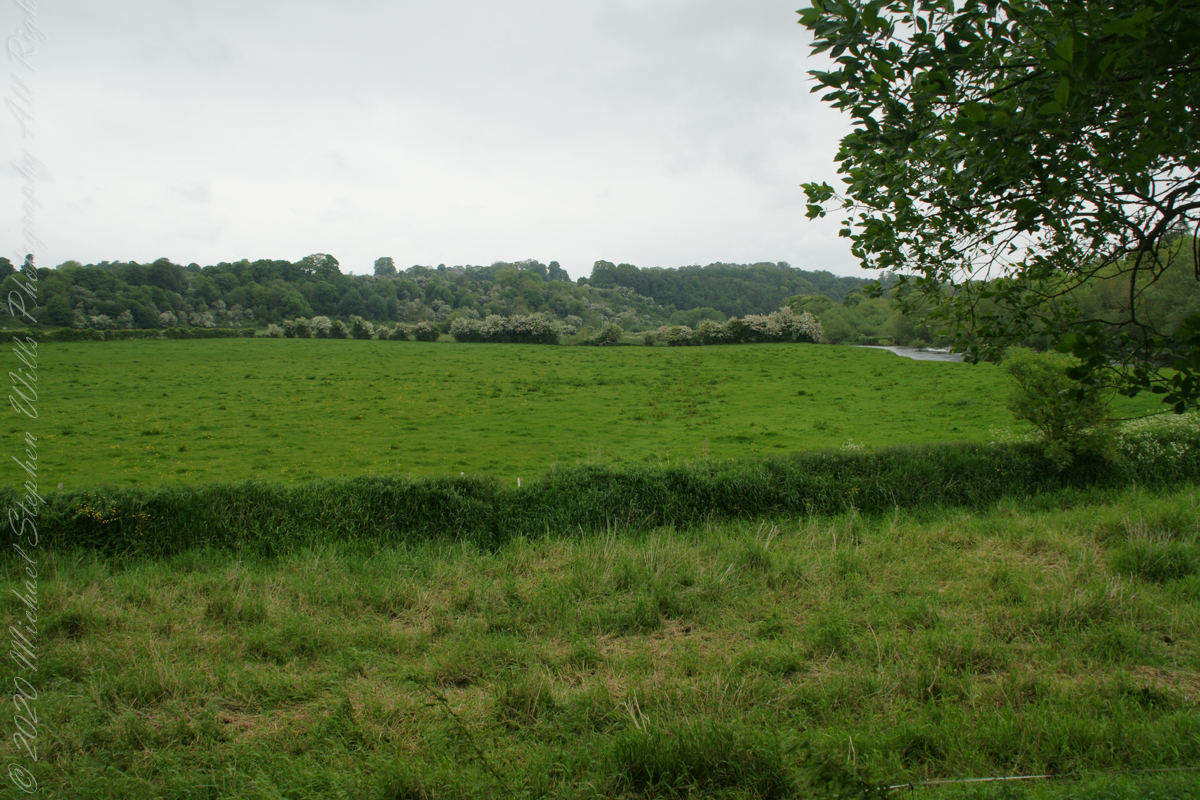
Walking on the south bank of River Boyne we first glimpsed Newgrange on the hill above.
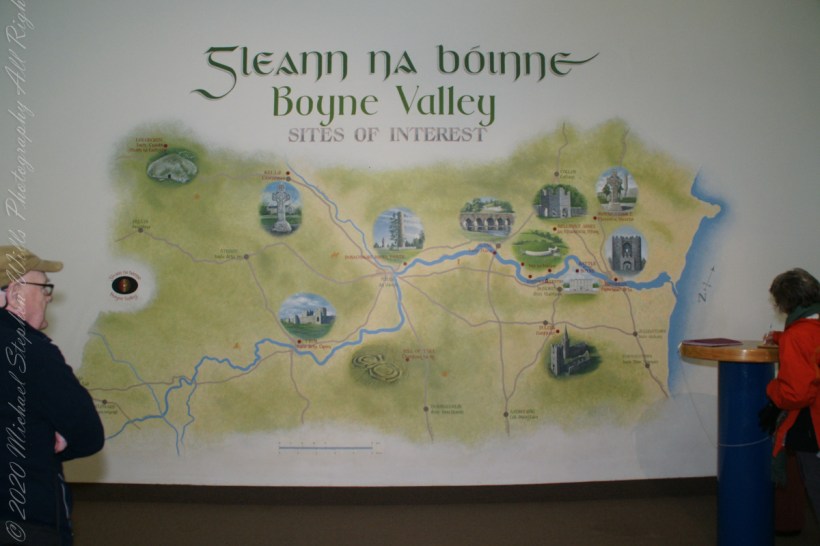
Bounded on the south by a bend in the River Boyne, the prehistoric site of Brú na Bóinne is dominated by the three great burial mounds of Knowth, Newgrange and Dowth. Surrounded by about forty satellite passage graves, they constitute a funerary landscape recognized as having great ritual significance, subsequently attracting later monuments of the Iron Age, early Christian and medieval periods.
Newgrange was built by Stone Age farmers, the mound is 85m (279ft) in diameter and 13m (43ft) high, an area of about 1 acre. Newgrange was constructed about 5,200 years ago (3,200 B.C.) which makes it older than Stonehenge and the Great Pyramids of Giza.
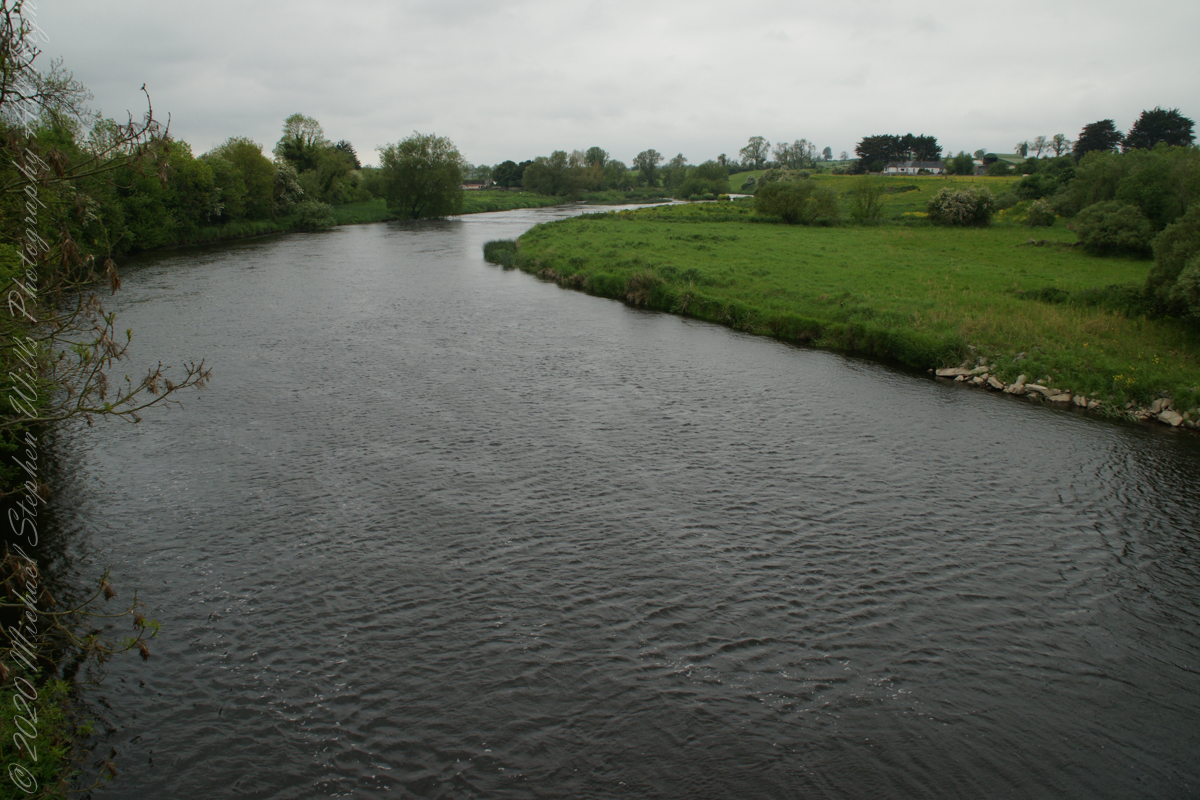
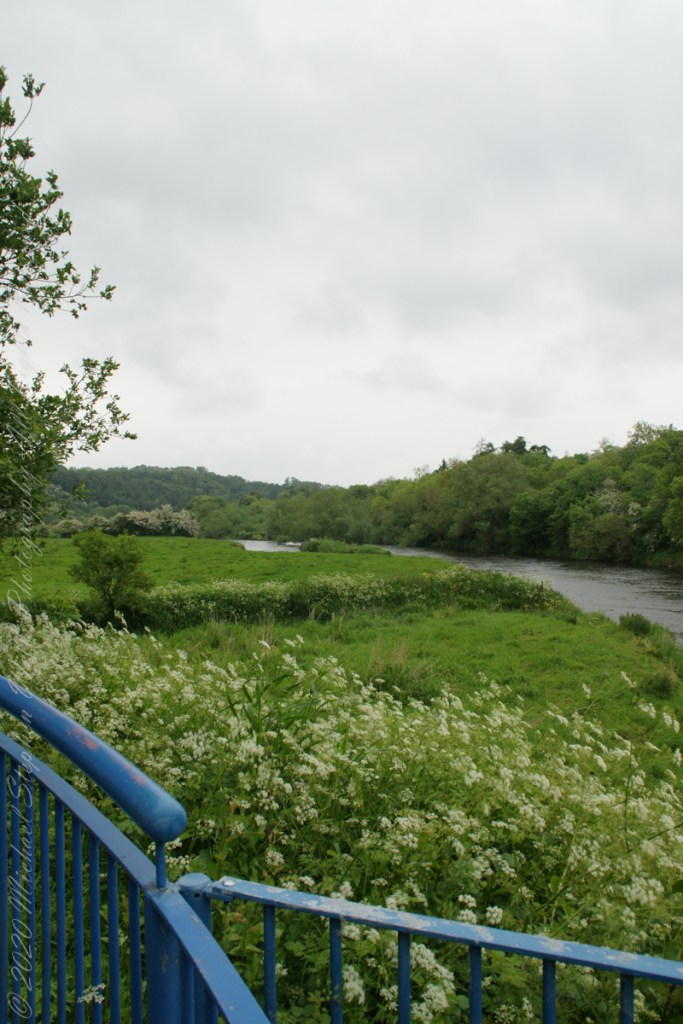
A overlook in Brú na Bóinne Visitor Center provides a view of River Boyne from the south bank. Here we are looking west.
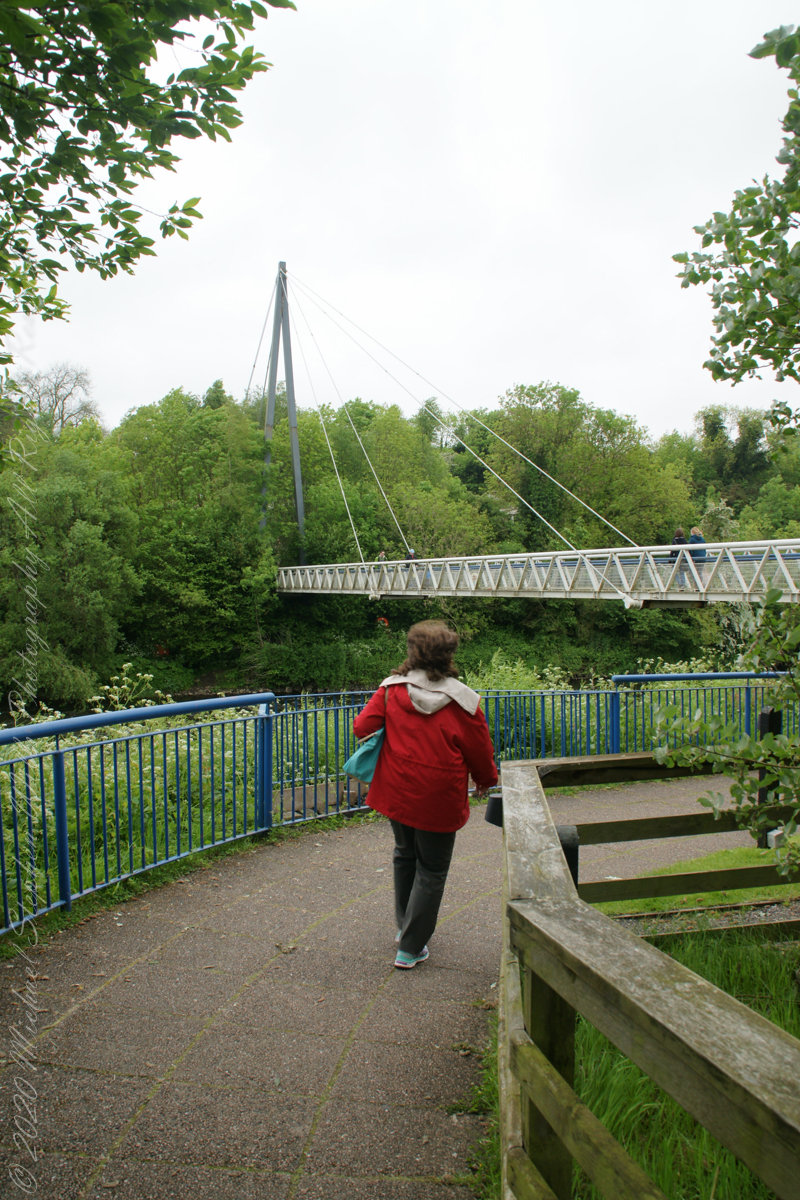
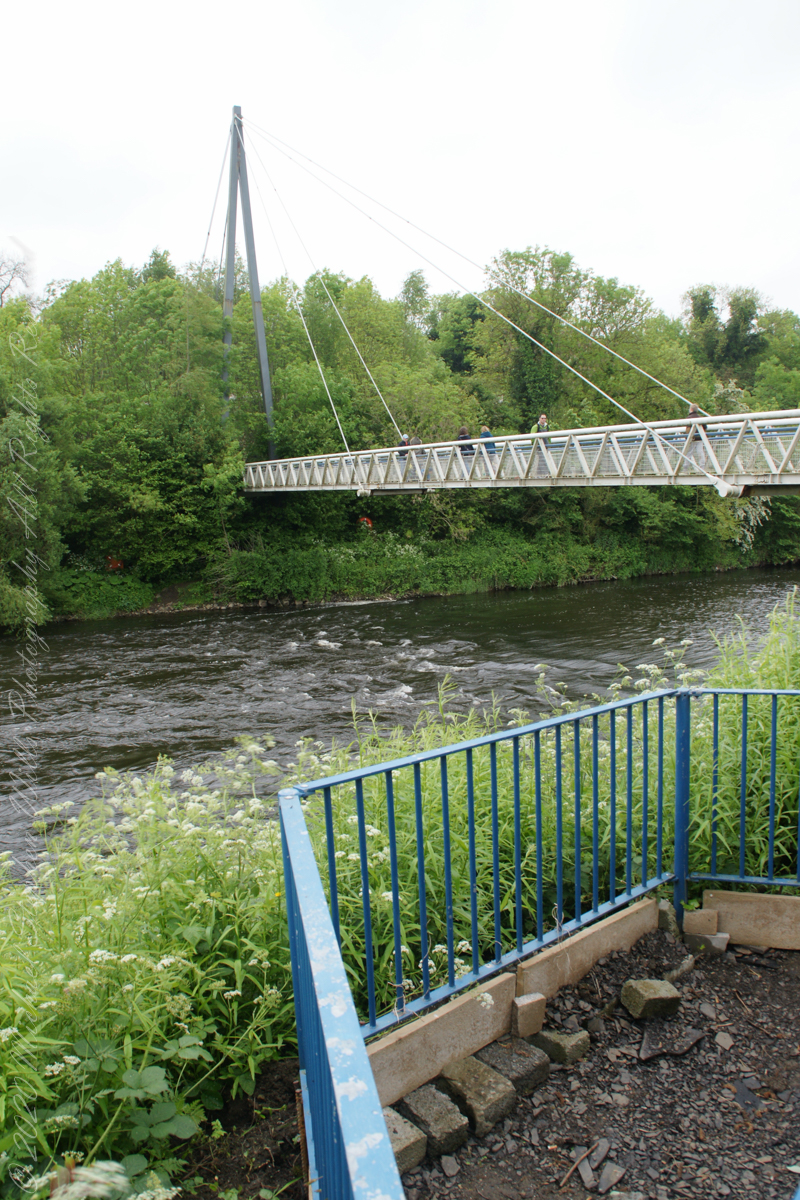
Footbridge over River Boyne
We are on the south bank.
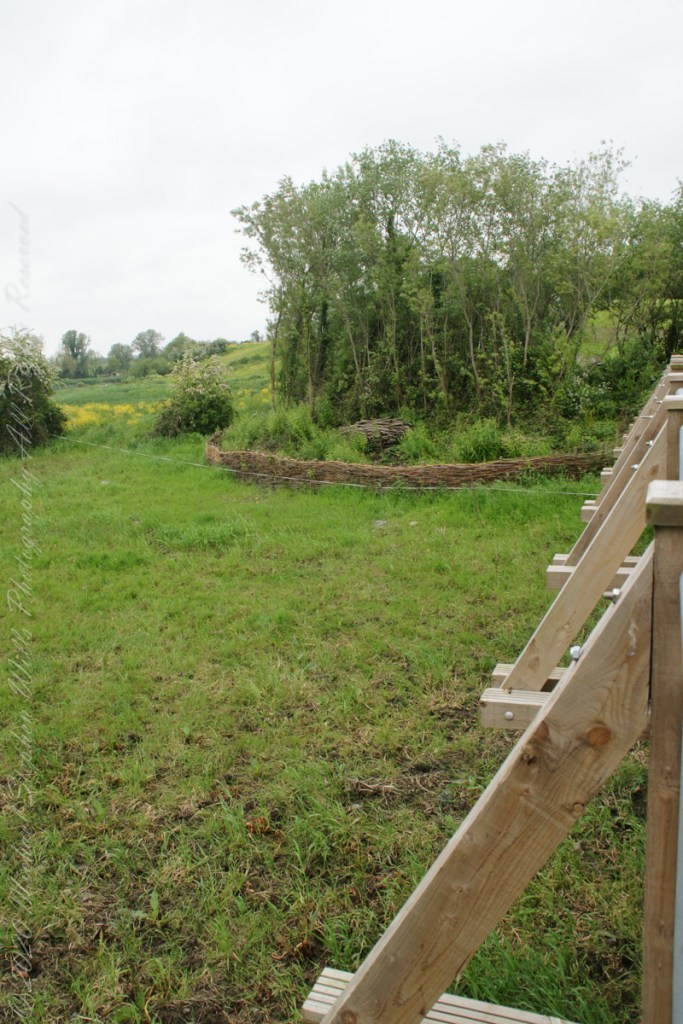
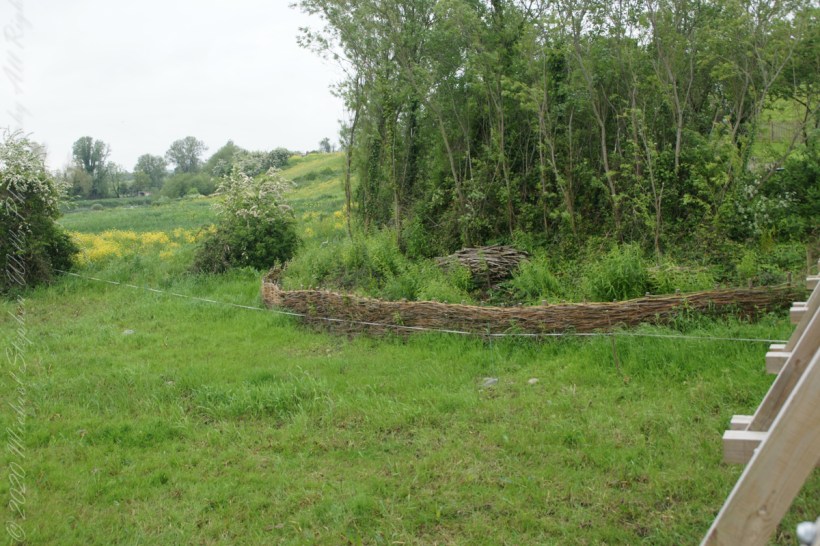
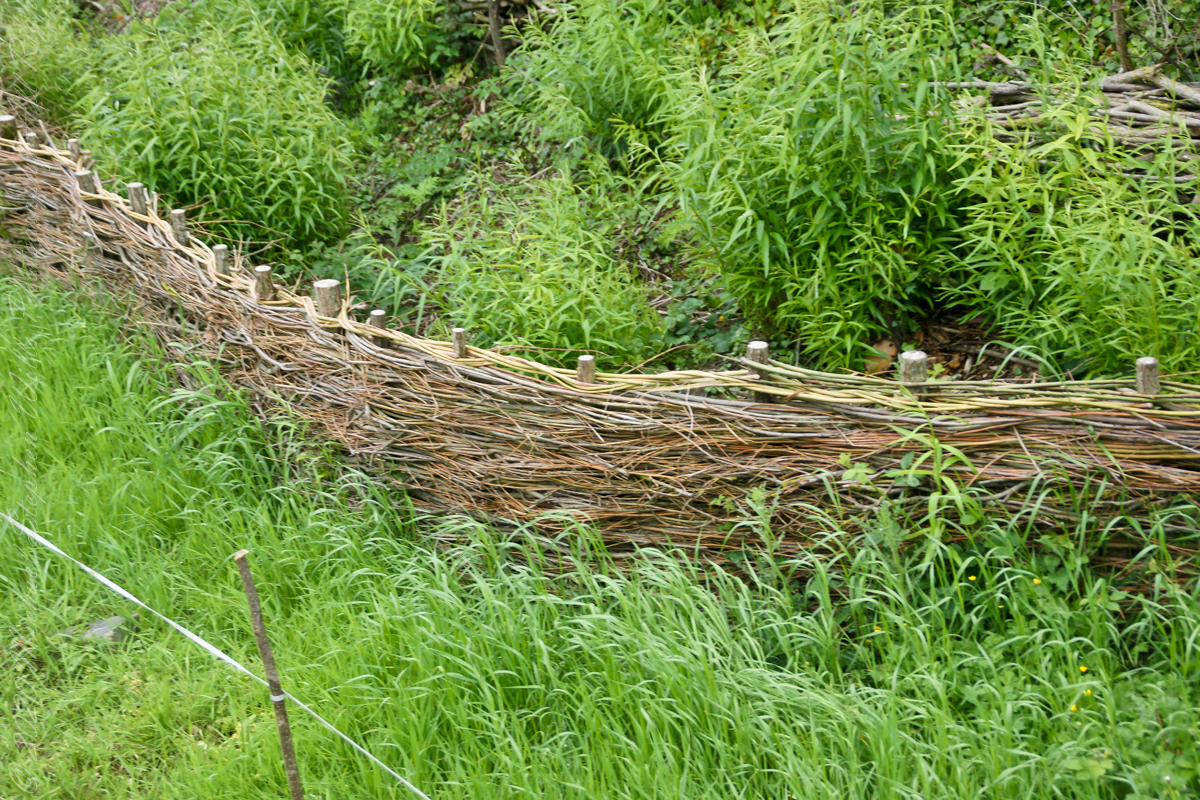
Queen Ann’s Lace on the south bank of River BoyneOh my gosh!! A wattle fence, an ancient technique.
Wattle is made by weaving flexible branches around upright stakes to form a woven lattice. The wattle may be made into an individual panel, commonly called a hurdle, or it may be formed into a continuous fence. Wattles also form the basic structure for wattle and daub wall construction, where wattling is daubed with a plaster-like substance to make a weather-resistant wall.
Copyright 2023 Michael Stephen Wills All Rights Reserved
The post discusses the Hepatica acutiloba plant, highlighting its characteristics, growth, historical medicinal use, and its natural habitat in central eastern North America. It also includes an observation made in Robert H. Treman Park.
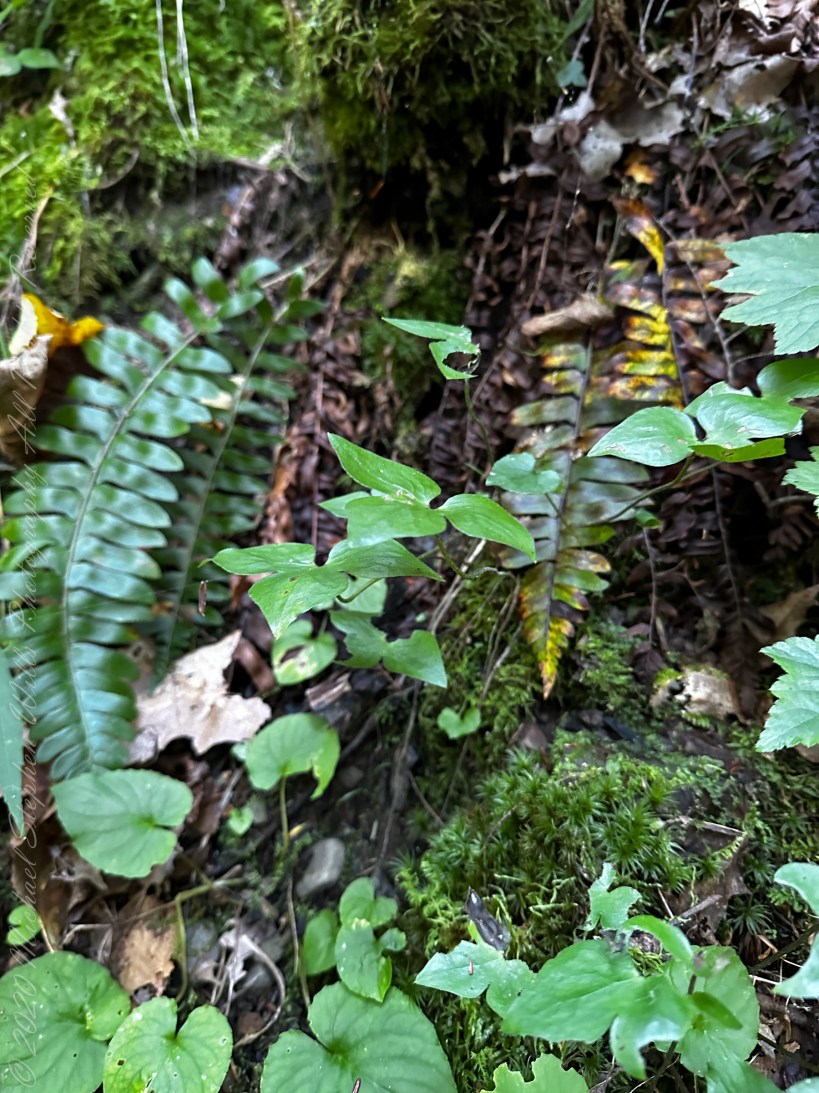
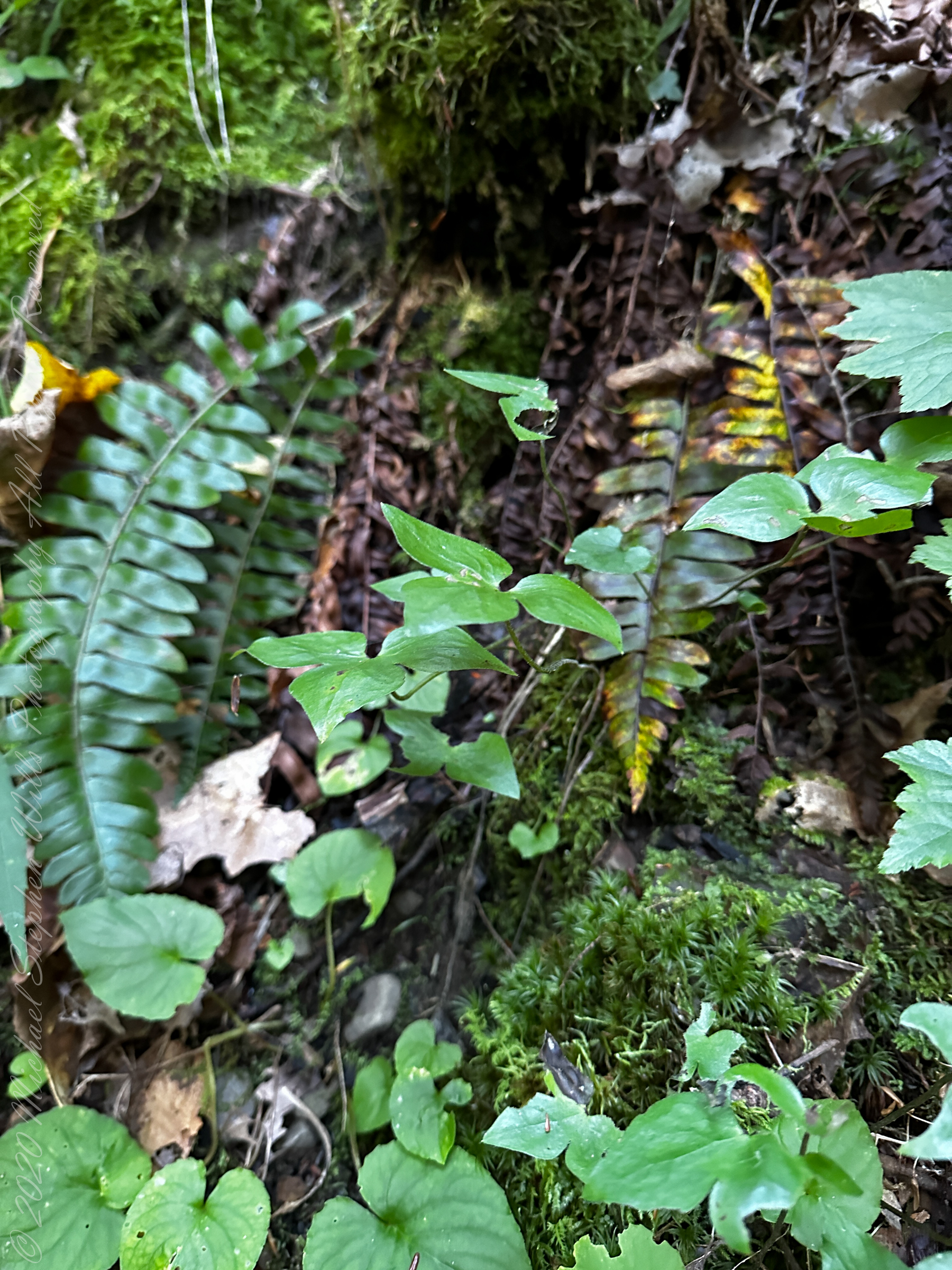
These characteristic leaves are Hepatica plants growing on the sun dappled southern rim of Robert H. Treman Park captured on a bright late September morning.
“Hepatica acutiloba, the sharp-lobed hepatica, is a herbaceous flowering plant in the buttercup family Ranunculaceae. It is sometimes considered part of the genus Anemone, as Anemone acutiloba, A. hepatica, or A. nobilis. Also generally known as Liverleaf and Liverwort.”
“The word hepatica derives from the Greek ἡπατικός hēpatikós, from ἧπαρ hêpar ‘liver’, because its three-lobed leaf was thought to resemble the human liver.”
“Each clump-forming plant grows 5 to 19 cm (2.0 to 7.5 in) tall, flowering in the early to mid spring. The flowers are greenish-white, white, purple or pinkish in color, with a rounded shape. After flowering the fruits are produced in small, rounded columned heads, on pedicels 1 to 4 mm long. When the fruits, called achenes, are ripe they are ovoid in shape, 3.5–4.7 mm long and 1.3–1.9 mm wide, slightly winged and tend to lack a beak.”
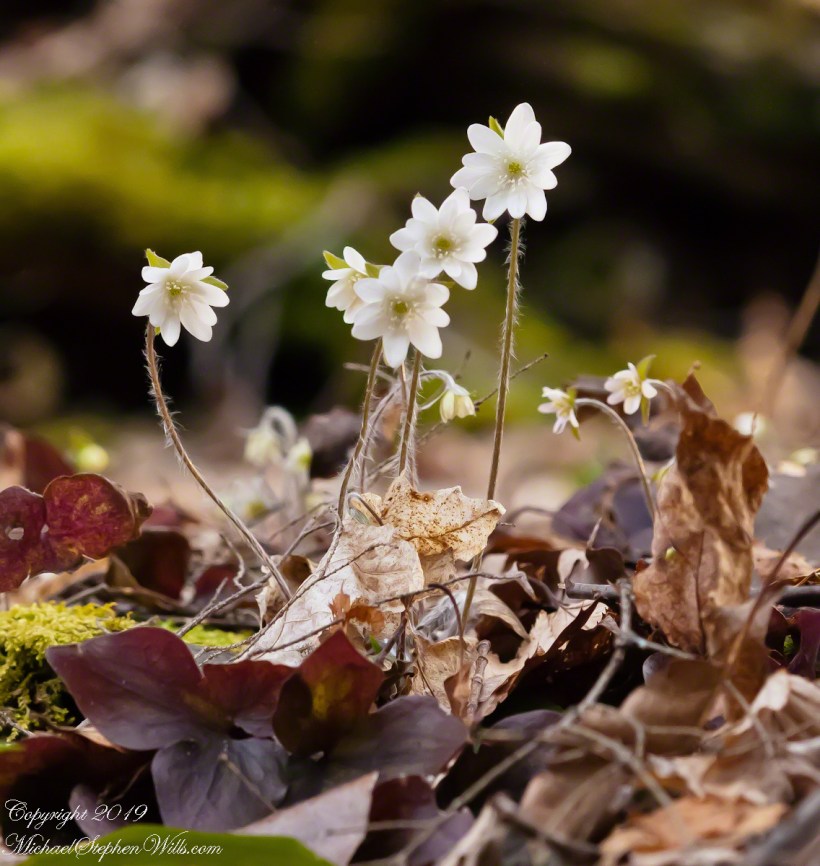
Hepatica Flowers in early spring on the Rim Trail
“Hepatica acutiloba is native to central eastern North America where it can be found growing in deciduous open woods, most often in calcareous soils. Butterflies, moths, bees, flies and beetles are known pollinators. The leaves are basal, leathery, and usually three-lobed, remaining over winter.”
“Hepatica was once used as a medicinal herb. Owing to the doctrine of signatures, the plant was once thought to be an effective treatment for liver disorders. Although poisonous in large doses, the leaves and flowers may be used as an astringent, as a demulcent for slow-healing injuries, and as a diuretic.”
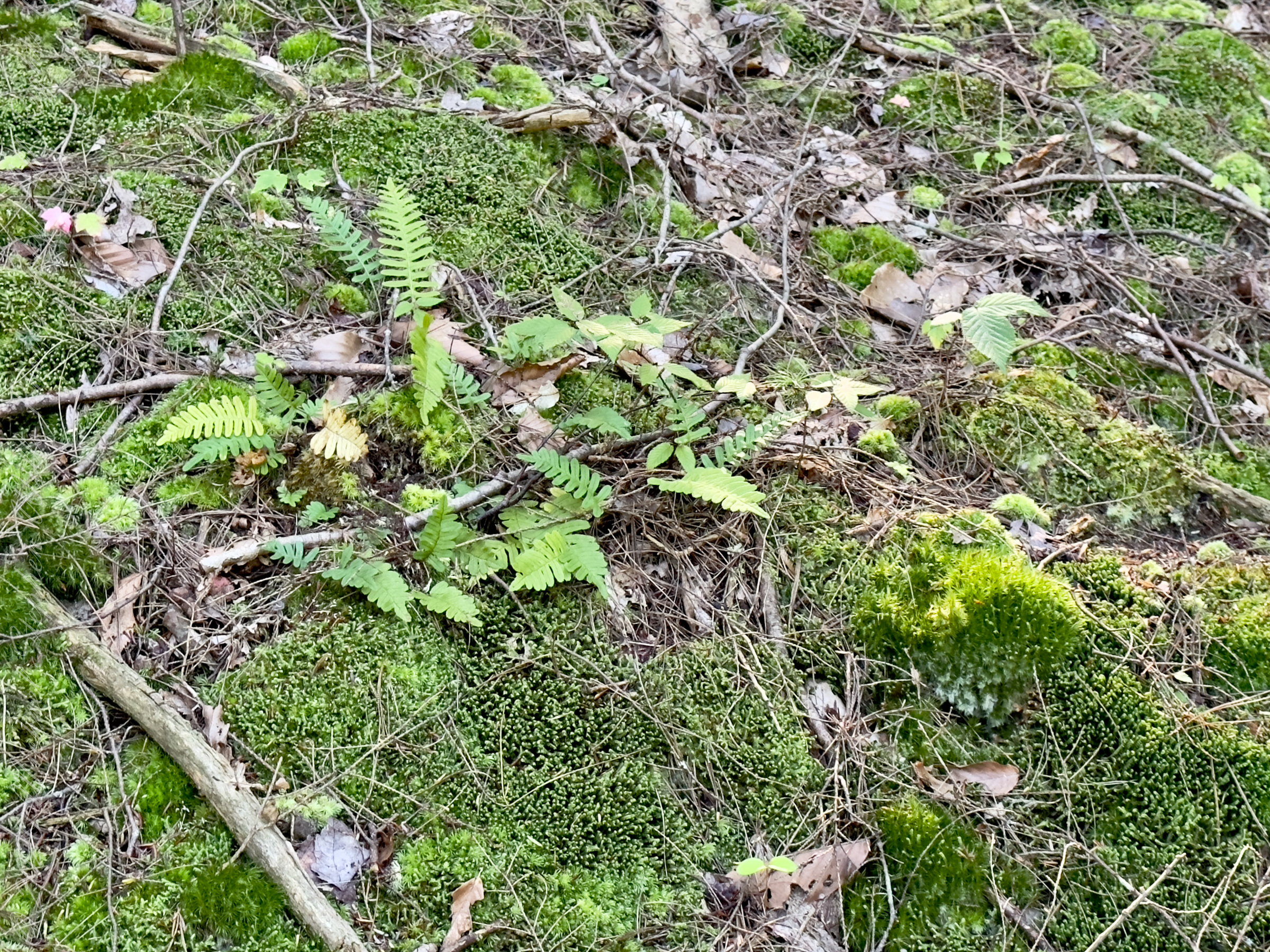
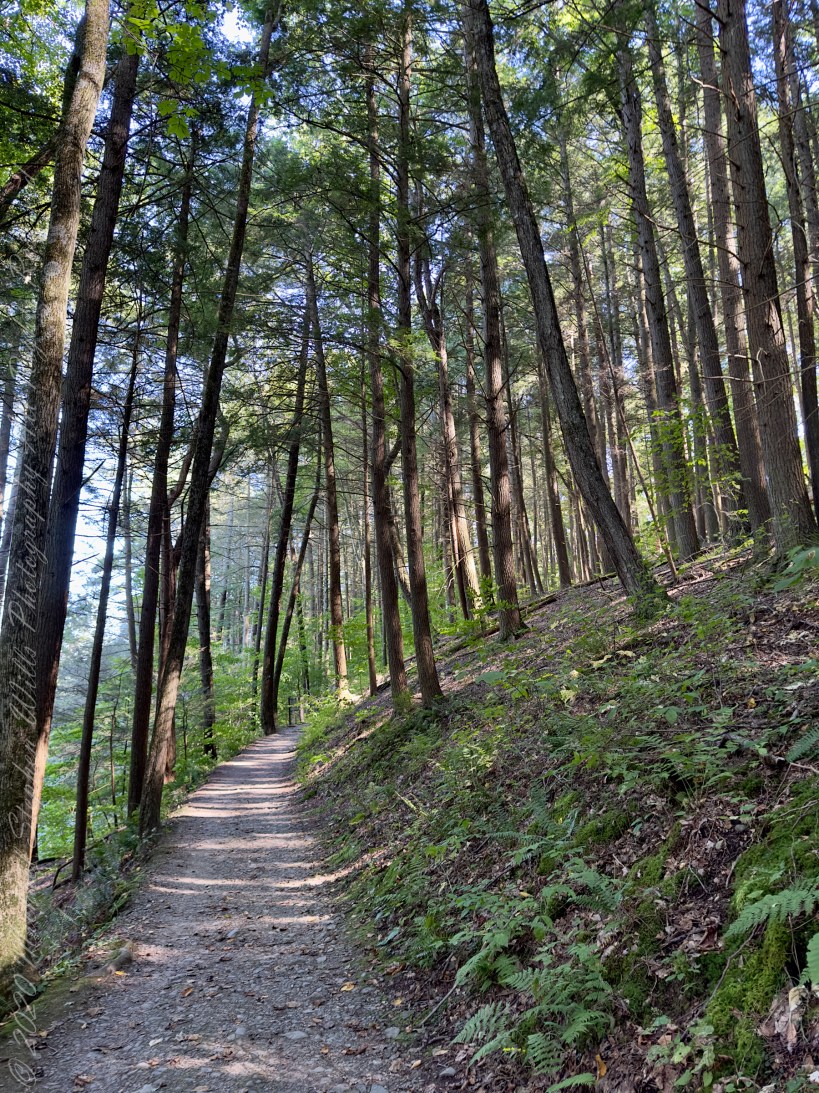
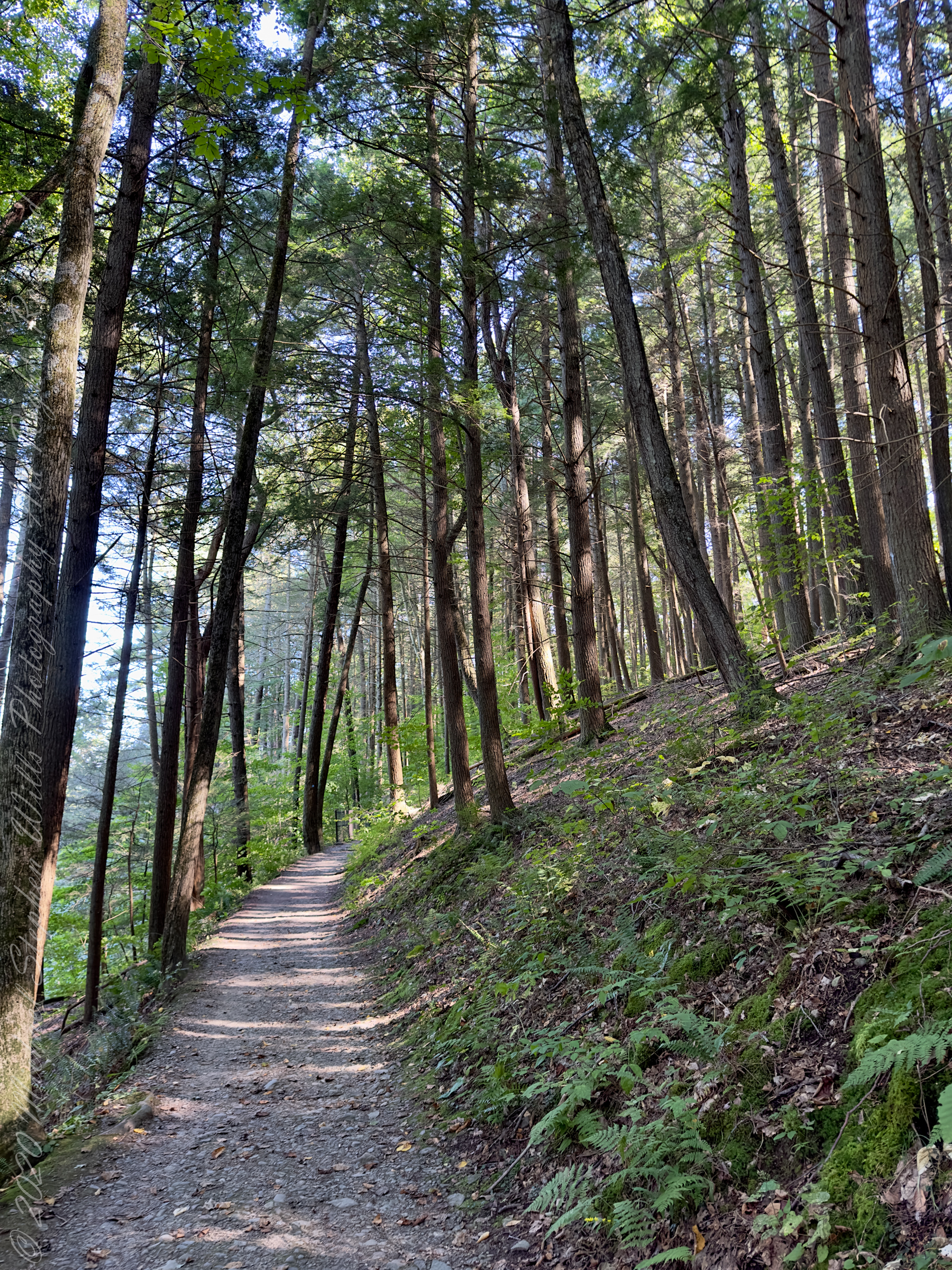
Ferns and Mosses growing beneath Red Pines
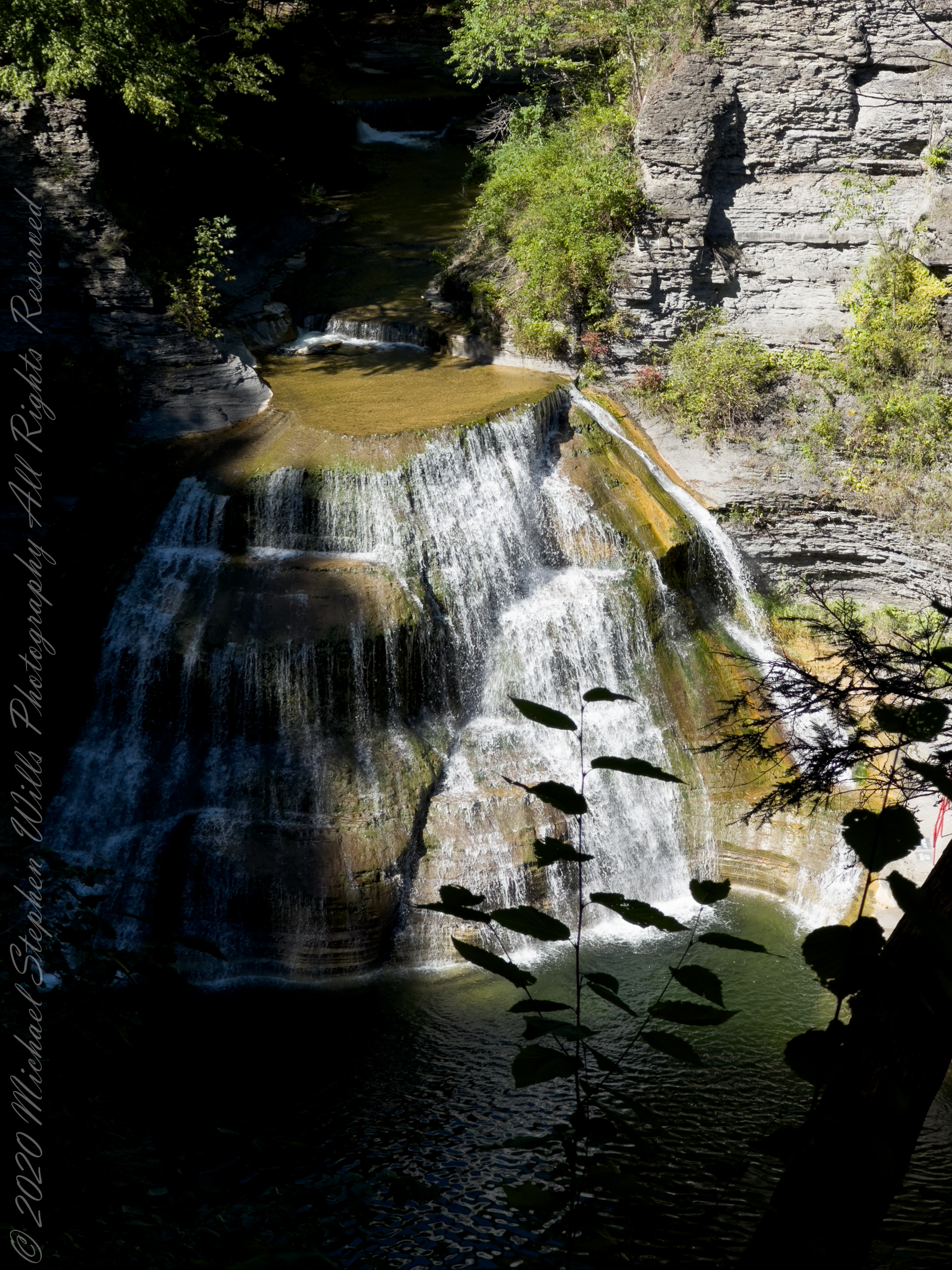
View of the lower falls and swimming hole from the Rim Trail
Returning from a Rim Trail walk one April my boots were yellow from a prolific release of pollen from flowers of these tall trees that develop into the woody cones.
Pinus, the pine, is the largest genus in the family Pinaceae, with around 100 species throughout the northern hemisphere.
Red Pine (Pinus resinosa) is Minnesota’s state tree, known there as the Norway Pine. The use of the name “Norway” may stem from early Scandinavian immigrants who likened the American red pines to the Scots pines back home.
“Red pine is a coniferous evergreen tree characterized by tall, straight growth. It usually ranges from 20–35 meters (66–115 feet) in height and 1 m (3 ft 3 in) in trunk diameter, exceptionally reaching 43.77 m (143+1⁄2 ft) tall. The crown is conical, becoming a narrow, rounded dome with age. The bark is thick and gray brown at the base of the tree, but thin, flaky and bright orange red in the upper crown; the tree’s name derives from this distinctive character. Some red color may be seen in the fissures of the bark. The species is self-pruning; there tend not to be dead branches on the trees, and older trees may have very long lengths of branchless trunk below the canopy.”
“It is a long-lived tree, reaching a maximum age of about 500 years. Another member of Pinus, Pinus longaeva D.K. Bailey, the intermountain bristlecone pine, is the longest-lived tree in the world; one in the White Mountains of Nevada is estimated to be 5,000 years old, and by matching rhe rings with even older dead trees, a sequence going back 8,500 years has been established.”
“Red pine is notable for its very constant morphology and low genetic variation throughout its range, suggesting it has been through a near extinction in its recent evolutionary history. A genetic study of nuclear microsatellite polymorphisms among populations distributed throughout its natural range found that red pine populations from Newfoundland are genetically distinct from most mainland populations, consistent with dispersal from different glacial refugia in this highly self-pollinating species.”
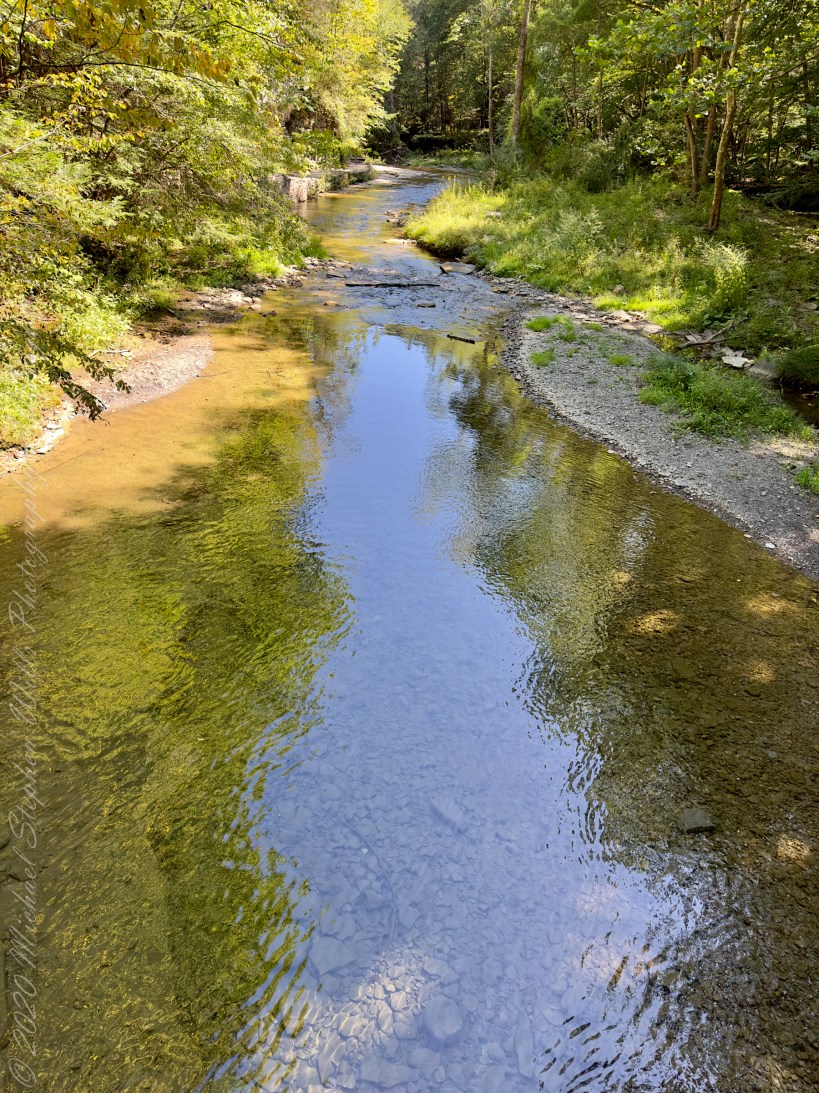
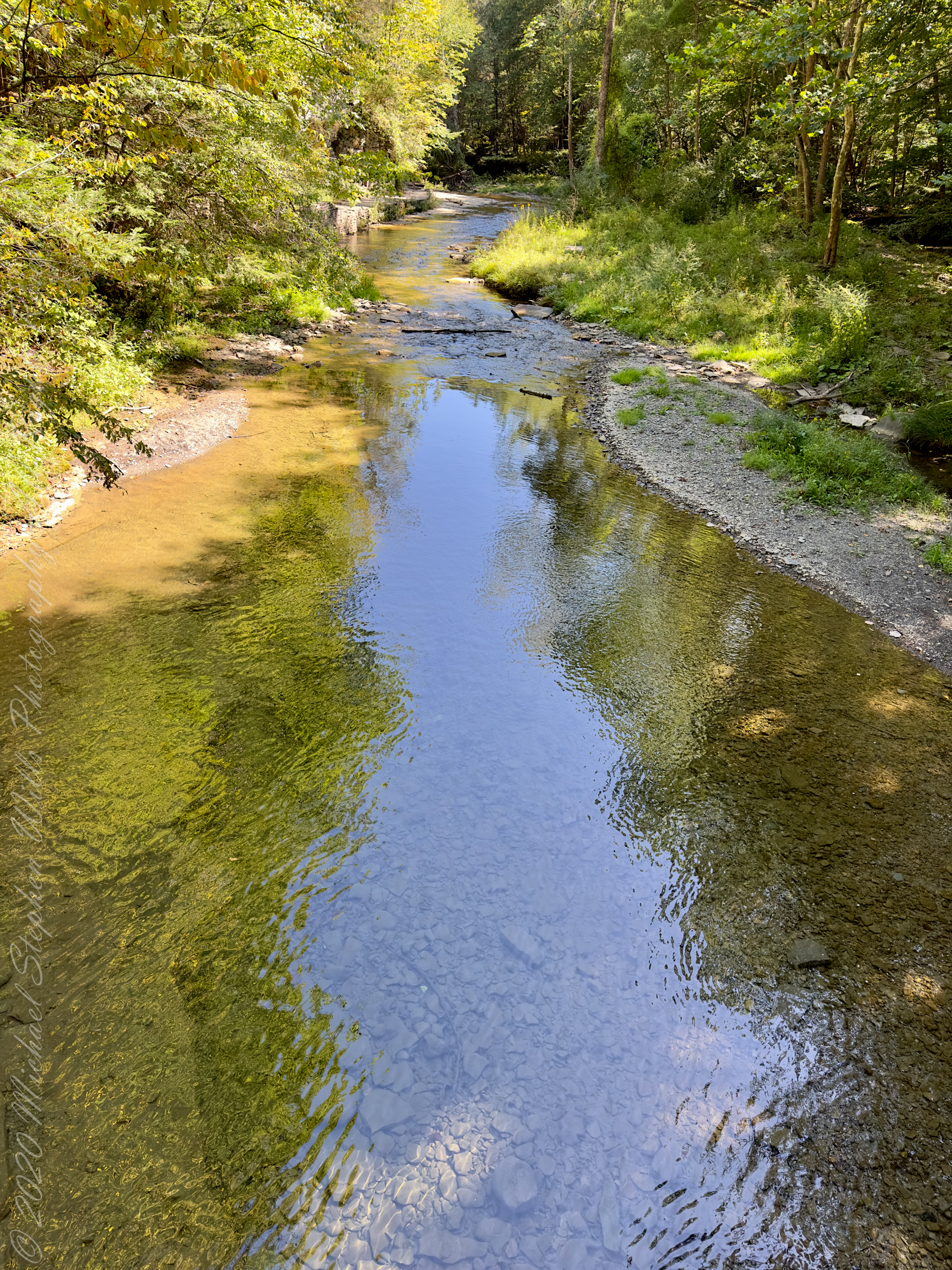
Below Lucifer Falls this quiet water flows beneath a bridge linking Gorge and Rim trails. The reflection of blue sky between river trees brings to mind the kenning “Swan-Road.” To me it is more fitting than the established meaning: “The Sea,” also associated more appropriately with Whale-Road.
Swan Road
The seldom used English verb “ken.” The Oxford English dictionary proposed the word was borrowed from Norse based on a confluence of meaning, i.e. to know. When it is turned into a noun with the -ing ending, it is a phrase that brings to mind and object described.
Other kennings from : “Whale road = sea (e.g., a place where whales travel); Treasure seat = throne (e.g., the source of treasure or reward, or the role of the king in rewarding his men); Ring giver, ring breaker = king (e.g., the person who bestows rings, or breaks off a piece of his golden bracelet as a reward); Sword sleep = death (e.g., a “sleep” caused by a sword wound); Rapture of heaven = sun (e.g., the sun, brightest of heavenly objects, the joy of heaven); Weaver of peace = wife (e.g., a person whose grace and mildness instills peace, or one who creates domestic tranquility); Earl’s defense = Beowulf (e.g., the one who defends Hrothgar); Mead seats = benches in Heorot (e.g., the places where people sit and drink).”
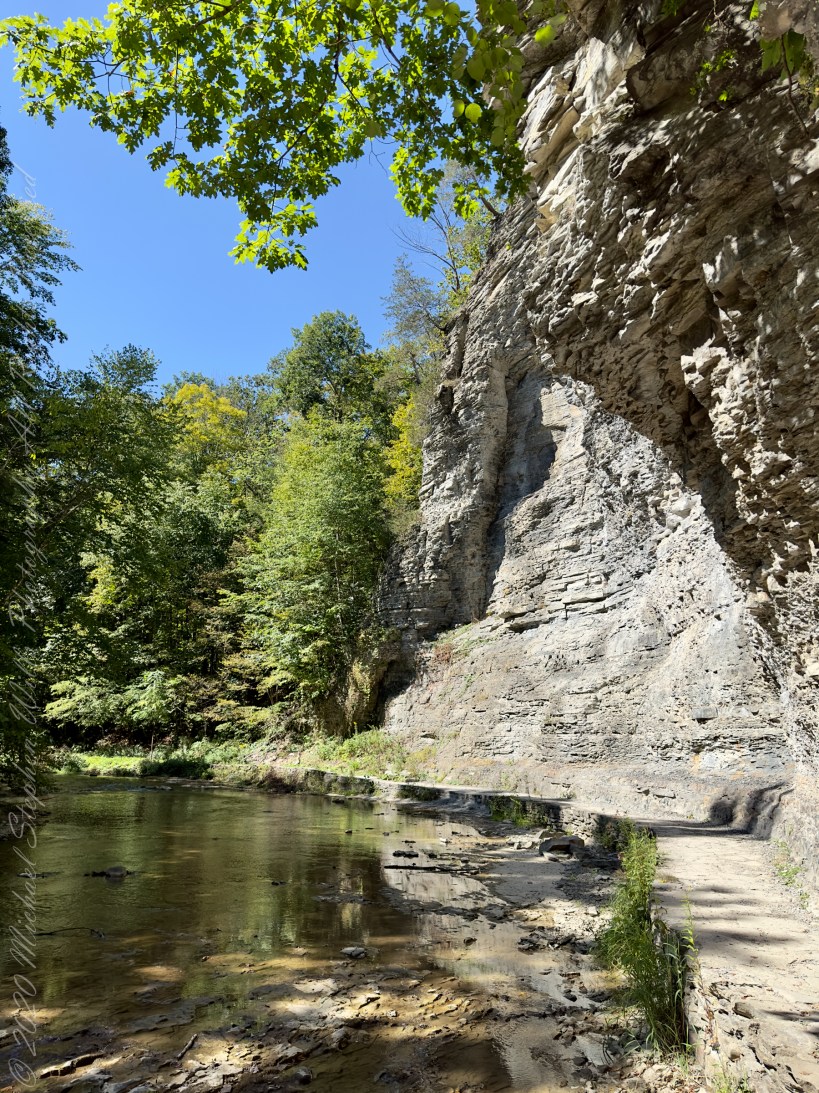
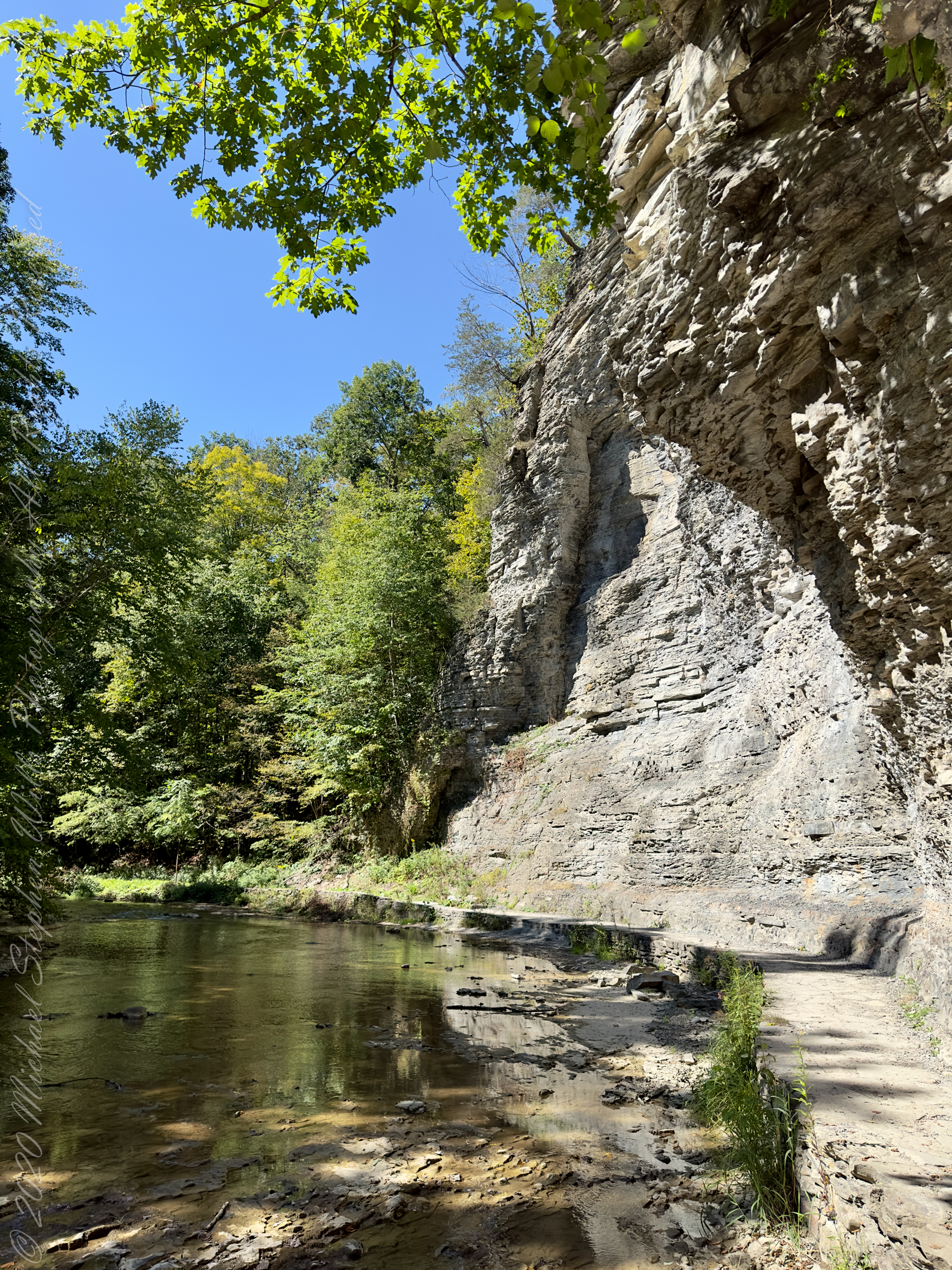
Overhangs such as this worry me, always forcing a faster pace. Over the years during early springtime walks, sometime before the gorge trail is opened officially, the path is littered with huge blocks fallen during the winter, possibly even that same day.
A task the park staff undertakes before opening is an evaluation of sequences such as this, with cliffs and overhangs, for portions ready to fall. Rock climbers are engaged to dislodge these rocks. At times, larger segments of the cliff are blasted resulting in landslides.
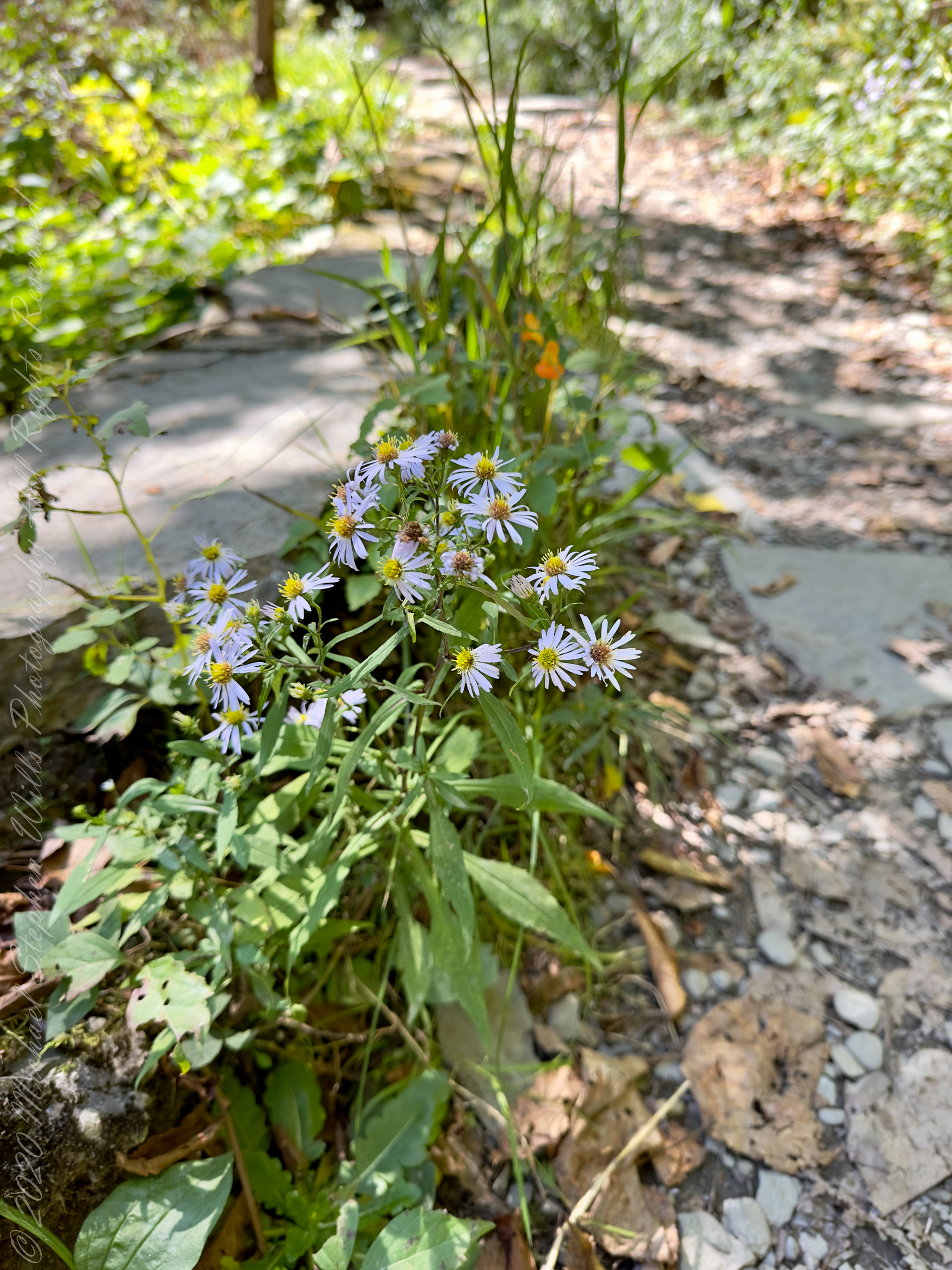
On a gentler note, these asters grace Finger Lakes trails this time of year.
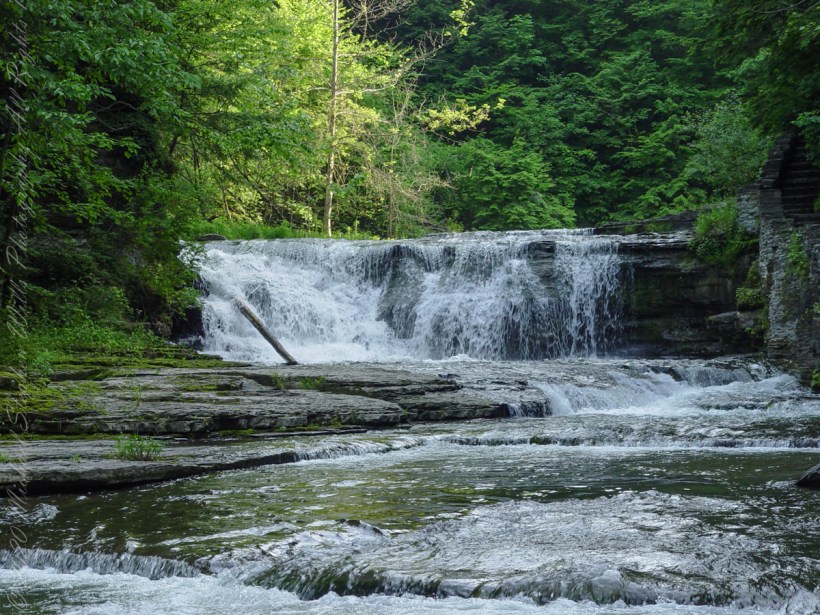
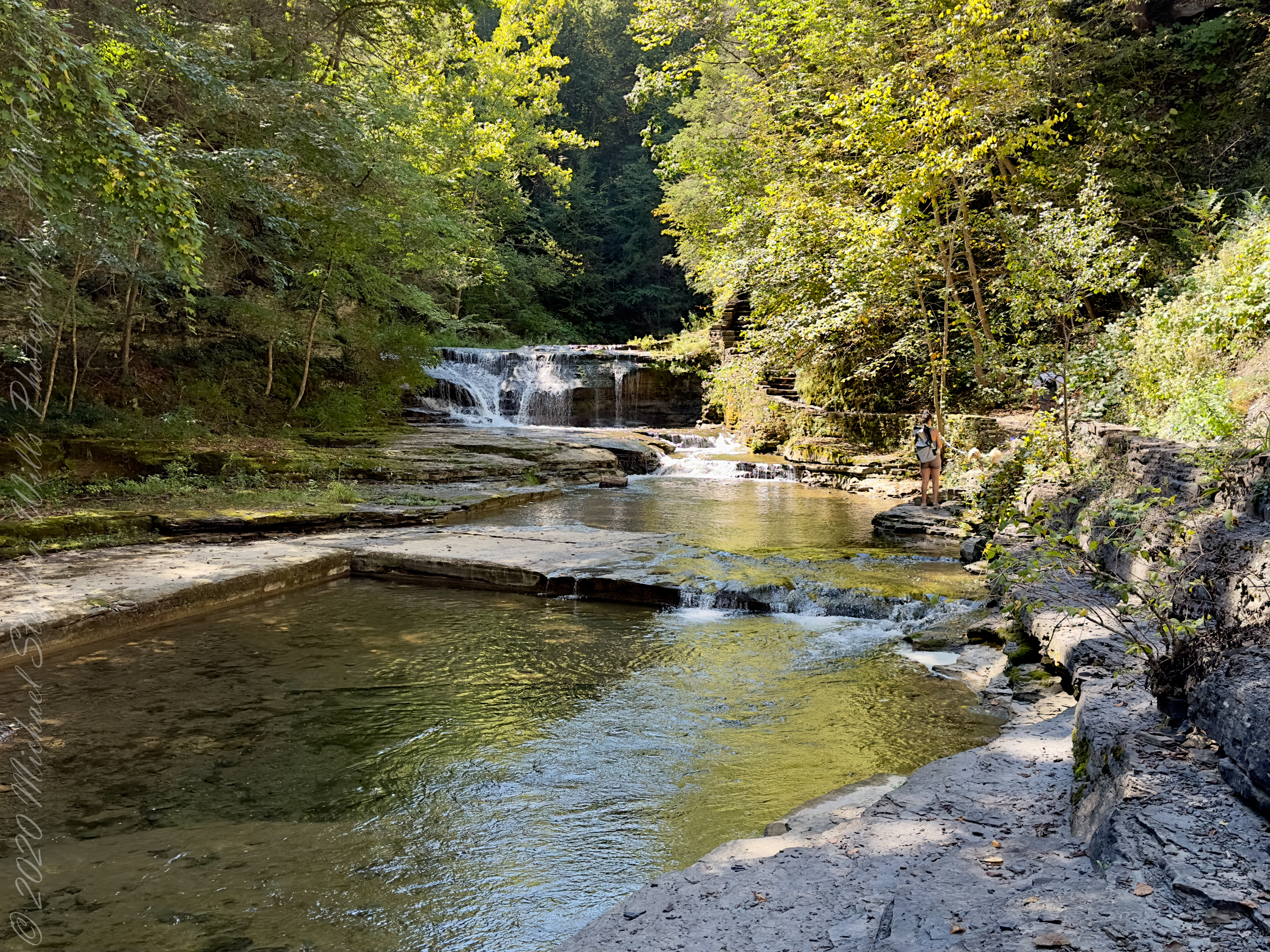
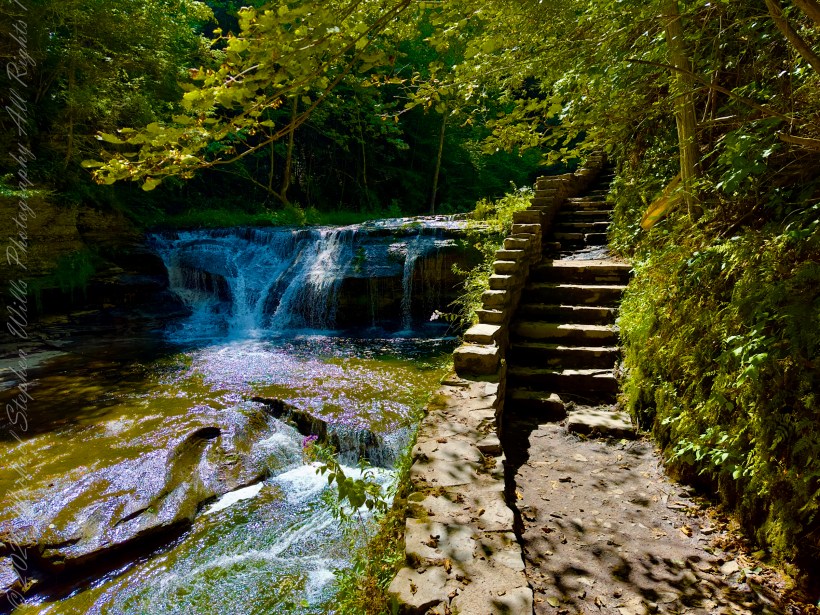
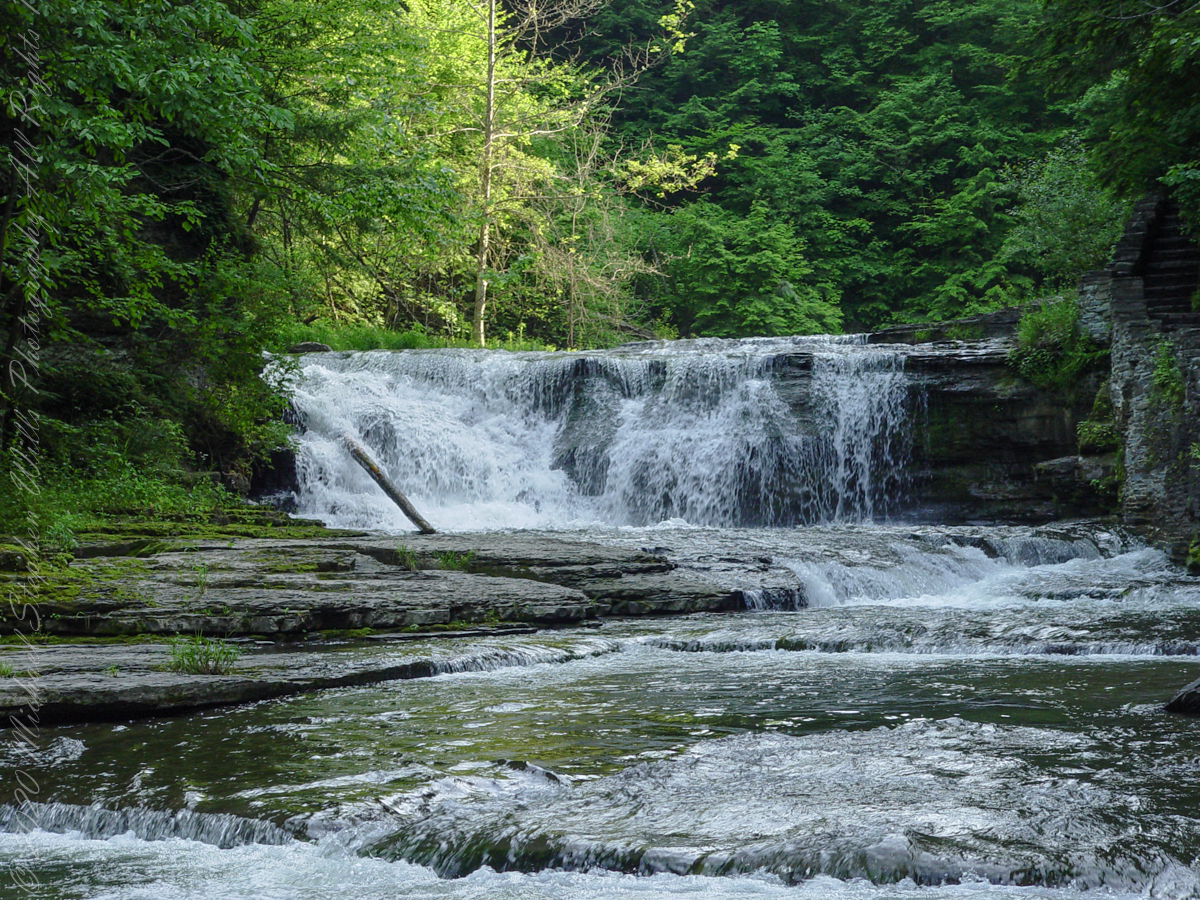
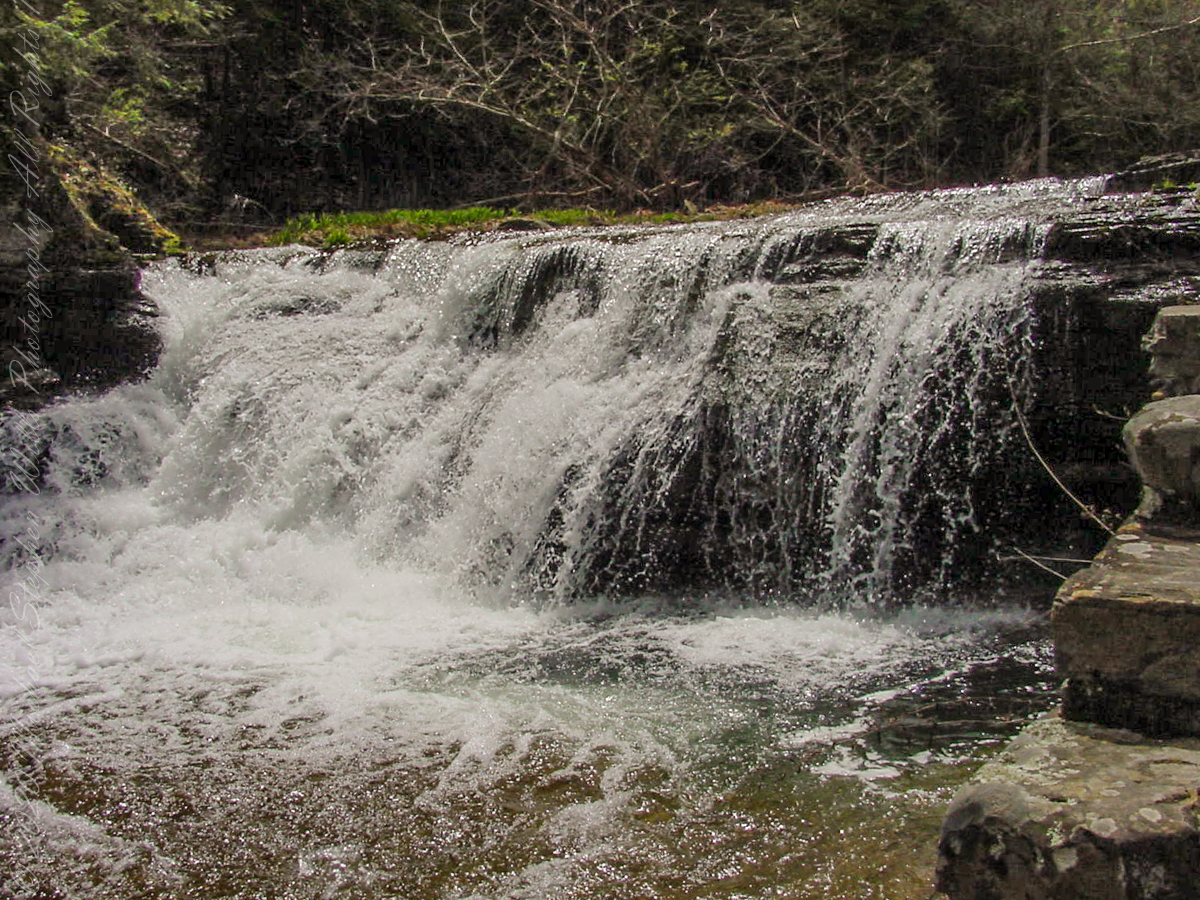
An unnamed waterfall along the Gorge Trail is memorable for the steps alongside.
I have captured it in all seasons from the beginning of my photography interest. Here it is at midday, early autumn, 2023, taken with the Apple Iphone 14 proMax. Bright sunlight ruins the shot.
Here, evening, early summer 2003, the foreground shaded, late day sunlight on trees beyond. The Sony dsc F828 camera, on a tripod, was used.
Here, bright sunlight at midday is handled by framing the brightly lit waterfall, April, 2002. A handheld Sony Mavica was used.
Daring visitors jump from the wall at right into a plunge pool, seen here as the quiet water at base of wall. It is a doubly dangerous activity as the force of water can hold a swimmer under indefinitely, missing the narrow pool results in striking the rocks. Robert H. Treman New York State Park, Tompkins County, Ithaca, New York.
“Plunge pools are formed by the natural force of falling water, such as at a waterfall or cascade; they also result from man-made structures such as some spillway designs. Plunge pools are often very deep, generally related to the height of fall, the volume of water, the resistance of the rock below the pool and other factors.[4] The impacting and swirling water, sometimes carrying rocks within it, abrades the riverbed into a basin, which often features rough and irregular sides. Plunge pools can remain long after the waterfall has ceased flow or the stream has been diverted. Several examples of former plunge pools exist at Dry Falls in the Channeled Scablands of eastern Washington. They can also be found underwater in areas that were formerly above sea level, for example Perth Canyon off the coast of Western Australia.”
“Plunge pools are fluvial features of erosion which occur in the youthful stage of river development, characterized by steeper gradients and faster water flows. Where softer or fractured rock has been eroded back to a knickpoint, water continues to bombard its base. Because this rock is often less resistant than overlying strata, the water from the higher elevation continues eroding downward until an equilibrium is achieved.”
Reference: text in italics and quotes is from the Wikipedia, “Plunge Pool.”
Copyright 2023 All Rights Reserved Michael Stephen Wills

 Michael Stephen Wills Photography