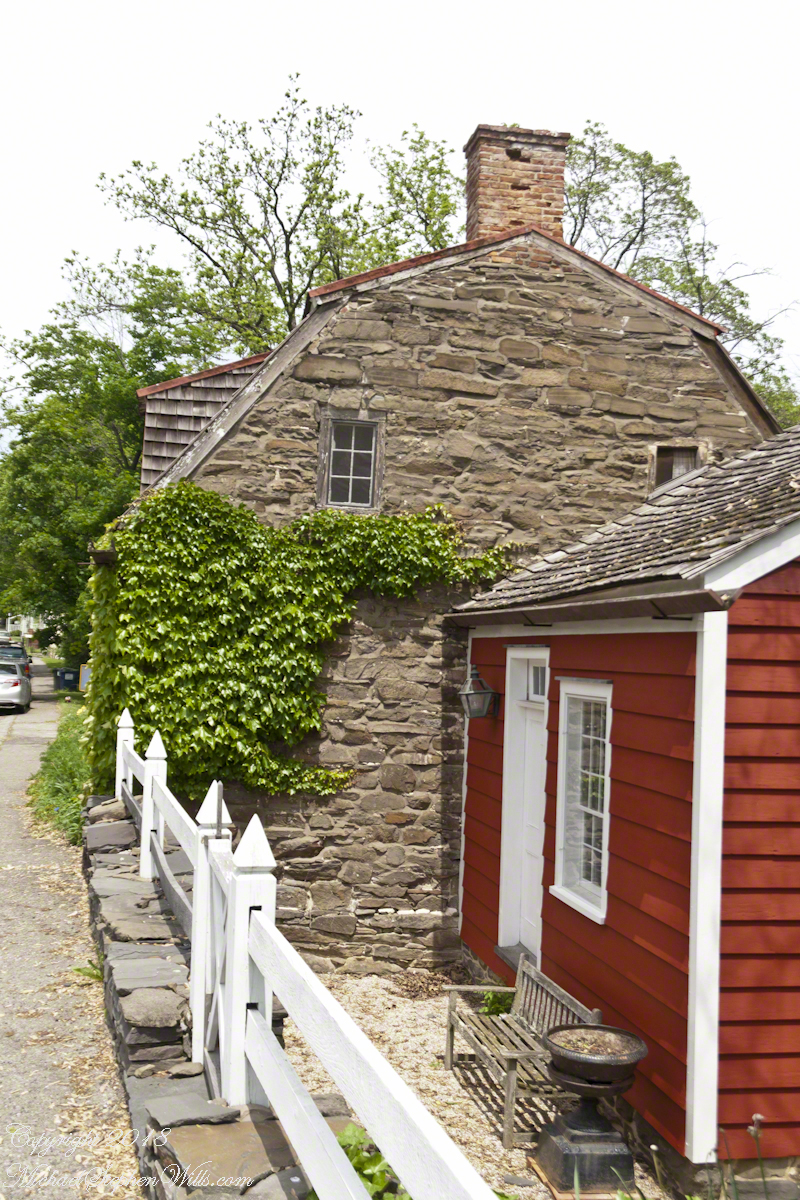
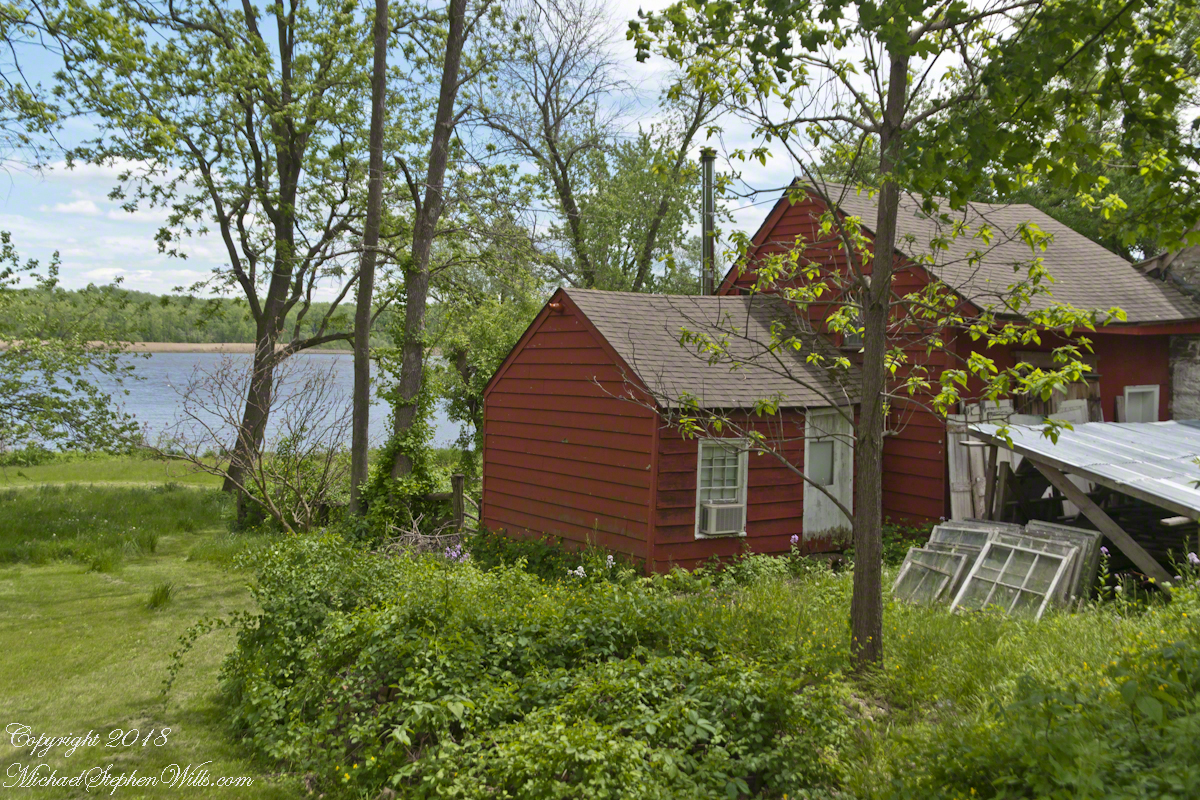
Around and About Athens, New York, part 3

Blossoms, headstones and the passage from Dutch to English

Blossoms

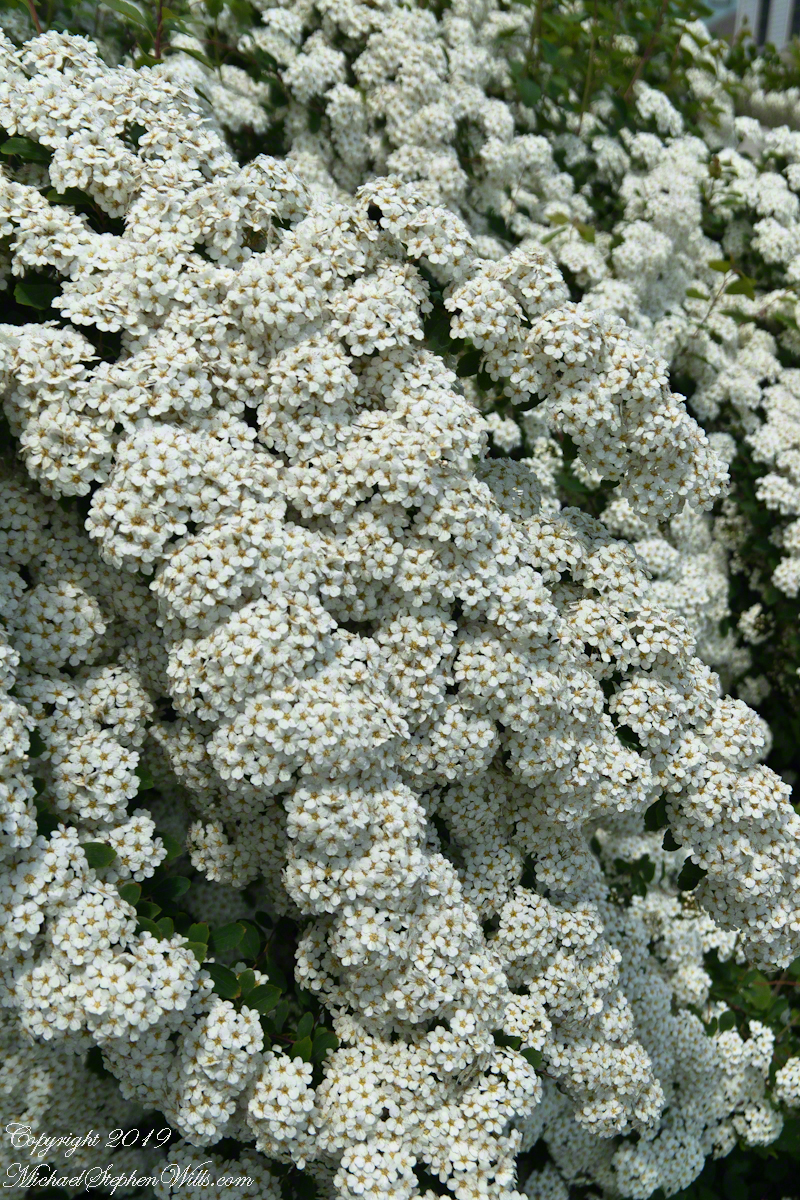
Spiraea bushes in full bloom flanked the Riverside Park along Water Street.
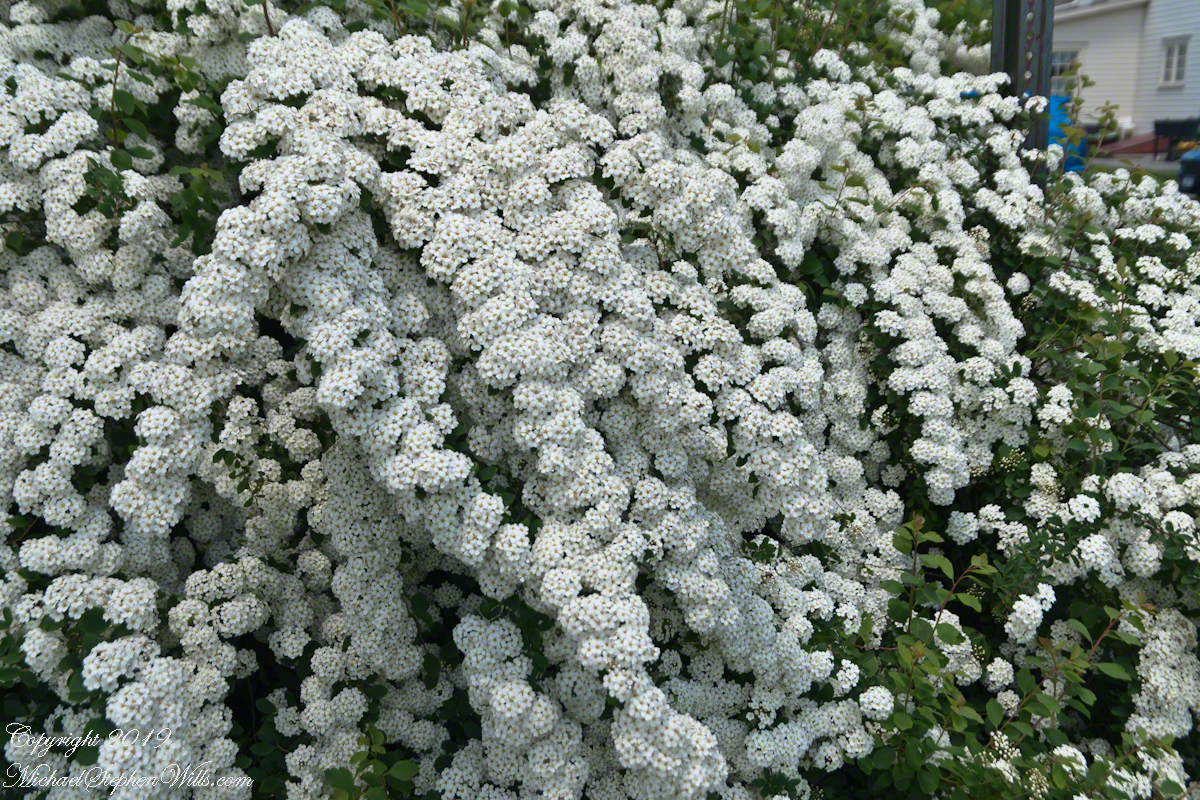
Click any photograph for a larger version

Well cared for…..

…..as are the urns across the street.

Athens Country Cemetery

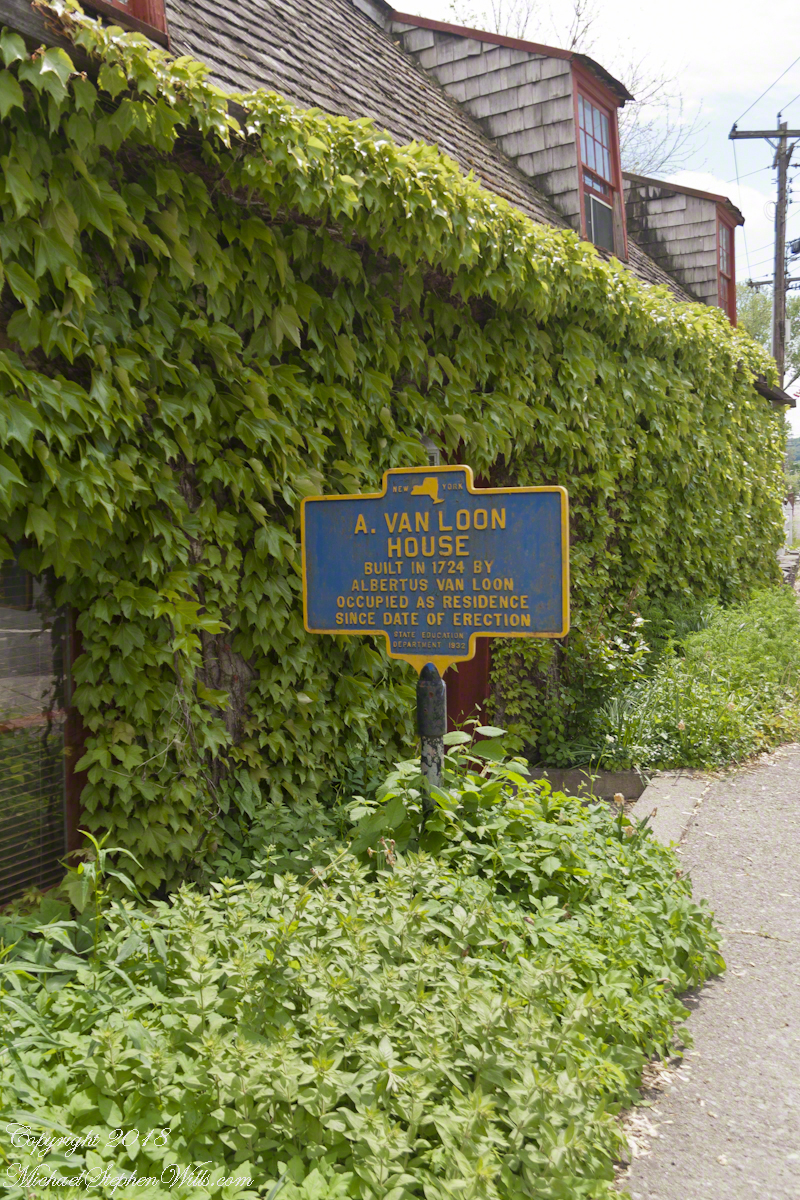
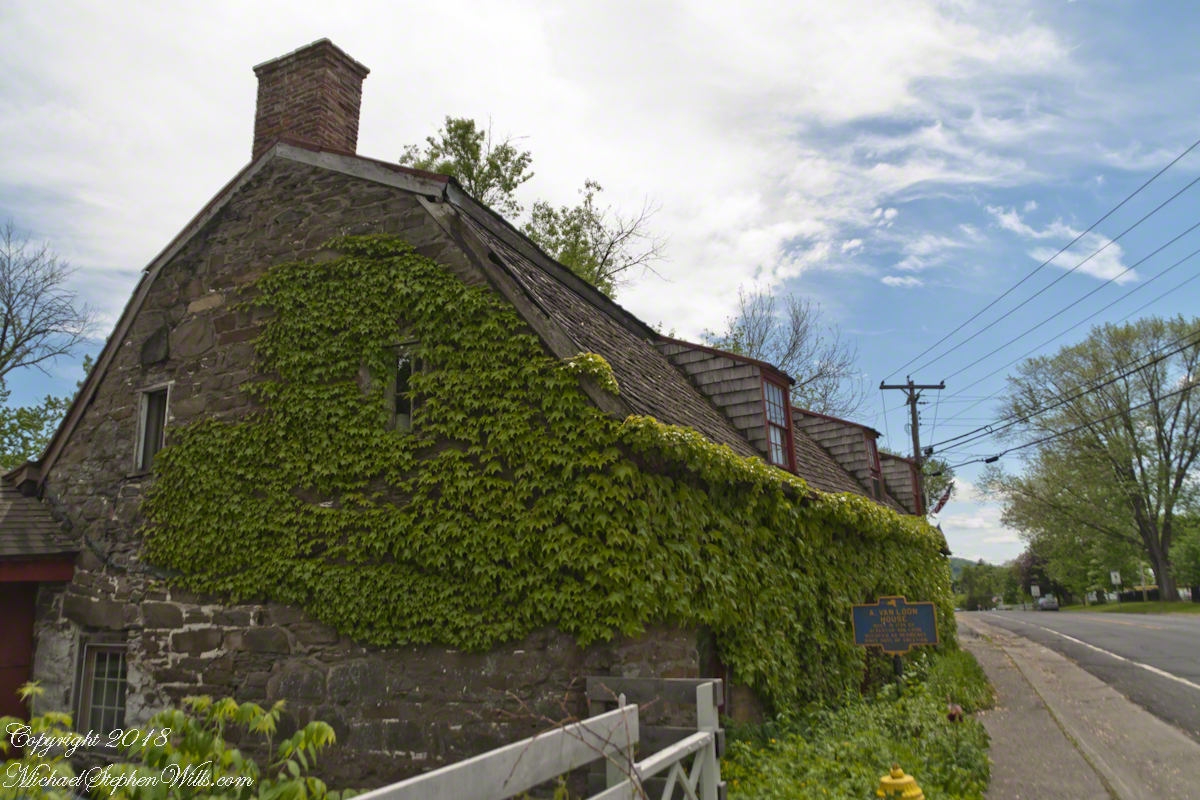
Our daughter-in-law and her Mom were a source of post-trip information. “Yan Van Loan” is how Jan Van Loon’s name is pronounced in Dutch, they kindly informed us.

Passage of political control from Dutch to English was decades old when Jan Van Loon acquired his land on the river. By the 19th century the name was anglicized (turned English) on the headstones, spelled as it was pronounced in English. In the 18th century Pam’s ancestors had moved west and south to what became Plymouth, Pennsylvania (Luzerne County). This was before the coal fields, in the 18th century agriculture was the primary industry. Pam’s branch of the Van Loons retained the Dutch spelling and anglicized the pronunciation, as “Van Loon” is pronounced in the English language.

The very old burials were marked with headstones of locally quarried slate, as was common in upstate New York. You can see slate headstones in this video of a Pioneer Cemetery near our home in Ithaca, New York.

In Athens the oldest stones were in the same condition, the lettering and decoration erased by the elements even when the stones are still standing. Some kind people researched the burials and erected a modern, white marble memorial stone with the names and dates of the ancestors named in the records. Jan Van Loon, Maria his wife, or any of Pam’s direct ancestors were not among them.

The Matthias Van Loon of this memorial obelisk was a descendant who remained in what became Athens, New York. The following two photographs are of the base and an overview. Matthias Van Loon’s is on the right.


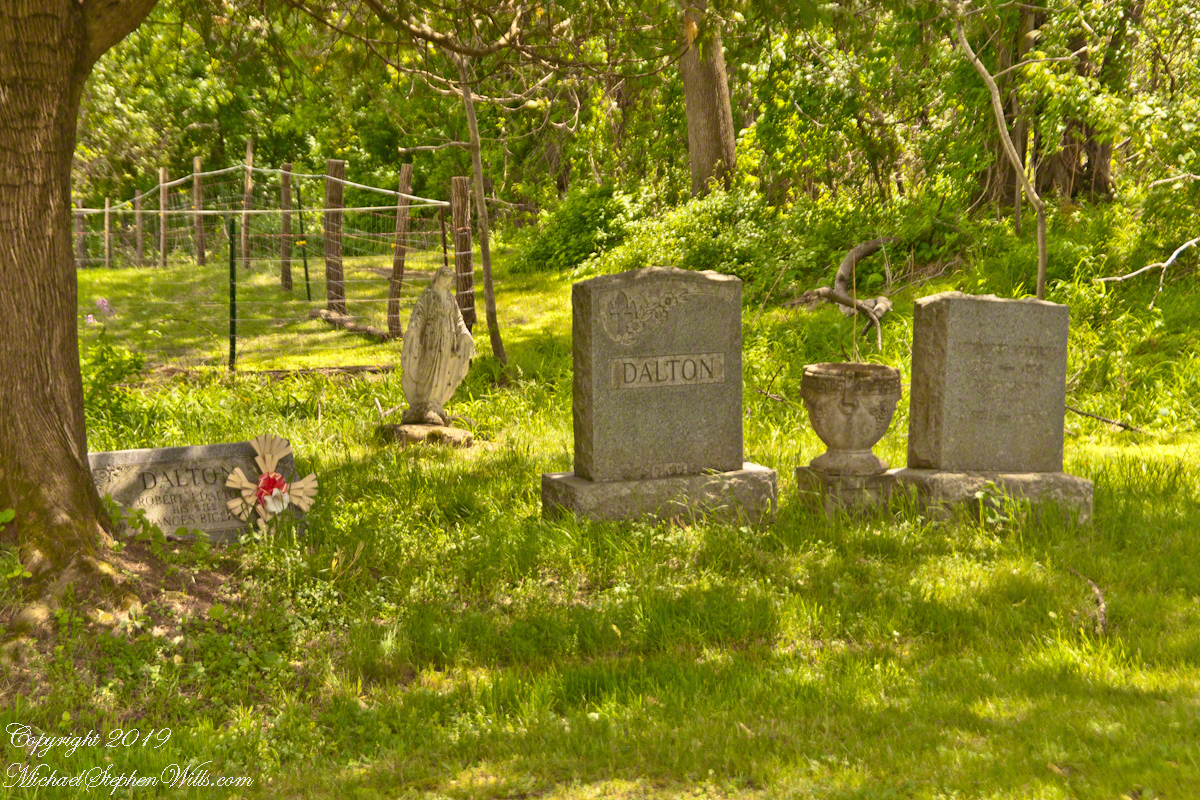
This Catholic burial is on the very edge of the site, as though pushed off to the side. That is the yard of a private home in the background. I started this post with flowers because there was little evidence of familial devotions on these burials of previous centuries.
Click Me for “Around and About Athens, New York, part 4”

Copyright 2022 All Rights Reserved Michael Stephen Wills

Wintergreen?

aspirin-nations

Capturing photographs and videos on the fly using an Iphone, we visited Fillmore Glen State Park, Moravia, New York with our granddaughter, Nia. This is the seventh post of this series. Click me for another springtime post.

Click any photograph for a larger view.

Growing up on Long Island provided limited exposure to the great variety of animal and plant life on planet earth. I remember Canesteo, a town just off the western edge of the Finger Lakes in Steuben County, after moving there in the 1980’s, had a marvelous abundance of different plants in the lawn. It was a welcoming feeling to notice this before the term “monoculture” was circulated.

These days the exuberant variety of ferns and mosses in the Finger Lakes are still alien in the sense noticing the small differences between species is still beyond me; or, rather, I have yet to know well all the later arrivals on the scene, the flowering plants and these command my attention.

Close by the Sorrell of my post “Glen Shadows” is this inconspicuous flower, common name Shinleaf, seen here growing in spite of the the wet rip rap of shale at the base of the glen wall on the footpath. Much of the characterization of this plant is from the inconspicuous basal leaves from which the raceme of flowers springs.

Evergreen Pears

Moss and Shinleaf are associated in these groupings, I could conclude the moss provided a place for the tiny seeds of the plant to lodge and take root. The plant is a perennial and stays green throughout the winter, leading to another conclusion: there is a substance in the leaf cells that resists freezing. The latin meaning of the (scientific name) genus Pyrola means “Pear”, the shape of the leaf.

Look closely at the flowers to see the small flowers, the style extending beyond the petals like a bell clapper.

The common name, Shinleaf, is from England where the plant is credited with providing relief for minor injury. I am unclear on the grouping of this plant as a wintergreen. Shinleaf might be included as a wintergreen, and possibly attributed with healing properties, because “wintergreen” in the past was a synonym for “evergreen.”

There are species of wintergreens, in a different family, with leaves containing methyl salicilate that metabolizes (changed in our bodies) to a substance related to aspirin and more potent. I am reconsidering my identification of “cranberry” in the previous post “Red” to be a type of wintergreen high in methyl salicilate and growth close to the Shinleaf.

This abundance of life variety must be cherished and preserved, it can be a source of survival for the human species.

Copyright 2022 Michael Stephen Wills All Rights Reserved

Orsorno Volcano from the Chacao Channel

Booking our February/March 2016 passage on the Oceania Regatta from Lima, Peru to Buenos Aires, Argentina we started early, Spring 2017. We made two excellent choices: a stateroom with balcony on the port side. Waking each morning we were treated to views of the shoreline. On the morning of February 15, 2016 as we sailed the Chacao Channel toward Puerto Montt I was up 4:15 am before the sun rose to photograph our approach to the city.

I knew a classic 8,701 foot high stratovolcano topped with glaciers, named Orsorno, was out there and, amazingly, appeared on the horizon, seventy five miles distant to the northeast outlined by the gathering dawn. The sky was just brightening from total darkness at this time.

Click me for the first South American Post in this series

Copyright 2022 Michael Stephen Wills All Rights Reserved

Spring Fragrance

What Phlox fragrance brings to mind.

Working as a consulting dietitian, back in the 1980s, on a early June drive from Canisteo, New York on route 19 north of Mansfield, Pennsylvania, where the road goes through the Tioga-Hammond Lakes Recreation area there were miles of phlox growing on the east side of the road. The fragrance of phlox was pervasive with the window down and to this day I remember that time when phlox is in bloom as it was on June 5th, last week.

Click any photograph for a larger image.
The species name (Phlox) divaricata means “with a spreading and straggling habit”.

On the way to Treman State Park, to check out wildflowers, on an afternoon that threatened rain I came upon these stands of phlox, growing as it does under trees in damp soil on the east side of Colegrove Road. We’ve had plentiful rain this spring.

Phlox is abundant here

Looking it up in my reference book, “The Botanical Garden”, the plentiful number of species was daunting. (CLICK ME for more about this reference.) Bloom times spread across the calendar from May through August and into autumn. Species blooming in June were just not a good match.

The blooms seem to go on forever into the woods.

It was a surprising result, though in retrospect given the wide distribution and abundance of species, is to be expected. So I poked around the internet search engines, results from varied search strings, until Phlox divaricata popped up as a wildflower with a late May / early June bloom and growth habit and flowers matching these.

I captured macros of the two hues from roadside specimens.

Copyright 2019 All Rights Reserved Michael Stephen Wills

Flowering Bush Mystery

Request for Assistance

Here is a repost of a popular and interesting article. The answer is in comments. Thanks, readers!!

I need your help this morning. This year each of these bushes in front of our kitchen window has profuse blooms after Pam pruned and fertilized them early spring. I am coming up blank with identifying them.

The two bushes are over six feet tall and lose leaves each autumn (deciduous).

Here are some photographs. Can any readers identify these bushes? The common name or scientific will be much appreciated.

Thanks so much.


Copyright 2022 All Rights Reserved Michael Stephen Wills

Stiffed

The bicycle rental place got the short end…unfortunately.

Admittedly, I over-planned the Ireland trip.  For every day possible the venues were pre-booked and paid.  In theory planning provides more flexibility when life interrupts.

For the Inishmore planning, a perfect day, for me, was tooling around on a bicycle stopping where we pleased with welcome exercise in between.  That was unrealistic, the day worked out otherwise. 

Click the link for my Getty IStock photography of the Aran Islands

Upon disembarking from Queen of Aran, our ferry out of Doolin, onto the Kilronan quay we walked toward the bicycle rental and Pam refused to bicycle. Her objections were many, safety, impending rain, time. She did have a point about time, the ferry leaves at a set time leaving errant tourists to fend for themselves. We were unused to cycling, still Dun Aonghasa is just over 5 miles from Kilronan, less than an hour round trip. With our starting time of 11:30 am there was 3.5 hours slack for returning to the quay before the 4 pm departure. Plenty of time for wandering the ruins and stopping along the way.

We followed Pam’s advice. Still there were the many bicyclists. Perched on our horse drawn carriage, on the uphill runs, each bicyclist we passed was proof positive to Pam of the wisdom of our choice. I was silently envious of their freedom and overlooked the many mini-buses on the narrow road.

When the day comes to mind, not often, I am left with the guilty feeling of not stopping into the bicycle rental office to cancel the reservation. An email was waiting for me the next day, asking where we were. Thus, the title of this post, “Stiffed.”

Pam’s Response to this post.

Pam’s reasons for not wanting to ride a bicycle around Inishmore:
“I hadn’t been on a bike for approximately 20 years.  However, if it wasn’t going to rain (it did), if the narrow road was larger, if there weren’t any minibuses loaded to the gills or horse traps sharing the same single lane, I would have considered it.  Sitting back and enjoying the beautiful view on our private horse trap and listening to our very knowledgeable tour guide/driver was the highlight of this adventure for me. I am sorry you felt like you didn’t have a choice.”

Pam’s correction of my statement about her being concerned about time:
“Time wasn’t a factor in my decision making.  I also didn’t have a problem with you biking but there was no way I was going to do that.”

Copyright 2022 Michael Stephen Wills All Rights Reserved

What is a rock? What is a stone?

Daisies are a plus

Enjoying travel on a horse trap, a type of carriage, on Inishmore , the largest Aran Island in Galway bay, we headed up Cottage Road from Kilronan, the main island settlement. It was from Kilronan we disembarked from the ferry, hired the driver and trap. Our destination an Iron Age fort, Dun Aengus, and sights along the way.

Dry Stone walls abound throughout Ireland.  Ancient walls, buried in peat, were discovered in County Mayo and dated to 3,800 BC.  This is a field wall on Cottage Road with daisies growing at the wall base.

Click the link for my Getty IStock photography of the Aran Islands

Roadside Daisies against dry rock wall on Cottage Road, Inishmor

The wall is composed of stones, not rocks. I have read in places a stone is a rock put to use or shaped by human hands. Other usages have rock and stone used interchangeably. For example, an internet search on “Dry Rock Wall” will return hits on the same. “You pays your money and takes your choice.”

Sources for this post: search Wikipedia for “Dry Stone”.

Click me for the first post of this series, “Horse Trap on Inishmore.”

Copyright 2022 Michael Stephen Wills All Rights Reserved

Killeany Bouy

a dangerous channel

The approach to Killeany Bay of the Aran Island Inishmore is very dangerous, guarded by a Lighthouse on Straw Island to the South and the Killeany buoy to the North.

Click the link for my Getty IStock photography of the Aran Islands
KilleanyBouyINishmore2014-8

This view is to the north, northwest from a ferry en route to Inishmaan through Galway Bay.  In the distance is the Connemara and the 12 Bens (12 Pins) mountains. Aran Islands, County Galway, Ireland.

There of stories of this buoy coming unmoored.  October 27th 2012 it went adrift.  An Aran fisherman, Micheál Seóighe (Ml Joyce) and his boat Naomh Beanán tracked  it down, hauled it back to the harbor.  The buoy was back in service shortly after.

Here is a photograph of me with the camera used.  It is a Canon EOS 1Ds Mark III with a Canon lens 200 mm f2.8/L.  I am standing on the deck of the Queen of Aran ferry out of Doolin next to the Cliffs of Mohr.

Pam Wills took this photograph with her Samsung Galaxy 4 smart phone.

WillsMichaelGalwayBay2014
Click the link for my Getty IStock photography of the Aran Islands
SONY DSC
Copyright 2022 All Rights Reserved Michael Stephen Wills

Dive!!

Less than 3 seconds elapse from the Osprey initiating dive to emergence from the surf and flight, fish in talons.

A sequence of high speed shots of what the Osprey does best. For this, the sixth and final post of this series (Click me for the first post, “Endless Searching“), we follow the bird in a dramatic plummet into the surf until it rises, catch in claws.

Click Me for “Florida” in my Fine Art Galleries.

“All Elements In Place”

Late morning of January 20, 2019 I headed out with the Canon EOS-1Ds Mark III mounted with the Canon EF 70-300mm f/4-5.6L USM lens for handheld shots. Many elements aligned for these shots: weather, equipment, placement among them. The angle of the sun at 11:21 am was not optimal, but the cloud cover made up for it.

Click any photograph for a larger view.
The Day’s Setting

Commitment

The dive impact happens in less than 2 seconds.

My observation is the reason the wings are extended is to maintain control of the dive…..
…..I have seen these dives terminate inches from the water with a u-shaped swoop.
Talons are extended in the final seconds.

The Strike

Less than one second from point of impact until emgergence and flight.

Instant of impace with wings still extended.
Gone

Arise

What strength, to lift off from the water.
Catch in talons
Copyright 2022, Michael Stephen Wills All Rights Reserved

Osprey Pictorial

Humans are hard coded to relish scenes of water and land.

Now and then a photograph comes along that stands by itself. For this, the fifth post of this series (Click me for the first post, “Endless Searching“), we explore images that speak for themselves.

Click Me for “Florida” in my Fine Art Galleries.

“Another Day in Paradise”

Humans are hard coded to relish scenes of water and land. This day I headed out with the Canon EOS-1Ds Mark III mounted with the Canon EF 70-300mm f/4-5.6L USM lens for handheld shots.

Click any photograph for a larger view.
The Day’s Setting

Hook, Line and Sinker

Poise

Barely visible on the horizon are Cape Canaveral Launch Towers
Copyright 2022, Michael Stephen Wills All Rights Reserved