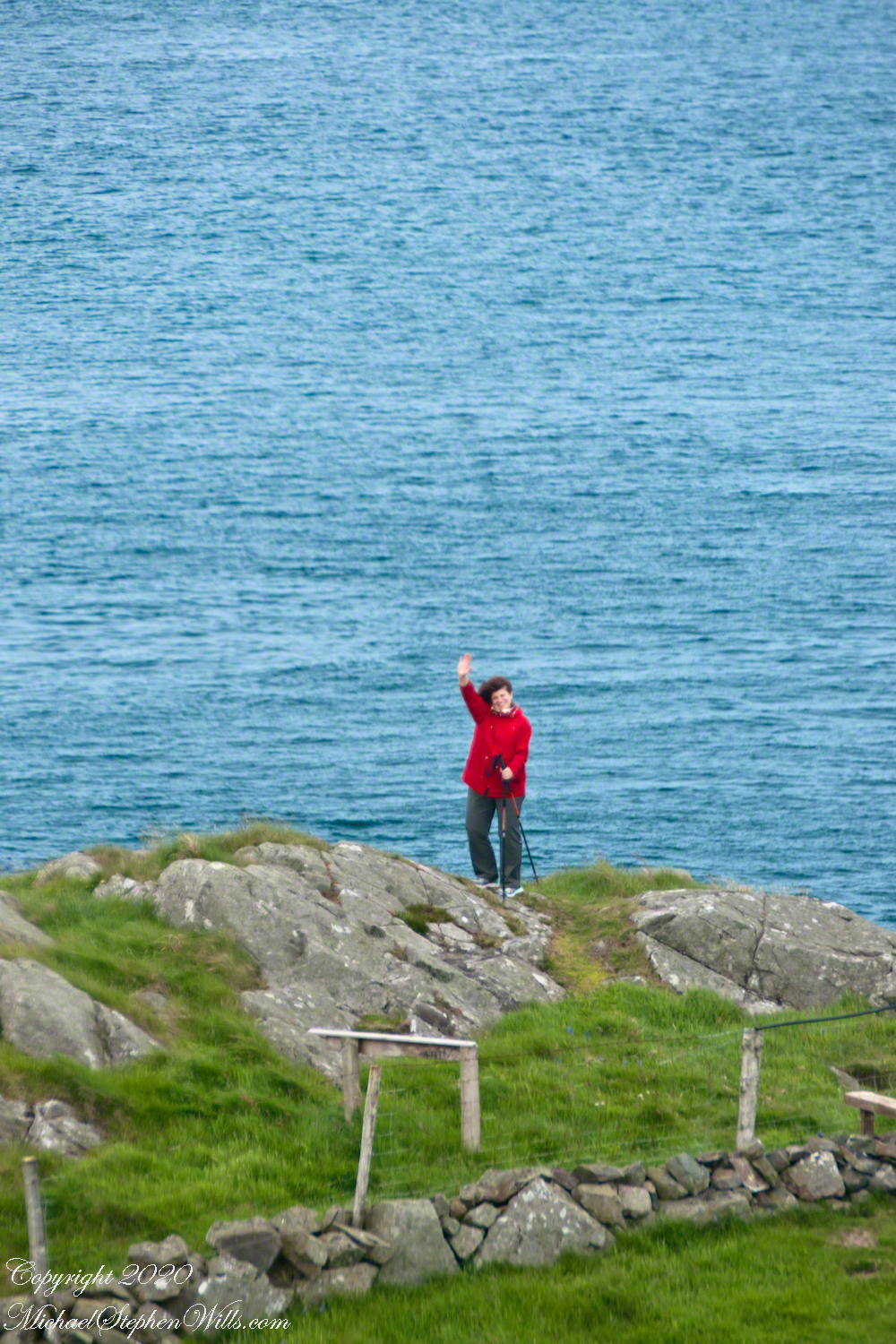
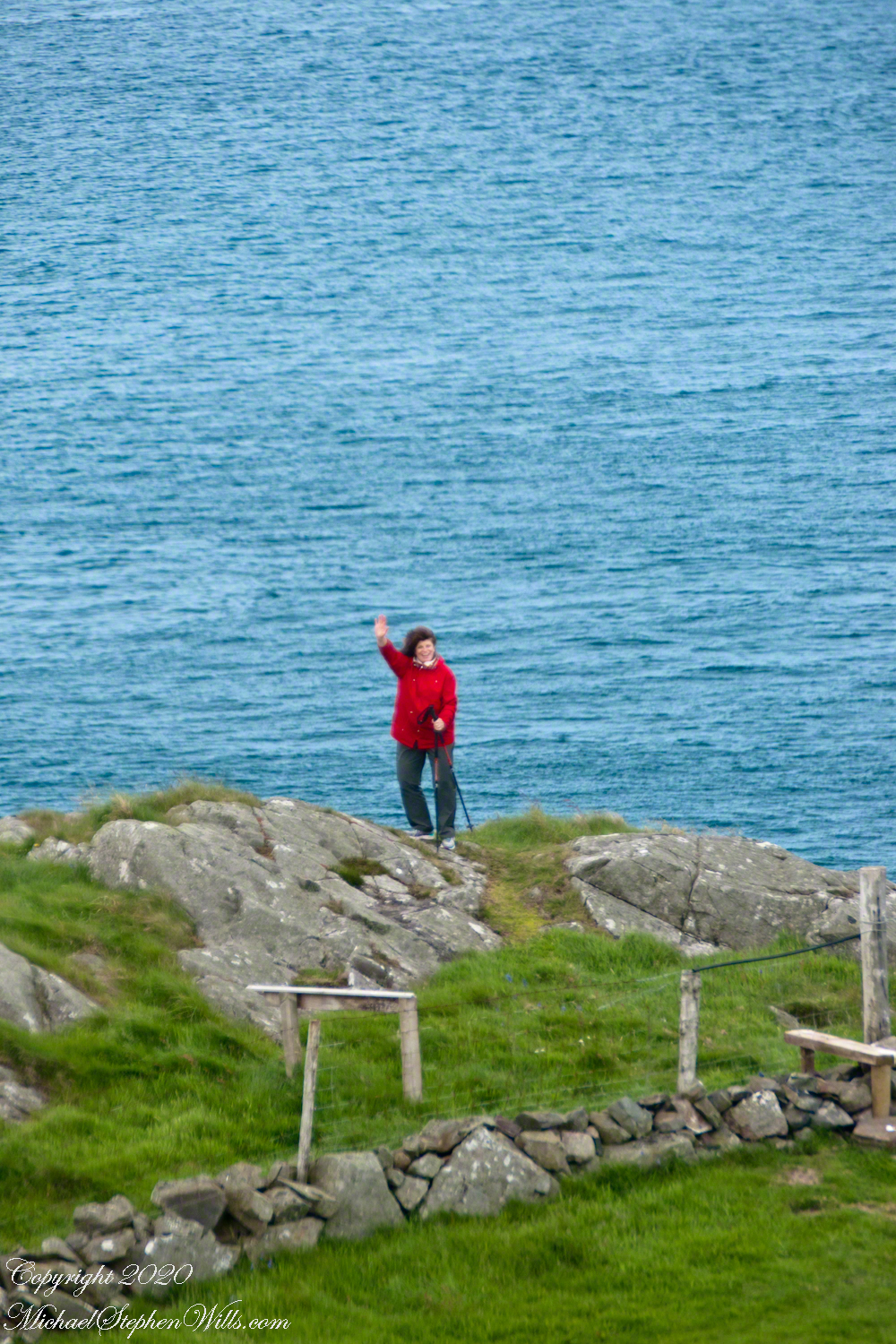
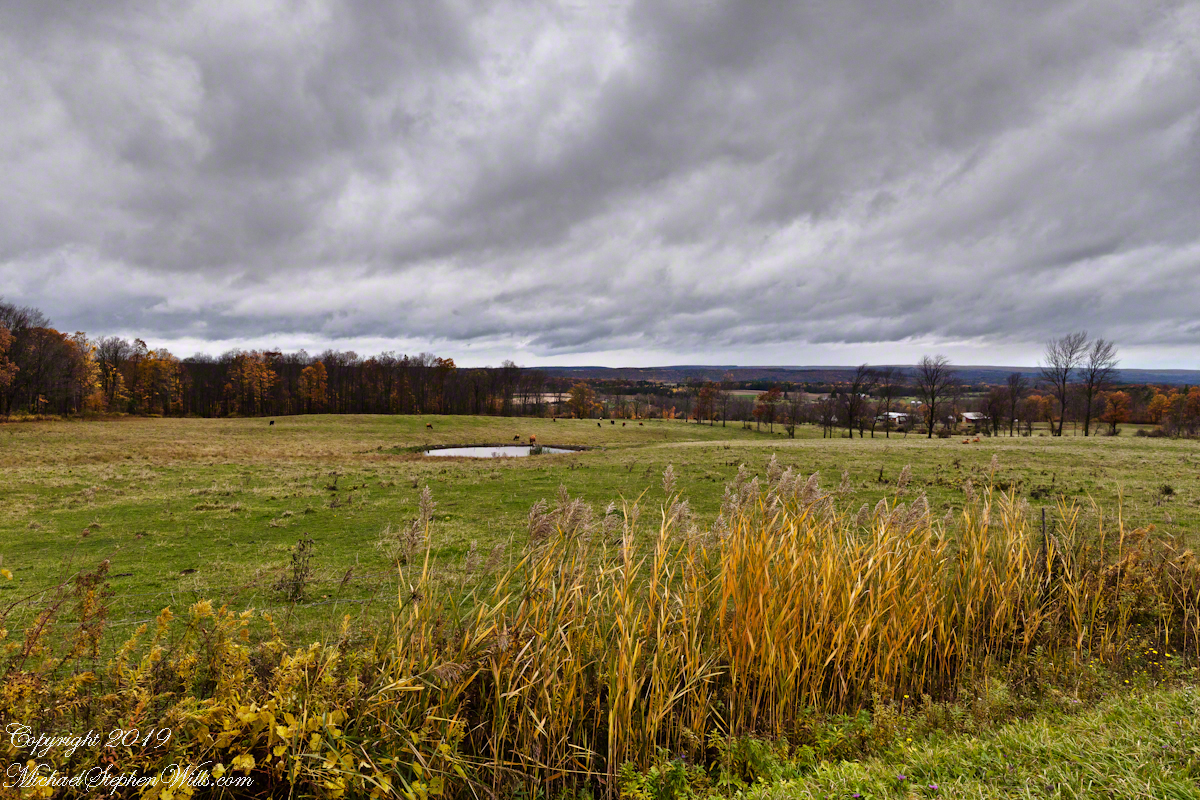
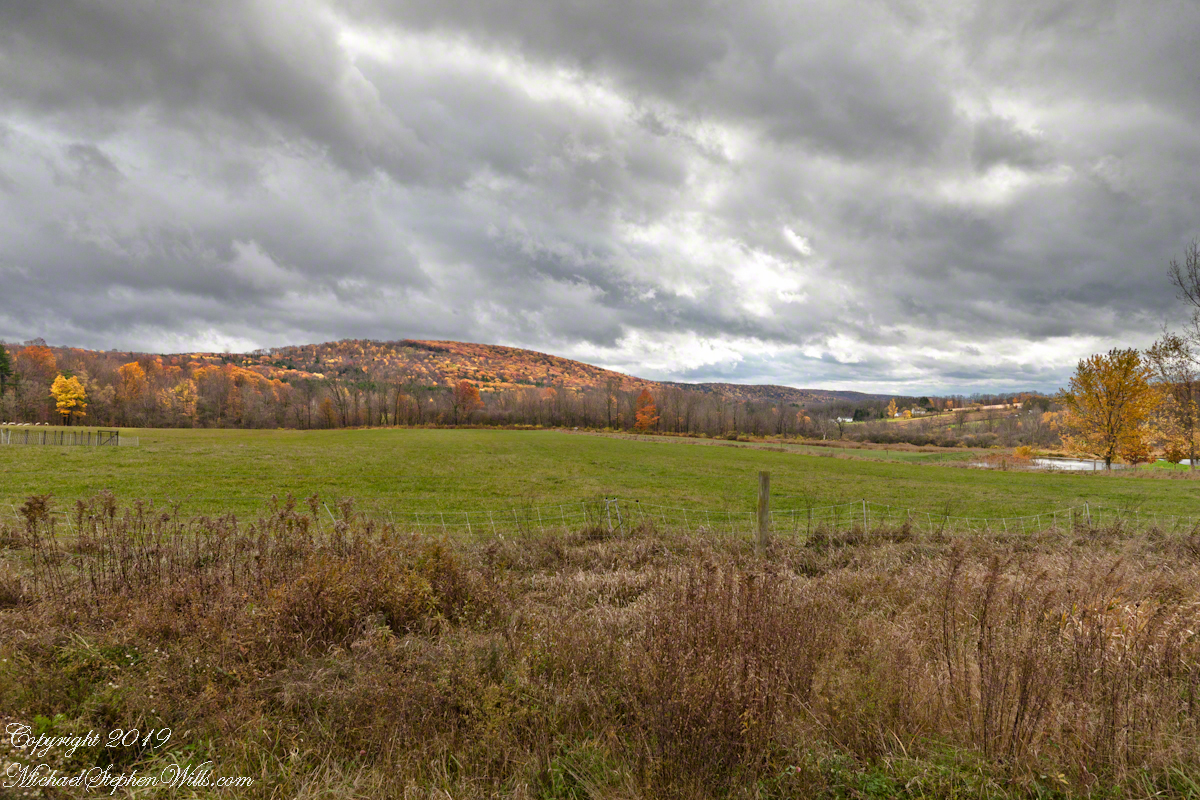
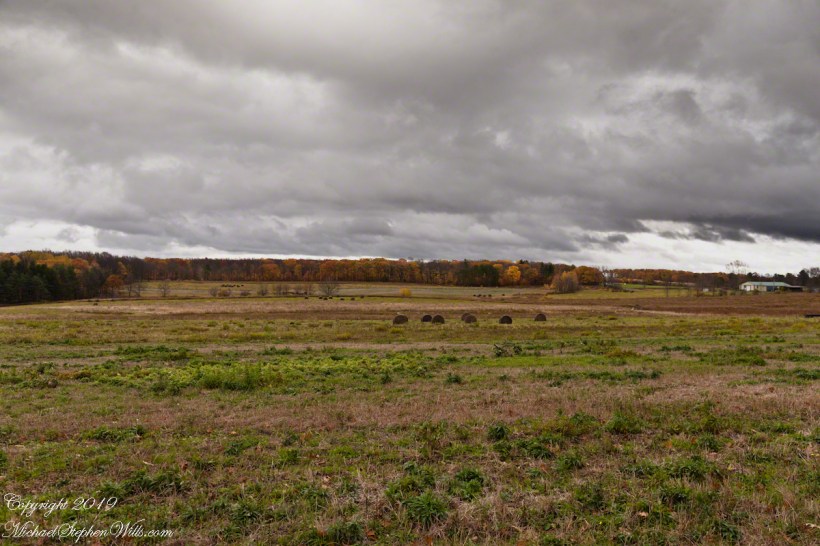
These are the second and third of a series of landscape photographs taken from this position. See the previous post for the first.
Click photograph for a larger view. To do this from WordPress Reader, you need to first click the title of this post to open a new page.
Slievenaglogh View, east northeastSlievenaglogh View, east northeast
I visited here early morning of the Monday Pam and I embarked on a trip around the island of Ireland.
Arrived the previous Saturday when, after some sites between Dublin airport and the Cooley Peninsula, we met my Mom’s first cousin who had invited us for a visit. We had a grand time meeting them.
The ruin in this view is on the slopes of the peak. Some of these ruins are former homes with the replacement nearby. This appears to be an abandoned farm.
Slievenaglogh is the name of a peak on the Cooley Peninsula of County Louth, Ireland near to the birthplace of my Mom, Proleek, a few townlands to the west.
Click photograph for a larger view. To do this from WordPress Reader, you need to first click the title of this post to open a new page.
Slievenaglogh View, northeast
On the northeast slope of Slievenaglogh peak (Irish: Sliabh na gCloch) on the road from Mullaghattin Townland to Riverstown.
Here we look northeast from the Slievenaglogh Townland, the valley between Slieve Foy and Slievenaglogh peaks.
The view includes Little River, Ballycoly Townland and Castletown River.
Adjacent is a sheep pasture with a farm ruin behind the yellow flowered gorse (whin bush, scientific name Ulex).
Slieve Foy is the far ridge lost in clouds. Early morning, late May 2014.
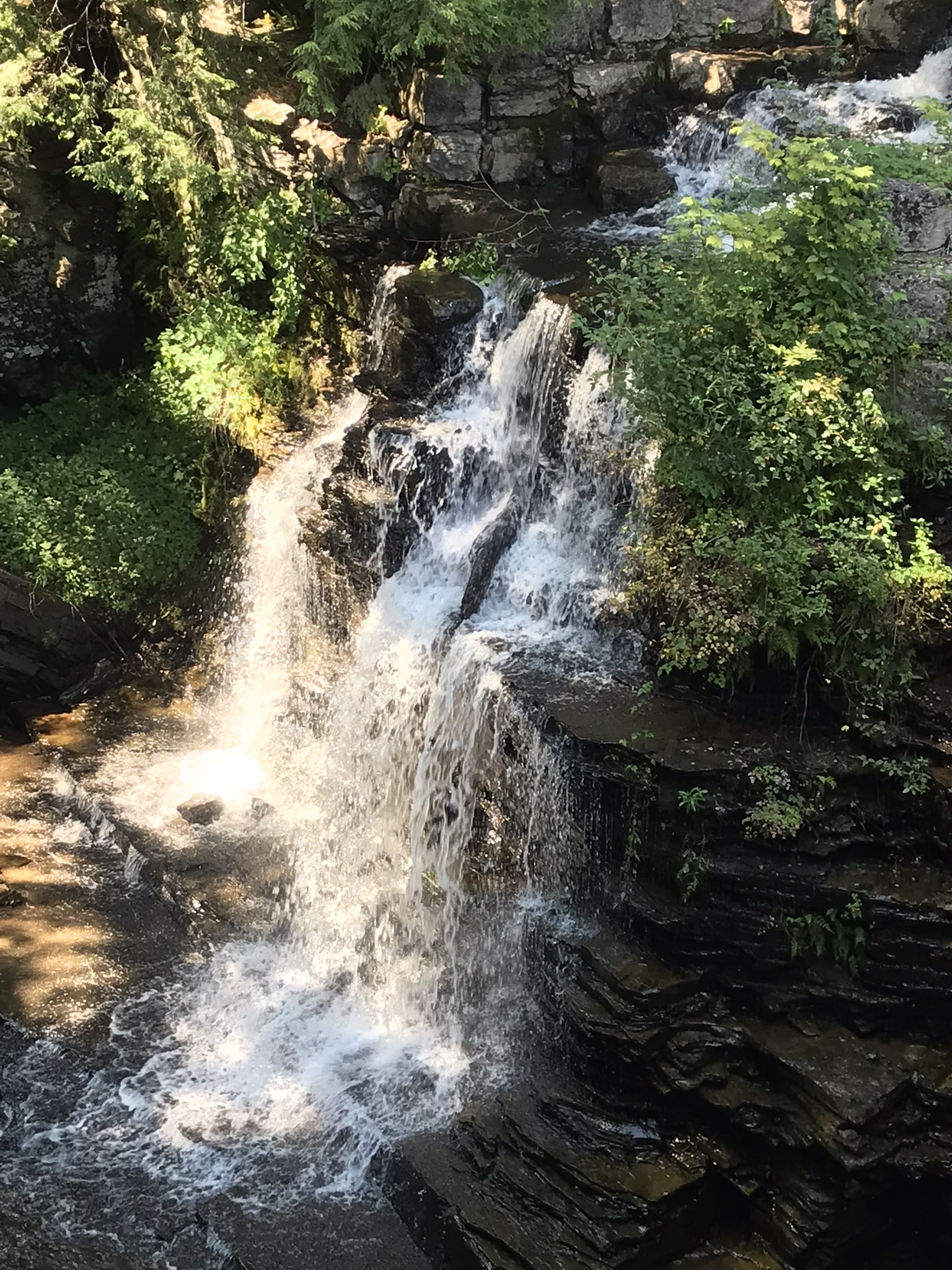
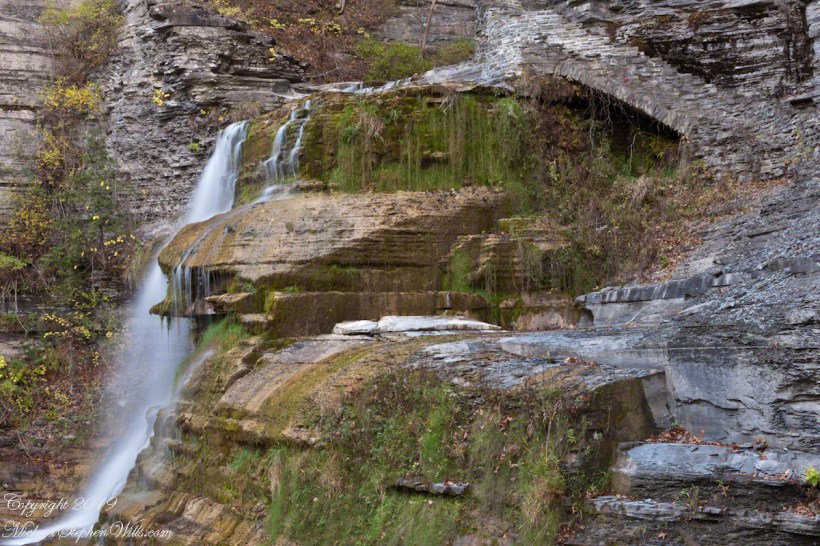
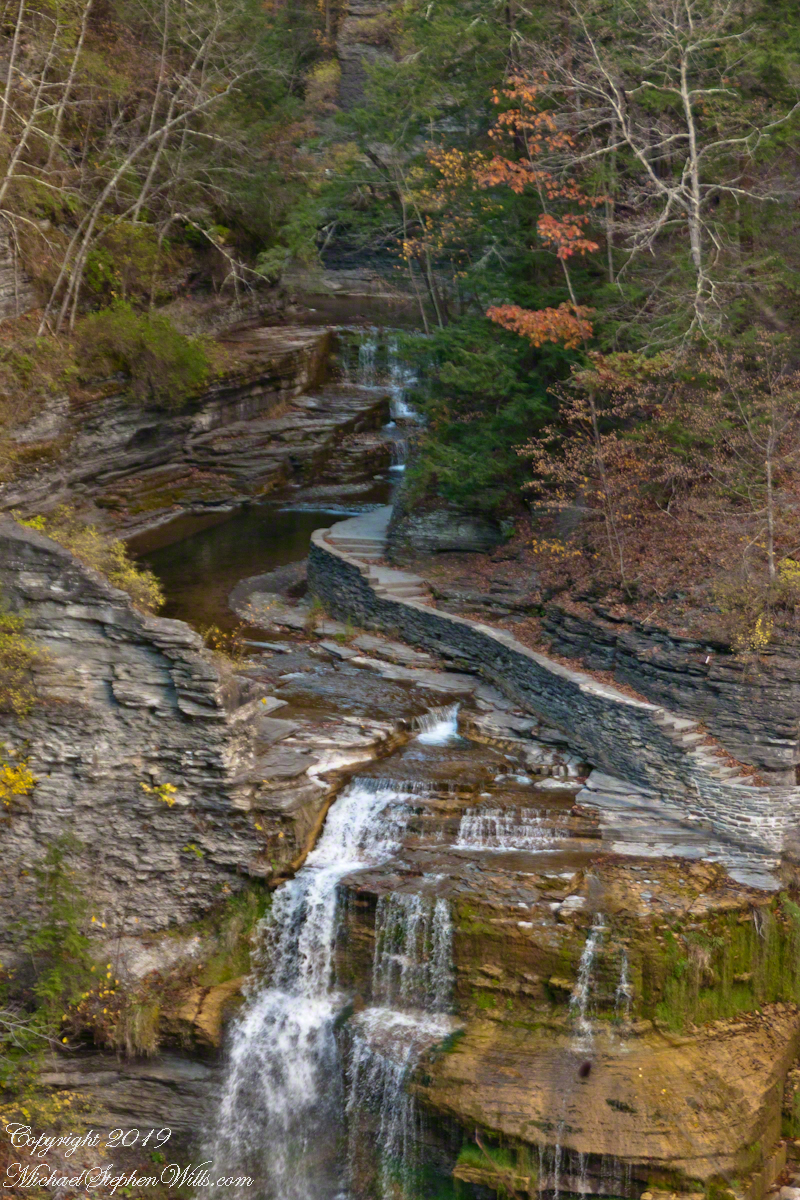
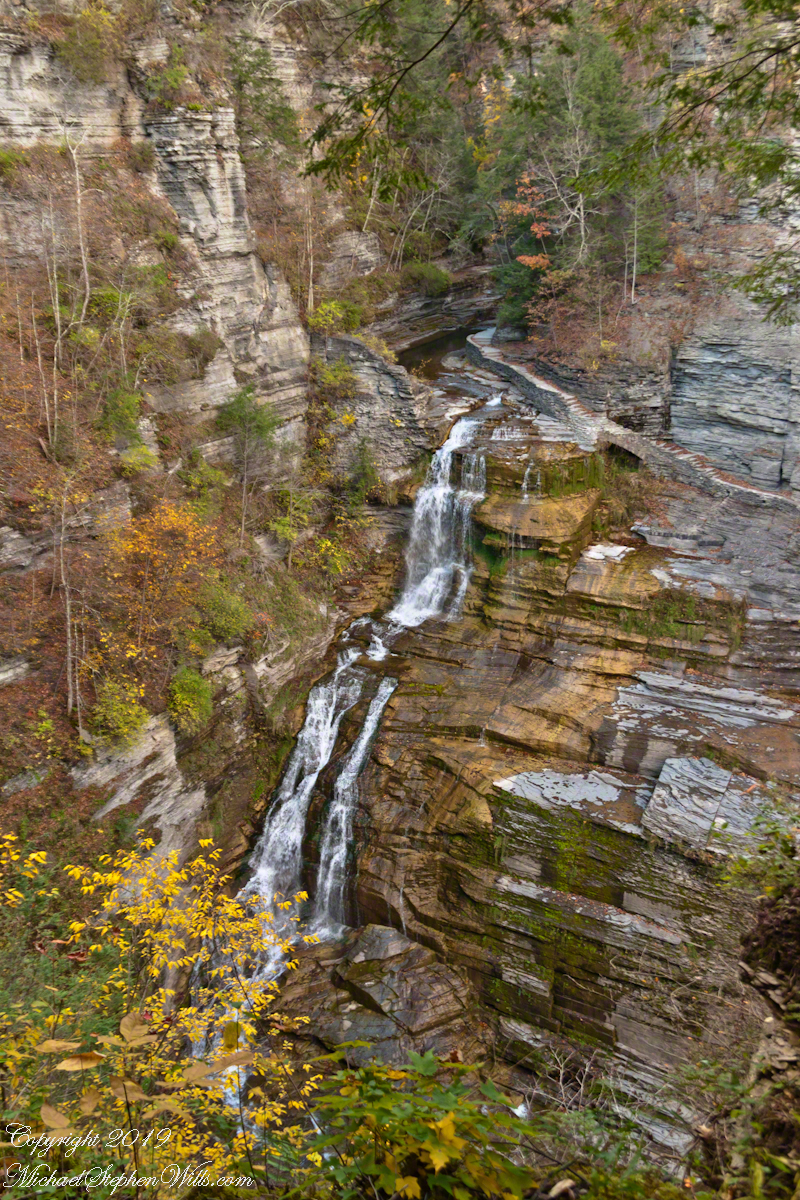
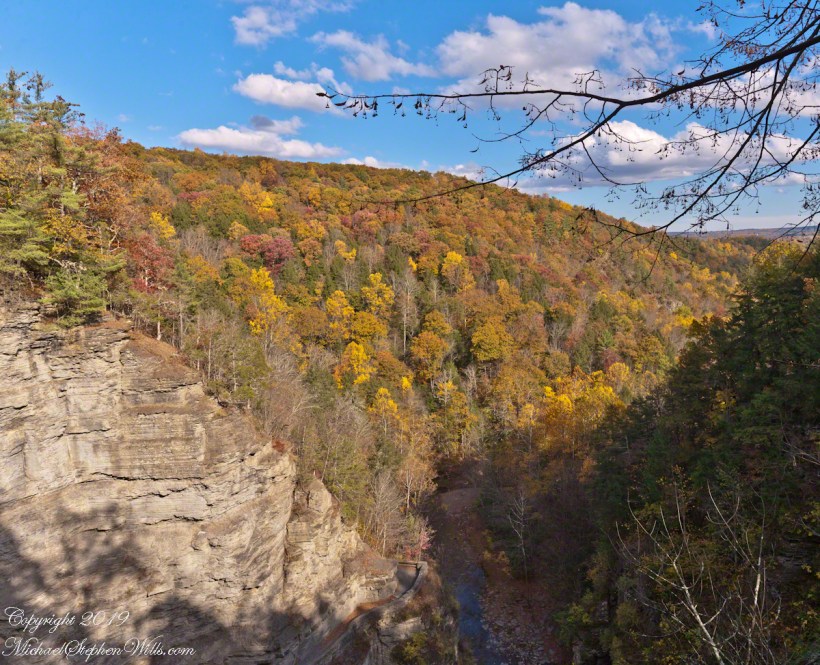
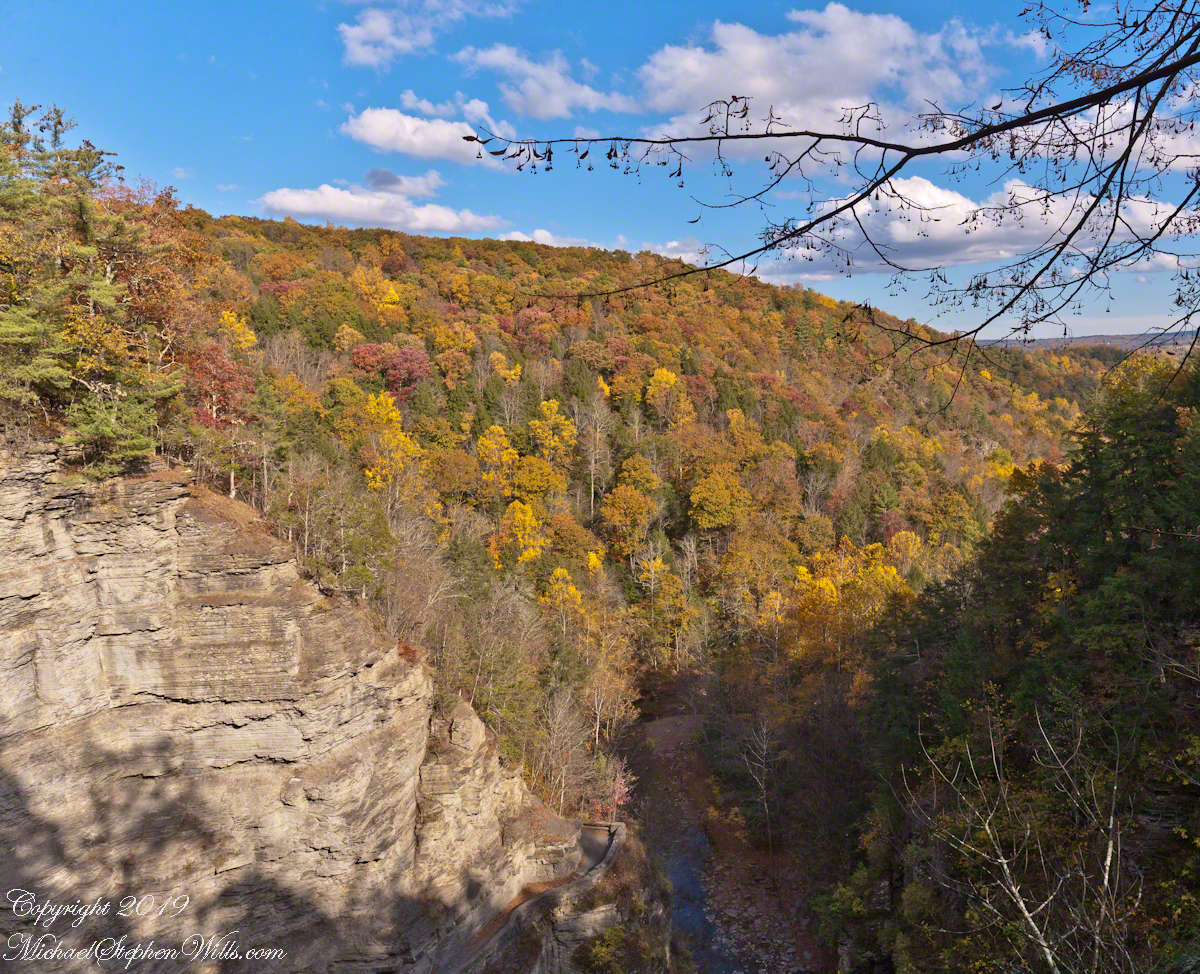
A full sweep of Lucifer Falls on an autumn evening, the sun hidden behind the gorge walls. Here the Gorge Trail emerges from the shelter of the gorge, emerging into a dizzying view.
Click photographs for a larger view
Lucifer Falls from Rim Trail Overlook
Click for a slideshow of this sequence of Lucifer Falls view from the overlook.
Lucifer Falls from Rim Trail OverlookLucifer Falls from Rim Trail Overlook
Copyright 2019 All Rights Reserved Michael Stephen Wills
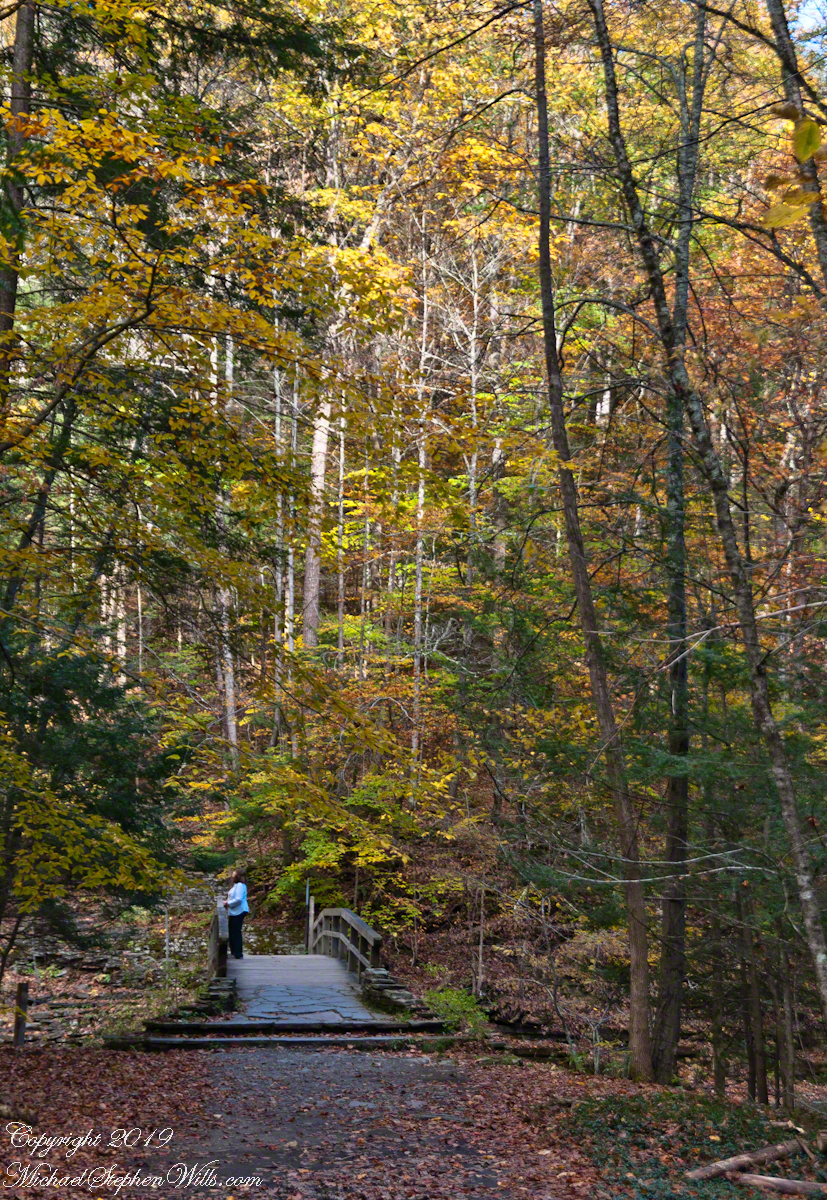
Standing on the trail alongside Lucifer Falls, crane your neck, up and up to the cliff top. Look closely to see the protective rock wall of the overlook.
Click photograph for a slideshow. To do this from WordPress Reader, you need to first click the title of this post to open the page on my site.
Lucifer Falls Overlook from the Gorge Trail
The Rim Trail includes this overlook of Lucifer Falls with, upstream, the Devil’s Kitchen waterfall, the path of the Gorge Trail in between.
Lucifer Falls from Rim Trail Overlook
The full sweep of Lucifer Falls on an autumn evening, the sun hidden behind the gorge walls. Here the Gorge Trail emerges from the shelter of the gorge, emerging into a dizzying view.
Lucifer Falls from Rim Trail Overlook
Brink of Lucifer Falls
Lucifer Falls Overlook from the Gorge Trail
Lucifer Falls from Rim Trail Overlook
Copyright 2022 All Rights Reserved Michael Stephen Wills

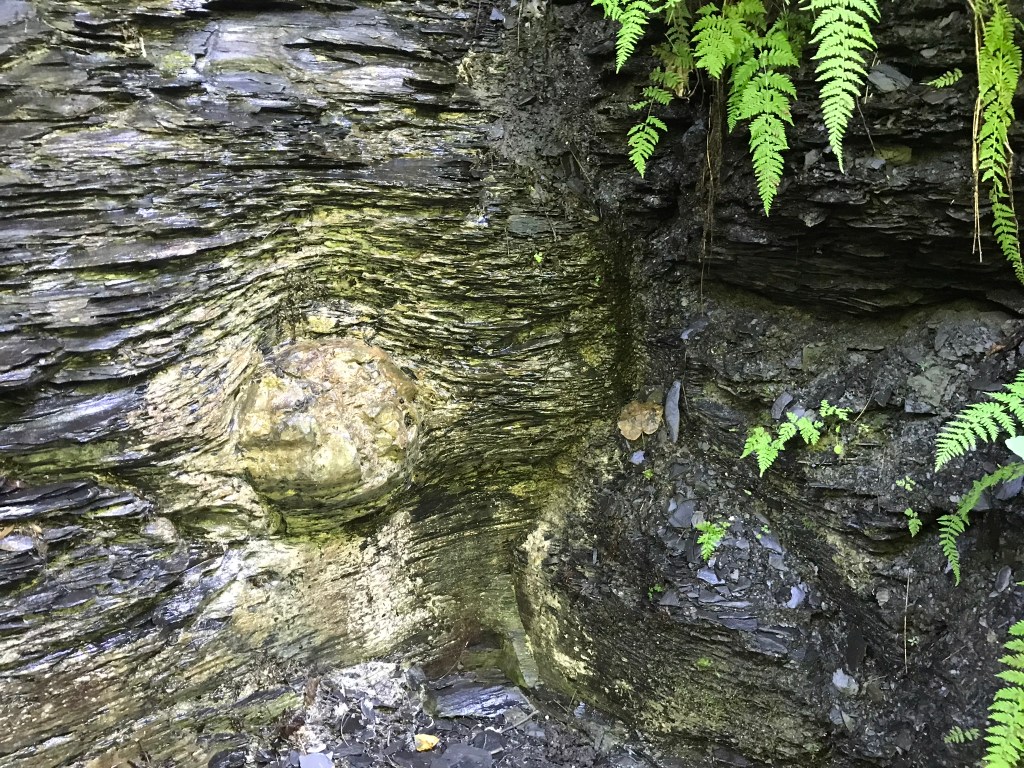
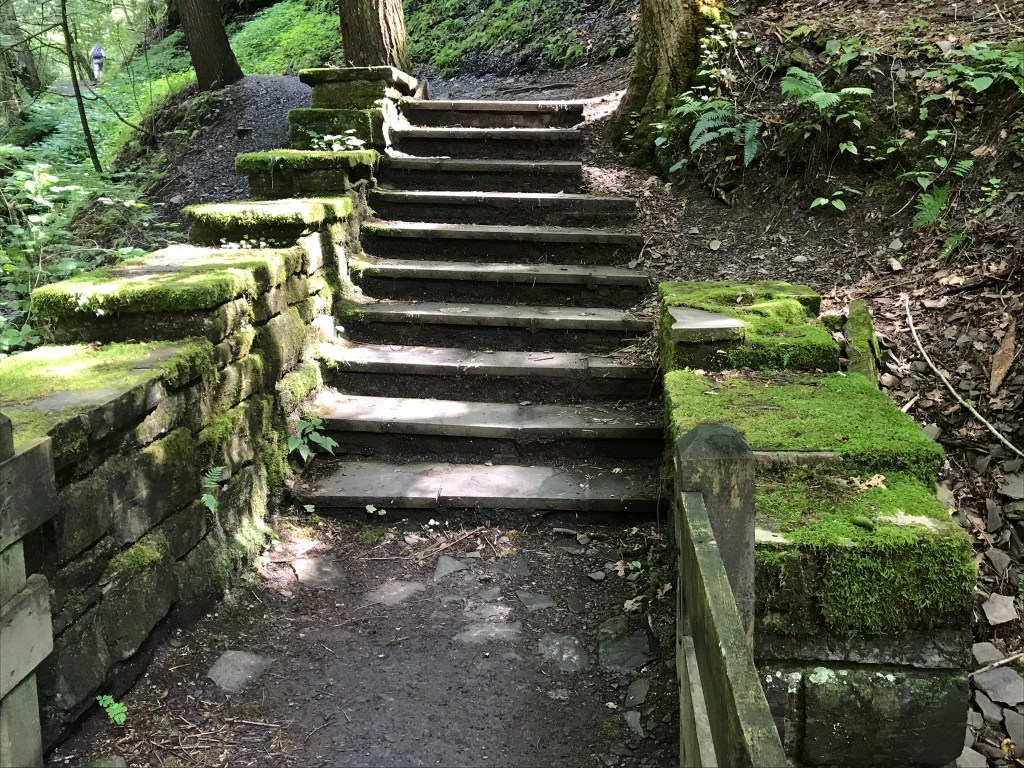
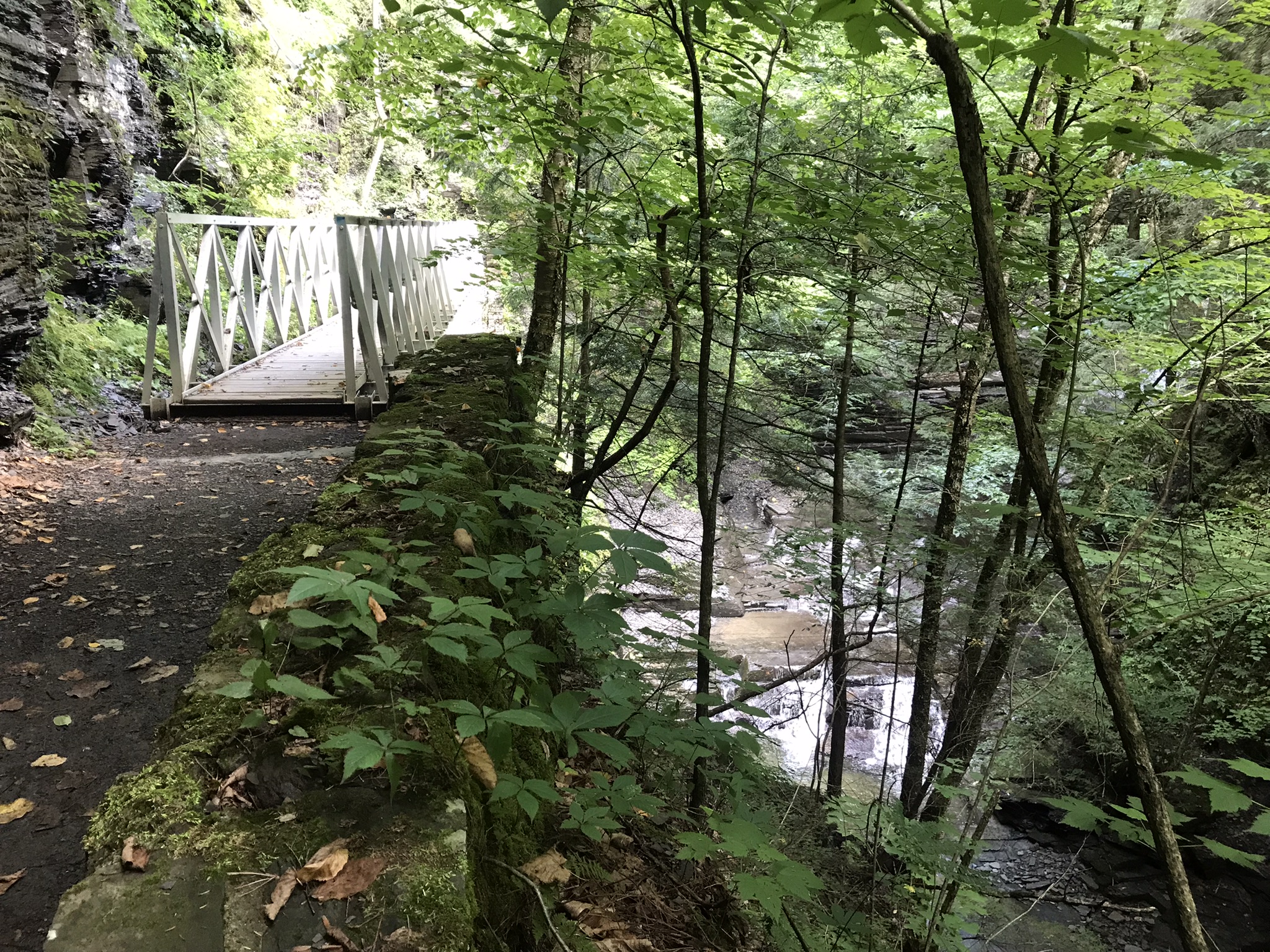
This trail, built into the slate/sandstone gorge wall, follows the descent of Lucifer Falls. Here we view the brink and the path alongside. Follow this trail to Devil’s Kitchen, up and around the corner.
Click photograph for a larger view
Brink of Lucifer Falls
Copyright 2022 All Rights Reserved Michael Stephen Wills
In my last series of “Monarch caterpillar transforming to chrysalis” time lapse photographs, the 30-minute time interval missed the moult. For this series, I set the Canon EOS 5D Mark IV to remote from a IPhone 7, tethering me to hanging around the house for an afternoon of waiting for the magic moment of “transformation” (more accurately called “the moult”), thinking through the nature of the moment.
A monarch caterpillar accomplishes seven body transformations shielded from view. Six within its skin: the first five retaining a caterpillar body configuration, the sixth transforming to chrysalis. For all six, an enveloping skin conceals the change. The same holds true for the seventh transformation. The chrysalis remains opaque green with bright gold spots until turning transparent after the transfiguration to butterfly is complete.
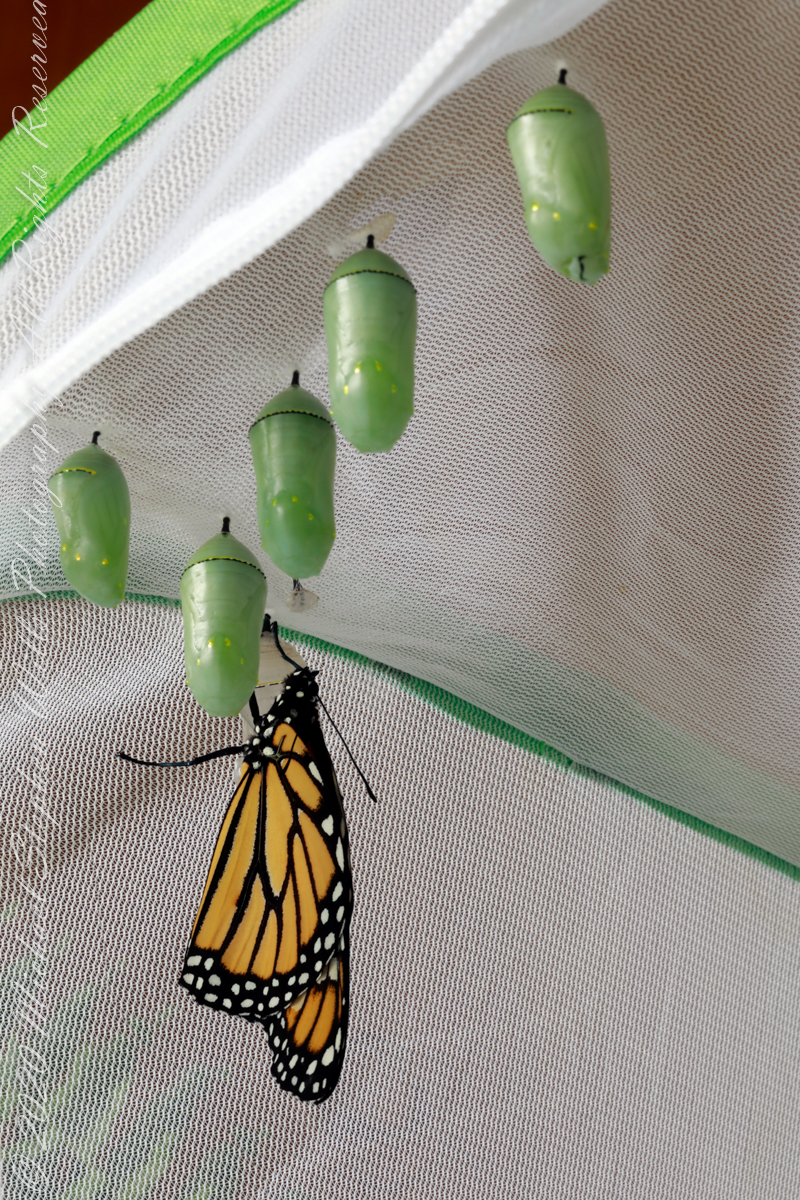
The sixth transformation happens when the fifth instar caterpillar, fully sated with milkweed, climbs to a perch, spins silk around a set of prolegs, affixing them from a horizontal surface from which to hang. For this set I captured the moult of two monarchs hanging side by side inside a mesh cage with an east facing window for light. Even though the day was sunny, with the f-stop set to the lens maximum (32) for the deepest field of view, ISO at 32,000 the energetic skin shedding movements of the chrysalis cause blurring.
For 10-12 hours of profound bodily configuration changes the hanging caterpillar hangs without movement. In the last image of this first set, the next caterpillar is blurred by initial moult movement.
My attempt to capture a video of the moult was frustrated by inadequate lighting, the result was too dark to use. I must solve this technical challenge as the motions of the chrysalis as difficult to believe without visual proof. That said, here is the second moult with the first completed moult in background.
An interesting fact is the caterpillar uses silk to attach the skin to a substrate for the first five moults to hold the skin back while it crawls out of the discarded skin. The first meal of the hatched caterpillar (first instar) is the egg, the shed skin is the first meal for instars 2 – 4. The shed skin of instar 5 drops from the chrysalis. This is why you should never remove a Monarch caterpillar from the leaf, as in doing so may hinder a moult in progress.
Copyright 2022 Michael Stephen Wills All Rights Reserved
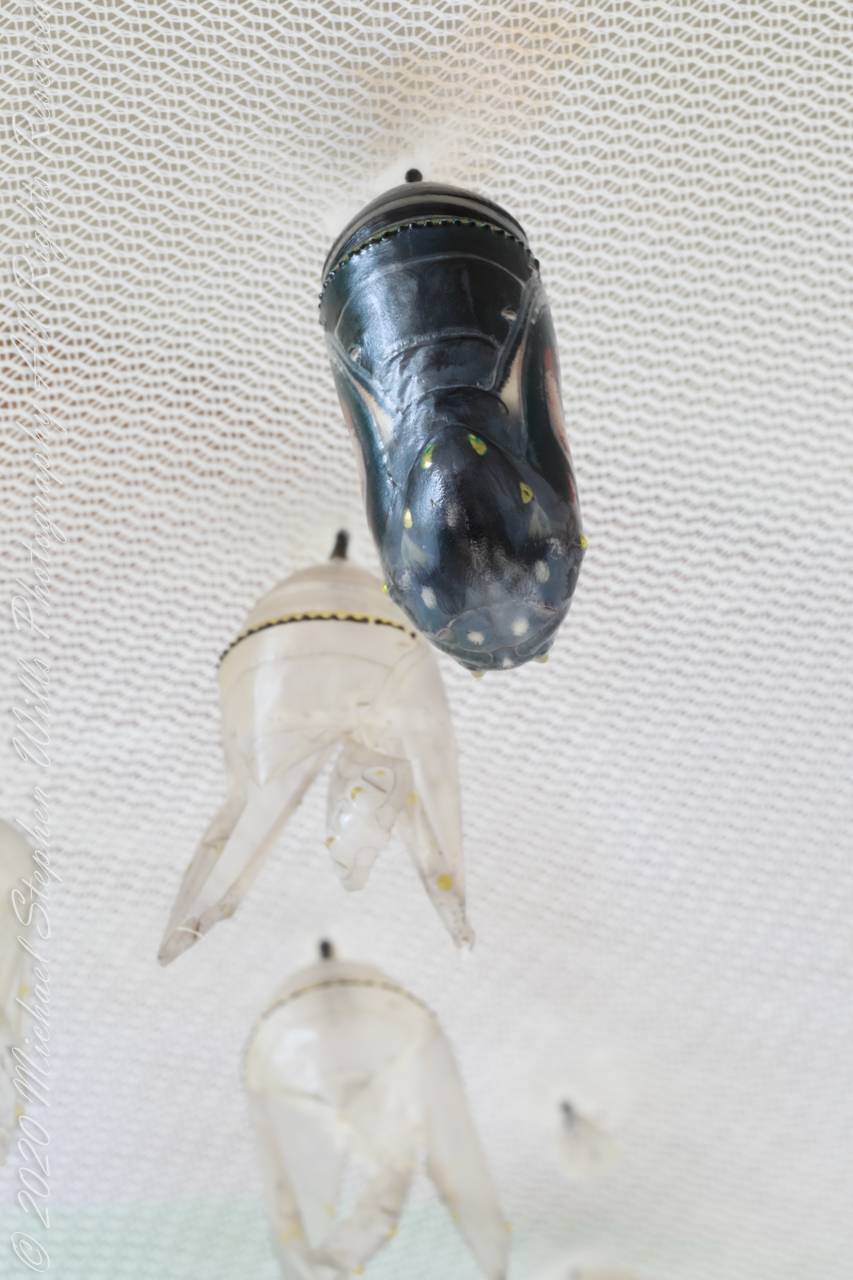
Here is a photographic Series of a Monarch caterpillar chrysalis transformation, a step in the life cycle of the Monarch butterfly. The caterpillar attaches to a silk pad from which it hangs. Underneath the skin, the caterpillar is transforming to the chrysalis. In these photographs the silk pad and chrysalis attachment from a previous transformation are in the foreground.
About 34 minutes transpired between the previous photograph of the caterpillar in “J” formation, attached and hanging upside down to the chrysalis. In this time the outer skin was shed, revealing the chrysalis.
Copyright 2022 Michael Stephen Wills All Rights Reserved
On a sunny autumn morning we set out, my soon to be three grandson Sam and I, to the Lime Hollow Nature Center near Cortland for an adventure. For the first time I brought a newly purchased iPhone 7 instead of the usual slr camera. The phone can be carried in a pocket and is simpler to us, to allow me to give full attention to Sam.
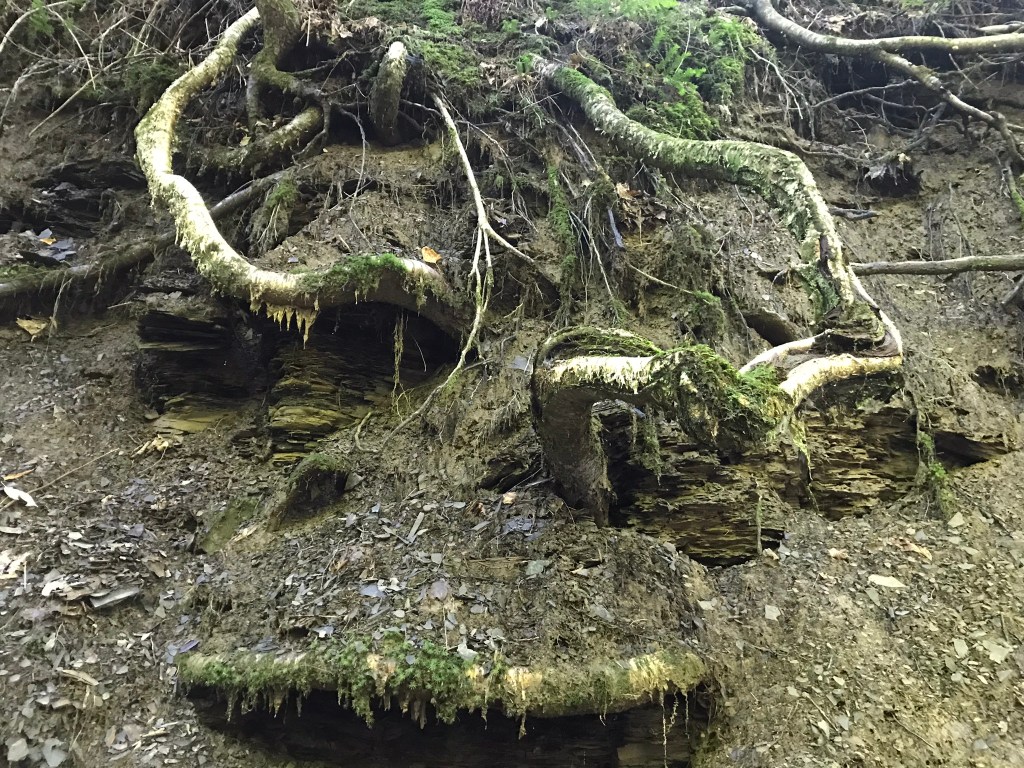
At the start is a large, today sunlit, field with an “art trail.” There are various anthropomorphic transformations on the trees and a very large sculpture of a blue face. Here is a tree from another place near here, to give you an idea.
I do not point out the tree faces to Sam. His Mom likes to say he enjoys being frightened and, when the blue face came into view, he turned back and said, “home.” Sam was mildly anxious, so I carried him and tried to turn him up the trail away from the face. He turned to keep an eye on it while I assured him it could not move. This and a climb up a 230 foot hill were the only times he didn’t walk the half mile to a open grassy knoll with a bench.
There we sat for 30 minutes, still and watching, Sam and I talked about our sightings: 1. The sunlit sky of clouds, from a milky blue towards the north to, overhead, a bright robins egg blue. 2. A circling hawk, shadow crossing over us. 3. One blue jay in a maple turning red, loudly calling over and over. 4. A little while after a second jay, landing in a tree turned yellow, drawn in and giving answer. 5. A monarch butterfly’s steady progress south. Such a strong gliding path. 6. A yellow butterfly who did not leave us, fluttering round and round. 7. Four honking Canadian geese flying north east, turned to check out a nearby pond, the returned to the original heading. 8. The sound of wind through the trees, listening to the sound made by each tree. 9. The late season golden rod, now dried gray. 10. A distant chittering red squirrel. 11. Distant peeper frogs in the swamps at the foot of the hill.
Sam did not want to leave the bench, eventually we headed on to the pond the geese checked out.
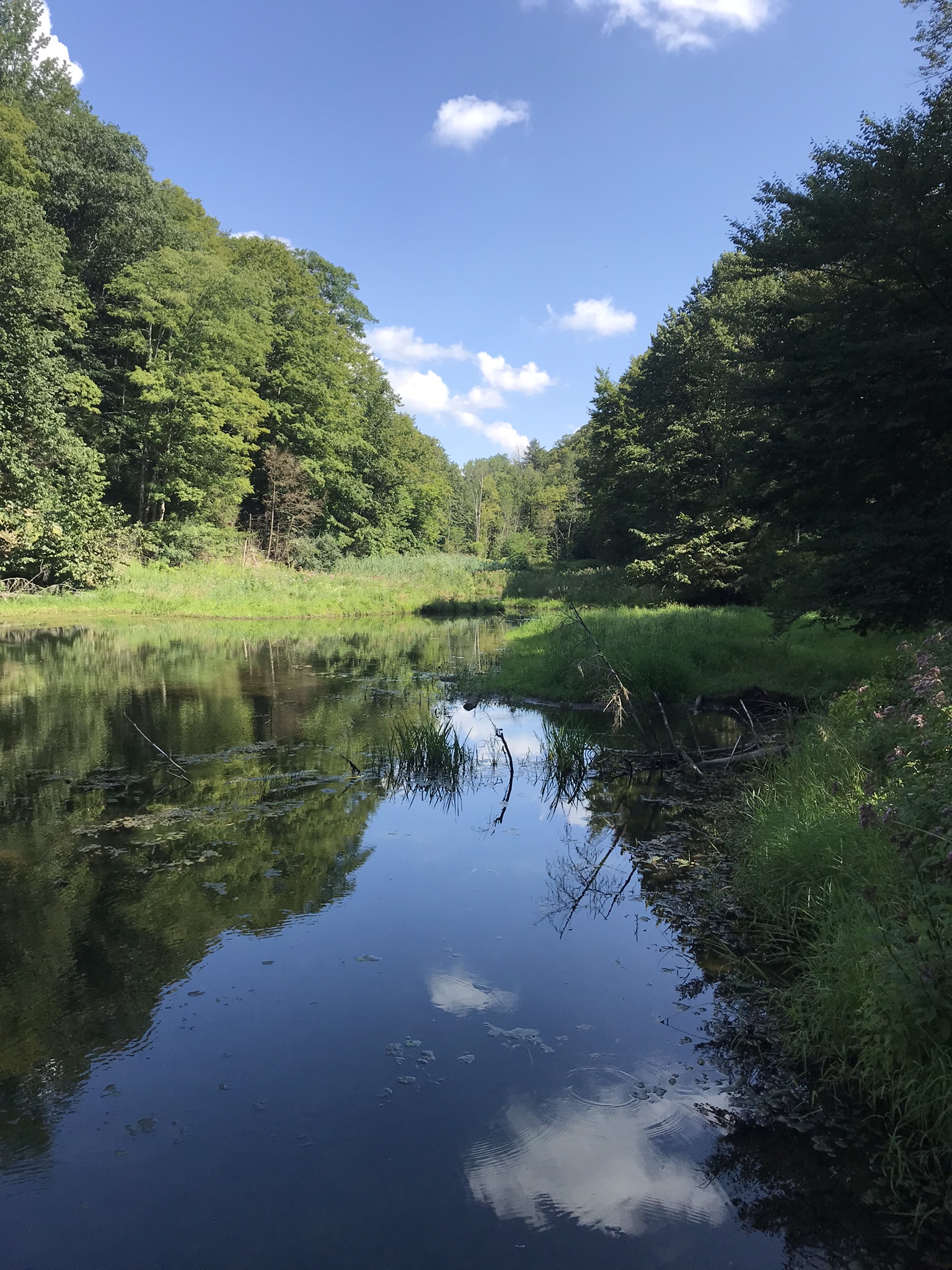
I used the “panoramic” feature of the iPhone 7 for this shot. On the hill we were sheltered by trees and bushes from the steady northeast wind. Here, on a bench by the pond, that direction was open to the wind. The sun kept us warm. It was clear why the geese did not land, the water surface was deserted, filled only by rippling wind driven waves.
On our walk back we sat on a bench on the edge of the art trail field, the blue face out of sight. A woman, the only other person encountered, emerged from one of the trails cut from the brush, camera in hand. She was collecting images for a Cortland Historical Society publication and asked to take our photograph. “OK,”, I said and gave the story of living here for 25 years in the house on Fall Creek where my son’s family lives now. She replied, “My daughter is in San Francisco. We don’t know who will have our house when we are gone.”
Misjudged by over an hour, I reached into the cage to allow the Monarch butterfly to crawl onto my hand for the first flight. Instead, it crawled up my arm and clung to my cotton shirt sleeve.
Click photograph for a larger view and use Ctrl-x to zoom in closer.
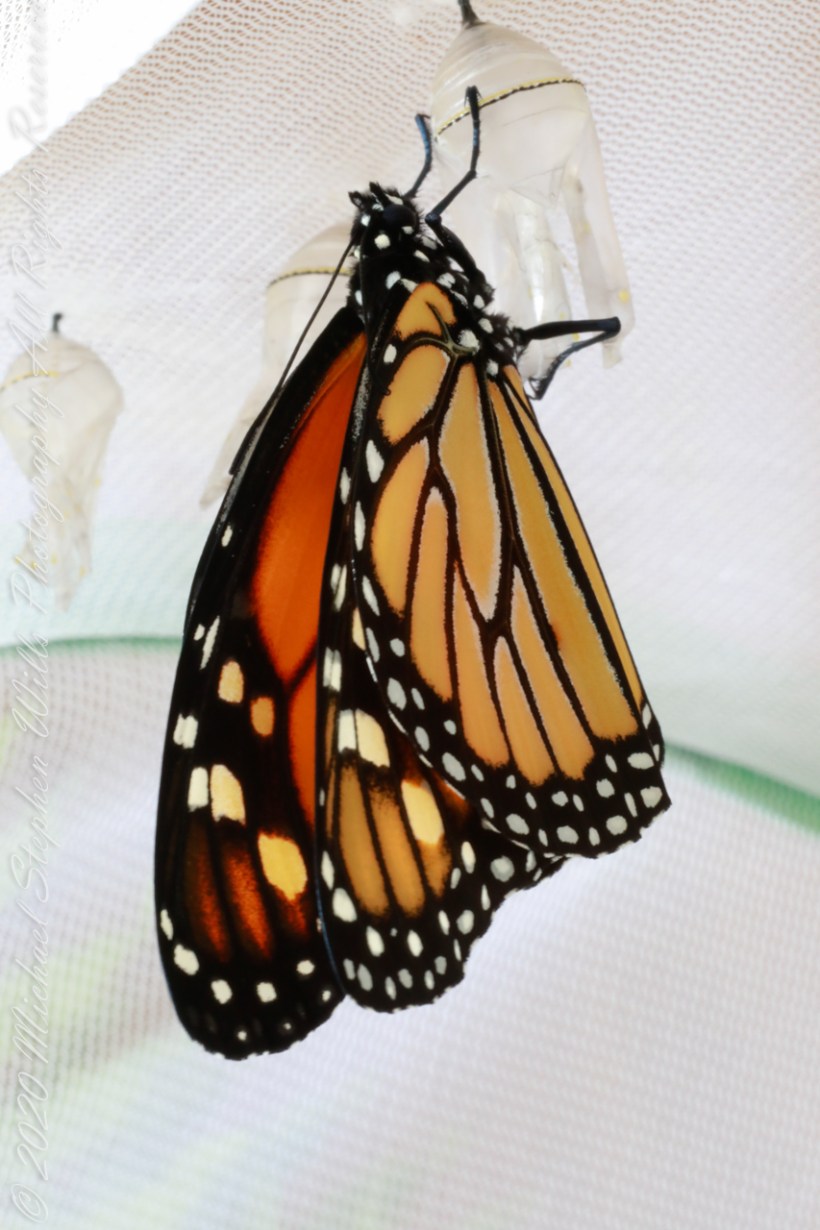
Clinging to my sleeve, this newly emerged Monarch wings dried. It is a process of excreting the fluids pumped into wings, crumpled from folding within the chrysalis, to expand them. The clear drips of water on my arm are this fluid.
Click photograph for a larger view and use Ctrl-x to zoom in closer.
Here is a video from this year, a Monarch emerging from the chrysalis, then expanding crumpled wings. Notice, this butterfly has a problem: once emerged the butterfly swings back and forth continually as it clings to the chrysalis. While interesting to us, the movement is caused from a missing front leg. Monarch butterflies have four legs, this butterfly is missing the right front leg, the imbalance causes the swinging movement. Freshly emerged, a large, distended with fluid abdomen is prominent between small, crumpled wings. With time, the abdomen pumps fluid, expanding the wings. Over several hours the fluid runs from the wings and is expelled from the abdomen, as seen in the above photograph.