Unveiling the Ancient Beauty of Interrupted Ferns

In the hush of Sapsucker Woods, Interrupted Ferns unfurl their ancient green with quiet grace—guardians of time, rooted in myth, memory, and moss.


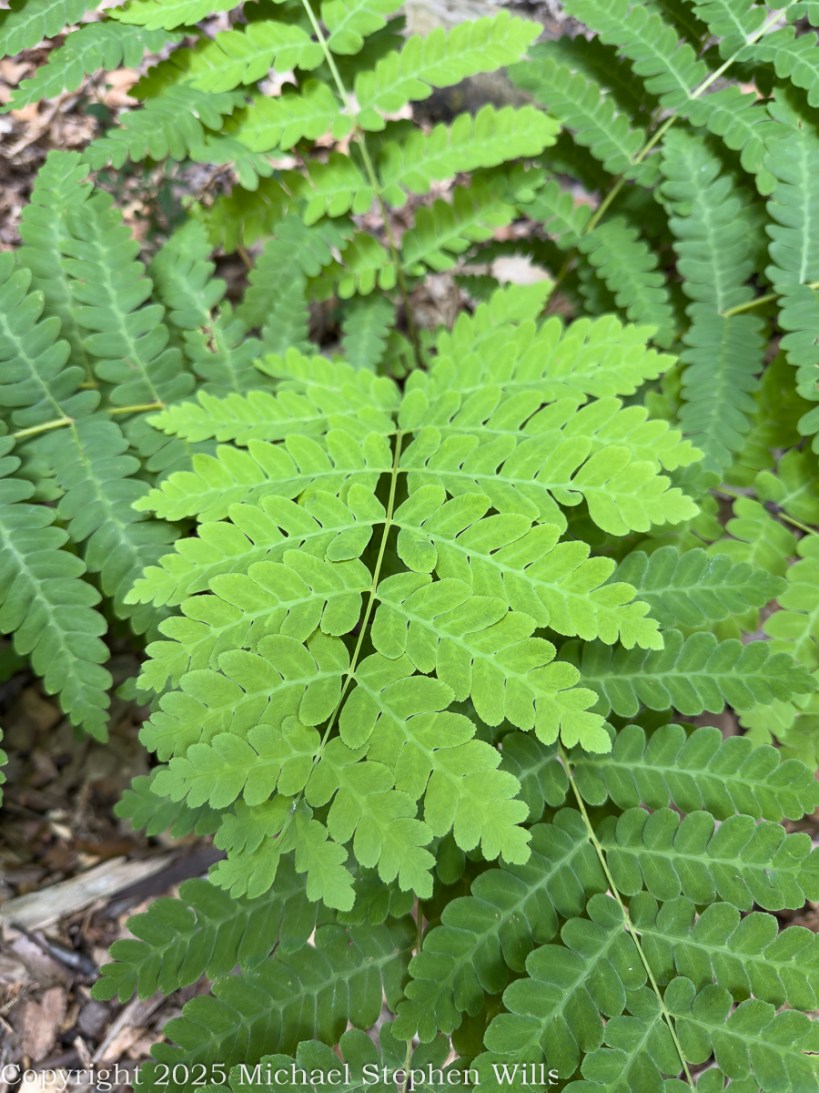
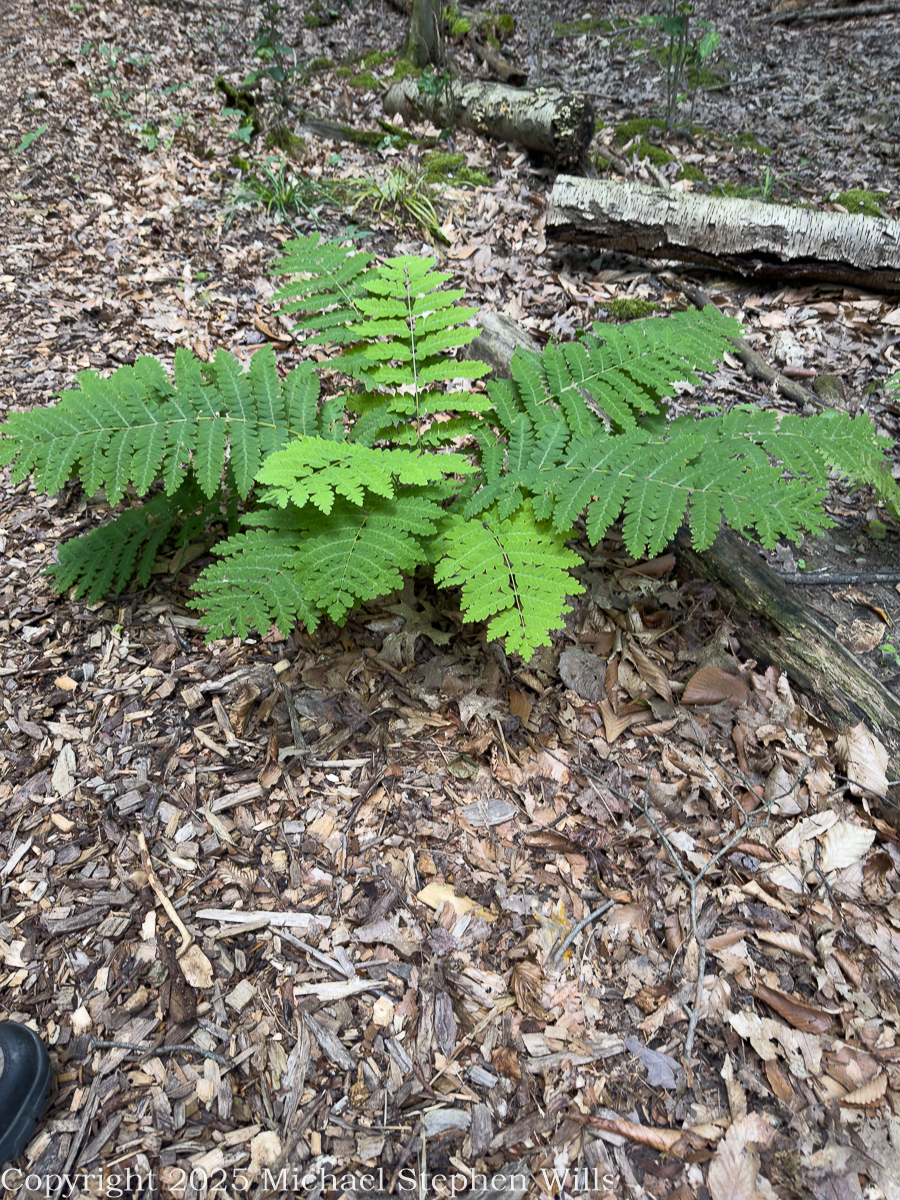
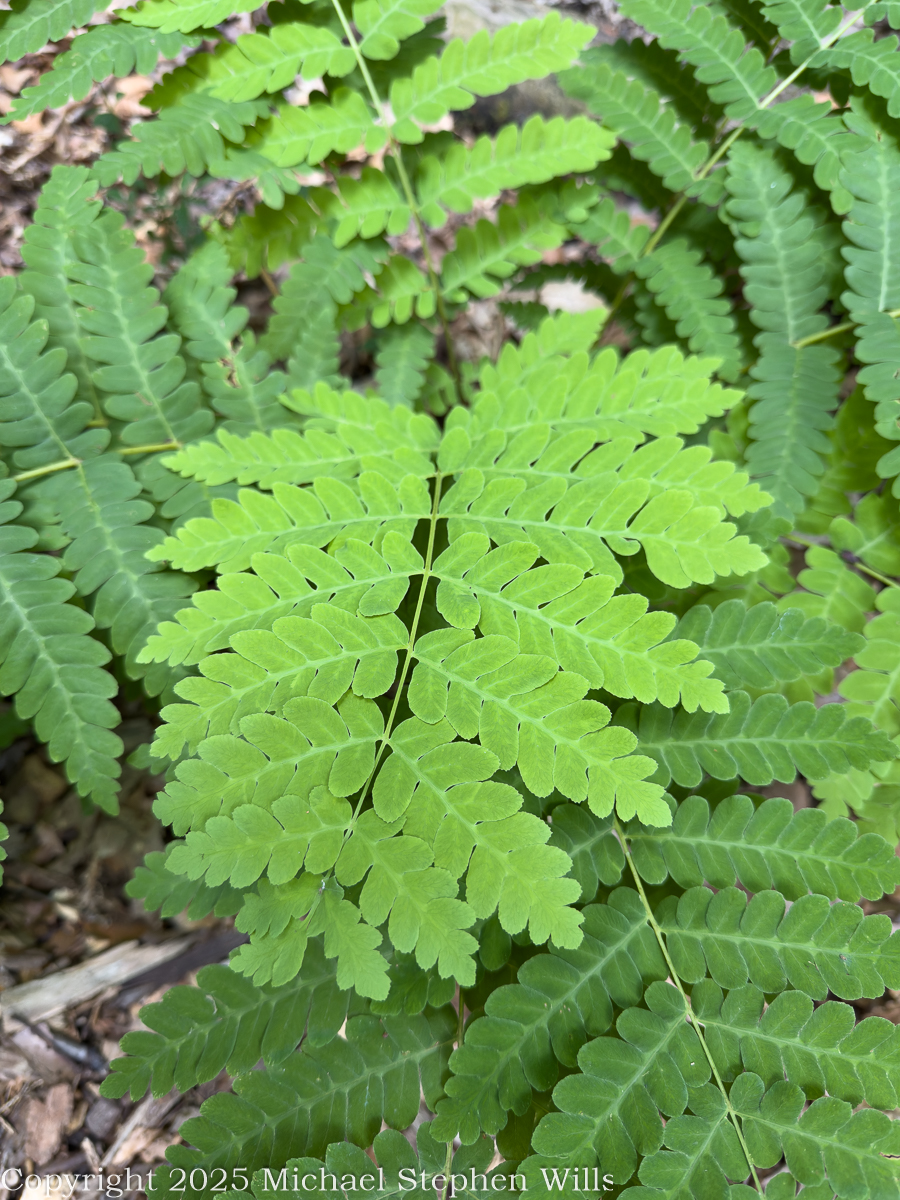
In a shaded hollow of Sapsucker Woods, where the hush of ancient time lingers like mist among the trees, the Interrupted Fern rises from the soft, damp floor with a quiet grace. Its fronds, broad and arching, seem less grown than unfurled—as if unrolling a memory held for millions of years.

The plant’s name, Osmunda claytoniana, carries echoes of two worlds. “Osmunda,” perhaps once spoken in the sacred groves of northern Europe, is thought to honor a forgotten god—Osmunder, one of Thor’s names, a guardian of strength and storm. The species name pays tribute to John Clayton, an early colonial botanist who walked Virginia’s forests centuries ago and recognized in this fern a quiet marvel worth remembering.

And so this plant, whose lineage reaches back more than 200 million years, is rooted not just in soil and stone, but in language and lore.

The fern’s common name—Interrupted—describes the curious habit of its fertile fronds, which rise briefly in midsummer, dark and beadlike, then wither and vanish, leaving a ghostly gap midway up the blade. It is as though the plant had paused mid-sentence, letting silence speak where others would persist. In this interruption, the forest itself seems to take a breath.

The roots of Osmunda claytoniana twist into fibrous mats beneath the soil. These rhizomes, dense and springy, were once harvested as osmunda fiber, prized by horticulturists for cradling delicate orchids—a gentle reminder of how often nature’s strength serves human fragility. And though the Interrupted Fern is not celebrated in pharmacopeias, its kin were used by Indigenous peoples as poultices for wounds, or brewed into mild tonics to ease internal aches—suggesting a long, quiet partnership with humankind.

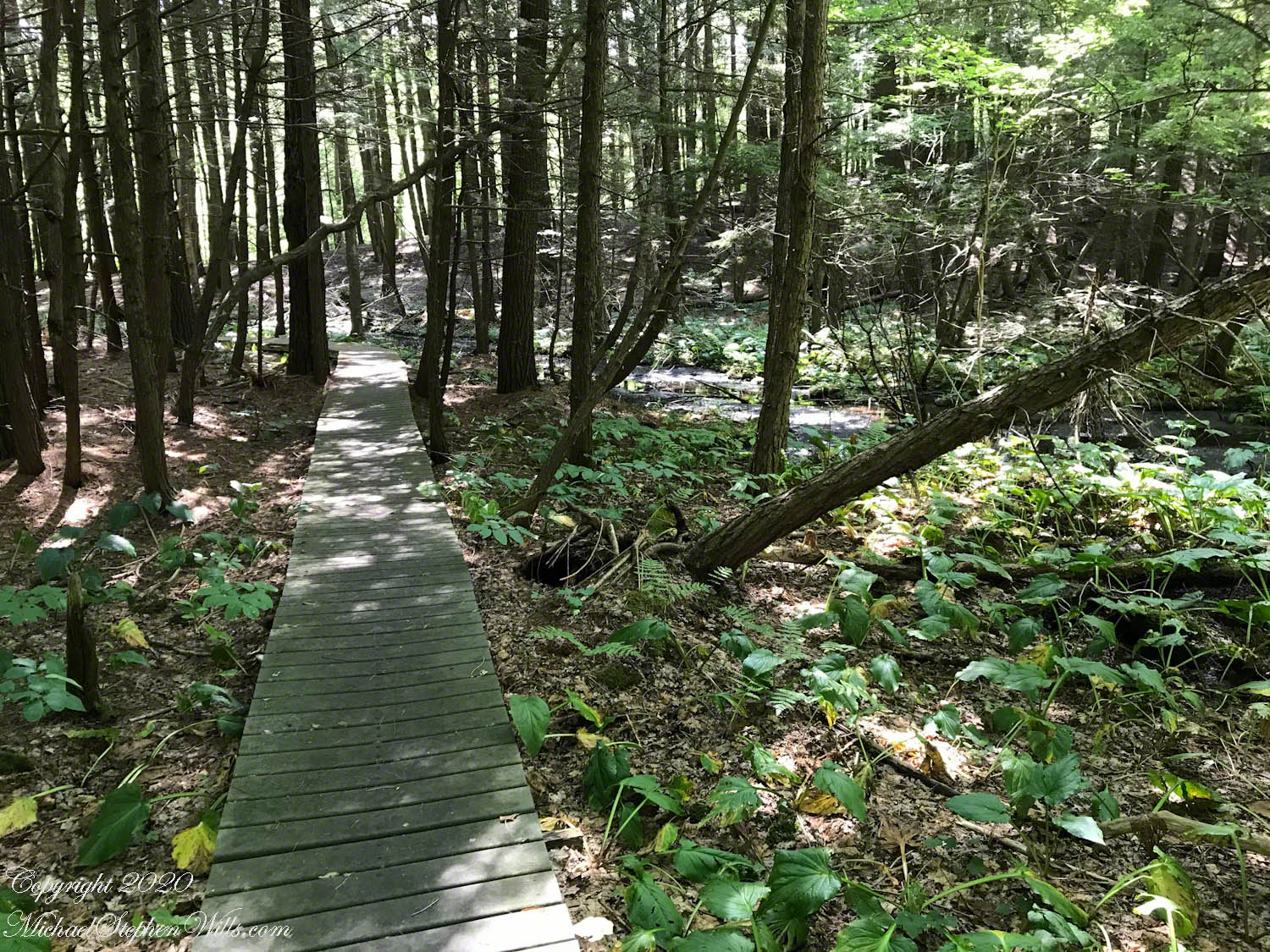
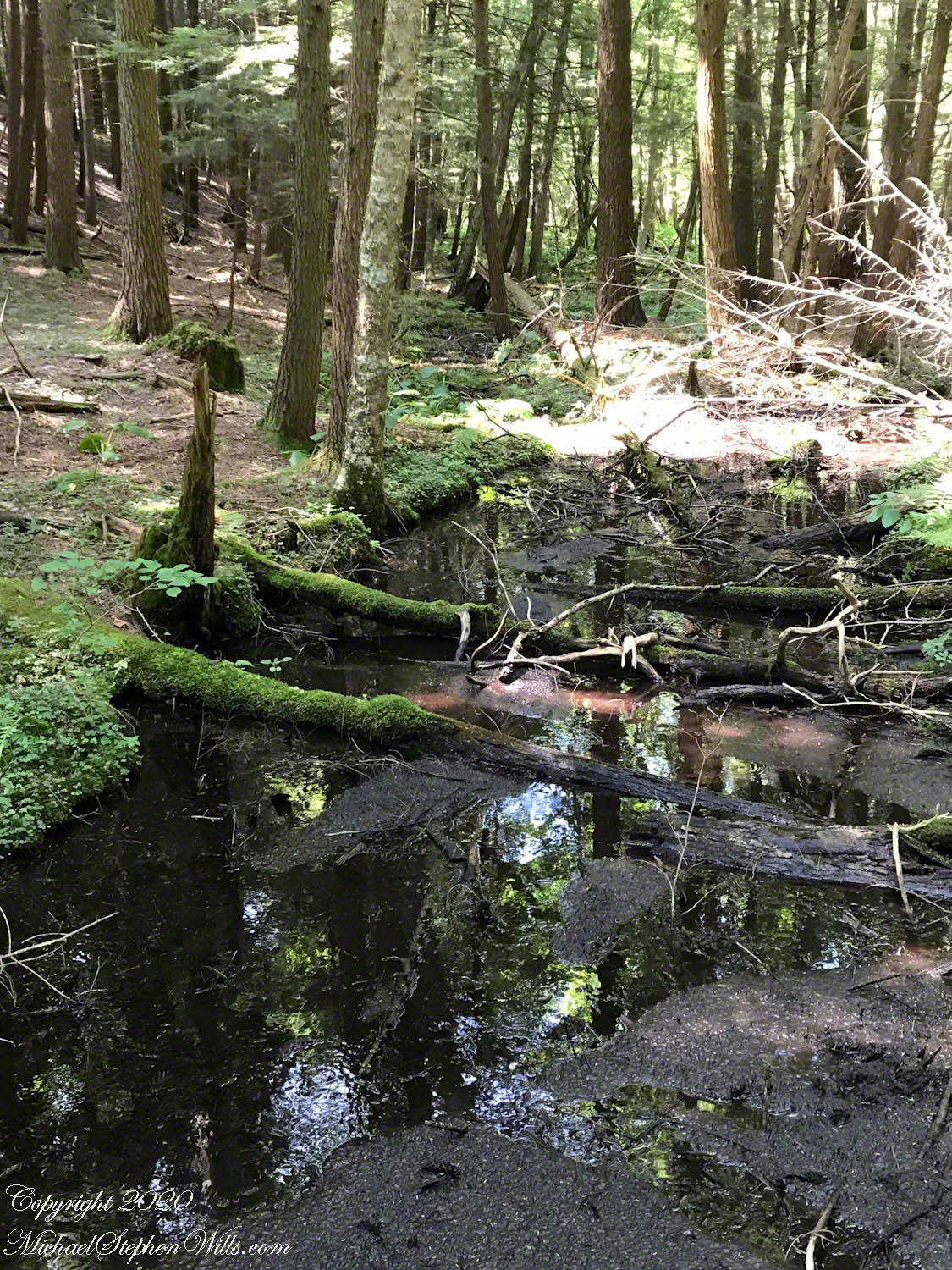
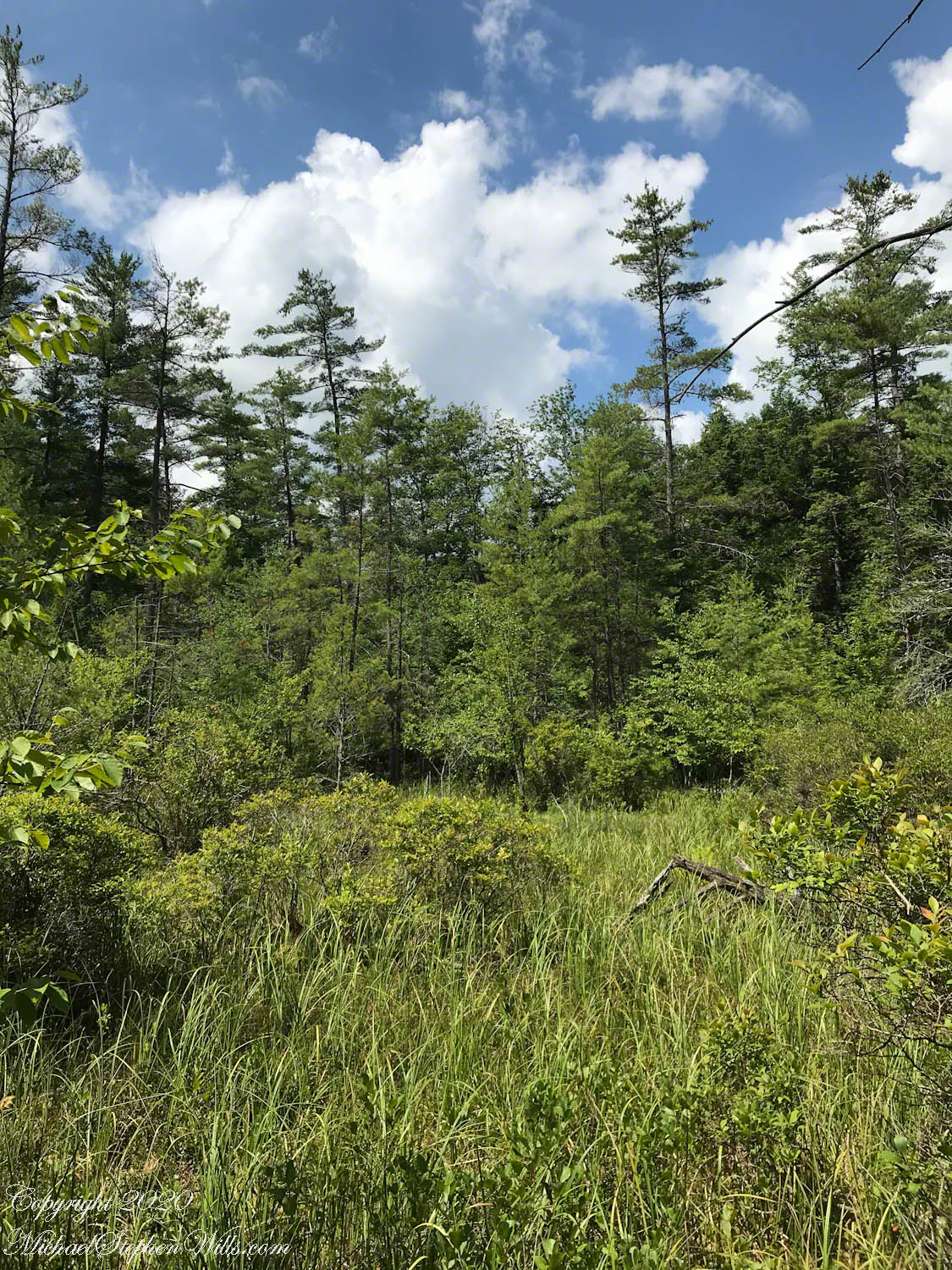
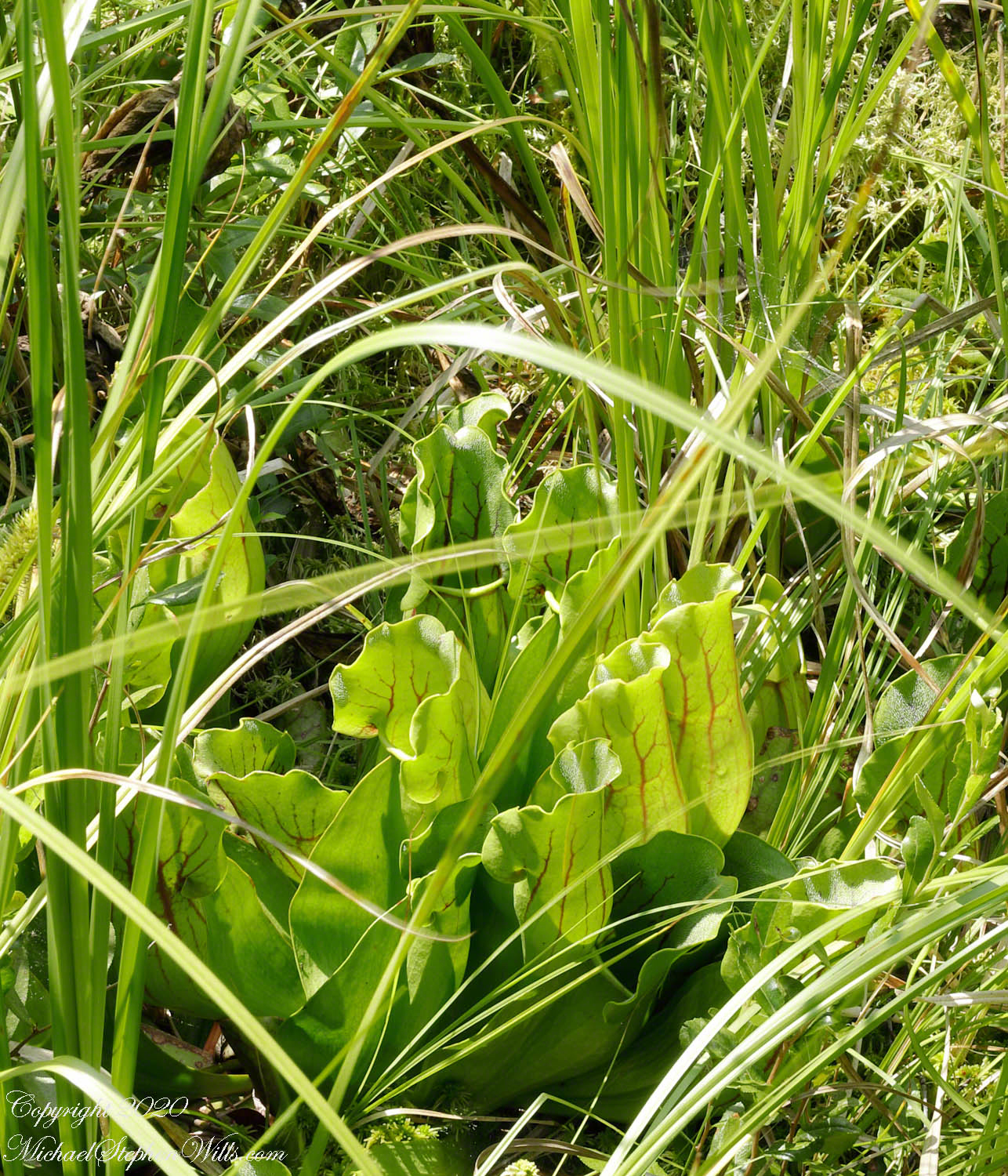
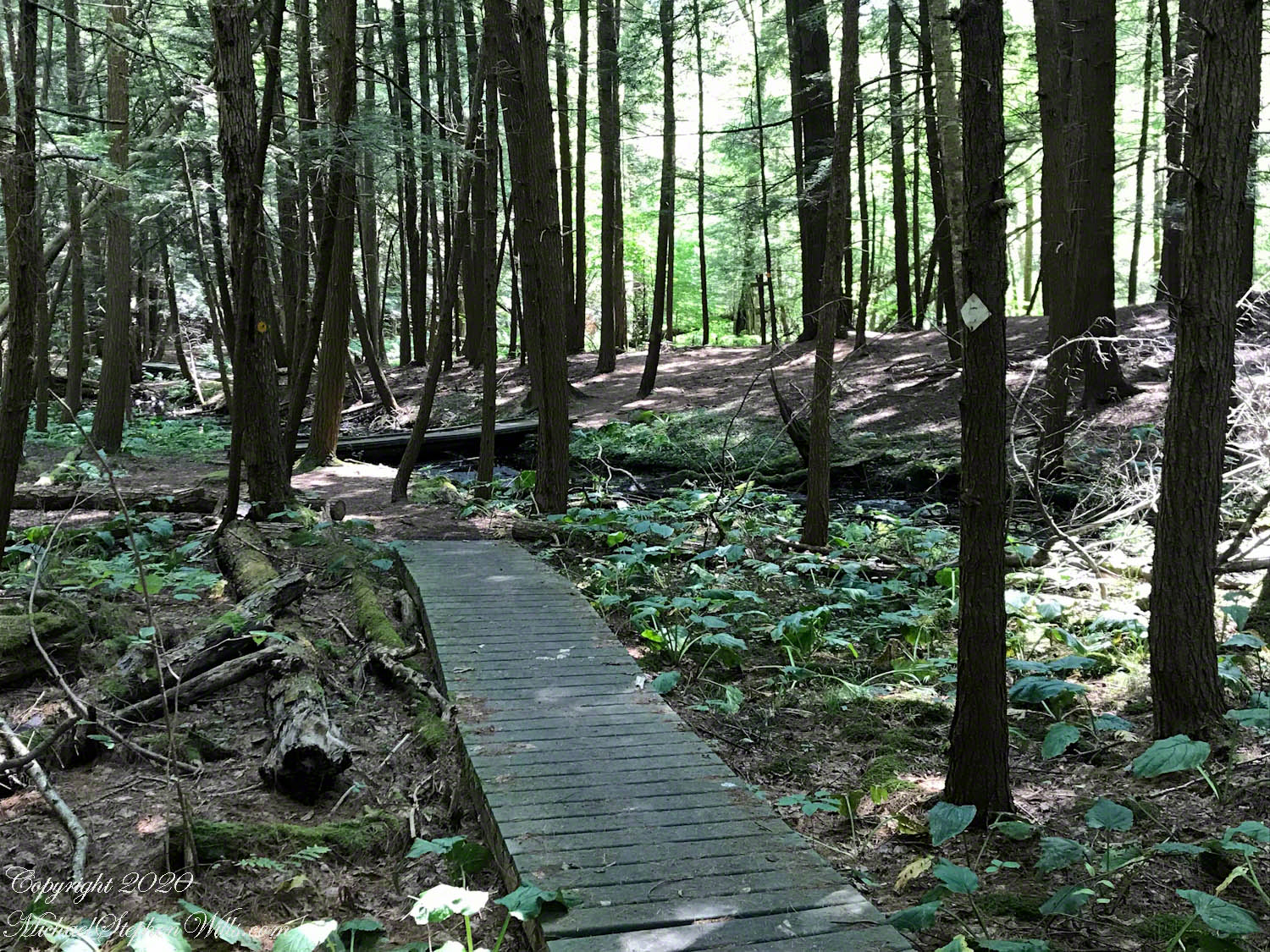
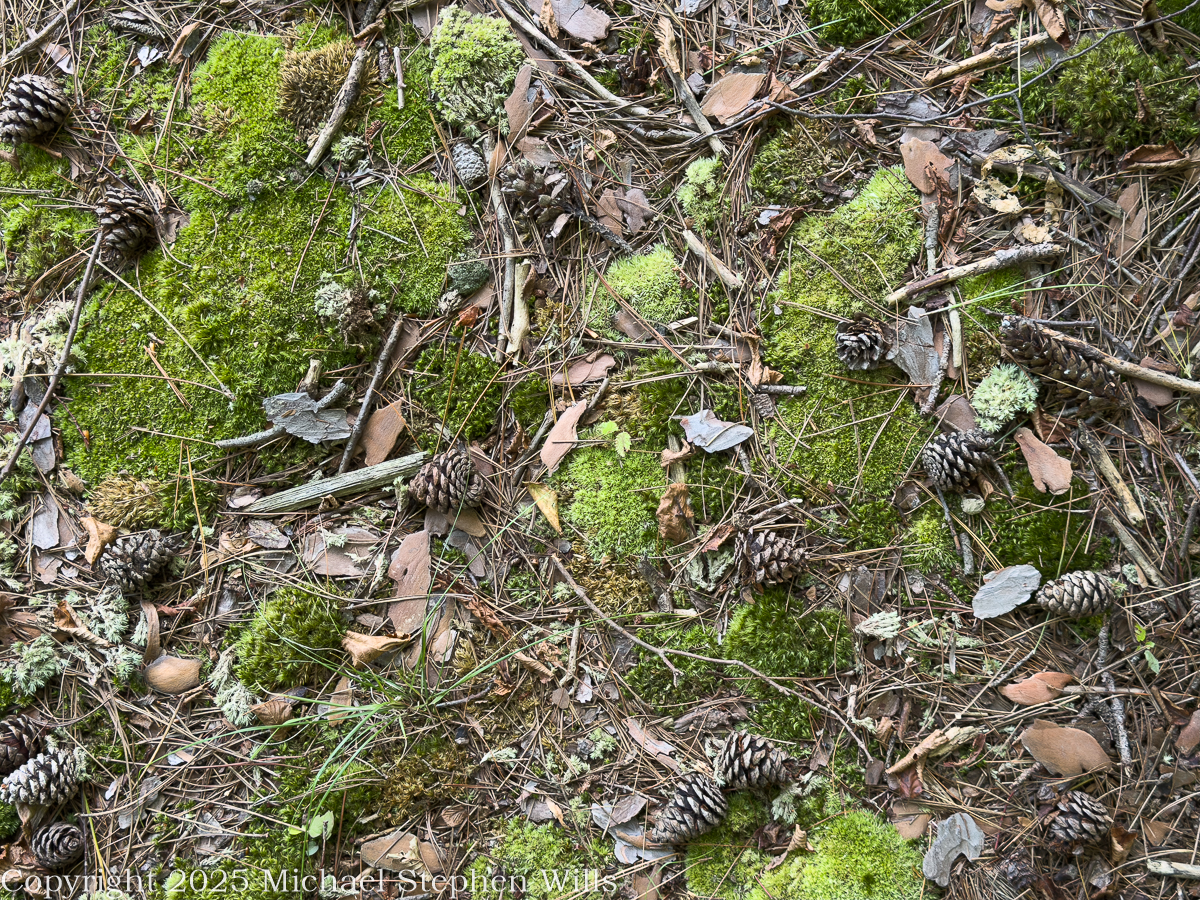
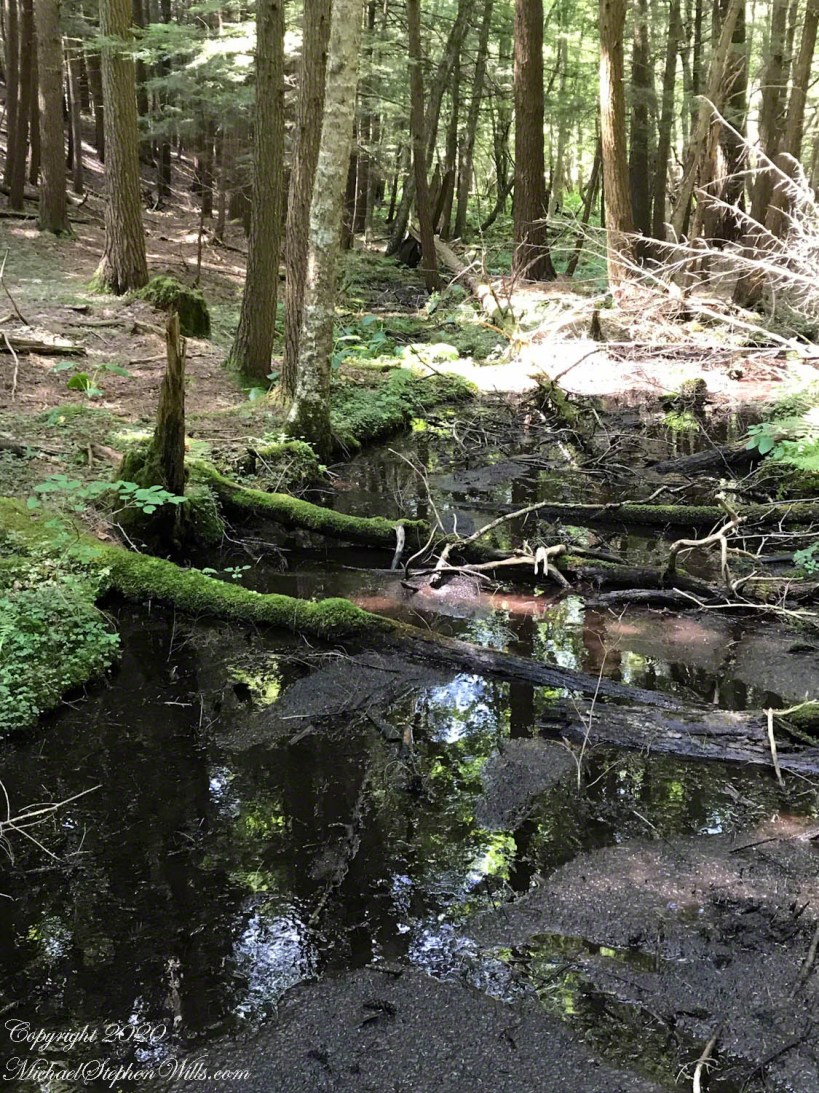
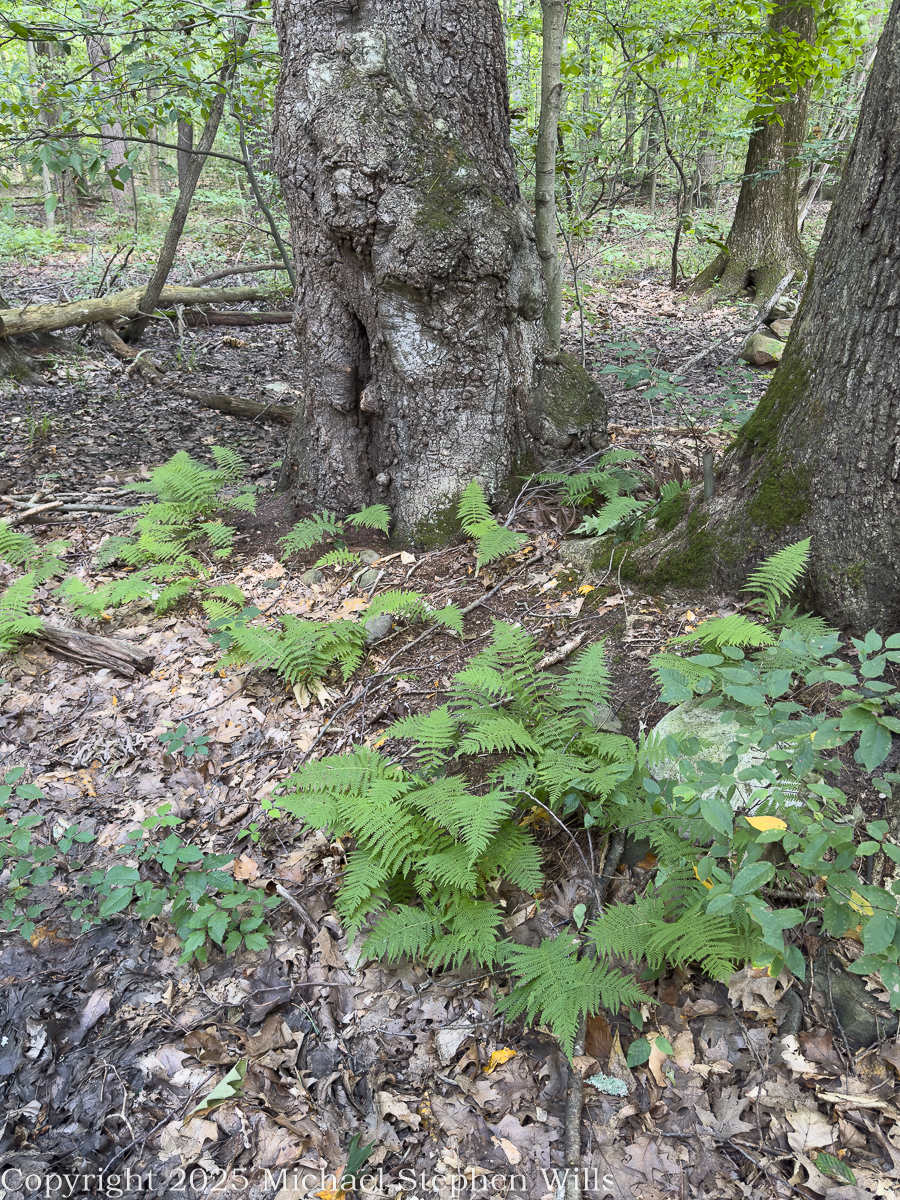
Forest Floor in Sapsucker Woods on a summer afternoon

There is little need for blossoms or fragrance here. The beauty of this fern is in its restraint. Its fronds do not shout, but rather whisper of deep time, of shaded ravines and glacial meltwaters, of forests that once stood where oceans now roll. Some said ferns were touched by magic—that they bloomed only on Midsummer’s Eve and vanished before the eye could see. The Interrupted Fern, with its appearing and disappearing fronds, might well have inspired such tales.

And so, in the filtered light beneath the canopy, this ancient fern lives on—not as a relic, but as a quiet thread in the fabric of the living forest. To stand in its presence is to feel a kind of reverence—not for what is rare, but for what endures.

Enter your email to receive notification of future postings. I will not sell or share your email address.

Carved by Time: Exploring the Virgin River and Cross-Bedded Sandstone in Zion’s Narrows

A quiet moment along the Virgin River reveals the artistry of nature—where water, stone, and time shape Zion’s majestic Narrows in subtle, surprising ways.

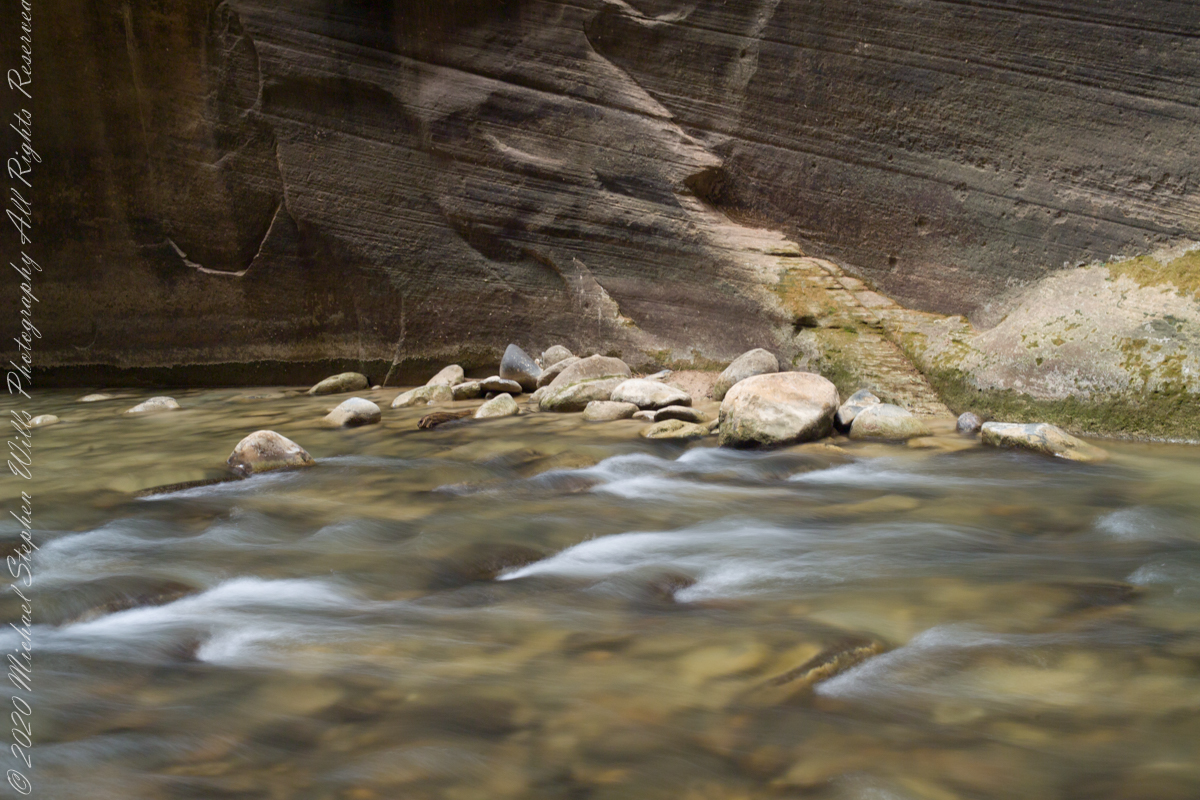
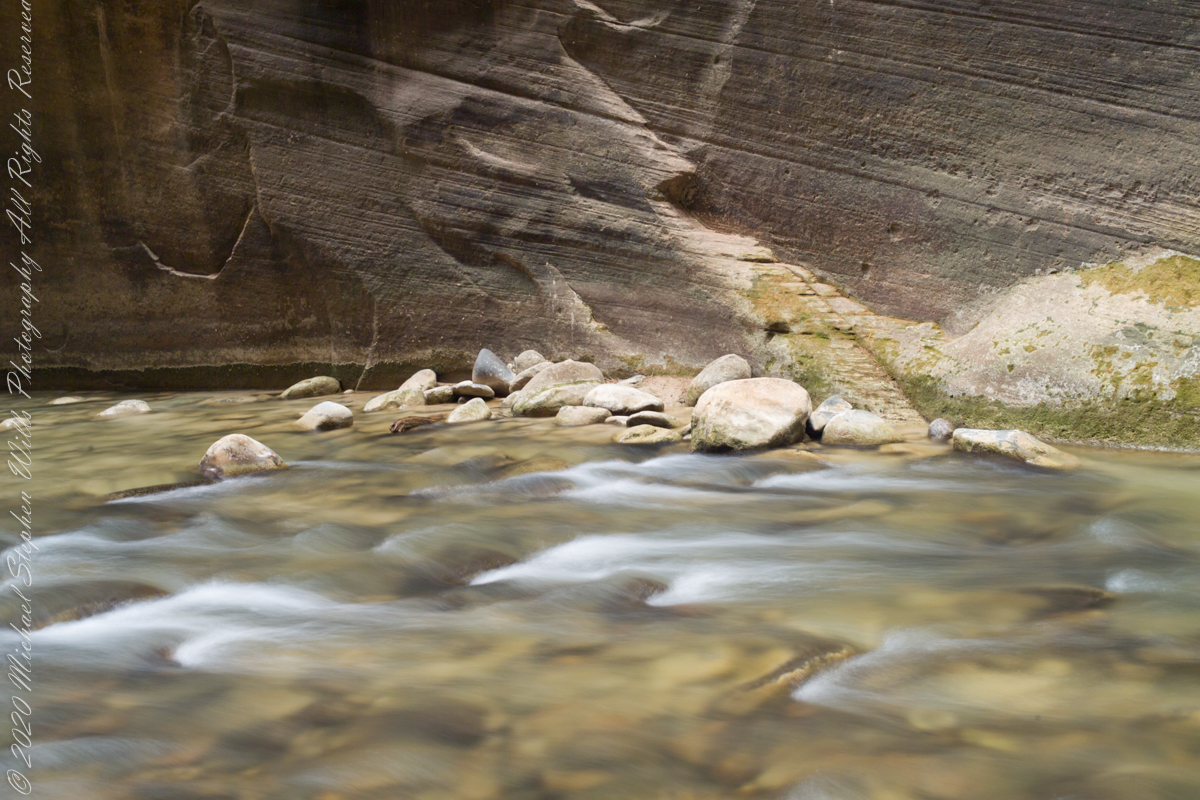
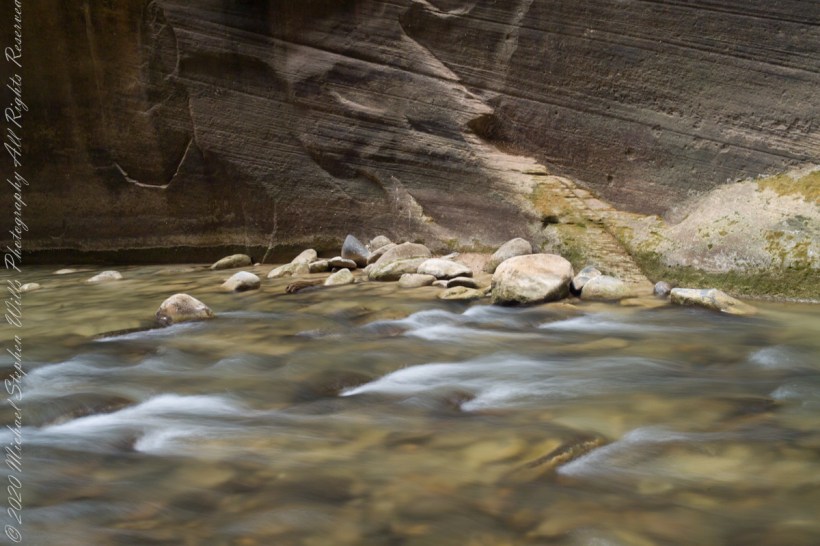
In Zion National Park, where towering sandstone cliffs rise from the desert floor, the Virgin River weaves a persistent and graceful thread through deep canyons carved over millennia. The river is the creative force behind Zion’s signature landscape, sculpting stone with a patient hand. Among its greatest achievements is the Narrows—a sinuous gorge where water and light perform a timeless duet. The two photographs shown here draw us into an intimate corner of that realm, where water flows past a rock face marked by both subtlety and drama.

At first glance, what stands out is the unusual structure on the wall behind the river—a feature that at a distance could easily be mistaken for a man-made stairway. But closer observation reveals this to be a natural element, the result of erosion acting upon cross-bedded Navajo Sandstone. The texture and linearity of these formations are remnants of ancient sand dunes hardened into rock nearly 190 million years ago, during the Jurassic period. What looks like precision carving is, in fact, the legacy of sedimentation, lithification, and the scouring action of water over time.

In the first photograph, the scene is bathed in soft, diffused light, lending a quiet tone to the flowing water and the weathered rock face. The surface of the Virgin River becomes a silky sheet, its motion captured with long exposure so that it seems to glide effortlessly past the cluster of smooth stones in the foreground. Here is a deep calm—the kind that can be heard in the hush of water over stone and felt in the breathless silence of a canyon morning.

Click each photo for a larger view

The second photograph, taken under brighter conditions, reveals the same scene with different character. The increase in light clarifies the water’s transparency, the greens of moss and lichen on the wall, and the golden tones of the sandstone. What you see is a pattern formed by layers of wind-blown sand, once part of vast dunes, now standing as a stone ledger of time. The river, its bed visible beneath the shallow flow, seems to read this text as it passes—century by century, pebble by pebble.

The Virgin River begins high in Southwestern Utah, at the Navajo Reservoir in the Dixie National Forest north of Zion National Park and travels over 160 miles to join the Colorado River, carving through layers of sedimentary rock as it descends. In the Narrows, the canyon walls rise up to a thousand feet while the corridor narrows to just 20–30 feet across in places. The intimacy of the Narrows contrasts with the vast openness elsewhere in Zion, enclosing the traveler in a world of water and stone, shadow and echo.

Walking the Narrows means walking in the river itself—an experience that engages body and spirit alike. The water is rarely still, and neither is the trail. Slippery rocks and ever-shifting current demand attention and balance. Yet, this very immersion invites a deeper kind of awareness. You are observing nature from within it, shaped by nature, and held by nature.

What the photos capture so eloquently is that Zion is a place where the work of nature can appear deliberate, even architectural. The illusion of stairways in the sandstone, carved not by hands but by wind, gravity, and time, is a reminder of how little separates the human sense of design from the forms nature produces. We recognize rhythm and repetition, elevation and flow, and are drawn to interpret meaning from these patterns.

But perhaps the meaning lies not in what we impose, but in what we receive. The Virgin River’s passage through this sculpted corridor teaches patience, resilience, and the beauty of gradual transformation. Its waters do not fight the rock; they yield, swirl, and persist—until the rock, by degrees, gives way. What results is a landscape both eternal and ever-changing.

Zion’s grandeur is easy to admire its many amazing overlooks, but its soul is found in quiet places like this—where sandstone walls, smoothed by water and time, speak not in shouts but in whispers. Here, beside a seeming stairway that leads nowhere and everywhere, we come face to face with the artistry of the Earth.

Enter your email to receive notification of future postings. I will not sell or share your email address.

Exploring Sipapu Bridge: A Scenic Descent

Experience the thrill of descending into Utah’s White Canyon—slickrock trails, driftwood ladders, and stunning views await at Sipapu Bridge in Natural Bridges Monument.

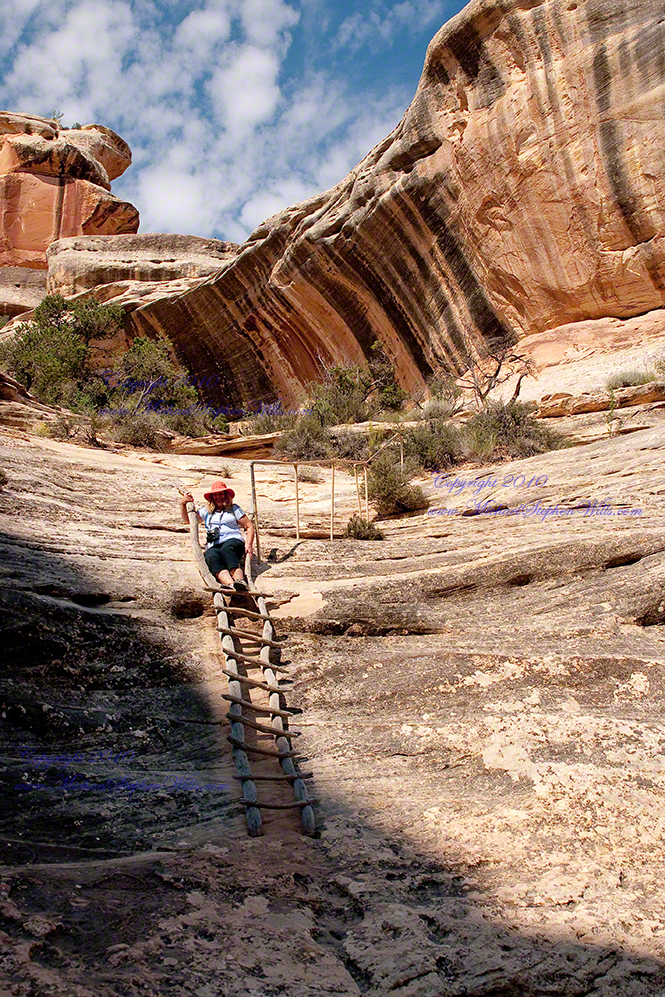
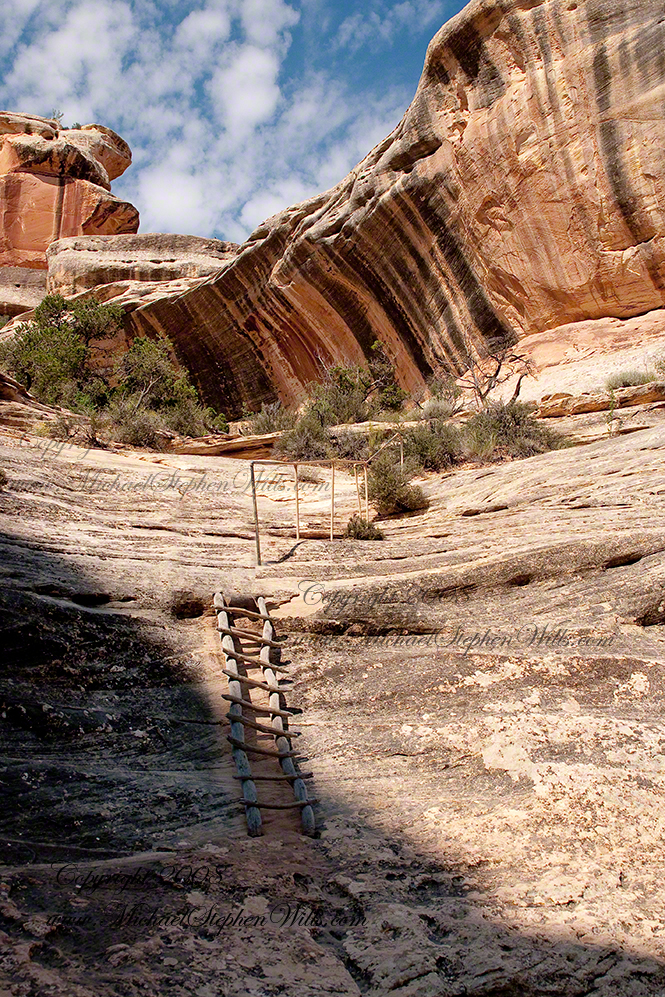
The final descent into White Canyon to view Sipapu Bridge, Natural Bridges National Monument near Blanding, Utah

Final Step

Here is a photograph of the final stage of our descent into White Canyon. Here the trail traverseed a type of sandstone called “Slickrock.” For Pam and I the surface was like sandpaper and, for the right type of shoes, provides great traction.

That day I wore Lowe hiking boots with a harder sole and these could slip at times. I’d recommend a different shoe for the trail, but my boots come over the ankle and provide great support. Plus, the canyon bottom is sandy, so high boots prevent sand from falling into the shoe. A perfect choice for this trip is a high boot that provides support, with a softer sole on a hard and light shank (to protect you against sharp rocks).

What is Slickrock?

Slickrock was named by the first settlers and explorers who discovered their iron shod horses lost footing on the steep slopes of this sandstone.

This was another feature of Pam and my descent into White Canyon. The sandstone weathers in a way that produces steep slopes over which the trail must pass and the traveler navigate. I chose this image as a Fine Art print (part of a series featuring Natural Bridges National Monument) because this part of the trial is strange and beautiful.

The hard rock cliffs are resistant to wear and, in this climate, weather to provide rounded surfaces. The cliff face is scalloped and marked with desert varnish striations that “pop out” from the red rock. Then, there is the clear light and bright morning sky on a summer morning that promised thunderstorms.

Gratitude

Then, there are the personal memories of that iron railing drilled into the rock and that marvelous looking ladder created from driftwood found in the canyon.  That ladder is a work of art!!  The photograph does not reproduce the feeling Pam and I had at that point of the descent.  I needed to climb down the ladder backwards (facing out) and holding on .

We were both grateful to reach the sandy stream bed in White Canyon.

Enter your email to receive notification of future postings. I will not sell or share your email address.

Celebrating Community at Dryden Dairy Days Parade

Experience the joy of small-town tradition as three generations celebrate cows, community, and colorful floats at the 2025 Dryden Dairy Day Parade in upstate New York.
On a glorious Saturday morning—June 14, 2025—the small village of Dryden, New York, once again came alive with one of its most beloved traditions: the Dairy Day Parade. I had the joy of attending this year’s festivities with my daughter-in-law, Jennifer, and my two grandsons, Sam and Rory. We set up along Main Street, folding chair ready and anticipation high, surrounded by a growing crowd of families, neighbors, and out-of-town visitors drawn by the charm of this time-honored event.

Dryden Dairy Day, first held in 1980, has long celebrated the area’s agricultural roots—particularly the dairy farms that once dotted the Finger Lakes region in greater number. Though the rural landscape has changed, the community spirit endures, embodied each year in this cheerful, inclusive parade. And what a parade it was.

Sam and Rory, who started out quietly nestled together in a red camp chair, quickly leaned forward in excitement as the opening marchers passed. Veterans in pressed blue shirts and caps bore the flags solemnly, stepping to the rhythm of distant drumbeats. The boys gladly collected candy thrown to the crowd by the paraders.

Then came the color and music—floats festooned with balloons, hay bales, streamers, and, of course, cows. The Jerry Dell Farm float, labeled “LegenDAIRY Superheroes,” stole the show with its red metal rails, a large cutout Holstein suspended in mid-leap, and enthusiastic kids handing out “Got Milk?” flyers. The float’s theme—half play, half tribute—offered a nod to the hardworking farmers past and present who’ve kept local dairies running despite national challenges.

Behind them, children waved from trailers turned farmyard dioramas. In one, rabbits and baby chicks nestled on pastel blankets inside red and gray wagons, drawing audible “awws” from the crowd. Another float featured kids feeding baby goats from white pails, an irresistible scene that reminded us of the joys of hands-on farm life.

Marching groups followed, each bringing their own spark. A contingent from Tompkins Cortland Community College, all in matching green shirts, smiled and waved. Their banner and cheetah logo brought cheers from alumni in the crowd. Girl Scouts from Troop 427 of Golden Meadows brought peace signs, love hearts, and Girl Scout green to life as they passed, handing out candy and smiles with equal generosity.
We clapped for the “Wreaths Across America” semi-truck—a rolling tribute to fallen soldiers. Its stars-and-stripes exterior and the wreath-emblazoned motto “Remember. Honor. Teach.” was a solemn visual counterpoint to the general jubilation, grounding us in gratitude amid celebration.

One of the most magical sights for Sam and Rory came next: a medieval knight on horseback, gleaming in armor, carrying a long lance. This was no Renaissance Fair actor but a local reenactor embodying chivalry and pageantry for the kids. Rory, eyes wide, whispered, “Is that a real knight?” and I nodded with a smile. The horse, a proud palomino with flowing mane, trotted as regally as any steed from storybooks.

At one point, we found ourselves surrounded by people wearing cow-print headbands and passing out themed goodies—a detail that would feel odd anywhere else but felt perfectly at home here. Even the Girl Scouts managed to mix tradition with whimsy, some donning glittering horns and cow ears for the occasion.

I selectively captured photos, while Jen and the boys soaked in the sights and sounds: the distant whinny of ponies, the rustle of candy wrappers on the pavement. Parades like this are entertainment and intergenerational bridges, connecting the past with the present, the seasoned farmer with the wide-eyed child, and the local with the visitor.

As the parade wound down and the last float passed, we lingered a while longer. The boys were still buzzing with excitement, eager to share their favorite parts—“the knight!” said Rory, “the baby goats!” said Sam. For me, the most treasured moment was watching my grandsons engage so deeply with the richness of local heritage, waving to friends in the parade feeling part of something bigger than themselves.

Dryden Dairy Day reminds us that community is people lining the street on a Saturday morning. It’s floats handmade with care. It’s generations walking side by side—and sometimes sitting in the same chair—laughing, learning, and loving the place they call home.

Enter your email to receive notification of future postings. I will not sell or share your email address.

Exploring Sims-Jennings Preserve: A Nature Lover’s Delight

A walk through Sims-Jennings Preserve unveils ancient cliffs, vibrant bird calls, and the quiet wisdom of maples and waterfalls along Cayuga Lake’s forested edge.

I arrive early, the sun still climbing its slow arc, brushing the eastern sky in pastels as I step into the Sims-Jennings Preserve at Cayuga Cliffs. The trailhead, tucked neatly along NYS Route 34B, is a doorway into an ancient chapter of the Finger Lakes—one rich with the scent of moss, the hush of leaf-dappled silence, and the layered echoes of stone and birdsong.

The first thing that strikes me is the expanse of mowed meadow, rimmed with goldenrod and patches of milkweed. From here, the land rolled gently westward until it ends abruptly in cliffs that plummeted toward Cayuga Lake. A map at the entrance speaks of the Sherburne and Renwick Formations, shale and siltstone laid down when the land was covered in warm Devonian seas. The cliffs themselves stand like watchmen over time, protecting 4,000 feet of lakeshore from erosion, whispering tales older than mammals.

A side trail leads to this mowed meadow and Cayuga Lake overlook

On the meadow edge is this Carya ovata, or shagbark hickory, unmistakable from its elongated leaflets and distinctive bark that peeled in long, curled strips. The leaves shimmered in the breeze, their green etched with pale speckles of recent rain, as if nature herself had hand-painted them.

Shagbark Hickory on the edge of meadow.
Leaves of the Shagbark Hickory
Shagbark Hickory bark / trunk

I follow the yellow-blazed trail into a thicket where tall sugar maples—Acer saccharum—arched overhead. Their leaves caught the morning light, each palm-sized blade glowing like a shard of stained glass.


Throughout the preserve I find large holes like these in a pine tree snag, the work of a Pileated Woodpecker.

A sudden fluting note from the trees stops me in my tracks. “Ee-oh-lay,” the Wood Thrush sang, its call cascading through the forest like water over stone. Moments later, the rapid, accelerating trill of an Ovenbird joins in—a sound like “teacher-teacher-teacher” echoing from the understory. The forest is alive.

Watch on YouTube for the best experience.

I descend into the shade. A narrow stream runs over the flat gray ledges of the Ludlowville Formation, forming delicate waterfalls no taller than a man but intricate as lace. One fall, framed by a colonnade of black cherry and beech trees, poured over stone like a ribbon of silk. The water’s voice changed with each ledge—first a murmur, then a chuckle, then quiet confidence as it wound through the woods.
Here, a Scarlet Tanager flashes like flame through the canopy, its red feathers shocking against the sea of green. Above, the Eastern Wood-Pewee calles its own name from a high perch—“pee-a-wee”—a humble herald of summer. Lower down, a Tufted Titmouse flits from branch to branch, a gray blur with a whistle like curiosity incarnate.

Further along, a looping vine coils around a pair of trees like an ancient signature. Possibly a native bittersweet, its woody stem thick as a child’s arm. It reminds me of how all life here is entangled—flora, fauna, stone, and stream woven into one vast web.

I pause at the overlook, where the trail skirts the cliffs. From this height, the view opened to Cayuga Lake, vast and gleaming in the morning light. Across the water, the hills of the western shore softened into a watercolor horizon.

Crowbar Point on the west lake shore is visible, partially hidden by trees. Sims-Jennings Preserve at Cayuga Cliffs, Finger Lakes Land Trust on a May morning 2025, Lansing, Tompkins County, Finger Lakes Region

On the walk back, a robin sings its measured phrases from a nearby hawthorn, and I think how common birds often hold the deepest solace. The robin’s voice rises above the silence, not grand, not rare, but reassuring in its familiarity—like a good friend’s greeting.

A shale ledge, Renwick Formation (?)

I leave the preserve changed gently, like the soft indent of a footstep in moss. The Sims-Jennings Preserve at Cayuga Cliffs is a place that reminds you to listen. To the birds, to the trees, to your own breath. And in listening, you remember what it means to be wholly present in the world.

Enter your email to receive notification of future postings. I will not sell or share your email address.

On The Edge of Time Above Taughannock Gorge

Perched above Taughannock Gorge, a moss-covered ledge and cascading falls reveal ancient stories—where Devonian seas once flowed and time’s layers whisper through stone and water.

The morning sun had only just breached the rim of the gorge, sending long slants of golden light across the forest floor. Walking the South Rim Trail of Taughannock Falls State Park, I came upon a quiet, unassuming spot—just a few paces off the path—where the forest seemed to pause in reverence. What greeted me was a small marvel of persistence and time.

There, rooted precariously atop a slab of brittle shale, was a tenacious shrub rising from a bed of moss, its spindly frame etched in sharp contrast to the soft, green sprawl beneath it. The moss had taken hold on a shelf of rock cantilevered over the gorge like a green tongue of earth defying gravity. Cracks traced the shale’s surface like veins, silent records of the forces that shaped this place—heat, ice, pressure, time. Together, the moss and the bush formed an improbable community, surviving against odds, bound together by the thin soil cradled in stone.

This ledge, suspended over the abyss, seemed less a part of the earth than a question it asked—how much life can cling to the edge before the edge itself gives way?

Beneath this living fragment, the gorge dropped away. Layers upon layers of shale revealed themselves, stacked like a collapsed library of time. Here, the Devonian Period lies exposed to wind and rain, and to those willing to pause and wonder. Each stratum holds the fossil whisper of ancient seas, where trilobites scuttled and coral reefs once stood. This gorge was not carved quickly. It was not born of a moment, but of many—countless raindrops, millennia of ice melt, the slow, sure work of water over stone.

From this natural balcony, I looked out and down to the gorge floor where the creek shaped the land with an artist’s patient hand. The falls, seen from above, no longer thundered—they danced. Spread like the folds of a fan, water curled over smooth stone in steps of white silk. From here, the cascade looked deliberate, choreographed—an elemental performance halfway between gravity and grace.

How many times had this water flowed, reshaped, receded? How often had it carved these grooves, smoothed those ridges, erased the footprints of what came before? Looking at the exposed rock, one could trace the signature of ancient glaciers, feel the memory of long-gone floods. It was humbling—this intersection of change and continuity.

Above it all, the trees stood still. Pine and oak, rooted well back from the edge, offered a kind of sentinel presence. Their shadows stretched long and angled, tracing the contours of both earth and memory. For a moment, I let go of all thought and simply listened—to the murmur of wind through leaves, the faint rush of water far below, and the silence that presses in when the land itself seems to be remembering.

This spot—so easily missed by a hurried hiker—offered a parable of resilience and impermanence. The moss did not grow with certainty, nor the shrub reach with confidence. They survived on the edge because they adapted. They made do with less. They took root where others could not. There was no security in that place, only presence. Only the now.

And isn’t that a lesson worth carrying?

We so often seek stability, firm ground, a clear path. Yet, some of the most beautiful things live just beyond comfort—on ledges, in cracks, in the margins of the known. To pause here was to acknowledge that life thrives not only in sheltered valleys but also at the edge of what seems possible.

As I stepped back onto the trail and continued along the South Rim, the image of that mossy outcrop stayed with me. I carried it in my thoughts like a talisman—proof that even on the brink, life finds a way. And that from above, the most chaotic falls can appear as ordered motion, as a flow toward something larger.

Later, when the sun climbed higher and the light lost its slant, I would look back on this moment not as a spectacular highlight but as something more intimate: a quiet encounter with nature’s subtle artistry, its layered truths, and its enduring invitation to look closely, feel deeply, and walk softly.

For here, above the gorge, at the edge of earth and time, even a whisper leaves a mark.

Enter your email to receive notification of future postings. I will not sell or share your email address.

Discovering Stillness in Nature’s Embrace

A bench beside a cedar, unchanged through time, stirred memory and gratitude—reminding me that some places wait quietly, holding space until we find them again.

A lingering memory hovers over this spot. The soft crunch of gravel beneath my boots, the filtered light through pine and oak, the scent of warm stone and moss—all of it felt at once familiar and distant, like a half-remembered tune that returns in full when you hear the first few notes. I hadn’t thought about the simple bench until I turned the bend this summer day on the South Rim Trail.

It was still there. The same humble bench nestled beside a cedar, its weathered frame now bearing the patina of years. The tree remained slightly bowed as if in silent conversation with the bench it had embraced.. The space between them, still and shaded, seemed to invite reflection without demanding it.

I sat down, letting the moment settle around me. In the gorge below, water moved quietly through sculpted shale, the same layered gray that once caught my attention through a camera lens long packed away. From this overlook, the view had scarcely changed: stone and water, green clinging to cliff, sky rolling in above it all. My photograph captures it now just as it might have then—perhaps from the same angle. The gorge unfolding in a graceful arc, with trees perched impossibly along the sheer face.

It struck me, not as a grand revelation but with quiet certainty, that very few places in life offer such stillness. So much shifts in the world—landscapes erode, trails are rerouted, lives move forward. Yet here I was again, sitting in the same spot, as though the intervening decades had folded in on themselves.

Back then, I had rested here out of curiosity, pausing to take in the view, enjoy a respite. Now, I sat with a deeper kind of stillness. The second photograph holds the space as I found it—quiet, dappled with shadow, edges softened by time. The fence beyond it remains, unchanged, a modest boundary between the trail and the deep gorge beyond.

I don’t remember what thoughts filled my mind that first time. But today, a kind of gentle gratitude rose instead. Gratitude for the bench, yes—but also for the path that led me here again, for the act of remembering, and for the rare gift of finding something familiar, something steady.

A final image frames just the bench, its surface worn smooth, its structure slightly leaning now. A single flower petal had fallen on the wood—a quiet grace note in the morning light. I stood and took that last photo as a way of holding the moment, though I knew no picture could fully capture what it meant to find something that had waited without fanfare.

As I turned and walked back along the rim, I felt lighter. Not because time had reversed or been conquered, but because it had been witnessed—and somehow, that was enough.

Enter your email to receive notification of future postings. I will not sell or share your email address.

Myth and Art: The Sirens of Punta de las Salinas

At Punta de las Salinas, Lily Perkins’ sculptures embody siren mythology, merging art with the rugged beauty of nature’s edge.

The wind carried the scent of the sea as we stood at Punta de las Salinas, the furthest tip of Punta del Este, Uruguay. This was a place of myth and mystery for us, where the Atlantic Ocean merged with the Río de la Plata, and where the rocks bore witness to the timeless interplay of water and stone. Here stood “El Canto de las Sirenas” (The Song of the Mermaids), an evocative art installation by Lily Perkins, first completed in 2012. The sculptures seemed perfectly at home here, their placement deeply intertwined with the mythology they evoked.

This is at Great Britain Square, Punta de las Salinas of Punta del Este. We are at the tip of the peninsula, the easternmost point of Uruguay. This is the art installation El Canto de las Sirenas” (The Song of the Mermaids) (2012) by the artist Lily Perkins. Punta del Este, Departamento de Maldonado, Uruguay

The sirens of ancient lore were said to dwell at perilous points where land met the untamed sea, luring sailors to their doom with haunting songs. These rocky outcrops, both a boundary and a threshold, have long held symbolic power as places where the natural world is at its most raw and elemental. Punta de las Salinas is such a place. Its jagged rocks and churning waves create an environment as beautiful as it is treacherous. It is easy to imagine mythical sirens choosing this very spot to weave their spellbinding melodies.

This is at Great Britain Square, Punta de las Salinas of Punta del Este. We are at the tip of the peninsula, the easternmost point of Uruguay. This is the art installation El Canto de las Sirenas” (The Song of the Mermaids) (2012) by the artist Lily Perkins. Punta del Este, Departamento de Maldonado, Uruguay

Lily Perkins’ installation captures this essence. The sculptures are not idealized depictions of mermaids; they are rugged and raw, encrusted with shells, stones, and marine debris. Their weathered forms mirror the harsh, untamed beauty of their surroundings. It is as if they have emerged from the ocean itself, born of the waves and the salt-laden air, to stand as sentinels at the edge of the world.

The central figure, with her face turned skyward, evokes the myth of the siren’s song—a melody so enchanting that it drove sailors to risk their lives against the rocks. Her posture suggests longing, perhaps for a connection beyond the horizon, or perhaps for the very mortals she is fated to ensnare. Nearby, a broken figure reclines against the rocks, her form partially encased in green netting and mosaic-like tiles. She seems more grounded, her siren’s call muted, as if weighed down by the realities of the modern world. The use of marine materials in her construction—a blend of natural and human-made debris—suggests an awareness of humanity’s impact on the seas.

The third figure, slightly apart, is the most enigmatic. Encrusted with barnacles and weathered by the elements, she seems lost in thought. Her gaze is directed not toward the sea but toward the land, as if contemplating her place at this meeting of worlds. In mythology, sirens were liminal creatures, existing between realms—the sea and the shore, the mortal and the divine. This figure embodies that in-between state, rooted in the rocks yet shaped by the sea.

The placement of these sculptures at Punta de las Salinas is no accident. This headland is the easternmost point of Uruguay, a natural boundary and a crossroads where two vast bodies of water meet. For centuries, sailors navigated these waters, their journeys fraught with danger. The rocks here are unforgiving, and the waves crash with relentless power. To stand at this point is to feel the raw energy of the ocean and to understand why myths of sirens arose in such places. The sirens symbolize both allure and peril, a reminder of the ocean’s capacity to inspire and to destroy.

As I walked among the sculptures, the mythology seemed to come alive. The sound of the waves crashing against the rocks could easily be imagined as the sirens’ song—a hypnotic rhythm that draws you in and holds you spellbound. The figures, though silent, seemed to hum with an energy that echoed the sea’s eternal motion.

I feld these sculptures were not merely placed at Punta de las Salinas; but had emerged from it, their forms shaped by the same forces that shaped the rocks beneath our feet. The shells and stones embedded in their surfaces tied them physically to the sea, while their mythical resonance tied them spiritually to the place.

The mythology of the sirens speaks to the duality of the sea—its beauty and its danger, its capacity to give and to take away. Standing at Punta de las Salinas, surrounded by Perkins’ sculptures, I felt that duality in a profound way. The ocean stretched endlessly before us, a vast, unknowable expanse, while behind us lay the solid ground of the peninsula—a place of safety, but also a place that ended here, at this edge.

Lily Perkins sculptures are restored…..

As we left, the figures seemed to watch us go, their silent song lingering in my mind. The sirens of Punta del Este are more than art; they are a dialogue between myth and reality, between the natural world and the human imagination. In their weathered beauty, they remind us of the stories the sea has always told, and of the enduring power of those who give those stories form.

Enter your email to receive notification of future postings. I will not sell or share your email address.

Explore Louisa Duemling Meadows: Nature and Conservation

The Louisa Duemling Meadows celebrate conservation and biodiversity, showcasing vibrant flora and honoring Louisa Duemling’s legacy as a steward of nature.

The Louisa Duemling Meadows, nestled within the expansive embrace of Sapsucker Woods, offers a vibrant tableau of life, brimming with opportunities for exploration and a sense of wonder. This new trail, winding through golden fields and punctuated by bursts of wildflowers, whispers tales of the land’s natural and cultural heritage.

Louisa Duemling: A Steward of Nature
Louisa Duemling, the meadows’ namesake, was a dedicated conservationist and philanthropist who supported the Cornell Lab of Ornithology’s mission to protect birds and their habitats. Her legacy lives on in these serene fields, where her commitment to preserving the environment is reflected in every thriving plant and songbird.

Black-eyed Susans: The Meadow’s Golden Treasure
Dominating this summertime landscape with their radiant yellow petals and dark central disks, Black-eyed Susans (Rudbeckia hirta) are a hallmark of the meadows. These cheerful blooms are a delight to the eye, a cornerstone of meadow ecosystems. As members of the Asteraceae family, their composite flowers serve as a rich nectar source for pollinators like bees and butterflies, ensuring the vibrancy of these fields.

Historically, Black-eyed Susans have been used in traditional medicine by Native American tribes for their putative anti-inflammatory properties. Their ability to thrive in diverse conditions also makes them a symbol of resilience and adaptability.

A Symphony of Green and Gold
Walking through the trail, one is greeted by the harmonious interplay of goldenrods (Solidago spp.), milkweeds (Asclepias spp.), and asters (Symphyotrichum spp.). Goldenrods, with their feathery clusters of yellow blooms, are often mistaken as allergenic culprits, though it is the inconspicuous ragweed (Ambrosia artemisiifolia) that deserves this reputation. Milkweeds, with their milky sap and delicate pink or white flowers, are vital to monarch butterflies (Danaus plexippus), serving as the sole food source for their larvae.

Among these botanical wonders, the birdhouse stands as a sentinel, a reminder of the intricate relationship between flora and fauna. These wooden structures provide safe havens for cavity-nesting birds like Eastern Bluebirds (Sialia sialis) and Tree Swallows (Tachycineta bicolor), fostering biodiversity within the meadow.

A Horizon Framed by Pines and Clouds
The open meadow trails, flanked by clusters of Eastern White Pines (Pinus strobus) and punctuated by the azure sky, invite reflection and renewal. This is a place where the human spirit can align with the rhythms of nature, where each step reveals new layers of beauty and discovery.

Embracing the Spirit of Discovery
To wander the Louisa Duemling Meadows is to immerse oneself in the timeless dance of life. The trail, carefully marked yet wild in essence, invites visitors to lose themselves in its beauty while finding solace in its quietude. This is not just a path through nature—it is a journey into the heart of conservation and a celebration of the life that thrives under Louisa Duemling’s enduring legacy.

As you leave the meadow, carry with you not just the memory of golden flowers and vibrant skies but the inspiration to cherish and protect the natural world. The Louisa Duemling Meadows are not only a gift to those who walk its trails but a reminder of the profound impact one can have in preserving our planet’s fragile beauty.

Enter your email to receive notification of future postings. I will not sell or share your email address.

Ecological Significance of False Solomon’s Seal

In Taughannock Falls State Park, False Solomon’s Seal captivates with its beauty, ecological role, and historical medicinal uses.

The trails of Taughannock Falls State Park always hold surprises, and on that July day, they did not disappoint. As I paused to take in the tranquility of the woods, my gaze fell upon a plant whose graceful arch and clusters of berries demanded attention. Its broad, lance-shaped leaves alternated along the stem, framing the stem’s terminal cluster of small green berries. Recognizing the plant as Maianthemum racemosum, commonly known as False Solomon’s Seal, I took a moment to admire its understated elegance.

False Solomon’s Seal, scientific name Maianthemum racemosum, is common in the Finger Lakes Region. I found this specimen during a walk with the grandchildren in a local fen among the post-glacial terrain of the Finger Lakes Region. Eames Memorial Natural Area, Cornell Botanic Gardens, Town of Dryden, Tompkins County, Finger Lakes Region, New York State

Characteristics of the Plant

False Solomon’s Seal is a perennial herbaceous plant belonging to the asparagus family (Asparagaceae). It can grow up to three feet tall, its arching stems giving it a unique and recognizable silhouette. The leaves are broad and lance-shaped, with prominent veins running their length, arranged alternately along the stem. At the tip of each stem is a cluster of tiny, spherical green berries, which later in the season ripen to a speckled reddish hue. The plant blooms in late spring to early summer, producing delicate, star-shaped white flowers before transitioning to its fruiting phase.

Found throughout much of North America, Maianthemum racemosum thrives in moist, shaded woodlands, making the lush forests of Taughannock Falls State Park an ideal home. Its ability to grow in the dappled light beneath the forest canopy highlights its adaptability to varying light conditions.

Etymology of the Name

The genus name, Maianthemum, comes from the Greek words “mai” (May) and “anthemon” (flower), reflecting the plant’s tendency to bloom in late spring or early summer. The species name, racemosum, refers to the plant’s inflorescence, which forms a raceme—a cluster of flowers or berries along a single stem. Its common name, False Solomon’s Seal, derives from its superficial resemblance to Solomon’s Seal (Polygonatum spp.), though the latter has bell-shaped flowers hanging beneath its stems, in contrast to the terminal clusters of Maianthemum racemosum.

History and Folklore

False Solomon’s Seal has long been valued for its medicinal and culinary uses by Indigenous peoples and early settlers. The young shoots were harvested and cooked as a vegetable, while the ripe berries were sometimes used in jellies or preserves, though their slightly bitter flavor limited their appeal. Medicinally, teas made from the roots and leaves were used to treat a variety of ailments, including digestive issues, coughs, and sore throats. The roots were also applied as poultices for cuts and bruises, reflecting the deep understanding of natural remedies held by those who lived in harmony with the land.

The plant’s name has sparked legends. While the “false” in its name denotes its distinction from Solomon’s Seal, some folklore suggests that the plant was used to counterfeit the medicinal properties of its namesake. Others believe that its graceful arch and persistent berries symbolize resilience and adaptability, qualities often attributed to those who lived in its native habitats.

Uses and Ecological Role

Although not widely cultivated, Maianthemum racemosum is a valuable plant in its native ecosystems. Its flowers provide nectar for pollinators such as bees and butterflies, while the berries are a food source for birds and small mammals. Its rhizomatous roots also play a role in stabilizing soil in forested environments, preventing erosion and supporting the health of the woodland floor.

For those contemplating harvesting these plants be advised that collection of plants from New York State Parks is prohibited to protect natural resources and maintain ecological balance. According to the New York State Office of Parks, Recreation and Historic Preservation (OPRHP) regulations, “No person shall… remove… any… plant life” within state parks without proper authorization. Therefore, collecting plants in state parks without explicit permission is not allowed. If you have a specific research or educational purpose, you may contact the park administration to inquire about obtaining the necessary permits. However, for casual visitors, it’s best to enjoy the flora from a distance. False Solomon Seal ecological contributions are significant. In addition to its pollinator support and soil stabilization, the plant’s presence is an indicator of a healthy woodland ecosystem.

A Moment of Reflection

As I rose from my crouched position, having taken in the details of Maianthemum racemosum, I felt a quiet gratitude for the opportunity to encounter such a plant. False Solomon’s Seal, with its graceful leaves and unassuming berries, serves as a reminder of the interconnectedness of life in the forest. Its role in the ecosystem, its history with humans, and its understated beauty all speak to the richness of the natural world.

Walking onward, I carried with me a sense of awe for the intricate web of life that thrives in the woods. The False Solomon’s Seal, standing quietly among the ferns and leaf litter, seemed to embody the resilience and balance of the forest—a gentle presence in a vibrant community.

Enter your email to receive notification of future postings. I will not sell or share your email address.