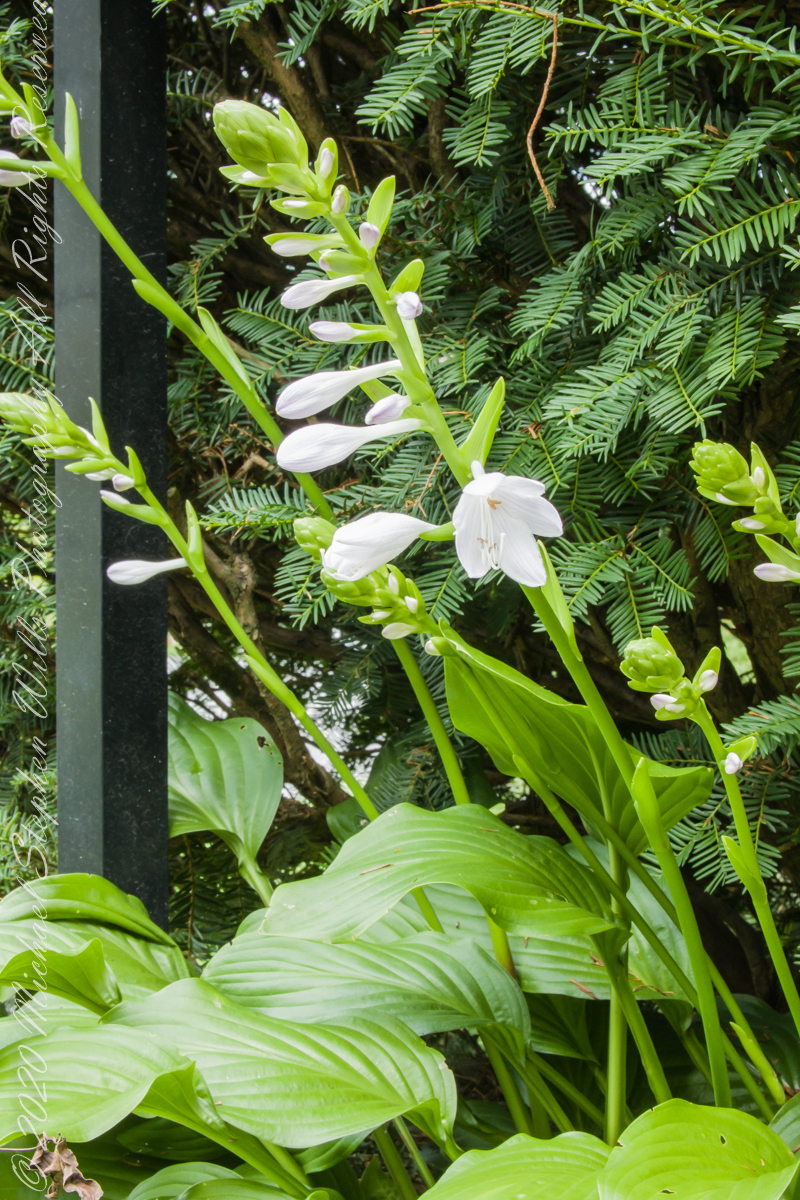
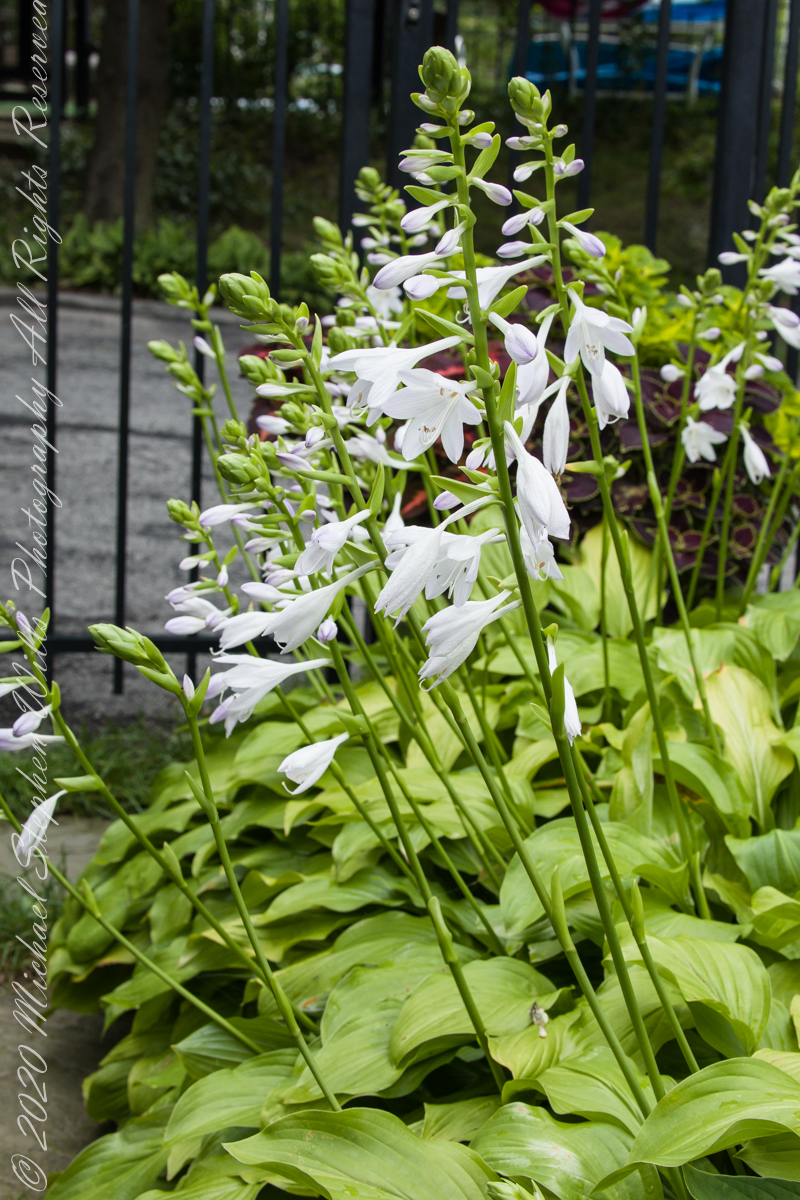
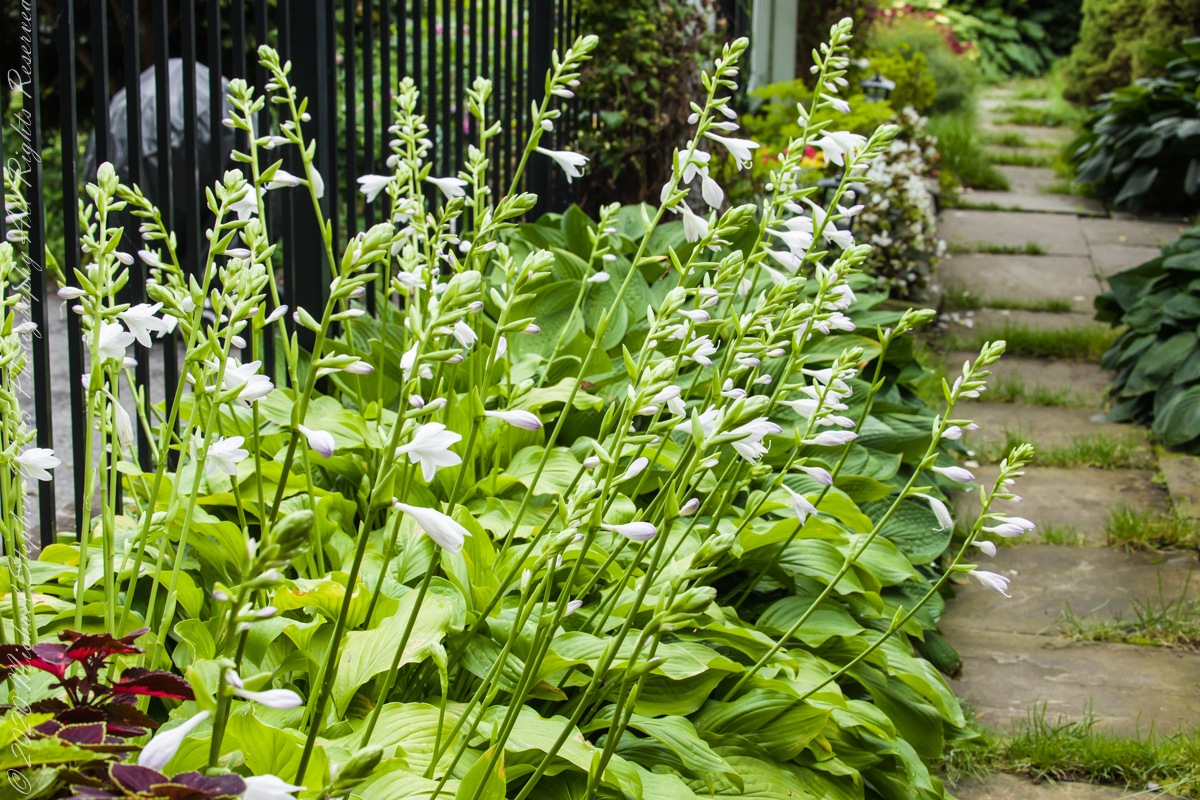
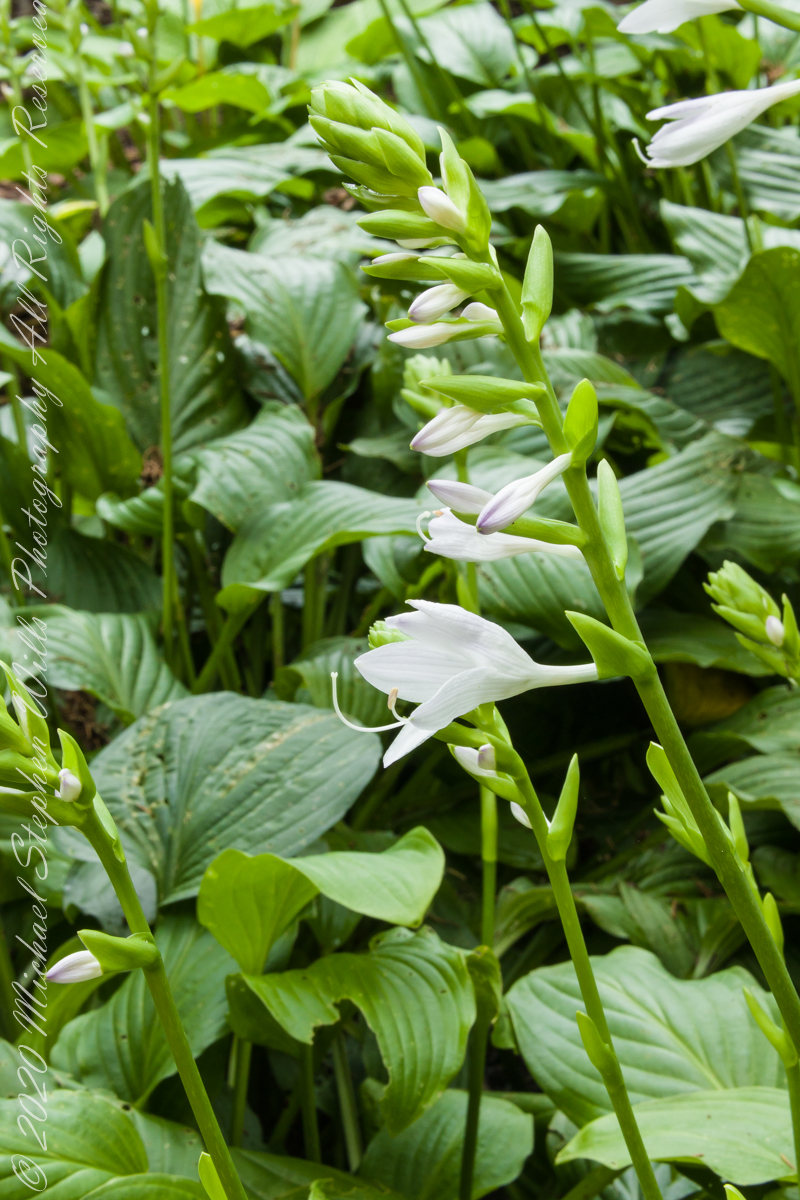
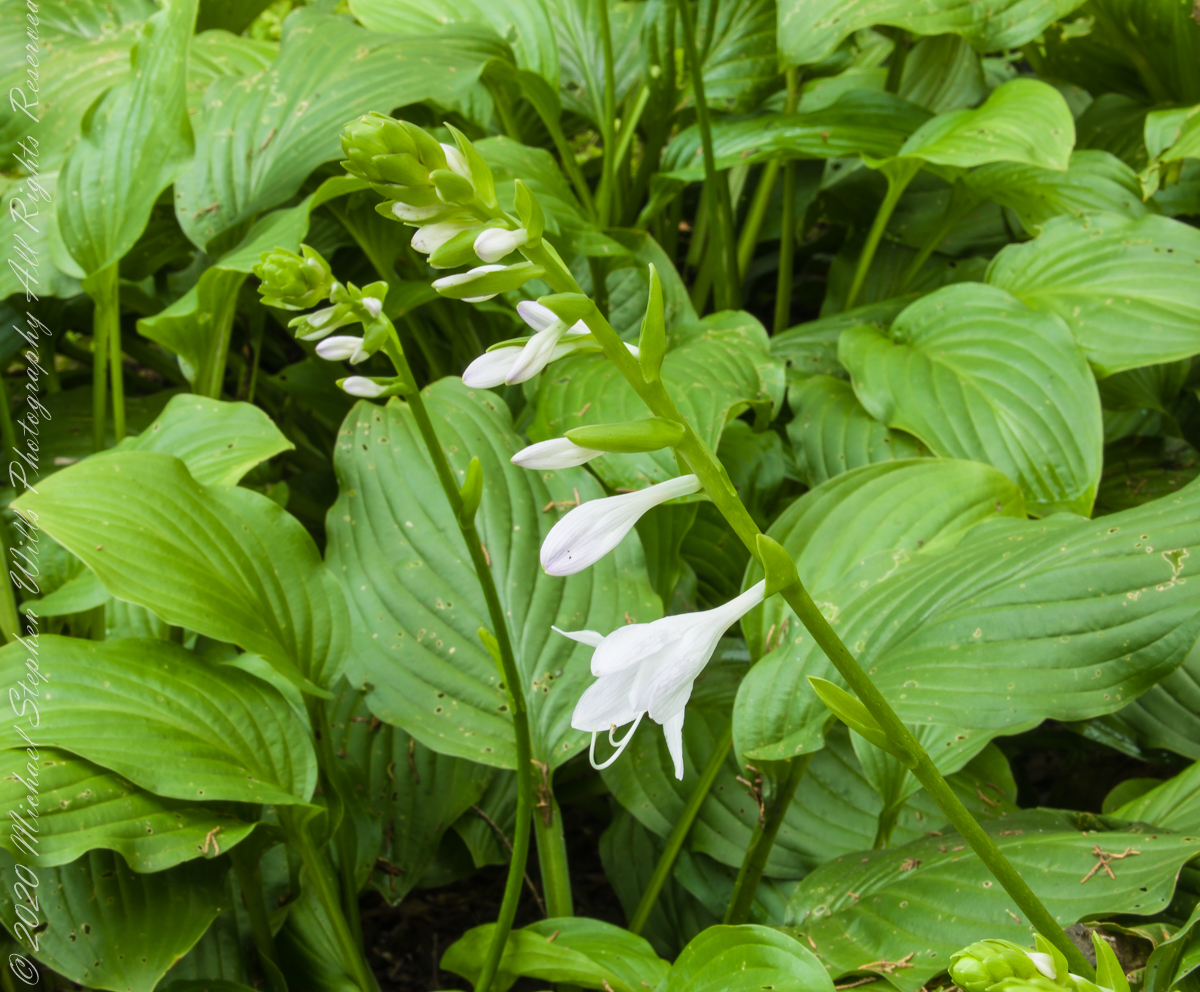
Pam requested photographs of hosta flower stalks with blooms and developing buds. I setup the Manfrotto tripod, the Canon dslr mounted with an Canon EF 70-300mm f/4.5-5.6L lens at ISO 1600 and these are the results.
Native to northeastern Asia, In 1812 the genera Hosta was named for the European botanist Nicholas Thomas Host. Also called plantain lily for the habit of the herbaceous stalks to grow radially from a center.
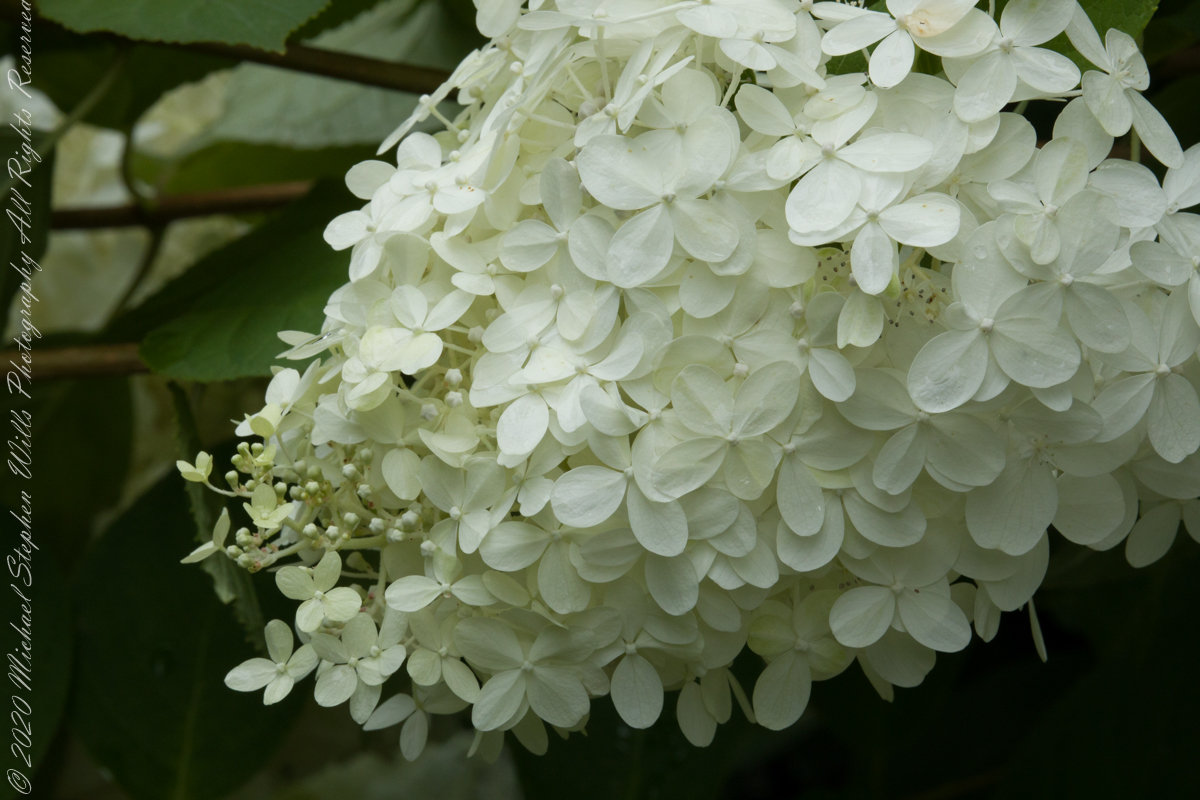
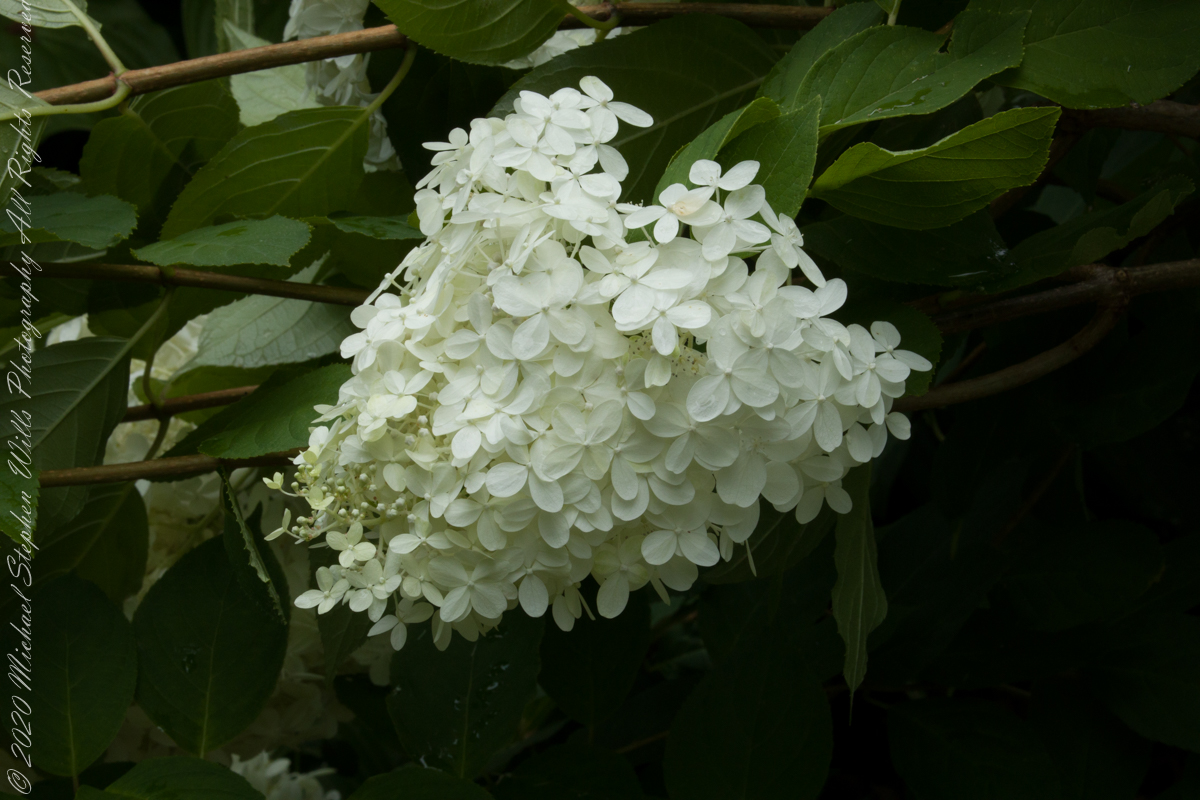
The name “Hydrangea is derived from Greek and means ‘water vessel’ (hydria), in reference to the shape of its seed capsules. The earlier name, Hortensia, is a Latinised version of the French given name Hortense, honoring French astronomer and mathematician Nicole-Reine Hortense Lepaute.” _wikipedia
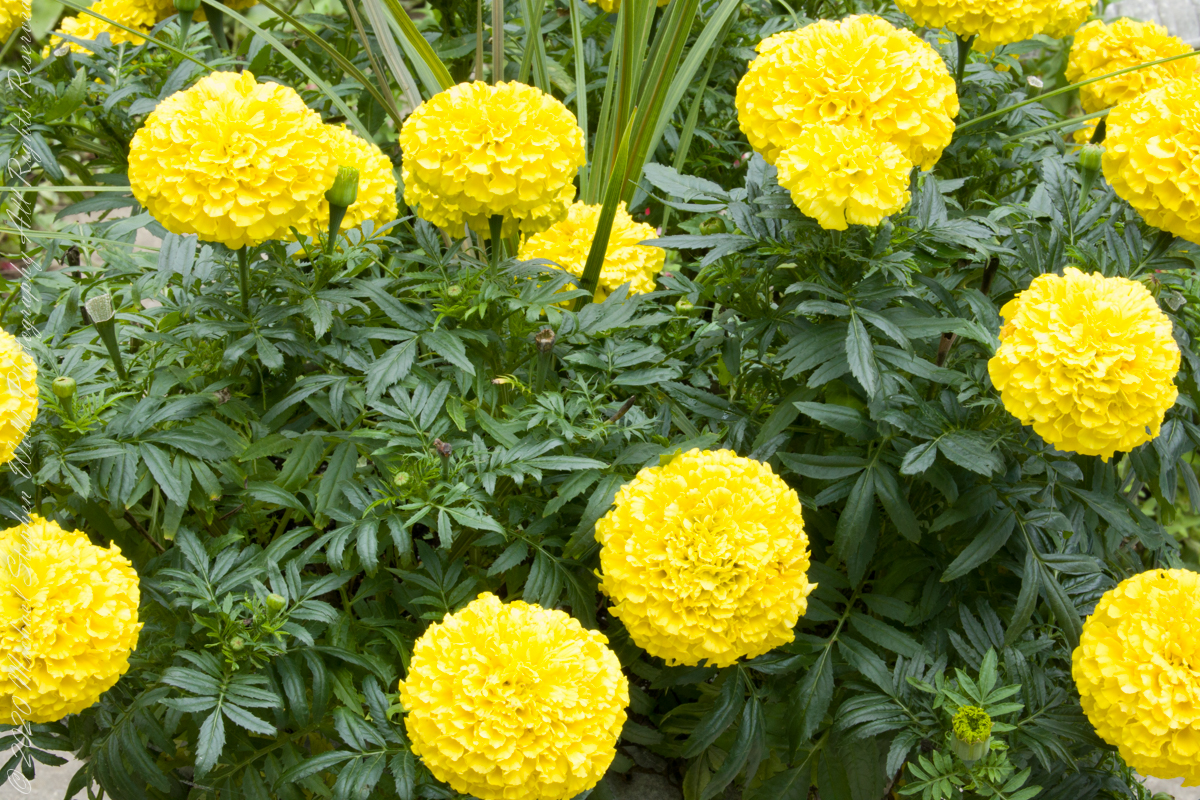
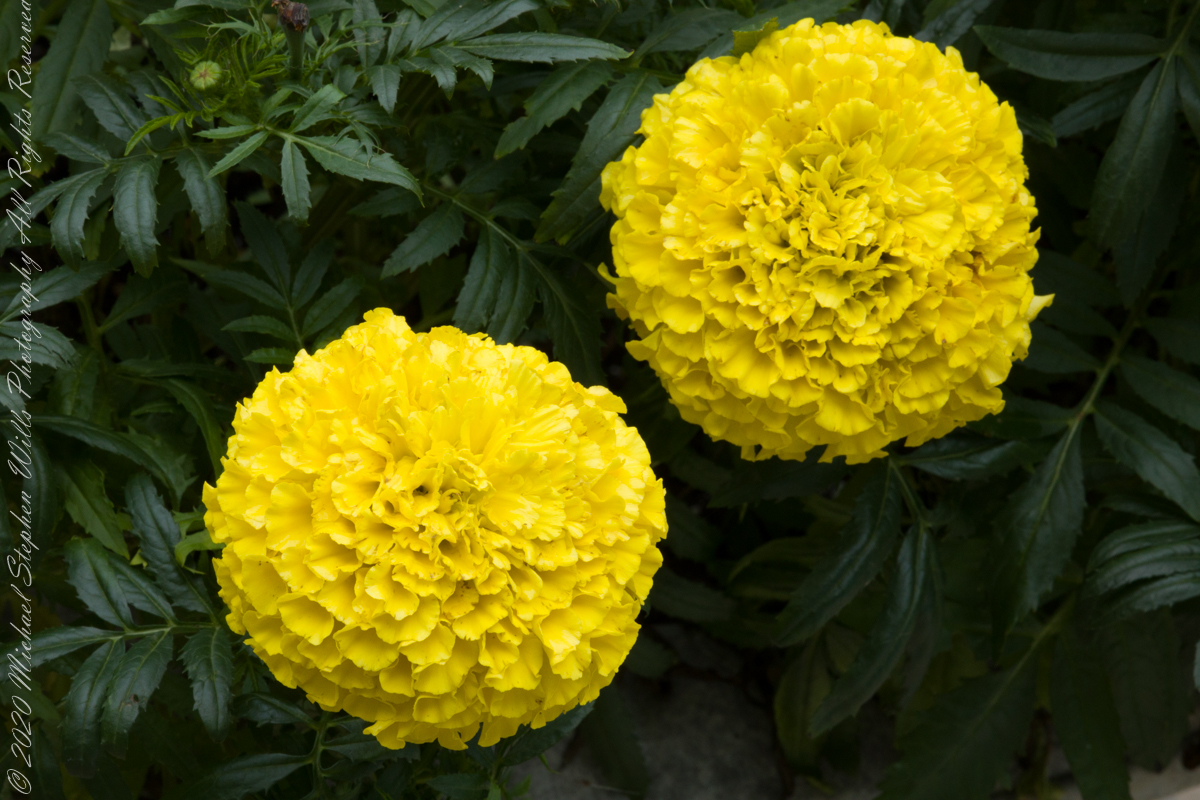
The common name “Marigold” refers to the Virgin Mary.
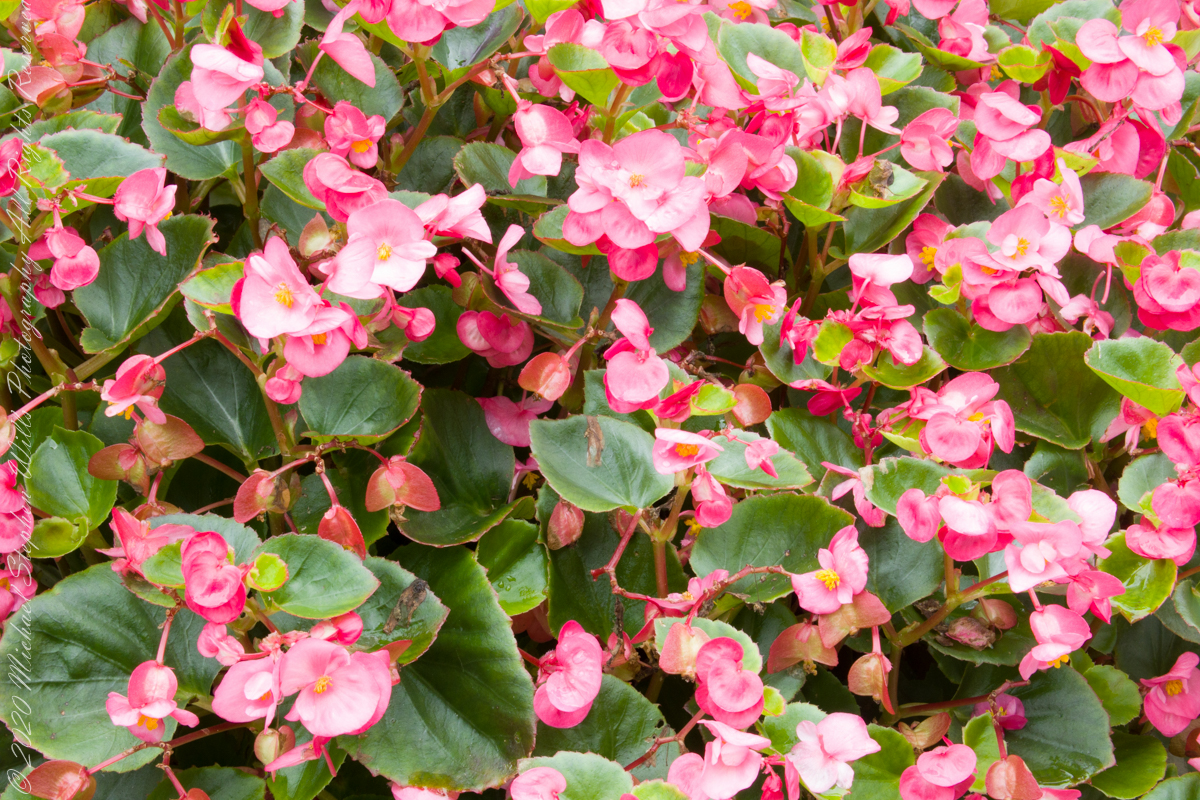
Begonias come in so many shapes and colors.
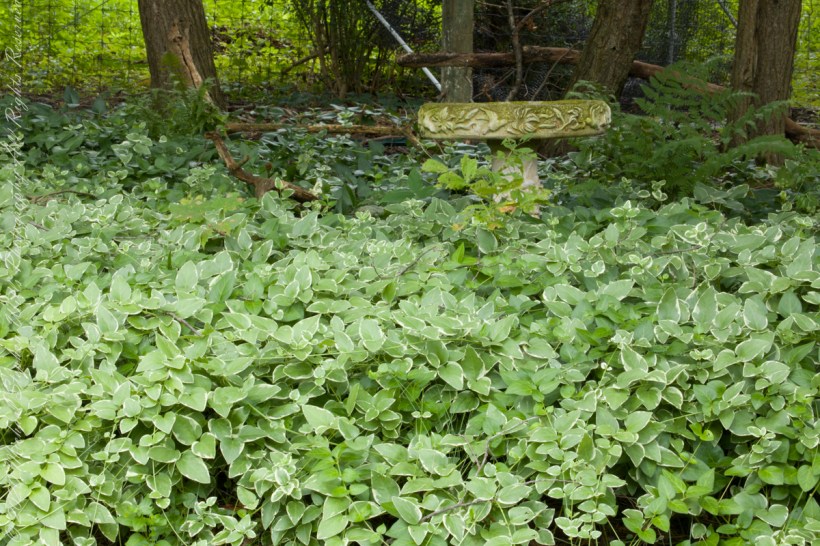
Garden Gnomes, Bird Bath and Sculpture
Copyright 2021 Michael Stephen Wills All Rights Reserved
Capturing photographs and videos on the fly using an Iphone, we visited Fillmore Glen State Park, Moravia, New York with our granddaughter, Nia. This is the third post of this series. Click me for the first post in this series.
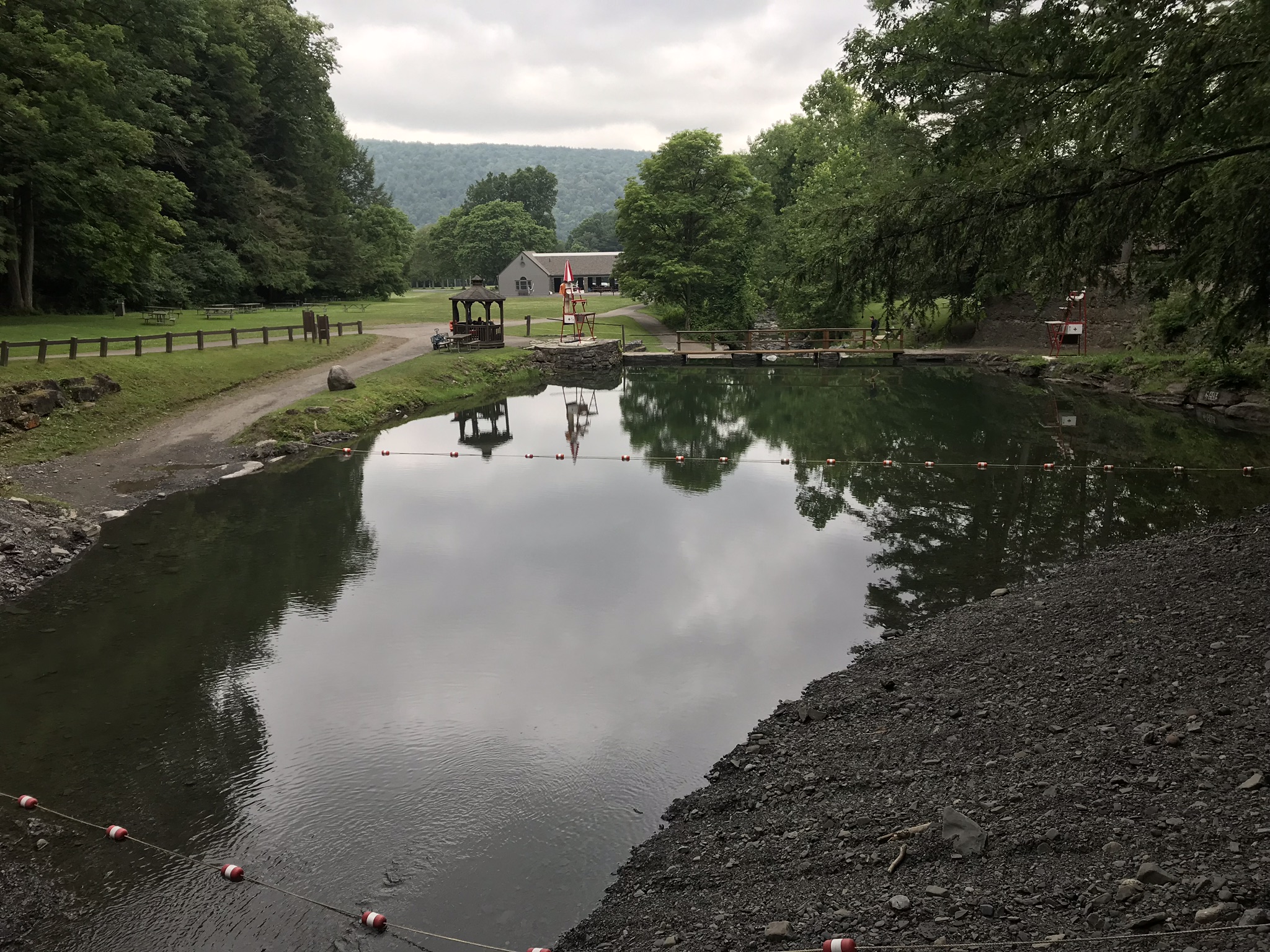
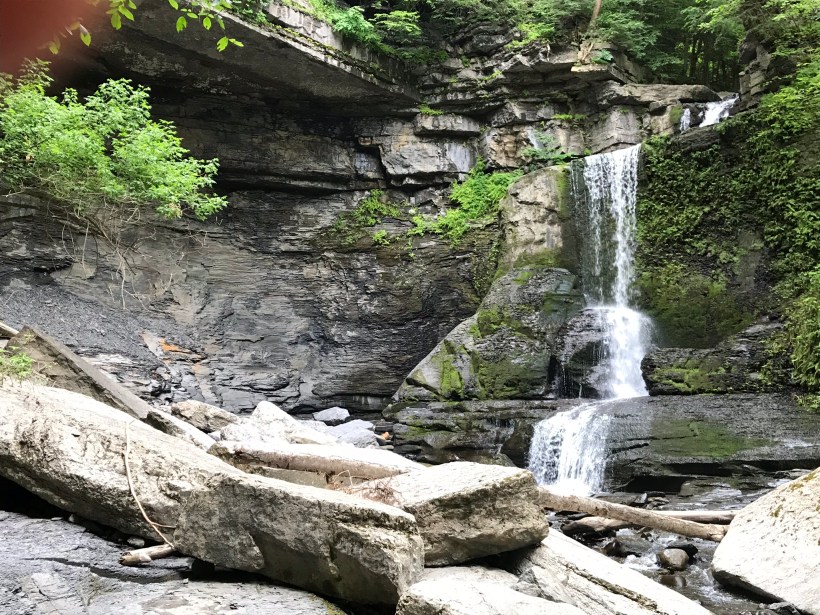
Emerging from the blind canyon of Cowsheds Waterfall, we are faced with this gorgeous pool fed by Dry Creek (yes, that is the name). Formed by a dam, the water is deep and very cold.
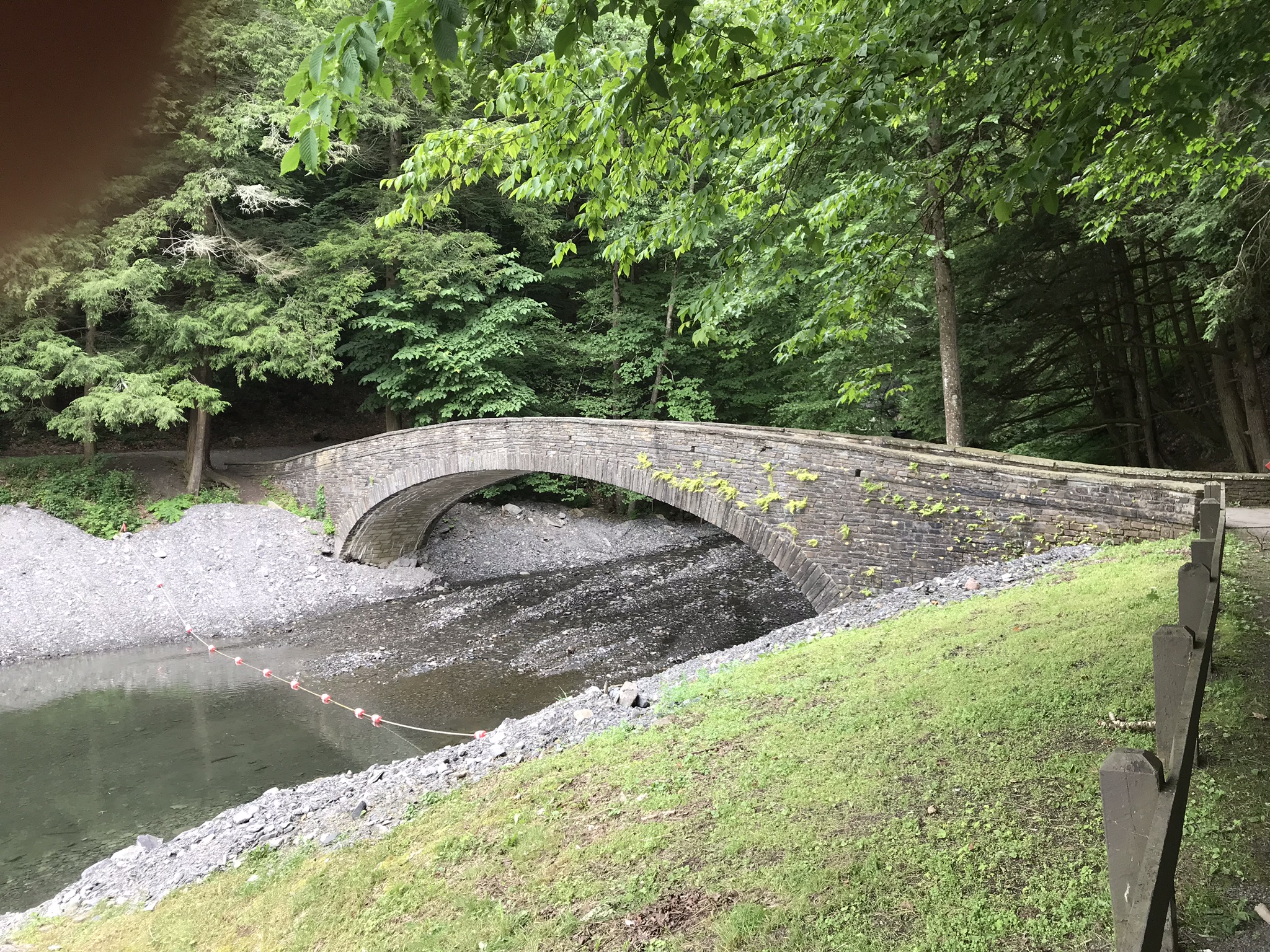
We were standing on this footbridge for the above photograph. The trail to Cowsheds is on the far side of Dry Creek and to the right.
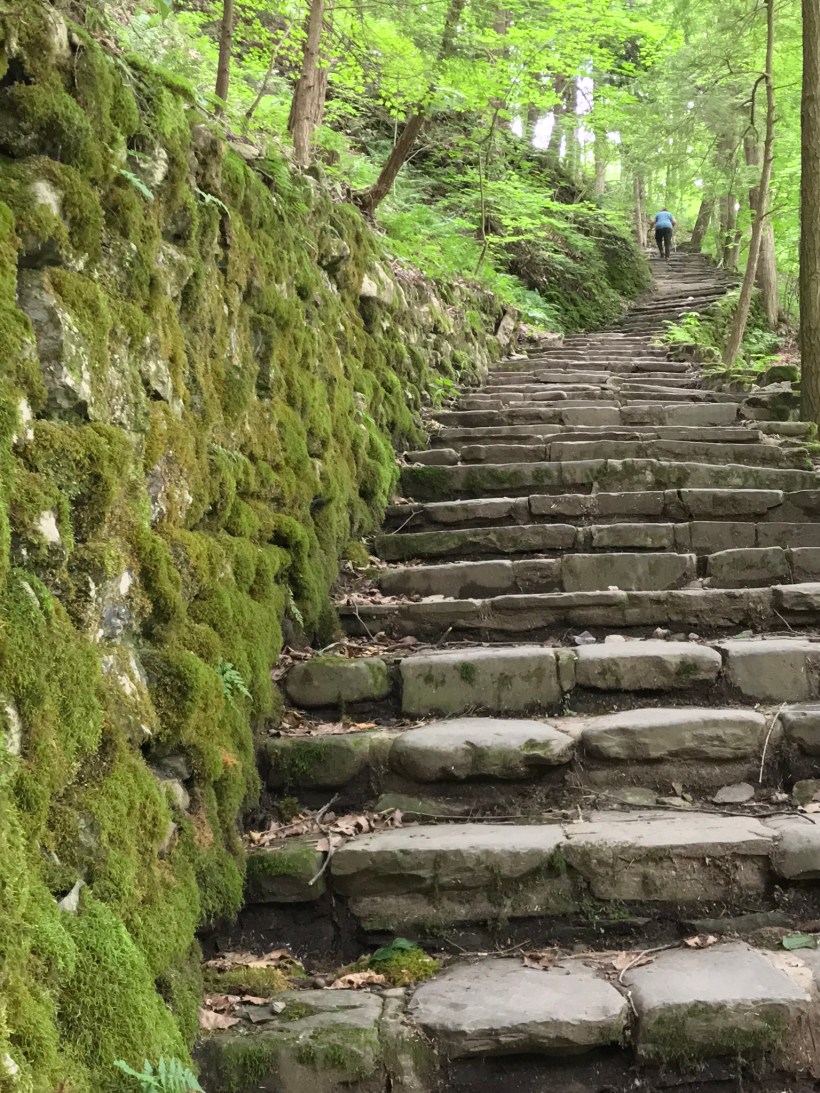
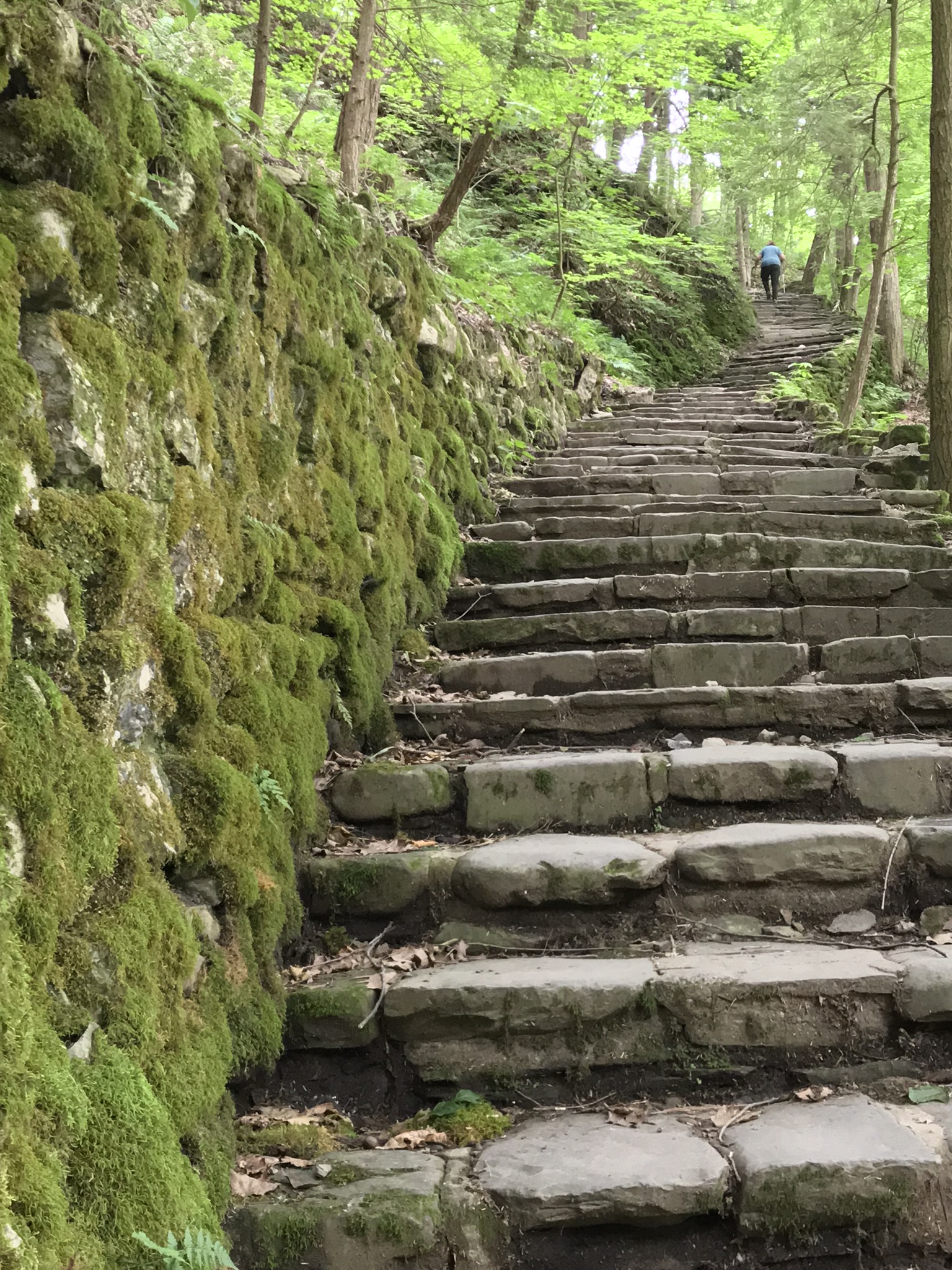
We have yet to count these steps, don’t know why. The limestone blocks were quarried locally from the same stone of the creek bed. The gorge trail begins at the top.
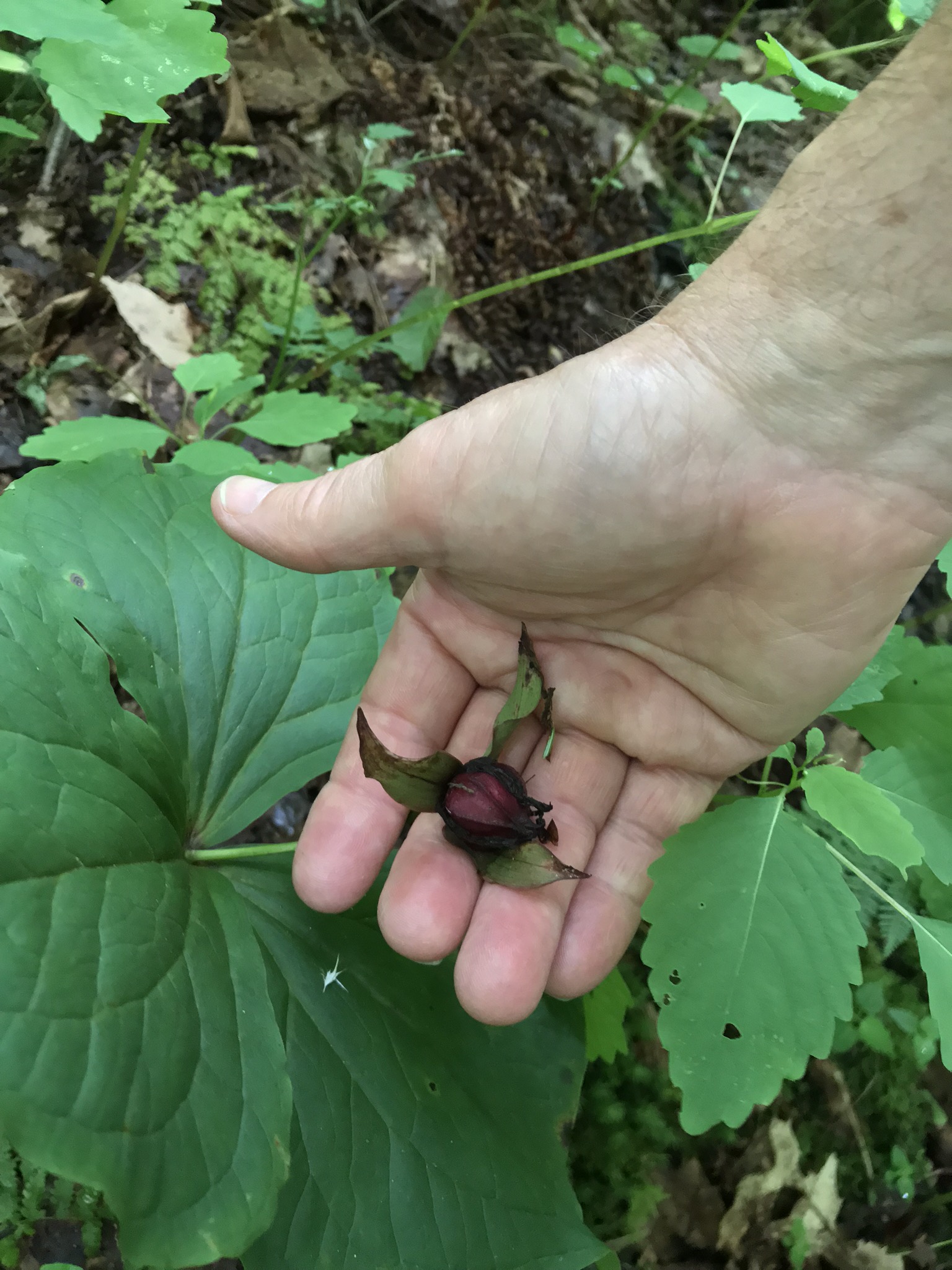
Trillium Seed Capsule
This is a Purple Trillium, I believe, formal name Trillium erectum. It is a large specimen judging form the width of the bracts, leaf like structures at the based of the flower stalk. When fertilized, the ovaries form this seed capsule containing up to 16 seeds, each with lipid with a high content of oleic acid. During summer, the capsule opens, seeds disperse. Ants encounter the seed elaiosome, the oleic acid content triggers “corpse carrying behavior.” The ants carry the seeds into their nests, consume the lipids leaving the seeds. After a year dormancy the seeds sprout and the additional depth in the ant nest provides a good start.
Trillium are a favorite food of deer, unfortunately. Some seeds are spread this way, passing through the digestive tract and out in fecal waste. I use the color of the seed capsule to identify it was Purple Trillium. In my experience the white variety (Trillium grandiflorum, and others) has a light colored seed capsule.
Copyright 2021 Michael Stephen Wills All Rights Reserved
Capturing photographs and videos on the fly, we visited Fillmore Glen State Park, Moravia, New York with our granddaughter, Nia. This is Pam and my favorite park for the lack of crowds, variety of wildflowers and dramatic views.
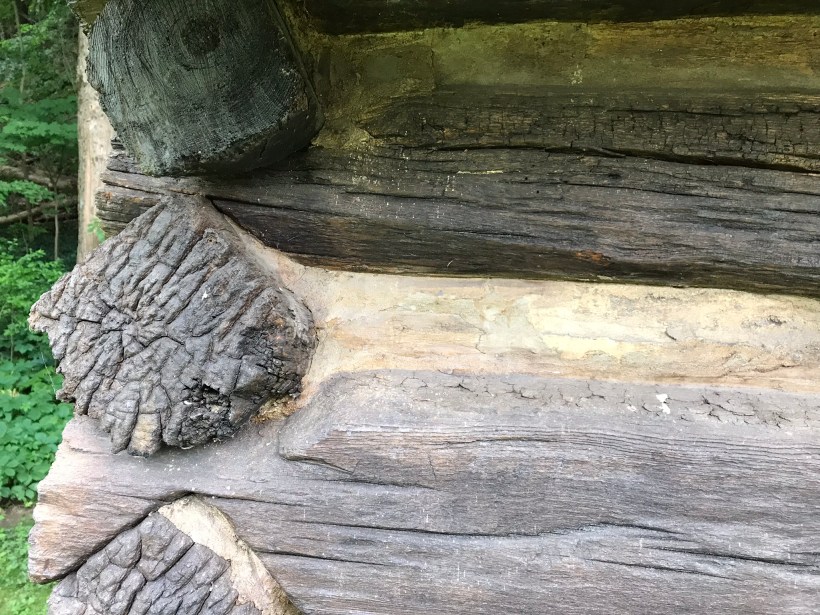
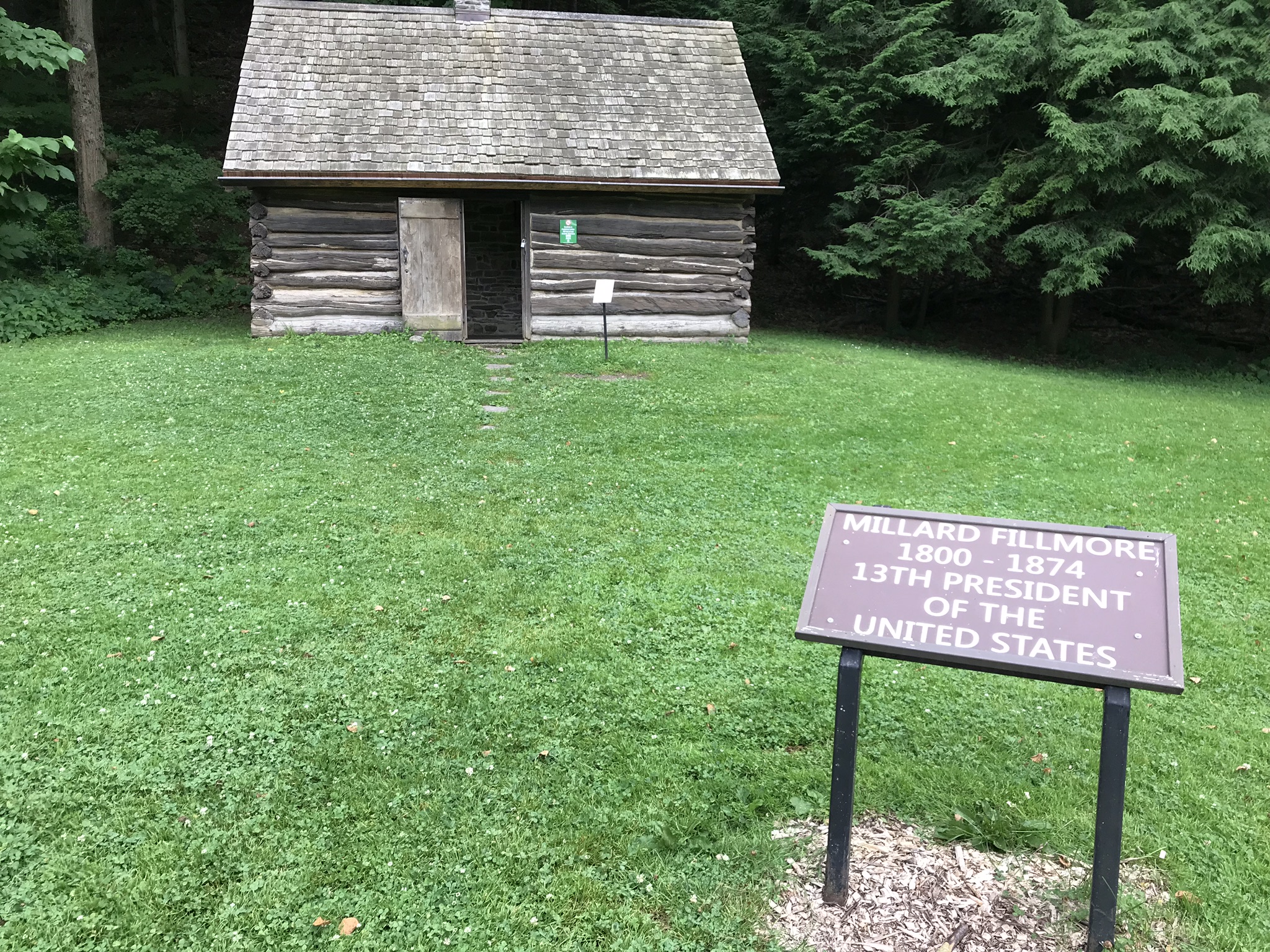
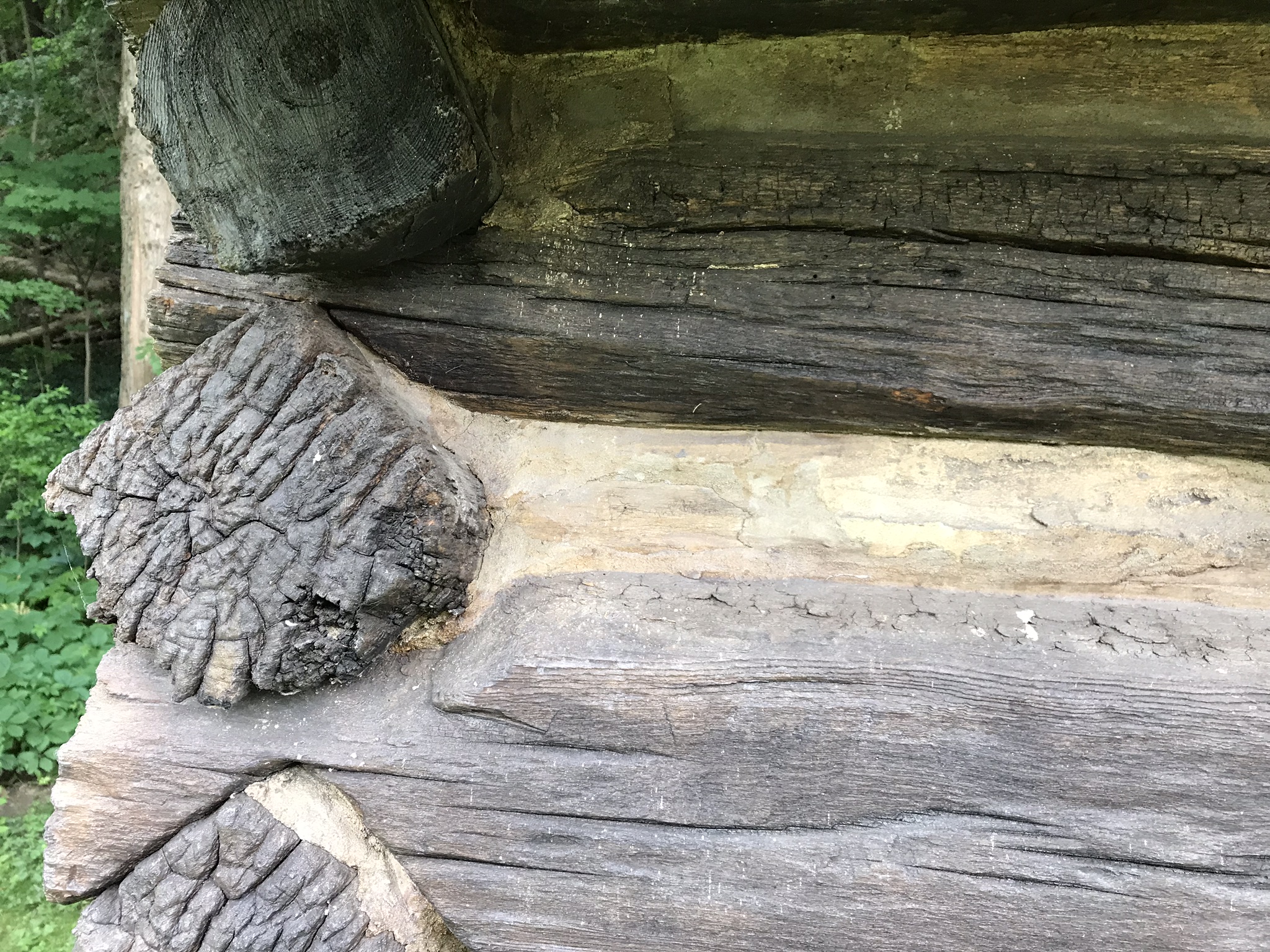
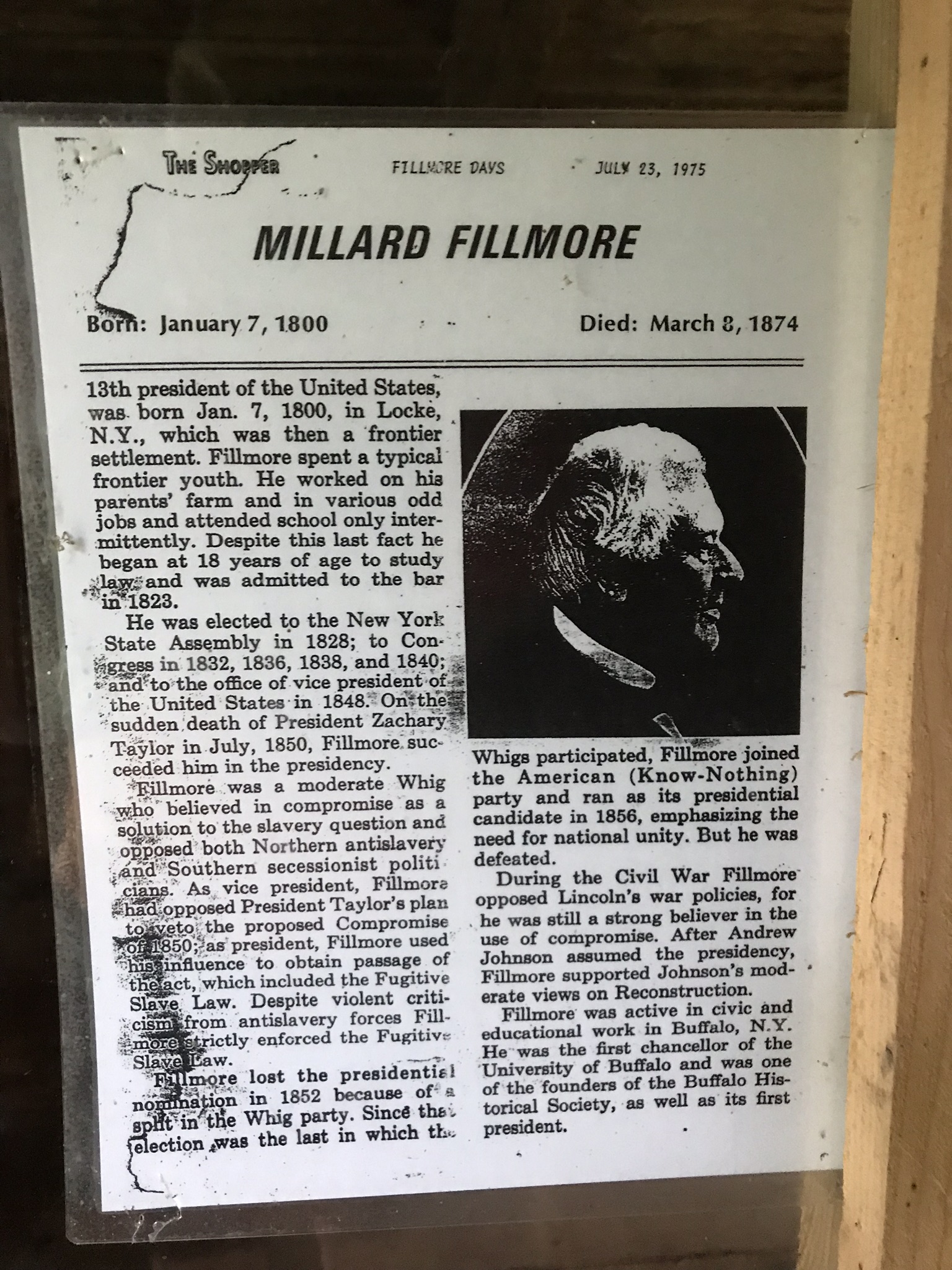
A the bottom of Gorge Trail, near the creek fed swimming pool, is a cabin moved to the park from a few miles away to commemorate an American President’s birthplace. Milllard Fillmore was born on the peneplain above the gorge of Dry Creek in a place called Locke, five miles from the modern park entrance. His birth cabin was destroyed in 1852, the land is dedicated to his memory with a monument. This cabin of a type identical was disassembled and reconstructed on this spot in 1965 by the Millard Fillmore Memorial Association.
The 480 square foot (20 by 24 feet) original (the rebuild is a bit smaller) had a central fireplace and and will chinked logs, a ceiling of simple planks.
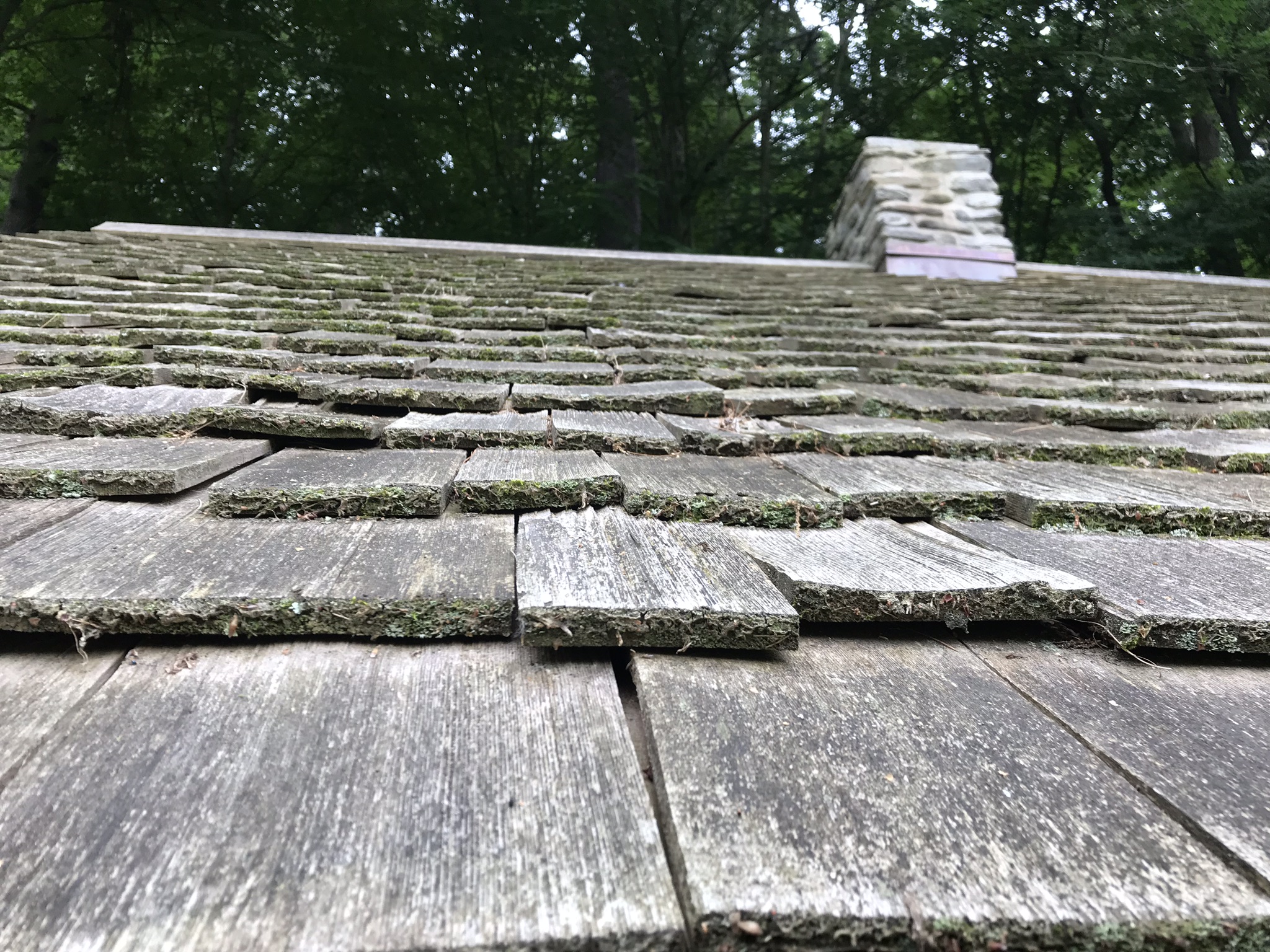
The cedar shingles were hand made, as were the nails.
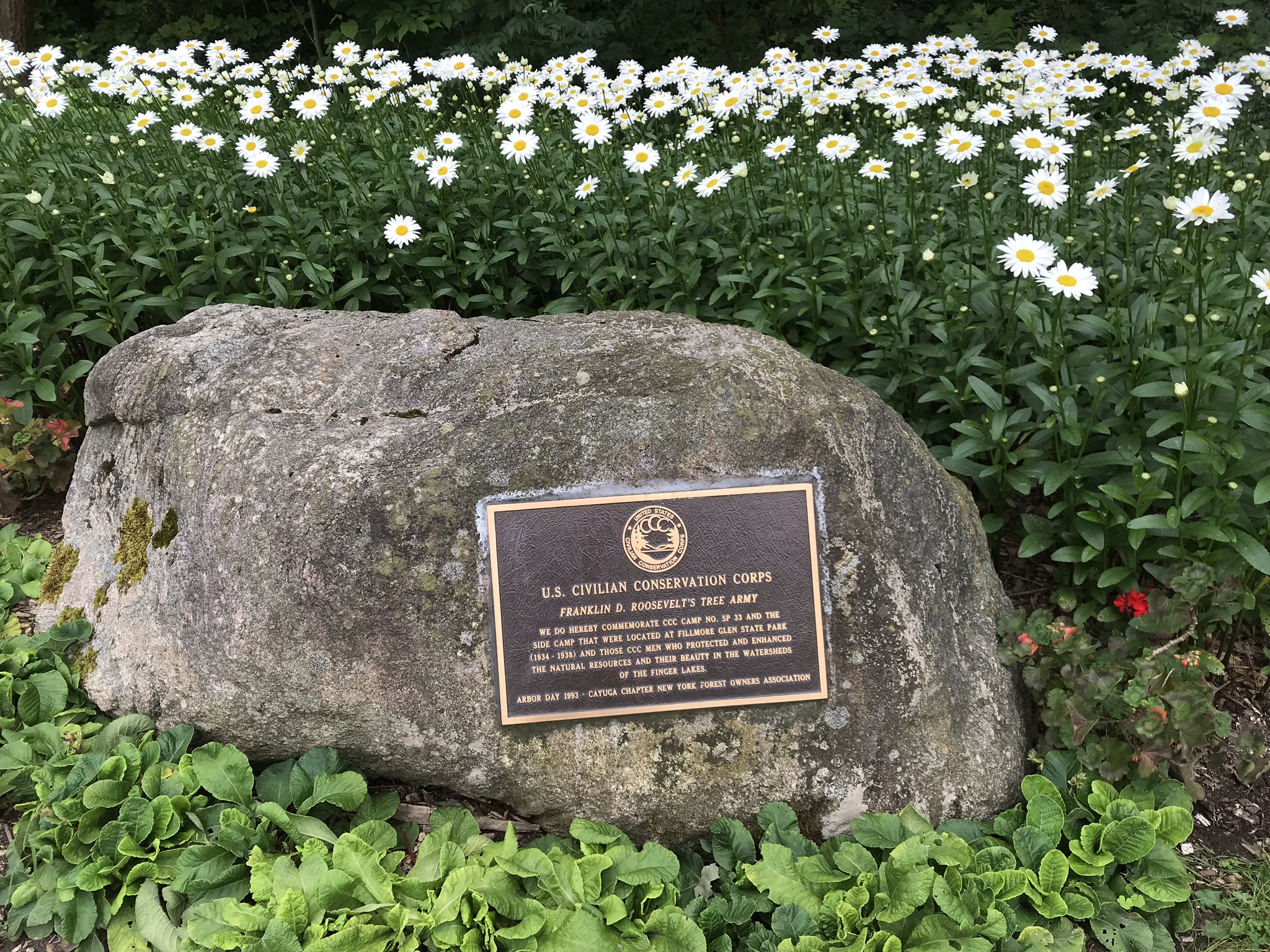
More information on a display inside the cabin.A few feet away is a memorial to Franklin D. Roosevelt’s Civilian Conservation Corps. We can thank them for building much of the park infrastructure we depend upon today.
Copyright 2021 Michael Stephen Wills All Rights Reserved.
Capturing photographs and videos on the fly, we visited Fillmore Glen State Park, Moravia, New York with our granddaughter, Nia. This is Pam and my favorite park for the lack of crowds, variety of wildflowers and dramatic views.
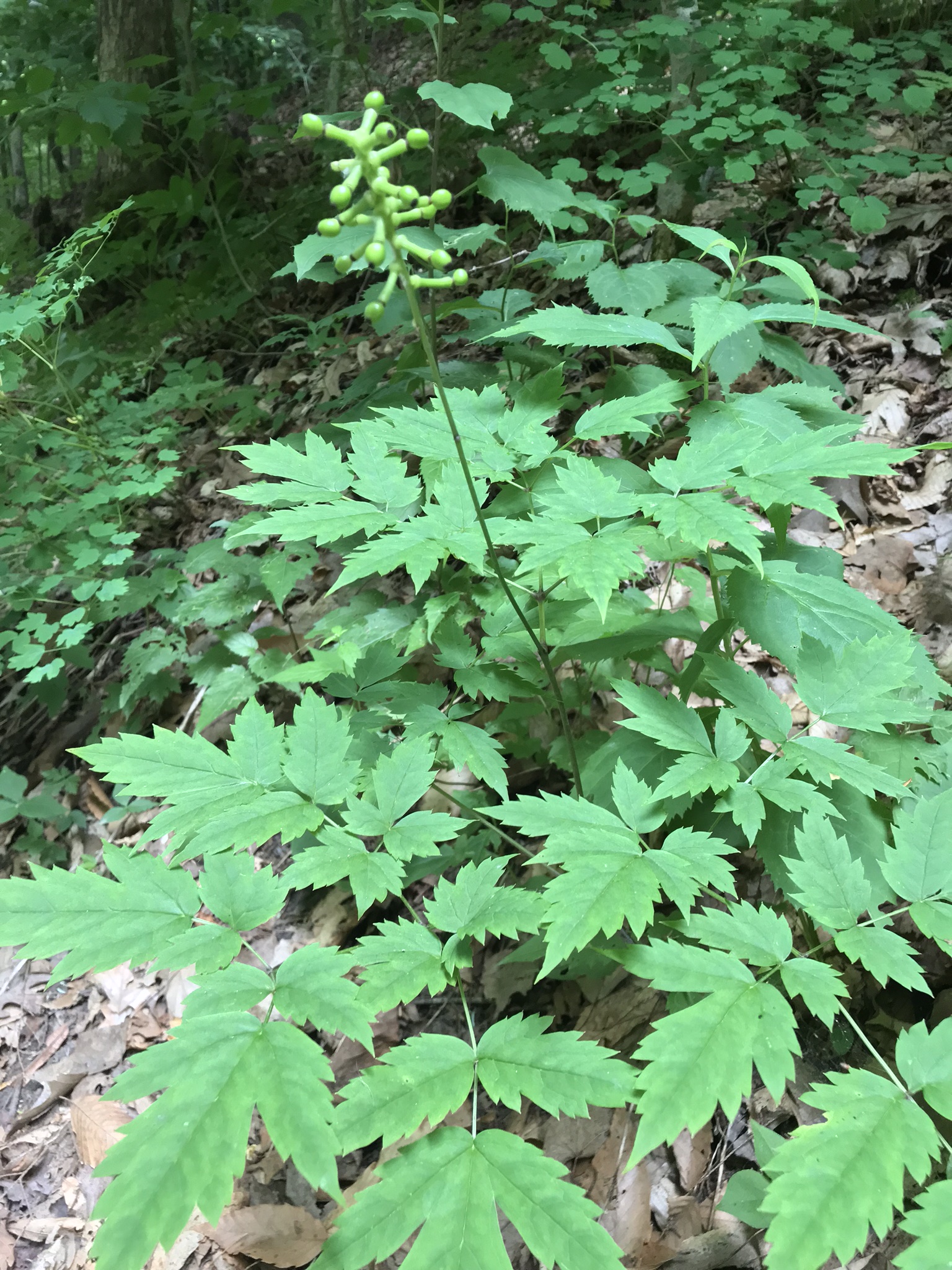
Growing near Cowsheds Waterfall, at the foot of Gorge Trail, was this strange fruiting wildflower so like a modular space station. It is Baneberry. There are white and red forms. This is white Baneberry (Actaea pachypoda). These terminal round nodes resolve into white balls with black dots, like dolls eyes. The cylindrical connectors (as in space station) turn bright red. Red Baneberry (Actaea rubra) has bright red berries. The flower is a fluffy white mass that gives no hint of the seed form.
All parts of both forms are highly poisonous, the bane of Baneberry. The berries are deadly. Ingestion of as few as two berries by children will cause death from cardiac arrest. Six for an adult.
Click any photograph for a larger view.
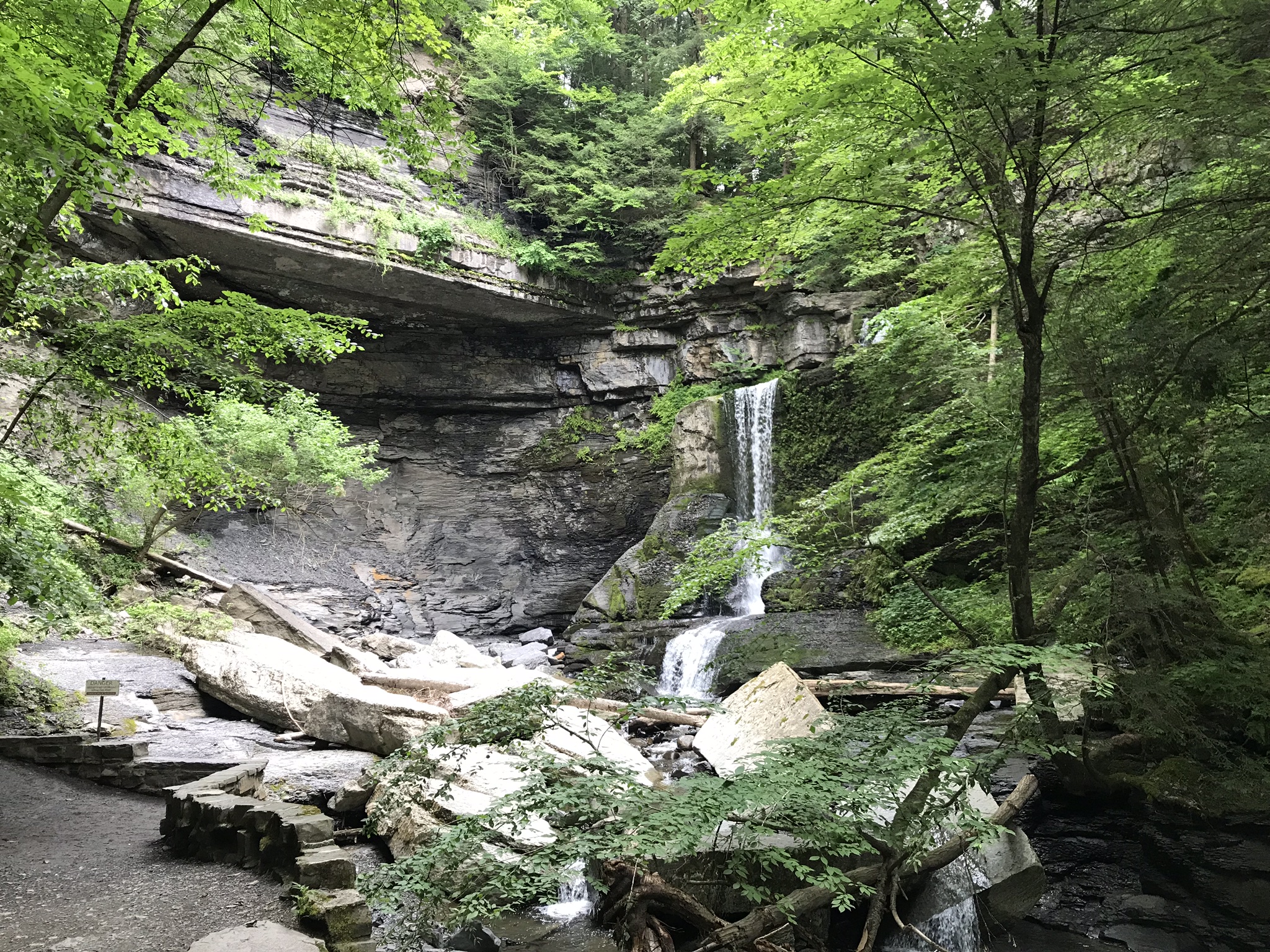
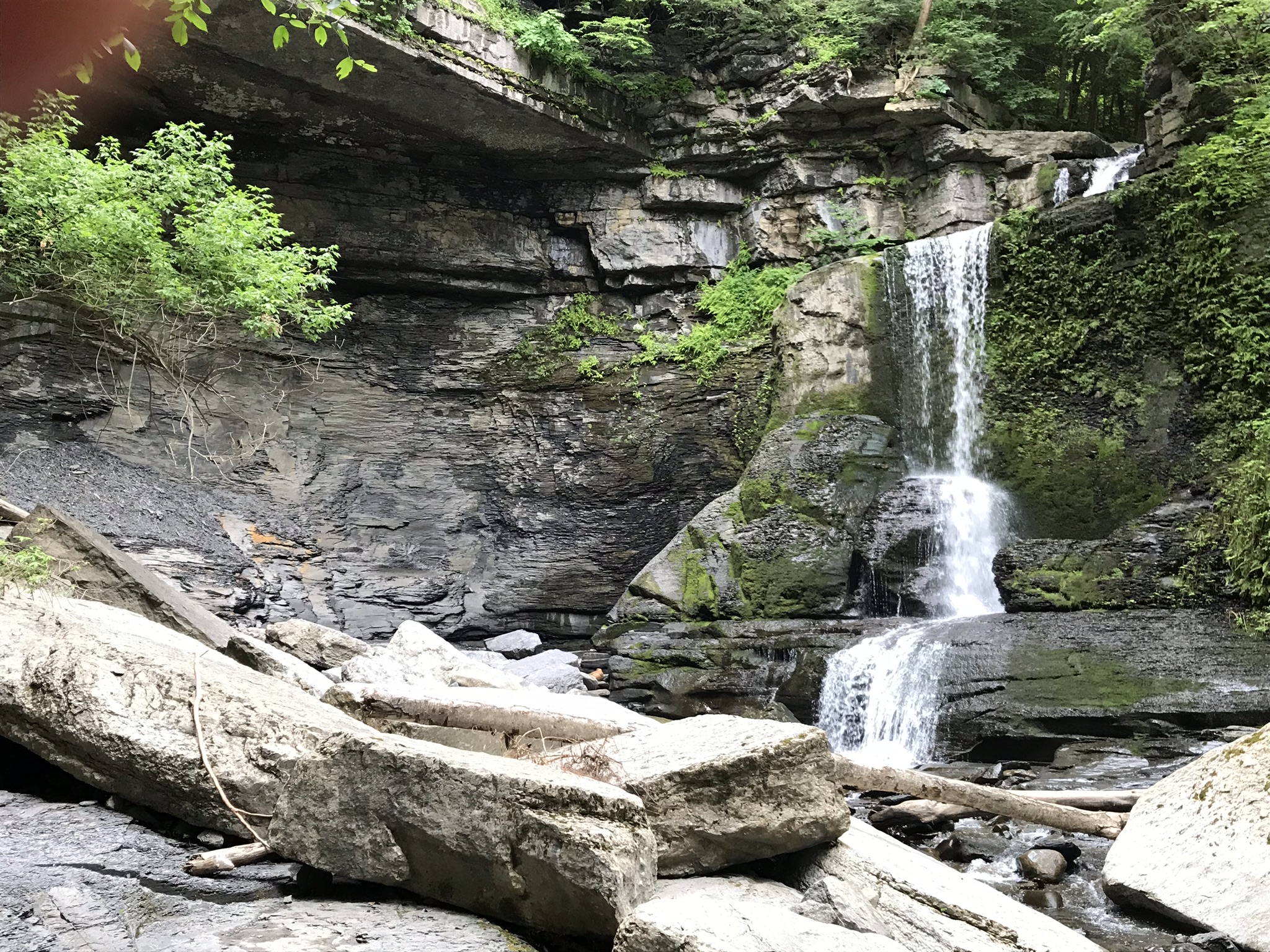
Cowsheds Waterfall is littered with enormous limestone blocks, remnants of a shelf. The rock under the limestone, a soft shale, is worn away first by running water forming a room (or Cowshed) under the limestone. Eventually, the limstone falls into the creek. The waterfall is at the end of a blind canyon with a sign at a trail end warning visitors to go no further. Careless visitors to Finger Lakes Gorges are killed, on occasion, by falling rock when they loiter beneath cliffs.
For Father’s Day 2021 I received cages for raising Monarch butterflies. A large zippered door is a great feature, one side of the cage drops away for easier access and photography. Here are some photographs of the developing chrysalis and emergence.
In the first step of chrysalis development, the caterpillar climbs to a chosen location and weaves a silk pad from the abdomen. We are looking down on the caterpillar through the top of the woven material that forms our cage. The silk pad is a small white dot to the right.
Click photograph for a larger view and use Ctrl-+ (press down Ctrl, hold, then click plus sign repeatedly) to zoom in closer.
After the silk attachment pad is complete, the caterpillar releases itself to hang in a shape of the letter “J.”
The caterpillar sheds the outer skin as the chrysalis forms around it.
Four Monarch Butterfly Chrysalis.
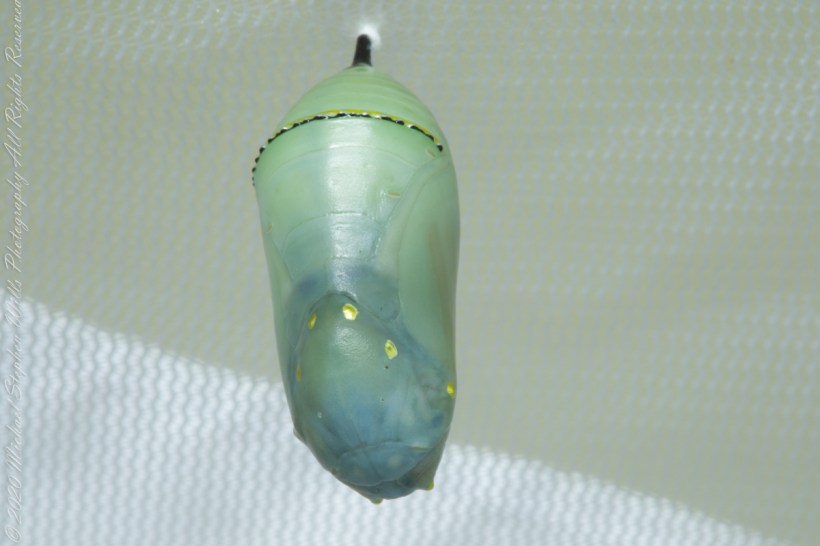
Macro of the Monarch butterfly chrysalis. The black stalk attached to the silk pad is call a cremaster.
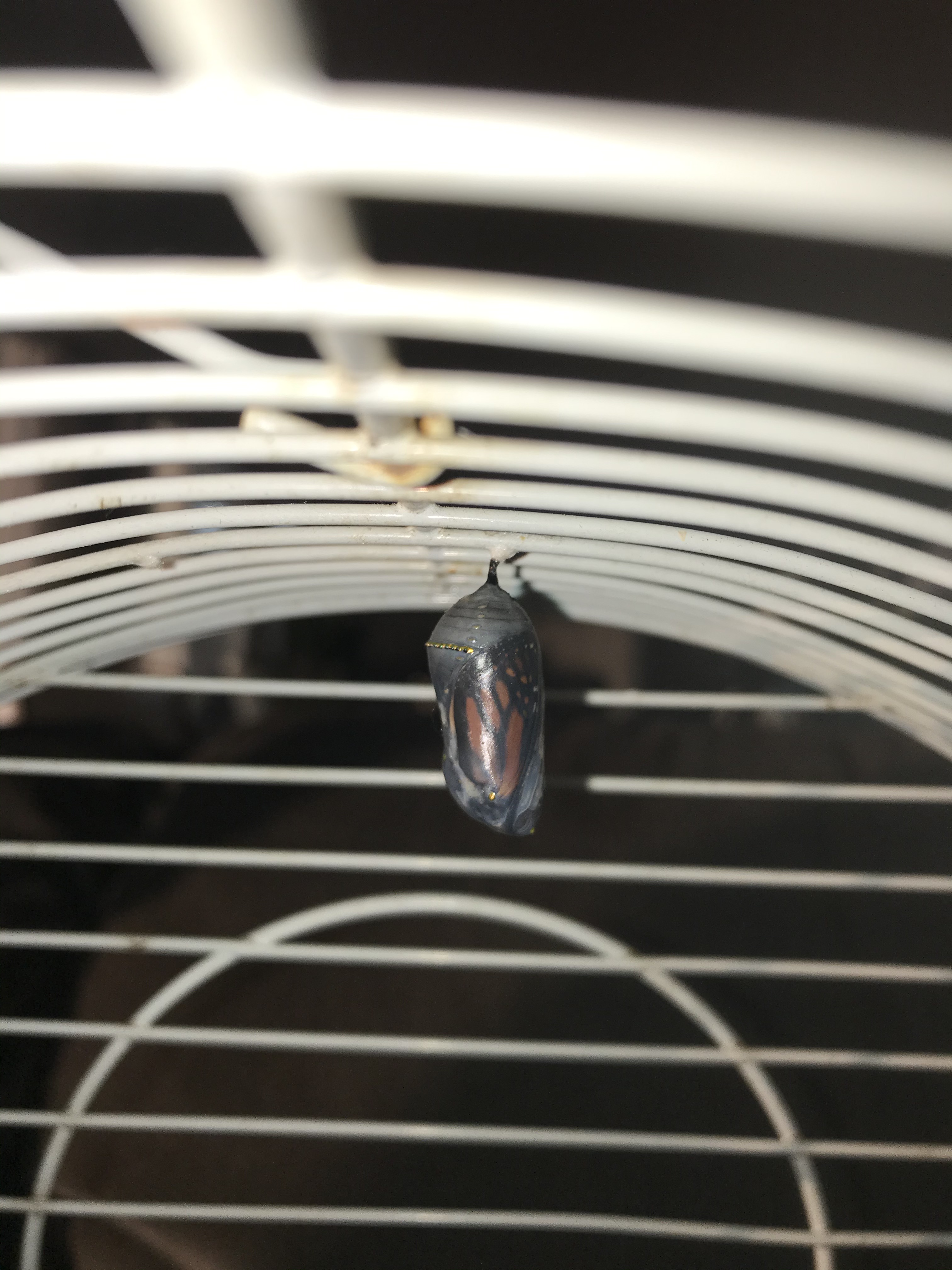
Just prior to emergence the chrysalis turns from opaque green to translucent Iappears dark). Here the wing pattern and body markings (white dots) are visible.
I used a Manfrotto tripod, the Canon EOS 5D Mark IV dslr (high resolution video capability) and Canon’s EF 100mm f/2.8 USB macro lens for the following up close coverage of a Monarch emerging followed by wing expansion.
Our “Night Blooming Cereus” is blooming earlier in 2021, blooms opened twice during nights of early August. I put the name in quotes because during the course of writing the first seven posts ( I through VII ) I learned this is NOT a member of the genus Cereus, it is actually an epiphyte of the Epiphyllum genus.
For those familiar with the early history of New York City and Hudson Valley it is easy to see why a common name of the plant is “Dutchman’s Pipe Cactus.”
Travelling light, using IPhone captures during a 4.6 mile walk on the Gorge and North and South Rim Trails of Taughannock Falls New York State Park, Finger Lakes Region near Ithaca, New York. A few waterfalls and sights along the way. Distance is from the “Health” app on my phone.
A “Rim Trail” follows the edge of the gorge. The “Gorge Trail” is within the gorge, along side the creek and ends at the 200+ foot waterfall.
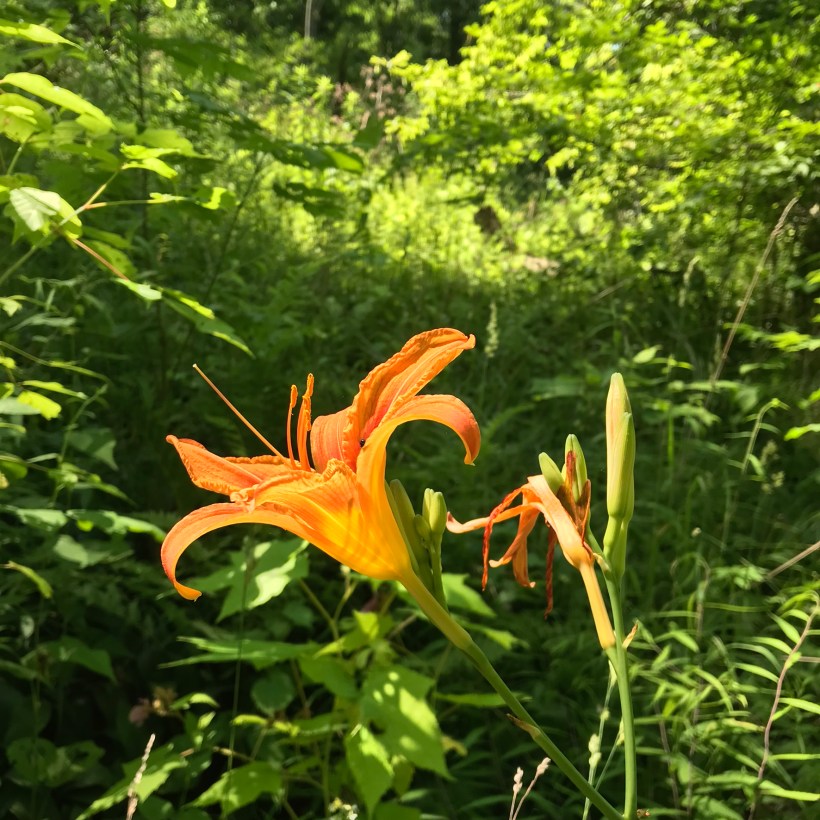
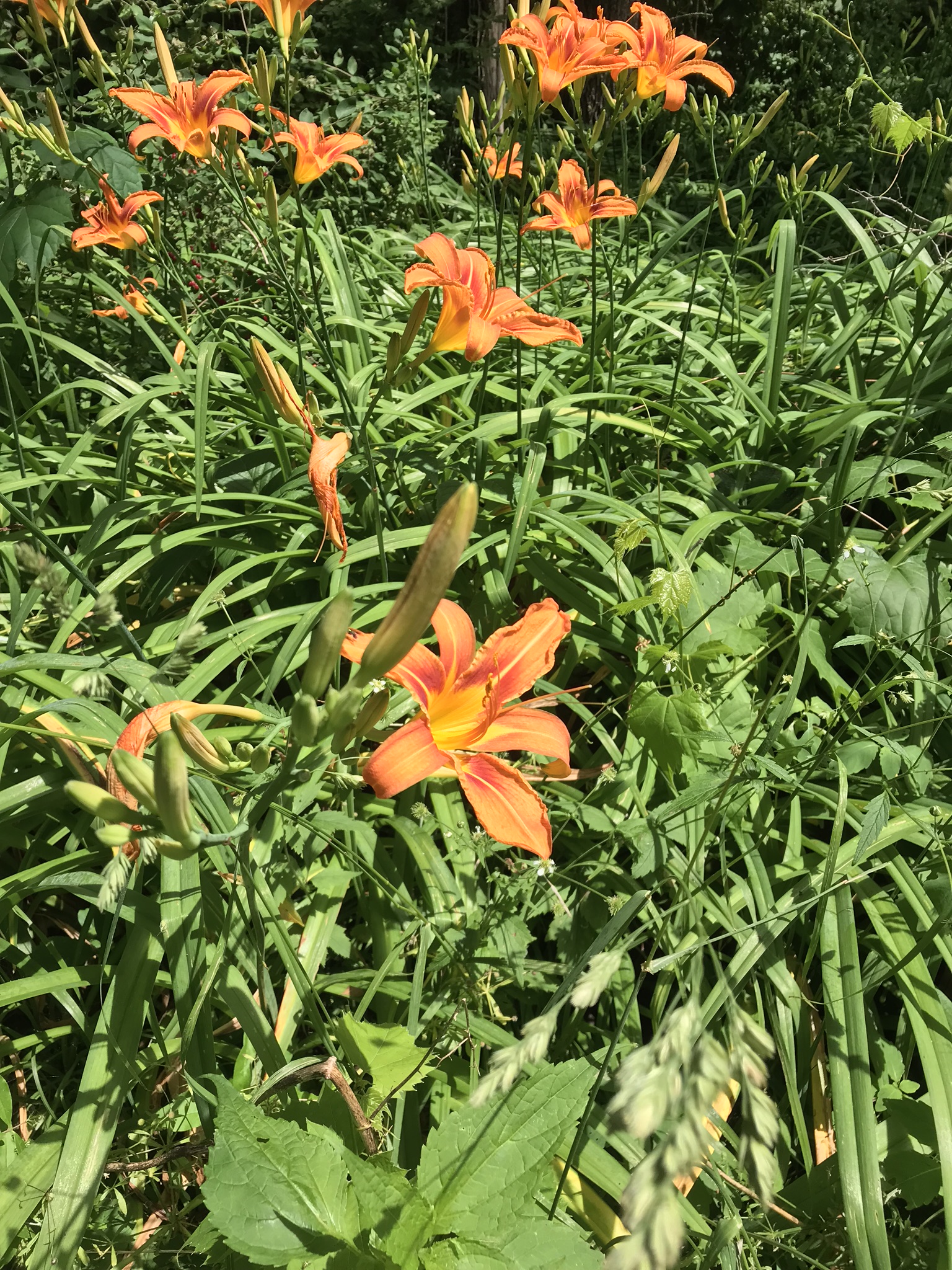
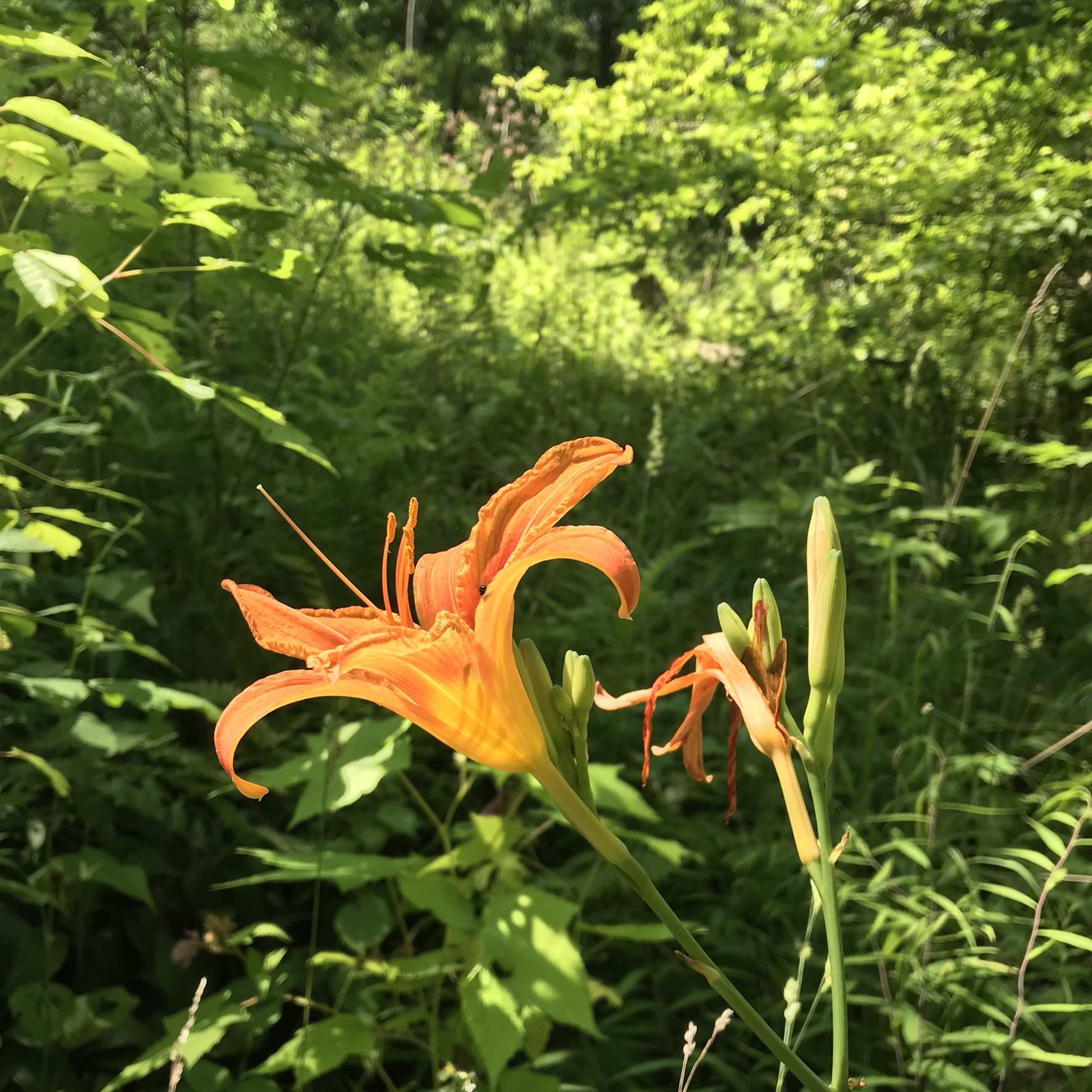
This was the day Tiger Lilies bloomed along the roads the entire 13 miles. This stand was at the beginning of the South Rim trail.
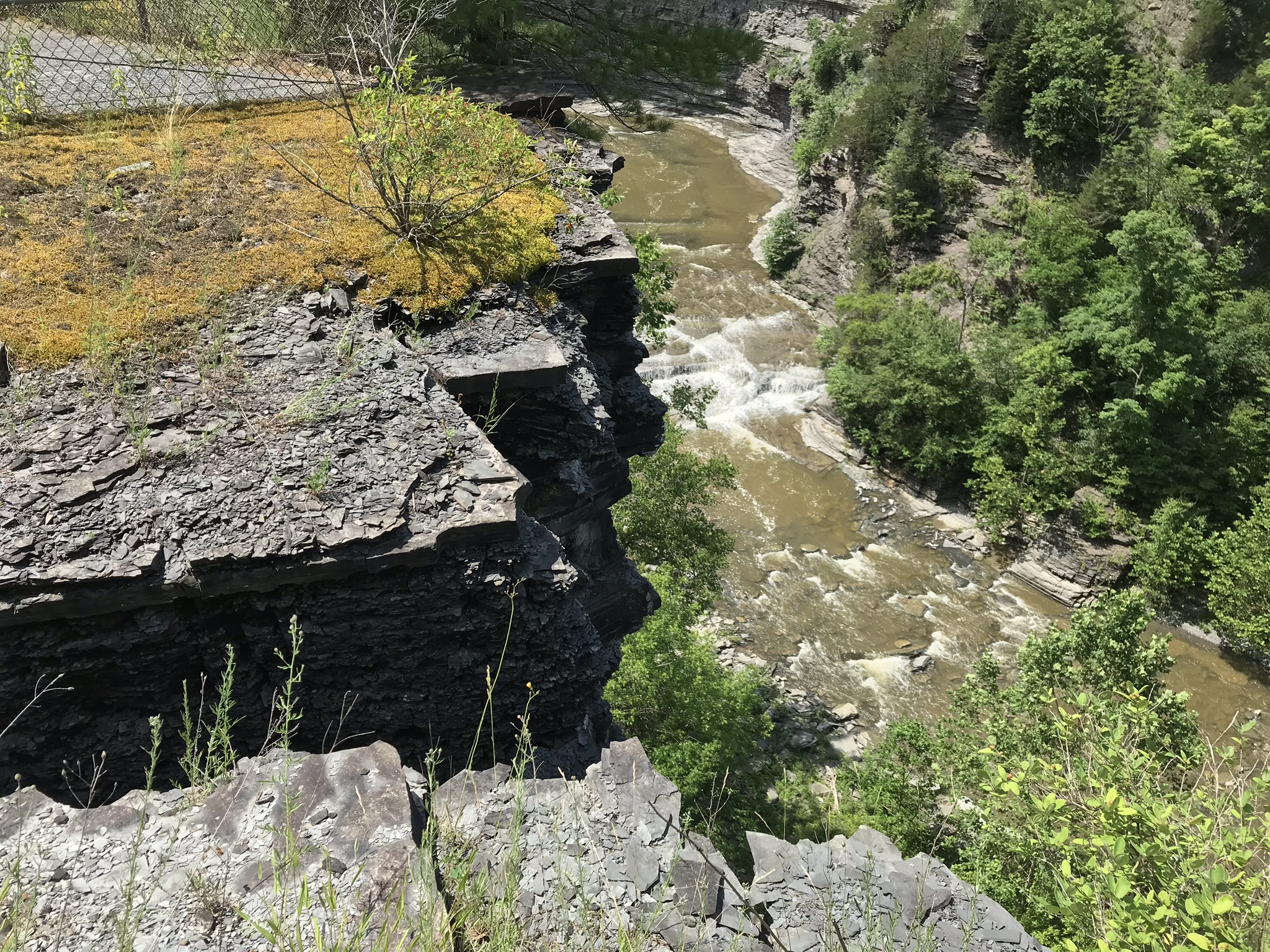
A few steps farther the trail opens up to the expanse of the gorge above the waterfall, a place to contemplate the age of these rock gazing into the open space. There is no access to the bottom of the gorge here.
On days like this, the experience carries me away, enjoying the moments and forgetting the phone in my pocket. When I come to, it is the bottom of the South Rim trail at the entrance to the Gorge Trail and the hordes walking to the falls on a Sunday afternoon. This waterfall welcomes everyone at the beginning.
The vantages I choose usually exclude the crowds, here is a video of the observation platform beneath the 215 foot Taughannock Falls. Any closer and the camera lens is covered with mist. Feels great on this hot day.
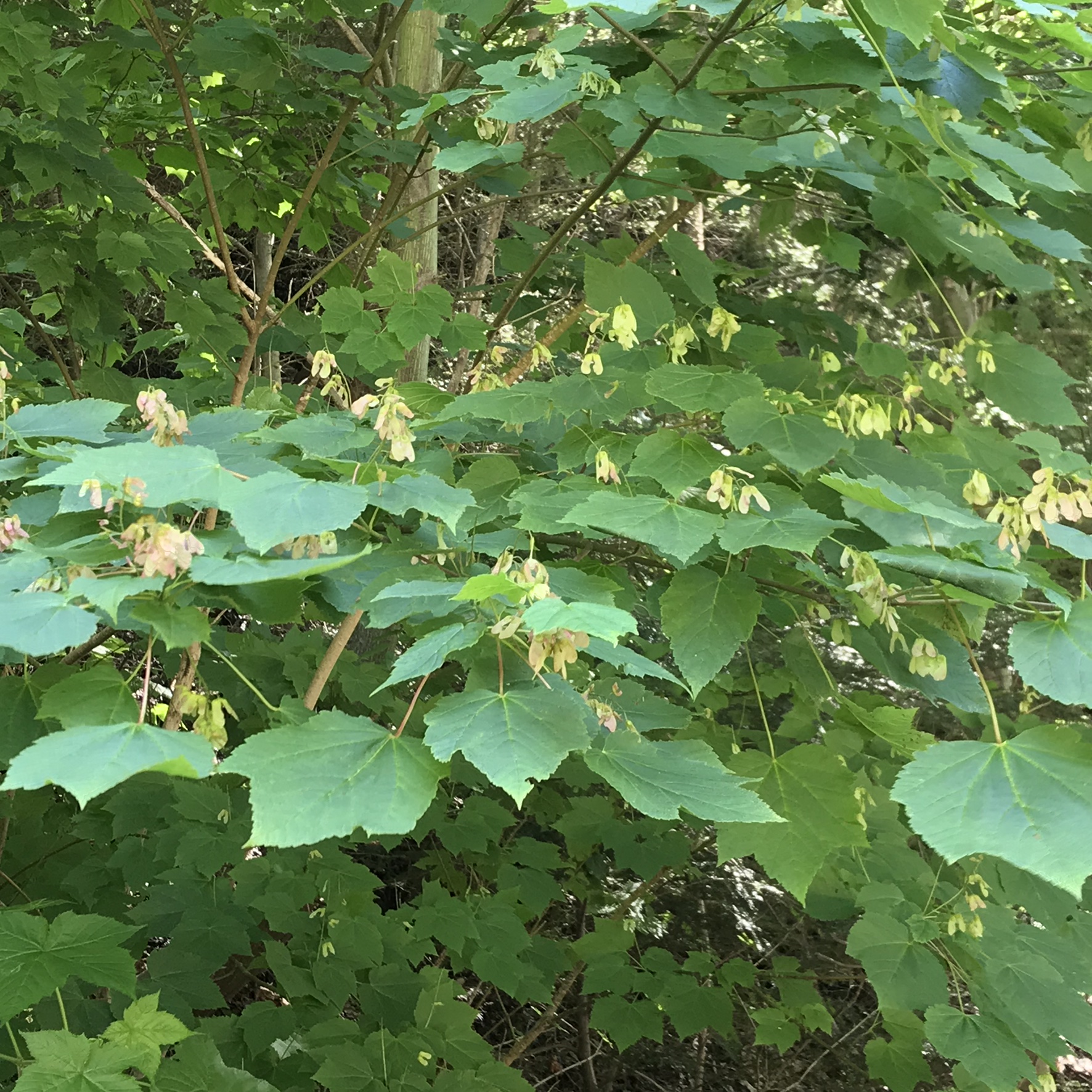
I capture this tree growing along the Gorge Trail for later identification. It has fruits similar to a maple tree. Called samaras and also known as helicopters, maple keys, whirlybirds, and polynoses these must distinguish this tree as a member of the genus Acer though the leaf shape gives me doubts. Here the gorge changes direction almost 90 degrees from, generally, north/south to east/west. There is plenty of sunlight here and the tree has taken root in the talus of the cliff face.
I researched it and discovered the scientific name is Acer pensylvanicum and more commonly known as Moosewood. There is a “famous” restaurant in Ithaca, named Moosewood, so now I know there is indeed a tree growing locally by that name. The restaurant is near the commons of Ithaca and is 100% vegetarian. The last time Pam and I at there we were packed like sardines, like some collective, and we’ve never been back. The food is good and the basis of their fame is a cookbook by the same name.
Backlit lilies found on the climb up the North Rim trail.
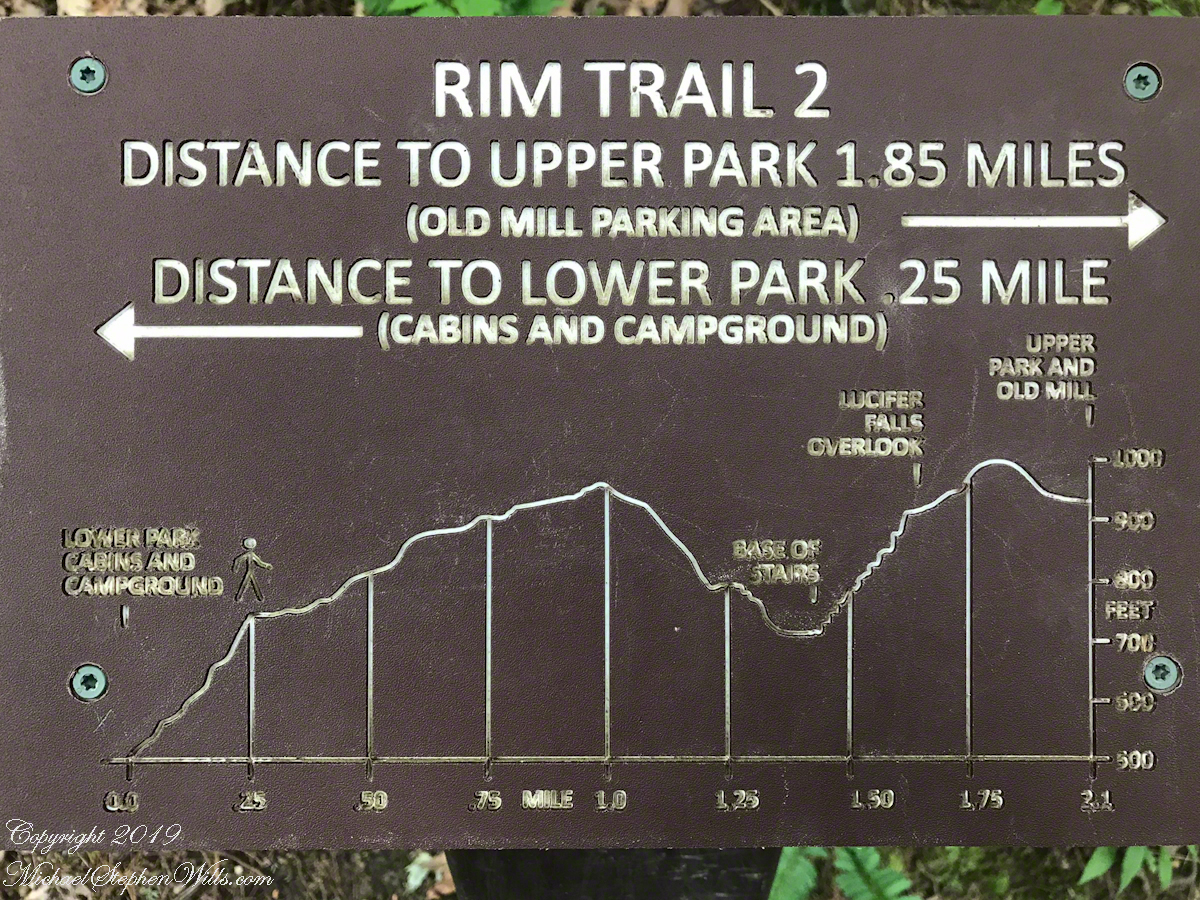
Travelling light, using IPhone captures during a 5.7 mile walk on the Gorge and South Rim Trails of Robert H. Treman New York State Park, Finger Lakes Region near Ithaca, New York. A few waterfalls and sights along the way. Distance is from the “Health” app on my phone.
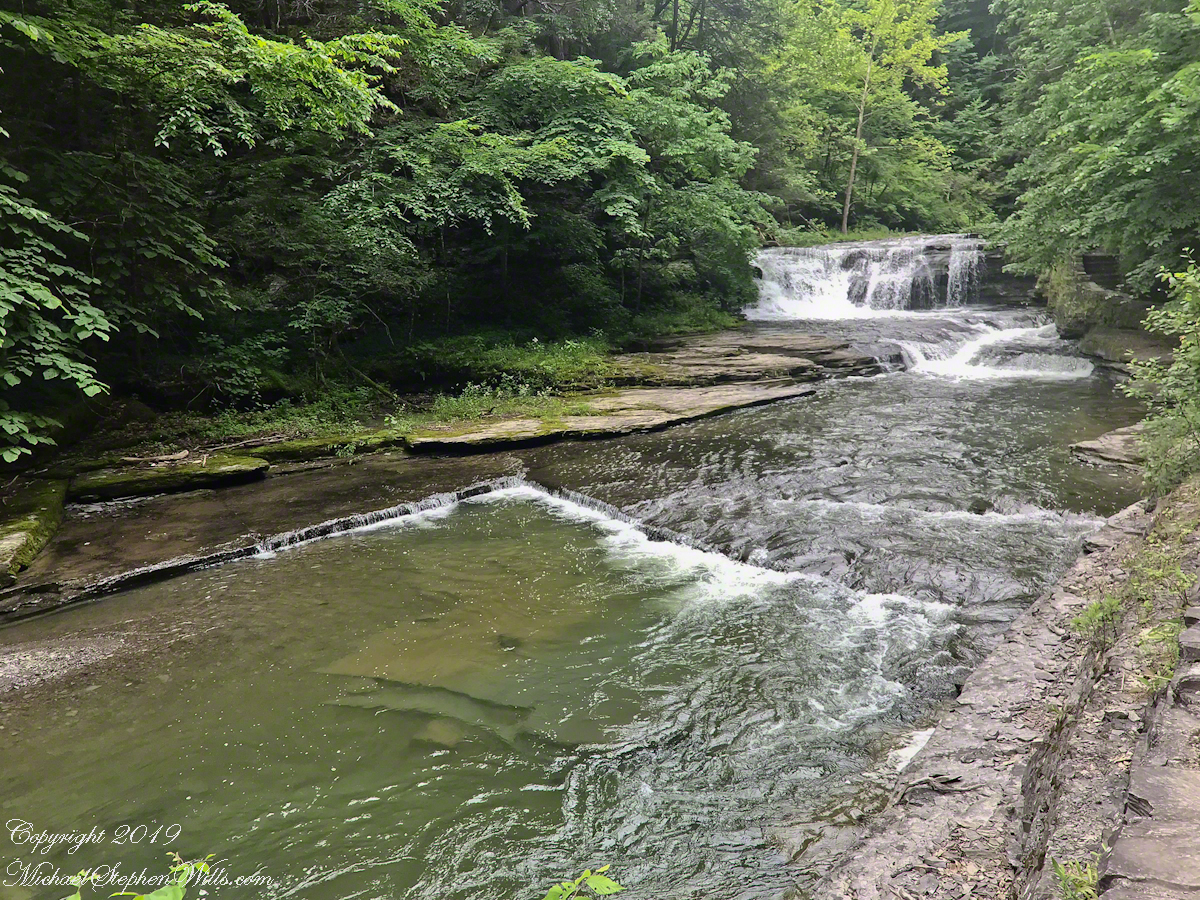
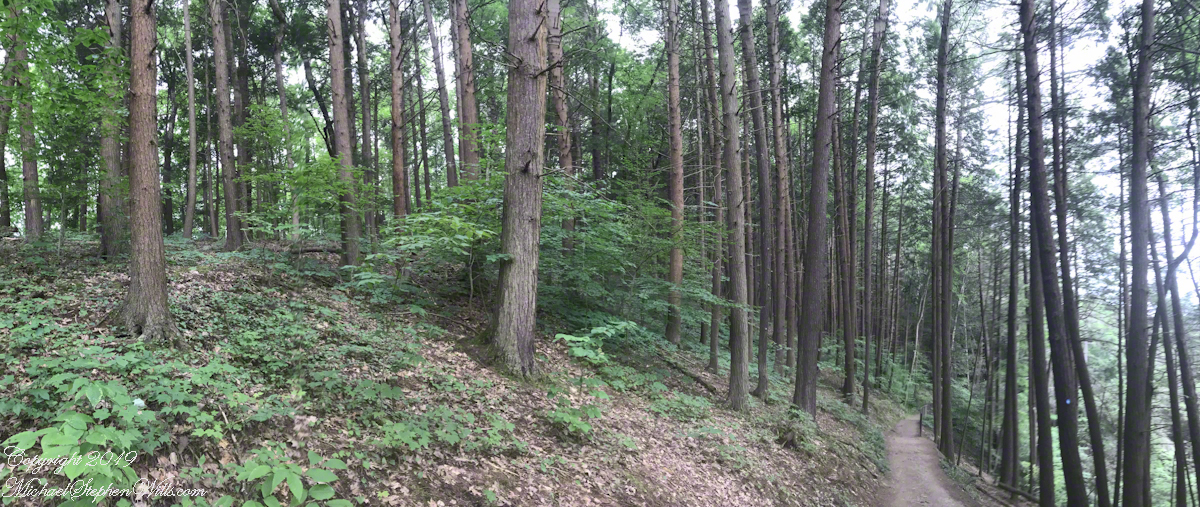
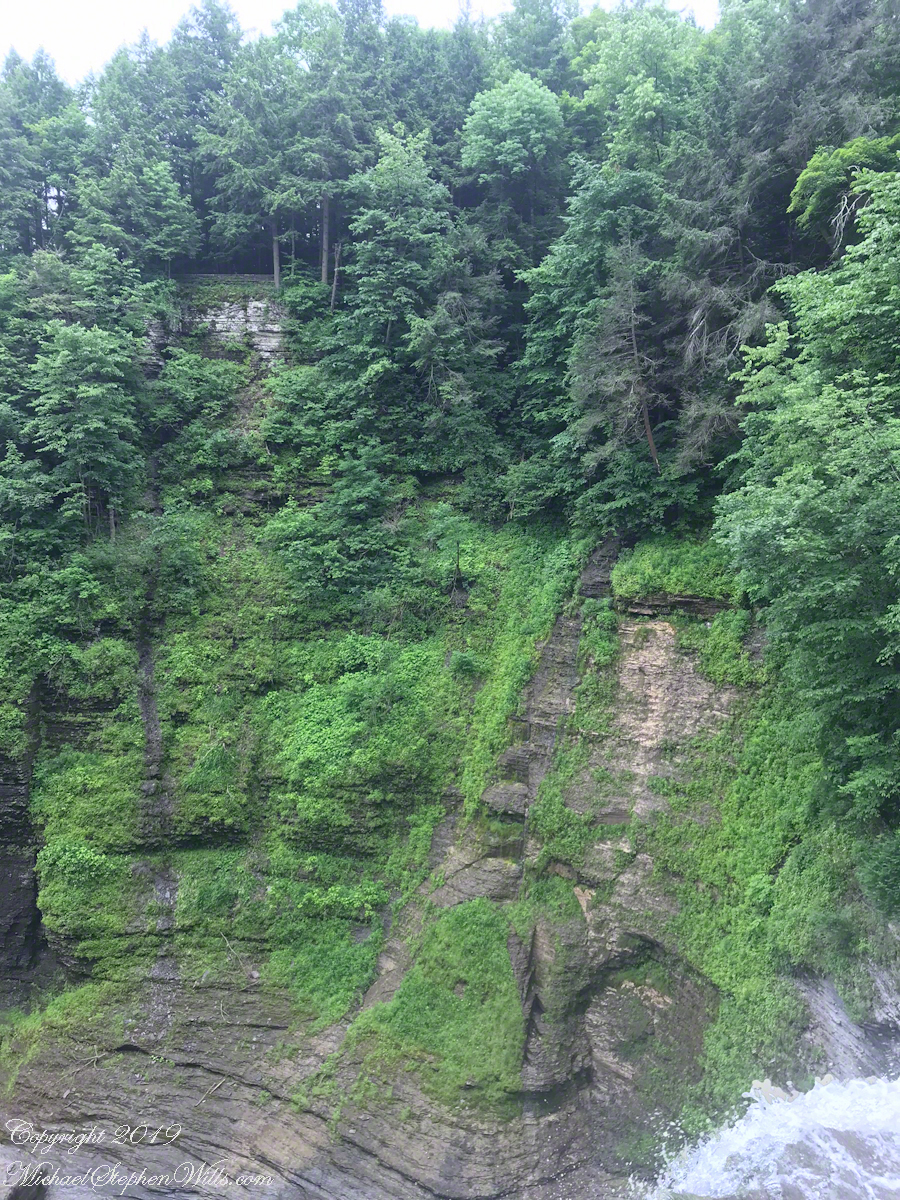
One of many waterfalls along the Gorge TrailLooking back to the above waterfallEnchanted Trail
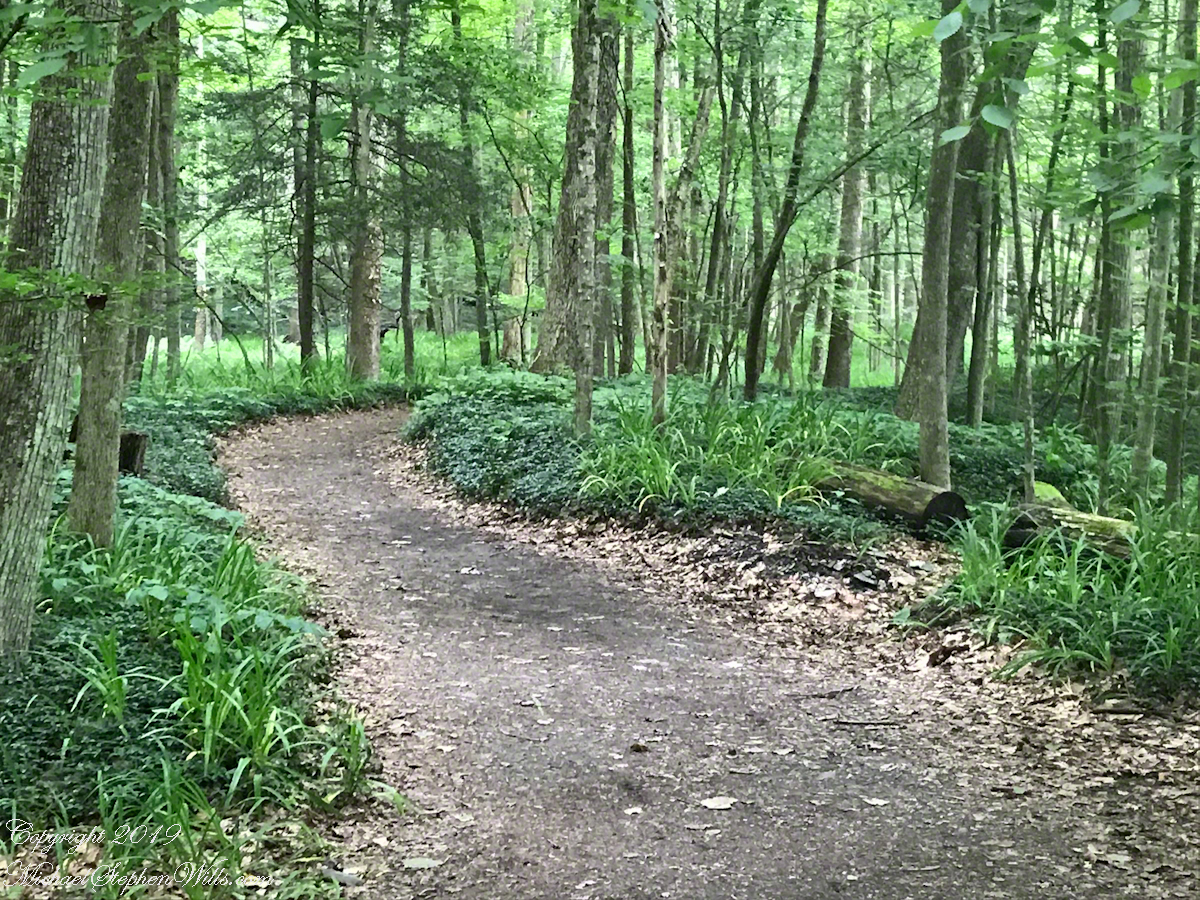
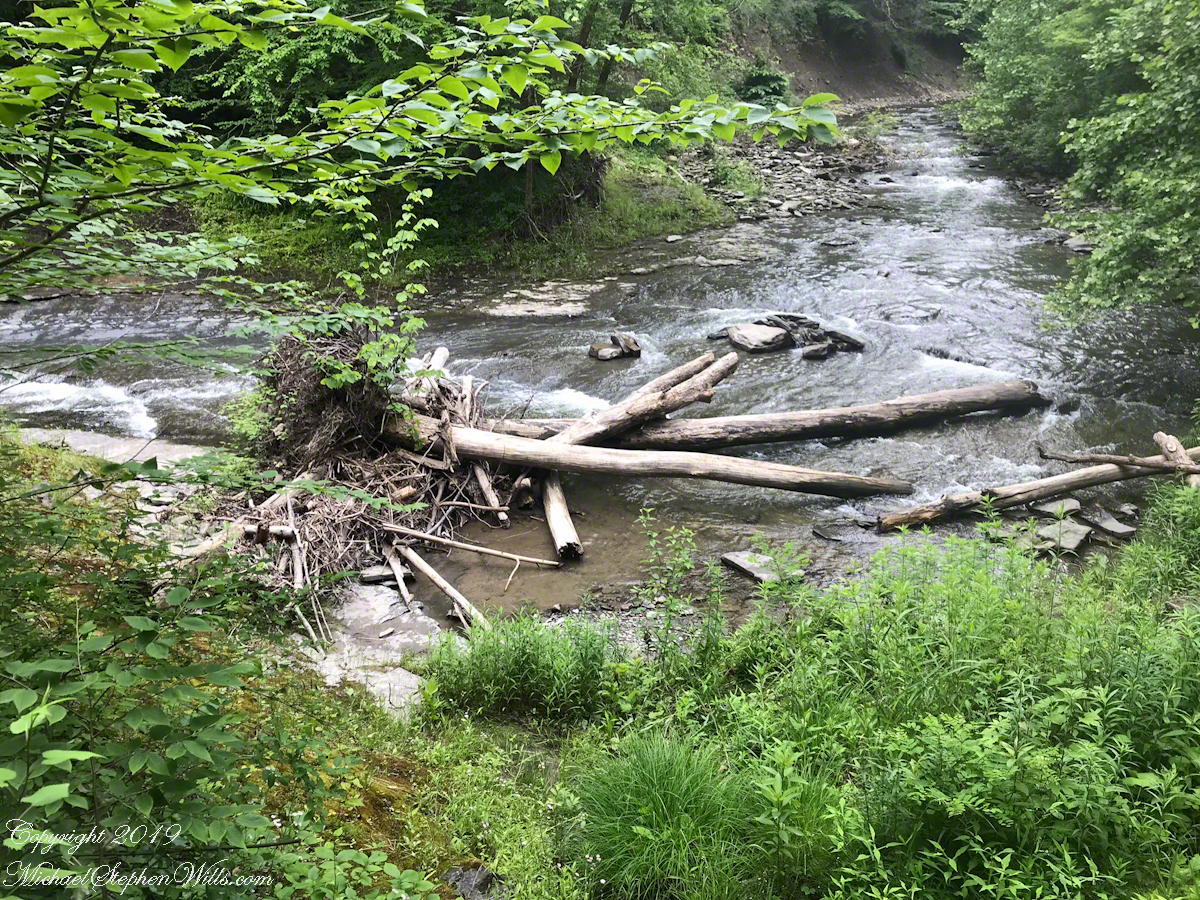
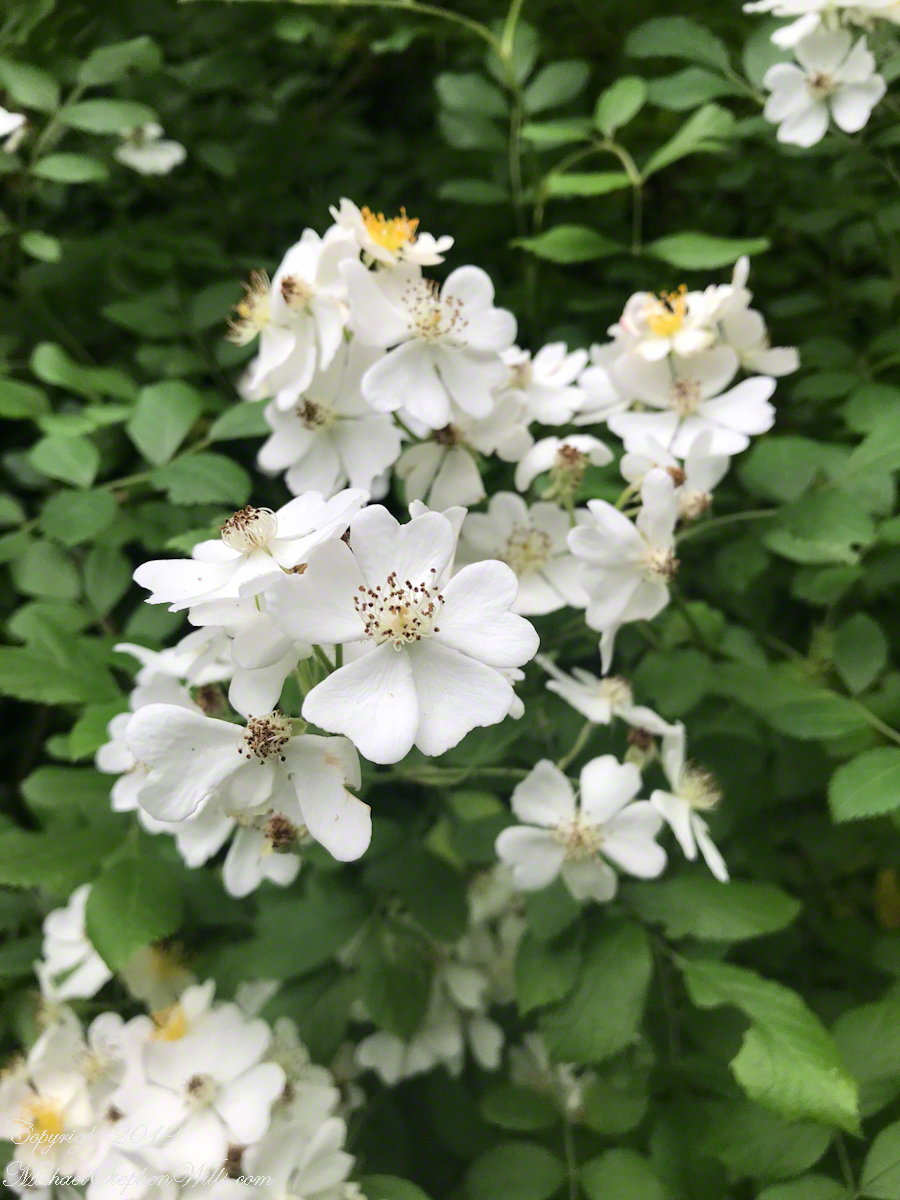
Birdsong and enchanted placeBayberry?The power of flowing water (flood stage)
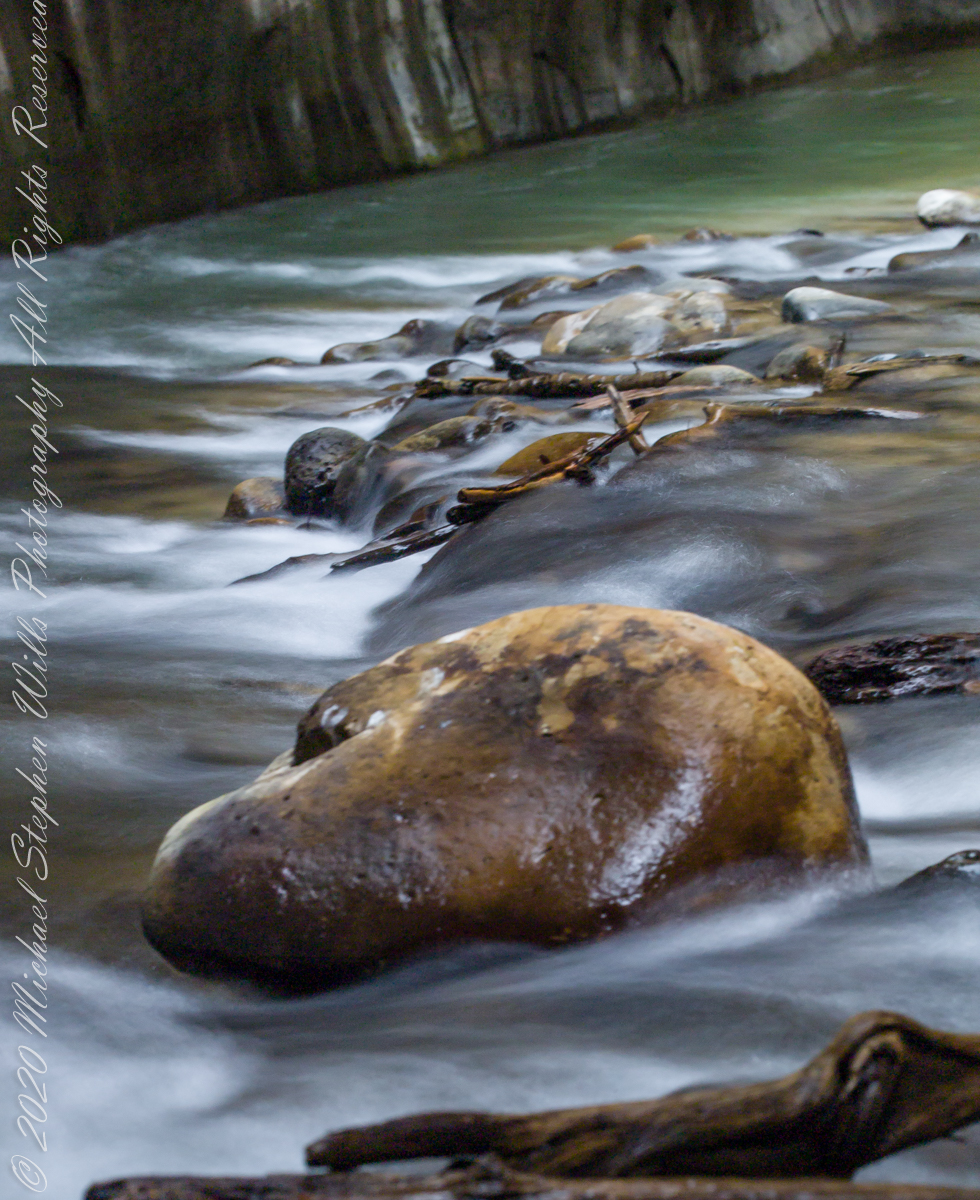
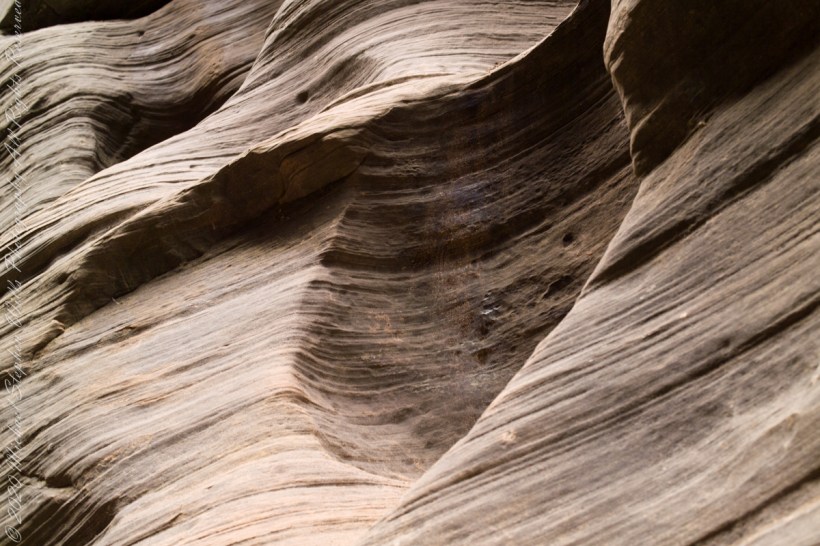
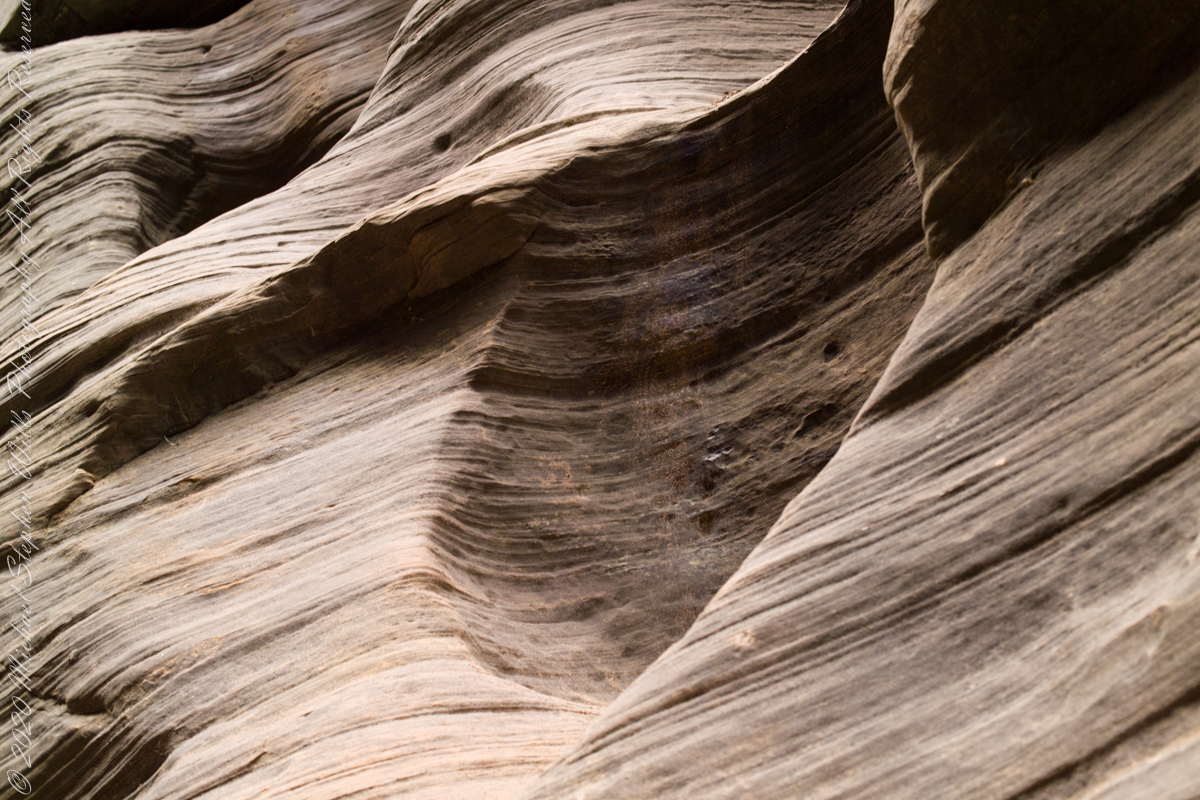
Mysterious alcoves through cross-bedded Navajo Sandstone, 15 feet, or more, above the streambed. I use mysterious in the sense I wished the formations were mysterious, standing there with nowhere to climb, witnessing the effects of floods that high above. The location is The Narrows just above Orderville Canyon junction, Zion National Park, Springdale, Utah
Copyright 2021 Michael Stephen Wills All Rights Reserved







 Michael Stephen Wills Photography