An expert surfer takes a wave near Jetty Pier Park, Cape Canaveral, Florida. Taken with an Apple IPhone 8.
Long Ride
An expert surfer takes a wave
An expert surfer takes a wave
An expert surfer takes a wave near Jetty Pier Park, Cape Canaveral, Florida. Taken with an Apple IPhone 8.
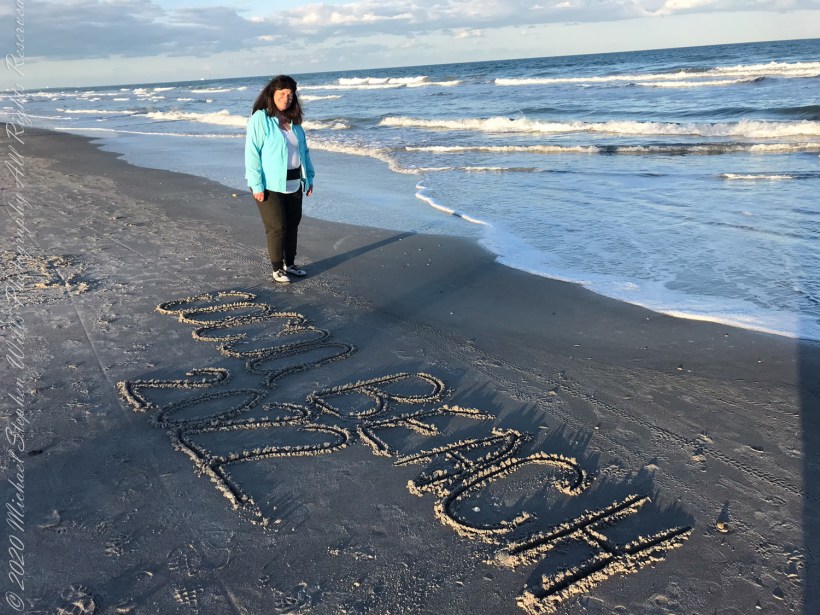
Here is a sample of my wife Pam’s photography skills by way of a video with music created by her IPhone 8.
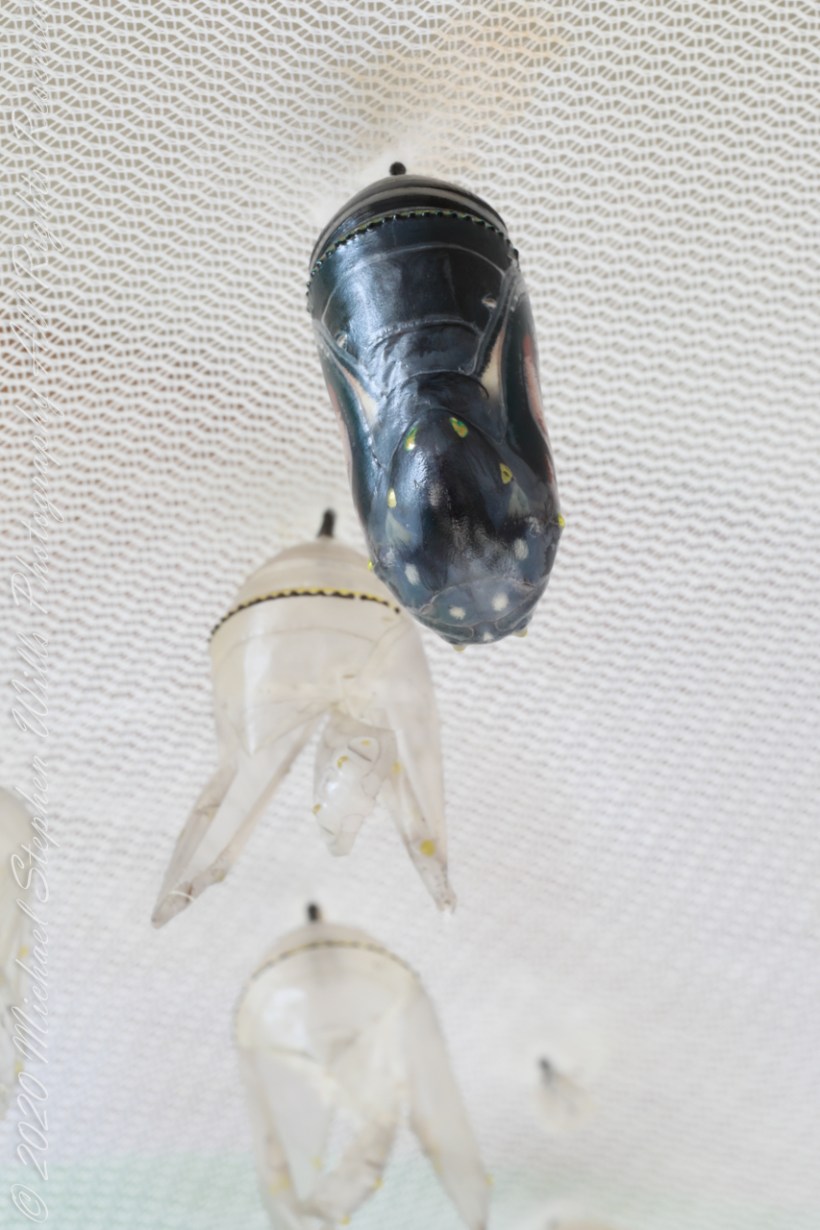
Advice for releasing your monarch butterfly
We let our first monarch butterfly rest overnight, until noon of the following day.
I delay butterfly release when:
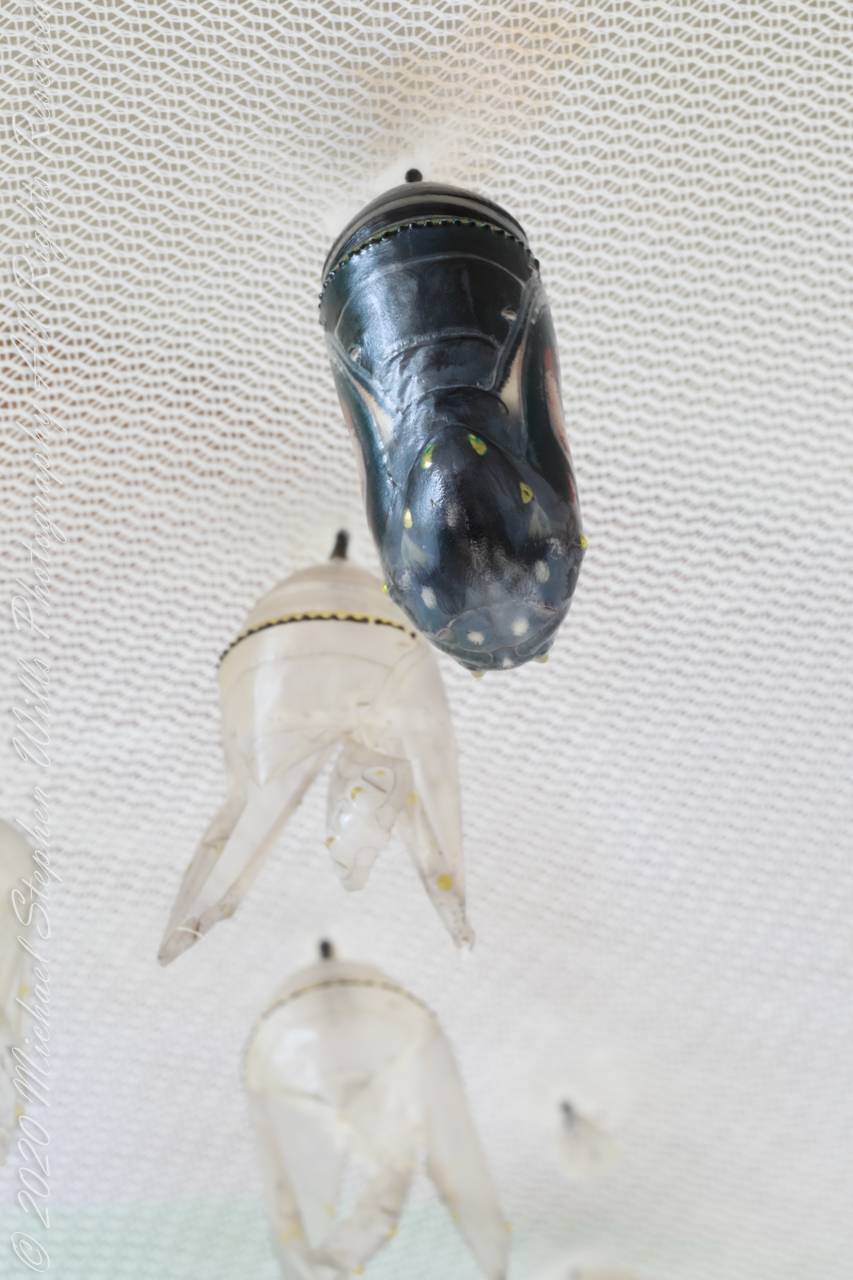
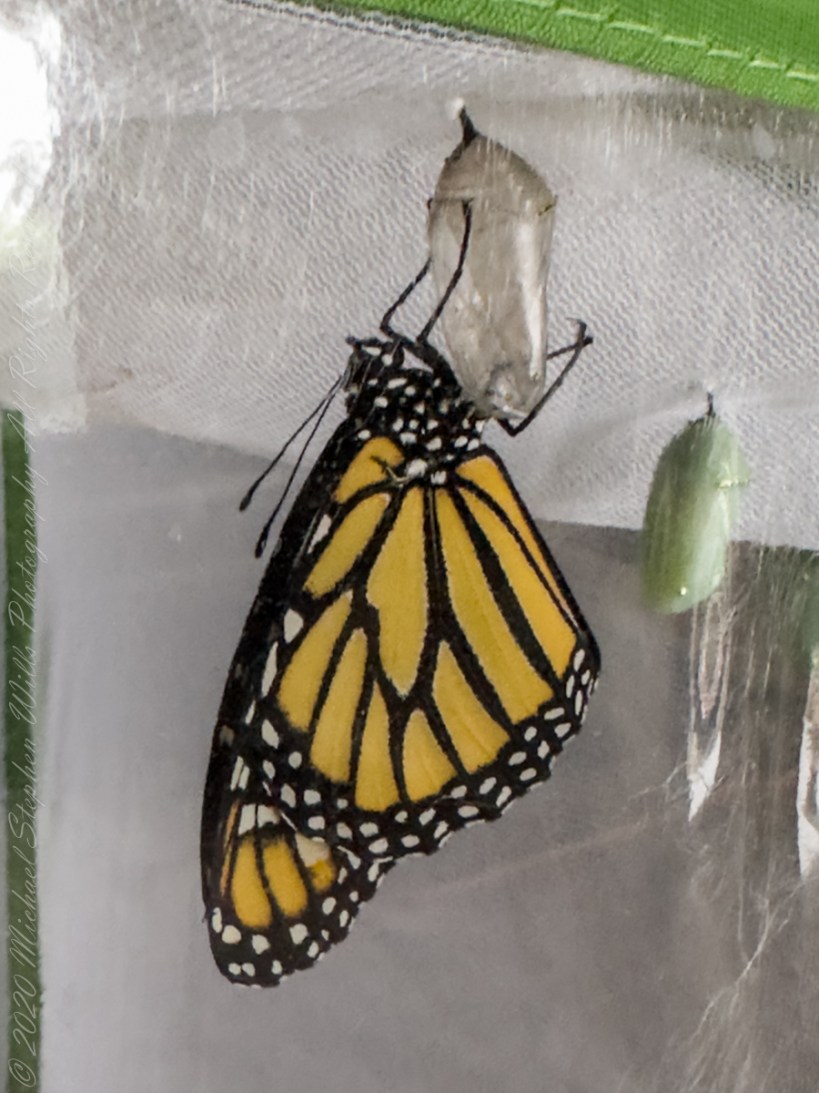
Monarch butterfly and chrysalis
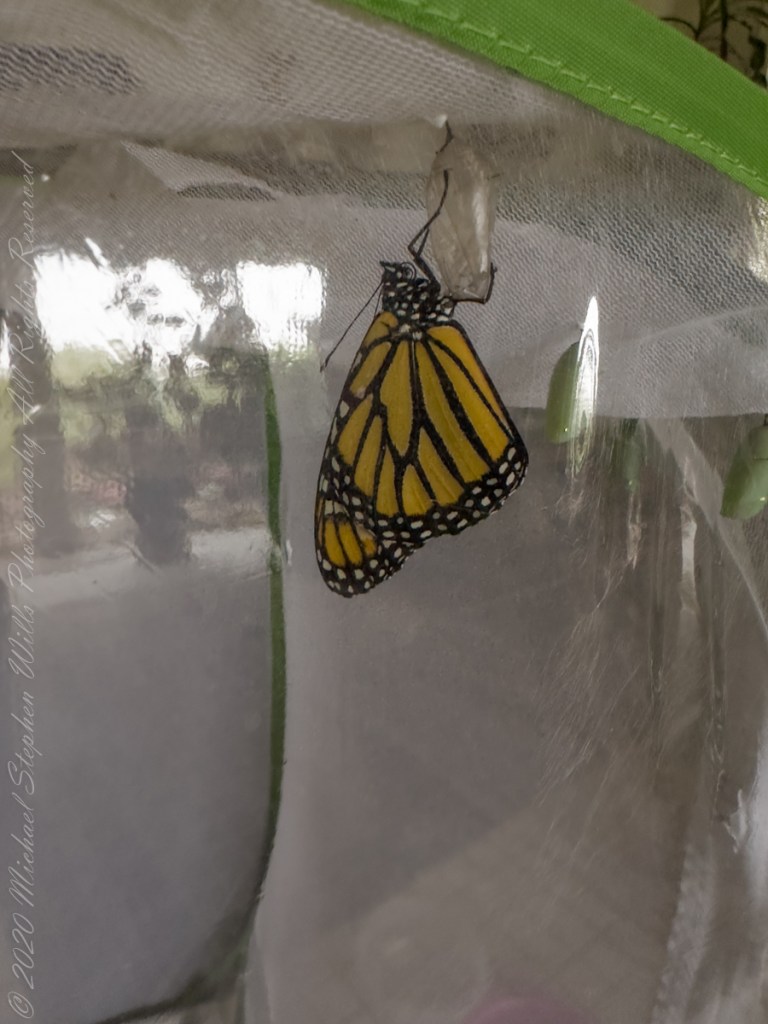
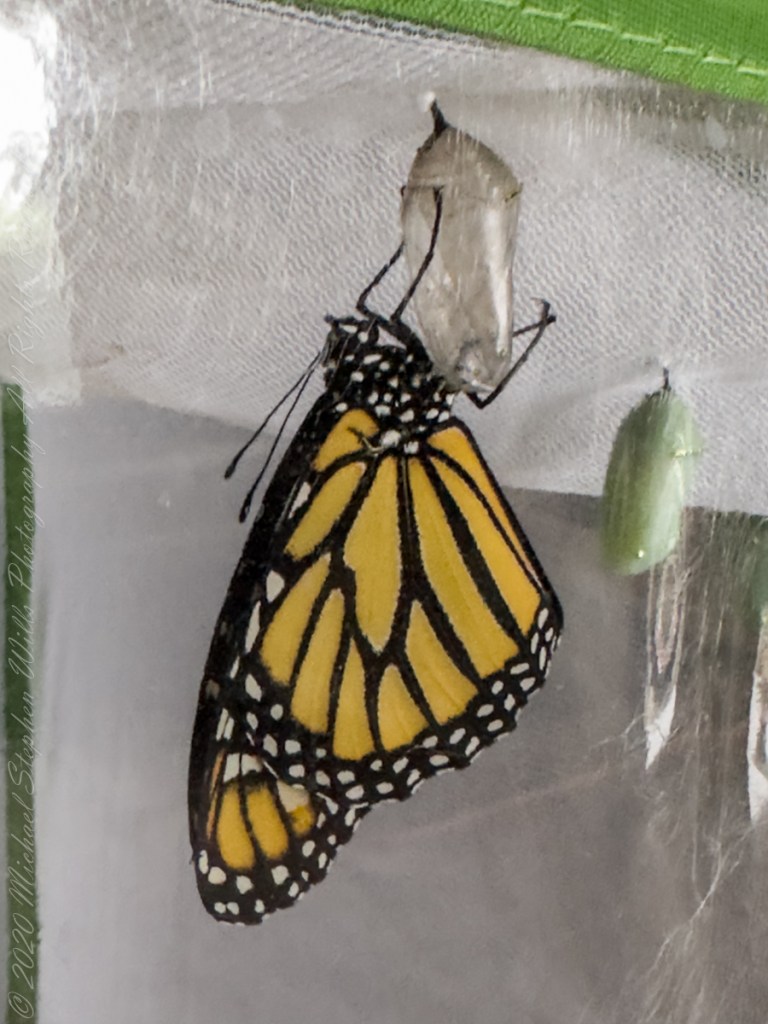
Our grandchildren spent the day with us, the last week of their summer before school begins. This July I had improved on my Monarch collection from 2022, when 9 butterflies were released, by two (2) caterpillars for a total of eleven (11) raised over several weeks to the chrysalis stage. When leaving to pick up the children for an outing one chrysalis skin had turned clear, a sign the enclosed butterfly is close to emerging. We returned from an outing for lunch to find this chrysalis unopened, so we checked now and then for progress. Four hours later, just as their Mom arrived for them, the grandchildren and everyone witnessed this event. What luck!!
“Migrating monarchs soar at heights of up to 1,200 feet. As sunlight hits those wings, it heats them up, but unevenly. Black areas get hotter, while white areas stay cooler. The scientists believe that when these forces are alternated, as they are with a monarch’s white spots set against black bands on the wings’ edges, it seems to create micro-vortices of air that reduce drag—making flight more efficient.”
“Monarchs begin leaving the northern US and Canada in mid-August. They usually fly for 4-6 hours during the day, coming down from the skies to feed in the afternoon and then find roosting sites for the night. Monarchs cannot fly unless their flight muscles reach 55ºF. On a sunny day, these muscles in their thorax can warm to above air temperature when they bask (the black scales on their bodies help absorb heat), so they can actually fly if it is 50ºF and sunny. But on a cloudy day, they generally don’t fly if it is below 60ºF.“
“Migrating monarchs use a combination of powered flight and gliding flight, maximizing gliding flight to conserve energy and reduce wear and tear on flight muscles. Monarchs can glide forward 3-4 feet for every foot they drop in altitude. If they have favorable tail or quartering winds, monarchs can flap their wings once every 20-30 feet and maintain altitude. Monarchs are so light that they can easily be lifted by the rising air. But they are not weightless. In order to stay in the air, they must move forward while also staying within the thermal. They do this by moving in a circle. The rising air in the thermal carries them upward, and their overall movement ends up being an upward spiral. Monarchs spiral upwards in the thermal until they reach the limit/top of the thermal (where the rising air has cooled to the same temperature as the air around it). At that point, the monarch glides forward in a S/SW direction with the aid of the wind. It glides until it finds another thermal and rides that column of rising air upwards again.”

December through February is Florida Osprey nesting season.
“Florida ospreys (Pandion haliaetus) commonly nest on power poles, communication towers, water navigation devices, lighting fixtures, outdoor billboards and other man-made structures as well as in decaying or dead trees.” This quote from the Florida Fish and Wildlife Conservation Commission web site is a fitting introduction. For this, the fourth post of this series (Click me for the first post, “Endless Searching“), I explore images of Osprey nesting behavior.
Early morning winter Cocoa Beach walks offer a new experience with each dawn be it a change in wind, light, or beach-combing offerings. This looming crane was a consistent specter the entire month, poised over a downtown parking garage under construction.
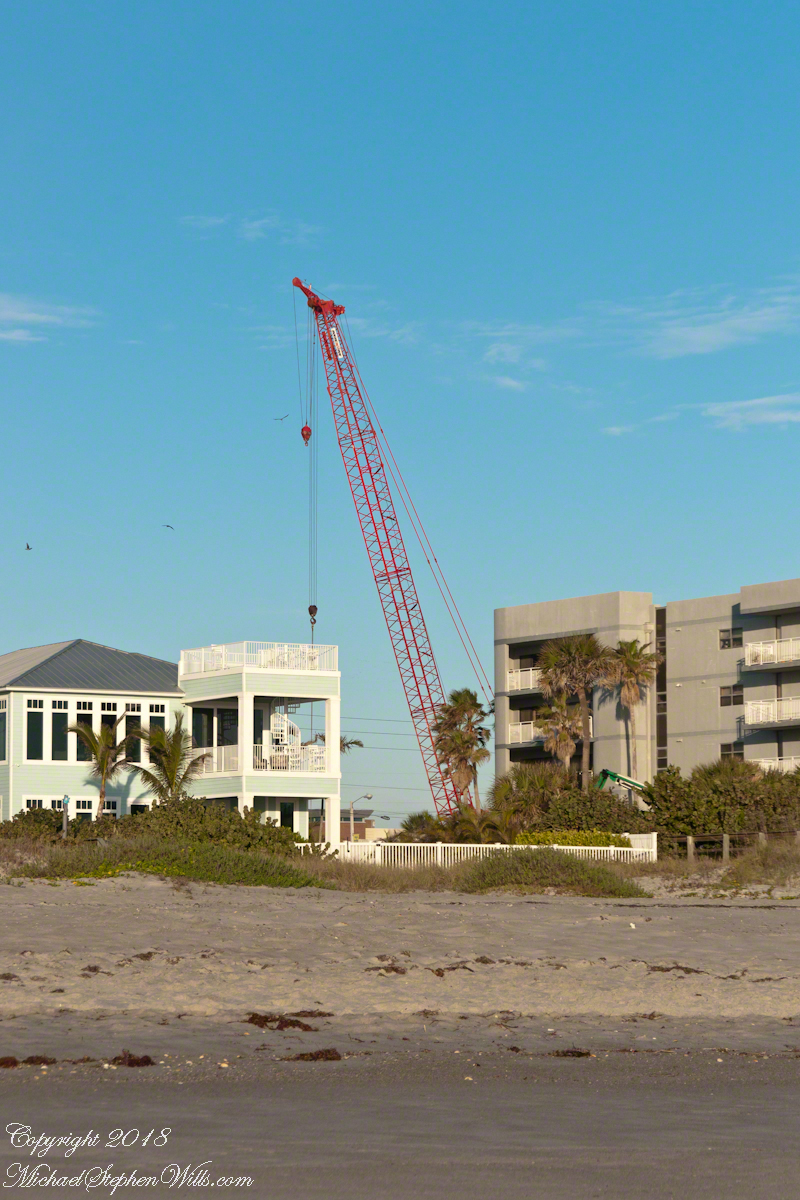
Each winter morning January 2019 I left our ocean side condo to walk the beach, taking equipment according to a whim. For this series I used the Sony Alpha 700 with a variable “Zoom” lens. In this next shot the focal length was set to maximum.
Searching the internet (“Florida Osprey behavior”), a link from http://www.naturesacademy.org states, in Florida, Osprey nesting season is December through February. The following series of photographs clearly show an Osprey with nesting material. The header image for this post clearly shows the markings of the individual holding a large branch.
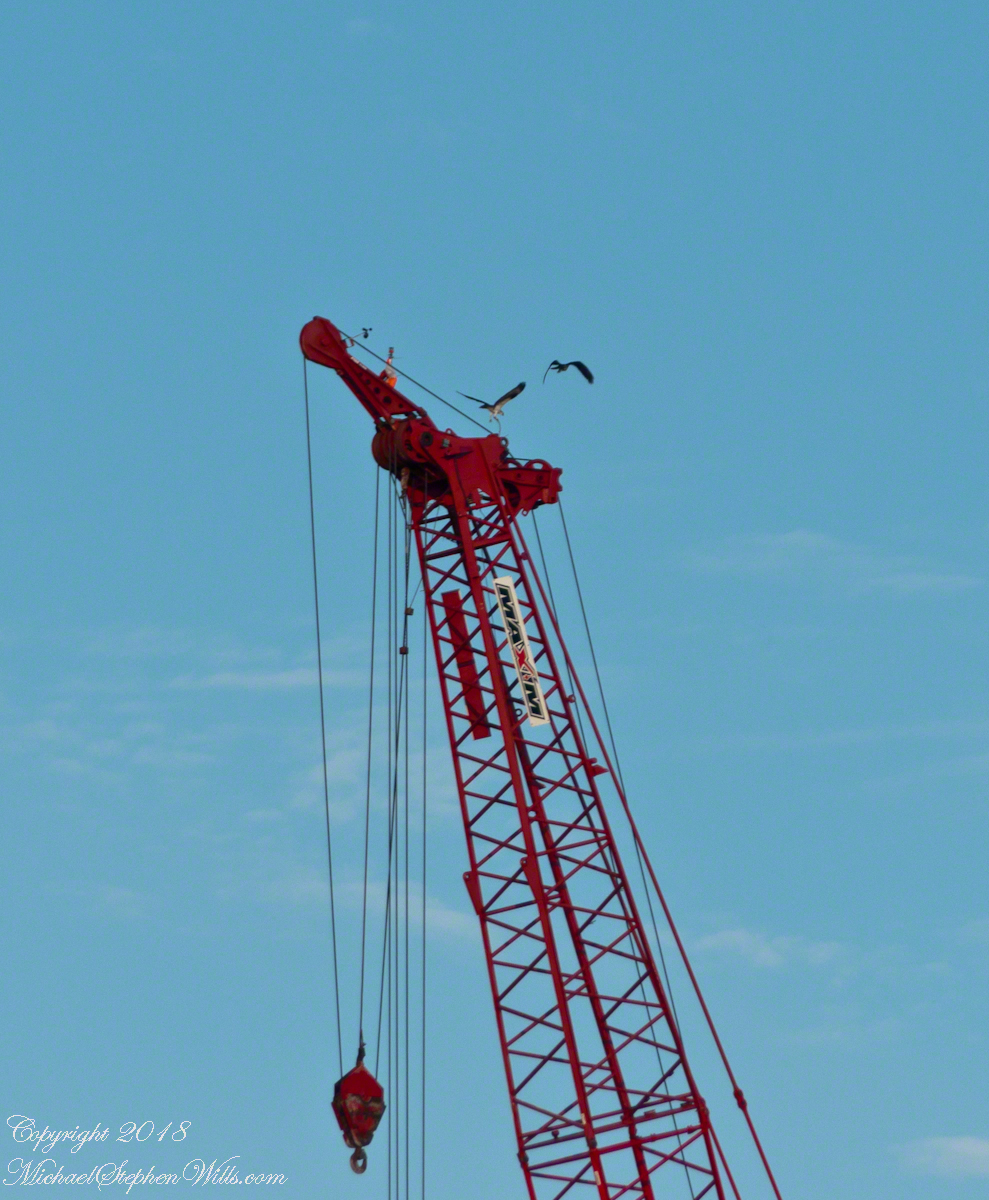
The second individual is close to the same size, it is a reasonable conclusion the two are flying together. The series was taken in a 33 second time span.
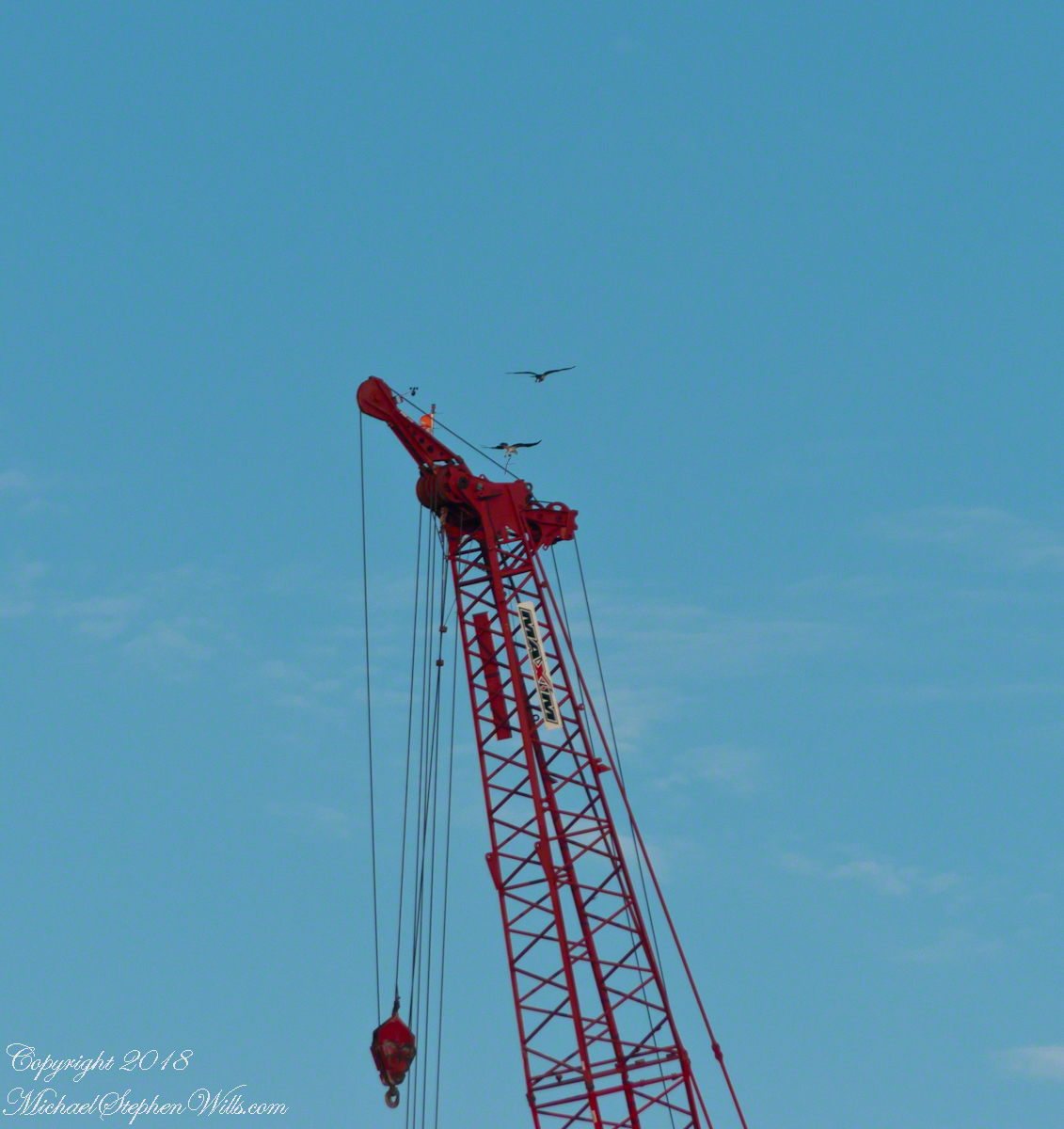
The two were flying around the crane and it is beyond imagination they’d be successful building on an actively used crane. Would construction come to a halt until the nest was abandoned? I wonder.
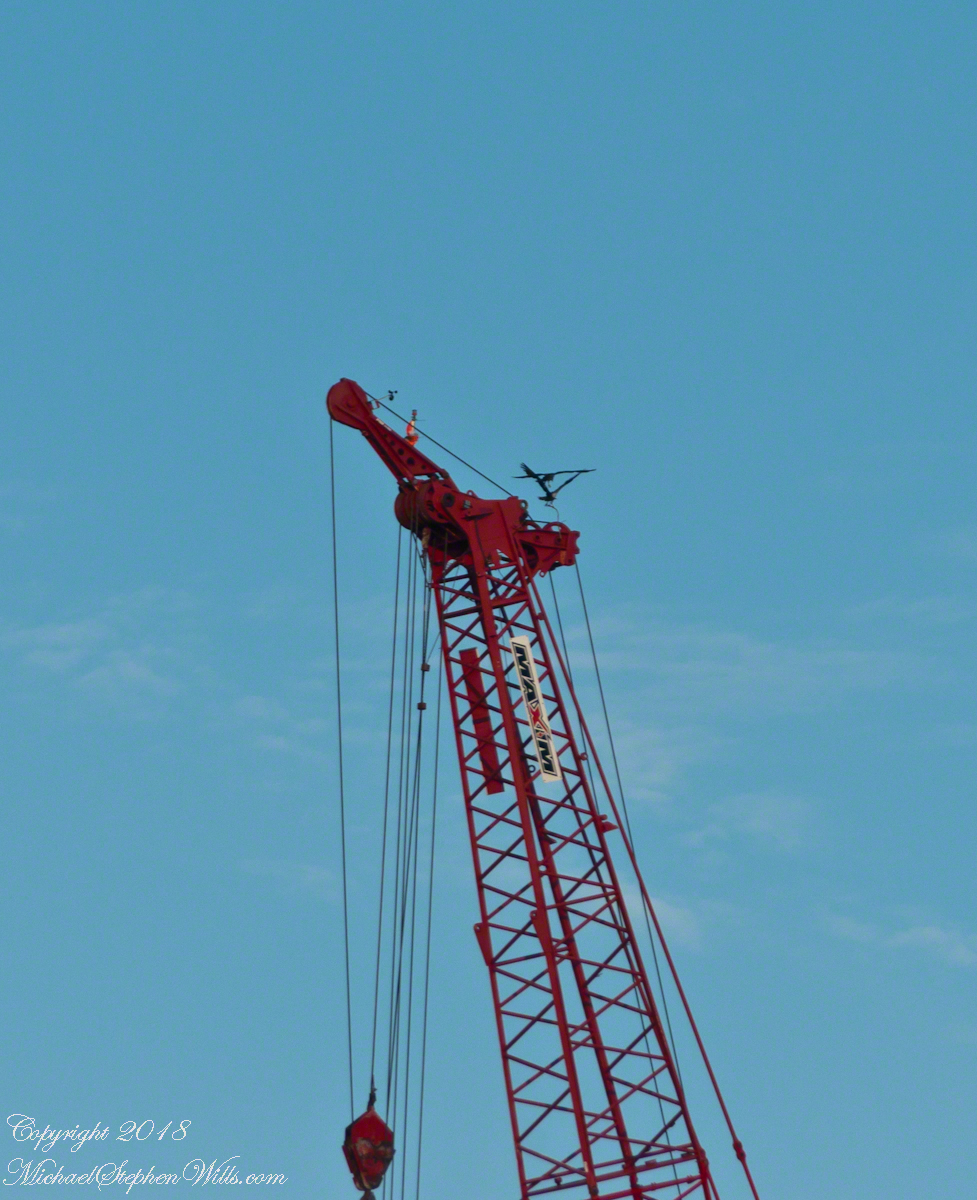
In following days there were no signs of nesting behavior on the crane.

Snatch and Grab Shopper
“They walk among us” can evoke horror, still it is a fitting description for the many species successful in an ecological niche occupied by humans. This is the third post of a series featuring the Osprey of Cocoa Beach, Florida. The first post is “Endless Searching,” In this post we follow a householder on a shopping expedition.
Search internet references on Florida Osprey you find there is a mixture of year-round residents and migrants passing through spring/fall to points farther north. This being January, my brilliant conclusion is these are residents of Cocoa Beach, maintaining nests. My next post will have more on this.
Each winter morning January 2019 I left our ocean side condo to walk the beach, taking equipment according to a whim. For this series I used the Sony Alpha 700 with a variable lens. In this first shot, the watchful pose of the hunting Osprey is apparent, long glide with head slightly down.
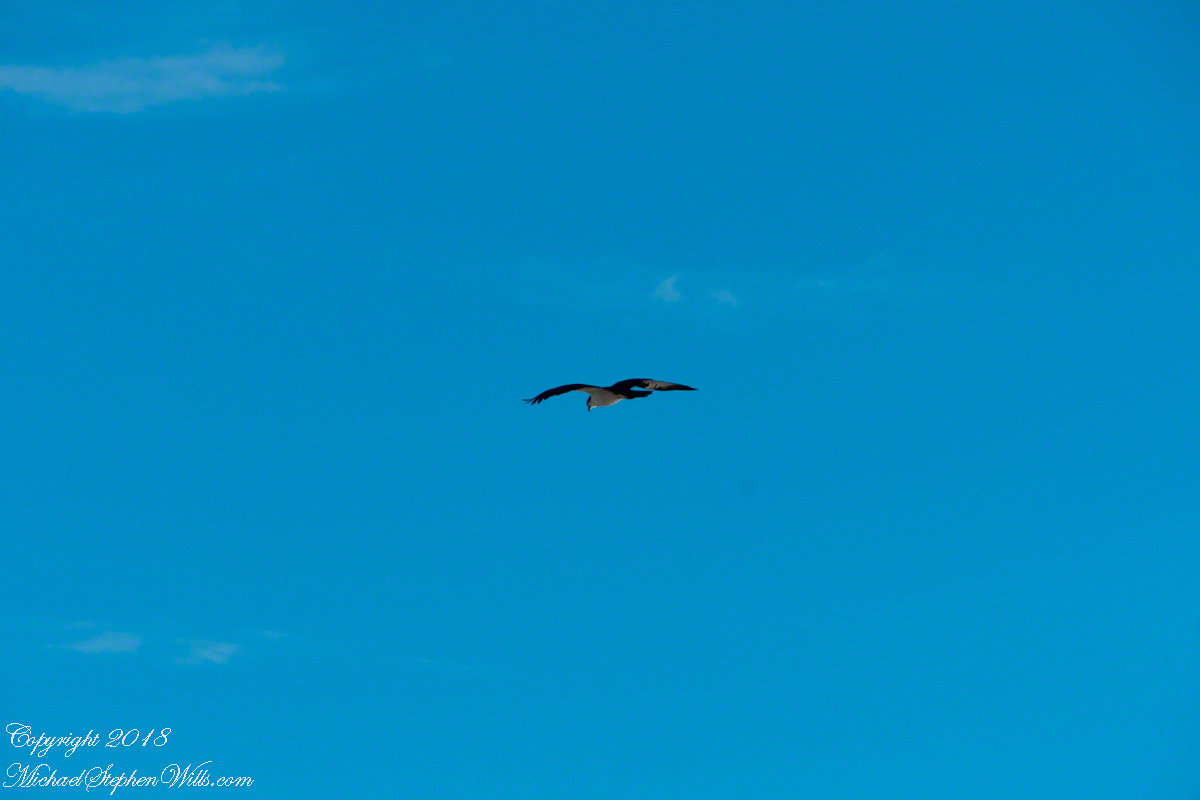
Once these hawks entered my dim awareness and their habits understood, with a lot of luck I was able to click the button at the right time. You can see in the previous post, “Fishing Creatures,” how little time elapsed during a dive, the split second opportunity seen in the following photograph.
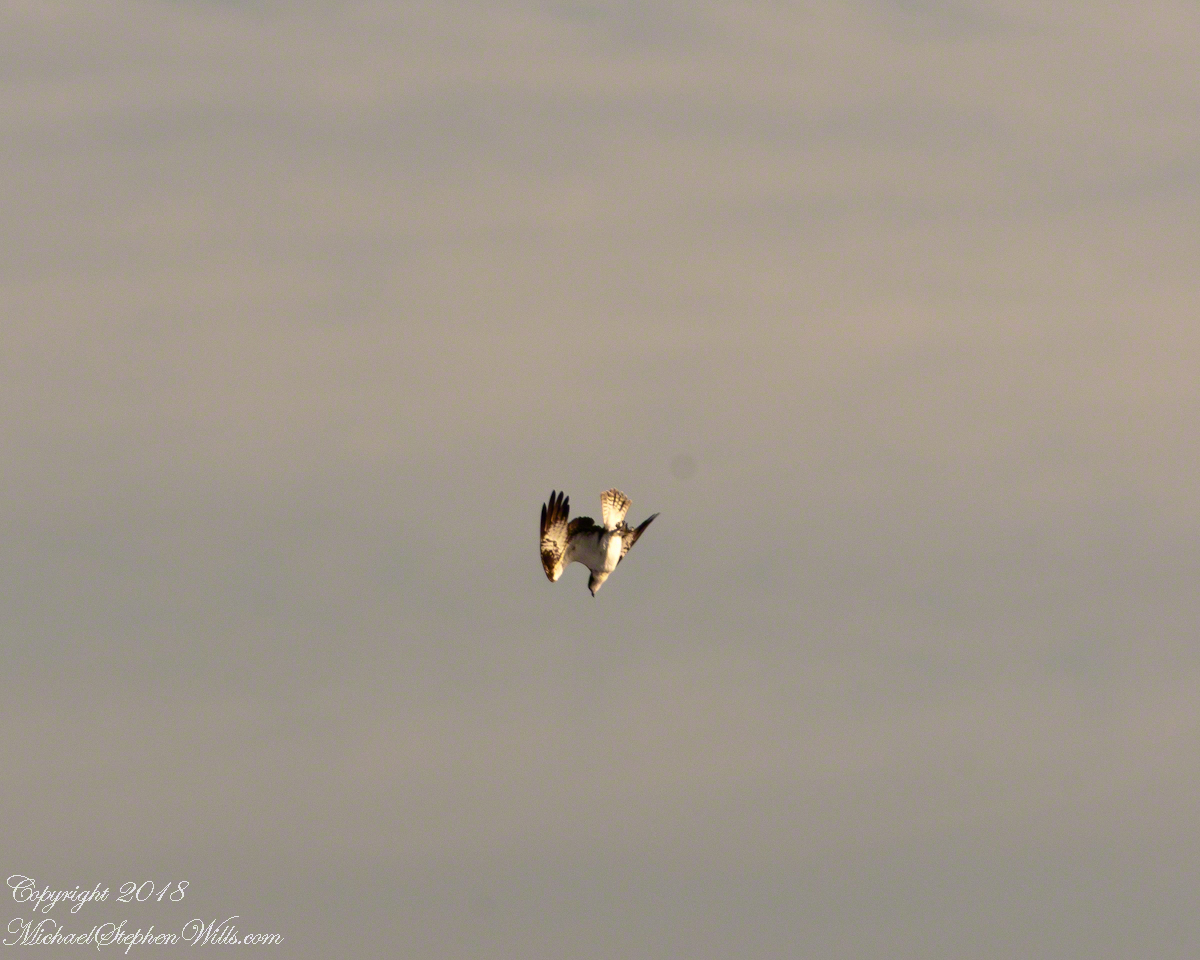
Wow, that is impact. The bird is poised to grab one fish, spotted under the water 50+ feet away, talons extended.
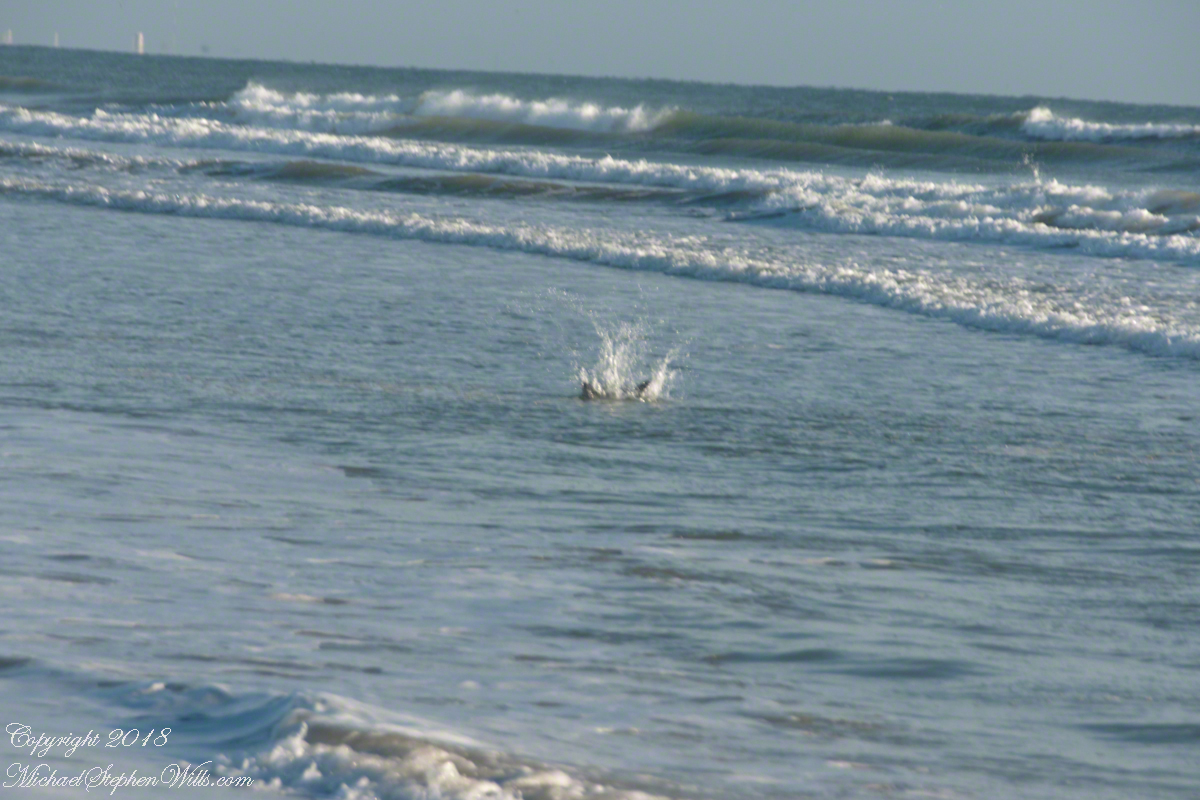
Success rate? Those days in January, if the Osprey hit the water more than 50% of the time it flew away with a fish.
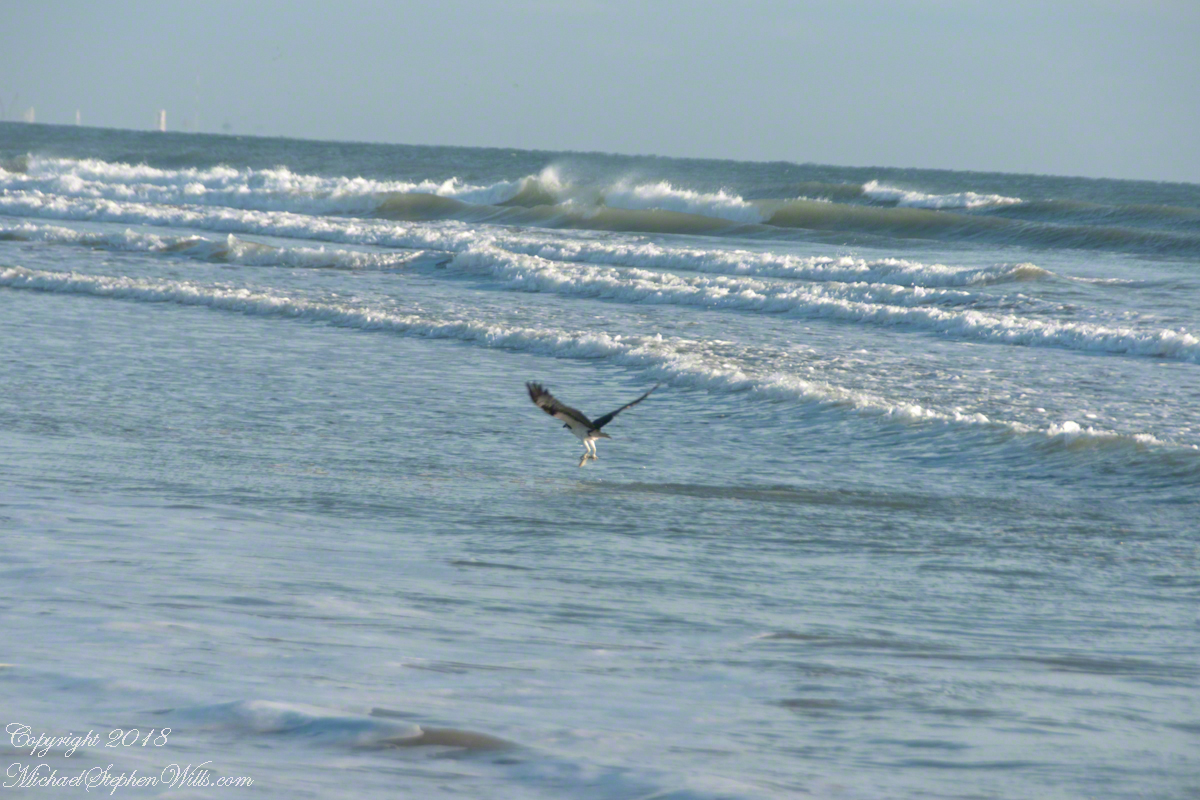
Our seven year old grandson is an enthusiastic fisherman and might be able to identify this catch. In the distance, on the horizon is Cape Canaveral Air Force Base, the lighthouse and space launch towers .
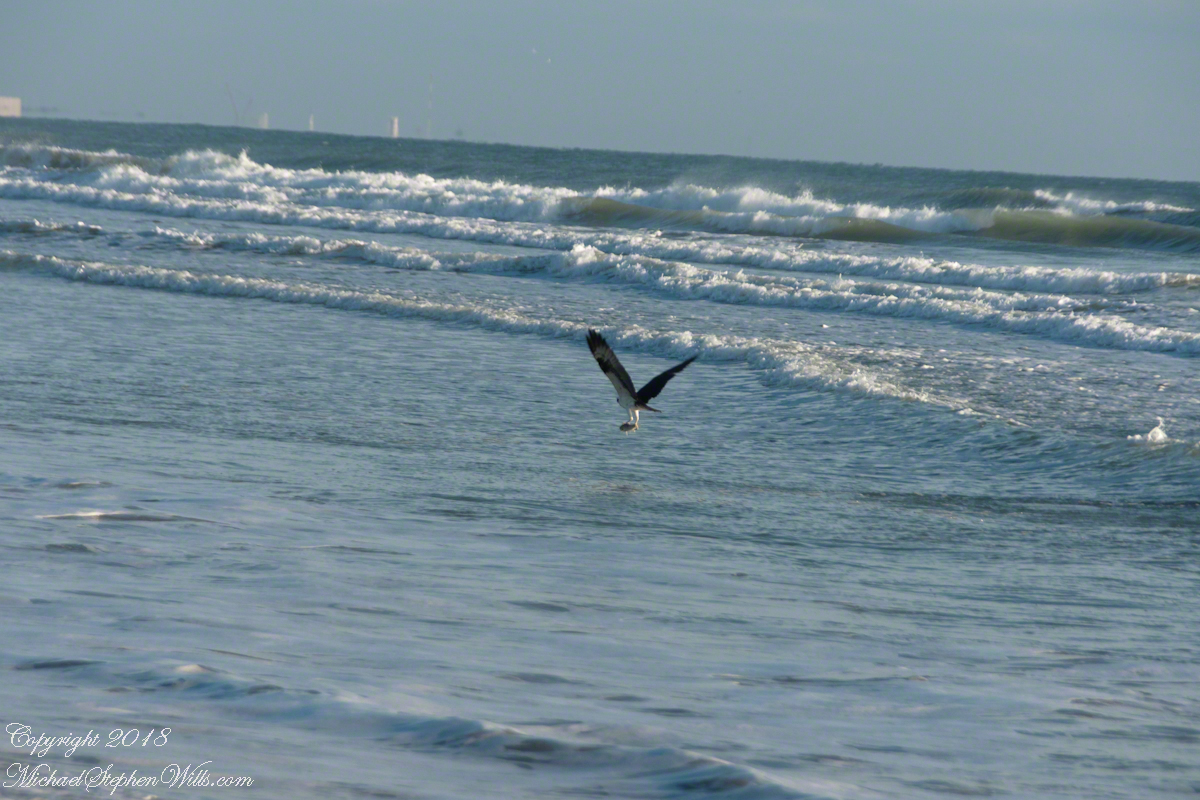
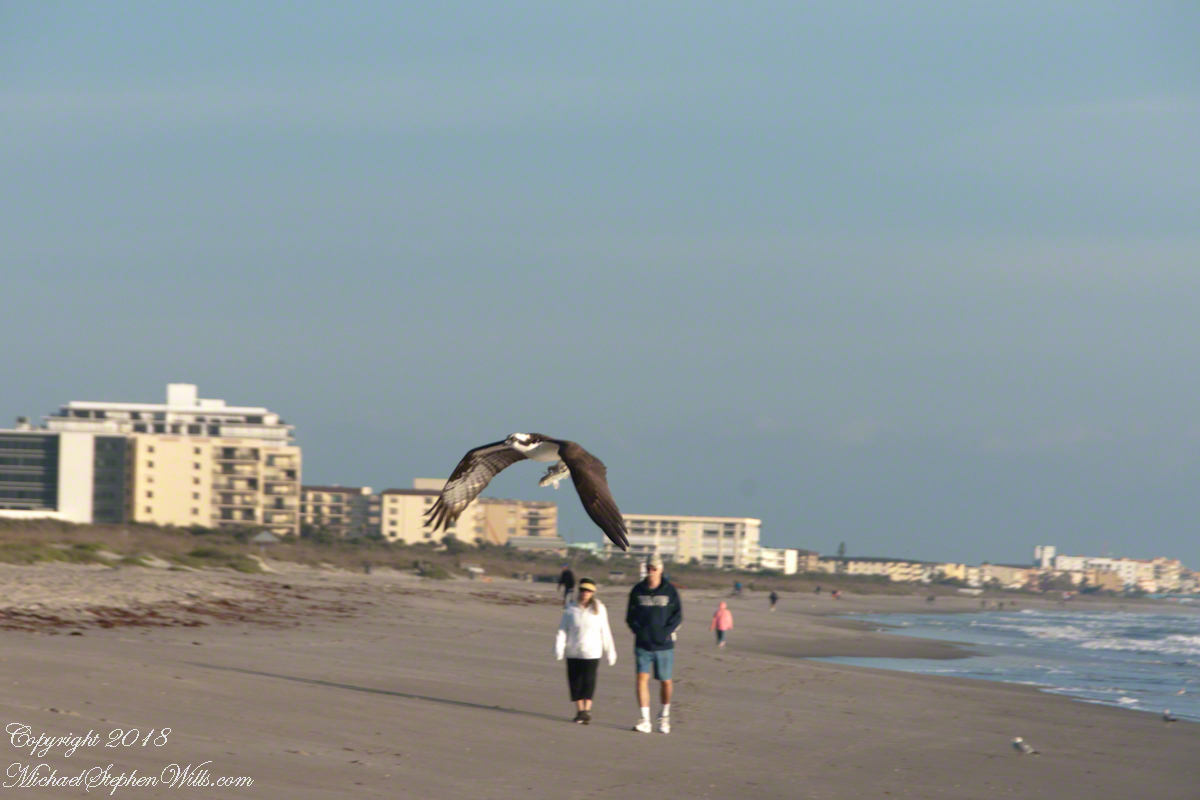
An image of Osprey / Human closeness. The long lens tends to bring objects closer together, the Osprey is far away from the early morning walkers.
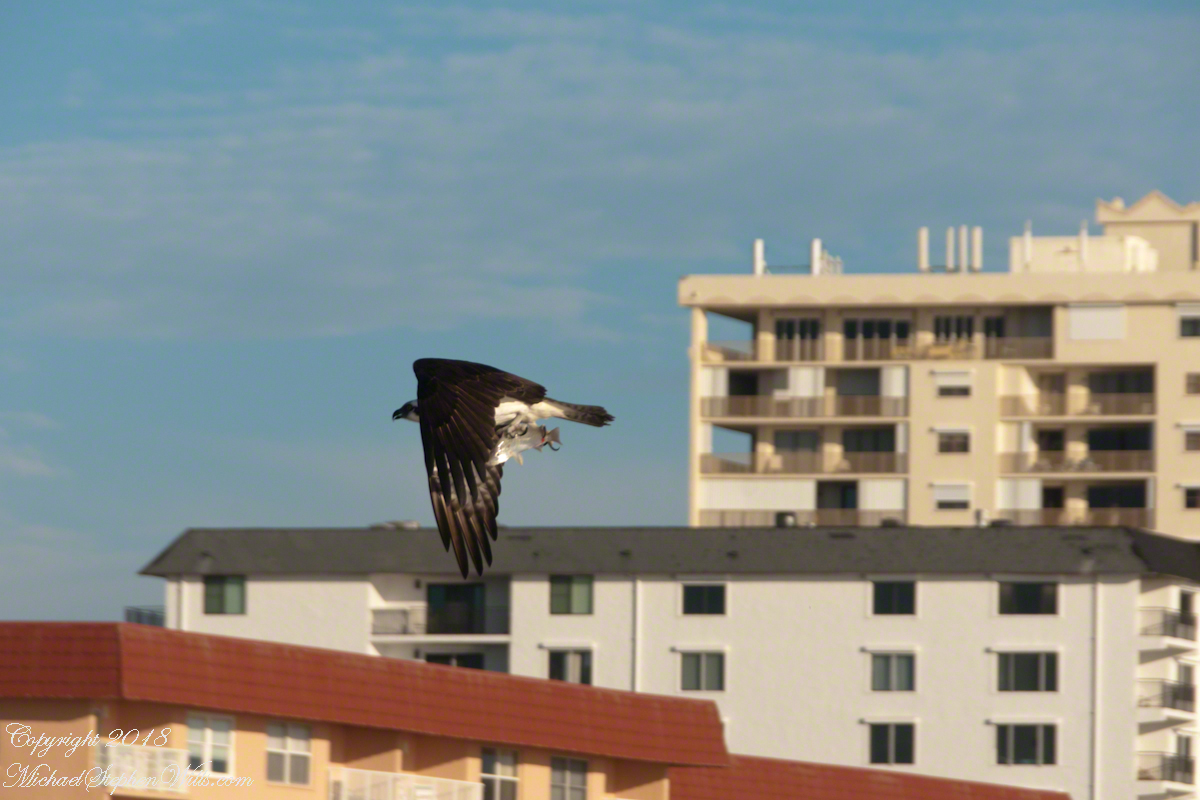
A reader, “ekurie”, in observing Ospreys noticed the catch is oriented to aerodynamic, placed head first toward the direction of flight. The hawk is using the evolutionary adaptations of the fish, to reduce drag in the water, to flying through the air.
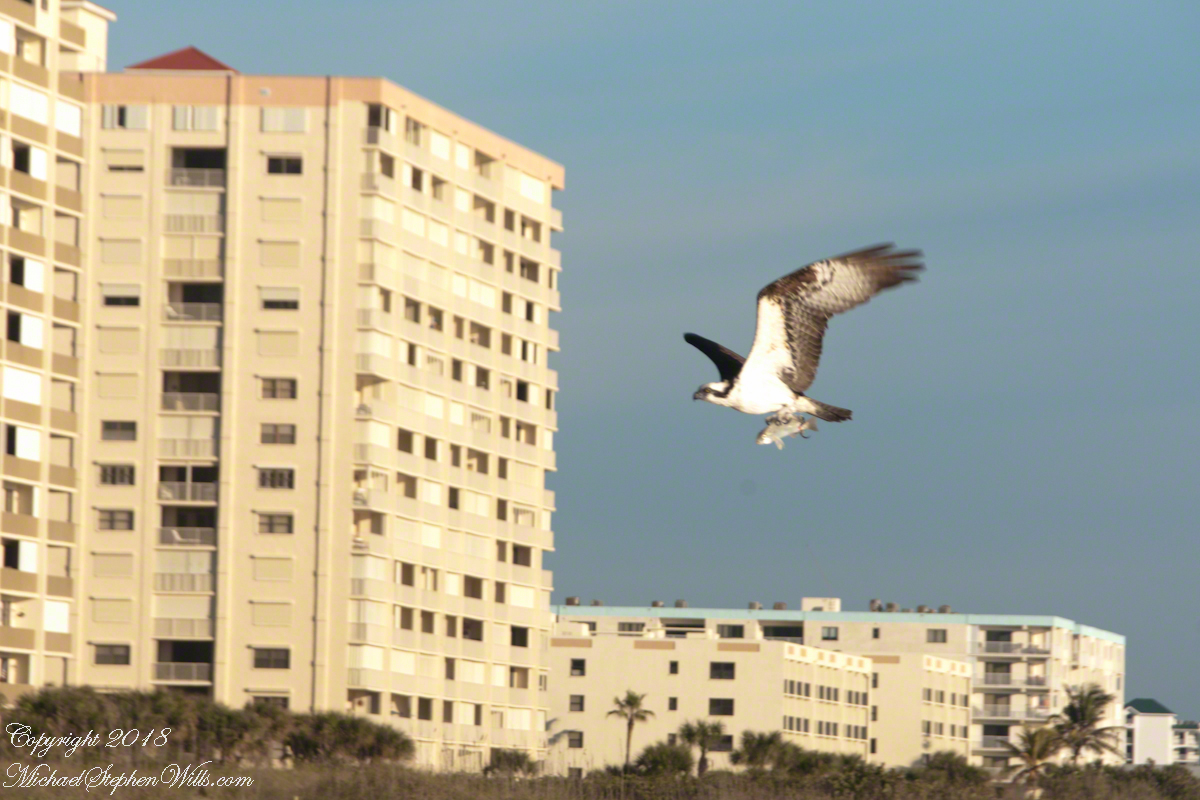
This snatch and grab shopper is headed straight home to a nest beyond the shore front condos.
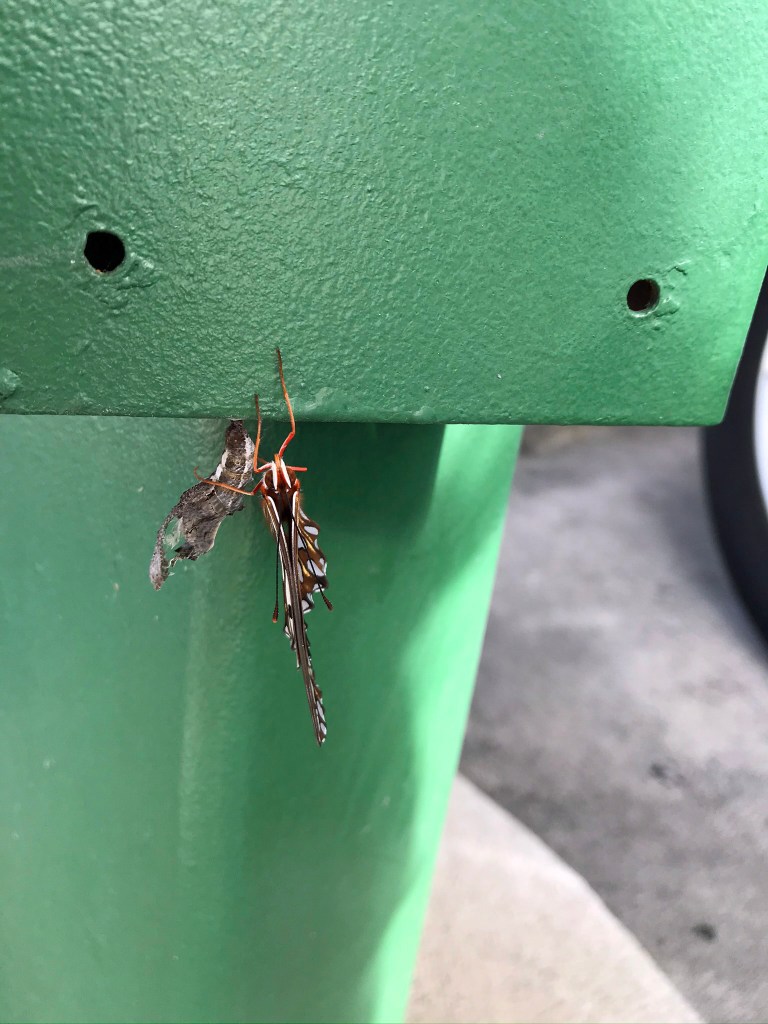
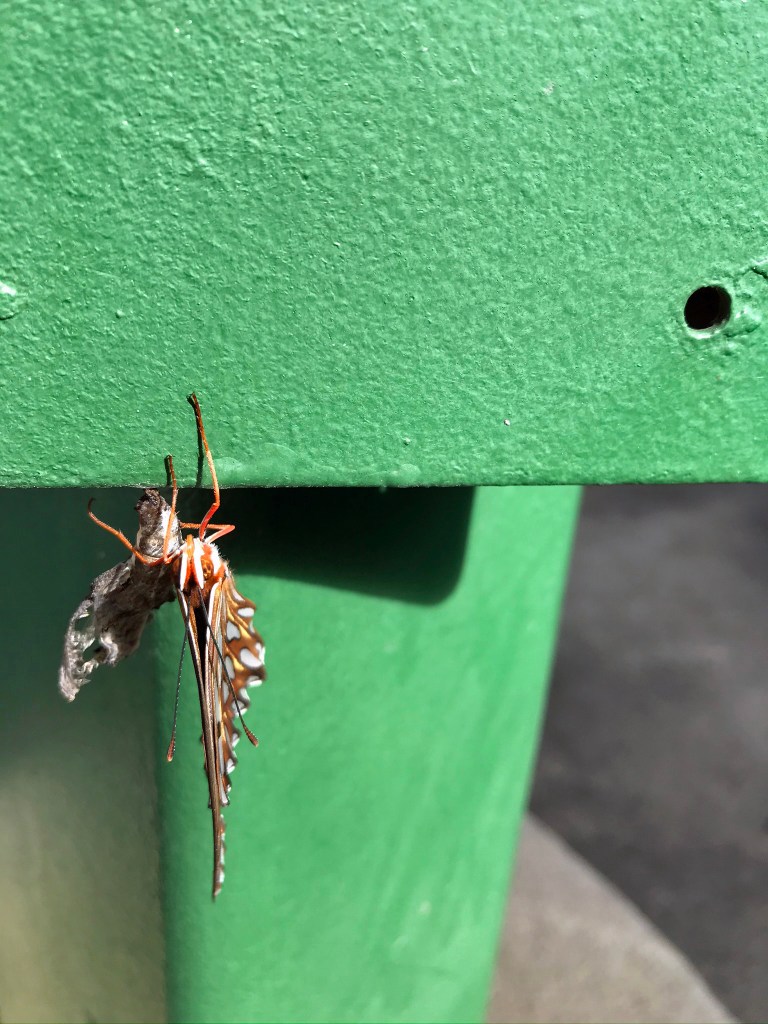
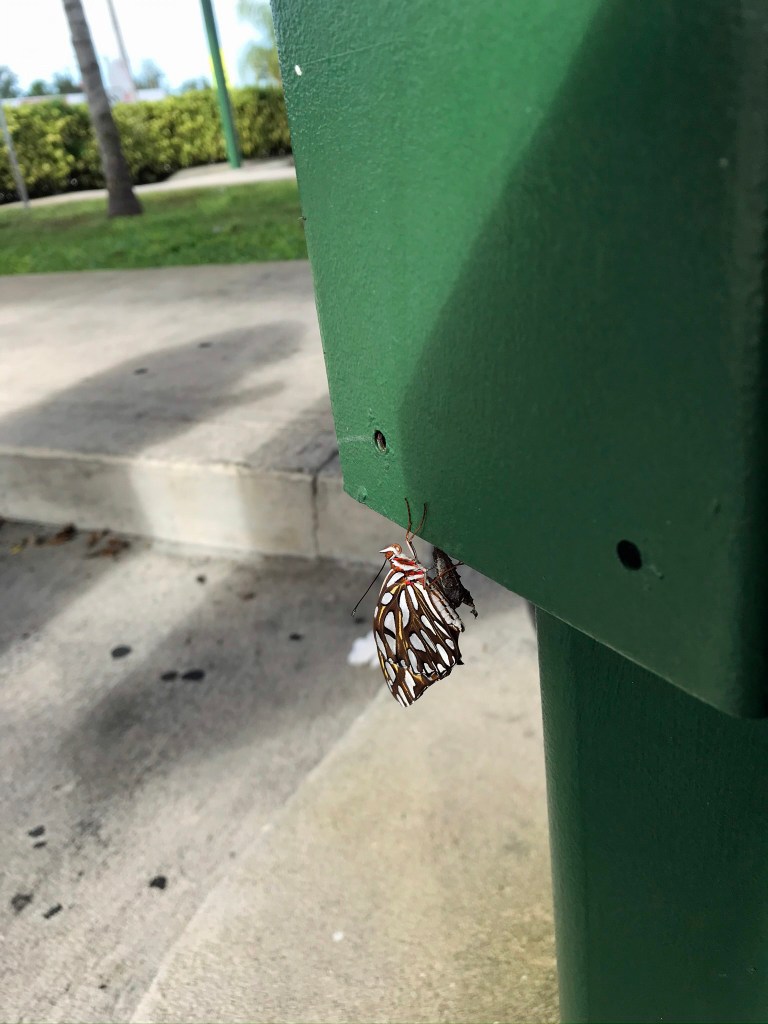
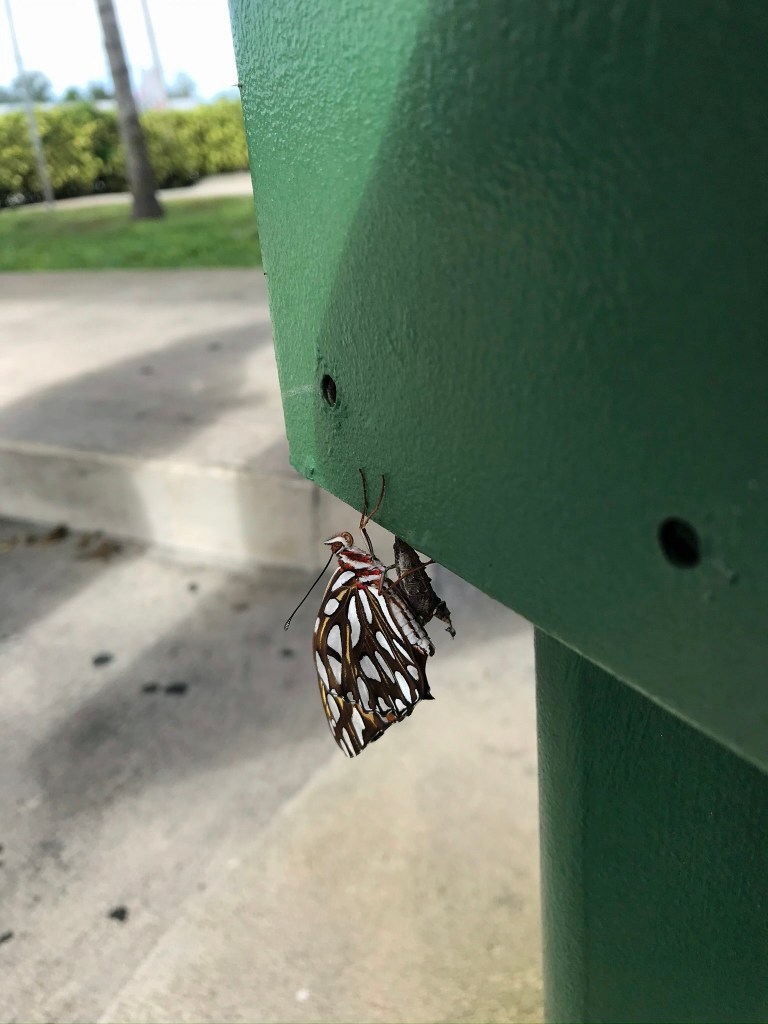
….on a Sonic Drive-In Order Station.
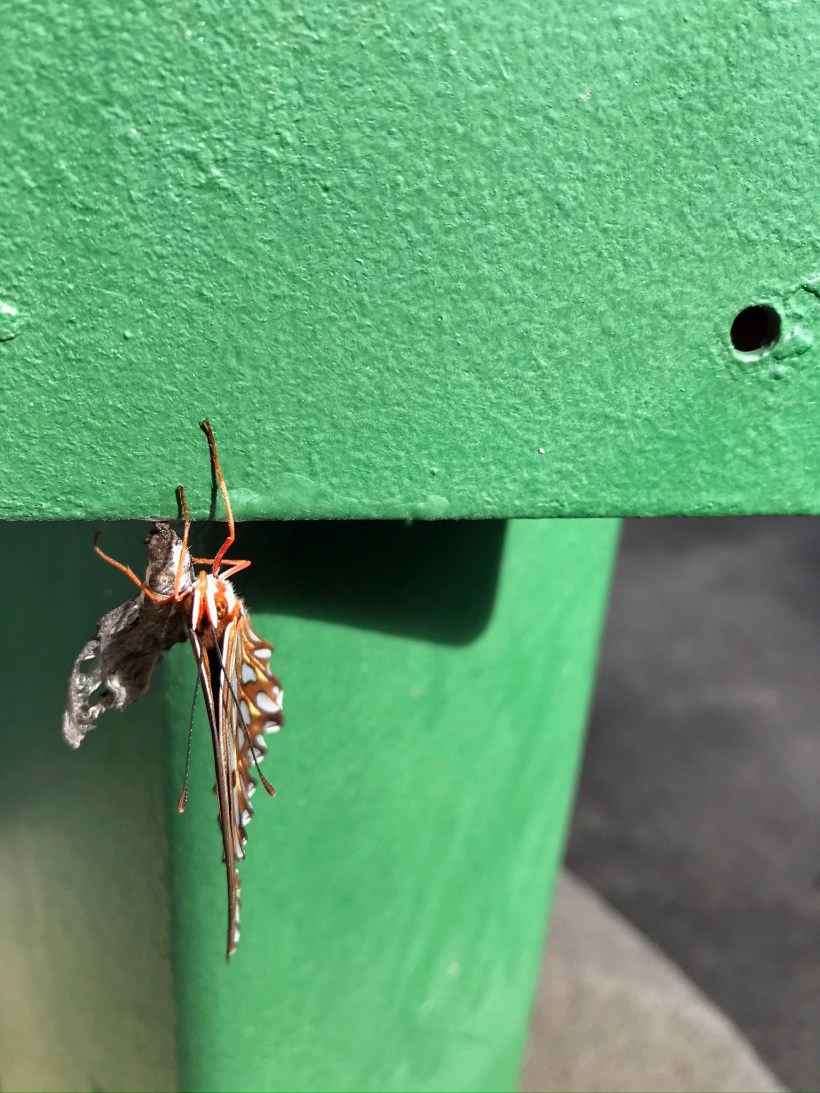
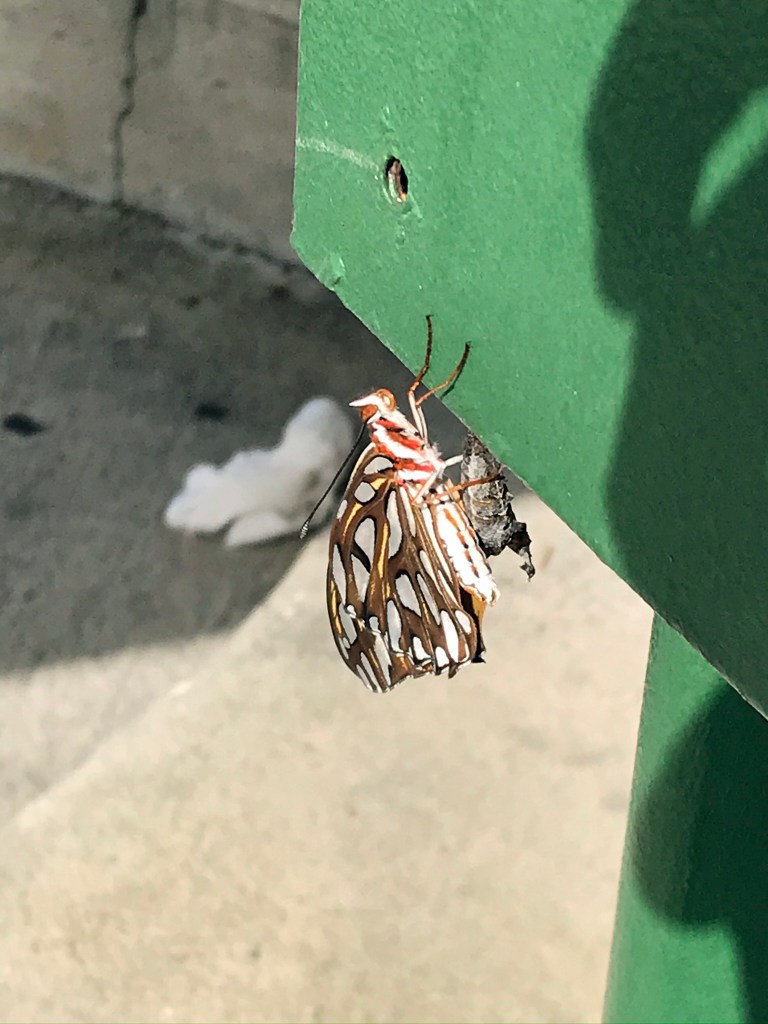
On Tuesday, December 17, 2019 a caterpillar dropped from vegetation to crawl across the parking lot of Sonic Drive-In, 2140 N Courtenay Pkwy, Merritt Island, FL 32953, crawl up an order station, affix its tail to the kelly green semi-gloss enamel, to form a chrysalis.
The afternoon of New Years Eve, 14 days later, we spied the Retro theme of this fast food business, finding it appealing, stopped for a hi-fat lunch of hamburgers, onion rings (“highly recommended, very delicious”) and (ha, ha) diet sodas, choosing this same order station where the emerged Brush-foot butterfly, of the family Nymphalidae, clung, drying in anticipation of flight.
Captured here with the Apple IPhone 8. I cannot identify the exact butterfly species this is. Source: wikipedia article on Nymphalidae.
The instant of sunrise
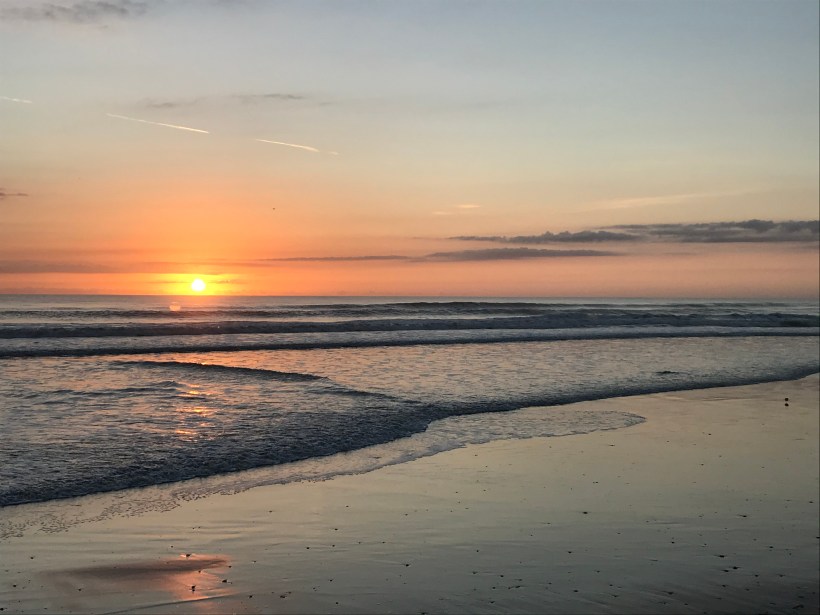
The sun disk broaches the Atlantic Ocean horizon on a clear January morning.

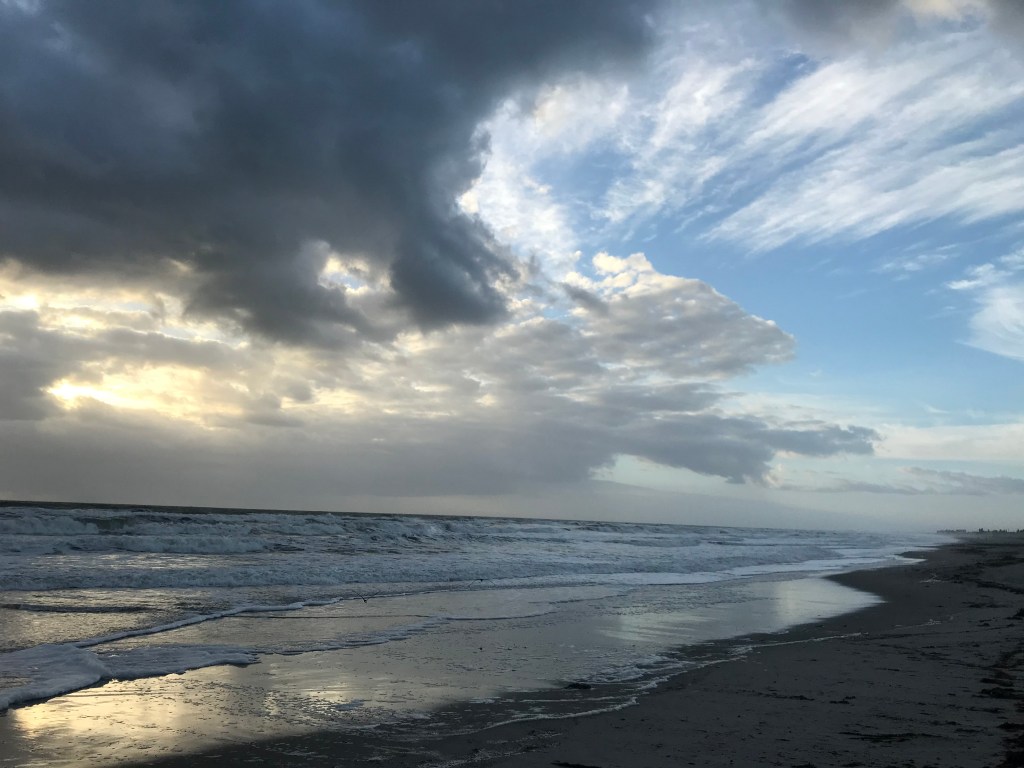
There are limitations, certainly, to photographs from that tiny lens on the IPhone 10 (or IPhone X). It captured the moments in this series. I take mine along even with the professional camera bodies, lenses and tripod, for this reason. These images are the unprocessed files.

 Michael Stephen Wills Photography