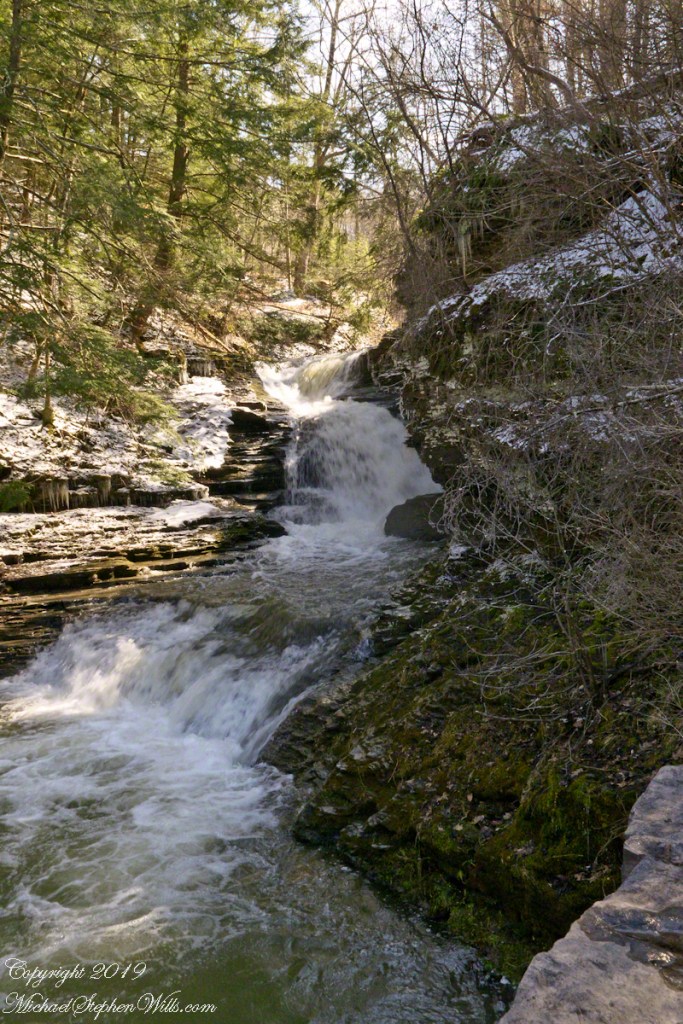
Step into an early spring morning where sudden frosts adorn the Waterfall by the Old Mill with fleeting icicles, capturing nature’s delicate balance between freeze and thaw.
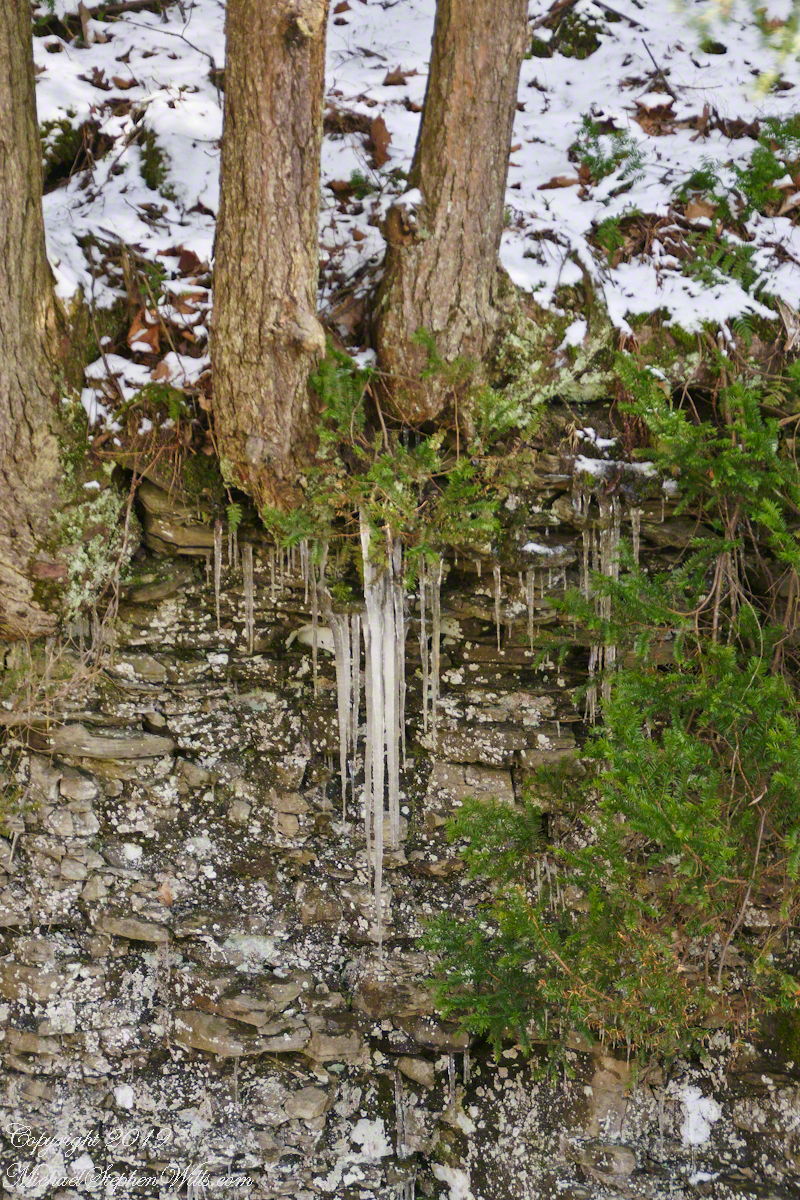
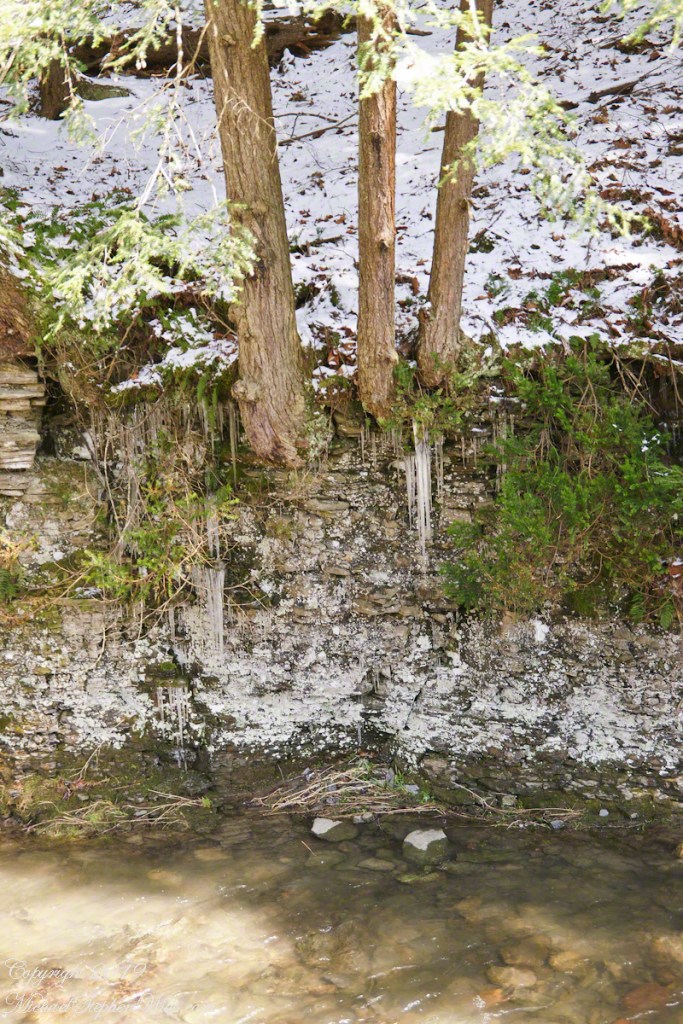
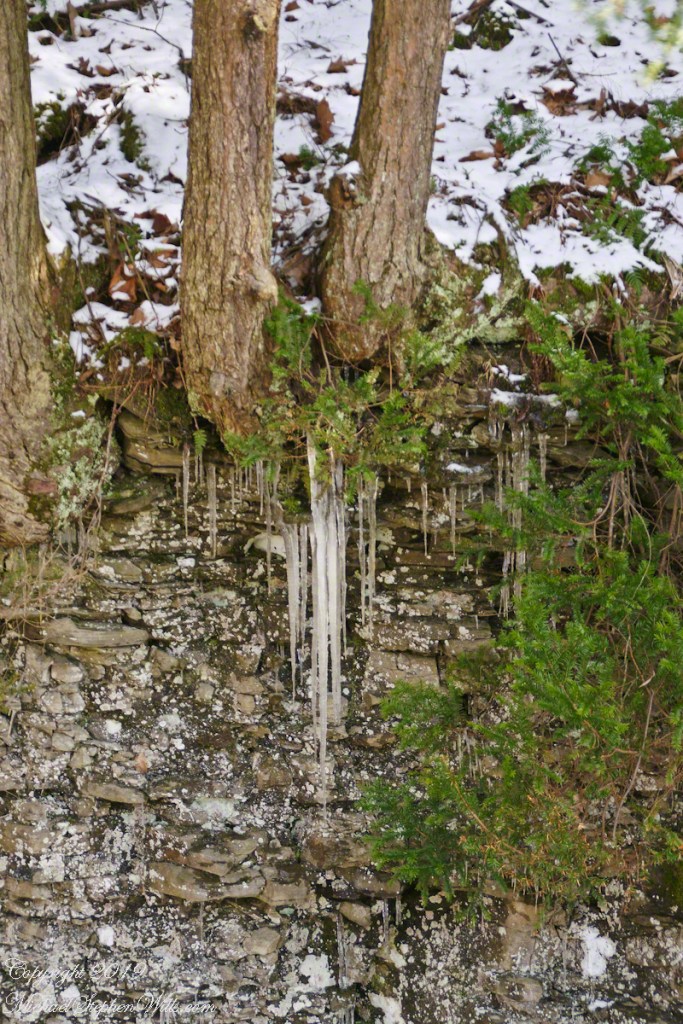
New icicles formed overnight from seeps through the sedimentary walls around the Waterfall by the Old Mill. On an early spring day, after a sudden frost, we walked the Rim Trail to capture the moment.
Here icicles formed during the quick April freeze hand above Fish Kill. Kill is an old Dutch word for creek.
Click photograph for a larger view. To do this from WordPress Reader, you need to first click the title of this post to open a new page.
Sedimentary Walls
Here a mix of frost and lichen mottle the rock layers.
These shots were hand held. I used a Sony Alpha 700 dslr with a variable “zoom” lens, great for framing compositions.
Robert H. Treman New York State Park.
Click for a slideshow of this Waterfall of the Old Mill sequence
Falls by the Old Mill, early spring
Copyright 2024 All Rights Reserved Michael Stephen Wills
Join me on a frost-kissed journey along the Rim Trail, capturing the transient beauty of falls freed from winter’s grip, where nature’s power remains untamed and vividly alive.
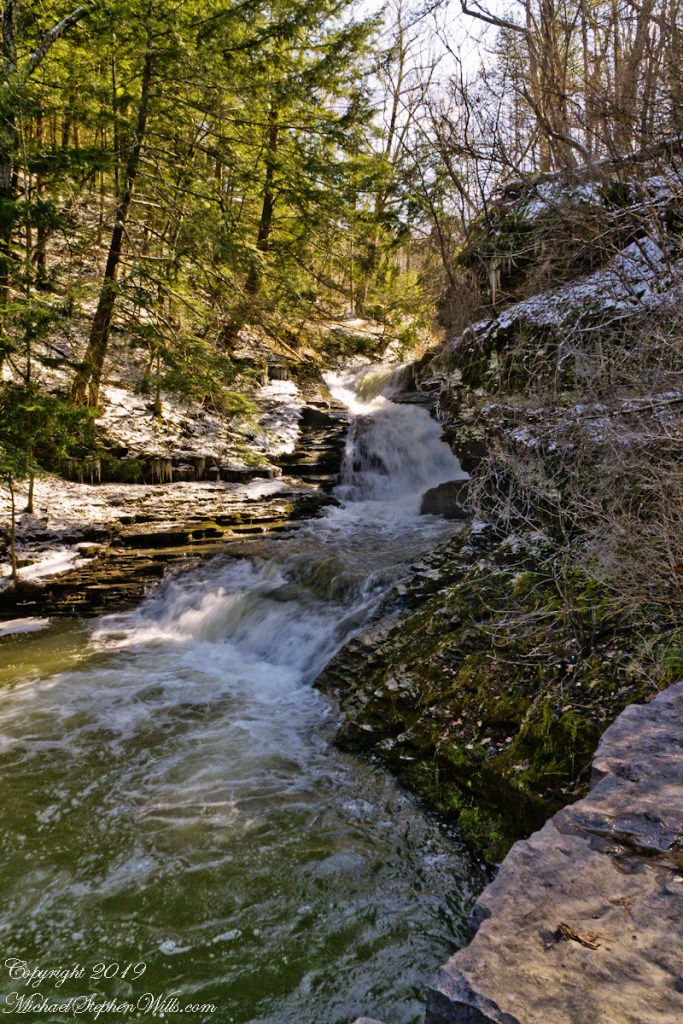
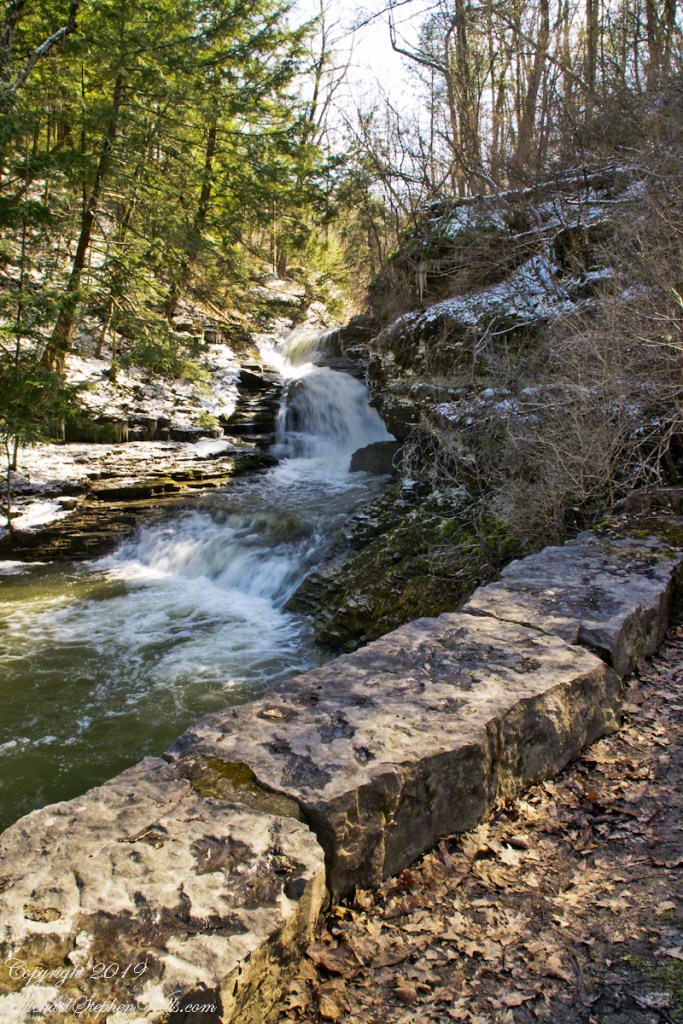
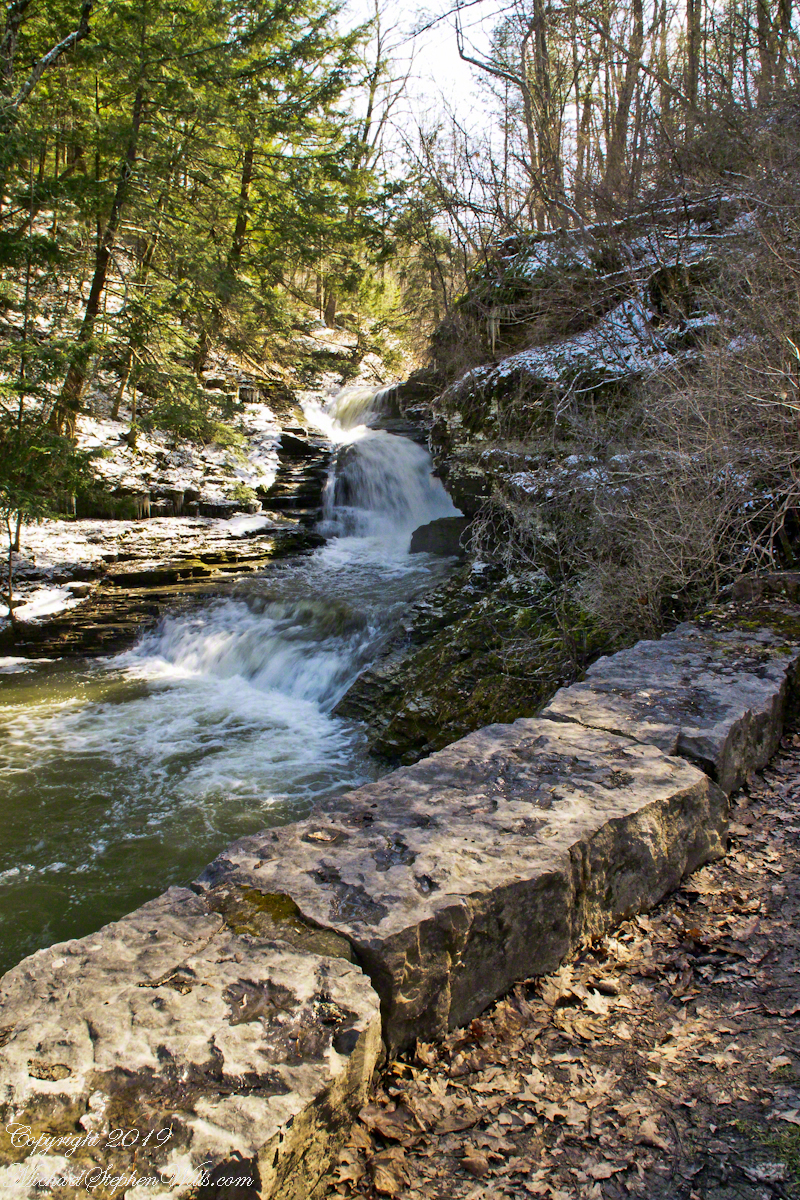
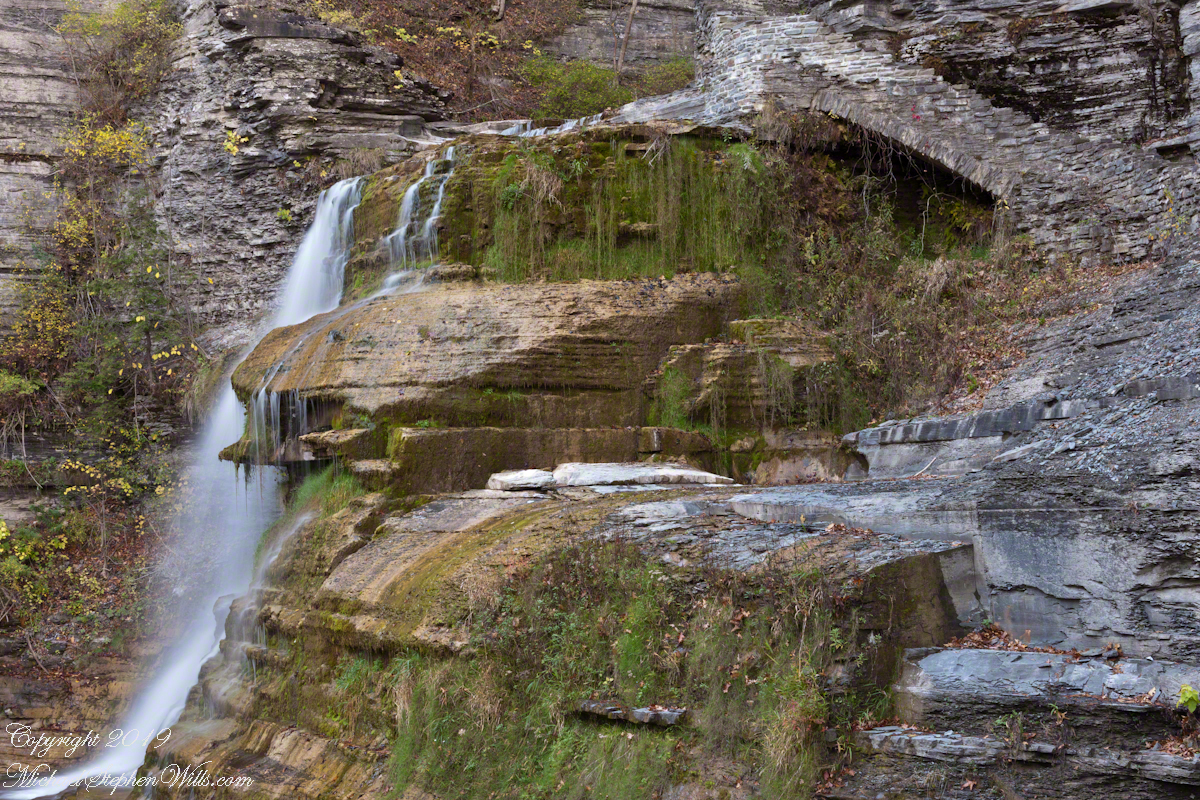
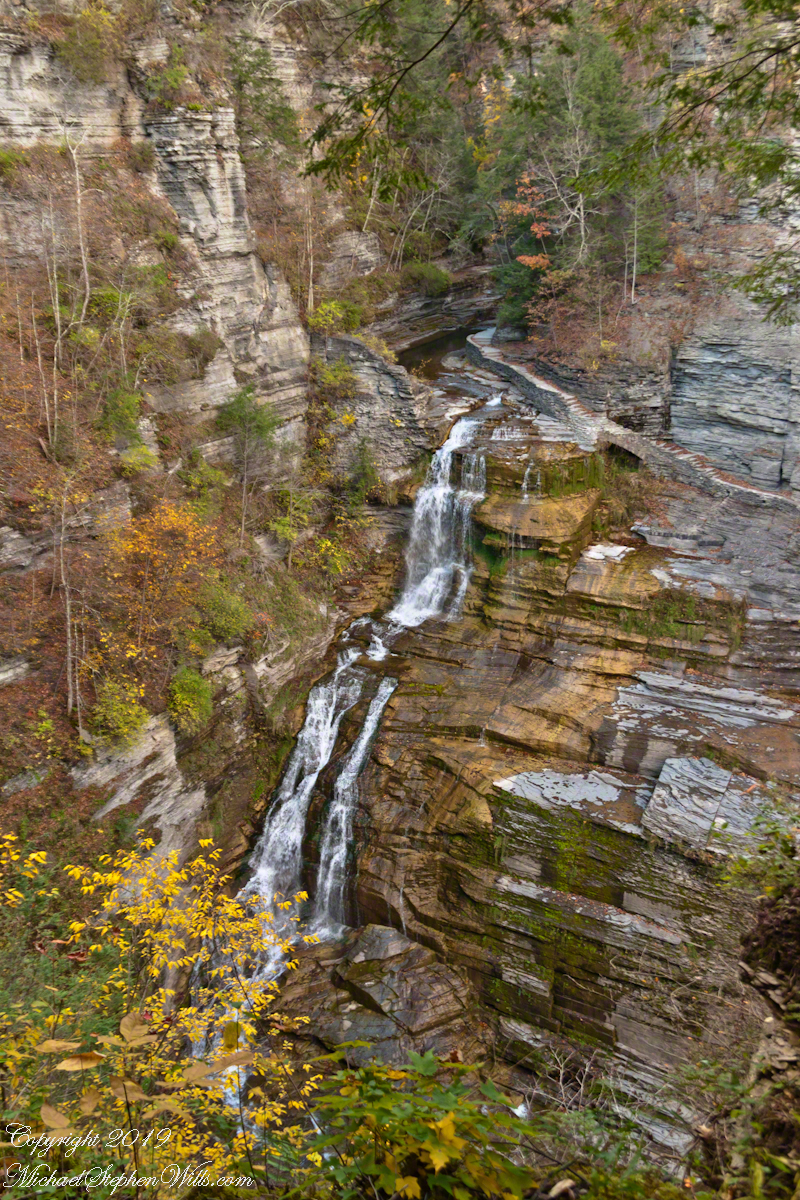
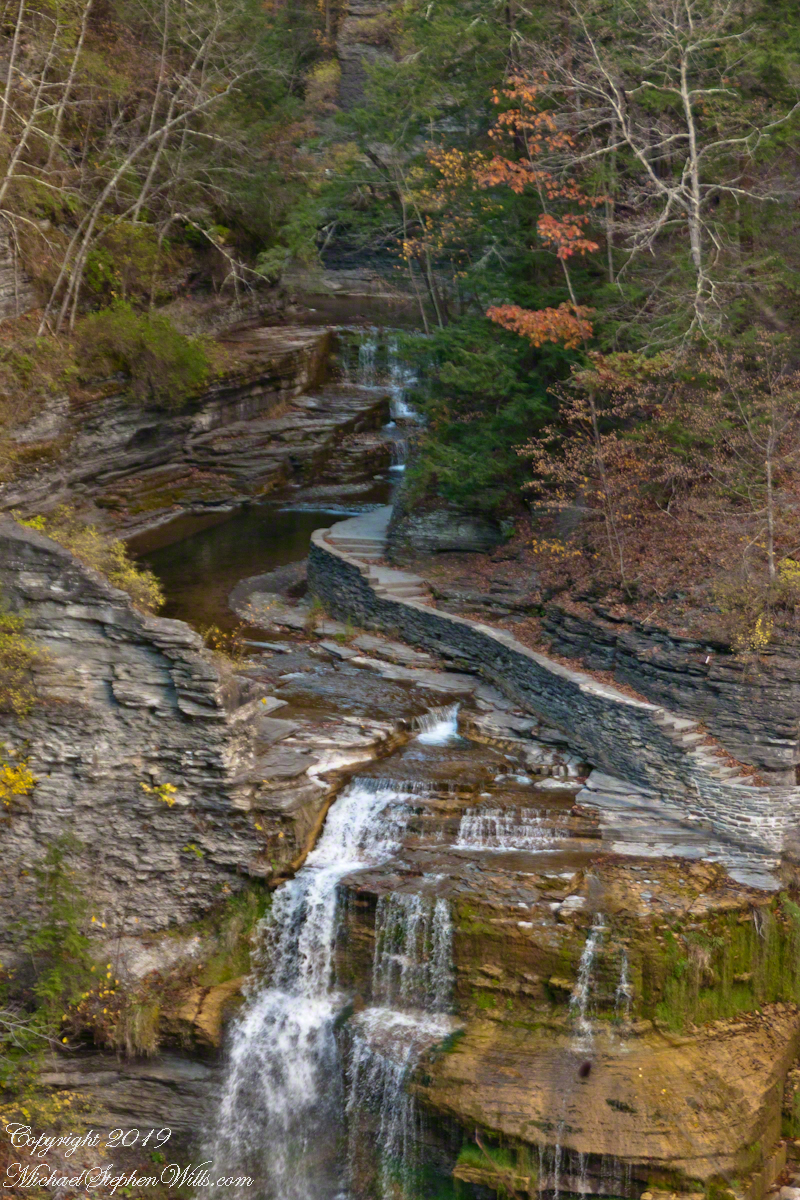
A day the falls run free of ice. On an early spring day, after a sudden frost, we walked the Rim Trail to capture the moment. Here are three captures of the same waterfall, the first visitors to the upper park encounter and the most visited and photographed right off the parking area.
Fish Kill was captured at this point to provide power to grind grain. Today neither nature nor man control the flow. Kill is the old Dutch word for creek.
Click photograph for a larger view. To do this from WordPress Reader, you need to first click the title of this post to open a new page.
Falls by the Old Mill, early spring
I have never counted the waterfalls from this one to the grand sweep of lower falls. The falls are uncountable because no two people could agree on how small a fall to credit.
Of these three versions, i prefer this one for the foreground inclusion of the enormous limestone blocks set to protect visitors from the drop. This scene is challenging photographically, bifurcated as it is by the bright sun over the fall brink. I prefer to shoot these falls early morning, for this reason, before the sun illuminates the area at all. Long exposures required demand a rock solid tripod, as it is just off the parking lot I use my studio Manfrotto for the work. Here all shots were handheld.
I used a Sony Alpha 700 dslr with a variable “zoom” lens, great for framing compositions.
Robert H. Treman New York State Park.
Click for a slideshow of this sequence of the Waterfall of the Old Mill
Copyright 2024 All Rights Reserved Michael Stephen Wills
Pam and I visited Treman for our last visit of 2017. It was a bright, warm October afternoon. Here is a slide show of our experience, the details shared in recent postings. Enjoy!!
Click photograph for a larger view. To do this from WordPress Reader, you need to first click the title of this post to open a new page.
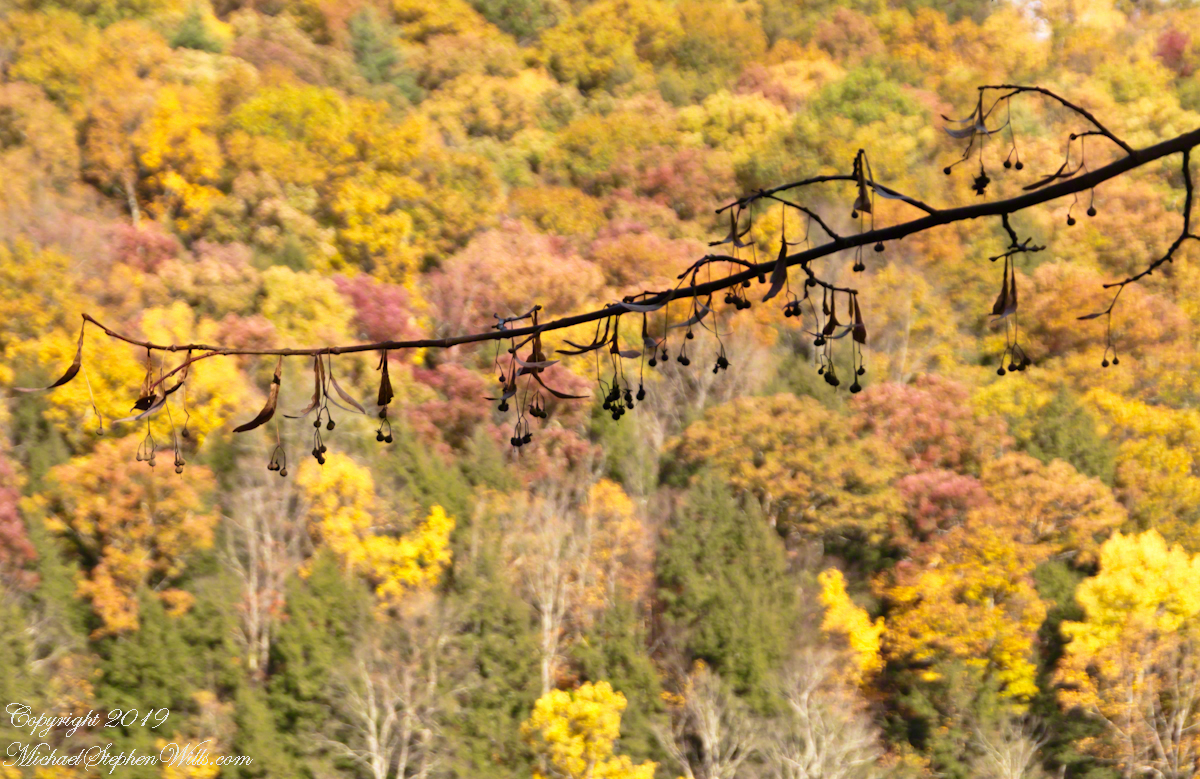
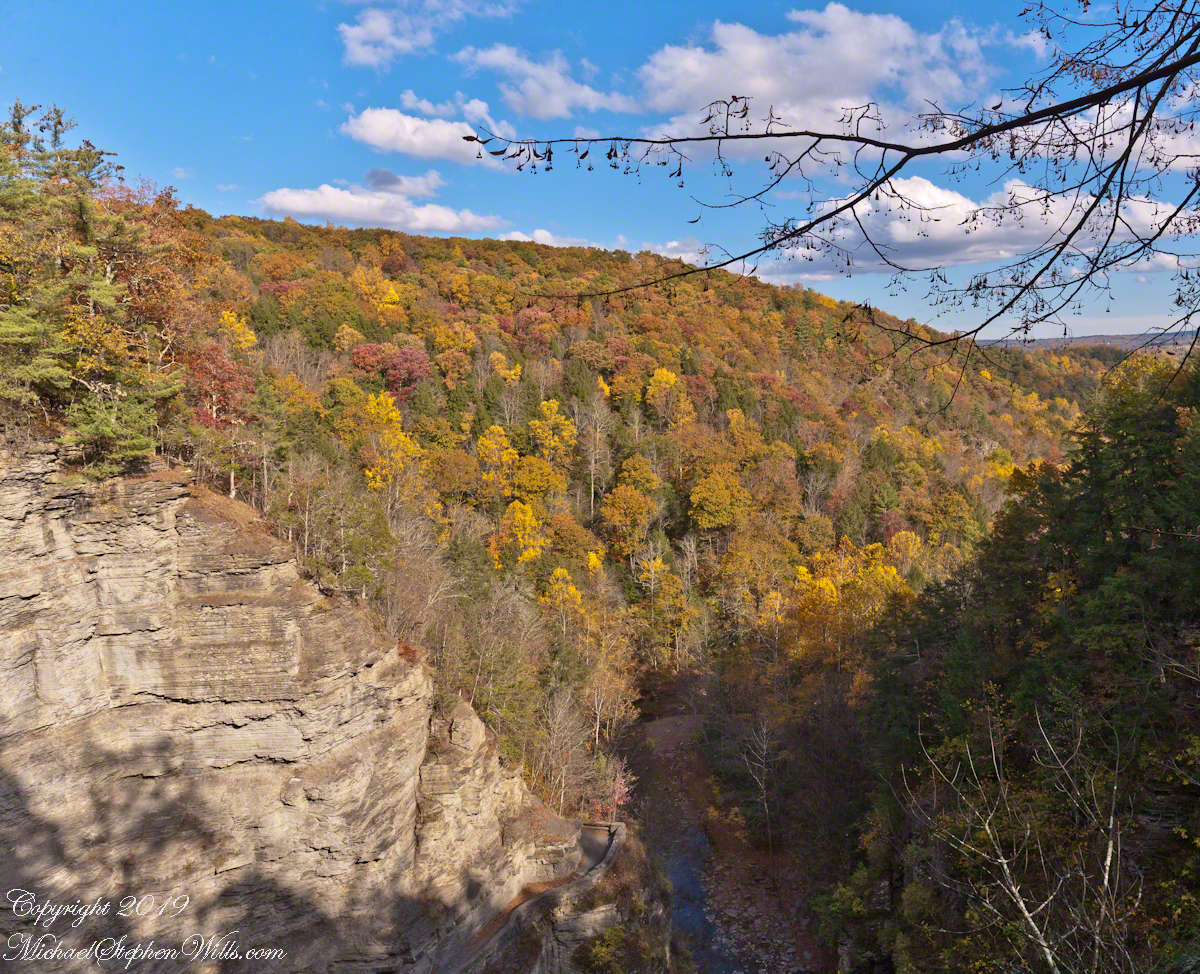
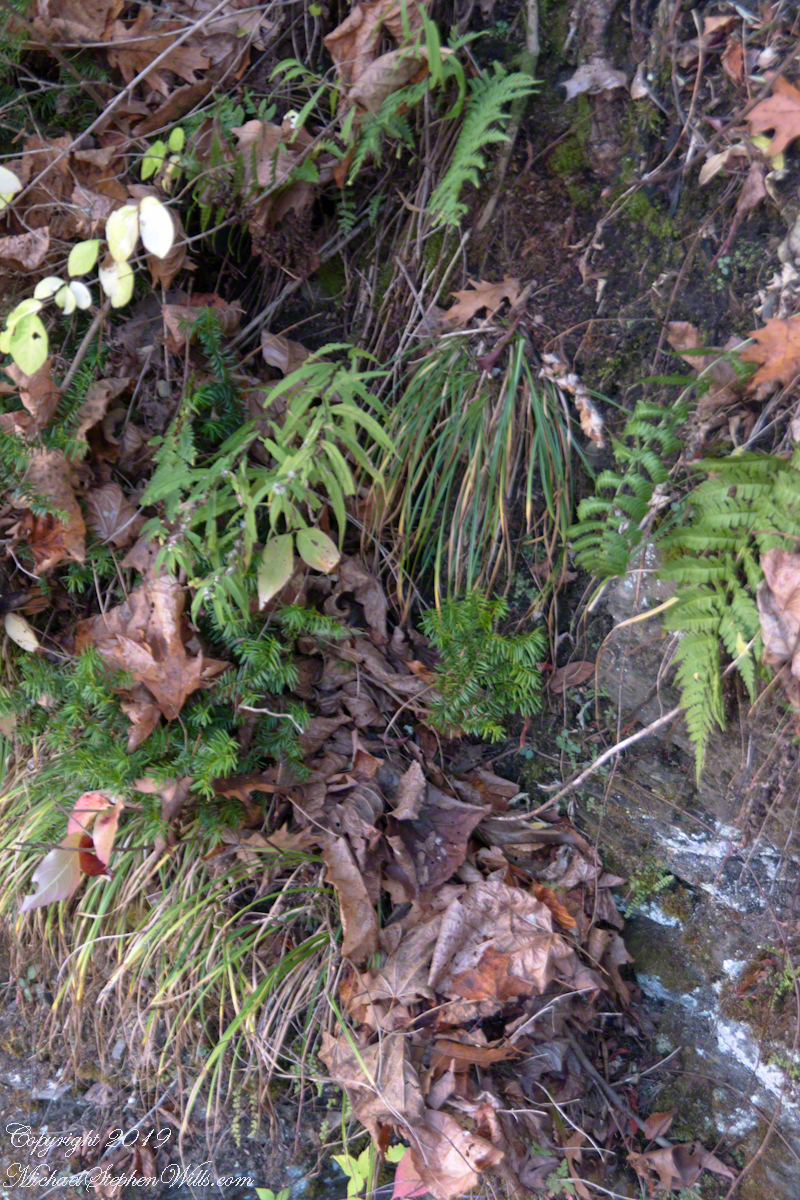
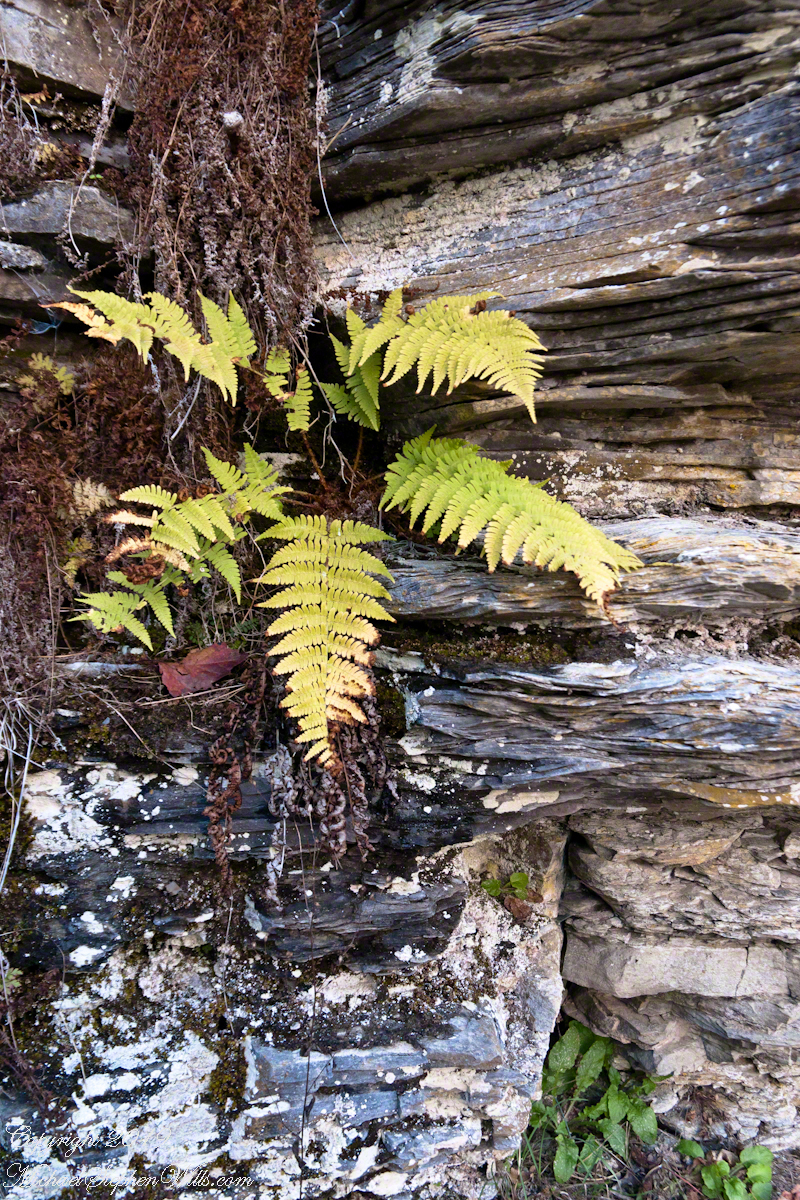
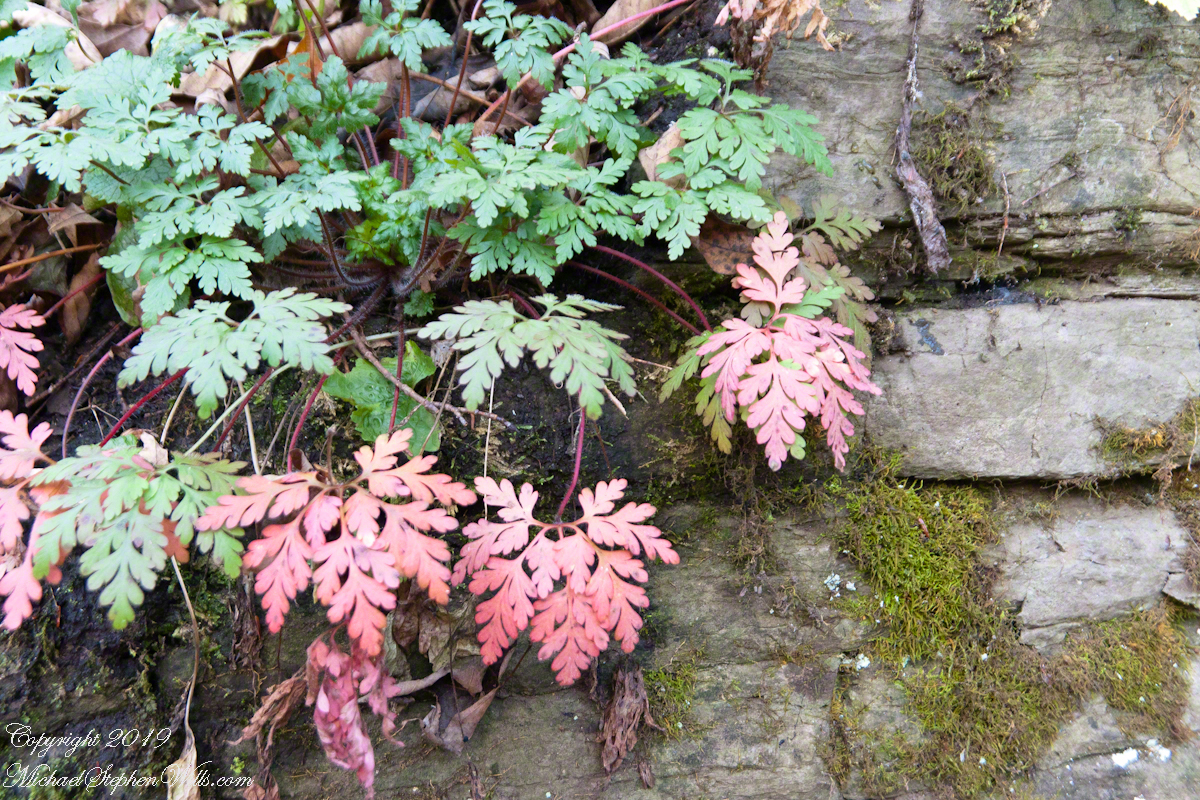
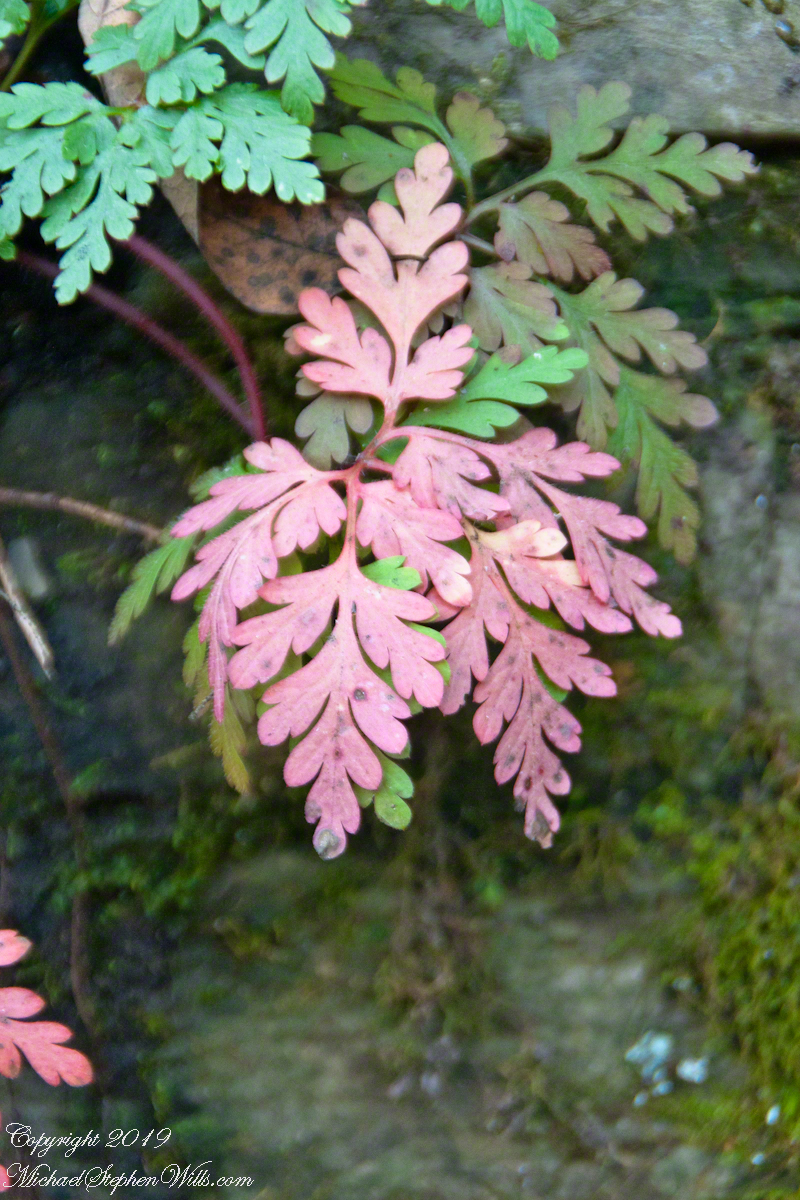
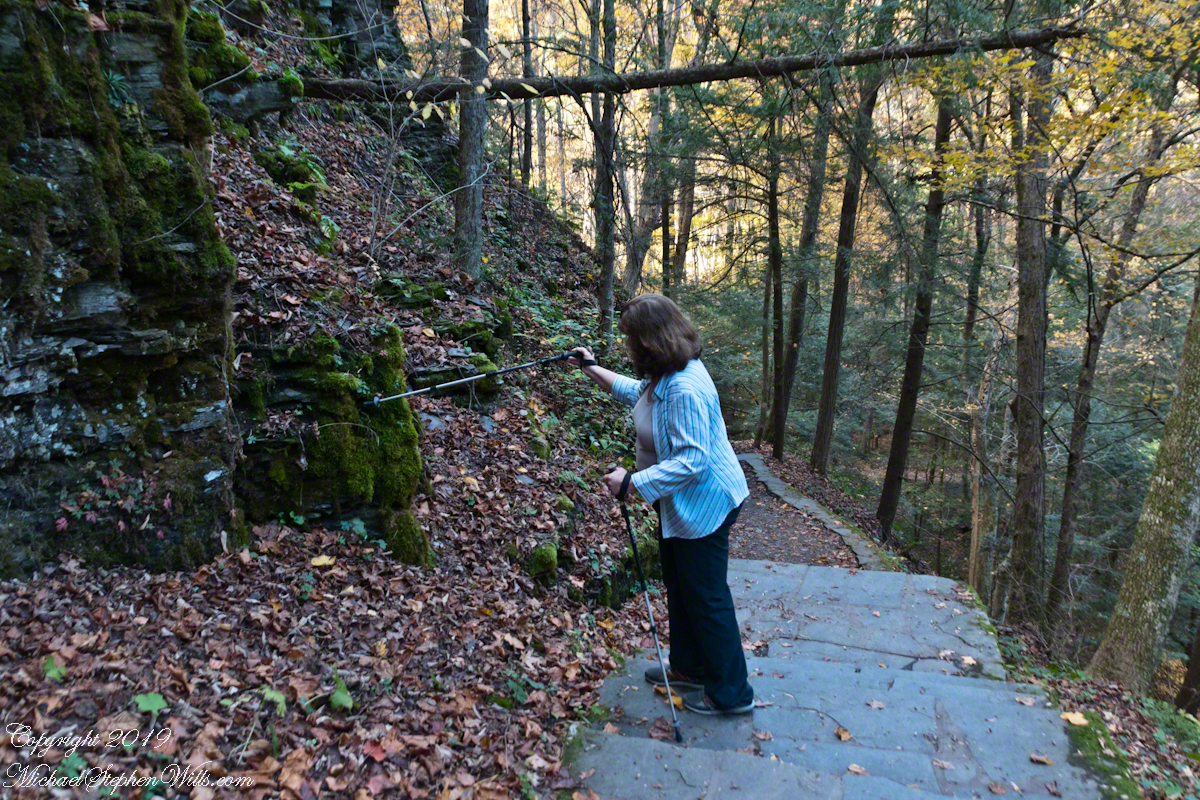
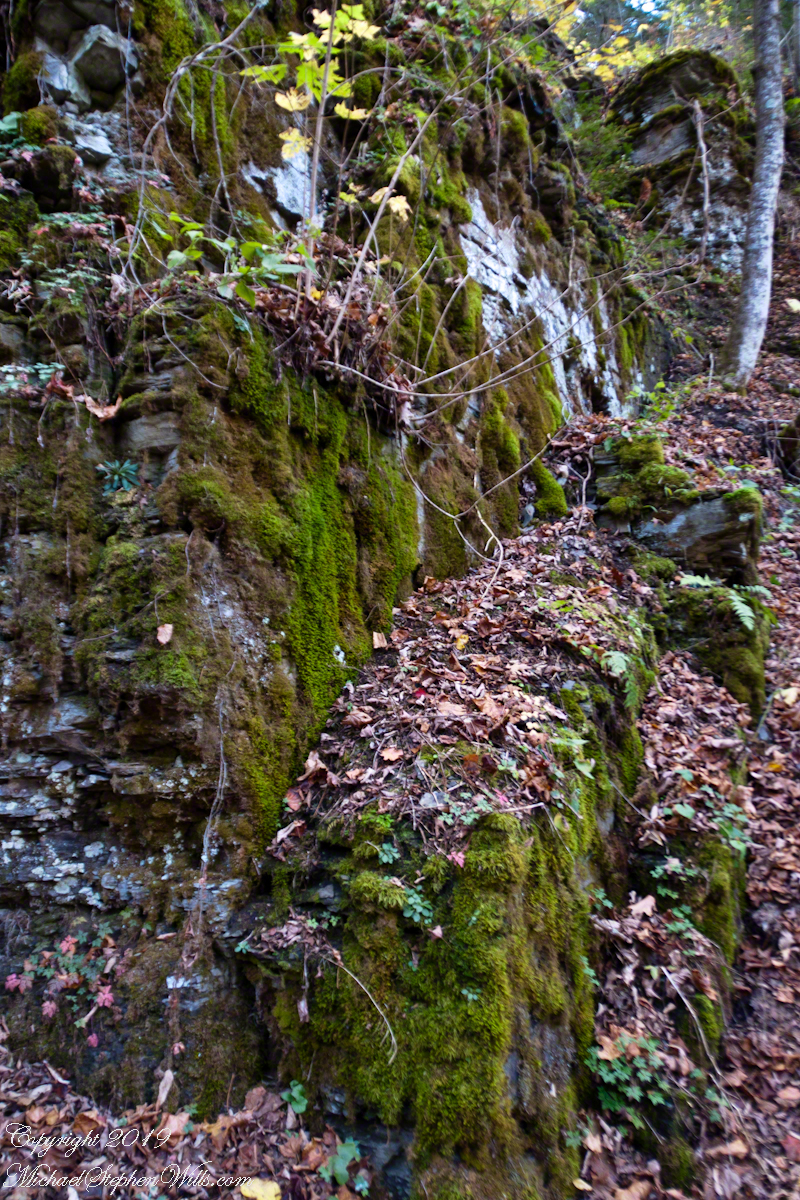
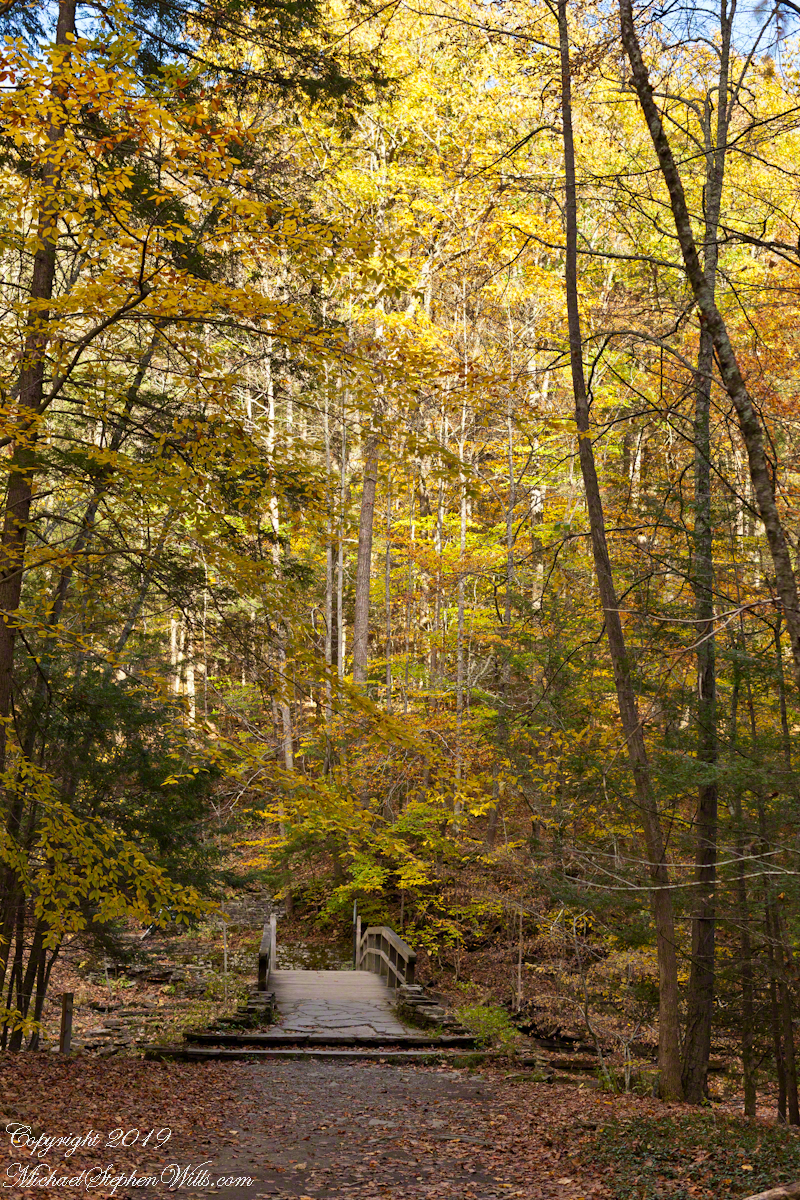
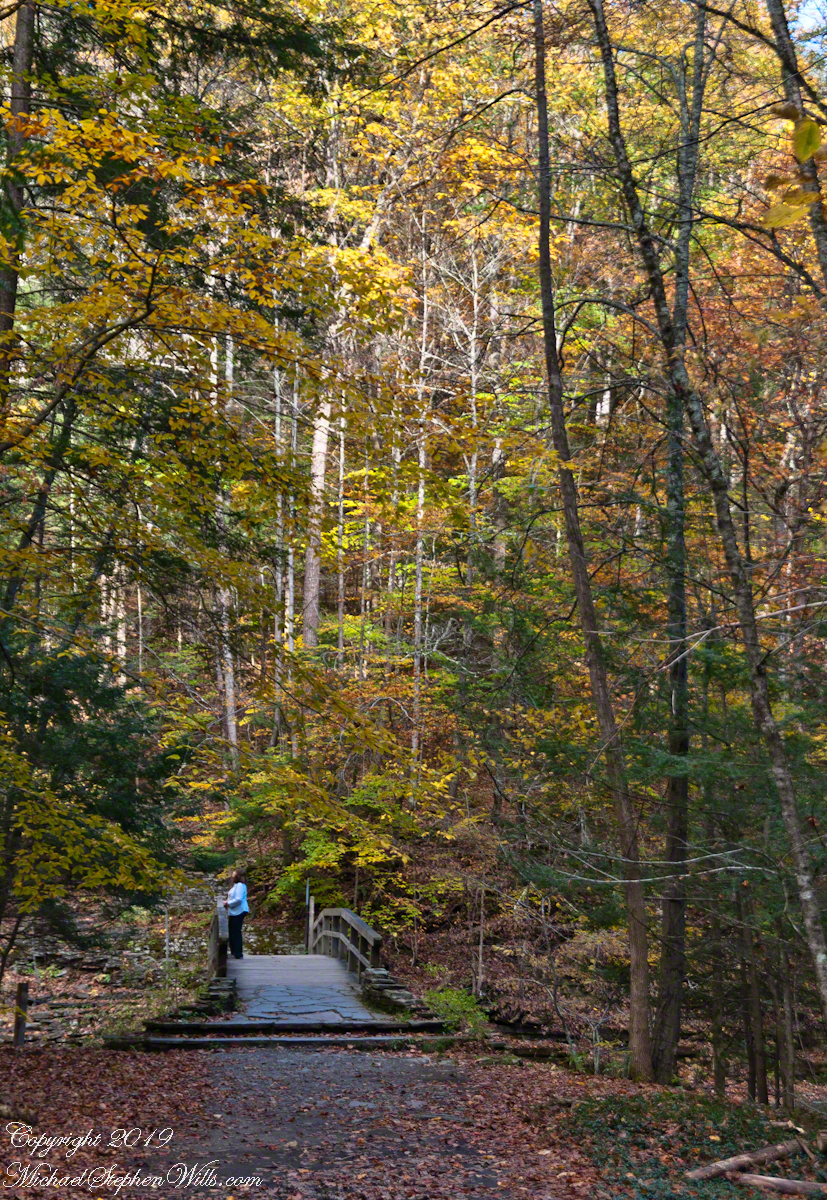
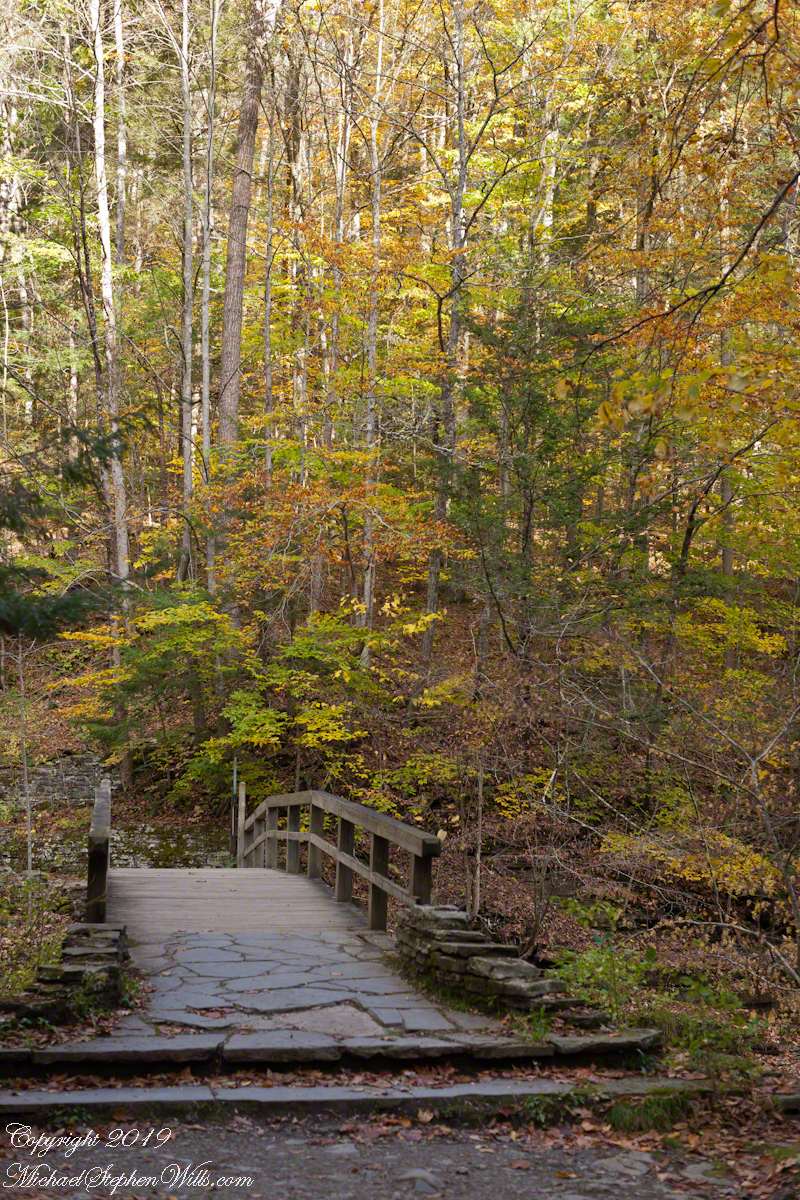
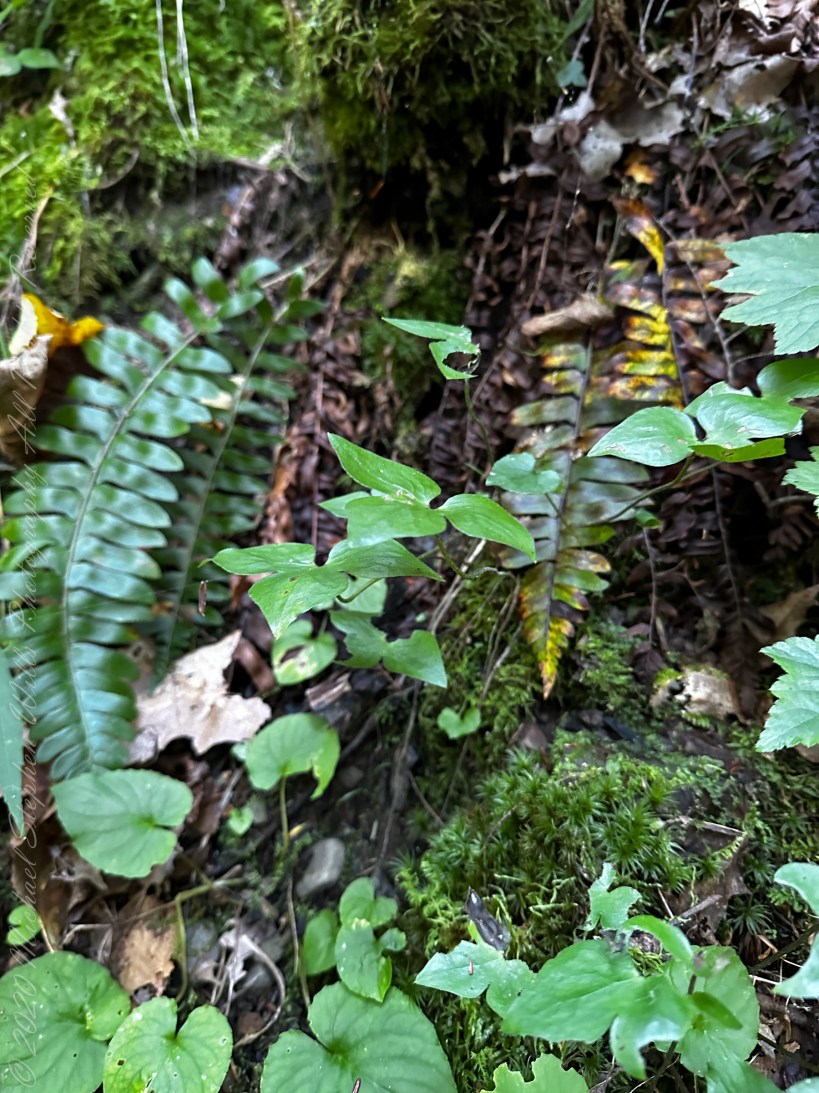
Brink of Lucifer FallsLucifer Falls Overlook from the Gorge TrailLucifer Falls from Rim Trail OverlookLucifer Falls from Rim Trail OverlookPam on the Cliff StaircaseUnidentified TreeLuficer Falls Overlook, northeastCliff Stair Wall, autumn with hemlockCliff Stair Wall, autumn with fern generationsCliff Stair Wall, autumn Geranium and mossesThis geranium species (scientific name Geranium robertianum) are also called “Herb-Robert” for a reputed ability to ward off disease and, in the Scottish Highlands, “red-shanks” for the deep red color of the stalks, seen in this photograph. Robert H. Treman New York State Park. Source, “How to Know the Wildflowers” by Mrs. William Star Dana, 1989, Houghton Mifflin, Boston.Pam examines the mossCliff Stair Wall, autumn MossAutumn foot BridgeWoman on Footbridge, ContemplationOver the bridge
In November the gorge is closed for the winter due to dangerous conditions under the steep, crumbling walls. Robert H. Treman New York State Park.
Copyright 2019 All Rights Reserved Michael Stephen Wills
The post discusses the Hepatica acutiloba plant, highlighting its characteristics, growth, historical medicinal use, and its natural habitat in central eastern North America. It also includes an observation made in Robert H. Treman Park.
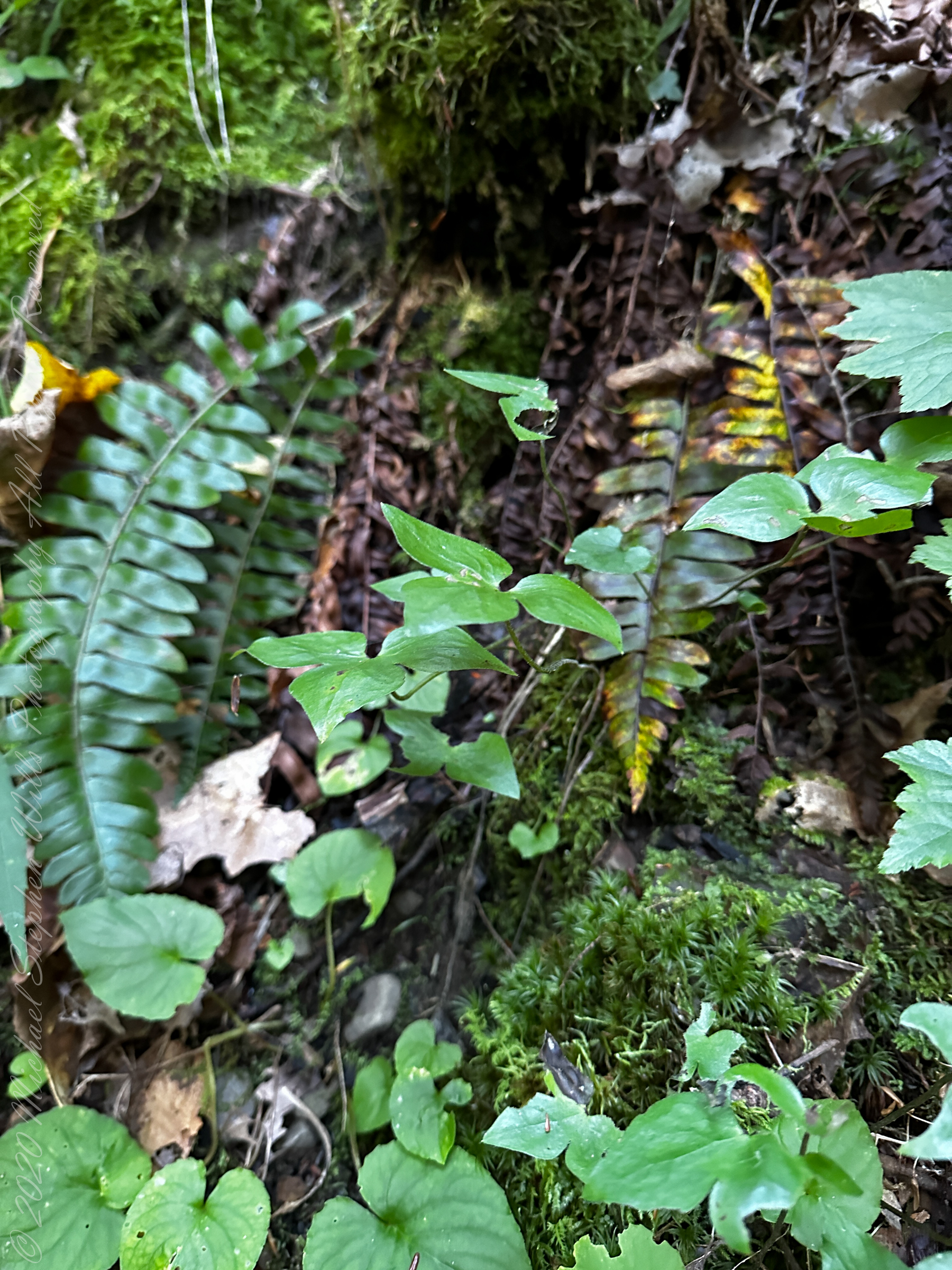
These characteristic leaves are Hepatica plants growing on the sun dappled southern rim of Robert H. Treman Park captured on a bright late September morning.
“Hepatica acutiloba, the sharp-lobed hepatica, is a herbaceous flowering plant in the buttercup family Ranunculaceae. It is sometimes considered part of the genus Anemone, as Anemone acutiloba, A. hepatica, or A. nobilis. Also generally known as Liverleaf and Liverwort.”
“The word hepatica derives from the Greek ἡπατικός hēpatikós, from ἧπαρ hêpar ‘liver’, because its three-lobed leaf was thought to resemble the human liver.”
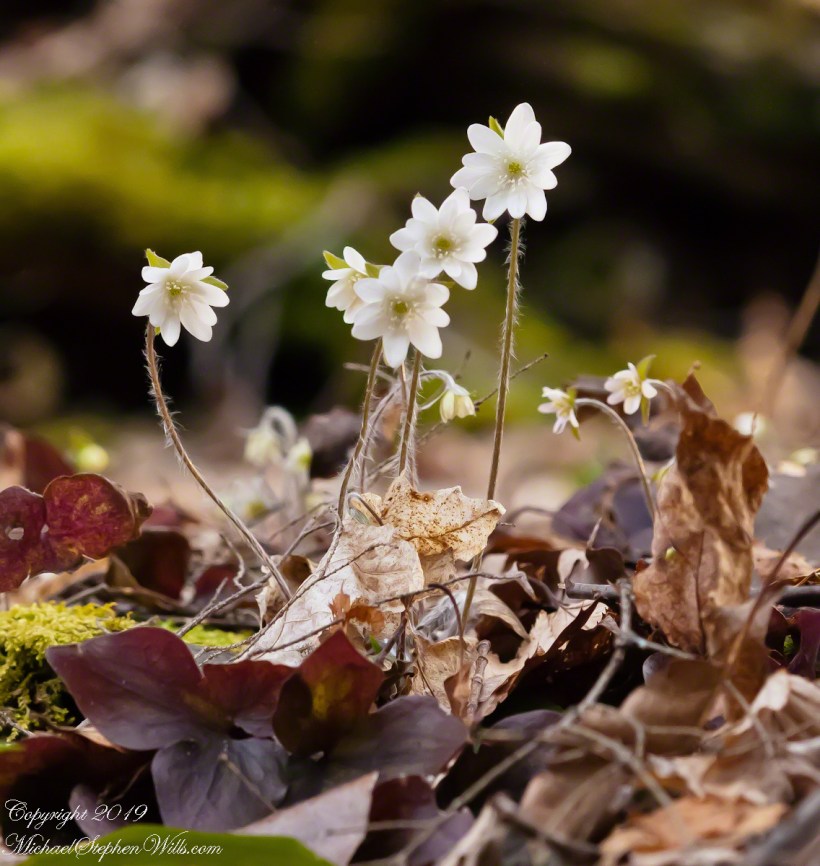
“Each clump-forming plant grows 5 to 19 cm (2.0 to 7.5 in) tall, flowering in the early to mid spring. The flowers are greenish-white, white, purple or pinkish in color, with a rounded shape. After flowering the fruits are produced in small, rounded columned heads, on pedicels 1 to 4 mm long. When the fruits, called achenes, are ripe they are ovoid in shape, 3.5–4.7 mm long and 1.3–1.9 mm wide, slightly winged and tend to lack a beak.”
Hepatica Flowers in early spring on the Rim Trail
“Hepatica acutiloba is native to central eastern North America where it can be found growing in deciduous open woods, most often in calcareous soils. Butterflies, moths, bees, flies and beetles are known pollinators. The leaves are basal, leathery, and usually three-lobed, remaining over winter.”
“Hepatica was once used as a medicinal herb. Owing to the doctrine of signatures, the plant was once thought to be an effective treatment for liver disorders. Although poisonous in large doses, the leaves and flowers may be used as an astringent, as a demulcent for slow-healing injuries, and as a diuretic.”
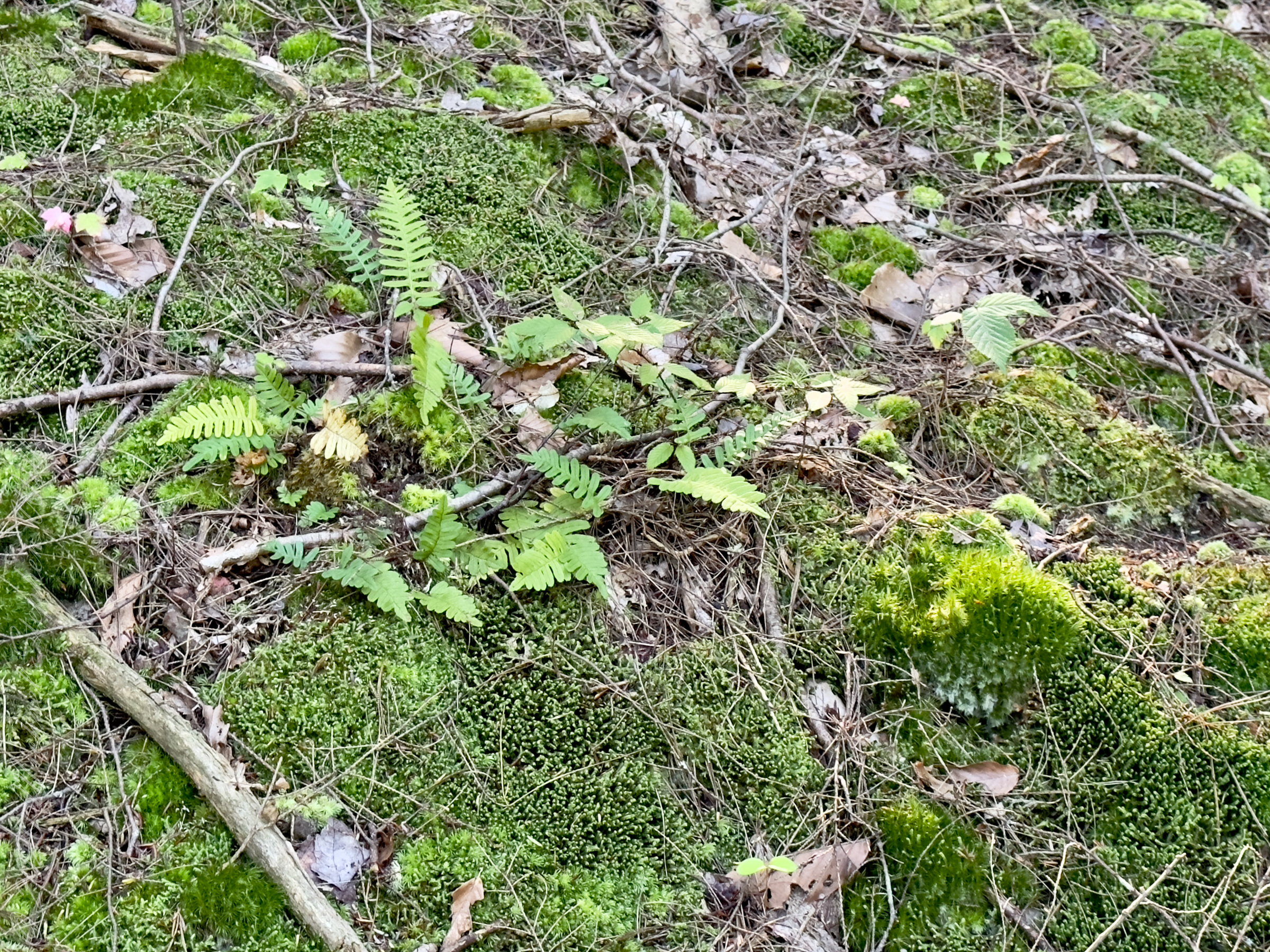
Ferns and Mosses growing beneath Red Pines
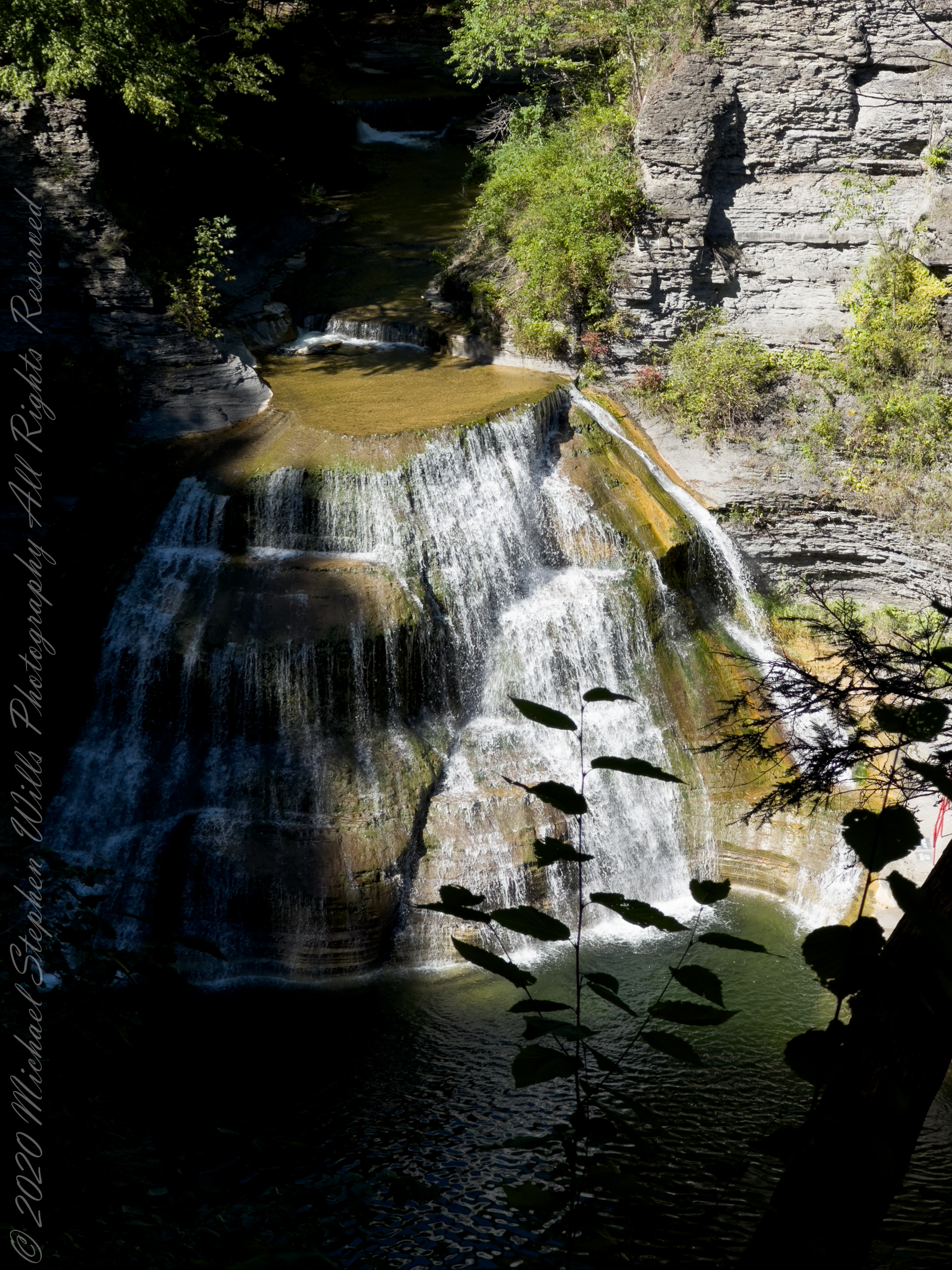
View of the lower falls and swimming hole from the Rim Trail
Returning from a Rim Trail walk one April my boots were yellow from a prolific release of pollen from flowers of these tall trees that develop into the woody cones.
Pinus, the pine, is the largest genus in the family Pinaceae, with around 100 species throughout the northern hemisphere.
Red Pine (Pinus resinosa) is Minnesota’s state tree, known there as the Norway Pine. The use of the name “Norway” may stem from early Scandinavian immigrants who likened the American red pines to the Scots pines back home.
“Red pine is a coniferous evergreen tree characterized by tall, straight growth. It usually ranges from 20–35 meters (66–115 feet) in height and 1 m (3 ft 3 in) in trunk diameter, exceptionally reaching 43.77 m (143+1⁄2 ft) tall. The crown is conical, becoming a narrow, rounded dome with age. The bark is thick and gray brown at the base of the tree, but thin, flaky and bright orange red in the upper crown; the tree’s name derives from this distinctive character. Some red color may be seen in the fissures of the bark. The species is self-pruning; there tend not to be dead branches on the trees, and older trees may have very long lengths of branchless trunk below the canopy.”
“It is a long-lived tree, reaching a maximum age of about 500 years. Another member of Pinus, Pinus longaeva D.K. Bailey, the intermountain bristlecone pine, is the longest-lived tree in the world; one in the White Mountains of Nevada is estimated to be 5,000 years old, and by matching rhe rings with even older dead trees, a sequence going back 8,500 years has been established.”
“Red pine is notable for its very constant morphology and low genetic variation throughout its range, suggesting it has been through a near extinction in its recent evolutionary history. A genetic study of nuclear microsatellite polymorphisms among populations distributed throughout its natural range found that red pine populations from Newfoundland are genetically distinct from most mainland populations, consistent with dispersal from different glacial refugia in this highly self-pollinating species.”
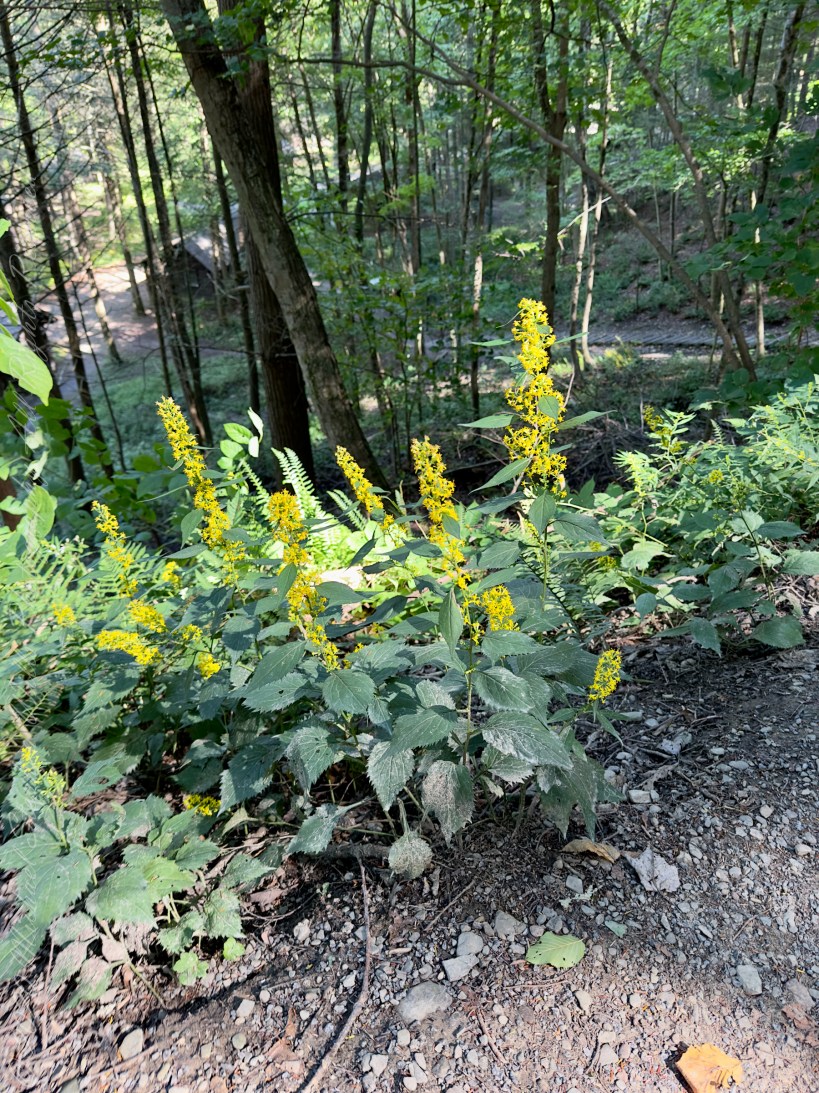
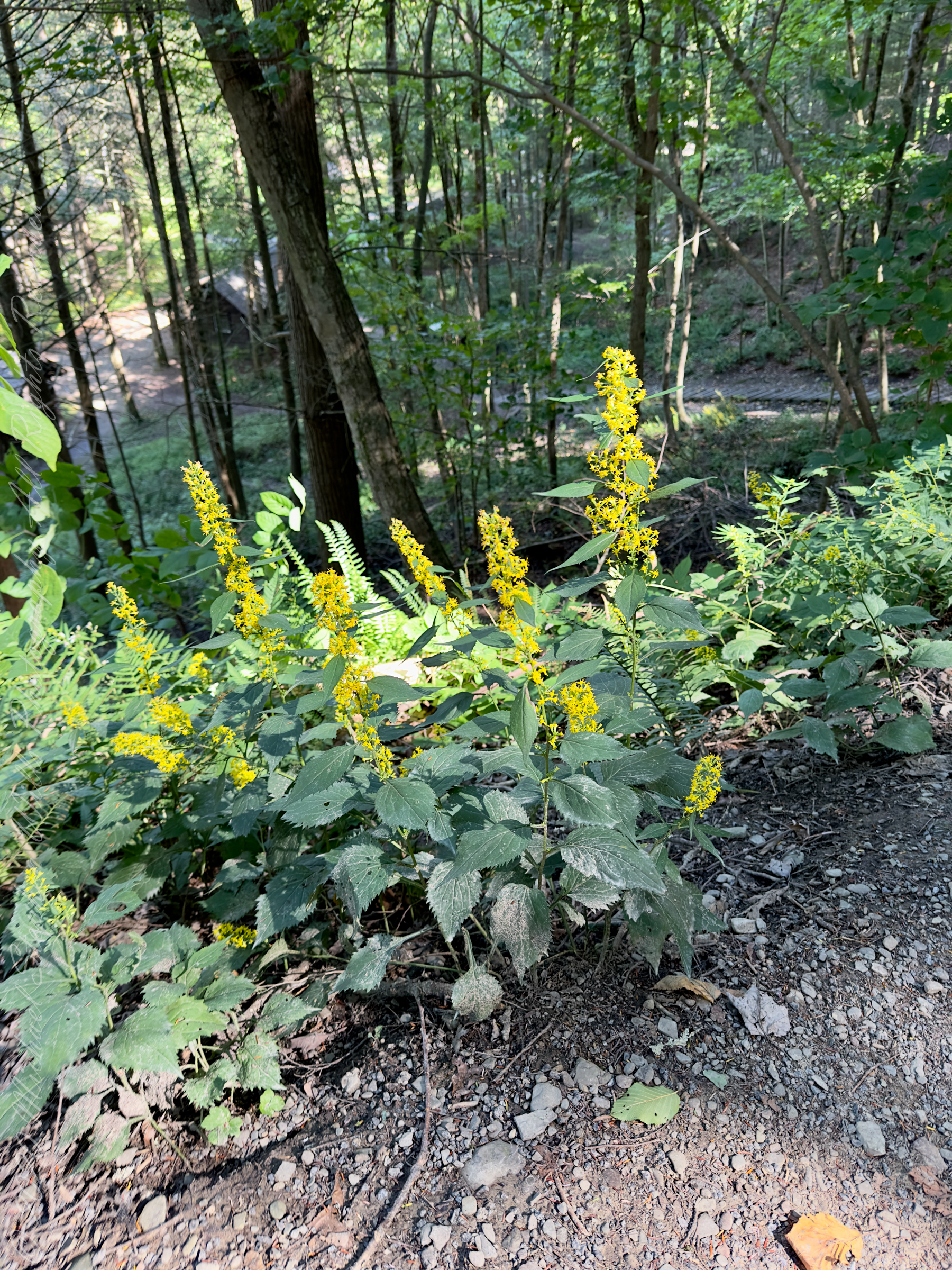
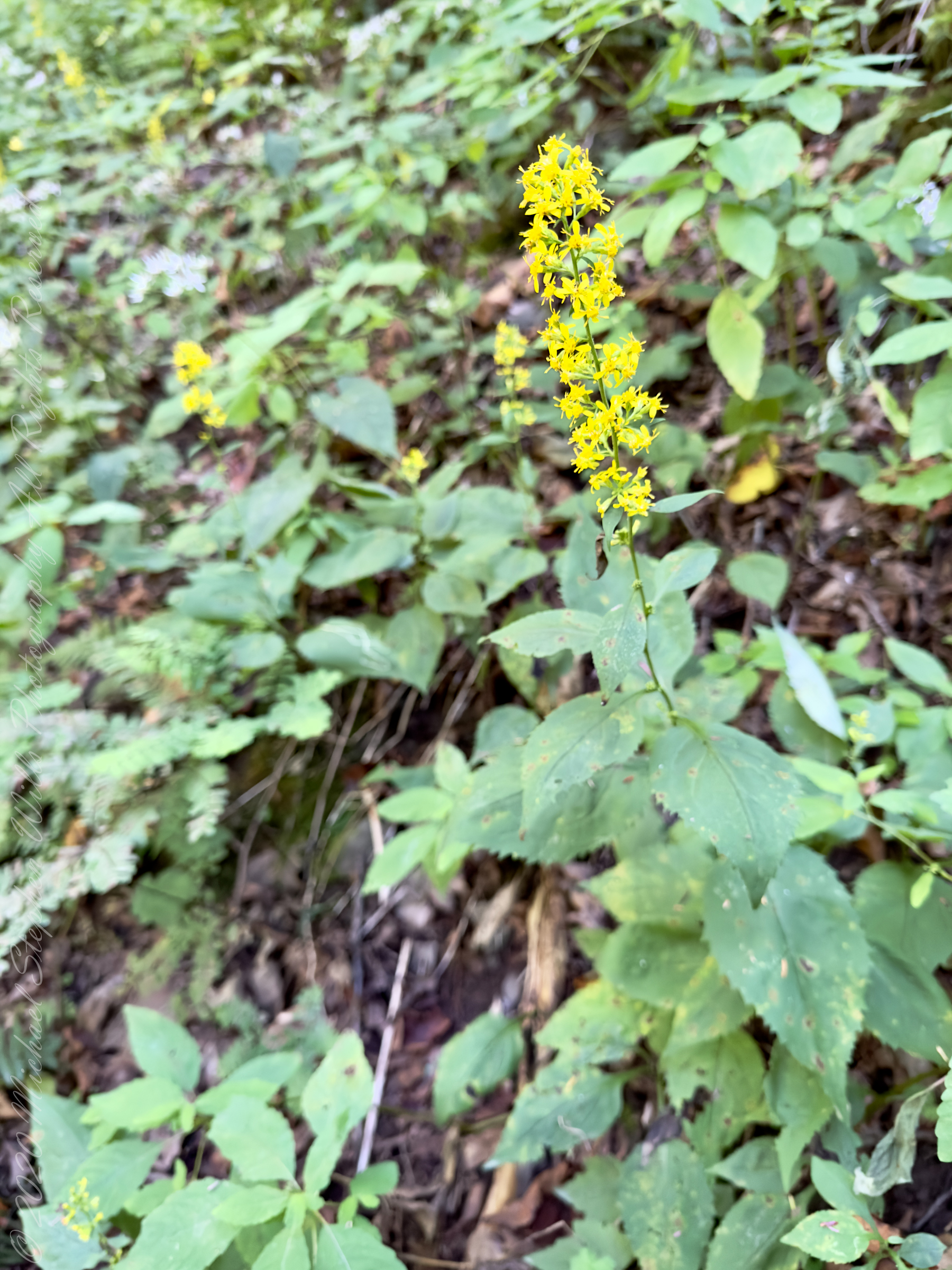
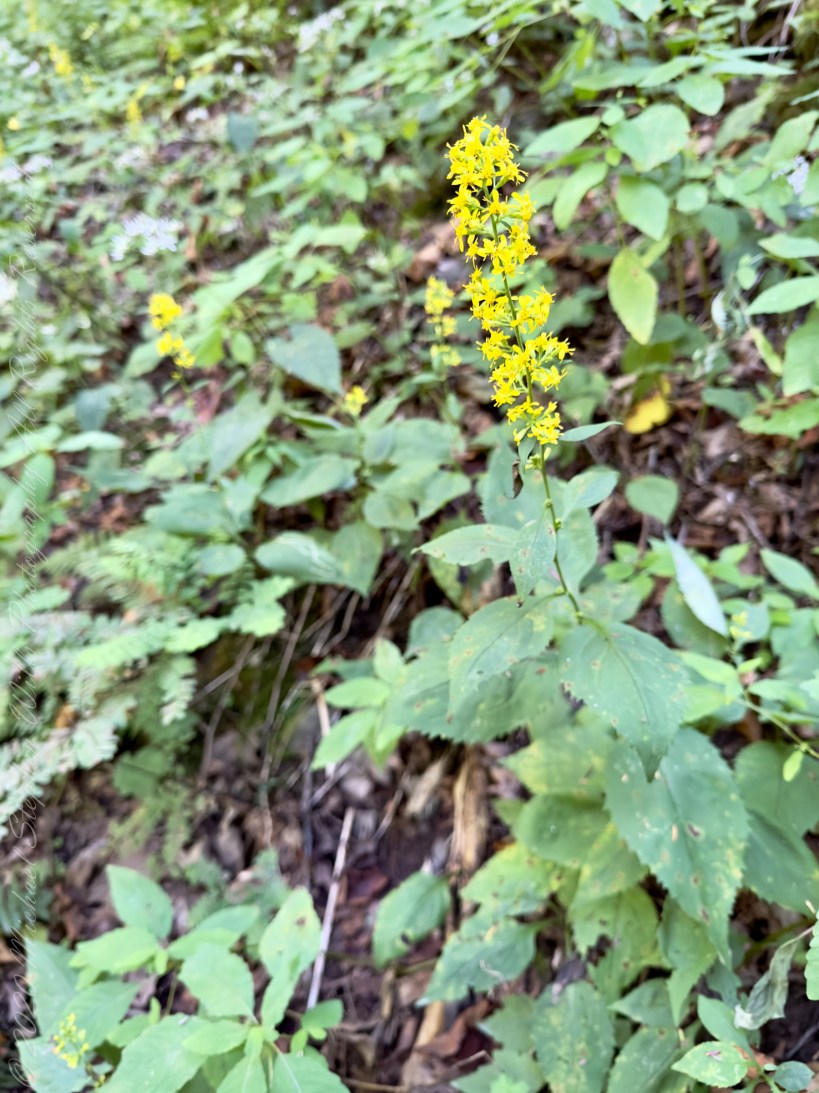
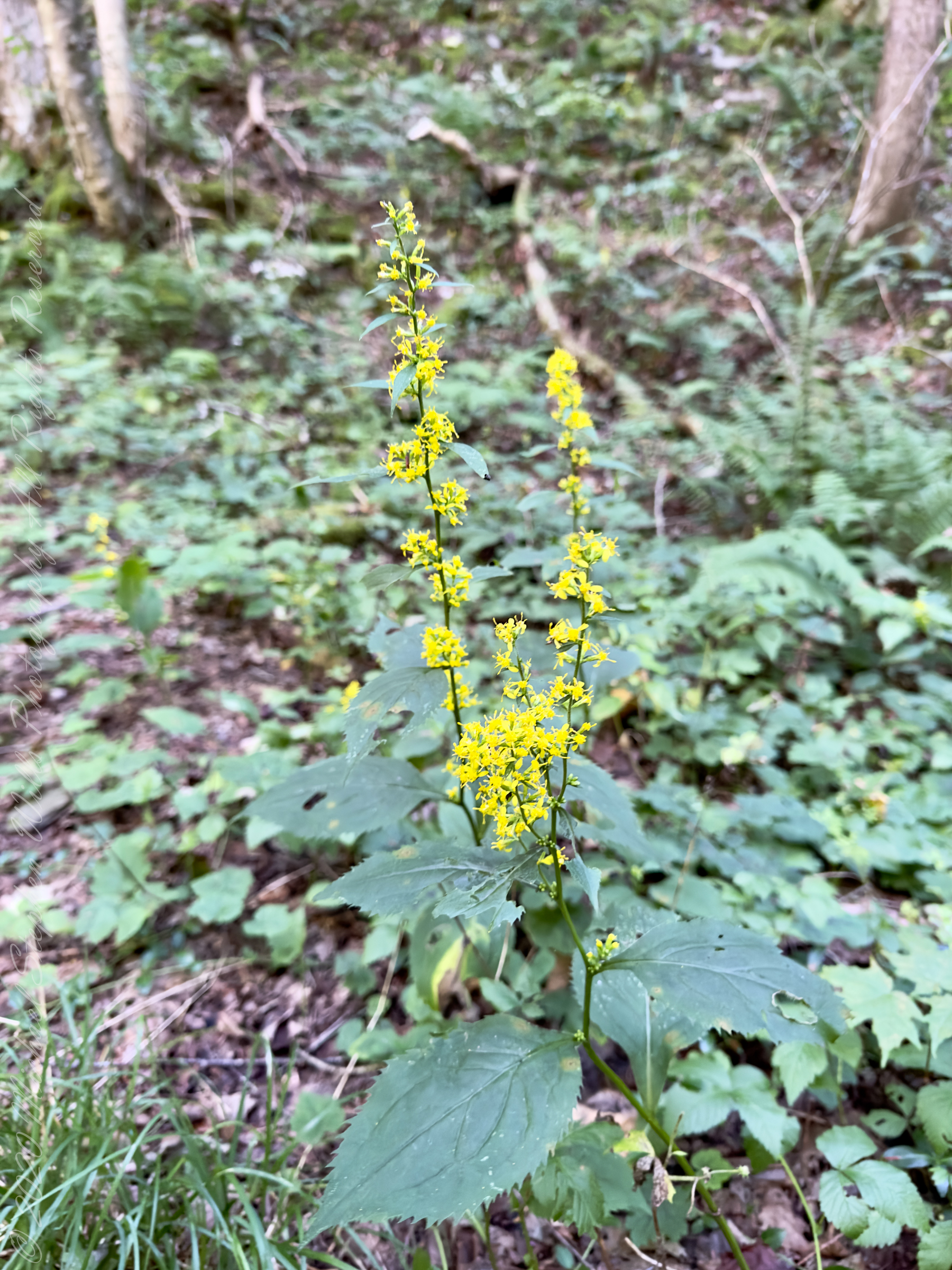
Solidago flexicaulis, AKA Broadleaf Goldenrod and Ziazag Goldenrod
“Inventor Thomas Edison experimented with goldenrod to produce rubber, which it contains naturally. Edison created a fertilization and cultivation process to maximize the rubber content in each plant. His experiments produced a 12 ft-tall (3.7 m) plant that yielded as much as 12% rubber. The tires on the Model T given to him by his friend Henry Ford were made from goldenrod. Like George Washington Carver, Henry Ford was deeply interested in the regenerative properties of soil and the potential of alternative crops such as peanuts and soybeans to produce plastics, paint, fuel and other products. Ford had long believed that the world would eventually need a substitute for gasoline and supported the production of ethanol (or grain alcohol) as an alternative fuel. In 1942, he would showcase a car with a lightweight plastic body made from soybeans. Ford and Carver began corresponding via letter in 1934, and their mutual admiration deepened after George Washington Carver made a visit to Michigan in 1937.”
“By the time World War II began, Ford had made repeated journeys to Tuskegee to convince George Washington Carver to come to Dearborn and help him develop a synthetic rubber to help compensate for wartime rubber shortages. Carver arrived on July 19, 1942, and set up a laboratory in an old water works building in Dearborn. He and Ford experimented with different crops, including sweet potatoes and dandelions, eventually devising a way to make the rubber substitute from goldenrod, a plant weed commercially viable. Carver died in January 1943, Ford in April 1947, but the relationship between their two institutions continued to flourish: As recently as the late 1990s, Ford awarded grants of $4 million over two years to the George Washington Carver School at Tuskegee.”
“Extensive process development was conducted during World War II to commercialize goldenrod as a source of rubber. The rubber is only contained in the leaves, not the stems or blooms. Typical rubber content of the leaves is 7%. The resulting rubber is of low molecular weight, resulting in an excessively tacky compound with poor tensile properties.”
References: text in italics and quotes is from the Wikipedia,“Solidago.”
Copyright 2023 All Rights Reserved Michael Stephen Wills
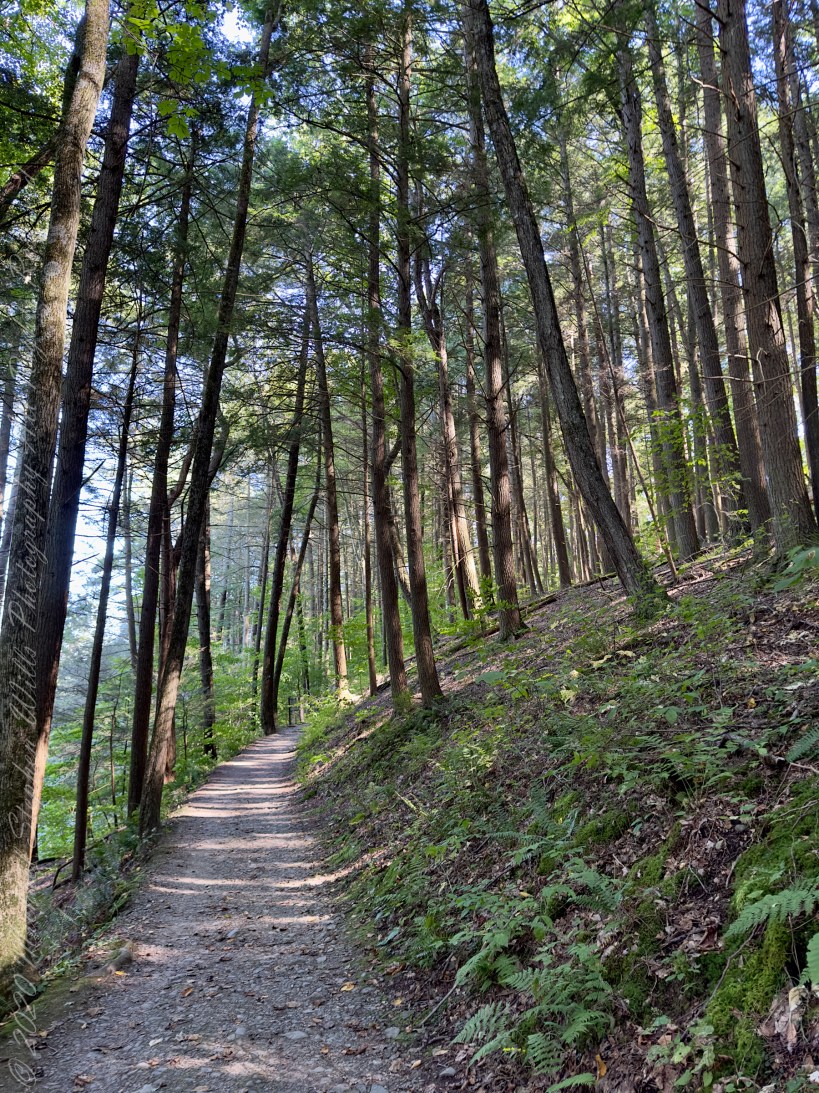
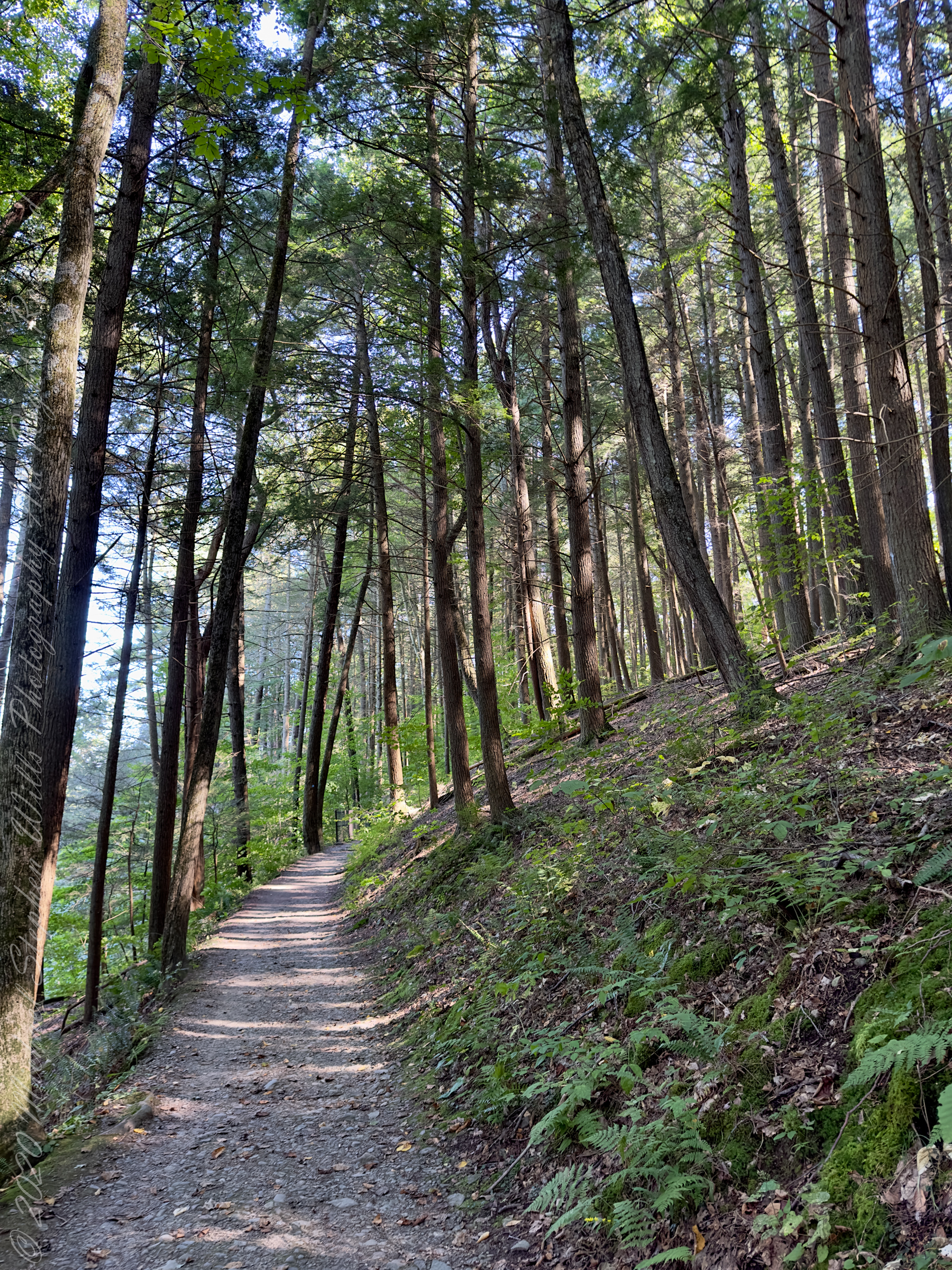
After crossing the bridge at Swan Road I turned back down the gorge on the Rim Trail, climbing above the gorge where these interesting woodland goldenrod thrive.
“Solidago flexicaulis, the broadleaved goldenrod, or zigzag goldenrod,is a North American species of herbaceous perennial plants in the family Asteraceae. It is native to the eastern and central parts of the United States and Canada, from Nova Scotia west to Ontario and the Dakotas, and south as far as Alabama and Louisiana. It grows in a variety of habitats including mesic upland forests, well drained floodplain forests, seepage swamp hummocks, and rocky woodlands.”
“The plant is called the “zigzag goldenrod” because the thin, wiry stem zigs and zags back and forth, changing direction at each node (leaf attachment point). The plant bears sometimes as many as 250 small yellow flower heads, some at the end of the stem, others in the axils of the leaves. The leaves are very broad, almost round, but with an elongated tip at the end and large teeth along the edges.”
“Goldenrod is considered a keystone species and has been called the single most important plant for North American pollinator biodiversity. Goldenrod species are used as a food source by the larvae of many Lepidoptera species. As many as 104 species of butterflies and moths use it as a host plant for their larvae, and 42 species of bees are goldenrod specialists, visiting only goldenrod for food. Some lepidopteran larvae bore into plant tissues and form a bulbous tissue mass called a gall around it, upon which the larva then feeds. Various parasitoid wasps find these galls and lay eggs in the larvae, penetrating the bulb with their ovipositors. Woodpeckers are known to peck open the galls and eat the insects in the center.”
“Solidago flexicaulis is host to the following insect induced galls: Asteromyia modesta, a species of gall midges in the family Cecidomyiidae. Gnorimoschema gallaesolidaginis also called the solidago gall moth, goldenrod gall moth or goldenrod gallmaker, is a moth in the family Gelechiidae.”
References: text in italics and quotes is from the Wikipedia, “Solidago flexicaulis,” “Solidago,” “Asteromyia modesta,” and “Gnorimoschema gallaesolidaginis.”
Copyright 2023 All Rights Reserved Michael Stephen Wills



 Michael Stephen Wills Photography