My photographic style centers on the use of natural light to visualize emotion and evoke memory. The evolution of my style began early in the year 2002, with an imperative to capture personal and fleeting memories.
My son and I traveled to New York City, to view the first Saint Patrick's Day parade after September 11, 2001. My work from that parade was so successful and satisfying (see "New York Fire Department, Saint Patrick's Day 2002") I just never stopped.
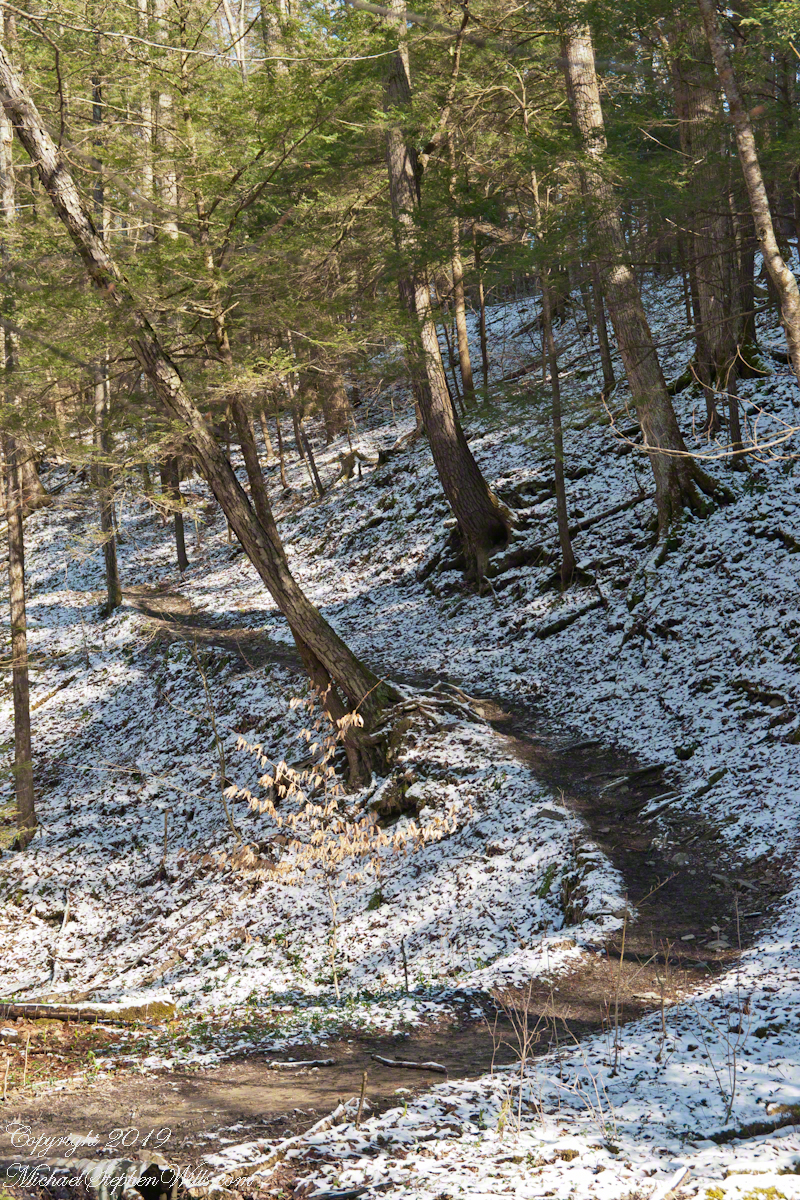
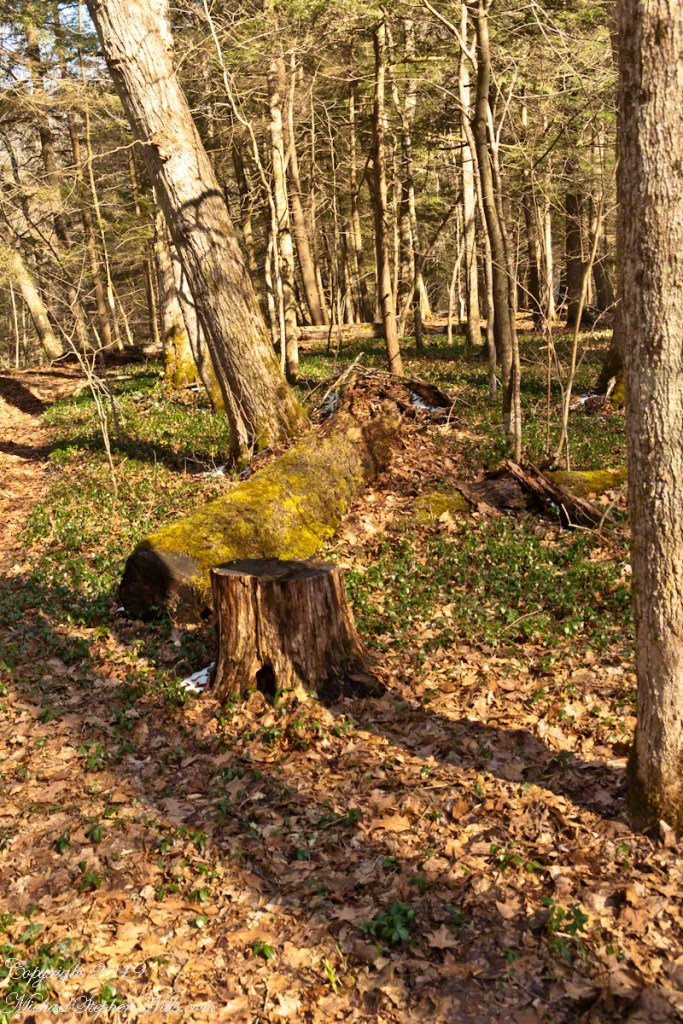
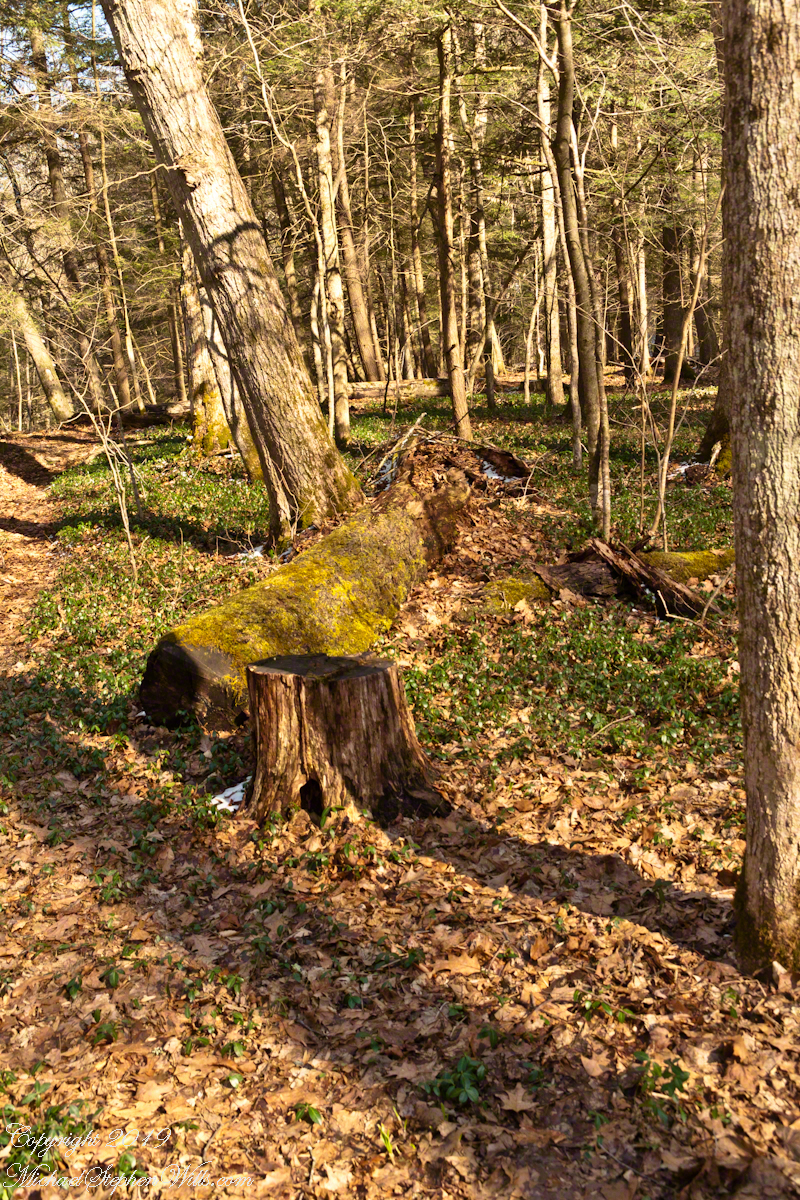
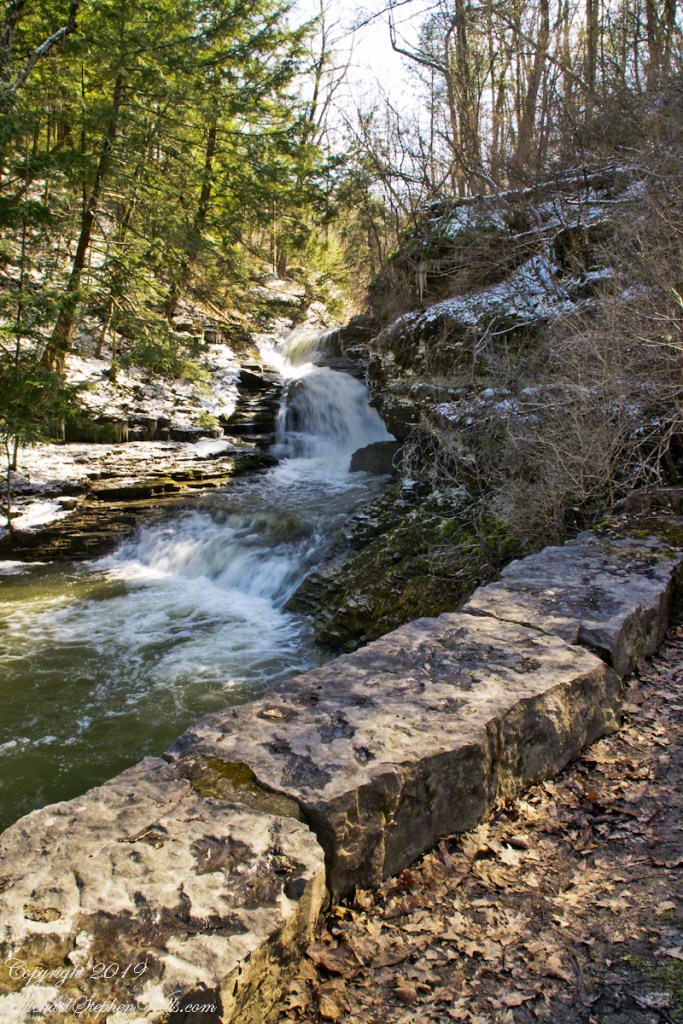
Here the Rim Trail climbs out of the flats beneath the Cliff Stairs, away from Enfield Creek, onto the upper slopes of the gorge.
Click photograph for a larger view. To do this from WordPress Reader, you need to first click the title of this post to open a new page.
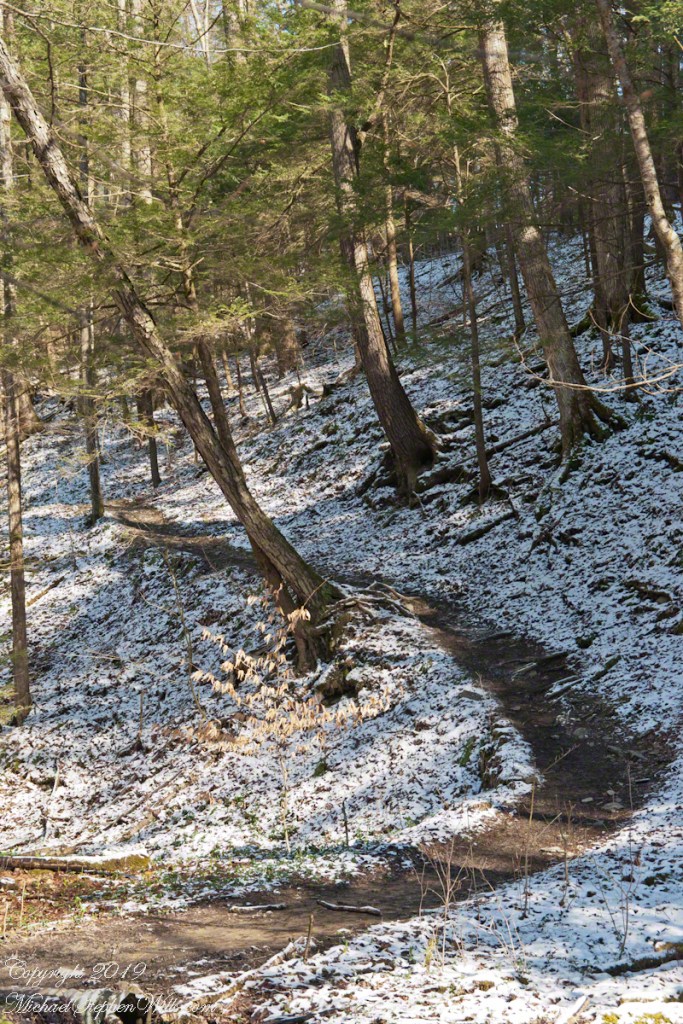
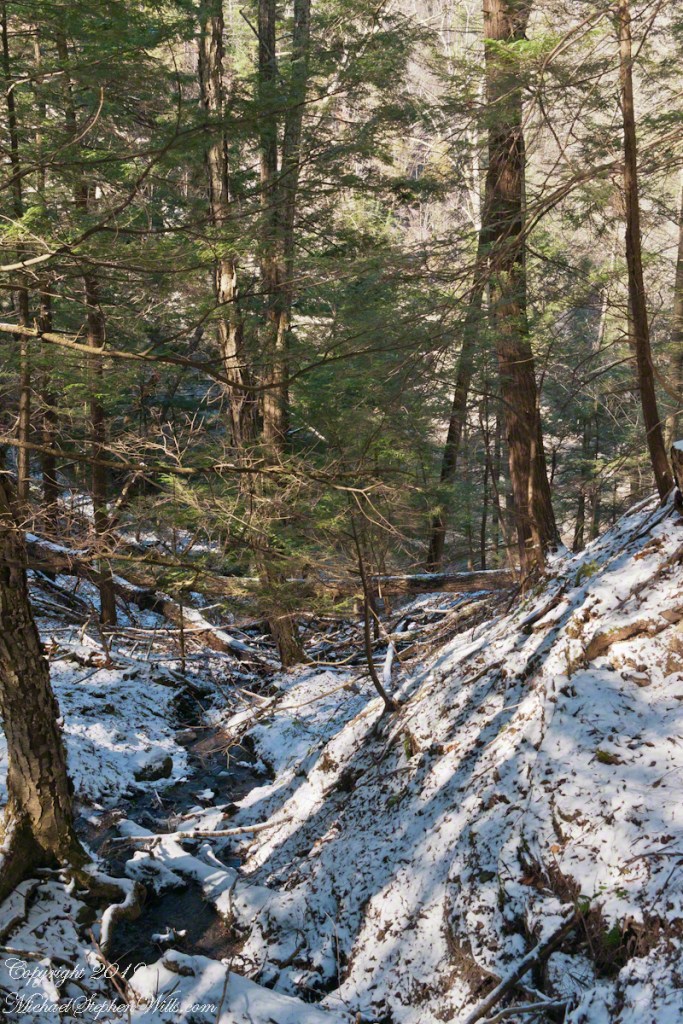
Rim Trail Ascent
Early spring snow highlights the path, threading between hemlocks. The American realistic painter Andrew Wyeth comes to mind with I see the mottled texture of this light snow. He captured some of this in landscape paintings such as “Snow Flurries.”
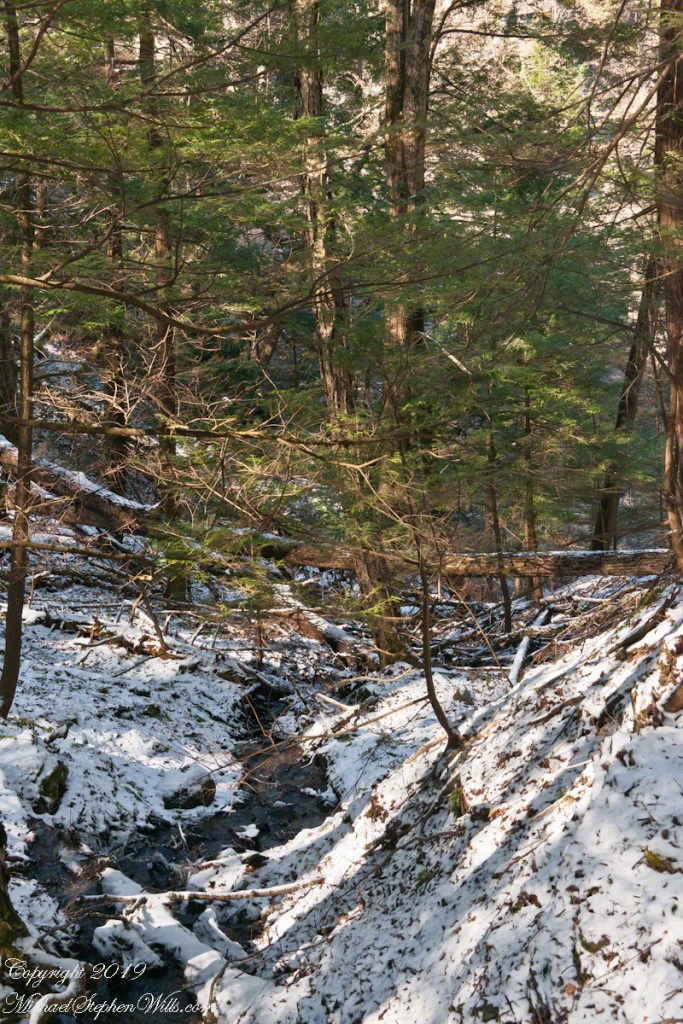
Here is more of this effect……
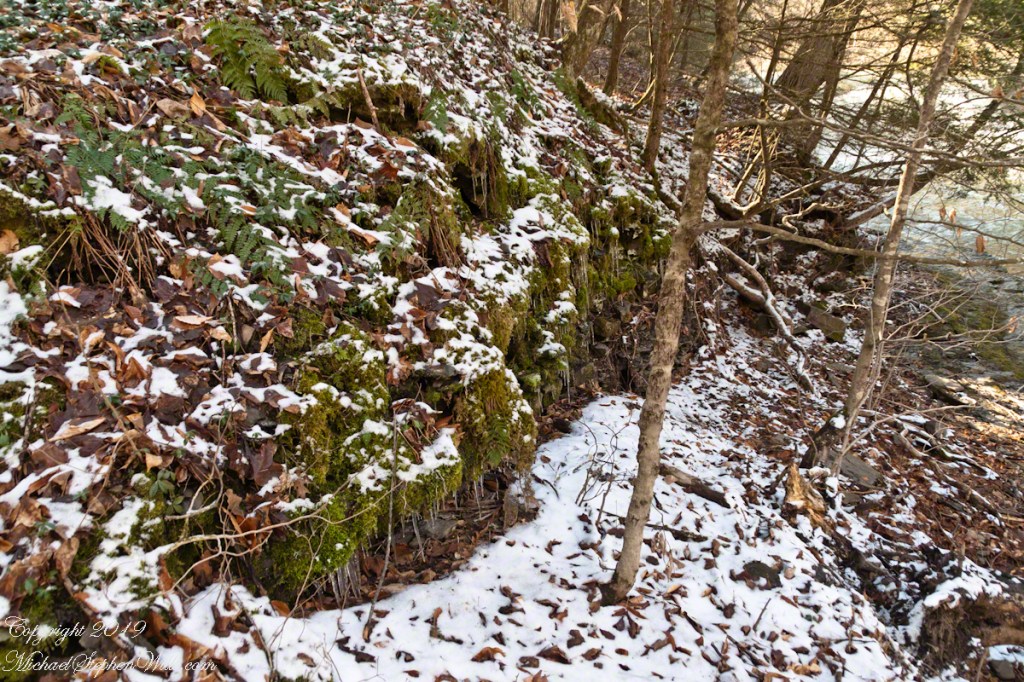
Fern, Moss, young trees, April Snow
These shots were hand held. I used a Sony Alpha 700 dslr with a variable “zoom” lens, great for framing compositions.
Robert H. Treman New York State Park.
Click for a slideshow of this Fertile Flats sequence.
Beneath the Cliff Stairs IBeneath the Cliff Stairs IIRim Trail AscentVernal Pool with Vinca VineFern, Moss, young trees, April Snow
Copyright 2024 All Rights Reserved Michael Stephen Wills
A broad, fertile flat between gorge walls supports a dense growth of invasive creeping myrtle. Springtime there is a sprinkling of small blue flowers, this may be the source of another name, periwinkle, or lesser periwinkle.
Click photograph for a larger view. To do this from WordPress Reader, you need to first click the title of this post to open a new page.
Beneath the Cliff Stairs I
Periwinkle is an evergreen and in early times vinca vine (another name we call it, from the scientific name Vinca Minor) was planted in graveyards and cemeteries. The isolated growth of vinca vine in this section of the gorge maybe from such a planting on a lost grave.
Beneath the Cliff Stairs II
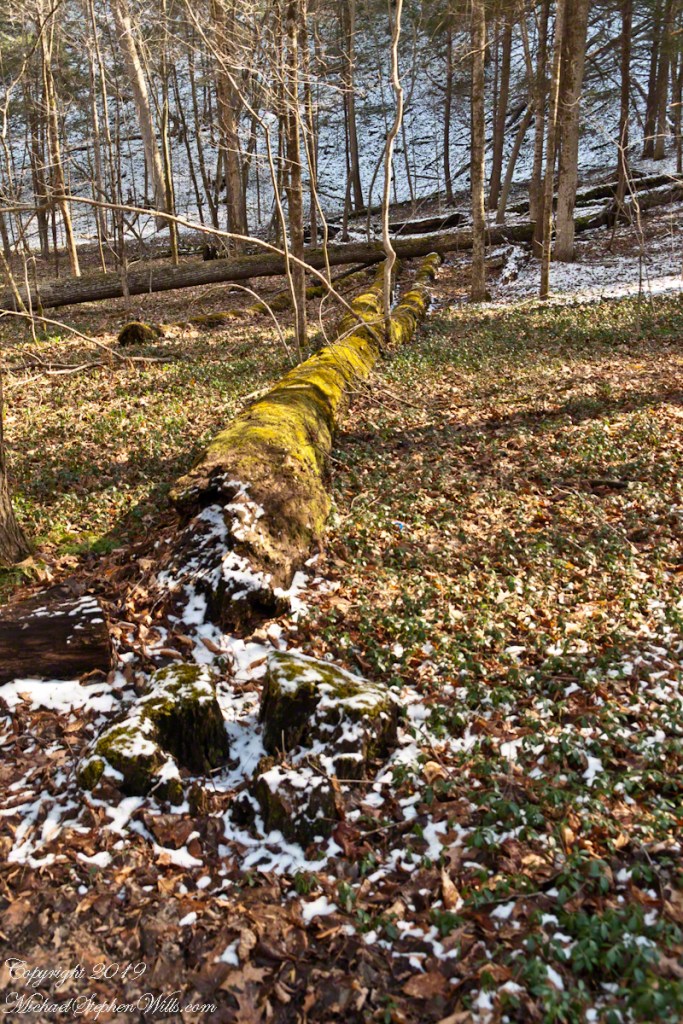
Today, the park practices leaving fallen trees in place, here they are covered in years of moss, a memory of headstones. Lesser Perriwinkle is significant for the living as the source of vincamine, from the leaves. A synthetic form of this compound is a potent vasodilator, a therapeutic treatment for stroke and other brain disorders.
These shots were hand held. I used a Sony Alpha 700 dslr with a variable “zoom” lens, great for framing compositions.
Robert H. Treman New York State Park.
Source: Wikipedia, “Vinca Minor.”
Click for a slideshow of this Fertile Flats sequence.
Beneath the Cliff Stairs IBeneath the Cliff Stairs IIVernal Pool with Vinca Vine
Copyright 2024 All Rights Reserved Michael Stephen Wills
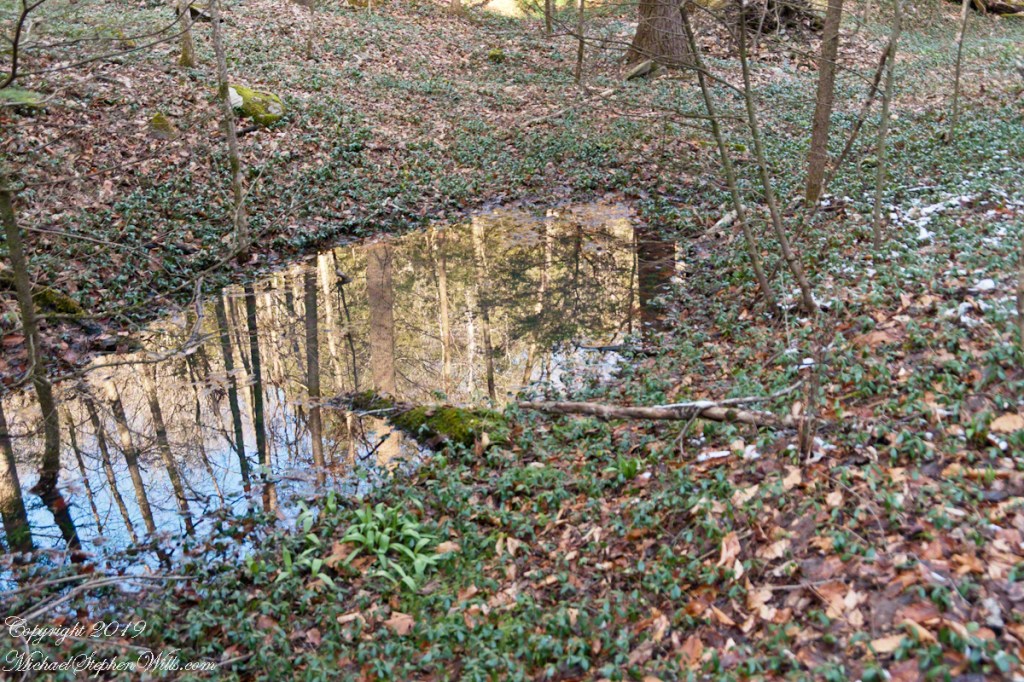
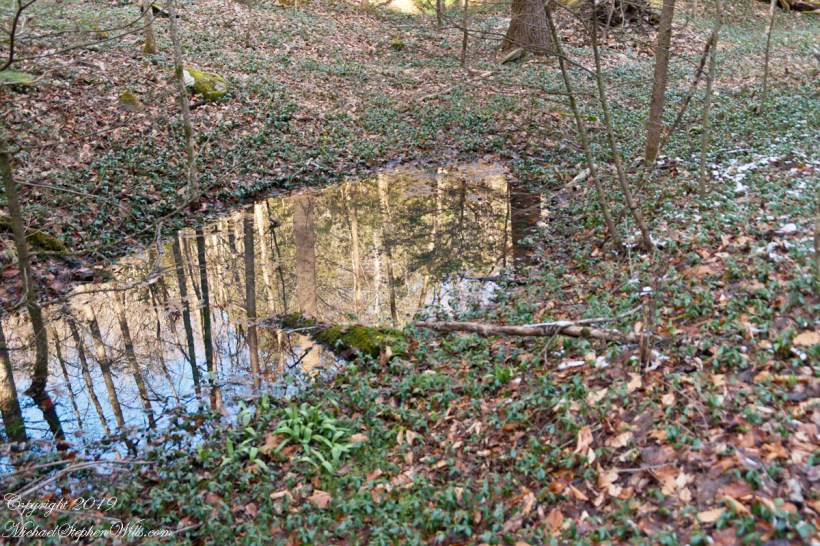
Melting snow, spring rains, gather in hollows of the forest floor to form ephemeral pools important for the development of amphibian life.
Click photograph for a larger view. To do this from WordPress Reader, you need to first click the title of this post to open a new page.
Vernal Pool with Vinca Vine
Also named vernal pools, from the Latin word for spring or the time of the equinox. The pools are ephemeral in the sense of being temporary, disappearing in the warmer, dryer late spring and summer months, a characteristic important for amphibian live in being devoid of predatory fish.
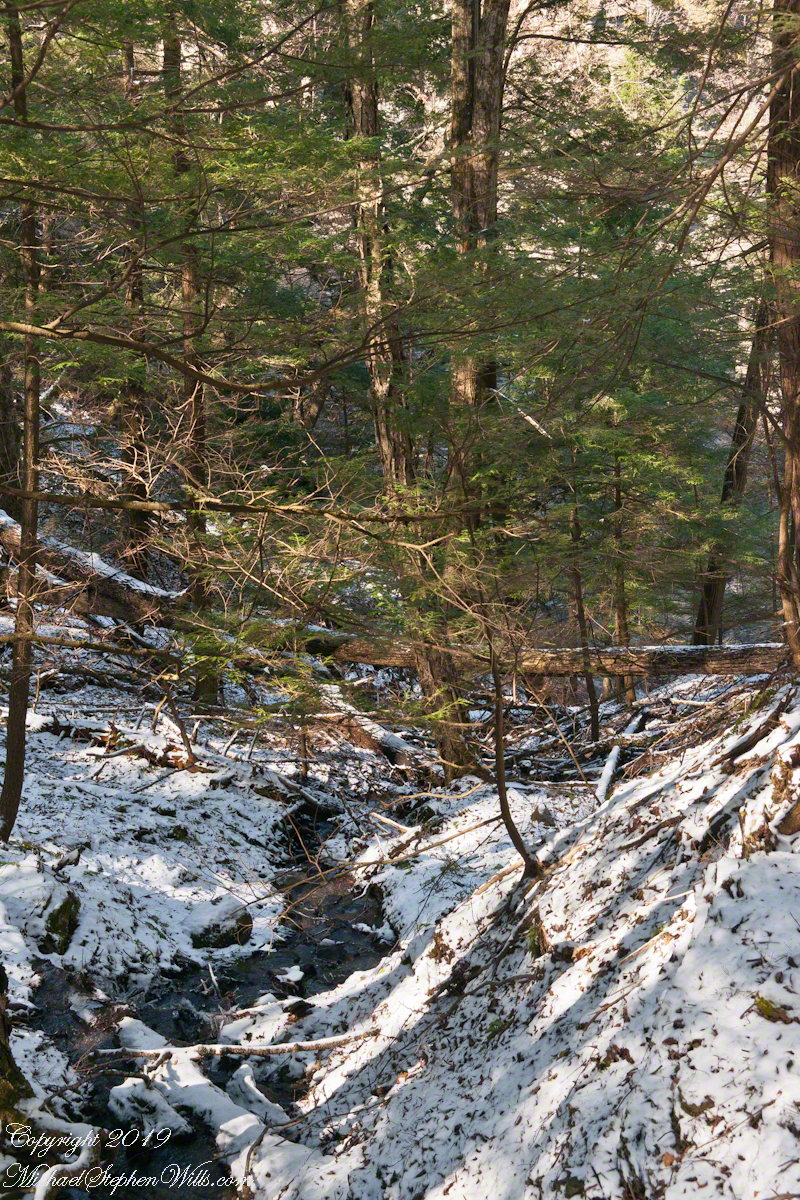
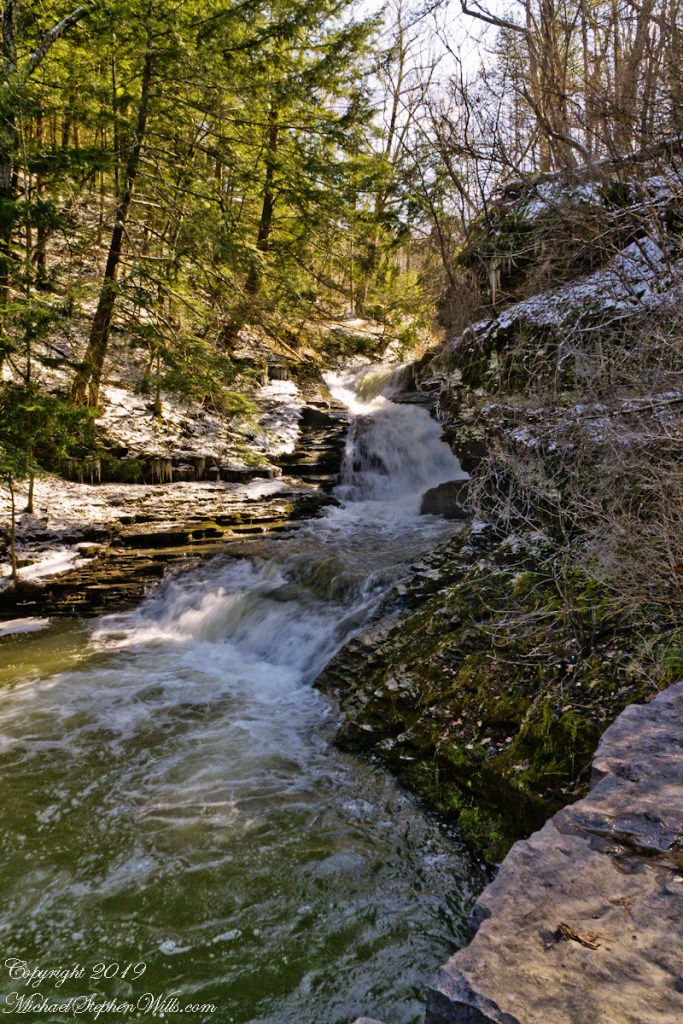
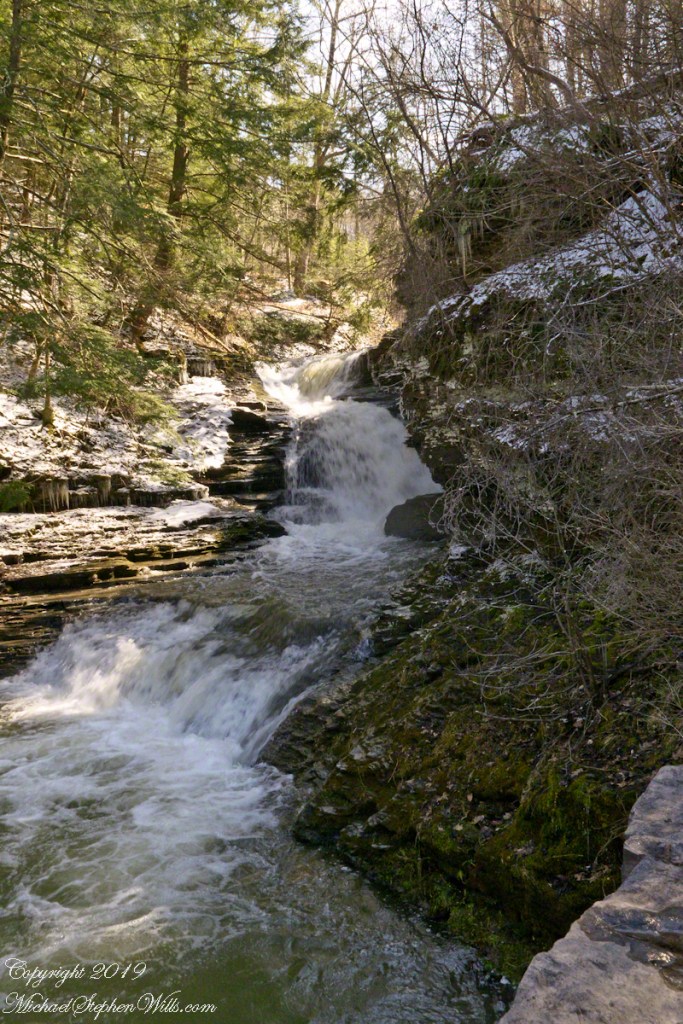
Rim trail traverses gullies. These creases in the gorge walls were formed by small streams flowing to Enfield Creek.
Click photograph for a larger view. To do this from WordPress Reader, you need to first click the title of this post to open a new page.
Gully I
Some passages require a wade, others have elaborate walkways with bridges. I initially wanted to call these ravines. Upon researching the term discovered while ravines are formed by erosion, the scale here is much smaller. I could rename Enfield Gorge, to Enfield Ravine.
Gully II
These shots were hand held. I used a Sony Alpha 700 dslr with a variable “zoom” lens, great for framing compositions.
Robert H. Treman New York State Park.
Click for a slideshow of this Waterfall of the Old Mill sequence
Rim Trail AscentRim Trail iciclesRim Trail icicles with lichen, moss and fern.Gully IGully II
Copyright 2024 All Rights Reserved Michael Stephen Wills
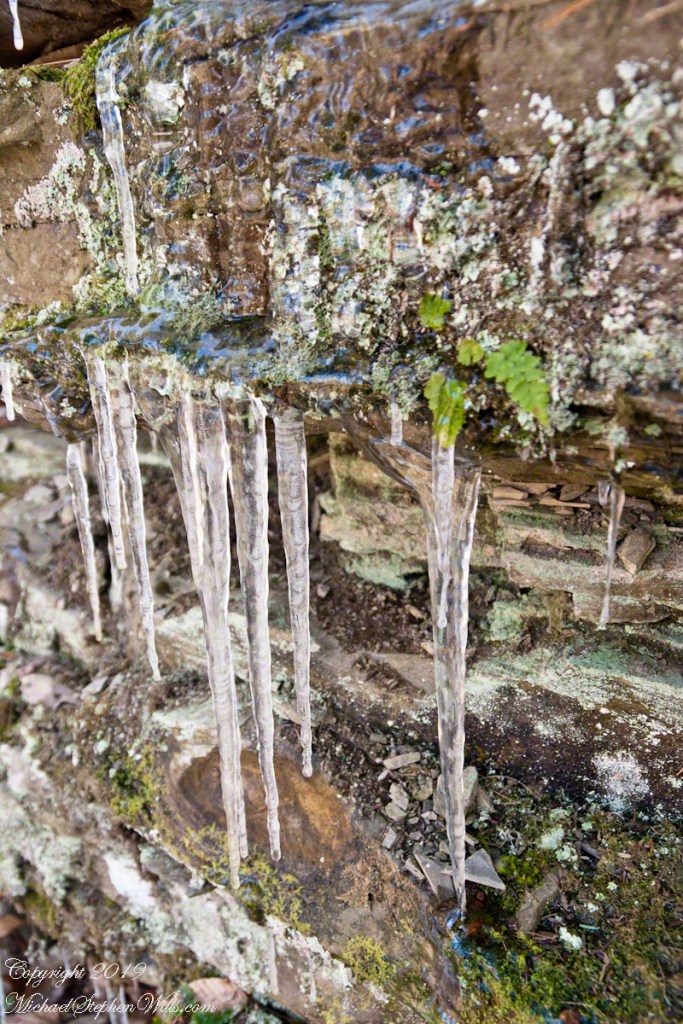
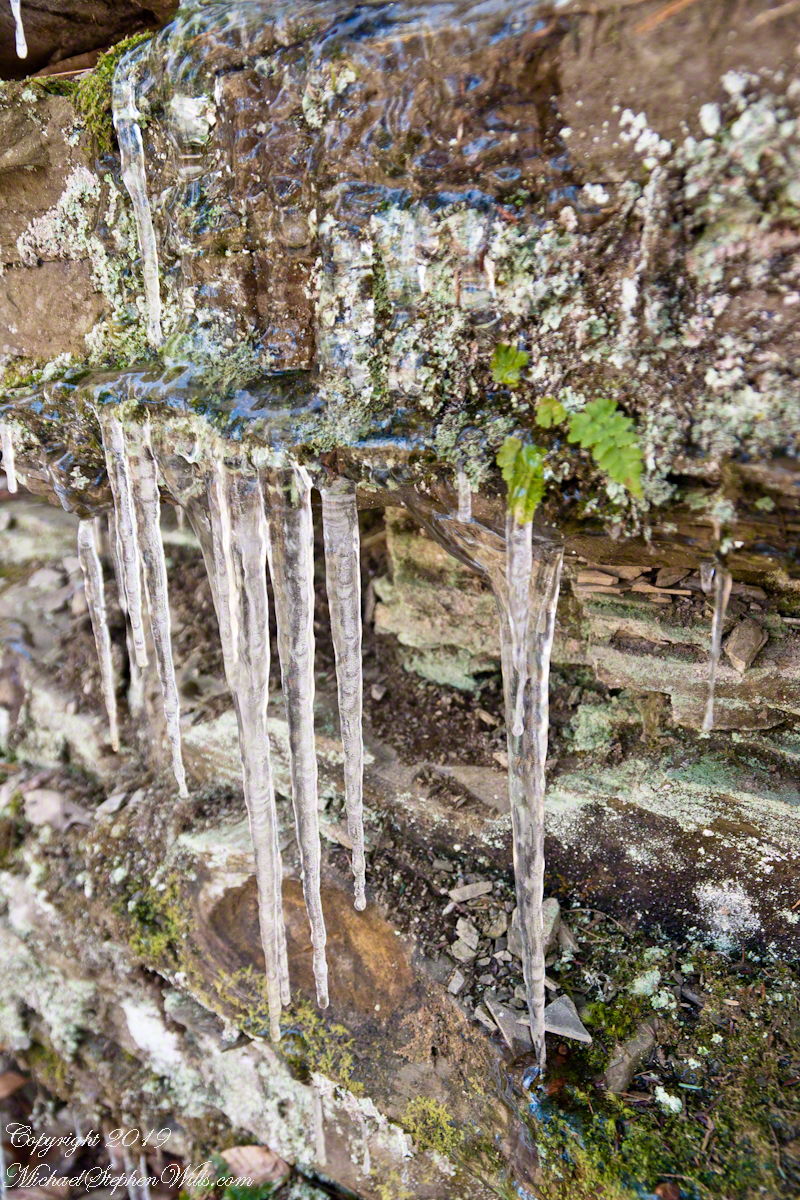
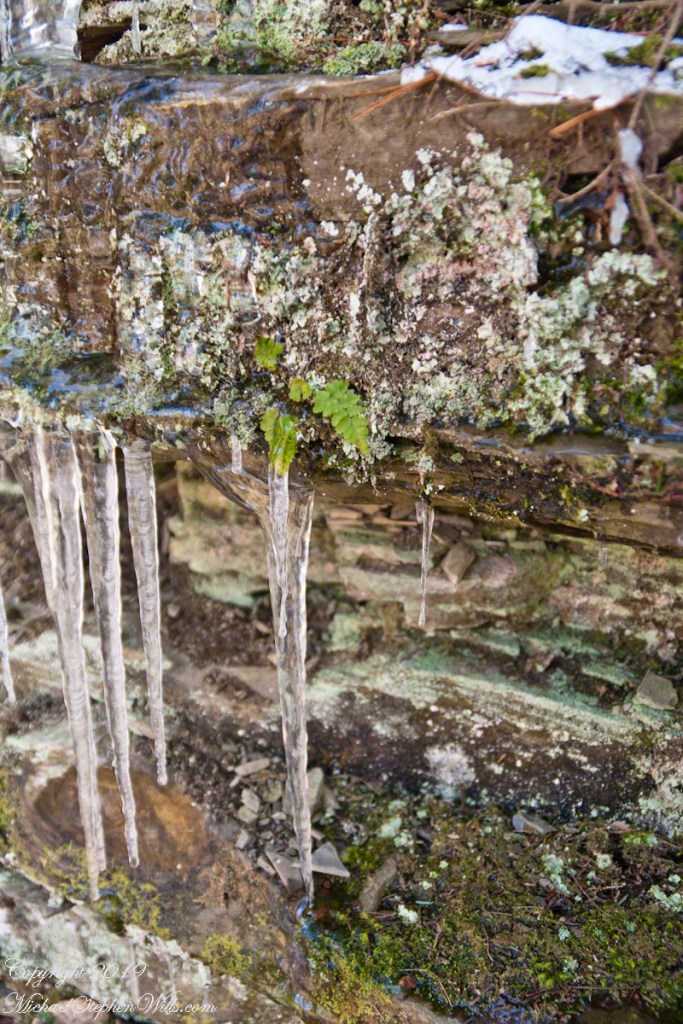
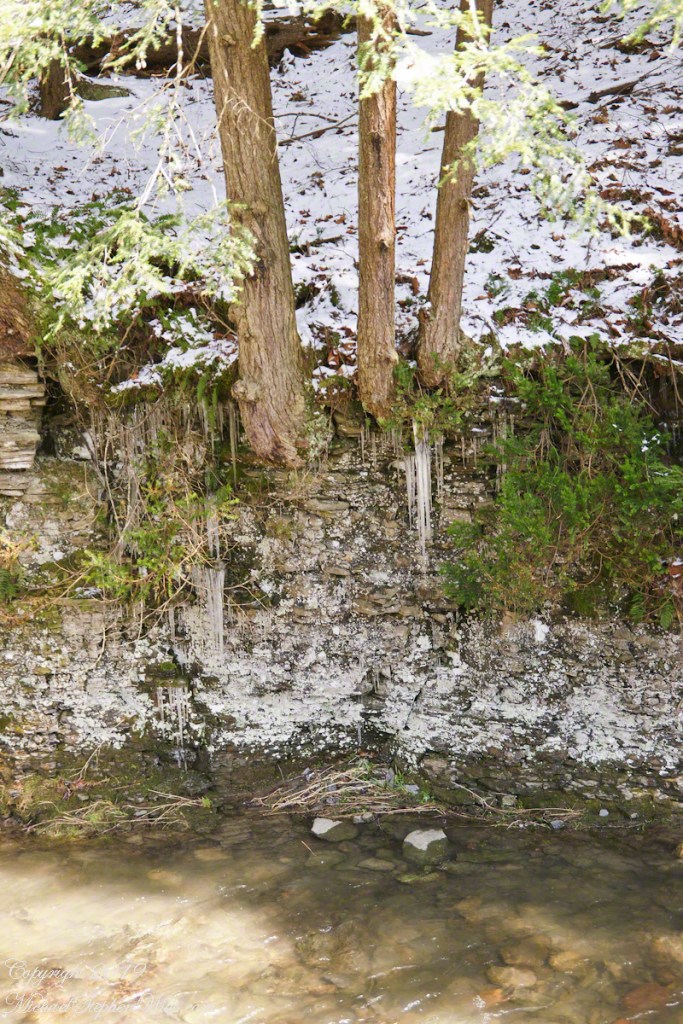
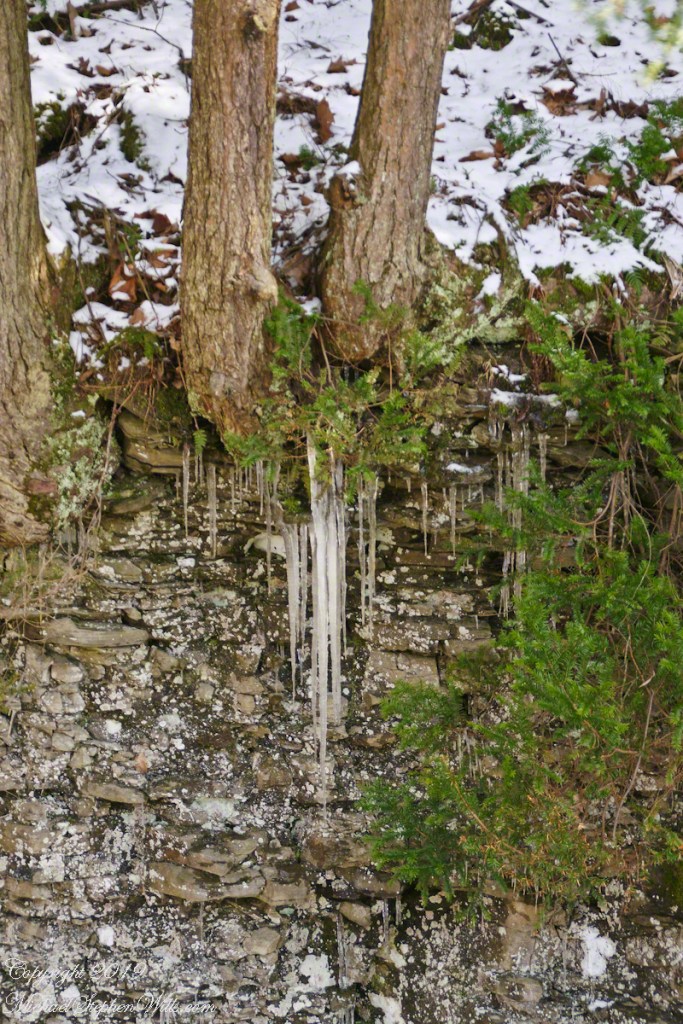
Water drips steadily from seeps, places water follows hidden cracks to emerge from the darkness. In warm seasons these may be a patch of moisture enabling the growth of ferns, only becoming evident when air is cold enough to freeze slowly running water.
Click photograph for a larger view. To do this from WordPress Reader, you need to first click the title of this post to open a new page.
Rim Trail icicles with lichen, moss and fern.
These macros capture the Moss, Fern and Lichen. These thrive in this environment.
These shots were hand held. I used a Sony Alpha 700 dslr with a variable “zoom” lens, great for framing compositions.
Robert H. Treman New York State Park.
Click for a slideshow of this Waterfall of the Old Mill sequence
Falls by the Old Mill, early springPlace where Fish Kill was harnessed to power the Old Mill Fish Kill Waterfall at the Old Mill. Sedimentary WallsIcicles hang over Fish KillRim Trail AscentRim Trail iciclesRim Trail icicles with lichen, moss and fern.This macro captures the Moss, Fern and Lichen. These thrive in this environment.
Copyright 2024 All Rights Reserved Michael Stephen Wills
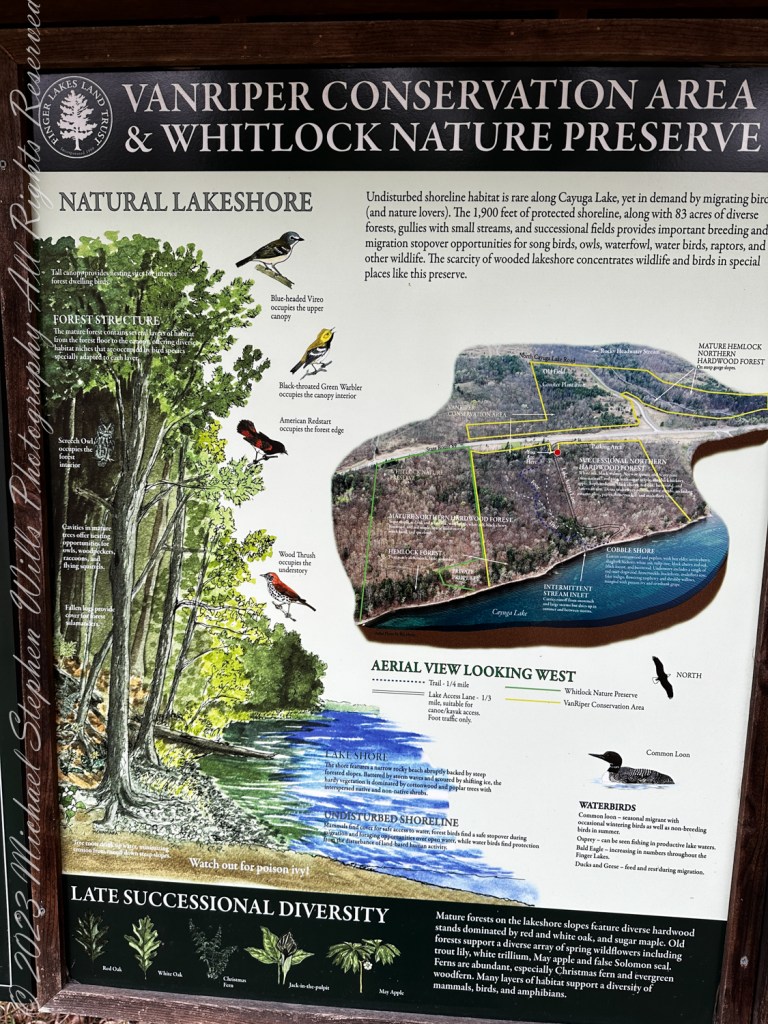
Step into the enchanting world of the VanRiper Conservation Area during a total solar eclipse. Witness nature’s grand spectacle, where daylight fades into an ethereal twilight, and the cosmos whispers secrets to those who listen.
Standing within the serenity of the VanRiper Conservation Area, we had the rare privilege to witness a celestial marvel—the total solar eclipse. The coordinates, 42°43’8.62″N 76°45’30.41″W, marked not a unique vantage point on the southern edge of the total eclipse zone. Here, the total eclipse enveloped the sky for an awe-inspiring 50 seconds, a fleeting yet unforgettable spectacle that we were fortunate enough to experience.
The VanRiper Conservation Area served as a magnificent backdrop to this astronomical event. Known for its diverse habitats, including wetlands, forests, and meadows, the area is a haven for wildlife and a sanctuary for those who seek solace in nature; a place where the sky seems vast, unobstructed by the trappings of urban life, offering a clear canvas for the eclipse to paint its momentary magic.
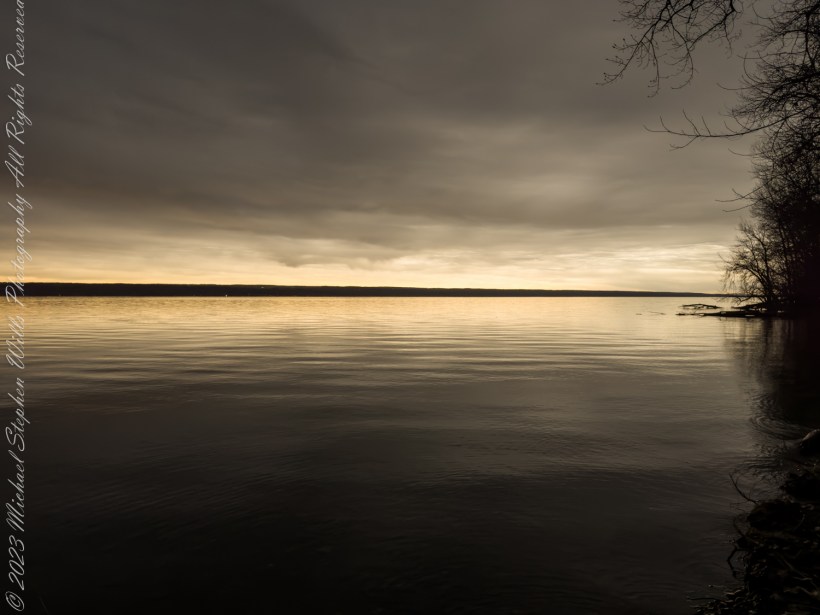
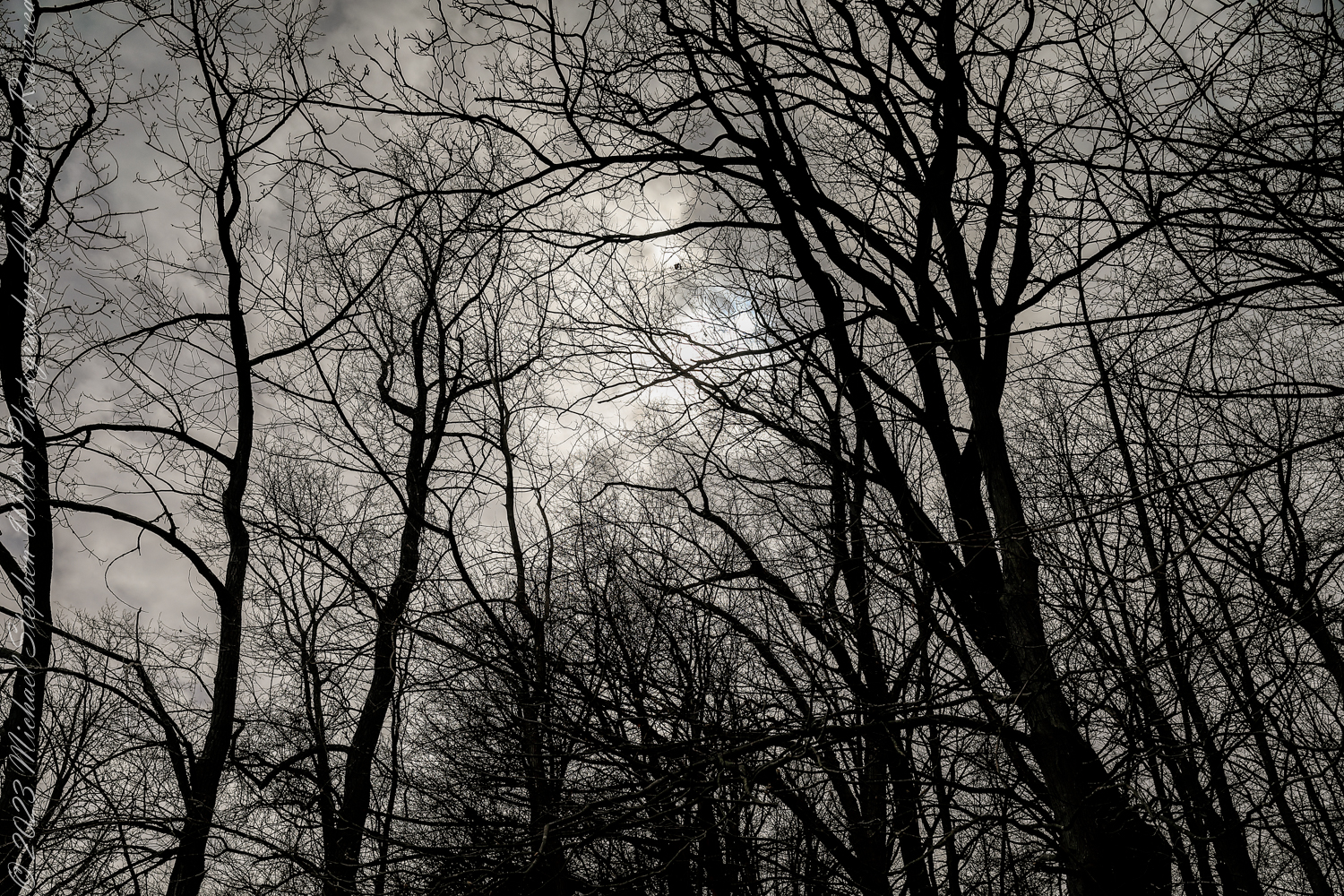
13:38:07, 39 minutes 41 seconds before the moon’s edge touched the sun. From the shoreline of VanRipen Conservation Area, Town of Romulus, Seneca County, Finger Lakes Region, New York State
As the time for the eclipse approached, a thick blanket of clouds enveloped the sky, obscuring our view of the sun entirely. This unexpected veil not only robbed us of the celestial spectacle but also intensified the darkness, casting a deeper shadow over the landscape and amplifying the surreal, twilight ambiance.
As the moon began its slow sweep over the sun, an eerie twilight descended upon the conservation area. The temperature dropped noticeably, a testament to the sun’s masked radiance. The birds, momentarily confused by the sudden dusk, fell silent, heightening the surreal atmosphere. This was the moment I had been waiting for, the total eclipse, where day momentarily turns to night, and the ordinary becomes extraordinary.
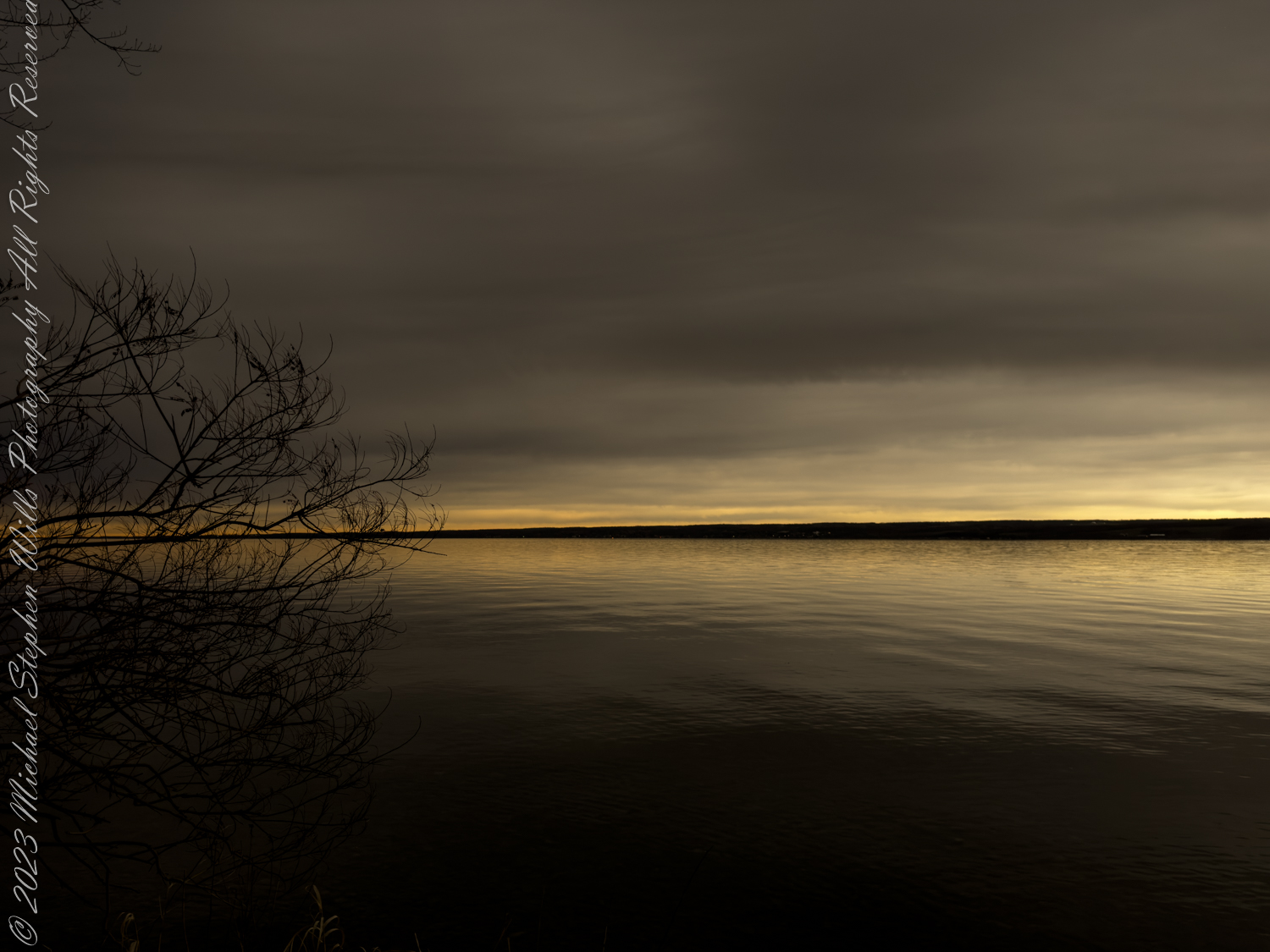
15:21:37, 56 seconds to totality. From the shoreline of VanRipen Conservation Area, Town of Romulus, Seneca County, Finger Lakes Region, New York State
Positioned on the southern edge of the total eclipse zone, I observed a fascinating phenomenon: the southern side of the horizon retained a brighter hue compared to the north, which veiled itself in deeper shades of twilight. This luminous gradient painted across the sky was a direct consequence of our location’s proximity to the eclipse’s path of totality.
In this captivating 4-minute YouTube video, you’re whisked away to the shores of Cayuga Lake, beneath a cloudy sky, on the day of the Total Eclipse, April 8, 2024 viewed from the VanRiper Conservation Area Cayuga Lake Shoreline in the town of Romulus, Seneca County of the Finger Lakes of New York State. As the moon dances across the sun at 5 times normal speed you witness the gradual darkening of the lake. On the opposite shore, the town of Aurora lights wink with the total eclipse of the sun. In normal time Loons herald the Sun’s return with a bright and eerie serenade, a natural symphony celebrating light’s triumph over darkness. Join us on this remarkable journey, where day turns to night and back again, all within the embrace of the Finger Lakes Region.
The totality lasted for a mere 50 seconds, when time seemed to stand still, yet it was a period rich with emotion and wonder. To witness the total eclipse was to see the universe align in a rare spectacle of shadow and light, a reminder of our place in the cosmos.
Reflecting on the experience, the VanRiper Conservation Area was a portal to a deeper understanding and appreciation of the natural world. Its untouched Cayuga Lake shoreline provided a setting for observing the eclipse with a reminder of the beauty and fragility of our planet.
As the eclipse passed and daylight returned the silence was filled with Loon calls, a celebration of life and the return of light. The solar eclipse was a convergence of time, place, and celestial mechanics, offering a spectacle for the eyes, a moment of introspection about our existence in this vast universe: a reminder of the ephemeral nature of life and the enduring awe of the cosmos. In the heart of the conservation area, I stood at the crossroads of science, nature, and spirituality, left to reflect on the dance of shadows and light.
Copyright 2024 Michael Stephen Wills All Rights Reserved
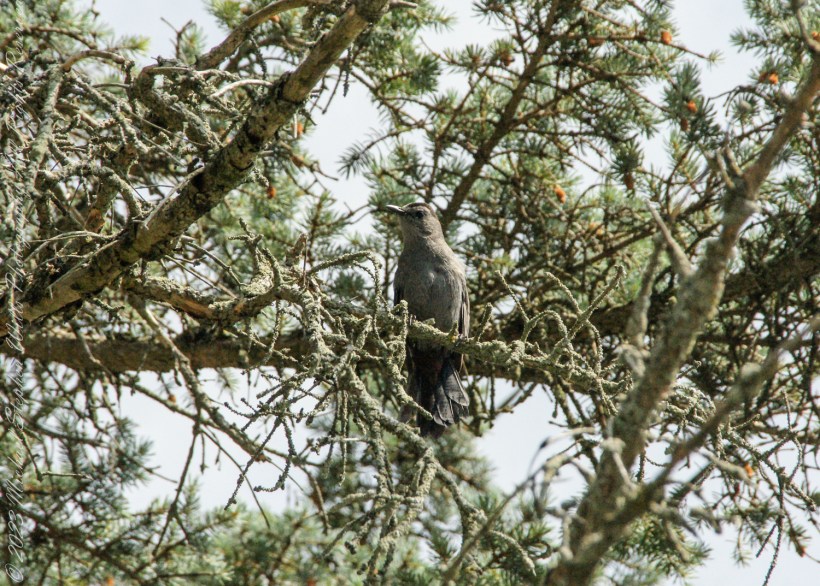
Amidst spruce needles, a Gray Catbird’s mew captivated me; a hidden minstrel whose dulcet mimicry and secretive charm turned my backyard in Ithaca into an amphitheater of nature’s most intricate symphonies.
In my backyard, amidst the spruce trees that seem to touch the sky, I had a unique encounter with a little gray bird known as the Dumetella carolinensis, or more commonly, the Gray Catbird. I learned that “Dumetella” comes from the Latin word for “thorny thicket”, hinting at its penchant for skulking in dense underbrush, often hidden from sight. Its species name, “carolinensis”, pays homage to the Carolinas, though this bird has certainly made a comfortable home here too.
This particular visitor had a call reminiscent of a cat’s mew, a curious sound that first drew my attention. As I peeked through the window, I noticed it wasn’t just imitating felines; it was a veritable mimic, echoing the songs of other birds, even copying the croaks of tree frogs, and sometimes the mechanical noises of our own making. Its syrinx, a true marvel of nature, allows it to produce two sounds simultaneously – an impressive feat for such a small creature.
Unlike the showy northern mockingbird or the brown thrasher, which repeat their musical phrases several times, this Gray Catbird preferred to sing each of its phrases just once. Its song was a bit raspier, less melodic but still captivating in its own right.
It’s interesting that the Gray Catbird often chooses to remain hidden when it sings, favoring the inner sanctuary of bushes or trees like the spruce in my yard, a natural stage set by verdant leaves and branches. And while I watched, it seemed content in its concealment, a master of melody cloaked in foliage.
As I observed it, I recalled reading that the Gray Catbird’s diet is as varied as its repertoire of sounds. Fruits and berries make up about half of its diet. This little bird has quite the palate, enjoying a smorgasbord that includes mealworms, earthworms, beetles, and other insects, not to mention the bounty of summer offerings such as ants, beetles, grasshoppers, caterpillars, moths, and a selection of berries from holly, cherry, elderberry, poison ivy, bay, and blackberries.
I made a mental note of the date, captured in the metadata of the photograph I snapped: 2021, from my home in Ithaca. A simple image, yet it encapsulated a serene moment of connection with a creature so adept at concealment and mimicry, a moment I would treasure. The Gray Catbird, with its unique song and dietary habits, has become a beloved part of my backyard symphony.
Reference: wikipedia, Gray Catbird.
Copyright 2024 Michael Stephen Wills All Rights Reserved
Discover the enchanting beauty of Steamboat Landing in Ithaca, New York. From the quiet winter majesty to the vibrant warmth of spring, this historical waterfront is a testament to the city’s rich past and evolving present.
Steamboat Landing in Ithaca, New York, is steeped in historical significance, serving as a testament to the city’s rich past and its evolving present. At the dawn of the 20th century, it was a bustling hub where steamboats carried passengers and freight, linking Ithaca to an ever-growing nation. These vessels were vital for the development of commerce, aiding travelers as they embarked and disembarked on their journeys that continued by stagecoach or later, by train.
In 1790, this spot marked the beginnings of commerce in the area, with the establishment of Ithaca’s first store. Over the years, Steamboat Landing has transformed from a pivotal commerce point to a recreational area, housing Ithaca’s Farmers Market—a vibrant hub that mirrors the liveliness of its heyday.
The Evolving Landscape
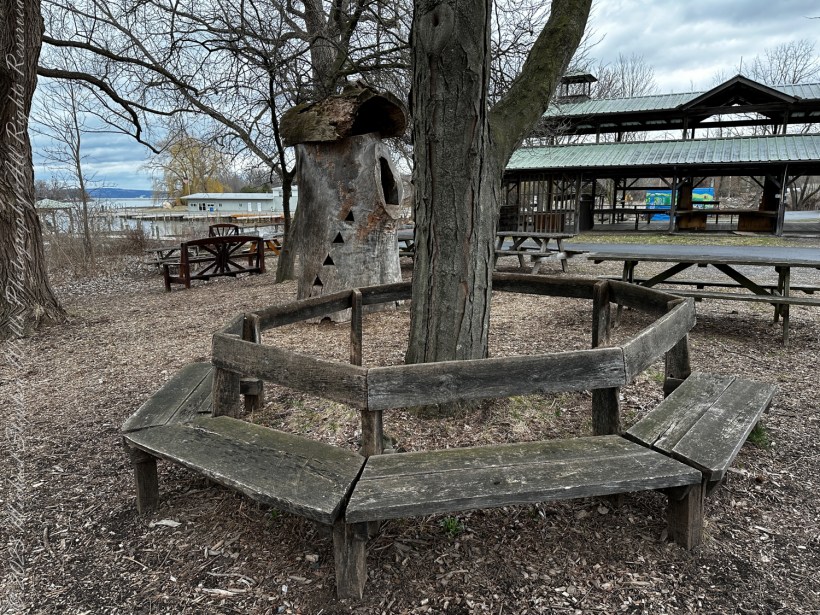
Today, Steamboat Landing is a place of gathering and serenity. My photographs showcase a tranquil setting moving through winter. In one scene, the rustic benches encircle a barren tree, standing as silent guardians of the land. It’s a still image, almost reminiscent of a painting, where the leafless trees stand vigil over the quiet benches.
A circular bench that has seen better days, a hollowed out tree trunk repurposed as a children’s playgound house, picnic benches and, in background, a portion of the Farmer’s Market pavilion, to the right is Johnson Boatyard, Cayuga Inlet and lake. This is the Steamboat Landing, historically the southern port on Cayuga Lake. Cayuga Waterfront Trail, Ithaca, Tompkins County, Finger Lakes Region, New York State.
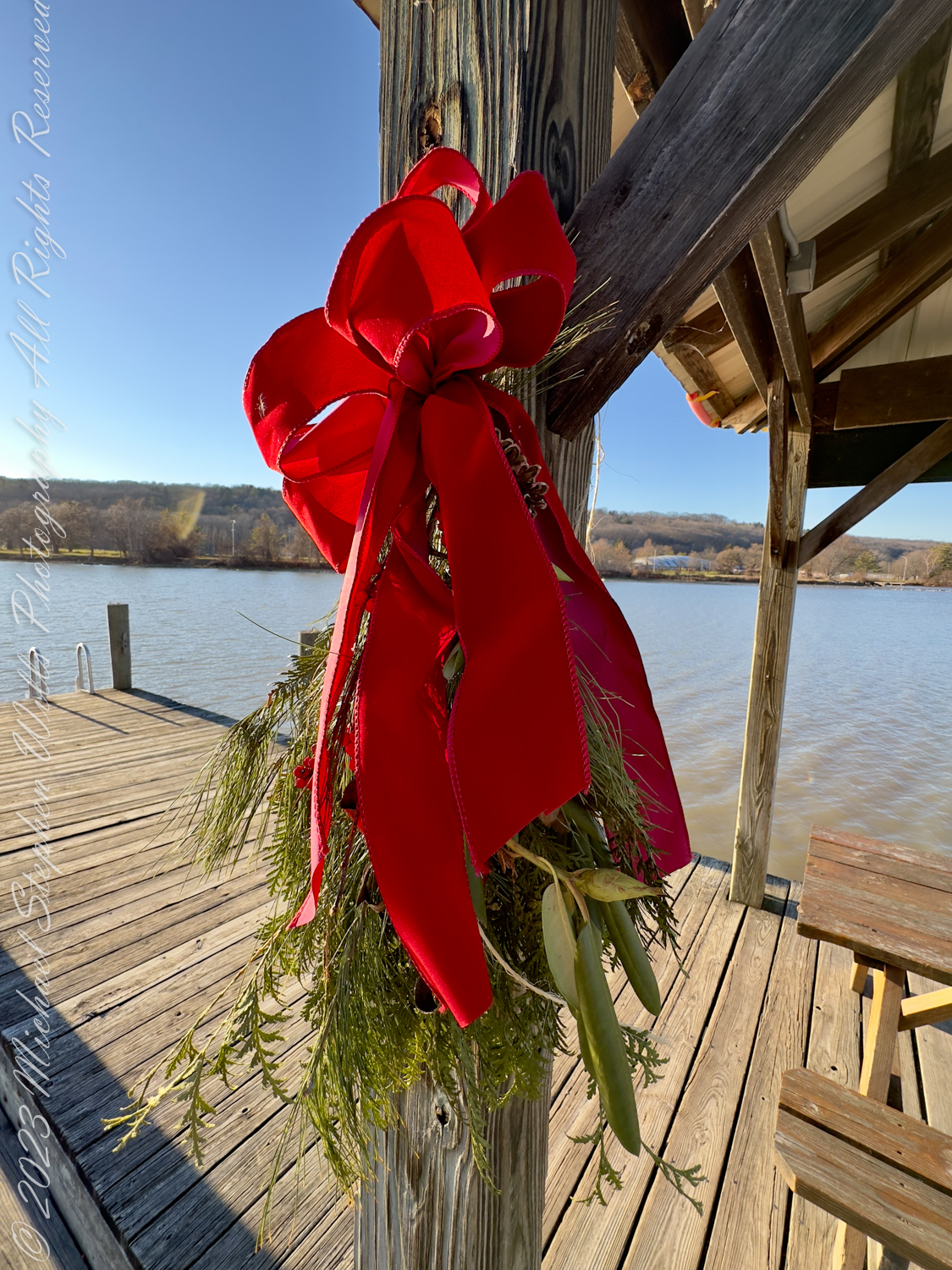
Switching seasons, we see the docks adorned with festive wreaths, injecting life and celebration into the scenery. The bright red ribbons stand out against the crisp blue of the water and the sky, suggesting a community that embraces tradition and the joy of the moment.
Connection with Nature and Community
The pictures depict how the landing is woven into the natural tapestry of the area. It is a place where one can sit and watch the placid waters of Cayuga Lake or stroll along the docks, feeling the crisp air against their skin. The images of the clear skies, the open waters, and the flight of birds in the distance are a subtle reminder of nature’s continuous presence.
Steamboad Landing on the Cayuga Waterfront Trail, Farmers Market, Ithaca, Finger Lakes Region, New York State
The waterfront trail exemplifies the community’s efforts to merge history with modernity, providing a space where people can connect with the environment and each other. The docks, once a stage for industrial exchange, now serve as a peaceful retreat, hinting at the deep-seated human desire for connection—not only to each other but also to the very essence of the environment we inhabit.
Seasonal Beauty and Reflection
The change in seasons at Steamboat Landing brings a unique beauty, which the photographs showcase poignantly. From the barren coldness of winter to the lush warmth of spring, each season imbues the landing with a distinct character. The winter images reveal a quiet majesty, with the bare branches and gray skies reflecting the introspective nature of the season. The springtime shots, however, burst with promise and vitality, as greenery begins to cloak the landscape and the water shimmers under the strengthening sun.
Enduring Legacy and Future Prospects
Steamboat Landing’s legacy as a historical transport hub has set the stage for its future as a cherished community locale. The images and historical texts paint a picture of a place that has embraced its past while looking forward to a vibrant and inclusive future. It is a locale that pays homage to its roots through the Farmers Market and other community events, ensuring that the spirit of the old steamboats continues to thrive in the hearts of Ithacans.
In conclusion, Steamboat Landing is a geographic location and a chronicle of Ithaca’s journey through time. Through its transformation, it has become a place where history breathes, nature speaks, and the community finds its heartbeat. It stands as a beacon of heritage, recreation, and beauty—a corner of the world where past and present dance together in harmony.
Copyright 2024 Michael Stephen Wills All Rights Reserved
While beachcombing I witnessed an awe-inspiring moment where tranquility meets military prowess.
Discover the captivating blend of nature and technology in my latest post.
As I approached the placid stretch of sand known as Second Beach, adjacent to the Patrick Space Force Base, the Atlantic breeze carried a tang of salt that mixed with the distant, almost imperceptible hum of powerful engines. The sand, still cool beneath my feet, bore the imprints of morning walkers and the scuttle marks of sandpipers. It was a peaceful canvas, soon to be underscored by the might of aviation prowess.
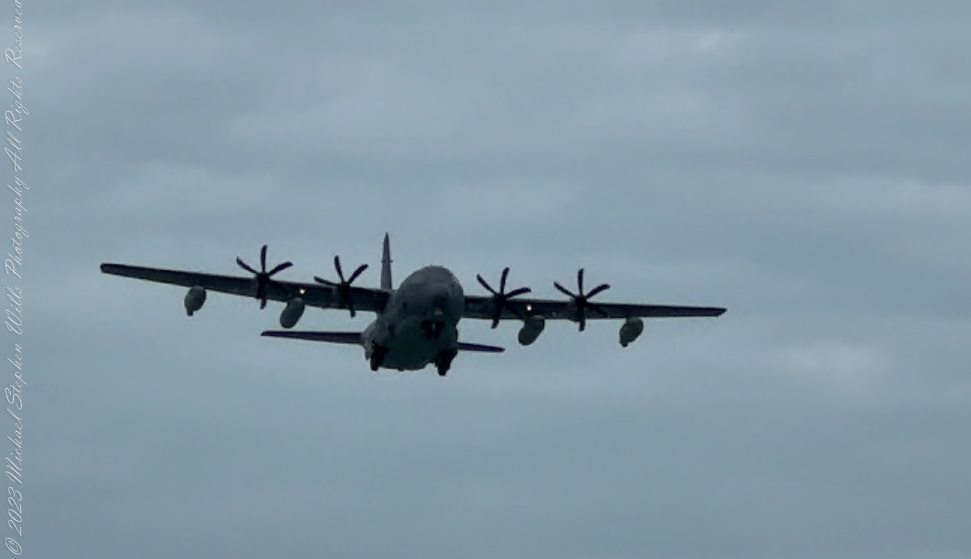
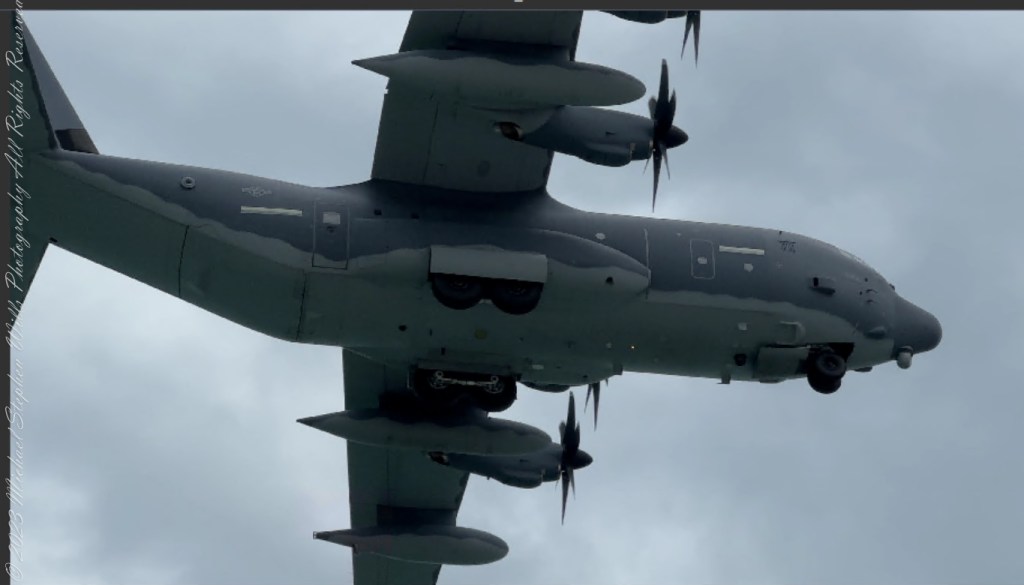
Having walked barely a tenth of a mile along the shoreline, the tranquil horizon was interrupted by the advancing silhouette of the Lockheed Martin C-130J Super Hercules. The Hercules, a titan of the skies, made its approach, its four Rolls-Royce AE 2100D3 turboprop engines altering the cadence of the ocean’s whispers. There’s a unique blend of awe and humility one feels in the presence of such human engineering, a craft capable of touching the farthest reaches of the globe, delivering hope or strategic might with equal prowess.
The Lockheed Martin C-130J Super Hercules is an extensive update of the C-130 Hercules, primarily involving new engines, avionics, and structural improvements. Here’s a more detailed look into the aircraft’s features and capabilities:
Engines and Performance:
The C-130J is powered by four Rolls-Royce AE 2100D3 turboprop engines, each driving a six-bladed composite propeller.
It’s capable of taking off from unprepared runways for expeditions, emergencies, or other complex missions.
Avionics and Systems:
The flight deck features modern avionics with heads-up displays (HUDs) for each pilot and advanced navigation systems.
It is equipped with a digital autopilot, improving performance and reducing crew workload.
Capacity and Versatility:
The C-130J can carry more than 40,000 pounds of cargo and has a range of about 2,000 nautical miles with a 35,000-pound payload.
It can accommodate a wide variety of cargo, including vehicles, pallets, and personnel or airdrop loads.
The aircraft is air-refuelable, extending its range for prolonged missions.
Design Improvements:
Enhanced structural design allowing for a greater lift and having a higher maximum takeoff weight than previous C-130 models.
The “J” model incorporates a longer fuselage than the original C-130H.
Operational Use:
The C-130J is used by the United States Air Force, the Marine Corps, and the Coast Guard, as well as numerous allied nations around the world.
Its roles include medevac, airborne assault, search and rescue, scientific research support, weather reconnaissance, aerial refueling, maritime patrol, and aerial firefighting.
Upgrade and Maintenance:
The C-130J has been continually updated with new technology and systems since its initial deployment to maintain its operational capabilities and extend its service life.
A robust maintenance and upgrade program supports global operations in varied and harsh environments, ensuring readiness and reliability.
With its combination of speed, range, and airlift
As the Hercules descended, its shadow enveloped my position, transient and thrilling. The aircraft’s formidability was evident in the robust structure and the propellers cutting through the air with surgical precision. The six-bladed composites, in harmonious rotation, seemed like the spokes of some celestial chariot, ushering the giants of the sky onto the earthly stage. Even as it neared the runway, the versatility of the Super Hercules was unmistakable; crafted for austere conditions, yet here it was, gliding over a picturesque landscape, a sentinel on a peaceful mission.
The Hercules passed overhead with a display of grace uncharacteristic of such a large aircraft, the whirring of its engines a testament to the ceaseless vigil it keeps across the skies. As it touched down, the craft transformed from a spectral giant back into a tangible instrument of air superiority and logistical support.
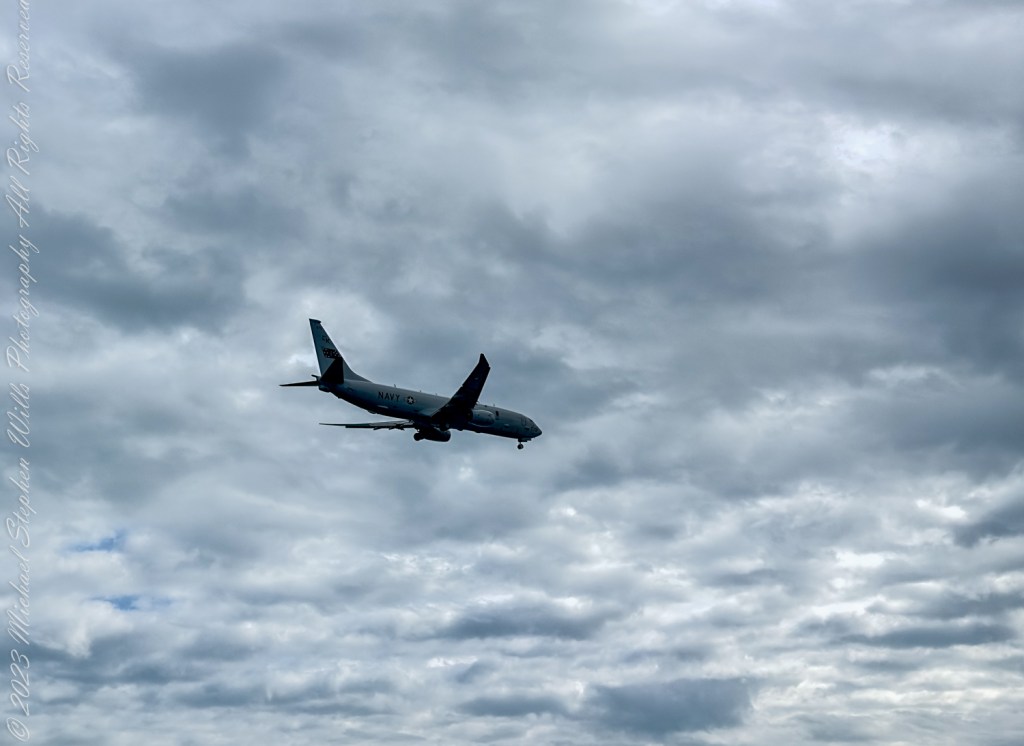
After an interlude of peaceful wave breaks another form caught my eye. The sleek, more modern contours of the Boeing P-8 Poseidon emerged from the azure, its twin engines a whisper of progression against the roar of the Hercules before it. This maritime patrol aircraft, with its lineage traced back to the reliable Boeing 737, represents the evolution of aerial surveillance and anti-submarine warfare.
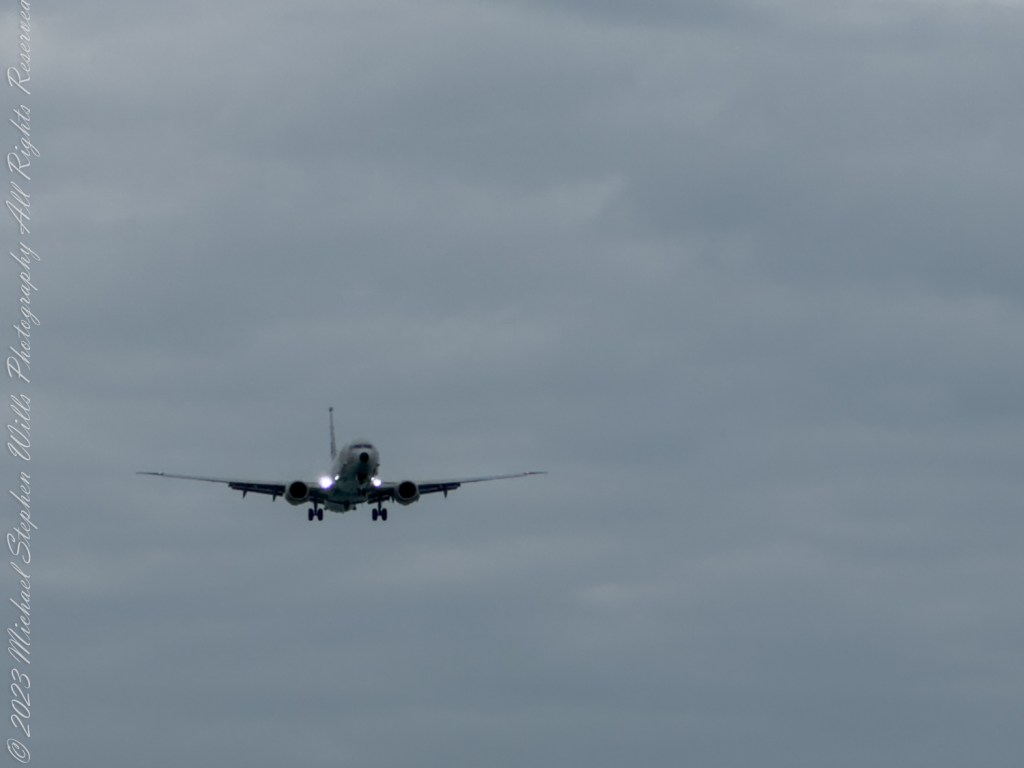
As the P-8 Poseidon drew closer, descending with an elegant ease, its profile cut a striking contrast against the gray clouds above. Its advanced radar arrays, mounted under the wings and fuselage, hinted at the craft’s hidden eyes—eyes that watch over the ocean’s expanse with vigilance. There was an undeniable presence of precision and technological advancement that surrounded the Poseidon as it sailed through the air.
The Boeing P-8 Poseidon is a highly advanced, long-range, anti-submarine warfare (ASW), anti-surface warfare (ASuW), and intelligence, surveillance, and reconnaissance (ISR) aircraft. It’s a military derivative of the Boeing 737 Next-Generation airplane and is used primarily by the U.S. Navy.
Key features and capabilities include:
Advanced Sensors: The P-8 is equipped with a state-of-the-art sensor suite that allows it to track both surface ships and submarines. The aircraft carries a maritime radar, a high-definition electro-optic/infrared (EO/IR) camera, and an advanced magnetic anomaly detector (MAD) for submarine hunting.
Communication and Combat Systems: It features a secure and interoperable communication system that enables real-time data-sharing with other assets in the battle space. The P-8 has an advanced mission control system that helps gather and process surveillance data.
Armament: The P-8 can carry torpedoes, Harpoon anti-ship missiles, and other weapons. It has both internal and wing-mounted hardpoints for weapons storage and delivery.
Operational Range: The aircraft has an extended operational range, capable of long-duration missions and covering vast areas of ocean on a single sortie.
Survivability: Being a modern military aircraft, the P-8 includes defensive systems to protect against surface-to-air threats.
Versatility: While primarily designed for maritime patrol, the P-8 also supports a wide range of missions, including search and rescue, shipping protection, and electronic intelligence gathering.
It passed over with a smoothness that belied its tactical purpose, a guardian of the seas ensuring the unseen threats remained held at bay. It was an ethereal sight, the embodiment of modern warfare’s stealth and strategic intelligence. The Poseidon’s landing gear, deployed and ready, connected with the tarmac in a seamless dance of man, machine, and purpose.
Standing there, I felt enveloped in a narrative much larger than myself—a narrative of human ingenuity, the relentless pursuit of security, and the silent promise of guardianship from above. With the passing of these large warplanes, I was reminded of the thin line between serene shores and the turbulent skies, and the ever-vigilant watch kept by these titans of the sky.
Copyright 2024 Michael Stephen Wills All Rights Reserved
Discover the secret world of mallards in Ithaca’s Cass Park: a drake and hen dance upon the water’s surface, inviting you into the fleeting magic of a vernal pool. Join their springtime sojourn.
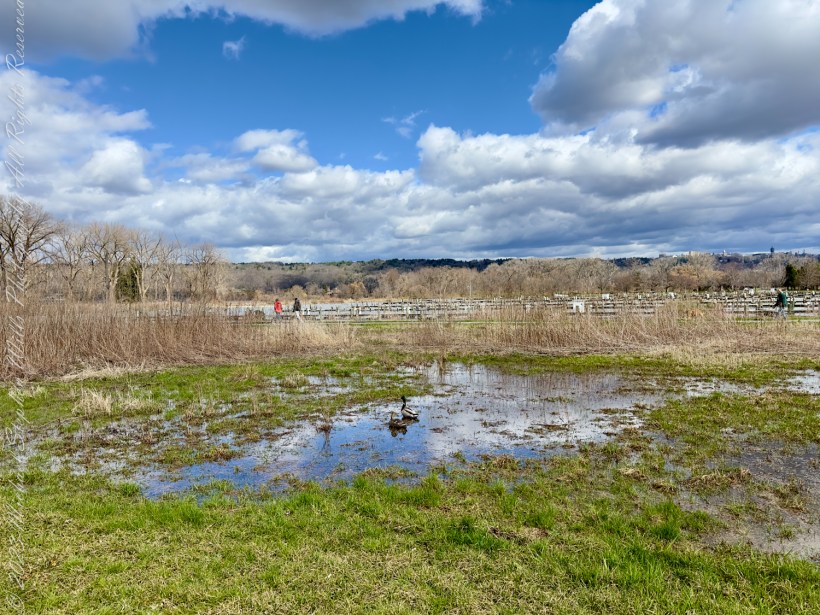
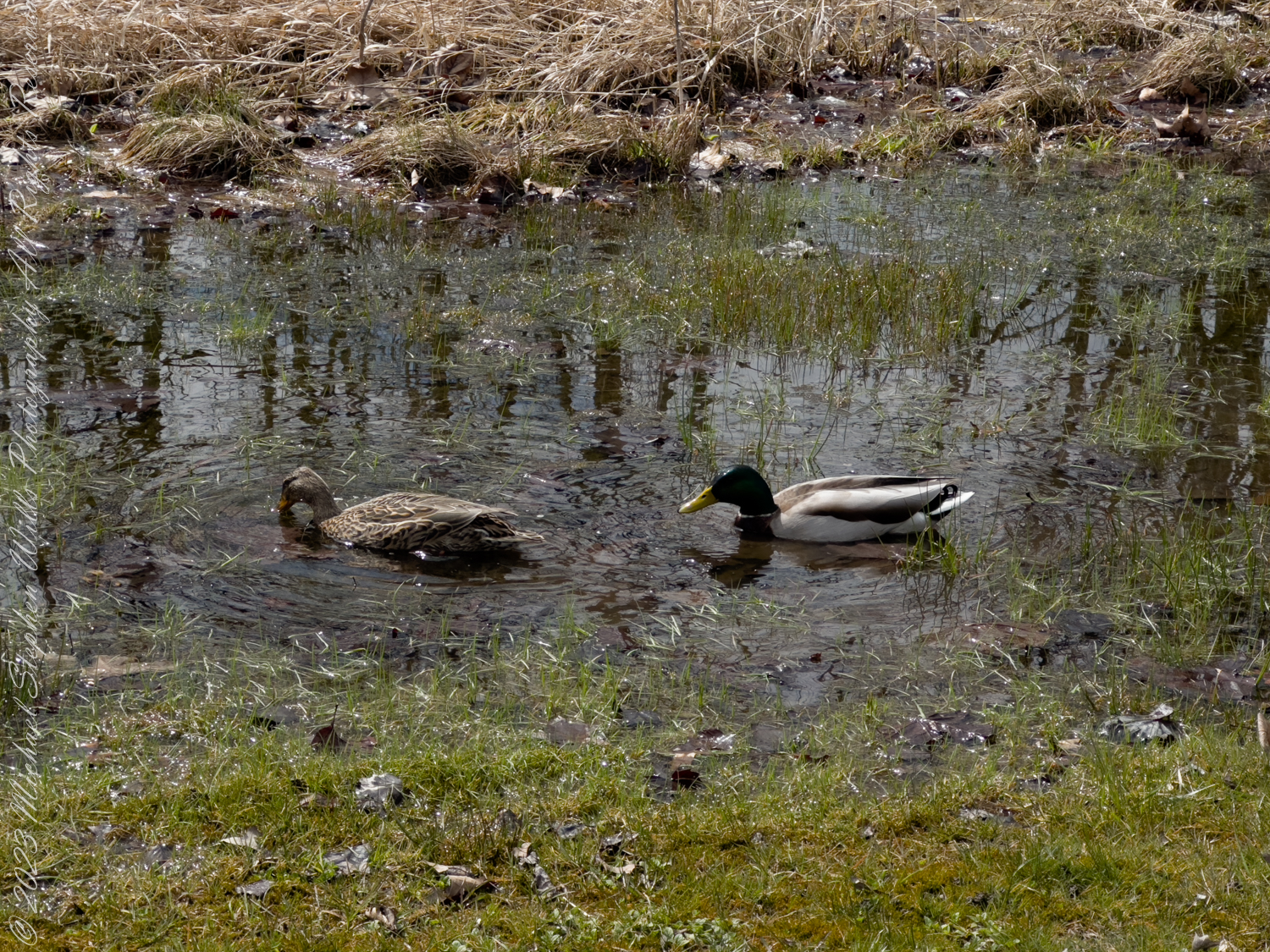
The image provided offers a tranquil glimpse into the natural world, capturing two mallard ducks—a drake and a hen—as they forage for food in a vernal pool. Vernal pools are temporary bodies of water that provide critical habitat for a variety of wildlife during the early spring. Mallards (Anas platyrhynchos), with their iconic coloration and widespread presence across the globe, are among the most recognizable and adaptable of waterfowl, making use of these ephemeral waterscapes.
Birding Trail near Cass Park, a pair of Mallard ducks in breeding plumage feed in a vernal pool the inlet of Cayuga Lake in the background.
Significance of Vernal Pools
Vernal pools are unique wetlands that usually form in the spring from melting snow and spring rainfall. These pools are crucial for the breeding of certain species of amphibians, insects, and provide essential resources for birds like mallards. In the image, the ducks take advantage of the abundance of food such as aquatic invertebrates that thrive in these undisturbed waters, showcasing the importance of these habitats in supporting biodiversity.
A Closer Look at the Mallards’ Habitat
A male and female mallard (Anas platyrhynchos) feeding in a vernal pool along the Cayuga Waterfront Trail near Union Fields.
The photo depicts the ducks in a natural setting that speaks volumes about their environment. The surrounding dry grasses indicate a transition from the dormancy of winter to the burgeoning life of spring. The reflection of leafless trees in the water hints at an ecosystem on the cusp of renewal. This setting is not only a feeding ground for the ducks but also a haven that provides shelter and protection from predators.
The Mallards’ Spring Behavior
Mallards are known for their migratory patterns, often traveling to warmer climates during the winter and returning to their breeding grounds in the spring. The ducks in the photo are likely partaking in a crucial phase of their life cycle—feeding and preparing for the breeding season ahead. Their presence in the vernal pool is a testament to their resilience and adaptability as they utilize a wide range of habitats to meet their needs.
Conservation and the Future
While mallard ducks are not currently endangered, the conservation of their habitats, like vernal pools, is vital for the continued health of their populations and the greater ecosystem. Such habitats are under threat from urban development, pollution, and climate change. It’s imperative that we recognize the importance of preserving these natural resources, not only for mallards but for all species that depend on them.
Conclusion: Reflections on Nature’s Cycles
The photo invites reflection on the cycles of nature and the interconnectedness of species and their environments. It serves as a reminder that the arrival of mallards at a vernal pool is not just a sign of spring, but a marker of the health of our natural world. As the seasons change, so too do the opportunities for life to thrive, guided by the rhythms of the Earth and the behaviors of its inhabitants. The mallards, in their simple act of feeding, become symbols of continuity and the delicate balance of ecosystems.
Copyright 2024 Michael Stephen Wills All Rights Reserved













 Michael Stephen Wills Photography